
Production of alcoholic & soft beverages
|
|
|
- Ronald Silas Dennis
- 9 years ago
- Views:
Transcription
1 Production of alcoholic & soft beverages Module- 29 Lec- 29 Dr. ShishirSinha Dept. of Chemical Engineering IIT Roorkee

2 Beverages Alcoholic Beverages Beer Wine Spirits Flavoured beverages Hot Drinks Coffee Tea Other drinks Chocolate based Soft Drinks Carbonated beverages Fruit/vegetable juices Bottled water Functional Drinks Ready-to-drink concentrates Ready-to-drink teas Production of alcoholic Production of Beer

3 Wort production in a classical brewhouse: 1. malt grinding, 2. mash vessels (decoction mashing), 3. wort filtration in a filter vessel, 4. wort boiling, 5. wort clarification in a Whirlpool, 6. wort cooling (heat exchanger).

4 Malt Milling By milling malt, the starchy endosperm will become better accessible for the malt enzymes and this will improve the extraction process. The selected milling technique depends on the methods of mashing and separation that are used. Milling should be performed in conditions that preserve the structure of the husks when a lauter or mash tun is used, as in this case the husks are needed to build up the filtration bed. The husks are more elastic and will be less damaged duringmilling when they are more humid. Therefore, the malt is usually made humid (called conditioned or wet milling) before it is milled. Dry or wet milling is performed in a roller mill. When modern thin-bed mash filters are used, filtration is performed using a filter cloth and intact husks are not needed. For this case, malt is milled very finely using a hammer mill. In modern mills, the milling is performed in the presence of de-aerated water to avoid oxygen take-up, using a disc or rotor stator system. Type of Milling Dry milling Wet milling Milling with Conditioning Dry milling Dry milling is the most popular milling technique. The degree of malt modification, the position and the type of roll surface (smooth or fluted) determine the particle distribution. Roller and hammer mills can be used for dry grinding. Rolling mills operate by passing the malt through the narrow gap between pairs of closely spaced rotating rolls. Various roll arrangements are possible: 2, 3, 4, 5, or 6 rolls. Most designs have 2 or 3 pairs with an intermediate separation stage or stages.

5 This enables the fine material, which does not need further milling, and the husks to be separated from coarser material, which does need further milling. Oscillating (frequency of 6 12 Hz) sieves perform the separation steps. The sieves are equipped with a large number of rubber balls or other proprietary sieve cleaners. The mill with 6 rolls gives the best results and is used most frequently Wet milling The moisture content of the husks can be raised to 20% by keeping the endosperm nearly dry in a hot water conditioning mill. This process is referred to hot water conditioning (Anon. 1999). In this case, the endosperm is squeezed from the husk through a single pair of rolls. After milling, mashing water is immediately added. The quantity of conditioning water depends on the malt quality, degree of modification, and achieved steeping degree. In the steep conditioning process, the moisture content is raised to a much greater extent and becomes part of the mashing process. Typically, steeping lasts between 10 and 30 min at a temperature between 30 and 50 C. The temperature and duration depend on the modification and the moisture content of the incoming malt. The moisture content of the malt increases to 25 30%. The total milling and mashing-in time is in the range min. Milling with Conditioning In this process, the malt is moisturized with cold or hot water, or steam. Moist husks are more pliable and will be less damaged in a roll mill. The temperature inside the kernel may not exceed 40 C to avoid damage to the enzymes. The total water content increases by about 0.7%. This corresponds to an increase in water content of the husks of % and % of the endosperm. The effect of the conditioning results in an increase of the husk volume of about 10 20%, an easier separation of the grist and husks fraction, an increase in filtration rate in a lautertun, an increased yield and attenuation, and a faster starch degradation. Conditioning can be performed using a conditioning screw where the malt is wetted when it passes through a screw conveyor.

6 Mashing Mashing starts with mixing the grist and brewing water (called mashing -in ). Hydration enables the malt enzymes to become active. Today, mashing-in is part of the milling process, where it is performed in the milling equipment. Formerly, a premasher ( foremasher or grist hydrator ) mixed the grist and the water on their way into the mash vessel. Deaerated water is used to minimize oxygen uptake. Typically, 2 4 hl water is used for 100 kg malt, depending on the selectedbrewing method and density of the produced beer. During mashing, the malt content is solubilized by making use of the enzymes of the malt and the extract is obtained.by manipulating the temperature profile and the duration of rest periods at specific temperatures, the brewer is able to influence the composition and efficiency with which the malt is extracted. The mashing operation will influence the alcohol content of the beer, the concentration of unfermented sugars in the beer, the peptide and amino acid profiles of the wort, the yeast nutrient concentration, the buffering capacity and ph of the wort and beer, the b-glucan content of the beer, and some beer physical properties such as foam, color, and clarity. Mashing Methods Mashing is performed in a mashing vessel (also called mashing tun, mash mixer, or mash converter). Nowadays, it is constructed in stainless steel and heated with steam through semicircular pipes welded on the tun bottom and body. An agitator is used to ensure efficient and homogeneous mixing during mashing. Possible rest periods, which are chosen at the temperature optima of the enzymes, are at the following temperatures: C for proteolysis and b-glucan degradation; C for maltose production (b-amylase); C for saccharification (a-amylase); and

7 78 C as the final mash temperature to inactivate the carbohydrate enzymes and fix the amount of fermentable sugars Infusion Method Decoction Method Infusion Method. In infusion processes, the entire mash is heated up (with appropriate rest periods) to the final mashing temperature. Infusion methods can be classified as increasing temperature (German infusion method) and decreasing temperature (English infusion method) infusion processes (Fig shows some example s). A classical German infusion method starts with a rest period at C (proteolysis) for 30 min. Next, the temperature is raised to C and kept at this temperature for min (b-amylase). The next rest period is at C until complete saccharification (a-amylase). The process ends at 78 C. In the English infusion method, the temperature is initially raised by adding hot water to the mash. This method requires well-modified malt, because a part of the active enzymes are destroyed by the addition of hot water. An alternative English method is to perform the conversion processes at a single temperature, usually C ( isothermal infusion mashing ). These English infusion methods are used for the production of ales (top fermentation), where both mashing and wort separation take place in the same vessel (O Rourke 1996). The advantages of the infusion method are that this process can be easily automated and controlled, and energy consumption is 20 30% lower than for the decoction method (Kunze 1999). Disadvantages are the rather worse iodine reaction and the possibly rather lower brewhouse yield Decoction Method In decoction processes, the temperature is increased by moving part of the mash from the mash converter to the mash cooker where it is boiled (possibly also with carbohydrate rest periods in the mash cooker). By pumping it back to the remainder of the mash in the

8 mash converter, the temperature of the total mash is increased to the next higher rest temperature. The decoction method is traditionally used in Germany for the production of lager beer. Depending on the number of boiled mashes, decoction methods can be classified as single-, two-, and three-mash processes. Today, only the single- or two-mash processes are used. The three-mash process consumes a lot of energy and is only used for the production of some special beers. The removal and boiling of the boiled mashes have the following effects: Less protein breakdown in the boiled mash because of more rapid heating; More extensive gelatinization and saccharification of the starch; Increased extraction of the husks; Increased formation of melanoidins (Maillard reaction); Increased removal of dimethyl sulfide (DMS); Reduced amounts of active enzymes in the total mash; and Possibly a higher brewhouse yield Mashing schemes Increasing infusion mashing

9 Decreasing infusion mashing Two mash decoction process. Enzymatic DegradationProcesses Starch Degradation Cell Wall Degradation Protein Degradation

10 Starch Degradation Starch is degradated by a- and b-amylase, limit dextrinase, maltase, and saccharine Gelatinized starch is needed for b-amylase in order to degrade starch efficiently. Barley starch gelatinizes in the presence of amylases at 608C. Rice starch gelatinizes at C and thus needs to be gelatinized before it is added to the mash. Pregelatinization is performed in an adjunct cooker. The action of the a-amylases will result in a decreased viscosity of the gelatinized starch ( liquefaction ). The complete degradation of starch to maltose and dextrines by amylases is called saccharification. Starch breakdown must be monitored because residues of undegraded starch and dextrins cause starch hazes in beer. Starch degradation can be easily monitored by checking the color of a mixture of a mash sample and an iodine solution (iodine test): a positive starch is indicated by a blue/black color. a-amylase is active during malting5 10% starch degradation), but is much more active on gelatinized starch. It needs Ca2þ as a cofactor, and does not produce maltose during degradation. b-amylase is present during malting, but is not active. It produces maltose, b-dextrins, glucose, and maltotriose from amylose and amylopectin. Limit dextrinase breaks the 1,6-bonds in small, branched dextrins. Its presence in malt is limited. Maltase hydrolyses maltose into glucose molecules. However, it is not active above 408C. Cell Wall Degradation Cell walls are essentially composed of b-glucan and hemicellulose. Cell wall degradation starts during malting and continues during mashing by endo-b-glucanases, b- glucansolubilase, and endo-xylanase An insufficient degration of highmwb-glucan molecules results in a high viscosity and can give problems during wort and beer filtration The extent of the problems can be diminished by the extent of malt modification or adding commercialbglucanase preparations An insufficient degradation of pentosans (hemicellulose) can result in filtration and haze problems (CootePentosans (also called arabinoxylans) can be degraded to arabinose and xylose by xylansolubilase, endo- and exoxylanase, arabinosidase, and xylobiase

11 Protein Degradation Protein degradation products influence fermentation and beer flavor (lower molecular weight (MW) degradation products), palate fullness (amino acids and higher MW degradation products), color (Maillard reaction), and beer foam (higher MW degradation products). A too extensive proteolysis gives bad foam, too dark color, poor palate fullness, but a good colloidal stability. During malting and mashing, 35 40% of the total protein content is degraded. During malting 60% of the amino acids are produced, the rest during mashing. Carboxypeptidases play an important role in the production of amino acids, due to their optimal ph and temperature conditions.the enzymatic breakdown of proteins occurs predominantly at C, but does not stop even at higher temperatures. With a rest period at 45 C, lower MW products are formed. It is necessary to supply yeast with sufficienta amino acids for growth and metabolism. The a-amino nitrogen concentration must be at least 20 mg/ 100 ml wort (Kunze 1999). Worts from normally modified malts always contain sufficient a-amino acids. At 558C, more high-mw compounds are produced. When mashing with well-modified malts, the extent of proteolysis is much less than that derived from the malting process (Lew is and others 1992). A long rest at 50 C always results in a poor foam. Wort Separation (Lautering) During the lautering process (also called wort separation or mash separation ) the undissolved substances are separated from the wort. The insoluble part (spent grains) consists of the husks, the seedlings, and other insoluble material. Wort separation is a filtration process. As much of the extract as possible should be recovered duringlautering. The extraction efficiency is measured as extract yield, which is the ratio of the mass of extract to the mass of malt or malt and adjunct. The filtration can be performed in a lautertun or a mash filter. Developments in wort separation, which have been introduced over the last years

12 Possibilities of energy recuperation with atmospheric orpressure boiling Pressurewort copper with vapor condenser (pressureless); energy storage systemandwort heating 1.wort collecting vessel, 2. wort kettle, 3. wort heater, 4. vapor condenser, 5. energy storage tank

13 Process layout including wort stripping 1.wort kettle, 2. sedimentation tank (wort clarification), 3. wort stripper (packed with Cascade Rings from Glitsch), 4. wort cooler. Schematic of a brew house featuring Merlin and whirlpool with energy storage

14 1. hop dosage, 2. Merlin, 3.whirlpool as collecting vessel, 4. vapor condenser, 5. steam control valve, 6. heat exchanger. Beer Fermentation Technology Batch Fermentation Technology Beer Fermentation Using Immobilized Cell Technology Production of Whisky One of the world s greatest alcoholic drinks is whisky (whiskey). The term whisky (whiskey) was derived from the Gaelic uisgebeatha, equivalent to the Latin term aqua vitae, meaning water of life. It was invented by accident by alchemists before the eleventh century and they gave the drink this name (Gavin 1997). SCOTTISH WHISKY The word Scotch is, of course, a contraction of Scottish whisky and was first used in the mid-nineteenth century (Benitah 2002). Scotch malt whisky was well established in Scotland by the end of the fifteenth century, and approximately 700,000 kiloliters (kl) is produced per year. It is consumed in over 200 countries worldwide (Tsuchiya 2006a). There are three types of whisky in Scotland: Malt whisky, Grain whisky, and Blended whisky Malt Whisky

15 Scottish malt whisky is produced by using barley, water, and peat as the raw materials. Barley locally grown in the northeast of the country was originally used. However, some of the greatest Highland distilleries today also use imported barley. Large grain two-row barley, with high starch and low protein content, is preferred Process Malting Mashing Fermentation Distillation Maturation Bottling Malting Malting is the first step in making whisky. Malt is barley that has been persuaded to germinate by soaking in water and has then been dried by the application of heat. The Steeping or soaking period in the tank is usually 2 to 3 days. The water is drained off and the grain spread out to a depth of cm on a concrete or tiled floor in the malting house. The water content of the barley rises to approximately 43% by this soaking or steeping process. Barley begins to germinate on the malting floor and generates energy that raises the temperature. The barley is turned with rakes and wooden shovels by maltmen every 4 or 6 h in order to maintain approximately 168C temperature and to prevent growing roots tangling each other. After 7 to 10 days, the growing stem of the barley becomes one-half to five-eighths of the length of the seed.to stop the germination, green malt is transferred to the drying kiln, which has a unique chimney.the floor of the kiln is a drain board made of perforated iron or wire mesh. The green malt is spread on this floor at a depth of 70 cm to 1 m, depending on the Design of the kiln, and dried in smoke rising from a peat fire below the floor.besides peat, coal and coke are often used as fuel and the barley is dried for h until the moisture content

16 becomes 3 4%. The peat smoke gives a special smoky flavor to the green malt and to the final product: mature whisky. A growing number of distilleries no longer do their own malting, but buy their malt ready-made from maltsters, peated to the desired degree. The kiln building is only kept as a symbol of such distilleries. The driedmaltismoved to the malt mill and ground to fine grist consisting of husk, grits, and flour in the ratio 2 : 7 : 1. The malt grist is placed in a container known as mash tun and hot water is added. The shape and size of mash tuns vary and they are made from stainless steel, copper, or cast iron, usually with a lid. Mashing or extraction of the malt is carried out three or sometimes four times with hot water, each time at a different temperature, ranging from about 60 C for the first process to 100 C for the last.mashing with hot water dissolves the starch from the malt and also activates the amylase that decomposes the starch to maltose. Wort (the resultant liquid) is drawn off from the base of the mash tun through the finely slotted bottom, cooled to around 20 C, and passed into fermentation vessels, or washbacks. The residual solids (draff) are removed from the floor of the mash tun and used as cattle feed. Fermentation The washback is made of wood or stainless steel and has a lid that incorporates a rotating blade that prevents foaming over the sides.when the washback is two-thirds full, yeast is added in liquid or solid form to the wort and fermentation takes place at C for 48 h (on average). The inoculated yeast converts maltose into glucose, and then alcohol and carbon dioxide (CO2) are produced from glucose. Yeast also produce small amounts of other compounds such as a wide range of esters, aldehydes, acids, and higher alcohols. Many of these are flavor elements. The fermented wort (wash) is a sweet peaty beer-like liquid with an alcoholic content of 7 8%. Distillation Distillation, is what actually produces the whisky. Scottish malt whisky has been traditionally distilled in onion-shaped stills (pot stills), which are large copper kettles with narrow necks called lyne arms or lyne pipes that curve and enter the condenser, often

17 located in the open air outside the still house The shape and size of the pot still affect the quality of the whisky produced. Stills come in three basic designs, the onion being the most common, and the boil-ball and lantern shape. The way these designs are interpreted as to capacity, height, method of heating, angle of the lyne arm, and so on differs from one distillery to another, and varies the quantity of volatiles that will end up in the spirits.traditional direct firing either by coal or gas to heat up the pot still is retained by many distilleries. However, a large number of distilleries have now switched to heating the stills by means of internal steam exchangers. The direct-fired wash stills have rummagers (revolving arms) to prevent solids in the wash sticking to the bottom of the still and scorching. The area of copper that comes into contact with the wash and low wines is another consideration in still design. Copper dissolves easily and has a decisive influence on the quality of the spirit, as it removes sulfury or vegetable aromas by a chemical reaction Maturation The immature spirit, called new pot or new spirit, is piped to the filling station, where it is diluted with water until its strength is reduced to 63.5% by volume of alcohol. This diluted spirit is stored in casks made either from American white oak (Quercusalba) or European oak (Quercusrobur) for maturation. Oakwood is thought to be desirable for maturing whisky because of its chemical complexity. The casks are secondhand, in that they have been used to store either sherry or bourbon, and in rare cases port or other wines. Maturation of new spirits is conducted in casks stored in warehouses called dunnage warehouses for at least three years undisturbed. After that they can be legally called scotch whisky. Bottling Before bottling, whisky is further diluted with water until its strength is reduced to 40 60% by volume of alcohol. Soft water, free from organic and mineral impurity, is preferred for whisky production. Whisky is usually filtrated through a cellulose filter to remove fatty

18 particles at a temperature between 4 and 10 C prior to being run into bottles. Once run into the bottles, whisky does not further mature, but some chemical changes will occur. Single malt whisky is the product of a single distillery. When bottled, the single malt may include whisky from several years production from the same distillery.the age shown on the bottle label means the length of the youngest whisky s maturation period. A malt whisky that is bottled from an individual cask is called single cask whisky. A vatted malt whisky is a product that is married together with various malt whiskies from several distilleries. A vatted malt whisky is labeled pure malt or scotch malt whisky. It is impossible to determine the optimum age for whisky in general terms; so much depends on the individual case. Grain Whisky In Scotland, when whisky is produced largely from maize with a small amount of malted barley that is not dried over peat fires, it is called Scottish grain whisky. In some cases, unmalted barley is also used with the maize. The unmalted cereal is crushed and then pressure-cooked in batch cookers to gelatinize the starch so that it can be released and solubilized. Wet ground malted barley is added in an amount one-fifth of the amount of unmalted cereal, followed by hot water, and the mixture is stirred.. Amylase from malted barley converts the starch to fermentable sugars, maltose. Although many distillers retain this system, there is an increasing use of continuous operation for the cooking and conversion process Fermentation of the wort is carried out in the same way, by the action of inoculated yeast, as in the case of making malt whisky. The fermented wort, wash, is pumped into the patent still or Coffey still, which distillates wins a different system from distillation using a pot still. The patent still was first invented by Robert Stein in 1826 and was improved by Aeneas Coffey in 1831.

19 With the invention of the patent still, making whisky has become quicker, cheaper, and occurs in greater volumes. The product has no peaty flavor, for the malt had not been dried over peat fires. The patent still basically consists of two linked copper columns, m high; these are called the analyzer and the rectifier. Each is divided horizontally into tens of chambers by perforated copper plates. Steam is led into the analyzer and proceeds up the analyzer and then through the linking pipe into the rectifier. The wash is continuously pumped into the rectifier, traveling down in a coiled copper pipe and then via the connecting wash pipe into the top of the analyzer. The heated wash moves down, chamber by chamber in the analyzer, and all the alcohol contained is vaporized before the wash reaches the base of the analyzer. The steam and alcohol vapors, which rise up through the analyzer, travel down the connecting vapor pipe (which emerges from the top of the analyzer) into the base of the rectifier. As the alcohol vapor and the steam rise up to the rectifier, chamber by chamber, the new incoming wash, coming down the rectifier in the winding pipe, is then cooled, and condensation takes place Around 95% alcohol can be obtained when the vapor is drawn off through a cooling worm to the stainless steel spirit receivers. Alcohol strength for making whisky is regulated below 94.8% by the law of Scotland The spirit is then diluted with water to around 70% by volume of alcohol, prior to being run into secondhand oak casks that were previously used for the maturation of malt whisky. The spirit-filled casks are left undisturbed in the warehouse for at least three years, the same as malt whisky. The grainwhisky, being nearer to a neutral spirit than pot-still maltwhisky, takes less time to mature and changes less in the maturing process. There are two types of grain whisky; one 21.2 SCOTTISH WHISKY 515 is a single-grain whisky produced in one distillery, and the other is that produced by vatting whiskies distilled in several distilleries. The age shown on the bottle label indicates the length of the youngest whisky s maturation period. Only eight grain distilleries are in operation; seven of these are located in Lowland Scotland.

20 Blended Whisky A blended whisky is created from both single malts and grain whisky. Andrew Usher, of Edinburgh, pioneered blending in the early 1860s (Tsuchiya 2000). Blends are central to the Scotch whisky market, outselling malt whiskies at a ratio of around nine to one. Blending can involve combining around 20 to 50 different malt whiskies with two to five grain whiskies to produce mild whisky with a well-balanced flavor.. It provides the distiller with an opportunity to create a product with unique and recognizable flavor attributes. It also enables product consistency. The proportion is 60% grain to 40% malt. The proportion of grain has risen since the early days of blending, when the ratio was more likely to be 50:50.Deluxe blended whiskies generally contain a higher ratio of malt to grain than standard blends. The blended whisky is left undisturbed in oak casks (generally plain oak) for 6 to 12 months in order to optimize the product quality. Some blenders marry the malts and the grains separately and bring them together only in bottling. Prior to bottling, the whisky is usually diluted to market strength, caramel is added to ensure continuity of coloring, and finally the spirit is filtered to prevent cloudiness from developing when water is added by the consumer. As for blends, the age (if any) stated on the label is the age of the youngest whisky in the blend CONCLUSIONS Whisky is the world s most consistently successful and popular alcoholic drink. According to documentary records, it was first commerced in Scotland in Scotland, Ireland, the United States, Canada, and Japan are now the five major whisky-producing countries.

21 Each country has developed its own style of whisky into something approaching a fine art. Each country s particular style will remain essentially unchanged and be eternally inherited by successive generations. Recently, light whiskies that have a lighter flavor, color, and body have been promoted. Production of soft beverages Production of Cold Drink
22 Introduction The concept for the soft drink system depends on the corresponding requirements to the system. In addition to a large variety of products, the degree of automation, the required flexibility during product planning, the way of providing the beverage ingredients and the required quality management system are important criteria for selecting the optimum process equipment. Supply of Ingredients Crystalline sugar is stored in silos. Manual or automated design. Variants depending on volume and consistency of the basic materials: Big Bag station for processing large packs (of kg) Bag emptying station for bags up to 50 kg Barrel emptying station for frozen fruit juice concentrates, or concentrates capable of flowing, with 50 bis 78 Brix, and viscosities up to mPas
23 Sugar Dissolving Process Continuous sugar dissolving process, as hot dissolving process at a temperature of 85 C or cold dissolving process at a temperature of C. Sugar processing in a batch system, in a hot or cold dissolving process. Filtration for decolourisation and cleaning, using individually designed filtration processes (candle filters, sheet filters, activated-charcoal filters, and others) depending on the raw material quality. Afterwards, syrup pasteurization in the plate heat exchanger ConcentrateStationand Powder Dissolving Station Processing of ready-made concentrates and essences. Dissolving systems for crystalline aromatic acids and powdered additives, such as caffeine Heating System Thermal product treatment is an essential process step between manufacture and filling of the product. In the sterile area, there are mainly components meeting most stringent hygienic requirements. All lines are based on the well-proven principle of product heating, using a heat exchanger, and a defined heat retention section. The pasteurization systems are fully suitable for CIP cleaning and built according to the rules of hygienic design. Reliable and flexible with a maximum of microbiological safety! Multiblend Mixer Connection of the ingredient tank to a dosing tube and to mixing tanks. Ingredient dosing using a flow meter. Blending of the ingredients in the mixing tank using the pump-over method
24 Process Automation Option to integrate a recipe manager. Fully automatic control of all process areas including all product and cleaning paths. Documentation of all process steps using production data Acquisition. Integration of the line automation into a comprehensive control system Batch Operation Mixing of basic ingredients in batches according to individual recipes. Flexible system connected to a variable number of basic ingredient components. Automatic production with manual feeding of the basic ingredients. Inline Operation In-line blending of the soft drink products. Syrup variations can individually be produced from the various ingredients available in the basic ingredient dosing system. Fully automatic production of the individual syrup ingredients. General Aspects System for processing ready-made ingredients. Application with a low variety of products consisting of only few basic ingredients, and for the production of large batches. Frequent type change-over and small batch sizes. Mainly manually oriented production processes. Cleaning concept. Space requirements / space provided. Adaptation to existing production systems. Completely new investment. Line speed.
25 Concepts for Soft Drink Processing
26 Ice Tea Process Flow: 1) Ice Tea Extraction: Water Hot Water Boiler Cooking &Extraction Filtration Storage Separation 2) Ice Tea Blending & Flavoring: Sugar Syrup Flavors Pure Water Storage Blending Filtration Sterilizing 3) Bottling & Capping: Bottle Making Unscramber Air Conveyor Cap (3-1) washing, filling & capping machine Turnover Sterilizing Hot & Cold Sterilizing Blowing Dry Inspection Labeling Inject Printer Carton Carton Packing Palletizing Warehouse
27 Coffee Drink Production Introduction Drink coffee is part of life of human being, but cookingcoffee or coffee shop is a big job to the busy society. Therefore, Asian is popular in can cooked coffee in hot/ ice, which we can enjoy anywhere anytime of living.the concept of canned coffee is coming from the icetea, which are organizing from coffee bean baking,grinding and extraction as juice in canning process.therefore, cooked coffee can be service anywhereanytime either one / out of work period, which willprovide the best convenience to the consumers, Flow Chart of Canned Coffee Drinks: Raw Coffee Bean De-Shelling Coffee Bean Baking
28 Coffee Bean Crushing Coffee Juice Extracting Mixing Can Filling and Capping Sterilizing Finished Product in Can Carton Packing Palletizing Warehousing Papaya Juice
29 Introduction The papaya is the fruit of plant. It is native to the tropics of the Americas, and was cultivated in Mexico several centuries before the emergence of the Mesoamerican classic cultures. t is sometimes called "big melon" or "pay paw," but the North American pawpaw is a different species, in the genus Asimina. The fruit is ripe when it feels soft (like a ripe avocado or a bit softer) and its skin has attained amber to orange hue. The fruit's taste is vaguely similar to pineapple and peach, although much milder without the tartness. General Process as follows 1. De-Skin: Peeling off the papaya skin should be necessary, which will be upgraded the juice quality and production yield. 2. Manual Peeling Skin:
30 Skin peeling will be operated by manual rather than automation, since different sizes of papaya will make machine automation getting trouble, also damage the fruit. 3. Fruit Pretreatment: a. Manual skin peeling and seed cleaning will be arranged beside the conveyor table GHC- 05 in two side workers. The papaya fruits will be fixed by fixture for easy cut and peeling. b. Waste of skin will be drop from conveyor table to the underneath conveyor for waste disposable storage, then the fruit pulp will feed into, the GHI-03 crushing. c. The fruit pulp will be passing through juicer GHC-07, and then the juice will be pumping into the storage tank to wait for further PH flavoring, pasteurizing and cold storage. d. The container of 20 liter tin can will be durability from 0.5 Processing Flow Chart I. Fruit Pretreatment Section: Papaya Fruits Cutting & Peeling conveyor table GHC-05 Bucket Elevator Fruit Crusher GHJ-03 Fruit de-juice GHJ-07
31 Several Storage Tanks Sanitary Pump Homogenizer GHJ-9 Pasteurizer GHJ-11 Weight Filler GHJ-15 Juice concentrated Can 20 liters Storage in warehouse life time 1/2~ 1 year 2. Packaging Plant Storage Tanks Pump Filtration Plate Heat Exchanger cooling Product tanks
32 Pump GHJ-0413 Can filling & Seaming Tunnel Pasteurizing Date Coding / Labeling Cartoon Packaging Warehousing
33 References =0CDEQFjAB&url=http%3A%2F%2Fdwvg.ge%2Fwp- content%2fuploads%2f2011%2f11%2fgeorgian-non-alcoholic-beverages- Catalogue7M.pdf&ei=6ybzUsCnFMWNrgfKtIHYBQ&usg=AFQjCNExwKPnoMKITLz ZsqwJ4PhM-qr5Uw&sig2=FmhJyynAv4KTpSkYuj7BiA =0CEwQFjAE&url=http%3A%2F%2Fwww.ncbe.reading.ac.uk%2Fncbe%2Fprotocols% 2FPDF%2FFerment.pdf&ei=6ybzUsCnFMWNrgfKtIHYBQ&usg=AFQjCNGgTxzxi9bd 5W5EQElNDRrSXwTJ8A&sig2=aE0g9UsURqL0-c8C4evhqQ =0CEEQFjAD&url=http%3A%2F%2Fwww.vtt.fi%2Finf%2Fpdf%2Ftiedotteet%2F2011 %2FT2599.pdf&ei=6ybzUsCnFMWNrgfKtIHYBQ&usg=AFQjCNHZF4dX2MA2- ak0a6qdqun8ulcqxg&sig2=n4rpi4ws5xov2mvzfbdhdw =0CFMQFjAF&url=http%3A%2F%2Fec.europa.eu%2Fhealth%2Falcohol%2Fdocs%2F alcohol_alcoholic_beverages_appeal_minors_en.pdf&ei=6ybzuscnfmwnrgfktihybq &usg=afqjcnh4rt8tlt749rntzt4fltcvdw7twq&sig2=atxfsofrd- GEYkUUa7bsOQ =0CGQQFjAH&url=http%3A%2F%2Fwww.invest.gov.tr%2Fen- US%2Finfocenter%2Fpublications%2FDocuments%2FFOOD.BEVERAGE.INDUSTRY.PDF&ei=6ybzUsCnFMWNrgfKtIHYBQ&usg=AFQjCNGCapHaIcrRclfzROZQhYpnP GPt2g&sig2=1igibarRgiVvith7qkU1Ew =0CGwQFjAI&url=http%3A%2F%2Fchangelabsolutions.org%2Fsites%2Fdefault%2Ffil es%2fchangelab-beverage_industry_report-final_%28cls %29_ pdf&ei=6ybzUsCnFMWNrgfKtIHYBQ&usg=AFQjCNFk0Jqqw e0mnthbo91x8p0r5btsug&sig2=luodd_m_mb8qge22r97t7a
An Introduction to Whisky English (B1 B2)
 An Introduction to Whisky English (B1 B2) www.celangue.com Barley, water & a whole lot of goodness The words highlighted in red are very important for your whisky vocabulary. If you look at any bottle
Scotch Whisky Training Seminar
 Scotch Whisky Training Seminar Legal Definition of Scotch Distilled and aged in Scotland for a minimum of three years, in oak barrels and bottled at a minimum of 40% alcohol Single Malt must also be bottled
volume iii : the brewing process BREWING iii.33
 volume iii : the brewing process BREWING iii.33 beer : a reference guide BREWING iii.34 volume iii : the brewing process THE PROCESS IN BRIEF Brewing truly represents a marriage of art and science. It
History of Whisky Production. By: Lyric Kilpatrick
 History of Whisky Production By: Lyric Kilpatrick Whiskey and Whisky Whisky is known to be called the water of life because they believed it was a cure and medicine from the herbs it had been made out
A Beginner's Guide to Beer Making
 A Beginner's Guide to Beer Making By the Staff of Maryland Home Brew, Inc. You may share this document for non-commercial purposes, provided you cite the source as A Beginner s Guide to Beer Making 2010
Beer Styles for the Novice Your Brew Day Sanitation
 Concepts for Novice Brewers Curtis Eulberg 4/2013 Beer Beer is a fermented beverage made most commonly from water, malted barley, hops, and yeast. These items when skillfully combined with proper time
Brewery Wastewater: 2010 Water and Wastewater Conference. 11.02.2011 Page 1
 Brewery Wastewater: Solutions for the Problem By Fred M. Scheer 2010 Water and Wastewater Conference Madison, WI 11.02.2011 Page 1 vr74 What We Will Discuss: Biochemical i Oxygen Demand (BOD): Where does
SOME NOTES ON WHISKEY FLAVOUR by Dave Quinn, Master of Whiskey Science at Midleton Distillery
 SOME NOTES ON WHISKEY FLAVOUR by Dave Quinn, Master of Whiskey Science at Midleton Distillery Ultimately, it s the wonderful flavour of Single Pot Still whiskey from Midleton Distillery that makes it all
Orange Fruit Processing
 Orange Fruit Processing Luis Cisneros-Zevallos, Ph.D. Department of Horticultural Sciences Texas A&M University Commercially Important Orange Varieties Valencia - most widely grown, late maturing, good
Brewing Beer efficient and sustainable technologies in regard to energy and raw material input
 Brewing Beer efficient and sustainable technologies in regard to energy and raw material input ERSCP workshop, Bregenz, 3 May 2012 Dr. Ludwig Scheller, Dr. Rudolf Michel Huppmann Tuchenhagen Agenda Efficient
Resource efficiency in the UK whisky sector
 Case Study: UK Drinks Sector Resource efficiency in the UK whisky sector Reducing water, material and packaging use in the whisky sector. Resource efficiency in the UK whisky sector 2 WRAP s vision is
CORN BY-PRODUCTS IN DAIRY COW RATIONS
 CORN BY-PRODUCTS IN DAIRY COW RATIONS Dennis Lunn, Ruminant Nutritionist Shur-Gain, Nutreco Canada Inc. CORN BY-PRODUCTS IN DAIRY COW RATIONS Dennis Lunn, Ruminant Nutritionist Shur-Gain, Nutreco Canada
ALL- GRAIN WHEAT- MASH VODKA
 ALL- GRAIN WHEAT- MASH VODKA Most home distillers make vodka from sugar and water fermented with turbo yeast. However, the majority of commercial vodka distilleries make their finest vodkas from Winter
Waldviertler Roggenhof is Austria's First Whisky Distillery (established in 1995).
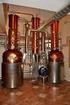 Whisky-Erlebniswelt 1. Austrian whiskydistillery Waldviertler Roggenhof is Austria's First Whisky Distillery (established in 1995). In 1990, Johann Haider III took over farming operations from his parents.
612.724.4514
 Brewing Grains What is Malt? Brewing grains are the heart and soul of beer. Next to water they make up the bulk of brewing ingredients. Brewing grains provide the sugars that yeast ferment. They are the
3/97 Food And Agricultural Industry 9.12.3-1
 9.12.3 Distilled Spirits 9.12.3.1 General 1-2 The distilled spirits industry includes the production of whisky, gin, vodka, rum, and brandy. The production of brandy is discussed in AP-42 Section 9.12.2,
A guide to Scotch Whisky
 A guide to Scotch Whisky Legal Definition of Scotch Distilled and aged in Scotland for a minimum of three years, in oak barrels and bottled at a minimum of 40% alcohol Single Malt must also be bottled
Questions & Answers. www.scotch-whisky.org.uk
 Questions & Answers www.scotch-whisky.org.uk The World of Scotch Whisky Contents Introduction 2-3 The World s Leading Drink 4-7 The History of Scotch Whisky 8-9 Making Scotch Whisky 10-15 The Importance
Making Scotch: Engineering, Chemistry, and Education JR Collier 1, SA Morton III 1, 2, TB Rogers 1, 4, BJ Collier 3, J McEwan 5, M.
 1 Making Scotch: Engineering, Chemistry, and Education JR Collier 1, SA Morton III 1, 2, TB Rogers 1, 4, BJ Collier 3, J McEwan 5, M. Reynier 5 1 Chemical Engineering Department 3 Materials Science and
Department of Mechanical and Aerospace Engineering. Anaerobic Digestion and Resource Use within the Scotch Whisky & UK Beer Industries
 Department of Mechanical and Aerospace Engineering Anaerobic Digestion and Resource Use within the Scotch Whisky & UK Beer Industries Author: Scott Meadows Supervisor: Paul Strachan A thesis submitted
MAKING & FERMENTING THE MASH
 MAKING & FERMENTING THE MASH Contents 1. Table of Ingredients for the Mash 2. About Myths 3. Making and Fermenting Mash from Whole Corn or Directly from Corn Meal 4. For Starters in Distillation 5. Sugar
HAZARDS AND RELATED ISSUES IN THE WHISKY DISTILLATION INDUSTRY
 HAZARDS AND RELATED ISSUES IN THE WHISKY DISTILLATION INDUSTRY Clive Timms Strathayr, Rhu-Na-Haven Road, Aboyne, Aberdeenshire, AB34 5JB; e-mail: [email protected] The very traditional methods
The Huntington Library, Art Collections, and Botanical Gardens. How Sweet It Is: Enzyme Action in Seed Germination
 The Huntington Library, Art Collections, and Botanical Gardens How Sweet It Is: Enzyme Action in Seed Germination Overview This experiment is intended to familiarize students with the macromolecule starch,
Syllabus M.Tech. Food Technology DSC- FT- 1 A: FUNDAMENTALS OF FOOD SCIENCE AND TECHNOLOGY PART I
 Syllabus M.Tech. Food Technology DSC- FT- 1 A: FUNDAMENTALS OF FOOD SCIENCE AND TECHNOLOGY PART I Unit 1 Introduction to Food Science and Technology Definition, scope and current trends in food science
Some Criteria for Choosing a Steam Boiler for a Microbrewery
 Some Criteria for Choosing a Steam Boiler for a Microbrewery Jack Coe Rite Engineering and Manufacturing Corporation Breweries rely on steam heating for a number of functions, primarily to heat the brew
1.3 Properties of Coal
 1.3 Properties of Classification is classified into three major types namely anthracite, bituminous, and lignite. However there is no clear demarcation between them and coal is also further classified
Cooking A World of New Tastes
 Cooking A World of New Tastes S E G M E N T 2 Cooking With Moist Heat Steaming Boiling Glazing Segment 2 Cooking With Moist Heat 19 S E G M E N T 2 Cooking With Moist Heat Learning Objectives Apply steaming
GEA HB Craft Brew Series. Plug & Brew Centrifuges for Small and Mid-sized Breweries. engineering for a better world
 GEA HB Craft Brew Series Plug & Brew Centrifuges for Small and Mid-sized Breweries engineering for a better world gea.com 2 No Limits for New Beers There has never been a better time for making beers.
Beer Stabilization Technology - clearly a matter of choice. International Specialty Products 1361 Alps Road Wayne, NJ 07470 U.S.A.
 Beer Stabilization Technology - clearly a matter of choice Mustafa Rehmanji, Chandra Gopal and Andrew Mola International Specialty Products 1361 Alps Road Wayne, NJ 07470 U.S.A. Scope of Presentation Mechanism
EXPRESS STILL WARNING It is legal in New Zealand to own and operate a still for the purpose of producing alcohol for your own consumption.
 THE EXPRESS STILL This still represents the next generation in home distillation equipment. It eliminates the problem of having to spend all day processing a 25 litre wash. Taking 1 hour to heat up, then
NATIONAL AGENCY FOR FOOD AND DRUG ADMINISTRATION AND CONTROL ACT 1993 (AS AMENDED) Spirit Drinks Regulations 2005. Commencement:
 S. I. of 2005 NATIONAL AGENCY FOR FOOD AND DRUG ADMINISTRATION AND CONTROL ACT 1993 (AS AMENDED) Spirit Drinks Regulations 2005 Commencement: In exercise of the powers conferred on the Governing Council
Taking Apart the Pieces
 Lab 4 Taking Apart the Pieces How does starting your morning out right relate to relief from a headache? I t is a lazy Saturday morning and you ve just awakened to your favorite cereal Morning Trails and
SET, STIRRED & DRINKING YOGHURT - PLF*
 FOOD SET, STIRRED & DRINKING YOGHURT - PLF* *PRODUITS LAITIERS FRAIS / DAIRY Yoghurt is produced from fermented milk. The fermentation aim is to acidify and gelify the milk. In the European Union, the
TECHNICAL FILE SETTING OUT THE SPECIFICATIONS WITH WHICH IRISH WHISKEY/UISCE BEATHA EIREANNACH/IRISH WHISKY MUST COMPLY
 TECHNICAL FILE SETTING OUT THE SPECIFICATIONS WITH WHICH IRISH WHISKEY/UISCE BEATHA EIREANNACH/IRISH WHISKY MUST COMPLY Food Industry Development Division Department of Agriculture, Food and the Marine
Necessary equipment. - Food grade fermenter or bucket with airtight lid - Airlock - Syphon tube - Bottles or a pressure barrel (keg) with S30 valve
 Necessary equipment - Food grade fermenter or bucket with airtight lid - Airlock - Syphon tube - Bottles or a pressure barrel (keg) with S30 valve A fermenter/bucket with lots of headspace is best, 27L
EXAMPLE EXERCISE 4.1 Change of Physical State
 EXAMPLE EXERCISE 4.1 Change of Physical State State the term that applies to each of the following changes of physical state: (a) Snow changes from a solid to a liquid. (b) Gasoline changes from a liquid
Plant components, selected for sound performance
 Plant components, selected for sound performance Selected plant components to meet our customers demands We provide a wide range of plant components offering lowest cost of ownership, high product safety
AIJN Guideline for Vegetable Juices and Nectars
 AIJN Guideline for Vegetable Juices and Nectars 1. INTRODUCTION This guideline is applicable without prejudice to the national legislation of each Member State and/or Code of Practice and cannot be used
ENERGY SAVING WORT BOILING SISTEM IN BREWING FACTORY
 ENERGY SAVING WORT BOILING SISTEM IN BREWING FACTORY Mariana Geta TOMESCU (cas. Cismarescu) *, Carol CSATLOS** * Faculty of Food and Tourism, Transilvania University of Braşov, Braşov, Romania ** Faculty
EC 691 January 1996 HACCP AND MICROBREWERIES PRACTICAL GUIDELINES OF FOOD SAFETY FOR MICROBREWERIES, BREWPUBS AND THE BEER INDUSTRY
 EC 691 January 1996 HACCP AND MICROBREWERIES PRACTICAL GUIDELINES OF FOOD SAFETY FOR MICROBREWERIES, BREWPUBS AND THE BEER INDUSTRY TABLE OF CONTENTS I. Purpose of this publication... 3 II. Introduction...
Unit 1 - Pure Substances and Mixtures Chapter 2: Solutions
 2.1 Solutes & Solvents Vocabulary: Unit 1 - Pure Substances and Mixtures Chapter 2: Solutions solvent the larger part of a solution - the part of a solution into which the solutes dissolve solute the smaller
ASSOCIAZIONE MANI D ORO I MAESTRI DELLA PIZZA
 FIELD PRODUCTION OF SPECIALTY ' TRADITIONAL GUARANTEED Classic Pizza Napoletana Art. 1 Product s Name The pizza is a food preparation consisting of a support of dough, topped with products selected by
http://www.cieplowniasiemianowice.pl/filtry.html
 Oil skimmer is a device which helps remove surface oil. Skimmer is mounted in the selection location. An oil is absorbed by the teflon tape and is removed for example from bath to another external container
FEED MANUFACTURING TECHNOLOGY - ISSUES AND CHALLENGES
 FEED MANUFACTURING TECHNOLOGY - ISSUES AND CHALLENGES DENNIS FORTE SUMMARY The handling of Feed Pellets during storage at the Mill, transport and transfer to bins on the farm has a direct impact upon the
Craft of Whiskey Distilling
 Craft of Whiskey Distilling Craft of Whiskey Distilling Published by The American Distilling Institute (ADI) The American Distilling Institute is the collective voice of a new generation of artisan distillers.
1. The diagram below represents a biological process
 1. The diagram below represents a biological process 5. The chart below indicates the elements contained in four different molecules and the number of atoms of each element in those molecules. Which set
HOW YEAST WORKS 2011, 1997 by David A. Katz. All rights reserved. Reproduction permitted for education use provided original copyright is included.
 HOW YEAST WORKS 2011, 1997 by David A. Katz. All rights reserved. Reproduction permitted for education use provided original copyright is included. Materials Needed active dry yeast, 6 packages or a jar
Determining the Quantity of Iron in a Vitamin Tablet. Evaluation copy
 Determining the Quantity of Iron in a Vitamin Tablet Computer 34 As biochemical research becomes more sophisticated, we are learning more about the role of metallic elements in the human body. For example,
FACT SHEET. Users That Must Take Particular Precautions During A Boil Advisory
 FACT SHEET Users That Must Take Particular Precautions During A Boil Advisory a) Commercial Establishments (Restaurants, Hotels, Convenience Stores, etc.) - All water that is to be provided directly to
Composition of Grapes
 Composition of Grapes By Murli Dharmadhikari Grapes are the most important raw material for making wine. A good understanding of grape composition is essential to understanding the process of winemaking
Micro and Pub Brewing Equipment
 Brewing equipment and machines for Mini- Breweries and Pub Breweries We plan, produce and install Installations and Machines as per your personal requirements. We have references all over the world: Japan,
Brewing technique for the professional brewer!
 Brewing technique for the professional brewer! MBT-Technik establishes its own training centre including its own brewery. Delivery of a complete industrial brewery to Astana / Kasachstan. We design and
Sugars, Starches, and Fibers Are All Carbohydrates
 Sugars, Starches, and Fibers Are All Carbohydrates What are carbohydrates? Today's food advertisements call them carbs, but they are not all the same. They are a group of compounds that have some similarities
How To Use Lactose In Confectionery
 Importance of whey ingredients in confectionery products Andréa Pernot-Barry Technical Director ZDS Central College of the German Confectionery Industry Whey ingredients in confectionery Lactose Whey powder
 Guth Portable gitators R The long-term solution pplications Guth Portable gitators R are used for the mixing, stirring and the homogenization of water-like or medium viscosity products. They are most often
Sour Beer Production. California MBAA Technical Conference Saturday October 24 th, 2014. Andrew Bell Experimental Brewer The Bruery
 Sour Beer Production California MBAA Technical Conference Saturday October 24 th, 2014 Andrew Bell Experimental Brewer The Bruery Background of The Bruery Core Sour Beers Brewed Sour Blonde: lambic inspired,
Pall in the Brewery (more value per hectolitre) DE Free Clarification FB1795
 Pall in the Brewery (more value per hectolitre) DE Free Clarification FB1795 The Pall World Pall Corporation is a world leader in the design, production and supply of filters, membranes and systems for
MATURED IN OAK BEER CASKS THAT ARE UP TO 120 YEARS OLD
 MATURED IN OAK BEER CASKS THAT ARE UP TO 120 YEARS OLD Special products have a unique history. Whisky from over 120-year-old oak casks. The Locher brewery is steeped in history and tradition, and has been
Lab Exercise 3: Media, incubation, and aseptic technique
 Lab Exercise 3: Media, incubation, and aseptic technique Objectives 1. Compare the different types of media. 2. Describe the different formats of media, plate, tube etc. 3. Explain how to sterilize it,
ST 2004-01 Food Definition, Issued May, 2004; Revised June, 2007 and May, 2015
 Business Tax Division Sales & Use Tax P.O. Box 530 Columbus; Ohio 43216-0530 www.tax.ohio.gov ST 2004-01 Food Definition, Issued May, 2004; Revised June, 2007 and May, 2015 The purpose of this information
Heterogeneous Homogenous. Mixtures; Solutions. Phases of matter: Solid. Phases of Matter: Liquid. Phases of Matter: Gas. Solid, Liquid, Gas
 Phases of matter: Solid Heterogeneous Homogenous Mixtures Solutions Phases of Matter: Liquid Atoms and molecules are more spaced out and now can move. The material can be slightly compressed into a smaller
Chapter 3: Separating Mixtures (pg. 54 81)
 Chapter 3: Separating Mixtures (pg. 54 81) 3.2: Separating Mechanical Mixtures (PB Pg. 40 5 & TB Pg. 58 61): Name: Date: Check Your Understanding & Learning (PB pg. 40 & TB pg. 61): 1. What are four methods
General Properties Protein Nature of Enzymes Folded Shape of Enzymes H-bonds complementary
 Proteins that function as biological catalysts are called enzymes. Enzymes speed up specific metabolic reactions. Low contamination, low temperature and fast metabolism are only possible with enzymes.
Public Catalog. Table of contents: Brewer s Best. Racking & Bottling. Page 1
 Public Catalog Table of contents: Brewer s Best Malt Extracts Yeast & Hops Wine Labels Racking & Bottling Equipment Chemicals Books Miscellaneous Page 1 Brewer s Best Equipment kits / Ingredient kits /
steinecker Stromboli wort boiling system Perfect in every brewing process
 wort boiling system Perfect in every brewing process Perfect for wort quality and saving resources Wort boiling is a fundamental step in the production of premium-quality beer. A stable head on the beer
Ultrasonic support removal tank
 Ultrasonic support removal tank User guide and safety manual See inside for use and safety information. The Ultrasonic support removal tank automatically removes PLA support material from a printed ABS
CONTROLLING MICROBIAL GROWTH IN WINE
 CONTROLLING MICROBIAL GROWTH IN WINE Section 3. Alcohol The alcohol content of wines is an important parameter in limiting microbial growth for only some of the enologically important organisms. The relative
Optimization of Technological Processes for Gluten-Free Beer Production
 Optimization of Technological Processes for Gluten-Free Beer Production Zsuzsanna Kiss, Beata Vecseri-Hegyes, Gabriella Kun-Farkas, Á. Hoschke Corvinus University of Budapest, Dep. of Brewing and Distilling
OSU FROZEN COOKING DESSERTS
 OSU COOKING FROZEN DESSERTS WITH SPLENDA Pittsburg County Extension Service 707 West Electric McAlester OK 74501 918.423.4120 (Office) 918.423.7053 (Fax) www.oces.okstate.edu/pittsburg Bringing the University
The Chemistry of Carbohydrates
 The Chemistry of Carbohydrates Experiment #5 Objective: To determine the carbohydrate class of an unknown by carrying out a series of chemical reactions with the unknown and known compounds in each class
Whiskey from Moldova. Too much of anything is bad, but too much good whiskey is barely enough. Mark Twain
 Whiskey from Moldova Too much of anything is bad, but too much good whiskey is barely enough. Mark Twain About us Joint Stock Company "ENTEH" formed in 1994, but on the market of alcoholic beverages it
Chapter 1 A Crash Course in Brewing
 Chapter 1 A Crash Course In Brewing Chapter 1 A Crash Course in Brewing What Do I Do? What Do I Do?............ 3 Brew Day................ 4 Equipment Needed........ 4 Preparation............. 5 Making
Estimated emissions and CO2 savings deriving from adoption of in-place recycling techniques for road pavements
 Estimated emissions and CO2 savings deriving from adoption of in-place recycling techniques for road pavements Introduction Objective: to estimate the CO2 emissions produced by road surface construction
Household Acids and Bases
 Household Acids and Bases GRADE LEVEL INDICATORS Experiment Demonstrate that the ph scale (0-14) is used to measure acidity and classify substances or solutions as acidic, basic, or neutral. 21 Develop
Cooking at the Speed of light!
 Cooking at the Infrared Cooking & Colouring Infrabaker is a modular infrared continuous cooking system developed by Infrabaker International. The machine is designed to cook and/or put colour on a wide
Corrosivity of Water Supplies
 WD-DWGB-3-4 2009 Corrosivity of Water Supplies What is meant by Corrosivity? Corrosive water can be defined as a condition of water quality which will dissolve metals from metallic plumbing at an excessive
JAMS, JELLIES AND MARMALADE
 JAMS, JELLIES AND MARMALADE Introduction Collectively known as 'preserves', these products are finding an increased market in many countries, particularly in more affluent urban areas. However, it is important
The General Certificate in Packaging (GCP)
 1 The General Certificate in Packaging (GCP) Examination Syllabus (May 2011) This document details the course of study necessary to prepare for the examination for the GCP (Can, Keg, NRB and RB options).
Basics of Kraft Pulping & Recovery Process. Art J. Ragauskas Institute of Paper Science and Technology Georgia Institute of Technology
 Basics of Kraft Pulping & Recovery Process Art J. Ragauskas Institute of Paper Science and Technology Georgia Institute of Technology Outline History Goals Process Overview Kraft Pulping Process Kraft
To measure the solubility of a salt in water over a range of temperatures and to construct a graph representing the salt solubility.
 THE SOLUBILITY OF A SALT IN WATER AT VARIOUS TEMPERATURES 2007, 1995, 1991 by David A. Katz. All rights reserved. Permission for academic use provided the original copyright is included. OBJECTIVE To measure
CLEANING WATER. Student Section
 National Aeronautics and Space Administration CLEANING WATER Student Section Student Name This lesson challenges you to create and test a water filtration system. During this lesson, you will design and
Introduction Basics The Four Brewing Methods
 Introduction Hello, and welcome to the Butler Winery home brewing primer! The purpose of this article is to provide basic instruction for beginning brewers who want to enter the world of home brewing,
Catalase. ***You will be working with hot water, acids and bases in this laboratory*** ****Use Extreme Caution!!!****
 AP BIOLOGY BIOCHEMISTRY ACTIVITY #9 NAME DATE HOUR CATALASE LAB INTRODUCTION Hydrogen peroxide (H 2 O 2 ) is a poisonous byproduct of metabolism that can damage cells if it is not removed. Catalase is
The Digestive System Grade 5
 TEACHING LEARNING COLLABORATIVE (TLC) LIFE SCIENCE The Digestive System Grade 5 Created by: Shelly Bell (Kelseyville Elementary School), Bart Pontoni (Riviera Elementary School), Shane Lee (Pomo Elementary
LAB 3: DIGESTION OF ORGANIC MACROMOLECULES
 LAB 3: DIGESTION OF ORGANIC MACROMOLECULES INTRODUCTION Enzymes are a special class of proteins that lower the activation energy of biological reactions. These biological catalysts change the rate of chemical
Harvesting, Drying, and Storing Malting Barley
 Harvesting, Drying, and Storing Malting Barley To Get Market Premiums Maltsters will pay premiums for malting barley that has been harvested in good condition and stored properly. Bright barley with good
The National Board of Boiler and Pressure Vessel Inspectors 1055 Crupper Avenue Columbus, Ohio 43229 614.888.8320
 TheNationalBoardofBoilerandPressureVesselInspectors 1055CrupperAvenue Columbus,Ohio43229 614.888.8320 NB-410, Revision 3 Sept, 2015 1 1.0 GENERAL The purpose of this document is to provide basic guidelines
Enzymes. Chapter 3. 3.1 Enzymes and catalysts. Vital mistake. What is an enzyme?
 Chapter 3 Enzymes Vital mistake We may not be able to see them, but enzymes are absolutely crucial to the lives of ourselves and all other living organisms. The Quarter Horse (Figure 3.1) is a breed of
Natural Gas Information Contents
 Natural Gas Information Contents What is natural gas Natural Gas Components Physical Properties of Natural Gas Different Forms of Natural Gas The Use of Natural Gas Co-generation System Natural Gas and
Distillation of Alcohol
 CHEM 121L General Chemistry Laboratory Revision 1.6 Distillation of Alcohol To learn about the separation of substances. To learn about the separation technique of distillation. To learn how to characterize
TRITTICO ORIGINAL BY BRAVO A WHOLE WORKSHOP IN A SINGLE MACHINE
 TRITTICO ORIGINAL BY BRAVO A WHOLE WORKSHOP IN A SINGLE MACHINE TRITTICO STARTRONIC PREMIUM TRITTICO STARTRONIC PLUS In 1974, I invented and patented your satisfaction: the Trittico system for making gelato
FIVE SIMPLE STEPS TO BREWING GREAT COFFEE
 FIVE SIMPLE STEPS TO BREWING GREAT COFFEE INCREASE PROFITS IN YOUR COFFEE PROGRAM You ll find it always pays to have the best coffee and the best coffee equipment. Use this chart to find the BUNN coffee
Absorption and Transport of Nutrients
 Page1 Digestion Food travels from mouth esophagus stomach small intestine colon rectum anus. Food mixes with digestive juices, moving it through the digestive tract Large molecules of food are broken into
Maturation casks where up to 16 years of chemistry takes place. Chemistry World December 2008 41. www.chemistryworld.org MACDUFF EVERTON / CORBIS
 A whisky tour Is this the most chemically complicated drink in the world? Victoria Gill attempts to unlock some of the mysteries of Scotch malt whisky JUPITER IMAGES 40 Chemistry World December 2008 When
Chapter Test A. Elements, Compounds, and Mixtures MULTIPLE CHOICE. chemically combined? MIXs2 a. element b. compound c. mixture d.
 Assessment Chapter Test A Elements, Compounds, and Mixtures MULTIPLE CHOICE Write the letter of the correct answer in the space provided. 1. What is a pure substance made of two or more elements that are
Guide to Wine Yeast Re-Hydration
 Guide to Wine Yeast Re-Hydration Another MoreManual! By Shea A.J. Comfort, YeastWhisperer Provided by A MoreFlavor!, Inc. Brand 1-800-600-0033 MoreWine s Guideline to Hydrating Active Dry Wine Yeast &
Lesson 6. BioMara gratefully acknowledges the following funders: Content Section - How Algae can be used to produce Biofuel.
 Lesson 6 Content Section - How Algae can be used to produce Biofuel. From lesson 5 you have discovered that there are many uses for algae. You also have discovered that algae can be used to produce biofuels.
Blenderized & Pureed Recipes
 Blenderized & Pureed Recipes While you are having difficulty chewing or swallowing, use these recipes for preparing pureed meals. Use the recipes as a base for developing your own recipes. Be creative!
WHISKY: DISTILLATION. Vapour^Liquid Equilibrium. Introduction
 III / WHISKY: DISTILLATION 4485 WHISKY: DISTILLATION D. S. Pickerell, Maker s Mark Distillery, Loretto, KY, USA Copyright ^ 2000 Academic Press Introduction Grain fermentation yields a water-based liquid