
Rheology of developing network systems: New techniques, capabilities, and instruments
|
|
|
- Judith Nelson
- 10 years ago
- Views:
Transcription
1 Reprinted from American Laboratory News June 2001 Rheology of developing network systems: New techniques, capabilities, and instruments Peter K.W. Herh, Steven M. Colo, John Enns, Nick Roye, and Kaj Hedman R heology is the branch of science that deals with the flow and deformation of materials. Rheological instrumentation and rheological measurements have become essential tools in the analytical laboratory for characterizing component materials and final products, monitoring process conditions, and predicting product performance and consumer acceptance. Rheologically speaking, developing network systems (DNS) materials can range from low-viscosity radiation curable monomers to more viscous twocomponent and thermally curable fluids and gels to Rheological instrumentation and rheological measurements have become essential tools in the analytical laboratory for characterizing component materials and final products, monitoring process conditions, and predicting product performance and consumer acceptance. hard, vitrified materials. Knowledge of the rheological and mechanical properties of these varied systems is important in the design and optimization of flow processes for production and quality control, in predicting storage and stability conditions, and in understanding and designing the required materials mechanical properties. Rheological behavior is associated directly with performance qualities such as comfort in the case of hydrogel contact lenses, cure time in the case of quick-set epoxy adhesives, and ultimate mechanical strength in the case of structural polymers. To d a y, rheological instrumentation and rheomet ry are accepted techniques that are used to more fully characterize, understand, and control the production and use of DNS materials. The way in which a particular chemical structure is studied or analyzed, the techniques and instrumentation involved, and the manner in which they may be used or modified to solve a problem are paramount. Importance of rheology In the case of photoinitiated DNS materials, the time temperature intensity transformation profile (TTIT) is the controlling rheological parameter. Following the work by Gilham and Enns in developing the use of the time temperature transition (TTT) diagrams, the TTIT profile accounts for photoinitiated reactions and, like TTT, is analogous to the phase diagrams used by metallurgists. The TTIT diagram is used to track the effect of temperature, time, and intensity on the physical state of a DNS material. Understanding and predicting the kinetics of these materials is of practical interest both in the manufacturing process and in end-product performance and reliability. Although there have been many studies on kinetics of DNS materials, most have focused on the method of calorimetry, such as differential scanning c a l o r i m e t ry (DSC) or differential thermal analysis ( D TA). In those studies, the definition of the state of cure is not directly correlated to the physical, mechanical, or rheological properties of the material. Conversely, kinetic methods from rheometry are able to predict properties, such as viscosity and dynamic modulus, which are used to determine manufacturing operations and end-product performance of DNS materials. The kinetics are determined from time-dependent dynamic mechanical response using classical network elasticity theory to relate the measured viscoelastic properties to gelation and vitrification as a function of time, temperature, intensity, etc. DNS materials reactions can be classified into those that involve the loss of one molecular species, those that join monomers together without changes in the repeat structure, those that join intermediate molecular weight polymers together (crosslinking), and condensation reactions. Rheological characterization of DNS materials requires several unique instrument capabilities: 1) wide torque, angular displacement, and temperature ranges; 2) data collection rates in excess of 10 sample data points/sec; 3) adjustment for sample volume changes during gelation; and 4) ability to monitor the properties of samples that start out as low-viscosity liquids and proceed to become hard solids.

2 Figure 2 STRESSTECH rheometer. Figure 1 DYNALYSER complete rheological characteriza - tion system. Rheological instrumentation In principle, the curing process can easily be followed by using dynamic mechanical rheological measurements as the buildup of a three-dimensional network is reflected in the change of viscoelastic properties. To d a y, rheological instrumentation is considered a required analytical tool by scientists and is used on a daily basis. These research-grade instruments are Microsoft (Redmond, WA) Windows -based, and measurements are made quickly and easily with the use of straightforward, user-friendly software. The operator simply loads the sample into the instrument and selects the appropriate experimental conditions; the instrument does the rest. DNS materials can be single-component or complex mixtures of different materials in which individual components are mixed together to produce a desired reaction profile and/or finished product. Many times, they are not homogeneous, and the properties vary throughout the sample. Tr a d i t i o n a l l y, single-point viscosity tests have been performed using empirical techniques. These simple viscosity experiments compress the complex viscoelastic response of a sample into a single parameter, and are not adequate for characterizing or providing insight into the TTIT of DNS materials. The materials in use today are slated for high-performance applications and, as a result, the cost of these materials is high. Detailed knowledge and an objective, reproducible, multipoint measurement capable of decomposing the rheological behavior into individual components are n e c e s s a ry. Both the DYNALYSER complete rheological characterization system and the STRESSTECH rheometer (ATS RheoSystems /REOLOGICA Instruments [ B o r- dentown, NJ, and North Hollywood, CA]) used in this study provide all of the required instrument features and capabilities. The DYNALY S E R (F i g u re 1) and STRESSTECH (F i g - ure 2) are research-grade analytical instruments capable of measuring viscous, elastic, and viscoelastic properties of liquids, gels, and solids. Both instruments were developed for use by the serious rheologist, and provide a very broad measurement range, spanning low-viscosity samples such as UV curable monomers to more viscous products such as twocomponent epoxy systems, gels, and prepregs through rigid, solid-state samples. The rheometers incorporate the following features: wide torque, shear stress, temperature, shear rate, and frequency ranges; true Windows-based operational software; patented Differential Pressure Normal Force Sensor; patented Sealed Cell measuring system for testing samples above their boiling point; automatic gap setting; remote diagnostics capability via modem; and automatic inertia compensation. In addition, all AT S RheoSystems rheometers are designed on a modular platform to allow easy upgradeability. A wide range of accessories satisfy the most demanding applications with ease of operation. Temperature control and profiling Temperature is one of the critical, controlling parameters for DNS materials. The study of DNS materials requires precise control of sample temperature and/or sample temperature profiling. Researc h rheometers utilize various temperature control systems in order to achieve the desired stability, range, and transient rates. ATS RheoSystems/REOLOGICA I n s t r uments developed the Joule-Thomson Effect principle for their Extended Temperate Cells (ETC). This approach was selected over other typical designs such as the thermoelectric (Peltier) approach and f o rced-air convection furnace method employed by other commercial rheometers for several important reasons: 1) wide, continuous temperature range; 2) high transient rates without the use of LN 2 or an external circulator; and 3) minimal temperature gradients in the sample. Figure 3 shows typical heating and cooling profiles for the ETC system in the temperature range C. The maximum system transient rate is better than 20 C/min for both heating and cooling.

3 Figure 3 ETC-3 temperature cell transient response. Figure 4 UV cure profile utilizing Expert Condition Normal Force gap compensation. N o r m a l l y, when studying DNS materials, transient rates in excess of 5 C/min are not employed due to sample thermal inertia. However, fast transient rates are useful for preconditioning the sample and for faster test setup and cleanup. Figure 3 shows that the ETC control loop is critically damped, producing minimum overshoot, while maintaining stability of ±0.1 C. In addition, with the use of the upper, independently heated and controlled clamshell furnace, sample temperature gradients are better than ±0.1 C. Fast oscillation data analysis Tr a d i t i o n a l l y, when performing viscoelastic measurements, proper data analysis would require the rheometer to collect data over at least one complete period of oscillation. Therefore, the fastest theoretical data rate in samples/sec (minimum time for each data point) would be equal to the frequency in Hz. H o w e v e r, sampling and calculation delays limit the practical data rate to a much lower value. For many D N S materials, especially radiation curable DNS m a- terials where the events of interest occur with 10 sec of illumination, this data collection rate is too slow to capture the TTIT cure profile. For this reason, a data collection and analysis package called Fast Oscillation (AT S R h e o S y s t e m s / R E O L O G I C A I n s t r u- ments ) was developed. The Fast Oscillation program is used to measure rapid, transient changes in a material. Based on the oscillation program, it works under the same principle where a sinusoidally varying forcing function is applied to the sample and the equally varying sample response is measured. The measured values are evaluated by one of several sampling methods selected by the u s e r. The number of measurement points to be measured and presented can be set by the user, allowing data collection rates greater than 50 points/sec. The program also includes the ability to control the shutter of a remote light source. The Relay Setting allows the user to set the intervals during which the light source shutter is turned on and off. User-selectable and quantitative, controlled axial normal force control The cure of DNS materials typically results in shrinkage of as much as 10 15%. If the measurements are made with the gap at a constant setting, the shrinkage of the materials results in large internal stresses during the cure after gelation. The software that handles this situation allows the operator to change from a controlled gap setting mode to autotension mode (in which the axial normal force is controlled) at a user-selectable point or event. For measurements in the liquid state, the gap setting needs to be set at a constant value, but by the time the gel point is reached, the shear modulus has increased sufficiently for the sample to maintain its shape. Although shrinkage occurs throughout the chemical reaction, internal stresses will develop only after gelation occurs. As soon as the gel point is reached (i.e., tan delta = 1), the instrument changes to autotension mode and maintains the normal force at zero during the remainder of the cure cycle. The shrinkage can be monitored quantitatively using the gap measurements. An example of an experiment run under these conditions is shown in F i g u re 4. A mixture consisting of 2- hydroxyethyl methacrylate, a small amount of ethylene glycol dimethacrylate crosslinker, and a photoinitiater in an inert solvent is cured photochemically between the 25-mm-diam plates of the rheometer equipped with the UV cell. Initially, the gap is set at 0.5 mm. The viscosity (eta*) and the moduli (G and G ), measured at a frequency of 2 Hz and an oscillatory stress that was preprogrammed to increase from 25 to 2000 Pa during the experiment, rise rapidly after the shutter is opened, while tan delta (= G / G ) drops from infinity (G = 0 in the initial liquid state). When tan delta drops below 1, the autotension mode is employed, and the reduction in the gap can be monitored during the remainder of the cure. Without this adjustment to reduce the internal stresses, the measurement of the rheological properties in the solid state may be compromised by artifacts due to the delamination of the sample from the plate or the formation of voids in the sample. Two-component epoxy system Two-component epoxies find utility in a wide variety of applications. Normally, these DNS materials are crosslinked by adding equal amounts of resin and harde n e r. Of interest is the gelation time or workable time of the material. Introducing heat into this system acceler-

4 Figure 5 Two-component epoxy cure profiles as a function of heating rate. Figure 6 Mechanical properties of neat and annealed cured epoxy sample. ates the reaction, decreasing the workable time, thus speeding up the set time. Viscoelastic kinetic properties are monitored as a function of isothermal and nonisothermal cure conditions. The rheological properties measured are G, the shear modulus; eta, the shear viscosity; and phase lag, tan delta (G / G ). Typical results for a commercial two-component, quick-set epoxy system are shown in F i g u re 5, where G* is plotted versus cure time for both isothermal (25 C) and nonisothermal conditions of 1 and 5 C/min. The results were run at a frequency of 2 Hz and a command o s c i l l a t o ry stress of 1000 Pa. At a frequency of 2 Hz, the fastest theoretical data rate would be 2 points/sec, although the actual sampling rate is slower due to data collection and calculation time lags. The data show the shear storage modulus (G ) and tan phase (tan delta) as a function of time (sec). G d i s- plays the typical S-shaped curve, while tan delta goes through as maximum and then decreases to a small constant value. Initially, the sample is a low viscosity liquid of low mechanical stiffness, having little or no e l a s t i c i t y. The onset of crosslinking is reflected by the increase in G and decrease in tan delta. The initial increase in tan delta is attributed to loosening of the samp l e s preliminary network from internal heat buildup. For stoichiometrically balanced DNS materials, tan delta = 1 coincides to the gel point (GP) measured with the traditional hotplate test. This result indicates that the cure time decreases as a function of heating rate. Since nonisothermal cure is of practical importance in cure control, the nonisothermal cure curves can be obtained by programming heating at different heating rates. As the curing reaction reaches completion, the storage modulus approaches a constant value. Another common use of rheometry for DNS materials is the study of the mechanical properties after cure. Dynamic mechanical thermal analysis (DMTA ) in both torsion and tension modes provides the user information on the thermally induced relaxation transitions and corresponding mechanical stiffness of a DNS material. Experimentally, the challenges rheologically speaking are temperature accuracy and thermal control, the compensation for thermal expansion of the sample, and the alleviation of any molded-in stresses in the test specimen. The DYNAL- YSER and STRESSTECH rheometers, utilizing the Differential Pressure Quantitative Normal Force Sensor, allow for continuous monitoring and adjustment of the sample s thermal expansion. F i g u re 6 illustrates a typical plot of the storage modulus (G ), the loss modulus (G ), and tan phase versus temperature for a neat and aged isothermal curv e d epoxy material. The aged epoxy material was conditioned at 100 C for 24 hr. The samples for DMTA torsional analysis are rectangular with dimensions of 25 mm length, 10 mm width, and 2 mm thickness. The results show a peak in tan delta around 55 C, which indicates the glass transition, Tg. The transition of the neat material is broader than the aged material. Conditioning of the sample at 100 C for 24 hr allows the curing reaction to continue slowly, narrowing the distribution of chain length between crosslinks, reducing the free volume between monomer units, and relieving molded-in stresses. As a result, the transition peak is sharper. Below Tg, the values of G are similar, as expected. Most materials possess stiffness of 1 GPa in the glassy region. Above Tg, the aged material shows a lower value of G, as a result of less internal stress in the sample. The value of G in this rubbery region can be directly related to crosslink density. Glass transitions have been studied by other analytical techniques such as DSC and thermal mechanical analysis (TMA). However, many times the transitions of interest are much less pronounced. Particularly, Tg of crosslinked and semicrystalline materials is often difficult to measure by DSC or TMA. Thermally reversible DNS materials The gelation behavior of an aqueous system has been studied using the Sealed Cell measuring system. First, a dynamic oscillatory temperature scan was performed from 30 to 120 C at a heating rate of 5 C / m i n and a frequency of 0.2 Hz (F i g u re 7). The results indicate that the sample possesses a low viscosity of 70 mpa sec at room temperature, and gelation starts at a temperature around 63 C, as shown by the increase in viscoelastic properties. The reaction continues as a function of temperature and time, and the end result is a thick, gel-like consistency sample at a temperature of 120 C. Of particular interest are the results above 100 C, where the data indicate that the properties of

5 Figure 7 Cure behavior of an aqueous system at 120 C with the Sealed Cell. Figure 8 Sealed Cell measuring system. the gelled system are stable. The integrity of the data is maintained well above the boiling point of water. The Sealed Cell measuring system (F i g u re 8) was designed to be application-specific for the measurement of viscoelastic rheological properties (G, G, tan delta) of solutions above their boiling point. This measuring system, used in conjunction with either the DYNAL- YSER or STRESSTECH, allows measurements under pressure with full dynamic oscillation and viscometric c a p a b i l i t y. The cell employs a noncontacting, air-bearing seal rather than standard O-rings. The air-bearing seal is effectively frictionless, and permits dynamic osc i l l a t o ry testing throughout the frequency range of the instrument. Aqueous samples and solvent-based systems can be measured above their boiling point. No other device can obtain dynamic oscillatory results, especially on low-viscosity samples, above the sample s boiling point, due to the mechanical friction limitation of the cell s seals and bearings. Rheometer system setup The DYNALYSER and STRESSTECH rheometers are designed for testing any rheological significant material: thermoplastics, thermosets, elastomers, semisolids, and fluids systems. The modular researc h rheometers have a wide range of measuring systems and accessories. Measuring systems are available as concentric cylinders, cone/plate, parallel plate, double concentric cylinders, sealed/pressure cells, and dynamic mechanical analysis (DMA) of rods, bars, fibers, and films. Special measuring systems for low-volume, high-shear rates, and high sensitivity are also available. The measuring geometries can be made in stainless steel, titanium, polycarbonate, or any user-defined material. The instruments are supplied standard with the Differential Pressure Quantitative Normal Force Sensor for reproducible sample loading history, thermal expansion measurements, and quantitative normal stress measurements. The diffusion air bearing has a low inertia with high axial and radial mechanical stiffness. The rheometers operate with a separate power supply unit that should be left on continuously. This reduces startup time and makes it possible for the instrument processor to maintain values for gap and other user-defined settings. S T R E S S T E C H HR, a high-resolution (HR) version of the STRESSTECH rheometer, allows measurements at microradian displacement and extremely low applied torque. The STRESSTECH rheometer equipped with HR increases the performance specifications to the DYNALYSER level. Temperature control cells are available using circulating fluid, Joule-Thomson Effect, and cry o g e n i c covering the range 180 to 500 C. All measuring geometries are supported, i.e., cone/plate/parallel plate, concentric cylinder, and solids in torsion and tension. Several high-pressure cells with an upper range of 5800 psig are offered. Rheometer electronic unit The rheometer s electronic components are contained within the mechanical unit and the instrument is built around a dedicated, high-speed 32-bit central processing unit (CPU). This consolidation enhances performance and versatility due to electrical connections on the motherboard bus rather than through cables to a separate electronics cabinet. In addition, valuable bench space is kept to a minimum. The motor control is based on digital rather than analog drive technology. The unit comes with a built-in diagnostic system and quick diagnostic service port for service engineers. Also included is a modem port for remote control operation and fault diagnostics for service. The electronics power supply is designed to operate on a line voltage between 180 and 260 V or 90 and 140 V, and an operating frequency between 47 and 63 Hz. Software package RheoExplorer 5.0 software (AT S R h e o s y s t e m s ) is based on the Windows operating platform and runs under Windows NT, 98, or The standard software package is a true multitasking interface with selectable user levels, thus providing many advantages to the scientist. It is designed to provide flexibility for configuring and using the rheology system. The computer is not dedicated to simply running the instrument, and is available for other uses when making measurements. The computer can be used for printing

6 previous results, writing a report, or performing measurements with another instrument. The software enables a normal PC to be used as the interface to allow the user to control the instrument and then collect and analyze the resulting data. Vi s c o m e t ry, oscillation under stress and strain control, stress relaxation, creep and recovery, constant rate, yield stress, fast oscillation, process control, project (multiexperiment linking), time temperature superposition, and spectrum transformation packages allow the sample to be analyzed via different rheological procedures. Powerful data analysis capability allows model fitting, graph and table customization, and cut/paste operation to all other Windows-based software. The software includes possibilities to link userdesigned methods, including instrument setup and zero gapping using the project software. The dialogue windows have many storable, editable functions for unique testing requirements, and can be reset to default values using default buttons. An example is the Oscillation Frequency Step measuring program, in which stresses, delay times, integration periods, and sample sizes may be set individually for all frequencies. Another example is the zooming function, which is present in both Vi s c o m e t ry Stress Step and Oscillation Frequency Step, allowing any number of steps and increments to be selected. The instrument also performs controlled strain and constant shear rate measurements, and is supplied with automatic gap adjustments and thermal expansion compensation using the Differential Pressure Quantitative Normal F o rce Sensor. The system enhances measurement reproducibility since the sample loading history is reproduced identically each time. Rheometers for any user level, application, and budget V I S C O A N A LYSER (AT S R h e o S y s t e m s / R E O L O G - I C A I n s t ru m e n t s ), an entry-level research rheometer system, is fully upgradeable to a STRESSTECH unit as the user s needs and requirements dictate. DSR QC (AT S R h e o S y s t e m s / R E O L O G I C A I n s t ru m e n t s ) (F i g - u re 9) is an economical dynamic shear rheometer (DSR) designed to be applications-specific for routine viscoelastic measurements in the QC l a b o r a t o ry. The rheometers are produced according to ISO 9001 and are tested to operate according to the electromagnetic compatibility rules within the European Community. The instruments are tested to be labeled with the CE-mark. Conclusion Figure 9 DSR QC dynamic shear rheometer. The important rheological characteristics and results generated with both a DYNALYSER and STRESSTECH rheometer on several different DNS materials have been presented. A detailed interpretation of data and correlation of the rheological response with the physical/chemical properties of different DNS materials was given. The rheological characterization of DNS materials provides important information for engineers and scientists to improve and optimize their products and manufacturing processes. To d a y, most researc h e r s and manufacturers rely on rheological measurements to develop customer-favored products with a competitive edge in the marketplace. A reliable researc h - l e v e l rheometer and a thorough understanding of rheological measurements is now a necessity for success in the m a r k e t p l a c e. Mr. Herh is Applications Manager, and Mr. Colo is Presi - dent, ATS RheoSystems, 52 Georgetown Rd., Bord e n - town, NJ 08505, U.S.A.; tel.: ; fax: ; [email protected]; Home page: Dr. Enns is Principal Sci - entist, V I S TAKON J&J Vision Care, Inc., Jacksonville, FL, U.S.A.; tel.: Mr. Roye is We s t e rn Region Manager, REOLOGICA Instruments, Inc., Burbank Blvd., Ste. 5, N o rth Hollywood, CA, U.S.A.; tel./fax: ; Home page: www. re o l o g i c a i n s t ru - ments.com. Dr. Hedman is Software Development Man - a g e r, R E O L O G I C A I n s t ruments AB, Lund, Sweden; tel.: (46) ; fax: (46) ; Home page:

Rheological properties of structural and pressure-sensitive adhesives and their impact on product performance
 Rheological properties of structural and pressure-sensitive adhesives and their impact on product performance By Peter K.W. Herh, Senior Rheologist; Dharmesh H. Dalwadi, Staff Engineer REOLOGICA Instruments,
VISCOTECH Research Rheometer Performance on a QC Rheometer Budget
 * Rheometers from REOLOGICA Instruments represent the latest technology in controlled strain and stress rheometers. Designed for research, yet with ease of use allowing for routine testing, all instruments
Effect of Pressure and UV Intensity on the Rheological Cure Profile and Dimensional Change of Developing Networks
 by Jared A. Tatum, Tien T. Dao, Nick Roye, and Kaj Hedman Effect of Pressure and UV Intensity on the Rheological Cure Profile and Dimensional Change of Developing Networks Rheology is defined as the study
Characterization of Electronic Materials Using Thermal Analysis
 application Note Thermal Analysis Characterization of Electronic Materials Using Thermal Analysis Thermal analysis comprises a series of powerful techniques for the characterization of the thermal, physical,
Effects of Tg and CTE on Semiconductor Encapsulants
 Effects of Tg and CTE on Semiconductor Encapsulants Dr. Mark M. Konarski Loctite Corporation www.loctite.com Abstract As the role of direct-chip-attachment increases in the electronics industry, the reliability
4 Thermomechanical Analysis (TMA)
 172 4 Thermomechanical Analysis 4 Thermomechanical Analysis (TMA) 4.1 Principles of TMA 4.1.1 Introduction A dilatometer is used to determine the linear thermal expansion of a solid as a function of temperature.
INVESTIGATION OF VISCOELASTICITY AND CURE SHRINKAGE IN AN EPOXY RESIN DURING PROCESSING
 TH INTERNATIONAL CONFERENCE ON COMPOSITE MATERIALS INVESTIGATION OF VISCOELASTICITY AND CURE SHRINKAGE IN AN EPOXY RESIN DURING PROCESSING T. Shimizu *, H. Koinuma, K. Nagai Mitsubishi Heavy Industries,
Thermal Analysis Excellence
 Thermal Analysis Excellence DMA/SDTA861 e STAR e System Innovative Technology Versatile Modularity Swiss Quality Dynamic Mechanical Analysis Sets New Standards DMA/SDTA861 e Precise Measurement Technology
Plastics, Rubber and Composites Processing and Applications 31(2002). 377-384
 Investigation of cure induced shrinkage in unreinforced epoxy resin Mauro Zarrelli*, Alexandros A Skordos and Ivana K Partridge Advanced Materials Dept, Cranfield University, Cranfield, Bedford, MK43 AL,
TA INSTRUMENTS DYNAMIC MECHANICAL ANALYZER
 TA INSTRUMENTS DYNAMIC MECHANICAL ANALYZER THE TA INSTRUMENTS DYNAMIC MECHANICAL ANALYZER The TA Instruments Q800 is the culmination of years of engineering expertise in Dynamic Mechanical Analyzers. TA
CHARACTERIZATION OF POLYMERS BY TMA. W.J. Sichina, National Marketing Manager
 PERKIN ELMER Polymers technical note CHARACTERIZATION OF POLYMERS BY W.J. Sichina, National Marketing Manager Thermomechanical analysis () is one of the important characterization techniques in the field
Notes on Polymer Rheology Outline
 1 Why is rheology important? Examples of its importance Summary of important variables Description of the flow equations Flow regimes - laminar vs. turbulent - Reynolds number - definition of viscosity
A Beginner s Guide DMA
 FREQUENTLY ASKED QUESTIONS Dynamic Mechanical Analysis (DMA) A Beginner s Guide This booklet provides an introduction to the concepts of Dynamic Mechanical Analysis (DMA). It is written for the materials
Understanding Rheology of Thermosets
 Understanding revised by A.J. Franck, TA Instruments 2 Rheological Testing of Thermosetting Polymers AAN015 General Considerations Thermoset Polymer Uses Thermoset polymers form the matrix in filled plastics
Thermal cover:layout 1 1/18/11 3:56 PM Page 2 TA Instruments
 TA Instruments Thermomechanical Analysis Sensitive Measurement, Unmatched Versatility TMA Q400EM/Q400 SPECIFICATIONS 98 The Q400EM is the industry s leading research-grade thermomechanical analyzer with
TA INSTRUMENTS DIFFERENTIAL SCANNING CALORIMETER (DSC) Insert Nickname Here. Operating Instructions
 TA INSTRUMENTS DIFFERENTIAL SCANNING CALORIMETER (DSC) Insert Nickname Here Operating Instructions Table of Contents 1 INTRODUCTION Safety 2 Sample Preparation 3 2 BACKGROUND Background Information 4 Resources
HFM Heat Flow Meter Thermal Conductivity Analyzer
 HFM Heat Flow Meter Thermal Conductivity Analyzer Introduction An insulating material is a material with low thermal conductivity, which in the construction industry, equipment manufacturing, or the production
Long term performance of polymers
 1.0 Introduction Long term performance of polymers Polymer materials exhibit time dependent behavior. The stress and strain induced when a load is applied are a function of time. In the most general form
MODELING THE EFFECT OF TEMPERATURE AND FREQUENCY ON BITUMEN-COATED HELICAL CABLE ELEMENTS
 MODELING THE EFFECT OF TEMPERATURE AND FREQUENCY ON BITUMEN-COATED HELICAL CABLE ELEMENTS Bjørn Konradsen 1 Technological Analyses Centre, Hybrid Underwater Cables, Nexans Norway Steinar V. Ouren Material
Better DSC Isothermal Cure Kinetics Studies Using Power Compensation DSC
 application Note Thermal Analysis Better DSC Isothermal Cure Kinetics Studies Using Power Compensation DSC Introduction One important aspect of a thermosetting resin, such as an epoxy, is the cure kinetics
Development of an innovative bio-based structural adhesive
 Development of an innovative bio-based structural adhesive Blanca Palomo, R&D Engineer [email protected] RESCOLL Independent research company located in Pessac (33) specialized in technologic innovation
Developments in Low Temperature Testing of Rubber Materials
 Developments in Low Temperature Testing of Rubber Materials Technical report 01/4, 2nd edition Nov 2010 Göran Spetz Elastocon AB SWEDEN Introduction The low temperature properties of rubber materials are
Characterization of Polymers Using TGA
 application note Characterization of Polymers Using TGA W.J. Sichina, Marketing Manager Introduction Thermogravimetric analysis (TGA) is one of the members of the family of thermal analysis techniques
Discovery Hybrid Rheometer
 Discovery Hybrid Rheometer New Castle, DE USA Lindon, UT USA Hüllhorst, Germany Shanghai, China Beijing, China Tokyo, Japan Seoul, South Korea Taipei, Taiwan Bangalore, India Sydney, Australia Guangzhou,
Analytical Testing Services Commercial Price List ManTech International Corporation January 2016
 Analytical ing Services Commercial List ManTech International Corporation January 2016 TABLE OF CONTENTS MECHANICAL TENSILE TESTING... 1 DIFFERENTIAL SCANNING CALORIMETRY (DSC)... 2 THERMOMECHANICAL ANALYSIS
METU DEPARTMENT OF METALLURGICAL AND MATERIALS ENGINEERING
 METU DEPARTMENT OF METALLURGICAL AND MATERIALS ENGINEERING Met E 206 MATERIALS LABORATORY EXPERIMENT 1 Prof. Dr. Rıza GÜRBÜZ Res. Assist. Gül ÇEVİK (Room: B-306) INTRODUCTION TENSION TEST Mechanical testing
DETERMINATION OF TIME-TEMPERATURE SHIFT FACTOR FOR LONG-TERM LIFE PREDICTION OF POLYMER COMPOSITES
 DETERMINATION OF TIME-TEMPERATURE SHIFT FACTOR FOR LONG-TERM LIFE PREDICTION OF POLYMER COMPOSITES K. Fukushima*, H. Cai**, M. Nakada*** and Y. Miyano*** * Graduate School, Kanazawa Institute of Technology
TA Instruments User Training
 TA Instruments User Training DSC 原 理 與 應 用 2012 年 9 月 7 日 國 立 台 灣 大 學 化 學 系 潘 貫 講 堂 (B 棟 積 學 館 2 樓 演 講 廳 ) 基 礎 應 用 許 炎 山 TA Instruments, Waters LLC 美 商 沃 特 斯 國 際 股 份 有 限 公 司 台 灣 分 公 司 TA Taipei office:
DSC Differential Scanning Calorimeter
 DSC Differential Scanning Calorimeter Introduction The Differential Scanning Calorimetry (DSC) is the most popular thermal analysis technique to measure endothermic and exothermic transitions as a function
INTRODUCTORY GUIDE TO USING AN AR SERIES RHEOMETER USING RHEOLOGY ADVANTAGE SOFTWARE* (VERSIONS 4.1)
 INTRODUCTORY GUIDE TO USING AN AR SERIES RHEOMETER USING RHEOLOGY ADVANTAGE SOFTWARE* (VERSIONS 4.1) Fred Mazzeo, Ph.D. TA Instruments, 109 Lukens Drive, New Castle, DE 19720, USA 1. Turn on the computer
Rheological Properties of Topical Formulations
 Rheological Properties of Topical Formulations Hemi Nae, PhD Hydan Technologies, Inc. Key Words Complex Modulus, Creep/Recovery, Dilatant Flow, Dynamic Viscosity, Flow, Flow Curve, Flow Models, Frequency
XFA 600 Thermal Diffusivity Thermal Conductivity
 XFA 600 Thermal Diffusivity Thermal Conductivity Thermal Diffusivity, Thermal Conductivity Information of the thermo physical properties of materials and heat transfer optimization of final products is
DIGITAL DISPLACEMENT RISING STEP LOAD LRA/RSL TEST EQUIPMENT
 DIGITAL DISPLACEMENT RISING STEP LOAD LRA/RSL TEST EQUIPMENT BACKGROUND AND PRODUCT DESCRIPTIONS Fracture Diagnostics provides state-of-the-art test equipment, utilizing the Rising Step Load testing technique.
Understanding Plastics Engineering Calculations
 Natti S. Rao Nick R. Schott Understanding Plastics Engineering Calculations Hands-on Examples and Case Studies Sample Pages from Chapters 4 and 6 ISBNs 978--56990-509-8-56990-509-6 HANSER Hanser Publishers,
Solution for Homework #1
 Solution for Homework #1 Chapter 2: Multiple Choice Questions (2.5, 2.6, 2.8, 2.11) 2.5 Which of the following bond types are classified as primary bonds (more than one)? (a) covalent bonding, (b) hydrogen
Thermal Analysis. Application Handbook. Thermal Analysis of Polymers Selected Applications
 Thermal Analysis Application Handbook Thermal Analysis of Polymers Selected Applications Selected Applications Thermal Analysis Thermal Analysis of Polymers This application handbook presents selected
XII. 3.2 Determining Bulk Material Properties 40. 3.3 Determining the Properties of Fluids 42
 Table of Contents Nomenclature (Selection) Terminology Symbols and Abbreviated Terms XXI XXIX XXXIII 1 Introduction 1 1.1 The Genesis of Polymer Testing as a Science 1 1.2 Factors Influencing Data Acquisition
UTL CONSOLIDATION AND OUT-OF-AUTOCLAVE CURING OF THICK COMPOSITE STRUCTURES
 UTL CONSOLIDATION AND OUT-OF-AUTOCLAVE CURING OF THICK COMPOSITE STRUCTURES John Player, Margaret Roylance, Walter Zukas, Foster-Miller, Waltham, MA David K. Roylance, Department of Materials Science and
Solid shape molding is not desired in injection molding due to following reasons.
 PLASTICS PART DESIGN and MOULDABILITY Injection molding is popular manufacturing method because of its high-speed production capability. Performance of plastics part is limited by its properties which
Naue GmbH&Co.KG. Quality Control and. Quality Assurance. Manual. For Geomembranes
 Naue GmbH&Co.KG Quality Control and Quality Assurance Manual For Geomembranes July 2004 V.O TABLE OF CONTENTS 1. Introduction 2. Quality Assurance and Control 2.1 General 2.2 Quality management acc. to
Determination of the heat storage capacity of PCM and PCM objects as a function of temperature
 Determination of the heat storage capacity of PCM and PCM objects as a function of temperature E. Günther, S. Hiebler, H. Mehling ZAE Bayern, Walther-Meißner-Str. 6, 85748 Garching, Germany Outline Introduction
ASTM D 1599 Standard Test Method for Resistance to Short-Time Hydraulic Pressure of Plastic Pipe, Tubing, and Fittings
 ASTM D 1599 Standard Test Method for Resistance to Short-Time Hydraulic Pressure of Plastic Pipe, Tubing, and Fittings This test method establishes the short-time hydraulic failure pressure of pipe and
Viscoelasticity of Polymer Fluids.
 Viscoelasticity of Polymer Fluids. Main Properties of Polymer Fluids. Entangled polymer fluids are polymer melts and concentrated or semidilute (above the concentration c) solutions. In these systems polymer
Microcontroller-based experiments for a control systems course in electrical engineering technology
 Microcontroller-based experiments for a control systems course in electrical engineering technology Albert Lozano-Nieto Penn State University, Wilkes-Barre Campus, Lehman, PA, USA E-mail: [email protected]
Fatigue and Fracture Testing Solutions
 Fatigue and Fracture Testing Solutions Productivity-enhancing modules for use with MTS TestSuite Multipurpose Software Fatigue Modules Low-Cycle Fatigue High-Cycle Fatigue Advanced Low-Cycle Fatigue Advanced
HW 10. = 3.3 GPa (483,000 psi)
 HW 10 Problem 15.1 Elastic modulus and tensile strength of poly(methyl methacrylate) at room temperature [20 C (68 F)]. Compare these with the corresponding values in Table 15.1. Figure 15.3 is accurate;
Advances in Polyurethane Pultrusion: Cure Modeling and Second Generation Resin Systems
 American Composites Manufacturers Association February 21-23, 2011 Las Vegas, Nevada USA Advances in Polyurethane Pultrusion: Cure Modeling and Second Generation Resin Systems by Michael Connolly and Dan
Objectives. Experimentally determine the yield strength, tensile strength, and modules of elasticity and ductility of given materials.
 Lab 3 Tension Test Objectives Concepts Background Experimental Procedure Report Requirements Discussion Objectives Experimentally determine the yield strength, tensile strength, and modules of elasticity
Graduate Courses in Mechanical Engineering
 Graduate Courses in Mechanical Engineering MEEG 501 ADVANCED MECHANICAL ENGINEERING ANALYSIS An advanced, unified approach to the solution of mechanical engineering problems, with emphasis on the formulation
INJECTION MOLDING COOLING TIME REDUCTION AND THERMAL STRESS ANALYSIS
 INJECTION MOLDING COOLING TIME REDUCTION AND THERMAL STRESS ANALYSIS Tom Kimerling University of Massachusetts, Amherst MIE 605 Finite Element Analysis Spring 2002 ABSTRACT A FEA transient thermal structural
G8 GALILEO. Innovation with Integrity. High-End Melt-extraction Analyzer. Inert Gas Method
 G8 GALILEO High-End Melt-extraction Analyzer Innovation with Integrity Inert Gas Method Determination of O, N and H The market demands Metals, minerals, and inorganic compound markets demand high-quality
Hollow Cylinder Apparatus (GDS SS-HCA)
 HCA:1 Options available for SS-HCA Axial Load/Torque 1kN/1Nm 1kN/2Nm 12kN/2Nm 15kN/4Nm Dynamic upgrade frequencies Hollow Cylinder Apparatus (GDS SS-HCA).5Hz 2Hz 1Hz 5Hz Sample Height/Outer Ø/Inner Ø 2/1/6mm
Basic Properties and Application of Auto Enamels
 Basic Properties and Application of Auto Enamels Composition of Ceramic Automotive Glass Enamels Ceramic automotive glass colours are glass enamels that fire on to the glass during the bending process
Polymer Melt Rheology. Introduction to Viscoelastic Behavior. Time-Temperature Equivalence
 Topics to be Covered Polymer Melt Rheology Introduction to Viscoelastic Behavior Time-Temperature Equivalence Chapter 11 in CD (Polymer Science and Engineering) Polymer Melt Rheology δ τ xy Newton s Law
LOW TEMPERATURE TESTING OF ELASTOMERS
 LOW TEMPERATURE TESTING OF ELASTOMERS Presented at the Spring Technical Meeting of the New York Rubber Group Thursday, March 25, 1999 By, Andrew C. Farinella and Daniel L. Hertz, Jr. LOW TEMPERATURE DATA
ROHACELL Triple F. Complex shaped PMI Foam Cores for highly efficient FRP Composite
 Complex shaped PMI Foam Cores for highly efficient FRP Composite ROHACELL Triple F Sandwich Fabrication for low to - A Novel Particle Foam high volume applications SAMPE tesdr. Kay Brazil Conference 2015
Series 6000 Torque measured metal bellow coupling
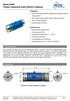 Properties Free of float metal bellow coupling with integrated torque measurement Non-contact measurement system, high robustness High torsional stiffness Limited torque of inertia Performance Measurement
Modern Construction Materials Prof. Ravindra Gettu Department of Civil Engineering Indian Institute of Technology, Madras
 Modern Construction Materials Prof. Ravindra Gettu Department of Civil Engineering Indian Institute of Technology, Madras Module - 2 Lecture - 2 Part 2 of 2 Review of Atomic Bonding II We will continue
8.2 Elastic Strain Energy
 Section 8. 8. Elastic Strain Energy The strain energy stored in an elastic material upon deformation is calculated below for a number of different geometries and loading conditions. These expressions for
APE T CFRP Aslan 500
 Carbon Fiber Reinforced Polymer (CFRP) Tape is used for structural strengthening of concrete, masonry or timber elements using the technique known as Near Surface Mount or NSM strengthening. Use of CFRP
Product-process interaction modeling of composite structures using As-Built information
 FASERINSTITUT BREMEN e.v. (FIBRE) Product-process interaction modeling of composite structures using As-Built information Christian BRAUNER 1, Andrea MIENE 1, Michael BRUYNEEL², Frederic PASCON², Axel
Capillary Rheometry: Analysis of Low-Viscosity
 Reprinted from American Laboratory October 2009 Technical Article by Tien T. Dao, Allan X. Ye, Ali A. Shaito, Nick Roye, and Kaj Hedman Capillary Rheometry: Analysis of Low-Viscosity Fluids, and Viscous
PERFORMANCE EVALUATION SYSTEM FOR BITUMINOUS BINDERS
 PERFORMANCE EVALUATION SYSTEM FOR BITUMINOUS BINDERS A. Vanelstraete, W. Teugels, Belgian Road Research Centre, Belgium, Nynas Bitumen, Belgium Abstract Understanding the behaviour and performance of bituminous
INNOVATIVE PLASTICS HIGH & LOW SHEAR RATE RHEOLOGY
 INNOVATIVE PLASTICS HIGH & LOW SHEAR RATE RHEOLOGY A SABIC COMPANY Innovative Plastics is a strategic business unit of SABIC. Founded in 1976, SABIC is today the first public, global multinational enterprise
Controlled release of proteins from self-assembling hydrogels based on oppositely charged dextran microspheres
 Controlled release of proteins from selfassembling hydrogels based on oppositely charged dextran microspheres Sophie Van Tomme a Rene van Nostrum a, Stefaan De Smedt b, Wim Hennink a a Department of Pharmaceutics,
Overview of Topics. Stress-Strain Behavior in Concrete. Elastic Behavior. Non-Linear Inelastic Behavior. Stress Distribution.
 Stress-Strain Behavior in Concrete Overview of Topics EARLY AGE CONCRETE Plastic shrinkage shrinkage strain associated with early moisture loss Thermal shrinkage shrinkage strain associated with cooling
DENSITY MEASURING SYSTEMS
 SHIBAYAMA SCIENTIFIC CO., LTD. DENSITY MEASURING SYSTEMS Density Gradient Tube Method Direct Reading Type A / Type B Comply with the standards below: JIS K-0061-1992, K-7112 1980 ASTM D1505 Type A /Left
CARBON/DYNEEMA INTRALAMINAR HYBRIDS: NEW STRATEGY TO INCREASE IMPACT RESISTANCE OR DECREASE MASS OF CARBON FIBER COMPOSITES
 26 TH INTERNATIONAL CONGRESS OF THE AERONAUTICAL SCIENCES CARBON/DYNEEMA INTRALAMINAR HYBRIDS: NEW STRATEGY TO INCREASE IMPACT RESISTANCE OR DECREASE MASS OF CARBON FIBER COMPOSITES J. G. H. Bouwmeester*,
Testing and appraisal of Lucobit polymer effect as an additive on asphalt mixture performance
 Abstract Testing and appraisal of polymer effect as an additive on asphalt mixture performance Hamid Sabbagh mollahosseini*,golazin Yadollahi**, Ershad Amoosoltani*** *, ***Executive of Engineering and
Three dimensional thermoset composite curing simulations involving heat conduction, cure kinetics, and viscoelastic stress strain response
 Three dimensional thermoset composite curing simulations involving heat conduction, cure kinetics, and viscoelastic stress strain response Harrison Poon, Seid Koric, M. Fouad Ahmad National Center for
Potentials and Limitations of Ultrasonic Clamp load Testing
 2007-01-1668 Potentials and Limitations of Ultrasonic Clamp load Testing Copyright 2007 SAE International Dr.-Ing. Gunther Hartmann KAMAX-Werke ABSTRACT Ultrasonic clamp load testing is known as a sophisticated
Influence of material data on injection moulding simulation Application examples Ass.Prof. Dr. Thomas Lucyshyn
 TRAINING IN THE FIELD OF POLYMER MATERIALS / PLASTICS Influence of material data on injection moulding simulation Application examples Ass.Prof. Dr. Thomas Lucyshyn 24 th April 2014 Otto Gloeckel-Straße
2. The mold is closed up and held under hydraulic pressure while the rubber material or compound cures.
 Designing with Rubber Molding Processes Compression Molding Compression molding is the process of placing a pre-load of a rubber material or compound directly in the mold cavity and compressed to the shape
Stress Relaxation Study of Paper and Plastic Film based Packaging Material
 Master's Degree Thesis ISRN: BTH-AMT-EX--2009/D-02--SE Stress Relaxation Study of Paper and Plastic Film based Packaging Material Rajdip Roy Lu Qi Department of Mechanical Engineering Blekinge Institute
RESULTS OF ICARUS 9 EXPERIMENTS RUN AT IMRA EUROPE
 Roulette, T., J. Roulette, and S. Pons. Results of ICARUS 9 Experiments Run at IMRA Europe. in Sixth International Conference on Cold Fusion, Progress in New Hydrogen Energy. 1996. Lake Toya, Hokkaido,
Abaqus/CFD Sample Problems. Abaqus 6.10
 Abaqus/CFD Sample Problems Abaqus 6.10 Contents 1. Oscillatory Laminar Plane Poiseuille Flow 2. Flow in Shear Driven Cavities 3. Buoyancy Driven Flow in Cavities 4. Turbulent Flow in a Rectangular Channel
Carbon Dioxide and an Argon + Nitrogen Mixture. Measurement of C p /C v for Argon, Nitrogen, Stephen Lucas 05/11/10
 Carbon Dioxide and an Argon + Nitrogen Mixture Measurement of C p /C v for Argon, Nitrogen, Stephen Lucas 05/11/10 Measurement of C p /C v for Argon, Nitrogen, Carbon Dioxide and an Argon + Nitrogen Mixture
Test Report No. 48/2005. Degussa AG Paul-Baumann-Straβe 1 45764 Marl. Binder tests of bitumen modified with Road+
 Test Report No. 48/2005 Client: Degussa AG Paul-Baumann-Straβe 1 45764 Marl Project: Binder tests of bitumen modified with Road+ Subject of the Study: Production of 50/70 and 70/100 mixtures of bitumen
1. Fluids Mechanics and Fluid Properties. 1.1 Objectives of this section. 1.2 Fluids
 1. Fluids Mechanics and Fluid Properties What is fluid mechanics? As its name suggests it is the branch of applied mechanics concerned with the statics and dynamics of fluids - both liquids and gases.
Understanding Rheology
 Understanding Rheology Ross Clark Distinguished Research Fellow San Diego R&D Page 1 Background CP Kelco makes carbohydrate based water soluble polymers Fermentation Xanthan Gellan Plant derived Pectin
Simulation Technology to Support the Design of Electric Distribution and Control Devices
 Simulation Technology to Support the Design of Electric Distribution and Control Devices SAKATA Masayoshi ABSTRACT Simulation technology for electric distribution and control devices includes structural
DREXELBROOK. USonic-R Series. Ultrasonic Level Measurement System. User Friendly
 DREXELBROOK A Leader In Level Measurement Solutions USonic-R Series Ultrasonic Level Measurement System User Friendly Set the measurement range directly in inches, feet, millimeters, centimeters, or meters
Table of content. L81/RITA high speed Thermo Balance. Quattro Dilatometer. L75/1250/B/S Macro Dilatometer. New air cooled furnace program
 THERMAL TRENDS 2 Table of content L75/SDC simultaneous-dilatometer/calorimeter L75/SDD simultaneous Dilatometer/DTA L81/RITA high speed Thermo Balance Quattro Dilatometer L75/1250/B/S Macro Dilatometer
How to reduce the cure time without damaging the rubber compound during injection molding?
 How to reduce the cure time without damaging the rubber compound during injection molding? 0Introduction This article aims at analyzing the rubber injection process and highlighting the limits that prevent
CHARACTERIZATION OF HIGH PRESSURE RTM PROCESSES FOR MANUFACTURING OF HIGH PERFORMANCE COMPOSITES
 CHARACTERIZATION OF HIGH PRESSURE RTM PROCESSES FOR MANUFACTURING OF HIGH PERFORMANCE COMPOSITES R. Chaudhari 1*, M. Karcher 1, P. Elsner 1, F. Henning 1 1 Fraunhofer Institute for Chemical Technology,
LED light engine / OLED LED compact. Umodule STARK CLE 120-2000 CLASSIC / CLE 130-2500 CLASSIC umodule CLE
 Umodule STARK CLE 12-2 CLASSIC / CLE 13-25 CLASSIC umodule CLE Product description Designed for diffuser downlights and wallmounted luminaires Ideal to realise simple luminarie designs For easy adaptation
PREDICTION OF MACHINE TOOL SPINDLE S DYNAMICS BASED ON A THERMO-MECHANICAL MODEL
 PREDICTION OF MACHINE TOOL SPINDLE S DYNAMICS BASED ON A THERMO-MECHANICAL MODEL P. Kolar, T. Holkup Research Center for Manufacturing Technology, Faculty of Mechanical Engineering, CTU in Prague, Czech
In-situ Load Testing to Evaluate New Repair Techniques
 In-situ Load Testing to Evaluate New Repair Techniques W.J. Gold 1 and A. Nanni 2 1 Assistant Research Engineer, Univ. of Missouri Rolla, Dept. of Civil Engineering 2 V&M Jones Professor, Univ. of Missouri
4.3 Results... 27 4.3.1 Drained Conditions... 27 4.3.2 Undrained Conditions... 28 4.4 References... 30 4.5 Data Files... 30 5 Undrained Analysis of
 Table of Contents 1 One Dimensional Compression of a Finite Layer... 3 1.1 Problem Description... 3 1.1.1 Uniform Mesh... 3 1.1.2 Graded Mesh... 5 1.2 Analytical Solution... 6 1.3 Results... 6 1.3.1 Uniform
Der Einfluss thermophysikalischer Daten auf die numerische Simulation von Gießprozessen
 Der Einfluss thermophysikalischer Daten auf die numerische Simulation von Gießprozessen Tagung des Arbeitskreises Thermophysik, 4. 5.3.2010 Karlsruhe, Deutschland E. Kaschnitz Österreichisches Gießerei-Institut
Computer Controlled Generating Stations Control and Regulation Simulator, with SCADA SCE
 Technical Teaching Equipment Computer Controlled Generating Stations Control and Regulation Simulator, with SCADA SCE EDIBON SCADA System Teaching Technique used 4 5 2 Data Acquisition Board Cables and
Natural Convection. Buoyancy force
 Natural Convection In natural convection, the fluid motion occurs by natural means such as buoyancy. Since the fluid velocity associated with natural convection is relatively low, the heat transfer coefficient
M n = (DP)m = (25,000)(104.14 g/mol) = 2.60! 10 6 g/mol
 14.4 (a) Compute the repeat unit molecular weight of polystyrene. (b) Compute the number-average molecular weight for a polystyrene for which the degree of polymerization is 25,000. (a) The repeat unit
ORGANIC SAMPLE PREPARATION
 ORGANIC SAMPLE PREPARATION W W W.LA BT E C H S R L.CO M WSPE MANUAL VACUUM MANIFOLD SPE Process control of the flow rate is critical to guarantee reproducible extractions. Differently then any other systems,
PROCESSING OF VARIOUS MATERIALS
 4 PROCESSING OF VARIOUS MATERIALS CHAPTER CONTENTS 4.1 Shaping Processes for Polymers Polymers Manufacturing Processes for Polymers 4.2 Rubber Processing Technology Processing of rubber into finished good
Chapter Outline. Mechanical Properties of Metals How do metals respond to external loads?
 Mechanical Properties of Metals How do metals respond to external loads? Stress and Strain Tension Compression Shear Torsion Elastic deformation Plastic Deformation Yield Strength Tensile Strength Ductility
The ratio of inertial to viscous forces is commonly used to scale fluid flow, and is called the Reynolds number, given as:
 12.001 LAB 3C: STOKES FLOW DUE: WEDNESDAY, MARCH 9 Lab Overview and Background The viscosity of a fluid describes its resistance to deformation. Water has a very low viscosity; the force of gravity causes
THE COMPOSITE DISC - A NEW JOINT FOR HIGH POWER DRIVESHAFTS
 THE COMPOSITE DISC - A NEW JOINT FOR HIGH POWER DRIVESHAFTS Dr Andrew Pollard Principal Engineer GKN Technology UK INTRODUCTION There is a wide choice of flexible couplings for power transmission applications,
CYCOM 2040 EPOXY PREPREG
 DESCRIPTION CYCOM 2040 is a very tough modified epoxy resin system with exceptional high temperature performance. It is suitable for highly stressed components exposed to elevated temperature environments
Dynamic wave dispersion and loss properties of conventional and negative Poisson's ratio polymeric cellular materials 1 INTRODUCTION
 Chen and Lakes 1 Dynamic wave dispersion and loss properties of conventional and negative Poisson's ratio polymeric cellular materials by C. P. Chen and R. S. Lakes Adapted from Cellular Polymers, 8, 343-369,