
CS/CU-PE9DKE CS/CU-PE12DKE
|
|
|
- Randolf Lamb
- 10 years ago
- Views:
Transcription
1 hr DELAY hr DELAY Order No. GMAC C3 Air Conditioner CS/CUPE9DKE CS/CUPE12DKE AUTO HEAT COOL DRY OFF ON OFF OFF ON SELECT SET/CANCEL ERROR RESET INVERTER WARNING This service information is designed for experienced repair technicians only and is not designed for use by the general public. It does not contain warnings or cautions to advise nontechical individuals of potential dangers in attempting to service a product. Products powered by electricity should be serviced or repaired only by experienced professional technicians. Any attempt to service or repair the product or products dealt with in this service information by anyone else could result in serious injury or death. CONTENTS Page 1 Features 2 2 Functions 3 3 Product Specifications 6 4 Dimensions 10 5 Refrigeration Cycle Diagram 12 6 Block Diagram 13 7 Wiring Diagram 14 8 Operation Details 15 9 Installation instructions 41 Page 10 Installation and Serving Air Conditioner Using R410A Disassembly of The Parts Troubleshooting Guide Technical Data Exploded View Replacement Parts List Exploded View Replacement Parts List Electronic Circuit Diagram 72 R C Guangzhou Matsushita Air Conditioner Co., Ltd. (GMAC) All rights reserved. Unauthorized copying and distribution is violation of law.

2 1 Features High Efficiency Enviromental Friendly (For Refrigerant : R410A Model) Zero ozone depleting potential and low global warming potential by using R410A refrigerant. Air Quality Indicator Comfort Environment Air filter with function to reduce dust and smoke Auto Restart Control Automatically restart after power failure Removable and washable Front Panel 12hour Timer Setting Delay ON Timer and OFF Timer Breakdown Self Diagnosis function 2

3 hr hr DELAY DELAY OFF ON OFF ON CSPE9DKE / CUPE9DKE / CSPE12DKE / CUPE12DKE 2 Functions Remote Control AUTO HEAT COOL DRY OFF SELECT SET/CANCEL ERROR RESET INVERTER OFF/ON Operation START/STOP AIR SWING Airflow Direction Control Turn on/off the air conditionor When stop the operation by pressing OFF/ON button,the cursor key points to OFF. Horizontal Airflow Direction Control Auto Control Manual Control Vertical Airflow Direction Manual Control MODE Operation Mode Selection TEMP Room Temperature Setting FAN SPEED Automatic Mode Operation Heating Mode Operation Cooling Mode Operation Soft Dry Mode Operation Indoor Fan Speed Selection TIMER OFF/ON Temperature Setting(16 to 30 ) Auto Operation Timer Operation Selection Stop/Start Operation Control Low Speed Med Speed TIMER SET/ CANCEL (set the ON/OFF Timer hourly later) Set /Cancel Timer Operation Med Speed Set timer/cancel the set timer By pressing SET button for 5seconds continuously to switch to set the sensor Med+ Speed sensitivity. High Speed CHECK Check Point Self diagnosis function Automatic Speed ERROE RESET ERROE Reset Point A,B Time Changing Button Change the setting time. RESET To reset the indoor unit. Reset Point Clear memory data 3

4 Indoor Unit Auto Switch Button Power Switch ON/OFF When the remote control cannot be used or for repairing and testing,please use this button. Force Cooling Operation Keep pressing this button for 5 seconds to start the force cooling operation. Antifreezing Control for the Evaporator Cooling or Soft Dry Operation Time Delay Safety Control The unit will restart operation in 34 minutes after each pause. Force Heating Operation Keep pressing this button for 8 seconds to start the force heating operation. Different Remote Controlling Setting Keep pressing this button for11 to change different remote controlling setting(a B) Mode. Signal Receiving Sound Keep pressing this button for 16 seconds to turn off or turn on the signal receiving sound or H14 Abnormality Detection Mode. Operation Indication Lamps Power (green) Lights up in operation; Blinks during Hot Start operation and determining Auto Operation mode Timer(orange) Light up in Timer Setting. Blinks in Self Diagnosis Control Green Air quality Orange Red Operation Mode Cooling/Heating/Soft Dry /Auto Operation Warm Booting Control Indoor fan starts running when indoor piping temperature reaches 19 or above. Indoor Fan Speed Control High,Med+, Med, Med,Low Auto Fan Speed Airflow Direction Control Automatic Airflow Direction Control The louver automatically swings up and down Five Manual Airflow Direction Control Delayed Ontimer Control For cooling or soft dry mode, the unit starts 15 minutes before the set time with the remote control, but for heating mode 30 minutes before the set time. Automatic Restart Control Operation is restarted after power failure at previous setting mode. 4

5 Outdoor Unit Panasonic 4way Valve Control Total Running Current Control If the unit is stopped during Heating Operation, the 4way valve will remain in heating mode operation for 3 minutes. Deice Operation Overload Protector Inner protector 30 Seconds Forced Operation Control Once the compressor is activated, it does not stop within 30 seconds. It stops immediately with remote control ON/OFF button. 5

6 3 Product Specifications Cooling Capacity Heating Capacity Moisture Removal Power Source Airflow Method Unit kw kw L/h Phase V Cycle OUTLET CSPE9DKE SIDE VIEW 2.50( ) 3.30( ) Single CUPE9DKE TOP VIEW INTAKE Air Circulation Indoor Air (low) 3 m /min 6 Indoor Air (medium) 3 m /min 7.7 Indoor Air (high) 3 m /min 9.8 Noise Level Electrical Data Outdoor Air Input Running Current EER/COP Starting Current Piping Connection Port(Flare piping) Piping Size(Flare piping) Drain Hose Inner Diameter Length Power Supply Cord Length (Number of corewire) Height Dimensions Width Depth Net Weight Compressor Type Motor Type Rated output Air Circulation type Motor type Input Rated Output Fan Low Speed Med High 3 m /min db(a) W A W/W A Inch Inch Inch Inch mm m m mm mm mm kg W W W rpm rpm rpm Cooling:high42,Low27 Heating:high42,Low27 G:half union3/8" L:half union1/4" G:gas side3/8" L:liquid side1/4" corewire/1.5mm Crossflow fan Induction(8poles) Cooling:high46 Heating:high47 Cooling:730( ) Heating:820( ) Cooling:3.4 Heating:3.7 Cooling:2.95( ) Heating:3.46( ) 3.7 G:3way valve3/8" L:2way valve1/4" G:gas side3/8" L:liquid side1/4" Rotary(1 cylinder) Rolling piston type Induction(6 poles) 650 Propeller fan Induction(6 poles)

7 Heat Exchanger Description Tube Material Fin Type Rows/Stage FPI Dimensions Refrigerant Control Device Refrigeration Oil Refrigerant (R410A) Thermostat Protection Device Length Capillary Circulation Inner Diameter Air Filter Refrigerant Circulation Control Device Fan Motor Capacitor Unit CSPE9DKE CUPE9DKE Evaporator Condenser Copper Copper Slot type Corrugation type mm (c.c) g mm L/min mm F,V (Plate fin configuration,forced draft) 2x15 1X x252x x504x18.2 Capillary Tube RB68A or Freol Alpha68M 840 Electronic Control sensor Inner protector P.P. Honeycomb Capillary 1.2 F, 450V Specifications are subject to change without notice for further improvement. 7

8 Cooling Capacity Heating Capacity Moisture Removal Power Source Airflow Method Unit kw kw L/h Phase V Cycle OUTLET CSPE12DKE SIDE VIEW 3.15( ) 4.10( ) Single CUPE12DKE TOP VIEW INTAKE Air Circulation Indoor Air (low) 3 m /min 6.8 Indoor Air (medium) 3 m /min 8.4 Indoor Air (high) 3 m /min 9.9 Noise Level Electrical Data Outdoor Air Input Running Current EER/COP Starting Current Piping Connection Port(Flare piping) Piping Size(Flare piping) Drain Hose Inner Diameter Length Power Supply Cord Length (Number of corewire) Height Dimensions Width Depth Net Weight Compressor Type Motor Type Rated output Air Circulation type Motor type Input Rated Output Fan Low Speed Med High 3 m /min db(a) W A W/W A Inch Inch Inch Inch mm m m mm mm mm kg W W W rpm rpm rpm Cooling:high42,Low30 Heating:high42,Low33 G:half union3/8" L:half union1/4" G:gas side3/8" L:liquid side1/4" corewire/1.5mm Crossflow fan Induction(8poles) Cooling:high48 Heating:high50 Cooling:900( ) Heating:1110( ) Cooling:4.2 Heating:4.9 Cooling:2.98( ) Heating:3.18( ) 4.9 G:3way valve3/8" L:2way valve1/4" G:gas side3/8" L:liquid side1/4" Rotary(1 cylinder) Rolling piston type Induction(6 poles) 650 Propeller fan Induction(6 poles)

9 Heat Exchanger Description Tube Material Fin Type Unit CSPE12DKE CUPE12DKE Evaporator Condenser Copper Copper Slot type Corrugation type Rows/Stage FPI Dimensions Refrigerant Control Device Refrigeration Oil Refrigerant (R410A) Thermostat Protection Device Length Capillary Circulation Inner Diameter Air Filter Refrigerant Circulation Control Device Fan Motor Capacitor mm (c.c) g mm L/min mm F,V (Plate fin configuration,forced draft) 2x15 2X x252x X504x18.2 Capillary Tube RB68A or Freol Alpha68M 1020 Electronic Control Inner protector P.P. Honeycomb Capillary 1.8 F, 450V Specifications are subject to change without notice for further improvement. 9

10 AUTO HEAT COOL DRY OFF hr hr DELAY DELAY OFF ON OFF ON ERROR RESET CSPE9DKE / CUPE9DKE / CSPE12DKE / CUPE12DKE 4 Dimensions Indoor Unit CSPE9DKE CSPE12DKE Unit:mm Side view Air intake Front View Right Piping Hole Air outlet Left Piping Hole <Back View> Installation Plate Hook Gas Side Liquid Side 141 SELECT SET/CANCEL INVERTER (100) (420) (50) Drain Port Installation plate (Front View) 254 B A 95 (131) (382) (118) (631) 10

11 Outdoor Unit CUPE9DKE CUPE12DKE Unit : mm 10cm or more <Top View> cm or more 100cm or more 289 INVERTER 11

12 5 Refrigeration Cycle Diagram CS/CUPE9DKE CS/CUPE12DKE INDOOR UNIT OUTDOOR UNIT CAPILLARY TUBE C1 LIQUID SIDE 2WAY VALVE CAPILLARY TUBE C3 CAPILLARY TUBE C2 PIPING SENSOR INTAKE AIR SENSOR PIPING SENSOR OUTDOOR AIR SENSOR HEAT EXCHANGER (EVAPORATOR) HEAT EXCHANGER (CONDENSOR) GAS SIDE 3WAY VALVE 4WAY VALVE COMPRESSOR SENSOR COMPRESSOR Cooling Heating 12

13 6 Block Diagram FM CSPE9DKE/CUPE9DKE CSPE12DKE/CUPE12DKE INDOOR UNIT OUTDOOR UNIT FM THERMAL FUSE 2 FM 3 REACTANCE 4WAY VALVE

14 7 Wiring Diagram CSPE9DKE/CUPE9DKE CSPE12DKE/CUPE12DKE ELECTRONIC CONTROLLER (DISPLAY,RECEIVER) CNDISP (W) W W W W W W W CNDISP (Y) CNSTM (W) BR R O Y P MOTOR WIRELESS REMOTE CONTROL W W W AUTO SW SENSOR (PIPING TEMP.) ELECTRONIC CONTROLLER (MAIN) CNTH (Y) FUSE T 2.5A L 250V POWER SUPPLY CORD B R MOTOR BR Y/G R BL W CNFM (W) BL W B Y TERMINAL 3 INDOOR UNIT TERMINAL 3 YELLOW OUTDOOR UNIT BL W R ACWHT (WHITE) ACBLK (BLACK) FUSE DATA (RED) BLUE RED G TRADE MARK G COMPRESSOR TERMINAL SENSOR (AIR TEMP) SENSOR (PIPING TEMP) SENSOR (COMP. TEMP) CNTH (WHITE) 1 CNTANK 3 (WHITE) CT101 OUTDOOR FAN MOTOR RESISTANCE( ) COIL COMP (4WAY VAVLE) Fan Motor Y B Y Y CAPACITOR B Y Fm2 Fm GRY GRY REACTOR CUPE9DKE CONNECTING L6LAHAG00001 YB M YR A COMPRESSOR RESISTANCE( ) CUPE12DKE L6LAJAG FUSE2 T3.14A L250V + + P + (RED) (BLUE) (YELLOW) COMPRESSOR R B Y CONNECTING UV UW VW CUPE9DKE CUPE12DKE N Y/G 14

15 8 Operation Details 8.1 Operation and Display of Remote Controller Original Setting AUTO HEAT COOL DRY OFF OFF A hr DELAY ON AUTO AUTO OFF B hr DELAY ON FAN SPEED AIR SWING ON/OFF Button ON/OFF Switch Signal Transmitting Indoor Indicator Green Mode Selecting Button 1.Function and Display of the button: AUTO, HEAT, COOL, DRY can be selected by pressing the button. Initial display of LCD is as follow MODE SET TEMP FAN SPEED AIR SWING AUTO 25 AUTO AUTO HEAT 20 AUTO AUTO COOL 28 AUTO AUTO DRY 25 AUTO AUTO Keeping the button depressed continuously, the operation mode will change as HEAT COOL DRY AUTO 15

16 2.Shift time of the Mode selection button Single press Mode Selecting Button LCD of Remote Control Signal Transmitting AUTO HEAT t 500ms Keep depressed( less than 500ms) Mode Selecting Button LCD of Remote Control AUTO HEAT COOL DRY Signal Transmitting t 500ms Keep depressed continuously Mode Selecting Button LCD of Remote Control AUTO HEAT COOL DRY AUTO HEAT Signal Transmitting T1 T T T T2 T1=1s T=250ms T2 250ms t 500ms If the ON/OFF button is pressed after the operation mode is set, or change the operation mode during operation, or the signal is received from the remote controller, the indoor indicator will flash or light up to start the operation. Fan Speed Button 1.The display on the remote controller changes as follow by pressing the AIR SWING button. AUTO 2.If the ON/OFF button is pressed after the fan speed mode is set, or change the fan speed mode during operation, or the signal is received from the remote controller, the indoor indicator will flash or light up to start the operation. 3.The shift time of the fan speed button is the same to that of mode selecting button. 16

17 Temp Adjusting Button 1.Press this button to change the set temperature Increase the set temperature(max.30 ) Decrease the set temperature(min.16 ) 2.If the ON/OFF button is pressed after temperature is set, or change the temperature during operation, or the signal is received from the remote controller, the indoor indicator will flash or light up to start the operation. Timer Set Button 1.The Function of the TimerSetting Button 1) SELECT Button When the airconditioner is in operation OFF Timer Setting OFFON Timer Setting Exit Timer Setting hr DELAY hr DELAY hr DELAY OFF OFF ON A B A B When the airconditioner is turned off. Make sure that the cursor key on the display of remote control points to OFF. ON Timer Setting ONOFF Timer Setting Eixt Timer Setting FAN SPEED AIR SWING hr DELAY ON OFF hr hr DELAY DELAY ON OFF A B A B 2) Timer Selecting Button A and B The set time can be changed with manner of 1,2,3,4,5,6,7,8,9,10,11,12,1,2,3,4... By pressing the buttons. Pressing the button A can change the time for ON Timer and OFF Timer, off time for OFFON Timer, on time for ONOFF Timer; Pressing the button B can change the time for on time for OFFON Timer and off time for ONOFF Timer setting. 3) SET/CANCEL Button 1 Pressing the button to set or cancel the set timer during the timer setting or activate the previous timer setting. After the timer setting is determined, ON or OFF will stop flashing. If the timer setting is cancelled, ON or OFF will disappear on the remote control display. The time on the remote control will change every hour. 2 By pressing this button for 5 seconds continuously, the number indicating the air quality sensor sensitivity will appear in the remote control display. Then press or button to increase pr decrease the sensitivity. Indicate Sensitivity Turn off the air quality Normal Standard hight Notes: OFF Timer and OFF ON Timer can only be set during the operation; During the operation, if the ON Timer or ONOFF Timer is set, the operation will be stopped. Timer setting can operate only once. If the OFF/ON button on the remote control or the AUTO Switch on the indoor unit is pressed, the timer setting will be cancelled. If Auto Restart Control occurs, timer setting will be cancelled. 17

18 2.Timing Chart of TimerSetting 1) OFF Timer OFF Timer Setting 3 hours later OFF Initial Time Changed Time Timer Indicator Remote Control LCD 3 hours 2 2 hours 1 Operation Indicator Indoor Unit 1:During timer operation changing the set time. 2:During timer operation press the ON/OFF button to cancel the OFFTimer and the timer indicator on the indoor unit will go off. 2) ON Timer ON Timer Setting 5 hours later ON Initial Time Changed Time Timer Indicator Remote Control LCD Operation Indicator 5 hours Indoor Unit OFF/ON Button Preparation for operation About Cursor Key Which Points To OFF On Remote Control When the ON/OFF button on the remote control is pressed, the cursor key which points to OFF will appear or disappear to indicate the ON/OFF status of the air conditioner. FAN SPEED AIR SWING PRESS "OFF/ON" BUTTON For some reason (Ex. The signal of the remote control does not reach the signal receiver of the indoor unit.), the display of the remote control will not correspond with the actual ON/OFF status of the indoor unit: The air conditioner is running but the cursor key which points to OFF appears. The air conditioner can be stopped with any button (Except for ON/OFF, TIMER SET, TIMER ON ) pressed. The air conditioner is on standby, but the cursor key which points to OFF disappears. The air conditioner can be started with any button(except for ON/OFF, TIMER SET, TIMER OFF ) pressed. 18

19 Air Swing Button The airflow direction will change as below by pressing the AIR SWING button. Airflow Direction: AUTO Display of Diagnosis Refer to Diagnosis section. Change the Code of Remote Controller Change the code of remote controller by joining or cutting jump wire on the remote controller and indoor PCB. Four codes(a,b,c,d) can be selected. JB J B Short Open Inside the battery box of remote controller. On indoor PCB Indoor PCB Short Open A C B D 8.2 Operation and Display of Indoor Unit AUTO Operation Switch SW ON 5s 8s 11s 16s 21s Function AUTO Operation Forced COOL Forced HEAT Various Setting Mode Individual Counteraction Number of beep When the switch is pressed between 0 to 5 seconds, Auto Mode operation starts to function. 2. When the switch is pressed between 5 to 8 seconds, the unit is forced to operate in Cooling Mode. 3. When the switch is pressed between 8 to 11 seconds, the unit is forced to operate in Heating Mode. 4. When the switch is pressed between 11 to 16 seconds and together with the signal from the remote controller, the unit can be changed to different controlling setting. 5. When the switch is pressed between 16 to 21 seconds, either H14 error detection selection mode or remote controller s signal receiving sound can be cancelled or turned on. 6. If the intake air temperature is less than 16 and the Forced Cooling is activated, because the prior operation mode is heating, the compressor will stop for 3 minutes to start the Forced Cooling operation. 19

20 Indoor Unit Indicator ON OFF FLASH Operation (Green) Run Stop Hot start, deice control, mode judging and ON Timer Operation detecting. Timer (Orange) Timer set Timer not set Malfunction happens. Air Quality (Green Orange Red ) The air quality can be detected automatically by the air quality sensor and shown by the color of the air quality indicator as bellow.. Color of indocator :Green Air qualuty: Normal Orange Poor Red Bad 8.3 Common Features Indoor Fan Motor Control 1. Basic Fan Speed Fan speed is determined by the setting of the remote control. And W5~W6 can be calculated according the equations below: Those operation modes W4:Low, W8 : Hi, W10 have been regulated in the EEPROM data. Me : W5=W4+W10 Me : W6=W5+W10 Me+ : W7=W6+W10 Cool.Dry REMOTE CONTROL FAN SPEED ROTATING SPEED Heat REMOTE CONTROL FAN SPEED ROTATING SPEED SHI HI Me Me+ Me Lo Lo Slo Sslo W9C W8C Calculated W4C W3C W2C W1C SHI HI Me Me+ Me Lo Lo Slo Sslo W8W Calculated W4W W3W W2W W1W 20

21 Basic fan speed of indoor unit COOL HEAT PE9DKE PE12DKE SHI W 9C HI W 8C Me+ W 7C Me W 6C Me W 5C Lo W 4C Lo W 3C Slo W 2C SSLo W 1C Interval W 10C SHi W 8W Me+ W 7W Me W 6W Me W 5W Lo W 4W Lo W 3W Slo W 2W SSLo W 1W Interval W 10C Indoor Fan Control Cool/Dry Operation Cool Operation Dry Operation Protection Operation Me Forced Cool Hi Other than above Minimum Control Other than above Mode judging during ONTimer detecting Other than above Auto Fan Mode judging for Auto Operation ONTimer Operation detecting Manual Fan Auto Fan Manual Fan Other than above Other than above Lo Setting of Remote Normal Auto Fan Fan Speed Set Lo Slo Slo 21
22 Heat Operation Protection Operation Forced Heat Me Shi Mode judging in Auto Operation Preparing Operation of TimerON operation Hot Start Deice Control Low Temperature Control Minimum Control Lo Stop Stop SSHi Other than above Maximum Control Other than above Relay OFF(Comp OFF) Indoor Piping Temp Control(Auto Fan) Detection of TimerON Operation Other than above Auto Fan Speed Manual Fan Speed Auto Fan Speed Manual Fan Speed SLo or SSLo Refer to the following contents Lo Setting On Remote Control Auto Setting On Remote Control Auto Fan Speed for Cooling Operation Following eight patterns repeat over and over for auto fan speed. Each pattern persists ten second. No.C No.B No.A a b c d e f g h a b Temp. Of outdoor unit under 35 Temp. Of outdoor unit above 35 UNIT: rpm PE9DKE PE12DKE PE9DKE PE12DKE No.A No.B No.A No.B No.C No.C Auto Fan Speed for Heating Operation Refer to Piping Temperature Control. 22
23 3. Deodorizing Control This type of control is applicable on Cooling Mode and Soft Dry Mode operating only. During cooling or soft dry operation with automatic fan speed, the unit will operate as state below for deodorizing purpose. Deodorising Status Compressor status ON OFF ON Period(sec) Indoor fan speed OFF Slo Note* Slo OFF Slo OFF OFF ON ON COMP OFF FM OFF Note*:Fan speed is automatic for cooling mode and Slo for soft dry mode. Outdoor Fan Motor Control 1. Specification of outdoor fan motor Model Fan Motor Speed(rpm) CUPE9DKE Induction Motor(6 Poles 1 speed) 670 CUPE12DKE Induction Motor(6 Poles 1 speed) Operation of the fan motor The outdoor fan runs during the operation of the compressor or within 30 seconds after the compressor stops. Compressor ON OFF ON Outdoor Fan ON OFF ON 30 seconds 23
24 Frequency for Compressor Operation 1. Basic Frequency If the frequency for the compressor calculated is prohibited, 1 Hz larger than this calculated one will be selected. Cool Dry Heat Starting Control Within 300 seconds after the startup of the compressor, the frequency for the compressor will change as below. Startup after the micron reset Startup after thermal off ( Set Temp Reached, heating mode) Time From Startup of Time From Startup of Min.Hz Max.Hz Min.Hz Max.Hz Compressor Compressor s \ s \ 119 Startup after thermal off ( Set Temp Reached) Startup under other conditions Time From Startup of Time From Startup of Min.Hz Max.Hz Compressor Compressor Min.Hz Max.Hz s s \ \
25 Protection Control A. Time Delay Safety Control 1.The compressor will not start for 3 minutes after the stop of the operation. 2.This control is not applicable if the power supply is turned off and turned on again. B. 30 Seconds Forced Operation 1.Once the compressor starts operation, it will not stop for 30 seconds. 2.However, it can be stopped using remote controller or Auto Switch on indoor unit. C. Total Running Current Control 1.When the total outdoor unit running current(ac) exceeds I1 value, the frequency for compressor will decline. 2. If the running current is less than I1 value for 10 seconds, the frequency for compressor will increase. 3.However, if the total outdoor running current exceeds 17.0A, compressor will be stopped immediately for 3 minutes. Current Value (A)(I1) COOL HEAT PE9DKE PE1DKE A B Outdoor Piping Temp 38.5 B A 37.5 D. IPM Protection Control 1.DC Peak Current Control 1>When electric current to IPM exceeds set value of DC17.3 1A,the compressor will stop. It will restart after three minutes. 2>If the set value is exceeded again within 30 seconds, the operation will restart after one minute. If this condition repeats continuously for seven times, all indoor and outdoor relays will be cut off. 3>Error code [F99] will be displayed. 2.Overheating Protection Control When the IPM temperature rises to 90.0, compressor will stop immediately. Compressor restarts after three minutes if the temperature decreases to 85. E. Compressor Overheating Prevention Control The frequency is also controlled by the temperature of the compressor. Protection Control Comp OFF 8Hz/45Sec down. Min.17Hz 113Hz Free
26 F. Compressor Protection Control (Gas Leakage) 1.When the conditions listed in the table occur, the compressor stops and restarts after three minutes. 2. If this continuously occur for twice within 20 minutes, all indoor and outdoor relays will be cut off. 3.This control is not applicable for deice operation. Comp Frequency 45Hz or Above 64Hz or Above 58Hz or Above 73Hz or Above Total Outdoor Current Ib I 1.3 Ib I 1.6 Ib I 1.3 Ib I 1.6 Indoor Piping Temp 20 or Above 25 or Less 20 or Above 25 or Less Operation Mode Cool/Dry Heat Cool/Dry Heat Model PE9DKE PE12DKE G. Low Operation Frequency Protection Control If one of the following conditions exists, the compressor will run with the frequency of 40 Hz Intake Air Temp 30 or 15 Outdoor Temp 38 or or 4 Indoor Piping Temp 30 0 Operation Mode Cool/Dry Heat 4way Valve Control 1. The 4way valve will be turned on as the compressor starts to operate and remains on all the time during the heating operation. 2.The 4way valve remains on for less than 3 minutes after heating operation is stopped. 3.The 4way valve remains off during cooling and soft dry operation. 4.If the operation is shifted from cooling or dry to heating mode, the switching of 4way valve will be delayed for 3 minutes. Heating Comp 4way Valve Status 4way Valve Drive Signal 14V Voltage Across 4way Valve 0V 2s 5V 5.Heating Operation Mode Four minutes after the start of the operation, if the indoor piping temperature detected is lower than 0, the operation will stop.( Restarts in 3 minutes) If this situation happens 4 times within 30 minutes, error code F11 will be displayed. 6.Cooling Operation Mode Four minutes after the start of the operation, if the indoor piping temperature detected is higher than 45, the operation will stop ( Restarts in 3minutes). If this situation happens 4 times within 30 minutes, error code F11 will be displayed. 26
27 Airflow Direction Control A. Vertical Airflow Direction Cool Dry Heat Vane Angle Manual Airflow Auto Airflow ~35 Manual Airflow Auto Airflow 7 Manual Airflow C 14 Auto Airflow Direction B A 52 7 Notes: Manual Airflow Direction: The vertical airflow vane will be fixed at the angle desired according to the instructions of remote controller no matter the operation is cooling, soft dry or heating mode. Auto Airflow Direction: Cool : The vertical airflow vane will swing up and down within the range indicated in the Form above. Dry : Remain in the horizontal direction. Heat : The vertical airflow vane will change according to indoor piping temperature as below.. Indoor Piping Temperature Vertical Airflow Vane 127 C 33 B A Intake air Temperature Free A 27
28 C. Mode Judgement for Auto Operation Airflow Mode Setting Auto Manual Initializing When PowerOn Upper Limit Lower Limit Auto Operation Upper Limit Position Previously Set Shifted to Auto Mode Same to Cool/Dry/Heat Same to Cool/Dry/Heat Note: When the airconditioner is turned on, if manual airflow direction is selected and the angle is lower than the lower limit for heating operation, the airflow direction will be changed to the lower limit for heating mode. If Cooling operation is determined during the mode judgement, the airflow direction will be shifted to lower limit for cooling operation. D. About TimerSetting During OnTimer operation, the airflow direction can be changed between Manual and Auto. Self Diagnosis A. About Self Diagnosis When the airconditioner is stopped due to malfunction detected by itself, the operation can be restarted using AUTO Switch on the indoor unit. In forced operation, the frequency for compressor and fan speed can not be changed and the signal receiving sound is different. Normal Operation ON: pep Forced Operation ON: pep, pep, pep, pep Stop: pep Note: Refer to the Diagnosis Code Table for the malfunction when forced operation is not available. B. Display of Error Code 1.Keeping the CHECK button on the remote controller depressed for 5 seconds, error code ranging from H11 to H99 can be displayed on the remote controller. 2.The error code is changed and diagnosis signal is transmitted to the indoor unit by pressing the Temp Up button on the remote control. 3.When the malfunction of the airconditioner matches the error code on the remote control, four beeps can be heard from the indoor unit and the operation indicator will light up. 4.Keep the CHECK button depressed continuously for 5 seconds to cancel the diagnosis function. Indoor Unit Indoor Unit TIMER POWER TIMER POWER Pep Pep, pep, pep, pep The error code doesn t match the malfunction of indoor unit. The error code matches the malfunction of indoor unit. Remote controller 28
29 C. Diagnosis Code Table Code Abnormality/Protection Judgment Check Emergency Operation H00 Normal H11 Indoor/Outdoor abnormal >1minute after starting Connecting cable, Indoor communication operation /outdoor PCB H14 Indoor intake air temp sensor Intake air temperature sensor( abnormality defected or disconnected) X H15 Outdoor compressor temperature Continue for 5 sec. Compressor temperature sensor abnormality sensor(defected or disconnected) X H16 Outdoor Current Transformer open Outdoor PCB, IPM module circuit X H19 Indoor fan motor mechanism lock Indoor PCB, fan motor X Continue for 5 sec Heat exchanger temperature H23 Indoor heat exchanger temperature A sensor sensor abnormality (defected or disconnected) H25 Air filter abnormality H27 H28 H30 H33 Outdoor air temperature sensor abnormality Outdoor heat exchanger temperature sensor abnormality Discharge temperature sensor abnormality Incorrect connection of Indoor/Outdoor cable Continue for 5 sec Continue for 5 sec. Continue for 5 sec. Outdoor temperature sensor( defected or disconnected) Outdoor heat exchanger sensor (defected or disconnected) Discharge temperature sensor (defected or disconnected) Indoor/outdoor supply voltage H97 Outdoor fan motor lock Twice within 30 minutes Outdoor fan motor X H98 Indoor high pressure protection Air filter dirty Air circulation short circuit H99 F11 Indoor heat exchanger antifreezing Indoor heat exchanger Insufficient refrigerant protection freezing Air filter dirty Cooling/heating cycle changeover 4 times occurrence 4way valve abnormality within 30 minutes Vcoil X F16 Cooling/Dry cycle changeover 4 times occurrence Indoor PCB abnormality within 30 minutes X F90 PFC control 4 times occurrence Voltage at PFC within 20 minutes X F91 Refrigeration cycle abnormality 2 times occurrence within 20 minutes No refrigerant (3way valve is closed) X F93 Compressor abnormality 4 times occurrence within 20 minutes Compressor X X F95 Cool high pressure protection 4 times occurrence within 20 minutes Outdoor refrigeration cycle X Excessive refrigerant F96 F97 F98 IPM overheating protection Outdoor compressor overheating protection Total running current protection 4 times occurrence within 20 minutes 3 times occurrence within 20 minutes Improper heat radiation IPM Insufficient refrigerant Compressor Excess refrigerant Improper radiation X X X F99 Outdoor Peak Current Protection Control 4 times occurrence continuously within 30 minutes Outdoor PCB IPM Compressor X 29
30 8.3 Cooling Operation Antifreezing Control 1.Frequency of the compressor For prevention of freezing of the indoor evaporator, the frequency of the compressor will be changed according to the indoor piping temperature Normal Control Up Zone Fixed Down Zone Comp Off 2.Indoor Fan Control Indoor fan speed changes according to the indoor fan speed. Cool:6 Dry:2 Free Up Zone 10 Cool:9 Dry:5 Outdoor Air Temp Control Operation Frequency for Compressor Outdoor Air Temp 38 >40Hz Outdoor Air Temp 38 >40Hz Hz Hz Hz Hz Hz Hz Hz Hz 8 PE9DKE PE12DKE 30
31 AntiFog Protection 1 The indoor fan speed is higher than A but less than B. 2 The indoor fan speed is less than A 1 2 Outdoor Air Temp Operation Time(S) PE9DKE PE12DKE 030 a b > c a b < c a b > c a b < c Indoor Fan Speed A Indoor Fan Speed B Overload Protection For Cooling Operation 61 Off The frequency for the compressor will change according to the outdoor piping temperature. *1 PE9DKE *2 PE12DKE 58 >40Hz 8Hz/45s Down 56 Fixed Hz(*1) 4064Hz(*2) 53 31
32 8.4 Soft Dry Operation Method of frequency shifting is the same to that of cooling operation and the intake air temperature is measured every second. Initial Frequency for Compressor T=Outdoor Air TempRemote Control Setting Temp Thermostat Features PE9DKE PE12DKE T< T Indoor Air Temp Set Temp Temperature Shifting ThermoOff Indoor Fan Control Cool 1.5 Indoor Air Temp Set Temp 2.5 Dry Slo ThermoOff 0.5 Temperature Shifting 8.5 Heating Operation Indoor Fan Control 1.Indoor fan is controlled by the indoor piping temperature. Manual Fan Speed K11 K9 K8 K7 K5 K3 K1 Min Me Set Speed on Remote Control Max. Lo Stop Lo Slo Max. Me K10 K6 K4 K2 K0 Piping Temperature( ) K0 16 K1 19 K2 24 K3 322 K4 342 K5 35 K6 36 K7 39 K8 42 K9 55 K10 55 K
33 Auto Fan Speed K11 K9 K8 K7 K5 K3 K1 Max. Up Fixed Max. Lo Stop Fixed Down Slo K10 K6 K4 K2 K0 K11 K9 K8 K7 K5 K3 K1 Max. Up Up Max.Lo Stop Fixed Down Lo Lo Slo K10 K6 K4 K2 K0 2.During heating operation, the maximum fan speed is Lo when the compressor stops. 3.Hot Start When the heating operation starts, the indoor fan stops and the compressor runs with the frequency of 117Hz. This is to prevent the cold airflow from blowing. If the piping temperature rises to 19, and the indoor fan speed and airflow direction varies with the indoor piping temperature, the hot start control is completed. Overload Protection Control The frequency for the compressor is determined by indoor piping temperature. 60 Stop 5Hz/30s Down Max.47 Hz Min. 40 Hz Max.62 Hz Fixed Max.110Hz Min. 40 Hz Min. 40 Hz Outdoor Air Temp Control One minute after the startup of the compressor, outdoor air temperature control starts Max. 64Hz Min. 40Hz Max. 110Hz Min. 40Hz Free
34 New JIS Deice Operation Deice operation starts immediately after the deice instruction is received. But the first deice operation starts 1 hour after the heating operation is activated. 1.Outdoor heat exchanger temperature is lower than3 for 30minutes. 2.Outdoor heat exchanger temperature is lower than 1 continuously for 3 minutes. Time Graph Frequency for Compressor Free Free Indoor Unit Free OFF Free Outdoor Fan 4way Valve 17 Outdoor Heat 13 Exchanger 10 Temperature. 1 ON ON T1 T2 ON OFF ON OFF Deice Operation T3 T4 T5 T6 T7 Deice Terminated Frequency For Compressor PE9DKE PE12DKE 58Hz 58Hz 58Hz 58Hz 71Hz 71Hz 51Hz 51Hz 51Hz 51Hz 99Hz 99Hz 99Hz 99Hz Indoor Fan ON OFF OFF OFF OFF ON ON Outdoor Fan 4way Valve ON ON OFF OFF OFF OFF ON ON OFF OFF OFF OFF ON ON 34
35 Normal Deice Operation Deice operation will start as the deice operation instruction is launched. But the first deice operation starts one hour after the heating operation starts. Time Graph Frequency for Compressor Free Free Indoor Unit Free OFF Free Outdoor Fan 4way Valve 18 Outdoor Heat 15 Exchanger 9 Temperature. 2 ON ON T1 T2 ON OFF ON OFF Deice Operation T3 T4 T5 T6 T7 Deice Terminated Frequency For Compressor PE9DKE PE12DKE 40Hz 40Hz 40Hz 40Hz 65Hz 65Hz 65Hz 65Hz 40Hz 40Hz 0Hz 0Hz 0Hz 0Hz Indoor Fan ON OFF OFF OFF OFF OFF ON Outdoor Fan 4way Valve ON ON OFF OFF OFF OFF ON ON OFF OFF OFF OFF OFF ON If one of the following situations exists, the instruction of the deice will be launched: The outdoor heat exchanger temperature remains less than 3 for 120 minutes and 6 for 3 minutes continuously, the outdoor air temperature is higher than 1 and the compressor is on. The outdoor heat exchanger temperature remains less than 3 for 80 minutes and 7 for 3 minutes continuously, the outdoor air temperature is higher than 1 and the compressor is on The outdoor heat exchanger temperature remains less than 3 for 40 minutes and 9 for 3 minutes continuously, the outdoor air temperature is higher than 3 and the compressor is on The outdoor heat exchanger temperature remains less than 3 for 40minutes and 11 for 3 minutes continuously, the outdoor air temperature is lower than 3 and the compressor is on Note: The first deice operation occurs 60 minutes after the beginning of the operation. 35
36 8.6 Automatic Operation If the Auto operation mode is selected, the operation mode will be judged by set temperature on remote control, intake air temperature and outdoor air temperature. During operating mode judgement, indoor fan runs at low fan speed and outdoor fan runs in the purpose of detecting the intake air temperature and outdoor air temperature (for 20 seconds) HEAT COOL DRY T T2 2 T Set Temp Outdoor Air Temp Set Temp=Remote Set Temp + T Set Temp on Remote Control T1 T2 T3 16,17, ,20,21, ,24,25, ,28,29, If the operation mode changed, T1, T2, T3 will change as follow: Cooling /Soft Dry Heating Operation: 2 Heating Cooling /Soft Dry Operation: +2 36
37 8.7 Delayed ONTimer Control Delay ON Timer ca be set using remote controller, the unit with timer set will start operate earlier than the setting time. This is to provide a comfortable environment when reaching the set On time. Seventy minutes before the set time for ON Timer or ONOFF Timer setting, indoor ( at fan speed of Lo) and outdoor fan motor start operate for 20 seconds to determine the indoor intake air temperature and outdoor air temperature in order to judge the operation mode. From the above judgment, the decided operation will start operate earlier than the set time as shown below. Indoor intake air temperature ( ) 30 Indoor intake air temperature ( ) 15 Min 40 Min Min 5 45 Min 5Min Outdoor air temperature ( ) 50 Min 0 5 Outdoor air temperature ( ) Cooling/Soft Dry Heating Timer Signal Receiving Sound During Operation Operation Sound Timer LED Timer Setting ON Timer Set OFF Beep ON Valid OFF Timer Set ON Beep ON Valid ONOFF Timer Set OFF Beep ON Valid OFFON Timer Set ON Beep ON Valid Timer Signal Receiving Sound When the Air Conditioner Stops Operation Sound Timer LED Timer Setting ON Timer Set OFF Beep ON Valid OFF Timer Set OFF None OFF Invalid ONOFF Timer Set OFF Beep ON Valid OFFON Timer Set OFF None OFF Invalid 8.8 Auto Restart Control If there is a power failure, operation will be automatically restarted after 34 minutes when the power is resumed. It will start with previous operation mode and airflow direction. 37
38 8.9 Air Quality Sensor Control Resistance of air quality sensor: Rs(air)=10k ~50k ( The worse the air quality, the smaller the resistance.) Basic Operation Detecting and indicating of the air quality will not stop during the operation of the air conditioner. The power of the air quality sensor is always on during the operation of the air conditioner. When the air conditioner stops (The air conditioner is on standby.), the air conditioner will provide power to the air quality sensor intermittently (It will be on for 3 minutes after each 109 minutes.) for the purpose of air quality detecting. Within 2 minutes after the air conditioner starts to operate, the air quality sensor is in the process of preheating and the air quality indicator is red. Resistance Reference Detecting of air quality( During the operation of the air conditioner) (a) The measuring period is 20 minutes; The air conditioner will measure the resistance (Rs) of the air quality sensor once each 2 seconds and record the data. The maximum Rs within the 20 minutes will be selected as Rs(MAX) for this measuring period. (b) Suppose the current Rs(MAX) as MAX and the resistance reference of the previous measuring period is as MAXR1.; If MAX>MAXR1, the resistance reference of the current measuring period is MAXR=MAX; If MAX<MAXR1, MAXR=MAXR1; (c) Within 2 minutes after the power of the air quality sensor is turned on, the resistance reference of this measuring period is the maximum resistance of the sensor during this period. 20minutes 20minutes 20minutes Maximum of Rs MAXR1 of previous measuring period MAX1 MAX2 MAX3 MAX0 MAX1 MAX2 Updating of MAXR MAX1 MAX0 MAX0 MAX1 MAX0 MAX1 MAX2 MAX1 MAX1 MAX2 MAX1 MAX2 MAX3 MAX2 MAX2 MAX3 MAX2 MAX3 (d) (e) (f) The following conditions should be fulfilled The initial MAXR after the preheating of the air quality sensor when the air conditioner is turned on: The air conditioner will compare the maximum value of the current measuring period (MAX) with the resistance reference 109 minutes before ( MAXR0) and select the bigger one as the current resistance reference(maxr). When the air conditioner determines the air quality is getting worse: Air quality level 1 Air quality level 2, MAXR will not be updated; When the air quality gets better (air quality level 0), Rs detected at this time will be MAX and MAXR. The air conditioner will not detect the air quality during deicing operation. The indication prior to the deicing operation will be held during the deicing operation. 38
39 Detecting of air quality( When the air conditioner is on standby.) (a) After the air conditioner stops operation, it will provides power to the air quality sensor intermittently to detect the air quality and update the resistance reference (MAXR). The power of the air quality sensor will be on for 3 minutes after each 109 minutes. (b) During these 3 minutes, the air quality sensor will be in preheating process for 2 minutes and the other time is for measuring the resistance. The air conditioner will compare the maximum resistance measured in this period with the maximum value in the previous 109 minutes and the bigger one will be selected as resistance Air Quality Control Detecting of air quality(when the air conditioner is on standby.) Rs/MAXR will be calculated automatically every 2 seconds and the air quality level will be determined in accordance with the value below, Signal of Air Quality Sensor Air Quality Level Air Quality Getting Worse Air Quality Getting Better Rs/MAXR G1 (0) (1) Rs/MAXR G2 (1) (2) Rs/MAXR G3 (2) (1) Rs/MAXR G4 (1) (0) Air quality becomes better Air quality (0) becomes worse *G1=0.85 (1) *G2=0.60 (2) Set the sensitivity number of the air quality sensor as 2 (Standard) Air Quality Level and Indicator During preheating of the air quality sensor the air quality indicator is red. The color of the air quality indicator varies with the air quality level: Air Pollution Level 0: Green Air Pollution Level 1:Orange Air Pollution Level 2:Red 39
40 Forced Resetting Forced Resetting Time (The added operation time mentioned later not included.) (a) Air Pollution Level 2: Red: 5 minutes Orange: 8 minutes Green (B) Air Pollution Level 1: Red: 5 minutes Orange: 8 minutes Green Timer Resetting When the forced resetting mode is determined and the following conditions are fulfilled, the timer is reset. 1) The air quality changes which results in the changing of the color of the air quality indicator. 2) Compare Rs detected in current 2 seconds with R1 detected in previous 2 seconds and Rs/R1< ) Suppose Rs detected in previous 3 minutes is R2 and Rs/R Added Operation of Air Quality Sensor When the air quality getting worse If the air pollution level changes from 0 to 2, the color of the air quality indicator changes as below, Green Orange (2 Sec.) Red When the air quality getting better (added operation ) If the air pollution level changes from 2 to o, the color of the air quality indicator changes as below, Red (60 Sec. ) Orange( 60Sec.) Green Judgment during added operation During added operation, if the air quality sensor judges that the air quality is getting worse, the added operation will be stopped immediately and the air quality indicator will shift to normal indication. If the air quality getting better, the air conditioner will judge the air quality until the added operation is finished. Sensitivity Control of Air Quality Sensor The sensitivity number can be changed through the following procedure <Setting Sensitivity Number> 1.Keep the SET button on the remote control depressed continuously for 5 seconds to select sensitivity control m ode. 2.The previous sensitivity setting will be displayed in the temperature display. 0 =Turn off the air quality indicator 1 = Low Sensitivity...G1=0.70, G2=0.45, G3=0.48, G4= =Standard Sensitivity G1=0.85, G2=0.60, G3=0.63, G4= =High Sensitivity... G1=0.90, G2=0.65, G3=0.68, G4= Press or button on the remote control to change the sensitivity Within 10 seconds after the sensitivity setting is finished, other settings are not available. The display of the remote control will change back to normal without pressing any button. 40
41 CSPE9DKE / CUPE 9DKE / CSPE12DKE / CUPE12 DKE 9 Installation Instructions Required tools for Installation Works 1. Philips screw driver 5. Spanner 9. Gas leak detector 13. Multimeter 2. Level gauge 6. Pipe cutter 10. Measuring tape 14. Torque wrench 18 N.m (1.8 kgf.m) 42 N.m (4.2 kgf.m) kgf.m) 3. Electric drill, hole core drill 7. Reamer 11. Thermometer 15. Vacuum pump (ø70 mm) 4. Hexagonal wrench (4 mm) 8. Knife 12. Megameter 16. Gauge manifold 9.1. Safety Precautions ˇı ǐıread the following SAFETY PRECAUTIONS carefully before installation. ˇıElectrical ǐ work must be installed by a licensed electrician. Be sure to use the correct rating of the power plug and main circuit for the model to be installed. ˇı ǐıthe caution items stated here must be followed because these important contents are related to safety. The meaning of each indication used is as below. Incorrect installation due to ignoring of the instruction will cause harm or damage, and the seriousness is classified by the following indications. This indication shows the possibility of causing death or serious injury. This indication shows the possibility of causing injury or damage to properties only. The items to be followed are classified by the symbols: Symbol with background white denotes item that is PROHIBITED from doing. ˇı ǐıcarry out test running to confirm that no abnormality occurs after the installation. Then, explain to user the operation, care and maintenance as stated in instructions. Please remind the customer to keep the operating instructions for future reference. 1. Engage dealer or specialist for installation. If installation done by the user is defective, it will cause water leakage, electrical shock or fire. 2. Install according to this installation instruction strictly. If installation is defective, it will cause water leakage, electrical shock or fire. 3. Use the attached accessories parts and specified parts for installation. Otherwise, it will cause the set to fall, water leakage, fire or electrical shock. 4. Install at a strong and firm location which is able to withstand the set s weight. If the strength is not enough or installation is not properly done, the set will drop and cause injury. 5. For electrical work, follow the local national wiring standard, regulation and this installation instruction. An independent circuit and single outlet must be used. If electrical circuit capacity is not enough or defect found in electrical work, it will cause electrical shock or fire. 6. Use the specified cable (1.5 mm 2 ) and connect tightly for indoor/outdoor connection. Connect tightly and clamp the cable so that no external force will be acted on the terminal. If connection or fixing is not perfect, it will cause heatup or fire at the connection. 7. Wire routing must be properly arranged so that control board cover is fixed properly. If control board cover is not fixed perfectly, it will cause heatup at connection point of terminal, fire or electrical shock. 8. When carrying out piping connection, take care not to let air substances other than the specified refrigerant go into refrigeration cycle. Otherwise, it will cause lower capacity, abnormal high pressure in the refrigeration cycle, explosion and injury. 9. When connecting the piping, do not allow air or any substances other than the specified refrigerant (R410A) to enter the refrigeration cycle. Otherwise, this may lower the capacity, cause abnormally high pressure in the refrigeration cycle, and possibly result in explosion and injury. 10. ˇıWhen ǐ connecting the piping, do not use any existing (R22) pipes and flare nuts. Using such same may cause abnormally high pressure in the refrigeration cycle (piping), and possibly result in explosion and injury. Use only R410A materials. ˇıThickness ǐ of copper pipes used with R410A must be more than 0.8 mm. Never use copper pipes thinner than 0.8 mm. ˇıIt ǐ is desirable that the amount of residual oil is less than 40 mg/10 m. 11. Do not modify the length of the power supply cord or use of the extension cord, and do not share the single outlet with other electrical appliances. Otherwise, it will cause fire or electrical shock. 41
42 1. The equipment must be earthed. It may cause electrical shock if grounding is not perfect. 2. Do not install the unit at place where leakage of flammable gas may occur. In case gas leaks and accumulates at surrounding of the unit, it may cause fire. 3. Carry out drainage piping as mentioned in installation instructions. If drainage is not perfect, water may enter the room and damage the furniture. 1. Selection of the installation location. Select a installation location which is rigid and strong enough to support or hold the unit, and select a location for easy maintenance. 2. Power supply connection to the room air conditioner. Connect the power supply cord of the room air conditioner to the mains using one of the following method. Power supply point shall be the place where there is ease for access for the power disconnection in case of emergency. In some countries, permanent connection of this room air conditioner to the power supply is prohibited. 1. Power supply connection to the receptacle using a power plug. Use an approved 15A/16A power plug with earth pin for the connection to the socket. 2. Power supply connection to a circuit breaker for the permanent connection. Use an approved 15A/16A circuit breaker for the permanent connection. It must be a double pole witch with a minimum 3.5 mm contact gap. 3. Do not release refrigerant. Do not release refrigerant during piping work for installation, reinstallation and during repairing a refrigeration parts. Take care of the liquid refrigerant, it may cause frostbite. 4. Installation work. It may need two people to carry out the installation work. 5. Do not install this appliance in a laundry room or other location where water may drip from the ceiling, etc. 42
43 CSPE9DKE / CUPE9DKE / CSPE12DKE / CUPE12DKE Attached accessories. No. Accessories part Qty. No. Accessories part Qty. Installation plate Drain elbow Indoor/Outdoor Unit Installation Diagram Indoor/Outdoor Unit Installation Diagram 2 3 Installation plate fixing screw Remote control Connecting Wire (Connector) 1 Length of power supply cord About 1.1 m About 1.8 m < < < < Piping direction Right Right Rear Right Bottom Left Rear (Front side) Left Bottom Left Attention not to bend up drain hose 4 Battery 2 Installation parts you should purchase ( ) INDOOR UNIT ı SELECT THE BEST LOCATION There should not be any heat source or steam near the unit. There should not be any obstacles blocking the air circulation. ı A place where air circulation in the room is good. ı A place where drainage can be easily done. ı A place where noise prevention is taken into consideration. Do not install the unit near the door way. ı Ensure the spaces indicated by arrows from the wall, ceiling, fence or other obstacles. ı Recommended installation height for indoor unit shall be at least 2.5 m. ı 5cm or more (Left and right are identical) Insulation of piping connections Carry out insulation after checking for gas leaks and secure with vinyl tape. Vinyl tape 5cm or more Installation plate 1 Sleeve ( ) Bushing Sleeve ( ) Putty (Gum type sealer) ( ) Bend the pipe as closely on the wall as possible, but be careful that it doesn t break. Vinyl tape (Wide) ( ) Apply after carrying out a drainage test. To carry out the drainage test, remove the air filters and pour water into the heat exchanger. OUTDOOR UNIT If an awning is built over the unit to prevent direct sunlight or rain, be careful that heat radiation from the condenser is not obstructed. Saddle ( ) There should not be any animal or plant which could be affected by hot air discharged. Connecting cable Keep the spaces indicated by arrows from wall, ceiling, fence or other obstacles. Do not place any obstacles which may cause a short circuit of the discharged air. 10 cm or more 5CORE WIRE/1.5 mm 2 Type designation 245 IEC 57 or heavier cord If piping length is over the common length, additional refrigerant should be added as shown in the table. 10 cm or more Additional drain hose ( ) Piping size Gas 3/8" Liquid 1/4" Common Length (m) 7.5 Max. Elevation (m) 5 Max. Piping Length (m) 15 Additional Refrigerant (g/m) cm or more 30 cm or more 1/4" Liquid side piping ( ) Gas side piping ( ) 3/8" This illustration is for explanation purposes only. The indoor unit will actually face a different way. 43
44 9.2. INDOOR UNIT SELECT THE BEST LOCATION (Refer to Select the best location section) TO DRILL A HOLE IN THE WALL AND INSTALL A SLEEVE OF PIPING HOW TO FIX INSTALLATION PLATE The mounting wall is strong and solid enough to prevent it from the vibration. Wall Screw 2 More than 450 mm More than 450 mm Wall 1. Insert the piping sleeve to the hole. 2. Fix the bushing to the sleeve. 3. Cut the sleeve until it extrudes about 15 mm from the wall. Caution When the wall is hollow, please be sure to use the sleeve for tube ass y to prevent dangers caused by mice biting the connecting cable. 4. Finish by sealing the sleeve with putty or caulking compound at the final stage. B A 224mm Installation plate 1 Measuring tape 125 mm 219 mm 150 mm The centre of installation plate should be at more than 450 mm at right and left of the wall. The distance from installation plate edge to ceiling should more than 75 mm. From installation plate left edge to unit s left side is 74 mm. From installation plate right edge to unit s right is 94 mm. B : : For left side piping, piping connection for gas should be about 45 mm from this line. For left side piping, piping connecting cable should be about 800 mm from this line. 1. Mount the installation plate on the wall with 5 screws or more. (If mounting the unit on the concrete wall consider using anchor bolts.) Always mount the installation plate horizontally by aligning the markingoff line with the thread and using a level gauge INDOOR UNIT INSTALLATION 1. For the right rear piping 2. Drill the piping plate hole with ø70 mm holecore drill. Line according to the arrows marked on the lower left and right side of the installation plate. The meeting point of the extended line is the centre of the hole. Another method is by putting measuring tape at position as shown in the diagram above. The hole centre is obtained by measuring the distance namely 105 mm and 145 mm for left and right hole respectively. Drill the piping hole at either the right or the left and the hole should be slightly slanted to the outdoor side. 2. For the right and right bottom piping 44
45 Installthe IndoorUnit Hook the indoor unit onto the upper portion of installation plate (Engage the indoor unit with the upper edge of the installation plate). Ensure the hooks are properly seated on the installation plate by moving in left and right. Hooks at installation plate Slee ve for piping hole Piping Indoor unit Drain hose Securethe IndoorUnit 1. Tape the extra power supply cord in a bundle and keep it behind the chassis. Ensure t hat the power s upply cord is not clamped in between the unit's hook (2 positions) and installation plate. 2. Press the lower left and right side of the unit against the installation plate until hooks engages with their slots (sound click). Unit's hook Installation plate Connecting cable Drain hose Adjust the piping slightly downwards. Slee ve for piping hole Drain hose Connecting cable Piping More than approx. 95 cm
46 CSPE9DKE / CUPE9DKE / CSPE12DKE / CUPE12DKE CONNECT THE CABLE TO THE INDOOR UNIT 1. The inside and outside connecting cable can be connected without removing the front grille. 2. Connecting cable between indoor unit and outdoor unit shall be approved polychloroprene sheathed 5 4 x 1.5 mm 2 flexible cord, type designation 245 IEC 57 or heavier cord. ˇıEnsure ǐ the color of wires of outdoor unit and the terminal Nos. are the same to the indoor s respectively. ˇıEarth ǐ lead wire shall be longer than the other lead wires as shown in the figure for the electrical safety in case of the slipping out of the cord from the anchorage. Terminals on the indoor unit Color of wires Terminals on the outdoor unit 1(L) 2(N) 3 1(L) 2(N) 3 ˇı ǐısecure the cable onto the control board with the holder (clamper). 1(L) 2(N) 3 46
47 HOW TO TAKE OUT FRONT GRILLE Please follow the steps below to take out front grille if necessary such as when servicing. 1. Set the vertical airflow direction louver to the horizontal position. 2. Slide down the two caps on the front grille as shown in the illustration at right, and then remove the two mounting screws. 3. Pull the lower section of the front grille towards you to remove the front grille CONNECTING THE PIPING Connecting The Piping To Indoor Unit Please make flare after inserting flare nut (locate at joint portion of tube assembly) onto the copper pipe. (In case of using long piping) Connect the piping ˇıˇ Align the center of piping and sufficiently tighten the flare nut with fingers. ˇı Further tighten the flare nut with torque wrench in specified torque as stated in the table. When reinstalling the front grille, first set the vertical airflow direction louvre to the horizontal position and then carry out above steps 2 3 in the reverse order. PE9DKE PE12DKE MODEL Piping size (Torque) Gas Liquid 3/8 (42 N.m) 1/4 (18 N.m) 9.3. OUTDOOR UNIT SELECT THE BEST LOCATI ON (Refer to Select the best location section) Connecting The Piping To Outdoor Unit Decide piping length and then cut by using pipe cutter. Remove burrs from cut edge. Make flare after inserting the flare nut (located at valve) onto the copper pipe. Align center of piping to valves and then tighten with torque wrench to the specified torque as stated in the table INSTALL THE OUTDOOR UNIT ˇı ǐıafter selecting the best location, start installation according to Indoor/Outdoor Unit Installation Diagram. 1. Fix the unit on concrete or rigid frame firmly and horizontally by bolt nut. (ø10 mm). 2.When installing at roof, please consider strong wind and earthquake. Please fasten the installation stand firmly with bolt or nails Unit: mm 47
48 CUTTING AND FLARING THE PIPING 1. Please cut using pipe cutter and then remove the burrs. 2. Remove the burrs by using reamer. If burrs is not removed, gas leakage may be caused. Turn the piping end down to avoid the metal powder entering the pipe. 3. Please make flare after inserting the flare nut onto the copper pipes (a) EVACUA TION OF THE EQUIPMENT (FOR EUROPE & OCEANIA DESTINATION) WHEN INSTALLING AN AIR CONDITIONER, BE SURE TO EVACUATE THE AIR INSIDE THE INDOOR UNIT AND PIPES in the following procedure. 1. Connect a charging hose with a push pin to the Low side of a charging set and the service port of the 3way valve. ˇıBe ǐ sure to connect the end of the charging hose with the push pin to the service port. 2. Connect the center hose of the charging set to a vacuum pump with check valve, or vacuum pump and vacuum pump adaptor. 3. Turn on the power switch of the vacuum pump and make sure that the needle in the gauge moves from 0 cmhg (0 MPa) to 76 cmhg (0.1 MPa). Then evacuate the air approximately ten minutes. 4. Close the Low side valve of the charging set and turn off the vacuum pump. Make sure that the needle in the gauge does not move after approximately five minutes. Note: BE SURE TO FOLLOW THIS PROCEDURE IN ORDER TO AVOID REFRIGERANT GAS LEAKAGE. 5. Disconnect the charging hose from the vacuum pump and from the service port of the 3way valve. 6. Tighten the service port caps of the 3way valve at torque of 18 N.m with a torque wrench. 7. Remove the valve caps of both of the 2way valve and 3way valve. Position both of the valves to OPEN using a hexagonal wrench (4 mm). 8. Mount valve caps onto the 2way valve and the 3way valve. ˇıBe ǐ sure to check for gas leakage. CAUTION ıif gauge needle does not move from 0 cmhg (0 MPa) to 76 cmhg (0.1 MPa), in step 3 above take the following measure: ıif the leak stops when the piping connections are tightened further, continue working from step 3. ıif the leak does not stop when the connections are retightened, repair the location of leak. ıdo not release refrigerant during piping work for installation and reinstallation. Take care of the liquid refrigerant, it may cause frostbite. 48
49 (b) AIR PURGING OF THE PIPING AND INDOOR UNIT The remaining air in the Refrigeration cycle which contains moisture may cause malfunction on the compressor. 1. Remove the caps from the 2way and 3way valves. 2. Remove the serviceport cap from the 3way valves. 3. To open the valve, turn the valve stem of 2way valve counterclockwise approx. 90 and hold it there for ten seconds, then close it. 4. Check gasleakage of the connecting portion of the pipings. For the left pipings, refer to item 4(A). 5. To open 2way valve again, turn the valve stem counterclockwise until it stops. 4(A). Checking gas leakage for the left piping. (1) * Connect the manifold gauge to the service port of 3way valve. * Measure the pressure. (2) * * Keep it for 510 minutes. Ensure that the pressure indicated on the gauge is the same as that of measured during the first time CONNECT THE CABLE TO THE OUTDOOR UNIT 1. Remove the control board cover from the unit by loosening the screw. 2. Connecting cable between indoor unit and outdoor unit shall be approved polychloroprene sheathed 4 x 1.5 mm 2 flexible cord, type designation 245 IEC 57 or heavier cord. Terminals on the indoor unit Colour of wires Terminals on the outdoor unit 1(L) 2(N) 3 1(L) 2(N) 3 3. Secure the cable onto the control board with the holder (clamper). 4. Attach the control board cover back to the original position with the screw PIPE INSULATION 1. Please carry out insulation at pipe connection portion as mentioned in Indoor/Outdoor Unit Installation Diagram. Please wrap the insulated piping end to prevent water from going inside the piping. 2. If drain hose or connecting piping is in the room (where dew may form), please increase the insulation by using POLYE FOAM with thickness 6 mm or above. 49
50 DISPOSAL OF OUTDOOR UNIT DRAIN WATER ˇıIf ı a drain elbow is used, the unit should be placed on a stand which is taller than 3 cm. ˇıIf ǐ the unit is used in an area where temperature falls below 0 C for 2 or 3 days in succession, it is recommended not to use a drain elbow, for the drain water freezes and the fan will not rotate. Is there any gas leakage at flare nut connections? Has the heat insulation been carried out at flare nut connection? Is the connecting cable being fixed to terminal board firmly? Is the connecting cable being clamped firmly? Is the drainage OK? (Refer to Check the drainage section) Is the earth wire connection properly done? Is the indoor unit properly hooked to the installation plate? Is the power supply voltage complied with rated value? Drain elbow 5 Hose Install the hose at an angle so that the water smoothly flows out. CHECK THE DRAINAGE ˇı Open front panel and remove air filters. (Drainage checking can be carried out without removing the front grille.) ˇı ǐıpour a glass of water into the drain traystyrofoam. ˇıEnsure ı that water flows out from drain hose of the indoor unit. Is there any abnormal sound? Is the cooling operation normal? Is the thermostat operation normal? Is the remote control s LCD operation normal? Is the air purifying filter installed? EVALU ATION OF THE PERFORMANCE ˇıOperate ı the unit for fifteen minutes or more. ımeasure the temperature of the intake and discharge air. ıensure the difference between the intake temperature and ˇ ˇı the discharge is more than 8 C during cooling operation or 14 C during heating operation. Discharge air CHECK ITEMS 50
51 10 Installation and Serving Air Conditioner Using R410A OUTLINE About R410A Refrigerant 1. Converting air conditioners to R410A Since it was declared in1974 that chlorofluorocarbons (CFC), hydro chlorofluorocarbons (HCFC) and other substances pose a destructive danger to the ozone layer in the earth s upper stratosphere (20 to 40 km above the earth), measures have been taken around the world to prevent this destruction. The R22 refrigerant which has conventionally been used in ACs is an HCFC refrigerant and, therefore, possesses this ozone destroying potential. International regulations (the Montreal Protocol OzoneDamaging Substances) and the domestic laws of various countries call for the early substitution of R22 by a refrigerant which will not harm the ozone layer. In ACs, the HFC refrigerant which has become the mainstream alternative called R410A.Compared with R22, the pressure of R410A is approximately 1.6 times as high at the same refrigerant temperature, but the energy efficiency is about the same. Consisting of hydrogen (H), fluorine (F) and carbon (C), R410A is an HFC refrigerant. Another typical HFC refrigerant is R407C. While the energy efficiency of R407C is some what inferior to that of R410A, it offers the advantage of having pressure characteristics which are about the same as those of R22, and is used mainly in packaged Acs. 2. The characteristics of HFC (R410A) refrigerants a. Chemical characteristics The chemical characteristics of R410A are similar to those of R22 in that both are chemically stable, nonflammable refrigerants with low toxicity. However, just like R22, the specific gravity of R410A gas is heavier than that of air. Because of this, it can cause an oxygen deficiency if it leaks into a closed room since it collects in the lower area of the room. It also generates toxic gas when it isdirectly exposed to a flame, so it must be used in a well ventilated environment where it will not collect. Table 1 Physical comparison of R410A and R22 R410A R22 Composition (wt%) Boiling point ( C) Vaporizing pressure (25 C) Saturated vapor density Flammability Ozonedestroying point (ODP) Globalwarming point (GWP) R32/R125(50/50) Mpa(15.9 kgf/cm2) 64.0 kg/m3 Nonflammable R22(100) Mpa(9.6 kgf/cm2) 44.4 kg/m3 Nonflammable b. Compositional change (pseudoazeotropic characteristics) R410A is a pseudoazeotropic mixture comprising the two components R32 and R125. Multicomponent refrigerants with these chemical characteristics exhibit little compositional change even from phase changes due to vaporization 9or condensation), which means that there is little change in the circulating refrigerant composition even when the refrigerant leaks from the gaseous section of the piping. Accordingly, R410A can be handled in almost the same manner as the singlecomponent refrigerant R22. However, when charging, because there is a slight change in composition between the gas phase and the liquid phase inside a cylinder or other container, charging should basically begin with the liquid side. c. Pressure characteristics As seen in Table 2, the gas pressure of R410A is approximately 1.6 times as high as that of R22 at the same refrigerant temperature, which means that special R410A tools and materials with highpressure specifications must be used for all refrigerant piping work and servicing. Table 2 Comparison of R410A and R22 saturated vapor density Refrigerant Temperature( C) R410A R
52 d. R410A refrigerating machine oil Conventionally, mineral oil or a synthetic oil such as alkylbenzene has been used for R22 refrigerating machine oil. Because of the poor compatibility between R410A and conventional oils like mineral oil, however, there is a tendency for the refrigerating machine oil to collect in the refrigerating cycle. For this reason, polyester and other synthetic oils which have a high compatibility with R410A are used as refrigerating machine oil. Because of the high hygroscopic property of synthetic oil, more care must be taken in its handling than was necessary with conventional refrigerating machine oils. Also, these synthetic oils will degrade if mixed with mineral oil or alkylbenzene, causing clogging in capillary tubes or compressor malfunction. Do not mix them under any circumstances Safety Measure When Installing / Receiving Refrigerant Piping Cause the gas pressure of R410A is approximately 1.6 times as high as that of R22, a mistake in installation or servicing could result in a major accident. It is essential that you use R410a tools and materials, and that you observe the following precautions to ensure safety Do not use any refrigerant other than R410A in Acs that have been used with R410A. If any refrigerant gas leaks while you are working, ventilate the room. Toxic gas may be generated if refrigerant gas is exposed to a direct flame. When installing or transferring an AC, do not allow any air or substance other than R410A to mix into the refrigeration cycle. If it does, the pressure in the refrigeration cycle can become abnormally high, possibly causing an explosion and/or injury. After finishing the installation, check to make sure there is no refrigerant gas leaking. When installing or transferring an AC, follow the instructions in the installation instructions carefully. Incorrect installation can result in an abnormal refrigeration cycle or water leakage, electric shock, fire, etc. Do not perform any alterations on the AC unit under any circumstances. Have all repair work done by a specialist. Incorrect repairs can result in an water leakage, electric shock, fire, etc TOOL FOR INSTALLING / SERVICING REFRIGERANT PIPING Necessary Tools In order to prevent an R410AAC from mistakenly being charged with any other refrigerant, the diameter of the 3way valve service port on the outdoor unit has been changed. Also, to increase its ability to withstand pressure, the opposing dimensions have been changed for the refrigerant pipe flaring size and flare nut. Accordingly, when installing or servicing refrigerant piping, you must have both the R410A and ordinary tools listed below. Flaring Type of work Bending, connecting pipes Air purging Gas leak inspection Table 3 Tools for installation, transferring or replacement Ordinary tools R410A tools Copper pipe gauge for clearance Flaring tool (clutch type), pipe cutter, reamer Adjustment, flaring tool (clutch type)*1) Torque wrench (nominal diameter 1/4, 3/8,1/2) Fixed spanner (opposing sides 12 mm, 17 mm, 19 mm) Adjustable wrench, Spring bender Vacuum pump Hexagonal wrench (opposing sides 4 mm) Gas leak inspection fluid or soapy water Manifold gauge, charging hose, vacuum pump adaptor Electric gas leak detector for HFC refrigerant*2) *1) You can use the conventional (R22) flaring tool. If you need to buy a new tool, buy the R410A type. *2) Use when it is necessary to detect small gas leaks. *For other installation work, you should have the usual tools, such as screwdrivers (+,), a metalcutting saw, an electrical drill, a hole core drill (65 or 70 dia.), a tape measure, a level, a thermometer, a clamp meter, an insulation tester, a voltmeter, etc. Table 4 Tool for serving Type of work Ordinary tools R410A tools Refrigerant charging Electronic scale for refrigerant charging Refrigerant cylinder Charging orifice and packing for refrigerant cylinder Brazing (Replacing refrigerating Nitrogen blow set (be sure to use nitrogen blowing for all brazing), and brazing), and cycle part*1) brazing machine *1) Always replace the dryer of the outdoor unit at the same time. The replacement dryer is wrapped in a vacuum pack. Replace it last among the refrigerating cycle parts. Start brazing as soon as you have opened the vacuum pack, and begin the vacuuming 52
53 R410A Tools 1. Cooper tube gauge for clearance adjustment (used when flaring with the conventional flaring tool (clutch type)) ˇıThis ǐ gauge makes it easy to set the clearance for the copper tube to mm from the clamp bar of the flaring tool. Fig. 1 Copper tube gauge for clearance adjustment 2. Flaring tool (clutch type) ˇıIn ǐ the R410A flaring tool, the receiving hole for the clamp bar is enlarged so the clearance from the clamp bar can be set to 00.5 mm, and the spring inside the tool is strengthened to increase the strength of the pipeexpanding torque. This flaring tools can also be used with R22 piping, so we recommend that you select it if you are buying a new flaring tool. Fig. 2 Flaring tool (clutch type) 3. Torque wrenches Fig. 3 Torque wrenches Table 5 Conventional wrenches R410A wrenches For 1/4 (opposite side x torque) 17 mm x 18 N.m (180 kgf.cm) 17 mm x 18 N.m (180 kgf.cm) For 3/3 (opposite side x torque) 22 mm x 42 N.m (420 kgf.cm) 22 mm x 42 N.m (420 kgf.cm) For 1/2 (opposite side x torque) 24 mm x 55 N.m (550 kgf.cm) 26 mm x 55 N.m (550 kgf.cm) 4. Manifold gauge ˇı ǐıbecause the pressure is higher for the R410A type, the conventional type cannot be used. Table 6 Difference between R410A and conventional high / lowpressure gauges Conventional Gauges R410A Gauges Highpressure gauge (red) 76 cmhg 35 kgf/cm Mpa 76 cmhg 53 kgf/cm 3 Highpressure gauge (blue) 76 cmhg 17 kgf/cm Mpa 76 cmhg 38 kgf/cm 3 ˇı ǐıthe shape of the manifold ports has been changed to prevent the possibility of mistakenly charging with another type of refrigerant. Table 7 Difference between R410A and conventional manifold port size Conventional gauges R410A gauges Port size 7/6 UNF 20 threads 1/2 UNF 20 threads 53
54 5. Charging hose ˇı ǐıthe pressure resistance of the charging hose has been raised to match the higher pressure of R410A. The hose material has also been changed to suit HFC use, and the size of the fitting has been changed to match the manifold ports. Fig. 4 Manifold gauge charging hose Table 8 Difference between R410A and conventional charging hoses Conventional hoses R410A hoses Pressure Working pressure 3.4 MPa (35 kgf/cm 3 ) 5.1 MPa (52 kgf/cm 3 ) resistance Bursting pressure 17.2 MPa (175 kgf/cm 3 ) 27.4 MPa (280 kgf/cm 3 ) Material NBR rubber HNBR rubber Nylon coating inside 6. Vacuum pump adaptor ˇıWhen ǐ using a vacuum pump for R410A, it is necessary to install an electromagnetic valve to prevent the vacuum pump oil from flowing back into the charging hose. The vacuum pump adaptor is installed for that purpose. if the vacuum pump oil (mineral oil) becomes mixed with R410A, it will damage the unit. Fig. 5 Vacuum pump adaptor 7. Electric gas leak detector for HFC refrigerant ˇıThe ǐ leak detector and halide torch that were used with CFC and HCFC cannot be used with R410A (because there is no chlorine in the refrigerant). ˇıThe ǐ present R134a leak detector can be used, but the detection sensitivity will be lower (setting the sensitivity for R134a at 1, the level for R410A will drop to 0.6). ˇı ǐıfor detecting small amounts of gas leakage, use the electric gas leak detector for HFC refrigerant. (Detection sensitivity with R410A is about 23 g/year). Fig. 6 Electric gas leak detector for HFC refrigerant 54
55 CSPE9DKE / CUPE 9DKE / CSPE12DKE / CUPE12DKE 8. Electronic scale for refrigerant charging ˇı ǐıbecause of the high pressure and fast vaporizing speed of R410A, the refrigerant cannot be held in a liquid phase inside the charging cylinder when charging is done using the charging cylinder method, causing bubbles to form in the measurement scale glass and making it difficult to see the reading. (Naturally, the conventional R22 charging cylinder cannot be used because of the differences in the pressure resistance, scale gradation, connecting port size, etc.) ˇı ǐıthe electronic scale has been strengthened by using a structure in which the weight detector for the refrigerant cylinder is held by four supports. It is also equipped with two connection ports, one for R22 *7/16 UNF, 20 threads) and one for R410A (1/2 UNF, 20 threads), so it can also be used for conventional refrigerant charging. ˇı ǐıthere are two types of electronic scales, one for 10kg cylinders and one for 20kg cylinders. (The 10kg cylinder is recommended.) Refrigerant charging is done manually by opening and closing the valve. Fig. 7 Electronic scale for refrigerant charging 9. Refrigerant cylinders ˇıThe ǐ R410A cylinders are labeled with the refrigerant name, and the coating color of the cylinder protector is pink, which is the color stipulated by ARI of the U.S. ˇı ǐıcylinder equipped with a siphon tube are available to allow the cylinder to stand upright for liquid refrigerant charging. Fig. 8 Refrigerant cylinders 10. Charging orifice and packing for refrigerant cylinders ˇıThe ǐ charging orifice must match the size of the charging hose fitting (1/2 UNF, 20 threads). ˇıThe ǐ packing must also be made of an HFCresistant material. Fig. 9 Charging orifice and packing R410A Tools Which Are Usable for R22 Models Table 9 R410A tools which are usable for R22 models R410A tools Usable for R22 models (1) Copper tube gauge for clearance adjustment OK (2) Flaring tool (clutch type) OK (3) Manifold gauge NG (4) Charging hose NG (5) Vacuum pump adaptor OK (6) Electric gas leak detector for HFC refrigerant NG (7) Electronic scale for refrigerant charging OK (8) Refrigerant cylinder NG (9) Charging orifice and packing for refrigerant cylinder NG 55
56 CSPE9D KE / CUPE9DKE / CSPE12DKE / CUPE12 DKE REFRIGERANT PIPING WORK Piping Material s It is recommended that you use copper and copper alloy jointless pipes with a maximum oil adherence of 40 mg/10m. Do not used pipes that are crushed, deformed, or discolored (especially the inside surface). If these inferior pipes are used, impurities may clog the expansion valves or capillaries. Because the pressure of ACs using R410A is higher than those using R22, it is essential that you select materials that are appropriate for these standards. The thickness of the copper tubing used for R410A is shown in Table 10. Please be aware that tubing with a thickness of only 0.7 mm is also available on the market, but this should never be used. Table 8 Difference between R410A and conventional charging hoses Soft pipe Thickness (mm) Nominal diameter Outside diameter (mm) R410A (Reference) R22 1/ / / Process ing and Connec ting Piping Material s When working with refrigerant piping, the following points must be carefully observed: no moisture od dust must be allowed to enter the piping, and there must be no refrigerant leaks. 1. Procedure and precautions for flaring work a. Cut the pipe Use a pipe cutter, and cut slowly so the pipe will not be deformed. b. Remove burrs and clean shavings from the cut surface If the shape of the pipe end is poor after removing burrs, or if shavings adhere to the flared area, it may lead to refrigerant leaks. To prevent this, turn the cut surface downward and remove burrs, then clean the surface, carefully. c. Insert the flare nut (be sure to used the same nut that is used on the AC unit) d. Flaring Check the clamp bar and the cleanliness of the copper pipe. Be sure to sued the clamp bar to do the flaring with accuracy. Use either an R410A flaring tool, or a conventional flaring tool. flaring tools come in different sizes, so be sure to check the size before using. When using a conventional flaring tool, use the copper pipe gauge for clearance adjustment, etc., to ensure the correct A dimension (see Fig. 10) Fig. 10 Flaring dimensions Fig. 11 Relation between the flare nut structure and flaring tool end 56
57 CSPE9D KE / CUPE9DKE / CSPE12DKE / CUPE12 DKE Table 11 R410A flaring dimensions Nominal Outside Wall thickness A (mm) diameter diameter (mm) R410A flaring Conventional flaring tool (in) (mm) tool, clutch type Clutch type Wingnut type 1/ / / Table 12 R410A flaring dimensions Nominal Outside Wall thickness A (mm) diameter diameter (mm) R410A flaring Conventional flaring tool (in) (mm) tool, clutch type Clutch type Wingnut type 1/ / / Table 13 R410A flaring and flare nut dimensions Unit: mm Outside Wall thickness A +0, 0.4 B C D diameter (mm) (mm) dimension dimension dimension 1/ / / Nominal diameter (in) Nominal diameter (in) 2. Procedure and precautions for flare connection Flare nut width Table 14 R410A flaring and flare nut dimensions Unit: mm Outside Wall thickness A +0, 0.4 B C D diameter (mm) (mm) dimension dimension dimension 1/ / / a. Check to make sure there are no scratches, dust, etc., on the flare and union. b. Align the flared surface with the axial center of the union. Flare nut width c. Use a torque wrench, and tighten to the specified torque. The tightening torque for R410A is the same as the conventional torque value for R22. Be careful, because if the torque is too weak, it may lead to a gas leak. If it is too strong, it may split the flare nut or make it impossible to remove the flare nut. Table 15 R410A tightening torque Outside Tightening torque diameter (mm) N.m (kgf.cm) 1/ ( ) 18 (180) 3/ ( ) 42 (420) 1/ (550) 55 (550) Nominal diameter (in) Torque wrench tightening torque N.m (kgf.cm) Storing and managin g Piping Material s 1. Types of piping and their storage The following is a general classification of the refrigerant pipe materials used for ACs. Refrigerant pipe materials Pipes with heat inusulating covers Pipes without heat insulating cover (copper ioes) Common names Unflared : Sheathed copper pipes Unflared : copper pipes Because the gas pressure of R410A is approximately 1.6 times as high as that of R22, copper pipes with the thickness shown in Table 10, and with minimal impurities must be used. Care must also be taken during storage to ensure that pipes are not crushed, deformed, or scratched, and that no dust, moisture or other substance enters the pipe interior. When storing sheathed copper pipes or plain copper pipes, seal the openings by pinching or taping them securely. 2. Makings and management a. Sheathed copper pipes and copperelement pipes When using these pipes, check to make sure that they are the stipulated thickness. For flare nuts, be sure to used the same nut that is used on the AC unit. 57
58 CSPE9D KE / CUPE9DKE / CSPE12DKE / CUPE12 DKE b. Copper pipes Use only copper pipes with the thickness given in table 10, and with minimal impurities. Because the surface of the pipe is exposed, you should take special care, and also take measures such as marking the pipes to make sure they are easily distinguished from other piping materials, to prevent mistaken use. 3. Precautions during refrigerant piping work Take the following precautions onsite when connecting pipes. (Keep in mind that the need to control the entry of moisture and dust is even more important that in conventional piping). a. Keep the open ends of all pipes sealed until connection with AC equipment is complete. b. Take special care when doing piping work on rainy days. The entering of moisture will degrade the refrigerating machine oil, and lead to malfunctions in the equipment. c. Complete all pipe connections in as short a time as possible. If the pipe must be left standing for a long time after removing the seal, it must be thoroughly purged with nitrogen, or dried with a vacuum pump INSTALLATION, TRANSFERRING, SERVICING Inspecting Gas Leaks with a Vacuum Pump for New Installations (Using New Refrigerant Piping) 1. From the viewpoint of protecting the global environment, please do not release refrigerant into the atmosphere. a. Connect the projecting side (pinpushing side) of the charging hose for the manifold gauge to the service port of the 3way valve. (1) b. Fully open the handle Lo of the manifold gauge and run the vacuum pump. (2) (If the needle of the lowpressure gauge instantly reaches vacuum, recheck step a).) c. Continue the vacuum process for at least 15 minutes, then check to make sure the lowpressure gauge has reached 0.1 MPa (76 cmhg). Once the vacuum process has finished, fully close the handle Lo of the manifold gauge and stop the vacuum pump operation, then remove the charging hose that is connected to the vacuum pump adaptor. (Leave the unit in that condition for 12 minutes, and make sure that the needle of the manifold gauge does not return.) (2) and (3) d. Turn the valve stem of the 2way valve 90 counterclockwise to open it, then, after 10 seconds, close it and inspect for a gas leak (4) e. Remove the charging hose from the 3way valve service port, then open both the 2way valve and 3way valve. (1) (4) (Turn the valve stem in the counterclockwise direction until it gently makes contact. Do not turn it forcefully). f. Tighten the service port cap with a torque wrench (18 N.m (1.8 kgf.m)). (5) Then tighten the 2way valve and 3way valve caps with a torque wrench (42 N.m (4.2 kgf.m)) or (55 N.m (5.5 kgf.m)). g. After attaching each of the caps, inspect for a gas leak around the cap area. (5) (6) Precau tions ˇıBe ǐ sure to read the instructions for the vacuum pump, vacuum pump adaptor and manifold gauge prior to use, and follow the instructions carefully. ˇıMake ǐ sure that the vacuum pump is filled with oil up to the designated line on the oil gauge. ˇıThe ǐ gas pressure back flow prevention valve on the charging hose is generally open during use. When you are removing the charging hose from the service port, it will come off more easily if you close this valve. Fig. 12 Vacuum pump air purging configuration 58
59 CSPE9D KE / CUPE9DKE / CSPE12DKE / CUPE12 DKE Transferring (Using New Refrigerant Piping) 1. Removing the unit a. Collecting the refrigerant into the outdoor unit by pumping down The refrigerant can be collected into the outdoor unit (pumping down) by pressing the TEST RUN button, even when the temperature of the room is low. ˇıCheck ǐ to make sure that the valve stems of the 2way valve and 3way valve have been opened by turning them counterclockwise. (Remove the valve stem caps and check to see that the valve stems are fully opened position. Always use a hex wrench (with 4mm opposing sides) to operate the valve stems.) ˇıPress ǐ the TEST RUN button on the indoor unit, and allow preliminary for 56 minutes. (TEST RUN mode) ˇıAfter ǐ stopping the operation, let the unit sit for about 3 minutes, then close the 2way valve by turning the valve stem in the clockwise direction. ˇıPress ǐ the TEST RUN button on the indoor unit again, and after 23 minutes of operation, turn the valve stem of the 3 way valve quickly in the clockwise direction to close it, then stop the operation. ˇıTighten ǐ the caps of the 2way valve and 3way valve to the stipulated torque. ˇı ǐıremove the connection pipes (liquid side and gas side). 2. Installing the unit Install the unit using new refrigerant piping. Follow the instructions in section 4.1 to evacuate the pipes connecting the indoor and outdoor units, and the pipes of the indoor unit, and check for gas leaks AC Units Replacement (Using Existing Refrigerant Piping) When replacing and R410A AC unit with another R410A AC unit, you should reflare the refrigerant piping. Even though the replacement AC unit uses the R410A, problems occur when, for example, either the AC unit maker or the refrigerating machine oil is different. When replacing an R22 AC unit with an R410A AC unit, the following checks and cleaning procedures are necessary but are difficult to do because of the chemical characteristics of the refrigerating machine oil (as described in items c) and d) of section (2)). In this case, you should use new refrigerant piping rather than the existing piping. 1. Piping check Because of the different pressure characteristics of R22 and R410A, the design pressure for the equipment is 1.6 times different. the wall thickness of the piping must comply with that shown in Table 10, but this is not easy to check. Also, even if the thickness is correct, there may be flattened or bent portions midway through the piping due to sharp curves. Buried sections of the piping also cannot be checked. 2. Pipe cleaning A large quantity of refrigerating machine oil (mineral oil) adheres to existing pipes due to the refrigeration cycle circulation. If the pipes are used just as they are for the R410A cycle, the capacity will be lowered due to the incompatibility of this oil with the R410A, or irregularities may occur in the refrigeration cycle. For this reason, the piping must be thoroughly cleaned, but this is difficult with the present technology Refrigerant Compatibility (Using R410A Refrigerant in R22 ACs and Vice Versa) Do not operate an existing R22 AC with the new R410A refrigerant. Doing so would result in improper functioning of the equipment or malfunction, and might lead to a major accident such as an explosion in the refrigeration cycle. Similarly, do not operate an R410A AC with R22 refrigerant. The chemical reaction between the refrigerating machine oil used in R410A ACs and the chlorine that is contained in R22 would cause the refrigerating machine oil to degrade and lead to malfunction Recharging Refrigerant During Servicing When recharging is necessary, insert the specified amount of new refrigerant in accordance with the following procedure. 1. Connect the charging hose to the service port of the outdoor unit. 2. Connect the charging hose to the vacuum pump adaptor. At this time, fully open the 2way valve and 3way valve. 3. Fully open the handle Lo of the manifold gauge, turn on the power of the vacuum pump and continue the vacuum process for at least one hour. 4. Confirm that the low pressure gauge shows a reading of 0.1 Mpa (76 cmhg), then fully close the handle Lo, and turn off the vacuum pump. Wait for 12 minutes, then check to make sure that the needle of the Low pressure gauge has not returned. See Fig. 13 for the remaining steps of this procedure. 59
60 CSPE9D KE / CUPE9DKE / CSPE12DKE / CUPE12 DKE 5. Set the refrigerant cylinder onto the electronic scale, then correct the hose the cylinder and to the connection port for the electronic scale. (1)(2) Precau tion: Be sure to set up the cylinder for liquid charging. If you use a cylinder equipped with a siphon tube, you can charge the liquid without having to turn the cylinder around 6. Remove the charging hose of the manifold gauge from the vacuum pump adaptor, and connect it to the connection port of the electronic scale. (2)(3) 7. Open the valve of the refrigerant cylinder, then open the charging valve slightly and close it. Next, press the check valve of the manifold gauge and purge the air. (2)(4) (Watch the liquid refrigerant closely at this point.) 8. After adjusting the electronic scale to zero, open the charging valve, then open the valve Lo of the manifold gauge and charge with the liquid refrigerant. (2)(5) (Be sure to read the operating instructions for the electronic scale.) 9. If you cannot charge the stipulated amount, operate the unit in the cooling mode while charging a little of the liquid at a time (about 150 g/time as a guideline). If the charging amount is insufficient from one operation, wait about one minute, then use the same procedure to do the liquid charging again. Precau tion: Never use the gas side to allow a larger amount of liquid refrigerant to be charged while operating the unit. 10. Close the charging valve, and after charging the liquid refrigerant inside the charging hose, fully close the valve Lo of the manifold gauge, and stop the operation of the unit. (2)(5) 11. Quickly remove the charging hose from the service port. (6) If you stop midway through, the refrigerant that is in the cycle will be discharged. 12. After putting on the caps for the service port and operating valve, inspect around the caps for a gas leak. (6)(7) Brazing Fig. 13 Recharging refrigerant As brazing requires sophisticated techniques and experiences, it must be performed by a qualified person. In order to prevent the oxide film from occurring in the pipe interior during brazing, it is effective to proceed with brazing while letting dry nitrogen gas (N2) flow. 60
61 CSPE9D KE / CUPE9DKE / CSPE12DKE / CUPE12 DKE <Brazi ng Method for Preven ting Oxidat ion> 1. Attach a reducing valve to the nitrogen gas cylinder. 2. Attach a reducing valve to the nitrogen gas cylinder. 3. Apply a seal onto the clearance between the piping and inserted pipe for the nitrogen gas in order to prevent the nitrogen gas from flowing backward. 4. When the nitrogen gas is flowing, be sure to keep the piping end open. 5. Adjust the flow rate of nitrogen gas so that it is lower than 0.05 m 3 /h, or 0.02 MPa (0.2 kgf/cm 2 ) by means of the reducing valve. 6. After taking the steps above, keep the nitrogen gas flowing until the piping cools down to a certain extent (i.e. temperature at which pipes are touchable with finger). 7. Completely remove the flux after brazing. Cautions during brazing 1. General Cautions a. The brazing strength should be high as required. b. After operation, airtightness should be kept under pressurized condition. c. During brazing do not allow component materials to become damaged due to overheating. d. The refrigerant pipe work should not become blocked with scale or flux. e. The brazed part should not restrict the flow in the refrigerant circuit. f. No corrosion should occur from the brazed part. 2. Preventing of Overheating Due to heating, the interior and exterior surfaces of treated metal may oxidize. Especially, when the interior of the refrigerant circuit oxidizes due to overheating, scale occurs and stays in the circuit as dust, thus exerting a fatally adverse effect. So, make brazing at adequate brazing temperature and with minimum of heating area. 3. Overheating Protection In order to prevent components near the brazed part from overheating damaged or quality deterioration due to flame or heat, take adequate steps for protection such as (1) by shielding with a metal plate, (2) by using a wet cloth, and (3) by means of heat absorbent. 4. Movement during Brazing Eliminate all vibration during brazing to protect brazed joints from cracking and breakage. 5. Oxidation Preventative In order to improve the brazing efficiency, various types of antioxidant are available on the market. However, the constituents of these are widely varied, and some are anticipated to corrode the piping materials, or adversely affect HFC refrigerant, lubricating oil, etc. Exercise care when using an oxidation preventive Servicing Tips The drier must also be replace d whene ver replaci ng the refrige rant cycle parts. Replac ing the refrige rant cycle parts first before replacing the drier. The drier is supplie d in a vacuum pack. Perform brazing immediately after opening the vacuum pack, and then start the vacuum within two hours. In addition, the drier also needs to be replace d when the refrige rant has leaked completely. 61
62 11 Disassembly of the parts Removal Procedure For Intake Grille 1. Open the intake grille and pull it to the horizontal position. (Fig. 1) Opener Fig Pull up the intake grille until it falls off.(fig. 2) Fig. 2 Removal Procedure For Front Grille 1.Remove the two caps at the discharge port (right and left) (Fig. 3) Cap Fig. 3 2.Release the two screws under the both caps. (Fig. 4) Fixing Screw Fig. 4 3.Pull out the front grille from the unit body. (Fig.5 ) Front Grille Fig. 5 62
63 Removal Procedure For Electronic Controller 1 Remove indicador complete Afer removing the front grille, loose the screw behind the indicator, the whole indicator can be released. Fig 6 Indicator Complete 2 Remove the cover of control board and holder 3 Break off the earing,release the holder slightly. Be sure to avoid cracking of the holder. Fig 7 Holder Earing 4. Release the lead wire CNFM, CNSTM, CNDISP and earth wire(yellow/green). Take out the sensor from the socket. Pull out the whole electronic controller. 5. Remove the whole control board Loose the screw s of control board,earings slightly, then the whole control board can be pulled out. Fig 8 Fig 9 Removal Procedure For the Discharge Grille 1. Separate the drain hose and the drain plate(fig.10) Fig Pull out the discharge grille slightly (Fig. 11) Fig
64 hr CSPE9DKE / CUPE9DKE / CSPE12DKE / CUPE12DKE Removal Procedure For Cross Flow Fan fixing board 1. Release the two fixing screws,disassembly the fixing board from evaporator on the left side of the evaporator and pull out the whole evaporator. (Fig. 12) Fig. 12 Screw 2.Loose the fixing screw of the cross flow fan. (Fig. 13) Fixing Screw Fig After removing the bearing (refer to fig14), indoor fan can be taken out from the left side. Bearing Fig Lift up the indoor fan slightly, and then pull the fan motor out. Fig15 Fan motor AUTO HEAT COOL DRY OFF DELAY Fig 15 hr DELAY OFF ON ON OFF Remote control reset If the display is chaotic or can not be adjusted, Use a pin to press RESET button to reset the remote control to the original set by manufacture. SELECT SET/CANCEL ERROR RESET Reset Point INVERTER Fig 16 64
65 12 Troubleshooting Guide Refrigeration cycle system In order to diagnose malfunctions, make sure that there are no electrical problems before inspecting the refrigeration cycle. Such problems include insufficient insulation, problem with the power source, malfunction of compressor or fan. The normal outlet air temperature and pressure of the refrigeration cycle depends on various conditions, the standard values for them are shown in the table to the right. Normal pressure and outlet air temperature(standard) Cooling mode Gas side pressure Mpa 2 (kg/cm G) Outlet air temperature ( ) 0.9~1.2(9~12) 12~16 Heating mode 2.3~2.9(23~29) 36~45 Condition: indoor fan speed: high outdoor temperature: 35 (Cooling mode) 7 (Heating mode) Difference in the intake and outlet air temperature More than 14 (15 minutes afte an operation is started) at the heating mode More than 8 (15 minutes afte an operation is started) at the cooling mode Normal Measuring the air temperature difference Less than 8 Less than 14 at the cooling mode. at the heating mode. Value of electric current during operation Higher than specified Dusty heat exchanger preventing heat radiation Excessive amount of refrigerant Measuring electric current during operation Lower than specified Gas side pressure Cooling mode High Low Inefficient compressor Insufficient refrigerant Measuring gas side pressure Low clogged strainer or capillary tube Low Inefficient compressor Heating mode Low Insufficient refrigerant Low clogged strainer or capillary tube 65
66 12.2. Relationship between the condition of air conditioner and pressrue and electric current Condition of the air conditioner Cooling mode Low pressure High pressure Electric current during operation Heating mode Low pressure High pressure Electric current during operation Insufficient refrigerant (gas leakage) Clogged capillary tube Short circuit in the indoor unit Heat radiation deficiency of the outdoor unit Insufficient compression Carry on the measurements of pressure, electric current, and temperature fifteen minutes after an operation is started Diagnosis methods of a malfunction of a compressor. Nature of fault Symptom Insufficient compressing of a compressor Electric current during operation becomes approximately 80% lower than the normal level. The discharge tube of the compressor becomes abnormally hot (normally 70~90 ). The difference between high pressure and low pressure becomes almost zero. Locked compressor Electric current reaches a high level abnormally, and the value exceeds the limit of an ammeter. In some cases, a breaker turns off. The compressor has a humming sound. Inefficient switches of the 4way valves Electric current during operation becomes approximately 20% lower than the normal valve. The temperature difference between from the discharge tube to the 4way valve and from suction tube to the 4way valve becomes almost zero. 66
67 13 Technical Data Operating characteristics CSPE9DKE/CUPE9DKE Cooling characteristics 230V Heating characteristics 230V 20 I: current (A) Q: Cooling capacity (kw) Outdoor temp( ) [Condition] Room temp: 27/19 Cooling operation:at high speed Piping length:7.5m CSPE12DKE/CUPE12DKE O:Outlet Air temp( ) LP:Gas side piping Pressure (Mpa) I: current (A) Q: Heating capacity (kw) Outdoor temp( ) [Condition] Room temp: 27/19 Heating operation:at high speed Piping length:7.5m O:Outlet Air temp( ) HP:Gas side piping Pressure (Mpa) Cooling characteristics 230V Heating characteristics 230V I: current (A) Q: Cooling capacity (kw) Outdoor temp( ) [Condition] Room temp: 27/19 Cooling operation:at high speed Piping length:7.5m O:Outlet Air temp( ) LP:Gas side piping Pressure (Mpa) I: current (A) Q: Heating capacity (kw) Outdoor temp( ) [Condition] Room temp: 27/19 Heating operation:at high speed Piping length:7.5m O:Outlet Air temp( ) HP:Gas side piping Pressure (Mpa) 67
68 OFF hr DELAY ON OFF hr DELAY CSPE9DKE / CUPE9DKE / CSPE12DKE / CUPE12DKE 14 Exploded View CSPE9DKE CSPE12DKE Panasonic AUTO HEAT COOL DRY 25 OFF ON SELECT SET/CANCEL ERROR RESET INVERTER 68
69 15 Replacement Parts List CSPE9DKE CSPE12DKE No. DESCRIPTION&NAME Q'TY CSPE9DKE CSPE12DKE RE 1 CHASSIS COMPLETE 1 CWD50C1427 CWD50C FAN MOTOR 1 ARW41W8P30AC ARW41W8P30AC 3 CROSS FLOW FAN COMPLETE 1 CWH02C1036 CWH02C EVAPORATOR 1 CWB30C1558 CWB30C FIXING BOARD 1 CWD CWD DISCHARGE GRILLE COMPLETE 1 CWE20C2436 CWE20C AIR SWING MOTOR 1 CWA CWA HORIZONTAL VANE(LEFT) 1 CWE24C1104 CWE24C HORIZONTAL VANE(RIGHT) 1 CWE24C1105 CWE24C VERTICAL VANE 1 CWE24C1100 CWE24C CBOX 1 CWH14C4628A CWH14C4628B 13 CONTROL BOARD 1 CWH CWH HOLDER 1 CWD CWD TERMINAL BOARD COMPLETE 1 CWA28C2234 CWA28C POWER SUPPLY CORD COMPLETE 1 CWA20C2443 CWA20C ELECTRONIC CONTROLLER 1 CWA743824A CWA743824B 18 SENSOR 1 L2GZ L2GZ INDICATOR HOLDERFRONT 1 CWD CWD INDICATOR HOLDERBACK 1 CWD CWD INDICATOR PCB 1 CWA CWA CONTROL BOARD FRONT COVER 1 CWH CWH CONTROL BOARD TOP COVER 1 CWH CWH REMOTE CONTROL 1 CWA75C2683 CWA75C FRONT GRILLE COMPLETE 1 CWE11C3214 CWE11C FRONT GRILLE 1 CWE22K1259 CWE22K GRILLE DOOR 1 CWE CWE AIR FILTER 2 CWD CWD SCREWFRONT GRILLE 2 XTT4+16CFJ XTT4+16CFJ 31 CAPFRONT GRILLE 2 CWH CWH DRAIN HOSE 1 CWH CWH OPERATING INSTRUCTIONS 1 CWF CWF INSTALLATION INSTRUCTIONS 1 CWF CWF INSTALLATION INSTRUCTIONS 1 CWF CWF INSTALLATION INSTRUCTIONS 1 CWF CWF INSTALLATION PLATE 1 CWH CWH Note: 1.All parts are supplied from GMAC, P.R. China. 2."*" marked parts are recommended to be kept in stock. 69
70 16 Exploded View CUPE9DKE CUPE12DKE
71 17 Replacement Parts List CUPE9DKE CUPE12DKE No. DESCRIPTION&NAME Q'ty CUPE9DKE CUPE12DKE RE 1 BASE ASS'Y 1 CWD50K2114A CWD50K2114A 2 HOLDERFAN MOTOR 1 CWD CWD SCREWF.M. HOLDER 2 CWH551060J CWH551060J 4 FAN MOTOR 1 L6LAHAG00001 L6LAJAG FIXING SCREWFAN MOTOR 4 CWH55406J CWH55293J 6 PROPELLER FAN 1 CWH03K1010 CWH03K NUTP.FAN 1 CWH561036J CWH COMPRESSOR 1 CWB CWB MOUNT RUBBER(COMP.) 3 CWH50077 CWH NUTCOMP.MOUNT 3 CWH56000J CWH56000J 11 CONDENSER 1 CWB32C1491 CWB32C HOLDERCOUPLING 1 CWH CWH WAY VALVE 1 CWB001037J CWB001037J 14 2WAY VALVE 1 CWB CWB WAY VALVE 1 CWB CWB FILTER 1 CWB CWB TERMINAL COVER 1 CWH17006 CWH NUTTERMINAL COVER J J 19 SOUND PROOF PANEL 1 CWH CWH SOUND PROOF PANEL 1 CWG CWG SOUND PROOF PANEL 1 CWG CWG REACTOR 1 CWA421050J CWA421060J 23 CONTROL BOX COMPLETE 1 CWH14C4648A CWH14C4659A 24 CONTROL BOARD 1 CWH CWH TERMINAL BOARD ASS'Y 1 CWA28K1121 CWA28K CONTROL BOARD 1 CWH CWH CONTROL BOARD COVER 1 CWH CWH RADIATOR 1 CWA CWA ELECTRONIC CONROLLER 1 CWA743776A CWA743821A 30 TUBE ASS'Y(CAPILLARY) 1 CWT01C3431 CWT01C CAPILLARY 1 CWB15386 CWB SENSOR(COMP.) 1 CWA50C2209J CWA50C2209J 33 SENSOR(PIPNG) 1 CWA50C2282J CWA50C2282J 34 VCOIL COMPLTE 1 CWA43C2179J CWA43C2179J 35 SURFACE COVER 1 CWE031055A CWE031055A 36 CABINET FRONT PLATE 1 CWE06C1090 CWE06C CABINET SIDE PLATE(R) 1 CWE041157A CWE041157A 38 CABINET SIDE PLATE(L) 1 CWE041118A CWE041118A 39 CONTROL BOARD COVER 1 CWH13C1119 CWH13C HANDLE 1 CWE CWE PROOF NETCONDENSER 1 CWD041048A CWD041034A Note: All parts are supplied from GMAC, P.R. China. 71
72 CSPE9DKE/CUPE9DKE/CSPE12DKE/CUPE12DKE 18 Diagram CS/CUPE9DKE CS/CUPE12DKE Terminal Board 187 Terminal AC 230V 50Hz 250 Teminal Swing Motor CSPE9DKE CSPE12DKE 72
73 Te CSPE9DKE/CUPE9DKE/CSPE12DKE/CUPE12DKE IC103 MM1431 ZD102 MA8082W ZD106 MA8082W Indoor Piping Temp Sensor (20k 3950) Indoor Indication PCB Electronic Controller (Indoor Main PCB) 73
74 Outdoor Piping Sensor CSPE9DKE/CUPE9DKE/CSPE12DKE/CUPE12DKE Reactor rminal Board Compressor Temp Sensor 74
75 CSPE9DKE/CUPE9DKE/CSPE12DKE/CUPE12DKE CNHOT (NV2) Compressor A A CAUTION DIFFERENCE POINT 1 10V V XH4 15.0K 1% POWER 1K NONE ERJ3GEY0R00V NONE NONE NONE ERJ3GEY0R00V NONE 1A5E NONE J0HBJY A67C5043 NONE NONE NONE NONE NONE RJ1N432C NONE NONE NONE NONE NONE ERJ3GEY0R00V K6B1AGA00123 NONE NONE EMC NONE NONE NONE Outdoor Main PCB NONE NONE NONE NONE CUPE9DKE CUPE12DKE 75
76 CSPE9DKE/CUPE9DKE/CSPE12DKE/CUPE12DKE 18.2 How to use electronic circuit diagram. Before using the circuit diagram, read the following carefully. Voltage measurement Voltage has been measured with a digital tester when the indoor fan is set at high Fan Speed under the following conditions without setting the timer. Use them for servicing. Voltage indication is in red. Measurement point Indication for capacitor Type: Electrolytic Capacitor: Ceramic capacitor: Indication for resistance K...K M...M W...Watt Not indication...1/10 W...Refer to the Form Not indicated...nhg series aluminium electrolytic capacitor FC...FC series aluminium electrolytic capacitor T...Ta series aluminium electrolytic capacitor Not indicated...kb series aluminium electrolytic capacitor NB...NB series ceramic capacitor JC... JC Key No Key Name OFF/ON TEMP DOWN TEMP UP / / / MODE / / FAN SPEED TIMER A TIMER B SWING SELECT SET/CANCEL / CHECK ERROR RESET 76
77 CSPE9DKE/CUPE9DKE/CSPE12DKE/CUPE12DKE J5 (Model) LCD O X Cooling Only Heat Pump SEG1 SEG2 SEG3 SEG4 SEG5 SEG6 SEG7 SEG8 SEG9 SEG10 SEG11 SEG12 SEG13 SEG14 SEG15 SEG16 A B C D A/B(J1) O X O X J2 X X O O 77
14. Troubleshooting Guide
 14. Guide 14.1 Refrigeration Cycle System In order to diagnose malfunctions, ensure the air conditioner is free from electrical problems before inspecting the refrigeration cycle. Such problems include
CS-PE9CKE CU-PE9CKE CS-PE12CKE CU-PE12CKE
 Order No. GMAC0401003C2 CS-PE9CKE CU-PE9CKE CS-PE12CKE CU-PE12CKE Room Air Conditioners CONTENTS Page 1 Functions 2 2 Product Specifications 5 3 Dimensions 9 4 Refrigeration Cycle Diagram 11 5 Block Diagram
CS-XE9EKE CU-XE9EKE CS-XE12EKE CU-XE12EKE
 Order No. MAC0512111C8 Air Conditioner CS-XE9EKE CU-XE9EKE CS-XE12EKE CU-XE12EKE TABLE OF CONTENTS PAGE 1 Safety Precautions----------------------------------------------- 3 2 Specifications -----------------------------------------------------
SERVICE MANUAL SPLIT SYSTEM ROOM AIR CONDITIONER SHARP CORPORATION SHARP CORPORATION CONTENTS
 SERVICE MANUAL SPLIT SYSTEM ROOM AIR CONDITIONER INDOOR UNIT AH-129 AH-MP14 OUTDOOR UNIT AU-129 AU-MP14 CONTENTS SPECIFICATIONS...2 EXTERNAL DIMENSIONS...4 WIRING DIAGRAMS...5 ELECTRICAL PARTS...6 MICROCOMPUTER
CONTENTS 1. IMPORTANT NOTICE 2 2. TECHNICAL SPECIFICATION 3 3. OPERATION DETAILS 4 4. WIRING DIAGRAM 11 5. EXPLOSION VIEW 12 6.
 TCL WALL MOUNTED SPLIT-TYPE AIR CONDITIONERS SERVICE MANUAL No.TE051220 Models TAC-09CHSA/GI TAC-12CHSA/GI CONTENTS 1. IMPORTANT NOTICE 2 2. TECHNICAL SPECIFICATION 3 3. OPERATION DETAILS 4 4. WIRING DIAGRAM
CONTENTS 1. IMPORTANT NOTICE 2 2. TECHNICAL SPECIFICATION 3 3. OPERATION DETAILS 4 4. ELECTRICAL SCHEMATIC DIAGRAM 13 5. EXPLOSION VIEW 16 6
 TCL WALL MOUNTED SPLIT-TYPE AIR CONDITIONERS SERVICE MANUAL No.TE080528 Models KFTHP-12 KFTHP-18 KFTHP-24 CONTENTS 1. IMPORTANT NOTICE 2 2. TECHNICAL SPECIFICATION 3 3. OPERATION DETAILS 4 4. ELECTRICAL
Air Conditioner CONTENTS CS-V7DKE CU-V7DKE CS-V9DKE CU-V9DKE CS-V12DKE CU-V12DKE. Order No. MAC0412062C2
 Order No. MAC0412062C2 CS-V7DKE CU-V7DKE CS-V9DKE CU-V9DKE CS-V12DKE CU-V12DKE Air Conditioner CONTENTS Page Page 1 Features 3 2 Functions 4 2.1. Remote Control 4 2.2. Indoor Unit 5 2.3. Outdoor Unit 6
SERVICE INSTRUCTION R410A. WALL MOUNTEDtype INVERTER SPLIT TYPE ROOM AIR CONDITIONER. Models Indoor unit Outdoor unit
 SERVICE INSTRUCTION SPLIT TYPE ROOM AIR CONDITIONER WALL MOUNTEDtype INVERTER Models Indoor unit Outdoor unit ASYG07LECA ASYG09LECA ASYG12LECA ASYG14LECA AOYG07LEC AOYG09LEC AOYG12LEC AOYG14LEC R410A CONTENTS
SERVICE INSTRUCTION R410A. SPLIT TYPE ROOM AIR CONDITIONER Universal Floor / Ceiling Duct / Cassette Wall Mounted / Floor type INVERTER MULTI
 SERVICE INSTRUCTION SPLIT TYPE ROOM AIR CONDITIONER Universal Floor / Ceiling Duct / Cassette Wall Mounted / Floor type INVERTER MULTI R410A Models Indoor unit Outdoor unit AB*14LBAJ AB*18LBAJ AB*F14LAT
CS-CE9NKE CS-CE12NKE CU-CE9NKE CU-CE12NKE TABLE OF CONTENTS WARNING
 Order No: PAPAMY1207094CE Indoor Unit CS-CE9NKE CS-CE12NKE Outdoor Unit CU-CE9NKE CU-CE12NKE WARNING This service information is designed for experienced repair technicians only and is not designed for
CU-2E15LBE CU-2E18LBE CU-3E18LBE CU-4E23LBE
 Order No. PHAAM1003090C3 Outdoor Unit CU-2E15LBE CU-2E18LBE CU-3E18LBE CU-4E23LBE Air Conditioner Please file and use this manual together with the service manual for Model No. CS-E7LKEW CU-E7LKE CS-E7LKEW
TECHNICAL DATA & SERVICE MANUAL SPLIT SYSTEM AIR CONDITIONER INDOOR UNIT: AW52AL AW64AL AW52AL 387030095 AW64AL 0.8180.463.0 07/05
 TECHNICAL DATA & SERVICE MANUAL INDOOR UNIT: AW52AL AW64AL SPLIT SYSTEM AIR CONDITIONER Model No. Product Code No. AW52AL 387030095 AW64AL 387030096 0.8180.463.0 07/05 IMPORTANT! Please read before installation
SERVICE MANUAL. Room Air Conditioner Multi Split Wall-Mounted Type Indoor. FSAI-Pro-91AE2 FSAI-Pro-121AE2 FSAIF-Pro-181AE2
 SERVICE MANUAL Room Air Conditioner Multi Split Wall-Mounted Type Indoor FSAI-Pro-91AE2 FSAI-Pro-121AE2 FSAIF-Pro-181AE2 NOTE: Before servicing the unit, please read this at first. Always contact with
CU-S9KKQ CU-S12KKQ CU-S18KKQ CU-S24KKQ CS-S9KKQ CS-S12KKQ CS-S18KKQ CS-S24KKQ WARNING
 Order No: PHAAM1001037C3 Indoor Unit CS-S9KKQ CS-S12KKQ CS-S18KKQ CS-S24KKQ Outdoor Unit CU-S9KKQ CU-S12KKQ CU-S18KKQ CU-S24KKQ WARNING This service information is designed for experienced repair technicians
Service manual. Website: www.andico.com.au CAUTION - BEFORE SERVICING THE UNIT, READ THE SAFETY - PRECAUTIONS IN THIS MANUAL.
 Website: www.andico.com.au Service manual CAUTION - BEFORE SERVICING THE UNIT, READ THE SAFETY - PRECAUTIONS IN THIS MANUAL. - ONLY FOR AUTHORISED SERVICE PERSONNEL. MODELS: MPK1-09CR-QB8 MPK1-12ER-QB6
SERVICE MANUAL. Room Air Conditioner Multi Split type Outdoor unit /R410A DC Inverter/
 SERVICE MANUAL Room Air Conditioner Multi Split type Outdoor unit /R410A DC Inverter/ FS2MI-147HFD FS2MI-187HFD FS3MI-217HFD FS3MI-277HFD FS4MI-277HFD FS4MI-367HFD FS5MI-367HFD NOTE: Before servicing the
Split-type Air-Conditioner INSTALLATION MANUAL CONTENTS FOR INSTALLER MXZ-3A30NA MXZ-4A36NA ATTENTION. English. Français. Español
 Split-type Air-Conditioner MXZ-3A30NA MXZ-4A36NA INSTALLATION MANUAL Refer to the installation manual of each indoor unit for indoor unit installation. English Français Español ATTENTION This manual mentions
Operating Instructions Air Conditioner
 F566272 Operating Instructions Air Conditioner CS-C18FFH CS-C28FFH CU-C18FFH CU-C28FFH ENGLISH Before operating the unit, read these operating instructions thoroughly and keep them for future reference.
SERVICE INSTRUCTION R410A. WALL MOUNTEDtype SPLIT TYPE ROOM AIR CONDITIONER INVERTER. Models Indoor unit Outdoor unit AOU 9RLFW AOU12RLFW AOU15RLS
 SERVICE INSTRUCTION SPLIT TYPE ROOM AIR CONDITIONER WALL MOUNTEDtype INVERTER Models Indoor unit Outdoor unit ASU 9RLF ASURLF ASU5RLS AOU 9RLFW AOURLFW AOU5RLS R40A CONTENTS. DESCRIPTION OF EACH CONTROL
TABLE OF CONTENTS. Air Conditioner. Indoor Unit Outdoor Unit CS-NE9MKE CU-NE9MKE CS-NE12MKE CU-NE12MKE CS-XE9MKE-5 CU-NE9MKE CS-XE12MKE-5 CU-NE12MKE
 Order No. PHAAM1107134C2 Air Conditioner Indoor Unit Outdoor Unit CS-NE9MKE CU-NE9MKE CS-NE12MKE CU-NE12MKE CS-XE9MKE-5 CU-NE9MKE CS-XE12MKE-5 CU-NE12MKE TABLE OF CONTENTS PAGE 1 Safety Precautions-----------------------------------------------
CS-HE9NKE CS-HE12NKE CS-AE9NKE CU-HE9NKE CU-HE12NKE CU-AE9NKE TABLE OF CONTENTS WARNING
 Order No: PAPAMY1207093CE Indoor Unit CS-HE9NKE CS-HE12NKE CS-AE9NKE Outdoor Unit CU-HE9NKE CU-HE12NKE CU-AE9NKE WARNING This service information is designed for experienced repair technicians only and
Si10-417_C. Pocket Manual. Service Diagnosis SPLIT & MULTI
 Pocket Manual Service Diagnosis SPLIT & MULTI Service Diagnosis SPLIT & MULTI 1. Troubleshooting with LED...5 1.1 Indoor Unit... 5 1.2 Outdoor Unit... 10 2. Troubleshooting by Symptoms...11 2.1 Air conditioner
USER S MANUAL HSC-24A
 AIRREX AIR CONDITIONER USER S MANUAL HSC-24A Thank you for purchasing an AIRREX AIR CONDITIONER. BEFORE operation please read this user s manual carefully. Keep this manual readily available. It is ESSENTIAL
REMOTE CONTROL MANUAL
 REMOTE CONTROL MANUAL ENGLISH CONTENT PRECAUTIONS...1-2 USING THE REMOTE CONTROL UNIT...3 OPERATION...4-9 Thank you for purchasing our Room Air Conditioner. Before using your air-conditioner, please read
AIR-CONDITIONER SPLIT TYPE
 FILE NO. A08-016 SERVICE MANUAL AIR-CONDITIONER SPLIT TYPE RAS-M10PKVP-E, RAS-M13PKVP-E, RAS-M16PKVP-E, RAS-M18PKVP-E / RAS-M10PKVP-ND, RAS-M13PKVP-ND, RAS-M16PKVP-ND, RAS-M18PKVP-ND / RAS-3M26GAV-E1,
Instruction manual for Firstline FCS12000CH
 Instruction manual for Firstline FCS12000CH Contents Introduction... 2 Safety Awareness... 3 Safety Awareness... 4 Name of Parts... 5 Name of Parts... 6 Remote Controller Preparation... 7 Operation of
Air Conditioner CONTENTS CS-TE9DKE CU-TE9DKE CS-TE12DKE CU-TE12DKE. Order No. RAC0502005C2
 Order No. RAC0502005C2 Air Conditioner CS-TE9DKE CU-TE9DKE CS-TE12DKE CU-TE12DKE CONTENTS Page Page 1 Features 2 2 Functions 3 2.1. Remote Control 3 2.2. Indoor Unit 4 2.3. Outdoor unit 5 3 Product Specifications
PANASONIC TROUBLE SHOOTING GUIDE
 A General Guide To Room Style Products Pipework Pipe sizes and lengths should be as the relevant Technical Guide Both lines should be insulated No line accessories or oil traps should be fitted In cooling
Portable Air Conditioner. OWNER S MANUAL Read these instructions before use. Model: MF08CESWW. Voltage rating: 115V~60Hz Power rating : 800W
 MODE ALARM Portable Air Conditioner OWNER S MANUAL Read these instructions before use 8 Model: MF08CESWW Voltage rating: 115V~60Hz Power rating : 800W Customer Support : 1-800-474-2147 For product inquiries
Technical service manual 2009
 MULTI SPLIT TYPE, HEAT PUMP AIR CONDITIONERS Technical service manual 2009 KSIM MULTI ZONE SERIES R410A DC Inverter multi Series Models KSIM20912-H216 KSIM30912-H216 KSIM40912-H216 CONTENT 1. Product features
Air Conditioner CU-XE9PKUA CU-XE12PKUA CS-XE9PKUA CS-XE12PKUA. Destination U.S.A. Canada WARNING
 Order No: PAPAMY1305056CE Air Conditioner Indoor Unit CS-XE9PKUA CS-XE12PKUA Outdoor Unit CU-XE9PKUA CU-XE12PKUA Destination U.S.A. Canada WARNING This service information is designed for experienced repair
OPTIONAL SLENDER REMOTE CONTROL
 DAIKIN ROOM AIR CONDITIONER Operation Manual OPTIONAL SLENDER REMOTE CONTROL BRC944A2B READ BEFORE OPERATION Safety Precautions...2 Names of Functions of Parts...4 Preparation before Operation...5 OPERATION
USER S MANUAL FH052EAV1 FH070EAV1. System Air Conditioner (Cooling and Heating) ENGLISH ESPAÑOL FRANÇAIS ITALIANO PORTUGUÊS DEUTSCH E HNIKA
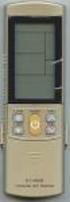 USER S MANUAL FH052EAV1 FH070EAV1 E HNIKA PORTUGUÊS ENGLISH ESPAÑOL ITALIANO DEUTSCH FRANÇAIS System Air Conditioner (Cooling and Heating) E S F I P D G DB98-29263A(1) Safety Precautions Register your
Operating Instructions Split System Air Conditioner
 Operating Instructions Split System Air Conditioner Model No. Indoor Unit Type Indoor Unit Type Nominal Capacity 26 36 F2 Low Silhouette Ducted S-26PF2U6 S-36PF2U6 Connectable outdoor unit lineup This
Use and Care Manual. Model CPA12KH AIR CONDITIONER
 Use and Care Manual Model CPA12KH AIR CONDITIONER Introduction Thank you for choosing this air conditioner to provide you and your family with all of the "Home Comfort" requirements for your home, cottage
Portable Air Conditioner. OWNER S MANUAL Read these instructions before use. Model: MM14CCS. Voltage rating: 115V~60Hz Power rating : 1400W
 Portable Air Conditioner OWNER S MANUAL Read these instructions before use Model: MM14CCS Customer Support : 1-800-474-2147 Voltage rating: 115V~60Hz Power rating : 1400W For product inquiries or support
Portable Air Conditioner. OWNER S MANUAL Read these instructions before use. Model: MN12CES / MN10CESWW
 Portable Air Conditioner OWNER S MANUAL Read these instructions before use 8 Model: MN12CES / MN10CESWW Voltage rating: 120V~60Hz Power rating : 1100W (MN12CES) Power rating : 900W (MN10CESWW) Customer
york air-conditioning products Residential & VRF News 2015
 york air-conditioning products Residential & VRF News 2015 york air-conditioning products Catalogue Content Split Systems Pag. High wall High Efficiency Inverter YWHJZH 09 to 24 K 6 High wall Inverter
OWNER'S MANUAL R-410A Duct Free Split System Air Conditioner and Heat Pump
 R-410A Duct Free Split System Air Conditioner and Heat Pump Product Family: DFS4(A/H)-System, DFC4(A/H)3-Outdoor, DFF4(A/H)H-Indoor Please read the operating instructions and safety precautions carefully
AIR CONDITIONER INSTALLATION MANUAL
 INSTALLATION MANUAL AIR CONDITIONER Please read this installation manual completely before installing the product. Installation work must be performed in accordance with the national wiring standards by
USER INSTRUCTIONS FOR GET PORTABLE 12k BTU AIR CONDITIONER MODEL No. GPACU12HR
 USER INSTRUCTIONS FOR GET PORTABLE 12k BTU AIR CONDITIONER MODEL No. GPACU12HR CONTENTS Introduction Safety Notes Identification of parts Installation instructions Operation instructions Maintenance Troubleshooting
Portable Air Conditioner. OWNER S MANUAL Read these instructions before use. Model: MM14CHCSCS
 Portable Air Conditioner OWNER S MANUAL Read these instructions before use Model: MM14CHCSCS Voltage rating: 120V~60Hz Power rating : 1400W(Cooling) Power rating : 1350W(Heating) Customer Support : 1-800-474-21477
AIR CONDITIONER (SPLIT TYPE)
 OWNER S MANUAL AIR CONDITIONER (SPLIT TYPE) For general public use ENGLISH EN Indoor Unit RAS-07PKVP-E RAS-10PKVP-E RAS-13PKVP-E RAS-16PKVP-E RAS-18PKVP-E RAS-07PKVP-ND RAS-10PKVP-ND RAS-13PKVP-ND RAS-16PKVP-ND
New Deluxe Wall Mounted Heat Pump Series EXTERIOS
 New Deluxe Wall Mounted Heat Pump Series EXTERIOS May 2013 New Deluxe Wall Mounted Heat Pump Series Panasonic Adding New Air Conditioner Lineup Setting Another Mile Stone in the US Ductless Split History
9ASNA-A1-1202 SERVICE MANUAL SENVILLE AIRCONDITIONER DC INVERTER SPLIT WALL-MOUNTED TYPE
 9ASNA-A1-1202 SERVICE MANUAL SENVILLE AIRCONDITIONER DC INVERTER SPLIT WALL-MOUNTED TYPE CONTENTS 1. Precaution... 1 1.1 Safety Precaution... 1 1.2 Warning... 1 2. Function... 6 3. Dimension... 9 3.1 Indoor
INDOOR UNIT/OUTDOOR UNIT
 SPLIT TYPE AIR CONDITIONER INDOOR UNIT/OUTDOOR UNIT MODEL RAS-60YHA/RAC-60YHA OUTDOOR UNIT INDOOR UNIT RAC-60YHA RAS-60YHA Instruction manual Page 1~26 To obtain the best performance and ensure years of
Operating Instructions Air Conditioner
 P07-T10130 Operating Instructions Air Conditioner Indoor Unit CS-F24DD1E5 CS-F28DD1E5 CS-F34DD1E5 CS-F43DD1E5 CS-F50DD1E5 Outdoor Unit Inverter Model (HBE5 Series) CU-YL24HBE5 CU-YL28HBE5 CU-YL34HBE5 CU-YL43HBE5
Dehumidifier Users manual. For Models: DH45S DH65S
 Dehumidifier Users manual For Models: DH45S DH65S 950-0062-revD Jan. 9 2007 FORWARD The appearance of the units that you purchase might be slightly different from the ones described in the Manual, but
Indoor coil is too warm in cooling mode or too cold in heating mode. Reversing valve or coil thermistor is faulty
 Codes Room Air Conditioner range: Indoor unit alarm s If timer lamp flashes for 1 second on, 1 second off, this indicates pre heating on the coil during heating mode and is not an error. If timer lamp
How To Measure Temperature On A Thermostat
 Кондиционеры Mitsubishi Heavy Техническое руководство Кондиционеры настенного типа SRK20HD-S, SRK28HD-S, SRK40HD-S, SRK20CD-S, SRK28CD-S, SRK40CD-S CTENTS 1. GENERAL INFORMATI... 1 1.1 Specific features...
Model: AC-S13CG x 2. Model No: AC-S13CGx2.doc Version 1.0
 Air Conditioner Service Manual 2 3 Model: AC-S13CG x 2 3 Content Technical specification.. 4 Performance curve.5 Outline & dimension of indoor unit..10 Outline & dimension of outdoor unit 11 Exploded view
Portable Air Conditioner
 Portable Air Conditioner Owner's Manual Model:3 in 1 12,000 Btu/h Series 3 Please read this owner s manual carefully before operation and retain it for future reference. CONTENTS 1. SUMMARY...1 2. PORTABLE
TECHNICAL & SERVICE MANUAL WINDOW TYPE AIR CONDITIONER SA 79G SA 99G FILE NO. SA 79G SA 99G REFERENCE NO. SM700402
 TECHNICAL & SERVICE MANUAL SA 79G SA 99G FILE NO. WINDOW TYPE AIR CONDITIONER Model No. Product Code No. Destination SA-79G-A 1 851 005 18 General (50Hz) & Europe SA-99G-A 1 851 005 19 SA 79G SA 99G REFERENCE
DC INVERTER MULTI-SYSTEM AIR CONDITIONER
 AIR CONDITIONER AIR CONDITIONER TECHNICAL & SERVICE MANUAL INDOOR UNIT : CS-MKE7NKU CS-MKE9NKU CS-MKE12NKU CS-MKE18NKU CS-MKE24NKU DC INVERTER MULTI-SYSTEM AIR CONDITIONER Capacity 7,500BTU / h 9,000BTU
Technical service manual
 GD Midea Refrigeration Equipment Co.,Ltd ODMI-A-1202 MULTI SPLIT TYPE, HEAT PUMP AIR CONDITIONERS Technical service manual R410A Multi DC inverter 220~240V-1Ph-50Hz Outdoor units Models M2OC-14HRDN1 M2OC-14HRDN1-Q
DUCT TYPE AIR CONDITIONER
 OPERATING MANUAL OPERATING MANUAL BEDIENUNGSANLEITUNG MODE D EMPLOI MANUAL DE FUNCIONAMIENTO MANUALE DI ISTRUZIONI ΕΓΧΕΙΡΙ ΙΟ ΛΕΙΤΟΥΡΓΙΑΣ MANUAL DE INSTRUÇÕES AIR CONDITIONER DUCT TYPE English Deutsch
AIR CONDITIONER Duct Type OPERATING MANUAL
 AIR CONDITIONER Duct Type OPERATING MANUAL KEEP THIS MANUAL FOR FUTURE REFERENCE P/N9374379460 CONTENTS SAFETY PRECAUTIONS... 1 FEATURES AND FUNCTIONS... 3 NAME OF PARTS... 4 PREPARATORY OPERATION... 5
FAN SPEED AIR SWING SET CANCEL FAN AIR SWING SET CANCEL WARNING
 AUT O HE AT COOL DRY AUT O HE AT COOL DRY FAN SP E ED FAN SPEED AC AC AIR SWING SE T CHE CK CLOCK RE SE T AIR SWING SE T CHE CK CLOCK RE SE T FAN SPEED AIR SWING RC RC Order No: PAPAMY32039CE (YE9/2QKE)
Wall Mounted Mini Split Heat Pump Air Conditioner
 Wall Mounted Mini Split Heat Pump Air Conditioner OPERATING AND INSTALLATION MANUAL Model: KFIHP-09-ID / KFHIP-09-OD KFHHP-12-ID / KFHHP-12-OD Indoor Unit. Outdoor Unit. Thank you for selecting Soleus
Split Air Conditioner
 Split nditioner plit itsplit ir onditioner Split Split Split Split Split User s WNER'S 'S ER'S For s: AWI/AWO-21HPR1 Delta AWI/AWO-25HPR1 Delta AWI/AWO-32HPR1 Delta AWI/AWO-53HPR1 Delta AWI/AWO-65HPR1
543-0032-00, 943-0032-00. User s Manual
 543-0032-00, 943-0032-00 User s Manual 1 Comfort Alert Diagnostics Faster Service And Improved Accuracy The Comfort Alert diagnostics module is a breakthrough innovation for troubleshooting heat pump and
ENGLISH INSTRUCTION & INSTALLATION MANUAL DUCTLESS MINI SPLIT AIR CONDITIONING SYSTEMS
 ENGLISH INSTRUCTION & INSTALLATION MANUAL DUCTLESS MINI SPLIT AIR CONDITIONING SYSTEMS Céliera Corporation. All rights reserved. Unauthorized duplication, reproduction prohibited. CONTENTS SAFETY PRECAUTIONS...
ROOM AIR CONDITIONER INSTALLATION MANUAL
 ROOM AIR CONDITIONER INSTALLATION MANUAL ( Split Type) Please read this installation manual completely before installing the product When the power cord is damaged, replacement work shall be performed
Air Conditioner Water Heater - A Product of HotSpot Energy LLC
 Air Conditioner Water Heater - A Product of HotSpot Energy LLC PLEASE READ THIS BEFORE YOU INSTALL THE UNIT 1. This air conditioner must be installed and/or repaired by a qualified technician. If you perform
SERVICE MANUAL FOR 6535 SERIES TWO TON HIGH EFFICIENCY PACKAGED HEAT PUMPS
 SERVICE MANUAL FOR 6535 SERIES TWO TON HIGH EFFICIENCY PACKAGED HEAT PUMPS TABLE OF CONTENTS 1. Warnings...2 2. Accessibility Of Appliance...3 3. Unit Dimensions And Specifications...3 4. Unit Specifications
Split Air Conditioner
 Split Air Conditioner Thank you for choosing our product. For proper operation, please read and keep this manual carefully. If you have lost the Owner s Manual, please contact the local agent or visit
SWIMMING POOL HEAT PUMP
 SWIMMING POOL HEAT PUMP Installation & User Manual Model HP40B HP50B HP65B Hayward Pool Products Canada, Inc. T: 1-888-238-7665 www.haywardpool.ca CONTENT I. Application 4 II. Features 4 III. Technical
USER S MANUAL. Duct Type Series. Free Joint Multi Air Conditioner (Cooling and Heating) FUEA Series E S F I P D G DB98-29565A(1) ENGLISH ESPAÑOL
 USER S MANUAL Duct Type Series MH MH FEEA Series FUEA Series ENGLISH ESPAÑOL PORTUGUÊS E HNIKA DEUTSCH ITALIANO FRANÇAIS Free Joint Multi Air Conditioner (Cooling and Heating) E S F I P D G DB98-29565A(1)
SPLIT WALL MOUNTED TYPE AIR CONDITIONERS OWNER'S MANUAL
 SPLIT WALL MOUNTED TYPE AIR CONDITIONERS OWNER'S MANUAL Thank you for choosing our Air Conditioner. Please read this OWNER'S MANUAL carefully prior to use and keep it for further reference. CONTENTS Contents
Gree Solar Hybrid Hi Wall Inverter Air Conditioner
 Gree Solar Hybrid Hi Wall Inverter Air Conditioner Utilize the natural power of the sun to heat or cool your home. Find out more at www.greeonline.com Why Choose a Solar Hybrid Inverter? The new Gree Solar
TECHNICAL & SERVICE MANUAL SPLIT SYSTEM AIR CONDITIONER + SAP C181MA + SAP C181GA + SAP C181BA + SAP C241MA + SAP C241BA FILE NO.
 TECHNICAL & SERVICE MANUAL SAP K161GJA SAP K181GJA SAP K181MBA SAP K241GJA SAP K241MBA + SAP C161GA + SAP C161JA + SAP C181GA + SAP C181JA + SAP C181MA + SAP C181BA + SAP C241GA + SAP C241JA + SAP C241MA
DC INVERTER SPLIT SYSTEM AIR CONDITIONER
 TECHNICAL & SERVICE MANUAL SAP-KRV9AEH + SAP-CRV9AEH SAP-KRV12AEH + SAP-CRV12AEH FILE NO. Destination: Europe DC INVERTER SPLIT SYSTEM AIR CONDITIONER Indoor Model No. SAP-KRV9AEH SAP-KRV12AEH Product
Split Type Room Air Conditioner. KSWM units
 OWNER S MANUAL Split Type Room Air Conditioner KSWM units Please read the operating instructions and safety precautions carefully and thoroughly before installing and operating your room air conditioner.
WH-UD09CE8 WH-UD12CE8 WH-UD14CE8 WH-UD16CE8 WH-SDF09C3E8 WH-SDF12C9E8 WH-SDF14C9E8 WH-SDF16C9E8 WARNING
 Order No. PHAAM1009094C2 Indoor Unit WH-SDF09C3E8 WH-SDF12C9E8 WH-SDF14C9E8 WH-SDF16C9E8 Outdoor Unit WH-UD09CE8 WH-UD12CE8 WH-UD14CE8 WH-UD16CE8 WARNING This service information is designed for experienced
WALL MOUNTED SPLIT TYPE AIR CONDITIONER
 WALL MOUNTED SPLIT TYPE AIR CONDITIONER MANUAL 8 OM-G12-ACSON CONTENTS - Operating Guide page 1 - G12 Remote Controller Indication page 2 - Indicator Lights page 4 - Installation of Aroma page 5 - Auto
Heat Pump Product Brochure 2015/2016. Premier Series Hi-Wall Split Systems. Everyday Comfort
 Heat Pump Product Brochure 2015/2016 Premier Series Hi-Wall Split Systems Everyday Comfort Everyday Innovation We design with you in mind. You ll find that Haier Heat Pump units are quiet, efficient and
SERVICE MANUAL. Room Air Conditioner Split Wall-Mounted Type. FSAI-Pro-91AE2 / FSOAI-Pro-91AE2. FSAI-Pro-241AE2 / FSOAI-Pro-241AE2
 SERVICE MANUAL Room Air Conditioner Split Wall-Mounted Type FSAI-Pro-91AE2 / FSOAI-Pro-91AE2 FSAI-Pro-121AE2 / FSOAI-Pro-121AE2 FSAIF-Pro-181AE2 / FSOAIF-Pro-181AE2 FSAI-Pro-241AE2 / FSOAI-Pro-241AE2 NOTE:
Multi System. 16 SEER, Inverter System. 9,000 to 18,000 BTU/Hr. Single Split
 Multi System 16 SEER, Inverter System 9,000 to 18,000 BTU/Hr Single Split 4MXW8-A 4TXM6-A March2013 42 Warnings and Cautions Warnings and Cautions. Notice that warnings and cautions appear at appropriate
OWNER S MANUAL VMH 09/12/18/27/36 InverterFlex
 OWNER S MANUAL VMH 09/12/18/27/36 InverterFlex Version C Single, Dual, Tri or Quad Zone Ductless Mini-Split System Heat Controller, Inc. 1900 Wellworth Ave. Jackson, MI 49203 (517)787-2100 www.heatcontroller.com
technical data air conditioning systems RXS20-25-35E (single phase) FBQ-B8V1-B8V3B Split Heat Pump Condensing Units Split Sky Air
 technical data RXS20-25-35E FBQ-B8V-B8V3B (single phase) Split Heat Pump Condensing Units air conditioning systems Split Sky Air Outdoor Units R-40A RXS-E2VB Split Sky Air Outdoor Units Features O u t
Floor Type Air-Conditioner INSTALLATION MANUAL CONTENTS FOR INSTALLER MFZ-KA25VA MFZ-KA35VA MFZ-KA50VA. English
 Floor Type Air-Conditioner MFZ-KA25VA MFZ-KA35VA MFZ-KA50VA INSTALLATION MANUAL This manual only describes the installation of indoor unit. When installing the outdoor unit, refer to the installation manual
SERVICE MANUAL OUTDOOR UNIT. No. OBH590 REVISED EDITION-B. Models HFC
 SPLIT-TYPE AIR CONDITIONERS Revision B: MUZ-EF25/35/42/50VE - E2 and MUZ-EF25/35VEH - E2 have been added. Please void OBH590 REVISED EDITION-A. OUTDOOR UNIT SERVICE MANUAL HFC utilized R410A. OBH590 REVISED
LG Multi Type Air Conditioner
 LG Multi Type Air Conditioner OWNER'S MANUAL LG Prior to installation, this airconditioning unit must be submitted for approval by the utility service which provides electricity (EN 61000-2, EN 61000-3
AIR CONDITIONING & HEAT PUMP SYSTEMS
 AIR CDITIING & HEAT PUMP SYSTEMS SERVICE GUIDE Including outdoor unit (FDC 6 Series and 8 Series) FDT 4-Way Cassette FDEN Ceiling Suspended FDKN Wall Mounted FDR Ducted Cassette FDU Ducted - gh Static
NewAir AC-10100E / AC-10100H Portable Air Conditioner Owner s Manual PLEASE READ AND SAVE THESE INSTRUCTIONS
 NewAir AC-10100E / AC-10100H Portable Air Conditioner Owner s Manual PLEASE READ AND SAVE THESE INSTRUCTIONS ELECTRICAL SAFETY This appliance is for indoor use only. Always turn off the unit and unplug
DC INVERTER MULTI-SYSTEM AIR CONDITIONER
 TECHNICAL & SERVICE MANUAL OUTDOOR UNIT : CM97 CM7 CM7 FILE NO. Destination: North America DC INVERTER MULTI-SYSTEM AIR CONDITIONER Capacity at 0V 9,700 BTU/h,00 BTU/h 0,600 BTU/h Outdoor Model No. CM97
WALL MOUNTED AIR CONDITIONER SERVICE MANUAL 11M INVERTER
 WALL MOUNTED AIR CONDITIONER SERVICE MANUAL 11M INVERTER This manual applies to the models: 42HVM109303 / 38HVM109303(P) 42HVM112303 / 38HVM112303(P) 42HVM118303 / 38HVM118303(P) 42HVM124303 / 38HVM124303(P)
Split Air Conditioner
 Change for Life Split Air Conditioner Owner's Manual Residential Air Conditioners MODEL: GWH09MA-A3DNXXA GWC09MA-A3DNXXA GWH12MB-A3DNXXA GWC12MB-A3DNXXA GWH09MB-D3DNXXD GWC09MB-D3DNXXD GWH12MB-D3DNXXD
Please read this owner s Manual carefully before operating the unit. - Cooling - Heating - Dehumidifying - Fan
 Please read this owner s Manual carefully before operating the unit. - Cooling - Heating - Dehumidifying - Fan TABLE OF CONTENTS INTRODUCTION 2 IMPORTANT SAFEGUARDS...2 PACKAGE CONTAINS..2 NAMES OF PARTS.3
SiUS041111. Service Manual. Inverter Pair Wall Mounted Type K-Series. [Applied Models] Inverter Pair : Cooling Only Inverter Pair : Heat Pump
![SiUS041111. Service Manual. Inverter Pair Wall Mounted Type K-Series. [Applied Models] Inverter Pair : Cooling Only Inverter Pair : Heat Pump](/thumbs/27/9681492.jpg "SiUS041111. Service Manual. Inverter Pair Wall Mounted Type K-Series. [Applied Models] Inverter Pair : Cooling Only Inverter Pair : Heat Pump") Service Manual Inverter Pair Wall Mounted Type K-Series [Applied Models] Inverter Pair : Cooling Only Inverter Pair : Heat Pump Inverter Pair Wall Mounted Type K-Series Cooling Only Indoor Unit FTXN09KEVJU
Service Manual Inverter Pair Wall Mounted Type K-Series [Applied Models] Inverter Pair : Cooling Only Inverter Pair : Heat Pump Inverter Pair Wall Mounted Type K-Series Cooling Only Indoor Unit FTXN09KEVJU
Technical Service Manual. Version One
 [Gree Central Air Conditioner] Technical Service Manual Ducted type unit 2.3KW-16KW Version One GREE ELECTRIC APPLIANCES.INC.OF ZHUHAI - 1 - FG Series wind pipe blowing air-conditioning unit Section One:
SERVICE MANUAL 12VDC WALL THERMOSTAT AIR CONDITIONING SYSTEMS ROOFTOP UNITS ONLY
 SERVICE MANUAL 12VDC WALL THERMOSTAT AIR CONDITIONING SYSTEMS ROOFTOP UNITS ONLY! WARNING - SHOCK HAZARD! TO PREVENT THE POSSIBILITY OF SEVERE PERSONAL INJURY, DEATH, OR EQUIPMENT DAMAGE DUE TO ELECTRICAL
Failure code manual. content
 Failure code manual content 一 wall split AC series 2 二 floor standing AC series. 4 三 portable AC series.. 5 四 dehumidifer 6 五 DC inverter single split series...7 六 DC inverter multi-split series 10 1 一
DC INVERTER SPLIT SYSTEM AIR CONDITIONER
 TECHNICAL & SERVICE MANUAL CSKS12NB41 & CZ18BT1U + CUKS12NK1A CSKS18NB4UW & CZ18BT1U + CUKS18NKU CSKS18NB4UW & CZ18BT1U + CUKS18NKUA DC INVERTER SPLIT SYSTEM AIR CONDITIONER Indoor Model No. Body (Panel)
DC INVERTER (WALL TYPE) INDOOR UNIT OUTDOOR UNIT INDOOR UNIT OUTDOOR UNIT RAS-18FH6 RAC-18YH6. 1 PHASE, 50 Hz, 220-230V
 SERVICE MANUAL TECHNICAL INFORMATION AW NO. 0024E RAS-18FH6 RAC-18YH6 RAS-25FH6 RAC-25YH6 REFER TO THE FOUNDATION MANUAL FOR SERVICE PERSONNEL ONLY CONTENTS SPECIFICATIONS -------------------------------------------------------------------
Owner s Manual AIR CONDITIONER (SPLIT TYPE) Indoor Unit RAV-SM564UT-E RAV-SM804UT-E RAV-SM1104UT-E RAV-SM1404UT-E. Model name:
 AIR CONDITIONER (SPLIT TYPE) Indoor Unit Not accessible to the general public Model name: 4-way Air Discharge Cassette Type RAV-SM564UT-E RAV-SM804UT-E RAV-SM1104UT-E RAV-SM1404UT-E Air conditioner (Split
LG Air Conditioning - Universal Split Fault Codes Sheet. Universal Split Systems
 Universal Split Systems If there is a fault on any LG Universal unit, a two digit number will appear on the remote controllers led display. If the unit does not have a remote controller the fault will
INVERTER WALL MOUNTED TYPE ROOM AIR-CONDITIONER ( Split system, air to air heat pump type )
 Manual No. 06. SRK-T. 050 updated September 29, 2009 INVERTER WALL MOUNTED TYPE ROOM AIR-CDITIER ( Split system, air to air heat pump type ) SRK20ZD-S1, SRK25ZD-S1, SRK35ZD-S1, SRK50ZD-S1 SRK63ZE-S1, SRK71ZE-S1
SERVICE MANUAL INDOOR UNIT
 SPLIT-TYPE AIR CONDITIONERS Revision E: MSZ-GE22VAD- A1 has been added. Please void OBH531 REVISED EDITION-D. INDOOR UNIT SERVICE MANUAL. OBH531 REVISED EDITION-E Models MSZ-GE22VA - A1 MSZ-GE50VA - A1
Contents. Correct Disposal of This Product (Waste Electrical & Electronic Equipment)
 Contents PREPARATION Safety Precautions... 3 Name of Each Part... 8 Remote Control Buttons and Display... 10 Inserting the Remote Control Batteries... 11 Getting Started... 12 OPERATION Selecting Auto