
Human Population Ecology
|
|
|
- Katherine Waters
- 9 years ago
- Views:
Transcription
1 Human Population Ecology Advanced Placement Biology Mrs. Lijek, Belmont High School (adapted from Dr. Bruce W. Grant, Widener University) Synopsis of the Lab You will visit a cemetery of your choosing and record dates of births and deaths etched on the headstones. You will create graphs of the data to help you interpret them. You will examine demographic parameters such as survivorship and mortality of males and females during two time intervals: deaths pre-1950 or post You will compare the data and suggest some causes for the results. Objectives for the Lab (1) You will understand some of the basic concepts of population demography - survivorship and mortality. (2) You will work with real data to learn how to graphically analyze the data. (3) You will understand how factors such as advances in medicine and environmental protection may have affected human demography over the past 150 years. What Is Due from This Activity? (Neatly bound together, descriptive title, typed, 1 ½ spacing, with a table of contents using the order below, with page numbers, reference resources (at least 4) in body of text, 3-hole punched!) (1) Abstract: Summarize your fieldwork and analysis in between a half and one page. Include a conclusion about the results. Interpret the data by incorporating demographics for your population with cultural issues of their time. Summarize what you have learned and its value to you. Suggest any improvements to this activity and provide your opinion of this activity. (2) Introduction: Explain where you went and research what types of demographics are found in the cemetery (relative wealth of the population, other socio-economic/cultural information, etc.) (3) Graphs: 1) Survivorship Curve (curved best-fit line, not linear regression) showing the male/female survivorship by age interval for both time periods (4 lines) on the same graph, and 2) a survivorship graph (best-fit line) of the human data in your textbook (p.808) (4) Typed questions and answers to all questions at the end of this handout (be sure to research your answers).
2 2 (5) Your original data (Data Sheet #1) with at least 200 data points (100 points for each time interval), which you collected at the cemetery. Feel free to collect more data points! (Copy blank data sheets.) (6) Your Calculations of Survivorship table of your data (Data Sheet #2) (7) Resources cited (MLA or APA format) and annotated that support your ideas. Introduction Local cemeteries are an excellent place to study human demography. Etched in the gravestones are the dates of birth and death of the person below, at least in most cases. From these data, we can calculate death rates and draw survivorship curves. A survivorship curve is simply a graphical representation of the chance that an individual will survive from birth to any particular age. By comparing survivorship curves for different periods of time we may look for historical trends in demography over the decades. Also, different cemeteries may represent different socio-economic cross-sections of the population, and comparing data among cemeteries may reveal different patterns of mortality. Over the last few centuries, advances in health care and large-scale global political conflict have left rather opposing marks on the demographics of the U.S. population. Two major time intervals stand out: before 1950 and from 1950 to the present. Firstly, the time interval before 1950 includes the industrial revolution, the ravaging effects of polio, the 1918 influenza pandemic, infections and other presently curable diseases, as well as World Wars I and II. Following 1950, numerous vaccines and antibiotics were widely used and, with the exception of the Korean, Vietnam, and Gulf Wars (not to mention a few other incidents...), this has been an era of relative peace in North America. However, new pandemics have emerged such as AIDS and SARS. What are your predictions about how the demographics of the United States population have changed during these two time periods? In order to study the demography of a population, we would have to study all of the local cemeteries and assume that no one emigrated from the area and was buried elsewhere. Neither is likely. Thus for now, we will assume that the cemeteries you will visit are representative of all humans in the area, although we should be aware of these sorts of biases in the data. Methods for the Lab Study Sites: Choose a cemetery to visit. Be creative with your choice, consider using a cemetery where you vacation. Record its name and location on Data Sheet #1. Data Collection: Collect data from headstones in the following categories: (200+ total) Time Period 1: FEMALES WHO DIED BEFORE headstones Time Period 1: MALES WHO DIED BEFORE headstones Time Period 2: FEMALES WHO DIED AFTER Jan. 1, headstones Time Period 2: MALES WHO DIED AFTER Jan 1, headstones PLEASE DO NOT DUPLICATE DATA WITH ANY OTHER CLASS MEMBER. Also, if you visit a cemetery, at all times behave with respect and restraint when collecting these data. It is customary to avoid, where possible, walking on top of the graves. Most cemeteries do not allow picnics on the grounds.
3 3 Data Analysis To estimate demographic characteristics of a population, we need to know the ages of people when they died for each sex and time interval. To get this, examine your field data sheets (Data Sheet #1), and count the number of people who died in 10 year intervals, 0-9, 10-19, etc. Use Data Sheet #2 to guide you through the calculations to estimate the survivorship for each age interval. Plot the data on graph paper or on the computer (do NOT use plain, unlined paper). See attached instructions on how to properly construct a graph. Steps for Data Analysis (see sample table for help) 1. On top of each Data Sheet #2, record the type of data for each page (MALES or FEMALES, DIED BEFORE or AFTER 1950). 2. Column A: Record the number of people who died for each 10-year age interval listed (0-9, 10-19, etc.) from your data set from Data Sheet #1. 3. At the bottom of the table, write down the total number of people who died in this data set (i.e., add all of the numbers in the column= N 1 ). 4. Column B: Determine the number of people living at the start of each interval (people who survived the previous age interval). Age interval 0-9 will be the N 1 number. To determine the numbers below it, take the number above and subtract the deaths from the same row (above). 5. Column C: Determine the cumulative number of survivors at the end of each interval by subtracting the number who died from the survivors in that interval. (N-D). This number will be the same as those in column B but off by one line. 6. Column D: The chance of surviving each time interval is determined by dividing the survivors (column C) by the number of living in the time interval (column B). [Example from Sample Sheet: if you survive to age 50, there is a 100% chance of reaching age 59.] 7. Column E: To determine cumulative SURVIVORSHIP (chance of surviving from birth to age 109), divide the number in column C by the total that you found at the bottom of column A (N 1 ). 8. Use graph paper or the computer (NOT plain paper) to plot the SURVIVORSHIP in column E as a function of age interval from your data for each group. Be sure to read the attached guidelines for making graphs. Your graph will be graded on the accuracy, neatness, and conforming to the rules for making graphs. 9. Make a graph of the Life Table for the U.S. Population in 2001 in your textbook (p.808). You will need to calculate the cumulative survivorship for this table before making the graph of survivorship.
4 4 Questions to Answer after You Have Collected and Graphed Your Data (be sure to type questions as well) - I. Data Interpretation: Q #1: Which time interval s individuals had the best chance of surviving to the age of: a) 0-10 years b) years c) years d) years Q#2: Which sex had the greater chance of surviving to the age of: a) 0-10 years b) years c) years d) years Q #3: Find at least 2 sources (reference in the body of your answer) and explain some reasons for the differences in survivorship trends you noticed above. Q #4: Q #4: Using your data, estimate (don t graph actual data) and sketch what an age structure diagram would look like (see samples in text, p. 815) for the two time intervals. Describe what type of growth each time period displays. Explain why you think this. What do you think the most recent diagram predicts about the future population growth of the U.S.? If your data are from outside the U.S., how do your graphs/age structure diagrams compare to that of the U.S. (from your text)? Research and reference at least 2 sources to explain any differences you notice between the two countries. What do you think the most recent diagram predicts about the future population growth for the country of your data? II. Analysis and Conclusions Q #5: Why might data that you have collected be useful to a life insurance company? Include information about what an actuary does. How would this information affect a health insurance company? Many people carry recessive and hidden genetic defects that sometimes pre-dispose the carrier population to a curve of higher disease incidence and mortality. Even though carriers of such defects may have no physical symptoms, what do you think would happen to his or her health insurance premium if his or her insurance company found out about the hidden genetic defect? Do you believe that this is fair to the individual? to the insurance company? Learn about GINA and explain the impact of this legislation. Q#6: Give specific examples of the types of information that human survivorship curves and age structure diagrams reveal for different cultures. Discuss, using examples, why this type of data collection and analysis is valuable to a culture/country in the long term. Q#7: Discuss, using examples, why humans might want to do this type of research and analysis for species other than humans.
5 DATA SHEET 1: RAW DATA HEADSTONES YOU NEED TO FIND: (above write MALES or FEMALES, DIED BEFORE or AFTER 1950) Range of Death years: =age at death _ =age at death
6 DATA SHEET 2: Calculations of Survivorship Type of Headstones You Found: (above write: MALES or FEMALES, DIED BEFORE or AFTER 1950) A B C D E Age Interval Number of Deaths Number Living Cumulative Chance of Cumulative (in years) per Age Interval at Start of Survivors at Surviving Each Chance of Interval End of Interval Time Interval Surviving to End of Interval (D) (N) (N D) (N-D)/N (N-D)/N 1 * *N 1 = total data points on this table (number of headstones you found in this category)
7
Life Tables. Marie Diener-West, PhD Sukon Kanchanaraksa, PhD
 This work is licensed under a Creative Commons Attribution-NonCommercial-ShareAlike License. Your use of this material constitutes acceptance of that license and the conditions of use of materials on this
CHAPTER TWELVE TABLES, CHARTS, AND GRAPHS
 TABLES, CHARTS, AND GRAPHS / 75 CHAPTER TWELVE TABLES, CHARTS, AND GRAPHS Tables, charts, and graphs are frequently used in statistics to visually communicate data. Such illustrations are also a frequent
Your Name: Section: 36-201 INTRODUCTION TO STATISTICAL REASONING Computer Lab Exercise #5 Analysis of Time of Death Data for Soldiers in Vietnam
 Your Name: Section: 36-201 INTRODUCTION TO STATISTICAL REASONING Computer Lab Exercise #5 Analysis of Time of Death Data for Soldiers in Vietnam Objectives: 1. To use exploratory data analysis to investigate
Population Growth Activity Date Per
 Population Growth Activity Name Date Per Objectives: You will graph the population growth of different populations and use it to predict future growth. You will identify factors that affect population
What is the pattern? How is it changing? How can you describe it? How does it grow (or get smaller)? How can we organize the data?
 How a pattern grows is a major focus of this course. Understanding how something changes can help you make decisions and predict the future. For example, when the local health department needs to respond
Tuesday 14 May 2013 Morning
 THIS IS A NEW SPECIFICATION H Tuesday 14 May 2013 Morning GCSE TWENTY FIRST CENTURY SCIENCE BIOLOGY A A161/02 Modules B1 B2 B3 (Higher Tier) *A137150613* Candidates answer on the Question Paper. A calculator
HOW TO WRITE A SCIENCE FAIR RESEARCH PAPER
 HOW TO WRITE A SCIENCE FAIR RESEARCH PAPER The outline given below is suitable only for a report on a single experiment or related set of experiments. The form of a review paper or a report on a group
Exponential Growth and Modeling
 Exponential Growth and Modeling Is it Really a Small World After All? I. ASSESSSMENT TASK OVERVIEW & PURPOSE: Students will apply their knowledge of functions and regressions to compare the U.S. population
Adverse Impact Ratio for Females (0/ 1) = 0 (5/ 17) = 0.2941 Adverse impact as defined by the 4/5ths rule was not found in the above data.
 1 of 9 12/8/2014 12:57 PM (an On-Line Internet based application) Instructions: Please fill out the information into the form below. Once you have entered your data below, you may select the types of analysis
Summary. Accessibility and utilisation of health services in Ghana 245
 Summary The thesis examines the factors that impact on access and utilisation of health services in Ghana. The utilisation behaviour of residents of a typical urban and a typical rural district are used
Measures of Prognosis. Sukon Kanchanaraksa, PhD Johns Hopkins University
 This work is licensed under a Creative Commons Attribution-NonCommercial-ShareAlike License. Your use of this material constitutes acceptance of that license and the conditions of use of materials on this
LAGUARDIA COMMUNITY COLLEGE CITY UNIVERSITY OF NEW YORK DEPARTMENT OF MATHEMATICS, ENGINEERING, AND COMPUTER SCIENCE
 LAGUARDIA COMMUNITY COLLEGE CITY UNIVERSITY OF NEW YORK DEPARTMENT OF MATHEMATICS, ENGINEERING, AND COMPUTER SCIENCE MAT 119 STATISTICS AND ELEMENTARY ALGEBRA 5 Lecture Hours, 2 Lab Hours, 3 Credits Pre-
The Logistic Function
 MATH 120 Elementary Functions The Logistic Function Examples & Exercises In the past weeks, we have considered the use of linear, exponential, power and polynomial functions as mathematical models in many
Scatter Plots with Error Bars
 Chapter 165 Scatter Plots with Error Bars Introduction The procedure extends the capability of the basic scatter plot by allowing you to plot the variability in Y and X corresponding to each point. Each
I. DEMOGRAPHIC DETERMINANTS OF POPULATION AGEING
 World Population Ageing 9- I. DEMOGRAPHIC DETERMINANTS OF POPULATION AGEING Underlying global population ageing is a process known as the demographic transition in which mortality and then fertility decline
Biology Chapter 5 Test
 Name: Class: _ Date: _ Biology Chapter 5 Test Multiple Choice Identify the choice that best completes the statement or answers the question. 1. What does the range of a population tell you that density
INSTITUTE AND FACULTY OF ACTUARIES EXAMINATION
 1 2 3 4 5 6 7 8 9 10 11 12 13 14 15 16 17 18 19 20 21 22 23 24 25 26 27 28 29 30 31 32 33 34 35 INSTITUTE AND FACULTY OF ACTUARIES EXAMINATION 8 October 2015 (pm) Subject CT5 Contingencies Core Technical
GINI-Coefficient and GOZINTO-Graph (Workshop) (Two economic applications of secondary school mathematics)
 GINI-Coefficient and GOZINTO-Graph (Workshop) (Two economic applications of secondary school mathematics) Josef Böhm, ACDCA & DERIVE User Group, [email protected] Abstract: GINI-Coefficient together with
LOGISTIC REGRESSION ANALYSIS
 LOGISTIC REGRESSION ANALYSIS C. Mitchell Dayton Department of Measurement, Statistics & Evaluation Room 1230D Benjamin Building University of Maryland September 1992 1. Introduction and Model Logistic
Online Score Reports: Samples and Tips
 Online Score Reports: Samples and Tips Online Score Reports Authorized school administrators and AP Coordinators have access to the following reports for free at scores.collegeboard.org: AP Instructional
The test uses age norms (national) and grade norms (national) to calculate scores and compare students of the same age or grade.
 Reading the CogAT Report for Parents The CogAT Test measures the level and pattern of cognitive development of a student compared to age mates and grade mates. These general reasoning abilities, which
Purdue University Writing Lab Indiana Department of Transportation Workshop Series Dr. David Blakesley, Allen Brizee
 Designing Research Posters This handout explains how to use effective design strategies to compose research posters. Research Posters Catch Reader s Attention and Make Key Information Understandable Research
2016 Teen Volunteer Application Form
 Monona Public Library Summer Library & Reading 2016 Teen Volunteer Application Form The Teen Volunteer program is for youth entering grade 6 to entering grade 12. It is an opportunity for teens to interact
A. The Laboratory Notebook (first written by Jane Knox and then edited by Jim Stuart)
 A. The Laboratory Notebook (first written by Jane Knox and then edited by Jim Stuart) The purpose of the laboratory notebook is for you to keep a permanent record of your laboratory work which can be read
The first three steps in a logistic regression analysis with examples in IBM SPSS. Steve Simon P.Mean Consulting www.pmean.com
 The first three steps in a logistic regression analysis with examples in IBM SPSS. Steve Simon P.Mean Consulting www.pmean.com 2. Why do I offer this webinar for free? I offer free statistics webinars
If several different trials are mentioned in one publication, the data of each should be extracted in a separate data extraction form.
 General Remarks This template of a data extraction form is intended to help you to start developing your own data extraction form, it certainly has to be adapted to your specific question. Delete unnecessary
Biology 300 Homework assignment #1 Solutions. Assignment:
 Biology 300 Homework assignment #1 Solutions Assignment: Chapter 1, Problems 6, 15 Chapter 2, Problems 6, 8, 9, 12 Chapter 3, Problems 4, 6, 15 Chapter 4, Problem 16 Answers in bold. Chapter 1 6. Identify

Death Data: CDC Wonder, Texas Health Data, and VitalWeb
 Death Data: CDC Wonder, Texas Health Data, and VitalWeb Evidence-Based Public Health Practice Step 2: Quantify the Issue This handout demonstrates how to access CDC Wonder, Texas Health Data, and VitalWeb
INSTRUCTIONS. Identification of Bacteria From a Mixed Culture (100 point lab project; BIOL260)
 INSTRUCTIONS Identification of Bacteria From a Mixed Culture (100 point lab project; BIOL260) I. Introduction. i. The identification of unknown bacteria is a time-honored part of most microbiology courses.
Prostate cancer statistics
 Prostate cancer in Australia The following material has been sourced from the Australian Institute of Health and Welfare Prostate cancer incorporates ICD-10 cancer code C61 (Malignant neoplasm of prostate).
Heredity. Sarah crosses a homozygous white flower and a homozygous purple flower. The cross results in all purple flowers.
 Heredity 1. Sarah is doing an experiment on pea plants. She is studying the color of the pea plants. Sarah has noticed that many pea plants have purple flowers and many have white flowers. Sarah crosses
This fact sheet describes how genes affect our health when they follow a well understood pattern of genetic inheritance known as autosomal recessive.
 11111 This fact sheet describes how genes affect our health when they follow a well understood pattern of genetic inheritance known as autosomal recessive. In summary Genes contain the instructions for
MATH 140 Lab 4: Probability and the Standard Normal Distribution
 MATH 140 Lab 4: Probability and the Standard Normal Distribution Problem 1. Flipping a Coin Problem In this problem, we want to simualte the process of flipping a fair coin 1000 times. Note that the outcomes
Children in Egypt 2014 A STATISTICAL DIGEST
 Children in Egypt 2014 A STATISTICAL DIGEST CHAPTER 1 DEMOGRAPHY Children in Egypt 2014 is a statistical digest produced by UNICEF Egypt to present updated and quality data on major dimensions of child
Fall 2004 Ali Shakouri
 University of California at Santa Cruz Jack Baskin School of Engineering Electrical Engineering Department EE-145L: Properties of Materials Laboratory Lab 5b: Temperature Dependence of Semiconductor Conductivity
Student Writing Guide. Fall 2009. Lab Reports
 Student Writing Guide Fall 2009 Lab Reports The manuscript has been written three times, and each rewriting has discovered errors. Many must still remain; the improvement of the part is sacrificed to the
ALGEBRA 2/TRIGONOMETRY
 ALGEBRA /TRIGONOMETRY The University of the State of New York REGENTS HIGH SCHOOL EXAMINATION ALGEBRA /TRIGONOMETRY Tuesday, June 1, 011 1:15 to 4:15 p.m., only Student Name: School Name: Print your name
Q&A on methodology on HIV estimates
 Q&A on methodology on HIV estimates 09 Understanding the latest estimates of the 2008 Report on the global AIDS epidemic Part one: The data 1. What data do UNAIDS and WHO base their HIV prevalence estimates
Evolution (18%) 11 Items Sample Test Prep Questions
 Evolution (18%) 11 Items Sample Test Prep Questions Grade 7 (Evolution) 3.a Students know both genetic variation and environmental factors are causes of evolution and diversity of organisms. (pg. 109 Science
Competency 1 Describe the role of epidemiology in public health
 The Northwest Center for Public Health Practice (NWCPHP) has developed competency-based epidemiology training materials for public health professionals in practice. Epidemiology is broadly accepted as
Supplementary online appendix
 Supplementary online appendix 1 Table A1: Five-state sample: Data summary Year AZ CA MD NJ NY Total 1991 0 1,430 0 0 0 1,430 1992 0 1,428 0 0 0 1,428 1993 0 1,346 0 0 0 1,346 1994 0 1,410 0 0 0 1,410 1995
1 One Dimensional Horizontal Motion Position vs. time Velocity vs. time
 PHY132 Experiment 1 One Dimensional Horizontal Motion Position vs. time Velocity vs. time One of the most effective methods of describing motion is to plot graphs of distance, velocity, and acceleration
Methodology Understanding the HIV estimates
 UNAIDS July 2014 Methodology Understanding the HIV estimates Produced by the Strategic Information and Monitoring Division Notes on UNAIDS methodology Unless otherwise stated, findings in this report are
Pie Charts. proportion of ice-cream flavors sold annually by a given brand. AMS-5: Statistics. Cherry. Cherry. Blueberry. Blueberry. Apple.
 Graphical Representations of Data, Mean, Median and Standard Deviation In this class we will consider graphical representations of the distribution of a set of data. The goal is to identify the range of
U. S. Constitution [8th grade]
![U. S. Constitution [8th grade]](/thumbs/40/20655561.jpg "U. S. Constitution [8th grade]") Trinity University Digital Commons @ Trinity Understanding by Design: Complete Collection Understanding by Design 6-15-2006 U. S. Constitution [8th grade] Ben Altman Trinity University Follow this and
Trinity University Digital Commons @ Trinity Understanding by Design: Complete Collection Understanding by Design 6-15-2006 U. S. Constitution [8th grade] Ben Altman Trinity University Follow this and
Using Life Insurance for Pension Maximization
 Using Life Insurance for Pension Maximization Help Your Clients Capitalize On Their Pension Plans Marketing Guide HELP YOUR CLIENTS OBTAIN FINANCIAL PROTECTION AND MAXIMIZE THEIR PENSION Pension maximization
Using Real Data in an SIR Model
 Using Real Data in an SIR Model D. Sulsky June 21, 2012 In most epidemics it is difficult to determine how many new infectives there are each day since only those that are removed, for medical aid or other
What is a Box and Whisker Plot?
 Algebra/Geometry Institute Summer 2006 Faculty Name: Archie Mitchell School: Walter C. Robinson Achievement Center (Cleveland, Ms) Grade Level: 8 th Grade What is a Box and Whisker Plot? 1) Teaching objective(s):
Probability Distributions
 CHAPTER 5 Probability Distributions CHAPTER OUTLINE 5.1 Probability Distribution of a Discrete Random Variable 5.2 Mean and Standard Deviation of a Probability Distribution 5.3 The Binomial Distribution
The number of marks is given in brackets [ ] at the end of each question or part question. The total number of marks for this paper is 72.
![The number of marks is given in brackets [ ] at the end of each question or part question. The total number of marks for this paper is 72.](/thumbs/40/21056142.jpg "The number of marks is given in brackets [ ] at the end of each question or part question. The total number of marks for this paper is 72.") ADVANCED SUBSIDIARY GCE UNIT 4736/01 MATHEMATICS Decision Mathematics 1 THURSDAY 14 JUNE 2007 Afternoon Additional Materials: Answer Booklet (8 pages) List of Formulae (MF1) Time: 1 hour 30 minutes INSTRUCTIONS
ADVANCED SUBSIDIARY GCE UNIT 4736/01 MATHEMATICS Decision Mathematics 1 THURSDAY 14 JUNE 2007 Afternoon Additional Materials: Answer Booklet (8 pages) List of Formulae (MF1) Time: 1 hour 30 minutes INSTRUCTIONS
2011 YOUTH RISK BEHAVIOR SURVEY. Trend Analysis Report
 Trend Analysis Report This page intentionally left blank. Trend Analysis Report Purpose: This Trend Analysis Report describes whether behaviors have increased, decreased, or stayed the same over time.
Bio EOC Topics for Cell Reproduction: Bio EOC Questions for Cell Reproduction:
 Bio EOC Topics for Cell Reproduction: Asexual vs. sexual reproduction Mitosis steps, diagrams, purpose o Interphase, Prophase, Metaphase, Anaphase, Telophase, Cytokinesis Meiosis steps, diagrams, purpose
FOUR (4) FACTORS AFFECTING DENSITY
 POPULATION SIZE REGULATION OF POPULATIONS POPULATION GROWTH RATES SPECIES INTERACTIONS DENSITY = NUMBER OF INDIVIDUALS PER UNIT AREA OR VOLUME POPULATION GROWTH = CHANGE IN DENSITY OVER TIME FOUR (4) FACTORS
Lecture 2 ESTIMATING THE SURVIVAL FUNCTION. One-sample nonparametric methods
 Lecture 2 ESTIMATING THE SURVIVAL FUNCTION One-sample nonparametric methods There are commonly three methods for estimating a survivorship function S(t) = P (T > t) without resorting to parametric models:
Should I Buy an Income Annuity?
 Prepared For: Fred & Wilma FLINT Prepared By: Don Maycock The purchase of any financial product involves a trade off. For example when saving for retirement, you are often faced with making a trade off
Calculating Survival Probabilities Accepted for Publication in Journal of Legal Economics, 2009, Vol. 16(1), pp. 111-126.
 Calculating Survival Probabilities Accepted for Publication in Journal of Legal Economics, 2009, Vol. 16(1), pp. 111-126. David G. Tucek Value Economics, LLC 13024 Vinson Court St. Louis, MO 63043 Tel:
Lifetime Likelihood of Going to State or Federal Prison
 U.S. Department of Justice Office of Justice Programs Bureau of Justice Statistics Special Report March 1997, NCJ-160092 Lifetime Likelihood of Going to State or Federal Prison By Thomas P. Bonczar and
CHILDHOOD CANCER SURVIVOR STUDY Analysis Concept Proposal
 CHILDHOOD CANCER SURVIVOR STUDY Analysis Concept Proposal 1. STUDY TITLE: Longitudinal Assessment of Chronic Health Conditions: The Aging of Childhood Cancer Survivors 2. WORKING GROUP AND INVESTIGATORS:
Article from: Health Section News. April 2003 Issue No. 45
 Article from: Health Section News April 2003 Issue No. 45 Issue No.45 April 2003 Health Section News For Professional Recognition of the Health Actuary Genetic Testing, Medical Progress and the Health
Association Between Variables
 Contents 11 Association Between Variables 767 11.1 Introduction............................ 767 11.1.1 Measure of Association................. 768 11.1.2 Chapter Summary.................... 769 11.2 Chi
Exploring Relationships between Highest Level of Education and Income using Corel Quattro Pro
 Exploring Relationships between Highest Level of Education and Income using Corel Quattro Pro Created by Michael Lieff ([email protected]) Faculty of Education, Queen s University While on practicum at Statistics
Should I Buy an Income Annuity?
 The purchase of any financial product involves a trade off. For example when saving for retirement, you are often faced with making a trade off between how much you want to protect your investments from
Answer: C. The strength of a correlation does not change if units change by a linear transformation such as: Fahrenheit = 32 + (5/9) * Centigrade
 Statistics Quiz Correlation and Regression -- ANSWERS 1. Temperature and air pollution are known to be correlated. We collect data from two laboratories, in Boston and Montreal. Boston makes their measurements
PLANNED TRANSITIONS GUIDING YOU THROUGH LIFE S PASSAGES LIFE S PASSAGES PORTFOLIO
 PLANNED TRANSITIONS GUIDING YOU THROUGH LIFE S PASSAGES LIFE S PASSAGES PORTFOLIO 1 Personal History Vital Statistics Date: Name: First Middle Maiden Name Last Address: City County State ZIP Sex: Male
Critical Thinking ANALOGIES. Skills Worksheet
 Skills Worksheet Critical Thinking ANALOGIES In the space provided, write the letter of the pair of terms or phrases that best complete the analogy shown. An analogy is a relationship between two pairs
Unit #3: Investigating Quadratics (9 days + 1 jazz day + 1 summative evaluation day) BIG Ideas:
 Unit #3: Investigating Quadratics (9 days + 1 jazz day + 1 summative evaluation day) BIG Ideas: Developing strategies for determining the zeroes of quadratic functions Making connections between the meaning
Asset Allocation Training Manual
 Asset Allocation Training Manual Overview - - - - - - - - - - - - - - - - - - - - - - - - - - - - - - - - - - - - - 1 What do I need to do to create a scenario? - - - - - - - - - - - - - - - - - - - -
Gestation Period as a function of Lifespan
 This document will show a number of tricks that can be done in Minitab to make attractive graphs. We work first with the file X:\SOR\24\M\ANIMALS.MTP. This first picture was obtained through Graph Plot.
Agriculture, Food & Natural Resources Career Cluster Wildlife Management
 Agriculture, Food & Natural Resources Career Cluster Wildlife Management Course Number 03.45300 Course Description This course introduces students to the principles of wildlife management and conservation
2 Describing, Exploring, and
 2 Describing, Exploring, and Comparing Data This chapter introduces the graphical plotting and summary statistics capabilities of the TI- 83 Plus. First row keys like \ R (67$73/276 are used to obtain
RATIOS, PROPORTIONS, PERCENTAGES, AND RATES
 RATIOS, PROPORTIOS, PERCETAGES, AD RATES 1. Ratios: ratios are one number expressed in relation to another by dividing the one number by the other. For example, the sex ratio of Delaware in 1990 was: 343,200
Master of Public Health (MPH) SC 542
 Master of Public Health (MPH) SC 542 1. Objectives This proposed Master of Public Health (MPH) programme aims to provide an in depth knowledge of public health. It is designed for students who intend to
Genetics 1. Defective enzyme that does not make melanin. Very pale skin and hair color (albino)
 Genetics 1 We all know that children tend to resemble their parents. Parents and their children tend to have similar appearance because children inherit genes from their parents and these genes influence
Children Speak Classroom Lessons
 Children Speak Classroom Lessons Rationale: The purpose of these lessons is to explore the stories of four survivors who were children in Europe during the Holocaust, as presented in the Shoah Foundation
Scientific Method. 2. Design Study. 1. Ask Question. Questionnaire. Descriptive Research Study. 6: Share Findings. 1: Ask Question.
 Descriptive Research Study Investigation of Positive and Negative Affect of UniJos PhD Students toward their PhD Research Project : Ask Question : Design Study Scientific Method 6: Share Findings. Reach
14.1. Every organism has a habitat and a niche. A habitat differs from a niche. Interactions in Ecosystems CHAPTER 14.
 SECTION 14.1 HABITAT AND NICHE Study Guide KEY CONCEPT Every organism has a habitat and a niche. VOCABULARY habitat ecological niche competitive exclusion ecological equivalent A habitat differs from a
Life Expectancy for areas within Northern Ireland 2011-2013. Published 2 nd October 2015
 Life Expectancy for areas within Northern Ireland 2011-2013 Published 2 nd October 2015. Contents Page Key Points 1 Background 3 Life expectancy at birth 5 11 Local Government Districts 6 Health and Social
A Method of Population Estimation: Mark & Recapture
 Biology 103 A Method of Population Estimation: Mark & Recapture Objectives: 1. Learn one method used by wildlife biologists to estimate population size of wild animals. 2. Learn how sampling size effects
TECHNIQUES OF DATA PRESENTATION, INTERPRETATION AND ANALYSIS
 TECHNIQUES OF DATA PRESENTATION, INTERPRETATION AND ANALYSIS BY DR. (MRS) A.T. ALABI DEPARTMENT OF EDUCATIONAL MANAGEMENT, UNIVERSITY OF ILORIN, ILORIN. Introduction In the management of educational institutions
Study Questions for Chapter 9 (Answer Sheet)
 DEREE COLLEGE DEPARTMENT OF ECONOMICS EC 1101 PRINCIPLES OF ECONOMICS II FALL SEMESTER 2002 M-W-F 13:00-13:50 Dr. Andreas Kontoleon Office hours: Contact: [email protected] Wednesdays 15:00-17:00 Study
Lesson 3: Fish Life Cycle
 Lesson 3: Fish Life Cycle Activity: Diagram fish life cycle. Grade level: 4-8 Subjects: Science, social studies Setting: Classroom Duration: 50 minutes Key Terms: Fry, life cycle, life history, spawn,
Lesson Plan #8 The Holocaust. Classroom description: Approximately 25 students of various genders and abilities
 Lesson Plan #8 The Holocaust Subject: Social Studies Grade Level: 7-11 Classroom description: Approximately 25 students of various genders and abilities Topic: The Holocaust Amount of Time Allowed for
UNIT PLAN: EXPONENTIAL AND LOGARITHMIC FUNCTIONS
 UNIT PLAN: EXPONENTIAL AND LOGARITHMIC FUNCTIONS Summary: This unit plan covers the basics of exponential and logarithmic functions in about 6 days of class. It is intended for an Algebra II class. The
INDICATOR REGION WORLD
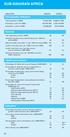 SUB-SAHARAN AFRICA INDICATOR REGION WORLD Demographic indicators Total population (2005) 713,457,000 6,449,371,000 Population under 18 (2005) 361,301,000 2,183,143,000 Population under 5 (2005) 119,555,000
chapter >> Making Decisions Section 2: Making How Much Decisions: The Role of Marginal Analysis
 chapter 7 >> Making Decisions Section : Making How Much Decisions: The Role of Marginal Analysis As the story of the two wars at the beginning of this chapter demonstrated, there are two types of decisions:
Heredity - Patterns of Inheritance
 Heredity - Patterns of Inheritance Genes and Alleles A. Genes 1. A sequence of nucleotides that codes for a special functional product a. Transfer RNA b. Enzyme c. Structural protein d. Pigments 2. Genes
Medi-Cal Program Guide (MPG) Letter # 702
 Medi-Cal Program Guide (MPG) Letter # 702 June 17, 2010 Subject TERM AND ENDOWMENT LIFE INSURANCE Effective Date Upon Receipt Reference ACWDL 08-02 Purpose To inform staff of changes to the treatment of
Longevity Risk in the United Kingdom
 Institut für Finanz- und Aktuarwissenschaften, Universität Ulm Longevity Risk in the United Kingdom Stephen Richards 20 th July 2005 Copyright c Stephen Richards. All rights reserved. Electronic versions
Easily Identify Your Best Customers
 IBM SPSS Statistics Easily Identify Your Best Customers Use IBM SPSS predictive analytics software to gain insight from your customer database Contents: 1 Introduction 2 Exploring customer data Where do
THE CONSTRUCTION OF A SURVIVORSHIP LIFE INSURANCE POLICY
 THE CONSTRUCTION OF A SURVIVORSHIP LIFE INSURANCE POLICY PERTINENT INFORMATION Mr. and Mrs. Kugler are considering $1,000,000 of life insurance to provide estate liquidity at the survivor s death to cover
Version 3A ACTUARIAL VALUATIONS. Remainder,Income, and Annuity Examples For One Life, Two Lives, and Terms Certain
 ACTUARIAL VALUATIONS Remainder,Income, and Annuity Examples For One Life, Two Lives, and Terms Certain Version 3A For Use in Income, Estate, and Gift Tax Purposes, Including Valuation of Pooled Income
Analytical Test Method Validation Report Template
 Analytical Test Method Validation Report Template 1. Purpose The purpose of this Validation Summary Report is to summarize the finding of the validation of test method Determination of, following Validation