
Anatomical study of lumbar spine innervation
|
|
|
- Gerald Miles
- 9 years ago
- Views:
Transcription
1 O R I G I N A L ARTICLE Folia Morphol. Vol. 61, No. 2, pp Copyright 2002 Via Medica ISSN Anatomical study of lumbar spine innervation Katsura Higuchi, Tatsuo Sato Unit of Functional Anatomy, Graduate School, Tokyo Medical and Dental University, Tokyo, Japan [Received 5 February 2002; Accepted 27 February 2002] To precisely evaluate low back pain, identification of the detailed innervation of the lumbar spine is necessary. On twenty-five sides of adult cadavers we investigated various patterns of rami communicantes (RC) and their relationship to the psoas major muscle (PM). In ten sides, we focused our dissection on the minute nerve supply of the anterior (ALL) and posterior longitudinal ligaments (PLL), vertebral bodies and the intervertebral discs (IVD). According to the mode of piercing PM, two types of RC were observed: superficial oblique rami (SOR) and deep transverse rami (DTR). SOR ran obliquely between superficial heads of PM, connecting sympathetic trunk (ST) and T12-L2 (3) spinal nerves non-segmentally. DTR ran segmentally close to the vertebral bodies and were situated deep to the PM slips. On the lateral side of the lumbar spine, the vertebral bodies and IVD received branches from DTR and ventral rami segmentally, as well as branches from the sympathetic trunk (ST) and, in the upper lumbar region, SOR non-segmentally. On the anterior aspect of the lumbar spine, ALL received branches from ST and splanchnic nerves non-segmentally. Within the vertebral canal, the posterior aspect of IVD and PLL received the sinu-vertebral nerves originating from DTR. These findings suggest the coexistence of two different types of innervation: one originating directly from the spinal nerve segmentally, and one reaching vertebral structures via the sympathetic nerves non-segmentally. Therefore, sympathetic nerves are likely involved in the proprioception of the spinal column. key words: rami communicantes, sympathetic trunk, sinu-vertebral nerve, clinical anatomy INTRODUCTION A comprehensive understanding of the lumbar spine innervation is necessary for the clinical evaluation of low back pain. Thus, it is critical to investigate minutely the origins and courses of the nerves of the spinal column. Many histological studies on spinal innervation described the existence of nervous elements or endings in the spinal column [4 6, 9, 12, 15, 30]. The branches that innervate the spinal column are the spinal nerve, sympathetic trunk (ST) and rami communicantes (RC); these have been shown to form plexuses on the surface of the spine [11]. Interestingly, however, within the spinal canal, the sinuvertebral nerve (SVN) (ramus meningeus; Nomina Anatomica 1989) is reported to be responsible for lumbar spine innervation [1, 11, 13, 14, 17 20, 22, 24]. More recent studies have suggested that the pain sensation from the lumbar spinal column is transmitted via the sympathetic nervous system [21, Address for correspondence: Katsura Higuchi, Unit of Functional Anatomy, Graduate School, Tokyo Medical and Dental University, , Yushima, Bunkyo-ku, Tokyo, Japan, tel: , fax: , [email protected] 71
![Accepted 27 February 2002] To precisely evaluate low back pain, identification of the detailed innervation of the lumbar spine is necessary.](/docs-images/49/17593157/images/page_1.jpg "On twenty-five sides of adult cadavers we investigated various patterns of rami communicantes (RC) and their relationship to the psoas major muscle (PM).")
2 Folia Morphol., 2002, Vol. 61, No. 2 23, 32]. However, to date, few data are available to support these microscopic anatomy findings from the viewpoint of macroscopic anatomy [1, 31]. Few studies have been carried out from the viewpoint of clinical and macroscopic anatomy to clarify the typical pattern of origin, branching and course of the nerves innervating the lumbar spine. This is due to the large variation of ST and RC, and also the presence of the psoas major (PM), which impedes observation of the nerves in the lateral lumbar region. The aim of the present study was to identify a typical pattern and location of RC based on the positional relationship to PM, and also to investigate the origin, course, and innervation patterns of the nerves supplying the lumbar spinal column as well as their minute distribution. MATERIAL AND METHODS In order to analyse different patterns of relationship of PM to the sympathetic trunk and their rami communicantes, twenty-five sides of adult Japanese cadavers (2 males, 11 females, years old) were examined. Each specimen was fixed in a solution containing 10% formalin and 80% ethanol; the thoraco-lumbar spine, together with the abdominal aorta, the inferior vena cava and the psoas muscle, was extracted and dissected in detail under a stereomicroscope. By carefully separating the slips from each origin of PM, the positional relationship of this muscle s bundles to the sympathetic trunk and their rami communicantes was examined. To investigate the innervation pattern of the structures of the spinal column (the anterior and posterior longitudinal ligaments (ALL, PLL), the vertebral body, the outer surface of the intervertebral discs (IVD) and the ligamentum flavum), ten sides of adult Japanese cadavers (1 male and 4 females, years old) were further dissected. From each cadaver the thoraco-lumbo-sacral vertebral column was removed, together with the abdominal viscera and vessels, the diaphragm and the psoas. After removal of the psoas, special attention was paid to the nerves which pierce this muscle: we specifically examined the origin, course and supplying pattern of these nerves to reach constituent elements of the spinal column, as well as their minute distribution. For closer observation, each specimen was dissected with the aid of a dissecting stereomicroscope. Then, in order to facilitate observation of the nervous elements in the proximity of the intervertebral foramina and those innervating PLL, the specimens were immersed in a 37%HCl formic acid AlCl 3 solution for decalcification for one week, and then in 5% sodium sulphate for neutralisation for one week. After this treatment, the specimens were washed in flowing water for three days. After removal of each vertebral arch from the lumbar spine, the nerve supply of PLL, the dorsal surface of IVD, and the ligamentum flavum were investigated in detail under a stereomicroscope. RESULTS Classification of rami communicantes in the lumbar region (Fig. 1) The RC were hidden by PM in the lateral lumbar region. The psoas covered the lateral surface of the lumbar spinal column and RC, making observation difficult. Minute dissection revealed that PM had two muscular origins: a deep head from the 12th rib and from the transverse process of each lumbar vertebra, and a superficial head from the bodies of the vertebrae and IVD. Figure 1. The lumbar spine after removal of the psoas major muscle (right side view). The superficial oblique rami (SOR) and the deep transverse rami (DTR) are separated by the fibrous bridge (*), from which the psoas originates; IVD intervertebral disc, L1 L3 lumbar spinal nerves. 72

3 Katsura Higuchi et al., Lumbar spine innervation According to the mode of piercing PM, two types of RC were observed (Fig. 1). The first type of rami, which we termed superficial oblique rami (SOR), ran obliquely between the psoas major and the lateral surface of the vertebral column, connecting ST and the spinal nerves in a non-segmental manner. In most specimens, these rami were observed at the level of the T12-L2 spinal nerves, and in only four cases a ramus which connected between the L3 spinal nerve and ST was noted. The T12 ramus ran on the anterior surface of PM, while the L1 to L2 (or 3) rami penetrated the slips of PM. The lowermost point where SOR connected with ST was located in the vicinity of the L3 vertebral body or IVD between L3 and L4 (Fig. 1). We termed the second type of rami deep transverse rami (DTR). These rami were situated deep to each superficial head of PM, running close to the vertebral bodies and along the lumbar arteries and veins, but never piercing the slips of the psoas. DTR ran transversally along the lateral side of each lumbar vertebral body and connected to the corresponding lumbar spinal nerve and ST in a segmental manner. It was consistently observed that, compared to SOR, DTR connected with the spinal nerve closer to the spinal nerve root. After removing all the superficial heads of PM, we observed the aponeurosis, which covered the lateral surface of each vertebral body like a ligament (Fig. 1). It was here, on the surface of the aponeurosis, that the superficial heads of the psoas originated. All SOR ran upon the surface of this aponeurosis, while DTR ran beneath the aponeurosis close to each vertebral body. The nervous supply of the lateral aspect of the spinal column (Fig. 2) After the removal of each head of PM, we observed first the postero-lateral part of the spinal column, namely the part of the lumbar spine near the intervertebral foramen. Here, in particular, branches arising from the lumbar ventral primary rami near the foramen innervated each IVD and vertebral body in a segmental manner (Fig. 2). In the antero-lateral aspect of the spinal column, ST and RC lay in close proximity to IVD and the vertebral bodies. By separating and removing the superficial heads of the psoas one by one, we revealed that, in this muscle, SOR were running obliquely across IVD and the surface of the aponeurosis where the psoas originated. The upper lumbar spinal column received branches from SOR. SOR ran in close proximity to the lateral surface of IVD, being partially buried in the connective tissue of the surface of IVD, or distributed to this tissue. As each SOR was separated from the Figure 2. The innervation of the lateral aspect of the lumbar spinal column (right side view). Numerous branches (indicated by arrows) from the superficial oblique rami (SOR), the deep transverse rami (DTR), the sympathetic trunk (ST) and the lumbar ventral primal rami (L1 L5) are distributed into the lumbar spine; IVD intervertebral disc, AA the abdominal aorta, ALL anterior longitudinal ligament. 73

4 Folia Morphol., 2002, Vol. 61, No. 2 vertebral body by the aponeurosis from which the psoas originated, it was not clear whether or not branches from SOR directly innervated the lateral surface of the vertebral body. SOR arose from L1 and L2 spinal nerves and reached the level of L3 or IVD between L3 and L4. These rami innervated the spinal column in a non-segmental manner from the viewpoint of connection with the spinal nerves (Fig. 3). After removal of the psoas aponeurosis, which covered the lateral surface of each vertebral body, we observed DTR, which ran close to each vertebral body. On each lumbar vertebral segment, the branches from DTR were distributed to the lateral surface of the vertebral body, to the upper and lower margins of IVD and to the lumbar blood vessels. The innervation of the spinal column by DTR tended to preserve the segmental manner from the viewpoint of connection with the spinal nerves. Furthermore, in this aspect, the IVD and the periosteum of the vertebral bodies received branches directly from ST non-segmentally. The nervous supply of the anterior aspect of the spinal column (Fig. 4, 5a, b) Both the anterior and posterior surfaces of ALL received branches from ST, while DTR passed deep to ALL, between the vertebral body and this liga- Figure 3. Drawing of the lumbar spine innervation, showing the branching patterns of the superficial oblique rami (SOR) and the deep transverse rami (DTR); SVN sinu-vertebral nerve, ST sympathetic trunk. Figure 4. The innervation of the anterior aspect of the lumbar spinal column (anterior view). The sympathetic trunk (ST) sends many branches to the anterior longitudinal ligament (ALL). Some of these disappear behind ALL near its lateral edge; AA the abdominal aorta, IVD intervertebral disc, 12R 12th rib. 74

5 Katsura Higuchi et al., Lumbar spine innervation nerves, arising from lumbar ST, ran underneath the inferior vena cava. These nerves passed between the inferior vena cava and the abdominal aorta to exit on the anterior side of the latter, where they formed a nervous plexus (Fig. 5a). In passing beneath the vena cava, some branches from the lumbar splanchnic nerves ran particularly close to the connective tissue of the anterior surface of ALL. Upon close examination of the lumbar splanchnic nerves deep to the inferior vena cava, by reflecting this vein to the left, a direct branch of the splanchnic nerve to the anterior aspect of ALL was also observed (Fig. 5b). On the left side, the splanchnic nerves, after originating from ST, passed along the aorta and its main branches, supplied the organs of the abdominal cavity and, like the right splanchnic nerves, sent branches to ALL. The nervous supply of the spinal column in the vertebral canal (Fig. 6a c). In the vertebral canal, the posterior aspect of IVD and the posterior longitudinal ligament (PLL) received branches from SVN which arose from DTR near its origin (Fig. 3, 6). SVN never arose from SOR. On the ventral side of the spinal nerve root, SVN entered the vertebral canal through the intervertebral foramen along the ventral root, and gave off several branches. The main branch ascended along the lateral margin of PLL and supplied twigs to this ligament and to the vertebral body. Smaller branches arose close to the origin of SVN and innervated PLL and IVD near the intervertebral foramen (Fig. 6a). Among the SVN branches, rami connecting with SVN in the adjacent segments were not clear upon macroscopic observation. The ligamentum flavum received a branch directly from the dorsal root ganglion. On the basis of these innervation findings, Figure 3 and Table 1 show that each component of the spinal column received branches from nerves in the vicinity. Figure 5. The splanchnic nerve and its branches to the anterior longitudinal ligament (ALL) in the abdominal region (anterior view); a) The right splanchnic nerves (indicated by arrows) pass underneath the inferior vena cava (IVC) and between IVC and the abdominal aorta (AA) to reach the anterior side of AA; b) Branches from the splanchnic nerves (SN) to ALL (*). ment (Fig. 4). In addition, the anterior surface was supplied by twigs from the splanchnic nerves, which originated from ST. The right lumbar splanchnic DISCUSSION Classification of rami communicantes In this study, according to the course of RC in the lumbar region, two types of RC were distinguished: SOR and DTR. These two types of RC are clearly separated by the aponeurosis, from which the superficial heads of the psoas originate. The lumbar spine is surrounded by these two types of RC on the lateral sides of the vertebral bodies and IVD. 75

6 Folia Morphol., 2002, Vol. 61, No. 2 Figure 6. The sinu-vertebral nerves course; a) Lumbar spine, posterior view. The sinu-vertebral nerve (arrow), after originating from the rami communicantes, supplies the posterior longitudinal ligament (PLL) and the posterior aspect of the spinal column. The ligamentum flavum (LF) receives a branch from the dorsal root ganglion (*); b) Lumbar spine, postero-lateral view. The sinu- -vertebral nerves (arrow) originate from the deep transverse rami (DTR); DR dorsal primal ramus, VR ventral primal ramus, IVD intervertebral disc, ST the sympathetic trunk; c) Close-up view of Fig. 6b. The sinu-vertebral nerves (SVN). According to many textbooks, RC are generally classified into white and grey [7, 25, 29, 34, 35]. Based on fibre composition from the viewpoints of histology and physiology, both white and grey rami can be identified through microscopic observation; however, these are extremely difficult to distinguish by macroscopic observation [36] due to 1) the great variation of ST and RC in the lumbar region [8, 10, 26 28], and 2) the presence of the psoas, which conceals RC lateral to the spine. Due to such difficulty in observation, few reports include macroscopic identification of RC branching patterns, course and man- 76

7 Katsura Higuchi et al., Lumbar spine innervation Table 1. The nervous elements surrounding the vertebral column and their segmentation Location Vertebral canal Lateral side of the column Anterior side of the column Components VB (posterior) VB VB ALL (superficial) of the column IVD (posterior) IVD IVD PLL ALL (deep) Innervation Segmental Segmental Non-segmental Segmental Non-segmental Non-segmental SVN DTR SOR (upper DTR ST ST VR (postero- lumbar region) SN lateral aspect) ST VB vertebral body, IVD intervertebral disc, ALL anterior longitudinal ligament, PLL posterior longitudinal ligament, SVN sinu-vertebral nerve, DTR deep transverse ramus, SOR superficial oblique ramus, ST sympathetic trunk, SN splanchnic nerve, VR ventral ramus ner of innervation of the spine. Bogduk [1 3] described various RC: RC which cross the vertebral bodies deep to the psoas ( typical RC ), RC which pierce the psoas and pass between the second lumbar sympathetic ganglion and the L1 ventral primary ramus, and RC which are embedded in the connective tissue of IVD ( paradiscal RC ). We believe that, despite their great variation, RC can be classified into SOR and DTR, according to their positional relationship to the fibrous bridge from which the psoas originates. We can argue that the typical RC described by Bogduk correspond to DTR, while the remaining RC variations correspond to SOR. Bogduk observed a ramus equivalent to SOR at the level of L1 only, while we found SOR in the thoracolumbar transitional region, generally to L2 or L3. We also found that some lower SOR adhered to the connective tissue on the surface of IVD, like Bogduk s paradiscal RC. Our classification of RC may facilitate a clear understanding of lumbar spine innervation for spinal surgery. Innervation of the lumbar spine We have shown that the components of the spinal column are supplied by many branches from the neural elements surrounding them. These branches can be classified as branches which arise from: 1) ST directly; 2) SOR, DTR, SVN and the splanchnic nerves; and 3) directly from each lumbar ventral primary ramus. Macroscopic anatomical studies of spinal column innervation in monkeys [31] and humans [1] demonstrated that the lumbar spine receives branches arising from ST, RC and the spinal nerves. Further, numerous histological studies have demonstrated the existence of nervous endings in the vertebral bone, IVD, ALL and PLL [4 6, 9, 12, 15, 30]. The present results concur with these reports and indicate that the sympathetic branches (including splanchnic nerves) and the spinal nerves both participate in the innervation of the lumbar spine. It is generally accepted that the sympathetic nervous system contains efferent and afferent fibres which innervate the viscera and blood vessels [7, 29, 34, 35]. It can be conjectured that the rami which run along blood vessels, like DTR, might influence lumbar spine vascular changes and thus may be related to IVD degeneration. Recently, both clinical [16, 23] and basic [21, 32] research have demonstrated that the sympathetic nervous system is involved in non-segmental pain transmission from the spinal column. From the viewpoint of macroscopic anatomy, our results confirm these clinical and experimental studies. The sympathetic branches we observed are likely to participate in pain transmission from the spinal column. Our results show that, with regard to innervation patterns, the lumbar spine can be divided into three regions: anterior, lateral, and posterior (within the vertebral canal) (Table 1). In the anterior part, we noted that ALL receives branches directly from the lumbar splanchnic nerves. Considering that the splanchnic nerves originate from the thoracic and upper lumbar nerve segments (L1, L2), it can be inferred that ALL branches from the lumbar splanchnic nerves originate from the upper lumbar nerve segments as well (non-segmental innervation). These findings clearly indicate that pain from ALL can be transmitted to the upper lumbar nerve segments, causing referred pain in the L1, L2 segments. This might explain why some patients with lesions of the lower lumbar spine complain of in- 77

8 Folia Morphol., 2002, Vol. 61, No. 2 guinal pain. Webber [33] observed branches that arise from the connecting rami between the right and left ST to reach ALL, while, more recently, using the immunohistochemical whole mount method on the foetus, Groen et al. [11] reported that many branches from ST form plexuses in ALL. The present study also confirmed that numerous fine branches arising from ST innervate ALL. In the lateral part of the lumbar spine, Bogduk [1 3] described that IVD received branches from the grey rami and ventral primary rami segmentally. Our study revealed that the upper lumbar nervous segments participate, via SOR, in the innervation of a more extensive area, which spreads over the lower lumbar region. On the other hand, DTR innervate only the corresponding lumbar segment, and each ventral primary ramus is segmentally distributed to the posterolateral aspect of the spinal column (Fig. 3). Finally, within the vertebral canal, each SVN is distributed to PLL, to the posterior aspect of IVD and to the vertebral body segmentally. Moreover, we noted that SVN originates from DTR and not from SOR. Since Luschka s reports in 1850 and 1863 [19, 20], the innervation of the vertebral canal has been the subject of many studies. Some of these reported that SVN originates from RC or the spinal nerve [1, 20, 24]. Our findings show that the only RC giving off SVN is DTR. This is an important point for the clinical understanding of SVN. Furthermore, some reports state that each SVN sends branches to two or three segments [17]. More recently, minute investigations using an immunohistochemical method on the human foetus [11] and rat [14, 18, 22] revealed that SVN spread over several segments to finally form nervous plexuses within the vertebral canal. However, in the present study SVN did not appear to be connected between segments. Our result is congruent with Bogduk s report [1] on SVN. In conclusion, the present study provides important information for the classification of lumbar spine innervation patterns, based on the differences in the course of nerves from the viewpoint of macroscopic anatomy. We have shown the coexistence of two different types of innervation: a segmental type directly from the spinal nerve and a non-segmental type reaching vertebral structures via the sympathetic nervous system. Considering that the lumbar splanchnic nerves and SOR originate from the upper lumbar nerve segments, we propose L1 L2 as the centre for non-segmental lumbar spine innervation. To evaluate low back pain and various types of referred pain from the viewpoint of clinical anatomy, a comprehensive understanding of lumbar spine innervation is necessary. We hope that our dissection findings may enhance the understanding of the intricate nerve supply to these structures, and may aid in the development of future surgical techniques for the spine. REFERENCES 1. Bogduk N, Tynan W, Wilson AS (1981) The nerve supply to the human lumbar intervertebral discs. J Anat, 132: Bogduk N (1983) The innervation of the Lumbar spine. Spine, 8: Bogduk N (1997) Clinical anatomy of the lumbar spine and sacrum. Churchill Livingstone, New York, pp Brown MF, Hukkanen MVJ, Mccarthy ID, Redfern DRM, Batten JJ, Crock HV, Hughes SPF, Polak JM (1997) Sensory and sympathetic innervation of the vertebral endplate in patients with degenerative disc disease. J Bone Joint Surg (Br), 79B: Cavanaugh JM, Kallakuri S, Özaktay AC (1995) Innervation of the rabbit lumbar intervertebral disc and posterior longitudinal ligament. Spine, 20: Coppes MH, Marani E, Thomeer RTWM, Groen GJ (1997) Innervation of the painful lumbar discs. Spine, 22: Cramer GD, Darby SA (ed.) (1995) Basic and clinical anatomy of the spine, spinal cord and ANS. Mosby, St Louis, pp Edwards EA (1951) Operative anatomy of the lumbar sympathetic chain. Angiology, 2: Ehrenhaft JL (1943) Development of the vertebral column as related to certain congenital and pathological changes. Surg Gynec Obstet, 76: Fagarasanu L (1938) Recherches anatomiques sur le sympathique lumbaire. Bull Acad de Med de Roumanie, 3: Groen GJ, Baljet B, Drukker J (1990) Nerves and nerve plexuses of the human vertebral column. Am J Anat, 188: Hirsch C, Ingelmark BE, Miller M (1963) The anatomical basis for low back pain. Acta Orthop Scand, 33: Hovelacque A (1925) Le nerf sinuvértebral. Ann d Anat Path, 2: Imai S, Hukuda S, Maeda T (1995) Dually innervating nociceptive networks in the rat lumbar posterior longitudinal ligaments. Spine, 20: Jackson HC, Winkelmann RK, Bickl WH (1966) Nerve endings in the human lumbar spinal column and related structures. J Bone Joint Surg (Am), 48A: Jinkins JR, Whittemore AR, Bradley WG (1989) The anatomic basis of vertebrogenic pain and the autonomic syndrome associated with lumbar disk extrusion. AJR, 152: Kimmel DL (1960) Innervation of the spinal dura mater and dura mater of the posterior cranial fossa. Neurology, 10:
![Groen et al. [11] reported that many branches from ST form plexuses in ALL. The present study also confirmed that numerous fine branches arising from ST innervate ALL.](/docs-images/49/17593157/images/page_8.jpg "In the lateral part of the lumbar spine, Bogduk [1 3] described that IVD received branches from the grey rami and ventral primary rami segmentally.")
9 Katsura Higuchi et al., Lumbar spine innervation 18. Kojima Y, Maeda T, Arai R, Shichikawa K (1990) Nerve supply to the posterior longitudinal ligament and the intervertebral disc of the rat vertebral column as studied by acetylcholinesterase histochemistry. J Anat, 169: Luschka H (1850) Die Nerven des menschlichen Wirbelkanales. Verlag der H. Lauppschen Buchhandlung, Tubingen (cited from 20). 20. Luschka H (1863) Die Anatomie des Menschen. Verlag der H. Lauppschen Buchhandlung, Tubingen, pp Morinaga T, Takahashi K, Yamagata M, Chiba T, Tanaka K, Takahashi Y, Nakamura S, Suseki K, Moriya H (1996) Sensory innervation to the anterior portion of the lumbar intervertebral disc. Spine, 21: Nakamura S, Takahashi K, Takahashi Y, Morinaga T, Shimada Y, Moriya H (1996a) Origin of nerves supplying the posterior portion of lumbar intervertebral discs in rat. Spine, 21: Nakamura S, Takahashi K, Takahashi Y, Yamagata M, Moriya H (1996b) The afferent pathways of discogenic low-back pain. J Bone Joint Surg (Br), 78B: Pedersen HE, Blunck CFJ, Gardner E (1956) The anatomy of lumbosacral posterior rami and meningeal branches of spinal nerves (sinu-vertebral nerves). J Bone Joint Surg (Am), 38A: Pick J (1970) The automatic nervous system. JB Lippincott, Philadelphia, pp Pick J, Sheehan D (1946) Sympathetic rami in man. J Anat, 80: Prejzner-Morawska A, Panek-Mikula J, Urbanowicz M (1975) Lumbar part of the sympathetic trunk in human fetuses and newborns. Folia Morphol, 3: Rocco GA, Plombi D, Raeke D (1995) Anatomy of the lumbar sympathetic chain. Regional Anesthesia, 20: Romanes GJ (ed.) (1972) Cunningham s textbook of anatomy, Eleventh edition. Oxford University Press London, pp Roofe PG (1940) Innervation of the annulus fibrosus and posterior longitudinal ligament. Arch Neurol Psychiat, 44: Stilwell DL (1956) The nerve supply of the vertebral column and its associated structures in the monkey. Anat Rec, 125: Suseki K, Takahashi Y, Takahashi K, Chiba T, Yamagata M, Moriya H (1998) Sensory nerve fibers from lumbar intervertebral discs pass through rami communicantes. J Bone Joint Surg (Br), 80B: Webber RH (1957) An analysis of the cross communications between the sympathetic trunks in the lumbar region in man. Ann Surg, 145: Williams PL, Warwick R, Dyson M, Bannister LH (eds.) (1989) Gray s anatomy, 37th edition. Churchill Livingstone, London, pp Woodburne RT (1978) Essentials of human anatomy, Sixth edition. Oxford University Press, New York, pp Yoshida Y (1980) Studies on the thoracolumbar sympathetic trunk ganglia and their communicating rami in man. Acta Anat Nippon, 55: (in Japanese). 79

Anatomicalintroduction
 3rd INTERVENTIONAL HANDS-ON PAIN RELIEF & NEUROMODULATION CADAVER WORKSHOP Anatomicalintroduction Gdansk-Poland Programmeofthelecture Shortintroductionto theanatomyof: 1.Vertebralcolumn 2.Intervertebraldiscs
Anatomy and Terminology of the Spine. Bones of the Spine (Vertebrae)
 Anatomy and Terminology of the Spine The spine, also called the spinal column, vertebral column or backbone, consists of bones, intervertebral discs, ligaments, and joints. In addition, the spine serves
Thoracic Region Pain. ICD-9-CM: 724.4 Thoracic or Lumbosacral neuritis or radiculitis, unspecified
 Thoracic Region Pain ICD-9-CM: 724.4 Thoracic or Lumbosacral neuritis or radiculitis, unspecified ICF codes: Activities and Participation Domain code: d4108 Changing basic body position, other specified
Nervous System: Spinal Cord and Spinal Nerves (Chapter 13) Lecture Materials for Amy Warenda Czura, Ph.D. Suffolk County Community College
 Nervous System: Spinal Cord and Spinal Nerves (Chapter 13) Lecture Materials for Amy Warenda Czura, Ph.D. Suffolk County Community College Primary Sources for figures and content: Eastern Campus Marieb,
Thoracic Spine Anatomy
 A Patient s Guide to Thoracic Spine Anatomy 228 West Main, Suite C Missoula, MT 59802 Phone: [email protected] DISCLAIMER: The information in this booklet is compiled from a variety of sources.
Lumbar Spine Anatomy. eorthopod.com 228 West Main St., Suite D Missoula, MT 59802-4345 Phone: 406-721-3072 Fax: 406-721-2619 info@eorthopod.
 A Patient s Guide to Lumbar Spine Anatomy 228 West Main St., Suite D Missoula, MT 59802-4345 Phone: 406-721-3072 Fax: 406-721-2619 [email protected] DISCLAIMER: The information in this booklet is compiled
Transverse Sections of the Spinal Cord
 Transverse Sections of the Spinal Cord The spinal cord is perhaps the most simply arranged part of the CNS. Its basic structure, indicated in a schematic drawing of the eighth cervical segment (Figure
Anatomy of the Spine. Figure 1. (left) The spine has three natural curves that form an S-shape; strong muscles keep our spine in alignment.
 1 2 Anatomy of the Spine Overview The spine is made of 33 individual bony vertebrae stacked one on top of the other. This spinal column provides the main support for your body, allowing you to stand upright,
The Furcal nerve. Ronald L L Collins,MB,BS(UWI),FRCS(Edin.),FICS (Fort Lee Surgical Center, Fort Lee,NJ)
 The Furcal nerve. Ronald L L Collins,MB,BS(UWI),FRCS(Edin.),FICS (Fort Lee Surgical Center, Fort Lee,NJ) The furcal nerve is regarded as an anomalous nerve root, and has been found with significant frequency
Cervical Spine Surgery. Orthopaedic Nursing Seminar. Dr Michelle Atkinson. Friday October 21 st 2011. Cervical Disc Herniation
 Cervical Spine Surgery Dr Michelle Atkinson The Sydney and Dalcross Adventist Hospitals Orthopaedic Nursing Seminar Friday October 21 st 2011 Cervical disc herniation The most frequently treated surgical
MD 2016. Back Muscles & Movements Applied Anatomy. A/Prof Chris Briggs Anatomy & Neuroscience
 MD 2016 Back Muscles & Movements Applied Anatomy A/Prof Chris Briggs Anatomy & Neuroscience WARNING This material has been provided to you pursuant to section 49 of the Copyright Act 1968 (the Act) for
CSE511 Brain & Memory Modeling. Lect04: Brain & Spine Neuroanatomy
 CSE511 Brain & Memory Modeling CSE511 Brain & Memory Modeling Lect02: BOSS Discrete Event Simulator Lect04: Brain & Spine Neuroanatomy Appendix of Purves et al., 4e Larry Wittie Computer Science, StonyBrook
Human Anatomy & Physiology
 PowerPoint Lecture Slides prepared by Barbara Heard, Atlantic Cape Community College Ninth Edition Human Anatomy & Physiology C H A P T E R 7 The Skeleton: Part B Annie Leibovitz/Contact Press Images Vertebral
Lectures of Human Anatomy
 Lectures of Human Anatomy Vertebral Column-I By DR. ABDEL-MONEM AWAD HEGAZY M.B. with honor 1983, Dipl."Gynecology and Obstetrics "1989, Master "Anatomy and Embryology" 1994, M.D. "Anatomy and Embryology"
How To Understand The Anatomy Of A Lumbar Spine
 Sciatica: Low back and Leg Pain Diagnosis and Treatment Options Presented by Devesh Ramnath, MD Orthopaedic Associates Of Dallas Baylor Spine Center Sciatica Compression of the spinal nerves in the back
Nomenclature and Standard Reporting Terminology of Intervertebral Disk Herniation
 167 Nomenclature and Standard Reporting Terminology of Intervertebral Disk Herniation Richard F. Costello, DO a, *, Douglas P. Beall, MD a,b MAGNETIC RESONANCE IMAGING CLINICS Magn Reson Imaging Clin N
Spine Anatomy and Spine General The purpose of the spine is to help us stand and sit straight, move, and provide protection to the spinal cord.
 Spine Anatomy and Spine General The purpose of the spine is to help us stand and sit straight, move, and provide protection to the spinal cord. Normal List Kyphosis The human spine has 7 Cervical vertebra
Chapter 15. Sympathetic Nervous System
 Chapter 15 Sympathetic Nervous System Somatic versus Autonomic Pathways Somatic efferent innervation ACh Myelinated fiber Somatic effectors (skeletal muscles) Autonomic efferent innervation ACh ACh or
The Nervous System: The Spinal Cord and Spinal Nerves
 14 The Nervous System: The Spinal Cord and Spinal Nerves PowerPoint Lecture Presentations prepared by Steven Bassett Southeast Community College Lincoln, Nebraska Introduction The Central Nervous System
Autonomic Nervous System of the Neck. Adam Koleśnik, MD Department of Descriptive and Clinical Anatomy Center of Biostructure Research, MUW
 Autonomic Nervous System of the Neck Adam Koleśnik, MD Department of Descriptive and Clinical Anatomy Center of Biostructure Research, MUW Autonomic nervous system sympathetic parasympathetic enteric Autonomic
Introduction. I. Objectives. II. Introduction. A. To become familiar with the terms of direction and location.
 E X E R C I S E Introduction I. Objectives A. To become familiar with the terms of direction and location. B. To become familiar with different types of planes and sections. C. To learn the names and locations
Vertebral anatomy study guide. Human Structure Summer 2015. Prepared by Daniel Schmitt, Angel Zeininger, and Karyne Rabey.
 Vertebral anatomy study guide. Human Structure Summer 2015 Prepared by Daniel Schmitt, Angel Zeininger, and Karyne Rabey. 1. Plan of Action: In this guide you will learn to identify these structures: Cervical
Human Anatomy & Physiology Spinal Cord, Spinal Nerves and Somatic Reflexes 13-1
 Human Anatomy & Physiology Spinal Cord, Spinal Nerves and Somatic Reflexes 13-1 Spinal Cord, Spinal Nerves and Somatic Reflexes Spinal cord Spinal nerves Somatic reflexes 13-2 Overview of Spinal Cord Information
ANTERIOR LUMBAR INTERBODY FUSION (ALIF) Basic Anatomical Landmarks: Anterior Lumbar Spine
 (ALIF) Anterior In human anatomy, referring to the front surface of the body or the position of one structure relative to another Lumbar Relating to the loins or the section of the back and sides between
Vivian Gonzalez Gillian Lieberman, MD. January 2002. Lumbar Spine Trauma. Vivian Gonzalez, Harvard Medical School Year III Gillian Lieberman, MD
 January 2002 Lumbar Spine Trauma Vivian Gonzalez, Harvard Medical School Year III Agenda Anatomy and Biomechanics of Lumbar Spine Three-Column Concept Classification of Fractures Our Patient Imaging Modalities
LUMBAR LAMINECTOMY AND DISCECTOMY. Basic Anatomical Landmarks: Posterior View Lumbar Spine
 Lumbar Relating to the loins or the section of the back and sides between the ribs and the pelvis. In the spinal column, the last five vertebrae (from superior to inferior, L1-L5) Laminectomy Surgical
THE LUMBAR SPINE (BACK)
 THE LUMBAR SPINE (BACK) At a glance Chronic back pain, especially in the area of the lumbar spine (lower back), is a widespread condition. It can be assumed that 75 % of all people have it sometimes or
Stability of the spine modelled as an arch
 Loughborough University Institutional Repository Stability of the spine modelled as an arch This item was submitted to Loughborough University's Institutional Repository by the/an author. Citation: XIAO,
Please read chapter 15, The Autonomic Nervous System, complete this study guide, and study this material BEFORE coming to the first class.
 Please read chapter 15,, complete this study guide, and study this material BEFORE coming to the first class. I. Introduction to the autonomic nervous system: Briefly describe the autonomic nervous system.
BODY BODY PEDICLE PEDICLE TRANSVERSE TRANSVERSE PROCESS PROCESS
 Learning Objective Radiology Anatomy of the Spine and Upper Extremity Identify anatomic structures of the spine and upper extremities on standard radiographic and cross-sectional images Timothy J. Mosher,
Chapter 13: The Spinal Cord, Spinal Nerves, and Spinal Reflexes
 Chapter 13: The Spinal Cord, Spinal Nerves, and Spinal Reflexes I. General Organization of the Nervous System, p. 422 Objectives 1. Describe the basic structural and organizational characteristics of the
Degenerative Changes of the Cervical Spine
 Anatomical Demonstration of Cervical Degeneration 1 Anatomical Demonstration: Degenerative Changes of the Cervical Spine 20 Slides of anatomical specimens, Xrays and MRIs By: William J. Ruch, D.C. Copyright
The Role of the Iliolumbar Ligament in Low Back Pain
 Medical Hypotheses (1996) 46, 511-515 Pearson Professional Ltd 1996 The Role of the Iliolumbar Ligament in Low Back Pain J. A. SIMS and S. J. MOORMAN Department of Anatomy and Cell Biology, University
If you or a loved one have suffered because of a negligent error during spinal surgery, you will be going through a difficult time.
 If you or a loved one have suffered because of a negligent error during spinal surgery, you will be going through a difficult time. You may be worried about your future, both in respect of finances and
Practical class 3 THE HEART
 Practical class 3 THE HEART OBJECTIVES By the time you have completed this assignment and any necessary further reading or study you should be able to:- 1. Describe the fibrous pericardium and serous pericardium,
General A&P Nervous Tissues, Nerves, Spinal Cord and Reflexes Lab Exercises
 1 General A&P Nervous Tissues, Nerves, Spinal Cord and Reflexes Lab Exercises Have someone in your group read the following out loud, while the others read along: In this "Lab Guide", we will be looking
HEADACHES AND THE THIRD OCCIPITAL NERVE
 HEADACHES AND THE THIRD OCCIPITAL NERVE Edward Babigumira M.D. FAAPMR. Interventional Pain Management, Lincoln. B. Pain Clinic, Ltd. Diplomate ABPMR. Board Certified Pain Medicine No disclosures Disclosure
THE MECHANISM OF INJURY TO THE SPINAL CORD IN THE NECK WITHOUT DAMAGE TO THE VERTEBRAL COLUMN
 THE MECHANISM OF INJURY TO THE SPINAL CORD IN THE NECK WITHOUT DAMAGE TO THE VERTEBRAL COLUMN A. R. TAYLOR, EDINBURGH, SCOTLAND Fro;n the Department of Surgical Neurology, Edinburgh The discrepancy between
Thoracolumbar Fratures R1: 胡 家 瑞 指 导 老 师 : 吴 轲 主 任
 Thoracolumbar Fratures R1: 胡 家 瑞 指 导 老 师 : 吴 轲 主 任 Patient Data Name: 苏 XX Gender: Female Age:47 years old Admission date: 2010.06.09 Chief complaint Fell down from 4-54 5 meter tree and lead to lumbosacral
EPIDURAL STEROID AND FACET INJECTIONS FOR SPINAL PAIN
 CLINICAL POLICY EPIDURAL STEROID AND FACET INJECTIONS FOR SPINAL PAIN Policy Number: PAIN 019.16 T2 Effective Date: December 1, 2015 Table of Contents CONDITIONS OF COVERAGE... BENEFIT CONSIDERATIONS..
InternatIonal JOURNAL OF ANATOMY PHYSIOLOGY and BIOCHEMISTRY
 ORIGINAL RESEARCH ARTICLE http://www.eternalpublication.com InternatIonal JOURNAL OF ANATOMY PHYSIOLOGY and BIOCHEMISTRY IJAPB: Volume: 1; Issue: 1; October 2014 ISSN(Online):2394-3440 A Morphometric Study
Problems. Knowing. back of the
 Introduction Welcome to BodyZone Physiotherapy patient resource about Cervical Spine Problems. Knowing the main parts of your neck and how these parts work is important as you learn to care for your neck
III./8.4.2: Spinal trauma. III./8.4.2.1 Injury of the spinal cord
 III./8.4.2: Spinal trauma Introduction Causes: motor vehicle accidents, falls, sport injuries, industrial accidents The prevalence of spinal column trauma is 64/100,000, associated with neurological dysfunction
Sonographic Demonstration of Couinaud s Liver Segments
 PICTORIL ESSY Sonographic Demonstration of Couinaud s Liver Segments Dean Smith, MD, FRCPC, Donal Downey, M, Ch, FRCPC, lison Spouge, MD, FRCPC, Sue Soney, RT, RDMS, RCMS The segmental localization of
Image-guided Spine Procedures for Relief of Severe Lower Back Pain:
 Image-guided Spine Procedures for Relief of Severe Lower Back Pain: A Guide to Epidural Steroid Injection, Facet Joint Injection, and Selective Nerve Root Block. PETER H TAKEYAMA MD HENRY WANG MD PhD SVEN
Lab 5 Overview of the Skeleton: Classification and Structure of Bones and Cartilages Exercise 9 The Axial Skeleton Exercise 10
 Lab 5 Overview of the Skeleton: Classification and Structure of Bones and Cartilages Exercise 9 The Axial Skeleton Exercise 10 Overview of the Skeleton Locate the important cartilages in the human skeleton
PHYSIOLOGY AND MAINTENANCE Vol. IV - Lumbar Muscle Function and Dysfunction in Low Back Pain - Markku Kankaanpää
 LUMBAR MUSCLE FUNCTION AND DYSFUNCTION IN LOW BACK PAIN Markku Department of Physical Medicine and Rehabilitation, Kuopio University Hospital, and Department of Physiology, University of Kuopio, Finland
Lumbar Back Pain in Young Athletes
 Lumbar Back Pain in Young Athletes MS CAQ in Sports Medicine Blair Orthopedics Altoona, PA OMED 2012 San Diego CA AOASM Tuesday October 9 th 1:00pm Lumbar Back Pain in Learning ObjecKves Epidemiology Anatomy
SPINE ANATOMY AND PROCEDURES. Tulsa Spine & Specialty Hospital 6901 S. Olympia Avenue Tulsa, Oklahoma 74132
 SPINE ANATOMY AND PROCEDURES Tulsa Spine & Specialty Hospital 6901 S. Olympia Avenue Tulsa, Oklahoma 74132 SPINE ANATOMY The spine consists of 33 bones called vertebrae. The top 7 are cervical, or neck
Minimally Invasive Spine Surgery
 Chapter 1 Minimally Invasive Spine Surgery 1 H.M. Mayer Primum non nocere First do no harm In the long history of surgery it always has been a basic principle to restrict the iatrogenic trauma done to
2401 : Anatomy/Physiology
 Dr. Chris Doumen Week 7 2401 : Anatomy/Physiology The Brain Central Nervous System TextBook Readings Pages 431 through 435 and 463-467 Make use of the figures in your textbook ; a picture is worth a thousand
EPIDURAL STEROID AND FACET INJECTIONS FOR SPINAL PAIN
 MEDICAL POLICY EPIDURAL STEROID AND FACET INJECTIONS FOR SPINAL PAIN Policy Number: 2015T0004W Effective Date: December 1, 2015 Table of Contents BENEFIT CONSIDERATIONS COVERAGE RATIONALE APPLICABLE CODES..
SPINE SURGERY - LUMBAR DECOMPRESSION
 SPINE SURGERY - LUMBAR DECOMPRESSION Information Leaflet Your Health. Our Priority. Page 2 of 7 Introduction This booklet has been compiled by the physiotherapy department to help you understand lumbar
Name Date Hour. Nerve Histology Microscope Lab
 Name Date Hour Nerve Histology Microscope Lab PRE-LAB: Answer the following questions using your reading and class notes before starting the microscope lab. 1. What is the difference between the functions
Chapter 7: The Nervous System
 Chapter 7: The Nervous System I. Organization of the Nervous System Objectives: List the general functions of the nervous system Explain the structural and functional classifications of the nervous system
SYLLABUS. SPINAL ANATOMY 1- ANAT- 118/618(lab)
 SYLLABUS Name of Course: Length of Course: Course Description: Prerequisites: SPINAL ANATOMY 1- ANAT- 118/618(lab) 3.5 units, 63 hours (6 hrs/wk) This course is an introduction to the study of the human
An Anatomical Comparison of the Human and Bovine Thoracolumbar Spine
 Journal of Orthopaedic Research 4:298-303, Raven Press, New York 0 1986 Orthopaedic Research Society An Anatomical Comparison of the Human and Bovine Thoracolumbar Spine Paul C. Cotterill, J. P. Kostuik,
The Petrylaw Lawsuits Settlements and Injury Settlement Report
 The Petrylaw Lawsuits Settlements and Injury Settlement Report BACK INJURIES How Minnesota Juries Decide the Value of Pain and Suffering in Back Injury Cases The Petrylaw Lawsuits Settlements and Injury
ICD-9-CM coding for patients with Spinal Cord Injury*
 ICD-9-CM coding for patients with Spinal Cord Injury* indicates intervening codes have been left out of this list. OTHER DISORDERS OF THE CENTRAL NERVOUS SYSTEM (340-349) 344 Other paralytic syndromes
The Anatomy of Spinal Cord Injury (SCI)
 The Anatomy of Spinal Cord Injury (SCI) What is the Spinal Cord? The spinal cord is that part of your central nervous system that transmits messages between your brain and your body. The spinal cord has
ANTERIOR CERVICAL DISCECTOMY AND FUSION. Basic Anatomical Landmarks: Anterior Cervical Spine
 Anterior In the human anatomy, referring to the front surface of the body or position of one structure relative to another Cervical Relating to the neck, in the spine relating to the first seven vertebrae
CASE REPORT. COMPLETE FUSION OF FIFTH LUMBAR VERTEBRA WITH SACRUM: AN OSTEOLOGICAL CASE REPORT Shiksha Jangde 1, Ranjana S. Arya 2, Shashi Paikra 3
 COMPLETE FUSION OF FIFTH LUMBAR VERTEBRA WITH SACRUM: AN OSTEOLOGICAL CASE REPORT Shiksha Jangde 1, Ranjana S. Arya 2, Shashi Paikra 3 HOW TO CITE THIS ARTICLE: Shiksha Jangde, Ranjana S. Arya, Shashi
CHAPTER 9 BODY ORGANIZATION
 CHAPTER 9 BODY ORGANIZATION Objectives Identify the meaning of 10 or more terms relating to the organization of the body Describe the properties of life Describe the function for the structures of the
THORACIC OUTLET SYNDROME
 THORACIC OUTLET SYNDROME The Problem The term thoracic outlet syndrome is used to describe a condition of compression of the nerves and/or blood vessels in the region around the neck and collarbone, called
Patient Information. Lateral Lumbar Interbody Fusion Surgery (LLIF).
 Patient Information. Lateral Lumbar Interbody Fusion Surgery (LLIF). Understanding your spine Disc Between each pair of vertebrae there is a disc that acts as a cushion to protect the vertebra, allows
Instability concept. Symposium- Cervical Spine. Barcelona, February 2014
 Instability concept Guillem Saló Bru, MD, Phd AOSpine Principles Symposium- Cervical Spine Orthopaedic Depatment. Spine Unit. Hospital del Mar. Barcelona. Associated Professor UAB Barcelona, February 2014
Does the pain radiating down your legs, buttocks or lower back prevent you from walking long distances?
 Does the pain radiating down your legs, buttocks or lower back prevent you from walking long distances? Do you experience weakness, tingling, numbness, stiffness, or cramping in your legs, buttocks or
Spinal Anatomy. * MedX research contends that the lumbar region really starts at T-11, based upon the attributes of the vertebra.
 Spinal Anatomy Overview Neck and back pain, especially pain in the lower back, is one of the most common health problems in adults. Fortunately, most back and neck pain is temporary, resulting from short-term
ANATOMY AND PHYSIOLOGY
 ANATOMY AND PHYSIOLOGY Placement: First Year Theory - Anatomy: 60 Physiology: 60 Course Description -The course is designed to assist students to acquire the knowledge of the normal Structure of human
Compression Fractures
 September 2006 Compression Fractures Eleanor Adams Harvard Medical School Year IV Overview Spine Anatomy Thoracolumbar Fractures Cases Compression Fractures, Ddx Radiologic Tests of Choice Treatment Options
On Cervical Zygapophysial Joint Pain After Whiplash. Spine December 1, 2011; Volume 36, Number 25S, pp S194 S199
 On Cervical Zygapophysial Joint Pain After Whiplash 1 Spine December 1, 2011; Volume 36, Number 25S, pp S194 S199 Nikolai Bogduk, MD, PhD FROM ABSTRACT Objective To summarize the evidence that implicates
Skeletal System. Axial Skeleton: Vertebral Column and Ribs
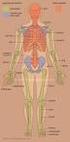 Skeletal System Axial Skeleton: Vertebral Column and Ribs Functions Regions Cervical Thoracic Lumbar Sacral Primary & secondary curvatures There are three major functions of the vertebral column. First,
Module 1: The Somato-Motor System: Tendon Tap reflex
 Module 1: The Somato-Motor System: Tendon Tap reflex Module Objectives: 1. Describe the anatomic pathway of a tendon tap reflex. 2. Explain how a tendon tap reflex assessment assists in diagnosis of a
AUTONOMIC NERVOUS SYSTEM
 AUTONOMIC NERVOUS SYSTEM Somatic efferent and ANS Somatic Efferent Control is over skeletal muscles. External environment This division of the PNS responds to some change in the external environment. single
ANATOMY & PHYSIOLOGY ONLINE COURSE - SESSION 2 ORGANIZATION OF THE BODY
 ANATOMY & PHYSIOLOGY ONLINE COURSE - SESSION 2 ORGANIZATION OF THE BODY Human beings are arguably the most complex organisms on this planet. Imagine billions of microscopic parts, each with its own identity,
Histological and Qualitative Evaluation of Hydrogel Cloth in a Sheep Lumbar Spine Model
 Histological and Qualitative Evaluation of Hydrogel Cloth in a Sheep Lumbar Spine Model A. Simon Turner, B.V.Sc., M.S., Dipl. ACVS and H.B. Seim Seim III D.V.M., Dipl. ACVS, Veterinary Medical Center,
CERVICAL PROCEDURES PHYSICIAN CODING
 CERVICAL PROCEDURES PHYSICIAN CODING Anterior Cervical Discectomy with Interbody Fusion (ACDF) Anterior interbody fusion, with discectomy and decompression; cervical below C2 22551 first interspace 22552
Cervical Spondylotic Myelopathy Associated with Kyphosis or Sagittal Sigmoid Alignment: Outcome after Anterior or Posterior Decompression
 Cervical Spondylotic Myelopathy Associated with Kyphosis or Sagittal Sigmoid Alignment: Outcome after Anterior or Posterior Decompression 1 Journal of Neurosurgery: Spine November 2009, Volume 11, pp.
Spinal Surgery Functional Status and Quality of Life Outcome Specifications 2015 (01/01/2013 to 12/31/2013 Dates of Procedure) September 2014
 Description Methodology For patients ages 18 years and older who undergo a lumbar discectomy/laminotomy or lumbar spinal fusion procedure during the measurement year, the following measures will be calculated:
Biology 141 Anatomy and Physiology I
 Fall 2016 Biology 141 Anatomy and Physiology I COURSE OUTLINE Faculty Name: Enter Faculty Name Here Program Head: Enter Program Head Here Dean s Review: Dean s Signature: Date Reviewed: / / Revised: Fall
A Patient s Guide to Diffuse Idiopathic Skeletal Hyperostosis (DISH)
 A Patient s Guide to Diffuse Idiopathic Skeletal Hyperostosis (DISH) Introduction Diffuse Idiopathic Skeletal Hyperostosis (DISH) is a phenomenon that more commonly affects older males. It is associated
Cervical Spinal Injuries
 Cervical Spinal Injuries Common mechanism is extension or axial compression with buckling into extension. Structures most often injured are discs & facets. Disc & facet injuries are equally frequent. Major
Research article Basic and applied anatomy Study on incidence of sacralisation of fifth lumbar vertebra in South Indian population
 IJAE Vol. 121, n. 1: 60-65, 2016 ITALIAN JOURNAL OF ANATOMY AND EMBRYOLOGY Research article Basic and applied anatomy Study on incidence of sacralisation of fifth lumbar vertebra in South Indian population
Diagnosis and Treatment of Lumbar Spinal Canal Stenosis
 Low Back Pains Diagnosis and Treatment of Lumbar Spinal Canal Stenosis JMAJ 46(10): 439 444, 2003 Katsuro TOMITA Department of Orthopedic Surgery, Kanazawa University Abstract: Lumbar spinal canal stenosis
Reavis High School Anatomy and Physiology Curriculum Snapshot
 Reavis High School Anatomy and Physiology Curriculum Snapshot Unit 1: Introduction to the Human Body 10 days As part of this unit, students will define anatomy, physiology, and pathology. They will identify
Bracing and supporting of the lumbar spine
 Bracing and supporting of the lumbar spine S. SCHROEDER, H. RÖSSLER, P. ZIEHE and F. HIGUCHI Department of Orthopaedic Surgery, University of Bonn, West Germany. Abstract The orthopaedic surgeon should
The Dehydrated Lumbar Intervertebral Disk on MR, its Anatomy, Biochemistry and Biomechanics
 NRJ Digital - The Neuroradiology Journal 1: 639-644, 2011 www.centauro.it The Dehydrated Lumbar Intervertebral Disk on MR, its Anatomy, Biochemistry and Biomechanics V. HAUgHToN Radiology Department, Wisconsin
Navigating Anorectal Anatomy: Terms, Planes, Spaces, Structures
 Navigating Anorectal Anatomy: Terms, Planes, Spaces, Structures Lawrence M. Witmer, PhD Lawrence M. Witmer, PhD Department of Biomedical Sciences College of Osteopathic Medicine Ohio University Athens,
An Introduction to Anatomy and Physiology
 An Introduction to Anatomy and Physiology Objectives Define anatomy and physiology Identify the levels of organization in organisms from simplest to most complex Identify the organ systems of the human
Peripheral Nervous System
 Nervous system consists of: Peripheral Nervous System CNS = brain and spinal cord ~90% (90 Bil) of all neurons in body are in CNS PNS = Cranial nerves and spinal nerves, nerve plexuses & ganglia ~10% (10
Clarification of Terms
 Shoulder Girdle Clarification of Terms Shoulder girdle = scapula and clavicle Shoulder joint (glenohumeral joint) = scapula and humerus What is the purpose (or function) of the shoulder and entire upper
Options for Cervical Disc Degeneration A Guide to the M6-C. clinical study
 Options for Cervical Disc Degeneration A Guide to the M6-C clinical study Each year, hundreds of thousands of adults are diagnosed with Cervical Disc Degeneration, an upper spine condition that can cause
Weakness More diffuse More focal Atrophy Mild, general Severe, focal Atrophy versus weakness
 Spinal Cord Disorders (Dr. Merchut) Clinical signs and symptoms in spinal cord lesions 1. Motor signs and symptoms Lower motor neuron (LMN) signs (Table 1) are found in a limb if some of its muscles are
Unit 4: Skeletal System Test Review Test Review
 Name: Period: Unit 4: Skeletal System Test Review Test Review 1. List four functions of the skeletal system: a. b. c. d. 2. Define ossification and identify the roles of the osteoblasts, osteocytes, and
Chapter 3 The Anatomy of the Nervous System
 Chapter 3 The Anatomy of the Nervous System Systems, Structures, and Cells That Make Up Your Nervous System 1 General Layout of the Nervous System Central Nervous System (CNS) Brain (in the skull) Spinal
Assessment of spinal anaesthetic block
 Assessment of spinal anaesthetic block Dr Graham Hocking Consultant in Anaesthesia and Pain Medicine John Radcliffe Hospital Oxford UK Email: [email protected] Spinal anaesthesia has the advantage
NEURAL PROLOTHERAPY LOW BACK/HIP/GROIN
 NEURAL PROLOTHERAPY LOW BACK/HIP/GROIN LIZA M. SMIGEL, MD November 9, 2013 Chronic Constriction Injuries (CCIs) These are key areas to inject Neural Prolotherapy Steps Identify area of pain. Ask patient