
Directional Perception in the Human Auditory System
|
|
|
- Prosper Armstrong
- 9 years ago
- Views:
Transcription
1 J. Undergrad. Sci. 3: (Fall 1996) Organismic & Evolutionary Biology Directional Perception in the Human Auditory System SUSAN J. SHAW Human perception of auditory direction was tested in the horizontal and mid-sagittal planes. When the auricular funneling and baffling effects are bypassed by extensions of the ear canals, the accuracy of perception worsens significantly. Providing artificial baffling posterior to the extensions of the ear canals improves perception. The accuracy of perception also worsens when the auricular funneling is eliminated by a modeling material filling the conchae while leaving artificial canals for sound entrance. These results indicate that both the auricular funneling and baffling contribute significantly to the anterior versus posterior differentiation. Similarly, the accuracy of superior versus inferior perception is worsened by the modeling material filling the conchae. Prior demonstrations improve the accuracy of perception when the artificial canals created by the modeling material are non-horizontal. However, prior demonstrations do not significantly improve the accuracy of perception when the artificial canals are horizontal. This suggests that the natural slope of the ear canals provides a learnable cue for distinguishing superior versus inferior sounds. The findings can explain why the hearing aids worsen accuracy of directional perception and why the human ear canals are not horizontal. Introduction Sound localization is generally believed to be primarily a binaural phenomenon. The interaural disparities in time and intensity are the two most important mechanisms by which animal and human ears perceive locations of sounds in space. 1-4 It has been shown that neurons in various parts of the auditory pathway are very sensitive to differences in arrival time and intensity between the two ears. 5-8 The sound localization acuity varies with azimuthal direction, but does not vary significantly with stimulus duration. 9 However, the interaural disparities in time and intensity do not provide all of the cues for sound localization. For example, obviously other cues will be needed to localize a sound that emanates from the mid-sagittal plane because the sound will arrive at both ears at practically the same time with practically the same intensity. 10 It has been shown that changes in spectral content of wide-band auditory stimuli can serve as a relative cue for auditory distance. 11 The role of the external ears, including the auricles and the ear canals, has received relatively little attention. It has been shown that distortions of the auricular shapes can adversely affect the auditory directional perception. 10, 12 The cues provided by the auricles and the ear canals for directional perception will be explored in this study. It is known that the auricles have funneling and baffling effects on sounds and that the auricles help in distinguishing between sounds coming from the front and the back. 3 It is not very clear yet whether funneling or baffling or both contribute to this differentiation of anterior versus posterior sounds. This is explored in the first part of this study. The barn owl is one of the most widely studied animals for sound localization. It has been shown that the barn owl has the best ability to accurately localize sounds out of all the species that have been studied. The barn owl s left ear is higher than the eye level and points downward while its right ear is lower than the eye level but points upward. This unique anatomy gives barn owls exceptional ability to localize sounds in the vertical plane. 13, 14 In humans the lateral two thirds of the external ear canals slant upward, while the medial one third of the canals slants downward. Whether or not this carries any physiological meaning in human auditory function has attracted very little attention. The second part of this study further explores the roles of the auricles and the upward slant of the lateral two thirds of the ear canals in directional perception in the mid-sagittal plane. Methods To present sounds from different directions at the same distance, a circular frame was built. The frame consists of a circular plastic tube supported by wood and metal strips, forming a circle with a diameter of 172 cm. It was calibrated for 360 degrees. Twelve identical 400±100 Hz direct current mini-buzzers were utilized. The buzzers were from the Radio Shack Company, Fort Worth, Texas. They were checked with a Realistic Sound Level Meter, which was also from the Radio Shack Company, to ensure that the buzzers produced the same sound intensities. The sound levels produced by the twelve 400 Hz buzzers were all within 72±2 db at 86 cm, the testing distance in this study. In the first part of this study, twelve buzzers were mounted on the circular frame, positioned in the horizontal plane. The buzzers were evenly spaced 30 apart. Each buzzer was connected through a wire and a switch to a sixvolt battery. In the second part of this project, three buzzers were mounted on the circular frame, which was positioned in the mid-sagittal plane. The buzzers were 45 apart and each buzzer was similarly connected through a wire and a switch to a six-volt battery. During the tests, the subjects were blindfolded so that they could not see which switch was being turned on. Twenty voluntary subjects of 18 to 50 years, mean 36 years, 10 males and 10 females, were tested. No subject had a past history of hearing problems. The buzzers were sounded in random order, with each stimulus lasting two seconds. For horizontal plane testing, after each stimulus the subject was instructed to point with his/her arm in the perceived direction of the sound. For midsagittal plane testing, the subject was instructed to give a verbal selection of one out of the three buzzer directions as being closest to the perceived sound direction. If unsure about the perceived sound direction, the subject was requested to give a best guess. This study was performed in a soundproof, echo-free room. For tests in the horizontal plane, the circular frame was set up at the level of each subject s ears, with the head in SUSAN J. SHAW is a first-year student at Northwestern University. She completed the research described in this article under the supervision of Sharon Writer, Marilyn Hettick, Norm Fjeldsted, and David Shaw, M.D., M.P.H. Ms. Shaw was honored as a Westinghouse Science Talent Search finalist for this work, and she received first place in the 1995 California State Science Fair. She aspires to a career in academic medicine.

2 136 Journal of Undergraduate Sciences Figure 1. Plan view of buzzer directions in the horizontal plane. Subject s head is at the center of the circular frame. Figure 2. Plan view of buzzer directions in the mid-sagittal plane. Subject s head is at the center of the circular frame. Figure 3. Schematic drawing of ear canal extensions and artificial baffling sheets. the center. The directions in this plane were designated as shown in Figure 1. For tests in the mid-sagittal plane, the subject s head was again located at the center of the circle. The subject s ear level was at the same distance from the roof and from the floor of the room. The directions in this plane were designated as shown in Figure 2. No head movement was allowed during the tests. Horizontal Plane: Effect of Auricular Funneling and Baffling. A series of related experiments were performed to explore the role of the auricles in human auditory directional perception. The auricles are known to have funneling and baffling effects on sounds. These experiments were designed to explore whether the funneling effect, the baffling effect, a combination of the two, or neither of the two are related to the human s ability to distinguish anterior versus posterior sounds. In Experiment I, an extension structure that projected laterally beyond the auricle was put in the opening of each external ear canal. The purpose of this design was to let the sound enter the ear canal through the extension structure, thereby bypassing the auricular funneling and baffling effects. Various types of structures had been tried until a modified plastic stethoscope was judged the most satisfactory. The stethoscope was modified from UniScope, manufactured by Bio-Dynamics, Inc., Indianapolis, Indiana. The short ear pieces were replaced with long 4.2 cm ear pieces. The ear pieces were long enough to extend laterally beyond the auricles of every subject. Each ear piece had an internal diameter of 4.5 mm. The inner canal of the U-shaped tube, which connected the two ear pieces, was occluded. The elasticity of the U-shaped tube helps to press the ear pieces tightly against the ear canal openings. A 4.4 mm hole was drilled through the lateral wall of each ear piece to allow sound waves to enter. The design of the ear canal extensions is to mimic the sound entrance of the behind-the-ear (BTE) hearing aids. The design of Experiment II included the ear canal extensions plus artificial baffling structures. The artificial baffling structures were made of flat plastic sheets, 6.5 cm x 2.5 cm. The size of the sheets was comparable to the size of human auricles, which have average lengths of cm and average lateral protrusions of cm. The plastic sheets were attached to the ear pieces of the modified stethoscope. To simulate the baffling effect of the auricles, the plastic sheets were kept vertical in the coronal plane and attached lateral to and posterior to the entrances of the ear pieces, in a fashion similar to the spatial relationship between the auricles and the opening of the ear canals. (See Figure 3). In contrast to the concave shape of the auricles, the plastic sheets were flat so that the baffling effect is preserved while the funneling effect is mostly eliminated. Experiment III required placing a modeling material in the conchae portion of the auricles, and leaving artificial canals for sound entrance. The eraser end of a pencil, with a transverse diameter of 7 mm, was gently inserted at an upward angle of 15 into the external ear opening during the procedure. There were two purposes of using the pencil. One was to prevent the modeling material from entering the ear canal, and the other was to create an artificial ear canal. A square head protractor from the General Tools Manufacturing Company in New York was used to measure the angles. Each concha was filled with the modeling material until the surface was flush. The pencil was then removed, leaving an artificial canal 7 mm in diameter slanting 15 upward, which is similar to the natural slope of the lateral part of the external ear canals. After trying several modeling materials, Play-Doh, from Playskool, Inc., Pawtucket, Rhode Island, was found to be the most satisfactory. The purpose of this design was to eliminate the funneling function of the conchae while leaving the auricular baffling effect mostly unaffected. Experiments I, II and III were compared with the control, in which no material was attached to the outer ears or put in the conchae. While the subject was still blindfolded, the buzzers were randomly rearranged before each new experiment. Before each horizontal plane experiment, the subjects received a standard verbal explanation of the task but received no demonstration of the buzzers. This was to ensure that the subjects directional perception under various experimental setups was not influenced by prior experience. Vertical Plane: Effect of Ear Canal Slants. The auditory differentiation of superior versus inferior sounds in the midsagittal plane was tested. The subjects were asked to distinguish among three different directions of sounds: Superior 45, Level 0, and Inferior 45, as shown in Figure 2. In the control, the subjects did not have any modeling material put into the conchae. In Experiments IV through VII, the conchae of the subjects were filled with a modeling material as before, except that the artificial canals slanted in different directions. The directions of the artificial canals created by the modeling material were 15 upward for

3 137 Journal of Undergraduate Sciences Figure 4. Directional perception in the horizontal plane: perceived sound directions vs. actual sound directions. In 4A, the control, the natural auricular funneling and baffling were not inhibited. The directions that subjects thought the sounds came from were very close to the actual ones. 4B is a scattergram of Experiment I, which utilized ear canal extensions to bypass both auricular funneling and baffling. This resulted in front-back reciprocal confusion. 4C shows the additional effect of artificial posterior baffling in Experiment II, created by attaching plastic sheets behind the ear extensions. Confusion partially decreased in the posterior half-field ( ). In 4D, Experiment III, the conchae was filled with a modeling material, thus eliminating natural auricular funneling. This resulted in significant anterior versus posterior reciprocal confusion, though more so in the anterior half-field ( ). Experiment IV, 45 upward for Experiment V, 45 downward for Experiment VI, and 0 (horizontal) for Experiment VII. For each experiment, each buzzer was tested ten times in random sequence. The buzzers were randomly replaced after each experiment. Each experiment in the mid-sagittal plane was initially performed with prior verbal explanation but no prior demonstration with the buzzers. Then each experiment was repeated after three demonstrations of buzzing from each of the three sound directions. The buzzers used for demonstration were replaced before testing. The purpose of the demonstrations was to explore whether there was any cue learnable by the subjects to consciously adjust their directional perception under different slanting angles of the artificial canals.

4 138 Journal of Undergraduate Sciences Results Horizontal Plane: Effects of Auricular Funneling and Baffling. The results of the control and Experiments I, II and III are shown in Figure 4. The scattergrams show each subject s perception of sound direction for a particular orientation of a buzzer. Auricular Funneling and Baffling Effects Unmodified; Control Experiment. The scattergram in Figure 4A shows the individual results of the twenty subjects for sounds emanating from the horizontal plane. Most of the perceived directions are very close to the correct orientations of the buzzers, as anticipated. Auricular Funneling and Baffling Effects Bypassed (mimicking BTE hearing aids); Experiment I. The ear canal extensions, which allowed sounds to enter the extensions at locations lateral to the auricles, were designed to eliminate both funneling and baffling effects of the auricles. The scattergram in Figure 4B shows that there is very little confusion of right versus left, although there is tremendous confusion of anterior versus posterior. However, the confusion is not random. Subjects tend to be confused between reciprocal directions in the anterior and the posterior half fields. For example, for sounds coming from the 120 (right anterior 30 ) direction, 9 out of 20 (45%) responses were within ±30 of the correct 120 direction; while 6 out of 20 (30%) of the responses were within ±30 of the reciprocal 240 (right posterior 30 ) direction. The orderly anteriorposterior confusion suggests that the interaural time disparity is still working to enable the subjects to narrow the responses down to either around the correct directions or around the reciprocal directions. If the sound sources of 180 (due right direction) and 360 (due left direction) are excluded, the rest can be divided into anterior and posterior fields. The results show that, for sounds from the anterior field, 57% are perceived as coming from the anterior field; while 43% are perceived as coming from the posterior field. For sounds from the posterior field, 61% are perceived as from the posterior field, while 39% are perceived as from the anterior field. Auricular Funneling and Baffling Effects Bypassed, Artificial Baffling Created; Experiment II. For the anterior field, the results are similar to those of Experiment I, as portrayed in Figure 4C. For sounds from the anterior field, 60% are perceived as coming from the anterior field, while 40% are perceived as coming from the posterior field. The confusion is decreased for sounds from the posterior field, where 71% are perceived as from the posterior field, while 29% are perceived as from the anterior field. Auricular Funneling Effect Bypassed (mimicking ITE hearing aids); Experiment III. For sounds emanating from the anterior field, the results are similar to Experiment II, with 56% being perceived as from the anterior field and 44% being perceived as from the posterior field, as portrayed in Figure 4D. The accuracy is better for sounds emanating from the posterior field, for which 73% are perceived as coming from the posterior field, while 27% are perceived as coming from the anterior field. The results of the control and Experiments I, II and III are compared in Figure 5, with the data of statistical analysis by χ 2 test shown below. In comparing Experiment I with the control, the χ 2 is 242 for the anterior field and 130 for the posterior field, with P < for both. This indicates that the auricles have significant effect on anterior versus posterior directional perception for 400 Hz sounds in the horizontal Figure 5. Directional perception in the horizontal plane: percentage of perceived sound directions in the correct half-field. A is the control; B (Experiment I) is with ear canal extensions; C (Experiment II) is with artificial baffling sheets added to the ear canal extensions; D (Experiment III) is with modeling material filling the conchae. Comparison between A and B: Anterior field, χ 2 = 242 (P < 0.005); Posterior field, χ 2 = 130 (P < 0.005). Comparison between B and C: Anterior field, χ 2 = 0.37 (P > 0.25); Posterior field, χ 2 = 4.2 (P < 0.05). Comparison between A and D: Anterior field, χ 2 = 256 (P < 0.005); Posterior field, χ 2 = 49 (P < 0.005). plane. This suggests that bypassing the auricular funneling and baffling by the ear canal extensions worsens accuracy of directional perception. Comparison between Experiments I and II reveals that there is no significant difference in the anterior field (χ 2 = 0.37, P > 0.25). However, there is significant difference in the posterior field (χ 2 = 4.2, P < 0.05). Thus the artificial baffling posterior to sound entrance can improve accuracy of directional perception in the posterior field but does not significantly affect the anterior field. Comparison between Experiment III and the control reveals significant differences for both the anterior and posterior fields (χ 2 = 256, P < 0.005, and χ 2 = 49, P < 0.005, respectively). This suggests that the funneling effect of the conchae does significantly affect the anterior versus the posterior auditory differentiation. The anterior field is more affected than the posterior field. This shows that a material filling the conchae, in a manner similar to ITE hearing aids, can significantly worsen the accuracy of directional perception in the horizontal plane. Even though the auricular baffling and funneling effects are neither directly measured nor completely separated, the results suggest that they both contribute to anterior versus posterior auditory differentiation. Vertical Plane: Effect of Ear Canal Slants. The subjects ability to differentiate sounds emanating from three different elevations, Superior 45, Level 0 and Inferior 45, in the mid-sagittal plane were studied in Experiments IV to VII. Figure 6 and Table 1 show the results of the control and the four experiments with various slanting angles of the artificial canals and compares the data before and after demonstrations. The first column of the table shows the direction of the three buzzers, while the second row lists the perceived sound directions. The data of statistical analysis by χ 2 test is also shown in Figure 6. Conchae and Ear Canal Slopes Unmodified; Control Experiment. Without demonstration, for the Superior 45 sounds, 85% are correctly perceived as coming from Superior 45 direction; while 12.5% are perceived as coming from Level 0 direction and 2.5% are perceived as coming from

5 139 Journal of Undergraduate Sciences Figure 6. Directional perception in the mid-sagittal plane: percentage of correct distinctions among superior, level, and inferior sound directions. A is the control, with no modeling material in the conchae. Demonstrations did not significantly improve distinction: χ 2 = 1.79 (P > 0.25). In B (Experiment IV) conchae were filled with modeling material to make artificial canals sloping 15 upward. After demonstrations, percentage of correct distinctions improved significantly: χ 2 = 10.6 (P < 0.05). C (Experiment V) is with 45 upward artificial canals. Demonstrations also increased correctness in this experiment significantly: χ 2 = 31.7 (P < 0.005). D (Experiment VI), with 45 canals downward, also showed improvement after demonstration: χ 2 = 10.9 (P < 0.05). In E (Experiment VII) artificial canals were level at 0, which showed no significant improvement after demonstrations: χ 2 = 2.81 (P > 0.25). In comparing A and B, the differences made by the artificial canals were significant for both before (χ 2 = 418, P < 0.005) and after demonstrations (χ 2 = 350, P < 0.005). Inferior 45 direction (Table 1A). For the Level 0 sounds, 86% of the responses are correct. For sounds coming from the Inferior 45 buzzer, 88% of the responses are correct. Thus, for the control, overall 86.3% of the responses are correct when the testing was done without prior demonstration. The overall correct percentage improves only slightly to 87.8% after 3 demonstrations. The difference before and after demonstrations is insignificant, as evidenced by the small χ 2 (1.79) and the P being greater than This suggests that the subjects have already learned enough from daily experience and the three demonstrations do not significantly improve the results. Conchae Filled for 15 Upward Artificial Canals; Experiment IV. In this experiment, the slope of the artificial canals, created by the modeling material filling the conchae, is similar to the slanting direction of the lateral portion of the human ear canals. Without demonstration, overall only 59.2% of the responses are correct (Table 1B). The overall correct percentage improves to 65.8% after 3 demonstrations. Compared with the control, the χ 2 is 418 before demonstrations and 350 after demonstrations, with P < for both. This shows that modeling material occupying the conchae, as ITE hearing aids do, does significantly worsen accuracy of directional perception in the mid-sagittal plane. Comparison before and after demonstrations within Experiment IV shows that the χ 2 = 10.6 and P < This suggests that a cue is available for the subjects to learn to improve the results after demonstrations. Conchae Filled for 45 Upward Artificial Canals; Experiment V. Without demonstration, 47.3% of the responses are correct. After three demonstrations, the figure rises to 57.3% (Table 1C). Comparing before and after demonstrations, χ 2 = 31.7, Table 1. Directional perception in the mid-sagittal plane: percentage of the perceived sound directions for each of the three buzzer directions. A = control; B = Experiment IV (artificial canals 15 upward); C = Experiment V (artificial canals 45 upward); D = Experiment VI (artificial canals 45 downward); E = Experiment VII (artificial canals horizontal). * = correct directional distinction. which is evidence of significant improvement after demonstrations (P < 0.005). Thus, similar to Experiment IV, there is a cue for the subjects to learn from the demonstrations. Conchae Filled for 45 Downward Artificial Canals; Experiment VI. Without prior demonstration, only 39.5% of the responses are correct (Table 1D). This is quite poor because it is close to random guessing for which about 33% would be correct. Repeating the tests after 3 demonstrations improves the overall correct percentage to 46%. Comparison between before and after demonstrations shows that χ 2 = 10.9 and P < Again, there is a cue from which the subjects can learn.

6 140 Journal of Undergraduate Sciences Conchae Filled for 0 Artificial Canals; Experiment VII. The data show that 43% of the responses are correct before demonstrations, while 45.5% of the responses are correct after three demonstrations (Table 1E). In comparing these two, χ 2 = 2.81 and P > Surprisingly, demonstrations do not significantly improve the results. This indicates that there is insufficient cue for the subjects to learn from the demonstrations when the artificial canals are horizontal. The above results in the mid-sagittal plane testing can be easily compared in Figure 6. These results suggest that horizontal ear canals would be the worst anatomic structure for distinguishing sounds from different elevations in the mid-sagittal plane. When the ear canals are slanted either upward or downward, there seems to be a cue for the subjects to learn to improve the directional perception in the mid-sagittal plane. Thus, both the conchae and the upward slanting of the human ear canals contribute to the directional perception for sounds from different elevations in the mid-sagittal plane. Discussion People wearing hearing aids often have poor auditory directional perception. It is often believed that the underlying cause is hearing loss accompanied by hearing distortion. Can hearing aids help in the directional perception? Or do hearing aids actually worsen directional perception? The ear canal extensions simulate the behind-the-ear (BTE) hearing aids that receive sounds at locations outside the auricles. The results show that the ear canal extensions, which bypass auricular funneling and baffling, significantly worsen accuracy of directional perception. The most popular aids, in-the-ear (ITE), occupy the conchae. When a modeling material was used to fill the conchae, as these ITE aids would, the results show significant worsening of directional perception. Similar results are seen when the conchae are filled, leaving 15 upward artificial canals. This indicates that this type of hearing aids, through their occupancy of the conchae, deprive the wearers of an important cue in directional perception. It is practically impossible to completely separate the auricular funneling and baffling effects. This project is believed to be the first one attempting to explore the effects of the auricular funneling and baffling separately. The results suggest that each function does contribute individually to the anterior versus posterior auditory differentiation. Accuracy of directional perception in the mid-sagittal plane worsens significantly after the conchae are filled with a modeling material, leaving artificial canals at about the normal angle. This indicates that the conchae also contribute to the auditory distinction between superior and inferior sounds in the mid-sagittal plane. This is similar to the findings by Gardner and Gardner 11 and by Oldfield and Parker 12 that distortions of the shapes of the pinnae result in considerable degradation in sound localization. Since the opening of the ear canals are not located at the center of the conchae, the funneling for superior sounds should be somewhat different from that of inferior sounds. It is postulated that the eccentric locations of the ear canal openings in the conchae and the asymmetric shapes of the conchae probably provide cues for auditory directional distinction. The results in the mid-sagittal plane testing also show that the slopes of the ear canals provide a cue for distinction between superior and inferior sounds. The nature of the cue has yet to be determined. The number of demonstrations influences the results in the testing for effect of ear canal slants with sounds from the mid-sagittal plane. Several subjects participated in extra testing. In this testing, the subjects received additional demonstrations by being told the correct direction of the sound after every incorrect answer. The percentages of correct answers further improve in those experiments with nonhorizontal artificial canals. However, for the experiment that includes horizontal artificial canals, the percentage of correct answers does not improve significantly by extra demonstrations. This further shows that horizontal artificial canals provide little learnable cue for distinction between superior and inferior sounds. This finding suggests an explanation of why the human ear canals are not horizontal. Acknowledgments I would like to thank Marilyn Hettick, Sharon Writer and Norm Fjeldsted for their advice and provision of equipment. Also thanks to David Shaw, M.D., M.P.H., for assistance in data analysis. References (1) Martin, R. L., and W. R. Webster Interaural sound pressure level differences associated with sound-source locations in the frontal hemifield of the domestic cat. Hearing Research. 38: (2) Middlebrooks, J. C., J. C. Makous, and D. M. Green Directional sensitivity of sound-pressure levels in the human ear canal. Journal of the Acoustic Society of the America. 86 (1): (3) Abbas, P. J Physiology of the auditory system. In: Otolaryngology-Head and Neck Surgery, 2nd ed. (ed. Cummings, C. W.) (St. Louis: Mosby Year Book): (4) Mills, A. W Lateralization of high-frequency tones. Journal of the Acoustic Society of the America. 32: (5) Middlebrooks, J. C., A. E. Clock, L. Xu, et al A panoramic code for sound location by cortical neurons. Science. 264: (6) Phillips, D. P., and J. F. Brugge Progress in neurophysiology of sound localization. Annals of Review of Psychology. 36: (7) Wagner, H., and B. Frost Disparity-sensitive cells in the owl have a characteristic disparity. Nature. 364: (8) Pettigrew, J. D Two ears and two eyes. Nature. 364: (9) Heffner, R. S., and H. E. Heffner Sound localization acuity in the cat: effect of azimuth, signal duration, and test procedure. Hearing Research. 36: (10) Gardner, M. B., and R. S. Gardner Problem of localization in the medium plane: effect of pinnae cavity occlusion. Journal of the Acoustic Society of the America. 53: (11) Little, A. D., D. H. Mershon, and P. H. Cox Spectral content as a cue to perceived auditory distance. Perception. 21: (12) Oldfield, S. R., and P. A. Parker Acuity of sound localization: a topography of auditory space. II. Pinna cues absent. Perception. 13: (13) Knudsen, E. I The hearing of the barn owl. Scientific American. December: (14) Konishi, M Listening with two ears. Scientific American. April:

What Audio Engineers Should Know About Human Sound Perception. Part 2. Binaural Effects and Spatial Hearing
 What Audio Engineers Should Know About Human Sound Perception Part 2. Binaural Effects and Spatial Hearing AES 112 th Convention, Munich AES 113 th Convention, Los Angeles Durand R. Begault Human Factors
Exp. 1 Pathways of sound conduction. Yu Yanqin, PhD Zhejiang University, School of Medicine
 Exp. 1 Pathways of sound conduction Yu Yanqin, PhD Zhejiang University, School of Medicine [Purpose] To learn how to use a tuning fork to generate sound; To understand the function of the auditory organ;
Interference to Hearing Aids by Digital Mobile Telephones Operating in the 1800 MHz Band.
 Interference to Hearing Aids by Digital Mobile Telephones Operating in the 1800 MHz Band. Reference: EB968 Date: January 2008 Author: Eric Burwood (National Acoustic Laboratories) Collaborator: Walter
Lecture 4: Jan 12, 2005
 EE516 Computer Speech Processing Winter 2005 Lecture 4: Jan 12, 2005 Lecturer: Prof: J. Bilmes University of Washington Dept. of Electrical Engineering Scribe: Scott Philips
Tonal Detection in Noise: An Auditory Neuroscience Insight
 Image: http://physics.ust.hk/dusw/ Tonal Detection in Noise: An Auditory Neuroscience Insight Buddhika Karunarathne 1 and Richard H.Y. So 1,2 1 Dept. of IELM, Hong Kong University of Science & Technology,
How Plastic Is Spatial Hearing?
 Auditory CNS Processing and Plasticity Audiol Neurootol 2001;6:182 186 How Plastic Is Spatial Hearing? Andrew J. King Oliver Kacelnik Thomas D. Mrsic-Flogel Jan W.H. Schnupp Carl H. Parsons David R. Moore
THE SIMULATION OF MOVING SOUND SOURCES. John M. Chowning
 THE SIMULATION OF MOVING SOUND SOURCES John M. Chowning The Center for Computer Research in Music and Acoustics (CCRMA) Department of Music Stanford University, Stanford, CA 94306 [email protected] (first
5th Congress of Alps-Adria Acoustics Association NOISE-INDUCED HEARING LOSS
 5th Congress of Alps-Adria Acoustics Association 12-14 September 2012, Petrčane, Croatia NOISE-INDUCED HEARING LOSS Davor Šušković, mag. ing. el. techn. inf. [email protected] Abstract: One of
Thanks for choosing Toroidal. This file is developed to assist you in assembling and aligning Toroidal Dish.
 Assembling Toroidal Thanks for choosing Toroidal. This file is developed to assist you in assembling and aligning Toroidal Dish. With Toroidal dish, you are aiming for more than 1 satellite and therefore
Body Planes & Directions Anatomic Reference Systems (Unit 6, pp. 110-112)
 Name: Period: Date: Body Planes & Directions Anatomic Reference Systems (Unit 6, pp. 110-112) The Anatomic Position In the anatomic position, the individual is: 1. Standing up/sitting down (circle one)
PRIMING OF POP-OUT AND CONSCIOUS PERCEPTION
 PRIMING OF POP-OUT AND CONSCIOUS PERCEPTION Peremen Ziv and Lamy Dominique Department of Psychology, Tel-Aviv University [email protected] [email protected] Abstract Research has demonstrated
Physics 101 Hour Exam 3 December 1, 2014
 Physics 101 Hour Exam 3 December 1, 2014 Last Name: First Name ID Discussion Section: Discussion TA Name: Instructions Turn off your cell phone and put it away. Calculators cannot be shared. Please keep
Anatomy PHL 212. By Dr Tajdar Husain Khan
 Anatomy PHL 212 By Dr Tajdar Husain Khan Overview of Anatomy Anatomy(from the Greek word anatome,"dissection") is a branch of natural science dealing with the structural organization of living things The
CHAPTER 9 BODY ORGANIZATION
 CHAPTER 9 BODY ORGANIZATION Objectives Identify the meaning of 10 or more terms relating to the organization of the body Describe the properties of life Describe the function for the structures of the
Pricing Modifier. Informational Modifier
 1 National Provider of a hearing aid 01 220 22 RT, LT, 50 per repair of a hearing aid 20 220 31, 32, 99 RT, LT, 50 per repair of a hearing aid 24 220 31, 32 RT, LT, 50 per repair of a hearing aid 25 220
DRAWING INSTRUMENTS AND THEIR USES
 Chapter - A DRAWING INSTRUMENTS AND THEIR USES Drawing Instruments are used to prepare neat and accurate Drawings. To a greater extent, the accuracy of the Drawings depend on the quality of instruments
PURE TONE AUDIOMETRY Andrew P. McGrath, AuD
 PURE TONE AUDIOMETRY Andrew P. McGrath, AuD Pure tone audiometry is the standard behavioral assessment of an individual s hearing. The results of pure tone audiometry are recorded on a chart or form called
PRODUCT SHEET OUT1 SPECIFICATIONS
 OUT SERIES Headphones OUT2 BNC Output Adapter OUT1 High Fidelity Headphones OUT1A Ultra-Wide Frequency Response Headphones OUT3 see Stimulators OUT100 Monaural Headphone 40HP Monaural Headphones OUT101
Introduction. I. Objectives. II. Introduction. A. To become familiar with the terms of direction and location.
 E X E R C I S E Introduction I. Objectives A. To become familiar with the terms of direction and location. B. To become familiar with different types of planes and sections. C. To learn the names and locations
THE HUMAN BRAIN. observations and foundations
 THE HUMAN BRAIN observations and foundations brains versus computers a typical brain contains something like 100 billion miniscule cells called neurons estimates go from about 50 billion to as many as
A Microphone Array for Hearing Aids
 A Microphone Array for Hearing Aids by Bernard Widrow 1531-636X/06/$10.00 2001IEEE 0.00 26 Abstract A directional acoustic receiving system is constructed in the form of a necklace including an array of
Physics 121 Sample Common Exam 3 NOTE: ANSWERS ARE ON PAGE 6. Instructions: 1. In the formula F = qvxb:
 Physics 121 Sample Common Exam 3 NOTE: ANSWERS ARE ON PAGE 6 Signature Name (Print): 4 Digit ID: Section: Instructions: Answer all questions 24 multiple choice questions. You may need to do some calculation.
A comparison of radio direction-finding technologies. Paul Denisowski, Applications Engineer Rohde & Schwarz
 A comparison of radio direction-finding technologies Paul Denisowski, Applications Engineer Rohde & Schwarz Topics General introduction to radiolocation Manual DF techniques Doppler DF Time difference
Installation Instructions
 Installation Instructions READ BEFORE INSTALLING UNIT For Low Profile Window Air Conditioner INSTALLATION WARNINGS AND CAUTION Carefully read the installation manual before beginning. Follow each step
Generic - Hearing Loop - (AFILS) U.S. System Specification
 This document is a generic specification for any Hearing Loop (Audio Frequency Induction Loop System). For the remainder of the document, we will refer to using the term Hearing Loop rather than Audio
Atomic Force Microscope and Magnetic Force Microscope Background Information
 Atomic Force Microscope and Magnetic Force Microscope Background Information Lego Building Instructions There are several places to find the building instructions for building the Lego models of atomic
Cedar Cottage Doghouse Plans
 Overlapping cedar shingles add an element of charm to this medium size doghouse. The walls, floor, and trim are constructed of solid cedar, making it naturally weather resistant and provides excellent
Outer Diameter 23 φ mm Face side Dimension 20.1 φ mm. Baffle Opening. Normal 0.5 Watts Maximum 1.0 Watts Sine Wave.
 1. MODEL: 23CR08FH-50ND 2 Dimension & Weight Outer Diameter 23 φ mm Face side Dimension 20.1 φ mm Baffle Opening 20.1 φ mm Height Refer to drawing Weight 4.0Grams 3 Magnet Materials Rare Earth Size φ 9.5
Muscles and Bones. Lesson aim. Lesson objectives. Lesson Outcomes. Curriculum links. Suggested age group suitability.
 Muscles and Bones Lesson aim To familiarise students with the function of the skeleton and how muscles attached to the skeleton allow us to move. Lesson objectives Students will be expected to: Work effectively
Optiffuser. High-performance, high bandwidth lightweight 1D diffuser.
 Optiffuser High-performance, high bandwidth lightweight 1D diffuser. General product information The Optiffuser comes in packs of four panels. Two positives and two negatives (see page 5) per package.
Flow Measurement Options for Pipeline and Open Channel Flow
 Flow Measurement Options for Pipeline and Open Channel Flow October 2013 Presented by Molly Skorpik - 2013 Montana Association of Dam and Canal Systems Conference Irrigation Training and Research Center
Welcome to Anatomy & Physiology
 Welcome to Anatomy & Physiology Chapter 1 -Human Organization What do you need to do to pass this class? MEMORIZE! The Scope of Human Anatomy Human anatomy is the study of the structure of the human body.
Electric Field Mapping Lab 3. Precautions
 HB 09-25-07 Electric Field Mapping Lab 3 1 Electric Field Mapping Lab 3 Equipment mapping board, U-probe, resistive boards, templates, dc voltmeter (431B), 4 long leads, 16 V dc for wall strip Reading
An Introduction to Anatomy and Physiology
 An Introduction to Anatomy and Physiology Objectives Define anatomy and physiology Identify the levels of organization in organisms from simplest to most complex Identify the organ systems of the human
Advances in scmos Camera Technology Benefit Bio Research
 Advances in scmos Camera Technology Benefit Bio Research scmos camera technology is gaining in popularity - Why? In recent years, cell biology has emphasized live cell dynamics, mechanisms and electrochemical
APPLICATION NOTE. Ear Simulator for Telephonometry. Use of Wideband Ear Simulator Type 4195
 APPLICATIO OTE Ear Simulator for Telephonometry Use of Wideband Ear Simulator Type 4195 Wideband Ear Simulator Type 4195 has been designed to match the ear simulators in Head and Torso Simulator Type 4128-C
Hearing Aids. What Is a Hearing Aid? How Common Is Hearing Loss and What Causes It? How Do We Hear?
 Hearing Aids What Is a Hearing Aid? A hearing aid is an electronic, battery-operated device that amplifies and changes sound to allow for improved communication. Hearing aids receive sound through a microphone,
Technical Drawing Specifications Resource A guide to support VCE Visual Communication Design study design 2013-17
 A guide to support VCE Visual Communication Design study design 2013-17 1 Contents INTRODUCTION The Australian Standards (AS) Key knowledge and skills THREE-DIMENSIONAL DRAWING PARALINE DRAWING Isometric
SEMI-IMPLANTABLE AND FULLY IMPLANTABLE MIDDLE EAR HEARING AIDS
 Coverage for services, procedures, medical devices and drugs are dependent upon benefit eligibility as outlined in the member's specific benefit plan. This Medical Coverage Guideline must be read in its
How To Design A 3D Print In Metal
 DMLS / SLM Metal 3D Printing. An introductory design guide for our 3d printing in metal service. v2.2-8th July 2015 Pricing considerations. Part Volume. One of the biggest factors in the price for DMLS
FTC 2015-2016 DIY Mountain Build Guide
 FTC 2015-2016 DIY Mountain Build Guide Assembly Instructions Check out the DIY2015-2016 Prints and BoM for individual part details. Release 1.0 9/10/15 Page 1 This guide and Bill of Materials are for constructing
Hearcentres Guide to Hearing Aid Terminology
 Hearcentres Guide to Hearing Aid Terminology Sophisticated modern hearing aids use a number of complicated technologies and techniques to ensure great improvements in hearing. Not only are the terms used
Canalis. CANALIS Principles and Techniques of Speaker Placement
 Canalis CANALIS Principles and Techniques of Speaker Placement After assembling a high-quality music system, the room becomes the limiting factor in sonic performance. There are many articles and theories
Effects of microphone arrangement on the accuracy of a spherical microphone array (SENZI) in acquiring high-definition 3D sound space information
 November 1, 21 1:3 1 Effects of microphone arrangement on the accuracy of a spherical microphone array (SENZI) in acquiring high-definition 3D sound space information Shuichi Sakamoto 1, Jun ichi Kodama
DIY Y6. Build Manual V.A 2014
 DIY Y6 Build Manual V.A 2014 1 Contents Thanks for purchasing a DIY Y6! These instructions will show you how to assemble a Y6 using the Pixhawk autopilot system and ArduCopter/APM:Copter firmware. If you
The Flat Shape Everything around us is shaped
 The Flat Shape Everything around us is shaped The shape is the external appearance of the bodies of nature: Objects, animals, buildings, humans. Each form has certain qualities that distinguish it from
Sound Pressure Measurement
 Objectives: Sound Pressure Measurement 1. Become familiar with hardware and techniques to measure sound pressure 2. Measure the sound level of various sizes of fan modules 3. Calculate the signal-to-noise
Convention Paper Presented at the 112th Convention 2002 May 10 13 Munich, Germany
 Audio Engineering Society Convention Paper Presented at the 112th Convention 2002 May 10 13 Munich, Germany This convention paper has been reproduced from the author's advance manuscript, without editing,
Amplifier for Small Magnetic and Electric Wideband Receiving Antennas (model AAA-1B)
 Amplifier for Small Magnetic and Electric Wideband Receiving Antennas (model AAA-1B) 1. Description and Specifications Contents 1.1 Description 1.2 1.2 Specifications 1.3 1.3 Tested parameters in production
SPEECH INTELLIGIBILITY and Fire Alarm Voice Communication Systems
 SPEECH INTELLIGIBILITY and Fire Alarm Voice Communication Systems WILLIAM KUFFNER, M.A. Sc., P.Eng, PMP Senior Fire Protection Engineer Director Fire Protection Engineering October 30, 2013 Code Reference
CHAPTER 6 PRINCIPLES OF NEURAL CIRCUITS.
 CHAPTER 6 PRINCIPLES OF NEURAL CIRCUITS. 6.1. CONNECTIONS AMONG NEURONS Neurons are interconnected with one another to form circuits, much as electronic components are wired together to form a functional
Explain the role of blood and bloodstain patterns in forensics science. Analyze and identify bloodstain patterns by performing bloodstain analysis
 Lab 4 Blood Learning Objectives Explain the role of blood and bloodstain patterns in forensics science Analyze and identify bloodstain patterns by performing bloodstain analysis Introduction Blood, a
AstroSystems Digital Setting Circles for Zhumell, GSO, Apertura and Astro-Tech
 AstroSystems Digital Setting Circles for Zhumell, GSO, Apertura and Astro-Tech Components 1 Sky Commander Digital Setting Circle Computer 2 Encoders 10,000 step 1 Sky Commander Digital Setting Circle Manual
Dr. Abdel Aziz Hussein Lecturer of Physiology Mansoura Faculty of Medicine
 Physiological Basis of Hearing Tests By Dr. Abdel Aziz Hussein Lecturer of Physiology Mansoura Faculty of Medicine Introduction Def: Hearing is the ability to perceive certain pressure vibrations in the
REGULATIONS FOR THE DEGREE OF MASTER OF SCIENCE IN AUDIOLOGY (MSc[Audiology])
![REGULATIONS FOR THE DEGREE OF MASTER OF SCIENCE IN AUDIOLOGY (MSc[Audiology])](/thumbs/27/10327872.jpg "REGULATIONS FOR THE DEGREE OF MASTER OF SCIENCE IN AUDIOLOGY (MSc[Audiology])") 224 REGULATIONS FOR THE DEGREE OF MASTER OF SCIENCE IN AUDIOLOGY (MSc[Audiology]) (See also General Regulations) Any publication based on work approved for a higher degree should contain a reference to
224 REGULATIONS FOR THE DEGREE OF MASTER OF SCIENCE IN AUDIOLOGY (MSc[Audiology]) (See also General Regulations) Any publication based on work approved for a higher degree should contain a reference to
PHYSICS 202 Practice Exam Waves, Sound, Reflection and Refraction. Name. Constants and Conversion Factors
 PHYSICS 202 Practice Exam Waves, Sound, Reflection and Refraction Name Constants and Conversion Factors Speed of sound in Air œ $%!7Î= "'!*7/>/
TRIMBLE ATS TOTAL STATION ADVANCED TRACKING SYSTEMS FOR HIGH-PRECISION CONSTRUCTION APPLICATIONS
 TRIMBLE ATS TOTAL STATION ADVANCED TRACKING SYSTEMS FOR HIGH-PRECISION CONSTRUCTION APPLICATIONS BY MARTIN WAGENER APPLICATIONS ENGINEER, TRIMBLE EUROPE OVERVIEW Today s construction industry demands more
The E-Scope Electronic Stethoscope Catalog of Products April 25, 2012
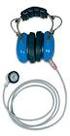 The E-Scope Electronic Stethoscope Catalog of Products April 25, 2012 Cardionics, 910 Bay Star Blvd., Webster, Texas 77598 USA Telephone: 281-488-5901 Toll-free USA & Canada 1-800-364-5901 Web: www.cardionics.com
Wall installation for Samsung Galaxy
 1 Scope of delivery... 02 2 Mounting... 03 2.1 Mounting preparation table of contents 2.2 Mounting on cavity walls / lightweight walls... 04 2.2.1 Wall notch 2.2.2 Angles 2.2.3 Insert the lower case 2.2.4
Polarization of Light
 Polarization of Light References Halliday/Resnick/Walker Fundamentals of Physics, Chapter 33, 7 th ed. Wiley 005 PASCO EX997A and EX999 guide sheets (written by Ann Hanks) weight Exercises and weights
A Sound Localization Algorithm for Use in Unmanned Vehicles
 A Sound Localization Algorithm for Use in Unmanned Vehicles Justin A. MacDonald & Phuong K. Tran uman Research and Engineering Directorate U. S. Army Research Laboratory Aberdeen Proving Ground MD 005
Human Anatomy & Physiology
 PowerPoint Lecture Slides prepared by Barbara Heard, Atlantic Cape Community College Ninth Edition Human Anatomy & Physiology C H A P T E R 7 The Skeleton: Part B Annie Leibovitz/Contact Press Images Vertebral
3D Drawing. Single Point Perspective with Diminishing Spaces
 3D Drawing Single Point Perspective with Diminishing Spaces The following document helps describe the basic process for generating a 3D representation of a simple 2D plan. For this exercise we will be
Hearing and Deafness 1. Anatomy & physiology
 Hearing and Deafness 1. Anatomy & physiology Chris Darwin Web site for lectures, lecture notes and filtering lab: http://www.lifesci.susx.ac.uk/home/chris_darwin/ safari 1 Outer, middle & inner ear Capture;
Depending on which elastic support you have you can secure the V2 power unit to the following seat bracket tubes: EXTERNAL DIAMETER 27.
 ASSEMBLY 1 - EPS V2 POWER UNIT (SOLUTION 5) 1.1 - POSITIONING INSIDE THE SEAT TUBE WITH ELASTIC SUPPORT IN THE SEAT BRACKET TUBE Depending on which elastic support you have you can secure the V2 power
This document is downloaded from DR-NTU, Nanyang Technological University Library, Singapore.
 This document is downloaded from DR-NTU, Nanyang Technological University Library, Singapore. Title to improve 3D audio playback Author(s) Sunder, Kaushik; Tan, Ee-Leng; Gan, Woon-Seng Citation Sunder,
Q1. The graph below shows how a sinusoidal alternating voltage varies with time when connected across a resistor, R.
 Q1. The graph below shows how a sinusoidal alternating voltage varies with time when connected across a resistor, R. (a) (i) State the peak-to-peak voltage. peak-to-peak voltage...v (1) (ii) State the
Supporting Adults through Vocational Education (S.A.V.E) EMT Program
 Supporting Adults through Vocational Education (S.A.V.E) EMT Program The S.A.V.E. EMT Program prepares adult students to become certified emergency medical technicians and to work in the EMT field where
A diagram of the ear s structure. The outer ear includes the portion of the ear that we see the pinna/auricle and the ear canal.
 A diagram of the ear s structure THE OUTER EAR The outer ear includes the portion of the ear that we see the pinna/auricle and the ear canal. The pinna or auricle is a concave cartilaginous structure,
Coaxial Cable Feeder Influence on Yagi Antenna Dragoslav Dobričić, YU1AW [email protected]
 Coaxial Cable Feeder Influence on Yagi Antenna Dragoslav Dobričić, YU1AW [email protected] Introduction o far, in several previous articles [1, 2, 3], we investigated how boom radius and its S distance
ORTF stereo. Coincident or Near-Coincident Mic Placement Techniques From DPA Microphones online publications With history and comments by Tom Bates
 Coincident or Near-Coincident Mic Placement Techniques From DPA Microphones online publications With history and comments by Tom Bates ORTF stereo Two first order cardioid microphones spaced 17 cm and
Supporting Features. Supports with Exceptions. Supports with Exceptions. Supports
 Voluntary Product Accessibility Template (VPAT) Date: April 1, 2008 Name of Product: Kyocera FS-1100 (Desktop Laser Printer) Contact for more Information: [email protected] Section 1194.21
Optical Illusions Essay Angela Wall EMAT 6690
 Optical Illusions Essay Angela Wall EMAT 6690! Optical illusions are images that are visually perceived differently than how they actually appear in reality. These images can be very entertaining, but
Fostex FE-167E Full Range Driver in a Bigger is Better Enclosure By Martin J. King, 02/17/09 Copyright 2009 by Martin J. King. All Rights Reserved.
 Fostex FE-67E Full Range Driver in a Bigger is Better Enclosure By Martin J. King, 0/7/09 Copyright 009 by Martin J. King. All Rights Reserved. Introduction : The Bigger Is Better, often abbreviated BIB,
The Design and Implementation of Multimedia Software
 Chapter 10 Auditory Content The Design and Implementation of Multimedia Software David Bernstein Jones and Bartlett Publishers www.jbpub.com David Bernstein (jbpub.com) Multimedia Software Jones and Bartlett
Interference. Physics 102 Workshop #3. General Instructions
 Interference Physics 102 Workshop #3 Name: Lab Partner(s): Instructor: Time of Workshop: General Instructions Workshop exercises are to be carried out in groups of three. One report per group is due by
MoTeC USA GPS. Part # M GPS BL Available in 10 Hz or 20 Hz. USER MANUAL Version 1.4
 MoTeC USA GPS Part # M GPS BL Available in 10 Hz or 20 Hz. USER MANUAL Version 1.4 MoTeC USA GPS Copyright Motec Systems USA 2008 The information in this document is subject to change without notice. While
Hearing Aid Styles. Siemens Phonak Widex Starkey. Sonic Oticon Unitron. Resound
 Hearing Aid Styles The purpose of this paper is to assist you in becoming an educated consumer. It should not be construed that this is a definitive paper. Rather, it is merely a starting point, an overview.
Pillbox Antenna for 5.6 GHz Band Dragoslav Dobričić, YU1AW [email protected]
 Pillbox Antenna for 5.6 GHz Band Dragoslav Dobričić, YU1AW [email protected] Introduction The pillbox or cheese antenna is made of two parallel plates which are connected to the narrow strip of parabolic
THE ACOUSTIC DESIGN OF THE NEW DRAMA HOUSE FOR THE ROYAL THEATRE IN COPENHAGEN
 THE ACOUSTIC DESIGN OF THE NEW DRAMA HOUSE FOR THE ROYAL THEATRE IN COPENHAGEN A C Gade B Mortensen Gade & Mortensen Akustik A/S, Charlottenlund, Denmark,[email protected] Gade & Mortensen Akustik
Parallel Plate Capacitor
 Parallel Plate Capacitor Capacitor Charge, Plate Separation, and Voltage A capacitor is used to store electric charge. The more voltage (electrical pressure) you apply to the capacitor, the more charge
Selecting Receiving Antennas for Radio Tracking
 Selecting Receiving Antennas for Radio Tracking Larry B Kuechle, Advanced Telemetry Systems, Inc. Isanti, Minnesota 55040 [email protected] The receiving antenna is an integral part of any radio location
Solid shape molding is not desired in injection molding due to following reasons.
 PLASTICS PART DESIGN and MOULDABILITY Injection molding is popular manufacturing method because of its high-speed production capability. Performance of plastics part is limited by its properties which
Chapter 4: The Concept of Area
 Chapter 4: The Concept of Area Defining Area The area of a shape or object can be defined in everyday words as the amount of stuff needed to cover the shape. Common uses of the concept of area are finding
After reading this lesson you will be able to: 12.3 IMPORTANCE OF ROOF 12.4 TYPES OF ROOF IN A HOUSE
 86 :: Certificate in Construction Supervision (CIVIL) 12 ROOF 12.1 INTRODUCTION The structure provided to cover the house surface (floor) is known as roof. For different situation and requirement, it is
TECHNICAL LISTENING TRAINING: IMPROVEMENT OF SOUND SENSITIVITY FOR ACOUSTIC ENGINEERS AND SOUND DESIGNERS
 TECHNICAL LISTENING TRAINING: IMPROVEMENT OF SOUND SENSITIVITY FOR ACOUSTIC ENGINEERS AND SOUND DESIGNERS PACS: 43.10.Sv Shin-ichiro Iwamiya, Yoshitaka Nakajima, Kazuo Ueda, Kazuhiko Kawahara and Masayuki
The Visual Cortex 0 http://www.tutis.ca/neuromd/index.htm 20 February 2013
 T he Visual Cortex 0 Chapter contents Contents Chapter 2... 0 T he Visual Cortex... 0 Chapter Contents... 1 Introduction... 2 Optic Chiasm... 2 Where do the eye's ganglion cells project to?... 3 To where
3D Drawing. Single Point Perspective with Diminishing Spaces
 3D Drawing Single Point Perspective with Diminishing Spaces The following document helps describe the basic process for generating a 3D representation of a simple 2D plan. For this exercise we will be
Dish Installation Page
 Dish Installation Page Please review and check the following items before starting the installation of your FTA Satellite System. 1. Equipment required for Dish Installation. 1. Dish, LNBF, and Receiver.
Spring Force Constant Determination as a Learning Tool for Graphing and Modeling
 NCSU PHYSICS 205 SECTION 11 LAB II 9 FEBRUARY 2002 Spring Force Constant Determination as a Learning Tool for Graphing and Modeling Newton, I. 1*, Galilei, G. 1, & Einstein, A. 1 (1. PY205_011 Group 4C;
WIND ALARM. Wind Speed Alarm. Wind Speed. Set Point 2. Set Point 1 NEW BEDFORD, MA 02745 USA
 Thank you for purchasing the Maximum wind speed alarm. The Maximum wind speed alarm is a dual set point wind speed indicator with a two digit LED display. It contains a yellow light to display one set
Installing Window and Door Mouldings
 Installing Window and Door Mouldings About Window and Door Mouldings The trim around windows and doors greatly influences the look and style of your interior. They also bridge the gaps and cover spaces
Data Sheet. definiti 3D Stereo Theaters + definiti 3D Stereo Projection for Full Dome. S7a1801
 S7a1801 OVERVIEW In definiti 3D theaters, the audience wears special lightweight glasses to see the world projected onto the giant dome screen with real depth perception called 3D stereo. The effect allows
Physics 41, Winter 1998 Lab 1 - The Current Balance. Theory
 Physics 41, Winter 1998 Lab 1 - The Current Balance Theory Consider a point at a perpendicular distance d from a long straight wire carrying a current I as shown in figure 1. If the wire is very long compared
ME 111: Engineering Drawing
 ME 111: Engineering Drawing Lecture # 14 (10/10/2011) Development of Surfaces http://www.iitg.ernet.in/arindam.dey/me111.htm http://www.iitg.ernet.in/rkbc/me111.htm http://shilloi.iitg.ernet.in/~psr/ Indian
MDHearingAidAIR Diagram
 MDHearingAidAIR Diagram Thin Tubing Thin Tubing Base Microphone Volume Dial (on/off switch) Hearing Aid Body Program Button Battery Compartment Stabilizer Bar 6 ComfortTIP TM (Open). Steps and Assembling