
Recent Developments in Cable-Drawn Urban Transport Systems
|
|
|
- Annis Alannah Smith
- 10 years ago
- Views:
Transcription
1 Recent Developments in Cable-Drawn Urban Transport Systems Klaus Hoffmann Head of Institute Vienna University of Technology Institute for Engineering Design and Logistics Engineering Cable-drawn transport systems are widely employed as people transportation systems in alpine areas. However, in recent years these transport systems have also been increasingly used in urban areas, and many applications can also be found as transportation systems in airport facilities. In this paper the working principles of cable-drawn passenger transportation systems are discussed. Particular attention is focussed on single- or bicable continuous ropeway systems, funicular railways and inclined lifts. The function and mode of operation as well as advantages and disadvantages of these cable railway systems are described in detail. Several of the solutions at present under construction or already in operation with quite diverse systems are demonstrated. Finally the current fields of application and operational limits of the individual types of construction regarding travel speed, route lengths and carrying capacity are described. Keywords: Urban transport, aerial ropeways, funiculars, inclined lifts, cable car, APM system. 1. INTRODUCTION A ropeway is a system for the transportation of passengers or goods whereby the passengers or goods are conveyed in different types of cars. The runway is made of ropes (one or two) or rails and concrete carriageways respectively. The hauling function is carried out by means of one or more ropes. The principle of the cable-drawn transport system was known even in ancient times. As early Chinese historical drawings demonstrate, this principle was already in use at that time for passenger and material transport. Figure 1 shows the earliest known picture of passenger transportation from 250 B.C., South China [1]. In the Middle Ages a monocable aerial ropeway was depicted in a book by Johannes Hartlieb (Figure 2). During the course of the Industrial Revolution, the invention of the steel cable by the German mining official Albert in 1834 heralded a period of lively development of the various cable-drawn transport systems [1]. While initially development mainly focused on funicular railways such as the Cable Car Line in San Francisco, 1872 (see Figure 3), later interest turned to aerial ropeways, which only came into operation for passenger transport shortly after A fine example is the reversible aerial ropeway in San Sebastian, Spain opened 1907 (Figure 4). Various technical systems have evolved over the decades. For example, more recent systems can be classified according to the type of track (carrier) used. Figure 5 shows an overview of the various systems, which are naturally in use with very diverse frequency. Received: September 2006, Accepted: December 2006 Correspondence to: Dr Klaus Hoffmann, Ao. Professor Vienna University of Technology, Institute for Engineering Design and Logistics Engineering Getreidemarkt 9, 1060 Wien, Austria [email protected] Figure 1. Figure 2. Brush drawing of a Chinese aerial ropeway dated 250 B.C. Drawing of a monocable aerial ropeway from A.D Faculty of Mechanical Engineering, Belgrade. All rights reserved FME Transactions (2006) 34,

2 2. AERIAL ROPEWAYS 2.1 Design and mode of operation Figure 3. Cable Car, San Francisco, 1872 Figure 4. Reversible aerial ropeway in San Sebastian, Spain, 1907 Bicable aerial ropeways and funiculars will subsequently be described in more detail. In addition, inclined lifts are intrinsically a modified form of funicular railway, but are subject to lift regulations [4] and therefore cannot be directly regarded as funiculars [5]. The main difference between continuous movement monocable aerial ropeways and bicable aerial ropeways is simply the number of rope systems. While with a monocable ropeway one or two ropes assume the carrying and hauling function (carry-hauling cable), with a bicable aerial ropeway the cars are carried by one or more ropes (track ropes) and moved by a further rope system (haul rope). The continuous movement operation is thus characterised in that moving rope always circulates with uniform speed. With a detachable continuous movement bicable aerial ropeway the clamping to the haul rope is by means of operationally releasable clamping devices. In the station the cars are separated from the haul rope, decelerated and guided onto an overhead monorail which leads the car at low speed through the embarkation and disembarkation area. Before the station exit the car is accelerated again to the constant haul rope speed and joined to the haul rope by the closure of the clamp. Thus the clamping device fixed to the car can grip the haul rope at any point, so enabling the setting of various sequential intervals between the individual cars. Outside the station area the ropes are led over line support structures, the track rope on saddles (track rope saddle), the haul rope on support rollers. At the circulating operation there are two track ropes that are permanently anchored at one end of the track, normally the upper end, and maintained under constant tension by weights at the other end. Each of the two track rope sections serve for just one direction and are linked together in the upper and lower stations by the overhead monorails. The haul rope can be tensioned either by a tension weight or a hydraulic tensioning cylinder. Drive for the haul rope is provided by the electric motordriven drive pulley. The design and mode of operation of detachable bicable aerial ropeways are as described in Figure 6. Figure 5. Classification of ropeways Figure 6. Diagram of a detachable bicable aerial ropeway [9] 2.2 Application area The advantages of both systems (monocable and bicable aerial ropeways) are: high safety, high carrying capacity, long routes can be implemented (up to approx. 6 km/section), adaptability to the terrain, continuous passenger flows thanks to the constant movement, low 206 VOL. 34, No 4, 2006 FME Transactions
![In addition, inclined lifts are intrinsically a modified form of funicular railway, but are subject to lift regulations [4] and therefore cannot be directly regarded as funiculars [5].](/docs-images/42/9702346/images/page_2.jpg "The main difference between continuous movement monocable aerial ropeways and bicable aerial ropeways is simply the number of rope systems.")
3 space requirement along the route, no overlap with other forms of transportation. Further advantages of the bicable aerial ropeway are that very long rope spans are feasible (up to approx. 1,500 m), and high wind stability. Disadvantages of both systems include weathersensitivity, as safe operation cannot be maintained in the event of high winds, while heated cabins are hardly feasible. Further disadvantages of the monocable system include low wind stability, and long rope sections can only be implemented with difficulty. As high carrying capacity is independent of track length and intermediate stations along the route are easy to implement, this ropeway system is admirably suitable for covering long distances in inner urban areas (up to 6 km for a ropeway section). Where particularly wide distances have to be spanned, two parallel supporting cables are used. This configuration excels with its particularly high wind stability. However, to date it has only been used in mountain regions, but not yet in urban areas. A widelyacclaimed example of this is presented in Section Example 1: Tung Chung Cable Car The Tung Chung Cable Car, a detachable continuous movement bicable aerial ropeway, consists of two sections (0.5 m km) with a total length of 5.7 km. Figure 7 shows the alignment of the Tung Chung Cable Car. The first section begins in conjunction with the public transport system from Hong Kong in Tung Chung. From there it crosses Tung Chung Bay to an angle station on Airport Island. The second section leads from Airport Island via a further angle station at Nei Lak Shan to the terminus in Ngong Ping. a new attraction, the ropeway should also provide an appealing interlude for transit passengers at the airport. The Tung Chung Cable Car was opened to the public in September 2006 (Figure 8). Figure 8. Tung Chung Cable Car [6] 2.4 Example 2: 3S Kitzbühel Aerial Tramway The 3S Aerial Tramway is a large-scale cabin aerial ropeway which was built to connect the two ski resorts Kitzbühel and Resterhöhe (Figure 9). The mode of operation is similar to that of a detachable bicable aerial ropeway, however the track consists of two carrying ropes. The very large span of 2,500 metres bridges the Saukasergraben with a maximum height above ground of 400 metres. Some 24 cabins with a capacity of 30 persons and a travelling speed of 7.0 m/s give a maximum transport capacity of 4,200 persons in the hour. Figure 10 shows the carrying pulleys and the clamping device which connects the haulage rope with the cabin. Figure 9. 3S Kitzbühel Aerial Tramway [10] Figure 7. Alignment of the Tung Chung Cable Car [7] Next to the Ngong Ping Station there will be a themed village leading all the way to the Ngong Ping plateau, where the world s largest seated outdoor bronze Buddha Statue is located. The ropeway will be supported by 8 towers. In total there are 11 comfortable 17-person cars with a carrying capacity of 3,500 passengers per hour. The ropeway journey will offer an attractive 20-minute aerial alternative to the current onehour journey by Tung Chung Road. In addition to being Figure 10. Travel carriage with clamping device [10] FME Transactions VOL. 34, No 4,

4 3. REVERSIBLE FUNICULARS 3.1 Design and mode of operation Figure 11 shows the basic layout of a funicular railway in shuttle operation. Two cars are linked together by a haul rope and this moves them along the route. The cars travel on tracks using steel rollers on rails. The drive unit for the system is housed in one of the stations. Electric motors propel the drive pulley and thus the haul rope via a gearbox. The service brakes act on the flywheel of the fast-moving shaft of the motor, thus braking the entire system (car and haul rope). Passengers embark and disembark when the car is stationary. Funiculars are normally designed as singletrack systems. For this reason a passing point is provided in the middle of the route. Figure 12. Montjuic reversible funicular in Barcelona, Spain [6] 3.4 Example 2: Taksim-Kabatas funicular, Istanbul This very new underground funicular links the sea terminal for the boats to the Asiatic part of Istanbul with the new Taksim Levent metro line at Taksim Station (Figure 13). This funicular has two cars, each with a capacity of 375 passengers, travelling on a single-track route. The trains can pass each other in the middle of the route by means of an Abt points switch. Due to the relatively low height difference, a ballast rope is used, tensioned with an 18 tonne counterweight. The Doppelmayr Garaventa Group was responsible for the design and installation of the complete funicular. This new funicular was put into service in June Figure 11. Layout of a reversible funicular 3.2 Application area This ropeway system is particularly suitable for shorter routes (up to approx. 1.5 km long) in urban areas, where the requirement is for optimum carrying capacities combined with high safety and availability of the system. Advantages of this system include an environmentally sound, high availability of the system, low maintenance and service requirements, flexible route planning (horizontal and vertical deviations as well as tunnel negotiation possible), optimum travel speed for rope-drawn ropeway systems, operation independent of weather. Disadvantages are that carrying capacity is heavily dependent on route length and irregular passenger flow due to shuttle operation. 3.3 Example 1: Montjuic funicular, Barcelona Figure 12 shows the Montjuic funicular in Barcelona, Spain. This fully automatic funicular was built as part of the transportation system serving the competition facilities located on the Montjuic Hill for the 1992 Summer Olympic Games. It is integrated in the city s public suburban transport network and links the underground line with the tourist attractions and leisure facilities of Montjuic. The carrying capacity is 8,000 persons/hour with a route length of 720 m and a travelling speed of 10 m/s, carrying 400 passengers per car. Figure 13. Taksim-Kabatas funicular railway in Istanbul [10] 3.5 Example 3: Hungerburg funicular system, Innsbruck Renovation work recently commenced on the cable car system linking the centrally-located Congress Centre in the city of Innsbruck with the summit ridge of the Nordkette (Figure 14). The overall project was subdivided into three sections. For the first section, the Leitner construction company provided a partially-underground funicular railway from the Innsbruck old city via the Löwenhaus and the Alpine Zoo to the Hungerburg. For the two upper sections, the existing cableways were renewed. The architectural designs were drawn up by the worldfamous architect Zaha Hadid, who was also responsible for the design of the new Bergisel ski jumping hill. Figure 15 shows the interesting design of the Löwenhaus station building. The layout of the line of the funicular railway starts out almost on the level at the Congress Centre, but ends up very steeply at the Hungerburg (top) station. A special development for this feature was the automatic inclination correction 208 VOL. 34, No 4, 2006 FME Transactions

5 system for funicular carriages with five passenger cabins (see Figure 16). The inclination correction system ensures that passengers can embark and disembark comfortable from a horizontal passenger compartment not only at the lower and upper terminuses, but also at the two intermediate stations. In future, the two carriages of the funicular railway, each with a capacity of 130 persons, will be able to transport up to 1,300 p/h in each direction. 3.6 Example 4: Cable liner shuttle One important alternative for passenger transport over short or medium distances (up to several kilometres) is the cable liner shuttle. This is a train that normally consists of several coupled single cars. This train is moved between the stations on a horizontal route by a haulage rope. The cars normally roll along on steel rails, but there are designs where the cars are supported on air cushions. A system is currently under construction for Mexico City Airport (Figure 17) which is expected to go into service in The route is approx. 3 kilometres long. With a maximum speed of 12.5 m/s (= 45 km/h) the journey time between the existing Terminal 1 and the new Terminal 2 at present under construction will be approx 4.5 min. On completion, transport capacity will be some 800 passengers per hour in each direction. This project is the third airport APM system constructed by Doppelmayr Cable Car GmbH, Austria[10]. The first two projects were successfully implemented at Birmingham and Toronto airports (Figure 18). Figure 14. Alignment of the Nordkette ropeways in Innsbruck [6] Figure 17. International Airport, Mexico City [10] Figure 15. Station design by star architect Zaha Hadid Figure 18. Airport Link, Pearson International Airport, Toronto [10] 4. INCLINED LIFTS 4.1 Design and mode of operation Figure 16. Carriage of the Hungerburg funicular railway [11] The inclined lift is a modified form of the funicular railway in shuttle operation with just one car for transporting passengers over a single-track. But in contrast to a conventional lift, the main difference is that with this transport system the route can be adapted to the terrain. An automatic adjustment device for cabin FME Transactions VOL. 34, No 4,

6 inclination is also feasible, not only for travelling over a constant inclination, but also a route with varying inclinations. Regardless of the track inclination, the cabin floor remains horizontal. The haul rope is driven by a drum winch or a drive pulley. In the latter case a counterweight travelling between the track bearers balances the car weight. Designs can differ between inclined lifts with open and covered haul rope loops as shown in Figure 19. In order to increase the driving power of the drive pulley, an additional tensioning device is provided in the other station, thus achieving a closed haul rope loop. length of 160 m, each of the two inclined lifts has a carrying capacity of 250 persons/hour. Figure 20. Inclined lift, Spa, Belgium [10] 5. CONTINUOUS MOVEMENT FUNICULARS 5.1 Design and mode of operation Figure 19. Assemblies of an inclined lift with open haul rope loop (A) and covered haul rope loop (B) 4.2 Application area This system is widely used particularly in urban areas for ascending short inclines. Thus the inclined lift can easily provide a link between individual hotels, sanatoriums or residential complexes and the main community, parking areas or railway stations. The advantages of inclined lifts are: low space requirement, safe, comfortable, reliable, energy-saving, lowmaintenance, quiet in operation, no operator required, extremely resistant to environmental influences, easy transport of wheelchairs or baby carriages, inclinations up to 60 possible, adaptability to existing terrain conditions. A disadvantage is the low carrying capacity of this system. In contrast to shuttle operation, a funicular in circular operation requires two completely separate tracks. The cars are coupled to the haulage rope at specific distances by normal releasable clamping devices. Placement of stations along the line is possible without technical limits, according to local service requirements. Figure 21 shows the car of a continuous movement funicular system. In the stations the cars are automatically detached from the cable and moved by an independent conveyor system, as shown in Figure 22. This is realised with lateral wheels which are moved by inverter-driven motors and form two sections: - A deceleration sector where the car is slowed down on approaching the parking position. - A parking and acceleration sector, which has the function of holding the car in the passenger loading area and accelerating it afterwards to the speed of the cable. At both end stations the cars are rotated through 180 degrees on a rotating platform, so that they can then travel in the opposite direction. 4.3 Example of an inclined lift, Spa Figure 20 shows the inclined lift system at Spa, Belgium which consists of two independent, parallelaligned inclined lifts, each with a cabin capacity of 25 passengers. The maximum route inclination is 32, and the minimum route inclination 15. The system links a public parking area with a hotel as well as a public health facility. With a travel speed of 2 m/s and a route Figure 21. Car of a continuous movement funicular system [6] 210 VOL. 34, No 4, 2006 FME Transactions

7 Figure 22. End station of a circulating funicular system [6] 5.2 Range of applications This ropeway system is particularly suitable as a means of transportation for small and medium sized cities, for connections from public car parks to hospitals, universities or commercial centres, or between centrally-located train or metro stations and peripheral suburbs. It is also known as an automated people mover, or APM system. The advantages of this system are high availability, environmentally soundness thanks to the central drive unit, fully automatic operation, high carrying capacity, low noise nuisance. Long routes can be implemented, the system is independent of weather, and it is flexibly adaptable to the existing infrastructure. Disadvantages are high production costs and space requirements. 5.3 Example: Perugia Minimetro Such a system is under construction in the Italian city of Perugia, linking the Pian di Massiano district with the historic city centre located on a hill [8]. With a difference in elevation of 160 m, the route is 3 km long, of which 1.5 km is on line support structures and more than 1 km passes through tunnels. A planned second section will be implemented at a later point in time. Embarkation can take place at seven stations. A total of 25 cars are in service, each with space for 50 passengers. This system can convey up to 3,000 passengers at a maximum speed of 25 km/h. Figure 23 shows a part of the track of the lower section of the future system, which will be put into operation in In both end stations a rotating platform is installed. Figure 24 shows this platform and the lateral wheels for moving the cars. Figure 23. Perugia Minimetro track Figure 24. Rotating platform in the end station during the construction work [6] 6. LIMITS OF CABLE-DRAWN URBAN TRANSPORT SYSTEMS An important parameter for the assessment of a transport system is the carrying capacity. To do this with rope-drawn systems, a differentiation must be made between circulating and shuttle operation. The carrying capacity F u of circulating aerial ropeways or funiculars in passengers per hour is given by: P Fu = (1) t In equation (1), P is the number of passengers in a car and t the sequence time in seconds. The sequence time is given by the space A between two successive cars and the travelling speed v F of the system: A t =. (2) v The carrying capacity F P of shuttle systems results from: P FP = 3600 * Lges tein + tb + + tv + taus vf FME Transactions VOL. 34, No 4, F. (3) With tein as embarkation time and t aus as disembarkation time of passengers in the stations, t b the time taken for acceleration of the car on leaving the station and t v the time taken for deceleration of the car on entering the station, the route length over which * L ges the car travels at constant speed. From equation (3) it can be seen that the carrying capacity of shuttle systems falls with increasing route length. A larger number of passengers increases the carrying capacity, but also increases the embarkation and disembarkation times [2]. Table 1 provides information on the limits of ropedrawn urban transport systems. The limit values take into account currently valid European standards for cableway systems for passenger traffic and those for inclined lifts take into account the European standards for lifts.

8 Table 1. Limits of cable-drawn urban transport systems With continuous movement monocable aerial ropeways and bicable aerial ropeways there are limits to the reduction of the sequence time for increasing the carrying capacity, as there must still be sufficient safety intervals between the uncoupled cars in the station areas. The achievable travelling speed of funiculars is essentially limited by the route layout and thus the deflection of the haul rope along the route [3]. The implemented or currently planned route lengths are mainly limited due to the current limits in the production of haul ropes. 7. CONCLUSIONS It has been seen that a wide range of variations on rope-drawn transport systems have been operated since ancient times. Many different technical systems described in this paper have since proven themselves well in urban areas. It can be expected that such systems will increasingly come into service in future, particularly in the further development and more effective realisation of existing passenger transport systems. Reduction of congestion on roads, parking problems, noise and air pollution are the most important arguments which will support the further development of cable drawn transport systems in urban areas. REFERENCES [1] Schmoll, H.D.: Weltseilbahngeschichte, Band 1 und 2, Steidl Verlag, Eugendorf, [2] Charamel, F.: Kapazitätsgrenzen beim Ein- und Ausstieg von Seilbahnen, O.I.T.A.F. Conference, Bozen, Italy, 2001, published in [3] Sehnal, W., Grenzen der Linienführung und Geschwindigkeit bei Standseilbahnen, O.I.T.A.F. Conference, Bozen 2001, published in [4] EN 81-1, Safety rules for the construction and installation of lifts Part 1: Electric lifts (consolidated version), [5] EN , Safety requirements for cableway installations designed to carry persons General requirements Part 1: Requirements for all installations, pp. 24 ff, [6] LEITNER, [7] MTRC, [8] Minimetro S.p.A., [9] Hoffmann, K., Liehl, R., Cable-drawn urban transport systems, 11th International Conference on Urban Transport and the Environment in the 21st Century, Algarve, Portugal, Vol. 77, pp , WIT Press, [10] DOPPELMAYR, [11] CARVATECH, VOL. 34, No 4, 2006 FME Transactions

Urban Cable Propelled Transit Systems High Flying Solution to Urban Transport Problems?
 Urban Cable Propelled Transit Systems High Flying Solution to Urban Transport Problems? Photo by : http://creativeurbanprojects.com/, http://gondolaproject.com/ October 22d 2011 / Dr. Jürgen Perschon /
Ngong Ping 360 Ropeway. Incident occurred on 25 January 2012. Report of Investigation
 Ngong Ping 360 Ropeway Incident occurred on 25 January 2012 Report of Investigation Electrical and Mechanical Services Department 3 April 2012 CONTENTS Executive Summary Page 3 1. Objectives 8 2. Background
Operating Concept and System Design of a Transrapid Maglev Line and a High-Speed Railway in the pan-european Corridor IV
 Operating Concept and System Design of a Transrapid Maglev Line and a High-Speed Railway in the pan-european Corridor IV A. Stephan & E. Fritz IFB Institut für Bahntechnik GmbH, Niederlassung, Germany
TRICABLE GONDOLA LIFTS
 TRICABLE GONDOLA LIFTS The 3S system Overview Tricable ropeways have a single haul rope and two carrying ropes. The system is implemented using detachable grips and offers very high transport capacity.
Problem Set 1. Ans: a = 1.74 m/s 2, t = 4.80 s
 Problem Set 1 1.1 A bicyclist starts from rest and after traveling along a straight path a distance of 20 m reaches a speed of 30 km/h. Determine her constant acceleration. How long does it take her to
SYSTEMWIDE REQUIREMENTS
 SYSTEMWIDE REQUIREMENTS for the Peninsula Rail Program San Francisco to San Jose on the Caltrain Corridor Description of the Systemwide Context for the High Speed Train Project This document provides a
Experimental-demonstration route of a high-speed overhead STY
 String Technologies Yunitskiy LLC +7-495-979-11-57, [email protected], www.yunitskiy.com Moscow 2011 2 String technologies Yunitskiy are fully Russian development. Russia has got a unique opportunity
Development of a Concept for the Public Transport Interconnectivity for Savaria International Airport. Report
 Development of a Concept for the Public Transport Interconnectivity for Savaria International Airport Report CENTRAL EUROPE Programme Project CHAMPIONS February 2012 Development of a Concept for the Public
Parking Management. Index. Purpose. Description. Relevance for Large Scale Events. Options. Technologies. Impacts. Integration potential
 Parking Management Index Purpose Description Relevance for Large Scale Events Options Technologies Impacts Integration potential Implementation Best Cases and Examples 1 of 13 Purpose Parking planning
State Newton's second law of motion for a particle, defining carefully each term used.
 5 Question 1. [Marks 28] An unmarked police car P is, travelling at the legal speed limit, v P, on a straight section of highway. At time t = 0, the police car is overtaken by a car C, which is speeding
Development of Shanghai Integrated Transport (2010-2015) XIAO Hui and GU Yu
 Development of Shanghai Integrated Transport (2010-2015) XIAO Hui and GU Yu Abstract This article summarises the general situation of Shanghai s integrated transport system and then determines the trends
Physics 2A, Sec B00: Mechanics -- Winter 2011 Instructor: B. Grinstein Final Exam
 Physics 2A, Sec B00: Mechanics -- Winter 2011 Instructor: B. Grinstein Final Exam INSTRUCTIONS: Use a pencil #2 to fill your scantron. Write your code number and bubble it in under "EXAM NUMBER;" an entry
HW Set II page 1 of 9 PHYSICS 1401 (1) homework solutions
 HW Set II page 1 of 9 4-50 When a large star becomes a supernova, its core may be compressed so tightly that it becomes a neutron star, with a radius of about 20 km (about the size of the San Francisco
Airports Architectural Design Solutions and New Design Technologies
 13 th International Conference on AEROSPACE SCIENCES & AVIATION TECHNOLOGY, ASAT- 13, May 26 28, 2009, E-Mail: [email protected] Military Technical College, Kobry Elkobbah, Cairo, Egypt Tel : +(202) 24025292
Report of Investigation. into the Crew Fatality Caused. by a Deck Lifter Onboard. M.V. Dyvi Adriatic
 Report of Investigation into the Crew Fatality Caused by a Deck Lifter Onboard M.V. Dyvi Adriatic on 30 June 2005 Purpose of Investigation This incident is investigated, and published in accordance with
Linear Motors for Mass Transit Systems, their Merits, Controls and Drive Aspects. Presented by: Konrad Woronowicz & Alireza Safaee
 Linear Motors for Mass Transit Systems, their Merits, Controls and Drive Aspects Presented by: Konrad Woronowicz & Alireza Safaee Outline 1 URBAN MASS TRANSIT SYSTEMS REQUIREMENTS 2 LINEAR INDUCTION MOTOR
Section 5: Machine Overview
 Section 5: Machine Overview Machine Floor Plan Machine Specifications Sequence of Operation Theory of Operation Sensor Location Floor Plan 2007 Douglas Machine Inc. 5.1 Machine Floor Plan Figure 5.1: Machine
Introducing Light Rail Page 1 of 9
 Introducing Light Rail Page 1 of 9 Introducing Light Rail Page 2 of 9 Introduction History What is light rail? Light rail as an economic tool Application Why light rail? Vehicles Power supply Stations
1 Different types of systems... 2. 2 Sub-systems... 4 3 Different types of control systems... 5. 4 Simple systems analysis... 10
 1 Different types of systems... 2 (a) Mechanical system... 2 (b) Electronic system... 2 (c) Computer control system... 3 (d) Pneumatic system... 3 (e) Other systems... 4 2 Sub-systems... 4 3 Different
The world of ropeways. Presentation 17 November 2015 1
 The world of ropeways Presentation 17 November 2015 1 Latest installations and ropeway projects The different projects of the last years Milestones Historical background Doppelmayr/Garaventa Group Facts,
Technical feasibility of the reconfiguration of 8-m class telescopes
 Bulletin de la Société Royale des Sciences de Liège, Vol. 74, 5-6, 2005 Technical feasibility of the reconfiguration of 8-m class telescopes M. Kraus European Organisation for Astronomical Research in
Supplemental Questions
 Supplemental Questions The fastest of all fishes is the sailfish. If a sailfish accelerates at a rate of 14 (km/hr)/sec [fwd] for 4.7 s from its initial velocity of 42 km/h [fwd], what is its final velocity?
BAFFLES AS A MEANS OF STATION PROTECTION FROM HIGH AIR VELOCITIES - COMPARISON OF ANALYTICAL AND FIELD MEASUREMENTS RESULTS
 - 289 - BAFFLES AS A MEANS OF STATION PROTECTION FROM HIGH AIR VELOCITIES - COMPARISON OF ANALYTICAL AND FIELD MEASUREMENTS RESULTS Maevski Igor, PhD, PE Jacobs Engineering, USA ABSTRACT Draught relief
RUF climate solutions
 RUF climate solutions Palle R Jensen, RUF International, [email protected], www.ruf.dk Resumé Recent studies (Stern 2006) have shown that in order to avoid catastrophic climate effects, the equivalent CO2 emission
FOR IMMEDIATE RELEASE
 FOR IMMEDIATE RELEASE Hitachi to Deliver the World s Fastest *1 Ultra-High-Speed Elevators With a Speed of 1,200 m/min for a Mixed-Use Skyscraper in Guangzhou, China in 2016 Tokyo, Japan and Guangzhou,
0.0 Curb Radii Guidelines Version 1.0.2
 Background In early 2014, Transportation Services initiated a review of the Division's design guidelines and standards to move our organization in a direction consistent with the transportation departments
Electric Forklift Trucks Capacity 5000 and 6000 lbs. RX60-25C and RX60-30C SERIES RX60
 Electric Forklift Trucks Capacity 5000 and 6000 lbs. RX60-25C and RX60-30C SERIES RX60 Safety To adapt to different operating conditions and customer requirements, all performance parameters are adjustable.
The German High Speed Rail System. DB International GmbH Ottmar Grein Bilbao, 24.02.2015
 The German High Speed Rail System DB International GmbH Ottmar Grein Bilbao, 24.02.2015 High Speed Rail Senior Consultant Ottmar Grein Personal Data Professional Experience: >30 Years Position: Senior
WOLFFKRAN. 1 Schedule drawing. 1.1 Schedule drawing, WOLFF 6023.6clear. max. hook height above ground. Data WOLFF 6023.6clear
 1 Schedule drawing 1.1 Schedule drawing, WOLFF 6023.6clear [X] max. hook height above ground Data WOLFF 6023.6clear Item Crane type Design Type of setup Basis of calculation Payload torque Hoist winch
Formula. = base of natural logarithms. = friction factor of the ropes in the grooves. = angle of wrap of the ropes on the traction sheave (radians).
 Formula It is generally accepted that the maximum available traction is dependent upon three major factors: i) angle of wrap of the ropes around the traction sheave; ii) shape of groove profile; and iii)
The average system availability for the first six months of operation for the APM was 99.94%.
 The Newsletter from APM Consulting, LLC WWW.APMCONSULTING-LLC.COM (720) 232-0513 VOLUME 3, ISSUE 2 NEWSLETTER DATE: FALL 2006 Welcome to the Fall 2006 edition of the APM Express, the newsletter from APM
KONE solutions for airports
 A PLEASANT FLIGHT BEGINS AND ENDS AT THE AIRPORT KONE solutions for airports Managing the flow of people and goods through airports smoothly and efficiently 7 5 3 8 4 11 KONE solutions for airports 1.
State Newton's second law of motion for a particle, defining carefully each term used.
 5 Question 1. [Marks 20] An unmarked police car P is, travelling at the legal speed limit, v P, on a straight section of highway. At time t = 0, the police car is overtaken by a car C, which is speeding
COIL PAC. Subec AB, Sprängarvägen 16, 132 38 Saltsjö-Boo, Sweden, Tel.: +46 8 884633, Fax: +46 8 977658, e-mail: [email protected]
 COIL PAC Subec AB, Sprängarvägen 16, 132 38 Saltsjö-Boo, Sweden, Tel.: +46 8 884633, Fax: +46 8 977658, e-mail: [email protected] Description of the machine Coil Pac 240 und Coil Pac 400 are two types of
Basics of planning for escalators and moving walks.
 Basics of planning for escalators and moving walks. The universal guideline for ThyssenKrupp elevator (ES/PBB) products. ThyssenKrupp Elevator (ES/PBB) ThyssenKrupp 2 Index Upwards and onwards! I Overview
VARIABLE MESSAGE SIGNS
 VARIABLE MESSAGE SIGNS Index Purpose Description Relevance for Large Scale Events Options Technologies Impacts Integration potential Implementation Best Cases and Examples 1 of 10 Purpose Variable Message
Rockhampton Office Brisbane Office Tarong Site. Barron Gorge Hydro PS Kareeya Hydro PS Mica Creek PS
 Business Procedure Traffic Management Document Number OHS-PROC-130 This document applies to the following sites: All Sites Rockhampton Office Brisbane Office Tarong Site Barron Gorge Hydro PS Kareeya Hydro
South Waterfront Area Dave Unsworth
 South Waterfront Area Dave Unsworth TriMet Capital Projects September 14, 2011 Presentation outline Background Partnering Agreements Project descriptions OHSU Portland Aerial Tram New Campus Portland Streetcar
NARROW AISLE FLEXI. The next generation in space saving efficiency
 G4 The next generation in space saving efficiency G4 Europe s most popular articulated truck - now with industry leading features for enhanced and improved productivity. The Flexi G4 electric powered articulated
-maq NCE Technology 26 6/06/08 17:11 Page 1 NCE T echnology
 NCE Technology NCE Escalator In close-up Controller Upper landing Balustrade Machine Handrail drive Step band Intermediate section Lower landing Balustrade decking Glass interior panel Skirt panel Handrail
Success with three networks: SBB Infrastructure. InnoTrans 2012.
 Success with three networks: SBB Infrastructure. InnoTrans 2012. 2 SBB is playing a central role in the success for Swiss economy. The efficient rail network and reliable transport services facilitate
PLANNING RAIL BASED TRANSIT FOR BETTER LIVING. S.K.GUPTA DIRECTOR(PROJECTS), Mumbai Metro Rail Corp. Ltd Mumbai
 PLANNING RAIL BASED TRANSIT FOR BETTER LIVING S.K.GUPTA DIRECTOR(PROJECTS), Mumbai Metro Rail Corp. Ltd Mumbai Background While authorities are proceeding with planning and implementation of Metros in
HSR THE TRAIN OF THE FUTURE New technologies and research trends
 HSR THE TRAIN OF THE FUTURE New technologies and research trends Manuel S. Pereira* * ERRAC Vice-Chairman JUL 2008 The third dimension: Competitiveness & innovation ENERGY/POWER BIOMECHANICS HUMAN/MACHINE
MOVING YOU FURTHER HYUNDAI HEAVY INDUSTRIES
 Electric Counterbalance Trucks MOVING YOU FURTHER HYUNDAI HEAVY INDUSTRIES Your satisfaction is our priority! Hyundai introduces a new line of 9-series battery forklift trucks. The newly designed 4 wheel
Energy consumption and efficiency potentials of lifts
 Jürg Nipkow; Max Schalcher Swiss agency for efficient energy use S.A.F.E., Zurich; HTW Chur University of Applied Sciences Abstract Lifts can account for a significant proportion of energy consumption
JCB Fastrac in Heavy Goods Vehicle Applications
 JCB Fastrac in Heavy Goods Vehicle Applications Agricultural or General Haulage? Alan Mendelson JCB Consultant Introduction The JCB Fastrac is an instantly recognisable modern agricultural tractor. It
The Shanghai Maglev Route
 The Shanghai Maglev Route 1 Contents 1. About the Shanghai Maglev... 3 2. Background information about EMS Technology... 4 3. Your train... 5 3.1 Getting to know the cab... 5 3.2 Central DMI screen additional
Lödige Goods Passenger Lifts
 Lödige Goods Passenger Lifts OLYMPUS-Series Goods Lifts TRAFFICO Car Lifts TECHNOLOGY IN MOTION Service Intralogistik Systems Machines Lifts Road Lödige Industries Technology in Motion The core competence
Automated underground transportation of cargo
 Automated underground transportation of cargo the 5th transportation alternative for the transport of goods in congested urban areas www.cargocap.com W H At I S C A r G O C A P? the Problem Barely 150
CHAPTER 15 FORCE, MASS AND ACCELERATION
 CHAPTER 5 FORCE, MASS AND ACCELERATION EXERCISE 83, Page 9. A car initially at rest accelerates uniformly to a speed of 55 km/h in 4 s. Determine the accelerating force required if the mass of the car
ERIKKILA INDUSTRIAL CRANES
 ERIKKILA INDUSTRIAL CRANES Capacity up to 20 000 kg BRIDGE CRANES - Overhead - Under running GANTRY CRANES I-GIRDER JIB CRANES LIFTING BEAMS SERVICE ERIKKILA Reliable lifting for almost 100 years ERIKKILA
environment briefing02
 PRODUCED BY THE SAFETY, HEALTH & ENVIRONMENT GROUP OF THE ENERGY NETWORKS ASSOCIATION - JULY 2006 environment briefing02 transporting electricity Overhead Lines or Underground Cables? Introduction The
Chapter Forty-seven. RURAL TWO-LANE/MULTILANE STATE HIGHWAYS (New Construction/Reconstruction) BUREAU OF DESIGN AND ENVIRONMENT MANUAL
 Chapter Forty-seven RURAL TWO-LANE/MULTILANE STATE HIGHWAYS (New Construction/Reconstruction) BUREAU OF DESIGN AND ENVIRONMENT MANUAL Illinois RURAL TWO-LANE/MULTILANE STATE HIGHWAYS December 2009 2 Illinois
UNIT 1 INTRODUCTION TO AUTOMOBILE ENGINEERING
 UNIT 1 INTRODUCTION TO AUTOMOBILE ENGINEERING Introduction to Automobile Engineering Structure 1.1 Introduction Objectives 1.2 Definition 1.3 Classification of Vehicles 1.4 Layout of an Automobile Chassis
Planning Information. Passenger and Freight Elevators.
 A company of ThyssenKrupp Elevator Thyssen Aufzüge tk This planning information will give you an overview of the most important planning criteria of passenger and freight elevators. However you should
CTBUH Copyright. Formworks for High rise Construction. Jürgen Gnida. PERI Gmbh
 Formworks for High rise Construction Jurgen Gnida PERI Gmbh Germany 1 PERI Formwork Systems CTBUH World Conference - Formwork for High Rise Construction - Head Keyprojects, PERI GmbH 2 High-rise Projects
A Guide to Electric Vehicles
 A Guide to Electric Vehicles For commercial fleets, electric and hybrid electric vehicles offer reduced fuel, emission and operating costs. This guide provides a summary for Fleet Owners and Operators
Introduction Assignment
 Physics 11 Introduction Assignment This assignment is intended to familiarize you with some of the basic concepts and skills related to Physics 11. This is the first meaningful assignment for Physics 11,
TELESCOPE Motorized Lighting Suspension
 TELESCOPE Motorized Lighting Suspension Mod. 8400 FEATURES The De Sisti TELESCOPE is a single point suspension specifically designed to provide rigidity and stabilization of all moving parts. It can extend
New Guided Urban Transit Systems in Japan
 New Guided Urban Transit Systems in Japan Except for the metropolitan areas surrounding Tokyo and Osaka, large cities in Japan have lacked dense urban and suburban rail networks. However, many cities have
THE ARTICULATED FUNICULATOR and the TUBED MEGA FRAME. The way of the FUTURE
 THE ARTICULATED FUNICULATOR and the TUBED MEGA FRAME The way of the FUTURE By Fritz King Mats Lundström Sirpa Salavaara Peter Severin What happens if a funicular, such as the funicular to Victoria Peak
The Discussion of The Long-distance Maglev Transportation Organization Mode
 The Discussion of The Long-distance Maglev Transportation Organization Mode (*)Song Denan,(**)Tang Wei (*)Shanghai Maglucky Engineering Consultation Co., Ltd, No.2520 Longyang Rd, Pudong, Shanghai, China
SBB Infrastructure, Measurement and Diagnostic Technology.
 SBB Infrastructure, Measurement and Diagnostic Technology. Your partner for testing railway technology. Contents. Measurement and Diagnostic Technology 4 3 Infrastructure diagnostics 6 Running gear technology
Exam 1 Review Questions PHY 2425 - Exam 1
 Exam 1 Review Questions PHY 2425 - Exam 1 Exam 1H Rev Ques.doc - 1 - Section: 1 7 Topic: General Properties of Vectors Type: Conceptual 1 Given vector A, the vector 3 A A) has a magnitude 3 times that
53km. Deliver the New Era Network. Island Line Extension. will be added to our Hong Kong network. New Railway Projects are in progress
 53km will be added to our Hong Kong network Deliver the New Era Network 4 New Railway Projects are in progress Island Line Extension opened in December 2014 Executive Management s Report Hong Kong Network
Transit Technology Alternatives
 Transit Technology Alternatives Fixed Guideway Systems (see http://www.apta.com/research/info/define/index.cfm) Heavy rail - HR Heavy Rail is a system that is totally separated from its surroundings and
AERIAL FIBER OPTIC CABLE PLACEMENT
 Installation Practice IP003 Aerial Fiber Optic Cable Placement Rev.-June 2000 Page 1 of 6 AERIAL FIBER OPTIC CABLE PLACEMENT CONTENTS PARAGRAPH SCOPE...1 GENERAL PRECAUTIONS...2 GENERAL DESCRIPTION OF
Case Study 5 Use of Wind Turbine Technology
 Case Study 5 Use of Wind Turbine Technology 1. Context Hong Kong relies on an adequate and reliable electricity supply for its economic development. Our electricity needs are met by the two electricity
Legislative Council Panel on Transport Subcommittee on matters relating to railways
 LC Paper No. CB(1)1023/04-05(01) Legislative Council Panel on Transport Subcommittee on matters relating to railways MTR Performance and Asset Management - Follow up measures to Lloyd's Report by MTRCL
Technical Investigation Report on Lift Incident. at 478-480 King s Road, North Point, Hong Kong
 Technical Investigation Report on Lift Incident at 478-480 King s Road, North Point, Hong Kong Electrical and Mechanical Services Department July 2013 CONTENTS Page Executive Summary 3 1. Objectives 4
Department of State Development, Infrastructure and Planning. State Planning Policy state interest guideline. State transport infrastructure
 Department of State Development, Infrastructure and Planning State Planning Policy state interest guideline State transport infrastructure July 2014 Great state. Great opportunity. Preface Using this state
Analysing the Metro Cityring in Copenhagen
 Computers in Railways XI 45 Analysing the Metro Cityring in Copenhagen A. H. Kaas & E. M. Jacobsen Atkins, Denmark Abstract When planning new infrastructure it is important that the infrastructure is well
VDI 4707 Energy Efficiency Label for Elevators
 VDI 4707 Energy Efficiency Label for Elevators Schindler s Approach to Sustainability Life Cycle Assessment (LCA) With elevators and escalators accounting for up to 15% (*Source : CIBSE Guide D) of the
Belt Conveyor System
 Belt Driven Conveyors the cost effective solution for transporting unit loads. Systems Handling Services range of powered belt conveyors is designed for applications where improved load control and speed
Opening of Tohoku Shinkansen Extension to Shin Aomori and Development of New Faster Carriages Overview of Series E5/E6 Shinichiro Tajima
 Opening of Extension to Shin Aomori and Development of New Faster Carriages Overview of Series E5/E6 Shinichiro Tajima Introduction In preparation for the December 2010 opening of the Tohoku Shinkansen
MONDOATHENS BASKETBALL SET (Reference PK110)
 MONDOATHENS BASKETBALL SET (Reference PK110) DESCRIPTION The MONDOATHENS backstop unit is mainly designed for multi-sports pavilions and installations where the highest-level basketball competitions are
Chapter 22: Electric motors and electromagnetic induction
 Chapter 22: Electric motors and electromagnetic induction The motor effect movement from electricity When a current is passed through a wire placed in a magnetic field a force is produced which acts on
GENERAL + MEANS OF ESCAPE (Part One) By Mdm Eng Yew Hoon (SIA)
 GENERAL + MEANS OF ESCAPE (Part One) By Mdm Eng Yew Hoon (SIA) Chapter 1 : Definitions clause 1.2.10 : circulation space OLD CLAUSE A space mainly used as means of access between a room or protected shaft
The electric multiple unit services and the Wairarapa services are currently provided under contract to Greater Wellington Regional Council.
 PAGE 17 OF 36 Appendix B: Tranz Metro (Wellington) Important Notice The information presented in this appendix is intended to provide Respondents with an overview of the Tranz Metro (Wellington) business.
PROCEDURES AND CARE FOR ASSEMBLY AND DAILY INSPECTION OF THE APPORT ELECTRIC MINI PLATFORM A-50 Model
 PROCEDURES AND CARE FOR ASSEMBLY AND DAILY INSPECTION OF THE APPORT ELECTRIC MINI PLATFORM A-50 Model 01. Check the quality of the steel cables during assembly and periodically, every 30 days, verifying
2. Crane standing on firm, horizontal ground.
 The operating weight includes the basic machine with HD undercarriage, 2 main winches 300 kn with speed change gear and 11 m boom, consisting of A frame, boom foot (4 m), boom head section (6.4 m), boom
Lower emissions, lower fuel consumption.
 FULL HYBRID RANGE The new hybrid buses Lower emissions, lower fuel consumption. Our well-know battery series hybrid concept is ideal for urban operations. And numerous studies have recently confirmed this,
Maximum speed. Stop and Give way to Manually operated temporary No entry for give way traffic on STOP and GO signs vehicular traffic major road
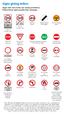 Signs giving orders Signs with red circles are mostly prohibitive. Plates below signs qualify their message. Entry to 20 mph zone End of 20 mph zone Maximum speed National speed limit applies School crossing
AUSTRALIAN HUMAN RIGHTS COMMISSION NOTICE OF DECISION ON APPLICATION FOR TEMPORARY EXEMPTIONS: AUSTRALASIAN RAILWAY ASSOCIATION
 AUSTRALIAN HUMAN RIGHTS COMMISSION DISABILITY DISCRIMINATION ACT 1992 (Cth), Section 55 DISABILITY STANDARDS FOR ACCESSIBLE PUBLIC TRANSPORT 2002 (Cth), Section 33A.1 DISABILITY (ACCESS TO PREMISES BUILDINGS)
Please direct requests for further information or authorisation to: Principal Information Governance Advisor
 Major Rail Incident Interim Report Serious Injury Collision Draper Street level crossing, Cairns 15 June 2015 Published by: Department of Transport and Main Roads Postal address: PO Box 673 Fortitude Valley
Stepper motor I/O. Application Note DK9222-0410-0014 Motion Control. A General information on stepper motors
 Stepper motor Keywords Stepper motor Fieldbus Microstepping Encoder Phase current Travel distance control Speed interface KL2531 KL2541 Part A of this Application Example provides general information on
APPENDIX A. Sets = the completion of one consecutive grouping of repetitions of an exercise.
 Exercise Instruction Sheet Instructions: APPENDIX A Exercises are to be performed 3 times per week. Allow one rest day between each exercise day. You may divide the exercises into groups and perform them
BY-LAW NUMBER 284-94
 BY-LAW NUMBER 284-94 A by-law to consolidate the by-laws that regulate traffic on roads under the jurisdiction of The Corporation of the City of Vaughan, and to repeal By-laws Numbered 281-90, 54-83, 299-86,
BAGGAGE HANDLING SYSTEMS. Trastecnica S.p.A. Handling Baggage Systems Edition 2002 - Rev. 00-1 -
 BAGGAGE HANDLING SYSTEMS Trastecnica S.p.A. Handling Baggage Systems Edition 2002 - Rev. 00-1 - TECHNICAL SPECIFICS INDEX Check-in with one conveyor 4 Scales 6 Belt Conveyors 8 Take away 9 Feeder and Belt
LIGHT RAIL ON RING 3 NOVEMBER 19 TH 2014. Supplier Workshop. Islevbro station (Rødov
 LIGHT RAIL ON RING 3 NOVEMBER 19 TH 2014 Supplier Workshop Islevbro station (Rødov 1 Agenda In the Auditorium: 1. Welcome and programme; purpose of the day 2. Ring 3 in Brief 3. Vision of Light Rail on
Encoders for Linear Motors in the Electronics Industry
 Technical Information Encoders for Linear Motors in the Electronics Industry The semiconductor industry and automation technology increasingly require more precise and faster machines in order to satisfy
MONT BLANC NEW ROPEWAYS
 Repubblica Italiana MONT BLANC NEW ROPEWAYS Ing. Marco Petrella 1 THE CURRENT ROPEWAYS Mont Blanc ropeways were made between 1940 and 1947 from military state property. The current ropeways consist of
Guide to Fall Protection Regulations
 Guide to Fall Protection Regulations Produced by: Workers Compensation Board of PEI PO Box 757 Charlottetown PE C1A 7L7 902-368-5697 or 1-800-237-5049 website: www.wcb.pe.ca Revised June 2013 Guide to
VITOSOL r 200-T SP2A. VITOSOL 200-T Type SP2A
 Technical Data Manual Model Nos. and pricing: see Price List Vacuum tube collector based on the heat pipe principle For the utilisation of solar energy VITOSOL r 200-T SP2A Product may not be exactly as
Engineers at Liftech designed the structure of the first container crane and have designed and reviewed thousands of container cranes since.
 Engineers at Liftech designed the structure of the first container crane and have designed and reviewed thousands of container cranes since. Liftech is the structural review engineer of record for most
The Mobility Opportunity Improving urban transport to drive economic growth
 , CEO Infrastructure & Cities Sector, Siemens The Mobility Opportunity Improving urban transport to drive economic growth Answers for infrastructure and cities. We are in the "urban millennium" Population
3 Work, Power and Energy
 3 Work, Power and Energy At the end of this section you should be able to: a. describe potential energy as energy due to position and derive potential energy as mgh b. describe kinetic energy as energy