
TRAINEE GUIDE FOR HEAVY RIGID (HR) AND HEAVY COMBINATION (HC) COMPETENCY BASED TRAINING AND ASSESSMENTS. Trainee s Name
|
|
|
- Amie Cobb
- 10 years ago
- Views:
Transcription
1 TRAINEE GUIDE FOR HEAVY RIGID (HR) AND HEAVY COMBINATION (HC) COMPETENCY BASED TRAINING AND ASSESSMENTS s Name

2 FOR THE TRAINEE This information is to ensure that you have a clear understanding of the qualifications of your Driving Instructor who is training or assessing for licensing. INSTRUCTOR ENDORSEMENTS COLOURS Instructor Authorisation Yellow Endorsement Competency Based Training - Class Car Red Endorsement Conduct Vehicle On Road Tests Blue Endorsement Conduct Competency Based Training in Commercial Vehicles All Motor Driving Instructors must display their Instructor s Licence when either training or assessing clients. The Instructor s Licence is for your benefit and may be marked with a coloured endorsement. It is in your interest to check that the instructor is appropriately qualified to perform the service you require. WITHOUT A COLOURED ENDORSEMENT A Motor Driving Instructor, who has an Instructor s Licence WITHOUT a Yellow, Blue or Red coloured endorsement, can only train clients in the class of driver s licence that the Instructor holds. As an instructor they do not hold any Accreditation or Authorisation; therefore, they CANNOT sign off any Task in the Competency Based Training course or conduct any Vehicle On Road Tests (VORT). These Instructors cannot train clients who are exempted from the Heavy Vehicle Graduated Driver Licensing Scheme, by undertaking the Training In Lieu of Experience (TILE) program. The only Instructors that can conduct training and assessments on TILE students must hold the HC Accreditation and display their Instructor s Licence with a Blue endorsement. WITH A YELLOW ACCREDITED INSTRUCTOR ENDORSEMENT A Motor Driving Instructor, who has an Instructor s Licence with a Yellow coloured endorsement, can train and assess clients in tasks for the Competency Based Training course for Class C (Car) only. These Instructors have qualified by passing an s Course conducted by the Department for Transport, Energy and Infrastructure. WITH A RED AUTHORISED INSTRUCTOR ENDORSEMENT A Motor Driving Instructor who has an Instructor s Licence with a Red coloured endorsement is authorised conduct Vehicle On Road Tests (VORT). This Red endorsement is only a guide, the Instructor, although displaying a Red endorsement may only be endorsed to conduct VORT in a particular class of vehicle, if unsure you should ask the Instructor or contact the Department for Transport, Energy and Infrastructure on ((08) ) for clarification. These Instructors have qualified by passing an Authorised Instructor s Course conducted by the Department for Transport, Energy and Infrastructure. WITH A BLUE COMMERCIAL ENDORSEMENT A Motor Driving Instructor who has an Instructor s Licence with a Blue coloured endorsement can train and assess clients in tasks for the Competency Based Training Course for vehicle classes above Class C. This blue endorsement is only a guide, because the Instructor, although displaying the blue identification endorsement may only be endorsed to conduct Competency Based Training in a particular class of vehicle. If unsure you should ask the Instructor or contact the Department for Transport, Energy and Infrastructure on ((08) ) for clarification. These Instructors have qualified by passing the Accreditation Upgrade Process conducted by the Department for Transport, Energy and Infrastructure.

3 SUMMARY OF COMPETENCY BASED TRAINING COURSE TASKS (To be completed by the s only) HR/HC Student Name:.Permit Number: Instructor No:..Instructor Name: ( PLEASE PRINT NAME ) TASK CBT & A TASKS MDI START DATE No. No. DATE ASSESSED INTRODUCTION TO THE VEHICLE 1.01 Entering and Leaving Driver s Cab 1.02 In Cab Preparation 1.03 Knowledge of Basic Controls DRIVING THE VEHICLE 2.01 Starting Up Procedure 2.02 Shut Down Procedure 2.03 Gear Changing 2.04 Kerb Stop Procedure - Level Ground 2.05 Moving Off Procedure - Level Ground 2.06 Kerb Stop Procedure - Uphill 2.07 Moving Off Procedure - Uphill 2.08 Kerb Stop Procedure - Downhill 2.09 Moving Off Procedure - Downhill 2.10 Driving straight ahead at Controlled Intersections and Pedestrian Crossings 2.11 Turning the Vehicle, to the Left 2.12 Turning the Vehicle, to the Right 2.13 Gear Changing - Events 2.14 Changing Lanes, apply system 2.15 Safe Driving Strategies 2.16 Hills and Open Road Drive plus Review 2.17 Final Drive and Review MANOEUVRES 3.01 Couple Prime Mover to Trailer 3.01A Couple Trailer to Heavy Rigid Vehicle 3.02 Uncouple Trailer from Prime Mover 3.02A Uncouple Trailer from the Heavy Rigid Vehicle 3.03 Reversing - To the Left ( HC ) 3.03A Reversing - To the Left ( HR ) 3.04 Reversing - Straight Line MISCELLANEOUS 4.01 Check Stop Inspection 4.02 Breakdown Procedure 4.03 Pre-Departure Check 4.04 Post-Operation Check Notes: The Instructor s name and number recorded at the top of this page must be the Instructor who conducts the Final Drive and Review. The name and number of the Instructor must not be placed on this page until assessing task The column marked MDI No. is to be filled out only by the Instructor who has assessed the appropriate task or tasks. 2

4 TRAINING AND ASSESSMENT RECORD DATE TRAIN & ASSESS TOTAL INSTRUCTORS NAME HOURS HOURS COMMENTS The training and assessment hours recorded in the column above must only be the hours for the client who is issued with this book, for instance. If working with two clients to one Instructor ratio and the total hours for both clients were 6 hours, the hour recorded in the column above would be 3 hours. STANDARDS CLARIFICATION ON TWO (2) CONSECUTIVE, BUT SEPARATE OCCASIONS MEANS: If you successfully demonstrate a task on the first occasion, the Instructor must do some other training not related to that task or may assess another task, but a minimum period of twenty (20) minutes must elapse before a second request of the original task is made to you. After that request, if you perform a further accurate demonstration of the original task without any additional training or assistance in that task, the Instructor will sign the task off. If the second request is unsuccessful, the task must be re-assessed from the beginning ( ie on two (2) consecutive, but separate occasions ). 3

5 ABOUT THIS TRAINEE GUIDE This Guide is your property; it must be given to your Instructor at the beginning of each driving lesson and should be returned to you at the end of each session. Assessments will not be conducted without this Guide. The information in this Guide is to give you an understanding of the driving requirements of each Task that you will have to demonstrate to a required standard. Each task has requirements to be achieved before your Instructor can sign it off. Your Instructor will explain these requirements at the beginning of each new task for which you are being trained and assessed. This Guide will be a record of the tasks you have achieved and also the amount of hours taken. At any time during the training, you must produce it, on request, to an Accreditation Auditor, from the Driver and Vehicle Licensing Directorate, Department for Transport, Energy and Infrastructure. (DTEI). Occasionally, a Accreditation Auditor from (DTEI) may ride with you during a training and assessment session with your. These Officers are looking at how your Instructor is training and assessing your driving. This ensures that any training and assessments being applied by your Instructor, meets the Government Standards required for licensing. These Auditors will not become involved in your training or interfere with the result of any assessment conducted by your Instructor. Once you have completed your training and all the tasks have been signed off, the will issue you with a Certificate of Competency. Upon presentation of the certificate and the appropriate I. D. at a Customer Service Centre, your drivers licence will be upgraded. The must tear out and retain pages 2,3 and also the Final Drive Assessment Sheet that are in Guide. These pages and the assessment sheet must be forwarded to the Driver and vehicle Licensing with the Instructors monthly returns. You may retain the Guide. Notes for the : 1. This Guide must be issued to the trainee before any Competency Based Training or Assessments may commence. 2. The tasks in this Guide must be signed off by the, and counter signed by the trainee, during or at the end of each session. The Guide must reflect the current status of the standard of competency that the trainee has achieved for any task. 3. RECOGNITION OF CURRENT COMPETENCIES ( RCC ) does not apply to T.I.L.E. trainees in any task in this Guide. If used on other trainees, it will only affect the driver training, not the assessment procedure. No part of this document may be reproduced or transmitted in any form or by any means, electronic or mechanical, for any purpose without the express written permission from the Driver and Vehicle Licensing, DTEI. 4

6 THE SYSTEM OF VEHICLE CONTROL Definition A system or drill, each feature of which is to be considered (in sequence) by the driver, at the approach to any hazard. HAZARD Definition A hazard may be any physical feature (such as crossroads, roundabouts, T Intersections, bend or crest) or any potentially dangerous traffic situation developing ahead. ie. Anything which will either cause you to change speed or direction or has the potential to cause you to change speed or direction. FEATURE OF THE SYSTEM THE APPROACH NAME OBJECT 1. Course Selected To determine the course to be taken to negotiate the hazard. 2. Mirrors/ and signal To check for following traffic and overtaking traffic and to signal intention to other road users. 3. Brake To reduce speed to a safe rate of approach to arrive at the hazard Note: Brakes should not be released until a clear view into the hazard has been obtained. DECISION POINT STOP OR GO? DECISION TO GO 4. Gears and Mirror (s) ( Look all around ) To select an appropriate gear for flexible control and to check for following and overtaking traffic and blindspots. 5. Evasive Action To take evasive action if necessary eg. Horn warning. This is a very rare occurrence. 6. Normal Acceleration To leave the hazard safely having regard to the road surface and traffic conditions. If all features are considered in sequence correctly, evasive action should not be required, care should be taken under acceleration to eliminate the risk of skidding. 5

7 VEHICLES AND LOADS REQUIRED FOR CBT&A VEHICLE REQUIREMENTS All vehicles used for CBT&A must be registered, in good condition and roadworthy. Only one type or configuration of vehicle is to be used during training. This must be the type or configuration used throughout the whole CBT training process including the final assessment. The CBT&A may be conducted in either the Instructor s or the client s vehicle. The vehicle used for CBT&A must be of the correct configuration for the class of licence being sought. Most vehicles will be suitable for CBT&A, however some may have restrictions placed on them as follows; DANGEROUS GOODS VEHICLE These vehicles must not be used to conduct any training or assessments in the CBT&A program whilst carrying dangerous goods. LIVESTOCK TRANSPORT VEHICLES These vehicles must not be used to conduct any training or assessments in the CBT&A program when carrying livestock. FEDERAL INTERSTATE REGISTERED VEHICLES These vehicles must not be used to conduct any training or assessments in the CBT&A unless approval is given from the Registration and Licensing Section, Department for Transport, Energy and Infrastructure and a current permit issued. TRAINING AND ASSESSMENTS IN A LADEN VEHICLE All loads must be fully secured and covered where appropriate. There are no restrictions of the type of load carried other than those mentioned above and that all requirements concerning carriage of load must meet load restraint requirements as stated in the current Load Restraint Guide. The laden vehicle must have a mass, which is at least 75% of the maximum mass allowable over each axle group (excluding buses). ASSESSMENT VEHICLES CLASS HC Prime-Mover with Bogie Drive. Trailer with Bogie or Tri axles and a minimum length of 11 metres. OR A Three or More Axle Rigid Vehicle with a registered Gross Vehicle Mass exceeding 15 tonnes and a Gross Combination Mass greater than 24 tonnes, towing a two or more axle (dual wheel) self-steering dog trailer with a GVM greater than 9 tonnes. CLASS HR A Three or More Axle Rigid Vehicle, with a registered GVM exceeding 15 Tonnes. 6

8 VEHICLE CHECK BASIC VEHICLE ROADWORTHINESS CHECK FOR CBT&A The following is a basic vehicle roadworthiness check that must be carried out by the s before the start of any CBT&A training or assessment sessions. All vehicles used for CBT&A training and assessments must be in good condition and roadworthy. VEHICLE CHECKLIST REGISTRATION The Prime-Mover and Trailer must be registered and each must display a current registration label. SPECIAL PURPOSE VEHICLES Vehicles such as fork-lifts, tractors, mobile cranes etc. which are not able to sustain normal road speed limits, or any over-width, over-height vehicles containing dangerous goods or live-stock, are not considered suitable for testing drivers. WHEELS & TYRES Wheel nuts or lugs must not be missing. Tyres must have at least 1.5 mm tread depth on the surfaces which normally contact the road. Dual rear tyres must not be touching. LIGHTS Lights must be complete ( not broken or missing ) and clean. Brake, indicator lights must work. SIGNS All vehicles must be fitted with the appropriate Rear Marker Plates. All number plates must be clearly visible, undamaged and clean. Legal L plates must be displayed so as to be clearly visible from the front and rear of the vehicle. WINDSCREEN & WINDOWS Windows must be clean and open correctly and must not be broken or cracked. Windscreens must be clean, and must not be broken or cracked so as to obscure the driver s or the assessor s vision. BODYWORK Bodywork must not have any jagged or protruding parts likely to cause injury. All doors must open and close properly. MIRRORS External mirrors must not be cracked or broken and must be clean. All mirrors should be properly secured. 7

9 BASIC VEHICLE ROADWORTHINESS CHECK FOR CBT&A VEHICLE CHECKLIST ( CONTINUED ) LOAD Check the vehicles load is properly restrained. If not secured have it secured. POSTURE & LEAKS Vehicle springs should not be broken or loose. Vehicles should not have excessive fluid leaks. Vehicles should not have excessive emissions. DRIVER S CABIN Cabin should be clean. Seats should be in good condition, clean and adjustable. Cabin should be sealed from the engine and fuel areas. SEAT BELTS Seat belts must work properly and must not be damaged. Seat belts must be worn when legally required to do so. GEAR CHANGING EVENTS A gear changing event occurs at a location where gear changes may be required and one event may consist of several gear changes. The following items are three examples that would be classified as a location at which gear changing would be required. 1. Turning the vehicle to the left or right at an Intersection or Junction. 2. Entering and leaving a restricted speed zone ( Road works, school zone / crossing ). 3. Approaching and leaving a Stop or Give Way sign. A gear changing event must be assessed on the approach and the exit of an event until normal speed is attained. This will be classified as one Gear Changing Event. NOTE: A gear changing event must only be assessed at a place where, in the opinion of the Assessor, a gear change or changes are necessary. Using the splitter only, must not be recorded as changing gears when assessing a gear changing event. 8

10 HEAVY RIGID & HEAVY COMBINATION VEHICLES CBT & A PROGRESS CHECK LIST (To be used by your Assessor) 9

11 PROGRESS CHECK LIST TASKS TO BE PERFORMED TASK DESCRIPTION PAGE CLASS TASK DESCRIPTION PAGE CLASS No. No. HR HC No. No. HR HC INTRODUCTION TO THE VEHICLE MANOEUVRES 1.01 Entering and Leaving Driver s Cab Couple Prime Mover to Trailer In Cab Preparation A Couple Trailer to Heavy Rigid Vehicle Knowledge of Basic Controls Uncouple Trailer from Prime Mover A Uncouple Trailer from Heavy Rigid 35 DRIVING THE VEHICLE 3.03 Reversing - To the Left Starting Up Procedure A Reversing - To the Left Shut Down Procedure Reversing - Straight Line Gear Changing ( Basic ) Kerb Stop Procedure - Level Ground Moving Off Procedure - Level Ground 18 4 MISCELLANEOUS 2.06 Kerb Stop Procedure - Uphill Check Stop Inspection Moving Off Procedure - Uphill Breakdown Procedure Kerb Stop Procedure - Downhill Pre-Departure Check Moving Off Procedure - Downhill Post-Operation Check Driving straight ahead at controlled 23 Intersections and Pedestrian Crossings 2.11 Turning the Vehicle to the Left Turning the Vehicle to the Right Gear Changing Events Changing Lanes, apply system Safe Driving Strategies Hills and Open Road Drive plus review 2.17 Final Drive and Review 31 10

12 Task Name: Entering and Leaving the Driver s Cab Licence Class: HR and HC Task Number: 1.01 Criteria Applications As Per Conditions The trainee will be able to enter and leave the driver s cab in a safe manner. Vehicle positioned parallel to the kerb or kerb line. The assessment to be conducted in typical driving situation. The to be in a position where clear vision of the trainee s performance can be monitored. The trainee will on two (2) consecutive but on separate occasions and without assistance demonstrate entering and leaving the driver s cab in a safe manner, in full compliance with the Conditions and Performance Criteria. PART A When entering the driver s cab the trainee will: Approach the driver s cab from the front of the vehicle, being aware of approaching traffic. Use the steps, foot-holds and grab handles, if fitted to the vehicle. Not use the steering wheel for leverage. PART B When leaving the driver s cab the trainee will: Check the right mirror before opening the door, being aware of approaching traffic. Use the steps, foot-holds and grab handles, if fitted to the vehicle. Climb down from the cab backwards. Not use the steering wheel for support. Not jump down from the cab. Leave the cab area by walking in a safe direction. 11

13 Task Name: In Cab Preparation Licence Class: HR and HC Task Number: 1.02 Criteria Applications As Per Conditions The trainee will be able to systematically prepare the vehicle cab for safe driving and physically locate the operational controls. Parked and secured. Engine not running. Driver in driver s seat. Driver asked to demonstrate cab drill. The trainee will on two (2) consecutive but on separate occasions and without assistance demonstrate the In Cab Preparation in sequence in full compliance with the Conditions and Performance Criteria. The trainee will: Close and secure all doors. Check the parking brake is on. Adjust seat for posture, comfort and able to reach operational controls. ( Note ) Adjust mirrors for effective vision. ( Note ) Locate operational controls. Fasten and adjust seat belts. Note: If adjustments are not carried out, the is to judge whether the positioning is satisfactory without adjustment and mark accordingly. 12

14 Task Name: Knowledge of Basic Controls Licence Class: HR and HC Task Number: 1.03 Criteria Applications As Per Conditions The trainee will be able to locate, and describe the operation and function of the various operational controls within the driver s cab. Parked and secured. Engine not running. The trainee will on two (2) consecutive but on separate occasions and without any assistance locate, identify and describe the operation and function of all items listed. Note : 1. The trainee to be assessed according to the controls fitted to the vehicle. If necessary, the may question the trainee on a maximum of two (2) items. 2 If this notation ( * ) is shown in any task criteria, it will signify that part of the criteria will be applicable to Manual Vehicles only. 3 The will nominate each control listed in the Performance Criteria. Ignition switch. Engine start button (if applicable). Engine stop button (if applicable). Signals. Hazard switch. Washers/wipers. Air conditioning / heating / demisters. All operational gauges and warning devices. All braking systems. Clutch and clutch pedal positions *. Gear lever / selector (all positions including neutral / park). All lighting systems internal / external. Others (as applicable to assessment vehicle). 13

15 Task Name: Starting the Engine Licence Class: HR and HC Task Number: 2.01 Criteria Applications As Per Conditions The trainee will be able to start the engine in accordance with the manufacturer s guidelines and start up procedure. Understand function and correct action when abnormal readings appear on various gauges. The assessment to be conducted in typical driving situations. The instruments and gauges are monitored to ensure the vehicle operation is safe according to manufacturer s specification and safety rules. The checks are made of various components of the vehicle to ensure they are operational according to manufacturer s specification and safety rules. After engine start up, operational gauges to check, may include: Oil pressure. Electrical charging. Coolant temperature. Coolant level. Air brake pressure. Ancillary monitors. Tachometer ( if fitted ) The trainee will on two (2) consecutive but on separate occasions and without any assistance demonstrate the starting procedure in sequence without any assistance, in full compliance with the Conditions and items listed in the Performance Criteria. Notes : 1. The starting up procedure could change depending on the type of vehicle or the manufacturer s specification. Starting procedure / sequence. (Note 1) Check that the parking brake is on. Check that the gear lever is in neutral / park position. Switch on ignition. Check all operational gauges and warning devices. Press stop-button to start position. (if applicable) Clutch pedal down, unless air assisted *. Start the engine. Check all operational gauges and warning devices again. Release clutch pedal slowly *. 14

16 Task Name: Shutting Down the Engine Licence Class: HR and HC Task Number: 2.02 Criteria Applications As Per Conditions The trainee will be able to safely shut down the engine of the vehicle, in accordance with the manufacturer s guidelines, shut down and safety procedures. The assessment to be conducted in typical driving situations. The instruments and gauges are monitored to ensure the vehicle operation is safe according to manufacturer s specification and safety rules. The checks are made of various components of the vehicle to ensure they are operational according to manufacturer s specification and safety rules. Operational gauges to check, may include: Electrical - (Discharging) Coolant - (engine temperature) The trainee will on two (2) consecutive but on separate occasions and without any assistance demonstrate the shut down procedure in sequence, in full compliance, with the Conditions and Performance Criteria. Note : 1. The shut down procedure could change depending on the type of vehicle or the manufacturers specification. 2. Items marked Note 2 in the criteria may be conducted out of sequence. 3. Before switching off the engine a cool down procedure could apply. Shut down procedure /sequence. (Note 1) Apply the park brake. Move gear lever into neutral / park position. Release brake pedal. (Note 2) Release clutch pedal slowly *. (Note 2) Check operational gauges. Pull out stop button and lock in off position (if applicable). Switch off Ignition or Stop Button. (Note 3) Operational gauges to check (may include): Pyrometer (Exhaust temperatures). Electrical (discharging). Coolant (engine temperature). 15

17 Task Name: Changing and Selection of Gears Licence Class: HR and HC Task Number: 2.03 Criteria Applications As Per Conditions The trainee will be able to change up and down through all gears and select the appropriate gear for variable speeds in a safe and efficient manner on level ground. Road and traffic conditions which places slight demand on the trainee, with light to medium traffic. Intersections requiring stopping, slowing or turning. Level ground or with minimal gradient. Vehicle Laden. The will on one (1) occasion and without any assistance demonstrate smooth and efficient gear changing without lurching, clashing or missing the intended gear, in full compliance with the Conditions and Performance Criteria. Note : 1. To allow up to three (3) mischanged gears provided they are effectively managed. 2. Clutchless gear changing is not acceptable. 3. No unnecessary force placed on the gear lever. Change up progressively through each gear including splitters ( if applicable ) Minimum requirement, two (2)sets. Change down progressively through each gear excluding first gear. Minimum requirement, two (2) sets. Select the appropriate gear for variable road speeds (skip change). Minimum requirement, three (3) sets. Skip change - suggested speeds kph and kph. Maintain smooth transition in gear changing. Change gears without lurching, clashing or missing the intended gear. Comply with Rules of braking/steering. Maintain complete vehicle control. 16

18 Task Name: Kerbside Stop Level Ground Licence Class: HR and HC Task Number: 2.04 Criteria Applications As Per Conditions The trainee will be able to slow, stop and secure the vehicle at a suitable location parallel to the kerb or kerbline in a safe and competent manner. Road and traffic conditions which will place a high demand on the trainee, with medium to heavy traffic. Vehicle Laden. Level ground or with minimal gradient. Left lane with kerb or distinct edge. The trainee will on two (2) consecutive but on separate occasions and without any assistance demonstrate the stopping procedure in sequence. Bring the vehicle to a stop in suitable position, parallel to and no wider than 500 mm from the kerb or kerbline, in full compliance with the Conditions and Performance Criteria. Note : 1. Items marked Note 1 in the criteria may be conducted out of sequence. 2. The measurement will be taken from the left extremity of the vehicle. 3. A single gear change may be allowed for adjustment to the kerb. Stopping Procedure: (sequence) Select the stopping place. Check both external mirrors. Signal intention (left signal). Apply foot brake to slow the vehicle. Clutch pedal down when engine speed is at idle speed while maintaining pressure on the brake pedal *. When the vehicle has stopped apply parking brake. Move the gear lever to the neutral / park position. Cancel Signal. (Note 1) Release the brake pedal. (Note 1) Release the clutch pedal *. (Note 1) Open the passenger door. ( bus only ) 17

19 Task Name: Moving Away from the Kerb Level Ground Licence Class: HR and HC Task Number: 2.05 Criteria Applications As Per Conditions The trainee will be able to move the vehicle away from the kerb in a safe and competent manner, complying with all legal requirements. Road and traffic conditions which will place a high demand on the trainee, with medium to heavy traffic. Vehicle Laden. Level ground or with minimal gradient. The trainee will on two (2) consecutive but on separate occasions and without any assistance demonstrate the moving off procedure in sequence, and progressive gear changing for at least two (2) shifts from first gear, in full compliance with the Conditions and Performance Criteria. Note : 1. Slipping the clutch to excess is not acceptable. Moving Off Procedure: (sequence) Check that the park/trailer brake is on. Close the passenger door. ( bus only ) Check mirrors for approach traffic. Signal in the appropriate direction. (for a minimum of five (5) seconds). Clutch pedal down *. Select the appropriate gear. Apply the appropriate power. Release clutch to friction point and hold *. (Note 1) Check the appropriate blind spot areas, if clear; Recheck the left mirror. Release the park/trailer brake. Release the clutch pedal slowly * and; Increase power as required. Check that the signal has cancelled. Maintain forward momentum. Comply with Give Way rules. Comply with all legal requirements. 18

20 Task Name: Kerbside Stop Uphill Gradient Licence Class: HR and HC Task Number: 2.06 Criteria Applications As Per Conditions The trainee will be able to slow, stop and secure the vehicle at a suitable location parallel to the kerb or kerbline in a safe and competent manner. Road and traffic conditions which will place a high demand on the trainee, with medium to heavy traffic. Vehicle Laden. Road with a suitable uphill gradient. Left lane with kerb or distinct edge. The trainee will on two (2) consecutive but on separate occasions and without any assistance demonstrate the stopping procedure in sequence. Bring the vehicle to a stop in suitable position, parallel to and no wider than 500 mm from the kerb or kerb line, in full compliance with the Conditions and Performance Criteria. Note : 1. Items marked Note 1 in the criteria may be conducted out of sequence. 2. The measurement will be taken from the left extremity of the vehicle. 3. A single gear change may be allowed for adjustment to the kerb. Stopping Procedure: (sequence) Select the stopping place. Check both external mirrors. Signal intention (left signal). Apply foot brake to slow the vehicle. Clutch pedal down when engine speed is at idle speed while maintaining pressure on the brake pedal *. When the vehicle has stopped apply parking brake. Move the gear lever to the neutral / park position. Cancel Signal. (Note 1) Release the brake pedal. (Note 1) Release the clutch pedal *. (Note 1) Open the passenger door. ( bus only ) 19

21 Task Name: Moving Away from the Kerb Uphill Gradient Licence Class: HR and HC Task Number: 2.07 Criteria Applications As Per Conditions The trainee will be able to move the vehicle away from the kerb or kerb line in a safe and competent manner, complying with all legal requirements. Road and traffic conditions which will place a high demand on the trainee, with medium to heavy traffic. Vehicle Laden. Road with a suitable uphill gradient. The trainee will on two (2) consecutive but on separate occasions and without any assistance demonstrate the moving off procedure in sequence, and progressive gear changing for at least two (2) shifts from first gear, in full compliance with the Conditions and Performance Criteria. Note : 1. Slipping the clutch to excess is not acceptable. Moving Off Procedure: (sequence) Check that the park/trailer brake is on. Close the passenger door. ( bus only ) Check mirrors for approach traffic. Signal in the appropriate direction. (for a minimum of five (5) seconds). Clutch pedal down *. Select first gear. Apply the appropriate power. Release clutch to friction point and hold *. (Note 1) Check the appropriate blind spot areas, if clear; Recheck the left mirror. Release the park/trailer brake. Release the clutch pedal slowly * and; Increase power as required. Check that the signal has cancelled. Maintain forward momentum. Comply with Give Way rules. Comply with all legal requirements. 20
22 Task Name: Kerbside Stop Downhill Gradient Licence Class: HR and HC Task Number: 2.08 Criteria Applications As Per Conditions The trainee will be able to slow, stop and secure the vehicle at a suitable location parallel to the kerb or kerb line in a safe and competent manner. Road and traffic conditions which will place a high demand on the trainee, with medium to heavy traffic. Vehicle Laden. Road with a suitable downhill gradient. Left lane with kerb or distinct edge. The trainee will on two (2) consecutive but on separate occasions and without any assistance demonstrate the stopping procedure in sequence. Bring the vehicle to a stop in suitable position, parallel to and no wider than 500 mm from the kerb or kerb line, in full compliance with the Conditions and Performance Criteria. Note : 1. Items marked Note 1 in the criteria may be conducted out of sequence. 2. The measurement will be taken from the left extremity of the vehicle. 3. A single gear change may be allowed for adjustment to the kerb. Stopping Procedure: (sequence) Select the stopping place. Check both external mirrors. Signal intention (left signal). Apply foot brake to slow the vehicle. Clutch pedal down when engine speed is at idle speed while maintaining pressure on the brake pedal *. When the vehicle has stopped apply parking brake. Move the gear lever to the neutral / park position. Check that the signal has cancelled. (Note 1) Release the brake pedal. (Note 1) Release the clutch pedal *. (Note 1) Open the passenger door. ( bus only ) 21
23 Task Name: Moving Away from the Kerb Downhill Gradient Licence Class: HR and HC Task Number: 2.09 Criteria Applications As Per Conditions The trainee will be able to move the vehicle away from the kerb or kerb line in a safe and competent manner, complying with all legal requirements. Road and traffic conditions which will place a high demand on the trainee, with medium to heavy traffic. Vehicle Laden. Road with a suitable downhill gradient. The trainee will on two (2) consecutive but on separate occasions and without any assistance demonstrate the moving off procedure in sequence, and progressive gear changing for at least two (2) shifts from the initial gear, in full compliance with the Conditions and Performance Criteria. Note : 1. Slipping the clutch to excess is not acceptable. 2. After moving off Skip changing will be allowed. Moving Off Procedure: (sequence) Check that the park/trailer brake is on. Close the passenger door. ( bus only ) Check mirrors for approach traffic. Signal in the appropriate direction. (for a minimum of five (5) seconds). Clutch pedal down *. Select the appropriate gear. Apply the appropriate power. Release clutch to friction point and hold *. (Note 1) Check the appropriate blind spot areas, if clear; Recheck the left mirror. Release the park/trailer brake. Release the clutch pedal slowly * and; Increase power as required. Check that the signal has cancelled. Maintain forward momentum. Comply with Give Way rules. Comply with all legal requirements. 22
24 Task Name: Driving Straight Ahead at Various Controlled Licence Class: HR and HC Intersections and Pedestrian Crossings Task Number: 2.10 Criteria Applications As Per Conditions The trainee will be able to apply basic give way rules and safe driving strategies in compliance with the system of vehicle control, while driving in a safe and competent manner through intersections controlled by traffic lights and regulatory signs. Road and traffic conditions which will place a high demand on the trainee, with medium to heavy traffic. Vehicle Laden. Level ground or with minimal gradient. Minimum requirements per each occasion with at least one (1) from each item below where an actual decision relating to other traffic is made: Traffic lights (2) Stop signs (1) Give way signs (1) Roundabouts (1) Pedestrian crossings (1) The trainee will on two (2) consecutive but on separate occasions and without any assistance drive through various intersections, in full compliance with the Conditions and Performance Criteria. This task must be assessed at no less than 80% accurate compliance to the System of Vehicle Control. Note : If any one of the following items, namely, Traffic lights, Intersections, Roundabouts is not available at the assessment location the trainee must do the additional turns from one of the other items listed under minimum requirements until the minimum requirement for the missing item has been met. Apply forward planning and anticipation techniques. Comply with the system of vehicle control. On the approach the vehicle is slowed down sufficiently to prior to negotiating the hazard safely (A single gear change may be required * ). Apply observation techniques, checking to the right and left before entering the hazard. Slow, stop and accelerate smoothly where necessary. Stop the vehicle in the correct position when faced with a stop line or sign. Selection of gaps that are safe and do not slow or impede the traffic flow. Apply basic give way rules. Additional Notes: Apply all the criteria listed above to all items listed under minimum requirements recorded under conditions. Changing down through each gear on the approach to the hazard is not acceptable. 23
25 Task Name: Turning at Various Intersections/T Intersections Licence Class: HR and HC Left Turns Only Task Number: 2.11 Criteria Applications As Per Conditions The trainee will be able to apply basic give way rules and safe driving strategies in compliance with the system of vehicle control, while turning the vehicle to the left into and out of various types of intersections and T Intersections. Road and traffic conditions which will place a high demand on the trainee, with medium to heavy traffic. Vehicle Laden. Level ground or with minimal gradient. Turning the vehicle on minimal gradient must be included. Minimum requirements per each occasion ( With at least one (1) from each item below where an actual decision relating to other traffic is made.): Traffic lights - single lane (2), multi lane (2) Intersections - controlled (1), uncontrolled (1) T Intersections - narrow street onto multi laned road (1) - multi laned road into narrow street (1) - roundabouts (1) The trainee will on two (2) consecutive but on separate occasions and without any assistance turn the vehicle to the left at the various types of Intersections and T Intersections, in full compliance with the Conditions and Performance Criteria. This task must be assessed at no less than 80% accurate compliance to the System of Vehicle Control. Note : If any one of the following items, namely, Traffic lights, Intersections, Roundabouts is not available at the assessment location the trainee must do the additional turns from one of the other items listed under minimum requirements until the minimum requirement for the missing item has been met. The correct course is selected. The mirror, signal, approach and observation is correct to the system of vehicle control. The vehicle is slowed down sufficiently ( and the correct gear selected and engaged prior to negotiating the turn * ). Check left external mirror just prior to the rear wheels reaching the apex of the turn. The vehicle is stable throughout the turn. Maintain the correct position throughout the turn. Comply with rules of braking and steering. Stop the vehicle in the correct position when faced with a stop line or sign. Slow, stop and accelerate smoothly where necessary. Selection of gaps which are safe and do not slow or impede the traffic flow. Apply basic give way rules. Additional Notes : Apply all the criteria listed above to all items listed under minimum requirements recorded under conditions. Changing down through each gear on the approach to the hazard is not acceptable. 24
26 Task Name: Turning at Various Intersections/T Intersections Licence Class: HR and HC Right Turns Only Task Number: 2.12 Criteria Applications As Per Conditions The trainee will be able to apply basic give way rules and safe driving strategies in compliance with the system of vehicle control, while turning the vehicle to the right into and out of various types of Intersections and T Intersections. Road and traffic conditions which will place a high demand on the trainee, with medium to heavy traffic. Vehicle Laden. Level ground or with minimal gradient. Turning the vehicle on minimal gradient must be included.. Minimum requirements per each occasion (With at least one (1) from each item below where an actual decision relating to other traffic is made.): Traffic lights - single lane (2), multi lane (2) Intersections - controlled (1), uncontrolled (1) T Intersections - narrow street onto multi laned road (1) - multi laned road into narrow street (1) - roundabouts (1) The trainee will on two (2) consecutive but on separate occasions and without any assistance turn the vehicle to the right at the various types of intersections and T Intersections, in full compliance with the Conditions and Performance Criteria. This task must be assessed at no less than 80% accurate compliance to the System of Vehicle Control. Note : If any one of the following items, namely, Traffic lights, Intersections, Roundabouts is not available at the assessment location the trainee must do the additional turns from one of the other items listed under minimum requirements until the minimum requirement for the missing item has been met. The correct course is selected. The mirror, signal, approach and observation is correct to the system of vehicle control. The vehicle is slowed down sufficiently ( and the correct gear selected and engaged prior to negotiating the turn * ). Check the right external mirror just prior to the rear wheels reaching the apex of the turn. The vehicle is stable throughout the turn. Maintain the correct position throughout the turn. Comply with rules of braking and steering. Stop the vehicle in the correct position when faced with a stop line or sign. Slow, stop and accelerate smoothly where necessary. Selection of gaps which are safe and do not slow or impede the traffic flow. Apply basic give way rules. Additional Notes : Apply all the criteria listed above to all items listed under minimum requirements recorded under conditions. Changing down through each gear on the approach to the hazard is not acceptable. 25
27 Task Name: Gear Changing Events Licence Class: HR and HC Task Number: 2.13 Criteria Applications As Per Conditions The trainee will be able to demonstrate smooth and efficient gear changing and gear selection appropriate to road and traffic conditions, in a safe manner, on level, uphill and downhill gradients. Road and traffic conditions which will place a high demand on the trainee, with medium to heavy traffic. Road conditions allowing speeds up to kph. Intersections requiring stopping, slowing or turning. Road with suitable gradient. Vehicle Laden. The trainee will on two (2) consecutive but on separate occasions and without any assistance demonstrate smooth efficient gear changing without lurching, clashing or missing the intended gear. In full compliance with the Conditions and Performance Criteria. The trainee will record all gear changing events throughout any assessment period to a minimum requirement of 20 successive gear changing events. Change gears smoothly and efficiently. Select step or skip shifts according to road and traffic situations. Always be in an appropriate gear (for the road speed, terrain, traffic and engine speed, and engine efficiency). Not coast in neutral or in gear (ie, with the clutch disengaged). Apply progressive gear changing when required. Note : 1. For information on Gear Changing Events refer to page Clutchless gear changing is not acceptable. 3. No unnecessary force placed on the gear lever when engaging a gear. 26
28 Task Name: Changing Lanes, Apply System Licence Class: HR and HC Task Number: 2.14 Criteria Applications As Per Conditions The trainee will be able to safely and competently change lanes to right and left while complying with the system of vehicle control. Road and traffic conditions which will place a high demand on the trainee, with medium to heavy traffic. Vehicle Laden. Level ground or with minimal gradient. A minimum of three (3) lane changes to the right and three (3) to the left over a distance of not less than 5 km on each individual occasion, where conditions allow. The trainee will on two (2) consecutive but on separate occasions and without any assistance change lanes to the right and left., in full compliance with the Conditions and Performance Criteria. This task must be assessed at no less than 80% accurate compliance to the System of Vehicle Control. Apply forward planning techniques. Select gaps that are safe and do not slow down or impede other traffic, and; Check mirrors for approaching traffic. Signal intention. Check blind spot area. If clear, then; Complete the lane change in safety. Cancel signal. Apply basic give way rules. Maintain the correct vehicle position. Comply with all legal requirements. 27
29 Task Name: Safe Driving Strategies Licence Class: HR and HC Task Number: 2.15 Criteria Applications As Per Conditions 1. The trainee will be able to competently maintain adequate progress, safe following distance, passing clearances and appropriate positioning of the vehicle for improved forward observation on any unlaned or multi laned road. 2. Demonstrate compliance with the system of vehicle control when approaching potential hazards. Road and traffic conditions which will place a high demand on the trainee, with medium to heavy traffic. Vehicle Laden. Level ground or with minimal gradient. The assessment must be conducted over a distance of not less than 5 km on each individual occasion. Interaction with other traffic must be evident. The trainee will on two (2) consecutive but on separate occasions and without any assistance safely negotiate busy roads, in full compliance with the Conditions and Performance Criteria. This task must be assessed at no less than 80% accurate compliance to the System of Vehicle Control. Maintain a safe following distance (minimum 3 to 4 Seconds). Maintain a safe distance from parked vehicles or similar hazards. Maintain adequate progress (take safe opportunities when they arise). Apply the system of vehicle control when approaching potential hazards. Select and engage the appropriate gear when required. Apply smooth and controlled acceleration and braking. Apply observation techniques: Planning, look well ahead. Regularly monitor left and right mirrors. Check blind spot areas when required. Check the appropriate mirrors in merge situations. Maintain correct vehicle position. Comply with all legal requirements. Apply basic give way rules. 28
30 Task Name: Hills and Open Road Drive and Review Licence Class: HR and HC Task Number: 2.16 Criteria Applications As Per Conditions The trainee will safely control the vehicle and demonstrate the correct and accurate compliance with the system of vehicle control, road craft and observation skills during a hills and open road drive. Road and traffic conditions which will place a high demand on the trainee, with medium to heavy traffic. Open road with frequent bends and curves. Freeway or dual carriageway or otherwise major lane marked highway with change of gradient. The degree of gradient must be sufficient to allow gear changing from middle high range to middle low range or equivalent depending on the type of gearbox. Vehicle Laden. The assessment must be conducted over a minimum period of 40 minutes of continuous driving. The assessment route must be developed by the assessor to allow for a comprehensive assessment covering all items in the Performance Criteria. The trainee must not be trained on or have any prior knowledge of the assessment route. Part of the assessment may be conducted on formed or gravel roads. This task must be successfully completed by the trainee and signed off by the Accredited Instructor, before the assessment of task 2.17 may commence. The trainee will on one (1) occasion and without any assistance demonstrate as directed, a safe, efficient and competent drive. In full compliance with the Conditions and Performance Criteria. Any item where the trainee has not achieved the standard requirement, a review of those items must be completed within the same assessment period, otherwise the whole assessment must be re-assessed in full. This task must be assessed at no less than 80% accurate compliance to: The System of Vehicle Control Safe Driving Strategies. Gear Changing (as per the procedure) The will, when Turning the vehicle to the left or right. Apply the system of vehicle control. Not place any wheel on the kerb. Comply with basic Give Way rules. Driving through hills. Regularly monitor left and right mirrors. Maintain adequate progress. Competently and efficiently operate all controls. Effectively use the gears. Demonstrate at least three (3) down changes of gears (excluding splitters half gears) when ascending steep gradients. Engage the appropriate gear before descending. Use the method of skip changing when appropriate. Use the retarders when necessary ( If fitted ). Driving on unlaned and laned roads. Maintain the correct position. Not straddle lane lines. Apply forward observation. Maintain the correct position when being overtaken. Driving through curves and bends. Apply observation technique. Adjust to an appropriate speed and gear prior to entering the curve or bend. Maintain the correct vehicle position through the curves and bends. 29
31 Task Name: Hills and Open Road Drive and Review Licence Class: HR and HC Task Number: Continued Criteria Applications As Per Conditions Performance Criteria - continued: Entering and leaving higher speed roads Maintain a safe speed for entering and leaving. Apply observation techniques. Give adequate warning to other vehicles. Comply with basic Give Way rules. General Drive Component Adopt safe driving practices. Maintain adequate progress throughout the drive taking opportunities when they arise that are safe. Maintain a safe distance from parked vehicles. Maintain a safe following distance behind the vehicle directly in front. Apply all observation techniques: Looks well ahead. Frequently check external mirrors. Maintains awareness all round the vehicle. Check blind spot areas when applicable. Comply with system of vehicle control. Comply with all state road rules. Comply with all legal requirements. Notes : 1. After the primary assessment and feedback session, further retraining and reassessments may be conducted so long as it is within the same assessment period of the lesson. 2. All road law faults identified during an assessment must be reassessed by two (2) satisfactory demonstrations. 3. All other components of the drive must be assessed at 80% accurate compliance to the System of Vehicle Control, and be re-assessed as per the required standard. STANDARD COMPLIANCE APPLICABLE TO TASKS 2.16 and 2.17 ( 80% applies to system only ) % Entering and leaving high speed roads Turning the vehicle left/right.80 Driving through hills Driving on laned / unlaned roads...80 Driving through curves / bends...80 GENERAL DRIVE COMPONENT Observation techniques System of vehicle control Comply with all State Road Rules Comply with all legal requirements
32 Task Name: Final Drive and Review Licence Class: HR and HC Task Number: 2.17 Criteria Applications As Per Conditions The trainee will be able to demonstrate the ability to safely negotiate busy roads and accurately perform all the driving tasks as per the task criteria of all items recorded in the Performance Criteria. Road and traffic conditions which will place a high demand on the trainee, with medium to heavy traffic. Vehicle Laden. The assessment and review of this task must be conducted in accordance with Procedure No recorded in the operator s manual The assessment route must be developed by the assessor to allow for a comprehensive assessment covering all items listed in the Performance Criteria. The trainee must not be trained on or have any prior knowledge of the assessment route. Part of the assessment may be conducted on formed or gravel roads. For information on Gear Changing Events refer to page 8. All tasks in this Guide must be successfully completed before the assessment of this task. Minimum Requirements (with at least one (1) from each item listed below where an actual decision relating to other traffic is made.) Traffic Lights Left Turns Right Turns Straight Ahead Single Turn Lanes (2) (2) (1) Multi Turn Lanes (1) (1) (-) On M/ Laned Rds (2) (2) (-) Off M/ Laned Rds (2) (2) (-) (Into narrow st.) Roundabouts (1) (1) (1) Lane Changes (2) (2) (-) The trainee will on one (1) occasion and without any assistance demonstrate as directed a safe, efficient and competent drive. In full compliance with the Conditions and Performance Criteria. Any item where the trainee has not achieved the standard requirement, a review of those items must be completed within the same assessment period, otherwise the whole assessment must be re-assessed in full. This task must be assessed at no less than 80% accurate compliance to: The System of Vehicle Control. Safe Driving Strategies. Gear Changing Events (as per the procedure) Apply safe driving strategies: Maintain a minimum three to four second gap behind the vehicle directly in front. Maintain safe distance from parked vehicles or other traffic. Maintain correct vehicle position on carriageway. Apply observation and planning techniques: Looks well ahead. Regularly monitor left and right mirrors. Maintain adequate progress. Complete all items listed under Minimum Requirements. Comply with all road law requirements. Comply with all give way rules. Gear Changing Events must be assessed as a separate item throughout the assessment period as per the procedure, and to be recorded in conjunction with the assessment of the items listed in the Range Statement, under minimum requirements Negotiate successive left and right turns as per task criteria at: traffic lights, off major roads, onto major roads without traffic lights, roundabouts, intersections or T intersections with stop or give way signs as per Tasks 2.10, 2.11, Refer recording sheet for standard compliance. Performing all lane changes as per Task
33 Task Name: Couple Prime Mover to Trailer Licence Class: HC only Task Number: 3.01 Criteria Applications As Per Conditions The trainee will be able to demonstrate the correct procedure for coupling the Prime Mover to the trailer in a safe and competent manner. A safe area of hard standing which is level and free of traffic. A prime mover and trailer which are compatible. At the start of the assessment, the trailer to be safely secured with the prime mover positioned forwards of the trailer by no less than 10 metres and in an offset position no less than 1.5 metres from the left extremity of the trailer. Safe pedestrian access around the vehicle. The trainee will on two (2) consecutive but on separate occasions and without assistance couple the Prime Mover to the trailer in a safe and efficient manner, in full compliance with the Conditions and Performance Criteria. NOTE: 1. The procedure could change depending on the vehicles equipment or the actual vehicle configuration. The main emphasis must be placed on safety. Align prime mover and trailer turntable to be within 30 cm of trailer skid plate. Check turntable jaws are open and aligned with the Kingpin. Check height of trailer skid plate. Return to cab and reverse the prime mover until the turntable is under the skid plate and stop before coupling. Raise landing legs clear of ground by approx. 1 cm. Connect the trailer by reversing the prime mover. Check trailer and prime mover security by applying the tug test. Switch on all lights before exiting cab. Visual inspection of the turntable to ensure safe coupling. Connect brake air-lines and electrical lead. Raise landing gear to full extent, and secure handle. Remove wheel chocks where applicable. Check operation of all lights and indicators on trailer and prime mover. Return to cab and charge trailer brake air system. Apply trailer brakes, release parking brake and perform a secondary tug test. 32
34 Task Name: Couple the Trailer to the Heavy Rigid Vehicle Licence Class: HC (Heavy Rigid Truck and Trailer only) Task Number: 3.01A Criteria Applications As Per Conditions The trainee will be able to demonstrate the correct procedure for coupling the trailer to a heavy rigid vehicle in a safe and efficient manner. A safe area of hard standing which is level and free of traffic. A heavy rigid vehicle and trailer which are compatible. At the start of the assessment, the trailer to be safely secured with the Heavy Rigid Vehicle positioned forwards of the trailer by no less than 10 metres and in an offset position no less than 1.5 metres from the left extremity of the trailer. A safe pedestrian access around the vehicle. The trainee will on two (2) consecutive but on separate occasions and without assistance couple the trailer to the heavy rigid vehicle in a safe and competent manner, in full compliance with the Conditions and Performance Criteria. Align the towing vehicle to the trailer. Align the towing vehicle coupling to the trailer Drawbar coupling Ensure towing vehicle coupling is unlocked. Ensure the drawbar is at the correct height. Reverse towing vehicle and complete the coupling. Apply the park brake. Perform visual checks to ensure that the coupling is secure and locked. Connect air lines, electrical lead and safety chains. Check that all the lights are operating. Secure the drawbar support leg. Check trailer and towing vehicle security by applying the tug test. 33
35 Task Name: Uncouple the Trailer from the Prime Mover Licence Class: HC only Task Number: 3.02 Criteria Applications As Per Conditions The trainee will be able to demonstrate the correct procedure for uncoupling the prime mover from the trailer in a safe and efficient manner. A safe area of hard standing which is level and free of traffic. A prime mover coupled to a trailer. Unit parked and secured in a straight line. Safe pedestrian access around the vehicle. Wheel chocks and support leg packing to be available ( If required ). The trainee will on two (2) consecutive but on separate occasions and without any assistance uncouple the prime mover from the trailer in a safe and competent manner, in full compliance with the Conditions and Performance Criteria. NOTE: 1. The procedure could change depending on the vehicle equipment or the actual vehicle configuration. The main emphasis must be placed on safety. 2. Care should be taken when disconnecting the electrical leads, a firm grip around the adaptor is acceptable, pulling on the lead is not. Check trailer is positioned on firm level ground. Apply the park brakes on the prime mover. Switch off emergency shut off valve. (if applicable) Chock the trailer wheels. (if applicable) Disconnect airlines and electrical lead. Lower landing gear and support as required. Release turntable jaws from the Kingpin. Raise the trailer until significant weight is raised off the suspension (approximately 40 turns in low gear). Drive the prime mover slowly forward until the two units are separated. 34
36 Task Name: Uncouple Trailer from the Heavy Rigid Vehicle Licence Class: HC (Heavy Rigid Truck and Trailer only) Task Number: 3.02A Criteria Applications As Per Conditions The trainee will be able to demonstrate the correct procedure for uncoupling the trailer from the heavy rigid vehicle in a safe and competent manner. A safe area of hard standing which is level and free of traffic. A heavy rigid truck coupled to a trailer. Unit parked and secured in a straight line. Safe pedestrian access around the vehicle. Wheel chocks and support leg packing to be available ( If required ). The trainee will on two (2) consecutive but on separate occasions and without any assistance uncouple the trailer from the heavy rigid vehicle in a safe and competent manner, in full compliance with the Conditions and Performance Criteria. Position the vehicle with the trailer aligned on firm level ground. Apply the park brake. Chock and secure the trailer wheels. ( if applicable ) Ensure the drawbar support leg is in place. Disconnect the supply of air to the trailer. Ensure brake air service is turned off and air lines disconnected, also safety chains, electrical line and any auxiliary air line ( tailgate ) is isolated and disconnected. Release the locking mechanism. Release the towing pin. Drive the vehicle slowly until the two units are separated. 35
37 Task Name: Reversing to the Left Licence Class: HC only Task Number: 3.03 Criteria Applications As Per Conditions The trainee will be able to demonstrate the ability to reverse the vehicle into a limited space to the left, in a safe and competent manner. A straight wide kerbed road with suitable and safe opening to complete the manoeuvre in safety. Nil or minimal traffic. Clear of pedestrian activity. Movements are within limits of the vehicle and road dimensions. The trainee will on two (2) consecutive but on separate occasions and without assistance safely reverse the vehicle to the left into a limited opening, of no more than 5 metres wide. The final position of the vehicle will be wholly within the bay, parallel to and within 1.5 metres of the kerb or kerbline, in full compliance with the Conditions and Performance Criteria. Position the vehicle as per requirements. Reverse the vehicle into a limited opening to the left. Apply observation patterns including use of mirrors. Reverse maintaining full vehicle control. Complete the whole manoeuvre in one movement. Controlled use of clutch and accelerator *. Comply with all legal requirements. Able to accurately steer the vehicle. NOTE: 1. Riding the clutch is not acceptable. 2. When attempting this manoeuvre you must ensure that the corner selected is safe, and clearly visible to any other vehicles that may be approaching. 3. Prior to reversing, the Prime Mover must not be positioned at such an angle that will allow the vehicle to be on the incorrect side of the road. (unless the manoeuvre is conducted at an off road location, or on a narrow unsealed road in a country town). Complete the reversing in accordance with the standard. REVERSING PARAMETERS A 2Axle Prime Mover or Heavy Rigid Vehicle and Trailer unit. The starting position for the reverse exercise ( to the left ) must be parallel to the Kerb with the rear of the vehicle at least 5 metres from the opening / street; or A 3 Axle Prime Mover The starting position for the reverse exercise ( to the left ) may be varied to an angle of up to 45 degrees from parallel with the rear of the vehicle at least 5 metres from the opening / street on the left. For additional information refer to your assessor. 36
38 Task Name: Reverse to the left Licence Class: HR only Task Number: 3.03A Criteria Applications As Per Conditions The trainee will be able to demonstrate the ability to reverse the vehicle into a limited space to the left. REVERSING REQUIREMENTS Start Position, rear of the vehicle not less than 5 metres and not more than 20 metres from the adjoining carriageway, parallel to and not more than 1 metre from the kerb. A straight kerb or Kerb-lined road with suitable openings to the left which will enable the trainee to complete the reversing requirements as per standard. Nil or minimal traffic. Clear of pedestrian activity. Vehicle laden. Movements are within limits of the vehicle and road dimensions. The trainee will on two (2) consecutive but on separate occasions and without assistance safely reverse the vehicle to the left into a limited opening no more than 5 metres wide. The final position of the vehicle will be wholly within the bay or roadway, parallel to and within 500 mm of the kerb or kerbline, in full compliance with the Conditions and Performance Criteria Position the vehicle as per requirements. Reverse the vehicle into a limited opening to the left. Apply observation patterns including use of mirrors. Reverse maintaining full vehicle control. Complete the whole manoeuvre in one movement. Controlled use of clutch and accelerator *. Comply with all legal requirements. Able to accurately steer the vehicle. Complete the reversing in accordance with the standard. 37
39 Task Name: Reversing Straight Line Licence Class: HR and HC Task Number: 3.04 Criteria Applications As Per Conditions The trainee will be able to reverse in a straight line within a given limited space from the kerb or kerbline in a safe and competent manner. Straight level road with kerb, kerb-line or clearly visible straight edge of at least three (3) vehicle lengths. Nil or minimal traffic. Clear of pedestrian activity. The trainee will on two (2) consecutive but on separate occasions and without any assistance reverse the vehicle in a straight line for at least three (3) vehicle lengths staying within a required distance from the kerb or kerb line, ( refer to the Reversing Parameters for requirements ) in full compliance with the Conditions and Performance Criteria. Reversing Parameters: For HR vehicles, the distance from the kerb is within 500 mm. For HC vehicles, the distance from the kerb is within 1.5 metres Position the vehicle parallel to and within the required distance from the kerb or kerbline. Reverse the vehicle in a straight line for at least three complete vehicle lengths. Maintain a distance from the kerb or kerbline of no greater than the required distance. Apply observation techniques including use of mirrors. Maintain full vehicle control. Maintain smooth clutch and accelerator control *. Comply with all legal requirements. Complete the whole manoeuvre in one movement...../.../
40 Task Name: Check Stop Inspection Licence Class: HR and HC Task Number: 4.01 Criteria Applications As Per Conditions The trainee will be able to inspect the vehicle and its load for safe operation at a check stop inspection, in a safe and competent manner. Vehicle laden. Parked in suitable area with safe access to all sides of the vehicle. Check carried out after 45 minutes or 40 km after commencing the drive. The trainee will on two (2) consecutive but on separate occasions and without any assistance identify and inspect certain areas of the vehicle and load and explain the reason for that inspection, in full compliance with the Conditions and Performance Criteria. Areas of Inspection: Tyres Wheels Wheel Nuts Wheel Bearings Fluid Leaks Air Leaks Couplings (hoses and connections) Loose/missing/broken fittings Vehicle Posture Load security NOTE: The assessment of this task may be combined with Task 2.16, ( Hills Drive ) but must be assessed as a separate Task. 39
41 Task Name: Simulated Vehicle Breakdown Licence Class: HR and HC Task Number: 4.02 Criteria Applications As Per Conditions The trainee will be able to demonstrate the safety procedures for a simulated breakdown. Open road with 80 kph or higher limit. Limited traffic. Firm ground, preferably sealed to the side of the road. An area that will not cause an obstruction. The trainee will on two (2) consecutive but on separate occasions and without any assistance, on notification from the that a breakdown has occurred (eg tyre blow out) will bring the vehicle to a safe stop, in full compliance with the Conditions and Performance Criteria. NOTE: The assessment of this task may be combined with Task 2.16, ( Hills Drive ) but must be assessed as a separate Task. The trainee will on notification from the : Check mirrors and give adequate signal. Slow vehicle in a controlled manner. Select a suitable safe location. Stop and secure the vehicle as soon as possible. Switch on the hazard lights. The trainee to describe the following: Placement of portable reflectors to the front and rear of the vehicle ( metres). Placement of portable reflectors to the side of the vehicle nearest the centre of the road. 40
42 Task Name: Pre-Departure Check Licence Class: HR and HC Task Number: 4.03 Criteria Applications As Per Conditions The trainee will be able to perform the necessary external and internal safety checks on items listed and record any damage, leaks and obstructions which may limit operating capability. Vehicle parked and secured in a level non-traffic area with safe pedestrian access to all sides of the vehicle. Engine not running. Vehicle laden. Wiping cloth to be on hand. A blank pre-departure check list and pen. The to fill in the check list on direction from the trainee. The vehicle is visually inspected prior to operation, according to pre-operational functional safety check procedures, to ensure it is safe for operation. All components of the vehicle are checked to ensure they are free from damage, leaks and obstructions which may limit operating capability. The to state the area of inspection and question component identification where necessary. The to assist with the inspection under the direction of the trainee. The will on two (2) consecutive but on separate occasions and without any assistance complete the vehicle check in a competent manner, and will locate, identify, inspect and state the required condition of all items listed in the Pre- Departure Check Sheet, in full compliance with the Conditions and Performance Criteria. All areas of inspection must be completed. The trainee will: Conduct a pre-vehicle check covering all items recorded on the Pre-Departure Check Sheet Locate; Identify; Inspect and State the condition of each item. For the Pre-Departure Check sheet refer to page
43 Task Name: Post Operation Check Licence Class: HR and HC Task Number: 4.04 Criteria Applications As Per Conditions The trainee will be able to perform a post operation check on the vehicle at the end of the drive and record any damage, leaks and obstructions which may limit operating capability. Vehicle parked and secured in a level non-traffic area with safe pedestrian access to all sides of the vehicle. Vehicle laden. A cool down procedure could apply. Wiping cloth to be on hand. A blank post operation check list and pen. The to fill in the check list on direction from the trainee. All components of the vehicle, that are listed in the criteria, are checked to ensure they are free from damage, leaks and obstruction which may limit operating capability. All areas of inspection must be completed. The trainee will on two (2) consecutive but on separate occasions and without any assistance complete the vehicle check in a competent manner and will locate, identify, inspect and state the required condition of all items listed in the Post Operation Check Sheet, in full compliance with the Conditions and Performance Criteria. NOTE: The assessment of this task may be combined with Task 2.16, ( Hills Drive ) but must be assessed as a separate Task. Post Operation Check Sheet CHECK FOR OIL LEAKS OK N/A COMMENTS Engine Gear Box Differential All Axles and Bearing Heat CHECK TYRES FOR Condition (flat) Tread Lifting CHECK LIGHTS & REFLECTORS FOR DAMAGE CHECK FOR AIR LEAKS On Prime Mover On Trailer GENERAL Vehicle Posture Load properly secured if applicable Windscreen Damage 42
44 PRE DEPARTURE CHECK SHEET Visible Fluid Leaks Oil Fuel Water/Coolant Hydraulic oils Audible Air Leaks Registration - Prime Mover and Trailer/s Current Attached/Visible Panels and Bodywork All panels and readily visible structural members secure Panels for damage Loads secured Vehicle signs Signs appropriate for the task are fitted (eg "L" plates, Road Train) Wheels Security Trailers only Landing legs up Air lines securely coupled Trailer electronics coupled and secure Loads are secured Tyres Pressure Tread Mirrors Secure Clean Lights/Reflectors including Trailer/s All lights working All lenses intact All reflectors intact/clean Windscreen No damage Clean Windscreen Wipers & Washers Serviceable Air Tanks Drained of all moisture Gauges Oil pressure Air pressure Low Air Warning Light Prior to Moving Off (Vehicle with trailer/s attached only) Fuel Sufficient fuel for task Tug Test Fault Reporting Book In vehicle 43
45 TASKS 1.01 TO 2.09 ASSESSMENT COMPLIANCE SHEET No. 1 NAME. ( C ) C = Min. Compliance per occasion FIRST OCCASION Enter Driver s Cab ( 1 ) Leave Driver s Cab ( 1 ) SECOND OCCASION Driver Cab Drill ( 1 ) Knowledge / Controls ( 1 ) Starting The Engine ( 1 ) Shut Down Engine ( 1 ) CHANGING GEARS Up Through Gears ( 2 ) Down Through Gears ( 2 ) Skip Changing ( 3 ) KERB STOP ON : Level Ground ( 1 ) Uphill Gradient ( 1 ) Downhill Gradient ( 1 ) MOVING OFF ON : Level Ground ( 1 ) Uphill Gradient ( 1 ) Downhill Gradient ( 1 ) 44
46 Tasks COMPLIANCE SHEET 2 DATE:.. NAME:......PERMIT NO... Minimum Compliance TASK 2.13 GEAR ( 20 ) CHANGING EVENTS: (Crash box - Std at least 80%) (Synchro - Std at least 90%) FIRST OCCASION Total TIME COMPLETE: REVIEW Total (If Required) TASK 2.10 DRIVING STRAIGHT AHEAD AT: Std.80% Total % Std.80% Total % Traffic Lights ( 2 ) Roundabouts ( 1 ) Others TASK 2.11 TURNING LEFT AT: Std.80% Total % Std.80% Total % T/Lights Single Lane ( 2 ) T/Lights Multi Lane ( 2 ) Controlled Intersection ( 1 ) Uncontrolled Intersection ( 1 ) Onto Multi-lane Roads ( 1 ) Off Multi-lane Roads ( 1 ) (into a side street) Roundabouts ( 1 ) Others TASK 2.12 TURNING RIGHT AT: Std.80% Total % Std.80% Total % T/Lights Single Lane ( 2 ) T/Lights Multi Lane ( 2 ) Controlled Intersection ( 1 ) Uncontrolled Intersection ( 1 ) Onto Multi-lane Roads ( 1 ) Off Multi-lane Roads ( 1 ) (into a side street) Roundabouts ( 1 ) Others NEGOTIATE THE FOLLOWING: Stop Sign Give Way Sign Pedestrian Crossings TASK 2.14 CHANGING LANES: Std.80% Total % Std.80% Total % Right ( 3 ) Left ( 3 ) TASK 2.15 SAFE DRIVING STRATEGIES: Std.80% Total % Std.80% Total % 1. Adequate Progress 2. Forward Observation 3. Road Position 4. Safe Distance 5. Vehicle Control Notes 45
47 Tasks COMPLIANCE SHEET 2A DATE: NAME:......PERMIT NO... Minimum Compliance TASK 2.13 GEAR ( 20 ) CHANGING EVENTS: (Crash box - Std at least 80%) (Synchro - Std at least 90%) SECOND OCCASION Total START TIME OF ASSESSMENT:. SPARE SECTION TASK 2.10 DRIVING STRAIGHT AHEAD AT: Std.80% Total % Traffic Lights ( 2 ) Roundabouts ( 1 ) Others TASK 2.11 TURNING LEFT AT: Std.80% Total % T/Lights Single Lane ( 2 ) T/Lights Multi Lane ( 2 ) Controlled Intersection ( 1 ) Uncontrolled Intersection ( 1 ) Onto Multi-lane Roads ( 1 ) Off Multi-lane Roads ( 1 ) (into a side street) Roundabouts ( 1 ) Others TASK 2.12 TURNING RIGHT AT: Std.80% Total % T/Lights Single Lane ( 2 ) T/Lights Multi Lane ( 2 ) Controlled Intersection ( 1 ) Uncontrolled Intersection ( 1 ) Onto Multi-lane Roads ( 1 ) Off Multi-lane Roads ( 1 ) (into a side street) Roundabouts ( 1 ) Others NEGOTIATE THE FOLLOWING: Stop Sign Give Way Sign Pedestrian Crossings TASK 2.14 CHANGING LANES: Std.80% Total % Right ( 3 ) Left ( 3 ) TASK 2.15 SAFE DRIVING STRATEGIES: Std.80% Total % 1. Adequate Progress 2. Forward Observation 3. Road Position 4. Safe Distance 5. Vehicle Control Notes 46
48 DATE:... ASSESSMENT COMPLIANCE SHEET 3 NAME:... MANOEUVRES AND MISCELLANEOUS ITEMS: CLASS ( C ) C = Min. Compliance per occasion FIRST OCCASION SECOND OCCASION PARALLEL PARK LR/MR ( 1 ) U TURN LR ( 1 ) COUPLE TRAILER HC ( 1 ) UNCOUPLE TRAILER HC ( 1 ) REVERSING - ALL ( 1 ) TO THE LEFT REVERSING - ALL ( 1 ) STRAIGHT LINE PRE DEPARTURE ALL ( 1 ) CHECK CHECK STOP HR/HC ( 1 ) INSPECTION BREAKDOWN HR/HC ( 1 ) PROCEDURE POST OPERATION HR/HC ( 1 ) CHECK Notes 47
49 DATE:... ASSESSMENT COMPLIANCE SHEET No 4 NAME:... (TASK 2.16 HILLS AND OPEN ROAD DRIVE) GEAR CHANGES Standard compliance - Synchro 90%, Non-Synchro 80%. Total Faults All gear changes To be recorded Gear changes when required on gradients SYSTEM Standard compliance 80% Total Faults Bends Turns Merging Lane Driving SAFE DRIVING STRATEGIES Total Faults 1. Adequate Progress 2. Forward Observation 3. Road Position 4. Safe Distance 5. Vehicle Control 6. Others NON-COMPLIANCE TO ROAD LAW RE-ASSESSED RESULT Breach SATISFACTORY / UNSATISFACTORY Points 48
50 DATE:... NAME:... ASSESSMENT COMPLIANCE REVIEW SHEET No 4A (TASK 2.16 HILLS AND OPEN ROAD DRIVE) GEAR CHANGES Standard compliance - Synchro 90%, Non-Synchro 80%. Total Faults All gear changes To be recorded Gear changes when required on gradients SYSTEM Standard compliance 80% Total Faults Bends Turns Merging Lane Driving SAFE DRIVING STRATEGIES Total Faults 1. Adequate Progress 2. Forward Observation 3. Road Position 4. Safe Distance 5. Vehicle Control 6. Others NON-COMPLIANCE TO ROAD LAW RE-ASSESSED RESULT Breach SATISFACTORY / UNSATISFACTORY Points 49
51 Task 2.17 FINAL DRIVE ASSESSMENT DATE NAME:... PERMIT NO... Minimum Compliance GEAR CHANGING ( 20 ) EVENTS PRIMARY ASSESSMENT Total No s START TIME REVIEW Crash box - Minimum Std 80% Synchro - Minimum Std 90% ON ROAD ASSESSMENTS PERFORMED: (Standard Required 80%) REVIEW AT TRAFFIC LIGHTS: Single turning lane L ( 2 ) R ( 2 ) Multiple turning lanes L ( 1 ) R ( 1 ) Straight ( 1 ) AT T INTERSECTIONS: Onto Multi-lane Roads L ( 2 ) R ( 2 ) Off Multi-lane Roads L ( 2 ) (into a side street) R ( 2 ) AT OTHER CONTROLLED OR UNCONTROLLED INTERSECTIONS: L R Straight AT ROUNDABOUTS: L ( 1 ) R ( 1 ) Straight ( 1 ) CHANGING LANES: L ( 2 ) R ( 2 ) OTHERS: At Stop Signs: ( 1 ) At Give Way Signs: ( 1 ) SAFE DRIVING STRATEGIES Std 80% 1. Adequate Progress 2. Forward Observation 3. Road Position 4. Safe Distance 5. Vehicle Control To be included in any of the items list above. Total ROAD LAW ASSESSMENT: (Standard Required 100%) BREACH REASSESSMENT (2 X 100%) Others Notes ASSESSMENT RESULT (Circle) COMPETENT NOT COMPETENT Examiner Signature Number 50
52 Task 2.17FINAL DRIVE ASSESSMENT (EXTRA SHEET) DATE NAME:... PERMIT NO... Minimum Compliance GEAR CHANGING ( 20 ) EVENTS PRIMARY ASSESSMENT Total No s START TIME REVIEW Crash box - Minimum Std 80% Synchro - Minimum Std 90% ON ROAD ASSESSMENTS PERFORMED: (Standard Required 80%) REVIEW AT TRAFFIC LIGHTS: Single turning lane L ( 2 ) R ( 2 ) Multiple turning lanes L ( 1 ) R ( 1 ) Straight ( 1 ) AT T INTERSECTIONS: Onto Multi-lane Roads L ( 2 ) R ( 2 ) Off Multi-lane Roads L ( 2 ) (into a side street) R ( 2 ) AT OTHER CONTROLLED OR UNCONTROLLED INTERSECTIONS: L R Straight AT ROUNDABOUTS: L ( 1 ) R ( 1 ) Straight ( 1 ) CHANGING LANES: L ( 2 ) R ( 2 ) OTHERS: At Stop Signs: ( 1 ) At Give Way Signs: ( 1 ) SAFE DRIVING STRATEGIES Std. 80% 1. Adequate Progress 2. Forward Observation 3. Road Position 4. Safe Distance 5. Vehicle Control To be included in any of the items list above. Total ROAD LAW ASSESSMENT: (Standard Required 100%) BREACH REASSESSMENT (2 X 100%) Others Notes ASSESSMENT RESULT (Circle) COMPETENT NOT COMPETENT Examiner Signature Number 51
53 52
TRAINEE GUIDE FOR THE MULTI-COMBINATION COURSE COMPETENCY BASED TRAINING AND ASSESSMENTS
 TRAINEE GUIDE FOR THE MULTI-COMBINATION COURSE COMPETENCY BASED TRAINING AND ASSESSMENTS Trainee s Name FOR THE TRAINEE PLEASE READ This information is to ensure that you have a clear understanding of
DRIVING TEST POSSIBLE QUESTIONS & ANSWERS.
 DRIVING TEST POSSIBLE QUESTIONS & ANSWERS. Question 1. What shape and colour is a warning sign? Diamond Shape - Yellow and Black Question 2. When should you not drive? While under the influence of alcohol,
CAR DAILY VEHICLE PRE CHECKS INFORMATION. Page 1 of 6
 Page 1 of 6 CAR DAILY VEHICLE PRE CHECKS INFORMATION There are approximately 2.5 million vehicles in national fleet in Ireland. As vehicles age they are subject to wear and tear and unless attended to
HOW TO PREPARE FOR YOUR MARYLAND NONCOMMERCIAL CLASS C DRIVER S TEST
 ` HOW TO PREPARE FOR YOUR MARYLAND NONCOMMERCIAL CLASS C DRIVER S TEST A portion of your noncommercial driving test will be conducted on a closed course to test your basic control of the vehicle, and a
Commentary Drive Assessment
 Commentary Drive Assessment Time start: Time finish: Candidate s Name: Candidate s Email: Date of Assessment: Location: Candidate s Supervisor: Supervisors Contact Number: Supervisors Email: Assessor s
Cycle Safety. Some tips on safer cycling. Údarás Um Shábháilteacht Ar Bhóithre Road Safety Authority
 Cycle Safety Some tips on safer cycling Údarás Um Shábháilteacht Ar Bhóithre Road Safety Authority Be safe For further information on safe cycling, please look at the Rules of the Road website at www.rulesoftheroad.ie
chapter 3 basic driving skills
 chapter 3 basic driving skills When curving to the left, keep the front wheels close to the right edge of the lane to keep your driver s side rear wheels out of the next lane of traffic. Curve ahead slow
Points 5008001 Jay Walking N 0
 Offence Code Offence Wording Offence Endorsable Offence Points 5008001 Jay Walking 0 5008007 Breach of Signal Given by a Constable 5008008 Failing to stop for Police 0 5008013 Excess Speed 5008019 Driving
GENERAL KNOWLEDGE PRACTICE TEST
 GENERAL KNOWLEDGE PRACTICE TEST 1. Driving under the influence of any drug that makes you drive unsafely is: a. Permitted if it is prescribed by a doctor b. Against the law c. Permitted if it is a diet
INSPECTION BEFORE RIDING
 INSPECTION BEFORE RIDING Check the following items before riding. ITEM Engine cum transmission oil Fuel Tyres Battery Speedometer Lighting Steering Throttle Clutch Brakes Wheels WHAT TO CHECK FOR Availability
Broward County Public Schools Core Curriculum Department. Driver s Education Basic Driving Skills: Study Guide
 Broward County Public Schools Core Curriculum Department Driver s Education Basic Driving Skills: Study Guide 5 th Edition 2 nd Edition K.C. Wright Administrative Building 600 Southeast Third Avenue Fort
The State Government recognises. areas, and regulates bicycle
 cycling & THE LAW rules introduction for roads The State Government recognises The cycling South Australian as a legitimate Road Traffic form of Act including transport the Australian and an increasingly
Appendix A In-Car Lessons
 Driver Education Classroom and In-Car Curriculum Appendix A In-Car Lessons Table of Contents In-Car Lessons Introduction..... A-4 Overview and Objectives Teacher Information and Resources Lesson #1 Developing
Driving and your Teen an 8 Step Guide for Parents
 Driving and your Teen an 8 Step Guide for Parents #DriveSafer Learning to drive is a rite of passage; a sacred experience between parent and teen. Helping your son or daughter on their journey doesn t
Level 2 Award in Safe Driving at Work
 Level 2 Award in Safe Driving at Work Student notes (sample) www.britsafe.org Membership Training Qualifications Audit and Consultancy Audit and Policy Consultancy and Opinion Policy Awards and Opinion
Minibus Driving - Code of Practice
 Minibus Driving - Code of Practice RESPONSIBILITY The Minibus It is the responsibility of Campus Service Supervisor/Fleet Manager to ensure that all minibuses used by the University are in a roadworthy
Fire Apparatus Operator: Pre-Course Driving Skills
 Fire Apparatus Operator: Pre-Course Driving Skills Skill Sheet Package Based on NFPA 1002: Standard on Fire Apparatus Driver/Operator Professional Qualifications, 2014 Edition. Alabama Fire College August
PREPARING FOR YOUR DRIVING TEST
 PREPARING FOR YOUR DRIVING TEST An túdarás Um Shábháilteacht Ar Bhóithre Road Safety Authority The Road Safety Authority is Working to Save Lives. If you want to pass your driving test make sure your instructor
1. Rules for users of powered wheelchairs and powered mobility scooters
 Jersey Highway Code Introduction The Minister for Transport and Technical Services has issued directions for the guidance of road users, the Highway Code. The Highway Code for Jersey is the Official Highway
A guide to the Driving Test
 A guide to the Driving Test Introduction The driving test is an important step in gaining your driver licence. When you pass you will be issued with your provisional licence (P1) and will no longer need
FORKLIFT SAFETY BASICS & OPERATOR S DAILY CHECKLIST
 GUIDE TO FORKLIFT SAFETY BASICS & OPERATOR S DAILY CHECKLIST PROVIDED BY 1 Emilcott Over 25 Years Of Environmental, Health and Safety Professional Consulting Experience Find out how Emilcott can help your
YOUR GUIDE TO INTRA-TOWN CYCLING
 YOUR GUIDE TO INTRA-TOWN CYCLING Content 04 Introduction 05 Attire Before you set off 06 Safety Checklist for Bicycle 07 Maintenance 08 Preventing Bicycle Theft What to look out for on the way 10 Signs
Full Licence Test guide (class 1)
 Full Licence Test guide (class 1) Roads Corporation (VicRoads) 2008 September 2012 ISBN 978-0-478-39412-2 (online) ISBN 978-0-478-39411-5 (print) Copyright information This publication is copyright Roads
Professional Truck Driver Training Course Syllabus
 Professional Truck Driver Training Course Syllabus The curriculum standards of this course incorporate the curricular recommendations of the U. S. Department of Transportation s Federal Highway Administration
Document Name: Driving Skills. Purpose: To outline necessary driving skills required to maximize driving safety.
 Document Name: Driving Skills Date Created: 8 October 2013 Date Reviewed: 4 February 2014 Date Approved: 29 July 2015 Purpose: To outline necessary driving skills required to maximize driving safety. Overview:
Atlanta, Georgia Road Test
 1. When driving your car Into traffic from a parked position, you should: A. Sound your horn and pull Into the other lane. B. Signal and proceed when safe. C. Signal other traffic and pull directly into
Operating Vehicle Control Devices
 Module 2 Topic 3 Operating Vehicle Control Devices 1. Identify the vehicle controls in the pictures below: 1. 2. 3. 4. 7. 7. 5. 6. 1. accelerator 2. parking brake 3. foot brake 4. gear shift lever_ 5.
Videos for Safety Meetings
 Videos for Safety Meetings 2474 2005, ERI Safety Videos OPERATING ELECTRIC PALLET JACKS SAFELY This easy-to-use Leader s Guide is provided to assist in conducting a successful presentation. Featured are:
The Delivery Hub health, safety and environment Raising the bar 2 Traffic management entry and exit
 Safe roads, reliable journeys, informed travellers The Delivery Hub health, safety and environment Raising the bar 2 Traffic management entry and exit Version I - July 2012 An executive agency for the
DRIVING SERVICES SECTION
 DRIVING SERVICES SECTION Guide to Private / Public Light Bus and Private / Public Bus Driving Test ATTENTION FOR CANDIDATES : This booklet is designed for reference purpose only and has no legal bindings
Table of Contents. Introducing AYGO. Accessing your vehicle 2 3. Lights 9. Wipers 10. Electric windows 4. Gear change 11
 AYGO Brief Guide Table of Contents Accessing your vehicle 2 3 Electric windows 4 Steering wheel (Vehicles with an adjustable type) 4 Seat and seat belt adjustment 5 Instrument Panel overview 6 Instrument
TASMANIAN ROAD RULES
 TASMANIAN ROAD RULES Version 9 November 2012 This book has road rules and information for car drivers and motorcycle riders If you re going to drive a heavy vehicle, you can get the Tasmanian Heavy Vehicle
Chapter 4 DEFENSIVE DRIVING
 Chapter 4 DEFENSIVE DRIVING Chapter 4 Table of Contents Chapter 4 DEFENSIVE DRIVING... 4-1 DEFENSIVE DRIVING... 4-3 Positioning The Bus... 4-3 When Making a Turn at an Intersection... 4-3 Making the perfect
How to pass your driving. assessment... A Candidate s Guide to the Practical Driving Assessment
 How to pass your driving assessment... A Candidate s Guide to the Practical Driving Assessment Prepared and published by Department of Transport, Driver and Vehicle Services. Disclaimer: The information
DEFENSIVE DRIVING. It s an Attitude
 DEFENSIVE DRIVING It s an Attitude RLI Design Professionals Design Professionals Learning Event DPLE 155 July 15, 2015 RLI Design Professionals RLI Design Professionals is a Registered Provider with The
FORKLIFT SAFETY TIPS
 December, 2013 Forklifts are extremely useful workplace vehicles, as long as they are used safely and appropriately by operators who are appropriately trained and competent to use them. Forklifts can be
Department of Transport. Cycling Rules
 Department of Transport Cycling Rules 2 Contents Definition of a bicycle Standard requirements Power-assisted pedal cycles Carrying or towing loads The rider, passenger and helmets Rules affecting cycling
OPERATOR'S MANUAL i-shift transmission
 OPERATOR'S MANUAL i-shift transmission R Volvo Trucks. Driving Success. Table of Contents i Foreword... 1 Safety Information... 2 Volvo I-Shift Transmission... 4 General Information... 4 Gear Selector...
TRAINER NOTES FOR LESSON PLAN 2012 13 School Bus Instructors Inservice TITLE OF LESSON: TRAINING UPDATES FOR A CDL
 TRAINER NOTES FOR LESSON PLAN 2012 13 School Bus Instructors Inservice TITLE OF LESSON: TRAINING UPDATES FOR A CDL Length of Lesson: 30 minutes TRAINER NOTES: Hand out lesson plan at the beginning of the
1. LICENSING OF DRIVERS
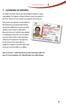 1. LICENSING OF DRIVERS Possession of a driver s licence and the privilege of driving is a major responsibility. The Registrar of Motor Vehicles, under the authority of the Motor Vehicle Act issues, renews
GUIDELINES. for oversize and overmass vehicles and loads MAY 2006. Government of South Australia. Department for Transport, Energy and Infrastructure
 ESCORTING GUIDELINES ESCORTING GUIDELINES SCORTING GUIDELINES ESCORTING GUIDELINES ESCORTING ESCORTING GUIDELINES for oversize and overmass vehicles and loads Government of South Australia Department for
University of Leicester. Vehicle Fleet Management Procedures
 University of Leicester Vehicle Fleet Management Procedures Estates & Facilities Management Division September 2011 1 Introduction The University fleet of vehicles includes all vehicles owned by the University
Bicycle riding is a great way to get into shape
 Bicycle riding is a great way to get into shape and have fun. To remain safe on Illinois roads, it is important to follow the same traffic safety laws that govern vehicle drivers. No amount of bicycle
Restricted Licence Test guide (class 1)
 Restricted Licence Test guide (class 1) Roads Corporation (VicRoads) 2008 September 2012 ISBN 978-0-478-39405-4 (online) ISBN 978-0-478-39406-1 (print) Copyright information This publication is copyright
1. When the roads are slippery, you should make turns as gentle as possible.
 GENERAL KNOWLEDGE KEY FACTS CDL 1. When the roads are slippery, you should make turns as gentle as possible. 2. The heavier a vehicle or the faster it is moving, the more heat the brakes have to absorb
TROPIC LIGHTNING CHECKRIDE PERFORMANCE MEASURE
 TROPIC LIGHTNING CHECKRIDE PERFORMANCE MEASURES V4.0 TASK 1: PERSONAL PROTECTIVE EQUIPMENT PERFORMANCE MEASURE DOT Approved Helmet Proper Reflective Equipment Full Fingered Gloves Proper Eye Protection
Riding Risk Assessment and Pre-Ride Preparation
 North Cheshire Clarion Generic Assessment Road Rides NCC Assessment Introduction Firstly, thank you very much for taking the time to read this document. It goes without saying that looking out for one
National Heavy Vehicle Accreditation Scheme: Standards and Business Rules - Maintenance Management standards
 National Heavy Vehicle Accreditation Scheme: Standards and Business Rules - Maintenance Management standards Version 1.0 February 2014 Maintenance Management standards Maintenance Management Systems 1.
Delineation. Section 4 Longitudinal markings
 Delineation Section 4 Longitudinal markings The delineation guidelines have been developed to assist in designing and maintaining a quality delineation system. The guidelines are to comprise 19 sections
Teaching Your Teen to Drive
 MetLife Auto & Home Teaching Your Teen to Drive Without driving each other crazy! Dear Parent/Guardian, One of the best ways for you to influence your teen s driving habits is to sit in the copilot seat
Vehicle Standards Instruction (General 18.0) Projecting Loads Released January 2014
 Vehicle Standards Instruction (General 18.0) Projecting Loads Released January 2014 This Vehicle Standards Instruction (VSI) has been produced to explain the requirements for transporting projecting loads
Fire Apparatus Operator Aircraft Rescue and Fire Fighting
 Fire Apparatus Operator Aircraft Rescue and Fire Fighting Skill Sheet Package Based on NFPA 1002: Standard on Fire Apparatus Driver/ Operator Professional Qualifications, 2014 Edition. Alabama Fire College
The Victorian Bus & Truck Drivers Handbook. The Victorian Bus & Truck Drivers Handbook
 The Victorian Bus & Truck Drivers Handbook The Victorian Bus & Truck Drivers Handbook Customer Service Centres For VicRoads Customer Service Centre locations and further information, please visit vicroads.vic.gov.au
Coupling or Uncoupling and Parking of Large Goods Vehicle Trailers
 Code of Practice Coupling or Uncoupling and Parking of Large Goods Vehicle Trailers Guidance for managers, supervisors and trainers www.soe.org.uk SOE (Society of Operations Engineers) is a professional
Site inspection: Workplace transport checklist
 Site inspection: Workplace transport checklist The following checklist is a guide to what employers should consider when assessing the risk from vehicles in the workplace. It may not be comprehensive for
AUGUST 2013 INFORMATION BULLETIN. Livestock transport
 AUGUST 2013 INFORMATION BULLETIN Livestock transport Introduction This information bulletin provides information that is relevant to operators and drivers involved in the transport of livestock. It details
How To Prevent Accidents At Work
 2 Preventing vehicle accidents Construction work is considered to be one of the most hazardous industrial activities in the EU. The rate of injury in the construction industry is higher than in other industries.
a family guide to January 2009 Bike Ed
 a family guide to January 2009 Bike Ed Childhood Development e program was developed by ycle education instructor s of programs available visit: gresources/health VRPIN 02026 5.08 a bicycle education program
Health and Safety Office
 Health and Safety Office Topic: Driving at Work Policy Date: January 2010 Version: 3.0 Revision Date; Revision Date 2012 Scope: The following policy and guidance outlines health and safety precautions
PART I TRAFFIC VIOLATIONS
 PART I TRAFFIC VIOLATIONS A. MOTOR VEHICLE STATUTES N.J.S.A. 39:3-4 Driving or parking unregistered motor vehicle 39:3-9a Failure to notify change in name $22 39:3-9a Failure to endorse license $42 39:3-10
High Speed Driver Competency and Training
 High Speed Driver Competency and Training CODE OF PRACTISE DRIVER DEVELOPMENT What competency should a High Speed Driver have and if training is necessary, what training? Joint Emergency Service High Speed
DRIVER KNOWLEDGE TEST QUESTIONS CLASS C (CAR) LICENCE
 DRIVER KNOWLEDGE TEST QUESTIONS CLASS C (CAR) LICENCE ICAC1 - ICAC What will happen if you are caught cheating on the knowledge test? - You will not be allowed to take another test for 6 weeks. - You will
8. WHAT EVERY MOTORCYCLIST MUST KNOW
 8. WHAT EVERY MOTORCYCLIST MUST KNOW It is an offence to carry passengers on the handle bars, frame or tank of the motorcycle. It is also an offence to cling to or attach yourself or your vehicle to any
 Think Before You Drive is a global road safety initiative of the FIA Foundation, Bridgestone Corporation and motoring clubs worldwide. FIA Foundation for the Automobile and Society www.fiafoundation.com
ROAD SIGNS IN JAPAN PARKING SIGNS. No Parking or Stopping Anytime SIZE & WEIGHT LIMIT SIGNS SPEED LIMIT SIGNS
 ROAD SIGNS IN JAPAN Stop Slow & all Do Not Enter & Motorcycles Road Large Sized Trucks & Special Duty Road All Except Two Wheeled Light Except Bicycles Large Passenger No Right Turn No Passing No U-Turn
TEST ON Driving Safely Among Bicyclists and Pedestrians
 TEST ON Driving Safely Among Bicyclists and Pedestrians Next you will take a 16 question test about driving safely among bicyclists and pedestrians. Please take out a sheet of paper to mark down and score
Working Copy WP 05-WH1401. Revision 4. 6-Ton Electric Forklifts 74-H-010B. Technical Procedure EFFECTIVE DATE: 01/04/06. John Guy APPROVED FOR USE
 WP 05-WH1401 Revision 4 6-Ton Electric Forklifts 74-H-010B Technical Procedure EFFECTIVE DATE: 01/04/06 John Guy APPROVED FOR USE WP 05-WH1401 Rev. 4 Page 2 of 10 TABLE OF CONTENTS INTRODUCTION... 3 REFERENCES...
Bicycle Safety Quiz Answers Parental Responsibilities
 Bicycle riding is a great way to get into shape and enjoy the outdoors. To remain safe on Illinois roads, it is important to follow the same traffic safety laws that govern vehicle drivers. No amount of
Crossrail Vehicle Safety Equipment Supplementary Guidance. Works Information Ref: 26.14.8
 FRESNEL Lens Ref: 26.14.8 1 of 10 Product Description The Fresnel Lens is a visual device for lorry drivers and is not a mirror in the conventional sense. It is a clear thin plastic lens that is press
OPERATOR S MANUAL WARNING
 ELECTRIC PALLET TRUCK E30 SERIES OPERATOR S MANUAL WARNING DO NOT INSTALL, OPERATE OR SERVICE THIS PRODUCT UNLESS YOU HAVE READ AND FULLY UNDERSTAND THE ENTIRE CONTENTS OF THIS MANUAL. FAILURE TO DO SO
FY16 Defensive Driving Test ANSWER SHEET. Instructor: Bob Bugger
 1. What is the most important safety item on the bus? a. First aid kit b. Bio hazard kit c. Safety reflector kit d. Driver* *The driver has to operate all the other equipment. The driver must be in top
Logo here. TRAFFIC MANAGEMENT PLAN Ref : xxxx Dated xxxxxx. Enter details. Delivery Address: Enter details
 Logo here Ref : xxxx Dated xxxxxx Mandatory H&S 905 Rev 1: xxxxx Page 1 of 1 Project: Project No: Date: Prepared by: Enter details Enter details Enter details Enter details Delivery Address: Enter details
DRIVER KNOWLEDGE TEST QUESTIONS RIGID LICENCE (CLASS LR, MR, HR)
 DRIVER KNOWLEDGE TEST QUESTIONS RIGID LICENCE (CLASS LR, MR, HR) ICAC1 - ICAC What will happen if you are caught cheating on the knowledge test? - You will not be allowed to take another test for 6 weeks.
OCE. A guide to using an electric wheelchair safely. Information for patients and their families. www.noc.nhs.uk/oce. page 1
 www.noc.nhs.uk/oce A guide to using an electric wheelchair safely Information for patients and their families OCE Oxford Centre for Enablement Neurological Rehabilitation Service page 1 page 2 Contents
Beginner s Permit. Survival Guide. Compliments of. (843) 263-5023 www.123drivedrivingacademy.com [email protected]
 Beginner s Permit Survival Guide Compliments of (843) 263-5023 www.123drivedrivingacademy.com [email protected] Please use this study guide to assist you in studying for your written knowledge
JCB Fastrac in Heavy Goods Vehicle Applications
 JCB Fastrac in Heavy Goods Vehicle Applications Agricultural or General Haulage? Alan Mendelson JCB Consultant Introduction The JCB Fastrac is an instantly recognisable modern agricultural tractor. It
Using your Minibus legally and safely Church of Scotland Law Department
 Circular August 2012 Minibus Guidance CoS Law Department Using your Minibus legally and safely Church of Scotland Law Department Why is this guide important? The use of minibuses and other large vehicles
Bicycle Riding. WHAT ARE the. One Final Note... It is against the law to ride a bicycle under the influence of alcohol and/or drugs. (21200.
 One Final Note... It is against the law to ride a bicycle under the influence of alcohol and/or drugs. (21200.0 VC) Bicycle Riding WHAT ARE the CALIFORNIA HIGHWAY PATROL CHP 909 (12/11) OPI 013 94 75015
Adaptive cruise control (ACC)
 Adaptive cruise control (ACC) PRINCIPLE OF OPERATION The Adaptive Cruise Control (ACC) system is designed to assist the driver in maintaining a gap from the vehicle ahead, or maintaining a set road speed,
Practical accident assistance
 Practical accident assistance A guideline for Mercedes-Benz customers Please note: Changes may have been made to the products since this brochure went to press (12/2009). This brochure has been compiled
cornering C O R N E R I N G Have you ever over-cooked a corner? Did your confidence take a knock as a result? Did you work out why it happened?
 This THINK is a pdf Norfolk is FREE Partnership to download - 011 for personal use - all content remains the property of the THINK Norfolk Partnership - 011 Page 1 Have you ever over-cooked a corner? Did
TOYOTA ELECTRONIC TRANSMISSION CHECKS & DIAGNOSIS
 Checks and Adjustments The transmission requires regular maintenance intervals if it is to continue to operate without failure. As we discussed in previous sections, transmission fluid loses certain properties
GENIUS DMV. cheat sheets QUESTION 1 QUESTION 2 QUESTION 3 QUESTION 4. 2 Driving-Tests.org. All Rights Reserved.
 DMV GENIUS cheat sheets QUESTION 1 QUESTION 2 QUESTION 3 QUESTION 4 are a pair of white or longitudinal lines that mark where pedestrians are permitted to walk. Crosswalk lines Crosswalk lines are a pair
ACCESS AUDIT OF WESTPORT HOUSE
 ACCESS AUDIT OF WESTPORT HOUSE Large sign on the highway to indicate the entrance to Purbeck District Council Large and wide entrance Entrance showing sign for opening times Entrance sign Main entrance
Driver Certification
 Driver Certification Environmental Health & Safety/Risk Management Department of Campus Operations 300 College Park Dayton, Ohio 45469-2904 937-229-4503 Agenda: Part I: Review of UD Driver Certification
NATIONAL TRANSPORT AND SAFETY AUTHORITY
 NATIONAL TRANSPORT AND SAFETY AUTHORITY SCHOOL TRANSPORTATION SAFETY GUIDELINES BY THE NATIONAL TRANSPORT AND SAFETY AUTHORITY School transportation plays an important and long-term role in the lives of
Safe Towing. All about safe towing
 Safe Towing All about safe towing February 2016 Creative Commons information State of Queensland (Department of Transport and Main Roads) 2016 http://creativecommons.org.licences/by/4.0/ This work is licensed
FACT SHEET 5 Road Safety. Takapuna Grammar School International Department
 If you own a car, you should obtain at least third party insurance. A reminder that the roads outside of the main highways can be narrow and windy. You must drive really carefully. Takapuna Grammar School
EXCAVATOR SAFETY TRAINING
 EXCAVATOR SAFETY TRAINING INSPECTION CHECKLIST INSPECTION AREA INSPECTION RESULTS Sat. Unsat. N/A Comments Carrier & Car Body Rotation system Tracks Rollers Frame, welds, bolts Drive system Upper Structure
Section 14. Forklift Safety Contents 14.1 Operator Safety
 Section 14. Forklift Safety Contents 14.1 Operator Safety... 14-1 14.2 Inspection and Maintenance... 14-2 14.3 Handling the Load... 14-3 14.4 Fueling Liquefied Petroleum (LP) Gas Forklifts... 14-3 14.5
ANS: 3. Q. 2 The following sign represents.. Stop No parking Hospital ahead ANS: 1
 Q. 1 Near a pedestrian crossing, when the pedestrians are waiting to cross the road, you should Sound horn and proceed Slow down, sound horn and pass Stop the vehicle and wait till the pedestrians cross
Head Start Bus Monitor Training
 Head Start Bus Monitor Training The bus monitor works with the driver to ensure all Head Start children are safe and comfortable on the bus. Bus monitors encourage and direct the Head Start child to be
Driver s responsibilities
 Vehicle Policy All Drivers must satisfy themselves that their vehicle is fully safe and legal, as it is the driver who is held responsible for any infringement of traffic law. Appointed staff and drivers
Vehicle Testing by RTA
 Vehicle Testing by RTA In alignment with its vision to ensure Safe and Smooth Transport for all, Roads and Transport Authority (RTA) launched many Vehicle Testing Centers (VTC) all around the emirate of
Scion xb. Pocket Reference Guide. <http://www.scion.com/>, Contact
 EMAIL US , Contact 2006 CHAT On weekdays you can chat with a Scion Customer Advocate. , Have a Question? or Contact CALL US For the Scion Customer Experience
TRANSPORTATION POLICY
 TRANSPORTATION POLICY Contents 1 NQS... 2 2 National Regulations... 2 3 Aim... 2 4 Related Policies... 2 5 Implementation... 2 6 General Transport Guidelines... 4 7 Guidelines for Seatbelts and Restraints...
AUSTRALIAN CAPITAL TERRITORY Road Transport (Dimension and Mass) ACT 1990 OVERSIZE VEHICLES EXEMPTION NOTICE INSTRUMENT NO.
 AUSTRALIAN CAPITAL TERRITORY Road Transport (Dimension and Mass) ACT 1990 OVERSIZE VEHICLES EXEMPTION NOTICE INSTRUMENT NO. 331 OF 2000 1. Under paragraph 31 A( 1 )(b) of the Road Transport (Dimensions
Bicycle Safety Enforcement Action Guidelines
 Introduction Bicycle Safety Enforcement Action Guidelines People ride bicycles for many different reasons: fitness, recreation, or for transportation. Regardless of the reason for riding, bicyclists young
Multi-information Display (see MID )
 Driving Position Memory (see Seats ) Power Mirrors (see Mirrors ) Indicators/Gauges (see Instrument Panel ) Multi-information Display (see MID ) HomeLink (see HomeLink ) Navigation System (see Navigation
Drew University Powered Industrial Truck Program Policy Draft 04/12
 PURPOSE To establish procedures and guidelines to ensure that all powered industrial trucks (PITs) are maintained and operated in a safe manner and that only approved PITs are operated by trained and authorized