
8. WHAT EVERY MOTORCYCLIST MUST KNOW
|
|
|
- Evelyn Stevens
- 10 years ago
- Views:
Transcription
1 8. WHAT EVERY MOTORCYCLIST MUST KNOW It is an offence to carry passengers on the handle bars, frame or tank of the motorcycle. It is also an offence to cling to or attach yourself or your vehicle to any other moving vehicle while driving your motorcycle. 8.1 Motorcycle Driver s Licence If you hold a driver s licence you may not drive a motorcycle on the highway except while taking a driver s examination unless the licence contains an endorsement permitting you to drive a motorcycle. To qualify you must first pass a vision screening, written test, then a road test. The written exam to obtain a licence consists of ten (10) questions. You must answer eight correctly. As well, you will be required to write basic and sign tests. 8.2 Equipment 1. Brakes Every motorcycle must be equipped with a brake on each wheel. 2. Headlight One and not more than three headlights are required. 3. Rear Lamp and Brake Light Every motorcycle must have a rear lamp and brake light. These may or may not be the same light. Licence plate must be illuminated. 4. Muffler It must have a muffler in good working order. 5. Handlebars Handlebars must be securely fastened and not exceed 30 cm (12 inches) in height as measured vertically from its point of attachment at the frame. 6. Foot rests A motorcycle must have foot rests which may be used in the normal sitting position by an operator or passenger where the motorcycle is equipped for carrying a passenger. 111

2 8 What Ever y Motorcyclist Must Know 7. Rear-view Mirror It must have a mirror which will give the driver a view of the highway for at least 60 m (200 feet) to the rear. 8. Horn A motorcycle must have a horn in good working order capable of being heard at 60 m (200 feet). 9. Seat Do not carry passengers unless the motorcycle has been so designed. 10. Goggles It is advisable that both drivers and passengers be protected by glasses, goggles or a transparent shield. This shield should be colourless for night driving and should not alter your perception. 11. Headgear You are not allowed by law to operate or ride on a motorcycle unless you are wearing adequate protective headgear of a kind prescribed by Regulation. Every motorcycle is entitled to the full use of a traffic lane and full parking space. 8.3 Safe Driving Rules Defensive riding is the most important key to safe driving. Expect the unexpected. Be aware of the other motorist at all times and always be prepared for his/her mistakes. Know your motorcycle and your own driving limitations and drive within them. Your skill and your attitude are important factors in defensive driving. While driving, continually assess the condition of the road ahead and behind. Do not make yourself a hidden target. When stopping at an intersection you should stop behind the last car. Most motorcycle car collisions take place at intersections. They also take place most frequently during daylight, on weekends, on dry, level roads and during the summer. Most fatal motorcycle crashes involve collisions with automobiles. In the majority of cases, the car driver did not see the motorcyclist. 112

3 Wear clothing of heavy material (leather is recommended) with long sleeves, long pants, heavy boots and gloves when driving or riding as a passenger. For night riding, wear clothing of light colours with reflective material attached. 8.4 Motorcycle Safety Check For safe operation, a motorcycle must be maintained in sound mechanical condition and adjustment. Critical items should be verified daily, while others should be checked regularly. Daily Safety Inspection 1. Tires and Wheels tread depth, sidewall condition, inflation, foreign material or objects, rim condition, spoke tension, axle nuts, cotter pins. 2. Final Drive chain or belt adjustment, wheel alignment. 3. Lubrication System oil levels, leaks. 4. Fuel System fuel level, leaks, valve operation. 5. Cables and Control Clutch throttle, choke, brakes. 6. Electrical System battery condition, fluid level, terminals, headlights (lens operation, adjustment, high/low), tail light (lens operation), brake light (front/rear actuation, adjustment), signal lights (lens operation), running lights, horn operation, auxiliary lighting (lens operation), indicator lights operation. 7. Mirrors adjustment, broken. 8. Legal licence plate and decal, registration, insurance. 113

4 8 What Ever y Motorcyclist Must Know 8.5 Starting You should develop a routine for starting up the engine to ensure that nothing important is missed. Before you get on, however, both you and the motorcycle should be properly prepared. Your pre-start routine should include the following steps: F Fuel Does the tank have enough fuel for the trip? Is the fuel valve turned on? I Ignition Is the ignition key turned on? N Neutral Is the transmission in neutral? Roll the motorcycle backwards or forwards about a foot to ensure that it is. E Engine Cut-Off Is the kill switch turned to the run position? C Choke (or Enricher) If the engine is cold, is the choke applied? On some models, you must disengage the clutch. If you can remember the term F I N E - C, then you should be able to perform the pre-start routine easily and properly. So that you do not accidentally apply too much throttle, follow this procedure: Grasp throttle with a flat or slightly bent wrist position. Use palm and thumb to control throttle and your fingers to control the front brake. If the wrist is lowered, you will have a hard time to reach the brake. 8.6 Stopping The front brake (located on the right handlebar) is the most important. Other than at very low speeds (under 10 km/h), always apply both brakes to stop. The front brake provides about 70% of the total braking force under normal road conditions because the weight shifts forward during braking. The rear wheel will lock if you apply too much force to the brake pedal but the front wheel is more difficult to lock. Extensive practise is needed to get the most power out of your brakes, while avoiding skids. Be careful in using your front brake. If you brake too hard, your front wheel may lock. 114

5 This is more likely to happen on gravel, dirt or wet surfaces. Always be ready to stop. Downshift as you brake so you will have power available if needed. This also allows you to use the engine compression as a brake. Use both brakes every time you slow down or stop. If you use only the rear brake for normal stops, you may not have enough skill to use the front brake properly in an emergency. It is preferable when stopped in traffic to have transmission in neutral. When stopped in traffic and your motorcycle is in gear, keep the rear brake firmly applied. This will prevent the motorcycle from lurching forward should the clutch cable break or your hand slip off the clutch. Braking in turns can cause loss of control if road surface is slippery and the brakes are not used properly. If you must, use both brakes more gradually than on straight line braking. Do not lock either brake. Never ride the brake partly applied. It turns on your brake lights. This is confusing to other drivers and causes unnecessary wear on your brakes. You can stop quicker than most vehicles. Know what is behind you. Check your mirror often. If someone is too close, flash your brake light. Always leave adequate distance between you and the vehicle ahead in case you have to avoid a crash. When approaching sand or gravel, slow down and shift to a lower gear. When riding on wet or slippery roads, avoid sudden braking or rapid acceleration. Avoid painted or metal surfaces, they may be slippery. Keep your feet on the footrests. Remove them only when about to stop. 115

6 8 What Ever y Motorcyclist Must Know 8.7 Passengers Inexperienced drivers should not attempt to carry passengers. Passengers may affect stability and control of the motorcycle, particularly at low speeds. When carrying passengers, instruct them to: a) hold tightly to either the driver or handgrips; b) keep their feet on the pegs; c) lean with the vehicle; and d) not touch the muffler or engine. Do not carry a passenger unless your machine is designed for more than one person. Remember that you need a greater distance in which to stop when carrying a passenger than you do when driving alone. 8.8 Driving Techniques Turns Do your braking and gear shifting well in advance of a turn to slow down. When taking a curve at normal cruising speed, you should lean the motorcycle and your body at the same angle. However, when making a sharp turn at less than 25 km/h, you should lean the motorcycle in the direction of the turn farther than your body. Do not drag your feet on the road surface when turning. Slippery Surface When driving on a slippery surface: (a) avoid leaning the machine; (b) use the front brake carefully - avoid sudden braking: (c) decrease speed; and (d) do not accelerate suddenly. Railroad Tracks When railroad tracks cross the highway at an angle, it is not always advisable to cross them head on. It may be safer to cross the tracks at a slight angle. 116

7 8.9 Defensive Driving In order to be seen by other drivers you should take into account their field of vision and learn to drive in a position where you can be seen. Do not ride in another vehicle s blind spot. When riding with other cycles, do not ride two abreast in a single lane on public streets and highways. Stagger your positions so the driver on the left is in front of the machine on the right. This will allow room for both of you to manoeuvre and pass. The best position in which to see ahead and to be seen by other drivers on a two-way, two-lane street is the left side of the right lane. Each lane offers you three choices of position: left side, center and right side. There is no one lane position which is best all the time. Evaluate traffic and road conditions constantly and decide what is the best position. There are advantages and disadvantages for each and your choice will always result in compromise. Remember, it is very dangerous to operate a motorcycle between lines of traffic or to pass between curb lane traffic and the curb. Ride on the right side when using the right lane, when preparing to make a right turn at an intersection. Do not ride on the extreme right of a road because: (a) you may not be seen by a driver waiting to enter the road; (b) cars may crowd in beside you; and (c) you will be too close to parked cars you may have to pass. Driving a motorcycle with lights on in daytime helps you to be seen by other drivers Shoulder Checks When you plan to start, stop or change direction in traffic, there is only one sure way to see a car behind you in the next lane; that is, turn your head and glance over your shoulder at the traffic behind you. Just checking your rearview mirror is not enough. 117

8 8 What Ever y Motorcyclist Must Know 8.11 Following Other Vehicles You should always leave plenty of space between yourself and vehicles you are following because: 1. Ahead you will be able to see traffic and road conditions more easily. 2. If the road becomes slippery, you may need more room to stop than would a car. 3. If the vehicle ahead should stop suddenly, you can use some of the space ahead to keep a vehicle behind from hitting you. As you increase speed, allow more space between yourself and the vehicle you are following. The highway is likely to be more slippery for the first few minutes after it starts to rain or following light drizzle. Following Distances Following too close or tailgating is a frequent cause of highway collisions. To drive safely you must leave sufficient space between your vehicle and the vehicle ahead so that you can stop in the event of an emergency. The Two-Second Interval is a good way to learn to recognize safe following distance. Just watch the vehicle ahead of you pass some definite point on the highway, such as a telephone pole. Then count to yourself one thousand and one, one thousand and two. That is two seconds. If you pass that same spot before you finish the count, you are following too closely. This holds true at any speed. This rule applies to favourable driving conditions. Unfavourable conditions call for lower speed and a longer count. Do not use high speed highways unless you can keep up with the flow of traffic. Remember, the following areas are slippery when wet: 1. painted lines and arrows, particularly when newly painted 2. greasy areas in center of lane 3. metal surfaces 4. fallen leaves 5. sand and gravel collected near the road shoulder. 118

9 8.12 Emergencies When Riding Avoiding Obstacles A quick stop may not be enough to keep you from hitting something in your path. Debris or a pothole might appear suddenly; the only way to avoid a collision would be with a quick turn. The procedure to making a quick turn is to get the motorcycle to lean quickly in the direction you wish to turn. To get the motorcycle to lean quickly, counter steer. (Countersteering means steering one way to send the bike in the opposite direction). If you wish to turn right, push on the right handgrip, this will cause the front wheel to move slightly left. The result is a lean to the right. As the motorcycle begins to lean, you now can turn the handlebars in the direction it is leaning to keep from falling over. Do not loan your motorcycle to inexperienced drivers or to someone who does not have a valid motorcycle licence. Riding Over Obstacles Sometimes you have no choice but to ride over an object in your path. A length of tailpipe, etc. may be seen too late to steer around it. In this type of situation the basic rules to follow are: Hold onto the handlebars tightly. Keep a straight course. Stand slightly on the footpegs. Shift weight back. Accelerate slightly as front wheel reaches object. Decelerate and move weight forward as you go over object. 119

10 8 What Ever y Motorcyclist Must Know Questions on safe driving practices for motorcycle operators 1. When two lanes of vehicles stop at a traffic signal light, you should: Stop behind the last car in the lane you are in? Pass all vehicles on the right? Pass all vehicles between the two lanes of cars? Pass all vehicles on the left? 2. A motorcycle may be parked: In any parking space provided for a fourwheeled vehicle? On the sidewalk? At a right angle to the curb? Between cars? In any vacant curb space provided the motorcycle is parked parallel to the curb? 3. When three or more riders are together, the safest way to travel is: four abreast? three abreast? single file? in a group? Sudden Stops If you have to stop quickly try: To keep the bike upright and in a straight line. Apply each brake as hard as you can without locking either wheel. If a wheel locks up and skids, it may slide to one side making the cycle hard to control. If you are forced to brake when the front wheel is turned, do it gradually. Give more emphasis to the back brake. You need practice to know how hard you can brake without locking the wheels and skidding. In an emergency situation, draw in the clutch, apply the front brake and push down on the back brake all at the same time. This will help your balance and stop you in the shortest distance. Remember if you take your feet off the pegs for balance, only your front brake remains on. Wobble When travelling at high speeds, the front wheel can suddenly start to wobble (shake from side to side). The only thing you can do in this situation is to ride it out. Do not brake. Grip the handlebars firmly but do not try to stop the wobble. Gradually close the throttle and pull off the road as soon as you can. Check for unequal tire pressure, bent or misaligned wheels, loose spokes or an improperly mounted windshield. All of the above are typical causes of unsteadiness. 120

11 Stuck Throttle If your throttle sticks, the following steps should be applied: Immediately squeeze the clutch lever. Rotate the throttle back and forth several times. If you can not close the throttle, turn off the engine with the emergency kill switch, if you have one; if not, use the ignition key. Carefully steer off the road and stop. Blowouts If you have a blowout, you will need to react quickly to keep your balance. A front wheel blowout is dangerous since it affects your steering. You cannot always hear a tire blow. You should be able to detect a flat tire from the way the motorcycle reacts. If the front tire goes flat, the steering will feel heavy. If the rear tire goes flat, the back of the motorcycle will tend to slide from side to side. If the rear tire blows, maintain your position on the machine. Don t brake ease off the throttle instead. If a front tire blows, hang on firmly and try to steer straight and shift your weight to the rear. When you ve slowed enough, move to the right side of the road. Skids Most motorcycle skids are caused by braking too hard - usually the rear wheel. To correct skid Rear Wheel: Steer slightly in the direction of the skid, letting up on the brake so the wheel can turn. Front Wheel: Release the front brake immediately. A rear wheel skid caused by over-acceleration should be corrected by closing the throttle gradually. Sudden closing of throttle may worsen the problem. 121

Motorcycles. Motorcycles
 8 177 8 This chapter contains information on how to obtain a motorcycle driver s licence. It also provides safety information for the operation of a motorcycle. 178 Anyone who lives in Nova Scotia and
TROPIC LIGHTNING CHECKRIDE PERFORMANCE MEASURE
 TROPIC LIGHTNING CHECKRIDE PERFORMANCE MEASURES V4.0 TASK 1: PERSONAL PROTECTIVE EQUIPMENT PERFORMANCE MEASURE DOT Approved Helmet Proper Reflective Equipment Full Fingered Gloves Proper Eye Protection
GENERAL KNOWLEDGE PRACTICE TEST
 GENERAL KNOWLEDGE PRACTICE TEST 1. Driving under the influence of any drug that makes you drive unsafely is: a. Permitted if it is prescribed by a doctor b. Against the law c. Permitted if it is a diet
HOW TO PREPARE FOR YOUR MARYLAND NONCOMMERCIAL CLASS C DRIVER S TEST
 ` HOW TO PREPARE FOR YOUR MARYLAND NONCOMMERCIAL CLASS C DRIVER S TEST A portion of your noncommercial driving test will be conducted on a closed course to test your basic control of the vehicle, and a
10. COLLISION AVOIDANCE...9 10.1 Quick Stops...10 10.2 Swerving or Turning Quickly...10 10.3 Riding in a Curve...10
 DRP 2336 (11/19/04) This Motorcycle Operator s Handbook has been prepared to inform you of the basic knowledge and skills necessary for the safe operation of a motorcycle. Motorcycling is fun and exciting.
Bicycle Riding. WHAT ARE the. One Final Note... It is against the law to ride a bicycle under the influence of alcohol and/or drugs. (21200.
 One Final Note... It is against the law to ride a bicycle under the influence of alcohol and/or drugs. (21200.0 VC) Bicycle Riding WHAT ARE the CALIFORNIA HIGHWAY PATROL CHP 909 (12/11) OPI 013 94 75015
Cycle Safety. Some tips on safer cycling. Údarás Um Shábháilteacht Ar Bhóithre Road Safety Authority
 Cycle Safety Some tips on safer cycling Údarás Um Shábháilteacht Ar Bhóithre Road Safety Authority Be safe For further information on safe cycling, please look at the Rules of the Road website at www.rulesoftheroad.ie
Motorcycle Operator s Handbook
 COLORADO Motorcycle Operator s Handbook PUBLISHED BY THE COLORADO DEPARTMENT OF REVENUE DR 2336 (08/27/12) Colorado Motorcycle Operator s Handbook This Motorcycle Operator s Handbook has been prepared
DRP 2336 (07/23/08) Colorado Motorcycle Operator s Handbook
 DRP 2336 (07/23/08) Colorado Motorcycle Operator s Handbook This Motorcycle Operator s Handbook has been prepared to inform you of the basic knowledge and skills necessary for the safe operation of a 2-
Motorcycle Safety. Goal. Objectives. Equipment. Overview
 Motorcycle Safety HS05-040B (03/09) Goal This program will provide information and tips for safely driving a motorcycle both on public streets and highways and off-terrain. Objectives Following this safety
DOT HS 807 709 Revised December 2007 MOTORCYCLE SAFETY
 DOT HS 807 709 Revised December 2007 MOTORCYCLE SAFETY How safe is motorcycling? How does it compare to driving an automobile? Are there any special precautions to be observed? What are the causes of motorcycle
Thailand Motorcycle Safety Course
 Thailand Motorcycle Safety Course Lesson 3 Getting Ready to Ride PREPARING TO RIDE What you do before you start a trip goes a long way toward determining whether or not you ll get where you want to go
SAFE CYCLING GUIDE. 6th Edition
 SAFE CYCLING GUIDE 6th Edition BEFORE SETTING OUT A WELL-MAINTAINED BICYCLE is key A Check tire pressure B Check that the chain does not slip C Check the brakes D Check lights and reflectors: 3 4 1 5 2
ve been rolling Here, s to you, Oregon riders! You, , s no wonder for longer than you, ve been walking, so it
 THE BICYCLIST S 1 the bicyclist s survival guide ride safely. the way to go. 2 Here, s to you, Oregon riders! You, ve been rolling for longer than you, ve been walking, so it, s no wonder you feel right
SAFE CYCLING GUIDE. 7th Edition
 SAFE CYCLING GUIDE 7th Edition BEFORE SETTING OUT A Check tire pressure B Check that the chain does not slip C Check the brakes D Check lights and reflectors: 1 A WELL-MAINTAINED BICYCLE is key 3 4 5 Adjust
Atlanta, Georgia Road Test
 1. When driving your car Into traffic from a parked position, you should: A. Sound your horn and pull Into the other lane. B. Signal and proceed when safe. C. Signal other traffic and pull directly into
FY16 Defensive Driving Test ANSWER SHEET. Instructor: Bob Bugger
 1. What is the most important safety item on the bus? a. First aid kit b. Bio hazard kit c. Safety reflector kit d. Driver* *The driver has to operate all the other equipment. The driver must be in top
BIKE BASICS. The AAA Guide to a Great Ride
 BIKE BASICS The AAA Guide to a Great Ride FREEDOM ON WHEELS Bicycles can be considered symbols of independence and freedom. They are also fun, providing riders a greener, healthier form of transportation.
How To Be Safe On A Motorcycle
 PREPARED BY ALASKA DEPARTMENT OF ADMINISTRATION DIVISION OF MOTOR VEHICLES www.alaska.gov/dmv State of Alaska MOTORCYCLE MANUAL This publication was released by the Alaska Department of Administration,
Bicycle riding is a great way to get into shape
 Bicycle riding is a great way to get into shape and have fun. To remain safe on Illinois roads, it is important to follow the same traffic safety laws that govern vehicle drivers. No amount of bicycle
KENTUCKY MOTORCYCLE MANUAL
 KENTUCKY MOTORCYCLE MANUAL Dear Kentucky Motorcyclist: Each day we work to make our highways in Kentucky safer for all to travel. Riding a motorcycle on the open roads can be a wonderful way to experience
The State Government recognises. areas, and regulates bicycle
 cycling & THE LAW rules introduction for roads The State Government recognises The cycling South Australian as a legitimate Road Traffic form of Act including transport the Australian and an increasingly
A Guide to Accident Prevention on Motorcycles
 A Guide to Accident Prevention on Motorcycles SEE me now? Always ride with your dipped headlight on DAY AND NIGHT Avoiding the 5 most common motorcycle accidents... 1 Collisions at Junctions... These can
motorcycle riders information
 Chapter 11 166 168 170 175 177 180 NJ Definition of a Motorcycle Practice Riding and Road Test Prepare to Ride Control for Safety See, Be Seen and Be Heard Use the SIPDE System MOTORCYCLE MANUAL motorcycle
Bicycle Safety Quiz Answers Parental Responsibilities
 Bicycle riding is a great way to get into shape and enjoy the outdoors. To remain safe on Illinois roads, it is important to follow the same traffic safety laws that govern vehicle drivers. No amount of
WEAR THE RIGHT GEAR HELMET USE HELMET SELECTION
 What you do before you start a trip goes a long way toward determining whether or not you ll get where you want to go safely. Before taking off on any trip, a safe rider makes a point to: 1. Wear the right
Operating Vehicle Control Devices
 Module 2 Topic 3 Operating Vehicle Control Devices 1. Identify the vehicle controls in the pictures below: 1. 2. 3. 4. 7. 7. 5. 6. 1. accelerator 2. parking brake 3. foot brake 4. gear shift lever_ 5.
INSPECTION BEFORE RIDING
 INSPECTION BEFORE RIDING Check the following items before riding. ITEM Engine cum transmission oil Fuel Tyres Battery Speedometer Lighting Steering Throttle Clutch Brakes Wheels WHAT TO CHECK FOR Availability
Imagine a bike that s there when you need it, wherever you are, and gone when you don t. That s B-cycle. In this guide, you ll find all you need to
 Imagine a bike that s there when you need it, wherever you are, and gone when you don t. That s B-cycle. In this guide, you ll find all you need to know about operating a B-cycle to ensure your ride is
ONLINE EDITION MOTORCYCLE ENDORSEMENT STUDY GUIDE
 ONLINE EDITION MOTORCYCLE ENDORSEMENT STUDY GUIDE OCTOBER 2009 2 Preface Operating a motorcycle safely in traffic requires special skills and knowledge. The Motorcycle Safety Foundation (MSF) has made
1. When the roads are slippery, you should make turns as gentle as possible.
 GENERAL KNOWLEDGE KEY FACTS CDL 1. When the roads are slippery, you should make turns as gentle as possible. 2. The heavier a vehicle or the faster it is moving, the more heat the brakes have to absorb
Motorcycle Operator Manual
 Motorcycle Operator Manual PUB 147 (3-15) PREFACE Operating a motorcycle safely in traffic requires special skills and knowledge. This handbook will provide you with the information necessary to enable
[email protected], or visit the Motorcycle Safety Unit s web page, www.txdps.state.tx.us/msb.
 For information about driver licenses, call your local Driver License Office or Driver License Customer Service at 512/424-2600 or visit the Driver License web page www.txdps.state.tx.us/administration/driver_license_control.
Jesse White Secretary of State
 The number of motorcycles on our roadways is increasing every year. Currently, there are nearly 270,000 motorcycles on Illinois roads. Because of their size and vulnerability in a crash, it is important
Motorcycles. Registering and insuring your motorcycle Rules for operating your motorcycle Motorcycle safety
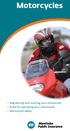 Motorcycles Registering and insuring your motorcycle Rules for operating your motorcycle Motorcycle safety Table of Contents Introduction 1 Registering your motorcycle 2 Insurance protection 3 Rules for
Driving and your Teen an 8 Step Guide for Parents
 Driving and your Teen an 8 Step Guide for Parents #DriveSafer Learning to drive is a rite of passage; a sacred experience between parent and teen. Helping your son or daughter on their journey doesn t
New York Bicycling Pocket Guide
 New York Bicycling Pocket Guide Prepared by the New York Bicycling Coalition About This Guide Getting around by bike is good for one s health and wallet, and the environment. But many people aren t sure
RIDER S GUIDE. to Operation, Safety and Licensing MOTORCYCLES, MOPEDS & POWER-ASSISTED BICYCLES MAXIMUM
 to Operation, Safety and Licensing RIDER S GUIDE MOTORCYCLES, MOPEDS & POWER-ASSISTED BICYCLES MAXIMUM RIDER S GUIDE to Operation, Safety and Licensing Motorcycles, Mopeds & Power-Assisted Bicycles Introduction
A Guide to Safe Bicycling in Hawai i
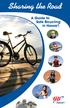 A Guide to Safe Bicycling in Hawai i Sharing the Road: A Guide to Safe Bicycling in Hawai i What Motorists & Bicyclists Should Know Everyone has the right to be safe on Hawai i s roads. Law of the Splintered
6: LANE POSITIONS, TURNING, & PASSING
 6: LANE POSITIONS, TURNING, & PASSING BASIC LANE POSITIONS Traffic law says that slower vehicles should stay to the right. But where exactly should bicycles ride? Here are some basics. Never Ride Against
NORTH CAROLINA DEPARTMENT OF TRANSPORTATION Division of Motor Vehicles
 MOTORCYCLISTS HANDBOOK NORTH CAROLINA DEPARTMENT OF TRANSPORTATION Division of Motor Vehicles Thirteenth Edition, September 2007 LICENSING AND REGISTRATION The law in North Carolina requires the operator
Commentary Drive Assessment
 Commentary Drive Assessment Time start: Time finish: Candidate s Name: Candidate s Email: Date of Assessment: Location: Candidate s Supervisor: Supervisors Contact Number: Supervisors Email: Assessor s
general, accidents caused by misjudging
 Unit 3: The Effect of Natural Forces on your Vehicle Page 1 of 11 Purpose: Acquaint the student with some of the natural forces acting on a vehicle while stopping, maneuvering, and during a crash. Explain
chapter 3 basic driving skills
 chapter 3 basic driving skills When curving to the left, keep the front wheels close to the right edge of the lane to keep your driver s side rear wheels out of the next lane of traffic. Curve ahead slow
Teaching Your Teen to Drive
 MetLife Auto & Home Teaching Your Teen to Drive Without driving each other crazy! Dear Parent/Guardian, One of the best ways for you to influence your teen s driving habits is to sit in the copilot seat
Safety Rules. Car Washes CORPORATE HEADQUARTERS 518 EAST BROAD STREET COLUMBUS, OHIO 43215 614.464.5000 STATEAUTO.COM
 TM Safety Rules Car Washes CORPORATE HEADQUARTERS 518 EAST BROAD STREET COLUMBUS, OHIO 43215 614.464.5000 STATEAUTO.COM TM Disclaimer: The information contained in this publication was obtained from sources
FMCSA Webinar Nov.18th to Examine Large Truck Crash Fatalities Involving Pedestrians & Bicyclists. New Technology for Better Fleet Management
 In This Issue: FMCSA Webinar Nov.18th to Examine Large Truck Crash Fatalities Involving Pedestrians & Bicyclists Help Prevent Roadway Accidents involving Pedestrians How to Steer Clear of Accidents with
Defensive Driving While Towing a Trailer By Elizabeth Koncki, Maryland Department of Agriculture
 Defensive Driving While Towing a Trailer By Elizabeth Koncki, Maryland Department of Agriculture Many of you have heard the term defensive driving, but maybe you may have not been taught the method or
Sharing the road safely
 6 sharing the road in this chapter Sharing the road safely Pedestrians Cyclists Motorcycle riders Passenger vehicles Large vehicles School buses Public transit buses Emergency vehicles Emergency workers
How To Ride A Motorcycle
 Motorcycle Operator Manual Dannel P. Malloy Governor Andres Ayala, Jr. Commissioner Prepared By Motorcycle Safety Foundation Adapted with Permission By Connecticut Department of Motor Vehicles 60 State
Carolina Road Driving School Sample Test Questions
 Carolina Road Driving School Sample Test Questions 1. A driver's license is required for which of the following? 1. Sitting in the driver's seat of a car while the engine is running. 2. Steering a car
What Every Young Michigan Bicyclist Must Know
 What Every Young Michigan Bicyclist Must Know A Guide for Youth Tips for Riding Your Bicycle Legally and Safely Meet the LMB Safety Kids Sprocket Madison Hub Spokes Chase Ryder What Every Young Michigan
ILLINOIS MOTORCYCLE. Operator Manual
 ILLINOIS MOTORCYCLE Operator Manual Currently, there are approximately 356,000 licensed motorcycles on Illinois roads, and this number is increasing every year. Because of their size and vulnerability
PART I TRAFFIC VIOLATIONS
 PART I TRAFFIC VIOLATIONS A. MOTOR VEHICLE STATUTES N.J.S.A. 39:3-4 Driving or parking unregistered motor vehicle 39:3-9a Failure to notify change in name $22 39:3-9a Failure to endorse license $42 39:3-10
YOUR GUIDE TO INTRA-TOWN CYCLING
 YOUR GUIDE TO INTRA-TOWN CYCLING Content 04 Introduction 05 Attire Before you set off 06 Safety Checklist for Bicycle 07 Maintenance 08 Preventing Bicycle Theft What to look out for on the way 10 Signs
a family guide to January 2009 Bike Ed
 a family guide to January 2009 Bike Ed Childhood Development e program was developed by ycle education instructor s of programs available visit: gresources/health VRPIN 02026 5.08 a bicycle education program
Broward County Public Schools Core Curriculum Department. Driver s Education Basic Driving Skills: Study Guide
 Broward County Public Schools Core Curriculum Department Driver s Education Basic Driving Skills: Study Guide 5 th Edition 2 nd Edition K.C. Wright Administrative Building 600 Southeast Third Avenue Fort
MOTORCYCLE OPERATOR MANUAL
 MOTORCYCLE OPERATOR MANUAL STATE OF NEVADA DEPARTMENT OF MOTOR VEHICLES SEPTEMBER 2014 DMV-701 Brian Sandoval Governor Troy L. Dillard Director NEVADA MOTORCYCLE OPERATOR MANUAL DEPARTMENT OF MOTOR VEHICLES
SMART RIDE SAFE RIDE. What you need to know to operate an ATV in Ontario
 SMART RIDE SAFE RIDE What you need to know to operate an ATV in Ontario B The All Terrain Vehicle, or ATV as it s commonly called, is a very popular year-round utility and recreational vehicle, that offers
Bike 101. a s. c s. Bi cycle Safety. A Guide For Grades 7-12
 Bike 101 Bi cycle Safety B a s i c s A Guide For Grades 7-12 The Road To Safer Cycling Today, more bicyclists and motorists are sharing the road than ever before. Unfortunately, this increase in traffic
Bicycle Book. This book belongs to. Name. Address. Telephone number. Make of bicycle. Color of bicycle. Serial number.
 Bicycle Book Bicycle Book This book belongs to Name Address Telephone number Make of bicycle Color of bicycle Serial number License number Other identifying marks Message to Parents Most children love
15-Passenger Van Safety Awareness Program. Environmental Health & Safety Department 570-662-4906
 15-Passenger Van Safety Awareness Program Environmental Health & Safety Department 570-662-4906 Course Objective The objective of this presentation is to increase the safety awareness of passenger van
Table of Contents. Introducing AYGO. Accessing your vehicle 2 3. Lights 9. Wipers 10. Electric windows 4. Gear change 11
 AYGO Brief Guide Table of Contents Accessing your vehicle 2 3 Electric windows 4 Steering wheel (Vehicles with an adjustable type) 4 Seat and seat belt adjustment 5 Instrument Panel overview 6 Instrument
Motorcycle Operator s Manual
 Texas Department of Public Safety Motorcycle Operator s Manual Revised June 2014 STRANDED MOTORISTS NEED HELP? CALL 1-800-525-5555 PREFACE This Motorcycle Operator s Manual has been prepared in cooperation
20 Tips for Safe Driving
 20 Tips for Safe Driving www.libertymutualinsurance.com Liberty Mutual 20 Tips What s Your Driving Skill Level? As you can see, this national survey 1 found that drivers rated themselves highly. The tendency
California Motorcycle Handbook
 California Motorcycle Handbook 2006 Arnold Schwarzenegger, Governor State of California Sunne Wright McPeak, Secretary Business, Transportation and Housing Agency DISCLAIMER...ii WHERE TO WRITE...ii INTRODUCTION...
20 Tips for Safe Driving
 Helping People Live Safer, More Secure Lives Since 1912 Thank you for considering Liberty Mutual for your insurance needs. As one of the leading providers of auto, home and life insurance in the United
SECTION 2B WHEEL ALIGNMENT TABLE OF CONTENTS
 SECTION 2B WHEEL ALIGNMENT TABLE OF CONTENTS Description and Operation... 2B2 Four Wheel Alignment... 2B2 Toein... 2B2 Caster... 2B2 Camber... 2B2 Diagnostic Information and Procedures... 2B3 Tire Diagnosis...
Bicycle Safety in North Dakota
 North Dakota State University Bicycle Safety & Rules of the Road I. Introduction Bicycling is a fun and healthy exercise. Before riding your bicycle on roadways, take time to learn the rules. Many bicyclists
GENERAL DRIVING TEST QUESTIONS
 GENERAL DRIVING TEST QUESTIONS 99 15 16 16 17 15 20 18 GENERAL TEST QUESTIONS 1. When you take a road test for a driver s license: 1. You must provide the vehicle. 2. The vehicle must be in safe operating
This section deals with mandatory and optional equipment for your vehicle as well as suggestions for safer road use.
 3. EQUIPMENT This section deals with mandatory and optional equipment for your vehicle as well as suggestions for safer road use. 3.1 Lights No person shall drive a vehicle on a highway at nighttime or
Sport Ice Elektro 124
 Sport Ice Elektro 124 Operation Manual 2007/4 V2.1 Introduction The Sport Ice Elektro 124 is an ice resurfacing machine designed to be used on small ice surfaces. The machine has been designed to produce
Chapter 4 DEFENSIVE DRIVING
 Chapter 4 DEFENSIVE DRIVING Chapter 4 Table of Contents Chapter 4 DEFENSIVE DRIVING... 4-1 DEFENSIVE DRIVING... 4-3 Positioning The Bus... 4-3 When Making a Turn at an Intersection... 4-3 Making the perfect
June 2014. Wisconsin Motorcyclists Handbook
 June 2014 Wisconsin Motorcyclists Handbook DMV service centers www.dot.state.wi.us/about/locate/dmv/index.htm DMV web site www.wisconsindmv.gov Motorcycle crash facts www.dot.wisconsin.gov/safety/motorist/crashfacts/docs/motorcyclefacts.pdf
PERIODIC MOTOR VEHICLE INSPECTION MANUAL FOR INSPECTORS OF MOTORCYCLES
 PERIODIC MOTOR VEHICLE INSPECTION MANUAL FOR INSPECTORS OF MOTORCYCLES DEPARTMENT OF TRANSPORTATION STATE OF HAWAII AUGUST 2005 TABLE OF CONTENTS Alphabetical by Components Alignment...1 Battery...2 Brakes...2
Motorcycle Operator Manual
 Motorcycle Operator Manual With Supplementary Information for Three-Wheel Motorcycles 17 th Edition 2 Preface Welcome to the Seventeenth Edition of the MSF Motorcycle Operator Manual (MOM). Operating a
Multi-information Display (see MID )
 Driving Position Memory (see Seats ) Power Mirrors (see Mirrors ) Indicators/Gauges (see Instrument Panel ) Multi-information Display (see MID ) HomeLink (see HomeLink ) Navigation System (see Navigation
AAA S GUIDE TO A SAFE
 Credit: ThinkStock SAME ROADS SAME RULES SAME RIGHTS AAA S GUIDE TO A SAFE BIKE RIDE DRIVING A BICYCLE Yes, bicyclists MUST drive their bicycles in the same manner that motorists drive their cars. Most
Rules of the Road. The 2007 State of Wyoming MOTORCYCLE LICENSE MANUAL
 Rules of the Road The 2007 State of Wyoming MOTORCYCLE LICENSE MANUAL Above all else, drive safely Welcome to the latest edition of Wyoming s Motorcycle License Manual. This book has been revised to include
DEFENSIVE DRIVING. It s an Attitude
 DEFENSIVE DRIVING It s an Attitude RLI Design Professionals Design Professionals Learning Event DPLE 155 July 15, 2015 RLI Design Professionals RLI Design Professionals is a Registered Provider with The
Level 2 Award in Safe Driving at Work
 Level 2 Award in Safe Driving at Work Student notes (sample) www.britsafe.org Membership Training Qualifications Audit and Consultancy Audit and Policy Consultancy and Opinion Policy Awards and Opinion
Owner s Manual Read and keep this manual. Patents World Wide
 Owner s Manual Read and keep this manual. Patents World Wide S & S Industries, Inc., Sarasota, FL, USA www.trail-gator.com Copyright 2008 All Rights Reserved The following manual is provided to assist
16th Edition. Motorcycle Operator. Manual. With Supplementary Information for Three-Wheel Motorcycles MSF LICENSING PROGRAMS
 a n m s f m a n ua l 16th Edition Maine Motorcycle Operator Manual With Supplementary Information for Three-Wheel Motorcycles MSF LICENSING PROGRAMS State of Maine Department of the Secretary of State
MOTORCYCLE. Operator Manual
 MOTORCYCLE Operator Manual MESSAGE FROM THE MARYLAND MOTOR VEHICLE ADMINISTRATION Operating a motorcycle safely in traffic requires special skills and knowledge. This handbook has been prepared by the
Adverse Driving Conditions. Adverse Driving Conditions
 Adverse 5 Adverse 133 5 Adverse This chapter contains information regarding driving in poor conditions. It provides you with information on the following: nighttime driving driving in the rain, snow, or
Driver Certification
 Driver Certification Environmental Health & Safety/Risk Management Department of Campus Operations 300 College Park Dayton, Ohio 45469-2904 937-229-4503 Agenda: Part I: Review of UD Driver Certification
Beginner s Permit. Survival Guide. Compliments of. (843) 263-5023 www.123drivedrivingacademy.com [email protected]
 Beginner s Permit Survival Guide Compliments of (843) 263-5023 www.123drivedrivingacademy.com [email protected] Please use this study guide to assist you in studying for your written knowledge
Over the Edge and Back. What to do if you drive off the pavement edge. AAA Foundation for Traffic Safety
 Over the Edge and Back What to do if you drive off the pavement edge Pavement edge drop-off Pavement edge drop-off is a common safety hazard, and is particularly dangerous if the difference in height between
ZAPPY 3 OWNER S MANUAL. Read this manual completely before riding your Electric ZAPPY 3.
 ZAPPY 3 OWNER S MANUAL Read this manual completely before riding your Electric ZAPPY 3. TECHNICAL INFORMATION Model No. : ZAPPY 3 Product size Type of motor Motor power Battery type Battery Charger Charging
These "rules of the road" are based on Texas Transportation Code statutes. Find the complete bicycle code at the bottom of the page
 Texas Bicycle Laws These "rules of the road" are based on Texas Transportation Code statutes. Find the complete bicycle code at the bottom of the page Bicyclists have the rights and duties of other vehicle
Trailer safety. Required equipment Maintenance Safe operation Trailer classification
 Trailer safety Required equipment Maintenance Safe operation Trailer classification Trailer safety Towing a utility trailer, camper trailer or boat trailer?* Inside, you ll find tips about these important
Forklift Carts and Dollies
 Forklift Carts and Dollies AgSafe Safe Work Procedure PACKAGING/SHIPPING AREA Accident Prevention Tips All employees should be instructed in PROPER LIFTING TECHNIQUES. Consider the ergonomics of each situation
WARNING! WARNING! ENGLISH 18 ENGLISH
 SKELETON RAKES Carefully read, follow and understand the instructions given in this manual. It is an essential part of the product, and you should keep it in a safe place for future reference. MECHANIC
Bicycle Safety Enforcement Action Guidelines
 Introduction Bicycle Safety Enforcement Action Guidelines People ride bicycles for many different reasons: fitness, recreation, or for transportation. Regardless of the reason for riding, bicyclists young