
GENIUS DMV. cheat sheets QUESTION 1 QUESTION 2 QUESTION 3 QUESTION 4. 2 Driving-Tests.org. All Rights Reserved.
|
|
|
- Marjorie Marsh
- 10 years ago
- Views:
Transcription
1

2 DMV GENIUS cheat sheets QUESTION 1 QUESTION 2 QUESTION 3 QUESTION 4 are a pair of white or longitudinal lines that mark where pedestrians are permitted to walk. Crosswalk lines Crosswalk lines are a pair of white or longitudinal lines that mark where pedestrians can walk. Do not block the crosswalk with your vehicle. are designed to allow vehicles to slow down and leave the expressways. Exit ramps Exit ramps are designed to slow down and leave the expressways. There is often a lower speed posted for the ramp. are the mobile devices that are often used on some roads to give drivers an advance warning of construction zones. Flashing arrow signs Electronic messages or flashing arrow panels are the mobile devices that are often used on some roads to give an advance warning of construction zones and unusual conditions at/near work zones. are the most frequent type of crashes on interstates. Rear-end collisions Always keep at least two seconds' space cushion between you and the vehicle ahead. When the weather is bad or the pavement is slick, you should double that time. Rearend collisions are the most frequent type of crashes on the interstates. 2 Driving-Tests.org. All Rights Reserved.
3 QUESTION 5 QUESTION 6 QUESTION 7 QUESTION 8 QUESTION 9 are the most likely places for car and motorcycle collisions to occur. Intersections Intersections are the most likely places for car/motorcycle collisions to occur. This usually is the result of a car driver not seeing the motorcycle and turning into the motorcycle's path. indicates the outside edge of the traffic lane, and may be crossed only by traffic moving to or from the shoulder. Solid white line In many areas, the right and/or left edges of the highway are marked with a solid white line. This line indicates the outside edge of the traffic lane, and may be crossed only by traffic moving to or from the shoulder. lane is intended to be used for passing slower vehicles, on multi-lane roads. The leftmost On multi-lane roads, the leftmost lane is intended to be used for passing slower vehicles. If you pass on the right, the other driver may have difficulty seeing you and might suddenly change lanes in front of you. may be used in work zones both day and night to guide drivers into certain traffic lanes. Large flashing or sequencing arrow panels Large flashing or sequencing arrow panels may be used in work zones both day and night to guide drivers into certain traffic lanes and to inform them that part of the road or street ahead is closed. occurs on wet roads when your front tires start to ride on water instead of the road. Hydroplaning Hydroplaning occurs on wet roads when your front tires start to ride on water instead of the road. As you go faster, the problem becomes worse and you will lose control of your steering. Driving-Tests.org. All Rights Reserved. 3
4 QUESTION 10 QUESTION 11 QUESTION 12 QUESTION 13 QUESTION 14 QUESTION 15 are yellow and diamond-shaped, with black lettering or symbols. Warning signs Warning signs usually are yellow and diamond-shaped, with black lettering or symbols. are zones around a truck or a heavy vehicle where other vehicles disappear into blind spots. No-zones Trucks and buses have blind spots called No-zones. No-zones are the areas around trucks and buses where cars "disappear" into blind spots. These areas are so close that they restrict the truck or bus driver's ability to stop or manoeuvre safely. show parking spaces for persons with disabilities. Blue pavement markings The blue markings show parking spaces for persons with disabilities. are made to stop runaway vehicles safely without injuring drivers and passengers on steep mountain grades. Escape ramps Escape ramps are located on many steep mountain grades. Escape ramps are made to stop runaway vehicles safely without injuring drivers and passengers. Escape ramps use a long bed of loose soft material (pea gravel) to slow a runaway vehicle, sometimes in combination with an upgrade. indicates the left edge of traffic lanes going in your direction. A solid or broken yellow line A solid white line indicates the right edge of the traffic lane on a road. A solid or broken yellow line indicates the left edge of traffic lanes going in your direction. lines mean that passing is not allowed in either direction. Solid double yellow Solid double yellow lines mean that passing is not allowed in either direction. You may not cross the lines unless you are making a left turn. 4 Driving-Tests.org. All Rights Reserved.
5 QUESTION 16 QUESTION 17 QUESTION 18 QUESTION 19 QUESTION 20 A offers you the best possible protection in a car crash and, therefore, is your best defense against the drunk driver. safety seat belt Safety belts do make the trip safer and help save lives. They prevent serious injuries to the head and to the body in a car crash. A on a two-way road allows you to cross over into the oncoming lane temporarily to pass a vehicle, if it is safe to do so. broken yellow line On a multiple-lane roadway with several lanes in one direction, you must use the middle and left lanes for passing. A broken yellow line on a two-way road allows you to cross over into the oncoming lane temporarily to pass a vehicle, if it is safe to do so. A barrier of grass, concrete or other material separating two roadways, including interstate highways is known as: a median A barrier of grass, concrete or other material separating two roadways, such as the area between the two roadways on an interstate highway, is known as the median. It is not legal to ride over, across or on the median. A broken white line on the road represents: lanes of traffic moving in the same direction Broken white lines represents traffic moving in the same direction. Broken white lines between lanes of traffic mean you may cross the lines to pass or change lanes, if it is safe to do so. A broken yellow line alongside a solid yellow line indicates that: passing is permitted on the side of the broken line, but not on the side of the solid line A broken yellow line alongside a solid yellow line indicates that passing is permitted on the side of the broken line, but not on the side of the solid line. Driving-Tests.org. All Rights Reserved. 5
6 QUESTION 21 QUESTION 22 QUESTION 23 QUESTION 24 A curb painted with yellow lines indicate that the driver: may stop only long enough to load or unload A painted curb means that you must follow special rules to park there. A curb painted with yellow lines mean you may stop only long enough to load to unload. A double solid white line marks the edge of a traffic lane where: travel in the same direction is permitted on both sides of the lane, but crossing the line is prohibited A double solid white line marks the edge of a traffic lane where travel in the same direction is permitted on both sides of the lane, but crossing the line is prohibited. A double solid yellow line on a pavement means that: passing is not allowed in either direction Double solid yellow lines mark the center of a road and separate traffic traveling in two different directions. Passing is not allowed in either direction. Drivers may not cross the lines unless they are making a left turn. A driver entering a traffic circle or rotary, must yield the right-of-way to: both a) & b) A driver entering a traffic circle, sometimes called a rotary, must yield the right-ofway to pedestrians and drivers already in the circle. QUESTION 25 QUESTION 26 A driver may pass another vehicle on the right only: when the motor vehicle ahead is making or about to make a left turn A driver may pass on the right of another vehicle only when the motor vehicle ahead is making or about to make a left turn. Never pass on a hill or on a bridge. A driver must for a school bus that is stopped with its red lights flashing on the opposite side of the road. come to a complete stop Drivers must come to a complete stop, when they encounter a school bus that is stopped with its red lights flashing whether it is on their side of the road or on the opposite side of the road. 6 Driving-Tests.org. All Rights Reserved.
7 QUESTION 27 QUESTION 28 QUESTION 29 QUESTION 30 QUESTION 31 QUESTION 32 A driver must yield the right-of-way to other vehicles in all of the following situations, EXCEPT: when reaching an intersection with a green light When entering a roundabout, a driver must yield the right-of-way to drivers already in the roundabout and obey all traffic signs. The driver must yield the right-of-way to other vehicles when merging and when entering a highway from an alley. A green traffic light allows the driver to go. A driver who wants to enter a highway from a private road: must stop and yield to the vehicles on the highway Cars entering from a private road or a driveway must stop and yield to cars on a public street or a highway. A flashing red traffic light should be considered as: a stop sign A flashing red traffic light is the same as a stop sign. You must come to a full stop and then proceed when it is safe to do so. A flashing yellow arrow means: you may proceed with caution in the direction of the arrow A flashing yellow arrow means you may proceed with caution in the direction of the arrow. A flashing yellow light in your driving lane means: slow down and proceed with caution A flashing yellow light means slow down and proceed with caution. Flashing yellow lights are positioned at locations with higher-than-normal hazardous conditions. A highway work zone can be easily identified by immediately preceding the work zone. a black-on-orange sign A highway work zone can be easily identified by unique orange warning sign immediately preceding the work zone. The orange signs with messages in black letters are reserved strictly to identify work zones. Driving-Tests.org. All Rights Reserved. 7

8 QUESTION 33 QUESTION 34 QUESTION 35 QUESTION 36 QUESTION 37 QUESTION 38 A lighted red arrow means: you may not proceed in the direction indicated by the arrow A lighted red arrow means you may not proceed in the direction indicated by the arrow. A pedestrian using a white or white cane tipped with red is usually: a blind person Pedestrians carrying white canes or with guide dogs are blind or have greatly reduced vision. A red arrow at an intersection indicates that: the turning traffic must stop A red arrow means turning traffic must stop. They must wait for next green turn signal before making a turn. A red light with a green arrow means: you may go cautiously in the direction of the arrow, yielding to pedestrians A red light with a green arrow means you may go cautiously in the direction of the arrow, yielding to all other vehicles and pedestrians. A roundabout is a circular intersection where vehicles travel around a center island in direction. a counter-clockwise A roundabout is a circular intersection where vehicles travel around a center island in a counter-clockwise direction. These intersections are designed to reduce the number and severity of collisions, as well as provide operational efficiencies. A sign with an orange background and black letters indicate: a construction zone sign Construction signs are used to notify drivers of unusual or potentially dangerous conditions on or near the traveled way. All temporary signs in work zones have an orange background and black letters or symbols. 8 Driving-Tests.org. All Rights Reserved.
9 QUESTION 39 QUESTION 40 QUESTION 41 QUESTION 42 QUESTION 43 QUESTION 44 A single broken yellow line usually marks the centerline of a two-way roadway where: a vehicle may pass if it is safe A single broken yellow line usually marks the centerline of a two-way roadway where a vehicle may pass if it is safe. A single solid white line across a road at an intersection means that a motorist must for a traffic signal or sign. stop behind the line A single solid white line across a road at an intersection means that a motorist must stop behind the line for a traffic signal or sign. A solid white line between lanes of traffic means: you should stay in your lane A solid white line between lanes of traffic means that drivers should stay in their lane. Drivers should not cross the lanes unless a special situation requires them to change lanes. A steady red arrow means: you must stop and you cannot go in the direction of the arrow A red arrow means you must stop and you cannot go in the direction of the arrow. You may proceed when the red arrow goes off and a green arrow or light goes on. A steady yellow light at an intersection indicates that drivers need: to stop unless they are already in the intersection A steady yellow light indicates that a red light is about to appear. Stop if you are not already in the intersection. A triangular orange sign on the back of a slow-moving vehicle indicates that: the vehicle cannot travel faster than 25 mph The triangular sign on the back of a slow-moving vehicle means that the vehicle cannot travel faster than 25 mph. Do not get impatient if behind one of these vehicles. The driver will usually try to pull over to the side whenever possible to prevent traffic back-ups. Driving-Tests.org. All Rights Reserved. 9
10 QUESTION 45 QUESTION 46 QUESTION 47 QUESTION 48 QUESTION 49 A two-headed arrow with one head pointing straight ahead and the other pointing to the left means: you may either proceed straight ahead or turn to the left A two-headed arrow with one head pointing straight ahead and the other pointing to the left means that you may either proceed straight ahead or turn to the left. A vehicle's stopping distance is equal to: the sum of the braking distance and reaction distance Your stopping distance equals your reaction distance plus your braking distance. If you are driving fast, are very tired, or if your vehicle has bad brakes, you will require a greater distance to stop your vehicle. A yellow-flashing light used mostly on tow trucks and slow-moving vehicles requires other drivers to: slow down their vehicles The yellow-flashing light is used mostly on tow trucks and slow-moving vehicles. These lights warn you to slow down. A yield sign indicates that a driver must slow down when approaching an intersection and if a vehicle or pedestrian with the right-of-way is approaching from another direction. be prepared to come to a complete stop A yield sign indicates that a driver must slow down when approaching an intersection and be prepared to come to a complete stop if a vehicle or pedestrian with the right-of-way is approaching from another direction. If you are approaching a yield sign, a vehicle approaching from another direction with the right-of-way should not have to brake to avoid a collision with you. All of the following are tips to remember when you travel through a work zone except: increase your speed When you travel through a work zone, remember these four tips: 1. Reduce your speed. 2. Adjust your lane position away from workers. 3. Prepare for the unexpected 4. Watch for speed limit signs. Fines are increased in most work zones. 10 Driving-Tests.org. All Rights Reserved.
11 QUESTION 50 QUESTION 51 QUESTION 52 QUESTION 53 QUESTION 54 All work zone symbols or signs have an orange background and black letters All temporary signs in work zones have an orange background and black letters or symbols. These signs can be found on either side of the road and tell you what and how soon you will encounter a work zone. Among the following parking types, is commonly used in parking lots, shopping centers, and wide streets. angle parking This type of parking is common in parking lots, shopping centers, and wide streets. A courteous driver never parks too close to other vehicles. Parking too close could result in damage to your vehicle. An is the connection of a freeway to a road or another freeway by a series of ramps. interchange An interchange is the connection of a freeway to a road or another freeway by a series of ramps. The connecting roadways allow you to leave one road and enter another safely, without disrupting the flow of traffic. As you approach and enter the acceleration lane, to match that of vehicles in the through lanes. increase your speed The key to entering a freeway smoothly is to accelerate on the entrance ramp/lane to match the speed of freeway traffic in the right lane. Then signal, check the traffic around you, and merge carefully. At an intersection where there is no stop sign or traffic signal, drivers should yield to: vehicles coming from the right When approaching at an intersection where there is no stop sign or traffic signal, drivers should yield to vehicles coming from the right. Drivers should always be prepared to yield to avoid an accident. Driving-Tests.org. All Rights Reserved. 11

12 QUESTION 55 QUESTION 56 QUESTION 57 QUESTION 58 QUESTION 59 At an unmarked crosswalk, drivers are required to: yield the right-of-way to the pedestrians Drivers are required to yield the right-of-way to the pedestrians within any crosswalk, whether marked or unmarked. At intersections, before turning right, you should make sure that there is no traffic approaching: from your left and no oncoming traffic turning left into your path Do not begin your turn without checking for pedestrians crossing where you will be turning. At intersections, before turning right, make sure that there is no traffic approaching from your left and no oncoming traffic turning left into your path. At rail crossings which have the standard, octagonal, red-and-white stop sign, drivers must stop and proceed only when: they determine no train is approaching At crossings marked with automatic flasher units or automatic crossing gates, drivers must stop if the lights are flashing or the gates are lowered, and remain stopped until the lights stop flashing and the gates are raised. At crossings, which have the standard octagonal red and white stop sign, drivers must stop and proceed only when they determine no train is approaching. At the end of most entry ramps on a freeway, you will find that allows you to increase your speed. an acceleration lane At the end of most entry ramps, you will find an acceleration lane that allows you to increase your speed in freeways. Backing up is not allowed on freeways or expressways, except: by drivers of emergency vehicles Backing up is not allowed on freeways or expressways, except by drivers of emergency vehicles in the course of duty. Backing up on public roads is an unsafe practice. 12 Driving-Tests.org. All Rights Reserved.
13 QUESTION 60 QUESTION 61 QUESTION 62 QUESTION 63 QUESTION 64 QUESTION 65 Because of their size trucks/buses often need to move to make right turns. to the left lane Because of their size, trucks and buses often need to move to the left lane to make right turns. Cutting in between the truck and curb increases the possibility of a collision. Before backing your vehicle, you should look to the front, sides and rear, and continue to look while backing to the rear Before backing your vehicle, you should look to the front, sides and rear, and continue to look to the rear while backing. Before changing lanes, drivers should: check mirrors and look over shoulder toward the rear Before changing lanes, the driver should check the mirrors and look over the shoulder towards the rear to check the blind spot. Before pulling out from a right-side parallel parking space, you must: check for approaching traffic and give a left-turn signal Before pulling out from a parallel parking space, check for approaching traffic and give a left-turn signal, unless you are parked on the left side of a one-way street. Before reaching the crest of a hill or entering a curve, you must and watch for oncoming vehicles. slow down, move to the right side of the road Hills and curves on rural roads are often steeper and sharper than on highways. Before reaching the crest of a hill or before entering a curve, slow down, move to the right side of the road and watch for oncoming vehicles. Being constantly aware of the driving conditions, planning ahead, anticipating dangers, and taking the right actions so as to avoid obstacles or other vehicles is known as defensive driving Being constantly aware of the driving conditions, planning ahead, anticipating dangers, and taking the right actions to avoid obstacles or other vehicles is known as defensive driving. Driving-Tests.org. All Rights Reserved. 13
14 QUESTION 66 QUESTION 67 QUESTION 68 QUESTION 69 QUESTION 70 QUESTION 71 Black on orange signs on a highway identify: specific information and directions to drivers in work zones Black on orange signs on a highway provide specific information and directions to drivers in work zones. Blind pedestrians may carry canes or use the assistance of guide dogs. white Blind pedestrians may carry white canes or use the assistance of guide dogs. Car drivers should never share the same lane with a motorcycle, even if the lane is wide and the cyclist is riding to one side, because: the motorcyclist may change speed or direction quickly Motorcyclists need a full lane width like other vehicles. Car drivers should never move into the same lane with a motorcycle, even if the lane is wide and the cyclist is riding to one side. Diabetic drivers who take should not drive vehicles when there is any chance of going into shock. insulin Diabetics who take insulin should not drive when there is any chance of going into shock. This situation could result from skipping a meal or a snack. Disabled persons who display their placard can park at a painted curb. blue Painted curbs indicate special parking rules. Blue parking is permitted only for a disabled person who displays a placard or a special license plate for disabled persons or disabled veterans. Disabled people with a placard or special plates may park in special areas for unlimited periods of time, regardless of time restrictions. Do not at crash scenes or at locations along the highway where a law enforcement officer may have a vehicle pulled off the road. rubberneck Rubbernecking (slowing down the vehicle, being distracted or staring) could cause drivers to become involved in a crash. 14 Driving-Tests.org. All Rights Reserved.
15 QUESTION 72 QUESTION 73 QUESTION 74 QUESTION 75 QUESTION 76 QUESTION 77 Do not make a U-turn on a curve or near the top of a hill if you cannot be seen by: drivers approaching from either direction Do not make a U-turn on a curve or near the top of a hill if you cannot be seen by other drivers approaching from either direction. Do not make a U-turn where signs prohibit doing so. Do not turn or remove ignition key while driving, as it will cause: the steering wheel to lock If you turn or remove ignition key while driving, the steering wheel will lock and you may lose control of the vehicle. Double solid white lines on the road separate two lanes of traffic: moving in the same direction Double solid white lines separate two lanes of traffic going in the same direction. They are most commonly seen on interstates. Crossing double solid white lines is prohibited. Double solid yellow lines on the road separate two lanes of traffic: moving in the opposite direction Double solid yellow lines mark the center of the road and separate oncoming traffic. Passing is not allowed in either direction. Making a left turn is the only lawful crossing allowed over double yellow lines, when turning into or from an alley, private road, or driveway, unless otherwise prohibited by signs. Drivers entering a main road from a driveway, alley or roadside should: yield to vehicles already on the main road Drivers entering and exiting a road from a driveway, alley or roadside should yield to vehicles already on the main road and bicyclists and pedestrians on the sidewalk, shared use path or bike lanes. Drivers must be cautious if it starts to rain on a hot day, because pavement can be very slippery for the first few minutes due to: oil in the asphalt Driving-Tests.org. All Rights Reserved. 15
16 QUESTION 77 QUESTION 78 QUESTION 79 QUESTION 80 QUESTION 81 QUESTION 82 Heat causes oil in the asphalt to come to the surface. It makes the road more slippery until the oil is washed off. Drivers must maintain a constant speed when passing and reentering the lane in front of trucks or buses, since trucks/buses require: longer distances to slow down than cars Because of their size, trucks and buses always need greater distances to slow down. Other drivers must maintain a constant speed when passing or reentering the lane in front of trucks or buses. Drivers must maintain windshield wipers in good operating condition because: they keep the rain and snow off the windshield Windshield wipers keep the rain and snow off the windshield. They should be in good operating condition. Drivers must use bright lights only when driving: at night, in the open country without other cars nearby Use bright lights only when driving in the open country without other cars nearby. Even with the high-beams, speed must be lower than in the day. Drivers must use the left lane on a highway for: passing The left lane on a highway is used for passing. If a vehicle wants to pass you, you must move safely to the right. Do not increase your speed until the other vehicle has passed you. Drivers on an express highway should avoid 'highway hypnosis' by: keep shifting eyes from one area of the roadway to another Expressway driving may cause highway hypnosis, a condition of drowsiness or unawareness induced by monotony, the sound of the wind, the tires on the pavement and the steady hum of the engine. Drivers should try to avoid the condition by shifting their eyes from one area of the roadway to another and focus them upon various objects near and far, left and right. 16 Driving-Tests.org. All Rights Reserved.
17 QUESTION 83 QUESTION 84 QUESTION 85 QUESTION 86 QUESTION 87 QUESTION 88 Drivers operating vehicles on a divided highway must, unless directed to do otherwise by a sign, traffic control device, or police officer. drive to the right of the median Drivers operating vehicles on a divided expressway must drive to the right of the median unless directed to do otherwise by a sign, traffic control device, or police officer. Flag persons are often located in highways and work zones: to stop, slow or guide traffic safely through construction areas Flag persons are often provided in highways and street work zones to stop, slow or guide traffic safely through the areas. Flag persons wear orange vests, shirts or jackets and use red flags or stop/slow paddles to direct traffic through work zones. Flashing arrow panels may be used in work zones to: guide drivers into the correct lane Flashing arrow panels may be used in work zones to guide drivers into a correct traffic lane. Following too closely behind a vehicle is also known as: tailgating A motorist should always keep a safe distance from other vehicles on the road so that he/she has plenty of time to react to emergencies. Tailgating refers to following too closely behind a vehicle. For interstate driving, slow-moving vehicles must travel, except when passing. in the right-hand lane For interstate driving, slow-moving vehicles must travel in the right-hand lane, except when passing. Head rests should be adjusted so that head restraint contacts the back of the head. This prevents: neck injuries if you are hit from behind Head restraints are designed to prevent neck injuries if you are hit from behind. Head rests should be adjusted so that head restraint contacts the back of the head when there is an accident. Driving-Tests.org. All Rights Reserved. 17
18 QUESTION 89 QUESTION 90 QUESTION 91 QUESTION 92 QUESTION 93 QUESTION 94 High Occupancy Vehicles (HOV) lanes are reserved for: car pools and vehicles with more than one person High Occupancy Vehicles (HOV) lanes are reserved for car pools and vehicles with more than one person in them. Signs indicate how many people must be in the vehicle, as well as the days and hours to which it applies. If a bicycle on your right reaches the intersection at the same time as you do, you should: yield to the bicycle At intersections without a STOP or YIELD sigs, slow down and be ready to stop. Yield to the vehicle or bicycle which arrives first, or to the vehicle or bicycle on your right if it reaches the intersection at the same time as you do. If a blind pedestrian is waiting at a crosswalk with a white cane or a guide dog, you must: not use your horn or rev your engine When a blind pedestrian is waiting at a crosswalk, do not use your horn or rev your engine, as this may distract the pedestrian or guide dog. If a car approaches you with bright headlights, you must, to prevent being temporarily blinded. look toward the right edge of the road If a car approaches you with bright lights on, do not stare at the lights. Steer by the line at the outside edge of the road to prevent being temporarily blinded. If a driver behind you is following too closely, you must: move to the right lane and reduce your speed If the driver behind you is following too closely, you must move to the right lane and reduce your speed. Encourage the tailgater to pass your vehicle. If a driver behind you repeatedly flashes his/her headlights, you should: get out of the way 18 Driving-Tests.org. All Rights Reserved.
19 QUESTION 94 QUESTION 95 QUESTION 96 QUESTION 97 QUESTION 98 QUESTION 99 Aggressive driving is the operation of a motor vehicle in a manner that endangers or is likely to endanger persons or property. If you notice a driver behind you repeatedly flashing headlights, you should not retaliate or in any way engage the other driver. Get out of the way. If a driver extends his/her left arm horizontally out of a open window while driving on a road, this indicates that the driver is going to: make a left turn If a driver extends his/her left arm horizontally out of a open window while driving on a road means the driver is going to make a left turn. If a pedestrian is in a marked or unmarked crosswalk, you must: stop and wait until the pedestrian has passed Yield the right-of-way to pedestrians crossing at intersections and crosswalks. When a pedestrian is in a marked or unmarked crosswalk, you are required to stop and wait until the pedestrian has passed your lane. If a railroad grade crossing has no warning devices or only a cross buck sign, you should: slow down and then proceed with caution If a railroad grade crossing has no warning devices or only a cross buck sign, slow down and look and listen for a train before proceeding. You must yield the right-ofway to any approaching train. If a tire suddenly goes flat while driving, you must: hold the steering wheel tightly and keep the vehicle straight When a tire suddenly goes flat, you must hold the steering wheel tightly and keep the vehicle going straight slow down gradually. Take your foot off the gas pedal and use the brakes lightly. If a vehicle stalls on the tracks and the motorist sees a train coming, the motorist must: get out and walk clear of tracks If a vehicle stalls on the tracks, and the motorist sees a train coming, the motorist should get out and walk clear of the tracks. Never try to race a train. Most trains need more than a mile to stop, if traveling at 60 mph or more. Driving-Tests.org. All Rights Reserved. 19
20 20 Driving-Tests.org. All Rights Reserved.

21 QUESTION 100 QUESTION 101 QUESTION 102 QUESTION 103 QUESTION 104 If an approaching vehicle has its turn signal on, you must and then start your turn if it is safe. wait until the other driver actually starts to turn You must understand the other driver's intention, wait until the other driver actually starts to turn, and then start your turn. If an emergency vehicle approaches while you are driving in a roundabout, you must: continue to your exit, pull over, and let the emergency vehicle pass If an emergency vehicle approaches while you are driving in a roundabout, you should continue to your exit, then pull over and allow emergency vehicle to pass. Avoid stopping in the roundabout. If an emergency vehicle is approaching you with a siren and flashing lights on, you are required to: pull over to the right edge of the road If an emergency vehicle is approaching you with a siren and flashing lights on, you are required to pull over to the right edge of the road and stop until the emergency vehicle has passed. If an emergency vehicle is moving in your lane displaying red flashing lights or using a siren, you are required to: pull over to the curb and stop Authorized emergency vehicles, such as police cars, ambulances and fire engines, have the right-of-way when they use a signal, either audible (siren) or visual (flashing light). When you hear or see a vehicle approach, you should immediately drive to the curb, stop, and remain stopped until the emergency vehicle has passed. If another driver is passing your vehicle, you must: stay in the lane and do not increase your speed When another driver is passing, you must stay in the lane and do not increase your speed. Allow the driver to pass safely. Driving-Tests.org. All Rights Reserved. 21
22 QUESTION 105 QUESTION 106 QUESTION 107 QUESTION 108 QUESTION 109 QUESTION 110 If another vehicle is passing you on the left-hand side of the road, allow the other vehicle to pass safely, and: do not increase your speed If another vehicle is passing you on the left-hand side of the road, allow the other vehicle to pass safely, and do not increase your speed. If drivers approaching from opposite directions reach a stop sign at about the same time, and they are at right angles to one another, then: the driver on the left must yield to the driver on the right If drivers approaching from opposite directions reach an intersection at about the same time, and they are at right angles to one another, the driver on the left must yield to the driver on the right. If someone is following you too closely, you must: slow down and encourage the driver to pass If someone is following you too closely (tailgating), you must slow down and encourage the driver behind you to pass and avoid being hit from behind. If the braking action has been reduced due to water or rain, apply until proper braking action has been restored. the brakes lightly several times Always test the action of the brakes after driving through water. If the braking action has been reduced, apply the brakes lightly several times until proper braking action has been restored. If the traffic signals at an intersection are not operating, treat the intersection as a(n): four-way stop If the traffic signal is not operating or is malfunctioning, treat the intersection as a four way stop. The driver must come to a complete stop before moving further. If there are no reduced speed limits posted at work zones, drivers should: obey the normal posted speed limit Through many work zones, the speed limits may be reduced and lane usage could be restricted for safety purposes. If there are no reduced speed limits posted, drivers should obey the normal posted speed limit. 22 Driving-Tests.org. All Rights Reserved.
23 QUESTION 111 QUESTION 112 QUESTION 113 QUESTION 114 QUESTION 115 If there are three or more lanes going in one direction, the left lane is used by drivers who want to: go faster or turn left If there are three or more lanes going in one direction, the left lane is used by drivers who want to go faster, pass or turn left. If there are three or more lanes going in the same direction on a highway, the are usually the smoothest, in terms of the flow of traffic. middle lanes Smooth driving allows you to keep more distance between yourself and other drivers. It also helps save gas. During ordinary driving, drive in the lane that has the smoothest flow of traffic. If there are three or more lanes going in one direction, the middle lane, or lanes, are usually the smoothest. If there is an emergency vehicle directly behind your vehicle when you are in heavy traffic, you should: keep moving slowly until you can get out of the way When you hear the warning signal of an emergency vehicle and if the emergency vehicle is directly behind your vehicle when you are in heavy traffic, keep moving slowly until you can get out of the way. If there is another driver tailgating you, you should NOT: increase your speed If a driver tailgates you, you must reduce your speed to encourage the driver behind you to pass. Move to the right lane of a multi-lane highway. Do not increase your speed to avoid the tailgater. If two vehicles enter an intersection that is not controlled by signs/signals, from different roadways at about the same time, then the vehicle has the right of way. on the right If two vehicles enter an intersection not controlled by signs or signals, and from different roadways at about the same time, the driver of the vehicle on the left must yield to the vehicle on the right. Driving-Tests.org. All Rights Reserved. 23
24 QUESTION 116 QUESTION 117 QUESTION 118 QUESTION 119 QUESTION 120 QUESTION 121 If you accidentally pass your exit on an expressway, you must: continue to the next exit When leaving an expressway, if you go past your exit, you must go to the next exit. Backing up on expressways is against the law. If you approach a person walking with a white cane or a white cane tipped with red, you must: stop If you approach a person walking with a white cane or a white cane tipped with red, you must stop and take whatever action is necessary to prevent injury to that person. If you approach a roundabout, always enter to the of the central island. right A roundabout is an intersection control device with traffic circulating around an island. Approaching vehicles must yield to the traffic in the circle. Always enter to the right of the central island. If you approach a vehicle displaying a triangular sign that is orange with a red, reflective border on the back side, you must: slow down and use caution This triangular symbol represents a slow-moving vehicle. This sign is mounted on the rear of a vehicle moving at a speed of 25 mph or less. You must slow down and use caution. If you approach an intersection at which the traffic lights are not working, you must first before entering the intersection and yield the right-of-way. come to a complete stop If you approach an intersection at which the traffic lights are not working, you must first come to a complete stop before entering the intersection and yield the right-ofway to any vehicle on the right, unless otherwise directed by a peace officer. If you approach an intersection with a yellow light, you must: slow down and proceed with caution, if a stop cannot be made safely A yellow light tells a driver that a red light is coming next. Slow down and proceed with caution, if a stop cannot be made safely. Clear the intersection. Do not increase the speed. 24 Driving-Tests.org. All Rights Reserved.
25 QUESTION 122 QUESTION 123 QUESTION 124 QUESTION 125 QUESTION 126 If you are already in an intersection to turn left and the traffic light has changed to yellow, you should: continue your turn to the left A steady yellow light is a warning that the light is about to turn red. If you are already in the intersection, you should continue your turn and clear the intersection safely. If you are approaching a stop sign, you must: stop at the solid white stop line If you are approaching a stop sign, you must stop at the solid white stop line or parallel to the stop sign. If there is no stop line, you should stop before entering the crosswalk on your side of the intersection. If you are being followed too closely (tailgated), you must: slow down and encourage the driver behind you to pass If you are being tailgated, you must slow down your vehicle and encourage the driver behind you to pass. If this fails, pull over, stop and let the tailgater pass. If you are changing lanes, preparing to pass another vehicle, or entering traffic, signal and check for passing traffic by first using your mirrors and then: by checking your vehicle's blind spots If you are changing lanes, preparing to pass another vehicle, or entering traffic, signal and check for passing traffic by first using your mirrors. Once the mirrors reveal safe conditions for the lane change, check your vehicle's blind spot by glancing over your shoulder to the rear in the direction of the lane change. If you are driving at a slower speed than other traffic on a highway or freeway, stay in the lane: nearest to the right side of the road Maintain the same approximate speed as surrounding vehicles, when possible, but never exceed the posted speed limits. If you are driving at a slower speed than other traffic, stay in the lane nearest to the right side of the road. Driving-Tests.org. All Rights Reserved. 25
26 QUESTION 127 QUESTION 128 QUESTION 129 QUESTION 130 QUESTION 131 If you are driving downhill and the downgrade is very steep, you must: shift to a lower gear When you are driving downhill, and the downgrade is very steep, you must shift to a lower gear carefully. You will save wear on the brakes because the engine will act as a braking force. If you are driving faster than other traffic on a freeway, you must use: the middle or left-hand lane If you are driving faster than other traffic on a freeway, you must use the middle or left-hand lane for driving. If you are driving on a highway in heavy rain, you must slow down your vehicle to avoid: hydroplaning Hydroplaning may occur during rainstorms. This is a condition where the tires ride on a thin film of water instead of the road. To prevent hydroplaning, drivers must slow down in heavy rains. If you are driving on a road with three or more lanes, you must stay, except when passing another vehicle. in the extreme right lane If you are driving on a road with three or more lanes, stay in the extreme right lane, except when passing another vehicle. If you are driving on a two-lane road, it is safest to drive your vehicle in the of the lane. center It is safest to drive in the center of your lane. Keep as much space as you can between your vehicle and oncoming vehicles. 26 Driving-Tests.org. All Rights Reserved.
27 QUESTION 132 QUESTION 133 QUESTION 134 QUESTION 135 QUESTION 136 If you are going to stop or slow down at a place where another driver does not expect it, you must to let those behind you know your intentions. tap your brake pedal three or four times quickly Your brake lights let people know that you are slowing down. If you are going to stop or slow down at a place where another driver does not expect it, tap your brake pedal three or four times quickly to let those behind you know you are about to slow down. If you are having vehicle trouble, and need to stop, first step you should do is: pull off the road and away from traffic If your vehicle breaks down on the road, make sure that other drivers can see it. If you are having vehicle trouble, and need to stop, follow these rules: Pull off the road away from all traffic, if possible. Turn on your emergency flashers. Lift the hood to signal the emergency and place emergency flares or triangles. If you are in an intersection and hear the siren of an emergency vehicle, you should: continue through the intersection, then drive to the right and stop If you are in an intersection and see an emergency vehicle, continue through the intersection and then drive to the right as soon as you can and stop. If you are making a left turn, you must begin: in the leftmost lane If you are making a left turn, you must begin in the leftmost lane. If you are on a single or two-lane road and come to an intersection with a divided highway or a roadway with three or more lanes, you must yield the right-of-way to other traffic When you are on a single or two-lane road and come to an intersection with a divided highway or a roadway with three or more lanes, you must yield the right-of-way to the traffic. Driving-Tests.org. All Rights Reserved. 27
28 QUESTION 137 QUESTION 138 QUESTION 139 QUESTION 140 QUESTION 141 If you are one of the first persons to come upon the scene of a collision, the first thing you should do is: turn off the ignition of vehicles involved in the crash If you are one of the first persons to come upon the scene of a collision, the first thing you should do is pull your vehicle off the road. Next, turn off the ignition of vehicles involved in the crash. Do not move injured persons unless there is a danger of fire. Notify emergency officials and do not stand in traffic lanes. Ask others who have stopped to warn the approaching traffic. If you are overtaking a bicycle and an oncoming vehicle is approaching, you must: slow down and let the vehicle pass first When possible, take potential hazards one at a time. If you are overtaking a bicycle and an oncoming vehicle is approaching, slow down and let the vehicle pass first so that you can give extra room to the bicycle. If you are overtaking, you must pass on the left at a safe distance and do not until the way is clear from the overtaken vehicle. return to the lane When you are overtaking, you must pass on the left at a safe distance. Do not return to the lane you started from, until you are certain you have overtaken the vehicle. Signal right turn to return to the original lane. If you are parked parallel on the right-hand side of the street, you should before pulling out into traffic. give a left turn signal and look over your left shoulder When you parallel park on the right-hand side of the street, you must give a left turn signal and look over your left shoulder before pulling out into traffic. If you are parked parallel on the left-hand side of a one-way street, give a right turn signal and look over your right shoulder before moving into traffic. If you are preparing for a right turn behind a bicyclist, misjudgment can result in a broadside crash called a: right hook If you are preparing for a right turn and bicyclist is ahead of you, do not assume that you can beat the bicycle to the turn. Misjudgement can result in a broadside crash called the "right hook." 28 Driving-Tests.org. All Rights Reserved.
29 QUESTION 142 QUESTION 143 QUESTION 144 QUESTION 145 QUESTION 146 QUESTION 147 If you are signalled by a flag person at/near a railroad crossing or construction site, you must: follow signals, no matter which lane you are in If you are signalled by a flag person at/near railroad crossings or construction sites, you must always obey his/her signals no matter which lane you are in. If you are stopped at a traffic light and another vehicle is approaching you from behind at a high speed, you should: pull your vehicle forward If you are stopped at an intersection or stop sign and another vehicle is approaching you from behind at a high speed, you should pull your vehicle forward in an effort to give the approaching vehicle more room to stop. If you double your speed on a highway, your braking distance increases by four times If you double your speed, your braking distance does not become twice as long, but becomes four times as far. If you find a "speed zone ahead" sign, you are approaching: an area where a reduced speed limit has been established This is a regulatory sign. When you see this sign, you are entering an area where a reduced speed limit has been established. If you find a steady yellow signal at an intersection, you must: enter the intersection cautiously A steady yellow signal means 'caution'. You must enter the intersection cautiously because it is about to turn red. Do not enter an intersection against a steady yellow light, unless you are too close to stop safely. If you find yourself feeling sleepy while driving, it is better to: pull over and take a nap If you find yourself becoming sleepy while driving, it is better to pull over and take some rest. Driving-Tests.org. All Rights Reserved. 29
30 QUESTION 148 QUESTION 149 QUESTION 150 QUESTION 151 QUESTION 152 If you find yourself in a skid while driving, you must: ease your foot off the gas and carefully steer in the direction you want the front of the car to go You can prevent skids by driving slowly and carefully, especially on curves. If you find yourself in a skid, remain calm, ease your foot off the gas and carefully steer in the direction you want the front of the car to go. For cars without anti-lock brakes, avoid using your brakes. This procedure, known as steering into the skid, will bring the back end of your car in line with the front. If you have already started through an intersection when the signal light changes, you must: follow through and proceed to clear the intersection If you have already started through an intersection when the signal light changes, you must follow through and clear the intersection. If you have started to make a turn, follow through. Changes at the last second can cause collisions. If you have vehicle troubles at night, you must use to avoid an accident. all four flashing turn signals simultaneously If you have vehicle troubles, be especially cautious at night. There is a danger of being hit from the rear. So, you must use all four flashing turn signals simultaneously. If you miss your turn at one point, you must and work your way back to where you want to go. continue to the next intersection If you miss your turn at one point, you must go on to the next intersection and work your way back to where you want to go. If you must park on a roadway, park your vehicle: as far away from traffic as possible Always park in a designated area if possible. If you must park on a roadway, park your vehicle as far away from traffic as possible. If there is a curb, park as close to it as you can. 30 Driving-Tests.org. All Rights Reserved.
31 QUESTION 153 QUESTION 154 QUESTION 155 QUESTION 156 QUESTION 157 QUESTION 158 If you plan to turn beyond an intersection, you must: signal just after you pass through the intersection If you plan to turn beyond an intersection, signal just after you pass through the intersection. If you signal earlier, another driver may think you are turning at the intersection. If you see in your driving lane, you are permitted to pass when it is safe. a dashed white line If you see white dashed lines in your driving lane, traffic moves in the same direction on each side of the white dashes. Passing is permitted when it's safe. If you see a blind pedestrian, who is crossing with a guide dog or white cane with a red tip, you should: stop at least 10 feet away from the pedestrian If you see anyone in the roadway with a guide dog or a white cane, stop at least ten feet away, until the person is off the roadway. Do not use your horn, as it could startle the blind pedestrian. If you see a pedestrian using a guide dog or other service animal and/or carrying a white cane at an intersection, you must: stop your vehicle If you have stopped for a pedestrian using a guide dog or other service animal and/ or carrying a white cane at an intersection, you must not use your horn, as it could confuse or frighten the pedestrian or the service animal. You must stop and give right-of-way to the pedestrian. If you see a solid white line between lanes of traffic, you must: stay in your lane If you see a solid white line between lanes of traffic means that you should stay in your lane, unless a special situation requires you to change lanes. If you see a yield sign in your driving lane, you must: slow down and stop your vehicle if necessary If you see a yield sign in your driving lane, you must slow down and stop your vehicle if necessary. Driving-Tests.org. All Rights Reserved. 31
32 QUESTION 159 QUESTION 160 QUESTION 161 QUESTION 162 QUESTION 163 QUESTION 164 If you see double solid center yellow lines on your way, this means: no passing is permitted When you see solid yellow lines in the center of the road, this means no passing is allowed in either lane. If you skid while hydroplaning, you should: release the accelerator When driving in rain, avoid hydroplaning by slowing down. If you skid while hydroplaning, try to regain control of the vehicle. Otherwise, release the accelerator and ride out the skid. If you spot a slow-moving vehicle in your driving lane, you must: adjust your speed and slow down safely When you spot a slow-moving vehicle in your driving lane, you must adjust your speed and slow down safely. If you have time, you should change your lane. If you suddenly have no control of the steering wheel, you should: ease your foot off the gas pedal If you suddenly have no control of the steering wheel, ease your foot off the gas pedal. Turn on your emergency flashers and allow your vehicle to come to a slow stop. Brake very gently to prevent your vehicle from spinning. If you turn from a high speed, two-lane roadway, you must if you have traffic following you. try not to slow down too early When you turn from a high speed, two-lane roadway, you must try not to slow down too early if you have traffic following you. Slowing suddenly can cause a traffic accident. If you want to cross several lanes in a multi-lane highway: take them one at a time If you want to cross several lanes, take them one at a time to avoid any accidents. 32 Driving-Tests.org. All Rights Reserved.
33 QUESTION 165 QUESTION 166 QUESTION 167 QUESTION 168 QUESTION 169 QUESTION 170 If you wish to enter an express highway or freeway, you must before merging with the traffic. move to the acceleration lane When you wish to enter an expressway or freeway you must move to the acceleration lane before merging with the traffic on the freeway. If your brakes fail while driving, which of the following must be done FIRST? Pump the brakes several times If your brakes stop working, pump the brake pedal several times. This will often build up enough brake pressure to allow you to stop. If that does not work, use the parking brake. If your engine dies as you pull around a corner, the best thing you should do is steer to the right side of the road and stop If your engine dies as you pull around a corner, the best thing to do is pull on the wheel with both the hands and steer to the right side of the road. Stop the car, pushing the brakes extra hard if your vehicle has power brakes. Shift to neutral and try to restart the engine. If your parked car rolls away and hits another vehicle, you should: report the incident to the city police If you hit a parked vehicle or other property, leave a note with your name, phone number, and address inside or securely attach it to the vehicle or property you hit. Report the collision to the city police or, in unincorporated areas, to the CHP. If your rear wheels start to skid, you must: turn the steering wheel in the direction of the skid If your rear wheels start to skid, turn the steering wheel in the direction the vehicle is trying to go. If your rear wheels are sliding left, steer left. If they are sliding right, steer right. If your vehicle is hit from the side, your body will be thrown: toward the side that is hit If your vehicle is hit from the side, your body will be thrown toward the side that is hit. Driving-Tests.org. All Rights Reserved. 33
34 QUESTION 171 QUESTION 172 QUESTION 173 QUESTION 174 QUESTION 175 If your vehicle's directional signals fail, use until you can have them repaired. hand signals Directional signals enable you to communicate with other drivers. It is important to ensure that they operate correctly at all times. Any change in the dash light indication reflects improper operation. If the directional signals fail, use hand signals until you can have them repaired. If your vehicle's wheels drift onto the shoulder of the road, you must: not try to turn back onto the pavement straight away If your vehicle wheels drift onto the shoulder of the road, do not try to turn back onto the pavement right away. This might throw the vehicle off balance. You must try to slow down, regain control, and turn slowly onto the road. In a heavy rain, your tires can ride on a film of water and lose contact with the road. This hazard is known as: hydroplaning Hydroplaning may occur during rainstorms. In a heavy rain, your tires can ride on a film of water, and at 50 mph, your tires can lose all contact with the road. Provide for a larger space cushion around you and go slowly. In a roundabout intersection, drivers must, whether they need to make a right turn, a left turn, a U-turn or continue forward. turn right and merge into the circle A roundabout is a one-way circular intersection where you must always turn right to make any type of turn. In a roundabout intersection, all drivers must yield the rightof-way to vehicles that are already in the circle. In a roundabout, a driver must drive in: a counter-clockwise direction A roundabout is an intersection where traffic travels around the central island in a counter-clockwise direction. 34 Driving-Tests.org. All Rights Reserved.
35 QUESTION 176 QUESTION 177 QUESTION 178 QUESTION 179 QUESTION 180 In a standard passenger car, partial hydroplaning can begin at speeds as low as: 35 mph Hydroplaning occurs when there is standing water on a roadway. Beginning at speeds of 35 mph, most tires will channel water away from the tire similar to the way a windshield wiper cleans the windshield. As your speed increases, tires cannot channel the water as well, and your tires may start to lose contact with the road and ride over the water like a set of water skis. In a standard passenger car, partial hydroplaning can begin at speeds as low as 35 mph. In order to avoid last minute braking or the need to turn, you should: look 10 seconds ahead on the road In order to avoid last minute braking or the need to turn, you should look well down the road to drive safely. Looking well down the road will help you to stop or change lanes if needed, you can drive more safely, save on fuel, and also help you to steer straighter with less weaving. Safer drivers tend to look at least 10 seconds ahead of their vehicle. It is against the law to make a left turn on red light EXCEPT: from one one-way street to another It is against the law to make a left turn on red except from one, one-way street to another. When making such a turn, you must come to a complete stop and allow all crossing traffic and all pedestrians to clear the intersection before you proceed. Lanes of traffic going in opposite directions are divided by: yellow lane dividers Lanes of traffic going in opposite directions are divided with yellow lane dividers. When yellow lane dividers are present, drivers are not allowed to cross those lines. Large electronic flashing arrow panels may be used in work zones day and night to: guide drivers into certain traffic lanes Large electronic flashing arrow panels may be used in work zones day and night to guide drivers into certain traffic lanes. These are placed in the roadway or mounted on vehicles to advise approaching motorists of lane closures. Begin your merge well in advance of the sign. Driving-Tests.org. All Rights Reserved. 35
36 QUESTION 181 QUESTION 182 QUESTION 183 QUESTION 184 QUESTION 185 Locked wheel skids are usually caused by: braking too hard at a high speed This type of skid is usually caused by braking too hard at a high speed and locking the wheels. The vehicle will skid no matter which way the steering wheel is turned. Take your foot off the brake to unlock the wheels. Then straighten the front wheels as the vehicle begins to straighten out. Slow the vehicle gradually until you are at a safe speed to continue driving. Motorists entering a highway from the entrance ramp must yield the right-of-way to: oncoming traffic on the highway Motorists entering a highway from the entrance ramp must yield the right-of-way to oncoming traffic on the highway. On a four-lane divided roadway or a one-way road, a solid yellow line usually marks: the left edge of the pavement On a four-lane divided roadway or a one-way road, a solid yellow line usually marks the left edge of the pavement. On a multiple-lane roadway with several lanes in one direction, you must use for passing. the middle and left lanes On a multiple-lane roadway with several lanes in one direction, you must use the middle and left lanes for passing. On a road with three or more lanes traveling in the same direction, stay in the lane, except to pass. right On a road with three or more lanes traveling in the same direction, stay in the right lane, except to pass,. If there is a lot of traffic entering the roadway, then use the center travel lane. 36 Driving-Tests.org. All Rights Reserved.
37 QUESTION 186 QUESTION 187 QUESTION 188 QUESTION 189 QUESTION 190 QUESTION 191 On a road with three or more lanes traveling in the same direction, the left-most lane is intended to be used: to pass slower vehicles On multi-lane roads, the left-most lane is to be used to pass slower vehicles. If you pass on the right, the other driver may have difficulty seeing you and might suddenly change lanes in front of you. On a three-lane highway, a driver towing a trailer keeps to the right while driving because: it is a slow-moving vehicle If you are travelling on a highway with three lanes, treat the far right lane as a slower speed through lane, and the far left lane as a passing lane. Slow moving vehicles should always use far right lane. On a two-way roadway with a center lane, drivers from either direction can make on the center lane. left turns Drivers from either direction may use the center lane for left turns. On one-way roads, yellow lines are used as: left-edge lines Yellow lines are also used as left-edge lines on one-way roadways. On some roadways, some lanes reserved as 'Transit' are used for: buses only On various roadways, one or more lanes may be reserved for special vehicles. Reserved lanes are marked by signs stating that the lane is reserved for special use. 'Transit' or 'bus' means the lane is for bus use only. On two-lane roads where traffic moves in opposite directions, you may pass on the left only when: a broken yellow line is in your lane On two-lane roads where traffic moves in opposite directions, you may pass on the left only when there is a broken yellow line on the highway, or when the broken yellow line is in your lane. Driving-Tests.org. All Rights Reserved. 37
38 QUESTION 192 QUESTION 193 QUESTION 194 QUESTION 195 QUESTION 196 On two-lane roads, with traffic moving in both directions, you must activate the before returning to the right lane. left-turn signal before passing and right-turn signal after passing On two-lane roads, with traffic moving in both directions, you may pass traffic on the left, if the pass can be completed safely without exceeding the speed limit. In preparing to pass, check the road ahead for sufficient distance and the road behind for other traffic that may be preparing to pass you. Activate left-turn signal before passing and right-turn signal after passing, and before returning to the right lane. Passing on the right is permitted in all of the following situations, EXCEPT: when driving in a lane set aside for left turns Passing on the right is permitted when driving in a lane set aside for right turns. When a lane is set aside for left turns, you must not pass on the right. Proactively looking ahead, to the sides, and behind the vehicle to anticipate problems ahead is part of: defensive driving To be a good driver, you must know what is happening around your vehicle. You must look ahead, to the sides, and behind the vehicle. Scanning helps you to see problems ahead and you can easily respond to oncoming hazards when driving. Rain, snow, and ice impair your ability to see ahead, so you must to stop your vehicle safely. increase the braking distance Bad weather calls for slower speeds. You should follow other vehicles at a greater distance. Rain, snow, and ice impair your ability to see ahead, so you must increase the braking distance to stop your vehicle safely. In these conditions, apply the brakes sooner and more gently than usual. Rear-end crashes are common on highways because many drivers: follow too closely Following too closely is the main reason for rear-end crashes on highways. 38 Driving-Tests.org. All Rights Reserved.
39 QUESTION 197 QUESTION 198 QUESTION 199 QUESTION 200 QUESTION 201 Rectangular, black letters on white background signs are used as: regulatory signs Rectangular, black letters on white background signs are used to regulate the traffic. Speed limit signs and do not pass signs are some examples. Reference markers are mile markers placed along the outside shoulder to mark the edge of the roadway. They convey information to drivers about: their location on the interstate for navigation and emergency situations The reference markers are located every two-tenths of a mile, so motorists will always be in sight of a sign. Reference markers are mile markers placed along the outside shoulder to mark the edge of the roadway and convey information to drivers about their location on the interstate for navigation and emergency situations. Rumble strips are intended to alert drowsy or inattentive drivers through vibration and sound that they are: approaching a stop sign or signal Rumble strips are a series of indented elements installed on a paved roadway shoulder near the travel lane, on a two-lane roadway near the center line, or in the lane of traffic approaching a stop sign or signal. Rumble strips are intended to alert drowsy or inattentive drivers through vibration and sound that their vehicles have left the travel lane or are approaching a stop sign or signal. Shared center lanes that are marked on each side by a solid yellow and dashed yellow lines are reserved for and can be used by vehicles traveling in either direction. making left turns Shared center lanes are reserved for making left turns and can be used by vehicles traveling in either direction. Steam coming from under your vehicle hood may mean that: your cooling system has overheated Steam coming from under your vehicle hood may mean that your cooling system has overheated. Pull to the side of the road and turn off your engine immediately. Carry extra water in your car to add to your radiator only after the engine has cooled. Driving-Tests.org. All Rights Reserved. 39
40 QUESTION 202 QUESTION 203 QUESTION 204 QUESTION 205 QUESTION 206 QUESTION 207 Stopping on the pavement or shoulder while driving is permitted only: in an emergency or when your car is unable to go any further Stopping on the pavement or on the shoulder is prohibited by the driving law. Stopping on the shoulder is permitted only in an emergency, or when your car is unable to go any further. Tailgating is the practice of: following too close Following too closely is also known as tailgating. Don't follow too closely or tailgate. If you drive too close behind a truck, the trucker may not know you are there. The area of the freeway on the outside of the solid white line is meant for: emergency use only The area of the freeway on the outside of the solid white line is for emergency use only. It is illegal to pass another vehicle or to stop to pick up passengers in this lane. The best way to handle a curve is to: slow down before entering the curve The best way to handle a curve is to slow down before you enter the curve so that you will not need to brake while you are in the curve. The correct hand signal for indicating a right turn is: hand and arm extended upward Be sure to make your intentions known to the other drivers. Signals should be continued until you are ready to make the actual turn. The correct hand signal to make a right turn is hand and arm extended upward. The correct hand signal to indicate a left turn is: hand and arm extended outward When you want to make a turn, be sure your intentions are known to other drivers. Signals should be continued until you are ready to make the actual turn. The correct hand signal to make a left turn is hand and arm extended outward. 40 Driving-Tests.org. All Rights Reserved.
41 QUESTION 208 QUESTION 209 QUESTION 210 QUESTION 211 QUESTION 212 QUESTION 213 The danger areas around trucks and buses where crashes are more likely to occur are called: blind spots Blind spots are areas near the left and right rear corners of your vehicle that you cannot see in your rearview mirrors. Before you move sideways to change lanes on an expressway or to pass on any road, turn your head to make sure these areas are clear. The distance a vehicle travels between the time the driver recognizes a problem and the time he/she applies the brakes is known as: the reaction distance The distance your vehicle travels between the time you recognize a problem and the time you apply the brakes is known as the reaction distance. Reaction distance is part of the stopping distance. The driver of the car being passed must until the pass is complete. not increase speed The driver of the car being passed must not increase speed until the pass is complete. The first rule of a safe and legal turn is: to move into the proper lane well before the turn The first rule for a safe and legal turn is to move into the proper lane well before the turn. To turn left, be in the far left lane for your direction of travel. To turn right, be in the far right lane for your direction of travel. The hand and arm extended downward indicates the driver's intention to: slow down or stop Hand signals should be given with your left arm when car signal lights fail. For a right turn, the hand and arm are extended straight up. For a left turn, the driver's hand and arm are extended straight out to the left. To slow down or stop, the hand and arm are extended down. The likelihood of an accident increases if a driver is under the influence of: alcohol, drugs or prescription medication Use of alcohol and drugs, including prescription medication, can cause drowsiness and other side effects. They may impair driving skills. Driving-Tests.org. All Rights Reserved. 41
42 QUESTION 214 QUESTION 215 QUESTION 216 QUESTION 217 The most important vehicle control device to use during a skid is: the steering wheel The most important vehicle control device to use during a skid is the steering wheel. If you begin to skid sideways, you need to turn the wheel in the opposite direction that the vehicle is skidding. The primary traveling aids for a blind person include: a white cane or a trained guided dog The primary traveling aids for a person who is blind are often a white cane or a trained guide dog. Drivers must always yield the right-of-way to persons who are blind. The right lane on a freeway should remain open for as much as possible. traffic entering and leaving the freeway If you are in the right lane, allow space for entering vehicles. The right lane should remain open for traffic entering and leaving the freeway as much as possible. The traffic striping marks of diagonal yellow lines are on streets and highways. These indicate: both a) and b) Diagonal yellow striping marks on streets and highways indicate a narrow road or an obstruction ahead. QUESTION 218 The wide white lines painted across a traffic lane before you enter the intersection are known as stop lines Stop lines are the wide white lines painted across a traffic lane where you must stop before you enter the intersection. You should be able to see traffic coming from all directions. 42 Driving-Tests.org. All Rights Reserved.
43 QUESTION 219 QUESTION 220 QUESTION 221 QUESTION 222 QUESTION 223 The keeps your head and chest from striking the dashboard or windshield in a collision. shoulder belt A combination lap/shoulder belt greatly reduces your chances of being seriously injured in a motor vehicle crash. The lap belt prevents ejection and protects your lower body. The shoulder belt keeps your head and chest from striking the dashboard or windshield. Things that can distract your attention away from the road include: text messaging and talking on the phone Anything that draws your attention away from the road can distract you. Some examples of distractions include: text messaging, talking on the phone, dealing with children while driving, and lighting a cigarette. To avoid a head-on collision when you see an oncoming vehicle in your lane, you must: steer right toward the shoulder or curb-line To avoid a head-on collision, steer right toward the shoulder or curb-line. Do not steer left. The other driver likely will try to steer back into the proper lane. Prepare to drive entirely off the roadway to the right, if necessary. To avoid collisions on road, you must: try to keep a space cushion To avoid collisions on the road, try to keep plenty of space between your car and others on all sides, in order to stop or pass safely. To control speed on steep downgrades, drivers should: use a lower gear The continuous application of brakes to control speed on downgrades will cause the brakes to become ineffective. Drivers should use an appropriate lower gear to control speed on downgrades. Use the brakes only when stopping the vehicle. Driving-Tests.org. All Rights Reserved. 43
44 QUESTION 224 QUESTION 225 QUESTION 226 QUESTION 227 QUESTION 228 QUESTION 229 To guard against glare from the headlights of a vehicle behind, you must use and adjust it before you drive. a day-night mirror To guard against glare from the headlights of a vehicle behind, use a day-night mirror. Adjust it before you drive. To prevent drowsiness in continuous driving on an interstate road, drivers must: keep shifting their eyes To avoid drowsiness in continuous driving on an interstate road, you must keep your eyes moving and avoid staring in one direction. Talking on a cell phone or changing lanes frequently while driving is dangerous. To turn left from a one-way street to another, a driver must begin the turn: from the left lane and make the turn close to the left curb To turn left from a one-way street to another, a driver must begin the turn from the left lane and make the turn close to the left curb. Traffic warning signs in work zones are usually: Orange Traffic warning signs in work zones usually are orange. Red indicates dangerous traffic situations. Two sets of solid, double, yellow lines spaced two or more feet apart indicates: a barrier Two sets of solid, double, yellow lines spaced two or more feet apart are considered a barrier. Do not drive on or over this barrier, make a left turn or a U-turn across it, except at designated openings. Unless prohibited, drivers must use the 'three point turn' to: turn around on a narrow street Narrow streets are the source of crashes. Unless prohibited, drivers must use the 'three point turn' to turn around on a narrow street. 44 Driving-Tests.org. All Rights Reserved.
45 QUESTION 230 QUESTION 231 QUESTION 232 QUESTION 233 QUESTION 234 QUESTION 235 Vehicles approaching a roundabout must: yield to the traffic in the circle A roundabout is an intersection control device with traffic circulating around an island. Approaching vehicles must yield to the traffic in the circle. Always enter the roundabout to the right of the central island. Warning signs are used along the roadways to: indicate potentially hazardous conditions ahead Warning signs are used to warn you of potentially hazardous conditions ahead so that you will proceed with extra caution. These signs are yellow with a black legend. What should you do if another driver tailgates your vehicle? You must pull over to side and allow the driver to pass Tailgating is a trait of aggressive driving. If another driver tailgates you, pull over and let the driver pass. It is much better to have these unsafe drivers in front where you can see them rather than having them driving on your rear bumper. What should you do if fog closes in completely while driving, and visibility is reduced to near zero? Carefully pull as far off the road as possible, and stop When fog closes in completely, and visibility is reduced to near zero, you are advised to carefully pull as far off the road as possible, and stop. Headlights and flashing emergency signals should be used while driving in fog. What should you do if you are overtaking a bicycle and an oncoming vehicle is approaching at the same time? You must slow down and let the vehicle pass first to give extra room to the bicycle If you are overtaking a bicycle and an oncoming vehicle is approaching, you must slow down and let the vehicle pass first so that you can give extra room to the bicycle. What should you do, if you miss your exit on an expressway? You must continue on to the next exit If you miss your exit on an expressway, you must not stop, back up or try to turn around. Drive to the next exit. Driving-Tests.org. All Rights Reserved. 45
46 QUESTION 236 QUESTION 237 QUESTION 238 QUESTION 239 QUESTION 240 When a highway is divided into two roadways by a median or barrier: you must not drive across the median or barrier, except when an approved cross-over is provided When a highway is divided into two roadways by a median or barrier, you must not drive across the median or barrier except when an approved cross-over is provided. You cannot cross the painted continuous centerline of any multiple highway, except for the purpose of making a turn. When a roadway you are traveling on is merging into other traffic without stopping, you must: adjust your speed and vehicle position to allow you to merge into the lane safely When the roadway you are traveling on is merging into other traffic without stopping, adjust your speed and vehicle position to allow you to merge into the new lane safely. There is no need to activate turn signals. When a traffic signal turns green at an intersection and you are going straight through, you must: make sure there are no more vehicles coming through or still in the intersection When a traffic signal turns green at an intersection, make sure the way is clear of any other vehicles that might be still coming through or in the intersection. Most accidents at traffic signals happen in the first few seconds after the light has changed. Yield to any pedestrians who are still on the road. When a truck is trying to pass your vehicle, you can help the truck driver by: keeping to the far side of your lane and reducing your speed slightly When a truck is trying to pass your vehicle, you can help the driver by keeping to the far side of your lane and reducing your speed slightly. Never speed up when a truck is passing. Try to avoid driving in no-zones. When a turning lane is provided for vehicles traveling in both directions, drivers must use: extreme caution to make a left turn When a turning lane is provided for vehicles traveling in both directions, you should use extreme caution before entering the turning lane to make a left turn. There may be a vehicle traveling in the opposite direction also entering the turning lane to make a left turn. This is especially problematic in congested areas. 46 Driving-Tests.org. All Rights Reserved.
47 QUESTION 241 QUESTION 242 QUESTION 243 QUESTION 244 QUESTION 245 QUESTION 246 When an animal suddenly runs in front of your vehicle, you must: concentrate on retaining control of your vehicle If an animal suddenly runs in front of a vehicle, the driver must take a defensive action and try to control the vehicle to avoid a collision. When approached by an emergency vehicle in a roundabout: continue on and exit as normal, then pull to the right If you are approached by an emergency vehicle in a roundabout, you must not stop or pull over for the emergency vehicle. You should continue on and exit as normal, then pull to the right, so there is room for the emergency vehicle to pass. When approaching an intersection to make a right turn, you must stay and make the turn close to the right curb. as far to the right as possible When approaching an intersection to make a right turn, stay as far to the right as possible. Make the turn close to the right curb. When approaching an intersection where there are no signs or traffic lights, you must: yield to vehicles on the right When approaching an intersection where there are no signs or traffic lights, you must yield to vehicles on the right. When approaching or driving through a work zone, you must not: weave from lane to lane When approaching or driving through a work zone, observe what other drivers are doing and avoid sudden moves. Do not weave from lane to lane. Brake gradually to give drivers behind you ample time to slow down. Keep up with the flow of traffic. When approaching pedestrians who are walking on or crossing the roadway, you must: slow down, yield, and be prepared to stop Slow down, yield and be prepared to stop when approaching pedestrians who are walking on or crossing the roadway. Driving-Tests.org. All Rights Reserved. 47
48 QUESTION 247 QUESTION 248 QUESTION 249 QUESTION 250 QUESTION 251 When backing up your vehicle, you must: not depend on your mirrors, instead turn your head to look through the rear window Before you back up, you must be sure it is safe to do so and that it will not interfere with other traffic. It is a good idea to go behind the vehicle to make sure a child, pet, or toy is not in the way. Back slowly from a driveway into a street. Turn your head so you can look through the rear window. Do not depend on your mirrors. When changing a lane, all of the following are correct manoeuvres, EXCEPT: when you turn your head to check the blind spots, turn the steering wheel When you turn your head to check the blind spots, make sure you keep the steering wheel straight;people have a natural tendency to turn their arms in the same direction as their head turns. When changing lanes, look over your shoulder in the direction you plan to move to make sure there are no other vehicles in: blind spots When changing lanes, look over your shoulder in the direction you plan to move to make sure there are no other vehicles in your blind spots. You cannot see these areas in your mirrors. When driving on freeways, the condition that makes you feel that you are going slower than your actual speed is known as: velocitizing Velocitizing occurs when you begin to feel that you are going slower than your actual speed. You can avoid this by varying your speed slightly when driving long distances on the highway. Use care while reducing your speed as you enter exit ramps. When driving on gravel or dirt, you must slow down because: you do not have much traction You do not have as much traction on gravel or dirt roads as you do on concrete or asphalt roads. When driving on gravel or dirt, you must slow down. It will take you much longer to stop and it is much easier to skid when turning. 48 Driving-Tests.org. All Rights Reserved.
49 QUESTION 252 QUESTION 253 QUESTION 254 QUESTION 255 QUESTION 256 QUESTION 257 When entering a paved thoroughfare from a private road, a driveway, or an unpaved road, you must come to a complete stop and then give the right-of-way to pedestrians, bicyclists, or vehicles on the road you are entering If you are entering a paved thoroughfare from a private road, a driveway, or an unpaved road, you are required to stop your vehicle and then give the right-of-way to pedestrians and other vehicles. When entering an interstate highway from the acceleration lane, you must: keep pace with other traffic or obey posted speed limits When entering an interstate highway from an acceleration lane, you must keep pace with other traffic or obey posted speed limits. When entering and exiting a roundabout, you must always: keep right When entering a roundabout you must stay to the right of the center island. Do not stop if the way is clear. Never pass or overtake another vehicle after entering a single lane roundabout. Travel around the circle until you reach your desired street;use your right-turn signal and exit the roundabout. When following a large vehicle at night, always: dim your headlights When following a large vehicle at night, always dim your headlights. Bright lights can blind the driver, as they reflect off the vehicle's large side mirrors. When going down a steep hill, you must: shift to a lower gear Use a low gear to help slow your vehicle down when driving down a steep hill. Never coast in neutral or with your foot on the clutch. When is it legal to pass another vehicle using the shoulder of a road? You are not legally allowed to pass using the shoulder of a road As per driving law, no person is allowed to pass on the shoulder of a road. Driving-Tests.org. All Rights Reserved. 49
50 QUESTION 258 QUESTION 259 QUESTION 260 QUESTION 261 QUESTION 262 QUESTION 263 When it is raining or the road is wet, you must reduce your speed to avoid: hydroplaning When it is raining or the road is wet, as you go faster, your tires will start to ride up on the water, like water skis, due to low traction with the road. This condition is called hydroplaning. To avoid this state you must drive slower than 35 mph. When making a left or right turn at any intersection, drivers must yield the right-ofway to: pedestrians When making a left or right turn at any intersection, drivers must yield the right-ofway to pedestrians. When making a left turn at an intersection, a motorist must yield to: oncoming traffic When making a left turn at an intersection, a motorist must yield to oncoming traffic and stop for pedestrians within the crosswalk. When making a left turn at an intersection, or into an alley or driveway, you must yield the right-of-way to: all traffic coming from the opposite direction When making a left turn at an intersection, or into an alley or driveway, yield the right-of-way to all traffic coming from the opposite direction. When making a right turn from a four-lane divided highway, enter the right lane well in advance of the turn and make: a tight turn into the right lane and the cross street When making a right turn from a four-lane highway, drivers must enter right lane well in advance and make a tight turn into the right lane and the cross street. When making a right turn, look right and left, yield right-of-way, and turn the steering wheel using: a hand-over-hand technique When making right turn, look right and left, yield right of way and turn the steering wheel hand-over-hand to complete the turn in the lane next to the curb. 50 Driving-Tests.org. All Rights Reserved.
51 QUESTION 264 QUESTION 265 QUESTION 266 QUESTION 267 QUESTION 268 When making a U-turn, you must NOT: make it on a curve of the road or near a hill When making a U-turn, drivers must yield the right-of-way to oncoming vehicles and pedestrians. You should never make a U-turn on a curve in the road or when approaching the crest of a hill or grade. When making right turns, drivers must avoid before initiating the turn. a swinging wide turn to the left Swinging wide turns may cause the driver behind you to think you are changing lanes or going to turn left and may try to pass you on the right. When overtaking and passing another vehicle on a two-lane road, you should pass only to: the left of the vehicle When overtaking and passing another vehicle on a two-lane road, you should pass only to the left of the vehicle. When parking and leaving your vehicle on a highway or street, which of the following is prohibited? lower the windows When parking and leaving your vehicle on a highway or street, you must stop the engine, lock the ignition, remove the key, and set the brakes. It is also advisable to raise the windows and lock the doors. When passing a large vehicle, do not pull back in front of the truck until you can see its: headlights in your inside rearview mirror Trucks require a much longer stopping distance. Do not enter a roadway in front of a large vehicle. When passing a large vehicle, do not pull back in front of the truck until you can see its headlights in your inside rearview mirror. Do not make sudden stops in front of large vehicles. Driving-Tests.org. All Rights Reserved. 51
52 QUESTION 269 QUESTION 270 QUESTION 271 QUESTION 272 QUESTION 273 QUESTION 274 When passing a motorcyclist, drivers must: pass in an adjacent lane A motorcyclist legally occupies the full width of a single lane when traveling. When passing a motorcyclist, a driver must pass in an adjacent lane. Drivers are not permitted to occupy the same lane as a motorcyclist while passing them. When passing a stopped emergency vehicle, you must slow down and move into a non-adjacent lane When passing stopped emergency vehicles, you must slow down to less than the posted speed limit and move into a non-adjacent lane. When passing a truck or a commercial motor vehicle, the passenger car driver must watch for: the side, rear and front no-zones Large commercial vehicles or trucks have big blind spot areas, called No-Zones. No-Zones exist on sides, front and back of the vehicle. It is impossible to completely avoid a truck's blind spots. However, car drivers should not remain in the No-Zone any longer than needed to safely pass a heavy truck. When passing another vehicle, get through the other driver's blind spot as quickly as you canwithout exceeding the speed limit When passing another vehicle, get through the other driver's blind spot as quickly as you can, without exceeding the speed limit. The longer you stay in the blind spot, the longer you are in danger of a collision. When passing in rural areas, drivers must pay more attention to: unmarked railroad crossings and hidden intersections When driving in rural or country areas, there are a number of special situations that require attention. Unmarked railroad crossings and hidden intersections may appear. When slowing down or stopping, you must: either a) or b) You must use either an arm signal or the brake-operated signal lights when slowing down or stopping your vehicle. 52 Driving-Tests.org. All Rights Reserved.
53 QUESTION 275 QUESTION 276 QUESTION 277 QUESTION 278 QUESTION 279 QUESTION 280 When stopped behind another vehicle on a hill, you should stay back at least: one vehicle length When stopped behind another vehicle on a hill, you should stay back about one vehicle length. The vehicle ahead may roll back into your vehicle when it starts, if you are too close. When the yellow lights are flashing, all drivers approaching must obey the posted speed limit of 20 mph. a school zone School zones are sensitive areas because children from all directions can cross the road. Drivers must slow down and maintain a speed of 20 mph near school zones. When there are three or more lanes going in one direction on a highway, fast-moving vehicles should use: the left lane When there are three or more lanes going in one direction, the middle lane or lanes are usually the smoothest. The left lane is for drivers who want to go faster, pass or turn left. Slower drivers and those turning right should use the right lane. When there are two or more lanes for traffic moving in the same direction, slower vehicles should use: the right lane, except when passing or making a left turn When there are two or more lanes for traffic moving in the same direction, slower vehicles should use the right lane, except when passing or making a left turn. When there are two solid yellow lines in the center, passing is not permitted in either direction When there are two solid yellow lines in the center, passing is not permitted in either direction. When there is no traffic on both sides of the road, a turn around can be performed using a three-point turn Never turn around on a busy street. When there is no traffic on both sides, you must follow a three-point turn to turn around. Driving-Tests.org. All Rights Reserved. 53
54 QUESTION 281 QUESTION 282 QUESTION 283 QUESTION 284 QUESTION 285 QUESTION 286 When there is not enough room for a U-turn, you are suggested to follow a three-point turn If there is not enough room for taking a U-turn, you may consider a three-point turn. This will put you in the opposite direction. This turn should only be used when the street is narrow, there is good visibility, the traffic is light, the turn is legal and there is no other option. When there is water on the roadway, you must reduce your speed to avoid: hydroplaning When there is water on the roadway, reduce your speed. High speeds under such conditions can cause your vehicle to "hydroplane" out of control. When traffic control lights are not working, you must before proceeding through the intersection. come to a full stop When traffic control lights are not working, you must come to a full stop before proceeding through the intersection. After yielding to pedestrians and to other vehicles that have already stopped or are in the intersection, you may proceed with caution. When traveling on a one-way street, you must use: the outside lanes for turning and the center lanes for through-travel On a one-way street, use the center lane(s) for through-travel and the outside lanes for turning. When turning corners, drivers must turn the steering wheel using: the hand-over-hand technique When turning corners, turn the steering wheel using the "hand-over-hand" technique. Do not turn the wheel with just the palm of one hand or you could lose control. When you complete a turn, straighten out the steering wheel by hand. Letting it slip through your fingers could be dangerous. When turning left from one one-way road to another one-way road: bring your vehicle into the nearest left lane for traffic on the road you are entering 54 Driving-Tests.org. All Rights Reserved.
55 QUESTION 286 QUESTION 287 QUESTION 288 QUESTION 289 QUESTION 290 QUESTION 291 When turning left from one one-way road to another one-way road, bring your vehicle into the nearest left lane for traffic on the road you are entering, unless a lane use control sign or pavement markings direct you otherwise. When two or more lanes of travel are permitted in the same direction, a broken white line is used: to divide each side of the highway into separate lanes for vehicles traveling in the same direction When two or more lanes of travel are permitted in the same direction, a broken white line is used to divide each side of the highway into separate lanes for vehicles traveling in the same direction. When two vehicles meet on a steep mountain road where neither can pass, which vehicle has the right-of-way? The vehicle traveling uphill When two vehicles meet on a steep mountain road where neither can pass, the vehicle traveling downhill must yield the right-of-way by backing up until the vehicle going uphill can pass. The vehicle facing downhill has the greater amount of control when backing. When you approach a flashing yellow light at an intersection, you must: slow down and proceed with caution When you find a flashing yellow light at an intersection, you must slow down and proceed with caution. When you are following a vehicle which makes frequent stops, you should allow than usual. more following distance Vehicles such as buses and post office vans will make more stops on the road. When following them, you should maintain a greater following distance than usual. When you are moving through an intersection with a green signal and a pedestrian starts to cross in your path against the red signal, the first thing to do is: give a warning with your horn Driving-Tests.org. All Rights Reserved. 55
56 QUESTION 291 If you are moving through an intersection with a green signal and a pedestrian starts to cross in your path against the red signal, give a warning with your horn. If the pedestrian does not stop, the driver must stop. QUESTION 292 QUESTION 293 QUESTION 294 QUESTION 295 QUESTION 296 When you are travelling on a two-lane road and a vehicle ahead of you stops for a pedestrian, you must: not pass the stopped vehicle When a vehicle ahead of you stops for a pedestrian, you must not pass the stopped vehicle, even if there are two lanes available. This is a frequent hazard for pedestrians. When you are turning on a one-way or divided streets, always turn from: the lane nearest the curb When you are turning on a one-way or divided streets, always turn from the lane nearest the curb. When you are under emotional or physical stress while driving a vehicle, it is better to: stop driving or have someone else drive Worry and safe driving do not go together. If worried, ill, nervous, frightened, angry, or depressed, let someone else drive or stop driving the vehicle. When you come to a school or church bus that is stopped on any roadway to load or unload passengers, you must: stop and remain stopped until all people have cleared the roadway Where there are school buses, there are usually children. Children are likely to do something unexpected, so be prepared. When you come to a school or church bus that is stopped on any roadway to load or unload passengers, you must STOP. By law you must remain stopped until all people are clear of the roadway and the bus is in motion. When you come to an intersection and try to make a move, you must follow the before you pull out. left, right, and left rule 56 Driving-Tests.org. All Rights Reserved.
57 QUESTION 296 When you come to an intersection, follow this important rule (left, right, left). Look to the left first because vehicles coming from the left are closer to you. Look to the right. Take one more look to the left before you pull out. That way you might see a vehicle you did not see the first time you looked. QUESTION 297 QUESTION 298 QUESTION 299 QUESTION 300 QUESTION 301 When you drive in city traffic, you should try to look at least: one block ahead When you drive in city traffic, you should try to look at least one block ahead. In the city, 10 seconds is about one block. When you encounter a yellow arrow signal while turning left at an intersection, you must: clear the intersection quickly When you find a yellow arrow signal while turning left at an intersection, you must clear the intersection quickly. When you find double solid lines in your lane, you are: not allowed to pass or change lanes When you find double solid lines in your lane, you are not allowed to pass or change lanes. When you meet a truck coming from the opposite direction, keep as far as possible to the side to avoid: a sideswipe accident When you meet a truck coming from the opposite direction, keep as far as possible to the side to avoid a sideswipe accident and to reduce the wind turbulence between the two vehicles. When you reach a marked or unmarked crossing, you must yield and watch for: pedestrians When you reach a marked or unmarked crossing, you must yield and watch for pedestrian crosswalks. Driving-Tests.org. All Rights Reserved. 57
58 QUESTION 302 When you see a flashing yellow signal at an intersection, you should: slow down and cross the intersection carefully A yellow flashing signal means that you may proceed only with caution. QUESTION 303 QUESTION 304 QUESTION 305 QUESTION 306 QUESTION 307 QUESTION 308 When you see a pedestrian crossing an unmarked crosswalk where there is no traffic control signal, you should: yield the right-of-way to the pedestrian A driver must yield the right-of-way to pedestrians when they are in a marked or unmarked crosswalk on the driver's side of the roadway and there are no traffic control signals. When you see a solid center line on your side of the road, you must: not change your lane You should not pass when there is a solid center line on your side of the road. When you see a triangle-shaped road sign while driving, you must: reduce your speed and yield When you see a triangle-shaped road sign while driving, you must slow down and yield to other traffic. When you see a yield sign on your way or at an intersection, you must: slow down to a reasonable speed and yield right-of-way to all vehicles The yield sign means that you must slow down to a reasonable speed and yield rightof-way to all vehicles on the roadway being entered. When you see an elderly person crossing an intersection, you should: stop your vehicle and yield the right of way Drivers must yield the right of way to the pedestrians. When you see an oncoming car to the left and a bicyclist to the right while driving, you must: slow down and let the car pass 58 Driving-Tests.org. All Rights Reserved.
59 QUESTION 308 Sometimes you can take hazards one at a time. Suppose there is only one oncoming car to the left and a bicyclist to the right. Instead of driving between the car and the bike, take them one at a time. Slow down and let the car pass. Then, move to the left to allow plenty of room before you pass the bicyclist. QUESTION 309 QUESTION 310 QUESTION 311 QUESTION 312 When you see the letters 'RR' painted on the pavement, you are approaching: a railroad crossing The letters 'RR' indicate a railroad crossing ahead. When you turn from a high speed, two-lane roadway, if you have traffic following you. try not to slow down your vehicle too early When you turn from a high speed, two-lane roadway, try not to slow down too early. Use your turn signals to let other drivers know your intentions. Tap your brakes and reduce your speed quickly but safely. When you want to enter a freeway, you should: enter the freeway at or near the speed of the freeway traffic Enter the freeway at or near the speed of traffic. Remember that the maximum speed allowed is 65 mph on most freeways. Do not stop before merging into freeway traffic unless absolutely necessary. Freeway traffic has the right-of-way. Whenever you want to change lanes, you must check for traffic: both a) & b) Whenever you want to change lanes, you must check for traffic to the side and behind your vehicle and make sure that there are no vehicles in the lane you want to enter. QUESTION 313 Which of the following actions escalate road rage? a) & b) Violent acts such as cutting off or swerving in front of other vehicles create emotional imbalance that is associated with road rage. Blowing the horn, forcing a car off the road or tailgating are also associated with road rage. Driving-Tests.org. All Rights Reserved. 59
60 QUESTION 314 QUESTION 315 QUESTION 316 QUESTION 317 QUESTION 318 QUESTION 319 Which of the following actions should NOT be done when approaching a modern roundabout? Always enter the roundabout to the left and proceed on the left side of the central island On approaching the modern roundabout, yield to vehicles and bicyclists within the circulating roadway. Look to your left to see if there is an appropriate gap in traffic. If one is not available, you may need to stop. Always enter the roundabout to the right and proceed on the right side of the central island. Which of the following are known as "uncontrolled intersections"? Intersections not protected by stop signs, yield signs or traffic lights Intersections not protected by stop signs, yield signs or traffic lights are called "uncontrolled intersections." The driver must slow down and keep the vehicle under control at uncontrolled intersections. Which of the following are three types of intersections on the road? Controlled, Uncontrolled, and Blind An intersection is where two or more roads cross or merge at angles. There are three types of intersections, Controlled, Uncontrolled and Blind. Which of the following are two types of speed signs? speed limit signs and advisory speed signs There are two speed signs: speed limit signs and advisory (recommended) speed signs. Speed limit signs have black letters and numerals on a white rectangular background and are the legal allowable limits. Advisory speed signs have black letters on a yellow background and often are shown under a warning sign. Which of the following are used as left-edge lines on divided highways? Single, solid, yellow lines Single, solid, yellow lines are used as left-edge lines on divided highways. Which of the following cannot be considered a no-parking zone? The curb or edge of the public road The curb or edge of a public roadway cannot be considered as a no-parking zone. Vehicles can be parked on some public roads. 60 Driving-Tests.org. All Rights Reserved.
61 QUESTION 320 QUESTION 321 QUESTION 322 QUESTION 323 QUESTION 324 Which of the following hand signals would a driver use to indicated that he/she is turning left? left hand and arm straight out, keeping hand and arm still When a driver puts his left hand and arm straight out, keeping hand and arm still, this indicates his/her intention to turn left. Which of the following is considered to be a safe driving practice? Defensive driving Defensive driving protects yourself and others from dangerous and unexpected driving situations. It is important that you become a defensive driver. Which of the following is not a proper step for parallel parking? Back quickly, turning your steering wheel to the left to aim the back of your vehicle towards the front of the vehicle behind you The steps for parallel parking are as follows: put on your turn signal to warn other drivers that you intend to park. Signal and stop with the back end of your vehicle even with the back of the vehicle in front of the place you want to park. Back slowly, turning your steering wheel to the right to aim the back of your car towards the front of the one behind you. As the front of your car clears the back of the car in front of you, turn your wheels sharply to the left and continue backing slowly until the back of the car almost touches the car behind you. Straighten your wheels and pull forward to center the car in the parking space. Put the transmission in park and set the brake. Which of the following is not a safe situation for passing? When moving through an intersection You should not attempt to pass another vehicle when approaching or moving through an intersection or crosswalk. Which of the following is NOT a true statement about safety belts? You will be trapped after an accident if you wear a safety belt Your chances of being killed are 25% greater if you are thrown from the car.you must wear a safety belt while driving. Driving-Tests.org. All Rights Reserved. 61
62 QUESTION 325 QUESTION 326 QUESTION 327 QUESTION 328 QUESTION 329 QUESTION 330 Which of the following is not a true statement regarding railroad crossings? It is wise to shift gears when crossing railroad tracks Drivers must wait until there is a room for the vehicle on the far side at rail crossings. They should not block the crossing. They should also yield to crossing trains. It is wise not to shift gears when crossing railroad tracks, in case of stalling. Which of the following is NOT true, regarding pavement markings? Crossing a double solid white line is allowed on a highway Solid double white lines separate lanes of traffic moving in the same direction. Crossing a double solid white line is prohibited. Which of the following lines permit the passing of other vehicles? A broken white line A broken white line on your side permits passing of vehicles. Which of the following methods is used to make a U-turn on a narrow, two-way street? A three-point turn method If you must make a U-turn on a narrow, two-way street, you are required to use the three-point turn method for safe turn around, unless prohibited. Which of the following must NOT be done when brakes fail while driving? Stop the vehicle by colliding head-on into a solid object If your brakes fail, pump the brake pedal. Pumping might temporarily restore enough brake fluid pressure to slow or stop your vehicle. Downshift to a lower gear. This uses the braking power of the engine to slow your vehicle. As a last resort, rub the wheels against a curb to reduce speed. If a collision is unavoidable, steer for a sideswipe rather than colliding head-on into something solid. Which of the following right-of-way rules is not true? At an intersection where there is no stop sign, yield sign or oncoming traffic signal, drivers must yield to vehicles coming from the left At an intersection where there is no stop sign, yield sign or oncoming traffic signal, drivers must yield to vehicles coming from the right. 62 Driving-Tests.org. All Rights Reserved.
63 QUESTION 331 QUESTION 332 QUESTION 333 QUESTION 334 QUESTION 335 QUESTION 336 Which of the following road rules about turning is NOT correct? Where there are no signs to control turning, you must turn into the lane farthest from the one you came from Where there are no signs or lane markings to control turning, you should turn from the lane that is closest to the direction you want to go and turn into the lane closest to the one you came from. This way, you will cross the fewest lanes of traffic. Which of the following should be done before entering the curve, in order to avoid a skid while driving? Reduce the speed by applying brakes You must reduce your speed before you enter a curve so you can avoid braking in the curve. Braking in a curve can cause a skid. Which of the following signs inform you of possible hazards ahead? Warning signs Warning signs alert you to possible hazards ahead. Slow down and watch for other signs or signals that may follow. Which of the following statements about a freeway is NOT correct? While using a freeway, cross a solid line immediately after entering or before exiting Freeways and interstate highways are designed to handle higher speed traffic safely. Do not cross a solid line while entering or exiting a freeway. What do you do if you miss your interchange? If you miss your interchange, use median crossovers For all interchanges on expressways or interstate highways, you should use exit and entrance ramps, which are provided at the sides of the highways. Do not use median crossovers, as these are for authorized vehicles, such as emergency and maintenance vehicles. Which is the correct distance to park near a fire hydrant? It is legal to park within 10 feet of a fire hydrant It is illegal to park within less than 10 feet of a fire hydrant. Driving-Tests.org. All Rights Reserved. 63
64 QUESTION 337 QUESTION 338 QUESTION 339 QUESTION 340 QUESTION 341 QUESTION 342 Can you exceed the speed limit if you want to pass another vehicle? You cannot exceed the speed limit even if it s just to pass another vehicle. It is not legal to exceed the speed limit when passing. Make sure you have time and space to pass safely. Who has the right-of-way at an uncontrolled intersectiont? At an uncontrolled T-intersection, the vehicle on the continuing street has the rightof-way. At an uncontrolled T-intersection, the vehicle on the terminating street must yield to vehicles on the continuing street. Bicycles and motorcycles are dangerous because... Bicycles and motorcycles move and stop faster than expected Bicycles and motorcycles are smaller, harder to see and can move/stop faster than expected. What should every driver know about blind spots? The larger the vehicle, the larger the blind spots. No matter what kind of car you have or how well adjusted your mirrors are, you will still have blind spots. Every vehicle has blind spots. Generally, the larger the vehicle, the larger the blind spots. What should every driver know about school zones? Drivers must yield to pedestrians in school crosswalks with no school crossing guard. Drivers must always yield to pedestrians in school crosswalks. There may or may not be school crossing guards to assist with safe pedestrian crossing. What should drivers remember regarding the use of headlights? High-beams should not be used when traveling behind other vehicles Low-beams are used when traveling behind other vehicles or when another vehicle is approaching. The high-beams should be used in open country driving when there is no traffic in sight. These beams help a motorist see farther ahead and peripherally or at a wider angle. 64 Driving-Tests.org. All Rights Reserved.
65 QUESTION 343 QUESTION 344 QUESTION 345 QUESTION 346 QUESTION 347 QUESTION 348 What should you remember regarding yellow and white lane markings on the road? A solid white line between lanes of traffic tells you to stay in your lane, unless a special situation requires you to change lanes A solid white line between lanes of traffic means that you should stay in your lane, unless a special situation requires you to change lanes. What is the correct thing to do true regarding making turns? Start from the lane closest to where you want to go Start from the lane closest to where you want to go. If you are turning left, pull out toward the midpoint in the intersection, and wait with wheels straight until it's clear to turn. Keep just left of midpoint as you turn. If you are turning right, start from the right lane, keeping as close to the curb as possible. What should you do when driving on highways? Slow-moving vehicles should use the right lane and fast-moving vehicles should use left lane On the highway, slower vehicles should use the lane to the right and leave the left lane for faster moving or passing vehicles. While driving, If you need to read a map or directions, you should: pull over to the side of the road in a safe place and read the map If you need to read a map or directions, pull over to the side of the road in a safe place. Stop until you are ready to give your complete attention to driving. While driving, you are NOT allowed to use your horn when: blind pedestrians are around There are several occasions when you should not use your horn. Never use your horn around blind pedestrians. While getting onto an expressway, you reach the end of a freeway on-ramp. At this point, you should be traveling: as close as possible to the speed of traffic When you reach the end of a freeway on-ramp, weather and ramp condition permitting, you should be traveling as close as possible to the speed of traffic. Driving-Tests.org. All Rights Reserved. 65
66 QUESTION 349 QUESTION 350 QUESTION 351 QUESTION 352 QUESTION 353 Who has the right-of-way when more than one driver arrives at a four-way stop? The first driver to stop should be the first to go When more than one driver reaches a four-way stop, the first driver to stop should be the first to go. When two vehicles on different roadways arrive at a four-way stop intersection at the same time, the vehicle on the left should yield to the vehicle on the right. With any turning vehicle, the rear wheels follow a than the front wheels. shorter path With any turning vehicle, the rear wheels follow a shorter path than the front wheels. The longer the vehicle is, the greater the difference will be. Truck drivers initially swing out before making a turn. Work zone or construction zone signs are usually displayed in: orange with black letters Construction, maintenance or emergency operations signs are generally diamond- or rectangle-shaped, orange signs with black letters or symbols. They warn drivers that people are working on or near the roadway. Yellow pavement markings on the road indicate: the left edge of a roadway Yellow markings are used to divide opposing roadway traffic and indicate the left travel edge of the roadway. You are going the wrong way when you see a sign in your driving lane. do not enter' This sign warns you not to enter a road or freeway in the wrong direction. You will see this sign if you are going the wrong way. 66 Driving-Tests.org. All Rights Reserved.
67 QUESTION 354 QUESTION 355 QUESTION 356 QUESTION 357 QUESTION 358 You are more likely to survive in the event of a car crash if you use together. the lap and shoulder belts You are more likely to survive a car crash if you use the lap and shoulder belts together. The lap belt should be adjusted to fit snugly across your hipbones or upper thighs. It should never be positioned across the abdomen or the soft part of your stomach. The shoulder belt should be fitted snugly across the chest and middle of the shoulder. You may make a left turn at a red light if you are turning from: the left lane of a one-way street onto another one-way street You may make a left turn at a red light if you are turning from the left lane of a oneway street onto another one-way street. You may not park your car in any of the following places, except: on the side of a street You must not park your car on a sidewalk, within an intersection, and in front of a private driveway at any time. You may park on the side of a street (parallel parking), if allowed. You must avoid while crossing railroad tracks. stopping or shifting gears You must never begin to cross railroad tracks unless the tracks can be cleared without stopping. Never shift gears while crossing. You must avoid driving next to other vehicles on multi-lane roads because: someone may crowd your lane Avoid driving next to other vehicles on multi-lane roads. Someone may crowd your lane or try to change lanes and pull into you. Driving-Tests.org. All Rights Reserved. 67
68 QUESTION 359 QUESTION 360 QUESTION 361 QUESTION 362 QUESTION 363 QUESTION 364 You must avoid panic stops in your driving by: seeing hazards well in advance Be alert so that you know when you will have to stop well ahead of time. Stopping suddenly is dangerous and is usually a sign of a driver who is not paying attention. When you brake quickly, you could skid and lose control of your vehicle. You also make it harder for drivers behind you to stop without hitting you. Try to avoid panic stops by seeing events well in advance. You must make a full stop in all of the following situations, except: when you meet a flashing yellow traffic signal A flashing yellow traffic light means that drivers must slow down, check for cross traffic, and proceed with caution. You must not pass a vehicle on the left when: your lane has a solid yellow center line The left lane is usually used for passing other vehicles. You may not pass a vehicle on the left if your lane has a solid yellow center line. You must NOT pass a vehicle on the right when: the vehicle ahead is making a right turn You may pass on the right only when the vehicle ahead is making a left turn or going straight. You must not pass when another vehicle is making a right turn. You must not pass another vehicle if you see: All of these A solid yellow line indicates a 'no-passing zone'. Vehicles are not allowed to pass when a solid yellow line appears on the lane. It is also illegal to pass a school bus with red flashing lights and an extended stop arm. Passing must not be done when approaching a hill or a curve where there is no visibility. You must not pass on two-lane highways in all of the following situations EXCEPT: Where the dashed yellow line is on your side of the center of the roadway When there is a dashed yellow line on your side of the lane, you are allowed to pass the vehicle in front of you. 68 Driving-Tests.org. All Rights Reserved.
69 QUESTION 365 QUESTION 366 QUESTION 367 QUESTION 368 QUESTION 369 QUESTION 370 You must not use to exit the freeway, even in a traffic jam. an entrance ramp You must not use entrance ramp or acceleration lane to exit the freeway, even in a traffic jam. You must use when the sun is shining brightly or when a line of cars following you could obscure your turn signal light. hand signals You must use hand signals when the sun is shining brightly or when a line of cars following you could obscure your turn signal light. You must use high-beam lighting in all of following situations, except: in fog, snow, or heavy rain Use the high-beams whenever there are no oncoming vehicles nearby. High-beams allow you to see twice as far as low-beams. Be sure to use high-beams on unfamiliar roads, in construction areas, or where there may be people along the side of the road. Use low-beams in fog, snow, or heavy rain. Light from high-beams reflects back from such precipitation and causes glare. You should when you are preparing to turn left at an intersection and see an oncoming vehicle. yield the right-of-way to the oncoming vehicle When you are preparing to turn left, you must yield the right-of-way to any oncoming vehicles and pedestrians. You should never back your vehicle in any travel lane except: to parallel park It is unsafe for drivers to back a vehicle in any travel lane, except to parallel park, or if necessary to exit a driveway. Drivers do not expect a vehicle to be backing towards them. You should not make a U-turn on: any curve or near the crest of a hill U-turns should not be made on any curve or near the crest of a hill, as your vehicle may not be seen by other drivers. Driving-Tests.org. All Rights Reserved. 69
70 QUESTION 371 You should not pass under the following conditions, except: your lane is separated by a broken yellow line When there is a broken yellow line on your lane, you are allowed to pass. 70 Driving-Tests.org. All Rights Reserved.
71 DISCLAIMER The DMV Genius Cheat Sheets (the E-Book ) is an information resource provided by Elegant elearning, subject to your compliance with the terms and conditions set forth below. PLEASE READ THIS DOCUMENT CAREFULLY BEFORE USING THE EBOOK. BY USING THE EBOOK, YOU AGREE TO BE BOUND BY THE TERMS AND CONDITIONS SET FORTH BELOW. IF YOU DO NOT WISH TO BE BOUND BY THESE TERMS AND CONDITIONS, YOU MAY NOT USE THE EBOOK. 1. Copyright, Licenses and Idea Submissions. The entire contents of the EBOOK are protected by international copyright and trademark laws. The owner of the copyrights and trademarks are Elegant elearning, its affiliates or other third party licensors. YOU MAY NOT MODIFY, COPY, REPRODUCE, REPUBLISH, UPLOAD, POST, TRANSMIT, OR DISTRIBUTE, IN ANY MANNER, THE MATERIAL IN THE EBOOK, INCLUDING TEXT AND GRAPHICS. You may print portions of material from the different areas of the EBOOK solely for your own non-commercial use provided that you agree not to change or delete any copyright or proprietary notices from the materials. You agree that you shall have no recourse against Elegant elearning for any alleged or actual infringement or misappropriation of any proprietary right in your communications to Elegant elearning. 2. Use of the EBOOK. You understand that Elegant elearning cannot and does not guarantee or warrant that questions available for practice through the EBOOK will appear on your DMV Permit Test. You are responsible for studying your state s official Driver s Manual and implementing any other sufficient procedures and checkpoints to satisfy your particular requirements for passing the official permit test at the DMV office. YOU ASSUME TOTAL RESPONSIBILITY AND RISK FOR YOUR USE OF THE EBOOK. Elegant elearning PROVIDES THE EB- OOK AND RELATED INFORMATION AS IS AND DOES NOT MAKE ANY EXPRESS OR IMPLIED WARRANTIES, REPRESEN- TATIONS OR ENDORSEMENTS WHATSOEVER (INCLUDING WITHOUT LIMITATION WARRANTIES OF TITLE OR NONIN- FRINGEMENT, OR THE IMPLIED WARRANTIES OF MERCHANTABILITY OR FITNESS FOR A PARTICULAR PURPOSE) WITH REGARD TO THE EBOOK. Elegant elearning SHALL NOT BE LIABLE FOR ANY COST OR DAMAGE ARISING EITHER DIRECT- LY OR INDIRECTLY FROM USING THIS EBOOK. IT IS SOLELY YOUR RESPONSIBILITY TO EVALUATE THE ACCURACY, COMPLETENESS AND USEFULNESS OF ALL QUESTIONS, ANSWERS AND OTHER INFORMATION PROVIDED THROUGH THE EBOOK. Elegant elearning DOES NOT WARRANT THAT THE EBOOK WILL BE UNINTERRUPTED OR ERROR-FREE OR THAT DEFECTS IN THE EBOOK WILL BE CORRECTED. LIMITATION OF LIABILITY IN NO EVENT WILL Elegant elearning BE LIABLE FOR (I) ANY INCIDENTAL, CONSEQUENTIAL, OR INDIRECT DAMAGES (INCLUDING, BUT NOT LIMITED TO, DAMAGES FOR LOSS OF PROFITS, BUSINESS INTERRUPTION, LOSS OF PROGRAMS OR INFORMATION, AND THE LIKE) ARISING OUT OF THE USE OF OR INABILITY TO USE THE EBOOK, OR ANY INFOR- MATION PROVIDED IN THE EBOOK, OR ANY DELAY OF SUCH INFORMATION OR RESOURCE. EVEN IF Elegant elearning OR ITS AUTHORIZED REPRESENTATIVES HAVE BEEN ADVISED OF THE POSSIBILITY OF SUCH DAMAGES, OR (II) ANY CLAIM ATTRIBUTABLE TO ERRORS, OMISSIONS, OR OTHER INACCURACIES IN THE EBOOK. BECAUSE SOME STATES DO NOT ALLOW THE EXCLUSION OR LIMITATION OF LIABILITY FOR CONSEQUENTIAL OR INCIDENTAL DAMAGES, THE ABOVE LIMITATION MAY NOT APPLY TO YOU. IN SUCH STATES, Elegant elearning LIABILITY IS LIMITED TO THE GREAT- EST EXTENT PERMITTED BY LAW. 3. Indemnification. You agree to indemnify, defend and hold harmless Elegant elearning, its officers, directors, employees, agents, licensors, suppliers and any third party information providers to the EBOOK from and against all losses, expenses, damages and costs, including reasonable attorneys fees, resulting from any violation of this Agreement (including negligent or wrongful conduct) by you or any other person accessing the EBOOK. 4. Third Party Rights. The provisions of paragraphs 2 (Use of the EBOOK), and 3 (Indemnification) are for the benefit of Elegant elearning and its officers, directors, employees, agents, licensors, suppliers, and any third party information providers to the EBOOK. Each of these individuals or entities shall have the right to assert and enforce those provisions directly against you on its own behalf. 5.Term; Termination. This Agreement may be terminated by either party without notice at any time for any reason. The provisions of paragraphs 1 (Copyright, Licenses and Idea Submissions), 2 (Use of the EBOOK), 3 (Indemnification), 4 (Third Party Rights) and 6 (Miscellaneous) shall survive any termination of this Agreement. 6.Miscellaneous. This Agreement shall all be governed and construed in accordance with the laws of The United States of America applicable to agreements made and to be performed in The United States of America. You agree that any legal action or proceeding between Elegant elearning and you for any purpose concerning this Agreement or the parties obligations hereunder shall be brought exclusively in a federal or state court of competent jurisdiction sitting in The United States of America. Any cause of action or claim you may have with respect to the EBOOK must be commenced within one (1) year after the claim or cause of action arises or such claim or cause of action is barred. Elegant elearning s failure to insist upon or enforce strict performance of any provision of this Agreement shall not be construed as a waiver of any provision or right. Neither the course of conduct between the parties nor trade practice shall act to modify any provision of this Agreement. Elegant elearning may assign its rights and duties under this Agreement to any party at any time without notice to you. Any rights not expressly granted herein are reserved. Driving-Tests.org. All Rights Reserved. 71
Atlanta, Georgia Road Test
 1. When driving your car Into traffic from a parked position, you should: A. Sound your horn and pull Into the other lane. B. Signal and proceed when safe. C. Signal other traffic and pull directly into
Bicycle riding is a great way to get into shape
 Bicycle riding is a great way to get into shape and have fun. To remain safe on Illinois roads, it is important to follow the same traffic safety laws that govern vehicle drivers. No amount of bicycle
Bicycle Safety Quiz Answers Parental Responsibilities
 Bicycle riding is a great way to get into shape and enjoy the outdoors. To remain safe on Illinois roads, it is important to follow the same traffic safety laws that govern vehicle drivers. No amount of
Beginner s Permit. Survival Guide. Compliments of. (843) 263-5023 www.123drivedrivingacademy.com [email protected]
 Beginner s Permit Survival Guide Compliments of (843) 263-5023 www.123drivedrivingacademy.com [email protected] Please use this study guide to assist you in studying for your written knowledge
Carolina Road Driving School Sample Test Questions
 Carolina Road Driving School Sample Test Questions 1. A driver's license is required for which of the following? 1. Sitting in the driver's seat of a car while the engine is running. 2. Steering a car
chapter 3 basic driving skills
 chapter 3 basic driving skills When curving to the left, keep the front wheels close to the right edge of the lane to keep your driver s side rear wheels out of the next lane of traffic. Curve ahead slow
A Guide to Safe Bicycling in Hawai i
 A Guide to Safe Bicycling in Hawai i Sharing the Road: A Guide to Safe Bicycling in Hawai i What Motorists & Bicyclists Should Know Everyone has the right to be safe on Hawai i s roads. Law of the Splintered
What Every Driver Must Know Review Assignment
 What Every Driver Must Know Review Assignment 1. Who is the Michigan Secretary of State? What services does the Secretary of State office offer? What days and hours is your local Secretary of State branch
Sharing the road safely
 6 sharing the road in this chapter Sharing the road safely Pedestrians Cyclists Motorcycle riders Passenger vehicles Large vehicles School buses Public transit buses Emergency vehicles Emergency workers
This manual is also available on the DMV website, www.dmvnow.com.
 The Virginia Driver s Manual will help you learn and understand safe driving practices. Study this manual to prepare for the knowledge test, obtain a Virginia driver s license and become a safe driver.
DEFENSIVE DRIVING. It s an Attitude
 DEFENSIVE DRIVING It s an Attitude RLI Design Professionals Design Professionals Learning Event DPLE 155 July 15, 2015 RLI Design Professionals RLI Design Professionals is a Registered Provider with The
Safe Driving Rules & Regulations
 Chapter 4 58 60 61 61 62 62 64 65 Speed Control Passing Keeping to the Right Yielding the Right-of-Way Pedestrians in a Crosswalk Intersections Entering Highways, Parkways and Turnpikes Leaving Highways,
GENERAL DRIVING TEST QUESTIONS
 GENERAL DRIVING TEST QUESTIONS 99 15 16 16 17 15 20 18 GENERAL TEST QUESTIONS 1. When you take a road test for a driver s license: 1. You must provide the vehicle. 2. The vehicle must be in safe operating
15-Passenger Van Safety Awareness Program. Environmental Health & Safety Department 570-662-4906
 15-Passenger Van Safety Awareness Program Environmental Health & Safety Department 570-662-4906 Course Objective The objective of this presentation is to increase the safety awareness of passenger van
GENERAL KNOWLEDGE PRACTICE TEST
 GENERAL KNOWLEDGE PRACTICE TEST 1. Driving under the influence of any drug that makes you drive unsafely is: a. Permitted if it is prescribed by a doctor b. Against the law c. Permitted if it is a diet
These "rules of the road" are based on Texas Transportation Code statutes. Find the complete bicycle code at the bottom of the page
 Texas Bicycle Laws These "rules of the road" are based on Texas Transportation Code statutes. Find the complete bicycle code at the bottom of the page Bicyclists have the rights and duties of other vehicle
Skills, Laws and Safety
 3 Basic Skills, Laws and Safety This chapter provides information about basic skills, laws and safety, with tips for preparing to drive, controlling speed, signaling, yielding, turning at intersections
PART I TRAFFIC VIOLATIONS
 PART I TRAFFIC VIOLATIONS A. MOTOR VEHICLE STATUTES N.J.S.A. 39:3-4 Driving or parking unregistered motor vehicle 39:3-9a Failure to notify change in name $22 39:3-9a Failure to endorse license $42 39:3-10
Document Name: Driving Skills. Purpose: To outline necessary driving skills required to maximize driving safety.
 Document Name: Driving Skills Date Created: 8 October 2013 Date Reviewed: 4 February 2014 Date Approved: 29 July 2015 Purpose: To outline necessary driving skills required to maximize driving safety. Overview:
FMCSA Webinar Nov.18th to Examine Large Truck Crash Fatalities Involving Pedestrians & Bicyclists. New Technology for Better Fleet Management
 In This Issue: FMCSA Webinar Nov.18th to Examine Large Truck Crash Fatalities Involving Pedestrians & Bicyclists Help Prevent Roadway Accidents involving Pedestrians How to Steer Clear of Accidents with
Cycle Safety. Some tips on safer cycling. Údarás Um Shábháilteacht Ar Bhóithre Road Safety Authority
 Cycle Safety Some tips on safer cycling Údarás Um Shábháilteacht Ar Bhóithre Road Safety Authority Be safe For further information on safe cycling, please look at the Rules of the Road website at www.rulesoftheroad.ie
DRIVER KNOWLEDGE TEST QUESTIONS CLASS C (CAR) LICENCE
 DRIVER KNOWLEDGE TEST QUESTIONS CLASS C (CAR) LICENCE ICAC1 - ICAC What will happen if you are caught cheating on the knowledge test? - You will not be allowed to take another test for 6 weeks. - You will
Back to School Car Safety. Direct Buy Warranty Staff September 19, 2014
 Back to School Car Safety Direct Buy Warranty Staff September 19, 2014 It s back to school season, and that means kids are picking out new clothes, putting on their backpacks, and hitting the road to get
TEST ON Driving Safely Among Bicyclists and Pedestrians
 TEST ON Driving Safely Among Bicyclists and Pedestrians Next you will take a 16 question test about driving safely among bicyclists and pedestrians. Please take out a sheet of paper to mark down and score
6: LANE POSITIONS, TURNING, & PASSING
 6: LANE POSITIONS, TURNING, & PASSING BASIC LANE POSITIONS Traffic law says that slower vehicles should stay to the right. But where exactly should bicycles ride? Here are some basics. Never Ride Against
1. When the roads are slippery, you should make turns as gentle as possible.
 GENERAL KNOWLEDGE KEY FACTS CDL 1. When the roads are slippery, you should make turns as gentle as possible. 2. The heavier a vehicle or the faster it is moving, the more heat the brakes have to absorb
Texas Drivers License
 Sample Tests & Material to help prepare for the Texas Drivers License Test This document was compiled by Adriana Diesen for her personal use and later adopted by Shell Outpost Houston. It contains the
DRIVING TEST POSSIBLE QUESTIONS & ANSWERS.
 DRIVING TEST POSSIBLE QUESTIONS & ANSWERS. Question 1. What shape and colour is a warning sign? Diamond Shape - Yellow and Black Question 2. When should you not drive? While under the influence of alcohol,
AAA S GUIDE TO A SAFE
 Credit: ThinkStock SAME ROADS SAME RULES SAME RIGHTS AAA S GUIDE TO A SAFE BIKE RIDE DRIVING A BICYCLE Yes, bicyclists MUST drive their bicycles in the same manner that motorists drive their cars. Most
Safety-conscious Drivers Prevent Crashes. Defensive Driving: Managing Visibility, Time and Space. Improve Your Defensive Driving Skills
 Defensive Driving: Managing Visibility, Time and Space Motor vehicle travel is the primary means of travel in the United States. With all the benefits that come along with mobility, there are thousands
Tennessee Traffic Laws Relating to Bicycles A HANDBOOK FOR MOTORISTS & BICYCLISTS
 Tennessee Traffic Laws Relating to Bicycles A HANDBOOK FOR MOTORISTS & BICYCLISTS About the Knoxville Regional Bicycle Program The Knoxville Regional Transportation Planning Organization (TPO) coordinates
Section 3: Safe Driving
 Section 3: Safe Driving In this section you ll learn about: Hand position Speed limits Stopping Yielding the right-of-way Roundabouts Changing lanes Over-correcting Turning U-turns Turn signals Maintaining
Bicycle Safety Enforcement Action Guidelines
 Introduction Bicycle Safety Enforcement Action Guidelines People ride bicycles for many different reasons: fitness, recreation, or for transportation. Regardless of the reason for riding, bicyclists young
- FREE! - The Official San Francisco BIKE GUIDE. 1st Edition
 - FREE! - The Official San Francisco BIKE GUIDE 1st Edition SF BIKE LAWS SAN FRANCISCO BICYCLISTS MUST: Yield to People Walking Whether they re in a crosswalk or not, ALWAYS yield to people walking. Stop
Massachusetts Private Passenger Automobile Statistical Plan Appendix C Traffic Law Violations
 The following abbreviations are used in Appendix C: M.G.L. c., Chapter and Section of the Massachusetts General Laws CMR Code of Massachusetts Regulations The following out-of-state incidents are to be
211 CMR: DIVISION OF INSURANCE 21 APPENDIX A: TRAFFIC LAW VIOLATIONS. The following abbreviations are used in Appendix A:
 211 CMR: DIVISION OF INSURANCE 21 APPENDIX A: TRAFFIC LAW VIOLATIONS The following abbreviations are used in Appendix A: "M.G.L. c., ", " CMR ", Chapter and Section of the Massachusetts General Laws Code
CHAPTER 2 TRAFFIC SIGNS AND HIGHWAY MARKINGS
 CHAPTER 2 TRAFFIC SIGNS AND HIGHWAY MARKINGS This chapter summarizes traffic signs, signals and road markings that control the flow of traffic, making streets and highways safer for motorists, bicyclists
How To Drive In Wisconsin
 Wisconsin Driver s Book Address Change Your renewal notice and any other important information from the Division of Motor Vehicles (DMV) is sent to your last known address. If you move, please inform the
Teaching Your Teen to Drive
 MetLife Auto & Home Teaching Your Teen to Drive Without driving each other crazy! Dear Parent/Guardian, One of the best ways for you to influence your teen s driving habits is to sit in the copilot seat
RIDE ON THE RIGHT TIP:
 B I C Y C L I N G I N C O L O R A D O RULES OF THE ROAD Please consult the Colorado Revised Statutes for the specific language of the law regarding bicycles and their operation. Municipalities and other
The State Government recognises. areas, and regulates bicycle
 cycling & THE LAW rules introduction for roads The State Government recognises The cycling South Australian as a legitimate Road Traffic form of Act including transport the Australian and an increasingly
Signs, Pavement Markings, and Work Zones. Signs, Pavement Markings, and Work Zones
 Signs, Pavement 3 Signs, Pavement 77 3 Signs, Pavement This chapter includes information on highway signs that are intended to guide and inform you while you are driving. It includes information on the
12 & 15- Passenger Van Defensive Driver Training
 12 & 15- Passenger Van Defensive Driver Training NHTS-national Highway Traffic Safety Administration Recognizes that 12-15 passenger vans (include driver) are similar type vehicle and offer the same hazards
CHAPTER 3: LEARNING TO DRIVE
 CHAPTER 3: LEARNING TO DRIVE This chapter provides information that will help you become a safe driver. It covers these topics: Choosing Safety First Driver Factors Everyday Driving Skills Special Circumstances
Chapter 4 DEFENSIVE DRIVING
 Chapter 4 DEFENSIVE DRIVING Chapter 4 Table of Contents Chapter 4 DEFENSIVE DRIVING... 4-1 DEFENSIVE DRIVING... 4-3 Positioning The Bus... 4-3 When Making a Turn at an Intersection... 4-3 Making the perfect
Model Fleet Safety Program Short
 TM Model Fleet Safety Program Short CORPORATE HEADQUARTERS 518 EAST BROAD STREET COLUMBUS, OHIO 43215 614.464.5000 STATEAUTO.COM TM Disclaimer: The information contained in this publication was obtained
Road Signs Recognition Quiz
 Road Signs Recognition Quiz Place your answer for each of the signs/pavement markings on the answer sheet. Ready to Roll? Here Comes Sign # 1... #1 A No right turn B Right turn only C Warning, no turn
NASHVILLE BICYCLE LAW 3/18/09
 NASHVILLE BICYCLE LAW 3/18/09 12.60.010 Compliance with Title 12 provisions. It is unlawful for any person to do any act prohibited or fail to perform any act required by Title 12 of this code. (Prior
87-A DISTRICT DIVISION MOST COMMON TRAFFIC CIVIL INFRACTION VIOLATIONS
 87-A DISTRICT DIVISION MOST COMMON TRAFFIC CIVIL INFRACTION VIOLATIONS Revised as of 04/2016 Misdemeanor violations may require a hearing date at which time fine and costs will be assessed. Section Code
Driver Certification
 Driver Certification Environmental Health & Safety/Risk Management Department of Campus Operations 300 College Park Dayton, Ohio 45469-2904 937-229-4503 Agenda: Part I: Review of UD Driver Certification
BICYCLE AND IN-LINE SKATE LAWS ROAD SHARING RESPONSIBILITIES OF BICYCLISTS AND MOTORISTS, REQUIRED EQUIPMENT AND PARENTAL RESPONSIBILITY
 BICYCLE AND IN-LINE SKATE LAWS ROAD SHARING RESPONSIBILITIES OF BICYCLISTS AND MOTORISTS, REQUIRED EQUIPMENT AND PARENTAL RESPONSIBILITY The statutes in this material have been generated from the database
Tips for Safer Driving
 Fleet Management Fleet Management Introduction Improvements in technology will continue to help bring auto accident numbers down, but the bottom line remains that most car accidents are the result of human
Arizona Permit Test Flash Cards
 Arizona Permit Test Flash Cards Study online at quizlet.com/_aoqvq A curb painted RED means: 1. : You may not stop, stand, or park. A curb painted WHITE means: 2. : You may stop only long enough to pick
CHART OF MOVING VIOLATIONS
 CHART OF MOVING VIOLATIONS The following chart lists the moving violations that are designated by the Texas Department of Public Safety pursuant to statutory authority. The violations listed are subject
Safety Evidence for Bicycling
 Photo: Boegh (Flickr) Cycling in Cities Research Program School of Population & Public Health The University of British Columbia Faculty of Health Sciences Simon Fraser University Driving near bicyclists
What Every Young Michigan Bicyclist Must Know
 What Every Young Michigan Bicyclist Must Know A Guide for Youth Tips for Riding Your Bicycle Legally and Safely Meet the LMB Safety Kids Sprocket Madison Hub Spokes Chase Ryder What Every Young Michigan
Bicycle Riding. WHAT ARE the. One Final Note... It is against the law to ride a bicycle under the influence of alcohol and/or drugs. (21200.
 One Final Note... It is against the law to ride a bicycle under the influence of alcohol and/or drugs. (21200.0 VC) Bicycle Riding WHAT ARE the CALIFORNIA HIGHWAY PATROL CHP 909 (12/11) OPI 013 94 75015
Traffic Safety Tips. Edmonton
 Traffic Safety Tips Edmonton Contents HUEdmonton Traffic Safety TipsUH 3 HUBeing A Responsible Courteous DriverUH 3 HUSpeed LimitsUH 4 HUFollowing Too CloseUH 6 HUStopping DistancesUH 6 HUIntersection
SAFE CYCLING GUIDE. 6th Edition
 SAFE CYCLING GUIDE 6th Edition BEFORE SETTING OUT A WELL-MAINTAINED BICYCLE is key A Check tire pressure B Check that the chain does not slip C Check the brakes D Check lights and reflectors: 3 4 1 5 2
Broward County Public Schools Core Curriculum Department. Driver s Education Basic Driving Skills: Study Guide
 Broward County Public Schools Core Curriculum Department Driver s Education Basic Driving Skills: Study Guide 5 th Edition 2 nd Edition K.C. Wright Administrative Building 600 Southeast Third Avenue Fort
Bike Laws: Massachusetts
 Bike Laws: Massachusetts Do you know your rights of the road? Do you know what your responsibilities are when biking in Massachusetts? Here is a summary of Massachusetts bike law that covers equipment,
ve been rolling Here, s to you, Oregon riders! You, , s no wonder for longer than you, ve been walking, so it
 THE BICYCLIST S 1 the bicyclist s survival guide ride safely. the way to go. 2 Here, s to you, Oregon riders! You, ve been rolling for longer than you, ve been walking, so it, s no wonder you feel right
SAMPLE VEHICLE FLEET SAFETY & USAGE POLICY
 SAMPLE VEHICLE FLEET SAFETY & USAGE POLICY Policy The purpose of this policy is to ensure the safety of those individuals who drive company vehicles and to provide guidance on the proper use of company
ROAD SIGNS IN JAPAN PARKING SIGNS. No Parking or Stopping Anytime SIZE & WEIGHT LIMIT SIGNS SPEED LIMIT SIGNS
 ROAD SIGNS IN JAPAN Stop Slow & all Do Not Enter & Motorcycles Road Large Sized Trucks & Special Duty Road All Except Two Wheeled Light Except Bicycles Large Passenger No Right Turn No Passing No U-Turn
INSTRUCTOR S GUIDE. Stay on the Right Track Highway-Railway Crossing Awareness Training for Newly Licensed Drivers
 INSTRUCTOR S GUIDE Stay on the Right Track Highway-Railway Crossing Awareness Training for Newly Licensed Drivers WHAT WE DO Operation Lifesaver is a nationwide, non-profit public information and education
Stop The stop sign, a red octagon with white lettering, means come to a full stop and be sure the way is clear before proceeding.
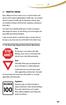 Tr a f f i c S i g n s 7 7. TRAFFIC SIGNS Many collisions and near crashes occur as a result of drivers who ignore or fail to respond appropriately to traffic signs. It is essential that the meaning of
HOW TO PREPARE FOR YOUR MARYLAND NONCOMMERCIAL CLASS C DRIVER S TEST
 ` HOW TO PREPARE FOR YOUR MARYLAND NONCOMMERCIAL CLASS C DRIVER S TEST A portion of your noncommercial driving test will be conducted on a closed course to test your basic control of the vehicle, and a
PEDESTRIAN LAWS OF NORTH CAROLINA
 PEDESTRIAN LAWS OF NORTH CAROLINA Under North Carolina law, pedestrians have the right of way at all intersections and driveways. However, pedestrians must act responsibly, using pedestrian signals where
Florida Road Test. 7. Which of the following statements is true?
 1. If your driver license and license plate(s) are suspended for not having insurance under the No-Fault Law, you will have to pay how much amount and show proof of current insurance to get them back.
New Driver & Coach Practice Guide
 New Driver & Coach Practice Guide Welcome to Driving in Maryland Dear Coach and Rookie Driver: For the Rookie Driver: Congratulations. In getting your Learner s Instructional Permit, you have just completed
SAFE CYCLING GUIDE. 7th Edition
 SAFE CYCLING GUIDE 7th Edition BEFORE SETTING OUT A Check tire pressure B Check that the chain does not slip C Check the brakes D Check lights and reflectors: 1 A WELL-MAINTAINED BICYCLE is key 3 4 5 Adjust
Operating Vehicle Control Devices
 Module 2 Topic 3 Operating Vehicle Control Devices 1. Identify the vehicle controls in the pictures below: 1. 2. 3. 4. 7. 7. 5. 6. 1. accelerator 2. parking brake 3. foot brake 4. gear shift lever_ 5.
A Guide To Frequently Asked Questions. Bicycles and Vehicles BICYCLE & PEDESTRIAN
 A Guide To Frequently Asked Questions Bicycles and Vehicles BICYCLE & PEDESTRIAN MOVE OVER 3 FEET FOR CYCLISTS Share the Road MOVE OVER FOR CYCLISTS ON MULTI-LANE ROADS Resources For more information
Smart Cycling IN SANTA MONICA SANTA MONICA POLICE DEPARTMENT BE SMART. BE VISIBLE. BE ATTENTIVE. HAVE FUN!
 Smart Cycling IN SANTA MONICA BE SMART. BE VISIBLE. BE ATTENTIVE. HAVE FUN! Safety Tips and Rules of the Road for Cyclists SANTA MONICA POLICE DEPARTMENT Rules of the Road Drivers, bicyclists, and pedestrians
Incident Management Response Plan Hampton Roads Highway Incident Management Committee
 Incident Management Response Plan Hampton Roads Highway Incident Management Committee Multi-Jurisdictional Memorandum of Understanding Highway Incident Management Plan This memorandum of understanding
Maximum speed. Stop and Give way to Manually operated temporary No entry for give way traffic on STOP and GO signs vehicular traffic major road
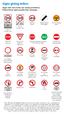 Signs giving orders Signs with red circles are mostly prohibitive. Plates below signs qualify their message. Entry to 20 mph zone End of 20 mph zone Maximum speed National speed limit applies School crossing
Florida Class E Knowledge Exam Road Rules Practice Questions www.gdlinstitute.org
 If you purchase the Value Package from GDL Institute, over 100 additional practice questions are included at no additional cost. Use discount code PQ10 and receive 10% off of the package price! 1. If you
Nevada Non-Commercial Class A and B, J Endorsement Study Guide
 Nevada Non-Commercial Class A and B, J Endorsement Study Guide December 2012 Table of Contents Foreword... 4 General Information... 4 Non-Commercial Vehicle Classifications... 4 What You Need To Know...
Bicycle Book. This book belongs to. Name. Address. Telephone number. Make of bicycle. Color of bicycle. Serial number.
 Bicycle Book Bicycle Book This book belongs to Name Address Telephone number Make of bicycle Color of bicycle Serial number License number Other identifying marks Message to Parents Most children love
CHAPTER 2: SIGNALS, SIGNS AND PAVEMENT MARKINGS
 Chapter 2 - Signals, Signs and Pavement Markings CHAPTER 2: SIGNALS, SIGNS AND PAVEMENT MARKINGS This chapter provides the information you need to know about Pennsylvania roadways. It covers: Signals Signs
New Jersey Bicycle Laws
 39:1-1 Words and phrases defined Right-of-way means the privilege of the immediate use of the highway. Traffic means pedestrians, ridden or herded animals, vehicles, streetcars, and other conveyances either
A Bicyclist s Guide to Traffic Law in Tucson and Pima County. Traffic Laws, Fines and Phone Numbers
 A Bicyclist s Guide to Traffic Law in Tucson and Pima County Traffic Laws, Fines and Phone Numbers This booklet contains a listing of relevant Arizona State, Pima County and City of Tucson laws as of January,
DRIVER KNOWLEDGE TEST QUESTIONS RIGID LICENCE (CLASS LR, MR, HR)
 DRIVER KNOWLEDGE TEST QUESTIONS RIGID LICENCE (CLASS LR, MR, HR) ICAC1 - ICAC What will happen if you are caught cheating on the knowledge test? - You will not be allowed to take another test for 6 weeks.
USING THE MOBILE PHONE WHILE DRIVING. Using a mobile phone while driving can significantly impair a driver s:
 USING THE MOBILE PHONE WHILE DRIVING Is it dangerous to use the phone while driving? Driving is a complex task, requiring drivers to use and coordinate a number of skills. Any lapse in concentration increases
general, accidents caused by misjudging
 Unit 3: The Effect of Natural Forces on your Vehicle Page 1 of 11 Purpose: Acquaint the student with some of the natural forces acting on a vehicle while stopping, maneuvering, and during a crash. Explain
TASMANIAN ROAD RULES
 TASMANIAN ROAD RULES Version 9 November 2012 This book has road rules and information for car drivers and motorcycle riders If you re going to drive a heavy vehicle, you can get the Tasmanian Heavy Vehicle
20 Tips for Safe Driving
 20 Tips for Safe Driving www.libertymutualinsurance.com Liberty Mutual 20 Tips What s Your Driving Skill Level? As you can see, this national survey 1 found that drivers rated themselves highly. The tendency
Defensive Driving While Towing a Trailer By Elizabeth Koncki, Maryland Department of Agriculture
 Defensive Driving While Towing a Trailer By Elizabeth Koncki, Maryland Department of Agriculture Many of you have heard the term defensive driving, but maybe you may have not been taught the method or
8. WHAT EVERY MOTORCYCLIST MUST KNOW
 8. WHAT EVERY MOTORCYCLIST MUST KNOW It is an offence to carry passengers on the handle bars, frame or tank of the motorcycle. It is also an offence to cling to or attach yourself or your vehicle to any
FY16 Defensive Driving Test ANSWER SHEET. Instructor: Bob Bugger
 1. What is the most important safety item on the bus? a. First aid kit b. Bio hazard kit c. Safety reflector kit d. Driver* *The driver has to operate all the other equipment. The driver must be in top
Schedule 5.04 Fines in Traffic Cases
 Fines in Traffic Cases VIOLATIONS OF CITY OF COLUMBUS ORDINANCES 2109.02 Disregard school boy patrol 55.00 2109.03 Resisting an enforcing officer 70.00 2109.06 Prohibited pedestrian on freeway 35.00 2109.06
Note: You may add more or different answers apart from the above given sample answers.
 Answersto the Activity 1. Early road test booking Insurance discount More time to practice Helps to develop the new drivers driving skills in low risk settings Learn about the restrictions and BAC levels
Adverse Driving Conditions. Adverse Driving Conditions
 Adverse 5 Adverse 133 5 Adverse This chapter contains information regarding driving in poor conditions. It provides you with information on the following: nighttime driving driving in the rain, snow, or
Appendix A In-Car Lessons
 Driver Education Classroom and In-Car Curriculum Appendix A In-Car Lessons Table of Contents In-Car Lessons Introduction..... A-4 Overview and Objectives Teacher Information and Resources Lesson #1 Developing
This manual is also available on the DMV website, www.dmvnow.com.
 The Virginia Driver s Manual will help you learn and understand safe driving practices. Study this manual to prepare for the knowledge test, obtain a Virginia driver s license and become a safe driver.