
Restricted Licence Test guide (class 1)
|
|
|
- Caroline McBride
- 9 years ago
- Views:
Transcription
1
2 Restricted Licence Test guide (class 1) Roads Corporation (VicRoads) 2008 September 2012 ISBN (online) ISBN (print)
3 Copyright information This publication is copyright Roads Corporation (VicRoads). The images belong to the NZ Transport Agency. Images may be reproduced for personal or in-house use without formal permission or charge, provided suitable acknowledgement is made to this publication and the NZ Transport Agency as the source. Requests and enquiries about the reproduction of material in this publication for any other purpose should be made to: Manager, Information NZ Transport Agency Private Bag 6995 Wellington 6141 The permission to reproduce material in this publication does not extend to any material for which the copyright is identified as being held by a third party. Authorisation to reproduce material belonging to a third party must be obtained from the copyright holder(s) concerned. Disclaimer The NZ Transport Agency has endeavoured to ensure material in this document is technically accurate and reflects legal requirements. However, the document does not override governing legislation. The NZ Transport Agency does not accept liability for any consequences arising from the use of this document. If the user of this document is unsure whether the material is correct, they should refer directly to the relevant legislation and contact the NZ Transport Agency. More information NZ Transport Agency Version 2 (June 2014) Originally published February 2012 ISBN (online) ISBN (print) If you have further queries, call our contact centre on or write to us: NZ Transport Agency Private Bag 6995 Wellington 6141 This document is available on the NZ Transport Agency s website at
4 Page ii Contents 1 Introduction to the Restricted Licence Test 1 2 Overview of the structure of the Restricted Licence Test 3 3 Pre-drive checks 5 4 Assessable tasks 7 5 Task assessment items 14 6 Critical errors 26 7 Immediate failure errors 33 8 Glossary 43
5 Page 1 1 Introduction to the Restricted Licence Test Introduction This booklet provides detailed information about the new Restricted Licence Test (RLT or the test) that came into effect on 27 February It will help professional driving instructors and coaches work with learner drivers as they approach the new RLT, but it should not take the place of a well-structured and comprehensive lesson plan, together with high levels of supervised driving experience in a broad range of driving situations. In preparing for the test, the Transport Agency recommends that all novice drivers and their coaches become familiar with this test guide, the Road Code and the Practice programme ( These resources contain all the necessary information to enable novice drivers to practice the necessary skills to become safe drivers and subsequently be ready to sit the test. Being a safe driver is the first goal and test readiness is the second. The graduated driver licensing system The graduated driver licensing system in New Zealand consists of three stages: learner licence (supervised driving only) restricted licence (unsupervised or solo driving with restrictions) full licence (no restrictions). At each stage, drivers must pass a test (theory test for learners, practical tests for restricted and full) before they earn a new licence with fewer restrictions and more responsibilities. The new Restricted Licence Test In 2010 the New Zealand Government announced a package of reforms focused on young drivers, including making the RLT more difficult to encourage 120 hours of supervised driving practice. The new RLT is based on the Victorian Government probationary licence test and calibrated for New Zealand driving environments. The new RLT was developed to assess the higher skill levels expected of today s more experienced licence applicants. With a 45 minute drive time, it is longer than the previous test, which allows a more comprehensive assessment of the applicant s safe driving skills. An applicant is more likely to have the necessary skills to pass the test if they have had at least 120 hours of supervised driving experience. Test routes The test is undertaken on test routes that have been developed according to a set of standard requirements. This ensures that all test routes used are of a nationally consistent standard.
6 Page 2 The role of the testing officer A testing officer undertakes many tasks during the test including directing the applicant around the route, observing and marking driving behaviour and keeping an eye on safety. Because of this, it is unlikely that the testing officer will have time to engage in conversation with the applicant. Ensure the applicant is aware of this, is prepared for it and is not offended by it.
7 Page 3 2 Overview of the structure of the Restricted Licence Test Test duration The test takes a total of one hour to administer. This time allows for: meeting the applicant conducting the pre-drive vehicle safety check conducting a 45 minute practical drive adding up the test score sheet at the end of each stage providing feedback to the applicant on their performance at the end of the test. Test route stages The test comprises two stages. Stage 1 of the test takes 10 minutes and is a set of relatively simple driving tasks conducted in a less complex traffic environment designed to assess the applicant s driving ability. This stage is conducted in speed zones of up to 60km/h and determines whether the applicant is a sufficiently skilled and safe driver to proceed to the more challenging driving tasks and environments of Stage 2 of the test. An applicant who does not achieve a satisfactory score in Stage 1 is not permitted to undertake Stage 2 of the test. In this way, applicants who are not ready to tackle the more challenging tasks in Stage 2 are screened out before they can pose a danger to themselves and other road users. Stage 2 of the test takes 35 minutes and is designed to assess the applicant s ability to perform more challenging tasks in moderately challenging environments within speed zones of 60km/h and over. To pass the RLT, an applicant must demonstrate safe decision-making, observance of road rules and satisfactory car-handling skills throughout the whole test. Stages 1 and 2 of the RLT must be undertaken during a single test booking. They cannot be split into separate appointments. Driving tasks There are two types of driving tasks in the RLT: Assessable tasks include left and right turns, lane changes (or turning right across traffic where lane changes are not available), merging with other traffic, straight drives, straight or right at a roundabout and a reverse parallel park. The applicant s performance on each assessable task is assessed according to predetermined task assessment items. Linking manoeuvres join up the assessable tasks into a complete driving route that begins and ends at the car park of the testing office or other suitable location for the start. Linking manoeuvres include similar driving manoeuvres to the assessable tasks but do not have associated task assessment items assigned to them.
8 Page 4 There are seven assessable tasks in Stage 1 and 18 assessable tasks in Stage 2. The Assessable Tasks used in the RLT are described in section 4. Assessment items During the test the applicant will be assessed against three different assessment criteria: 1. Task assessment items which assess one aspect of driving performance during the execution of each assessable task. The task assessment items are described in section Critical errors which are recorded at any time they occur during the RLT, whether during an assessable task or not. The critical error types are described in section Immediate failure errors are also recorded at any time they occur and result in the immediate failure of the test. The immediate failure error types are described in section 7. Note that this guide does not cover the number of driving faults that are permitted during the test as the pre-test preparation should not be focused around how many driving faults may be made during the test, but rather whether the novice driver has the necessary skills to be a safe driver (ie, they can consistently perform the driving tasks to the required standard). If the novice driver is making any critical errors or immediate failure errors in training then they are clearly not yet ready to attempt this test.
9 Page 5 Pre-drive checks Overview Before beginning the RLT, the testing officer will: check the candidate s identity conduct a pre-drive safety check conduct an in-vehicle safety check. Documentation Prior to commencing the test the testing officer will: sight the applicant s learner licence to ensure it is current and to confirm their identity check the vehicle to be used in the test for: a current warrant of fitness or certificate of fitness label two learner licence plates (L plates) displayed correctly a current vehicle licence (registration) label a current road user charges (RUC) label if it is a diesel vehicle sufficient fuel to complete the test. If any of these requirements cannot be met, the test will be cancelled. Vehicle roadworthiness and controls The vehicle to be used for the test must comply with the legal provisions that govern its use on the road. While testing officers do not examine the vehicle in detail, they will check the items listed below to ensure that all safety items are in a roadworthy state. Applicants will be requested to assist with the pre-drive check. If the vehicle is not roadworthy, the test will not proceed. Vehicle posture (car only) The vehicle is sitting square to the road, indicating all tyres have equal or close to equal pressure. Body work The vehicle has no obvious damage that could be considered dangerous. Tyres and wheels Tyres should have the required tread depth and no uneven wear, and wheels should appear undamaged (visual inspection only). Winter and summer tyres are not mixed. The test cannot proceed if a space-saver tyre is fitted to the vehicle. Indicators and brake lights Indicators and brake lights (to meet equipment requirements) operate correctly and all lenses are intact. Head lights Lenses must be intact and high and low beams operate if the test is to take place in low light conditions.
10 Page 6 Windscreen wipers Wipers must operate satisfactorily if the test is to take place in rain or fog. Horn The horn must operate. Driver/rider safety Mirrors are checked for position and seatbelts are in safe and serviceable condition. In-vehicle safety checks The testing officer will check the applicant is able to identify where the following controls are located in the vehicle: handbrake windscreen demister rear window demister (where fitted). If the applicant is unable to identify the items above they will be pointed out to them and the applicant will still be able to undertake the test. However if it becomes necessary to use one of the controls during the test and the applicant requires assistance to operate the control, an immediate failure error would result. The pre-drive safety check and in-vehicle check do not contribute to the applicant s test score.
11 Page 7 3 Assessable tasks Stage 1 Assessable tasks Table 1 shows the typical assessable tasks for stage 1. Some tasks may be assessed more than once and may be assessed at intersection types that differ from those shown here. It is also possible that some tasks may be replaced by others if they cannot be undertaken on a particular test route. For example, all routes are designed to include a reverse parallel park, but this task may be replaced by a three-point turn if a safe location for a reverse park is not available when required in the test route. Table 1 Typical assessable tasks for stage 1 Illustration of traffic movements Task Figure 1 Right turn giving way to intersecting traffic (one lane each way), may be at a T or cross-intersection Figure 2 Left turn giving way to intersecting traffic (one lane each way), may be at a T or cross-intersection Figure 3 Lane change right
12 Page 8 Illustration of traffic movements Task Figure 4 Lane change left Figure 5 Reverse parallel park Figure 6 Three-point turn (substitute task)
13 Page 9 Stage 2 Assessable tasks The purpose of stage 2 is to assess the applicant s driving ability in busier day-to-day traffic environments. Stage 2 of the test route therefore uses roads with medium to heavy traffic flows. Typical stage 2 assessable tasks and their location requirements are shown in table 2. Some tasks may be assessed more than once and may be assessed at intersection types that differ from those shown here. It is also possible that some tasks may be replaced by others if they cannot be undertaken on a particular test route. Table 2 Typical assessable tasks for stage 2 Illustration of traffic movements Task Figure 7 Right turn giving way to intersecting traffic (one lane each way), may be at a T or cross-intersection Figure 8 Right turn giving way to intersecting traffic (two lanes each way), may be at a T or cross-intersection Figure 9 Right turn giving way to one lane of oncoming traffic, may be at a T or crossintersection
14 Page 10 Illustration of traffic movements Task Figure 10 Right turn giving way to two lanes of oncoming traffic, may be at a T or crossintersection Figure 11 Left turn giving way to intersecting traffic (one lane each way), may be at a T or cross-intersection Figure 12 Left turn giving way to intersecting traffic (two lanes each way), may be at a T or cross-intersection Figure 13 Left turn with priority, may be at a T or cross-intersection
15 Page 11 Illustration of traffic movements Task Figure 14 Lane change right Figure 15 Lane change left Figure 16 Lane change right in preparation for a turn
16 Page 12 Illustration of traffic movements Task Figure 17 Lane change left in preparation for a turn Figure 18 Merge lanes Figure 19 Straight drive (medium speed) Figure 20 Straight drive (arterial road)
17 Page 13 Illustration of traffic movements Task Figure 21 Right turn at a roundabout Figure 22 Straight through at a roundabout
18 Page 14 4 Task assessment items Each task assessment item assesses one aspect of driving performance during the execution of an assessable task at a specific location on the test route. For example, observation might be assessed when turning right from Smith Street into Jones Road. Task assessment items are not assessed while driving between assessable tasks. They contribute to the applicant s point score for stage 1 or for the entire test. There are 10 task assessment items that may be assigned to an assessable task, as follows: Observation Lateral position Signalling Parking observation Gap selection Parking movement Speed choice Leaving park Following distance Turning movement An explanation of each task assessment item is shown below. Observation Safe, effective driving is achieved when drivers observe and assess the ever-changing driving environment in front of, to both sides and to the rear of their vehicles. Throughout the test the applicant must demonstrate thorough observation skills. This includes using mirrors and performing head checks (as appropriate). Requirements Maintains a continuous lookout ahead of the vehicle, except when making brief checks of the mirrors and other directions. When driving straight, checks the mirrors often enough to maintain awareness of surrounding traffic. The required frequency varies with traffic conditions. When required to give way to other traffic (such as when facing a Give Way sign, turning across oncoming traffic, approaching a pedestrian crossing or entering a roundabout), looks in the direction(s) from which conflicting traffic (or pedestrians) might approach before proceeding. Checks the relevant mirror/s immediately before braking.
19 Page 15 Prior to turning or diverging (including when entering or crossing a special vehicle lane in preparation for a left turn): checks the relevant mirror/s immediately before signalling performs a head check immediately before moving laterally (if appropriate). When turning, looks in the planned direction of travel (ie in the direction of the turn) before making the turn. When making a three-point turn, looks in both directions along the road and does head check immediately before moving across the road (before and after reversing) and immediately before reversing away from the kerb. When reversing as part of a three-point turn, looks in the direction of travel while reversing. Prior to driving over a railway crossing, looks in both directions for approaching rail vehicles. Signalling Communication with other road users is an important aspect of safely sharing the road. A vehicle s indicators provide the main means of communicating a driver s intention to change direction. The applicant needs to demonstrate their ability to apply the appropriate signals throughout the test, irrespective of traffic conditions. Requirements Activates the turn indicator for the appropriate direction (left or right) for at least three seconds (even if no other traffic is present) before: turning pulling out from the kerb pulling into the kerb changing lanes diverging left or right by at least the width of the car (other than pulling out from the kerb) diverging by less than the width of the car in circumstances where it is necessary to warn other road users of the intended movement (eg to indicate that the applicant intends to overtake a parked car before allowing an oncoming vehicle to pass) stopping next to a parked vehicle to commence a reverse parallel park. When turning at a roundabout: activates the turn indicator in the appropriate direction (left or right) for at least three seconds prior to entering the roundabout activates the left turn indicator before leaving the roundabout.
20 Page 16 When travelling straight ahead at a roundabout: does not signal prior to entering the roundabout activates the left turn indicator before leaving the roundabout. When turning left or right, does not activate the turn indicator so early that it might mislead other road users about which street the applicant intends to turn into. Maintains the turn signal until the turn or diverge has been completed. Cancels the turn indicator if necessary when the turn or diverge has been completed. Illustrations Illustration of traffic movements Task Figure 23 Signals when changing lanes Figure 24 If turning left, signals left on approach and leaves on until roundabout has been exited Figure 25 If moving straight ahead signals left to exit (if practicable to do so) when passing the entry point immediately before the required exit
21 Page 17 Illustration of traffic movements Task Figure 26 If turning right, signals right on approach and in the roundabout, then signals left to exit (if practicable to do so) when passing the entry point immediately before the required exit Gap selection Correct gap selection should allow any manoeuvre to be completed safely without causing other road users to adjust their speed or direction. Drivers who reject safe gaps increase congestion and delays, leading to frustration for other road users. The applicant must demonstrate safe and appropriate gap selection consistently throughout the test. Requirements Selects the first available safe gap in traffic after an initial period of observing approaching traffic to identify a gap. Rejects any unsafe gaps. Speed choice The applicant must observe the speed limit at all times. The applicant also needs to adjust the vehicle s speed to suit the prevailing driving conditions (road, weather, light, driver, vehicle or traffic conditions). Requirements Does not exceed the speed limit by 5km/h or more at any time. When driving straight, drives at or close to the speed limit when conditions are suitable, but at a lower speed if road, weather or traffic conditions (eg driving on a wet or unsealed road, or in congested or slow traffic) make it unsafe to travel at the speed limit. When merging, adjusts speed if necessary to choose a safe gap in the traffic.
22 Page 18 Following distance The applicant needs to maintain a safe following distance between the car being driven and the vehicle in front by applying the appropriate 2-second or 4-second rules throughout the test. Requirements When driving straight in good conditions, maintains a following distance of at least 2 seconds behind the vehicle ahead. When driving straight in poor conditions (eg on a wet or unsealed road), maintains a following distance of at least 4 seconds behind the vehicle ahead. After changing lanes, resumes the applicable following distance (2 or 4 seconds, depending on conditions) behind the vehicle in front as soon as practicable. Lateral position The applicant must position the vehicle in a safe and legal position throughout the test. Requirements On roads with more than one lane marked for the applicant s direction of travel, selects an appropriate lane for the driving task. When turning left or right from a road with marked lanes, commences the turn from a lane from which the relevant turn (left or right) is permitted. When turning into a multi-lane road, turns into the nearest lane, and does not mislead other drivers by turning towards one lane and then changing direction to finish in a different lane. When travelling on a road with a flush median, uses the flush median to: wait before turning right (see Figure 27) wait to move into a gap in the traffic flow after you have turned right (see Figure 28). When travelling straight through an intersection, does not select a lane marked for turning traffic only.
23 Page 19 Does not drive in a special vehicle only lane (eg bus or bicycle), except when: entering or leaving the road pulling over to or out from the kerb passing a right-turning vehicle in which cases the applicant is permitted to drive in a special vehicle lane for up to 50 metres. Note: This exception does not apply in the case of a cycle lane where the applicant has a separate marked lane for their intended direction of travel which is clearly differentiated from the cycle lane. Where there is more than one lane available, selects the appropriate lane to travel in (eg does not travel in the left lane if it is intermittently blocked by parked vehicles and another lane is available). When turning right: keeps left of the centre line (if any) or centre of the road (if no centre line) when entering the intersection and when leaving the intersection (see Figure 29, Figure 30 and Figure 31) if turning from a road without marked lanes, enters the intersection as near as practicable to the centre line (if any) or the centre of the road if turning right at an intersection other than a T-intersection or a roundabout, passes to the right of the centre of the intersection, unless road markings impose a different requirement. When turning left: does not cross the centre line of either the road the applicant is turning from or the road the applicant is turning into if turning left from a road without marked lanes, commences the turn from as near as practicable to the left side of the road. Positions the vehicle wholly within the lane (except when changing lanes) and does not wander from side to side within the lane. When driving along a road with only one lane or line of traffic for the applicant s direction of travel, positions the vehicle as near as practicable to the left side of the road. Note that it is not considered practicable to drive close to the left side of the road if this would require the applicant to diverge frequently around parked vehicles. Maintains a lateral clearance of at least 1.2 metres from parked vehicles, whenever possible. Maintains a lateral distance of at least 1.5 metres from cyclists, whenever possible. Maintains a safe lateral clearance from vehicles travelling in other lanes.
24 Page 20 Illustrations Illustration of traffic movements Task Figure 27 Using a flush median to wait before turning right Figure 28 Using a flush median to wait to move into a gap in the traffic flow after you have turned right Figure 29 Correct lateral position on a right turn, keeping left of centre when entering and leaving the intersection
25 Page 21 Illustration of traffic movements Task Figure 30 Correct lateral position for a right turn into a multi-lane road Figure 31 Correct lateral position for a left turn from a road with no marked lanes, entering the intersection as near as practicable to the left side of the road Figure 32 Correct lateral position when cars are parked at the left side of the road (note: P indicates a parked vehicle)
26 Page 22 Parking observation Reversing is a necessary driving skill which will be tested during the test. The preferred option is a reverse parallel park but applicants may be asked to conduct a three-point turn in areas where no suitable spaces are available to conduct a reverse parallel park. Requirements Checks the relevant mirror/s and does head check immediately before reversing. When reverse parking, maintains observation to the rear. Parking movement The applicant must be able to satisfactorily manoeuvre the vehicle when completing a reverse parallel park. Requirements Completes the reverse parallel park in no more than four vehicle movements (note: the first movement is from 2-3 in figure 33) and in no more than two minutes (unless traffic conditions make this unreasonable). Completes the reverse parallel park in no more than four vehicle movements and in no more than two minutes (unless traffic conditions make this unreasonable). Does not reverse more than 7 metres behind the rear of the vehicle in front (measured from the rear of the parked vehicle to the front of the applicant s car). Finishes with the vehicle parallel to and within 300mm of the kerb. Finishes 1 2 metres from the vehicle in front. Does not hit the kerb heavily enough to cause discomfort to vehicle occupants. Does not allow any wheel to mount the kerb while parking.
27 Page 23 Illustration Illustration of traffic movements Task Figure 33 Correct parking movement (note: the applicant is required to maintain a turn signal assessed under Signalling at positions 1 and 2) (note: P indicates a parked vehicle)
28 Page 24 Leaving park Marking of the reverse parallel park manoeuvre will include the applicant exiting the park and rejoining the traffic flow. Requirements Checks in the relevant mirror/s, if safe signals and makes a head check immediately before pulling out from the kerb. Pulls out from the kerb in either one or two movements (ie one reverse movement if required, and one forward movement). Illustration Illustration of traffic movements Task Figure 34 Leaving parking, using one reverse movement and one forward movement (note: P indicates a parked vehicle) Turning movement On those occasions where the testing officer may be unable to find a suitable location for the reverse parallel park the applicant will be requested to conduct a three-point turn. Requirements When performing a three-point turn, the applicant must not make use of driveways on either side of the road nor may they complete the manoeuvre as a U-turn. Positions the car parallel to and within 300mm of the left kerb. Moves across the road to the right kerb without hitting any kerb hard enough to cause discomfort to vehicle occupants and without allowing any wheel to mount a kerb. Does not use a driveway and does not allow the vehicle to enter private property.
29 Page 25 Reverses away from the kerb without hitting any kerb hard enough to cause discomfort to vehicle occupants and without allowing any wheel to mount a kerb. Returns to the correct side of the road when driving off as the manoeuvre is completed. Completes the manoeuvre in no more than two minutes and without moving across the road to the right more than once. Illustration Illustration of traffic movements Task Figure 35 Three-point turn movements, including pulling over to the left kerb
30 Page 26 5 Critical errors A critical error is a serious driving error that does not meet the threshold for an immediate failure error. Critical errors are recorded at any time they occur during either stage of the test, whether or not the applicant was undertaking an assessable task at the time of the error. Most illegal driving actions are classified as critical errors (except errors that endanger any road user, which are classified as immediate failure errors). Critical errors are more important than the errors assessed by task assessment items, so critical errors have a greater influence on the outcome of the test. Critical errors include: Too slow Mounting a kerb Too fast Stalling the vehicle Failing to look Incomplete stop at a Stop sign Failing to signal Other illegal action Blocking a pedestrian crossing Critical errors are described in more detail below. Too slow Drivers who travel much more slowly than necessary, or stop unnecessarily, increase traffic congestion and cause additional frustration to other drivers, potentially leading to unsafe behaviour by other drivers. Recorded if The applicant travels at 10km/h or more below the speed limit for at least two-thirds of the stage (either stage 1 or stage 2). The applicant remains stationary for no good reason for 5 seconds or more when there was ample opportunity to proceed: at traffic signals, the applicable signal has turned green, or at an intersection, all vehicles to which the applicant is required to give way have cleared the intersection, or vehicles queued in front of the applicant have moved off. Note: when turning right onto a major road (and there is a flush median available), there is an expectation that the applicant will utilise the flush median where it is appropriate and practicable to do so (refer figure 28). When turning right at traffic signals (and there are no other vehicles already waiting in the intersection to turn), the applicant does not move forward to wait in the intersection for a safe gap in the oncoming traffic.
31 Page 27 Any situation where the applicant has priority over other road users and is able to proceed but fails to do so. The applicant stops unnecessarily before driving through a pedestrian crossing or school crossing when no pedestrians are on or approaching the crossing. Exception The applicant is not penalised for travelling at 10km/h or more below the speed limit for a substantial part of the stage if road or traffic conditions (eg travelling on a wet or unsealed road, or in congested or slow traffic) make it unsafe to travel closer to the speed limit. Too fast The applicant must not exceed the speed limit at any time during the test. Recorded if The applicant exceeds the speed limit by 5km/h or more (but less than 10km/h) for less than 5 seconds. Failing to look Applicants will be required to demonstrate thorough observation techniques throughout the test. Recorded if When pulling out from the kerb, the applicant does not check the relevant mirror/s AND does not do a head check before moving off. When diverging left or right by at least the width of the car, the applicant does not check the relevant mirror/s AND does not do a head check before diverging. When changing lanes or partially changing lanes, the applicant does not check the relevant mirror/s AND does not do a head check before crossing the lane boundary. When required to give way to conflicting traffic, the applicant fails to look for conflicting traffic before proceeding. Prior to driving over a railway crossing the applicant fails to look in both directions for approaching rail vehicles. Assessed as an immediate failure error in some cases When turning or diverging (including changing lanes or pulling out from the kerb), if the applicant fails to give way and causes another road user to take evasive action, an immediate failure error (failing to give way) is recorded.
32 Page 28 Failing to signal The applicant needs to demonstrate their ability to apply the appropriate signals throughout the test, irrespective of traffic conditions. Recorded if When pulling out from a parked or stationary position the applicant fails to signal before moving off. When stopping at the kerb or the side of the road, the applicant fails to signal before diverging or stopping. When diverging left or right by at least the width of the car, the applicant fails to signal before diverging. When changing lanes or partially changing lanes, the applicant fails to signal before crossing the lane boundary. When turning at an intersection, the applicant fails to give a turn signal. When negotiating a roundabout, fails to give appropriate signal(s). Exception A critical error is not incurred if the applicant signals when required but does not do so correctly (eg the signal is not activated soon enough or is allowed to cancel too soon). However, this will be counted as a no for the relevant task assessment item. Blocking a pedestrian crossing A driver shall not stop a vehicle in a position that blocks a pedestrian crossing. However, in some cases (eg in some left-turn slip lanes) it may be necessary for the first queued vehicle to stop on the crossing if an adequate view of approaching traffic cannot be obtained by stopping before the crossing. Recorded if The applicant stops the vehicle on or partly on a pedestrian crossing or an area controlled by pedestrian traffic signals (but no pedestrians are affected). Exception The applicant is not penalised for stopping the vehicle on a pedestrian crossing if it is necessary to do so to view approaching traffic before completing a turn at an intersection (see Figure 36):
33 Page 29 If more than one vehicle is queuing to make the turn, this exception applies only to the first vehicle in the queue (see Figure 37). Before stopping on the pedestrian crossing, the applicant must take all reasonable care to ensure that no pedestrian has to take evasive action. When blocking a pedestrian crossing is an immediate failure error If the applicant stops the vehicle at a position that intrudes onto or blocks a pedestrian crossing and a pedestrian takes evasive action, the exception described above does not apply. An immediate failure error (stopping at dangerous position) is incurred. Illustrations Illustration of traffic movements Task Figure 36 Stopping before the crossing may not provide an adequate view of traffic approaching from the right Figure 37 The second queued vehicle should not encroach on the pedestrian crossing until the first vehicle has departed Mounting a Kerb Causing the vehicle to mount the kerb during the test indicates the applicant does not have sufficient skills to safely control the vehicle.
34 Page 30 Recorded if While entering or leaving a parking space or performing a three-point turn, the applicant allows one wheel of the vehicle to mount the kerb and no other road user is required to take evasive action and there is no danger to property. Exception If, while entering or leaving a parking space or performing a three-point turn, one or more tyres contacts the kerb but not heavily enough to cause discomfort to vehicle occupants and without mounting the kerb, no penalty is recorded. When mounting the kerb is an immediate failure error An immediate failure error (collision) is incurred when mounting the kerb if: more than one wheel mounts the kerb, or a road user takes evasive action, or there is danger to property. Stalling the vehicle Stalling the vehicle can lead to potentially dangerous conflicts with other traffic. Recorded if The applicant stalls the vehicle at any time during the test. When stalling is an immediate failure error If the applicant requires physical or verbal assistance to start or re-start the vehicle after a stall (or at any other time in the test), an immediate failure error (intervention) is incurred. Incomplete stop at a Stop sign Applicants are required to come to a complete stop at Stop signs. Recorded if When approaching a Stop sign, the applicant slows and pauses, but fails to bring the vehicle to a complete stop (with the wheels motionless) in a suitable position to see if the way is clear. When an incomplete stop is an immediate failure error An immediate failure error is incurred if:
35 Page 31 the applicant drives past a Stop sign without clearly demonstrating an intention to stop, regardless of whether there is any conflict with other traffic the incomplete stop occurs at a railway level crossing controlled by a Stop sign the applicant does not stop at a red or yellow traffic signal (when required to do so) when stopping at a Stop or Give Way sign, stops in a position that creates a conflict with an approaching vehicle on the intersecting road. Other illegal action Applicants are required to comply with legal requirements at all times during the test. Recorded if The applicant performs an illegal driving action not specified and recorded under any other critical error. For example: Following distance is between 1 and 2 seconds. The applicant drives over part of the central island of a roundabout designed to be driven over by heavy vehicles. The applicant fails to give way to a pedestrian waiting to cross at a pedestrian crossing (but not on the crossing). Exceptions If the applicant gives a turn/diverge signal that starts too late or finishes too early, a critical error (other illegal action) should not be recorded. This should be recorded for Signalling if the task is assessable. However, if a required turn/diverge signal is omitted altogether, a critical error (fail to signal) should be recorded. If the applicant breaches the lateral position requirements stated in section 5, a critical error (other illegal action) should only be recorded if the applicant: makes an incorrect lane change and no other road user is affected, or turns from a lane marked for straight-through traffic only, or turns into a multi-laned road and turns into the incorrect lane, and no other road user is affected; or drives straight through an intersection from a lane marked for turning traffic only, or unnecessarily drives in (or partly in) a special vehicle lane, or drives on (or partly on) the wrong side of the road does not drive wholly within their lane unless avoiding an obstruction. For all other breaches of the lateral position requirements, a critical error (other illegal action) should not be recorded.
36 Page 32 If, when directed to pull over to the kerb at the end of stage 1, the applicant stops the car very close to (but not blocking) a driveway, a critical error (other illegal action) should not be recorded. Illustration Illustration of traffic movements Task Figure 38 Illegal overtaking on the left on roads with only one marked lane for the applicant s direction of travel
37 Page 33 6 Immediate failure errors Immediate failure errors are recorded at any time they occur during either stage of the test regardless of whether or not the applicant was undertaking an assessable task at the time of the error. All driving actions resulting in immediate danger to any road user or to property are classified as immediate failure errors and would usually be when the applicant is operating the vehicle carelessly, dangerously or recklessly. Immediate failure errors are the most dangerous errors of all, and result in immediate failure of the test. Immediate failure errors include: Testing Officer intervention Excessive speed Failing to carry out an instruction Stopping at dangerous position Collision Failing to stop Failing to give way Other dangerous action Immediate failure errors are described in more detail below. Testing Officer intervention The applicant must be able to demonstrate they can independently drive safely, ie without verbal or physical assistance. Recorded if The testing officer or support person in the vehicle provides any verbal or physical assistance to the applicant while the test is in progress. The testing officer or support person in the vehicle intervenes verbally or physically while the test is in progress to prevent a collision or prevent the development of an unsafe situation. Exceptions The applicant is not penalised if the testing officer repeats or clarifies an instruction while the assessment is in progress.
38 Page 34 Illustration Illustration of traffic movements Task Figure 39 If an applicant commences a manoeuvre that will cause immediate danger, the testing officer should intervene (note: P indicates a parked vehicle) Failing to carry out instruction Failure to carry out instruction during the test indicates the applicant does not have the confidence or ability to correctly control the vehicle or make safe decisions so cannot yet be relied on to drive independently and safely. Recorded if The applicant is unable, because of lack of driving ability, to carry out the testing officer s instruction. The applicant disobeys a direction given by an enforcement officer. Collision Causing the vehicle to collide with the kerb, object or another road user during the test indicates the applicant does not have the ability to control the vehicle or negotiate the correct choice so cannot yet be relied on to drive independently and safely. Recorded if While entering or leaving a parking space or performing a three-point turn, one wheel mounts the kerb, causing another road user to take evasive action or causing danger to property. While entering or leaving a parking space or performing a three-point turn, two or more wheels mount the kerb. Any wheel mounts the kerb at any time other than while entering or leaving a parking space or performing a three-point turn.
39 Page 35 The vehicle contacts the kerb at any time (other than when parking or performing a three-point turn). The vehicle touches any stationary object (such as a sign, fence, pole, tree or rubbish bin). The vehicle touches any other vehicle or road user (pedestrian or cyclist). Exceptions The applicant is not penalised if their vehicle collides with another vehicle or road user and the collision is the fault of the other road user and the applicant did not contribute to the collision. An immediate failure error (collision) is not recorded if the applicant drives over part of the central island of a roundabout and that part of the central island is designed to be driven on by heavy vehicles. In this case, a critical error (lateral position) is recorded. Illustrations Illustration of traffic movements Task Figure 40 Immediate failure error (collision) mounting the kerb of a roundabout or striking the kerb Figure 41 Critical error (other illegal action) driving on a part of the roundabout intended for use only by heavy vehicles
40 Page 36 Illustration of traffic movements Task Figure 42 Immediate failure error (collision) mounting or driving over a part of the roundabout not intended to be driven on by any vehicles Failing to give way Failing to give way during the test indicates the applicant does not have the ability to control the vehicle or negotiate the correct choice so cannot yet be relied on to drive independently and safely. Recorded if When merging or diverging (including lane changes), the applicant fails to signal, resulting in another road user taking evasive action. When merging or diverging (including lane changes), the applicant both fails to check relevant mirror/s and fails to perform a head check, resulting in another road user taking evasive action. Another road user (to whom the applicant should have given way) is forced to take evasive action (or is otherwise unable to proceed) because of the applicant s poor gap selection when:
41 Page 37 turning merging diverging (including lane changes) proceeding straight ahead at a Stop or Give Way sign entering a roundabout proceeding across a pedestrian crossing (failing to give way to a pedestrian on the crossing). Illustration Illustration of traffic movements Task Figure 43 Making a left turn into a gap in the traffic on a two-laned road Excessive speed Driving at excessive speed during the test indicates the applicant does not have the ability to control the vehicle or make the correct speed choice so cannot yet be relied on to drive independently and safely. Recorded if The applicant exceeds the speed limit by 5km/h or for 5 seconds or more, or exceeds the speed limit by 10km/h or more for any duration.
42 Page 38 Stopping at dangerous position When stopping, applicants must ensure they do so in a position that will not create a danger to themselves or other road users. Drivers must not go into or attempt to cross an intersection, railway level crossing, pedestrian crossing or an area controlled by pedestrian traffic signals, if their intended passage or exit is blocked by stationary traffic. Drivers must also not stop in a position that will obstruct the safe passage of other road users who have the right of way. Any necessary evasive action by a road user shows that the position of the vehicle potentially created a dangerous situation. A pedestrian who diverges around a vehicle blocking a pedestrian crossing is at risk of being struck by other vehicles. Recorded if The applicant stops the vehicle at a position that intrudes onto or blocks a pedestrian crossing, causing a pedestrian to take evasive action (ie stop, slow, turn back, hurry or diverge around the vehicle). While waiting to turn right across oncoming traffic, the applicant stops the vehicle at a position that blocks a lane for oncoming traffic (other than a right-turn-only lane) (see Figure 44). While giving way at an intersection, the applicant unnecessarily stops the vehicle at a position that intrudes into the intersecting traffic stream (see Figure 45 and Figure 46). While waiting at an intersection or in a queue of traffic, the applicant stops in a crosshatched clear zone marking indicated by cross-hatched yellow lines. The applicant stops the vehicle on a railway crossing. The applicant enters an intersection when their passage or exit is blocked by stationary traffic. Exception When giving way at a Stop or Give Way sign or at a T-intersection, the presence of parked vehicles on the intersecting road may make it necessary to stop partly in the intersection to look for intersecting traffic (see Figure 47). The applicant is not penalised for stopping beyond the Stop or Give Way line, provided that:
43 Page 39 the applicant does not block a line of moving traffic travelling along the intersecting road but stops at a position protected by the line of parked vehicles the applicant does not block the path of a vehicle that is already waiting to turn right or is approaching the intersection and signalling the intention to turn right into the street the applicant is emerging from the applicant does not block the path of any cyclists travelling along the intersecting road. It may be necessary to stop the vehicle on a pedestrian crossing to view approaching traffic before completing a turn at an intersection (see Figure 48). If the applicant takes all reasonable care to ensure that no pedestrian has to take evasive action, and it is necessary to stop on the pedestrian crossing to view approaching traffic, the applicant is not penalised. If more than one vehicle is queuing to make the turn, this exception applies only to the first vehicle in the queue (see Figure 49). Illustrations Illustration of traffic movements Task Figure 44 Stopping at a dangerous position while waiting to turn right, blocking a lane of oncoming traffic Figure 45 Stopping at a dangerous position that intrudes into a line of moving traffic
44 Page 40 Illustration of traffic movements Task Figure 46 Stopping at a dangerous position that intrudes into the path of cyclists on the intersecting road Figure 47 The driver is permitted to move forward to view approaching traffic, but must not obstruct a line of moving traffic Note: P indicates a parked vehicle Figure 48 Stopping before the crossing may not provide an adequate view of traffic approaching from the right Figure 49 The second queued vehicle should not encroach on the pedestrian crossing until the first vehicle has departed
45 Page 41 Failing to stop Drivers are required to stop at Stop signs and for red or yellow traffic signals. Recorded if The applicant drives through a Stop sign or red traffic signal without stopping. The applicant fails to stop when required to do so at: a yellow traffic signal a railway level crossing. Other dangerous action Any other dangerous action (that results in immediate danger to road users or property) committed by the applicant during the test indicates they cannot yet be relied on to drive independently and safely. Recorded if The applicant performs a driving action not covered by the other immediate failure errors that: causes another road user to take evasive action, or causes immediate danger to road users or property, or will cause immediate danger to road users or property if the testing officer does not intervene, or unnecessarily increases the risk of a collision, eg maintains a following distance of less than 1 second from the driver in front. When illegal driving actions are critical errors If the applicant performs an illegal driving action (other than those specified under the other immediate failure errors) that does not result in another road user taking evasive action or causes immediate danger to road users or property, the appropriate critical error is recorded.
46 Page 42 Illustrations Illustration of traffic movements Task Figure 50 Illegal overtaking across double yellow lines while approaching a blind curve or crest Figure 51 Driving on the wrong side of the road when approaching an intersection unnecessarily increases the risk of collision with a vehicle that may be approaching from the right, so an immediate failure error (other dangerous action) is recorded
47 Page 43 7 Glossary Pedestrian crossing A part of the road painted with parallel white stripes and indicated by a pedestrian crossing sign, with or without flashing yellow lights. Diverging Any lane change, lane merge or lateral movement within the lane (whether marked or unmarked) of at least a car width. Evasive action Any change of course or speed (including swerving, stopping, slowing or accelerating) by another road user to avoid a potential collision with the applicant s vehicle. Head check The applicant looks back over their left or right shoulder through the vehicle s side windows (not the rear window) to check for other road users in blind spots that cannot be seen in the mirrors. Lane A portion of the road intended for use by a single line of traffic. The left and right boundaries of the lane may be defined by pavement markings (lane lines, centre line or edge line) or by the kerb, the edge of the sealed road surface or the centre of the road. Lateral Movement sideways or from side to side (differs from forwards and backwards). Merging 1. A single vehicle joining a traffic stream (eg when a vehicle pulls out from the kerb), or 2. Two or more traffic streams joining to become one stream (eg when two adjacent lanes join to become a single lane). Road user The driver or rider of a motor vehicle or the rider of a bicycle or a pedestrian. Traffic Includes not only motor vehicles (cars, trucks, motorcycles, etc) but also bicycles and pedestrians. Turning Changing direction to travel from one road into another road at an intersection. Does not include driving around a curve or bend when continuing on the same road or when following the centre line at an intersection.
Full Licence Test guide (class 1)
 Full Licence Test guide (class 1) Roads Corporation (VicRoads) 2008 September 2012 ISBN 978-0-478-39412-2 (online) ISBN 978-0-478-39411-5 (print) Copyright information This publication is copyright Roads
A guide to the Driving Test
 A guide to the Driving Test Introduction The driving test is an important step in gaining your driver licence. When you pass you will be issued with your provisional licence (P1) and will no longer need
How to pass your driving. assessment... A Candidate s Guide to the Practical Driving Assessment
 How to pass your driving assessment... A Candidate s Guide to the Practical Driving Assessment Prepared and published by Department of Transport, Driver and Vehicle Services. Disclaimer: The information
chapter 3 basic driving skills
 chapter 3 basic driving skills When curving to the left, keep the front wheels close to the right edge of the lane to keep your driver s side rear wheels out of the next lane of traffic. Curve ahead slow
6: LANE POSITIONS, TURNING, & PASSING
 6: LANE POSITIONS, TURNING, & PASSING BASIC LANE POSITIONS Traffic law says that slower vehicles should stay to the right. But where exactly should bicycles ride? Here are some basics. Never Ride Against
DRIVING TEST POSSIBLE QUESTIONS & ANSWERS.
 DRIVING TEST POSSIBLE QUESTIONS & ANSWERS. Question 1. What shape and colour is a warning sign? Diamond Shape - Yellow and Black Question 2. When should you not drive? While under the influence of alcohol,
Delineation. Section 4 Longitudinal markings
 Delineation Section 4 Longitudinal markings The delineation guidelines have been developed to assist in designing and maintaining a quality delineation system. The guidelines are to comprise 19 sections
The State Government recognises. areas, and regulates bicycle
 cycling & THE LAW rules introduction for roads The State Government recognises The cycling South Australian as a legitimate Road Traffic form of Act including transport the Australian and an increasingly
Stop The stop sign, a red octagon with white lettering, means come to a full stop and be sure the way is clear before proceeding.
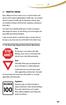 Tr a f f i c S i g n s 7 7. TRAFFIC SIGNS Many collisions and near crashes occur as a result of drivers who ignore or fail to respond appropriately to traffic signs. It is essential that the meaning of
HOW TO PREPARE FOR YOUR MARYLAND NONCOMMERCIAL CLASS C DRIVER S TEST
 ` HOW TO PREPARE FOR YOUR MARYLAND NONCOMMERCIAL CLASS C DRIVER S TEST A portion of your noncommercial driving test will be conducted on a closed course to test your basic control of the vehicle, and a
Penalty points and fixed charge offences
 Appendix : points and fixed charge offences s that carry penalty points Payment Conviction 8 next 8 Speeding E0 Failure by Driver to comply with front seat belt requirements (for self and for passengers
DRIVER KNOWLEDGE TEST QUESTIONS CLASS C (CAR) LICENCE
 DRIVER KNOWLEDGE TEST QUESTIONS CLASS C (CAR) LICENCE ICAC1 - ICAC What will happen if you are caught cheating on the knowledge test? - You will not be allowed to take another test for 6 weeks. - You will
TASMANIAN ROAD RULES
 TASMANIAN ROAD RULES Version 9 November 2012 This book has road rules and information for car drivers and motorcycle riders If you re going to drive a heavy vehicle, you can get the Tasmanian Heavy Vehicle
Signs, Pavement Markings, and Work Zones. Signs, Pavement Markings, and Work Zones
 Signs, Pavement 3 Signs, Pavement 77 3 Signs, Pavement This chapter includes information on highway signs that are intended to guide and inform you while you are driving. It includes information on the
C Grade Licence Examination Written and Oral questions Study Master List
 C Grade Licence Examination Written and Oral questions Study Master List Prior to Examination: Candidates are encouraged to either view the live copy of the current Manual or obtain all amendments to the
PREPARING FOR YOUR DRIVING TEST
 PREPARING FOR YOUR DRIVING TEST An túdarás Um Shábháilteacht Ar Bhóithre Road Safety Authority The Road Safety Authority is Working to Save Lives. If you want to pass your driving test make sure your instructor
Atlanta, Georgia Road Test
 1. When driving your car Into traffic from a parked position, you should: A. Sound your horn and pull Into the other lane. B. Signal and proceed when safe. C. Signal other traffic and pull directly into
Commentary Drive Assessment
 Commentary Drive Assessment Time start: Time finish: Candidate s Name: Candidate s Email: Date of Assessment: Location: Candidate s Supervisor: Supervisors Contact Number: Supervisors Email: Assessor s
Traffic controllers and speed zones
 Section 8 Traffic controllers and speed zones 8.1 Traffic Controllers 8.1.1 General (AS 4.10.2) (a) Equipment Traffic controllers shall wear approved high visibility clothing and shall control traffic
Australian Road Rules
 Version: 1.9.2014 South Australia Australian Road Rules under the Road Traffic Act 1961 Contents Reader's Guide Part 1 Introductory Division 1 General 1 Citation 2 Commencement 3 Object of the Australian
INSTRUCTOR S GUIDE. Stay on the Right Track Highway-Railway Crossing Awareness Training for Newly Licensed Drivers
 INSTRUCTOR S GUIDE Stay on the Right Track Highway-Railway Crossing Awareness Training for Newly Licensed Drivers WHAT WE DO Operation Lifesaver is a nationwide, non-profit public information and education
DRIVING IN NEW ZEALAND
 DRIVING IN NEW ZEALAND PAGE PAGE PAGE PAGE PAGE 2 ENGLISH 7 13 19 25 ESPAÑOL (SPANISH) PORTUGUÉS (PORTUGUESE) FRANÇAIS (FRENCH) DEUTSCH (GERMAN) PAGE PAGE PAGE PAGE PAGE 36 (TRADITIONAL CHINESE) 41 (JAPANESE)
Road Transport (General) (Short Descriptions and Penalty Notice Offences) Amendment Regulation 2000
 New South Wales Road Transport (General) (Short Descriptions and Notice under the Road Transport (General) Act 1999 His Excellency the Governor, with the advice of the Executive Council, has made the following
Appendix A In-Car Lessons
 Driver Education Classroom and In-Car Curriculum Appendix A In-Car Lessons Table of Contents In-Car Lessons Introduction..... A-4 Overview and Objectives Teacher Information and Resources Lesson #1 Developing
Bicycle Safety Enforcement Action Guidelines
 Introduction Bicycle Safety Enforcement Action Guidelines People ride bicycles for many different reasons: fitness, recreation, or for transportation. Regardless of the reason for riding, bicyclists young
Points 5008001 Jay Walking N 0
 Offence Code Offence Wording Offence Endorsable Offence Points 5008001 Jay Walking 0 5008007 Breach of Signal Given by a Constable 5008008 Failing to stop for Police 0 5008013 Excess Speed 5008019 Driving
These "rules of the road" are based on Texas Transportation Code statutes. Find the complete bicycle code at the bottom of the page
 Texas Bicycle Laws These "rules of the road" are based on Texas Transportation Code statutes. Find the complete bicycle code at the bottom of the page Bicyclists have the rights and duties of other vehicle
LAND TRANSPORT (ROAD USER) AMENDMENT RULE 2011
 Chair Cabinet Business Committee Office of the Minister of Transport LAND TRANSPORT (ROAD USER) AMENDMENT RULE 2011 Proposal 1. The purpose of this paper is to notify the Cabinet Business Committee (the
TRAINER NOTES FOR LESSON PLAN 2012 13 School Bus Instructors Inservice TITLE OF LESSON: TRAINING UPDATES FOR A CDL
 TRAINER NOTES FOR LESSON PLAN 2012 13 School Bus Instructors Inservice TITLE OF LESSON: TRAINING UPDATES FOR A CDL Length of Lesson: 30 minutes TRAINER NOTES: Hand out lesson plan at the beginning of the
PREVENTABILITY OF MOTOR VEHICLE COLLISIONS
 PREVENTABILITY OF MOTOR VEHICLE COLLISIONS Management and fleet supervisors should establish standards for defensive driving in any type of fleet safety program. The overall performance of the drivers
TEST ON Driving Safely Among Bicyclists and Pedestrians
 TEST ON Driving Safely Among Bicyclists and Pedestrians Next you will take a 16 question test about driving safely among bicyclists and pedestrians. Please take out a sheet of paper to mark down and score
Department of Transport. Cycling Rules
 Department of Transport Cycling Rules 2 Contents Definition of a bicycle Standard requirements Power-assisted pedal cycles Carrying or towing loads The rider, passenger and helmets Rules affecting cycling
Broward County Public Schools Core Curriculum Department. Driver s Education Basic Driving Skills: Study Guide
 Broward County Public Schools Core Curriculum Department Driver s Education Basic Driving Skills: Study Guide 5 th Edition 2 nd Edition K.C. Wright Administrative Building 600 Southeast Third Avenue Fort
Adaptive cruise control (ACC)
 Adaptive cruise control (ACC) PRINCIPLE OF OPERATION The Adaptive Cruise Control (ACC) system is designed to assist the driver in maintaining a gap from the vehicle ahead, or maintaining a set road speed,
DRIVER KNOWLEDGE TEST QUESTIONS RIGID LICENCE (CLASS LR, MR, HR)
 DRIVER KNOWLEDGE TEST QUESTIONS RIGID LICENCE (CLASS LR, MR, HR) ICAC1 - ICAC What will happen if you are caught cheating on the knowledge test? - You will not be allowed to take another test for 6 weeks.
Guidelines for Traffic Controllers
 Guidelines for Traffic Controllers keeping victorians connected 2 IMPORTANT Before undertaking the tasks of a Traffic Controller on a public road, a person must successfully complete an accredited Traffic
Bicycle riding is a great way to get into shape
 Bicycle riding is a great way to get into shape and have fun. To remain safe on Illinois roads, it is important to follow the same traffic safety laws that govern vehicle drivers. No amount of bicycle
Operating Vehicle Control Devices
 Module 2 Topic 3 Operating Vehicle Control Devices 1. Identify the vehicle controls in the pictures below: 1. 2. 3. 4. 7. 7. 5. 6. 1. accelerator 2. parking brake 3. foot brake 4. gear shift lever_ 5.
Regulations relating to pedestrian and vehicle traffic (traffic rules)
 Regulations no. 747 of 21 March 1986: Regulations relating to pedestrian and vehicle traffic (traffic rules) Table of contents: Regulations relating to pedestrian and vehicle traffic (traffic rules)....2
Questions and answers on the introduction of a more difficult Restricted Driver Licence test
 Questions and answers on the introduction of a more difficult Restricted Driver Licence test Rationale... 1 Features of the new Restricted Driver Licence test... 1 Test sites... 4 Practicing for the Restricted
ROAD SIGNS IN JAPAN PARKING SIGNS. No Parking or Stopping Anytime SIZE & WEIGHT LIMIT SIGNS SPEED LIMIT SIGNS
 ROAD SIGNS IN JAPAN Stop Slow & all Do Not Enter & Motorcycles Road Large Sized Trucks & Special Duty Road All Except Two Wheeled Light Except Bicycles Large Passenger No Right Turn No Passing No U-Turn
TRAINEE GUIDE FOR HEAVY RIGID (HR) AND HEAVY COMBINATION (HC) COMPETENCY BASED TRAINING AND ASSESSMENTS. Trainee s Name
 TRAINEE GUIDE FOR HEAVY RIGID (HR) AND HEAVY COMBINATION (HC) COMPETENCY BASED TRAINING AND ASSESSMENTS s Name FOR THE TRAINEE This information is to ensure that you have a clear understanding of the qualifications
SIGHT DISTANCE. Presented by Nazir Lalani P.E. Traffex Engineers Inc. [email protected] WHY IS SIGHT DISTANCE SO IMPORTANT?
 SIGHT DISTANCE Presented by Nazir Lalani P.E. Traffex Engineers Inc. [email protected] WHY IS SIGHT DISTANCE SO IMPORTANT? Drivers must be able to: Stop for objects in the roadway Stop for stationary
This section deals with mandatory and optional equipment for your vehicle as well as suggestions for safer road use.
 3. EQUIPMENT This section deals with mandatory and optional equipment for your vehicle as well as suggestions for safer road use. 3.1 Lights No person shall drive a vehicle on a highway at nighttime or
Important message for customers wishing to make a claim on their policy
 Important message for customers wishing to make a claim on their policy Before we can action your claim, can you please: Fully complete the attached claim form and statutory declaration Return all these
Beginner s Permit. Survival Guide. Compliments of. (843) 263-5023 www.123drivedrivingacademy.com [email protected]
 Beginner s Permit Survival Guide Compliments of (843) 263-5023 www.123drivedrivingacademy.com [email protected] Please use this study guide to assist you in studying for your written knowledge
CAPACITY AND LEVEL-OF-SERVICE CONCEPTS
 CHAPTER 2 CAPACITY AND LEVEL-OF-SERVICE CONCEPTS CONTENTS I. INTRODUCTION...2-1 II. CAPACITY...2-2 III. DEMAND...2-2 IV. QUALITY AND LEVELS OF SERVICE...2-2 Service Flow Rates...2-3 Performance Measures...2-3
Cycle Safety. Some tips on safer cycling. Údarás Um Shábháilteacht Ar Bhóithre Road Safety Authority
 Cycle Safety Some tips on safer cycling Údarás Um Shábháilteacht Ar Bhóithre Road Safety Authority Be safe For further information on safe cycling, please look at the Rules of the Road website at www.rulesoftheroad.ie
GUIDELINES. for oversize and overmass vehicles and loads MAY 2006. Government of South Australia. Department for Transport, Energy and Infrastructure
 ESCORTING GUIDELINES ESCORTING GUIDELINES SCORTING GUIDELINES ESCORTING GUIDELINES ESCORTING ESCORTING GUIDELINES for oversize and overmass vehicles and loads Government of South Australia Department for
Code of Conduct for Commercial Drivers
 Code of Conduct for Commercial Drivers RoadDriver 2011 Safe Use of Vehicles Watch your Speed Drive within the speed limit at all times. You should drive at speeds that are safe for the conditions, recognising
USING THE MOBILE PHONE WHILE DRIVING. Using a mobile phone while driving can significantly impair a driver s:
 USING THE MOBILE PHONE WHILE DRIVING Is it dangerous to use the phone while driving? Driving is a complex task, requiring drivers to use and coordinate a number of skills. Any lapse in concentration increases
The Delivery Hub health, safety and environment Raising the bar 2 Traffic management entry and exit
 Safe roads, reliable journeys, informed travellers The Delivery Hub health, safety and environment Raising the bar 2 Traffic management entry and exit Version I - July 2012 An executive agency for the
USE OF HIGHWAY AND RULES OF THE ROAD REGULATION
 Province of Alberta TRAFFIC SAFETY ACT USE OF HIGHWAY AND RULES OF THE ROAD REGULATION Alberta Regulation 304/2002 With amendments up to and including Alberta Regulation 105/2014 Office Consolidation Published
FACT SHEET 5 Road Safety. Takapuna Grammar School International Department
 If you own a car, you should obtain at least third party insurance. A reminder that the roads outside of the main highways can be narrow and windy. You must drive really carefully. Takapuna Grammar School
A Guide to Safe Bicycling in Hawai i
 A Guide to Safe Bicycling in Hawai i Sharing the Road: A Guide to Safe Bicycling in Hawai i What Motorists & Bicyclists Should Know Everyone has the right to be safe on Hawai i s roads. Law of the Splintered
Important message for customers wishing to make a claim on their policy
 Important message for customers wishing to make a claim on their policy Before we can action your claim, can you please : Fully complete the attached claim form If your vehicle is driveable, call us to
CHAPTER 2 TRAFFIC SIGNS AND HIGHWAY MARKINGS
 CHAPTER 2 TRAFFIC SIGNS AND HIGHWAY MARKINGS This chapter summarizes traffic signs, signals and road markings that control the flow of traffic, making streets and highways safer for motorists, bicyclists
Applicants may watch other applicants taking the test, however please respect their right to privacy and a fair attempt.
 Motorcycle Operator Skill Test (MOST) The Motorcycle Operator Skill Test (MOST) consists of eight test segments, which measure your ability to handle a motorcycle, including starting, accelerating, turning
TRAINEE GUIDE FOR THE MULTI-COMBINATION COURSE COMPETENCY BASED TRAINING AND ASSESSMENTS
 TRAINEE GUIDE FOR THE MULTI-COMBINATION COURSE COMPETENCY BASED TRAINING AND ASSESSMENTS Trainee s Name FOR THE TRAINEE PLEASE READ This information is to ensure that you have a clear understanding of
To Foreign Nationals Who Drive Vehicles in Japan (English Language Version) Chapter 1 Basic Information
 7,1, 2011 License Division Translated by National Police Agency To Foreign Nationals Who Drive Vehicles in Japan (English Language Version) Introduction This booklet is designed to help you understand
Bicycle Safety Quiz Answers Parental Responsibilities
 Bicycle riding is a great way to get into shape and enjoy the outdoors. To remain safe on Illinois roads, it is important to follow the same traffic safety laws that govern vehicle drivers. No amount of
Safety-conscious Drivers Prevent Crashes. Defensive Driving: Managing Visibility, Time and Space. Improve Your Defensive Driving Skills
 Defensive Driving: Managing Visibility, Time and Space Motor vehicle travel is the primary means of travel in the United States. With all the benefits that come along with mobility, there are thousands
Serious injury to Akshay Fenn and another during Police pursuit
 Serious injury to Akshay Fenn and another during Police pursuit I N T R O D U C T I O N 1. At 5.18pm on Saturday 28 July 2012, a motorcycle ridden by Akshay Fenn collided with another vehicle during a
Siting Of Inductive Loops For Vehicle Detecting Equipments At Permanent Road Traffic Signal Installations
 Traffic Systems and Signing MCE 0108 Issue C March 2002 Siting Of Inductive Loops For Vehicle Detecting Equipments At Permanent Road Traffic Signal Installations Crown Copyright 2002 Applications to reproduce
FREQUENTLY USED CODES
 FREQUENTLY USED CODES RT88191 Use motor vehicle - No Insurance 300 6 RT88334 Drive Otherwise than in accordance with a licence 100 3 RC86321 Use mobile phone while driving motor vehicle 100 3 RR84061 Excess
PEDESTRIAN LAWS OF NORTH CAROLINA
 PEDESTRIAN LAWS OF NORTH CAROLINA Under North Carolina law, pedestrians have the right of way at all intersections and driveways. However, pedestrians must act responsibly, using pedestrian signals where
High Speed Driver Competency and Training
 High Speed Driver Competency and Training CODE OF PRACTISE DRIVER DEVELOPMENT What competency should a High Speed Driver have and if training is necessary, what training? Joint Emergency Service High Speed
Florida Class E Knowledge Exam Road Rules Practice Questions www.gdlinstitute.org
 If you purchase the Value Package from GDL Institute, over 100 additional practice questions are included at no additional cost. Use discount code PQ10 and receive 10% off of the package price! 1. If you
Report of a Complaint Handling Review in relation to Central Scotland Police
 Case reference: PCCS/00410/12/CSP June 2013 Report of a Complaint Handling Review in relation to Central Scotland Police under section 35(1) of the Police Public Order and Criminal Justice (Scotland) Act
Smart Cycling IN SANTA MONICA SANTA MONICA POLICE DEPARTMENT BE SMART. BE VISIBLE. BE ATTENTIVE. HAVE FUN!
 Smart Cycling IN SANTA MONICA BE SMART. BE VISIBLE. BE ATTENTIVE. HAVE FUN! Safety Tips and Rules of the Road for Cyclists SANTA MONICA POLICE DEPARTMENT Rules of the Road Drivers, bicyclists, and pedestrians
DEFENSIVE DRIVING. It s an Attitude
 DEFENSIVE DRIVING It s an Attitude RLI Design Professionals Design Professionals Learning Event DPLE 155 July 15, 2015 RLI Design Professionals RLI Design Professionals is a Registered Provider with The
Merton Parking Service CCTV Enforcement Manual
 Merton Parking Service CCTV Enforcement Manual Version 1.3 April 2013 Introduction Legislation Data protection Health & Safety CCCTV camera equipment Mobile CCTV vehicles CCTV control room CCTV evidence
VEHICLE CROSSOVER INFORMATION PACK
 VEHICLE CROSSOVER INFORMATION PACK CONTENTS Introduction Section A Section B Section C Section D Section E Criteria for approving a vehicle crossover application (Diagrams to demonstrate measurement criteria)
New Driver & Coach Practice Guide
 New Driver & Coach Practice Guide Welcome to Driving in Maryland Dear Coach and Rookie Driver: For the Rookie Driver: Congratulations. In getting your Learner s Instructional Permit, you have just completed
cornering C O R N E R I N G Have you ever over-cooked a corner? Did your confidence take a knock as a result? Did you work out why it happened?
 This THINK is a pdf Norfolk is FREE Partnership to download - 011 for personal use - all content remains the property of the THINK Norfolk Partnership - 011 Page 1 Have you ever over-cooked a corner? Did
MCH 1352 Issue D February 2002
 Traffic Systems and Signing MCH 1352 Issue D February 2002 Crown Copyright 2002 Applications to reproduce this material should be made to The Controller of Her Majesty's Stationery Office First published
The partnership has selected three intersections where enforcement, education, and engineering initiatives are being implemented to improve safety:
 Hamilton-Finn Suite 310 Tel. (403) 207-6000 Road Safety 3016 5th Avenue N.E. Fax. (403) 273-3440 Consultants Ltd. Calgary, Alberta dawatt.dawatt.com www.hamiltonfinn.ca January 19, 2005 Mr. Don Szarko,
Ipswich City Council Subordinate Local Law 5.1 (Parking) 2013
 Ipswich City Council Subordinate Local Law 5.1 (Parking) 2013 1 Contents PART 1 PRELIMINARY... 2 1 Short title... 2 2 Authorising local law... 2 3 Object... 2 4 Definitions the dictionary... 2 PART 2 PERMITS...
California Crossing Guard Training: Online Course Part 2
 California Crossing Guard Training: Online Course Part 2 Prepared by the Safe Routes to School Technical Assistance Resource Center The Safe Routes to School Technical Assistance Resource Center is a program
What Every Driver Must Know Review Assignment
 What Every Driver Must Know Review Assignment 1. Who is the Michigan Secretary of State? What services does the Secretary of State office offer? What days and hours is your local Secretary of State branch
GENIUS DMV. cheat sheets QUESTION 1 QUESTION 2 QUESTION 3 QUESTION 4. 2 Driving-Tests.org. All Rights Reserved.
 DMV GENIUS cheat sheets QUESTION 1 QUESTION 2 QUESTION 3 QUESTION 4 are a pair of white or longitudinal lines that mark where pedestrians are permitted to walk. Crosswalk lines Crosswalk lines are a pair
Level 2 Award in Safe Driving at Work
 Level 2 Award in Safe Driving at Work Student notes (sample) www.britsafe.org Membership Training Qualifications Audit and Consultancy Audit and Policy Consultancy and Opinion Policy Awards and Opinion
A guide to the. Driving Test
 guide to the Driving Test Introduction The driving test is an important step in gaining your driver licence. When you pass you will be issued with your provisional licence (P1) and will no longer need
Driving and your Teen an 8 Step Guide for Parents
 Driving and your Teen an 8 Step Guide for Parents #DriveSafer Learning to drive is a rite of passage; a sacred experience between parent and teen. Helping your son or daughter on their journey doesn t
Tennessee Traffic Laws Relating to Bicycles A HANDBOOK FOR MOTORISTS & BICYCLISTS
 Tennessee Traffic Laws Relating to Bicycles A HANDBOOK FOR MOTORISTS & BICYCLISTS About the Knoxville Regional Bicycle Program The Knoxville Regional Transportation Planning Organization (TPO) coordinates
Model Fleet Safety Program Short
 TM Model Fleet Safety Program Short CORPORATE HEADQUARTERS 518 EAST BROAD STREET COLUMBUS, OHIO 43215 614.464.5000 STATEAUTO.COM TM Disclaimer: The information contained in this publication was obtained
1. Rules for users of powered wheelchairs and powered mobility scooters
 Jersey Highway Code Introduction The Minister for Transport and Technical Services has issued directions for the guidance of road users, the Highway Code. The Highway Code for Jersey is the Official Highway
Sharing the road safely
 6 sharing the road in this chapter Sharing the road safely Pedestrians Cyclists Motorcycle riders Passenger vehicles Large vehicles School buses Public transit buses Emergency vehicles Emergency workers
Document Name: Driving Skills. Purpose: To outline necessary driving skills required to maximize driving safety.
 Document Name: Driving Skills Date Created: 8 October 2013 Date Reviewed: 4 February 2014 Date Approved: 29 July 2015 Purpose: To outline necessary driving skills required to maximize driving safety. Overview:
The. for The Bahamas. This Publication serves as the Highway Code Booklet of the Bahamas.
 The for The Bahamas This Publication serves as the Highway Code Booklet of the Bahamas. POLICE AMBULANCE 322-2221 HOSPITAL 322-2861 CONTENTS Controllers Message 01 Introduction 02 General Advice for all
Massachusetts Private Passenger Automobile Statistical Plan Appendix C Traffic Law Violations
 The following abbreviations are used in Appendix C: M.G.L. c., Chapter and Section of the Massachusetts General Laws CMR Code of Massachusetts Regulations The following out-of-state incidents are to be
211 CMR: DIVISION OF INSURANCE 21 APPENDIX A: TRAFFIC LAW VIOLATIONS. The following abbreviations are used in Appendix A:
 211 CMR: DIVISION OF INSURANCE 21 APPENDIX A: TRAFFIC LAW VIOLATIONS The following abbreviations are used in Appendix A: "M.G.L. c., ", " CMR ", Chapter and Section of the Massachusetts General Laws Code
Get your lights right. What you need to know about fitting and using additional vehicle lighting
 Get your lights right What you need to know about fitting and using additional vehicle lighting NZ Transport Agency Get your lights right 2012 NZ Transport Agency 1 GET YOUR LIGHTS RIGHT CONTENTS WHAT
Chapter 4 DEFENSIVE DRIVING
 Chapter 4 DEFENSIVE DRIVING Chapter 4 Table of Contents Chapter 4 DEFENSIVE DRIVING... 4-1 DEFENSIVE DRIVING... 4-3 Positioning The Bus... 4-3 When Making a Turn at an Intersection... 4-3 Making the perfect
Road Signs Recognition Quiz
 Road Signs Recognition Quiz Place your answer for each of the signs/pavement markings on the answer sheet. Ready to Roll? Here Comes Sign # 1... #1 A No right turn B Right turn only C Warning, no turn
GENERAL GUIDE FOR WORKPLACE TRAFFIC MANAGEMENT
 1 This General Guide provides information on how to manage traffic risks at a workplace. It is supported by specific guidance material on traffic management for shopping centres, construction workplaces,
Maximum speed. Stop and Give way to Manually operated temporary No entry for give way traffic on STOP and GO signs vehicular traffic major road
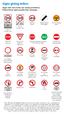 Signs giving orders Signs with red circles are mostly prohibitive. Plates below signs qualify their message. Entry to 20 mph zone End of 20 mph zone Maximum speed National speed limit applies School crossing
Texas Virtual Driver Education Course Syllabus
 Texas Virtual Driver Education Course Syllabus By Amarillo Independent School District INTRODUCTION: 46:04 Welcome/Tutorial 5 minutes Virtual Drive Notice 1 minute Audio/Computer Requirements 3 minutes
Teaching Your Teen to Drive
 MetLife Auto & Home Teaching Your Teen to Drive Without driving each other crazy! Dear Parent/Guardian, One of the best ways for you to influence your teen s driving habits is to sit in the copilot seat
Standard PCN Codes v6.6.1 On-Street
 Code General suffix(es) Standard PCN Codes v6.6.1 On-Street Description 01 ajoyz Parked in a restricted street during prescribed hours Higher Suffixes y & z for disabled badge holders only 02 ajo Parked