
Childhood Tuberculosis
|
|
|
- Jane Walker
- 10 years ago
- Views:
Transcription
1 Childhood Tuberculosis Beate Kampmann FRCPCH MD PhD Professor in Paediatric Infection & Immunity Imperial College London, UK Theme Leader Vaccinology MRC Unit-The Gambia Chair ptbnet Dips September 26 th 2014 Outline of my talk the scale of the problem internationally what differs in TB between children and adults how do these differences impact on presentation, diagnosis and management particular challenges with TB in children - Extrapulmonary TB- example of TB meningitis - prevention through TB Vaccines (update and outlook) - MDR TB in children- gaps and an illustrative case Summary and research priorities 1
2 Is Tuberculosis a problem? 3 Mio estimated deaths per year, ca. 0.5 Mio cases in children What are we missing and why do we need TB research Understanding protective immunity diagnostics prevention therapy Europe: where do the childhood cases come from? More than cases were notified in Childhood TB cases accounted for 4.2% of all notified TB cases in the EU/EEA in Country-specific childhood TB notification rates 2009 > 10 per child population 4.1 to 10.0 per child population 2.1 to 4.0 per child population < 2 per child population Not included or not reporting Sandgren, ECDC, Euro Surveill Mar 24 2
3 Childhood TB is a marker of transmission in the community In certain EU settings, childhood TB is on the rise. As children have a higher rate of primary progression to TB upon infection, TB in this vulnerable group is a sign of recent transmission. Trends in notification of childhood TB indicate that transmission to children is still occurring within the borders of the EU, particularly in lowincidence countries. TB is a family disease Figure 2a: High- and lowincidence countries for TB (in total population, including adults) < 20 cases per 100,000 population 20 cases per 100,000 population Not included or not reporting Sandgren, ECDC, Euro Surveill Mar 24 What can we do about it? Make an accurate diagnosis of active TB in adults and children and treat them promptly and with the appropriate drugs Contact-tracing in households and communities Screening of TB exposed individuals and treatment of LTBI in children? With what tests?? What is the role of the immune system? 3
4 Central Nervous system (CNS) tuberculosis constitutes around 13% of all cases of EPTB in children and complicates the clinical course of TB in 0.5 2% of cases Serious neurological sequelae develop in almost 50% of cases and overall mortality is about 13%. Mechanism of disease: - Seeding of TB bacilli in the CNS - formation of small subpial and subependymal foci in the brain and spinal cord (Rich foci) - Rupture of Rich foci and release of bacteria into the subarachnoid space (meningitis) - In some individuals, Rich foci enlarge to form tuberculoma DD: bacterial meningitis, fungal (crypto in HIV), poss viral, other CNS disease Key Ix: LP (CSF: high protein, low Glucose, lymphocytes), imaging (MRI better than CT) What determines dissemination? The exact mechanisms that determine the clinical outcomes following infection in children are not completely understood, but include genetic susceptibility younger Age- Immuno-regulation in healthy children depends on age? underlying cell-mediated immunity, i.e. HIV, other causes of immunosuppression -the lower the CD4 count the higher the risk for TB and also disseminated forms nutritional status: studies indicate that malnutrition decreases T-cell function, cytokine production, and the ability of lymphocytes to respond appropriately to cytokines Possibly microbial virulence- not all MTb strains are the same. vaccination status- BCG vaccine adds to protection- for how long?? However, the same factors also predispose to pulmonary TB 4
5 Key immune mechanisms involved in control of Mycobacterium tuberculosis (M.tb) Hugh Gifford Jones et al; Review of Immunopathogenesis of childhood TB, PRR 2010 Innate responses: Differences in children Antimicrobial peptides, proteins, TLR s Few data in children, possibly reduced TLR-responsiveness in the very young Caron et al, Neonatology 2010 Levy et al, Nat Immunol 2011 Collectins, Complement and complement receptor levels differ according to age Cosar et al, Eur. J. Clin. Microbiol. Infect Neutrophils Martineau et al J Clin Invest J Immunol No data in TB/children yet 5
6 Antigen-presentation: differences in children Macrophages: deficient phagocytic function Smith et al, J. Pediatr Dendritic cells: fewer circulating DC s, reduced functional capacity Upham et al, Infect. Immun Adaptive responses CD4 T cells: reduced AG-specific production of Cytokines Swaminathan S et al, Clin. Infect. Dis Upham et al, Infect. Immun CD8 T cells: few studies in children, but fewer CD8 responses to HIV peptides compared to adults Luzuriaga et al, J. Immunol Important in the context of HIV infection & vaccine responses as well as TB- diagnostics Tena et al, JID 2003 Kampmann et al, I&I 2004 Kampmann et al, AIDS 2006, Kampmann et al ERJ 2009 Tena-Coki NG et al, AJRCCM
7 The diagnosis Acknowledgement of active TB in & children: Thanks a jigsaw Signs and symptoms Radiology Travel Active TB Microbiology Contact history TST IGRA Diagnostic tests Microbiological Organism smear culture molecular 7
8 PAEDIATRIC TB: Implications of bacterial load Paediatric TB: 10 6 bacteria Adult TB: >10 9 bacteria paucibacillary, rarely culture confirmed : Sputum smear positive in 10.3% (10-14yr), 1.8% (5-9) and 1.6% (<5) Cultures positive 21% (10-14), 5% (5-9) and 4.2% (<5) - children less infectious Results in 452 children (median age 19 4 months, IQR ) 108 children (24%) had HIV infection. 27 children (6%) had a positive smear result, 70 (16%) had a positive culture and 58 (13%) had a positive MTB/RIF test result. MTB/RIF tests when done on two induced sputum samples detected twice as many cases (75 9%, 95% CI ) as did smear microscopy (37 9%, ) The specificity of MTB/RIF was 98 8% ( ). MTB/ RIF results were available in median 1 day (IQR 0 4) compared with median 12 days (9 17) for culture (p<0 0001). But: only 16% had a positive culture!!! 8
9 Diagnostic tests Immunological Host response skin test antigen-specific production of IFN g Tuberculin Acknowledgement skin test & Thanks (TST) technically difficult in children UK: 2 units of SSI tuberculin (PPD) > 200 antigens, incl. BCG Ag Read-out: degree of hypersensitivity Problem: lacks specificity and sensitivity 9
10 ? Impact Acknowledgement on TB diagnostics & Thanks such as IGRA s? Antigens used: ESAT-6 CFP10 +/- TB7.7 mitogen negative control In principal: can both distinguish between BCG vaccination and M.tuberculosis infection but: Paucity of data in children Confusion about use of IGRA Gene Acknowledgement deletions and the & origin Thanksof BCG M. tuberculosis major antigens ESAT6 and CFP10 10 deletions 64 genes M. bovis 4/5 deletions 30/40 genes RD1 region BCG substrains T cell tests (interferon-γ) that distinguish M. tuberculosis infection from BCG vaccination 10
11 Principal of Quantiferon-Gold in tube assay AG presentation (ESAT-6, CFP-10, TB7.7) Ag-specific cytokine secretion Cytokine quantification by ELISA Principal of ELISPOT assay Coating antibody PBMC+antigen Biotinylated 2 nd antibody IFN- production Avidin-peroxidase each spot is an antigen-specific T cell that has released IFN 11
12 Immuno-diagnostics- Acknowledgement what can & they Thanks do and for whom Spot the Difference Interferon- release assays (IGRA) in paediatric active and latent tuberculosis in London -a side-by-side comparison with TST Kampmann B, Whittaker E, Williams A, Walters S, Gordon A, Martinez-Alier N, Williams B, Crook AM, Hutton AM, Anderson ST. Interferon- gamma release assays do not identify more children with active TB than TST. Eur Respir J Feb 5 IGRA and diagnosis of active TB: Results (%) of all three test in the different sub-groups of Active TB TST QFG-IT Tspot.TB > <6 + - Ind + - TF All active TB (N=91) Definite (N=25) Probable (N=38) Definite & Probable (N=63) Possible (N=28) IGRA missed between 20-40% of definite active TB 12

13 Combining IGRA Acknowledgement and TST in the & diagnosis Thanks of active TB A combination of TST and IGRA increases sensitivity to above 93% IGRA Acknowledgement and the diagnosis & Thanks of active TB A negative IGRA does not exclude active TB IGRA is not a rule-out test, but can add value to additional investigations 13
14 LTBI: BCG, TST and IGRA LTBI n=118 BCG vaccinated n=87 BCG non-vaccinated n=17 TST> 15 n=38 TST > 6 n=8 QFG+ve n=23 (60%) T Spot+ve n=21 (55%) QFG+ve n=5 (62%) T Spot+ve n=(75%) More +ve TST than IGRA Good agreement between 2 IGRAS (92%, k=0.82) IGRA and the diagnosis of latent TB No gold standard for LTBI Acknowledged discrepancy of TST and IGRA results - due to poor specificity of TST (Kampmann ERJ 2009, Connell PlosOne 2008, Bianchi PIDJ 2009) Which IGRA is better? - Good agreement between 2 IGRAS (92%, k=0.82) (similar to Connell et al, PLoS One Jul: agreement between QFT-IT and T-SPOT.TB 93%, k=0.83). Performance in very young children- conflicting messages Indeterminate results in 3.6% in <5years, 1% in >5 years (data from our study of > 1000 children in Europe) published in AJRCCM June 2012 Increased sensitivity in immuno-compromised hosts compared with TST 14

15 Remaining questions and further research Should we abandon the TST in screening for LTBI? How do we interpret indeterminate results Negative predictive value, i.e. How many children will develop active TB if TST > 15 mm, but untreated with chemoprophylaxis as IGRA negative, according to current guidelines Is the step-wise approach of TST first, IGRA second justified? How many children with negative TST would have a positive IGRA at screening Does the TST boost the IGRA responses Current evidence suggests that boosting occurs, but not within first 72 hours (Short-term) reproducibility of the commercial IGRA Can IGRA be used to monitor therapy or to predict development of active TB? Conclusions IGRA should not currently replace the IGRA detect immune memory TST but in children do not confirm the presence or absence of M. tuberculosis- active or latent higher specificity than we the should TSTnot forget the many additional challenging question in designed to test for evidence childhood of TB infection, TB not TB disease can be used as a rule-in better test microbiological for active TB diagnostics in children, but not as a rule-out test better biomarkers than IFN better vaccines higher sensitivity in immunocompromised patients compared to TST improved understanding of primary TB 15
16 Achievements: Therapy Pharmacokinetic studies in children resulted in a change in dosing recommendations Discussions re Fixed Drug Combinations (FDC s) are advancing Growing appreciation of different metabolism of drugs in children New anti-tb drugs entering late-phase clinical trialsbut no children included-yet Challenges/bottlenecks: therapy Drug regimens for children derived from adult protocols No TB drug trials in children, or only small numbers New drugs not tested in children Little coherence for MDR management, incl. prophylaxis Few pharmacokinetic studies Age/weight-related studies needed 16
17 In the meantime. Prevention is better than cure Prophylactic therapy New vaccines We have a vaccine against TB, but is it worth giving it? Lancet Apr 8;367(9517): Trunz BB, Fine P, Dye C. Effect of BCG vaccination on childhood tuberculous meningitis and miliary tuberculosis worldwide: a meta-analysis and assessment of cost-effectiveness. Interpretation: BCG vaccination is a highly cost-effective intervention against severe childhood tuberculosis; it should be retained in highincidence countries as a strategy to supplement the chemotherapy of active tuberculosis. 17
18 BCG: More than protection from disseminated disease? Our data suggest that BCG vaccination may reduce the risk of TB infection by > 50% Greece (491=43.5%) Spain (459=40.7%) UK (110=9.8%) Italy (42=3.7%) Bulgaria (26=2.3%) 1128 Asymptomatic children Tuberculin Skin Test + Interferon Gamma Release Assay Multi-variate analyses: age, vaccination status and gender as predictor variables of results. BCG vaccination associated with negative IGRA Quantiferon Gold In-Tube: OR=0.41, p<0.001 T-SPOT.TB: OR=0.41, p<0.001 Basu Roy, Kampmann Am J Respir Crit Care Med (4): So,why do we need a new vaccine? Globally, the TB mortality rate has fallen by 41% since 1990 and the world is on track to reach the global target of a 50% reduction by 2015 Vaccines are Public Health s best buy! Low income countries require $ billion per year to reach Global Plan targets In 2011, there were an estimated 8.7 million new cases of TB (13% co-infected with HIV) and 1.4 million people died from TB, incl children WHO TB report
19 What could be achieved by a vaccine against TB??? Too ambitious? L Wyld Aug 2010 Concepts of action of new TB vaccines Four main types of vaccines are currently under development: 1.Vaccines based on BCG ( better BCG ) 2. Subunit (protein and peptide) vaccines 3. Live attenuated and inactivated whole cell vaccines (4. DNA vaccines) E.Whittaker & B.Kampmann, Vaccines in Practice,
20 The results of the first large scale Phase IIb trial of a new TB vaccine are now published: Prime-boost approach: prime with BCG, then boost with MVA85A 20

21 Study design: Randomised Placebo- Controlled Double blind BCG at birth MVA85A or Placebo (candida AG) X 1 at 4-6/12 Follow up 3 monthly to 37 months Demographics 21
22 Primary efficacy endpoint: incident tuberculosis Secondary endpoint: protection against infection (measured as IGRA conversion) Bottom line: no difference in efficacy between vaccine and placebo 22


23 Immunogenicity data - CD4-positive T cells induced by MVA85A did not correlate with protection against TB or M.tb infection - Frequencies in infant were only a 10 th of those observed in adults Was the writing on the wall? 23
24 What is needed? Higher magnitude of responses? Greater breadth of responses? A different response altogether? Looking at other elements of the immune response/ innate responses,? antibody Functional growth inhibition assays?? Tuberculosis Vaccines: a strategic blueprint 2012, Rational selection of TB vaccine candidates: All vaccine developers need to agree to standardised selection criteria for vaccine candidates Creativity in research and discovery: answer the question why some people infected with M.Tb are resistant to TB disease Correlates of immunity and biomarkers for TB vaccines Clinical trials: harmonization and cooperation Critical need for advocacy, community acceptance and funding 24
25 Tuberculosis Vaccines: a strategic blueprint 2012, Rational selection of TB vaccine candidates: All vaccine developers need to agree to standardised selection criteria for vaccine candidates Creativity in research and discovery: answer the question why some people infected with M.Tb are resistant to TB disease Correlates of immunity and biomarkers for TB vaccines Clinical trials: harmonization and cooperation Critical need for advocacy, community acceptance and funding 25
26 Opportunities for human host studies to elicit the elusive correlates of protection: Look at naturally occurring protected groups: Household cohorts with exposed, uninfected children/adults Frequently exposed healthcare workers who remain well - TST+ve (long-term protected from disease?) - TST-ve (resistant to infection) Tuberculosis Vaccines: a strategic blueprint 2012, Rational selection of TB vaccine candidates: All vaccine developers need to agree to standardised selection criteria for vaccine candidates Creativity in research and discovery: answer the question why some people infected with M.Tb are resistant to TB disease Correlates of immunity and biomarkers for TB vaccines Clinical trials: harmonization and cooperation Critical need for advocacy, community acceptance and funding 26
27 What are we currently missing in PH? Active TB Latent TB TB Exposure No data that link exposure/infection to disease This is a problem for our Mx of MDR TB MDR TB ,000 (3.6%) cases of MDR-TB in the world The largest absolute numbers China and India (50% of the World s MDR) 8 countries reported rates >10% (6 countries in EE and Central Asia) 5.4% of all the cases of MDR-TB reported were found to be XDR-TB The largest rates Eastern Europe 27
28 Children contribute up to 10% of the TB cases, There is no reason to think, this is different for MDR/XDR cases Transmission of TB from adults to children Is highest in young children <5yrs 50-80% exposed as household contacts get infected Transmissibility of MDR TB is similar to DS TB and: the same diagnostic challenges remain when making a diagnosis of active TB or MDR TB in children 28
29 Definitions Poly-drug resistance: Resistance to 2 or more drugs, but not to both INH and RMP MDR-TB: Resistance to INH & RMP +/- other XDR-TB: MDR & 2 nd -line injectable & quinolone New DR (primary): No previous anti-tb Rx or less than 1 month Previously Rx DR (acquired): Previous anti-tb Rx >1 month Principles of MDR-TB in children Is mainly new (transmitted) drug resistance this has been confirmed with DST and DNAfingerprinting Is more difficult to acquire because of the paucibacillary nature of primary disease, but is possible with cavitary pulmonary disease In our experience DR-TB is not less infectious and does not cause less disease than DS-TB Disease in children usually (>90%) develops within 12 months of infection, if it occurs 29
30 Management of active disease Children with MDR TB should be managed following the same principles as adults: Use of any remaining first-line drugs to which the index strain is sensitive Use of at least 4 second-line drugs to which the strain is susceptible, Including an injectable and a fluoroquinolone, PZA should be continued?? What is the evidence? How long for the injectable drug? (adults: 6-8 months) Treatment should be for at least months, at least for 12 months after the last positive culture/smear in children with minimal disease and at least 18 months In extensive disease How long should therapy last in total? Source: WHO guidelines, but not specific for children, Sentinel Field Guide, Management of MDR TB in children An illustrative case: The father family from Kazakhstan father: weight loss, cough,.. routine chest x-ray when crossing the border to Germany 10/2009 smear positive, cavernous TB resistent to INH,RIF,EMB,PZA,SM, capreomycin, prothionamide, amikacin, rifabutin, quinolones susceptible only to linezolide, terizidone, PAS treatment since 01/2010 linezolide,terizidone,pas, augmentin, combactam resection right upper lobe Case study curteousy of Dr Folke Brinkmann, ptbnet 30
31 The children 4 children ( 3 boys, 1 girl): 9-16 years HIV negative TST and IGRA (Quantiferon) negative in 2 boys (14y, 16y) one boy (9 y) Quantiferon borderline 0,9 U/ml (cut off <0,35) No symptoms, chest x-ray normal What would you do? Wait and watch (follow-up x months?) Treat all the children? Treat only the boy with the borderline IGRA? Which drugs? For how long? 31
32 Background: Conflicting guidelines for MDR TB contacts In the UK - screening and watchful monitoring (NICE 2011) The International Standards for TB Care (ISTC) and European Union Standards for TB Care (ESTC) (Migliori 2011,2012) - strict clinical monitoring and no preventive therapy Delphi survey supported preventive therapy but didn t reach consensus on the treatment modalities (Delphi 1994) WHO - for countries with high prevalence of TB - advises isoniazid for prevention of DS-TB (WHO 2007) In South Africa, high dose isoniazid (HD INH) in children <5 yrs (2011) In the US it is recommended to use prevention treatment with two drugs to which a source case is sensitive (CDC 1992, ATS) Recommendations: Two options Preventive therapy Inform + close follow up ECDC 2012: more evidence is needed 32
33 Pros and cons The treatment is lengthy, expensive and associated with high toxicity Prevention treatment works well in DS-TB 60% risk reduction in progression of TB infection to TB disease with isoniazid prophylaxis MDR TB - no randomised controlled trials in children or adults Research Questions Paediatric MDR guidelines- where are they? Do we need to treat children as long as adults, if they have pauci-bacillary disease? Exposure to MDR TB- what to do To give prophylactic treatment or not? On what grounds? Suspected versus confirmed latent infection?? Use/role of IGRA to monitor? What to do if IGRA positive? Issues of treatment of active TB vs chemopro vs Tx of latent TB? - In endemic vs non-endemic settings 33
34 Lancet Inf Dis Feb 2012 Please record the outcomes of your patients! Williams, Kampmann et al Eur Respir J Jun Pediatr Infect Dis J Aug Take home messages TB also MDR/XDR is a family disease in children- look for the index cases work closely with your adult and PHTB colleagues to enhance case finding work closely with your microbiologists to get max info on susceptibility Engage with the families who have to administer the drugs - Compliance is key - social circumstances are often difficult/immigration issues Provide DOTS support Review patients regularly and adjust doses to weight/monitor weights Form special interest groups to share cases and expertise Advocate for pediatric TB studies to be undertaken as a priority 34
35 founded in April 2009 to date: 102 members from 22 European countries, incl. Eastern Europe includes clinicians, epidemiologists and laboratory scientists Aims enhance the understanding of the pediatric aspects of tuberculosis facilitate collaborative research studies for childhood TB in Europe provide expert opinion through excellence in science and teaching establish a better evidence base for diagnosis and treatment of TB in children, incl. MDR cases and contacts Thank you for your attention [email protected] 35
Tuberculosis in children in Europe -the ptbnet
 Tuberculosis in children in Europe -the ptbnet Beate Kampmann FRCPCH PhD A/Professor in Paediatric Infection & Immunity Consultant Paediatrician Imperial College London, UK and Institute of Infectious
TB preventive therapy in children. Introduction
 TB preventive therapy in children H S Schaaf Department of Paediatrics and Child Health, and Desmond Tutu TB Centre Stellenbosch University, and Tygerberg Children s Hospital Introduction Children are
CDC TB Testing Guidelines and Recent Literature Update
 Pocket Guide QuantiFERON -TB Gold CDC TB Testing Guidelines and Recent Literature Update Using IGRAs for TB screening in your patients June 2010 A full copy of the US Centers for Disease Control and Prevention
What is an IGRA? What is an IGRA? Are they available here? How do I use them? Learning Objectives
 What is an IGRA? Are they available here? How do I use them? Debbie Staley, RN, MPH TB Nurse Consultant VDH Division of Disease Prevention TB Control Program Learning Objectives Participants will be able
Guidelines for TB Blood Testing. Minnesota Department of Health TB Prevention and Control Program June 2011
 Guidelines for TB Blood Testing Minnesota Department of Health TB Prevention and Control Program June 2011 Outline Interferon-Gamma Release Assays aka TB blood tests 1. What are they? 2. What are the current
TUBERCULOSIS SCREENING AND TREATMENT IN PREGNANCY. Stephanie N. Lin MD 2/12/2016
 TUBERCULOSIS SCREENING AND TREATMENT IN PREGNANCY Stephanie N. Lin MD 2/12/2016 Epidemiology of TB 9.6 million new cases in 2014 12% of them are in HIV positive patients 1.5 million deaths in 2014 ~646
Pediatric Latent TB Diagnosis and Treatment
 Date Updated: April 2015 Guidelines Reviewed: 1. CDC Latent TB Guidelines 2. Harborview Pediatric Clinic Latent TB Management, 2010 3. Pediatric Associates Latent TB Guidelines, 2013 4. Seattle Children
TB Prevention, Diagnosis and Treatment. Accelerating advocacy on TB/HIV 15th July, Vienna
 TB Prevention, Diagnosis and Treatment Accelerating advocacy on TB/HIV 15th July, Vienna Diagnosis Microscopy of specially stained sputum is the main test for diagnosing TB (1 2 days) TB bacilli seen in
Maria Dalbey RN. BSN, MA, MBA March 17 th, 2015
 Maria Dalbey RN. BSN, MA, MBA March 17 th, 2015 2 Objectives Participants will be able to : Understand the Pathogenesis of Tuberculosis (TB) Identify the Goals of Public Health for TB Identify Hierarchy
Massachusetts Department of Public Health Division of Global Populations and Infectious Disease Prevention
 Massachusetts Department of Public Health Division of Global Populations and Infectious Disease Prevention Screening Infants and Children for Tuberculosis in Massachusetts Executive Summary In Massachusetts,
Pregnancy and Tuberculosis. Information for clinicians
 Pregnancy and Tuberculosis Information for clinicians When to suspect Tuberculosis (TB)? Who is at risk of TB during pregnancy? Recent research suggests that new mothers are at an increased risk of TB
Santa Clara County Tuberculosis Screening Requirement for School Entrance Effective June 1, 2014. Frequently Asked Questions
 Frequently Asked Questions A child has history of BCG vaccination, should they have TST or IGRA? According to the American Academy of Pediatrics Red Book (2012), Interferon Gamma Release Assay (IGRA) is
MODULE THREE TB Treatment. Treatment Action Group TB/HIV Advocacy Toolkit
 MODULE THREE TB Treatment Treatment Action Group TB/HIV Advocacy Toolkit 1 Topics to be covered TB treatment fundamentals Treatment of TB infection and disease TB treatment research Advocacy issues 2 Section
LEARNING OUTCOMES. Identify children at risk of developing TB disease. Correctly manage and refer children suspected of TB. Manage child contacts
 TB in Children 1a TB IN CHILDREN 2 LEARNING OUTCOMES Identify children at risk of developing TB disease Correctly manage and refer children suspected of TB Manage child contacts 3 TB Infection and Disease
Recent Advances in The Treatment of Mycobacterium Tuberculosis
 Recent Advances in The Treatment of Mycobacterium Tuberculosis Dr Mohd Arif Mohd Zim Senior Lecturer & Respiratory Physician Faculty of Medicine, Universiti Teknologi MARA [email protected]
Tuberculosis in Children and Adolescents
 Tuberculosis in Children and Adolescents Ritu Banerjee, MD, Ph.D TB Clinical Intensive April 8, 2015 2014 MFMER slide-1 Disclosures None 2014 MFMER slide-2 Objectives Describe the epidemiology of pediatric
Tuberculosis and HIV/AIDS Co-Infection: Epidemiology and Public Health Challenges
 Tuberculosis and HIV/AIDS Co-Infection: Epidemiology and Public Health Challenges John B. Kaneene, DVM, MPH, PhD University Distinguished Professor of Epidemiology Director, Center for Comparative Epidemiology
Tuberculosis OUR MISSION THE OPPORTUNITY
 Tuberculosis OUR MISSION Guided by the belief that every life has equal value, the Bill & Melinda Gates Foundation works to help all people lead healthy, productive lives. Our Global Health Program is
Paediatrica Indonesiana. Limitations of the Indonesian Pediatric Tuberculosis Scoring System in the context of child contact investigation
 Paediatrica Indonesiana VOLUME 51 November NUMBER 6 Original Article Limitations of the Indonesian Pediatric Tuberculosis Scoring System in the context of child contact investigation Rina Triasih 1,2,
Perils and Pitfalls in Clinical Trials of Diagnostic Tests for Tuberculosis. Richard O Brien, MD Foundation for Innovative New Diagnostics Geneva
 Perils and Pitfalls in Clinical Trials of Diagnostic Tests for Tuberculosis Richard O Brien, MD Foundation for Innovative New Diagnostics Geneva 1 Outline of Presentation Statement of the problem Common
Table. Positive Purified Protein Derivative Results (Pediatrics In Review Apr 2008)
 PPD and TB Sreening COMPETENCY- The resident should know the risk factors for TB exposure, when to screen, and the appropriate criteria for recognizing a positive PPD in children of different age groups
Management of a child failing first line TB treatment.
 Management of a child failing first line TB treatment. Robert Gie Desmond Tutu Tuberculosis Centre Department of Paediatric and Child Health Stellenbosch University South Africa. Tygerberg Hospital Complex
X-Plain Pediatric Tuberculosis Reference Summary
 X-Plain Pediatric Tuberculosis Reference Summary Introduction Tuberculosis, or TB, is a bacterial infection that causes more deaths in the world than any other infectious disease. When a child gets TB,
Tuberculosis And Diabetes. Dr. hanan abuelrus Prof.of internal medicine Assiut University
 Tuberculosis And Diabetes Dr. hanan abuelrus Prof.of internal medicine Assiut University TUBERCULOSIS FACTS More than 9 million people fall sick with tuberculosis (TB) every year. Over 1.5 million die
Tuberculosis. Subject. Goal/Objective. Instructions. Rationale. Operations Directorate, Health Branch Immigration Medical Examination Instructions
 Subject Instructions for the screening of clients to detect tuberculosis (TB) in the context of the Canadian immigration medical examination (IME). Goal/Objective These instructions are provided to ensure
2011 NTP Paediatric guidelines update- final draft
 Childhood TB Investigation and management of children suspected to have tuberculosis (TB) or who are close contacts of a TB case (sputum smear positive or negative) Key facts Children who are close contacts
Tuberculousmeningitis: what is the best treatment regimen?
 Tuberculousmeningitis: what is the best treatment regimen? H S Schaaf Desmond Tutu TB Centre, Department of Paediatrics and Child Health, Faculty of Medicine and Health Sciences, Stellenbosch University
Interferon-gamma Release Assays: the Good, the Bad, and the Ugly
 Interferon-gamma Release Assays: the Good, the Bad, and the Ugly Susan E. Dorman, MD Center for TB Research Johns Hopkins University School of Medicine Maryland Center for Tuberculosis Control and Prevention
Frequently Asked Questions
 Frequently Asked Questions QuantiFERON -TB Gold Health Professionals www.quantiferon.com 2 FAQ - Health Professionals Table of contents About TB 6 What is latent TB? And how is it different from active
Tuberculosis Prevention and Control Protocol, 2008
 Tuberculosis Prevention and Control Protocol, 2008 Preamble The Ontario Public Health Standards (OPHS) are published by the Minister of Health and Long- Term Care under the authority of the Health Protection
Self-Study Modules on Tuberculosis
 Self-Study Modules on Tuberculosis Treatment of Latent Tuberculosis Infection and Tube rc ulos is Disease U.S. DEPARTMENT OF HEALTH AND HUMAN SERVICES Centers for Disease Control and Prevention National
Childhood Tuberculosis Some Basic Issues. Jeffrey R. Starke, M.D. Baylor College of Medicine
 Childhood Tuberculosis Some Basic Issues Jeffrey R. Starke, M.D. Baylor College of Medicine TUBERCULOSIS IS A SOCIAL DISEASE WITH MEDICAL IMPLICATIONS THE GREAT PARADOX OF TUBERCULOSIS A CAUTIONARY TALE
Assisted Living - TB Risk Assessment
 Montana DPHHS Tuberculosis Program Assisted Living - TB Risk Assessment Assisted Living, Adult Day Care, Adult Foster Care & Transitional Living Centers Today s Date Facility Address Phone County Completed
Tuberculosis (TB) Screening Guidelines for Substance Use Disorder Treatment Programs in California
 Tuberculosis (TB) Screening Guidelines for Substance Use Disorder Treatment Programs in California 1 of 7 Table of Contents Preface 2 TB Symptoms and TB History 2 Initial Screening 2 Follow-Up Screening
Chapter 3 Testing for Tuberculosis Infection and Disease
 Chapter 3 Testing for Tuberculosis Infection and Disease Table of Contents Chapter Objectives.... 45 Introduction.... 47 Identifying High-Risk Groups for M. tuberculosis Testing... 47 Testing Methods for
TB AND M/XDR-TB: FROM CLINICAL MANAGEMENT TO CONTROL AND ELIMINATION
 ersnet.org/school TB AND M/XDR-TB: FROM CLINICAL MANAGEMENT TO CONTROL AND ELIMINATION 23-26 May 2012 - Bucharest, Romania SCHOOL COURSE 2012 Educational Material Thank you for viewing this document. We
Clinical description 2 Laboratory test for diagnosis 3. Incubation period 4 Mode of transmission 4 Period of communicability 4
 Tuberculosis Contents Epidemiology in New Zealand 2 Case definition 2 Clinical description 2 Laboratory test for diagnosis 3 Case classification 3 Spread of infection 4 Incubation period 4 Mode of transmission
U.S. DEPARTMENT OF HEALTH AND HUMAN SERVICES Public Health Service Centers for Disease Control and Prevention
 U.S. DEPARTMENT OF HEALTH AND HUMAN SERVICES Public Health Service Centers for Disease Control and Prevention National Center for HIV, STD, and TB Prevention Division of Tuberculosis Elimination Public
Tuberculosis Contact Investigation in a Renal Dialysis Center: Blood Vs. Skin test
 Tuberculosis Contact Investigation in a Renal Dialysis Center: Blood Vs. Skin test Kevin L. Winthrop M.D., M.P.H. Assistant Professor of Medicine Divisions of Infectious Diseases and Public Health and
Management of Tuberculosis: Indian Guidelines
 Chapter 105 Management of Tuberculosis: Indian Guidelines Kuldeep Singh Sachdeva INTRODUCTION Tuberculosis (TB) is an infectious disease caused predominantly by Mycobacterium tuberculosis and among the
Contact centred strategies to reduce transmission of M. leprae
 Contact centred strategies to reduce transmission of M. leprae Jan Hendrik Richardus, MD, PhD Department of Public Health Erasmus MC, University Medical Center Rotterdam The Netherlands Outline lecture
San Francisco Treatment Guidelines for Latent Tuberculosis Infection
 City and County of San Francisco Department of Public Health Tuberculosis Control Unit Julie Higashi, MD, PhD Director Population Health Division Edwin M. Lee Mayor Disease Prevention and Control Branch
Interferon Gamma Release Assays (IGRAs) in the Diagnosis of Tuberculosis
 Interferon Gamma Release Assays (IGRAs) in the Diagnosis of Tuberculosis Richard B. Clark, PhD, D(ABMM) Quest Diagnostics Nichols Institute Chantilly, VA Dale Schwab, PhD, D(ABMM) Quest Diagnostics Nichols
Chapter 1 Overview of Tuberculosis Epidemiology in the United States
 Chapter 1 Overview of Tuberculosis Epidemiology in the United States Table of Contents Chapter Objectives.... 1 Progress Toward TB Elimination in the United States.... 3 TB Disease Trends in the United
Chapter 6 Treatment of Tuberculosis Disease
 Chapter 6 Treatment of Tuberculosis Disease Table of Contents Chapter Objectives.... 139 Introduction.... 141 Treatment and Monitoring Plan.... 143 Adherence Strategies... 143 TB Disease Treatment Regimens....
Guideline. Treatment of tuberculosis in pregnant women and newborn infants. Version 3.0
 Guideline Treatment of tuberculosis in pregnant women and newborn infants Version 3.0 Key critical points The decision to treat tuberculosis (TB) in pregnancy must consider the potential risks to mother
Questions and Answers About Tuberculosis
 Questions and Answers About Tuberculosis 2014 Questions and Answers About Tuberculosis 2014 Questions and Answers About Tuberculosis ( TB) was written to provide information on the diagnosis and treatment
Immunity and how vaccines work
 1 Introduction Immunity is the ability of the human body to protect itself from infectious disease. The defence mechanisms of the body are complex and include innate (non-specific, non-adaptive) mechanisms
Pediatric Tuberculosis: Pearls, Pitfalls and Progress. Amina Ahmed, MD Levine Children s Hospital June 25, 2013
 Pediatric Tuberculosis: Pearls, Pitfalls and Progress Amina Ahmed, MD Levine Children s Hospital June 25, 2013 Disclosures I have no relationships with commercial interests related to this presentation
Appendix B: Provincial Case Definitions for Reportable Diseases
 Infectious Diseases Protocol Appendix B: Provincial Case Definitions for Reportable Diseases Disease: Tuberculosis Revised August 2015 Tuberculosis 1.0 Provincial Reporting Confirmed and suspect cases
Treatment of TB a pharmacy perspective
 Treatment of TB a pharmacy perspective Colm McDonald, Antimicrobial Stewardship Pharmacist (Acting) National TB Conference, St. James s Hospital 6 th May 2011 Overview of presentation Role of the pharmacist
Tuberculosis Exposure Control Plan for Low Risk Dental Offices
 Tuberculosis Exposure Control Plan for Low Risk Dental Offices A. BACKGROUND According to the CDC, approximately one-third of the world s population, almost two billion people, are infected with tuberculosis.
TB Diagnostics: looking back and looking forward
 TB Diagnostics: looking back and looking forward Raul V. Destura MD Institute of Molecular Biology and Biotechnology National Institutes of Health University of the Philippines, Manila Disturbing Statistics
QuantiFERON TB Gold In Tube Method (QGIT Test) Manufacturer: Cellestis Inc. (USA) a QIAGEN Company
 QuantiFERON TB Gold In Tube Method (QGIT Test) Manufacturer: Cellestis Inc. (USA) a QIAGEN Company P1078 TB APPRISE TB Ante vs. Postpartum Prevention with INH in HIV Seropositive mothers and their Exposed
MANAGEMENT OF TUBERCULOSIS
 MANAGEMENT OF TUBERCULOSIS Dean B. Ellithorpe, M.D. Clinical Professor of Medicine Section of Pulmonary Diseases, Critical Care and Environmental Medicine Tulane University School of Medicine INTRODUCTION
Transmission & Pathogenesis of Tuberculosis
 April-December, 2011: TB cases reported by the media in US Transmission & Pathogenesis of Tuberculosis Shu-Hua Wang, MD, MPH & TM Assistant Professor of Medicine The Ohio State University TB found at Seaside
Serial Testing for TB Infection with IGRAs: Understanding the Sources of Variability
 Serial Testing for TB Infection with IGRAs: Understanding the Sources of Variability Niaz Banaei MD Assistant Professor of Pathology and Medicine Director, Fellowship in Global Health Diagnostics Director,
Antiretroviral therapy for HIV infection in infants and children: Towards universal access
 Antiretroviral therapy for HIV infection in infants and children: Towards universal access Executive summary of recommendations Preliminary version for program planning 2010 Executive summary Tremendous
General Information on Tuberculosis
 General Information on Tuberculosis ON THE MOVE AGAINST TUBERCULOSIS: Transforming the fi ght towards elimination World TB Day 2011 SAARC Tuberculosis & HIV/AIDS Centre GPO Box No 9517, Kathmandu, Nepal
Age In London TB is more common in younger adults aged 15-44 years and peaks in the 25-34 age group (3).
 4. TUBERCULOSIS INTRODUCTION Tuberculosis (TB) is an infectious, notifiable disease (meaning there is a requirement by law to report it to government authorities) caused by the bacterium Mycobacterium
Protocol for the Control of Tuberculosis
 Protocol QH-HSDPTL-040-1:2015 Effective Date: 11 November 2015 Review Date: 11 November 2018 Supersedes: Protocol QH-HSDPTL-040-1:2013 QH-HSDPTL-040-2:2013 QH-HSDPTL-040-3:2013 Health Service Directive
Long-term Care - TB Risk Assessment
 Montana DPHHS Tuberculosis Program Long-term Care - TB Risk Assessment Long-term Care, Residential Treatment, ESRD (outpatient), Hospice (inpatient) Today s Date Facility Address Phone County Completed
GUIDELINES FOR TUBERCULOSIS PREVENTIVE THERAPY AMONG HIV INFECTED INDIVIDUALS IN SOUTH AFRICA
 GUIDELINES FOR TUBERCULOSIS PREVENTIVE THERAPY AMONG HIV INFECTED INDIVIDUALS IN SOUTH AFRICA 2010 1 TB prophylaxis GUIDELINES FOR TUBERCULOSIS PREVENTIVE THERAPY AMONG HIV INFECTED INDIVIDUALS Background
CONTENT. Chapter 1 Review of Literature. List of figures. List of tables
 Abstract Abbreviations List of figures CONTENT I-VI VII-VIII IX-XII List of tables XIII Chapter 1 Review of Literature 1. Vaccination against intracellular pathogens 1-34 1.1 Role of different immune responses
Risk for Tuberculosis in Swiss Hospitals. Content. Introduction. Dr. med. Alexander Turk Zürcher Höhenklinik Wald alexander.turk@zhw.
 Risk for Tuberculosis in Swiss Hospitals 17. Tuberkulose Symposium Münchenwiler Risk for Tuberculosis in Swiss Hospitals Dr. med. Alexander Turk Zürcher Höhenklinik Wald [email protected] 1 Content
The role of IBV proteins in protection: cellular immune responses. COST meeting WG2 + WG3 Budapest, Hungary, 2015
 The role of IBV proteins in protection: cellular immune responses COST meeting WG2 + WG3 Budapest, Hungary, 2015 1 Presentation include: Laboratory results Literature summary Role of T cells in response
Philadelphia TB Newsletter
 Philadelphia Department of Public Health Philadelphia TB Newsletter Volume 6, 6, Issue Issue 1 1 WORLD TB DAY EDITION Spring 2012 500 S. Broad Street, 2nd Floor Philadelphia, PA 19146 Michael Nutter Mayor
Summary of the risk management plan (RMP) for Sirturo (bedaquiline)
 EMA/16634/2014 Summary of the risk management plan (RMP) for Sirturo (bedaquiline) This is a summary of the risk management plan (RMP) for Sirturo, which details the measures to be taken in order to ensure
TUBERCULOSIS (TB) SCREENING GUIDELINES FOR RESIDENTIAL FACILITIES AND DRUG
 TUBERCULOSIS (TB) SCREENING GUIDELINES FOR RESIDENTIAL FACILITIES AND DRUG Tx CENTERS Tuberculosis Control Program Health and Human Services Agency San Diego County INTRODUCTION Reducing TB disease requires
Chapter 3. Immunity and how vaccines work
 Chapter 3 Immunity and how vaccines work 3.1 Objectives: To understand and describe the immune system and how vaccines produce immunity To understand the differences between Passive and Active immunity
TB CARE EARLY DETECTION AND PREVENTION OF TUBERCULOSIS (TB) IN CHILDREN. Risk factors in children acquiring TB:
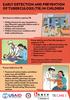 EARLY DETECTION AND PREVENTION OF TUBERCULOSIS (TB) IN CHILDREN Risk factors in children acquiring TB: Children living in the same household as a lung TB patient (especially children under 5) Children
Tuberculosis Surveillance and Screening for Long Term Care Facilities in Colorado
 Tuberculosis Surveillance and Screening for Long Term Care Facilities in Colorado Developed by the Colorado Medical Directors Association and The Colorado Department of Public Health and Environment Introduction:
Targeted Testing for Tuberculosis Infection
 Targeted Testing for Tuberculosis Infection CONTENTS Introduction... 3.2 Purpose... 3.2 Policy... 3.2 When to Conduct Targeted Testing... 3.3 Approaches to increasing targeted testing and treatment for
Prospects for Vaccines against Hepatitis C Viruses. T. Jake Liang. M.D. Liver Diseases Branch NIDDK, NIH, HHS
 Prospects for Vaccines against Hepatitis C Viruses T. Jake Liang. M.D. Liver Diseases Branch NIDDK, NIH, HHS HCV Vaccine Prevention strategies Protective immunity Barriers and solutions Vaccine candidates
TUBERCULOSIS CONTROL INDIA
 TUBERCULOSIS CONTROL INDIA In terms of population coverage, India now has the second largest DOTS (Directly Observed Treatment, Short course) programme in the world. However, India's DOTS programme is