
Table. Positive Purified Protein Derivative Results (Pediatrics In Review Apr 2008)
|
|
|
- Buck Manning
- 10 years ago
- Views:
Transcription
1 PPD and TB Sreening COMPETENCY- The resident should know the risk factors for TB exposure, when to screen, and the appropriate criteria for recognizing a positive PPD in children of different age groups and exposure/infection to different risk factors. CASE- A mother and her 5 year old daughter, Mya present for an initial visit to your clinic for a well child check. The mother states that they have just moved from Chile and now reside in Chicago. She has never had a BCG vaccination. Mya seems to be doing well. You decide to screen for TB risk factors during this visit. QUESTIONS- 1. What is Tuberculosis and what is a PPD test? 2. How does Tuberculosis exposure/infection occur? 3. When is a PPD test considered positive in children? 4. When should children be screened for Tuberculosis? 5. What should be done if a patient s PPD test is positive, but the patient is asymptomatic? 6. What should be done if a patient s PPD test is negative but you highly suspect infection? 7. Can you place a PPD and give live viral vaccinations at the same time? References: Mayers, Marguerite M. Tuberculosis In Brief. Pediatrics in Review. Vol 29.No.4.April CDC.gov The Red Book Harriet Lane Book

2 1. What is Tuberculosis and what is a PPD test? Tuberculosis is a disease caused most commonly by Mycobacterium tuberculosis and Mycobacterium bovis that the World Heath Organization estimates to affect 2 billion people worldwilde, most with latent disease. Although less prominent in the United States, in 2005 there were 863 cases of active TB in children, with 480 of those children younger than 5 years of age and 383 in those between 5 and 15 years of age, for a rate of 1.4/100,000 children. Primary pulmonary disease is the most common presentation of active TB, although extrapulmonary infections are seen: lymphadenitis, meningitis, osteomyelitis, and peritoneal and renal TB. Symptoms usually are nonspecific and consist of fever, anorexia, and weight loss. Occasionally, a nonproductive cough, headache, and vague abdominal pain are seen. The intradermal Mantoux test is the most reliable TST (Tuberculin Skin Test) screen for TB. The test consists of 0.1mL of 5 tuberculin units of purified protein derivative (PPD) injected intradermally on the volar aspect of the forearm, forming a 6- to 10- mm wheal. The area is inspected at 48 to 72 hours; induration, not erythema, is measured transfersely to the long axis of the forearm and the results recorded in millimeters. The determination of a positive PPD depends on the clinical and epidemiologic circumstances of the child, and size does not differentiate between active or latent infection (see question 3). 2. How does Tuberculosis exposure/infection occur? All of the Mycobacterium organisms including atypicals are aerobic, nonmotile bacilli characterized by their ability to absorb a carbol-fuchsin stain (Ziehl-Neelsen) when heated and resist decolorization by acid alcohol, thus requiring the name acidfast bacilli (AFB). The air droplet nuclei containing the tubercle bacilli are inhaled, entering the respiratory tract and initiating infection in the lungs. Rarely there is GI or cutaneous acquisition. The infection spreads from there to regional lymph nodes and subsequently throughout the body via the systemic circulation, preferring the vascular areas. This is usually unrecognized and asymptomatic in all affected people. Once the affected individual mobilized cell-mediated immunity 6 to 10 weeks later, the progress of the infection is stopped, many of the bacilli are eliminated and those that remain enter a latent state. Ninety percent of those infected have latent TB infection (LTBI) and a lifetime risk of reactivation. The highest incidence of active disease is found in children younger than 4 years of age and in those recently infected. Symptomatic illness peaks within the first year or two after infection and decreases substantially after 5 years, although a small ongoing risk of reactivation exists for the lifetime of the individual. This risk increases if the individual acquires HIV infection, certain chronic disease, or is on immunosuppressive therapy.

3 3. When is a PPD test considered positive in children? Table. Positive Purified Protein Derivative Results (Pediatrics In Review Apr 2008) 5-mm Reaction Exposure to active tuberculosis (TB) Human immunodeficiency virus (HIV) infection or immunosuppression Chest radiograph or clinical presentation consistent with TB 10-mm Reaction High risk of disseminated TB (<4 y; lymphoma, diabetes, renal failure, malnutrition, or other predisposing condition) High risk of exposure to TB (birth in or frequent visits to a high prevalence area; exposure to adults who are infected with HIV, homeless, incarcerated, illicit drug users, residents of nursing homes or institutions, or migrant workers) 15-mm Reaction More than 4 years of age with no identifiable risk factor Of note, this community (Chicago, Illinois) should be considered a high prevalence area so a 10-mm reaction would be considered positive in a well child. 4. When should children be screened for Tuberculosis? Routine screening for TB no longer is recommended. However, children always should be tested if active disease is suspected, and in certain identifiable groups, the prevalence of disease is high enough that a TST is recommended. In fact the CDC recommends screening for Tuberculosis by asking about risk factors during Well Child Checkups. BCG vaccination is not a contraindication to TST nor does it change the interpretation of results. Immediate TST: -Contacts of people with confirmed or suspected contagious tuberculosis -Children with radiographic or clinical findings suggesting tuberculosis disease -Children immigrating from countries with endemic infection (eg Asia, Middle East, Africa, Latin America, countries of the former Soviet Union) including international adoptees

4 Children who should have annual TST: -Children infected with HIV -Incarcerated adolescents Children at increased risk of progression of LTBI to active disease: Children with Diabetes mellitus, chronic renal failure, malnutrition, and congenital or acquired immunodeficiencies need special consideration. In addition, a TST should be performed in all children who will begin immunosuppressive therapy. A positive TST result in a child or adolescent should be regarded as a marker for active disease within that community and should serve as a call to investigate contacts and to find and treat cases of latent TB infection. 5. What should be a done if a patient s PPD test is positive, but the patient is asymptomatic? Prompt clinical and radiographic evaluation of all children and adolescents with a positive TST reaction is recommended. Latent tuberculosis infection (LTBI) is defined as M tuberculosis or M bovis infection in a person who has a positive TST result, no physical findings of disease, and chest radiograph findings that are normal or reveal evidence of healed infection (eg granuloma or calcification in the lung, hilar lymph nodes, or both). Isoniazid given to adults who have LTBI (no clinical or radiographic evidence to suggest active disease) provides a substantial protection (54-88%) against development of tuberculosis disease for at least 20 years. Among children, efficacy approaches 100% with appropriate adherence to therapy. All infants, children, and adolescents who have a positive TST result but no evidence of active disease and who never have received antituberculosis therapy should receive isoniazid unless resistance to isoniazid is suspected (known exposure to a person with isoniazidresistant TB) or a specific contraindication exists. Radiograph should be done once prior to treatment and if the individual remains asymptomatic after treatment is completed it should not be repeated. For infants, children and adolescents the recommended duration of isoniazid therapy is 9 months. Isoniazid is given daily in a single dose. When adherence with daily therapy with isoniazid cannot be ensured, twce-a-weel DPT cam be considered. 6. What should be done if a patient s PPD test is negative but you highly suspect infection? Approximately 10% to 15% of immunocompetent children with culture-documented disease do not react initially to a TST. Host factors, such as a young age, poor nutrition, immunosuppression, other viral infections, recent tuberculosis infection, and disseminated tuberculosis disease can decrease TST reactivity. Many children and adults coinfected with HIV and M tuberculosis do not react to a TST. Control skin test to assess cutaneous anergy are not recommended routinely. A child who is suspected of having active TB should be hospitalized to obtain an organism for culture and sensitivity. Chest radiography can show an infiltrate and hilar lymph adenopathy (a Ghon complex), a disseminated or millet seed pulmonary appearance, a pleural effusion (a progressive primary infection), or apical abnormalities

5 or a cavity in the adolescent who has reactivated disease. In small children, the highest yield for positive AFB smears and culture is from an early morning gastric aspirate when the volume collected exceeds 50 ml of fluid. In the adolescent who has a productive cough, sputum should be obtained by expectoration or saline induction. Bronchoscopy can be useful in obtaining a specimen. If tuberculous meningitis is suspected, the cerebrospinal fluid (CSF) examination can show a pleocytosis with a lymphocytic predominance, a low glucose concentration, and a high protein concentration. The CSF should be centrifuged and the resultant pellicle examined for AFB. Biopsies of the lymph nodes, bone marrow, and liver can be evaluated by the pathologist for caseating granulomas and sent for culture. 7. Can you place a PPD and give live viral vaccinations at the same time? The measles vaccine (part of MMR) can temporarily suppress tuberculin reactivity. If necessary, you can place the PPD on the same day as giving the MMR vaccine but it is not recommended to place a PPD within 4-6 weeks after receiving an MMR vaccination. There is no official evidence regarding other live attenuated vaccines, but it is recommended that you follow the guidelines for MMR. Additional information: Since risk of active disease is higher in children age 4 or younger, pediatricians are often conservative regarding beginning treatment (prophylaxis) for these patients who have risk factors and have LTBI. Please see references for additional information on treatment of active tuberculosis disease. Alanna Nzoma M.D. Reviewed by Kyran Quinlan M.D.

LEARNING OUTCOMES. Identify children at risk of developing TB disease. Correctly manage and refer children suspected of TB. Manage child contacts
 TB in Children 1a TB IN CHILDREN 2 LEARNING OUTCOMES Identify children at risk of developing TB disease Correctly manage and refer children suspected of TB Manage child contacts 3 TB Infection and Disease
Pediatric Latent TB Diagnosis and Treatment
 Date Updated: April 2015 Guidelines Reviewed: 1. CDC Latent TB Guidelines 2. Harborview Pediatric Clinic Latent TB Management, 2010 3. Pediatric Associates Latent TB Guidelines, 2013 4. Seattle Children
Clinical description 2 Laboratory test for diagnosis 3. Incubation period 4 Mode of transmission 4 Period of communicability 4
 Tuberculosis Contents Epidemiology in New Zealand 2 Case definition 2 Clinical description 2 Laboratory test for diagnosis 3 Case classification 3 Spread of infection 4 Incubation period 4 Mode of transmission
Massachusetts Department of Public Health Division of Global Populations and Infectious Disease Prevention
 Massachusetts Department of Public Health Division of Global Populations and Infectious Disease Prevention Screening Infants and Children for Tuberculosis in Massachusetts Executive Summary In Massachusetts,
TUBERCULOSIS SCREENING AND TREATMENT IN PREGNANCY. Stephanie N. Lin MD 2/12/2016
 TUBERCULOSIS SCREENING AND TREATMENT IN PREGNANCY Stephanie N. Lin MD 2/12/2016 Epidemiology of TB 9.6 million new cases in 2014 12% of them are in HIV positive patients 1.5 million deaths in 2014 ~646
Tuberculosis. Subject. Goal/Objective. Instructions. Rationale. Operations Directorate, Health Branch Immigration Medical Examination Instructions
 Subject Instructions for the screening of clients to detect tuberculosis (TB) in the context of the Canadian immigration medical examination (IME). Goal/Objective These instructions are provided to ensure
2011 NTP Paediatric guidelines update- final draft
 Childhood TB Investigation and management of children suspected to have tuberculosis (TB) or who are close contacts of a TB case (sputum smear positive or negative) Key facts Children who are close contacts
Tuberculosis in Children and Adolescents
 Tuberculosis in Children and Adolescents Ritu Banerjee, MD, Ph.D TB Clinical Intensive April 8, 2015 2014 MFMER slide-1 Disclosures None 2014 MFMER slide-2 Objectives Describe the epidemiology of pediatric
X-Plain Pediatric Tuberculosis Reference Summary
 X-Plain Pediatric Tuberculosis Reference Summary Introduction Tuberculosis, or TB, is a bacterial infection that causes more deaths in the world than any other infectious disease. When a child gets TB,
Pregnancy and Tuberculosis. Information for clinicians
 Pregnancy and Tuberculosis Information for clinicians When to suspect Tuberculosis (TB)? Who is at risk of TB during pregnancy? Recent research suggests that new mothers are at an increased risk of TB
Chapter 3 Testing for Tuberculosis Infection and Disease
 Chapter 3 Testing for Tuberculosis Infection and Disease Table of Contents Chapter Objectives.... 45 Introduction.... 47 Identifying High-Risk Groups for M. tuberculosis Testing... 47 Testing Methods for
Chapter 5 Treatment for Latent Tuberculosis Infection
 Chapter 5 Treatment for Latent Tuberculosis Infection Table of Contents Chapter Objectives.... 109 Introduction.... 111 Candidates for the Treatment of LTBI.... 112 LTBI Treatment Regimens.... 118 LTBI
Tuberculosis Exposure Control Plan for Low Risk Dental Offices
 Tuberculosis Exposure Control Plan for Low Risk Dental Offices A. BACKGROUND According to the CDC, approximately one-third of the world s population, almost two billion people, are infected with tuberculosis.
Maria Dalbey RN. BSN, MA, MBA March 17 th, 2015
 Maria Dalbey RN. BSN, MA, MBA March 17 th, 2015 2 Objectives Participants will be able to : Understand the Pathogenesis of Tuberculosis (TB) Identify the Goals of Public Health for TB Identify Hierarchy
Paediatrica Indonesiana. Limitations of the Indonesian Pediatric Tuberculosis Scoring System in the context of child contact investigation
 Paediatrica Indonesiana VOLUME 51 November NUMBER 6 Original Article Limitations of the Indonesian Pediatric Tuberculosis Scoring System in the context of child contact investigation Rina Triasih 1,2,
Assisted Living - TB Risk Assessment
 Montana DPHHS Tuberculosis Program Assisted Living - TB Risk Assessment Assisted Living, Adult Day Care, Adult Foster Care & Transitional Living Centers Today s Date Facility Address Phone County Completed
TUBERCULOSIS PLEURAL EFFUSION - MANAGEMENT
 TUBERCULOSIS PLEURAL EFFUSION - MANAGEMENT Introduction : ETB 15-20% Pleural effusion 20% in non HIV Under reporting because of AFB negative in fluid In HIV patients: EPTB 20% PTB + EPTB 50% Pleural Effusion
Santa Clara County Tuberculosis Screening Requirement for School Entrance Effective June 1, 2014. Frequently Asked Questions
 Frequently Asked Questions A child has history of BCG vaccination, should they have TST or IGRA? According to the American Academy of Pediatrics Red Book (2012), Interferon Gamma Release Assay (IGRA) is
3. Blood and blood products such as serum, plasma, and other blood components.
 Mississippi Downloaded 01/2011 101.11 Infectious Medical Waste. The term "infectious medical waste" includes solid or liquid wastes which may contain pathogens with sufficient virulence and quantity such
Tuberculosis Surveillance and Screening for Long Term Care Facilities in Colorado
 Tuberculosis Surveillance and Screening for Long Term Care Facilities in Colorado Developed by the Colorado Medical Directors Association and The Colorado Department of Public Health and Environment Introduction:
Long-term Care - TB Risk Assessment
 Montana DPHHS Tuberculosis Program Long-term Care - TB Risk Assessment Long-term Care, Residential Treatment, ESRD (outpatient), Hospice (inpatient) Today s Date Facility Address Phone County Completed
CDC TB Testing Guidelines and Recent Literature Update
 Pocket Guide QuantiFERON -TB Gold CDC TB Testing Guidelines and Recent Literature Update Using IGRAs for TB screening in your patients June 2010 A full copy of the US Centers for Disease Control and Prevention
Recent Advances in The Treatment of Mycobacterium Tuberculosis
 Recent Advances in The Treatment of Mycobacterium Tuberculosis Dr Mohd Arif Mohd Zim Senior Lecturer & Respiratory Physician Faculty of Medicine, Universiti Teknologi MARA [email protected]
Tuberculosis (TB) Screening Guidelines for Substance Use Disorder Treatment Programs in California
 Tuberculosis (TB) Screening Guidelines for Substance Use Disorder Treatment Programs in California 1 of 7 Table of Contents Preface 2 TB Symptoms and TB History 2 Initial Screening 2 Follow-Up Screening
Self-Study Modules on Tuberculosis
 Self-Study Modules on Tuberculosis Treatment of Latent Tuberculosis Infection and Tube rc ulos is Disease U.S. DEPARTMENT OF HEALTH AND HUMAN SERVICES Centers for Disease Control and Prevention National
TB Prevention, Diagnosis and Treatment. Accelerating advocacy on TB/HIV 15th July, Vienna
 TB Prevention, Diagnosis and Treatment Accelerating advocacy on TB/HIV 15th July, Vienna Diagnosis Microscopy of specially stained sputum is the main test for diagnosing TB (1 2 days) TB bacilli seen in
TUBERCULOSIS (TB) SCREENING GUIDELINES FOR RESIDENTIAL FACILITIES AND DRUG
 TUBERCULOSIS (TB) SCREENING GUIDELINES FOR RESIDENTIAL FACILITIES AND DRUG Tx CENTERS Tuberculosis Control Program Health and Human Services Agency San Diego County INTRODUCTION Reducing TB disease requires
Management of Tuberculosis (TB)
 for Professional Health Care Providers Management of Tuberculosis (TB) USAID UNITED STATES AGENCY INTERNATIONAL DEVELOPMENT USAID FROM THE AMERICAN PEOPLE SOUTHERN AFRICA WHAT IS TB? Tuberculosis (TB)
Appendix B: Provincial Case Definitions for Reportable Diseases
 Infectious Diseases Protocol Appendix B: Provincial Case Definitions for Reportable Diseases Disease: Tuberculosis Revised August 2015 Tuberculosis 1.0 Provincial Reporting Confirmed and suspect cases
San Francisco Treatment Guidelines for Latent Tuberculosis Infection
 City and County of San Francisco Department of Public Health Tuberculosis Control Unit Julie Higashi, MD, PhD Director Population Health Division Edwin M. Lee Mayor Disease Prevention and Control Branch
Transmission & Pathogenesis of Tuberculosis
 April-December, 2011: TB cases reported by the media in US Transmission & Pathogenesis of Tuberculosis Shu-Hua Wang, MD, MPH & TM Assistant Professor of Medicine The Ohio State University TB found at Seaside
U.S. DEPARTMENT OF HEALTH AND HUMAN SERVICES Public Health Service Centers for Disease Control and Prevention
 U.S. DEPARTMENT OF HEALTH AND HUMAN SERVICES Public Health Service Centers for Disease Control and Prevention National Center for HIV, STD, and TB Prevention Division of Tuberculosis Elimination Public
PEOSH Model Tuberculosis Infection Control Program
 PEOSH Model Tuberculosis Infection Control Program Revised November, 2004 NOTE: The information in this document is not considered to be a substitute for any provision of the PEOSH Act or for any standards
BASIC INFORMATION ABOUT HIV, HEPATITIS B and C, and TUBERCULOSIS Adapted from the CDC
 BASIC INFORMATION ABOUT HIV, HEPATITIS B and C, and TUBERCULOSIS Adapted from the CDC HIV What are HIV and AIDS? HIV stands for Human Immunodeficiency Virus. This is the virus that causes AIDS. HIV is
THE NATURAL HISTORY OF PULMONARY TUBERCULOSIS
 Dr William Harris, Professor of Clinical Medicine of New York University, School of Medicine describes, in this series of slides, the natural history of pulmonary tuberculosis and the importance of early
Childhood Tuberculosis Some Basic Issues. Jeffrey R. Starke, M.D. Baylor College of Medicine
 Childhood Tuberculosis Some Basic Issues Jeffrey R. Starke, M.D. Baylor College of Medicine TUBERCULOSIS IS A SOCIAL DISEASE WITH MEDICAL IMPLICATIONS THE GREAT PARADOX OF TUBERCULOSIS A CAUTIONARY TALE
TB preventive therapy in children. Introduction
 TB preventive therapy in children H S Schaaf Department of Paediatrics and Child Health, and Desmond Tutu TB Centre Stellenbosch University, and Tygerberg Children s Hospital Introduction Children are
Questions and Answers About Tuberculosis
 Questions and Answers About Tuberculosis 2014 Questions and Answers About Tuberculosis 2014 Questions and Answers About Tuberculosis ( TB) was written to provide information on the diagnosis and treatment
TB CARE EARLY DETECTION AND PREVENTION OF TUBERCULOSIS (TB) IN CHILDREN. Risk factors in children acquiring TB:
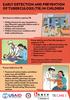 EARLY DETECTION AND PREVENTION OF TUBERCULOSIS (TB) IN CHILDREN Risk factors in children acquiring TB: Children living in the same household as a lung TB patient (especially children under 5) Children
New York City Department of Health Protocols for Latent TB Infection Treatment
 New York City Department of Health Protocols for Latent TB Infection Treatment CONTENT A. Medical evaluation for latent TB infection (LTBI) treatment 1. Medical history and physical examination 2. Chest
Tuberculosis Prevention and Control Protocol, 2008
 Tuberculosis Prevention and Control Protocol, 2008 Preamble The Ontario Public Health Standards (OPHS) are published by the Minister of Health and Long- Term Care under the authority of the Health Protection
Tuberculosis And Diabetes. Dr. hanan abuelrus Prof.of internal medicine Assiut University
 Tuberculosis And Diabetes Dr. hanan abuelrus Prof.of internal medicine Assiut University TUBERCULOSIS FACTS More than 9 million people fall sick with tuberculosis (TB) every year. Over 1.5 million die
What is HIV? What is AIDS? The HIV pandemic HIV transmission Window period Stages of HIV infection
 Module 1 Overview of HIV Infection Purpose Pre-requisite Modules Learning Objectives To provide you with the basic terms and concepts related to HIV infection. None At the end of this module, you will
Regulations for Tuberculosis Control in Minnesota Health Care Settings
 Regulations for Tuberculosis Control in Minnesota Health Care Settings A guide for implementing tuberculosis (TB) infection control regulations in your facility Tuberculosis Prevention and Control Program
GUIDELINES FOR THE MANAGEMENT OF TUBERCULOSIS IN CHILDREN
 GUIDELINES FOR THE MANAGEMENT OF TUBERCULOSIS IN CHILDREN 2013 health Department: Health REPUBLIC OF SOUTH AFRICA GUIDELINES FOR THE MANAGEMENT OF TUBERCULOSIS IN CHILDREN 2013 Published by the Department
Targeted Testing and Treatment of Latent Tuberculosis Infection in Adults and Children
 C D H S / C T C A J O I N T G U I D E L I N E S Targeted Testing and Treatment of Latent Tuberculosis Infection in Adults and Children Targeted Skin Testing and Treatment of Latent Tuberculosis Infection
NICE guideline Published: 13 January 2016 nice.org.uk/guidance/ng33
 Tuberculosis NICE guideline Published: 13 January 2016 nice.org.uk/guidance/ng33 NICE 2016. All rights reserved. Last updated May 2016 Your responsibility The recommendations in this guideline represent
GUIDELINES FOR TUBERCULOSIS PREVENTIVE THERAPY AMONG HIV INFECTED INDIVIDUALS IN SOUTH AFRICA
 GUIDELINES FOR TUBERCULOSIS PREVENTIVE THERAPY AMONG HIV INFECTED INDIVIDUALS IN SOUTH AFRICA 2010 1 TB prophylaxis GUIDELINES FOR TUBERCULOSIS PREVENTIVE THERAPY AMONG HIV INFECTED INDIVIDUALS Background
Pediatric Tuberculosis: Pearls, Pitfalls and Progress. Amina Ahmed, MD Levine Children s Hospital June 25, 2013
 Pediatric Tuberculosis: Pearls, Pitfalls and Progress Amina Ahmed, MD Levine Children s Hospital June 25, 2013 Disclosures I have no relationships with commercial interests related to this presentation
Pediatric Tuberculosis
 Pediatric Tuberculosis Ana M. Alvarez, M.D. Division of Pediatric Infectious Diseases and Immunology University of Florida College of Medicine/Jacksonville Children are not small adults! Objectives At
Tuberculosis handbook for school nurses
 Tuberculosis handbook for school nurses cov1 Tuberculosis handbook for school nurses The New Jersey Medical School Global Tuberculosis Institute is designated and funded by the Centers for Disease Control
San Francisco Guidelines on the Use of QuantiFERON-TB Gold (In Tube Method) for the Diagnosis of Latent TB Infection
 San Francisco Guidelines on the Use of QuantiFERON-TB Gold (In Tube Method) for the Diagnosis of Latent TB Infection Rationale When to Screen for TB Choosing the Right TB Test Patient Registration Pre-Test
QUICK REFERENCE FOR HEALTHCARE PROVIDERS
 QUICK REFERENCE FOR HEALTHCARE PROVIDERS Ministry of Health Malaysia Academy of Medicine Malaysia Malaysian Thoracic Society KEY MESSAGES 1. Tuberculosis (TB) is a notifiable infectious disease. Timely
Targeted Testing for Tuberculosis Infection
 Targeted Testing for Tuberculosis Infection CONTENTS Introduction... 3.2 Purpose... 3.2 Policy... 3.2 When to Conduct Targeted Testing... 3.3 Approaches to increasing targeted testing and treatment for
Ottawa Public Health Tuberculosis Screening and Contact Management Guidelines 2012
 Ottawa Public Health Tuberculosis Screening and Contact Management Guidelines 2012 ottawa.ca/health ottawa.ca/sante 613-580-6744 TTY/ATS : 613-580-9656 Tuberculosis Screening and Contact Management Guidelines
AMBULATORY TREATMENT AND PUBLIC HEALTH MEASURES FOR A PATIENT WITH UNCOMPLICATED PULMONARY TUBERCULOSIS
 AMBULATORY TREATMENT AND PUBLIC HEALTH MEASURES FOR A PATIENT WITH UNCOMPLICATED PULMONARY TUBERCULOSIS (UPDATE 2004) Internal guidelines of the Tuberculosis & Chest Service of the Department of Health
Tuberculosis: FAQs. What is the difference between latent TB infection and TB disease?
 Tuberculosis: FAQs What is TB disease? Tuberculosis (TB) is a disease caused by bacteria (germs) that are spread from person to person through the air. TB usually affects the lungs, but it can also affect
Core Curriculum on Tuberculosis: What the Clinician Should Know Sixth Edition 2013
 Core Curriculum on Tuberculosis: What the Clinician Should Know Sixth Edition 2013 CS234269 To View or Order the Core Curriculum on Tuberculosis To view or download the Core Curriculum, please visit: www.cdc.gov/tb.
Solid Organ Transplantation
 Solid Organ Transplantation Infection Prevention And Control Transplant Atlantic 2011 October 13/2011 Kathy Hart Introduction In the past several years, the drugs that we use, the surgeries themselves,
MANAGEMENT OF TUBERCULOSIS IN PRISONS: Guidance for prison healthcare teams
 MANAGEMENT OF TUBERCULOSIS IN PRISONS: Guidance for prison healthcare teams Document control Title Type Author/s Management of tuberculosis in prisons: Guidance for prison healthcare teams Operational
Tuberculosis and HIV/AIDS Co-Infection: Epidemiology and Public Health Challenges
 Tuberculosis and HIV/AIDS Co-Infection: Epidemiology and Public Health Challenges John B. Kaneene, DVM, MPH, PhD University Distinguished Professor of Epidemiology Director, Center for Comparative Epidemiology
Hawaii Administrative Rules. Title 11. Department of Health. Chapter 164. Tuberculosis
 Hawaii Administrative Rules Title 11 Department of Health Chapter 164 Tuberculosis 11-164-1 Purpose 11-164-2 Definitions 11-164-3 Reports to the department 11-164-4 Content of report 11-164-5 Examination
Guideline. Treatment of tuberculosis in pregnant women and newborn infants. Version 3.0
 Guideline Treatment of tuberculosis in pregnant women and newborn infants Version 3.0 Key critical points The decision to treat tuberculosis (TB) in pregnancy must consider the potential risks to mother
ATTACHMENT 2. New Jersey Department of Health Tuberculosis Program FREQUENTLY ASKED QUESTIONS
 ATTACHMENT 2 New Jersey Department of Health Tuberculosis Program FREQUENTLY ASKED QUESTIONS 1. QUESTION Is it required to submit the Annual Report of TB Testing in Schools Form (TB-57) to the New Jersey
Risk for Tuberculosis in Swiss Hospitals. Content. Introduction. Dr. med. Alexander Turk Zürcher Höhenklinik Wald alexander.turk@zhw.
 Risk for Tuberculosis in Swiss Hospitals 17. Tuberkulose Symposium Münchenwiler Risk for Tuberculosis in Swiss Hospitals Dr. med. Alexander Turk Zürcher Höhenklinik Wald [email protected] 1 Content
Recurrent or Persistent Pneumonia
 Recurrent or Persistent Pneumonia Lower Respiratory Tract Dr T Avenant Recurrent or Persistent Pneumonia Definitions Recurrent pneumonia more than two episodes of pneumonia in 18 months Persistent pneumonia
MIOSHA s Tuberculosis Guidelines For Worker Protection from Mycobacterium (Occupational Health Program Directive No. 96-9)
 MIOSHA s Tuberculosis Guidelines For Worker Protection from Mycobacterium (Occupational Health Program Directive No. 96-9) In recent years, the incidence of Mycobaterium Tuberculosis (M. tuberculosis)
Frequently Asked Questions
 Frequently Asked Questions QuantiFERON -TB Gold Health Professionals www.quantiferon.com 2 FAQ - Health Professionals Table of contents About TB 6 What is latent TB? And how is it different from active
12 Points of Tuberculosis (TB) Patient Education
 12 Points of Tuberculosis (TB) Patient Education Transmission of TB TB is a disease caused by the TB germ. The disease is mainly in the lungs (pulmonary TB), but the germ can travel to other parts of the
Delaware. Downloaded 01/2011
 Delaware Downloaded 01/2011 3.0 CNA Training Program Requirements 3.3 Curriculum Content 3.3.2 Environmental Needs Of The Resident Key Concepts: Introduces the nursing assistant to the need to keep residents
Clinical Scenarios In Childhood TB. Josefina Cadorna Carlos M.D., FPPS, FPIDSP, FSMID Associate Professor of Pediatrics U E R M M M C
 Clinical Scenarios In Childhood TB Josefina Cadorna Carlos M.D., FPPS, FPIDSP, FSMID Associate Professor of Pediatrics U E R M M M C Objectives: To present different commonly encountered clinical scenarios
Abstract. 1. Basic underlying view
 _ Abstract 1. Basic underlying view Mycobacterium tuberculosis Table 1 2. LTBI treatment subjects 1. Basic view 2. TB development risk factors and infection diagnosis i. HIV/AIDS ii. Hemodialysis for
What is an IGRA? What is an IGRA? Are they available here? How do I use them? Learning Objectives
 What is an IGRA? Are they available here? How do I use them? Debbie Staley, RN, MPH TB Nurse Consultant VDH Division of Disease Prevention TB Control Program Learning Objectives Participants will be able
MANAGEMENT OF COMMON SIDE EFFECTS of INH (Isoniazid), RIF (Rifampin), PZA (Pyrazinamide), and EMB (Ethambutol)
 MANAGEMENT OF COMMON SIDE EFFECTS of INH (Isoniazid), RIF (Rifampin), PZA (Pyrazinamide), and EMB (Ethambutol) 1. Hepatotoxicity: In Active TB Disease a. Background: 1. Among the 4 standard anti-tb drugs,