
2011 NTP Paediatric guidelines update- final draft
|
|
|
- Derrick Freeman
- 10 years ago
- Views:
Transcription
1 Childhood TB Investigation and management of children suspected to have tuberculosis (TB) or who are close contacts of a TB case (sputum smear positive or negative) Key facts Children who are close contacts of an infectious (usually adult) TB case are at high risk of becoming infected with M. tuberculosis and developing active TB. Clinicians should, therefore, have a low threshold for investigating TB and commencing young children on TB treatment. Once an adult contact is confirmed, the main clinical decision is whether the child needs full 4- drug treatment or isoniazid (INH) chemoprophylaxis. Recommended approach to diagnosing TB in children includes: a) Careful history including history of TB contact and symptoms consistent with TB b) Clinical examination including growth assessment c) Mantoux test if available (a Mantoux test is a Tuberculin skin test [TST]) d) Sputum microscopy and culture when possible (especially in children>8 of age) e) HIV testing Provider Initiated Testing and Counselling (PITC) See clinical algorithm Diagnosis of TB in children Key facts The presence of two or more of the following should strongly suggest a diagnosis of TB Current cough of any duration productive/non- productive, Unexplained weight loss not responding to standard treatment/food supplement Failure to thrive and/or malnutrition Fever and /or night sweats Any child with symptoms suggestive of TB should be investigated. Children can present with TB at any age but it is most common in the under- 5 age group and during adolescence. Symptoms suggestive of TB meningitis TBM) especially in a young child with documented TB exposure Decreased appetite often with weight loss Lethargy Vomiting without diarrhoea, early morning headache, irritability Drowsiness/lethargy and convulsions, especially focal seizures Older children may present with behavioural changes 1

2 Physical signs highly suggestive of TB include Chest examination with stony dull percussion in a child that is not acutely ill is a rare but fairly specific symptom complex of TB pleural effusion. A painless, enlarged mass of matted lymph nodes (>2x2 cm) in the neck, without a visible local cause on the scalp or response to a course of antibiotics, is highly suggestive of TB cervical adenitis Investigations and Management CXR, Mantoux test (if available) PITC, sputum/early morning gastric washings/induced sputum for AFB (and culture if available) Tuberculin skin testing (TST) the Mantoux test The Mantoux test measures the delayed type hypersensitivity response to purified protein derivative (PPD), also known as tuberculin. A positive Mantoux does not indicate active disease (TB) it only indicates infection with TBM. tuberculosis. The Mantoux skin test is "positive" when the diameter of skin induration (swelling, not redness) is 10mm ( 5mm in an HIV- infected or malnourished child). A negative TST does not exclude TB infection or disease The tuberculin test may be falsely negative in a child with: Severe malnutrition HIV infection Disseminated (miliary) TB and/or TB meningitis (TBM) Immunosuppressive drugs e.g. high dose steroids Very recent TB exposure (in the past 2-3 months) Very young children ( 12 months) 2

3 Sample collection for AFB microscopy and culture a) Sputum Collection Gastric aspirates are safe and easy to perform, although best performed in hospitalised patients after a 3 hour fast or early in the morning after an overnight fast. Key facts TB in children is usually sputum smear- negative: lung cavities are rare disease is paucibaciliary collection of adequate sputum samples is difficult since young children usually swallow their sputum. However, this is not true for older children (>8 of age). The sputum smear (and TB culture where available) remains a valuable test to perform in any child who is able to produce a sputum specimen. In children who are unable to expectorate spontaneously, gastric aspirates and/or sputum induction offer alternatives. b) Fine Needle Aspiration (FNA) In children with large, palpable cervical lymph nodes collection of a FNA offers a convenient way of collecting samples for microscopy and culture if available. The aspirate can be smeared onto a slide and sent for AFB microscopy where culture is not available or if insufficient for culture. c) Lumbar puncture (LP) Should be performed on any child in whom TBM is suspected and repeated on a child failing to respond to standard treatment for bacterial meningitis. Suspect TBM if there is a lymphocyte predominance, high protein level and low glucose. Absence of acid fast bacilli on microscopy does not exclude a diagnosis of TBM. TB culture is of particular value in complicated cases or when there is a concern regarding drug resistance. The probability of obtaining a positive TB culture improves when more than one sample is taken. Chest x- ray Key facts X- rays need to be of good quality and interpretation depends on the expertise of the person reading them. Chest x- ray changes are often non- specific and in the HIV infected or malnourished child may be completely normal. TB disease should not be diagnosed from the chest x- ray alone but the whole clinical picture should be taken into account. 3

4 The most common radiological signs of TB in children are: Enlarged hilar lymph nodes and/or a broad mediastinum due to enlarged mediastinal lymph nodes (this is the most common presentation in children). Lobar disease may also be seen and, following dissemination, miliary disease Isolated pleural effusions usually occur in children older than 5 of age. Compression of the airways due to diseased lymph nodes; partial occlusion may cause a ball- valve effect with segmental or lobar hyperinflation, complete airway occlusion may cause collapse of a lung segment or lobe. The CXR is useful in HIV- infected children but the presentation may overlap with other HIV- related lung diseases e.g. Lymphoid Interstitial Pneumonitis (LIP). 4

5 Treatment of paediatric TB first line TB regimen New paediatric drug dosages are as follows: Isoniazid (H): 10 mg/kg (range mg/kg); max. dose 300 mg/day Rifampicin (R): 15 mg/kg (range mg/kg); max. dose 600 mg/d Pyrazinamide (Z): 35 mg/kg (range mg/kg) Ethambutol (E): 20 mg/kg (range mg/kg) See Appendix in final NTB guidelines for the number of FDC tablets required in each weight band to give adequate treatment doses It is important to monitor the child s weight at each clinic visit and adjust drug doses accordingly. Many children rapidly gain weight after initiation of TB treatment. The revised treatment guidelines for TB recommend two different regimens for defined situations: SITE OF TB DISEASE HRZE HR TOTAL LENGTH OF TREATMENT TB MENINGITIS MILIARY TB 2 MONTHS 10 MONTHS 12 MONTHS BONE TB (SPINE, JOINTS) PULMONARY TB TB LYMPHADENITIS ALL OTHER FORMS OF TB 2 MONTHS 4 MONTHS 6 MONTHS Note: Streptomycin is no longer used in first line TB regimens. Prednisolone: In TB meningitis and pericardial effusion, steroids have a supportive therapeutic effect. They have been shown to improve survival in TB meningitis and decrease the risk of developing constrictive pericarditis in patients with pericardial effusions. Dose: 2mg/kg/day (maximum dose of 40 mg) for four weeks, followed by a reduction regimen over two weeks. Pyridoxine: Pyridoxine, or vitamin B6, helps protect against Isoniazid- induced peripheral neuropathy Recommended for all children on TB treatment and IPT Dose: 25mg/day until treatment is completed 5

6 Proven or suspected multi- drug resistant TB (MDR- TB) Children with proven or suspected TB caused by multi- drug resistant bacilli should be treated with an appropriate MDR- TB regimen according the recommended Malawi NTP guidelines, using paediatric doses. The decision to treat should be taken by a clinician experienced in managing paediatric TB or through consultation with the national TB Programme manager. Key fact Suspect MDR- TB in any child: who is a contact of an adult MDR- TB case and has symptoms and signs suggestive of TB disease. who remains symptomatic after completion of first- line TB treatment (with good medication adherence). Initial assessment before commencing treatment includes: baseline renal and liver function baseline hearing test CXR Daily drug intake under DOTS is a crucial part of the programme. Careful assessment by a specialist has to take place before the decision is made to stop treatment after the full course of treatment is completed. Refer all children for nutritional assessment and support and reassess growth at each clinic visit. Monitor the child s weight and adjust drug doses accordingly. At follow- up renal function and hearing should, where possible, be checked every three months because of the risk of ototoxicity and renal toxicity associated with injectable drugs. 6

7 Neonates exposed to a mother with TB Key Facts A significant number of mothers reactivate latent TB infection in the third trimester of pregnancy or around the time of delivery/immediate post- partum period. Any mother in whom TB is suspected should be sent for a CXR and two sputum samples collected for AFB microscopy. If a mother is diagnosed with TB before the third trimester of pregnancy, is taking TB medications with good adherence and is clinically well: Examine her baby for signs of disease. If the baby is well, no action is required. Refer all other household children <5 of age to the TB clinic for clinical assessment. If the mother is diagnosed with TB in the third trimester of pregnancy or shortly after delivery: Examine her baby for signs of disease and consider investigations if available: o CXR, gastric aspirates Do not give BCG* If the baby is well commence isoniazid (INH) prophylaxis at 10mg/kg/day and continue for 6 months. If the baby is not well and has signs/symptoms suggestive of TB disease, collect gastric aspirates where possible and commence full TB treatment. Weight Under 2.5 kg kg 5-10 kg Isoniazid dose 25 mg (1/4 tablet) 24- hourly 50 mg (1/2 tablet) 24- hourly 100 mg (1 tablet) 24- hourly Infants need to be reviewed at 1, 3 and 6 months after commencing INH and their weight checked regularly and the dosage increased as they grow. Refer all other household children to the TB clinic for clinical assessment and screening. If INH is commenced within 12 weeks of receiving BCG vaccine, the infant will need repeat BCG vaccination at the end of treatment. If no BCG vaccine given, then vaccinate two weeks after completing INH* *Note: As BCG is a live vaccine INH will kill the vaccine and prevent an effective immune response from developing. 7

8 INSERT IN CHAPTER 3 SECTION BCG disease Key facts Bacille Calmette- Guerin (BCG) is a live, attenuated vaccine and is routinely given to neonates in Malawi, in the right deltoid, in the first week of life. BCG vaccination may be associated with injection- site abscesses, (suppurative) adenitis, and (very rarely) with disseminated disease. HIV- infected infants and other immunocompromised infants are at particular risk of BCG- related complications. The presence of right- sided axillary or regional lymph nodes in a young child or infant indicates possible BCG disease and immunocompromise. This most commonly presents in the two of life after BCG vaccination. It requires further evaluation: 1. Are they known to be HIV infected? Have they recently commenced ART? If so, then this is likely to be BCG IRIS. Management: If thriving and with no other signs of disseminated disease (other lympadenopathy, fevers) then no drug treatment is required, although repeated needle aspiration of a large, fluctuant lymph node may be needed until it spontaneously resolves. If it fails to resolve within six weeks or there is extensive disease, patients may then require surgical excision or treatment for TB to prevent severe scarring. 2. HIV status unknown? Send for PITC. Management: HIV uninfected or exposed and thriving and with no other signs of disseminated disease - no drug treatment required, although repeated needle aspiration of a large, fluctuant lymph node may be needed until it spontaneously resolves. HIV infected and otherwise well, refer the patient to the ART clinic and commence on ART if <2 of age. Needle aspiration of a large, fluctuant lymph node may be required. HIV infected and unwell febrile, failure to thrive, and / or respiratory signs and symptoms admit for further investigation and management of possible disseminated BCG disease. These children always require TB treatment since co- infection with M. tuberculosis may occur. 8

9 Key Facts BCG adenitis should not routinely be referred to the surgeons for incision and drainage as a chronically draining sinus may result. Fluctuant abscesses should be managed with observation and needle aspiration if necessary as detailed above. Rarely, if there is no improvement or there is deterioration after 6 weeks of RHZE, consider excision biopsy. 9

10 TB and HIV Infection Key facts TB is common in HIV- infected children and HIV infection is common in children with TB in regions endemic for TB/HIV HIV- infected children are more likely to be exposed and infected with M. tuberculosis than HIV- uninfected children HIV- infected children are at increased risk of TB disease if infected with TB and this risk is related to the degree of immune suppression Diagnosis of TB in HIV- infected children The current approach to clinical diagnosis of TB in HIV- infected children is similar to that recommended for HIV- uninfected children *See Diagnosis section for special notes on Mantoux and CXR as diagnostic tools in HIV- infected children. Treatment of TB in HIV- infected children It is currently recommended that HIV- infected children are treated with the same TB treatment regimens and for the same duration as HIV- uninfected children in the same treatment category. Children with TB/HIV must be followed up regularly and have dosages adjusted for weight gained. HIV- infected children being treated for TB must be started on cotrimoxazole preventive therapy (CPT) and should also be started on ART within 2 weeks of commencing TB treatment, or on the same day if stable. Antiretroviral therapy in children with TB/HIV co- infection ART is indicated for all HIV- infected children and infants with any form of TB. Children must be followed regularly and drug doses for ART and anti- TB treatment adjusted for changes in weight. See the table below for details of treatment regimen according to the new Malawi National HIV guidelines (2011). ART status at time of starting TB therapy < 3 of age > 3 of age Already taking 1 st line ART AZT/3TC/Nevirapine AZT/3TC/Nevirapine Not yet started ART AZT/3TC/Nevirapine AZT/3TC/Efavirenz On 2 nd line ART Refer to specialist centre (Note: major drug interactions between LPV/r and Rifampicin) 10

11 Note: TB IRIS is more common in severely immuno- suppressed children and usually occurs within 3 months of starting ART. 11

12 Isoniazid Preventive Therapy (IPT) Key Facts IPT is intended to prevent recent infection progressing to active TB disease and to prevent latent TB infection (LTBI) from reactivating. IPT is given for six months after a contact. If a patient is diagnosed with active TB they need full TB treatment and not isoniazid. mono- therapy. Contact definition: A history of a close contact with an adult patient with pulmonary TB (sputum positive or negative) Eligibility for IPT See algorithm for IPT prophylaxis in HIV infected and uninfected children General rules: All children need active TB ruled out before starting IPT. For any children with a documented contact history, a minimum of 6 months IPT is indicated, even if they are on ART. For HIV- infected children not on ART, IPT is to be given for the entire time period until ART is initiated, regardless of contact history. A CXR is recommended, but not required, to rule- out active TB in HIV- infected and exposed children with a positive contact history. Dosing of isoniazid For all paediatric age groups, the recommended dosing of IPT is 10mg/kg once daily for 6 months. Patients should not be given a 6 months supply to take home. A minimum of two monthly monitoring is required to check for medication toxicity or development of active TB. Children less than a year of age should be weighed monthly and the dose of isoniazid adjusted with weight gain. If a child develops signs and symptoms of active TB while on IPT, then isoniazid monotherapy should be stopped and the patient should be re- assessed and started on full TB treatment. All HIV infected children must receive pyridoxine 25mg/day for the duration of IPT Key fact Current medical evidence suggests that IPT will not lead to the development of drug- resistant TB provided that children are screened for signs and symptoms of TB before initiating IPT, and periodically during the 6- month course of treatment. Note: If children have none of the following symptoms or signs - poor weight gain, current cough, or fever - then active TB can be ruled- out without TST or CXR. 12

13 Contact History? Age HIV Status How to Rule Out Active TB IPT (active TB ruled out) YES YES YES YES YES YES NO NO NO NO NO 0-60 months > >2 uninfected History, exam, and available 6 months investigations uninfected No work- up needed if asymptomatic not required exposed infected, on ART* infected, not on ART History, exam, and available investigations, CXR recommended History, exam, and available investigations, CXR recommended History, exam, and available investigations, CXR recommended 6 months 6 months IPT until ART is started, minimum 6 months 6 months >2 infected, on ART History, exam, and available investigations, CXR recommended 0-5 uninfected No work- up needed if asymptomatic not required 0-2 exposed No work- up needed if asymptomatic not required 0-2 infected, on No work- up needed if asymptomatic not required ART* >2 infected, No work- up needed if asymptomatic IPT until ART is not on ART started >2 infected, on No work- up needed if asymptomatic not required ART *all infected children <2 should be on ART per Universal Treatment Guidelines 13

LEARNING OUTCOMES. Identify children at risk of developing TB disease. Correctly manage and refer children suspected of TB. Manage child contacts
 TB in Children 1a TB IN CHILDREN 2 LEARNING OUTCOMES Identify children at risk of developing TB disease Correctly manage and refer children suspected of TB Manage child contacts 3 TB Infection and Disease
Pediatric Latent TB Diagnosis and Treatment
 Date Updated: April 2015 Guidelines Reviewed: 1. CDC Latent TB Guidelines 2. Harborview Pediatric Clinic Latent TB Management, 2010 3. Pediatric Associates Latent TB Guidelines, 2013 4. Seattle Children
Table. Positive Purified Protein Derivative Results (Pediatrics In Review Apr 2008)
 PPD and TB Sreening COMPETENCY- The resident should know the risk factors for TB exposure, when to screen, and the appropriate criteria for recognizing a positive PPD in children of different age groups
TUBERCULOSIS SCREENING AND TREATMENT IN PREGNANCY. Stephanie N. Lin MD 2/12/2016
 TUBERCULOSIS SCREENING AND TREATMENT IN PREGNANCY Stephanie N. Lin MD 2/12/2016 Epidemiology of TB 9.6 million new cases in 2014 12% of them are in HIV positive patients 1.5 million deaths in 2014 ~646
Pregnancy and Tuberculosis. Information for clinicians
 Pregnancy and Tuberculosis Information for clinicians When to suspect Tuberculosis (TB)? Who is at risk of TB during pregnancy? Recent research suggests that new mothers are at an increased risk of TB
Paediatrica Indonesiana. Limitations of the Indonesian Pediatric Tuberculosis Scoring System in the context of child contact investigation
 Paediatrica Indonesiana VOLUME 51 November NUMBER 6 Original Article Limitations of the Indonesian Pediatric Tuberculosis Scoring System in the context of child contact investigation Rina Triasih 1,2,
TB Prevention, Diagnosis and Treatment. Accelerating advocacy on TB/HIV 15th July, Vienna
 TB Prevention, Diagnosis and Treatment Accelerating advocacy on TB/HIV 15th July, Vienna Diagnosis Microscopy of specially stained sputum is the main test for diagnosing TB (1 2 days) TB bacilli seen in
TB preventive therapy in children. Introduction
 TB preventive therapy in children H S Schaaf Department of Paediatrics and Child Health, and Desmond Tutu TB Centre Stellenbosch University, and Tygerberg Children s Hospital Introduction Children are
Management of Tuberculosis (TB)
 for Professional Health Care Providers Management of Tuberculosis (TB) USAID UNITED STATES AGENCY INTERNATIONAL DEVELOPMENT USAID FROM THE AMERICAN PEOPLE SOUTHERN AFRICA WHAT IS TB? Tuberculosis (TB)
Tuberculosis. Subject. Goal/Objective. Instructions. Rationale. Operations Directorate, Health Branch Immigration Medical Examination Instructions
 Subject Instructions for the screening of clients to detect tuberculosis (TB) in the context of the Canadian immigration medical examination (IME). Goal/Objective These instructions are provided to ensure
Tuberculosis in Children and Adolescents
 Tuberculosis in Children and Adolescents Ritu Banerjee, MD, Ph.D TB Clinical Intensive April 8, 2015 2014 MFMER slide-1 Disclosures None 2014 MFMER slide-2 Objectives Describe the epidemiology of pediatric
Guideline. Treatment of tuberculosis in pregnant women and newborn infants. Version 3.0
 Guideline Treatment of tuberculosis in pregnant women and newborn infants Version 3.0 Key critical points The decision to treat tuberculosis (TB) in pregnancy must consider the potential risks to mother
GUIDELINES FOR THE MANAGEMENT OF TUBERCULOSIS IN CHILDREN
 GUIDELINES FOR THE MANAGEMENT OF TUBERCULOSIS IN CHILDREN 2013 health Department: Health REPUBLIC OF SOUTH AFRICA GUIDELINES FOR THE MANAGEMENT OF TUBERCULOSIS IN CHILDREN 2013 Published by the Department
GUIDELINES FOR TUBERCULOSIS PREVENTIVE THERAPY AMONG HIV INFECTED INDIVIDUALS IN SOUTH AFRICA
 GUIDELINES FOR TUBERCULOSIS PREVENTIVE THERAPY AMONG HIV INFECTED INDIVIDUALS IN SOUTH AFRICA 2010 1 TB prophylaxis GUIDELINES FOR TUBERCULOSIS PREVENTIVE THERAPY AMONG HIV INFECTED INDIVIDUALS Background
Chapter 5 Treatment for Latent Tuberculosis Infection
 Chapter 5 Treatment for Latent Tuberculosis Infection Table of Contents Chapter Objectives.... 109 Introduction.... 111 Candidates for the Treatment of LTBI.... 112 LTBI Treatment Regimens.... 118 LTBI
Massachusetts Department of Public Health Division of Global Populations and Infectious Disease Prevention
 Massachusetts Department of Public Health Division of Global Populations and Infectious Disease Prevention Screening Infants and Children for Tuberculosis in Massachusetts Executive Summary In Massachusetts,
Self-Study Modules on Tuberculosis
 Self-Study Modules on Tuberculosis Treatment of Latent Tuberculosis Infection and Tube rc ulos is Disease U.S. DEPARTMENT OF HEALTH AND HUMAN SERVICES Centers for Disease Control and Prevention National
Clinical description 2 Laboratory test for diagnosis 3. Incubation period 4 Mode of transmission 4 Period of communicability 4
 Tuberculosis Contents Epidemiology in New Zealand 2 Case definition 2 Clinical description 2 Laboratory test for diagnosis 3 Case classification 3 Spread of infection 4 Incubation period 4 Mode of transmission
TB AND M/XDR-TB: FROM CLINICAL MANAGEMENT TO CONTROL AND ELIMINATION
 ersnet.org/school TB AND M/XDR-TB: FROM CLINICAL MANAGEMENT TO CONTROL AND ELIMINATION 23-26 May 2012 - Bucharest, Romania SCHOOL COURSE 2012 Educational Material Thank you for viewing this document. We
Tuberculosis And Diabetes. Dr. hanan abuelrus Prof.of internal medicine Assiut University
 Tuberculosis And Diabetes Dr. hanan abuelrus Prof.of internal medicine Assiut University TUBERCULOSIS FACTS More than 9 million people fall sick with tuberculosis (TB) every year. Over 1.5 million die
Assisted Living - TB Risk Assessment
 Montana DPHHS Tuberculosis Program Assisted Living - TB Risk Assessment Assisted Living, Adult Day Care, Adult Foster Care & Transitional Living Centers Today s Date Facility Address Phone County Completed
Desk-guide for diagnosis and management of TB in children
 Desk-guide for diagnosis and management of TB in children 2 Desk-guide for diagnosis and management of TB in children 2010 3 International Union Against Tuberculosis and Lung Disease (The Union) 68 Boulevard
X-Plain Pediatric Tuberculosis Reference Summary
 X-Plain Pediatric Tuberculosis Reference Summary Introduction Tuberculosis, or TB, is a bacterial infection that causes more deaths in the world than any other infectious disease. When a child gets TB,
Recent Advances in The Treatment of Mycobacterium Tuberculosis
 Recent Advances in The Treatment of Mycobacterium Tuberculosis Dr Mohd Arif Mohd Zim Senior Lecturer & Respiratory Physician Faculty of Medicine, Universiti Teknologi MARA [email protected]
Clinical Scenarios In Childhood TB. Josefina Cadorna Carlos M.D., FPPS, FPIDSP, FSMID Associate Professor of Pediatrics U E R M M M C
 Clinical Scenarios In Childhood TB Josefina Cadorna Carlos M.D., FPPS, FPIDSP, FSMID Associate Professor of Pediatrics U E R M M M C Objectives: To present different commonly encountered clinical scenarios
QUICK REFERENCE FOR HEALTHCARE PROVIDERS
 QUICK REFERENCE FOR HEALTHCARE PROVIDERS Ministry of Health Malaysia Academy of Medicine Malaysia Malaysian Thoracic Society KEY MESSAGES 1. Tuberculosis (TB) is a notifiable infectious disease. Timely
MANAGEMENT OF TUBERCULOSIS IN PRISONS: Guidance for prison healthcare teams
 MANAGEMENT OF TUBERCULOSIS IN PRISONS: Guidance for prison healthcare teams Document control Title Type Author/s Management of tuberculosis in prisons: Guidance for prison healthcare teams Operational
Tuberculosis. Clinical diagnosis and management of tuberculosis, and measures for its prevention and control
 Issue date: March 2011 Tuberculosis Clinical diagnosis and management of tuberculosis, and measures for its prevention and control This updates and replaces NICE clinical guideline 33 NICE clinical guideline
Management of Tuberculosis: Indian Guidelines
 Chapter 105 Management of Tuberculosis: Indian Guidelines Kuldeep Singh Sachdeva INTRODUCTION Tuberculosis (TB) is an infectious disease caused predominantly by Mycobacterium tuberculosis and among the
TUBERCULOSIS (TB) SCREENING GUIDELINES FOR RESIDENTIAL FACILITIES AND DRUG
 TUBERCULOSIS (TB) SCREENING GUIDELINES FOR RESIDENTIAL FACILITIES AND DRUG Tx CENTERS Tuberculosis Control Program Health and Human Services Agency San Diego County INTRODUCTION Reducing TB disease requires
Santa Clara County Tuberculosis Screening Requirement for School Entrance Effective June 1, 2014. Frequently Asked Questions
 Frequently Asked Questions A child has history of BCG vaccination, should they have TST or IGRA? According to the American Academy of Pediatrics Red Book (2012), Interferon Gamma Release Assay (IGRA) is
U.S. DEPARTMENT OF HEALTH AND HUMAN SERVICES Public Health Service Centers for Disease Control and Prevention
 U.S. DEPARTMENT OF HEALTH AND HUMAN SERVICES Public Health Service Centers for Disease Control and Prevention National Center for HIV, STD, and TB Prevention Division of Tuberculosis Elimination Public
Referral Guidelines for TB/HIV co-management. (First Edition)
 Referral Guidelines for TB/HIV co-management (First Edition) Government of Lesotho April 2011 1 REFERRAL GUIDELINES FOR TB/HIV CO-MANAGEMENT INTRODUCTION Many TB patients are infected with HIV. Many people
Tuberculosis (TB) Screening Guidelines for Substance Use Disorder Treatment Programs in California
 Tuberculosis (TB) Screening Guidelines for Substance Use Disorder Treatment Programs in California 1 of 7 Table of Contents Preface 2 TB Symptoms and TB History 2 Initial Screening 2 Follow-Up Screening
Tuberculosis Exposure Control Plan for Low Risk Dental Offices
 Tuberculosis Exposure Control Plan for Low Risk Dental Offices A. BACKGROUND According to the CDC, approximately one-third of the world s population, almost two billion people, are infected with tuberculosis.
San Francisco Treatment Guidelines for Latent Tuberculosis Infection
 City and County of San Francisco Department of Public Health Tuberculosis Control Unit Julie Higashi, MD, PhD Director Population Health Division Edwin M. Lee Mayor Disease Prevention and Control Branch
AMBULATORY TREATMENT AND PUBLIC HEALTH MEASURES FOR A PATIENT WITH UNCOMPLICATED PULMONARY TUBERCULOSIS
 AMBULATORY TREATMENT AND PUBLIC HEALTH MEASURES FOR A PATIENT WITH UNCOMPLICATED PULMONARY TUBERCULOSIS (UPDATE 2004) Internal guidelines of the Tuberculosis & Chest Service of the Department of Health
DISCLAIMER. www.health.gov.fj
 DISCLAIMER The authors do not warrant the accuracy of the information contained in the TB Technical Guideline and do not take responsibility for any death, loss, damage or injury caused by using the information
New York City Department of Health Protocols for Latent TB Infection Treatment
 New York City Department of Health Protocols for Latent TB Infection Treatment CONTENT A. Medical evaluation for latent TB infection (LTBI) treatment 1. Medical history and physical examination 2. Chest
Long-term Care - TB Risk Assessment
 Montana DPHHS Tuberculosis Program Long-term Care - TB Risk Assessment Long-term Care, Residential Treatment, ESRD (outpatient), Hospice (inpatient) Today s Date Facility Address Phone County Completed
TUBERCULOSIS PLEURAL EFFUSION - MANAGEMENT
 TUBERCULOSIS PLEURAL EFFUSION - MANAGEMENT Introduction : ETB 15-20% Pleural effusion 20% in non HIV Under reporting because of AFB negative in fluid In HIV patients: EPTB 20% PTB + EPTB 50% Pleural Effusion
MANAGEMENT OF COMMON SIDE EFFECTS of INH (Isoniazid), RIF (Rifampin), PZA (Pyrazinamide), and EMB (Ethambutol)
 MANAGEMENT OF COMMON SIDE EFFECTS of INH (Isoniazid), RIF (Rifampin), PZA (Pyrazinamide), and EMB (Ethambutol) 1. Hepatotoxicity: In Active TB Disease a. Background: 1. Among the 4 standard anti-tb drugs,
Antiretroviral therapy for HIV infection in infants and children: Towards universal access
 Antiretroviral therapy for HIV infection in infants and children: Towards universal access Executive summary of recommendations Preliminary version for program planning 2010 Executive summary Tremendous
TB CARE EARLY DETECTION AND PREVENTION OF TUBERCULOSIS (TB) IN CHILDREN. Risk factors in children acquiring TB:
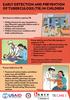 EARLY DETECTION AND PREVENTION OF TUBERCULOSIS (TB) IN CHILDREN Risk factors in children acquiring TB: Children living in the same household as a lung TB patient (especially children under 5) Children
Tuberculosis Prevention and Control Protocol, 2008
 Tuberculosis Prevention and Control Protocol, 2008 Preamble The Ontario Public Health Standards (OPHS) are published by the Minister of Health and Long- Term Care under the authority of the Health Protection
Guidance for national tuberculosis programmes on the management of tuberculosis in children
 WHO /HTM/ TB/2006.371 WHO /FCH /CAH/2006.7 Guidance for national tuberculosis programmes on the management of tuberculosis in children WHO/HTM/TB/2006.371 WHO/FCH/CAH/2006.7 Guidance for national tuberculosis
Maria Dalbey RN. BSN, MA, MBA March 17 th, 2015
 Maria Dalbey RN. BSN, MA, MBA March 17 th, 2015 2 Objectives Participants will be able to : Understand the Pathogenesis of Tuberculosis (TB) Identify the Goals of Public Health for TB Identify Hierarchy
Childhood Tuberculosis Some Basic Issues. Jeffrey R. Starke, M.D. Baylor College of Medicine
 Childhood Tuberculosis Some Basic Issues Jeffrey R. Starke, M.D. Baylor College of Medicine TUBERCULOSIS IS A SOCIAL DISEASE WITH MEDICAL IMPLICATIONS THE GREAT PARADOX OF TUBERCULOSIS A CAUTIONARY TALE
Chapter 6 Treatment of Tuberculosis Disease
 Chapter 6 Treatment of Tuberculosis Disease Table of Contents Chapter Objectives.... 139 Introduction.... 141 Treatment and Monitoring Plan.... 143 Adherence Strategies... 143 TB Disease Treatment Regimens....
Papua New Guinea. National Tuberculosis Management Protocol. Department of Health Disease Control Branch National Tuberculosis Program
 2011 Papua New Guinea National Tuberculosis Management Protocol Department of Health Disease Control Branch National Tuberculosis Program P.O. Box 807, Waigini, Port Moresby, Papua New Guinea Telephones:
Pediatric Tuberculosis
 Pediatric Tuberculosis Ana M. Alvarez, M.D. Division of Pediatric Infectious Diseases and Immunology University of Florida College of Medicine/Jacksonville Children are not small adults! Objectives At
3. Blood and blood products such as serum, plasma, and other blood components.
 Mississippi Downloaded 01/2011 101.11 Infectious Medical Waste. The term "infectious medical waste" includes solid or liquid wastes which may contain pathogens with sufficient virulence and quantity such
Tuberculosis Care with TB-HIV Co-management
 WHO/HTM/HIV/2007.01 WHO/HTM/TB/2007.380 April 2007 Tuberculosis Care with TB-HIV Co-management INTEGRATED MANAGEMENT OF ADOLESCENT AND ADULT ILLNESS (IMAI) T B HIV WHO Library Cataloguing-in-Publication
GENERAL MANNUAL FOR TUBERCULOSIS CONTROL
 GENERAL MANNUAL FOR TUBERCULOSIS CONTROL National programme for Tuberculosis Control and Chest Diseases Ministry of Health Sri Lanka January 2005 GENERAL MANUAL FOR TUBERCULOSIS CONTROL Second Edition
Tuberculosis Management in Children
 Tuberculosis Management in Children Ministry of Public Health and Sanitation Division of Leprosy, Tuberculosis and Lung Disease November, 2011 2011 Division of Leprosy, Tuberculosis and Lung Disease i
Tuberculosis: FAQs. What is the difference between latent TB infection and TB disease?
 Tuberculosis: FAQs What is TB disease? Tuberculosis (TB) is a disease caused by bacteria (germs) that are spread from person to person through the air. TB usually affects the lungs, but it can also affect
NICE guideline Published: 13 January 2016 nice.org.uk/guidance/ng33
 Tuberculosis NICE guideline Published: 13 January 2016 nice.org.uk/guidance/ng33 NICE 2016. All rights reserved. Last updated May 2016 Your responsibility The recommendations in this guideline represent
Chapter 3 Testing for Tuberculosis Infection and Disease
 Chapter 3 Testing for Tuberculosis Infection and Disease Table of Contents Chapter Objectives.... 45 Introduction.... 47 Identifying High-Risk Groups for M. tuberculosis Testing... 47 Testing Methods for
Targeted Testing and Treatment of Latent Tuberculosis Infection in Adults and Children
 C D H S / C T C A J O I N T G U I D E L I N E S Targeted Testing and Treatment of Latent Tuberculosis Infection in Adults and Children Targeted Skin Testing and Treatment of Latent Tuberculosis Infection
Guidelines for Management of Tuberculosis in Children
 Guidelines for Management of Tuberculosis in Children Ministry of Health Sri Lanka National Programme for Tuberculosis Control and Chest Diseases TABLE OF CONTENTS Table of Contents... 2 List of Tables...
NOTICE OF PUBLIC HEARING REGARDING PROPOSED CHANGES IN HEALTH CARE SERVICES PROVIDED BY FRESNO COUNTY
 NOTICE IS HEREBY GIVEN that a public hearing will commence on Tuesday, September 23, 2008, at 9:00 a.m. (subject to continuance on that date of the hearing) at the Fresno County Board of Supervisors Chambers,
Revised National Tuberculosis Control Programme (RNTCP) Dr. NAVPREET
 Revised National Tuberculosis Control Programme (RNTCP) Dr. NAVPREET Assistant Prof., Deptt. of Community Medicine GMCH Chandigarh Problem Statement of TB in India India accounts for nearly 1/4 th of global
Tuberculosis and You A Guide to Tuberculosis Treatment and Services
 Tuberculosis and You A Guide to Tuberculosis Treatment and Services Tuberculosis (TB) is a serious disease that can damage the lungs or other parts of the body like the brain, kidneys or spine. There are
12 Points of Tuberculosis (TB) Patient Education
 12 Points of Tuberculosis (TB) Patient Education Transmission of TB TB is a disease caused by the TB germ. The disease is mainly in the lungs (pulmonary TB), but the germ can travel to other parts of the
TB that is more difficult to treat
 TB that is more difficult to treat TB is a common illness of the lungs, but it can also cause illness of other body parts. This is seen more often in people living with HIV. You still get the general symptoms
Questions and Answers About Tuberculosis
 Questions and Answers About Tuberculosis 2014 Questions and Answers About Tuberculosis 2014 Questions and Answers About Tuberculosis ( TB) was written to provide information on the diagnosis and treatment
Treatment of Tuberculosis
 Treatment of Tuberculosis 1a Taking TB Treatment 2 Learning outcomes Describe the use of TB case definitions & the management of TB patients Successfully treat TB using the appropriate regimen for the
Tuberculosis in children in Europe -the ptbnet
 Tuberculosis in children in Europe -the ptbnet Beate Kampmann FRCPCH PhD A/Professor in Paediatric Infection & Immunity Consultant Paediatrician Imperial College London, UK and Institute of Infectious
Management of a child failing first line TB treatment.
 Management of a child failing first line TB treatment. Robert Gie Desmond Tutu Tuberculosis Centre Department of Paediatric and Child Health Stellenbosch University South Africa. Tygerberg Hospital Complex
Tuberculosis and HIV/AIDS Co-Infection: Epidemiology and Public Health Challenges
 Tuberculosis and HIV/AIDS Co-Infection: Epidemiology and Public Health Challenges John B. Kaneene, DVM, MPH, PhD University Distinguished Professor of Epidemiology Director, Center for Comparative Epidemiology
Appendix B: Provincial Case Definitions for Reportable Diseases
 Infectious Diseases Protocol Appendix B: Provincial Case Definitions for Reportable Diseases Disease: Tuberculosis Revised August 2015 Tuberculosis 1.0 Provincial Reporting Confirmed and suspect cases
CDC TB Testing Guidelines and Recent Literature Update
 Pocket Guide QuantiFERON -TB Gold CDC TB Testing Guidelines and Recent Literature Update Using IGRAs for TB screening in your patients June 2010 A full copy of the US Centers for Disease Control and Prevention
Contact investigation in children living with patients treated for DR-TB
 Contact investigation in children living with patients treated for DR-TB Farhana Amanullah, FAAP The Indus Hospital TB Program, Karachi, Pakistan 31 st October 2013, Paris, France. Outline Introduction
Recurrent meningitis after ART initiation in 2 patients known with cryptococcal meningitis
 Recurrent meningitis after ART initiation in 2 patients known with cryptococcal meningitis Graeme Meintjes University of Cape Town Case 1 23 year old woman Known HIV infection, CD4 = 37, but ART-naïve
Pediatric Tuberculosis: Pearls, Pitfalls and Progress. Amina Ahmed, MD Levine Children s Hospital June 25, 2013
 Pediatric Tuberculosis: Pearls, Pitfalls and Progress Amina Ahmed, MD Levine Children s Hospital June 25, 2013 Disclosures I have no relationships with commercial interests related to this presentation
Guideline. Treatment of tuberculosis in adults and children Version 2.1 July 2015
 Guideline Treatment of tuberculosis in adults and children Version 2.1 July 2015 Contents What this guideline covers:... 1 What this guideline does not cover:... 1 Standard regimens for pulmonary tuberculosis...
Canine Lymphoma Frequently Asked Questions by Pet Owners
 Canine Lymphoma Frequently Asked Questions by Pet Owners What is lymphoma? The term lymphoma describes a diverse group of cancers in dogs that are derived from white blood cells called lymphocytes. Lymphocytes