
Tuberculosis Exposure Control Plan for Low Risk Dental Offices
|
|
|
- Ruby Candice Mitchell
- 9 years ago
- Views:
Transcription
1 Tuberculosis Exposure Control Plan for Low Risk Dental Offices A. BACKGROUND According to the CDC, approximately one-third of the world s population, almost two billion people, are infected with tuberculosis. There are about eight million new cases annually, and approximately three million people die every year throughout the world. In the United States, the number of cases has steadily declined in the past ten years, and it s estimated that there are about 15,000 cases of active tuberculosis every year. Tuberculosis is a contagious disease that mainly causes infections of the lung but can also occur in other areas of the body. Some of the symptoms are fatigue, weight loss, fever, hoarseness, chest pain, night sweats, loss of appetite, persistent cough and shortness of breath, which may result in serious respiratory illness or death. B. POLICY The goal of a TB infection control plan is to control occupational exposure to the TB bacteria. Exposure control will be carried out through: 1. The identification and subsequent referral of suspected TB source cases; 2. Reporting of all exposure incidents and subsequent evaluations; 3. TB skin test screening or blood tests and/or radiological exams; and 4. Training. This program will establish office policies regarding TB exposure and will help to protect the health and safety of employees that may come in contact with infected individuals.

2 C. EXPOSURE CONTROL PLAN 1. Employees a. New Employees New employees should undergo TB skin tests or blood tests. Anyone who tests positive must submit to a chest ray and a medical evaluation to determine the status of the disease. If the chest X-ray reveals an active TB condition, the individual will be referred to their medical advisor for treatment. Any employees with active TB cannot return to work until they are cleared by the doctor. b. Current Employees Since we work in a low risk environment, as defined by the CDC (less than 3 patients with active TB are seen within the past year), we do not need to undergo annual testing. Instead, we generally only need to undergo testing in the event of an exposure incident. However, if an employee begins to exhibit symptoms of infectious TB, she may be asked to undergo testing, and if the tests are positive, the individual will be referred to their medical advisor for evaluation and treatment. Any employees with active TB cannot return to work until they are cleared by their doctor. 2. Exposure Reporting In the event of an exposure incident, either from an infected patient or infected employee, all employees and patients who may have been exposed must be notified so they may be tested and evaluated. The CDC requires that all suspected cases of infectious TB be reported to the local health department. 3. Identifying patients who may have infectious TB One of the most important methods of identifying patients who may have an active TB infection is regularly updating medical histories. All patients should be asked if they have every had active TB or a latent/dormant TB infection, whether they have HIV or a compromised immune system, and whether they have any symptoms of active TB infection.

3 4. Procedures to follow with a suspected or confirmed TB patient If you encounter a patient with possible symptoms of active TB, the most important goal is to get the potentially infected patient out of your office as quickly as possible. Once they are out of your office, they should be reported to the CDC for followup and so that all individuals they may have exposed can be notified. Put the patient in a separate area away from other patients and employees while evaluating him for possible infectiousness, put the patient in a mask and make sure he observes correct cough etiquette, including turning his head away from other people and coughing into a tissue or cloth. Postpone any non-urgent dental care, and refer any urgent care to a facility with the correct level of respiratory protection, which includes reverse airflow, well-fitting respirators for all personnel, and correct administrative controls and procedures. Once the patient has been cleared by his medical doctor, he can return for treatment at your office. 5. Training Tuberculosis awareness training shall be provided to all new employees. Training shall consist of the following subject matter: a. Factors that place individuals at risk; b. How TB is transmitted and the difference between TB infection and active disease, including info on drug resistant forms of the disease; c. Symptoms of TB d. TB Exposure Control Plan e. TB testing and procedures 6. Personal Protective Equipment (PPE) use. We do not work in a facility that has adequate protection against airborne pathogens such as TB. (We don t have rooms with reverse airflow/negative pressure, we don t use respirators, etc.) Our masks are not respirators and do not offer the level of protection needed to protect us from TB disease; in order to safely treat a TB patient, you must have a respirator of at least N95 filtration efficiency. That is why it is so important that any suspected TB patients be removed immediately from the office environment.

4 TB Information for Healthcare Workers (from MMWR, December 30, 2005 / Vol. 54 / No. RR-17) M. tuberculosis is a bacterium carried in airborne infective droplet nuclei that can be generated when persons with pulmonary or laryngeal TB sneeze, cough, speak, or sing (439). These small particles (1--5 µm) can stay suspended in the air for hours (440). Infection occurs when a susceptible person inhales droplet nuclei containing M. tuberculosis, which then travel to the alveoli of the lungs. Usually within weeks after initial infection with M. tuberculosis, immune response prevents further spread of the TB bacteria, although they can remain alive in the lungs for years, a condition termed latent TB infection. Persons with latent TB infection usually exhibit a reactive tuberculin skin test (TST), have no symptoms of active disease, and are not infectious. However, they can develop active disease later in life if they do not receive treatment for their latent infection. Approximately 5% of persons who have been recently infected and not treated for latent TB infection will progress from infection to active disease during the first 1--2 years after infection; another 5% will develop active disease later in life. Thus, approximately 90% of U.S. persons with latent TB infection do not progress to active TB disease. Although both latent TB infection and active TB disease are described as TB, only the person with active disease is contagious and presents a risk of transmission. Symptoms of active TB disease include a productive cough, night sweats, fatigue, malaise, fever, and unexplained weight loss. Certain immunocompromising medical conditions (e.g., HIV) increase the risk that TB infection will progress to active disease at a faster rate (441). Overall, the risk borne by DHCP for exposure to a patient with active TB disease is probably low (20,21). Only one report exists of TB transmission in a dental office (442), and TST conversions among DHCP are also low (443,444). However, in certain cases, DHCP or the community served by the dental facility might be at relatively high risk for exposure to TB. Surgical masks do not prevent inhalation of M. tuberculosis droplet nuclei, and therefore, standard precautions are not sufficient to prevent transmission of this organism. Recommendations for expanded precautions to prevent transmission of M. tuberculosis and other organisms that can be spread by airborne, droplet, or contact routes have been detailed in other guidelines (5,11,20). TB transmission is controlled through a hierarchy of measures, including administrative controls, environmental controls, and personal respiratory protection. The main administrative goals of a TB infection-control program are early detection of a person with active TB disease and prompt isolation from susceptible persons to reduce the risk of transmission. Although DHCP are not responsible for diagnosis and treatment of TB, they should be trained to recognize signs and symptoms to help with prompt detection.

5 Because potential for transmission of M. tuberculosis exists in outpatient settings, dental practices should develop a TB control program appropriate for their level of risk (20,21). A community risk assessment should be conducted periodically, and TB infection-control policies for each dental setting should be based on the risk assessment. The policies should include provisions for detection and referral of patients who might have undiagnosed active TB; management of patients with active TB who require urgent dental care; and DHCP education, counseling, and TST screening. DHCP who have contact with patients should have a baseline TST, preferably by using a two-step test at the beginning of employment. The facility's level of TB risk will determine the need for routine follow-up TST. While taking patients' initial medical histories and at periodic updates, dental DHCP should routinely ask all patients whether they have a history of TB disease or symptoms indicative of TB. Patients with a medical history or symptoms indicative of undiagnosed active TB should be referred promptly for medical evaluation to determine possible infectiousness. Such patients should not remain in the dental-care facility any longer than required to evaluate their dental condition and arrange a referral. While in the dental health-care facility, the patient should be isolated from other patients and DHCP, wear a surgical mask when not being evaluated, or be instructed to cover their mouth and nose when coughing or sneezing. Elective dental treatment should be deferred until a physician confirms that a patient does not have infectious TB, or if the patient is diagnosed with active TB disease, until confirmed the patient is no longer infectious. If urgent dental care is provided for a patient who has, or is suspected of having active TB disease, the care should be provided in a facility (e.g., hospital) that provides airborne infection isolation (i.e., using such engineering controls as TB isolation rooms, negatively pressured relative to the corridors, with air either exhausted to the outside or HEPA-filtered if recirculation is necessary). Standard surgical face masks do not protect against TB transmission; DHCP should use respiratory protection (e.g., fit-tested, disposable N-95 respirators). Settings that do not require use of respiratory protection because they do not treat active TB patients and do not perform cough-inducing procedures on potential active TB patients do not need to develop a written respiratory protection program. Any DHCP with a persistent cough (i.e., lasting >3 weeks), especially in the presence of other signs or symptoms compatible with active TB (e.g., weight loss, night sweats, fatigue, bloody sputum, anorexia, or fever), should be evaluated promptly. The DHCP should not return to the workplace until a diagnosis of TB has been excluded or the DHCP is on therapy and a physician has determined that the DHCP is noninfectious.

6 Infection Control Measures The spread of TB in health care settings can be minimized by implementing CDC recommendations for preventing TB transmission in these settings. The early detection, airborne infection isolation, and treatment of disease in persons with infectious TB are essential to controlling transmission. TB should be suspected in all persons with symptoms consistent with TB (e.g., cough, fever, night sweats, chills, fatigue, weight loss, or loss of appetite), especially those with confirmed or suspected HIV infection and undiagnosed pulmonary disease. Precautions should be taken to prevent airborne transmission of M. tuberculosis until TB is diagnosed and treated or ruled out. In general, patients who have suspected or confirmed TB disease should be considered infectious if (a) they are coughing, undergoing cough-inducing procedures, or have positive sputum smear results for acid-fast bacilli (AFB); and (b) they are not receiving adequate antituberculosis therapy, have just started therapy, or have a poor clinical or bacteriologic response to therapy. For patients placed under airborne precautions because of suspected infectious TB disease of the lungs, airway, or larynx, airborne precautions can be discontinued when infectious TB disease is considered unlikely and either Another diagnosis is made that explains the clinical syndrome, or The patient produces three consecutive negative sputum smears collected in 8- to 24-hour intervals (one should be an early morning specimen). Patients for whom the suspicion of infectious TB disease remains after the collection of three negative sputum smear results should not be released from airborne precautions until they Receive standard multidrug antituberculosis treatment (minimum of 2 weeks) and Demonstrate clinical improvement. For these patients, additional diagnostic approaches (e.g., sputum induction) and, after sufficient time on treatment, bronchoscopy may need to be considered. Patients who have drug-susceptible TB of the lung, airway, or larynx, should remain under airborne precautions until they Produce three consecutive negative sputum smears collected in 8- to 24-hour intervals (one should be an early morning specimen), and Receive standard multidrug antituberculosis treatment (minimum of 2 weeks), and Demonstrate clinical improvement.

7 Precautions should be taken during and immediately after procedures that may induce coughing, such as bronchoscopy, sputum collection, the aerosol induction of sputum, and the administration of aerosolized medication, such as pentamidine. Antituberculosis drug treatment should be promptly initiated for persons with TB disease to render them noninfectious. Persons at high risk for LTBI should be tested and, if infected, evaluated for LTBI treatment. Ongoing TB testing should be provided to health care workers who have regular contact with persons with TB or HIV infection. Remember! The key to preventing LTBI and death and disability from TB disease is to consider the possibility of TB in high-risk groups, make the diagnosis as quickly as possible, and initiate effective, directly observed drug therapy for persons found to have TB. Think TB!

MIOSHA s Tuberculosis Guidelines For Worker Protection from Mycobacterium (Occupational Health Program Directive No. 96-9)
 MIOSHA s Tuberculosis Guidelines For Worker Protection from Mycobacterium (Occupational Health Program Directive No. 96-9) In recent years, the incidence of Mycobaterium Tuberculosis (M. tuberculosis)
Tuberculosis: FAQs. What is the difference between latent TB infection and TB disease?
 Tuberculosis: FAQs What is TB disease? Tuberculosis (TB) is a disease caused by bacteria (germs) that are spread from person to person through the air. TB usually affects the lungs, but it can also affect
Assisted Living - TB Risk Assessment
 Montana DPHHS Tuberculosis Program Assisted Living - TB Risk Assessment Assisted Living, Adult Day Care, Adult Foster Care & Transitional Living Centers Today s Date Facility Address Phone County Completed
Long-term Care - TB Risk Assessment
 Montana DPHHS Tuberculosis Program Long-term Care - TB Risk Assessment Long-term Care, Residential Treatment, ESRD (outpatient), Hospice (inpatient) Today s Date Facility Address Phone County Completed
Maria Dalbey RN. BSN, MA, MBA March 17 th, 2015
 Maria Dalbey RN. BSN, MA, MBA March 17 th, 2015 2 Objectives Participants will be able to : Understand the Pathogenesis of Tuberculosis (TB) Identify the Goals of Public Health for TB Identify Hierarchy
Chapter 7 Tuberculosis Infection Control
 Chapter 7 Tuberculosis Infection Control Table of Contents Chapter Objectives.... 189 Introduction.... 191 Infectiousness.... 192 TB Infection Control Measures.... 196 TB Infection Control Program................................................
Maryland County Health Department Tuberculosis Infection Control Plan
 Maryland County Health Department Tuberculosis Infection Control Plan Introduction In 1998, the Division of TB Control developed a Tuberculosis (TB) Prevention Plan template for use by the local health
PEOSH Model Tuberculosis Infection Control Program
 PEOSH Model Tuberculosis Infection Control Program Revised November, 2004 NOTE: The information in this document is not considered to be a substitute for any provision of the PEOSH Act or for any standards
Clinical description 2 Laboratory test for diagnosis 3. Incubation period 4 Mode of transmission 4 Period of communicability 4
 Tuberculosis Contents Epidemiology in New Zealand 2 Case definition 2 Clinical description 2 Laboratory test for diagnosis 3 Case classification 3 Spread of infection 4 Incubation period 4 Mode of transmission
TB CARE EARLY DETECTION AND PREVENTION OF TUBERCULOSIS (TB) IN CHILDREN. Risk factors in children acquiring TB:
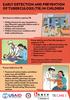 EARLY DETECTION AND PREVENTION OF TUBERCULOSIS (TB) IN CHILDREN Risk factors in children acquiring TB: Children living in the same household as a lung TB patient (especially children under 5) Children
TUBERCULOSIS (TB) SCREENING GUIDELINES FOR RESIDENTIAL FACILITIES AND DRUG
 TUBERCULOSIS (TB) SCREENING GUIDELINES FOR RESIDENTIAL FACILITIES AND DRUG Tx CENTERS Tuberculosis Control Program Health and Human Services Agency San Diego County INTRODUCTION Reducing TB disease requires
Risk for Tuberculosis in Swiss Hospitals. Content. Introduction. Dr. med. Alexander Turk Zürcher Höhenklinik Wald alexander.turk@zhw.
 Risk for Tuberculosis in Swiss Hospitals 17. Tuberkulose Symposium Münchenwiler Risk for Tuberculosis in Swiss Hospitals Dr. med. Alexander Turk Zürcher Höhenklinik Wald [email protected] 1 Content
MANAGEMENT OF TUBERCULOSIS IN PRISONS: Guidance for prison healthcare teams
 MANAGEMENT OF TUBERCULOSIS IN PRISONS: Guidance for prison healthcare teams Document control Title Type Author/s Management of tuberculosis in prisons: Guidance for prison healthcare teams Operational
Tuberculosis (TB) Screening Guidelines for Substance Use Disorder Treatment Programs in California
 Tuberculosis (TB) Screening Guidelines for Substance Use Disorder Treatment Programs in California 1 of 7 Table of Contents Preface 2 TB Symptoms and TB History 2 Initial Screening 2 Follow-Up Screening
Tuberculosis Intensive November 17 20, 2015 San Antonio, TX
 Tuberculosis Infection Prevention in Health Care Settings Jeffrey L. Levin, M.D., M.S.P.H. November 18, 2015 Tuberculosis Intensive November 17 20, 2015 San Antonio, TX EXCELLENCE EXPERTISE INNOVATION
09/27/2006 Centers for Disease Control and Prevention Division of Tuberculosis Elimination
 Appendix B. Tuberculosis (TB) risk assessment worksheet This model worksheet should be considered for use in performing TB risk assessments for healthcare facilities and nontraditional facility-based settings.
U.S. DEPARTMENT OF HEALTH AND HUMAN SERVICES Public Health Service Centers for Disease Control and Prevention
 U.S. DEPARTMENT OF HEALTH AND HUMAN SERVICES Public Health Service Centers for Disease Control and Prevention National Center for HIV, STD, and TB Prevention Division of Tuberculosis Elimination Public
Patient Education CONTENTS. Introduction... 12.2
 CONTENTS Introduction... 12.2 Purpose... 12.2 General Guidelines... 12.3 Language and Comprehension Barriers... 12.4 Education Topics... 12.5 Medical Diagnosis... 12.5 Contact Investigation... 12.6 Isolation...
Enforcement Policy and Procedures for Occupational Exposure to Tuberculosis.
 SUBJECT: Purpose: Scope: Enforcement Policy and Procedures for Occupational Exposure to Tuberculosis. To provide uniform inspection procedures and guidelines to be followed when conducting inspections
TB Prevention, Diagnosis and Treatment. Accelerating advocacy on TB/HIV 15th July, Vienna
 TB Prevention, Diagnosis and Treatment Accelerating advocacy on TB/HIV 15th July, Vienna Diagnosis Microscopy of specially stained sputum is the main test for diagnosing TB (1 2 days) TB bacilli seen in
Tuberculosis Prevention and Control Protocol, 2008
 Tuberculosis Prevention and Control Protocol, 2008 Preamble The Ontario Public Health Standards (OPHS) are published by the Minister of Health and Long- Term Care under the authority of the Health Protection
Tuberculosis. Subject. Goal/Objective. Instructions. Rationale. Operations Directorate, Health Branch Immigration Medical Examination Instructions
 Subject Instructions for the screening of clients to detect tuberculosis (TB) in the context of the Canadian immigration medical examination (IME). Goal/Objective These instructions are provided to ensure
Chapter 8 Community Tuberculosis Control
 Chapter 8 Community Tuberculosis Control Table of Contents Chapter Objectives.... 227 Introduction.... 229 Roles and Responsibilities of the Public Health Sector Providers.... 229 Roles and Responsibilities
REPUBLIC OF NAMIBIA MINISTRY OF HEALTH AND SOCIAL SERVICES
 REPUBLIC OF NAMIBIA MINISTRY OF HEALTH AND SOCIAL SERVICES Tuberculosis Infection Control Guidelines i MINISTRY OF HEALTH AND SOCIAL SERVICES Tuberculosis Infection Control Guidelines Directorate: Special
Lesson 7: Respiratory and Skeletal Systems and Tuberculosis
 Glossary 1. asthma: when the airways of the lungs narrow, making breathing difficult 2. bacteria: tiny living creatures that can only be seen with a microscope; some bacteria help the human body, and other
Guidelines for Preventing the Transmission of Mycobacterium tuberculosis in Health-Care Facilities, 1994
 October 28, 1994 / Vol. 43 / No. RR-13 Recommendations and Reports Guidelines for Preventing the Transmission of Mycobacterium tuberculosis in Health-Care Facilities, 1994 U.S. DEPARTMENT OF HEALTH AND
Regulations for Tuberculosis Control in Minnesota Health Care Settings
 Regulations for Tuberculosis Control in Minnesota Health Care Settings A guide for implementing tuberculosis (TB) infection control regulations in your facility Tuberculosis Prevention and Control Program
12 Points of Tuberculosis (TB) Patient Education
 12 Points of Tuberculosis (TB) Patient Education Transmission of TB TB is a disease caused by the TB germ. The disease is mainly in the lungs (pulmonary TB), but the germ can travel to other parts of the
Transmission & Pathogenesis of Tuberculosis
 April-December, 2011: TB cases reported by the media in US Transmission & Pathogenesis of Tuberculosis Shu-Hua Wang, MD, MPH & TM Assistant Professor of Medicine The Ohio State University TB found at Seaside
Chapter 5. INFECTION CONTROL IN THE HEALTHCARE SETTING
 Chapter 5. INFECTION CONTROL IN THE HEALTHCARE SETTING INTRODUCTION This chapter addresses infection control measures and practices in the healthcare setting and provides guidance to healthcare facilities
X-Plain Pediatric Tuberculosis Reference Summary
 X-Plain Pediatric Tuberculosis Reference Summary Introduction Tuberculosis, or TB, is a bacterial infection that causes more deaths in the world than any other infectious disease. When a child gets TB,
Interim Guidance for Medical Schools on health checks for active and latent Tuberculosis in medical students returning from elective periods overseas
 Interim Guidance for Medical Schools on health checks for active and latent Tuberculosis in medical students returning from elective periods overseas This document has been developed by: Dr Mathina Darmalingam
3. Blood and blood products such as serum, plasma, and other blood components.
 Mississippi Downloaded 01/2011 101.11 Infectious Medical Waste. The term "infectious medical waste" includes solid or liquid wastes which may contain pathogens with sufficient virulence and quantity such
PART III COUNSELING ON TB
 PART III COUNSELING ON TB Objectives: By the end of Part III of the training, the participants will: Understand the Cough-to-Cure Pathway and be able to successfully apply the three phases of counseling
Borderless Diseases By Sunny Thai
 Borderless Diseases By Sunny Thai Millennium Development Goal #6 6. Combat HIV/AIDS, malaria and other borderless diseases. A. Halt and begin reversing spread of HIV by 2015. B. Achieve universal access
Get the Facts About Tuberculosis Disease
 TB Get the Facts About Tuberculosis Disease What s Inside: Read this brochure today to learn how to protect your family and friends from TB. Then share it with people in your life. 2 Contents Get the facts,
INFECTION CONTROL PRECAUTIONS
 INFECTION CONTROL PRECAUTIONS Outline Standard Precautions Droplet Precautions Contact Precautions Airborne Precautions References STANDARD PRECAUTIONS Use Standard Precautions, or the equivalent, for
Targeted Testing for Tuberculosis Infection
 Targeted Testing for Tuberculosis Infection CONTENTS Introduction... 3.2 Purpose... 3.2 Policy... 3.2 When to Conduct Targeted Testing... 3.3 Approaches to increasing targeted testing and treatment for
Tuberculosis and HIV/AIDS Co-Infection: Epidemiology and Public Health Challenges
 Tuberculosis and HIV/AIDS Co-Infection: Epidemiology and Public Health Challenges John B. Kaneene, DVM, MPH, PhD University Distinguished Professor of Epidemiology Director, Center for Comparative Epidemiology
BASIC INFORMATION ABOUT HIV, HEPATITIS B and C, and TUBERCULOSIS Adapted from the CDC
 BASIC INFORMATION ABOUT HIV, HEPATITIS B and C, and TUBERCULOSIS Adapted from the CDC HIV What are HIV and AIDS? HIV stands for Human Immunodeficiency Virus. This is the virus that causes AIDS. HIV is
GUIDELINES FOR TUBERCULOSIS PREVENTIVE THERAPY AMONG HIV INFECTED INDIVIDUALS IN SOUTH AFRICA
 GUIDELINES FOR TUBERCULOSIS PREVENTIVE THERAPY AMONG HIV INFECTED INDIVIDUALS IN SOUTH AFRICA 2010 1 TB prophylaxis GUIDELINES FOR TUBERCULOSIS PREVENTIVE THERAPY AMONG HIV INFECTED INDIVIDUALS Background
Tuberculosis Surveillance and Screening for Long Term Care Facilities in Colorado
 Tuberculosis Surveillance and Screening for Long Term Care Facilities in Colorado Developed by the Colorado Medical Directors Association and The Colorado Department of Public Health and Environment Introduction:
Take Steps to Control TB TUBERCULOSIS. When You HaveHIV
 Take Steps to Control TB TUBERCULOSIS When You HaveHIV What s Inside: People with HIV are are also at risk for getting TB. Read this brochure today to learn about TB and HIV. 4PAGE 5PAGE About TB infection
Appendix B: Provincial Case Definitions for Reportable Diseases
 Infectious Diseases Protocol Appendix B: Provincial Case Definitions for Reportable Diseases Disease: Tuberculosis Revised August 2015 Tuberculosis 1.0 Provincial Reporting Confirmed and suspect cases
CDC TB Testing Guidelines and Recent Literature Update
 Pocket Guide QuantiFERON -TB Gold CDC TB Testing Guidelines and Recent Literature Update Using IGRAs for TB screening in your patients June 2010 A full copy of the US Centers for Disease Control and Prevention
General Information on Tuberculosis
 General Information on Tuberculosis ON THE MOVE AGAINST TUBERCULOSIS: Transforming the fi ght towards elimination World TB Day 2011 SAARC Tuberculosis & HIV/AIDS Centre GPO Box No 9517, Kathmandu, Nepal
Pregnancy and Tuberculosis. Information for clinicians
 Pregnancy and Tuberculosis Information for clinicians When to suspect Tuberculosis (TB)? Who is at risk of TB during pregnancy? Recent research suggests that new mothers are at an increased risk of TB
Tuberculosis and You A Guide to Tuberculosis Treatment and Services
 Tuberculosis and You A Guide to Tuberculosis Treatment and Services Tuberculosis (TB) is a serious disease that can damage the lungs or other parts of the body like the brain, kidneys or spine. There are
ECDC INTERIM GUIDANCE
 ECDC INTERIM GUIDANCE Interim ECDC public health guidance on case and contact management for the new influenza A(H1N1) virus infection Version 3, 19 May 2009 ECDC intends to produce a series of interim
Guidelines for TB Blood Testing. Minnesota Department of Health TB Prevention and Control Program June 2011
 Guidelines for TB Blood Testing Minnesota Department of Health TB Prevention and Control Program June 2011 Outline Interferon-Gamma Release Assays aka TB blood tests 1. What are they? 2. What are the current
Influenza Control Program. Frequently Asked Questions Wearing a Mask
 Influenza Control Program Frequently Asked Questions Wearing a Mask Influenza or the flu can be a serious contagious disease, which is spread by droplet transmission through close contact with an infected
Get the Facts About. Disease
 Get the Facts About TB TUBERCULOSIS Disease What s Inside: 3 PAGE Get the facts, then get the cure 4 PAGE 9 PAGE 12 PAGE Learn how TB is spread Treatment for TB disease Talking to family and friends about
Workforce Guidelines: H1N1 Influenza and Flu-like Illness
 Workforce Guidelines: H1N1 Influenza and Flu-like Illness This document provides guidance to University supervisors and employees on how to handle H1N1 influenza (swine flu) and flu-like illness in the
Disease/Illness GUIDE TO ASBESTOS LUNG CANCER. What Is Asbestos Lung Cancer? www.simpsonmillar.co.uk Telephone 0844 858 3200
 GUIDE TO ASBESTOS LUNG CANCER What Is Asbestos Lung Cancer? Like tobacco smoking, exposure to asbestos can result in the development of lung cancer. Similarly, the risk of developing asbestos induced lung
Yes, Tuberculosis is a serious problem all over the world. Between 6 and 10 million in South Africa are infected by the TB germ.
 What is TB? Do many people get tuberculosis (TB)? Yes, Tuberculosis is a serious problem all over the world. Between 6 and 10 million in South Africa are infected by the TB germ. It is infectious, so it
1) Giving patient access and control over their health information
 he HIPAA Challenge: How to protect patient privacy while providing necessary information to individuals and entities involved in the patient s care that need patient information to perform necessary services.
TUBERCULOSIS the disease, its treatment and prevention. mmunisation
 TUBERCULOSIS the disease, its treatment and prevention mmunisation TB (tuberculosis) is an infectious disease that usually affects the lungs, although it can affect almost any part of the body. About
Referral Guidelines for TB/HIV co-management. (First Edition)
 Referral Guidelines for TB/HIV co-management (First Edition) Government of Lesotho April 2011 1 REFERRAL GUIDELINES FOR TB/HIV CO-MANAGEMENT INTRODUCTION Many TB patients are infected with HIV. Many people
 You can get more information about TB from the following: Local Public Health Nurse Community Clinic Nurse Communicable Disease Control Nurse Your Family or Community Doctor Your Infection Control Practitioner
Yale New Haven Health System Center for Healthcare Solutions
 Table of Contents Education and Training Yale New Haven Health System Center for Healthcare Solutions 2009-2010 Fall/Winter Course Guide TOPICS [email protected] www.yalenewhavenhealth.org/healthcaresolutions
Core Curriculum on Tuberculosis: What the Clinician Should Know Sixth Edition 2013
 Core Curriculum on Tuberculosis: What the Clinician Should Know Sixth Edition 2013 CS234269 To View or Order the Core Curriculum on Tuberculosis To view or download the Core Curriculum, please visit: www.cdc.gov/tb.
Nursing college, Second stage Microbiology Dr.Nada Khazal K. Hendi L14: Hospital acquired infection, nosocomial infection
 L14: Hospital acquired infection, nosocomial infection Definition A hospital acquired infection, also called a nosocomial infection, is an infection that first appears between 48 hours and four days after
Table. Positive Purified Protein Derivative Results (Pediatrics In Review Apr 2008)
 PPD and TB Sreening COMPETENCY- The resident should know the risk factors for TB exposure, when to screen, and the appropriate criteria for recognizing a positive PPD in children of different age groups
Questions and Answers About Tuberculosis
 Questions and Answers About Tuberculosis 2014 Questions and Answers About Tuberculosis 2014 Questions and Answers About Tuberculosis ( TB) was written to provide information on the diagnosis and treatment
HEALTH EFFECTS. Inhalation
 Health Effects HEALTH EFFECTS Asbestos can kill you. You must take extra precautions when you work with asbestos. Just because you do not notice any problems while you are working with asbestos, it still
New York City Department of Health Protocols for Latent TB Infection Treatment
 New York City Department of Health Protocols for Latent TB Infection Treatment CONTENT A. Medical evaluation for latent TB infection (LTBI) treatment 1. Medical history and physical examination 2. Chest
Paediatrica Indonesiana. Limitations of the Indonesian Pediatric Tuberculosis Scoring System in the context of child contact investigation
 Paediatrica Indonesiana VOLUME 51 November NUMBER 6 Original Article Limitations of the Indonesian Pediatric Tuberculosis Scoring System in the context of child contact investigation Rina Triasih 1,2,
Risk Assessment for all Healthcare workers. Gayle Lohr & Joanne Baines Leaders, Infection Prevention & Control
 Risk Assessment for all Healthcare workers Gayle Lohr & Joanne Baines Leaders, Infection Prevention & Control 1 Every healthcare worker has a role to play in ensuring the health, safety and welfare of
Hawaii Administrative Rules. Title 11. Department of Health. Chapter 164. Tuberculosis
 Hawaii Administrative Rules Title 11 Department of Health Chapter 164 Tuberculosis 11-164-1 Purpose 11-164-2 Definitions 11-164-3 Reports to the department 11-164-4 Content of report 11-164-5 Examination
FEDERAL BUREAU OF PRISONS REPORT ON INFECTIOUS DISEASE MANAGEMENT
 FEDERAL BUREAU OF PRISONS REPORT ON INFECTIOUS DISEASE MANAGEMENT What is the purpose of this report? The purpose of this report is to present the administrative policies and clinical guidelines for the
Pneumonia Education and Discharge Instructions
 Pneumonia Education and Discharge Instructions Pneumonia Education and Discharge Instructions Definition: Pneumonia is an infection of the lungs. Many different organisms can cause it, including bacteria,
Santa Clara County Tuberculosis Screening Requirement for School Entrance Effective June 1, 2014. Frequently Asked Questions
 Frequently Asked Questions A child has history of BCG vaccination, should they have TST or IGRA? According to the American Academy of Pediatrics Red Book (2012), Interferon Gamma Release Assay (IGRA) is
Tuberculosis. TB the disease, its treatment and prevention
 Tuberculosis TB the disease, its treatment and prevention Tuberculosis TB (tuberculosis) is an infectious disease that usually affects the lungs, although it can affect any part of the body. About 150
Key Performance Indicator (KPI) Matrix for Performance Measurement Framework Integrated TB Services (ITBS)
 Group Color Legend: ITBS Contact ITBS Disease ITBS Identification ITBS LTBI Pillars of Excellence (What we are measuring) Customer Satisfaction Quality and Delivery and Utilization Resource Management
Shelters and TB: What Staff Need to Know VIEWER S GUIDE
 Shelters and TB: What Staff Need to Know VIEWER S GUIDE SECOND EDITION, 2008 Shelters and TB: What Staff Need to Know VIEWER S GUIDE SECOND EDITION, 2008 The Francis J. Curry National Tuberculosis Center
You. guide to tuberculosis treatment and services
 Adapted from TB and You: A Guide to Tuberculosis Treatment and Services with permission from Division of Public Health TB Control Program State of North Carolina Department of Health and Human Services
COMMONWEALTH of VIRGINIA Department of Health
 COMMONWEALTH of VIRGINIA Department of Health MARISSA J. LEVINE, MD, MPH, FAAFP PO BOX 2448 TTY 7-1-1 OR STATE HEALTH COMMISSIONER RICHMOND, VA 23218 1-800-828-1120 Dear Colleague: Emerging Infections
Solid Organ Transplantation
 Solid Organ Transplantation Infection Prevention And Control Transplant Atlantic 2011 October 13/2011 Kathy Hart Introduction In the past several years, the drugs that we use, the surgeries themselves,
KEY CAL/OSHA STANDARDS THAT APPLY TO MOST EMPLOYERS
 KEY CAL/OSHA STANDARDS THAT APPLY TO MOST EMPLOYERS FACTSHEET 1 Below are some key Cal/OSHA standards that apply to most employers: A. INJURY AND ILLNESS PREVENTION PROGRAM STANDARD (Title 8 California
Outpatient/Ambulatory Health Services
 Outpatient/Ambulatory Health Services Service Definition Outpatient/ambulatory medical care includes the provision of professional diagnostic and therapeutic services rendered by a physician, physician