
GUIDELINES FOR TUBERCULOSIS PREVENTIVE THERAPY AMONG HIV INFECTED INDIVIDUALS IN SOUTH AFRICA
|
|
|
- Brian Pitts
- 9 years ago
- Views:
Transcription
1 GUIDELINES FOR TUBERCULOSIS PREVENTIVE THERAPY AMONG HIV INFECTED INDIVIDUALS IN SOUTH AFRICA
2 TB prophylaxis GUIDELINES FOR TUBERCULOSIS PREVENTIVE THERAPY AMONG HIV INFECTED INDIVIDUALS Background The dramatic spread of the HIV epidemic throughout sub-saharan Africa in the past decades has been accompanied by up to a fourfold increase in the number of TB cases registered by national TB programmes. Strategies to control tuberculosis must now include interventions to reduce HIV infection. On the other hand, it is estimated that around 70% of new adult cases of tuberculosis in South Africa are co-infected with HIV. Tuberculosis is the commonest cause of morbidity and mortality among HIV-infected persons in South Africa and studies have shown that tuberculosis accelerates HIV disease progression. Therefore, preventing tuberculosis among HIV infected persons, where correctly implemented, should be offered to people living with HIV/AIDS. While TB preventive therapy may not reduce the incidence of tuberculosis in the community, it prevents morbidity and mortality attributable to TB at an individual level. TB preventive therapy is the administration of one or more antituberculosis drugs to individuals with latent infection with M. tuberculosis in order to prevent progression to active TB disease. Trials have shown that maximum benefits from TB preventive therapy are achieved in HIV-infected persons with evidence of tuberculosis infection as demonstrated by a positive tuberculin skin test. In these patients, the risk of developing tuberculosis is reduced by approximately 60% and their survival is also prolonged. However, benefit has also been shown among HIV-infected persons in general, regardless of their tuberculin test result. 2

3 TB Preventive Therapy and Health Services TB preventive therapy is an intervention that should be part of the package of care for people living with HIV/AIDS. TB preventive therapy should only be offered if the following prerequisites have been met: High quality voluntary counselling and rapid testing for HIV is available. Patients are screened for active TB disease before initiation of TB preventive therapy. Providers follow up and monitor patients monthly to encourage adherence, address sideeffects and exclude active TB disease. The HIV/AIDS programme takes responsibility for implementing TB preventive therapy. There is strong collaboration between HIV/AIDS and TB programmes. Data is collected on o the number of people who are started on IPT o The number of people who complete 6 months of IPT o The number of people who develop active TB when taking IPT In order to provide comprehensive care to HIV/AIDS patients, TB preventive therapy must be rolled out to all public health services. Sites that already provide TB preventive therapy should be consulted to gain from local experience. Exclusion of Active Tuberculosis It is essential to exclude active tuberculosis in every patient prior to starting preventive therapy. This is critical in order to avoid giving one antituberculosis drug to patients with TB disease who require a full treatment regimen. Prior to initiation of TB preventive therapy, patients should be screened for signs and symptoms of active TB disease: Current cough (24hrs or longer) Fever Loss of weight Drenching night sweats All patients with 1 or more sign or symptom are considered TB suspect and must be further investigated for active TB disease as per national TB guidelines. They are not eligible for TB preventive therapy until active TB disease has been excluded on the basis of sputum smear microscopy and mycobacterial culture. The role of chest x-ray in excluding active TB prior to initiation of TB preventive therapy remains unclear and is an additional barrier to access. Although chest x-ray is not recommended for excluding active TB disease prior to initiation of TB preventive therapy, it still has a role in working up TB suspects with negative sputum smears as per the national TB guidelines. To exclude active TB prior to initiation of TB preventive therapy, the emphasis should be on collecting sputum samples for microscopy and mycobacterial culture and, where indicated, investigations for extrapulmonary TB. IF THERE IS ANY SUSPICION THAT THE PATIENT HAS ACTIVE TB THE PATIENT SHOULD NOT BE STARTED ON IPT! 3
4 Eligibility for TB Preventive Therapy Clinical trials have shown that the benefit of TB preventive therapy is greatest in HIV-infected persons with a positive tuberculin skin test. Where tuberculin tests are feasible and can be performed, IPT should only be offered to those who are TST positive. However, the practicalities and logistics of doing a tuberculin skin test are often an obstacle for provision of TB preventive therapy. Therefore the tuberculin skin test is no longer required to identify HIV infected people eligible for IPT. Considering the high prevalence of TB infection in South Africa, all HIV infected people with no signs or symptoms suggestive of active TB are eligible for TB preventive therapy. Note that the following populations are at particularly high risk of developing TB and would benefit from IPT: miners, prisoners, TB contacts, health care workers and children. Patients with signs and symptoms suggestive of TB must be investigated for TB (see flow chart). If they are found not to have TB (smear and culture are both negative), they should be reassessed in three months, and if no longer symptomatic, should be offered TB preventive therapy. IPT and Pregnancy: yes HIV positive TB cases cause 10% or maternal deaths in Africa. Active TB during pregnancy is associated with spontaneous abortions, and adverse perinatal outcomes. Expert opinion is that that the benefits of TB preventive therapy for eligible pregnant women, after exclusion of active tuberculosis disease, outweigh the risks. TB preventive therapy can be started at any time during pregnancy and IPT should be completed if a woman falls pregnant while taking IPT. IPT and ART Although ART dramatically reduces the risk of TB, patients on ART are still at increased risk of developing TB compared to HIV-negative people. The risk is highest in the first 6 months after initiating ART and often occurs in the setting of immune reconstitution inflammatory syndrome (IRIS). It is therefore critical to ensure systematic TB screening before initiating ART and during the initial 6 months of ART. Patients who are receiving IPT and who are eligible for ART should complete their IPT while taking ART. IPT should not be stopped because they have started ART. There is evidence that IPT is well tolerated in patients on ART. Retrospective cohort studies indicate additional benefits of providing IPT to patients during ART. Because the evidence is not based on randomised controlled trials, providing IPT to patients on ART has a conditional recommendation. Once TB has been excluded, IPT can be provided to patients during ART. Patients on d4t and INH may be at increased risk for peripheral neuropathy and those on NVP and INH may be at increased risk for hepatotoxicity. Patients on IPT who start ART should be monitored clinically, and INH stopped immediately if there is evidence of severe peripheral neuropathy or hepatotoxicity. 4

5 IPT in patients previously treated for TB IPT provides benefit to patients who successfully complete TB treatment. IPT can be started after successful completion of TB treatment or at any time after a previous episode of TB, provided that active TB disease is excluded. Note that eligible patients should be counselled thoroughly Who is Not Eligible for TB Preventive Therapy? Patients with signs and/or symptoms of TB Patients with active liver disease or who are actively abusing alcohol should not be offered TB preventive therapy because of the risk of hepatotoxicity. Recommended Regimen The standard regimen for TB preventive therapy is: Adults: Isoniazid (INH) 5 mg/kg/day (maximum 300 mg per day). Children: Isoniazid (INH) 10 mg/kg/day (maximum 300 mg per day). Vitamin B6 (pyridoxine) 25 mg per day should be given concomitantly with isoniazid to prevent the occurrence of peripheral neuropathy. The recommended duration is: 6 months of continuous treatment (can be completed over 9 months). If a patient has an interruption in TB preventive therapy for no more than three months, he/she can be restarted if still asymptomatic. TB preventive therapy should be given once only. The protective effect of TB preventive therapy is expected to last for approximately 18 months. 5

6 When and How to Start Information about tuberculosis, including preventive therapy, should be made available to all people living with HIV/AIDS. Experiences from trials and operational research have stressed the importance of relevant information for the patients including the issue of adherence. TB preventive therapy must be discussed and adequately planned to ensure full understanding and adherence by the patients. During post-test counselling following diagnosis of HIV, the patient should be informed about the benefits of TB preventive therapy, and should be invited to return to the clinic for this service. It is not recommended that TB preventive therapy be initiated immediately after informing a patient of his/her HIV status. Among HIV-infected persons who have known their HIV status for one month or longer, a schedule is recommended as follows: The known HIV-infected patient is screened for signs and symptoms of active TB disease. This screening is essential to exclude active tuberculosis disease that would require a full treatment regimen. TB screening is defined as a method to intensify TB case finding among HIV+ patients. It involves asking questions about TB symptoms to identify TB suspects and to find out if the patient may have active TB. This must be done routinely by [trained] lay counselors or health care workers. The counsellor or the health worker must systematically inquire about the presence of signs and symptoms of active TB disease, as discussed above, and refer or investigate as appropriate. See the TB screening tool at the end of the guidelines. Since TST is no longer essential prior to IPT, IPT can be started at the first visit if the patient is asymptomatic, well informed and willing to start IPT. If the patient is not ready to start IPT then an appointment for a second visit should be given to assess readiness to start treatment. Record the weight. In areas where TST can be done IPT should only be offered to patients who are TST positive (Mantoux induration 5 mm), but TST in not indicated if the patient is in a high risk category (miners, prisoners, TB contacts, health care workers and children) Follow up visits: Record the weight During on-going counselling sessions, patients receiving TB preventive therapy will be informed about HIV, symptoms of active TB, adherence, side-effects of isoniazid (e.g. nausea and vomiting, jaundice, dark urine, right upper quadrant abdominal pain, convulsions, severe rash, psychosis and peripheral neuropathy), and the importance of immediately stopping Isoniazid and seeking care if they develop side-effects of Isoniazid. Patients starting TB preventive therapy should be given a one-month supply at a time. They are expected to complete the 6 months of therapy within a period of 9 months. Patients should be screened for Tuberculosis at every follow up visit. Patients who are symptomatic must be investigated according to TB guidelines: If TB is confirmed, they should start TB treatment and receive Cotrimoxazole prophylaxis. Eligibility for ART must be assessed. If TB is not confirmed, they can be reassessed after three months for IPT. 6

7 Monitoring Patients are requested to collect their supplies on a monthly basis. This visit is also an opportunity for on-going counselling, identification of side-effects (e.g. nausea and vomiting, jaundice, dark urine, right upper quadrant abdominal pain, convulsions, severe rash, psychosis and peripheral neuropathy)), and early detection of active TB. Patients should come for review if any symptoms of active TB disease or side-effects of isoniazid occur. Screen for TB symptoms at every visit: If the patient develops symptoms of active TB, preventive therapy, investigations should be CONTINUED, and the patient should be investigated for active TB disease. A full TB treatment regimen should be started if active TB is confirmed. Check for side effects: o In cases of mild peripheral neuropathy, vitamin B6 (pyridoxine) must be increased from 25 mg to 100 mg daily until the symptoms disappear. If the peripheral neuropathy is severe or worsens, then Isoniazid should be discontinued immediately. o If the patient develops signs or symptoms suggestive of hepatitis, isoniazid should be stopped immediately, blood should be sent for liver function tests (an ALT is adequate), and the patient should be referred immediately to a medical officer. Monitor adherence: If the patient interrupts therapy, the healthcare provider should inquire about the reasons for treatment interruption, and should counsel the patient on the importance of adherence. Isoniazid may be restarted after the healthcare provider has verified that the patient has no symptoms suggestive of active TB disease, and that obstacles to adherence have been addressed. The healthcare provider should make sure that the 6 months of therapy is taken within a 9 month period. If the patient interrupts TB preventive therapy for a second time, the healthcare provider should consider stopping the therapy. TB preventive therapy has been shown to benefit HIV-infected individuals. It does not aim to control TB on a population level, and it is not an alternative to the DOTS strategy for controlling TB. It is a very effective intervention for preventing morbidity and mortality attributable to TB among HIV-infected individuals. 7

8 Figure 8: Screening Algorithm for TB Prophylactic Therapy (PT) HIV + Client Complete Patient Chart Clinical status and screening for suitability for IPT Visit 1 Alcohol abuse. Active Liver disease TB symptoms or signs (use TB screening tool) Not eligible for IPT NO YES Thorough counselling - Inform patient on benefits of IPT ask patient consent Sputum smear & culture Commence IPT Client refuses IPT Smear Negative Smear Positive or culture Visit 2 FOR SYMPTOMATIC PATIENTS ONLY / Follow-up schedule for smear results then after 6 weeks to allow for culture results to come back. If a positive result is received before then the patients should be contacted immediately and referred for treatment. Good response to antibiotics Reassess and reconsider screening for IPT after 3 months Antibiotics Poor response to antibiotics Refer for further investigations for PTB, EPTB or other possible conditions TB Treatment Cotrimoxazole prophylaxis SCREEN FOR TB REGULARLY AT ALL SUBSEQUENT VISITS 3 8

9 Recommendations for implementation plan Pre-conditions: The HIV/AIDS programme takes responsibility for implementing TB preventive therapy. High quality voluntary counselling and rapid testing for HIV is available. Patients are screened for active TB disease before initiation of TB preventive therapy. Providers follow up and monitor patients monthly to encourage adherence, address side-effects and exclude active TB disease. There is strong collaboration between HIV/AIDS and TB programmes. Planning Province to agree on objectives and policy and inform the district and health facilities Identify who is responsible / the champion o At district and sub-district levels o At facility level Identify sites where IPT is already implemented and gather lessons for implementation in other sites Identify needs (advocacy campaigns and IEC materials, training, supplies, RR and M&E, etc) Define roles: Who is responsible? o To inform all relevant stakeholder and provide information (managers, HIV/VCT/PMTCT/TB/PHC coordinators, NGOs, PLWHA groups) o To develop and implement an advocacy campaign/plan o To develop an implementation plan o To provide IPT including: patient info, TB screening, INH prescription, adherence support (counsellors, nurses, pharmacist, doctors, data clerks, coordinators, NGOs...) Decide sites (start with performing ones where support and/or mentoring is well established), Time frames and M&E Advocacy, Communication, Social Mobilisation Monitoring: Data is collected on o the number of people who are started on IPT o The number of people who complete 6 months of IPT o The number of people who develop active TB when taking IPT 9
10 TUBERCULOSIS SCREENING TOOL FOR ADULTS Surname First Name Address Contact number Date Patient record or Folder Number: Reason for screening: TB contact MDR/XDR TB Contact HCT/PMTCT/VCT/CCMT/ART Answer yes or no on the following questions Symptoms Yes No Do you have a cough (24 hours or more)? Do you have loss of weight? Do you sweat a lot at night? Do you have fever? If yes to one or more of the questions, suspect TB Clinically evaluate the patient using national guidelines for diagnosing TB. If required refer for further investigations including a sputum for microscopy and culture If no to all questions, inform the patient on the benefit of IPT (TB preventive therapy) and assess patient eligibility or refer the patients for IPT eligibility TB Suspect? Sputum collected? IPT started / referred for IPT Yes No Patients referred to the clinic Name of counsellors / health care worker Facility / contact details 10

Pediatric Latent TB Diagnosis and Treatment
 Date Updated: April 2015 Guidelines Reviewed: 1. CDC Latent TB Guidelines 2. Harborview Pediatric Clinic Latent TB Management, 2010 3. Pediatric Associates Latent TB Guidelines, 2013 4. Seattle Children
TB Prevention, Diagnosis and Treatment. Accelerating advocacy on TB/HIV 15th July, Vienna
 TB Prevention, Diagnosis and Treatment Accelerating advocacy on TB/HIV 15th July, Vienna Diagnosis Microscopy of specially stained sputum is the main test for diagnosing TB (1 2 days) TB bacilli seen in
Referral Guidelines for TB/HIV co-management. (First Edition)
 Referral Guidelines for TB/HIV co-management (First Edition) Government of Lesotho April 2011 1 REFERRAL GUIDELINES FOR TB/HIV CO-MANAGEMENT INTRODUCTION Many TB patients are infected with HIV. Many people
Pregnancy and Tuberculosis. Information for clinicians
 Pregnancy and Tuberculosis Information for clinicians When to suspect Tuberculosis (TB)? Who is at risk of TB during pregnancy? Recent research suggests that new mothers are at an increased risk of TB
New York City Department of Health Protocols for Latent TB Infection Treatment
 New York City Department of Health Protocols for Latent TB Infection Treatment CONTENT A. Medical evaluation for latent TB infection (LTBI) treatment 1. Medical history and physical examination 2. Chest
MANAGEMENT OF COMMON SIDE EFFECTS of INH (Isoniazid), RIF (Rifampin), PZA (Pyrazinamide), and EMB (Ethambutol)
 MANAGEMENT OF COMMON SIDE EFFECTS of INH (Isoniazid), RIF (Rifampin), PZA (Pyrazinamide), and EMB (Ethambutol) 1. Hepatotoxicity: In Active TB Disease a. Background: 1. Among the 4 standard anti-tb drugs,
Self-Study Modules on Tuberculosis
 Self-Study Modules on Tuberculosis Treatment of Latent Tuberculosis Infection and Tube rc ulos is Disease U.S. DEPARTMENT OF HEALTH AND HUMAN SERVICES Centers for Disease Control and Prevention National
Tuberculosis: FAQs. What is the difference between latent TB infection and TB disease?
 Tuberculosis: FAQs What is TB disease? Tuberculosis (TB) is a disease caused by bacteria (germs) that are spread from person to person through the air. TB usually affects the lungs, but it can also affect
TUBERCULOSIS (TB) SCREENING GUIDELINES FOR RESIDENTIAL FACILITIES AND DRUG
 TUBERCULOSIS (TB) SCREENING GUIDELINES FOR RESIDENTIAL FACILITIES AND DRUG Tx CENTERS Tuberculosis Control Program Health and Human Services Agency San Diego County INTRODUCTION Reducing TB disease requires
San Francisco Treatment Guidelines for Latent Tuberculosis Infection
 City and County of San Francisco Department of Public Health Tuberculosis Control Unit Julie Higashi, MD, PhD Director Population Health Division Edwin M. Lee Mayor Disease Prevention and Control Branch
Tuberculosis Exposure Control Plan for Low Risk Dental Offices
 Tuberculosis Exposure Control Plan for Low Risk Dental Offices A. BACKGROUND According to the CDC, approximately one-third of the world s population, almost two billion people, are infected with tuberculosis.
Assisted Living - TB Risk Assessment
 Montana DPHHS Tuberculosis Program Assisted Living - TB Risk Assessment Assisted Living, Adult Day Care, Adult Foster Care & Transitional Living Centers Today s Date Facility Address Phone County Completed
Patient Education CONTENTS. Introduction... 12.2
 CONTENTS Introduction... 12.2 Purpose... 12.2 General Guidelines... 12.3 Language and Comprehension Barriers... 12.4 Education Topics... 12.5 Medical Diagnosis... 12.5 Contact Investigation... 12.6 Isolation...
 You can get more information about TB from the following: Local Public Health Nurse Community Clinic Nurse Communicable Disease Control Nurse Your Family or Community Doctor Your Infection Control Practitioner
In Tanzania, ARVs were introduced free-of-charge by the government in 2004 and, by July 2008, almost 170,000 people were receiving the drugs.
 ANTIRETROVIRAL TREATMENT What is ART and ARV? ART is a short form for Antiretroviral Therapy (or Treatment). Antiretroviral therapy is a treatment consisting of a combination of drugs which work against
Chapter 5 Treatment for Latent Tuberculosis Infection
 Chapter 5 Treatment for Latent Tuberculosis Infection Table of Contents Chapter Objectives.... 109 Introduction.... 111 Candidates for the Treatment of LTBI.... 112 LTBI Treatment Regimens.... 118 LTBI
Tuberculosis and You A Guide to Tuberculosis Treatment and Services
 Tuberculosis and You A Guide to Tuberculosis Treatment and Services Tuberculosis (TB) is a serious disease that can damage the lungs or other parts of the body like the brain, kidneys or spine. There are
QUICK REFERENCE FOR HEALTHCARE PROVIDERS
 QUICK REFERENCE FOR HEALTHCARE PROVIDERS Ministry of Health Malaysia Academy of Medicine Malaysia Malaysian Thoracic Society KEY MESSAGES 1. Tuberculosis (TB) is a notifiable infectious disease. Timely
LEARNING OUTCOMES. Identify children at risk of developing TB disease. Correctly manage and refer children suspected of TB. Manage child contacts
 TB in Children 1a TB IN CHILDREN 2 LEARNING OUTCOMES Identify children at risk of developing TB disease Correctly manage and refer children suspected of TB Manage child contacts 3 TB Infection and Disease
INITIATING ORAL AUBAGIO (teriflunomide) THERAPY
 FOR YOUR PATIENTS WITH RELAPSING FORMS OF MS INITIATING ORAL AUBAGIO (teriflunomide) THERAPY WARNING: HEPATOTOXICITY AND RISK OF TERATOGENICITY Severe liver injury including fatal liver failure has been
12 Points of Tuberculosis (TB) Patient Education
 12 Points of Tuberculosis (TB) Patient Education Transmission of TB TB is a disease caused by the TB germ. The disease is mainly in the lungs (pulmonary TB), but the germ can travel to other parts of the
Tuberculosis. Subject. Goal/Objective. Instructions. Rationale. Operations Directorate, Health Branch Immigration Medical Examination Instructions
 Subject Instructions for the screening of clients to detect tuberculosis (TB) in the context of the Canadian immigration medical examination (IME). Goal/Objective These instructions are provided to ensure
U.S. DEPARTMENT OF HEALTH AND HUMAN SERVICES Public Health Service Centers for Disease Control and Prevention
 U.S. DEPARTMENT OF HEALTH AND HUMAN SERVICES Public Health Service Centers for Disease Control and Prevention National Center for HIV, STD, and TB Prevention Division of Tuberculosis Elimination Public
Guideline. Treatment of tuberculosis in pregnant women and newborn infants. Version 3.0
 Guideline Treatment of tuberculosis in pregnant women and newborn infants Version 3.0 Key critical points The decision to treat tuberculosis (TB) in pregnancy must consider the potential risks to mother
2011 NTP Paediatric guidelines update- final draft
 Childhood TB Investigation and management of children suspected to have tuberculosis (TB) or who are close contacts of a TB case (sputum smear positive or negative) Key facts Children who are close contacts
Maria Dalbey RN. BSN, MA, MBA March 17 th, 2015
 Maria Dalbey RN. BSN, MA, MBA March 17 th, 2015 2 Objectives Participants will be able to : Understand the Pathogenesis of Tuberculosis (TB) Identify the Goals of Public Health for TB Identify Hierarchy
Santa Clara County Tuberculosis Screening Requirement for School Entrance Effective June 1, 2014. Frequently Asked Questions
 Frequently Asked Questions A child has history of BCG vaccination, should they have TST or IGRA? According to the American Academy of Pediatrics Red Book (2012), Interferon Gamma Release Assay (IGRA) is
LTBI Program Implementation in a Substance Abuse Treatment Facility
 LTBI Program Implementation in a Substance Abuse Treatment Facility (A Case Study) Acknowledgments The New Jersey Medical School (NJMS) National Tuberculosis Center wishes to acknowledge the following
Tuberculosis and HIV/AIDS Co-Infection: Epidemiology and Public Health Challenges
 Tuberculosis and HIV/AIDS Co-Infection: Epidemiology and Public Health Challenges John B. Kaneene, DVM, MPH, PhD University Distinguished Professor of Epidemiology Director, Center for Comparative Epidemiology
MANAGEMENT OF TUBERCULOSIS
 MANAGEMENT OF TUBERCULOSIS Dean B. Ellithorpe, M.D. Clinical Professor of Medicine Section of Pulmonary Diseases, Critical Care and Environmental Medicine Tulane University School of Medicine INTRODUCTION
Targeted Testing for Tuberculosis Infection
 Targeted Testing for Tuberculosis Infection CONTENTS Introduction... 3.2 Purpose... 3.2 Policy... 3.2 When to Conduct Targeted Testing... 3.3 Approaches to increasing targeted testing and treatment for
General Information on Tuberculosis
 General Information on Tuberculosis ON THE MOVE AGAINST TUBERCULOSIS: Transforming the fi ght towards elimination World TB Day 2011 SAARC Tuberculosis & HIV/AIDS Centre GPO Box No 9517, Kathmandu, Nepal
TUBERCULOSIS CONTROL INDIA
 TUBERCULOSIS CONTROL INDIA In terms of population coverage, India now has the second largest DOTS (Directly Observed Treatment, Short course) programme in the world. However, India's DOTS programme is
You. guide to tuberculosis treatment and services
 Adapted from TB and You: A Guide to Tuberculosis Treatment and Services with permission from Division of Public Health TB Control Program State of North Carolina Department of Health and Human Services
Revised National Tuberculosis Control Programme (RNTCP) Dr. NAVPREET
 Revised National Tuberculosis Control Programme (RNTCP) Dr. NAVPREET Assistant Prof., Deptt. of Community Medicine GMCH Chandigarh Problem Statement of TB in India India accounts for nearly 1/4 th of global
Tuberculosis (TB) Screening Guidelines for Substance Use Disorder Treatment Programs in California
 Tuberculosis (TB) Screening Guidelines for Substance Use Disorder Treatment Programs in California 1 of 7 Table of Contents Preface 2 TB Symptoms and TB History 2 Initial Screening 2 Follow-Up Screening
Recent Advances in The Treatment of Mycobacterium Tuberculosis
 Recent Advances in The Treatment of Mycobacterium Tuberculosis Dr Mohd Arif Mohd Zim Senior Lecturer & Respiratory Physician Faculty of Medicine, Universiti Teknologi MARA [email protected]
TB preventive therapy in children. Introduction
 TB preventive therapy in children H S Schaaf Department of Paediatrics and Child Health, and Desmond Tutu TB Centre Stellenbosch University, and Tygerberg Children s Hospital Introduction Children are
Yes, Tuberculosis is a serious problem all over the world. Between 6 and 10 million in South Africa are infected by the TB germ.
 What is TB? Do many people get tuberculosis (TB)? Yes, Tuberculosis is a serious problem all over the world. Between 6 and 10 million in South Africa are infected by the TB germ. It is infectious, so it
Management of Tuberculosis (TB)
 for Professional Health Care Providers Management of Tuberculosis (TB) USAID UNITED STATES AGENCY INTERNATIONAL DEVELOPMENT USAID FROM THE AMERICAN PEOPLE SOUTHERN AFRICA WHAT IS TB? Tuberculosis (TB)
TUBERCULOSIS SCREENING AND TREATMENT IN PREGNANCY. Stephanie N. Lin MD 2/12/2016
 TUBERCULOSIS SCREENING AND TREATMENT IN PREGNANCY Stephanie N. Lin MD 2/12/2016 Epidemiology of TB 9.6 million new cases in 2014 12% of them are in HIV positive patients 1.5 million deaths in 2014 ~646
Management of HIV and TB Co-infection in South Africa
 Management of HIV and TB Co-infection in South Africa Halima Dawood Department of Medicine Case Report 39 yr old female Referred to clinic on 14/06/2006 for consideration to commence antiretroviral therapy
Antiretroviral therapy for HIV infection in infants and children: Towards universal access
 Antiretroviral therapy for HIV infection in infants and children: Towards universal access Executive summary of recommendations Preliminary version for program planning 2010 Executive summary Tremendous
BASIC INFORMATION ABOUT HIV, HEPATITIS B and C, and TUBERCULOSIS Adapted from the CDC
 BASIC INFORMATION ABOUT HIV, HEPATITIS B and C, and TUBERCULOSIS Adapted from the CDC HIV What are HIV and AIDS? HIV stands for Human Immunodeficiency Virus. This is the virus that causes AIDS. HIV is
TB Case Management Core Components
 TB Case Management Core Components CDPH/CTCA Joint Guidelines TB Case Management Core 0 Components 1 of 24 Table of Contents PREFACE... 3 INTRODUCTION... 3 PART I. Receipt of Case Report... 4 1.1 Demographic,
Long-term Care - TB Risk Assessment
 Montana DPHHS Tuberculosis Program Long-term Care - TB Risk Assessment Long-term Care, Residential Treatment, ESRD (outpatient), Hospice (inpatient) Today s Date Facility Address Phone County Completed
MANAGEMENT OF TUBERCULOSIS IN PRISONS: Guidance for prison healthcare teams
 MANAGEMENT OF TUBERCULOSIS IN PRISONS: Guidance for prison healthcare teams Document control Title Type Author/s Management of tuberculosis in prisons: Guidance for prison healthcare teams Operational
AMBULATORY TREATMENT AND PUBLIC HEALTH MEASURES FOR A PATIENT WITH UNCOMPLICATED PULMONARY TUBERCULOSIS
 AMBULATORY TREATMENT AND PUBLIC HEALTH MEASURES FOR A PATIENT WITH UNCOMPLICATED PULMONARY TUBERCULOSIS (UPDATE 2004) Internal guidelines of the Tuberculosis & Chest Service of the Department of Health
Tuberculosis Care with TB-HIV Co-management
 WHO/HTM/HIV/2007.01 WHO/HTM/TB/2007.380 April 2007 Tuberculosis Care with TB-HIV Co-management INTEGRATED MANAGEMENT OF ADOLESCENT AND ADULT ILLNESS (IMAI) T B HIV WHO Library Cataloguing-in-Publication
Tuberculosis And Diabetes. Dr. hanan abuelrus Prof.of internal medicine Assiut University
 Tuberculosis And Diabetes Dr. hanan abuelrus Prof.of internal medicine Assiut University TUBERCULOSIS FACTS More than 9 million people fall sick with tuberculosis (TB) every year. Over 1.5 million die
Chapter 6 Treatment of Tuberculosis Disease
 Chapter 6 Treatment of Tuberculosis Disease Table of Contents Chapter Objectives.... 139 Introduction.... 141 Treatment and Monitoring Plan.... 143 Adherence Strategies... 143 TB Disease Treatment Regimens....
PART III COUNSELING ON TB
 PART III COUNSELING ON TB Objectives: By the end of Part III of the training, the participants will: Understand the Cough-to-Cure Pathway and be able to successfully apply the three phases of counseling
MONITORING SERVICES, PATIENTS AND PROGRAMMES
 CHAPTER 6 MONITORING SERVICES, PATIENTS AND PROGRAMMES INTRODUCTION This chapter describes how to collect, manage, analyse and use routine clinical information for HIV patient management, HIV programme
Tuberculosis Prevention and Control Protocol, 2008
 Tuberculosis Prevention and Control Protocol, 2008 Preamble The Ontario Public Health Standards (OPHS) are published by the Minister of Health and Long- Term Care under the authority of the Health Protection
INTEGRATED CLINICAL SYSTEMS MANAGEMENT QUALITY IMPROVEMENT OF CARE OF PLWHA
 INTEGRATED CLINICAL SYSTEMS MANAGEMENT QUALITY IMPROVEMENT OF CARE OF PLWHA Dr.Henry Sunpath SAHIVSOC CONFERENCE CAPE TOWN 25/09/14 Why -PHC re-engineering? The health system needs to find its focus Outwards
Management of Tuberculosis: Indian Guidelines
 Chapter 105 Management of Tuberculosis: Indian Guidelines Kuldeep Singh Sachdeva INTRODUCTION Tuberculosis (TB) is an infectious disease caused predominantly by Mycobacterium tuberculosis and among the
NATIONAL ADHERENCE GUIDELINES FOR HIV,TB AND NON COMMUNICABLE DISEASES
 NATIONAL ADHERENCE GUIDELINES FOR HIV,TB AND NON COMMUNICABLE DISEASES Ms. Mokgadi Phokojoe Director: HIV and AIDS Care and Support Programs National Department of Health 11 June 2015 SA AIDS Conference
Nurse Aide Training Program Application Checklist
 Nurse Aide Training Program Application Checklist The following checklist must be completed before enrolling in the Nurse Aide Training course: Complete, sign, and date the Application Form Have the physical
Borderless Diseases By Sunny Thai
 Borderless Diseases By Sunny Thai Millennium Development Goal #6 6. Combat HIV/AIDS, malaria and other borderless diseases. A. Halt and begin reversing spread of HIV by 2015. B. Achieve universal access
ATTACHMENT 2. New Jersey Department of Health Tuberculosis Program FREQUENTLY ASKED QUESTIONS
 ATTACHMENT 2 New Jersey Department of Health Tuberculosis Program FREQUENTLY ASKED QUESTIONS 1. QUESTION Is it required to submit the Annual Report of TB Testing in Schools Form (TB-57) to the New Jersey
Chapter 8 Community Tuberculosis Control
 Chapter 8 Community Tuberculosis Control Table of Contents Chapter Objectives.... 227 Introduction.... 229 Roles and Responsibilities of the Public Health Sector Providers.... 229 Roles and Responsibilities
MS Treatments Aubagio TM
 1 MSology Essentials Series Aubagio TM (teriflunomide) Developed by MSology with the invaluable assistance of multiple sclerosis nurse advisors: Bonnie Blain Central Alberta MS Clinic, Red Deer, Alberta
Clinical description 2 Laboratory test for diagnosis 3. Incubation period 4 Mode of transmission 4 Period of communicability 4
 Tuberculosis Contents Epidemiology in New Zealand 2 Case definition 2 Clinical description 2 Laboratory test for diagnosis 3 Case classification 3 Spread of infection 4 Incubation period 4 Mode of transmission
Management of Adverse Drug Reactions in Tuberculosis. Anju Budhwani, MD
 Management of Adverse Drug Reactions in Tuberculosis Anju Budhwani, MD Introduction Management of patients with tuberculosis (TB) can be a difficult task in any patient Drug reactions commonly occur in
Questions and Answers About Tuberculosis
 Questions and Answers About Tuberculosis 2014 Questions and Answers About Tuberculosis 2014 Questions and Answers About Tuberculosis ( TB) was written to provide information on the diagnosis and treatment
Massachusetts Tuberculosis Nursing Case Management Protocols. Tuberculosis Elimination Achieved through Management
 Massachusetts Tuberculosis Nursing Case Management Protocols Tuberculosis Elimination Achieved through Management TABLE OF CONTENTS Page I. Introduction Theoretical Framework 5 5 Goal of Case Management
Get the Facts About Tuberculosis Disease
 TB Get the Facts About Tuberculosis Disease What s Inside: Read this brochure today to learn how to protect your family and friends from TB. Then share it with people in your life. 2 Contents Get the facts,
MODULE THREE TB Treatment. Treatment Action Group TB/HIV Advocacy Toolkit
 MODULE THREE TB Treatment Treatment Action Group TB/HIV Advocacy Toolkit 1 Topics to be covered TB treatment fundamentals Treatment of TB infection and disease TB treatment research Advocacy issues 2 Section
Guidelines for TB Blood Testing. Minnesota Department of Health TB Prevention and Control Program June 2011
 Guidelines for TB Blood Testing Minnesota Department of Health TB Prevention and Control Program June 2011 Outline Interferon-Gamma Release Assays aka TB blood tests 1. What are they? 2. What are the current
Chapter 3 South African guidelines and introduction to clinical cases
 Chapter 3 South African guidelines and introduction to clinical cases 3.1. South African national antiretroviral guidelines When this book was published in 2012 the current national antiretroviral treatment
Tuberculosis in Children and Adolescents
 Tuberculosis in Children and Adolescents Ritu Banerjee, MD, Ph.D TB Clinical Intensive April 8, 2015 2014 MFMER slide-1 Disclosures None 2014 MFMER slide-2 Objectives Describe the epidemiology of pediatric
National Antiretroviral Treatment Guidelines
 National Antiretroviral Treatment Guidelines Copyright 2004 Department of Health Published by Jacana Printed by Minuteman Press ISBN: 1-919931-69-4 National Department of Health South Africa 2004 This
Hawaii Administrative Rules. Title 11. Department of Health. Chapter 164. Tuberculosis
 Hawaii Administrative Rules Title 11 Department of Health Chapter 164 Tuberculosis 11-164-1 Purpose 11-164-2 Definitions 11-164-3 Reports to the department 11-164-4 Content of report 11-164-5 Examination
The Contribution of Traditional Medicine in Treatment and Care in HIV/AIDS- The THETA Experience in Uganda
 The Contribution of Traditional Medicine in Treatment and Care in HIV/AIDS- The THETA Experience in Uganda THETA background information THETA is an acronym that stands for: Traditional and modern Health
Teriflunomide (Aubagio) 14mg once daily tablet
 Teriflunomide (Aubagio) 14mg once daily tablet Exceptional healthcare, personally delivered Your Consultant Neurologist has suggested that you may benefit from treatment with Teriflunomide. The decision
TUBERCULOSIS (TB) CASE MANAGEMENT/TEAM APPROACH. I. TITLE: Protocol for the case management of persons with suspected or confirmed active TB disease.
 REVISED (original 4/93) TUBERCULOSIS (TB) CASE MANAGEMENT/TEAM APPROACH I. TITLE: Protocol for the case management of persons with suspected or confirmed active TB disease. II. TYPE OF STANDARD: Service
FEDERAL BUREAU OF PRISONS REPORT ON INFECTIOUS DISEASE MANAGEMENT
 FEDERAL BUREAU OF PRISONS REPORT ON INFECTIOUS DISEASE MANAGEMENT What is the purpose of this report? The purpose of this report is to present the administrative policies and clinical guidelines for the
TB CARE EARLY DETECTION AND PREVENTION OF TUBERCULOSIS (TB) IN CHILDREN. Risk factors in children acquiring TB:
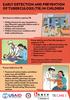 EARLY DETECTION AND PREVENTION OF TUBERCULOSIS (TB) IN CHILDREN Risk factors in children acquiring TB: Children living in the same household as a lung TB patient (especially children under 5) Children
IV. Counseling Cue Cards. ICAP International Center for AIDS Care and Treatment Mailman School of Public Health Columbia University
 IV. Counseling Cue Cards ICAP International Center for AIDS Care and Treatment Mailman School of Public Health Columbia University How to Use These Counseling Cue Cards ABOUT THE CUE CARDS This set of
Ottawa Public Health Tuberculosis Screening and Contact Management Guidelines 2012
 Ottawa Public Health Tuberculosis Screening and Contact Management Guidelines 2012 ottawa.ca/health ottawa.ca/sante 613-580-6744 TTY/ATS : 613-580-9656 Tuberculosis Screening and Contact Management Guidelines
12/2/2015 HEPATITIS B AND HEPATITIS C BLOOD EXPOSURE OBJECTIVES VIRAL HEPATITIS
 HEPATITIS B AND HEPATITIS C BLOOD EXPOSURE DISEASE 101 ONLINE CONFERENCE SARAH WENINGER, MPH VIRAL HEPATITIS.STD.HIV PREVENTION COORDINATOR DECEMBER 3, 2015 OBJECTIVES Describe the populations that should
Chapter 1 Overview of Tuberculosis Epidemiology in the United States
 Chapter 1 Overview of Tuberculosis Epidemiology in the United States Table of Contents Chapter Objectives.... 1 Progress Toward TB Elimination in the United States.... 3 TB Disease Trends in the United
hiv/aids Programme Use of Antiretroviral Drugs for Treating Pregnant Women and Preventing HIV Infection in Infants
 hiv/aids Programme Programmatic update Use of Antiretroviral Drugs for Treating Pregnant Women and Preventing HIV Infection in Infants EXECUTIVE SUMMARY April 2012 EXECUTIVE SUMMARY Recent developments
Tuberculosis Surveillance and Screening for Long Term Care Facilities in Colorado
 Tuberculosis Surveillance and Screening for Long Term Care Facilities in Colorado Developed by the Colorado Medical Directors Association and The Colorado Department of Public Health and Environment Introduction:
3. Blood and blood products such as serum, plasma, and other blood components.
 Mississippi Downloaded 01/2011 101.11 Infectious Medical Waste. The term "infectious medical waste" includes solid or liquid wastes which may contain pathogens with sufficient virulence and quantity such
Preface. TTY: (888) 232-6348 or [email protected]. Hepatitis C Counseling and Testing, contact: 800-CDC-INFO (800-232-4636)
 Preface The purpose of this CDC Hepatitis C Counseling and Testing manual is to provide guidance for hepatitis C counseling and testing of individuals born during 1945 1965. The guide was used in draft
Aim of Presentation. The Role of the Nurse in HIV Care. Global Epidemic 7/24/09
 Aim of Presentation The Role of the Nurse in HIV Care Eileen Nixon HIV Nurse Consultant Brighton and Sussex University Hospitals Overview of key issues that affect people with HIV Identify the role of
The Minnesota Chlamydia Strategy: Action Plan to Reduce and Prevent Chlamydia in Minnesota Minnesota Chlamydia Partnership, April 2011
 The Minnesota Chlamydia Strategy: Action Plan to Reduce and Prevent Chlamydia in Minnesota Minnesota Chlamydia Partnership, April 2011 Section 5: Screening, Treating and Reporting Chlamydia While the information