
How To Use A Powerwave Powerwave
|
|
|
- Buck Powers
- 5 years ago
- Views:
Transcription
1 ELECTRONIC ENGINEERING LTD. PowerWave Zone Control Panel Communicator Installation and Programming Guide Version /2003 P/N Rev. D Y.A-M.H

2

3 CONTENTS INTRODUCTION...4 PACKAGE CONTENTS...4 PW16 CABINET DETAILS...5 INPUTS...6 OUTPUTS...7 PANEL COMMUNICATION PORTS...7 PCB WIRING DIAGRAM...8 PW16 KEYPADS...9 KEYPAD INSTALLATION...10 KEYPAD FUNCTIONS...12 KEYPAD TAMPER...12 MEMORY DISPLAY CHART...13 INSTALLING RX-40 RADIO RECEIVER...15 INSTALLING SPEECH/DTMF UNIT...15 PROGRAMMING...16 USER CODE PROGRAMMING...17 OUTPUT OPTION...19 OUTPUT TIME ZONE...21 KEYPAD OPTIONS...22 PARTITION 'A' OPTIONS...24 PARTITION 'B' OPTIONS...24 PARTITION 'C' OPTIONS...24 MISC SYSTEM OPTIONS...30 ZONE PROGRAMMING...31 ZONE RESPONSE TIME SETTINGS ENTRY/EXIT DELAYS...36 OUTPUT TIMERS...37 ACCESS CONTROL DOTL TIMERS...38 RADIO ZONE PROGRAMMING...38 RADIO ZONE OPTIONS...38 RADIO KEY PROGRAMMING...39 RADIO KEY OPTIONS...39 RADIO KEYS TO OUTPUTS...40 TIME ZONE PROGRAMMING...41 DAYLIGHT SAVING...42 DYNAMIC DIAGNOSTIC DATA...42 REAL TIME CLOCK PROGRAMMING...43 EVENT BUFFER PRINTING RESET DEFAULTS...44 OUTPUT PARAMETER CLEAR FUNCTION...44 WALKTEST MODE...44 COMMAND CONTROL PROGRAMMING...44 COMMAND CONTROL OPERATION...47 COMMON REPORTING SCENARIOS...48 DIALLER REPORTING SCENARIOS...49 DIALLER REPORTING FORMATS...50 PROGRAMMING THE DIALLER...50 MAINS FAIL REPORTING DELAY AREA SPECIFIC DIALLER REPORT OPTIONS...56 CONTACT ID ASSIGNMENTS...55 UPLOAD/DOWNLOAD OPTIONS PROGRAMMING 4+2 EVENT CODES...58 CONTACT ID CODE SUMMARY...58 PROGRAM ADDRESS SUMMARY...59

4 INTRODUCTION This Crow PowerWave Version V6 alarm control panel has been designed to provide the most requested features for both the installer & the end-user. These features include ease of installation, ease of programming and user friendly operation all in a package which is reliable, functional and attractive. Utilising many years of experience in the security industry and implementing valuable feedback, we are proud to provide you with a new generation of alarm control panel. The PowerWave V6 is an alarm system which brings you the quality and features which you deserve at an affordable price. In addition to the the advanced design, only the highest quality components have been used in the production of this PowerWave panel to ensure the highest degree of reliability. This manual will guide you through the installation and programming of your PowerWave alarm panel. For additional information regarding the operation instructions and options, please refer to the enclosed PowerWave User s Guide. PACKAGE CONTENTS This Crow PowerWave package should contain the following items; 1 x PowerWave controller PCB 1 x PowerWave new generation backlit keypad 1 x PowerWave keypad zone list 1 x PowerWave Users Guide 1 x PowerWave Housing 1 x PowerWave mains transformer (15VA/25VA) 1 x PowerWave hardware accessory pack including: 1 x PowerWave installation & programming guide 1 x Spare 1.5A fuse 2 x Housing lid screws 10 x 2k2 (red, red, red) end of line resistors 10 x 4k7 (yellow, purple, red) end of line resistors 10 x 8k2 (grey, red, red) end of line resistors

5 PLASTIC HOUSING DETAILS MOUNTING KEYHOLES WIRELESS RX-16 PCB PowerWave Controler PCB CABLE ENTRY MAINS BLOCK TRANSFORMER Install Battery Here POWER CABLE ENTRY TAMPER ASSEMBLY

6 INPUTS The PW16 has 10 separate programmable monitored analogue inputs, 8 x Programmable, multi-state detection inputs 1 x Programmable tamper input 1 x Programmable key switch input Each input must be terminated with a short or the appropriate combination of end-of-line resistors, depending upon the programmed configuration. ZONE INPUTS - Each of the 8 zone inputs can be independently assigned one of the following configuration options; Type 1(8Z) 8 Zone Short circuit input No-End-of-Line (EOL). Type 2(8Z) 8 Zone Single-End-of-Line 2k2 (EOL) with no tamper. Type 3(16Z) 16 Zone Double-End-of-Line (EOL) No Tamper. Type 4(16Z) 16 Zone Double-End-of-Line (EOL) With open & short circuit Tamper. The following table shows end-of-line resistor configurations. The reference to LEDS in bold below relate to the program option setting at addresses P410E & P419E. The options 1-8 at addresses P410E & P419E relate to zone inputs 1-8. If an input is set to EOL at address P419E then it relates to the single zone being a 2K2 resistor but if zone doubling is turned on for the same input (P310E LED On) then EOL means that the tamper resistor is 2K2. Zone Type Low Zone Hi Zone Tamper Type 1(8 Zone No EOL) P410E LEDS Off, P419E LEDS Off Type 2(8 Zone EOL, No Tamper) P410E LEDS Off, P419E LEDS On Type 3(16 Zone EOL, No Tamper) P410E LEDS On, P419E LEDS Off Type 4(16 Zone EOL, with Tamper) P410E LEDS On, P419E LEDS On N/A (Short circuit) None None 2k2 None None 4k7 8k2 N/A 4k7 8k2 2k2 Type 1 (8 Zones, Short Circuit) n/c LED at Address P410E (Zone Doubling) LED at Address P419E (EOL or Tamper) Type 2 (8 Zones, 2k2 EOL, No tamper) n/o n/c Type 3 (16 Zones, 4k7 & 8k2 EOL with No tamper) Alarm Contact n/c or n/o 4k7 2k2 Alarm Contact n/c or n/o Type 4 (16 Zones, 4k7 & 8k2 EOL, 2k2 EOL for tamper) Alarm Contact n/c or n/o 4k7 Tamper 8k2 Alarm Contact n/c or n/o 8k2 Tamper 2k2 LED # 1 Off = Zone 1 only On = Zones 1 & 9 LED # 2 Off = Zone 2 only On = Zones 2 & 10 LED # 3 Off = Zone 3 only On = Zones 3 & 11 LED # 4 Off = Zone 4 only On = Zones 4 & 12 LED # 5 Off = Zone 5 only On = Zones 5 & 13 LED # 6 Off = Zone 6 only On = Zones 6 & 14 LED # 7 Off = Zone 7 only On = Zones 7 & 15 LED # 8 Off = Zone 8 only On = Zones 8 & 16 LED # 1 Off = No EOL On = Zone EOL or Tamper LED # 2 Off = No EOL On = Zone EOL or Tamper LED # 3 Off = No EOL On = Zone EOL or Tamper LED # 4 Off = No EOL On = Zone EOL or Tamper LED # 5 Off = No EOL On = Zone EOL or Tamper LED # 6 Off = No EOL On = Zone EOL or Tamper LED # 7 Off = No EOL On = Zone EOL or Tamper LED # 8 Off = No EOL On = Zone EOL or Tamper

7 INPUTS Cont. KEYSWITCH - This input can be used to control the panel via a key switch, digital keypad or similar. This is a multi-state input which can be end-of-line configured in the same way as the 8 zone inputs. These multiple end-ofline configurations will produce either set/unset or stay mode on/off on an individual partition basis. TAMPER - A 24Hr tamper circuit is available for monitoring tamper status of detectors, junction boxes, cabinets and satellite sirens etc. This Tamper circuit is programmable with 2 options (P311E1E) either normally closed loop or 2k2 EOL supervision. The tamper circuit must be terminated with an end-of-line resistor if 2k2 EOL supervision is selected. The activation events and outputs for this tamper circuit are mapped in the same manner as for detection zones 1-8. AC - Connect the two low voltage wires (no polarity) from the transformer to the terminals marked AC on the Elite PCB. The PW16 includes a transformer rated at 1.4 amps at 17 volts and incorporates an inbuilt thermal protection fuse. EARTH - Always connect the mains earth to the appropriate terminals on the mains terminal block in the steel cabinet. Also connect a lead from this earth point to the terminal marked "Earth" on the Elite PCB. BATTERY - Connect a sealed lead acid rechargeable 12V d.c. battery to these red and black battery leads. The minimum recommended battery capacity is 7 amp hours. Battery charge current at these terminals is limited to 300mA maximum. LINE IN - This pair of terminals is used to connect the PW16 to the incoming telephone line from the street. The communicator uses this line for reporting. LINE OUT - This pair of terminals is used to connect telephones and other communication equipment to the incoming phone line via the PW16 controller. The telephone line is passed through the PW16 controller to ensure that the line is available to the controller when it is required. Full details regarding the communicator can be found in a separate section. OUTPUTS 12 VOLT OUTPUTS - There are four 12 volt dc outputs available on the PW16 PCB. They are fuse protected suitable for powering detectors, sirens and other external devices. These outputs are marked 12v and 0v, and are supplied by fuses F1 and F2. A maximum total load of 1 amp may be drawn from these terminals. The fourth set of fused (F2) 12V terminals are found adjacent to the keypad comms clock and data terminals. OUTPUTS 1 & 2 - These fully programmable, high current, open collector (high-going-low) type FET outputs are capable of switching up to 12V d.c. These 2 outputs are normally set as switched outputs,providing power for 12v sirens or piezos. However If options 2 or 3 are turned Off at address P310E (2 relating to output 1 and 3 relating to output 2) then the output becomes a siren output designed to drive an 8 ohm 10 watt horn speaker with a modulated siren tone. Also if a horn speaker is connected to Output 1 you may select the listen-in feature to this output at address P313E as well so that the dialling sequence can be heard at the speaker. OUTPUTS 3,4,5,6,7&8 - These are low current, open collector (high-going-low) type outputs capable of switching no more than 100mA. Like Outputs 1 & 2 they are fully programmable. NOTE: - Connecting devices which draw current in excess of 100mA to outputs 3,4,5,6,7&8 may cause permanent damage to the Elite controller output concerned. COMMUNICATION PORTS KEYPAD PORT - The terminals marked POS, NEG, CLOCK, & DATA make up the communications port which the keypads and other intelligent field devices use to talk to the Elite controller. The terminals are connected to corresponding terminals on the remote devices. The "listen" terminal is only used by the keypads and utilises a fifth wire to provide a communicator listen in facility. This feature is particularly useful when servicing monitoring faults. SERIAL PORT - The serial port is for the connection of the RS232 serial board, the optional VOICE Board, DTMF Board or the optional DTU (data transfer) board. The serial board allows for printing of the 255 event buffer to a serial printer or for pc direct up/down load connection. The VOICE board allows for alarm reporting and remote control with speech messages, the DTMF board allows for remote control using tones, both from a remote telephone. The DTU board to allows program back-up and re-instatement.

8 PCB WIRING INSTRUCTIONS PHONE IN In Out PC INTERFACE VIA D-LINK / EXPANTION CARD AC 17V AC 17V MAIN FUSE FW-RCV RECIEVER KEYPAD BUS CONNECTION EXT. KEYPADS / OUTPUT BOARD OR RX-40 RECIEVER OPTIONAL PHONE LINE CONNECTOR 4 wires POWER FOR DETECTORS & ACCESSORIES OUT 1 & A max & 12V Listen Data Clock Neg Pos 0V 1 12V Outputs OUT mA max & 12V 1 9 COM COM V 0V 5 13 COM COM 8 16 BATTERY Red Black 12V 0V Key COM Tamp 2K2 Key switch input 1+8 0V 1+8 0V ZONE 1 BATT. 12V 8Ah ZONES 1-8 ZONES 1-8 2K2 ZONE 8 100V V AC Input 1+8 0V 4K7 ZONE 1 8K2 ZONE 8 -out X +12V 1+8 0V 4K7 8K2 2K2 NC NO COM

9 PW-16 KEYPAD OPTIONS LCD-KEYPAD Multiple language versions LED indicators READY, ARMED, TROUBLE. 3 KeyPad activated alarms. FIRE, MEDICAL, PANIC Audible feedback of correct key entries, pre-alert, system trouble Backlit keypad and display with boost control keypad tone control Large 32-character LCD display - system menus and prompts - trouble indications - time &date clock - viewable event buffer - all system parameters programming - customizable zone labeling LED-KEYPAD LED indicators ARMED, TROUBLE. 4 KeyPad activated alarms. FIRE, MEDICAL, PANIC Audible feedback of correct key entries, pre-alert, system trouble Backlit keypad Viewable event buffer All system parameters programmable

10 KEYPAD INSTALLATION INSTALLATION Separate the two keypad halves by carefully inserting a small screwdriver into the release slots on the bottom edge of the keypad front half and applying a gentle pressure. This will release the bottom edge of the housing enough for you to unclip the top. Screw the base to the wall using the mounting holes provided. These holes will match the standard single switch plate spacing. Ensure the base is mounted right side up. It is marked with the word "TOP" to aid orientation. When fixing the base to the wall make sure the top of the screw heads will not touch or short out the underside of the PCB when the top half of the keypad is reinstalled. Bring the cables through the centre of the base. Connect the 4 or 5 wires to the 5 way terminal block on the rear of the keypad PCB making sure to match the cables up with the terminals as marked on the control panel's keypad port. The 5th wire is connected from the "LIN" terminal of the keypad to the "Listen" terminal of the PW16 PCB keypad port. Once the cables have been terminated and the required address allocated (see section below) clip the front half of the keypad onto the base by first engaging the clips at the top edge and then close the front down and clip it in at the bottom. Now stick the zone list provided to the inside of the hinged lid. WIRING The PowerWave keypad connects to the Powerwave Controller via a 4 or 5 wire data & power connection. A maximum of 8 LED keypads can be connected, each wired in parallel. A 5th wire may be used to provide a "Listenin" facility at the keypad when an PW communicator panel is being used. The maximum recommended cable using standard 0.2mm security cable is 50m. Cable runs exceeding this distance may require 0.5mm cable. Always use good quality cable. Some installations may require data cable to ensure data integrity in noisy sites. User information : Keypad LCD Power Wave CR16M-LCD Keypad Users Operating and Programming Guide Keypad LED Power Wave 16 Users Operating and Programming Guide KEYPAD TAMPER OPTION SETTING Switch marked D used to Enable and Disable the Keypad Tamper option: To disable keypad tamper, change switch D to ON position. To enable keypad tamper, change switch D to OFF position. LED KEYPAD ADDRESS ASSIGNMENT Each of the 8 possible LED keypads which are able to be connected to your PW4 panel must be addressed individually to avoid BUS conflicts when multiple users are operating different keypads simultaneously. As default, each keypad comes addressed as #1 (Switches A B and C at ON position). To assign a keypad as address #2, change switch A to OFF position. To assign a keypad as address #3, change switch B to OFF position. To assign a keypad as address # 4, change switches A and B to OFF position. INDIVIDUAL KEYPAD ADDRESS SETTING

11 D C B A D C B A KEYPAD # 1 KEYPAD # 5 D C B A D C B A KEYPAD # 2 KEYPAD # 6 D C B A D C B A KEYPAD # 3 KEYPAD # 7 D C B A D C B A KEYPAD # 4 KEYPAD # 8 When the PW16 keypad is displaying numeric values in program mode it uses the zone LEDS 1-8 to indicate a value of 1-8 and to maintain consistency with the 8 zone LED keypad, the panel uses the A LED to indicate a 0 and the B LED to indicate a 9. A = 0, B = 9. LIGHT OFF ON STEADY FLASHING BATTERY Normal Battery Low MAINS Normal Mains Power Off ARMED Unused Unused Unused MEMORY Normal Memory Display New Event to View BYPASS Normal Bypass Mode Active Zone(s) Bypassed PROGRAM Run Mode Client Program Mode Installer Program Mode TAMPER Normal Tamper still Active New Tamper Alarm LINE Normal Communicating Line Fail or no Kissoff AUX. Unused Unused Unused CONTROL Control Function Off Control Function On DOTL Override On ZONES 1-16 Zone Secure Zone Violated Zone in Alarm A Partition A Disarmed Partition A Armed Partition A in Stay Mode B Partition B Disarmed Partition B Armed Partition B in Stay Mode C Partition C Disarmed Partition C Armed Partition C in Stay Mode D Unused Unused Unused

12 KEYPAD FUNCTIONS The PW LED Keypad consists of; an 18 button, backlit silicone rubber keypad, 30 LED indicators and an internal piezo buzzer housed in a modern white plastic housing. The plastic housing has a hinged front lid to cover and protect the rubber buttons when not in use. All the electronics are contained on a single circuit board inside the housing. Because the keypads communicate with the controller using data, the cable run from panel to keypads is secure against tampering. For this reason there is no tamper switch on the keypad assembly. Access to the keypad electronics will not disarm the panel. BUTTONS The 18 silicone rubber buttons are used for the following functions. In normal operating mode the numeric keys are used for entering Access Codes. In Program Mode the numeric keys are used for entering program addresses & new values. The buttons with text labels are used as function buttons and select the options indicated by the text and normally precede other button presses, e.g. to enter Bypass Mode press <BYPASS> and a two digit numeric key entry corresponding to the zone number you wish to be excluded eg 01 for Zone # 1, 09 for Zone # 9 and 15 for Zone # 15. The PROGRAM Key is used to prefix option selections in the program modes e.g.<program> 24 <ENTER> selects User Code 24 when in either of the two program modes. The PROGRAM key is also used prior to a Master or Installer Code to enter one of the program modes from normal operating mode. The ENTER Key is used after entry of a sequence of numbers (eg entry of a User code to Arm or Disarm the system). As a User code can be 1-6 digits in length, the panel will not accept a code entry until the Enter key is pressed. The CONTROL button, if enabled, is used to produce an output without an alarm event. This control output can be used to operate other external devices such as garage door openers, door locks, lights or other options as required. LED INDICATORS The LED indicators are used to display system conditions including Zone status, Battery state, Tamper etc. Please refer to the LED table on page 12 for a full explanation of the conditional displays. KEYPAD TAMPER (wrong code alarm) A wrong code or Keypad Tamper alarm is generated by the Elite after 4 consecutive invalid code entries. The controller will not Lock-Out the keypad at this point but simply create an alarm condition that may be reported to a monitoring company via the dialer. Entry of a valid user code will reset the Keypad Tamper alarm however, the alarm event will be written into memory and the keypad memory light will be flashing indicating the presence of a new memory entry.

13 VIEW MEMORY MODE This PW version 6.20 and up alarm panel has an event memory which stores the most recent events (up to 255 events) including all alarm events, all system events such as mains failure etc as well as settings. This event memory is displayed via the standard keypad with the most recent event shown first and subsequent events following in descending order from newest to oldest. The "MEMORY" light will flash on and off when there is a new event in memory which has not been viewed. To stop the "MEMORY" light flashing, simply press the MEMORY button and the event memory will be flashed back to you with the most recent event shown first. Each event is separated by a beep tone. Current System Alarms When viewing the memory event buffer at the keypad by pressing the MEMORY button, the first thing that will always be displayed is the Current System Alarms that are still present. The Current System Alarms are indicated by the Memory/Mains & Battery LEDS being on plus a zone LED from 1-8 to indicate the system alarm/s present. If no Zone LED s are on at this time, it means that there are no current system alarms. If a zone LED or LED s are On then this indicates system alarms that have not yet cleared. The zone LED s 1-8 are pre-defined as to what system alarm they will display. These system alarm indications are shown in the table below. Following the display of current system alarms the panel will then sequence through the 255 historical memory events starting at the most recent event. The second table shows the alarm events that can be displayed in memory mode and what indicators are used to show them. CURRENT SYSTEM ALARMS LED # 1 Battery Low LED # 5 Radio Pendant Battery Low LED # 2 Mains or 12V Fuse Failure LED # 6 Supervised Detector Failure LED # 3 Telephone Line Failure LED # 7 Zone Inactivity Timeout LED # 4 Radio Detector Battery Low LED # 8 Dialler Kiss-off Failure HISTORICAL EVENT DISPLAY CHART EVENT DEVICE INDICATOR STATUS ACTIVATION Zones 1-16 LED's 1-16 On Steady EXCLUDE Zones 1-16 Bypass LED's 1-16 DETECTOR TAMPER (SHORT CIRCUIT) DETECTOR TAMPER (OPEN CIRCUIT) Zones 1-8 Zones 9-16 TAMPER LED's 1-8 TAMPER LED's 9-16 On Steady On Steady Flashing On Steady Flashing On Steady CABINET TAMPER Cabinet or Satellite Siren TAMPER Flashing WRONG CODE ALARM CROW KEYPAD TAMPER SWITCH ACTIVATED Code Tamper at Keypad # Keypad Tamper Alarm at Keypad # TAMPER LED s 1-8 TAMPER LED s 1-8 On Steady On Steady On Steady On Steady LOW BATTERY Controller Battery BATTERY Flashing MAINS FAILURE Controller Mains Supply MAINS Flashing FUSE FAILURE (F1 or F2) Controller on-board fuses MAINS Flashing

14 VIEW MEMORY MODE HISTORICAL EVENT DISPLAY CHART-Continued EVENT DEVICE INDICATOR STATUS LOW BATTERY-ZONE LOW BATTERY-PENDANT Radio Zone Zone 1-16 Radio Key User 1-20 BATTERY LED's 1-16 BATTERY LED's 1-16,17,18,19,20 ZONE INACTIVITY TIMEOUT Zone 1-16 LED s 1-16 TAMPER CONTROL SUPERVISED RADIO TIMEOUT Zone 1-16 LED s 1-16 TAMPER BYPASS DURESS ALARM Duress Alarm (at Keypad #) TAMPER LINE LED s 1-8 KEYPAD PANIC Panic Alarm at Keypad LINE LED s 1-8 KEYPAD FIRE Fire Alarm at Keypad LINE CONTROL KEYPAD MEDICAL Medical Alarm at Keypad LINE BYPASS Flashing On Steady Flashing On Steady On Steady Flashing Flashing On Steady Flashing Flashing Flashing Flashing On Steady Flashing Flashing Flashing Flashing Flashing Flashing ARMED Area "A" Armed "A" On Steady ARMED Area "B" Armed "B" On Steady ARMED Area "C" Armed C On Steady STAY MODE ON Area "A" in Stay Mode "A" Flashing STAY MODE ON Area "B" in Stay Mode "B" Flashing STAY MODE ON Area "C" in Stay Mode C Flashing TELEPHONE LINE FAIL Panel Dialer LINE On Steady EXCESSIVE RE-TRIES Panel Dialer LINE LED 1 FAILURE TO GET A KISSOFF Panel Dialer LINE LED 2 WALKTEST MODE Manual Walk-test Mode MAINS BATTERY LINE LED s 1-16 On Steady On Steady On Steady On Steady On Steady On Steady On Steady On Steady

15 INSTALLATION OF FW-RCV RX-40 RECEIVER The PW16 is fully high level compatible with the FW-RCV,RX-40 radio receiver. The addition of this receiver will add wireless capability to your system in the form of wireless PIR detectors, Wireless Radio key transmitters and wireless reed switch transmitters. The receivers connects to the same communications port as the keypads and can be installed, either inside the cabinet, or if preferred, may be installed at a remote location. The Receiver is available in 2 frequencies Mhz. Or Mhz.Multiple receivers may be connected to the panel to increase the effective range if required. The receiver requires 4 cores and can successfully be run in 0.2mm unscreened cable over a distance of up to 100metres. Like the keypads the receiver has 12v and 0v terminals for connection to the 12v supply and CLK and DATA terminals for connection to the communications bus. The red LED fitted to the receiver will indicate when the unit is in "Learn" mode (LED Flashing) or when it is receiving an actual radio transmission (On Steady) INSTALLATION OF VOICE or DTMF BOARD The PW16 control communicator can also be fitted with a 90 second Voice Board or DTMF module. The Voice board stores either alarm event messages for Voice dial monitoring and /or status messages for use with Command Control. The DTMF board provides decoding of keypad numeric entries from a remote telephone. The Elite V6 Voice or DTMF Boards are installed directly onto the motherboard via the "SERIAL" socket. Installation procedure for the Voice or DTMF Board module is as follows. 1 Power-down the Elite fully before starting the installation procedure. 2 Carefully plug the Voice or DTMF Board into the SERIAL socket. 3 Power-up the Elite. Once you have installed the Voice Board you can record your personalised speech messages into the module with the speech programmer. The programmer plugs onto the 10 way strip connector on the voice board and must be installed with the Brown wire towards the PW control board heatsink. Some programmers are fitted with a polarisation pin on the connection socket which will prevent incorrect insertion however, some earlier units are not. To record your messages once the programmer is installed, first press the reset button on the side of the Voice Board, then hold the programmer about 10 cm away from the mouth and speak clearly at normal level into the microphone while holding down the "REC" button. When you reach the end of your message release the REC button. (NOTE: Each individual message must be longer that 2 seconds duration). When recording your voice alarm message, you must ensure that you clearly identify the origin of the call. You can play the message back through the programmer by first pressing the reset button then by pressing the "PLAY" button momentarily. Because the Elite V6 control communicator has the ability to store multiple alarm event and control voice messages, you must store individual messages at what is known as recording slots within the Voice Board. These recording slots are recorded sequentially, one message starting where the other finishes. Every time you press and release the REC button of the programmer, you create an end of message marker. These markers are used to define the recording slots within the Voice Board and can be of varying length according to each message duration. To re-record a message you must first press the "RESET" button on the speech module to get back to recording slot #1. Once you are at slot #1 you can re-record your messages in order as required. NOTE: When recording multiple messages you only press the RESET button once at the beginning then record all messages sequentially as stated above. When you have finished recording all of your messages you can then press the RESET button to allow play-back of the recording messages for verification purposes. When you have finished recording your alarm messages, unplug the programmer and the process is complete.

16 PROGRAMMING YOUR PowerWave ACCESS TO INSTALLER PROGRAMMING ON POWER UP When power is applied to the controller for the first time, with the panel tamper input open and none of the Areas either fully Armed or in Stay mode, the panel will inhibit tamper alarms and ready the panel to enter PROGRAM Mode( unless the Installer Lock-out option P310E7E has previously been enabled). At this point you can go to any keypad which is connected to the panel and; Press PROGRAM - ENTER which will automatically put that keypad into full Program mode, Program LED Flashing.(NOTE:Only one keypad can be in Program mode at any time) ACCESS TO PROGRAM MODES FROM RUN MODE Before you can enter program mode from the normal Run Mode, the panel must be unset and not in stay mode. Then; Press <PROGRAM> - <Code 1(or Master Code)> - <ENTER> Program light steady Note: Default Master Code (Code 1) is 1,2,3 You are now in Client Program Mode. When you are in Client programming mode you have access to program addresses P1E to P50E (user code programming). To Enter Installer Program Mode from Client Program Mode; Press <PROGRAM> - <Install Code> - <ENTER> Program light flashing Note: Default Install Code (P99) is 0,0,0,0,0,0 By default the installer can go directly to Installer Program Mode from Normal Run mode provided No Areas are Armed or in Stay Mode. The Installer Mode direct option can be disabled at address P310E Option 7. HOW TO PROGRAM The programming sequence always follows this pattern; <PROGRAM> - <1,2 or 3 digit address> - <ENTER> 3 short beeps if OK - 1 long beep if error The leds will display current value or status Enter the new value or option <New Value> - <ENTER> 3 short beeps if OK - 1 long beep if error An example of programming is shown below. Here we are programming User Code 23 (P23E) with the code number of P 23 E 2,5,8,0 E In this example the <P> represents the PROGRAM key, <23> represents the actual program address, 2580 is the data and <E> represents the ENTER key. TO CLEAR PROGRAM INFORMATION (From Install Mode Only) There are multiple options available for clearing program information (Reset to defaults). These are detailed on page 44. e.g.to reset User Codes 1-24 (P 840E) Press <PROGRAM> <ENTER> 3 beeps - Program light flashing After resetting the various defaults, all options associated with that function (eg User Code Defaults P840E) will be set to the default values shown in the Program Summary at the rear of this manual. The default settings have been chosen to simplify the installation process by minimising the amount of programming necessary to get the system fully functional.

17 TO EXIT PROGRAM MODES To exit program modes when you have finished programming: Press <PROGRAM> - <ENTER> Program light goes out The panel is now back in normal Run Mode, any program changes you have made will have replaced previous values and be in effect. Note: During programming Tampers and 24 hour alarms are disabled which allows quiet access to the panel, detectors and satellite siren units etc. On exiting program mode, all inputs are scanned and if any tampers or 24Hr alarms are present an activation will occur. Note: Where there are multiple options at one address, options 0 & 9 have been reserved. Entering a 0 at the address will turn all options off whereas entering a 9 will turn all options on. PROGRAMMING USER CODES P1E to P50 E There are 51 codes available in the PowerWave16, 50 user codes and 1 install code. The user codes are located in addresses By default, Code 1 is the Master Code because it has full access to enter program mode. Other user codes can be programmed as master codes also if required. The Installer code is stored at address 249 and is used to move from Client Program mode up to Installer Program mode. Codes 1-50 may be varied in length from 1 to 6 digits. Code 249 must be 3-6 digits. To program a User Code you must first be in client or installer program mode, then select the address from (If there is already a code programmed at this address, it will be flashed back to you) NOTE: Not all User Codes may have the ability to access Client Program Mode. The installer can restrict access to Users so that they have no access to Client Mode or they can have access to change only their code or they may have access to change all User codes as defined at addresses P101-P150. To change User code 1 from the default setting of 1,2,3 to 9,8,7,6 you would enter the following data at the keypad. P 1 E (Old code is flashed back at the keypad, in this case it will be 1,2,3) Then 9876 E 3 beeps - program light On or Flashing The new code will now be displayed back using the keypad LED s User 1 Code To program a new user code for User 5 you would enter the following; P 5 E (If a code was there it would be displayed if not the display will be blank ) Then 567 E 3 beeps - program light On or Flashing The new code will now be displayed back using the keypad LED s

18 To replace a code simply enter the new code in the same address as the old code. This will overwrite the previous code but maintain the user permissions as mapped to that user number. To clear or delete a code in LED Keypad simply press the BYPASS button at the address where the old code is stored. eg. P 3 E <BYPASS> E 3 beeps - Program light On or Flashing When flashing back codes and values Zone indicators 1-8 are used to indicate digits 1-8. The digit 0 is indicated by the "A" LED and 9 is indicated by the "B" LED To clear or delete a code in LCD Keypad simply press the CONTROL + 0 buttons at the address where the old code is stored. eg. P 3 E <CONTROL> + 0 E 3 beeps USER CODE PERMISSIONS STANDARD USER CODE PERMISSIONS - P51E-P100E Option 1 - Code is assigned to Area A Option 2 - Code is assigned to Area B Option 3 - Code is assigned to Area C Option 4 - Code can Arm Area Option 5 - Code can Disarm Area Option 6 - Code can turn on Stay Mode Option 7 - Code can turn off Stay Mode Option 8 - Code can Operate control Functions. User 1 Options NOTE: Options 1, 2 & 3 set the Area/s the code is assigned to whereby options 4, 5, 6, 7 & 8 determine the functions the code can operate for the Area/s it has been assigned. EXTENDED USER CODE PERMISSIONS P101E-P150E Option 1 - Code can override DOTL timer Option 2 - Code can change dialler telephone numbers Option 3 - Code can alter the real time clock Option 4 - User can start a print-out of the event buffer Option 5 - User can answer an incoming call and start up/down load Option 6 - User can enter Client Program and change their code only Option 7 - User can enter Client Program and change all codes Option 8 - User can allow access to Installer Program mode from Client Mode Option 1 - Code can override DOTL timer-the user can inhibit the door open too long function of the access control feature (Control) while in Client Mode. Refer to user manual for details. Option 2 - Code can change dialler telephone numbers -The User can change telephone numbers from Client Mode. Option 3 - Code can alter the real time clock -The User can adjust the Day,Date & Time of the Panel Clock from Client Mode. Option 4 - User can start a print-out of the event buffer -The User can cause a printout of the 255 event buffer to a serial printer from Client Mode. Option 5 - User can answer an incoming call and start up/down load -The User can cause the panel to answer an in-coming call for upload/download from Client Mode. Option 6 - User can enter Client Program and change their code only -The User can change their own code only from Client Mode. Option 7 - User can enter Client Program and change all codes -The User can change any of the 24 User codes from Client Mode. Option 8 - User can allow access to Installer Program mode from Client Mode Access to Installer Mode can be granted by this user from Client Mode. NOTE: If a user has option 7 or 8 assigned to their code then they can also initiate Walk-test Mode (P836E) from Client Program Mode. User 1 Options B

19 USER CODE TIME CONTROL P151E-P200E Users codes may have Time Zones assigned to control their operation. These Time Zones determine when a particular user code will work. Addresses P151E - P200E are used to map the user code to the required Time Zones. The actual Time Zone parameters are defined at addresses P791E - P814E. More than one time zones can be assigned to a code. The time zones are numbered 1-8 and are selected by the numeric buttons 1-8 on the keypad. A value of zero (0) entered at any of these addresses is fixed as 24 hour seven day access and is the default time zone for all 50 user codes. P151E TZ E Where TZ represents any Time Zone from 1-8 valid for User Code #1 P152E TZ E Where TZ represents any Time Zone from 1-8 valid for User Code #2 P200E TZ E Where TZ represents any Time Zone from 1-8 valid for User Code #50 NOTE: The ability to assign more than one Time Zone to each user allows for different time based controls for different days of the week. INSTALLER CODE P249E User 1 Time Zone This code is used to enter full Installer Program mode (Program light flashing) from Client Program mode (Program light steady) The default installer code is To change this code you Must first be in Installer Program Mode then enter your new installer code at the P249E address. The new code will be flashed back to you automatically. The Installer Code may vary from 3-6 digits in length. If the alarm is Unset then the Installer Code can gain access directly to Installer Program Mode provided Option 6 at address P310E is on. If any partition is armed then the installer code can only gain access to Installer Program Mode from Client Program Mode. Installer Code PROGRAMMING OUTPUT OPTIONS P201E-P208E This block of addresses (P201E - P208E) is used to map output modifiers to each of the 8 outputs available on the PW16. The optional 4 way relay output board (OUTPUTX4) can be configured to follow the program options for any of the 8 outputs, the 4 relays can be assigned as output 1 or 5, 2 or 6, 3 or 7 & 4 or 8. P201E 1E Invert output #1 - Default off 2E Flash output #1 - Default off 3E Single pulse to output #1 - Default off 4E Lockout output #1 once reset - Default off 5E Output mapped to Remote Command Control - Default off 6E Output mapped to local Command Control - Default off 7E Day zones linked to pulse timer - Default off 8E Output pulses on a 24 hour zone alarm - Default off Out 1 Option A

20 Option 1 Option 2 Option 3 Option 4 Option 5 Option 6 Option 7 Option 8 Invert Output - This option is used to invert the normal state of the output. The PW16 uses open collector type transistor switches and the default state of all outputs is off or high. When in alarm the transistor switch is turned on and the output is switched low. The invert option reverses this function. Flash Output - This option causes the output to switch on and off at a rate set by the pulse timer for the output when in alarm and is normally used to flash a lamp during an activation. Single Pulse to Output - This option, when applied, produces a single pulse set by the pulse timer at the output during an alarm. Lockout Once Reset - This option is used to limit the output to one operation per arming period. Output mapped to Remote Command Control - This option is used to map an output to the remote command control function whereby the output can be controlled via the telephone (this requires the optional voice board or DTMF unit) Output mapped to Local Command Control - This option is used to map an output to the local command control feature whereby the output can be controlled directly from the keypad. The DTMF command control code at address P371 is used for this local control function. Day Zones Linked to Pulse Timer - Day Zones programmed to this output will pulse at the rate programmed for the pulse timer to this output for the duration of the day zone to Output timer (e.g. if the day zone is in partition A, then the timer at P571E applies) Pulsed 24 hour alarm - If a 24 hour zone activates the alarm this option will cause the output to pulse at a rate equal to the value set for the pulse timer for this output. This feature is provided to differentiate between a burglar and fire alarm using the same siren. P202E - P208E As per P201E above for Outputs 2-8 PRIMARY ALARMS TO OUTPUT OPTIONS P211E - P218E In this block of addresses P211E relates to output #1, P212E relates to output #2 etc P211E 1E Keypad Panic Alarm to Output #1 2E Keypad Fire Alarm to Output #1 3E Keypad Medical Alarm to Output #1 4E Duress Alarm to Output #1 5E Wrong Code Tamper Alarm to Output #1 6E Radio Key Panic Alarm to Output #1 7E 24 Hour Zone Alarm to Output #1 8E 24 Hour Fire Zone Alarm to Output #1 Out 1 Option B Option 1 Option 2 Option 3 Option 4 Option 5 Keypad Panic to Output - This option is used to map the operation of the keypad panic button to an output i.e. when the Panic button (or 1 & 3) on a keypad is pressed any output with this option enabled will turn on. Keypad Fire Alarm to Output - This option is used to map the operation of the keypad Fire Alarm (buttons 4 & 6) to an output i.e. when the Fire Alarm (4 & 6) on a keypad is pressed any output with this option enabled will turn on. Keypad Medical Alarm to Output - This option is used to map the operation of the keypad Medical Alarm (buttons 7 & 9) to an output i.e. when the Medical Alarm (7 & 9) on a keypad is pressed any output with this option enabled will turn on. Duress Alarm to Output - This option is used to map a Duress Alarm to an output. A Duress Alarm is generated when the alarm is unset by a valid user that adds the duress digit to the beginning of their code Wrong Code Tamper Alarm to Output - This option is used to map the Wrong Code Tamper Alarm to an output. A Wrong Code Tamper Alarm is generated if an invalid code is entered more than 4 times at a keypad. This option will cause the output to turn on when this alarm condition is present.

21 Option 6 Option 7 Radio Key Panic Alarm to Output - This option is used to map the operation of the Radio Key Panic Alarm to an output i.e. when the Radio Panic is generated any output with this option enabled will turn on. 24 Hour Zone Alarm to Output - This option is used to map 24 Hour Zone Alarms to an output i.e. when the 24 Hour Zone Alarm is generated any output with this option enabled will turn on. Option 8 24 Hour Fire Zone Alarm to Output - This option is used to map 24 Hour Fire Alarm to an output. When the 24 Hour Fire Alarm is generated this will cause the output to flash at a rate set by the pulse timer for this output to identify the difference between a fire alarm and normal burglar alarm. SECONDARY ALARMS TO OUTPUT OPTIONS P221E - P228E In this block of addresses P221E relates to output #1, P222E relates to output #2 etc P221E 1E Zone Tamper Alarm to Output #1 2E System Tamper Alarm to Output #1 3E Mains Failure to Output #1 4E Panel Battery Low to Output #1 5E Telephone Line Failure to Output #1 6E Dialler Failure to get a Kiss-off to Output #1 7E Automatic Pulse to Output #1 8E 24 Hour Smoke Reset to Output #1 Out 1 Option C Option 1 Option 2 Option 3 Option 4 Option 5 Option 6 Option 7 Option 8 Zone Tampers to Output - Where dual end-of-line resistors are being used to provide individual zone tampers this address is used to map the Zone Tampers to an output. System Tamper Alarm to Output - This option is used to map activations of the common Tamper Input to an output. This common tamper input is normally used to monitor the panel cabinet and satellite tamper switches. Mails Failure To Output - A mains failure will be indicated at the output when this option is enabled. The Alarm Reset Timer for this output must be set to 0. Panel Battery Low to Output - A battery Low condition will be indicated at the output when this option is enabled. The Alarm Reset Timer for this output must be set to 0.. Telephone Line Failure to Output - A telephone line failure will be indicated at this output when option is enabled. When the line restores this output will return to normal. Dialler Failure to get a Kiss-off to Output - If the dialler reaches its maximum dialling attempts for an alarm condition and is not kissed off, this failure will be indicated at the output. When this alarm event is accessed via Memory Mode at any keypad the output will reset back to normal. Automatic Pulse to Output - This option will cause the output to pulse (at a rate set by the pulse timer for the output) every 5 seconds. It is primarily designed to flash an external light to show that the alarm is still active (reassurance indication). 24 Hour Smoke Reset to Output - This option will cause the output to pulse for 2 seconds on arming of any Area following a 24 Hour zone alarm. It is designed to allow automatic reset of smoke detectors following an alarm. OUTPUT AUTO ON/OFF TIME ZONES P231E - 238E These addresses are used to map automatic ON and OFF periods to each of the outputs if required. When a timezone starts it will cause the output to turn on and when the time-zone ends it will cause the output to turn off. The actual times assigned to each time-zone are defined at addresses P791E - P814E. Multiple Time Zones may be assigned to each output NOTE: A value of zero (0) at these addresses will disable any auto turn on turn off features at that output.
22 P231E TZE Where TZ represents a Time-Zone # from 1-8 which defines the turn on and turn off times required for output #1 Out 1 TZ A P232E - P238E As per above but for outputs 2-8 OUTPUT INHIBIT TIME ZONES P241E - P248E These addresses are used to map inhibit time-zones to each of the outputs as required. The assigned time-zone will enable the output so that it can be used during the time-zone. If an output has a time-zone assigned and that time-zone is off, the output cannot be turned on by any programmed function (the output is inhibited). The actual times assigned to each time-zone are defined at addresses P791E - P814E. This feature is normally used to restrict the Access Control functions to pre-determined times and days P241E TZE Where TZ represents the time zone which enables output #1 P242E TZE Where TZ represents the time zone which enables output #2 P243E TZE Where TZ represents the time zone which enables output #3 P244E - P248E As per above but for outputs 4-8 NOTE: A value of zero (0) at these addresses will enable that output at all times. Out 1 TZ B PROGRAMMING KEYPAD OPTIONS P250E - P278E The block of addresses from P250E to P278E are used to assign the basic options of each keypad in the system. Each of the address lines from P250E to P278E may have 8 options assigned where the 8 options represent the individual addresses of the keypads in the system. i.e. if options 1, 2 & 4 are enabled at address P250E then keypads 1, 2 and 4 would be assigned to area "A". NOTE: A keypad can only be used to control the partition or area to which it has been assigned. Within the display of the PW16 keypads you will find the indicators "A", "B" and C. These indicators are used to show the Armed state of individual areas (LED on) of whether an area is in Stay Mode (LED flashing). P250E 1-8E Keypads assigned to Area A (Default 1-8) If the LED is On, the keypad is assigned to Area A. P251E 1-8E Keypads assigned to Area B (Default none) If the LED is On, the keypad is assigned to Area B. P252E 1-8E Keypads assigned to Area C (Default none) If the LED is On, the keypad is assigned to Area C. KeyPad in A P253E 1-8E Keypads with permission to fully Arm (Default 1-8) If the LED is On, the keypad is allowed to Arm the assigned Area/s. P254E 1-8E Keypads with permission to arm Stay Mode (Default 1-8) If the LED is On, the keypad is allowed to Arm Stay Mode for the assigned Area/s.
23 P255E 1-8E Keypads with permission to use the Control Function (Default 1-8) If the LED is On, the keypad can operate the Control function for the assigned Area/s. P256E 1-8E Keypads with permission to Bypass (Default 1-8) If the LED is On, the Bypass button on the keypad is enabled. P257E 1-8E Keypads with Panic button enabled (Default 1-8) If the LED is On, the Panic button on LED keypads is enabled. P258E 1-8E Keypads with delayed Panic button enabled (Default 1-8) If the LED is On, the Panic button on LED keypads must be held down for 2 seconds to create a panic alarm. The option at address P257E MUST be off for the delayed option to work. P259E 1-8E Keypads with Buttons 1 & 3 Panic Alarm enabled (Default 1-8) If the LED is On, pressing buttons 1&3 simultaneously will create a Panic alarm at the keypad. P260E 1-8E Keypads with Buttons 4 & 6 Fire Alarm enabled (Default 1-8) If the LED is On, pressing buttons 4&6 simultaneously will create a Fire alarm at the keypad P261E 1-8E Keypads with Buttons 7 & 9 Medical Alarm enabled (Default 1-8) If the LED is On, pressing buttons 7&9 simultaneously will create a Medical alarm at the keypad Medical Combo P262E 1-8E Keypads with buzzer mapped to normal zone alarms (Default 1-8) If the LED is On, a Zone alarm during the Armed state will cause the Keypad buzzer to sound (audible alarm) at the keypad. P263E 1-8E Keypads with buzzer mapped to stay mode zone alarms (Default 1-8) If the LED is On, a Stay Mode Zone alarm during the Armed state will cause the Keypad buzzer to sound (audible alarm) at the keypad. P264E 1-8E Keypads with buzzer mapped to 24 hour zone alarms (Default 1-8) If the LED is On, a 24 Hour Zone alarm will cause the Keypad buzzer to sound (audible alarm) at the keypad. P265E 1-8E Keypads with buzzer mapped to day mode alarms (Default 1-8) If the LED is On, a Day Zone alarm will cause the Keypad buzzer to sound (audible alarm) at the keypad. P266E 1-8E Keypads with buzzer mapped to armed mode exit delay beeps (Default 1-8) If the LED is On, the keypad will sound the exit beeps when the system is armed to indicate the exit delay has started. P267E 1-8E Keypads with buzzer mapped to stay mode exit delay beeps (Default none) If the LED is On, the keypad will sound the exit beeps when stay mode is armed to indicate the exit delay has started. P268E 1-8E Keypads with buzzer mapped to entry delay beeps (Default 1-8) If the LED is On, the keypad will sound the entry beeps to indicate the entry delay has started. P269E 1-8E Keypad buzzer to warn of zone inactivity or supervised radio timeout alarm (Default 1-8) If the LED is On, a Supervised Radio signal failure or no activity on a zone for the programmed period will cause the buzzer at the keypad buzzer to sound. Pressing any button will silence the beep. P270E 1-8E Keypads with buzzer mapped to keypad tampers (Default 1-8) If the LED is On, a keypad tamper alarm (four incorrect attempts to enter in a code) or a Crow keypad tamper switch alarm will cause the buzzer at the keypad to sound. P271E 1-8E Keypads with buzzer mapped to zone tampers (Default 1-8) If the LED is On, a zone tamper alarm will cause the buzzer at the keypad to sound. P272E 1-8E Keypads with buzzer mapped to system tampers (Default 1-8) If the LED is On, a system tamper alarm will cause the buzzer at the keypad by to sound. Panel Tamper Beep
24 P273E 1-8E Keypads with buzzer mapped to Pendant Panic Alarm (Default 1-8) If the LED is On, a radio Pendant Panic alarm will cause the buzzer at the keypad to sound. P274E 1-8E Keypads with buzzer mapped to keypad Panic or (1 & 3) Alarm (Default 1-8) If the LED is On, a Keypad Panic alarm will cause the buzzer at the keypad to sound. P275E 1-8E Keypads with buzzer mapped to keypad Fire (4 & 6) Alarm (Default 1-8) If the LED is On, a Keypad Fire alarm will cause the buzzer at the keypad to sound. P276E 1-8E Keypads with buzzer mapped to keypad Medical (7 & 9) Alarm (Default 1-8) If the LED is On, a Keypad Medical alarm will cause the buzzer at the keypad to sound. P277E 1-8E Keypads with buzzer mapped to phone line failure (Default none) If the LED is On, a Telephone Line Failure will cause the buzzer at the keypad to sound. Pressing any button will silence the beep. P278E 1-8E Keypads with facility to turn the LED's off after Exit Delay (Default none) If the LED is On, the Zone & System LED s on an LED keypad will turn off when all areas assigned to the keypad are Armed or in Stay mode. On an LCD keypad, the LCD and the keypad button backlighting will turn off when Armed or in Stay Mode. The LED s and backlighting will automatically turn on again if there is an alarm, an entry delay is started, any button is pressed at the keypad or when the system is Disarmed. Leds Off when Idel PARTITION A,B & C PRIMERY OUTPUT OPTIONS PARTITION "A" - P281E - P288E PARTITION "B" - P381E - P388E PARTITION "C" - P481E - P488E The addresses above allow a number Area based options to be assigned to any of the 8 outputs. Address P281 relates to Output 1 options for Area A, address P381 relates to Output 1 options for Area B and address P481 relates to Output 1 options for Area C. P281E 1E Normal zone alarms to output #1 2E Stay Mode alarms to output #1 3E Pendant chirps to output #1 4E All zones sealed indication to output #1 5E 2 second pulse on arming or disarming to output #1 6E Spare 7E Day zone alarms to output #1 8E Spare A OptA O/P Option 1 Option 2 Option 3 Option 4 Option 5 Option 6 Option 7 Normal zone alarms to output #1 - This option will map activation from normal zone alarms from Area "A" to output #1. Normal zones are those which will only activate when the partition is armed (Set) Stay Mode alarms to output #1 - This option will map activations from zones defined as Area "A" Stay Mode to output #1. Zones are defined as being in Stay Mode at P445E and P465E Pendant Chirps to output #1 - This option will map two short pulses (Chirps) to output #1 when Area "A" is set via a radio key (Pendant) and four short pulses to output #1 when Area "A" is unset again. The length of the pulses (Chirps) are set by the pulse timer for this output. All zones sealed indication to output #1 - This option will map an Area "A" Ready indication to output #1. A Ready indication is produced when all zones in an area are sealed, i.e. zone lights off. 2 second pulse to output #1 on arming or disarming - This option will map a 2 second pulse to Output #1 each time Area "A" is armed or disarmed as defined at P302E options 6&7. Spare Day zone alarms (Chime) to output #1 - The option will map activations from Area "A" zones defined
25 as Day Zones to output #1. Zones are defined as Day Zones at P453E/P454E and P473E/P474E. Day zones are those which operate only during periods when the Area is disarmed and are normally used as door bells and shop minders etc. Option 8 Spare Note: P282E through P288E are as above but apply to outputs 2-8 for Area A Note: P382E through P388E are as above but apply to outputs 2-8 for Area B Note: P482E through P488E are as above but apply to outputs 2-8 for Area C PARTITION A,B & C SPECIFIC OUTPUT OPTIONS PARTITION "A" - P291E - P298E PARTITION "B" - P391E - P398E PARTITION "C" - P491E - P498E The addresses above allow a number of secondary Area based options to be assigned to any of the 8 outputs. Address P291 relates to Output 1 options for Area A, address P391 relates to Output 1 options for Area B and address P491 relates to Output 1 options for Area C. P291E 1E Any exclude to output #1 2E Auto-Exclude warning to output #1 3E Entry beeps to output #1 4E Exit beeps to output #1 5E Control function to output #1 6E Arm indication to output #1 7E Stay Mode Arm indication to output #1 8E Disarm indication to output #1 A OptB O/P Option 1 Option 2 Any exclude to output #1 - This option will produce a change of state at output #1 if there are any zones excluded, either manually or automatically. This change of state will occur at the end of the Exit delay. The output reset time (P551E) should be set to zero when this option is enabled. Auto-Exclude warning to output #1 - This option will produce a 2 second pulse at output #1 at the end of the exit period if a zone has been Auto-excluded in Area "A". An Auto-Exclude occurs when a zone is left un-sealed at the end of the exit delay. At the end of the exit delay zones not defined as Auto-Exclude which are left un-sealed will produce an activation. Auto-Exclude assignments are found at P447E and P467E Option 3 Entry beeps to output #1 - This option will map the keypad entry beeps to output #1. Option 4 Exit beeps to output #1 - This option will map the keypad exit beeps to output #1. Option 5 Control function to output #1 - This option maps the control functions in Area "A" to output #1. Control function parameters for Area "A" are defined at P301E options 5-8 Option 6 Option 7 Option 8 Arm indication to output #1 - This option will turn output #1 on when Area "A" is armed and turn output #1 off when Area "A" is disarmed. This change of state occurs at the start of the exit delay and when the Area is disarmed. Output reset time should be set to zero (P551E 0E) Stay Mode Arm indication to output 1 - This option will turn output #1 on when Area "A" is placed in Monitor Mode and turn output #1 off when Area "A" Monitor Mode is turned off. Like option 6 this change of state occurs either at the start of the exit delay or when the Area is disarmed. Output reset time should be set to zero (P551E 0E) Disarm indication to output #1 - This option will turn output #1 on when Area "A" is disarmed either from Full Arm or Stay Mode and turn output #1 off when Area "A" is Armed or in Stay Mode. Like option 6 this change of state occurs either at the start of the exit delay or when the Area is disarmed. Output reset time should be set to zero (P551E 0E) Note: P292E through P298E are as above but apply to outputs 2-8 for Area A Note: P392E through P398E are as above but apply to outputs 2-8 for Area B Note: P492E through P498E are as above but apply to outputs 2-8 for Area C
26 PARTITION KEYPAD OPTIONS PARTITION A - P299E default 1-8 PARTITION B - P399E default 1-8 PARTITION C - P499E default 1-8 P300E (default none) P400E (default none) P500E (default none) P299E P300E "ARM" key can disarm during exit delay - This option enables the one key disarm during exit delay feature on a keypad by keypad basis with Partition boundaries. Options 1-8 represent keypads 1-8 "STAY" key can disarm during Monitor Mode - This options enables single button disarm of Stay mode via the "STAY" key. Options 1-8 represent keypads 1-8 Note: P399E & P400E are as above but apply to keypads in Area B Note: P499E & P500E are as above but apply to keypads in Area C PROGRAMMING PARTITION PARAMETERS PARTITION "A" TIME ZONE AUTO ARM/DISARM OPTIONS - P290E PARTITION "B" TIME ZONE AUTO ARM/DISARM OPTIONS - P390E PARTITION "C" TIME ZONE AUTO ARM/DISARM OPTIONS - P490E A Time Zones P290E 1-8 Time Zone to use for Auto Arm or Disarm (Default 0) - This option will determine which Time Zone/s will cause Area "A" to arm, disarm or both, based on the programmed options set at P303E for Area A. Note: P390E is the same as above but applies to Area B Time Zone Arm/Disarm Note: P490E is the same as above but applies to Area C Time Zone Arm/Disarm PARTITIONS TIME AND DELAY OPTIONS PARTITION "A" - P303E PARTITION "B" - P403E PARTITION "C" - P503E P303E 1E Set partition when time zone ends -Default off 2E Unset partition when time zone starts - Default off 3E Disable stay mode exit delay - Default off 4E Disable set mode exit delay - Default off 5E Disable stay mode entry delay - Default off 6E Disable set mode entry delay - Default off 7E Use special stay mode entry delay - Default off 8E Send alarms and bypasses in stay mode - Default on A Misc Options Option 1 Option 2 Set partition when time zone ends - this option will automatically arm partition "A" when the time zone programmed at address P290E finishes. Unset partition when the time zone starts - this option will automatically disarm partition "A" when the time zone programmed at address P290E starts. Option 3 Disable stay mode exit delay - If this option is on the exit delay for partition "A" becomes 0
27 when arming stay mode (the delay will still apply to full arm unless option 4 is also on). Option 4 Disable set mode exit delay - If this option is on the exit delay for partition "A" becomes 0 when arming the panel (the delay will still apply to stay mode unless option 3 is also on). Option 5 Option 6 Option 7 Option 8 Disable stay mode entry delay - If this option is on then all zones are instant in stay mode regardless of any entry delays programmed to zones (entry delays will still apply to zones in full arm mode unless option 6 is also on). Disable set mode entry delay - If this option is on then all zones are instant in full set mode regardless of any entry delays programmed to zones (entry delays will still apply to zones in stay mode unless option 5 is also on). Use special stay mode entry delay - If this option is on then all zones use the special Stay Mode entry delay (P540E) in stay mode and the normal delays programmed at addresses P511E P526E are ignored. Send alarms and bypasses in stay mode - If this option is on then all alarms and zone bypasses in Stay mode will be reported via the dialler in Contact ID. Only zone alarms will be reported if using Domestic/ Voice or Pager reporting formats. You should also note that if a Stay mode alarm is not kissed of in Domestic/ Voice or Pager mode and the alarm is not disarmed, when the dialler test time comes around, the zone alarms will report again. If this is not desired you can stop this from happening by turning of all days for the test time at address P815E. Note: P403E is the same as above but applies to Area B Time & Delay options Note: P503E is the same as above but applies to Area C Time & Delay options PARTITIONS MISC KEYPAD OPTIONS PARTITION "A" - P301E ( DEFAULT 1,8) PARTITION "B" - P401E PARTITION "C" - P501E P301E 1E Cannot Arm if not Ready 2E Arm key required before code to set 3E Stay key required before code to arm Stay Mode 4E Code required to arm area 5E Control function requires code 6E Control function toggles 7E Control function is momentary 8E Control Button disables "Day/Chime" mode or directly Controls Outputs A Misc Options Option 1 Option 2 Option 3 Option 4 Cannot Arm if not Ready - This option if turned on will inhibit arming of Area A if any zone in area A is unsealed (Not Ready). If the option is off, the area can be armed with zones unsealed but the panel will either auto-exclude the zone or go into alarm at the end of the exit delay depending upon other option settings. If required, certain zones can be exempted from this feature if they are in low security areas, allowing the area to be armed with a zone/s unsealed, by selecting the zones at addresses P460E AND P480E. This option does not apply to Stay mode. Arm key required before code to set - This option determines if the "ARM" key must be pressed before a code is entered to set Area "A". This option must be enabled where a keypad is assigned to more than one area. Stay key required before code to arm Stay Mode - This option determines if the "STAY" key is a single button function or must be pressed followed by a code to turn on Stay Mode in Area "A". This option must be enabled where a keypad is assigned to more than one area. If off, Stay mode is turned on by pressing the Stay button only, if on, you must enter a code after pressing the stay button. When Arming Stay Mode, if the user presses the Enter button during the exit delay, this will cancel any remaining exit delay time and make all Stay zones instant, even if they have an entry delay time programmed. Code required to arm area - If this option is off the partition can be shortcut armed. Shortcut arming
28 is when the area can be set by pressing the "ARM" key only, i.e. no code is required. If this option is on, a valid Area "A" user code is required to set the area. Option 5 Option 6 Option 7 Control function requires code - This option determines if a code is required to operate the Control function. The Control function provides the ability to operate an output from a key press rather than from an alarm event. If this option is off, pressing the "CONTROL" key will produce an output as assigned at P291E through P298E option 5. If the option is on, you must press CONTROL followed by a valid code assigned with the control feature to operate the control output. Control function toggles - If this function is enabled, the output which is mapped to the control function will toggle to the opposite state each time the control function is operated, i.e. if the output is on it will turn off etc. If the reset time mapped to the control output is zero the output will remain on until the control function operates again and toggles it off. If there is a reset time mapped to the control output, the output will turn off at the end of the reset time as expected. The next time the Control function is operated the output will come on again for the reset period then turn off. Control function is momentary - If this option is enabled, the output which is mapped to the control function will turn on for the time period as determined by the value of the pulse timer mapped to the control output. Option 8 Control Button disables "Day/Chime" mode or directly Controls Outputs - If this option is enabled (LED 8 On), pressing the CONTROL button will put the LED keypads in the special Control mode, indicated by the Control LED turning on. At this point two operations may be performed. The first is that Outputs can be turned On or Off by selecting the Output number/s required (after first pressing Control) then pressing the enter button to exit Control mode (for outputs to be controlled at this point option 6 at P201-P208 must be on). The second option is to press the Program button after pressing the Control button which will disable the day alarms for the partition assigned to the keypad. When the day alarms disable mode is active the CONTROL light will be on. To restore the day function simply press Control then Program buttons again. A similar set of options are available on the LCD keypad but to disable day alarms you can either press and hold the Chime button or hold down the Control button and with 2 seconds also press the Program button to achieve the same result. On the LCD keypad it shows Chime Off when the day alarms are disabled. If the option is disabled (LED 8 Off) the control button is used to operate the Control Output as assigned at addresses P , , option 5. We advise that only one of the Control Function options be assigned at the above address. Note: P401E is the same as above but applies to Area B Keypad options Note: P501E is the same as above but applies to Area C Keypad options PARTITIONS MISC OPTIONS PARTITION "A" - P302E ( default = 1,3,4,6) PARTITION "B" - P402E ( default = 3,4,6) PARTITION "C" - P502E ( default = 3,4,6) P302E 1E Key-switch Input enabled 2E Use 2nd Key-switch 3E Key-switch is used for Arm or Stay 4E Pendant chirps on Arming / disarming 5E Pendant chirps on Stay Mode on / off 6E 2 second output on Arming 7E 2 second output on Disarming 8E Access Control enabled even when Area is armed A Misc Options Option 1 Option 2 Key-switch Input enabled - This option will enable the Key-switch input. Operating the Key-switch input will arm Area "A" as determined by P302E option 3. The Key-switch type is programmed at P311E options 2, 3 & 4. Use 2nd Key-switch - This option will enable dual end of line configuration of the Key-switch input and assign the high value end-of-line (8k2) to Area "A" (refer to the zone drawing on page 6 Type 3 or 4). Also option 2 at address P311E selects whether a tamper is available when the 2nd key-switch is used.
29 Option 3 Option 4 Option 5 Option 6 Option 7 Option 8 Key-switch is used for arm or Stay - If this option is on, operating the Key-switch will arm Area "A". If this option is off, operating the Key-switch will turn Area "A" Stay Mode on and off. Pendant Chirps on arming / disarming - This option will send two short pulses (Chirps) to the output mapped at P281E - P288E option 3 when Area "A" is set via a radio key (Pendant) and four short pulses to the output when Area "A" is unset again. Pendant Chirps on Stay Mode on / off - This option will send two short pulses (Chirps) to the output mapped at P281E - P288E option 3 when Stay Mode for Area "A" is turned on with a radio key (Pendant) and four short pulses to the output when Area "A" Stay Mode is turned off. 2 second output on Arming - If this option is on, the output which is assigned by P281E - P288E option 5 will turn on for 2 seconds when Area "A" is armed. 2 second output on Disarming - If this option is on, the output which is assigned by P281E - P288E option 5 will turn on for 2 seconds when Area "A" is disarmed. Access Control enabled even when area is armed - If this option is enabled, the Access Control functions, as determined by P456E, P457E, P476E and P477E will work at all times, even when Area "A" is in the set condition. Note: P302E is the same as above but applies to Area B Miscellaneous options Note: P402E is the same as above but applies to Area C Miscellaneous options AREA SPECIFIC REPORTING OPTIONS P289E 1-8E Area A Reporting Options - Default 1,2 A Phone Option = Send Arm/Disarm 2 = Send Stay Mode Arm/Disarm 3 = Send Disarm only after activations 4 = Send Stay Disarm only after activations 5 = Send Arm at the end of the exit delay 6 = Send all zone restores when disarmed 7 = Spare 8 = Spare Option 1 Option 2 Option 3 Option 4 Option 5 Option 6 Option 7 Send Arm / Disarm - If this option is on, the dialler will report Area "A" arms and disarms. Send Stay Mode Arm / Disarm - If this option is on, the dialler will report Area "A" stay mode arms and disarms. Send Disarm only after activation - If this option is on, the dialler will report an Area A disarm following an alarm activation only. This option is often used in conjunction with alarm only reporting and stops the normal arm/disarm signals from being sent. If this option is on it will override the option 1 setting. Send Stay Mode Disarm only after activation - If this option is on, the dialler will report an Area A Stay Mode disarm following an alarm activation only. This option is often used in conjunction with alarm only reporting and stops the normal Stay Mode arm/disarm signals from being sent. If this option is on it will override the option 2 setting. Send Arm at the end of the exit delay - If the LED is Off, the dialler will report an Arm immediately the panel is armed. If the LED is On, the Arm report is sent at the expiry of the exit delay. Send all zone restores when disarmed - If this option is off, the dialler will send all zone restores as they occur. If the option is on, the dialler will send all zone restores only when the panel is disarmed. Spare
30 Option 8 Spare P389E 1-8E Area "B" Reporting Options - (see above for details) Default 1,2 P489E 1-8E Area "C" Reporting Options - (see above for details) Default 1,2 PROGRAMMING MISCELLANEOUS PANEL OPTIONS P310E P310E 1E Ignore Mains input 2E Siren tone to Output # 1 Misc Option A 3E Siren tone to Output # 2 4E Alert Keypad LEDS off when Armed 5E Ignore Zone tampers during exit delay E Installer has direct access to program mode 7E Installer lockout 8E Area "C" zones are shared with Area "A" & "B", i.e. Area "C" zones are common to "A" & "B" Option 1 Option 2 Option 3 Option 4 Option 5 Option 6 Option 7 Option 8 Ignore Mains Input - If the panel must be run off a 12v DC supply only such as a solar application the 12v can be applied to the battery input and the mains input is ignored. Siren tone to Output # 1 - The alarm panel has an on-board siren driver for driving horn speakers directly. If this option is On, the panel will drive an 8 ohm horn speaker directly from output 1. If the option is Off, the output will switch hard to 0v. NOTE: always ensure that this option is turned on first before connecting a horn speaker to the output otherwise damage will occur. Also, if the listen-in to output 1 feature is used (P313E) then this option must be turned on and a horn speaker connected to output 1 for the listen-in feature to work. Siren tone to Output # 2 - The alarm panel has an on-board siren driver for driving horn speakers directly. If this option is On, the panel will drive an 8 ohm horn speaker directly from output 2. If the option is Off, the output will switch hard to 0v. NOTE: always ensure that this option is turned on first before connecting a horn speaker to the output otherwise damage will occur. Alert Keypad LEDS off when Armed - If this option is on and an Alert Keypad is connected to the panel, the system LED s will turn off on the keypad when the alarm is armed. The LED s will come back on automatically when an alarm occurs, an entry delay is active, a button is pressed at the keypad or the system is disarmed. Ignore Zone tampers during exit delay - If this option is on, any zone tampers created during the exit delay will be ignored. When the delay expires the zone tampers will be active again. Installer has direct access to program mode - If this option is on, the installer code will allow access directly to Installer Program Mode provided no areas are armed or in stay mode. Installer lockout - If this option is on, the installer "Back Door" power up access to program mode will be disabled. When this option is on the installer code is the only method of accessing installer program mode. Area "C" zones are shared with Areas "A" & "B" - If the system uses zones which are common to Area "A" and Area "B" then Area "C" is used for those shared zones. If zones are not shared between A & B then Area "C" is available as a independent partition. LED s on = Shared. MISCELLANEOUS SYSTEM OPTIONS B KEY-SWITCH and TAMPER OPTIONS - P311E P311E 1E Cabinet tamper is loop or end-of-line 2E Key-switch input is loop or end-of-line 3E Low Key-switch is momentary or latching 4E High Key-switch is momentary or latching 5E Spare 6E Spare Misc Option A
31 7E Spare 8E Spare Option 1 Option 2 Option 3 Option 4 Cabinet tamper is loop or end-of-line - This option determines if the Cabinet tamper input uses a closed loop or 2k2 end-of-line resistor. If this option is on the tamper is a 2k2. Key-switch input is loop or end-of-line- This option determines if the Key-switch tamper input uses a closed loop or 2k2 end-of-line resistor. If this option is on the Key-switch is a 2k2. Low Key-switch is momentary or latching - This option determines if the low Key-switch (4k7) is momentary or latching. If option 3 is on the low Key-switch will be momentary High Key-switch is momentary or latching - This option determines if the high Key-switch (8k2) is momentary or latching. If option 4 is on the high Key-switch will be momentary PROGRAMMING DURESS DIGIT P350E P350E 0-9 Duress Digit (Default 0) - A Duress Alarm is activated only when the "Duress Digit" defined at this address is prefixed to a valid user code. The resulting Duress Alarm will unset the Area in the normal way, operate an output if one is defined and report a duress event via the communicator. Values of 0-9 may be entered at this address where 0 = option disabled and 1-9 represent valid digits 1-9. SETTING ZONE RESPONSE TIME P420E Zone Response Time Setting E. Default = 6 Duress Digit The input response count sets the total time the zones must be in alarm before the state is recognised by the panel. A count of 1 = 45ms. The default setting of 6 therefore results in a zone response time of 270ms. 0 Zone Response se 6 SETTING ZONE VIBRATION SENSITIVITY P411E - P418E Only the first 8 zones may be defined as vibration sensor zones with a vibration sensitivity level as required. If a value other than zero is assigned at addresses P411E to P418E the zone which has been assigned that value automatically becomes a vibration zone. To turn a vibration zone back into a normal zone assign a zero value at the relevant address. Zero is the default setting. P411E 0-8E Zone 1 vibration sensitivity - Where 0 = none, 1 is highest and 8 is lowest sensitivity level. P412E 0-8E Zone 2 vibration sensitivity - Where 0 = none, 1 is highest and 8 is lowest sensitivity level. P413E 0-8E Zone 3 vibration sensitivity - Where 0 = none, 1 is highest and 8 is lowest sensitivity level. P414E 0-8E Zone 4 vibration sensitivity - Where 0 = none, 1 is highest and 8 is lowest sensitivity level. P415E 0-8E Zone 5 vibration sensitivity - Where 0 = none, 1 is highest and 8 is lowest sensitivity level. P416E 0-8E Zone 6 vibration sensitivity - Where 0 = none, 1 is highest and 8 is lowest sensitivity level. P417E 0-8E Zone 7 vibration sensitivity - Where 0 = none, 1 is highest and 8 is lowest sensitivity level. P418E 0-8E Zone 8 vibration sensitivity - Where 0 = none, 1 is highest and 8 is lowest sensitivity level.
32 SOAK-TEST ZONES If a zone is suspected of being faulty, it may be disabled by making it a Soak-test zone. This means that the zone will not cause an alarm or report via the dialler, but it will still be active during the Armed state. In this way any potential activations can be monitored via the event memory for a period of time to determine whether the detector connected to the zone input is faulty or not without creating nuisance alarms. Following any tests, if the zone is found to be OK, the Soak-test mode can be turned off for that zone which then returns it back to full operation. P408E SOAK-TEST ZONES P409E SOAK-TEST ZONES Zone 1-8 Soak SINGLE OR DUAL ZONE INPUT (8 or 16 zones) P410E 1-8E Single or dual zone input - This option is used to define the PW16 as an 8 or 16 zone panel where options 1-8 represent zone inputs 1-8. If a LED is on at this address it means that zone has been assigned "Zone Doubling" whereby the zone input is used for both a low (1-8) and a high (9-16) zone. When zone doubling is used, zone 1 input is used for zones 1 & 9, Zone 2 input is used for zones 2 & 10, zones 3 input is used for zones 3 & 11 etc. Zone doubling is assigned on a zone-by-zone basis. ZONE END OF LINE OPTIONS SHORT CIRCUIT OR END OF LINE ZONE INPUT - P419E Single or Dual Zn P419E 1-8E Short Circuit or End-of-line - This option controls whether the individual zone inputs require a 2k2 end of line (EOL) resistor or not. If zone doubling is turned off (LED off) for an input at address P410E and the corresponding input at this address is also off (LED off) then the input only requires a short circuit loop (no EOL) to seal the input and an open circuit is seen by the panel as an alarm. If this option is on and zone doubling for the same input is off then the input requires a 2k2 resistor to seal the input and if the 2k2 resistor is shorted out or open circuited then an alarm is created. If this option is off and zone doubling is on then there is no tamper monitoring on the input and only a 4k7 and 8k2 resistor are required for the two zones, a short or open circuit on the input in this configuration will be seen as both the low and high zones in alarm. Finally, if this option is on and zone doubling is on for the same input the 2k2 resistor must be fitted in conjunction with the 4k7 and 8k2 resistors. In this mode, a short or open circuit on the input will be seen as a zone tamper alarm. Zone EOL Resistor LOW ZONE ASSIGNMENTS ZONES 1-8 P441E - P460E Combinations of options in addresses P441E to P460E may be used to give the most suitable zone behaviour. P441E 1-8E Zone is in Area "A" - Where options 1-8 represent zones 1-8. This option assigns a zone to Area "A" within a partitioned system. If the system is not partitioned, all zones must be assigned
33 to Area "A". (Default all in Area "A") See P310E8E also. P442E 1-8E Zone is in Area "B" - Where options 1-8 represent zones 1-8. This option assigns a zone to Area "B" within a partitioned system. (Default none in Area "B") See P310E8E also. If a zone is defined in both Area "A" and Area "B" it is deemed to be in Area "C" Area B Zones P443E 1-8E Zone is a normally open input - where options 1-8 represent zones 1-8. This option is used when normally open detectors such as smoke detectors are to connected to a zone. The option only applies if zone doubling is turned On at P410E. Default is all zones normally closed. P444E 1-8E Zone is a radio detector - Where options 1-8 represent zones 1-8. This option is used when Radio (wireless) devices are used as detectors. (Default none) P445E 1-8E Stay Mode Zones - Where options 1-8 represent zones 1-8. Zones included at this address will become active when the panel is in Stay Mode. Zones not assigned at this address will be excluded. (Default 1-8) Note: Stay Mode Zones are linked to Area assignments P446E 1-8E Zone can be Bypassed - Where options 1-8 represent zones 1-8. This option determines if a zone can be Bypassed either manually or via the Auto-Bypass process. (Default all on) P447E 1-8E Auto Bypass Zones - Where options 1-8 represent zones 1-8. Zones assigned Auto Bypass function at this address will be automatically bypassed by the system if they are unsealed when the exit timers expire. Zones not given Auto Bypass status will cause an activation if they are unsealed at the end of the exit delay period. (Default all on) P448E 1-8E Zone is a handover - Where options 1-8 represent zones 1-8. Zones defined at this address as handover are given the unique ability to behave as both delay and instant zones. If a zone defined as an entry delay zone has been activated and the entry delay is running, a handover zone will behave as another entry delay zone with a delay time as defined at P511E to P526E. If an entry delay zone has not been activated and there is no entry delay running, a handover zone becomes an instant zone with no entry delay. The Handover zone MUST have an entry delay programmed. Zone is a handove P449E 1-8E Two Trigger Zones - Where options 1-8 represent zones 1-8. A zone defined as two trigger at this address will only cause an activation if one of the following conditions are met; a The zone is triggered twice within the two trigger time period as defined by Address P534E, P535E or P536E b Any two zones defined as two trigger activate once each within the two trigger time period as defined by Address P534E, P535E or P536E c A zone defined as two trigger is left violated for longer than the two trigger time period as defined by Address P534E, P535E or P536E P450E 1-8E Zone is 24 Hour - Where options 1-8 represent zones hour zones will activate whether the panel or partition is armed or disarmed. If an entry delay is also assigned to a 24 hr zone, the alarm will not trigger unless the zone is in alarm longer than the delay time programmed. (Default none) P451E 1-8E Zone is 24 Hour Fire Zone - Where options 1-8 represent zones hour Fire zones will activate whether the panel or partition is armed or disarmed. If an entry delay is also assigned to a 24 hr Fire zone, the alarm will not trigger unless the zone is in alarm longer than the delay time programmed. A Fire Zone will cause the output to pulse to differentiate it from a burglar alarm. (Default none) P452E 1-8E Zone is 24 Hour Auto-Reset - Where options 1-8 represent zones hour Auto-Reset zones will activate whether the panel or partition is armed or disarmed. If an entry delay is also assigned to a 24 hr Auto-Reset zone, the alarm will not trigger unless the zone is in alarm longer than the delay time programmed. An Auto-reset zone will seal automatically when the zone input is restored back to normal i.e. does not require a code to reset an alarm. (Default none) P453E 1-8E Day Zones - Where options 1-8 represent zones 1-8. Day zones are active during periods
34 where the panel or partitions are disarmed and revert to normal zones during armed periods (Default none) P454E 1-8E Continuous Day Zone - Where options 1-8 represent zones 1-8. The zone acts as a day zone at all times (Armed and Disarmed) and will operate day alarms but not normal zone alarms (Default none) P455E 1-8E Siren Lockout Zones - Where options 1-8 represent zones 1-8. Zones with siren lockout designation will only cause their assigned outputs to operate once per armed period. Led on = zone locked out. (Default none) P456E 1-8E Access Control door position input - Where options 1-8 represent zones 1-8. The door position input becomes a 24 hour alarm zone and will alarm if the Control door is forced open or left open too long. It will also automatically re-lock the door after the Control operation has occurred and the door has been opened then closed again. (Default none) P457E 1-8E Access Control Request to exit input - Where options 1-8 represent zones 1-8. The Request to Exit input will operate the Control door output to release the door and start the Door open Too long Timer. (Default none) P458E 1-8E Zone will report multiple activations to communicator - Default 1-8. If this option is turned off then the relevant zone will only report one alarm to a monitoring company during any single armed period. If it is turned on, the zone can send multiple reports if activated more than once during a single armed period. P459E 1-8E Zone will be Monitored for Inactivity - Default none. A Zone with this option turned on will be checked to ensure that it is triggered on a regular basis. If the zone is not triggered within the time period set at P469E then an alarm will be generated as the detector may have become faulty or could be masked. The timer period as set at address P569E is only active during the disarmed period. If the timer has started due to inactivity of a zone input, the elapsed time is remembered at the time of arming and will resume when the alarm is disarmed. P460E 1-8E Cannot Arm if Zone is Unsealed - Default none. If a zone is unsealed (Not Ready) at the time of arming, by default the panel will Arm and the zone will either automatically be bypassed or cause an alarm at the end of the exit delay. If the option is turned on at this address then an unsealed condition will inhibit the panel from arming until the zone is sealed. Ignore seal state HIGH ZONE ASSIGNMENTS ZONES 9-16 P461E - P480E Combinations of options in addresses P461E to P480E may be used to give the most suitable zone behaviour. P461E 1-8E Zone is in Area "A" - Where options 1-8 represent zones 9-16 respectively. This option assigns a zone to Area "A" within a partitioned system. If the system is not partitioned, all zones must be assigned to Area "A". (Default all in Area "A") See P310E8E also. Zone is in Area A P462E 1-8E Zone is in Area "B" - Where options 1-8 represent zones 9-16 respectively. This option assigns a zone to Area "B" within a partitioned system. (Default none in Area "B") See P310E8E also. If a zone is defined in both Area "A" and Area "B" it is deemed to be in Area "C" P463E 1-8E Zone is a normally open input - where options 1-8 represent zones 9-16 respectively. This option is used when normally open detectors such as smoke detectors are to connected to a
35 zone. The option only applies if zone doubling is turned On at P310E. Default is all zones normally closed. P464E 1-8E Zone is a radio detector - Where options 1-8 represent zones 9-16 respectively. This option is used when Radio (wireless) devices are used as detectors. (Default none) P465E 1-8E Stay Mode Zones - Where options 1-8 represent zones 9-16 respectively. Zones included at this address will become active when the panel is in Stay Mode. Zones not assigned at this address will be excluded. (Default 1-8) Note: Stay Mode Zones are linked to Area assignments P466E 1-8E Zone can be Bypassed - Where options 1-8 represent zones 9-16 respectively. This option determines if a zone can be Bypassed either manually or via the Auto-Bypass process. (Default all on) P467E 1-8E Auto Bypass Zones - Where options 1-8 represent zones 9-16 respectively. Zones assigned Auto Bypass function at this address will be automatically bypassed by the system if they are unsealed when the exit timers expire. Zones not given Auto Bypass status will cause an activation if they are unsealed at the end of the exit delay period. (Default all on) P468E 1-8E Zone is a handover - Where options 1-8 represent zones 9-16 respectively. Zones defined at this address as handover are given the unique ability to behave as both delay and instant zones. If a zone defined as an entry delay zone has been activated and the entry delay is running, a handover zone will behave as another entry delay zone with a delay time as defined at P511E to P526E. If an entry delay zone has not been activated and there is no entry delay running, a handover zone becomes an instant zone with no entry delay. The Handover zone MUST have an entry delay programmed. Zone is a handove P469E 1-8E Two Trigger Zones - Where options 1-8 represent zones 9-16 respectively. A zone defined as two trigger at this address will only cause an activation if one of the following conditions are met; a The zone is triggered twice within the two trigger time period as defined by Address P534E, P535E or P536E b Any two zones defined as two trigger activate once each within the two trigger time period as defined by Address P534E, P535E or P536E c A zone defined as two trigger is left violated for longer than the two trigger time period as defined by Address P534E, P535E or P536E P470E 1-8E Zone is 24 Hour - Where options 1-8 represent zones 9-16 respectively. 24 hour zones will activate whether the panel or partition is armed or disarmed. If an entry delay is also assigned to a 24 hr zone, the alarm will not trigger unless the zone is in alarm longer than the delay time programmed. (Default none) P471E 1-8E Zone is 24 Hour Fire Zone - Where options 1-8 represent zones hour Fire zones will activate whether the panel or partition is armed or disarmed. If an entry delay is also assigned to a 24 hr Fire zone, the alarm will not trigger unless the zone is in alarm longer than the delay time programmed. A Fire Zone will cause the output to pulse to differentiate it from a burglar alarm. (Default none) 24 Hour fire zone P472E 1-8E Zone is 24 Hour Auto-Reset - Where options 1-8 represent zones hour Auto-Reset zones will activate whether the panel or partition is armed or disarmed. If an entry delay is also assigned to a 24 hr Auto-Reset zone, the alarm will not trigger unless the zone is in alarm longer than the delay time programmed. An Auto-reset zone will seal automatically when the zone input is restored back to normal i.e. does not require a code to reset an alarm. (Default none) P473E 1-8E Day Zones - Where options 1-8 represent zones 9-16 respectively. Day zones are active during periods where the panel or partitions are disarmed and revert to normal zones during armed periods (Default none) P474E 1-8E Continuous Day Zone - Where options 1-8 represent zones 9-16 respectively. The zone acts as a day zone at all times (Armed and Disarmed) and will operate day alarms but not normal
36 zone alarms (Default none) P475E 1-8E Siren Lockout Zones - Where options 1-8 represent zones 9-16 respectively. Zones with siren lockout designation will only cause their assigned outputs to operate once per armed period. Led on = zone locked out. (Default none) P476E 1-8E Access Control door position input - Where options 1-8 represent zones 9-16 respectively. The door position input becomes a 24 hour alarm zone and will alarm if the Control door is forced open or left open too long. It will also automatically re-lock the door after the Control operation has occurred and the door has been opened then closed again. (Default none) P477E 1-8E Access Control Request to exit input - Where options 1-8 represent zones 9-16 respectively. The Request to Exit input will operate the Control door output to release the door and start the Door open Too long Timer. (Default none) P478E 1-8E Zone will report multiple activations to communicator - Where options 1-8 represent zones 9-16 respectively. If this option is turned off then the relevant zone will only report one alarm to a monitoring company during any single armed period. If it is turned on, the zone can send multiple reports if activated more than once during a single armed period. P479E 1-8E Zone will be Monitored for Inactivity - Where options 1-8 represent zones 9-16 respectively. A Zone with this option turned on will be checked to ensure that it is triggered on a regular basis. If the zone is not triggered within the time period set at P569E then an alarm will be generated as the detector may have become faulty or could be masked. The timer period as set at address P569E is only active during the disarmed period. If the timer has started due to inactivity of a zone input, the elapsed time is remembered at the time of arming and will resume when the alarm is disarmed. P480E 1-8E Cannot Arm if Zone is Unsealed - Where options 1-8 represent zones 9-16 respectively. If a zone is unsealed (Not Ready) at the time of arming, by default the panel will Arm and the zone will either automatically be bypassed or cause an alarm at the end of the exit delay. If the option is turned on at this address then an unsealed condition will inhibit the panel from arming until the zone is sealed. PROGRAMMING DELAYS & TIMERS ZONE ENTRY DELAY TIMES - P511E to P526E P511E E Zone 1 entry delay seconds - default 20 seconds P512E E Zone 2 entry delay seconds - default 20 seconds P513E E Zone 3 entry delay seconds - default 0 (Instant) P514E E Zone 4 entry delay seconds - default 0 (Instant) P515E E Zone 5 entry delay seconds - default 0 (Instant) P516E E Zone 6 entry delay seconds - default 0 (Instant) P517E E Zone 7 entry delay seconds - default 0 (Instant) P518E E Zone 8 entry delay seconds - default 0 (Instant) P519E E Zone 9 entry delay seconds - default 0 (Instant) P520E E Zone 10 entry delay seconds - default 0 (Instant) P521E E Zone 11 entry delay seconds - default 0 (Instant) P522E E Zone 12 entry delay seconds - default 0 (Instant) P523E E Zone 13 entry delay seconds - default 0 (Instant) P524E E Zone 14 entry delay seconds - default 0 (Instant) P525E E Zone 15 entry delay seconds - default 0 (Instant) P526E E Zone 16 entry delay seconds - default 0 (Instant) Zone 1 Entry Dela 20 AREA EXIT DELAY TIMES - P531E to P533E P531E 0-999E Area "A" exit delay seconds - Default 60 seconds P532E 0-999E Area "B" exit delay seconds - Default 60 seconds P533E 0-999E Area "C" exit delay seconds - Default 60 seconds TWO TRIGGER TIMERS - P534E to P536E P534E 0-999E Area "A" Two Trigger time period - Default 60 seconds P535E 0-999E Area "B" Two Trigger time period - Default 60 seconds P536E 0-999E Area "C" Two Trigger time period - Default 60 seconds Zone 1 Exit Delay 60 STAY MODE ENTRY DELAY TIMES - P540E to P542E P540E 0-999E Area "A" Special Stay Mode entry delay - Default 20 seconds P541E 0-999E Area "B" Special Stay Mode entry delay - Default 20 seconds P542E 0-999E Area "C" Special Stay Mode entry delay - Default 20 seconds
37 DAY ZONE TO KEYPAD BUZZER TIMES - P543E to P545E P543E 1-999E Area "A" Day Zone keypad buzzer duration - Default 2 seconds P544E 1-999E Area "B" Day Zone keypad buzzer duration - Default 2 seconds P545E 1-999E Area "C" Day Zone keypad buzzer duration - Default 2 seconds P546E 1-999E Area "A" Day Zone to Output duration - Default 2 seconds P547E 1-999E Area "B" Day Zone to Output duration - Default 2 seconds P548E 1-999E Area "C" Day Zone to Output duration - Default 2 seconds OUTPUT RESETS TIMES - P551E to P558E P551E 0-999E Output #1 reset time - Default 300 seconds (5 min) P552E 0-999E Output #2 reset time - Default 300 seconds (5 min) P553E 0-999E Output #3 reset time - Default 0 seconds ( P554E 0-999E Output #4 reset time - Default 0 seconds ( P555E 0-999E Output #5 reset time - Default 0 (latching) P556E 0-999E Output #6 reset time - Default 600 (latching) P557E 0-999E Output #7 reset time - Default 0 (latching) P558E 0-999E Output #8 reset time - Default 0 (latching) Output 1 reset on ti 300 P559E 0-999E Mains Fail Dialler Report Delay - Default 600 seconds P560E 0-999E Zone Alarm Report Delay to Dialler - Default 0 seconds OUTPUT DELAY ON TIMES - P561E to P568E P561E 0-999E Output #1 delay on timer - Default 0 (instant) P562E 0-999E Output #2 delay on timer - Default 0 (instant) P563E 0-999E Output #3 delay on timer - Default 0 (instant) P564E 0-999E Output #4 delay on timer - Default 0 (instant) P565E 0-999E Output #5 delay on timer - Default 0 (instant) P566E 0-999E Output #6 delay on timer - Default 0 (instant) P567E 0-999E Output #7 delay on timer - Default 0 (instant) P568E 0-999E Output #8 delay on timer - Default 0 (instant) Output 1 delay on t 0 P569E 0-999E Zone Inactivity Timer (0-999 hours) - Default 120 hours SUPERVISED RADIO SIGNAL TIME - P570E P570E 0-999E Supervised Radio Timer (0-999 minutes) - Default 240 minutes OUTPUT PULSE TIMES - P571E to P578E P571E 0-999E Output #1 pulse time -Default 0 (0 = Minimum 0.1 sec pulse) Times are in 1/10 second P572E 0-999E Output #2 pulse time -Default 0 (0 = Minimum 0.1 sec pulse) increments P573E 0-999E Output #3 pulse time -Default 0 (0 = Minimum 0.1 sec pulse) P574E 0-999E Output #4 pulse time -Default 0 (0 = Minimum 0.1 sec pulse) P575E 0-999E Output #5 pulse time -Default 0 (0 = Minimum 0.1 sec pulse) P576E 0-999E Output #6 pulse time -Default 0 (0 = Minimum 0.1 sec pulse) P577E 0-999E Output #7 pulse time -Default 0 (0 = Minimum 0.1 sec pulse) P578E 0-999E Output #8 pulse time -Default 0 (0 = Minimum 0.1 sec pulse) PW ACCESS CONTROL The PW16 provides a basic Access Control function which utilises the keypad Control Function, one of the outputs as a switching device and separate zone inputs as Request-to-Exit and door position monitoring. Address P456E or P476E are used to assign a zone to be the door position monitor input and address P457E or P477E are used to assign a zone as the request to exit input. Once options have been programmed, a door which is fitted with a reed switch, monitored by the zone as defined at P456E or P476E will cause a 24 hour alarm if it is opened without the Control Function being operated. Once the control function has been operated with a valid code, a door open too long (DOTL) timer is started and if the door is not closed again within the time determined by P537E (Area "A"), P538E (Area "B:) or P539E (Area "C") a 24Hr alarm will be created. The control function to output mapping is defined at addresses P291E through P298E for Area "A", P391E through P398E for Area "B" and P491E through P498E for Area "C".
38 P537E 1-999E Area "A" door open too long time period - default 10 sec P538E 1-999E Area "B" door open too long time period - default 10 sec P539E 1-999E Area "C" door open too long time period - default 10 sec PROGRAMMING RADIO DETECTORS ENROLLING RADIO DETECTORS - P620E 1-16E This address is where radio PIR's and other wireless detectors are enrolled into the PW16 and assigned to zones. Assigning a zone as radio at addresses P444E & P464E will enable the zone as a wireless zone and disable the hardwired zone input at the terminals on the control board. To load a radio detector whilst in installer program mode, for example Zone 1, press P620E1E. The keypad will beep at 1 second intervals and the green learn mode LED on the Radio receiver board will flash on & off. Trigger the detector you wish to enrol at this address (Zone 1) The keypad will stop beeping and the receiver learn LED will go out when the detectors code has been stored. Repeat this sequence for all of the radio detectors moving through the addresses which correspond to the zones you require. For example; P620E2E Radio Zone #2 P620E3E Radio Zone #3 P620E16E Radio Zone #16 To delete a single radio code, repeat the learning process above but while in learn mode press the Enter button,while no transmitters are operating, and this will remove any radio code from that address. Enrol Radio Detect 2 RADIO ZONE DETECTORS OPTIONS SET RADIO DETECTOR OPTIONS - P621E - P636E ( Default = 5 ) This block of addresses is used to specify a specific type of radio detector. Special functions such as detector tamper alarms, low battery indication and supervised signals can be selected based on the list below. Radio 1 Mode 5 1 = Crow AE Series Battery low 2 = Crow AE Radio Reed Switch 3 = Crow Merlin PIR (Non-supervised) 4 = Crow Merlin PIR (supervised signal active) 5 = Freelink with Checksum (supervised sig. active) 6 = Freelink with Checksum (non supervised d) 11 = Ness Devices battery Low 12 = Ness Radio Reed Switch 21 = Electronics Line Radio PIR 31 = Visonic K900 Radio PIR Where P621E assigns options to the radio detector at zone 1, P622E assigns options to the radio detector at zone 2 etc. P621E Radio detector zone 1 options P629E Radio detector zone 9 options P622E Radio detector zone 2 options P630E Radio detector zone 10 options P623E Radio detector zone 3 options P631E Radio detector zone 11 options P624E Radio detector zone 4 options P632E Radio detector zone 12 options P625E Radio detector zone 5 options P623E Radio detector zone 13 options P626E Radio detector zone 6 options P634E Radio detector zone 14 options P627E Radio detector zone 7 options P635E Radio detector zone 15 options P628E Radio detector zone 8 options P636E Radio detector zone 16 options
39 ENROLLING RADIO KEYS ENROLLING RADIO KEYS - P640E 1-20E In the PW16 V6 we refer to wireless pendant transmitters as "Radio Keys". Because the PW16 recognises each button as a separate function or user we refer to each button or user separately in that if you are loading a three button radio key, you would actually be enrolling 3 separate radio users. It is possible to enrol several radio users as one where you are able to program the transmitter code of the radio key (usually via dip switches) to key them alike. Where you can not program the transmitter code of the radio keys you must enrol them as separate users. To load a radio key whilst in installer program mode, for example radio key 1, press P640E1E. The keypad will beep at 1 second intervals and the green learn mode LED on the Radio receiver board will flash on & off. Trigger the transmitter you wish to enrol at this address (Radio key 1). The keypad will stop beeping and the receiver learn LED will go out when the transmitters code has been stored. Repeat this sequence for all of the radio keys moving through the addresses which correspond to the keys you require. For example; P640E2E Radio Key #2 P640E3E Radio Key #3 P640E20E Radio Key #20 Enroll Pendants 1 To delete a single radio key, repeat the learning process above but while in learn mode press the Enter button,while no transmitters are operating, and this will remove any radio key code from that address. RADIO KEYS OPTIOS A RADIO KEY OPTIONS 1st Set - P661E - P680E In the same way that permissions are set for user codes, Radio Keys are also assigned permissions which determine their functionality. P661E 1E Radio user #1 has Area "A" permissions (Default 1,4,5) 2E Radio user #1 has Area "B" permissions 3E Radio user #1 has Area "C" permissions 4E Radio user #1 will arm 5E Radio user #1 will disarm 6E Radio user #1 can Arm Stay Mode on 7E Radio user #1 can Disarm Stay Mode off 8E Radio user #1 is disabled during alarm state Pendant 1 Opt. A Option 1 Option 2 Option 3 Option 4 Option 5 Option 6 Option 7 Option 8 Radio user #1 has Area "A" permissions - The functions set by options 4-7 will be active in Area "A" Radio user #1 has Area "B" permissions - The functions set by options 4-7 will be active in Area "B" Radio user #1 has Area "C" permissions - The functions set by options 4-7 will be active in Area "C" Radio user #1 will arm - When this option is enabled, radio user #1 will arm whichever area is assigned by options 1-3 Radio user #1 will disarm - When this option is enabled, radio user #1 will disarm whichever area is assigned by options 1-3 Radio user #1 can Arm Stay Mode - When this option is enabled, radio user #1 will turn Stay Mode on in whichever area is assigned by options 1-3 Radio user #1 can Disarm Stay Mode - When this option is enabled, radio user #1 will turn Stay Mode off in whichever area is assigned by options 1-3 Radio user #1 is disabled during alarm state - When this option is enabled, radio user #1 can not be used to reset an alarm, i.e. it must be reset at the keypad. Where P661E sets options for radio user #1, P662 sets options for radio user #2 etc
40 RADIO KEY TYPE P641E - P660E Radio Keys are also assigned permissions which determine their functions P641E Radio user #1 Type - Default 0 0 = non-specific P642E Radio user #2 Type - Default 0 1 = Crow P643E Radio user #3 Type - Default 0 21 = Ness P644E Radio user #4 Type - Default 0 31 = Visonic P659E Radio user #19 Type - Default 0 P660E Radio user #20 Type - Default 0 RADIO KEYS OPTIONS B RADIO KEY OPTIONS 2nd Set - P681E - P700E (Default none) P681E 1E Radio user #1 turns control function on 2E Radio user #1 turns control function off (Toggles if 1 on) 3E Radio user #1 turns output on 4E Radio user #1 turns output off (Toggles if 3 ON) 5E Radio user #1 is instant panic 6E Radio user #1 is delayed panic (1.5 sec) 7E Spare 8E Spare Pendant 1 Opt. B Option 1 Option 2 Option 3 Option 4 Option 5 Option 6 Option 7 Option 8 Radio user #1 turns control function on - When this option is enabled, the radio user will turn on the Control Function as if it were operated from the keypad. Radio user #1 turns control function off - When this option is enabled, the radio user will turn the control output off as if it were operated from the keypad. (Dependant on control options) Radio user #1 turns output on - When this option is enabled, the radio user will turn on the output as assigned by P701E. Radio user #1 turns output off - When this option is enabled, the radio user will turn off the output as assigned by P701E. This function is only valid when there is no reset time assigned to the output in question. Spare Radio user #1 is instant panic - When this option is enabled, the radio user will produce an instant panic. Radio user #1 is delayed panic - When this option is enabled, the radio user will produce a delayed panic after transmitting continuously for 1.5 seconds. Radio user #1 NESS 24 bit radio key battery low - This option is used to enable the low battery reporting feature of the NESS 24 bit 3 button radio key. Where P681E sets the second set of options for radio user #1, P682 sets options for radio user #2 etc P681E Radio user #1 options P691E Radio user #11 options P682E Radio user #2 options P692E Radio user #12 options P683E Radio user #3 options P693E Radio user #13 options P684E Radio user #4 options P694E Radio user #14 options P685E Radio user #5 options P695E Radio user #15 options P686E Radio user #6 options P696E Radio user #16 options P687E Radio user #7 options P697E Radio user #17 options P688E Radio user #8 options P698E Radio user #18 options P689E Radio user #9 options P699E Radio user #19 options P690E Radio user #10 options P700E Radio user #20 options MAPPING RADIO USERS TO OUTPUTS P701E to P720E This block of addresses is used to map radio users to outputs in conjunction with P681E - P700E. All output modifiers such as reset timers and lock out functions are maintained and will determine the behaviour of the assigned output.
41 P701E 1-8E Radio user #1 to output Where options 1-8 represent outputs 1-8 P702E 1-8E Radio user #2 to output Where options 1-8 represent outputs 1-8 P703E 1-8E Radio user #3 to output Where options 1-8 represent outputs 1-8 P704E 1-8E Radio user #4 to output Where options 1-8 represent outputs 1-8 P705E 1-8E Radio user #5 to output Where options 1-8 represent outputs 1-8 P706E 1-8E Radio user #6 to output Where options 1-8 represent outputs 1-8 P707E 1-8E Radio user #7 to output Where options 1-8 represent outputs 1-8 P708E 1-8E Radio user #8 to output Where options 1-8 represent outputs 1-8 P709E 1-8E Radio user #9 to output Where options 1-8 represent outputs 1-8 P710E 1-8E Radio user #10 to output Where options 1-8 represent outputs 1-8 P711E 1-8E Radio user #11 to output Where options 1-8 represent outputs 1-8 P712E 1-8E Radio user #12 to output Where options 1-8 represent outputs 1-8 P713E 1-8E Radio user #13 to output Where options 1-8 represent outputs 1-8 P714E 1-8E Radio user #14 to output Where options 1-8 represent outputs 1-8 P715E 1-8E Radio user #15 to output Where options 1-8 represent outputs 1-8 P716E 1-8E Radio user #16 to output Where options 1-8 represent outputs 1-8 P717E 1-8E Radio user #17 to output Where options 1-8 represent outputs 1-8 P718E 1-8E Radio user #18 to output Where options 1-8 represent outputs 1-8 P719E 1-8E Radio user #19 to output Where options 1-8 represent outputs 1-8 P720E 1-8E Radio user #20 to output Where options 1-8 represent outputs 1-8 PROGRAMMING TIME ZONES Pendant 1 Outputs This block of addresses is used to define the time zones used by outputs, users and the Auto Arm/Disarm feature. Time zones require a start and a finish time with the effective window as the difference between start and finish. For this reason the finish time value must be higher than the start value. All times are set in 24 hour clock format. P791E 1-8E TZ1 days of the week - Where 1-7 represent the days of the week which the time zone will operate where 1 = Sunday, 2 = Monday etc. A value of 8 at this address will invert the TZ function so that instead of being effective during the window created by the start and finish times, the TZ is effective during the times outside the window set by the start and finish times. TZ 1 day of week P792E E TZ1 Start time - This is the time when the TZ will start. Use 24 hour format. (HHMM) P793E E TZ1 Finish time - This is the time of day when the TZ will finish. The finish time must be greater than the start time. Use 24 hour format. (HHMM) There are 8 time zones available and they occupy addresses P791E to P814E. Each time zone requires 3 addresses to be assigned. P791E TZ1 Day of the week P803E TZ5 Day of the week P792E TZ1 Start Time P804E TZ5 Start Time P793E TZ1 Finish Time P805E TZ5 Finish Time P794E TZ2 Day of the week P806E TZ6 Day of the week P795E TZ2 Start Time P807E TZ6 Start Time
42 P796E TZ2 Finish Time P808E TZ6 Finish Time P797E TZ3 Day of the week P809E TZ7 Day of the week P798E TZ3 Start Time P810E TZ7 Start Time P799E TZ3 Finish Time P811E TZ7 Finish Time P800E TZ4 Day of the week P812E TZ8 Day of the week P801E TZ4 Start Time P813E TZ8 Start Time P802E TZ4 Finish Time P814E TZ8 Finish Time PROGRAMMING DAYLIGHT SAVING P817E - P822E Given that your PW16 controller has a real time clock compliant with minutes & hours of the day, days of the week and months of the year, it is only reasonable to assume automatic adjustments for daylight saving. This block of addresses provides the PW16 with the information required to perform the daylight saving adjustments as required. P817E 0-5E Daylight Saving Start Sunday - This is the Sunday number in the month that daylight saving will begin (values of 1-5 are allowed). Default = 1 P818E 0-12E Daylight Saving Start Month - This is month in which the above Sunday will occur. (Values of 1-12 are allowed). Default = 10 P819E 0-24E Daylight Saving Start Hour - This is the hour that daylight savings will begin (values of 0-24 are allowed). Default = 2 P820E 0-5E Daylight Saving End Sunday - This is the Sunday number in the month that daylight savings will end (values of 1-5 are allowed). Default = 3 P821E 0-12E Daylight Saving End Month - This is the month in which the Sunday number will occur (values of 1-12 are allowed). Default = 3 P822E 0-24E Daylight Saving End Hour - This is the hour that daylight savings will end (values of 0-24 are allowed. Default = 3 DYNAMIC DIAGNOSTIC DATA P830E - P833E & P849E Daylight saving sta 0 These addresses are used to provide real time feedback from the panel as to the current status. These are intended as view only addresses and only available in installer program mode. P830E P831E P832E P833E P849E Misc System Flags - This address currently has only one option that shows the status of Daylight Saving. If LED 8 is On then Daylight Saving is currently active. 8 = Daylight Saving active Display keyboard address - This option will cause the keypad you are operating to display it's currently assigned address from 1-8. This feature is only available in installer program mode. Display partitions assigned to this keypad - This option will cause the keypad you are operating to display it's currently assigned Areas. This feature is only available in installer program mode. Display software version - This address will cause the panel software version to be flashed back at the keypad. Active Time-Zones - If Time Zones are being used, by entering in this address while in Installation Program Mode the panel will display any of the 8 time zones currently active. If LED s 1-8 are On they indicate active time zones. Misc system flag
43 SETTING THE REAL TIME CLOCK P823E - P827E These addresses are used to set the internal real time clock used by the time zone functions, time & date stamping of events in the event buffer and the time for any automatic test calls to a monitoring station. P823E 1-7E Set day of the week - where values of 1-7 represent Sunday to Saturday (Sunday = 1) P824E E Set time - Use 24 hour format P825E 1-31E Set day of the month - where values of 1-31 represent days in the month. P826E 1-12E Set Month - where values of 1-12 represent the month. P827E 0-99 Set Year - Where 0-99 represent years, i.e. 02 = TEMPORARY OUTPUT DISABLE Day of the week 2 P837E Temporary Output Disable - This address allows a technician to select any output/s to be temporarily disabled for one alarm or armed cycle, e.g. by turning on LEDS 1-8 at P837E then leaving program mode, outputs 1-8 will not turn on following any alarms. The technician is now free to arm the system to test all monitoring signals without having all of the internal & external alarms activating. When the alarm is reset or disarmed all outputs will now work normally again. Output Disable EE² LOCAL UP/DOWN LOAD P838E P839E Write to EE² Board - with the optional back-up EE² board plugged into the serial connector on the panel and the write enable link fitted on the EE² board, entering P838E will write a copy of the panel program files to the EE² board. Read from EE² Board - this address allows a copy of a panel program files to be downloaded into a panel (the program files must first have been copied to the EE² board - refer P838E). Note: When transferring data from this board to a panel, the software versions of the two panels (the one where the data files were created and the panel receiving the files) must be the same otherwise the panel will not work correctly. DE-MAPPING OUTPUTS P846E 1-8E Read from EE DE-mapping Outputs This option is used to remove ALL default options assigned to any output. This is a particularly useful tool when reassigning outputs to special functions such as smoke detector reset, where you need to remove the standard defaults from an output. In addition to removing all default programming this option will also make the reset time for the selected output/s 0.
44 RESET TO DEFAULTS Clear all outputs 0 P840E - P848E These addresses are used to reset sections of the programming back to defaults. Defaults are the factory settings. Most of the addresses below default only one part of the programming. To reset the entire configuration, including the event memory buffer you must use P845E. P840E P841E P842E P843E P844E P845E P847E P848E Reset user codes Reset dialler parameters Reset Radio parameters Reset PA & Voice board settings Reset the balance of the panel settings not included above Reset all panel parameters to default and clear the event memory buffer Clear event memory Reset PA board to clear all existing alarm messages Reset Communicat START EVENT PRINTING P834E Start Event Printing - The alarm system stores the last 255 events in a printer buffer. These events include time, date and an event description. To print the events, assuming the Serial Board is plugged into the panel (with the link set to printer on the serial board) and connected to a printer with a RS232 input, a user with permission to print (e.g. P101-P150 option 4) enters client program mode (P-code-E, program LED on solid), then enters P834E, the entire contents of the event buffer will be sent to the printer. WALK-TEST MODE Event Printing P836E Walk-test mode - When in Installation or Client Program mode, entering P836E will turn On walk-test mode. The keypad buzzer will beep at one second intervals to show that walk-test mode is active. When in walk test mode the zone LED s will latch on at the keypad display when the zone has been activated. The Installer or User can then walk past all of the detectors and return to the keypad to verify that they are functioning correctly at the panel. The walk-test results are also stored in memory s o they can be viewed at a later time if required. Pressing any button will terminate walk-test mode. Walk Test COMMAND CONTROL CODE PROGRAMMING Another powerful feature available from your PW16 V6 control communicator is Command Control. This feature is a remote control facility which allows valid users to access the panel via a standard touch tone telephone and check or change the Arm/Disarm status of each of the areas, operate each of the eight outputs or turn on an optional Microphone.
45 The Command Control feature is only available on panels fitted with a Voice or DTMF board (see page 15). The Voice board provides voice prompts to guide you through Command control operations whereas the DTMF board provides tones (one Long Tone for ON or three short beeps for OFF). In some installations voice message storage space will be shared between the speech dial alarm event messages and the command control status messages. Before Command Control features can be used the 4 digit DTMF control codes must be programmed. The DTMF codes can be 1-4 digits in length. There is a code for each partition, another to control all of the 8 outputs and one more to turn on or off the optional Microphone input. When programming the command control messages, ensure that the messages are a minimum of 2 seconds long. The addresses for these codes are; P371E P372E P373E P374E P375E code E 4 Digit Code for Output Command Control - This is the code used to access the Output Command menu. A number from 1-8 is entered after this code to select the output you wish to control (for this feature to work, option 5 at addresses P201E to P208E must be turned on). code E 4 Digit Code for Area "A" Command Control - This is the code used to Arm or Disarm Area "A" via the telephone. code E 4 Digit Code for Area "B" Command Control - This is the code used to Arm or Disarm Area "B" via the telephone. code E 4 Digit Code for Area "C" Command Control - This is the code used to Arm or Disarm Area "C" via the telephone. code E 4 Digit Code to Turn ON Microphone - This is the code used to turn the microphone input on so that the user can listen to any foreign sounds at the secured premises. Area B CMD Code 0 RECORDING STATUS MESSAGES The Command Control messages are recorded into the voice board using the plug-in speech programmer in the same way as alarm reporting messages are stored (refer to page 15). In general, to save confusion, it is advisable to record all of the alarm reporting messages first then record the Command Control messages. When recording the command control messages the ON message MUST always be recorded FIRST followed immediately by the OFF message e.g. For the Area A command control messages the Area A Armed message must be recorded first followed by the Area A Disarmed message. The same rule applies to the outputs in that the output ON message must be recorded first followed by the Outputs OFF message. This is because the panel is told where to find the On message Number for a specific Command Control function and it then is assumed that the OFF message is the next message. ON MESSAGE FOR ARM/DISARM STATUS MESSAGES If the ON message number is left blank i.e. 0, the panel will assume that there is no voice message for this Command Control function and revert to the DTMF board tones e.g. One long tone for ON and three short beeps for OFF. P777E code E Area A ON message number - This is the message number where the Area A armed message starts. The Area A disarmed message must be the next message. P778E code E Area B ON message number - This is the message number where the Area B armed message starts. The Area B disarmed message must be the next message. P779E code E Area C ON message number - This is the message number where the Area C armed message starts. The Area C disarmed message must be the next message. Area A status Msg 0
46 ON MESSAGE FOR OUTPUT STATUS MESSAGES If the ON message number is left blank i.e. 0, the panel will assume that there is no voice message for this Command Control function and revert to the DTMF board tones e.g. One long tone for ON and three short beeps for OFF. P781E P782E P783E P784E P785E P786E P787E P788E code E Output #1 ON message number - This is the message number where the Output #1 ON message starts. The Output #1 OFF message must be the next message. code E Output #2 ON message number - This is the message number where the Output #2 ON message starts. The Output #2 OFF message must be the next message. code E Output #3 ON message number - This is the message number where the Output #3 ON message starts. The Output #3 OFF message must be the next message. code E Output #4 ON message number - This is the message number where the Output #4 ON message starts. The Output #4 OFF message must be the next message. code E Output #5 ON message number - This is the message number where the Output #5 ON message starts. The Output #5 OFF message must be the next message. code E Output #6 ON message number - This is the message number where the Output #6 ON message starts. The Output #6 OFF message must be the next message. code E Output #7 ON message number - This is the message number where the Output #7 ON message starts. The Output #7 OFF message must be the next message. code E Output #8 ON message number - This is the message number where the Output #8 ON message starts. The Output #8 OFF message must be the next message. Out 4 Status Msg 0 EXAMPLE OF HOW THE COMMAND CONTROL MESSAGE ADDRESSING WORKS. We have assumed that there are 3 voice alarm reporting messages programmed for warning of alarm conditions via the telephone. These messages could be; Message #1 Burglar alarm at Acme Building Products Message #2 Fire alarm at Acme Building Products Message #3 Panic alarm at Acme Building Products. Next, we require arm/disarm capability for Areas A & B plus we need to be able to turn Outputs 5 & 8 On and Off remotely. The messages could be set-up as follows; Message #4 Area A alarm is Armed Message #5 Area A alarm is Disarmed Message #6 Area B alarm is Armed Message #7 Area B alarm is Disarmed Message #8 External lights are On (external lights are connected to Output 5) Message #9 External lights are Off (external lights are connected to Output 5) Message #10 After hours delivery gate is unlocked (electric gate lock is connected to Output 8) Message #11 After hours delivery gate is locked (electric gate lock is connected to Output 8) (Please Note that the ON message is always programmed first) Now, to access the correct message for the desired Command Control function we have to program the start message numbers for each function. The programming to match the above example would be done as follows; P777E 4E P778E 6E P785E 8E P788E 10E Message # 4. (Area A ON status message) Message # 6. (Area B ON status message) Message # 8. (Output # 5 ON status message) Message # 10. (Output # 8 ON status message)
47 COMMAND CONTROL OPERATION PW16 Command Control provides a powerful, easy to use remote telephone control of your alarm system. User operation of the PW16 Command Control has been designed to be as simple and user friendly as possible. Prerecorded voice status messages guide you through the many control options, or the more simplified DTMF only board gives you long and short tones providing a status report of the section of the system which you are currently commanding. Because the voice status messages are recorded on-site they can be customised to suit each specific application. For example, rather than the status message saying "Output #1 off" you can record a message which describes exactly what is being controlled like "Factory heating off" In the previous section you would have seen how you program access codes for each of the Command Areas and outputs. These are the codes you will enter over the phone to access the command menus. In order to start the Command Control feature you must first ring the phone number which the panel is connected to. The panel may be set up to answer after a specific number of rings of it may be set-up to use a fax defeat option. Either way, when you ring the phone number and finally get through to the PW16, the first thing you will hear over the phone is a burst of modem tone for two seconds. After this tone has stopped you must enter the access code which is associated with the Command menu option you wish to access. Remember, the code you enter will determine which menu option you access. If you miss the pause, the communicator will repeat the modem tone and then again pause for 5 seconds looking for your access code. This process will be repeated 4 times before hanging up if no valid code is received. When entering codes or other information in Command Control the "#" key acts as a "Clear" button. When you have entered the required 4 digit access code the panel will reply with the status message associated with that menu option. For example, lets say we have a code of 2045 programmed at address P372E, (the code for Arming & Disarming Area A). Once the code 2045 has been received the panel checks the current status of Area A and replies with the pre-programmed voice message programmed at address P777E relating to that status e.g. if Area A is Armed then the Armed message will be sent, if Disarmed then the Disarmed message will be sent. If the data at address P777E is 0 then the panel will give a long beep if Area A is Armed, and three short beeps if it is disarmed. Once the status message has informed you of the actual state, you can use the "*" key to toggle the option on & off or Arm and Disarm, e.g. in our example above, code 2045 accesses the Area "A" menu. Assuming the status message we received was "Area A alarm is Armed" If we press the "*" key, Area "A" will be Disarmed and we would receive a status message "Area A alarm is Disarmed". While you are on-line with the panel you can move between menu options by entering the code of the option you want to control. Assuming there was a code of 4321 programmed at address P371E, to control outputs. After having used code 2045 to control the Arm/Disarm status of Area A we can then enter the digits that will allow you to control Output #5. The current status of output #5 will be given either by the voice message or the appropriate tone and then the status can be changed with the * button on the remote telephone (Note; For output control you must enter in the 4 digit code e.g followed by the output number you wish to control, in this case 5). At any stage, if you enter in an incorrect code you can press the # button on the remote telephone to clear all code entries and then start again. To end a Command Control session simply hang up the phone. The panel is monitoring the line at all times and 15 seconds after the last key press it will automatically hang up the line. This 15 second timer is active during the whole command control process so a period of 15 seconds without a key press will cause the panel to hang-up. LOCAL COMMAND CONTROL OF OUTPUTS If a command control code for outputs is programmed (P371E) and the output/s are allowed to be locally controlled (P201-P208, option 6) then entering the 4 digit code at a keypad will blank the display and the zone LED s will now indicate the output status e.g. if output 1 is on zone 1, led will be on. By now pressing the 1 button at the panel keypad, output 1 can be turned off provided it is allowed to be locally controlled. To leave local command control mode simply press the Enter button and the keypad will return to normal operation. If option 8 at addresses P301, P401 or P501 are on, you can access this Local Command Control mode directly by simply pressing the Control button at the keypad followed by the output number/s that are allowed to be controlled.
48 DIALLER PROGRAMMING ENABLING DIALLER & SETTING DIALLING PARAMETERS - P370E P370E 1-8E System Options (Default = 1,2,7) 1 = Enable dialler 2 = Fax defeat 3 = Disable line monitoring 4= DTMF or Pulse Dial 5 = Normal or Reverse Pulse Dial 6 = DTMF Tone length/gap is 100 ms 7 = Auto-Detect Modem Format 8 = Force Bell103/V21 Option 1 Option 2 Option 3 Option 4 Enable Dialler - This option is used to activate the dialler hardware. If this option is Off, all dialler reporting activity will be disabled. - Default = Off Fax Defeat - This option enables fax defeat mode. When enabled the panel will look for incoming rings between 1-4 rings (inclusive). If the incoming call is then terminated the panel will answer the next incoming call after one ring. If another call is not established within 45 sec of the first call, the fax defeat mode is reset. For fax defeat to work the auto answer rings must be enabled by putting in a suitable ring count (e.g. 25). Disable Line Monitoring -If this option is enabled, then the panel no longer tests the telephone line. DTMF or Pulse Dial - Selects DTMF or Pulse dialling. Led Off = DTMF Dial. Option 5 Normal or Reverse Pulse Dial - With this option off, the dialling pulses are normal i.e. a 1 = 1 pulse, a 9 = 9 pulses. If the option is on, then the pulses are reversed i.e. a 1 = 9 pulses, a 9 = 1 pulse. Option 6 DTMF Tone length/gap is 100 ms is the option to allow 100 ms dialling tones. If ON, the tone length/gap during dialling is 100 ms, If OFF the length/gap is 75 ms Option 7 Option 8 Auto-Detect Modem Format - The panel can connect using Bell103 or V21 formats when performing upload/download connections. If this option is On the panel generates the V21 tones first and if no connection is established it then generates the Bell103 tones. If this option is turned off then the format is fixed by the selection made at option 8. Force Bell103/V21 Modem Format - If option 7 above is turned off then the modem format to be used for upload/download is specified here. If this option is Off the format is Bell103, On is V21. COMMUNICATOR REPORTING SCENARIOS COMMUNICATOR REPORTING SCENARIOS In order to provide you with the best flexibility when reporting alarms we have developed a unique system called "Reporting Scenarios". The Scenarios define what action is taken by the panel for each alarm event, e.g. alternate between numbers 1&2 until one is kissed-off or dual report to numbers 1&2 until both kissed-off. There are four individual scenarios available each with up to 16 possible steps. The Scenarios consist of a string of digits that define the reporting action to be taken by the panel. The digits in a Scenario are pre-defined. What the various digits are and their meaning are listed below. Scenario Options; 1 = Call Telephone Number 1 6 = Call Telephone Number 6 2 = Call Telephone Number 2 7 = Return to step 1 until all numbers are kissed-off 3 = Call Telephone Number 3 8 = Return to previous step if not kissed-off 4 = Call Telephone Number 4 9 = Stop if kissed-off, if not proceed to next step 5 = Call Telephone Number 5
49 Example 1 (alternate dialling) In this example we have defined a scenario with five steps as follows. Step 1 - Dial Ph # 1. Step 2 - If not Kissed-off (defined by the 9) continue to next step Step 3 - Dial Ph # 2 Step 4 - If not Kissed-off (defined by the 9) continue to next step Step 5 - If not kissed-off return to Ph #1 (the 7 causes a return to the start) This process is repeated until kissed-off or the maximum number of dialling attempts have been reached for this scenario. Example 2 (dual reporting) In this example we have defined a scenario with four steps as follows. Step 1 - Dial Ph # 1. Step 2 - If not Kissed-off return to Ph # 1 (the 7 causes a return to the start). When kissed-off or the maximum re-tries reached, move forward to the next step. Step 3 - Dial Ph # 2 Step 4 - If not kissed-off return to Ph # 2 (the 7 causes a return to the start). When kissed-off or the maximum re-tries reached, move forward to the next step. If no further steps, stop. The first step must be completed i.e. kissed-off or the maximum re-tries reached, before the panel can move past the first 7, then it can step forward and execute additional instructions up to the next 7. When the format is Contact ID or 4+2 the use of the two sevens in the scenario forces the panel to report the same signal to both numbers (Dual reporting). REPORTING SCENARIOS P321E - P324E P321E 1-16E Reporting Scenario #1 options (See options on page 46) Default=1 7 P322E 1-16E Reporting Scenario #2 options (Default = 0) P323E 1-16E Reporting Scenario #3 options (Default = 0) P324E 1-16E Reporting Scenario #4 options (Default = 0) Scenario #1 17 MAXIMUM DIAL ATTEMPTS PER SCENARIO NUMBER P325E Maximum dialling attempts for Scenario # 1-Value 1-99 (Default=3) P326E Maximum dialling attempts for Scenario # 2-Value 1-99 (Default=3) P327E Maximum dialling attempts for Scenario # 3-Value 1-99 (Default=3) P328E Maximum dialling attempts for Scenario # 4-Value 1-99 (Default=3) TELEPHONE NUMBER PREFIX Max Dial for Scen P330E 1-16E Telephone Number Prefix - 16 Characters Maximum (Pauses and special characters allowed) This Prefix can be added to the beginning of any of the 6 telephone numbers by turning on option 6 at addresses P343E-P348E. 3 Prefix Number
50 PROGRAM TELEPHONE NUMBERS P331E - P336E There are 16 characters available in each of the telephone numbers including five special characters. To program the special characters that include dialling pauses, the * and # characters, etc, refer to the table below. P331E 1-16E Telephone Number 1 - where options 1-16 represent up to 16 digits P332E 1-16E Telephone Number 2 - where options 1-16 represent up to 16 digits P333E 1-16E Telephone Number 3 - where options 1-16 represent up to 16 digits P334E 1-16E Telephone Number 4 - where options 1-16 represent up to 16 digits P335E 1-16E Telephone Number 5 - where options 1-16 represent up to 16 digits P336E 1-16E Telephone Number 6 - where options 1-16 represent up to 16 digits Character LED KP Button Displayed as On 8LED KP Displayed as On 16LED KP Displayed as On Alert KP LCD KP Button Displayed as On LCD KP 2.5 sec pause CONTROL Control 13 Trouble Control 2 - * Character MEMORY Memory 12 System Control 3 * # Character PANIC Line 11 Ready Control 4 # Wait for 2nd ARM Armed 14 Ready/System Control 5 W 5 sec pause STAY Bypass 15 Ready/Trouble Control 6 = Phone Number 1 PROGRAMMING DIALLER OPTIONS DEFINE REPORTING FORMATS FOR EACH TELEPHONE NUMBER - P337E - P342E These addresses define which format the panel will use when dialling each of the six phone numbers. P337E Reporting Format for Ph # 1 (Default= 2) 1 = Contact ID 8 = pps (Handshake 2300/ Tone 1900) 2 = Domestic Dial 9 = pps (Handshake 1400/ Tone 1800) 3 = Pager 10= pps (Handshake 1400/ Tone 1900) 4 = Speech Dialler 11= pps (Handshake 2300/ Tone 1800) 5 = pps (Handshake 1400/ Tone 1800) 12= pps (Handshake 2300/ Tone 1900) 6 = pps (Handshake 1400/ Tone 1900) 13= 4+2 DTMF 7 = pps (Handshake 2300/ Tone 1800) Phone 1 Mode 2 Option 1 Option 2 Contact ID - Use Contact ID format to report alarm and system events to a monitoring companies receiving equipment. Domestic Alarm Tone - Use "Domestic" format to report alarm events. This format uses alternating tones to report alarms and can be kissed-off by pressing any digit in the right hand two columns on a touch tone phone. This alternating alarm tone continues for 5 seconds followed by a 5 second pause, at which time the panel is looking for a kiss-off. If a kiss-off is not received another round of alarm tones will be sent followed by another pause to check for kiss-off. This routine is repeated 4 times, at which point if a kiss-off has not been received, the
51 panel will hang up and dial the next phone number. Domestic dial will only report Zone activations, Manual Fire & Medical alarms, Panic alarms, Mains failure and Battery low alarms. Option 3 Option 4 Option 5-12 Option 13 Pager - Report alarm events using the Elite "Pager" format. This format sends a 12 digit numeric code to a pager. This format is restricted to reporting only the same alarm events as the Domestic Dial format above. The event report is in the form of a 12 digit message which consists of a unique 4 digit account code (NOTE: The client account number should not start with a 0 ), a space character, a 3 digit event code another space character then a 3 digit identifier extension. The spaces between the account code, event code and extension make up the 12 bits of the message. There is no kiss-off required in Pager Format reporting. The account and event codes are the Contact ID codes programmed into the system. As an example, a pager which displays this message; Would have received an alarm message from alarm 1234 (Area A account code), that there is a burglar activation 130 (contact ID burglar alarm report code), on zone 001 (zone one extension number) Speech Dialler - Report alarm events by using the optional add-on Voice Board. This format is similar to the Domestic Dial format in that it reports alarm events via private phone numbers and is kissed-off by pressing a button on the telephone but there is one important difference. This format will report the alarm events using pre-recorded voice messages. These messages are recorded directly into the speech module which is a "plug on" option to your Elite V6 control panel. When an alarm event is reported using the Speech Dial format the messages assigned at addresses P757E to P776E, P789E & P790E are played when the alarm occurs and like the Domestic Dial format a 5 second pause follows in which the panel is looking to be kissed-off. If not kissed-off the dialler will repeat the messages and pause again. This routine is repeated 4 times at which point, if a kiss-off has not been received the panel will hang up and dial the next phone number. To kiss-off the panel during the pause period all you do is press any of the buttons on your touch tone telephone. If a kiss-off is not received from any of the phone numbers dialled, the panel will make the maximum number of calls allowed for the scenario and shut down awaiting a new alarm trigger. 4+2 Pulsed - This option sends a 4+2 signal to a monitoring station. The various options allow for 10 or 20 pulses per second and either a 1800 Hz or 1900 Hz transmit tone. There is also a selection for the initial Handshake tone from the monitoring receiver to be 1400 Hz or 2300 Hz.. Please refer to the options listed above. This format consists of sending a 4 digit account code followed by a 2 digit event code. There are many forms of 4+2 in use and the correct choice must be made in consultation with the individual monitoring stations. 4+2 DTMF - This option sends a 4+2 DTMF (Dual Tone Multi-Frequency) signal to a monitoring station. The alarm transmission consists of a 4 digit account code, a 2 digit event code and a checksum. The panel will automatically cease reporting in Domestic, Pager or Speech Modes if reset with a valid code. Contact ID or 4+2 modes Must be kissed off by a monitoring station receiver. DEFINE OPTIONS FOR EACH TELEPHONE NUMBER P343E - P348E This group of addresses is used to define various options for each of the six phone numbers. P343E Options for Ph # 1 (Default= 4,5,7) 1 = Monitor Call Progress 5 = Send Automatic Test calls 2 = Blind Dial 6 = Spare 3 = Use Group Numbers for Contact ID 7 = Domestic Auto Kiss off 4 = Send Restores 8 = Spare Note For Examples How to define the telephone report options please see page 86 Phone 1 Options
52 Option 1 Option 2 Option 3 Option 4 Option 5 Option 6 Option 7 Monitor Call Progress - Monitor call progress means that the dialler monitors the status of the dialling tone to determine whether the call is valid or not. If the call is not valid, i.e. Engaged, the panel will know and hang up the call and try again. call progress should be turned off if it is anticipated that a call could be engaged or unanswered, otherwise it will not get reported and then will not be kissed off automatically Blind Dial - When the dialler makes a call it looks for dial tone before making the call. If no dial tone is detected the panel hangs up and attempts another call. The panel will do this 3 times and if dial tone is still not detected it will make the call anyway. If blind dial is on, the panel skips the dial tone detection and dials 4 seconds after looping the line. (used where non standard or low level dial tone exists) Use Separate Accounts or Group Number - When sending an alarm using Contact ID, the panel can either send separate account codes to report the two partitions or, use one account code (Partition A) and use the group number to identify the two partitions. Send Restores - When an alarm is generated the panel automatically sends a restore when the alarm is reset. If the monitoring company does not want restores they may be turned off with this option. Send Test call to Monitoring Station - The automatic daily test call to a monitoring station can be disabled if not required by turning off this option. Add Pre-fix to this Telephone Number - The dialling Prefix at address P330E can add preset dialling parameters to all or any of the telephone numbers. This is useful if special characters are required to bypass Toll Bars or other similar restrictions that must be dialled before the telephone number. This also allows a number to be longer than the 16 characters as the Prefix is also 16 characters long. Auto Kiss-off in Domestic Mode - At addresses P343-P348E, option 7 that was spare is now used to allow for Domestic alarm reports via the dialler to be automatically kissed off. By turning on option 7, the panel will not be looking for a kiss off tone, but will instead send the alarm report to the maximum number of re-tries set, and then automatically kiss off the event. This ensures all domestic alarms will get reported to the intended numbers. To allow the automatic kiss off to work properly, call progress should be turned off for domestic alarm reporting telephone numbers. For Examples see page 86 Note: P182E through P184E are as above but applied to telephone numbers 2-4 ** option 7 must set to ON if working in domestic protocol ZONE ACTIVATION SCENARIO MAPPING P351E - P366E These addresses are used to map activations from each of the 16 possible alarm zones to one of the 4 possible reporting scenarios. If a value of zero (0) is assigned at an address in this block, alarms from that zone will not be reported by the panel. These addresses are used to map activations from each of the 16 possible alarm zones to one of the 4 possible reporting scenarios. If a value of zero (0) is assigned at an address in this block, alarms from that zone will not be reported by the panel. P351E 1-4E Zone 1 Activations mapped to Scenario Default 1 P352E 1-4E Zone 2 Activations mapped to Scenario Default 1 P353E 1-4E Zone 3 Activations mapped to Scenario Default 1 P354E 1-4E Zone 4 Activations mapped to Scenario Default 1 P355E 1-4E Zone 5 Activations mapped to Scenario Default 1 P356E 1-4E Zone 6 Activations mapped to Scenario Default 1 P357E 1-4E Zone 7 Activations mapped to Scenario Default 1 P358E 1-4E Zone 8 Activations mapped to Scenario Default 1 P359E 1-4E Zone 9 Activations mapped to Scenario Default 1 P360E 1-4E Zone 10 Activations mapped to Scenario Default 1 P361E 1-4E Zone 11 Activations mapped to Scenario Default 1 P362E 1-4E Zone 12 Activations mapped to Scenario Default 1 P363E 1-4E Zone 13 Activations mapped to Scenario Default 1 P364E 1-4E Zone 14 Activations mapped to Scenario Default 1 P365E 1-4E Zone 15 Activations mapped to Scenario Default 1 P366E 1-4E Zone 16 Activations mapped to Scenario Default 1 ZONE BYPASS SCENARIO MAPPING P581E - P596E Zone 1 Alarm Sce These addresses are used to map zone bypasses (isolations) from each of the 16 possible alarm zones to one of the 4 possible reporting scenarios. If a value of zero (0) is assigned at an address in this block, bypasses from that zone will not be reported by the panel. P581E 1-4E Zone 1 Bypass mapped to Scenario Default 1 P582E 1-4E Zone 2 Bypass mapped to Scenario Default 1 P583E 1-4E Zone 3 Bypass mapped to Scenario Default 1 P584E 1-4E Zone 4 Bypass mapped to Scenario Default 1 P585E 1-4E Zone 5 Bypass mapped to Scenario Default 1 1
53 P586E 1-4E Zone 6 Bypass mapped to Scenario Default 1 P587E 1-4E Zone 7 Bypass mapped to Scenario Default 1 P588E 1-4E Zone 8 Bypass mapped to Scenario Default 1 P589E 1-4E Zone 9 Bypass mapped to Scenario Default 1 P590E 1-4E Zone 10 Bypass mapped to Scenario Default 1 P591E 1-4E Zone 11 Bypass mapped to Scenario Default 1 P592E 1-4E Zone 12 Bypass mapped to Scenario Default 1 P593E 1-4E Zone 13 Bypass mapped to Scenario Default 1 P594E 1-4E Zone 14 Bypass mapped to Scenario Default 1 P595E 1-4E Zone 15 Bypass mapped to Scenario Default 1 P596E 1-4E Zone 16 Bypass mapped to Scenario Default 1 Zone 1 bypass Sc 1 LOW ZONE TAMPERS SCENARIO MAPPING P601E - P608E This group of addresses is used to map the eight possible low zone tampers to one of the four possible reporting scenarios. If a value of zero (0) is assigned at an address in this block, low tampers from that zone will not be reported by the panel. Low Zone Tamper is a short circuit input. P601E 1-4E Short Circuit Tamper Alarm on Input 1 mapped to Scenario Default 1 P602E 1-4E Short Circuit Tamper Alarm on Input 2 mapped to Scenario Default 1 P603E 1-4E Short Circuit Tamper Alarm on Input 3 mapped to Scenario Default 1 P604E 1-4E Short Circuit Tamper Alarm on Input 4 mapped to Scenario Default 1 P605E 1-4E Short Circuit Tamper Alarm on Input 5 mapped to Scenario Default 1 P606E 1-4E Short Circuit Tamper Alarm on Input 6 mapped to Scenario Default 1 P607E 1-4E Short Circuit Tamper Alarm on Input 7 mapped to Scenario Default 1 P608E 1-4E Short Circuit Tamper Alarm on Input 8 mapped to Scenario Default 1 HIGH ZONE TAMPERS SCENARIO MAPPING P609E - P616E This group of addresses is used to map the eight possible High zone tampers to one of the four possible reporting scenarios. If a value of zero (0) is assigned at an address in this block, high tampers from that zone will not be reported by the panel. High Zone Tamper is an open circuit input. P609E 1-4E Open Circuit Tamper Alarm on Input 1 mapped to Scenario Default 1 P610E 1-4E Open Circuit Tamper Alarm on Input 2 mapped to Scenario Default 1 P611E 1-4E Open Circuit Tamper Alarm on Input 3 mapped to Scenario Default 1 P612E 1-4E Open Circuit Tamper Alarm on Input 4 mapped to Scenario Default 1 P613E 1-4E Open Circuit Tamper Alarm on Input 5 mapped to Scenario Default 1 P614E 1-4E Open Circuit Tamper Alarm on Input 6 mapped to Scenario Default 1 P615E 1-4E Open Circuit Tamper Alarm on Input 7 mapped to Scenario Default 1 P616E 1-4E Open Circuit Tamper Alarm on Input 8 mapped to Scenario Default 1 SYSTEM EVENTS SCENARIO MAPPING P421E - P438E This group of addresses is used is used to map System Events as listed below to one of the four possible reporting scenarios. If a value of zero (0) is assigned at an address in this block, that event will not be reported by the panel. P421E Area A Arm/Disarm reports mapped to scenario 1-4 default 1 P422E Area B Arm/Disarm reports mapped to scenario 1-4 default 1 P423E Area C Arm/Disarm reports mapped to scenario 1-4 default 1 P424E Keypad Panic (& buttons 1 & 3) mapped to scenario 1-4 default 1 P425E Keypad Fire (buttons 4 & 6) mapped to scenario 1-4 default 1 P426E Keypad Medical (buttons 7 & 9) mapped to scenario 1-4 default 1 P427E Battery low mapped to scenario 1-4 default 1 P428E Mains fail mapped to scenario 1-4 default 1 P429E Phone line restore mapped to scenario 1-4 default 1 Area A Scenario P430E Radio PIR battery low mapped to scenario 1-4 default 1 P431E Radio-key battery low mapped to scenario 1-4 default 1 P432E Keypad tamper mapped to scenario 1-4 default 1 P433E Cabinet tamper mapped to scenario 1-4 default 1 1
54 P434E Radio panic mapped to scenario 1-4 default 1 P435E Test calls mapped to scenario 1-4 default 1 P436E Duress alarm mapped to scenario 1-4 default 1 P437E Supervised radio timeout mapped to scenario 1-4 default 1 P438E Zone inactivity timeout mapped to scenario 1-4 default 1 MULTIPLE ZONE REPORTING P446E & P466E P458E 1-8E Zone will report multiple activations for zones 1-8 (Default ON) P478E 1-8E Zone will report multiple activations for zones 9-16 (Default ON) PROGRAMMING TEST CALL OPTIONS P815E - P816E Because the PW16 runs a real time clock, it is possible to assign test calls by day of the week and time of day rather than the more common practice of spacing test calls so many hours apart,. P815E 0-7E Test Call Days of the Week - Where 1 = Sunday and 7 = Saturday. 0 = No Test P816E XXXXE Test Call Time of Day - Where the time of the day you wish the panel to make its daily test call is programmed in 24 hour format. Test Calls days CONTACT ID AREA ACCOUNT CODES P376E - P378E P376E P377E P378E XXXXE Account Code for Area "A" Reports - The Account code set at this address will be used to report all system events Arms and Disarms, zone activations, restores and bypasses etc from Area "A" - Default Account = 0000 XXXXE Account Code for Area "B" Reports - The account code set at this address will be used to report Arms and Disarms, zone activations, restores and bypasses etc from Area "B" XXXXE Account Code for Area "C" Reports - The account code set at this address will be used to report Arms and Disarms, zone activations, restores and bypasses etc from Area "C" ZONE CONTACT ID ALARM REPORTING CODE P721E-P736E P721E XXXE Zone 1 Activation Default = = No Report P722E XXXE Zone 2 Activation Default = 130 P723E XXXE Zone 3 Activation Default = 130 P724E XXXE Zone 4 Activation Default = 130 P725E XXXE Zone 5 Activation Default = 130 P726E XXXE Zone 6 Activation Default = 130 P727E XXXE Zone 7 Activation Default = 130 P728E XXXE Zone 8 Activation Default = 130 P729E XXXE Zone 9 Activation Default = 130 P730E XXXE Zone 10 Activation Default = 130 P731E XXXE Zone 11 Activation Default = 130 P732E XXXE Zone 12 Activation Default = 130 P733E XXXE Zone 13 Activation Default = 130 P734E XXXE Zone 14 Activation Default = 130 P735E XXXE Zone 15 Activation Default = 130 P736E XXXE Zone 16 Activation Default = 130 Zone 1 Code 130
55 MANUAL ALARM CONTACT ID REPORTING CODES P737E-P739E P737E XXXE Panic or 1&3 Keypad Alarm Default = 120 P738E XXXE Fire (4&6) Keypad Alarm Default = 110 P739E XXXE Medical (7&9) Keypad Alarm Default = 100 ZONE TAMPER ALARM CONTACT ID REPORTING CODES P741E-P756E P741E XXXE Input 1 Short Circuit Tamper Default = = No Report P742E XXXE Input 2 Short Circuit Tamper Default = 137 P743E XXXE Input 3 Short Circuit Tamper Default = 137 P744E XXXE Input 4 Short Circuit Tamper Default = 137 P745E XXXE Input 5 Short Circuit Tamper Default = 137 P746E XXXE Input 6 Short Circuit Tamper Default = 137 P747E XXXE Input 7 Short Circuit Tamper Default = 137 P748E XXXE Input 8 Short Circuit Tamper Default = 137 P749E XXXE Input 1 Open Circuit Tamper Default = = No Report P750E XXXE Input 2 Open Circuit Tamper Default = 137 P751E XXXE Input 3 Open Circuit Tamper Default = 137 P752E XXXE Input 4 Open Circuit Tamper Default = 137 P753E XXXE Input 5 Open Circuit Tamper Default = 137 P754E XXXE Input 6 Open Circuit Tamper Default = 137 P755E XXXE Input 7 Open Circuit Tamper Default = 137 P756E XXXE Input 8 Open Circuit Tamper Default = 137 ALARM VOICE MESSAGE MAPPING P757E - P776E, P789E, P790E These addresses are used to assign the voice messages to the manually generated Panic, Fire, Medical, battery low and mains failure messages plus the 16 zone activation's. The voice messages will be replayed over the phone in response to an alarm activation to those phone numbers which have been assigned Speech Dial format at options P337E to P342E. P757E 0-99E Voice Message Mapped to Keypad Panic Alarm - Default 1 P758E 0-99E Voice Message Mapped to Keypad Fire Alarm - Default 1 P759E 0-99E Voice Message Mapped to Keypad Medical Alarm - Default 1 P761E 0-99E Voice Message Mapped to Zone 1 Activation's - Default 1 P762E 0-99E Voice Message Mapped to Zone 2 Activation's - Default 1 P763E 0-99E Voice Message Mapped to Zone 3 Activation's - Default 1 P764E 0-99E Voice Message Mapped to Zone 4 Activation's - Default 1 P765E 0-99E Voice Message Mapped to Zone 5 Activation's - Default 1 P766E 0-99E Voice Message Mapped to Zone 6 Activation's - Default 1 P767E 0-99E Voice Message Mapped to Zone 7 Activation's - Default 1 P768E 0-99E Voice Message Mapped to Zone 8 Activation's - Default 1 P769E 0-99E Voice Message Mapped to Zone 9 Activation's - Default 1 P770E 0-99E Voice Message Mapped to Zone 10 Activation's - Default 1 P771E 0-99E Voice Message Mapped to Zone 11 Activation's - Default 1 P772E 0-99E Voice Message Mapped to Zone 12 Activation's - Default 1 P773E 0-99E Voice Message Mapped to Zone 13 Activation's - Default 1 P774E 0-99E Voice Message Mapped to Zone 14 Activation's - Default 1 P775E 0-99E Voice Message Mapped to Zone 15 Activation's - Default 1 P776E 0-99E Voice Message Mapped to Zone 16 Activation's - Default 1 P789E 0-99E Voice Message Mapped to Mains Failure Alarm - Default 1 P790E 0-99E Voice Message Mapped to Battery Low Alarm - Default 1 Zone 1 Voice Msg 1
56 AREA ARM/DISARM REPORTING OPTIONS P289E 1-8E Area A Reporting Options - Default 1,2 P389E 1-8E Area "B" Reporting Options - Default 1,2 P489E 1-8E Area "C" Reporting Options - Default 1,2 A Phone Options = Send Arm/Disarm 2 = Send Stay Mode Arm/Disarm 3 = Send Disarm only after activations 4 = Send Stay Disarm only after activations 5 = Send Arm at the end of the exit delay 6 = Send all zone restores when disarmed 7 = Spare 8 = Spare Option 1 Option 2 Option 3 Option 4 Option 5 Option 6 Option 7 Option 8 Send Arm / Disarm - If this option is on, the dialler will report Area "A" arms and disarms. Send Stay Mode Arm / Disarm - If this option is on, the dialler will report Area "A" stay mode arms and disarms. Send Disarm only after activation - If this option is on, the dialler will report an Area A disarm following an alarm activation only. This option is often used in conjunction with alarm only reporting and stops the normal arm/disarm signals from being sent. If this option is on it will override the option 1 setting. Send Stay Mode Disarm only after activation - If this option is on, the dialler will report an Area A Stay Mode disarm following an alarm activation only. This option is often used in conjunction with alarm only reporting and stops the normal Stay Mode arm/disarm signals from being sent. If this option is on it will override the option 2 setting. Send Arm at the end of the exit delay - If the LED is Off, the dialler will report an Arm immediately the panel is armed. If the LED is On, the Arm report is sent at the expiry of the exit delay. Send all zone restores when disarmed - If this option is Off, the dialler will send all zone restores as they occur. If the option is On, the dialler will send all zone restores only when the panel is disarmed. If the option is On, only one restore will be sent for each zone that activates regardless of whether the zones can send multiple alarm reports. Spare Spare ENABLING VARIOUS DIALLER REPORTING OPTIONS A P314E 1-8E Various Reporting Options A (Default = 1,2,4,5,6,7,8) On = Send, Off = Don t Send 1 = Report Duress via Dialler 2 = Report Mains or 12V fuse (F1 & F2 on control board) Failure via Dialler 3 = Report System Battery Low via Dialler 4 = Report Radio Battery Low via Dialler 5 = Report System Tamper via Dialler 6 = Report Telephone Line Failure via Dialler 7 = Report Supervised Radio alarm via Dialler 8 = Report Zone Inactivity Timeout via Dialler Report Options A
57 ENABLING VARIOUS DIALLER REPORTING OPTIONS B P315E Various Reporting Options B (Default = 1,2,3,4) On = Send, Off = Don t Send 1 = Report Panic Alarms via Dialler 2 = Report Fire Alarms via Dialler 3 = Report Medical Alarms via Dialler 4 = Report 24 Hour alarms for Voice/Domestic/Pager Mode KEYPAD LISTEN-IN OPTIONS P312E Keypad Listen-in Options (Default = 1,7) 1 = Enabled During Dialling in Disarm State only 2 = Enabled During Dialling in Armed State only 3 = Enabled During Dialling in Monitor Mode State only 4 = Enabled Throughout the call in Disarm State only 5 = Enabled Throughout the call in Armed State only 6 = Enabled Throughout the call in Monitor Mode State only 7 = Listen-in Enabled when the panel answers a call 8 = Enabled at All Times OUTPUT #1 LISTEN-IN OPTIONS P313E Output # 1 Listen-in Options (Default = None) 1 = Enabled During Dialling in Disarm State only 2 = Enabled During Dialling in Armed State only 3 = Enabled During Dialling in Monitor Mode State only 4 = Enabled Throughout the call in Disarm State only 5 = Enabled Throughout the call in Armed State only 6 = Enabled Throughout the call in Monitor Mode State only 7 = Listen-in Enabled when the panel answers a call 8 = Enabled at All Times AUTO-ANSWER RING COUNT P369E 1-99E Auto-Answer Rings - This option defines the number of rings before the panel will auto-answer the incoming call. (Default = 8) MAINS FAIL REPORT DELAY P559E 1-999E Mains Fail Report Delay - When there is a mains supply failure, the mains must fail for longer than the programmed delay at this address before the panel will report the alarm. A value from seconds can be programmed as the delay. A value of 0 will result in an instant report of mains failure. (Default = 600 seconds) Zone Reporting De 0 ZONE ALARM REPORT DELAY P560E 0-999E Report Delay on Zones - This delay pauses the zone reporting of alarms via the panel for the programmed period (0 = No delay or seconds). If the alarm is reset before this delay expires no alarms will be reported. This delay pauses the reporting of zone alarms for all reporting formats. This delay can be used to prevent false alarms from reporting if the alarm is cancelled before this delay expires.
58 UPLOAD/DOWNLOAD SECURITY OPTIONS P828E P835E XXXXXXXX. Up to 8 digit security code for upload/download. Answer incoming call - provided a user with option 5 set (P101-P150) enters in P835E while in client program mode and the telephone line is currently ringing the panel will answer the incoming call and initiate an upload/download connection. Security Code PROGRAMMING 4+2 SPECIAL CHARACTERS When programming 4+2 event codes (see pages 76-80) you can enter in digits plus the following special characters BCDEF. If you enter in a value of 00 or press the Exclude button after a 4+2 program address then the appropriate option will not report via the dialler e.g. P865E-00-E or P865E-exclude-E will disable the keypad panic alarm reporting function in 4+2 mode. The Control 0 keys are used to remove an entry when using the LCD keypad. The 4+2 event codes must be 2 digits but they can be in any order e.g.; P865E-01-E, or P865E-C6-E, or P865E-4F-E, etc. In the above examples, the letters are programmed using the special function keys listed in the table below. When displaying the address back at the keypad the associated keypad LED s are also listed against the special letters B- F. (NOTE: A value of 0 in 4+2 will be transmitted as 10 pulses to the monitoring station). Character LED KP Special Function Key Displayed as On 8LED KP Displayed as On 16LED KP Displayed as On Alert KP LCD KP Special Function Key Displayed as On LCD KP B PANIC Line 11 Ready Control 2 B C MEMORY Memory 12 System Control 3 C D CONTROL Control 13 Trouble Control 4 D E ARM Armed 14 Ready/System Control 5 E F STAY Bypass 15 Ready/Trouble Control 6 F COMMON CONTACT ID CODES Medical Alarm 100 Low Temperature 159 Medical Pendant 101 High Temperature 158 Fire Alarm 110 Refrigeration Alarm 152 Smoke Detector 111 Water Leakage 154 Heat Detector 114 Gas Detector 151 Manual Call Point 115 Duct Detector 116 Silent Panic 122 Audible Panic 123 Perimeter Zone Hour Zone 133 Entry Exit Zone 134
59 Powerwave 16 PROGRAM SUMMARY GUIDE The following program summary is an abbreviated version of all the Elite program addresses. This is intended as a quick guide to finding a program address. The program addresses are in numerical order with page references beside them so you can get more detailed information if required. Because this section is in numerical order, any addresses relating to the Dialler are not necessarily grouped together. To identify Dialler options each heading relating to the Dialler are highlighted by an ** either side of the heading. CLIENT MODE PROGRAMMING Programming User Codes P1E User Code #1 (Master Code) if deleted code is reset to Default 123 Page 17 P2E User Code #2 Page 17 P3E User Code #3 Page 17 P4E User Code #4 Page 17 P5E User Code #5 Page 17 P6E User Code #6 Page 17 P7E User Code #7 Page 17 P8E User Code #8 Page 17 P9E User Code #9 Page 17 P10E User Code #10 Page 17 P11E User Code #11 Page 17 P12E User Code #12 Page 17 P13E User Code #13 Page 17 P14E User Code #14 Page 17 P15E User Code #15 Page 17 P16E User Code #16 Page 17 P17E User Code #17 Page 17 P18E User Code #18 Page 17 P47E User Code #47 Page 17 P48E User Code #48 Page 17 P49E User Code #49 Page 17 P50E User Code #50 Page 17 INSTALLER PROGRAM MODE Programming User Code Permissions P51E Standard Access Permissions for user #1 - Default 1-8 P51E-100E OPTIONS Page 18 P52E Standard Access Permissions for user #2 - Default = Area "A" Page 18 P53E Standard Access Permissions for user #3 - Default = Area "B" Page 18 P54E Standard Access Permissions for user #4 - Default = Area "C" Page 18 P55E Standard Access Permissions for user #5 - Default = Code can arm Page 18 P56E Standard Access Permissions for user #6 - Default = Code can disarm Page 18 P57E Standard Access Permissions for user #7 - Default = Code can monitor Page 18 P58E Standard Access Permissions for user #8 - Default = Code can un-monitor Page 18 P59E Standard Access Permissions for user #9 - Default = Code can operate Control Page 18 P60E Standard Access Permissions for user #10 - Default 1-8 Page 18 P61E Standard Access Permissions for user #11 - Default 1-8 Page 18 P62E Standard Access Permissions for user #12 - Default 1-8 Page 18 P63E Standard Access Permissions for user #13 - Default 1-8 Page 18 P64E Standard Access Permissions for user #14 - Default 1-8 Page 18 P65E Standard Access Permissions for user #15 - Default 1-8 Page 18 P66E Standard Access Permissions for user #16 - Default 1-8 Page 18 P97E Standard Access Permissions for user #47 - Default 1-8 Page 18 P98E Standard Access Permissions for user #48 - Default 1-8 Page 18 P99E Standard Access Permissions for user #49 - Default 1-8 Page 18 P100E Standard Access Permissions for user #50 - Default 1-8 Page 18
60 Programming Extended User Code Permissions P101E Extended Access Permissions for user #1 - Default P101E-P150E OPTIONS Page 18 P102E Extended Access Permissions for user #2 - Default 0 1 = Code can override DOTL Page 18 P103E Extended Access Permissions for user #3 - Default 0 2 = Can change phone numbers Page 18 P104E Extended Access Permissions for user #4 - Default 0 3 = Can change real time clock Page 18 P105E Extended Access Permissions for user #5 - Default 0 4 = Can start a printout Page 18 P106E Extended Access Permissions for user #6 - Default 0 5 = Can answer call for u/d load Page 18 P107E Extended Access Permissions for user #7 - Default 0 6 = Can change their code only Page 18 P108E Extended Access Permissions for user #8 - Default 0 7 = Can change all codes Page 18 P109E Extended Access Permissions for user #9 - Default 0 8 = Allows access to installer Page 18 P110E Extended Access Permissions for user #10 - Default 0 mode via client mode. Page 18 P111E Extended Access Permissions for user #11 - Default 0 Page 18 P112E Extended Access Permissions for user #12 - Default 0 Page 18 P113E Extended Access Permissions for user #13 - Default 0 Page 18 P114E Extended Access Permissions for user #14 - Default 0 Page 18 P115E Extended Access Permissions for user #15 - Default 0 Page 18 P116E Extended Access Permissions for user #16 - Default 0 Page 18 P117E Extended Access Permissions for user #17 - Default 0 Page 18 P118E Extended Access Permissions for user #18 - Default 0 Page 18 P147E Extended Access Permissions for user #47 - Default 0 Page 18 P148E Extended Access Permissions for user #48 - Default 0 Page 18 P149E Extended Access Permissions for user #49 - Default 0 Page 18 P150E Extended Access Permissions for user #50 - Default 0 Page 18 Programming User Code Time Control P151E Access Time Zones for user #1 - Default 0 (24 Hr 7 Days) Page 19 P152E Access Time Zones for user #2 - Default 0 (24 Hr 7 Days) Page 19 P153E Access Time Zones for user #3 - Default 0 (24 Hr 7 Days) Page 19 P154E Access Time Zones for user #4 - Default 0 (24 Hr 7 Days) Page 19 P156E Access Time Zones for user #5 - Default 0 (24 Hr 7 Days) Page 19 P157E Access Time Zones for user #6 - Default 0 (24 Hr 7 Days) Page 19 P158E Access Time Zones for user #7 - Default 0 (24 Hr 7 Days) Page 19 P159E Access Time Zones for user #8 - Default 0 (24 Hr 7 Days) Page 19 P160E Access Time Zones for user #9 - Default 0 (24 Hr 7 Days) Page 19 P161E Access Time Zones for user #10 - Default 0 (24 Hr 7 Days) Page 19 P162E Access Time Zones for user #11 - Default 0 (24 Hr 7 Days) Page 19 P163E Access Time Zones for user #12 - Default 0 (24 Hr 7 Days) Page 19 P164E Access Time Zones for user #13 - Default 0 (24 Hr 7 Days) Page 19 P165E Access Time Zones for user #14 - Default 0 (24 Hr 7 Days) Page 19 P166E Access Time Zones for user #15 - Default 0 (24 Hr 7 Days) Page 19 P167E Access Time Zones for user #16 - Default 0 (24 Hr 7 Days) Page 19 P168E Access Time Zones for user #17 - Default 0 (24 Hr 7 Days) Page 19 P169E Access Time Zones for user #18 - Default 0 (24 Hr 7 Days) Page 19 P170E Access Time Zones for user #19 - Default 0 (24 Hr 7 Days) Page 19 P198E Access Time Zones for user #48 - Default 0 (24 Hr 7 Days) Page 19 P199E Access Time Zones for user #49 - Default 0 (24 Hr 7 Days) Page 19 P200E Access Time Zones for user #50 - Default 0 (24 Hr 7 Days) Page 19 Programming Output Options P201E Output #1 Primary options - Default none 1 = Invert Page 19 P202E Output #2 Primary options - Default none 2 = Flashing Page 19 P203E Output #3 Primary options - Default none 3 = Single pulse Page 19 P204E Output #4 Primary options - Default 1 4 = One Shot (lock-out) Page 19
61 P205E Output #5 Primary options - Default none 5 = DTMF cmd remote control Page 19 P206E Output #6 Primary options - Default none 6 = Local command control Page 19 P207E Output #7 Primary options - Default none 7 = Day zone linked to pulse timer Page 19 P208E Output #8 Primary options - Default none 8 = Pulsed 24 Hour alarm Page 19 P211E Output #1 Expanded options - Default 7,8 P211E-P218E OPTIONS Page 20 P212E Output #2 Expanded options - Default 7,8 1 = Keypad panic to output Page 20 P213E Output #3 Expanded options - Default none 2 = Keypad fire to output Page 20 P214E Output #4 Expanded options - Default none 3 = Keypad medical to output Page 20 P215E Output #5 Expanded options - Default none 4 = Duress Alarm to output Page 20 P216E Output #6 Expanded options - Default 1,2,3,6 5 = Keypad tamper to output Page 20 P217E Output #7 Expanded options - Default none 6 = Radio key panic to output Page 20 P218E Output #8 Expanded options - Default none 7 = 24 hour alarms Page 20 8 = 24 hour fire alarms P221E Output #1 Expanded options 2 - Default 1,2 P221E-P228E OPTIONS Page 21 P222E Output #2 Expanded options 2 - Default 1,2 1 = Zone tampers to output Page 21 P223E Output #3 Expanded options 2 - Default none 2 = Cabinet tamper to output Page 21 P224E Output #4 Expanded options 2 - Default none 3 = Mains fail to output Page 21 P225E Output #5 Expanded options 2 - Default 5 4 = Battery low to output Page 21 P226E Output #6 Expanded options 2 - Default none 5 = Phone Line failure Page 21 P227E Output #7 Expanded options 2 - Default none 6 = Failure to get kiss-off Page 21 P228E Output #8 Expanded options 2 - Default none 7 = Automatic pulse every 5 sec. Page 21 8 = 24 Hour alarm reset pulse P231E Output #1 Automatic on / off time zones - Default 0 (never) Page 21 P232E Output #2 Automatic on / off time zones - Default 0 (never) Page 21 P233E Output #3 Automatic on / off time zones - Default 0 (never) Page 21 P234E Output #4 Automatic on / off time zones - Default 0 (never) Page 21 P235E Output #5 Automatic on / off time zones - Default 0 (never) Page 21 P236E Output #6 Automatic on / off time zones - Default 0 (never) Page 21 P237E Output #7 Automatic on / off time zones - Default 0 (never) Page 21 P238E Output #8 Automatic on / off time zones - Default 0 (never) Page 21 P241E Output #1 Enable time zones - Default 0 (always) Page 22 P242E Output #2 Enable time zones - Default 0 (always) Page 22 P243E Output #3 Enable time zones - Default 0 (always) Page 22 P244E Output #4 Enable time zones - Default 0 (always) Page 22 P245E Output #5 Enable time zones - Default 0 (always) Page 22 P246E Output #6 Enable time zones - Default 0 (always) Page 22 P247E Output #7 Enable time zones - Default 0 (always) Page 22 P248E Output #8 Enable time zones - Default 0 (always) Page 22 P249E Installer Code - Default must be more than 3 digits long Page 19 Programming Keypad Options P250E Keypads assigned to Area "A" - Default 1-8 Page 22 P251E Keypads assigned to Area "B" - Default none Page 22 P252E Keypads assigned to Area "C" - Default none Page 22 P253E Keypads with permission to set - Default 1-8 Page 22 P254E Keypads with permission to Monitor - Default 1-8 Page 22 P255E Keypads with permission to use control function - Default 1-8 Page 23 P256E Keypads with permission to exclude zones - Default 1-8 Page 23 P257E Keypads (LED) with Panic Button enabled - Default 1-8 Page 23 P258E Keypads (LED) with Delayed Panic Button enabled - Default 1-8 Page 23 P259E Keypads with buttons 1 & 3 Panic Alarm enabled - Default 1-8 Page 23 P260E Keypads with buttons 4 & 6 Fire Alarm enabled - Default 1-8 Page 23 P261E Keypads with buttons 7 & 9 Medical Alarm enabled - Default 1-8 Page 23 P262E Keypads with buzzer mapped for alarm tone for armed zone alarms - Default 1-8 Page 23 P263E Keypads with buzzer mapped for alarm tone for stay mode zone alarms - Default 1-8 Page 23 P264E Keypads with buzzer mapped for alarm tone for 24 hour zone alarms - Default 1-8 Page 23 P265E Keypads with buzzer mapped for alarm tone for day mode zones - Default 1-8 Page 23 P266E Keypads with buzzer mapped to indicate Arm Mode exit delay beeps - Default 1-8 Page 23
62 P267E Keypads with buzzer mapped to indicate Stay Mode exit delay beeps - Default none Page 23 P268E Keypads with buzzer mapped to indicate entry delay beeps - Default 1-8 Page 23 P269E Keypads with buzzer mapped for supervised radio timeout, or inactivity alarm - Default 1-8 Page 23 P270E Keypads with buzzer mapped to keypad tamper - Default 1-8 Page 23 P271E Keypads with buzzer mapped to zone tamper - Default 1-8 Page 23 P272E Keypads with buzzer mapped to cabinet tamper - Default 1-8 Page 23 P273E Keypads with buzzer mapped to Radio Pendant Panic Alarm - Default 1-8 Page 24 P274E Keypads with buzzer mapped to Panic Alarm - Default 1-8 Page 24 P275E Keypads with buzzer mapped to Fire Alarm - Default 1-8 Page 24 P276E Keypads with buzzer mapped to Medical Alarm - Default 1-8 Page 24 P277E Keypads with buzzer mapped to line failure - Default none Page 24 P278E Keypads with facility to turn off LED's after exit delay - Default none Page 24 Partition A Primary Output Options P281E-P288E OPTIONS P281E Area "A" primary options for output #1 - Default 1,2 1 = Standard zone activation's Page 24 P282E Area "A" primary options for output #2 - Default 1,2 2 = Stay Mode activation's Page 24 P283E Area "A" primary options for output #3 - Default none 3 = Radio key chirps Page 24 P284E Area "A" primary options for output #4 - Default 5 4 = All zones sealed (ready) Page 24 P285E Area "A" primary options for output #5 - Default none 5 = 2 sec pulse on arm / disarm Page 24 P286E Area "A" primary options for output #6 - Default none 6 = Spare Page 24 P287E Area "A" primary options for output #7 - Default none 7 = Day zone activation's Page 24 P288E Area "A" primary options for output #8 - Default none 8 = Spare Page 24 ** Dialler Reporting Options for partition A ** P289E Area A reporting options -Default = 1,2 Page 29 1 = Send set / unset 5 = Send set at the end of the exit delay (LED On) 2 = Send Stay Mode set/unset 6 = Send all zone restores at disarm only 3 = Send unset only after activation's 7 = Spare 4 = Send Stay Mode unset only after alarm 8 = Spare Programming Partition A Parameters P290E Time Zones used for Area "A" auto arming /disarming- Default 0 Page 26 Partition A Specific Output Options P291E-P298E OPTIONS P291E Area "A" specific options for output #1 - Default 0 1 = Any exclude Page 25 P292E Area "A" specific options for output #2 - Default 0 2 = Auto exclude warning Page 25 P293E Area "A" specific options for output #3 - Default 6 3 = Entry beeps Page 25 P294E Area "A" specific options for output #4 - Default 0 4 = Exit beeps Page 25 P295E Area "A" specific options for output #5 - Default 0 5 = Control Page 25 P296E Area "A" specific options for output #6 - Default 0 6 = Follow Set Arming Page 25 P297E Area "A" specific options for output #7 - Default 0 7 = Follow Stay Arming Page 25 P298E Area "A" specific options for output #8 - Default 0 8 = Follow Unset Page 25 Partition A Keypad Options P299E Arm key can disarm during exit - Default 1-8 Page 26 P300E Stay key can disarm during Stay armed state. - Default None Page 26 P301E Misc partition options 1 - Default = 1,8 1 = Cannot Arm if not sealed Page 27 2 = Arm required before code 3 = Stay required before code 4 = Code required to arm 5 = Code required for control 6 = Control toggles 7 = Momentary control 8 = Control/Chime disables day zones
63 Partition A Misc Options P302E Misc partition options 2 - Default 1,3,4,6 1 = Key-switch enabled Page 28 2 = Use 2nd Key-switch 3 = Key-switch ARM's/STAY 4 = Pendant chirps when Armed 5 = Pendant chirps when in Stay Mode 6 = 2 sec pulse at set 7 = 2 sec pulse at unset 8 = Access control even when armed P303E PARTITION "A" TIME AND DELAY OPTIONS-Default 8 Page 26 1 = Set partition When Time Zone Ends 2 = Unset Partition When Time Zone Starts 3 = Disable Stay Mode Exit Delay 4 = Disable Set Mode Exit Delay 5 = Disable Stay Mode Entry Delay 6 = Disable Set Mode Entry Delay 7 = Use special Stay Mode entry timer 8 = Report Stay Mode alarms & Bypasses via dialler Miscellaneous System Options A P310E Options - Default 6,8 1 = Ignore Mains fail Page 30 2 = Siren Output on O/P # 1 3 = Siren Output on O/P # 2 4 = Turn Off Alert KP LED s when armed 5 = Ignore Zone Tampers during exit delay 6 = Installer code direct access 7 = Installer lockout 8 = Area "C" is zones shared with Area A & B Miscellaneous System Options B P311E Options - Default 1,2,3,4 1 = System Tamper EOL or short circuit loop Page 30 2 = Key-switch Tamper EOL or short circuit loop 3 = Low Key-switch is momentary or latching 4 = High Key-switch is momentary or latching 5 = 6 = 7 = 8 = **Keypad Listen-in Options** P312E Keypad Listen-in Options P312E Options (Default = 1-7 On) Page 57 1 = Enabled During Dialling in Disarm State only 2 = Enabled During Dialling in Armed State only 3 = Enabled During Dialling in Monitor Mode State only 4 = Enabled Throughout the call in Disarm State only 5 = Enabled Throughout the call in Armed State only 6 = Enabled Throughout the call in Monitor Mode State only 7 = Listen-in Enabled when the panel answers a call 8 = Enabled at All Times **Output #1 Listen-in Options** P313E Output # 1 Listen-in Options P313E Options (Default = Off) Page 57 1 = Enabled During Dialling in Disarm State only 2 = Enabled During Dialling in Armed State only 3 = Enabled During Dialling in Monitor Mode State only 4 = Enabled Throughout the call in Disarm State only 5 = Enabled Throughout the call in Armed State only
64 6 = Enabled Throughout the call in Monitor Mode State only 7 = Listen-in Enabled when the panel answers a call 8 = Enabled at All Times **Miscellaneous Dialler Reporting Options A** P314E Dialler Misc Report Options A P314E Options (Default = 1,2,4,5,6,7,8) Page 56 1 = Report Duress via Dialler 2 = Report Mains Failure via Dialler 3 = Report System Battery Low via Dialler 4 = Report Radio Battery Low via Dialler 5 = Report System Tamper via Dialler 6 = Report Telephone Line Failure via Dialler 7 = Report Supervised Radio Timeout via Dialler 8 = Report Zone Inactivity Timeout via Dialler **Miscellaneous Dialler Reporting Options B** P315E Dialler Misc Report Options B P315E Options (Default = 1,2,3,4) Page 57 1 = Report Panic Alarms via Dialler 2 = Report Fire Alarms via Dialler 3 = Report Medical Alarms via Dialler 4 = Report 24 Hour alarms in Domestic/Pager/Voice Mode. ** Reporting Scenarios ** P321E Reporting Scenario #1 options (Default = 1,7) Page 49 P322E Reporting Scenario #2 options (Default = 0) Page 49 P323E Reporting Scenario #3 options (Default = 0) Page 49 P324E Reporting Scenario #4 options (Default = 0) Page 49 ** Maximum Dialling Attempts per Scenario ** P325E Max Dial Attempts for Scenario Number 1-Value 1-99 (Default=3) Page 49 P326E Max Dial Attempts for Scenario Number 2-Value 1-99 (Default=3) Page 49 P327E Max Dial Attempts for Scenario Number 3-Value 1-99 (Default=3) Page 49 P328E Max Dial Attempts for Scenario Number 4-Value 1-99 (Default=3) Page 49 ** Telephone Numbers Pre-fix** P330E Telephone Number Pre-fix 16 Character Maximum Page 49 ** Programming Telephone Numbers ** P331E Telephone Number 1 16 Character Maximum Page 50 P332E Telephone Number 2 16 Character Maximum Page 50 P333E Telephone Number 3 16 Character Maximum Page 50 P334E Telephone Number 4 16 Character Maximum Page 50 P335E Telephone Number 5 16 Character Maximum Page 50 P336E Telephone Number 6 16 Character Maximum Page 50 **Telephone Number Reporting Options** P337E Reporting Opts. Ph # 1 (Default= 2) P337E-P342E Options Page 50 P338E Reporting Opts. Ph # 2 (Default= 2) 1 = Contact ID P339E Reporting Opts. Ph # 3 (Default= 2) 2 = Domestic Dial P340E Reporting Opts. Ph # 4 (Default= 2) 3 = Pager P341E Reporting Opts. Ph # 5 (Default= 2) 4 = Speech Dialler P342E Reporting Opts. Ph # 6 (Default= 2) 5 = pps (Handshake 1400/ Tone 1800) 6 = pps (Handshake 1400/ Tone 1900) 7 = pps (Handshake 2300/ Tone 1800) 8 = pps (Handshake 2300/ Tone 1900) 9 = pps (Handshake 1400/ Tone 1800) 10= pps (Handshake 1400/ Tone 1900) 11= pps (Handshake 2300/ Tone 1800) 12= pps (Handshake 2300/ Tone 1900) 13= 4+2 DTMF
65 **Telephone Number Reporting Options** P343E Options for Telephone # 1 P343E-P348E Options (Default =4,5,7) Page 51 P344E Options for Telephone # 2 1 = Monitor Call Progress P345E Options for Telephone # 3 2 = Blind Dial P346E Options for Telephone # 4 3 = Use Group Numbers for Contact ID P347E Options for Telephone # 5 4 = Send Restores P348E Options for Telephone # 6 5 = Send Test Calls 6 = Spare 7 = Domestic Auto Kiss off 8 = Spare Programming Duress Digit P350E Duress Digit (Value can be 1-9, 0 = disabled) default 0 Page 31 ** Zone Activation to Scenario Mapping ** P351E Zone 1 activation's mapped to scenario 1-4 default 1 Page 52 P352E Zone 2 activation's mapped to scenario 1-4 default 1 Page 52 P353E Zone 3 activation's mapped to scenario 1-4 default 1 Page 52 P354E Zone 4 activation's mapped to scenario 1-4 default 1 Page 52 P355E Zone 5 activation's mapped to scenario 1-4 default 1 Page 52 P356E Zone 6 activation's mapped to scenario 1-4 default 1 Page 52 P357E Zone 7 activation's mapped to scenario 1-4 default 1 Page 52 P358E Zone 8 activation's mapped to scenario 1-4 default 1 Page 52 P359E Zone 9 activation's mapped to scenario 1-4 default 1 Page 52 P360E Zone 10 activation's mapped to scenario 1-4 default 1 Page 52 P361E Zone 11 activation's mapped to scenario 1-4 default 1 Page 52 P362E Zone 12 activation's mapped to scenario 1-4 default 1 Page 52 P363E Zone 13 activation's mapped to scenario 1-4 default 1 Page 52 P364E Zone 14 activation's mapped to scenario 1-4 default 1 Page 52 P365E Zone 15 activation's mapped to scenario 1-4 default 1 Page 52 P366E Zone 16 activation's mapped to scenario 1-4 default 1 Page 52 ** Auto Answer Ring Count ** P369E Auto-answer ring count - default = 8 Page 57 ** System reporting Options ** P370E System options (Default = 1,2,7) Page 48 1 = Enable communicator 5 = Reverse Style Pulse 2 = Fax defeat 6 = DTMF Tone length/gap is 100 ms 3 = Disable line monitoring 7 = Auto-Detect Modem Format 4 =DTMF or Pulse 8 = Force Bell103/V21 ** Command Control Options ** P371E Command code for output control Page 45 P372E Command code for Area "A" control Page 45 P373E Command code for Area "B" control Page 45 P374E Command code for Area "C" control Page 45 P375E Command code to turn MICROPHONE On Page 45 ** Contact ID Account Codes ** P376E Account number for Area "A" - default 0000 Page 54 P377E Account number for Area "B" Page 54 P378E Account number for Area "C" Page 54
66 Partition B Primary Output Options P381E-P388E OPTIONS P381E Area "B" primary options for output #1 - Default 1,2 1 = Standard zone activation's Page 24 P382E Area "B" primary options for output #2 - Default 1,2 2 = Stay Mode activation's Page 24 P383E Area "B" primary options for output #3 - Default none 3 = Radio key chirps Page 24 P384E Area "B" primary options for output #4 - Default none 4 = All zones sealed (Ready) Page 24 P385E Area "B" primary options for output #5 - Default none 5 = 2 sec pulse arm/disarm Page 24 P386E Area "B" primary options for output #6 - Default none 6 = Spare Page 24 P387E Area "B" primary options for output #7 - Default none 7 = Day zone activation's Page 24 P388E Area "B" primary options for output #8 - Default none 8 = Spare Page 24 ** Dialler Reporting Options for partition B ** P389E Area B reporting options -Default = 1,2 Page 30 1 = Send set / unset 5 = Send set at the end of the exit delay (LED On) 2 = Send Stay Mode set/unset 6 = Send all zone restores at disarm only 3 = Send unset only after activation's 7 = Spare 4 = Send Stay Mode unset only after alarm 8 = Spare Programming Partition B Parameters P390E Time zones used for Area "B" auto arming/disarming - Default 0 Page 26 Partition B Specific Output Options P391E-P398E OPTIONS P391E Area "B" specific options for output #1 - Default 0 1 =Any exclude Page 25 P392E Area "B" specific options for output #2 - Default 0 2 = Auto exclude warning Page 25 P393E Area "B" specific options for output #3 - Default 0 3 = Entry beeps Page 25 P394E Area "B" specific options for output #4 - Default 0 4 = Exit beeps Page 25 P395E Area "B" specific options for output #5 - Default 0 5 = Control Page 25 P396E Area "B" specific options for output #6 - Default 0 6 = Follow Set Arming Page 25 P397E Area "B" specific options for output #7 - Default 0 7 = Follow Stay Arming Page 25 P398E Area "B" specific options for output #8 - Default 0 8 = Follow Unset Page 25 Partition B Keypad Options P399E Arm key can disarm during exit - Default 1-8 Page 26 P400E Stay key can disarm during Stay armed state - Default None Page 26 Partition B Misc Options P401E Misc partition options 1 - Default 1,8 1 = Cannot Arm if not sealed Page 27 2 = Arm required before code 3 = Stay required before code 4 = Code required to arm 5 = Code required for control 6 = Control toggles 7 = Momentary control 8 = Control/Chime disables day zones P402E Misc partitions options 2 - Default 3,4,6 1 = Key-switch enabled Page 28 2 = Use 2nd Key-switch 3 = Key-switch ARM's/STAY 4 = Pendant chirps when armed 5 = Pendant chirps when in Stay Mode 6 = 2 sec pulse at set 7 = 2 sec pulse at unset 8 = Access control even when armed
67 P403E PARTITION "B" TIME AND DELAY OPTIONS-Default 8 Page 26 1 = Set partition When Time Zone Ends 2 = Unset Partition When Time Zone Starts 3 = Disable Stay Mode Exit Delay 4 = Disable Set Mode Exit Delay 5 = Disable Stay Mode Entry Delay 6 = Disable Set Mode Entry Delay 7 = Use special Stay Mode entry timer 8 = Report Stay Mode alarms & Bypasses via dialer Soak-Test Zones P408E SOAK-TEST ZONES - None Page 32 P409E SOAK-TEST ZONES - None Page 32 Single or Dual Zone Input (8 or 16 Zones) P410E Single or dual zone input - Default-All Off (zones 1-8 only) Page 32 Vibration Sensor Zone Sensitivity Settings (Zones 1-8) P411E Zone 1 vibration sensitivity - Default 0 0 = No vibration sensor Page 31 P412E Zone 2 vibration sensitivity - Default 0 Sensitivity 1-8 Page 31 P413E Zone 3 vibration sensitivity - Default 0 1 = High sensitivity Page 31 P414E Zone 4 vibration sensitivity - Default 0 8 = Low sensitivity Page 31 P415E Zone 5 vibration sensitivity - Default 0 Page 31 P416E Zone 6 vibration sensitivity - Default 0 Page 31 P417E Zone 7 vibration sensitivity - Default 0 Page 31 P418E Zone 8 vibration sensitivity - Default 0 Page 31 Zone End of Line Options P419E Zone End-of-Line Options default = None Page 32 Zone Response Time Settings P420E Zone response settings default = 6 (value 1-31E) Page 31 ** System Events to Scenario Mapping ** P421E Area A reports mapped to scenario 1-4 default 1 Page 53 P422E Area B reports mapped to scenario 1-4 default 1 Page 53 P423E Area C reports mapped to scenario 1-4 default 1 Page 53 P424E Keypad Panic (& buttons 1 & 3) mapped to scenario 1-4 default 1 Page 53 P425E Keypad Fire (buttons 4 & 6) mapped to scenario 1-4 default 1 Page 53 P426E Keypad Medical (buttons 7 & 9) mapped to scenario 1-4 default 1 Page 53 P427E Battery low mapped to scenario 1-4 default 0 Page 53 P428E Mains fail mapped to scenario 1-4 default 1 Page 53 P429E Phone line restore mapped to scenario 1-4 default 1 Page 53 P430E Radio PIR battery low mapped to scenario 1-4 default 1 Page 53 P431E Radio key battery low mapped to scenario 1-4 default 1 Page 53 P432E Keypad tamper mapped to scenario 1-4 default 1 Page 53 P433E Cabinet tamper mapped to scenario 1-4 default 1 Page 53 P434E Radio panic mapped to scenario 1-4 default 1 Page 54 P435E Test calls mapped to scenario 1-4 default 1 Page 54 P436E Duress Alarm mapped to scenario 1-4 default 1 Page 54 P437E Supervised Radio Timeout mapped to scenario 1-4 default 1 Page 54 P438E Zone Inactivity Timeout mapped to scenario 1-4 default 1 Page 54 Low Zone Assignments (Zones 1-8) P441E Zone is in Area "A" - Default all ) Page 32 P442E Zone is in Area "B" - Default none ) If zone is in both it is then a partition "C" zone Page 33 P443E Zone is a normally open/closed output - Default N/C off = N/C On = N/O Page 33 P444E Zone is a radio detector - Default off Page 33
68 P445E Stay mode zones - Default zones 1-8 Page 33 P446E Zone is isolatable - Default all Page 33 P447E Auto exclude zones - Default None Page 33 P448E Zone is a handover - Default none Page 33 P449E Two trigger zones -Default none Page 33 P450E Zone is 24Hr - Default none Page 33 P451E Zone is 24Hr Fire zone - Default none Page 33 P452E Zone is 24Hr Non-Latching zone - Default none Page 33 P453E Day zones - Default none Page 33 P454E Continuous day zone - Default none Page 34 P455E Siren lockout zones - Default none Page 34 P456E Access control door position input - Default none Page 34 P457E Access control request to exit input - Default none Page 34 ** Multiple Zone Activation Reporting ** P458E Zones 1-8 will report multiple activation's - default 1-8 on Page 34 Zones 1-8 Monitored for Inactivity P459E Zones 1-8 will be monitored for inactivity - default none Page 34 Cannot Arm if Zone is Unsealed-Zones 1-8 P460E Cannot Arm if Zone Unsealed-Zones default none Page 34 High Zone Assignments (Zones 9-16) P461E Zone is in Area "A" - Default all Page 34 P462E Zone is in Area "B" - Default none If zone is in both it is then a partition "C" zone Page 34 P463E Zone is a normally open/closed output - Default N/C off = N/C On = N/O Page 34 P464E Zone is a radio detector - Default off Page 35 P465E Stay mode zones - Default zones 1-8 Page 35 P466E Zone is isolatable - Default all Page 35 P467E Auto exclude zones - Default None Page 35 P468E Zone is a handover - Default none Page 35 P469E Two trigger zones -Default none Page 35 P470E Zone is 24Hr - Default none Page 35 P471E Zone is 24Hr Fire zone - Default none Page 35 P472E Zone is 24Hr Non-Latching zone - Default none Page 35 P473E Day zones - Default none Page 35 P474E Continuous day zone - Default none Page 35 P475E Siren lockout zones - Default none Page 35 P476E Access control door position input - Default none Page 36 P477E Access control request to exit input - Default none Page 36 ** Multiple Zone Activation Reporting ** P478E Zones 9-16 will report multiple activation's - default on 1-8 Page 36 Zones 9-16 Monitored for Inactivity P479E Zones 9-16 will be monitored for inactivity - default none Page 36 Cannot Arm if Zone is Unsealed-Zones 9-16 P480E Cannot Arm if Zone Unsealed-Zones default none Page 36 Partition C Primary Output Options P481E-P488E OPTIONS P481E Area C primary options for output #1- Default 1,2 1 = Standard zone activation's Page 24 P482E Area C primary options for output #2 - Default 1,2 2 = Stay Mode activation's Page 24 P483E Area "C" primary options for output #3 - Default -none 3 = Radio key chirps Page 24 P484E Area "C" primary options for output #4 - Default -none 4 = All zones sealed (ready) Page 24 P485E Area "C" primary options for output #5 - Default -none 5 = 2 sec pulse on arm/disarm Page 24 P486E Area "C" primary options for output #6 - Default -none 6 = Spare Page 24 P487E Area "C" primary options for output #7 - Default -none 7 = Day zone activation's Page 24 P488E Area "C" primary options for output #8 - Default -none 8 = Spare Page 24 ** Dialler Reporting Options for partition C ** P489E Area C reporting options -Default = 1,2 Page 30
69 1 = Send set / unset 5 = Send set at the end of the exit delay (LED On 2 = Send Stay Mode set/unset 6 = Send all zone restores at disarm only 3 = Send unset only after activation's 7 = Spare 4 = Send Stay Mode unset only after alarm 8 = Spare Programming Partition C Parameters P490E Time zones used for Area "C" auto-arming/disarming - Default 0 Page 26 Partition C Specific Output Options P491E-P498E OPTIONS P491E Area "C" specific options for output #1 - Default 0 1 = Any exclude Page 25 P492E Area "C" specific options for output #2 - Default 0 2 = Auto exclude warn Page 25 P493E Area "C"' specific options for output #3 - Default 0 3 = Entry beeps Page 25 P494E Area "C" specific options for output #4 - Default 0 4 = Exit Beeps Page 25 P495E Area "C" specific options for output #5 - Default 0 5 = Control Page 25 P496E Area "C" specific options for output #6 - Default 0 6 = Follow Set Arming Page 25 P497E Area "C" specific options for output #7 - Default 0 7 = Follow Stay Arming Page 25 P498E Area "C" specific options for output #8 - Default 0 8 = Follow Unset Page 25 Partition C Keypad Options P499E Arm key can disarm during exit - Default 1-8 Page 26 P500E Stay key can disarm during Stay armed state - Default None Page 26 Partition C Misc Options P501E Misc partition options 1 - Default 1,8 1 = Cannot Arm if not sealed Page 27 2 = Arm required before code 3 = Stay required before code 4 = Code required to arm 5 = Code required for control 6 = Control toggles 7 = Momentary control 8 = Control disables day zones P502E Misc partition options 2 - Default 3,4,6 1 = Key-switch enabled Page 28 2 = Use 2nd Key-switch 3 = Key-switch ARM's/STAY 4 = Pendant chirps when armed 5 = Pendant chirps when in Stay Mode 6 = 2 sec pulse at set 7 = 2 sec pulse at unset 8 = Access control even when armed P503E PARTITION "C" TIME AND DELAY OPTIONS -Default 8 Page 26 1 = set partition When Time Zone Ends 2 = Unset Partition When Time Zone Starts 3 = Disable Stay Mode Exit Delay 4 = Disable Set Mode Exit Delay 5 = Disable Stay Mode Entry Delay 6 = Disable Set Mode Entry Delay 7 = Use special Stay Mode entry timer 8 = Report Stay Mode alarms & Bypasses via dialler System Delays & Timers P511E Zone 1 entry delay - Default 20 sec Delay timer values Page 36 P512E Zone 2 entry delay - Default 20 sec 0 = instant, no delay Page 36 P513E Zone 3 entry delay - Default = seconds Page 36 P514E Zone 4 entry delay - Default 0 Page 36 P515E Zone 5 entry delay - Default 0 Page 36
70 P516E Zone 6 entry delay - Default 0 Page 36 P517E Zone 7 entry delay - Default 0 Page 36 P518E Zone 8 entry delay - Default 0 Page 36 P519E Zone 9 entry delay - Default 0 Page 36 P520E Zone 10 entry delay - Default 0 Page 36 P521E Zone 11 entry delay - Default 0 Page 36 P522E Zone 12 entry delay - Default 0 Page 36 P523E Zone 13 entry delay - Default 0 Page 36 P524E Zone 14 entry delay - Default 0 Page 36 P525E Zone 15 entry delay - Default 0 Page 36 P526E Zone 16 entry delay - Default 0 Page 36 P531E Area "A" exit delay - Default = 60 sec Page 36 P532E Area "B" exit delay - Default = 60 sec Page 36 P533E Area "C" exit delay - Default = 60 sec Page 36 P534E Area "A" two trigger time period - Default 60 sec Page 36 P535E Area "B" two trigger time period - Default 60 sec Page 36 P536E Area "C" two trigger time period - Default 60 sec Page 36 P537E Area "A" door open too long timer (DOTL) - Default 10 sec Page 38 P538E Area "B" door open too long timer (DOTL) - Default 10 sec Page 38 P539E Area "C" door open too long timer (DOTL) - Default 10 sec Page 38 P540E Area "A" Special Stay Mode entry delay - Default 20 sec Page 36 P541E Area "B" Special Stay Mode entry delay - Default 20 sec Page 36 P542E Area "C" Special Stay Mode entry delay - Default 20 sec Page 36 P543E Area "A" day zone keypad buzzer duration - Default 2 sec Page 37 P544E Area "B" day zone keypad buzzer duration - Default 2 sec Page 37 P545E Area "C" day zone keypad buzzer duration - Default 2 sec Page 37 P546E Area "A" day zone to Output duration - Default 2 sec Page 37 P547E Area "B" day zone to Output duration - Default 2 sec Page 37 P548E Area "C" day zone to Output duration - Default 2 sec Page 37 P551E Output #1 reset time - Default 300 sec Reset time values Page 37 P552E Output #2 reset time - Default 300 sec 0 = latching Page 37 P553E Output #3 reset time - Default 0 sec = 1 to 999 seconds Page 37 P554E Output #4 reset time - Default 0 sec Page 37 P555E Output #5 reset time - Default 0 sec Page 37 P556E Output #6 reset time - Default 600 sec Page 37 P557E Output #7 reset time - Default 0 sec Page 37 P558E Output #8 reset time - Default 0 sec Page 37 P559E Mains Fail Reporting Delay to Dialer ( sec) - Default = 600 Page 37 P560E Zone Reporting Delay to Dialer ( sec) - Default = 0 Page 37 P561E Output #1 delay on timer - Default 0 Delay time values Page 37 P562E Output #2 delay on timer - Default 0 0 = no delay Page 37 P563E Output #3 delay on timer - Default = 1 to 999 seconds Page 37 P564E Output #4 delay on timer - Default 0 Page 37 P565E Output #4 delay on timer - Default 0 Page 37 P566E Output #5 delay on timer - Default 0 Page 37 P567E Output #6 delay on timer - Default 0 Page 37 P568E Output #7 delay on timer - Default 0 Page 37 P569E Zone Inactivity Timer (0-255 hour) - Default = 120 Hours Page 37 P570E Supervised Radio Timer (0-255 minutes) - Default = 240 Minutes Page 37 P571E Output #1 pulse time - Default 1 Pulse time values Page 37 P572E Output #2 pulse time - Default (min of 1) Page 37
71 P573E Output #3 pulse time - Default 1 1 to 999 in 1/10 secs Page 37 P574E Output #4 pulse time - Default 1 e.g. 1 = 0.1 second Page 37 P575E Output #5 pulse time - Default 1 10 = 1 second Page 37 P576E Output #6 pulse time - Default 1 Page 37 P577E Output #7 pulse time - Default 1 Page 37 P578E Output #8 pulse time - Default 1 Page 37 ** Bypass to Scenario Mapping ** P581E Zone 1 bypass mapped to scenario 1-4 default 1 Page 52 P582E Zone 2 bypass mapped to scenario 1-4 default 1 Page 52 P583E Zone 3 bypass mapped to scenario 1-4 default 1 Page 52 P584E Zone 4 bypass mapped to scenario 1-4 default 1 Page 53 P585E Zone 5 bypass mapped to scenario 1-4 default 1 Page 53 P586E Zone 6 bypass mapped to scenario 1-4 default 1 Page 53 P587E Zone 7 bypass mapped to scenario 1-4 default 1 Page 53 P588E Zone 8 bypass mapped to scenario 1-4 default 1 Page 53 P589E Zone 9 bypass mapped to scenario 1-4 default 1 Page 53 P590E Zone 10 bypass mapped to scenario 1-4 default 1 Page 53 P591E Zone 11 bypass mapped to scenario 1-4 default 1 Page 53 P592E Zone 12 bypass mapped to scenario 1-4 default 1 Page 53 P593E Zone 13 bypass mapped to scenario 1-4 default 1 Page 53 P594E Zone 14 bypass mapped to scenario 1-4 default 1 Page 53 P595E Zone 15 bypass mapped to scenario 1-4 default 1 Page 53 P596E Zone 16 bypass mapped to scenario 1-4 default 1 Page 53 ** Low Zone Tampers to Scenario Mapping ** P601E Low zone 1 tamper alarms mapped to scenario 1-4 default 1 Page 53 P602E Low zone 2 tamper alarms mapped to scenario 1-4 default 1 Page 53 P603E Low zone 3 tamper alarms mapped to scenario 1-4 default 1 Page 53 P604E Low zone 4 tamper alarms mapped to scenario 1-4 default 1 Page 53 P605E Low zone 5 tamper alarms mapped to scenario 1-4 default 1 Page 53 P606E Low zone 6 tamper alarms mapped to scenario 1-4 default 1 Page 53 P607E Low zone 7 tamper alarms mapped to scenario 1-4 default 1 Page 53 P608E Low zone 8 tamper alarms mapped to scenario 1-4 default 1 Page 53 ** High Zone Tampers to Scenario Mapping ** P609E High zone 1 tamper alarms mapped to scenario 1-4 default 1 Page 53 P610E High zone 2 tamper alarms mapped to scenario 1-4 default 1 Page 53 P611E High zone 3 tamper alarms mapped to scenario 1-4 default 1 Page 53 P612E High zone 4 tamper alarms mapped to scenario 1-4 default 1 Page 53 P613E High zone 5 tamper alarms mapped to scenario 1-4 default 1 Page 53 P614E High zone 6 tamper alarms mapped to scenario 1-4 default 1 Page 53 P615E High zone 7 tamper alarms mapped to scenario 1-4 default 1 Page 53 P616E High zone 8 tamper alarms mapped to scenario 1-4 default 1 Page 53 Enrolling Radio Detectors (Zones 1-16)-see also P344E & P364E P620E 1-16E Enrol Radio Detector Zones 1-16 Page 38 Radio Zone Detector Options P621E Options for Zone # 1 (Default= 5) P601E-P616E Options Page 38 P622E Options for Zone # 2 (Default= 5) 1 = Crow AE Series Battery low Page 38 P623E Options for Zone # 3 (Default= 5) 2 = Crow AE Radio Reed Switch Page 38 P624E Options for Zone # 4 (Default= 5) 3 = Crow Merlin PIR (Non-supervised) Page 38 P625E Options for Zone # 5 (Default= 5) 4 = Crow Merlin PIR (supervised signal active) Page 38 5 = Freelink with Checksum (supervise active) Page 38 6 = Freelink with Checksum (none supervise ) Page 38 P626E Options for Zone # 6 (Default= 5) 11 = Ness Devices battery Low Page 38 P627E Options for Zone # 7 (Default= 5) 12 = Ness Radio Reed Switch Page 38
72 P628E Options for Zone # 8 (Default= 5) 21 = Electronics Line Radio PIR Page 38 P629E Options for Zone # 9 (Default= 5) 31 = Visonic K900 Radio PIR Page 38 P630E Options for Zone # 10 (Default= 5) Page 38 P631E Options for Zone # 11 (Default= 5) P632E Options for Zone # 12 (Default= 5) P633E Options for Zone # 13 (Default= 5) P634E Options for Zone # 14 (Default= 5) P635E Options for Zone # 15 (Default= 5) P636E Options for Zone # 16 (Default= 5) Enrolling Radio Keys P640E 1-20E Enrol Radio Users 1-20 Page 39 Radio Key Type P641E Radio user #1 Type - Default 0 0 = non-specific Page 40 P642E Radio user #2 Type - Default 0 1 = Crow Page 40 P643E Radio user #3 Type - Default 0 21 = Ness Page 40 P644E Radio user #4 Type - Default 0 31 = Visonic Page 40 P645E Radio user #5 Type - Default 0 Page 40 P646E Radio user #6 Type - Default 0 Page 40 P647E Radio user #7 Type - Default 0 Page 40 P648E Radio user #8 Type - Default 0 Page 40 P649E Radio user #9 Type - Default 0 Page 40 P650E Radio user #10 Type - Default 0 Page 40 P651E Radio user #11 Type - Default 0 Page 40 P652E Radio user #12 Type - Default 0 Page 40 P653E Radio user #13 Type - Default 0 Page 40 P654E Radio user #14 Type - Default 0 Page 40 P655E Radio user #15 Type - Default 0 Page 40 P656E Radio user #16 Type - Default 0 Page 40 P657E Radio user #17 Type - Default 0 Page 40 P658E Radio user #18 Type - Default 0 Page 40 P659E Radio user #19 Type - Default 0 Page 40 P660E Radio user #20 Type - Default 0 Page 40 Radio Key Options 1st Set P661E - 680E OPTIONS P661E Radio user #1 options - Default 1,4,5 1 = Area "A" permission Page 39 P662E Radio user #2 options - Default 1,4,5 2 = Area "B" permission Page 39 P663E Radio user #3 options - Default 1,4,5 3 = Area "C" permission Page 39 P664E Radio user #4 options - Default 1,4,5 4 = User can arm Page 39 P665E Radio user #5 options - Default 1,4,5 5 = User can disarm Page 39 P666E Radio user #6 options - Default 1,4,5 6 = User can Arm Stay Mode Page 39 P667E Radio user #7 options - Default 1,4,5 7 = User can Disarm Stay Mode Page 39 P668E Radio user #8 options - Default 1,4,5 8 = User disabled if in alarm Page 39 P669E Radio user #9 options - Default 1,4,5 Page 39 P670E Radio user #10 options - Default 1,4,5 Page 39 P671E Radio user #11 options - Default 1,4,5 Page 39 P672E Radio user #12 options - Default 1,4,5 Page 39 P673E Radio user #13 options - Default 1,4,5 Page 39 P674E Radio user #14 options - Default 1,4,5 Page 39 P675E Radio user #15 options - Default 1,4,5 Page 39 P676E Radio user #16 options - Default 1,4,5 Page 39 P677E Radio user #17 options - Default 1,4,5 Page 39 P678E Radio user #18 options - Default 1,4,5 Page 39 P679E Radio user #19 options - Default 1,4,5 Page 39 P680E Radio user #20 options - Default 1,4,5 Page 39
73 Radio Key Options 2nd Set P681E Radio user #1 options - Default 0 P681E-P700E OPTIONS Page 40 P682E Radio user #2 options - Default 0 1 = User turns control on Page 40 P683E Radio user #3 options - Default 0 2 = User turns control off Page 40 P684E Radio user #4 options - Default 0 3 = User turns output on Page 40 P685E Radio user #5 options - Default 0 4 = User turns output off Page 40 P686E Radio user #6 options - Default 0 Page 40 P687E Radio user #7 options - Default 0 5 = User causes immediate panic Page 40 P688E Radio user #8 options - Default 0 6 = User causes delayed panic Page 40 P689E Radio user #9 options - Default 0 7 = Spare Page 40 P690E Radio user #10 options - Default 0 8 = Spare Page 40 P691E Radio user #11 options - Default 0 Page 40 P692E Radio user #12 options - Default 0 Page 40 P693E Radio user #13 options - Default 0 Page 40 P694E Radio user #14 options - Default 0 Page 40 P695E Radio user #15 options - Default 0 Page 40 P696E Radio user #16 options - Default 0 Page 40 P697E Radio user #17 options - Default 0 Page 40 P698E Radio user #18 options - Default 0 Page 40 P699E Radio user #19 options - Default 0 Page 40 P700E Radio user #20 options - Default 0 Page 40 Mapping Radio Users to Outputs P701E Radio user #1 to output Default = 0 Page 41 P702E Radio user #2 to output Default = 0 Page 41 P703E Radio user #3 to output Default = 0 Page 41 P704E Radio user #4 to output Default = 0 Page 41 P705E Radio user #5 to output Default = 0 Page 41 P706E Radio user #6 to output Default = 0 Page 41 P707E Radio user #7 to output Default = 0 Page 41 P708E Radio user #8 to output Default = 0 Page 41 P709E Radio user #9 to output Default = 0 Page 41 P710E Radio user #10 to output Default = 0 Page 41 P711E Radio user #11 to output Default = 0 Page 41 P712E Radio user #12 to output Default = 0 Page 41 P713E Radio user #13 to output Default = 0 Page 41 P714E Radio user #14 to output Default = 0 Page 41 P715E Radio user #15 to output Default = 0 Page 41 P716E Radio user #16 to output Default = 0 Page 41 P717E Radio user #17 to output Default = 0 Page 41 P718E Radio user #18 to output Default = 0 Page 41 P719E Radio user #19 to output Default = 0 Page 41 P720E Radio user #20 to output Default = 0 Page 41 ** Contact ID Zone Alarm Code Assignments ** P721E Zone 1 activation - default = 130 Page 54 P722E Zone 2 activation - default = 130 Page 54 P723E Zone 3 activation - default = 130 Page 54 P724E Zone 4 activation - default = 130 Page 54 P725E Zone 5 activation - default = 130 Page 54 P726E Zone 6 activation - default = 130 Page 54 P727E Zone 7 activation - default = 130 Page 54 P728E Zone 8 activation - default = 130 Page 54 P729E Zone 9 activation - default = 130 Page 54 P730E Zone 10 activation - default = 130 Page 54 P731E Zone 11 activation - default = 130 Page 54 P732E Zone 12 activation - default = 130 Page 54 P733E Zone 13 activation - default = 130 Page 54 P734E Zone 14 activation - default = 130 Page 54 P735E Zone 15 activation - default = 130 Page 54
74 P736E Zone 16 activation - default = 130 Page 54 **Keypad Panic Alarm Contact ID Reporting Code** P737E Keypad Panic Alarm (& button 1 & 3) Contact ID Code (Default=120) Page 55 **Keypad Fire Alarm Contact ID Reporting Code** P738E Keypad Fire Alarm (button 4 & 6) Contact ID Code (Default=110) Page 55 **Keypad Medical Alarm Contact ID Reporting Code** P739E Keypad Medical Alarm (button 7 & 9) Contact ID Code (Default=100) Page 55 ** Contact ID Zone Tamper Code Assignments ** P741E Zone 1 Tamper activation - default = 137 Page 55 P742E Zone 2 Tamper activation - default = 137 Page 55 P743E Zone 3 Tamper activation - default = 137 Page 55 P744E Zone 4 Tamper activation - default = 137 Page 55 P745E Zone 5 Tamper activation - default = 137 Page 55 P746E Zone 6 Tamper activation - default = 137 Page 55 P747E Zone 7 Tamper activation - default = 137 Page 55 P748E Zone 8 Tamper activation - default = 137 Page 55 P749E Zone 9 Tamper activation - default = 137 Page 55 P750E Zone 10 Tamper activation - default = 137 Page 55 P751E Zone 11 Tamper activation - default = 137 Page 55 P752E Zone 12 Tamper activation - default = 137 Page 55 P753E Zone 13 Tamper activation - default = 137 Page 55 P754E Zone 14 Tamper activation - default = 137 Page 55 P755E Zone 15 Tamper activation - default = 137 Page 55 P756E Zone 16 Tamper activation - default = 137 Page 55 *Keypad Panic Alarm Voice Message Mapping ** P757E Voice message number mapped to panic alarm - default 1 Page 55 **Keypad Fire Alarm Voice Message Mapping ** P758E Voice message number mapped to Fire (4&6) alarm - default 1 Page 55 **Keypad Medical Alarm Voice Message Mapping ** P759E Voice message number mapped to Medical (7&9) alarm - default 1 Page 55 **Zone Alarm Voice Message Mapping ** P761E Voice message number mapped to zone 1 activation - default 1 Page 55 P762E Voice message number mapped to zone 2 activation - default 1 Page 55 P763E Voice message number mapped to zone 3 activation - default 1 Page 55 P764E Voice message number mapped to zone 4 activation - default 1 Page 55 P765E Voice message number mapped to zone 5 activation - default 1 Page 55 P766E Voice message number mapped to zone 6 activation - default 1 Page 55 P767E Voice message number mapped to zone 7 activation - default 1 Page 55 P768E Voice message number mapped to zone 8 activation - default 1 Page 55 P769E Voice message number mapped to zone 9 activation - default 1 Page 55 P770E Voice message number mapped to zone 10 activation - default 1 Page 55 P771E Voice message number mapped to zone 11 activation - default 1 Page 55 P772E Voice message number mapped to zone 12 activation - default 1 Page 55 P773E Voice message number mapped to zone 13 activation - default 1 Page 55 P774E Voice message number mapped to zone 14 activation - default 1 Page 55 P775E Voice message number mapped to zone 15 activation - default 1 Page 55 P776E Voice message number mapped to zone 16 activation - default 1 Page 55 **Arm/Disarm Command Control Status Message Addressing ** P777E Start of Status Message for Area A Command Control - Default 0 Page 45 P778E Start of Status Message for Area B Command Control - Default 0 Page 45 P779E Start of Status Message for Area C Command Control - Default 0 Page 45 **Output Command Control Status Message Addressing ** P781E Start of Status Message for Output #1 Command Control - Default 0 Page 46
75 P782E Start of Status Message for Output #2 Command Control - Default 0 Page 46 P783E Start of Status Message for Output #3 Command Control - Default 0 Page 46 P784E Start of Status Message for Output #4 Command Control - Default 0 Page 46 P785E Start of Status Message for Output #5 Command Control - Default 0 Page 46 P786E Start of Status Message for Output #6 Command Control - Default 0 Page 46 P787E Start of Status Message for Output #7 Command Control - Default 0 Page 46 P788E Start of Status Message for Output #8 Command Control - Default 0 Page 46 **Mains & Battery Voice Message Mapping ** P789E Voice message number mapped to Mains Failure - default 1 Page 55 P790E Voice message number mapped to Battery Low - default 1 Page 55 Defining Time Zones P791E Time Zone 1 day of the week Default 0 TIME ZONE PROGRAMMING Page 41 P792E Time Zone 1 start time - Default 0 DAYS 1-7 Page 41 P793E Time Zone 1 finish time - Default 0 1 = Sunday Page 41 P794E Time Zone 2 day of the week - Default 0 2 = Monday Page 41 P795E Time Zone 2 start time - Default 0 3 = Tuesday Page 41 P796E Time Zone 2 finish time - Default 0 4 = Wednesday Page 41 P797E Time Zone 3 day of the week - Default 0 5 = Thursday Page 41 P798E Time Zone 3 start time - Default 0 6 = Friday Page 41 P799E Time Zone 3 finish time - Default 0 7 = Saturday Page 41 P800E Time Zone 4 day of the week - Default 0 8 = Invert time zone Page 41 P801E Time Zone 4 start time - Default 0 Times = Page 41 P802E Time Zone 4 finish time - Default 0 Page 41 P803E Time Zone 5 day of the week - Default 0 Page 41 P804E Time Zone 5 start time - Default 0 Page 41 P805E Time Zone 5 finish time - Default 0 Page 41 P806E Time Zone 6 day of the week - Default 0 Page 41 P807E Time Zone 6 start time - Default 0 Page 41 P808E Time Zone 6 finish time - Default 0 Page 41 P809E Time Zone 7 day of the week - Default 0 Page 41 P810E Time Zone 7 start time - Default 0 Page 41 P811E Time Zone 7 finish time - Default 0 Page 41 P812E Time Zone 8 day of the week - Default 0 Page 41 P813E Time Zone 8 start time - Default 0 Page 42 P814E Time Zone 8 finish time - Default 0 Page 42 ** Test Calls ** P815E Test calls for days of the week 1-7 Page 54 P816E Test call time of the day default 2300 Page 54 Programming Daylight saving Adjustments P817E Daylight saving start Sunday - Default 1 Page 42 P818E Daylight saving start month - Default 10 Page 42 P819E Daylight saving start hour - Default 2 Page 42 P820E Daylight saving end Sunday - Default 3 Page 42 P821E Daylight saving end month - Default 3 Page 42 P822E Daylight saving end hour - Default 3 Page 42 Setting the Real Time Clock P823E Set day of the week (1-7 where 1 = Sunday) Page 43 P824E Set time (HHMM) Page 43 P825E Set day of the month (1-31) Page 43 P826E Set month (1-12) Page 43 P827E Set year Page 43
76 ** Upload/Download Security Code ** P828E XXXXXXXX. Up to 8 digit security code Page 58 Dynamic Data P830E Misc system flags 1 = Spare 5=Spare Page 42 2 = Spare 6=Spare 3 = Spare 7=Spare 4 = Spare 8=Daylight saving active P831E Display keyboard address Page 42 P832E Display partitions assigned to this keypad (1=A, 2=B, 3=C) Page 42 P833E Display software version Page 42 Printing Events P834E Start event printing Page 44 ** Manually Answering an In-coming Call ** P835E Answer incoming call (user initiated) Page 58 Walk Test Mode P836E Toggle walk-test mode ON/OFF Page 44 Temporary Output Disable Mode P837E Temporary Output Disable mode - Outputs 1-8 Page 43 EE² Upload/Download P838E Write to EE² board on serial port. Page 43 P839E Copy from EE² board on serial port to panel. Page 43 Reset to Defaults P840E Reset user codes Page 44 P841E Reset communicator parameters Page 44 P842E Reset radio parameters Page 44 P843E Reset PA & Voice Board Parameters Page 44 P844E Reset All other Parameters Page 44 P845E Reset Everything back to factory Default Page 44 Clear Output Parameters P846E Clear all output parameters (outputs 1-8) Page 44 Clear Memory Events P847E Clear the 255 event Memory Buffer Page 44 P848E Clear unreported PA events Page 44 Active Time Zones P849E Active Time-Zones Page 42 PA Board Output ON Message P851E PA Board Output #1 On Message - Default 0 P852E PA Board Output #2 On Message - Default 0 P853E PA Board Output #3 On Message - Default 0 P854E PA Board Output #4 On Message - Default 0 P855E PA Board Output #5 On Message - Default 0 P856E PA Board Output #6 On Message - Default 0 P857E PA Board Output #7 On Message - Default 0 P858E PA Board Output #8 On Message - Default 0 PA Board Output OFF Message P861E PA Board Output #1 Off Message - Default 0 P862E PA Board Output #2 Off Message - Default 0 P863E PA Board Output #3 Off Message - Default 0 P864E PA Board Output #4 Off Message - Default 0
77 P865E PA Board Output #5 Off Message - Default 0 P866E PA Board Output #6 Off Message - Default 0 P867E PA Board Output #7 Off Message - Default 0 P868E PA Board Output #8 Off Message - Default 0 P871E PA Board Area A Entry Delay Message - Default 0 P872E PA Board Area B Entry Delay Message - Default 0 P873E PA Board Area C Entry Delay Message - Default 0 P874E PA Board Area A Exit Delay Message - Default 0 P875E PA Board Area B Exit Delay Message - Default 0 P876E PA Board Area C Exit Delay Message - Default 0 PA Board Entry Delay Message PA Board Exit Delay Message PA Board Armed Message P877E PA Board Area A Armed Message - Default 0 P878E PA Board Area B Armed Message - Default 0 P879E PA Board Area C Armed Message - Default 0 PA Board Monitor Mode Armed Message P881E PA Board Area A Monitor Mode Armed Message - Default 0 P882E PA Board Area B Monitor Mode Armed Message - Default 0 P883E PA Board Area C Monitor Mode Armed Message - Default 0 PA Board Disarmed Message P884E PA Board Area A Disarmed Message - Default 0 P885E PA Board Area B Disarmed Message - Default 0 P886E PA Board Area C Disarmed Message - Default 0 PA Board Door Open Too Long (DOTL) Message P887E PA Board Area A DOTL Message - Default 0 P888E PA Board Area B DOTL Message - Default 0 P889E PA Board Area C DOTL Message - Default 0 ** PA Board Zone Alarm Message ** P891E Zone 1 Alarm PA Board Message default 0 P892E Zone 2 Alarm PA Board Message default 0 P893E Zone 3 Alarm PA Board Message default 0 P894E Zone 4 Alarm PA Board Message default 0 P895E Zone 5 Alarm PA Board Message default 0 P896E Zone 6 Alarm PA Board Message default 0 P897E Zone 7 Alarm PA Board Message default 0 P898E Zone 8 Alarm PA Board Message default 0 P899E Zone 9 Alarm PA Board Message default 0 P900E Zone 10 Alarm PA Board Message default 0 P901E Zone 11 Alarm PA Board Message default 0 P902E Zone 12 Alarm PA Board Message default 0 P903E Zone 13 Alarm PA Board Message default 0 P904E Zone 14 Alarm PA Board Message default 0 P905E Zone 15 Alarm PA Board Message default 0 P906E Zone 16 Alarm PA Board Message default 0 ** Miscellaneous PA Board Alarm Message ** P907E Mains Failure PA Board Message default 0 P908E Battery Low PA Board Message default 0 P909E System Tamper Alarm PA Board Message default 0 P910E Zone Tamper Alarm PA Board Message default 0 P911E Radio Pendant Panic Alarm PA Board Message default 0 P912E Keypad Panic Alarm PA Board Message default 0
78 P913E Keypad Fire Alarm PA Board Message default 0 P914E Keypad Medical Alarm PA Board Message default 0 **System Tamper 4+2 Reporting Code** P921E 4+2 Alarm Code for System Tamper (Default=86) Page 58 **System Tamper Restore 4+2 Reporting Code** P922E 4+2 Alarm Code for System Tamper Restore (Default=87) Page 58 **Armed by Arm Button 4+2 Reporting Code** P923E 4+2 Arm by Arm Button or Key-switch Code (Default=81) Page 58 **Single button or key-switch disarm 4+2 Reporting Code** P924E 4+2 Disarm by Arm or Monitor Button or Key-switch (Default=83) Page 58 **Monitor Mode Arming 4+2 Reporting Code** P925E 4+2 Monitor Mode Arming Code (Default=82) Page 58 **Low Battery 4+2 Reporting Codes** P926E Low Battery 4+2 Code (Default=94) Page 58 P927E Low Battery Restore 4+2 Code (Default=96) Page 58 **Mains Failure 4+2 Restore Codes** P928E Mains Failure 4+2 Code (Default=95) Page 58 P929E Mains Failure restore 4+2 Code (Default=97) Page 58 **Panic Alarm 4+2 Restore Codes** P930E Manual Panic Alarm 4+2 Code (Default=88) Page 58 P931E Manual Panic Alarm Restore 4+2 Code (Default=91) Page 58 **Fire Alarm 4+2 Restore Codes** P932E Manual Fire Alarm 4+2 Code (Default=89) Page 58 P933E Manual Medical Alarm Restore 4+2 Code (Default=93) Page 58 **Medical Alarm 4+2 Restore Codes** P934E Manual Medical Alarm 4+2 Code (Default=90) Page 58 P935E Manual Medical Alarm Restore 4+2 Code (Default=93) Page 58 **Duress Alarm 4+2 Reporting Code** P936E 4+2 Duress Alarm Code (Default=84) Page 58 **Automatic Test 4+2 Reporting Code** P937E 4+2 Automatic Test Code (Default=85) Page 58 **Zone Alarm 4+2 Reporting Code** P941E 4+2 Alarm Code for Zone 1 (Default=01) Page 58 P942E 4+2 Alarm Code for Zone 2 (Default=02) Page 58 P943E 4+2 Alarm Code for Zone 3 (Default=03) Page 58 P944E 4+2 Alarm Code for Zone 4 (Default=04) Page 58 P945E 4+2 Alarm Code for Zone 5 (Default=05) Page 58 P946E 4+2 Alarm Code for Zone 6 (Default=06) Page 58 P947E 4+2 Alarm Code for Zone 7 (Default=07) Page 58 P948E 4+2 Alarm Code for Zone 8 (Default=08) Page 58 P949E 4+2 Alarm Code for Zone 9 (Default=09) Page 58 P950E 4+2 Alarm Code for Zone 10 (Default=01) Page 58 P958E 4+2 Alarm Code for Zone 11 (Default=02) Page 58 P952E 4+2 Alarm Code for Zone 12 (Default=03) Page 58 P953E 4+2 Alarm Code for Zone 13 (Default=04) Page 58 P954E 4+2 Alarm Code for Zone 14 (Default=05) Page 58 P955E 4+2 Alarm Code for Zone 15 (Default=06) Page 58 P956E 4+2 Alarm Code for Zone 16 (Default=07) Page 58
79 **Zone Alarm Restore 4+2 Reporting Code** P961E 4+2 Alarm Restore Code for Zone 1 (Default=11) Page 58 P962E 4+2 Alarm Restore Code for Zone 2 (Default=12) Page 58 P963E 4+2 Alarm Restore Code for Zone 3 (Default=13) Page 58 P964E 4+2 Alarm Restore Code for Zone 4 (Default=14) Page 58 P965E 4+2 Alarm Restore Code for Zone 5 (Default=15) Page 58 P966E 4+2 Alarm Restore Code for Zone 6 (Default=16) Page 58 P967E 4+2 Alarm Restore Code for Zone 7 (Default=17) Page 58 P968E 4+2 Alarm Restore Code for Zone 8 (Default=18) Page 58 P969E 4+2 Alarm Restore Code for Zone 9 (Default=19) Page 58 P970E 4+2 Alarm Restore Code for Zone 10 (Default=11) Page 58 P971E 4+2 Alarm Restore Code for Zone 11 (Default=12) Page 58 P972E 4+2 Alarm Restore Code for Zone 12 (Default=13) Page 58 P973E 4+2 Alarm Restore Code for Zone 13 (Default=14) Page 58 P974E 4+2 Alarm Restore Code for Zone 14 (Default=15) Page 58 P975E 4+2 Alarm Restore Code for Zone 15 (Default=16) Page 58 P976E 4+2 Alarm Restore Code for Zone 16 (Default=17) Page 58 **Zone Bypassed 4+2 Reporting Code** P981E 4+2 Bypass Message for Zone 1 (Default=21) Page 58 P982E 4+2 Bypass Message for Zone 2 (Default=22) Page 58 P983E 4+2 Bypass Message for Zone 3 (Default=23) Page 58 P984E 4+2 Bypass Message for Zone 4 (Default=24) Page 58 P985E 4+2 Bypass Message for Zone 5 (Default=25) Page 58 P986E 4+2 Bypass Message for Zone 6 (Default=26) Page 58 P987E 4+2 Bypass Message for Zone 7 (Default=27) Page 58 P988E 4+2 Bypass Message for Zone 8 (Default=28) Page 58 P989E 4+2 Bypass Message for Zone 9 (Default=29) Page 58 P990E 4+2 Bypass Message for Zone 10 (Default=30) Page 58 P991E 4+2 Bypass Message for Zone 11 (Default=21) Page 58 P992E 4+2 Bypass Message for Zone 12 (Default=22) Page 58 P993E 4+2 Bypass Message for Zone 13 (Default=23) Page 58 P994E 4+2 Bypass Message for Zone 14 (Default=24) Page 58 P995E 4+2 Bypass Message for Zone 15 (Default=25) Page 58 P996E 4+2 Bypass Message for Zone 16 (Default=26) Page 58 **Zone Bypassed 4+2 Restore Code** P1001E 4+2 Bypass Restore Message for Zone 1 (Default=31) Page 58 P1002E 4+2 Bypass Restore Message for Zone 2 (Default=32) Page 58 P1003E 4+2 Bypass Restore Message for Zone 3 (Default=33) Page 58 P1004E 4+2 Bypass Restore Message for Zone 4 (Default=34) Page 58 P1005E 4+2 Bypass Restore Message for Zone 5 (Default=35) Page 58 P1006E 4+2 Bypass Restore Message for Zone 6 (Default=36) Page 58 P1007E 4+2 Bypass Restore Message for Zone 7 (Default=37) Page 58 P1008E 4+2 Bypass Restore Message for Zone 8 (Default=38) Page 58 P1009E 4+2 Bypass Restore Message for Zone 9 (Default=39) Page 58 P1010E 4+2 Bypass Restore Message for Zone 10 (Default=40) Page 58 P1011E 4+2 Bypass Restore Message for Zone 11 (Default=31) Page 58 P1012E 4+2 Bypass Restore Message for Zone 12 (Default=32) Page 58 P1013E 4+2 Bypass Restore Message for Zone 13 (Default=33) Page 58 P1014E 4+2 Bypass Restore Message for Zone 14 (Default=34) Page 58 P1015E 4+2 Bypass Restore Message for Zone 15 (Default=35) Page 58 P1016E 4+2 Bypass Restore Message for Zone 16 (Default=36) Page 58 **Armed by User # 4+2 Reporting Code** P1021E 4+2 Arm Code for User 1 (Default=41) Page 58 P1022E 4+2 Arm Code for User 2 (Default=42) Page 58 P1023E 4+2 Arm Code for User 3 (Default=43) Page 58 P1024E 4+2 Arm Code for User 4 (Default=44) Page 58 P1025E 4+2 Arm Code for User 5 (Default=45) Page 58 P1026E 4+2 Arm Code for User 6 (Default=46) Page 58 P1027E 4+2 Arm Code for User 7 (Default=47) Page 58
80 P1028E 4+2 Arm Code for User 8 (Default=48) Page 58 P1029E 4+2 Arm Code for User 9 (Default=49) Page 58 P1030E 4+2 Arm Code for User 10 (Default=50) Page 58 P1031E 4+2 Arm Code for User 11 (Default=41) Page 58 P1032E 4+2 Arm Code for User 12 (Default=42) Page 58 P1033E 4+2 Arm Code for User 13 (Default=43) Page 58 P1034E 4+2 Arm Code for User 14 (Default=44) Page 58 P1035E 4+2 Arm Code for User 15 (Default=45) Page 58 P1036E 4+2 Arm Code for User 16 (Default=46) Page 58 P1037E 4+2 Arm Code for User 17 (Default=47) Page 58 P1038E 4+2 Arm Code for User 18 (Default=48) Page 58 P1039E 4+2 Arm Code for User 19 (Default=49) Page 58 P1040E 4+2 Arm Code for User 20 (Default=50) Page 58 P1041E 4+2 Arm Code for User 21 (Default=41) Page 58 P1042E 4+2 Arm Code for User 22 (Default=42) Page 58 P1043E 4+2 Arm Code for User 23 (Default=43) Page 58 P1044E 4+2 Arm Code for User 24 (Default=44) Page 58 P1045E 4+2 Arm Code for User 25 (Default=45) Page 58 P1046E 4+2 Arm Code for User 26 (Default=46) Page 58 P1047E 4+2 Arm Code for User 27 (Default=47) Page 58 P1048E 4+2 Arm Code for User 28 (Default=48) Page 58 P1049E 4+2 Arm Code for User 29 (Default=49) Page 58 P1050E 4+2 Arm Code for User 30 (Default=50) Page 58 P1058E 4+2 Arm Code for User 31 (Default=41) Page 58 P1052E 4+2 Arm Code for User 32 (Default=42) Page 58 P1053E 4+2 Arm Code for User 33 (Default=43) Page 58 P1054E 4+2 Arm Code for User 34 (Default=44) Page 58 P1056E 4+2 Arm Code for User 35 (Default=45) Page 58 P1057E 4+2 Arm Code for User 36 (Default=46) Page 58 P1057E 4+2 Arm Code for User 37 (Default=47) Page 58 P1058E 4+2 Arm Code for User 38 (Default=48) Page 58 P1059E 4+2 Arm Code for User 39 (Default=49) Page 58 P1060E 4+2 Arm Code for User 40 (Default=50) Page 58 P1061E 4+2 Arm Code for User 41 (Default=41) Page 58 P1062E 4+2 Arm Code for User 42 (Default=42) Page 58 P1063E 4+2 Arm Code for User 43 (Default=43) Page 58 P1064E 4+2 Arm Code for User 44 (Default=44) Page 58 P1066E 4+2 Arm Code for User 45 (Default=46) Page 58 P1067E 4+2 Arm Code for User 46 (Default=47) Page 58 P1067E 4+2 Arm Code for User 47 (Default=47) Page 58 P1068E 4+2 Arm Code for User 48 (Default=48) Page 58 P1069E 4+2 Arm Code for User 49 (Default=49) Page 58 P1070E 4+2 Arm Code for User 50 (Default=50) Page 58 **Disarmed by User # 4+2 Reporting Code** P1071E 4+2 Disarm Code for User 1 (Default=51) Page 58 P1072E 4+2 Disarm Code for User 2 (Default=52) Page 58 P1073E 4+2 Disarm Code for User 3 (Default=53) Page 58 P1074E 4+2 Disarm Code for User 4 (Default=54) Page 58 P1075E 4+2 Disarm Code for User 5 (Default=55) Page 58 P1076E 4+2 Disarm Code for User 6 (Default=56) Page 58 P1077E 4+2 Disarm Code for User 7 (Default=57) Page 58 P1078E 4+2 Disarm Code for User 8 (Default=58) Page 58 P1079E 4+2 Disarm Code for User 9 (Default=59) Page 58 P1080E 4+2 Disarm Code for User 10 (Default=60) Page 58 P1081E 4+2 Disarm Code for User 11 (Default=58) Page 58 P1082E 4+2 Disarm Code for User 12 (Default=52) Page 58 P1083E 4+2 Disarm Code for User 13 (Default=53) Page 58 P1084E 4+2 Disarm Code for User 14 (Default=54) Page 58 P1085E 4+2 Disarm Code for User 15 (Default=55) Page 58 P1086E 4+2 Disarm Code for User 16 (Default=56) Page 58 P1087E 4+2 Disarm Code for User 17 (Default=57) Page 58 P1088E 4+2 Disarm Code for User 18 (Default=58) Page 58
81 P1089E 4+2 Disarm Code for User 19 (Default=59) Page 58 P1090E 4+2 Disarm Code for User 20 (Default=60) Page 58 P1091E 4+2 Disarm Code for User 21 (Default=51) Page 58 P1092E 4+2 Disarm Code for User 22 (Default=52) Page 58 P1093E 4+2 Disarm Code for User 23 (Default=53) Page 58 P1094E 4+2 Disarm Code for User 24 (Default=54) Page 58 P1095E 4+2 Disarm Code for User 25 (Default=55) Page 58 P1096E 4+2 Disarm Code for User 26 (Default=56) Page 58 P1097E 4+2 Disarm Code for User 27 (Default=57) Page 58 P1098E 4+2 Disarm Code for User 28 (Default=58) Page 58 P1099E 4+2 Disarm Code for User 29 (Default=59) Page 58 P1100E 4+2 Disarm Code for User 30 (Default=60) Page 58 P1101E 4+2 Disarm Code for User 31 (Default=58) Page 58 P1102E 4+2 Disarm Code for User 32 (Default=52) Page 58 P1103E 4+2 Disarm Code for User 33 (Default=53) Page 58 P1104E 4+2 Disarm Code for User 34 (Default=54) Page 58 P1105E 4+2 Disarm Code for User 35 (Default=55) Page 58 P1106E 4+2 Disarm Code for User 36 (Default=56) Page 58 P1107E 4+2 Disarm Code for User 37 (Default=57) Page 58 P1108E 4+2 Disarm Code for User 38 (Default=58) Page 58 P1109E 4+2 Disarm Code for User 39 (Default=59) Page 58 P1110E 4+2 Disarm Code for User 40 (Default=60) Page 58 P1111E 4+2 Disarm Code for User 41 (Default=51) Page 58 P1112E 4+2 Disarm Code for User 42 (Default=52) Page 58 P1113E 4+2 Disarm Code for User 43 (Default=53) Page 58 P1114E 4+2 Disarm Code for User 44 (Default=54) Page 58 P1115E 4+2 Disarm Code for User 45 (Default=55) Page 58 P1116E 4+2 Disarm Code for User 46 (Default=56) Page 58 P1117E 4+2 Disarm Code for User 47 (Default=57) Page 58 P1118E 4+2 Disarm Code for User 48 (Default=58) Page 58 P1119E 4+2 Disarm Code for User 49 (Default=59) Page 58 P1120E 4+2 Disarm Code for User 50 (Default=60) Page 58 **Armed by Radio Pendant User # 4+2 Reporting Code** P1121E 4+2 Arm Code for Radio User 1 (Default=61) Page 58 P1122E 4+2 Arm Code for Radio User 2 (Default=62) Page 58 P1123E 4+2 Arm Code for Radio User 3 (Default=63) Page 58 P1124E 4+2 Arm Code for Radio User 4 (Default=64) Page 58 P1125E 4+2 Arm Code for Radio User 5 (Default=65) Page 58 P1126E 4+2 Arm Code for Radio User 6 (Default=66) Page 58 P1127E 4+2 Arm Code for Radio User 7 (Default=67) Page 58 P1128E 4+2 Arm Code for Radio User 8 (Default=68) Page 58 P1129E 4+2 Arm Code for Radio User 9 (Default=69) Page 58 P1130E 4+2 Arm Code for Radio User 10 (Default=70) Page 58 P1131E 4+2 Arm Code for Radio User 11 (Default=61) Page 58 P1132E 4+2 Arm Code for Radio User 12 (Default=62) Page 58 P1133E 4+2 Arm Code for Radio User 13 (Default=63) Page 58 P1134E 4+2 Arm Code for Radio User 14 (Default=64) Page 58 P1135E 4+2 Arm Code for Radio User 15 (Default=65) Page 58 P1136E 4+2 Arm Code for Radio User 16 (Default=66) Page 58 P1137E 4+2 Arm Code for Radio User 17 (Default=67) Page 58 P1138E 4+2 Arm Code for Radio User 18 (Default=68) Page 58 P1139E 4+2 Arm Code for Radio User 19 (Default=69) Page 58 P1140E 4+2 Arm Code for Radio User 20 (Default=70) Page 58 **Disarmed by Radio Pendant User # 4+2 Reporting Code** P1141E 4+2 Disarm Code for Radio User 1 (Default=71) Page 58 P1142E 4+2 Disarm Code for Radio User 2 (Default=72) Page 58 P1143E 4+2 Disarm Code for Radio User 3 (Default=73) Page 58 P1144E 4+2 Disarm Code for Radio User 4 (Default=74) Page 58 P1145E 4+2 Disarm Code for Radio User 5 (Default=75) Page 58 P1146E 4+2 Disarm Code for Radio User 6 (Default=76) Page 58 P1147E 4+2 Disarm Code for Radio User 7 (Default=77) Page 58
82 P1148E 4+2 Disarm Code for Radio User 8 (Default=78) Page 58 P1149E 4+2 Disarm Code for Radio User 9 (Default=79) Page 58 P1150E 4+2 Disarm Code for Radio User 10 (Default=80) Page 58 P1151E 4+2 Disarm Code for Radio User 11 (Default=71) Page 58 P1152E 4+2 Disarm Code for Radio User 12 (Default=72) Page 58 P1153E 4+2 Disarm Code for Radio User 13 (Default=73) Page 58 P1154E 4+2 Disarm Code for Radio User 14 (Default=74) Page 58 P1155E 4+2 Disarm Code for Radio User 15 (Default=75) Page 58 P1156E 4+2 Disarm Code for Radio User 16 (Default=76) Page 58 P1157E 4+2 Disarm Code for Radio User 17 (Default=77) Page 58 P1158E 4+2 Disarm Code for Radio User 18 (Default=78) Page 58 P1159E 4+2 Disarm Code for Radio User 19 (Default=79) Page 58 P1160E 4+2 Disarm Code for Radio User 20 (Default=80) Page 58
83 COMMUNICATOR INTRODUCTION The communicator facility of this version 6 Elite controller has been designed to provide optimum flexibility in the way in which alarm events are reported. This flexibility includes options for reporting to a central monitoring station using Contact ID format, a domestic reporting option using alternating siren tones, a format for reporting alarms to an alpha numeric pager and a powerful speech dialler. In accordance with the statutory requirements of the Telepermit standards we must bring the following points to your attention; A readily accessible disconnect device shall be incorporated into the 230V fixed wiring. In the event of any problem with this device, the by-pass switch should be operated. The user is to then arrange with the installer of the device to make the necessary repairs. Should the matter be reported to Telecom as a wiring fault, and the fault be proven to be due to the alarm panel, a call out charge will be incurred. Should the Elite control panel require relocation the Telecom connection must be disconnected before the power is disconnected. Similarly when reconnecting the dialler, it is necessary to power up the Elite before connecting the dialler to the Telecom Network. Connection to the Telecom network should be made in accordance with Access Standards Newsletter #65 dated November This connection is to be readily accessible to allow disconnection in the event of a fault. An example of this connection method is shown below. NOTE: The telephone line must not enter the cabinet through the same cable entry hole as any 230 volt mains cables. A separate cable entry must be used for 230 volt cabling When using one of the knock-outs around the side of the cabinet for supply entry, a suitable bushing must be used where the supply cables pass through a knock-out. The transmit level from this device is set at a fixed level and because of this there may be circumstances where this device does not give its optimum performance. Before reporting such occurrences as faults, please check the line with a standard Telepermitted telephone, and do not report a fault unless the telephone performance is impaired. This automatic dialling equipment shall not be set up to make calls to the Telecom "111" Emergency Service The flexibility of the system is further extended by the way in which you can assign different reporting formats to each of the six possible phone numbers.
84 CONTACT ID CODE SUMMARY In addition to the programmable Contact ID Event Code assignments defined at P601E - P636E there are a number of fixed event codes. The programmable and fixed event codes are all listed in the table below. Associated with the fixed and programmable event codes, there are a number of extension codes, that are also listed below. This extensions list is for your reference only and can not be changed in programming. Event Code Extension Comment Cabinet Tamper Panel & Sat Tamper etc Zone Tamper - Low (short circuit) to 008 Zones 1-8 Zone Tamper - High (open circuit) to 016 Zones 1-8 Keypad Tamper (Wrong Code) At keypad #1 102 At keypad #2 through to 108 At keypad #8 Keypad Panic At keypad #1 102 At keypad #2 through to 108 At keypad #8 Duress Alarm At keypad #1 through to 108 At keypad #8 Arm by "ARM key (shortcut) User number zero Arm by user code User #1 002 User #2 through to 024 user #24 Arm by Radio-key Radio User #1 002 Radio User #2 through to 020 Radio User #20 Arm by Command Control (remote set) Command Control user Arm by Time Zone Time Zone arming Arm by Key-switch Key-switch Arm/Disarm KS#1 Arm by Key-switch Key-switch Arm/Disarm KS#2 Arm by Up/Download Remote User Number Arm by DTMF remote control Remote User Number Radio-key Panic Radio User #1 through to 020 Radio User #20 Radio PIR / Reed Switch Activation Zone Zone 2 through to 016 Zone 16 System Battery Low Control Panel Battery low Mains Fail v mains to control panel lost 12V Supply fuse Fail V Fuse F1 or F2 blown Radio PIR / Reed Switch Battery Low Zone Zone 2 through to 016 Zone 16 Radio-key Battery Low Radio-key #1 052 Radio-key #2 053 Radio-key #3 through to 070 Radio-key #20 Radio Zone Supervised Failure Radio Zone #1 through to 016 Radio Zone #16 Zone Inactivity Alarm Zone #1 through to 016 Zone #16 TEST Calls hour test Zone Bypasses Bypass Zone Bypass Zone 2 through to 016 Bypass Zone 16 Phone Line Failure Reported when line is restored Stay Mode (part set) Arm by Stay Button 001 User 1 through to 024 User 24 Duress Alarm Duress at Keypad #1 102 Duress at Keypad #2 through to 108 Duress at keypad #8
85 PowerWave 16 - Installation and Programming Guide Update for Software Version 6.28 P370E 1-8E System Options 1 = Enable dialler 2 = Fax defeat 3 = Disable line monitoring 4 = DTMF or Pulse Dial 5 = Normal or Reverse Pulse Dial 6 = DTMF Tone length/gap is 100 ms 7 = Auto-Detect Modem Format 8 = Force Bell103/V21 Option 6 DTMF Tone length/gap is 100 ms is the option to allow 100 ms dialling tones.if ON, the tone length/gap during dialling is 100 ms, If OFF the length/gap is 75 ms P343E - P348E This group of addresses is used to define various options for each of the six phone numbers. P343E-P348E Options for Ph # 1 to 6 (Default= 4,5,7) 1 = Monitor Call Progress 2 = Blind Dial 3 = Use Group Numbers for Contact ID 4 = Send Restores 5 = Send Automatic Test calls 6 = Spare 7 = Domestic Auto Kiss off 8 = Spare At addresses P343-P348E, option 7 that was spare is now used to allow for Domestic alarm reports via the dialler to be automatically kissed off. By turning on option 7, the panel will not be looking for a kiss off tone, but will instead send the alarm report to the maximum number of re-tries set, and then automatically kiss off the event. This ensures all domestic alarms will get reported to the intended numbers. To allow the automatic kiss off to work properly, call progress should be turned off for domestic alarm reporting telephone numbers. Default Updates for Software Ver PARTITION "A" - P303E, PARTITION "B" - P403E, PARTITION "C" - P503E P303E, 8E Send alarms and bypasses in stay mode - Default ON P403E, 8E Send alarms and bypasses in stay mode - Default ON P503E, 8E Send alarms and bypasses in stay mode - Default ON P315E Various Reporting Options B (Default = 1,2,3,4) On = Send, Off = Don t Send 1 = Report Panic Alarms via Dialler 2 = Report Fire Alarms via Dialler 3 = Report Medical Alarms via Dialler 4 = Report 24 Hour alarms for Voice/Domestic/Pager Mode P757E 0-99E Voice Message Mapped to Keypad Panic Alarm - Default 1 P758E 0-99E Voice Message Mapped to Keypad Fire Alarm - Default 1 P759E 0-99E Voice Message Mapped to Keypad Medical Alarm - Default 1 P789E 0-99E Voice Message Mapped to Mains Failure Alarm - Default 1 P790E 0-99E Voice Message Mapped to Battery Low Alarm - Default 1 P445E 1-8E Stay Mode Zones - Where options 1-8 represent zones 1-8. Zones included at this address will become active when the panel is in Stay Mode. Zones not assigned at this address will be excluded. (Default 1-8) Note: Stay Mode Zones are linked to Area assignments P465E 1-8E Stay Mode Zones - Where opt 1-8 represent zones 9-16 respectively. Zones included at this address will become active when the panel is in Stay Mode. Zones not assigned at this address will be excluded. (Default 1-8) Note: Stay Mode Zones are linked to Area assignments
86 SET RADIO DETECTOR OPTIONS - P621E - P636E (Default = 5 ) for all zones 1 to 16 This block of addresses is used to specify a specific type of radio detector. Special functions such as detector tamper alarms, low battery indication and supervised signals can be selected based on the list below. 5 = Freelink with Checksum (supervised sig. active) 6 = Freelink with Checksum (none supervised ) Where P621E assigns options to the radio detector at zone 1, P636E assigns options to the radio detector at zone 16. P302E Misc partition options 2 - Default 1,3,4,6 ( add option 1 as default) 1E Key-switch Input enabled Option 1 Key-switch Input enabled - This option will enable the Key-switch input. P300E P400E P500E P267E Stay key can disarm during Stay armed state in Partition A -Default None (Stay button can NOT disarm during Stay Stay key can disarm during Stay armed state in Partition B -Default None (Stay button can NOT disarm during Stay Stay key can disarm during Stay armed state in Partition C -Default None (Stay button can NOT disarm during Stay Keypads with buzzer mapped to indicate Stay Mode exit delay beeps - Default None P343E-P348E Options for Telephone # 1 to # 6 (Default =4,5,7) Update for Software Version When using type 4 zones ( double zone with EOL resistor ) when the wires are cut the CP will give a trouble message, zone open (for the high zone ) alarm, trouble led will go on and the ready will go off. If the resistor is shorted it will be the same but the zone open message will be for the low zone 2. Number of messages in voice or domestic mode was changed from 4 times to 8 Update for Software Version Default change : P419E NONE all zones are NC by default How to define the Telephone Report Option Please follow this table. You must set the Report Option and Scenario as describe in the table to Ensure Dialer operation correctly. C.S = central station
87 Scenario Report option Scenario comments Tel 1 : C.S Tel 2 : C.S (Backup) P343E Options (1,4,5 ) P344E Options (1,4,5 ) P321E ( 1,9,2,9,7 ) Stop, if Kiss off Tel 1 : C.S Tel 2 : Domestic Tel 3 : Domestic P343E Options (1,4,5 ) P344E Options ( 7 ) P345E Options ( 7 ) P321E ( 1,7,2,7,3,7 ) Report to all Numbers Auto Kiss-off - on Call Progress off Tel 1 : Domestic Tel 2 : Domestic P343E Options ( 7 ) P344E Options ( 7 ) P321E ( 1,7,2,7 ) Report to all Numbers Auto Kiss-off - on Call Progress -off Tel 1 : C.S Tel 2 : Voice Tel 3 : Voice P343E Options ( 1,4,5 ) P344E Options ( 1,4,5 ) P345E Options ( 1,4,5 ) P321E ( 1,7,2,7,3,7 ) Report to all Numbers Tel 1 : Voice Tel 2 : Voice Backup) P343E Options ( 1,4,5 ) P344E Options ( 1,4,5 ) P321E ( 1,9,2,9,7 ) Stop, if Kiss off
88 FAQ FEQUANTLY ASKED QUASTIONS 1. What can the installer do when the user forgets its user code? Answer : when the user forget his user code there are several things that the installer can do : - If the system is disarmed and direct access to installer mode is enabled then get into installer mode and check the code - If the system is armed you can use the upload/download software and then disarm, get the code and if needed change it. - If the system is armed there is a second possibility, in the default configuration the key-switch is enabled, so you can simulate a key-switch by adding a 4.7K ohm resistor to the tamper input. This way you can disarm the system - Another way to reach installer mode is the back door option. If the installer enabled the back door option then you have to open the tamper, power up the system with a tamper opened and press PROGRAM than ENTER and the system enters installer mode 2. What is wrong when an installer connects to the control panel with the upload/download software and there communication ( there is a connection, the rx tx leds are running ) but you can upload or download or enter real time monitor? Answer : this can happen if there is a security code defined in the system the code isn t typed when you are connected, all you have to do is type the code. 3. If the installer replace the receiver board is there a need to learn the detectors again? Answer : No, when you learn the detectors the radio code is saved in the control panel memory, and not in the receiver 4. Is it possible to connect a second receiver to the control panel in case of bad reception areas, and if yes wont there be a double alarm ( one from each receiver )? Answer : There is no problem to connect several receiver boards, for the control panel it is the same if it has one or 2 or 5 receiver on the buss. There will not be a multiple alarm from several receiver because there is a short lockout for the message from the receiver and the panel will only relate to the first one. 5. When you have several phone numbers defined the CP stops dialling after the first phone number? Answer : There can be two reasons for that, the first is if you disarm the system during the call, when the system is disarmed it finishes the call and doesn t go on to the next numbers since the alarm is acknowledged, unless you are in Contact ID format then you have another dial to report disarm to the monitoring station. Another possibility is in domestic/voice dialling format. Normally the auto kiss of is on then you cant put the option stop if kiss-off on since it will always be kissed-off since will never go next numbers. 6. I have defined a follow-up zone and have no delay when I enter, why? Answer : When you define a follow up zone ( handover ) and a delayed zone, first the zone numbers should be following ( for example 1 &2 or 3 & 4 ) and second the delay time must be the same.
Installation & Programming Guide. ELITE 64 Version. 64 Zone Wired/Wireless Control/Communicator Arrowhead Alarm Products Ltd
 ELITE 64 Version 2 64 Zone Wired/Wireless Control/Communicator Arrowhead Alarm Products Ltd Installation & Programming Guide Proudly Designed and Manufactured in New Zealand Arrowhead Alarm Products Ltd
SPECIAL CONTROL BUTTON FUNCTIONS
 Operating Guide 1 2 3 CONTENTS Page No. OPERATING YOUR ALARM 5 General Information 5 Arming the Alarm 5 Disarming the Alarm 6 Arming in Stay Mode 7 Disarming Stay Mode 8 Bypassing Zones 8 Manual Panic,
Elite 8D/Lite Version 8 Zone Controller. Arrowhead Alarm Products Ltd. Operating Guide. Proudly Designed and Manufactured in New Zealand
 Elite 8D/Lite Version 8 Zone Controller 8 Arrowhead Alarm Products Ltd Operating Guide 1 Proudly Designed and Manufactured in New Zealand 2 CONTENTS Page No. INTRODUCTION 4 About your Alarm 4 OPERATING
CONTENTS QUICK SETUP & INSTALLATION USER MANUAL. SUPA8 Quick Setup & User Manual
 SUPA8 Quick Setup & User Manual QUICK SETUP & INSTALLATION CONTENTS FACTORY DEFAULTS... 1 INSTALLATION OF THE SECURITY SYSTEM... 2 COMMISSIONING THE DIALLER PANEL... 5 ZONE INPUT CONNECTIONS... 7 PANEL
User s Information Guide R1A
 HSC505-R Home Security Controller - User Manual Release R1a Pi HSC505 and Pi HSC505R Home Security Controller User s Information Guide R1A Page 1 QD Dynamics (Pty) Ltd reserves the right to make changes
NESS D16. 16 Zone Control Panel and Dialler OWNER S MANUAL
 NESS D16 16 Zone Control Panel and Dialler OWNER S MANUAL REVISION 2, JULY 2001 Ness Security Products Pty Ltd Quality Endorsed Company ISO9001 LIC.No. QEC2074 NSW Head Office only WWW.NESS.COM.AU Australia
CM705B - Universal Expander Module CM707B - Plug On Zone Expander Security Systems
 CM705B - Universal Expander Module CM707B - Plug On Zone Expander Security Systems EN Security System CM705B CM705B - Universal Expander Module The CM705B universal expander provides a cost effective way
500r+ Installation and User Guide
 500r+ Installation and User Guide Compatible Equipment 502rUK-50 Watch/Pendant PA. 509rUK-50 Smoke Detector 515rUK-00 10 metre passive infra red movement detector. 525rUK-00 Remote Set/Unset (Full and
PowerWave-8. Users Operating and Programming Guide Version 8.64. 8 zone Control panel Communicator
 ELECTRONIC ENGINEERING LTD. PowerWave-8 8 zone Control panel Communicator Users Operating and Programming Guide Version 8.64 P/N 7101261 Rev. C N.A July 2002 2 Contents Introduction...5 Meet the Crow Alarm
!"#$%&"'()**+),-+)).( /'0%1##1%&"'(21'$1#( ISSUE 1.40
 !"#$%&"'()**+),-+)).( /'0%1##1%&"'(21'$1#( ISSUE 1.40 MA8XXI 34&0(5167(410(877'(&'9#$:7:(;"
ICP-CC488. Installation Guide ICP-CC488 Control Panel
 ICP-CC488 EN Installation Guide ICP-CC488 Control Panel ICP-CC488 Installation Guide Notices EN 2 Copyright Notice Unless otherwise indicated, this publication is the copyright of Bosch Security Systems,
ELECTRONIC ENGINEERING LTD. PowerWave-16. 16 zone Control panel Communicator. User s Operating and Programming Guide. Version: 6.
 ELECTRONIC ENGINEERING LTD. PowerWave-16 16 zone Control panel Communicator User s Operating and Programming Guide Version: 6.28 P/N 7121240 Rev c N.A May 2003 Contents Introduction... 4 Meet the Crow
TS510 & TS500. Installation & User Guide. Compatible Equipment
 Installation & User Guide Compatible Equipment TS510 REM - Remote Keypad 9040 - Loudspeaker DC54/58 - Digital Communicator SD1+ - Speech Dialler 496525 Issue A 1 of 10 TS510 and TS500 Overview Introduction
ACTIVE 5 ENGINEERING MANUAL
 ACTIVE 5 ENGINEERING MANUAL C & K Systems Ltd C031-066 Issue 3 THE ACTIVE 5 INSTALLATION MANUAL. Date: Feb 1997 INTRODUCTION. The Active 5 is a microprocessor controlled intruder alarm panel. It features
D24 ALARM CONTROL PANEL USER S MANUAL REVISION 1.1 A$12.00 INC GST
 D24 ALARM CONTROL PANEL USER S MANUAL REVISION 1.1 A$12.00 INC GST Ness Security Products Pty Ltd Quality Endorsed Company ISO9001 LIC.No. QEC2074 NSW Head Office only WWW.NESS.COM.AU Australia s largest
SECURITY ALARM CONTROL PANEL QUICK SETUP & USER MANUAL
 SECURITY ALARM CONTROL PANEL QUICK SETUP & USER MANUAL PINKERTON Quick Setup & User Manual QUICK SETUP & INSTALLATION CONTENTS FACTORY DEFAULTS...1 INSTALLATION OF THE SECURITY SYSTEM...2 COMMISSIONING
Control/Communicator Installation Manual
 DAS NETWORX NX-8 Control/Communicator Installation Manual Page General Description... 2 Ordering Information... 2 Option Definitions... 2 Programming the LED Code Pads... 4 Programming the NX-8... 8 Types
Operating Guide. Alert 8D Version 8 Zone Controller Arrowhead Alarm Products Ltd
 8 Alert 8D Version 8 Zone Controller Arrowhead Alarm Products Ltd Operating Guide 20 1 Proudly Designed and Manufactured in New Zealand Installer Notes: Please contact your alarm installer if you require
Using your LED Plus keypad
 Using your LED Plus keypad System 238 System 2316 System 238i System 2316i Part Number 5-051-372-00 Rev B Thank you for purchasing this C&K alarm system Your system is one of the most powerful and advanced
ELECTRONIC ENGINEERING LTD. Runner Series WIRELESS AND WIRED CONTROL PANEL. User s Guide. Version 9.08.2
 ELECTRONIC ENGINEERING LTD. Runner Series WIRELESS AND WIRED CONTROL PANEL User s Guide Version 9.08.2 Crow Limited Warranty (Crow) warrants this product to be free from defects in materials and workmanship
Wireless and hardwired intrusion control panel IC60 - Sintony 60. Installer Manual. Building Technologies. Version 9.07
 Wireless and hardwired intrusion control panel IC60 - Sintony 60 Installer Manual Version 9.07 Data and design subject to change without notice. Supply subject to availability. 2008 Copyright by Siemens
ACP10 10 Zone Intruder Alarm System
 ACP10 10 Zone Intruder Alarm System Installation Manual Contents 1. System Overview... 4 System Configuration... 4 Control Panel... 4 Remote Keypads... 5 LED Remote Keypad... 5 LCD Remote Keypad... 5 USB-Link...
ADEMCO LYNXR-I Security Systems
 K14117 3/06 Rev. A ADEMCO LYNXR-I Security Systems Quick Start Guide UL LYNXR-I is not intended for UL985 Household Fire applications unless a 24-hour backup battery (P/N LYNXRCHKIT-HC or LYNXRCHKIT-SHA)
IDS X-Series User Manual 700-398-01D Issued July 2012
 1 2 Contents 1. Introduction to the IDS X-Series Panels... 7 2. Before Operating Your Alarm System... 7 3. Understanding the Keypad LEDs... 8 3.1 Viewing Data on an LED Keypad... 12 3.1.1 LED Status Indicators...
9452/9453 Installation and User Guide
 9452/9453 Installation and User Guide Compatible Equipment 9425 Remote Keypad 9040 Internal Sounder 660 Speech Communicator 8440 4-Channel Minicom 496330 Issue 1 1 of 10 9452/3 Introduction The 9452 and
System Introduction S E C T I O N 1
 System Introduction S E C T I O N 1 1.1 Specifications Flexible Zone Configuration Six fully programmable zones; system expandable to eight zones using keypad zone inputs and wireless zones 38 access codes:
NESS D8 ALARM CONTROL PANEL AND DIALLER USER S MANUAL. NESS D8 CONTROL PANEL V4 USER MANUAL Revision 5 A$12.00 INC GST
 NESS D8 ALARM CONTROL PANEL AND DIALLER USER S MANUAL NESS D8 CONTROL PANEL V4 USER MANUAL Revision 5 A$12.00 INC GST Ness Security Products Pty Ltd Quality Endorsed Company ISO9001 LIC.No. QEC2074 NSW
HAM841K ALARM CONTROL PANEL FOR COMMERCIAL AND RESIDENTIAL SECURITY SYSTEMS
 ALARM CONTROL PANEL FOR COMMERCIAL AND RESIDENTIAL SECURITY SYSTEMS USER MANUAL USER MANUAL ALARM CONTROL PANEL FOR COMMERCIAL AND RESIDENTIAL SECURITY SYSTEMS INTRODUCTION The (HA-841K) is a complete
AC-115 Compact Networked Single Door Controller. Installation and User Manual
 AC-115 Compact Networked Single Controller Installation and User Manual December 2007 Table of Contents Table of Contents 1. Introduction...5 1.1 Key Features... 6 1.2 Technical Specifications... 7 2.
i 70 Installation Manual V1.04 Contents Grade 2 Wireless Intruder Alarm System YOUR SECURITY IS OUR PRIORITY Installation Instructions 2
 YOUR SECURITY IS OUR PRIORITY Contents Installation Instructions 2 Operation Instructions Trouble shooting Technical Specification 8 25 31 i 70 Grade 2 Wireless Intruder Alarm System Global Security Devices
SECTION 13850 DETECTION AND ALARM
 SECTION 13850 DETECTION AND ALARM PART 1 GENERAL 1.01 SUMMARY A. Section Includes 1. Control Panel 2 Associated Equipment B. Products Installed But Not Supplied Under This Section 1. Section 16140 - Wiring
Business/Home GSM Alarm System. Installation and User Manual
 Business/Home GSM Alarm System Installation and User Manual Brief Introduction: GSM 900/1800/1900 bands, can be used in most parts of the world Full duplex communication with the host Monitor the scene
PK5500 v1.1 Installation Instructions
 PK5500 v1.1 Installation Instructions 1 2 3 4 5 6 7 8 9 * 0 # WARNING: Please refer to the System Installation Manual for information on limitations regarding product use and function and information on
Firmware version: 1.10 Issue: 7 AUTODIALER GD30.2. Instruction Manual
 Firmware version: 1.10 Issue: 7 AUTODIALER GD30.2 Instruction Manual Firmware version: 2.0.1 Issue: 0.6 Version of the GPRS transmitters configurator: 1.3.6.3 Date of issue: 07.03.2012 TABLE OF CONTENTS
CONTENTS 4. HOW TO UNSET THE PANEL...7
 Pi-8 USER MANUAL CONTENTS 1. THE KEYPAD AND ITS OPERATION...3 1.1 DESCRIPTION OF THE KEYPAD LEDS... 3 1.1.1 READY LED (RED)...3 1.1.2 TAMPER LED (RED)...3 1.1.3 POWER LED (GREEN)...3 1.1.4 CIRCUIT LEDs
ICP-CC488 ICP-CC488 EN. Control Panel. Quick Reference Guide
 ICP-CC488 EN Quick Reference Guide ICP-CC488 Control Panel ICP-CC488 Quick Reference Guide Notices EN 2 Copyright Notice Unless otherwise indicated, this publication is the copyright of Bosch Security
ICP-CC488 ICP-CC488 EN. Control Panel. User s Guide
 ICP-CC488 EN User s Guide ICP-CC488 Control Panel ICP-CC488 User's Guide Notices EN 2 Copyright Notice Unless otherwise indicated, this publication is the copyright of Bosch Security Systems, Inc. ( Bosch
Solution-16 Operators Manual ISSUE 1.60
 Solution-16 Operators Manual ISSUE 1.60 !"#$%&"'()*+ Operators Manual Copyright 2002 by, SYDNEY, AUSTRALIA Document Part Number MA880O DOCUMENT ISSUE 1.60 Printed 22 March 2002 This documentation is provided
Ademco Vista-20P/First Alert FA-168C Basic Commands
 Zones 64 total Ademco Vista-20P/First Alert FA-168C Basic Commands Wireless Yes, Zones 09 to 48 + 16 Keyfob Zones (Zones 49 to 64) Batteries Downloadable Partitions 2 12 volt Rechargable inside main Panel,
THANK YOU FOR VOTING TEXECOM INSTALLATION MANUAL. Security Control Panels with Integrated Communicator INS159-9
 THANK YOU FOR VOTING TEXECOM INSTALLATION MANUAL Security Control Panels with Integrated Communicator INS59-9 Contents Premier 4// Installation Manual Contents. System Overview... 4 System Architecture...4
USER S MANUAL. Ness R8 Radio Control Panel User s Manual A$15.00 INC GST. Revision 2
 USER S MANUAL A$15.00 INC GST Ness R8 Radio Control Panel User s Manual Revision 2 WWW.NESS.COM.AU Quality Endorsed Company ISO9001 LIC.No. QEC2074 NSW Head Office only Australia s largest designer and
Destiny 4100. Destiny 4100. Owners Manual
 Destiny 4100 Destiny 4100 Owners Manual TABLE OF CONTENTS INTRODUCTION Control Panel...3 Detection Devices...3 Telephone Keypads...3 GLOSSARY... 4-5 LOCAL PHONE ACCESS Using Your Telephones As Keypads...6
AUTODIALLER / QUICKDIALLER - SA132
 AUTODIALLER / QUICKDIALLER - SA132 INSTRUCTION LEAFLET ENGLISH www.thermomax-group.com CONTENTS 1 SETUP AT A GLANCE... 2 2 FOREWORD....... 3 3 INSTALLATION...... 4 4 KEYPAD AND INDICATORS...... 5 SETTING
Reference & Installation Manual
 & Versions 4.4 (728ULT) & 4.1 (738ULT) 728ULT 738ULT Reference & Installation Manual Table of Contents Introduction... 1 About This Manual... 1 New Features... 1 Main Features... 1 Specifications... 1
APR-PRT3 Printer Module: C-Bus Programming Instructions
 APR-PRT3 Printer Module: C-Bus Programming Instructions We hope this product performs to your complete satisfaction. Should you have any questions or comments, please visit www.paradox.com and send us
IDS. Users Guide to Keypad Functions S E C U R I T Y MANUAL NO. 700-171-01B ISSUED AUG 2002 VERSION 1.18
 INHEP DIGITAL IDS S E C U R I T Y Users Guide to Keypad Functions MANUAL NO. 700-171-01B ISSUED AUG 2002 VERSION 1.18 Summary of Operation A rm/ disarm [#] + [USER CODE] Quick Quick Quick Away Arm Stay
HomeSafe Security Panel User s Guide 5400 Series
 HomeSafe Security Panel User s Guide 5400 Series CONTENTS Features... 4 Introduction... 5 Keypad... 6 Keypad Indicators... 7 OPERATION by KEYPAD... 8 Arming... 9 Disarming... 10 Resetting Alarms... 10
ELECTRONIC ENGINEERING LTD. Runner Series WIRELESS AND WIRED CONTROL PANEL. User s Guide
 ELECTRONIC ENGINEERING LTD. Runner Series WIRELESS AND WIRED CONTROL PANEL User s Guide Crow Limited Warranty (Crow) warrants this product to be free from defects in materials and workmanship under normal
Users Guide to Keypad Functions
 Users Guide to Keypad Functions MANUAL NO. 700-175-01J ISSUED JAN 2002 VERSION 1.41 Summary of Operation A rm/ disarm [#] + [USER CODE] Quick Quick Quick Panic Fire Medical Away Arm Stay Arm Stay Arm &
ABUS WIRELESS ALARM SYSTEM
 ABUS WIRELESS ALARM SYSTEM These installation instructions are published by Security-Center GmbH & Co. KG, Linker Kreuthweg 5, D-86444 Affing/Mühlhausen. All rights including translation reserved. Reproductions
CB200W Water Leak Detection Panel Application Guide
 Checked by: AJC Approved by: JBJ Contents CB200W Water Leak Detection Panel Application Guide 1. Cabinet Specifications... 2 2. Panel Hardware Specifications... 3 3. Panel Configuration... 4 4. Technical
Emergency Dialer DIAL-ALERT MODEL: AD-105. www.skylinkhome.com
 www.skylinkhome.com Emergency Dialer TM DIAL-ALERT MODEL: AD-105 If you would like to order Skylink s products or have difficulty getting them to work or download information and user manual, please :
NetworX NX-6V2. LED Keypad User Manual
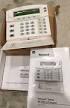 NetworX NX-6V2 LED Keypad User Manual POWER Light is on when AC power is present; flashes to indicate a low battery condition. ARMED Light is on when armed; off when disarmed; flashes to indicate a previous
Solution 880 Operators Manual ISSUE 1.10
 Solution 880 Operators Manual ISSUE 1.10 Solution 880 Operators Manual Copyright 2001 by, SYDNEY, AUSTRALIA Document Part Number MA408O DOCUMENT ISSUE 1.10 Printed 25 May 2001 This documentation is provided
HUNTER-PRO 32 Ver. 3.8 Intruder Alarm System RXN-9/416 User Guide
 HUNTER-PRO 32 Ver. 3.8 Intruder Alarm System RXN-9/416 User Guide PIMA Electronic Systems Ltd. 5 Hatzoref Street, Holon 58856, Israel +972-3-5587722 +972-3-5500442 [email protected] http://www.pima-alarms.com
INSTALLATION MANUAL PC2525. Version 1.1
 INSTALLATION MANUAL PC2525 Version 1.1 TABLE OF CONTENTS FEATURES 1 SPECIFICATIONS 1 INSTALLATION 2 Mounting the Panel... 2 Mounting the Keypad... 2 Auxiliary Power Connection... 2 Bell/Siren Connection...
Security System User Guide
 Security System User Guide Contents 1. Introduction... 1 Controls and Displays... 3 Displays... 3 Controls:... 4 2. Everyday Operation... 5 Access to the System... 5 Entering and Leaving the Protected
HARDWIRED CONTROL PANELS
 USER GUIDE 9651 HARDWIRED CONTROL PANELS Contents 1. Introduction...3 The Alarm System...3 The Keypad...3 About This Guide...5 2. Everyday Operation...6 How Do I Know if the System is Working?...6 Setting
www.sebury.com.cn Digital Keypad Use s Manual
 K3 K4 www.sebury.com.cn Digital Keypad Use s Manual Contents Introduction Introduction Specifications Intramural Interface Circuit 3 Mounting 3 Wiring 5 Power UP 7 Engineer Programming Mode 7 The K3/K4
Solution 862 Operators Manual. Issue 1.00
 Solution 862 Operators Manual Issue 1.00 Solution 862 Operators Manual Copyright 1998 by Electronics Design and Manufacturing Pty Limited, SYDNEY, AUSTRALIA Document Part Number MA406O Document Issue
A VOLUTION. S series. Avolution S Series Security System. ASSA ABLOY, the global leader in door opening solutions
 A VOLUTION TM S series Avolution S Series Security System ASSA ABLOY, the global leader in door opening solutions We know securing and safeguarding your home, family and your business is important to you
CAPTAIN 6. USER GUIDE System ver. 6.0. 6 Zones Intruder Alarm System. PIMA Electronic Systems Ltd. www.pima-alarms.com
 CAPTAIN 6 6 Zones Intruder Alarm System USER GUIDE System ver. 6.0 PIMA Electronic Systems Ltd. www.pima-alarms.com P/N 4410049, G2 XX en, Jan. 2010 2 CAPTAIN 6 User Guide SAFETY INSTRUCTIONS Your CAPTAIN-i
How To Use An F145C-1 With A Sim Sims 2 (Aq) And A Sims 1 (Aux) (Aipa) (For Aq) (F145C) (Ios) (Power
 First Alert FA145 Installer Notes M. Leuck 1. Programming can only be done by 6139 Alpha keypads, standard 6128 keypad cannot be used to program zones 2. Program new Master Code in section *20 (old version)
INSTALLATION GUIDE. Card Reader & Controller with KIM Swipe Reader for Solitaire 850 / 950 / 850L Learnlok PK2930
 INSTALLATION GUIDE Card Reader & Controller with KIM Swipe Reader for Solitaire 850 / 950 / 850L Learnlok PK2930 Card Reader and Controller Model 3.5 with KIM Swipe Reader Table of Contents 1. Features..................................
D24 USER S MANUAL ALARM CONTROL PANEL AND DIALLER. Ness D24 control panel User s manual A$15.00 INC GST. Revision 2
 D24 ALARM CONTROL PANEL AND DIALLER USER S MANUAL A$15.00 INC GST Ness D24 control panel User s manual Revision 2 Ness Security Products Pty Ltd Quality Endorsed Company ISO9001 LIC.No. QEC2074 NSW Head
First Alert FA140C/142C Installer Notes M. Leuck
 First Alert FA140C/142C Installer Notes M. Leuck 1. Programming can only be done by 6139 Alpha keypads, standard 6128 keypad cannot be used to program zones 2. Program new Master Code in section *20 (old
User's Manual. For use with ProSYS 16, ProSYS 40, and ProSYS 128
 User's Manual For use with ProSYS 16, ProSYS 40, and ProSYS 128 Important Notice This manual is delivered subject to the following conditions and restrictions: This manual contains proprietary information
TX GSM SMS Auto-dial Alarm System. Installation and User Manual
 TX GSM SMS Auto-dial Alarm System Installation and User Manual Product Features: 1. 16 wireless zones, 3 wired zones alarm system, suitable for small to medium size offices and homes. 2. The system uses
Intelligent GSM Auto-Dial Alarm System
 Auto-dial Alarm System Intelligent GSM Auto-Dial Alarm System Profile For a better understanding of this product, please read this user manual thoroughly before using it. 2013.2.V1.0 Auto-dial Alarm System
Understanding the Code Pad lights...4. Code Pad tones...5. Fully arming the system On MODE...6. Fully arming the system - Quick Arm MODE...
 TABLE OF CONTENTS...Glossary of terms...2...code Pad Diagram...3 Understanding the Code Pad lights...4 Code Pad tones...5 Fully arming the system On MODE...6 Fully arming the system - Quick Arm MODE...6
Application Notes. 1.21 Partition Programming (PC1616/1832/1864 V4.2) Page 42. Panels: POWER SERIES (PC1616/1832/1864 V4.
 Application Notes 1.21 Partition Programming (PC1616/1832/1864 V4.2) Panels: POWER SERIES (PC1616/1832/1864 V4.2) Overview: The PC1616 supports 2 true partitions. The PC1832 supports 4 true partitions.
TABLE OF CONTENTS FEATURES
 TABLE OF CONTENTS FEATURES 2 Keypad Programmable... 2 EEPROM Memory... 2 Static/Lightning Protection... 2 Supervision... 2 Operation... 2 SPECIFICATIONS 2 PC1550 Control Panel... 2 PC1500RK Keypad... 2
GE Concord 4 Quick User Guide
 GE Concord 4 Quick User Guide GE Concord 4 Quick User Guide Page 1 Before Calling Is the keypad beeping? Press *. This will silence the beeping and let you know where the trouble is. Is there a flashing
ER-1 Emergency Response System INSTALLATION & PROGRAMMING GUIDE
 Emergency Response System INSTALLATION & PROGRAMMING GUIDE Copyright micron 2005 Contents Product Description 3 Console Operation Overview 4 Console Wiring Diagram 5 User Manual 6 Transmitter Assembly
SECURITY SYSTEM NOTES
 SECURITY SYSTEM NOTES Installing/Service Company For Service Call Central Station Duress Code FUNCTION CODES Function Code Controls Function This system is is not partitioned. EMERGENCY ACTIVATION KEYS
Ness D8x / D16x alarm control panel
 Ness D8x / D16x alarm control panel A$15.00 User's MANUAL Revision 5.2 www.ness.com.au Australia s largest designer and manufacturer of high quality security products Head Office: Ness Security Products
1728EX, 1728, 1738EX AND 1738 SYSTEM PROGRAMMING GUIDE Software Version 2.1
 1728EX, 1728, 1738EX AND 1738 SYSTEM PROGRAMMING GUIDE Software Version 2.1 DEFAULT INSTALLER CODE 000000 (see section [281] on page 18) DEFAULT SYSTEM MASTER CODE 123456 (see section [301] on page 18)
Solution 16 plus. User Guide Security System
 Solution 16 plus EN Security System Copyright Notice Unless otherwise indicated, this publication is the copyright of Bosch Security Systems Pty Ltd ( Bosch ). All rights are reserved.you may download
HONEYWELL COMMERCIAL FIRE/BURG PANEL UL LISTING REQUIREMENTS (Compiled from VistaFBPT Installation Instructions 800-09617V1 Rev A 11/12)
 HONEYWELL COMMERCIAL FIRE/BURG PANEL UL LISTING REQUIREMENTS (Compiled from VistaFBPT Installation Instructions 800-09617V1 Rev A 11/12) UL864 (Commercial Fire) Compliance General Requirements The VISTA-128FBPT/VISTA250FBPT
Personal Assistance System Owner's Guide
 Owner's Guide PSC07 READ THIS FIRST This equipment generates and uses radio frequency energy, and if not installed and used properly, that is, in strict accordance with the manufacturers instructions,
SCORPION Z16040C Alarm Controller User Instructions
 SCORPION Z16040C Alarm Controller User Instructions Thank you for choosing to purchase this micron security alarm controller. Micron product is manufactured to exacting quality standards. We understand
Microprocessor Home Security System
 numbers of sensor s activations in the zone and after which activations the zone will be discarded (ignored). On every system s arming the counter is cleared in self. 6.3.11. 2 - Triger Timer - enter a
Ness D8x / D16x alarm control panel. User's MANUAL. A$15.00 Revision 5.6
 Ness D8x / D16x alarm control panel User's MANUAL A$15.00 Revision 5.6 www.ness.com.au Australia s largest designer and manufacturer of high quality security products Head Office: Ness Security Products
GSM AD05 Slave GSM Auto Dialer- Instruction Manual
 GSM AD05 Slave GSM Auto Dialer- Instruction Manual Please read these instructions before you start the installation Features LCD display Programmable 9 x 32 digit phone numbers for each trigger. 10 second
OPERATING INSTRUCTIONS Model ST-888 DTMF ANI/ENI Display Decoder
 P R O D U C T G R O U P OPERATING INSTRUCTIONS Model ST-888 DTMF ANI/ENI Display Decoder Manual # 600-0901 November 30, 1999 Rev. D - 99068 DESCRIPTION The ST-888 Mobilecall Display Decoder is a desktop
MODEL 5010 DUAL CHANNEL SMOKE/FIRE DETECTION MODULE
 DESCRIPTION MODEL 5010 DUAL CHANNEL SMOKE/FIRE DETECTION MODULE DESCRIPTION The SST Model 5010 Two Channel Smoke/Fire Detection Module provides two independent detection input channels for the NOVA-5000
Fire Alarm Control Panel. Family. Operating Manual
 Fire Alarm Control Panel Family Operating Manual CONTENTS System Description AH-03312 System Characteristics... Fire Signal Receiving Board Description-4L... Fire Signal Receiving Board Description-8L...
LW-2000-3A. Wireless Auto Dial Alarm System. Sentry Plus User Manual By Global Gadgets
 LW-2000-3A Wireless Auto Dial Alarm System Sentry Plus User Manual By Global Gadgets Main Features Simple to use keypad for operation and control. The system can store up to 9 telephone numbers: positions
ICP-CP500. User's Guide ICP-CP500 Codepads
 ICP-CP500 EN User's Guide ICP-CP500 Codepads ICP-CP500 User's Guide 1.0 ICP-CP500 Series Codepads Overview EN 2 1.0 ICP-CP500 Series Codepads Overview The codepad is the communications interface between
How To Program An Autodialer
 GJD HYL005 GSM Autodialer Instruction Manual Please read these instructions before you start the installation Features: LCD display. Programmable 9 x 32 digit phone numbers for each trigger. 10 second
Speech Dialler Engineering Information
 Speech Dialler Engineering Information Description The Informa is a Speech Dialler for use with intruder alarm systems. When the control panel recognises an alarm it triggers the Informa. The Informa uses
GSM Alarm System User Manual
 GSM Alarm System User Manual For a better understanding of this product, please read this user manual thoroughly before using it. Quick Guider After getting this alarm system, you need to do the following
Accenta/Optima. Engineer s Manual. Honeywell Security. 8SP399A - Accenta mini panel with remote LCD keypad and communicator outputs.
 Reset Chime Omit Prog Set Power PA Day ZONE PA PA Accenta/Optima Engineer s Manual Power Gen" ACCENTA! " # $ % & Zones Power Attack Tamper Day 0 1 2 3 5 6 7 8 Chime Omit Reset Prog 4 9 Set Accenta/! mini
User Guide for the DS7060 Control/Communicator
 DS7060 User Guide Copyright 1996-97 Detection Systems, Inc. User Guide for the DS7060 Control/Communicator Copyright 1996-97 Detection Systems, Inc. Detection Systems, Inc., 130 Perinton Parkway, Fairport,
USER GUIDE SERIES 4250 AUDIO ALARM CONFIRMATION SYSTEM CONTROL UNIT
 USER GUIDE SERIES 4250 AUDIO ALARM CONFIRMATION SYSTEM CONTROL UNIT CONTENTS Page INTRODUCTION... 2 Security conditions... 3 Full Set (Fully armed)... 3 Part Set (Partially armed)... 3 Unset (Disarmed)...
PRT3 Printer Module: ASCII Protocol Programming Instructions
 PRT3 Printer Module: ASCII Protocol Programming Instructions We hope this product performs to your complete satisfaction. Should you have any questions or comments, please visit www.paradox.com and send
Business/Home GSM. Alarm System(III) Installation and Users guide
 Business/Home GSM Alarm System(III) Installation and Users guide I. General information: GSM 900/1800/1900 bands, can be used all over the world. Full duplex communication with the base. Monitor environment
SECURITY SYSTEM NOTES. EMERGENCY ACTIVATION KEYS (check if enabled) PROGRAMMED FUNCTIONS
 SECURITY SYSTEM NOTES Installing/Service Company For Service Call Installation Date / / Central Station Duress Code EMERGENCY ACTIVATION KEYS (check if enabled) Fire Auxiliary Emergency Police PROGRAMMED
MOBILE CALL GSM Alarm System User s Manual
 MOBILE CALL GSM Alarm System User s Manual Profile For a better understanding of this product, please read this user manual thoroughly before using it. Contents Function Introduction Alarm Host Diagram
CS848E Receiver for 868GEN2 Devices Installation Sheet
 CS848E Receiver for 868GEN2 Devices Installation Sheet EN 1 2 1 3 4 2 3 EN: Installation Sheet Description The CS848E Receiver adds wireless capabilities to the CS line of control panels. The CS848E allows