
Wireless and hardwired intrusion control panel IC60 - Sintony 60. Installer Manual. Building Technologies. Version 9.07
|
|
|
- Kelly Tate
- 10 years ago
- Views:
Transcription
1 Wireless and hardwired intrusion control panel IC60 - Sintony 60 Installer Manual Version 9.07

2 Data and design subject to change without notice. Supply subject to availability Copyright by Siemens AG We reserve all rights in this document and in the subject thereof. By acceptance of the document the recipient acknowledges these rights and undertakes not to publish the document nor the subject thereof in full or in part, nor to make them available to any third party without our prior express written authorization, nor to use it for any purpose other than for which it was delivered to him. The product must be installed, maintained and serviced by qualified service personnel. Installation of telecom connections shouldn't be done by user. Copyright Copyright 2008 Fire & Security Products GmbH & Co. ohg. All rights reserved. Siemens Fire & Security Products GmbH & Co. ohg confers upon the purchaser the right to use the software. It is not permitted to reproduce this manual in whole or in part or translate it into another language without our written consent. Trademarks IC is a trademark of Fire & Security Products GmbH & Co. ohg. All other products or company names referred to explicitly in this manual are mentioned only for purposes of identification or description and may be trademarks or registered trademarks of their respective owners. Contacting us If you have questions or suggestions regarding the product or this documentation, please contact your local SIEMENS representative. Siemens Fire & Security Products GmbH & Co. ohg D Karlsruhe The manuals can be downloaded at: You can also visit our Web site at Training courses Siemens provides training courses for all products. About this document This Configuration Manual contains instructions for installation, setup and configuration of IC60 I-C devices. For information on operation please refer to the User Manual.

3 Safety Target readers The instructions in this document are designed only for the following target readers: Target readers Qualification Activity Condition of the equipment Operational startup personnel Has appropriate technical training with regard to the tasks and the products, devices or systems to be put in service. Puts the device or system which is readily assembled and installed on site into service. Work safety information Read the general safety instructions before operating the device. Follow all warnings and instructions marked on the device. Keep this document for reference. Always pass this document on together with the device. New, readily assembled and installed device or modified device.

4

5 1 Terminology New features and changes as of version New features Changes Programming to EN System overview Sintony 60M modular Sintony 60 compact Zone connections Zone input configurations hardwired Zone wiring examples Inputs hardwired Outputs hardwired System Bus connection - keypad port Programming port Contact less card reader IAR6-30 for keypad bus connection Additional arming functions Panic functions Zone input for door monitoring Output for electrical door lock control Indication of status/address through LEDs Proximity readers connections Voice board IAV Product description Programming the voice messages Pre-configuration Recording messages Playing messages Re-recording messages Operating instructions Alarm reporting to a user phone Alarm reporting to the Central Monitoring Station (CMS) Additional commands available for Voice Board DTMF code table Mute siren Domestic kiss-off / Auto kiss-off Extension modules for Sintony 60 control panel Output module 12V/1A IRO6-04 (Output 5-8) Zone expander module IZE Radio receiver IRFW LCD keypad Technical data Installing and addressing a LCD keypad to the system LCD keypad Installation Programming a LCD keypad Local program mode Accessing local program mode Local program mode menu tree Local program mode direct program addresses Exiting local edit program mode

6 8.4 Programming a keypad to the system addressing Language change of LCD LCD keypad address assignment Copying text to another LCD keypad Changing names personalization of the system How to use the alphanumeric keypad buttons Changing the keypad name Changing the user names Changing the zone names Changing the keypad area name Changing the output names Changing the area single character identifier Resetting individual text to default or last saved setting Resetting all text to default Operating a LCD keypad LCD keypad view memory mode Current system alarms Historical memory event LCD quick view mode Arming or disarming two areas at a keypad Toggle chime mode on-off Send manual test call Manual answer an incoming call System settings of the LCD keypad LCD backlight adjustment Keypad button backlight adjustment Volume adjustment of the keypad buzzer How to program the alarm system Programming the system by PC Programming the system remotely Programming the system by memory stick Programming the system through a keypad Access to installer program mode Exiting installer program mode Keypad code programming Keypad menu programming Selecting the main-menu headings Selecting the sub-menu headings Selecting the data entry-menu headings Showing numeric programmable options in clear text Stepping back through the menus Flowchart for button function on the keypad Default access codes Access code to the user mode - default user PIN Access code to the installer mode - default installer PIN Reset a system to default settings

7 11 Programming users User codes Adding or changing a user code Removing a user code User code type User access options User code privileges Radio user type Radio user privileges User time zone assignments User to keypad assignment (user devices) Radio pendant panic beeps to keypad User to output mask User can turn an output on User can turn an output off Radio pendant panic alarm to output Learn, find and delete remote controls and tags Learn a remote control / radio pendant Delete a remote control / radio pendant Find a remote control / radio pendant location Learn an access tag / card code to the system Delete an access tag / card code Find an access tag / card location Miscellaneous panel and timing settings Installer code Duress digit Dial report delay Radio zone supervised timer Two trigger timer Mains fail reporting delay Receiver fail delay-timer Upload-Download site code number Temporary output disable Miscellaneous installer and panel options Miscellaneous panel options Miscellaneous installer options Miscellaneous user options Hide user codes User options Time and date setting How to set time and date Daylight saving (winter/summer time), DLS settings Outputs Output options Output on delay, pulse, reset and chime times Output voice board remote control start message Un-map an output Assigning a time zone to an output

8 17 Areas Area arm and special function options Area arm-stay pulse and chirps to output Area arm-stay beeps keypad Exit delay time settings / area Monitoring account code number Remote arm/disarm DTMF code and start voice message Area exit beeps to output Area delinquency delay arming activation indication Automatic arm/disarm time zone Keypads Keypad area assignment Keypad button individual operations (beeps and LED control) Keypad system beeps and LED options Keypad <Arm> Button options Keypad <Stay> button options Keypad <A> button options Keypad <B> button options Keypad to output mask Control button to output mask Keyboard panic, fire and medical alarms to outputs and KP buzzer Keypad wrong code and manipulation alarms to outputs Keypad chime timer Learn a card reader to the system, addressing an LED Key-switches Key-switch wiring Key-switch area assignment Key-switch arm-disarm options Zones Zone area assignment Zone type options- basic information Special zone type options Different End of Line (EOL) Resistor value options Vibration sensor zone type - zone response time Supervising setting of wireless detector type Zone alarms to output mapping Zone alarms to keyboard buzzer mapping Zone timing settings Entry delay time Retrigger time Armed and stay mode entry delay times to output mapping Zone movement / activity control watch timer Learn a wireless detector / code to the system Delete a wireless detector / code of the system Find a wireless detector / code in the system Time zones Holidays Time zone days Time zone start and stop times

9 22 Dialer Dialer options Auto answer ring count Test call options Listen dialing function through keypad and output Dialing pre-fix numbers Remote control by external phone through DTMF dialing tones Forced test call code options Manual test call initiated voice message number Telephone numbers Programming telephone numbers Reporting formats Telephone number report options Maximum dial re-tries per telephone number Dial progress options Call divert numbers and options plus 2 program options Using the 4 plus 2 codes Mains-Battery-Tamper-Duress and arming 4 plus 2 codes SIA Codes reporting format SIA III SIA reporting codes - standard default setting Individual SIA reporting codes Contact ID code summary Change Zone Contact Identification (CID) report codes Change keypad panic, fire and medical alarms CID report code Contact ID code summary Panel diagnostic & default options Display software version - keypad numbers and keypad areas Display active zones and battery voltage Walk test mode transmission test installation help Read or write to/from the memory stick (EEPROM) Reset back to defaults Start a call-back call Installer code Radio Signal Strength Indication (RSSI) User privileges chart Telecom interface connection

10 30 Flow chart of programming menus Installer menu Installer: Users Clock settings Phone numbers Dialer Areas Zones main Zones outputs Keypads Outputs Keyswitch Miscellaneous event codes SIA event codes Diagnostics Support FAQ frequently asked questions Typical programming guidelines DTMF command control how to use and program

11 11

12 Terminology 1 Terminology Display text Arm Dialer Dual trigger Handover Installer Open Pendant Stay Unstay Other term Set Communicator Double knock Entry Route Engineer Unset Remote Control Part-Set Unset Part-Set 12

13 New features and changes as of version New features and changes as of version New features 2.2 Changes All the features that are new as of version 9 07 are listed below. P25E 3E: Dial Report delay refer to chapter 13.3: Dial report delay P25E 13E Option 6: Allow monitored Keypad Bus Output Board refer to chapter 14.3: Miscellaneous user options P25E 13E Option 8: Limited Events & Dialer to 3 of any one type refer to chapter 14.3: Miscellaneous user options P36E Option 5: Output disabled when P25E 3E timer is running refer to chapter 16.1: Output options P37E Option 4: Disable outputs during two way voice mode refer to chapter 16.1: Output options P46E Option 7: Cannot Arm if Zone unsealed at end of Exit Delay refer to chapter 17.1: Area arm and special function options P122E Option 3: Not on Exit Delay Time refer to chapter 20.2: Zone type options- basic information P175E 2E Option 8: Allow the panel to auto-answer after 1 ring if set up to do fill duplex two way voice refer to chapter 22.1: Dialer options P183E Option 5: Allow for direct on-line two way voice following reporting of an alarm event refer to chapter 23.3: Telephone number report options P200E Option 13: Installer code refer to chapter 27.7: Installer code P200E Option 14: RSSI refer to chapter 27.8: Radio Signal Strength Indication Walk test now exits back to program mode if you will press on for exit. On previous version when you pressed on to terminate walk test the panel was get out from program mode. Now when you press to terminate walk test the panel stay on program mode. When Learning Radio device not found now shows Not Found! instead of non-descriptive Done (for zone and pendant). When entering to learning mode and no device was found, the panel will present the message Not Found! (Instead of the message Done on the previous version). 13

14 New features and changes as of version 9.07 Learning Radio device (zone and pendant) now shows Code in-use! on second line if device already known, learn process will continues. When attempting to learn an already learned device, the panel will present the message Code in- use! and will continue with the learning process (valid for wireless detectors and pendant). Keypad goes to power-save after 10 seconds, extinguishing all led backlights and indicators except 'Trouble' (linked to option P73E option 7.) To keep on power save the keypad backlights will turn off if no operation was made after 10 second. If you have more then 1 keypad, only the keypad that you work with will turn on his backlights. This function was linked to address P73E option 7 (if on the backlights turn off after 10 second). The trouble LED will always operate in all keypads in case of system trouble. Trying to arm from Keypad with open zone and arm refuses, keypad will show broken zones as-if the enter key was pressed. If you have an open zone while you arm the panel, the keypad will present the open zone number (e.g. 02 for zone 2). If you press on twice the name of the zone will also be presented. Showing broken zone list will show zones by name-text after numeric list by pressing enter key again. In normal mode standby the display shows System OK even with an open zone. If is pressed, it indicates all open zones by number etc. By pressing enter again each zone will be shown by his name (text). When arming the system it's indicate open zones with numbers and pressing on enter will show zone name text for all zones (press for moved from one zone to another). "Test message sent" will not longer be send if the dialer is not Activated (P175E 1E 1 = off). If you disable the dialer activation on P175E 1E option 1 (off), the message "Test message sent" will no longer be shown on memory log. Extended initial listen from 2 minutes (1.5+30s warn) to 3 minutes (2.5+30s warn). After establish 2 way voice conversation, a vocal sound will start after 2.5 minutes (instead of 1.5 minutes on previous version) if no manual kiss off was entered. Disabled beep patterns to keypad if voice monitor is on. If 2 way voice is on the keypad beeps will stop. In case of 2 way voice conversation after alarm, all external sounds like keypad beeps and siren (needed to be programmed in advance) will stops. Once the 2 way voice is off only the siren (outputs) will start again. Installer cannot longer enter to P200E 13E (installer mode). P200E 13E was letting installer mode enter installer code again to bypass any alarm that request from the installer to enter first through user code (requirement for user) - now ignores if installer enters code. 14

15 Programming to EN Programming to EN Necessary programming to EN installations The control panel Sintony 60 offers a lot of different features. If the installation must be according to EN some of the features and options for users must be restricted. To be according EN requirements the following functions / features must be programmed as described: Mute siren refer to chapter 6.4: Mute siren This option must be programmed to mute all acoustic devices automatically during listen-in with the full duplex two way voice board. According EN if an alarm occurred during Exit Delay the dialer should reported only after 30sec. And the Siren shouldn't activate until the Exit delay is expired. P25E 3E: Dial Report delay (0-255 Seconds) refer to chapter 13.3: Dial report delay If this address is set to 0, there will be no report delay. If it is set to any value other than 0 then a delay equal to the programmed value will stop the panel from reporting an instant zone alarm via the dialer until this delay time expires (both during the exit delay time if option 3 is on at P122E for a zone or when an instant zone is triggered when fully armed). While the timer is active certain outputs can be disabled at location P36E option 5. Once the timer has expired it will not start again, the panel must be disarmed then armed to reset the timer. According EN if an alarm occurred during Exit Delay the dialer should reported only after 30sec. P25E 13E Option 6: Allow Monitored KP Bus Output Board refer to chapter 14.3: Miscellaneous user options Option 6: Monitored Keypad Bus Output Board: this option performs a similar function to option 6 at location P25E 10E in that if it is turned on the output status messages are sent to the keypad bus. The difference with this option is when turned on the panel is expecting the OUTPUTX4 board connected to the keypad bus to acknowledge the messages. If the OUTPUTX4 does not acknowledge the output status messages the panel will show an output board failure. This option should only be turned on if an OUTPUTX4 board with the latest software is connected to the keypad bus. According EN all units connected to the Control Panel should be monitored. 15

16 Programming to EN P25E 13E Option 8: Limit Events & Dialer to 3 of any one type refer to chapter 14.3: Miscellaneous user options Option 8: Limit Events & Dialer to 3 of any one Type: if this option is turned on the panel will not record any more than 3 events in memory for any event type during a single arm or disarm cycle, e.g. if the AC failed 4 times while armed or disarmed the panel will only record the AC fail 3 times in memory and will only report the AC fail 3 times to the dialer. As soon as the arm state has changed any count are reset back to zero again. If this option is off there is no limit on the recording and reporting of events. According EN the events of the same type should be limited to 3. P36E Option 5: Output Disabled when P25E3E timer is running refer to chapter 16.1: Output options Option 5: Output Disabled when P25E 3E timer is running: this option will cause the output to be disabled when the dialer reporting delay is active. It is designed to keep external audible alarms silent when the dial delay is active (allowing internal alarms to warn that the alarm will be reported to monitoring if not unset) but if the alarm hasn t been reset before the timer expires the external alarm will sound. According EN if an alarm occurred during Exit Delay the dialer should reported only after 30sec. And the Siren shouldn't activate until the Exit delay is expired. P37E Option 4: Disable outputs during two way voice mode refer to chapter 16.1: Output options Option 4: Turn Output OFF during Two Way Voice Mode: if the panel has a full duplex two way voice board fitted and the settings at P175E 2E option 8 and P183E option 5 are set to allow full duplex mode, any outputs with this option turned on will be disabled while two way voice is operational. This is to ensure that local sirens do not interfere with the two way voice audio signal. According EN if an alarm occurred during Exit Delay the dialer should reported only after 30sec. And the Siren shouldn't activate until the Exit delay is expired. P46E Option 7: Cannot Arm if Zone unsealed at end of Exit Delay refer to chapter 17.1: Area arm and special function options Option 7: Cannot Arm if Zone unsealed at end of Exit Delay: if this option is turned on and a zone becomes unsealed as the exit delay expires the panel will fail to arm and report this via the dialer. The unsealed zone must be corrected and the system rearmed again. According EN the system shouldn't Arm if one of the zones is open at the end of Exit Delay. 16

17 Programming to EN P122E Option 3: Not an Exit Delay Zone refer to chapter 20.2: Zone type options- basic information Option 3: Not an Exit Delay Zone: if this option is turned on the zone will not have any exit delay and will cause an instant alarm if triggered during the exit delay time. Also you MUST ensure that if this option is turned on for a zone, that same zone should not have any entry delay (P144E) programmed. If the zone does have an entry delay the zone can activate during the exit time thereby starting an entry delay on the same zone which means the user might not be aware of the pending alarm and leave the premises. If the zone has no entry delay and the zone is triggered during the exit time the alarm will then be instant alerting the user that they deviated off the exit route. According EN the user must have an option to define the zones in the exit route. P200E Option 13: Installer code refer to chapter 27.7: Installer code Installer Code: if option 2 in P25E 10E (Installer Direct Access) is off, the only way for installer to access is through client mode. The installer must enter first to client mode and go to P200E 13E and enter the code there. The code will not be presented on the LCD (confidential), he will be blanked out. According EN the system shouldn't present the Installer code while typing it through the client mode. 17

18 System overview 4 System overview 4.1 Sintony 60M modular PHONE LINE IN PHONE LINE OUT PHONE LINE IN In Lin Out TELECOM IC-60M AC_IN Red Lin BUS CONNECTION FOR EXTERNAL KEYPAD AND OTHER ACCESSORIES Dat Clk Neg Pos Black C NC N Relay/OUT4 12V Gnd 12V Gnd 12V C C C C 4 8 Tmp Gnd 12V Outputs COM GND Gnd In factory settings the jumper is set between COM & GND. The com contact can be connected to 12V by setting the jumper. With out the jumper the relay contacts are floating. OUTPUTS INPUTS Z1...Z16 POWER FOR DETECTORS & ACCESORIES Fig. 1 Connection Diagram The wiring option shown here with a common tamper input (TAMP/GND) is not allowed in all countries, if the installation has to be done according to legal requirements (e.g. Belgium/INCERT).To integrate the tamper contact directly into each zone input, see also chapter 4.3.2: Zone wiring examples. Battery Specifications for Model IC60 M Sealed Lead-Acid Rechargeable Battery 12 V/1.3 Ah up to 12 V/7 Ah Battery cutoff level (when AC mains fails): 10.3 V ± 0.1 V DC. Full charge after 48 hours. The current limit over charge is 600 ma. Battery Connections Connect a sealed lead acid rechargeable 12 V DC battery to the terminals labeled red and black on the control panel being careful to observe the correct polarity. The maximum recommended battery capacity is 7 amp hours. Battery charge current at these terminals is limited to 600 ma maximum. The battery connection is protected against short circuits by a thermal fuse (F1). The panel performs a dynamic load test on the battery every 15 seconds and if it fails the test at any time it will flash the battery LED. 18

19 System overview General Specifications: The range of the 12 V uut which is used for feeding sensors is between 10.2 to 14 V DC (working on mains or standby battery).ripple is up to 0.1 V p.p. Each voltage out 12 V protected by reset able fuse of 500 ma. The max total current allowed to draw during alarm is 1 A. Self current consumption (IC60M+IKP6) from battery is: 100 ma. Operating temperature: 0-50º C Max. current consumption from the mains less than 150 ma. The panel is equipped with a type A power supply according EN To meet the EN and the T014 (Belgium) to withstand battery life not less of 12 hours please note that the maximum current for accessories in standby mode should be less then 300 ma AC Connections: Connect the mains wires Phase (~) and Neutral (N) to the Mains terminal inside the IC60M housing and secure the cable with the provided cable clamp The AC Input is protected by fuse: Fuse (TD-Time Delay) T250 ma/250 V, 5x20 mm Glass. AC level 230 V, 50 Hz ±10%. Notifications: Alarm transmission classification ATS 2 According EN notification option A applies. This means that an external warning device needs to be connected. This panel is designed in accordance with: EN TS EN EN EN EN EN EN

20 System overview 4.2 Sintony 60 compact Fig. 2 Connection Diagram IC60 compact overview 1 + C _ BAT _ + KBD Lin Dat Clk NEG POS 2 3 C NC NA OUTPUTS OUT Fig. 3 Connection Diagram IC60 compact 1 1 Normally closed/normally open. In factory settings the jumper is set between COM & GND (0V). The com contact can be connected to 12V by setting the jumper (+12V connected). Without the jumper the relay contacts are floating (potential free). 2 Out 4 - Relay 3 Outputs Open Collector 4 Outputs Keypad Selector: Horizontal Vertical 5 Bus connection for external Keypads and other accessories. 6 Battery IN 7 LCD pin header for Vertical configuration. 20

21 2 6 1 System overview 2 + C _ 0V 12V Z1 C Z2 Z3 C Z4 C 0V 12V Z5 C Z6 Z7 C Z8 TAMP 4 3 Fig. 4 Connection Diagram IC60 compact 2 1 Power for detectors & accessories 2 Jumper for bypass the tamper of the control panel in Line. Tamper of keypad, GSM etc. will still be reported. EOL is bypassed Front and back tamper is working. All tampers in control panel are bypassed- requires no resistor EOL and front and back tamper of housing is bypassed (only for installation!) new from V9.07 on. No jumper connected front and back tamper is working. EOL resitors are requested in the installation of the zone (new from version 9.07 on). 3 INPUTS Z1 Z16 4 Power for detectors & accessories 5 Connector for internal siren (could be disconnected during installation) > 100dB 6 LCD pin header for Horizontal configuration 21
22 System overview OUT LINE IN 3 2 Fig. 5 Connection Diagram IC60 compact 3 1 Programming Port 2 RJ11-Line IN 3 Phone Line IN 4 Phone Line OUT Example: Connecting a siren, flash light 0V 12V Z1 C Z2 Z3 C Z4 C + C _ O 2 3 C NC OUTPUTS OUT
23 System overview Example: Interface connection to open collector 0V 12V Z1 C Z2 Z3 C Z4 C + C _... O 2 3 C NC N OUTPUTS OUT 4... Battery Specifications for Sintony 60 compact Ni-MH Rechargeable Battery 12V/1.8Ah. Battery cutoff level (when AC mains fail): 10.5 ±0.1V. Full charge after 48 hours. The current limit over charge is 260 ma. Battery Connections Place the battery in its location, and secure it with the rubber band (refer to Fig. 6). Connect the battery plug into its connector (refer to Fig. 3). General Specifications: The range of the 12 V Out which is used for feeding sensors is between 10.2 to 14.3 V DC (working on mains or standby battery).ripple up to 0.1V p.p. Each voltage out 12 V protected by reset able fuse of 500 ma. The max total current allowed to draw during Alarm is 0.8 A. Self current consumption from battery is : 60 ma Operating temperature: 0-50º C Max. current consumption from the mains less than 150 ma. The panel is equipped with a type A power supply according EN AC mains input 100 V AC 240 V AC, 50/60 Hz The build in sounder has a value of > 100dB The main fuse AC = T250 ma, 250 V glass To meet the EN and the T014 (Belgium) to withstand battery life not less of 12 hours please note that the maximum current for accessories in standby mode should be less then 65 ma. 23
24 System overview Fig. 6 Placing the rubber band and fixing the Battery Sintony 60 compact AC Connection The electronic board is fit into the housing and it s equipped with AC/DC adapter. In countries or installations where the internal build in adapter should not be used, the panel could be fed from an external adaptor ( V AC/14.4 V DC, 1 A). (Special wiring required ask your local country agent). The mains input cable has to be secured with a special cable clamp as per the following drawing: Fig. 7 AC cable fixing Sintony 60 compact Fig. 8 AC connection port Sintony 60 compact The main fuse AC = T250 ma 250 V glass If the unit is not connected to ground, malfunction may occur, especially when the voice board is connected. 24
25 System overview Notifications: This panel is designed in accordance with: EN TS EN EN EN EN EN EN Zone connections To install hardwired detectors to the control panel see the following wiring options. If you want to connect wireless radio detectors to the control panel, now wiring is needed (see chapter 20.12, 20.13, 20.14: Learn, Delete and Find a wireless detector / code in the system; P164, 165, 166E) Zone input configurations hardwired The Sintony 60 has nine separate programmable monitored analogue inputs: 8 x programmable, multi-state detection inputs 1 x programmable tamper input (with optional Key-switch functions) To differentiate between various signals (alarm, tamper, detector address) over the same cable, the Sintony 60 is equipped with a resistance measurement on each input. To monitor the cabling and the installed peripherals continuously (also against sabotage during the control panel is not armed) each Input should contain at least one of the described resistor, so called EOL end of line values. The following different resistors, which are delivered with the control panel, are used as a standard. Zone address EOL- end of line Resistors This resistor value should be built in the detector to monitor the zone input of this particular detector. Zones 1-8 (which are also called low zones) 4k7Ω (yellow, violet, red) for detectors in the zone 1-8 Zones 9-16 (which are also called high zones) are realized with zone doubling, means the terminal block 1-8 are used but with different resistor value. 8k2Ω (grey, red, red) for detectors in the zone 9-16 (high zone) Tamper address EOL- end of line Resistors This resistor value is used to monitor if somebody tries to manipulate the installations (opening housings, cutting cables etc.). It should be installed in the detector. 25
26 System overview 2k2Ω (Red, Red, Red) for tamper To overtake existing installation with already build in different resistor values, the Sintony 60 could also be programmed to different values (see chapter 20.4: Different End of Line (EOL) Resistor value options; P125E). If an iinput is programmed as a wireless input, the system will ignore all hardwired connection to this input and look only for the radio signal! (see chapter 20.2: Zone type options- basic information; Zone A Options, option 5; P122E) Zone wiring examples The connection of each device depends on the type of switch which is used in the detectors. We differentiate between: N/C normally closed, requires serial connection N/O normally open, requires parallel connection Option 1: Only one EOL- end of line resistor Fig. 9 Type Single EOL no Tamper The zone input must be programmed as single resistor value (see chapter 20.4: Different End of Line (EOL) Resistor value options; options 1-11; P125E). The tamper contact should be monitored separately with the same connection schema (tamper input). Option 2: Installation with 1-8 Zones with Tamper monitoring Fig. 10 Type 12 Single Zone with Tamper The Zone input must be programmed as zone with tamper (see chapter 20.4: Different End of Line (EOL) Resistor value options; option 12; P125E). 26
27 System overview Option 3: Installation with 1-16 Zones (zone doubling) with Tamper monitoring Fig. 11 Type 14 Zone doubling with tamper The zone input must be programmed as zone doubling with tamper (see chapter 20.4: Different End of Line (EOL) Resistor value options; option 14; P125E). When zone doubling is used (1-16 zones) the system counts automatically the zone numbers from This means terminal block Z1 and C on the control panel are inputs for zone 1 and zone 9. Z2=Z10, Z3= Z11 etc. Option 4: Installation with 1-16 Zones (zone doubling) without Tamper monitoring Fig. 12 Type 15 zone doubling without tamper The zone input must be programmed as zone with tamper (see chapter 20.4: Different End of Line (EOL) Resistor value options; option 15; P125E). When zone doubling is used (1-16 zones) the system counts automatically the zone numbers from This means terminal block Z1 and C on the control panel are inputs for zone 1 and zone 9. Z2=Z10, Z3= Z11 etc. Example of wiring a PIR Detector (N/C) for Alarm & Tamper Monitoring Z C 4K7 2K2 Alarm Contact (N/C) Tamper Contact (N/C) 12V 0V (GND) + - PIR Internal Connections Fig. 13 Wiring a PIR Detector for Alarm and Tamper Monitoring 27
28 System overview 4.4 Inputs hardwired Earth Connection For the Sintony 60 compact connection, the earth lead of the mains supply has to be connected. In case of the IC60 modular, if using metal box, the mains earth has to be connected to the appropriate terminal on the mains terminal block in the control box cabinet. Also connect a lead from this earth point to the terminal marked with the earth symbol (next to AC terminals) on the panel PCB. Line In These terminals are used to connect the panel to the incoming telephone line. The dialer uses this line for reporting alarm events. Line Out These terminals are used to connect telephones and other communication equipment to the incoming phone line via the panel dialer circuit. The telephone line is passed through the controller to ensure that the line is available to the controller when it is required. Tamper/ Input for Key switch function A 24 hr tamper circuit is available for monitoring system tampers. This tamper circuit is programmable as either normally closed loop or 2k2 EOL supervision (the default is usually a closed loop). Any tamper alarms on this input are mapped to alarm outputs in the same manner as for detection zones Using Dual-End-of- Line resistors (refer to wiring options) the tamper input can also provide two keyswitches. The low key-switch (4k7 resistor) will be key-switch 1 while the high keyswitch (8k2 resistor) will be key-switch 2. In addition to the zone & tamper inputs. Zone tamper jumper setting must be active (refer to. Fig. 4 Connection Diagram IC60 compact 2) 4.5 Outputs hardwired 12 Volt Outputs There are three 12 V DC outputs on the panel PCB. These 12 V outputs are regulated and thermal fuse protected against short circuits. The accessory outputs are marked 12 V and 0 V, while the keypad bus 12 V supply is labeled POS & NEG. The 12 V outputs are supplied by thermal fuses. The recommended maximum total load that should be drawn from all of the 12 V outputs during an alarm is 800 ma. 28
29 System overview Outputs 1 & 2 Fully programmable, high current, open drain (high-going-low) type FET outputs capable of switching up to 1 12 V DC. These 2 outputs are normally set as switched outputs, providing power for 12 V sirens. If required, these outputs can be programmed to be siren outputs designed to drive an 8 ohm 10 watt horn speaker on each output (refer to chapter 16.1: Output options; Output D options, option 1; P37E). Also if a horn speaker is connected to output #1 you may select (refer to chapter 22.4: Listen dialing function through keypad and output; Output 1 Listen In; P175E 7E) as the listen-dialing feature, to listen to the dialing sequence which than could be heard at the speaker. In IC60 compact unit the output 1 is assigned to operate the build in internal siren. Output 3 This is a low current, open drain (high-going-low) type FET outputs capable of switching up to 500 ma. Like outputs 1 & 2 it is fully programmable. Connecting devices which draw current in excess of 500 ma to output 3/can damage the output. Output 4-Relay Out Output 4 is a relay output with single pole changeover contacts. If required, the Common (C) contact of the relay is connected by default to GND via JUMPER, the jumper can be selected to 12 V or removed. 4.6 System Bus connection - keypad port The terminals marked POS, NEG, CLOCK, & DATA make up the communications port which the keypads and other intelligent bus devices use to communicate with the Sintony 60. The terminals are connected to corresponding terminals on the remote devices. The LIN terminal is only used by the keypads and utilizes a fifth wire to provide a communicator listen-dialing facility (a dialing ton could be heard through the buzzer). This feature is particularly useful when servicing monitoring faults. The 12 V power supply (POS, NEG) of the bus is protected by a separate thermal fuse. 4.7 Programming port With the separate available programming cable IAQ6-1 and the programming software Sylcom 60 IAS6-1 the Sintony 60 could be connected via this port directly to a PC. All system parameters or settings could be easily changed with this program. Furthermore this port could also be used to connect the memory stick IMM6-10 to up or download the default setting of an alarm system. This speeds up the process of programming, especially if similar settings have to be used with different installations. If the control panel is connected to the telephone line, the same software could be used to program/ monitor the control panel through the telephone line remotely, if the PC is equipped with a telephone modem. 29
30 Contact less card reader IAR6-30 for keypad bus connection 5 Contact less card reader IAR6-30 for keypad bus connection The IAR6-30 contact less reader is used as a proximity access card reader with a full numeric keypad for additional PIN functionality and standard tags or cards which operates in the 125 khz band. Its functionality is identical to a keypad and therefore it is programmed into the system as a standard keypad. In total maximum 8 keypads/card readers can be connected to a Sintony 60 control panel (Sintony 60 compact has one build in already- e.g. 7 more). Under the following limitations: Bus connections- max. length* Up to 25 meter, 22AWG, wire diameter 0.6mm Up to 100 meter, 20AWG, wire diameter 0.8mm 7 Keypads IKP6-03 or Reader IAR Keypads IKP6-03 or Reader IAR Keypads IKP6-03 or Reader IAR Keypads IKP6-03 or Reader IAR6-30 Each reader must have a unique keypad address number from 1-8 assigned so that the various program options can be assigned (see chapter 18.13: Learn a card reader to the system, addressing an LED; Reader Learn ;P99E). The proximity readers flash out the assigned keypad address number on the LED whenever the panel is in Installer Program Mode. This allows quick identification of the assigned address for each reader. 5.1 Additional arming functions Depending on program options the reader IAR6-30 could also be used as an arming/disarming device. If a user code or tag is presented to the reader it could directly Arm/Disarm the alarm system. The reader can be set-up to operate on: a proximity tag or card only on entering of a valid user code only on presentation of the tag/card followed by the user code (PIN). If the presented tag requires a PIN number to be entered, the LED on the reader will flash for 5 seconds after a valid tag to indicate that the PIN number should now be entered. 5.2 Panic functions If the two button <Panic> ( ), <Fire> ( ) or <Medical> ( ) functions are programmed to the keypad/reader (see chapter 18.2: Keypad button individual operations (beeps and LED control); Keypad Options; options 5, 6 & 7; P72E) these manual alarms can be generated at the reader by pressing & for Panic, & for Fire and & for Medical alarms. 30
31 Contact less card reader IAR6-30 for keypad bus connection 5.3 Zone input for door monitoring There is an optional input to monitor an exterior gate to show if it is currently opened or closed. This input is not EOL monitored and should only be used for non-critical monitoring functions. A zone can be programmed to use this input for its trigger (see chapter 20.2: Zone type options- basic information; Zone A Options, option 4; P122E) so that the state of the input can be displayed on a keypad. This allows saving cabling, because the zone is connected directly to the card reader / bus and does not request separate zone cabling The inputs are linked to the selected keypad address programmed into the reader. For example if the reader being used was programmed as keypad # 1, then the input can be assigned to zone 1 or 9 (see chapter 20.2: Zone type options- basic information; Zone A Options, option 4; P122E), if the keypad address was # 2, the input can then be assigned to zone 2 or 15, etc. 5.4 Output for electrical door lock control There is also an output available on this reader that follows the same addressing functionality as described in the zone input function. It can be used to activate an electric lock as shown in the connection drawing. This helps to save cabling. The reader output can only control the electrical lock! The Sintony 60 is not able to supply power for an external lock. An additional external power supply is recommended depending on the type of door lock which is used. 5.5 Indication of status/address through LEDs If requested the LED on the reader can be linked to an output so that special functions may be displayed at the reader if desired (e.g. chapter 18.13: Learn a card reader to the system, addressing an LED; Proximity LED Follows Output; P98E). 5.6 Proximity readers connections Bus connections- max. length* Up to 25 meter, 22AWG, wire diameter 0.6mm Up to 100 meter, 20AWG, wire diameter 0.8mm 7 Keypads IKP6-03 or Reader IAR Keypads IKP6-03 or Reader IAR Keypads IKP6-03 or Reader IAR Keypads IKP6-03 or Reader IAR
32 Contact less card reader IAR6-30 for keypad bus connection N/O Input Pos a Neg Clk Dat Lin b c d e V 0 V (Gnd) + 1N4004 Electric Lock _ f g h 9 # 0 * Fig. 14 Connection for Proximity and PIN Reader When a card reader is connected to the system it must be restarted to address the reader. Is a keypad already connected as address 1 the reader does not work correctly if addressed with the same address. 32
33 Voice board IAV Voice board IAV6-90 The voice board can only be integrated within the IC60 compact panel. 6.1 Product description The voice board enables you to record multiple voice messages and then link them to events so that a caller can get an audio status on different parts of the system over the telephone. You can also call the control panel. Using the correct code combinations you can to listen to any sound originating within protected premises, thereby determining if an intruder is actually on the site or not. When the microphone is activated, the sirens are muted in order to keep the background noise as low as possible. This is a full duplex bi-directional voice channel enabling you to talk to the intruder when the intruder is within a few meters of the control panel. The intruder or visitor can then use the internal microphone to answer questions you ask over the internal speaker. Speech messages can be allocated to different alarm types and be used to give status reports for command control. Command control then enables you to arm or disarm the alarm system or to turn specific outputs on or off using voice commands via a remote telephone call (password protected). If the unit is not connected to ground, malfunction may occur (background noise, etc.). The quality of the voice messages depends on the quality of the telephone line. Features Voice message recording Total recording time: 90 seconds Message length should be min. 2 seconds Indication: Red LED will be lit while messages are being record and played. Message repeats during reporting: 4 times Microphone control code: 1-4 digits >> * Acknowledge voice alarm code: 1-4 digits >> # 33
34 Voice board IAV Programming the voice messages You can switch between two modes using the slide switch: Normal (default setting): internal speaker deactivated Test: internal speaker activated When you leave the room, set the voice board to Normal mode Pre-configuration There are two types of messages: Command control messages and alarm messages. Command Control messages are used to give voice status information when a user dials in to arm/disarm the system or to control outputs, zones and additional events (using DTMF codes). Alarm messages are assigned to alarm events and allow voice alarm. Before programming the Command Control messages it is recommended to record the messages and put them in a list. For example: Message No. Voice Message Order of recording 1 Output 4 on 2 Output 4 off 3 Output on 4 Output off 5 Area A armed 6 Area A disarmed 7 Area B armed 8 Area B disarmed 9 Zone 1 alarm 10 Zone 2 alarm 11 Zone 3 alarm 12 Mains failure 13 Mains restored 14 Battery low 15 Battery restored 37 Tamper 34
35 Voice board IAV6-90 Command control messages for output control on/off and area arm/disarm will need two voice messages to be assigned. (One for ON confirmation and one for OFF confirmation.) These messages need to be in direct sequence. Use Table 1 below to assign each event address to the appropriate voice message in accordance with the list you have made. Each event can be assigned a message number from When set to "0" the message will be disabled. Address Description Message Type Value (message no.) P42E 1-8E Outputs Command control 0 P64E 1-2E Areas A&B Command control 0 P160E 1-16E Zone alarm Alarm 0 P176E 1E Keypad or radio panic alarm Alarm 0 P176E 2E Fire alarm Alarm 0 P176E 3E Medical alarm Alarm 0 P176E 4E Mains failure Alarm 0 P176E 5E Mains restored Alarm 0 P176E 6E Battery low Alarm 0 P176E 7E Battery restored Alarm 0 P176E 8E Tamper Alarm 0 P176E 9E Duress alarm Alarm 0 P176E 10E Latchkey disarm Alarm 0 P176E 11E Manual test initiated Command control 0 Tab. 1 List of message addresses For Output command control and area command control assign the first message number, e.g. P42E 1E 1 assigns messages 1 and 2 to output 1 (confirming ON and OFF respectively). 35
36 Voice board IAV Recording messages Before programming your voice messages: Make a list of the messages to be sent for the individual alarm types and assign each of them a message number. These messages should then be recorded in the same order in which they are written down. Once you have installed the Voice Board you can record your personalized speech messages on the module: 1. Set the slide switch to NORM. 2. Press the Reset button in order to set the alarm message counter to zero. 3. Press and hold the Record button while recording the message. The Record LED on the 2-way voice board lights up. The individual messages must be at least 2 seconds long but no longer than 30 seconds Playing messages 4. Speak clearly into the microphone (from a distance of cm). 5. When you have finished recording your message, release the Record button to stop the recording. The record LED on the 2-way voice board goes out. 6. Press the Record button again to record another message immediately after the previous message. 7. Continue making recordings until you have recorded all the messages Re-recording messages 1. Press the Reset button on the Voice Board to go to the beginning of the messages. 2. Set the slide switch to Test before listening to the recorded messages. 3. Press the Play button once to start playing the first message. 4. At the end of the recorded message playback will be stopped. 5. To listen to the next recorded message press the Play button again. 6. Repeat this operation until all the relevant recorded messages have been reviewed. 7. Press the Reset button to reset the voice board to the beginning of the messages. 8. Set the slide switch back to NORM mode. 1. Press the Reset button on the Voice Board to go to the beginning of the messages. 2. Re-record your message as described in chapter 6.2.1: Pre-configuration. 36
37 Voice board IAV Operating instructions The IAV6-90 is available in 2 versions. Both versions can be configured remotely and allow the configuration of a phone number the system will call in the event of an alarm. Version 9.07 additionally allows a Central Monitoring Station (CMS) to verify an alarm by listening in after the alarm has been reported by the Control Panel. The IAV6-90 Voice Board enables the following functionality of the Control Panel: Reporting using voice messages Alarm verification Remote configuration of the system Remote listen-in/talk-in The two basic applications of Sintony 60 for reporting alarms are Reporting to a user phone Reporting to a CMS Alarm reporting to a user phone The voice board supports both scenarios. It offers two modes of operation in both scenarios, which differ mainly in the way the listen-in voice call is established: Holding the line open Auto answering Holding the line open following Domestic/Speech reporting for DTMF control Dialer B option P175E 2E (Option 6 set ON) The messages received must always be confirmed by a user by pressing #. Otherwise there may be delays in the transmission of further alarm messages. The dialer is set to call Domestic (Alarm tones only) or Speech (recorded message). After an event has occurred, the Control Panel's dialer calls the user (regular telephone number) to report the event by sending a voice message or alarm tones over the phone. If a kiss-off is sent (dialer acknowledge DTMF code set by the user by parameter P175E 14E; if no kiss-off is programmed, the default DTMF is #), the dialer will keep the telephone line open. The user at the phone can then talk to the person at the site and listen in to the site by using DTMF commands to turn the microphone on and off. If no kiss-off is sent to the Control Panel by the user after having answered the call, the dialer will repeat the call to the telephone several times (set by parameter P184E 1-8E). Once the microphone is turned ON, the panel will keep the conversation for 1 minute. To extend the call for a longer time, the user must press the * button before the first minute has passed. The panel will close the microphone but not the call. If the * button is pressed once more, the panel will open the microphone again for 1 minute. This action can be repeated several times. 37
38 Voice board IAV Auto answering Auto Ring Count P175E 3E (Value 0-99) A user can call the Control Panel from any telephone. After a preset number of rings (pre-programmed by parameter P175E 3E) the Control Panel will hold the line and a series of tones will be sent over the line (tone and quiet time, tone and quiet time, etc. like answering of a fax machine). The user can enter into listen-in mode by entering the same DTMF code which activates the microphone (see above) during the quiet time between the incoming tones Alarm reporting to the Central Monitoring Station (CMS) Only available in version 9.07 or higher Direct on-line for CID or SIA This mode allows a person at the CMS to verify an alarm by listening in after the alarm has been reported by the Control Panel. With this feature there are 2 modes of operation: Telephone number 5 reporting options P183E 1-8E 5E In order to activate this mode, option 5 at P183E must be ON. If this option is turned ON and a full duplex two-way voice board is fitted, the panel will send a command to the CMS in CID or SIA format to tell the operator at the CMS to stay on-line so he can listen in or talk to the site (full-duplex two-way communication). The Control Panel will hold the line after reporting to the CMS by CID or SIA. This function should not be used with the function speech protocol. 38
39 Voice board IAV Call-back In order to activate this mode, option 5 at P183E must be OFF and option 8 at P175E 2E must be ON. Dialer B options P175E 2E 8 After reporting the event to the CMS the Control Panel rings off. When this option is turned on, the Control Panel will ring off after reporting to the CMS. The operator at CMS can then call the Control Panel during a period 10 minutes. The panel will answer the incoming call on the first ring. If the DTMF code defined by parameter P175E 14E (as described above) is not entered within 30 seconds, the panel will ring off. The panel will still answer any new calls on the first ring within the 10 minutes after the original alarm was transmitted. As soon as the panel receives the correct DTMF acknowledge code the auto-answer feature (answering on the 1st ring) will be reset. After the Control Panel has answered an incoming call, a short beep will sound at intervals of 5 seconds for a period of 30 seconds. If nothing happens and the 30 seconds timer expires, the panel will ring off. If however the DTMF code programmed by parameter P175E 14E is entered before the 30 seconds timer has expired (for example if a code "1234" was programmed by parameter P175E 14E, then the operator must enter # at their telephone), the call will be extended. The short beeps will stop and the two-way voice channel will remain open for 3 minutes (if no code has been programmed at P175E 14E, the call can be extended by pressing the # button). After 2 minutes and 30 seconds the short beeps will start again. The operator must repeat the above process to keep the panel on-line for a further 3 minutes, otherwise the panel will ring off when the 3 minutes are over. If the operator wishes to terminate the two-way voice connection, he should enter # on his telephone which will tell the panel to ring off Additional commands available for Voice Board Output DTMF Output DTMF P175E 12E E (Value 1-4 digit code ) The panel can be configured to allow remote operation of the outputs via a remote telephone. The code programmed at this address is the DTMF code that must be used when performing this function. When dialing the panel and it has answered the call, after waiting for the panel modem tones to stop you can enter in the 4 digit DTMF code plus the output number you wish to control, e.g. 1 for output # 1, and the current status will be given of the output associated with the code entered. After that, if you press the <*> button on the telephone the status of the output will toggle e.g. if it was previously on it will change to off or vice versa. When finished you simply hang-up and 15 seconds later the panel will release the line. 39
40 Voice board IAV Listen-in control code Monitor DTMF P175E 13E The panel can be configured to allow remote listen-in via an on-site microphone. The Voice Board must be fitted for the microphone feature to be available. The code programmed by parameter P175E 13E is the DTMF code to be used when turning the microphone on or off. When dialing the panel and after it has answered the call, the user must wait for the panel modem tones to stop. Then he can enter the max. 4-digit DTMF code and press the <*> button on the telephone. This will turn the microphone on. Pressing the <*> button again will turn the microphone off. When you have finished, just ring off and 15 seconds later the panel will release the line Dialer acknowledge DTMF code number DTMF Acknowledge Code P175E 14E Force test call DTMF code number If the panel is set to report in Domestic (Alarm tones only) or Speech (recorded message) reporting formats, the user can simply kiss-off (acknowledge) the alarm by pressing the <#> button on the remote telephone. Alternatively if the user requires a more secure kiss-off method to ensure that the alarm is only kissed off by the correct person the user can program a 1-4 digit code at P175E 14E location. After a code is programmed at that location, the user must enter the code followed by the <#> button to kiss-off the alarm event. The same code is also used in conjunction with the two-way voice functions. DTMF call code P175E 15E If a user wishes to remotely force a test call from the panel to a CMS using the Contact ID test message, the user can dial the Control Panel from a remote telephone and when it answers enter the code programmed by parameter P175E 15E on the telephone. If a voice board is fitted the user can assign a voice message (see chapter 22.8: Manual test call initiated voice message number; P176E 11E) to indicate that the function has started. If no voice board is fitted the user will hear 3 short beeps after the code has been entered to indicate that the function has started. Once the user hangs up, the panel will make a call to the CMS and send a manual test call message. If no code is programmed at P175E 15E location (i.e. 0) the function will be disabled. The code can be 1 to 4 digits long as required. It is also possible to force a locally generated test call from the Control Panel keypad by pressing and holding the Ctrl button and then pressing the together with the Ctrl. This will force a test call to the CMS. 40
41 Voice board IAV DTMF code table The following DTMF codes are used for sending responses and operating commands. Command Default Description P175E 12E 2 Sets the DTMF code for use by the CMS to operate the OUTPUT (1-4 digits). P175E 13E 1 Sets the DTMF code for turning the microphone ON/OFF. P175E 14E # Dialer acknowledge DTMF code P175E 15E 99 Forces a test call for testing the DTMF response codes (AREA A/B). P63E 1-2E Sets the DTMF code for ARM and DISARM. Tab. 2 List of DTMF codes 6.4 Mute siren Valid as of version 9.07: This option must be programmed to mute all acoustic devices automatically during listen-in with the full duplex two way voice board. According EN if an alarm occurred during Exit Delay the dialer should reported only after 30sec. Only output 1 and the keypad buzzers are automatically muted. If an external siren is connected to another output this will not work. 6.5 Domestic kiss-off / Auto kiss-off Domestic Kissoff 183E 6E Auto Kiss-off for Voice/Domestic reporting: if Voice or Domestic Report Format is used and this option is turned On, the alarm will be reported and it can be kissed off by entering the kiss-off code (P175E 14E) at the telephone but if not kissed off the event is automatically removed from the dialer buffer once the maximum dial re-tries has been reached for the telephone number. A new event must then be created before the dialer will dial again. We recommend using this function if a customer does not want to acknowledge alarm messages manually. Please note: the dialler stops after the first alarm message. 41
42 Extension modules for Sintony 60 control panel 7 Extension modules for Sintony 60 control panel Various extension units could be connected to the Sintony 60 to expand the functionality. 7.1 Output module 12V/1A IRO6-04 (Output 5-8) With this extension PCB the Sintony 60 could be extended with additional 4 Relays to a maximum of 8 Outputs. Each relay could switch a max. power of 12V/1A. The connection to the Sintony 60 control panel is realized over the system bus. Therefore it is an intelligent member of the Bus and could be programmed over the control panel. It could be installed either directly in the control panel (Sintony 60Mmodular only) or external. The terminals are connected to corresponding terminals on the remote devices marked POS, NEG, CLOCK, & DATA. Max. 2 boards can be connected (max. 8 outputs total). 7.2 Zone expander module IZE6-04 This Module makes zone doubling and EOL end of line resistor connections very easy. It contains all necessary resistors to expand the control panel and offers clearly marked terminal blocks for 2 line in and 4 lines out. This module can be used instead of the in the delivering included separate resistors and to save installation costs if placed outside the control unit. (less cabling needed) Maximum 4 expander modules could be used per control panel. 7.3 Radio receiver IRFW6 The IC60 panel can have wireless capability via the IRFW6 receiver module (Sintony 60 modular optional, Sintony 60 compact already build in). The receiver will add wireless capability to your system in the form of wireless Alarm sensors and wireless Remote controls. The IRFW6 connects to the system bus port as the keypads and the other intelligent bus participants of the system. The IRFW6 is available in 2 frequencies, 868MHz and 915MHz. Up to 2 IRFW6 can be connected to the panel to increase the coverage range if desired. The red LED fitted to the IRFW6 receiver will flash at 1 second intervals when in Learn Mode (see chapter 12.1: Learn a remote control / radio pendant; Pendant learn; P18E & 20.12: Learn a wireless detector / code to the system; Zone Learn Radio; P164E). The LED will also turn on when it is receiving an actual radio transmission (on steady). It could be installed either directly in the control panel (Sintony 60Mmodular only) or external. The terminals are connected to corresponding terminals on the remote devices marked POS, NEG, CLOCK, & DATA. In the Sintony 60 compact is the radio receiver normally already integrated (could vary in different countries), but a second receiver IRFW6 can also be connected externally through the bus to increase the coverage range if desired. 42
43 LCD keypad 8 LCD keypad To operate the Control Panel Sintony 60 you need a Keypad which allows you to program and manipulate the systems and show all information on a big LCD Display in clear text. This Keypad is already included in the Sintony 60 compact version, where it works in the Sintony 60 modular as a separate stand alone unit with Bus connections. 8.1 Technical data Fig. 15 LCD Keypad Current consumption of the LCD Keypad type IKP6 Normal state: it depend on the volume of the Backlight LED/ Display Min.: 35 ma, Typical: 60 ma, Max.: 90 ma Battery state: While the AC fail the software (default setting) turnoff the backlight LED s and Display so in this mode the current consumption is 35 ma. Maximum 8 Keypads/Card readers can be connected to one Control Panel Sintony 60. Bus connections- max. length* Up to 25 meter, 22AWG, wire diameter 0.6 mm Up to 100 meter, 20AWG, wire diameter 0.8 mm 7 Keypads IKP6-03 or Reader IAR Keypads IKP6-03 or Reader IAR Keypads IKP6-03 or Reader IAR Keypads IKP6-03 or Reader IAR Installing and addressing a LCD keypad to the system For detailed installation instructions please refer to the installation leaflet which is delivered with the LCD Keypad. 43
44 LCD keypad LCD keypad Installation Bus connection The connection to the Sintony 60 control panel is realized over the system bus. It is an intelligent member of the Bus with a unique Bus address (refer to Keypad Set up). It could be installed external to the Sintony 60 Control Panel (modular and compact version). The terminals are connected with a 4 wire cable to the corresponding terminals on the Control Panel marked POS, NEG, CLOCK, & DATA. The 5 th bus wire- Listen dialing function The 5th wire is an optional Listen-dialing connection. It is connected from the LIN terminal of the keypad to the Lin terminal of the panel keypad port. With the Listenin wire connected the user is able to hear the call progress during dialing at the keypad (only if the program options at address P175E 6E are turned on). Maximum cable length The maximum recommended cable using standard 0.6mm security cable is 25m. Cable runs exceeding this distance may require 0.8mm cable. Always use good quality cable. Some installations may require CAT5 data cable to ensure data integrity in noisy sites. Keypad Tamper Switch The LCD keypad has a tamper switch at the back side. Make sure that when the Keypad is installed the Tamper contact is closed by the pressure of the wall. If the switch needs some adjustment, the tamper contact could be fitted with an additional distance screw to ensure proper contact to the wall and therefore a good protection of the housing against manipulation. Activation- programming - addressing A LCD Keypad has to be learned to the system. To start after installations with the first steps please refer to the chapter 8.4: Programming a keypad to the system addressing. This contains: Change language Address the keypad to the system bus Copy text files into the new Keypad 8.3 Programming a LCD keypad Local program mode The Keypad can be programmed locally via the Keypad buttons or by a PC with the separate available programming cable IAQ6-1 and the programming Software Sylcom 60 IAS6-1 through the programming interface port on the back side of the Keypad. (It could also be programmed remotely through the programming port of the control panel unit if connected to the bus). In the local program Mode object related names like Zones, Users, Outputs etc. can be programmed. System settings have to be programmed in the Installer Program Mode (see chapter 9.4.1: Access to installer program mode). 44
45 LCD keypad Accessing local program mode To enter Local program Mode on a LCD Keypad press Ctrl followed by for 2 seconds..hold The display will now show Local Mode kb # where the # equals the keypad address. You must press the Ctrl button first and the button must be pressed within 2 seconds of pressing the Control button. If you make a mistake press the button then repeat the process. There are two ways to program the keypad in Local program Mode. You can use the menu function to navigate through all of the program options. You can enter in the program location directly from the list below. The menus are described on the following pages Local program mode menu tree PROGRAM MODE Ctrl + LOCAL MODE KB 1 USER NAMES LOCAL MODE KB 1 PANEL NAME LOCAL MODE KB 1 AREA ID LOCAL MODE KB 1 LANGUAGE LOCAL MODE KB 1 EXIT PROGRAMMING LOCAL MODE KB 1 KEYPAD NUMBER LOCAL MODE KB 1 DEFAULT ALL TEXT LOCAL MODE KB 1 PANEL TYPE LOCAL MODE KB 1 UPDATE ALL KEYPADS LOCAL MODE KB 1 ZONE NAMES LOCAL MODE KB 1 AREA NAMES LOCAL MODE KB 1 OUTPUT NAMES Fig. 16 LCD - Local program Mode - Menu Headings 45
46 LCD keypad Fig. 17 Menu Tree When you are at the desired main menu heading, press program location. to access the data 46
47 LCD keypad Local program mode direct program addresses To access directly to the address via the Keypad buttons, without scrolling through all the menu points you can use a shortcut by adding they following addresses directly. Sequence P1E P16E P800E P801E P995E Action ZONE #1 TEXT (maximum 16 characters) ZONE #16 TEXT UPDATE EDITABLE TEXT TO ALL LCD KEYPADS RETURN ALL EDITABLE TEXT TO DEFAULT PANEL TYPE P996E SET KEYPAD ADDRESS NUMBER FROM 1-8 P997E P998E P999E P1001E P1100E P2001E P2002E P3001E P3008E KEYPAD LANGUAGE AREA IDENTIFYING CHARACTER (assigning numbers or letters to Areas) PANEL NAME DISPLAY (maximum 16 characters) PROGRAM USER 1 NAME PROGRAM USER 100 NAME AREA A IDENTIFYING NAME (maximum 16 character Area name) AREA B IDENTIFYING NAME (maximum 16 character Area name) PROGRAM OUTPUT 1 NAME PROGRAM OUTPUT 8 NAME Tab. 3 Shortcut programming codes Local program mode Exiting local edit program mode Press and hold the Ctrl button for 2 seconds and the LCD keypad will leave Local Program Mode and return to normal Mode or; press the Ctrl button repeatedly until the display reads Exit Programming, then press the button to exit program mode. 8.4 Programming a keypad to the system addressing All following programming steps in this chapter are requesting the Local Program Mode as described before. 47
48 LCD keypad Language change of LCD Before starting to program the System it will be very useful to change the display language to the language that you prefer. The system is able to operate in different languages and is delivered in the standard version with the setting in English. Available Languages are: English Spanish French Italian German Portuguese Polish Norwegian Dutch Turkish Belgium Czech Swedish (only valid as of version 9.07) When in Local Program Mode, you scroll with the buttons / to the position Language or go directly by pressing P997E, the display will look like this: Language English (ENG) Scroll with the buttons / to the language you prefer. When you are happy with the changes press to save. If you change to a language menu that you do not understand it could be difficult to find back to the right address to change back to your preferred language. We recommend to get out of the programming mode (pressing for more than 2 seconds). And start the above described shortcut Prog function again: 1. Local program Mode Ctrl + for 2 sec. 2. press P997E 3. scroll up/down 48
49 LCD keypad LCD keypad address assignment A total of 8 devices (keypads or proximity readers) can be connected to the control panel. Each keypad must be addressed individually to avoid bus conflicts when multiple users are operating different keypads simultaneously. By default, each keypad comes addressed as KP # 1. When in Local Program Mode, you scroll with the buttons / to the position Keypad Number or go directly by pressing P996E, the display will look like this: Keypad Number 1 Select an unused address, e.g. 2 then press to save. To exit Local Program Mode, press and hold the button for two seconds. Prog If you do not assign a unique address to every keypad and reader connected to the keypad bus, a conflict will exist that will cause erratic operation. Each reader or keypad MUST have a different address Copying text to another LCD keypad The individual programmed wording, as described in the chapter 8.5: Changing names personalization of the system, is stored locally at one Keypad. This allows operating more than one Keypad within one system, where each can name functions differently. This could make sense if more than one user is sharing a system. Each keypad could also be operated in a different language within one system (12 different languages available. Refer to chapter 8.4.1: Language change of LCD). If more than one LCD keypad is connected to the control panel, and the existing edited text from one LCD keypad should appear on all other LCD keypads, than the text could be easily copied. This function is particular helpful if already installed systems are expanded. When you enter in P800E, all of the customizable text at the keypad will be transferred to all other LCD keypads connected to the control panel. There is also an alternative method to transfer the text. Pressing the button for 2 seconds while in Local Edit Mode will perform the transfer. The text in your keypad will be transferred to all other LCD keypads connected to the panel. 8.5 Changing names personalization of the system To make the Sintony 60 an individual system that fits exactly to the environment of the user, we recommend changing the general names to Object-related, easy to identify wordings. e.g. instead of showing only Alarm in Zone 1 at the display the LCD text could be individualized to Alarm Kitchen, or Keypad Office or instead of showing User24- personalized names like Grandmother, or Thomas. This normally helps the user to operate the system much easier. To change any names the system must be in the local programming mode. Press the Ctrl button first and the button must be pressed within 2 seconds of pressing the Ctrl button. If you make a mistake press the button then repeat the process. 49
50 LCD keypad How to use the alphanumeric keypad buttons When in Local Program Mode, you scroll with the buttons / to the position where you wish to change the name e.g. Zone Names the display will look like this: Local Mode Kb 1 Zone Names By pressing the button the display will show the Zone 1 which you can now select by using the / buttons to the Zone that should be renamed e.g. Zone If the right Zone is indicated press again and the display will show: Zone 1 <A.Z> Zone 1 The Cursor will be underneath the first letter to be edited (in this case the Z).The letters A.Z indicate that the letters selected by the numeric buttons (<0-9>) will be in capitals. By pressing the button once, the display will change to a.z indicating that the letters selected by the numeric buttons (<0-9>) will be lower case. You can cycle back to another selection by pressing the button. Once you have selected the desired font you can now proceed to change the text. The following table shows the English characters that can be selected by each numeric button. (standard telephone keypad) The lower case options are shown in ( ). Button # 1st Press 2nd Press 3rd Press 4th Press 1 * ( ) # (<) = (>) 1 2 A (a) B (b) C (c) 2 3 D (d) E (e) F (f) 3 4 G (g) H (h) I (i) 4 5 J (j) K (k) L (l) 5 6 M (m) N (n) O (o) 6 7 P (p) Q (q) R (r) 7 8 S (s) T (t) U (u) 8 9 V (v) W (w) X (x) 9 0 Blank Y (y) Z (z) 0 There are four different selections per button. By pressing the button once, a character will appear in the display (see 1st press column below). Pressing the same button again will cause the display to change to the next character in the sequence (see 2nd press column). After you have pressed the same button four times the next press (5th) will cause the display to wrap back to the beginning. Once you have selected the first character, press the button to move the cursor one position to the right. 50
51 8.5.2 Changing the keypad name LCD keypad Now select the second character and move the cursor to the right repeating the process until all of the text is completed (Remember that there are a maximum of 16 characters per program address). If you make a mistake use the button to move the cursor towards the left and make any corrections. When you are happy with the text press to save the changes. You can program the text for all following identifications in the same way. When in Local Program Mode, you scroll with the buttons / to the position Panel Name or go directly by pressing P999E, the display will look like this: Name <A.Z> Siemens You may enter any name you wish up to 16 characters in length (using the same method as described in changing names). When you are happy with the changes press to save Changing the user names When in Local Program Mode, you scroll with the buttons / to the position User Name or go directly by pressing P1001E, the display will look like this: User 1 <A.Z> User 1 You may enter now the person s name you wish up to 16 characters in length (using the same method as described in changing names). When viewing events in Memory Mode, the User name will appear to identify who the user was that Armed/Disarmed the system. When you are happy with the changes press to save Changing the zone names When in Local Program Mode, you scroll with the buttons / to the position Zone Name or go directly by pressing P1E, the display will look like this: Zone 1 <A.Z> Zone 1 You may enter any name you wish up to 16 characters in length (using the same method as described in changing names). When you are happy with the changes press to save. 51
52 LCD keypad Changing the keypad area name When in Local Program Mode, you scroll with the buttons / to the position Area Name or go directly by pressing P2001E, the display will look like this: Area 1 <A.Z> Area A You may enter any name you wish up to 16 characters in length (using the same method as described in changing names). If you program in a name for the area, this name will appear when displaying events in memory display mode. When you are happy with the changes press to save Changing the output names When in Local Program Mode, you scroll with the buttons / to the position Area Name or go directly by pressing P3001E, the display will look like this: Out 1 <A.Z> Output 1 You may enter any name for that output you wish up to 16 characters in length (using the same method as described in changing names). When viewing events in Memory Mode, the output name will appear to identify what function the output is controlling. (e.g. Garage door, lights garden etc.) When you are happy with the changes press to save Changing the area single character identifier When in Local Program Mode, you scroll with the buttons / to the position Area Id or go directly by pressing P998E, the display will look like this: Area ID <A.Z> ABCDEFGHIJKLMNOP You may edit the single character Area identifier at this address starting at Area A (first left-hand position). The keypad allows for up to 16 areas but the actual number of areas supported on this panel is two. The first character (in this case the A) is the identifier used to show the status of the first Area when armed. The second position (in this case the B) is the identifier used to show the status of the second Area. If you preferred to have the first area shown as Area 1 and not A then you can change it here using the same method as used previously. With the cursor underneath the letter A, press the button four times until the character in the first slot shows 1. When you are happy with the changes press to save. 52
53 LCD keypad Resetting individual text to default or last saved setting While in Local Edit Mode there are two special functions that can be performed at any of the Local Edit Program locations. They are Return to Default Text or Return to Previously Saved Text. For Example, to Return the Zone 1 text back to Defaults; If during the programming of Zone 1 text P1E you wished to return back to the default text, simply Press and hold the B button for 2 seconds, and the text will return to the default settings. If you wished to return to the last saved version of the text simply Press and hold the button for 2 seconds and the last saved text for zone one will appear. If the last saved version of text for Zone 1 was in fact the default setting, then pressing Ctrl then will return the default text anyway. or Resetting all text to default 8.6 Operating a LCD keypad LCD keypad view memory mode While in Local Edit Mode it is possible to restore all of the customizable text fields to the factory default settings. When you enter in P801E display will prompt you to press 801E again. Once you have pressed 801, all customizable text (e.g. zone names, user names, output names, etc) will be returned to the default text Current system alarms When displaying Memory Events in Memory Mode the Display will show the events using plain text messages with the time & date that the event occurred. This makes the fault diagnosis much easier. All events can be displayed (including when the system was disarmed and by whom). To access Memory Mode, press the button. There are two parts to the Memory Display Mode: If there are any current system alarms, they will be displayed first under the heading of Check System. When the button is pressed, the current system alarms will be displayed in plain text to describe the actual problem. If there is more than one current problem the keypad will display event alarm sequentially with the heading of Current Alarms on the top line and the alarm on the bottom line. Each time the button is pressed, the next alarm will be displayed. If there are no system problems with the panel the display will show No Faults. When all current system alarms have been displayed the keypad will then start to show the historical memory events. 53
54 LCD keypad Historical memory event LCD quick view mode Following the Current System Alarms the panel will display the historical memory events. The panel stores the most recent events, (up to 255), including all alarm events, all system events such as mains failure etc as well as arm/disarm by User & Area. The memory events are displayed via the LCD keypad with the most recent event shown first and subsequent events following in descending order from newest to oldest. During the Historical Memory Event display mode the LCD display will show the type of event on the top line e.g. Area A armed by User 1 and the actual time and date that the event occurred on the bottom line. To view events simply press the button. The keypad will beep and the display is advanced to the next event every time the button is pressed. If you wish to go back and look at an earlier event you can use the button to go back to an earlier event. Each time the is pressed the memory will go back one event. To cancel the memory displays just press. If the button is not pressed, the keypad will automatically exit memory display mode after approximately 20 seconds. When there is a new event in memory the words System Check will be shown on the LCD. The System Check display will be reset- change to System OK once the event has been viewed. If any zones are unsealed when disarmed the LCD keypad will scroll through each unsealed zone displaying the 16 character name for each zone. If a number of zones are unsealed simultaneously it can take sometime for the display to show all of the unsealed zones. By pressing the button when zones are unsealed the keypad will enter the Quick-view Mode. When in Quick-view Mode, each unsealed zone is displayed as a single two digit number e.g Up to 5 unsealed zones maybe displayed at one time. If more than 5 zones are unsealed at the time the display will scroll to the next bank of 5 zones so the user can see quickly which zones are unsealed. To exit Quick-view Mode you simply press the button again or the keypad will time out automatically in approximately 30 seconds. 54
55 LCD keypad Arming or disarming two areas at a keypad Toggle chime mode on-off If the panel is configured for two areas A&B, and the option Arm button required before code is turned on (P45E Option 1), there are a number of possible arming options. If a user code is only assigned to one area and they pressing, entering the Code and pressing at the keypad, only the Area assigned to their code will Arm. If a user code is assigned to both areas but the keypad being used is only assigned to one area, pressing, entering the Code and pressing will only arm the area assigned to the keypad. If a user code is assigned to both areas and the keypad being used is also assigned to both areas, pressing, entering the Code and pressing will put the keypad into a Ready to Arm state. On the LCD keypad the display will show Area/s to Arm A B. If you press the button now, both areas A&B will arm. If before pressing the button you wish to deselect one of the Areas e.g. if you only want to arm area B press the number and Area A will disappear on the LCD keypad display, indicating that only area B will arm when the button is pressed. On disarming, after entering the Code an pressing the display on the LCD keypad will show Area/s to Disarm A B. You can press the button at this point to disarm both areas, select which area you wish to disarm by using the numbers & on the keypad, or if you don t do anything the panel will proceed with disarming both areas after 10 seconds time has elapsed. On the LCD Keypad there is a button. Pressing and holding that button for 2 seconds will toggle Chime Mode from On-Off or Off-On Send manual test call Manual answer an incoming call If the panel is configured for Contact ID reporting and test calls are programmed to report, you can force a manual test call by pressing and holding Ctrl followed within 2 seconds by. This will cause a manual test call to be sent to the monitoring company. You can also dial into the panel from a remote site and using the telephone cause a manual test call remotely. For details see chapter 22.7: Forced test call code options; P175E 15E and chapter 22.8: Manual test call initiated voice message number; P176E 11E. If the panel is not configured to answer in-coming calls, the user can force it to answer the call by pressing and holding Ctrl followed within 2 seconds by. This will make the panel answer the call immediately. For this function to work the phone line must be ringing at the time and there must have been at least two rings before pressing the buttons. 55
56 LCD keypad 8.7 System settings of the LCD keypad The Keypad offers various parameters to be easy adjusted. These functions are also described in the user manual and can be operated all the time without a code. In the standard configuration the Backlights and the buzzer are always on. Only if a mains failure occurs the backlight will be turned off to save power of the backup battery. All lights on the Keypad and the buzzer can be turned off locally with these functions on each Keypad differently. If a malfunction regarding back light or no buzzer tone is reported by a customer, check these options first LCD backlight adjustment Increasing the LCD backlight: By holding down the Ctrl button and repeatedly pressing the backlight level can be increased to the maximum. button the LCD Reducing the LCD backlight: By holding down the Ctrl button and repeatedly pressing the button the LCD backlight level can be decreased to the minimum which is until function light off Keypad button backlight adjustment Increasing the keypad button backlight By holding down the Ctrl button and repeatedly pressing the keypad LED backlight level can be increased to the maximum. button the Decreasing the keypad button backlight By holding down the Ctrl button and repeatedly pressing the button the keypad LED backlight level can be decreased to the minimum, which is until function light off Volume adjustment of the keypad buzzer Hold down the Ctrl button. By repeatedly pressing the button the volume of the buzzer tone can be increased. By repeatedly pressing the button the volume of the buzzer tone can be decreased, which is until function sound off. 56
57 How to program the alarm system 9 How to program the alarm system To program the Control Panel the System can be programmed in 4 different ways locally or remotely through a telephone line connection. 9.1 Programming the system by PC With the separate available programming cable IAQ6-1 and the programming Software Sylcom 60 IAS6-1 the system could be programmed very comfortably through the programming interface port on the control panel PCB (to access this port the panel must be opened).or it could also be programmed remotely through the programming port of the control panel unit if connected to the phone line). For more details refer to the separate available Software description. When the system is plugged/ unplugged to the PC it could happen that the system does a restart automatically. We recommend to plug and unplug always under powerless condition (battery and main disconnected from the panel to avoid damage). 9.2 Programming the system remotely If the control panel is connected to a telephone line, it could be programmed also remotely with a PC. There are certain security levels build in, to assure that only authorized user will get access to the control panel. It could also be programmed that the owner of the system has to authorize the remote access by entering a code. For example will the panel never allow direct access from external callers through the telephone line, but will call back only to the number which is programmed as authorized user locally in the control panel. This function is normally used by Central monitoring stations. The connection is done through a telephone modem and a PC (see chapter 9.1: Programming the system by PC). 9.3 Programming the system by memory stick The system could also be programmed very quick with the separate available Memory stick IMM6-10. Connected to the programming port (to access this port the panel must be opened) it is possible to easily upload or download one system default setting to an Alarm system (see chapter 27.4 Read or write to/from the memory stick (EEPROM); P200E 7E/8E). This speeds up the process of programming, especially if similar settings have to be used with different Installations. Before using the Memory stick the panel must be in Program mode (see chapter Access to installer program mode). The Stick could be used to copy existing programming to other Installations. To program such a Memory stick always a control panel is needed, it could not be programmed out of a PC. When the system is plugged/ unplugged to the Memory stick it could happen that the system does a restart automatically. We recommend to plug and unplug always under powerless condition (battery and main disconnected from the panel to avoid damage). 57
58 How to program the alarm system 9.4 Programming the system through a keypad Access to installer program mode The system can be programmed through the clear text menu by using the cursor ( / / / ) and buttons or by directly entering the programming address (all these codes are indicated and described next to each programming function in this manual). For both methods it is necessary to change to the User program mode first and then to the Installer program mode. To get into installer program mode the system must be disarmed. 1. Press Prog 2. Enter Master code (default is ) 3. Press When you enter the Installer program mode the LCD Keypad display automatically Installer: User. Now using the cursor ( / / / ) and buttons to cycle through all of the available menus. The menus are accessed in a particular order based on the most frequently used program locations. All of the Main and the Sub- Menus are shown on the following pages. If there is a single long beep at this point and the program LED does not turn on, this means that you can not access the PROGRAM MODE with your code. If the code to the Installer program mode was changed and it is not available any more, the system needs to be connected to a PC (refer to PC connection). With the Programming SW Sylcom 60 the data could be read out of the installed system and the Installer code will be visible Exiting installer program mode Press and hold the button for 2 seconds and the LCD keypad will leave Installer Prog program mode and return to normal Mode or; Press the button repeatedly until Prog the display reads Exit Programming, then press the button to exit the Installer program mode. 58
59 How to program the alarm system Keypad code programming Keypad menu programming A very quick method to program a System is to use direct programming codes/addresses. Each programming function is described with such a code. E.g. User can change all codes:p5e 1-100E 2E This means when in Installer program mode: 1. Press Prog 2. Press 3. Press 4. Select now the user number you want to have (1-100). e.g Press & 6. Press 7. Now select the functionality to the user 25 by pressing the option number. e.g Press 9. Press Now you have programmed the user 25 to option 2 can change all codes 10. To left the programming press again. Prog The LCD Keypad enables Manual Free programming of the Sintony 60 panel. Easy to follow plain text Menus will be displayed on the keypad to enable selection of the desired programming options. Prog <Enter> key selects the Menu you wish to work in or the option in a Sub- Menu you wish to use. <Program> key will step you back to the previous Menu level <Up> or <Down> arrow keys will allow you to cycle through the Menu options (Main & Sub Menus) Selecting the main-menu headings <Left> or <Right> arrow keys can be used when in the Data Entry- Menus to cycle through the options (e.g. if in Users Data Entry-Menu, the options would be Users 1-100, if in Zones the options would Zones 1-16, etc) To access a desired program location you first navigate to the desired Main- Menu by using the or arrow keys on the keypad. Each press of or arrow keys will advance the display to the next Menu heading. The Main-Menu headings are shown on the top line of the LCD display. To access the Sub-Menu options from a Main-Menu press the button. 59
60 How to program the alarm system Selecting the sub-menu headings Having pressed the button at the selected Main-Menu heading the keypad will now show Sub-Menus for that heading. The Main-Menu heading will remain on the top line of the LCD display and the Sub-Menus will appear on the bottom line. Each press of or arrow keys will advance the Sub-Menus displayed on the bottom line either up or down by one location. To access the Data Entry-Menu options from the Sub-Menu press the button Selecting the data entry-menu headings Having pressed the button at the desired Sub-Menu heading, the keypad will now be in the Data Entry-Mode. At this point you can use the or arrow keys to cycle through the other Sub-Menu options for this menu to program all of the options for this menu (e.g. user, zone, output etc.)or; You can use the or arrow keys to cycle through all of the menu points. This allows you to program the entire menu from 1-xxx Showing numeric programmable options in clear text If you are at a location that has 8 programmable options, e.g. P4E where the User Arm/Disarm options can be set, by pressing and holding the Ctrl button then within 2 seconds pressing the button you can access the sub- text that describes what each option can do. To exit the sub-text display press Stepping back through the menus If you are in a Menu location, e.g. the User Data Entry field, and you wish to step back one stage to the previous Sub-Menu, you need to press the Prog button. Each time the Prog button is pressed the display will step back to the previous stage (remembering where you were before) until you get back to the Main-Menu. 60
61 How to program the alarm system Flowchart for button function on the keypad User 1 Type 0 USER 1 CODE (Data) Find Tag (enter to start) Fig. 18 Flowchart with Menu-steps using Arrow ( / / / ), Enter ( ) and Program ( ) Button Prog 61
62 Default access codes 10 Default access codes To use the following described programming codes the System has to be in Installer program mode. How to read the programming codes is described in chapter 9.4.3: Keypad code programming. In the case of systems that are programmed to EN 50131, access to the installer mode is only possible if the User code is entered first. Changing to the installer mode is only possible by entering P 200 E 13E in the client mode. This setting can be changed at P25 E 10E 2E (refer to chapter 27.7: Installer code) Access code to the user mode - default user PIN P147258E 10.2 Access code to the installer mode - default installer PIN P258369E 10.3 Reset a system to default settings If the installer code is still working use the following commands to set the system back to default setting: P200E_9E for all codes and numbers reset back to default setting P200E_10E for all parameters reset back to default setting If the installer code was lost or forgotten their is still a chance to reset the system by connecting with the PC and the Sylcom 60 programming SW to the system and read out the stored codes. Without PC there is no chance to get back into the programming mode if the code was forgotten! In this case please contact the Siemens Hotline support for help. 62
63 Programming users 11 Programming users 11.1 User codes P1E 1-100E The user codes are located in address P1E 1-100E Only users can be Radio Users Adding or changing a user code Removing a user code Up to 100 codes can be programmed into the panel. By default, Code 1 has Master Code permissions and must be used to enter Client program mode. Codes may be varied in length from 1 to 6 digits (unless option 8 at P25E 11E is on then the codes must be between 4-6 digits long). To program a User Code you must first be in client or installer program mode. 1. Select the address P1E followed by the User Number you wish to program. e.g E (If there is already a code programmed at this address, it will be displayed back to you) 2. Now enter the Code e.g. P1E 2E 2580E 3. Press. 3 beeps - program light on solid or flashing In this example we have programmed Code 2 to be Another example: 4. Now enter the Code e.g. P1E 5E 9876E 3 beeps - program light on solid or flashing In this example we have programmed Code 5 to be To remove a User Code you must first be in client or installer program mode. 2. Select the address P1E followed by the User Number you wish to program. e.g E (If there is already a code programmed at this address, it will be displayed back to you) 3. To remove or delete a code simply press and hold the Ctrl button then within 2 seconds press the button. Followed by. To replace a code simply enter the new code in the same address as the old code. This will overwrite the previous code but maintain the user permissions as mapped to that user number. Or directly when you know the user to be deleted. Here for example user code 3: 1. Press P1E 3E, then press Ctrl and. 3 beeps User Code # 3 erased 63
64 Programming users 11.2 User code type Only Users can be Radio Users User Type P2E 1-100E 0-8E Option Display text Description 0 Keypad User Keypad Code User {PIN}: all 100 Users can be 1-6 digit code Users if required. Codes can be used to arm/disarm all or part of the alarm or they can be used to operate outputs for access control purposes. Users can be assigned to keypads and so can outputs so that a User assigned to multiple outputs (which can in turn be linked to doors) can operate only the door assigned to the keypad they are using. 1 Radio User Radio Users: users can be Radio keys (Pendant) if required. Radio keys can be used to arm/disarm all or part of the alarm or they can operate outputs directly. Unlike user codes, a radio key cannot be assigned to a keypad so if a radio key is assigned to more than one output and the radio key is operated, all of the outputs assigned to the radio key will turn on. 2 Tag User Access Tag/Card User: users can be Access Tags or Cards if required. Access Tag or Card operation requires that the optional Proximity Reader is connected to the panel. The Proximity Readers can be assigned to any one of the 8 possible keypad addresses. Access tag or Card Users can be used to Arm/Disarm all or part of the alarm or they can be used to operate outputs for access control purposes. Access Tags or Cards can be assigned to a keypad address and so can outputs so that an Access User assigned to multiple outputs (which can in turn be linked to doors) can operate only the door assigned to the keypad address they are using 3 Tag AND Code Both Code and Access Tag/Card User {Tag + PIN}: up to 100 code Users and up 100 tag or card Users can be stored in the panel. If the Proximity Reader with the full keypad is installed on the panel, it is possible to arm/disarm the alarm or gain access through a door by presenting the tag/card at the reader then entering in the user code {PIN Number}. It MUST be in that order e.g. Tag then PIN. This option provides a more secure means of arming or disarming the alarm, or gaining access through a door, because it requires both the access tag/card plus the PIN number. 4 Tag OR Code Either Code or Access Tag/Card User {Tag or PIN}: up to 100 code Users and up 100 tag or card Users can be stored in the panel. If the Proximity Reader with the full keypad is installed on the panel, it is possible to arm/disarm the alarm or gain access through a door by entering in the user code at the reader or presenting the tag/card at the reader. This option gives two methods of controlling the alarm. 64
65 Programming users 11.3 User access options User Access Options P4E 1-100E 1-8E Option Display text Description 1 Can Arm User can Arm Area: if a User has option 1 on, they can Arm all Areas assigned at location P3E. 2 Can Stay User can Arm Stay Area: if a User has option 2 on, they can Arm Stay Mode for all Areas assigned at location P3E. 3 Can open User can Disarm Area: if a User has option 3 on, they can Disarm all Areas assigned at location P3E. 4 Can Unstay User can Disarm Stay Area: if a User has option 4 on, they can Disarm Stay Mode for all Areas assigned at location P3E. 5 Guard Mode User is a Security Guard User: if a User has option 5 on, they can Arm all Areas assigned at location P3E, but they may only Disarm if the panel is currently Armed and in the alarm state. 6 Latch Key Open User will Arm Latchkey Mode: if this option is on, the User will Arm the alarm in Latchkey Mode. Latchkey Mode can also be armed by using the,, or, (see chapter 18.3, 18.5, 18.6 & 18.7; P75E, P77E, P79E & P81E option 6) or the keyswitch (see chapter 19.3; P112E option 6). If a User with this option on Disarms the alarm no Disarm report will be sent via the dialer. If Latchkey Mode is Armed and a user with this option off Disarms the alarm a disarm report will be sent to alert parents when their children have returned home. Reporting of Latchkey Disarm is enabled at location (P189E option 1). If a Voice report is desired the message is assigned at P176E 10E. Normally you would select a telephone number/s set for domestic or voice reporting to report the Latchkey disarm signal. 7 Use Call Divert User can set Call Divert Mode on Arm/Disarm: if a User has option 7 on, they can initiate the Call Divert Number/s to be dialed on Arm/Disarm. This allows automatic call diversion when the alarm is Armed and taking the diversion off when Disarmed. Call divert must also be programmed (P E). 8 Can View Memory User can view event Memory: if a User has option 8 on he as access in the Memory section to all stored events.(p4e 8E) 65
66 Programming users 11.4 User code privileges User Program Options P5E 1-100E 1-8E Option Display text Description 1 Change Own Code User can change their Code: if a User has option 1 on, they can access Client Program Mode and change their code number. 2 Change Any Code User can change all Codes: if a User has option 2 on, they can access Client Program Mode and change all User code numbers. 3 Allow Installer User can Allow access to Installer Mode/Edit All Codes: if a User has option 3 on, they can access Client program Mode. From there an Installer with the correct Installer Code can access Installer Program Mode. The User with this option can also edit all User Codes and associated parameters. 4 Edit Phone #s User can change Telephone Numbers: if a User has option 4 on, they can access Client Program Mode and change the telephone and call divert numbers. 5 Change Clock User can change Clock Settings: if a User has option 5 on, they can access Client Program Mode and change the time & date settings as well as daylight saving start and finish times. 6 Edit DTMF Codes User can change DTMF Codes: if a User has option 6 on, they can access Client Program Mode and change the DTMF Codes. A DTMF Code can be used to remotely Arm/Disarm an Area, turn Outputs On/Off or acknowledge a Voice/Domestic alarm. 7 Learn Radio Devices User can learn new Radio Devices: if a User has option 7 on, they can access Client Program Mode and learn a new Radio Key or Wireless Zone Device. They can also remove radio devices or find what location number a device is stored at. 8 Start Callback User can force a download to the Call-back Number: if a User has option 8 on, they can access Client Program Mode and force a PC connection to a pre-defined callback number. They can either enter in P200E 12E or if using an LCD keypad go to the Diagnostics Menu and select Start Callback. 66
67 Programming users 11.5 Radio user type Only Users can be Radio Users. Pendant Type P7E E 1E Option Display text Description 0 Free Not in Use 1 IRCW6 SiWay Type: if a SiWay Radio Pendant is being used (IRCW6) set the type to 1. When the pendant detects a battery low it will send a signal to the panel. 2 Free Not in Use 11.6 Radio user privileges Only Users can be Radio Users. Pendant Options P8E E 1-5E Option Display text Description 1 Can Open Always Pendant can disarm at All Times: if a Radio Pendant has option 1 on, they can disarm the alarm at any time. If this option is off, the pendant cannot disarm if the panel is in alarm state. 2 Immediate Panic Pendant will cause an immediate Panic Alarm: if a Radio Pendant has option 2 on, a Panic Alarm will be generated immediately the button is pressed. 3 Delayed Panic Pendant will cause a delayed Panic Alarm: if a Radio Pendant has option 3 on, a Panic Alarm will be generated if the button is pressed for longer than 1.5 seconds. If the button is released before the time expires, no Panic Alarm will be generated. 4 Disarm on Entry Pendant only works during entry delay: a Radio Pendant can only disarm the area during the entry delay time, this means, it is strictly required to activate the entry root, before the user can disarm the area. 5 Duress on Open User is a Duress Code User: this option for a Radio Pendant if it should be used as a dedicated Duress code. All user options will be executed, but an additional pendant panic alarm will be generated. 6 Spare 7 Spare 8 Spare 67
68 Programming users 11.7 User time zone assignments User Time Zones P9E 1-100E 1-8E There are up to 8 time zones that can be programmed into the panel. A time zone consists of a Start and Stop time plus the days of the week that the time zone is active. By selecting Options 1-8 (function turned on) to a particular User, that user will only operate if the time zone assigned is active. Option Display text Description 1 Time Zone 1 User Controlled by Time Zone # 1 2 Time Zone 2 User Controlled by Time Zone # 2 3 Time Zone 3 User Controlled by Time Zone # 3 4 Time Zone 4 User Controlled by Time Zone # 4 5 Time Zone 5 User Controlled by Time Zone # 5 6 Time Zone 6 User Controlled by Time Zone # 6 7 Time Zone 7 User Controlled by Time Zone # 7 8 Time Zone 8 User Controlled by Time Zone # 8 For example, if Time Zone #1 had a start time of 0800 and a stop time of 1700 and active days of 2-6 (Monday-Friday), a User with Time Zone #1 assigned can only be used between the hours of 08:00-17:00 from Monday to Friday. Outside these hours the User Code will not operate. More than one time zone can be assigned to a User. Using the above example for Time Zone #1 and now assuming Time Zone #2 is set to 09:00-12:00 on day 7 (Saturday), by assigning both TZ 1 & 2 to a User will now mean their code is active during weekdays from plus they are also able to use their code on Saturdays between the hours of 09:00-12:00. If the time zone has just been programmed and should currently be active you will have to wait until the next minute expires before the panel will update the time zone status. You can see if the time zone is active at location P200E 4E (see chapter 27.2: Display active zones and battery voltage; Active Time Zones). 68
69 Programming users 11.8 User to keypad assignment (user devices) User Devices P10E 1-100E 1-8E Option Display text Description 1 Keypad1 User will work at Keypad # 1 2 Keypad 2 User will work at Keypad # 2 3 Keypad 3 User will work at Keypad # 3 4 Keypad 4 User will work at Keypad # 4 5 Keypad 5 User will work at Keypad # 5 6 Keypad 6 User will work at Keypad # 6 7 Keypad 7 User will work at Keypad # 7 8 Keypad 8 User will work at Keypad # 8 Any user can be assigned to only operate at certain Keypads. This option controls whether a code or access tag User can arm/disarm from certain keypads. This option does not restrict users from operating outputs from a particular keypad (this is done at locations P82E & P83E) Radio pendant panic beeps to keypad Only Users can be Radio Users. Radio Panic Beeps P11E E 1-8E Option Display text Description 1 Keypad 1 A Pendant Panic Alarm will Beep at Keypad #1 2 Keypad 2 A Pendant Panic Alarm will Beep at Keypad #2 3 Keypad 3 A Pendant Panic Alarm will Beep at Keypad #3 4 Keypad 4 A Pendant Panic Alarm will Beep at Keypad #4 5 Keypad 5 A Pendant Panic Alarm will Beep at Keypad #5 6 Keypad 6 A Pendant Panic Alarm will Beep at Keypad #6 7 Keypad 7 A Pendant Panic Alarm will Beep at Keypad #7 8 Keypad 8 A Pendant Panic Alarm will Beep at Keypad #8 If a Radio Pendant is programmed to create a Panic Alarm (see chapter 11.6: Radio user privileges; Pendant Options; P8E), when the Panic Alarm is activated it can be silent or it can sound the keypad buzzer. Each keypad can be silent during a Pendant Panic Alarm (option turned off) or can give an audible indication of the Alarm (option turned on). 69
70 Programming users User to output mask User Output Mask P12E 1-100E 1-8E Option Display text Description 1 Output 1 User is Mapped to Output # 1 2 Output 2 User is Mapped to Output # 2 3 Output 3 User is Mapped to Output # 3 4 Output 4 User is Mapped to Output # 4 5 Output 5 User is Mapped to Output # 5 6 Output 6 User is Mapped to Output # 6 7 Output 7 User is Mapped to Output # 7 8 Output 8 User is Mapped to Output # 8 Any user can be allowed to only operate certain Outputs. This Function is mainly used for access control purposes. If an Output is being used to open a door but a User does not have access through that door, by not allowing the User to operate that Output access through the door can be denied User can turn an output on User Outputs On P13E 1-100E 1-8E Option Display text Description 1 Output 1 User can turn ON Output # 1 2 Output 2 User can turn ON Output # 2 3 Output 3 User can turn ON Output # 3 4 Output 4 User can turn ON Output # 4 5 Output 5 User can turn ON Output # 5 6 Output 6 User can turn ON Output # 6 7 Output 7 User can turn ON Output # 7 8 Output 8 User can turn ON Output # 8 Any user can be allowed to turn an Output ON. This Function can be used to control external devices via the panel keypad with a User assigned to that Output. Once an Output is turned ON by a User, the Output can turn OFF again automatically if a reset time is assigned to the Output, or it can be turned OFF by the same user or by a different user with the next program location. 70
71 Programming users User can turn an output off User Outputs Off P14E 1-100E 1-8E Option Display text Description 1 Output 1 User can turn OFF Output # 1 2 Output 2 User can turn OFF Output # 2 3 Output 3 User can turn OFF Output # 3 4 Output 4 User can turn OFF Output # 4 5 Output 5 User can turn OFF Output # 5 6 Output 6 User can turn OFF Output # 6 7 Output 7 User can turn OFF Output # 7 8 Output 8 User can turn OFF Output # 8 Any user can be allowed to turn an Output OFF. This Function can be used to control external devices via the panel keypad with a User assigned to that Output. Once an Output is turned OFF by a User, the Output can be turned on by the same user or by a different user with the previous program location Radio pendant panic alarm to output Only Users can be Radio Pendant. Radio Panic Output P15E E 1-8E Option Display text Description 1 Output 1 A Pendant Panic Alarm will Operate Output # 1 2 Output 2 A Pendant Panic Alarm will Operate Output # 2 3 Output 3 A Pendant Panic Alarm will Operate Output # 3 4 Output 4 A Pendant Panic Alarm will Operate Output # 4 5 Output 5 A Pendant Panic Alarm will Operate Output # 5 6 Output 6 A Pendant Panic Alarm will Operate Output # 6 7 Output 7 A Pendant Panic Alarm will Operate Output # 7 8 Output 8 A Pendant Panic Alarm will Operate Output # 8 If a Radio Pendant is programmed to create a Panic Alarm (see chapter 11.6: Radio user privileges; Pendant Options; P8E), when the Panic Alarm is activated it can be silent or it can turn on an Output. This option would normally be used to turn on any internal and/or external audible alarms connected to Outputs during a Pendant Panic Alarm. 71
72 Learn, find and delete remote controls and tags 12 Learn, find and delete remote controls and tags 12.1 Learn a remote control / radio pendant Only Users can be Radio Pendant. Pendant Learn P18E E A Radio Pendant must be enrolled into the panel before it can be used. To learn a Radio Pendant you must first have a compatible receiver connected to the panel keypad bus. With the receiver connected and the panel in program mode, entering P18E then the pendant number you wish to enroll, e.g. 21E for pendant 21, the keypad will start to beep to indicate that learn mode has been started and the LED on the receiver will flash. Now operate the pendant you wish to learn into User slot 21. Once the transmitted code has been received by the panel and saved as pendant 21, the keypad will stop beeping and the LED on the receiver will stop flashing. When learning a new radio code the panel checks all possible locations (including radio zones) before saving the new code to ensure that the code has not already been loaded into another slot. If the code already exists, the keypad will indicate which slot the code is already installed at. A number from 1-16 indicates a zone slot and a number from indicates a user slot Delete a remote control / radio pendant Only Users can be Radio Pendant. Pendant Delete P19E E If you wish to delete a single Radio Pendant, pressing P19E then the User number while in Program Mode will delete the stored code against that User, e.g. P19E 21E will remove the code stored for User
73 Learn, find and delete remote controls and tags 12.3 Find a remote control / radio pendant location Only Users can be Radio Pendant. Find Pendant P20E E If you have a Radio Pendant loaded into the panel but are unsure which location (User #), pressing P20E while in Installer program Mode will start Find Mode. The keypad will start to beep to indicate that Find Mode has been started and the LED on the Receiver will flash. Now press the Radio Pendant button that you wish to find. If the Radio Pendant is in memory the keypad will display the number (1-16 indicates a zone, and indicates a user). The keypad will stop beeping and the LED on the Receiver will stop flashing Learn an access tag / card code to the system Tag Learn P21E 1-100E An access Tag/Card must be enrolled into the panel before it can be used. The panel can have up to 100 proximity tags (key-ring style card), or proximity cards loaded into the system. The tags or cards are stored separately to the User Codes but they follow the options of Users programmed at locations P2E, P3E, P4E, P9E, P10E, P12E, P13E & P14E. For example if user 11 is assigned to area A (P3E Option 1), and can arm/disarm the alarm (P4E Options 1 & 3), then access Tag/Card number 11 will arm/disarm area A also. To learn an access Tag/Card you must first have a compatible proximity reader connected to the panel keypad bus. With the reader connected and the panel in program mode, entering P21E then the access Tag/Card number you wish to enroll, e.g. 11E for Tag/Card number 11, the keypad will start to beep to indicate that learn mode has been started. Now present the access Tag/Card to the reader. Once the Tag/Card number has been received by the panel and saved, the keypad will stop beeping to indicate learn mode has stopped. When learning a new access Tag/Card the panel checks all possible locations before saving the new code to ensure that the code has not already been loaded. If the Tag or Card already exists, the panel will not terminate learn mode but instead it will continue looking for a new Tag or Card to be presented. This allows a new Tag or Card to be learnt while existing Tags or Cards may be in use on the system. After learning the Tag or Card, before it will work you MUST select the appropriate option at location P2E (options 2, 3 or 4 must be selected for the tag to work). 73
74 Learn, find and delete remote controls and tags 12.5 Delete an access tag / card code Tag Delete P22E 1-100E If you wish to delete a single access Tag or Card, pressing P22E then the User number while in Program Mode will delete the stored code against that User, e.g. P22E 11E will remove the Tag or Card stored for User Find an access tag / card location Find Tag P23E 0E If you have an access Tag or Card loaded into the panel but are unsure which location (User #), pressing P22E will start Find Mode. The keypad will start to beep to indicate that Find Mode has been started. Now present the access Tag or Card you wish to find to a proximity reader connected to the panel. If the Tag or Card is in memory the keypad will display the number where the Tag or Card is stored (a number from 1-100). The keypad will stop beeping once the memory location has been found. 74
75 Miscellaneous panel and timing settings 13 Miscellaneous panel and timing settings 13.1 Installer code Installer Code P25E 1E This code is used to enter full Installer Program Mode. The default Installer Code is This code can only be changed while in Installer Program Mode. To enter your new Installer Code press P25E 1E. The existing code will displayed at the keypad on the bottom line of the LCD display. To change the code simply enter the digits of the new code and it will replace the old one. The Installer Code must be between 4-6 digits in length Duress digit The system is only able to work with codes of a maximum length of 6 digits. If a duress code shall be used within the system, the individual codes of the users are restricted to a maximum length of 5 digits. Duress Digit P25E 2E 0-9E 13.3 Dial report delay Value can be 1-9, 0 = Duress Disabled The duress digit can be a number from 1-9 (a value of 0 means the duress function is disabled). To create a duress alarm the duress digit must be entered before a valid user code (e.g. If the code is and the duress number is programmed as 4, then entering a code of and press would create a duress alarm). Reporting Delay P25E 3E 0-255E (0-255 Seconds) If this address is set to 0, there will be no report delay. If it is set to any value other than 0 then a delay equal to the programmed value will stop the panel from reporting an alarm until this delay time expires. Valid as of version 9.07: (both during the exit delay time if option 3 is on at P122E for a zone or when an instant zone is triggered when fully armed). While the timer is active certain outputs can be disabled at location P36E Option 5. Once the timer has expired it will not start again, the panel must be disarmed then armed to reset the timer. 75
76 Miscellaneous panel and timing settings According EN if an alarm occurred during Exit Delay the dialer should reported only after 30sec. The dial report delay is only working during entry or exit delay time. Alarms in full set state are transmitted immediately Radio zone supervised timer Supervised Timer P25E 4E E (Value Minutes) If a radio detector is capable of sending regular supervisory signals to the panel and the zone type is set for supervised signal active, this timer sets how long a period has to elapse with no received transmissions before a supervisory failure alarm is generated. The detectors of the Sintony 60 system (SiWay transmission protocol) sending a supervision signal randomly between 5-7 Minutes. It is not recommended to use a very short period- (minimum=1 signal cycle ~ 8 minutes) because it could lead to a high rate of false alarms Two trigger timer Two Trigger Time P25E 5E 0-255E (0-255 Seconds) If a zone is set to two trigger, the zone has to cause an alarm twice within the two trigger time period to cause an alarm. If multiple zones are set to two trigger, an alarm will be generated if two zones trigger once each within the two trigger time period. If a two trigger zone goes into alarm but remains in alarm for longer than the two trigger time period (e.g. detector failure or cable cut) an alarm will be generated Mains fail reporting delay AC Fail Delay P25E 6E E ( Seconds) If a mains failure occurs this timer delays the reporting of mains failure to a monitoring station. If the mains power returns before the timer expires, then no report is sent. If mains failure is assigned to an output, this delay must expire before the output will turn on. 76
77 Miscellaneous panel and timing settings 13.7 Receiver fail delay-timer Radio Reset Time P25E 7E E ( Seconds) If supervised radio detectors are used, the receiver will be seeing regular transmissions. Because of this, the panel can monitor receiver activity to check that the receiver is still working. If the panel does not receive any signals within this time period a receiver failure alarm will be generated. If set to 0, the receiver monitoring will be turned off Upload-Download site code number Security Code P25E 8E 0-9; B-FE (8 characters) The upload/download site code number must be entered if the panel is set for autoanswer as this provides a security access level to the panel. The number can be up to 8 characters in length. Valid characters for this number are 0-9, B-F. Details of how to program the characters B-F: LCD KEYPAD BUTTON LCD KEYPAD CID & 4+2 INDICATIONS LCD KEYPADTELE PHONE INDICATIONS CID & 4+2 SPECIAL CHARACTERS TELEPHONE NUMBER SPECIAL FUNCTION Ctrl & - DELETE # DELETE # DELETE # Ctrl & B # B # Ctrl & C * C * Ctrl & D - D 2.5 sec Pause Ctrl & E w E Wait for 2nd Dial-tone Ctrl & F = F 5 sec Pause Tab. 4 How to enter code numbers 13.9 Temporary output disable Temporary Output Disable P25E 9E 1-8E (Select output # 1-8) This address allows a technician to select any output/s to be temporarily disabled for one alarm or armed cycle, e.g. by selecting outputs 1-8 at this location then leaving program mode, outputs 1-4 will not turn on following any alarms. The technician is now free to arm the system to test all monitoring signals without having any internal and/or external alarms activating. When the alarm is reset or disarmed all outputs will now work normally again. 77
78 Miscellaneous installer and panel options 14 Miscellaneous installer and panel options 14.1 Miscellaneous panel options Miscellaneous Options P25E 10E1-8E Option Display text Description 1 Tamper uses EOL Panel Tamper is 2k2 EOL: the tamper input (TMP) on the control panel requires either a short circuit or a 2k2 End-of-Line resistor. If option 1 is on the panel must see a 2k2 resistor (EOL) across the TMP & 0V terminals to ensure the tamper is sealed. If this option is turned off then a simple short circuit is all that is required to seal the panel tamper. 2 Installer Direct Direct access to program mode for the Installer Code: if this option is on, the Installer Code can gain access to Installer Program Mode directly. If the option is turned off, the installer can only gain access to Installer Program Mode via Client Program Mode. This option allows the owner to control program mode access by the installer. The User must have option 3 at location P5E turned on for them to allow installer access. 3 Ignore AC Fail Disable Mains Fail Test: if the panel must be run off a DC supply or the Mains supply can fail regularly, this option disables the mains voltage monitoring to prevent mains fail alarms from occurring.(e.g. If used on a boat or camper by battery) 4 Output1 Low Volume Listen-in to Output # 1 Low Volume: if Listen-In to Output 1 is turned on (P175E 8E), the level of sound from the speaker can be controlled with this option. If this option is Off the sound level during listen-in to O/P 1 is high volume, turning this option On makes the sound level low volume. For listen-in to Output 1 to work the device connected to O/P 1 must be an 8Ώ speaker and the output must be modulated (P35E 1E Option 1 on). Failure to do this could result in damage to the speaker & output. 5 No Arm RF Fault Receiver Fail Lockout: if the receiver fail delay (P25E 7E) is set to a value other than 0 and the panel sees no activity from the receiver for the set period of time, a receiver fail alarm will be generated. If this option is turned on, the panel cannot be armed until the cause of the receiver failure has been resolved. 6 Output data to bus 7 No Arm AC-Low Battery Send Output information to Keypad Bus: there is an optional 4 x relay output expander board that can be connected to the keypad bus if required. For this output expander to work option 6 must be turned on for the data to be sent on the keypad bus to the expander. Cannot Arm if System battery is Low: if the panel battery is low, normally you can arm the panel leaving the battery to charge over a period of time. If this option is turned on, the panel cannot be armed until the battery is either fully charged again, or it has been replaced (if faulty). 8 Installer Lock Installer Lockout: normally if the panel is powered up with the panel tamper open (e.g. system tamper alarm active) and in the Disarm state, then the panel will go into installer program mode when the Prog then buttons are pressed. If this option is on, the panel will not allow access to program mode on power-up and the only valid method of accessing program mode is via the installer code. 78
79 Miscellaneous installer and panel options 14.2 Miscellaneous installer options Installer Options P25E 11E 1-8E Option Display text Description 1 Installer Alarm Reset 2 Installer Tamper Reset 3 Installer Battery Reset 4 Installer Supv. Reset 5 No Arm Missing Keypad 6 No Arm Bad Comms. 7 Bad Code Lockout Entry to Installer Mode Resets Confirmed Alarms: if this option is turned on and a confirmed alarm has occurred, the alarm cannot be re-armed until the Installer has reset the alarm. The Installer must access Installer Program Mode via Client Mode to reset the system. The zones that caused the alarm will latch on (even when disarmed) until reset by the installer to indicate that lockout is in effect. Entry to Installer Mode Resets Tamper Alarms: if this option is turned on and a Tamper alarm has occurred (system or zone tampers), the alarm cannot be re-armed until the Installer has reset the alarm. The Installer must access Installer Program Mode via Client Mode to reset the system. The trouble indication will latch on (even if the tamper alarm has been cleared) until reset by the installer to indicate that lockout is in effect. Entry to Installer Mode Resets Battery Alarms: if this option is turned on and a Battery alarm has occurred (system or zone tampers), the alarm cannot be re-armed until the Installer has reset the alarm. The Installer must access Installer Program Mode via Client Mode to reset the system. The trouble indication will latch on (even if the tamper alarm has been cleared) until reset by the installer to indicate that lockout is in effect. Entry to Installer Mode Resets Supervision Alarms: if this option is turned on and a Supervision alarm has occurred (system or zone tampers), the alarm cannot be rearmed until the Installer has reset the alarm. The Installer must access Installer Program Mode via Client Mode to reset the system. The trouble indication will latch on (even if the tamper alarm has been cleared) until reset by the installer to indicate that lockout is in effect. Cannot Arm if there is a keypad Fault: if this option is turned on and a missing keypad alarm is present the panel cannot be armed until the keypad has been re-instated. Cannot Arm if there is a Telephone Line Failure or Comms Fault: if this option is turned on and the control panel has detected a telephone line fault or the dialer failed to get kissed off (Comms Fault) following an alarm report the panel cannot be armed. To reset the line failure the telephone line must be re-instated to allow arming again. To reset the Comms Fault alarm, a user must access the memory. 10 Incorrect Code Attempts locks out the keypad for 90 Seconds: if this option is turned off the panel will create a keypad tamper alarm if more than 4 incorrect codes are entered at a keypad but the keypad will not be locked out. If this option is turned on the panel will create a keypad tamper alarm if more than 10 incorrect codes are entered at a keypad and that keypad will then be locked out for 90 seconds. 8 Min. 4 Digit Code User Codes Must be 4-6 Digits: if this option is turned on, all User Codes must be between 4-6 digits long. If it is turned off, the User Codes can be 1-6 digits long 79
80 Miscellaneous installer and panel options 14.3 Miscellaneous user options Miscellaneous User Options P25E 13E 1-8E Option Display text Description 1 View Requires Codes 2 No Handover in Stay 3 Keypad Outputs Disable if Armed 4 Keypad Code Disable if Entry 5 No Keypad Indication if Armed 6 Code required to view Memory: if this option is turned on, access to the event memory will only be allowed by using an authorized code. The user must have the permission (user rights) to view the memory and press, enter Code and press to have access to the event memory. Cancel Handover Zone function in stay mode: if this option is turned on, any zone defined as a handover zone will act as a normal delayed zone during stay mode (the handover feature will be ignored). The zone will still have the normal handover feature only in full arm condition. Output control from keypad is disabled when armed: this option denies the operation to an output access control by an user while the area is armed. Keypad Codes are disabled during entry delay: using this option no codes will operate during the entry delay. This forces the user to disarm before entering the premises. No Keypad indications while armed: if this option is turned on and all areas assigned to keypads, are armed, the keypad display will be blank during the arming condition. If any keypad is assigned to both areas, both areas must be armed before the display will go blank on arming. - Up to version 9.07: Spare Supervised Output data to bus 7 - Spare 8 - Up to version 9.07: Spare Limit Report to 3 Events Valid as of version 9.07: Monitored Keypad Bus Output Board: this option performs a similar function to option 6 at location P25E10E in that if it is turned on the Output status messages are sent to the keypad bus. The difference with this option is when turned on the panel is expecting the OutputX4 board connected to the keypad bus to acknowledge the messages. If the OutputX4 does not acknowledge the output status messages the panel will show an output board failure. This option should only be turned on if an OutputX4 board (Version 1.1) is connected to the keypad bus. According EN all units connected to the Control Panel should be monitored. Valid as of version 9.07: Limit Events & Dialer to 3 of any one Type: if this option is turned on the panel will not record any more than 3 events in memory for any event type during a single arm or disarm cycle, e.g. if the AC. Failed 4 times while armed or disarmed the panel will only record the AC fail 3 times in memory. And will only report the AC fail 3 times to the dialer. As soon as the arm state has changed any count are reset back to zero again. If this option is off there is no limit on the recording and reporting of Events. According EN the events of the same type should be limited to 3. 80
81 Miscellaneous installer and panel options 14.4 Hide user codes User options Client Options P25E 12E This Option can ONLY be accessed from Client Mode Hide User Codes from Installer Option 1- This option is only accessible from Client Program Mode. It is designed to allow the User (owner) of the alarm to hide their User Codes from the Installer if desired. If this option is turned On, codes can only be changed or viewed in Client program mode. Users MUST have option 2 at location P5E assigned before they can hide the user codes. 81
82 Time and date setting 15 Time and date setting The alarm system has an internal clock that may be used to automatically arm or disarm the alarm or turn outputs on or off. It is also used to identify when events have occurred in the memory via the LCD keypad. Therefore the Sintony 60 is equipped with a RTC-Real time clock which is powered up separately by a battery on the PCB. Ensure this is set correctly at the time of installation so that the all of the functions using the time have will work correctly How to set time and date Time HH:MM P26E 1E (Value ) Week Day 1-7 P26E 2E (Value 1-7) [where 1 = Sunday, 2 = Monday, 3 = Tuesday, etc] Date DDMMYY P26E 3E (Value DDMMYY) (for example = 2 nd September, 2006) The Real Time Clock controls the Time-zones, the timing of automatic test calls and is used to Time & Date stamp the events in the Event Buffer. The clock is programmed in 24 hour format (e.g. 00:00-23:59) Daylight saving (winter/summer time), DLS settings If Daylight Saving (DLS), change from winter to summer time, is used, the actual start and stop details can be entered here and the clock will automatically adjust for Daylight Saving. Daylight Saving Status P26E 4E 1E This function activates the automatic change in the time. If you are in Daylight Saving Time when the alarm system is installed you MUST turn on option 1 at location P26E 4E so that the panel knows that Daylight Saving Time is currently active. Failure to do this will not allow the clock to automatically adjust to the correct time when Daylight Saving Time (winter-summer time) ends 82
83 Time and date setting Daylight Saving Sunday Start P27E 1E (Value 0-5, 0= DLS Disabled) On which Sunday in the month the daylight saving should start. Per default this is set to the 1 Sunday in the Month. Daylight Saving Sunday Stop P27E 2E (Value 0-5, 0= DLS Disabled) On which Sunday in the month the daylight saving should end. Per default this is set to the 3 Sunday in the Month. Daylight Saving Month Start P28E 1E (Value 1-12) On which Month in the Year the daylight saving should start. Per default this is set to the 10 Month in the Year. Daylight Saving Month End P28E 2E (Value 1-12) On which Month in the Year the daylight saving should stop. Per default this is set to the 3 Month in the Year. Daylight Saving Hour Start P29E 1E (Value 0-23) On which hour on the Sunday the daylight saving should start. Per default this is set to 2, which equals to 2 o clock in the morning. Daylight Saving Hour End P29E 2E (Value 0-23) On which hour on the Sunday the daylight saving should stop. Per default this is set to 2, which equals to 2 o clock in the morning. 83
84 Outputs 16 Outputs 16.1 Output options With all output programming options we refer to outputs 1-8. Only outputs 1-4 are available as standard, with outputs 5-8 requiring the connection of the optional Output module 12V/1A IRO6-04 unit that connects to the keypad bus ( the output module provides 4 change-over relay contacts). Output A Options P34E 1-8E 1-8E Option Display text Description 1 Inverted Invert Output: this option is used to invert the normal state of the output. The panel uses open collector transistor switches and the default state of all outputs is off (open). When in alarm the transistor is turned on and the output goes low (0V). The invert option reverses this function. 2 Flash Flash Output: when the output is turned on this option causes the output to flash at a rate set by the pulse timer (P39E). One use is to flash a lamp during an alarm. DO NOT turn this option on if the Output is to be manually controlled by a user or the Ctrl button. 3 Single Pulse Single Pulse to Output: this option produces a single pulse at the output when an alarm occurs (the pulse time is the value programmed at the output pulse timer P39E). 4 Retrigger able Lockout Output: this option is used to limit the output to one operation per arming period. 5 DTMF controlled DTMF Remote Control of Output: if the panel is set-up so a User can dial in from a remote telephone to perform DTMF Code Control (P175E 12E) of the Outputs, this option selects which Outputs are able to be controlled by the remote user. 6 User code to Output 7 <Control> to Output Keypad User can Operate Output: if a DTMF Output control code is programmed into the panel (P175E 12E), the same code can be entered at the panel keypad to allow local control of the Outputs selected at this address. <Control> button can Operate Output: the Ctrl button on the keypad can also be used to turn outputs on or off. For that to happen this option must be turned on for the output/s concerned. To turn an output on locally at the keypad the operator simply presses the Ctrl button for 2 seconds and the word Outputs will appear on the LCD keypad to indicate that the Control mode is active. If any controllable outputs are currently on they will be indicated at the keypad. The operator can now press a button relating to the output/s they wish to control e.g. pressing the button will turn output 1 on or off. The button for output 2 etc. When finished the operator then presses the button to cancel the Control mode and return to normal 8 Chime Flash Pulsed Chime Mode Alarm: Chime Zones programmed to this output will turn the output on for the duration of the Chime to Output time period (P41E). If this option is on the output will pulse at the pulse timer rate (P39E) for the duration of the chime zone to output timer (P41E). 84
85 Outputs Output B Options P35E 1-8E 1-8E Option Display text Description 1 AC Fail Mains Fail to Output: this option is used to assign a Mains Fail alarm to an output. 2 Fuse Fail Fuse Failure to Output: this option is used to assign a Fuse Failure alarm to an output. The on-board fuses are thermally activated. If excessive current is drawn from a fuse it will disconnect the power until the problem is resolved. There are two thermal fuses protecting the various 12 V DC outputs. 3 Battery Low Battery Low to Output: this option is used to assign a Battery Low alarm to an output. 4 Line Fail Telephone Line Failure to Output: this option is used to assign a Telephone Line Failure alarm to an output. 5 Zone Supervisory Fail 6 Sensor Watch Fail Supervisory Radio failure to Output: this option is used to assign a Radio Detector Supervisory Fail alarm to an output. Sensor-Watch Alarm to Output: this option is used to assign a Sensor-Watch alarm to an output. A Sensor-Watch alarm occurs when a detector has not operated within a set period of time. 7 System Tamper System Tamper to Output: this option is used to assign a panel tamper alarm to an output. 8 Receiver Fail Receiver Fail to Output: if the receiver fail timer expires (see chapter 13.7: Receiver fail delay-timer; Radio Reset Time; P25E 7E) this option will assign the alarm to an output. Output C Options P36E 1-8E 1-5E Option Display text Description 1 Walk Test Pulse Walk-test Pulse to Output: when the panel is in Walk-test Mode, this option assigns a pulse to the output every time a zone is triggered. The pulse is linked to the Output Pulse time (P39E). 2 Blink when Idle Pulse Output every 5 seconds when Disarmed : this option will cause the output to pulse every 5 seconds when the panel is disarmed. The pulse time is linked to the Output Pulse time (P39E). 3 Dial Arming Acknowledge Pulses Output 4 Dial Zone Alarm Acknowledge Pulses Output 5 Disable during dial delay Pulse Output on Kiss-off Following Arming: this option will cause the output to pulse for 2 seconds when the panel is armed and the message has been kissed off by the monitoring company. The pulse time is linked to the Output Pulse time (P39E) which is defaulted to 2 seconds. Pulse Output on Kiss-off After a zone alarm: this option will cause the output to pulse for 2 seconds when the panel is armed and the message has been kissed off by the monitoring company. The pulse time is linked to the Output Pulse time (P39E). Valid as of version 9.07: Output Disabled when P25E 3E timer is running: this option will cause the Output to be disabled when the dialer reporting delay is active. It is designed to keep external audible alarms silent when the dial delay is active (allowing internal alarms to warn that the alarm will be reported to monitoring if not unset) but if the alarm hasn t been reset before the timer expires the external alarm will sound. According EN if an alarm occurred during Exit Delay the dialer should reported only after 30sec. And the Siren shouldn't activate until the Exit delay is expired. 85
86 Outputs Output D Options P37E 1-8E 1-8E Option Display text Description 1 Modulated Output Siren Driver to Output: this option is used to assign a Modulated Siren tone to an output. The option only applies to Outputs 1 and 2. For the modulated siren tone to work correctly, an 8Ώ speaker must be connected to the output concerned. Outputs 1 and 2 have different sounds so that a user can tell which output is operating. 2 Output Reset and Chime is in Minutes 3 Output Disable 10s 4 Output Reset Time is in Minutes: the Output reset time (P40E) is normally in seconds. This means that the output timing can be set from seconds (approximately 2.8 hours). If a longer time period is required, by turning this option on the reset time is calculated in minutes (e.g minutes allowing up to hours). Output Silenced for 10 seconds on key-press: when the alarm is armed and activated it can be difficult sometimes to turn the alarm off because you are unable to hear the beeps as you enter you code at the keypad. If this option is turned on the selected output/s will silence (turn off) for 10 seconds on the first button press at any keypad. This should allow easy disarming of the alarm by a valid User. If the alarm is not turned off within the 10 seconds, the outputs will turn on again. This function will only work once during an Armed cycle and the panel must be Disarmed before it will work again. - Up to version 9.07: Spare Output Disable for 2-way Voice Valid as of version 9.07: Turn Output OFF during Two Way Voice Mode: if the panel has a full duplex two way voice board fitted and the settings at P175E 2E option 8 and P183E option 5 are set to allow full duplex mode, any outputs with this option turned on will be disabled while two way voice is operational. This is to ensure that local sirens do not interfere with the two way voice audio signal. According EN if an alarm occurred during Exit Delay the dialer should reported only after 30sec. And the Siren shouldn't activate until the Exit delay is expired. 5 - Spare 6 - Spare 7 - Spare 8 Monitor Output Monitored: this option is used to allow Monitoring of the output status (e.g. wire to siren has been cut). The option only applies to Outputs 1 and Output on delay, pulse, reset and chime times Output Delay Time P38E 1-8E E ( Seconds, 0 = no delay) The On delay allows the operation of the output to be delayed by the time programmed at this location. If set to 0 there will be no on delay and the output will operate the instant it is turned on. 86
87 Outputs Output Flash Time P39E 1-8E 0-255E ( /10 th Seconds, e.g. 20 = 2 sec.) The Pulse time affects the time the output turns on when the pulse timer is used on the output. The pulse time is in 1/10 th second increments so that very quick timing can be achieved. Functions like radio key arm/disarm chirps to an output or a flashing output (P34E option 2), all use the pulse timer. If access tags are assigned with the chirp function (P46E 4E) and the LED on an access reader is set to follow an output with the chirps assigned (P98E) then this timer must be set to a minimum value of 10 for the reader LED to display the chirps. Output Reset Time P40E 1-8E E ( Seconds, 0 = latched output) The Reset time affects the time the output turns on when an alarm is active. The default range is seconds but if option 2 at location P37E is on the range is minutes. Output Chime Time P41E 1-8E 0-255E ( /10 th Seconds, e.g. 20 = 2 sec.) The Chime Mode time affects the time the output turns on when a Chime Zone is activated. The Chime time is in 1/10 th second increments so that very quick timing can be achieved Output voice board remote control start message Output Messages P42E 1-8E 0-99E (0-99) If a Voice Board is connected to the panel it is possible to dial the panel from a remote telephone and turn outputs on or off using a 4 digit code with voice prompts provided by the Voice Board to identify what function you are controlling. Refer to the separate Voice Board programming manual for more details Un-map an output Un-map Output P43E 1-8E If you are using an output for a special purpose and do not need the standard defaults assigned to that output you can remove all defaults at this location. For example if you are using output number 4 to open a door via a Remote control and you don t want any alarms to be assigned to the output press P43E 4E and ALL defaults will be removed. This removes all options assigned to the output and makes the reset time 0 for latched operation 87
88 Outputs 16.5 Assigning a time zone to an output Time Zones to Output P44E 1-8E 1-8E (O/P#) Value = time zone 1-8 Any of the 8 time zones can be assigned to outputs 1-8. If a time zone is assigned to an output it will turn the output on when the time zones starts and turn the output off when the time zones ends. You should un-map the output at P43E first before assigning the time zones to ensure that only the time zones will control the state of the output. 88
89 Areas 17 Areas 17.1 Area arm and special function options Area A Options P45E 1-2E 1-8E (1 = Area A, 2 = Area B) Option Display text Description 1 ARM before <Arm> button Required Before Code to Arm: this option determines if the button Code must be pressed before a code is entered to Arm an Area. If a User has access to both Areas and this option is turned on, the special keypad arming or disarming functions as described at chapter operating a Keypad, will apply. 2 Stay before Code <Stay> button Required Before Code to Arm Stay Mode: this option determines if the button must be pressed before a code is entered to Arm Stay Mode. If a User has access to both Areas and this option is turned on, the special keypad arming functions as described at chapter operating a Keypad, will apply. 3 Code required to Code required to Arm: if this option is turned on, the button is disabled and the Arm panel requires a code to Arm. 4 Bypass required Code required to Bypass: if this option is turned on, the button cannot access Code Bypass Mode directly. To enter Bypass mode the User must press, enter code and press before they can bypass zones. 5 - Spare 6 Dial After Exit Report Arm Signal at the end of the Exit Delay: if this option is on the panel will report the arm signal to a monitoring station when the exit delay expires. If it is off, the panel will report the arm signal immediately the system has been armed. 7 Arm if Secured Can Arm only if All Zones Sealed (Ready): if this option is on it stops the panel from arming an area with an unsealed zone (Not ready). If off, the panel can be armed if the Ready LED is not on. 8 Stay if Secured Can Arm Stay Mode only if All Zones Sealed (Ready): if this option is on it stops the panel from arming stay mode if an area has an unsealed zone (Not ready). If off, the panel can be arm stay mode if the Ready LED is not on. 89
90 Areas Area B Options P46E 1-2E 1-8E (1 = Area A, 2 = Area B) Option Display text Description 1 Near/Confirm Reporting 2 Arm at Time Zone end 3 Open at Time Zone start 4 Tags Chirp Output 5 - Spare 6 - Spare 7 - Up to version 9.07: Spare No Arm on Violation 8 Spare Use Near and Verified Alarm reporting for All zones in this Area: to reduce the possibility of false alarms the panel can require two alarms on different zones within a 45 minute period before a full alarm will be sent. If this option is turned on it applies to all zones assigned to that area. An alarm on a single zone will send a Near Alarm report to the Monitoring Station. If no further alarms occur within 45 minutes the near alarm timer is reset and a restore is sent for the zone that activated. If the zone that activated is still in alarm when the 45 minute timer expires, a zone bypass for that zone will be sent and the zone will remain bypassed until the area is disarmed. Any new alarms after the timer has expired will send another Near Alarm report. If a second alarm on a different zone occurs within 45 minutes of the Near Alarm, an Intrusion Verified alarm report will be sent. This format only applies to Contact ID and Pager reporting. Turning this option on will stop zone alarms from being reported in Domestic & Voice formats as there are no messages for near and confirmed alarms. You must turn this option off if using Domestic or Voice formats Area will Arm at the end of Time Zone: the panel is capable of automatically arming on a time zone. If this option is turned on and a time zone is selected at P68E, the Area will automatically arm when the time zone ends. If the panel cannot arm because it is not Ready, a fail to arm report will be sent. Area will Disarm at the end of Time Zone: the panel is capable of automatically disarming on a time zone. If this option is turned on and a time zone is selected at P68E, the Area will automatically disarm when the time zone starts. Assign Chirps to Access Tags: if the panel is being armed or disarmed by an access Tag/Card from a proximity reader it is possible to link the pendant chirps programming (P50E-P53E) to arming or disarming via the access Tag or Card. If this option is on the chirps will apply to access Tag/Cards. If the chirps are required to be displayed at the reader LED, the minimum pulse timer for the output (P39E) must be a value of 10. Valid as of version 9.07: Cannot Arm if Zone Unsealed at end of Exit Delay: if this option is turned on and a zone becomes unsealed as the exit delay expires the panel will fail to arm and report this via the dialer. The unsealed zone must be corrected and the system re-armed again. According EN the system shouldn't Arm if one of the zones is open at the end of Exit Delay. 90
91 Areas 17.2 Area arm-stay pulse and chirps to output Area Arm Follow P47E 1-2E 1-8E (1 = Area A; 2 = Area B) For monitoring purposes an arm indication can be assigned to an output. Each Area can have a separate arm indication assigned to a different output if required. Option 1 = Output 1; Option 2 = Output 2 etc. Area Stay Follow P48E 1-2E 1-8E (1 = Area A; 2 = Area B) For monitoring purposes a stay arm indication can be assigned to an output. Each Area can have a separate indication assigned to a different output if required. Option 1 = Output 1; Option 2 = Output 2 etc. Area Open Follow P49E 1-2E 1-8E (1 = Area A; 2 = Area B) For monitoring purposes a disarm indication can be assigned to an output. Each Area can have a separate disarm indication assigned to a different output if required. Option 1 = Output 1; Option 2 = Output 2 etc. Area Arm Chirp P50E 1-2E 1-8E (1 = Area A; 2 = Area B) When arming the alarm using a Radio Key it is necessary to have some form of Arm indication. This can be done by pulsing an output once when the area is armed (one chirp). The Chirp is linked to the pulse time (P39E) for the output concerned. If Output 1 or 2 are used for the chirp and a horn speaker is connected to the output (see chapter 16.1: Output options; Output D Options, option 1; P37E 1 or 2E), the siren on the output will give a single tone for the chirp instead of the swept tone used for alarms. Also arming via an access Tag/Card can generate the chirp if option 4 is on at P47E. Option 1 = Output 1; Option 2 = Output 2 etc. 91
92 Areas Area Stay Chirp P51E 1-2E 1-8E (1 = Area A; 2 = Area B) When arming Stay Mode using a Radio Key it is necessary to have some form of arm indication. This can be done by pulsing an output once when the area is armed (one chirp). The chirp is linked to the pulse time (P39E) for the output concerned. If Output 1 or 2 are used for the chirp and a horn speaker is connected to the output (see chapter 16.1: Output options; Output D Options, option 1; P37E 1 or 2E), the siren on the output will give a single tone for the chirp instead of the swept tone used for alarms. Also Stay arming via an access Tag/Card can generate the chirp if option 4 is on at P47E. Option 1 = Output 1; Option 2 = Output 2 etc. Area Open Chirp P52E 1-2E 1-8E (1 = Area A; 2 = Area B) When Disarming the alarm using a Radio Key it is necessary to have some form of disarm indication. This can be done by pulsing an output twice when the area is disarmed (two chirps). The chirps are linked to the Pulse time (P39E) for the output concerned. If Output 1 or 2 are used for the chirp and a horn speaker is connected to the output (see chapter 16.1: Output options; Output D Options, option 1; P37E 1 or 2E), the siren on the output will give a single tone for the chirp instead of the swept tone used for alarms. Also disarming via an access Tag/Card can generate the chirp if option 4 is on at P47E. Option 1 = Output 1; Option 2 = Output 2 etc. Area Unstay Chirp P53E 1-2E 1-8E (1 = Area A; 2 = Area B) When Disarming Stay Mode using a Radio Key it is necessary to have some form of disarm indication. This can be done by pulsing an output twice when the Stay Mode is disarmed (two chirps). The chirps are linked to the pulse time (P39E) for the output concerned. If Output 1 or 2 are used for the chirp and a horn speaker is connected to the output (see chapter 16.1: Output options; Output D Options, option 1; P37E 1 or 2E), the siren on the output will give a single tone for the chirp instead of the swept tone used for alarms. Also Stay Mode disarming via an access Tag/Card can generate the chirp if option 4 is on at P47E. Option 1 = Output 1; Option 2 = Output 2 etc. Area Arm Pulse P54E 1-2E 1-8E (1 = Area A; 2 = Area B) Sometimes it is necessary to have a single pulse to indicate an Arm state. This could be used to start a video recorder or similar device. Each time an Area is armed, a single pulse will be applied to the output. The Pulse time (P39E) sets the length of the pulse. Option 1 = Output 1; Option 2 = Output 2 etc. 92
93 Areas Area Stay Pulse P55E 1-2E 1-8E (1 = Area A; 2 = Area B) Sometimes it is necessary to have a single pulse to indicate that Stay Mode is armed. This could be used to start a video recorder or similar device. Each time an Area Stay Mode is armed, a single pulse will be applied to the output. The Pulse time (P39E) sets the length of the pulse. Option 1 = Output 1; Option 2 = Output 2 etc. Area Open Pulse P56E 1-2E 1-8E (1 = Area A; 2 = Area B) Sometimes it is necessary to have a single pulse to indicate a Disarm state. This could be used to stop a video recorder or similar device. Each time an Area is disarmed, a single pulse will be applied to the output. The Pulse time (P39E) sets the length of the pulse. Option 1 = Output 1; Option 2 = Output 2 etc. Area Unstay Pulse P57E 1-2E 1-8E (1 = Area A; 2 = Area B) Sometimes it is necessary to have a single pulse to indicate a Disarm of Stay Mode. This could be used to stop a video recorder or similar device. Each time an Area Stay Mode is disarmed, a single pulse will be applied to the output. The Pulse time (P39E) sets the length of the pulse. Option 1 = Output 1; Option 2 = Output 2 etc Area arm-stay beeps keypad Area Arm Exit Beeps P58E 1-2E 1-8E (1 = Area A; 2 = Area B) When an Area is armed it is useful to have the exit delay beeps occurring at the keypad to warn the User to exit the premises without delay. If the option is on at this address, that keypad will beep out the exit delay. The exit beeps occur at one second intervals until the last 5 seconds at which time they change to ½ second intervals to act as a warning that the delay is about to expire. Option 1 = Keypad 1; Option 2 = Keypad 2 etc. 93
94 Areas Area Stay Exit Beeps P59E 1-2E (1 = Area A; 2 = Area B) When an Area is armed in Stay Mode it is useful to have the exit delay beeps occurring at the keypad to warn the User to exit the premises without delay. If the option is on at this address, that keypad will beep out the exit delay. This option may be turned off for Stay Mode to make the keypad silent when arming at night time. The exit beeps occur at one second intervals until the last 5 seconds at which time they change to ½ second intervals to act as a warning that the delay is about to expire. When arming Stay Mode the exit and entry delays can be cancelled by pressing the button following arming of Stay Mode. The next time Stay Mode is armed, if the button is not pressed, all programmed exit and entry delays will apply. Option 1 = Keypad 1; Option 2 = Keypad 2 etc Exit delay time settings / area Area Arm Exit Time P60E 1-2E 0-255E (1=Area A; 2 = Area B) (Value Sec.) Each Area can have its own exit delay time. The delay can be programmed from seconds in one second increments. If the exit delay is set to 0 the panel will be instantly armed. Area Stay Exit Time P61E 1-2E 0-255E (1=Area A; 2=Area B) (Value Sec.) Each Stay Mode Area can have their own exit delay time. The delay can be programmed from seconds in one second increments. If the exit delay is set to 0 the panel will be instantly armed Monitoring account code number Area Account Code P62E 1-2E 0000-FFFFE (1 = Area A; 2 = Area B) (Value 0000-FFFF) When the dialer is reporting to a monitoring station there must be a unique account code programmed to identify the panel. There is an account code for each area. The account code is 4 digits. Each digit can be a number from 0-9 as well as the special characters B, C, D, E & F. The chart below shows how the special characters are entered. 94
95 Areas LCD KEYPAD BUTTON LCD KEYPAD CID & 4+2 INDICATIONS LCD KEYPAD TELEPHONE INDICATIONS CID & 4+2 SPECIAL CHARACTERS TELEPHONE NUMBER SPECIAL FUNCTION Ctrl & - DELETE # DELETE # DELETE # Ctrl & B # B # Ctrl & C * C * Ctrl & D - D 2.5 sec Pause Ctrl & E w E Wait for 2 nd Dial-tone Ctrl & F = F 5 sec Pause Tab. 5 How to enter code numbers 17.6 Remote arm/disarm DTMF code and start voice message Area DTMF Code P63E 1-2E E (1 = Area A; 2 = Area B) (Value 1-4 digit code ) The panel can be configured to allow remote arm/disarm of each Area via a remote telephone. The codes programmed at this address are the DTMF code that must be used when performing this function. When dialing the panel and it has answered the call, after waiting for the panel modem tones to stop you can enter in the 4 digit DTMF code and the current status will be given of the Area associated with the code entered. After that, if you press the * button on the telephone the status of the area will toggle e.g. if it was previously armed it will change to disarmed or vice versa. When finished you simply hang-up and 15 seconds later the panel will release the line. Area Messages P64E 1-2E 0-99E (1 = Area A; 2 = Area B) (0-99) If a Voice Board is connected to the panel it is possible to dial the panel from a remote telephone and arm or disarm each Area using a 4 digit code with voice prompts provided by the Voice Board to identify what Area you are controlling. Refer to the separate available Voice Board programming manual for more details Area exit beeps to output Area Exit-Output A P65E 1-2E 1-8E (1 = Area A; 2 = Area B) Sometimes it can be useful to extend the exit beeps, which occur at a keypad, to be present on an audible device on the exit path. This option allows the exit beeps during arming to be assigned to any of the 8 outputs. The Pulse time (P39E) sets the length of each beep. Option 1 = Output 1; Option 2 = Output 2 etc. 95
96 Areas Area Exit-Output S P66E 1-2E 1-8E (1 = Area A; 2 = Area B) Sometimes it can be useful to extend the exit beeps, which occur at a keypad, to be present on an audible device on the exit path. This option allows the exit beeps during the arming of stay mode to be assigned to any of the 8 outputs. The Pulse time (P39E) sets the length of each beep. Option 1 = Output 1; Option 2 = Output 2 etc Area delinquency delay arming activation indication Area Delinquency Days P67E 1-2E 0-99E (1 = Area A; 2 = Area B) (Value 0-99 Days) Each Area can have their own delinquency time. The delinquency time monitors the arm/disarms of each Area. If an Area has not been armed within the set number of days a delinquency report will be sent. Each time an Area is armed the delinquency timer is reset. A value of 0 disables the delinquency monitoring. If the default value of 0 is changed at this location (e.g. a value of 10 is entered meaning 10 days), the next time the area is armed a delinquency restore message will be sent via the dialer (Event type 454) as a test that the function is operating Automatic arm/disarm time zone Area Arm Time Zone P68E 1-2E 1-8E (1 = Area A; 2 = Area B) (Value 1-8) If option 2 or 3 are turned on location P46E then the Area can be automatically armed or disarmed by a time zone/s. You can assign more than one time zone to each Area. If assigning multiple time zones you should insure that they do not overlap as this could cause confusion. A time zone would typically be Monday-Friday. An area will turn on when the time zone ends (e.g. 1700) and turn off when a time zone starts (e.g. 0830). Option 1 = Time-Zone # 1 ; Option 2 = Time-Zone # 2 etc. 96
97 Keypads 18 Keypads 18.1 Keypad area assignment Keypad Areas P71E 1-8E 1-2E Option 1 Area A: this option assigns Area A to keypads. If a keypad is assigned to only Area A it can only arm or disarm that area. Option 2 Area B: this option assigns Area B to keypads. If a keypad is assigned to only Area B it can only arm or disarm that area. There are more options to choose but the System supports only 2 Areas (1-2) 18.2 Keypad button individual operations (beeps and LED control) Keypad Options P72E 1-8E 1-8E Option Display text Description 1 Enable Chime <Chime>: this option enables the button on the LCD keypads. Chime alarms to the key keypad buzzer and outputs are disabled when is off. If a zone is programmed as a Chime Zone, it can beep the buzzer on a keypad and/or turn on an output as well to give a local Chime Mode indication. A typical use of Chime Mode is as a door minder in a shop. Sometimes it may be desirable to disable Chime Mode without the need to reprogram the panel. This can be achieved by allowing Chime Mode to be disabled with the button. If you press the button on a LCD keypad for 2 seconds (and this option is turned on for that keypad) the display will show Chime Mode OFF. This means that the buzzer will now not sound at the keypad concerned and any Chime Mode outputs will not activate. Performing the process again will toggle chime mode back to the on state again. 2 Bypass <Bypass> button Enabled: this option enables the button (by keypad number) on any keypads connected to the pane 3 Panic <Panic> button Enabled: this option enables the button (by keypad number) on the Keypad connected to the panel 4 Delayed Panic Delayed Operation of <Panic> button: this option assigns a 2 second delay before the button will cause an alarm. The button must be held down for longer than 2 seconds to create a panic alarm. 5 1 st Combination 1 & 3 Panic Alarm Enabled: this option enables a Panic Alarm to be created when buttons & are pressed simultaneously on the reader or keypad. It also enables the & Ctrl Panic Alarm when both buttons are pressing simultaneously on the LCD keypad. 6 2 nd Combination 4 & 6 Fire Alarm Enabled: this option enables a Fire Alarm to be created when buttons & are pressed simultaneously on the reader or keypad. It also enables the & Fire Alarm when both buttons are pressing simultaneously on the LCD keypad. 97
98 Keypads Option Display text Description 7 3 rd Combination 7 & 9 Medical Alarm Enabled: this option enables a Medical Alarm to be created when buttons & are pressed simultaneously on the reader or keypad. It also enables the & Medical Alarm when both buttons are pressing simultaneously on the LCD keypad. 8 Stay Arming Beep Stay Armed Beep to Keypad: If this option is turned on the keypad will give three short beeps when Stay Mode is armed. It is designed to be used when stay mode exit delay beeps (P59E) are turned off to provide an audible indication that. Stay mode is now armed from the selected keypad 18.3 Keypad system beeps and LED options Keypad Beeps P73E 1-8E 1-8E Option Display text Description 1 AC Fail Mains Fail Beeps Keypad Buzzer: if this option is on a Mains Failure will cause the keypad buzzer to sound continuously. The continuous beep will automatically clear when the Mains returns to normal or it can be silenced by pressing the button on the keypad. 2 Fuse Fail Fuse Fail Beeps Keypad Buzzer: if this option is on a Fuse Failure (12 V DC output short) will cause the keypad buzzer to sound continuously. The continuous beep will automatically clear when the short is removed and the fuse returns to normal or it can be silenced by pressing the button on the keypad. 3 Battery Low Battery Low Beeps Keypad Buzzer: if this option is on a Panel Battery Low will cause the keypad buzzer to sound continuously. The continuous beep will automatically clear when the battery returns to normal or it can be silenced by pressing the button on the keypad. 4 Line Fail Telephone Line Fail Beeps Keypad Buzzer: if this option is on a Telephone Line Failure will cause the keypad buzzer to sound continuously. The continuous beep will automatically clear when the Telephone Line returns to normal or it can be silenced by pressing the button on the keypad. 5 System Tamper System Tamper Beeps Keypad Buzzer: if this option is on a Panel Tamper Alarm will cause the keypad buzzer to sound continuously. The Alarm must then be cleared by entering in a valid code at the keypad. 6 Receiver Fail Receiver Fail Beeps Keypad Buzzer: if this option is on a Receiver Failure will cause the keypad buzzer to sound continuously. The continuous beep will automatically clear when the Receiver starts to see transmissions again or it can be silenced by pressing the button on the keypad. 7 Leds off Armed / Power safe 8 AC Fail dims Keypad Turn Off Keypad LEDs when Armed: if option 7 is activated the backlight of LCD and all LEDs are turned off after 10 sec. when the panel is not in use. By pressing any button lights will go on again. Turn Off Keypad LCD & Keypad Backlighting on Mains Fail: this option allows the backlighting on an LCD on a keypad (both the keypad buttons and the LCD module backlighting) to be turned off when there is a Mains Failure. It is normally used to cut the power consumed by the keypad during a power failure. The LCD backlighting will turn off within 90 seconds of the mains failing. If a button is pressed at the keypad the backlighting will turn back on again. Following 90 seconds of no keypad activity the backlighting will turn off. The LCD backlighting will return to the normal state when Mains is restored. 98
99 Keypads 18.4 Keypad <Arm> Button options Keypad ARM Areas P74E 1-8E 1-2E Option Display text Description 1 Area A Area A: this option assigns the keypad button to Area A. If a keypad button is assigned to only Area A it can only arm or disarm that area. 2 Area B Area B: this option assigns the keypad button to Area B. If a keypad button is assigned to only Area B it can only arm or disarm that area. Keypad ARM Access P75E 1-8E 1-8E Option Display text Description 1 Can Arm <Arm> button can arm: this option enables single button arming using the button. For single button operation to work options 1 & 3 must be off at location P45E 2 Can Stay <Arm> button can arm Stay Mode: this option enables single button arming of Stay Mode using the button. For single button operation to work options 1 & 3 must be off at location P45E. (NOTE: Following arming of Stay Mode, if the button is pressed, all entry & exit delays will be reset to zero for that armed period). 3 Open Anytime <Arm> button can disarm at all Times: this option enables single button disarming using the button. For single button disarm operation to work options 1 & 3 must be off at location P45E 4 Unstay Anytime <Arm> button can disarm Stay Mode at all Times: this option enables single button disarming of Stay Mode using the button. For single button disarm operation to work options 1 & 3 must be off at location P45E 5 Can Reset <Arm> button can reset Alarms: if this option is on, pressing the button (provided Alarms Option 3 is also on) will reset an alarm condition without having to enter a user code. 6 Latch Key Option <Arm> button can arm Latchkey Mode: this option enables single button arming of the alarm in Latchkey report mode using the button. For single button disarm operation to work options 1 & 3 must be off at location P45E. When Latchkey Mode is set on arming, any code without the Latchkey option (P4E Option 6) used to disarm the alarm will cause a disarm report to be sent via the dialer. 7 Open on Exit <Arm> button can disarm during Exit Delay: this option allows single button disarming using the button provided the Armed Mode exit delay is active. If the exit delay has expired the button cannot be used to disarm the alarm. For single button disarm operation to work options 1 & 3 must be off at location P45E 8 Unstay on Exit <Arm> button can disarm Stay Mode during Exit Delay: this option allows single button disarming of Stay Mode using the button provided the Stay Mode exit delay is active. If the Stay Mode exit delay has expired the button cannot be used to disarm Stay Mode. For single button disarm operation to work options 1 & 3 must be off at location P45E 99
100 Keypads 18.5 Keypad <Stay> button options Keypad STAY Areas P76E 1-8E 1-2E Option Display text Description 1 Area A Area A: this option assigns the keypad button to Area A. If a keypad button is assigned to only Area A it can only arm or disarm that area. 2 Area B Area B: this option assigns the keypad button to Area B. If a keypad button is assigned to only Area B it can only arm or disarm that area. Keypad STAY Access P77E 1-8E 1-8E Option Display text Description 1 Can Arm <Stay> button can arm: this option enables single button Arming using the button. 2 Can Stay For single button operation to work options 2 & 3 must be off at location P45E. <Stay> button can arm Stay Mode: this option enables single button arming of Stay Mode using the button. For single button operation to work options 2 & 3 must be off at location P45E. Following arming of Stay Mode, if the button is pressed, all entry & exit delays will be reset to zero for that armed period. 3 Can Open <Stay> button can disarm at all Times: this option enables single button disarming using the button. For single button disarm operation to work options 2 & 3 must be off at location P45E. 4 Can Unstay <Stay> button can disarm Stay Mode at all Times: this option enables single button disarming of Stay Mode using the button. For single button disarm operation to work options 2 & 3 must be off at location P45E. 5 Guard Mode <Stay> button can reset Alarms: if this option is on, pressing the button (provided Option 4 is also On) will reset an alarm condition without having to enter a user code. 6 Latch Key Open <Stay> button can arm Latchkey Mode: this option enables single button arming of the alarm in Latchkey report mode using the button. For single button disarm operation to work options 2 & 3 must be off at location P45E. When Latchkey Mode is set on Arming, any code without the Latchkey option (P4E Option 6) used to Disarm the alarm will cause a disarm report to be sent via the dialer. 7 N/O Switch <Stay> button can disarm during Exit Delay: this option allows single button disarming using the button provided the Armed Mode exit delay is active. If the exit delay has expired the button cannot be used to disarm the alarm. For single button disarm operation to work options 2 & 3 must be off at location P45E 8 Momentary <Stay> button can disarm Stay Mode during Exit Delay: this option allows single button disarming of Stay Mode using the button provided the Stay Mode exit delay is active. If the Stay Mode exit delay has expired the button cannot be used to disarm Stay Mode. For single button disarm operation to work options 2 & 3 must be off at location P45E 100
101 Keypads 18.6 Keypad <A> button options Keypad A Key Areas P78E 1-8E 1-2E Option Display text Description 1 Area A Area A: this option assigns the keypad button to Area A. If a keypad button is assigned to only Area A it can only arm or disarm that area 2 Area B Area B: this option assigns the keypad button to Area B. If a keypad button is assigned to only Area B it can only arm or disarm that area. Keypad A Key Options P79E 1-8E 1-8E Option Display text Description 1 Can Arm <A> button can arm: this option enables single button arming using the button. 2 Can Stay For single button operation to work options 2 & 3 must be off at location P46E. <A> button can arm Stay Mode: this option enables single button arming of Stay Mode using the button. For single button operation to work options 2 & 3 must be off at location P46E Following arming of Stay Mode, if the button is pressed, all entry & exit delays will be reset to zero for that armed period. 3 Open Anytime <A> button can disarm at all Times: this option enables single button disarming using the button. For single button disarm operation to work options 2 & 3 must be off at location P46E. 4 Unstay Anytime <A> button can disarm Stay Mode at all Times: this option enables single button disarming of Stay Mode using the button. For single button disarm operation to work options 2 & 3 must be off at location P46E. 5 Can Reset <A> button can reset Alarms: if this option is on, pressing the button (provided Alarms Option 3 is also on) will reset an alarm condition without having to enter a user code. 6 Latch Key Open <A> button can arm Latchkey Mode: this option enables single button arming of the alarm in Latchkey report mode using the button. For single button arm operation to work options 2 & 3 must be off at location P45E. When Latchkey Mode is set on arming, any code without the Latchkey option (P4E Option 6) used to disarm the alarm will cause a Disarm report to be sent via the dialer. 7 Open on Exit <A> button can disarm during Exit Delay: this option allows single button disarming using the button provided the Armed Mode exit delay is active. If the exit delay has expired the button cannot be used to disarm the alarm. For single button disarm operation to work options 2 & 3 must be off at location P46E 8 Unstay on Exit <A> button can disarm Stay Mode during Exit Delay: this option allows single button disarming of Stay Mode using the button provided the Stay Mode exit delay is active. If the Stay Mode exit delay has expired the button cannot be used to disarm Stay Mode. For single button disarm operation to work options 2 & 3 must be off at location P46E 101
102 Keypads 18.7 Keypad <B> button options Keypad B Key Areas P80E 1-8E 1-2E Option Display text Description 1 Area A Area A: this option assigns the keypad button to Area A. If a keypad button is assigned to only Area A it can only arm or disarm that area. 2 Area B Area B: this option assigns the keypad button to Area B. If a keypad button is assigned to only Area B it can only arm or disarm that area. Keypad B Key Options P81E 1-8E 1-8E Option Display text Description 1 Can Arm <B> button can arm This option enables single button arming using the button. 2 Can Stay For single button operation to work options 2 & 3 must be off at location P46E <B> button can arm Stay Mode This option enables single button arming of Stay Mode using the button. For single button operation to work options 2 & 3 must be off at location P46E. Following arming of Stay Mode, if the button is pressed, all entry & exit delays will be reset to zero for that armed period. 3 Open Anytime <B> button can disarm at all Times This option enables single button disarming using the button. For single button disarm operation to work options 2 & 3 must be off at location P46E. 4 Unstay Anytime <B> button can disarm Stay Mode at all Times This option enables single button disarming of Stay Mode using the button. For single button disarm operation to work options 2 & 3 must be off at location P46E. 5 Can Reset <B> button can reset Alarms If this option is on, pressing the button (provided Alarms Option 3 is also on) will reset an alarm condition without having to enter a user code. 6 Latch Key Open <B> button can arm Latchkey Mode This option enables single button arming of the alarm in Latchkey report mode using the button. For single button arm operation to work options 2 & 3 must be off at location P45E. When Latchkey Mode is set on arming, any code without the Latchkey option (P4E Option 6) used to disarm the alarm will cause a disarm report to be sent via the dialer. 7 Open on Exit <B> button can disarm during Exit Delay This option allows single button disarming using the button provided the Armed Mode exit delay is active. If the exit delay has expired the button cannot be used to disarm the alarm. For single button disarm operation to work options 2 & 3 must be off at location P46E 8 Unstay on Exit <B> button can disarm Stay Mode during Exit Delay This option allows single button disarming of Stay Mode using the button provided the Stay Mode exit delay is active. If the Stay Mode exit delay has expired the button cannot be used to disarm Stay Mode. For single button disarm operation to work options 2 & 3 must be off at location P46 102
103 Keypads 18.8 Keypad to output mask Keypad User Output Mask P82E 1-8E 1-8E A Keypad can be assigned to an output or multiple outputs. If a Keypad is not assigned to an output a User cannot turn that output on or off from the Keypad. This feature is useful when using the access control features of the panel. E.g. a User may be allowed to operate more than one output with their code but they will be limited to just the output assigned to the Keypad they are using. Option 1 = Output 1; Option 2 = Output 2 etc Control button to output mask Keypad Control Mask P83E 1-8E 1-8E The Ctrl button at a Keypad can be assigned to an output or multiple outputs. If the Ctrl button is not assigned to an output a User cannot access Local Control Mode (by pressing the Ctrl button) and turn that output on or off from the Keypad. This feature is useful if outputs are being used to control devices such as lights, etc and you wish to be able to turn them on or off from a keypad. By limiting the access to outputs via the Ctrl button you can avoid conflict with alarm outputs. E.g. the User can be denied access to outputs that are being used for alarm functions. Option 1 = Output 1; Option 2 = Output 2 etc Keyboard panic, fire and medical alarms to outputs and KP buzzer The following options for Panic, Fire and Medical Alarms can also be programmed to a Card reader with Keypad buttons- (0-9). Therefore there are always two options mentioned in the description. (e.g. & or Ctrl & ) Keypad Panic Outs P84E 1-8E 1-8E (includes & or Ctrl & ) A Keypad generated Panic Alarm (either pressing button, & or Ctrl & together) can be assigned to an output or multiple outputs. This can be used to operate an audible or visual alarm connected to the output. Option 1 = Output 1; Option 2 = Output 2 etc. 103
104 Keypads Keypad Fire Outs P85E 1-8E 1-8E (includes & or & ) A Keypad generated Fire Alarm (either pressing the & or & together) can be assigned to an output or multiple outputs. This can be used to operate an audible or visual alarm connected to the output. Option 1 = Output 1; Option 2 = Output 2 etc. Keypad Medical Outs P86E 1-8E 1-8E (includes & or & ) A Keypad generated Medical Alarm (either pressing the & or & together) can be assigned to an output or multiple outputs. This can be used to operate an audible or visual alarm connected to the output. Option 1 = Output 1; Option 2 = Output 2 etc. Keypad Panic Beep P90E 1-8E 1-8E When a keypad generated Panic Alarm is generated, the alarm can be silent or it can operate the buzzer in the keypad. Option 1 = Output 1; Option 2 = Output 2 etc. Keypad Fire Beep P91E 1-8E 1-8E When a keypad generated Fire Alarm is generated, the alarm can be silent or it can operate the buzzer in the keypad. Option 1 = Output 1; Option 2 = Output 2 etc. Keypad Medical Beep P92E 1-8E 1-8E When a keypad generated Medical Alarm is generated, the alarm can be silent or it can operate the buzzer in the keypad. Option 1 = Keypad 1; Option 2 = Keypad 2 etc Keypad wrong code and manipulation alarms to outputs Keypad Duress Outs P87E 1-8E 1-8E A Keypad generated Duress Alarm (see chapter 13.2: Duress digit; Duress Digit; P25E 2E) can be assigned to an output or multiple outputs. This can be used to operate an audible or visual alarm connected to the output. A Duress alarm is created when the alarm is disarmed with the Duress digit preceding a valid User Code. Option 1 = Output 1; Option 2 = Output 2 etc. 104
105 Keypads Keypad Tamper Outs P88E 1-8E 1-8E If the keypad has a Tamper Switch fitted and this switch is activated, the Tamper Alarm can be assigned to an output or multiple outputs. This can be used to operate an audible or visual alarm connected to the output. This function is useful when the Keypad is installed in a not supervised outside public area. Option 1 = Output 1; Option 2 = Output 2 etc. Keypad Error Outs P89E 1-8E 1-8E If someone is attempting disarm the alarm by trying various code combinations and they enter in 4 wrong codes the panel will go into a Wrong Code tamper alarm. The Alarm can be assigned to an output or multiple outputs. This can be used to operate an audible or visual alarm connected to the output. A correct code entry will reset the tamper alarm. Option 1 = Output 1; Option 2 = Output 2 etc. Keypad Tamper Beep P93E 1-8E 1-8E If someone enters in an incorrect code more than 4 times or a Keypad Tamper Switch Alarm is generated, the alarm can be silent or it can operate the buzzer in the keypad. The selected keypad.e.g. P93E 1E for keypad number 1 is the one at which the alarm has occurred and the options 1-8 are the keypads that will beep in alarm. Option 1 = Keypad 1; Option 2 = Keypad 2 etc Keypad chime timer Keypad Chime Time P94E 1-8E 0-255E (Value = /10 th Second) When a Chime Zone is activated it can operate an output and/or beep the keypad buzzer. There is a separate chime timer for each of the 8 keypads. If the value is made 0 for a keypad the Chime Zone will not beep the keypad buzzer. The Keypad Chime Timer can be set to a value from The units are in 1/10 th second increments. This means that a value of 10 will beep the keypad buzzer for 1 second. 105
106 Keypads Learn a card reader to the system, addressing an LED To learn a card reader to a system a card/ tag is required to start the learning process. This card must not be from the system but any 125kHz card will do it. Make sure before starting the learning that a card is available. Reader Learn P99E 1-8E (Value = Keypad Address 1-8) When a proximity reader is connected to the panel it must have a unique keypad address number assigned so that any program options can be assigned to that specific reader. To program the keypad address you must first connect the reader to the panel via the keypad bus. Then from installer program mode, enter in P99E followed by the keypad address you wish to assign to the reader (e.g. P99E 4E will assign keypad address 4). To assign this keypad address to a selected reader you have to present a tag or card 5 times within 10 seconds to learn the keypad address number. The tag or card does not have to be enrolled at the panel to set the keypad address. When the address has been learnt by the reader it sends an acknowledgement back to the panel which will stop the learn mode. To assign a different address to another reader you must go through the same process again only this time entering in a different keypad address number (e.g. P99E 5E for keypad address 5). Repeat the process until all readers have been assigned a unique keypad address. Now any keypad specific options can be assigned to the readers (e.g. assign areas/outputs or users to the reader). If you do not assign a unique address to every keypad and reader connected to the keypad bus, a conflict will exist that will cause erratic operation. Each reader or keypad MUST have a different address. The proximity and arming readers flash out the assigned keypad address number on their LED whenever the panel is in Installer Program Mode. This allows quick identification of the assigned address for each reader. When a card reader is connected to the system it must be restarted to address the reader. Is a keypad already connected as address 1 the reader does not work correctly if addressed with the same address. Proximity LED Follows Output P98E 1-8E If a proximity reader is connected to the control panel it may be desirable to have the LED provide some form of indication such as arm/disarm state, etc. By using this location it is possible to link the LED at a reader number to follow the programming of an output. The LED can be used to indicate arm/disarm state, Stay Mode arm/disarm, output on/off, etc. If chirps have been assigned to access tags/cards (P46E 4E) and the output the reader LED is set to follow has the chirps assigned (P50E-P53E), then the output must have a minimum pulse time (P39E) of 10 for it to work correctly. Option 1 = Reader LED follows Output 1, Option 2 = Reader LED follows Output 2 etc. 106
107 Key-switches 19 Key-switches 19.1 Key-switch wiring The Panel can also be equipped with maximum 2 Keys-witches to be used to operate the System by a Key (some countries requires such Key-switches). The two Key-Switch inputs are available on the panel tamper. Normally the panel tamper is a single 2k2 EOL resistor, however if the tamper input is wired as per the type 14 option, the 4k7 resistor becomes Key-switch number 1 and the 8k2 resistor becomes Key-switch number 2 (the 2k2 still acts as the tamper resistor). If the tamper input is shorted out or cut the panel will still go into system tamper alarm but provided the 2k2 resistor is maintained then shorting or opening the 4k7 or 8k2 resistors will operate the key-switch functions. Fig. 19 Type 14 Zone doubling with tamper 19.2 Key-switch area assignment Keyswitch Areas P111E 1-2E (1 = Key-switch # 1; 2 = Key-switch # 2) Option Display text Description 1 Area A Area A: this option assigns the key-switch to Area A. If a key-switch is assigned to only Area A it can only arm or disarm that area. 2 Area B Area B: this option assigns the key-switch to Area B. If a key-switch is assigned to only Area B it can only arm or disarm that area. There are more options to choose but the System supports only 2 Areas (1-2) 107
108 Key-switches 19.3 Key-switch arm-disarm options Keyswitch Access P112E 1-2E 1-8E (1 = Key-switch # 1; 2 = Key-switch # 2) Option Display text Description 1 Can Arm Key-Switch can arm: this option enables arming of the assigned Area via the Keyswitch. 2 Can Stay Key-Switch can arm Stay Mode: this option enables Stay Mode arming of the assigned Area via the Key-switch. 3 Can Open Key-Switch can disarm: this option enables disarming of the assigned Area via the Key-switch. 4 Can Unstay Key-Switch can disarm Stay Mode: this option enables Stay Mode disarming of the assigned Area via the Key-switch. 5 Guard Mode Key-Switch has Security Guard Options: if the key-switch has option 5 on, they can arm all Areas assigned, but they may only disarm if the panel is currently Armed and in the alarm state. 6 Latch Key Open Key-Switch will arm Latchkey Mode: if the panel is armed by a key-switch with this option on, then the panel will be armed in Latchkey mode. This means that when the alarm is disarmed by a key-switch with this option off, or a code with option 6 at P4E off, then a disarm report will be sent. The option is designed to alert the alarm owner when children have returned home and disarmed the alarm. 7 N/O switch Key-Switch is N/O (Normally Open): the key-switch can be a N/O (Normally Open) or a N/C (Normally Closed) key-switch. The normal, or rest state, of the key-switch can be programmed at this location. If the key-switch contacts usually rest in the open state and close when the key-switch is operated you should turn on option 7. 8 Momentary Key-Switch is momentary: the operation of the key-switch can be momentary or latching. If option 8 is on, the key-switch operation is assumed to be momentary. This means that each time the key-switch is operated then released the area will toggle its current state (I.e. if armed it will become disarmed or vice versa). If this option is turned off it is assumed that the key-switch is a latching type. This means that when the key-switch is operated and the key removed the contacts remain in the same state. When a latching key-switch is used, turning on the switch will arm the area and turning it off will disarm the area. 108
109 Zones 20 Zones 20.1 Zone area assignment Zone Areas P121E 1-16E 1-2E Option Display text Description 1 Area A Area A: this option assigns the Zone to Area A. If a Zone is assigned only to Area A it will activate if Area A is armed. If the zone is in both area A & B then it will activate only when both areas are armed. 2 Area B Area B: this option assigns the Zone to Area B. If a Zone is assigned only to Area B it will activate if Area B is armed. If the zone is in both area A & B then it will activate only when both areas are armed. There are more options to choose but the System supports only 2 Areas (1-2) 20.2 Zone type options- basic information Zone A Options P122E 1-16E 1-8E Option Display text Description 1 Active Zone is Active: if this option is on the zone is turned on. If it is turned off the zone will not be monitored by the panel. The panel can provide up to 16 zones but is configured by default as an 8 zone panel with this option turned off for zones Normally open Zone is N/O: this option only applies if the zone input is set to type 14 (zone doubling) at location P125E. When configured as type 14 there are three resistors wired in series on the input, a 2k2 tamper resistor, a 4k7 low zone resistor and an 8k2 high zone resistor. At this point, the zone can be set as having a N/C (Normally closed) alarm contact where the EOL resistor is shorted out in the sealed state or it can be set as a N/O (Normally open) alarm contact where the EOL resistor is in circuit in the sealed state. If this option is turned on it assumes that the alarm contact is N/O. 109
110 Zones Option Display text Description 3 - Up to version 9.07: Spare No Exit Delay Valid as of version 9.07: Zone is not an Exit Delay Zone: if this option is turned on the zone will not have any exit delay and will cause an instant alarm if triggered during the exit delay time. Also you MUST ensure that if this option is turned on for a zone, that same zone should not have any entry delay (P144E) programmed. If the zone does have an entry delay the zone can activate during the exit time thereby starting an entry delay on the same zone which means the user might not be aware of the pending alarm and leave the premises. If the zone has no entry delay and the zone is triggered during the exit time the alarm will then be instant alerting the user that they deviated off the exit route. According EN the user must have an option to define the zones in the exit route. 4 Prox Reader Input Keypad Zone: if this option is on the Zone will follow the Input at the corresponding Proximity Reader. If the Proximity Reader is set to Keypad # 1 the input will be either zone 1 or zone 9, e.g. if P122E 1E (zone #1) had option 4 on then the input at reader one will operate zone 1. If P122E 9E (zone #9) had option 4 on then the input at reader one will operate zone 9. Proximity reader 1 can operate zones 1 or 9 through to proximity reader 8 can operate zones 8 or Radio Device Zone is a Radio Zone: if this option is on the panel does not scan the hardwired zone input terminal but instead is looking for a radio zone signal. The correct radio type should be set at location P127E to ensure that the radio zone works correctly. 6 Stay Mode Zone is a Stay Mode Zone: if this option is on the zone will be active when Stay Mode is armed. This feature is normally used for arming just part of the alarm at night time. 7 Bypass able Zone can be Manually Bypassed: if this option is on the zone can be Manually Bypassed at the keypad using the button. A zone must be Bypassed while in the disarmed state. A bypassed zone will also bypass any tampers associated with that zone. Once the area with the bypassed zone has been armed then disarmed, the manual bypass is removed and the zone must be manually bypassed again before arming if required. If a zone is configured as a 24 Hour zone (P123E Options 3,4 & 5), they can also Manually Bypassed but in this case the Bypass must be manually removed to re-instate the zone 8 Auto Bypass able Zone can be Auto-Bypassed: if this option is on the zone will be Auto-Bypassed if unsealed at the expiry of the exit delay. If a zone is unsealed at the time of arming and remains unsealed when the exit delay expires and this option is on for that zone it will be automatically bypassed by the panel. If the zone seals after that time it will be re-instated automatically and can then cause an alarm. On disarming of the alarm any auto-bypasses are removed 110
111 Zones Zone B Options P123E 1-16E 1-8E Option Display text Description 1 Handover One is a Handover Zone: a Handover Zone is one that its entry delay will apply provided a Non-Handover entry zone is triggered first. If no other entry delay zones are triggered before the handover zone the entry delay on that zone does not apply and the alarm will become instant (no entry delay). 2 Dual Trigger Zone is a Two Trigger Zone: if this option is on the zone will have to trigger twice within the two trigger time (P25E 5E) before it will cause an alarm. If the zone does not trigger a second time before the two trigger time expires, the count is reset and it will take another two triggers to cause an alarm on this zone. If more than one zone is set-up as a two trigger zone, then a single trigger from two separate zones within the two trigger time can also cause an alarm. If the zone becomes faulty and stays in alarm once triggered it will also cause an alarm provided it remains in alarm for longer than the two trigger time Hour Zone is a 24 Hour Zone: if this option is on the zone will be constantly monitored regardless of the arm/disarm state of the panel. If the 24 Hour zone also has an entry delay programmed (P144E), this delay will apply. If the 24 Hour zone activates but then resets before the entry delay expires no alarm will be generated. This feature can be useful for monitoring plant type alarms such as freezer alarms. Once the alarm has been generated it must be cleared by entry of a valid User code Hour Auto Reset Zone is a 24 Hour Auto-reset Zone: if this option is on the zone will be constantly monitored regardless of the arm/disarm state of the panel. If the 24 Hour zone also has an entry delay programmed (P144E), this delay will apply. If the 24 Hour zone activates but then resets before the entry delay expires no alarm will be generated. Once an alarm has been generated with a 24 Hour Auto-reset zone, the alarm will be removed automatically once the input reseals Hour Fire Zone is a 24 Hour Fire Zone: if this option is on the zone will be constantly monitored regardless of the arm/disarm state of the panel. If the 24 Hour Fire zone also has an entry delay programmed (P144E), this delay will apply. If the 24 Hour Fire zone activates but then resets before the entry delay expires no alarm will be generated. Once the alarm has been generated it must be cleared by entry of a valid User code. The 24 Hour Fire Zone will also cause an alarm output to pulse the alarm to differentiate a fire alarm from a burglar alarm (e.g. a fire alarm will switch the output on and off at the pulse timer rate whereas a burglar alarm on the same output will sound continuously). 6 - Spare 7 Activate Chime Zone is a Chime Zone: if this option is on, the zone will operate Chime mode when disarmed. When the alarm is armed the Chime Mode is disabled for this zone. A Chime zone can sound the keypad buzzer or operate an output to indicate that the zone is unsealed. It is normally used to monitor areas during the daytime. 8 Always Chime Zone is a Permanent Chime Zone: if this option is on, the zone will operate Chime mode when armed or disarmed. When the alarm is armed the zone will continue to only be a Chime Mode Zone and will not cause a burglar alarm. A Chime zone can sound the keypad buzzer or operate an output to indicate that the zone is unsealed. 111
112 Zones 20.3 Special zone type options Zone C Options P124E 1-16E 1-8E Option Display text Description 1 Ignore Seal Can arm if Zone is not Ready: if this option is turned on, plus Options 7 or 8 or on at P45E (cannot arm if zones not sealed/ready), this zone can be unsealed and the panel can still be armed. This option allows the panel to still be armed if a low security zone is unsealed yet still stopping arming if a high security zone is unsealed 2 Multiple Reports Will send Multiple Reports to Dialer: if this option is turned on, a zone will send an alarm report to the monitoring station every time it is activated. If the option is turned off, the zone can only send one alarm report per armed cycle 3 Activity Monitor Zone is monitored for Inactivity: if this option is on the zone will be checked to see that it operates during the disarmed state. If it is not operated within the time set at P163E a Sensor-watch alarm will be generated. This feature is designed to detect a faulty zone that is not operating normally or one that has had it s detection area blocked. If a detector has this option turned on and it doesn t operate when disarmed, the timer at location P163E will start to count down. The timer is stopped when the area assigned to the zone is armed and resumes with the saved value when disarmed again. The timer is reset back to the original value every time the zone operates while disarmed. 4 Soak Test Zone is a Soak Test Zone: if a zone is suspected of being faulty and is causing false alarms, you can turn it into a Soak Test Zone and it will still be monitored for alarms when armed but it will not cause the sirens to sound or report to the dialer. The Soak Test zone will still be logged in the event memory however so it is possible to check the activity of the zone, via the memory, and after a suitable period of no alarms it can be re-instated as part of the alarm by removing the Soak Test option. 5 Report to Area B 6 No 24 Hours Report to dialer 7 Acknowledge Pulse Zone will report to Area B Account Code: if a zone is in Areas A & B and it goes into alarm, it will default to reporting on the Area A Account Code (see chapter 17.5: Monitoring account code number; Area Account Code; P62E). By turning this option on when a zone is in both areas it will report to Area B account Code Zone will not report 24 Hour Alarms via Dialer: if this option is turned on and the zone is set as a 24 Hour type, when an alarm is generated, the alarm will not be transmitted to the monitoring station via the dialer. Pulse output on Kiss off after Alarm: this option activates the output function pulse output on kiss off after a zone alarm for a defined pulse time. 8 Exit Terminator Exit Terminator: using this option will stop the area exit delay time by closing this input and arm the area immediately with 3 seconds delay. 112
113 Zones 20.4 Different End of Line (EOL) Resistor value options There are 8 hardwired zone inputs on the panel. Each of these inputs can have different EOL (End-of-Line) configurations if desired. As standard is supplied: 2K2 for Tamper 4k7 for Detectors Zone 1-8 (low zone) 8k2 for Detectors Zone 9-16 (high zone) Therefore programming Zones as type 14 is recommended P125E 1-8E 14E If requested by the installation (e.g. already existing mounted detectors with other EOL resistor values), the control panel Sintony 60 supports in addition different single resistor values (wiring Types 1-11), can provide 8 zones with tamper (wiring Types 12, 13), zone doubling to allow for up to 16 zones plus tamper (wiring Type 14), or zone doubling without tamper (wiring Type 15). (Refer to chapter 4.3.2: Zone wiring examples). Zone EOL Mode P125E 1-8E 1-15E Zone EOL Type P125E Input Resistor Comments Wiring options 1 1k (Brown, Black, Red) Single EOL Type k5 (Brown, Green, Red) Single EOL Type k2 (Red, Red, Red) Single EOL Type k3 (Orange, Orange, Red) Single EOL Type k9 (Orange, White, Red) Single EOL Type k7 (Yellow, Violet, Red) Single EOL Type k6 (Green, Blue, Red) Single EOL Type k8 (Blue, Grey, Red) Single EOL Type k (Brown, Black, Orange) Single EOL Type k (Brown, Red, Orange) Single EOL Type k (Red, Red, Orange) Single EOL Type k2 Tamper, 4k7 Zone Zone & Tamper Type k3 Tamper, 6k8 Zone Zone & Tamper Type k2 Tamper, 4k7 Low Zone, 8k2 High Zone 4k7 Low Zone, 8k2 High Zone Zone Doubling, with Tamper Zone Doubling, no tamper Type 14 Type 15 To program the zone there are only 1-8 options, because there are only 6 hard wired inputs on the control panel. To program the zones 9-16 this have to be done through Zone doubling (Options 14 or 15) again on the zone inputs 1-8. (e.g. if the panel should be used with 16 single identifying zones, all EOL options (1-8) must be programmed as Zone doubling type 14 or 15) 113
114 Zones 20.5 Vibration sensor zone type - zone response time If a zone is used for connecting a hardwired vibration sensor, it could be necessary to adjust the reaction time of the panel to the output signal of the vibration sensor. Zone Response P126E 1-8E 1-16E There are 8 hardwired zone inputs on the panel. The response time (how quickly the input responds to an input trigger) can be varied for each zone. The first 8 settings are very fast response times normally used when vibration sensors are connected to a zone input. Response settings 1-8 (vibration) can only be applied to zones 1-8 and the zone EOL setting must be set to Tamper 2k2 (Only the zone options 125E 1-8E -3 or 12 or 14E. See chapter 20.4: Different End of Line (EOL) Resistor value options). If zone doubling is turned on, both zones on an input will have the same response time (e.g. zones 1 & 9 would have the same time). The response settings 9-26 start at about 200ms for setting 9 (standard default setting) through to 1.0 sec for setting 26. If no exact timing is needed options 1-8 could be used as well. Response Setting Reaction Time Response Setting Reaction Time 1 Highest Vibration setting ms 2-7 Middle Vibration setting ms 8 Lowest Vibration setting ms ms ms ms ms ms ms ms ms ms ms ms ms ms ms ms 114
115 Zones 20.6 Supervising setting of wireless detector type The wireless detectors of this systems work on a transmission protocol which is called SiWay. This is a 24bit coded transmission signal which gives every detector a unique number and transmits the special functions such as battery low signals, tamper alarms, reed switch open/close signals and supervision signals. This information is sent by every detector randomly between 5-7 minutes. To monitor if all detectors are still available in the system, the control panel is using the supervision signal of the detector. If this option is turned on the supervise timer is constantly being reset while valid supervisory signals are being received from the detector. If no supervise signals are received from the PIR within the supervise timer value a supervised alarm is generated. About how to set the supervision timer refer to chapter 13.4: Radio zone supervised timer (P25E 4E E). Zone Radio Type P127E 1-16E 3-4E Option Display text Discription Grade of Securiy 3 SiWay Supervised 4 SiWay UnSupervised SiWay with checksum supervised: selecting this option also starts the supervise timer (P25E 4E). SiWay with checksum not-supervised: the automatic supervisory signal sent by the detector is ignored in this mode by the control panel. Highrecommended Low To activate this function and connect a wireless detector, the zone must be programmed as a Radio zone (see chapter 20.2: Zone type options- basic information; P122E 1-16E 5E) Also the supervision timer must be set (P25E 4E). It is not recommended to use a very short period- (minimum=1 signal cycle ~ 8 minutes) because it could lead to a high rate of false alarms. 115
116 Zones 20.7 Zone alarms to output mapping Zone Arm Outs P128E 1-16E 1-8E If an Area is Armed and a zone assigned to that Area activates, the zone can trigger selected outputs for local alarm signaling. This location assigns Zones to outputs for alarms that occur when in the Full Armed State. Option 1 = Output 1; Option 2 = Output 2 etc. Zone Stay Outs P129E 1-16E 1-8E If an Area has Stay Mode Armed and a zone assigned to that Area activates, the zone can trigger selected outputs for local alarm signaling. This location assigns Zones to outputs for alarms that occur when Stay Mode is armed. Option 1 = Output 1; Option 2 = Output 2 etc. Zone 24Hours Outs P130E 1-16E 1-8E If a zone is programmed as a 24 Hour type and it activates, the zone can trigger selected outputs for local alarm signaling. If the zone is a standard 24 hour type (P123E 3E) the output will turn for the full reset time, if it is an Auto-reset type (P123E 4E) the output will either turn off when the reset time expires or if the input clears and if it is a Fire type (P123E 5E) the output will pulse at a rate equal to the pulse time for that output. Option 1 = Output 1; Option 2 = Output 2 etc. Zone Chime Outs P131E 1-16E 1-8E If a zone is programmed as a Chime zone (P123E 7E) and it activates, the zone can trigger selected outputs for local alarm signaling. The output will operate for the Chime to Output time at location P41E. The zone must clear before the output can be activated again. Option 1 = Output 1; Option 2 = Output 2 etc. Zone Tamper Outs P132E 1-16E 1-8E If a hardwired zone is programmed to allow tamper monitoring (P125E types 12, 13 & 14), or the zone is a radio detector with tamper, the zone tamper can trigger selected outputs for local alarm signaling. Option 1 = Output 1; Option 2 = Output 2 etc. Zone Near Alarm Output P167E 1-16E 1-8E If the option near alarm zone or confirmed alarm zone is activated (this could be done only for a total Area. See chapter 17.1: Area arm and special function options; Zone B Options; P46E 1-2E 1E) this location assigns zones to outputs for alarms that occur when near alarm zone function is activated (pre alarm information that could be used). Option 1 = Output 1; Option 2 = Output 2 etc. 116
117 Zones Zone Confirm Alarm Output P168E 1-16E 1-8 If the option near alarm zone or confirmed alarm zone is activated (this could be done only for a total Area. See chapter 17.1: Area arm and special function options; Zone B Options; P46E 1-2E 1E) this location assigns zones to outputs for alarms that occur when confirmed alarm zone function is activated (second alarm has occurred- confirmed alarm happened). Option 1 = Output 1; Option 2 = Output 2 etc Zone alarms to keyboard buzzer mapping Zone Arm Beeps P134E 1-16E 1-8E If an Area is Armed and a zone assigned to that Area activates, the zone can sound the buzzer at selected keypads for local alarm signaling. This location assigns zone alarm beep to a keypad for alarms that occur when in the Full Armed State. Option 1 = Keypad 1; Option 2 = Keypad 2 etc. Zone Stay Beeps P135E 1-16E 1-8E If an Area is Stay Mode Armed and a zone assigned to that Area activates, the zone can sound the buzzer at selected keypads for local alarm signaling. This location assigns zone alarm beep to a keypad for alarms that occur when in Stay Mode is armed. Option 1 = Keypad 1; Option 2 = Keypad 2 etc. Zone 24Hours Beeps P136E 1-16E 1-8E If a zone is programmed as a 24 Hour type and it activates, the zone can sound the buzzer at selected keypads for local alarm signaling. If the zone is a standard 24 hour type (P123E 3E) or Fire type (P1235E) the keypad buzzer will sound until reset by a User but if it is an auto-reset type (P123E 4E) the keypad buzzer will reset when the input clears. Option 1 = Keypad 1; Option 2 = Keypad 2 etc. Zone Chime Beeps P137E 1-16E 1-8E If a zone is programmed as a Chime zone and it activates, the zone can sound the buzzer at selected keypads for local alarm signaling. The duration of the Chime beep is programmed at location P94E. The Chime function can also be locally disabled at each keypad individually if not required. Option 1 = Keypad 1; Option 2 = Keypad 2 etc. Zone Tamper Beeps P139E 1-16E 1-8E If a hardwired zone is programmed to allow tamper monitoring (P125E types 12, 13 & 14), or the zone is a radio detector with tamper, the zone tamper can beep the keypad buzzer at individual keypads. Option 1 = Keypad 1; Option 2 = Keypad 2 etc. 117
118 Zones Zone Supervise Beeps P140E 1-16E 1-8E If a zone is programmed as a radio zone and that type is actively monitoring the supervision signal, a supervise signal failure from the detector alarm can sound the buzzer at selected Keypads for local alarm signaling. Option 1 = Keypad 1; Option 2 = Keypad 2 etc. Zone Active Beeps P141E 1-16E 1-8E If the zone is programmed for inactivity monitoring (P124E 3E) and it is not operated within the time set at P163E a Sensor-watch alarm will be generated. A Sensor-Watch failure from the detector can sound the buzzer at selected Keypads for local alarm signaling. Option 1 = Keypad 1; Option 2 = Keypad 2 etc. Zone Arm Entry Beeps P142E 1-16E 1-8E If the alarm is Armed and a delay zone triggers the entry delay it can also beep the keypad buzzer to warn that the entry delay is counting down and the alarm should be turned off. Option 1 = Keypad 1; Option 2 = Keypad 2 etc. Zone Stay Entry Beeps P143E 1-16E 1-8E If Stay Mode is Armed and a Stay Mode delay zone triggers the entry delay it can also beep the keypad buzzer to warn that the entry delay is counting down and the alarm should be turned off. Option 1 = Keypad 1; Option 2 = Keypad 2 etc Zone timing settings Entry delay time Zone Arm Entry Time P144E 1-16E E (Value Seconds) Each Zone has its own Entry Delay Time when in the Full Armed State. The delay can be programmed from seconds in one second increments. If the entry delay is set to 0 the zone will be an instant zone. Zone Stay Entry Time P145E 1-16E E (Value Seconds) Each Zone has its own Entry Delay Time when in Stay Mode. The delay can be programmed from seconds in one second increments. If the entry delay is set to 0 the zone will be an instant zone. 118
119 Zones Retrigger time Zone Lockout Counter P146E 1-16E 0-255E (Value Minutes) Each Zone has its own alarm Re-trigger Time. The delay can be programmed from minutes. Once a zone has activated it cannot be activated again until the Re-trigger Time has expired Armed and stay mode entry delay times to output mapping Zone Entry Output/Away P161E 1-16E 1-8E If the alarm is Armed and a delay zone triggers the entry delay it can also beep an output to warn that the entry delay is counting down and the alarm should be turned off. Option 1 = Output 1; Option 2 = Output 2 etc. Zone Entry Output/Stay P162E 1-16E 1-8E If Stay Mode is Armed and a delay zone triggers the entry delay it can also beep an output to warn that the entry delay is counting down and the alarm should be turned off. Option 1 = Output 1; Option 2 = Output 2 etc Zone movement / activity control watch timer This option sends a reporting signal to the connected Alarm station if a Zone has not detected any movement/ activity while disarmed for a certain period. Normally this option is used to monitor older people by the use of motion detectors and helps the Alarm center to control if the user is still moving around/ is active. The wireless motion detectors have a inhibit time (2min.) and do not transmit a signal all the time when motion is detected. Refer to the Detector description of the used detector. Zone Activ Time P163E 1-16E E (Value Minutes) If the zone is programmed as a Sensor-watch zone (P124E 3E) and it is not operated within the time set at this location a Sensor-Watch alarm will be generated. If a detector has this option turned on and it doesn t operate when disarmed, this timer will start to count down for the zone/s concerned. The timer is stopped when the area assigned to the zone/s is armed and resumes with the saved value when disarmed again. The timer is reset back to the original value every time the zone operates while disarmed. 119
120 Zones Learn a wireless detector / code to the system Zone Learn Radio P164E 1-16E A Radio Zone must be enrolled into the panel before it can be used. To learn a Radio Zone you must first have a compatible receiver connected to the panel keypad bus. With the receiver connected and the panel in program mode, entering P164E then the zone number you wish to enroll, e.g. 5E for zone 5, the keypad will start to beep to indicate that learn mode has been started and the LED on the receiver will flash. Now operate the detector you wish to learn into Zone 5 slot. Once the transmitted code has been received by the panel and saved, the keypad will stop beeping and the LED on the receiver will stop flashing. When learning a new radio zone the panel checks all possible locations (including pendants) before saving the new code to ensure that the code has not already been loaded into another slot. If the code already exists, the keypad will indicate which slot the code is already installed at. A number from 1-16 indicates a zone slot and a number from indicates a user slot Delete a wireless detector / code of the system Zone Delete Radio P165E 1-16E E If you wish to delete a single Radio Zone, pressing P165E then the Zone number that you wish to delete. The Panel will ask you as confirmation press to start, to delete the selected code. E.g.: P165E 5E E will remove the code stored for zone Find a wireless detector / code in the system Find Radio P166E 1-16E E If you have a Radio Detector loaded into the panel but are unsure which location (User #), pressing P166E while in Installer program Mode will start Find Mode. By pressing the keypad will start to beep to indicate that Find Mode has been started and the LED on the Receiver will flash. Now operate the Radio Detector you wish to find. If the Radio Detector is in memory the keypad will display the number (1-16 indicates a zone, and indicates a user). The keypad will stop beeping and the LED on the Receiver will stop flashing 120
121 Time zones 21 Time zones 21.1 Holidays Holiday DDMMYY P170E 1-8E (DDMMYY) It is possible to pre-program up to 8 holidays. Holidays can override the time-zone function on the programmed day. For example, if an output was automatically controlled by a time-zone, the pre-programmed holidays can stop the output from turning on or off on a holiday. A holiday consists of a single day programmed by Date/Month/Year (DDMMYY). The holiday begins at the start of the day (00:00:00) and finishes immediately before midnight (23:59:59) on the programmed date. Holidays can be programmed in any order (although for simplicity it is recommended that they are programmed in chronological order) and the panel automatically removes them once the day ends. If you wish to manually remove a programmed holiday you must program in at the holiday location. If the holiday date you are attempting to enter is older than the current date the panel will not save the data e.g. if the current date was (11 th of December 2004) and you tried to enter in (10 th of December 2004) the panel will not save the programmed holiday as the day has already elapsed Time zone days The Time-zone days are the days that the time-zone will be active. You can select any combination of the days, e.g. days 2, 3, 4, 5, 6 for Monday to Friday or 1 & 7 for Saturday & Sunday, etc. For easier programming there is also the invert function which selects all times outside those selected. There are 8 Time-zones that can be programmed. Time Zone Days P171E 1-8E Option Description 1 Sunday 2 Monday 3 Tuesday 4 Wednesday 5 Thursday 6 Friday 7 Saturday 8 Invert 121
122 Time zones 21.3 Time zone start and stop times Time Zone Start P172E 1-8E (2359E (HHMM)) The time zone start time is when the time zone begins. It would normally be set to the beginning of the day, e.g. if you were automatically arming and disarming an area with a time zone and you wanted it to disarm when the time zone started you would set the start time to about The start time is programmed in 24 hour format (e.g ). If you are setting up the time zone during the active period (e.g. if the time zone goes from and the current time is 1200) you will have to wait until the next minute expires before the panel will update the time zone status. You can see if the time zone is active at location P200E 4E. Time Zone End P173E 1-8E (2359 (HHMM)) The time zone end time is when the time zone finishes. It would normally be set to the end of the day, e.g. if you were automatically arming and disarming an area with a time zone and you wanted it to arm when the time zone ended you would set the end time to about The time zone end is active at the end of the programmed minute e.g. if the time zone end time was set to 1700, the actual time that the time zone operates will be at 17:01. The end time is programmed in 24 hour format (e.g ) Time Zone Options P174E 1E (1 = Ignore Holidays) If option 1 is turned on for a time zone, that time zone will not be disabled when a holiday occurs. Normally when a holiday occurs all time zones will be disabled but if this option is turned on the time zone will not be affected when a holiday is active. 122
123 Dialer 22 Dialer 22.1 Dialer options Dialer A Option P175E 1E 1-8E Option Display text Description 1 Enable Dialer Dialer is Enabled: if this option is turned on the dialer will be enabled. The option must be on to allow the dialer to make calls. 2 Fax Defeat Fax Defeat: the panel can automatically answer an in-coming call in two ways. The first is to set the auto-answer ring count to a convenient number (P175E 4E) and let the phone ring until this number is reached at which time the panel will answer the call. The second method is to use fax defeat which entails calling the panel and letting it ring no more than 4 times, hanging up, then ringing back within 45 seconds. The panel will now answer the call on the first ring. 3 Ignore Line Fail Disable Telephone line Monitoring: if the panel is connected to a poor telephone line and the line failure alarm is appearing regularly, by turning this option on the panel will not do the line test. 4 Decadic Dialer Pulse Dial: if this option is Off the panel will dial in DTMF format, if On then the panel will dial using Pulse Dialing format 5 Reverse Decadic Reverse Pulse Dial. if this option is On, and option 4 is On, then the panel will dial using Reverse Pulse Dialing format (e.g. the number 9 = 1 pulse). If this option is Off and Option 4 is On, the panel will dial in normal Pulse format (e.g. the number 9 = 9 pulses). 6 Long Dial Tones Long DTMF Dialing Digits: if this option is Off, the panel will dial using normal dialing (75ms on & 75ms off). If it is On, the panel will dial using the long tones (100ms on & 100ms off). 7 Modem AutoDetect 8 Modem Force V21 Auto-detect Modem: if this option is on the panel will answer an in-coming call with the V21 acknowledge tone. If the modem does not respond within 5 seconds the panel will then generate the acknowledge tones for BELL103 format. It will repeat this cycle twice and then hang-up if no communication with a modem is established Force V21 Mode: the dial up panel to PC link can be established using either Bell 103 or V21. If the auto-detect function at option 7 does not result in the best format for your modem then you can force the panel to only communicate in one format. If the LED is off the format is BELL103, LED on means V
124 Dialer Dialer B Option P175E 2E 1-8E Option Display text Description 1 Cycle Phone #s Step to next Number: if more than one telephone number is programmed, this option will force the dialer to step through each number after a call. If this option is off the dialer will make all calls to the first number before moving on to the next number. 2 Allow Callback Upload/download uses Call-back Number: a Telephone number can be programmed as a Call-back number. If this option is turned on, and a PC contacts the panel a direct connection cannot be made with the PC. The panel will hang-up the call and dial the PC back on the Call-back number. 3 PC only if Open Upload/download only if Disarmed: if this option is turned on, and a PC attempts to contact the panel while the alarm is Armed a direct connection cannot be made as the panel will not answer the call. If the panel is Disarmed a connection can be established. 4 Tests if armed Send Test Calls Only if Armed: if this option is On the panel will only send a daily test call if it is Armed. This option assumes that the normal arm/disarm signals sent on a daily basis can serve as a test and that the connection only needs to be verified daily if the panel is left in the armed state for periods longer than 24 hours. 5 P175E 5E as Days Test Time period is in days: if this option is activated the timing which is programmed at P175E 5E 0-255E for the time interval for the next test call can be changed from hours to days. E.g. instead of 24 hours this than means 24 days- for the test call period. This option is not recommended. For safety reasons a test call should be done at least every 24 hours. 6 Hold for DTMF Hold line open following Domestic/Voice report for DTMF control: if this option is On the dialer will keep the telephone line open after being kissed-off following a Domestic or Voice alarm call so that the person at the phone can then use their DTMF codes to arm/disarm the system or turn on the optional microphone if required. 7 1st-Open/ Last-Close 8 First to Open Last to Close Reporting: if this option is on and the alarm is split into two Areas, then the Arm report to the monitoring station will only be sent when both areas are armed and it will be a single report on Area A account code (last to close). On Disarming of the alarm the disarm report will be sent when either Area is disarmed (first to open). Only one disarm report will be sent using the Area A account code. If zones in both areas are bypassed, the bypass report for all zones will only be sent when both areas are armed (last to close) but the Bypass restore reports will be sent only when the Area associated with the zone is disarmed. In this way if an area remains armed and it s associated bypassed zone/s are still bypassed the monitoring station knows that the bypasses have not been removed yet. - Up to version 9.07: Spare Alarm Enables Answer Valid as of version 9.07: Answer after 1 ring for Two Way Voice Call-back Mode (if using speech protocol): if this option is turned ON and a full duplex voice board is fitted, the panel will answer an in-coming call after 1 ring and automatically enter full duplex two way voice mode if an alarm was already transmitted. 124
125 Dialer 22.2 Auto answer ring count Auto Ring Count P175E 3E 0-99E (Value 0-99) If the dialer is set to answer an in-coming call for remote control or upload/download the number of rings before answering the call can be set at this location Test call options Test Resync HHMM P175E 4E E (Value ) If the dialer is set to send Automatic Test Calls, the start time for the first call is set at this location. This allows the test call to be linked to a quite period where the line would not normally be used (e.g. 2300) Test Period P175E 5E 0-255E (Value Hours) When reporting in Contact ID format the panel can send regular test calls to the monitoring company to check the integrity of the panel and the line. The regularity of the test calls is set at this location. It would normally be set to a value of 24 so that a test call is sent one a day. The start time for the first test should also be set at location P175E 5E. Check also the option P175E 2E 5E test call time period change from hours to days. 125
126 Dialer 22.4 Listen dialing function through keypad and output Keypad Listen In P175E 6E 1-8E The panel provides the facilities to use the buzzer in the keypad as a speaker to listen to the call being made by the dialer. To use this feature a 5 th wire must be connected between the panel and a keypad using the listen-in terminals. The options above allow many combinations of the listen-in to be used or it can be disabled by selecting no options. Option Display text Description 1 Dial when Open Listen-in enabled when dialing only and in disarmed State 2 Dial when Closed Listen-in enabled when dialing only and in armed State 3 Dial when Stay Listen-in enabled when dialing only and in Monitor Mode 4 Full Call Open Listen-in enabled through the entire call only in disarmed state 5 Full Call Closed Listen-in enabled through the entire call only in armed State 6 Full Call Stay Listen-in enabled through the entire call only in Monitor Mode 7 Answering a call Listen-in enabled when the panel answers a call 8 At all times Listen-in on at all times Output 1 Listen In P175E 7E 1-8E The panel provides the facilities to use a speaker connected to Output # 1 to listen to the call being made by the dialer. For this to happen the device connected to Output # 1 must be an 8Ώ horn speaker. The options above allow many combinations of the listen-in to be used or it can be disabled by selecting no options. Option Display text Description 1 Dial when Open Listen-in enabled when dialing only and in disarmed State 2 Dial when Closed Listen-in enabled when dialing only and in armed State 3 Dial when Stay Listen-in enabled when dialing only and in Monitor Mode 4 Full Call Open Listen-in enabled through the entire call only in disarmed state 5 Full Call Closed Listen-in enabled through the entire call only in armed State 6 Full Call Stay Listen-in enabled through the entire call only in Monitor Mode 7 Answering a call Listen-in enabled when the panel answers a call 8 At all times Listen-in on at all times 126
127 Dialer 22.5 Dialing pre-fix numbers Prefix Number P175E 8E (Value 1-16 digits) The panel can be programmed with a Pre-fix telephone number. The Prefix number can be up 16 digits long. The Pre-fix number can be dialed before any of the 8 Telephone numbers if required (P183E Option 7). This option could be used if there are bad telephone lines or special country codes etc. requested. LCD KEYPAD BUTTON LCD KEYPADTELEPHONE INDICATIONS TELEPHONE NUMBER SPECIAL FUNCTION Ctrl & DELETE # DELETE # Ctrl & # # Ctrl & * * Ctrl & sec Pause Ctrl & w Wait for 2 nd Dial-tone Ctrl & = 5 sec Pause Tab. 6 How to enter prefix numbers 22.6 Remote control by external phone through DTMF dialing tones Output DTMF P175E 12E E (Value 1-4 digit code ) The panel can be configured to allow remote operation of the outputs via a remote telephone. The code programmed at this address is the DTMF code that must be used when performing this function. When dialing the panel and it has answered the call, after waiting for the panel modem tones to stop you can enter in the 4 digit DTMF code plus the output number you wish to control, e.g. 1 for output # 1, and the current status will be given of the output associated with the code entered. After that, if you press the <*> button on the telephone the status of the output will toggle e.g. if it was previously on it will change to off or vice versa. When finished you simply hang-up and 15 seconds later the panel will release the line. DTMF Acknowledge Code P175E 14E E (Value 1-4 digit code ) If the panel is set to report in Domestic or Voice reporting formats, you can simply kiss-off (acknowledge) the alarm by pressing the <#> button on the remote telephone. Alternatively if you require a more secure kiss-off method to ensure that the alarm is only kissed off by the correct person you can program a 1-4 digit code at this location. If a code is programmed at this location you must enter in the code followed by the <#> button to kiss-off the alarm event. 127
128 Dialer 22.7 Forced test call code options DTMF Call Code P175E 15E E (Value 1-4 digit code ) If a user wishes to remotely force a test call from the panel to a monitoring company using the Contact ID test message, you can dial the panel and when it answers enter the code programmed at this location on the telephone. If a voice board is fitted you can assign a voice message (see chapter 22.8: Manual test call initiated voice message number; P176E 11E) to indicate that the function was started. If no voice board is fitted but there is a DTMF IC fitted to the panel you will get 3 short beeps after the code is entered to indicate the function was started. Once you hang-up the phone the panel will then make a call to the monitoring company and send a manual test call message. If no code is programmed at this location (e.g. 0) the function will be disabled. The code can be a 1-4 digit number as required. It is also possible to force a locally generated test call from the panel keypad by pressing and holding the Ctrl button then within two seconds of pressing control. This will force a test call to the monitoring company. If using this remote test code and any of the other remote DTMF codes at locations (P63E, P175E 12E, P175E 13E & P175E 14E) you should make this code a 4 digit code to ensure the panel knows what function is being operated. If no other DTMF remote functions are being used this code can be a single digit Manual test call initiated voice message number Remote Test Message P176E 11E You can trigger the panel by manual ( Ctrl + ) to send test call to the central station and receive immediately a call (P176E 11E) with your voice recorded indicate that manual test as been done. 128
129 Telephone numbers 23 Telephone numbers 23.1 Programming telephone numbers Phone Number P181E 1-8E (Value 1-16 digit numbers) The telephone numbers can be up to 16 digits long. They can also include some special functions or characters as per the chart below. LCD KEYPAD BUTTON LCD KEYPAD CID & 4+2 INDICATIONS LCD KEYPAD TELEPHONE INDICATIONS CID & 4+2 SPECIAL CHARACTERS TELEPHONE NUMBER SPECIAL FUNCTION Ctrl & 0 - DELETE # DELETE # DELETE # Ctrl & 2 B # B # Ctrl & 3 C * C * Ctrl & 4 D - D 2.5 sec Pause Ctrl & 5 E w E Wait for 2 nd Dial-tone Ctrl & 6 F = F 5 sec Pause Tab. 7 How to enter code numbers 23.2 Reporting formats Phone Format P182E 1E 1-11E Option Display text Description 1 Contact ID Contact ID: if this option is set for the telephone number, the panel will send a Contact ID message to a Monitoring Station. 2 Domestic Dial Domestic Dial: if this option is set for the telephone number, the panel is expecting to dial a residential telephone number when an alarm occurs. The message sent consists of a siren tone over the phone to alert the person called that an alarm is in progress. The alarm can be cancelled by the person called by pressing the # button on a touch tone phone during the quiet period. If there is a code programmed at location P175E 14E the alarm must be kissed off by entering in the code then #. If the alarm is cancelled by a valid user code the dialer will stop any further calls. If Option 1 at P46E is turned on (use near and confirmed alarm reporting) the panel will not send an alarm in this format. 3 Pager Pager: Report alarm events using Pager format. This format utilizes Telecom s 026 pager network or other public subscriber networks, etc, to send numeric messages to a compatible pager. The panel sends a 12 digit numeric number to the pager consisting of the account code (P62E) the 3 digit CID event code for the alarm event and a 3 digit zone number to identify the zone in alarm. 129
130 Telephone numbers Option Display text Description 4 Speech Dialer Voice Dialer: if the optional voice board is fitted to the panel then selecting this option for the telephone number will allow preset voice messages to be sent via the telephone following an alarm. The kiss off method to acknowledge the alarm message is the same as the Domestic Format. If Option 1 at P46E is turned on (use near and confirmed alarm reporting) the panel will not send an alarm in this format p 14/ (10 pps): this option transmits a 4 digit account code followed by a 2 digit event code to a central monitoring station. The handshake tone from the monitoring station must be 1400Hz and the transmit tone from the panel will be at 1900Hz at 10 pulses per second p 23/ (10 pps): this option transmits a 4 digit account code followed by a 2 digit event code to a central monitoring station. The handshake tone from the monitoring station must be 2300Hz and the transmit tone from the panel will be at 1800Hz at 10 pulses per second p 14/ (20 pps): this option transmits a 4 digit account code followed by a 2 digit event code to a central monitoring station. The handshake tone from the monitoring station must be 1400Hz and the transmit tone from the panel will be at 1900Hz at 20 pulses per second p 23/ (20 pps): this option transmits a 4 digit account code followed by a 2 digit event code to a central monitoring station. The handshake tone from the monitoring station must be 2300Hz and the transmit tone from the panel will be at 1800Hz at 20 pulses per second DTMF CSum (DTMF): this option transmits a 4 digit account code followed by a 2 digit event code plus a checksum using DTMF signals to a central monitoring station. The handshake tone from the monitoring station must be 1400Hz/2300 Hz. 10 SIA SIA Format III: this option transmit a 2 digit account code followed by handshake signals from the monitoring stations. The detailed description can be found in the enclosed transmission table in chapter 25: SIA Codes reporting format SIA III (SIA code is a Digital communication Standard for Alarm System communications defined by ANSI.). 11 SIA slow SIA Format III-Slow: if a receiver station does not notify the SIA protocol as in option 10, it could be helpful to overcome communication problem by using this option. The transmitting format is identical but will be sent slower. 130
131 Telephone numbers 23.3 Telephone number report options Phone Options P183E 1-8E 1-8E Option Display text Description 1 Kiss Off Stop if Kissed Off: if this option is turned on for the telephone number, the dialer will stop sending the alarm if the signal is kissed off and will not proceed with any other telephone numbers for that event. If not kissed off the dialer will start dialing any other programmed numbers. If the event is not kissed off from any of the telephone numbers and the maximum re-tries limit is reached then the event is marked as unsent and will be added to the next event that causes the dialer to report. If this option is off, the dialer will send the event for the maximum re-tries count or until kissed off but it will then proceed to report the same event to any other telephone numbers programmed. 2 Call Process Monitor Call Progress: Monitor call progress means that the dialer monitors the status of the dialing tones to determine whether the call is valid or not. If the call is not valid, e.g. engaged, the panel will know and hang up the call and try again. 3 Blind Dial Blind Dial: when the dialer makes a call it looks for dial tone before making the call. If no dial tone is detected the panel hangs up and attempts another call. The panel will do this 3 times and if dial tone is still not detected it will make the call anyway. If blind dial is on, the panel skips the dial tone detection and dials 4 seconds after looping the line (used where non standard or low level dial tone exists). 4 Use CID Groups Use Group Numbers for Contact ID Reporting: when sending an alarm using Contact ID, the panel can send separate account codes to report the two areas or, use one account code (P62E 1E Area A) and use the group number to identify the two areas. Turning this option on sends one account with group numbers. 5 - Up to version 9.07: Spare Listen-In on Alarm Valid as of version 9.07: Stay On-line after Alarm report for two way voice: if this option is turned ON and a full duplex two way voice board is fitted, the panel will send a command to the monitoring company in CID or SIA formats to tell the receiver to stay on-line so the operator can listen or talk to the site (full duplex two way voice). 6 Domestic Kissoff Auto Kiss-off for Voice/Domestic reporting: if Voice or Domestic Report Format is used and this option is turned On, the alarm will be reported and it can be kissed off by entering the kiss-off code (P175E 14E) at the telephone but if not kissed off the event is automatically removed from the dialer buffer once the maximum dial re-tries has been reached for the telephone number. A new event must then be created before the dialer will dial again. 7 Use Dial Prefix Use the Dial Prefix Number: if the Telephone number does not provide sufficient digits for dialing purposes it is possible to program a dial pre-fix number (P175E 8E). The pre-fix can be dialed before the telephone number. Turning this option on dials the pre-fix first followed by the telephone number. 8 Callback Number Used as the Call-back Number: any of the 8 telephone numbers can be designated as the Call-back number. A Call-back number is normally used to allow the panel to dial a preset number and connect to a modem for upload/download purposes. 131
132 Telephone numbers 23.4 Maximum dial re-tries per telephone number Phone Retries P184E 1-8E 0-99E (Value 0-99) The maximum dial retries is the number of times that the panel will dial a telephone number in an attempt to get kissed-off Dial progress options Phone A Reporting P186E 1-8E 1-8E Option Display text Description 1 AC or Fuse Fail Report Mains Fail: if this option is on the panel will report a Mains fail after the report delay time (P25E 6E) has expired. 2 Battery Low Report Battery Low: if this option is on the panel will report a Battery Low. 3 Radio Low Battery Report Radio Battery Low: if this option is on the panel will report a Battery Low from any radio zones that have the battery status monitored. 4 Line Fail Report Line Fail: if this option is on the panel will report a Telephone Line fail. The panel will send the line fail and the line restore at the same time. 5 System Tamper Report System Tamper: if this option is on the panel will report a Tamper Alarm on the panel tamper input. 6 Keypad Tamper Report Keypad Tamper: if this option is on the panel will report a Tamper Alarm from a keypad fitted with a tamper switch or a wrong code alarm from a keypad. 7 Zone Tamper Report Zone Tamper: if this option is on the panel will report a Zone Tamper Alarm. 8 Radio Tamper Report Radio Tamper: if this option is on the panel will report a Radio Tamper Alarm. 132
133 Telephone numbers Phone B Reporting P187E 1-8E 1-8E Option Display text Description 1 Duress Report Supervised Duress Alarm: if this option is on the panel will report a Duress radio Alarm (see chapter 13.2: Duress digit; P25E 2E). 2 Supervised Radio Fail Report Supervised Radio Alarm: if this option is on the panel will report a Supervised radio Alarm (see chapter 13.4: Radio zone supervised timer; P25E 4E). 3 Zone Inactive Report Zone Inactivity Alarm: if this option is on the panel will report a Zone Inactivity (Sensor-watch) Alarm (see chapter 20.11: Zone movement / activity control watch timer; P163E). 4 Keypad Panic Report Manual Panic Alarm: if this option is on the panel will report a Keypad generated Panic Alarm. 5 Keypad Fire Report Manual Fire Alarm: if this option is on the panel will report a Keypad generated Fire Alarm. 6 Keypad Medical Report Manual Medical Alarm: if this option is on the panel will report a Keypad generated Medical Alarm. 7 Pendant Panic Report Radio Pendant Panic Alarm: if this option is on the panel will report a Panic Alarm generated by a radio key (pendant). 8 Bypassed Report Zone Bypasses: if this option is on the panel will report a Manual or Auto Bypass on a zone. Phone C Reporting P188E 1-8E 1-8E Option Display text Description 1 All Arm/Open Report Arm/Disarm: if this option is on then all Arm/Disarm signals will be reported to a Monitoring Station if Contact ID or is set as the reporting format. 2 All Stay/Open Report Stay Mode Arm/Disarm: if this option is on then all Stay Mode Arm/Disarm signals will be reported to a Monitoring Station if Contact ID or is set as the reporting format. 3 Open after Alarm Send Disarm only after an Alarm: if this option is on, the panel will not normally send an Arm/Disarm signal to the monitoring company, however, if a zone alarm occurs then the panel will send a Disarm following the disarming of the panel to show it has been turned off by a valid user. 4 Unstay after Alarm 5 Stay Mode Alarms Send Stay Mode Disarm only after an Alarm: if this option is on, the panel will not normally send a Stay Mode Arm/Disarm signal to the monitoring company, however, if a zone alarm occurs then the panel will send a Stay Mode Disarm following the disarming of the panel to show it has been turned off by a valid user. Report Stay Mode Zone Alarms: if this option is on, the panel will report zone alarms in Stay Mode. 6 Program Entry Report Access to Program Mode: if this option is on the panel will report a Contact ID code to indicate that either Client or Installer program Modes have been accessed Hours to Domestic Report 24 Hour Alarms for Domestic/Voice Formats: when the panel is set to send alarms via domestic or voice mode, No alarms will normally be sent for 24 hour zones. If 24 hour alarms are required to be reported in Domestic/Voice mode then this option must be turned on. 8 Send Restores Report Zone Restores: if this option is on the panel will report all zone restores in Contact ID or formats. If this option is turned off the panel will only report the alarms. 133
134 Telephone numbers Phone D Reporting P189E 1-8E 1-8E Option Display text Description 1 Latch Key Report Report Latchkey Disarm: if the panel is armed in Latchkey Report Mode by using a Code, Key-switch,,, or buttons, any code or key-switch without the Latchkey option (P4E or P122E Option 6 off) used to disarm the Alarm will cause a Disarm report to be sent via the dialer. Normally the report format for the telephone number would be set to Domestic or Voice reporting. 2 Delinquent Report Report Delinquency Alarm: if the panel has been configured for Delinquency monitoring (P67E) and an area has not been armed for the time set at P67E, a Delinquency Alarm will be sent to the Monitoring Station if Contact ID or is set as the reporting format. 3 Tests Report Send Test Calls: if Contact ID or formats are used for reporting alarm, the panel can also send Automatic test calls. If this option is turned on the test calls will be sent but if test calls are not required they can be disabled by turning this option off. 4 Fuse Report Report Fuse Failure: the panel has two on-board thermal fuses designed to protect the 12 V DC outputs from short circuits. If this option is on and either of these fuses are open, a report will be sent to the monitoring station if Contact ID is set as the reporting format. 5 Output Fail Report 6 Time Change Report 7 Missing Keypad Report 8 RF Blocking Report Report Output 1 or 2 Fail: the panel has two high current outputs (output 1 & 2). These outputs are normally used to drive sirens or strobes for local alarm warning. If option 8 at location P37E is on for either output 1 or 2 the output status will be monitored (e.g. wire to siren has been cut). If this option is on and a fault is detected on the output, a report will be sent to the monitoring station if Contact ID is set as the reporting format. Time Change Reporting: if this option is turned on all changes in the RTC real time clock setting will be reported. Missing Keypad Reporting: if this option is turned on and a Keypad is disconnected it will be reported immediately. RF interference (Jamming) detection: if the System detects a RF signal which is not according to the transmission standard of EN a jamming signal (frequency blocking) will be reported. 134
135 Telephone numbers 23.6 Call divert numbers and options This function is not in all countries activated. Divert Number P194E 1-2E & telephone number E (1 = Divert ON Number; 2 = Divert OFF number) (Value 1-16 digits) The call divert numbers are programmed at this location. They are the numbers that must be dialed to turn the divert on or off. Option 1 turns call divert ON and Option 2 turns the call divert OFF. Divert Events P192E 1-2E 1-8E (1 = Area A Trigger Events; 2 = Area B Trigger Events) Option Display text Description 1 Away Arm Divert Arm: if this option is on then the Call-Divert On number (P194E 1E) will be dialed when the system is armed. The User Code must have call divert assigned at P4E option 7 for it to happen. If a User Code does not have option 7 on at P4E the call divert number will not be dialed (used for cleaner codes and others who should not be able to remove the call divert function). 2 Away Open Divert on Disarm: if this option is on then the Call-Divert Off number (P194E 2E) will be dialed when the system is disarmed. The User Code must have call divert assigned at P4E option 7 for it to happen. If a User Code does not have option 7 on at P4E the call divert number will not be dialed (used for cleaner codes and others who should not be able to remove the call divert function). 3 Stay Arm Divert on Stay Mode Arm: if this option is on then the Call-Divert On number (P194E 1E) will be dialed when the system is Armed in Stay Mode. The User Code Must have call divert assigned at P4E option 7 for it to happen. If a User Code does not have option 7 on at P4E the call divert number will not be dialed (used for cleaner codes and others who should not be able to remove the call divert function). 4 Stay Open Divert on Stay Mode Disarm: if this option is on then the Call-Divert Off number (P194E 2E) will be when the system is Stay Mode Disarmed. The User Code must have call divert assigned at P4E option 7 for it to happen. If a User Code does not have option 7 on at P4E the call divert number will not be dialed (used for cleaner codes and others who should not be able to remove the call divert function). 5 Divert if Keyswitch 6 Divert if Time Zone Divert on Key-switch Arm/Disarm: if this option is on then the Call-Divert On and Off numbers (P194E 1E & 2E) will be dialed when the system is Armed or Disarmed with the key-switch. Divert on time zone Arm/Disarm: if this option is on then the Call-Divert On and Off numbers (P194E 1E & 2E) will be dialed when the system is Armed or Disarmed by a time zone. 7 Divert if remote Divert on DTMF or PC Arm/Disarm: if this option is on then the Call-Divert On and Off numbers (P194E 1E & 2E) will be dialed when the system is Armed or Disarmed by a Remote DTMF code or by a PC connection. 135
136 Telephone numbers Option Display text Description 8 Divert if Button Divert on single button <Arm> or <Stay>: if this option is on then the Call-Divert On number (P194E 1E) will be dialed when the system is Armed with the or buttons. This option must be selected if the Call Divert function is required and single button arming is being used. Divert Options P193E 1-2E 1-8E (1 = Divert ON Number; 2 = Divert OFF number) Option Display text Description 1 - Spare 2 - Spare 3 Blind Dial Blind Dial: when the dialer makes a divert call it looks for dial tone before making the call. If no dial tone is detected the panel hangs up and attempts another call. The panel will do this 3 times and if dial tone is still not detected it will make the call anyway. If blind dial is on, the panel skips the dial tone detection and dials 4 seconds after looping the line (used where non standard or low level dial tone exists). 4 - Spare 5 - Spare 6 - Spare 7 Use Dial Prefix Use the Dial Pre-fix Number: if the Divert number does not provide sufficient digits for dialing purposes it is possible to program a dial pre-fix number (P175E 8E). The prefix can be dialed before the divert number. Turning this option on dials the pre-fix first followed by the divert number. 8 - Spare 136
137 4 plus 2 program options 24 4 plus 2 program options 24.1 Using the 4 plus 2 codes When using the 4+2 reporting format the two digit report code can be changed if desired at the locations below. Also the two digit codes can include the numbers 0-9 as well the special characters B, C, D, E and F. The chart below shows how to program the special 4+2 characters. Using the 4+2 Codes Display text Description Location User No: Value User Arm 4+2 Armed by User 4+2 Code P16E 1-100E 00-FF User Open 4+2 Disarmed by User 4+2 Code P17E 1-100E 00-FF Zone Alarm 4+2 Zone Alarm 4+2 Code P147E 1-16E 00-FF Zone Restore 4+2 Zone Alarm Restore 4+2 Code P148E 1-16E 00-FF Zone Near Alarm 4+2 Zone Near Alarm 4+2 Code P149E 1-16E 00-FF Zone Near Restore 4+2 Zone Near Alarm Restore 4+2 Code P150E 1-16E 00-FF Zone Confirm Alarm 4+2 Zone Verified Alarm 4+2 Code P151E 1-16E 00-FF Zone Confirm Restore 4+2 Zone Verified Alarm Restore 4+2 Code P152E 1-16E 00-FF Zone Bypass 4+2 Zone Bypass 4+2 Code P155E 1-16E 00-FF Zone UnBypass 4+2 Zone Bypass Restore 4+2 Code P156E 1-16E 00-FF 137
138 4 plus 2 program options 24.2 Mains-Battery-Tamper-Duress and arming 4 plus 2 codes Displaytext Description Location User No: Value AC Fail 4+2 Mains Fail 4+2 Code P195E 1E 00-FF AC OK 4+2 Mains Fail Restore 4+2 Code P195E 2E 00-FF Battery Low 4+2 Battery Low 4+2 Code P195E 3E 00-FF Battery OK 4+2 Battery Low Restore 4+2 Code P195E 4E 00-FF Tamper 4+2 System Tamper 4+2 Code P195E 5E 00-FF Tamper Reset 4+2 System Tamper Restore 4+2 Code P195E 6E 00-FF Remote Arm 4+2 DTMF or PC Arm 4+2 Code P195E 7E 00-FF Remote Open 4+2 DTMF or PC Disarm 4+2 Code P195E 8E 00-FF Duress 4+2 Duress Alarm 4+2 Code P195E 9E 00-FF Test Call 4+2 Automatic Test Call 4+2 Code P195E 10E 00-FF ARM Button 4+2 Armed By <Arm> Button 4+2 Code P195E 11E 00-FF Stay Mode 4+2 Stay Mode Arm 4+2 Code P195E 12E 00-FF Arm/Stay Off 4+2 Disarmed By <Arm>or <Stay> Button 4+2 Code P195E 13E 00-FF KS Arm 4+2 Armed by Key-Switch 4+2 Code P195E 14E 00-FF KS Open 4+2 Disarmed by Key-Switch 4+2 Code P195E 15E 00-FF Time Zone Arm Fail 4+2 Fail to Arm by Time-Zone 4+2 Code P195E 16E 00-FF KP Panic 4+2 Panic Alarm 4+2 Code P195E 17E 00-FF KP Panic OK 4+2 Panic Alarm Restore 4+2 Code P195E 18E 00-FF KP Fire 4+2 Fire Alarm 4+2 Code P195E 19E 00-FF KP Fire OK 4+2 Fire Alarm Restore 4+2 Code P195E 20E 00-FF KP Medi 4+2 Medical Alarm 4+2 Code P195E 21E 00-FF KP Medi OK 4+2 Medical Alarm Restore 4+2 Code P195E 22E 00-FF 138
139 SIA Codes reporting format SIA III 25 SIA Codes reporting format SIA III Most of the SIA Event Codes are fixed within the panel but some locations such as zones at P196E (1-16E) and Panic/Fire/Medical at P197E (1-3E) can have a user defined report code from the table below. To activate this transmission format refer to chapter 23.2: Reporting formats (P182E1E10E) SIA reporting codes - standard default setting To following codes are the defaults SIA reporting codes. Event Type SIA Alarm Code SIA Restore Code Armed, 24 hour & Near Zone Alarms (programmable P196E) BA BH Zone Verified Alarm Activated BV BH Zone Bypassed BB BU Zone Tamper Activated BT BJ Sensor-Watch Fail NA NS Radio Zone Supervise Fail BZ BR Pendant or Radio Zone Low Battery XT XR Keypad or Pendant Panic Alarm (programmable P197E 1E) PA PH Keypad Fire Alarm (programmable P197E 2E) FA FH Medical Alarm (programmable P197E 3E) MA MH Duress Alarm HA HH Panel or Keypad Tamper Switch Activated TA TR Panel Battery Low YT YR Panel AC Fail AT AR Output Tamper Alarm (OP 1 & 2 only) YA YH 12V Output Failure YP YQ Phone Line Fail LT LR Automatic Test Message Manual Test Call Area Delinquency Alarm CD CT Excessive Code Attempts Alarm Armed by User, Pendant, ARM button, DTMF or PC CL OP Area Armed by Key-Switch CS OS Area Armed by Time Zone CA OA Stay Mode Armed by User, Pendant, KS, STAY Button CG OG Fail to Arm by Time-Zone Program Mode Entry/Exit LB LX Checksum Fail (Corrupt EEPROM Data) YF RP RX JA CI Tab. 8 Report codes alarm events used with SIA protocol transmission 139
140 SIA Codes reporting format SIA III 25.2 Individual SIA reporting codes Event Description You can also choose and set for every input zone and alarm event a individual programming to the related type of report code. Zone Alarm SIA Code P196E 1-16E 1-14E Each Input zone can be mapped to a special type of reporting. E.g. if zone 5 would be equipped with a smoke detector instead of being used as a standard burglary zone for intrusion the zone reporting should be changed to P196E 5E 4E. This would change the reporting according to the enclosed table. Miscellaneous SIA Codes P197E 1-3E 1-14E The general SIA reporting for the control panel of the 3 functions Panic, Fire Medical can also be changed in the programming for individual settings according to the enclosed table. Type Program Number Alarm Restore Bypass Un- Bypass Trouble Trouble Restore Near Alarm Burglary 1 BA BH BB BU BT BJ BA BV Un-typed Alarm 2 UA UH UB UU UT UJ - - Hold-up 3 HA HH HB HU HT HJ - - Fire 4 FA FH FB FU FT FJ FA FM Medical 5 MA MH MB MU MT MJ - - Panic 6 PA PH PB PU PT PJ - - Emergency 7 QA QH QB QU QT QJ - - Gas 8 GA GH GB GU GT GJ - - Sprinkler 9 SA SH SB SU ST SJ - - Water 10 WA WH WB WU WT WJ - - Heat 11 KA KH KB KU KT KJ - - Freeze 12 ZA ZH ZB ZU ZT ZJ - - Equipment 13 IA IR Equip. Tamper 14 TA TH TB TU TT TJ - - Verified Alarm Tab. 9 Chart for the individual programmable SIA code events 140
141 Contact ID code summary 26 Contact ID code summary Normally the Contact ID signal identification codes which are used by a monitoring station are used from the standard list. The system is programmed by default with the equivalent standard formats (3 digit numbers). Nevertheless if the control panel should report different formats it is described here how to change it Change Zone Contact Identification (CID) report codes Zone Alarm CID code P157E 1-16E XXXE (3 digit event code) Normally a zone alarm would default to reporting a standard Burglar Alarm code of 130 when the zone activates. If the zone is not being used as a burglar alarm and you need to identify the correct type of alarm event you can change the event code at this location (e.g. if zone 5 was a fire sensor you could program a value of 110 at P157E 5E). Zone Near Alarm CID P158E 1-16E XXXE (3 digit event code) If the Near & Confirmed zone alarm reporting option was active the default report code for a Near Alarm is 138 when the zone activates for the first time. There should be no reason to change this code but if some special application was to be used it can be changed at this location. Zone Confirmed Alarm CID P159E 1-16E XXXE (3 digit event code) If the Near & Confirmed zone alarm reporting option was active the default report code for a Confirmed Alarm is 139 when a second zone activates within 60 minutes of the near alarm. There should be no reason to change this code but if some special application was to be used it can be changed at this location. 141
142 Contact ID code summary 26.2 Change keypad panic, fire and medical alarms CID report code Panic CID Code P175E 9E XXXE (3 digit event code) Normally a keypad initiated Panic alarm would default to reporting a standard Panic Alarm code of 120. If the panic alarm is being used for some other purpose and you need to identify the correct type of alarm event you can change the event code at this location. Fire CID Code P175E 10E XXXE (3 digit event code) Normally a keypad initiated Fire alarm would default to reporting a standard Fire Alarm code of 110. If the fire alarm is being used for some other purpose and you need to identify the correct type of alarm event you can change the event code at this location. Medical CID Code P175E 11E XXXE (3 digit event code) Normally a keypad initiated Medical alarm would default to reporting a standard Medical Alarm code of 100. If the medical alarm is being used for some other purpose and you need to identify the correct type of alarm event you can change the event code at this location. 142
143 Contact ID code summary 26.3 Contact ID code summary In addition to the programmable Contact ID Event Code assignments defined at P157E, P158E, P159E, P175E (10E-11E), there are a number of fixed event codes. The programmable and fixed event codes are all listed in the table below. Associated with the fixed and programmable event codes, there are a number of extension codes that are also listed below. The list of extension codes is for your reference only and can not be changed in programming. Event Type Event Code Extension Comment System Tamper Panel & Sat Tamper etc Zone Alarm (wired or wireless) to 016 Alarm on Zone 1-16 Zone Tamper - Low (short circuit) to 008 Zone Input 1-8 short circuit Zone Tamper - High (open circuit) to 016 Zone Input 1-8 open circuit Zone Tamper - Radio Zone to 016 Radio Zone 1-16 Zone Near Alarm to 016 Zone Input 1-16 Zone Confirmed Alarm to 016 Zone Input 1-16 Radio PIR / Reed Switch Battery Low to 016 Radio Zone 1-16 Radio PIR Supervised Alarm to 016 Supervised Radio Zone 1-16 Sensor-watch Alarm to 016 Zone 1-16 Zone Excludes to 016 Exclude Zone 1-16 Keypad Panic (or 1&3) to 008 Panic at keypad #1-8 Radio-Key Panic to 100 Panic by Radio User # Keypad Fire (4&6) to 008 Fire Alarm at keypad #1-8 Keypad Medical (7&9) to 008 Medical Alarm at keypad #1-8 Keypad Tamper Switch Alarm to 108 Keypad 1-8 Tamper Switch Activated Wrong Code Alarm to Incorrect code entries at KP # 1-8 Arm/Disarm by <Arm> key (Quick Arm) Arm/Disarm by single button Arm/Disarm by user code to 100 Arm/Disarm by User #1-100 Arm/Disarm by Radio-key to 100 Arm/Disarm by Radio User # Arm/Disarm by Key-switch # Key-switch # 1 Arm/Disarm Arm/Disarm by Key-switch # Key-switch # 2 Arm/Disarm Arm/Disarm by DTMF or Up/Download Remote Arm/Disarm Arm/Disarm by Time-Zone Time-Zone Arm/Disarm Latchkey Disarm to 100 Latchkey User Disarm Fail to Arm on Time-Zone Auto Arm fail Delinquency Alarm System not Armed within # days Stay Mode Arm/Disarm (part set) Arm by <Stay> Button Stay Mode Arm/Disarm (part set) to 100 Stay Mode Arm by User # Stay Mode Arm/Disarm by Key-switch Stay Mode Arm by Key-switch # 1 Stay Mode Arm/Disarm by Key-switch Stay Mode Arm by Key-switch # 2 System Battery Low Control Panel Battery low Mains Fail Mains (AC) fail Fuse Fail Fuse 1 or 2 Fail Radio-key Battery Low to 100 Radio-key User # low battery Radio-PIR / Reed Switch Battery Low to 016 Radio Zone 1-16 Automatic Test Calls hour test Manual Test Calls User generated Test Call Phone Line Failure Reported when line is restored Duress Alarm to 008 Duress at Keypad #1-8 Program Modes Accessed to 008 Program Mode entered at KP # 1-8 Output 1 or 2 Tamper or 002 O/P 1 or 2 wires cut. 143
144 Panel diagnostic & default options 27 Panel diagnostic & default options This mode is used mainly after installation to check all the functionalities. In this mode the panel only displays the valid programmed settings. It is not possible to change any programming in this mode and is therefore used for controlling functions only. The diagnostic mode is only access able through the local Keypads of a control panel and not via the programming software Sylcom Display software version - keypad numbers and keypad areas Panel Version P200E 1E This location will display the software version of the panel. This keypad P200E 2E This location will display the keypad number of the keypad currently in program mode. Areas for keypad P200E 3E This location will display the Areas assigned to the keypad currently in program mode Display active zones and battery voltage Active Time Zones P200E 4E This location will display which of the 8 time zones are currently on. Battery Voltage P200E 5E This location will display the system battery voltage measured by the panel. 144
145 Panel diagnostic & default options 27.3 Walk test mode transmission test installation help This function is used to support installation. It can help to verify that all detectors are working correctly within the system and no alarm is transmitted at this test function. Walk Test Mode P200E 6E press to start This address is used to start walk-test mode while in installer or client program mode. By pressing P200E 6E at the keypad, the keypad buzzer will beep at short intervals to indicate walk-test mode is active. By walking past all of the detectors connected to the system and activating them, the associated zone will latch up at the keypad to allow verification that all zones are working properly. Every time when a signal is triggered the display will indicate the Zone number of the detected device and the keypad buzzer will give a short double beep as confirmation while walk-test mode is active (If a siren is connected to an output and that output has option 1 turned on at location P36E the siren will give this confirmation as well). Leaving the Walk test mode- Displaying results By pressing the or button, walk-test mode will be terminated and the panel Prog will leave program mode. The results of the walk-test will be saved in the memory event buffer and can be viewed by accessing memory display mode to verify which detectors were triggered during walk-test mode. If output 1 or 2 are used for the audible walk-test indication and a horn speaker is connected to the output (see chapter 16.1: Output options; Output D Options, option 1; P37E 1 or 2E), the siren on the output will give a single tone for the chirp instead of the swept tone used for alarms. Transmission test Some detectors have the functionality of a transmission test (refer to the datasheet of the detector). With this function it could be checked if all Test signals, transmitted by the detectors are received at the control panel. This indicates the quality of the range and position of the detectors to the control panel. If not all signals are received by the control panel you might use a second receiver IRFW6-10 or change the position of the detector. During Walk Test Mode the control panel receiver attenuate the incoming Signal by about 6 db which is a requirement of the EN The meaning behind is, due to the fact that there may be changes in the passive environment after installation it should be possible to receive a much lower RF signal to ensure if the signal is getting disturbed the control panel will still be reached. This might lead to a different wireless distance range where the detector is working good or bad according to normal mode or walk test mode. 145
146 Panel diagnostic & default options 27.4 Read or write to/from the memory stick (EEPROM) Write To EEPROM P200E 7E This location is used to copy the panel program configuration to an external Memory stick (IMM6-10) which can be plugged into the programming port on the control panel. The write protect switch on the Memory stick must be ON for the data to be transferred. Read From EEPROM P200E 8E This location is used to return the panel program configuration from an external Memory stick which can be plugged into the programming port on the control panel. When the system is plugged/ unplugged to the Memory stick it could happen that the system does a restart automatically. We recommend to plug and unplug always under powerless condition (battery and main disconnected from the panel to avoid damage) Reset back to defaults Clear User/Phone P200E 9E This location is used to return the panels User and Installer Codes plus the Telephone Numbers & Account Codes to the default settings. Clear All P200E 10E This location is used to return all other parameters back to the default settings. 146
147 Panel diagnostic & default options 27.6 Start a call-back call Start Callback P200E 12E This location is used to force a call to the call-back number Installer code Valid as of version 9.07! Installer P200E 13E If option 2 in P25E 10E (Installer Direct Access) is off, the only way for installer to Access is through client mode. The installer must enter first to client mode and go to P200E 13E and enter the code there. The code will not be presented on the LCD (confidential), he will be blanked out. According EN the system shouldn't present the Installer code while typing it through the Client mode 27.8 Radio Signal Strength Indication (RSSI) Valid as of version 9.07! Radio RSSI P200E 14E Entering P200E 14E will trigger the panel to measure the RF signal from any wireless device (e.g. wireless zone and remote pendant). When the panel receives a signal, the device name and RSSI level will be displayed on the LCD for 30 seconds. 100% RSSI = - 65dBm 0% RSSI = dbm For presentation purposes the range from - 65dBm to dbm is linear divided by 10 steps (0, 10, 20, 30, 40, 50, 60, 70, 80, 90, 100%). 100 is the highest sensitivity. Only in the Walk test mode the sensitivity decreases by 6 dbm. We recommend not to install devices which have a lower reception than 50%. Although it might work during testing, this device might cause problems during lifetime. The radio signal strength can be influenced by the environmental conditions, e.g. humidity, day/night, influence by other radio signals such as mobile phones, WLAN, etc. Therefore the RSSI indication may vary and should only be used for general information. 147
148 User privileges chart 28 User privileges chart This graphic shows in an overview which rights (P1-P200E) are related to different level of user privileges (Option 1-8). E.g. if a user code will get the privilege of learning a new remote control to the system (as mentioned in options 7- learn new radio devices), this will allow him also to program P18-23E and P164-P166 and P200. It is recommended to give to users only the minimum needed programming rights/ privileges. Programming of this system by a not trained installer could lead to malfunctions and false alarms! P5E Options: Option 8: Can force download Option 7: Learn new radio devices Option 6: Change DTMF command Program Location Option 5: Change clock Option 4: Change phone numbers Option 3: Full access Option 2: Change others codes Option 1: Change own code P1E User Code X X X P2E User Type X P3E User Areas X P4E User Access Options X P5E User Program Options X P7E Pendant Type X P8E Pendant Options X P9E User Time Zones X P18E Pendant Learn X P19E Pendant Delete X P20E Find Pendant X P21E Tag Learn X P22E Tag Delete X P23E Find Tag X P25E12E Client Options X P26E (all) Time and Date X P170E Holiday DDMMYY X P63E Area DTMF Code X P164E Zone Learn Radio X P165E Zone Delete Radio X P166E Find Radio X P175E3E Auto Ring Count X P175E4E Test Resync HHMM X P175E5E Test Period X P175E8E Prefix Number X P175E12E Output DTMF X P175E13E Monitor DTMF X P175E14E DTMF Acknowledge Code X 148
149 P175E15E DTMF Call Code X User privileges chart P181E Phone Number X P194E Divert Number X P200E1E Panel Version X X P200E2E This keypad X X P200E3E Areas for keypad X X P200E4E Active Time Zones X X P200E5E Battery Voltage X X P200E6E Walk Test Mode X P200E12E Start Callback X X 149
150 Telecom interface connection 29 Telecom interface connection All devices connected to a public telephone line have to follow Telecom Standard rules. The dialer facility on this controller has been designed to provide optimum flexibility in the way in which alarm events are reported. This flexibility includes options for reporting to a central monitoring station using Contact ID, 4+2 and SIA format, a domestic reporting option using alternating siren tones, a format for reporting alarms to an alpha numeric pager and a powerful Speech Dialer. In accordance with the statutory requirements of the Tele-permit standards we must bring the following points to your attention. Problems with the telephone line In the event of any problem with the control panel, the by-pass switch should be operated for arming. The user is not allowed to do repair of the telephone line by himself and needs to arrange with the installer of the device to make the necessary repairs. Should the matter be reported to Telecom company as a wiring fault, and the fault be proven to be due to the alarm panel, a call out charge will be incurred. Power up the System before connecting the telephone line Should the control panel require relocation the Telecom connection must be disconnected before the power is disconnected. Similarly when reconnecting the dialer, it is necessary to power up the panel before connecting the dialer to the Telecom network. The connection should be made with a connector Connection to the Telecom network should be made in accordance with local Standards. This connection is to be readily accessible to allow disconnection in the event of a fault. 110/230Volt influence- wiring attention The telephone line must not enter the cabinet through the same cable entry hole as any 110/230V mains cables. A separate cable entry must be used for 110/230V cabling. When using one of the knock-outs around the side of the cabinet for supply entry, a suitable bushing must be used where the supply cables pass through a knock-out. The transmit level from this device is set at a fixed level and because of this there may be circumstances where this device does not give its optimum performance, when telephone wires are installed to close together with a power line. Before reporting such occurrences as faults, please check the line with a standard Telepermitted telephone, and do not report a fault unless the telephone performance is impaired. CAUTION Check local governmental rules for connection to the local Police- Medical or Fire Emergency Service directly. In some countries it may not be allowed to connect automatic dialing equipment directly to such services. 150
151 Flow chart of programming menus 30 Flow chart of programming menus For all programming menus are separate programming flow charts available. For more detail refer to the separate available programming flow chart. As example here shown the main menu: Installer: User 30.1 Installer menu 151
152 Flow chart of programming menus 30.2 Installer: Users 152
153 Flow chart of programming menus 30.3 Clock settings M2 CLOCK SETTINGS P26E1E CLOCK SETTINGS TIME:HH:MM P29E CLOCK SETTINGS DLS HOUR P26E2E CLOCK SETTINGS WEEK DAY 1-7 P170E CLOCK SETTINGS HOLIDAY: DDMMYY P26E3E CLOCK SETTINGS DATE: DDMMYY P171E CLOCK SETTINGS TZ DAYS P26E4E CLOCK SETTINGS DLS STATUS P172E CLOCK SETTINGS TZ START P27E CLOCK SETTINGS DLS SUNDAY P173E CLOCK SETTINGS TZ END P28E CLOCK SETTINGS DLS MONTH P174E CLOCK SETTINGS TZ OPTIONS 153
154 Flow chart of programming menus 30.4 Phone numbers 154
155 30.5 Dialer Flow chart of programming menus M4 DIALER P175E1E DIALER DIALER A OPTION P175E7E DIALER OP 1 LISTEN IN P175E13E DIALER MONITOR DTMF P176E4E DIALER AC FAIL MESSAGE P176E10E DIALER LATCH KEY MSG P175E2E DIALER DIALER B OPTION P175E8E DIALER PREFIX NUMBER P175E14E DIALER DTMF ACK. CODE P176E5E DIALER AC RESTORE MSG P176E11E DIALER REMOTE TEST MSG P175E3E DIALER AUTO RING COUNT P175E9E DIALER PANIC CID CODE P175E15E DIALER DTMF CALL CODE P176E6E DIALER BATTERY LOW MSG P175E4E DIALER TEST RESYNCC HHMM P175E10E DIALER FIRE CID CODE P176E1E DIALER PANIC MESSAGE P176E7E DIALER BATTERY OK MSG P175E5E DIALER TEST PERIOD P175E11E DIALER MEDI CID CODE P176E2E DIALER FIRE MESSAGE P176E8E DIALER TAMPER MESSAGE P175E6E DIALER KP LISTEN IN P175E12E DIALER OUTPUT DTMF P176E3E DIALER MEDICAL MESSAGE P176E9E DIALER DURESS MESSAGE 155
156 Flow chart of programming menus 30.6 Areas installer code INSTALLER MENU INSTALLER CODE P258369E M1 M2 M3 M4 INSTALLER: USERS CLOCK SETTINGS PHONE NUMBERS DIALER M14 M5 DIAGNOSTICS AREAS M13 M6 SIA EVENT CODES ZONES MAIN M12 M7 4+2 EVENT CODES ZONES OUTPUTS M11 M10 M9 M8 MISCELLANEOUS KEYSWITCH OUTPUTS KEYPADS 156
157 Flow chart of programming menus 30.7 Zones main M6 ZONES MAIN P121E P127E P140E P146E P164E ZONES MAIN ZN AREAS ZONES MAIN ZN RADIO TYPE ZONES MAIN ZN SUPV BEEPS ZONES MAIN ZN LOCKOUT COUNT ZONES MAIN ZN LEARN RADIO P122E ZONES MAIN ZN A OPTIONS P134E ZONES MAIN ZN ARM BEEPS P141E ZONES MAIN ZN ACTIV BP P157E ZONES MAIN ZN AL CID CODE P165E ZONES MAIN ZN DEL RADIO P123E ZONES MAIN ZN B OPTIONS P135E ZONES MAIN ZN STAY BEEPS P142E ZONES MAIN ZN ARM ENT BP P158E ZONES MAIN ZN NEAR AL CID P166E ZONES MAIN ZN FIND RADIO P124E ZONES MAIN ZN C OPTIONS P136E ZONES MAIN ZN 24HR BEEPS P143E ZONES MAIN ZN STAY ENT BP P159E ZONES MAIN ZN CONF AL CID P167E ZONES MAIN ZN NEAR ALARM O/P P125E ZONES MAIN ZN EOL MODE P137E ZONES MAIN ZN CHIME BEEPS P144E ZONES MAIN ZN ARM ENT TM P160E ZONES MAIN ZN ALM VOICE MSG P168E ZONES MAIN ZN CONFIRM ALM O/P P126E ZONES MAIN ZN RESPONSE P139E ZONES MAIN ZN TAMP BEEPS P145E ZONES MAIN ZN STAY ENT TM P163E ZONES MAIN ZN ACT TMR 157
158 Flow chart of programming menus 30.8 Zones outputs M7 ZONES OUTPUTS P128E ZONES OUTPUTS ZN ARM OUTS P161E ZONES OUTPUTS ZN ENTRY OP/AWAY P129E ZONES OUTPUTS ZN STAY OUTS P162E ZONES OUTPUTS ZN ENTRY OP/STAY P130E ZONES OUTPUTS ZN 24HR OUTS P131E ZONES OUTPUTS ZN CHIME OUTS P132E ZONES OUTPUTS ZN TAMPER OUTS 158
159 Flow chart of programming menus 30.9 Keypads 159
160 Flow chart of programming menus Outputs 160
161 Flow chart of programming menus Keyswitch 161
162 Flow chart of programming menus Miscellaneous M11 MISCELLANEOUS P25E1E MISCELLANEOUS INSTALLER CODE P25E7E MISCELLANEOUS RADIO RESET TIME P25E2E MISCELLANEOUS DURESS DIGIT P25E8E MISCELLANEOUS SECURITY CODE P25E3E MISCELLANEOUS REPORTING DELAY P25E9E MISCELLANEOUS TEMP O/P DISABLE P25E4E MISCELLANEOUS SUPERVISED TIMER P25E10E MISCELLANEOUS MISC OPTIONS P25E5E MISCELLANEOUS TWO TRIGGER TIME P25E11E MISCELLANEOUS INSTALLER OPTS P25E6E MISCELLANEOUS AC FAIL DELAY P25E13E MISCELLANEOUS MISC USER OPTS 162
163 Flow chart of programming menus event codes 163
164 Flow chart of programming menus SIA event codes 164
165 Flow chart of programming menus Diagnostics M14 DIAGNOSTICS P200E1E DIAGNOSTIC PANEL VERSION P200E8E DIAGNOSTIC READ FROM EEPROM P200E2E DIAGNOSTIC THIS KEYPAD P200E9E DIAGNOSTIC CLEAR USER/PHONE P200E3E DIAGNOSTIC AREAS FOR KEYPAD P200E10E DIAGNOSTIC CLEAR ALL P200E4E DIAGNOSTIC ACTIVE TIMEZONES P200E12E DIAGNOSTIC START CALLBACK P200E5E DIAGNOSTIC BATTERY VOLTAGE P200E13E DIAGNOSTIC INSTALLER P200E6E DIAGNOSTIC WALK TEST MODE P200E14E DIAGNOSTIC RADIO RSSI P200E7E DIAGNOSTIC WRITE TO EEPROM 165
166 Support 31 Support 31.1 FAQ frequently asked questions What can the installer do when the user forgets its user code? Answer: when the user forget his user code there are several things that the installer can do: A - If the system is disarmed and direct access to installer mode is enabled then get into installer mode and check the code B - If the system is armed you can use the upload/download software and then disarm, get the code and if needed change it. C- If the system is armed there is a second possibility, in the default configuration the key-switch is enabled, so you can simulate a key-switch by adding a 4.7K ohm resistor to the tamper input. This way you can disarm the system D - Another way to reach installer mode is the back door option. If the installer enabled the back door option then you have to open the tamper, power up the system with a tamper opened and press Prog than and the system enters installer mode What is wrong when an installer connects to the control panel with the upload/download software and there communication (there is a connection, the Rx TX led's are Blinking) but you can upload or download or enter real time monitor? Answer: this can happen if there is a security code defined in the system the code isn t typed when you are connected, all you have to do is type the code. If the installers replace the receiver board is there a need to learn the detectors again? Answer: No, when you learn the detectors the radio code is saved in the control panel memory, and not in the receiver Is it possible to connect a second receiver to the control panel in case of bad reception areas, and if yes wont there be a double alarm (one from each receiver)? Answer: There is no problem to connect several receiver boards, for the control panel it is the same if it has 1 or 2 or 5 receivers on the bus. There will not be a multiple alarm from several receivers because there is a short lockout for the message from the receiver and the panel will only relate to the first one. 166
167 Support When you have several phone numbers defined the CP stops dialing after the first phone number? Answer: There can be two reasons for that, the first is if you disarm the system during the call, when the system is disarmed it finishes the call and doesn t go on to the next numbers since the alarm is acknowledged, unless you are in Contact ID format then you have another dial to report disarm to the monitoring station. Another possibility is in domestic/voice dialing format. Normally the auto kiss of is on then you can't put the option stop if kiss-off on since it will always be kissed-off since will never go next numbers. I have defined a follow-up zone and have no delay when I enter, why? Answer: When you define a follow up zone (handover) and a delayed zone, first the zone numbers should be following (for example 1 & 2 or 3 & 4) and second the delay time must be the same. Do I need a separate unit to program the audio verification board? Answer: The audio verification board has a micro and loudspeaker integrated and can be programmed directly in place without any additional units. Is there a PSTN dialer integrated in the control unit? Answer: Yes with 8 different Telephone numbers Typical programming guidelines DTMF command control how to use and program Command control messages are voice messages and used to give status information of the areas and outputs during the dial-in control. Example 1: arming/disarming area A by DTMF Access code for area A = The voice message for arming confirmation is 5 and disarming confirmation is. The messages MUST be recorded correlated, started with the arming message. 1. Dial in to Sintony 60 and wait until the communication is established. 2. Press <#> button at your phone to reset the digit counter. 3. Press to hear the status of the areas (voice message from the panel). 4. Press <*> to change the area status. The control panel will confirm with the recorded voice message relating to the new status. 5. Hang up You can change the area status as often as you want. At any time you can press the <#> button to reset the digit counter (i.e. by inserting a wrong number). 167
168 Support Related parameters for example 1: This values are defined in Areas Miscellaneous General. Remote Command Control Number: Here you enter the value status by DTMF. Start Message for Command Control: to get the permission for changing the area Arming the area will be confirmed by the 5 th message record on the voice board, so disarming will now confirmed by the 6 th message automatically. Example 2: switching on/off output 4 by DTMF Access code for acting on outputs = The voice message for switching output on confirmation is 9 and off confirmation is 10. The messages MUST be recorded correlated, started with the switch on message. 1. Dial in to Sintony 60 and wait until the communication is established. 2. Press <#> button at your phone to reset the digit counter. 3. Press to hear the status of output 4 (voice message from the panel). 4. Press <*> to change the output status. The control panel will confirm with the recorded voice message relating to the new status. 5. Hang up You can change the output status as often as you want. At any time you can press the <#> button to reset the digit counter (i.e. by inserting a wrong number). 168
169 Support Related parameters for example 2: This values are defined in Outputs Options I Options A DTMF can operate output: This is the basic permission for this output to allow operations by DTMF. Start Message Number for Command Control: Switching on this output will be confirmed by the 9 th message record on the voice board, so switching off will confirmed by the 10 th message automatically. Related parameters for example 2: This values are defined in Dialer Voice/CID Output Command Control Code: Here you enter the value status by DTMF. to get the permission for changing the output 169
170 Support Other available control codes: This values are defined in Dialer Voice/CID Microphone Command Control Code: The panel can be used to allow remote listen-in via an on-site microphone. This value is the DTMF code that must be used when turning the microphone on or off. Pressing the <*> button will toggle the microphone. Dialer Acknowledge Code: If the panel is set to report in Domestic or Voice reporting formats, you can simply kiss-off (acknowledge) the alarm by pressing the <#> button on the remote telephone. If you want to use a secure kiss-off method, you can program a 1-4 digit code at this location. If a code is programmed at this location you must enter in the code followed by the <#> button to kiss-off the alarm event. Test Message Control Code: There is a possibility to force a test call from the panel to a monitoring company using the Contact ID test message by dialing the panel and entering the code programmed at this location on the telephone. 170
171 Support After a voice alarm...: If the system is set up for command control, you can dial in and operate at any time with the defined options. If you want to use the DTMF command control directly after a voice alarm transmission, you have enable the option hold line on domestic for DTMF control at the dialer options, otherwise Sintony will hang up after receiving the first DTMF tone and you must call back to the system. 171
172 Issued by Siemens Schweiz AG Group International Headquarters Gubelstrasse 22 CH-6301 Zug Document no. A6V Edition Copyright by Siemens Data and design subject to change without notice. Supply subject to availability. Printed in the Federal Republic of Germany on environment-friendly chlorine-free paper.
Control/Communicator Installation Manual
 DAS NETWORX NX-8 Control/Communicator Installation Manual Page General Description... 2 Ordering Information... 2 Option Definitions... 2 Programming the LED Code Pads... 4 Programming the NX-8... 8 Types
ICP-CC488. Installation Guide ICP-CC488 Control Panel
 ICP-CC488 EN Installation Guide ICP-CC488 Control Panel ICP-CC488 Installation Guide Notices EN 2 Copyright Notice Unless otherwise indicated, this publication is the copyright of Bosch Security Systems,
Installation & Programming Guide. ELITE 64 Version. 64 Zone Wired/Wireless Control/Communicator Arrowhead Alarm Products Ltd
 ELITE 64 Version 2 64 Zone Wired/Wireless Control/Communicator Arrowhead Alarm Products Ltd Installation & Programming Guide Proudly Designed and Manufactured in New Zealand Arrowhead Alarm Products Ltd
SPECIAL CONTROL BUTTON FUNCTIONS
 Operating Guide 1 2 3 CONTENTS Page No. OPERATING YOUR ALARM 5 General Information 5 Arming the Alarm 5 Disarming the Alarm 6 Arming in Stay Mode 7 Disarming Stay Mode 8 Bypassing Zones 8 Manual Panic,
Firmware version: 1.10 Issue: 7 AUTODIALER GD30.2. Instruction Manual
 Firmware version: 1.10 Issue: 7 AUTODIALER GD30.2 Instruction Manual Firmware version: 2.0.1 Issue: 0.6 Version of the GPRS transmitters configurator: 1.3.6.3 Date of issue: 07.03.2012 TABLE OF CONTENTS
Using your LED Plus keypad
 Using your LED Plus keypad System 238 System 2316 System 238i System 2316i Part Number 5-051-372-00 Rev B Thank you for purchasing this C&K alarm system Your system is one of the most powerful and advanced
User s Information Guide R1A
 HSC505-R Home Security Controller - User Manual Release R1a Pi HSC505 and Pi HSC505R Home Security Controller User s Information Guide R1A Page 1 QD Dynamics (Pty) Ltd reserves the right to make changes
D24 ALARM CONTROL PANEL USER S MANUAL REVISION 1.1 A$12.00 INC GST
 D24 ALARM CONTROL PANEL USER S MANUAL REVISION 1.1 A$12.00 INC GST Ness Security Products Pty Ltd Quality Endorsed Company ISO9001 LIC.No. QEC2074 NSW Head Office only WWW.NESS.COM.AU Australia s largest
500r+ Installation and User Guide
 500r+ Installation and User Guide Compatible Equipment 502rUK-50 Watch/Pendant PA. 509rUK-50 Smoke Detector 515rUK-00 10 metre passive infra red movement detector. 525rUK-00 Remote Set/Unset (Full and
NESS D16. 16 Zone Control Panel and Dialler OWNER S MANUAL
 NESS D16 16 Zone Control Panel and Dialler OWNER S MANUAL REVISION 2, JULY 2001 Ness Security Products Pty Ltd Quality Endorsed Company ISO9001 LIC.No. QEC2074 NSW Head Office only WWW.NESS.COM.AU Australia
Solution-16 Operators Manual ISSUE 1.60
 Solution-16 Operators Manual ISSUE 1.60 !"#$%&"'()*+ Operators Manual Copyright 2002 by, SYDNEY, AUSTRALIA Document Part Number MA880O DOCUMENT ISSUE 1.60 Printed 22 March 2002 This documentation is provided
ACP10 10 Zone Intruder Alarm System
 ACP10 10 Zone Intruder Alarm System Installation Manual Contents 1. System Overview... 4 System Configuration... 4 Control Panel... 4 Remote Keypads... 5 LED Remote Keypad... 5 LCD Remote Keypad... 5 USB-Link...
Elite 8D/Lite Version 8 Zone Controller. Arrowhead Alarm Products Ltd. Operating Guide. Proudly Designed and Manufactured in New Zealand
 Elite 8D/Lite Version 8 Zone Controller 8 Arrowhead Alarm Products Ltd Operating Guide 1 Proudly Designed and Manufactured in New Zealand 2 CONTENTS Page No. INTRODUCTION 4 About your Alarm 4 OPERATING
How To Use A Powerwave Powerwave
 ELECTRONIC ENGINEERING LTD. PowerWave 16 16 Zone Control Panel Communicator Installation and Programming Guide Version 6.33 07/2003 P/N 7111240 Rev. D Y.A-M.H CONTENTS INTRODUCTION...4 PACKAGE CONTENTS...4
!"#$%&"'()**+),-+)).( /'0%1##1%&"'(21'$1#( ISSUE 1.40
 !"#$%&"'()**+),-+)).( /'0%1##1%&"'(21'$1#( ISSUE 1.40 MA8XXI 34&0(5167(410(877'(&'9#$:7:(;"
CONTENTS 4. HOW TO UNSET THE PANEL...7
 Pi-8 USER MANUAL CONTENTS 1. THE KEYPAD AND ITS OPERATION...3 1.1 DESCRIPTION OF THE KEYPAD LEDS... 3 1.1.1 READY LED (RED)...3 1.1.2 TAMPER LED (RED)...3 1.1.3 POWER LED (GREEN)...3 1.1.4 CIRCUIT LEDs
ABUS WIRELESS ALARM SYSTEM
 ABUS WIRELESS ALARM SYSTEM These installation instructions are published by Security-Center GmbH & Co. KG, Linker Kreuthweg 5, D-86444 Affing/Mühlhausen. All rights including translation reserved. Reproductions
TS510 & TS500. Installation & User Guide. Compatible Equipment
 Installation & User Guide Compatible Equipment TS510 REM - Remote Keypad 9040 - Loudspeaker DC54/58 - Digital Communicator SD1+ - Speech Dialler 496525 Issue A 1 of 10 TS510 and TS500 Overview Introduction
HARDWIRED CONTROL PANELS
 USER GUIDE 9651 HARDWIRED CONTROL PANELS Contents 1. Introduction...3 The Alarm System...3 The Keypad...3 About This Guide...5 2. Everyday Operation...6 How Do I Know if the System is Working?...6 Setting
Solution 862 Operators Manual. Issue 1.00
 Solution 862 Operators Manual Issue 1.00 Solution 862 Operators Manual Copyright 1998 by Electronics Design and Manufacturing Pty Limited, SYDNEY, AUSTRALIA Document Part Number MA406O Document Issue
HAM841K ALARM CONTROL PANEL FOR COMMERCIAL AND RESIDENTIAL SECURITY SYSTEMS
 ALARM CONTROL PANEL FOR COMMERCIAL AND RESIDENTIAL SECURITY SYSTEMS USER MANUAL USER MANUAL ALARM CONTROL PANEL FOR COMMERCIAL AND RESIDENTIAL SECURITY SYSTEMS INTRODUCTION The (HA-841K) is a complete
IDS X-Series User Manual 700-398-01D Issued July 2012
 1 2 Contents 1. Introduction to the IDS X-Series Panels... 7 2. Before Operating Your Alarm System... 7 3. Understanding the Keypad LEDs... 8 3.1 Viewing Data on an LED Keypad... 12 3.1.1 LED Status Indicators...
Business/Home GSM Alarm System. Installation and User Manual
 Business/Home GSM Alarm System Installation and User Manual Brief Introduction: GSM 900/1800/1900 bands, can be used in most parts of the world Full duplex communication with the host Monitor the scene
GSM ALARM SYSTEM USER MANUAL
 GSM ALARM SYSTEM USER MANUAL 1. Instruction The alarm system is based on GSM network. With a GSM SIM card, it can be used wherever you want and no need to connect any wire, which is convenient and easy
HUNTER-PRO 32 Ver. 3.8 Intruder Alarm System RXN-9/416 User Guide
 HUNTER-PRO 32 Ver. 3.8 Intruder Alarm System RXN-9/416 User Guide PIMA Electronic Systems Ltd. 5 Hatzoref Street, Holon 58856, Israel +972-3-5587722 +972-3-5500442 [email protected] http://www.pima-alarms.com
ICP-CC488 ICP-CC488 EN. Control Panel. Quick Reference Guide
 ICP-CC488 EN Quick Reference Guide ICP-CC488 Control Panel ICP-CC488 Quick Reference Guide Notices EN 2 Copyright Notice Unless otherwise indicated, this publication is the copyright of Bosch Security
9452/9453 Installation and User Guide
 9452/9453 Installation and User Guide Compatible Equipment 9425 Remote Keypad 9040 Internal Sounder 660 Speech Communicator 8440 4-Channel Minicom 496330 Issue 1 1 of 10 9452/3 Introduction The 9452 and
CAPTAIN 6. USER GUIDE System ver. 6.0. 6 Zones Intruder Alarm System. PIMA Electronic Systems Ltd. www.pima-alarms.com
 CAPTAIN 6 6 Zones Intruder Alarm System USER GUIDE System ver. 6.0 PIMA Electronic Systems Ltd. www.pima-alarms.com P/N 4410049, G2 XX en, Jan. 2010 2 CAPTAIN 6 User Guide SAFETY INSTRUCTIONS Your CAPTAIN-i
Reference & Installation Manual
 & Versions 4.4 (728ULT) & 4.1 (738ULT) 728ULT 738ULT Reference & Installation Manual Table of Contents Introduction... 1 About This Manual... 1 New Features... 1 Main Features... 1 Specifications... 1
AC-115 Compact Networked Single Door Controller. Installation and User Manual
 AC-115 Compact Networked Single Controller Installation and User Manual December 2007 Table of Contents Table of Contents 1. Introduction...5 1.1 Key Features... 6 1.2 Technical Specifications... 7 2.
Microprocessor Home Security System
 numbers of sensor s activations in the zone and after which activations the zone will be discarded (ignored). On every system s arming the counter is cleared in self. 6.3.11. 2 - Triger Timer - enter a
ICP-CC488 ICP-CC488 EN. Control Panel. User s Guide
 ICP-CC488 EN User s Guide ICP-CC488 Control Panel ICP-CC488 User's Guide Notices EN 2 Copyright Notice Unless otherwise indicated, this publication is the copyright of Bosch Security Systems, Inc. ( Bosch
Intelligent GSM Auto-Dial Alarm System
 Auto-dial Alarm System Intelligent GSM Auto-Dial Alarm System Profile For a better understanding of this product, please read this user manual thoroughly before using it. 2013.2.V1.0 Auto-dial Alarm System
Emergency Dialer DIAL-ALERT MODEL: AD-105. www.skylinkhome.com
 www.skylinkhome.com Emergency Dialer TM DIAL-ALERT MODEL: AD-105 If you would like to order Skylink s products or have difficulty getting them to work or download information and user manual, please :
SECTION 13850 DETECTION AND ALARM
 SECTION 13850 DETECTION AND ALARM PART 1 GENERAL 1.01 SUMMARY A. Section Includes 1. Control Panel 2 Associated Equipment B. Products Installed But Not Supplied Under This Section 1. Section 16140 - Wiring
CONTENTS QUICK SETUP & INSTALLATION USER MANUAL. SUPA8 Quick Setup & User Manual
 SUPA8 Quick Setup & User Manual QUICK SETUP & INSTALLATION CONTENTS FACTORY DEFAULTS... 1 INSTALLATION OF THE SECURITY SYSTEM... 2 COMMISSIONING THE DIALLER PANEL... 5 ZONE INPUT CONNECTIONS... 7 PANEL
GSM Alarm System User Manual
 GSM Alarm System User Manual For a better understanding of this product, please read this user manual thoroughly before using it. Quick Guider After getting this alarm system, you need to do the following
SCORPION Z16040C Alarm Controller User Instructions
 SCORPION Z16040C Alarm Controller User Instructions Thank you for choosing to purchase this micron security alarm controller. Micron product is manufactured to exacting quality standards. We understand
System Introduction S E C T I O N 1
 System Introduction S E C T I O N 1 1.1 Specifications Flexible Zone Configuration Six fully programmable zones; system expandable to eight zones using keypad zone inputs and wireless zones 38 access codes:
Ademco Vista-20P/First Alert FA-168C Basic Commands
 Zones 64 total Ademco Vista-20P/First Alert FA-168C Basic Commands Wireless Yes, Zones 09 to 48 + 16 Keyfob Zones (Zones 49 to 64) Batteries Downloadable Partitions 2 12 volt Rechargable inside main Panel,
PowerWave-8. Users Operating and Programming Guide Version 8.64. 8 zone Control panel Communicator
 ELECTRONIC ENGINEERING LTD. PowerWave-8 8 zone Control panel Communicator Users Operating and Programming Guide Version 8.64 P/N 7101261 Rev. C N.A July 2002 2 Contents Introduction...5 Meet the Crow Alarm
Solution 16 plus. User Guide Security System
 Solution 16 plus EN Security System Copyright Notice Unless otherwise indicated, this publication is the copyright of Bosch Security Systems Pty Ltd ( Bosch ). All rights are reserved.you may download
TS590. Intruder Alarm Control Panel. SYSTEM OPEN 17:30 01 Jan ENT 0 ESC
 TS590 Intruder Alarm Control Panel 7:0 0 Jan _ ~ A B 5 6 C 7 8 9 D 0 ESC Setting the System Enter your passcode XXXX then leave the protected area. Unsetting the System Go directly to the keypad and en
Solution 880 Operators Manual ISSUE 1.10
 Solution 880 Operators Manual ISSUE 1.10 Solution 880 Operators Manual Copyright 2001 by, SYDNEY, AUSTRALIA Document Part Number MA408O DOCUMENT ISSUE 1.10 Printed 25 May 2001 This documentation is provided
NESS D8 ALARM CONTROL PANEL AND DIALLER USER S MANUAL. NESS D8 CONTROL PANEL V4 USER MANUAL Revision 5 A$12.00 INC GST
 NESS D8 ALARM CONTROL PANEL AND DIALLER USER S MANUAL NESS D8 CONTROL PANEL V4 USER MANUAL Revision 5 A$12.00 INC GST Ness Security Products Pty Ltd Quality Endorsed Company ISO9001 LIC.No. QEC2074 NSW
WITURA CORPORATION SDN BHD
 WT 1010SA Stand Alone GSM Alarm System User Manual and Installation Instructions Version: 1.2 Updated: 4 JAN 2012 WITURA CORPORATION SDN BHD Stand Alone GSM Alarm System Instruction Manual 1 Introduction:
VR8. User Guide Intruder Alarm System
 VR8 EN User Guide Intruder Alarm System VR8 User Guide Notices EN 2 Copyright Notice Unless otherwise indicated, this publication is the copyright of Bosch Security Systems Pty Ltd ( Bosch ). All rights
DC-8706K Auto Dial Alarm System
 DC-8706K Auto Dial Alarm System User Guide Basic Contents: 1x the host unit; 1x wireless door (window) magnet; 1x wireless infrared detector; 2x remote control; 1x siren; 1x phone core; 1x AC to DC power
IDS. Users Guide to Keypad Functions S E C U R I T Y MANUAL NO. 700-171-01B ISSUED AUG 2002 VERSION 1.18
 INHEP DIGITAL IDS S E C U R I T Y Users Guide to Keypad Functions MANUAL NO. 700-171-01B ISSUED AUG 2002 VERSION 1.18 Summary of Operation A rm/ disarm [#] + [USER CODE] Quick Quick Quick Away Arm Stay
Destiny 4100. Destiny 4100. Owners Manual
 Destiny 4100 Destiny 4100 Owners Manual TABLE OF CONTENTS INTRODUCTION Control Panel...3 Detection Devices...3 Telephone Keypads...3 GLOSSARY... 4-5 LOCAL PHONE ACCESS Using Your Telephones As Keypads...6
TX GSM SMS Auto-dial Alarm System. Installation and User Manual
 TX GSM SMS Auto-dial Alarm System Installation and User Manual Product Features: 1. 16 wireless zones, 3 wired zones alarm system, suitable for small to medium size offices and homes. 2. The system uses
Cerber C612 12-Zone and 2-Partition Burglary Control Panel For your home and office
 Cerber C612 12-Zone and 2-Partition Burglary Control Panel For your home and office Doc 10905/ 09.2005/ version 2.0 User s Guide 1. INTRODUCTION...4 General Features...4 User Codes...4 Installer Codes...5
SECURITY ALARM CONTROL PANEL QUICK SETUP & USER MANUAL
 SECURITY ALARM CONTROL PANEL QUICK SETUP & USER MANUAL PINKERTON Quick Setup & User Manual QUICK SETUP & INSTALLATION CONTENTS FACTORY DEFAULTS...1 INSTALLATION OF THE SECURITY SYSTEM...2 COMMISSIONING
MOBILE CALL GSM Alarm System User s Manual
 MOBILE CALL GSM Alarm System User s Manual Profile For a better understanding of this product, please read this user manual thoroughly before using it. Contents Function Introduction Alarm Host Diagram
ACTIVE 5 ENGINEERING MANUAL
 ACTIVE 5 ENGINEERING MANUAL C & K Systems Ltd C031-066 Issue 3 THE ACTIVE 5 INSTALLATION MANUAL. Date: Feb 1997 INTRODUCTION. The Active 5 is a microprocessor controlled intruder alarm panel. It features
Quick Reference Guide
 infinite prime User Manual - Version 3.00 Catalog Number: 5IN1912 All data is subject to change without prior notice. Hereby, Electronics Line 3000 Ltd. declares that this control panel is in compliance
ELECTRONIC ENGINEERING LTD. Runner Series WIRELESS AND WIRED CONTROL PANEL. User s Guide. Version 9.08.2
 ELECTRONIC ENGINEERING LTD. Runner Series WIRELESS AND WIRED CONTROL PANEL User s Guide Version 9.08.2 Crow Limited Warranty (Crow) warrants this product to be free from defects in materials and workmanship
LW-2000-3A. Wireless Auto Dial Alarm System. Sentry Plus User Manual By Global Gadgets
 LW-2000-3A Wireless Auto Dial Alarm System Sentry Plus User Manual By Global Gadgets Main Features Simple to use keypad for operation and control. The system can store up to 9 telephone numbers: positions
PROFESSIONAL HOME ALARM SYSTEM. Important! Please read these instructions carefully.
 WIRELESS AUTODIAL HOME ALARM SYSTEM AM2000 Instructions for use Important! Please read these instructions carefully. IMPORTANT 1 IDENTIFICATION PLEASE CONTACT BEFORE RETURNING THIS PRODUCT TO THE RETAILER
Home Security Alarm System
 Home Security Alarm System User Manual (ALM-S02) Read manual carefully before use. PiSector Inc., USA www.pisector.com Thank you for purchasing this home security alarm system. For your safety and better
Fire Alarm Control Panel. Family. Operating Manual
 Fire Alarm Control Panel Family Operating Manual CONTENTS System Description AH-03312 System Characteristics... Fire Signal Receiving Board Description-4L... Fire Signal Receiving Board Description-8L...
tattletale User Guide Consumer unit version 2.48 1 P a g e
 tattletale User Guide Consumer unit version 2.48 1 P a g e Contents Basic 1... 4 Base Unit Features... 4 Initial Setup... 4 Arming... 5 Disarming... 5 Quiet Button... 5 Settings... 5 Settings 2... 6 Quick
ICP-CP500. User's Guide ICP-CP500 Codepads
 ICP-CP500 EN User's Guide ICP-CP500 Codepads ICP-CP500 User's Guide 1.0 ICP-CP500 Series Codepads Overview EN 2 1.0 ICP-CP500 Series Codepads Overview The codepad is the communications interface between
1728EX, 1728, 1738EX AND 1738 SYSTEM PROGRAMMING GUIDE Software Version 2.1
 1728EX, 1728, 1738EX AND 1738 SYSTEM PROGRAMMING GUIDE Software Version 2.1 DEFAULT INSTALLER CODE 000000 (see section [281] on page 18) DEFAULT SYSTEM MASTER CODE 123456 (see section [301] on page 18)
Understanding the Code Pad lights...4. Code Pad tones...5. Fully arming the system On MODE...6. Fully arming the system - Quick Arm MODE...
 TABLE OF CONTENTS...Glossary of terms...2...code Pad Diagram...3 Understanding the Code Pad lights...4 Code Pad tones...5 Fully arming the system On MODE...6 Fully arming the system - Quick Arm MODE...6
Security System User Guide
 Security System User Guide Contents 1. Introduction... 1 Controls and Displays... 3 Displays... 3 Controls:... 4 2. Everyday Operation... 5 Access to the System... 5 Entering and Leaving the Protected
New GSM Alarm System. User s Manual. Profile For a better understanding of this product, please read this user manual thoroughly before using it.
 New GSM Alarm System User s Manual Profile For a better understanding of this product, please read this user manual thoroughly before using it. Chapter 1. Features Chapter 2. Alarm Host Introduction Chapter
AMAX 2100 / 3000 / 4000. en User Guide
 AMAX 2100 / 3000 / 4000 en User Guide AMAX Table of Contents en 3 Table of contents 1 Safety 5 2 Short information 6 2.1 Introduction 6 2.2 Keypads 7 2.3 Keypad Indicators 8 2.4 Quick Keypad Operations
NetworX NX-6V2. LED Keypad User Manual
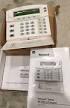 NetworX NX-6V2 LED Keypad User Manual POWER Light is on when AC power is present; flashes to indicate a low battery condition. ARMED Light is on when armed; off when disarmed; flashes to indicate a previous
How To Control A Car Alarm On A Car With A Remote Control System
 MODEL CA100 REMOTE CONTROL AUTO ALARM SYSTEM INSTALLATION & OPERATION INSTRUCTIONS WIRING DIAGRAM Black Antenna Wire 6 Pin 6 Pin Mini Connector Valet Switch Blue LED Indicator Blue Wire: (-) 200mA Unlock
Crow Limited Warranty. Print Version 017
 Crow Limited Warranty (Crow) warrants this product to be free from defects in materials and workmanship under normal use and service for a period of one year from the last day of the week and year whose
INSTALLATION MANUAL PC2525. Version 1.1
 INSTALLATION MANUAL PC2525 Version 1.1 TABLE OF CONTENTS FEATURES 1 SPECIFICATIONS 1 INSTALLATION 2 Mounting the Panel... 2 Mounting the Keypad... 2 Auxiliary Power Connection... 2 Bell/Siren Connection...
Auto Dialer. Manual E-921APQ E-921GPQ
 Troubleshooting: Auto dialer will not arm/disarm Auto dialer will not dial out Unit doesn t respond to a call-back Difficulty in activating room monitor by telephone remote control Make sure that you have
USER GUIDE SERIES 4250 AUDIO ALARM CONFIRMATION SYSTEM CONTROL UNIT
 USER GUIDE SERIES 4250 AUDIO ALARM CONFIRMATION SYSTEM CONTROL UNIT CONTENTS Page INTRODUCTION... 2 Security conditions... 3 Full Set (Fully armed)... 3 Part Set (Partially armed)... 3 Unset (Disarmed)...
User Manual GSM Alarm System. www.deltasecurity.cn. All rights reserved by Delta Security Co., Ltd
 User Manual GSM Alarm System All rights reserved by Delta Security Co., Ltd Dear Clients, Thank you for using our GSM Alarm System. We are committed to giving you the best home security available today
Wireless AUTODIAL GSM SMS Home Alarm Security System 900/ 1800/ 1900Mhz(CK-GSM-9003)
 CN2HK LIMITED Wireless AUTODIAL GSM SMS Home Alarm Security System 900/ 1800/ 1900Mhz(CK-GSM-9003) User Manual Please read this manual before operating this product. After you finish reading this manual,
ELECTRONIC ENGINEERING LTD. PowerWave-16. 16 zone Control panel Communicator. User s Operating and Programming Guide. Version: 6.
 ELECTRONIC ENGINEERING LTD. PowerWave-16 16 zone Control panel Communicator User s Operating and Programming Guide Version: 6.28 P/N 7121240 Rev c N.A May 2003 Contents Introduction... 4 Meet the Crow
HomeSafe Security Panel User s Guide 5400 Series
 HomeSafe Security Panel User s Guide 5400 Series CONTENTS Features... 4 Introduction... 5 Keypad... 6 Keypad Indicators... 7 OPERATION by KEYPAD... 8 Arming... 9 Disarming... 10 Resetting Alarms... 10
WIRELESS ALARM SYSTEM WITH TELEPHONE AUTO DIALER
 BAT.LOW AC WIRELESS ALARM SYSTEM WITH TELEPHONE AUTO DIALER THE SYSTEM THAT CALLS YOU! Our WIRELESS ALARM SYSTEM WITH TELEPHONE AUTO DIALER is designed to allow you to create your own security system.
i 70 Installation Manual V1.04 Contents Grade 2 Wireless Intruder Alarm System YOUR SECURITY IS OUR PRIORITY Installation Instructions 2
 YOUR SECURITY IS OUR PRIORITY Contents Installation Instructions 2 Operation Instructions Trouble shooting Technical Specification 8 25 31 i 70 Grade 2 Wireless Intruder Alarm System Global Security Devices
1R / 4-BUTTON SERIES
 Button 1 1R / 4-BUTTON SERIES VEHICLE SECURITY SYSTEM Standard Features: Two 4-Button Remote Transmitters Status indicator (LED) Valet / override switch Multi-tone siren Dual stage impact detector Remote
ADEMCO LYNXR-I Security Systems
 K14117 3/06 Rev. A ADEMCO LYNXR-I Security Systems Quick Start Guide UL LYNXR-I is not intended for UL985 Household Fire applications unless a 24-hour backup battery (P/N LYNXRCHKIT-HC or LYNXRCHKIT-SHA)
Wireless Alarm system s manual
 MOUNTVIEW TECH AUSTRALIA PTY LTD Wireless Alarm system s manual ADS A180 Series ADS Security 1/11/2011 1. Before You Begin For your safety and the safety of others, and to ensure that you get the most
Business/ Home GSM Alarm System
 Business/ Home GSM Alarm System BUSINESS/HOME GSM ALARM SYSTEM POWER STATUS RECORD SIGNAL User Manual Profile For a better understanding of this product, please read this user manual thoroughly before
WIRELESS ALARM SYSTEM WITH TELEPHONE AUTO DIALER
 BAT.LOW AC WIRELESS ALARM SYSTEM WITH TELEPHONE AUTO DIALER THE SYSTEM THAT CALLS YOU! Our WIRELESS ALARM SYSTEM WITH TELEPHONE AUTO DIALER is designed to allow you to create your own security system.
Solution 16 plus. Quick Start Guide Security System
 Solution 16 plus EN Security System Copyright Notice Unless otherwise indicated, this publication is the copyright of Bosch Security Systems Pty Ltd ( Bosch ). All rights are reserved.you may download
Users Guide to Keypad Functions
 Users Guide to Keypad Functions MANUAL NO. 700-175-01J ISSUED JAN 2002 VERSION 1.41 Summary of Operation A rm/ disarm [#] + [USER CODE] Quick Quick Quick Panic Fire Medical Away Arm Stay Arm Stay Arm &
GSM-DL2 GSM auto dialer
 Introduction GSM-DL2 GSM auto dialer GSM-DL2 is a GSM auto dialer; designed for car alarm, boat alarm, home alarm and other applications. When it is triggered, it dials pre-programmed telephone numbers
AGRI-ALERT 800T / AGRI-ALERT 800 ALARM SYSTEM USER MANUAL
 AGRI-ALERT 800T / AGRI-ALERT 800 ALARM SYSTEM USER MANUAL Manufacturer: Viatron Electronics 3514 1st Street, St-Hubert (Quebec) Canada J3Y 8Y5 WARNING: the warranty can be void if the Agri-Alert 800T or
728 SERIES REFERENCE & INSTALLATION MANUAL 728+ VERSION 3.2. 728 series
 728 SERIES 728+ VERSION 3.2 728 series REFERENCE & INSTALLATION MANUAL TABLE OF CONTENTS INTRODUCTION... 2 About This Manual... 2 Features... 2 Specifications... 3 Accessories and Keypads... 3 About Paradox...
GSM HOME SECURITY SYSTEM
 Cell /Mobile phone home security system GSM HOME SECURITY SYSTEM Model : GSM-120 TABLE OF CONTENTS 1. FEATURES... 1 2. APPLICATION... 2 3. SPECIFICATIONS... 3 4. FRONT PANEL & LAYOUT DESCRIPTION...6 5.
CM705B - Universal Expander Module CM707B - Plug On Zone Expander Security Systems
 CM705B - Universal Expander Module CM707B - Plug On Zone Expander Security Systems EN Security System CM705B CM705B - Universal Expander Module The CM705B universal expander provides a cost effective way
APR-PRT3 Printer Module: C-Bus Programming Instructions
 APR-PRT3 Printer Module: C-Bus Programming Instructions We hope this product performs to your complete satisfaction. Should you have any questions or comments, please visit www.paradox.com and send us
NX-8V2 Control Panel Installation Manual
 NX-8V2 Control Panel Installation Manual P/N I-NX8V2-IM REV H ISS NOV12 Copyright Disclaimer Trademarks and patents Intended use Contact information Customer support 2012 UTC Fire & Security Americas Corporation,
Magellan All-in-one Wireless Security System
 Magellan All-in-one Wireless Security System MG6250 Console Version 1.0 Menu Programming Guide Introduction The MG6250 All-in-one Wireless Console is a two-partition, 64-zone wireless console, offering
Application Notes. 1.21 Partition Programming (PC1616/1832/1864 V4.2) Page 42. Panels: POWER SERIES (PC1616/1832/1864 V4.
 Application Notes 1.21 Partition Programming (PC1616/1832/1864 V4.2) Panels: POWER SERIES (PC1616/1832/1864 V4.2) Overview: The PC1616 supports 2 true partitions. The PC1832 supports 4 true partitions.
PhoneWatch Smart Security System User Manual - Domonial
 PW0002 10/13 Customer Support: 1850 753 753 PhoneWatch Ltd., Unit 3/4, Sandyford Park, Burton Hall Rd, Sandyford Industrial Estate, Dublin 18. Email: [email protected] PhoneWatch Smart Security System
Accenta/Optima. User Guide. Servicing Organisation (Installer) name: Telephone Number: Date of Installation: Account Number: Honeywell Security
 Accenta/Optima User Guide ZONE 1 2 3 4 5 6 7 8 9 Chime Omit Prog PA 0 1 2 3 4 5 6 7 8 9 CHIME OMIT RESET PROG SET Accenta + TA PA DAY POWER PA! " # $ % & 0 1 2 3 5 6 7 8 Chime Omit Reset Prog 4 9 Set PA
MATRIX 6/816. Control Panel with Remote Keypads Software Version 1.34 USER MANUAL RINS545-7
 MATRIX 6/816 Control Panel with Remote Keypads Software Version 1.34 USER MANUAL RINS545-7 CONTENTS 1. GENERAL OVERVIEW... 1 1.1 Keypad Buttons... 1 1.2 Keypad Display... 2 1.3 Common Keypad Indications...
Using Your. Security System. With LED Keypad S5030, S5031, S5032
 Using Your Security System With LED Keypad S5030, S5031, S5032 Contents 1 Overview Your Security System... 1 How Your Security System Works... 2 Your System's Programming... 3 Getting Used to Your System...