
How To Treat A Wound
|
|
|
- Daniela Paul
- 5 years ago
- Views:
Transcription
1 DOCUMENT REFERENCE NO: Type: GUIDELINE Sus Wound Management Guidelines Relevant to: All PCT Clinical Staff Produced by: Tissue Viability Committee Responsible Executive Director: Director of Nursing Date of Approval: September 2011 Responsibilities Date of Implementation: Immediate after approval Due Review Date: September 2013 Responsible Reviewing Officer: Cathy Malone This document replaces: WE/07/GUI0001/TV Version 2 Signed Chief Executive For Office Use Only Scheme of Publication Drive: Name: X Scheme of Publication Section no: Sub Folder: File: 1

2 POLICY VALIDITY STATEMENT THIS POLICY IS DUE FOR REVIEW IN July After this date, this document will become invalid. Policy users should ensure that they are consulting the currently valid version of the documentation. 2

3 WOUND MANAGEMENT GUIDELINES SEPT West Essex Locality NEPT September 2011 THE TISSUE VIABILITY SERVICE 3

4 WOUND MANAGEMENT GUIDELINES 1. INTRODUCTION AND SCOPE OF GUIDELINE Page Purpose of the Wound Care Guideline 2. PROCESS OF HEALING Pages Healing by First Intention 2.2 Healing by Secondary Intention 2.3 Wound Bed Preparation Tissue Infection Moisture Edges 3. FACTORS AFFECTING THE HEALING PROCESS Pages Factors that can delay healing 3.2 Diet Identification of patients at Risk 3.3 Pain Using opiates on wounds 4. CLASSIFICATION OF WOUND TISSUE Pages Epithelialising Tissue 4.2 Granulating Tissue 4.3 Sloughy Tissue 4.4 Infected Tissue 4.5 Necrotic Tissue 4.6 Malignant Tissue 5. WOUND ASSESSMENT Pages Wound Assessment Form 6. WOUND CARE Pages Wounds healing by First Intention 6.2 Wounds healing by Secondary Intention Epithelialising wounds Granulating wounds Sloughy Wounds Infected Wounds Necrotic Wounds 6.3 Malignant/Fungating Wounds 6.4 Criteria for Removing/Changing Dressings 6.5 How to take a swab for culture 6.6 How to treat overgranulating tissue 1

5 TVS Guidelines: Wound Management/ Sept PRINCIPLES OF WOUND IRRIGATION Pages Cleansing Solutions Sodium Chloride 0.9% solution Chlorhexidine with cetrimide Protosan Iodine Stellisept 8. WOUND BED PRODUCT INFORMATION Pages Semi Permeable Film dressing 8.2 Hydrocolloids 8.3 Alginates 8.4 Foam Dressings 8.5 Hydrogels 8.6 Dressings containing charcoal 8.7 Dressing containing antimicrobial Honey 8.8 Protease Modulating Therapy (PMT) 8.9 Larva Therapy/Biosurgery 8.10 Topical Negative Pressure 8.11 Topical Antibiotic 9. WOUND DRAINAGE Page ASEPTIC NON TOUCH TECHNIQUE Page WOUND COMPLICATIONS Page Infection with/without Exudate 11.2 Wound Dehiscence 12. DEBRIDEMENT OF NECROTIC OR SLOUGHLY TISSUE Pages Definition of Debridement 12.2 Scope 12.3 Contra-indications for versajet or sharp debridement 12.4 Criteria for sharp debridement 12.5 Criteria for versajet debridement 12.6 Procedure of communication with other disciplines prior to stop debridement 12.7 Procedure for debridement 13. MONITORING OF ADHERENCE TO GUIDLEINES Page EDUCATION Page 50 LIST OF TABLES Table 1 - Stages of Healing Process Page 6 Table 2 - The TIME principles of Wound Bed Preparation Page 9 Table 3 - Characteristics of Healthy and Unhealthy Page 10 Granulating Tissue Table 4 - Signs and Symptoms of superficial and deep infection Page 14 Table 5 - Types of exudates and management Page 17 Table 6 - Conditions and interventions known to delay Page 18 Wound healing Table 7 - Comparison of commonly used antimicrobials Page 34 Table 8 Procedure for aseptic non touch technique Page 42 2

6 TVS Guidelines: Wound Management/ Sept 2011 LIST OF FIGURES Figure 1 EWMA Clinical Stages of Infection and Algorithm Page 13 Figure 2- Wong Baker pain scale Page 20 Figure 3- Numerical pain rating scale Page 20 Figure 4 -Factors causing delayed wound healing Page 21 Figure 5 - Wound Assessment Form Page 24 Figure 6 - Wound Care Plan Form Page 32 APPENDICES Appendix 1 Nutrition Assessment (MUST) Pages Appendix 2 TVS Referral Form Page 57 TNP Referral Form (VAC) Page 58 Care Pathway for Patient with a Wound Page 59 Care Pathway for MRSA infected Wound Page 60 Appendix 3 Proforma Care Plans Pages Appendix 4 Wound Management Audit Tool Pages Appendix 5 Competency Assessment Pages Appendix 6 Wound Care Bundle Pages

7 Foreword As with any clinical guideline, recommendations may not be appropriate for use in all circumstances. A limitation of a guideline is that it simplifies clinical decision-making. 1 Decisions to adopt any particular recommendation must be made by the practitioner in the light of: Available resources Local services, policies and protocols The patients circumstances and wishes Available personnel and devices Clinical experience of the practitioner Knowledge of more recent research findings. 1 Shiffman R. Representation of clinical practice guidelines in conventional and augmented decision tables. Journal Medical Informatics 1999; 70 (3): 434, ,

8 1. INTODUCTION AND SCOPE OF GUIDELINE 1.1 Purpose of the Wound Guideline The purpose of this guideline is to provide guidance within SEPT West Essex Locality regarding the management of acute and chronic wounds This guideline aims to simplify the decision making regarding wound management while ensuring that patients are provided with the best evidence based care. To that end this guideline must be used to ensure that all patients have been assessed and managed holistically and that care is supported with completed care plans and assessments in conjunction with the following guidelines: SEPT West Essex Locality Infection Control Guidelines SEPT West Essex Locality Pressure Ulcer Prevention and Management Guidelines. SEPT West Essex Locality Dressing Formulary Guidelines Nursing and Midwifery Council (NMC) The Code: Standards of conduct, performance and ethics for nurses and midwives. 2 The Royal Marsden Hospital, Manual of Clinical Nursing procedures This document also aims to ensure transparency regarding management of patients with wounds within SEPT West Essex Locality, NHS West Essex and NEPT, ensuring fair and equitable access to the best care and advice regardless of whether care is provided by NHS providers or private nursing homes providers. It is intended that adherence to these guidelines will facilitate all patients with non healing wounds being given access to the Tissue Viability Department if clinically appropriate as illustrated in the Care Pathway available in Appendix This guideline was written by the Tissue Viability Committee, which is a properly constituted subcommittee of the Nursing & Public Health Forum (NPHF) for SEPT West Essex Locality This guidelines is the product of collaboration between the Tissue Viability Service, The Leg Ulcer Service, Community and Inpatient Nursing Services, the Medicines Management Department, Infection Control, Dietetics and the Foot Health Department. This guideline does not serve to advise on the management of Burns and Plastics, Dermatology, or Diabetic Foot Ulcers. Clinicians requiring support on such issues should seek advice from the appropriate Burns and Plastics, Dermatology Services or Foot Health Department. 2 NMC (2008) The Code, Standards of conduct, performance and ethics for nurses and midwives 3 Dougherty L, Lister S (eds) (2008) The Royal Marsden Hospital Manual Clinical Nursing Procedures. 7 th edn. Blackwell Publishing, Oxford 5

9 TVS Guidelines: Wound Management/ Sept PROCESS OF HEALING 4 Wound healing is a continuous process, however four stages can be identified. The length of each phase varies with the nature of the wound and the patient s general condition. STAGE PROCESS CLINICAL EFFECTS IMPLICATIONS IMMEDIATE Vasoconstriction Haemorrhage Dress with a secure Haemostasis controlled or reduced. pressure bandage. Activation of endothelial cells, platelets and clotting cascade. Clot forms in wound. Seek medical advice if blood loss is excessive persistent. INFLAMMATION Mediator release Vasodilatation Increased capillary permeability Cell stimulation /inhibition. Bradykinin & histamines produced. Blood vessels dilate and become more permeable. Inflammatory process initiated. Pain Skin becomes red hot Swelling Exudate production Observe the following: Swelling and discoloration Signs of infection (see section 4&5) and inform medical staff if concerned. Chemotaxis Phagocytosis Initiation of Repair PROLIFERATION Granulation Angiogensis Collagen production Epithelialisation Contraction MATURATION Collagen remodelling Capillary regression Increased blood flow Protein cells and fluid leak from capillaries. Mediators attract phagocytes (Neutrophils first, then Macrophages). Neutrophils and macrophages remove debris and bacteria. Macrophages produce growth factor. Endothelial budding or marginal capillaries Fibroblasts migrate to the scene and secrete collagen Epithelial cell multiplicating and migration over surface Possible due to specialized fibroblast action. Reconstruction of extra cellular matrix (ECM) from fibrin, fibronectin & collagen Type III collagen converted to Type I, increasing strength Reduction in number of vessels, reducing blood flow. ECM develops density Contribute to exudates and swelling Crust, pus or sloughing No Clinical effects visible Red, vascular tissue appears in wound Smooth marginal zone or islands of epithelium seen in wound Size of defect reduced Scar flattens and softens Scar pales, itching subsides. The nurse must ensure: The patient received a nutritious diet, high in vitamin C and protein. Movement is encouraged to prevent DVT and contractures Physical support of the wound area and pain relief The patient is educated regarding any physical restriction and provision of healing The nurse needs to advise on: Scar tissue 2 Protection of the scar from friction Encourage normal activity Camouflaging after 1 month depending on the extent of the wound if appropriate. Table 1 Stages of Healing, Source: The Wound Programme 5 & Wet Wounds 6 4 Kingsley A (2003) Wound healing and potential therapeutic options. Professional Nurse. Vol 17 No The Wound Programme (1992) Centre for Medical Education. Dundee 6 Wicks G, J Stephen-Haynes (2008) Wet Wounds: practical steps to improving active fluid management. 6

10 TVS Guidelines: Wound Management/ Sept Healing by First Intention (Acute Wounds) Definition: Surgical or traumatic wounds where the edges are brought together by suturing, steristrips, clip, staples or glue. Acute wounds usually follow a well-defined process as illustrated in Table 1. These stages overlap and the entire wound-healing process can take several months. Blood and exudate from a surgical wound is usually minimal. Within 48 hours the wound will have formed a natural barrier against invasion by pathogenic bacteria. 7 8 Surgical wounds, which are dry, can be left exposed after 48 hours following surgery. The preference of individual surgeons is likely to vary and staff should adhere to the written instruction within the patients notes. 2.2 Healing by Second Intention 9 (Chronic wounds) Definition: All open wounds e.g. pressure ulcers, dehisced surgical wounds, leg ulcers. (These guidelines do not cover the management of Leg Ulceration. Please refer to the Leg Ulcer Guidelines) In the past, the acute wound-healing model has been applied to chronic wounds, but it is now known that chronic wound healing is different from acute wound healing. 10 Chronic wounds become stuck in the inflammatory and proliferative phases of healing, delaying healing. 11 The epidermis fails to migrate across the wound tissue and there is hyperproliferation at the wound margins, which interferes with normal cellular migration over the wound bed. 12 In chronic wounds there appears to be an overproduction of matrix modules resulting from underlying cellular dysfunction and disregulation. 13 Fibrinogen and fibrin are also common in chronic wounds and it is thought that these and other macromolecules scavenge growth factors and other molecules involved in promoting wound repair. 14 So, while there may be large number of growth factors within the wound, these can become trapped and therefore unavailable to the wound repair process. Chronic wound fluid is also bio chemically distinct from acute wound fluid; it slows down, or even blocks the proliferation of cells such as keritinocytes, fibroblasts and endothelial cells, which are essential for the wound-healing process. For these reasons chronic wounds must be viewed differently than acute wounds. There is often a complex mix of local and host factors, which need to be assessed and treated. 7 Thomlinson D (1987) To Clean or not to Clean. Nursing Times Journal of Infection Control Nursing,Vol Mar 8 Chrintz et al (1989) Need for surgical wound dressing. British Journal of Surgery. Vol 76, Pg Silver I.A (1984) The Physiology of Wound Healing. JWC. Vol 2 No 2 Pg Dowsett C, Ayello E (2004) TIME principles of chronic wound bed preparation and treatment. BJN Vol 13, No 15 pg S16-S23 11 Ennis WJ, Meneses P (2000) Wound healing at the local level. The stunned wound. Ostomy Wound Manage 46: 39S 48S 12 Schultz G, Sibbald G, Falanga V et al (2003) Wound bed preparation: a systemic approach to wound management. Wound Repair Regen 11 (2): Falanga V, Grinnell F, Gilchrist B, Maddox YT, Moshell A (1994) Workshop on the pathogenisis of chronic wounds. J Invest Dermatol 102 (1): Falanga V (2000) Classification for wound bed preparation and stimulation of chronic wounds. Wound Repair Regen 8: Schultz G, Sibbald G, Falanga V et al (2003) Wound bed preparation: a systemic approach to wound management. Wound Repair Regen 11 (2): Dowsett C, (2008) Using the TIME framework in wound bed preparation. Wound Care UK June pg S15-D20 7

11 TVS Guidelines: Wound Management/ Sept Wound Bed Preparation Wound Bed Preparation (WBP) is a well established concept and the TIME framework is a practical tool to assist practitioners when assessing and managing patients with wounds. It is however important to remember to assess the whole patient. WBP is a way of focusing systematically on most of the critical components of the non-healing wound to identify the possible cause of the problem. WBP involves the application of the principles of Tissue, Infection, Moisture and Edge (TIME) to a wound bed in order to enable the practioner to make a systematic interpretation of the observable characteristics of a wound and to decide on the most appropriate intervention. The TIME Table (Table 2) illustrates in a simple way the link between clinical observations and the underlying cellular abnormalities, and the effects of clinical interventions at a cellular level. The first column lists the clinical signs of a non-healing wound. As growth factors, senescent cells or fibroblasts cannot be seen with the naked eye; the clinician needs clear, visible signs that can be assessed at the bedside. The second column highlights the proposed pathophysiology of that clinical observation. Column three and four suggest the clinical actions that need to be taken and the effects of these actions. The final column is for clinical outcomes, which are objective and measurable Benbow M, (2008) Exploring the concept of moist wound healing and its application. BJS ( TV supplements) Vol 17 No 15 pg S6-S Lo SF, Hsu MY, Hu WY et al (2007) using wound bed preparation to heal a malignant fungating wound: a single case study. JWC Vol 16 No 9 pg Sibbald RG Woo K, Ayello E, (2007) Increased bacterial burden and infection:nerds and STONES. Wounds Uk 2007 Vol 3 No 2. pg Dowsett C Newton H (2005) Wound bed preparation: TIME in practice. Wounds UK Vol 1 issue Dowsett C, Claxton K (2006) Reviewing the evidence for wound bed preparation. JWC Vol15 No Dowsett C, Ayello E ((2004) TIME principles of chronic wound bed preparation and treatment. BJN Vol 13, No 15 pg S16-S23 8

12 TVS Guidelines: Wound Management/ Sept 2011 Table 2 - The TIME principles of wound bed preparation (WBP) Source: Schultz et al (2003) 23 CLINICAL OBSERVATIONS PROPOSED PATHOPHYSIOLOGY WBP CLINICAL ACTIONS EFFECT OF WBP ACTIONS CLINICAL OUTCOME TISSUE NON- VIABLE OR DEFICIENT Defective matrix and cell debris impair healing Debridement (episodic or continuous) Autolytic, sharp surgical, enzymatic, mechanical biological agents Restoration of wound base and functional extracellular matrix proteins Viable wound base INFECTION OR INFLAMMATION High bacterial counts or prolonged inflammation inflammatory cytokines protease activity growth factor activity Remove infected foci Topical/systemic: - antimicrobials antiinflammatories Protease inhibition Low bacterial counts or controlled inflammation: inflammatory cytokines protease activity growth factor activity Bacterial balance and reduced inflammation MOISTURE IMBALANCE Dessication slows epithelial cell migration Excessive fluid causes maceration of wound margin Apply moisturebalancing dressings Compression, negative pressure or other methods of removing fluid Restored epithelial cell migration, desiccation avoided. Oedema, excessive fluid controlled, maceration avoided Moisture balance EDGE OF WOUND NON ADVANCING OR UNDERMINED Non-migrating keratinocytes Non-responsive wound cells and abnormalities in extracellular matrix or abnormal protease activity Re-assess cause or consider corrective therapies: - Debridement Skin grafts Biological agents Adjunctive therapies Migrating keratinocytes and responsive wound cells. Restoration of appropriate protease profile Advancing edge of wound 23 Schultz G, Sibbald G, Falanga V et al (2003) Wound Bed Preparation: a systemic approach to wound management. Wound Repair Region 11 (2):

13 TVS Guidelines: Wound Management/ Sept Tissue Monitoring the type of tissue in a wound is the mainstay of wound assessment in clinical practice, recording the presence of necrosis, slough, granulation tissue or epithelialium. 24 This helps predict the wounds position in the healing continuum. The presence of nonviable tissue is a significant clinical observation as it can be responsible for delayed healing. 25 It is described as necrotic, sloughy, devitalised or dead tissue. Necrotic tissue consists of dead cells and debris, while slough or fibrinous material consists of fibrin, pus and proteinaceous material. Necrotic tissue is usually black or brown in colour and soft or liquefying in consistency. If necrotic tissue dries out, and is hard and leathery it is more commonly described as eschar. 26 Necrotic tissue when grouped with the clinical problems of excess exudate and bacteria within dead tissue is termed necrotic burden. 27 Slough may be creamy in appearance because of large amounts of leukocytes present. 28 Alternatively, a tendon may be exposed, signifying wound deterioration, presenting as striated, yellow tissue. The wound may be shiny, suggesting the presence of biofilms sophisticated coatings often resistant to antimicrobials. 29 If granulation tissue is friable, unstable to touch and bleeds easily it may be infected. 30 The practioner should be able to differentiate between healthy and unhealthy tissue. 31 (See Table 3) The surface or the texture of tissue can yield useful clues, for example if granulation tissue is fleshy and exuberant, it may be hyper granulating (overgranulating) and thus stuck in the proliferative stage of healing. It is suggested that healthy granulation tissue has rosettes on the surface. 32 Hyper granulating tissue is thought to arise from an extended inflammatory response. There is of course a danger that tissue could be treated as hyper granulation when it is in fact a carcinoma. If concerned staff should refer the patient to the medical staff responsible for the patients care. Table 3. Characteristics of Healthy and Unhealthy Granulating Tissue, Source: Flanagan (1996) 35 Healthy Granulation Tissue Bright red Moist Shiny surface Does not bleed easily Rapid proliferation Unhealthy granulation tissue Dark red/bluish discolouration or very pale Dehydrated Dull surface Bleeds easily (friable) Slow growth Infection 24 Flanagan M, (2003) Wound measurement: can it help us to monitor progression to healing. JWC 12: Flanagan M, (1997a) Wound Management. Churchill Livingstone, London 26 Bale S, (1997) A guide to wound debridement. JWC 6: Falanga V, (2002) Wound bed preparation and the role of enzymes: a case for multiple actions of therapeutic agents. Wounds 14: Flanagan M. (1997b) A practical framework for wound assessment 2: methods. Br J Nurs 6: Edwards R, Harding KG (2004) Bacteria and wound healing. Curr Opin Infect Dis 17: Cutting K, Harding K (1994) Criteria for identifying wound infection. JWC 3: Harker J, Moore K ( 2004) Tissue management and wound pathophysiology,. A Journey through TIME. Wound bed preparation in practice BJN 32 Edmonds M, Foster A (2004) the use of antibiotics in diabetic foot. Am J Surg 187 (5A): 25S-28S 33 Young, T (1995) Common problems in wound care: overgranulation. Br J Nurs 4: Chraibi H (2004) The diagnosis and treatment of carcinomas occurring at the sites of chronic pressure sores. JWC Vol 13. No Flanagan M, (1996) Characteristics of healthy and unhealthy Granulation Tissue. JWC 7:

14 TVS Guidelines: Wound Management/ Sept 2011 All wounds contain micro-organisms, yet the majority are not infected. Infection in a wound causes pain and discomfort, delays healing and can be life threatening. 36 The European Wound Management Association Algorithm illustrated in Figure 1 illustrates the different stages of wound infection. The spectrum of interaction between the microbial community and host may gradually reach a point at which wound healing process is impaired or localised detrimental host effects are initiated. 37 Bacteria involvement in wounds can be divided into four categories: Contamination Colonisation Critical colonisation Wound infection. Wound contamination is the presence of non-multiplying bacteria in a wound. 38 Wound colonisation is the presence of replicating micro organisms adhering to the wound without a host reaction. If mixtures of potential pathogens are multiplying, this may lead to a delay in wound healing and the critical colonisation stage is reached. Unsuppressed, the natural progression from this stage is to wound infection. This is when the sum of the bacterial load and the virulence factors the bacteria produce is greater than the hosts immune defences, resulting in harm to the host. 42 Biofilms are communities of microbial cells, attached to surfaces and encased in a slime. Research has shown that biofilms may be totally unperturbed by activated macrophages, neutrophils, antibodies, complemented or other host defences. 43 This offers protection against phagocytosis, antibiotics and antimicrobial agents. Microbial involvement in delayed healing must be suspected when other causes have been eliminated. Antimicrobials are agents that either kill or inhibit the growth and division of micro-organisms. They include antibiotics (which act on specific cellular target sites), antiseptics, disinfectants and other agents (which act on multiple cellular target sites). 51 Chronic wounds do not always display the classic signs of infection; therefore other criteria need to be taken into account. (Table 4) 36 Dowsett C, (2008) Using the TIME framework in wound bed preparation. Wound Care UK June pg S15-D20 37 EWMA (2006) Position Document. Management of wound infection 38 Ayton M (1985) Woundscare: wounds that wont heal. Nursing Times 81 (Suppl 46): Cutting K (2006) Wound Infection, Understanding, assessment and control. Wound Care Society Publication. 40 Kingsley A (2001) A proactive approach to wound infection. Nurs Stand 15 (30: Schultz G, Sibbald G, Falanga V et al (2003) Wound bed preparation: a systemic approach to wound management. Wound Repair Regen 11 (2): Dowsett C, Edwards-Jones V, Davies S, (2004) Infection control for wound bed preparation A Journey through TIME. Wound bed preparation in practice BJN. 43 Wolcott R, Cutting K F, Dowd SE (2008) Surgical site infections: biofilms, dehiscence and delayed healing. Wounds UK Vol 4 No EWMA (2005) Position Document: Identifying criteria for wound infection 45 Cooper R, Okhiria O (2006) Biofilms. Wound infection & the issue of control. Wounds UK Vol 2 No EWMA (2006) Position Document. Management of wound infection.. London MEP Ltd Rhoads DD (2008) Biofilms in wounds: management strategies. JWC Vol 17 No11 Nov pg Wolcott R D et al (2010) healing and healing rates of chronic wounds in the age of molecular pathogen diagnositics. JWC Vol 19 No 7 pg Cooper R, Jenkins L, Rowlands R. (2011) Inhibition of biofilms through the use of manuka honey. Wounds Uk Vol 7 No 1 pg Butcher M (2011) Introducing a new paradign for bioburden management. JWC/BSN supplement May. Pg EWMA (2006) Position Document. Management of wound infection. London MEP Ltd. 11

15 Figure 1 EWMA Algorithm for Managing Wound Infection Stage 1: Few subtle signs of infection (some odour, pain or exudate) Healing progressing normally Stage 2: Increasing signs of infection (increasing odour, pain or exudate) Healing no longer progressing normally Signs of Infection Stage 3: Overt signs of local infection (discharge of pus with swelling, pain erythema and local warmth) Evidence of surrounding tissue involvement; wound appears unhealthy or deteriorating (cellulits, lymphangitis or gangrene) Stage 4: Overt signs of focal infection and signs of systemic infection (pyrexia and raised white blood cell count) Possible evidence of surrounding tissue involvement, which may lead to sepsis and organ failure and can be life threatening No signs other than healing progress altered Stages 1 & 2 signs limited to wound only Stage 3 spreading local sepsis Stage 4 systemic signs Are other risk factors present, eg immunocomprise or malignancy? Select topical antimicrobial (box, bottom left) Consider combination therapy. Drain any local collections Start broadspectrum systemic antibiotics while awaiting culture results If systemic signs only, look outside wound for source of infection Treat/correct underlying aetiology. Refer to appropriate specialist If no improvement, are any other subtle signs of infection present? Or significant culture result? Overt signs of infection eliminated Overt signs of infection not eliminated Good clinical response Poor clinical response Factors to consider when selecting antimicrobials Select alternative antimicrobial agent Consider adding antibiotic Complete course of antibiotics. Reassess wound and patient Adjust antibiotic selection according to causative agent, sensitivity and patient preference Agent: Dressing specificity efficacy cytotoxicity allergenicity absorbency conformability odour management pain management Stop antimicrobial therapy. Monitor wound progress. Continue managing wound according to local protocol. Reconsider antimicrobial treatment if wound or patient status changes adversely. 12

16 Table 4 Signs and symptoms of superficial and deep infection, Source: Cutting and (1991) 28, Schultz et al (2003) 29 Harding Superficial Non-healing wound Friable granulation tissue Exuberant bright red granulation Increased exudates Erythema/cellulitis around wound edge Deep Pain Increased size Warmth Erythema/cellulitis more than 1-2 cm from the wound edge Odour Probes/exposed bone When bacteria proliferate they form micro colonies that become attached to the wound bed and secrete glycocalyx or biofilms that help to protect the microorganism from anti microbial agents and can delay healing. The diagnosis of infection is primarily a clinical skill based on careful history taking and clinical observation, with microbiological data used to supplement the clinical diagnosis. Quantification of bacteria by wound biopsy has been considered the gold standard, but surface sampling cost less and is easier to carry out. 54 The European Wound Management Association Algorithm for Managing Wound Infection as illustrated in Figure 1 55 should be used to assist in clinical decision making regarding the diagnosis and management of suspected infection. Wound cleansing is an important factor in reducing bacterial burden. Organisms are physically removed by irrigation with saline. Increasing the frequency of dressing changes may also be useful particularly as infected wounds often produce copious amounts of exudate, which may promote bacterial growth causing further tissue breakdown and maceration of the surrounding skin. There is clearly a need to link the I element of WBP to the M element for intervention to be successful. 56 MRSA MRSA stands for meticillin-resistant Staphylococcus aureus. It is sometimes known as a super bug. There are various subtypes (strains) of S. aureus and some strains are classed as MRSA. MRSA strains are very similar to any other strain of S.aureus. That is, some healthy people are carriers and some people develop the types of infections described above. Most S. aureus infections can be treated with commonly used antibiotics. However MRSA infections are resistant to an antibiotic called meticillin and also to many other types of antibiotics. MRSA strains of bacteria are no more aggressive or infectious than other strains of S. aureus. However, infections are much more difficult to treat because many antibiotics do not work against MRSA. Infections with MRSA can sometimes become more severe than they may otherwise have been if the cause of the MRSA infection is not 52 Enoch S, Harding KG, (2003) wound bed healing: the science behind the removal of barriers to healing. Wounds 15: Dowsett C, Edwards-Jones V, Davies S, (2004) Infection control for wound bed preparation A Journey through TIME. Wound bed preparation in practice BJN. 54 Dowsett C, Edwards-Jones V, Davies S, (2004) Infection control for wound bed preparation A Journey through TIME. Wound bed preparation in practice BJN. 55 EWMA (2006) Position Document. Management of wound infection 56 Dowsett C, Edwards-Jones V, Davies S, (2004) Infection control for wound bed preparation. A Journey through TIME. Wound bed preparation in practice BJN. 13

17 TVS Guidelines: Wound Management/ Sept 2011 diagnosed early and antibiotics that are not effective are given at first. 57 For this reason it is vital that all MRSA positive wounds are referred to either Tissue Viability, Leg Ulcer Services or Podiatry as appropriate within 72 hours of diagnosis. Antibacterial strategy The decision of whether to use antibiotics or antimicrobial products is a complex matter that must be based on the clinical findings of an experienced clinician. Figure 1 provides EWMA guidance on this matter. 58 Ideally systemic antibiotics are not recommended for wounds that only show signs of local infection. 59 Topical antiseptic agents whether antibiotic or antiseptics delivered from a sustained-release dressing formulation therefore represent the first line treatment, as they provide a high antimicrobial concentration at the site of infection. 60 Some iodine and silver preparations have bactericidal effects even against multiple resistant organisms such as MRSA. Topical antiseptics have the additional advantage that they do not interfere with the remainder of the protective bacterial flora in other parts of the body and are also less likely to produce an allergic reaction. In the case of biofilms the mainstay is frequent removal of the wound surface either with sharp or surgical debridement. At present the effective treatment of medical biofilms is its physical removal The early biofilm that re-emerges after debridement needs to be suppressed with multiple strategies. This will include wound cleansers, topical antimicrobials and advanced primary dressings. Since biofilms adapt to selective stresses a rotating regime of selective antiseptics such as silver or iodine is recommended. 65 Lack of a noticeable healing response within 2 weeks may necessitate the use of other topical or systemic agents. Given the evidence that improvements in wound healing have previously been associated with the elimination of malodour-causing anaerobes and that mixed anaerobes appear to play some synergistic role in preventing wound healing, the use of a metronidazole gel may then be considered 66 under the instruction of the TVS. Topical antimicrobials are most appropriate when used to decrease the bacterial burden in chronic wounds with active but localised infection. They are not solely suitable for highly infected wounds with soft tissue invasion or systemic sepsis and should not be used as a substitute for debridement or systemic antibotics. Increased antimicrobial resistance means these agents should not be used for an extended period of time and should be followed by an appropriate dressing once the bacterial burden has been reduced. Where infection has extended beyond the level that can be managed by local therapy, systemic antibiotics should be used in conjunction with antimicrobial products. 57 MRSA. (2011) sourced 4/8/11 58 EWMA 2006) Position Document. Management of wound infection 59 Bowler PG, Duerden BI, Armstrong DG (2001) wound microbiology and associated approaches to wound management. Clin Microbiol Rev 14: White RJ, Cooper RA, Kingsley A (2001) Wound colonisation and infection. Br J Nurs 10: Lawerence JC (1998) The use of iodine as an antiseptic agent. J Wound Care 7: Sibbald RG, Brown AC, Coutts P, queen D (2001) Screening evaluation of ionised nanocrystalline silver dressings in chronic wound care. Ostomy Wound Manag 47: Wolcott R D. (2009) Regular debridement is the main tool for maintaining a healthy wound bed in most chronic wounds. JWC Vol 18 No 2 pg Cowan T (2010) Biofilms and their management: implications for the future of wound care.. JWC Vol 19 Noo 3 pg Rhoads DD ((2008) Biofilms in wounds: management strategies. JWC Vol 17 No11 Nov pg Bowler PG, Duerden BI, Armstrong DG (2001) wound microbiology and associated approaches to wound management. Clin Microbiol Rev 14:

18 TVS Guidelines: Wound Management/ Sept Moisture Exudate. Exudate contains a variety of substances including water, electrolytes, nutrients, inflammatory mediators, white cells, protein-digesting enzymes (eg matrix metalloproteinases MMPs), growth factors and waste products. In the healing wound exudate appears to promote healing in a number of ways, including cell proliferation. MMPs which breakdown the cell-supporting matrix, are present mainly in inactive form. In wounds not healing (Chronic wounds) exudate appears to have the opposite effects. The exudate contains elevated levels of inflammatory mediators and activated MMPs. 69 One of the most significant challenges faced by nurses is the efficient and cost effective management of excessive wound exudates which causes extreme distress and negatively impacts on patients and carers quality of life. 70 The goal of effective wound management is to remove excess moisture, debris and chemicals from the wound, while maintaining the ideal moisture balance to allow cell migration and ultimately wound healing. 71 Poor exudate management can either cause the wound bed to become too dry or too wet, the resultant imbalance of moisture will cause tissue damage. 72 There are no validated precise measurements for assessing exudate, so for progress of a wound to be monitored it is preferable that the same nurse reassesses a wound in order to aid comparison with serial assessments. Colour and consistence are considered in Table 5 with some guidance on causes and how. There are three main methods of managing exudate: 1. Use of absorbant dressings or dressing which allow evaporation of moisture. 2. Counter pressure through compression 3. Drainage systems, either wound management systems or topical negative pressure (TNP) Edges In WBP, E stands for edges, which are non-advancing or undermining. When wound edges fail to migrate or undermining is present, the clinician needs to reassess the cause and intervene using the TIME table. Epidermal edges that are failing to advance over time towards closure are perhaps the clearest sign of all that a wound is failing to heal. Wound measurement provides baseline information while continuous measurement helps to predict healing and aids monitoring of treatment efficacy and evaluation. 73 Wounds should be re-measured every four weeks. 74 If the margin is undermined, this may be a sign of critical colonisation or infection. The use of cytotoxic agents and cortiocosteroids can totally mask all signs of local or systemic infection. 75 At a cellular level, lack of epidermal migration could be owing to non-responsive wound cells and abnormalities in protease activity, which degrade extra cellular matrix as soon as it is formed Cutting K F (2003) Wound exudates: composition and functions BJN Vol 12 No 16 Supplment: The Exudate Supplement part one. 68 Morison M (2005) Moist wound healing and the role of moisture retentive dressings. Wounds UK Supplement 1 (2): WUWHS (2007) Principles of best practice: Wound exudate and the role of dressings, a consensus document. London: MEP Ltd. 70 Benbow M, Stevens J (2010) Wxudate, infection and patietn quality of life. BJN TV Supplement) Vol 19 No 20 pg S 31-S36 71 Vowden K, Vouden P (2003) Understanding exudate management and the role of exudate in the healing process. The Exudate supplements part two. BJN Vol 12 No White R Wick G Cutting K (2006) From the wet to the dry: modern exudates management. Wound Care Society Publication. 73 Gethin G (2006) The importance of continuous wound measuring. Wounds Uk Vol 2 No Dowsett C, (2008) Using the TIME framework in wound bed preparation. Wound Care UK June pg S15-D20 75 Schultz G, Sibbald G, Falanga V et al (2003) Wound bed preparation: a systemic approach to wound management. Wound Repair Regen 11 (2): Falanga V (2002) Classifications for wound bed preparation and stimulation of chronic wounds. Wound Repair regen 8:

19 TVS Guidelines: Wound Management/ Sept 2011 Table 5. Types of exudate and their management Source: Scanlon E. (2004) 77 Colour Consistency Type of wound Probable cause Management Clear/straw colour Clear/straw colour Clear/straw colour Watery Leg ulcer Oedema/lymph oedema (sudden increase in exudate may indicate infection) Watery Surgical Heart failure/oedema caused by fluid overload Serous fluid Acute: traumatic Normal inflammatory or surgical exudate Blood stained Serous fluid Acute: traumatic or surgical Slight bleeding from vessel in wound bed Blood Viscous Surgical Bleeding vessel postoperative Compression or elevation of the limb Diuretics Dressings of appropriate absorbency Localised pressure or use of a haemostatic dressing Excessive bleeding should be referred back to surgeon Blood Viscous Any Trauma from dressing Traumatic bleeding can be stopped with local pressure or haemostatic dressing. Reconsider dressing choice Yellow Yellow or brown Green Clear green Slightly viscous (may appear purulent, may contain fatty globules, usually profuse) Purulent or haemopurulent Very viscous, mucus-like Watery or slightly viscous Any sloughy wound Abscess or infected wound Leg ulcer, burn wound Upper abdominal wound Brown, faecal Viscous Lower abdominal wound Autolytic debridement of non-viable tissue Bacteria Bacteria especially Pseudomonas aeruginosa Fistula to upper intestine Fistula to lower bowel Grey or Blue 78 Viscous or watery any Related to silver containing dressings Appropriate dressing or drainage system Systemic antibiotics, possibly topical antiseptics and appropriate dressing Topical antiseptic (systemic antibiotic if cellulitis present) Refer back to surgeon Refer back to surgeon Avoid prolonged used of silver 77 Scanlon E. (2004) Moisture balance and exudate control. Clinical review. A Journey through TIME. Wound Bed Preparation in practice. BJN 78 WUWHS (2007) Principles of best practice: Wound exudate and the role of dressings, a consensus document. London: MEP Ltd. 16

20 TVS Guidelines: Wound Management/ Sept FACTORS AFFECTING THE HEALING PROCESS 3.1 Factors that can delay healing Many factors are thought to delay healing. Table 6 lists the commonest. Figure 4 illustrates how such factors can be grouped into intrinsic and extrinsic factors and can occur alongside each other. Thus some wounds can be exposed to multiple factors, which impede its progress at any one time. Table 6 Conditions and interventions known to delay wound healing Source: Schultz et al (2003) 87 Use of systemic steroids Use of immunosuppressive drugs Use of non-steroidal anti-inflammatory Rheumatoid arthritis Other autoimmune diseases such as systemic lupus, uncontrolled vasculitis or pyoderma gangrenosum. Inadequate or poor nutrition Diabetes Smoking Cachexia Diet Adequate nutrition is essential to promote wound healing. A diet rich in carbohydrates, high in protein and moderate fat is essential. Vitamins and trace element supplements should also be provided to all patients with established wounds where deficiency is known particularly vitamins C, E and zinc. 93 However the decision to provide trace element supplements should be done following a thorough nutritional assessment Jones P.L. Millman A (1990) Wound Healing and the Aged Patient. Nursing Clinic of North America. 25: pg Descai H (1997) Ageing and Wounds Part 2. Healing in Old Age. Journal of Wound Care. May Vol. 6 No.5 Pg Harding, K (1999) Wound Management : Theory and Practice. Nursing Times Publications. Pg Robson M et al. (1991) Wound healing alterations caused by infection. Clinics in Plastic surgery. 17: 3, / 83 Bland K.I. Palin W.E et al (1984) 80. Experimental and Clincal Observations of the effects of cytotoxic chemotherapy drugs on wound healing. Ann Surg 199: pg Siang J.E. (1992) The effect of smoking on tissue formation JWC July/Aug. Vol 1 No 2 pg Winter, GD. (1962) Formation of scab and rate of epithelialisation of superficial wounds in the skin of a young domestic pig. Nature;193: Cutting, F.K. (1999) The causes and prevention of maceration of the skin. Jr of Wound Care. Vol8, No Schultz G, Sibbald G, Falanga V et al (2003) Wound bed preparation: a systemic approach to wound management. Wound Repair Regen 11 (2): Silhi, N. ((1998) Diabetes and wound healing, Jr of Wound Care; 7: 1, Kidman K (2008) tissue repair and regeneration: the effects of diabeties on wound healing. The Diabetic Foot Journal Vol 11 No 2 pg Whiteford L (2003) nicotine, CO and HCN: the detrimental effects of smoking on wound healing. Wound Care Dec S22- S25 91 Kean J (2010) The effects of smoking on the wound healing process. JWC Vol 19 No 1 pg Ng M (2010) Cachexia an intrinsic factor in wound healing. Int Wound Jr. Vol 7 No 2 pg Heyman H, Van de Looverbosch DE, Meijer EP, Schols JMGA (2008) Benefits of an oral nutritional supplement on pressure ulcer healing in long term care residents. JWC Vol 17 No 11 Nov pg Mandal A (2006) Do malnutrition and nutritional supplementation have an effect on the wound healing process. JWC Vol 15 No Bradbury S (2006) Wound healing: is oral zinc supplementation beneficial. Wounds UK Vol 2 No Frias Soriano L et al. (2004) The effectiveness of oral nutritional supplementation in the healing of pressure ulcers. The Journal of wound Care Vol 13, No Lansdown A (2004) Nutrition 1: a vital consideration in the management of skin wounds. BJN (Tissue Viability supplement) Vol 13 No 19 S22-S28 98 Lansdown A (2004) Nutrition 2: a vital consideration in the management of skin wounds. BJN Vol 13 No 20, Lewis B (1996) Zinc and Vitamin C in the Aetiology of Pressure Sores. The Journal of Wound Care. Nov. Vol 5 No Reynolds TM. (2000) The Future of nutrition and wound healing. Journal of Tissue Viability. Vol 11 No Gray D. Cooper P. (2001) Nutrition & Wound Healing: What is the Link? JWC. Vol 10 No 3,

21 TVS Guidelines: Wound Management/ Sept 2011 If Nursing Staff are uncertain in specific situations they should discuss their concerns regarding the need to provide supplements with either the Dietician or Medical Staff responsible for the patient Identification of Patients Risk Nutritional assessment should be carried out in line with the MUST Nutritional Assessment Form. (Appendix 1) 3.3 Pain Unresolved pain negatively affects wound healing and impacts on quality of life. A painful chronic wound can often indicate that there is something wrong. 113 Holistic assessment using TIME should provide indicators as to possible causes of such pain. Pain at wound dressing-related procedures can be managed by a combination of accurate assessment, suitable dressing choices skilled wound management and individualised analgesia regimens. An initial assessment should be carried out by an experienced clinician 119 in partnership with clinical staff able to prescribe the appropriate medication. Every patient with a wound should have an individual pain management plan including regular ongoing assessment which should be performed each time a dressing related procedure is carried out. 120 Background pain in the wound and surrounding tissue, plus any new regional pain that may have developed should be assessed. The intensity should be rated, before, during and after the procedure. This should be documented in the patient notes and a care plan developed to address the pain. The level of pain should also be recorded on the wound assessment chart using a recognised pain scale as illustrated in Figure 2 and Ronaghy HA. (1987) The role of zinc in human nutrition. World Review of Nutrition and Dietetics. 54: Casey, G. (1998) The Importance of Nutrition in Wound Healing. Nursing Standard: 13:3 (supplement) Lewis, BK, Harding, KG. (1993) Nutritional intake and wound healing in elderly people.the Journal of Wound care; 2: 4, Collins, CM (1996) Nutrition and Wound Healing. Care of the Critically Ill; 12:3, Wallace, E. (1992) Feeding the Wound: Nutrition and Wound Healing. Br J Nursing; 3: 13, Foster A. Greenhill M.T Edmonds ME (1994) Comparing 2 dressings in the treatment of diabetic foot ulcers JWC Vol 3 No 5 Pg Capper C.J. (1994) The Management of Pressure Sores in a patient with Diabetes Mellitus. JWC Vol 3 No 8 pg McIlwaine C (2003) Importance of holistic nutritional assessment in wound healing. JWC Vol 12 No WUWHS (2004) Principles of best practice: Minimising pain at wound dressing-related procedures. A consensus document. London: MEP Ltd 111 Hofman D ((2006) Practical steps to address pain in wound care. BJN Supplement. Vol 15 No 21, pg Young T Roden A (2006) Pains-taking care. Everyday issues in wound pain management. Wound Care Society Publication. 113 Sibbald R G, Katchky A, Queen D (2006) Medical management of chronic wound pain. Wounds UK Vol 2 No 4 pg Young S Hamption S (2005) Pain management in leg ulcers using ActiFormCool. Wounds UK Vol 1 Issue Fletcher J (2010) managing wound pain during application and removal of dressings BJN TV Supplement Vol 19 No 20 S4-S6 116 Taylor Alison ( 2010) Principles of Pain Assessment. Wound Essentials Vol 5 Pg Briggs M, Ferris F D, Glynn C, et al (2004) Assessing pain at wound dressing-related procedures. Nursing Times Vol 100 No European Wound Management (2002) Position Document: Pain at wound dressing changes. London MEP Ltd WUWHS (2004) Principles of best practice: Minimising pain at wound dressing-related procedures. A consensus document. London: MEP Ltd 120 Solowiej K et al (2010) Psychological stress and pain in wound care. Part 2:management. JWC Vol 19 No 4 pg WUWHS (2004) Principles of best practice: Minimising pain at wound dressing-related procedures. A consensus document. London: MEP Ltd 122 Lloyd Jones M (2010) Living with wound associated pain: impact on the patietn and what clinicians really think. JWC Vol 19 No 8 pg

22 TVS Guidelines: Wound Management/ Sept Using Opiates on wounds Topical opiates act centrally and peripherally and can be alternative or concurrent forms of pain control for wounds. Opiates can be used on viable and non-viable tissue. The effective analgesia dose is low (10mgs) with analgesia occuring within a few minutes. The duration of pain relief from one dose can last up to 2 days. The opiate should be mixed with hydrogel carrier and apply directly to the wound A foam dressing can be used to secure the hydrogel. The effective dose concentration is 10mgs morphine opiate to 1gram hydrogel. Application should be daily or as required basis. There are minimum adverse effects however it is preferable to keep certain wounds such as ischaemic gangrene dry and thus the use of hydrogels would be contraindicated. Figure 2 Wong-Baker faces Scale Figure 3 Numerical pain rating scale 0-10 Numeric Rating Scale None Mild Moderate Severe 123 Riberio, M.D.C. Joel, S.P. Zeppetalla.G. (2004) The bioavailability of morphine applied topically to cutaneous ulcers. Journal of Pain and Symptom Management Vol 27 Issue No Zeppetalla G. (2004) Topical opioids for painful skin ulcers: do they work? European Journal of Palliative Care Vol 11 No 3 pg
23 Figure 4 Factors causing delayed wound healing Poor Blood Supply Hypoxia Necrotic Tissue and Foreign Bodies Cardiovascular Disorders Anaemia Fall in Wound Temperature Adverse Local Conditions At the Wound Site General Pathophysiological Factors Wound Infection Dehydration Intrinsic Malnutrition Decreased Resistance To Infection Inaccurate Wound Assessment (see Article II) Careless Wound Dressing Techniques Factors that can Delay Healing Inappropriate Wound Management By Nurses Extrinsic Drug Therapy Adverse Effects Of Other Therapies Inappropriate Application Of Topical Agents & Primary Wound Dressing Products Negative attitudes of Staff to Treatment and Healing Chemotherapy Radiation Therapy 20
24 4. CLASIFICATION OF WOUND TISSUE The Wound Healing Stage Classification as described below is recommended as it facilitates simple and consistent verbal and written description of the appearance of the wound bed. This is a different classification to the pressure ulcer classification. (See Pressure Ulcer Guidelines) 4.1 Epithelialsing Tissue 125 Appearance. Translucent appearance, usually whitish-pink Small islands of epithelial cells may be visible originating from the wound margin or reminents of hair follicles, sebaceous or sweat glands The epithelial cells rapidly multiply and migrate across granulation tissue, until they form a continuous layer. At this stage the wound will have smooth edges Granulating Tissue Appearance: Granular appearance, slightly uneven Pinky-red colour (well vascularised) Healthy granulating tissue does not bleed easily Granulating tissue which is dark in colour may signal ischaemia or infection 4.3 Sloughy Tissue 128 Appearance: Yellow/ white hue May be dry or slimy Adherent to wound bed (Slough forms when dead cells accumulate in the exudate, yellow colour due to the presence of a large number of leucocytes) 4.4 Infected Tissue Appearance of Acute Wound Infection. Inflammation Localised heat and swelling around wound edge Yellow/green pus Offensive odour Presence of green slough in wound Pain Increased exudate Dark in colour The presence of bacteria does not always indicate the presence of infection. Pus, odour and slough are not always present in the infected wound. Systemic effects and a raised body temperature may be present. It is thus recommended that temperature, pulse, BP and respiratory observations are taken and recorded if there is suspicion of wound infections. 125 Garrett B (1998) Re-Epithelialisation. Journal of wound Care; 7:7, Flanagan, M.(1999) Wound Management: theory and practice. Nursing Times Publication. pg Harding, K., Cutting, K. (1994) Criteria for identifying wound infection. JWC. 3:4, Cutting. K.F. (1996) Definition of Terms. JWC. Resource File. London Macmillan. 21
25 4.5 Necrotic Tissue 129 Appearance: Black/Brown leathery appearance Hard skin-like surface below which is a cavity full of dead tissue Depth will not be known until the dead tissue is removed 4.6 Malignant (Fungating) Tissue Appearance: Raised irregular islands of malignant tissue Often bleeds on contact Characterised by very offensive odour due to colonisation by bacteria It is acknowledged that no classification is likely to be wholly exhaustive; with this in mind it is important to complete a full assessment on a wound as directed on The Wound Assessment Form (WAF) (Figure 5). If the wound is a pressure sore, it is also necessary to state the grade (see Pressure Ulcer Guidelines) 5. WOUND ASSESSMENT. Wounds need regular assessed if appropriate care is to be provided. Wound care products are designed to suit a wound at a particular stage of healing. As the wound changes, dressing type may also need to be changed. It is important to use a classification that all staff understand when assessing, planning and evaluating wound care. This facilitates monitoring the progress and selecting appropriate wound care products. Wounds should be assessed using the principles of WBP and application of the acronym TIME illustrated in Table 2. Tissue observed should be classified according to the Wound Tissue Classification described in Section 4. The Wound Assessment Form (Figure 5) which incorporates the principles of WBP (TIME) should be completed at every dressing change as documentation is as essential as the assessment itself. 132 The use of the WAF and a comprehensive care plan ensures that registered nurses are fulfilling their obligations under the NMC Standards for Records and Record Keeping. Failure to keep such records exposes the Nurse and the Trust to the risk of litigation. It is crucial that wound assessment forms and care plans are completed on all patients who have wounds. These records must be clearly written, signed and regularly updated. 133 An entry must be made on the WAF following every dressing change. 129 Cutting K..F. (1996) Definition of Terms. Journal of Wound Care Resource File. London Macmillan 130 Dowsett C, (2008) Using the TIME framework in wound bed preparation. Wound Care UK June pg S15-D Briggs M (1996) Documenting Wound Management JWC Vol 5 No 5 Pg Oldfield A (2010) Assessing the Open Surgical Wound. Wound Essentials Vol 5 pg NMC (2006) Record Keeping advice sheet. 22
26 Figure 5 Wound Assessment Form (WAF) 1. INITIAL ASSESSMENT: Patient s Name: Address: G.P Details: D.O.B: NHS. No: Draw Wound Profile (so top of wound is towards patients head, include dimensions in cm). 2. SOURCE OF WOUND: Tick 3. INDIVIDUAL PATIENT ASSESSMENT Surgical ( ) Leg Ulcer ( ) Traumatic ( ) Burn ( ) Pressure Ulcer ( ) Fungating ( ) Other ( ) Any Delaying Factor? Interventions DATE: TIME: DATE: TIME: DATE: TIME: DATE: TIME: 4. TISSUE: Appearance, approximate % of wound surface which meets the description Intact Incision line Epithelialising Granulating Over granulating Sloughy Necrotic Fungating Exposed bone/tendon Oedema 5.INFECTION: EWMA Clinical stage of Infection ( 1, 2, 3, 4) Peri wound inflammation / warmth Pyrexia Bleeds easily Odour Y = Yes N = No Pain score 1-10 (0 = no pain 10 = severe pain) Wound swab taken, tick for yes 6. MOISTURE: Exudate A: Serous, B: Haemoserous, C: Purulent/ Pus L: Low, M: Moderate, H: Heavy 7.EDGES: Non advancing /undermining Maximum Length, (head to toe) Maximum Width. (right to left). Surface Area (cm 2 ) Undermining Cavity: Depth cm Pressure Ulcer: Insert Grade 1,2,3,4 Insert generic dressing code number Staff Signature Weekly measurements only required, unless sudden changes observed Generic 1. N.A.dressing 4. Hydrogel 7. Foam 10. TNP Dressing 2 Semi-permeable Code Numbers. 5. Alginate 8. Hydrofibre Hydrocolloid 6.Activated charcoal 9. Antimicrobial
27 6 WOUND CARE A holistic assessment of the patient is essential before choosing a wound dressing. 134 A careplan should be drawn up using the information gathered in the WAF and directed by the TIME WBP Clinical Actions illustrated in the Timetable. (Table 2) Many wounds will be a combination of some of the already mentioned classifications identified in section 4. When this occurs each area would require different management however the most serious state should be treated first. 6.1 Wounds Healing by First Intention Uncomplicated Wound EXAMPLES: PROBLEM: GOALS: Post surgical wounds/clipped wounds. Traumatic wound sutured/clipped/glued Potential risk of wound breakdown To prevent infection and promote first intention healing by providing an optimal local environment T: Promote viable granulation from the wound base I: Reduce inflammation and maintain a bacterial balance M: Achieve moisture balance E: Measured advancing edges and base of wound. CARE PLAN: Non adherent (N/A) dressing 135 Analgesia to control pain. Should not require cleaning, if exudate is a problem it can be removed by irrigating with sterile sodium chloride 0.9% Dressing: Wounds can be left exposed after 48 hours or covered with a semi-permeable film dressing Wounds Healing by Second Intention Epithelialising Wound (Clean and Flat) EXAMPLES: PROBLEM: Any clean wound that has filled in with granulation tissue or superficial wounds where granulation tissue has been replaced e.g. skin donor sites, superficial burn, and granulated pressure ulcer. Break in normal integument. Pain from exposed nerve endings GOALS: T: Promote epithelialsation I: Reduce inflammation and maintain a bacterial balance. M: Achieve moisture balance E: Measured advancing edges and base of wound. CARE PLAN: Analgesia to control pain. Does not require cleaning if exudate is minimal. If cleaning is required use sterile sodium chloride 0.9% Dressing: Minimal exudate Semi-permeable film Low/moderate N/A Dressing Moderate Hydrocolloid sheet 134 Morris C (2006) Wound management and dressing selection. Wound Essential. Vol NICE (April 2006) Surgical site infection: Prevention and treatment of surgical site infection. 136 Chintz et al (1989) Need for surgical wound dressing. British Journal of Surgery. Vol Thomas S (1997) A Guide to dressing selection. JWC. Nov. Vol 6 No 10 Pg
28 6.2.2 Granulating Wounds EXAMPLES: PROBLEMS: Clean cavity pressure ulcers Potential of over closure of epithelial edges before the cavity has filled with new granulation and vascular tissue. GOALS: T: Promote viable granulation from the wound base I: Reduce inflammation and maintain a bacterial balance. M: Achieve moisture balance E: Prevent closure of edges before wound base has healed. Contemplate therapies which accelerate healing from the base. Measured advancing edges and base of wound. CARE PLAN: Clean with sterile sodium chloride 0.9% if required. Dressing: Minimal exudate Hydrocolloid paste, cover with adhesive non-adherant dressing Moderate exudate Alginate rope or Hydrocolloid fibre. Cover with adhesive non-adherant dressing High exudate High absorbency Alginate or Hydrocolloid Fibre and a Foam or Hydrocolloid Sheet. TNP will manage exudate and accelerate healing from the base of the wound Sloughy Wounds EXAMPLES: PROBLEM: Common in chronic wounds such as pressure ulcers, leg ulcers and abscess cavities. Excessive exudate or odour due to bacteria and necrotic tissue. Slough and necrotic tissue may encourage growth of bacteria and this may delay healing. 138 GOAL: T: Debridement of sloughy and necrotic tissue I: Reduce inflammation and maintain a bacterial balance M: Achieve moisture balance E: Prevent closure of edges before the base has healed, contemplate therapies which accelerate healing from the base of wound. Measured advancing edges and base of wound CARE PLAN: 1) If wound infection is suspected, take a swab and send for microscopy and culture. Inform Medical Staff and record vital signs. 2) Clean with sterile sodium chloride 0.9% Dressing: (Non cavity sloughy) Minimal exudate Hydrocolloid sheet Moderate exudate Hydrocolloid Fibre Dressing and N/A pad High Exudate Alginate and Foam Dressing 139 Versajet debridement can be performed by the TVS. 138 Haury B (1998) Debridement: An essential component of traumatic wound care in wound healing and wound infection. Hunt T.K. Ltd. New York. Appleton Century Crofts. Pg NICE (2006) Surgical site infection: Prevention and treatment of surgical site infection draft doc 25
29 Larvae therapy can expedite the removal of slough from wounds on advice from the TVS. Antibacterial dressing can be used if infection is suspected. TNP on advice from TVS will contain exudate, accelerate healing and remove bacteria from the wound bed. If concerned that a wound may be clinically infected await results before using occlusive dressings however once antibiotic therapy is established and infection is contained, occlusive dressings can be used Infected wounds: EXAMPLES: PROBLEMS: Pressure ulcers or surgical wounds, which have become red and inflamed with accompanying cellulitis. Oedema, wound pain, exudate, pyrexia and odour GOALS: T: Debridement of sloughy and necrotic tissue I: Reduce inflammation and control bacterial balance. M: Achieve moisture balance E: Measured advancing edges and base of wound Identify the organism causing the infection and eradicate with systemic antibiotics. Promote healing by providing an optimum local environment. CARE PLAN: Clean with sterile sodium chloride 0.9% or povidone iodine solution if an antiseptic is required. Stellicept wash can be used in cases of MRSA. Dressing: Minimal exudate Hydrogel held insitu with N/A Pad. Moderate exudate Hydrocolloid Fibre held insitu with N/A pad. High Exudate Alginate or Hydrocolloid Fibre held insitu with Foam Dressing. 143 TNP on advice from TVS will contain exudate, accelerate healing and remove bacteria from the wound bed. Antimicrobial/ dressings can also be used, however if appropriate systemic antibiotics are prescribed they may not be necessary. It is not appropriate to use Mupirocin on wounds which are known to be infected with MRSA. This product is for use on the nose only. 144 Do not occlude clinically infected wounds until antibiotic therapy is established and infection controlled. Change dressings daily while infected or more frequently if strike through occurs. If malodour is a problem see section Cutting K.F (1994) Criteria for identifying Wound Infection. JWC. Vol 3. No 4. Pg Grey J.E. (1998) Cellulitis Associated with Wounds. JWC, July Vol 7 Pg Heggers J.P. (1998) Defining Infection in Chronic Wounds Does it Matter? JWCCare. Sep. Vol 7 No 8 Pg NICE (2006) Surgical site infection: Prevention and treatment of surgical site infection draft doc. 144 Visu Dr, Kirkham A (2009) Infection Control Services WEPCT & PAHT 26
30 6.2.5 Necrotic Wounds EXAMPLES: (Eschar) PROBLEM: Pressure Ulcers covered with hard necrotic tissue. Extensive cavity wound is hidden beneath the necrotic tissue. GOALS: T: Debridement of necrotic tissue I: Reduce inflammation and maintain a bacterial balance. M: Achieve moisture balance E: Measured advancing edges and base of wound. CARE PLAN: Surgical debridement: Sharp debridement is the quickest means of removing eschar. Nurses wishing to pursue this form of management must be clinically competent to do so. Versajet debridement can be performed on soft necrotic tissue by the TVS Medical debridement: Dressings: Hard dry eschar will need to be hydrated if medical debridement is to occur. Hydrocolloid sheets will trap the bodies humidity and facilitate debridement Hydrogels will actively hydrate eschar Bio Surgical debridement: Larvae therapy will effectively and efficiently debride slough and soft eschar. 6.3 Malignant/Fungating Wounds EXAMPLES: PROBLEM: External tumour wounds Odour, incipient bleeding, pain, exudate GOAL: T: Medical debridement of sloughy and necrotic tissue, if indicated. I: Reduce inflammation and attempt to maintain a bacterial balance. M: Achieve moisture balance E: Awareness of advancing wound edges and minimising such advancement where possible through control of I and M. 145 Grocott P (1998) Exudate management in fungating wounds. Journal of Wound Care. Oct. Vol 7 No 9 Pg Grocott P (1995) The Palliative management of fungating malignant wounds. Journal of Wound Care. May. Vol 4 No 5. Pg McDonald A, Lesage P (2006) Palliative management of pressure ulcers and malignant wounds in patients with advanced illness. Jr Palliative Medicine, April 9 (2): Hampton S, (2008) Malodorous fungating wounds: how dressings alleviate symptoms. Wound care June 2008 pg S31- S38 27
31 CARE PLAN: Odour Control Local support, comfort and pain reduction. Control of bleeding and odour are priorities as healing cannot be a goal. Early identification of infection and reduction of odour will considerably improve the quality of life for the patient. 149 Understanding impact of the wound on the individual quality of life and helping to ameliorate both physical and psychological symptoms. 150 Establish the cause of the odour by sending a wound swab for microscopy and culture. Clean with sterile sodium chloride 0.9% if required. Dressing: Dress according to the classification of the wound. Additional management: Antibacterial dressing, which includes charcoal or silver can help to reduce odour. 153 Metronidazole gel can be used following a doctor s prescription. Incipient Bleeding Kalostat, an alginate dressing is a licensed haemostat and can help control bleeding. 154 Relief and Comfort Foam sheets can be cut to fit a protruding wound and thus provide comfort and support. Small amounts of hydrogel can minimise adherence in dry wounds. Good provision of analgesia is crucial, particularly prior to dressing changes. Exudate 155 Foam sheets and high absorbency alginates should be used to control exudate. VAC therapy is contraindicated in malignant wounds. 6.4 Criteria for Removing/Changing Dressings The wound should be assessed and the appropriate dressing applied in the following events. wet contamination from external sources strike through (when exudate has leaked through the dressing) offensive smell 156 pain or prolonged tenderness at wound site unexplained pyrexia inflammation at site removal of drain/clips/sutures allergic reactions. 149 Alexandra S J (2010) An intensive and unforgettable experience: The lived experience of malignant wounds for the perspectives of patients, caregivers and nurses. Int Wound Jr. Vol 7 No 6. Pg Piggin C, Jones V (2009) Malignant fungating wounds: and analysis of the lived experience. JWC Vol 18 No 2 pg Van Toller S (1994) Invisible Wounds: The effects of skin ulcer malodour. JWC Vol 3 No 2 Pg Morris C (2008) Wound odour: principles of management and the use of Clinisorb. BJN (TV Supplement) Vol17 No 6 pg 153 Hack A (2003) Malodourous wounds taking the patients perspective into account. JWC Vol 12 No Hamilton S (1999) Wound Management theory and practice. Nursing Times Books. Pg Thomas S (1997) Assessment and Management of Wound Exudate. Journal of Wound Care. July Vol 6 No 7 Pg Greenwood J.E. Crawley B.A. (1997) Monitoring Wound Healing by Odour. Journal of Wound Care. May. Vol 6 No 5 28
32 The frequency of the dressing change will be influenced by the condition of the wound and dressing product used. (see manufacturers instructions) Frequent unnecessary changes should be avoided, as this will reduce the temperature and humidity of the wound. It may also cause trauma to newly formed cells and may permit colonisation of the wound by microganisms. 157 Dressing changes should be concluded promptly, adhering the aseptic principles as necessary. 6.5 How To Take A Swab For Culture Wound swabs should be taken when the wound presents with the signs of infection. 160 (Figure 1and Table 4) Cleanse the wound bed well with saline, bacteria are not washed away during cleansing and thus can still be identified; Do not swab eschar, exudate or pus; Select the cleanest area of the wound; First, dip the clean swab in the swab medium 161 or sterile saline. 162 Firmly press and rotate the swab in the cleanest area of the wound area, mover the swab across the area in a ziz-zag motion from the centre to the outside. 163 Include tunnelling if present; If pus is present take a separate sample of the fluid in a pot. 6.6 How to Treat Over-granulating Tissue Hypergranulation is normally transient resolving itself in time as the granulation tissue contracts. Use of non-traumatic dressings to reduce hypergranulation should be the first choice. If overgranulation persists nurses should discuss the situation with the TVS or the responsible physician to exclude undiagnosed malignancy as the underlying cause. The reduction of hypergranulation/over-granulation may be achieved through the use of the following: Foam Dressing; Lyofoam Application of light pressure to the wound bed; if not contra-indicated is of benefit. Silver Nitrate; (Sticks or.025% compresses); can be used however it is not a first line measure. Morison (1991) cited in Hampton S and Collins 168 found silver nitrate to be caustic with potential to initiate methaemoglobinaemia and metabolic disturbance. Silver nitrate is therefore a treatment for very short-term use only. Corticosteriod cream such as Elocon or Betnovate can be used under medical supervision as a last resort and for very short-term use only. It should also be remembered that topical steroid preparations are not licienced for the treatment of overgranulation and therefore responsibility for its use lies with the prescriber. 157 Lock A.M.(1980) The effect of temperature at the edge of experimental wounds, Symposia on wound healing, plastic surgical and dermalogical aspects. Pg Cutting K. Harding K. (1994) Criteria for identifying wound infection in Wounds. Essential Vol RDNS Research Unit (2002) The Pursuit of Excellence. Promoting Evidence-Based Nursing Practice Wound Swabbing. ISSN X Issue No 11. Sept 160 Community & primary Care Infection Control Manual. (2006) EFPCT Ref GUI00062/HP 161 Microbiology advice from PAHT 162 Patten H (2010) Identifying wound infection: Taking a swab. Wound Essentials Vol 5 pg Patten H (2010) Identifying wound infection: Taking a swab. Wound Essentials Vol 5 pg Hampton S. Collins F (2004) Tissue Viability, Ch 3 Pg 96. Whurr publishers. ISBN Dunsford C (1999) Hyperegranulation Tissue. JWC Vol 8 No 10 pg Young T (1997) Use of a hydrocolloid in over granulation. JWC Vol 6 No5 pg Young T (1995) Common problems in wound care: overgranulation. British Journal of Nursing. Vol 4 No Hampton S. Collins F (2004) Tissue Viability, Ch 3 Pg 96. Whurr publishers. ISBN
33 Haelan tape; which contains the steroid Fludroxycortide within it has been reported as suitable for use for over granulation. 169 Johnson, S (2007) Haelan Tape for the treatment of overgranulation tissue. Wounds Uk Vol 3 no 3 pg Vowden K, Vowden P, (2010) Understanding and managing hypergranulation. Ind Nurse Sept. 30
34 Figure 6 Wound Care Plan NURSING CARE PLAN STICK ADDRESSOGRAPH HERE WARD: DATE PATIENT PROBLEM/NEED RGN Signature Review Date GOAL NURSING ACTION/INSTRUCTION CLEANING SOLUTION: PRIMARY DRESSING: SECONDARY DRESSING: FREQUENCY OF DRESSING CHANGE: OTHER INSTRUCTIONS: The use of the WAF and a comprehensive care plan ensures that registered nurses are fulfilling their obligations under the NMC Code 171. Failure to keep good records exposes the Nurse and the Trust to the risk of litigation. It is crucial that wound assessment forms and care plans are completed on all patients who have wounds. These records must be clearly written, signed,dated and timed and are regularly updated. The WAF must be completed after every dressing change. 171 NMC (2008) The Code, Standards of conduct, performance and ethics for nurses and midwives 31
35 PRINCIPLES OF WOUND IRRIGATION The purpose of wound irrigation is to help create optimum local conditions of healing. It should remove wound debris. It should be performed in an atraumatic method, so that epithelialising and granulation tissue is not damaged. The method used to do this should be based upon an assessment of the wound and the patient s general condition. Clean epithelialising/granulating wounds do not benefit from mechanical irrigation, which removes exudate containing valuable healing factors. These wounds should be left undisturbed for as long as possible to enhance the rate of healing. Wiping may damage new granulation tissue. Chronic wounds with excess exudate may benefit from irrigation.(see section 2.3.3) Irrigation using a syringe or by showering is often preferred providing that the pressure achieved is adequate to remove wound debris, but not damage healthy tissue. When irrigation is not effective in removing remnants of the dressing (e.g. Hydrocolloids, Alginates) gentle wiping can be instituted. It is recommended that non-woven gauze (as supplied in dressing packs) be used in conjunction with either a gloved hand or forcep technique. Some methods of mechanical wound cleaning can result in the redistribution of bacteria rather than an actual reduction. 174 Care must be taken to wipe from clean areas to dirty and not visa versa Cleansing solutions Sterile sodium chloride 0.9% solution is the most appropriate for irrigating wounds. When a surgical wound has separated or has been surgically opened to drain pus, then the use of tap water may be considered for wound cleansing. 175 It is however preferable in wounds which are not contaminated with faecal or other severe contamination matter that staff use sterile saline. A variety of antiseptic preparations are sometimes used for more complex wounds. Traditional antiseptics (e.g. Eusol, diluted Milton, hydrogen peroxide, chlorhexidine with cetrimide) are quickly rendered ineffective by body fluids and pus. The potential disadvantages of using such antiseptics should be weighed against any possible benefits before they are used. 176 NICE guidelines advise against the use of Eusol and mercuric antiseptic on wounds. 177 Products which contain polyhexamethylene biguanide (PHMB) have a broad range spectrum of biocidal activity with demonstrated clinical evidence to support their use. 178 Some studies have indicated that Fungi and Yeasts are more important wound pathogens than previously reported and thus antimicrobial products must be able to target these pathogens if healing is to occur. 179 It is advisable to warm the cleaning solutions to body temperature just before use Sodium chloride 0.9% solution This isotonic solution does not cause chemical damage to cells and is the preferred irrigating agent for wounds. Sodium chloride 0.9% does not require a prescription; all the other solutions do need a prescription Chlorhexidine with cetrimide 172 Lawrence J.C. (1997) Wound Irrigation JWC Jan Vol 6 No 1 Pg Gilcrist B (1999) Wound Management, Theory and Practice. Nursing Times Books. Pg Thomlinson D (1987) To clean or not to clean, Nursing Times, Journal of Infection Control Nursing. 4 March Vol NICE (2008). Surgical site infection. Guideline no 74. October Lawrence J.C. Harding K.G. Moore D.J. (1996) The Use of Antiseptics in Wound Care. Journal of Wound Care. Jan. Vol 5 No 1 Pg NICE (2008) Surgical site infection. Guideline no 74. October Cutting K F (2010) Addressing the challenge of wound cleansing in the modern era. BJN (TV Supplement) Vol 19 No 11 pg S25-S Dowd SE et al (2011) Survey of fungi and yeast in polymicrobial infections in chronic wounds. JWC Vol 20 No 1 Jan. Pg
36 This is available as chlorhexidine 0.15% w/v with cetrimide 0.015% w/v (sometimes known as Savlon 1 in 100) for cleaning dirty wounds. The products are easily contaminated and any remaining in a container after opening should be discarded Prontosan Prontosan Wound Irrigation Solution and Gel are ready to use products for cleansing, moisturising and decontamination of acute and chronic wounds. They contains unique ingredients that have a double effect on the wound bed to create a wound environment optimal for healing. Betaine a gentle effective surfactant to penetrate, clean and remove wound debris and biofilm. Polyhexanide (PHMB) a powerful antimicrobial agent that can reduce bioburden. This product is not on the Dressing Formulary and should only be prescribed on the instruction of the Tissue Viability Service Iodine Iodine is active against a wide range of organisms including Gram-negative and Gram-positive bacteria, fungi and bacterial spores. If an antiseptic solution is required Iodine is the solution of preference. Cadexomer Iodine has in studies been shown to produce a marked decrease in MRSA, and it is recognised as having a role in enhancing healing of chronic wounds However for management of MRSA Stellisept as discussed below should be used Stellisept If a wound is colonised or infected with MRSA it can washed using Stellisept at dressing changes. 182 The wound should subsequently be redressed using an antimicrobial dressing according to its classification and in adherence with the EWMA Algorithm as illustrated in Figure 1. Table 7 Comparison of commonly used antimicrobials 183 Antimicrobial properties Gram+ve Gram - Fungi Endospores Viruses Resistance ve Chlorhexidine Honey 110, Iodine 109, Maggots ND ND ND Silver 109, ND + + ND= No data 180 Mertz. P Davis S Brewer L (1994) Can Antimicrobials be effective without impairing healing 181 Marshall C, Queen J Manjooran J (2005) Honey Vs povidone iodine following toenail surgery. Wounds UK May Vol 1 Issue 1: Olivo, S. (2011) SEPT Internal communication on management of MRSA in Wounds. 3/8/ European Wound Management Association (EWMA) position Document: Management of wound infection. London MEP Ltd McDonnellG RussellAD. Antiseptics and disinfectants:activity, actions and resistance. Clin Microbiol Rev 1999:12 (1): Cooper R. A review of the evidence for the use of topical antimicrobial agents in wound care. 2 February 2006) 186 Thomas S Andrews AM, Hay NP et al. (1999)The antimicrobial activity of maggot secretions:results of a preliminary study. J tissue Viability 9: Beasley WD, Hirst G. (2004) Making a meal of MRSA the role of biosurgery in hospital acquired infection. J Hosp infect: 56: Horobin AJ, ShakesheffKM, Woodrow S et al. Maggots and wound healing: an investigation of the effects of secretions from Lucillia sericata upon interactions between human dermal fibroblasts and extracellular matrix components. Br J Dermatol 2003; 148(5): Steenvoorde P Jukema GN. The antimicrobial activity of maggots: in-vivo results, J Tissue Viability 2004: 2004; 14 93): Cooper R. A review of the evidence for the use of topical antimicrobial agents in wound care. (accessed 2 february 2006) 33
37 8. WOUND BED PRODUCT INFORMATION 191 New dressing products are released in to the health care market daily. It is thus recommended that staff refer to the BNF or the Wound Care Handbook 192 for up to date information on products. However information on the main generic types is provided below to facilitate learning. The Trust Dressing Formulary Guidelines should be referred to regarding selection of products for patient use. 8.1 Semi Permeable Film Dressing Examples: C View Film dressing Episil Film Dressing These films are adhesive, hypoallergenic, transparent and permeable in various degrees to moisture vapour and other gases. They are useful for low exudate superficial wounds, which are clean, and to cover surgical wounds healing by first intention. To ensure good adhesion a 4 5 cm margin from the wound edge is suggested. As these dressings are semi-occlusive they should not be used with clinically infected wounds unless antibiotic therapy has been established and the infection is under control. 8.2 Hydrocolloids Examples: Comfeel Ulcer Granuflex Duoderm Extra thin Hydrocolloid Fibre (Aquacel) Suitable for moderately exudating wounds. Can help promote granulation in clean wounds. They can be used to deslough infected wounds, and to debride necrotic eschar. The dressing should be changed when the liquidified base of the dressing is visible or by seven days. The frequency will depend on the nature of the wound. On removal of the dressing there will be a viscous, offensive yellow gel on the surface of the wound. This is quite normal and can be removed with sterile Sodium Chloride 0.9% prior to the application of the next dressing. Hydrocolloid sheets are occlusive dressings and are contra-indicated in clinically infected wounds unless antibiotic therapy is established and the infection is controlled. Research using Hydrocolloids has demonstrated: 1. Inhibition of bacterial growth particularly pseudomonas 2. Enhanced collagen synthesis Controls spread of other bacteria by acting as a barrier 198 Aquacel is a soft, nonwoven pad or ribbon dressing composed entirely of hydrcolloid fibres, (Sodium cellulose). It is indicated as a primary dressing for the management of light to heavily exudating wounds. It may also be used on clinically infected wounds. It should be changed when it becomes saturated with exudate or by seven days. It is 50% more absorbent than alginates. It converts to a soft coherent gel sheet, which retains its 191 Hamilton S (1999) Wound Management, Theory and Practice. Nursing Times Books. Pg Wound Care Handbook MA Healthcare Ltd. London 193 Thomas S (1994) Low Adherence Dressings. JWC Vol 3 No 1 Pg Thomas S (1996) Vapour-Permeable Film Dressings JWC. Jun Vol 5 No 6 Pg Banks V. Harding K (1994) The use of two dressings for moderately exuding pressure sores. JWC 32 Vol 3 No 3 Pg Thomas S (1992) Hydrocolloids. JWC Jul/Aug Vol 1 No 2 Pg Alvarez I.M (1980) The Effect of occlusive dressings on collagen synthesis, re epithelization in superfical wounds Journal Sur Res 35 pg Lawerence JC Lilly HA (1988) Bacterial barrier properties of hydrocolloid dressings in vitro in: Beyond Occlusion: Wound Care proceedings. International Congress and Symposium Series No
38 integrity during handling. It should not be cut; excess dressing should be overlapped This dressing should only be used on the recommendation of the TVS or Team Leader. 8.3 Alginates 201 Examples: Activheal Alginate Sorbisan Kaltostat (Sodium Calcium Alginate) Made from salts of alginic acid, a polysaccharide derived from seaweed. Suitable for heavily exuding sloughy and infected wounds. The dressing should be changed when strike through is visible and may be left for up to 3 days. 8.4 Foam Dressings Examples: Lyofoam Non Adherent Biatain Non Adherent Allevyn Gentle Biatain Adherent Allevyn Adherent Tegaderm Foam These products are highly absorbent polyurethane foams designed to manage moderate to heavily exudating wounds. Various sizes and shapes are available and it can remain in place for up to 5 days. 8.5 Hydrogels Examples: Activheal Gel Nugel Actiform Cool (Hydrogel sheet) 204 Useful for dry/low exudate granulating wounds as it produces a moist wound environment and thus prevents wound desiccation. Also used to deslough low/medium exudating wounds. Can be used on necrotic wounds to dehydrate the eschar. A secondary dressing is needed, ideally a semi permeable film to maintain the moist wound interface. 8.6 Dressings Containing Charcoal Examples: Clinisorb Currently all odour-absorbing dressings contain a layer of activated charcoal cloth. Charcoal is a natural and efficient absorber of volatile molecules, odour and gasses. 205 Odour is frequently caused by bacteria such as Proteus, Klebsiella, Pseudomonas, and Bacteroides. More uncommonly Clostridium welchi, the causative organisms of gas gangrene. 199 Morgan D.A (1997) Formulary of Wound Management Products 7 th Edition ISBN Foster L. Moore P. (1997) The Application of Cellulose-based fibre dressings in Surgical Wounds. J/wc Nov Vol 6 No 10 Pg Thomas S (1994) Low Adherence Dressings JWC Vol 3 No 1 Pg Flanagan, M (1995) The efficacy of a hydrogel in the treatment of wounds with non viable tissue. JWC Vol 4 No Pg Thomas S (1994) Wound Cleansing Agents JWC Oct Vol 3 No 7 Pg Maund M (2008) Use of an ionic sheet hydrogel dressing on fungating wounds: two case studies. JWC Vol 17 No 2 pg Lee G, Anand S C Rajendran S Walker I (2006) Overview of current practice and future trends in evaluation of dressings for malodorous wounds. JWC Vol 15 No
39 Milward treated fifty patients with Activated charcoal, paraffin gauze or charcoal and found that the former was most effective in controlling odour, exudate, and promoting wound cleansing and overall improvement Dressings Containing Antimicrobials The pathogens responsible for wound infection delay healing by destroying viable tissue cells. They also attract polymorphonucleocytes to the wound which express enzymes that destroy invading microbes and, in turn digest viable tissue cells. While systemic antibiotic therapy is indicated for established skin infections the increase in antibiotic resistance has led to a resurgence of interest in topical antiseptics. There is growing evidence as to the effectiveness of antimicrobial dressings in limiting bacterial cell growth. However a wound does not need to be sterile to progress towards healing and the use of topical antimicrobial therapy simply to lower microbial load in the healing wound can never be justified. 209 The decision to use an antimicrobial dressing must be underpinned by documented clinical observations. Nurses should be clear on the reasons why they have chosen such products and if in doubt refer to the TVS or their Team leader. The products identified below should only be used where wound infection is suspected. In cases of MRSA wound infection the Care Pathway as illustrated in Appendix 2 should be followed. Examples: Iodoflex, Inadine, Flaminal, Aquacel Ag, Biatain Ag, Products available such as iodine impregnated dressings provide a controlled release of iodine and are preferable to soaking gauze in iodine. Other controlled release products contain silver. These products control the build up of bacteria on a wound bed without adding a fluid burden to the wound, which increases the risk of strike through, and the subsequent need to renew dressings to maintain the antiseptic level Honey Examples: Algivon 216 Actilite Honey is an ancient treatment that is increasingly earning its place in modern wound care. Evidence suggests it compares with other dressings in terms of its antibacterial properties, ease of use and ability to promote a moist environment Milward S (1991) Comparing treatments for leg ulcers Nursing Times Mar 27 Vol 87 No Cutting K (2011) Why use topical antiseptics. JWC/The Silver debate. March pg Lipp C et all (2010) Testing wound dressings using an invitro wound model. JWC Vol 19 No 6. Pg European Wound Management Association (EWMA). Position DFocument: Management of wound infection.london MEP Ltd IM et al ( 2006) antimicrobial activities of silver dressings: an invitro comparison. Jr Med Microbiology Vol 55 pg Thomas S, McCubbin P (2003) A Comparison of the antimictobial effects of four silver-containing dressings on three organisms. JWC Vol 12 No Lansdown A B (2003) Silver in Wound Care and Management. WCS Vol 1 No Edwards-Jones V (2006) Antimicrobial and barrier effects of silver against MRSA. JWC Vol 15 No Lansdown,A B (2006) Silver in Healthcare:Antimicrobial Effects and Safety in Use. Burg G (ed):biofunctional Textiles and the Skin. Curr Probl Dermatol. Base; Karger, 2006 vol 33.pp Munter KC et al. (2006) Effect of a sustained silver-releasing dressing on ulcers with delayed healing. JWC 15 (5) p Stephen-Haynes J (2004) Evaluation of a honey-impregrated tulle dressing in primary care. Wound Care June 2004 S21-S Schumacher H H A. (2004) Use of medical honey in patients with chronic venous leg ulcers after split-skin grafting. JWC. Vol 13 No 10 Nov Molan P C, Betts J A (2004) Clinical usage of honey as a wound dressing: an update. JWC Vol 13, No McIntosh CD Thomas CE (2006) Honey versus parfintulle gras following toenail surgery. JWC; 15: Booth S (2004) Are honey and sugar paste alternatives to topical antiseptic? JWC Vol 13 No Gethin G (2004) Is there enough clinical evidence to use honey to manage wounds. JWC Vol 13 No Saini J, (2008) A honey-based dressing for diabetic foot ulcers: A controlled study. The Diabetic Foot Journal. Vol 11 No 2 pg Lay-flurrie K (2008) Honey in wound care:effects, clinical application and patient benefits. BJN (TV supplement) Vol 17 No 11S30-S Blaser G, Santos K et al (2007) Effect of medical honey on wounds colonised or infected with MRSA. JWC Vol 16 No 8 sept pg
40 8.8 Protease Modulating Therapy (PMT) 225 Examples: Aquacel Cadesorb Promogram Promogram modulates and rebalances the chronic wound environment by: Binding and inactivating protease, which have a detrimental effect on wound healing when present in excessive quantities in chronic wounds. Protecting naturally occurring growth factors from degradation by the excess protease. Protease are the body s natural enzyme providers without which haemostasis would not occur. Proteases degrades foreign material at the inflammatory stage and clean the wound. They also help cells to migrate into, and re-epithelialise over the wound. Normally, the level of protease decreases as a wound heals. However if their activity becomes uncontrolled, causing protease levels to rise in the wound, delayed healing can occur. Growth factors are also proteins. They are synthesised by a number of different cell types in the wound and work by binding to a specific receptor on the cells surface. This stimulates the cells to migrate, proliferate and produce granulation tissue, required for wound healing. Cadesorb has a similar outcome/effect to promogram but works by altering the Ph of the wound and thus making the wound bed less suitable for protease activity Larva Therapy/ Biosurgery Sterile larvae, break down necrotic tissue within a chronic wound, transforming it into an acute wound. 230 They do not normally harm healthy and healing tissue. They do not invade the body, though they will go into nooks and crannies in the depths of complex wounds. They can be used with other treatments that may be necessary. There is compelling evidence to support the use of larval therapy for the purpose of eradicating MRSA from wounds. 231 Larva are contained in specially designed dressings, which confine them to the wound itself, and are covered so that they need not be seen. When they have done their job, and have grown about 10mms, they are removed with the dressing, usually after about 48 hours. Some chronic wounds will be slow to heal and need repeated treatment. No serious complications of this treatment method have been reported. Some patients can feel the larvae in their wounds, and some patients with painful wounds will continue to have pain during the treatment, such pain can normally be relieved by pain relieving treatments. Once the wound starts to heal however, the pain becomes less. Pain due to the larvae can be immediately relieved by removal of the larvae. Ulcers, which are malodorous usually, become markedly less so after one or two treatment cycles. Treatment can be undertaken in secondary or primary care as larvae are available of Drug Tariff. 225 Treating Wounds with Promogran. (2003) Proceedings of four educational meetings. Medical Education Partnership Ltd London 226 Rodgers A Westret L (2005) The role of ph modulation in wound bed preparation. The Diabetic Foot Journal. Vol 8 No Thomas S (2006) Cost of managing chronic wounds in the UK, with particular emphasis on maggot debridement therapy. JWC Vol 15 No Thomas S (1996) Using Larvae in Modern Wound Management The Journal of Wound Care. Feb Vol 5 No 2 Pg Guidance on the use of debriding agents and specialist wound care clinics for difficult to heal surgical wounds. NICE Jones J, Green J, Lille AK ( 2011) Maggots and thei role in wound care. Wound Care March. S24-S Laurie R (2010) Larval therapy:is it effective against MRSA? JCN Vol 24 No 4 pg
41 8.10 Topical Negative Pressure (TNP) TNP is a system which applies topical negative pressure to a wound, promoting wound healing, under the influence of continuous or intermittent negative pressure. TNP promotes healing by: removes infectious materials and /or other fluids assist tissue granulation through increased perfusion draws the edges of the wound together provides a moist wound healing environment There are two methods of TNP available on the market The Foam System This technique involves the application of an open pore foam and tubing which is attached to the pump, held in situ with a film dressing creating a controlled closed wound environment. 2. The Cheriker-Jeter System Involves application of a gauze dressing and tubing attached to a pump which is then sealed using a film dressing creating a controlled closed wound environment. 239 In both methods a negative pressure is applied across the wound from the pump via the drainage tube imbedded in the foam or gauze. The complete kit, which includes foams, gauze and suction unit, is available from KCI, Molynlycke or Smith & Nephew. All components are available on FP10. The Tissue Viability Service hold the budget for the hire of the pumps and thus the TVS must be involved in every patients care where TNP is in use. Indications: Pressure Ulcers Traumatic Wounds Flaps Fresh/Compromised Diabetic Ulcers Arterial Ulcers Surgical Wound dehiscence Meshed grafts Venous grafts Contra-Indications Presence of non-enteric or unexplored fistula/fistulae Presence of necrotic tissue with eschar Malignancy Untreated Osteomyelitis Exposed blood vessels or organs. 232 Flack S, Apelqvist J et al ( (2008) An economic evaluation of VAC therapy compared with wound dressings in the treatment of diabetic foot ulcers. JWC Vol 17 No 2 pg Thompson G (2008) An overview of negative pressure wound therapy. Wound Care June pg S 23-S Banwell P.E. (1999) Topical Negative Pressure Therapy in Wound Care. The Journal of Wound Care Feb Vol 8 No 2 Pg Demaria, R. Giovanni, UM Teot. et al (2001)Using VAC to treat a vascular bypass site infection. The Journal of Wound Care. Vol 10, No 2. Pg Dhar R, CopsonD, Williamson K Nunns D. (2006) Use of topical negative pressure to close a large MRSA-infected groin wound following vulvectomy. JWC Vol 15 No Zie X et al (2010) The clinical effectiveness of negative pressure wound therapy:a systemic review. JWC Vol 19 No 11 pg Malmsjo M et al (2010) Influence on pressure transduction when using different drainage techniques and wound fillers (foam and gauze) for negative pressure wound therapy, Int Wound jr Vol 7 No 5 pg Bondokji DPM et al (2011) Clinical efficacy of a new variant of a foam based NPWT system. JWC Vol 20 No 2 pg
42 Access to VAC therapy is via the Tissue Viability Department see Appendix 2 for referral forms 8.11 Topical Antibiotic: Example: Anabact gel A clear gel, which contains Metronidazole BP 0.75% W/V. It is effective against anaerobic bacteria, which often cause malodour in fungating wounds. This is a topical antibiotics and requires prescription and should only be used following discussion with the TVS or the Team Leader. 39
43 9 WOUND DRAINAGE Flow must be maintained at all times. Tubes should not become blocked, kinked or removed by accident. Reduce risk of tension on wound from weight of long tubing can be achieved by using a carrier attached to bed if appropriate. Accurate measurement of all wound drainage must be kept. Contamination of the wound must be prevented where possible. The drain site must be covered by a dressing or a sterile drainage bag. If appropriate the patient must be encouraged to maintain mobility. Disposable equipment must be discarded un-emptied into a yellow clinical waste bag. 10 ASEPTIC NON TOUCH TECHNIQUE PROCEDURE An aseptic non-touch technique should be used for all wounds both Acute and Chronic. 240 In the case of faecal contamination the clinician responsible for care must use discretion ensuring that best standards of infection control are maintained at all times. Where Leg Ulcers are concerned the procedures recommended in the Leg Ulcer Guidelines should be followed. 241 a) Dressing Pack - includes gloves b) N/Saline c) New Dressing d) Tape e) Forceps available if needed f) CSSD bag - only if instruments used g) Orange clinical waste bag (hospital only) h) Sterile scissors Analgesia should be provided if the patient is in pain or it is anticipated that the dressing change will cause pain. 240 Newton H (2010) Reducing MRSA bacteraemias associated with wounds. Wounds Uk Vol 6 No 1 pg PAHT (2010) West Essex Leg Ulcer Guidlelines. 40
44 Table 8. Procedure for aseptic non touch technique 242 AIM To minimize the risk of introducing organisms capable of causing an infection into a wound or other susceptible site where micro organisms would normally colonize or be expected. To prevent the transfer of organisms capable of causing an infection to other susceptible sites, service users of staff. PROCEDURE Ensure all equipment required is ready and available and that there is a clear field in which to carry out procedure. Verbally check the identity of the patient. Check with carer/family if not able to confirm. Explain the procedure to the service user obtain informed and understood consent Position the patient, with dignity and privacy so that the procedure can be performed Decontaminate hands Put on single-use apron Open wound care pack, onto a clean field If dressing present, loosen and remove using the inside of the waste disposal bag Decontaminate hands Put on sterile gloves in a manner which prevents the outer surface of the sterile glove being touched by a non-sterile item Use aseptic principle to ensure that only sterile items are used, to keep exposure of the susceptible site to a maximum On completion of the procedure, dispose of waste Decontaminate hands Record all care in the patient s records INDICATIONS Wounds healing by primary and secondary intention (before the skin has healed), e.g. surgical wounds and chronic wounds. Urinary catheterization Suturing Coil fitting (family planning service) Insertion of intravenous canualae Any other medical invasive procedure Dressing intravenous lines RATIONALE To prevent unnecessary movement and potential cross-contamination To confirm identity To enable service user to make informed decisions about their own health care To gain optimal position for patient s comfort To reduce the risk of transfer of transient organisms on the healthcare worker s hands To protect clothing and prevent transfer of transient organisms to a susceptible site To prevent introducing organisms capable of causing an infection into the site To remove contaminated item without contaminating hands Reduce the risk of transfer of transient organisms on the healthcare workers hands To prevent the introduction of organisms capable of causing an infection into the site To prevent the introduction of variable micro organisms which could cause a healthcare-acquired infection As per clinical waste policy To remove any accumulated transient skin flora that may have built up under the gloves As per SEPT policy 242 Dougherty L, Lister S (eds) (2008) The Royal Marsden Hospital Manual Clinical Nursing Procedures. 7 th edn. Blackwell Publishing, Oxford 41
45 11. WOUND COMPLICATIONS 11.1 Infection with/without Exudate 1. Report to person in charge and doctor. 2. Take wound swab and send for culture and sensitivity. 3. Monitor temperature and pulse, BP and respiration 4. Follow EWMA Algorithm for managing wound infection. (Figure 1) 5. Evaluate on a daily basis and record findings on WAF, reporting any concerns Medical staff. 6. Give treatment if prescribed, (systemic) and monitor effect. 7. Take repeat swab at 4 days unless otherwise indicated Wound Dehiscence 1. Inform medical staff immediately. Assess severity, length and depth and record. 2. Cover with sterile saline soaked dressing with support bandage until further medical advice is available. 3. Make sure patient understands the problem and anticipated plan of care. 4. Ensure that the patient is pain free by offering analgesia as prescribed. 5. Refer patient to TVS. Beware of other complications such as abscess, haematoma, haemorrhage or sinus, all of which may need further medical treatment. 42
46 12. DEBRIDEMENT OF NECROTIC OR SLOUGHY TISSUE Debridement is an essential technique for all those who provide wound care. It is often done badly for lack of experience and training. 243 It is widely accepted that the presence of devitalised tissue on the wound surface impedes healing. 244 Cutting defines necrosis as the death of local tissue and describes it as, tissue that is black or brown in colour, with a leathery appearance. Slough is defined as devitalised tissue, which has a yellow/white hue, may be dry or slimy in nature and is seen to adhere to the wound bed. 245 Surface associated bacterial populations (Biofilms) are present in chronic wounds and are a primary barrier to healing. Evidence suggests that serial debridement and removal of mature Biofilm does facilitate wound healing. 246 Any nurse wishing to undertake sharp debridement must be able to demonstrate his/her ability to safely undertake the technique either through the provision of certificates of training, 247 or a portfolio of case studies, which involved peer review, or both. Such evidence of competence must be endorsed by the Trust either by the Director of Nursing or the direct line manager if appropriate. 248 All nurses wishing to undertake this technique must do so in line within the recommendations outlined within The NMC Code of professional conduct (2008) 12.1 Definition of Debridement Debridement is the excision of devitalised tissue and the removal of all foreign matter from a wound surface. 251 There are several debridement options available ranging from wound care products which enhance or promote autolytic debridement to techniques using instruments. 252 For the purpose of the policy, sharp debridement is the removal of devitalised tissue with the assistance of instruments such a scalpel and scissors. Blunt debridement is the removal of tissue with the assistance of forceps and or the application of traction to separate tissue from its anchorage. Versajet debridement is the removal of devitalised tissue using the Versajet Hydrosurgery system. This system is a debridement tool which makes uses of an innovative technology based on a jet of water and the Venturi effect resulting from it, which is capable of demolishing, and at the same time, removing by suction the necrotic tissue. The treatment is well tolerated by the patient and drastically reduces bacterial load Scope 243 Gautam V. Consultant Surgeon, East Herts NHS Trust. 244 Flanagan M. (1999) Reviewing the case for debridement. Journal of Wound Care: 8: Cutting K.F. (1996) Definition of Terms. Journal of Wound Care Resource File. London Macmillan 246 Wolcott RD et al ( 2010) Biofilm maturity studies indicate sharp debridement opens a time dependent therapeutic window. JWC Vol 19 No 8 pg Benbow M. (2000) Dealing with slough and necrosis. Essential Wound Healing. Part 8 Emap healthcare 248 Dimond B. (1900) Legal aspects of nursing pg Prentice Hall 249 NMC (2008) The NMC code of professional conduct:, standards for conduct, performance and ethics. 250 Fairbairn K, Grier J, Hunter c (2002) A sharp debridement procedure devised by specialist nurses. JWC Vol 11 No Dox 1. Melloni B.J. Elsner G.M. (1994) Illustrated medical dictionary 3 rd edition. The Wellcome Foundation Ltd. 252 Ousey K McIntosh C (2010) Understanding wound bed preparation and wound debridement. Wound Care, S Spruce M, Sweet J, Bowen KG et al (2007) Multidiciplinary debridement course: a new approach. Poster presentation Wounds UK Harrogate. 254 Leak K, Johnson S, (2007) Versajet in out of theatre debridement: improving costs and clinical outcomes. Poster presentation Wounds UK Harrogate. 255 Fraccalvieri M, et al. (2011) Surgical debridement with Versajet: An analysis of bacteria load of the wound bed preand post treatment and skin graft taken. A preliminary pilot study. International Wound Journal Vol 8 No 2 pg
47 In SEPT WEL sharp debridement by nurses will only be performed on devitalised tissue, which is necrotic or sloughy. No removal or cutting of healthy tissue with a blood supply will occur. No debridement of ischaemic digits will be performed. No perforation of vessels should occur during the procedure. Blood loss as a result of contact with granulating tissue during the procedure will be minimal. Versajet debridement of slough, soft necrosis, senescent cells, biofilm and devitalised tissue can be performed by the TVS within competency Contra-indications for Versajet or Sharp Debridement Densely adherent necrotic tissue. No visual evidence of a demarcation line between viable and non-viable tissue. Patients with impaired clotting mechanisms. Ischaemic limbs with ulcers where tissue perfusion is inadequate to support healing. Cellulitis. Diabetic foot ulceration. (Unless under supervision of Vascular Team or Foot Health Department) Fungating malignant wounds Where wounds are near, vascular structures, Dacron grafts, prosthesis, dialysis fistula, hands face or feet with the exception of the heel. Necrotic toes or fingers 12.4 Criteria for sharp debridement Sharp debridement of necrotic or sloughy tissue may take place if; the nurse wishing to undertake the procedure, working in accordance with the NMC code of professional conduct and in line with Trust Policy believes that sharp debridement offers the greatest advantage for the patient above other methods of debridement or in cases where other methods of debridement have been unsuccessful Criteria for Versajet debridement Versajet debridement may take place if the Tissue Viability Nurse Specialist undertaking the procedure working in accordance with the NMC code of professional conduct and in line with Trust Policy believes that it offers the greatest advantage for the patient above other methods of debridement Procedure of communication with other disciplines prior to Versajet or sharp debridement. The nurse wishing to undertake sharp debridement must ensure that: Procedure Rationale The intention to debride should be discussed with the responsible medical team and should be documented in the patient s medical notes. If the medical team involved hold an objection to such debridement this should be written clearly in the patients notes in advance of any debridement taking place. The proposed procedure is discussed with the patient and is documented in line with Trust Consent Policy Procedure for debridement 258 To gain the opinion of the medical staff regarding sharp debridement, and to ensure they agree and support the decision to sharp debride. To inform the patient of their condition and provide them with insight into the options available and reasons why sharp debridement has been chosen and to gain consent for the procedure. 256 Doughty D. (1992) Principle of wound healing and wound management. In Bryant R.A (ed) Acute and Chronic wounds: Nursing Management. St. Louis, MO: Mosby 257 O Brien M, (2003) Debridement : ethical, legal and practical considerations. Wound Care March
48 Procedure Routine procedures to ensure patient comfort and safety will be followed. Rationale To ensure the patient is comfortable and safely positioned for the procedure. Routine analgesic normally provided for the individual concerned prior to dressing changes will be provided. However to ensure patient comfort and allay anxiety additional analgesia may be prescribed by Medical Staff or Independent Prescribers if required. As debridement of necrotic issue only will take place, there should be no reason to cause increased pain and thus no requirement for additional or stronger analgesia however holistic patient assessment may indicate that additional analgesia may enhance the patient experience and ensure an improved outcome. Aseptic technique and a sterile debridement pack /Versajet pack will be used. To prevent cross infection. An additional nurse will be present to comfort the patient throughout the procedure and assist the debridor. To comfort the patient and ensure that the debridor is assisted when necessary. Additional gauze and bandages will be at hand in case of accidental haemorrhage. To ensure immediate control of any accidental bleeding. Good seating and lighting will be available for the debridor. To promote optimum visualisation of the area to be debrided. No callous or chronic ulceration tissue with a blood supply will be removed by sharp debridement. Suspected Biofilm or devitalised granulating tissue can be debrided using Versajet Debridement The purpose of debridement is to remove necrotic, sloughy tissue only and in the case of versajet biofilm and senescent devitalised tissue only. Necrotic eschar and sloughy tissue only will be removed via sharp debridement. To remove devitalised tissue and facilitate proliferation of the wound bed. If accidental cutting of viable tissue should occur, direct pressure will be applied with sterile gauze until bleeding ceases. A haemostatic pressure dressing can also be used. 259 To ensure accidental blood loss is minimal and that no haemodynamic instability occurs. If direct pressure fails to control bleeding within 15 minutes medical staff will be contacted for immediate assistance. To obtain expert assistance in curtailing blood loss. In all cases of accidental bleeding an entry to detail the extent of the situation will be made in the medical notes. To ensure patient records provide evidence of the event and the action taken to minimise patient harm If accidental cutting of healthy tissue occurs medical staff will be contacted to discuss the possibility of prophylactic antibiotics. If medical staff feels there might be a risk of septicaemia as a result of incident, prophylactic antibiotics may be provided to reduce the risk. All patients who have undergone sharp debridement or Versajet debridement should be monitored for signs of bleeding or pyrexia following the procedure. To detect any signs of complications as a result of the procedure and to ensure prompt action should such events take place. The patient s notes will be updated giving full details of the extent of debridement and providing instructions for aftercare. Together with date of review by the Debridor. Versajet handset serial numbers will be place in the notes. To provide good record of the procedure and ensure good communication will all staff regarding aftercare. A registered nurse will inspect the wound after 24 hours and any deterioration reported to the To check that the wound is healthy and to detect any complication. Should complication 258 Doughty D (1992) Principles of wound healing and wound management. In Bryant R.A (ed) Acute and Chronic Wounds: Nursing Management. St.Louis MO: Mosby 259 Vowden K R ( 1999) Wound debridement, Part 2: Sharp techniques. JWC Vol 8 No
49 debridor and medical staff immediately. occur the debridor and medical staff will provide advice regarding action to be taken. DEBRIDEMENT PORTFOLIO 46
50 NAME: PATIENT DETAILS ADDRESS: DATE OF BIRTH: HOSPITAL NUMBER: CONSULTANT: BRIEF MEDICAL DETAILS DETAILS OF AREA TO BE DEBRIDED RESULTS OF PROCEDURES OF RELEVENCE TECHNIQUE TO BE USED INCLUDING SERIAL NUMBER OF VERSAJET HANDSET DESCRIPTION OF PROCEDURE EVALUATION OF DEBRIDEMENT FOLLOW UP VISIT BRIEF DESCRIPTION OF ANY COMPLICATIONS AND TREATMENT MEDICAL EVALUATION OF END RESULT NAME: SIGNATURE: TRAINING RECORD 47
51 COURSES DATE & VENUE COURSE TITLE RECORD OF CLINICAL OBSERVATION CLINICAL AREA OBSERVED INDIVIDUAL PROCEDURES OBSERVED DATE 48
52 13 MONITORING OF ADHERANCE TO GUIDELINE It is the responsibility of clinical teams to regularly audit wound care practice as part of their audit cycle. Appendix 4 provides an audit tool which has been developed to facilitate the review of practice relative to these guidelines. It is recommended that clinical teams incorporate wound management into their audit cycle as a regular occurrence and action plan to achieve continuous improvement. 14 EDUCATION This guideline has been compiled to facilitate the continuous education of clinical groups. In addition the Tissue Viability Service provides regular training sessions to support these guidelines. Detail of planned training can be obtained from the Trust Education Directory available on the Intranet 49
53 Appendix 1 The MUST Nutrition Risk Score 50
54 MUST FOR COMMUNITY HOSPITALS AND RESIDENTIAL /NURSING HOMES MUST FOR THE COMMUNITY MUST SCORE RECORDING SHEET 51
55 MALNUTRITION UNIVERSAL SCREENING TOOL (MUST) FOR COMMUNITY HOSPITALS and RESIDENTIAL/NURSING HOMES STEP 1 + STEP 2 + STEP 3 BMI Score * Weight loss score Acute disease effect score BMI kg/m 2 Score = > < Unplanned weight loss in past 3 6 months % Score = < > 10 2 If the patient is acutely ill AND there has been or is likely to be NO nutritional intake for > 5 days Score 2 STEP 4 - Overall risk of malnutrition Add scores together to calculate overall risk of malnutrition Score 0 = Low risk Score 1 = Medium risk Score 2 or more = High risk STEP 5 - Care Plan MUST = 0 (LOW RISK) (If BMI is greater than 30 kg/m 2 then include a healthy eating plan) ROUTINE CARE: - Repeat MUST score weekly in Community Hospitals and monthly in Residential/Nursing Homes MUST = 1 (MEDIUM RISK) OBSERVE: - Observe intake using food chart and fluid chart If oral intake is poor encourage oral intake, offering high calorie snacks and meals implement Food First If there is no improvement then there is clinical concern implement nutrition care plan If improved/adequate oral intake then there is little clinical concern continue routine care Repeat MUST weekly in Community Hospitals, and monthly in Residential/Nursing Homes or more frequently if clinical condition deteriorates MUST = 2 or More (HIGH RISK) TREAT: - (Unless detrimental or no benefit is expected from nutritional support e.g. terminal phase of illness) Observe intake using a food chart and fluid chart Implement nutrition care plan Aim to improve and increase oral intake. This could be done by offering high calorie snacks and meals and nutritional supplements. Implement Eat Well Tray System and/or Food First If no improvement after 7 days (Hospital) or 4 weeks (NH), consider referral to the dietitian Also refer to dietician if MUST is 3 or more and BMI < 18.5 kg/m 2 Monitor and review care plan weekly in Community Hospitals and monthly in Res/Nursing Homes *If height, weight or BMI cannot be obtained due to strict bed rest, the following criteria can assist your professional judgement of the patient s nutritional risk: - a) BMI Clinical impression thin; acceptable weight; overweight. Obvious wasting (very thin) and obesity (very over weight) can also be noticed. b) Unplanned weight loss Clothes and/jewellery have become loose fitting History of decreased food intake, reduced appetite or swallowing problems over 3 6 months, and underlying disease or psycho-social/physical disabilities are likely to cause weight loss 52
56 MALNUTRITION UNIVERSAL SCREENING TOOL (MUST) FOR THE COMMUNITY STEP 1 + STEP 2 + STEP 3 BMI Score * Weight loss score Acute disease effect score BMI kg/m 2 Score = > < Unplanned weight loss in past 3 6 months % Score = < > 10 2 If the patient is acutely ill AND there has been or is likely to be NO nutritional intake for > 5 days Score 2 STEP 4 - Overall risk of malnutrition Add scores together to calculate overall risk of malnutrition Score 0 = Low risk Score 1 = Medium risk Score 2 or more = High risk STEP 5 - Care Plan MUST = 0 (LOW RISK) (If BMI is greater than 30 kg/m 2 then include a healthy eating plan) ROUTINE CARE: - Repeat MUST score annually for at risk patients e.g. those over 75 yrs People with neurological degenerative diseases need to be monitored every 4 months MUST = 1 (MEDIUM RISK) OBSERVE: - Observe intake using food chart and fluid chart If oral intake is poor encourage, offering high calorie snacks and meals implement Food First If there is no improvement then there is clinical concern implement nutrition care plan If improved/adequate oral intake then there is little clinical concern continue routine care Repeat MUST at least every 2 3 months MUST = 2 or More (HIGH RISK) TREAT: - (Unless detrimental or no benefit is expected from nutritional support e.g. terminal phase of illness) Observe intake using a food chart and fluid chart Implement nutrition care plan Aim to improve and increase oral intake. This could be done by offering high calorie snacks and meals and nutritional supplements. Implement Food First If no improvement after 4 weeks refer to the dietitian Also refer to dietician if MUST is 3 or more and BMI < 18.5 kg/m 2 Monitor and review care plan monthly *If height, weight or BMI cannot be obtained due to strict bed rest, the following criteria can assist your professional judgement of the patient s nutritional risk: - a) BMI Clinical impression thin; acceptable weight; overweight. Obvious wasting (very thin) and obesity (very over weight ) can also be noticed b) Unplanned weight loss: - Clothes and/jewellery have become loose fitting History of decreased food intake, reduced appetite or swallowing problems over 3 6 months, and Underlying disease or psycho-social/physical disabilities are likely to cause weight loss 53
57 MUST Score Recording Sheet Name: Location: Usual weight (kg) Height (m) Date Weight A = Actual E = Estimated U = Unable to weigh with rationale Step 1 Step 2 BMI Score BMI kg/m 2 Score Weight loss % Step 3 Weight loss score Acute disease score Score Step 4 MUST score = Risk 0 = Low 1 = Medium 2 = High Print and sign name Date Step 5: Action taken Review Date 54
58 Appendix 2 TVS Referral Form TNP Referral Form Care Pathway for a Patient with a Wound Care Pathway for MRSA infected Wound 55
59 Tissue Viability Department 1 st Floor Birchwood House St Margaret s Hospital The Plain Epping Essex, CM16 6TN Tel: Ext 5551 Fax: TISSUE VIABILITY PATIENT REFERRAL FORM Ward referrer to complete sections 1 to 6 fax no All Sections must be completed before TVS will accept referral. Sssss Date of Referral: Section 1: Referrer s Details: Name: Contact Tel No: Name of Hospital/ G.P. Practice/Clinic Section 2: Patients Details: Name: Address: Tel No: D.O.B G.P and G.P Base: Consultant: NHS No Is the Patient eligible for NHS care Yes No Section 3: Consent: Patient consents to being assessed by TVN? Yes No Section 4: Referral Details: Wound Management Pressure Ulcer Category/Grade 1 Surgical 2 for all Category 2 & above Traumatic 3 please provide Burn 4 incident form no Malignant Other Duration: Waterlow Score Must Score Has a SET SAF 1 Form been completed, please give date Has TNP Therapy been requested Yes No Pressure Reducing/ Relieving Mattress: Propad Alpha x cell Auto x cell Eclipse Nimbus 2 Nimbus 3 Biwave Airwave Other State: Section 5: Wound Details Site: Sacrum Trochanter Buttocks Heels: Left Right Both Head Other State: Tissue Appearance: Necrotic %, Sloughy %, Granulating %, Epithelialising % Current Wound Management (State): Please attach copy of current Wound Assessment Form and TV Care Plans: Medical History/ Diagnosis/ is patient taking Steriods / Nsaids Section 6 Is the Patient Diabetic YES / NO CBG HbA1c Urinalysis Tissue Viability Department 1 st Floor Birchwood House 56
60 Sssss TVS Guidelines: Wound Management Sept 2011 Date of Referral: Section 1: Referrer s Details: Name: Contact Tel No: TISSUE VIABILITY TNP REFERRAL FORM Referrer to complete sections 1 to 5 and fax no Name of Hospital/ G.P. Practice/Clinic Section 2: Patients Details: Name: D.O.B Address: Tel No: G.P and G.P Base: Consultant: NHS No Is the Patient eligible for NHS care Yes No Section 3: Reason TNP Required Hospital Acquired Pressure Ulcer: Yes/No Category/Grade: Which Hospital? St Margaret s Hospital The Plain Epping Essex, CM16 6TN Tel: Ext 5551 Fax Community Pressure Sore: Sore present on admission to Acute Trust District Nurse or Practice Nurse involved: District Nurse or Practice Nurse Name: Yes/No Yes/No Acute Wound: Reason required: Surgeons Name: Chronic Wound: Reason required: Section 4: Ordering TNP When was TNP Therapy commenced: Who requested commencement: How long will TNP be required: Should funding be refused what other treatment could be used: If TNP is used what is the potential reduction in length of stay: State method of TNP: (Gauze or Foam).. Canister in use Dressings in use Section 5: Wound Details: Site: : Sacrum Trochanter Buttocks Heels: Left Right Both Head Other State: Tissue Appearance: Necrotic %, Sloughy %, Granulating %, Epithelialising % Please attach copy of current Wound Assessment Form: Brief Medical History/Diagnosis Section 6: N.B Tissue Viability Nurse to complete Section 6 Appointment Made: Date. Time am/pm Tissue Viability Nurse: Name.. Signature. 57
61 Care Pathway for a Patient with a Wound Acute Wound less then 6 weeks old. Chronic Wound more than 6 weeks old Is the wound healing well without complications. Is the wound healing well, and likely to be healed within 12 weeks YES NO YES NO Continue normal post operation plan Has the G.P / Medic/ Surgeon been informed? NO YES GP, Medic, Surgeon to be contacted for advice/ review & consideration for referral to Tissue Viability Service Follow advice given & make Tissue Viability referral concurrently for collaborative care Consider a review of management by Tissue Viability Team to check that care is optimum Refer to Tissue Viability Team for assessment Tissue Viability Service to be involved, collaborating with Surgeon to support patient in primary care. 58
62 Care Pathway for MRSA Infected Wound All MRSA infected wounds must be referred to the Tissue Viability Service, the Leg Ulcer Service or Podiatry (According to Type of Wound) within 72 hours of diagnosis. Holistic Wound Assessment and complete SEPT WEL WAF Identify wound aetiology and develop care plan for appropriate treatment Treat according to condition of wound bed and TIME. MRSA Colonised Antibiotics not required Heavy Exudate? MRSA Locally/systemically infected. Treat with antibiotics as per SEPT WEL Guidelines NO YES Wound Dressing Options Iodoflex Actilite Honey Physiotulle Ag Sorbisan Silver flat Allevyn AG Wound Dressing Options Iodoflex Algivon Aquacel AG Sorbisan Silver packing Suprasorb X Plus PHMB Larval Tharapy TNP Therapy 59
63 Appendix 3 Proforma Care Plans These care plans are available electronically and must be amended and tailored electronically to each individual patient wound before printing. Please speak to your team leader or ward manager for access or contact The Tissue Viability Dept on EXT
64 Patient s Name: Address: WOUND CARE PLAN G.P Details: D.O.B: Hosp. No: DATE/TIME PATIENT PROBLEM/NEED RGN SIGNATURE REVIEW DATE Patient has a clean epithelialising flat wound (State where and cause) If the wound is a leg ulcer refer to the leg ulcer guidelines. Patient understands nature of problem and consents to treatment. DATE/TIME GOAL RGN SIGNATURE REVIEW DATE Maintain patients involvement and concordance. Ensure patients pain is controlled. T: Promote epithelialisation I: Reduce inflammation and maintain bacterial balance M: Achieve moisture balance E: Measure advancing edges DATE/TIME NURSING ACTION/INSTRUCTION RGN SIGNATURE REVIEW DATE Discuss progress with patient, explaining changes and maintaining concordance. Wound Assessment Form (WAF) completed: Date: The WAF must be completed at each dressing change. If a pressure ulcer, develop a care plan to prevent deterioration and development of new sores. Provide analgesia 30 minutes prior to dressing change if required, record pain rating on WAF. Establish a pain care plan if required. If wound is clean no cleaning is required. Sterile saline should be used if cleaning is required to remove dressing debris. Minimal exudate: Use semi -permeable film Low/moderate exudates: Non - adherent or low adherent dressing Moderate exudate: Hydrocolloid sheet DATE/TIME FREQUENCY OF DRESSING CHANGE RGN SIGNATURE REVIEW DATE Follow manufacturers guidelines regarding frequency of dressing changes and state this on this plan Change dressing every..days. However all dressings should be changed when strike through occurs or if the dressing is soiled from other sources. Refer to the Tissue Viability Service if wound is failing to progress. DATE/TIME OTHER INSTRUCTIONS: RGN SIGNATURE REVIEW DATE Care plan discussed and agreed with patient Patient signature: 61
65 WOUND CARE PLAN Patient s Name: Address: G.P Details: D.O.B: Hosp/NHS. No: DATE/TIME PATIENT PROBLEM/NEED RGN SIGNATURE REVIEW DATE Patient has a granulating cavity wound (State where and cause) If the wound is a leg ulcer refer to the leg ulcer guidelines. Patient understands nature of problem and consents to treatment. DATE/TIME GOAL RGN SIGNATURE REVIEW DATE Maintain patients involvement and concordance. Ensure patients pain is controlled. T: Promote viable granulation from the wound base I: Reduce inflammation and maintain a bacterial balance. M: Achieve moisture balance E: Prevent closure of edges before would base heals Measure advancing edges and base of wound. DATE/TIME NURSING ACTION/INSTRUCTION RGN SIGNATURE REVIEW DATE Discuss progress with patient, explaining changes and maintaining concordance. Wound Assessment Form (WAF) completed: Date: The WAF must be completed at each dressing change. If a pressure ulcer develop a care plan to prevent deterioration and development of new sores. Provide analgesia 30 minutes prior to dressing change if required, record pain rating on WAF. Establish a pain care plan if required. If wound is clean no cleaning is required. Sterile saline should be used if cleaning is required to remove dressing debris. Minimal exudate: use Hydrocolloid paste. Cover with adhesive N/A dressing. Moderate exudate: Alginate rope or Hydrofibre rope. Cover with adhesive non adherent dressing. High exudate: High absorbent Alginate or Hydrofibre. Cover with Foam or Hydrocolloid sheet. TNP Therapy will manage a high amount of exudate and accelerate healing from the base of the wound. DATE/TIME FREQUENCY OF DRESSING CHANGE: RGN SIGNATURE SIGNATURE Follow manufacturer s guidelines regarding frequency of dressing changes and state this on this plan. Change dressing every..days. However all dressings should be changed when strike through occurs or if the dressing is soiled from other sources. Refer to TVS if wound is failing to progress. DATE/TIME OTHER INSTRUCTIONS: RGN SIGNATURE REVIEW DATE Care plan discussed and agreed with patient Patient signature: WOUND CARE PLAN 62
66 Patient s Name: Address: G.P Details: D.O.B: Hosp/NHS. No: DATE/TIME PATIENT PROBLEM/NEED RGN SIGNATURE REVIEW DATE Patient has a granulating non-cavity wound (State where and cause) If the wound is a leg ulcer refer to the Leg Ulcer Guidelines Patient understands nature of problem and consents to treatment. DATE/TIME GOAL RGN SIGNATURE REVIEW DATE Maintain patients involvement and concordance. Ensure patients pain is controlled. T: Promote viable granulation from the wound base I: Reduce inflammation and maintain a bacterial balance M: Achieve moisture balance E: Measure advancing edges DATE/TIME NURSING ACTION/INSTRUCTION RGN SIGNATURE REVIEW DATE Discuss progress with patient, explaining changes and maintaining concordance. Wound Assessment Form (WAF) completed: Date: The WAF must be completed at each dressing change. If a pressure ulcer develop a care plan to prevent deterioration and development of new sores. Provide analgesia 30 minutes prior to dressing change if required, record pain rating on WAF. Establish a pain care plan if required. If wound is clean no cleaning is required. Sterile saline should be used if cleaning is required to remove dressing debris. Minimal exudate: use Hydrocolloid adhesive sheet. Moderate exudate: Hydrocolloid fibre covered with Hydrocolloid sheet. High exudate: High absorbent Alginate or Hydrofibre. Cover with a Foam or sheet. A gauze pad may also be used for additional absorbancy as an outer layer. DATE/TIME FREQUENCY OF DRESSING CHANGE: RGN SIGNATURE REVIEW DATE Follow manufacturer s guidelines regarding frequency of dressing changes and state this on this plan. Change dressing every..days. However all dressings should be changed when strike through occurs or if the dressing is soiled from other sources. Refer to the Tissue Viability Service if wound is failing to progress. DATE/TIME OTHER INSTRUCTIONS: RGN SIGNATURE SIGNATURE Care plan discussed and agreed with patient Patient signature: WOUND CARE PLAN Patient s Name: 63
67 Address: G.P Details: D.O.B: Hosp/NHS. No: DATE/TIME PATIENT PROBLEM/NEED RGN SIGNATURE REVIEW DATE Patient has an infected wound. (State where and cause) If the wound is a leg ulcer refer to the Leg Ulcer Guidelines. Patient understands nature of problem and consents to treatment. DATE/TIME GOAL RGN SIGNATURE REVIEW DATE Maintain patients involvement and concordance. Ensure patients pain is controlled. T: Debridement of sloughy and necrotic tissue I: Reduce inflammation and control bacterial balance M: Achieve moisture balance E: Measure advancing edges and base of wound DATE/TIME NURSING ACTION/INSTRUCTION RGN SIGNATURE REVIEW DATE Discuss progress with patient, explaining changes and maintaining concordance. Provide analgesia 30 minutes prior to dressing change, record pain rating on WAF. Wound Assessment Form (WAF) completed: Date: The WAF must be completed at each dressing change. If a pressure ulcer develop a care plan to prevent deterioration and development of new sores. Provide analgesia 30 minutes prior to dressing change if required, record pain rating on WAF. Establish a pain care plan if required. Clean with sterile saline 0.9%, Stellisept wash or povidine iodine solution if an antiseptic is required to remove dressing debris Minimal exudate: use a Hydrogel held in place with a N/A Pad. Moderate exudate: use an Alginate or Hydrofibre held in place with a non-adherent Pad. High exudate: use an Alginate or Hydrofibre held in place with a foam dressing. Do not use occlusive dressings on infected wound until antibiotic therapy has controlled the infection. DATE/TIME FREQUENCY OF DRESSING CHANGE: RGN SIGNATURE REVIEW DATE Follow manufacturer s guidelines regarding frequency of dressing changes and state this on this plan. Change dressing every.days. However all dressings should be changed when strike through occurs or if the dressing is soiled from other sources. Refer to the Tissue Viability Service if wound is failing to progress. DATE/TIME OTHER INSTRUCTIONS: RGN SIGNATURE REVIEW DATE Care plan discussed and agreed with patient Patient signature: WOUND CARE PLAN Patient s Name: Address: 64
68 G.P Details: D.O.B: Hosp/NHS. No: DATE/TIME PATIENT PROBLEM/NEED RGN SIGNATURE REVIEW DATE Patient has a hard necrotic eschar covering a wound. (State where and cause) If necrotic area is a toe or hand do not debride, seek advice from medical staff or Tissue Viability Service If the wound is a leg ulcer refer to the Leg Ulcer Guidelines Patient understands nature of problem and consents to treatment. DATE/TIME GOAL RGN SIGNATURE REVIEW DATE Maintain patients involvement and concordance. Ensure patients pain is controlled. T: Debride necrotic tissue I: Reduce inflammation and maintain bacterial balance M: Achieve moisture balance E: Measure advancing edges and base of wound DATE/TIME NURSING ACTION/INSTRUCTION RGN SIGNATURE REVIEW DATE Discuss progress with patient, explaining changes and maintaining concordance. Wound Assessment Form (WAF) completed: Date: The WAF must be completed at each dressing change. If a pressure ulcer develop a care plan to prevent deterioration and development of new sores. Provide analgesia 30 minutes prior to dressing change if required, record pain rating on WAF. Establish pain care plan if required. Refer patient to a clinician who can sharp debride wound OR use debridement agents such as Hydrocolloid sheet: Hydrogel: Secure primary dressing with non-adherent dressing where required DATE/TIME FREQUENCY OF DRESSING CHANGE: RGN SIGNATURE REVIEW DATE Follow manufacturers guidelines regarding frequency of dressing changes and state this on this plan Change dressing every..days. However all dressings should be changed when strike through occurs or if the dressing is soiled from other sources. Refer to the Tissue Viability Service if wound is failing to progress. DATE/TIME OTHER INSTRUCTIONS: RGN SIGNATURE REVIEW DATE Care plan discussed and agreed with patient Patient signature: 65
69 Patient s Name: Address: WOUND CARE PLAN G.P Details: D.O.B: Hosp/NHS. No: DATE/TIME PATIENT PROBLEM/NEED RGN SIGNATURE REVIEW DATE Patient has a sloughy wound ( Cavity) (State where and cause) If the wound is a leg ulcer refer to the Leg Ulcer Guidelines Patient understands nature of problem and consents to treatment. DATE/TIME GOAL RGN SIGNATURE REVIEW DATE Maintain patients involvement and concordance. Ensure patients pain is controlled. T: Debride Slough I: Reduce inflammation and maintain bacterial balance M: Achieve moisture balance E: Measure advancing edges and base of wound DATE/TIME NURSING ACTION/INSTRUCTION RGN SIGNATURE REVIEW DATE Discuss progress with patient, explaining changes and maintaining concordance Wound Assessment Form (WAF) completed: Date: The WAF must be completed at each dressing change. If a pressure ulcer develop a care plan to prevent deterioration and development of new sores. Provide analgesia 30 minutes prior to dressing change if required, record pain rating on WAF. Establish a pain care plan if required. Clean with Sterile Saline to remove debris. Minimal Exudate: Hydrogel, & non adherent dressing Moderate Exudate: Hydrogel and non adherent pad. High Exudate: Hydrocolloid fibre rope and foam dressing. A gauze pad can be used as an outer dressing if additional absorbency is required. DATE/TIME FREQUENCY OF DRESSING CHANGE: RGN SIGNATURE REVIEW DATE Follow manufacturers guidelines regarding frequency of dressing changes and state this on this plan Change dressing every..days. However all dressings should be changed when strike through occurs or if the dressing is soiled from other sources. Refer to the Tissue Viability Service if wound is failing to progress DATE/TIME OTHER INSTRUCTIONS: RGN SIGNATURE REVIEW DATE Care plan discussed and agreed with patient Patient signature: 66
70 Patient s Name: Address: WOUND CARE PLAN G.P Details: D.O.B: Hosp/NHS. No: DATE/TIME PATIENT PROBLEM/NEED RGN SIGNATURE REVIEW DATE Patient has a sloughy wound (Non Cavity) (State where and cause) If the wound is a leg ulcer refer to the Leg Ulcer Guidelines) Patient understands nature of problem and consents to treatment. DATE/TIME GOAL RGN SIGNATURE REVIEW DATE Maintain patient involvement & concordance. Ensure patients pain is controlled T: Debride Slough I: Reduce inflammation and maintain bacterial balance M: Achieve moisture balance E: Measure advancing edges DATE/TIME NURSING ACTION/INSTRUCTION RGN SIGNATURE REVIEW DATE Discuss progress with patient, explaining changes and maintaining concordance.. Wound Assessment Form (WAF) completed: Date: The WAF must be completed at each dressing change. If a pressure ulcer develop a care plan to prevent deterioration and development of new sores. Provide analgesia 30 minutes prior to dressing change if required, record pain rating on WAF. Establish a pain care plan if required. Clean with Sterile Saline to remove debris Minimal Exudate: Hydrocolloid sheet Moderate Exudate: Hydrocolloid fibre dressing and Non adherent pad. High Exudate: Alginate and foam dressing. A gauze pad can be used as an outer layer if additional absorbency is required DATE/TIME FREQUENCY OF DRESSING CHANGE: RGN SIGNATURE REVIEW DATE Follow manufacturer s guidelines regarding frequency of dressing changes and state this on this plan. Change dressing every..days. However all dressings should be changed when strike through occurs or if the dressing is soiled from other sources. Refer to the TVS if failing to progress. DATE/TIME OTHER INSTRUCTIONS: RGN SIGNATURE REVIEW DATE Care plan discussed and agreed with patient Patient signature: 67
71 WOUND CARE PLAN Patient s Name: Address: G.P Details: D.O.B: Hosp/NHS. No: DATE/TIME PATIENT PROBLEM/NEED RGN SIGNATURE REVIEW DATE Patient has a uncomplicated post surgical wound (State where ) Patient understands nature of problem and consents to treatment. DATE/TIME GOAL RGN SIGNATURE REVIEW DATE Maintain patient involvement &concordance. Ensure patients pain is controlled. T: Promote viable granulation from the wound base I: Reduce inflammation and maintain a bacterial balance M: Achieve moisture balance E: Measure advancing edges DATE/TIME NURSING ACTION/INSTRUCTION RGN SIGNATURE REVIEW DATE Discuss progress with patient, explaining changes and maintaining concordance. Wound Assessment Form (WAF) completed: Date: The WAF must be completed at each dressing change. Provide analgesia 30 minutes prior to dressing change if required, record pain rating on WAF. Establish a pain care plan if required. If wound is clean no cleaning is required. Sterile saline should be used if cleaning is required to remove debris. Leave wound exposed after 48 hours or cover with semi-permeable film dressing. DATE/TIME FREQUENCY OF DRESSING CHANGE: RGN SIGNATURE REVIEW DATE Follow manufacturer s guidelines regarding frequency of dressing changes and state this on this plan. Change dressing every.. Days. However all dressings should be changed when strike through occurs or if the dressing is soiled from other sources. DATE/TIME OTHER INSTRUCTIONS RGN SIGNATURE REVIEW DATE Care plan discussed and agreed with patient Patient signature: 68
72 Appendix 4 Wound Management Audit Tool Staff questionnaire Questionnaire answers Patient questionnaire Audit tool 69
73 WOUND MANAGEMENT STANDARD STAFF QUESTIONNAIRE CODE QUESTION ANSWERS P1 1. Name five factors which impair wound healing in patients? a) b) c) d) e) P2 What factors can promote wound healing? (Include two local and two systemic factors) Systemic a) b) local a) b) S5 & S10 What would be the cleaning solution for a granulating wound (non- infected)? S5 & S10 S5 & S10 What would be the dressing for a granulating wound with:- a) minimum exudate b) low exudate c) moderate exudate d) heavy exudate What would be the cleaning solution for a sloughy wound (noninfected)? a) b) c) d) 70
74 CODE QUESTION ANSWERS S5 & What would be the dressing for a sloughy wound with:- S10 a) low exudate b) moderate exudate c) heavy exudate a) b) c) P3 S10 & P4 S3 & P4 S3 & P4 S8A What does the acronym TIME stand for? Give an example of the following dressings:- a) Semipermeable b) Alginate c) Hydrocolloid d) Hydrogel e) Foam Where would you commence a wound care plan? When would you photograph or trace/illustrate a wound? What is the basic procedure that minimises the risk of cross infection? a) b) c) d) e) S8 B&C Name two means by which bacteria is transferred: a) b) S8 If you are concerned about cross infection, where would you obtain advice? a) b) 71
75 WOUND MANAGEMENT STANDARD STAFF ANSWERS CODE QUESTION ANSWERS Hypoxia P1 Name five factors which impair wound healing in patients? Low blood flow Pain Stress Infection Poor nutrition Abnormal blood sugar levels Sleep deprivation Drugs eg Steroids Reduced immunity Jaundice Uraemia Length and type of operation P2 What factors can promote wound healing? (Include two local and two systemic factors) Systemic Nutrition Analgesia Sleep Adequate blood supply to wound Antibiotics Adequate oxygenation Local Maintenance of high humidity between wound and dressing Removal of excess exudate and toxic components Thermal insulation Dressing impermeable to bacteria Freedom from particles and toxic wound contaminants A traumatic removal of dressings Maintenance of a physiological ph and promotion of O2 delivery to wound surface S5 & S10 What would be the cleaning solution for a granulating wound (non- infected)? Sodium Chloride 0.9% 72
76 CODE QUESTION ANSWERS S5 & S10 What would be the dressing for a granulating wound with:- a) minimum exudate b) low exudate c) moderate exudate d) heavy exudates a) Non-adherent or semi occlusive/semipermeable b) Hydrocolloid c) Foam d) Alginate or Hydrocolloid fibre S5 & S10 S5 & S10 What would be the cleaning solution for a sloughy wound (noninfected)? What would be the dressing for a sloughy wound with:- a) low exudate b) moderate exudate c) heavy exudate Sodium Chloride 0.9% a) Hydrocolloid sheet or Hydrogel b) Hydrocolloid fibre c) Alginate and Foam P3 What does the acronym TIME stand for? Tissue, Infection, Moisture, Edges S10 & P4 S3 & P4 Give an example of the following dressings:- a) Semipermeable b) Alginate c) Hydrocolloid d) Hydrogel e) Foam Where would you commence a wound care plan? a) C View, Episil Film. b) Kaltostat, Sorbsan. c) Granuflex, Comfeel. d) Activheal Gel, Nugel e) Allevyn, Lyofoam, Biatain Where a wound exists 73
77 CODE QUESTION ANSWERS S3 & P4 When would you photograph or trace/illustrate a wound? All wounds should be measured as part of the wound assessment process, see WAF. Photographs can also be taken, however they must be calibrated with a ruler and consent must be obtained S8A S8 B&C What is the basic procedure that minimises the risk of cross infection? Name two means by which bacteria is transferred: Hand washing before patient contact and between each patient contact a) dust particles b) droplet nuclei S8 If you are concerned about cross infection, where would you obtain advice? a) The Infection Control folder b) The CNS, Infection Control 74
78 WOUND MANAGEMENT STANDARD QUESTIONS TO ASK THE PATIENT CODE QUESTIONS P12 Do you know how the wound will be dressed (Dressing name)? P12 & O5 Do you know how often you wound will be redressed? O6A Do you find the dressing painful? O6B If yes, were you given painkillers before the dressing? 75
79 Audit Objective: Sample: Time Frame: Auditor(s): AUDIT PROTOCOL FOR TISSUE VIABILITY WOUND CARE STANDARD To check that patient receive care in line with ratified guidelines on wound management Two patients and their notes Annually Tissue Viability Nurse or Nursing Staff responsible for patient Method of Points allocated Data (yes=1) (no = 0) Collection Audit Criteria Structure Process Outcome STRUCTURE 1. Has the patient and the wound been assessed by a registered Nurse Check within 24 hours of admission or the time agreed on the patients wound care plan? 2. Is there access to a copy of the SEPT WEL Guidelines on Check Wound Management (2011) 3. Is a) the Wound Assessment Form (WAF) available on the ward Check for each patient with an open wound? b) Have all wounds present on admission been traced or photographed with written consent c) Is TVS/LUS/Podiatry involved if wound is MRSA positive? 4. Is the pre printed Wound Care Plan template available Check electronically or in paper. 5. Is (a) Sterile Normal Saline for wound cleansing available Check and (b) Dressing products available to dress the wound? 6. Are dressing packs available? Check 7. Is a ruler/instrument to measure the wound available? Check 8. Can nurses describe the principles of preventing cross infection in relation to: (a) handwashing (b) instruments (c) dust particles and droplet nuclei 9. Are the following multidisciplinary staff available by phone or in person to give advice on wound management: (a) Tissue Viability Nurse Specialist (b) Pharmacist (c) Medical Staff 10. Can nursing staff involved in application of solutions and dressings emonstrate knowledge of the therapeutic and adverse effects of dressings and solutions used? Nurse Questionnaire Check Check 76
80 Audit criteria Structure Process Outcome PROCESS 1. Is the patient assessed and factors which delay wound healing identified within 24 hours of admission or the agreed time frame on the care plan? Method of Data collection Documentation & Nurse Question 2. Are actions instituted to minimise delaying factors? Documentation & Nurse Question 3. Is the patient s wound assessed according to the TIME Acronym using the WAF? Documentation 4. Is a care plan developed which identifies appropriate: (a) solutions (b) dressing products for wound type 5. Is the wound cleansed using solutions identified on the care plan? 6. Is the wound dressed using products identified on the care plan? Documentation & Nurse Question Documentation & observation Documentation & observation 7. Is the wound dressing product applied correctly? Observation 8. Do the prescription chart and care plan name the same Documentation dressing if appropriate? 9. Are the principles of preventing cross infection adhered to? Observation & Nurse Questionnaire 10. Is the wound evaluated at each dressing change or and Documentation recordings made on the WAF 11. Is the care plan revised as the wound classification Documentation changes? 12. Is the patient informed of the nature of: (a) wound dressing? (b) how often it will be changed? 13. Is the patient assessed for pain and discomfort, and are analgesics offered? Ask Patient & Check documentation Ask Patient & Check documentation Points allocated (yes=1) (no = 0) Comments 77
81 Audit Criteria Structure Process Outcome OUTCOME 1. Has the patient and the wound been assessed by a registered Nurse within within 24 hours of admission or within the time frame agreed on the care? Method of Data collection Documentatio n Points allocated (yes=1) (no = 0) Comments 2. Is the cleansing solution appropriate for the classification of the wound? Documentatio n 3. Is the dressing product used appropriate for the classification of wound? 4. Is TVS/LUS/Podiatry involved in all cases of MRSA infection Documentation 5. Is there evidence that the wound is healing (eg reduction in size, depth or improved classification)? 6. Does the patient know (a) the frequency of dressing changes (b) The name of the dressing (c) that they feel involved in their care Documentatio n Ask Patient 7. Does the patient find: (a) the wound dressing painful and (b) were they offered analgesics Ask Patient 78
82 THE AUDIT RESULTS FOR WOUND CARE STANDARDS KEY FINDINGS RESULTS TOTAL POINTS POINTS OBTAINED PERCENTAGE ACHIEVED % 79
83 ACTION PLAN PROBLEM IDENTIFIED SUGGESTED ACTION STAFF RESPONSIBLE Proposed Completion Date Actual Completion Date 80
84 WECHS /TVS/WCP/Competencies Band 5 and above. Sept 2011 Competency Assessment Appendix 5 Self Assessment Competency Statement Clinical Competency framework for Wound Assessment and Management Adapted from Queens Medical Centre Nottingham competence framework and acquired via Tina Chambers at Hampshire Primary Care Trust. Further additions made by Cathy Malone Senior CNS TVS WECHS April 2010, & Sept
85 WECHS /TVS/WCP/Competencies Band 5 and above. Sept 2011 Self-Assessment Competency Statement Wound Assessment and Dressing Selection Surname: Dept & Ward / Unit: Forename(s): Job title / designation: Self-verification of competence is undertaken by assessment against the statements below. These statements are designed to indicate competence to undertake this skill. If you are in any doubt regarding your competence, you should seek education or advice (consider selfdirected learning, clinical experts coaching and formal training) to bring about improvement. Your statement of competence will provide evidence towards the following dimensions in the knowledge and skills framework: Core dimension 1: Communication: Level 3 a,b,c,e,f Core dimension 3: Health, Safety and Security: Level 3 a, b, c, d, e Core dimension 5: Quality: Level 2 a, b, e, f Health and Well Being: HWB1 Level 1: HWB2 Level 3: HWB5 Level 3: HWB6 Level 2 Carry out an initial assessment. You must be able to answer Yes to all the questions before considering yourself to be competent. If you are not competent, instigate learning and then repeat self-verification Ask yourself the following questions. Have I read the Trusts guidelines for Wound Management; Pressure Ulcer and Leg Ulcer Management? Can I explain the need for a holistic patient assessment in conjunction with a wound assessment? Can I explain the different wound types and the stages of healing? Can I identify slough, necrotic, granulating and epithelial tissue? Can I identify when taking a wound swab is appropriate? Do I know which dressings are in the Trust Formulary? Can I undertake a wound assessment and complete the relevant assessment form? Can I identify the types of dressings which are suitable for different wound types and / or symptoms? Can I explain to the patient my rationale for the chosen treatment regime? Do I understand the need to gain consent and maintain privacy and dignity throughout the wound assessment and procedure? Do I know: - When an aseptic or clean technique should be undertaken? Initial assessment date: Yes / No Yes / No Yes / No Yes / No Yes / No Yes / No Yes / No Yes / No Yes / No Yes / No Yes / No Final assessment date: Yes / No Yes / No Yes / No Yes / No Yes / No Yes / No Yes / No Yes / No Yes / No Yes / No Yes / No Adapted from Queens Medical Centre Nottingham competence framework and acquired via Tina Chambers at Hampshire Primary Care Trust. Further additions made by Cathy Malone Senior CNS TVS WECHS April 2010, & Sept
86 WECHS /TVS/WCP/Competencies Band 5 and above. Sept What solution should be used to clean acute and chronic wounds? Yes / No Yes / No - What the indications and contraindications are for hydrocolloids, hydrogels, films, and Yes / No Yes / No antimicrobial dressings? - How to apply and remove each dressing according to the manufacturer s recommendations to avoid trauma and Yes / No Yes / No discomfort? - How to use Topical Negative Pressure, including application, removal, trouble shooting Yes / No Yes / No and cancellation of pump - Which dressings may alleviate pain and / or odour? Yes / No Yes / No - How long a treatment regime should be adhered to before the treatment is stopped or Yes / No Yes / No changed? - How to identify a clinical infection? Yes / No Yes / No - The difference between contamination, colonisation and infected wounds? Yes / No Yes / No - Do I know when to initiate and stop antimicrobial dressings? - Do I know how to treat and protect skin surrounding a wound? Yes / No Yes / No -Do I know when and how to refer to the Tissue Viability Service Yes / No Yes / No Who to involve in all cases of MRSA Wound infection? Yes / No Yes / No Adapted from Queens Medical Centre Nottingham competence framework and acquired via Tina Chambers at Hampshire Primary Care Trust. Further additions made by Cathy Malone Senior CNS TVS WECHS April 2010, & Sept
87 TVS/TCS/ WCP Competency Framework Form June 2010 STATEMENT OF COMPETENCE I certify that I am aware of my professional responsibility for continuing professional development and that I am accountable for my actions. With this in mind I make the following statement: I am competent to undertake wound assessment and management without further training Signature: Date: My Team Leader is aware of my competency and evidence of my competency is included within my annual Appraisal. Team Leader Signature & Name. I require further training or supervision before I can undertake wound assessment and management in a competent manner Signature & Name Date:. My Team Leader is aware of my competency deficits and my annual appraisal identifies learning needs to be addressed within the next 6 months through training and clinical supervision opportunity within my Team or with the Tissue Viability Service. The Clinical Competency Framework for Wound Assessment and Management will be the method used to direct and record that training and supervision has taken place. Team Leader Signature & Name Date:. Keep this form in your personal portfolio or training record. Ensure your manager has seen the form when completed. A new self-assessment competency statement must be completed each year for Personal Development Review. Indicate how you plan to meet your learning needs: By when: 84
88 TVS/TCS/ WCP Competency Framework Form June 2010 Clinical Competency Framework for Wound Assessment and Management The aim of this clinical competency framework is to demonstrate that supervised correct wound assessment, application of dressings and completion of an individualised holistic patient wound care plan has been achieved in a productive clinical learning environment. Name of Student.. Clinical Base assessment undertaken:. Completion of the clinical competencies should be within 2 months from attending SEPT West Essex ½ day training and action any areas identified in the Self Assessment Competency Statement. Successful completion of competencies has been assessed by: Name & Signature of clinical assessor.... Date... / / (Primary assessor of wound assessments, application of dressing and completion of care plan) Name & Signature of clinical assessor... Date... / / (Secondary assessor, a student may have one or two assessors) Name & Signature of Team leader.....date../ /. Name & Signature of Assessee......Date./ /.. Name & Signature of TVS Lecturer on Wound Management ½ day.... Date././ ( Please attach certificate of Attendance to Competency form) The Assessee is expected to undertake 2 wound assessments, and complete 2 wound care plans specific to the wound and the patient s holistic needs assessment. This may be repeated if the student requires further support. The assessor must ensure that each individual assessment is signed of at the top of each page. The assessor must also initial each box relating to the performance criteria of each individual assessment undertaken. There is a space at the end of each assessment for the student to add comment s relating to their performance whilst undertaking each wound assessment and dressing and how they overcame any difficulties they encompassed during the procedure. Adapted from competency frameworks of Lynfa Edwards and used with permission Edwards Developed further be Cathy Malone CNS TVS For WECHS WCP MAR 2010 & Sept
89 TVS/TCS/ WCP Competency Framework Form June 2010 Competence Criteri 1. Has knowledge of underlying medical conditions & holistic assessment of patient and ability to link all these factors with wound healing 2. Assesses patients wound taking action to ensure safe practice, Traces wound, WAF completion and care plan production Performance 1.1 Demonstrates an ability to communicate and explain to patient the rationale for assessment and wound care management. 1.2 Demonstrates understanding of the importance of a Consistent Assessor in wound management and how this translates in practice by frequent reassessments by the Care Plan Initiator for each patient, ensuring continuity of care and adding value and benefit to the level of assessment and care provided. 1.3 Explores patients lay and health beliefs in order to determine ability to adhere and comply with chosen wound management care plan including obtaining patient consent. Identifies other comorbidities within assessment documentation. Is aware of pain levels and takes action to address pain within care plan. 2.1 Identifies type of wound including classification of tissue, explaining the desired outcome and effect of treatment within the wound management care plan. Correctly completes the wound assessment form (WAF) Evaluation method Questioning & Direct observation Questioning & Direct observation Questioning & Direct observation Questioning & Direct observation Assessment 1 Date Assessors Name & Signature Assessment 2 Date Assessors Name & Signature Assessee Comment relating to performance. How they overcame any difficulties? 2.2 Correctly chooses a dressing product including demonstration of understanding as to why and when a wound needs redressing. 2.3 Correctly applies dressings adhering to infection control practices and completes notes. 2.4 Demonstrates understanding of the use of Advanced Wound Care Products such as Topical Negative Pressure & antimicrobials. Demonstrates the skill of how to apply such treatment including trouble shooting a, resolution of therapy problems and cancellation of pump. Questioning & Direct observation Questioning & Direct observation Questioning & Direct observation 86
90 TVS/TCS/ WCP Competency Framework Form June 2010 Competence Performance Questioning & Direct observation Assessment 1 Date Assessors Name & Signature Assessment 2 Date Assessors Name & Signature Assessee Comment relating to performance. How they overcame any difficulties 3. Identifies and establishes action to protect areas of further risk including pressure injury risk, infection risk, nutrition risk, moving & handling etc 4. Demonstrates an understanding of the theory of wound types, classification and grading. Knowledge on how identify wound infection 3.1 Care plan and notes reflect adherence and action to address additional risk factors 4.1 Aware of Trust wound care, pressure area and leg ulcer guidelines and knows how to access. Aware of NICE guidelines and how to access 4.2 Knowledge of WECHS Dressing Formulary and how to access. Ability to identify generic dressing types Questioning & Direct observation Questioning & Direct observation Questioning & Direct observation 4.3 Ability to diagnose wound infection, acting appropriately including taking of swab and amending care plans to address the infection 4.4 Aware of involving TVS/LUS/Podiatry for all cases of MRSA infection Questioning & Direct observation 87
91 TVS/TCS/ WCP Competency Framework Form June 2010 Wound Care Bundle Appendix 6 88
92 TVS/TCS/ WCP Competency Framework Form June 2010 WOUND CARE BUNDLE WOUND CARE ACTIONS 1. Hygiene Hands are decontaminated immediately before and after each patient contact, using correct hand hygiene technique Personal Protective Equipment Disposable apron and gloves are worn and disposed of following use and between each patient Risk Assessment Holistic assessment of patient including wound and pain assessment, in line with SEPT West Essex Locality Wound Care Guidleines occurs with all patients with wounds. 4. Dressings All wounds are dressed in line with SEPT West Essex Locality Wound Care Guidelines 262 and Dressing Formulary Guidelines. 5. Documentation All wound assessments are documented, dated and signed in patient notes within 6 hours of care provision 263 All wound care is supported with a detailed care plan which is reviewed weekly and updated as the wound progresses. 6. Patient Information All patients provided with information on their wound care including frequency of changes and types of dressings in use Referral to other Health Care Specialists Referrals are made to relevant clinicians such as Tissue Viability or Leg Ulcer Services as appropriate where there is failure to progress or when clinically indicated and especially to surgical teams when relevant or podiatrists in the case of diabetic foot ulceration. 8. Diabetes Optimal glucose control is maintained in patients with diabetes. Referral to the patients GP or Physician should be made to assess control and treat as required. Referral to the Specialist Community Diabetes Service may be made for Type 1 and 260 Pratt RJ, Pellowe CM, Wilson JA et al (2007) epic 2: Nastional evidence-based guidelines of r preventing healthcare-associated infections in NHS hospitals in England. Jr Hosp Infetion. 65:S1-S Pratt RJ, Pellowe CM, Wilson JA et al (2007) epic 2: Nastional evidence-based guidelines of r preventing healthcare-associated infections in NHS hospitals in England. Jr Hosp Infetion. 65:S1-S WECHS 2009) Wound Care Guidelines NMC (2008) The Code, Standards of Conduct, performance and ethics for nurses and midwives. 264 NICE (2005) Prevention and Treatment of Pressure Ulcers: Guidance for patients, public, cnd carers Diabetes uk (2009) Putting feet first; Commissioning specialist services for the management and prevention of diabetic foot disease in hospitals. Feet First pdf 266 NICE (2008) Surgical site infection: prevention and Treatment of Surgical Site Infection. CG
93 TVS/TCS/ WCP Competency Framework Form June 2010 Type 2 diabetics on insulin who are socially/psychologically compromised (ie house bound/care home) if control is suboptimal following GP agreement. 9. Off loading Any wound on the foot or pressure point should be off loaded including providing appropriate footwear and insoles, this is particularly the case if the patient is diabetic Pressure Ulcers All Patients placed on minimum of high specification foam mattress within 2 hours of admission, upgraded to dynamic system if high risk or signs of any pressure ulcers or wounds on pressure points within 6 hours of admission. 11. Communication of Infection status Clear communication of patients known to be infected or colonised with pathogenic organisms including MRSA, is given to all relevant healthcare providers involved in patient s care. 273 Observation Care Action 1 Care Action 2 Care Action 3 Care Action 4 Care Action 5 Care Action 6 Care Action 7 Care Action 8 Care Action 9 Care Action 10 Care Action 11 1 Y N Y Y Y Y Y Y Y Y Y N 2 Y Y N Y N Y N Y N Y N N 3 Y Y N/A Y N/A Y N/A Y N/A Y N/A Y 4 Y Y Y Y Y Y Y Y Y Y Y Y 5 Y Y Y Y Y Y Y Y Y Y Y Y All Actions Total number of times an individual action was compliant % when action of care was compliant % 80% 80% 100% 80% 100% 80% 100% 80% 100% 80% 60% 267 Tadman J (2011) Input on guidelines communication. 23/8/ Bongiovanni C (2006) Nonsurgical Management of Chronic Wounds in patients with Diabetes. The Journal of Vascular Ultrasound 30 (4): NICE (2008) Surgical site infection: prevention and Treatment of Surgical Site Infection. CG Donnelly J, Winder J, Kernohan W G (2011) An RCT to determine the effect of a heel elevation device in pressure ulcer prevention post hip fracture. JWC Vol 20 No 7 pg NICE (2005) The prevention and treatment of pressure ulcers WECHS (2011) Prevention and Management of Pressure Injury DOH (2008) The Health and Social Care Act: Code of Practice on the prevention and control of infection and related guidance> DOH, London
Managing cavity wounds Journal of Community Nursing March 1998 Author: Rosemary Pudner
 Managing cavity wounds Journal of Community Nursing March 1998 Author: Rosemary Pudner It has been seen in recent years, that an increasing number of patients are being discharged early into the community,
Wound bed preparation: TIME in practice
 Wound bed preparation: TIME in practice Wound bed preparation is now a well established concept and the TIME framework has been developed as a practical tool to assist practitioners when assessing and
Introduction to Wound Management
 EWMA Educational Development Programme Curriculum Development Project Education Module: Introduction to Wound Management Latest revision: October 2012 ABOUT THE EWMA EDUCATIONAL DEVELOPMENT PROGRAMME The
What dressing for what wound. Prudence Lennox National Clinical Leader Healthcare Rehabilitation Ltd
 What dressing for what wound Prudence Lennox National Clinical Leader Healthcare Rehabilitation Ltd Wound assessment Accurate wound assessment is a prerequisite to planning appropriate care & should adopt
COMPLIANCE WITH THIS DOCUMENT IS MANDATORY
 COVER SHEET NAME OF DOCUMENT Wound Wound Assessment and Management TYPE OF DOCUMENT Procedure DOCUMENT NUMBER SESLHDPR/297 DATE OF PUBLICATION April 2014 RISK RATING Medium LEVEL OF EVIDENCE N/A REVIEW
WOUND EXUDATE: WHAT IT IS AND HOW TO MANAGE IT
 WOUND EXUDATE: WHAT IT IS AND HOW TO MANAGE IT Wound exudate plays an essential role in wound healing by providing a moist wound bed and a supply of necessary nutrients. Understanding what causes changes
Development of a Next- Generation Antimicrobial Wound Dressing- Results Count
 Development of a Next- Generation Antimicrobial Wound Dressing- Results Count Phil Bowler, MPhil, FIBMS Science & Technology, ConvaTec 24 th November 2015 /TM all trade marks are the property of their
Wound Care: The Basics
 Wound Care: The Basics Suzann Williams-Rosenthal, RN, MSN, WOC, GNP Norma Branham, RN, MSN, WOC, GNP University of Virginia May, 2010 What Type of Wound is it? How long has it been there? Acute-generally
Inflammation and Healing. Review of Normal Defenses. Review of Normal Capillary Exchange. BIO 375 Pathophysiology
 Inflammation and Healing BIO 375 Pathophysiology Review of Normal Defenses Review of Normal Capillary Exchange 1 Inflammation Inflammation is a biochemical and cellular process that occurs in vascularized
Wound Classification Name That Wound Sheridan, WY June 8 th 2013
 Initial Wound Care Consult Sheridan, WY June 8 th, 2013 History Physical Examination Detailed examination of the wound Photographs Cultures Procedures TCOM ABI Debridement Management Decisions A Detailed
Wound Healing Community Outreach Service
 Wound Healing Community Outreach Service Wound Management Education Plan January 2012 December 2012 Author: Michelle Gibb Nurse Practitioner Wound Management Wound Healing Community Outreach Service Institute
The population of the United Kingdom is
 Wound care in five English NHS Trusts: Results of a survey KEY WORDS Ageing Infection Survey Wound Wound dressing Karen Ousey Reader Advancing Clinical Practice, School of Human and Health Sciences, University
Wound Healing. Healing is a matter of time, but it is sometimes also a matter of opportunity. Hippocrates
 C HAPTER 9 Wound Healing Healing is a matter of time, but it is sometimes also a matter of opportunity. Hippocrates As the above quote suggests, conduct regular and systematic wound assessments, and seize
Management of Burns. The burns patient has the same priorities as all other trauma patients.
 Management of Burns The burns patient has the same priorities as all other trauma patients. Assess: - Airway - Breathing: beware of inhalation and rapid airway compromise - Circulation: fluid replacement
Summary of Recommendations
 Summary of Recommendations *LEVEL OF EVIDENCE Practice Recommendations Assessment 1.1 Conduct a history and focused physical assessment. IV 1.2 Conduct a psychosocial assessment to determine the client
Critically evaluate the organization of diabetic foot ulcer services and interdisciplinary team working
 Rationale of Module Accurate nursing assessment is the key to effective diabetic foot ulcer prevention, treatment and management. A comprehensive assessment identifies ulcer aetiology and the factors which
APPLICATION OF DRY DRESSING
 G-100 APPLICATION OF DRY DRESSING PURPOSE To aid in the management of a wound with minimal drainage. To protect the wound from injury, prevent introduction of bacteria, reduce discomfort, and assist with
TAKING CARE OF WOUNDS KEY FIGURE:
 Chapter 9 TAKING CARE OF WOUNDS KEY FIGURE: Gauze Wound care represents a major area of concern for the rural health provider. This chapter discusses the treatment of open wounds, with emphasis on dressing
Wound Healing. Outline. Normal Wound Healing. Wounds and nutrition refresher UPHS evidence-based guideline for. wounds
 Wound Healing Clinical Nutrition Support Service Hospital of the University of Pennsylvania Jung Kim, RD CNSD, LDN Tricia Stefankiewicz, MA, RD, CNSC, LDN Outline Wounds and nutrition refresher UPHS evidence-based
FUNCTIONS OF THE SKIN
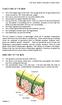 FUNCTIONS OF THE SKIN Skin is the largest organ of the body. The average adult has 18 square feet of skin which account for 16% of the total body weight. Skin acts as a physical barrier for you to the
The compatibility of INTRASITE Gel and ACTICOAT : An In-Vivo and In-Vitro assessment
 *smith&nephew The compatibility of INTRASITE Gel and ACTICOAT : An In-Vivo and In-Vitro assessment 1 Trade Marks of Smith & Nephew An In-Vivo and In-Vitro assessment of the compatibility of ACTICOAT and
Wounds UK. Exsudex : another means of managing exudate Pauline Beldon
 Wounds UK Exsudex : another means of managing exudate Pauline Beldon Product REVIEW Exsudex : another means of managing exudate Heavily exuding wounds can cause discomfort to the patient as well as inhibiting
Clinical Guideline for: Aseptic Technique
 Clinical Guideline for: Technique Summary This guideline provides the principles of, Non Touch, and Clean Techniques to be implemented in the hospital environment. Key Points The essential elements of
Y O U R S U R G E O N S. choice of. implants F O R Y O U R S U R G E R Y
 Y O U R S U R G E O N S choice of implants F O R Y O U R S U R G E R Y Y O U R S U R G E O N S choice of implants F O R Y O U R S U R G E R Y Your Surgeon Has Chosen the C 2 a-taper Acetabular System The
Clinical Wound Assessment - A Pocket Guide
 Clinical Wound Assessment - A Pocket Guide Developed by Professor Finn Gottrup, Denmark Dr. Robert Kirsner, US Dr. Sylvie Meaume, France Dr. Christian Münter, Germany Professor Gary Sibbald, Canada The
The true cost of wounds. And how to reduce it
 The true cost of wounds And how to reduce it Wounds are a growing challenge Wounds have been called the silent epidemic. In a typical hospital setting today, between 25% and 40% of beds will be occupied
SCOPE: Western Australia CLINICAL PROTOCOL - MINOR SURGICAL PROCEDURES. Introduction
 SCOPE: Western Australia CLINICAL PROTOCOL - MINOR SURGICAL PROCEDURES Introduction To provide appropriate management of wounds, there are occasions where either wound biopsy or sharp debridement procedures
Streptococcal Infections
 Streptococcal Infections Introduction Streptococcal, or strep, infections cause a variety of health problems. These infections can cause a mild skin infection or sore throat. But they can also cause severe,
Position Statement: Pressure Ulcer Staging
 Position Statement: Pressure Ulcer Staging Statement of Position The Wound, Ostomy and Continence Nurses (WOCN) Society supports the use of the National Pressure Ulcer Advisory Panel Staging System (NPUAP).
Opticell Wound Dressings. Powerful Yet Gentle Moisture Management
 Wound Dressings Powerful Yet Gentle Moisture Management 1 Exclusive Forzagel TM Technology s unique gelling attributes are the result of Forzagel technology. When moistened, the absorbent fibers of the
PowerLight LED Light Therapy. The FUTURE of corrective skin
 PowerLight LED Light Therapy The FUTURE of corrective skin care TODAY LED facial treatments Effective when used with correct protocols Non thermal stimulation of collagen Increases circulation and lymphatic
An evaluation of Actilite Antibacterial non-adherent dressing with Activon+
 An evaluation of Actilite Antibacterial non-adherent dressing with Activon+ Antibacterial protection Activon honey plus Manuka oil. Non-adherent The non-adherence of the knitted viscose is further enhanced
OASIS-C Integument Assessment: Not for Wimps! Part I: Pressure Ulcers
 OASIS-C Integument Assessment: Not for Wimps! Part I: Pressure Ulcers Presented by: Rhonda Will, RN, BS, COS-C, HCS-D Assistant Director, OASIS Competency Institute 243 King Street, Suite 246 Northampton,
Thought for the Day. Courage is not simply one of the virtues, but the form of every virtue at the testing point. ~ C. S. Lewis
 Thought for the Day Courage is not simply one of the virtues, but the form of every virtue at the testing point. ~ C. S. Lewis Anatomy & Physiology Bio 2401 Lecture Instructor: Daryl Beatty Section 2 Lecture
A: Nursing Knowledge. Alberta Licensed Practical Nurses Competency Profile 1
 A: Nursing Knowledge Alberta Licensed Practical Nurses Competency Profile 1 Competency: A-1 Anatomy and Physiology A-1-1 A-1-2 A-1-3 A-1-4 A-1-5 A-1-6 A-1-7 A-1-8 Identify the normal structures and functions
Skin Care In Bladder And Bowel Dysfunction Wendy Ness Colorectal Nurse Specialist
 Skin Care In Bladder And Bowel Dysfunction Wendy Ness Colorectal Nurse Specialist Function Of The Skin Healthy skin serves several purposes it protects the internal organs physically, chemically and biologically
Pressure Ulcers: Facility Assessment Checklists
 Pressure Ulcers: Facility Assessment Checklists This is a series of self-assessment checklists for nursing home staff to use to assess processes related to managing pressure ulcers in the facility, in
41 Assisting with Minor Surgery
 Learning Outcomes 41.1 Define the medical assistant s role in minor surgical procedures. 41-2 CHAPTER 41 Assisting with Minor Surgery 41.2 Describe types of wounds and explain how they heal. 41.3 Describe
Supplemental Material CBE Life Sciences Education. Su et al.
 Supplemental Material CBE Life Sciences Education Su et al. APPENDIX Human Body's Immune System Test This test consists of 31 questions, with only 1 answer to be selected for each question. Please select
Silicone pressure-reducing pads for the prevention and treatment of pressure ulcers
 S46 Product focus Silicone pressure-reducing pads for the prevention and treatment of pressure ulcers Abstract Pressure ulcers, a key quality of care indicator, cause emotional distress to the patient,
Individualized Care Plans Fully Developed
 Appendix Individualized Care Plans Fully Developed A Refer to Chapter 1 The Nursing Process: A Synopsis, p. 32: Two Individualized Care Plans Fully Developed; Care Plan 1 for Mr. John Walters, Care Plan
Long-term urinary catheters: prevention and control of healthcare-associated infections in primary and community care
 Long-term urinary catheters: prevention and control of healthcare-associated infections in primary and community care A NICE pathway brings together all NICE guidance, quality standards and materials to
Stop painful dressing changes!*
 Stop painful dressing changes!* Apply it, leave it,* help heal it * AQUACEL Ag BURN and AQUACEL BURN dressings provide a comfortable environment while the dressing is in situ or upon removal. Although
Objectives. Why is this important? 5/1/2012. By: Rhonda Trexler, BS RN COS-C CCP
 By: Rhonda Trexler, BS RN COS-C CCP Objectives Verbalize the ability to determine if a surgical wound exists when documenting in OASIS-C Describe would healing phases related to wounds healing by primary
* This policy is under review and is being updated. A revised policy will be added shortly * February 2009. Clinical Development Forum
 * This policy is under review and is being updated. A revised policy will be added shortly * Document Title: PCT Document Ref No.: Local Document Ref No.: Date of Approval: Approved by: Guidance for the
Post-surgical V.A.C. VeraFlo Therapy with Prontosan Instillation on Inpatient Infected Wounds * COLLECTION OF CASE STUDIES
 COLLECTION OF CASE STUDIES Post-surgical V.A.C. VeraFlo Therapy with Prontosan Instillation on Inpatient Infected Wounds * *All patients were treated with systemic antibiotics Post-surgical V.A.C. VeraFlo
Use of a Pressure Ulcer Protocol: Benefits and Recommendations
 Use of a Pressure Ulcer Protocol: Benefits and Recommendations Elizabeth L. Enriquez RN,BSN,MPH,CWOCN Wound Care Specialist/Infection Control Morningiside House 1000 Pellham Parkway, Bronx, NY 10461 Wound
RATIFIED BY NNPDG SEPTEMBER 2006 FOR REVIEW 2009
 NOTTINGHAM UNIVERSITY HOSPTIALS/RUSHCLIFFE PCT NURSING PRACTICE GUIDELINES GUIDELINES FOR CARE OF A PATIENT WITH A WOUND DRAINAGE SYSTEM CONTENTS PAGE Introduction and Types of Drains 1 Procedure for Applying
Illinois Department of Public Health STATEMENT OF DEFICIENCIES AND PLAN OF CORRECTION. Statement of LICENSURE Violations
 (X1) PROVER/SUPPLIER/CLIA ENTIFICATION NUMBER: (X3) SURVEY D NAME OF PROVER OR SUPPLIER (X4) SUMMARY REGULATORY OR LSC ENTIFYING INFORMATION) PROVER'S PLAN OF CORRECTION Final Observations Statement of
The use of MEDIHONEY in Palliative Wound Care and the Advanced Aging Patient
 The use of MEDIHONEY in Palliative Wound Care and the Advanced Aging Patient Presenter: Angel Sutton, RN, MSN/Ed, CWCN, CFCN, CCCN Wound Care Nurse Consultant Agenda My clinical practice Why MEDIHONEY?
Bile Duct Diseases and Problems
 Bile Duct Diseases and Problems Introduction A bile duct is a tube that carries bile between the liver and gallbladder and the intestine. Bile is a substance made by the liver that helps with digestion.
Guideline: Wound Bed Preparation for Healable and Non-Healable Wounds in Adults & Children 1
 Developed by the BC Provincial Nursing Skin and Wound Committee in collaboration with Wound Clinicians from: TITLE Guideline: Wound Bed Preparation for Healable and Non-Healable Wounds in Adults & Children
Since its introduction almost 20
 Guidelines for safe negative-pressure wound therapy Rule of thumb: Assess twice, dress once By Ron Rock MSN, RN, ACNS-BC Since its introduction almost 20 years ago, negative-pressure wound therapy (NPWT)
MRSA. Living with. Acknowledgements. (Methicillin-Resistant Staphylococcus aureus)
 How can I keep myself healthy? Hand washing and use of an alcohol-based hand sanitizer are the primary way to prevent acquiring or transmitting bacteria. If you get a cut or scrape, wash it well with soap
CHAPTER V CONCLUSION AND RECOMMENDATIONS. findings are presented, implications for nursing practice and education are discussed,
 CHAPTER V CONCLUSION AND RECOMMENDATIONS In this chapter, a summary of the findings and conclusion drawn from the findings are presented, implications for nursing practice and education are discussed,
THE BASIC PRINCIPLES OF WOUND HEALING David Keast MSc, MD, CCFP Heather Orsted RN, BN, ET
 1 THE BASIC PRINCIPLES OF WOUND HEALING David Keast MSc, MD, CCFP Heather Orsted RN, BN, ET An understanding of the basic physiology of wound healing provides the clinician with the framework necessary
10. T and B cells are types of a. endocrine cells. c. lymphocytes. b. platelets. d. complement cells.
 Virus and Immune System Review Directions: Write your answers on a separate piece of paper. 1. Why does a cut in the skin threaten the body s nonspecific defenses against disease? a. If a cut bleeds, disease-fighting
Monitoring surgical wounds for infection
 Monitoring surgical wounds for infection Information for patients This leaflet explains surgical wound infection and the national programme for monitoring infections acquired in hospitals This hospital
Wound, Ostomy and Continence Nurses Society s Guidance on OASIS-C1 Integumentary Items: Best Practice for Clinicians
 Wound, Ostomy and Continence Nurses Society s Guidance on OASIS-C1 Integumentary Items: Best Practice for Clinicians Acknowledgments Wound, Ostomy and Continence Nurses Society s Guidance on OASIS-C1 Integumentary
Policies & Procedures. Title: I.D. Number: 1160
 Policies & Procedures Title: NEGATIVE PRESSURE WOUND THERAPY (NPWT) I.D. Number: 1160 Authorization: [X] SHR Nursing Practice Committee Source: Nursing Date Revised: March, 2010 Date Effective: November,
Standard Operating Procedure Template
 Standard Operating Procedure Template Title of Standard Operation Procedure: Topical Negative Pressure (TNP) Reference Number: Version No: 1 Issue Date: May 2012 Review Date: August 2015 Purpose and Background
Monitoring surgical wounds for infection
 Monitoring surgical wounds for infection Information for patients This leaflet explains surgical wound infection and the national programme for monitoring infections acquired in hospitals What are surgical
Skin & Wound Care Prevention & Treatment. By Candy Houk, RN Skin & Wound Program Manager
 Skin & Wound Care Prevention & Treatment By Candy Houk, RN Skin & Wound Program Manager OBJECTIVES Classify Stage 1 and 2 pressure ulcers Recognize suspected Stage 3, 4, DTI, and unstageable pressure ulcers
Vacuum-Assisted Wound Closure ISSN: 0002-936X American Journal of Nursing
 Vacuum-Assisted Wound Closure ISSN: 0002-936X American Journal of Nursing Author(s): Chua Patel, Christy T. MS, RN; Kinsey, Gail C. MS, RN, CNS; Koperski-Moen, Kelley J. ADN, RN; Bungum, Lisa D. BSN, RN
Wound and Skin Assessment. Mary Carvalho RN, BSN, MBA Clinical Coordinator Johnson Creek Wound and Edema Center
 Wound and Skin Assessment Mary Carvalho RN, BSN, MBA Clinical Coordinator Johnson Creek Wound and Edema Center Skin The largest Organ Weighs between 6 and 8 pounds Covers over 20 square feet Thickness
ANIMALS FORM & FUNCTION BODY DEFENSES NONSPECIFIC DEFENSES PHYSICAL BARRIERS PHAGOCYTES. Animals Form & Function Activity #4 page 1
 AP BIOLOGY ANIMALS FORM & FUNCTION ACTIVITY #4 NAME DATE HOUR BODY DEFENSES NONSPECIFIC DEFENSES PHYSICAL BARRIERS PHAGOCYTES Animals Form & Function Activity #4 page 1 INFLAMMATORY RESPONSE ANTIMICROBIAL
Restore and Maintain treatment protocol
 Restore and Maintain treatment protocol Combating inflammation through the modulation of eicosanoids Inflammation Inflammation is the normal response of a tissue to injury and can be triggered by a number
VPM 152. INFLAMMATION: Chemical Mediators
 General Pathology VPM 152 INFLAMMATION: Chemical Mediators CHEMICAL MEDIATORS OF INFLAMMATION Definition: any messenger that acts on blood vessels, inflammatory cells or other cells to contribute to an
Nursing college, Second stage Microbiology Dr.Nada Khazal K. Hendi L14: Hospital acquired infection, nosocomial infection
 L14: Hospital acquired infection, nosocomial infection Definition A hospital acquired infection, also called a nosocomial infection, is an infection that first appears between 48 hours and four days after
C. difficile Infections
 C. difficile Infections Introduction C. difficile is a type of bacteria that can cause diarrhea and infection of the colon. This bacterium is more likely to infect patients at hospitals and other healthcare
An Essential Tool For The Care DFUs
 Adjunct HBO 2 Therapy: March 16, 2016 William Tettelbach, MD, FACP, FIDSA System Medical Director of Wound & Hyperbaric Medicine Services An Essential Tool For The Care DFUs Fedorko, L., et al., Hyperbaric
Making our pets comfortable. A modern approach to pain and analgesia.
 Making our pets comfortable. A modern approach to pain and analgesia. What is pain? Pain is an unpleasant sensory and emotional experience with awareness by an animal to damage or potential damage to its
Let's get physical: Cutimed Sorbact
 Let's get physical: Cutimed Sorbact Staph. aureus (yellow), Pseudomonas aeruginosa (purple), Enterococcus faecalis (blue), Klebsiella spec. (green) and Candida albicans (orange) bound to Cutimed Sorbact
37 2 Blood and the Lymphatic System Slide 1 of 34
 1 of 34 Blood is a connective tissue that contains both dissolved substances and specialized cells. 2 of 34 The functions of blood include: collecting oxygen from the lungs, nutrients from the digestive
Chapter 16: Innate Immunity
 Chapter 16: Innate Immunity 1. Overview of Innate Immunity 2. Inflammation & Phagocytosis 3. Antimicrobial Substances 1. Overview of Innate Immunity The Body s Defenses The body has 2 types of defense
Fungal Infection in Total Joint Arthroplasty. Dr.Wismer Dr.Al-Sahan
 Fungal Infection in Total Joint Arthroplasty Dr.Wismer Dr.Al-Sahan Delayed Reimplantation Arthroplasty for Candidal Prosthetic Joint Infection: A Report of 4 Cases and Review of the Literature David M.
MANAGEMENT OF LIVER CIRRHOSIS
 MANAGEMENT OF LIVER CIRRHOSIS Information Leaflet Your Health. Our Priority. Page 2 of 6 What is cirrhosis? Cirrhosis is a result of long-term, continuous damage to the liver and may be due to many different
Lymph capillaries, Lymphatic collecting vessels, Valves, Lymph Duct, Lymph node, Vein
 WLHS/A&P/Oppelt Name Lymphatic System Practice 1. Figure 12-1 provides an overview of the lymphatic vessels. First color code the following structures. Color code in Figure 12-1 Heart Veins Lymphatic vessels/lymph
PRESSURE ULCER GUIDELINES FOR TOPICAL TREATMENT
 PRESSURE ULCER GUIDELINES FOR TOPICAL TREATMENT The following are suggested guidelines for treatment of pressure ulcers using products from Swiss-American Products, Inc. and are intended to supplement
Overview of the Cattle Immune System 1
 Oregon State University BEEF043 Beef Cattle Library Beef Cattle Sciences Overview of the Cattle Immune System 1 Reinaldo F. Cooke 2 Introduction On average, the U.S. cattle industry loses more than $1
7/11/2011. Pressure Ulcers. Moisture-NOT Pressure. Wounds NOT Caused by Pressure
 Assessment and Documentation of Pressure Ulcers Jeri Ann Lundgren, RN, BSN, PHN, CWS, CWCN Pathway Health Services July 19, 2011 Training Objectives Describe etiologies of pressure ulcers Discuss how to
PATIENT TEACHING GUIDE: Wound Care Handbook
 PATIENT TEACHING GUIDE: Wound Care Handbook PATIENT TEACHING GUIDE: WOUND CARE Design by Mariscal Design, Illustrations by Lysa Hawke. The Wound Care Self Care Guide was written and prepared by: Barbara
WOUND MANAGEMENT POLICY AND PROCEDURES IN THE COMMUNITY SETTING.
 WOUND MANAGEMENT POLICY AND PROCEDURES IN THE COMMUNITY SETTING. NHS Walsall Community Health Integrated Governance Sub Group formally approved this policy on 10th March 2011 Please note that the Intranet
Pressure Ulcers Risk Management and Treatment
 Pressure Ulcers Risk Management and Treatment Objectives State reasons why individuals initiate lawsuits. Define strategies to reduce the risk of litigation. Determine appropriate treatment for the patient.
Basal Cell Carcinoma Affecting the Eye Your Treatment Explained
 Basal Cell Carcinoma Affecting the Eye Your Treatment Explained Patient Information Introduction This booklet is designed to give you information about having a Basal Cell Carcinoma near your eye and the
NURSING DOCUMENTATION
 NURSING DOCUMENTATION OBJECTIVES 1. The learner will be able to state 2 components of documentation that meet the 2. The learner will be able to identify 4 characteristics of a complete skin assessment
Title page Hypergranulation: options for management. 2.522 with abstract and reference list 1965 without
 Title page Title: Hypergranulation: options for management Word count: 2.522 with abstract and reference list 1965 without 1 Abstract Hypergranulation (or overgranulation) is an excess of granulation tissue
Consent for Treatment/Procedure Laparoscopic Sleeve Gastrectomy
 Patient's Name: Today's Date: / / The purpose of this document is to confirm, in the presence of witnesses, your informed request to have Surgery for obesity. You are asked to read the following document
How To Stage A Pressure Ulcer
 WOCN Society Position Statement: Pressure Ulcer Staging Originated By: Wound Committee Date Completed: 1996 Reviewed/Revised: July 2006 Revised: August 2007 Reviewed/Revised: April 2011 Definition of Pressure
WOUND OSTOMY CONTINENCE NURSES SOCIETY GUIDANCE ON OASIS-C INTEGUMENTARY ITEMS
 Wound Ostomy Continence Nurses Society Guidance on OASIS-C Integumentary Items WOCN OASIS Taskforce Members: Ben Peirce (Chairperson), RN, BA, CWOCN, COS-C Dianne Mackey, BSN, RN, PHN, CWOCN Laurie McNichol,
INFUSE Bone Graft. Patient Information Brochure
 INFUSE Bone Graft Patient Information Brochure This Patient Guide is designed to help you decide whether or not to have surgery using INFUSE Bone Graft to treat your broken tibia (lower leg). There are
Wound Care on the Field. Objectives
 Wound Care on the Field Brittany Witte, PT, DPT Cook Children s Medical Center Objectives Name 3 different types of wounds commonly seen in sports and how to emergently provide care for them. Name all
Epidural Continuous Infusion. Patient information Leaflet
 Epidural Continuous Infusion Patient information Leaflet April 2015 Introduction You may already know that epidural s are often used to treat pain during childbirth. This same technique can also used as
CHAPTER 15 SCLEROTHERAPY FOR VENOUS DISEASE
 Introduction CHAPTER 15 SCLEROTHERAPY FOR VENOUS DISEASE Original authors: Niren Angle, John J. Bergan, Joshua I. Greenberg, and J. Leonel Villavicencio Abstracted by Teresa L. Carman New technology has
Wound Management and Basic Suturing Techniques. Disclosures
 Wound Management and Basic Suturing Techniques 10 July 2016 Douglas Winstanley, DO FAAD FACMS West Michigan Dermatology Grand Rapids MI Hugh Greenway s 33 nd Annual Cutaneous Anatomy and Surgery Course
Summary of the risk management plan (RMP) for Accofil (filgrastim)
 EMA/475472/2014 Summary of the risk management plan (RMP) for Accofil (filgrastim) This is a summary of the risk management plan (RMP) for Accofil, which details the measures to be taken in order to ensure
Thymus Cancer. This reference summary will help you better understand what thymus cancer is and what treatment options are available.
 Thymus Cancer Introduction Thymus cancer is a rare cancer. It starts in the small organ that lies in the upper chest under the breastbone. The thymus makes white blood cells that protect the body against
Microcyn Technology. Life-Altering Advance in Tissue Care
 Microcyn Technology Life-Altering Advance in Tissue Care The patented Microcyn Technology mimics the same oxychlorine composition as that manufactured by neutrophils in the body s immune system. Neutrophils