
Maternal Health in Nigeria: a statistical overview
|
|
|
- Elijah Wood
- 10 years ago
- Views:
Transcription

1 Page1 Maternal Health in Nigeria: a statistical overview 1.1 Baseline Data at Macro Level: International Maternal Mortality In the low and middle income countries, direct causes account for 75-80% of maternal mortality and include in approximate order of importance, haemorrhage, sepsis, hypertensive disorders of pregnancy (eclampsia), complications of unsafe abortion and obstructed and/or prolonged labour 1, (p. 105). The remaining 20-25% of maternal deaths can be attributed to illnesses aggravated by pregnancy. Anaemia hampers a woman s abilities to resist infection and to survive haemorrhage; it may increase the likelihood of her dying in childbirth by a factor of four. Hepatitis can cause haemorrhage or liver failure in pregnant women. Latent infections such as tuberculosis, malaria, or STIs can be activated or exacerbated during pregnancy and causes potentially severe complications for mother and child, 2 (p. 105). Maternal Morbidity In keeping with the high rates of maternal mortality in the low and middle income countries, there are also high rates of maternal morbidity. There are estimated to be 30 to 50 morbidities (temporary and chronic) for every maternal death. Approximately 30 to 40% of the approximate 180 million women who are pregnant annually in the world, or roughly 54 million women, report some kind of pregnancy-related morbidity annually. Of these, it is estimated that about 15 million a year develop relatively long-term disabilities driving from complication from obstetric fistula or prolapsed, uterine scarring, severe anemia, pelvic inflammatory disease, or reproductive tract infections, as well as infertility, 3 (pp ). 1.2 Nigeria Data on Maternal Health In terms of the actual number of maternal deaths, Nigeria is ranked second in the world behind India and Nigeria is part of a group of six countries in 2008 that collectively accounted for over 50% of all maternal deaths globally. In terms of the maternal mortality ratio, Nigeria is ranked eighth in Sub- Saharan Africa behind, Angola, Chad, Liberia, Niger, Rwanda, Sierra Leone and Somalia. 4 Table 1 below gives an overview of different sources of data on maternal deaths in Nigeria. The following statistical overview is by no means comprehensive, for example, there are no readily available country-wide 1 Merson, Michael H., Robert E. Black, and Anne J. Mills (2006), International Public Health: Diseases, Programs, Systems, and Policies. London: Jones and Bartlett Publishers. 2 Merson et al (2006). 3 Merson et al (2006). 4 Cited in Bankole, Akinrinola, Gilda Sedgh, Friday Okonofua, Collins Imarhiagbe, Rubina Hussain and Deirdre Wulf Barriers to Safe Motherhood in Nigeria. New York: Guttmacher Institute. Available on line at: p. 3.

2 Page2 statistics for quality of care, for example, morbidity and deaths caused by substandard care. Qualitative evidence and individual hospital statistics suggests these are major issues. In government hospitals in one location in North-central Nigeria, poor child birth techniques, including for example substandard caesarean section procedures, accounts for 40% of all fistula injuries suffered by women. Source: The data support the need for an increased response in maternal health care and an advocacy campaign to focus public, NGO and policy attention on the issue of maternal health in Nigeria, particularly given that Nigeria s population (158.2 million in 2010) is 18% of the total population of Sub-Saharan Africa (863.3 million in 2010). 5 Tables 3 to 10 and 13 show births by place of delivery against a set of different determinant variables correlated with place of delivery. Place of delivery refers to whether the birth took place at health facility (and what type, public or private health facility), or in a non-health facility, and is significant 5 World Population Prospects, The 2008 Revision, Population Database, On-line Data, UN Population Division, United Nations Department for Economic and Social Affairs, United Nations Secretariat.

3 Page3 because it plays a large part in determining whether or not mothers are affected by morbidity and mortality. Starting with Table 4, 62% of all births in 2008 took place in the home in Nigeria, clearly suggesting a strong cause of Nigeria s high maternal mortality ratio. This link is demonstrated more starkly when comparison is made with Table 13 which shows place of delivery and assistance during delivery. Assistance from a skilled health professional (nurse,, doctor) is clearly critical in determining the likelihood of problems during child birth: the data clearly shows that nearly all skilled health professionals are involved with child birth at a health facility (see column % delivered by skilled Table 1, Nigeria Maternal Mortality Ratio Data : Differing Estimates Year WHO et al 2008 WHO et al 2007 WHO et al UNICEF (1100) (840) - DHS UN HDR provider ), while very few births in other locations are attended by skilled health professionals, and most births, as mentioned above, do not take place in a health facility. Table 8 indicates a relationship between household wealth and whether a woman delivers in a health facility (public and private) or not. This suggests a lack of actual health facilities within reach of families (hence families who can pay go to private health providers) and/or a lack of sufficiently well-equipped public provision (e.g. in many developing countries public government run hospitals and clinics lack supplies of necessary drugs and other consumables which patients and patients families are then forced to pay for themselves). Nigeria s poverty context was reported by the World Bank in 2010 as 64.4% of the population living in extreme poverty, and 83.9% living in moderate and extreme poverty, 11 hence given, the probable lack of public health care and the need to go private, it is clear that access to health care by the population is only achieved when family income increases, as shown by the data here shows. Given the high level of poverty in the country and the need to pay for health care in one form or other 6 UN Human Development Report (HDR) date specification for column for all countries maternal mortality data, refers to most recent year available. 7 First row of data is from p. 30, WHO, UNICEF, UNFPA and World Bank (2010). Trends in Maternal Mortality: 1990 to 2008, Estimates developed by WHO, UNICEF, UNFPA and The World Bank. World Health Organisation (WHO), Geneva. Same figure is reported in The State of the World s Children 2011, UNICEF, p. 118, Table 8, Women. 8 UNICEF figures are from State of the World s Children (SOWC) 2009, for 2005 figure, and SOWC 2010 for 2008 figure. Although note that the figure for 2008 is from the new estimation methodology of WHO, UNICEF, UNFPA and World Bank (2010) and therefore is not comparable with the 2005 figure. 9 ICF-Macro International, Nigeria Demographic and Health Survey (DHS) [various years]. Available on line. DHS data are from Nigeria DHS 1990, 1999, 2003, Note that Nigeria s MDG report uses this data. 10 UN HDR These poverty rates are defined as measuring absolute poverty (as opposed to relative poverty), as devised by The World Bank and published annually in World Development Indicator See p. 90.

4 Page4 (private provision or to fill shortages of supplies at government hospitals directly by the patient), there will clearly be a large number of women with drastically reduced access to critical antenatal, delivery and post-delivery care. The lack of health care facilities as a cause of high maternal morbidity and mortality is further brought out by Table 9 which shows a significant disparity between rural and urban locations, with women in urban locations having over twice as many deliveries taking place in health facilities (public and private), than for women in rural areas. Poorly paid government doctors and nurses often demand service fees when medical supplies have run out, while in some cases it has been documented that health staff have abandoned rural health facilities due the local governments non-payment of salaries and other running costs. 12 In other cases staff pay from their own pockets to keep services supplied. The effect of charging patients is that there may be little difference between public and private health care in terms of access to health care: the need to pay and its effect of putting families and patients off seeking professional care happens in both cases of private and government provision. As noted in Lawson et al (2003), this often leads a state of advanced pathology (health problems in a patient are allowed to reach crisis point) in patients in developing countries. This results in greater difficulty and cost of treatment, when in desperation, treatment is sought, and also explains the higher rates of morbidity and mortality. 13 Continuing with the issue of skilled assistance of a health care professional during delivery, Table 11 demonstrates that the proposed clinic programme locations for the Global One maternal health programme are appropriate given the high level of need in both these areas. Specifically, the focus on the need to train traditional birth attendants is shown by the high number of deliveries they assist in the South-South Zone, at 32.9% compared to 38.5% delivered by nurse/midwives. The proposed clinic locations in the vicinity of the town of Ughelli, is located in Delta state, east of the major town of Warri. In the proposed northern clinic programme location of the city of Kano, in Kano state, located in the Northwest Zone, skilled delivery is particularly low, at 6.6% for nurse/, with 25.9% delivered by TBAs and 18.5% by relative, and disturbingly, 43.8% delivered by no one assisting. Compounding this situation in the north is the extremely low age of marriage, leading to pregnancy in very young teenage girls (below the age of 16) whose pelvis size has not yet reached the required dimensions for natural child birth. The negative outcomes of child birth in the teenage age group, when they occur, are either fistula or death from obstructed child birth. In the former case the mother lives, but with severe physical and social disability, the child often does not survive however; the latter case of death of the mother from obstructed labour, this results from the child dying in the womb due to blockage by the pelvis, leading to septicaemia, poisoning of the mother by the decaying body of the child. The risks of low age of pregnancy have been vividly documented by a Channel 4 documentary for Unreported World, which visited a fistula hospital in Kano where renowned fistula surgeon Dr. Kees Waaldijk has works. 14 He identified child marriage, which has been designated by the UN as a harmful 12 Human Rights Watch (2007). Chop Fine: The Human Rights Impact of Local Government Corruption and Mismanagement in Rivers State, Nigeria. This report looks at the effects of corruption on the health and education sectors with respect to government provision. This was cited in the case of Rivers state, in Niger Delta. 13 This was also emphasised in a documentary about Medecins Sans Frontieres (MSF), Living in Emergency, (2010). 14 Dr. Waaldijk has over 25 years of experience working on fistula, and has meticulously documented each case and his techniques. International teams of doctors often train with him in clinical practice to improve their skills. A blog by an Ethiopian doctor demonstrates this, while as of March 2011, Dr. Waaldijk attended a fistula conference in

5 Page5 traditional practice as a key cause of maternal morbidity and mortality. A study with cited below for Yobe state, found that 29% of maternal deaths at one hospital over a five year period ( ) were for mothers under the age of twenty. The impact of these approaches to pregnancy and child birth are demonstrated in the extremely high morbidity and mortality figures for mothers, especially in northern Nigeria. While the country level figures on maternal mortality for Nigeria differ considerably between different sources, due to them being estimates based on differing sample sizes and different estimation techniques, several local studies are available using actual morbidly and mortality statistics. Local maternal mortality statistics in the north are many times higher than the official country level maternal mortality ratio figures reported in Table 1. Table 2. Zones and Their Constituent States of Nigeria: 36 States and One Federal Capital Territory North Central North East North West South East South South South West FCT-Abuja Adamawa Jigawa Abia Akwa Ibom Ekiti Benue Bauchi Kaduna Anambra Bayelsa Lagos Kogi Borno Kano Ebonyi Cross River Ogun Kwara Gombe Katsina Enugu Delta Ondo Nasarawa Taraba Kebbi Imo Edo Osun Niger Yobe Sokoto - Rivers Oyo Plateau - Zamfara Source: Table A State Tables, Appendix A, Nigeria DHS , p Note: FCT is not a state. Table 3. Location of Births by Geographic Location 2008 (percent) Public Health Private Health Nigerian Political Zone Home Other Missing Percentage Delivered in Health North Central North East North West South East South South South West Source: Table 9.5 Place of Delivery, Nigeria DHS 2008, p Table 4. Place of Delivery at Country Level, Nigeria 2008 (percent) Location Public Health Private Health Home Other Source: Data from Figure 9.1, Place of Delivery, Nigeria DHS 2008, p Karachi, Pakistan. A Global One 2015 field team met with Dr. Waaldijk in July 2011 in Kano. Dr. Waaldijk s work has been highlighted at: 15 Nigeria Demographic and Health Survey (DHS) 2008, ICF Macro (formerly known as ORC Macro).

6 Page6 Table 5. Mother s Education Level and Place of Delivery 2008 (percent) Education Public Health Private Health Home Other Missing Percentage Delivered in Health No Education Primary Secondary Above secondary Source: Table 9.5 Place of Delivery, Nigeria DHS 2008, p Table 6. Mother s Age and Place of Delivery 2008 (percent) Mother s Age Public Health Private Health Home Other Missing Percentage Delivered in Health Less than 20 yrs Note: Reproductive age is set as ages as international standard. Source: Table 9.5 Place of Delivery, Nigeria DHS 2008, p Table 7. Birth Order and Place of Delivery 2008 (percent) Birth order Public Health Private Health Home Other Missing Percentage Delivered in Health Source: Table 9.5 Place of Delivery, Nigeria DHS 2008, p Table 8. Household Wealth Quintile and Place of Delivery 2008 (percent) Wealth quintile Public Health Private Health Home Other Missing Percentage Delivered in Health Lowest Second Middle Fourth Highest 5th Source: Table 9.5 Place of Delivery, Nigeria DHS 2008, p. 132.

7 Page7 Table 9. Residence of Mother and Place of Delivery 2008 (percent) Residence Public Health Private Health Home Other Missing Percentage Delivered in Health Urban Rural Antenatal care visits 16 Source: Table 9.5 Place of Delivery, Nigeria DHS 2008, p Table 10. Antenatal Care Visits and Place of Delivery 2008 (percent) Public Private Health Health Home Other Missing Percentage Delivered in Health None Don t know/missing Source: Table 9.5 Place of Delivery, Nigeria DHS 2008, p Nigerian Political Zone Table 11. Assistance During Delivery by Political Zone, Nigeria 2008 (percent) Doctor Nurse/ Relative/ No one other Auxiliary nurse/ Traditional birth attendant (TBA) Don t know/ missing % delivered by skilled provider 17 North Central North East North West South East South South South West Source: Table 9.6, Assistance during delivery, Nigeria DHS 2008, p % delivered by C-section 16 Includes only the most recent birth in the five years preceding the survey; all other data in the tables above is collected as the live birth in the five years preceding the survey (Nigeria DHS 2008, p. 132). 17 Skilled provider includes doctor, nurse, and auxiliary nurse/.

8 Page8 Table 12. Residence and Assistance During Delivery (percent) Residence Doctor Nurse/ Auxiliary nurse/ Traditional birth attendant Relative/ other No one Don t know/ missing % delivered by skilled provider 18 Urban Rural Place of Delivery Source: Table 9.6, Assistance during delivery, Nigeria DHS 2008, p Table 13. Place of Delivery and Assistance During Delivery (percent) Doctor Nurse/ Relative/ other Auxiliary nurse/ Traditional birth attendant No one Don t know/ missing % delivered by skilled provider 19 Health facility Elsewhere Missing Source: Table 9.6, Assistance during delivery, Nigeria DHS 2008, p Wealth quintile Table 14. Household Wealth and Assistance During Delivery (percent) Doctor Nurse/ Relative/ No other one Auxiliary nurse/ Traditional birth attendant Don t know/ missing % delivered by skilled provider 20 Lowest Second Middle Fourth Highest th Source: Table 9.6, Assistance during delivery, Nigeria DHS 2008, p % delivered by C- section % delivered by C- section % delivered by C-section 18 Skilled provider includes doctor, nurse, and auxiliary nurse/. 19 Skilled provider includes doctor, nurse, and auxiliary nurse/. 20 Skilled provider includes doctor, nurse, and auxiliary nurse/.

9 Page9 Table 15. Northern Nigeria: Maternal Mortality Ratio (MMR) State Yobe Kano Makurdi Sokoto Table 16. Central Part Nigeria: Maternal Mortality Ratio (MMR) State Jos Table 17. Southern Nigeria: Maternal Mortality Ratio (MMR) State / Enugu Delta Ebonyi Bayelsa Refers to the town of Nguru, at the Federal Medical Centre. The average MMR for the period was Abubakar Ali Kullima, Mohammed Bello Kawuwa, Bala Mohammed Audu, Ado Danazumi Geidam and Abdulkarim G. Mairiga Trends in maternal mortality in a tertiary institution in Northern Nigeria, Annals of African Medicine, Vol. 8, No. 4, Available at: p. 222, originally cited in M. A. Yusuf et al (2003). 22 Cited in Ali Kullima, Abubakar, Mohammed Bello Kawuwa, Bala Mohammed Anudu, Ado Danazumi Geidam, and Abdulkarim G. Mairiga. 2009, see above, footnote Cited in Ali Kullima et al (2009), p. 222, originally cited in S. Ochejele, S. J. Enegela, and A. Heywood Assessment of quality of emergency obstetrics care at the Federal Medical Centre, Makurdi, Nigeria. Tropical Journal of Obstetric Gynaecology. 21: Cited in Ali Kullima et al (2009), p. 222, originally cited L. R. Audu, L. R. and B. A. Ekele A ten year review of maternal mortality in Sokoto Northern Nigeria. West African Journal of Medicine, 21: hern_nigeria 25 Jos data reported in Ali Kullima et al (2009), p. 222, as being a four year trend (intermediate years not given). 26 Figure for Enugu of 1400 for 2003 is from the Nigeria DHS 2003; note that state data for maternal mortality was not collected or not made available in the 2008 Nigeria DHS (sample size was said to be too small). 27 Nigeria DHS The figure of 2232 is for the Baptist Medical Centre, at Eku town, 15 miles northeast of Warri, Delta state. Cited in Igberase, G. O. and P. N. Ebeigbe Maternal mortality in a rural referral hospital in the Niger Delta, Nigeria. Journal of Obstetric and Gynaecology. Vol. 27, Issue 3, pp Dates refer to this location. 28 Figure from one hospital, Ebonyi State University Teaching Hospital, Abakaliki. Ebonyi state is essentially a rural community, the town of Abakaliki originally being a small rural town before Ebonyi state split from Enugu state. Figure for average MMR over the stated period, cited in Umeora, O. U., C. O. U. Esike, and V. E. Egwuatu, Maternal mortality in rural Nigeria. International Journal of Gynaecology and Obstetrics. Vol. 88, Issue 3, pp Government of Bayelsa State (2004?), Bayelsa State Economic Empowerment and Development Strategy (By SEEDS).

10 Page Causes of Maternal Morbidity and Mortality in Nigeria: For Nigeria as a whole, the percentage of birth with any of four key risk factors for morbidity and mortality hardly changed between 1990 and 2003, at 66.4% and 63.9% respectively. 30 Over that period all Zones recorded a rate of at least 60%, with little decrease, with the sole exceptions of the Southwest Zone, which decreased from 61.9% to 45.8% respectively, and the North-central from 67.2% to 56.6%, while the Northeast showed a noticeable increase, from 63.7% to 72.1%. The Yobe state study at Nguru s Federal Medical Centre, which was done by doctors looking at case notes of mothers, showed a different order of prevalence among causes of maternal mortality when compared with the international data. Eclampsia was the most frequent cause of maternal deaths (46.4% of deaths from ), indicating antenatal care as a key area for action, followed by sepsis (vaginally transmitted infection to the blood), haemorrhage, medical disorders (conditions aggravated by pregnancy), abortion complications, obstructed labour, and ruptured uterus. Global One 2015 s preliminary research trip in December 2010 to Kaduna, Kano and Katsina states identified cultural norms that cause early marriage and the link to maternal morbidity and mortality, lack of use of professional health care staff with alternative use of traditional birth assistants (TBAs), skills gaps with existing professional health staff, and the disconnect between health policy making at the federal government level and local government decision making, accountability and implementation of those policies. A follow up field assessment by Global One 2015 in 2011 also confirmed these findings. Note that a distinction must be made between reported medical causes of maternal morbidity and mortality, and underlying causes, such as early age of marriage, and cultural views about pregnancy (for example in the north, that see pregnancy treated as an extremely private condition, with women being secluded, little discussion on the topic even between individuals who know each other well, and birth delivery being performed at home). Hence obstructed birth, due to small pelvis size, as a cause of maternal morbidity and mortality is caused by early marriage, with delays in seeking professional health care assistance when it does occur, mean that it typically happens after a critical delay, resulting in advanced pathology 31 that makes serious illness and/or death much more likely. The operational causes of high maternal morbidity and mortality in Enugu state were listed as attributable to poor antenatal care practices, lack of access to and use of skilled attendance at birth and a weak healthcare delivery system [including too few health facilities and too few health professionals] ; there is also hazardous fertility practice, specifically, very short birth intervals in spite of pregnancy in the state typically starting from age 18; poverty was also demonstrated as being a significant factor in women s health seeking behaviour during pregnancy and child birth, as demonstrated when Enugu state instituted a free maternal and child care policy, larger numbers of women were said to be clearly visible at health facilities, however the lack of health staff then acted as a constraint. 32 In additional, indirect causes of maternal death, specifically, conditions aggravated by pregnancy, were cited as being malaria (only 3.9% of pregnant women slept under a treated mosquito bed net), 33 and severe anaemia. 34 These resulted in the following medical causes being, in order of 30 Akinrinola et al (2009), p. 24, using Nigeria DHS data. 31 Lawson et al (2003). 32 All quotes from Okeibunor, Joseph C., Nkechi G. Onyeneho and Friday E. Okonofua Policy and Programs for Reducing Mtenal Motaltiy in Enugu State, Nigeria. African Journal of Reproductive Health. Sept., Special Issue, 14 (3): 19-30, p. 20, other elements cited (free maternal health care, lack of health care staff), p Nigeria DHS 2008.

11 Page11 importance, haemorrhage (19.1% of deaths), sepsis (18%), prolonged obstructed labour/ruptured uterus (16.9%), and eclampsia (also 16.9%). 35 The three delays phenomenon leading to advanced pathology in pregnancy and labour was also documented. Over twenty percent of the women in one Enugu study reported having between one to as many as five pregnancy related complications. 36 In the Niger Delta itself, which consists of the three core states of Bayelsa, Delta and Rivers states, a study on a rural tertiary hospital in Delta state, at the small town of Eku, 15 miles northeast of Warri, (Warri is approximately 30 miles from the Atlantic Ocean) found that the most common causes of maternal mortalities were puerperal sepsis, abortion complications, pre-eclampsia/eclampsia, prolonged obstructed labour, haemorrhage accounting for 33%, 22.6%, 17.4%, 13.0% and 7.8%, respectively. The percentage mortality for unbooked was 10 times that for booked patients. 37 Booked refers to mothers who have had antenatal care. The same study also emphasised the lack of necessary hospital capability to deal with obstetric emergencies, hospitals need to be equipped with facilities for emergency obstetric care. What is also notable about the Eku study from the southern part of Delta state is that the scale of maternal deaths as measured by the maternal mortality ratio, is comparable with northern Nigeria. This is significant, because northern Nigeria is perceived as the epicentre of problems in maternal health in Nigeria and has attracted significant international attention from NGOs and governments. The maternal mortality ratio in Eku, reported in the study, was 2,232 as seen in Table 17 above, which is little different from rates in Kano and elsewhere in the north, only Yobe state reaches a different order of magnitude (Table 15). Also significant about the Eku data is that the data comes from what appears to be a private hospital where patients pay for treatment. This suggests that local government hospitals may have worse results, being as they will attract women with little or no income. Also suggesting poor maternal health outcomes as a result of child birth is Table 3 above, that shows that 48 percent of births in the South-South region, that includes Delta state, took place at home, with Table 11 showing 43.6 percent of births (TBAs 32.9, relative 7.6 and on one s own 3.1 percent) not delivered by professional medical staff (skilled attendance). Global One 2015 s field experience in Delta state from February 2012, with its mobile maternal and child health clinic, 38 bore this out: the medical team found massive use by rural women of traditional birth attendants. Village assessments by Global One 2015 demonstrated that roughly 90 percent of rural women used traditional birth attendants at some point in a pregnancy, for either antenatal, child birth and post-child birth problems, for example, perineal tears. A significant proportion of women used only TBAs. Direct and indirect cost of healthcare and the lack of healthcare knowledge were found to be the deciding factors in women s use of TBAs. The data in Table 3 for the other southern regions of the country are significantly better, showing lower home child births. A conclusion from this data must be for the South-South region to be considered a priority region for maternal health programme interventions by the Nigerian federal and state governments and international NGOs, governments and the UN. There are currently very few international NGOs working in Delta state, at the time of writing, only three were known to be operating, including Global One Okeibunor et al (2010), wording, p Data from Onah H., J. Okaro, U. Umeh, and C. Chigbu Maternal Mortality in Health Institutions with Emergency Obstetric Care Facilities in Enugu State, Nigeria. Journal of Obstetrics and Gynaecology. 25 (6): , cited by Okeibunor et al (2010), p Okeibunor et al (2010), p Igberase et al (2007). Hospital in the study is the Baptist Medical Centre (BMC), Eku town, Delta state. 38 The clinic implementation partner in Delta state is the Nigerian Red Cross.

12 Page Systematic Influences on Health Needs of Pregnant and Lactating Women: The following model illustrates the causes of health needs for pregnant and lactating women and outcomes. Arrows indicate direction of causation, double arrow indicates feedback effects. Outcomes Death, Disability, Increased risk of death or disability from future pregnancy Medical causes (direct) Medical causes (indirect) Health System Causes Cultural Causes haemorrhage Anaemia Lack of staff Early marriage Sepsis (infection) Malaria Attitude of Birth spacing staff to patients Eclampsia Hepatitis Funding lack Attitudes to (govt priorities, modern political and/ medicine or civil service corruption) Abortion complications Obstructed/prolonged labour HIV/AIDS Other diseases Skills lack in health staff Corruption at health facility level Attitudes to Social norms required in pregnancy Women s decision making power Socialpolitical economy System (direction of affect on health system) Poverty Govt Priorities Structure of govt Education norms Govt corruption Treatment not availability Lack of health facilities (distance prohibitive) Poor management User top up fees (treatment delays) Attitude to professional Health staff Number (parity) of pregnancies/ social expectations of number of births Civil service capability

2011 Annual Socio-Economic Report: Access to ICT
 2011 Annual Socio-Economic Report: to ICT This abstract contains the 2011 Report on Distribution of Ownership and to ICT www.nigeriastat.gov.ng 1 Introduction ICT (information and communications technology
Nigeria. Water and Sanitation Sector Monitoring
 Water and Sanitation Summary Sheet Nigeria Water and Sanitation Sector Profile Access to safe water and sanitation is a major challenge in Nigeria. Water and Sanitation coverage rates in Nigeria are amongst
REPORT OF THE NATIONAL LITERACY SURVEY JUNE, 2010
 REPORT OF THE NATIONAL LITERACY SURVEY JUNE, 2010 MEDIA & MARKETING COMMUNICATIONS COMPANY GROUP NATIONAL COMMISSION FOR MASS LITERACY, ADULT AND NON FORMAL EDUCATION National Bureau of Statistics www.nigerianstat.gov.ng
CORRELATIONAL ANALYSIS BETWEEN TEENAGE PREGNANCY AND MATERNAL MORTALITY IN MALAWI
 CORRELATIONAL ANALYSIS BETWEEN TEENAGE PREGNANCY AND MATERNAL MORTALITY IN MALAWI Abiba Longwe-Ngwira and Nissily Mushani African Institute for Development Policy (AFIDEP) P.O. Box 31024, Lilongwe 3 Malawi
Designing school-based training programmes for teachers through distance education
 Designing school-based training programmes for teachers through distance education Presentation to The DETA Conference 2005 August 7th August 9 th 2005 Professor Bob Moon Director Teacher Education in
The Role of International Law in Reducing Maternal Mortality
 The Role of International Law in Reducing Maternal Mortality K. Madison Burnett * Safe motherhood is a human rights issue The death of a woman during pregnancy or childbirth is not only a health issue
METHODOLOGICAL ISSUES IN THE MEASURES OF MATERNAL MORBIDITY MORTALITY (MM 1 MM 2 ) Dr. AKO Simon
 (1) METHODOLOGICAL ISSUES IN THE MEASURES OF MATERNAL MORBIDITY MORTALITY (MM 1 MM 2 ) Dr. AKO Simon Postgraduate Research Training in Reproductive Health 2004 Faculty of Medicine, University of Yaounde
150 7,114,974 75.8 -53-3.2 -3.6 -2.9. making progress
 Per 1 LB African Region Maternal and Perinatal Health Profile Department of Maternal, Newborn, Child and Adolescent Health (MCA/WHO) Demographics and Information System Health status indicators - Maternal
68 3,676,893 86.7 -49-2.9 -3.2 -2.5. making progress
 Per 1 LB African Region Maternal and Perinatal Health Profile Department of Maternal, Newborn, Child and Adolescent Health (MCA/WHO) Demographics and Information System Health status indicators Maternal
117 4,904,773 -67-4.7 -5.5 -3.9. making progress
 Per 1 LB Eastern Mediterranean Region Maternal and Perinatal Health Profile Department of Maternal, Newborn, Child and Adolescent Health (MCA/WHO) Demographics and Information System Health status indicators
Implementing Community Based Maternal Death Reviews in Sierra Leone
 Project Summary Implementing Community Based Maternal Death Reviews in Sierra Leone Background Sierra Leone is among the poorest nations in the world, with 70% of the population living below the established
LIST OF APPROVED SCHOOLS OF NURSING AND MIDWIFERY IN NIGERIA AND THEIR ACCREDITATION STATUS
 (Established by Nursing and Midwifery registration etc.act. Cap. No143 Laws of the Federation of Nigeria, 2004) Plot 713, Cadastral Zone, Behind Berger Yard, Life Camp, P.M.B. 5328, Wuse Abuja. Tel 07029234588
cambodia Maternal, Newborn AND Child Health and Nutrition
 cambodia Maternal, Newborn AND Child Health and Nutrition situation Between 2000 and 2010, Cambodia has made significant progress in improving the health of its children. The infant mortality rate has
Nigeria Demographic And Health Survey 2013
 Nigeria Demographic And Health Survey 2013 Preliminary Report National Population Commission MEASURE DHS, ICF International NIGERIA DEMOGRAPHIC AND HEALTH SURVEY 2013 PRELIMINARY REPORT National Population
ExxonMobil s Contribution to the Fight Against Malaria
 ExxonMobil s Contribution to the Fight Against Malaria This presentation includes forward-looking statements. Actual future conditions (including economic conditions, energy demand, and energy supply)
How Universal is Access to Reproductive Health?
 How Universal is Access to Reproductive Health? A review of the evidence Cover Copyright UNFPA 2010 September 2010 Publication available at: http://www.unfpa.org/public/home/publications/pid/6526 The designations
Module 10: The Roles of Families, Community and the Health Care System in Prevention and Care for Women with Obstetric Fistula
 Prevention and Recognition of Obstetric Fistula Training Package Module 10: The Roles of Families, Community and the Health Care System in Prevention and Care for Women with Obstetric Fistula The Obstetric
A model to reduce maternal and fetal mortality and morbidity in 10 hospitals in Kano and Kaduna state, Nigeria
 Rotary Project MG 53403 A model to reduce maternal and fetal mortality and morbidity in 10 hospitals in Kano and Kaduna state, Nigeria by Robert Zinser, PDG D1860 (Germany) RI-UN Day 2009 Statistics 530,000
Nigeria Consumer Satisfaction Survey Final Report Final Report Part 2: Data Analysis. For. Nigeria Communications Commission (NCC) Submitted by
 For Nigeria Communications Commission (NCC) Submitted by NCC Consumer Satisfaction Survey (NCC CSS) Team: Commonwealth Telecommunications Organisation (CTO) Decision Support Consulting Ltd Telecom Advisory
Doing Business in Nigeria 2014
 Doing Business in Nigeria 2014 Comparing Business Regulations for Domestic Firms in 35 States and Abuja, FCT with 188 other Economies Doing Business in Nigeria 2014 Understanding Regulations for Small
PROGRESS FOR CHILDREN. A Report Card on Maternal Mortality
 PROGRESS FOR CHILDREN A Report Card on Maternal Mortality Number 7, September 2008 CONTENTS Foreword: Maternal mortality and the MDGs 1 Maternal mortality: Neglected for too long 2 Global overview 4 A
Pension at State Government Level The New Era
 Pension at State Government Level The New Era At PwC, we aim to help State Pension Schemes succeed www.pwc.com/ng 2 Pension at State Government Level The New Era 3 PwC Introduction Nigeria's pension reform
Promoting Family Planning
 Promoting Family Planning INTRODUCTION Voluntary family planning has been widely adopted throughout the world. More than half of all couples in the developing world now use a modern method of contraception
Bachelor s degree in Nursing (Midwifery)
 Tbilisi State Medical University Faculty of Physical Medicine and Rehabilitation The first level of academic higher education Bachelor s degree in Nursing (Midwifery) TBILISI 2012 Name of qualification
INDICATOR REGION WORLD
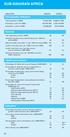 SUB-SAHARAN AFRICA INDICATOR REGION WORLD Demographic indicators Total population (2005) 713,457,000 6,449,371,000 Population under 18 (2005) 361,301,000 2,183,143,000 Population under 5 (2005) 119,555,000
Online Publication Date: 15 th July 2012 Publisher: Asian Economic and Social Society. Road Traffic Accident Injuries and Productivity in Nigeria
 Online Publication Date: 15 th July 2012 Publisher: Asian Economic and Social Society Road Traffic Accident Injuries and Productivity in Nigeria Adekunle J. Aderamo (Department of Geography and Environmental
Strengthening Policies on the Harmful Use of Alcohol, Gender-Based Violence and Infectious Disease
 Strengthening Policies on the Harmful Use of Alcohol, Gender-Based Violence and Infectious Disease A joint UNDP, WHO, IOGT, & FORUT initiative Dudley Tarlton [email protected] SVRI Forum, September
RE: NGO Information on Ghana for the Universal Periodic Review 2008. Key words: women s rights, maternal mortality, reproductive health, abortion
 Koma Jehu-Appiah Country Director Ipas Ghana PMB CT 193 Cantonments, Accra, Ghana email: [email protected] The Human Rights Council OHCHR Civil Society Unit Ms. Laura Dolci-Kanaan NGO Liaison Officer Geneva,
Differentials in Infant and Child Mortality Rates in Nigeria: Evidence from the Six Geopolitical Zones
 Differentials in Infant and Child Mortality Rates in Nigeria: Evidence from the Six Geopolitical Zones Aigbe, Gladys O., PhD Department of Geography and Planning Lagos State University, Ojo Lagos State,
Teen Pregnancy in Sub-Saharan Africa: The Application of Social Disorganisation Theory
 Teen Pregnancy in Sub-Saharan Africa: The Application of Social Disorganisation Theory Extended Abstract Population Association of America 2015 Annual Meeting-April 30-May 2, San Diego,CA Sibusiso Mkwananzi*
Progress and prospects
 Ending CHILD MARRIAGE Progress and prospects UNICEF/BANA213-182/Kiron The current situation Worldwide, more than 7 million women alive today were married before their 18th birthday. More than one in three
MATERNAL AND CHILD HEALTH
 MATERNAL AND CHILD HEALTH 9 George Kichamu, Jones N. Abisi, and Lydia Karimurio This chapter presents findings from key areas in maternal and child health namely, antenatal, postnatal and delivery care,
Preventing unsafe abortion
 Preventing unsafe abortion Fact sheet N 388 March 2014 Key facts Around 22 million unsafe abortions are estimated to take place worldwide each year, almost all in developing countries. Deaths due to unsafe
Delaying First Pregnancy
 Delaying First Pregnancy Introduction The age at which a woman has her first pregnancy affects the health and life of a mother and her baby. While pregnancy can present health risks at any age, delaying
INDICATOR REGION WORLD
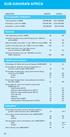 SUB-SAHARAN AFRICA INDICATOR REGION WORLD Demographic indicators Total population (2006) 748,886,000 6,577,236,000 Population under 18 (2006) 376,047,000 2,212,024,000 Population under 5 (2006) 125,254,000
Unsafe abortion incidence and mortality
 Information sheet Information sheet Unsafe abortion incidence and mortality Global and regional levels in 08 and trends during 990 08 Unsafe abortion is defined by the World Health Organization (WHO) as
MATERNAL AND CHILD HEALTH 9
 MATERNAL AND CHILD HEALTH 9 Ann Phoya and Sophie Kang oma This chapter presents the 2004 MDHS findings on maternal and child health in Malawi. Topics discussed include the utilisation maternal and child
49. INFANT MORTALITY RATE. Infant mortality rate is defined as the death of an infant before his or her first birthday.
 49. INFANT MORTALITY RATE Wing Tam (Alice) Jennifer Cheng Stat 157 course project More Risk in Everyday Life Risk Meter LIKELIHOOD of exposure to hazardous levels Low Medium High Consequences: Severity,
ORGANIZATIONS. Organization Programmatic Areas of Focus Notes Interviewed? Yes. Averting Maternal Death and Disability (AMDD)
 Averting Maternal Death and Disability (AMDD) Bixby Center for Global Reproductive Health (UCSF) Global advocacy, human rights, strengthening health systems (conducting needs assessments for EmOC, strengthening
Free healthcare services for pregnant and lactating women and young children in Sierra Leone
 Free healthcare services for pregnant and lactating women and young children in Sierra Leone November 2009 Government of Sierra Leone Contents Foreword 3 Country situation 4 Vision 5 Approach 6 Focus 6
Maternal and Neonatal Health in Bangladesh
 Maternal and Neonatal Health in Bangladesh KEY STATISTICS Basic data Maternal mortality ratio (deaths per 100,000 births) 320* Neonatal mortality rate (deaths per 1,000 births) 37 Births for women aged
A GEO-REFERENCED INFORMATION SYSTEM FOR POPULATION MANAGEMENT
 A GEO-REFERENCED INFORMATION SYSTEM FOR POPULATION MANAGEMENT Prof. Olubodun O, AYENI and Oluwaseun S. ADEWALE, Nigeria Key words: Population, Management, GIS, Census, and Environment. ABSTRACT A key requirement
Incidence of Unintended Pregnancies Worldwide in 2012 and Trends Since 1995 Susheela Singh, Gilda Sedgh, Rubina Hussain, Michelle Eilers
 Incidence of Unintended Pregnancies Worldwide in 2012 and Trends Since 1995 Susheela Singh, Gilda Sedgh, Rubina Hussain, Michelle Eilers Introduction Unintended pregnancies and unplanned births can have
International Journal of Allied Medical Sciences and Clinical Research (IJAMSCR)
 International Journal of Allied Medical Sciences and Clinical Research (IJAMSCR) IJAMSCR Volume 2 Issue 4 Oct-Dec- 2014 Review article Nursing Research To assess level of knowledge of staff nurses on emergency
Financial System Strategy 2020
 Financial System Strategy 2020 International Conference SME: Issues, Challenges and Prospects By Prof. Director Monitoring &Research Division (UN-HABITAT) Visiting Professor, Innovation, Technology & Development,
Pakistan Demographic and Health Survey 2006-07
 Education Most Pakistani Women Lack Any Education Only one in three ever-married women ages 15-49 in Pakistan has any education. Most women never learn how to read. The new Demographic and Health Survey
Education is the key to lasting development
 Education is the key to lasting development As world leaders prepare to meet in New York later this month to discuss progress on the Millennium Development Goals, UNESCO s Education for All Global Monitoring
ACCREDITATION STATUS OF PROGRAMMES OFFERED IN POLYTECHNICS AND SIMILAR TERTIARY INSTITUTIONS. 13 th EDITION
 ACCREDITATION STATUS OF PROGRAMMES OFFERED IN POLYTECHNICS AND SIMILAR TERTIARY INSTITUTIONS 13 th EDITION JANUARY 2007 TABLE OF CONTENTS (i) (ii) (iii) (iv) (v) (vi) (vii) Cover page Content Foreword
Investigating the Factors Affecting Performance of Business Management Students in Nigerian Universities
 IOSR Journal of Business and Management (IOSR-JBM) e-issn: 2278-487X, p-issn: 2319-7668. Volume 16, Issue 8. Ver. IV (Aug. 2014), PP 11-20 Investigating the Factors Affecting Performance of Business Management
RESPONSES TO INFORMATION REQUESTS (RIRs)
 Page 1 of 6 Home > Research > Responses to Information Requests RESPONSES TO INFORMATION REQUESTS (RIRs) New Search About RIRs Help NGA101047.E 21 March 2006 Nigeria: Divorce law and practices among Christians,
ABORTION IN PRESENT DAY VIETNAM
 ABORTION IN PRESENT DAY VIETNAM Nguyen Thanh Binh Ph.d student, Free University of Berlin, Germany E-mail: [email protected] Abstract In recent years, the abortion rate in Vietnam has been likely
Central African Republic Country brief and funding request February 2015
 PEOPLE AFFECTED 2 700 000 affected with 2,000,000 target by Humanitarian response 1 472 000 of those in need, targeted for health service support by WHO 430 000 internally displaced 426 000 refugees HEALTH
Internship at the Centers for Diseases Control
 Internship at the Centers for Diseases Control Survey method to assess reproductive health of refugees Edith Roset Bahmanyar International Emergency Refugee Health Branch (IERHB) Division of Emergency
FEDERAL REPUBLIC OF NIGERIA
 FEDERAL REPUBLIC OF NIGERIA IN COLLABORATION WITH INTERNATIONAL LABOUR ORGANISATION (ILO) ACTION PROGRAMME ON EDUCATION, 2004-2005 TEACHERS FOR THE FUTURE: MEETING TEACHER SHORTAGES TO ACHIEVE EDUCATION
UNICEF NIGERIA COUNTRY OFFICE Monthly Humanitarian Situation Report Date: 23 April, 2012
 UNICEF NIGERIA COUNTRY OFFICE Monthly Humanitarian Situation Report Date: 23 April, 2012 Highlights 1. A total of 13,218 Children with Severe Acute Malnutrition (SAM) have been treated in the month of
ENTREPRENEURSHIP EDUCATION AS A LEAD WAY TO UNIVERSITY GRADUATE EMPLOYABILITY IN RIVERS STATE
 ENTREPRENEURSHIP EDUCATION AS A LEAD WAY TO UNIVERSITY GRADUATE EMPLOYABILITY IN RIVERS STATE Okafor, Elizabeth Uchenna, Nwafor, Njideka Edith, Ighofivwioni, & Peter Precious Department of Educational
UGANDA HEALTH CARE SYSTEM
 UGANDA HEALTH CARE SYSTEM Community and Home based Rehabilitation Course Julius Kamwesiga KI May 2011 Objectives 1. Define a Health System 2. Describe how Ugandan Health care System is organized 3. Outline
Preventable mortality and morbidity of children under 5 years of age as a human rights concern
 Preventable mortality and morbidity of children under 5 years of age as a human rights concern 1. Has your government developed a national policy/strategy/action plan aimed at reducing mortality and morbidity
Annex 1 Cadre definitions used in the project
 WHO recommendations OPTIMIZEMNH Optimizing health worker roles to improve access to key maternal and newborn health interventions through task shifting Annex 1 Cadre definitions used in the project DEFINITIONS
LIST OF ACCESS BANK BRANCHES NATIONWIDE
 LIST OF ACCESS BANK BRANCHES NATIONWIDE ABUJA Ademola Adetokunbo Plot 833, Ademola Adetokunbo Crescent, Wuse 2, Abuja. Aminu Kano Asokoro Garki Kubwa National Assembly Wuse Market Herbert Macaulay Plot
Annex 1 Cadre definitions used in the project
 WHO recommendations OPTIMIZEMNH Optimizing health worker roles to improve access to key maternal and newborn health interventions through task shifting Annex 1 Cadre definitions used in the project DEFINITIONS
Causes and Consequences of Unintended Pregnancy in Developing Countries
 Causes and Consequences of Unintended Pregnancy in Developing Countries Ian Askew, PhD Director, Reproductive Health Services and Research and Co-Director, Strengthening Evidence for Programming on Unintended
IV. GENERAL RECOMMENDATIONS ADOPTED BY THE COMMITTEE ON THE ELIMINATION OF DISCRIMINATION AGAINST WOMEN. Twentieth session (1999) *
 IV. GENERAL RECOMMENDATIONS ADOPTED BY THE COMMITTEE ON THE ELIMINATION OF DISCRIMINATION AGAINST WOMEN Twentieth session (1999) * General recommendation No. 24: Article 12 of the Convention (women and
Maternal Mortality in Nigeria: Examination of Intervention Methods
 Maternal Mortality in Nigeria: Examination of Intervention Methods Dr. Joseph Nnamdi Mojekwu Mr. Uche Ibekwe Department of Actuarial Science and Insurance Faculty of Business Administration University
Prevention and Treatment of Malaria in Nigeria: Differential and Determinants from a Spatial View
 Prevention and Treatment of Malaria in Nigeria: Differential and Determinants from a Spatial View Papiya Guha Mazumdar & Sumit Mazumdar Introduction One of the major public health challenges in Nigeria
Expanding contraceptive choices for women
 Expanding contraceptive choices for women Promising results for the IUD in sub-saharan Africa Katharine E. May, Thoai D. Ngo and Dana Hovig 02 IUD in sub-saharan Africa delivers quality family planning
By Eden G-Sellassie and Tewuh Fomunyam. Supervised by Freeman T. Changamire, M.D., Sc.D. HST S.14 Spring 2012
 By Eden G-Sellassie and Tewuh Fomunyam Supervised by Freeman T. Changamire, M.D., Sc.D 1 HST S.14 Spring 2012 The lack of maternal health care violates women s rights to life, health, equality, and nondiscrimination.
GUIDE. MENA Gender Equality Profile Status of Girls and Women in the Middle East and North Africa
 GUIDE MENA Gender Equality Profile Status of Girls and Women in the Middle East and North Africa 1 IntroductIon The objective of the Middle East and North Africa (MENA) Gender Equality Profiles is to
International Service Program 2010-2012
 International Service Program 2010-2012 Prevention of Mother-to-Child Transmission of HIV and Gender-Based Violence in Rwanda UNICEF USA$500,000 Project Description THE GOAL To prevent mother-to-child
Role of socio-demographic factors on utilization of maternal health care services in Ethiopia
 Role of socio-demographic factors on utilization of maternal health care services in Ethiopia Author Eyerusalem Dagne Year: 2010 Supervisor: Anders Emmelin Acknowledgment I would like to thank the department
No. 125 April 2001. Enhanced Surveillance of Maternal Mortality in North Carolina
 CHIS Studies North Carolina Public Health A Special Report Series by the 1908 Mail Service Center, Raleigh, N.C. 27699-1908 www.schs.state.nc.us/schs/ No. 125 April 2001 Enhanced Surveillance of Maternal
Racial and Ethnic Disparities in Maternal Mortality in the United States
 Racial and Ethnic Disparities in Maternal Mortality in the United States KYRIAKOS S. MARKIDES, PHD UNIVERSITY OF TEXAS MEDICAL BRANCH GALVESTON, TEXAS PRESENTED AT THE HOWARD TAYLOR INTERNATIONAL SYMPOSIUM
Girls education the facts
 Education for All Global Monitoring Report Fact Sheet October 2013 Girls education the facts Millions of girls around the world are still being denied an education PRIMARY SCHOOL: There are still 31 million
Banjul Declaration on the Strategies for Accelerating the Implementation of the Dakar and Beijing Platforms for Action
 Distr.: GENERAL UNITED NATIONS ECONOMIC COMMISSION FOR AFRICA E/ECA/ARCW/8/11 15 December 2009 Original: ENGLISH Eighth Africa Regional Conference on Women (Beijing + 15) 19 20 November 2009 Banjul, The
Sexual and reproductive health challenges facing young people
 Sexual and reproductive health challenges facing young people Shireen J Jejeebhoy, KG Santhya and R Acharya Population Council, New Delhi Lea Hegg Independent consultant, Reproductive Health United Nations
The Social and Economic Determinants of Maternal Morbidity and Mortality in Nigeria
 The Social and Economic Determinants of Maternal Morbidity and Mortality in Nigeria By *Peter O. Ogunjuyigbe, Ph.D Department of Demography and Social Statistics Obafemi Awolowo University Ile-Ife, Nigeria
GHAIN SUPPORT TO LOGISTICS MANAGEMENT SERVICES IN NIGERIA
 GHAIN SUPPORT TO LOGISTICS MANAGEMENT SERVICES IN NIGERIA END OF PROJECT MONOGRAPH This monograph may be freely reviewed, quoted, reproduced, or translated, in full or in part, provided the source is acknowledged.
Quality Maternity Care: the Role of the Public Health Nurse
 Quality Maternity Care: the Role of the Public Health Nurse Lori Webel-Edgar RN, MN Program Manager-Reproductive Health Simcoe Muskoka District Health Unit Barrie, Ontario session overview quality maternity
Population Issues in sub- Saharan Africa. John Cleland Oct 2011
 Population Issues in sub- Saharan Africa John Cleland Oct 2011 OUTLINE WHAT is happening to fertility & population growth? Why is fertility still so high? WHY does it matter? HOW can action most effectively
Saving women s lives: the health impact of unsafe abortion
 Saving women s lives: the health impact of unsafe abortion - worldwide and in emergency settings SRHR in Emergencies: from policy commitment to implementation, DGD, Brussels, 18 October 2012 Thérèse Delvaux,
Nigeria: Female genital Mutilation
 Nigeria: Female genital Mutilation Definition: Female Genital Mutilation (or female genital cutting), comprises all surgical procedures involving partial or total removal of the external genitalia or other
Since achieving independence from Great Britain in 1963, Kenya has worked to improve its healthcare system.
 Medical Management Plan Kenya OVERVIEW Company Mission Our mission is to encourage young people to volunteer for worthwhile work in developing countries. We expect that doing this kind of voluntary work
COST OF HEALTH CARE- A STUDY OF UNORGANISED LABOUR IN DELHI. K.S.Nair*
 Health and Population -Perspectives and Issues: 24 (2): 88-98, 2001 COST OF HEALTH CARE- A STUDY OF UNORGANISED LABOUR IN DELHI K.S.Nair* ABSTRACT The study attempts to estimate the economic burden of
The Burgeoning Public Health Crisis: Demand Analysis and Market Opportunity for Advanced Trauma Systems in the Developing World
 The Burgeoning Public Health Crisis: Demand Analysis and Market Opportunity for Advanced Trauma Systems in the Developing World Globally, the causes of mortality will experience significant shifts over
FIGHTING AGAINST MATERNAL AND NEONATAL MORTALITY IN DEVELOPING COUNTRIES
 PRESS KIT February 2014 FIGHTING AGAINST MATERNAL AND NEONATAL MORTALITY IN DEVELOPING COUNTRIES WIVES ID M G IN T C E CONN CONTENT 02 Key figures 03 Launch of the international "Connecting Midwives" web
Submission by the Australian College of Midwives (Inc.) in relation to The Australian Safety and Quality Goals for Health Care
 Submission by the Australian College of Midwives (Inc.) in relation to The Australian Safety and Quality Goals for Health Care The Consultation Paper titled Australian Safety and Quality Goals for Health
Nigeria: Population and Demographic trends
 Nigeria: Population and Demographic trends Bolatito Ogunbiyi Atlas Fellow, Population Action International Nigeria Beyond the Headlines: Population Health, Natural Resources, and Governance The Woodrow
Factors influencing utilization of antenatal care services among pregnant women in Ife Central Lga, Osun State Nigeria
 Available online at www.pelagiaresearchlibrary.com Advances in Applied Science Research, 12, 3 (3):1309-1315 ISSN: 0976-8610 CODEN (USA): AASRFC Factors influencing utilization of antenatal care services
Schooling and Adolescent Reproductive Behavior in Developing Countries
 Schooling and Adolescent Reproductive Behavior in Developing Countries Cynthia B. Lloyd Background paper to the report Public Choices, Private Decisions: Sexual and Reproductive Health and the Millennium
Challenges & opportunities
 SCALING UP FAMILY PLANNING SERVICES IN AFRICA THROUGH CHRISTIAN HEALTH SYSTEMS Challenges & opportunities Samuel Mwenda MD Africa Christian Health Associations Platform/CHAK Presentation outline Introduction
TELE-NURSING AND NURSING INFORMATICS IN DEVELOPING COUNTRIES: A CASE STUDY OF NIGERIA. By OGINI AUGUSTINA NWADI (Mrs) RM, RN, RPHN, BSC, MSC, MPH,
 TELE-NURSING AND NURSING INFORMATICS IN DEVELOPING COUNTRIES: A CASE STUDY OF NIGERIA. By OGINI AUGUSTINA NWADI (Mrs) RM, RN, RPHN, BSC, MSC, MPH, CHIEF NURSING OFFICER, MULTI-DISCIPLINARY TEAM COODINATOR,
Economic and Social Council
 UNITED NATIONS E Economic and Social Council Distr. GENERAL E/1990/5/Add.31 23 February 1996 Original: ENGLISH Substantive session of 1996 IMPLEMENTATION OF THE INTERNATIONAL COVENANT ON ECONOMIC, SOCIAL
FEDERAL INLAND REVENUE SERVICE
 FEDERAL INLAND REVENUE SERVICE INFORMATION NO: 9304 CIRCULAR DATE: 20 th August, 1993 SUBJECT: VALUE ADDED TAX (VAT) This circular aims primarily at providing the basic information to enlighten members
Revised pregnancy termination laws. proposed for Tasmania
 Submission to the Tasmanian Department of Health and Human Services on the Revised pregnancy termination laws proposed for Tasmania Draft Reproductive Health (Access to Terminations) Bill April 2013 Introduction
Population, Health, and Human Well-Being-- Benin
 Population, Health, and Human Well-Being-- Benin Demographic and Health Indicators Benin Sub- Saharan Africa World Total Population (in thousands of people) 1950 2,046 176,775 2,519,495 2002 6,629 683,782