
cambodia Maternal, Newborn AND Child Health and Nutrition
|
|
|
- Sara Bell
- 10 years ago
- Views:
Transcription
1 cambodia Maternal, Newborn AND Child Health and Nutrition

2 situation Between 2000 and 2010, Cambodia has made significant progress in improving the health of its children. The infant mortality rate has declined from 95 to 45 deaths per 1,000 live births, setting Cambodia on track to reach its Millennium Development Goal 4 to reduce child mortality. Progress has been attributed to successful immunization programmes and breastfeeding promotion, and factors such as poverty reduction, improved education and better roads. Nevertheless, child mortality levels in Cambodia remain high by regional standards. Every day, an estimated 50 children under five die, mainly because of preventable and treatable diseases, such as diarrhoea and pneumonia. A further decline in child mortality will largely depend on the country s ability to address newborn survival and accelerate coverage of pneumonia and diarrhoea related interventions. Despite dramatic reductions over the last five years, Cambodia s maternal mortality ratio remains high at 206 deaths per 100,000 live births. This means an estimated 1,700 mothers die unnecessarily every year, which negatively impacts families, communities and particularly children whose mothers die. Malnutrition remains a significant problem in Cambodia and is a cause in approximately one third of child deaths. In the past five years, the number of children suffering from chronic malnutrition has decreased only slightly and the number suffering from acute malnutrition may have increased. Major drivers of poor nutrition in young children are inadequate complementary feeding practices, poor hygiene and high prevalence of diseases, including diarrhoea. High food prices that have persisted since the 2008 food price crisis have contributed to slowing down progress in the area of nutrition. Millennium Development Goals UNICEF s work on maternal, newborn and child health and nutrition directly contributes to achieving three Millennium Development Goals: MDG 1: Eradicate extreme poverty and hunger MDG 4: Reduce child mortality MDG 5: Improve maternal health

3 Micronutrient deficiencies remain widespread. Anaemia is common among children under five, with a prevalence of more than 80 per cent among children under two. It also affects a significant percentage of pregnant women. However, iodine deficiency in children, which impedes mental development, is no longer considered a major threat as a result of improved accessibility of iodized salt and public awareness campaigns. Immunization against deadly infections is reaching more children, especially in remote areas. Child immunization rates are routinely above 90 per cent, but less than half of children receive other preventive services such as deworming and vitamin A supplementation. Among the key factors leading to poor health and nutrition in Cambodian children are inadequate accessibility, quality and utilization of health services, as well as poor health and nutrition practices in families. There is a widespread shortage of skilled health personnel, particularly midwives; insufficient supply of some essential drugs and equipment; and weak communication and referral among various levels of care, including inadequate linkages between communities and health facilities. Inequities in health and nutrition outcomes and in health care utilization continue to persist between rural and urban areas, across provinces and between people with different educational levels and economic status. Despite reductions, poverty remains one of the most important underlying causes of high maternal and child mortality and undernutrition. One in three Cambodians still lives below the poverty line and 20 per cent of Cambodians cannot afford enough food. Poverty leads to a lack of materials and knowledge for proper sanitation and hygiene, causing Cambodian children to still suffer from high rates of infectious diseases such as diarrhoea and pneumonia. Poverty is also an important barrier to other more direct causes of mortality: proper nutrition and health care. Tackling poverty and reducing financial barriers to health care require new approaches and different strategies to help save children s lives. key partnerships in maternal, newborn AND child health AND nutrition UNICEF works closely with the government to support the Second Health Sector Support Programme. Our main government partners in this area are: Ministry of Health Council for Agriculture and Rural Development UNICEF contributes to national coordination efforts through its participation in the Technical Working Group for Health, led by the Ministry of Health and co-facilitated by the World Health Organization, and the Technical Working Group for Food Security and Nutrition, led by the Council for Agriculture and Rural Development, cofacilitated by the World Food Programme. Other key partners include Agence Française de Développement, AusAID, BASICS, Belgian Technical Cooperation, UNFPA, USAID, WFP, World Bank and WHO.

4 Quality maternal, newborn and child health services Giving birth in Cambodia remains a risky proposition for women and their babies. Inadequate and limited access to health care during pregnancy, childbirth and early childhood, combined with cultural practices that override modern medical alternatives, increase the risk of death for mothers and their children. Every year, an estimated 1,700 women die during pregnancy, delivery and after birth, according to Cambodia s 2008 Census. This leaves Cambodia with one of the highest maternal mortality ratios in the region. There has been no improvement over the last decade, partly due to the difficulty in obtaining good data to measure these deaths. Women are dying because they lack basic emergency obstetric care and due to the limited availability of trained birth attendants. Though declining, there is still widespread use of traditional birth attendants as opposed to midwives and other trained health workers. Only 71 per cent of women in Cambodia had access to a skilled birth attendant in 2010 and just over half of births take place in a health facility, increasing a pregnant woman s risks and decreasing her chances of accessing life-saving interventions during childbirth. Even when mothers can access health care, overall quality of care is deficient, magnifying the challenges women face in overcoming potential health problems during and after birth. While infant mortality has decreased, the number of newborns who die each year remains unacceptably high, as an estimated 10,000 babies die during or shortly after delivery each year. Babies are dying due to complications at birth in addition to lack of postpartum care. Few women visit health facilities for routine yet potentially life-saving health check-ups for their babies because they lack the funds or are unaware of the benefits. Unclean cord care based on cultural practices also leads to infection, which further contributes to newborn deaths. Effective immunization combined with successful breastfeeding promotion and better infant and child care have contributed to Cambodia s ability to reverse infant and child mortality. In Cambodia, immunization has kept polio at bay since 2000 and has dramatically diminished reported cases of measles, which dropped by more than 99 per cent between 1999 and The number of children aged 12 to 23 months who are fully immunized against six major communicable diseases grew from 40 per cent in 2000 to 79 per cent in Meanwhile, expanded community-based integrated management of childhood illnesses vital to decreasing child mortality helps families and communities detect and track cases of pneumonia and diarrhoea for immediate and follow-up medical attention. Nearly 70 per cent of child deaths in Cambodia are due to diarrhoea, pneumonia or neonatal conditions. However, less than half of children with symptoms of acute respiratory infection, fever or diarrhoea see a health care provider. The direct causes of maternal, newborn and child deaths are well known and largely preventable and treatable. However, coverage of some health interventions and practices remains low due to disconnect between knowledge, policies and action. Solutions do exist, but often do not reach those most in need. New programmes are revealing significant potential in helping to decrease maternal deaths while improving overall quality and access to health care for mothers and their children. UNICEF collaborates with the government to accelerate improvements in health and nutrition for Cambodia s infants and children in order to protect them against illness and death.

5 What we do Work with the Ministry of Health to identify information needs, support data collection and analysis, identify policy options, and advocate for resources to scale-up maternal, newborn and child health interventions. Build the capacity of policy makers and health managers in data analysis and planning to support the expansion and sustainable implementation of high impact life-saving maternal, newborn and child health interventions. Special focus is placed on identifying and developing programmes to reach the unreached. Support frameworks that provide the necessary policy and financial conditions to overcome system-wide obstacles to improved maternal and child health services. Support emergency obstetric care, essential newborn care, and the Integrated Management of Childhood Illness system with priority on poor districts. Support improvements in antenatal, delivery and postpartum care, emphasizing the need for skilled birth attendance linked through referral systems to emergency obstetric and newborn care. Promote universal immunization coverage, case management of pneumonia and diarrhoea treatment with zinc. Contribute to improving the quality of preventative and clinical health services through training, coaching and supportive supervision for health providers. Support interventions at three levels health system, health facility and community to ensure families receive knowledge, skills, motivation and support to care for young children. Impact A growing number of women in Cambodia are seeking help from a skilled health attendant during delivery, up from 32 per cent in 2000 to 71 per cent in Attendance at antenatal care has also increased, from 38 per cent in 2000 to 89 per cent in Equally encouraging, improved obstetric care for women, early and exclusive breastfeeding, and life-saving immunizations have helped prevent newborn deaths. Comprehensive immunization against preventable diseases, together with better nutrition, has curbed the nation s under-five mortality, from 124 to 54 deaths per 1,000 live births between 2000 and 2010, according to preliminary data from the 2010 Demographic and Health Survey.

6 Ensuring good nutrition Malnutrition affects almost half of all Cambodian children under the age of five. It is caused by the inability to afford nutritious food, high rates of infectious disease and inappropriate feeding practices. The consequences of malnutrition are severe: it is one of the top underlying causes of child mortality and morbidity in Cambodia, and its lasting repercussions continue into adulthood, impairing both mental and physical development that results in poor performance in school and limited opportunities for work later in life. Malnutrition s visible impact can be seen across the country. Roughly 40 per cent of children age five and under are too small for their age and another 28 per cent are underweight. A smaller, though troubling 11 per cent of children are wasted (thin). Cambodian women are equally susceptible to malnutrition, with 20 per cent of women between 15 and 49 considered too thin a situation that increases risk for complications during birth and leads to low birth weight of their babies. Breastfeeding is the best source of nutrition for children in the early stages of life, but not all Cambodian women breastfeed exclusively during the first six months of the baby s life. Many children older than six months get too little or not the right complementary food because parents lack knowledge or cannot afford nutritious food. Hidden hunger in the form of micronutrient deficiency is an added risk to children. Although the majority of children now receive vitamin A supplements, an increase from 11 per cent in 2000 to 60 per cent in 2010, those who do not receive the supplement face an increased risk of child mortality or blindness. Meanwhile, four out of five children and almost half of women of reproductive age are anaemic. Deficiencies of iron, zinc and calcium are among the top public health concerns in the country. With a growing number of families using iodized salt, Cambodia has enjoyed major achievements in reducing iodine deficiency disorder, which can impair foetal brain development. Although local salt producers have agreed to take on the cost of iodization, close monitoring is required to ensure that the private sector continues quality salt iodization. While the international evidence base provides a range of costeffective nutrition interventions, many of these are yet to be implemented in Cambodia, including a system of cash transfers to poor families that are shown to reduce poverty and improve nutrition outcomes. Community-based treatment for child malnutrition is recommended, but in Cambodia treatment is only available in hospital. A national system for the identification of poor households exists, but these families do not receive direct financial assistance. Meanwhile, nutrition interventions that have been mainstreamed into the government health system need to be monitored to ensure quality. UNICEF works closely with the government to combat hunger and minimize the negative consequences of malnutrition on children.

7 What we do Design and support the implementation of targeted behaviour change communication strategies that promote early and exclusive breastfeeding and appropriate complementary feeding behaviours. Continue support of the Food Security and Nutrition Information Management System through analysis of administrative statistics and household surveys. Ensure the sustainability of salt iodization by supporting the National Sub-Committee on Food Fortification to continuously monitor salt iodization. Address anaemia and other micronutrient deficiencies in children and women through multiple micro-nutrient supplementation and fortification. Support pilots and operational research on cash transfers and a national system for the identification and treatment of child malnutrition. Provide technical assistance to monitoring and supervision activities of the National Nutrition Programme. Impact An expanding segment of the population, especially women and children, are leading better, healthier lives as a result of improved nutrition. A growing number of women who are exclusively breastfeeding have led to improved nutrition for infants and children, and more children are also receiving complementary feeding at the right age to reinforce their growth. Between 2000 and 2010, wasting decreased from 16.8 per cent to 10.9 per cent; underweight from 38 per cent to 28.3 per cent; and stunting from 49.7 per cent to 39.9 per cent. The number of families consuming iodized salt has increased, with over 80 per cent of households using iodized salt compared with only 14 per cent in 2000.

8 UNICEF Cambodia P.O. Box 176, Phnom Penh Tel: +855 (0) All photos by: UNICEF Cambodia/Nicolas Axelrod Designed by Quinin Lab:

Child and Maternal Nutrition in Bangladesh
 Child and Maternal Nutrition in Bangladesh KEY STATISTICS Nutrition % of the population Malnutrition, in children (birth to 59 months) Wasting (weight-for-height) 17.4 2 Stunting (height-for-age) 43.2
Maternal and Neonatal Health in Bangladesh
 Maternal and Neonatal Health in Bangladesh KEY STATISTICS Basic data Maternal mortality ratio (deaths per 100,000 births) 320* Neonatal mortality rate (deaths per 1,000 births) 37 Births for women aged
The Situation of Children and Women in Iraq
 The Situation of Children and Women in Iraq Highlights from the Multiple Indicator Cluster Survey 4 (MICS 4) 2011 Demographics - Population of Iraq: 33.4 million - Children and Adolescents (0-18): 16.6
MATARA. Geographic location 4 (2006-07) Distribution of population by wealth quintiles (%), 2006-07 27.3 21.4 12.9 23.7 14.8. Source: DHS 2006-07
 Ministry of Health MATARA DEMOGRAPHICS Total population 822, (28) L and area (Sq. Km) 1,27 (26) under-five (%) 9.2 (26-7) 1 Females in reproductive age group (%) 2 5.1 (26-7) 1 Estimated housing units
TRACKING PROGRESS ON CHILD AND MATERNAL NUTRITION. A survival and development priority
 TRACKING PROGRESS ON CHILD AND MATERNAL NUTRITION A survival and development priority United Nations Children s Fund (UNICEF) November 29 Permission to reproduce any part of this publication is required.
2014-2017. UNICEF/NYHQ2012-1868/Noorani
 UNICEF STRATEGIC PLAN 2014-2017 UNICEF/NYHQ2012-1868/Noorani UNICEF s Strategic Plan 2014-2017 is a road map for the realization of the rights of every child. The equity strategy, emphasizing the most
Thank you, Dr. Fan, for that kind introduction.
 Remarks by Dr. Chris Elias, President, Global Development Programs, Bill and Melinda Gates Foundation, at the Second Global Conference on Biofortification March 31, 2014 Kigali, Rwanda Thank you, Dr. Fan,
MALARIA A MAJOR CAUSE OF CHILD DEATH AND POVERTY IN AFRICA
 MALARIA A MAJOR CAUSE OF CHILD DEATH AND POVERTY IN AFRICA CONTROLLING THE MALARIA BURDEN IN AFRICA KEY ACTIONS FOR UNICEF Strengthen UNICEF input to evidence-based antenatal services Forge partnership
COUNTRY REPORT: CAMBODIA Sophal Oum, MD, MTH, DrPH, Deputy Director-General for Health
 COUNTRY REPORT: CAMBODIA Sophal Oum, MD, MTH, DrPH, Deputy Director-General for Health I. ESTABLISHED PROFESSIONAL QUALIFICATIONS IN HEALTH, 2003 Sector Medical Service, Nursing, First Aid Medical Service
SRI LANKA SRI LANKA 187
 SRI LANKA 187 List of Country Indicators Selected Demographic Indicators Selected demographic indicators Child Mortality and Nutritional Status Neonatal, infant and under-five mortality rates: trends Distribution
Objectives. What is undernutrition? What is undernutrition? What does undernutrition look like?
 Objectives Basics Jean-Pierre Habicht, MD, PhD Professor Division of Nutritional Sciences Cornell University Types and causes Determinants Consequences Global occurrence and progress Way forward What is
Module 1: Major Public Health Nutrition Issues Today
 Module 1: Major Public Health Nutrition Issues Today 1 Looking Ahead: The Global Challenges As the world becomes more connected, the nature of disease will also become globalized Some of the products and
Central African Republic Country brief and funding request February 2015
 PEOPLE AFFECTED 2 700 000 affected with 2,000,000 target by Humanitarian response 1 472 000 of those in need, targeted for health service support by WHO 430 000 internally displaced 426 000 refugees HEALTH
Testimony of Henry B. Perry, MD, PhD, MPH Senior Associate, Department of International Health, Johns Hopkins Bloomberg School of Public Health
 Testimony of Henry B. Perry, MD, PhD, MPH Senior Associate, Department of International Health, Johns Hopkins Bloomberg School of Public Health Congressional Hearing: The First One Thousand Days of Life
Second International Conference on Nutrition. Rome, 19-21 November 2014. Conference Outcome Document: Rome Declaration on Nutrition
 October 2014 ICN2 2014/2 Second International Conference on Nutrition Rome, 19-21 November 2014 Conference Outcome Document: Rome Declaration on Nutrition Welcoming the participation of Heads of State
MATERNAL AND CHILD HEALTH
 MATERNAL AND CHILD HEALTH 9 George Kichamu, Jones N. Abisi, and Lydia Karimurio This chapter presents findings from key areas in maternal and child health namely, antenatal, postnatal and delivery care,
150 7,114,974 75.8 -53-3.2 -3.6 -2.9. making progress
 Per 1 LB African Region Maternal and Perinatal Health Profile Department of Maternal, Newborn, Child and Adolescent Health (MCA/WHO) Demographics and Information System Health status indicators - Maternal
117 4,904,773 -67-4.7 -5.5 -3.9. making progress
 Per 1 LB Eastern Mediterranean Region Maternal and Perinatal Health Profile Department of Maternal, Newborn, Child and Adolescent Health (MCA/WHO) Demographics and Information System Health status indicators
Nutrition Promotion. Present Status, Activities and Interventions. 1. Control of Protein Energy Malnutrition (PEM)
 Nutrition Promotion The National Nutrition Centre (NNC) of the Department of Health has implemented Nutrition program area under National Health Plan covers two broad areas namely: Nutrition and Household
water, sanitation and hygiene
 water, sanitation and hygiene situation Lack of water and sanitation is one of the biggest issues affecting the health of children across Cambodia, particularly those who live in the countryside. Too many
***************************************************************************
 UNICEF Cambodia TERMS OF REFERENCE FOR CONSULTANT Joint Programme for Children, Food Security and Nutrition in Cambodia, Provincial Programme Coordinator Requesting Section: Child Survival ***************************************************************************
Second International Conference on Nutrition. Rome, 19-21 November 2014. Conference Outcome Document: Framework for Action
 October 2014 ICN2 2014/3 Corr.1 Second International Conference on Nutrition Rome, 19-21 November 2014 Conference Outcome Document: Framework for Action FROM COMMITMENTS TO ACTION Background 1. There has
Promoting Family Planning
 Promoting Family Planning INTRODUCTION Voluntary family planning has been widely adopted throughout the world. More than half of all couples in the developing world now use a modern method of contraception
Maternal and child health in nepal: scaling up priority health care services * A. Morgan,
 Maternal and child health in nepal: scaling up priority health care services * A. Morgan, Y. Prasai, E. Jimenez-Soto, Z. Dettrick, S. Firth, A. Byrne Aims: * The research that forms the basis of this report
68 3,676,893 86.7 -49-2.9 -3.2 -2.5. making progress
 Per 1 LB African Region Maternal and Perinatal Health Profile Department of Maternal, Newborn, Child and Adolescent Health (MCA/WHO) Demographics and Information System Health status indicators Maternal
SUMMARY TABLE OF FINDINGS Sudan Household Health Survey (SHHS) and Millennium Development Goals (MDG) indicators, Sudan, 2006
 SUMMARY TABLE OF FINDINGS Sudan Household Health Survey (SHHS) and Millennium Development Goals (MDG) indicators, Sudan, 2006 Topic CHILD MORTALITY Child mortality SHHS indicator number MDG indicator number
Improving Clinical Management of Newborns at Hospitals to Reduce Neonatal Deaths
 Improving Clinical Management of Newborns at Hospitals to Reduce Neonatal Deaths Bridging the Research-Policy Divide Australian National University (ANU) Canberra BUN Sreng Department of Communicable Disease
EVERY MONGOLIAN CHILD HAS THE RIGHT ÒO HEALTHY GROWTH
 ÞÍÈÑÅÔ IECD project, Health and Nutrition, UNICEF EVERY MONGOLIAN CHILD HAS THE RIGHT ÒO HEALTHY GROWTH FACTS AND FIGURES Inside: Infant and Under-Five Mortality Child Malnutrition Vitamin A Deficiency
FOCUSING RESOURCES ON EFFECTIVE SCHOOL HEALTH:
 FOCUSING RESOURCES ON EFFECTIVE SCHOOL HEALTH: a FRESH Start to Enhancing the Quality and Equity of Education. World Education Forum 2000, Final Report To achieve our goal of Education For All, we the
The Challenge of Appropriate Pneumonia Case Management and the Impact for Child Health
 The Challenge of Appropriate Pneumonia Case Management and the Impact for Child Health Dr. Shamim Qazi Department of Maternal, Newborn, Child and Adolescent Health 1 ASTMH New Orleans November 2014 Major
PROGRESS REPORT 2013-2015 DECREASE CHILD DEATHS
 PROGRESS REPORT 2013-2015 DECREASE CHILD DEATHS PROGRESS REPORT 2013-2015 Results for children in Pakistan DECREASE CHILD DEATHS Copyright UNICEF Pakistan Printed in July 2015 Editing Sarah Nam Graphic
PUBLIC HEALTH AND NUTRITION SECTOR OVERVIEW AND STRATEGIC APPROACH
 PUBLIC HEALTH AND NUTRITION SECTOR OVERVIEW AND STRATEGIC APPROACH Niger Cassandra Nelson/Mercy Corps An Overview The current state of global health presents a unique challenge. While there are many advances
Pakistan Demographic and Health Survey 2006-07
 Education Most Pakistani Women Lack Any Education Only one in three ever-married women ages 15-49 in Pakistan has any education. Most women never learn how to read. The new Demographic and Health Survey
situation key partnerships in education Millennium Development Goal 2: Achieve universal primary education
 education situation More children in Cambodia are entering school and the gender gap is quickly closing as more girls make their way to the classroom. In the 2010/2011 school year, the overall rate of
IMPROVING NUTRITION SECURITY IN AFRICA
 IMPROVING NUTRITION SECURITY IN AFRICA A EU UNICEF J A 1 In Sub Saharan Africa, 54 million children under five years of age are suffering from chronic malnutri on This is a silent emergency with devasta
Economic Development in Ethiopia
 Economic Development in Ethiopia Ethiopia has one of the world s fastest growing economies During the past four-year implementation period of the GTP Ethiopian economy has shown a 10.1 per cent growth
Each year, millions of women, newborns,
 POPULATION REFERENCE BUREAU P o l i c y P e r s p e c t i v e s o n N e w b o r n H e a l t h March 2006 SAVING NEWBORN LIVES The Maternal Newborn Child Health Continuum of Care: A Collective Effort to
UNICEF in South Africa
 UNICEF in South Africa A message from the Representative 47,900,000 people live in South Africa 20,200,000 are children 294,000 children are HIV-positive 1 in 17 children die before their fifth birthday
STRATEGIC IMPACT EVALUATION FUND (SIEF)
 IMPACT EVALUATION CLUSTER NOTE: EARLY CHILDHOOD NUTRITION, HEALTH AND DEVELOPMENT I. Background. The early childhood period is a time of rapid growth and development across four domains: physical, cognitive,
World Vision: Focus on Health
 World Vision: Focus on Health World Vision s health strategy World Vision (WV) supports global implementation of child-focused, community-based initiatives with government ministries and local and international
Rwanda 2000. Nutrition of Young Children and Mothers. l Office National de la Population U.S. Agency for International Development ORC Macro
 TWONGERE UMUSARURO TUBYARE TURERE DUHARANIRE IMIBEREHO MYIZA Y'ABATURAGE Nutrition of Young Children and Mothers Rwanda 2000 l Office National de la Population U.S. Agency for International Development
WFP!""# World Food Programme Rome, Italy
 WFP!""# World Food Programme Rome, Italy 2 Having considered the document on the Global Framework for Action to End Child Hunger and Undernutrition, the Board: a) welcomes the Ending Child Hunger and Undernutrition
Health, history and hard choices: Funding dilemmas in a fast-changing world
 Health, history and hard choices: Funding dilemmas in a fast-changing world Thomson Prentice Global Health Histories Health and Philanthropy: Leveraging change University of Indiana, August 2006 An embarrassment
Preventable mortality and morbidity of children under 5 years of age as a human rights concern
 Preventable mortality and morbidity of children under 5 years of age as a human rights concern 1. Has your government developed a national policy/strategy/action plan aimed at reducing mortality and morbidity
CORRELATIONAL ANALYSIS BETWEEN TEENAGE PREGNANCY AND MATERNAL MORTALITY IN MALAWI
 CORRELATIONAL ANALYSIS BETWEEN TEENAGE PREGNANCY AND MATERNAL MORTALITY IN MALAWI Abiba Longwe-Ngwira and Nissily Mushani African Institute for Development Policy (AFIDEP) P.O. Box 31024, Lilongwe 3 Malawi
INDICATOR REGION WORLD
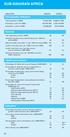 SUB-SAHARAN AFRICA INDICATOR REGION WORLD Demographic indicators Total population (2005) 713,457,000 6,449,371,000 Population under 18 (2005) 361,301,000 2,183,143,000 Population under 5 (2005) 119,555,000
NO MORE MISSED MDG4 OPPORTUNITIES: OPTIMIZING EXISTING HEALTH PLATFORMS FOR CHILD SURVIVAL. Polio Campaigns
 NO MORE MISSED MDG4 OPPORTUNITIES: OPTIMIZING EXISTING HEALTH PLATFORMS FOR CHILD SURVIVAL Polio Campaigns With fewer than 600 days remaining to the Millennium Development Goal (MDG) deadline, new strategies
Social Marketing and Breastfeeding
 Global Journal of Management and Business Studies. ISSN 2248-9878 Volume 3, Number 3 (2013), pp. 303-308 Research India Publications http://www.ripublication.com/gjmbs.htm Social Marketing and Breastfeeding
REPUBLIC OF THE CONGO
 For every child Health, Education, Equality, Protection ADVANCE HUMANITY UNICEF HUMANITARIAN ACTION REPUBLIC OF THE CONGO IN 2007 CORE COUNTRY DATA Population under 18 2153 (thousands) U5 mortality rate
Global Action Plan for Prevention and Control of Pneumonia (GAPP)
 Global Action Plan for Prevention and Control of Pneumonia (GAPP) Technical Consensus statement Updated February 2008 The following consensus statement was formulated, and should be used widely for advocacy
On behalf of the Association of Maternal and Child Health Programs (AMCHP), I am
 Christopher Kus, M.D., M.P.H. Association of Maternal and Child Health Programs, Public Witness Testimony House Labor, Health and Human Services and Education Appropriations Subcommittee March 13, 2013
IMPROVING CHILD NUTRITION. The achievable imperative for global progress
 IMPROVING CHILD NUTRITION The achievable imperative for global progress United Nations Children s Fund (UNICEF) April 2013 Permission is required to reproduce any part of this publication. Permission will
WHO/UNICEF JOINT STATEMENT
 WHO/UNICEF JOINT STATEMENT CLINICAL MANAGEMENT OF ACUTE DIARRHOEA Two recent advances in managing diarrhoeal disease newly formulated oral rehydration salts (ORS) containing lower concentrations of glucose
HEALTH TRANSITION AND ECONOMIC GROWTH IN SRI LANKA LESSONS OF THE PAST AND EMERGING ISSUES
 HEALTH TRANSITION AND ECONOMIC GROWTH IN SRI LANKA LESSONS OF THE PAST AND EMERGING ISSUES Dr. Godfrey Gunatilleke, Sri Lanka How the Presentation is Organized An Overview of the Health Transition in Sri
performance and quality improvement to strengthen skilled attendance
 An affiliate of Johns Hopkins University using performance and quality improvement to strengthen skilled attendance United States Agency for International Development The Maternal and Neonatal Health (MNH)
MULTIDISCIPLINARY TRAINING PROGRAMME ON GLOBAL NUTRITION POLICY FOR SUSTAINABLE DEVELOPMENT
 MULTIDISCIPLINARY TRAINING PROGRAMME ON GLOBAL NUTRITION POLICY FOR SUSTAINABLE DEVELOPMENT Latin American Society of Nutrition (SLAN), World Health Organization (WHO)/ Pan American Health Organization
World Health Day Diabetes and RMNCAH in Africa: R for Reproductive Health
 World Health Day Diabetes and RMNCAH in Africa: R for Reproductive Health Managing diabetes and reproductive health in developing contexts. The 2016 World Health Day theme to scale up prevention, strengthen
INDICATOR REGION WORLD
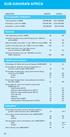 SUB-SAHARAN AFRICA INDICATOR REGION WORLD Demographic indicators Total population (2006) 748,886,000 6,577,236,000 Population under 18 (2006) 376,047,000 2,212,024,000 Population under 5 (2006) 125,254,000
66% Breastfeeding. Early initiation of breastfeeding (within one hour of birth) Exclusive breastfeeding rate (4-5 months)
 56% Early initiation of breastfeeding (within one hour of birth) 29% Exclusive breastfeeding rate (4-5 months) 66% Timely complementary feeding rate (6-9 months) Egypt Demographic and Health Survey 2008
Scaling Up Nutrition (SUN) Movement Strategy [2012-2015]
![Scaling Up Nutrition (SUN) Movement Strategy [2012-2015]](/thumbs/27/12344538.jpg "Scaling Up Nutrition (SUN) Movement Strategy [2012-2015]") Scaling Up Nutrition (SUN) Movement Strategy [2012-2015] September 2012 Table of Contents Synopsis... 3 A: SUN Movement Vision and Goals... 4 B: Strategic Approaches and Objectives... 4 C: Principles of
Scaling Up Nutrition (SUN) Movement Strategy [2012-2015] September 2012 Table of Contents Synopsis... 3 A: SUN Movement Vision and Goals... 4 B: Strategic Approaches and Objectives... 4 C: Principles of
A UNICEF POLICY REVIEW
 A UNICEF POLICY REVIEW STRATEGY FOR IMPROVED NUTRITION OF CHILDREN AND WOMEN IN DEVELOPING COUNTRIES UNICEF UNICEF New York, N.Y., USA 1 Copyright 8 1990 Unit Nations Children=s Fund 3 UN Plaza New York,
Nursing and midwifery actions at the three levels of public health practice
 Nursing and midwifery actions at the three levels of public health practice Improving health and wellbeing at individual, community and population levels June 2013 You may re-use the text of this document
Bachelor s degree in Nursing (Midwifery)
 Tbilisi State Medical University Faculty of Physical Medicine and Rehabilitation The first level of academic higher education Bachelor s degree in Nursing (Midwifery) TBILISI 2012 Name of qualification
The INEE Minimum Standards Linkages to the Sphere Minimum Standards
 The INEE Minimum Standards Linkages to the Sphere Minimum Standards Coordination and collaboration between education and other humanitarian sectors is essential to ensure an effective response that addresses
Baseline Nutrition and Food Security Survey
 Baseline Nutrition and Food Security Survey -2012 Ministria e Shëndetësisë Ministry of Health Ministria e Bujqësisë, Ushqimit dhe Mbrojtjes së Konsumatorit 100 Vjet Shtet Shqiptar Baseline Nutrition and
Free healthcare services for pregnant and lactating women and young children in Sierra Leone
 Free healthcare services for pregnant and lactating women and young children in Sierra Leone November 2009 Government of Sierra Leone Contents Foreword 3 Country situation 4 Vision 5 Approach 6 Focus 6
C-IMCI Program Guidance. Community-based Integrated Management of Childhood Illness
 C-IMCI Program Guidance Community-based Integrated Management of Childhood Illness January 2009 Summary This document provides an overview of the Community-based Integrated Management of Childhood Illnesses
Water, Sanitation and Hygiene
 Water, Sanitation and Hygiene UNICEF/Giacomo Pirozzi for children unite for children UNICEF/Julie Pudlowski Fast facts Tanzanians that lack access to improved drinking water sources 46% Tanzanians with
MDG 4: Reduce Child Mortality
 143 MDG 4: Reduce Child Mortality The target for Millennium Development Goal (MDG) 4 is to reduce the mortality rate of children under 5 years old (under-5 mortality) by two-thirds between 1990 and 2015.
CHILD HEALTH POLICY AND PLAN
 PAPUA NEW GUINEA CHILD HEALTH POLICY AND PLAN 2009-2020 CONTENTS CONTENTS...3 FOREWORD...7 ACKNOWLEDGEMENT...8 ABBREVIATIONS...9 EXECUTIVE SUMMARY...11 VOLUME I CHILD HEALTH POLICY 2009...13 CHAPTER 1.
Connection with other policy areas and (How does it fit/support wider early years work and partnerships)
 Illness such as gastroenteritis and upper respiratory tract infections, along with injuries caused by accidents in the home, are the leading causes of attendances at Accident & Emergency and hospitalisation
Income is the most common measure
 Income Goal A healthy standard of living for all Income is the most common measure of socioeconomic status, and a strong predictor of the health of an individual or community. When assessing the health
THE LIFE CYCLE OF MALNUTRITION
 THE LIFE CYCLE OF MALNUTRITION By: STUART GILLESPIE RAFAEL FLORES From IFPRI 1999-2000 INTERNATIONAL FOOD POLICY RESEARCH INSTITUTE 2033 K. STREET WASHINGTON, DC 20006-1002 2000 THE LIFE CYCLE Malnutrition
Appeal to the Member States of the United Nations Early Childhood Development: The Foundation of Sustainable Human Development for 2015 and Beyond
 UNICEF/NYHQ2006-0450/Pirozzi Appeal to the Member States of the United Nations Early Childhood Development: The Foundation of Sustainable Human Development for 2015 and Beyond We, the undersigned, submit
Quality Maternity Care: the Role of the Public Health Nurse
 Quality Maternity Care: the Role of the Public Health Nurse Lori Webel-Edgar RN, MN Program Manager-Reproductive Health Simcoe Muskoka District Health Unit Barrie, Ontario session overview quality maternity
Peru. Country programme document 2012-2016
 Peru Country programme document 2012-2016 The draft country programme document for Peru (E/ICEF/2011/P/L.44) was presented to the Executive Board for discussion and comments at its 2011 second regular
Social Policy Analysis and Development
 Social Policy Analysis and Development UNICEF/Julie Pudlowski for children unite for children UNICEF/Giacomo Pirozzi Fast facts Children 0 14 years living below the basic needs poverty line Children 0
International Service Program 2010-2012
 International Service Program 2010-2012 Prevention of Mother-to-Child Transmission of HIV and Gender-Based Violence in Rwanda UNICEF USA$500,000 Project Description THE GOAL To prevent mother-to-child
Success Factors. for Women s and Children s Health. Cambodia. Ministry of Health, Cambodia
 Success Factors for Women s and Children s Health Cambodia Ministry of Health, Cambodia Success factors for women s and children s health: Cambodia is a document of the Ministry of Health, Cambodia. This
SYRIAN REFUGEE RESPONSE: LEBANON UPDATE ON NUTRITION
 SYRIAN REFUGEE RESPONSE: LEBANON UPDATE ON NUTRITION 5 September 2014 LEBANON #FutureOfSyria Agencies and the Government of Lebanon had requested US$1.89 billion in the interagency funding appeal. The
Goal 1: Eradicate extreme poverty and hunger. 1. Proportion of population below $1 (PPP) per day a
 Annex II Revised Millennium Development Goal monitoring framework, including new targets and indicators, as recommended by the Inter-Agency and Expert Group on Millennium Development Goal Indicators At
Girls education the facts
 Education for All Global Monitoring Report Fact Sheet October 2013 Girls education the facts Millions of girls around the world are still being denied an education PRIMARY SCHOOL: There are still 31 million
ORGANIZATIONS. Organization Programmatic Areas of Focus Notes Interviewed? Yes. Averting Maternal Death and Disability (AMDD)
 Averting Maternal Death and Disability (AMDD) Bixby Center for Global Reproductive Health (UCSF) Global advocacy, human rights, strengthening health systems (conducting needs assessments for EmOC, strengthening
The Role of International Law in Reducing Maternal Mortality
 The Role of International Law in Reducing Maternal Mortality K. Madison Burnett * Safe motherhood is a human rights issue The death of a woman during pregnancy or childbirth is not only a health issue
Nigeria. Country programme document 2014-2017
 Nigeria Country programme document 2014-2017 The draft country programme document for Nigeria (E/ICEF/2013/P/L.7) was presented to the Executive Board for discussion and comments at its 2013 annual session
Chapter 4. Priority areas in health research. Section 1 Burden of disease 1998 in low- and middle-income and in high-income countries
 Chapter 4 Priority areas in health research Section 1 Burden of disease 1998 in low- and middle-income and in high-income countries Section 2 Recommendation of priority research areas from various approaches
INNOVATIVE APPROACHES TO IMPROVE EARLY CHILDHOOD DEVELOPMENT (0-3 YEARS)
 INNOVATIVE APPROACHES TO IMPROVE EARLY CHILDHOOD DEVELOPMENT (0-3 YEARS) Robert Scherpbier & Margo O'Sullivan Chief of Health, Nutrition & WASH Chief of Education & Child Development UNICEF China Office
Nutrition Landscape Information System (NLIS) Country Profile Indicators. Interpretation Guide
 Nutrition Landscape Information System (NLIS) Country Profile Indicators Interpretation Guide Nutrition Landscape Information System (NLIS) COUNTRY PROFILE INDICATORS Interpretation Guide WHO Library
Outcomes of milk based Interventions: Improvements on health and nutritional status of under-fives in rural households, Tanzania?
 Outcomes of milk based Interventions: Improvements on health and nutritional status of under-fives in rural households, Tanzania? Devota Mwaseba Presentation Outline Background Research problem Objectives
Submission by the Australian College of Midwives (Inc.) in relation to The Australian Safety and Quality Goals for Health Care
 Submission by the Australian College of Midwives (Inc.) in relation to The Australian Safety and Quality Goals for Health Care The Consultation Paper titled Australian Safety and Quality Goals for Health
Pre-service and In-service Capacity Building: Lessons Learned from Integrated Management of Childhood Illness (IMCI)
 Pre-service and In-service Capacity Building: Lessons Learned from Integrated Management of Childhood Illness (IMCI) Dr Wilson Were Medical Officer Child Health Services 1 IAEA International Symposium
EVERY NEWBORN SPOTLIGHT ON
 EVERY NEWBORN Progress towards ending preventable newborn deaths and stillbirths SPOTLIGHT ON Philippines The Philippines conducted a newborn assessment and bottleneck analysis exercise in 2013 that informed
Economic and Social Council
 United Nations E/ICEF/2013/P/L.16 Economic and Social Council Distr.: Limited 1 July 2013 Original: English For action United Nations Children s Fund Executive Board Second regular session 2013 3-6 September
Kenya. Demographic and Health Survey 2008-09
 Kenya Demographic and Health Survey 2008-09 KENYA DEMOGRAPHIC AND HEALTH SURVEY 2008-09 Kenya National Bureau of Statistics Nairobi, Kenya National AIDS Control Council Nairobi, Kenya National AIDS/STD
IFPRI logo here. Addressing the Underlying Social Causes of Nutrition in India Reflections from an economist
 IFPRI logo here Addressing the Underlying Social Causes of Nutrition in India Reflections from an economist The 2013 Lancet Nutrition Series estimated that scaling up 10 proven effective nutrition specific
Max Foundation plan 2014-2016
 Max Foundation plan 2014-2016 Page1 Content 1. Introduction 3 2. Goal 4 3. Our values 5 4. How we work 6 5. Max-WASH approach 7 6. Were we work 9 7. Ambition 10 Page2 1. Introduction Max Foundation prevents