
Coaches Guide. to Sports Injuries
|
|
|
- Paulina Carson
- 10 years ago
- Views:
Transcription

1 Coaches Guide to Sports Injuries For more information, please call the Human Motion Institute at Randolph Hospital at or

2 Coaches Guide To Sports Injuries TABLE OF CONTENTS I. WHAT DO I DO WHEN MY ATHLETE IS INJURED? Recognize Severity of Injury Evaluate the Injury When to Call an Ambulance When to Send Athlete to Doctor/Hospital Treatment for Common Minor Injuries II. OTHER THINGS YOU SHOULD KNOW First Aid Kit Contents First Aid Treatment Hot Weather Illnesses Stretches Safe Equipment III. COMMON ATHLETIC INJURIES Ankle Sprains; Arch & Heel Pain; Back Pain & Injury; Bleeding Cuts & Scrapes; Blisters; Calluses; Concussion; Finger Dislocation; Hamstring Pull; Jammed or Sprained Finger; Jumper s Knee/Patellar Tendinitis; Ligament (Joint) Sprains; Osgood Schlatters Disease; Shin Pain/Shin Splints; Shoulder Dislocation; Shoulder Separations; Shoulder Brachial Plexus Lesion/Stinger, Burner, Nerve Pinch; Stress Fractures; Swimmer s Ear; Tendinitis; Tennis Elbow; Tooth Dislocation; Turf Toe; Wind Knocked Out
3 I. WHAT DO I DO WHEN MY ATHLETE IS INJURED? 1. RECOGNIZE SEVERITY OF INJURY - Do not do anything that may cause additional injury. Move the injured person only if you must to prevent further injury, or to initiate CPR, or after you have determined it is safe to do so. - Recognize emergencies or other serious injuries that need the immediate attention of paramedics or an ambulance. - Recognize injuries that need immediate care by professional medical personnel, but are not life-threatening in nature. - Recognize injuries that exclude the athlete from continued participation. 1
4 2. EVALUATE THE INJURY - Is he/she breathing? - Is he/she unconscious, conscious, or semi-conscious? - Is the athlete s head, neck, trunk, or limb in an unusual position that may indicate fracture, dislocation, or other injuries? - Look for profuse bleeding or swelling. - Ask the injured athlete the following questions: 1) Exactly where are you injured? 2) How did it happen? (Ex: Athlete fell on outstretched arm/turned ankle when running) 3) Did you hear any sound such as a tear, rip, snap, or pop? 4) Where is your pain and exactly what type of pain are you experiencing? (sharp, dull, aching, throbbing) 5) Are you experiencing any tingling or numbness anywhere in your body? While asking these questions observe the following: 1) Is he/she able to communicate easily or is he/she anxious and difficult to calm down? 2) Look for deformities or abnormal body positions. 3) Is the injured area swelling up immediately? Is there bleeding? 3. WHEN TO CALL AN AMBULANCE - When you suspect a neck or spine injury. The athlete may have a loss of sensation or is unable to move body parts.) - When an athlete is not breathing. The athlete s chest is not rising, he or she is turning bluish in color and there is no air exchange. - You suspect a severe or serious head injury. - When you suspect heatstroke. The athlete may become disoriented or confused, there is an absence of sweating, and the skin is flushed and warm. - Spleen injury. The signs of a spleen injury are severe abdominal pains 2
5 which could become worse; the athlete may have pain in the shoulder region, usually on the left side. Earlier signs: athlete is pale and has a rapid pulse. - Severe bleeding. Bleeding that cannot be controlled through direct pressure. - Cardiac arrest. Athlete could go into cardiac arrest from a severe blow to the heart, for example, from a hockey puck or respiratory arrest. - Abnormal position of extremity or if you suspect a fracture that you are unable to immobilize to transport to hospital. Examples include a dislocated ankle or displaced leg fracture. 4. WHEN TO SEND ATHLETE TO A DOCTOR/HOSPITAL Send the injured athlete immediately to the hospital or doctor when: - The injury results in immediate or obvious inflammation or swelling. - It involves a wound or external bleeding from a laceration or incision that requires stitches. - There is a suspicion of possible concussion. The athlete experiences loss of consciousness, visual disturbance, inability to walk correctly, disorientation, and memory loss. - You are unsure of the extent of the injury. Always protect your athlete and yourself. PLAY IT SAFE! 5. TREATMENT FOR COMMON MINOR INJURIES - Injuries such as muscle strains, minor cuts and abrasions, and bruises can be treated on the field. Minor injuries usually won t keep the athlete from competing, but should be dealt with before returning to activity. If an athlete has suffered a minor injury but appears to be reluctant to return to the activity, do not force the athlete back into the game or practice. If an athlete s attention is more focused on the injury than the activity, he/she runs a higher risk of further injury. - Clean all open wounds with an antiseptic and bandage to protect from further injury and infection. 3
6 - Treat injuries to muscle regions with ice and a compression wrap. Return to activity should be based on whether the athlete is able to run, cut and compete normally. If he or she limps when running or cutting, or level of play appears to be altered, the athlete should be removed from the contest or practice for some rest. - Minor ligament sprains and muscle strains should be treated using ice, then bandaged with an elastic wrap and elevated. II. OTHER THINGS YOU SHOULD KNOW A. CONTENTS OF YOUR FIRST AID KIT - Band-Aids (Sizes ¾ x 3, XL 2 x 4-1/2 ) - Sterile gauze pads 4 x 4 - Antiseptic cleansing agent - Bandage scissors - Nail clipper - Tweezers - Cold packs/ice - Mirror - Contact case/solution - Latex gloves - Cotton swabs - 1-1/2 athletic tape and underwrap B. FIRST AID TREATMENT OF INJURIES 1. R.I.C.E. Rest Ice Compression Evaluation Ice is generally the first line of defense for treating injuries. Ice is appropriate for acute injuries (sudden onset of injury). Ice should be applied in intervals between 10 and no more than 20 minutes and if possible, secured with an elastic wrap. Elevate the injured area after you have secured the ice in place. Continue to ice until the inflammation is gone. APPLYING HEAT TO AN INFLAMED 4
7 AREA CAN MAKE THE INJURY WORSE! 2. WOUNDS: Clean all open wounds like cuts, scrapes, or lacerations with an antiseptic cleaning agent and a gauze pad (never cotton balls). Cover with bandage and secure. Cleaning wounds thoroughly and as soon as possible is important for the prevention of infection. 3. WRAPS: Elastic wraps are very helpful in controlling inflammation, securing ice with compression, and securing bandages, especially when an athlete is returning to activity. Begin application below the injury site, working the wrap over the injury and finishing above the site of injury. If toes or fingers become numb or tingle, the wrap is too tight and should be reapplied. Please note that elastic wraps are excellent for applying compressive forces to an injury but do not provide enough support to protect or prevent injuries. C. HOT WEATHER ILLNESS 1. DESCRIPTION a) HEAT CRAMPS: Painful cramps and spasms of active muscles most common in the calf muscles, caused by intense prolonged exercise in the heat and depletion of water and salt due to sweating. b) HEAT FATIGUE: Feeling of weakness and tiredness caused by depletion of water and salt due to exercise in heat. c) HEAT EXHAUSTION: Characterized by extreme weakness, exhaustion, headache, dizziness, profuse sweating and sometimes unconsciousness caused by an extreme loss of water and salt. The key difference between heat exhaustion and heat stroke is sweating. d) HEAT STROKE: THIS IS A MEDICAL EMERGENCY! Signs and symptoms are a lack of sweating, disorientation, seizures, and possible unconsciousness. It can occur suddenly without signs and symptoms. Athlete may become unconscious with hot, dry skin. SUMMON AN AMBULANCE IMMEDIATELY! 5
8 2. PRECAUTIONS AND PREVENTIONS: a) Know your athlete s past medical history concerning heat illness. Has he or she ever suffered from heat illness or are there any other medical conditions that may predispose the athlete to a heat illness? With younger athletes, obtain this information from parents. b) Be aware that poorly-conditioned athletes are more susceptible to heat illness. c) Other athletes who are susceptible are those that are overweight, who sweat profusely, and athletes who constantly compete at full capacity. d) General signs of heat illness are nausea, incoherence, fatigue, weakness, vomiting, cramps, weak/rapid pulse, visual disturbance and unsteadiness. e) Allow athlete to drink as much water as he/she would like. Keep ice cold water available because cold water is absorbed by the body quicker than warm water. f) Keep cool, moist towels available that may be used to cool athlete. D. WARM-UPS AND STRETCHING 1. A general warm-up and stretching program prior to practice or games should take place for a minimum of (15) fifteen minutes. 2. Stretching should be done slowly without bouncing. Here s how to do it: Stretch until you feel a slight, easy stretch and hold this for 10 to 30 seconds. As you are stretching, the feeling of tension will ease up. After holding the easy stretch, move a little bit further until you feel the mild tension again. Hold this stretch for 10 to 30 seconds. Repeat this procedure a third time. Remain relaxed but concentrate on the area being stretched. This will help to prepare muscles for activity as well as improve flexibility. Repeating the above in cool-down is important in reducing post-exercise soreness. 6
9 7
10 8
11 E. SAFE EQUIPMENT 1. It is the coach s responsibility to make sure playing surfaces and areas are safe for games and practices. 2. Make sure that all equipment not being used during play or practice is a safe distance away from playing areas. 3. On outdoor, grassy playing surfaces, the field should be checked for holes that could cause injury. 4. All unmoving surfaces with which an athlete could come in contact should be properly padded in case of collision. *ANY STRENGHTENING EXERCISE DONE BY ATHLETE FOLLOWING AN INJURY AS A PART OF REHABILITATION SHOULD BE DONE IN A PAIN FREE RANGE. PLEASE CONSULT AN ON STAFF SPORTS MEDICINE PHYSICIAN PRIOR TO INCLUDING THE REMAINING CONTENT. YOU MAY ALSO OMIT THIS INFORMATION. III. COMMON ATHLETIC INJURIES ANKLE SPRAINS - Symptoms - Sharp pain in the ankle region, usually the outside. Usually occurs from turning or twisting the ankle on an uneven surface or by stepping on another individual s foot. Swelling and discoloration to the ankle region is common. - First Aid - Ice should be applied to ankle region and secured with an elastic wrap. Ice should remain on for minutes while ankle is elevated. Icing should be done 3-5 times per day until inflammation and pain subside. - Prevention - Ankle braces such as canvas lace-up braces, air casts, or gel casts are beneficial in prevention of further injury. Proper warm up including ankle rotation and calf stretching is helpful and may prevent further injury. 9
12 ARCH & HEEL PAIN - Symptoms - Pain along the bottom of the foot extending from the heel to the area just behind the toes. Symptoms vary from sharp pains to a constant ache. Pain may occur with the first couple steps or with prolonged activity. People with flat feet are susceptible to arch and heel pain. - First Aid - Ice. Rest. If symptoms do not subside with above treatment, seek help from a medical doctor. Avoid doing activities that aggravate symptoms. - Prevention - Proper footwear. Stretch out calf muscles well before beginning activity. Insoles or arch supports may be beneficial. BACK PAIN & INJURIES - Symptoms - Back injuries that occur during practice or game competition should be evaluated for numbness and tingling that radiates into the buttocks or lower leg. If symptoms are present, treat as a serious injury and call an ambulance. Other symptoms that occur in potentially serious back injuries are extreme pain, inability to move body parts such as legs or feet, or a loss of consciousness. Muscle strains or spasm can also occur but are usually not serious. - First Aid - Call ambulance for a potentially serious back injury. For muscle strains, spasms, or bruises, treat with ice. Avoid sitting if possible. Ask the athlete to lie down in the position most comfortable. - Prevention - Proper warm-up by doing low back stretching and hamstring stretching. Wear protective padding or clothing in contact sports. In the weight room, maintain proper lifting techniques and wear a weight lifting belt. Maintaining good posture and doing low back strengthening exercises are helpful. BLEEDING CUTS & SCRAPES - Symptoms - Bleeding, inflammation, pain. - First Aid - Gloves and gauze pads. Always apply gloves when dealing with any injury involving blood. For severe or significant bleeding apply direct pressure. Use a sterile dressing if one is available; if not, use a cloth or even use your hand over the wound site to control bleeding. If the bandage 10
13 soaks through with blood just place another bandage over the top of the existing bandage. Never remove bandage once it is in place when attempting to control bleeding. For severe bleeding seek emergency care. For minor cuts, scrapes and bleeding clean area with antiseptic and bandage. - Prevention - Protective padding or clothing. BLISTERS - Symptoms - Hot, red spots or raised area of skin filled with clear or bloody fluid. Often very painful. Usually occur on the hands and feet. - First Aid - Ice area of blister to control pain. Do not open or pop blisters. You run the risk of infection by attempting to do this. If blister is open or torn, clean the wound with an antiseptic and apply an antibiotic cream and bandage. - Prevention - When participating in sports/activities, wear two pairs of socks. Properly-fitting shoes will help to eliminate blisters. Vaseline and a bandage will help to reduce friction. A felt donut pad will help to protect existing blisters. Sports-specific gloves will help reduce blisters on hands. CALLUSES - Symptoms - Generally found on the ball and heel of the foot and are a thickening of the skin caused by friction. Blisters usually are not painful but if they develop underneath a callus that would be painful. They re common on the hands in golf, softball, and baseball from gripping the bat or club too tight. - First Aid - Can be removed with pumice stone or callus emery file. This should be done following a shower. A skin softening lotion should be applied after filing the callus. - Prevention - Same as for blisters. CONCUSSION - Symptoms - The athlete is disoriented, complains of a headache, dizziness, nausea, vomiting, impaired vision, memory loss, unconsciousness (momentary or prolonged), or ringing in ears. Athlete may have one or more of the above symptoms. The more symptoms occurring, the more 11
14 serious the concussion. Be aware that an athlete can sustain a concussion without loss of consciousness. - First Aid - Do not allow athlete with suspected concussion to return to action. If athlete has several symptoms or symptoms persist, insist that athlete seek medical attention. Even if athlete appears to return to a normal state quickly, continue to monitor athlete for symptoms that may occur later. - Prevention - Wear properly-fitting protective head gear when appropriate. FINGER DISLOCATION - Symptoms - Obvious visible, painful deformity of finger. Athlete will be unable to move finger. - First Aid - Apply ice. Transport to medical facility for appropriate treatment. Do not attempt to reduce the dislocation yourself because there is a risk of making the injury more serious. - Prevention - When returning to activity following a dislocated finger, the injured finger should be buddy-taped to an adjacent finger. HAMSTRING PULL - Symptoms - Pain in the back of the thigh, ranging from mild to severe. In severe hamstring strains, athlete may be unable to bend or extend knee, and within a couple days of injury bruising may become apparent on the back of the leg. - First Aid - Immediately following injury, ice with compression using a cold, wet elastic wrap. Encourage gentle stretching to help prevent loss of flexibility. - Prevention - Proper stretching before and after activity. Do not make abrupt stops when running or sprinting. Avoid overstriding. Maintaining good flexibility is important. JAMMED OR SPRAINED FINGER - Symptoms - Tenderness at finger joint with swelling that occurs rapidly. The athlete will be unable to bend or straighten finger. 12
15 - First Aid - Ice. Tape finger to adjacent finger to protect from further injury. - Prevention - When athlete returns to activity after spraining a finger, it should be protected by buddy taping it to adjacent finger JUMPER S KNEE/PATELLAR TENDINITIS - Symptoms - Occurs in athletic activities that involve repetitive jumping. Pain is usually at the bottom of the knees. There may be a feeling of catching or giving way. There could be some swelling over the site of pain. This injury can occur in stages. Stage I: Symptoms only after activity. Stage II: Symptoms during and after activity. Stage III: Symptoms present all the time. - First Aid - Ice after activity as well as through the day. Ice or heat before activity depending on athlete preference. A Neoprene knee support may be beneficial. If symptoms are present all the time, seek medical attention. - Prevention - Advocate proper warm-up and cool-down. Good hip, knee, ankle flexibility goes a long way. Work on hamstring, thigh, and calf stretching. LIGAMENT (JOINT) SPRAINS - Symptoms - Ligament sprains are classified into three groups. First Degree: A mild sprain with pain, mild disability, mild tenderness to the touch, little or no swelling. Second Degree: A moderate sprain with pain, moderate disability, joint tenderness, some loss of function, swelling, and bruising. Third Degree: A severe sprain, pain, severe disability, loss of function, possible deformity, severe swelling, and bruising. - First Aid - Ice, compression with elastic wrap, and elevation. Rest until normal function returns. For second and third degree sprains, ice with compression using an elastic wrap. Elevate and seek medical attention for further evaluation. - Prevention - For previous injury, preventative bracing may be helpful. Strengthening and flexibility exercises are helpful in prevention and rehabilitation. 13
16 OSGOOD SCHLATTERS DISEASE - Symptoms - This is a knee injury that usually occurs in kids between 9-13 (rapid growth period) and is more common in boys than girls. Swelling and pain just below the knee are the most common symptoms. A lump may begin to form just below the knee. Young athletes usually have to discontinue activity due to pain. Symptoms can last several months. - First Aid - Ice to control pain. Seek medical attention. Doctor should set guidelines for safe activity. Rest usually resolves symptoms. - Prevention - This condition is a result of a rapid growth spurt. There is little to prevent its occurrence. Athlete may want to wear a knee pad following return to activity to protect area from contact, especially if a lump formed below the knee. SHIN PAIN/SHIN SPLINTS - Symptoms - Pain that runs along the front of the lower leg, especially in the bottom half. Pain is usually worse while athlete runs and will let up with time, but returns toward the end of activity. Swelling in lower legs may occur. This condition is common in people with flat feet or high arches. - First Aid - Ice or cold whirlpool. Compression wrap. - Prevention - Ensure proper stretching before and after activity and proper footwear. For runners, increase mileage gradually and avoid running hills or crowned surfaces. Cut back on mileage or weight bearing activities until symptoms subside. SHOULDER DISLOCATION - Symptoms - Athlete is usually aware that shoulder is dislocated and will be extremely anxious and experience severe pain. A deformity of the shoulder will be present with a flattened upper arm and prominent shoulder bone. Numbness and tingling may be present down arm and hand. - First Aid - Seek medical attention as quickly as possible. Allow athlete to put arm in most comfortable position. DO NOT attempt to reduce the dislocations as you can very possibly cause nerve damage or other complications. 14
17 - Prevention - Because this is an injury that most often occurs in football when the athlete attempts to make an arm tackle you should emphasize proper tackling techniques. SHOULDER SEPARATIONS (ACROMIOCLAVICULAR JOINT INJURY) - Symptoms - Severe pain and drooping of injured shoulder. Collar bone on injured side may be protruding or riding higher when compared to uninjured side. - First Aid - Seek medical attention as quickly as possible. Let athlete put arm in most comfortable position. DO NOT attempt to move the athlete s arm or shoulder. If the athlete is in severe pain or distraught, call an ambulance. - Prevention - Wear appropriate protective equipment. SHOULDER BRACHIAL PLEXUS LESION (also known as STINGER, BURNER, NERVE PINCH) - Symptoms - Occurs primarily in football or hockey when the player s head is forced to one side and the shoulder is pushed down opposite the head. Characterized by a burning, stinging, or numbness sensation from the shoulder to hand. Pain and weakness in the injured shoulder/arm may last from a few minutes (minor) to months (severe). - First Aid - For a minor injury ice and rest until symptoms completely subside. For a more severe injury (when pain, numbness, and weakness do not subside) follow up with medical attention. The athlete may be placed in a sling. - Prevention - In football, a neck collar that attaches to the shoulder pads helps reduce this injury. STRESS FRACTURES - Symptoms - Pain which occurs during activity but subsides when rested. If athlete continues to participate in athletics the pain will continue longer after activity and possibly become worse at night. Swelling may occur, 15
18 usually after activity. Tapping the bone at the site of the fracture is often very painful. - First Aid - Rest and ice will help control pain. Seek medical attention, especially for guidelines on return to activity. When returning to activity, resumption of training should be gradual. - Prevention - Decrease repetitiveness of movement that is causing pain. For runners, proper running shoes are necessary. Avoid surfaces that are crowned, hard, or uneven. Stress fractures at different sites may require different treatment. SWIMMER S EAR - Symptoms - When water becomes trapped in the external auditory canal an infection can develop that causes itching or an intensely painful ear. - First Aid - Seek medical attention. If left untreated the infection can spread to the middle ear causing a loss of hearing and/or balance disturbances. - Prevention - Take care in making sure the ear is dried out after swimming. This can be done by using a hair dryer or shaking the ear to the side. DO NOT stick cotton tipped applicators in the external ear canal. Ear drops containing boric acid or ethyl alcohol applied several times a week may also be helpful. TENDINITIS - Symptoms - Generally a result of overuse. Tendons attach muscle to bones. Tendinitis occurs where the tendon attaches to the bone. It is caused by friction between bone and tendon which leads to inflammation. Initially the pain begins after activity and resolves with rest but if left untreated it will progress to continuous pain during and after activity. - First Aid - Ice. Rest. Gradual resumption of activities. If pain has reached a continuous stage, seek medical attention. - Prevention - Practice proper warm up before and after activity. Do strengthening and flexibility exercises within a pain-free range. 16
19 TENNIS ELBOW - Symptoms - Pain over the bone on the outside of the elbow. Pain may radiate down the forearm. Pain is worse when the wrist is bent back. - First Aid - Rest, ice, and a tennis elbow strap. Seek medical attention if treatment doesn t help. - Prevention - Make sure your athlete uses proper techniques. Proper warm up, cool-down and strengthening exercises will help prevent this injury. TOOTH DISLOCATION - Symptoms - Tooth has been knocked out. - First Aid - If possible replace tooth in its socket or under tongue if athlete is alert and cooperative. If tooth cannot be replaced, it should be placed in a container filled with milk or saline solution. Take the athlete and the tooth as quickly as possible to a dentist. - Prevention - Wear a mouth guard. In any sport that has a high incidence of contact it is appropriate to wear a mouth guard. Mouth guards are also beneficial to reducing the incidence of concussion. TURF TOE (GREAT TOE SPRAIN) - Symptoms - Pain at the base of the great toe. This may be accompanied by swelling and bruising. Walking will be very painful. This injury usually occurs when athlete s big toe is bent too far. - First Aid - Ice. Using crutches will also help relieve pain. - Prevention - Wear shoes with a firm sole and good fit. WIND KNOCKED OUT - Symptoms - Following a blow to the mid-section an athlete is unable to inhale because the diaphragm is momentarily paralyzed. Athlete is usually very apprehensive. - First Aid - Help the athlete overcome apprehension by speaking confidently to him/her. Loosen the athlete s belt or clothing around waist. Encourage relaxation by having athlete take short inspirations and long expirations. If symptoms don t subside within a few minutes, seek medical help.
20 Human Motion Institute at Randolph Hospital
Sports Injury Treatment
 Sports Injury Treatment Participating in a variety of sports is fun and healthy for children and adults. However, it's critical that before you participate in any sport, you are aware of the precautions
Elbow Injuries and Disorders
 Elbow Injuries and Disorders Introduction Your elbow joint is made up of bone, cartilage, ligaments and fluid. Muscles and tendons help the elbow joint move. There are many injuries and disorders that
Fact sheet Exercises for older adults undergoing rehabilitation
 Fact sheet Exercises for older adults undergoing rehabilitation Flexibility refers to the amount of movement possible around a joint and is necessary for normal activities of daily living such as stretching,
Self Management Program. Ankle Sprains. Improving Care. Improving Business.
 Ankle Sprains Improving Care. Improving Business. What is an ankle sprain? Ligaments attach to the ankle bones and allow for normal movement and help prevent too much motion within the joint. Ankle sprains
Cast removal what to expect #3 Patient Information Leaflet
 Cast removal what to expect #3 Patient Information Leaflet SM466 Now your cast is off, self help is the key! Follow the advice given to you by your doctor and the staff in the clinic. Your skin will be
What Are Bursitis and Tendinitis?
 Bursitis and tendinitis are both common conditions that cause swelling around muscles and bones. They occur most often in the shoulder, elbow, wrist, hip, knee, or ankle. A bursa is a small, fluid-filled
ILIOTIBIAL BAND SYNDROME
 ILIOTIBIAL BAND SYNDROME Description The iliotibial band is the tendon attachment of hip muscles into the upper leg (tibia) just below the knee to the outer side of the front of the leg. Where the tendon
Ankle Sprain. Information and Rehabilitation. Grade II. Grade I. Grade III
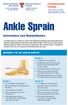 514-412-4400, ext. 23310 2300 Tupper street, C-831, Montreal (Quebec) H3H 1P3 Ankle Sprain Information and Rehabilitation An ankle sprain is a stretch or a tear of the ligaments (bands of tissue that hold
Hand Injuries and Disorders
 Hand Injuries and Disorders Introduction Each of your hands has 27 bones, 15 joints and approximately 20 muscles. There are many common problems that can affect your hands. Hand problems can be caused
Knee Arthroscopy Post-operative Instructions
 Amon T. Ferry, MD Orthopedic Surgery Sports Medicine Knee Arthroscopy Post-operative Instructions PLEASE READ ALL OF THESE INSTRUCTIONS CAREFULLY. THEY WILL ANSWER MOST OF YOUR QUESTIONS. 1. You may walk
Patient Information. and Physical Activity Diary. Wythenshawe Hospital Cardiac Rehabilitation. Name:... The ticker club Registered Charity No.
 Wythenshawe Hospital Cardiac Rehabilitation Patient Information Remember : Lifelong regular physical activity - 0 minutes, five times per week is important for your general health. I feel so much better
WET, COUGHING AND COLD NEAR RIVER BANK STUNG BY BEE CAUSING ANAPHYLACTIC SHOCK TO WRIST
 GRIT IN EYE BROKEN LEG BONE WET, COUGHING AND COLD NEAR RIVER BANK STUNG BY BEE CAUSING ANAPHYLACTIC SHOCK HEART ATTACK SUFFERING FROM SHOCK CHOKING SEVERE BLEEDING TO WRIST HYPOTHERMIA ANGINA Localised
Adult Forearm Fractures
 Adult Forearm Fractures Your forearm is made up of two bones, the radius and ulna. In most cases of adult forearm fractures, both bones are broken. Fractures of the forearm can occur near the wrist at
TIPS and EXERCISES for your knee stiffness. and pain
 TIPS and EXERCISES for your knee stiffness and pain KNEE EXERCISES Range of motion exercise 3 Knee bending exercises 3 Knee straightening exercises 5 STRENGTHENING EXERCISES 6 AEROBIC EXERCISE 10 ADDITIONAL
Knee Conditioning Program. Purpose of Program
 Prepared for: Prepared by: OrthoInfo Purpose of Program After an injury or surgery, an exercise conditioning program will help you return to daily activities and enjoy a more active, healthy lifestyle.
Range of Motion. A guide for you after spinal cord injury. Spinal Cord Injury Rehabilitation Program
 Range of Motion A guide for you after spinal cord injury Spinal Cord Injury Rehabilitation Program This booklet has been written by the health care providers who provide care to people who have a spinal
THE PREVENTION AND REHABILITATION OF SPORTS INJURIES THE PREVENTION AND REHABILITATION OF SPORTS INJURIES. NO, there isn t.
 THE PREVENTION AND REHABILITATION OF SPORTS INJURIES VILMOS DANI M.D. Department of Family Medicine Faculty of Medicine, Semmelweis University Budapest, Hungay GIZELLA PERÉNYI M.D. Department of Rehabilitation
Hand and Upper Extremity Injuries in Outdoor Activities. John A. Schneider, M.D.
 Hand and Upper Extremity Injuries in Outdoor Activities John A. Schneider, M.D. Biographical Sketch Dr. Schneider is an orthopedic surgeon that specializes in the treatment of hand and upper extremity
By Agnes Tan (PT) I-Sports Rehab Centre Island Hospital
 By Agnes Tan (PT) I-Sports Rehab Centre Island Hospital Physiotherapy Provides aids to people Deals with abrasion and dysfunction (muscles, joints, bones) To control and repair maximum movement potentials
Knee sprains. What is a knee strain? How do knee strains occur? what you ll find in this brochure
 what you ll find in this brochure What is a knee strain? How do knee strains occur? What you should do if a knee strain occurs. What rehabilitation you should do. Example of a return to play strategy.
Play it Safe in the Heat Tips for Coaches and Parents
 Play it Safe in the Heat Tips for Coaches and Parents Heat is the number one weather related killer in the United States. Heat illness is the leading cause of preventable death in high school athletics
ISOMETRIC EXERCISE HELPS REVERSE JOINT STIFFNESS, BUILDS MUSCLE, AND BOOSTS OVERALL FITNESS.
 ISOMETRIC EXERCISE HELPS REVERSE JOINT STIFFNESS, BUILDS MUSCLE, AND BOOSTS OVERALL FITNESS. By Askari A. Kazmi KazmisBioscienceLabs exercise helps reverse joint stiffness, builds muscle, and boosts overall
Auto Accident Questionnaire
 Auto Accident Questionnaire Patient s Name: Date Of Accident: Date: Social History: (please complete the following, check all boxes that apply) Are you: Married Single Divorced Widowed # of Children: #
5420-R STUDENT HEALTH SERVICES REGULATION NORTH COLONIE CENTRAL SCHOOLS NEWTONVILLE, NEW YORK Emergency Procedures and Approved First Aid Methods
 STUDENT HEALTH SERVICES REGULATION NORTH COLONIE CENTRAL SCHOOLS NEWTONVILLE, NEW YORK Emergency Procedures and Approved First Aid Methods EMERGENCY PROCEDURES Contact parents and cooperate with them in
Preventing Falls. Strength and balance exercises for healthy ageing
 Preventing Falls Strength and balance exercises for healthy ageing Exercise should be comfortable and fun. To get the most out of your home exercise book, join a class for older people to check your exercises
Recent Injuries. www.physiofirst.org.uk
 Recent Injuries www.physiofirst.org.uk A recent or acute injury can occur suddenly during any activity, from tripping over the kerb, to making the bed, to playing sport. In some cases, an acute injury
FIRST AID FOR BASEBALL COACHES
 FIRST AID FOR BASEBALL COACHES Liability Issues. Do the right thing State provides qualified immunity Chapter 258 C, Section 13. Good Samaritan Law: No person who, in good faith, provides or obtains, or
Knee arthroscopy advice sheet
 Knee arthroscopy advice sheet During an arthroscopy, a camera is inserted into the knee through two or three small puncture wounds. It allows the surgeon to look at the joint surfaces, cartilage and the
SELF-MASSAGE HANDOUTS
 SELF-MASSAGE HANDOUTS Self-Massage for the Head and Face Self-Massage for the Low Back and Buttocks Self-Massage for Runners Self-Massage for the Neck Self-Massage for the Feet Self-Massage for the Arms
ACL Reconstruction Rehabilitation Program
 ACL Reconstruction Rehabilitation Program 1. Introduction to Rehabilitation 2. The Keys to Successful Rehabilitation 3. Stage 1 (to the end of week 1) 4. Stage 2 (to the end of week 2) 5. Stage 3 (to the
MRC Medical Jeopardy Feud List of Treatments for Possible Injuries/Conditions
 List of Treatments for Possible Injuries/Conditions A. Apply cold compresses to affected area; elevate the area to reduce swelling and possible bleeding B. Apply direct pressure to wound area with sterile
Other common injuries in orienteering are overuse and acute injuries. Around 80 percent of all injuries occur below the knee.
 INJURIES Injuries in orienteering During the 1980s there was a change in philosophy in the treatment of injuries in the Swedish orienteering team. Earlier doctors had worked with injuries after they happened.
Injury Prevention. Presented by: John Furey Master Trainer, Fitcorp. [email protected]
 Injury Prevention Presented by: John Furey Master Trainer, Fitcorp Injury Prevention 1. Causes of injury 2. Warm-up and stretching & cool down 3. Cross-training 4. What pain is okay? 5. What to do when
Heat Illnesses. Common Heat Rash Sites
 Heat Illnesses Introduction Heat illnesses happen when the body becomes too hot and cannot cool itself. There are several different types of heat-related illnesses. This includes heat cramps, heat exhaustion,
A Patient s Guide to Guyon s Canal Syndrome
 A Patient s Guide to DISCLAIMER: The information in this booklet is compiled from a variety of sources. It may not be complete or timely. It does not cover all diseases, physical conditions, ailments or
Stretching for Young Athletes. Shawn P. Anderson, SPT Duke University Doctor of Physical Therapy
 Stretching for Young Athletes Shawn P. Anderson, SPT Duke University Doctor of Physical Therapy Sports and exercise are usually integral parts of many adolescents life. Whether they play at school or in
CARDIAC REHABILITATION HOME EXERCISE ADVICE
 CARDIAC REHABILITATION HOME EXERCISE ADVICE Introduction Exercise is a very important as part of your rehabilitation and your future health. You will need to exercise at least three times per week, minimum,
How To Stretch Your Body
 Exercise Module A New Leaf Choices for Healthy Living University of North Carolina at Chapel Hill 2007 Center for Health Promotion and Disease Prevention Physical Activity Exercises for Keeping Active
PLANTAR FASCITIS (Heel Spur Syndrome)
 PLANTAR FASCITIS (Heel Spur Syndrome) R. Amadeus Mason MD Description Plantar fascitis is characterized by stiffness and inflammation of the main fascia (fibrous connective [ligament-like] tissue) on the
Shoulder Tendonitis. Brett Sanders, MD Center For Sports Medicine and Orthopaedic 2415 McCallie Ave. Chattanooga, TN (423) 624-2696
 Shoulder Tendonitis Brett Sanders, MD Center For Sports Medicine and Orthopaedic 2415 McCallie Ave. Chattanooga, TN (423) 624-2696 Shoulder tendinitis is a common overuse injury in sports (such as swimming,
Exercise Principles and Guidelines for Persons with Cerebral Palsy and Neuromuscular Disorders
 Exercise Principles and Guidelines for Persons with Cerebral Palsy and Neuromuscular Disorders INTRODUCTION: Health and well being are the result of many factors: Physical activity is one of these factors.
A compressive dressing that you apply around your ankle, and
 Ankle Injuries & Treatment The easiest way to remember this is: R.I.C.E. Each of these letters stands for: Rest. Rest your ankle. Do not place weight on it if it is very tender. Avoid walking long distances.
General Guidelines. Neck Stretch: Side. Neck Stretch: Forward. Shoulder Rolls. Side Stretch
 Stretching Exercises General Guidelines Perform stretching exercises at least 2 3 days per week and preferably more Hold each stretch for 15 20 seconds Relax and breathe normally Stretching is most effective
Cardiac Rehab Program: Stretching Exercises
 Cardiac Rehab Program: Stretching Exercises Walk around the room, step side to side, ride a bike or walk on a treadmill for at least 5 minutes to warm up before doing these stretches. Stretch warm muscles
Facial Sports Injuries
 Facial Sports Injuries Playing catch, shooting hoops, bicycling on a scenic path or just kicking around a soccer ball have more in common than you may think. On the up side, these activities are good exercise
What muscles do cyclists primarily use?
 Stress & Injury The following information has been taken from freely available articles from British Cycling and other Cycling organisations. Sources are noted at the end of this document. Please note
12/5/2012. Introduction. Head, Neck, and Spine Injuries. Recognizing and Caring for Serious Head, Neck and Back Injuries
 Head, Neck, and Spine Injuries Identify the most common causes of head, neck and spinal injuries. List 10 situations that might indicate serious head, neck and spinal injuries. List the signals of head,
Exercises for older people
 Exercise for older people Exercises for older people Sitting Getting started If you ve not done much physical activity for a while, you may want to get the all-clear from a GP before starting. For the
A Patient s Guide to Post-Operative Physiotherapy. Following Anterior Cruciate Ligament Reconstruction of the Knee
 A Patient s Guide to Post-Operative Physiotherapy Following Anterior Cruciate Ligament Reconstruction of the Knee Introduction The anterior cruciate ligament (ACL) is one of the main supporting ligaments
HEAT ILLNESS PREVENTION PLAN FOR SUTTER COUNTY SUPERINTENDENT OF SCHOOLS
 HEAT ILLNESS PREVENTION PLAN FOR SUTTER COUNTY SUPERINTENDENT OF SCHOOLS TABLE OF CONTENTS 1.0 Purpose... 1 2.0 Heat Illness Prevention... 2 2.1 Heat Stroke... 2 2.2 Heat Exhaustion... 2 2.3 Heat Cramps...
Spine Conditioning Program Purpose of Program
 Prepared for: Prepared by: OrthoInfo Purpose of Program After an injury or surgery, an exercise conditioning program will help you return to daily activities and enjoy a more active, healthy lifestyle.
Injury Prevention: Overexertion
 Injury Prevention: Overexertion Injury Prevention Overexertion Introduction: This is the second in a series of four injury prevention campaigns that will focus on the most common types of injuries in the
SCRIPT NUMBER 82 SPRAINED ANKLE (TWO SPEAKERS)
 SCRIPT NUMBER 82 SPRAINED ANKLE (TWO SPEAKERS) PROGRAM NAME: HEALTH NUGGETS PROGRAM TITLE: SPRAINED ANKLE PROGRAM NUMBER: 82 SUBJECT: PATHOLOGY, CAUSES, DIAGNOSIS, TREATMENT, PREVENTION OF SPRAINED ANKLES
HOPE EXERCISE RECOVERY RESOURCES RELATIONSHIPS INFORMATION REHABILITATION PREVENTION SELF ADVOCACY RELATIONSHIPS MOVEMENT. A Stroke Recovery Guide
 INFORMATION REHABILITATION PREVENTION SELF ADVOCACY RECOVERY HOPE A Stroke Recovery Guide RELATIONSHIPS MOVEMENT RESOURCES RELATIONSHIPS EXERCISE www.stroke.org CHAPTER FOUR Movement and Exercise Moving
HELPFUL HINTS FOR A HEALTHY BACK
 HELPFUL HINTS FOR A HEALTHY BACK 1. Standing and Walking For correct posture, balance your head above your shoulders, eyes straight ahead, everything else falls into place. Try to point toes straight ahead
Understand nurse aide skills needed to promote skin integrity.
 Unit B Resident Care Skills Essential Standard NA5.00 Understand nurse aide s role in providing residents hygiene, grooming, and skin care. Indicator Understand nurse aide skills needed to promote skin
Strength Training HEALTHY BONES, HEALTHY HEART
 Strength Training HEALTHY BONES, HEALTHY HEART No matter what your age, strength training can improve your bone health and your balance. As we age, our bones lose both tissue and strength. This condition
LEGAL PROTECTION. Good Samaritan Law RCW 4.24.300
 GOALS This course is designed to instruct coach very basic first aid techniques to protect the players under your guidance. This presentation only provides a brief overview of the issues that you may face
CASAID THE AIMS OF FIRST AID, INCIDENT ACTION PLAN, INITIAL ASSESSMENT AND THE RECOVERY POSITION. Airway must be open so oxygen can enter the body.
 CASAID THE AIMS OF FIRST AID, INCIDENT ACTION PLAN, INITIAL ASSESSMENT AND THE RECOVERY POSITION The Aims of First Aid The aims of first aid (the three Ps) are to: Preserve the casualty s life. Prevent
Anterior Cruciate Ligament Reconstruction Rehabilitation Protocol
 The First Two Weeks After Surgery You will go home with crutches and be advised to use ice. Goals 1. Protect reconstruction 2. Ensure wound healing 3. Maintain full knee extension 4. Gain knee flexion
Shoulder Dislocation or Instability Surgery: A Guide to Recovery After Surgery
 What is Shoulder Instability? What is a Shoulder Dislocation? The shoulder joint is a ball in socket joint and is the most mobile joint in the human body. The socket, however, is quite shallow which means
Sports Specific Safety. Golf. Sports Medicine & Athletic Related Trauma SMART Institute 2010 USF
 Sports Specific Safety Golf Sports Medicine & Athletic Related Trauma SMART Institute Objectives of Presentation 1. Identify the prevalence of injuries to Golf 2. Discuss commonly seen injuries in Golf
Ensure that the chair you use is sturdy and stable. Wear comfortable clothes and supportive footwear.
 Page 1 Safety Ensure that the chair you use is sturdy and stable. Wear comfortable clothes and supportive footwear. Prepare a space and have your exercise band and a glass of water (for afterwards) ready
call 811 to get advice from a nurse, or have someone drive the patient to a hospital Emergency Department. Patients should NOT drive themselves.
 Taking Care at Home After Surgery This checklist is to help you and your support person know what to do after you go home following your surgery. If you are given instructions verbally or in writing by
How To Recover From A Surgical Wound From A Cast
 Care of Your Wounds After Amputation Surgery by Paddy Rossbach, RN Depending on the reason for your amputation and the state of your limb at the time of surgery, definitive closure of the wound may take
For Deep Pressure Massage
 T H E R A C A N E O W N E R S M A N U A L For Deep Pressure Massage Thera Cane is a self massager used to apply pressure to sore muscles. The unique design of the Thera Cane lets you apply deep pressure
let s talk bleeds a bleed checklist for haemophilia patients
 let s talk bleeds a bleed checklist for haemophilia patients Specific signs of a bleed Watch for Bruising, with or without lumps Difference in the size of arms/legs Difference in movement in arms/legs
Plantar Fasciitis. Plantar Fascia
 Plantar Fasciitis Introduction Plantar fasciitis is an inflammation of the thick band of tissue that connects your heel bone to your toes. This thick band of tissue is called the plantar fascia. Plantar
Cervical Exercise: How important is it? What can be done? The Backbone of Spine Treatment. North American Spine Society Public Education Series
 Cervical Exercise: The Backbone of Spine Treatment How important is it? What can be done? North American Spine Society Public Education Series Important: If you have had an accident that started your neck
Exercises for Low Back Injury Prevention
 DIVISION OF AGRICULTURE RESEARCH & EXTENSION University of Arkansas System Family and Consumer Sciences Increasing Physical Activity as We Age Exercises for Low Back Injury Prevention FSFCS38 Lisa Washburn,
The On-Field Evaluation Four Steps To Use For Every Injury Basic Sideline Management - RICE Sideline First Aid Kit
 TABLE OF CONTENTS Preface How To Use This Guide Disclaimer The On-Field Evaluation Method The On-Field Evaluation Four Steps To Use For Every Injury Basic Sideline Management - RICE Sideline First Aid
Schiffert Health Center www.healthcenter.vt.edu. Neck Pain (Cervical Strain) COMMON CAUSES: QUICK TREATMENT : NECK PAIN TREATING NECK PAIN:
 Schiffert Health Center www.healthcenter.vt.edu Patient Information: Neck Pain (Cervical Strain) COMMON CAUSES: Neck pain may be triggered by a specific event, such a sport injury or motor vehicle accident.
Podiatric Medicine. What is a Podiatrist?
 Page 3 Podiatric Medicine Podiatric Medicine is the profession that strives to improve the overall health and wellbeing of patients by focusing on preventing, diagnosing, and treating conditions associated
UK HealthCare Sports Medicine Patient Education December 09
 LCL injury Description Lateral collateral knee ligament sprain is a sprain (stretch or tear) of one of the four major ligaments of the knee. The lateral collateral ligament (LCL) is a structure that helps
How to treat your injured neck
 How to treat your injured neck Exceptional healthcare, personally delivered Your neck is made up of a number of bones bound together by strong discs and ligaments. It is also protected by strong muscles.
How does Diabetes Effect the Feet
 How does Diabetes Effect the Feet What Skin Changes May Occur? Diabetes can cause changes in the skin of your foot. At times your foot may become very dry. The skin may peel and crack. The problem is that
Be Safe! Manage Heat Stress. Be Safe! Manage Heat Stress.
 Be Safe! Manage Heat Stress. Be Safe! Manage Heat Stress. Overview Workers who are exposed to extreme heat or work in hot environments may be at risk of heat stress. Exposure to extreme heat can result
Injury Prevention for the Back and Neck
 Injury Prevention for the Back and Neck www.csmr.org We have created this brochure to provide you with information regarding: Common Causes of Back and Neck Injuries and Pain Tips for Avoiding Neck and
Don t. Hamstrings. Calf Muscles. both legs 2-3 times. stretch is felt in the back of the calf. Repeat with both legs 2-3 times.
 Remember to: Warm-up your muscles first before stretching (e.g. stretch after walking). Stretch until you feel mild discomfort, not pain. Never bounce or force a stretch. Hold the stretch for 10-30 seconds
TOWN CENTER ORTHOPAEDIC ASSOCIATES P.C. Labral Tears
 Labral Tears The shoulder is your body s most flexible joint. It is designed to let the arm move in almost any direction. But this flexibility has a price, making the joint prone to injury. The shoulder
Achilles Tendon Repair Surgery Post-operative Instructions Phase One: The First Week After Surgery
 Amon T. Ferry, MD Orthopedic Surgery Sports Medicine Achilles Tendon Repair Surgery Post-operative Instructions Phase One: The First Week After Surgery Amon T. Ferry, MD Orthopedic Surgery / Sports Medicine
HEMOPHILIA WHAT SCHOOL PERSONNEL SHOULD KNOW
 HEMOPHILIA WHAT SCHOOL PERSONNEL SHOULD KNOW TABLE OF CONTENTS Introduction p. 3 What Is Hemophilia p. 4 Common Bleeds p. 5 Superficial Bruising p. 8 Lacerations p. 8 Life-Threatening Bleeds p. 9 Sports
Otago Exercise Program
 Otago Exercise Program Edited Version Exercise Booklet Created by: Genesee County Coalition Supported by a grant from the Health Foundation for Western and Central New York Otago Exercise Program to Prevent
GOING HOME AFTER YOUR TAVR PROCEDURE
 GOING HOME AFTER YOUR TAVR PROCEDURE HENRY FORD HOSPITAL CENTER FOR STRUCTURAL HEART DISEASE GOING HOME After your TAVR procedure, you will need help when you go home. It is hard to predict how much help
Neck Injuries and Disorders
 Neck Injuries and Disorders Introduction Any part of your neck can be affected by neck problems. These affect the muscles, bones, joints, tendons, ligaments or nerves in the neck. There are many common
stretches and exercises
 stretches and exercises The enclosed sheets contain stretches and exercises which can be used to delay and minimise the development of contractures and deformities occurring in children with Duchenne muscular
CHAPTER 3: BACK & ABDOMINAL STRETCHES. Standing Quad Stretch Athletic Edge - www.athleticedge.biz - (650) 815-6552
 CHAPTER : BACK & ABDOMINAL STRETCHES Standing Quad Stretch ) Stand and grasp right ankle with same hand, use a wall or chair to Lower maintain Back balance with left hand. Maintain an upright Stretches
FIRST AID TEST. 367 West Robles Ave Santa Rosa, CA 95407 707-206-9988. www.schoolbusing.com. Revised April 21, 2008 - 1 -
 FIRST AID TEST 367 West Robles Ave Santa Rosa, CA 95407 707-206-9988 www.schoolbusing.com Revised April 21, 2008-1 - West County Transportation Agency This test was developed to help school bus driver
Understanding. Heel Pain
 Understanding Heel Pain What Causes Heel Pain? Heel pain is a common problem that occurs when the heel is placed under too much stress. Heel pain is most often caused by walking in ways that irritate tissues
Overuse injuries. 1. Main types of injuries
 OVERUSE INJURIES Mr. Sansouci is an ardent runner and swimmer. To train for an upcoming 10-km race, he has decided to increase the intensity of his training. Lately, however, his shoulder and Achilles
SPORTS INJURIES. chapter HOW ARE CLASSIFIED AND MANAGED? Ways to classify sports injuries
 chapter 16 HOW ARE SPORTS INJURIES CLASSIFIED AND MANAGED? This chapter examines the process of classification of sporting injuries. It then focuses on the assessment and management strategies that are
ACL RECONSTRUCTION POST-OPERATIVE REHABILITATION PROGRAMME
 ACL RECONSTRUCTION POST-OPERATIVE REHABILITATION PROGRAMME ABOUT THE OPERATION The aim of your operation is to reconstruct the Anterior Cruciate Ligament (ACL) to restore knee joint stability. A graft,
Patient Basic Information
 Patient Basic Information Personal Information: Last Name: First Name: Mid. Init.: Address: City, State, Zip: Home Phone: Work Phone: Social Security No.: Date of Birth: Date of Injury/Onset: Dominant
Exercise 1: Knee to Chest. Exercise 2: Pelvic Tilt. Exercise 3: Hip Rolling. Starting Position: Lie on your back on a table or firm surface.
 Exercise 1: Knee to Chest Starting Position: Lie on your back on a table or firm surface. Action: Clasp your hands behind the thigh and pull it towards your chest. Keep the opposite leg flat on the surface
INTRODUCTION TO POSITIONING. MODULE 3: Positioning and Carrying
 MODULE 3: Positioning and Carrying Blankets, pillows and towels, sandbags, carpet on the floor, a doll with floppy limbs that can be positioned i.e. not a hard plastic doll, display materials. Icebreaker
First Aid Multiple Choice Test
 First Aid Multiple Choice Test Answer all 25 questions by circling the correct answer. This is an open-book test. Answers are contained in The Boy Scout Handbook. Patrol Troop 1. When making a 911 call,
COMMON OVERUSE INJURIES ATTRIBUTED TO CYCLING, AND WAYS TO MINIMIZE THESE INJURIES
 COMMON OVERUSE INJURIES ATTRIBUTED TO CYCLING, AND WAYS TO MINIMIZE THESE INJURIES Listed are a few of the most common overuse injuries associated with cycling long distances. 1. Cervical and upper back
Treat Your Feet: Foot care for people with diabetes
 Treat Your Feet: Foot care for people with diabetes UHN People with diabetes often have trouble with their feet. Read this booklet to learn 7 steps to keep your feet healthy. Please visit the UHN Patient
.org. Plantar Fasciitis and Bone Spurs. Anatomy. Cause
 Plantar Fasciitis and Bone Spurs Page ( 1 ) Plantar fasciitis (fashee-eye-tiss) is the most common cause of pain on the bottom of the heel. Approximately 2 million patients are treated for this condition