
Road Safety Engineering
|
|
|
- Jemima Doris Page
- 10 years ago
- Views:
Transcription
1 Road Safety Engineering Evaluation of Traffic Calming Schemes Constructed on National Roads RS 460 F Crowley A MacDermott

2

3 Acknowledgements. The authors wish to thank the following individuals: The members of the National Roads Authority Traffic Calming Working Group for bringing the early schemes to fruition and supplying the data for this evaluation. Members of Local Authorities and Regional Design Offices, who co-operated in the Programme. The members of the National Roads Authority Safety Engineering Team who supervised new designs and constructions Lucy Curtis, Stephen Lambert and Forbes Vigors. Liam Harrington, who contributed greatly to our knowledge of how the present generation of traffic calming installations are working, through his excellent thesis. Page 3

4 Foreword In July 1998 the Government published The Road to Safety, its Strategy for road safety over the period The primary target of the strategy is to reduce fatalities by 2002 by a minimum of 20% on their 1997 level (472) and to achieve a similar reduction (at least 20%) in the number of serious injuries from road accidents (2,182 in 1997). Under the terms of the Strategy, the Authority is required to undertake a number of specific tasks including the finalisation of a five year programme for traffic calming on the network of National Roads. Traffic calming is one important application in the road safety management of national routes which pass through towns and villages. In the first instance, speed is reduced by altering the appearance of the road on the approach to the town/village through the use of gateways and by further traffic management measures within the town itself. The National Roads Authority Guidelines on Traffic Calming for Towns and Villages on National Routes were published in October 1999 and will contribute to a national uniformity of design for traffic calming schemes. In the period 1993 to 1996, 21 such schemes were completed on National Roads. Sufficient time has now elapsed to assess the success of these schemes, particularly in the field of accident reduction. This report presents an evaluation of effectiveness for the schemes concerned which has been undertaken by Finbarr Crowley and Anne MacDermott of the National Roads Authority. Page 4

5 Executive Summary This report is the first in a planned series, and deals solely with the effectiveness of traffic calming schemes constructed in the period 1993 to Between 1993 and the end of 1996, 21 traffic calming schemes were completed, at a total cost of 3.63m ( 4.14m at year 2000 prices). The schemes undertaken during this period preceded the publication, in October 1999, of the NRA Guidelines on Traffic Calming for Towns and Villages on National Routes. The number of accidents before and after installation of traffic calming schemes was studied. For locations with traffic calming on both approaches there has been an annual average accident reduction of 1.5 fatal accidents, 1.3 serious injury accidents and 2.8 minor injury accidents. A statistical test shows that these reductions are statistically significant. For locations with traffic calming on one approach only there has been an annual average accident reduction of 1.0 serious injury accidents and an average annual accident increase of 0.4 minor injury accidents. No fatal accidents were recorded during either the before or after period. The sample is too small for formal statistical significance testing. Nevertheless, the reduction in the number of fatal and serious injury accidents and the slight increase in the number of minor injury accidents suggest a reduction in accident severity at these locations. The Average Annual Rate of Return (AARR) for locations with traffic calming on both approaches is 293%. For locations with traffic calming on one approach, the AARR is 48%. Speed measurements relating to the situation prior to the completion of traffic calming measures are available for two of the 21 schemes completed before the end of 1996: N2 Collon, Co. Louth, and N8 Watergrasshill, Co. Cork. 85%ile speed reductions of approximately 10mph have been achieved at Collon after the traffic calming was installed. In Watergrasshill the average speeds at the northern approach were reduced by between 1mph and 5mph depending on the location. Speeds on the southern approach have increased. This may be due to a pavement improvement scheme in Page 5

6 The main changes in accident types after installation of the traffic calming schemes are: Pedestrian accidents decreased in all categories, particularly fatal accidents Single vehicle accidents increased very slightly in number, but there was a reduction in severity Head-on accidents decreased in number and severity Rear-end accidents decreased in number and severity Page 6

7 Contents Acknowledgements... 3 FOREWORD... 4 EXECUTIVE SUMMARY... 5 BACKGROUND Development of Traffic Calming on National Roads CHAPTER 2. SELECTION OF LOCATIONS Principles The Present Traffic Calming Programme CHAPTER 3. EVALUATION/MONITORING OF SCHEMES Scope Schemes completed 1993 to Statistical Evaluation Economic Evaluation Speed Reduction Evaluation Effect of Schemes on Accident Types CHAPTER 4. CASE STUDIES Scope N20 Ballyhea, Co. Cork N20 Charleville (South side), Co. Cork...31 CHAPTER 5. DETAILED RESULTS Speed Reductions in Traffic Calmed Areas The First Section of the Transition Zone The Second Section of the Transition Zone Inside the Built-up Area Before and After Speed Reductions Accident Reductions in Traffic Calmed Areas Comparison with European Countries Page 7

8 APPENDIX Traffic Calming Data Summary Sheet REFERENCES Page 8

9 Background. 1.1 DEVELOPMENT OF TRAFFIC CALMING ON NATIONAL ROADS. Two kinds of problem in relation to traffic speed are recognised by road safety engineers: excess speed, which is speed in excess of the legal limit, and inappropriate speed, which is speed which is deemed too high relative to the operating conditions. Both these problems are encountered on National Roads at the interface between rural and urban sections, and within the urban areas themselves. Traffic calming is a way of reducing vehicle speeds by self-enforcing traffic engineering methods and is commonly applied in urban and residential road safety management and in the road safety management of through routes in towns and villages. The transition zone between a high speed and a low speed road presents a difficult safety management problem. These transition zones usually occur on the approaches to towns and villages. In Ireland there are many improved sections of roads with hard shoulders on the National Roads. Where these sections adjoin towns and villages, approach speeds have been high and accident rates have been higher than on rural sections. Optical width is dependent on the width between the boundaries of the road relative to the height of the adjoining vertical elements. Generally, in rural sections, the width between fences is many times greater than the height of the ditches/fences which form the boundaries. In urban streets, the height of the buildings etc is generally greater than the width. A driver s perception of the appropriate driving speed is influenced by this relationship. Speeds are lower where the height of the vertical elements is greater than the width of the road. This effect can be created using a combination of carriageway narrowing, landscape treatment and the introduction of vertical elements. The transition zone between rural and urban sections should be engineered so that there is a gradual change from one environment to the other. The transition should culminate in a Gateway which forms an entrance to the town or village. Page 9

10 Since 1993 various forms of traffic calming have been put in place on the approaches to some of the towns and villages on the National Road network. In order to achieve a uniform approach to the matter, a Traffic Calming Working Group was set up in 1995 made up of members from both the National Roads Authority and the local authorities. In 1999 the National Roads Authority Guidelines on Traffic Calming for Towns and Villages on National Routes were published. Schemes completed since publication broadly comply with the Guidelines, and earlier schemes are being modified to conform to practices set up in the Guidelines. Schemes completed by the end of 1996 have a sufficient after period to allow for a rudimentary evaluation. These comprise 21 schemes, and are the subject of this report. In all, by the end of the year 2001, traffic calming had been installed in 80 towns and villages on the National Road network. In some cases the traffic calming was installed at different times on the different approaches to a town or village. Page 10

11 Chapter 2. Selection of Locations. 2.1 PRINCIPLES. The Guidelines on Traffic Calming for Towns and Villages on National Routes give general principles for the selection of traffic calming locations. The primary selection criterion is the number of accidents. The Guidelines recommend that selection based on accidents should take account of both risk per unit of travel and risk per head of population in the town or village under consideration. At the time of writing the Guidelines, accident rates per unit of travel within speed limit zones varied between 0.1 and 25.0 PIA/10 6 vkm (personal injury accidents per million vehicle kilometres of travel). Accident rates per thousand head of population per annum varied between 0.1 and 9.35 PIA/1000 pop/annum (personal injury accidents per thousand population per year. For location selection purposes, rates in excess of 5 PIA/10 6 vkm and 2 PIA/1000 pop/annum are deemed significant. The cost of the scheme relative to accident risk should also be taken into account to ensure that schemes providing best value for money are assigned a higher priority. Other criteria for selecting locations for traffic calming are: Quality Pavement Projects: Experience shows that where quality pavement improvement projects are undertaken, operating speeds and accident risk may increase in towns and villages on the resurfaced section. It is recommended that traffic calming measures should be considered in tandem with such projects. Bypasses: Where a town is being bypassed, the need for traffic calming measures on the original route should be assessed and, if warranted, included as part of the overall scheme. Planning Considerations: Major new developments in an area may give rise to increased traffic volumes or changes in traffic make-up and type. Traffic calming may be appropriate in addressing such issues, and where appropriate, should be considered as part of the planning process. Page 11

12 2.2 THE PRESENT TRAFFIC CALMING PROGRAMME. In July 1998 the Government published The Road to Safety, its strategy for road safety over the period The primary target of the strategy is to reduce road fatalities by the end of 2002 by a minimum of 20% on their 1997 level and to achieve a similar reduction (at least 20%) in the number of serious injuries from road accidents. Under the terms of the strategy, the National Roads Authority is required to undertake a number of specific tasks including a five year programme for traffic calming on the National Route network. The present traffic calming programme has been developed by compiling lists of accident rates per thousand head of population per annum and accident rates per million vehicle kilometres of travel for towns and villages along the national routes. Any locations exceeding the thresholds outlined in the Guidelines (5 PIA/10 6 vkm and 2 PIA/1000 pop/annum) are included in the programme unless they are unsuitable locations for traffic calming. They are prioritised in order of accident rates, and those with the highest rates will be the first to have traffic calming. Any other locations suggested by the local authorities are also individually assessed for suitability. Page 12

13 Chapter 3. Evaluation/Monitoring of Schemes. 3.1 SCOPE The Guidelines on Traffic Calming for Towns and Villages on National Routes strongly promote the importance of monitoring and evaluating the effectiveness of completed schemes: The primary purpose of traffic calming is to reduce the number of accidents by reducing vehicle speed. It is essential that the extent of the speed reduction and the impact of this reduction on accidents be systematically evaluated for each installation. A Traffic Calming Data Summary Sheet is included in the Guidelines and must be filled in by the relevant local authority for all new schemes. It must also be updated annually to include speed measurements and accident information for the first five years after construction of the schemes. This sheet is contained in the Appendix. The objective of this report is to quantify the reductions in speed and accidents achieved as a result of the provision of traffic calming in towns and villages. This report is the first in a series and deals solely with schemes constructed between 1993 and These schemes predate the introduction of the Traffic Calming Data Summary Sheet. Some descriptive statistics and an evaluation of effectiveness are presented. 3.2 SCHEMES COMPLETED 1993 TO 1996 A total of 21 schemes were installed between 1993 and There is considerable variation in design within this group due to the absence at that time of an established standard/guideline. The total cost of these schemes was 4.14m at year 2000 prices. The Traffic Calming Data Sheet was not in existence before the publication of the Guidelines in 1999 and speed measurements before installation are not available for many of the older schemes. Therefore, for the majority of schemes under consideration in this report, evaluation of effectiveness is only possible with reference to accident rates. Subsequent reports should gradually involve more assessment of the effects on speed. Page 13

14 The schemes have been divided into two groups for analytical purposes. Group 1 consists of those schemes where traffic calming was installed on the National Road on both approaches to the town/village. Group 2 consists of those schemes where traffic calming was installed on the National Road on only one approach. Tables 1 & 2 show the distribution of the 21 completed schemes by County. Table 1: Schemes by County Group 1 County No. of Schemes Cork 1 Galway 1 Laois 1 Leitrim 1 Limerick 2 Louth 1 Meath 2 Offaly 1 North Tipperary 1 Westmeath 1 Wexford 1 Wicklow 1 Table 2: Schemes by County Group 2 County No. of Schemes Cork 1 Donegal 1 Meath 1 Monaghan 1 Westmeath 3 Page 14

15 Tables 3 & 4 show the distribution of schemes by route. Table 3: Schemes by Route Group 1 Route No. of Schemes N2 1 N3 2 N4 2 N6 2 N7 2 N8 3 N11 2 Table 4: Schemes by Route Group 2 Route No. of Schemes N2 2 N6 3 N8 1 N15 1 Tables 3 & 4 show that all schemes under consideration in this report are on National Primary routes. Since 1996, several schemes have been constructed on National Secondary routes and will be included in future evaluations. Page 15

16 Tables 5 & 6 show the cost of each scheme, both at the time of installation and at year 2000 prices. Table 5: Cost of Schemes Group 1 Route Town/Village County Start Date Completion Date Actual (A) or Estimated (E) Cost * Cost at Time of Installation ( ) Cost at year 2000 Prices ( ) 8 Watergrasshill Cork E 317, ,000 6 Kilreekill Galway A 72,000 84,000 7 Borris-in-Ossory Laois E 381, ,000 4 Annaduff Leitrim E 25,000 29,000 7 Daly's Cross Limerick A 83,000 91,000 8 Kilbeheny Limerick E 190, ,000 2 Collon Louth E 127, ,000 3 Carnaross Meath E 32,000 37,000 3 Dunshaughlin Meath E 63,000 72,000 6 Horseleap Offaly E 190, ,000 8 Littleton Tipperary (NR) A 318, ,000 4 Ballinalack Westmeath E 318, , Oilgate Wexford E 381, , Kilmacanogue Wicklow E 127, ,000 2,624,000 3,006,000 * Note: Actual costs have been included where available. Estimated costs have been used where actual costs are not available. Table 6: Cost of Schemes Group 2 Route Town/Village County Start Date Completion Date Actual (A) or Estimated (E) Cost * Cost at Time of Installation ( ) Cost at year 2000 Prices ( ) 8 Rathcormac - S appr Cork E 317, , Ballyshannon N appr Donegal E 95, ,000 2 Ashbourne N appr Meath E 76,000 85,000 2 Castleblaney S appr Monaghan E 190, ,000 6 Kilbeggan - W appr Westmeath E 83,000 94,000 6 Moate - E appr Westmeath E 159, ,000 6 Tyrrellspass - W appr Westmeath E 83,000 95,000 * Note: Actual costs have been included where available. Estimated costs have been used where actual costs are not available 1,003,000 1,131,000 Page 16

17 3.3 STATISTICAL EVALUATION. Tables 7 & 8 show the accident numbers at each location before and after traffic calming was installed. The before and after time periods are listed for each location. The totals for each category of accident are shown in Tables 9 & 10, as are the average before and after periods. Table 7: Accident Nos. 'Before' and 'After' - Group 1 Route Town/Village County Fatal before Serious before Minor before No of years before Fatal after Serious after Minor after 8 Watergrasshill Cork Kilreekill Galway Borris-in-Ossory Laois Annaduff Leitrim Daly's Cross Limerick Kilbeheny Limerick Collon Louth Carnaross Meath Dunshaughlin Meath Horseleap Offaly Littleton Tipperary (NR) Ballinalack Westmeath Oilgate Wexford Kilmacanogue Wicklow No of years after Table 8: Accident Nos. 'Before' and 'After' - Group 2 Route Town/Village County Fatal before Serious before Minor before No of years before Fatal after Serious after Minor after 8 Rathcormac - S app Cork Ballyshannon N app Donegal Ashbourne N app Meath Castleblaney S app Monaghan Kilbeggan - W app Westmeath Moate - E app Westmeath Tyrrellspass - W app Westmeath No of years after Page 17

18 Table 9: Annual Average Accident Nos. 'Before' and 'After' - Group 1 Fatal Accs Before Serious Injury Accs Before Minor Injury Accs Before Avg no of years before Fatal Accs After Serious Injury Accs After Minor Injury Accs After Avg no years after Totals Annual Average Accident Nos Table 10: Annual Average Accident Nos. 'Before' and 'After' - Group 2 Fatal Accs Before Serious Injury Accs Before Minor Injury Accs Before Avg no of years before Fatal Accs After Serious Injury Accs After Minor Injury Accs After Avg no years after Totals Annual Average Accident Nos The statistics indicate that, for locations with traffic calming on both approaches, there has been an Average Annual Reduction of: 1.5 fatal accidents 1.3 serious injury accidents 2.8 minor injury accidents. For locations with traffic calming on one approach the Average Annual Reduction has been: 1.0 serious injury accidents 0.4 minor injury accidents. No fatal accident was recorded in either the before or after period for these schemes. The percentage of accidents in each category before and after installation of traffic calming schemes is shown in Table 11. It can be seen that, for both groups, the severity of the accidents has reduced since traffic calming was installed. Page 18

19 Table 11: Percentage Fatal, Serious Injury and Minor Injury Accidents Groups 1 & 2 Group 1 Group 2 Before After Before After Fatal % Serious Injury % Minor Injury % Tables 12 & 13 show the total number of fatal and serious injury accidents occurring in the vicinity of the traffic calming schemes in the years immediately before and immediately after the installation of the schemes. To test whether the implementation of the traffic calming schemes is associated with the reduction in the number of fatal and serious injury accidents, a t-test has been run on the difference in the averages of the before and after periods. The results show, to a 95% level of confidence, that Group 1 schemes were successful, ie. were associated with a reduction in the average number of fatal and serious injury accidents per year. However, at the same confidence level, this cannot be said about the Group 2 schemes. The number of Group 2 schemes (7) is too small to produce a statistically significant result. Nevertheless, since the average number of fatal and serious injury accidents per year in the before period is higher than in the after period, it appears reasonable to suggest that it is possible, or even likely, that the implementation of these schemes has been associated with a reduction in the average number of fatal and serious injury accidents per year. Page 19

20 Table 12: Fatal (F) and Serious Injury (SI) Accidents for Group 1 Schemes F before SI before F and SI Before No of years before F after SI after No of F and years SI After after F+SI per year before F+SI per year after Difference in means Watergrasshill Kilreekill Borris-in- Ossory Annaduff Daly's Cross Kilbeheny Collon Carnaross Dunshaughlin Horseleap Littleton Ballinalack Oilgate Kilmacanogue Avg Avg 4.2 Degrees of freedom: t-value: 2.27 significance (2-tailed): 0.04 Table 13: Fatal (F) and Serious Injury (SI) Accidents for Group 2 Schemes F SI before before F and SI Before No of years before F after SI after F and SI After No of years after F+SI per year before F+SI per year after Difference in means Rathcormac - S app Ballyshannon N app Ashbourne N app Castleblaney S app Kilbeggan - W app Moate - E app Tyrrellspass - W app Avg Avg Degrees of freedom: 6.00 t-value: 1.08 significance (2-tailed): 0.32 Page 20

21 3.4 ECONOMIC EVALUATION. Using the reduction achieved in the average annual number of accidents and the scheme costs, the Average Annual Rate of Return for each category of scheme has been calculated. The Willingness to Pay method has been used. This costs fatal, serious injury and minor injury accidents separately, and is taken to be the most appropriate economic evaluation tool since it takes into account benefits arising from reductions in accident severity as well as reduction in frequency. From Tables 14 & 15, it can be seen that the Average Annual Rate of Return (AARR) for locations with traffic calming on both approaches is 293%, while the AARR for those locations with traffic calming on one approach is 48%. Table 14: Average Annual Rate of Return Group 1 Reduction in Average no of Accidents Average Cost per Accident ( ) 2000 prices Average Annual Saving ( ) Fatal 1.5 1,237,170 1,855,755 Serious Injury Minor Injury , , ,710 41,188 Total Cost of Schemes ( ) 2000 prices Cost of Schemes per year (4.2 yrs average after period) Average Annual Rate of Return % 2,096,532 3,006, , Page 21
22 Table 15: Average Annual Rate of Return Group 2 Reduction in Average no of Accidents Average Cost per Accident ( ) 2000 prices Average Annual Saving ( ) Fatal 0.0 1,237,170 0 Serious Injury Minor Injury , , ,710-5,884 Total Cost of Schemes ( ) 2000 prices Cost of Schemes per year (3.7 yrs average after period) Average Annual Rate of Return % 147,646 1,131, , These rates of return, while not as high as those recorded in the Low Cost Remedial Measures Programme (Crowley and Vigors, 2001), show that the Traffic Calming Programme is making a valuable contribution to improving safety on the National Road network. 3.5 SPEED REDUCTION EVALUATION. This report aimed to study the order of magnitude of speed reductions achieved at specific schemes. Unfortunately, speed measurements before and after installation are available for only two of the schemes studied in this report: N2 Collon, Co. Louth N8 Watergrasshill, Co. Cork Speed measurements at Collon show that 85%ile speeds at the approaches to the speed limits have been reduced by approximately 10mph at both ends of the village. Similar reductions can be observed at the crossroads in the village. 85%ile speed is the speed below which 85% of vehicles travel. These speed reductions are much larger than would generally be expected as a result of a traffic calming scheme and show that this scheme has been particularly successful at achieving speed reductions. Page 22
23 Speed measurements at Watergrasshill show that the average speeds at the northern approach to the town have been reduced by between 1mph and 5mph depending on the location. Speeds on the southern approach have increased. This may be due to a combination of a pavement improvement scheme in 1994 and the relatively limited nature of the traffic calming measures that were introduced at this end of the village. Detailed speed measurements for the two locations are given in Tables 16 & 17. Table 16: N2 Collon, Co. Louth Speed Measurements Location North approach to 30mph speed limit Crossroads in (northbound) village Crossroads in village (southbound) South approach to 30mph speed limit Speeds are 85%ile speeds (Before) mph 1995 (Just after installation) mph 1996 (1 year after installation) mph Table 17: N8 Watergrasshill, Co. Cork Speed Measurements Location 1992 (Before) mph 1999 (After) mph North approach to 30mph speed limit 5 th traffic island most southerly (northbound) 5 th traffic island most southerly (southbound) Outside Fir Tree Bar (northbound) Outside Fir Tree Bar (southbound) Outside Volvo Garage (northbound) Outside Volvo Garage (southbound) South approach to 30mph speed limit Speeds are average speeds. Page 23
24 In later years, more extensive speed data will be available and will form a basis for a more comprehensive assessment of the effectiveness of traffic calming measures at reducing vehicle speeds through towns and villages. 3.6 EFFECT OF SCHEMES ON ACCIDENT TYPES The main changes in accident types after installation of the traffic calming schemes are as follows: Pedestrian accidents decreased in all categories, particularly fatal accidents. Single vehicle accidents increased very slightly in number, but there was a reduction in severity. Head-on accidents decreased in number and severity. Rear-end accidents decreased in number and severity. Page 24
25 Chapter 4. Case Studies 4.1 SCOPE The case studies described below concern traffic calming schemes completed after the study period for this report, but are used as an indication of the type of scheme typically involved. 4.2 N20 BALLYHEA, CO. CORK Traffic calming was installed at this location in 1999 at a cost of approximately 380,000. There was an accident rate of 6.1 PIA/10 6 vkm which is greater than the threshold of 5 PIA/10 6 vkm recommended in the Guidelines on Traffic Calming for Towns and Villages on National Routes. The location therefore qualified for funding on the basis of accident rates. The traffic calming measures introduced consist of a gateway with a raised centre island at each end of the village. On the north approach, the cycle paths continue well outside the gateway. On the south approach, they are phased out immediately outside the gateway. Buildouts were used extensively to narrow down the carriageway width. Parking spaces were provided between the buildouts where appropriate. A bus bay was provided in each direction. The junction in the centre of the village is a staggered junction and was lacking definition. Buildouts were used to narrow the carriageway and dedicated right turning lanes were provided. Due to the presence of the staggered junction, it was not possible to provide raised centre islands inside the gateways. 85%ile speeds were measured before and after the scheme was implemented. The results are shown in Table 18. Page 25
26 Table 18: N20 Ballyhea, Co. Cork Speed Measurements Location 1996 (Before) mph 2000 (After) mph North approach to speed limit South approach to speed limit Centre of village Not measured 41.5 It is too soon to study the effect of the scheme on accident rates, but aspect this will be assessed in later studies. Photo 1: N20 Ballyhea, Co. Cork Transition Zone after Page 26
27 Photo 2: N20 Ballyhea, Co. Cork North Approach before Photo 3: N20 Ballyhea, Co. Cork North Approach after Page 27
28 Photo 4: N20 Ballyhea, Co. Cork South Approach before Photo 5: N20 Ballyhea, Co. Cork South Approach after Page 28
29 Photo 6: N20 Ballyhea, Co. Cork Staggered Junction before Photo 7: N20 Ballyhea, Co. Cork Staggered Junction after Page 29
30 Photo 8: N20 Ballyhea, Co. Cork Buildouts, Parking and Bus Bay after Page 30
31 4.3 N20 CHARLEVILLE (SOUTH SIDE), CO. CORK Traffic calming was installed at this location in 2001 at a cost of 160,000. There was an accident rate of 4.0 PIA/1000pop/yr which is greater than the threshold of 2 PIA/1000pop/yr recommended in the Guidelines on Traffic Calming for Towns and Villages on National Routes. The location therefore qualified for funding on the basis of accident rates. The traffic calming measures introduced consist of a gateway with a raised centre island at the south end of the village, a series of buildouts and raised centre islands for a distance of approximately 1km into the town, a signal controlled pedestrian crossing and the tightening of two junction mouths. The gateway has a very wide exit width of 5m to cater for the movement of wide loads from a local factory. Due to this extra width, a cycle path was not provided on the exit side. Cyclists have sufficient width to cycle on the carriageway alongside the vehicular traffic. The raised centre islands are at intervals of between 50m and 100m. Parking is provided between the buildouts, where appropriate. Two existing junction mouths were unnecessarily wide. These were tightened up considerably as part of the traffic calming scheme, providing the dual benefits of regulating the traffic and making the junctions safer for pedestrians to cross. 85%ile speeds were measured before the scheme was implemented. However, the scheme has just been completed and there are no after speed measurements yet. It is also too soon to study the effect of the scheme on accident rates. These will be included in later studies. Page 31
32 Photo 1: N20 Charleville (South), Co. Cork South Approach before Photo 2: N20 Charleville (South), Co. Cork South Approach after Page 32
33 Photo 3: N20 Charleville (South), Co. Cork Pedestrian Crossing before Photo 4: N20 Charleville (South), Co. Cork Pedestrian Crossing after Page 33
34 Photo 5: N20 Charleville (South), Co. Cork Inside Gateway before Photo 6: N20 Charleville (South), Co. Cork Inside Gateway after Page 34
35 Photo 7: N20 Charleville (South), Co. Cork Inside Gateway before Photo 8: N20 Charleville (South), Co. Cork Inside Gateway after Page 35
36 Photo 9: N20 Charleville (South), Co. Cork Junction Mouth after Page 36
37 Chapter 5. Detailed Results. Detailed results from the first phase of the Traffic Calming Programme in Ireland are available in the published thesis by Liam Harrington Traffic Calming on Inter-Urban Roads (2000). It is proposed in this chapter to give a summary of findings from the thesis. 5.1 SPEED REDUCTIONS IN TRAFFIC CALMED AREAS Three separate sections of the road through the traffic calmed area were examined to assess motorists driving behaviour as they approach and drive through a town or village. These sections were: The first section of the transition zone, from the Traffic Calming Ahead sign to the Do Not Pass sign. The second section of the transition zone from the Do Not Pass sign to the gateway. Inside the built-up area. 5.2 THE FIRST SECTION OF THE TRANSITION ZONE At the start of the transition zone, ie. at the Traffic Calming Ahead sign, the measured 85%ile speeds varied between 90 and 100km/h. At the Do Not Pass sign it was found that the 85%ile speeds were reduced by approximately 6 8 km/h relative to those at the Traffic Calming Ahead sign. These are statistically significant speed reductions. The level of speed reduction was found to be primarily dependent on the length of the transition zone and the 85%ile approach speed at the Traffic Calming Ahead sign. Speed reductions at four approaches to non-traffic calmed locations were also examined over similar approach lengths to the lengths of the transition zones. It was found that the registered reductions of 2 3 km/h in 85%ile speeds approaching the non-traffic calmed areas were not statistically significant. This suggests that the provision of traffic calming signs at the beginning of the transition zone encourages speed reduction. Page 37
38 A regression model was proposed to estimate the expected 85%ile speed at the Do Not Pass sign. The model was found to be accurate for transition zones of between 300m and 500m length. Also, it was observed that the geometric alignment of the approach road affects vehicular speeds and, subsequently, the accuracy of the model. 5.3 THE SECOND SECTION OF THE TRANSITION ZONE With traffic calming schemes the largest speed reduction is achieved at the gateway. The effectiveness of a gateway at encouraging speed reduction is influenced by the presence of a raised traffic island. It was observed that typical 85%ile speed reductions of 14km/h relative to those recorded at the Do Not Pass sign were achieved at gateways with raised islands. Gateways without raised islands typically achieved a reduction of 10km/h. The ratio of effective lane width to overall carriageway width at the gateway was found to affect the speed reduction achieved at the gateway. This factor encouraged greater speed reduction at gateways with raised traffic islands than at those without raised traffic islands. Gateways with a ghost island created using thermoplastic markings were found to achieve similar speed reductions to those achieved at gateways with no island, ie. 10km/h. A control group of locations was examined to compare the speed reductions achieved at posted speed limit locations of non-traffic calmed locations with those achieved at traffic calming gateways. Generally, the speed reductions achieved at posted speed limits were similar to those achieved at gateways with no raised island, ie. 10km/h. However, the overall 85%ile speed reductions achieved through the transition zones of the traffic calmed locations were approximately 6 10 km/h greater than those achieved over similar distances in the nontraffic calmed locations, depending on the presence of a raised island at the gateway. Again, the geometric alignment of the approach road was found to affect the speed reductions achieved at the gateway. Two regression models were proposed to estimate the reduction in 85%ile speed at (i) gateways with raised traffic islands and (ii) gateways without raised traffic islands. These were found to have high coefficients of correlation with the measured results. Page 38
39 5.4 INSIDE THE BUILT-UP AREA This is the most important section of the traffic calming scheme in terms of protecting the vulnerable road user, ie. cyclists and pedestrians. Typically traffic calming schemes use raised traffic islands and footpath build-outs inside the built-up area as the principal traffic calming measures. Where the existing width of the carriageway does not allow for the construction of central islands, then road markings are used as the main traffic calming measure. It was found that motorists decelerate at a faster rate if the distance between the first raised traffic island and the gateway is approximately 60 70m. The 85%ile speed achieved at the first raised traffic island is maintained, though not reduced further, throughout the built-up area by the provision of repeater raised traffic islands. Inside the reduce speed limit zone, typical 85%ile speed reductions of 6 8 km/h were achieved relative to the location of the gateway. However, motorists continue to travel at high residual speeds inside the built-up traffic calmed areas. This suggests that the current restrictions imposed on motorists by the traffic calming devices are not sufficiently effective to encourage driving at or below the reduced speed limit of the area. In non-traffic calmed areas, little, if any, deceleration was recorded over the first 150m inside the reduced speed limit area. These rates of deceleration were not statistically significant and were found to be, on average, seven times less than those measured inside the built-up traffic calmed areas. A regression model for estimating the 85%ile speed at the first raised traffic island was proposed. This had a high coefficient of correlation with the observed results, but was only tested on three schemes. 5.5 BEFORE AND AFTER SPEED REDUCTIONS A comparison of before and after speeds at Collon and at Watergrasshill was carried out. Details of the measured speed at both locations are given in section 3.4 of this report. Page 39
40 5.6 ACCIDENT REDUCTIONS IN TRAFFIC CALMED AREAS The average pre-scheme accident rate inside the built-up areas of the traffic calming schemes was 8 accidents/year. Since the installation of the traffic calming measures this rate reduced to 3.5 accidents/year. The average accident rate involving pedestrians also decreased considerably from a pre-scheme value of 0.26 accidents/year to 0.13 accidents/year postscheme. The figures suggest that the measures are achieving the primary traffic calming objective, which is to improve the level of safety for vulnerable road users in built-up areas. The current method of prioritising schemes is based on the number of accidents per ten million vehicle kilometres and the number of accidents per thousand head of population per year. It is suggested that the method of priority ranking should also take specific account of the following: Number of accidents involving pedestrians. Number of accidents in the proposed transition zone. Perceived risk among vulnerable road users. 5.7 COMPARISON WITH EUROPEAN COUNTRIES Many European countries are further advanced than Ireland in the area of traffic calming. Countries such as The Netherlands, Germany and Denmark have been implementing traffic calming measures since the 1970s. However, little accident information is available for schemes on inter-urban roads. In the early 1980s, the Danish Road Directorate conducted an experiment on traffic calming in three pilot towns. These towns (population ) had low traffic volumes and were traversed by major roads, a situation similar to many Irish towns and villages. The results from this experiment indicated that a reduction in mean speed of between 8km/h and 10km/h was achieved. This is similar to that observed on Irish Traffic Calming schemes. Page 40
41 In England a study of twenty four traffic calming schemes was commissioned in 1991 to investigate the effectiveness of traffic calming measures. Eight of these traffic calming schemes were similar to those implemented on inter-urban routes in Ireland. Results indicated that schemes incorporating gateways and traffic calming devices inside the built-up area yielded a reduction in the 85%ile speed by as much as 14km/h at the gateway. This is similar to that observed on Irish inter-urban routes. The reduction in accident rate recorded in the English traffic calming schemes was not statistically significant, with an overall reduction of 14% in injury accident frequency after the implementation of the measures. This is considerably lower than the accident reduction being achieved inside the built-up traffic calmed areas on Irish inter-urban routes. A possible reason for this difference is that only three of the twenty four English schemes incorporated raised traffic islands inside the built-up area which, from observation of the Irish traffic calming schemes, appear to benefit accident reduction. Page 41
42 Appendix Traffic Calming Data Summary Sheet County: Town/Village: Route Number: Date of proposed installation: Traffic Volumes Gateway AADT HCV Buses Light Goods A B Gateway A at approach from Gateway B at approach from Cars Motor Cycles Pedal Cycles m from Marker Plate in direction m from Marker Plate in direction (1 = positive chainage, 2 = negative chainage) Approach Geometry Gateway A Gateway B Horizontal Alignment Vertical Alignment Optical Width Geometry at Gateway Existing Proposed Existing Proposed Right of Way width m m m m Paved width m m m m Carriageway width m m m m Gateway Design Type Treatment of Section between Gateway and Town/Village Centre Gateway A Gateway B Cost of Installation Estimate Actual Estimate Actual Carriageway Kerbing and Paving Drainage Lining Signs Furniture Landscaping Public Lighting Other Total Page 42
43 Traffic Calming Data Summary Sheet (page 2) Rumble Strips Y/N Accident Details: 5 Years prior to opening of the scheme Year 1 Year 2 Year 3 Year 4 Year 5 Type used Total Accidents on Through Total Pedestrian or Pedal Route Cyclist Accidents Fatal Serious Minor Fatal Serious Minor Subsequent to opening of scheme Population Speed Measurement After Gateway A Before Year 1 Year 2 Year 3 Year 4 Year 5 Approaches At existing speed limits 200m inside existing speed limits Midway between Gateway and town/village centre After Gateway B Before Year 1 Year 2 Year 3 Year 4 Year 5 Approaches At existing speed limits 200m inside existing speed limits Midway between Gateway and town/village centre Public Reaction Signed Date Grade EE/SEE Page 43
44 References. Department of the Environment, (1996). A Guide to Road Safety Engineering in Ireland. Department of the Environment, (1998). The Road to Safety Government Strategy for Road Safety, Liam Harrington, B.E., (2000). Traffic Calming on Inter-Urban Roads. Local Government Computer Services Board, (1999). Map Accident. National Roads Authority, Dublin, (1999). Guidelines on Traffic Calming for Towns and Villages on National Routes. National Roads Authority, Dublin, (2001). The Low Cost Remedial Measures Programme Evaluation of Programme 1. Page 44
Cyclist Injuries A Review of 2012 Casualties. Research Department, 6th August 2014. Údarás Um Shábháilteacht Ar Bhóithre Road Safety Authority
 Cyclist Injuries A Review of 2012 Casualties Research Department, 6th August 2014 Údarás Um Shábháilteacht Ar Bhóithre Road Safety Authority A review of cyclist casualties in 2012 This report has been
Speed Limit Policy Isle of Wight Council
 APPENDIX C - 59 Speed Limit Policy Isle of Wight Council June 2009 Contents Section 1 Introduction 1.1 Links with the Local Transport Plan Section 2 Speed Limits on Urban Roads and Residential Areas 2.1
DETERMINE YOUR OWN CLAIMS EXPERIENCE MICHAEL A WHELEHAN HEAD OF CLAIMS IPB INSURANCE
 DETERMINE YOUR OWN CLAIMS EXPERIENCE MICHAEL A WHELEHAN HEAD OF CLAIMS IPB INSURANCE Agenda 1. Footpath/slips and trips 2. Road Liability claims 3. Claims cost escalation 4. A changing propensity to claim?
Delineation. Section 4 Longitudinal markings
 Delineation Section 4 Longitudinal markings The delineation guidelines have been developed to assist in designing and maintaining a quality delineation system. The guidelines are to comprise 19 sections
Review of 20 mph zones in London Boroughs. by D C Webster and R E Layfield. Published Project Report PPR243
 Review of 20 mph zones in London Boroughs by D C Webster and R E Layfield Published Project Report PPR243 Review of 20 mph zones in London Boroughs by D C Webster and R E Layfield PUBLISHED PROJECT REPORT
East Ayrshire Council Road Safety Plan
 East Ayrshire Council Road Safety Plan Foreword Road crashes are not inevitable - the deaths and injuries which occur each year need not happen. However, in order to reduce these incidents a major effort
Development Layout Design
 Development Layout Design General Design Considerations for Adoptable Highways Version 1 June 2012 Transportation, Waste and Environment Service Issue and Revisions Record Revision Date Originator Purpose
1. The consultation seeks views on the vision, targets and measures for improving road safety in Great Britain for the period beyond 2010.
 Executive Summary 1. The consultation seeks views on the vision, targets and measures for improving road safety in Great Britain for the period beyond 2010. 2. We have made good progress in reducing road
What roundabout design provides the highest possible safety?
 What roundabout design provides the highest possible safety? In Sweden, as in several other countries, the number of roundabouts is on the increase. According to a study recently carried out by the VTI,
HIGHWAY DESIGN REPORT. Appendix 4. Proposed Design Principles for City Passings
 HIGHWAY DESIGN REPORT Appendix 4 Proposed Design Principles for City Passings June 2000 Contents Page 1 Introduction 2 1.1 Purpose 2 1.2 Definition of city passing 2 1.3 Safety Problems 2 1.4 Planning
ENGINEERING SOLUTIONS FOR DESIGNING YOUR SAFE ROUTES
 How to Get Started ENGINEERING SOLUTIONS FOR DESIGNING YOUR SAFE ROUTES Design Elements Selecting appropriate design treatments for school neighborhoods creates environments that address the needs of all
How to reduce road injuries through best-practice speed management : Learnings from Australia s experience
 How to reduce road injuries through best-practice speed management : Learnings from Australia s experience Associate Professor Jennie Oxley Monash University Accident Research Centre WRI Sao Paulo, 15
ROAD SAFETY GUIDELINES FOR TAH ROAD INFRASTRUCTURE SAFETY MANAGEMENT
 I. GENERAL ROAD SAFETY GUIDELINES FOR TAH ROAD INFRASTRUCTURE SAFETY MANAGEMENT ANNEX III B i. The setting up and implementing of appropriate management procedures is an essential tool for improving the
Road Safety Authority Provisional Review of Road Crashes 2013
 A review of 2013 fatal collision statistics December 31 st 2013 The following report summarises the main trends that have emerged in 2013. This has been prepared by the Road Safety Authority following
Rural Road Safety Policy in Korea: Lesson Learned
 Regional Seminar on Safe, Climate Adaptive and Disaster Resilient Transport for Sustainable Development Nov. 17 th, Seoul Rural Road Safety Policy in Korea: Lesson Learned Sangjin HAN Korea Transport Institute
A variety of traffic calming techniques have been developed. Some have been found to improve perceived and actual safety for cyclists.
 Chapter 6 - Traffic Calming The object of traffic calming is to modify driver behaviour, control vehicle speeds and, in some circumstances, to reduce the volume of traffic. This reduces danger from traffic
HIGHWAY DESIGN GUIDE. 1.1 Foreword
 HIGHWAY DESIGN GUIDE Part 1 INTRODUCTION 1.1 Foreword Coventry City Council wants Coventry to be a growing, accessible city where people choose to live, work and be educated, and where businesses choose
Joined-Up Cycling. Cycle Links for Horsham Town Centre
 Joined-Up Cycling Cycle Links for Horsham Town Centre 1 4 3 6 2 5 Proposals to improve cycle access to the town at the Albion Way/Bishopric junction and join up some of the fragmented cycle routes in the
A23 CHEQUERS ROUNDABOUT, HORLEY: PREDESTRIAN AND CYCLING CROSSING IMPROVEMENTS
 s A23 CHEQUERS ROUNDABOUT, HORLEY: PREDESTRIAN AND CYCLING CROSSING IMPROVEMENTS SURREY COUNTY COUNCIL S LOCAL COMMITTEE FOR REIGATE AND BANSTEAD 12 JANUARY 2004 KEY ISSUE To consider the conclusions of
OVERVIEW PROJECT SUMMARY
 OVERVIEW Cesar Chavez showcases how to successfully redesign a primary arterial route into a neighborhood destination, improving modal share, water sensitive design, biodiversity and safety whilst maintaining
How To Increase Vehicle Height Of A Tunnel In Daugherd Port
 Height of Dublin Port Tunnel Background Note The Dublin Port Tunnel 1. The Dublin Port Tunnel will run from the existing M1 Motorway at Santry to link with Dublin Port and the local road network. Construction
DEPARTMENT OF TRANSPORT CYCLING STRATEGY 29 February 2008
 DEPARTMENT OF TRANSPORT CYCLING STRATEGY 29 February 2008 INTRODUCTION The Department of Transport s Business Plan for the 2007/08 financial year stated the following: Government Aim: Quality Environment
Our vision: A national culture where all commit to safe and healthy workplaces and the safe and sustainable management of chemicals
 10 Summary of Workplace Injury, Illness and Fatality Statistics 2009-2010 Our vision: A national culture where all commit to safe and healthy workplaces and the safe and sustainable management of chemicals
INTERACTIONS BETWEEN ACCIDENT RATE AND TRAFFIC VOLUME
 INTERACTIONS BETWEEN ACCIDENT RATE AND TRAFFIC VOLUME Algis Pakalnis, Deputy Director, Mindaugas Dimaitis, Head of Road Division, Andrius Gužys, Road Division Group Leader, Transport and Road Research
Treated problem substance use in the Traveller Community. Anne Marie Carew, Jean Long, Suzi Lyons, Delphine Bellerose
 Treated problem substance use in the Traveller Community Anne Marie Carew, Jean Long, Suzi Lyons, Delphine Bellerose Introduction Overview of NDTRS Profile cases from the Traveller Community seeking treatment
Chapter Forty-seven. RURAL TWO-LANE/MULTILANE STATE HIGHWAYS (New Construction/Reconstruction) BUREAU OF DESIGN AND ENVIRONMENT MANUAL
 Chapter Forty-seven RURAL TWO-LANE/MULTILANE STATE HIGHWAYS (New Construction/Reconstruction) BUREAU OF DESIGN AND ENVIRONMENT MANUAL Illinois RURAL TWO-LANE/MULTILANE STATE HIGHWAYS December 2009 2 Illinois
STOP ROAD CARNAGE NOW!
 THE INSTITUTION OF ENGINEERS OF IRELAND STOP ROAD CARNAGE NOW! SUBMISSION TO MR SEAMUS BRENNAN TD MINISTER FOR TRANSPORT December 2002 STOP ROAD CARNAGE NOW IEI SUBMISSION ON ROAD SAFETY PG. 01 1. STOP
Cycling Promotion and Cycling Safety: Is there a conflict? C.Woolsgrove *
 Proceedings, International Cycling Safety Conference 2012 7-8 November 2012, Helmond, The Netherlands Cycling Promotion and Cycling Safety: Is there a conflict? C.Woolsgrove * * European Cyclists Federation
Economy, Transport and Environment Department. Traffic Management Policy & Guidance
 Economy, Transport and Environment Department Traffic Management Policy & Guidance January 2014 Contents Part 1- Introduction to Traffic Management Traffic Management Strategy Legislation and the Legal
Traffic Management During Construction
 Traffic Management During Construction The construction of Dublin Port Tunnel couldn t begin until a traffic management plan had been developed and agreed to facilitate construction of the Tunnel and to
Child Road Safety Audit for South Gloucestershire 2009-2011
 Child Road Safety Audit for South Gloucestershire 9 - August 9 Contents Page Foreword Executive Summary. Introduction. Review of the Action Plan. Summary of Casualty Statistics 9. Child Casualty Trends.
Accident Analysis of Sheridan Road between Isabella Street and South Boulevard
 Accident Analysis of Sheridan Road between Isabella Street and South Boulevard Prepared for TranSystems Corporation for the City of Evanston Submitted by Regina Webster & Associates, Inc. Date: 08/15/2008
CAPACITY AND LEVEL-OF-SERVICE CONCEPTS
 CHAPTER 2 CAPACITY AND LEVEL-OF-SERVICE CONCEPTS CONTENTS I. INTRODUCTION...2-1 II. CAPACITY...2-2 III. DEMAND...2-2 IV. QUALITY AND LEVELS OF SERVICE...2-2 Service Flow Rates...2-3 Performance Measures...2-3
Oxfordshire Local Transport Plan 2011-2030 Revised April 2012. Objective 3 Reduce casualties and the dangers associated with travel
 6. Road Safety Objective 3 Reduce casualties and the dangers associated with travel Road safety continues to be a core priority both nationally and locally reflecting the very high human and other costs
Capita Asset Services (Ireland) Limited acting as Operator of the SME Credit Guarantee Scheme
 1 st Quarter Report of 2015 to the Minister for Jobs, Enterprise and Innovation detailing the analysis and performance of the SME Credit Guarantee Scheme at 31 st March 2015 Capita Asset Services (Ireland)
Taxation of Illness and Occupational Injury Benefits
 IT 22 Taxation of Illness and Occupational Injury Benefits ver 13.03 RPC003028_EN_WB_L_1 Introduction Illness Benefit (formerly known as Disability Benefit) and Occupational Injury Benefit paid by the
RE: ALTERING THE STRUCTURE OF HOUSEHOLD WASTE COLLECTION MARKETS A DISCUSSION DOCUMENT JUNE 2011
 2 nd September 2011 Mr. Eoin Corrigan Department of Environment, Community and Local Government Custom House Dublin 1 Dear Mr. Corrigan RE: ALTERING THE STRUCTURE OF HOUSEHOLD WASTE COLLECTION MARKETS
TRAFFIC POLICY NOTE DTP 34/05 LOCAL SPEED LIMITS. Policy. Preamble. Devon Local Transport Plan Objectives. Revisions
 TRAFFIC POLICY NOTE LOCAL SPEED LIMITS DTP 34/05 Policy To work in partnership with local communities and in consultation with the police to: Provide 30 mph speed limits in communities Provide 20mph speed
Reported Road Accident Statistics
 Reported Road Accident Statistics Standard Note: SN/SG/2198 Last updated: 24 October 2013 Author: Matthew Keep & Tom Rutherford Social and General Statistics Section This Note provides a range of data
A number of key guiding principals underline the approach to transportation within the plan area. These include:
 Transportation The principal form of transportation infrastructure will be vehicular roads augmented by a network of pedestrian and cycle routes. Transport infrastructure development will be commensurate
Pedestrian Safety in Strip Shopping Centres
 Pedestrian Safety in Strip Shopping Centres Author BE MTraffic MTransport MITE MIEAust CPEng Manager Transportation, Tasmania GHD Pty Ltd 2 Salamanca Square Hobart TAS 7000 [email protected] +61
CONTENTS. References 12
 RESPONSE TO TRANSPORT COMMITTEE INQUIRY INTO CYCLING SAFETY 1 CONTENTS Why Britain has a cycling safety problem 3 Subjective safety 5 Safety by design 6 Separation of cycling and motorised traffic 7 Sustainable
Accident configurations and injuries for bicyclists based on the German In-Depth Accident Study. Chiara Orsi
 Accident configurations and injuries for bicyclists based on the German In-Depth Accident Study Chiara Orsi Centre of Study and Research on Road Safety University of Pavia State of the art Vulnerable road
Transportation Management Plan Template
 DATE: TO: FROM: SUBJECT: Date Name Position Transportation Service Center Name Position Transportation Service Center Transportation Management Plan Job Number(s) Control Section(s) Route Details County
Child Cycling Injury Prevention
 Child Cycling Injury Prevention Simone Randle Injury Prevention Advisor [email protected] Cycling fatalities, 2003-07 All child cyclist deaths: 12 deaths: 11 boys, 1 girl 7 deaths amongst boys 10-14
SAFE ROAD INFRASTRUCTURE DESIGN FOR HIGHWAYS
 SAFE ROAD INFRASTRUCTURE DESIGN FOR HIGHWAYS K.K. Kapila, 1 Aseem Prabhakar, 2 and Sandip Bhattacharjee 3 ABSTRACT Road safety has become a global issue of concern and concerted efforts need to be initiated
Construction Traffic Management Plan
 Construction Traffic Management Plan Proposed Additional Classroom Accommodation for Woolacombe Primary School Produced for and on behalf of Built Environments Team Devon County Council NPS South West
EAST AYRSHIRE COUNCIL CABINET 7 MARCH 2012 TRAFFIC, TRANSPORTATION AND ROAD SAFETY PROGRAMMES 2012-13
 EAST AYRSHIRE COUNCIL CABINET 7 MARCH 2012 TRAFFIC, TRANSPORTATION AND ROAD SAFETY PROGRAMMES 2012-13 Report by Depute Chief Executive/Executive Director of Neighbourhood Services 1. PURPOSE OF REPORT
CENTRELINE REMOVAL TRIAL
 Road Space Management Directorate Surface Transport Transport for London 4 th Floor, Palestra 197 Blackfriars Road London SE1 8NJ www.tfl.gov.uk CENTRELINE REMOVAL TRIAL Issue Date Prepared by Reviewed
6. Warning Signs CHAPTER 6
 6. Warning Signs CHAPTER 6 Traffic Signs Manual Chapter 6 Warning Signs Contents 6.1 Introduction... 6/3 General... 6/3 Design of Warning Signs... 6/3 Sign Size and Location... 6/4 Application of Warning
Stone Way N Rechannelization: Before and After Study. N 34th Street to N 50th Street
 City of Seattle Department of Transportation Stone Way N Rechannelization: Before and After Study N 34th Street to N 50th Street May, 2010 INTRODUCTION Population density in Seattle is increasing within
Level 2 Award in Safe Driving at Work
 Level 2 Award in Safe Driving at Work Student notes (sample) www.britsafe.org Membership Training Qualifications Audit and Consultancy Audit and Policy Consultancy and Opinion Policy Awards and Opinion
Bedford s Network Management Strategy (2011 2021) November 2010
 Bedford s Network Management Strategy (2011 2021) November 2010 Page 1 of 13 1. Introduction 1.1. The Bedford Borough Council Network Management Strategy has been developed to support local and national
How To Improve Safety
 Collision Diagrams Collision diagrams are used to display and identify similar accident patterns. They provide information on the type and number of accidents; including conditions such as time of day,
Reported Road Casualties Great Britain: 2013 Annual Report
 Reported Road Casualties Great Britain: 2013 Annual Report Focus on pedal cyclists Key findings The key findings from this article include: Pedal cyclist deaths have seen a long-term fall, but have fluctuated
Penalty points and fixed charge offences
 Appendix : points and fixed charge offences s that carry penalty points Payment Conviction 8 next 8 Speeding E0 Failure by Driver to comply with front seat belt requirements (for self and for passengers
Lawson Outline Plan External Traffic Analysis Working Paper
 Total Lawson Development ACTPLA 16 January 2009 Document No.: Prepared for ACTPLA Prepared by Maunsell Australia Pty Ltd Level 2, 60 Marcus Clarke Street, Canberra ACT 2600, Australia T +61 2 6201 3000
Traffic Management Plan
 Traffic Management Plan Contract: [insert the contract title, section, chainage, length, contract ID No] Contractor: [Full name of the contractor, Address, City, Country] Supervision Consultant: [Full
Construction Traffic Management Plan
 Introduction This (CTMP) has been prepared in order to discharge Condition 20 of planning permission ref 07/02879/EFUL for the enabling site works associated with the wider Bath Western Riverside development.
Childminding Ireland. Employing a Nanny. A Tax Guide for Parents
 Childminding Ireland Employing a Nanny A Tax Guide for Parents 2012 Domestic Employments: An individual who makes payments to an employee in a domestic employment need not register as an employer where:
T he Participation Support Team for Comhairle na nóg
 The Networking Events 2014 T he Participation Support Team for Comhairle na nóg organised and ran four Young People s Networking Events around the country in April 2014. One was held in Limerick, one in
IT 27. Tax Relief for Service Charges. ver 15.09 RPC006035_EN_WB_L_2
 IT 27 Tax Relief for Service Charges ver 15.09 RPC006035_EN_WB_L_2 myaccount is a single access point for all Revenue s secure services (except ROS) and is the quickest and easiest way to manage your tax
Microfinance Ireland Microenterprise Loan Fund Scheme for the period to 30 th June 2013
 Microfinance Ireland Microenterprise Loan Fund Scheme for the period to 30 th June 2013 This financing benefits from a guarantee issued under the European Progress Microfinance Facility established by
Christchurch Cycle Design Guidelines
 Christchurch Cycle Design Guidelines 2013 Acknowledgements We would like to thank the contributions from ViaStrada and other contributors including Glen Koorey, Spokes, NZTA, Canterbury Public Health,
Safety performance of traffic management at major motorway road works
 Safety performance of traffic management at major motorway road works Prepared for Safety Standards and Research, Safety and Information Division, Highways Agency M Freeman, J Mitchell and G A Coe TRL
DEVELOPMENT BRIEF FOR LAND AT ALLOA ROAD, TULLIBODY
 DEVELOPMENT BRIEF FOR LAND AT ALLOA ROAD, TULLIBODY 1.0 Introduction and Purpose 1.1 Clackmannanshire Council is seeking to dispose of a site at Alloa Road, Tullibody for redevelopment. The site extends
Road safety and perceived risk of cycle facilities in Copenhagen
 Road safety and perceived risk of cycle facilities in Copenhagen By Søren Underlien Jensen, Trafitec, [email protected] Claus Rosenkilde, Road & Park, City of Copenhagen, [email protected] Niels Jensen, Road
HIGHWAY DESIGN GUIDE 1 PRINCIPLES AND RESPONSIBILITES
 1 PRINCIPLES AND RESPONSIBILITES CONTENT 1.1 Purpose and Format 1.2 Role of the Highway Authority 1.3 Road Hierarchy 1.4 Fitting Developments into the existing highway network 1.5 Highway Agreements 1.6
4. Other Information Signs CHAPTER 4
 4. Other Information Signs CHAPTER 4 Traffic Signs Manual Chapter 4 Other Information Signs Contents Page 4.1 Introduction... 4/3 General... 4/3 Types of Information Sign... 4/4 Design of Information
TO BOARDS OF MANAGEMENT, PRINCIPAL TEACHERS AND TEACHING STAFF IN PRIMARY SCHOOLS
 Circular 0057/2013 TO BOARDS OF MANAGEMENT, PRINCIPAL TEACHERS AND TEACHING STAFF IN PRIMARY SCHOOLS Panel access for fixed-term/temporary (this includes substitute) and part-time teachers to the Supplementary
Principles of Traffic Management on sites / road network
 IOSH Ireland, Construction Specialist Section Springfield Hotel, Leixlip, County Kildare. 25 March 2015 Principles of Traffic Management on sites / road network Padraig Watters, Chartered Engineer This
NORTH EAST Regional Road Safety Resource
 NORTH EAST Regional Road Safety Resource Project Report: 1. Regional Overview of Pedal Cycle Accidents 2005 2007. Produced May 2008. Natalie Goodman Project is supported by the Department of Transport.
NATIONAL WASTE COLLECTION PERMIT OFFICE
 OFFALY COUNTY COUNCIL AS THE NATIONAL WASTE COLLECTION PERMIT OFFICE NEW Waste Collection Permit Application Form & Waste Collection Permit REVIEW Application Form Applicant Name: Telephone Number: Postal
The partnership has selected three intersections where enforcement, education, and engineering initiatives are being implemented to improve safety:
 Hamilton-Finn Suite 310 Tel. (403) 207-6000 Road Safety 3016 5th Avenue N.E. Fax. (403) 273-3440 Consultants Ltd. Calgary, Alberta dawatt.dawatt.com www.hamiltonfinn.ca January 19, 2005 Mr. Don Szarko,
BEST PRACTICES. Smart Transportation is a key concept for the Paoli Roadway Improvement Project.
 Smart Transportation Smart Transportation is a key concept for the Paoli Roadway Improvement Project. PennDOT s Smart Transportation Guidebook (2008) outlines a comprehensive approach to transportation
SUMMARY OF CORRECTION TA 85/01 Volume 6, Section 1, Part 3 GUIDANCE ON MINOR IMPROVEMENT TO EXISTING ROADS
 DESIGN MANUAL FOR ROADS AND BRIDGES SUMMARY OF CORRECTION TA 85/01 Volume 6, Section 1, Part 3 GUIDANCE ON MINOR IMPROVEMENT TO EXISTING ROADS In May 2002, you received instructions to replace pages 5/1
Employed Person Taking Care of an Incapacitated Individual
 IT 47 Employed Person Taking Care of an Incapacitated Individual ver 11.09 RPC001537_EN_WB_L_2 Who can claim? You, your spouse or civil partner may claim tax relief in respect of the cost of employing
GUIDELINES FOR WORKING ON ROADS
 GUIDELINES FOR WORKING ON ROADS Guide to the Safety, Health and Welfare at Work (Construction)(Amendment)(No. 2) Regulations 2008 (S.I. No. 423 of 2008) 7 CONTENTS Page Introduction.....................................................
Maximum speed. Stop and Give way to Manually operated temporary No entry for give way traffic on STOP and GO signs vehicular traffic major road
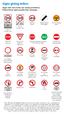 Signs giving orders Signs with red circles are mostly prohibitive. Plates below signs qualify their message. Entry to 20 mph zone End of 20 mph zone Maximum speed National speed limit applies School crossing
Trends and issues Lake Te Koutu walkway, Cambridge
 27 Trends and issues Lake Te Koutu walkway, Cambridge 3 Trends 3.1 Journey to work Over the past two to three decades there has been a significant increase in private vehicle ownership and usage and a
Temporary Traffic Management
 Temporary Traffic Management Tom Kiddle 4 th July 2012 Temporary Traffic Management Auckland Transport TTM Operation Requirements AT TTM Audits Qualified Persons on site Pedestrian Management 1 AT Temporary
9988 REDWOOD AVENUE PROJECT TRAFFIC IMPACT ANALYSIS. April 24, 2015
 9988 REDWOOD AVENUE PROJECT TRAFFIC IMPACT ANALYSIS April 24, 2015 Kunzman Associates, Inc. 9988 REDWOOD AVENUE PROJECT TRAFFIC IMPACT ANALYSIS April 24, 2015 Prepared by: Bryan Crawford Carl Ballard,
FILE NO.: Z-6915-C. Gamble Road Short-form PCD and Land Alteration Variance Request
 FILE NO.: Z-6915-C NAME: Gamble Road Short-form PCD and Land Alteration Variance Request LOCATION: Located on the Northwest corner of Chenal Parkway and Gamble Road DEVELOPER: Davis Properties P.O. Box
ROAD SAFETY ASSESSMENTS AND ROAD SAFETY AUDITS ON THE EXISTING ABU DHABI INTERNAL ROAD NETWORK
 ROAD SAFETY ASSESSMENTS AND ROAD SAFETY AUDITS ON THE EXISTING ABU DHABI INTERNAL ROAD NETWORK Siegfried GROSSKOPF, Tawab KAZEMI*, John HUGHES* & Sami ALMUSAWI Bani Hashim # Parsons International Limited,
7. Road Markings CHAPTER 7
 7. Road Markings CHAPTER 7 Traffic Signs Manual Chapter 7 Road Markings Contents Page 7.1 Introduction... 7/3 General... 7/3 The Function of Road Markings... 7/3 Classes of Marking... 7/4 Speed... 7/5
A Bicycle Accident Study Using GIS Mapping and Analysis
 A Bicycle Accident Study Using GIS Mapping and Analysis Petra Staats, Graduate Assistant, Transportation Policy Institute, Rutgers University, New Brunswick, NJ, USA [email protected] Summary Surveys
PART 3 TD 50/04 THE GEOMETRIC LAYOUT OF SIGNAL- CONTROLLED JUNCTIONS AND SIGNALISED ROUNDABOUTS SUMMARY
 DESIGN MANUAL FOR ROADS AND BRIDGES VOLUME 6 SECTION 2 ROAD GEOMETRY JUNCTIONS PART 3 TD 50/04 THE GEOMETRIC LAYOUT OF SIGNAL- CONTROLLED JUNCTIONS AND SIGNALISED ROUNDABOUTS SUMMARY This document sets
INTERIM ADVICE NOTE 179/14
 INTERIM ADVICE NOTE 179/14 Guidance on the Use of Vehicle Mounted High Level to provide advance warning of lane closures for Relaxation Works on Dual Carriageways with a Hard Shoulder Summary Guidance
Construction Traffic Management Plan
 Construction Traffic Management Plan Proposed Additional Accommodation for SWDPLS Shinners Bridge Dartington Produced for and on behalf of Built Environments Team Devon County Council NPS South West Ltd
Framework Traffic Management for Shared Zones in Large Private Estates AITPM 2014 National Conference
 Framework Traffic Management for Shared Zones in Large Private Estates AITPM 2014 National Conference Presented by : Wayne Johnson Senior Project Manager GTA Consultants [email protected] Outline