
FINAL DRAFT. PILOT STUDY TO ESTIMATE ASBESTOS EXPOSURE from VERMICULITE ATTIC INSULATION. Research Conducted in 2001 and 2002.
|
|
|
- Richard Baldwin
- 10 years ago
- Views:
Transcription
1 PILOT STUDY TO ESTIMATE ASBESTOS EXPOSURE from VERMICULITE ATTIC INSULATION Research Conducted in 2001 and 2002 Prepared for: Fibers and Organics Branch National Program Chemicals Division Office of Pollution Prevention and Toxics U.S. Environmental Protection Agency Ariel Rios Building 1200 Pennsylvania Avenue, N.W. Washington, D.C Prepared by: Versar, Inc Versar Center Springfield, VA May 21, 2003

2 TABLE OF CONTENTS EXECUTIVE SUMMARY HISTORY/BACKGROUND INTRODUCTION ASBESTOS CONTENT IN VERMICULITE ATTIC INSULATION Analytical Method for Bulk Vermiculite Samples Vermiculite Attic Insulation Acquisitions Products Purchased from Stores Zonolite Acquired by EPA Region Vermiculite Insulation in Actual Attics Samples Collected from the Attics of Occupied Houses in Vermont Insulation in Attic of Unoccupied House in Bethel, Vermont AIR MONITORING OF VERMICULITE ATTIC INSULATION Analysis of Air Samples Limits of Detection (LODs) for Air Sample Analysis Initial Simulations of Consumer Use in Containment System Simple Simulations Complex Simulation Modified Attic Containment Background Air and Dust Monitoring at 5 Occupied Vermont Houses Simulated Residential Activities in an Unoccupied Vermont House SIMULATED ATTIC SYSTEM DESIGNS Initial Simulations of Consumer Use Description of Activities in Simple Simulations Description of Activities in Complex Simulation Simulation of Installation of Vermiculite Simulation of Residential Activities Simulation of Removing the Attic Insulation Asbestos Levels Detected During Simulations Asbestos Levels Detected During Simple Simulations Levels of Airborne Asbestos Fibers Detected During the Complex Simulation Modified Attic Containment Description of Activities in Modified Attic Asbestos Levels Detected During the Phase 2 Simulations Simulated Residential Activities in Unoccupied House in Bethel, Vermont Description of Activities Performed in Unoccupied Vermont House Asbestos Levels Detected During Simulations and Activities...33

3 6.0 HUMAN HEALTH EXPOSURE ASSESSMENT FOR VERMICULITE ATTIC INSULATION Exposure Concentrations of Airborne Asbestos for Residential Activities Active Exposures Passive Exposures Uncertainties in Cancer Risks from Residential Uses of Vermiculite attic Insulation DISCUSSION REFERENCES...43 APPENDIX A APPENDIX B APPENDIX C Supporting Data Response to Comments on Preliminary Draft Supporting Data Continued - Backup Information

4 LIST OF TABLES Table 1: Asbestos Content in Vermiculite Insulation Products Purchased from Stores.. 45 Table 2: Asbestos Content in Vermiculite Insulation Products Acquired from Seattle Public Utilities and Residential Homes...45 Table 3: Analytical Results of Bulk Samples of Vermiculite Attic Insulation from Vermont Houses...46 Table 4: Limits of Detection (LODs) Achievable with Current Air Sampling and Analytical Methods...47 Table 5: Activities Performed in the Large Containment during one of the Six Simple Simulations of Phase Table 6: Analytical Results for Simple Simulations Conducted Using 6 Different Vermiculite Products (Phase 1)...49 Table 7: Analytical Results for Complex Simulation Conducted Using One Vermiculite Product (Phase 1)...51 Table 8: Analytical Results for Simulation Using Modified Attic and Living Room Conducted Using One Vermiculite Product (Phase 2)...53 Table 9: Activities Conducted in Unoccupied House in Bethel, Vermont...57 Table 10: Analytical Results for Simulations and Activities Conducted Using One Vermiculite Product in Bethel, Vermont (Phase 2)...58 Table 11: Concentrations of Actinolite/Tremolite Asbestos Fibers > 5:m Detected During Activities and Simulations Conducted in Containment System and Vermont Attic...61 Table 12: Concentrations Selected for Examining the Potential Exposure Associated with Residential Uses of Vermiculite Attic Insulation...63

5 LIST OF FIGURES Exterior Packaging of Vermiculite Products Purchased Directly from Stores Figure 1: Strong-Lite Vermiculite Purchased from Arlington Heights, IL (Product ). 65 Figure 2: Zonolite Purchased from Miami, FL. (Product No )...65 Figure 3: Zonolite Purchased from Miami, FL (Product No )...65 Figure 4: Vermiculite (with no label) purchased from Sacramento, CA (Product No ) 65 Exterior Packaging of Vermiculite Products Acquired by EPA Region 10 Figure 5: Zonolite Vermiculite Acquired from Seattle Public Utilities by EPA Region 10 (Products )...66 Figure 6: Zonolite Vermiculite Acquired from a Residential Home in Republic, Washington, by EPA Region 10 (Product )...66 Figure 7: Zonolite Vermiculite Acquired from a Residential Home in Wenatchee, Washington, by EPA Region 10 (Product )...66 Figure 8: Diagram of Attic Containment System Used in Phase 1 Simple and Complex Simulations of Consumer Use of Attic Vermiculite Insulation...67 Interior and Exterior Photographs of Containment System Used During Phase 1 Figure 9: Overhead View of Containment System Used for Simulation of Consumer Use of Vermiculite Attic Insulation...68 Figure 10: Front View of Containment System Used for Simulation of Residential Use of Vermiculite Attic Insulation...68 Figure 11: Versar Personnel Prepared to Enter the Containment System to Conduct a Simulation of Vermiculite Attic Insulation Disturbance...68 Figure 12: Simulated Attic Trusses inside the Large Containment Unit (Attic) of the Phase 1 Containment System...68 Activities Conducted During Simple Simulations Figure 13: Evenly Distributing the Vermiculite Attic Insulation in the Simulated Attic Trusses69 Figure 14: Re-distributing the Vermiculite in the Simulated Attic Trusses...69 Figure 15: Scooping the Vermiculite Attic Insulation Back to the Product Bags...69 Figure 16: Sweeping the Simulated Attic Floor Trusses...69 Figure 17: Mopping the Floor of the Containment Unit (Between Simulations)...69 Simulation of Residential Activities During Complex Simulation Figure 18: Moving Boxes...70 Figure 19: Crawling on the Simulated Attic Trusses...70 Figure 20: Tossing Boxes...70 Figure 21: Moving Vermiculite in the Simulated Attic Trusses for Wiring Purposes (parallel to trusses)...70 Figure 22: Moving Vermiculite in the Simulated Attic Trusses for Wiring Purposes (perpendicular to trusses)...70

6 LIST OF FIGURES (Continued) Diagrams of the Containment System Used in the Expanded Study Figure 23: Top View of Attic Floor (7 feet above main containment floor)...71 Figure 24: Top View of Living Space...71 Figure 25: Side View of Containment System...71 Modified Artificial Attic Containment System Figure 26: Front View of Modified Containment System...72 Figure 27: Interior of Artificial Attic of Main Containment - View from plywood floor looking at vermiculite in simulated trusses...72 Figure 28: Interior of Artificial Living Space of Main Containment - View of drywall ceiling, plywood ceiling, and open access panel to attic...72 Simulations Conducted in Modified Artificial Attic Containment System Figure 29: Vermiculite Being Cleared in Artificial Attic Space of Main Containment - Simulation of digging a trench to install electrical wiring...73 Figure 30: Hole Being Cut From Attic Space of Main Containment - Simulation of cutting a hole to install a ceiling fan...73 House Used in Bethel, Vermont Figure 31: General View of Exterior of House in Bethel, Vermont...73 Figure 32: Ambient Air Monitoring Pump and Cassette on Front Porch of Vermont House for Collection of Background Samples...73 Simulations Conducted in House in Bethel, Vermont Figure 33: Wet Simulation in Attic of Vermont House - Versar Employee Spraying Water on Attic Insulation During Simulation...74 Figure 34: Dry Simulation in Attic of Vermont House - Versar employee manipulating attic insulation during simulation...74 Figure 35: Hole Being Cut in Ceiling of Vermont House - View from living space, hole being cutting from attic side...74 Figure 36: Equipment for Blower Door Test Installed in Door of Vermont House...74

7 EXECUTIVE SUMMARY This project began in November 2000 as a preliminary or pilot study of the analysis of vermiculite attic insulation. There were two general objectives for the pilot study: (1) obtain a rough estimate of amount of asbestos in attics having vermiculite attic insulation; and (2) obtain a rough estimate of a person s exposure to asbestos while performing common household activities. The budget and the timing for the completion of the both parts of this pilot study precluded a comprehensive search for: (a) commercial vermiculite products which either represented all nationally distributed products in the present or in the past; (b) and the asbestos content and mine origin for this universe of products. In addition, there were similar constraints on (a) an exhaustive or nationally representative search for different types of homes using different types of vermiculite insulation from different mines and containing different amounts of asbestos; and (b) evaluations of national attic use patterns and exhaustive evaluations of different simulations of use experiments in the attics and in the dwellings below the attics. There are uncertainties associated with the exposure estimates based on the data from this study and the frequencies and durations used in this assessment. There are no survey data indicating the number of times residents install wiring or disturb insulation in their attics. Likewise, the exact period over which the settling of fibers (and thus passive exposure) occurs is not known. The assumptions used to estimate exposure are based on best professional judgement and are intended to provide an indication of exposure for low frequency (e.g., once in a lifetime) exposure events. Because these exposure calculations are based on single events, and are linear, exposure from multiple events may be estimated by simply multiplying by the exposure frequency of interest. Cancer risks are not estimated in this report because there is great uncertainty associated with primarily basing cancer risk estimates on a limited sampling of vermiculite products that contain only trace amounts of asbestos in the simulations. No detectable amount of actinolite/tremolite was found in the vermiculite in the unoccupied Vermont house. According to the bulk sampling of vermiculite attic insulation in the 5 occupied Vermont houses, the asbestos content in vermiculite may be as high as 2 percent. It therefore appears necessary that more simulations with vermiculite containing higher asbestos contents are necessary to assess the upper range of cancer risks associated with residential use of vermiculite attic insulation. EPA will use the information gathered in the pilot study and other recent studies to conduct a larger scale more comprehensive study of attic insulation in the near future. 1

8 1.0 HISTORY/BACKGROUND In 1985, EPA evaluated exposures to asbestos in products containing vermiculite (Versar, 1985). The inhalation exposure assessment used analytical data (MRI, 1982) that was based on the percent asbestos in exfoliated vermiculite, and assumptions regarding the amount of vermiculite in consumer products, the quantity of dust generated during consumer use, the volume of air affected, and other assumed exposure factors. More recently, activities in Libby, Montana (e.g., the discovery of asbestos 1 in the vermiculite ore from the W.R. Grace mine there, and the numerous asbestosrelated illnesses and deaths associated with the people who lived near or worked at the mine) caused a renewed interest in evaluating the exposure to vermiculite-containing products, and EPA Region 10 initiated a study of horticultural consumer products containing vermiculite (EPA, 2000a). EPA, Office of Pollution Prevention and Toxics (OPPT), National Program Chemicals Division (NPCD) requested that Versar conduct additional sampling and analysis of the vermiculite-containing consumer products as an expansion and follow up to the Region 10 study (EPA, 2000b). Bulk analysis of approximately 50 samples of approximately 40 different horticultural and chemical packaging products was conducted (Versar, 2000). In addition, air monitoring during simulated consumer use of several of these products was conducted using a specially-designed containment unit that was configured to represent a garage or greenhouse. In November 2000 the first phase of a preliminary or pilot study of the analysis of vermiculite attic insulation began. At that time, Versar obtained 5 products from 4 different cities, plus vermiculite from the Seattle Public Utility storage area that came from 3 different lots. Also, two partially used bags of vermiculite attic insulation were obtained from two residents of the State of Washington. Bulk analysis of 13 samples of these 10 different vermiculite insulation products was conducted. The budget and the timing for the completion of the both parts of this study precluded a comprehensive search for: (a) commercial vermiculite products which either represented all nationally distributed products in the present or in the past; and also (b) the asbestos content and mine origin for this universe of products. In addition, air monitoring during simulated consumer use of more than half of these products was conducted using a containment unit that was meant to represent an attic. This phase of the project also involved visiting 5 occupied Vermont houses containing vermiculite attic insulation. Bulk samples of this insulation were collected, as well as ambient air samples from the attic, living space, and outside the houses. This insulation was not 1 The asbestos types found at the Libby, Montana mine are sometimes referred to as Libby amphiboles. These amphiboles include common types such as actinolite and tremolite, in addition to several other unregulated types such as winchite and richterite. 2

9 disturbed during the site visits. Results of the various bulk sampling, and air monitoring during simulated activities can be found in: Revised Preliminary Draft; Asbestos Exposure Assessment for Attic Vermiculite Insulation, which was submitted to EPA on June 28, 2001 (Versar, 2001). The budget and the timing for the completion of the study precluded an exhaustive or nationally representative search for different types of homes using different types of vermiculite insulation from different mines and containing different amounts of asbestos. Several comments were received regarding the data that were collected for the first phase of the vermiculite attic insulation pilot study mentioned above. EPA considered the comments, and conducted a second phase of the vermiculite attic insulation pilot study during 2001 and For this phase, the containment system was modified to more accurately represent an actual attic, and living space. In addition, several activities were conducted in an unoccupied house containing vermiculite attic insulation. The budget and the timing for the completion of the study precluded evaluations of national attic use patterns and an exhaustive evaluations of different simulations of use experiments in the attics and in the dwellings below the attics. The purpose of this report is to present the results from both phases of the pilot study related to vermiculite attic insulation. As part of EPA's overall Asbestos Action Plan, EPA will use the information gathered in the pilot study and other recent studies to conduct a larger scale more comprehensive study of attic insulation in the near future. 3

10 2.0 INTRODUCTION This report examines exposure data collected over a 2-year period for numerous activities and simulations associated with vermiculite attic insulation disturbances. The first (Phase 1) simulations were conducted in a large containment unit that had a volume of 1,000 cubic feet (i.e., 10'x10'x10'), and a smaller containment unit that had a volume of 360 cubic feet. Six single-day simulations were conducted, in addition to one extended simulation with 3 sub-parts that was performed over a 2-week period. Phase 1 also involved collecting 4 sets of ambient-air, background samples and 5 sets of dust samples from occupied houses that contain vermiculite attic insulation. For Phase 2, the large containment unit, as well as the activities to be conducted there, were modified to address different activities associated with the disturbance of vermiculite attic insulation. For this phase of the study, the 1,000 cubic foot (large) containment unit was divided into a 700 cubic foot living space and a 300 cubic foot attic space, and seven simulations were conducted in the modified containment system. Also, for Phase 2, 6 simulations of vermiculite attic insulation disturbance activities were conducted at an unoccupied house in Vermont. To date, Versar has conducted 20 active simulations to examine exposure to vermiculite attic insulation. This report examines the exposure associated with the following scenarios: Installing and removing vermiculite attic insulation; Performing wiring/small renovations in an attic that contains vermiculite insulation; Using an attic that contains vermiculite insulation as a storage space; Living in a house where such vermiculite attic insulation disturbances occur; and Background exposure associated with living in a house with vermiculite attic insulation. The sample collection and analytical procedures used in this study followed all EPA standards and peer review methods. All analyses were performed by EMSL Analytical, Inc. located in Westmont, New Jersey. EMSL maintains a certificate of accreditation in the National Voluntary Laboratory Asbestos Program (NVLAP) for airborne and bulk asbestos fiber analysis. EMSL is also certified by the American Industrial Hygiene Association (AIHA) for Asbestos analysis by Phase Contrast Microcopy (PCM) and Polarized Light Microscopy (PLM). In addition, the Vermont Asbestos Regulatory Program requires both the analytical laboratory and the analyst to maintain additional certifications for analysis of asbestos samples collected in Vermont. Both EMSL and the analyst who performed these analyses have this certification. 4

11 3.0 ASBESTOS CONTENT IN VERMICULITE ATTIC INSULATION The following types of vermiculite insulation products were examined in this study: Vermiculite insulation products purchased from stores throughout the U.S.; Old bags of Zonolite insulation obtained by EPA Region 10 from Seattle Public Utilities and homeowners (it is not known if these were manufactured from ore that originated from the W.R. Grace Libby Mine before it was closed in 1990); and Vermiculite attic insulation currently installed in residential houses in Vermont. Information about these materials, including their asbestos content, is discussed in the following sections, and is summarized in Tables 1 through Analytical Method for Bulk Vermiculite Samples The asbestos content in the vermiculite samples was determined using both PLM and Transmission Electron Microscopy (TEM). The analyses were performed according to the 1993 EPA Methodology: Method for the Determination of Asbestos in Bulk Building Materials, developed by the EPA Office of Research and Development (ORD) in 1993 (EPA 600/R ) (EPA, 1993). Brief descriptions of the procedures follow. For PLM analysis, point counting is performed on eight (8) slides running 50 points on each slide. For TEM analysis, bulk samples are weighed, and then ashed (if necessary, to remove organic contaminants). The sample is then ground until the vermiculite plates are no longer visible by the unaided eye. Subsequently, 0.01 grams of powder is added to 100 ml of water, sonicated, and an aliquot of 5 ml is filtered onto a 47 mm filter which is then prepared for TEM analysis. For each sample, three areas are collected and analyzed from the filter (i.e., the center, the edge, and in between). This is done to counter any variation in radial distribution of particulates. The TEM analysis is performed by observing 10 grid openings for each of the three TEM grids at 2,000X magnification as well as 3 grid openings for each of the three TEM grids at 20,000X magnification. Cut offs of fibers sizes are observed to avoid counting twice. The mass of the observed fibers is then calculated, and following its extrapolation to the whole filter and to the whole mass of 0.01 grams, the asbestos percent count is determined. The limit of quantification (LOQ) for PLM is 1 percent. The limit of detection (LOD) is the content of asbestos in vermiculite calculated when only one fiber is found in the grids counted under microscope. For PLM, if one, two, or three fibers are found, the result is reported as less than the LOQ. If no fibers are found, the result is reported as non-detect. 5

12 The LOQ and LOD are approximately 0.1 percent for TEM. The LOD/LOQ is the content of asbestos in vermiculite calculated when only one fiber is found in the grids counted under microscope. For TEM, if one fiber is found, the result is reported as equal to the LOQ. If no fibers are found, the result is reported as non-detect. 3.2 Vermiculite Attic Insulation Acquisitions Vermiculite attic insulation acquisitions include 5 products purchased from stores and 5 Zonolite products acquired by EPA Region 10. Bulk samples were collected from all of these materials as composite samples from the top, middle and bottom of the bags of vermiculite. These samples were collected using stainless steel scoops, placed in sterile 8-ounce glass jars, labeled, and sent to the laboratory accompanied by the appropriate chain of custody forms Products Purchased from Stores Vermiculite insulation products currently available on the market were purchased through Versar s regional offices throughout the United States. A total of five vermiculite products which could be used by residential consumers to insulate an attic were purchased from the following four locations: Sacramento, CA; Arlington Heights, IL; Frederick, MD; and Miami, FL. Not all of the products purchased were marketed specifically as attic insulation. For example, some appeared to be marketed primarily as construction materials, but were also offered as attic insulation by the retail store. Purchasing locations, brand names, manufacturers, intended uses, and the visual appearance of the vermiculite products purchased are summarized in Table 1. Asbestos fibers were not detected in any of the bulk samples taken from these 5 products. The five products are packaged and distributed by three manufacturers. Three of the products are Zonolite vermiculite manufactured by W.R. Grace. Because the vermiculite mine at Libby, Montana was closed in 1990, it is possible that these Zonolite products were produced with the vermiculite from the W.R. Grace mine in Enoree, South Carolina or other mines. Figures 1 through 4 provide pictures of the exterior packaging of the vermiculite products purchased directly from stores. These were the only commercially-available products located during Phase 1 of the study, and may represent only a fraction of the vermiculite nationally available. 6

13 3.2.2 Zonolite Acquired by EPA Region 10 FINAL DRAFT The Seattle Public Utilities stores many bags of Zonolite vermiculite, which they use to insulate underground water meters. Three samples with different lot numbers were obtained through EPA Region 10 from this source. Two more bags of Zonolite were collected through Region 10 from residential homes in the State of Washington. These two samples appear to be very old (bags are dirty; portions of the bags are damaged, torn, or missing; labels are faded; etc.) These partially used bags may have been left over after the vermiculite was used to insulate attics. Because the State of Washington is geographically proximate to the vermiculite mine in Libby Montana, and these bags appear to be old, it is possible that these products may be Zonolite manufactured by W.R. Grace before the Libby mine was closed in Figures 5 through 7 provide pictures of the exterior packaging of these vermiculite products. The locations from which these products were acquired, brand names, manufacturers, intended uses, and the visual appearance of the vermiculite products are summarized in Table 2. The asbestos content of these 5 materials ranged from nondetect to 0.13 percent actinolite. 3.3 Vermiculite Insulation in Actual Attics Bulk insulation samples were collected from 5 occupied houses in Vermont. These samples were composited from material taken from the top, middle and bottom of the vermiculite insulation layer. These samples were collected using stainless steel scoops, placed in sterile 8-ounce glass jars, labeled, and sent to the laboratory accompanied by the appropriate chain of custody forms Samples Collected from the Attics of Occupied Houses in Vermont In April, 2001 (during the Phase 1 study), Versar collected vermiculite insulation samples from the attics of five occupied houses in the State of Vermont. The ages of these houses range from approximately 50 to 140 years. It is unknown when the vermiculite insulation was installed in these attics. Five vermiculite samples were taken at the center and four corners of the attic from four of the houses visited. Two vermiculite samples were taken from the other house. A total of 24 bulk vermiculite samples (including two duplicates) were taken from these five Vermont houses. Descriptions of the occupied Vermont houses and attics containing vermiculite insulation are provided in Table 3. No simulations were conducted during these site visits. While the bulk samples were collected, the portion of the vermiculite that became the sample was disturbed 7

14 minimally (i.e., only in the context of sample collection in an isolated area), and the remaining vermiculite in the attic was not disturbed. The result of the bulk analyses by PLM performed on this vermiculite attic insulation ranged from less than 1 percent to 2 percent tremolite. The result of the bulk analyses by TEM performed on this vermiculite attic insulation ranged from non-detect to 1.54 percent actinolite/tremolite Insulation in Attic of Unoccupied House in Bethel, Vermont In January, 2002 (during the Phase 2 study), Versar conducted 6 simulations of vermiculite attic insulation disturbance activities in an unoccupied house in Bethel, Vermont. Bulk samples of the vermiculite attic insulation were also collected from this house, and the results of these analyses are provided in Table 3. The result of the bulk analysis by PLM performed on this vermiculite attic insulation was non-detect. The result of the bulk analysis by TEM performed on this vermiculite attic insulation was less than 0.1 percent chrysotile. No actinolite or tremolite was detected in the sample. Vermiculite is not known to typically contain chrysotile. However, according to a member of the Vermont Department of Health, the linoleum in the hall that is directly below the attic access was tested by PLM and found to contain chrysotile. Also, a piece of linoleum was found in the attic of the house. 8

15 4.0 AIR MONITORING OF VERMICULITE ATTIC INSULATION Air monitoring was conducted in both an artificial containment unit, designed and constructed to represent an attic and adjacent living space (See Sections 4.3 and 4.4), and in the attics and adjacent living areas of actual houses (See Sections 4.5 and 4.6). All the stationary air samples were collected using a 25 mm mixed cellulose ester (MCE) air sampling cassette (0.45 µm) and a Gillian Air Con high volume air sampling pump. Where possible, the sampling cassettes were positioned at a height of 150 cm above the ground or finished floor. For ambient monitoring of some of the attic spaces, where this was not feasible, sampling cassettes were positioned at a height of 50 cm above the attic floor. The cassettes were angled downward at a 45 o angle, to avoid collection of passive deposition. Each pump was calibrated using a Bios Dry Cal calibration unit before and after each use. Background and post-simulation (i.e., fiber settling) samples were collected by running the air sampling pumps for approximately 4 hours at air flow rates of 9.0 to 9.9 liters per minute (LPM). These samples collected an air volume of approximately 2,400 liters. The stationary air samples collected during the simulations ran for approximately 40 to 45 minutes at air flow rates of LPM. These samples collected an air volume of approximately 400 liters. Personal air samples were collected by two air sampling cassettes (0.8 µm) and two SKC low volume air sampling pumps, which were respectively attached to the shoulder and waist of the individual performing the simulation. The sampling cassettes were oriented downward and positioned within the breathing zone of the individual who performed the simulation. The sampling pump was run for 30 minutes at the flow rate of approximately 2.1 LPM. All air sampling cassettes were labeled and shipped to the laboratory with chain-of-custody forms for analysis after the monitoring. 4.1 Analysis of Air Samples Air samples were analyzed by using both PCM and TEM according to the following two methods, respectively: NIOSH (1994) Method 7400, Issue 2: Asbestos and Other Fibers by PCM. In NIOSH Manual of Analytical Methods, 4 th Edition. 9

16 EPA (1984). Methodology for the Measurement of Airborne Asbestos by Electron Microscopy. Report prepared for the U.S. EPA Environmental Monitoring Systems Laboratory by IIT Research Institute Under Contract No. 68-D The TEM analysis was conducted following the Level II method described in the 1984 EPA methodology. A modification of the asbestos counting rule for TEM analysis was made so that the following categories of asbestos could be counted: < 5 µm fibers; 5-10 µm fibers; > 10 µm fibers; and > 5 µm or PCM equivalent fibers. The cancer slope factor recommended in EPA s Integrated Risk Information System (IRIS) (EPA, 2002) was developed on the basis of fibers counted by PCM (i.e., fibers >5 µm in length). When using the IRIS slope factor for a cancer risk assessment, only concentrations of > 5 µm or PCM equivalent fibers should be used. However, for this pilot study, the concentrations of other sizes of fibers were also recorded so that EPA could use a different risk model to estimate the cancer risk from asbestos fibers in the future, if necessary. In addition, the risk contribution from fibers shorter than 5 µm is not established, and many medical experts do not accept the contribution as zero. The use of PCM equivalent fibers may understate the actual risk. 4.2 Limits of Detection (LODs) for Air Sample Analysis The LODs are dependent on the volume of air samples taken, the number of grid openings examined during fiber counting, and the size of the cassettes used in collecting air samples. The LOD is calculated by assuming that only one fiber is found in the TEM grid openings or 5.5 fibers are found in 100 PCM graticule fields examined. The equation is as follows: 10

17 where: A c = Effective collection area (cm 2 ) of the filter used to collect air samples N fiber = Number of fibers (1 in the TEM grid openings examined or 5.5 in 100 PCM graticule fields) A f = Area (cm 2 ) of the TEM grid openings or PCM graticule fields examined. N Grid Opening = Minimum number of TEM grid openings or PCM graticule fields required to be examined during counting fibers. V = Volume of air sample taken during monitoring (liters). For this pilot study, A c was always 385 mm 2. For the samples analyzed for this study, the A f for PCM analyses was mm 2 ; and for TEM analyses, A f was either or mm 2. (Grid openings can vary from lot to lot (batch to batch) and can therefore vary not only from Laboratory to Laboratory but from analysis to analysis.) N Grid Opening was 100 fields for PCM. Again, for TEM, N Grid Opening can also vary from one analysis to another. For the samples analyzed for this study, the TEM NGrid Opening was either 10 or 20. In this pilot study, an adjustment in the air sampling procedure was made to lower the LODs. The volume of the air samples collected varied with the exposure scenarios evaluated to obtain the lower LODs. The volumes of air samples taken and corresponding LODs for the exposure scenarios evaluated in this study are provided in Table Initial Simulations of Consumer Use in Containment System The containment system used during Phase 1 of this study consisted of 2 units: a large or main 10'x10'x10' unit and a smaller 6'x6'x10' unit (See Section 5.0 for detailed description). The main containment unit was used to represent an attic, and the smaller containment unit was used to represent a bathroom, or other living space where a homeowner might change out of their work clothes after performing activities in their attic. 11

18 4.3.1 Simple Simulations Six of the ten vermiculite attic insulation products that were either purchased or acquired from Region 10 were examined in independent simple simulations (See Section 5.1.1). The design of the simple simulation is described in detail in Section 5 of this document. Several background samples were collected inside the main containment unit just prior to the first simulation. During each of the simple simulations, the following air samples were collected: Two stationary air samples from outside the containment system; Two stationary air samples from inside the large containment unit; and Two personal air samples from the individual performing the simulation. After each simulation, a stationary air sample was then collected from the small containment unit, to identify the amount of fibers, if any, that remained suspended in the air after the active disturbance had ceased. These samples also had a larger air volume than the samples collected during the simulation activities, which allowed for a lower detection limit Complex Simulation A complex simulation was performed with a Zonolite product from the Seattle Public Utilities (Bulk Sample ID ). This product contained trace amounts of asbestos fibers (i.e., the laboratory reported an asbestos content of <1 percent tremolite based on PLM and <0.1 percent actinolite/tremolite based on TEM, See Table 2). Of the products tested in the simple simulations, this product was selected for the following reasons: (1) The product had detectable amounts of asbestos fibers in the bulk sample analysis; (2) The sample yielded good results from the simple simulations, in terms of matched results for paired samples, so it seemed reasonable that using the product in the complex simulation would also provide useful results; and (3) There was a sufficient quantity of product that had not been used (and therefore, not disturbed) during the simple simulations. The details of each portion of the complex simulation are provided in Section The complex simulation was performed to represent multiple residential activities involving contact with vermiculite attic insulation. It involved a series of air monitoring events designed to evaluate both active exposure (i.e., occurring during the disturbance activities among the individuals involved in these activities) and passive exposure (i.e., occurring during or after the activities among other residents in the house not actively involved in the activities). A 2,400 liter air sample was 12

19 taken before the initiation of the study to determine the background levels of airborne asbestos. The following air samples were then collected during each of the simulated activities: Two stationary air samples from the main containment unit; and Two personal air samples on the person performing the simulated activities inside the main containment unit. After each activity, two stationary air samples (2,400 liter samples) were collected from the small containment when the person performing the simulated activities entered this area. Several dust samples were also collected during the study. 4.4 Modified Attic Containment For Phase 2 of the study, an attic floor was added inside the main containment unit at approximately seven feet above the containment floor, separating the main containment unit into a 3-foot high attic space and a 7-foot high living space beneath the attic (See Section 5.2 for more detail). All of the simulations in the modified containment were performed using the same vermiculite material, which remained in the artificial attic between simulations. The vermiculite used in the modified artificial attic containment was the material that exhibited the highest airborne asbestos values during the Phase 1 simulations. The simulations were performed with a Zonolite product from the Seattle Public Utilities (Bulk Sample ID ). The following types of air samples were collected for the activities conducted in the modified containment unit: Background Samples Prior to the Initiation of Simulation Activities: 2 stationary samples in each of the simulated living space (i.e., 10'x10'x7'), attic, and small containment (i.e., 6'x6' changing room or simulated bathroom). During the simulations: 2 personal air samples from the breathing zone of the individual performing the simulation; 2 stationary air samples in both the living and attic spaces; plus 1 stationary sample outside the containment. Fiber Settling Samples Collected After the Simulations: 2 stationary air samples inside both the small containment (simulated bathroom) and in the living space of the main containment. 4.5 Background Air and Dust Monitoring at 5 Occupied Vermont Houses Ambient air samples were collected from the attic, the living space of the floor immediately below the attic, and outside of four of the occupied Vermont houses from which bulk attic insulation 13

20 samples were obtained. Air samples were collected using stationary Gillian Air Con high volume air sample pumps. Each of these stationary air monitors was operated at a flow rate of 9.0 to 9.9 LPM for approximately three and a half hours (long enough to collect a minimum of 2,000 liters of air). The samples were analyzed by PCM and TEM, in the same manner as the area samples that were collected in the containment simulations discussed earlier. These 5 houses were currently occupied. However, in all cases, the residents were either not at home or were inactive in the house during the sampling events. No attic insulation disturbance activities occurred immediately before or during sampling. Thus, the samples collected are assumed to represent background levels in a house where no active disturbances have occurred. Sampling locations in each of the houses visited are described below. In House 1, two stationary monitors were located in the attic, one at each end. In addition, one stationary monitor was located on the second floor, on the south end of the west bedroom, below the air register. The other stationary monitor was located outside of the residence, on the walkway behind the house. Similarly in House 2, two stationary monitors were located in the attic, one at each end. In addition, one stationary monitor was located in the second floor, front bedroom, below the attic access. The other stationary monitor was located outside of the residence, on the left side of the house, near the driveway. In House 3, two stationary monitors were located in the attic, one at each end above the living space. The southern monitor was centrally located, relative to the entire attic. In addition, one stationary monitor was located in the dining room. The other stationary monitor was located outside of the residence, in the front of the house, at the south end of the garage door. Background air samples were not collected in House 4. In House 5, two stationary monitors were located in the attic, one at each end of the attic space where vermiculite is present. The eastern monitor was centrally located, relative to the entire attic. In addition, one stationary monitor was located in the second floor hallway, between the 2 access panels to the attic. The other stationary monitor was located outside of the residence, on the south side of the house, near the back of the driveway. In addition, 5 dust samples were collected from each of the 5 houses at various locations throughout the living space (e.g., window sills) using a microvacuuming technique. All of the dust samples in this study were collected following the protocols in ASTM method D : Standard Test Method for Microvacuum Sampling and Indirect Analysis of Dust by Transmission Electron Microscopy for Asbestos Structure Number Concentrations (ASTM, 1995). 14

21 The method calls for the use of a low volume air pump, set at approximately 2 LPM to be used to vacuum dust particles from a surface. The 2 LPM is based on using a tube with a 1/4 inch inner diameter, yielding a flow velocity of 100 centimeters per second (cm/sec). The SKC low volume air sample pumps that were used could only be fitted with tubing that had a 5/16 inch inner diameter. Because of the larger tubing, during sampling, the pumps were set at 3 LPM to maintain the 100 cm/sec flow velocity specified in the method. One hundred square centimeters of each horizontal surface sample was vacuumed using a 1.5 inch piece of tubing, followed by a 0.8µm MCE filter attached to a low volume air sampler. Each low volume pump was calibrated using a Bios Dry Cal calibration unit before the first and after the last dust sample was collected at each house. Dust samples were collected from the attic and/or the living spaces of the floor immediately below the attic as discussed below. In House 1, samples of dust on the attic floor, 3 closet shelves, and a closet floor were collected. The dust samples of the closet shelves are from 3 of the 4 corners of the second floor living space. In House 2, one sample was collected from the attic floor, and the following samples were collected in the living space on the second floor: top of bathroom light; top of TV on bookshelf in back bedroom; top of sewing table in back bedroom; and the floor in the front bedroom. In House 3, microvacuum dust samples were all collected from the living space as follows: kitchen range top; top of refrigerator; top of piano in living room; top of window sash in living room; and top of TV near window in the bedroom next to the living room. Two attic dust samples were collected from House 4. In addition, samples were also collected from the top of a bookshelf in the front bedroom, the top of the bathroom medicine cabinet, and from the top of a window sash in the stairway leading to the second floor. In House 5, one sample was collected from the top of the attic access panel, and the following samples were collected in the living space on the second floor: top of a window sash in back bedroom; top of bookshelf in back bedroom; the floor in the back bedroom; and top of dresser in front bedroom. The purpose of this sampling was to collect information regarding the background concentration of asbestos in houses that contain vermiculite attic insulation. No simulations were conducted during these site visits, and the vermiculite attic insulation was not disturbed. The analytical results for these samples are not presented in a table in this report because no asbestos was found in any of the air or dust samples. Analytical results for all of the samples collected during this study can be found in the Laboratory Data Sheets included as an appendix to this report. 4.6 Simulated Residential Activities in an Unoccupied Vermont House 15
22 An unoccupied house in Bethel, Vermont that contained vermiculite attic insulation, and was slated for demolition was used to conduct a series of simulations involving the disturbance of vermiculite attic insulation. The following types of air samples were collected for the activities conducted in the Bethel, Vermont house: Background Samples Prior to the Initiation of Simulation Activities: 2 stationary samples in the attic; 1 stationary sample in each of the front and back, second floor bedrooms (living spaces); and 1 stationary sample outside the house. During the simulations: 2 personal samples from the breathing zone of the individual performing the simulation; 2 stationary samples in the attic; 1 stationary sample in each of the front and back, second floor bedrooms (living spaces); and 1 stationary sample outside the house. Fiber Settling Samples Collected After the Simulations: 2 stationary samples in the attic; 1 stationary sample in each of the front and back, second floor bedrooms (living spaces); and 1 stationary sample outside the house. In addition, five dust samples were collected from horizontal surfaces in the living space on the second floor, following the protocols in ASTM method D (ASTM, 1995). These samples were collected from the second floor in the following locations: top of kitchen cabinets; bathroom window sill; closet shelf in northwest bedroom; top of radiator shield in southwest bedroom; and closet shelf in northeast bedroom. 16
23 5.0 SIMULATED ATTIC SYSTEM DESIGNS As described previously in this report, this investigation is a combination of various sample collection efforts performed during 2 study phases over a 2-year period with regard to vermiculite attic insulation. Initially, EPA attempted to locate a house that could be used for the simulations, however, a house was not discovered until after the study was nearly a year old. To be useful to this study, a house needed to have the following attributes: contain a sufficient amount of vermiculite attic insulation (i.e., cover the entire attic floor area), be slated for demolition (i.e., the house would no longer be occupied, and thereby any vermiculite disturbances would not lead to potential risk), and be structurally sound so that activities could be performed without a risk to the people performing the simulations, or support activities. Because a house meeting all of these criteria could not be located in a timely fashion, an attic containment system was constructed for the Phase 1 study to simulate consumer use of vermiculite attic insulation. Figure 8 provides a planar diagram of the containment system. The system consisted of a 10' 10' 10' large (main) containment, a smaller 6' 6' 10' containment, and a small entry way. The containments were built with polyethylene sheeting covering 2x4 framing. The large and small containments were adjacent to each other, and access from one unit to the other was through a slit in the polyethylene sheeting that was covered with a plastic curtain. The main containment was used to represent the attic. The small containment was used to represent the bathroom (or changing room) where homeowners might remove their work clothes after finishing the work in the attic. Sampling in the small containment was used to estimate the quantity of asbestos that migrates into the living areas after visits to an attic by the homeowner. Figures 9 through 11 provide exterior pictures of the containment system installed in the research and storage space at the Headquarters of Versar, Inc. in Springfield, Virginia. Two 4' 4' 8" open-top wooden boxes were divided into three evenly-spaced slots with two 2x4s, and placed in the center of the containment unit to simulate trusses commonly seen in an attic floor (Figure 12). In addition, the following devices were installed inside the containment system: Two stationary air monitors inside the large containment or simulated attic; Two stationary air monitors inside the small containment or simulated bathroom; An oxygen monitor; and A HEPA filtered vacuum system which was used to clean the air after each simulation. 17
24 All simulations were performed by two individuals. One of the individuals performed the simulation and the other individual documented all the activities performed during the simulation. The individual who performed the simulation wore two layers of full body protective clothes, a full face air purifying respirator (equipped with HEPA/P-100 air filters), and gloves. In addition, the individual who performed the simulation wore a cotton shirt outside the protective clothing. The purpose of the cotton shirt was to simulate what the homeowner would be wearing during the attic activities. The purpose of the oxygen monitor inside the containment system was for the safety of the Versar employee. Because the containment system was sealed, there was a potential for oxygen depletion while the Versar employee was inside, conducting the simulations. 5.1 Initial Simulations of Consumer Use In Phase 1 of this study, two types of simulations were performed in the attic containment system described above. The first type of simulation was designed to determine asbestos exposure during installation of vermiculite attic insulation, wiring, or other aggressive disturbances of vermiculite attic insulation. This type of simulation is referred to as a simple simulation. The second simulation was also designed to determine residential asbestos exposures resulting from a variety of residential activities (e.g., storing items in an attic, disturbing attic insulation to install wiring, etc.). However, this simulation was divided into 3 parts (installing, disturbing, and removing vermiculite attic insulation) and additional sampling was conducted after each part to monitor the settling time of fibers. This simulation is referred to as the complex or extended simulation. The details of these two simulations are provided below Description of Activities in Simple Simulations Six of the ten purchased/acquired vermiculite attic insulation products were examined in independent simple simulations (See Table 6). Prior to the start of the simulations, the following activities were performed: The attic containment system was thoroughly cleaned (decontaminated) by vacuuming the system, wet-wiping the walls, and mopping the floor. Background air samples were then collected to verify decontamination. The two stationary air monitors outside the attic containment system were turned on just before the person performing the simulation began the attic simulation activities. 18
25 Two bags (approximately 6 to 8 cubic feet) of vermiculite attic insulation were brought directly into the large containment through a door (slit) on one of the plastic sheet walls of the large containment; and The plastic door was sealed with tape. During a simple simulation, Personal Air Monitors (PAMs) and stationary air monitors in the large containment were turned on, and the following residential activities were performed for a period of 30 minutes: Two bags of vermiculite were opened and poured into the simulated attic trusses; Vermiculite was evenly distributed in the simulated attic trusses; Vermiculite was distributed to simulate how it might be disturbed during the installation or repair of electrical wiring; and Vermiculite was removed from the trusses. Figures 13 through 15 illustrate some of the activities performed during the simple simulation. The activities performed during this period of time were documented by the individual standing outside the containment system and are provided in Table 5. At the end of the simulation period of 30 minutes, the individual inside the containment turned off personal air pumps and scooped the vermiculite back into the product bags, and then turned off the stationary air monitors inside the large containment after an additional 15 minutes. The individual performing the simulation then walked into the small containment. Once entering the small containment, the individual turned on the stationary monitors set up inside the small containment and removed and shook the cotton shirt and the outer layer of protective clothing. Then the individual walked out of the small containment. The air sampling pump continued to run for approximately 4 hours in the small containment. The cotton shirt worn over the protective clothing remained in the small containment until the sampling pump was turned off. The shirt was then removed from the containment and discarded. At the end of air sampling period, the individual performing the simulation went back into the large and small containments and thoroughly cleaned the attic containment system by vacuuming, sweeping, and mopping the floor, as illustrated in Figures 16 and Description of Activities in Complex Simulation The complex simulation was performed with only one attic insulation product to continuously simulate the following residential activities: 19
26 Installation of vermiculite in the attic, including settling of airborne asbestos in the attic after the installation; Simulation of residential activities in the attic; and Removing the vermiculite attic insulation. The complex simulation was performed with a Zonolite product from the Seattle Public Utilities (Sample ID: ). This product contained trace amounts of asbestos fibers, with PLM content of <1 percent tremolite and TEM content of <0.1 percent actinolite/tremolite (Table 2). The details of each phase of the complex simulation are provided below Simulation of Installation of Vermiculite The simulation of installation of vermiculite attic insulation was exactly the same as the simple simulation. The only difference this time was that the vermiculite was not removed from the simulated attic trusses at the end of installation of vermiculite. The following activities were performed during a 30 minute period: Open two bags of vermiculite insulation; Pour the vermiculite into the attic truss boxes; Smooth vermiculite in the simulated joists until the end of 30 minutes; and Enter the small containment to remove the cotton shirt and the outer layer of personal protective clothing (PPE). During this installation process, the following samples were taken: Two personal air samples; and Two stationary air samples from the main containment. The two stationary air (2,400 liter) samples in the small containment were started immediately upon completion of the simulation. The airborne asbestos and other dust particles were allowed to settle for three days. During these three days, a 2,400 liter air sample was taken in the main containment every day beginning at approximately 9:00 am to monitor the settling of asbestos fibers Simulation of Residential Activities 20
27 On the fourth day after the simulation of installation of vermiculite, a 2,400 liter sample was taken in the main containment as a background sample to ensure that fibers had completely settled. Then, the individual performing the simulation entered the large containment. A dust sample was taken from the floor inside the large containment according to the ASTM method, as described in Section 4.5. Then, the following activities were performed to simulate the typical residential activities: Plow the vermiculite in the simulated attic trusses to simulate the activities related to wiring the attic; the activities lasted for 30 minutes inside the main containment; Move boxes around on the floor to disturb settled dusts and asbestos fibers; and Enter the small containment to remove the cotton shirt and the outer layer of protective clothing. A dust sample was collected before the initiation of the study (as noted earlier). The following samples were collected during the simulation of residential activities: Two personal air samples from the person performing activities in the main containment; Two stationary air samples from the main containment; and Two stationary air samples (2,400 liter samples) from the small containment after the person finished the simulation and entered the small containment. The day after the end of residential activity simulation, a 2,400 liter sample was taken from the main containment to check if the airborne asbestos has settled. Figures 18 through 22 illustrate some of activities performed during this phase of the complex simulation Simulation of Removing the Attic Insulation The second day after the end of the residential activity simulation, simulation of removing vermiculite attic insulation was conducted by performing the following activities: A 2,400 liter sample was taken before the initiation of the study to determine the background level of airborne asbestos; Scoop the vermiculite back into the bag; Sweep the floor to remove the dust and vermiculite; the activities lasted for 30 minutes; and Enter the small containment to remove the cotton shirt and the outer layer of protective clothing. 21
28 During the simulation, the following samples were taken: Two personal air samples from the individual perform the simulation; and Two stationary air samples from the main containment. The two stationary air (2,400 liter) samples in the small containment were started immediately upon completion of the simulation. The cotton shirt worn over the protective clothing remained in the small containment until the sampling pump was turned off. The shirt was then removed from the containment and discarded Asbestos Levels Detected During Simulations This report contains numerous tables that present the analytical results from the various simulations that Versar conducted with vermiculite attic insulation. These tables do not include any of the results for the blanks that were collected because all of the TEM samples were non-detect for asbestos, and PCM samples were non-detect for all fibers (including asbestos and non-asbestos). Analytical results for all of the samples collected during this study can be found in the Laboratory Data Sheets included in the appendices Asbestos Levels Detected During Simple Simulations Table 6 summarizes the levels of airborne asbestos fibers detected during the simple simulations (i.e., during simulation of installation of vermiculite attic insulation) with six vermiculite attic insulation products. For the three Zonolite insulation products acquired from the Seattle Public Utilities and one Zonolite sample from a resident in the State of Washington, airborne asbestos fibers were detected in personal air samples, stationary air samples in the large containment (i.e., the simulated attic), and stationary air samples from the small containment (i.e., simulated bathroom or changing room). The highest airborne concentration of 3.3 total asbestos fibers per cubic centimeter (f/cc) by TEM occurred in the PAMs during the simulation with Zonolite Vermiculite (Lot No ). The detected airborne asbestos fibers inside the small containment indicate the potential for asbestos fibers to migrate from the attic to the living area. The Zonolite products tested contained trace amounts of asbestos fibers (Table 2). For one of the two attic insulation products purchased from stores (for which bulk analyses did not show detectable asbestos fibers by PLM or TEM), airborne asbestos fibers were not detected in personal air samples, stationary air samples from the large containment (i.e., the simulated attic), 22
29 or stationary air samples from the small containment, although fibers were detected by PCM in these samples. For the other product, (Zonolite manufactured by W.R. Grace and purchased from Frederick, MD) one actinolite fiber was detected by TEM in each of the personal, and one of the stationary samples inside the large containment during the simulation. Examining only this result would seem to indicate that vermiculite products with non-detectable asbestos pose a minimal exposure potential. However, this conclusion is not supported by the results of the simulations conducted in Bethel, Vermont (See Section 5.3.2). Based on the results of the products tested, it appears that some vermiculite attic insulation products currently in use are relatively low in fiber content. However, additional vermiculite products need to be purchased and tested before a definitive conclusion can be reached Levels of Airborne Asbestos Fibers Detected During the Complex Simulation The complex simulation was performed with a Zonolite product from the Seattle Public Utilities (Bulk Sample ID ). This product contained trace amounts of asbestos fibers (i.e., the laboratory reported an asbestos content of <1 percent tremolite based on PLM and <0.1 percent actinolite/tremolite based on TEM). Table 7 provides the levels of airborne asbestos fibers detected at different phases of the complex simulation. As shown in Table 7, during the simulation of installation of vermiculite attic insulation, airborne asbestos fibers were detected in personal air samples, stationary air samples from the large containment, and stationary air samples from the small containment. The highest asbestos level of 0.10 f/cc by TEM was detected in one of the stationary air samples from the large containment. This result is consistent with the results from the simple simulations. During the three days in which fiber were allowed to settle, concentrations of f/cc were detected in stationary samples from the large containment by PCM in the first two days. However, no asbestos fibers were detected by TEM in these air samples. No fibers were detected by either PCM or TEM in the air samples collected on the third day of fiber settling simulation. These results indicate that fibers and asbestos fibers can quickly settle from the air, probably within 24 hours. Before the initiation of the residential activity simulation, two air samples were collected to confirm the settling of asbestos fibers, and three dust samples were collected to examine the presence of asbestos fibers on the floor of the simulated attic. Asbestos fibers were not detected in the air samples, suggesting that asbestos fibers had settled. Two of the three dust samples contained 23
30 no detectable asbestos fibers. However, one of the three dust samples contained one fiber, demonstrating that asbestos fibers had indeed settled onto the floor of the simulated attic. During the simulation of residential activities (i.e., moving the vermiculite insulation to install wiring, moving boxes, etc.), airborne asbestos fibers were detected in personal air samples and stationary air samples from the large containment or simulated attic. The highest asbestos level of 0.43 fibers per cubic centimeter (f/cc) was detected by TEM in one of personal air samples. This result indicates the potential for asbestos exposure during disturbances of attic insulation containing vermiculite. During the simulation of removing vermiculite attic insulation, asbestos fibers were detected in personal air samples and stationary air samples from the simulated attic. The highest asbestos level of 0.3 f/cc was detected by TEM in one of the personal air samples. This suggests the potential for asbestos exposure if the residents remove the vermiculite attic insulation themselves. 5.2 Modified Attic Containment For Phase 2 of the study, an attic floor was added inside the main containment at approximately seven feet above the containment floor, separating the containment into a 3-foot high attic space and a 7-foot high living space beneath the attic. Therefore, the volume of air in the new attic is approximately 300 cubic feet. In the center of the new attic floor, a centrally located 4'x8' section was constructed of 2x4s, spaced 16 inches on center, to simulate attic joists, beneath which a 4' x 8' piece of drywall was secured 2. It is in this section that vermiculite was poured and manipulated to simulate the appropriate attic activities. The person conducting the simulation knelt on a piece of 3/4" plywood that was at one edge of the attic. The opposite end of the attic floor did not need to support any weight, and was therefore simulated with polyethylene sheeting. The following devices were installed inside the containment system: Two stationary air monitors inside the attic of the large containment; Two stationary air monitors inside the living space of the large containment; Two stationary air monitors inside the small containment or simulated bathroom; An oxygen monitor inside the living space of the large containment; 2 Because some drywall has been found to contain asbestos, the piece used in the containment system was tested. Results indicate that this piece did not contain detectable amounts of asbestos fibers by PLM, the standard method used to examine bulk (non-vermiculite) material for asbestos. 24
31 A HEPA filtered Vacuum (HEPA-Vac) system which was used to evacuate and filter the air of the containment after each simulation. The individual who performed the simulation wore a Tyvek full body suit, PVC gloves, and a Full Face Air Purifying Respirator (APR) equipped with HEPA/P-100 air filters to prevent possible asbestos exposure. In addition, a cloth shirt was worn over the PPE to simulate the clothing that might be worn by a homeowner while in an attic. The polyethylene sheeting surrounding the main containment was completely replaced prior to the simulations. Therefore, there was essentially no chance for cross-contamination between the previously-studied products. Unlike Phase 1 of this study, the attic space (drywall, trusses, and plywood floor) were not covered with polyethylene. Because of this, the artificial attic was more representative of a real attic than in Phase 1. Diagrams of the containment system used in Phase 2 are shown in Figures 23 through 25. Pictures of the containment system are shown in Figures 26 through 28. The overhead view of the modified containment exterior looks identical to the containment system that was used during phase 1 (Figure 9). From the front view, a portion of the modifications can be seen (Figure 26). The modifications made for Phase 2 are more visible in Figures 27 and 28 (photographs of the containment interior). The attic floor that was added for Phase 2 can be seen from the interior of the main containment unit attic (Figure 27). Figure 28 is a view of the attic access panel, showing some of the drywall ceiling, and the bottom of the plywood platform that was used to represent the attic floor Description of Activities in Modified Attic There were seven simulations conducted in the modified attic containment system. These are summarized in Table 8. Descriptions of the sampling and activities performed for each procedure are presented below in detail. Figures 29 and 30 show activities being performed during two of the simulations. During all simulations, the individual performing the simulation entered the attic through the access opening (above the living area) by removing the access panel, and placing it in the attic. The individual then knelt on the 3/4-inch plywood (that formed approximately one third of the attic floor) to conduct the simulation. After 30 minutes, the personnel monitors were turned off, and then the individual conducting the simulation exited the attic through the access opening, closed the 25
32 access opening cover (which remained open during the entire simulation), and entered the living space. The stationary air monitors in the living space were changed out, and the individual conducting the simulation entered the changing room, removed the outer conventional clothing, exited the changing room, and removed the PPE. The stationary air monitors in the living space and changing room were left on for four hours after each simulation. Simulation 1: Dry Disturbance - No Cutting The first simulation began after placing the vermiculite between the simulated attic joists, allowing the dust to settle for one week, and sanitizing the living space. Sanitizing refers to cleaning the surfaces of the enclosure with water, and wiping them down so that any asbestos fibers that may have been in the containment are removed prior to a new simulation. The first simulation was a baseline study where the vermiculite was manipulated as though a ceiling fan was going to be installed in the ceiling of the living space; however, no holes were cut in the ceiling. This simulation was conducted in the same manner as in Phase 1. The only difference was that the attic height (and volume of air in the attic) was lower. During this first simulation vermiculite was cleared from a section about 1 foot square above the drywall ceiling. This area was meant to approximate the area that would require clearing if a fan were to be installed. In addition, a trough was cleared above the ceiling to simulate wiring activities. The trough was cleared the full length of each of the six sections between the joists to simulate a 24 foot trough (6 troughs, each 4 feet long). After exposing the drywall, the vermiculite was pushed back into place and leveled. Also, an 8-foot trough was cleared down the center of the drywall, perpendicular to the simulated trusses. Again, the vermiculite was pushed back into place and leveled. These activities were repeated for the duration of each simulation. Simulation 2: Dry Disturbance - Hole Cut From Attic The second simulation consisted of moving some of the vermiculite aside as in the first simulation, creating a location to hang the simulated ceiling fan, and simulating the placement of electrical wiring. Then, a six-inch diameter hole was cut in the drywall attic floor from the attic side of the drywall. This is the sort of hole that would be cut if a ceiling fan were to be hung in the living space. The individual working in the attic then left the attic (through the access opening), entered the living space, retrieved the six-inch cut-out from the living space floor, and replaced it in the hole from which it came, securing it with duct tape to simulate placement of a ceiling fan. The Versar employee then re-entered the attic, performed the simulated wiring activities (as in 26
33 simulation 1), and then replaced and re-leveled the vermiculite. In addition, a small piece of 1/4" plywood was duct taped to the attic side of the drywall to prevent the loss of attic insulation during subsequent simulations. The Versar employee then left the attic, as in the first simulation, closing the access opening cover behind him. Simulation 3: Dry Disturbance - Hole Cut From Living Room The third simulation was similar to the second, except that no vermiculite was disturbed prior to cutting the six-inch hole (in a location different from the first six-inch hole). The hole was cut from beneath the drywall (i.e., from the living space side), allowing the vermiculite that was above the circular cut to fall to the living space floor. After cutting the hole, the cut-out was retrieved and replaced with duct tape, as in the second simulation. The vermiculite that fell to the living space floor was collected with a dust pan (as it might be in a real house), and returned to the attic. Then the attic was entered to repair the hole from above, and to create the simulated electrical wiring trough. The vermiculite was then pushed back and re-leveled to fill in the cut-out area and the trough. The Versar employee performing the simulation then exited the attic. Simulation 4: Wet Disturbance - No Cutting The fourth simulation was identical to the first, with the following exception: prior to manipulating the vermiculite, it was moistened. One quart of water was atomized as evenly as possible from a hand-held spray bottle onto the surface of the vermiculite, covering the entire 4' x 8' area. The purpose of this water application was to moisten the surface enough to reduce dusting, but not enough to wet the drywall beneath the insulation. Thus, the results of the fourth simulation can be compared to the first to see if the wet simulation produces less airborne fibers than the dry simulation. The vermiculite was allowed to dry completely prior to the fifth simulation (approximately 36 hours). Simulation 5: Wet Disturbance - Hole Cut From Attic The fifth simulation was identical to the second except that before beginning to move the vermiculite, water was atomized as evenly as possible from a hand-held spray bottle onto the surface of the vermiculite, covering the entire 4' x 8' area, similar to the atomization performed in the fourth simulation. The vermiculite was allowed to dry completely prior to the sixth simulation (approximately 86 hours). 27
34 Simulation 6: Wet Disturbance - Hole Cut From Living Room The sixth simulation was identical to the third, except that when the attic was entered, water was atomized onto the surface of the vermiculite (prior to disturbing it) in the same way as the atomization was performed in the fourth and fifth simulations. The vermiculite was allowed to dry completely prior to the next simulation (approximately 9 weeks). Simulation 7: Removal of Dry Vermiculite by a Homeowner The final simulation consisted of removing all of the dry vermiculite attic insulation from the simulated attic, as might be done by a homeowner who is going to replace the vermiculite with another type of attic insulation. A small dustpan was used to scoop the 8 cubic feet of vermiculite insulation out of the simulated attic space. The vermiculite attic insulation that was removed during the simulation was put into a large plastic bag, and sealed with duct tape. The bag was not placed in the simulated living space because the homeowner would likely take the insulation immediately outside to a trash can, and the bags would be inside the house for only a very short time. Of course, if the homeowner drops the bags from the attic into the living space until all of the bags are removed from the attic, and then carries them outside, more airborne asbestos could be generated. After each simulation, the living space and changing room were thoroughly decontaminated. However, the attic surfaces were not decontaminated until after the final simulation. In a typical house it would be unusual for a resident to clean any attic surfaces. However, at least 24 hours was allowed between ending one simulation and starting the next Asbestos Levels Detected During the Phase 2 Simulations Table 8 summarizes the levels of airborne asbestos fibers detected during the seven simulations conducted in the artificial containment system during Phase 2. Bulk analysis of the Zonolite product indicated that it contained trace amounts of asbestos fibers (PLM: <1% tremolite; TEM: <0.1% tremolite/actinolite). Airborne asbestos fibers were detected in approximately half of the total air samples collected (total from all personal and stationary air samples combined). The maximum airborne concentration of 4.3 total actinolite f/cc by TEM occurred in one of the PAMs during the first simulation with dry vermiculite. The maximum ambient air concentration of 0.45 total actinolite f/cc by TEM occurred in the simulated attic during the final simulation (removal of the vermiculite from the attic by the homeowner). Airborne asbestos fibers were detected in at least 28
35 one of the stationary air monitors inside the living space of the large containment during all of the simulations, indicating the potential for asbestos fibers to migrate from the attic during disturbance of the vermiculite. Detected concentrations in the living space during the simulations ranged from to 0.37 total actinolite f/cc by TEM. 5.3 Simulated Residential Activities in Unoccupied House in Bethel, Vermont The unoccupied house that was used for the simulations was located in Bethel, Vermont, and was slated for demolition by the State of Vermont as part of a road upgrade project. The installation date of the vermiculite insulation in the attic is not known. Other insulation (rock wool) was located below the vermiculite, indicating that the vermiculite may not have been installed at the time of construction. The 1.5 story, frame house was approximately 100 years old, contained over 2,600 square feet of finished living space, plus an unfinished basement. The base of the attic space was not finished with a floor, and was shaped like an X. There was an access panel at the center of the space, with 4 areas, each separated by 90 angular degrees, that extended into 4 different directions from the center. The base of each of these areas was approximately 6 feet wide, with approximately 3.5 feet of clearance in the center, down to zero clearance at the edges. The total volume of air in the attic was approximately 850 cubic feet. Access to one of the four areas was blocked with roof boards, and was not entered during the simulations. As mentioned above, the result of the bulk analysis by TEM performed on the vermiculite attic insulation from the Bethel, Vermont house was less than 0.1 percent chrysotile. According to a member of the Vermont Department of Health, the house also contained asbestos in other materials (e.g., linoleum in the living spaces and pipe insulation in the unfinished basement). Several simulations of activities that might be performed by a homeowner were conducted in this house. The simulations on days 1, 2, and 3 were each conducted in their own separate area of the attic so that an undisturbed portion of the vermiculite was used each time. The simulation on day 5 was conducted in all of these areas (See Table 9). Also, an employee of Vermont Gas Systems (VGS) performed a Blower Door Test (See Section 5.3.1, Day 4 activity), and some of the vermiculite was removed by a contractor. Ambient and personal air samples were collected during these activities, as described below. It is Versar s understanding that after all of these activities were completed, all of the asbestos in the house was removed, and the house was demolished. Pictures of the house used in Phase 2 are shown in Figures 31 through 36. Figures 31 and 32 are photographs of the house exterior. The stationary air monitor used to collect background 29
36 samples can be seen in Figure 32. Figures 33 through 36 are photographs taken during some of the simulations. Figures 33 and 34 are views of the attic, showing a Versar employee conducting wet and dry simulations, respectively. Figure 35 shows a portion of the plaster ceiling in the second floor living area as a hole is being cut from the attic, and Figure 36 shows the equipment in place during the Blower Door Test Description of Activities Performed in Unoccupied Vermont House Six activities were performed at this house in the order listed in Tables 10 and 11. Each activity is described in more detail in the paragraphs below. Prior to any activities, dust samples from 5 horizontal surfaces in the house were collected. Sampling and analysis of dust samples were conducted according to the ASTM D method Standard Test Method for Microvacuum Sampling and Indirect Analysis of Dust by Transmission Electron Microscopy for Asbestos Structure Number Concentrations (ASTM, 1995). Before each of the activities, 4-hour stationary air samples were taken in the attic, living space, and outside to determine background fiber levels. During the simulations, stationary samples were taken again in the attic, living space, and outside the house. These monitors operated for at least 45 minutes. Also, during the simulations, PAMs were used by the individual conducting the simulation for 30 minutes. During the simulations on days 1, 2, 3, and 5, outer conventional clothing (i.e., a flannel shirt) was worn over the PPE to represent the clothing that would be worn by a resident during these activities. A new flannel shirt was used for each of these simulations. After the simulations were complete, 4-hour stationary air samples again were taken in the attic, living space, and outside the house, and the flannel shirt was discarded. The first three days of activities are referred to as simulations because the personnel involved attempted to simulate the actions of a homeowner, but did not perform their exact actions. That is, ceiling fans and wiring were not installed, but the vermiculite attic insulation was disturbed in a manner that is consistent with what might be done by the homeowner. Specific details of all the activities follow. 30
37 Day 1: Moving the dry vermiculite in the attic to simulate the installation of electrical wiring In the first simulation the vermiculite was manipulated as though a ceiling fan was going to be installed in the ceiling of the living space; however, no holes were cut in the ceiling. The individual performing the simulation entered the attic through the access opening in the hallway (above the second floor living area). During this first simulation vermiculite was cleared from a section about 1 foot square above the ceiling material. This area is meant to approximate the area that would require clearing if a fan were to be installed. In addition, a trough was cleared above the ceiling to simulate the installation of about 25 feet of wiring. Next, the vermiculite was pushed back into place and leveled. After 30 minutes, the PAMs were turned off. Then the individual conducting the simulation exited the attic through the access opening, and closed the access opening cover (which remained open during the entire simulation). The outer conventional clothing was removed in the attic, and the PPE was removed upon entering the living space. All stationary air monitors were left on for at least 45 minutes to capture airborne fibers generated during the simulations, and to obtain the target detection limit. The 45 minutes included the 30 minutes during the simulation plus an additional 15 minutes after the completion of the simulation. Day 2: Misting the vermiculite in the attic with water, and then moving the wet vermiculite, again to simulate the installation of electrical wiring The second simulation was identical to the first, with the following exception: prior to manipulating the vermiculite, it was moistened. Two quarts of water were atomized as evenly as possible from hand-held spray bottles onto the surface of the vermiculite, covering the area to be manipulated (approximately 30 square feet). The purpose of this water application was to moisten the surface enough to reduce dusting, but not enough to wet the ceiling material beneath the insulation. Day 3: Cutting a hole in the ceiling to simulate the installation of a ceiling fan, and then moving the dry vermiculite to simulate the installation of electrical wiring to the fan The third simulation consisted of moving some of the vermiculite aside (as in the first simulation) to create a location to hang the simulated ceiling fan, and to simulate the placement and/or location of electrical wiring. Then, a six-inch diameter hole was cut in the ceiling material from the attic. To simulate placement of a ceiling fan, a small piece of 1/4 inch plywood was placed on the opening from the attic side, and secured with duct tape. The vermiculite in the attic was then replaced and re-leveled. Additional repairs to the opening were completed on day 4, as described 31
38 below. Upon completion of the simulation, the Versar employee then left the attic as in the first simulation, closing the access opening behind him. The activities performed on days 4, 5, and 6 are not necessarily referred to as simulations because they are actual activities that were performed on-site by Versar and other personnel. These are described below. Day 4: Blower Door Test by VGS Versar undertook an industrial hygiene monitoring role during activities performed by a VGS staff member while inside the house. A blower door test was performed by VGS staff, as has been done in the past as part of their energy upgrade program. For this test, VGS puts 2 large fans in one of the doors, and then shuts all of the other doors, windows, attic hatch, etc. in the house. When the fans are turned on, they blow the air from inside the house to the outside. Figure 36 shows this equipment in use. The house is put under a slight negative pressure (50 pascals) while the VGS staff examine areas where heat can escape the living space. According to the manufacturer of the equipment, this pressure difference is equivalent to a 20 mile per hour wind blowing on all sides of the house at the same time. While the fans are pulling the air out of the house, make-up air from outside (and from the attic) is forced to enter the house through the small cracks in the exterior parts of the house (e.g., wall and ceiling cracks, window sills, door frames). Because the pressure difference caused by the fans is causing the air in the attic to enter into the living space, VGS was concerned that it may also be causing some asbestos fibers to be pulled from the vermiculite in the attic air into the living space. This activity was conducted by VGS staff, exactly as it had been done in the past at other Vermont houses, with the following exception: this time the VGS staff person conducting the activity was wearing PAMs during these activities, and the ambient air was sampled before, during, and after the blower door test. Prior to the blower door test, the patch from activity 3 was further secured to help prevent it from being pulled off of the ceiling during the depressurization of the house. This was done by securing a piece of plywood to the living space side of the opening with screws. 32
39 Day 5: Removal of dry vermiculite by a homeowner This activity consisted of removing a portion of the dry vermiculite insulation from the attic, as might be done by a homeowner who is going to replace the vermiculite with another type of insulation. A small dustpan was used to scoop approximately 30 square feet of vermiculite insulation out of the attic space. The removal simulation was conducted in 3 of the 4 areas of the attic. The vermiculite attic insulation that was removed during the simulation was put into a large plastic bag, which was sealed with duct tape. The bag was not placed in the living space because the homeowner would most likely take the insulation immediately outside to a trash can, and the bags would be inside the house for only a very short time. Day 6: Removal of vermiculite by a contractor For this activity, a contractor performed removal of the vermiculite attic insulation for 30 minutes. This activity was conducted by the contractor, exactly as it has been done in the past, with the following exception: this time a member of the contractor s staff was wearing PAMs while he conducted the activity, and the ambient air was sampled before, during, and after the removal action. The difference between this activity and the homeowner (Day 5) activity is in the equipment used by the contractor. In the homeowner simulation, the Versar employee merely scooped the insulation out of the attic, into a bag. The contractor removed the insulation using equipment that sucked the insulation out of the attic through a large tube. The vacuum created by this equipment was not measured; however, from the visual evidence it appeared that any fibers released during the disturbance would be pulled into the tube, along with the bulk material. This contractor was hired to remove all of the asbestos-containing material (ACM) from the house, prior to demolition Asbestos Levels Detected During Simulations and Activities Table 10 summarizes the levels of airborne asbestos fibers detected during the six simulations conducted in the attic of the unoccupied house in Bethel, Vermont. Bulk analysis of the vermiculite in the attic indicated that it contains trace amounts of asbestos fibers (PLM: none detected; TEM: <0.1% chrysotile); however, no actinolite or tremolite was detected in the samples. Also, dust samples from horizontal surfaces in the second floor living space were collected prior to any disturbance of the vermiculite in the attic. These dust samples contained no detectable asbestos fibers. 33
40 Airborne asbestos fibers were detected in less than one fifth of the total air samples collected (total from all personal and stationary air samples combined). The maximum airborne concentration of 0.5 total actinolite f/cc by TEM occurred in one of the PAMs during the first simulation with dry vermiculite. The two highest ambient air concentrations of and total actinolite f/cc by TEM occurred in the attic during the fifth (removal of the vermiculite from the attic by the homeowner) simulation, and first (dry disturbance) simulation, respectively. Airborne asbestos fibers were also detected in at least one of the stationary air monitors inside the second floor living space during the first and fifth simulations, indicating the potential for asbestos fibers to migrate from the attic during disturbance of the vermiculite. Detected concentrations in the second floor living space during the simulations ranged from to total actinolite f/cc by TEM. A single chrysotile fiber was also detected in one of the samples, however, this was most likely due to non-vermiculite materials in the house. 34
41 6.0 HUMAN HEALTH EXPOSURE ASSESSMENT FOR VERMICULITE ATTIC INSULATION The IRIS cancer unit risk factor for asbestos was developed based on asbestos concentrations measured using PCM. PCM only counts fibers larger than 5 µm. In addition, PCM analysis not only counts asbestos fibers, but also non-asbestos fibers. It cannot distinguish between asbestos fibers and non-asbestos fibers. Therefore, in this pilot study, the concentrations of asbestos fibers >5 µm measured by TEM (i.e., PCM-equivalent asbestos fibers), were used to estimate the potential exposure associated with residential use of vermiculite attic insulation. 6.1 Exposure Concentrations of Airborne Asbestos for Residential Activities Table 11 summarizes the levels of >5 µm airborne actinolite/tremolite asbestos fibers detected during all of the simulations with vermiculite attic insulation. Unless otherwise noted, the exposure concentrations discussed in this section represent actinolite or tremolite fibers >5 µm in length, as determined by TEM. There were 3 basic types of attic activities that were examined for Phase 1 of the study: (1) the simple simulations; (2) the complex simulation; and (3) the collection of background air concentration data from occupied Vermont houses. The simple simulations included the installation, disturbance, and removal of vermiculite attic insulation, all within a 30-minute time frame. The complex simulation examined these activities independently, and also included sampling for several days after each activity during which fibers were allowed to settle. No disturbance activities were conducted in the 5 occupied Vermont houses during the collection of background air concentration data. There were also 3 basic types of attic activities examined for Phase 2 of the study: (1) disturbance of dry vermiculite; (2) disturbance of vermiculite after misting it with water (i.e., wet vermiculite); and (3) removal of dry vermiculite from an attic. These activities were conducted in the artificial containment system, as well as in an actual house that contained vermiculite attic insulation. These simulations were used to develop exposure scenarios representing specific homeowner activities. Table 12 presents the concentrations that were used from the simulations to evaluate the potential exposures associated with the following active and passive exposure scenarios. 35
42 Active Exposures: 1. Installing vermiculite attic insulation once in a lifetime; 2. Wiring or small renovation in an attic containing vermiculite; 3. Removing vermiculite attic insulation; and 4. Using the attic with vermiculite insulation as a storage space. Passive Exposures: 5. Living in a house where vermiculite attic insulation is installed once in a lifetime; 6. Living in a house where vermiculite attic insulation disturbance (i.e., wiring) occurs once; 7. Living in a house where dry vermiculite attic insulation is removed once 8. Living in a house where minimal vermiculite attic insulation disturbance (i.e., moving and storage of boxes in the attic) occurs 4 times/year; and 9. Background Exposure (Living in a house with vermiculite attic insulation). Table 12 also provides explanations of the specific simulations from which the exposure scenarios were derived. Active exposures are those experienced by the individual actually involved in the activity. For example, actively exposed individuals include homeowners who install or remove vermiculite insulation or disturb it during renovation activities or storage. Passive exposures are those that are experienced by individuals who are not actively engaged in the disturbance activity, but are present in the house during or after the activity occurs. Adults or children who are in the living space of the house while another household member works in the attic may be passively exposed to fibers that migrate into the living space. The range of exposure concentrations derived from simulations conducted in the containment system and in the unoccupied Vermont house are presented separately, for comparison. More details regarding the exposure concentrations for each scenario are presented below Active Exposures Exposure Scenario 1. Installing vermiculite attic insulation once in a lifetime The minimum and maximum values detected from either personal or stationary monitors in the large containment unit (attic space) during the Phase 1 simple simulations (installation, disturbance, and removal of vermiculite attic insulation) were used to estimate the range of potential exposure associated with installing vermiculite attic insulation once in a lifetime. The highest asbestos concentration of 2.6 f/cc was detected in a PAM. The minimum asbestos concentration of 36
43 0.023 f/cc was detected in a stationary monitor. No data were available for installing vermiculite attic insulation in the unoccupied Vermont house. Exposure Scenario 2. Wiring or small renovation in an attic containing vermiculite a. Dry Insulation There were 5 simulations conducted during Phase 2 that included the disturbance of dry vermiculite (i.e., 3 in the containment system and 2 in the unoccupied Vermont house), similar to what might be done by a homeowner who is installing a ceiling fan and needs to put additional wires through the attic insulation. The minimum and maximum concentrations detected during these 5 simulations, from either personal or stationary monitors in only the attic space, were used to estimate the range of potential exposure for this activity. The maximum value of 2.6 actinolite f/cc was detected in one of the PAMs in the attic of the large containment unit, and is also the highest asbestos concentration detected for all of the Phase 2 simulations. The minimum value was actinolite f/cc. The asbestos concentrations detected during the 2 relevant simulations conducted in the unoccupied Vermont house ranged from to 0.41 actinolite f/cc. b. Wet Insulation Four of the simulations conducted during Phase 2 included the disturbance of wet vermiculite (i.e., 3 in the containment system and 1 in the unoccupied Vermont house), similar to what might be done by a homeowner who is installing a ceiling fan and needs to put additional wires through the attic insulation. The minimum and maximum concentrations detected during these 4 simulations, from either personal or stationary monitors in only the attic space, were used to estimate the range of potential exposure associated with this activity. The asbestos concentrations detected during the 3 relevant simulations conducted in the containment system ranged from to 1.0 actinolite f/cc. The asbestos concentrations detected during the 1 relevant simulation conducted in the unoccupied Vermont house ranged from to actinolite f/cc. Exposure Scenario 3. Removing vermiculite attic insulation Two of the simulations conducted during Phase 2 included the removal of dry vermiculite, one in the containment system and one in the unoccupied Vermont house. These simulations were designed to represent what might be done by a homeowner who is replacing vermiculite attic 37
44 insulation. The minimum and maximum concentrations detected during these simulations, from either personal or stationary monitors in only the attic space, were used to estimate the range of potential exposure for this activity. The asbestos concentrations detected during the relevant activity conducted in the containment system ranged from 0.21 to 0.40 actinolite f/cc. The asbestos concentrations detected during the relevant activity conducted in the unoccupied Vermont house ranged from to 0.30 actinolite f/cc. Exposure Scenario 4. Using the attic with vermiculite insulation as a storage space No simulation specifically addressed relatively minor disturbances caused by the use of an attic as a storage space. However, the minimum and maximum values detected from either personal and stationary monitors in the attic space during the Phase 1 extended (complex) simulation of residential activities were used to estimate the range of potential exposure associated with using an attic with vermiculite insulation as a storage space. The highest asbestos concentration of 0.25 f/cc was detected in a PAM. The minimum asbestos concentration of f/cc was detected in a stationary monitor. No relevant data from the unoccupied Vermont house were available to assess this scenario Passive Exposures Exposure Scenario 5. Living in a house where vermiculite attic insulation is installed once in a lifetime The first portion of the Phase 1 complex simulation was the installation of vermiculite attic insulation. No samples were collected in the living space (i.e., change room) during this simulation. Therefore, the minimum and maximum values detected in the living space from stationary monitors after the Phase 1 simple simulation of installation of vermiculite attic insulation were used to estimate the range of potential exposure associated with living in a house where vermiculite attic insulation is installed once in a lifetime from passive exposure. The asbestos concentrations detected in the stationary monitors ranged from f/cc to f/cc. No relevant data from the unoccupied Vermont house were available to assess this scenario. 38
45 Exposure Scenario 6. Living in a house where vermiculite attic insulation disturbance (i.e., wiring) occurs once a. Dry Insulation The concentrations detected in the living areas from the stationary monitors during and immediately after all of the Phase 2 dry simulations were used to estimate the range of potential exposure associated with living in a house where dry vermiculite attic insulation disturbance (i.e., wiring) occurs once. For these simulations, the living areas include the simulated living and changing rooms of the containment system, or the second floor bedrooms of the unoccupied Vermont house. The concentrations detected in the containment system ranged from to 0.24 actinolite f/cc. The concentrations detected in the living area (second floor) of the unoccupied Vermont house ranged from to actinolite f/cc. These results were used to estimate the range of potential exposure due to passive exposures to asbestos fibers migrating into the living area following attic disturbances. b. Wet Insulation The concentrations detected in the living areas from the stationary monitors during and immediately after all of the Phase 2 wet simulations were used to estimate the range of potential exposure associated with living in a house where wet vermiculite attic insulation disturbance (i.e., wiring) occurs once. For these simulations, the living areas again include the simulated living and changing rooms of the containment system, or the second floor bedrooms of the unoccupied Vermont house. The concentrations detected in the containment system ranged from to actinolite f/cc. Because no asbestos fibers were detected in any of the samples from the stationary monitors in the living areas of the unoccupied Vermont house during or after the Phase 2 wet simulation, the highest and lowest detection limits were used to estimate the range of exposure concentrations. The detection limits for the samples collected in the living area (second floor) of the unoccupied Vermont House ranged from to f/cc. Exposure Scenario 7. Living in a house where dry vermiculite attic insulation is removed once The minimum and maximum values detected in the living space from stationary monitors during and after the Phase 2 simulations of vermiculite removal were used to estimate the range of potential exposure associated with living in a house where dry vermiculite attic insulation is removed once. The asbestos concentrations detected during the relevant simulation conducted in 39
46 the containment system ranged from to actinolite f/cc. The asbestos concentrations detected during the relevant simulation conducted in the unoccupied Vermont house ranged from to actinolite f/cc. Exposure Scenario 8. Living in a house where minimal vermiculite attic insulation disturbance (i.e., moving and storage of boxes in the attic) occurs 4 times/year Sampling activities from Phase 1 in the simulated attic included moving boxes and digging trenches in vermiculite. No fibers were detected in the simulated living space during or after the simulations. Therefore, the minimum concentration is based on the lowest detection limit of f/cc, and the maximum concentration of f/cc is the highest concentration from the stationary monitors in the main containment attic. It should be noted that this concentration may overestimate the potential exposure from passive activities because it is based on data from a sample collected in relatively close proximity to the actual activity. The concentrations in the living area are assumed to be no higher than this value. No relevant data from the unoccupied Vermont house were available to assess this scenario. Exposure Scenario 9. Background Exposure (Living in a house with vermiculite attic insulation) No asbestos fibers were detected in the living areas of the occupied houses containing vermiculite attic insulation visited in Vermont during Phase 1. The exposure concentration for residents living in a house with vermiculite attic insulation was estimated using the highest LOD of f/cc encountered during the Phase 1 air monitoring study in Vermont. The vermiculite attic insulation was not disturbed during the air monitoring study (the level of disturbance of the attic insulation prior to the day of sampling is unknown). Background exposure would not be expected to be higher than this level, assuming no attic insulation disturbances occur. 6.2 Uncertainties in Cancer Risks from Residential Uses of Vermiculite attic Insulation There is great uncertainty associated with basing the cancer risk estimates on a limited sampling of vermiculite products that contain only trace amounts of asbestos in the simulations. No detectable amount of actinolite/tremolite was found in the vermiculite in the unoccupied Vermont house. According to the bulk sampling of vermiculite attic insulation in the 5 occupied Vermont houses, the asbestos content in vermiculite may be as high as 2 percent. It therefore appears necessary that more simulations with vermiculite containing higher asbestos contents are necessary 40
47 to assess the upper range of cancer risks associated with residential use of vermiculite attic insulation. There are also uncertainties associated with the exposure frequencies and durations used in a risk assessment. There are no survey data indicating the number of times residents install wiring or disturb insulation in their attics. Likewise, the exact period over which the settling of fibers (and thus passive exposure) occurs is not known. These types of assumptions are based on best professional judgement and are intended to provide an indication of risk for low frequency (e.g., once in a lifetime) exposures. Because these risk calculations are based on single events, and are linear, risks from multiple exposures may be estimated by simply multiplying by the exposure frequency of interest. 41
48 7.0 DISCUSSION Phase 1 of this study consisted of various simulations in a containment system using dry vermiculite. Phase 2 expanded on the results of Phase 1 to examine the effect of misting the vermiculite with water, prior to disturbance. In addition, during Phase 2, simulations were performed in an actual house with vermiculite attic insulation. As can be seen from Table 11 (TEM results), for the active exposures in the attic of the containment system, the minimum concentration for each scenario was always associated with a stationary monitor, and the maximum concentration was always associated with a PAM. The dry simulations in the unoccupied Vermont house resulted in measurable fiber concentrations in the personal and stationary monitors. However, the concentrations were generally lower than those observed in the containment system. A possible explanation for this may be that a different vermiculite insulation product was used in the containment system than what was found in the unoccupied Vermont house. The product that was used in the containment system had trace asbestos (<0.1% asbestos by TEM), whereas the attic of the unoccupied Vermont house contained vermiculite insulation that tested non-detect for actinolite/tremolite asbestos by TEM. This is an indication that vermiculite that tests non-detect for asbestos by bulk analysis can still generate airborne asbestos concentrations when disturbed. Further, the Vermont results indicate that airborne concentrations are reduced by wetting the vermiculite. Both the blower door test and the contractor removal did not result in disturbances of the vermiculite that caused asbestos to become airborne, as no asbestos was detected in air samples associated with these tests. However, the homeowner removal simulation in the real attic resulted in airborne asbestos concentrations that were similar (or slightly lower) to those observed in the dry removal simulation in the containment system. This is not unexpected because the real attic has vents that allow air to pass through the attic space, whereas the containment system is completely sealed, and no air exchange occurs during the simulations. The implications of these results are: (1) routine disturbances of vermiculite insulation by homeowners (e.g., via homeowner repairs or remodeling) can result in asbestos exposure via inhalation of airborne fibers; (2) similar exposures can occur among homeowners who remove the insulation themselves; (3) these exposures can be mitigated to a certain extent by wetting the insulation before disturbing it; (4) vermiculite attic insulation can be removed safely (i.e., without generating airborne asbestos) by a qualified contractor; and (5) blower door tests such as those performed by Vermont Gas can be done without generating airborne fibers. 42
49 43
50 8.0 REFERENCES ASTM Standard Test Method for Microvacuum Sampling and Indirect Analysis of Dust by Transmission Electron Microscopy for Asbestos Structure Number Concentrations. D EPA Methodology for the Measurement of Airborne Asbestos by Electron Microscopy. Report prepared for the U.S. EPA Environmental Monitoring Systems Laboratory by IIT Research Institute Under Contract No. 68 EPA Method for the Determination of Asbestos in Bulk Building Materials. EPA/ORD. EPA 600/R EPA Exposure Factors Handbook. EPA/600/P-95/002F. EPA. 2000a. Region 10 Investigation of Asbestos in Vermiculite. In: Sampling and Analysis of Consumer Products That Contain Vermiculite. EPA 744-R EPA. 2000b. Sampling and Analysis of Consumer Products That Contain Vermiculite. In: Sampling and Analysis of Consumer Products That Contain Vermiculite. EPA 744-R EPA Integrated risk Information System. On-line database. Midwest Research Institute Collection, Analysis, and Characterization of Vermiculite Samples for Fiber Content and Asbestos Contamination. Prepared for U.S. EPA by Midwest Research Institute. NIOSH Method 7400: Asbestos and Other Fibers by PCM. in NIOSH Manual of Analytical Methods, 4 th Edition. Versar Exposure assessment for asbestos - contaminated vermiculite. Prepared for U.S. EPA under Contract Nos and Versar Draft; Sampling and Analysis of Consumer Products Containing Asbestos- Contaminated Vermiculite. Prepared for U.S. EPA on August 2, Versar Revised Preliminary Draft; Asbestos Exposure Assessment for Attic Vermiculite Insulation. Prepared for U.S. EPA on June 28,
51 TABLES 45
52 FIGURES 64
53 Pilot Study to Estimate Asbestos Exposure from Vermiculite Attic Insulation Research Conducted in 2001 and 2002 APPENDIX A Supporting Data Bulk Analysis of Recently Acquired and Purchased Vermiculite Products Phase 1 - Simulations Conducted in Containment System Air Sample Data Sheets Chain of Custody Forms Laboratory Data Reports Phase 1 - Air and Dust Samples Collected in 5 Occupied Houses in Vermont Bulk Analysis of Vermiculite Air Sample Data Sheets Chain of Custody Forms Laboratory Data Reports Phase 2 - Simulations Conducted in Modified Containment System Bulk Analysis of Drywall Air Sample Data Sheets Chain of Custody Forms Laboratory Data Reports Phase 2 - Simulations Conducted in Unoccupied House in Bethel, Vermont Bulk Analysis of Vermiculite Air Sample Data Sheets Chain of Custody Forms Laboratory Data Reports
54 Pilot Study to Estimate Asbestos Exposure from Vermiculite Attic Insulation Research Conducted in 2001 and 2002 APPENDIX B Response to Comments on Preliminary Draft
55 Pilot Study to Estimate Asbestos Exposure from Vermiculite Attic Insulation Research Conducted in 2001 and 2002 APPENDIX C Supporting Data Continued - Backup Information
Asbestos in the Workplace: A Guide to Removal of Friable Asbestos Containing Material
 Asbestos in the Workplace: A Guide to Removal of Friable Asbestos Containing Material Revised November 21, 2013 Application Code of Practice Where asbestos is present or believed to be present in a workplace
How To Count Asbestos
 Appendix B NOA Concentrations in Road Surfacing Material, Slodusty Road, Garden Valley, California Introduction As part of a study to identify potential sources of naturally occurring asbestos (NOA) releases
Asbestos Inspection Project Procedure
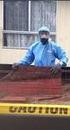 EOSMS 402 Date: 01/13/2014 Page 1 of 6 1) Purpose This document is intended to specify the scope of services required of Asbestos Contractor in asbestos inspection projects at Kennesaw State University
Asbestos abatement Sampling & Analysis. Abatement Project Supervision
 Asbestos abatement Sampling & Analysis Abatement Project Supervision TOPICS FOR DISCUSSION Air Sampling PERSONNEL AREA Analysis PCM Analysis TEM Analysis TYPES OF SAMPLING Two types of air sampling are
EACO Vermiculite Guideline January 2015
 Foreword This guideline has been prepared to assist building owners, building managers, homeowners, constructors, contractors, subcontractors and trade workers who may encounter vermiculite and vermiculite
LEGAL REVIEW & UPDATE
 LEGAL REVIEW & UPDATE There are lots of laws and regulations designed to protect workers, the general public, and the environment. However, not everyone follows the laws. Many people deliberately break
ASBESTOS MANAGEMENT PROGRAM
 ASBESTOS MANAGEMENT PROGRAM Prepared By: Triumvirate Environmental Program Approval Developed: August 2011 Updated: June 2015 Associate Vice President of Public Safety & Administrative Services Date Associate
UNOFFICIAL. 1. Owner: Delaware Department of Transportation (DelDOT) WEBSITE
 SECTION 01013 - SUMMARY OF THE WORK - ASBESTOS ABATEMENT PART 1 - GENERAL 1.1 RELATED DOCUMENTS A. Drawings and general provisions of the Contract, including General and Supplementary Conditions and other
June 27, 2013. Project GSA1570019. Rhonda Rance U.S. General Services Administration 450 Golden Gate Avenue, Floor 4 San Francisco, California 94102
 June 27, 2013 Project GSA1570019 Rhonda Rance U.S. General Services Administration 450 Golden Gate Avenue, Floor 4 San Francisco, California 94102 Subject: Determination of Asbestos Conditions Former USDA
ASBESTOS IN SETTLED DUST: A BRIEF REVIEW
 ASBESTOS IN SETTLED DUST: A BRIEF REVIEW Background: Federal, State, and local asbestos regulations have established criteria for worker exposures, building occupancy, clearance levels, bulk sampling and
ASBESTOS AWARENESS IN THE WORKPLACE. This easy-to-use Leader s Guide is provided to assist in conducting a successful presentation.
 ASBESTOS AWARENESS IN THE WORKPLACE This easy-to-use Leader s Guide is provided to assist in conducting a successful presentation. Featured are: INTRODUCTION: A brief description of the program and the
Protect Your Family From Asbestos-Contaminated Vermiculite
 $9.99 Protect Your Family From Asbestos-Contaminated Vermiculite I M P O R T A N T! Vermiculite Can Be Dangerous If Not Managed Properly The Most Common Sources of Asbestos Exposure: Workplace exposure
Asbestos. Endereço eletrônico http://www.atsdr.cdc.gov/asbestos/asbestos_whatis.html. What Is Asbestos? General Definition.
 Endereço eletrônico http://www.atsdr.cdc.gov/asbestos/asbestos_whatis.html Search Index Home Glossary Contact Us CONTENTS Asbestos What Is Asbestos? Polarized Light Microscopy Slide of Asbestos Fibers.
ASBESTOS BACKGROUND INFORMATION
 ASBESTOS BACKGROUND INFORMATION Asbestos Facts What is Asbestos? Asbestos is a mineral. It is a natural rock mined from the ground. Most of the asbestos used in this country comes from Quebec in Canada.
EVALUATION OF MSHA S HANDLING OF INSPECTIONS AT THE W.R. GRACE & COMPANY MINE IN LIBBY, MONTANA MINE SAFETY AND HEALTH ADMINISTRATION
 EVALUATION OF MSHA S HANDLING OF INSPECTIONS AT THE W.R. GRACE & COMPANY MINE IN LIBBY, MONTANA MINE SAFETY AND HEALTH ADMINISTRATION REPORT NO.: 2E-06-620-0002 REPORT ISSUED: March 22, 2001 TABLE OF CONTENTS
Asbestos in Your Home
 Asbestos in Your Home The following information below is taken largely from a document developed in 1990 entitled Asbestos in Your Home. However, this information is still of value to homeowners and renters.
the risks of removing asbestos containing drywall October 29, 2011
 Summary of recent research about the risks of removing asbestos containing drywall joint compound during residential renovation Presented by David Redmond October 9, 011 Some background information about
Asbestos WHAT TO DO? Studies of people who were exposed to high levels of asbestos in factories and shipyards, are at increased risk of:
 Asbestos WHAT TO DO? What Is Asbestos? Asbestos is mineral fiber. It can be positively identified only with a special type of microscope. There are several types of asbestos fibers. In the past, asbestos
Information for REALTORS CREA. Published June 2007. The Canadian Real Estate Association. [email protected]
 Information for REALTORS Published June 2007 CREA The Canadian Real Estate Association [email protected] BACKGROUND Vermiculite is a mica-like mineral mined around the world and used in a variety of commercial
Asbestos Analysis of Soil and Rock Ed Cahill EMSL Analytical Inc.
 Asbestos Analysis of Soil and Rock Ed Cahill EMSL Analytical Inc. 845-469-8671 [email protected] 1 Why Look for Asbestos in Soil/Rock? Asbestos Contamination Sloppy or improper Asbestos Removal jobs can
DIVISION 248 ASBESTOS REQUIREMENTS. Asbestos Emission Standards and Procedural Requirements 340-248-0250. Asbestos Abatement Project Exemptions
 DIVISION 248 ASBESTOS REQUIREMENTS Asbestos Emission Standards and Procedural Requirements 340-248-0250 Asbestos Abatement Project Exemptions (1) Any person who conducts or provides for the conduct of
DESERT RESEARCH INSTITUTE MOLD ASSESSMENT AND REMEDIATEION PROCEDURE
 1.0 Introduction DESERT RESEARCH INSTITUTE This Desert Research Institute (DRI) Mold Assessment and Remediation Procedure was established to assure that consistent and uniform information is provided to
ASBESTOS MANAGEMENT PROGRAM
 ASBESTOS MANAGEMENT PROGRAM September 2015 Asbestos Management Program Table of Contents I. Purpose II. III. IV. Definitions Identification of Asbestos Asbestos Sampling V. Notification and Labeling VI.
Guidelines for Mold Remediation (Removal)
 Guidelines for Mold Remediation (Removal) Indoor mold growth, water damage, or musty odors should be addressed quickly. Removing mold growth and correcting the underlying cause of water accumulation can
ASBESTOS INSPECTION REPORT 2 Delaware Street, 38 and 39 North Henry Court South Burlington, VT 05403 AIP 84
 ASBESTOS INSPECTION REPORT 2 Delaware Street, 38 and 39 North Henry Court South Burlington, VT 05403 AIP 84 December 16, 2011 Revised January 31, 2012 KAS PROJECT # 509110228 PREPARED FOR: Stantec, Inc.
May 23, 2014. Mr. Derek Sandgren Helm Properties 1520 Butte House Road, Suite 400 Yuba City, California 95993-2240
 May 23, 2014 Mr. Derek Sandgren Helm Properties 1520 Butte House Road, Suite 400 Yuba City, California 95993-2240 RE: Pre-Demolition Asbestos Survey Report 6150 Farrell Street, Marysville, California 95901
APPENDIX B. EPA s Investigating, Evaluating, and Remediating Moisture and Mold Problems (see EPA website for complete details)
 APPENDIX B. EPA s Investigating, Evaluating, and Remediating Moisture and Mold Problems (see EPA website for complete details) Table 1: Water Damage - Cleanup and Mold Prevention Table 1 presents strategies
Asbestos Work Permit Procedures
 These procedures are to be followed by all persons required to perform the following work: Handling, installation or removal of non-friable manufactured products known to contain asbestos provided no sanding,
The Truth About Asbestos In Your Home
 The Truth About Asbestos In Your Home A Complete Report For Anyone Starting A Home Repair Or Remodeling Project In this report you will find out: What asbestos is. What the dangers are of being exposed
British Columbia Institute of Technology. BCIT Safety Manual ASBESTOS MANAGEMENT
 BCIT Safety Manual Contents 1. Purpose... 3 2. Definitions... 3 2.1 Asbestos... 3 2.2 Asbestos Containing Material (ACM)... 3 2.3 Friable Material... 3 2.4 Low Risk Work Activity... 3 2.5 Moderate Risk
June 20, 2002. 2002.06.20: Wagner Testimony on Workplace Exposure to Asbestos. This is an archive page. The links are no longer being updated.
 Page 1 of 6 skip navigational links This is an archive page. The links are no longer being updated. Statement by Gregory R. Wagner, M.D. Director, Division of Respiratory Disease Studies National Institute
North Carolina State University. Asbestos Management Plan
 North Carolina State University 1.0 Introduction Purpose The purpose of this plan is to establish the polices and procedures to be used at North Carolina State University (NCSU) in the management of building
Mold Response and Remediation Plan
 1.0 Policy Statement The University of New Haven has developed a mold response and remediation plan in accordance with best practices set forth by the Environmental Protection Agency (EPA), Occupational
MOLD RESPONSE AND REMEDIATION PLAN
 MOLD RESPONSE AND REMEDIATION PLAN Prepared By: Triumvirate Environmental Developed: April 2011 Last Revised: March 2015 Program Approval Associate Vice President of Public Safety & Administrative Services
Characteristics/Applications
 Facilities Operations and Development Environmental Health & Safety 1314 Kinnear Rd. Columbus, Ohio 43212 Phone (614) 292-1284 Fax (614) 292-6404 http://fod.osu.edu The Ohio State University Asbestos Management
ASBESTOS MANAGEMENT PLAN
 ASBESTOS MANAGEMENT PLAN SAN JOSE STATE UNIVERSITY Environmental Health & Occupational Safety Asbestos Management Plan 1.0 Introduction 2.0 Policy 3.0 Responsibilities 4.0 Contract Administration 5.0 In-House
Asbestos Abatement Work Plan for the Carter Carburetor Superfund Site
 for the Prepared for: ACF Industries LLC 101 Clark Street St. Charles, Missouri 63301 Prepared by: AMEC Environment & Infrastructure, Inc. 15933 Clayton Road, Suite 215 Ballwin, Missouri 63011 Project
If you think your home might have asbestos, read this pamphlet to learn some simple steps to protect your family.
 $9.99 P r o t e c t Y o u r F a m i l y F r o m A s b e s t o s I n Y o u r H o m e I M P O R T A N T! Asbestos Can Be Dangerous If Not Managed Properly The Most Common Sources of Asbestos Exposure: Workplace
CITY OF PHILADELPHIA DEPARTMENT OF PUBLIC HEALTH BOARD OF HEALTH ASBESTOS CONTROL REGULATION
 CITY OF PHILADELPHIA DEPARTMENT OF PUBLIC HEALTH BOARD OF HEALTH ASBESTOS CONTROL REGULATION Philadelphia Department of Public Health Air Management Services 321 University Avenue Philadelphia, PA 19104
How To Perform A Limited Asbestos Survey
 Limited Asbestos Survey Report Presented To: Barbara Wethington Project Manager Weston Solutions, Inc. 960 West Elliot Road, Suite 201 Tempe, Arizona 85284 Project: Southeast Corner of Arizona Highway
The purpose of this document is to provide guidance on the safe removal and disposal of asbestos and asbestos-containing materials.
 The Administration of Norfolk Island SAFE DISPOSAL OF ASBESTOS AT THE WASTE MANAGEMENT CENTRE The purpose of this document is to provide guidance on the safe removal and disposal of asbestos and asbestos-containing
Lead Exposure Management Plan
 Lead Exposure Management Plan 1.0. Policy CSUF has developed the Lead Exposure Management Plan to reduce occupational and environmental exposure to lead, a potent neurotoxin and carcinogen that causes
NDSU TABLE OF CONTENTS
 NDSU TABLE OF CONTENTS 1.0 INTRODUCTION 2.0 DEFINITIONS AND DESCRIPTIONS 3.0 OPERATIONS AND MAINTENANCE PROCEDURES FOR ACM 4.0 FIBER RELEASE EPISODES 5.0 DEMOLITION INFORMATION 6.0 REMARKS 1.0 INTRODUCTION
MOLD REMEDIATION KEY STEPS
 MOLD REMEDIATION KEY STEPS The EPA has developed the following guidelines for mold remediation managers. These guidelines are generally helpful, but we believe an expert in the industry should be consulted
MOLD REMEDIATION Kathleen Parrott, Ph.D. Professor of Housing, Virginia Tech
 MOLD REMEDIATION Kathleen Parrott, Ph.D. Professor of Housing, Virginia Tech Virginia Cooperative Extension has three publications to help you deal with mold in your home: Mold Basics: What is mold? How
OGS LIMITED ASBESTOS & LEAD SURVEY REPORT
 our people and our passion in every project OGS LIMITED ASBESTOS & LEAD SURVEY REPORT Building 44 Willard Drug Treatment Center 7116 County Road 132 Willard, NY Prepared for: NYSOGS 33 rd Floor, Corning
KITCHEN AND BATH REMODELING BUILDING PERMIT REQUIREMENTS
 St. Louis County Department of Public Works Division of Code Enforcement KITCHEN AND BATH REMODELING BUILDING PERMIT REQUIREMENTS This guideline is intended to provide the homeowner/contractor with the
UI Procedures for Asbestos Management
 UI Procedures for Asbestos Management The University of Iowa Rev.12/12/2012 These procedures apply to employees and contractors involving the identification, work on, removal, or repair of asbestos-containing
Standards for Asbestos Abatement
 19a-332a-1. Definitions Standards for Asbestos Abatement 19a-332a-1. Definitions The following definitions shall apply for the purpose of Section 19a-332a-1 to Section 19a-332a- 16 inclusive. (a) "Adequately
Questions & Answers (Q & A) Regarding Asbestos Treatment with the Fire Suppression and Renovation Project
 Questions & Answers (Q & A) Regarding Asbestos Treatment with the Fire Suppression and Renovation Project The Watergate Community is currently in the process with the fire suppression and interior renovations
Mold Management Plan Operations & Maintenance
 Document #: SAFETY_015 Revision Date: October 4, 2010 Mold Management Plan Operations & Maintenance Developed by: Environmental Health & Safety Approved by: Associate VP of Facilities & Campus Services
How To Test For Residual Dust
 Experience on Measurement of Residual Dust as Quality Assurance Documentation During Mold Remediation AIHCE - Chicago, Illinois May 16, 2006 P. Morey & G. Crawford Boelter & Yates, Inc. Gettysburg, PA
Re: Addendum to Preliminary Water Damage Report, Mendocino Public Health Branch, 1120 South Dora Street, Ukiah, CA
 IAS 960 Ms. Kristin McMenomey Risk Manager County of Mendocino 841 Low Gap Road Ukiah, CA 95482 Re: Addendum to Preliminary Water Damage Report, Mendocino Public Health Branch, 1120 South Dora Street,
Fact Sheet on Asbestos
 Fact Sheet on Asbestos WHAT IS ASBESTOS? Asbestos is a naturally occurring mineral found in certain rock formations, mined from open pit mines. Most of the asbestos used in the United States today comes
Arbor Heights Indoor Air Quality Investigation Interim Report
 Arbor Heights Indoor Air Quality Investigation Interim Report Arbor Heights Elementary PTSA 3701 SW 104 Street Seattle, WA 98146 ENVIROTEST RESEARCH INC. 1108 NE 200 th, St. Suite 100 Shoreline, WA 98155-1136
Asbestos Hazards and Controls
 Asbestos Hazards and Controls Environmental and Occupational Health Public Health Ontario Photo provided with the kind permission of Infrastructure Health & Safety Association 5110 Creekbank Road, Mississauga,
Retrofit structural insulated panels (SIPs) increase sound transmission loss of existing single family houses impacted by highway noise
 Baltimore, Maryland NOISE-CON 2010 2010 April 19-21 Retrofit structural insulated panels (SIPs) increase sound transmission loss of existing single family houses impacted by highway noise Scott Harvey
Asbestos Management Program
 Asbestos Management Program Facilities and Operations Revision #4: February 17, 2012 Page IMPORTANT Asbestos related incidents must be reported IMMEDIATELY to your supervisor Emergency Contacts During
ASBESTOS IN ROOFING SYSTEMS WORK PRACTICES AND DISPOSAL IN ASSOCIATION WITH ROOFING PROJECTS
 ASBESTOS IN ROOFING SYSTEMS WORK PRACTICES AND DISPOSAL IN ASSOCIATION WITH ROOFING PROJECTS 1.0 GENERAL 1.1 SUMMARY A. The following procedures apply to the project manual and drawings for asbestos in
Environmental Monitoring of Clean Rooms
 Environmental Monitoring of Raul Duarte President DDK Scientific, Corp. Copyright DDK Scientific, Corp. 2008, 2009, DDK Scientific, Corp. Proprietary A manufacturing facility for pharmaceutical products
ASBESTOS CONTROL PLAN
 ASBESTOS CONTROL PLAN POLICY It is the long term plan of Emily Carr University to have an asbestos free workplace. In the interim, The University plans to manage asbestos hazards based on prioritization
ASBESTOS SCIENCE TECHNOLOGIES, INC.
 ASBESTOS SCIENCE TECHNOLOGIES, INC. P.O. Box 505 Bangor, CA 95914 Phone (530) 518-0934 Email - [email protected] Report for Lincoln Elementary School 1582 Lincoln Road Yuba City, Ca. 95993 Mold Report
January 23, 2009 Reference No. 055643
 1412 Oakbrook Drive, Suite #180. Norcross, GA 30093 Telephone: (770) 441-0027 Fax: (770) 441-2050 www.craworld.com January 23, 2009 Reference No. 055643 Chief Deputy Stan Copland Douglas County Sheriffs
2014 NEC Guide Lines for Home Owner Doing Electrical Work on their Property
 2014 NEC Guide Lines for Home Owner Doing Electrical Work on their Property A brief summary of the most used code references for residential wiring State of Idaho Division of Building Safety Electrical
Asbestos Survey. for. Commercial Building TCA Building T-187, Pasco Airport Pasco, Washington. May 1, 2014. Project #A2014/0406.
 Asbestos Survey for Commercial Building TCA Building T-187, Pasco Airport Pasco, Washington May 1, 2014 Project #A2014/0406 prepared for: Port of Pasco PO Box 769 Pasco, WA 99301 prepared by: Blue Mountain
CHAPTER 4 VENTILATION
 CHAPTER 4 VENTILATION SECTION 401 GENERAL 401.1 Scope. This chapter, in conjunction with the building code, shall govern the ventilation of spaces within a building intended to be occupied. Mechanical
Today s topic is Asbestos Safety. This training is a part of OSHA s Asbestos Standard (29 CFR 1910.1001).
 Today s topic is Asbestos Safety. This training is a part of OSHA s Asbestos Standard (29 CFR 1910.1001). You will learn the: About the dangers of asbestos. How to identify asbestos. How to protect yourself
have been provided with information on whether they do or do not contain asbestos before starting work;
 Health Effects of Asbestos If your work involves possible exposure to asbestos, you should: be aware of the risks from asbestos exposure; understand the importance of keeping exposure as low as possible;
METHOD OF TEST FOR SAMPLING AND TESTING CRUMB RUBBER MODIFIER
 STATE OF CALIFORNIA BUSINESS, TRANSPORTATION AND HOUSING AGENCY DEPARTMENT OF TRANSPORTATION DIVISION OF ENGINEERING SERVICES Transportation Laboratory 5900 Folsom Boulevard Sacramento, California 95819-4612
BIOLOGICAL SAFETY CABINET PROGRAM
 BIOLOGICAL SAFETY CABINET PROGRAM TABLE OF CONTENTS: 1. INTRODUCTION 2. PURPOSE AND SCOPE 3. SELECTION AND INSTALLATION 4. USE OF BIOLOGICAL SAFETY CABINETS 5. CERTIFICATION OF BIOLOGICAL SAFETY CABINETS
Asbestos Removal Procedures for Homeowners
 Asbestos Removal Procedures for Homeowners How to Properly Remove Cement Asbestos-Board Siding (Single-Family, Owner-Occupied Residences Only) IMPORTANT: Read these procedures from start to finish, making
ASBESTOS AWARENESS TRAINING. Title 8, GISO Section 5208
 ASBESTOS AWARENESS TRAINING Title 8, GISO Section 5208 What is Asbestos? Generic term for group of minerals known for their strength, flame/heat resistance, & indestructible qualities. Miracle mineral
Single Family Residential Building Permit Questions & Answers
 Single Family Residential Building Permit Questions & Answers Prepared by Dept. of Public Works Revised 07/01/13 200 East Park Street Edwardsville, IL 62025 (618) 692-7535 (618) 692-7505(Fax) Hours: Monday
Managing your asbestos hazards
 Managing your asbestos hazards Asbestos is a naturally occurring mineral fiber mined from the earth. It was used in over 3,000 products, including many found in homes. When asbestos fibers become airborne,
NORMI Professional Guidance for DIY Projects
 NORMI Professional Guidance for DIY Projects In general, a well-trained and experienced indoor mold remediation professional (CMR) should be consulted when performing remediation. You may find a NORMI
ASBESTOS CONTROL PROGRAM
 WESTERN UNIVERSITY OCCUPATIONAL HEALTH AND SAFETY ASBESTOS CONTROL PROGRAM Last Update: August 2012 TABLE OF CONTENTS 1.0 INTRODUCTION AND SCOPE... 3 2.0 DEFINITIONS... 4 3.0 HISTORICAL INFORMATION...
CONTROL METHODS. There are five ways to control the release of asbestos fibers:
 Control Methods CONTROL METHODS When asbestos containing materials are found in a building, the owner must decide which method or methods will be used to deal with the asbestos. The decision will be based
ASBESTOS BUILDING INSPECTION REPORT. for. Michigan State University Office of Environmental and Occupational Safety East Lansing, Michigan 48823
 ASBESTOS BUILDING INSPECTION REPORT for Michigan State University Office of Environmental and Occupational Safety East Lansing, Michigan 48823 at Bailey Hall Building #315 East Lansing, Michigan 48823
EVERYONE'S RESPONSIBILITY
 EVERYONE'S RESPONSIBILITY Guidelines for an Asbestos Operations and Maintenance Program February 2007 Guidelines for an Asbestos Operations and Maintenance Program Workplace Safety & Health Division 200
ASBESTOS MANAGEMENT INTRODUCTION
 SECTION: II. General Hygiene/ Safety Chapter: 7. Asbestos Management Revision Date: 12/05/2013 Review Date: ASBESTOS MANAGEMENT INTRODUCTION PURPOSE This policy has been developed to ensure that hazardous
How To Manage Asbestos From Roofing And Siding
 Contents Frequently Asked Questions Asphaltic Roofing and Siding Materials.... 1 Floor Tile.... 4 Non-Traditional Asbestos Abatement Work Practice Approvals.... 6 Survey Requirements.... 7 Vermiculite
3rd Annual Design Drafting Contest
 3rd Annual Design Drafting Contest YTI Career Institute 3 rd Annual Design Drafting Contest The purpose of this contest is to encourage excellence in effort and discipline, and to give recognition to outstanding
Oakland Unified San Jose Unified Stanford University Santa Ana Unified Newhall Unified Clovis Unified Merced Union High School Grossmont Union High
 Oakland Unified San Jose Unified Stanford University Santa Ana Unified Newhall Unified Clovis Unified Merced Union High School Grossmont Union High School District Industry Standards Damage Assessments