
Bryce Theodore Bolin Curriculum Vitae
|
|
|
- Drusilla O’Brien’
- 10 years ago
- Views:
Transcription
1 Bryce Theodore Bolin Curriculum Vitae Institute for Astronomy Univ. Hawai i at Mānoa 2680 Woodlawn Dr Honolulu, HI U.S.A. [email protected] Phone: +1 (808) Website: bolin EDUCATION University of Central Florida M.S. in Physics, May 2011 Physics Department, College of Sciences University of Florida B.S. in Physics, July 2009 Physics Department, College of Liberal Arts & Sciences EMPLOYMENT HISTORY 2013 Present Associate Faculty, University of Phoenix, Hawai i Campus 2012 Present Near Earth Object Research Analyst, Institute for Astronomy, Univ. Hawai i at Mānoa 2012 Present Lecturer, Honolulu Community College, Univ. Hawai i 2011 Present Adjunct Instructor, Valencia College, Orlando, Florida 2011 Adjunct Instructor, Santa Fe College, Gainesville, Florida Teaching Assistant, University of Central Florida, Orlando, Florida 2009 Research Assistant, University of Central Florida, Orlando, Florida Research Student, Physics Department, University of Florida, Gainesville, Florida RESEARCH INTERESTS Small bodies of the solar system, asteroid and comet orbital dynamics, rotational and orbital evolution of asteroids, near earth objects (NEOs), cratering, asteroid light curves, space weathering, cometary mass loss, asteroid and comet taxonomy, trans-neptunian objects, asteroid families, main belt comets, secular dynamics, impacts and disruption of small bodies, large scale asteroid and comet surveys, radar detection of asteroids, origin and evolution of planetary systems, outer solar system dynamics, planetary rings, moons of outer planets, asteroid comet coma composition, dust dynamics, hazards GRANTS, AWARDS & HONORS Florida Bright Futures Florida Academic Scholarship ($10k/yr),

2 DATA & OBSERVING EXPERIENCE Observing time granted: University of Hawaii 88 Canada France Hawaii Telescope (CFHT) (MegaPrime) Time already observed: Canada France Hawaii Telescope (CFHT) (MegaPrime) Subaru Telescope (Suprime-Cam) University of Hawaii 88 Robinson Observatory 22 James Clerk Maxwell Telescope (SCUBA 2, ACSIS) Subaru Telescope (IRCS) Subaru Telescope (Suprime-Cam) James Clerk Maxwell Telescope (HARP) University of Hawaii 88 9 nights for rapid rotator survey (co-i) 40 queue scheduled hours For NEO follow up (co-i) 7 queue scheduled hours to observe comet ISON (co-i) 2 nights for a main belt asteroid light curve survey (co-i) 4 nights for light curve observation of 2002 GT (co-i) 3 nights for observing exoplanet transits (PI) 2 nights for extragalactic studies (observer) 1 night for small body spectra (assistant) multiple nights for evening and morning NEO searches (co-i) 1 day for comet emission spectra (assistant) 4 nights for small bodies observation and follow up (assistant) Data Reduction and Analysis relevant to: Cassini Spacecraft Ultra-Violet Imaging Spectrograph (UVIS) stellar occultations of Saturn s rings taken since 2005, Panoramic Survey Telescope & Rapid Response System (Pan-STARRS), Moving Object Processing System (MOPS), CFHT MegaPrime image reduction, Subaru SuprimeCam image reduction, Near Earth Object Population Model, Survey Bias Calculation, Survey Performance Technical skills in: Advanced: Python, SLALIB, LaTeX Proficient: C/C++, IDL, Java, MySQL, OpenOrb, Unix, LabVIEW, DS9, SExtractor, SCAMP, Perl, Mathematica, Condor, IRAF TEACHING & ADVISING MTH 219 Course Instructor, Introduction to College Algebra, Undergraduate Level Course, Math Department, University of Phoenix, Fall 2013 PHY 50L Course Instructor, Technical Physics, Undergraduate Level Course, Honolulu Community College, Honolulu, Hawai i, Spring 2013 AST 1002 Course Instructor, Introduction to Astronomy, Undergraduate Level Course, Valencia College, Orlando, Florida, Summer Spring 2013 PHY 2004 Course Instructor, Applied Physics, Undergraduate Level Course, Santa Fe College, Fall 2011 PHY 2004L Laboratory Instructor, Applied Physics Lab, Undergraduate Level Course, Santa Fe College, Fall 2011 ESC 1000 Course Instructor, Earth and Space Science, Undergraduate Level Course, Santa Fe College, Summer 2011 PHY 2049L Laboratory Instructor, Physics for Engineers II Lab, Undergraduate Level Course, Physics Department, University of Central Florida, Fall Spring 2011 PHY 2049HL Laboratory Instructor, Honors Physics for Engineers II Lab, Honors College Undergraduate Level Course, Physics Department, University of Central Florida, Spring 2011 PHY 2060L Laboratory Instructor, General Physics Lab, Undergraduate Level Course, Physics Department, University of Central Florida, Spring Summer 2010 PHY 2060L Laboratory Instructor, General Physics Lab, Undergraduate Level Course, Physics Department, University of Central Florida, Spring Summer 2010

3 Students supervised: Allison Bratcher (Undergraduate at UCF), in conjunction with Josh Colwell on UVIS stellar occultation research, Fall 2012 PUBLIC OUTREACH Public Outreach Volunteer: Honolulu Zoo Educational Outreach (July 2013) Institute for Astronomy Open House (April 2013) Institute for Astronomy Comet Pan-STARRS (March 2013) Holy Nativity School (Febuary 2013) Bernice Pauahi Bishop Museum (January 2013) Institute for Astronomy Curiosity Landing Coverage (August 2012) Institute for Astronomy Transit of Venus (June 2012) Kapolei High School (April 2012) Sea Life Park (April 2012) Institute for Astronomy Open House (April 2012) University of Florida (Fall 2011) Harmony Dark Sky Festival (April 2011) University of Central Florida (Spring 2011) University of Central Florida (Fall 2011) Harmony Dark Sky Festival (April 2010) Harmony Dark Sky Festival (Spring 2010) Event Volunteer, Division of Planetary Sciences (October 2012) Volunteer Judge, Hawaii State Science Fair (Apr 2012) Event Volunteer, Division of Planetary Sciences (October 2012) Event Volunteer, The Next-Generation Suborbital Researchers Conference (Febuary 2011) PROFESSIONAL TALKS Minimoon Discovery with Ground-based Radar Facilities, 45th Annual Meeting of the Division for Planetary Sciences, Denver, Colorado, October 2013 The Detectability of Earth s Temporarily Captured Orbiters, 44th Annual Meeting of the Division for Planetary Sciences, Reno, Nevada, October 2012 Saturn s Faint, Narrow Ringlets, Graduate Research Symposium, Gainesville, Florida, August 2011 Cassini Observation of Saturn s Faint, Narrow Ringlets, Rings Workshop, Cornell, New York, July 2011 REFERENCES Robert Jedicke, Specialist Institute for Astronomy, Hawai i [email protected] Richard Wainscoat, Specialist Institute for Astronomy, Hawai i [email protected] Joshua Colwell, Professor University of Central Florida [email protected] REFEREED PAPERS (PUBLISHED AND IN PROGRESS) Granvik, M., M. Morbidelli, R. Jedicke, W.F. Bottke, B. Bolin, E. Beshore, D. Vokrouhlicky, D. Nesvorny, G, and P. Michel A New Population Model of the Orbits and Absolute Magnitudes of Near-Earth Objects. Icarus. (in preparation)

4 Granvik, M., M. Morbidelli, R. Jedicke, W.F. Bottke, B. Bolin, E. Beshore, D. Vokrouhlicky, D. Nesvorny, G, and P. Michel Depletion of the near-earth-asteroid Population at Small Perihelion Distances. Nature. (in preparation) Veres, P. and Jedicke, R. and Fitzsimmons, A. and Denneau, L. and Wainscoat, R. and Bolin, B. and PS1SC Collaboration Absolute Magnitudes of Pan-STARRS PS1 Asteroids. Icarus. (in preparation) Bolin, B., J. Colwell, and A. Bratcher Cassini UVIS Observations of Saturn s Faint, Narrow Ringlets. Icarus. (in preparation) Bolin, B., R. Jedicke, M. Granvik, P. Brown, E. Howell, M. Nolan, M. Chyba, G. Patterson and R. Wainscoat Detecting Earth s Temporarily Captured Natural Irregular Satellites - Minimoons. Icarus. (submitted) Jedicke, R., B. Bolin, M. Granvik and E. Beshore An Improved Technique for Quantifying Observational Selection Effects in Asteroid Surveys. Icarus. (submitted) Denneau, L., R. Jedicke, T. Grav, M. Granvik, J. Kubica, A. Milani, P. Veres, R. Wainscoat, D. Chang, F. Pierfederici, N. Kaiser, K. Chambers, J. Heasly, E. Magnier, P. Price, J. Myers, J. Kleyna, H. Hsieh, D. Farnocchia, C. Waters, B. Sweeny, D. Green, B. Bolin, W. Burgett, J. Morgan, J. Tonry, K. Hodapp, S. Chastel, S. Chesley, A. Fitzsimmons, T. Bressi, M. Holman, R. Holmes, T. Lister, R. McMillan, M. Micheli, E. Ryan, W. Ryan, and J. Scotti The Pan-STARRS Moving Object Processing System. PASP, 125, Granvik, M., R. Jedicke, B. Bolin, M. Chyba and G. Patterson, Earth s Temporarily-Captured Natural Satellites - The First Step towards Utilization of Asteroid Resources. Asteroids: Prospective Energy and Material Resources, Springer Verlag. ABSTRACTS AND OTHER PUBLICATIONS Bolin, B. and Jedicke, R. and Granvik, M. and Brown, P. and Chyba, M. and Howell, E. and Nolan, M. and Patterson, G. and Wainscoat, R Minimoon Discovery with Ground-based Radar Facilities. In AAS/Division for Planetary Sciences Meeting Abstracts, Volume 45, pp Veres, P. and Jedicke, R. and Fitzsimmons, A. and Denneau, L. and Wainscoat, R. and Bolin, B. and PS1SC Collaboration Absolute Magnitudes of Pan-STARRS PS1 Asteroids. In AAS/Division for Planetary Sciences Meeting Abstracts, Volume 45, pp Granvik, M. and Morbidelli, A. and Jedicke, R. and Bottke, W. F. and Bolin, B. and Beshore, E. and Vokrouhlicky, D. and Nesvorny, D. and Michel, P A New Population Model of the Orbits and Absolute Magnitudes of Near-Earth Objects. In AAS/Division for Planetary Sciences Meeting Abstracts, Volume 45, pp Wainscoat, R. J., L. Denneau, P. Veres, R. Jedicke, and B. Bolin The Pan-STARRS1 Search for Near Earth Objects: Recent Progress and Future Plans. In AAS/Division for Planetary Sciences Meeting Abstracts, Volume 44, pp Veres, P., R. Jedicke, L. Denneau, A. Fitzsimmons, B. Bolin, R. Wainscoat, and P. Science Consortium Absolute Magnitudes of Pan-STARRS 1 Asteroids. In AAS/Division for Planetary Sciences Meeting Abstracts, Volume 44, pp Bratcher, A., J. E. Colwell, and B. Bolin Analysis of a Triple Star System Occulted By Saturn s Rings. In AAS/Division for Planetary Sciences Meeting Abstracts, Volume 44, pp

5 Bolin, B., R. Jedicke, M. Granvik, J. Vaubaillon, R. Wainscoat, P. Brown, P. Jenniskens, E. Howell, M. Nolan, M. Chyba, G. Picot, and G. Patterson The Detectability of Earth s Temporarily Captured Orbiters. In AAS/Division for Planetary Sciences Meeting Abstracts, Volume 44, pp Bolin, B., R. Jedicke, M. Granvik, J. Vaubaillon, and R. Wainscoat Detecting Earth s Moons. In LPI Contributions, Volume 1667, pp Bolin, B., and J. Colwell Cassini UVIS Observations of Saturn s Faint, Narrow Ringlets. In EPSC-DPS Joint Meeting 2011, pp Bolin, B., and J. Colwell Cassini UVIS Observations of Saturn s Faint, Narrow Ringlets. In Rings Workshop, Cornell 2011, pp. 33. NOTABLE CIRCULARS Bolin, B. and Denneau, L. and Wainscoat, R. and Micheli, M. and Draginda, A. and Sato, H. and Williams, G. V Comet P/2014 A5 (Panstarrs). Central Bureau Electronic Telegrams, Bolin, B. and Veres, P. and Wainscoat, R. and Denneau, L. and Scotti, J. V., and Sato, H. and Williams, G. V Comet P/2014 A3 (Panstarrs). Central Bureau Electronic Telegrams, Bolin, B. and Veres, P. and Wainscoat, R. and Draginda, A. and Micheli, M. and Linder, T. and Holmes, R. and Sato, H. and Ligustri, R. and Williams, G. V Comet C/2013 Y2 (Panstarrs). Central Bureau Electronic Telegrams, Bolin, B. and Denneau, L. and Veres, P. and Wainscoat, R. and Micheli, M. and Sato, H. and Williams, G. V Comet C/2013 X1 (Panstarrs). Central Bureau Electronic Telegrams, Bolin, B. and Wainscoat, R. and Denneau, L. and Veres, P. and Chastel, S. and Micheli, M. and Ryan, W. and Sato, H. and Williams, G. V Comet C/2013 W2 (Panstarrs). Central Bureau Electronic Telegrams, Bolin, B. and Kleyna, J. and Wainscoat, R. and Veres, P. and Denneau, L. and Sato, H. and Williams, G. V Comet C/2013 W1 (Panstarrs). Central Bureau Electronic Telegrams, Hill, R., Bolin, B. and Kleyna, J. and Denneau, L. and Wainscoat, R. and Micheli, M. and Armstrong, J. and Molina, K. and Sato, H and Williams, G. V Comet P/2013 R3 (Catalina-Panstarrs). Central Bureau Electronic Telegrams, Bolin, B. and Denneau, L. and Micheli, L. and Wainscoat, R. and Tholen, D. J. and and Lister, T. and Williams, G. V Comet P/2013 P5 (Panstarrs). Central Bureau Electronic Telegrams, Bolin, B. and Micheli, M. and Hsieh, H. and Veres, P. and Woodworth, D. and Sato, H. and Spahr, T. and Williams, G. V Comet P/2013 P1 (Panstarrs). Central Bureau Electronic Telegrams, Bolin, B. and Wainscoat, R. and Denneau, L. and Micheli, M. and Forshay, P. and Woodworth, D. and Williams, G. V Comet P/2013 N5 (Panstarrs). Central Bureau Electronic Telegrams, Bolin, B. and Hsieh, H. and Wainscoat, R. and Micheli, M. and Holmes, R. and Vorobjov, T. and Sato, H. and Williams, G. V Comet P/2013 O2 (Panstarrs). Central Bureau Electronic Telegrams, Bolin, B. and Denneau, L. and Wainscoat, R. and Micheli, M. and Veres, P. and Wells, L. and Forshay, P. and Williams, G. V Comet P/2013 N3 (Panstarrs). Central Bureau Electronic Telegrams, Bolin, B. and Denneau, L. and Veres, P. and Hsieh, H. and Micheli, M. and Wainscoat, R. and Wells, L. and Skiff, B. and Williams, G. V Comet P/2003 BM 80 = (323137) 2003 BM 80. Central Bureau Electronic Telegrams, 3559.

6 Bolin, B. and Veres, P. and Wainscoat, R. and Micheli, M. and Draginda, A. and Hormuth, F. and Ries, J. G. and Sato, H. and Williams, G. V Comet C/2013 G8 (Panstarrs). Central Bureau Electronic Telegrams, Bolin, B. and Denneau, L. and Wainscoat, R. and Jedicke, R. and Veres, P. and Micheli, M. and Birtwhistle, P. and Holmes, R. and Vorobjov, T. and Buzzi, L. and Foglia, S. and Armstrong, J. D. and Micheli, M. and Sato, H. and Masi, G. and Nocentini, F. and Masi, U. and Williams, G. V Comet C/2012 S4 (Panstarrs). Central Bureau Electronic Telegrams, 3245.

Undergraduate Studies Department of Astronomy
 WIYN 3.5-meter Telescope at Kitt Peak near Tucson, AZ Undergraduate Studies Department of Astronomy January 2014 Astronomy at Indiana University General Information The Astronomy Department at Indiana
The Minor Planet Center Status Report
 The Minor Planet Center Status Report Matthew J Holman Interim Director, Minor Planet Center Smithsonian Astrophysical Observatory Harvard-Smithsonian Center for Astrophysics 8 November 2015 MPC Organization
Lecture 13. Gravity in the Solar System
 Lecture 13 Gravity in the Solar System Guiding Questions 1. How was the heliocentric model established? What are monumental steps in the history of the heliocentric model? 2. How do Kepler s three laws
Kathryn Forbes Neugent
 Education Kathryn Forbes Neugent (805) 234-5390 [email protected] Northern Arizona University, 2015 - present M.S. Degree Candidate in Physics with an emphasis on Planetary Science George Washington
Chapter 7 Our Planetary System. Agenda. Intro Astronomy. Intro Astronomy. What does the solar system look like? A. General Basics
 Chapter 7 Our Planetary System Agenda Pass back & discuss Test 2 Where we are (at) Ch. 7 Our Planetary System Finish Einstein s Big Idea Earth, as viewed by the Voyager spacecraft A. General Basics Intro
Rosaly Lopes, Jet Propulsion Laboratory, California Institute of Technology
 Saturn s Moon Titan: Cassini-Huygens Reveals a New World Rosaly Lopes, Jet Propulsion Laboratory, California Institute of Technology The year 2005 will be remembered in the history of space exploration
Potential Career Tracks Associated With the APS Undergraduate Major
 Potential Career Tracks Associated With the APS Undergraduate Major This document is an outline of the various career paths that recent APS graduates have taken. We encourage all majors to read these descriptions
Our Planetary System. Earth, as viewed by the Voyager spacecraft. 2014 Pearson Education, Inc.
 Our Planetary System Earth, as viewed by the Voyager spacecraft 7.1 Studying the Solar System Our goals for learning: What does the solar system look like? What can we learn by comparing the planets to
Motions of the Earth. Stuff everyone should know
 Motions of the Earth Stuff everyone should know Earth Motions E W N W Noon E Why is there day and night? OR Why do the Sun and stars appear to move through the sky? Because the Earth rotates around its
A SOLAR SYSTEM COLORING BOOK
 A SOLAR SYSTEM COLORING BOOK Brought to you by: THE SUN Size: The Sun is wider than 100 Earths. 1 Temperature: 27,000,000 F in the center, 10,000 F at the surface. So that s REALLY hot anywhere on the
Chapter 7 Our Planetary System. What does the solar system look like? Thought Question How does the Earth-Sun distance compare with the Sun s radius
 Chapter 7 Our Planetary System 7.1 Studying the Solar System Our goals for learning:! What does the solar system look like?! What can we learn by comparing the planets to one another?! What are the major
Welcome to Class 4: Our Solar System (and a bit of cosmology at the start) Remember: sit only in the first 10 rows of the room
 Welcome to Class 4: Our Solar System (and a bit of cosmology at the start) Remember: sit only in the first 10 rows of the room What is the difference between dark ENERGY and dark MATTER? Is Earth unique,
Solar System Overview
 Solar System Overview Planets: Four inner planets, Terrestrial planets Four outer planets, Jovian planets Asteroids: Minor planets (planetesimals) Meteroids: Chucks of rocks (smaller than asteroids) (Mercury,
A Solar System Coloring Book
 A Solar System Coloring Book Courtesy of the Windows to the Universe Project http://www.windows2universe.org The Sun Size: The Sun is wider than 100 Earths. Temperature: ~27,000,000 F in the center, ~10,000
Study Guide: Solar System
 Study Guide: Solar System 1. How many planets are there in the solar system? 2. What is the correct order of all the planets in the solar system? 3. Where can a comet be located in the solar system? 4.
Discover the Universe AST-1002 Section 0427, Spring 2016
 Discover the Universe AST-1002 Section 0427, Spring 2016 Instructor: Dr. Francisco Reyes Office: Room 12 Bryant Space Science Center Telephone: 352-294-1885 Email: [email protected] Office hours: Monday
Graduate Programs in Physics and Astronomy
 Graduate Programs in Physics and Astronomy Western s award winning faculty members, cutting edge research and interdisciplinary environment give you the tools to engage your imagination. The University
Chapter 25.1: Models of our Solar System
 Chapter 25.1: Models of our Solar System Objectives: Compare & Contrast geocentric and heliocentric models of the solar sytem. Describe the orbits of planets explain how gravity and inertia keep the planets
Jr. Edition. Solar System. Trading Cards. Solar System Trading Cards, Jr. Edition. Learn more about the solar system on these websites:
 Solar System Trading Cards, Jr. Edition To use these cards: Print out onto card stock or heavy paper. Cut out and fold in half along dotted line; glue or tape each card together. FOLD National Aeronautics
DESCRIPTION ACADEMIC STANDARDS INSTRUCTIONAL GOALS VOCABULARY BEFORE SHOWING. Subject Area: Science
 DESCRIPTION Host Tom Selleck conducts a stellar tour of Jupiter, Saturn, Uranus, Neptune, and Pluto--the outer planets of Earth's solar system. Information from the Voyager space probes plus computer models
Science 9 Worksheet 13-1 The Solar System
 Name Date Due Date Science 9 Read pages 264-287 of SP to help you answer the following questions: Also, go to a school computer connected to the internet. Go to Mr. Colgur s Webpage at http://sd67.bc.ca/teachers/dcolgur
Astronomy Club of Asheville October 2015 Sky Events
 October 2015 Sky Events The Planets this Month - page 2 Planet Highlights - page 10 Moon Phases - page 13 Orionid Meteor Shower Peaks Oct. 22 nd - page 14 Observe the Zodiacal Light - page 15 2 Bright
Asteroids. Earth. Asteroids. Earth Distance from sun: 149,600,000 kilometers (92,960,000 miles) Diameter: 12,756 kilometers (7,926 miles) dotted line
 Image taken by NASA Asteroids About 6,000 asteroids have been discovered; several hundred more are found each year. There are likely hundreds of thousands more that are too small to be seen from Earth.
THE SOLAR SYSTEM - EXERCISES 1
 THE SOLAR SYSTEM - EXERCISES 1 THE SUN AND THE SOLAR SYSTEM Name the planets in their order from the sun. 1 2 3 4 5 6 7 8 The asteroid belt is between and Which planet has the most moons? About how many?
Georgia Performance Standards Framework for Science Grade 6. Unit Organizer: UNIVERSE AND SOLAR SYSTEM (Approximate Time 3 Weeks)
 The following instructional plan is part of a GaDOE collection of Unit Frameworks, Performance Tasks, examples of Student Work, and Teacher Commentary. Many more GaDOE approved instructional plans are
Brewer: Curriculum Vita 1. Ernest Andrew Brewer John D. McArthur Campus 5353 Parkside Drive, EC 202I Jupiter, Fl. 33458 (561) 799-8629
 Brewer: Curriculum Vita 1 Ernest Andrew Brewer John D. McArthur Campus 5353 Parkside Drive, EC 202I Jupiter, Fl. 33458 (561) 799-8629 EDUCATION Doctor of Education Curriculum and Instruction University
SYLLABUS FORM WESTCHESTER COMMUNITY COLLEGE Valhalla, NY l0595. l. Course #:PHYSC 151 2. NAME OF ORIGINATOR /REVISOR: PAUL ROBINSON
 SYLLABUS FORM WESTCHESTER COMMUNITY COLLEGE Valhalla, NY l0595 l. Course #:PHYSC 151 2. NAME OF ORIGINATOR /REVISOR: PAUL ROBINSON NAME OF COURSE: ASTRONOMY 3. CURRENT DATE: OCTOBER 26, 2011. Please indicate
Out of This World Classroom Activity
 Out of This World Classroom Activity The Classroom Activity introduces students to the context of a performance task, so they are not disadvantaged in demonstrating the skills the task intends to assess.
Related Standards and Background Information
 Related Standards and Background Information Earth Patterns, Cycles and Changes This strand focuses on student understanding of patterns in nature, natural cycles, and changes that occur both quickly and
California Standards Grades 9 12 Boardworks 2009 Science Contents Standards Mapping
 California Standards Grades 912 Boardworks 2009 Science Contents Standards Mapping Earth Sciences Earth s Place in the Universe 1. Astronomy and planetary exploration reveal the solar system s structure,
Solar System. 1. The diagram below represents a simple geocentric model. Which object is represented by the letter X?
 Solar System 1. The diagram below represents a simple geocentric model. Which object is represented by the letter X? A) Earth B) Sun C) Moon D) Polaris 2. Which object orbits Earth in both the Earth-centered
Due Tuesday, January 27th IN CLASS. Grading Summary: Question 11: 12 points. Question 12: 26 points. Question 13: 12 Points.
 HOMEWORK #1 Solar System Exploration Due Tuesday, January 27th IN CLASS Answers to the questions must be given in complete sentences (except where indicated), using correct grammar and spelling. Please
Science Standard 4 Earth in Space Grade Level Expectations
 Science Standard 4 Earth in Space Grade Level Expectations Science Standard 4 Earth in Space Our Solar System is a collection of gravitationally interacting bodies that include Earth and the Moon. Universal
APS Science Curriculum Unit Planner
 APS Science Curriculum Unit Planner Grade Level/Topic Science 6 Earth/Space Interrelationships Stage 1: Desired Results Enduring Understanding Our solar system is made up of many different bodies in relationship
A. 81 2 = 6561 times greater. B. 81 times greater. C. equally strong. D. 1/81 as great. E. (1/81) 2 = 1/6561 as great.
 Q12.1 The mass of the Moon is 1/81 of the mass of the Earth. Compared to the gravitational force that the Earth exerts on the Moon, the gravitational force that the Moon exerts on the Earth is A. 81 2
Solar System Observations contains two components: Planetary Astronomy and Near Earth Object Observations.
 C.6 SOLAR SYSTEM OBSERVATIONS 1. Scope of Program Solar System Observations supports both ground-based astronomical observations and suborbital investigations of our Solar System involving sounding rockets
Pluto Data: Numbers. 14b. Pluto, Kuiper Belt & Oort Cloud. Pluto Data (Table 14-5)
 14b. Pluto, Kuiper Belt & Oort Cloud Pluto Pluto s moons The Kuiper Belt Resonant Kuiper Belt objects Classical Kuiper Belt objects Pluto Data: Numbers Diameter: 2,290.km 0.18. Earth Mass: 1.0. 10 22 kg
 143,000 km Key to Sorting the Solar System Cards Object Description Size (km) Picture Credits Barringer Crater Ceres Earth Earth's moon Eris Eros Gaspra Hale-Bopp Hoba Iapetus Ida and Dactyl Itokawa
7. Our Solar System. Planetary Orbits to Scale. The Eight Planetary Orbits
 7. Our Solar System Terrestrial & Jovian planets Seven large satellites [moons] Chemical composition of the planets Asteroids & comets The Terrestrial & Jovian Planets Four small terrestrial planets Like
Bangkok Christian College EIP Matayom Course Description Semester One 2011-2012
 Bangkok Christian College EIP Matayom Course Description Semester One 2011-2012 Subject: General Science Grade: Matayom 6 Course Description This semester the General Science course will continue covering
Class 2 Solar System Characteristics Formation Exosolar Planets
 Class 1 Introduction, Background History of Modern Astronomy The Night Sky, Eclipses and the Seasons Kepler's Laws Newtonian Gravity General Relativity Matter and Light Telescopes Class 2 Solar System
Lecture 12: The Solar System Briefly
 Lecture 12: The Solar System Briefly Formation of the Moonhttp://www.youtube.com/watch?v=WpOKztEiMqo&feature =related Formation of our Solar System Conservation of Angular Momentum Why are the larger,
Contribution of Padova Team to SSA - NEO Segment : the SINEO project Monica Lazzarin
 Contribution of Padova Team to SSA - NEO Segment : the SINEO project Monica Lazzarin The contribution of Padova Team to SSA activities mainly focuses on the NEO segment, in particular the investigation
A long time ago, people looked
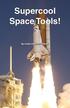 Supercool Space Tools! By Linda Hermans-Killam A long time ago, people looked into the dark night sky and wondered about the stars, meteors, comets and planets they saw. The only tools they had to study
LER 2891. Ages. Grades. Solar System. A fun game of thinking & linking!
 Solar System Ages 7+ LER 2891 Grades 2+ Card Game A fun game of thinking & linking! Contents 45 Picture cards 45 Word cards 8 New Link cards 2 Super Link cards Setup Shuffle the two decks together to mix
Vagabonds of the Solar System. Chapter 17
 Vagabonds of the Solar System Chapter 17 ASTR 111 003 Fall 2006 Lecture 13 Nov. 27, 2006 Introduction To Modern Astronomy I Introducing Astronomy (chap. 1-6) Planets and Moons (chap. 7-17) Ch7: Comparative
The Main Point. Lecture #34: Solar System Origin II. Chemical Condensation ( Lewis ) Model. How did the solar system form? Reading: Chapter 8.
 Lecture #34: Solar System Origin II How did the solar system form? Chemical Condensation ("Lewis") Model. Formation of the Terrestrial Planets. Formation of the Giant Planets. Planetary Evolution. Reading:
The Solar System. Unit 4 covers the following framework standards: ES 10 and PS 11. Content was adapted the following:
 Unit 4 The Solar System Chapter 7 ~ The History of the Solar System o Section 1 ~ The Formation of the Solar System o Section 2 ~ Observing the Solar System Chapter 8 ~ The Parts the Solar System o Section
CURRICULUM VITAE. H. Michael Sommermann, PhD Department of Physics Westmont College 955 La Paz Road Santa Barbara, California 93108
 CURRICULUM VITAE H. Michael Sommermann, PhD Department of Physics Westmont College 955 La Paz Road Santa Barbara, California 93108 Phone: (805) 565-6094 Fax: (805) 565-7036 [email protected] EDUCATION
astronomy 2008 1. A planet was viewed from Earth for several hours. The diagrams below represent the appearance of the planet at four different times.
 1. A planet was viewed from Earth for several hours. The diagrams below represent the appearance of the planet at four different times. 5. If the distance between the Earth and the Sun were increased,
Solar System Fundamentals. What is a Planet? Planetary orbits Planetary temperatures Planetary Atmospheres Origin of the Solar System
 Solar System Fundamentals What is a Planet? Planetary orbits Planetary temperatures Planetary Atmospheres Origin of the Solar System Properties of Planets What is a planet? Defined finally in August 2006!
UNIVERSITY OF HAWAI I AT MĀNOA ASTRONOMY & ASTROPHYSICS. The University of Hawai i is an equal opportunity/affirmative action institution.
 UNIVERSITY OF HAWAI I AT MĀNOA ASTRONOMY & The University of Hawai i is an equal opportunity/affirmative action institution. A M E SSAG E F R O M THE PROGRAM U N D E R G R A D U AT E P R O G R A M S I
Mark Christopher Lewis
 Mark Christopher Lewis Department of Computer Science 78212 [email protected] (210) 999-7022 (Tel.) (210) 999-7477 (Fax.) http://www.cs.trinity.edu/~mlewis/ Education 1996-2001 Ph.D. from the Department
Copyright 2006, Astronomical Society of the Pacific
 2 1 3 4 Diameter: 590 miles (950 km) Distance to Sun: 257 million miles (414 million km) Orbits: # 18 Composition: Outer layer probably ice and frozen ammonia, no Diameter: 750 miles (1200 km) Distance
Earth Sciences -- Grades 9, 10, 11, and 12. California State Science Content Standards. Mobile Climate Science Labs
 Earth Sciences -- Grades 9, 10, 11, and 12 California State Science Content Standards Covered in: Hands-on science labs, demonstrations, & activities. Investigation and Experimentation. Lesson Plans. Presented
ASTR 100 Introduction to Astronomy Syllabus for Fall 2015
 Instructor Information Name Office Email Office Hours Course Information ASTR 100 Introduction to Astronomy Syllabus for Fall 2015 Prof. Emily Hardegree-Ullman 125 Astronomy [email protected] Tuesdays
A Taxonomy for Space Curricula
 A Taxonomy for Space Curricula Arthur W. Draut, Ph.D. College of Aviation Embry-Riddle Aeronautical University Abstract Many universities have added courses and curricula related to satellites and space.
Science@ESA vodcast series. Script for Episode 6 Charting the Galaxy - from Hipparcos to Gaia
 Science@ESA vodcast series Script for Episode 6 Charting the Galaxy - from Hipparcos to Gaia Available to download from http://sci.esa.int/gaia/vodcast Hello, I m Rebecca Barnes and welcome to the Science@ESA
STUDY GUIDE: Earth Sun Moon
 The Universe is thought to consist of trillions of galaxies. Our galaxy, the Milky Way, has billions of stars. One of those stars is our Sun. Our solar system consists of the Sun at the center, and all
Task 329. Tracking and Monitoring Suborbital Commercial Space Vehicles
 Task 329. Tracking and Monitoring Suborbital Commercial Space Vehicles Dr. William H. Ryan Research Faculty, 2.4-meter Telescope (NM Tech/Magdalena Ridge Observatory) Project Overview Ultimately: develop
CELESTIAL EVENTS CALENDAR APRIL 2014 TO MARCH 2015
 CELESTIAL EVENTS CALENDAR APRIL 2014 TO MARCH 2015 *** Must See Event 2014 ***April 8 - Mars at Opposition. The red planet will be at its closest approach to Earth and its face will be fully illuminated
1 A Solar System Is Born
 CHAPTER 3 1 A Solar System Is Born SECTION Formation of the Solar System BEFORE YOU READ After you read this section, you should be able to answer these questions: What is a nebula? How did our solar system
Planetary Defense! Space System Design, MAE 342, Princeton University! Robert Stengel
 Planetary Defense! Space System Design, MAE 342, Princeton University! Robert Stengel!! Asteroids and Comets!! Spacecraft!! Detection, Impact Prediction, and Warning!! Options for Minimizing the Hazard!!
Solar System. Trading Cards. Solar System Trading Cards, Jr. Edition. Learn more about the solar system on these Web sites:
 Solar System Trading Cards, Jr. Edition To use these cards: Print out onto card stock or heavy paper. Cut out and fold in half along dotted line; glue or tape each card together. FOLD National Aeronautics
Lab 7: Gravity and Jupiter's Moons
 Lab 7: Gravity and Jupiter's Moons Image of Galileo Spacecraft Gravity is the force that binds all astronomical structures. Clusters of galaxies are gravitationally bound into the largest structures in
Yevgeny Goncharov WORK EXPERIENCE
 Yevgeny Goncharov Quantitative Risk Management 181 West Madison Street 41 st Floor Chicago, Illinois 60602 Phone: (312) 782-7716 [email protected] WORK EXPERIENCE Academic Background 1998 2003
THE SOLAR SYSTEM Syllabus
 THE SOLAR SYSTEM Syllabus Course Title The Solar System: Earth and Space Science Course Description This course provides an overview of what we know about the Solar System: how it began and evolved, its
Earth in the Solar System
 Copyright 2011 Study Island - All rights reserved. Directions: Challenge yourself! Print out the quiz or get a pen/pencil and paper and record your answers to the questions below. Check your answers with
WELCOME to Aurorae In the Solar System. J.E. Klemaszewski
 WELCOME to Aurorae In the Solar System Aurorae in the Solar System Sponsoring Projects Galileo Europa Mission Jupiter System Data Analysis Program ACRIMSAT Supporting Projects Ulysses Project Outer Planets
Planets and Dwarf Planets by Shauna Hutton
 Name: Wow! Technology has improved so well in the last several years that we keep finding more and more objects in our solar system! Because of this, scientists have had to come up with new categories
Chang e-3 s Progress and Achievement 2/2014
 Chang e-3 s Progress and Achievement 2/2014 Main content 1. Chinese Lunar Exploration Program 2. Chang e-3 s Progress 3. Chang e-3 s Achievement Chinese Lunar Exploration Program Phase I Orbital missions
College of Science George Mason University Fairfax, VA 22030
 College of Science George Mason University Fairfax, VA 22030 Dr. Sidney Wolff and the LSST Board of Directors LSST Corporation 933 N. Cherry Avenue Tucson, AZ 85721-0009 June 14, 2010 Dear Dr. Wolff and
Chapter 9 Asteroids, Comets, and Dwarf Planets. Their Nature, Orbits, and Impacts
 Chapter 9 Asteroids, Comets, and Dwarf Planets Their Nature, Orbits, and Impacts Asteroid Facts Asteroids are rocky leftovers of planet formation. The largest is Ceres, diameter ~1,000 km. There are 150,000
Binary and Multiple Systems
 Binary and Multiple Systems Andrew Cheng 1, Andrew Rivkin 2, Patrick Michel 3, Carey Lisse 4, Kevin Walsh 5, Keith Noll 6, Darin Ragozzine 7, Clark Chapman 8, William Merline 9, Lance Benner 10, Daniel
Department of Science Education and Mathematics Education
 Department of Science Education and Mathematics Education http://www.utdallas.edu/dept/sci_ed/ Faculty Professors: Thomas R. Butts (interim head), Frederick L. Fifer, Jr., Russell Hulse Associate Professors:
PTYS/ASTR 206 Section 2 Spring 2007 Homework #2 (Page 1/5) NAME: KEY
 PTYS/ASTR 206 Section 2 Spring 2007 Homework #2 (Page 1/5) NAME: KEY Due Date: start of class 2/6/2007 5 pts extra credit if turned in before 9:00AM (early!) (To get the extra credit, the assignment must
Earth Is Not the Center of the Universe
 Earth Is Not the Center of the Universe Source: Utah State Office of Education Introduction Have you ever looked up at the night sky and wondered about all the pinpoint lights? People through the ages
Top 10 Discoveries by ESO Telescopes
 Top 10 Discoveries by ESO Telescopes European Southern Observatory reaching new heights in astronomy Exploring the Universe from the Atacama Desert, in Chile since 1964 ESO is the most productive astronomical
Astronomy Merit Badge Workbook
 Merit Badge Workbook This workbook can help you but you still need to read the merit badge pamphlet. The work space provided for each requirement should be used by the Scout to make notes for discussing
NOTES: GEORGIA HIGH SCHOOL SCIENCE TEST THE SOLAR SYSTEM
 NOTES: GEORGIA HIGH SCHOOL SCIENCE TEST THE SOLAR SYSTEM 1.What is a Solar system? A solar system consists of: * one central star, the Sun and * nine planets: Mercury, Venus, Earth, Mars, Jupiter, Saturn,
Appropriate space vocabulary for Primary School
 Appropriate space vocabulary for Primary School Stuff Looks like Gas Dust Rock Liquid Fatter (moon) Thinner (moon) Faster Slower Hot Cold Material Shape Straight at (an object) Direct (light) Indirect
RICHARD KEVIN MAXWELL
 RICHARD KEVIN MAXWELL EDUCATION Waynesburg College, Waynesburg, Pennsylvania Secondary Teacher Certification Program, August 1997 - May 1998 Student Teaching: West Greene Senior High School, Rogersville,
EDMONDS COMMUNITY COLLEGE ASTRONOMY 100 Winter Quarter 2007 Sample Test # 1
 Instructor: L. M. Khandro EDMONDS COMMUNITY COLLEGE ASTRONOMY 100 Winter Quarter 2007 Sample Test # 1 1. An arc second is a measure of a. time interval between oscillations of a standard clock b. time
Name: Earth 110 Exploration of the Solar System Assignment 1: Celestial Motions and Forces Due in class Tuesday, Jan. 20, 2015
 Name: Earth 110 Exploration of the Solar System Assignment 1: Celestial Motions and Forces Due in class Tuesday, Jan. 20, 2015 Why are celestial motions and forces important? They explain the world around
Outdoor Exploration Guide. A Journey Through Our Solar System. A Journey Through Our Solar System
 Outdoor Exploration Guide A Journey Through Our Solar System A Journey Through Our Solar System The Solar System Imagine that you are an explorer investigating the solar system. It s a big job, but in
Astronomy 110 Homework #04 Assigned: 02/06/2007 Due: 02/13/2007. Name:
 Astronomy 110 Homework #04 Assigned: 02/06/2007 Due: 02/13/2007 Name: Directions: Listed below are twenty (20) multiple-choice questions based on the material covered by the lectures this past week. Choose