
Globalization of Security Threat Groups (CJSA 2371) Online. Credit: 3 semester credit hours (3 hours lecture)
|
|
|
- Gertrude Porter
- 10 years ago
- Views:
Transcription
1 Globalization of Security Threat Groups (CJSA 2371) Online Credit: 3 semester credit hours (3 hours lecture) Prerequisite/Co-requisite: Complete the Online Orientation and answer yes to 7+ questions on the Online Learner Self- Assessment: Course Description Examination links between organized crime and security threat groups. Includes information concerning current security threat groups and terrorists; ties to ethnic-related organized crimes; transnational gang economy; drug trafficking; human trafficking; arms; intellectual property; gang movement; and the Internet and terrorist connection. This is a capstone course for the Associate of Applied Science in Criminal Justice Security Threat Groups. This course is timebound, structured and completed totally online. Required Textbook and Materials Terrorism and Organized Hate Crime: Intelligence Gathering, Analysis and Investigations, 3rd Edition, by Michael R. Ronczkowski. ISBN Course Objectives Upon completion of this course, the student will be able to: 1. Define the goals and objectives of Terrorism & Organized Hate Crime. 2. Demonstrate ability to conduct proper Intelligence Analysis. 3. Organize the criminal case to anticipate behavior. Course Outline A. Introduction 1. Introduction of faculty and students 2. Review Syllabus B. A need for understanding and analysis 1. The mission 2. Intelligence analysis units 3. Defining analytical positions and roles 4. Intelligence disciplines 5. What is homeland security and terrorism analysis? 6. Understanding what needs to be analyzed 7. Keys to analysis 8. Deterrence, prevention, arrest, and target hardening 9. Deterrence 10. Prevention 11. Arrest 12. Target hardening C. Understanding and defining terrorism 1. Defining terrorism 2. Defining terrorist activity 3. Forms of terrorism 4. Political terrorism 5. Ecological terrorism 6. Agricultural terrorism 7. Narco-terrorism 8. Biological terrorism 9. Cyberterrorism 10. History and roots of modern terrorism 11. What is a terrorist? 12. Terrorist versus street criminal 13. Terrorism: Structure and management D. Homeland security and analysis 1. Definition of homeland security 2. Homeland Security Advisory System Approved 07/2014

2 3. The updated Homeland Security Advisory System 4. National Threat Advisory System 5. Homeland security and analysis 6. The Uniting and Strengthening America by Providing Appropriate Tools 7. Required to Intercept and Obstruct Terrorism Act 8. Importance of finances in terrorist activities 9. Hawala systems 10. Dealing with terrorism 11. Law enforcement concerns 12. Coordination, training, and awareness E. Behavioral traits and suspicious activity 1. National information sharing and suspicious activity reporting 2. Why suspicious activity reporting, and the role of local law enforcement 3. Suspicious activity reporting and the national landscape 4. Suspicious activity reporting behavioral indicators 5. Actions arousing suspicion 6. Possession arousing suspicion 7. Retrieving the suspicious activity report for analysis 8. Terrorism information needs 9. Radicalization and behaviors 10. Early indicators of terrorism 11. Would-be warriors 12. Relationships of people, places, and thing F. Enhancing investigations: Going beyond the traditional 1. Middle Eastern criminal enterprises 2. Financing terrorism through various forms of criminal activity 3. Role of the financial investigator in the intelligence process 4. Role of fusion centers in the intelligence process 5. Intelligence-led policing 6. Fusion centers 7. Handling of classified materials 8. Security and nondisclosure 9. Source development and use in investigations (human intelligence) 10. Source development and handling procedures Source management 12. Open source reporting 13. Confidential source management and reporting G. Working the puzzle one piece at a time: Learning to anticipate behavior 1. Data set challenges 2. Names and addresses 3. Data tools 4. Identifying what is needed 5. Forms of analysis that can be used to identify the missing piece 6. Use of calendars and significant dates in analysis 7. When is 9/11 not 9/11? 8. Dates of terrorism significance 9. Learning from past behavior 10. Looking for skill, knowledge, resource, access(ability), motive 11. Recruiting opportunities 12. Prisons Recruitment and communication 13. Ability to communicate from within 14. Gangs Today s street terrorists 15. Mara Salvatrucha 13 and Sureño 16. Music Another means to recruit H. Enhanced analysis: Transforming information into intelligence 1. Analyzing: Transforming information into intelligence 2. Analytical and investigative variables 3. Websites and other resources 4. Macro-micro-macro continuum 5. Link analysis charts 6. Association and directional matrices 7. Event flowcharts 8. Heuer s analysis of competing hypotheses (ACH) 9. Assessing the threat 10. Vulnerability assessment 11. Spatial referencing and its use in homeland security analysis 12. Range of geographic information system uses 13. Preparation and planning 14. Geographic information system linking 15. Additional benefits of a geographic information system 16. Dissemination of intelligence 17. Commonly used analytical reports

3 I. The threat: The future is here today Learning from the past 1. Transportation targeted 2. Transportation and terrorism 3. The Irish Republican Army campaign against transportation 4. Planes, trains, and automobiles But there are more 5. United States: Terrorism and transportation 6. Symbolic government targets 7. Notable terrorist cases and attacks with a transportation nexus other than 9/11 8. Aviation (Figure 9.1) 9. Maritime 10. Buses and trains/railways 11. Trucks, cars, vans, taxis, limos, and rescue vehicles 12. Bicycles 13. Summary of recent transportation targets 14. Use of suicide bombers 15. Who are the bombers and their groups? 16. What can you look for? 17. Homegrown terror Learning from others 18. Expanded details 19. Cases for groups found in the United States and abroad 20. Other notable cases J. What the future may hold 1. Foreign-based terrorist influence 2. Groups, movements, and ideologies with a presence in the United States 3. Hezbollah 4. Al-Gama a al-islamiyya 5. Hamas (Islamic Resistance Movement) 6. The Muslim Brotherhood Movement (Hizb al-lkhwan al-muslimun) 7. Wahhabism 8. Means of support 9. Cyberterrorism 10. Defining cyberterrorism Grade Scale A B C D 0 59 F Course Evaluation Final grades will be calculated according to the following criteria: 1. 3 Unit Assignments 25% 2. 2 Unit Exams 25% 3. Course Project 30% 4. Chapter Discussions 20% Course Requirements 1. This course is time-bound, structured and completed online. 2. During Week 1 there will be activities to familiarize the learner with the learning environment. 3. You must log onto Blackboard at a minimum of 3 times a week. 4. You must participate in online discussions. 5. You must complete all assignments by the designated due dates. No late work will be accepted. 3

4 6. The Instructor reserves the right to have all submitted assignments checked for plagiarism. If an assignment has been plagiarized the assignment will receive a score of 0 and the student could be subjected to further discipline as stated in the LIT Handbook. Course Policies 1. Assignments, Discussions, and Exams will be graded and recorded in Blackboard. 2. If you wish to drop the course, the student is responsible for initiating and completing all drop requirements. Failure to complete all requirements could result in failing grade. 3. Students are expected to adhere to the Academic Honesty statement found in the LIT Handbook. Plagiarism or cheating, in any form, IS NOT acceptable. Your instructor reserves the right to check any and all submitted work for plagiarism. Technical Requirements The latest technical requirements, including hardware, compatible browsers, operating systems, software, Java, etc. can be found online at: A functional internet connection, such as DSL, cable, or WiFi is necessary to maximize the use of the online technology and resources. Disabilities Statement The Americans with Disabilities Act of 1992 and Section 504 of the Rehabilitation Act of 1973 are federal anti-discrimination statutes that provide comprehensive civil rights for persons with disabilities. Among other things, these statutes require that all students with documented disabilities be guaranteed a learning environment that provides for reasonable accommodations for their disabilities. If you believe you have a disability requiring an accommodation, please contact the Special Populations Coordinator at (409) or visit the office in Student Services, Cecil Beeson Building. Course Schedule (subject to change) Week Topics References 1 Introduction, meet your instructor, meet classmates, Net Etiquette, Blackboard overview, test Intelligence Online: Orientation Unit 2 Chapter 1 - A Need for Understanding and Analysis 3 Chapter 2 - Understanding and Defining Terrorism 4 Chapter 3 - Homeland Security and Analysis Textbook: Chapter 1 Textbook: Chapter 2 Textbook: Chapter 3 2

5 Chapter 4 - Behavioral Traits and Suspicious Activity Unit 1 (Chapters 1-4) Exam Unit 1 Assignment Due Chapter 5 - Gathering Information, the Key to the Process Chapter 5 - Gathering Information, the Key to the Process (cont d) Chapter 6 - Enhancing Investigations: Going Beyond the Traditional Chapter 6 - Enhancing Investigations: Going Beyond the Traditional (cont d) Chapter 7 - Working the Puzzle One Piece at a Time: Learning to Anticipate Behavior Course Project Part I Due Chapter 7 - Working the Puzzle One Piece at a Time: Learning to Anticipate Behavior (cont d) Unit 2 (Chapters 5-7) Exam Unit 2 Assignment Due Chapter 8 - Enhanced Analysis: Transforming Information into Intelligence Chapter 8 - Enhanced Analysis: Transforming Information into Intelligence (cont d) Textbook: Chapter 4 Textbook: Chapter 5 Textbook: Chapter 5 Textbook: Chapter 6 Textbook: Chapter 6 Textbook: Chapter 7 Textbook: Chapter 7 Textbook: Chapter 8 Textbook: Chapter 8 13 Chapter 9 - The Threat: The Future is Here Today Learning from the Past 14 Chapter 10 - What the Future May Hold 15 Chapter 10 - What the Future May Hold (cont d) Unit 3 Assignment Due 16 Course Project Part II Due Textbook: Chapter 9 Textbook: Chapter 10 Textbook: Chapter 10 Contact Information varies by instructor 3

Health Data Content and Structure (HITT 1401) Online
 Health Data Content and Structure (HITT 1401) Online Credit: 4 semester credit hours (3 hours lecture, 2 hours lab) Prerequisite/Co-requisite: Complete the Online Orientation and answer yes to 7+ questions
General Psychology (PSYC 2301) Online
 General Psychology (PSYC 2301) Online Credit: 3 semester credit hours (3 hours lecture) Prerequisite/Co-requisite: Passing the reading portion of COMPASS or other accepted testing instrument. Complete
Fundamentals of Criminal Law (CRIJ 1310) Online
 Fundamentals of Criminal Law (CRIJ 1310) Online Credit: 3 semester credit hours Prerequisite/Co-requisite: Completed the Online Orientation and answered 7+ questions correctly on the Online Learner Self-Assessment:
Pharmaco. Prerequisit. cies C7, C8, F1, well on a job. In. Future of Drugs. Cycle 5. Using. B. Drugs by. Marketing 3. Drug Forms. Manufacturing, and
 Pharmaco ology (HITT 1249) Onlinee Credit: 2 semester credit hours (2 hours lecture) Prerequisit te/co-requisite: BIOL 2301 & BIOL 2302; Complete the Online Orientation and answer yes to 7+ questions on
Computer Virtualization (ITNW 1313)
 Computer Virtualization (ITNW 1313) Credit: 3 semester credit hours (2 hours lecture, 4 hours lab) Prerequisite/Co-requisite: None Course Description Implement and support virtualization of clients of
ip (HAMG Hospitality 2305) Online Prerequisit completed totally online. 9 th ed. F6.4, F12.4) interviews In research, the A.
 Hospitality Management and Leadershi ip (HAMG 2305) Online Credit: 3 semester credit hours (3 hours lecture) Prerequisit te/co-requisite: Complete the Online Orientation and answer yes to 7+ questions
Homeland Security and Terrorism COURSE SYLLABUS
 Homeland Security and COURSE SYLLABUS Course: CRJU 491T Section: 001 Semester: Spring 2015 UNIVERSITY OF SOUTH CAROLINA DEPARTMENT OF CRIMINOLOGY AND CRIMINAL JUSTICE Instructor: Leslie G. Wiser, Jr. Office:
1342) Prerequisit. cies. Investigative interview and C9, F9,) interviews. research, the. C. Sketching. the Crime and students. Scene.
 Criminal Investigation (CJSA 1342) Credit: 3 semester credit hours (3 hours lecture) Prerequisit te/co-requisite: None Course Description Investigative theory; collection and preservation of evidence;
Texas Government (GOVT 2306) Credit: 3 semester credit hours (3 hours lecture)
 Texas Government (GOVT 2306) Credit: 3 semester credit hours (3 hours lecture) Prerequisite/Co-requisite: TSI complete in the area of reading. Origin and development of the Texas constitution, structure
Course Title: HSE-101 Introduction to Homeland Security Prerequisites: None Credit Hours: 3 lectures, 3 hours
 Bergen Community College Division of Business, Social Science and Criminal Justice and Homeland Security Department of Criminal Justice and Homeland Security Master Course Syllabus Course Title: HSE-101
SOC 1306.01W: GLB/US Social Problems COURSE SYLLABUS Spring 2016
 SOC 1306.01W: GLB/US Social Problems COURSE SYLLABUS Spring 2016 Instructor: Class Times: Class Location: Louis Lufkin Monday-Friday ecollege (online) Office Location: Ag/IT 222-M Office Hours: M-W 9a-12p
CRIJ 1301 Introduction to Criminal Justice Course Syllabus: Summer 2015
 CRIJ 1301 Introduction to Criminal Justice Course Syllabus: Summer 2015 Northeast Texas Community College exists to provide responsible, exemplary learning opportunities. Kevin P Rose, Ed.D. Office: BT
CMJS/SOCI 4013 Homeland Security
 CMJS/SOCI 4013 Homeland Security Instructor Information: Professor: Dr. Gruenewald ([email protected]) TA: Kristin Kelley ([email protected]) Office Location: Old Main 221 Office Phone: 479-575-2057 Office
SOCI-124 INTRODUCTION TO CRIMINAL JUSTICE
 Coffeyville Community College SOCI-124 COURSE SYLLABUS FOR ONLINE INTRODUCTION TO CRIMINAL JUSTICE Antoinette Tackkett Instructor COURSE NUMBER: SOCI-124 OL COURSE TITLE: Online Introduction to Criminal
Cisco Discovery 1: Networking for Home and Small Business (ITCC 1310)
 Cisco Discovery 1: Networking for Home and Small Business (ITCC 1310) Credit: 3 semester credit hours (2 hours lecture, 4 hours lab) Prerequisite/Co-requisite: None Course Description This introductory
Course Title: HSE -103 Legal Aspects of Homeland Security and Emergency Management Prerequisites: None Credit Hours: 3 lectures, 3 hours
 Bergen Community College Division of Business, Social Science and Criminal Justice and Homeland Security Department of Criminal Justice and Homeland Security Master Course Syllabus Course Title: HSE -103
The Geography of International terrorism
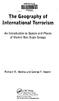 SUB Hamburg A/596060 The Geography of International terrorism An Introduction to Spaces and Places of Violent Non-State Groups Richard M. Medina and George F. Hepner CRC Press Taylor & Francis Croup Boca
Maryland Online SYLLABUS
 Maryland Online SYLLABUS Course Description: Prerequisites: The course will explore the online teaching and learning environment by introducing online learning principles and instructor competencies. Participants
Windows Server 2008: Server Administration (ITMT 2351)
 Windows Server 2008: Server Administration (ITMT 2351) Credit: 3 semester credit hours (2 hours lecture, 4 hours lab) Prerequisite/Co-requisite: None Course Description Knowledge and skills for the entry-level
CJE 4174-COMPARATIVE CRIMINAL JUSTICE SYSTEMS Department of Criminal Justice Florida International University
 CJE 4174-COMPARATIVE CRIMINAL JUSTICE SYSTEMS Department of Criminal Justice Florida International University Course Description The class will examine issues related to crime throughout the world. The
Northeastern University College of Professional Studies Understanding the Department of Homeland Security CJS 2115 Course Syllabus Fall 2015
 Northeastern University College of Professional Studies Understanding the Department of Homeland Security CJS 2115 Course Syllabus Fall CJS 2115 Understanding the Department of Homeland Security CRN: 70146
MGT495W: Human Resource Management Spring 2013
 Instructor: Dr. James Harbin Office: 321K Email: [email protected] Phone: 903-223-3007 Office Hours TBD MGT495W: Human Resource Management Spring 2013 Course Description: The principles, policies,
PHILADELPHIA POLICE DEPARTMENT DIRECTIVE 7.17
 PHILADELPHIA POLICE DEPARTMENT DIRECTIVE 7.17 Issued Date:01-29-15 Effective Date:01-29-15 Updated Date: SUBJECT: DELAWARE VALLEY INTELLIGENCE CENTER UNIT 1. BACKGROUND A. The Delaware Valley Intelligence
Course Syllabus CJ 497.01W Intro. to Homeland Security, Internet based Spring 2016
 Instructor: Course Syllabus CJ 497.01W Intro. to Homeland Security, Internet based Spring 2016 Gary Dunlap Professor Class Times: Location: Office: Internet based Internet Bain Center; Texas A&M at Commerce
MSCJ 501 DEA Current Issues and Future Directions in Criminal Justice
 Columbia College Online Campus P a g e 1 MSCJ 501 DEA Current Issues and Future Directions in Criminal Justice March 2015 Session 14-M54 Monday, March 23 - Saturday, May 16, 2015 Course Description Textbooks
Salem Community College Course Syllabus. Section I. Course Title: Principles of Emergency Management. Course Code: EME101.
 Salem Community College Course Syllabus Section I Course Title: Principles of Emergency Management Course Code: EME101 Lecture Hours: 3 Lab Hours: 0 Credits: 3 Course Description: This is a three credit
Windows Server 2008 Active Directory Configuration (ITMT 2302)
 Windows Server 2008 Active Directory Configuration (ITMT 2302) Credit: 3 semester credit hours (2 hours lecture, 4 hours lab) Prerequisite/Co-requisite: None Course Description A study of Active Directory
TENNESSEE DEPARTMENT OF SAFETY AND HOMELAND SECURITY TENNESSEE OFFICE OF HOMELAND SECURITY
 Page0 Page1 Available as of January 1, 2014 Law Enforcement / Public Safety Courses Introduction to Terrorism Terrorism can range from complex plots to small scale attacks and can take many forms. Often,
University of Central Oklahoma Spring 2012 Undergraduate Course Syllabus. "Transforming Academic Excellence into Professional Competence"
 University of Central Oklahoma Spring 2012 Undergraduate Course Syllabus "Transforming Academic Excellence into Professional Competence" Course Information Course Title: Careers and Technologies in Criminal
BSN Program NURS 3312 Principles of Pharmacology Syllabus
 BSN Program NURS 3312 Principles of Pharmacology Syllabus Instructor: Bonnie Smithers MSN, RN, FNP-BC Instructor Email: [email protected] Office Location: Nursing Building Office Hours: Open Nursing
Training Courses Catalog 2015
 Training Courses Catalog 2015 Office of Homeland Security Tennessee Department of Safety & Homeland Security Homeland Security Training January 2015 Law Enforcement and Public Safety Courses Introduction
Curriculum for the Bachelor Degree in Crime and Delinquency
 The curriculum for the B.S.c. degree in (12 ) credit hours are distributed as follows:- No. 1 2 4 Requirements University Requirements Compulsory Elective Faculty Requirements Specialization Requirements
Intro to Graduate Education and Technology ED 500 Spring, 2012 ONLINE Course Outline
 Intro to Graduate Education and Technology ED 500 Spring, 2012 ONLINE Course Outline COURSE INSTRUCTOR: Larry Beard, Ed.D. [email protected] Ph: 256-782-5078 CLASS MEETINGS: OFFICE HOURS: Online Email me
UNIVERSITY OF CENTRAL OKLAHOMA - SCHOOL OF CRIMINAL JUSTICE SYLLABUS. COURSE: CJ 4023/5043 MODERN CRIMINAL INVESTIGATIONS / 3 Credit Hours
 CRN 27200/27201 (1/14/15-5/6/15) W 4:30-7:15 p.m. Classroom Location: LAR 136 Office Location: Comm 115A UNIVERSITY OF CENTRAL OKLAHOMA - SCHOOL OF CRIMINAL JUSTICE SYLLABUS COURSE: CJ 4023/5043 MODERN
UNIVERSITY OF NORTH GEORGIA DEPARTMENT OF CRIMINAL JUSTICE COURSE SYLLABUS CRJU 7005 GLOBAL CRIME AND JUSTICE FALL 2015
 UNIVERSITY OF NORTH GEORGIA DEPARTMENT OF CRIMINAL JUSTICE COURSE SYLLABUS CRJU 7005 GLOBAL CRIME AND JUSTICE FALL 2015 Instructor: E mail Address: Office Location: Office Phone #: Office Hours: Prerequisites:
CJ 101.001 Introduction to Criminal Justice COURSE SYLLABUS: Spring 2013
 CJ 101.001 Introduction to Criminal Justice COURSE SYLLABUS: Spring 2013 Professor: Vincent Hunter Office Location: Ferguson SS 219 Office Hours: Tuesday and Thursday pm-2:00 pm by appointment Office Phone:
etroy XTIA CJ 6630 Juvenile Justice Term 2, 2015
 etroy XTIA Juvenile Justice Term 2, 2015 For course syllabus posted prior to the beginning of the term, the instructor reserves the right to make minor changes prior to or during the term. The instructor
CTAG INTRODUCTION TO CRIMINAL JUSTICE
 CTAG INTRODUCTION TO CRIMINAL JUSTICE Joseph Nuzzi, Adjunct Professor Tammy A. King, Associate Dean Bitonte College of Health and Human Services Department of Criminal Justice and Forensic Sciences 1 WHAT
INTELLIGENCE ANALYSIS Criminal Justice 380 Course Syllabus Spring 2010
 INTELLIGENCE ANALYSIS Criminal Justice 380 Course Syllabus Spring 2010 Instructor: Mr. Albert Sproule. Phone: 610-282-1100, x-1463 E-mail Address: [email protected]. Office Hours Office Hours:
NURS 1050 Medical Terminology. Course Description
 1 NURS 1050 Medical Terminology Course Description This course is a study of the language of the allied health sciences, nursing, and medicine. The meaning and pronunciation of complex words are presented
Installing and Configuring Windows Server 2012 (ITNW 1301)
 Installing and Configuring Windows Server 2012 (ITNW 1301) Credit: 3 semester credit hours (2 hours lecture, 4 hours lab) Prerequisite/Co-requisite: None Course Description This course will validate the
MSE 6201, Homeland Security Course Syllabus. Course Description. Course Textbook. Course Learning Outcomes. Credits.
 MSE 6201, Homeland Security Course Syllabus Course Description Comprehensive examination of homeland security, terrorism, domestic security, emergency preparedness, and border and transportation security.
CRMJ 465 (Tentative) Computer Forensics Fall / Spring TBD
 CRMJ 465 (Tentative) Computer Forensics Fall / Spring TBD Mr. Edwin Lugo Visiting Professor Office: Capers Hall 404 Office Hours: after class and by appointment only Cell: 410-660-9167 (Cell phone Text
Middlesex Community College Fall 2015 Course Syllabus. Course Information: Social Problems (SOC103 CRN 1320 Section 30) 3 Credits
 Middlesex Community College Fall 2015 Course Syllabus Course Information: Social Problems (SOC103 CRN 1320 Section 30) 3 Credits Location: Online Instructor: Carmela Smith, MSW, LCSW Phone: best to contact
Required Textbook and Materials Title Small Business Management in the 21st Century David T. Cadden, Sandra L. Lueder eisbn 978-1-4533-4556-6
 Small Business Management (BUSG 2309) Credit: 3 semester credit hours (3 hours lecture) Prerequisite/Co-requisite: None Course Description: Starting, operating, and growing a small business. Includes essential
SYLLABUS. PSY 201: INTRODUCTION TO PSYCHOLOGY New Mexico State University Dr. Igor Dolgov
 SYLLABUS PSY 201: INTRODUCTION TO PSYCHOLOGY New Mexico State University Dr. Igor Dolgov PURPOSE AND GOALS: The purpose of this course is to provide a broad overview of the discipline of psychology. Generally
Syllabus GIS Database Management (GIS395.001, GIS395.021) (Fall 2010)
 Syllabus GIS Database Management (GIS395.001, GIS395.021) (Fall 2010) Instructor: Dr. Yanli Zhang Arthur Temple College of Forestry and Agriculture Email: [email protected] Phone: (936) 468-2157 Office:
HARFORD COMMUNITY COLLEGE 401 Thomas Run Road Bel Air, MD 21015 Course Outline
 HARFORD COMMUNITY COLLEGE 401 Thomas Run Road Bel Air, MD 21015 Course Outline CIS 210 COURSE NUMBER: CIS 210 COURSE NAME: MEETING PLACE: Random On-Line DIVISION: Business, Computing & Applied Technology
CRIJ-1301-IN Introduction to Criminal Justice Syllabus
 CRIJ-1301-IN Introduction to Criminal Justice Syllabus INSTRUCTOR: Craig Fos E-MAIL: [email protected] OFFICE: N-125 PHONE: 281-756-3779 OFFICE HOURS: As posted at N-125 A. COURSE DESCRIPTION This
TEXAS HOMELAND SECURITY STRATEGIC PLAN 2015-2020: PRIORITY ACTIONS
 TEXAS HOMELAND SECURITY STRATEGIC PLAN 2015-2020: PRIORITY ACTIONS INTRODUCTION The purpose of this document is to list the aligned with each in the Texas Homeland Security Strategic Plan 2015-2020 (THSSP).
HHPK 144.001 Fall 2012 Tuesday and Thursday 8:00 a.m. 9:15 a.m. Field House, Room 103
 Ross/HHPK 144 1 HHPK 144.001 Fall 2012 Tuesday and Thursday 8:00 a.m. 9:15 a.m. Field House, Room 103 Instructor: Henry H. Ross, EdD Office: Field house 216 Phone: (903) 468-6043 Office Hours: Monday and
Tactical Range Facility. Criminal Justice. Sgt. Major James Massey Range
 Tactical Range Facility Criminal Sgt. Major James Massey Range 11 Classes Offered Officer Safety & Field Tactics Officer Safety & Field Tactics in a Terrorism Environment Officer Safety & Field Tactics
CJ 4475 Seminar in Cyber Security Syllabus Term 4 2016
 CJ 4475 Seminar in Cyber Security Syllabus Term 4 2016 For course syllabus posted prior to the beginning of the term, the instructor reserves the right to make minor changes prior to or during the term.
Intelligence Analysis for Homeland Security RPAD 557
 Intelligence Analysis for Homeland Security RPAD 557 Instructor: Dr. James E. Steiner Public Service Professor Rockefeller College SUNY Albany 518-708-4183 Office hours: by appointment 423 State Street
TENNESSEE DEPARTMENT OF SAFETY AND HOMELAND SECURITY TENNESSEE OFFICE OF HOMELAND SECURITY
 Page0 Wm. R. Snodgrass TN Tower, 25 th Floor Nashville, TN 37243 (615) 532-7825 [email protected] Page 1 TENNESSEE DEPARTMENT OF SAFETY AND HOMELAND SECURITY Current as of June 1, 2013 LAW ENFORCEMENT
INFORMATION TECHNOLOGY EDUCATION PROGRAMMING AND ANALYSIS COURSE SYLLABUS. Instructor: Debbie Reid. Course Credits: Office Location:
 Course Title and Number: Mobile App Programming, COP2654 all sections Year and Term: Summer 2014 Office Phone: (352)395-4402 Meeting Time/Days: N/A online course Web Page Address: http://home.ite.sfcollege.edu/~debbie.reid
MIS 426: Management Information Systems
 MIS 426: Management Information Systems COURSE SYLLABUS: Spring 2015 01 E Instructor: Dr. Bo Han Email Address: [email protected] To protect your academic privacy, please always send me emails from your
Common Competencies for State, Local, and Tribal Intelligence Analysts
 DEPARTMENT OF JUSTICE United States Department of Justice Common Competencies for State, Local, and Tribal Intelligence Analysts June 2010 A Companion Document to the Minimum Criminal Intelligence Training
HCC ONLINE COURSE REVIEW RUBRIC
 HCC ONLINE COURSE REVIEW RUBRIC Adapted from Maryland Online FIPSE Project and Lake Superior College I. COURSE OVERVIEW AND INTRODUCTION General Review Standard: The overall design of the course, navigational
GEOGRAPHY 3320/5320 Geography of Terrorism and Homeland Security George F. Hepner 581-6021 [email protected]
 GEOGRAPHY 3320/5320 Geography of Terrorism and Homeland Security George F. Hepner 581-6021 OSH 270 [email protected] Course Description: Geography has traditions of 1) using the concepts of geographic
BUS 3525 Strategic Management Online
 New York City College of Technology Of the City University of New York Department of Business Dr. Roy D. Iraggi N 1026 x5776 BUS 3525 Strategic Management Online Text: Strategic Management in Action, 6th
COURSE SYLLABUS FIREWALLS & NETWORK SECURITY. ITSY-2301 Number. 2-3-3 Lecture - Lab - Credit. ITSY-1342 Prerequisites. April 16, 2015 Revision Date
 COURSE SYLLABUS FIREWALLS & NETWORK SECURITY ITSY-2301 Number 2-3-3 Lecture - Lab - Credit ITSY-1342 Prerequisites April 16, 2015 Revision This syllabus has been reviewed and is current on the date indicated.
Diagnostic Coding OST 148 OL1 Fall Semester 2015 Class hours: Online
 Diagnostic Coding OST 148 OL1 Fall Semester 2015 Class hours: Online Course Syllabus Instructor: Office Phone: E-mail: Meschelle Quine, Adjunct N/A [email protected] Office Location: Office Hours: N/A
CMJ 152 LAW ENFORCEMENT & THE COMMUNITY Spring Syllabus 2015
 CMJ 152 LAW ENFORCEMENT & THE COMMUNITY Spring Syllabus 2015 INSTRUCTOR INFORMATION Associate Professor David Striegel Guerrieri Hall, Room 202D Office Phone: 410-572-8755 Office Hours: Monday 10:45 11:45
INTRODUCTION TO CRIMINAL JUSTICE 101 - FALL 2015
 INTRODUCTION TO CRIMINAL JUSTICE 101 - FALL 2015 Instructor: Tom Pritchard Office: D-200C Office Hours: M/W 7:30 a.m. 8:20 a.m. E-mail: [email protected] Tuesday 11:30 a.m. 12:20 p.m.
Political Science 2302: Section 03W United States & Texas Government: Institutions & Policies Spring Semester 2014 COURSE INFORMATION
 Political Science 2302: Section 03W United States & Texas Government: Institutions & Policies Spring Semester 2014 Instructor: Mr. Tim Houston Office Location: SS 152 Virtual Office Hours: Monday, Wednesday
CRIMINAL JUSTICE PROGRAM OUTCOMES FALL 2011 TO SPRING 2012
 CRIMINAL JUSTICE PROGRAM OUTCOMES FALL 2011 TO SPRING 2012 Outcome #1: Upon completion of curriculum requirements for Criminal Justice majors, student will be able to explain the philosophy and historical
SOUTHWEST COLLEGE Department of Mathematics
 SOUTHWEST COLLEGE Department of Mathematics COURSE SYLLABUS MATH 1314: College Algebra INSTRUCTOR: E-MAIL: Fatemeh Salehibakhsh [email protected] Office Hours M - W 2:30 3:00 PM Friday 11:00 AM 2:00
Learning Goals: A Statement of Principles
 Criminal Justice Seminar (388) Course Syllabus Fall, 2014 Instructor: Daniel Posluszny, Ed.D. Office: Lucy Stone Hall Room Rutgers, New Brunswick Campus A347 Telephone/Text: 609.203.8133 (cell phone) (Before
Criminalis. Prerequisit. cies. Introduction and technical. Techniques. required in. interviews. research, the. A. Syllabus. students 3.
 Criminalis tics I (CJSA 1308) Credit: 3 semester credit hours (3 hours lecture) Prerequisit te/co-requisite: None Course Description Introduction to the field of Criminalistics. Topics include the appreciation
How To Get A Masters Degree In Intelligence Analysis
 MASTER OF SCIENCE IN INTELLIGENCE ANALYSIS Director: Erick Barnes Office: Briggs Building 135 McNichols Campus Telephone: (313) 578-0363 Fax: (313) 993-1166 E-mail: [email protected] Website: http://liberalarts.udmercy.edu/intelanalysis/
Supplementary Readings: Criminal Profiling: International Theory, Research, and Practice. Richard N. Kocisis, editor. Humana Press, 2007.
 Texas A&M University-Commerce Department of Sociology & Criminal Justice Class Syllabus Fall 2013 Criminal Justice 420 Crime Profiling Tues. 4:30pm 7:10pm Rm SS 310 Dr. Willie Edwards, Assoc., Prof. Office
CJ 4480 Digital Forensics II Syllabus - Term 2 2015
 CJ 4480 Digital Forensics II Syllabus - Term 2 2015 For course syllabus posted prior to the beginning of the term, the instructor reserves the right to make minor changes prior to or during the term. The
LSC 740 Database Management Syllabus. Description
 Instructor: Bruce Hulse Office: 242 Marist Hall Telephone: 301-390-2033 E-mail: [email protected] LSC 740 Database Management Syllabus Description This course will provide a general introduction to database
CRIMINAL JUSTICE PROGRAM OUTCOMES FALL 2010 TO SPRING 2011
 CRIMINAL JUSTICE PROGRAM OUTCOMES FALL 2010 TO SPRING 2011 Outcome #1: Upon completion of curriculum requirements for Criminal Justice majors, student will be able to explain the philosophy and historical
U.S. Department of Justice FY 2016 Budget Request NATIONAL SECURITY. +$106.8 Million in Program Increases. FY 2016 Overview
 U.S. Department of Justice FY 2016 Budget Request NATIONAL SECURITY +$106.8 Million in Program Increases FY 2016 Overview Defending U.S. citizens from both internal and external threats remains the Department
INTRODUCTION TO CRIMINAL JUSTICE 101- Hybrid
 INTRODUCTION TO CRIMINAL JUSTICE 101- Hybrid Instructor: Shawn Curtis, MSCJ, PsyD Candidate Quarter Dates: 04/06/15-06/19/15 Classroom: D-103 Days and Times: Tu and Th 12:30-2:20 (Friday on line) Office:
Computer Virtualization (ITNW 1313) Credit: 3 semester credit hours (2 hours lecture, 4 hours lab) Prerequisite/Co-requisite: None
 Computer Virtualization (ITNW 1313) Credit: 3 semester credit hours (2 hours lecture, 4 hours lab) Prerequisite/Co-requisite: None Course Description Implement and support virtualization of clients of
The Department of the Treasury established the Financial Crimes
 Appendix A Financial Crimes Enforcement Network Programs The Department of the Treasury established the Financial Crimes Enforcement Network in April 1990. 33 FinCEN s original mission was to establish
Homeland Security INDIVIDUAL PROGRAM INFORMATION 2015 2016. 866.Macomb1 (866.622.6621) www.macomb.edu
 Homeland Security INDIVIDUAL PROGRAM INFORMATION 2015 2016 866.Macomb1 (866.622.6621) www.macomb.edu Homeland Security PROGRAM OPTIONS CREDENTIAL TITLE CREDIT HOURS REQUIRED NOTES Associate of Applied
MATH 104 FINITE MATHEMATICS
 Instructor Information MATH 104 FINITE MATHEMATICS Syllabus Instructor: E-mail: Dr. Coddington Use the Mail tab in this course. PLEASE NOTE: The responses to this email will be sent to your Adams State
Fusion Center Guidelines
 Fusion Center Guidelines Developing and Sharing Information and Intelligence in a New Era Guidelines for Establishing and Operating Fusion Centers at the Local, State, and Federal Levels Law Enforcement
SYLLABUS JS 103- INTRODUCTION TO CRIMINAL JUSTICE SPRING 2015
 SYLLABUS JS 103- INTRODUCTION TO CRIMINAL JUSTICE SPRING 2015 Instructor: Angela Wartel Office: Spaulding Hall 306 Class Hours: T & TH 1:30-2:45 Telephone: 208-792-2851 Office Hours: Tuesday & Thursday
WEST LOS ANGELES COLLEGE Administration of Justice
 Print Syllabus AJ-1 online WEST LOS ANGELES COLLEGE Administration of Justice ADM-Justice 1: Introduction to Administration of Justice Associate Professor: C.Williams Flournoy, MSA Office Location: online
Heating, Ventilation, and Air Conditioning (HVAC) Troubleshooting and Repair (DEMR 1423)
 Heating, Ventilation, and Air Conditioning (HVAC) Troubleshooting and Repair (DEMR 1423) Credit: 4 semester credit hours (3 hours lecture, 2 hours lab) Prerequisite/Co-requisite: None Course Description