
SURGERY BASICS THE SURGICAL TEAM
|
|
|
- Patience Farmer
- 10 years ago
- Views:
Transcription
1 SURGERY BASICS The information presented here is not designed to be an all-inclusive course on surgery. There are numerous text books and web sites on surgery of small animals. Several are listed in the References section of these pages, with specific page citations. It is expected that all volunteers participating in surgery at HSVMA-RAVS clinics are familiar with basic surgical techniques and surgical anatomy. The objective of this outline is to guide you in some aspects of spay/neuter procedures and general surgery that we feel are particularly important. The specific techniques listed are those that are used in HSVMA-RAVS clinics. All volunteers participating in surgical procedures at HSVMA-RAVS clinics must be familiar with these techniques. It is not that we think these are the only safe and effective approaches. You may have experience or training in other techniques that work quite well. However, in order to standardize teaching it is important that all volunteers know and utilize these specific techniques. Variations may be discussed with the veterinarian in charge at the time of the clinic. If you plan to participate in surgeries at HSVMA-RAVS clinics you will be responsible for knowing all of the following information (including specifically referenced texts) and having practiced all the listed techniques until you are proficient. (This means that you can describe when, where and why it would be appropriate to use a given technique and perform the technique without prompting to a minimal degree of proficiency while wearing surgical gloves and maintaining surgical asepsis.) Surgeons are not born or hatched; they are trained just as one would train to acquire any manual skill; we expect that you will dedicate sufficient time prior to the trip to have the basics down so that you can build your skills from there. You will be tested on this information before you are assigned to clinic duties. If you have difficulty in accessing or learning this information you MUST contact Dr. Davis ([email protected]) PRIOR to attending the trip. THE SURGICAL TEAM Veterinary students assigned to surgery will work directly with a veterinarian on each case, assisting or performing various parts of each procedure as appropriate based on prior experience, preparation and patient status. RESPONSIBILITIES OF THE SURGICAL TEAM Before the procedure, supplies are gathered (pack, suture material, blade, etc), the surgery table is set up and the patient is prepared The primary surgeon will perform the bulk of the procedure The assistant helps throughout the procedure by holding tissue out of the way, elevating the ovarian pedicle, getting instruments ready etc After the procedure, the surgery table must be cleaned and the area prepared for the next procedure, instruments must be washed and the surgical pack wrapped and autoclaved. Before the patient leaves the recovery area, the surgeon is responsible for writing a very brief surgery report to note areas of difficulty or complications encountered during the procedure 1

2 PRESURGICAL PREPARATION OF THE PATIENT Hair Removal - Done at induction, before the animal is moved to a surgery table. Using a No. 40 clipper blade, the hair is first clipped along the same direction of hair growth, then again against the direction of hair growth. Clippers should be used gently, parallel to the skin. Hair is clipped in an area extending at least 10 cm in all directions from the planned incision. Loose hair is thoroughly removed with a vacuum before transferring the patient from the induction area to a surgery table. Positioning Before beginning the skin preparation be sure: The patient is stable in dorsal recumbency with the head toward the anesthetic machine and the head is resting comfortably on the table Anesthetic tubing is properly connected and secure Patient is at an optimal position for lighting and instrument access Warming disks are placed if the animal is small or very young. Warming devices should be placed under a towel or other covering and should NEVER be placed in direct contact with the patient as serious burns can result. Limbs are tied to help stabilize the patient. In large, deep-chested dogs, it may help to cross the forelimbs, securing each tie-down to the opposite side of the table. Be careful not to over-tighten ties as nerve damage or other complications can result. Skin Preparation - As soon as the patient is positioned on the table, a thorough skin prep is completed: Scrub skin with chlorhexidine scrub from the prep tray. Rinse with water containing dilute chlorhexidine solution (pale blue solution). Repeat both steps a total of 3 times after all gross debris has been removed. Begin each scrub in the center of the scrubbed area, over the planned incision site, and scrub in a bulls eye pattern toward the periphery, never going back to the center with the same gauze sponge. The skin preparation should be thorough but gentle to avoid unnecessary skin trauma. The final application of chlorhexidine solution is allowed to remain on the skin. It is important that the skin preparation is started as soon as the animal is on the surgery table to allow for maximum scrub and contact time between antimicrobials and the skin. After skin prep is complete, finish securing legs and make final adjustments in lighting. Open pack and place blade and suture on sterile field after the patient is positioned and scrubbed. Preparation of Surgical Team - Both the primary surgeon and assistant must be sterilely gowned and glove for all surgeries except uncomplicated cat castration in which only sterile gloves are needed. The primary surgeon should be scrubbing in as the patient is anesthetized and should be prepared to begin draping the animal as soon as the final positioning and patient prep is complete. The assistant surgeon will stay with the patient to help as needed with induction, transfer, positioning and prep, then scrub in and join the surgeon. HSVMA-RAVS clinics use Avaguard non-rinse hand scrub technique for aseptic preparation of surgeon s hands. This will be demonstrated during clinic orientation. If you are unfamiliar with techniques for surgical scrubbing or sterile gowning and gloving, consult a surgery text and practice a few times in before the clinic. Draping - With the animal positioned and the skin prepared, the animal is ready to be draped: Drapes are in the surgery packs and are not fenestrated The drape is fenestrated after it is placed on the patient. There should be a continuous sterile field from the cranial end of the drape to the instrument tray (which is placed behind the patient). On large dogs a second drape may be required to cover chest or feet Drapes are placed in one motion and then either used, removed or more drapes added to achieve the desired effect. Once the drape is placed, it should not be repositioned toward the surgical site as this will carry contaminants onto the prepared skin. 2

3 BASIC SURGICAL TECHNIQUE Incision Use the finger tip grip rather than the pencil grip for abdominal skin incisions. This allows for maximum cutting edge contact and pressure, making a straighter incision with less skin trauma. Use your free hand to spread skin to afford a smooth surface and tension while cutting. Keep the blade perpendicular to the skin and draw it along the line of the planned incision. Skin tension and blade pressure should be adequate to smoothly part the skin so that subcutaneous fat appears in the trough of the incision as it is made. Try to open the skin in one continuous smooth stroke. Making multiple lacerations traumatizes the skin and results in a jagged incision. Hemorrhage control Female dogs in heat and some male dogs may have more skin hemorrhage than other animals. The assistant should be prepared with mosquito forceps and gauze to control hemorrhage that may obscure the surgeon s view while the incision is made. Most bleeders will stop with pressure from a gauze sponge. Blot; don t wipe the tissue, as this disturbs new blood clots. With larger skin vessels mosquito clamps may need to be applied. This can only be done when the vessels can be seen. The surgeon holds the skin with thumb forceps. The assistant blots the blood that is obscuring the surgeon s view. Then the surgeon places a mosquito forcep ( clamp ) on the offending vessel. Do not place clamps on large chunks of tissue or on the epidermis. This causes undue trauma and is ineffective at controlling hemorrhage. Clamps can be removed after several minutes or when hemostasis is achieved. Hemorrhage can always be controlled with pressure AND you cannot fix a problem that you can t see. If you encounter abdominal hemorrhage: Do put pressure on the area with gauze Do ask for help in finding the problem Don t waste time wandering in the abdomen or trying to do an exploratory unsupervised Don t just hope things will get better on their own Don t panic OVARIOHYSTERECTOMY TIPS Locating the linea alba Make sure the patient is laying straight on the surgery table in dorsal recumbency. A little extra time making sure that the animal is positioned and stable will make things easier in the long run. Palpate the ventral midline. In most animals the aponeurosis of the external abdominal oblique can be palpated. Try to make your skin incision immediately over the linea The linea is wider and easiest to locate closer to the umbilicus (at the cranial end of the incision). Once the skin has been incised pick up the loose fascia and fat that covers the external rectus sheath with Brown Adson forceps and snip off this tissue with Metzenbaum or Mayo scissors. This will expose the bright white fibers of the external rectus sheath. The linea is at the confluence of these fibers as they travel cranially and medially on the rectus abdominus muscle. Removal of subcutaneous fat does not cause any more hemorrhage or dead space than blunt dissection, and gives a clearer view of the rectus sheath and linea more efficiently. The linea should be located within 2-3 minutes after making a skin incision. If you have been unable to clearly identify this structure, ask for help right away. Failure to incise the linea will make the rest of the procedure more difficult. 3

4 Entering the abdomen Grasp the linea alba with rat toothed forceps and tent the body wall as much as possible. This is important as the spleen can otherwise be lacerated while entering the abdomen. With the cutting surface of the number 10 scalpel blade facing up, use the point of the scalpel to stab through the linea alba. This should be done about 0.5 cm away from the rat-toothed forceps which are holding the linea in a tented position. Have a blunt tipped instrument ready to verify that the abdomen has been entered. The assistant should be ready with instruments and anticipate the surgeon s next move. Once a small hole has been made through the linea alba into the abdomen, the incision can be extended using either scissors or a guarded scalpel. Note on incision placement: Spay incisions are generally made midway between the umbilicus and pubis. In dogs the incision is made somewhat more cranial than in cats. It is CRITICAL that the umbilicus is clearly identified prior to choosing the incision site. Surgical patients must be clipped all the way to the xiphoid to insure that this important landmark can always be identified. Note on incision size: While exposure of the ovaries, uterus, and cervix are important to a successful surgery, larger incisions do have a down side. The longer the incision the greater the tissue damage (pain), the greater the likelihood of complications (dehiscence and wound infection), and the greater the surgery time (longer anesthesia and more opportunity for organisms to gain access to the abdomen). More experienced surgeons are able to make an incision further caudally. This allows a smaller the incision. If the incision does not allow adequate exposure, it can always be extended. A good rule of thumb for beginning surgeons is to start with an incision of about 2.5 finger widths in length for cats and small dogs. For medium-sized dogs use 3.5 finger widths and 4 finger widths for large dogs (60 lbs+). Suture sizes and applications: All HSVMA-RAVS clinics use polidioxinone (Ethicon trade name PDS) or poliglecparone (Ethicon trade name Monocryl) monofilament absorbable sutures with a swaged needle. The following table gives suture sizes used in various procedures lbs lbs lbs 40 lbs + Dog Spay 2-0 (3-0 pediatric) 2-0 linea alba 2-0 linea alba 0 linea alba 3-0 skin 2-0 or 3-0 skin 2-0 or 3-0 skin 2-0 or 3-0 skin Dog Neuter Cat Spay 3-0 linea alba and skin Suture handling The following techniques all have applications in soft tissue surgery and must be mastered before participating in surgical procedures at HSVMA-RAVS clinics. You should practice each technique until you can complete it without looking at your hands. First use a piece of string to figure out the sequence of hand motions required to tie the knot. Then use outdated suture, string or fishing line to develop skill and speed. You do not need to have a surgery lab to learn these. You DO need to practice. Practicing in distracting situations, such as while watching TV, is a good idea. We are serious about expecting students to be proficient and you will be tested! These are knots you should be proficient at before participating in surgery: Square knot basic knot for all ligatures and suturing Surgeon s knot for knots being tied under tension Instrument tie use of needle holders One handed tie or Two handed tie you should be able to do at least one of these These additional knots will be demonstrated at orientation: Instrument /hand tie handy for working with monofilament suture with memory Miller s knot handy knot for ligatures under tension and in difficult to reach places See References: Fossum-Common Suture Techniques Page

5 Suture patterns Suture patterns are more difficult to practice in vitro, as it is hard to reproduce the feel and texture of skin and other tissues. However, you should know and practice the following patterns on cloth, banana skin, cadaver skin or a suture practice model until you are comfortable with the steps in completing the pattern. You will be responsible for knowing: Simple Interrupted Simple Continuous Cruciate Ford Interlocking Horizontal OR vertical intradermal (subcuticular) See References: Fossum - Common Suture Techniques: Pg Application of patterns: Body wall closure Proper body wall closure is essential to prevent dehiscence. The suture must be anchored in the external rectus sheath approximately 4-10 mm from the edge of the incision. Knots should be tied carefully, with 6 throws. The final throw should be cinched tightly to prevent untying. Simple continuous body wall closure Most commonly used to close linea and body wall. This pattern creates a good seal, has greater bursting strength than interrupted patterns, and is faster to complete. There is no evidence that it results in greater complications than interrupted patterns. Knots must be tied securely and tension must be repeatedly checked during suturing or gapping of the incision will result. Interrupted body wall closure This can be done as simple interrupted or cruciate pattern. Sutures should be placed 5-10 mm apart. Important: Do not include fat or muscle in body wall closure. The external rectus sheath is the holding layer in all ventral body wall closures and it is imperative that this tissue layer is clearly visualized when closing. Subcutaneous closure This layer is closed to decrease dead space which can result in seroma formation and does not have significant holding power. It is not necessary in animals with minimal subcutaneous tissue, such as pediatrics. May be closed in a simple continuous, simple interrupted or cruciate pattern. We recommend that short incisions (< 6 cm) be closed with a cruciate or simple continuous pattern. Longer subcutaneous closures should be closed with simple continuous. Subcutaneous knots should be paced so that the knots are buried. This is easily achieved by starting the stitch next to the body wall (deep), exiting the fascia closer to the skin (superficial), then reversing the sequence on the other side of the incision (i.e.: superficial to deep). This leaves the free ends of the suture material below the subcutaneous fascia when the knot is tied and the knot ends up being covered. Subcutaneous sutures must not stick up through the skin closure, regardless of which skin closure technique is used. See References: Fossum -Common Suture Techniques: Pg Suture patterns for closure of the abdominal wall: Pg Skin closure - This is the layer that most novice surgeons have the most difficulty with. While we generally close skin with buried or intradermal sutures, making it unnecessary to remove the skin sutures after healing, there is nothing wrong with placing exposed simple interrupted, cruciate, or (in some cases) Ford interlocking sutures in the skin. If a buried pattern is to be used, the knots beginning and ending the pattern MUST be completely hidden by the overlying skin and the wound edges must be firmly opposed. Once you have mastered basic knot tying and suture patterns your biggest challenge will be burying knots on your skin patterns, practice this as much as possible. While we do use tissue glue, this compound is designed only to seal skin and is not a substitute for good suture technique. See References: Fossum-Common Suture Techniques: Pg

6 Please refer to the following texts for the specifics on spay and neuter surgeries. With minor variations HSVMA-RAVS clinics use the techniques outlined in Fossum s Small Animal Surgery text. REFERENCES: 1. Bojrab, Joseph M. Current Techniques in Small Animal Surgery, fourth edition, Williams and Wilkins, Baltimore, SF991.C ISBN Ovariohysterectomy: Pages Suture patterns for closure of the abdominal wall: Pages Fossum, Theresa Welch. Small Animal Surgery, Second edition, Mosby, St. Louis, SF911.F ISBN a. Common Suture Techniques - Pages b. Ovariohysterectomy and Orchiectomy : Pages (Note: We use closed canine castration techniques and the figure 8 knot for feline castration.) c. Celiotomy of the dog and cat: Pages (Note: Though you will not be expected to do an abdominal exploration as described in Table 20-2, it is worth knowing this material. You will not be tested on it.) Please read and learn these selections. You will be tested and we WILL expect you to know this material and have practiced the techniques. COMMON MISTAKES IN SURGERY PRACTICE AND HOW TO AVOID THEM Proper grip of needle driver and thumb forceps... see above references and never allow yourself to practice with poor technique. Always clamp your needle fully in the driver. Always pull and check the tension of your closure pattern with every throw, especially on the linea, which should be firmly opposed but not crushed. Avoid excessive use of sponges to check for bleeding in the abdomen, abrasion of the peritoneal surface by surgical gauze is painful and creates adhesions. Procedures like finding the linea, entering the abdomen, breaking down the suspensory or removing the broad ligament require you to be concise and definitive in your manipulations. If you have done 3 maneuvers and not accomplished your objective - stop and get help. Trauma and complications result from multiple small or misplaced maneuvers. GENERAL SURGERY REMINDERS Patient welfare ALWAYS comes first. Procedures will be assigned based on experience and skill level. You will not be asked to do anything for which you are unprepared and you will be well supervised. However, it is your responsibility to ask for assistance when needed and to honestly tell a veterinarian when you feel you are in "over your head". You are allowed a certain amount of surgical time. Think about what you want to work on. If it is decided student time is up, it is up, no matter where you are in the procedure. A good surgeon practices ahead of time and has a series for plans already in mind if things do not go as planned. You should run through the steps of a procedure repeatedly until you know exactly what to do next. Then start mentally practicing what you would do if something went wrong. Practice knot tying and suture patterns until they are spinal reflexes. When you have gotten to the point where you can tie knots without looking at your hands, you still need to tie about 500 more. You will have lots of supervision, and we will be right there to help and teach. However, you will get much more out of the trip and be allowed to do more if you have practiced ahead of time. Those who have prepared get a lot of responsibility and will learn much more. Those who have not practiced will spend a lot of time watching others. It is unethical to do surgery on a live animal without having done all the practice one can possibly do on a phantom. 6

Arizona State University Institutional Animal Care and Use Committee STANDARD INSTITUTIONAL GUIDELINE RODENT SURGERY
 Arizona State University Institutional Animal Care and Use Committee STANDARD INSTITUTIONAL GUIDELINE RODENT SURGERY It is the policy of the IACUC that all survival surgeries involving rodents be conducted
IACUC Policy on Survival Rodent Surgery
 IACUC Policy on Survival Rodent Surgery References: ILAR Guide for the Care and Use of Laboratory Animals: http://oacu.od.nih.gov/regs/guide/guide.pdf NIH OACU ARAC Guidelines: http://oacu.od.nih.gov/arac/documents/rodent_surgery.pdf
INSTRUMENT IDENTIFICATION AND STERILIZATION TABLE OF CONTENTS
 INSTRUMENT IDENTIFICATION AND STERILIZATION TABLE OF CONTENTS PACKAGING INSTRUCTIONS DRAPE-SIZES AND CUTTING 3 DRAPE FOLDING -5 PACKS 6-8 PACK WRAPPING 9-0 GOWN FOLDING GENERAL PACKAGING TIPS DO Place
PHaSES: Practical Hands-on Surgical Education System
 U.S. Toll Free 866-GOLIMBS PHaSES Range PHaSES: Practical Hands-on Surgical Education System Limbs & Things is pleased to introduce the PHaSES Range. The range is based upon our well known basic & general
TREATMENT 1. Control bleeding by applying pressure over wound with Gauze Pads (Surgical Supply-4). 2. Contact Surgeon for laceration repair options.
 Page 1 of 8 pages NOTE Contact Surgeon before giving any medication marked with an asterisk. In an emergency or during Loss of Signal, begin appropriate treatment; then call Surgeon as soon as possible.
Suture Patterns. Objectives. Role of Suture Patterns. Inverting Suture Patterns. Appositional Suture Patterns
 Suture Patterns Objectives Introduction to Surgery Classify suture patterns based on their effect on tissue apposition Describe the steps involved in the accurate placement of basic suture patterns Discuss
Standard Operating Procedure
 Animal Care and Use Program Standard Operating Procedure Title: Standard Surgical Practices for Rodent Recovery Surgery SOP NO: AC-G004 Supersedes Version: L1 & L2 Effective Date: August 27, 2010 Choose
Guidelines for Spay/Neuter
 Guidelines for Standards of Care in Animal Shelters Guidelines for Spay/Neuter Cynthia Barker Cox, DVM MSPCA Boston, MA Natalie Isaza, DVM College of Veterinary Medicine University of Florida Guidelines
STANDARD OPERATING PROCEDURE #201 RODENT SURGERY
 STANDARD OPERATING PROCEDURE #201 RODENT SURGERY 1. PURPOSE The intent of this Standard Operating Procedure (SOP) is to describe procedures for survival rodent surgery. 2. RESPONSIBILITY Principal investigators
Placement of an indwelling urinary catheter in female dogs
 Female Dog Urinary Catheterization 1 of 6 Placement of an indwelling urinary catheter in female dogs Bernie Hansen DVM MS North Carolina State University College of Veterinary Medicine Materials Needed
Urethral Catheterization in the Female Dog Made Easy Jamie M. Burkitt-Creedon, DVM, Dipl. ACVECC, Critical Consultations
 Urethral Catheterization in the Female Dog Made Easy Jamie M. Burkitt-Creedon, DVM, Dipl. ACVECC, Critical Consultations Urethral catheterization in the female dog is a straightforward, useful procedure
Surgical scissors and forceps Product List
 Surgical scissors and forceps Product List Sr. No Items Picture of Product Product specification 1 Grasping forceps-- 5 MM Grasping forceps are used to remove stones and retrieve foreign objects under
How To Become A Surgical Technologist
 JOB DESCRIPTION: SURGICAL TECHNOLOGIST. The Standards and Guidelines for the Accreditation of Educational Programs in Surgical Technology have been approved by the Association of Surgical Technologists
Placement of Epidural Catheter for Pain Management Shane Bateman DVM, DVSc, DACVECC
 Placement of Epidural Catheter for Pain Management Shane Bateman DVM, DVSc, DACVECC Indications: Patients with severe abdominal or pelvic origin pain that is poorly responsive to other analgesic modalities.
Preparing to Suture. 6 th Annual Pediatric Advanced Practice Conference Tuesday, February 9, 2016 1:30 pm. Workshop B: Suturing for Beginners
 Preparing to Suture Kristen Devick, MPAS, PA-C University of Colorado Department of Emergency Medicine NONE! Skin Anatomy Trott, 2012, p.11 Preparing to suture Initial evaluation Hemostasis Anesthesia
How To Remove An Eye From An Eye
 p r o c e d u r e s p r o O P H T H L M O L O G Y Sheryl G. Krohne, DVM, MS, Diplomate CVO, Purdue University Subconjunctival Enucleation Surgery in Dogs & Cats Enucleation surgery, a common procedure
41 Assisting with Minor Surgery
 Learning Outcomes 41.1 Define the medical assistant s role in minor surgical procedures. 41-2 CHAPTER 41 Assisting with Minor Surgery 41.2 Describe types of wounds and explain how they heal. 41.3 Describe
PATIENT HANDBOOK AND JOURNAL DAY OF SURGERY
 PATIENT HANDBOOK AND JOURNAL DAY OF SURGERY PREPARING YOUR SKIN BEFORE SURGERY PRE-OP HIBICLENS BATHING INSTRUCTIONS: General Information: Because the skin is not sterile, it is important to make sure
PERCUTANEOUS PD CATHETER IMPLANTATION SYSTEM
 Place on Patient s Cranial Border of the Pubic Symphysis IMPLANTATION STENCIL Classic Exit Cuff Site PERCUTANEOUS PD CATHETER IMPLANTATION SYSTEM INSTRUCTIONS FOR USE VP 511 and VP-511M Implantation System
Chapter 11. Everting skin edges
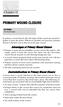 Chapter 11 PRIMARY WOUND CLOSURE KEY FIGURE: Everting skin edges In primary wound closure, the skin edges of the wound are sutured together to close the defect. Whenever possible and practical, primary
Basic Wound Closure & Knot Tying. Joslyn Albright, MD General Surgery PGY-4 Research Resident
 Basic Wound Closure & Knot Tying Joslyn Albright, MD General Surgery PGY-4 Research Resident Objectives Provide basic information on commonly used suture materials Review general principles of wound closure
GUIDELINES: Aseptic Technique for Rodent Survival Surgeries Surgical Area Animal Preparation 1.
 GUIDELINES: Aseptic Technique for Rodent Survival Surgeries The following Guidelines are provided to ensure correct aseptic technique for all rodent survival surgeries. Surgical Area 1. The surgical area
Taking Out a Tooth. Before You Begin: Ask Questions! CHAPTER11
 159 CHAPTER11 Taking Out a Tooth Not every painful tooth needs to come out. You must decide how serious the problem is, and then decide if you can treat and save the tooth. Some problems such as root canal
Information for patients and nurses
 Information for patients and nurses Rocket IPC Pleural Catheter Indwelling Catheter Rocket Indwelling Pleural Catheter (IPC) Contents Contact Information...03 What s in the Rocket Dressing Pack and Bottle
COW S EYE dissection. Dissecting a Cow s Eye Step-by-Step Instructions. Safety first!
 COW S EYE dissection Dissecting a Cow s Eye Step-by-Step Instructions One way to figure out how something works is to look inside it. To learn about how your eyes work, you can dissect, or take apart,
ABDOMINOPLASTY - FREQUENTLY ASKED QUESTIONS (FAQs)
 Executive Level E1, Excen Centre, 119 Willoughby Road, Crows Nest 2065 Tel: 02 9817 7585 www.mycosmeticclinic.net AFFORDABILITY WITH EXCELLENCE Liposuction Breast Augmentation Abdominoplasty Eyelids Surgery
Sheep@Purdue. Blood Sampling in Sheep AS-557-W
 Sheep@Purdue AS-557-W Blood Sampling in Sheep Becky Mitchell, Animal Sciences Student Mike Neary, Extension Sheep Specialist Gerald Kelly, Manager of Sheep Teaching and Research Flock Purdue University
call 811 to get advice from a nurse, or have someone drive the patient to a hospital Emergency Department. Patients should NOT drive themselves.
 Taking Care at Home After Surgery This checklist is to help you and your support person know what to do after you go home following your surgery. If you are given instructions verbally or in writing by
HICKMAN Catheter Care with a Needleless Connector
 HICKMAN Catheter Care with a Needleless Connector Table of Contents Part 1 Learning about the HICKMAN Catheter... 2 Part 2 Caring for Your Hickman Catheter... 3 A. Preventing Infection... 3 B. Bathing...
To maintain a port of entry to venous flow when all available peripheral ports have failed.
 I. Purpose: To maintain a port of entry to venous flow when all available peripheral ports have failed. II. General Comments: Since its development, these catheters have been used with increasing frequency
How to Care for your Child s Indwelling Subcutaneous Catheter
 The Emily Center How to Care for your Child s Indwelling Subcutaneous Catheter Procedure/Treatment/Home Care Si usted desea esta información en español, por favor pídasela a su enfermero o doctor. #1054
A Patient s Guide to Guyon s Canal Syndrome
 A Patient s Guide to DISCLAIMER: The information in this booklet is compiled from a variety of sources. It may not be complete or timely. It does not cover all diseases, physical conditions, ailments or
RODENT SURVIVAL SURGERY
 Institutional Animal Care Program Title: RODENT SURVIVAL SURGERY Policy#: IACP 004 Date in Effect: 12/14/07 Rev #: 04 Rev Date: 12/13/13 In Effect Rescinded Date Rescinded: A) PURPOSE In accordance with
Shoulder Arthroscopy
 Copyright 2011 American Academy of Orthopaedic Surgeons Shoulder Arthroscopy Arthroscopy is a procedure that orthopaedic surgeons use to inspect, diagnose, and repair problems inside a joint. The word
Femoral head and neck ostectomy (FHO) is a commonly
 P ro c e d u re s P ro O R T H O P E D I C S Peer Reviewed Laura E. Peycke, DVM, MS, Diplomate CVS Texas &M University Femoral Head & Neck Ostectomy Femoral head and neck ostectomy (FHO) is a commonly
Recommendations for Aseptic Technique and Post- Operative Care for Rodent Surgery
 Recommendations for Aseptic Technique and Post- Operative Care for Rodent Surgery It is the responsibility of the veterinary staff, investigator, laboratory animal technicians, and the facility manager
Abdominal Pedicle Flaps To The Hand And Forearm John C. Kelleher M.D., F.A.C.S.
 Abdominal Pedicle Flaps To The Hand And Forearm John C. Kelleher M.D., F.A.C.S. Global-HELP Publications Chapter Eight: TECHNICAL REQUIREMENTS FOR FORMATION OF A TUBED PEDICLE FLAP Creating a tube pedicle
Chapter 7. Expose the Injured Area
 Chapter 7 GUNSHOT WOUNDS KEY FIGURES: Entrance/exit wounds This chapter describes how to treat the external, surface wounds caused by a bullet. The evaluation for underlying injury related to gunshot wounds
X-Plain Inguinal Hernia Repair Reference Summary
 X-Plain Inguinal Hernia Repair Reference Summary Introduction Hernias are common conditions that affect men and women of all ages. Your doctor may recommend a hernia operation. The decision whether or
How to safely collect blood samples from persons suspected to be infected with highly infectious blood-borne pathogens (e.g.
 How to safely collect blood samples from persons suspected to be infected with highly infectious blood-borne pathogens (e.g. Ebola) Step 1: Before entering patient room, assemble all equipment (1 st part)
Laparoscopic Repair of Hernias. A simple guide to help answer your questions
 Laparoscopic Repair of Hernias A simple guide to help answer your questions What is a hernia? A hernia is defined as a hole or defect in the abdominal (belly) wall. A hernia can either be congenital (a
PATIENT GUIDE. Care and Maintenance Drainage Frequency: Max. Drainage Volume: Dressing Option: Clinician s Signature: Every drainage Weekly
 PATIENT GUIDE Care and Maintenance Drainage Frequency: Max. Drainage Volume: Dressing Option: Every drainage Weekly Clinician s Signature: ACCESS SYSTEMS Pleural Space Insertion Site Cuff Exit Site Catheter
Bladder/Urethral Stone(s) Surgical Philosophy
 VETERINARY SURGICAL SPECIALISTS OF NEBRASKA, P C David F. Merkley DVM MS DIPLOMATE AMERICAN COLLEGE OF VETERINARY SURGEONS SOFT TISSUE AND ORTHOPEDIC SURGERY Business: 402-206-1877 [email protected]
Bankart Repair using the Smith & Nephew BIORAPTOR 2.9 Suture Anchor
 Shoulder Series Technique Guide *smith&nephew BIORAPTOR 2.9 Suture Anchor Bankart Repair using the Smith & Nephew BIORAPTOR 2.9 Suture Anchor Gary M. Gartsman, M.D. Introduction Arthroscopic studies of
Parent & Healthcare Professional Instructions for the collection of Maternal & Umbilical Cord Blood
 Parent & Healthcare Professional Instructions for the collection of Maternal & Umbilical Cord Blood 1 2 3 Contents List of Umbilical Cord Blood Collection Kit Thermally insulated transportation box - do
STANDARDIZED PROCEDURE BONE MARROW ASPIRATION
 I. Definition: This protocol covers the task of bone marrow aspiration by an Allied Health Professional. The purpose of this standardized procedure is to allow the Allied Health Professional to safely
TOWN CENTER ORTHOPAEDIC ASSOCIATES P.C. Labral Tears
 Labral Tears The shoulder is your body s most flexible joint. It is designed to let the arm move in almost any direction. But this flexibility has a price, making the joint prone to injury. The shoulder
The gingival flap technique,
 Ban0108_034-041.qxd 2/1/08 4:47 PM Page 34 Creating effective dental flaps Practitioners can use this surgery to visualize and treat dental problems. By Beatriz Woodall, DVM Contributing Author The gingival
SILS. Port Insertion By Homero Rivas, MD, MBA, FACS. Single incision. Single port. Simple choice.
 SILS Port Insertion By Homero Rivas, MD, MBA, FACS Single incision. Single port. Simple choice. SILS Port Insertion By Homero Rivas, MD, MBA, FACS For the last 20 years, there has given surgical procedure.
Total hip replacement
 Patient Information to be retained by patient What is a total hip replacement? In a total hip replacement both the ball (femoral or thigh bone) side of the hip joint and the socket (acetabular or pelvic
Total knee replacement
 Patient Information to be retained by patient What is a total knee replacement? In a total knee replacement the cartilage surfaces of the thigh bone (femur) and leg bone (tibia) are replaced. The cartilage
Central Venous Catheters for Veterinary Technicians
 Central Venous Catheters for Veterinary Technicians Erica Mattox, CVT, VTS (ECC) Central venous catheterization is passing a long catheter into a large vein, such as the jugular or caudal vena cava. This
Introduction A JP Drain is a soft tube and container used to drain fluids that build up under the skin after surgery.
 JP Drain Introduction A JP Drain is a soft tube and container used to drain fluids that build up under the skin after surgery. This reference summary explains what a JP Drain is and discusses how to take
PACUC Guidelines. Rodent Survival Surgery
 PACUC Guidelines Rodent Survival Surgery Guidelines for rodent survival surgery are based on the National Research Council Guide for the Care and Use of Laboratory Animals 8 th edition and the Animal Welfare
SHEEP EYE DISSECTION PROCEDURES
 SHEEP EYE DISSECTION PROCEDURES The anatomy of the human eye can be better shown and understood by the actual dissection of an eye. One eye of choice for dissection, that closely resembles the human eye,
Ventral Hernia Repair
 Ventral Hernia Repair Open and Laparoscopic Ventral Hernia Repair Technique Guide Ventrio ST Hernia Patch Ventrio Hernia Patch This Technique Guide contains the opinions of and personal surgical techniques
Caring for a Tenckhoff Catheter
 Caring for a Tenckhoff Catheter UHN A Patient s Guide What is a Pleural Effusion? There is a small space between the outside of your lung and the chest wall (ribs). This space is called the pleural space.
X-Plain Abdominal Aortic Aneurysm Vascular Surgery Reference Summary
 X-Plain Abdominal Aortic Aneurysm Vascular Surgery Reference Summary Ballooning of the aorta, also known as an "abdominal aortic aneurysm," can lead to life threatening bleeding. Doctors may recommend
X-Plain Subclavian Inserted Central Catheter (SICC Line) Reference Summary
 X-Plain Subclavian Inserted Central Catheter (SICC Line) Reference Summary Introduction A Subclavian Inserted Central Catheter, or subclavian line, is a long thin hollow tube inserted in a vein under the
Minimally Invasive Hip Replacement through the Direct Lateral Approach
 Surgical Technique INNOVATIONS IN MINIMALLY INVASIVE JOINT SURGERY Minimally Invasive Hip Replacement through the Direct Lateral Approach *smith&nephew Introduction Prosthetic replacement of the hip joint
NIH Clinical Center Patient Education Materials Giving a subcutaneous injection
 NIH Clinical Center Patient Education Materials What is a subcutaenous injection? A subcutaneous injection is given in the fatty layer of tissue just under the skin. A subcutaneous injection into the fatty
Instructions for Use
 Pleural Effusion Shunt with External Pump Chamber Catalog No. 42-9005 Instructions for Use Denver Biomedical, Inc. Table of Contents Description 2 Indications 2 Contraindications 2 Warnings 4 Cautions
Starting a Bedside PD Catheter Insertion Program. Dr. Marie Michaud MD FRCPC RIH, Interior Health
 Starting a Bedside PD Catheter Insertion Program Dr. Marie Michaud MD FRCPC RIH, Interior Health Bedside PD Catheter Insertion Program Introduction Rationale Requirements Skills Resources Administration
Simple Thoracostomy Avoids Chest Drain Insertion in Prehospital Trauma
 Simple Thoracostomy Avoids Chest Drain Insertion in Prehospital Trauma Deakin, C. D. MA, MRCP, FRCA; Davies, G. MRCP; Wilson, A. FRCS Author Information From the Helicopter Emergency Medical Service, Royal
Caring for Your PleurX Pleural Catheter
 Caring for Your PleurX Pleural Catheter A PleurX Pleural Catheter has been placed in your chest through a small incision in your skin into the pleural space (see picture below). This allows you to drain
CEDARS-SINAI MEDICAL CENTER O.R./ANESTHESIA/SURGERY CENTER SERVICES OPERATING ROOM
 I. Purpose: To provide standardized guidelines for nursing and non-nursing personnel in accordance with roles and responsibilities as outlined in the job descriptions along with the AORN standards of practice.
VASECTOMY What is Vasectomy? How is the procedure performed? What is the no-scalpel method of doing vasectomy? When can I go back to work?
 VASECTOMY What is Vasectomy? Every man has a basic right to a vasectomy, a valuable medical procedure. Before you actually have a vasectomy, you should think about it carefully, because a vasectomy is
Care for your child s Central Venous Catheter (CVC)
 Care for your child s Central Venous Catheter (CVC) This booklet is intended for general informational purposes only. You should consult your doctor for medical advice. Please call the clinic or your home
X-Plain Preparing For Surgery Reference Summary
 X-Plain Preparing For Surgery Reference Summary Introduction More than 25 million surgical procedures are performed each year in the US. This reference summary will help you prepare for surgery. By understanding
Central Venous Catheter (CVC) Sterile Dressing Change - The James
 PATIENT EDUCATION patienteducation.osumc.edu Central Venous Catheter (CVC) Sterile Dressing Change - The James A dressing protects your catheter site and helps reduce the risk of infection. You will need
Selection & Use of Surgical Needles
 Selection & Use of Surgical Needles EThALLOy * INTELLIGENT GEOMETRy ADVANCED NEEDLE COATING The Selection & Use of Surgical Needles EThICON Products needles are manufactured in a wide range of types, shapes,
Site Care of Your Central Venous Catheter Sterile
 Site Care of Your Central Venous Catheter Sterile Dressing Change Sterile Technique The skin surrounding your catheter s exit site must be kept clean, and a new sterile dressing should be applied on a
Section 6: Your Hemodialysis Catheter
 Section 6: Your Hemodialysis Catheter What you should know about your dialysis catheter How to change your catheter TEGO connectors Starting dialysis using a catheter End of dialysis using a catheter Changing
UMBILICAL SURGERY IN CALVES
 UMBILICAL SURGERY IN CALVES Sylvain Nichols, DVM, MS, Diplomate ACVS Professor of Farm Animal Surgery Department of Clinical Sciences Faculté de Médecine Vétérinaire University of Montréal St-Hyacinthe,
Caring for a Hemovac Drain
 Caring for a Hemovac Drain 269 12. Raise side rail. Lower bed height and adjust head of bed to a comfortable position. 13. Remove additional PPE, if used. Perform hand hygiene. These promote patient safety.
URINARY CATHETER INSERTION - STRAIGHT OR INDWELLING CATHETER
 URINARY CATHETER INSERTION - STRAIGHT OR INDWELLING CATHETER PURPOSE To obtain a sterile urine specimen. To facilitate emptying bladder. To relieve bladder distention. To irrigate bladder. To measure residual
Safety FIRST: Infection Prevention Tips
 Reading Hospital Safety FIRST: Infection Prevention Tips Reading Hospital is committed to providing high quality care to our patients. Your healthcare team does many things to help prevent infections.
Home Care for Your Wound Drain
 PATIENT EDUCATION patienteducation.osumc.edu When you go home after surgery, you may have one or more drains in place to help your wounds heal. Hemovac, Jackson Pratt (JP) and Blake are common drains used
UROLOGY GROUP of PRINCETON
 UROLOGY GROUP of PRINCETON 134 STANHOPE STREET, PRINCETON, NJ 08540 PHONE 609-924-6487 FAX 609-921-7020 BARRY ROSSMAN, M.D. ALEX VUKASIN, M.D. KAREN LATZKO, D.O. ALEXEI WEDMID, M.D. VASECTOMY, THE NO SCALPEL
RATIFIED BY NNPDG SEPTEMBER 2006 FOR REVIEW 2009
 NOTTINGHAM UNIVERSITY HOSPTIALS/RUSHCLIFFE PCT NURSING PRACTICE GUIDELINES GUIDELINES FOR CARE OF A PATIENT WITH A WOUND DRAINAGE SYSTEM CONTENTS PAGE Introduction and Types of Drains 1 Procedure for Applying
Care of Your Hickman Catheter
 Care of Your Hickman Catheter Johns Hopkins Kimmel Cancer Center, Revised 7/11 Contents What is a Hickman Catheter? Page 3 Does the Catheter Limit My Activities? Page 4 How Do I Care for My Catheter? Page
FREEDOM INGUINAL Hernia Repair System TECHNIQUE GUIDE
 FREEDOM INGUINAL Hernia Repair System TECHNIQUE GUIDE The following describes the open surgical preparation and implantation technique for the Freedom Inguinal Hernia Repair System. 1) Anesthesia can be
NASAL OXYGEN ADMINISTRATION Bernie Hansen DVM MS North Carolina State University College of Veterinary Medicine
 NASAL OXYGEN ADMINISTRATION Bernie Hansen DVM MS North Carolina State University College of Veterinary Medicine A nasal oxygen catheter is a convenient and inexpensive method to supply dogs and cats with
X-Plain Foley Catheter Male Reference Summary
 X-Plain Foley Catheter Male Reference Summary Introduction A Foley catheter is a tube that is put through the urinary opening and into your bladder to drain urine. Your doctor may have placed or may ask
Integumentary System Individual Exercises
 Integumentary System Individual Exercises 1. A physician performs an incision and drainage of a subcutaneous abscess in his office for a particularly uncooperative established patient. How should this
Gallbladder Surgery with an Incision (Cholecystectomy)
 Gallbladder Surgery with an Incision (Cholecystectomy) It is normal to have questions about your surgery. This handout gives you information about what will happen to you before, during and after your
SOP 001: POLYCLONAL ANTIBODY PRODUCTION IN RABBITS
 SOP 001: POLYCLONAL ANTIBODY PRODUCTION IN RABBITS PURPOSE: To describe the proper procedure to follow when injecting adjuvants into rabbits for the production of polyclonal antibodies. POLICY: The improper
Chapter 33. Nerve Physiology
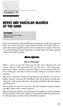 Chapter 33 NERVE AND VASCULAR INJURIES OF THE HAND KEY FIGURES: Digital nerve location on finger Epineurial repair Nerves and blood vessels of the hand and fingers usually are quite delicate, and some
Lesions, and Masses, and Tumors Oh My!!
 Lesions, and Masses, and Tumors Oh My!! Presented by: Susan Ward, CPC, CPC-H, CPC-I, CPCD, CEMC, CPRC 1 1 CPT GUIDELINES Agenda CPT DEFINITIONS OP REPORT CASES 2 Definitions Cyst - a closed sac having
Ancillary Staff Training
 Ancillary Staff Training Goals of Infection Prevention Protect the patients Protect the staff Prevent spread of diseases How Does The Virus Spread Between People? Direct contact through broken skin, mouth,
Injecting Inside the Mouth
 Injecting Inside the Mouth 135 9 CHAPTER It is possible to treat a tooth without pain. You do this with an injection of local anesthetic. You must inject near the nerve, so to give good injections, you
Scout Vessel Guard. A cover for vessels during anterior lumbar spine surgery.
 Scout Vessel Guard. A cover for vessels during anterior lumbar spine surgery. Technique Guide Instruments and implants approved by the AO Foundation Table of Contents Introduction Scout Vessel Guard 2
MODIFIED STRAYER GASTROCNEMIUS RECESSION: A Technique Guide for the Supine Positioned Patient
 C H A P T E R 4 5 MODIFIED STRAYER GASTROCNEMIUS RECESSION: A Technique Guide for the Supine Positioned Patient M. Jay Groves, IV, DPM Gastrosoleal equinus is a common deforming force on the foot and ankle.