
MASTER OF BUSINESS ADMINISTRATION (MBA) DEGREE EXAMINATION (With effect from ) (FULL-TIME & PART-TIME)
|
|
|
- Shannon Shepherd
- 10 years ago
- Views:
Transcription
1 MASTER OF BUSINESS ADMINISTRATION (MBA) DEGREE EXAMINATION (With effect from ) (FULL-TIME & PART-TIME) 1. Admission : Admission into MBA (FT) and MBA (PT) Courses will be made on the basis of the Admission Test. Eligibility criteria for Admission Test: (a) MBA (Full-time): A pass for all three years of study in the Bachelor s Degree (other than B.F.A. & B.A., (OL) of Andhra University or any other University recognized by the Academic Senate as Equivalent thereto. (b) MBA (Part-time): A pass for all three years of study in the Bachelor s Degree (other than B.F.A. & B.A., (OL) of Andhra University or any other University recognized by the Academic Senate as Equivalent thereto and at least two years full-time work experience in a position not below the rank of a Junior Executive in the organization which have been approved by the University for the purpose. The applicant should be working in the organization located at Visakhapatnam by the date of submission of his/her application. If the applicant gets admission, he/she has to stay at Visakhapatnam for the entire period of study, i.e. three years. 2. Instruction : The scope of instruction shall be as defined in the syllabus prescribed. 3. Examination : (a) The candidate shall be required to take at the end of each semester, an examination as detailed in the Scheme of Examination. Each paper of the examination shall, unless otherwise prescribed, be of three hours duration and carry 100 marks (b) A candidate shall be declared to have passed the examination if he/she obtains a minimum of 5.0 SGPA in each semester. All other candidates shall be deemed to have failed in the examination. Candidates who have completed the course in each semester and have earned the necessary attendance and progress certificate shall be permitted to continue the next semester course irrespective of whether they have appeared or not at the previous examination (s). Such candidates may be permitted to appear for the examination of earlier semester along with the subsequent semester examinations. (c) Candidates who have completed the course in each semester and have earned the necessary attendance and progress certificates shall be permitted to continue the next semester course irrespective of whether they have appeared or not at the previous examination (s). Such candidates may be permitted to appear for the examination of earlier semesters with the examinations of later semester simultaneously. (d) The University shall prepare examination schedule. The Chairman, P.G. Board of Studies will prepare and recommend the list of paper setters and examiners to value the answer scripts for each semester. The answer scripts of all the courses shall be subject to double coded valuation. All those who have completed a minimum of three years of regularized experience in teaching M.B.A. Courses shall be appointed as examiners for this purpose. The variation between first and second valuation shall be dealt with as per the rules of the University. (e) Regulations concerning Semester examination: i) Each Paper shall, unless otherwise prescribed, be of three hours duration and carry 100 Marks. Regular candidates shall submit a dissertation from any subject of the course and shall take Viva Voce. ii) Except papers for which practical examination is held the semester-end exam question paper shall be 70 Marks and divided into 5 units of equal weightage. In respect of those papers where practical examination is there, the semester-end exam question paper shall be for 65 marks iii) The Semester examination shall be based on the question paper set by the external examiner. iv) A candidate who fails in one semester examination or who is not able to take it shall be eligible to take the same examination at the end of the next semester. 4. Program Structure : The scheme of instruction and the Scheme of Examination shall be as given in Annexure I. 5. Not withstanding anything contained in the above regulations in the case of Project Report/Dissertation and Viva-Voce, a candidate shall obtain not less than 50% of marks to be declared to have passed in the examination. 6. Attendance : Candidates shall put in attendance at the College for not less than 75% of the total number of working days. Condonation of shortage of attendance may be granted on the recommendation of the Principal of the College concerned. If a candidate represents the university efficiently at games, sports

2 and other officially organized extra curricular activities, it will be deemed that he has attended the college on the day he is absent for this purpose. 7. Grading : The names of the successful candidates at the examination shall be arranged in the order in which they are registered for the examination on the basis of total marks obtained by each candidate in all the semester examinations puttogether in the case of M.B.A. (Full-time) course, and M.B.A. (Part-time) course. Distinction: Those who obtain CGPA 8.0 or more I Class: Those who obtain 6.5 CGPA or more but less then 8.0, II Class: Those who obtain CGPA 6.0 or more but less than 6.5. Pass: Those who obtain CGPA 5.0 or more but less than 6.0. Only those candidates who appear and pass the examination in all papers of the four semesters in the case of M.B.A. (Full-time) Degree examination, and similarly in all the papers of the six semesters in the case of M.B.A. (Part-time) Degree examination at first appearance are eligible to be placed in the first class with distinction. However, no candidate who has not passed all the papers relating to any semester at the first appearance shall be eligible for the award of any medals or prizes by the University and to receive certificates of rank obtained by them in the examination. 8. Short Visits : The candidate shall make not less than two short visits to different local industrial establishments, corporate offices in the neighbouring towns/cities in each semester course of the programme. The total number of visits to be made by each candidate is twelve out of which nine are compulsory. All the candidates are required to submit the reports at the time of viva examinations. 9. Practical Training : Candidates shall undergo practical training in an organisation for a minimum period of eight weeks and submit a report thereon along with a practical training certificate obtained from the organisation. Practical training shall be guided and certified by the teacher-guide. The practical training shall be conducted during summer vacation between Second and Third Semesters. 10. Paper Setting : Question paper setting for all the subjects of all the semesters shall be entrusted to external examiners approved by the P.G. Board of Studies. The question papers shall be set on Unit System pattern. 12. Project Work : The purpose of the project work is primarily to demonstrate the application of knowledge of skills acquired in the four/six semesters of the programme by studying and analyzing a selected problem in the work situation in a systematic manner while suggesting solution to the management. It is desirable that the sponsoring organization has to identify the area of project work for their participants at the beginning of the training programme itself. Each student is required to study the problem under the guidance of a faculty member of the department. A candidate who failed in any paper or papers in any one of the earlier three semesters need not submit his project Report. He/She has to submit his/her project report in the next year along with his/her immediate juniors, after completing all the papers in the three semesters. The completed project should be submitted to the University/College 15 days before the commencement of IV semester examinations. 13. Improvement Provision: Candidates declared to have passed Master Degree Courses in Business Administration under Semester System obtaining third or second class may reappear for the same examination to improve their class as per the University rules in force. 14. Evaluation: Each paper will carry 100 marks. The duration of written examination (semester-end) for each paper shall be three hours. 15. Composition of marks: Each paper is for 100 marks divided into external for 70 marks and internal for 30 marks. In the case of subjects having practical exam, semester-end exam carries 50 marks while internal (mid-term) test and practical examination carry 30 marks and 20marks respectively. 16. Total marks: First Year : I Semester : 700 Marks II Semester : 600 Marks Total : 1300 Marks Second Year : III Semester : 700 Marks IV Semester : 500 Marks Viva-Voce : 100 Marks Project Study : 100 Marks Total : 1400 Marks

3 Grand Total : 2700 Mark 17. Instruction Hours : Industrial Tour is optional. 18. Tour : Minimum number of hours per subject per week is four. 19. Viva-Voce Examination : The candidate who passed all earlier three semesters has to appear for a comprehensive Viva-voce examination which is conducted at the end of the fourth semester. A candidate who failed in a paper or a candidate who has not appeared for any earlier examination for any paper or papers in any semester is not eligible for Viva-Voce exam. Such candidates have to appear for Viva next year only after completing all the papers in the earlier three semesters. Annexure-I Restructured MBA Full-time Programme (With Effect from Academic Year) I Semester Title of the Paper Marks= Hours Credit (30+70) Per Week 101 Perspectives of Management Quantitative Techniques for Management 103 Managerial Economics Business Environment Accounting for Managers Corporate Communications Soft Skills-I: Business English (Internal Exam) II Semester 201 Financial Management Marketing Management Human Resource Management Operations Management Operations Research IT for Management (20 Marks Practical) III Semester 301 Business Policy & Strategic Management 302 Business Laws Knowledge Management Specialization Paper Specialization Paper Specialization Paper Soft skills-ii: Personality Development (Internal Exam) IV Semester 401 Entrepreneurship & Small Business Management 402 E-Business Specialization Specialization Specialization Project Report

4 407 Viva-Voce Total Marks SPECIALIZATION PAPERS Financial Management (FM) Paper Title of the Paper Marks= Hours / Credits Code (30+70=100) Week FM 301 Strategic Financial Management FM 302 Financial Engineering FM 303 Security Analysis & Portfolio Mgt FM 404 Financial Markets and Services FM 405 Financial Derivatives FM 406 International Financial Mgt Marketing Management (MM) MM 301 Consumer Behaviour and CRM MM 302 E-Marketing MM 303 Sales and Distribution Mgt MM 404 Services Marketing Mgt MM 405 Advertising and Brand Mgt MM 406 Global Marketing Management Human Resources Management (HRM) HRM 301 Strategic Human Resources Management HRM 302 Industrial Relations HRM 303 Compensation Welfare Management HRM 404 Global Human Resources Management HRM 405 Performance Management HRM 406 Legal Framework in HRM International Business (IB) IB 301 Export Import Management & Documentation IB 302 International Financial Management IB 303 International Marketing IB 404 International Business Laws IB 405 International Trade Logistics IB 406 WTO and India Systems & Information Technology SIT 301 Computer Programming in C Language (20 Marks Practical) SIT 302 Relational Database Mgt Systems (Oracle) (20 Marks Practical) SIT 303 System Analysis and Design SIT 404 Object Oriented Programming in Java (Core) (20 Marks Practical) SIT 405 Enterprise Resource Planning

5 SIT 406 Decision Support Systems DEPARTMENT OF COMMERCE AND MANAGEMENT STUDIES MBA (PT) Semester I Title of the Paper Marks= Hours Credits (30+70) Per Week CP-101 Perspectives of Management CP 102 Quantitative Techniques for Management CP 103 Managerial Economics CP 104 Business Environment Semester II CP 201 Accounting for Managers CP 202 Corporate Communications CP 203 Financial Management CP 204 Marketing Management Semester III CP 301 Human Resource Management CP 302 Operations Management CP 303 Operations Research CP 304 IT for Management (20 Marks Practical) Semester IV CP-401 Business Policy & Strategic Management CP-402 Business Laws SPL- 4-1 Specialization Paper Semester V CP-501 Knowledge Management CP-502 Entrepreneurship & Small Business Management SPL-5-1 Specialization SPL-5-2 Specialization Semester VI CP-601 E- Business SPL-6-1 Specialization SPL-6-2 Specialization Project Report Viva-Voce Grand Total

6 SEMESTER I CP 101: PERSPECTIVES OF MANAGEMENT Objective : To familiarize the students with basic management concepts and organizational Behaviour. Unit I: Management Evolution of Management Thought Principles of Management Functions and Theories of Management Theories Social Responsibility of Management. Unit II: Planning Nature, Purpose and Importance of Planning-Types of Plans-Steps in Planning- Planning Premises and Forecasting process of Decision Making-Decision Tree Analysis. Unit III: Organization principles of Organization Formal and informal Organization types of Organization Structure Line and Staff Relations Delegation Decentralization Span of Control. Unit IV: Directing- Leadership Theories and Styles Motivation Theories- Morale Process of control Techniques of control Unit V: Organizational Behavior: Meaning and Importance inter and Intra Group conflicts Inter personal relationships organizational culture and change Principals, Process and Techniques of Control. (Case Study is compulsory in all Units) Suggested Books : 1. James A.F.Stoner, R. Edward Freeman & Danirl R.Gilbirt Jr. Management, PHI India. 2. Heinz Weihrich & Harold Koontz, Essentials of Management, Tata-McGraw Hill Intl. 3. Virmani, Managing People in Organisations, Sage Response Books, New Delhi. 4. Bajaj: Management Process and Organization, Excel publications. 5. John F. Wilson The making of Modern Management, Oxford University Press. 6. Ricky W. Griffin, Management 8 th Edition, Wiley India, New Delhi. 7. Stephen Robbins and Mary Coulter, Management, Prentice Hall of India. 8. Tripathy and Reddy Principals of Management Tata McGraw Hill. 9. R.K.Suri, Organizational Behaviour, Wisdom Publication. 10. A.Pardhasardhy & R.Satya Raju: Management Text and Cases, Prentice Hall of India. 11. Udai Pareek, Organizational Behaviour, Oxford University Press. 12. Gerard H Seijts, Cases in Organizational Behaviour, Sage Response Books, ND. CP 102: QUANTITATIVE TECHNIQUES FOR MANAGEMENT Objective: To make the students familiar with the statistical and mathematical techniques and their applications in business decision making. Unit I: Functions, Linear, Quadratic, Logarithmic and Exponential Functions- Permutations and Combinations Matrices - Solving System of Equations with Matrix Methods Differentiation and Integration of Simple Functions and their Applications. Unit II: Measures of Central Tendency Measures of Dispersion Simple Correlation and Regression Analysis Concept and Applications of Multiple Regressions. Unit III: Concept of Probability- Probability Rules Joint and Marginal Probability Baye s Theorem Probability Distributions Binomial, Poisson, Normal and Exponential Probability Distributions. Unit IV: Sampling and Sampling Distributions Estimation Point and Interval Estimates of Averages and proportions of small and Large Samples Concepts of Testing Hypothesis One Sample Test for Testing Mean and Proportion of Large and Small Samples. Unit V: Tests Two Samples Tests of Difference between Mean and Proportions of Small and Large Samples Chi-square Test of Independence and Goodness of Fitness- Analysis of Variance. Suggested Books : 1. K.V.Sivayya and K.Satya Rao Business Mathematics. 2. Nagar, Das Busic Statistics, Oxford University Press. 3. Levin, Krehbiel and Berenson, Business: A first course, pearson Education Asia. 4. R. Selviraj, Quantative Techniques, Excell Books ND. 5. Shenoy, Sarma and Srivatsava, Quantitative Techniques for Management, New Age (International) Pvt. Ltd. 6. N.D.Kothari, Quantitative Techniques, in Management, Tata McGraw Hill, 2001.

7 7. S.P.Gupta Statistical Methods for Management. CP 103: MANAGERIAL ECONOMICS Objective: To enable the students to understand economic concepts and theories and their application in management decision-making. Unit I - Introduction: Nature and Scope of Managerial Economics; Objectives of the Firm-Traditional Theory, Sales and Revenue Maximizing Theories, Managerial Theories and Behavioral Theories; Profit Maximization. Unit II - Demand Analysis : Demand-Meaning, Determinations of Demand, Demand Function; Law of Demand; Elasticity of Demand Price, Income, Cross and Promotional or Advertising Elasticity of demand, Managerial Uses of Elasticity of Demand; Demand Forecasting Elasticity Quantitative and Qualitative Techniques of Demand Forecasting Methods for Existing New Products, Criteria for Good Forecasting Method. Unit III - Production Analysis: Production Function Law of Variable Proportions, Isoquant and Isocost Curves, Least Cost Combination, and Returns to Scale; Economies of Large Scale; Cobb-Douglas Production Function and Constant Elasticity of Substitution - Production Function; Cost concepts, Cost Oriented Pricing Methods. Unit-IV Market Analysis: Price and Output Determination under Perfect Competition; Monopoly, Oligopoly and Monopolistic competition Profit-Meaning and Profit Theories-Profit Planning-Measurement. Unit V Economic Optimization: Economic Problems and Optimization Techniques Unconstrained and Constrained Optimization; Unbounded Maxim Optimization of Functions of One Variable and Optimization with Multi variate Function. (Case Study is compulsory in all Units) 1. Dean, Joel: Managerial Economics, PHI. 2. Peterson H.Craig, Lewis W.Chris and Jain Sudhir K.Managerial Economics, pearson Education, Trivedi M.L: Managerial Economics, Theory and Applications, Tata Mcgraw Hill Publishing Company, Suma Damodaran - Managerial Economics, Oxford University Press. 5. Mehta, P.L: Managerial Economics, Text and Csaes, S.Chand & Co. 6. Mithani, D.M: Managerial Economics, Theory and Applications, Himalaya Publishing. 7. Attmanad; Managerial Economics, Excel publications. 8. G.S.Gupa, Macro Economics: Theory and Applications, Tata McGraw Hill. 9. Dwivedi, D.N. Macro Economics: Theory and Applications, Tata McGraw Hill. CP 104: BUSINESS ENVIRONMENT Objective: To familiarize the students with the business environment prevailing in India and international and understand its implications to business. Unit-I Business Environment: Components and Significance Economic Scope Cultural, Political, Technological and External Factors Influencing Business Environment Dimensions of International Business Environment Challenges. Unit-II: Structure of Indian Economy; Economic systems- Economic planning with special reference to last three plans, public, private joint and cooperative sectors - Industrial Policy of the Government - Policy Resolutions of 1956, 1991 Industrial Policy and Economic Policy - Subsequent policy Statements. Unit-III Indian Companies -Competitiveness, Changes and Challenges, Sustainable Development, Social Responsibilities, Ethics in Business - Competition Act Emerging Trend in Indian Business Environment. Unit IV: International Trade Theories, Balance of Payments Concepts, Disequilibrium in BOP: Methods of Correction - Trade Barriers and Trade Strategy - Free Trade vs. Protection - World Financial Environment: Foreign Exchange Market Mechanism, Exchange Rate Determination, and Euro Currency. Unit V: Globalisation: International Economic Integration, Country Evaluation and Selection, Foreign Market Entry Methods, International Trading Blocks Their Objectives; WTO Origin, Objectives, Organisation Structure and Functioning WTO and India.

8 1. K.V.Sivayya and VBM Das: Indian Industrial Economy, Sultan Chand Publishers, Delhi. 2. Avid W. Conklin, Cases in Environment of Business, Sage Response Books. 3. Vivek Mittal, Business Environment, Exdcel, ND. 4. Sundaram & Black: International Business Environment Text and Cases, PHI. 5. Suresh Bedi: Business Environment, Excel, New Delhi. 6. Francis Cherunilam: Business Environment - Text & Cases 7.M.Adhikari, Economic Environment of Business. 8. Pandey G.N., Environmental Management, Vikas Publishing House. 9. Raj Agarwal: Business Environment, Excel Publications. 10. Chari, S, N: International Business, Wiley India. 11. Francis Cherunilam: International Business: Text and Cases, Prentice Hall of India. 12. E. Bhattacharya: International Business, Excel Publications. 13. Sajahan: International Business, Mc-Millan India. New Delhi. 14. Govt. of India, Latest Economic Survey. CP 105: ACCOUNTING FOR MANAGERS Objective: to develop an insight of postulates, principles and techniques of accounting and utilization of financial and accounting information for planning, and decision-making Unit-I : Accounting for Management Nature and Scope Management Process and Accounting Financial Accounting Vs Cost Accounting Vs Accounting for Management Role of Account in Modern Organization Unit-II: Financial Accounting System Generally Accepted Accounting Principles and Accounting Standards Governing Financial Statements Contents of Profit and Loss Account Balance Sheet (Theory only). Unit-III: Elements of Cost Cost Sheet Preparation Absorption Vs Marginal Costing Cost Volume Profit Analysis Cost Behaviour Breakeven Analysis Contribution Approach Profit Planning. Unit-IV: Cost Concepts for Decision making Decision Making Process Decision Situations- Sales Volume Decisions Pricing and Special Order Pricing Make / Buy Decisions Product Decisions Addition, Deletion and Alteration of Mix Plant Shutdown Decision. Unit-V: Budgeting Types of Budgets Financial Vs Operation Budgets Short Term Vs Long Term Budgets Preparation of Sales Budgets Purchase Budgets- Expenditure Budgets for Material, Labour and Overheads Construction of Cash Budget Flexible Budget Master Budget Management Control and Budgeting Performance Budgeting and Zero Based Budgeting. (Case Study is compulsory in all Units) 1. I. M. Pandey : Management Accounting Vikas Publishing House, ND. 2. Marriot, Introduction to Accounting, Sage Response Books. 3. Hug Coombs and David Hobbs and Elis Jenkins, Management Accounting: Principles and Applications, Sage Response Books. 4. T.P.Ghosh: Fundamentals of Management Accounting, Excel Publications. 5. Chakraborty, Hrishikesh - Management Accountancy, Oxford University. 6. N.M.Singhvi, Management Accounting, Text and Cases, Prentice Hall. 7. Paresh P.Shah, Management Accounting, Wiley India, New Delhi Publications. 8. Horngren, C.T., Introduction of Management Accounting, Prentice Hall of India. 9. Khan and Jain, Management Accounting, Tata Mc Graw Hill, Delhi. 10. J.C. Varshney: Financial and Management Accounting, Wisdom Publication. 11. Horngren Sundem Stratton Management Accounting, Prentice Hall. 12. Sekhar - Management Accounting, Oxford.

9 CP 106: CORPORATE COMMUNICATIONS Objective: To equip the students with the necessary techniques and skills of communication to inform others, inspire them enlist their activity and willing cooperation in the performance of their jobs. Unit I : Role of Communication in Business Objective of Communication The Process of Human Communication Media of Communication, Written Communication Oral Communication Visual Communication, Audio Visual Communication Silence Developing Listening Skills Improving Non verbal Communication kills Understanding Cultural Effects of Communication. Unit II: Managing Organization Communication formal and Informal Communication- Intra and Personal Communication Models for Inter Personal Communication Exchange Theory, Johari Window and Transactional Analysis. Unit III: Managing Motivation to Influence Interpersonal Communication Inter-Personal Perception Role of Emotion in Inter Personal Communication- Communication Styles Barriers of Communication Gateways to Effective Interpersonal Communication. Unit IV: Business Writing Skills Significance of Business Correspondence, Essentials of Effective Business Correspondence, Business Letter and Forms, Oral Presentations Meetings, Telephone Communication Use of Technology in Business Communication, Messages. Unit V: Report Writing Meaning and Significance; Structure of Reports; Negative, Persuasive and Special Reporting; Informal Report Proposals; Formal Reports; Organization of Press Report. (Case Study is compulsory in all Units) 1. Jerry C.Wofford, Edwin A. Gerloff and Robert C. Cummins, Organisational Communication The Key stone of Managerial Effectiveness. 2. Biswajit Das: Business Communication personality Development, Excel. 3. McGrath, Basic Managerial Skills for All 5 th ed., Prentice Hall of India. 4. Urmila Rai & S.M. Rai, Business Communication, Himalya Publishers. 5. Seghal, MK, Business Communication, Excel Books, N Delhi. 6. Meenalshi Raman Business Communication Oxford University Press. 7. Bovee, Thill and Schatzman : Business Communication Today: Pearson 8. Parag Diwan: Business Communication, Excel Publications. 9. Lesikar I Flatley, Basic Business Communication, Tata McGraw Hill. 10. Mohan Developing Communication Skills MacMillan. CP 107 SOFT-SKILLS-I (BUSINESS ENGLISH) (Internal only for 100 Marks) Objective: to train students in English language to improve their oral and written business communication Unit-I : Business Correspondence: Meaning, Scope and Significance - Formal, informal and semiformal introductions Describing company activities and structures Describing job responsibilities Understanding and writing letters Differences between formal and informal writing Use of formal vocabulary and functional language in business letter writing Planning effective initial business letters and responses writing skills, call taking etiquette/skills. Unit-II : Business Information: Completing forms with required details: Asking appropriate questions to gather information Polite phrases of confirmation and communication breakdown- understanding native speaking accents and dialects; Functional language used in making verbal agreements Effective techniques of making and accepting offers Efficient written offer making and accepting. Unit-III : Business Presentations: Basic presentation techniques Use of information in presenting product features Explaining technical features for simplification; Giving and interpreting numerical data, common useful business abbreviations and acronyms Oral and written conventions for expressing numerical information in English Pronunciation issues in expressing numbers and alphabets. Unit-IV: Business Reporting: Use of grammar in giving instructions Effective presentation of oral instructions effective presentation of written instructions, Presenting and describing company information: Vocabulary of describing graphical and numerical information Expressing cause and result in English Summarizing important information concisely.

10 Unit-V : Feedback and Evaluation: Giving feedback to others - Use of questions in self-assessment elicitation Functional language of agreement/disagreement and opinion giving Use of tone and intonation in good/bad feedback Motivating others Use of emphatic structures in English Use of conditionals to discuss future possibilities Discourse strategies for effective relationship team building skills. 1. Marie M. Slewart, Business English & Communication. 2. Andrea B. Geffner, Business English : A complete guide to developing an effective Business writing style. 3. Mary Ellen Guffey, Business english. 4. GL Handerson, PR voiles, Business English & Communication. 5. Robert E. Barry, Pat Taylor Ellison, Business English for 21st Century. 6. K. Srinivasa Krishna & Dr. B.Kuberudu : Business Communications and Soft skills, Excells Books, Hyd II SEMESTER 201: FINANCIAL MANAGEMENT Objective: To equip the students with basic principals of Financial Management and Techniques. Unit- I: Nature, Scope and Objectives of Financial Management, Goals of FM-Profit Maximization Vs Wealth Maximization Finance Functions Financial Planning and Forecasting - Role of Financial Manager Flow Analysis Cash Flow Analysis - Ratio Analysis. Unit-II: Financing Decision: Financial Leverage EPS-EBIT Analysis Cost of Capital Weighted Average Cost Capital Capital Structure Factors Affecting Capital Structure Theories of Capital Structure. Unit III: Investment Decision: Nature and Significance of Investment Decision Estimation of Cash Flows Capital Budgeting Process Techniques of Investment Appraisal: Pay Back Period; Accounting Rate of Return, Time Value of Money DCF Techniques Net Present Value, Profitability Index and Internal Rate of Return. Unit-IV: Dividend Decision: Meaning and Significance Theories of Dividend Determinants of Dividend Dividend policy Bonus Shares Stock Splits. Unit V: Working Capital Decision: Meaning Classification and Significance of Working Capital Component of Working Capital Cash Management Models Cash Budgeting Accounts Receivables Credit Policies Inventory Management. (Case Study is compulsory in all Units) 1. Pandey IM - Financial Management, Oxford University Press. 2. Prasanna Chandra Financial Management, Tata McGraw Hill. 3. MacMillan, Jim Financial Management, Oxford University Press. 4. Paresh P.Shah, Financial Management, Wiley India New Delhi. 5. Khan & Jain - Financial Management, Tata McGraw Hill. 6. James C.Van Horne Financial Management & Policy, Prentice Hall of India. 7. Sudhirbhat, financial Management, Excel Books. 8. Ravi M Kishore - Financial Management, Taxman Publications. 9. Keown, Martin, Petty & Scott, Jr., - Financial Management, Prentice Hall of India. 10. Vyuptakesh Sharn Fundamentals of Financial Management, Pearson Education. 11. RM Srivasthava: Financial Management and Policy, Himalaya Publication. 202: MARKETING MANAGEMENT Objective: To develop an understanding of the concepts, issues and strategies in marketing and its management Unit I Importance and Scope of Marketing: Concepts of Marketing; Marketing Management Tasks; Marketing Environment; Marketing and Customer Value - Industrial Marketing, Services Marketing, Global Marketing. Unit II: Marketing Information System and Marketing Research; Consumer Behaviour and Buying Decision Process Organization Buyer Behaviour Market Segmentation and Targeting.

11 Unit III: Development of Market Offerings Strategy New Product Development Product line and Decisions Product-mix Product Differentiation Product Life Cycle Management - Brand Management Packaging. Unit IV: Pricing Strategies and Programs; Setting the Price Adapting the Price Initiating Response to Price Changes Delivering Value: Designing and Managing Value Networks Channels of Distribution. Unit V : Communicating Value: Designing and Managing Marketing Communications Advertising Direct Marketing and Personal Selling Sales Promotion Events and Public Relations Competitive Marketing Strategies- Emerging Trends in Marketing. (Case Study is compulsory in all Units) Suggested Books 1. Philip Kotler and Kevin Lane Keller: Marketing Management, Prentice Hall of India/ Pearson Education, New Delhi. 2. William J Stanton, Fundamentals of Marketing, McGraw-Hill, New Delhi. 3. V.J.Ramaswami and S. Namakumari: Marketing Management, Macmillan Business Books, Delhi. 4. Rajan Sexena, Marketing Management: Text cases in Indian Context. 5. S. Jayachandran Marketing Management, Text and Cases, Excel Publications. 6. Tapan K. Panda, Marketing Managemen, Excel Books. 7. Palmer Introduction to Marketing, Oxford University Press. 8. Keith Blois - Oxford Textbook of Marketing Oxford University Press. 9. Zinkota & Kotabe : Marketing Management, Prentice Hall of India. 10. Joel R.Evans & Barry Berman : Marketing, Wiley India, New Delhi. 203: HUMAN RESOURCE MANAGEMENT Objective: To equip the students with basic concepts of Human Resource Management and the various functions of HRM including Industrial Relations in the liberalized environment. Unit-I: Introduction: Definition and Functions of HRM; Principles of HRM; Changing Environment of HRM; Challenges; Ethical Aspects of HRM. Unit II: HR Planning; Concepts; Factors Influencing ; HR planning ; HR Planning Process; Job Analysis ; Recruitment and Selection; Tests and Interview Techniques. Unit III: Training and Development Need, Process, Methods and Techniques, Evaluation, Management Development; Evaluating Employee Performance; Career Development and Counseling. Unit IV: Compensation Concepts and Principles; Influencing Factors; Current Trends in Compensation Methods of Payment Incentives and Rewards. Unit V: Managing Industrial Relations Trade Unions Employee Participation Schemes Collective Bargaining Marketing Knowledge Workers. (Case Study is compulsory in all Units) 1. Venkata Raman C.S., and Srivastiva BK Personnel / Human Resource Management, Tata McGraw Hill. 2. Cynthia D. Fisher & Lyle F. Schoenfeld; / Human Resource Management, Wiley India, New Delhi. 3. N.K.Singh / Human Resource Management, Excel Publications. 4. Jyothi - / Human Resource Management, Pearso Education, New Delhi. 5. Biswajeet Pattnayak / Human Resource Management, Prentic hell of India New Delhi. 6. Deepak Kumar Bhattacharya, Human Resource Mgt. Excel. 7. P.Subba Rao, Human Resource Management Himaliya, Mumbai. 8. Ghosh, HRD and Management, Vikas. 9. R.Wayne Mondy and Robert M.Noe, Human Resource Management, Pearson. 204: OPERATIONS MANAGEMENT Objective: To acquaint the students with decision making process and various aspects of Production Management.

12 Unit -I : Introduction : Nature and Scope of Production and Operation Management- Historical Evolution Types of Manufacturing Systems Differences Between Manufacturing and Service Operations Role of Production and Operation Manager. Unit-II: Production Planning and Control: Stages in PPC Gantt PPC in Mass, Batch, and Job Order Manufacturing-Aggregate Planning Maintenance Management Industrial Safety. Unit-III: Plant Location: Facility Location and Layout Planning Types of Layouts Material Handling Equipments Material Handling Principles Models Used in Lay Out Designs. Unit- IV: Productivity: Factors, Affecting Productivity Job Design Process Flow Charts Methods Study Work Measurement Engineering and Behavioral Approaches. Unit-V: Material Management Cost Associated with Inventory Economic Order Quantity ABC Analysis Materials Requirement Planning Just In Time Production Total Quality Management Acceptance Sampling Control Charts Quality Circle Zero Defects Programmes ISO 9000 Application of Computer in Production and Operations. (Case Study is compulsory in all Units) 1. Panner Selvem, Production and Operation Management, Prentice Hall of India. 2. Chunnawals, Production & Operation Management Himalaya, Mumbai 3. Kanishka Bedi, Production & Operation Management, University Press. 4. Upendra Kachru: Operation Management, Excel Publications. 5. Adam, E.E& Ebert; R.J. Production and Operation Management, 6 th Ed., Prentice Hall. 6. Chary, S.N.Production and Operation Management, New Delhi, Tata McGraw Hill. 205: OPERATIONS RESEARCH Objective: To make the students familiar with principles and techniques of Operations Research and their applications in decision-making. Unit I: Importance and Scope of Operations Research Linear Programming Graphic Method Simplex Method Big-M Method Dual L.P. and Its Applications. Unit II: Transportation Problem Assignment Problem queuing Theory M/M/I and M/M/C Models. Unit III: Dynamic Programming Applications of D.P. (Capital Budgeting, Production Planning, Solving Linear Programming Problem) Integer Programming Branch and Bound Method. Unit IV : Game Theory Two Person Zero sum Games Pure Strategies Mixed Strategies Dominance Principle Graphic and Algebraic Method Linear Programming Approach Simulation Simulation Inventory and Waiting Lines. Unit V: Project Management PERT and CPM Crash Time Crash Cost Trade Off Resource Leveling and Resource Allocation Non-Linear Programming Model Formulation Graphic Method of Solving Simple Problems. (Case Studies are compulsory in all units) 1. Anand Sharma, Operations Research, Himalaya Publishing House, Operations Research: kantiswarup, P.K.Gupta and Manmohan, Sultan Chand & Sons, Operations Research: Dr.S.D.Sharma, Kedar Nath Ram Nath & Co, Kalavarthy, S. Operations Research, Vikas Publishers House Pvt Ltd., Franks S.Buknick Mcleavey, Richard Mojena, Principles of Operations Research for Management, AITBS publishers, V.K.Kapoor, Operation Research Techniques for Management, Sultan Chand & Sons, Richard Bronson & Govindasami Naadimuthu, SCHAUM S OUTLINE OF THEORY & PROBLEMS OF Operations Research, 2 nd Ed., Tata Mc Graw-Hill Edition, JK Sharma Operation Research Theory and Applications, MacMillan.

13 206 : INFORMATION TECHNOLOGIES FOR MANAGEMENT Objective: To equip students with the basic information technologies available for improving managerial performance. Unit-I: Introduction to Computer Concepts Elements of computer Characteristics of a Computer Classification of Computers Basic Computer Architecture Input-output Devices. Unit-II Software Concepts: Types of software Software: Its nature and qualities Windows Operating System Functions. Unit-III: MS Office-Applications of MS Word in Business Correspondence: letters, tables, mail merge, labels. Unit-II: Applications of MS Excel: Graphs and Charts Calculation of various financial functions - MS Access: Tables and Queries. Unit-IV: MS Power Point: Introduction Toolbar, their Icons and Commands Navigating in Power point Creation of slides, animation, and templates - Designing Presentations Slide show controls Making notes on Pages and Handouts Printing Presentations Customizing Presentations - Auto content Wizard. Unit-V: Computer Networks: Overview of a Network Communication processors Communications Media Types of Network Network Topologies- Network protocols Network Architecture. Exercises in the above areas is a must Suggested Books : 1. D. Sharma, Information Technology for Business, Himalaya Publications, Mumbai, Deepak Bharihoke, Fundamentals of IT, Excel Books. 3. Dhiraj Sharma, Foundation of IT, Excel Books. III SEMESTER 301: BUSINESS POLICY AND STRATEGIC MANAGEMENT Objective: To enlighten the students with the Business Policy and the Process of Strategic Management. Unit-1: Overview of Strategic Management Business Policy and Strategic Management Strategic Management Model Business Ethics and Strategic Management. Unit-II: Business Vision, Mission, Objectives Characteristics of Mission Statement Types of Strategies Integration strategies Intensive strategies Diversification strategies- Michael Porter Generic Strategies. Unit-III: Strategic formulation: Environmental Analysis External and industry analysis Internal analysis Strategic analysis and choice Input stage Matching stage decision stage Cultural aspects of strategy choice. Unit-IV: Strategic Implementation: The nature of strategic implementation resource allocation Strategy and structure Creating Supportive culture Implementing strategies in functional areas. Unit V: Strategy Evaluation: The nature of strategy evaluation Review and Control Characteristics of effective evaluation systems Criteria for strategy control Mechanism for strategic control. (Case Study is compulsory in all Units) Suggested Books 1. Ansoff H. Igor, Implementing Strategic Management, Prentice Hall. 2. Glueck, William F. Strategic Management and Business Policy, New York McGraw Hill. 3. Apparao, Parvathiswara Rao & Sivarama Krishna, Strategic Management and Business Policy, Excel Books. 4. Upendra Kachru : Strategic Management Concepts and Cases, Excel. 5. Hugh McMillan - Strategic Management, Oxford University Press. 6. Budhiraja, S.B. and Athereya, MB.Cases in Strategic Management, Tata McGraw-Hill, ND. 7. Hax A.C and Majluf, N.S. Strategic Management, Englewood Cliffs, New Jersey, Prentice Hall of India. 8. Mathur U.C. Strategic Management, Macmillan. 9. Gupta, Strategic Management, Premtice Hall of India.

14 10. Charles W.L.Hill and Gareth R.Jones, Strategic Management: An Integrated Approach, Wiley India, New Delhi. 11. Fred R.David, Strategic Management, Prentice Hall of India. 302: BUSINESS LAWS Objective: To assist the students in understanding basic laws affecting the operations of a business enterprise. Unit-I: Importance of Commercial Law The Indian Contracts Act, 1872 Nature of the Act and Classification of Contracts Essentials of a Valid Contract Offer and Acceptance Capacity Consideration Free Consent Legality of Object Performance of a Contract Discharge of a Contract Breach of a Contract and Remedies. Unit-II: The Sales of Goods Act: Introduction to Act Distinction Between Sales and Agreement to Sell Conditions and Warranties Performance of Contract of Sale Transfer of Ownership Rights of an Unpaid Seller. The Consumer Protection Act, 1986: Introduction to Act Consumer Right Machinery for Reddressal of Consumer Grievances. Unit-III: Contract of Agency: Meaning and Nature of Agency Kinds of Agents Creation of Agency- Duties and Rights of Principal Duties and Rights of Agents Principal s Liability for the Acts of the Agent- Personal Liability of Agent Termination of Agency. Unit-IV: The Negotiable Instruments Act, 1881 Characteristics of Negotiable Instruments Kinds of a Negotiable Instrument Endorsement Presentation of Negotiable Instrument Discharge of a Negotiable Instrument. The Indian Partnership Act, 1932: Meaning and Essentials of Partnership- Registration Tests of Partnership-Duties and Rights of Partners Dissolution of Partnership. Unit-V: The Companies Act, 1956-Nature and Types of Companies Formation Memorandum of Association Articles of Association Kinds of Shares Duties of Directors Winding up. (Appropriate Cases are to be discussed) 1. S.S. Gulshan: Business Law, Excel Publications. 2. Babsal: Business and Corporate Law, Excel Publications. 3. S.S.Gulshan, G.K/Kapoor, Business Law New Age International. 4. Tulsian: Business Law, Tata McGraw Hill, New Delhi. 5. Autar Singh Mercantile Law, Eastern Publishers. 6. M.C Kuchhal, Business Laws, Vikas Publishers. 7. S.N.Maheswari & Swned K.Maahavari, Commercial Laws, Mayoor Paper Backs, Noida. 8. Bul Chandani K.R:Business Law for Management, Himalaya Publications. 303: KNOWLEDGE MANAGEMENT Objective: To introduce the process of knowledge management for better decision making and performance by managers. Unit-I : Introduction to Knowledge Management - Knowledge society-from data to information to knowledge- Drivers of knowledge management-intellectual capital- KM and learning organizations. Unit-II Strategic alignment: Creating awareness- articulation- Evaluation and strategic alignment- Infrastructural development and deployment- Leadership, measurement and refinement- Role of CKO - Professional development in KM. Unit-III: Analyzing business environment: Knowledge audit and analysis Designing KM team creating KM system blue print- implementation- capture store and sharing KMS Standards KM Metrics and Indicators Incentive systems. Unit-IV : Strategy, organisation and personnel for KM Technology components : Intranet and Groupware solutions - tools for collaborative intelligence - package choices - implementing security. Unit-V : Integrating with web - based and internal operational & support systems - change management - reward systems- continuous improvement. (Appropriate cases are to be discussed) Books: 1. Awad, Knowledge Management, Pearson Education, New Delhi 2. Barnes, Knowledge Management System, Thompson Learning, New Delhi

15 3. Tapan K. Panda, Knowledge Management, Excel Books, ND. 4. A.Thodhathri Raman, Knowledge Management, Excel Books, New Delhi 5. Mattison, Web WW and Knowledge Management, Tata-McGraw Hill, N. Delhi 6. Amrit tiwana, The essential guide to knowledge management, Pearson education Ratnaja Gogula,, Knowledge Management: A New Dawn- ICFAI-2002, Hyd. 8. Ratan Reddy, Knowledge Management, Himalaya Pub. House, SOFT SILLS II (PERSONALITY DEVELOPMENT) (Internal only for 100 Marks) Objective: To equip students with the most needed personality characteristics of modern professional managers with an emphasis on positive thinking, creativity, goal-setting, time management, self-discipline and interview skills. Unit-I: CAREER PLANNING: MEANING AND IMPORTANCE THE PROCESS A OF CAREER PLANNING DIFFERENT DIMENSIONS FACTORS TO BE CONSIDERED FOR CAREER PLANNING- Goal setting - Positive thinking Unit-II : PERSONALITY DEVELOPMENT: Intra-personal Skills - Inter-personal Skills- Communication Skills Spoken, Written, Non-Verbal (Body Language), Listening skills Time Management Leadership Creativity Problem Solving Strategic Planning. Unit-III: INTERVIEW PREPARATION: Art of Facing Interview - Resume Preparation - Preparation for Campus Interviews - Pre-requisites for Campus Interviews - Stress and Anxiety Management - Dress Code & Appearance. UNIT-IV INTERVIEW PROCESS: Written Test - Group Discussion - Role-Play - Response to Oral Questions - Employer s Criteria. UNIT-V: NEGOTIATION WITH PROSPECTIVE EMPLOYER: Terms and Conditions - Compensation Package - Place of Posting - Career, Succession - Multi-Skill Development. 1. Biswajit Das, Business Communication and personality Development, Excel Books. 2. Subrahmanyam, et.al. Personality Developoment : Planning your succession campus Interviews. 401: ENTREPRENEURSHIP AND SMALL ENTERPRISE MANAGEMENT Objective: To expose the students to the growth of entrepreneurship in developing countries and acquaint with the establishment and running of a new enterprise Unit I: Entrepreneurship: Importance, Characteristics and Qualities of Entrepreneurship; Entrepreneurial; Role of Entrepreneurship, Ethics and Social Responsibilities. Unit II : Role of Government; Role of IDBI, NIESBUD, SISI, DIC Financial Institutions Commercial Banks, Entrepreneurial Development Institutes, Universities and other Educational Institutions offering Entrepreneurial Development Programme. Unit III: Training: Designing Appropriate Training Programme to inculcate Entrepreneurial Spirit, Training for New and Existing Entrepreneurs, Feedback and Performance of Trainees. Unit IV: Women Entrepreneurship Role & Importance, Profile of Women Entrepreneur, Problems of Women Entrepreneurs, Women Entrepreneurship Development in India. Unit V: Creativity and Entrepreneurship Sources and Methods of Ideas Planning and Development of Programmes E-business Ventures; New Venture Management Emerging Trends. (Case Studies in all units are Compulsory) 1. Mathew, J. Manimala, Entrepreneurship Theory at the Crossroads, Wiley India, New Delhi. 2. Tabarrok Entrepreneurial Economics, Oxford University Press. 3. C.V.Bakshi, Entrepreneurship Development, Excel Publications. 4. Balaraj Singh: Entrepreneurship Development, Wisdom Publications. 5. Jain, Hand Book of Entrepreneurs, Oxford University Press. 6. Madhurima Lal: Entrepreneurship, Excel Publications. 7. Eric A Morse, Cases in Entrepreneurship, Sage Response Books. 8. Vasant Desai, Small Business in Entrepreneurship, Himalaya Publishing House.

16 402: E-BUSINESS Objective: To equip students with the knowledge of IT tools and their application in the various business processes for better performance. Unit I: INTRODUCTION: Meaning of E-Commerce, E-Business and E-Marketing; Evolution of E- Commerce, E-Commerce Vs. Traditional Commerce, Infrastructure for E-Commerce Internet and Web Technologies, Multimedia and Digital Video; Media Convergence and On-line publishing. Unit II: E-COMMERCE APPLICATION: Supply Chain Management Definition, Different Categories and Models of SCM, Elements of SCM; Procurement; On-line Marketing and Advertisement. Unit III: E-COMMERCE BUSINESS MODELS: Business to Business (B2B): Business to Consumer (B2C); Other Models E-business Storefronts, Infomediary, Trust Intermediary, E-business Enablers and Infrastructure Providers/Communities of Commerce. UNIT IV : ELECTRONIC DATA INTERCHANGE AND ELECTRONIC PAYMENT: EDI Meaning, EDI Applications in Business; Types of E-payments E-Cash or Digital Cash, E-Cheques, Credit Cards, Smart Cards, E-Wallets and Debit Cards. UNIT V : E-SECURITY: E-Security Issues Hacking, Spoofing and Viruses; Network Security and Transaction Security; Security Measures Firewall, encryption and Digital Signature; Cyber Crimes and Cyber Laws IT Act, Parag Diwan: e-commerce, Excel Publishers. 2. Dennis E-Commerce &the law of digital signatures, Oxford University Press. 3. Steve Hedley Statutes on IT & E-Commerce, Oxford University Press. 4. Ravi Kalakota and Andrew B.Whinston: Electronic Commerce; A Manager s Guide, Pearson Education, Efrain Turban, Jae Lee Kavid King and H.Michael Chung: Electronic Commerce: A Managerial Perspective, Pearson Education, Kenneth C.Laudon and Carol Guercio Traver: E-Commerce: Business Technology, Society, Pearson Education, C.S.V.Murthy, E-commerce, Concepts, Models, Strategies, Himalaya Publishing House, C.S.Rayudu, E-Commece, E-Business, Himalaya Publishing House, P.T.Joseph, S.J., E-Commerce: An Indian Perspectives; Prentice Hall of India. FINANCIAL MANAGEMENT (SPECIALIZATION PAPERS) FM 301: STRATEGIC FINANCIAL MANAGEMENT Unit-1: Financial Goals and Strategy Shareholder Value Creation (SCV): Market Value Added (MVA) Market-to-Book Value (M/BV) Economic Value Added (EVA) Managerial Implications of Shareholder Value Creation. Unit-II: Financial Strategy for Capital Structure: Leverage Effect and Shareholders Risk Capital Structure Planning and Policy Financial Options and Value of the Firm Dividend Policy and Value of the Firm. Unit-III: Investment Strategy Techniques of Investment Appraisal Under Risk and Uncertainty Risk Adjusted Net Present Value Risk Adjusted Internal Rate of Return Capital Rationing Decision Tree Approach for Investment Decisions Evaluation of Lease Vs Borrowing Decision. Unit-IV: Merger Strategy Theories of Mergers Horizonal and Conglomerate Mergers Merger Procedure Valuation of Firm Financial Impact of Merger Merge and Dilution Effect on Earnings Per Share Merger and Dilution Effect on Business Control. Unit-V: Takeover Strategy Types of Takeovers Negotiated and Hostile Bids Takeover Procedure Takeover Defenses Takeover Regulations of SEBI Distress Restructuring Strategy Sell offs Spin offs Leveraged Buyouts.

17 1. Coopers & Lybrand, Strategic Financial: Risk Management, Universities Press (India) Ltd. 2. Robicheck, A, and Myers, S., Optimal Financing Decisions, Prentice Hall Inc. 3. James T.Gleason, RiskL The New Management Imperative in Finance, A Jaico Book. 4. Van Horn, JC, Financial Management and Policy, Prentice Hall. 5. Prasanna Chandra, Financial Management Theory and Practice, Tata McGraw Hill. 6. Weston JF, Chung KS & Heag SE., Mergers, Restructuring & Corporate Control, Prentice Hall. 7. Pandey IM, Financial Management, Vikas. 8. Shiva Ramu, S., Corporate Growth through Mergers & Acquisitions, Response Books ( A Division of Sage Publications). 9. Khandawalla, PN, Innovative Corporate Turnarounds, Sage Publications. FM 302: FINANCIAL ENGINEERING Unit-I : Introduction to Financial Engineering Meaning, Scope and Need Tools of Financial engineering Financial Engineering and Financial Analysis Factors Contributing to the Growth of Financial Engineering Financial Engineering Process. Unit-II : Financial Product Development Need Direction Design Testing and Introduction Recent Debt Market Innovations Zero Coupon Securities Repo and reverse Market, Junk Bonds, Fixed Vs Floating Rate Equity and Equity Related Instruments Equity Options Warrants Equity Distribution The Role of Equity in Corporate Capital Structure Hybrid Securities Meaning Need and Types of Securities. Unit-III : Financial Engineering Processes and Strategies Overview Changing Face of Liquidity Management Asset Liability Management (ALM) in Banking sector Hedging Process of Hedging Risk Management Issues and Instruments Liquidity Risk Management Interest Rate Risk Management Currency Risk Management-Role of GAP Simulation Duration Method Value at Risk (VAR). Unit IV: Corporate Restructuring Mergers and De-mergers Motives Acquisitions-Takeover-LBO- Sources of Value in a Leveraged Buy Out Disinvestments Process Motives The Role of Financial Engineer. Unit-V: Globalization and Financial Engineering Meaning Recent Developments Towards Financial Globalization International Capital Markets and Instruments Development of New Markets and Market Linkages Recent Trends in Settlement and Clearing Financing Engineering and Monetary Policy Legal Protection for Innovative Finance Products Using a Copy Right Patent Right and Trade Mark Legal Protection Against Unfair Competition. 1. John F. Marshall & Vipul; K.Bansal, Financial Engineering: A complete Guide to Financial innovation, Prentice-Hall of India Private Ltd., New Delhi.ZVI Bodie, Alex Kane, Alan J Marcus & Pitabas Mohanty, Investments, The McGraw-Hill Companies. 2. Gerald A.Fleischer, Capital Allocation Theory: The Study of Investment Decisions, Appleton- Century-Crofts, Meredith Corporation, New York. 3. Prasanna Chandra, Financial Management, Tata McGraw Hill. FM 303: SECURITY ANALYSIS AND PORTFOLIO MANAGEMENT Unit-1: Concept of Investment, Investment Vs Speculation, and Security Investment Vs Non-security Forms of Investment-Investment Environment in India. Investment Process Sources of Investment Information, Security Markets Primary and Secondary Types of securities in Indian Capital Market, Market Indices. Calculation of SENSEX and NIFTY. Unit-II: Return and Risk Meaning and Measurement of Security Returns. Meaning and Types of Security Risks: Systematic Vs Non-systematic Risk. Measurement of Total Risk - Intrinsic Value Approach to Valuation of Bonds - Preference Shares and Equity Shares. Unit-III: Fundamental Analysis Economy, Industry and Company Analysis, Technical Analysis Concept Tools and Techniques of Analysis Technical Analysis Vs Fundamental Analysis - Efficient Market Hypothesis; Concept and Forms of Market Efficiency. Unit-IV: Elements of Portfolio Management, Portfolio Models Markowitz Model, Efficient Frontier and Selection of Optimal Portfolio. Sharpe Single Index Model and Capital Asset Pricing Model, Arbitrage Pricing Theory.

18 Unit-V: Performance Evaluation of Portfolios; Sharpe Model Jensen s Model for PF Evaluation, Evaluation of Mutual Fund. 1. Donald E.Fischer, Ronald J.Jordan, Security Analysis and Portfolio Management; Prentice Hall of Inida. 2. Prasanna Chandra, Investment Analysis and Portfolio Management, Tata McGraw Hill. 3. S.Kevin, Security Analysis and Portfolio Management, Prentice Hall of India. 4. S.Kevin, Portfolio Management, Prentice Hall of India. 5. J.C.Francis, Investments Analysis and Management, McGraw Hill Int. 6. Khatri Investment Management and Security Analysis, MacMillan. 7. Avadhani, VA, SAPM, Himalaya PublisherBhalla, VK Investment Management, S.Chand. 8. Punitavathy Pandian, SAPM, Vikas. 9. Preeti Singh, Investment Management, Himalaya Publishers. FM 404: FINANCIAL MARKETS AND SERVICES UNIT I : Structure of Financial System role of Financial System in Economic Development Financial Markets and Financial Instruments Capital Markets Money Markets Primary Market Operations Role of SEBI Secondary Market Operations Regulation Functions of Stock Exchanges Listing Formalities Financial Services Sector Problems and Reforms. UNIT II : Financial Services: Concept, Nature and Scope of Financial Services Regulatory Frame Work of Financial Services Growth of Financial Services in India Merchant Banking Meaning-Types Responsibilities of Merchant Bankers Role of Merchant Bankers in Issue Management Regulation of Merchant Banking in India. UNIT III : Venture Capital Growth of Venture Capital in India Financing Pattern under Venture Capital Legal Aspects and Guidelines for Venture Capital, Leasing types of Leases Evaluation of Leasing Option Vs. Borrowing. UNIT IV : Credit Rating Meaning, Functions Debt Rating System of CRISIL, ICRA and CARE. Factoring, Forfeiting and Bill Discounting Types of Factoring Arrangements Factoring in the Indian Context. UNIT V : Mutual Funds Concept and Objectives, Functions Portfolio Classification, Organization and Mangement, Guidelines for Mutual Funds, Working of Public and Private Mutual Funds in India. Debt Securitisation Concept and Application De-mat Services-need and Operations-role of NSDL and CSDL. 1. I.M.Bhole, Financial Institutions and Market, Tata McGraw Hill. 2. V.A.Avadhani, Marketing of Financial Services, Himalayas Publishers, Mumbai. 3. Vasant Desai, Indian Financial System, Himalaya Publisher. 4. Benton E.G., Financial Intermediaries An Introduction. 5. Edminister R.D., Financial Institution, Markets and Management. 6. Verma, J.C.A Manual of Merchant Banking. 7. West Lake, M, Factoring. 8. N.Vinayakan, A Profile of Indian Capital Market. 9. Meir Khan Financial Institutions and Markets, Oxford Press. FM 405: FINANCIAL DERIVATIVES Unit I : Introduction to Financial Derivatives Meaning and Need Growth of Financial Derivatives in India Derivative Markets Participants Functions Types of Derivatives Forwards Futures Options Swaps The Regulatory Framework of Derivatives Trading in India. Unit II : Features of Futures Differences Between Forwards and Futures Financial Futures Trading Currency Future Interest Rate Futures Pricing of Future Contracts Value at Risk (VaR) Hedging Strategies Hedging with Stock Index Futures Types of Members and Margining System in India Futures Trading on BSE & NSE.

19 Unit III : Options Market Meaning & Need Options Vs futures Types of Options Contracts Call Options Put Options Trading Strategies Involving Options Basic Option Positions Margins Options on stock Indices Option Markets in India on NSE and BSE. Unit IV : Option Pricing Intrinsic Value and Time Value Pricing at Expiration Factors Affecting Options pricing Put-Call Parity Pricing Relationship Pricing Models Introduction to Binominal Option Pricing Model Black Scholes Option Pricing Model. Unit V: Swaps Meaning Overview The Structure of Swaps Interest Rate Swaps Currency Swaps Commodity Swaps Swap Variant Swap Dealer Role Equity Swaps Economic Functions of Swap Transactions FRAs and Swaps. 1. Hull C.John, options, Futures and Other Derivatives, Pearson Educations Publishers. 2. David Thomas. W & Dubofsky Miller. Jr., Derivatives Valuation and Risk Management, Oxford University, Indian Edition. 3. N.D.Vohra & B.R.Baghi, Futures and Options, Tata McGraw-Hill Publishing Company Ltd. 4. Red Head: Financial Derivatives: An Introduction to Futures, Forward, Options Prentice Hall of India. 5. David A. Dubofsky, Thomas W.Miller, Jr.: Derivatives: Valuation and Risk Management, Oxford University Press. 6. Sunil K.Parameswaran, Futures Markets: Theory and Practice Tata-McGraw-Hill Publishing Company Ltd. 7. D.C.Parwari, Financial Futures and Options, Jaico Publishing House. 8. T.V.Somanathan, Derivatives, Tata McGraw-Hill Publishing Company Ltd. 9. NSE manual of Indian Futures & Options & FM 406: INTERNATIONAL FINANCIAL MANAGEMENT Unit I : International Monetary and Financial System: Evolution; Breton Woods Conference and Other Exchange Rate Regimes; European Monetary System, South East Asia Crisis and Current Trends. Unit II : Foreign Exchange Risk: Transaction Exposure; Accounting Exposure and Operating Exposure Management of Exposures Internal Techniques, Management of Risk in Foreign Exchange Markets: Forex Derivatives Swaps, futures and Options and Forward Contracts (Cases). Unit III : Features of Different International Markets: Euro Loans, CPs, Floating Rate Instruments, Loan Syndication, Euro Deposits, International Bonds, Euro Bonds and Process of Issue of GDRs and ADRs. Unit IV : Foreign Investment Decisions : Corporate Strategy and Foreign Direct Investment; Multinational Capital Budgeting; International Acquisition and Valuation, Adjusting for Risk in Foreign Investment. Unit V : International Accounting and Reporting; Foreign Currency Transactions, Multinational Transfer Pricing and Performance Measurement; Consolidated Financial Reporting. 1. S.P.Srinivasan, B.Janakiram, International Financial Management, Wiley India, New Delhi. 2. V.Sharan, International Financial Management, 3 rd Edition, Prentice Hall of India. 3. A.K.Seth, International Financial Management, Galgothia Publishing Company. 4. P.G.Apte, International Financial Management, Tata McGrw Hill, 3 rd Edition. 5. Bhalla, V.K., International Financial Management, 2 nd Edition, New Delhi, Anmol, V.A.Avadhani, International Financial Management, Himalaya Publishing House. 7. Bhalla, V.K., Managing International Investment and Finance, New Delhi, Anmol, Buckley Adrin, Multinational Finance, 3 rd Edition, Engle Wood Cliffs, Prentice Hall of India. 9. Jain International Financial Management, MacMillan. 10. Thomas J.O Brien International Financial Economics, Oxford.

20 MARKETING MANAGEMENT (SPECIALIZATION PAPERS) MM 301 CONSUMER BEHAVIOUR AND CUSTOMER RELATIONSHIP MANAGEMENT Unit-I : Introduction to the study of Consumer Behaviour Consumer and Marketing Strategy Determinants of Consumer Behaviour Profile of the Indian Consumer. Unit II : Perception Nature Perception and Marketing Strategy, Motivation Motivation Theories and Marketing Strategy Personality. Unit III : Attitude Measurement and Change Self Concept and Life Style Marketing, Influence of Social and Cultural factors on Consumer Behaviour Family, Reference groups, Cross Cultural Variations in Consumer Behaviour. Unit IV : Consumer Decision Process Problem Recognition Information Search Evaluation of alternatives and selection Post Purchase Behaviour Organizational buyer Behaviour Diffusion of Innovation. Unit V : Customer Relationship Management : Facets and Elements of CRM CRM Process Importance of CRM Planning and Managing CRM Programme Concept of Customer Loyalty Customer Value Assessment Customer Retention Strategies CRM in services. (Case Study is compulsory in all Units) 1. Hawkins, Best, Coney: Consumer Behaviour Building Marketing Strategy, Tata McGraw Hill. 2. Leen G. Schiffman and L.H.Kanuk: Consumer Behaviour, Pearson Education. 3. Kazmi : Consumer Behaviour, Excel Publishers. 4. H.Peer Mohammed: Customer Relationship Management, Vikas. 5. Panwar, J.S. Beyond Consumer Marketing, Sage Response Books, New Delhi. 6. Mukesh Chaturvedi and Abhivan Chaturvedi : Customer Relationship Management An Indian Perspective. Excel Books. 7. Deon Buyer Behaviour, Oxford University Press. 8. Henry Assael: Consumer Behaviour, Willey India, New Delhi. MM 302: E MARKETING Unit I : Introduction to E-Marketing Meaning and Scope E Marketing Challenges and Opportunities E Marketing Delivers E Business Models Product, Price, Distribution E Marketing Communication Relationship Management Marketing Plan Tasks. Unit II : Internet User Characteristics and Behaviour Market Segmentation E-Marketing Segments Consumer Navigation Behaviour The Economic Marketing Information System Internet based research approaches. Unit III : E-Marketing Strategies Creating Customer Value on line On-line costs Nuances of Product development New Product strategies for E-Marketing Internet Pricing Strategies Types of Intermediaries Length of Distribution Channels. Unit IV : E-Marketing communication Integrated Marketing Communications The NET as a medium Internet Advertising PR on an Impersonal medium Direct Marketing Personal Selling on an impersonal medium. Unit V : CRM on Net Role of Technology CRM and SCM Integration Internet strategies facilitating CRM The E-marketing Plan Designing Marketing Mix Strategies. (Case Study is compulsory in all Units) 1. Judy Strauss, Aclel E Ansary Raymond Frost, E-Marketing (Pearson Education), 3 rd Edition. 2. Rafi A.Mohammed, Robert J.Fisher, Bernard J.Jaworksi, Aileen M.Cahill, Internet Marketing, (Tata McGraw Hill Edition). 3. Parag Diwan: E-Commerce, Excel Publishers, New Delhi. 4. J Christopher Westand & Thodore H.K.Clark, Global Electronic Commerce, Universities Press (India) Ltd. 5. Brahm Canzer, E-Business and Commerce, Wiley India, New Delhi.

21 MM 303: SALES AND DISTRIBUTION MANAGEMENT Unit I: Modern Trends in Sales Management Inter Departmental Relations Organization of Sales Department Different Types of Sales Organizations. Unit II : Analysis of Market Potential Sales Potential Sales Volume Forecasting Sales Different Techniques of Forecasting Sales Sales Budgets time and Territory Management Sales Quotas. Unit III : Recruitment Selection and Training of Salesmen Salesmen s Compensation Plans Evaluation of Salesmen s Performance Sales Control Research. Unit IV: Marketing Channels Structure and Functions Channel Design Selecting Channel Members Motivating Channel Members. Unit V: Channel Conflicts Reasons Managing Channel Conflicts Evaluating Channel Member Performance Supply Chain Management Managing Logistics. 1. Pingali Venugopal, Sales and Distribution Management: An Indian Perspective, Response Books, New Delhi. 2. Richard R.Stire, Edward W.Candiff and Norman, A.P.Gavani, Sales Management Decisions, Policies and Cases Prentice Hall. 3. With am. C. Moncrief and Shamnon. H.ship Sales Management, Strategy, Technology, skills by Addison Wesley. 4. Eugene. M.Johnson, David L.Kurty and Enirhard. E.Scheuing Sales Management, Concepts, Practices and Cases by McGraw Hill International. 5. S.L.Gupta, Sales and Distribution Management: Text and Cases, Excel Publishers. 6. Berg Rosenbloom Marketing Channels a Management View by the Dryden Press, Hinsdale, Illinois. 7. Aune T.Coughlan, Stern E.Ansary Marketing Channels, Prentice Hall of India. 8. Panda Sales & Distribution Management, Oxford University Press. 9. Grand Stewart, Successful Sales Management: How to Make Your Team the Best, Universities Press (India) Ltd. 10. Matin Khan: Sales and Distribution Management, Excel Publishers. 11. Aftab Alam Sales and Distribution Management, Wisdom Publication. MM 404: SERVICES MARKETING MANAGEMENT Unit I: Introduction to Services Marketing: Importance and characteristics of Services: Growth of Services Sector; Services in the Indian Economy; Services Strategy. Unit II: Consumer Behaviour in Services; Market Segmentation and Services Positioning; Service Demand Management Designing and Managing Service Product. Unit III: Service quality Management: Service Quality Audit GAP Model of Service Quality Total quality Services Marketing Service Excellence, Pricing of Services Pricing Strategies Linked to Value Perceptions. Unit IV: Service Distribution Managing Physical Evidence Internal Marketing. Unit V: External Marketing: Word of Mouth Communication. Interactive Marketing: Management of Moments of Truth - Service Deficiencies - consumer Grievance Recovery Strategies. 1. K.Rama Mohana Rao: Services Marketing, Pearson Education, New Delhi. 2. Valeri Zeithmal and Mary Jo Bunter: Services Marketing, Tata McGraw Hill, New Delhi. 3. Apte Services Marketing, Oxford University Press. 4. Bhattacharya: Servies Marketing, Excel Publishers. 5. Christopher Lovelock: Services Marketing, Pearson Education, Delhi. 6. Ravi Shanker: Services Marketing: Indian Perspectives, Excel Publishers. 7. Christian Gronrose: Services Management and Marketing, Maxwell Macmillan. 8. Kenneth E.Clow & David L.Kurtz, Servies Marketing, Wiley India, New Delhi.
22 9. S.L.Gupta, Marketing of Services, Wisdom Publication. MM 405: ADVERTISING AND BRAND MANAGEMENT Unit I: Role of Advertising in Promotional Mix Introduction to Advertising Advertising and Communication Integrated Marketing (IMC) Challenges and Opportunities in Advertising Economic, Social and Ethical Aspects of Advertising. Unit II : Audience Analysis in Advertising Media Planning Media Mix Decisions Developing Media Strategy Creative Strategy and Copy Writing Different Types of Appeals Layout Design. Unit III: Advertising Budgets Methods of Formulating Advertising Budgets Evaluating Advertising Effectiveness Advertising Agencies. Unit IV: Direct Response Advertising Home Shopping Direct Mail Catalogs Telemarketing Internet Advertising International Advertising Impact of Culture Customs Law and Regulations. Unit V: Brand Management: Brand Building and Positioning Measuring Brand Performance Designing Brand Marketing Programmes Evaluating Brand Performance Branding in Retail Business Role of Own Label Emerging trends in Brand Management. 1. William Wills, John Burnett and Sandra Mriarty Advertising Principles and Practice Pearson Education. 2. John. S. Wright Wills. L.Winter, Jr. and Sherliyer K.Leigler, Advertising Tata McGraw Hill. 3. Harsh V. Verma, Brand Management, Excel Books. 4. Percy & Elliot Strategic Advertising Management, Oxford University Press. 5. AK.S.A.Chunnawala and K.C.Sethia Foundations of Advertising Theory and Practice Himalaya Publishing House. 6. Kazmi: Advertising and Sale Promotion, Excel Publishers. 7. George E.Belch and Michael A.Belch Advertising and Promotion and Integrated Marketing Communication Perspective Tata McGraw Hill. 8. Chunnawala, S.A., Compendium of Brand Management, Himalaya Publications House, Mathur, U.G. Brand Management Text and Cases, Macmillan India Ltd YLR Murthy, Brand Management: Indian Cases. MM 406: GLOBAL MARKETING MANAGEMENT Unit I : Globalization: Scope and Objectives Major Decisions in Global Business Environmental Factors Effecting global Business; Economic Environment Cultural Environment Political Environment Legal Environment Regional Integration and Global Trade Protectionism. Unit II: Perspective of Global Markets: Global Marketing Research and Information Information Requirements of Global Markets Organization for Global Market Research Global Marketing Information System - Segmenting the Global Market Segmentation Basis and Process Global Markets and Criteria for Grouping Countries. Unit III: Global Marketing Decisions: Product Policy and Planning Global Pricing Strategies Global Channels of Distribution. Unit IV: Global Advertising Multinational Sales Management and Foreign Sales Promotion Export Procedure & Documentation Special Economic Zones. Unit V: Planning and Control of Global Marketing Operations: Organization and Control in global Marketing Marketing Planning and Strategy for Global Business. 1. Wareen J.Keegan : Global Marketing Management. 2. Keifer Lee, Steve Carter, Global Marketing Management, Oxford University Press. 3. Jean-Pierre Jennet & H. David Hennessey, Global Marketing Strategies, Wiley India, Delhi. 4. Vasudeva: International Marketing, Excel Publications. 5. Dana-Nicoleta Lascu, International Marketing, Wiley India, New Delhi. 6. Varshney R.L. & Bhattacharya : International Marketing Management
23 7. Subhash C.Jain : International Marketing Management. 8. Saravanauel. P : International Marketing. 9. Rajendra Nargundkar, International Marketing, Excel Books. HUMAN RESOURCE MANAGEMENT (SPECIALIZATION PAPERS) 301: STRATEGIC HUMAN RESOURCE MANAGEMENT Unit-I : The Human Resource Environment Technology and Organization Structure Management of Diversity HR Outsourcing Global Competition Global Sourcing of Labour. Unit II : Strategic Perspective of HRM HR for Competitive Advantage Business Strategy and HR Strategy HR and Business Policy Linkages Organizational Performance. Unit III : Strategic Responses of Organizations Strategic Role of HR Planning Selection of Employees Career Paths for Technical Professionals Strategically Oriented Performance Measurement Systems. Unit IV: Compensation Systems Strategic Requirements High Performance Practices Rewarding Individual and Team Contribution and Organization Performance. Unit V: Strategic Approach to Industrial Relations Social Dialogue, Negotiation Skills, Dealing with Unions for Working towards Harmonious Relations. 1. Anuradha Sharma, Strategic Hum,an Resource Management: An Indian perspective, Sage Response Books. 2. Nadler competing by Design, Oxford University Press. 3. Ramaswamy Managing Human Resources A Contemporary, Oxford University Press. 4. Charles R.Greer, Strategic Human Resource Management, Pearson Education, New Delhi. 5. Srinivas R.Kandula, Strategic Human Resource Development, Prentice Hall of India, New Delhi. 6. Freed R.David, Strategic Management, Prentice Hall of India. 7. Kandula Srinivas, Strategic Human Resource Development, Prentice Hall of India. 8. Agarwal Strategic Human Resource Management, Oxford Press. 9. Prasad Strategic Human Resource Management. MacMillan. HRM 302: INDUSTRIAL RELATIONS Unit I: Industrial Relations: Scope and Significance Causes and Consequences of Industrial Disputes Recent Trends in Industrial Relations. Unit II : Trade Unions: Trade Union Structure and Movement in India Changing Role in the Context of Liberalisation. Unit III: Promotion of Harmonious Relations Machinery for Prevention and Settlement of Industrial Disputes Conciliation Arbitration and Adjudication Code of Discipline. Unit IV: Grievances and Discipline: Grievances Reddressal Machinery Discipline in Industry _ Measures for dealing with Indiscipline. Unit V: Collective Bargaining (CB) CB Practices in India Participative Management Forms and Levels Schemes of Workers Participation in Management in India. 1. Venkat Ratnam, C.S. Industrial Relations, Oxford University Press. 2. B.D.Singh: Industrial Relations, Excel Publications. 3. M.Arora: Industrial Relations, Excel Publications. 4. P.R.N.Sinha, Indu Bala Sinha and Seema Priyadarshini Shekar, Industrial Relations, Trade Unions and Labour Legislation, Pearson Education, New Delhi. 5. Ramaswamy E.A. The Strategic Management of Industrial Relations, Oxford University Press. 6. Cowling and James, The Essence of Personnel Management and Industrial Relations, Prentice Hall of India.
24 7. Ratna Sen, Industrial Relations in India, Macmillan India Ltd. New Delhi. 8. Michael Armstrong, Employee Reward, Universities Press (India) Ltd. HRM 303: COMPENSATION AND WELFARE MANAGEMENT Unit I : Employee Compensation Factors Influencing Compensation Plan and Policies Principles of Wage and Salary Administration Wage as a Motivator Methods of Wage Fixation Factors Influencing Wage and Salary Determination. Unit II: Job Evaluation Methods Performance and Reward Systems Methods of Wage Payment Incentive Plans Wage Differentials Maximum Wages Act, Unit III : Employee Welfare Concept, Scope and Significance Welfare Policy and Five Year Plans Role of Employee Welfare Agencies State, Employers, Trade Unions and Voluntary Agencies. Unit IV: Employee Welfare Programmes Statutory and Non-Statutory Intra Moral, Extra Moral Social Security Social Assistance and Social Insurance. Unit V: Labour Welfare Administration Plant Level, State and Central Levels Labour Welfare Officer Role, Status and Functions. 1. Barry Gerhart and Sara L. Rynes, Compensation, Sage Response Books. 2. Thomson, R and Mabey, C. Developing Human Resources, Oxford, Butterworth Heinemann. 3. Hendorson, Richard I. Compensation Management: Rewording Performance, Englewood Cliffs, Prentice Hall of India. 4. Michael Aqrmstrong, Employee Reward, Universities Press (India) Ltd. HRM 404: GLOBAL HUMAN RESOURCE MANAGEMENT Unit I : Introduction to International HRM Concept, HRM at International Perspective Distinction between Domestic and International HRM HR Challenges at International Level. Unit II: Cross Cultural Theories International Recruitment and Selection Process, Culture and Values. Unit III: Expatriate Training Developing Global Managers Negotiations. Unit IV: Compensation Management: International Compensation Objectives, Components Approaches of Compensation in Global Assignments Culture and Compensation. Unit V: Industrial Relations at Global Level: IR Scenario in Global Organizations Trade Unions at International Level Unions and International Industrial Relations. 1. Anne-Wil Harzing & Joris Van Ruyoss eveldt (eds.), International Human Resource Management Sage Publications, New Delhi. 2. Peter J.Dowling: Intrnational Human Resource Management, Excel Publications. 3. Tayeb International HRM, Oxford University Press. 4. C.S.Venkata Ratnam, Globalisation and Labour Management Relations, Sage, New Delhi. 5. Lawrence Kleiman, Human Resource Management, Wiley India, New Delhi. HRM 405: PERFORMANCE MANAGEMENT Unit I: Introduction: Definition and Dimensions of Performance Management; Clarity of Roles and Functions; Performance Targets. Unit II: Performance Analysis; Objectives, Factors Influencing Performance Analysis; Methods of Appraisal Systems. Unit III: Performance Review Counseling (PRC); Objectives; Process; Conditions for Effective PRC. Unit IV: HRM and Performance Management Need Identification for Training and Development; Rewards and Recognition; Team Performance. Unit V: Performance Management Practices; 360-Degree Appraisal; Assessment Centre; Potential Appraisal.
25 1. TV Rao, Performance Management and Appraisal Systems, Sage Response Books. 2. G.K.Suri: Performance Measurement and Management, Excel Publications. 3. Michael Armstrong, Employee Reward, Universities Press (India) Ltd. 4. Cynthis D. Fisher, Lyle F. Schoenfeldt and James B.Shaw, Human Resource Management, Biztantra, New Delhi. 5. D.K.Srivastava: Strategies for Performance Management, Excel Publications. 6. R.K. Sahu: Performance Management System, Excel Publications. 7. Chadha-Performance Management, MacMillan. 8. Kanishka Bedi Quality Management, Oxord. HRM 406: LEGAL FRAMEWORK IN HR Unit I: Introduction: Principles of Labour Legislation; Labour Laws Classification Impediments in Implementation. Unit II: The Factories Act, 1948 Rules and Working of the Act Industrial Employment (Standing Orders) Act, 1948, Payment of Bonus Act, Unit III: The Workmen s Compensation Act, 1923 Payment of Wages Act, 1936, Payment of Bonus Act, Unit IV: ESI Act, 1948, The Employees Provident Fund Act, 1952, Maternity Benefit Act, Unit V: Labour Administration: Nature and Scope International Labour Organisations and its Influence on Labour Legislation in India. 1. Mishra S.N.Labour and Industrial Laws, Central Law Publications, Allahabad. 2. P.R.N.Sinha, Indu Bala Sinha and Seema Priyadarshini Shekhar, Industrial Relations, Trade Unions and Labour Legislation, Pearson Education, New Delhi. 3. Srivastava, IR & Labour Laws. 4. Singh: Labour Laws for Mangers, Excel Publications. 5. A.M.Sharma: Industrial Relations conceptual and Legal Framework, Himalaya Publications. INTERNATIONAL BUSINESS (SPECIALISATION PAPERS) IB 301: EXPORT IMPORT MANAGEMENT & DOCUMENTATION Unit I : World Trade : Direction and Composition of World Trade, Direction and Composition of India s Foreign Trade Role of Banks and Other Institutions in India s Foreign Trade. Unit II : EXIM Policy Objectives Facilities & Restrictions; Significance of Exports & Imports to Nations Progress; Export Potential of Services Export Potential of Select Commodities; Textiles, Agricultural Products, Marine Products, Floriculture, Readymade Garments, Engineering Goods, Leather Products, Gems & Jewelry; Export Prospects in Various Countries. Unit III : Export Management: Export Finance and Credit; EOUs, EPZ/SEZ/FTZ Role and Significance Export Trading Houses Star & super Star Trading Houses; Export Incentives, Export Potential of Services. Unit IV : Import Planning: Methods of Import Procurement Global Tendering, Limited Tendering, Negotiated Procurement, Long-term Contracting; Foreign Exchange Regulations Relating to Import; Import finance Instruments of financing, Related Procedures, Customs Clearance. Unit V : Risk Management: Identification and Analysis of Risk in Import Operations, Management of Risk Transit Risk, Exchange Risk Risk in Export Operations, Credit Risk, Bank Guarantees and Quality control. 1. Acharya & Jain, Export-Export Procedures and Documentation, Himalaya Pub. House. 2. Asin Kumar: Export Import Management, Excel Publications. New Delhi
26 3. D.C. Kapoor, Export Management, Vikas Publishing House Pvt. Ltd., New Delhi. 4. Francis Cherunilam, International Trade and Export Management, Himalaya Pub. House. 5. Export-Import Policy: Ministry of Commerce, Govt. of India, New Delhi. 6. Handbook of Export-Import procedures: Ministry of Commerce, Govt. of India. IB 302: INTERNATIONAL FINANCIAL MANAGEMENT Unit I: International Monetary and Financial System: Evolution; Breton Woods Conference and Other Exchange Rate Regimes; European Monetary System, South East Asia Crisis and Current Trends. Unit II : Foreign Exchange Risk: Transaction Exposure; Accounting Exposure and Operating Exposure Management of Exposures Internal Techniques, Management of Risk in Foreign Exchange Markets: Forex Derivatives Swaps, futures and Options and Forward Contracts. Unit III: Features of Different International Markets: Euro Loans, Commercial Papers, Floating Rate Instruments, Loan Syndication, Euro Deposits, International Bonds, Euro Bonds and Process of Issue of Global Depository Receipts s and American Depository Receipts. Unit IV: Foreign Investment Decisions: Corporate Strategy and Foreign Direct Investment; Multinational Capital Budgeting; International Acquisition and Valuation, Adjusting for Risk in Foreign Investment. Unit V: International Accounting and Reporting; Foreign Currency Transactions, Multinational Transfer Pricing and Performance Measurement; Consolidated Financial Reporting. 1. S.P.Srinivasan, B.Janakiram, International Financial Management, Wiley India, New Delhi. 2. V.Sharan, International Financial Management, 3 rd Edition, Prentice Hall of India. 3. A.K.Seth, International Financial Management, Galgothia Publishing Company. 4. P.G.Apte, International Financial Management, Tata McGrw Hill, 3 rd Edition. 5. Bhalla, V.K., International Financial Management, 2 nd Edition, New Delhi, Anmol, V.A.Avadhani, International Financial Management, Himalaya Publishing House. 7. Bhalla, V.K., Managing International Investment and Finance, New Delhi, Anmol, Buckley Adrin, Multinational Finance, 3 rd Edition, Engle Wood Cliffs, Prentice Hall of India. 9. Jain International Financial Management, MacMillan. 10. Thomas J.O Brien International Financial Economics, Oxford. IB 303: INTERNATIONAL MARKETING Unit I : International Marketing Concept : Framework of International Marketing, World Market Trends and Future Predictions, International Market Segmentation, International Market targeting, Selection Criteria for International Market Selection. Unit II : Modes of Entry into Foreign Markets, Evolution of Entry Mode Decisions, Selection of Appropriate Entry Mode, International Product concept, Product Adoption Vs Product Standardization, International Product Life Cycle, Product Positioning, Product Strategies, Building International Brands. Unit III: Concept of Export Pricing, Methods of Export Pricing, Role of Non-Price Factors in International Marketing, Price Issues for Developing Countries, Counter Trade, Strategies for Managing Competitive Export Pricing. Unit IV: International Promotional Mix-Advertising, Personal Selling and Sales Promotion, Strategies for International Markets, International Trade Fairs & Exhibitions, Internet as a Marketing Tool in International Markets. Unit V: Structure of International Distribution Systems, Determination of Distribution Channel, Developing an International Distribution Strategy. 1. Philip R.Cateora and John L.Graham: International Marketing, Tata McGraw Hill. 2. U.C. Mathur, International Marketing Management: Text and Cases, Sage Response Books. 3. P.K.Vasudeva, International Marketing, Excel Books. 4. Sak on K visit and John J. Shaw: International Marketing Analysis and Strategy: Prentice Hall of India.
27 5. Rakesh Mohn Joshi, International Marketing, Oxford University Press. 6. Varshney R.L. and B.Bhattacharya: International Marketing Management An Indian Perspective, Sultan Chand & Sons. 7. B.Bhattacharya, Going International, Response Strategies of the Indian Corporate Sector, Wheeler Publishing. 8. United Nations: International Trade Statistics. 9. Jean-Pierre Jeannet, Global Marketing Strategies, Wiley India. IB 404: INTERNATIONAL BUSINESS LAWS Unit 1 : Role of Contracts in International Commerce, Issues Effecting International Contracts, Trading Environment of International Business Laws like UNCTAD, United Nations Commission for International Trade Law (UNCITRAL). Unit II: UNICTRAL Convention on International Sale of Goods, Formation, Performance and Frustration of Contract. Rights of the Buyer and Seller, Product Liability E C Directives, The Consumer Protection Act Unit III: Intellectual Property Rights: Introduction of IPRS, International Regime of IPRS and Role of WIPO, Contemporary Issues Relating to Patents and Trade Marks, Geographical Indications. Unit IV: International Commercial Dispute Resolution: Extra Judicial and Judicial Proceedings, Arbitration: International Arbitration UNCITRAL Model Law, I.CK.CK., International Centre for Settlement of Investment Disputes, Dispute Settlement under W.T.O. Unit V: Agency Agreements: The nature of Contract of Agency, Rights and Obligations of Principal and Agent, Types of Agents, Exclusive Trading Rights. 1, Pamella Selman Law of International Trade Text Book, Karla Shippey, International Contracts: Drafting the International Sales Contracts, World Trade Press. 2. Schmitthoff s: Law and Practice of International Trade, Sweet and Maxwell Publications. 3. Jayashree Watel Intellectual Property Rights, W.T.O. and Developing Countries, Oxford Publications. 4. Schmitthoff s The Law and Practice of International Trade, Sweet and Maxwell Publications. 5. Schmitthoff s The Law and Practice of International Trade, Sweet and Maxwell Publications. 6. P.C.Roy and William Sheffiele alternate dispute resolution, Universal law publishing Company. 7. Rahmatullah Khan, Law of International Transactions, N.M.Tripathi Publications. 8. P.K.Goel, Business Law for Managers, Wiley India, New Delhi. IB 405: INTERNATIONAL TRADE LOGISTICS Unit I : Marketing Logistics: Concept, Significance and Objectives, Relevance of Logistics in International Business; System Elements; Key Logistics Functions, Supply Chain Management: Principles of SCM; Difference between SCM and Logistics; SCM for Improved Customer Service and Enhanced global Competitiveness. Unit II : International Transportation: International Transport System, Choice of Mode Rail, Road, Air and Sea Evolution and Perspectives of Indian Shipping Industry; Problems UN Convention on Shipping, Freight Structure and Practices; Linear Operations; Tramp Operations Chartering Principles and Practices Air Transportation Advantages; Carrier-consignee Liabilities, Total Cost Concept. Unit III : Ware Housing: Inventory Management Concepts and Application; Significance and Types of Ware Housing Facilities; Total Cost Approach Containerization: CPS and Inland Container Depots, Dry Ports, Multi Model Transportation and CONCOR; Problems and Prospects. Unit IV : Role of Ports: Port Organization and Management Responsibilities of Port Trust, Growth and Status of Ports in India, Carriage of Goods Legal Aspects; Port Services Pricing. Unit V : Role of Intermediaries: Shipping Agents; C & F Agents, Ship Owner and Shipper Consultation Arrangements; Stevedores and Long Shore man Freight Forwarders; Cargo Booking Centers; Terminal Operators.
28 1. Douglas M.Lambert, James R.Stock, Strategic Logistics Management, McGraw Hills, Coyle, Bardi, Langley Jr. West, The Management of Business Logistics: West Publishing Co B.S.Sahay, Supply Chain Management in the Twenty First Century, Macmillan, B.S.Sahay, SCM for global Competitiveness, Macmillan. 5. M.S.Ram, Shipping, Asia Publishing House. 6. J.Bes Baker & Howard Ltd., Chartering and Shipping Terms: Volume I. 7. Dr.H.B.Desi, Indian Shipping Perspectives, Anupama Publications. 8. Use of Maritime Transport Volume one: ESCAP, UN. 9. G.Raghuram et.al. Shipping Management: Cases and Concepts. 10. Alan M.Rugman Oxford Handbook of International Business, Oxford University Press. IB 406: W.T.O. AND INDIA Unit - I: Evolution of GATT, GATT Provisions Its Working; GATT 1994 Uruguay Round-Protocol to the GATT Unit II: W.T.O. Establishment of W.T.O. Organization Structure Functions of W.T.O. Principles of W.T.O. Dispute Settlement Body and Trade Policy Review Body. Unit III: W.T.O. Agreements, Trade Related Intellectual Property Rights (TRIPS), Trade Related Investment Measures (TRIMS) Multi Lateral Agreements on Investments. Unit IV : Agreement on Trade in Services, Issues relating to E-Commerce, Removal of Quantitative Restrictions, Agreement on Textiles and Clothing, Effect on Agriculture, Effect on Pharmaceutical Industry, Effect on Other Products like Leather Products, Gems and Jewelry etc. Unit V : W.T.O. Dispute Settlement Mechanism Council for Trade in Goods, Council for Trade in Services, Council for Trade Related Aspects, W.T.O. and Anti-Dumping Measures Types of Dumping - Objectives, Effects of Dumping on Importing and Exporting Countries, Various Anti-Dumping Measures. 1. P.Krishna Rao: W.T.O. Text and Cases, Excel Publications. 2. M.B.Rao and Manjula Guru, W.T.O. and International Trade. 3. Francis Cherunilam, International Business, Himalaya Publications. 4. P.Subba Rao, International Business Text and Cases, Himalaya Publications. 5. Raj Agarwal, Business Environment. SYSTEMS & INFORMATION TECHNOLOGY (SPECIALISATION PAPERS) SIT COMPUTER PROGRAMMING IN C LANGUAGE Unit I: Introduction - Meaning of computer programming language, need for programming languages; Categories of Programming languages; concepts of programming - compilation of programs, different types of errors in programming, debugging of programs, rewriting and program maintenance and program life cycle. Unit II : Introduction to C language History and evolution of C language; fundamentals of C language Key words, Errors in C language, Algorithms and Flowcharts, variables, constants, data types, expressions and operators, input-out operations. Unit III: Control structures - Looping in programming, Arrays, functions in C. Unit IV: Structures and Unions; Pointers. Unit V : Files in C; Advanced concepts in C programming language- enumerated data types, userdefined data types, storage classes, bitwise operators, preprocessor directives and macro definitions. 1. Computer Concepts and C Programming: A Holistic Approach to Learning C; Basavaraj S.Anami, Shanmukhappa A.Angadi and Sunilkumar S. Manvi, Prentice-Hall of India Pvt. Ltd.(PHI), New Delhi, 2007.
29 2. A Textbook on C: Fundamentals, Data Structures and Problem Solving; E.Karthikeyan, PHI, New Delhi, Programming with ANSI-C; E. Balagurusamy, TMH, SIT RELATIONAL DATA BASE MANAGEMENT SYSTEMS Unit I: Data Base System Applications, Data Base System VS File System View of Data Data Abstraction Instances and Schemas Data Models the ER Model Relational Model Other Models Database Languages DDL DML Database Access for Applications Programs Database Users and Administrator Transaction Management Database System Structure Storage Manager The Query Processor History of Database Systems. Database Design and ER Diagrams Beyond ER Design Entities, Attributes and Entity Sets Relationships and Relationship Sets Additional Features of ER Model Concept Design with the ER Model Conceptual Design for Large Enterprises. Unit II: Relational Model: Introduction to the Relational Model Integrity Constraint Over Relations Enforcing Integrity Constraints Querying Relational Data Logical Database Design Introduction to Views Destroying / Altering Tables and Views. Relational Algebra and Calculus: Relational Algebra Selection and Projection Set Operations Renaming Joins Division Examples of Algebra Overviews Relational Calculus Tuple Relational Calculus Domain Relational Calculus Expressive Power of Algebra and Calculus. Unit III: Form of Basic SQL Query Examples of Basic SQL Queries Introduction to Nested Queries Correlated Nested Queries Set Comparison Operators Aggregative Operators NULL Values Comparison Using Null Values Logical Connectivity s AND, OR and NOTR Impact on SQL Constructs Outer Joins Disallowing NULL Values Complex Integrity Constraints in SQL Triggers and Active Databases. Unit IV: Schema Refinement Problems Caused by Redundancy Decompositions Problem Related to Decomposition Reasoning About FDS FIRST, SECOND, THIRD Normal Forms BCNF Lossless Join Decomposition Dependency Preserving Decomposition Schema Refinement in Database Design Multi Valued Dependencies Forth Normal Form. Overview of Transaction Management: ACID Properties Transactions and Schedules Concurrent Execution of Transaction Lock Based Concurrency Control Performance Locking Transaction Support in SQL Introduction to Crash recovery. Unit V: Concurrency Control: Serializability, and Recoverability Introduction to Lock Management Lock Conversions Dealing with Dead Locks Specialized Locking Techniques Concurrency without Locking. Crash recovery: Introduction to ARIES The Log Other Recovery related Structures The Write- Ahead Log Protocol Check Pointing Recovering from a System Crash Media Recovery Other Approaches and Interaction with Concurrency Control. 1. G.W. Hansen and J.V. Hansen: Database Management and Design,PHI, PANNEERSELVAM, R.: DATABASE MANAGEMENT SYSTEMS, PHI 3. SHAH NILESH: DATABASE SYSTEMS USING ORACLE: A SIMPLIFIED GUIDE TO SQL AND PL/SQL,PHI. 4. NARANG RAJESH : DATABASE MANAGEMENT SYSTEMS.PHI 5. Majumdar, A.K.; Bhattacharyya, P.: Introduction to Database Management Systems.TMH. 6. Alevis Leon & Mathewis Leon: Database Management Systems, Vikas. SIT SYSTEMS ANALYSIS AND DESIGN Unit I: Systems Concept, Integrated Systems, Sub-systems, Modules; Role of Systems Analysts and Others in System Development. General Phases of Systems Development Life Cycle Feasibility Study, Requirements Capture, Detailed Systems Analysis, Systems Design, Testing, On-site Implementation and Maintenance. Unit II: Fact Finding Methods. Different Approaches to Software Development Classic Method Prototyping Spiral Model GL or Data Oriented Approach. Structured Analysis and Design Method and Software Engineering Techniques, Tools and Methodologies in Systems Development Application Systems Modeling Data Modeling Entity Relationship Method Process Modeling Data Flow Diagrams Concept of Object Oriented Modeling Temporal Modeling State Transition Diagrams Database; Design Methods. Unit III: Napping E-R Model to arrive at the Database Design Normalization Technique for Database Design Controlled De-normalization; System Documentation Techniques; System Flow Charts; Functional Decomposition Diagrams; Structure Charts; Structured Flow Charts (N-S Diagrams); Logic Representation Techniques; Decision Trees; Decision Tables; Pseudo code and Structured English.
30 Unit IV: Users Interface Design; Menu, Screen and Report Layout Designing; The Model / Style of Interaction Between the System and the User; Codes Designing for Field Values Designing Code-less System. Unit V: Introduction to Computer Aided Software Engineering (CASE); Centralized Data Dictionaries; Diagrammers; Database Designer; Code Generator in CASE Tools; Tools for Static and Dynamic Analysis of Programs and Impact Analysis for Introducing Changes; The Concept of Reverse Engineering. Types of Data Processing: Batch, On-line and Real Time Processing. 1. Hawryszkiewycz: Introduction to Systems Analysis & Design, 4 th Edition, PHI. 2. Ned Florencio Kock, System Analysis and Design Fundamentals, Sage Response Books. 3. Kendall and Kendall: System Analysis and Design, 5 th Edition, PHI. 4. JOSEPH S. VALACICH JOEY F. GEORGE JEFFREY A. HOFFER: ESSENTIALS OF SYSTEMS ANALYSIS AND DESIGN, 2ND ED. PHI. 5. RAJARAMAN, V.: ANALYSIS AND DESIGN OF INFORMATION SYSTEMS, 2ND ED. PHI 6. KELKAR S.A.: STRUCTURED SYSTEMS ANALYSIS AND DESIGN-A CONCISE STUDY, PHI. SIT 404 OBJECT ORIENTED PROGRAMMING IN JAVA (CORE) Unit I : Introduction Meaning of Programming, programming paradigms, Need for Object-Oriented Programming (OOP), Basics of OOP, OO Languages, Evolution of Java, Java philosophy, Java environment setup, Structure of a Java program. Unit II : Data types and expressions primitive data types, reference data type, variables, constants, enumerated constants, operators and expressions: Statements Labelled statements, expression statement, null statement, compound statement, control statement, jump statement, Declaration statement and try-throw-catch-finally statements; Arrays. Unit III : Methods of Functions Declaration, definition, call, main method arguments, reference variables, method overloading, parameter passing, recursion, scope of variables, return from methods; Data abstraction through classes class, objects, class members, initial values, constructor, dynamic memory management, static member; Class Relationships inheritance, polymorphism, object class, controlling access to members of a class, direct and indirect super classes, multiple inheritance, per class protection, dynamic binding of methods, operator instance of, abstract class, overriding, shadowing, and hiding, finalize, association, aggregation, and composition. Unit IV : Multithreading processes and threads, life cycle of thread, thread methods, creating a thread, thread groups; Input and output stream classes, File classes, Reader and writer classes, serialization; Applet structure, HTML tags for applet, applet life cycle, other applet methods; Swing swing class hierarchy, events and listeners, components, layout, utility class, file dialogs. Unit V : Data structures and applications in Java; OO design and modelling software development, OO principles and concepts, OO methodology, OO design patterns; Unified modelling language UML Building blocks, use case, actors, and use case diagrams, structural modelling, behavioural modelling, packaging and deployment, UML and software development process. Reference: Debasish Jana : Java and Object-Oriented Programming Paradigm, Prentice Hall India, New Delhi, SIT ENTERPRISE RESOURCE PLANNING Unit I: Introduction to ERP: Overview of ERP Introduction and Evaluation of ERP, Reasons for the Growth of the ERP-Market, Advantages and Disadvantages of ERP, Overview of Enterprise Integrated Management Systems, Business Modeling, Integrated Data Model. Unit II: ERP-and Related Technologies: Business Process Re-engineering (BPR) Best Practices in ERP, Re-engineering Options Clean State Re-engineering, Technology Enabled Re-engineering, Business Intelligence Systems-Data Mining, Data Warehousing, On-Line Analytical Processing (OLAP), Supply Chain Management. Unit III: Benefits of ERP: Reduction of Lead Time, On-Time Shipment, Reduction in Cycle Time, Improved Resource Utilization, Better Customer Satisfaction, Improved Supplier Performance, Increased Flexibility, Reduced Quality Costs, Improved Information Accuracy and Design Making Capabilities (Case Studies). Unit IV: ERP System Options and Selection Methods: Optimal Means of Developing an ERP, Measurement of Project Impact, IT Selection and Project Approval, ERP Proposal Evaluation, Project
31 Evaluation Techniques, Testing. ERP The Business Modules: Introduction: - Finance, Manufacturing (Production), Human Resource, Plant Maintenance, Materials Management, Quality Management, Sales and Distribution. Unit V: The Market: Introduction to ERP Market SAP AG, People Soft, Baan Company, Oracle Corporation, JD Edwards World Solutions Company, QAD, System Software Associates, Inc. (SSA) Case Studies. Future Directions in ERP: Introduction New Markets, New Technologies, Faster Implementation Methodologies, New Business Segments, Trends in Security. 1. Vinod Kumar Garg: Enterprise Resource Planning, PHI. 2. Altekar: Enterprise Resource Planning - Theory and Practice, PHI. 3. Alexis Leon, Enterprise Resource Planning, 10/E, TMH. 4. Alexis Leon, ERP (Demystified), 5/E, TMH. 5. David L Olson, Managerial Issues of Enterprise Resource Planning Systems, TMH International Edition. 6. Vaman, Nathan, Jagan: ERP in Practice, TMH. SIT 406 DECISION SUPPORT SYSTEMS UNIT I : Introduction System, Information, Information systems meaning and types, Executive Information systems, Expert systems, knowledge engineering concept of knowledge,, knowledge acquisition for Expert systems, validating and verifying the knowledge base. UNIT II : Definition of Decision Support Systems (DSS) Need for DSS, History of DSS, ingredients of DSS, DSS Knowledge Base; Types of DSS DSS hierarchy, the seven DSS types; Categories and Classes of DSS; User interfaces in DSS and DSS users. UNIT III : Systems perspective of DSS- concepts of system and information, DSS as an information system, DSS architecture, DSS Software Tools; Building and Implementation of DSS; Models in DSS. UNIT IV : DSS and Decision making types of decisions, decision making process, models of decision making, Simon s model, rational decision making, bounded and unbounded rationality, group decision making. UNIT V : Data warehousing Meaning of Data Warehouse, data warehouse architecture, data warehouse technologies, Metadata, designing, building and implementing data warehouse, data mining Online Analytical Processing, techniques used to mine the data. 1. Marakas M. George: Decision Support systems in the 21 st Century, Prentice Hall India, New Delhi. 2. Sarukesi K. & Janakiraman V.S. : Decision Support Systems, Prentice Hall India, New Delhi. 3. Mallach, E.G.: Decision Support and Data Warehouse Systems, Tata McGraw Hill.
MBA (Master of Business Administration) Syllabus 2011 (Term 2)
 MBA (Master of Business Administration) Syllabus 2011 (Term 2) Course Code: D M G T 4 0 4 Course Title: RESEARCH METHODOLOGY 1. An Introduction to Research: Meaning, Process, Defining, Research Problem:
Detailed Syllabus of POST GRADUATE DIPLOMA IN BUSINESS MANAGEMENT (SEMESTER SYSTEM)
 Detailed Syllabus of POST GRADUATE DIPLOMA IN BUSINESS MANAGEMENT (SEMESTER SYSTEM) 1 COURSE TITLE: POST GRADUATE DIPLOMA IN BUSINESS MANAGEMENT DURATION : 1 YEAR (Semester System) TOTAL DIPLOMA MARKS
MANAGEMENT STUDIES (MBA) DETAILED SYLLABUS FOR PART A & B PART A GENERAL PAPER ON TEACHING AND RESEARCH APTITUDE
 MANAGEMENT STUDIES (MBA) DETAILED SYLLABUS FOR PART A & B PART A GENERAL PAPER ON TEACHING AND RESEARCH APTITUDE PART-B I - Managerial Economics Nature and scope of Managerial Economics. Importance of
SCHEME & SYLLABUS FOR PHD ENTRANCE TEST IN MANAGEMENT
 SCHEME & SYLLABUS FOR PHD ENTRANCE TEST IN MANAGEMENT There will be two papers Paper-I Objective type: 50 Marks This paper will consist of 50 objective type questions of 1 mark each related to basics of
BBA 2 nd Year Human Resource Management Paper 2.4
 Human Resource Management Paper 2.4 OBJECTIVES: To understand various facets of HRM and to create an understanding of the various policies and practices of HRM. To comprehend the emerging trends in HRM.
DEM PRINCIPLES OF EVENT MANAGEMENT EM 011 Unit I. EVENT PLANNING & TEAM MANAGEMENT Unit I
 EVENT MANAGEMENT COURSES SYLLABUS > DEM > PGDEM > B.EM. > M.EM. Aims To give formal instructions and training to students to be future managers of the Event Industry. So that, they technical proficiency
HUMAN RESOURCE MANAGEMENT
 HUMAN RESOURCE MANAGEMENT 1. a) HRM Strategies b) Difference between Recruitment and Selection 2. a) Techniques of Performance Appraisal b) Methods of Executive Development 3. a) Methods of wage determination
VIVEKANANDA GLOBAL UNIVERSITY
 VIVEKANANDA GLOBAL UNIVERSITY III & IV Semesters Scheme & Syllabus For BACHELOR OF BUSINESS ADMINISTRATION (BBA) 2014-2017 The Bachelor of Business Administration (BBA) is a 6 semester program. The following
MBA with specialisation in Marketing - LM501
 MBA with specialisation in Marketing - LM501 1. Objectives The objectives of the MBA Programme are as follows: (i) (ii) (iii) (iv) to impart professional education and training in Modern Management Techniques
LIST OF SUBJECTS MBA (EXECUTIVE) SEM.I 2015 1. Fundamental of Management 2. Organizational Behaviour 3. Accounting for Managers 4.
 LIST OF SUBJECTS MBA (EXECUTIVE) SEM.I 2015 1. Fundamental of Management 2. Organizational Behaviour 3. Accounting for Managers 4. Statistics for Management 5. Business Communication 6. Managerial Economics
Detailed Syllabus \\Iconsserver\projects\MaxValue-Phase2\Purchased_images PGPX IN HUMAN RESOURCE MANAGEMENT
 Detailed Syllabus \\Iconsserver\projects\MaxValue-Phase2\Purchased_images PGPX IN HUMAN RESOURCE MANAGEMENT Smart, Fun & Easy Way to Become A Complete Professional! Index Click on the subject for detailed
STUDY AND EVALUATION SCHEME FOR MBA SEMESTER IV w.e.f 2014-15. Marks L T P CT TA Total ESE Self Management 03 01-30 20 50 100 150
 STUDY AND EVALUATION SCHEME FOR MBA SEMESTER IV S.N Subject Code 01 MBA - 401-02 MBA - 402 03 MBA - 403 04 MBA - 404 05 MBA - 405 Subject Periods Evaluation Scheme Subject per week Sessional Exam Total
Dr.B.R.Ambedkar University, Srikakulam
 Dr.B.R.Ambedkar University, Srikakulam Revised Syllabus for P.G. Courses with Choice Based Credit System (CBCS) for the academic year 2015-16 MASTER OF BUSINESS ADMINISTRATION CP 101: PERSPECTIVES OF MANAGEMENT
CHITTAGONG INDEPENDENT UNIVERSITY (CIU) MBA Program COURSE CURRICULUM
 CHITTAGONG INDEPENDENT UNIVERSITY (CIU) MBA Program COURSE CURRICULUM Requirements for the MBA Major in Human Resources Management Program a) In the School of Business graduate courses are grouped into
(Subject custodian: Department of Operations Management) Strategic management services. (Total tuition time: ± 32 hours)
 department of OPERATIONS MANAGEMENT Subject information (overview of syllabus) The syllabus content is subject to change to accommodate industry changes. Please note: A more detailed syllabus is available
Master of Business Administration Program in the Faculty of Business Administration and Economics
 Master of Business Administration Program in the Faculty of Business Administration and Economics The Faculty of Business Administration and Economics at Haigazian University offers a degree program leading
Master of Business Administration Program in the Faculty of Business Administration and Economics
 Master of Business Administration Program in the Faculty of Business Administration and Economics The Faculty of Business Administration and Economics at Haigazian University offers a degree program leading
1. Admission into MBA (FT) and MBA (PT) Courses will be made on the basis of the Admission Test. Eligibility criteria for Admission Test:
 ANDHRA UNIVERSITY 2009 Regulations and Syllabus relating to MASTER OF BUSINESS ADMINISTRATION (MBA) DEGREE EXAMINATION (FULL-TIME & PART-TIME) (With effect from 2009 2010) 1. Admission into MBA (FT) and
MBA with specialisation in Human Resource Management - LM503
 MBA with specialisation in Human Resource Management - LM503 1. Objectives The objectives of this MBA Programme are as follows: (i) (ii) (iii) (iv) to impart professional education and training in Modern
MADRAS CHRISTIAN COLLEGE SELF FINANCED STREAM Department of Commerce. M.Phil in Commerce
 MADRAS CHRISTIAN COLLEGE SELF FINANCED STREAM Department of Commerce M.Phil in Commerce Department of Commerce (SFS) MADRAS CHRISTIAN COLLEGE (Autonomous) M.Phil (Commerce) Sem Subjects Title of the Paper
Post Graduate Diploma in Human Resource and Management
 Post Graduate Diploma in Human Resource and Management Rationale The role of Human Resource has changed greatly since medieval times when the major motivational factions were basic human necessities and
SRI VIVEKANANDA WOMENS DEGREE COLLEGE Ngo Colony, Opp. Old Sivalayam, Kadapa. (Affiliated to Y.V. University)
 BBM. I YEAR BBM 102: PRINCIPLES OF MANAGEMENT UNIT 1 Management: concepts, Importance, Functions- classical, Neo-classical and Modern-Approaches- Role of Manager, Levels of Management. Planning: Nature,
GENERAL MBA/EMBA SYLLABUS - CORE COURSES DESCRIPTIONS PART I
 GENERAL MBA/EMBA SYLLABUS - CORE COURSES DESCRIPTIONS Your LMS is the main source of learning, and will provide more guidance to the content of this syllabus. So you are advised to pay close attention
Diploma in Business Management
 Diploma in Business Management 11101 Managerial Economics COURSE CONTENTS: SEM :- 1 Subject matter of Managerial Economics, nature of economic theory assumption and scope, importance of the study for a
DEPARTMENT OF BUSINESS MANAGEMENT UNIVERSITY OF CALCUTTA
 DEPARTMENT OF BUSINESS MANAGEMENT UNIVERSITY OF CALCUTTA REGULATIONS & SYLLABI - 2006 Regulations Relating to the Two-Year Post Graduate Degree in BUSINESS MANAGEMENT (MBM) 1. General 1.01 The course of
LIST OF SUBJECTS MBA (EXECUTIVE) SEM.I 2011-13 1. Fundamental of Management 2. Organizational Behaviour 3. Accounting for Managers 4.
 LIST OF SUBJECTS MBA (EXECUTIVE) SEM.I 2011-13 1. Fundamental of Management 2. Organizational Behaviour 3. Accounting for Managers 4. Statistics for Management 5. Business Communication 6. Managerial Economics
REGULATIONS FOR MBA DEGREE PROGRAMME * (For the batches of candidates admitted in 2015-16 and subsequently)
 REGULATIONS FOR MBA DEGREE PROGRAMME * (For the batches of candidates admitted in 2015-16 and subsequently) TSM-MBA Program, as indicated, is divided into 6 trimesters over 2 years, with a summer internship
COURSE OUTLINE GRADUATE DIPLOMA IN BUSINESS & MANAGEMENT LEVEL ONE
 INTRODUCTION In its capacity as an Examination and Professional Body, the Society of Business Practitioners provides a range of internationally recognised academic and vocational qualifications at Diploma,
Syllabus for Entrance Test for Admission to Ph.D. Course (Main Subject Commerce)
 Syllabus for Entrance Test for Admission to Ph.D. Course (Main Subject Commerce) Paper-I Subject related paper (Objective) Note: 50 objective type questions to be attempted. Each question carries two marks.
MBA PART-TIME SYLLABUS
 MBA PART-TIME SYLLABUS Semester II Course Code Paper C/E Credits Marks SMP 2201 Organization Effectiveness and Change C 3 100 SMP 2202 Information Technology for Managers C 3 100 SMP 2203 Financial Management
ACADEMIC REGULATIONS PERTAINING TO MBA DEGREE (DAY) OF BANGALORE UNIVERSITY
 ACADEMIC REGULATIONS PERTAINING TO MBA DEGREE (DAY) OF BANGALORE UNIVERSITY (2014 201 ONWARDS) Under Choice Based Credit System (BU-PG-CBCS, 2014) (Framed under section 44 (1), (C) of K.S.U. Act 2000)
101 Management Practices & Organizational Behavior
 MBA Part I (Semester-I) 1 101 Management Practices & Organizational Behavior The overall objective of this course is to familiarize the students with management concepts and behavioral processes in the
SAURASHTRA UNIVERSITY MASTER OF PHILOSOPHY IN ACCONTING & FINANCE (UNDER THE FACULTY OF COMMERCE)
 SAURASHTRA UNIVERSITY MASTER OF PHILOSOPHY IN ACCONTING & FINANCE (UNDER THE FACULTY OF COMMERCE) O.M.PHIL.(COM.A & F) : 1 1. The Master of Philosophy in ACCONTING & FINANCE Degree shall be considered
Management and Marketing Course Descriptions
 Management and Marketing Course Descriptions Management Course Descriptions HRM 301 Human Resources Management (3-0-3) Covers all activities and processes of the human resources function that include recruitment,
Fifth Semester. The objective of this course is to explain the students fundamentals principles
 Fifth Semester B.B.AH-501 MARKETING MANAGEMENT s : The objective of this course is to explain the students fundamentals principles and practices of marketing as well as create awareness about other inter
MBA Dual Specialization - II Semester
 Faculty of Management Studies Pacific Academy of Higher Education and Research University MBA Dual Specialization - II Semester Code No. Name of Subject External Internal Marks Marks Total MBA -201 Marketing
Bachelor's Degree in Business Administration and Master's Degree course description
 Bachelor's Degree in Business Administration and Master's Degree course description Bachelor's Degree in Business Administration Department s Compulsory Requirements Course Description (402102) Principles
Far-western University Faculty of Management
 Far-western University Faculty of Management Course: Fundamentals of Financial Management Full marks: 100 Course No. Mgt FIN 2001 Pass marks: 45 Nature of the course: Theory Total periods: 120 Year: Second
INSTITUTE OF DISTANCE EDUCATION AND LEARNING (IDEAL),NMU, JALGAON
 INSTITUTE OF DISTANCE EDUCATION AND LEARNING (IDEAL),NMU, JALGAON QUESTIONS FOR ASSIGNMENTS PROGRAMME MBA -2 ND YEAR -2014-15 INSTRUCTION: All students of MBA Programme, Paper wise assignments are given
Certificate Program in Health Care Management
 An Institution of National Importance Established by The BANARAS HINDU UNIVERSITY ACT XVI of 1915 Course Structure of Certificate Program in Health Care Management Under Career Oriented Courses of UNIVERSITY
Post Graduate Certificate Program in Business Management IMT Ghaziabad
 Post Graduate Certificate Program in Business Management IMT Ghaziabad Ver 1.0 Contents Broad Contours Who Should Attend Unique Features of Program Program Modules Detailed Program Contents 2 Broad Contours
Executive Master's in Business Administration Program
 Executive Master's in Business Administration Program College of Business Administration 1. Introduction \ Program Mission: The UOS EMBA program has been designed to deliver high quality management education
Business Administration - Information Systems Management Bachelor of Business Administration Degree (B.B.A.)
 Berkeley College Overview Academic Programs Admissions and Finances Business Administration - Information Systems Management Bachelor of Business Administration Degree (B.B.A.) Administration, Faculty,
GURU NANAK DEV ENGINEERING COLLEGE, LUDHIANA Deptt. Of Business Administration
 GURU NANAK DEV ENGINEERING COLLEGE, LUDHIANA Deptt. Of Business Administration No. MBA Date :- To Controller of Examination, MST-II Date Sheet Date Time MBA-I MBA-II 17/03/16 18/03/16 21/03/16 22/03/16
MBA 2 nd - Sem PRODUCTION & OPERATION MANAGEMENT
 MBA 2 nd - Sem PRODUCTION & OPERATION MANAGEMENT : Operations and Productivity Operations Functions and Evolution of POM; Framework for Managing Operations; Operations Strategy; Trends in Operations Management.
King Saud University. Deanship of Graduate Studies. College of Business Administration. Council of Graduate Programs in Business Administration
 King Saud University Deanship of Graduate Studies King Saud University Deanship of Graduate Studies College of Business Administration Council of Graduate Programs in Business Administration Master of
E. Program Outcomes Associate of Applied Business Degree in Accounting:
 E. Program Outcomes List program outcomes for each accredited program. Associate of Applied Business Degree in Accounting: G1: Students will demonstrate use of payroll procedures by: O1: Identifying various
Degree of Master of Philosophy (M.Phil) Regulations Full-Time
 1. Eligibility Degree of Master of Philosophy (M.Phil) Regulations Full-Time Candidates who have qualified for post graduate degree of this University or any other Universities recognized by the Syndicate
COMMERCE. Meaning and elements of Business Environment. Economic environment. Economic
 COMMERCE Unit I Business Environment Meaning and elements of Business Environment. Economic environment. Economic Policies, Economic Planning. Legal environment of business in India. Competition policy.
REGULATIONS FOR THE DEGREE OF BACHELOR OF MANAGEMENT STUDIES (BMS)
 1417 REGULATIONS FOR THE DEGREE OF BACHELOR OF MANAGEMENT STUDIES (BMS) (See also General Regulations and Regulations for First Degree Curricula) Definition BMS 1 For the purpose of these regulations and
CERTIFICATE IN EVENT MANAGEMENT (CEM) COURSE CURRICULUM AND REGULATIONS
 GOVERNMENT OF PUDUCHERRY TAGORE ARTS COLLEGE PUDUCHERRY 8 CERTIFICATE IN EVENT MANAGEMENT (CEM) COURSE CURRICULUM AND REGULATIONS CAREER ORIENTED COURSE SPONSORED BY UGC 2010-2011 CONTENT TEACHING HOURS
BANGLADESH INSTITUTE OF MANAGEMENT 4 Sobhanbag, Mirpur Road, Dhaka-1207 POST-GRADUATE DIPLOMA IN HUMAN RESOURCE MANAGEMENT SYLLABUS FOR PART-I
 BANGLADESH INSTITUTE OF MANAGEMENT POST-GRADUATE DIPLOMA IN HUMAN RESOURCE MANAGEMENT SYLLABUS FOR PART-I Evaluation Criteria : Class Attendance : 10% Class Test : 20% Final Examination : 70% Name of Subjects
BSSC-3101 Functional English I BSSC-3103 Islamic Studies/Pak Studies BSSC-3103 Pakistan Studies BSSE-3102 Introduction to Psychology
 Course Description BSSC-3101 Functional English I This course provides the students Language skills for effective communication, organizational communication, the writing process, designing business documents,
SCHEME AND SYLLABUSES FOR VARIOUS JOB ORIENTED COURSES AT BA LEVEL. B.A. (MARKETING) Job. Oriented Courses Scheme of. Examinations
 SCHEME AND SYLLABUSES FOR VARIOUS JOB ORIENTED COURSES AT BA LEVEL B.A. (MARKETING) Job Oriented Courses Scheme of Examinations A student opting for B.A. (Marketing) will be required to study four papers
FDU-Vancouver Bachelor of Science in Business Administration International Business Concentration Course Descriptions
 FDU-Vancouver Bachelor of Science in Business Administration International Business Concentration Course Descriptions Business Foundational Courses General Education DSCI 1234 Mathematics for Business
DEPARTMENT OF MANAGEMENT STUDIES MBA Master of Business Administration
 DEPARTMENT OF MANAGEMENT STUDIES MBA Master of Business Administration Course No Course Title L T E P O TH C MS 5003 Basics of Probability and Statistics 2 0 0 0 4 6 3 MS 5004 Basics of Accounting and
FDU-Vancouver Bachelor of Science in Business Administration - International Business concentration Course Descriptions
 FDU-Vancouver Bachelor of Science in Business Administration - International Business concentration Course Descriptions ACCT 2021 Intro Financial Accounting An introduction to the concepts underlying an
SRI VIVEKANANDA WOMENS DEGREE COLLEGE Ngo Colony, Opp. Old Sivalayam, Kadapa. (Affiliated to Y.V. University)
 BBM III YEAR 301- International Business Management Anatomy of international business environment: meaning of IB, international business environment and its economic, political, legal, social and cultural-
HAMPTON UNIVERSITY ONLINE Hampton University School of Business PhD in Business Administration
 Program Overview The PhD in Business Leadership and Administration is designed for professionals located nation wide who desire an advanced degree in business to excel in their careers. In addition, the
Proposed Syllabus by C.S.J.M.University,Kanpur. Bachelors of Computer Application
 BCA-S307 Computer Network Security 4 0 0 4 Introduction: Attack, Services and Mechanism, Model for Internetwork Security. Cryptography: Notion of Plain Text, Encryption, Key, Cipher Text, Decryption and
Teaching Scheme : Examination Scheme : L T P C Continuous Internal Evaluation : 40 marks 4 - - 4 End Semester Exam : 60 marks
 P14MB201 HUMAN RESOURCE MANAGEMENT L T P C Continuous Internal Evaluation : 40 marks 4 - - 4 End Semester Exam : 60 marks Course Learning Objectives: Aims at providing an understanding about the functioning
Transilvania University of Braşov, Romania Faculty of Economic Sciences and Business Administration
 Transilvania University of Braşov, Romania Faculty of Economic Sciences and Business Administration Study program: BUSINESS ADMINISTRATION (type MBA) Study period: 2 years (master) Year 1 Microeconomics
M.Com I Semester Model Question Paper (2008-09 Admitted Batch) CP 101 Management Theory and Practice
 Time: 3 Hours 70 M.Com I Semester Model Question Paper (2008-09 Admitted Batch) CP 101 Management Theory and Practice Section A ( 5 x 4 = 20 marks) Answer any FIVE Questions not exceeding one page each
Business Subject Matter Requirements. Part I: Content Domains for Subject Matter Understanding and Skill in Business
 Business Subject Matter Requirements Part I: Content Domains for Subject Matter Understanding and Skill in Business Domain 1. Business Management Candidates demonstrate an understanding of the purpose
Department Of Leadership Studies M.Sc., MBA, MBA (Executive), M.S./M.Phil Leading to Ph.D.
 Department Of Leadership Studies M.Sc., MBA, MBA (Executive), M.S./M.Phil Leading to Ph.D. The postgraduate program in Leadership Studies (LS) is a program preparing its graduates for positions of responsibility
Q1. Define Entrepreneurship? Explain the significance and various theories of entrepreneurship?
 ASSIGNMENT (PART I) Course: Entrepreneurship Development Code: CP-401 Q1. Define Entrepreneurship? Explain the significance and various theories of entrepreneurship? Q2. Explain the traits and types of
MBA IB Syllabus. Semester II
 MBA IB Syllabus Semester II SMI 2201 Accounting for Managerial Decision C 3 100 SMI 2202 Financial Management C 3 100 SMI 2203 International Economics C 3 100 SMI 2204 International Business Environment
201 Management Information Systems and Decision Support Systems
 MBA Part I (Semester-II) 1 201 Management Information Systems and Decision Support Systems - The objective of this course is to introduce the students to the managerial issues relating to the information
GURU NANAK DEV UNIVERSITY AMRITSAR
 Faculty of Economics & Business Syllabus For Post Graduate Diploma in Business Management (P.G.D.B.M.) Examination: 2013 GURU NANAK DEV UNIVERSITY AMRITSAR Note: (i) Copy rights are reserved. Nobody is
credits course Seminar laboratory project SE.MMA.FI.11 5 1 1
 Transilvania University of Braşov, Romania Faculty of Economic Sciences and Business Administration Study program: BUSINESS ADMINISTRATION ( type MBA) Study period: 2 years (master) Year 1 Microeconomics
SEMESTER III B) HUMAN RESOURCE MANAGEMENT
 SEMESTER III B) HUMAN RESOURCE MANAGEMENT HUMAN RESOURCE PLANNING Unit-1 LEARNING ORGANIZATION AND LEADERSHIP Unit-2 BASICS OF HUMAN RESOURCE PLANNING Macro Level Scenario of Human Resource Planning Concepts
Curriculum for the Bachelor Degree in Business Administration
 Curriculum for the Bachelor Degree in The curriculum for the B.S.c. degree in (12) credit hours are distributed as follows:- No. 1 2 4 Requirements University Requirements Compulsory Elective Faculty Requirements
REGULATIONS FOR THE DEGREE OF BACHELOR OF ACCOUNTING (BAcc)
 342 REGULATIONS FOR THE DEGREE OF BACHELOR OF ACCOUNTING (BAcc) (See also General Regulations and Regulations for First Degree Curricula) Definition BAC 1 For the purpose of these regulations and the syllabuses
Accounting Bachelor of Business Administration Degree (B.B.A.)
 Berkeley College Overview Academic Programs Admissions and Finances Administration, Faculty, and Staff Contact Us Accounting Bachelor of Business Administration Degree (B.B.A.) Course Requirements MAJOR
Master's Degree Program in Marketing (English Language)
 Master's Degree Program in Marketing (English Language) 1) Name of Curriculum: Master's Degree Program in Marketing (English Language) 2) Name of Degree: Master of Science in Marketing or M.S. (Marketing)
FACULTY OF BUSINESS AND ACCOUNTANCY
 FACULTY OF BUSINESS AND ACCOUNTANCY List of Courses Offered for University of Malaya Student Exchange (UMSEP) for the 2016/2017 Academic Session CORE COURSES No. Course Code Topic Pre Requisite Credit
MBA (e-commerce) 5 Yrs. Semester VI. Advance Java Programming
 Advance Java Programming OBJECTIVE: The objectives of the course is to teach web application development in java EXAMINATION SCHEME: The semester examination is worth 70 marks. Internal Assessment comprises
MM 301C Business Intelligence
 MM 301C Business Intelligence Course Objective : The objective of teaching this course is to enable students to integrate knowledge of various functional areas and technologies use for business integration.
2011 2012 Executive MBA Program Overview
 Kazakhstan Institute of Management, Economics and Strategic Research 2011 2012 Executive MBA Program Overview Executive Education from KIMEP Developing a New Generation of Leaders! Statement of Purpose
Management - Human Resources Management Bachelor of Science Degree (B.S.)
 Berkeley College Overview Academic Programs Admissions and Finances Administration, Faculty, and Staff Contact Us Management - Human Resources Management Bachelor of Science Degree (B.S.) Course Requirements
APPENDIX I POST GRADUATE DIPLOMA IN HUMAN RESOURCES DEVELOPMENT LAW ( PGDHRDL )
 APPENDIX I POST GRADUATE DIPLOMA IN HUMAN RESOURCES DEVELOPMENT LAW ( PGDHRDL ) Sr. No. Name of the Paper No. of Credits Max. Marks Min. Marks 1 Human Resources Development. 4 Theory 80 2. Organisational
ASSOCIATE DIPLOMA FOR FINANCIAL MANAGERS CURRICULUM
 ASSOCIATE DIPLOMA FOR FINANCIAL MANAGERS CURRICULUM Introduction: This course is designed to equip learners with the knowledge, tools, techniques, strategies and skills necessary to collect, access and
International Business Bachelor of Science Degree (B.S.)
 Berkeley College Overview Academic Programs International Business Bachelor of Science Degree (B.S.) Admissions and Finances Administration, Faculty, and Staff Contact Us Get a PDF of this page. Course
Syllabus Scheme. (1 st & 2 nd Semester) For. Post Graduate Diploma in Business Management (PGDBM) Implemented From Aug.
 Punjab Technical University Jalandhar Syllabus Scheme (1 st & 2 nd Semester) For Post Graduate Diploma in Business Management (PGDBM) Implemented From Aug. 2005 and onward PGDBM Syllabus (August 2005)
M.A. PUBLIC ADMINISTRATION
 M.A. PUBLIC ADMINISTRATION FIRST YEAR PAPERS Subject Max. Marks Exam Hrs 1 Organizational Behavior 100 3 2 Administrative Theories 100 3 3 Principles of Organization and Management 100 3 4 Administrative
Higher Diploma Programme in Business and Human Resource Management. Syllabus
 Higher Diploma Programme in Business and Human Resource Management Syllabus English Reading and Writing This module gives students integrated instruction on reading and writing with emphasis on critical
BBA (G): 4th Semester Human Resource Management Paper Code: 202
 BBA (G): 4th Semester Human Resource Management Paper Code: 202 To develop basic understanding of the concepts of Human Resource Management, familiarize the students with different aspects of managing
MASTER OF BUSINESS ADMINISTRATION (MBA) 800 Series
 MASTER OF BUSINESS ADMINISTRATION (MBA) 800 Series BBA 820: Managerial Functions Natural and scope of management of organizations operations. Systems approach to organizations. The management process planning,
Management. University of New Orleans/268
 Management MANG 2790 Business Communication Prerequisite: ENGL 1158 and BA 2780. This course will introduce students to the interaction of business communications and information technology in the 21st
2.1.2. A candidate must not have a third division or a GPA less than 2.00 in more than one occasion.
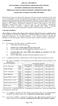 KHULNA UNIVERSITY MANAGEMENT AND BUSINESS ADMINISTRATION SCHOOL BUSINESS ADMINISTRATION DISCIPLINE ORDINANCE FOR MASTER OF BUSINESS ADMINISTRATION (MBA) (Session: 2012-13, Effective from MBA-2012 Batch)
M.Com Course. Nagpur
 M.Com Course of Rashtrasant Tukdoji Maharaj Nagpur University Nagpur Semester Pattern 2012-13 (Accounts & Statistics Board) Submitted by Dr. Dilip Gotmare (Chairman) M.Com First semester Advanced Financial
UNIVERSITY OF MUMBAI
 UNIVERSITY OF MUMBAI RULES & REGULATIONS, STRUCTURES & SYLLABUS for Ph.D. COURSE WORK under FACULTY OF TECHNOLOGY FOR ALL ENGINEERING DISCIPLINES RULES & REGULATIONS Revised rules for Ph. D under Faculty
The Institute of Cost Accountants of India
 The Institute of Cost ccountants of India ( Statutory Body under an ct of Parliament) www.icmai.in Foundation Course_Syllabus 2016 Structure & Contents Suggestions are invited within 20th July,2015 at
Communication Skills (HU 101)
 Communication Skills (HU 101) COURSES OBJECTIVES 1. To increase the student s ability to improve and utilize the skills necessary to be a competent Interpersonal communicator. 2. To increases the student
MBA Financial Management - LM500
 MBA Financial Management - LM500 1. Objectives The objectives of the MBA Financial Management Programme are: (i) (ii) (iii) to provide advanced educational opportunities for improving the practice of management
Gonzaga MBA Electives
 Gonzaga MBA Electives MBA & MACC PROGRAMS Gonzaga MBA students complete a third of their program, 11 credits, in elective coursework, allowing them the flexibility to tailor the program based on personal
Cotrugli MBA & Executive MBA outline
 Cotrugli MBA & Executive MBA outline COTRUGLI MBA programs are not only an investment in knowledge, information and networks, nor are they just an investment in career advancement. Our MBA programs inspire
International Islamic University Faculty of Management Sciences SCHEME OF STUDY BBA (H) 4-YEAR TO MBA 1.5 PROGRAM
 International Islamic University Faculty of Management Sciences SCHEME OF STUDY BBA (H) 4-YEAR TO MBA 1.5 PROGRAM SUMMARY: Graduate Core Courses 15 Graduate Specialization Courses 12 Project 3 Total Credits
BMS - 301 : OPERATING SYSTEM & APPLICATION SOFTWARE
 BMS - 301 : OPERATING SYSTEM & APPLICATION SOFTWARE COURSE OBJECTIVES This paper would make students learn about the latest version MS Windows operating system. The application software covered under this