
Insulation resistance testing
|
|
|
- Horatio Franklin
- 10 years ago
- Views:
Transcription
1 resistance testing Application Note Introduction resistance testers can be used to determine the integrity of windings or cables in motors, transformers, switchgear, and electrical installations. The test method is determined by the type of equipment being tested and the reason for testing. For instance, when testing electrical cabling or switchgear (low-capacitance equipment the time-dependent capacitive leakage and absorption leakage currents become insignificant and decrease to zero almost instantly. A steady conductive leakage current flow is reached almost instantly (a minute or less providing perfect conditions for the spot-reading/shorttime resistance test. (For more detailed information on leakage currents and resistance tests see the following sections: What Is & Leakage Currents and Predictive Maintenance Tests. On the other hand, when the equipment to be tested is a long run of cable, large motor, or generator (high-capacitance equipment the time-dependent currents will last for hours. These currents will cause the meter readings to change constantly, making it impossible to obtain an accurate steady reading. This condition can be overcome by using a test that establishes a trend between readings, such as the step voltage or dielectric-absorption test. These tests do not depend on a single reading but on a collection of relative readings. It would be a waste of time to perform these tests on low-capacitance equipment since the time-dependent currents diminish quickly, resulting in all the measurements being the same. Installation testing The most important reason for testing insulation is to insure public and personal safety. By performing a high dc voltage test between de-energized current-carrying (hot, grounded, and grounding conductors, you can eliminate the possibility of having a life-threatening short circuit or short to ground. This test is usually performed after the initial installation of the equipment. This process will protect the system against miswired and defective equipment, and it will insure a high quality installation, customer satisfaction, and protect against fire or shock. Maintenance testing The second most important reason for insulation testing is to protect and prolong the life of electrical systems and motors. Over the years, electrical systems are exposed to environmental factors such as dirt, grease, temperature, stress, and vibration. These conditions can lead to insulation failure, resulting in loss of production or even fires. Periodic maintenance tests can provide valuable information about the state of deterioration and will help in predicting possible failure of the system. Correcting problems will result not only in a trouble-free system, but will also extend the operating life for a variety of equipment.

2 Before measuring In order to obtain meaningful insulation resistance measurements, the electrician should carefully examine the system under test. The best results are achieved when: 1. The system or equipment is taken out of service and disconnected from all other circuits, switches, capacitors, brushes, lightning arrestors, and circuit breakers. Make sure that the measurements are not affected by leakage current through switches and overcurrent protective devices. 2. The temperature of the conductor is above the dew point of the ambient air. When this is not the case, a moisture coating will form on the in- sulation surface, and, in some cases will be absorbed by the material. 3. The surface of the conductor is free of carbon and other foreign matter that can become conductive in humid conditions. 4. Applied voltage is not too high. When testing lowvoltage systems; too much voltage can overstress or damage insulation. 5. The system under test has been completely discharged to the ground. The grounding discharge time should be about five times the testing charge time. 6. The effect of temperature is considered. Since insulation resistance is inversely proportional to insulation temperature (resistance goes down as temperature goes up, the recorded readings are altered by changes in the temperature of the insulating material. It is recommended that tests be performed at a standard conductor temperature of 20 C (68 F. As a rule of thumb, when comparing readings to 20 C base temperature, double the resistance for every 10 C (18 F above 20 C or halve the resistance for every 10 C below 20 C in temperature. For example, a one-megohm resistance at 40 C (104 F will translate to four-megohm resistance at 20 C (68 F. To measure the conductor temperature, use a non-contact infrared thermometer such as the Fluke 65. Work safely Safety is everyone s responsibility, but ultimately it is in your hands. No tool by itself can guarantee your safety. It is the combination of the instrument and safe work practices that gives you maximum protection. Here are a few safety tips you should follow: Work on de-energized circuits whenever possible. Use proper lock-out/tag-out procedures. If these procedures are not in place or not enforced, assume the circuit is live. On live circuits, use protective gear: Use insulated tools Wear flame resistant clothing, safety glasses, and insulation gloves Remove watches or other jewelry Stand on an insulation mat When making voltage measurements on live circuits: Hook on the ground clip first, then make contact with the hot lead. Remove the hot lead first and the ground lead last. Hang or rest the meter if possible. Try to avoid holding it in your hands to minimize personal exposure to the effects of transients. Use the three-point test method, especially when checking to see if a circuit is dead. First, test a known live circuit. Second, test the target circuit. Third, test a live circuit again. This verifies that your meter worked properly before and after the measurement. Use the old electricians trick of keeping one hand in your pocket. This lessens the chance of a closed circuit across your chest and through your heart. When performing insulation and resistance tests: Never connect the insulation tester to energized conductors or energized equipment and always follow the manufacturer s recommendations. Shut down the equipment to be tested by opening fuses, switches, and circuit breakers. Disconnect the branch circuit conductors, grounded conductors, grounding conductors, and all other equipment from the unit under test. Discharge conductor capacitance, both before and after the test. Some instruments may have automatic discharge functions. Check for any leakage current through fuses, switches, and breakers on de-energized circuits. Leakage current can cause inconsistent and incorrect readings. Don t use an insulation tester in a dangerous or explosive atmosphere since the instrument can generate arcing in damaged insulation. Use insulated rubber gloves when connecting the test leads. Fluke Corporation resistance testing

3 What are insulation resistance and leakage currents? During the testing procedure, the high dc voltage generated by pressing the test button will cause a small (micro-amps current flow through the conductor and the insulation. The amount of current depends on the amount of voltage applied, the system s capacitance, the total resistance, and the temperature of the material. For a fixed voltage, the higher the current, the lower the resistance (E=IR, R=E/I. The total resistance is the sum of the internal resistance of the conductor (small value plus the insulation resistance in MΩs. Current (in µa I L I C I A The value of insulation resistance read on the meter will be a function of following three independent sub-currents. Conductive leakage current (I L Conductive current is a small (micro-amp amount of current that normally flows through insulation, between conductors or from a conductor to ground. This current increases as insulation deteriorates and becomes predominant after the absorption current (see Figure 1 vanishes. Because it is fairly steady and time independent, this is the most important current for measuring insulation resistance. Total Current (I A + I C + I L Capacitive charging leakage current (I C When two or more conductors are run together in a raceway, they act as a capacitor. Due to this capacitive effect, a leakage current flows through conductor insulation. This current lasts only for a few seconds as the dc voltage is applied and drops out after the insulation has been charged to its full test voltage. In low-capacitance equipment, the capacitive current is higher than conductive leakage current, but usually disappears by the time we start recording the data. Because of this, it is important to let the reading settle out before recording it. On the other hand, when testing high capacitance equipment the capacitive charging leakage current can last for a very long time before settling out. Polarization absorption leakage current (I A Absorption current is caused by the polarization of molecules within dielectric material. In low-capacitance equipment, the current is high for the first few seconds and decreases slowly to nearly zero. When dealing with high capacitance equipment or wet and contaminated insulation, there will be no decrease in the absorption current for a long time. 0 Time (in seconds Figure 1. Current components I L Dielectric I C Dielectric Conductors Figure 2. Conductive leakage current (I L Conductors Figure 3. Capacitive charging leakage current (I C 3 Fluke Corporation resistance testing

4 Applications Installation test Proof testing Electricians and engineers perform proof tests to insure proper installation and integrity of conductors. The proof test is a simple, quick test used to indicate the instantaneous condition of insulation. It provides no diagnostic data and the test voltages used are much higher than the voltages used in predictive maintenance tests. The proof test is sometimes called GO/NO GO TEST because it tests cable systems for maintenance errors, incorrect installation, serious degradation, or contamination. The installation is declared acceptable if no breakdown occurs during testing. Choosing the test voltage A proof test can be performed on equipment of any capacitance. It is performed with a single voltage, usually between 500 and 5000 V, for about one minute. It is common to stress the insulation above normal working voltages in order to detect subtle weaknesses in the insulation. For new equipment, the test should be done at about 60% to 80% of the manu-facturer s factory test voltage (higher than the rated voltage and is available from the cable manufacturer. If you don t know the factory test voltage, test using a voltage about twice the cable s rated voltage plus 1000 volts. Rated voltage is the maximum amount of voltage that the conductor can be exposed to for a prolonged amount of time, usually printed on the conductor. For single-phase, two-phase, or three-phase systems, the cable is rated phaseto-phase. This previously mentioned method should only be used for testing small and new apparatus because of its ability to withstand higher stress voltages. For larger or older equipment or wire use dc test voltages (see table 3. Common proof dc test voltages (not the manufacturer s test voltages used for testing rotating equipment are shown in Table 1. Rotating Equipment DC Test Voltages Table 1. Proof test voltage equations for rotating machines Proof test procedure To conduct an installation proof test, use the following procedure: Use a multimeter or the voltage measurement function on the MegOhmMeter to make sure there is no power applied to the tested circuit. Select the appropriate voltage level. Plug one end of the black test lead to the common terminal on the meter and touch the test probe to a ground (earth or another conductor. Sometimes it is helpful to ground all conductors that are not part of the test. Alligator clips can make measurements easier and more accurate. Plug one end of the red test lead to the volt/ohm terminal on the meter and connect the test probe to the conductor to be tested. Press the test button to apply the desired voltage and Formula Used Factory AC Test, VAC (only for reference 2 x (VAC Nameplate Rating + 1,000 Maximum DC Installation Test, VDC Maximum DC After Service Test, VDC 1.28 x (Factory AC Test 0.96 x (Factory AC Test Metal Conduit Figure 4. Conductor under test 4 Fluke Corporation resistance testing

5 read the resistance displayed on the meter. It could take a few seconds for the reading to settle. The higher the resistance is the better. Test each conductor against ground and against all the other conductors present in the conduit. Keep a dated record of the measured values in a safe place. If some of the conductors fail the test, identify the problem or re-pull the conductors. Moisture, water, or dirt can create low resistance readings. Predictive maintenance tests Maintenance tests can provide important information about the present and future state of conductors, generators, transformers, and motors. The key to effective maintenance testing is good data collection. Examining the collected data will aid in scheduling diagnostic and repair work, which will reduce downtime from unexpected failures. The following are the most commonly applied dc test voltages and maintenance tests performed: should notice a steady increase in insulation resistance due to decrease in capacitive and absorption currents. Because temperature and humidity can affect the readings, the measurements should preferably be made above the dew point at standard temperature, about 20 C/68 F. For equipment rated at or below 1000 volts, the insulation reading should be of a value of 1 MΩ or greater. For equipment rated above 1000 volts, the expected resistance should increase to one megohm per 1000 volts applied. Usually, the measured insulation resistance will be a bit less than the values recorded previously, resulting in a gradual downward trend as shown in Figure 6. The downward slope is a normal sign of insulation aging. A sharp downward slope would indicate an insulation failure or a warning of troubles ahead. DC Test Voltages For phase-to-phase voltage rating Formula Used Table 3. DC test voltage equations DCt = x E p-p For phase-to-ground DCt = x E p-n voltage rating DCt - dc test voltage related to the maximum insulation stress during normal ac operation E p-p - Phase-to-phase voltage rating E p-n - Phase-to-ground voltage rating Recorded Value Equipment AC Rating (Volts DC Test Voltage (Volts ,000 2,300 1,000 or higher 4,100 and above 1,000 or higher Table 2. Maintenance test voltages versus equipment ratings Spot-reading/short-time resistance test During the short-time test, the MegOhmMeter is connected directly across the equipment being tested and a test voltage is applied for about 60 seconds. In order to reach a stable insulation reading in about one minute, the test should only be performed on low-capacitance equipment. The basic connection procedure is the same as for a proof test and the voltage applied is calculated from the dc test voltage formulas. When testing good equipment, you Figure 5. resistance test 0 Time 60 sec (in seconds Initial Acceptance Test Aging of Year Figure 6. resistance over a period of time After Rewinding Failure 5 Fluke Corporation resistance testing

6 Step voltage test The step voltage test involves resistance testing at various voltage settings. In this test, you apply each test voltage for the same period of time (usually 60 seconds, graphing the recorded insulation resistance. By applying increasing voltages in steps, the insulation is exposed to increased electrical stress that can reveal information about flaws in the insulation such as pinholes, physical damage, or brittleness. Good insulation should withstand an increase in over-voltage stress and its resistance should remain approximately the same during testing with different voltage levels. On the other hand, especially at higher voltage levels, deteriorated, cracked or contaminated insulation will experience an increased current flow, resulting in a decrease in insulation resistance. This test is independent of insulation material, equipment capacitance, and temperature effect. Because it takes a longer time to run, it should be performed only after an insulation spot test has been inconclusive. A spot test deals with absolute resistance change (single reading with respect to time, while the step voltage test looks for trends in resistance, with respect to varying test voltages. Dielectric-absorption/ time-resistance test The time resistance test is independent of equipment size and temperature. It compares the absorption characteristics of contaminated insulation with the absorption characteristics of good insulation. The test voltage is applied over a 10 minute period, with the data recorded every 10 seconds for the first minute and then every minute thereafter. The interpretation of the slope of the plotted graph will determine the condition of the insulation. A continuous increase in graphed resistance indicates good insulation. A flat or downward curve indicates cracked or contaminated insulation. Figure 7. Step voltage test Figure 8. Good and poor test curves Test Made with 50V Test Made with 500V Test Made with 1000V 0 Time 60 sec (in seconds Good Voltage (in kv Cracked Good Condition Poor Condition 0 Time 10 min (in minutes Direction of Failure Figure 9. Dielectric absorption test for good and contaminated curves 6 Fluke Corporation resistance testing

7 Another method for determining the quality of insulation is to use the polarization index (PI test. It is particularly valuable for uncovering moisture and oil ingress that have a flattening effect on the PI curve, causing leakage current and eventually shorted windings. The polarization index is the ratio of two time-resistance readings: one is taken after 1 minute and the other is taken after 10 minutes. With good insulation, the insulation resistance will start low and get higher as the capacitive leakage current and absorption current get smaller. Results are obtained by dividing the 10 minute test value by the one-minute test value. A low polarization index usually indicates problems with the insulation. When test time is constrained, a shortcut to the polarization index test is the dielectric absorption ratio (60/30 second test. Testing connections in generators, transformers, motors, and wiring To test the insulation resistance in generators, transformers, motors, and wiring installations, we can employ any of the previously mentioned predictive maintenance tests. Whether we choose the spot-reading, step voltage, or time-resistance tests depends on the reason for testing and the validity of the data obtained. When testing generators, motors, or transformers each winding/phase should be tested in sequence and separately while all the other windings are grounded. In this way, the insulation between phases is also tested. Temperature correction for testing rotating machines For testing armature and field winding insulation resistance at various temperatures, the IEEE recommends the following insulation resistance formula. Rm = Kt x (kv + 1 Table 6. resistance equation for ac and dc rotating machinery 60/30 Second Ratio 10/1 Minute Ratio Condition (Polarization Index Dangerous Poor Good Excellent 1.6 and above 4 and above Table 4. Approximate dielectric absorption ratios Table 5. Various insulation tests Rm - Minimum insulation resistance corrected to 40 C (104 F in MΩ Kt - resistance temperature coefficient at winding temperature, obtained from Figure 10 kv - Rated machine terminal to terminal voltage in kilovolts Temperature Coefficient, K t Proof Test Spot- Test Step Test Dielectric- Polarization Reading Voltage Absorption Index Test Test Single reading High test voltage Performed periodically Various test voltages Timed test intervals Diagnostic information For a three phase system tested with the other two phases grounded, the resistance recorded for each phase should be divided by two. Then, the resulting value can be compared with the recommended minimum insulation resistance (Rm Winding Temperature, Degrees Celsius Figure 10. Approximate temperature coefficient for rotating machines 7 Fluke Corporation resistance testing

8 Testing generators and motors When testing the resistance of the stator coils make sure the stator winding and phases are disconnected. Measure the insulation resistance between windings and windings to ground. Also, when dc generators or motors are being tested the brushes should be raised so the coils can be tested separately from the armature. The following table lists recommended minimum resistance readings for various motor voltage ratings. Motor Nameplate Minimum Acceptable Voltage Rating ,000 Ω ,000 Ω ,000 Ω MΩ MΩ MΩ Table 7. Recommended minimum resistance at 40 C (104 F Testing transformers When testing single-phase transformers, test winding to winding, winding to ground, or test one winding at a time with all others grounded. For threephase transformers, substitute E with E P-P (for delta transformers or E p-n (for wye transformers and kva with kva 3Ø rating of the winding under test. For determining minimum insulation resistance use the following formula. Transformer Type Single phase Three phase wye Three phase delta Formula Used R = C x E kva R = C x E p-n kva R = C x E p-p kva Table 8. Transformers insulation resistance equations R - One minute 500 volt dc minimum insulation resistance in megohms C - Constant for 20 C (68 F measurements (see below E - Winding voltage rating. KVA - Rated capacity of winding under test. For three phase units kva 3Ø = 3 x kva 1Ø Transformer Type 60-Hertz Tanked oil-filled type 1.5 Untanked oil-filled type 30.0 Dry or compound-filled type 30.0 Table 9. Constant C values at 20 C (68 Testing wiring and cable installations When testing wires or cables, they should be disconnected from panels and machinery to keep them isolated. The wires and cables should be tested against each other and against ground (see Figure 4 on page 4. The Insulated Power Cable Engineers Association (IPCEA provides the following formula that suggests minimum insulation resistance values. R = K x Log10 (D/d Table 10. Cable insulation resistance R - MΩs per 1000 feet (305 meters of cable. Based on dc test potential of 500 volts, applied for one minute at 15.6 C (60 F temperature K - material constant. (For example: Impregnated Paper-2640, Varnished Cambric-2460, Thermoplastic Polyethlene-50000, Composite Polyethylene D - Outside diameter of conductor insulation for single conductor wire and cable D = d + 2c + 2b diameter of single conductor cable d - Diameter of conductor c - Thickness of conductor insulation b - Thickness of jacket insulation For example, one thousand feet of number 6 A.W.G. Heat Resistant Natural Rubber insulation type stranded conductor with insulation thickness will have K = 10,560 and Log10 (D/d = inches. According to the formula (R = K x Log10 (D/d, R = 10,560 x = 3,939 MΩ per 1000 feet the expected minimum insulation resistance for single conductor per thousand feet at temperature of 60 F will be 3,939 MΩ. Tester To Different Windings Figure 11. Testing the insulation resistance of a motor Fluke. Keeping your world up and running. To Ground Fluke Corporation PO Box 9090, Everett, WA USA Fluke Europe B.V. PO Box 1186, 5602 BD Eindhoven, The Netherlands For more information call: In the U.S.A. ( or Fax ( In Europe/M-East/Africa +31 ( or Fax +31 ( In Canada ( FLUKE or Fax ( From other countries +1 ( or Fax +1 ( Web access: , 2007 Fluke Corporation. All rights reserved. Specifications subject to change without notice. Printed in U.S.A. 4/ A-EN-N Rev C 8 Fluke Corporation resistance testing

Understanding Insulation Resistance Testing
 Understanding Insulation Resistance Testing Why have an insulation testing program? A regular program of testing insulation resistance is strongly recommended to prevent electrical shocks, assure safety
A Practical Guide to Dielectric Testing
 Chroma Systems Solutions, Inc. A Practical Guide to Dielectric Testing 19032 Series Electrical Safety Analyzer & 19050 Series Hipot Tester AC/DC/IR/SCAN Keywords: Dielectric tests, insulation resistance
Insulation resistance testing. A complete solution for every person.
 Insulation resistance testing. A complete solution for every person. Insulation resistance. The latest test tools from the testing experts. You asked. We responded. Now you have more insulation testing
The table below lists the symbols used on the Clamp and/or in this manual. Important Information. See manual.
 i800 AC Current Clamp Instruction Sheet Introduction The i800 AC Current Clamp, the Clamp, has been designed for use with multimeters, recorders, power analyzers, safety testers, etc., for accurate non-intrusive
The Complete Guide to Electrical Insulation Testing A STITCH IN TIME 1 WWW.MEGGER.COM
 The Complete Guide to Electrical Insulation Testing A STITCH IN TIME 1 WWW.MEGGER.COM A Stitch In Time The Complete Guide to Electrical Insulation Testing Copyright 2006 WWW.MEGGER.COM A STITCH IN TIME
Insulation Resistance Testing of Low Voltage Cables in the Field
 Insulation Resistance Testing of Low Voltage Cables in the Field Table of Contents 1. Background...3 1.1. Before Making Measurements...3 1.2. How to Apply the Temperature Correction Factor...4 1.2.1. Calculation...4
ELECTRIC HEATER COMPANY Operating and Maintenance Manual For Immersion Heating Elements
 ELECTRIC HEATER COMPANY Operating and Maintenance Manual For Immersion Heating Elements HUBBELL ELECTRIC HEATER COMPANY P.O. BOX 288 STRATFORD, CT 06615 PHONE: (203) 378-2659 FAX: (203) 378-3593 INTERNET:
6/14/02 Chapter 14: Use of Electrical Test Equipment 1/20
 USE OF ELECTRICAL TEST EQUIPMENT Test equipment is necessary for determining proper set-up, adjustment, operation, and maintenance of electrical systems and control panels. The following is a general procedure
SALVAGING FLOOD DAMAGED ELECTRICAL EQUIPMENT
 SALVAGING FLOOD DAMAGED ELECTRICAL EQUIPMENT Overview In all drying out of electrical windings, the regulation of temperature should be controlled carefully. Maximum drying temperatures on windings should
TAN δ (DELTA) CABLE TESTING OVERVIEW AND ANSWERS TO FREQUENTLY ASKED QUESTIONS. What Is Tan δ, Or Tan Delta?
 TAN δ (DELTA) CABLE TESTING OVERVIEW AND ANSWERS TO FREQUENTLY ASKED QUESTIONS What Is Tan δ, Or Tan Delta? Tan Delta, also called Loss Angle or Dissipation Factor testing, is a diagnostic method of testing
Use your troubleshooting superpowers for good Application Note
 Use your troubleshooting superpowers for good Application Note Unleash your full troubleshooting powers with innovative new tools from Fluke. You ve got skill. You ve got experience. Now you have some
i410/i1010 AC/DC Current Clamp
 /i1010 AC/DC Current Clamp Instruction Sheet Safety Information XW Read First: Safety Information To ensure safe operation and service of the current clamp, follow these instructions: Read all operating
HVAC Clamp Meter. Users Manual
 902 HVAC Clamp Meter Users Manual PN 2547887 May 2006 Rev. 1, 3/07 2006-2007 Fluke Corporation. All rights reserved. Printed in China. All product names are trademarks of their respective companies. LIMITED
A Guide To Diagnostic Insulation Testing Above 1 kv
 A Guide To Diagnostic Insulation Testing Above 1 kv Table of Contents INTRODUCTION... 2 WHAT IS INSULATION?... 3 What Causes Insulation to Degrade?... 3 Electrical Stress... 3 Mechanical Stress... 3 Chemical
Power-factor testing of rotating machinery is another valuable test
 Feature Power-Factor Testing of Stator Winding Insulation: Understanding the Test Technique and Interpretation of Results Power-factor testing of rotating machinery is another valuable test technique providing
MIT510/2, MIT520/2 and MIT1020/2
 99 Washington Street Melrose, MA 02176 Phone 781-665-1400 Toll Free 1-800-517-8431 Visit us at www.testequipmentdepot.com MIT510/2, MIT520/2 and MIT1020/2 Line supply or battery operated Digital/analog
Multimeter measurements on variable frequency drives using the new Fluke 289 DMM
 Multimeter measurements on variable frequency drives using the new Fluke 289 DMM Application Note Editor s note: For similar instructions using the Fluke 87V DMM, reference Fluke article 12345. In the
Fluke Digital Multimeters Solutions for every need
 Fluke Digital Multimeters Solutions for every need How to choose the best DMM for your job Choosing the right digital multimeter (DMM) requires thinking about what you ll be using it for. Evaluate your
AC-Synchronous Generator
 Design Description AC Generators come in two basic types synchronous and non-synchronous. Synchronous generators lock in with the fundamental line frequency and rotate at a synchronous speed related to
Fossil fuel heating equipment
 Fossil fuel heating equipment principles and troubleshooting techniques Application Note This application note was written to provide you with an understanding of the basic principles of fossil fuel heating
Digital Energy ITI. Instrument Transformer Basic Technical Information and Application
 g Digital Energy ITI Instrument Transformer Basic Technical Information and Application Table of Contents DEFINITIONS AND FUNCTIONS CONSTRUCTION FEATURES MAGNETIC CIRCUITS RATING AND RATIO CURRENT TRANSFORMER
MEGGER 210170 Insulation & Low Resistance Tester
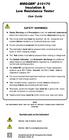 MEGGER 210170 Insulation & Low Resistance Tester User Guide SAFETY WARNINGS Safety Warnings and Precautions must be read and understood before the instrument is used. They must be observed during use.
SECTION 16999 ELECTRICAL ACCEPTANCE TESTS
 SECTION 16999 ELECTRICAL ACCEPTANCE TESTS PART 1 2. AND 3. COMBINED 1.1 SUMMARY A. Description of Systems 1. Furnish all labor, materials, test equipment, and technical supervision to perform and record
3053 Electrical Safety Training Program Course Outline
 3053 Electrical Safety Training Program Course Outline The following outline summarizes the major points of information presented in the program. The outline can be used to review the program before conducting
13 common causes of motor failure
 13 common causes of motor failure Application Note What to look for and how to improve asset uptime Motors are used everywhere in industrial environments and they are becoming increasingly complex and
A Guide To Diagnostic Insulation Testing Above 1 kv US $9.95 GBP 5.95
 A Guide To Diagnostic Insulation Testing Above 1 kv US $9.95 GBP 5.95 TABLE OF CONTENTS Introduction.................................... 2 What is Insulation?.............................. 2 What Causes
Unified requirements for systems with voltages above 1 kv up to 15 kv
 (1991) (Rev.1 May 2001) (Rev.2 July 2003) (Rev.3 Feb 2015) Unified requirements for systems with voltages above 1 kv up to 15 kv 1. General 1.1 Field of application The following requirements apply to
BRANDON AND CLARK INC. // SCOTT W. CLARK, P.E. ELECTRICAL CONTINUING EDUCATION ARC FLASH - NFPA 70E
 BRANDON AND CLARK INC. // SCOTT W. CLARK, P.E. ELECTRICAL CONTINUING EDUCATION ARC FLASH - NFPA 70E Training is not a substitute for following corporate safety guidelines. Always refer to the latest safety
Installation Instructions for Alarm Module Kit A043F059
 Instruction Sheet 07-2013 Installation Instructions for Alarm Module Kit A043F059 1 Introduction The information contained within is based on information available at the time of going to print. In line
Electrical Grounding. Appendix C
 Appendix C Electrical Grounding Low-Voltage Equipment Grounding The most frequently cited Office of Safety and Health Administration (OSHA) electrical violation is improper occupational grounding of equipment
DC MOTOR ANALYSIS & TROUBLESHOOTING
 DC MOTOR ANALYSIS & TROUBLESHOOTING By Don Shaw Condition assessment of DC motors requires a basic understanding of the design and operating characteristics of the various types available: the series motor,
What are the basic electrical safety issues and remedies in solar photovoltaic installations?
 What are the basic electrical safety issues and remedies in solar photovoltaic installations? Presented by: Behzad Eghtesady City of Los Angeles Department of Building and Safety Topics Covered Photovoltaic
User Guide. Model 380260 Insulation Tester / Megohmmeter
 User Guide Model 380260 Insulation Tester / Megohmmeter Introduction Congratulations on your purchase of Extech s Insulation Tester/Megohmmeter. The Model 380260 provides three test ranges plus continuity
WIRE AND CABLE ENGINEERING GUIDE
 DC Hi Pot Testing Excerpt from PRYSMIAN S WIRE AND CABLE ENGINEERING GUIDE (FOR INFORMATIONAL PURPOSES ONLY) Page 1 of 6 DC HIGH POTENTIAL TESTING DC Hi-Pot testing can be applied as a withstand test (a
Model 1756 Test Lead Kit
 Keithley Instruments 28775 Aurora Road Cleveland, Ohio 44139 1-888-KEITHLEY http://www.keithley.com Model 1756 Test Lead Kit Gerneral Purpose Test Lead Information Description These test leads allow you
Rotary Phase Converters
 FACTS from Ronk Electrical Industries, Inc. Bulletin 11981 Rotary Phase Converters ROTOVERTER Pat. No. 3,670,238 ROTO-CON Pat. No. 4,158,225 What are the ROTO-CON and ROTOVERTER power converters? The ROTO-CON
K Standard Grade Ni-Cr vs Ni-Al (Chromel vs Alumel)
 SureGrip TM 80PK-24 Air Temperature Probe Instruction Sheet XWWarning To avoid electrical shock, do not use this probe when voltages exceeding 24 V ac rms or 60 V dc are present. The probe tip is electronically
Yoke harness color code: Horizontal: Red & Blue. Vertical: Yellow & Brown, or Yellow & Green, or Violet and Brown.
 CRT Safety and Engineering Notice YOKE PLUG ORIENTATION Note: Your CRT has been provided with a Factory mounted yoke. It has been designed to work with a variety of different chassis configurations, thus
Test Before Touch Easier Said Than Done. Ken Crawford, DuPont Kent Haggerty, Dupont
 Test Before Touch Easier Said Than Done Ken Crawford, DuPont Kent Haggerty, Dupont Overview Test Before Touch (TBT) Principles Key Learnings by One Company One Method for Performing a TBT Induced Voltages
No. : EX##-OMF0004 OPERATION MANUAL. SI unit EX12#-SMB1
 No. : EX##-OMF0004 OPERATION MANUAL EX12#-SMB1 Contents 1. Safety instructions ------------------------------------------------------ P3 2. Notes ------------------------------------------------------
UT202A Operating Manual. Contents
 Title Contents Page Overview Unpacking Inspection Safety Information Rules for Safe Operation International Electrical Symbols The Meter Structure Functional Buttons and auto power off Display Symbols
Exploring the Necessity of the Hot Hipot Test
 Exploring the Necessity of the Hot Hipot Test Introduction In an industry comprised of workers with varying electronics knowledge, a Hipot test can seem a daunting task for some. Indeed, many test operators
World Leader in HV Testing Technology
 World Leader in HV Testing Technology Cable Fault Locators w/tdr Oil/Fluid Dielectric Testers Very Low Frequency AC Technology W/TD & PD Diagnostics Portable AC Hipots ---------------------------------
Electrical Resistance Resistance (R)
 Electrical Resistance Resistance (R) Any device in a circuit which converts electrical energy into some other form impedes the current. The device which converts electrical energy to heat energy is termed
Oil and Coolant Circulating Heating System. Model - OCSM
 Oil and Coolant Circulating Heating System Model - OCSM Installation & Operation Manual 216280-000 REV 2 Identifying Your System The HOTSTART heating system is designed to heat fluids for use in marine
Why Buy HVI VLF Products?
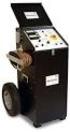 Very Low Frequency AC Hipots AC testing of cables and electrical apparatus is now easier than ever. Since the introduction of the High Voltage, Inc. line of portable and affordable VLF hipots, there is
Evaluating Water-Damaged Electrical Equipment
 Evaluating Water-Damaged Electrical Equipment 1 USE OF THIS PUBLICATION This publication provides information on how to evaluate electrical equipment that has been exposed to water through flooding, fire
General Calculations. Excerpt from PRYSMIAN S WIRE AND CABLE ENGINEERING GUIDE
 Excerpt from PRYMIAN WIRE AND CABLE ENGINEERING GUIDE Page 1 of 0 Voltage Rating The selection of the cable insulation level to be used in a particular installation shall be made on the basis of the applicable
Instruction Manual. 2in1 LAN Tester & Multimeter. Model: LA-1011
 Instruction Manual 2in1 LAN Tester & Multimeter Model: LA-1011 1 Contents Introduction... Features... Safety Precautions.. Meter Description... Electrical Specification... Operation.. AutoRanging Multimeter.
Table of Contents. The Basics of Electricity 2. Using a Digital Multimeter 4. Testing Voltage 8. Testing Current 10. Testing Resistance 12
 Table of Contents The Basics of Electricity 2 Using a Digital Multimeter 4 IDEAL Digital Multimeters An Introduction The Basics of Digital Multimeters is designed to give you a fundamental knowledge of
Troubleshooting Guide, Freedom and Fleet Power Inverter/Chargers
 Technical Note Freedom/Fleet Power 512-0084-01-01 Rev 1 Troubleshooting Guide, Freedom and Fleet Power Inverter/Chargers Overview This document is a guide for troubleshooting inverters, battery chargers,
323/324/325. Calibration Manual. Clamp Meter
 323/324/325 Clamp Meter Calibration Manual February 2013 2012 Fluke Corporation. All rights reserved. Specifications are subject to change without notice. All product names are trademarks of their respective
Welcome to Linear Controls Quarterly Training
 Welcome to Linear Controls Quarterly Training Introduction to Power Generation Objectives Supply attendees with basic knowledge of power generators and voltage regulators and provide the fundamentals of
SYNCHRONOUS MACHINE TESTING WITH MOTOR CIRCUIT ANALYSIS INSTRUMENTATION
 SYNCHRONOUS MACHINE TESTING WITH MOTOR CIRCUIT ANALYSIS INSTRUMENTATION Introduction Howard W. Penrose, Ph.D., CMRP Vice President, Engineering and Reliability Services Dreisilker Electric Motors, Inc.
21 st Century Facilities
 Electrical Testing 21 st Century Facilities Facility Owners face tough challenges 24 X 7 reliability needed Non linear loads cause harmonics VFD Computers Switching transients disrupt operations Less customer
5000V Graphical Megohmmeter Model 5070
 5000V Graphical Megohmmeter Model 5070 The Model 5070, the latest design in 5000V Megohmmeters, is the most innovative product in its class on the market today. The features and functions incorporated
EE301 Lesson 14 Reading: 10.1-10.4, 10.11-10.12, 11.1-11.4 and 11.11-11.13
 CAPACITORS AND INDUCTORS Learning Objectives EE301 Lesson 14 a. Define capacitance and state its symbol and unit of measurement. b. Predict the capacitance of a parallel plate capacitor. c. Analyze how
PowlVac Vacuum Integrity Tester
 Instructions IB-60025B PowlVac Vacuum Integrity Tester POWELL ELECTRICAL MANUFACTURING COMPANY 8550 MOSLEY DRIVE HOUSTON, TEXAS 77075 USA PHONE (713) 944-6900 FAX (713) 947-4453 www.powellelectric.com
Model UT33A: OPERATING MANUAL Table of Contents (1)
 Table of Contents (1) Title Overview Unpacking Inspection Safety Information Rules For Safe Operation International Electrical Symbols The Meter structure Functional Buttons LCD Display Measurement Operation
User's Guide. True RMS Industrial Multimeter
 User's Guide 97650 True RMS Industrial Multimeter Ω C ã F ã 10A V µ 10A V ã ã ma A Introduction This meter measures AC/DC Voltage, AC/DC Current, Resistance, Capacitance, Frequency (electrical & electronic),
Who sets the rules for electrical testing and safety?
 Who sets the rules for electrical testing and safety? Application Note Alphabet soup There s no question that electrical safety is a key concern for electricians and engineers, their employers, unions
Short Circuit Current Calculations
 Introduction Several sections of the National Electrical Code relate to proper overcurrent protection. Safe and reliable application of overcurrent protective devices based on these sections mandate that
SECTION 4 ELECTRIC MOTORS UNIT 17: TYPES OF ELECTRIC MOTORS
 SECTION 4 ELECTRIC MOTORS UNIT 17: TYPES OF ELECTRIC MOTORS UNIT OBJECTIVES After studying this unit, the reader should be able to Describe the different types of open single-phase motors used to drive
Troubleshooting accelerometer installations
 Troubleshooting accelerometer installations Accelerometer based monitoring systems can be tested to verify proper installation and operation. Testing ensures data integrity and can identify most problems.
Electrical Safety Tester Verification
 Ensuring Validity of Regulatory Tests Verification of electrical safety testing equipment is a procedure that is often overlooked by manufacturers. Running test verification is crucial to ensuring that
Integrating SPDs in Switchgear & Switchboards Causes More Problems than it Solves
 Integrating SPDs in Switchgear & Switchboards Causes More Problems than it Solves White Paper July 2010 Integrating surge protective devices (SPD) into distribution equipment (i.e. switchgear, switchboards,
Electric Heat Tracing INSTALLATION PROCEDURES
 INSTALLATION PROCEDURES The following installation procedures are suggested guidelines for the installation of a Thermon electric heat tracing system 1. Individuals installing these products are responsible
Model UT201/202: OPERATING MANUAL. Table of Contents
 Table of Contents Title Overview Unpacking Inspection Safety Information Rules For Safe Operation International Electrical Symbols The Meter Structure Rotary Switch Functional Buttons The Effectiveness
DIRECT CURRENT GENERATORS
 DIRECT CURRENT GENERATORS Revision 12:50 14 Nov 05 INTRODUCTION A generator is a machine that converts mechanical energy into electrical energy by using the principle of magnetic induction. This principle
SECTION 26 09 13 - POWER MONITOR FOR ELECTRICAL, STEAM CONDENSATE, AND WATER PART I - GENERAL
 SECTION 26 09 13 - POWER MONITOR FOR ELECTRICAL, STEAM CONDENSATE, AND WATER PART I - GENERAL 1.1 SUMMARY A. This section describes the requirements for the installation of Power Monitors and associated
Union County Public Schools. Facilities Department. Electrical. Safe Work Practices
 1 Union County Public Schools Facilities Department Electrical Safe Work Practices 2 Purpose In accordance with OSHA Standards 1910.331-335, safety-related work practices shall be used by Union County
Three-Phase Electric Power Distribution for Computer Data Centers
 Three-hase Electric ower Distribution for Computer Data Centers WHITE AER E901 Geist January 008 Summary This paper will describe the characteristics of three-phase power and outline the advantages of
Evaluating Water-Damaged Electrical Equipment
 Evaluating Water-Damaged Electrical Equipment 1 USE OF THIS PUBLICATION This publication provides information on how to evaluate electrical equipment that has been exposed to water through flooding, fire
TIG INVERTER INSTRUCTION MANUAL
 TIG INVERTER INSTRUCTION MANUAL Contents Warning General Description Block Diagram Main Parameters Circuit Diagram Installation and Operation Caution Maintenance Spare Parts List Troubleshooting 3 4 4
GUIDE TO THE MAINTENANCE, INSPECTION AND TESTING OF PORTABLE EQUIPMENT (ELECTRICAL APPLIANCES AND TOOLS) IN THE WORKPLACE
 GUIDE TO THE MAINTENANCE, INSPECTION AND TESTING OF PORTABLE EQUIPMENT (ELECTRICAL APPLIANCES AND TOOLS) IN THE WORKPLACE ET 215:2008 ELECTRO-TECHNICAL COUNCIL OF IRELAND 2008 Page 1 of 6 Published by
10 Multimeter. Users Manual
 10 Multimeter Users Manual 1991-2001 Fluke Corporation, All rights reserved. Printed in USA All product names are trademarks of their respective companies. 10 MULTIMETER m m Mk SELECT RANGE OFF VDC VAC
SOLAR PV STANDARD ELECTRICAL PLAN Microinverter Systems for Single Family Dwellings
 *** Provide this document to the inspector along with ALL system installation instructions *** Project Address: Scope: Standard plan for the installation of grounded microinverter solar PV systems, not
Arc Flash Hazards. Electrical Hazards. Dan Neeser Field Application Engineer [email protected]. Electrical Hazards 2/18/2015. Shock.
 Arc Flash Hazards Dan Neeser Field Application Engineer [email protected] Electrical Hazards Electrical Hazards Shock Arc Flash Arc Blast 2 1 Arcing Fault Basics 35,000 F Radiant Heat & UV Speed of
Evaluating Water-Damaged Electrical Equipment
 Evaluating Water-Damaged Electrical www.nema.org Evaluating Water-Damaged Electrical 1 USE OF THIS PUBLICATION This publication provides information on how to evaluate electrical equipment that has been
OPERATING INSTRUCTIONS
 PIPELINE INSPECTION COMPANY LTD. OPERATING INSTRUCTIONS Wet Sponge Holiday Detectors 670,673, and MSRB Wet Sponge Holiday Detectors Portable and In-Plant Detectors Table of Contents General Information.......................3
C ole s quality Open Frame Instrument Rotary Switch provides low
 OPEN FRAME series C ole s quality Open Frame Instrument Rotary Switch provides low contact resistance (.005W), very high contact reliability, smooth action with positive positioning, precision design,
COMPLIANCE WEST USA A Compliance Products USA, Inc. Company www.compwest.com
 AC vs. DC Dielectric Withstand Testing Abstract: Dielectric withstand testing is used to evaluate wiring insulation after it has been installed in a mobile home. As described below, if voltages are correctly
Understanding Arc Flash
 Understanding Arc Flash Presented by Eddie F. Jones, PE 1 2 3 4 5 Five to 10 arc flash explosions occur in electric equipment every day in the United States. This number does not include cases in which
CAUTION OPC-LM1-ID. Option Card for Frequency Divider. Fuji Electric FA Components & Systems Co., Ltd. Instruction Manual
 Instruction Manual Option Card for Frequency Divider Deliver this instruction manual without fail to those who actually operate the equipment. Read this operation manual and understand the description
SAFE ELECTRICAL WORK PRACTICES & 2015 NFPA 70E
 SAFE ELECTRICAL WORK PRACTICES & 2015 NFPA 70E This easy-to-use Leader s Guide is provided to assist in conducting a successful presentation. Featured are: INTRODUCTION: A brief description of the program
NFPA 70E 2012 Rolls Out New Electrical Safety Requirements Affecting Data Centers
 NFPA 70E 2012 Rolls Out New Electrical Safety Requirements Affecting Data Centers A market position paper from the experts in Business-Critical Continuity TM Executive Summary Electrocutions are the fourth
Essential Electrical Concepts
 Essential Electrical Concepts Introduction Modern vehicles incorporate many electrical and electronic components and systems: Audio Lights Navigation Engine control Transmission control Braking and traction
Predictive Maintenance
 PART ONE of a predictive maintenance series Predictive Maintenance Overview Predictive maintenance programs come in all shapes and sizes, depending on a facility s size, equipment, regulations, and productivity
RC NETWORKS SALES GUIDE
 SALES GUIDE INTRODUCTION TO Recent developments in electronic equipment have shown the following trends: Increasing demands for numerical control machines, robotics and technically advanced appliances
Voltage Drop (Single-Phase)
 Voltage Drop (Single-Phase) To Find: To Find Voltage Drop Formula: 2 x K x L x I V.D. = ------------------- C.M. Variables: C.M. = Circular Mill Area (Chapter 9, Table 8) To Find Voltage Drop Percentage
ELECTRICAL SAFETY. The standard unit for measuring electrical current.
 ELECTRICAL SAFETY Introduction The following sections provide general safety guidelines and procedures for electrical safety. This chapter covers the following topics: TOPIC PAGE General Electrical Safety
NEMA Magnet Wire Thermal Class Ratings
 NEMA Magnet Wire Thermal Class Ratings How to Use Them, and How They are Derived Ron Beeckman Essex Group, Inc. Thermal Class of Magnet Wire is Based upon: Temperature Index: (ASTM): A number which permits
RIGOL. Quick Guide. DS1000CA Series Oscilloscope. Aug. 2011. RIGOL Technologies, Inc.
 Quick Guide DS1000CA Series Oscilloscope Aug. 2011 Technologies, Inc. Guaranty and Declaration Copyright 2011 Technologies, Inc. All Rights Reserved. Trademark Information is a registered trademark of
INSTALLATION AND MAINTENANCE INSTRUCTIONS FOR THREE PHASE INDUCTION MOTORS
 INSTALLATION AND MAINTENANCE INSTRUCTIONS FOR THREE PHASE INDUCTION MOTORS Frames 143T - 449TZ 5100 North IH 35 Round Rock, Texas 78681 Phone: 800-451-8798 512-255-4141 Fax: 512-244-5512 RECEIVING 1. Check
LG Air Conditioning Multi F(DX) Fault Codes Sheet. Multi Split Units
 Multi Split Units If there is a fault on any LG Multi unit, an Error mark is indicated on the display window of the indoor unit, wired-remote controller, and LED s of outdoor unit control board. A two
Voltage Loss Formula s
 www.litz-wire.com HM Wire International Inc. Phone: 330-244-8501 Fax: 330-244-8561 Voltage Loss Formula s www.hmwire.com Voltage loss in a wire is synonymous to pressure loss in a pipe. Electric current
Avoiding AC Capacitor Failures in Large UPS Systems
 Avoiding AC Capacitor Failures in Large UPS Systems White Paper #60 Revision 0 Executive Summary Most AC power capacitor failures experienced in large UPS systems are avoidable. Capacitor failures can
6 & 12 Volt Battery and Systems Tester with 100 Amp Load
 6 & 12 Volt Battery and Systems Tester with 100 Amp Load Form No. 841-731 -000 DESCRIPTION This Load Tester tests 6 or 12 volt automotive-size lead-acid batteries under load. It will also test 6 or 12
IDEAL INDUSTRIES, INC. TECHNICAL MANUAL MODELS: 61-763 61-765
 IDEAL INDUSTRIES, INC. TECHNICAL MANUAL MODELS: 61-763 61-765 The Service Information provides the following information: Precautions and safety information Specifications Performance test procedure Calibration