
How To Identify A Tree Plant
|
|
|
- May Felicity Harrell
- 5 years ago
- Views:
Transcription
1 Identifying Pennsylvania Trees Pennsylvania Forest Stewardship Program Objective for this presentation: To help individuals learn to identify common Pennsylvania trees using the Summer Key to Pennsylvania Trees (free copies available from the PA Forest Stewardship Program, phone number below). This program consists of images and a suggested narrative, and is available as a PowerPoint presentation. Use the narrative as a base for your presentation, but please do not read it verbatim. Feel free to adapt this program if you wish. The images in this program may not be copied without permission. Prepared by Paul Roth, Research Assistant, and Rance Harmon, Extension Associate, The Pennsylvania State University, School of Forest Resources & Cooperative Extension for the Pennsylvania Forest Stewardship Program (Jan. 2002). The Pennsylvania Forest Stewardship Program sponsored by the Pennsylvania Bureau of Forestry and the USDA Forest Service provides private forestland owners with information and assistance to promote healthy and productive forests. For more information call (814) or WISE (toll free) or write to: Forest Resources Extension; The Pennsylvania State University; 7 Ferguson Building; University Park, PA

2 Tree Identification In this presentation you will learn to identify trees using the Summer Key to Pennsylvania Trees. Trees can be identified using many factors including leaves, bark, twigs, buds, flowers, and fruits. This presentation will focus on using leaves for tree identification. The next several slides will familiarize you with the terminology needed to use the Summer Key to Pennsylvania Trees.

3 Leaf Types

4 Scale-like Scale-like leaves are thin, flat and closely appressed to the branchlets as in the Arbor-vitae or Northern white-cedar. Note: This illustration shows several leaves.

5 Broad and flat Characteristic of many deciduous species.

6 Needles For the purpose of the identification key, needles can be sharp as in pines and spruces or more blunt as in Eastern Hemlock.

7 Leaf-type Comparison All three leaf types for comparison Left Scale-like Middle Broad and flat Right - Needles

8 Leaf Arrangement

9 Alternate Alternate-leaved: The points of attachment of the petioles (leaf stalks) are staggered along the stem. Petioles (leaf stalks) do not attach to the stem directly across from each other. The bud is at the junction of the twig & leaf petiole. These buds will remain after leaves drop, helping you recognize the leaf arrangement (alternate, opposite, or whorled).

10 Opposite Opposite-leaved: Having two leaves attach to the stem directly across from each other. The buds, again, are at the junction of the leaf & twig.

11 Whorled Whorled leaves: Having three or more leaves attach at the same point along the stem.

12 Leaf Arrangement Comparison Comparison slide: Top left: alternate Top right: opposite Center bottom: whorled

13 Leaf Structure

14 A simple leaf Petiole (leaf stalk) Bud Simple Leaf: Not divided into leaflets, which we ll see shorlty. The bud that occurs along the stem where the leaf attaches indicates whether the leaf is simple or compound. ( In a compound leaf, there is no bud at the base of the individual leaflets.)

15 A Compound Leaf Leaflet Pinnately compound Petiole (leaf stalk) Bud Compound leaf: A leaf that is divided into leaflets. Notice there is only one bud here: thus, only one leaf with seven leaflets. This figure is pinnately compound; having leaflets arranged on opposite sides of an elongated axis. Note: The bud actually occurs along the twig, near where the leaf stalk attaches, and not on the leaf stalk itself.

16 A Compound Leaf Leaflet Petiole (leaf stalk) Palmately compound Bud Compound Leaf: This is an example of a palmately compound leaf; leaflets all attach near a common point, resembling the fingers of a hand. Note: There is only one bud here; thus, there are five leaflets that make up one leaf.

17 Leaf Structure Comparison Left simple leaf Center pinnately compound leaf Right palmatelycompound leaf

18 Leaf margins Serrate Dentate Double serrate Lobed Entire Leaf Margins: The edges or margins of the leaf are also used in identification. Serrate leaves- margin with sharp forward directed teeth Double serrate leaves- each sharp, forward directed tooth bears small teeth Dentate leaves- margin with sharp teeth that point directly outward Lobed leaves- margin with relatively large, rounded projections (memory aid: think of ear lobe) Entire leaves- margin without teeth or lobes

19 Identification Section The rest of this program uses the Summer Key for Pennsylvania Trees. Note: There are three errors in any key dated earlier than 2002; look for date at the bottom right of the last page of the key. 6b should read: Needles without stalks, rather than Needles with stalks. 33b should read: Leaves rough or hairy, rather than Leaves rough and hairy. 40a should read: Terminal leaflet usually larger than other leaflets, rather than Terminal leaflet much larger than other leaflets.

20 Red Maple ID Slide Hint: opposite Red Maple Key Guide: 1b 12a 13a 14a 15b

21 Red Maple Acer rubrum Leaves: Opposite, simple, with 3-5 shallow lobes, coarsely toothed, light green above, pale green to whitish beneath, turning brilliant red or orange in autumn.
22 Red Maple Red Maple: Leaves: Opposite, simple, with 3-5 shallow lobes, coarsely toothed, light green above, pale green to whitish beneath, turning brilliant red or orange in autumn. Twigs: Slender, glossy; at first green, later red to reddish-brown. Fruit: Wings usually less than 1 long, spreading at a narrow angle, red to brown, maturing in May or June. Bark: Smooth and light gray on young trunks and branches; older trunks darker, shaggy, and roughened with long irregular peeling flakes. General: Found throughout PA in a wide variety of habitats, typically reaching 50 high, sometimes over 100. It grows best in wet soils Also known as soft maple because its wood is not as hard as sugar maple. Young trees are heavily browsed by deer and rabbits, with rodents consuming the seeds.
23 Sugar Maple ID Slide Hint: opposite Sugar Maple Key Guide: 1b 12a 13a 14a 15b
24 Sugar Maple Acer saccharum Leaves: Opposite, simple, 5-lobed with a few large teeth, about 4 wide, bright green above, pale green below. Leaves turn bright yellow, orange, or red in autumn.
25 Sugar Maple Sugar Maple: Leaves: Opposite, simple, 5-lobed with a few large teeth, about 4 wide, bright green above, pale green below. Leaves turn bright yellow, orange, or red in autumn. Twigs: Reddish brown to light brown. Buds brown and sharppointed. Fruit: Horseshoe-shaped with wings almost parallel, maturing in autumn, sometimes persisting into winter. Bark: Gray-brown, smooth on young trunks, older trunks fissured with long, irregular flakes. General: Also called rock maple for its hard wood, this important timber tree is found on moist wooded slopes throughout PA, reaching heights of The wood is used for furniture, musical instruments and flooring, and the sap is collected for maple syrup production. Birds and rodents eat the seeds. Deer, squirrels, porcupine and other mammals browse the twigs, buds, and bark.
26 Hint: opposite Flowering Dogwood Key Guide: 1b 12a 13a 14a 15a
27 Flowering Dogwood Cornus florida Leaves: Opposite, simple, 3-5 long; clustered towards tips of twigs; margins smooth or wavy; veins prominent and curved like a bow. Foliage bright red in autumn.
28 Flowering Dogwood Flowering Dogwood: Leaves: Opposite, simple, 3-5 long; clustered towards tips of twigs; margins smooth or wavy; veins prominent and curved like a bow. Foliage bright red in autumn. Twigs: Red tinged with green, often with a bluish white waxy coating; marked with rings; tips curve upward. End leaf bud covered by two reddish scales; side leaf buds very small, flower buds conspicuous, silvery, turban-shaped, at ends of twigs. Fruit: An egg-shaped drupe, ½ to 3/5 long; coat red; flesh yellowish: stone grooved, two-celled; usually in clusters of 2-5; persist after the leaves fall. Flowers greenish white or yellowish, small, in flat-topped clusters; four showy white bracts underneath; open before the leaves.
29 Hint: alternate Northern Red Oak Key Guide: 1b 12b 18a 19b 22a 23b 24b - 25b 26a 27b
30 Northern Red Oak Quercus rubra Leaves: Alternate, simple, 4-9 long, to 6 wide, with 7-11 bristle-tipped lobes, sinuses between lobes extend half-way to the mid rib. Smooth, dull green above, paler with small tufts of reddish-brown hair in vein-axils (i.e., where the side veins join the mid-rib) beneath.
31 Northern Red Oak Northern Red Oak: Leaves: Alternate, simple, 4-9 long, to 6 wide, with 7-11 bristle-tipped lobes, sinuses between lobes extend half-way to the mid rib. Smooth, dull green above, paler with small tufts of reddish-brown hair in vein-axils (i.e., where the side veins join the mid-rib) beneath. Twigs: Greenish-brown to reddish-brown, smooth when mature. Buds pointed, light brown, smooth. Fruit: An acorn, ¾ to 1 ¼ long; the cup shallow, saucer shaped, covering ¼ of the nut, cup-scales reddish-brown, narrow, tight, sometimes fuzzy on the edges. The acorns ripen in two growing seasons; the kernel is bitter. Bark: Smooth and greenish-brown or grey, maturing to dark grey or nearly black and is divided into rounded ridges. General: A dominant forest tree throughout the state growing up to 90 in moist to dry soils. Deer, bear, and many other mammals and birds eat the acorns. The hard, strong wood is used for furniture, flooring, millwork, railroad ties and veneer. The red oak group includes all oaks with bristle-tipped leaves and acorns that ripen over two seasons.
32 Hint: alternate White Oak: Key Guide:1b 12b 18a 19b 22a 23b 24b 25b 26a 27a
33 White Oak Quercus alba Leaves: alternate, simple, 6-9 long, and 4 wide, with 6-10 rounded lobes; bright green above, paler below, both surfaces smooth on mature leaves.
34 White Oak: Leaves: alternate, simple, 6-9 long, and 4 wide, with 6-10 rounded lobes; bright green above, paler White Oak below, both surfaces smooth on mature leaves. Twigs: red-grey, often with a grayish coating. Buds rounded, reddishbrown, smooth, to 1/8 long; end buds clustered. Fruit: an acorn, about 1 long, light brown, cup bowl like, hairy inside, enclosing 25% of the nut; cup scales warty at the base. Acorns ripen in one season in September. Bark: Pale grey, scaly, not deeply fissured, often flaky. General: a dominant forest tree on dry to moist sites, occurring throughout the state, usually reaching high. This tree is very important to both wildlife and people. The acorn is an important food for animals. Eastern Native Americans made a flour from them. Commercial uses include flooring, whiskey barrels and boat building. The famous Revolutionary War frigate USS Constitution, Old Ironsides, was made of White oak. The white oak group includes all oaks without bristle-tipped lobes and acorns that ripen in one season.
35 White Oak Red Oak White oak group -vs- Red oak group. Notice the difference between the rounded lobes of the White oak compared to the pointed lobes of the Red oak. Acorn notice the White oak cup more bowl like as compared to the Red oak being more saucer like. In this particular picture the white oak acorns are not fully mature. White oak acorns mature in one season, while Red oak acorns take two seasons to mature.
36 Hint: alternate American Beech Key Guide: 1b 12b 18a 19b 22b 28a 29b
37 American Beech Fagus grandifolia Leaves: alternate, simple, 3-4 long, stiff leathery texture, with a tapered tip and sharply-toothed margins, light green and glossy above, yellow-green below.
38 American Beech American Beech: Leaves: alternate, simple, 3-4 long, stiff leathery texture, with a tapered tip and sharply-toothed margins, light green and glossy above, yellow-green below. Twigs: slender; dark yellow to gray; at first hairy, later smooth; zigzag. Buds very long, slender, sharp pointed, and covered by reddish-brown scales. Fruit: a stalked, prickly 4-valved bur containing triangular, pale-brown, shining nuts. Bark: smooth, light gray, mottled with dark spots. General: found on moist, rich soils throughout its range; more abundant in the north. An important timber species typically reaching high but can grow taller. Beechnuts are a very important source of food for wildlife including bears, squirrels, and grouse; however, species produces good crops infrequently, every five to seven years. Beech is a handsome shade tree for large open areas in parks and golf courses.
39 Hint: alternate / hairy Yellow Birch Key Guide: 1b 12b 18a 19b 22b 28b 30b 31b 33b 35b 37a
40 Yellow Birch Betula alleghaniensis Leaves: Alternate, simple, 3-4 long, doubly-toothed margins, dull-green above, yellow-green beneath.
41 Yellow Birch Yellow Birch: Leaves: Alternate, simple, 3-4 long, doubly-toothed margins, dull-green above, yellow-green beneath. Twigs: Green and hairy when young later brown and smooth, with only a faint wintergreen flavor and smell. Buds dull yellowish green, slightly downy. Fruit: An erect, very short-stalked cone, 1 ½ long, made up of small, winged nuts and scales. Bark: Young stems and branches yellowish or bronze and shiny, peeling off in thin papery strips. Older trunks becoming reddish-brown and breaking into large, ragged-edged plates. General: A medium to large tree, usually occasionally to 100. Prefers moist, cool soils and cool summer temperatures, often found on north-facing slopes and swamps. The wood is used for cabinets, furniture, flooring, and doors. It was a principal wood used for distilling alcohol, acetate of lime, tar, and oils. Ruffed grouse feed on buds and seeds, deer and rabbits browse the twigs.
42 Hint: alternate/hairy Sweet (Black) Birch Key Guide: 1b 12b 18a 19b 22b 28b 30b 31b 33b
43 Sweet (Black) Birch Betula lenta Leaves: alternate, simple, about 3 ½ long, unevenly saw-toothed, dull green above, yellow-green beneath with some white hairs where the veins join the midrib. The leaf base is usually heart-shaped.
44 Sweet (Black) Birch Sweet Birch: Leaves: alternate, simple, about 3 ½ long, unevenly sawtoothed, dull green above, yellow-green beneath with some white hairs where the veins join the midrib. The leaf base is usually heart-shaped. Twigs: green and somewhat downy when young, becoming reddish-brown, smooth and shiny. They have a strong wintergreen flavor and smell. Buds reddish-brown, conical, sharppointed and shiny. Fruit: a very small, winged nut. As in other birches, nuts together with small scales, form a cone-like structure, about 1 ½ long. Bark: tight, dark reddish-brown on younger trees, marked with horizontal lines of pale lenticles and often resembles the bark of young Black cherry. On older trees the bark breaks into large black plates. General: Also known as Black birch or Cherry birch, this tree normally attains heights of 50 to 60, and is found on a variety of sites from rich fertile lowlands to rocky ridges throughout the state. The heavy, hard, strong wood is used for furniture, boxes, and fuel-wood. Distillation of the bark and twigs produces an oil of wintergreen. Fermented sap can be used to make birch beer. Ruffed grouse feed on buds and seeds; deer and rabbits browse the twigs.
45 Hint: alternate; hairy Paper Birch Key Guide: 1b 12b 18a 19b 22b 28b 30b 31b - 33b 35b 37a
46 Paper Birch Betula papyrifera Leaves: alternate, simple, 2-3 long, 1 ½ 2 wide, upper surface dark green, lower surface light green, narrowed or rounded at the base, sharplytoothed margins and sharp-pointed tip.
47 Paper Birch Paper Birch: Leaves: alternate, simple 2-3 long, 1 ½ - 2 wide, upper surface dark green, lower surface light green, narrowed or rounded at the base, sharply-toothed margins and sharp-pointed tip. Twigs: at first greenish and hairy, later becoming smooth reddish-brown. Fruit: a cylindrical, shortstalked strobile about 1 ½ long. The seeds are small and winged. Bark: trunk and older branches chalky to creamy white, marked with horizintal stripes and peeling off in thin layers. Older trunks rough and often fissured into irregular thick scales. General: a large tree to tall on upland woods and slopes in north-central and northeastern PA. Seeds and buds are eaten by the state bird, the Ruffed grouse. Twigs are browsed by deer. Native Americans used the bark for constructing canoes, shelters and containers.
48 Eastern Hemlock Key Guide: 1a 2b 4a 5a 6a
49 Eastern Hemlock Tsuga canadensis Leaves: Evergreen needles occur singly, appearing two-ranked on twigs, flattened, about ½ long, dark green and glossy above, light green with two white lines below.
50 Eastern Hemlock Eastern Hemlock: Leaves: Evergreen needles occur singly, appearing tworanked on twigs, flattened, about ½ long, dark green and glossy above, light green with two-white lines below. Twigs: Slender, tough, yellowish-brown to grayishbrown. Buds egg-shaped, 1/16 long, reddish-brown. Fruit: Cones ¾ long, eggshaped, hanging singly from the tips of the twigs. Under each scale are two small, winged seeds. Bark: Flaky on young trees, gray-brown to red-brown; thick and roughly grooved when older. General: A large, long-lived tree, important for construction timber and as a source of tannic acid for tanning leather. Found in cool, moist woods throughout the commonwealth, Eastern hemlock is the official state tree of Pennsylvania. Ruffed grouse, wild turkey, and songbirds find food and shelter in this tree. Deer browse it heavily when deep snow makes other foods scarce.
51 Eastern Redcedar Key Guide: 1a 2a 3a
52 Eastern Redcedar Juniperus virginiana Mature Leaves (photo on right): evergreen; opposite, in four rows forming slender, four-angled twigs; 1/16 long to 3/8 long on leaders. Scalelike, not toothed, dark green with gland dot. Immature leaves (photo on left): needlelike, pointed.
53 Eastern Redcedar Eastern Red Cedar: Leaves: evergreen; opposite, in four rows forming slender, fourangled twigs; 1/16 long, to 3/8 on leaders. Scale-like, not toothed; dark green with gland dot. Immature leaves needlelike, pointed. Bark: reddish-brown; thin, fibrous, and shreddy. Fruit: 1/4-3/8 in diameter; berrylike; dark blue with a bloom; soft, juicy, sweetish, and resinous; 1-2 seeds. General: evergreen, aromatic tree growing in height with a diameter of 1-2. Lives from dry uplands, especially limestone, to flood plains and swamps; also abandoned fields and fence rows; often in scattered pure stands.
54 Hint: leaves do not have stalks Balsam Fir Key Guide: 1a 2b 4a 5a 6b
55 Balsam Fir Abies balsamea Leaves: Evergreen; 1-1 ½ long. Spreading almost at right angles in two rows on hairy twigs; curved upward on upper twigs; flat, with rounded tip. Shiny, dark green above, with two-narrow, whitish bands beneath.
56 Balsam Fir Balsam Fir: Bark: Brown, thin, smooth, with many resin blisters, becoming scaly. Fruit: Cones 2-3 ¼ long; cylindrical; green tinged & dark purple; upright on topmost twigs. Scales finely hairy, bracts mostly short and hidden; paired long-winged seeds. General: The only fir native to the Northeast, with narrow, pointed, spirelike crown of branches and aromatic foliage. Generally grows A major pulpwood species. Also used for interior knotty pine paneling. Christmas trees, wreaths, and pillows utilize the sweet smelling foliage. Deer browse in winter.
57 Norway spruce: Key Guide: 1a 2b 4a 5b
58 Norway Spruce Picea abies Leaves: Evergreen, stiff, 1/2 to 1 long. Needles are 4-angled but somewhat flattened, with a sharp-pointed tip, shiny green.
59 Norway Spruce Norway Spruce: Leaves: Evergreen, stiff, 1/2 to 1 long. Needles are 4- angled, but somewhat flattened, with a sharp-pointed tip, shiny green. Twig: Slender to medium in size, lacking hair, orangish brown. Needles are borne on woody pegs. Fruit: Cones are very large, cylindrical, 4 to 6 inches long, with stiff scales that are irregularly toothed. Turning brown and maturing September to November. Bark: Red-brown and scaly, later turning gray with flaking scales or plates. Flower: Males yellow-brown in large groups; females upright, purple. General: A European species that has become a valuable naturalized member of our forests, and extensively planted as an ornamental. A large tree with a dense conical crown. Branchlets on older trees droop. Wood used chiefly for paper pulp, boxes, crates, and lumber.
60 Balsam Fir Norway Spruce Comparing firs and spruces. Two differences are twigs and needles: Twigs: Fir- Twigs smooth or nearly smooth Spruce Twigs roughened by peg-like leaf bases that remain on the twigs after the needles fall Needles: Fir Needles softer, flattened, and usually bluntly rounded at tip Spruce Needles stiff, 4-sided, pointed at tip
61 (one bundle) Eastern White Pine: Key Guide: 1a 2b 4b 7a 8a
62 Eastern White Pine Pinus strobus Leaves: Evergreen needles in clusters of five; soft & flexible; 3-sided, 2 ½ -5 long, and bluish-green. This is the only pine native to Pennsylvania with five needles per bundle.
63 Eastern White Pine Eastern White Pine: Leaves: Evergreen needles in clusters of five; soft & flexible; 3-sided, 2 ½ -5 long, and bluish-green. This is the only pine native to Pennsylvania with five needles per bundle. Twigs: Slender, flexible, with rusty hairs when young, later smooth. Buds egg-shaped, usually less than ½ long, graybrown. Fruit: Cones 5-8 long, without prickles, slightly curved, resinous; each scale usually bears two winged seeds as do all our native pines. Bark: Young trunks and branches greenish-brown, later darker, grooved, and scaly. General: Eastern white pines are large trees. At present they usually reach high. Penn s Woods once saw white pines reaching 150 and more. It is one of the most valuable softwood timber trees, found in moist or dry woodlands throughout the state, and often planted as an ornamental in large open areas. Many types of wildlife feed on the seeds and soft needles. The inner bark is the preferred winter food of the porcupine; deer browse the twigs.
64 Hint: opposite Horse Chestnut Key Guide: 1b 12a 13a 14b 16b Hint: leaf is palmately compound.
65 Horse Chestnut Aesculus hippocastanum Leaves: opposite, palmately compound, with leaf stalks 3-7 long. Usually 7-9 leaflets, (sometimes five); saw-toothed. Dull, dark green above, paler beneath.
66 Horse Chestnut Horse Chestnut: Description: Introduced shade tree with spreading, rounded crown of stout branches and course foliage. Leaves: opposite, palmately compound, with leaf stalks 3-7 long. Usually 7-9 leaflets, (sometimes five); saw-toothed. Dull, dark green above, paler beneath. Twigs: light brown; stout; hairless; ending in large, blackish, sticky bud. Fruit: Maturing in late summer; a brown spiny capsule, 2-2 ½ in diameter, splitting into two to three parts; 1-2 brown poisonous seeds. Bark: Gray or brown; thin and smooth, becoming fissured and scaley. General: Horse chestnut is a shade and street tree that likes rich, moist soils. It is easily propagated from seed and tolerant of city conditions.
67 Hint: needles more than 3 inches long Red pine: Key Guide: 1b 2b 4b 7a 8b 9b 10a 11b
68 Red Pine Pinus resinosa Leaves: Evergreen needles in clusters of two, slender, 4-6 long, dark green, borne in dense tufts at the ends of branchlets; snap easily when bent double.
69 Red Pine Red Pine: Leaves: Evergreen needles in clusters of two, slender, 4-6 long, dark green, borne in dense tufts at the ends of branchlets; snap easily when bent double. Twigs: Stout, ridged, yellowbrown to red-brown, buds egg-shaped, about ½ long, brown at first and later silvery. Fruit: A cone, about 2 long, without prickles, nearly stalkless, remains attached until the following year. Bark: Comparatively smooth, reddish-brown. General: Like White pine, this medium to large sized tree develops one horizontal whorl of side branches each year. A valuable softwood timber tree in the northern part of the State, its wood is used chiefly for construction lumber. Native on dry slopes in Luzerne, Wyoming, Tioga, and Centre counties and planted extensively by the Bureau of Forestry and the Pennsylvania Game Commission. Songbirds, mice and chipmunks feed on the seeds.
70 Hint: leaves rough American Elm: Key Guide: 1b 12b 18a 19b 22b 28b 30b 31b - 33b 35a - 36a
71 American Elm Ulmus americana Leaves: alternate, simple, 4-6 long, unequal at the base, rather rough at the upper surface; usually soft-hairy below; veins prominent; margin coarsely toothed. Petiole short.
72 American Elm American Elm: Leaves: alternate, simple, 4-6 long, unequal at the base, rather rough on the upper surface; usually softhairy below; veins prominent; margin coarsely toothed. Petiole short. Twigs: slender, zigzag, brown, slightly hairy. Leaf buds 1/8 - ¼ long, flattened. Flower buds larger, below leaf buds. Bud scales red-brown, smooth or downy; margins dark. Fruit: a seed surrounded by an oval, thin papery wing, 1/2 long, deeply notched at the tip; ripening in spring and borne in clusters; wing with scattered hairs along margin. Flowers and fruit appear before the leaves, as is true of Slippery elm. Bark: Dark gray to gray-brown with long corky ridges; separated by diamond-shaped fissures on older trees. General: a large and highly prized shade tree. The drooping crown often gives it a vaseshaped appearance. Found locally throughout Pennsylvania, mainly on moist areas. The hard, tough wood has many uses, including the manufacture of boxes, barrels, and furniture.
73 Clue: alternate, sap not milky Bitternut Hickory Key Guide: 1b 12b 18b 39b 40a Note: 40a is not always true
74 Bitternut Hickory Carya cordiformis Leaves: Alternate, compound, 6-10 long, divided into 7-11 lance-shaped leaflets, bright green and smooth above; paler and slightly downy beneath, margins finely to coursely toothed.
75 Bitternut Hickory Bitternut Hickory: Leaves: Alternate, compound, 6-10 long, divided into 7-11 lanceshaped leaflets, bright green and smooth above, paler and slightly downy beneath; margins finely to coursely toothed. Twigs: Slender, smooth, glossy, orange-brown to grayish with numerous pale lenticels. Buds covered by four sulphur-yellow, gland-dotted outer scales. End buds flattened, ¾ long. Fruit: Nearly round, ¾ -1 ½ in diameter with a thin, yellowish gland-dotted husk, which splits into four sections almost to the middle when ripe. The ridgeless, reddishbrown to gray-brown nut has a thin shell protecting a bitter kernel. Bark: The tight gray bark remains rather smooth for many years, eventually developing shallow furrows and low, narrow interlacing ridges.
76 Pitch pine: Key Guide: 1a 2b 4b 7a 8b 9a
77 Pitch Pine Pinus rigida Leaves: Evergreen needles in clusters of three, rarely in clusters of two; stiff, 2 5 long, yellowish-green.
78 Pitch Pine Pitch Pine: Leaves: Evergreen needles in clusters of three, stiff, 2 5 long, yellowish-green. Twigs: Stout, brittle, rough, angled in crosssection, golden-brown. Buds egg-shaped, about ½ long, resinous, redbrown. Fruit: Cones 1 3 long with short, stiff prickles, nearly stalkless, often remains attached for five years or more after ripening. Many remain unopened until heated by passing forest fire. Bark: Green and smooth on young branches; thick, rough, and grayish-brown on older trunks. General: Pitch pine is a medium sized tree, high. Widespread in Pa except the northwestern counties. It is more common on poor, sandy soils and areas where forest fires have killed most other trees. Its wood has a high resin content, and is used for railroad ties, construction lumber, pulpwood, and fuel. Pitch pine seeds are important to nuthatches, Pine grosbeaks and Black-capped chickadees. Deer and rabbits browse the seedlings.
79 Hint: leaf not compound and not hairy, margins have fine teeth; leaf stalks have glands. Black Cherry Key Guide: 1b 12b 18a 19b 22b 28b 30b - 31b - 33a 34a
80 Black Cherry Prunus serotina Leaves: Alternate, simple, 2-5 long; narrow with tapering tip, shiny above, paler below and usually with one or more small glands at the base; margins with short in-curved teeth which distinguish it from other cherries.
81 Black Cherry Leaves: Alternate, simple, 2-5 long; narrow with tapering tip, shiny above, paler below and usually with one or more small glands at the base; margins with short in-curved teeth which distinguish it from other cherries. Twigs: Smooth, reddishbrown, marked with numerous pale, round lenticles; often covered with a thin gray coating which rubs off easily. Buds smooth, shiny, sharp pointed, reddish-brown tinged with green. When broken, very bitter smelling. Fruit: Round, black with a purplish tint; 1/3-1/2 in diameter, containing a single, round, stony seed. Arranged in hanging clusters. Flowers white, blooms in June. General: Commonly high, this species grows throughout the state. It thrives in fertile alluvial soil, but also grows well on dry slopes. The hard reddish-brown wood is highly prized for quality furniture and interior trim. Many game birds, song birds, and mammals, including black bear, eat the fruit and seeds.
82 Hint: sap not milky; leaves hairy Black Walnut: Key Guide: 1b 12b 18b 39b 40b 41b 42b 44b
83 Black Walnut Juglans nigra Leaves: Compound, alternate; leaflets 15 to 23, each 3-4 long, smalltoothed; dark yellow-green above, paler, hairy below. End leaflet absent or very small. Main leaf-stem with very fine hairs.
84 Black Walnut Leaves: Compound, alternate; leaflets 15 to 23, each 3-4 long, small-toothed; dark yellow-green above, paler, hairy below. End leaflet absent or very small. Main leaf-stem with very fine hairs. Twigs: Stout, orangebrown to dark brown, roughened by large leaf scars, easily broken; pith pale brown, chambered. Buds gray, downy; side buds 1/6 long, end bud larger. Fruit: a round nut, 1-2 in diameter, shell rough, covered with a thick, almost smooth, green spongy husk; oily kernel sweet. Flowers in drooping green catkins, appearing with the unfolding leaves, which is also true of butternut. Bark: dark brown to gray-black, with narrow ridges. General: a large-sized tree, found locally on rich soils mainly in the southern part of the State. Wood valuable for quality furniture, veneer, gun stocks and musical instruments.
85 American larch (Tamarack): Key Guide: 1a 2b 4b 7b
86 American Larch Larix laricina Leaves: Needles not evergreen; occur singly near the ends of the twigs, elsewhere in clusters of ten or more; about 1 long, pale green, turning yellow and falling from the tree during the autumn.
87 American Larch American larch (tamarack): Leaves: Needles not evergreen; occur singly near the ends of the twigs, elsewhere in clusters of ten or more; about 1 long, pale green, turning yellow and falling from the tree during the autumn. Twigs: At first covered with a bluish-white coating, becoming dull brown and with numerous short spurs. Buds round, small, 1/16 long, dark red. Fruit: A cone, about one inch long, egg-shaped, upright, often remains attached for several years after ripening in the fall. Bark: Smooth at first, later becoming scaly, dark brown. General: A medium-sized tree also known as Eastern larch and Tamarack. Only conebearing tree native to Pa that loses its needles annually. Found locally in moist situations. Wood used chiefly for paper pulp, lumber, posts, and railroad ties. European larch (L. decidua) and Japanese larch (L. leptolepis) are more commonly planted in the State.
88 Not found in the key Wild Grape: This is an informational slide that cannot be worked through the key. Wild grapes are found throughout the State and are present in many hardwood stands, often taking over the canopies of some understory trees.
89 Wild Grape Vitis spp. Leaf: Alternate, simple, cordate, toothed and often lobed
90 Leaf: Alternate, simple, cordate, toothed and often lobed. Flower: Green, generally not showy, borne on Wild Grape panicles, appearing in late spring. Fruit: An edible berry occurring in clusters, usually dark blue or purple at maturity, often with a glaucous bloom. Maturing in autumn. Twig: Stems are mostly rounded, with rounded buds that have two bud scales. The terminal bud is false. Tendrils grow opposite the leaves and do not have adhesive tips. Bark: Very flaky, usually red-brown in color, often peels in long strips. Form: A vine that climbs with its curly tendrils.
91 White ash: Key Guide: 1b 12a 13a 14b 16a 17b
92 White Ash Fraxinus americana Leaves: Opposite; compound; about 10 long; with five to nine leaflets, each 3 to 5 long, short stalked, silvery beneath, margins entire or with a few rounded teeth toward the tip.
93 White Ash Leaves: Opposite; compound; about 10 long; with five to nine leaflets, each 3 to 5 long, short stalked, silvery beneath, margins entire or with a few rounded teeth toward the tip. Twigs: Stout, usually smooth, gray-brown with a few pale lenticels and a white, waxy coating which is easily rubbed off (called a bloom.) Buds rusty to dark brown, blunt with adjoining leaf scars half-circular and notched at the top. The first pair of lateral buds usually at the base of the end bud causing a terminal enlargement of the twig. Fruit: A winged seed, called a samara, usually 1 2 long and ¼ wide, shaped like a canoe paddle with a rounded tip and hanging in clusters which remain attached for several months after ripening in autumn. Bark: Gray-brown, evenly furrowed into diamond shaped areas separated by narrow interlacing ridges, slightly scaly on very old trees. General: A large tree, often up to 80 or more; usually with a long-straight trunk commonly found on rich soils. The wood is used for sporting goods (especially baseball bats), handles, agricultural tools, and furniture. The juice from the leaf has been reported to relieve mosquito bite itching. Fall foliage ranges from brilliant yellow to dark maroon.
94 Not found in the key Sycamore:
95 Sycamore Platanus occidentalis Leaves: Alternate, simple, 3-5 lobed, 4-7 across, generally wider than long, light green above, paler and wooly beneath, petiole hollow at the base, enclosing next year s bud.
96 Sycamore Leaves: Alternate, simple, 3-5 lobed, 4-7 across, generally wider than long, light green above, paler and wooly beneath, petiole hollow at the base, enclosing next year s bud. Twigs: At first green and hairy, later brownish, smooth, zigzag; buds conelike with a single, smooth reddish-brown scale. Fruit: A round, lightbrown ball, 1 in diameter, made up of many seeds surrounded by silky hairs, hanging singly or in pairs by a tough, slender stalk throughout the winter. Bark: Consists of two layers, the outer peeling in brown flakes, the inner whitish, yellowish or greenish, the base of old trunks dark brown and fissured. General: Large, massive trees typically found on stream banks and floodplains attaining heights of or more. Also called Buttonwood or American planetree, the wood is used for furniture, butcher blocks and flooring. The London planetree, P. x acerifolia Wild., with 2-4 fruits per stalk, is commonly planted as a shade tree in urban areas.
97 Sassafras: Key Guide: 1b 12b 18a 19b 22a 23b 24b 25a
98 Sassafras Sassafras albidum Leaves: Alternate, simple 4-6 long, smooth, dark green above, much lighter beneath, characteristically aromatic when crushed. Usually three types can be found on a tree: entire, two-lobed and three-lobed (rarely five-lobed).
99 Sassafras Leaves: Alternate, simple 4-6 long, smooth, dark green above, much lighter beneath, characteristically aromatic when crushed. Usually three types can be found on a tree: entire, two-lobed and threelobed (rarely five-lobed). Twigs: Bright green, sometimes reddish, smooth and shiny; large white pith. End bud much larger than side ones, with many lose scales. Fruit: A berry, dark blue, shiny, about ½ in diameter, on a red stem enlarged at the point of attachment; borne in clusters. Yellow flowers appear before the leaves unfold. Bark: Young trees furrowed, greenish, changing to brown; inner bark salmon colored; older trees show deep fissures extending long distances up the trunk. General: A small to medium-sized tree, to 50 high, with crooked branches; often spreading by root suckers. Its roots, leaves, twigs and fruit have a spicy odor; the oil contained in these parts is used for a tea, in medicines, perfumes, etc. Wood used chiefly for fuel and fence posts.
100 Hint: leaves usually greater than 5 inches long Cucumber-tree magnolia: Key Guide: 1b 12b 18a 19a 20b 21b
101 Cucumber-tree Magnolia Magnolia acuminata Cucumber-tree magnolia: Key Guide: 1b 12b 18a 19a 20b 21b
102 Cucumber-tree Magnolia Leaves: Alternate, simple, 4-12 long, smooth above, downy beneath; margins smooth or somewhat wavy. Twigs: Reddish-brown, shiny, with peppery smell and taste. Buds covered with greenishwhite silky hairs; end buds ½ ¾ long. Leaf scars horseshoe shaped. Fruit: When young, like a small green cucmber, when mature in autumn, 3-4 long, a cluster of small red pods, each containing two scarlet seeds; often remains attached all winter. Flowers large (3 long), greenish-yellow, single, upright; appear from April to June. Bark: Gray-brown to brown, developing long, narrow furrows and loose scaly ridges. General: A medium-sized tree, native to rich upland woods and slopes in the western half of the commonwealth. Magnolia wood is used mainly for interior finish, furniture, and containers. Songbirds, squirrels, and mice eat the seeds.
103 Sweetgum: Key Guide: 1b 12b 18a 19b 22a 23a
104 Sweetgum Liquidambar styraciflua Leaves: Star-shaped or maple-like, 3-6 long. Has five to seven pointed lobes with finely saw-toothed margins. Has a resinous odor when crushed. Shiny and dark green above, turning a reddish color in the fall.
105 Sweetgum Leaves: Star-shaped or maple-like, 3-6 long. Has five to seven pointed lobes with finely saw-toothed margins. Has a resinous odor when crushed. Shiny and dark green above, turning a reddish color in the fall. Twigs: Green to brown, and stout. Fruit: A long-stalked drooping brown ball 1-1 ¼ long, containing many individual fruits. Each with 1-2 long-winged seeds, maturing in autumn and often persisting into winter. Bark: Gray; deeply furrowed into narrow scaly ridges. General: Also known as Redgum or Sapgum, a large aromatic tree with a straight trunk and conical crown that becomes round and spreading, tall. It is an important timber tree used for cabinetwork, veneer, plywood, pulpwood, barrels, and boxes. Grows well in moist soils of valleys and lower slopes. Often a pioneer after logging and in old fields.
106 Norway Maple: Key Guide: 1b 12a 13a 14a 15b
107 Norway Maple Acer platanoides Leaf: Opposite, simple, and palmately-veined, 5 to 7 lobed with long-pointed "teeth," exudes milky white sap from the petiole when detached, dark green above, paler below.
108 Leaf: Opposite, simple, 5 to 7 lobed with long-pointed "teeth," milky white sap exudes from the broken leaf stalk; dark green above, paler Norway Maple below. Twig: Stout, reddish-brown. Buds glossy red with green at the base, bud scales with keellike ridges. Leaf scars meet to form a sharp angle, encircling the twig. Fruit: Widely divergent 2- winged samaras, spreading nearly to the horizon. 1 1/2 to 2 inches long in clusters, relatively flat seed cavity, mature in autumn. Bark: Smooth and light brown on young trees, dark and fissured but not scaly when older. General: Imported from northern Europe and extensively planted along city streets and in parks. Typically reaches 50 high. It frequently escapes from cultivation to grow in disturbed woods and roadways. Can be distinguished from other maples by the larger leaves, milky sap of the petiole, and the horizontal wings of the fruit.
109 Leaf: Opposite, simple, 5 to 7 lobed with long-pointed "teeth," milky white sap exudes from the broken leaf stalk; dark green above, paler below. Twig: Stout, reddish-brown. Buds glossy red with green at the base, bud scales with keel-like ridges. Leaf scars meet to form a sharp angle, encircling the twig. Fruit: Widely divergent 2-winged samaras, spreading nearly to the horizon. 1 1/2 to 2 inches long in clusters, relatively flat seed cavity, mature in autumn. Bark: Smooth and light brown on young trees, dark and fissured but not scaly when older. Hint: sap not milky General: Imported from northern Europe and extensively planted along city streets and in parks. Typically reaches 50 high. It frequently escapes from cultivation to grow in disturbed woods and roadways. Can be distinguished from other maples by the larger leaves, milky sap of the petiole, and the horizontal wings of the fruit.
110 Black Locust Robinia pseudoacacia Leaves: Alternate, compound, 7-19 oval leaflets 1-2 long, margins smooth.
111 Black Locust Black Locust: Leaves: Alternate, compound, 7-19 oval leaflets 1-2 long, margins smooth. Twigs: Angled, somewhat zigzag, brittle, with shortstout prickles; no end bud, side buds small and hidden in winter. Fruit: A thin, flat pod, 2-4 long; usually with 4-8 seeds; splits into halves when ripe. Flowers white, showy, and very fragrant in drooping clusters, appearing in May and June. Bark: Reddish-brown, rough, furrowed, and thick. General: A medium-sized tree to 45 high, found in open woods, floodplains, thickets and fencerows throughout the state. Wood is durable when in contact with soil and in demand for posts, poles, railroad ties, and mine timbers. Unfortunately, several insects and wood rots cause heavy damage, especially to trees on poor soils. Squirrels eat the seeds, and bees make honey from the nectar of locust flowers.
112 Striped Maple: Key Guide: 1b 12a 13a 14a 15b
113 Striped Maple Acer pensylvanicum Leaves: Opposite, simple, three-lobed, rounded at the base, with finely-toothed margins and rusty pubescence on the lower surface.
114 Striped Maple: Leaves: Opposite, simple, threelobed, rounded at the base, with Striped Maple finely-toothed margins and rusty pubescence on the lower surface. Twigs: Smooth and stout, at first greenish, later red. The pith is brown with each season s growth marked by two or three dark lines encircling the twig. Fruit: Wings very divergent, about ¾ long, maturing in September in drooping clusters. Marked on one side of the seed with a depression. Bark: Smooth and greenish or reddish-brown, conspicuously marked with longitudinal white streaks. Older trunks are rougher, darker and less streaked. General: Usually from high; common in the mountainous parts of the state on moist, cool, shaded slopes and in deep ravines.
115 Striped Maple: Leaves: Opposite, simple, threelobed, rounded at the base, with finely-toothed margins and rusty pubescence on the lower surface. Twigs: Smooth and stout, at first greenish, later red. The pith is brown with each season s growth marked by two or three dark lines encircling the twig. Fruit: Wings very divergent, about ¾ long, maturing in September in drooping clusters. Marked on one side of the seed with a depression. Bark: Smooth and greenish or reddish-brown, conspicuously marked with longitudinal white streaks. Older trunks are rougher, darker and less streaked. General: Usually from high; common in the mountainous parts of the state on moist, cool, shaded slopes and in deep ravines. Hint: milky sap
116 Smooth Sumac Rhus glabra Leaf: Alternate, pinnately compound, 11 to 31 leaflets per leaf, leaves are 12 to 18 inches long. Leaflets are lance-shaped, serrate and are 2 to 4 inches long. Leaflets are finely hairy below. Whitish beneath, turning maroon in the autumn.
117 Smooth Sumac Leaf: Alternate, pinnately compound, 11 to 31 leaflets per leaf, leaves are 12 to 18 inches long. Leaflets are lanceshaped, serrate and are 2 to 4 inches long. Leaflets are finely hairy below. Whitish beneath, turning maroon in the autumn. Twig: Stout, lacking hairs and often with a whitish bloom. Buds are small, rounded and covered with light brown hairs. Bark: Brown-gray and smooth, becoming scaly with age. Flower: White petals, borne on upright clusters up to 8 inches long. Flowering June to August. Male and female parts usually found on separate plants. Fruit: A drupe borne in clusters. Fruits are dark red, round and hairy, 1/8 inch long. Maturing September to October but often persisting through winter. General: A shrub or small tree with a short or multi-stemmed trunk and spreading branches. Only shrub or woody species native to all lower 48 states. It is eaten by many types of wildlife, including birds, small mammals, and deer. Indians would eat the young sprouts as salad, and the fruit could be chewed to quench thirst.
118 Tulip (Yellow) poplar: Key Guide: 1b 12b 18a 19b 22a 23b 24a
119 Yellow-poplar Liriodendron tulipifera Leaves: Alternate, simple, 4-6 in diameter, generally four-lobed, bright green, turning yellow in autumn.
120 Yellow-poplar Tulip (Yellow) Poplar: Leaves: Alternate, simple, 4-6 in diameter, generally four-lobed, bright green, turning yellow in autumn. Twigs: In spring and summer, green, sometimes with purplish tinge; during winter, reddishbrown, smooth and shiny. Buds large, smooth, flattened. Fruit: At first green, turning light brown when ripe in autumn; cone-like, 2 ½ 3 long. Made up of winged seeds. Greenish yellow tulip-like flowers in May or June. Bark: Young trees dark green and smooth with whitish vertical streaks. Older trunks are dark gray and furrowed. General: Also known as Tulip poplar, White poplar and Whitewood. A large tree, the tallest of the eastern hardwoods. It grows rapidly and is an important timber and shade tree. The wood is valuable for veneer and many other uses. Songbirds and game birds, rabbits, squirrels, and mice feed on the seeds. Whitetail deer browse the young growth.
121 The Summer Key To Pennsylvania Trees is a small part of the Pennsylvania 4-H forestry curriculum. Contact your Penn State Cooperative Extension Office to request additional information about 4-H and other educational programs. The Summer Key to PA Trees is now available on-line as a downloadable pdf file. It is available through this url:
122 Prepared by Paul Roth, Research Assistant, and Rance Harmon, Extension Associate, The Pennsylvania State University, School of Forest Resources & Cooperative Extension Acknowledgements Idea development and review: Jason Hall, Sandra Insalaco, and Cecile Stelter Service Foresters Pennslyvania Department of Conservation and Natural Resources, Bureau of Forestry Review: James Finley & Sanford Smith, The Pennsylvania State University School of Forest Resources & Cooperative Extension Images provided courtesy of Virginia Tech & The University of Wi sconsin. Line art courtesy of The Pennsylvania State University College of Agricultural Sciences and the Pennsylvania 4-H Program References Common Trees of Pennsylvania, Department of Conservation & Natural Resources, Bureau of Forestry The Audubon Society Field Guide to North American Trees Eastern Region, Knolph, Alfred A. Inc Virginia Tech Dendrological Web Page, University of Wisconsin, botanical images, Penn State is committed to affirmative action, equal opportunity, and the diversity of its workforce. The Pennsylvania State University, 2002
Identifying Pennsylvania Trees. Pennsylvania Forest Stewardship Program
 Identifying Pennsylvania Trees Pennsylvania Forest Stewardship Program Tree Identification In this presentation you will learn to identify trees using the Summer Key to Pennsylvania Trees. Trees can be
Invasive Tree Species
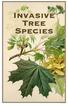 Invasive Tree Species A Contents Invasive Tree Species................. 1 Removal Permit Process.............. 2 Mitigation......................... 3 Identification Guide: Norway maple - Acer platanoides............
Dichotomous Keys for the Arboretum Walk. Plant List
 1 Dichotomous Keys for the Arboretum Walk Plant List Common name 1. Pin oak 2. Sweet gum 3. Red maple 4. Bur oak 5. River birch 6. Black cherry 7. Tulip poplar 8. Kentucky coffeetree 9. Catalpa 10. Honeylocust
KNOW YOUR. J. A. COPE and FRED E. WINCH, JR. REVISED by E. A. COPE
 KNOW YOUR J. A. COPE and FRED E. WINCH, JR. REVISED by E. A. COPE ISBN 1-57753-301-1 CONTENTS Acknowledgments... 3 Introduction... 4 Forest Appreciation... 5 Using This Bulletin... 6 Summer and Winter
Grade 4 Title: My Name is Magnolia Whittney McCray
 Grade 4 Title: My Name is Magnolia Whittney McCray Student Learning Objective(s): The students will understand why Magnolias are a type of evergreen. The students will create a story based on the information
FOREST TREES NORTH CAROLINA
 FOREST TREES OF NORTH CAROLINA North Carolina Forest Service TWENTY-FIRST EDITION 2015 North Carolina Department of Agriculture and Consumer Services The North Carolina Forest Service is an equal opportunity/affirmative
The Basics of Tree Pruning
 The Basics of Tree Pruning By John Ball, Forest Health Specialist and Aaron Kiesz, Urban and Community Forestry Specialist Until the end of the 19 th century, trees were not a common sight in many parts
United States Standards for Grades of Christmas Trees
 United States Department of Agriculture Agricultural Marketing Service Fruit and Vegetable Programs United States Standards for Grades of Christmas Trees Fresh Products Branch Effective October 30, 1989
Apricot Tree Prunus armeniaca
 Apricot Tree Prunus armeniaca Up to 25-30 tall x 15-20 wide or partial shade 10 degrees F. General: The Apricot Tree is a subspecies of the peach and dates back 3,000 years to northeastern China. Apricots
Tree Identification 4-H Project
 West Virginia University Extension Service 4-H-M-1761-95 Tree Identification 4-H Project Name Club County Address Age Years in 4-H Date project completed 4-H Program Objectives: To learn how to identify
The All Season Pocket Guide To Identifying Common Tennessee Trees
 Winter Identification Quick Reference Guide Bark Characteristics Smooth, mouse gray, no large warts: American beech 15, 23 Smooth, mouse gray with warts: hackberry 18, 28 Peeling, thin tan bark revealing
Japanese Knotweed (Polygonum cuspidatum) Japanese honeysuckle (Lonicera japonica)
 Japanese Knotweed (Polygonum cuspidatum) Japanese Barberry (Berberis thunbergii) Photo: www.emmitsburg.net Description: Aggressive plant that forms thickets 3-6 feet tall. Stems are hollow and bamboo-like.
Common Backyard Birds of Alabama
 Common Backyard Birds of Alabama Alabama Ornithological Society (AOS) state list includes 420 species: 158 species regularly breed in Alabama 174 species regularly winter 80 species migrate through Alabama
Tree Diversity Activity
 Tree Diversity Activity A Classroom Activity from The National Arbor Day Foundation You and your class may have participated recently in the Vote for America s National Tree, an historic opportunity for
Trees help us experience connections with our natural heritage and with our most deeply held spiritual and cultural values.
 REASONS FOR PLANTING TREES Shade from trees cools hot streets and parking lots and drive ways. Cities are "heat islands" that are 5-9 degrees hotter than surrounding areas. Trees and shrubs add beauty
Common Name: AMERICAN BARBERRY. Scientific Name: Berberis canadensis Miller. Other Commonly Used Names: none. Previously Used Scientific Names: none
 Common Name: AMERICAN BARBERRY Scientific Name: Berberis canadensis Miller Other Commonly Used Names: none Previously Used Scientific Names: none Family: Berberidaceae (barberry) Rarity Ranks: G3/S1 State
DEVELOPMENT GUIDELINES OAK TREES CARE AND MAINTENANCE
 DEVELOPMENT GUIDELINES OAK TREES CARE AND MAINTENANCE This guide will offer basic information for the preservation and maintenance of oak trees as a part of an overall landscape use. Unfortunately, oak
Deficiency Symptoms in Vegetable Plants (Corrective Treatments Per 30ʼ-long Row)
 Deficiency Symptoms in Vegetable Plants (Corrective Treatments Per 30ʼ-long Row) BORON (1-2 ounces Borax) General Symptoms Rosette Crown terminal buds; Death of terminal buds; leaves are an off-green color;
Write a paragraph explaining why you believe it is important for those who work in forestry to be able to identify forest trees.
 OBJECTIVE 5 SHEET IDENTIFY FOREST TREES INTRODUCTION A forester can identify tree species just as a farmer can recognize crops or a rancher knows the breeds of cattle or sheep. Learning this part of forestry
Rabbitat. Gimme shelter. That s exactly what brush. Brush Piles for Wildlife
 Wildlife and Your Land a series about managing your land for wildlife Rabbitat Brush Piles for Wildlife Have you ever watched a startled rabbit dart across your yard and suddenly disappear as if by magic?
Student Handout 1: Dichotomous Key Introduction
 Assignment 2: Big 6 Lesson Plan Roberta T. Jordan EDU566: Media Utilization and Curriculum Dr. Jane McGinn, Professor Student Handout 1: Dichotomous Key Introduction What is a Dichotomous Key? Instructions:
Arbor Day Tree Trivia
 Arbor Day Tree Trivia What day is Arbor Day? The last Friday of April. (April 30, 2010) Who is the father of Arbor Day? J. Sterling Morton When was the first Arbor Day? 1872 Name Idaho's state tree. Western
Tree and forest restoration following wildfire
 Peter F. Kolb (PhD) MSU Extension Forestry Specialist Adj. Assistant Professor Forest Ecology School of Forestry, University of Montana, Missoula, MT 59808 Tel. (406) 243-4705, e-mail: [email protected]
Care of Mature Backyard Apple Trees
 Education Center and Info Line practical solutions to everyday questions Toll free Info Line 1-877-398-4769 M-F 9 AM - 2 PM Care of Mature Backyard Apple Trees Introduction Backyard apple trees can be
Why Fruit Trees Die D. B. Meador, Extension Specialist (retired) University of Illinois
 Why Fruit Trees Die D. B. Meador, Extension Specialist (retired) University of Illinois Occasionally, fruit trees decline and often die. Diseases affecting the leaves, fruit, and twigs of fruit trees usually
Making and using keys Teacher Guidance
 Teacher Guidance Activities in earlier sections should have laid foundations that lead children to these more complex activities, in which they apply their observation and sorting skills to the practical
After the Storm: Caring for Your Trees
 Montana State University Extension Service Peter Kolb (PhD) MSU Extension Forestry Specialist School of Forestry, University of Montana,Missoula, MT 59812 Tel. (406) 243-4705; e-mail: [email protected]
Cercis Ruby Falls. www.planthaven.com. Origin: Redbud breeding program at NCSU Species: Cercis canadensis Protection Status: US PPAF
 Cercis Ruby Falls Origin: Redbud breeding program at NCSU Protection Status: US PPAF Key Features Unique weeping habit. Full crown of foliage at the top. Large heart shaped purple leaves. Attractive reddish-purple
GARDEN FACTS. When are apples ripe?
 A3743-E GARDEN FACTS U n i v e r s i t y o f W i s c o n s i n E x t e n s i o n When are apples ripe? Teryl R. Roper DIFFERENT APPLE CULTIVARS RIPEN over a long season. In Wisconsin, apples ripen from
Deer Exclusion Effects on Understory Development Following Partial Cutting in a Pennsylvania Oak Stand
 Deer Exclusion Effects on Understory Development Following Partial Cutting in a Pennsylvania Oak Stand Larry H. McCormick 1/, John W. Groninger 2/, Kathy A. Penrod 1/, and Todd E. Ristau 1/ Abstract: Forty
Managing Black Walnut
 Managing Black Walnut Mel Baughman Professor Emeritus University of Minnesota Lenny Farlee Extension Forester Purdue University Why Grow Black Walnut? Wood Products Rich, brown color Novelty items Lumber
Pruning Fruit Trees. Develop strong tree structure. This should begin when trees are planted and continue each year thereafter.
 Agriculture and Natural Resources Pruning Fruit Trees Extension Horticulture Arkansas Is Our Campus Visit our web site at: http://www.uaex.edu Fruit trees should be pruned every year to maintain their
Laboratory Broadleaf Weed Identification
 1 Tips for Identifying Broadleaf Weeds Laboratory Broadleaf Weed Identification The cotyledon is an important identifying characteristic for broadleaf weeds. Shape and position of leaves, presence of pubescence
Insect identification sheet
 information leaflet Insect identification sheet To enable you to identify the insect you have in your home, we have provided some identification sheets. These depict the most common pest species that you
Tree Landscape Planting
 City of Pierre Tree Landscape Planting The value of Woody Plant Landscaping Locally Adapted Species List Tips for Successful Planting Pierre Ordinances Public Needs to Know Community Tree Statistics: Trees
TREE PROTECTION POLICY AND SPECIFICATIONS FOR CONSTRUCTION NEAR TREES
 ` Parks, Forestry & Recreation Urban Forestry Table of Contents TREE PROTECTION POLICY AND SPECIFICATIONS FOR CONSTRUCTION NEAR TREES 1. Introduction 2. Table 1 - Tree Protection Zones 3. Tree Protection
Two Main Precautions Before You Begin Working
 Pruning Mango Trees Roy Beckford, Ag/Natural Resources Agent, UF/IFAS Lee County Two Main Precautions Before You Begin Working 1. Mango peel and sap contain urushiol, the chemical in poison ivy and poison
Mighty Oaks From Little Acorns
 Science Process: Observe and Measure / Life Science / Math: Measurement (Length), data Analysis (graphing) / reading: Sequencing / Listening / Writing / Visual Arts expression Background Buds are on the
North Shore Community Garden Society Plants to Avoid
 North Shore Community Garden Society - Plants to Avoid Page 1 North Shore Community Garden Society Plants to Avoid Japanese Polygonum Kno tw eed Cuspidatum Rhizomatous, semi-woody, herbaceous perennial
Tree factsheet images at pages 3, 4, 5
 Forest Ecology and Forest Management Group Tree factsheet images at pages 3, 4, 5 Prunus serotina Ehrh. taxonomy author, year Ehrhart 1783 synonym - Family Rosaceae Eng. Name Black Cherry, Wild Cherry
Wildfire Damage Assessment for the 2011 Southeast Complex Fires
 Wildfire Damage Assessment for the 2011 Southeast Complex Fires Chip Bates & Mark McClure, Forest Health Management Background: On March 24, 2011, multiple wildfires began across southeast Georgia. Strong,
Units of Measure and Conversion Factors for Forest Products
 Units of Measure and Conversion Factors for Forest Products Bulletin #7103 Knowledge of the common units of wood measurement is important to people who are involved in marketing forest products. These
City of Parkersburg, WV Big Tree Database Revised to 4-18 - 2015 Submissions 2003-2015
 City of Parkersburg, WV Big Tree Database Revised to 4-18 - 2015 Submissions 2003-2015 Scientific Name Common Name CBH HT CS BTP Location of Tree Flowering Trees & Ginkgo Acer negundo Boxelder, Ashleaf
How To Plan A Buffer Zone
 Backyard Buffers Protecting Habitat and Water Quality What is a buffer? A buffer (also called a riparian buffer area or zone) is the strip of natural vegetation along the bank of a stream, lake or other
Dry Bean Types and Development Stages
 Dry Bean Types and Development Stages Two basic plant growth habits are found in dry edible bean: determinate (bush) or indeterminate (vining or trailing). Cultivars may be classified according to plant
Deciduous Forest. Courtesy of Wayne Herron and Cindy Brady, U.S. Department of Agriculture Forest Service
 Deciduous Forest INTRODUCTION Temperate deciduous forests are found in middle latitudes with temperate climates. Deciduous means that the trees in this forest change with the seasons. In fall, the leaves
The Wonderful World of Wetlands BINGO
 The Wonderful World of Wetlands BINGO Time: 10-15 minutes to create Bingo board; 5-10 minutes to play one-round of Bingo Scituate Reservoir Watershed Education Program 17 Smith Ave Greenville, RI 02828
SPECIES DESCRIPTION Picture
 SPECIES DESCRIPTION Picture German Cockroach Cockroach egg case & nymphs 12-15mm (Adult Stage)Mid to dark brown body. Lighter area with 2 dark bars behind head. Wings. Very long antennae. Young are smaller
Palm Trees for Landscapes in Tulare & Kings Counties Suggested by Nancy Gravender, UC Master Gardener
 Palm Trees for Landscapes in Tulare & Kings Counties Suggested by Nancy Gravender, UC Master Gardener MEDIUM-SIZED PALM TREES (10-25 Ft. Tall) FAN PALMS: Guadalupe Palm (Brahea edulis) Grows to 20 ft.,
Cotinus coggygria. Cotoneaster sp. Shrubs
 Cotinus coggygria Common Name: Smoke Bush Family: Anacardiaceae Characteristics of plant: A large shrub/small tree which grows to 15 with bluish-green foliage that turns red in fall. Flowers appear as
This leaflet gives advice on sensible precautions to help avoid the problem and the first steps to take if damage still occurs.
 PROTECTING YOUR HOME FROM SUBSIDENCE DAMAGE The shortage of rain experienced by much of the country during recent years has caused an increase in the amount of damage to buildings by subsidence. In extreme
Tree Talk. Customer Care. www.lipower.org
 Customer Care Tree Talk Did you know that trees can help improve your safety and electric reliability? This booklet will help you select the best trees for your home, and provide tips about their maintenance
Planting and Tree Care for Roxborough Park. Keith Worley, Forester ISA Certified Arborist
 Planting and Tree Care for Roxborough Park Keith Worley, Forester ISA Certified Arborist Where We Live: High elevation at the edge of Mountains and Plains. Harsh climates with: High winds. Drought periods
Post-Wildfire Clean-Up and Response in Houston Toad Habitat Best Management Practices
 Post-Wildfire Clean-Up and Response in Houston Toad Habitat Best Management Practices Purpose The purpose of this document is to provide guidance and recommendations for minimizing potential impacts to
Reference: Remediation Plan for Areas of Vegetation Removal at the Cedar Point Wind Farm
 Stantec Consulting Ltd. 1-7 Southgate Drive, Guelph ON N1G 4P5 June 4, 215 File: 169679 Attention: St. Clair Region Conservation Authority 25 Mill Pond Crescent, Strathroy, ON N7G 3P9 Dear, In early 215,
Flower Model: Teacher Instructions Sepals Anther Stamens (male) Filament Stigma Pistil Style (female) Ovary Petals sepals petals stamens pistil
 Flower Model: Teacher Instructions In order to better understand the reproductive cycle of a flower, take a look at some flowers and note the male and female parts. Most flowers are different; some have
SPLITS AND CRACKS IN WOOD
 SPLITS AND CRACKS IN WOOD Fred M. Lamb, Professor Virginia Tech Blacksburg, Virginia INTRODUCTION Splits and cracks in wood are ruptures or separations in the grain of the wood which reduce the quality
Shearing Recommendations
 Shearing Recommendations North Central Regional Extension Publication No. 310 for Christmas Tree Producers Over the past several years, Christmas tree production has become a significant industry in much
Writing a Dichotomous Key to Wildflowers
 Writing a Dichotomous Key to Wildflowers Objectives: 1. Understand how to use and make dichotomous keys. 2. Understand common terminology of plant morphology. 3. Learn to recognize some fall wildflowers.
How To Understand Plant Biology
 SECOND GRADE PLANT LIFE 2 weeks LESSON PLANS AND ACTIVITIES LIFE CYCLE OVERVIEW OF SECOND GRADE ORGANISMS WEEK 1. PRE: Distinguishing characteristics of vertebrates. LAB: Discovering characteristics of
Pruning Deciduous Trees
 Pruning Deciduous Trees By Robert S. Logan, Extension Forestry Specialist, and Steven B. Laursen, former Natural Resources Specialist MontGuide Nearly any question the homeowner may have about trees, especially
The OPAL Biodiversity Survey
 The OPAL Biodiversity Survey By The Open University with Hedgelink Introduction Biodiversity is the variety of life. Hedgerows can be important havens for this, both in the countryside and in our cities.
City of Bellingham Tree Planting Guide
 City of Bellingham Tree Planting Guide This guide provides you with resources for planting trees in the city. Using the right tree in the right place, and maintaining it correctly will provide healthy,
Preserving Wild Ginseng in Minnesota
 Note: This digital document was adapted from Smith, W. R. 1993. Preserving Wild Ginseng in Minnesota. Minnesota Natural Heritage Program, Minnesota Department of Natural Resources. 7 pages. Preserving
April s Featured Plants
 Genus: Geum (Avens) Genus of about 50 perennials, mostly with dense clusters of hairy leaves Geum chiloense Species originating from Island of Chiloe, Chile which enjoys a cold, wet climate. These plants
Plant Structure, Growth, and Development. Chapter 35
 Plant Structure, Growth, and Development Chapter 35 PLANTS developmental plasticity = ability of plant to alter form to respond to environment Biological heirarchy Cell basic unit of life Tissue group
TREE NOTES. CALIFORNIA DEPARTMENT OF FORESTRY AND FIRE PROTECTION Arnold Schwarzenegger Governor State of California. Dale T.
 TREE NOTES CALIFORNIA DEPARTMENT OF FORESTRY AND FIRE PROTECTION Arnold Schwarzenegger Governor State of California Dale T. Geldert Director NUMBER: 30 February 2005 Mike Chrisman Secretary for Resources
Guide to Healthy Trees
 Guide to Healthy Trees Al and Bri Seaton Front cover image: This magnifi cent tree is located on our property in Mansfi eld, Victoria. A few years ago it was suffering severely from drought, erosion and
Identification and Prevention of Frost or Freeze Damage By Linda Reddick, Kingman Area Master Gardener
 KINGMAN IS GROWING! COLUMN Identification and Prevention of Frost or Freeze Damage By Linda Reddick, Kingman Area Master Gardener Again this year we have been experiencing some very cold weather, with
SPECIAL REPORT FROM STIHL STIHL PRUNING GUIDE BROUGHT TO YOU BY STIHL INC. 2010
 SPECIAL REPORT FROM STIHL STIHL PRUNING GUIDE BROUGHT TO YOU BY STIHL INC. 2010 STIHL Pruning Guide Introduction Watching a professional prune a tree or shrub can cause confusion in a layperson. It makes
PB1756. The All Season Pocket Guide To Identifying Common Tennessee Trees SUMMER/WINTER TREE IDENTIFICATION
 PB1756 The All Season Pocket Guide To Identifying Common Tennessee Trees SUMMER/WINTER TREE IDENTIFICATION INDEX Subject Page Preface - Useful Tips....................... i Poison Ivy Warning........................
Pruning Trees. Center for Landscape and Urban Horticulture. University of California Cooperative Extension Central Coast & South Region
 University of California Cooperative Extension Central Coast & South Region Center for Landscape and Urban Horticulture Pruning Trees Pruning Trees at Planting Landscape trees should not be pruned at planting
ELEMENTARY-LEVEL SCIENCE TEST
 4THE UNIVERSITY OF THE STATE OF NEW YORK SPRING 2008 GRADE 4 ELEMENTARY-LEVEL SCIENCE TEST WRITTEN TEST Student Name School Name Print your name and the name of your school on the lines above. The test
Controlling Invasive Plants and Animals in our Community
 Controlling Invasive Plants and Animals in our Community PROVIDED BY THE WILDLIFE COMMITTEE What makes a plant or animal invasive? When a plant or animal from another region of the world (usually Europe
Exhibit Inquiry. Rainforest. Aug 11
 Exhibit Inquiry Exhibit Inquiry Have students look for the following exhibits related to living things during their visit to the Ontario Science Centre: Where to go: (Level 6) What it's about: Tropical
Trees and Reliable Electric Service. Answers to Questions About Tree Pruning and Electric Power. We re connected to you by more than power lines.
 Trees and Reliable Electric Service Answers to Questions About Tree Pruning and Electric Power We re connected to you by more than power lines. How is Line Clearance Done? Pepco s tree contractor will
Table 1. Typical characteristics of angiosperms and gymnosperms. Angiosperms. Gymnosperms (flowers, with seeds in fruits)
 Trees and Water By: S. Lee 1, Intern, Virginia Water Resources Research Center, A.L. Raflo, Research Associate, Virginia Water Resources Research Center, and J.L. Gagnon, Project Associate, Dept. of Forest
Guidelines for Harvesting Vegetables
 Guidelines for Harvesting Vegetables From Cornell Cooperative Extension, Chemung County More gardening information at www.gardening.cornell.edu Knowing when to harvest your vegetables is as important as
Prune Your Trees. Prune early, prune often, prune for safety
 Prune Your Trees 9 Prune early, prune often, prune for safety Why should I prune? Safety, tree health, aesthetics, and value are the primary reasons for pruning trees. A single pruning can accomplish more
2016 Healthy Yards Plant Guide
 2016 Healthy Yards Plant Guide SUN KIT Each Wildflower Kit includes a tray of 17 wildflowers in 10cm pots Black-Eyed Susan Rudbeckia hirta Average Height: 30 to 150 cm Quantity: 3 Flowers: Yellow, Orange,
VIRGINIA TECH CAMPUS TREE CARE PLAN 2008
 VIRGINIA TECH CAMPUS TREE CARE PLAN 2008 1. PURPOSE The purpose of the Virginia Tech campus tree care plan is to identify the policies, procedures, and practices that are used in establishing, protecting,
Strawberry Leaf Spot
 Strawberry Leaf Spot Cathy Heidenreich and Bill Turechek Introduction - Leaf spot is one of the most common and widespread diseases of strawberry. Mycosphaerella fragariae is also the cause of black seed
3.1. Succession, Recovery, and Renewal in Natural Communities. A35 Starting Point. What Happens to a Vacant Lot?
 3.1 Succession, Recovery, and Renewal in Natural Communities Here is a summary of what you will learn in this section: Ecosystems change in predictable ways known as succession. Ecosystems can establish
KINGMAN IS GROWING! COLUMN
 KINGMAN IS GROWING! COLUMN THE INTRIGUING AGAVE BY LINDA REDDICK, KINGMAN AREA MASTER GARDENER An Agave is a tough, easy-care succulent that can add style to your garden, tolerate less than ideal conditions
Diagnosing Disorders of Trees
 148 Appendix A Diagnosing Disorders of Trees Diagnosing tree problems can be difficult. Symptoms and signs can be subtle or only visible using special techniques, important information can be missing,