
GRADUATE CATALOG. Published and archived in Fall 2014 CATALOG.UIC.EDU/GCAT
|
|
|
- Wilfrid Paul
- 10 years ago
- Views:
Transcription
1 GRADUATE CATALOG Published and archived in Fall 2014 CATALOG.UIC.EDU/GCAT
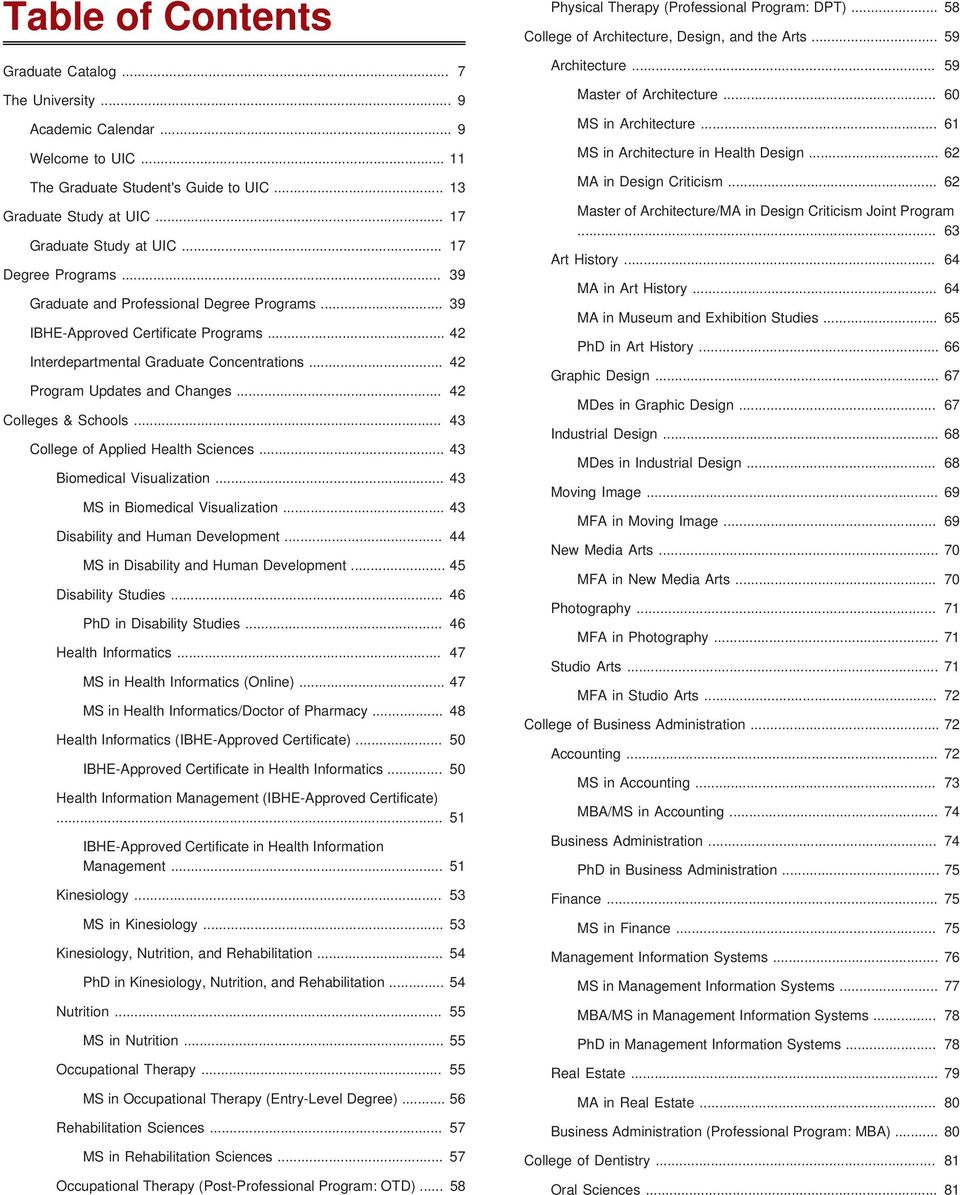
2 Table of Contents Graduate Catalog... 7 The University... 9 Academic Calendar... 9 Welcome to UIC The Graduate Student's Guide to UIC Graduate Study at UIC Graduate Study at UIC Degree Programs Graduate and Professional Degree Programs IBHE-Approved Certificate Programs Interdepartmental Graduate Concentrations Program Updates and Changes Colleges & Schools College of Applied Health Sciences Biomedical Visualization MS in Biomedical Visualization Disability and Human Development MS in Disability and Human Development Disability Studies PhD in Disability Studies Health Informatics MS in Health Informatics (Online) MS in Health Informatics/Doctor of Pharmacy Health Informatics (IBHE-Approved Certificate) IBHE-Approved Certificate in Health Informatics Health Information Management (IBHE-Approved Certificate) IBHE-Approved Certificate in Health Information Management Kinesiology MS in Kinesiology Kinesiology, Nutrition, and Rehabilitation PhD in Kinesiology, Nutrition, and Rehabilitation Nutrition MS in Nutrition Occupational Therapy MS in Occupational Therapy (Entry-Level Degree) Rehabilitation Sciences MS in Rehabilitation Sciences Occupational Therapy (Post-Professional Program: OTD) Physical Therapy (Professional Program: DPT) College of Architecture, Design, and the Arts Architecture Master of Architecture MS in Architecture MS in Architecture in Health Design MA in Design Criticism Master of Architecture/MA in Design Criticism Joint Program Art History MA in Art History MA in Museum and Exhibition Studies PhD in Art History Graphic Design MDes in Graphic Design Industrial Design MDes in Industrial Design Moving Image MFA in Moving Image New Media Arts MFA in New Media Arts Photography MFA in Photography Studio Arts MFA in Studio Arts College of Business Administration Accounting MS in Accounting MBA/MS in Accounting Business Administration PhD in Business Administration Finance MS in Finance Management Information Systems MS in Management Information Systems MBA/MS in Management Information Systems PhD in Management Information Systems Real Estate MA in Real Estate Business Administration (Professional Program: MBA) College of Dentistry Oral Sciences... 81
3 MS in Oral Sciences PhD in Oral Sciences Dental Medicine (Professional Program: DMD) College of Education Curriculum and Instruction PhD in Curriculum and Instruction Educational Psychology PhD in Educational Psychology Instructional Leadership MEd in Instructional Leadership Measurement, Evaluation, Statistics, and Assessment MEd in Measurement, Evaluation, Statistics, and Assessment Policy Studies in Urban Education PhD in Policy Studies in Urban Education Special Education MEd in Special Education PhD in Special Education Urban Education Leadership EdD in Urban Education Leadership Youth Development MEd in Youth Development College of Engineering Bioengineering MS in Bioengineering PhD in Bioengineering Bioinformatics MS in Bioinformatics PhD in Bioinformatics Chemical Engineering MS in Chemical Engineering PhD in Chemical Engineering Civil Engineering MS in Civil Engineering PhD in Civil Engineering Computer Science MS in Computer Science PhD in Computer Science Electrical and Computer Engineering MS in Electrical and Computer Engineering PhD in Electrical and Computer Engineering Energy Engineering Master of Energy Engineering Industrial Engineering MS in Industrial Engineering PhD in Industrial Engineering and Operations Research Materials Engineering MS in Materials Engineering PhD in Materials Engineering Mechanical Engineering MS in Mechanical Engineering PhD in Mechanical Engineering Engineering (Professional Program: MEng) Graduate College Learning Sciences PhD in Learning Sciences Neuroscience MS in Neuroscience PhD in Neuroscience Neuroscience (Interdepartmental Concentration) Patient Safety Leadership Survey Research Methodology (Interdepartmental Graduate Concentration) College of Liberal Arts and Sciences Anthropology MA in Anthropology MA in Anthropology/Master of Public Health PhD in Anthropology Biological Sciences MS in Biological Sciences PhD in Biological Sciences Central and Eastern European Studies (Interdepartmental Graduate Concentration) Chemistry MS in Chemistry PhD in Chemistry Communication MA in Communication PhD in Communication Criminology, Law, and Justice MA in Criminology, Law, and Justice PhD in Criminology, Law, and Justice Earth and Environmental Sciences MS in Earth and Environmental Sciences

4 PhD in Earth and Environmental Sciences Economics MA in Economics MBA/MA in Economics PhD in Economics English MA in English PhD in English Environmental and Urban Geography MA in Environmental and Urban Geography French and Francophone Studies MA in French and Francophone Studies Gender and Women's Studies (Interdepartmental Concentration) Germanic Studies MA in Germanic Studies PhD in Germanic Studies Hispanic Studies MA in Hispanic Studies PhD in Hispanic Studies History MA in History MAT in History PhD in History Latin American and Latino Studies MA in Latin American and Latino Studies Latin American and Latino Studies (Interdepartmental Concentration) Linguistics MA in Linguistics Mathematics MA in Mathematics MS in Mathematics MST in Mathematics DA in Mathematics PhD in Mathematics Philosophy PhD in Philosophy Physics MS in Physics PhD in Physics Political Science MA in Political Science PhD in Political Science Psychology PhD in Psychology Second Language Teaching (Interdepartmental Concentration) Slavic Studies MA in Slavic Studies PhD in Slavic Studies Sociology PhD in Sociology Spanish MAT in Spanish Violence Studies (Interdepartmental Graduate Concentrate) College of Medicine Anatomy and Cell Biology PhD in Anatomy and Cell Biology Biochemistry and Molecular Genetics PhD in Biochemistry and Molecular Genetics Cardiovascular Science (Interdepartmental Graduate Concentration) Graduate Education in Medical Sciences Health Professions Education Master of Health Professions Education Medical Biotechnology MS in Medical Biotechnology Medical Scientist Training Program Microbiology and Immunology PhD in Microbiology and Immunology Pathology MS in Pathology PhD in Pathology Pharmacology PhD in Pharmacology Physiology and Biophysics MS in Physiology and Biophysics PhD in Physiology and Biophysics Surgery MS in Surgery Medicine (Professional Program: MD) College of Nursing

5 Administrative Nursing Leadership (IBHE-Approved Certificate) IBHE-Approved Certificate in Administrative Nursing Leadership Nursing MS in Nursing PhD in Nursing Women's Health (Interdepartmental Graduate Concentration) Nursing Practice (Professional Program: DNP) College of Pharmacy Biopharmaceutical Sciences PhD in Biopharmaceutical Sciences Forensic Science MS in Forensic Science Forensic Toxicology MS in Forensic Toxicology Medicinal Chemistry MS in Medicinal Chemistry PhD in Medicinal Chemistry Pharmacognosy MS in Pharmacognosy PhD in Pharmacognosy Pharmacy PhD in Pharmacy Joint PharmD/PhD Program Pharmacy (Professional Program: PharmD) School of Public Health Clinical and Translational Science MS in Clinical and Translational Science DMD/MS in Clinical and Translational Science MD/MS in Clinical and Translational Science PharmD/MS in Clinical and Translational Healthcare Administration Master of Healthcare Administration Public Health Sciences MS in Public Health MPH/MA in Anthropology PhD in Public Health Public Health (Professional Programs: MPH and DrPH) Jane Addams College of Social Work Social Work PhD in Social Work Violence Studies (Interdepartmental Graduate Concentrate) Social Work (Professional Programs: MSW and IBHE-Approved Certificate) College of Urban Planning and Public Affairs Public Administration Master of Public Administration PhD in Public Administration Urban Planning and Policy Master of Urban Planning and Policy PhD in Urban Planning and Policy Additional Opportunities for Graduate and Professional Study Course Descriptions Accounting (ACTG) African American Studies (AAST) Anatomy and Cell Biology (ANAT) Anthropology (ANTH) Architecture (ARCH) Art (ART) Art History (AH) Asian American Studies (ASAM) Asian Studies (ASST) Associated Health Sciences (AHS) Biochemistry and Molecular Genetics (BCMG) Bioengineering (BIOE) Biological Sciences (BIOS) Biomedical and Health Information Sciences (BHIS) Biomedical Visualization (BVIS) Biopharmaceutical Sciences (BPS) Biostatistics (BSTT) Business Administration (BA) Campus Courses (CC) Central and Eastern European Studies (CEES) Chemical Engineering (CHE) Chemistry (CHEM) Civil and Materials Engineering (CME) Classics (CL) Communication (COMM) Community Health Sciences (CHSC) Computer Science (CS) Criminology, Law, and Justice (CLJ) Curriculum and Instruction (CI)

6 Design (DES) Disability and Human Development (DHD) Earth and Environmental Sciences (EAES) Economics (ECON) Education (ED) Educational Policy Studies (EDPS) Educational Psychology (EPSY) Electrical and Computer Engineering (ECE) Energy Engineering (ENER) Engineering (ENGR) English (ENGL) English as a Second Language (ESL) Entrepreneurship (ENTR) Environmental and Occupational Health Sciences (EOHS) Epidemiology (EPID) Finance (FIN) French (FR) Gender and Women's Studies (GWS) Geography (GEOG) Germanic Studies (GER) Graduate College (GC) Graduate College Life Sciences (GCLS) Greek, Ancient (GKA) Health Information Management (HIM) Health Policy and Administration (HPA) Histology (HSTL) History (HIST) Honors College (HON) Human Nutrition (HN) Industrial Engineering (IE) Information and Decision Sciences (IDS) Interdisciplinary Public Health Sciences (IPHS) Interdisciplinary Studies in the Arts (ISA) Italian (ITAL) Jewish Studies (JST) Kinesiology (KN) Latin (LAT) Latin American and Latino Studies (LALS) Learning Sciences (LRSC) Liberal Arts and Sciences (LAS) Linguistics (LING) Literatures, Cultural Studies, and Linguistics (LCSL) Lithuanian (LITH) Management (MGMT) Marketing (MKTG) Master of Business Administration (MBA) Master of Engineering (MENG) Mathematical Computer Science (MCS) Mathematics (MATH) Mathematics Teaching (MTHT) Mechanical Engineering (ME) Medical Biotechnology (MBT) Medical Education (MHPE) Medical Humanities (MHUM) Medicinal Chemistry (MDCH) Medicinal Chemistry and Pharmacognosy (PMMP) Microbiology and Immunology (MIM) Military Science (MILS) Moving Image Arts (MOVI) Music (MUS) Native American Studies (NAST) Natural Sciences (NATS) Neuroscience (NEUS) Nursing Core (NURS) Nursing Elective (NUEL) Nursing Practicum (NUPR) Nursing Specialty (NUSP) Occupational Therapy (OT) Oral and Maxillofacial Surgery (OSUR) Oral Medicine and Diagnostic Sciences (OMDS) Oral Sciences (OSCI) Orthodontics (ORTD) Pathology (PATH) Patient Safety Leadership (PSL) Pediatric Dentistry (PEDD) Pharmacognosy (PMPG) Pharmacology (PCOL) Pharmacy (PHAR) Pharmacy Practice (PMPR) Pharmacy Systems, Outcomes, and Policy (PSOP) Philosophy (PHIL) Physical Therapy (PT) Physics (PHYS) Physiology and Biophysics (PHYB)

7 Polish (POL) Political Science (POLS) Prosthodontics (PROS) Psychology (PSCH) Public Administration (PA) Public Health (PUBH) Public Policy Analysis (PPA) Religious Studies (RELS) Russian (RUSS) Slavic and Baltic Languages and Literature (SLAV) Social Work (SOCW) Sociology (SOC) Spanish (SPAN) Special Education (SPED) Statistics (STAT) Study Abroad (SABR) Surgery (SURG) Theatre (THTR) Urban and Public Affairs (UPA) Urban Planning and Policy (UPP) Graduate Faculty Index

8 University of Illinois at Chicago Graduate Catalog 7 Graduate Catalog The Graduate Catalog is a record of the academic years. It is for informational purposes only and does not constitute a contract. Faculty assignments and programs listed are subject to change. Courses are not necessarily offered each term or each year. Individual departments or units should be consulted for current information regarding programs, faculty, and regularity of course offerings. The online catalog is updated as degree programs, courses, and requirements change. The online catalog is an academic planning tool for graduate students. The online catalog is divided into five major sections. In addition, the catalog provides a listing of the graduate faculty and links to the Graduate College website and catalog archive. The University (p. 9) Graduate Study at UIC (p. 17) Degree Programs (p. 39) Colleges & Schools (p. 43) Graduate Course Descriptions (p. 227) Each section of the online catalog provides information necessary for the academic planning process. A brief description of each major section is provided below. The University The University section provides an overview of the University of Illinois at Chicago. Graduate Study at UIC The Graduate Study at UIC section outlines admissions, application, degree requirement, and university information pertinent to all Graduate College students. This section also contains a list of graduate faculty. Degree Programs The Degree Programs section lists all graduate and professional degree programs and certificate programs available at UIC. It also provides a list of program updates and changes. Colleges & Schools The Colleges & Schools section describes graduate degree programs and their requirements in detail. Students use this section of the catalog to ensure that they understand and meet all requirements for their degree program. Graduate Course Descriptions The Graduate Course Descriptions section lists all the graduate courses at UIC. The course descriptions are arranged alphabetically by subject area. Each course description includes a rubric (subject area abbreviation), course number, course title, semester hours, prerequisites (if any), and course content. A list of rubrics may be found at the beginning of the Graduate Course Descriptions section. The online catalog includes all courses at UIC. However, not all courses are offered during a given semester. Students will find current course offerings in the Schedule of Classes, which is published online ossswebcs.admin.uillinois.edu/portal_uic/classsch.html before registration begins Graduate Catalog Published by: Office of Academic and Enrollment Services (MC 018) University of Illinois at Chicago 1200 West Harrison Street Chicago, Illinois Nondiscrimination Statement The commitment of the University of Illinois to the most fundamental principles of academic freedom, equality of opportunity, and human dignity requires that decisions involving students and employees be based on individual merit and be free from invidious discrimination in all its forms. The University of Illinois will not engage in discrimination or harassment against any person because of race, color, religion, sex, national origin, ancestry, age, marital status, disability, sexual orientation including gender identity, unfavorable discharge from the military or status as a protected veteran and will comply with all federal and state nondiscrimination, equal opportunity and affirmative action laws, orders, and regulations. The nondiscrimination policy applies to admissions, employment, access to and treatment in the University programs and activities. University complaint and grievance procedures provide employees and students with the means for the resolution of complaints that allege a violation of this Statement. Members of the public should direct their inquiries or complaints to the appropriate equal opportunity office. Policy Council Revised May 31, 2005 Chancellor s Statement of Commitment to Persons with Disabilities Guided by the belief that people with disabilities are assets to the University, UIC is committed to full inclusion and participation of people with disabilities in all aspects of University life. We seek to provide an academic, social, and physical environment that makes disabled people integral to the diversity of perspectives that is vital to an academic community. UIC supports the principles of universally accessible design, alternative communication formats, and the expression of disability community and pride. At all levels of the University, UIC promotes equal opportunity, fair treatment, and the elimination of barriers for qualified individuals with disabilities. Office for Access and Equity For additional information or assistance with the equal opportunity, affirmative action, and harassment policies and procedures of the University of Illinois at Chicago, please contact: Office for Access and Equity Title IX, ADA, and 504 Coordinator 717 Marshfield Building (MC 602) 809 South Marshfield Avenue Chicago, Illinois (312)

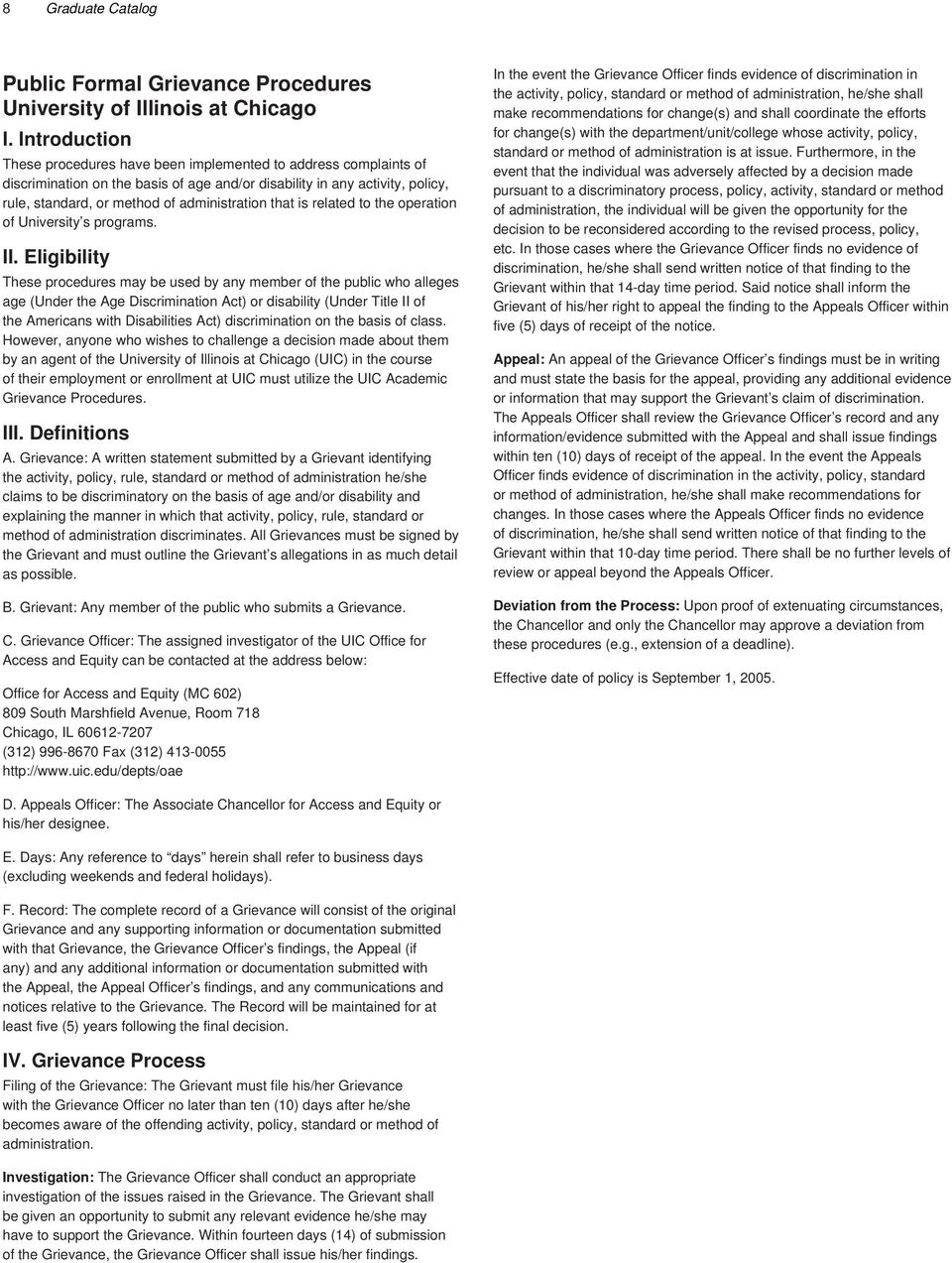
9 8 Graduate Catalog Public Formal Grievance Procedures University of Illinois at Chicago I. Introduction These procedures have been implemented to address complaints of discrimination on the basis of age and/or disability in any activity, policy, rule, standard, or method of administration that is related to the operation of University s programs. II. Eligibility These procedures may be used by any member of the public who alleges age (Under the Age Discrimination Act) or disability (Under Title II of the Americans with Disabilities Act) discrimination on the basis of class. However, anyone who wishes to challenge a decision made about them by an agent of the University of Illinois at Chicago (UIC) in the course of their employment or enrollment at UIC must utilize the UIC Academic Grievance Procedures. III. Definitions A. Grievance: A written statement submitted by a Grievant identifying the activity, policy, rule, standard or method of administration he/she claims to be discriminatory on the basis of age and/or disability and explaining the manner in which that activity, policy, rule, standard or method of administration discriminates. All Grievances must be signed by the Grievant and must outline the Grievant s allegations in as much detail as possible. B. Grievant: Any member of the public who submits a Grievance. C. Grievance Officer: The assigned investigator of the UIC Office for Access and Equity can be contacted at the address below: Office for Access and Equity (MC 602) 809 South Marshfield Avenue, Room 718 Chicago, IL (312) Fax (312) In the event the Grievance Officer finds evidence of discrimination in the activity, policy, standard or method of administration, he/she shall make recommendations for change(s) and shall coordinate the efforts for change(s) with the department/unit/college whose activity, policy, standard or method of administration is at issue. Furthermore, in the event that the individual was adversely affected by a decision made pursuant to a discriminatory process, policy, activity, standard or method of administration, the individual will be given the opportunity for the decision to be reconsidered according to the revised process, policy, etc. In those cases where the Grievance Officer finds no evidence of discrimination, he/she shall send written notice of that finding to the Grievant within that 14-day time period. Said notice shall inform the Grievant of his/her right to appeal the finding to the Appeals Officer within five (5) days of receipt of the notice. Appeal: An appeal of the Grievance Officer s findings must be in writing and must state the basis for the appeal, providing any additional evidence or information that may support the Grievant s claim of discrimination. The Appeals Officer shall review the Grievance Officer s record and any information/evidence submitted with the Appeal and shall issue findings within ten (10) days of receipt of the appeal. In the event the Appeals Officer finds evidence of discrimination in the activity, policy, standard or method of administration, he/she shall make recommendations for changes. In those cases where the Appeals Officer finds no evidence of discrimination, he/she shall send written notice of that finding to the Grievant within that 10-day time period. There shall be no further levels of review or appeal beyond the Appeals Officer. Deviation from the Process: Upon proof of extenuating circumstances, the Chancellor and only the Chancellor may approve a deviation from these procedures (e.g., extension of a deadline). Effective date of policy is September 1, D. Appeals Officer: The Associate Chancellor for Access and Equity or his/her designee. E. Days: Any reference to days herein shall refer to business days (excluding weekends and federal holidays). F. Record: The complete record of a Grievance will consist of the original Grievance and any supporting information or documentation submitted with that Grievance, the Grievance Officer s findings, the Appeal (if any) and any additional information or documentation submitted with the Appeal, the Appeal Officer s findings, and any communications and notices relative to the Grievance. The Record will be maintained for at least five (5) years following the final decision. IV. Grievance Process Filing of the Grievance: The Grievant must file his/her Grievance with the Grievance Officer no later than ten (10) days after he/she becomes aware of the offending activity, policy, standard or method of administration. Investigation: The Grievance Officer shall conduct an appropriate investigation of the issues raised in the Grievance. The Grievant shall be given an opportunity to submit any relevant evidence he/she may have to support the Grievance. Within fourteen days (14) of submission of the Grievance, the Grievance Officer shall issue his/her findings.
10 University of Illinois at Chicago Graduate Catalog 9 The University Academic Calendar (p. 9) Welcome to UIC (p. 11) Academic Calendar Fall Semester 2014 August 25, M September 1, M September 5, F September 12, F November 7, F November 27 28, Th F December 5, F December 8 12, M F December 12, F Spring Semester 2015 January 12, M January 19, M January 23, F January 30, F March 20, F March 23 27, M F May 1, F May 4 8, M F May 8, F May 7 10, Th Su Summer Session 2015 Summer Session 1 (4-Week Session) May 18, M May 20, W May 25, M Instruction begins. Labor Day holiday. No classes. The Graduate Student's Guide to UIC (p. 13) Campus Maps ( Travel Directions and Visitor Parking ( Last day to complete late registration; last day to add a course(s) or make section changes; last day to drop individual courses via Student Self-Service without receiving W (Withdrawn) grade on academic record. Last day to submit Withdraw from Term request via Student Self-Service and receive 100% cancellation of tuition and fees. Last day to file for graduation this term. Last day to submit approved thesis/dissertation to Graduate College for graduation this term. Thanksgiving holiday. No classes. Instruction ends. Final examinations. Last day for Graduate College to receive certificates of approval for master s and professional doctorate projects for graduation this term. Instruction begins. Martin Luther King, Jr., Day. No classes. Last day to complete late registration; last day to add a course(s) or make section changes; last day to drop individual courses via Student Self-Service without receiving W (Withdrawn) grade on academic record. Last day to submit Withdraw from Term request via Student Self-Service and receive 100% cancellation of tuition and fees. Last day to file for graduation this term. Last day to submit approved thesis/dissertation to Graduate College for graduation this term. Spring vacation. No classes. Instruction ends. Final examinations. Last day for Graduate College to receive certificates of approval for master s and professional doctorate projects for graduation this term. Commencement ceremonies by disciplinary college. Instruction begins. Last day to complete late registration for Summer Session 1; last day to drop or add a course(s) online or make section changes for Summer Session 1; last day to drop individual courses via Student Self-Service without receiving W (Withdrawn) grade on academic record for Summer Session 1. Last day to submit Withdraw from Term request via Student Self-Service and receive 100% cancellation of tuition and fees. Memorial Day holiday. No classes. June 11, Th Instruction ends for Summer Session 1. June 12, F Final examinations for Summer Session 1. Summer Session 2 (8-Week Session) June 15, M June 19, F Instruction begins. Last day to complete late registration for Summer Session 2; last day to drop or add a course(s) online or make section changes for Summer Session 2; last day to drop individual Summer Session 2 courses via Student Self-Service without receiving W (Withdrawn) grade on academic record. Last day to submit Withdraw from Term request via Student Self- Service and receive 100% cancellation of tuition and fees if registered only for Summer Session 2.

11 10 Academic Calendar June 26, F July 3, F July 24, F Last day to file for graduation this term. Independence Day holiday. No classes. Last day to submit approved thesis/dissertation to Graduate College for graduation this term. August 5, W Instruction ends for Summer Session 2. August 6 7, Th F Final examinations for Summer Session 2. August 7, F Fall Semester 2015 August 24, M September 4, F September 7, M Semptember 11, F November 6, F November 26 27, Th F December 4, F December 7 11, M F December 11, F Spring Semester 2016 January 11, M January 18, M January 22, F January 29, F March 18, F March 21 25, M F April 29, F May 2 6, M F May 6, F May 5 8, Th Su Summer Session 2016 Summer Session 1 (4-Week Session) May 16, M May 18, W May 30, M Last day for Graduate College to receive certificates of approval for master s and professional doctorate projects for graduation this term. Instruction begins. Last day to complete late registration; last day to add a course(s) or make section changes; last day to drop individual courses without receiving W (Withdrawn) grade on academic record via Student Self-Service. Last day to submit Withdraw from Term request via Student Self-Service and receive 100% cancellation of tuition and fees. Labor Day holiday. No classes. Last day to file for graduation this term. Last day to submit approved thesis/dissertation to Graduate College for graduation this term. Thanksgiving holiday. No classes. Instruction ends. Final examinations. Last day for Graduate College to receive certificates of approval for master s and professional doctorate projects for graduation this term. Instruction begins. Martin Luther King, Jr., Day. No classes. Last day to complete late registration; last day to add a course(s) or make section changes; last day to drop individual courses without receiving W (Withdrawn) grade on academic record via Student Self-Service. Last day to submit Withdraw from Term request via Student Self-Service and receive 100% cancellation of tuition and fees. Last day to file for graduation this term. Last day to submit approved thesis/dissertation to Graduate College for graduation this term. Spring vacation. No classes. Instruction ends. Final examinations. Last day for Graduate College to receive certificates of approval for master s and professional doctorate projects for graduation this term. Commencement ceremonies by disciplinary college. Instruction begins. Last day to complete late registration for Summer Session 1; last day to drop or add a course(s) online or make section changes for Summer Session 1; last day to drop individual Summer Session 1 courses via Student Self-Service without receiving W (Withdrawn) grade on academic record. Last day to submit Withdraw from Term request via Student Self- Service and receive 100% cancellation of tuition and fees. Memorial Day holiday. No classes. June 9, Th Instruction ends for Summer Session 1. June 10, F Final examinations for Summer Session 1. Summer Session 2 (8-Week Session) June 13, M June 17, F Instruction begins. Last day to complete late registration for Summer Session 2; last day to drop or add a course(s) online or make section changes for Summer Session 2; last day to drop individual Summer Session 2 courses via Student Self-Service without receiving W (Withdrawn) grade on academic record. Last day to submit Withdraw from Term request via Student Self- Service and receive 100% cancellation of tuition and fees if registered only in Summer Session 2.

12 University of Illinois at Chicago Graduate Catalog 11 June 24, F July 4, M July 22, F Last day to file for graduation this term. Independence Day holiday. No classes. Last day to submit approved thesis/dissertation to Graduate College for graduation this term. August 3, W Instruction ends for Summer Session 2. August 4 5, Th F Final examinations for Summer Session 2. August 5, F Last day for Graduate College to receive certificates of approval for master s and professional doctorate projects for graduation this term. Welcome to UIC The University Mission UIC provides the broadest access to the highest levels of intellectual excellence. UIC's mission is: To create knowledge that transforms our views of the world and, through sharing and application, transforms the world. To provide a wide range of students with the educational opportunity only a leading research university can offer. To address the challenges and opportunities facing not only Chicago but all Great Cities of the 21st century, as expressed by our Great Cities Commitment. To foster scholarship and practices that reflects and responds to the increasing diversity of the U.S. in a rapidly globalizing world. To train professionals in a wide range of public service disciplines, serving Illinois as the principal educator of health science professionals and as a major healthcare provider to underserved communities. History and Overview The University of Illinois at Chicago is the largest institution of higher education in the Chicago area with over 27,000 undergraduate, graduate, and professional students. Through its 15 colleges and professional schools, UIC offers 82 undergraduate, 93 master s, and 66 doctoral programs in architecture, art, applied health sciences, business administration, dentistry, education, engineering, humanities, mathematics, medicine, movement sciences, nursing, performing arts, pharmacy, public administration, public health, sciences, social sciences, social work, and urban planning. The University s programs are enhanced by a variety of research centers and institutes that cover areas such as community improvement, developmental disabilities, energy, gerontology, robotics, urban economic development, and urban transportation. UIC consistently ranks among the top 50 out of more than 637 national universities in federal research funding. In 1946, an undergraduate division of the University of Illinois was established at Navy Pier. This facility, renamed the University of Illinois at Chicago Circle, moved to its present location in 1965, when it opened its doors as a four-year university. By 1982, it had grown to include eight academic colleges offering degree programs at both the undergraduate and graduate levels. In the fall of 1982, the University of Illinois at Chicago was formed by the consolidation of the two Chicago campuses (formerly known as the University of Illinois at the Medical Center and the University of Illinois at Chicago Circle) into a single institution of higher learning. The University s facilities for medical instruction date back to 1894, when the Chicago College of Pharmacy became the School of Pharmacy of the University of Illinois. In 1897, the independent College of Physicians and Surgeons of Chicago became the Department of Medicine of the University; in 1901, the Columbian Dental College became the University School of Dentistry; and in 1925 the University Hospital opened. Programs in nursing education under University auspices began in the 1940s, becoming the School of Nursing in 1951 and, in 1959, the College of Nursing. Other health sciences units of the University of Illinois at Chicago include the College of Applied Health Sciences, the School of Public Health, and over 50 clinics and research facilities. A new $60 million University of Illinois Hospital was completed in To learn about UIC's leadership and role as one of three campuses of the University of Illinois, please consult the following web pages: Chancellor and Leadership and the University of Illinois website Accreditation The University of Illinois at Chicago is accredited by the Higher Learning Commission (HLC) of the North Central Association of Colleges and Schools (NCA), 230 South LaSalle Street, Suite 7-500, Chicago, Illinois , (800) , The Higher Learning Commission is recognized by the U.S. Department of Education (USDE) and the Council for Higher Education Accreditation (CHEA). In 2007, HLC voted to continue accreditation of UIC for the maximum period of 10 years. The next comprehensive evaluation of UIC is scheduled for Verification of accreditation status is available in the Office of the Chancellor (312) The graduate academic degree programs described in this catalog have been approved by the Illinois Board of Higher Education, 431 East Adams, Second Floor, Springfield, Illinois , (217) , (888) (TTY), General Information: [email protected], Institutional Complaint Hotline: (217) , In addition to institutional accreditation, certain individual programs are accredited by the following organizations: College of Applied Health Sciences Biomedical Visualization (MS) Commission on the Accreditation of Allied Health Education Programs (CAAHEP) 1361 Park Street Clearwater, FL (727) Health Informatics (MS) Commission on the Accreditation for Health Informatics and Information Management (CAHIIM) 233 North Michigan Avenue, 21st Floor Chicago, IL [email protected] Nutrition - Coordinated Program (MS)

13 12 Welcome to UIC Accreditation Council for Education in Nutrition and Dietetics (ACEND) Academy of Nutrition and Dietetics 120 South Riverside Plaza, Suite 2000 Chicago, IL (800) (312) Occupational Therapy Professional (MS) Accreditation Council for Occupational Therapy (ACOTE) The American Occupational Therapy Association, Inc Montgomery Lane, Suite 200 Bethesda, MD (301) (800) (TDD) Doctor of Physical Therapy Program is accredited by Commission on Accreditation in Physical Therapy Education (CAPTE) 1111 North Fairfax Street Alexandria, VA (703) College of Architecture, Design, and the Arts Architecture (MArch) National Architectural Accrediting Board (NAAB) 1735 New York Avenue NW Washington, DC (202) College of Business Administration Accounting (MS) Business Administration (MBA) Business Administration (PhD) Finance (MS) Management Information Systems (MS) Management Information Systems (PhD) Real Estate (MA) AACSB International The Association to Advance Collegiate Schools of Business (AACSB) 777 South Harbour Island Boulevard, Suite 750 Tampa, FL (813) College of Dentistry Dental Medicine (DMD) (formerly: Dental Surgery (DDS)) Commission on Dental Association (CODA) American Dental Association 211 East Chicago Avenue, Suite 1900 Chicago, IL (312) College of Education Education-Urban Education Leadership (EdD) Instructional Leadership (MEd) Special Education (MEd) Illinois State Board of Education (ISBE) 100 North 1st Street Springfield, IL (866) (217) Note: The ISBE approves programs for licensure. College of Liberal Arts and Sciences Psychology (PhD) American Psychological Association 750 First Street NE Washington, DC (800) (202) (202) (TDD/TTY) College of Medicine Medicine (MD) Liaison Committee on Medical Education (LCME), sponsored by the Association of American Medical Colleges and the American Medical Association Association of American Medical Colleges 2450 N Street NW Washington, DC (202) And American Medical Association 515 North State Street Chicago, IL (312) College of Nursing Nursing Science (MS) Nursing Practice (DNP) Commission on Collegiate Nursing Education (CCNE) American Association of Colleges of Nursing One Dupont Circle NW, Suite 530 Washington, DC (202) College of Pharmacy Pharmacy (PharmD: Doctor of Pharmacy) Accreditation Council for Pharmacy Education (ACPE) 135 South LaSalle Street, Suite 4100 Chicago, IL (312) School of Public Health (SPH) Public Health (DrPH) Public Health (MPH) Public Health (MS) Public Health (PhD) Public Health (MS-MD) Healthcare Administration (MHA) The Council on Education for Public Health (CEPH)

14 University of Illinois at Chicago Graduate Catalog Eye Street, NW, Suite 202 Washington, DC (202) Healthcare Administration (MHA) Commission on Accreditation of Healthcare Management Education 1700 Rockville Pike, Suite 400 Rockville, MD (313) Public Health Industrial Hygiene (MS, MPH) Accreditation Board for Engineering and Technology, Inc. 111 Market Place, Suite 1050 Baltimore, MD (410) Jane Addams College of Social Work Master of Social Work (MSW) Council on Social Work Education (CSWE) 1701 Duke Street, Suite 200 Alexandria, VA (703) [email protected] College of Urban Planning and Public Affairs Public Administration (MPA) Network of Schools of Public Policy, Affairs, and Administration (NASPAA) 1029 Vermont Avenue NW, Suite 1100 Washington, DC (202) Urban Planning and Policy (MUPP) Planning Accreditation Board (PAB) 2334 West Laurence Avenue, Suite 209 Chicago, IL (773) The Graduate Student's Guide to UIC Resources and Services UIC Home Page Academic Center for Excellence (ACE) 2900 Student Services Building (312) Admissions, Office of 1100 Student Services Building (312) African American Academic Network 2800 Student Services Building (312) African American Cultural Center 209 Addams Hall (312) Applied Health Sciences, College of 169 College of Medicine East Tower (312) Architecture, Design, and the Arts, College of 303 Jefferson Hall (312) Asian American Resource and Cultural Center 101 Taft Hall (312) Athletics Intercollegiate Athletics 240 Flames Athletic Center (312) Bookstores UIC Bookstore Student Center East (312) UIC Medical Bookstore Student Center West (312) Bursar's Office See Student Financial Services and Cashier Operations Business Administration, College of 1118 University Hall (312) Business, Liautaud Graduate School of 1108 University Hall (312) Campus Advocacy Network 802 University Hall

15 14 The Graduate Student's Guide to UIC (312) CampusCare Student Health Benefit Program Clinical Sciences North, Suite W310 (312) Career Services, Office of 3050 Student Services Building (312) Child Care Children's Center 116 Applied Health Sciences Building (312) Commuter Student Resource Center Student Center East, Room 245 (312) Computing Academic Computing and Communications Center (ACCC) 2267 Science and Engineering Laboratories (312) Counseling Center 2010 Student Services Building (312) Dean of Students 3030 Student Services Building (312) Dentistry, College of 102 College of Dentistry (312) Disability Resource Center 1190 Student Services Building (312) (Voice) (773) (Video Phone) Education, College of 3004 Education, Performing Arts, and Social Work (312) Engineering, College of 123 Science and Engineering Offices (312) Financial Aid Office 1800 Student Services Building (312) Financial Services See Student Financial Services and Cashier Operations Gender and Sexuality Center 181 Behavioral Sciences Building (312) Graduate College 606 University Hall (312) Graduate Student Council Student Center East, Room 380K (312) Health Insurance See CampusCare Student Health Benefit Program. Health Services Student Health at the Family Medicine Center Family Medicine at the Outpatient Care Center 1801 West Taylor Street, Suite 2A (312) programs/departments/ fammed/ The Family Medicine Center at University Village 722 West Maxwell Street, Suite 235 (312) programs/departments/ fammed/ Campus Housing Office 220 Student Residence Hall Building (312) ID Center ID Center-East 1790 Student Services Building (312) ID Center-West 241 UIC Student Center West (312)

16 University of Illinois at Chicago Graduate Catalog 15 International Services, Office of 2160 Student Services Building (312) Latin American Recruitment and Educational Services 2640 Student Services Building (312) Latino Cultural Center Rafael Cintrón-Ortiz Latino Cultural Center Lecture Center B2 (312) Liberal Arts and Sciences, College of 409 University Hall (312) Libraries Richard J. Daley (Main) Library Circulation desk: (312) Reference desk: (312) Library of the Health Sciences Circulation desk: (312) Reference desk: (312) Medicine, College of 130 College of Medicine West (312) Native American Support Program 2700 Student Services Building (312) Newspapers UIC News 1320 University Hall (312) Nursing, College of 102 College of Nursing (312) Parking Administration 122 Wood Street Parking Structure (312) Student Services Building (312) Customer Service West Student Center West, Room B5W (312) Pharmacy, College of 145 College of Pharmacy (312) Photo ID See ID Center Protection of Research Subjects, Office for the 203 Administrative Office Building (312) Public Health, School of 1168 School of Public Health and Psychiatric Institute (312) Recreation Sport and Fitness Center (the west side of campus) (312) Student Recreation Facility (the east side of campus) (312) Registrar's Office Office of the Registrar 1200 Student Services Building (312) Research Services, Office of 310 Administrative Office Building (312) Social Work, Jane Addams College of 4145 Education, Performing Arts, and Social Work (312) Student Affairs, Vice Chancellor for 3010 Student Services Building (312) Customer Service East

17 16 The Graduate Student's Guide to UIC Student Centers Student Center East (312) Student Center West (312) List and links to UIC Research Centers and Institutes Student Development Services 1600 Student Services Building (312) Student Financial Services and Cashier Operations 1900 Student Services Building (312) Student Health Insurance See CampusCare Student Health Benefit Program. Technology Management, Office of 446 College of Medicine West Tower (312) Testing Services, Office of 1070 Student Services Building (312) Urban Health Program Administrative Office 173 College of Medicine East Tower (312) Urban Planning and Public Affairs, College of 115 College of Urban Planning and Public Affairs Hall (312) Women's Leadership and Resource Center 802 University Hall (312) Veterans Affairs Student Veteran Affairs 3030 Student Services Building (312) Vice Chancellor for Research, Office of 310 Administrative Office Building (312)

18 University of Illinois at Chicago Graduate Catalog 17 Graduate Study at UIC Graduate Study at UIC (p. 17) Graduate Study at UIC Mailing Address: Graduate College 601 South Morgan Street (MC 192) Chicago, IL Contact Information: Campus Location: 606 University Hall (312) [email protected] grad.uic.edu Administration: Dean of the Graduate College: Karen J. Colley Associate Deans: Jonathan Art, Laura Junker Executive Assistant Dean: Steven Kragon Assistant Dean: Lunaire Ford Contents Admissions (p. 18) Application Procedures (p. 19) Financial Aid (p. 21) Enrollment (p. 22) Grades (p. 24) Leave of Absence (p. 25) Special Enrollment Categories Visitors/Auditors (p. 26) Petitions (p. 26) Registration (p. 26) Transfer Credit (p. 27) Degree Requirements (p. 28) University Regulations (p. 30) Tuition, Fees, and Other Charges (p. 33) Withdrawal from the University (p. 37) Withdrawal to Enter Military Service (p. 38) Financial Obligations and Refunds (p. 38) Transcripts (p. 38) The Graduate College of the University of Illinois at Chicago is made up of faculty members from various disciplinary colleges in the University. In conjunction with their disciplinary colleges and under the guidelines of the Graduate College, these faculty members offer advanced academic and research programs for highly qualified postbaccalaureate students. All students admitted to a master s program (except the Master of Business Administration, the Master of Engineering, the Master of Public Health, or the Master of Social Work programs) or a doctoral program (except the Doctor of Dental Medicine, Doctor of Medicine, Doctor of Nursing Practice, Doctor of Occupational Therapy, Doctor of Pharmacy, Doctor of Physical Therapy, or the Doctor of Public Health at UIC) are enrolled in the Graduate College. Master's Degrees The following master s degrees are offered through the Graduate College at UIC: the Master of Architecture, the Master of Arts, the Master of Design, the Master of Education, the Master of Energy Engineering, the Master of Fine Arts, the Master of Health Professions Education, the Master of Healthcare Administration, the Master of Public Administration, the Master of Science, the Master of Arts in Teaching (History), the Master of Science in Teaching (Mathematics), and the Master of Urban Planning and Policy. Doctoral Degrees The Doctor of Philosophy (PhD) at UIC places traditional emphasis on the advancement of knowledge through independent research in the candidate s chosen field and the presentation of an original thesis. The degree is intended primarily for those who want the highest level of research training and who wish to pursue careers in colleges and universities, research institutes, and public agencies or industrial and business organizations. The Doctor of Arts (DA) is a professional degree for college teachers and instructional designers. It combines the rigor and high level of scholarship in the subject matter of the Doctor of Philosophy with the acquisition of special skills in modern instructional methods. The program is designed to provide training through special courses and thesis research in such areas as curriculum design, teaching methodology, the creation of instructional materials, computer-assisted instruction, and educational evaluation. The Doctor of Arts is offered in the Department of Mathematics. The Doctor of Education (EdD) offers advanced professional studies in education leadership. It is intended for students who wish to assume leadership positions in elementary and secondary schools and in postsecondary institutions. Options are available for general leadership studies, or for study leading to Illinois school administrative certification. This program is offered by the College of Education. Joint Degree Programs UIC offers students the opportunity to pursue more than one graduate degree at the same time, either through one of our approved joint degree programs, or through concurrent enrollment in more than one UIC program. Approved joint degree programs share a defined number of courses that are applied to both degrees. Joint degree programs currently available through the Graduate College are the DMD/MS (Clinical and Translational Science); MA (Anthropology)/MPH; MArch/ MA (Design Criticism); MBA/MS (Accounting); MBA/MA (Economics); MBA/MS (Management Information Systems); MD/MS (Clinical and Translational Science); PharmD/PhD (Pharmacy); PharmD/MS (Health Informatics); PharmD/MS (Clinical and Translational Science) and the Medical Scientist Training Program (MD/PhD). Applicants to the Medical Scientist Training Program should request a special application from the UIC College of Medicine (312) Applicants who wish to apply to more than one degree program must submit a separate application for each department involved, even if applying to an approved joint degree program. Applicants applying to more than one program should indicate on all applications submitted that they intend to pursue more than one degree at a time. Only one application fee per term and only one set of transcripts is required for applicants applying to more than one graduate program. Directors of Graduate Studies Each graduate program has a director of graduate studies (DGS) who is responsible for overseeing program development, evaluating applications for admission to the Graduate College, advising graduate students, and

19 18 Graduate Study at UIC evaluating student progress. The director of graduate studies is listed at the beginning of each program entry in this catalog. Academic Year The academic year at UIC consists of two sixteen-week semesters (including the final examination periods) that begin in August (fall semester) and January (spring semester), and summer sessions that begin in mid-may and continue to August. The summer session consists of a four-week session followed by an eight-week session. Within the fall and spring terms, certain courses are offered during either the first 8 weeks (part of term A) or second 8 weeks (part of term B). The Registrar s website at details registration policy and procedure. In most programs, a student may seek admission to any academic term; however, the scheduling in many programs makes it desirable or necessary that students enter in the fall term. Campus Hours Hours of instruction at UIC begin at 8:00 a.m., Monday through Friday. Many programs offer classes in the late afternoon and evening. Administrative offices are open between 8:30 a.m. and 4:45 p.m., Monday through Friday. Admissions Applicants are considered on an individual basis. Admission decisions are made in compliance with the University of Illinois Nondiscrimination Statement listed in this catalog and on the following website: grad.uic.edu/nondiscrimination-policy. Prospective students should consult the appropriate section(s) of this catalog for the specific admission requirements of each program. Conflicts of Interest in the Admissions Process The Graduate College recognizes that the graduate admissions process does not, and should not, operate blindly. Programs and faculty members frequently recruit students of whom they have direct knowledge. Furthermore, the admission process for a doctoral program will frequently take into account the fit between a prospective graduate student s interests and those of the faculty in the program. However, the admissions process should, and should be seen to, take into account only academic and programmatic considerations when admitting and recruiting students. Policy Program faculty participating in the graduate admissions process shall recuse themselves in any case where they have, or appear to have, a conflict of interest concerning the applicant. A conflict of interest is present if the faculty may have an interest in the outcome (admission or rejection) other than the recruitment of the most qualified applicants. This includes, in particular, any situation where there is the possibility that a faculty member might employ a prospective graduate student in a nonuniversity activity, such as a consulting firm, biotechnology company, etc. Particular care must be taken when voting on the admission of students whose qualifications are in any fashion marginal. For further information refer to Acceptance of Offer of Financial Support The University of Illinois at Chicago follows the national practice of allowing admitted students until April 15 to accept offers of financial support for the upcoming academic year. Students are under no obligation to respond to offers of financial support prior to April 15. For further information refer to Degree Admissions Degree admissions are classified as either full or limited status. Students admitted on limited standing are those admitted on a provisional basis. Requirements for limited standing admission must be approved and supported by the Graduate College. The Graduate College with the advice of the graduate program sets the conditions for limited standing. Full Status The Graduate College minimum requirements for full status degree admission are as follows: Prior Degrees Except for seniors at UIC (see Graduate Study by UIC Undergraduate Seniors), a baccalaureate or its equivalent from an accredited college or university. Transcripts Required from all institutions where the applicant earned the last 60 semester (90 quarter) hours of credit toward the baccalaureate degree and from all institutions where postbaccalaureate work has been done. Grade Point Average At least 2.75/4.00 for the final 60 semester hours (90 quarter hours) of undergraduate study, including all of the work taken in the quarter or semester in which the student began the final 60 semester hours of undergraduate study. The cumulative grade point average obtained in all work completed beyond the baccalaureate will also be computed and considered in the admissions decision. Tests Required Applicants whose native language is not English must take either the Test of English as a Foreign Language (TOEFL), the exam of the International English Language Testing System (IELTS), or the Pearson's PTE Academic. The test score cannot be more than two years old. For TOEFL, a minimum total score of 550 (paper-based), or 80, with subscores of Writing 21, Speaking 20, Listening 17, and Reading 19 (Internet-based TOEFL) is required by the Graduate College; many departments have a higher minimum. UIC s Institutional Code for TOEFL is For IELTS, a minimum overall score of 6.5, with 6.0 in each of the four subscores is required by the Graduate College. IELTS does not use an institutional code. For Pearson s PTE Academic, a minimum overall score of 54, with subscores of Writing 56, Speaking 53, Listening 47, and Reading 51 (Internet-based) is required by the Graduate College. Pearson s does not use an institutional code. No other tests are required by the Graduate College, but may be required by the department/program (e.g., GRE). Letters of Recommendation Not required by the Graduate College, but may be required by the department/program. Personal Statement Not required by the Graduate College, but may be required by the department/program. Other Requirements Additional requirements of some programs include academic writing sample, portfolio, resume, etc. In addition, recommendation for admission by the graduate program to which application is made and by the dean of the Graduate College. Note: The above requirements are the minimum Graduate College requirements for admission as a degree student; most programs have

20 University of Illinois at Chicago Graduate Catalog 19 additional requirements. Consult the appropriate section(s) of this catalog for the specific admission requirements of each program. Limited Status Limited status is a probationary status for degree students who have not met all of the admission requirements, such as those who have less than a 2.75/4.00 undergraduate grade point average; have specified course deficiencies to be removed; must submit additional credentials required by the program (such as letters of recommendation or admissions test scores); or are UIC seniors within 8 semester hours of earning the baccalaureate at the time of matriculation. A department can recommend that a student be admitted on limited status to the Graduate College. The Graduate College makes the final decision. To admit applicants on limited status, the graduate program will recommend to the Graduate College specific conditions for admission. Graduate College approval is required for admission of limited students. Students can be admitted on limited status for no more than two semesters (including summer) or 16 semester hours, whichever occurs earlier. Graduate programs may specify shorter time limits. If the conditions are not met within the time limit, the program will notify the Graduate College and the student will be dismissed from the Graduate College. Graduate Study by UIC Undergraduate Seniors With the approval of the graduate program, the undergraduate or professional college, and the Graduate College, UIC students in their last year of study for an undergraduate degree may be admitted to the Graduate College if they are within 8 semester hours of earning the baccalaureate at the time of matriculation. These students will be admitted on limited status for no more than two terms in residence, pending completion of the baccalaureate. These students register as graduate students and are eligible for fellowships, assistantships, and graduate tuition waivers. Courses used to fulfill undergraduate degree requirements are transferred back to the undergraduate college and cannot be applied to a graduate degree. Applicants who are admitted to limited status pending completion of their bachelor s degree must be awarded the undergraduate degree within two terms in residence. If this condition is not satisfied, graduate admission is cancelled and the student is transferred back to the undergraduate college. Application Procedures Application is through an online form which may be accessed at grad.uic.edu/admissions. Applications and supporting credentials should be submitted as early as possible. Applications will not be accepted after the deadline. Some graduate programs have application deadlines that are earlier than the University deadline, and some admit students only in certain terms. Prospective applicants should contact the program of interest for information on current deadlines. Unless specified by the academic program to which an applicant is applying, all credentials required for admission are uploaded via the UIC Office of Graduate Admissions Web site. This includes both University requirements (transcripts and related documentation, application fee) and program-specific requirements (letters of recommendation, personal statement, etc.). Consult the specific graduate program website for detailed information. Admission recommendations cannot be made until all required documents have been received. Domestic Applicants Applicants to programs other than the professional degree programs (Business Administration [MBA], Engineering [MEngr], Public Health [MPH, DrPH], and Social Work [MSW]) submit the following materials online via the Graduate Admissions application process unless directed otherwise by the program: Graduate College Application, completely filled out and submitted electronically. Nonrefundable application fee of $60. This fee is waived for applicants seeking readmission who have been previously enrolled at UIC as a graduate student, and employees of UIC. Unoffical transcripts. Applicants upload unofficial transcripts via the online admission process. Unofficial transcripts must include certain information, and documents printed off of institution student self-service websites usually are insufficient. For explanation, see document_upload.html#acad_credentials. Official transcripts, which must be sent directly from the issuing school to UIC s Office of Admissions, and are only required if the applicant is admitted and will attend UIC. Test scores, which must be sent directly from the testing service to UIC (Institutional Code for GRE is R1851; for GMAT is 1929). International Applicants Applicants to programs other than the DrPH, MBA, MEngr, MPH, or MSW programs submit the following materials online via the Graduate Admissions application process unless directed otherwise by the program: Graduate College Application, completed and submitted electronically. Nonrefundable application fee of $60 (U.S. currency). This fee is waived for applicants seeking readmission who have been previously enrolled at UIC as a graduate student, and employees of UIC. Unofficial transcripts. Applicants upload unofficial transcripts, marksheets, and diploma via the online admission process, in attested English translation. Unofficial transcripts must include certain information, and documents printed off of institution student self-service websites usually are insufficient. For explanation, see document_upload.html#acad_credentials. Official transcripts, marksheets, and diploma, in attested English translation, must be sent directly from the issuing school to UIC s Office of Admissions, and are only required if the applicant is admitted and will attend UIC. TOEFL, IELTS, Pearson's PTE, and other test scores must be sent directly from the testing service to UIC (Institutional Code for TOEFL is 1851; for GRE is R1851; for GMAT is 1929; IELTS and Pearson's PTE do not use an institutional code). Declaration and Certification of Finances form declaration_of_certification_of_finances d_c_f_/.

21 20 Graduate Study at UIC Postsecondary Credentials Applicants who have completed studies outside the United States must present all postsecondary school credentials. Such credentials must include a record of all studies completed to date, grades or examination results received (including failing as well as passing grades), maximum and minimum grades obtainable, rank in class, degrees, diplomas, and certificates earned, and length of the school year. Documents must be authentic, and those not written in English must be accompanied by certified English translations. Copies are acceptable when certified as authentic by the issuing institution. Official documents should be sent directly to UIC by the issuing institution. Test of English as a Foreign Language, International English Language Testing System, and Pearson's PTE-Academic. Applicants whose native language is not English must take either the Test of English as a Foreign Language (TOEFL) or the exam of the International English Language Testing System (IELTS). The test score cannot be more than two years old. The TOEFL is administered by the Educational Testing Service, Box 899, Princeton, NJ The Graduate College requires a minimum score of 550 for the paper-based test; or total score of at least 80 for the Internet-based (ibt), with minimum subscores of Writing 21, Speaking 20, Listening 17, and Reading 19. Many departments have higher minimum TOEFL requirements. Consult the department listing for details. UIC s Institutional Code is The IELTS is administered by the International English Language Testing System and is jointly managed by the British Council, IDP: IELTS Australia and the University of Cambridge ESOL Examinations (Cambridge ESOL) through more than 500 locations in 120 countries. The Graduate College requires a minimum total score of 6.5 and minimum subscores of 6.0 for each of the four sections. Many departments have higher minimum IELTS requirements. Consult the department listing for details. Applicants should upload IELTS test results via the online application process. The Admissions Office verifies test scores directly with IELTS. The Pearson's PTE-Academic is administered by Pearson. The Graduate College requires a minimum PTE-Academic score of 54, with subscores of Reading 51, Speaking 53, Listening 47, and Writing 56. UIC's mailing address for PTE-Academic results is: UIC Office of Graduate Admissions (MC 018), Box 7994, Chicago, Illinois The TOEFL, IELTS, and Pearson's PTE are given at regularly scheduled intervals at testing centers throughout the world. In addition, Pearson's PTE offers somewhat flexible scheduling. Information on testing dates, locations, and the testing fee may be obtained at American embassies and consulate offices of the U.S. Educational Foundation (also consult and pteacademic). The TOEFL, IELTS, or Pearson's PTE examination is not required for students who have completed at least two academic years of full-time study in a country where English is the native language and in a school where English is the language of instruction within five years of the proposed date of enrollment in the University. Visa Certification International applicants granted admission to the University, where applicable, will receive visa request documents from the Office of International Services to assist in the application for a visa to enter the United States. Official admission letters are sent from the Office of Admissions. International applicants admitted to online programs are not eligible to receive a student visa or I-20. Financial Arrangements International students must be able to finance themselves fully, including room and board, tuition, books, other expenses, and travel to and from the United States. Only a limited number of assistantships are available, so applicants should not plan on any financial assistance from UIC unless they receive a written offer of aid from a department. All international applicants who plan to finance the cost of attending UIC from personal resources must certify that they will have available sufficient funds to cover their academic and living expenses for the academic year, plus living expenses for a summer. The exact amount required is set each year by the University of Illinois Board of Trustees. The amount is subject to change depending on tuition and room/board changes. The appropriate certification form can be obtained from the Office of International Services website prospective. Applicants who are unable to provide satisfactory evidence of adequate finances or who have not sent a notarized certified statement verifying funds available and their source will not be granted admission. Official admission letters and visa documents cannot be sent until certification is received. International students may apply for fellowships, assistantships, and tuition waivers. These financial aids are awarded on the basis of outstanding scholarship and academic merit. Contact the director of graduate studies of the program of interest for more information. If awarded, this aid is included in the total funds that the international applicant is required to have for proof of sufficient finances. Oral English Proficiency of Teaching Assistants Illinois state law requires that the University attest to the English proficiency of all classroom instructors, including teaching assistants. Teaching assistants who are not native speakers of English (regardless of their citizenship status) must have their oral English proficiency assessed by the International Teaching Assistant Program Office (ITA) The method of assessing English proficiency may include standardized tests and/or interviews. Only after the ITA Program Office certifies in writing that the student has sufficient oral English proficiency to provide classroom instruction will the student be able to teach. Nondegree Applicants Nondegree status is designed for two types of applicants who hold the baccalaureate: Individuals who do not wish to pursue a degree but want to take courses for professional or scholarly reasons or personal enrichment. Individuals who have been out of school for several years or in a different field of study and wish to take a few courses before deciding whether to apply for a degree program. The Graduate College minimum requirements for nondegree admission are as follows: Graduate College Application, completed and submitted electronically. Nonrefundable application fee of $60 (U.S. currency). This fee is waived for applicants seeking readmission who have been previously enrolled at UIC as a graduate student, and employees of UIC.
22 University of Illinois at Chicago Graduate Catalog 21 Prior Degrees A baccalaureate or its equivalent from an accredited college or university. Nondegree applicants must upload proof of the degree with their application. Transcripts Not required by the Graduate College. Tests Required Applicants whose native language is not English must take the Test of English as a Foreign Language (TOEFL), the exam of the International English Language Testing System (IELTS), or the Pearson's PTE-Academic. The test score cannot be more than two years old. The Graduate College requires a minimum score of 550 for the paper-based test; or total score of at least 80 for the Internet-based (ibt), with minimum subscores of Writing 21, Speaking 20, Listening 17, and Reading 19. Many departments have higher minimum TOEFL requirements. UIC s Institutional Code is For IELTS, a minimum overall score of 6.5, with 6.0 in each of the four subscores is required by the Graduate College. IELTS does not use an institutional code. For Pearson s PTE-Academic, a minimum overall score of 54, with subscores of Writing 56, Speaking 53, Listening 47, and Reading 51 (Internet-based) is required by the Graduate College. Pearson s does not use an institutional code. No other tests are required by the Graduate College. Other Requirements International students who require certification of admission (I-20 or DS-2019) sent to the U.S. Citizenship and Immigration Services (USCIS) will not be admitted as nondegree students. Some programs require additional credentials for nondegree admission, and some programs do not admit nondegree students. Applicants can be admitted as nondegree, but remain ineligible to register for certain classes. It is the responsibility of the applicants to contact the program offering the course(s) to determine their eligibility to enroll. Changing from Nondegree to Degree Nondegree graduate students interested in changing to degree status must submit a Graduate College Application online. All application credentials must be on file before the change to degree status will be considered. The application and all credentials must be submitted by the degree application deadline of the program to which the student is applying. No more than 12 semester hours of credit earned as a nondegree student can be transferred into the degree program. Students must file a petition for the transfer of nondegree credit; only graduate-level courses taken in the last six years in which a grade of A or B was earned will be considered. See Transfer Credit for more information. Note: Admission to nondegree status does not obligate the Graduate College or any graduate program to later admit a student to a degree program. Changing Academic Programs/Adding a Second Program Currently enrolled graduate students who wish to change to or add a second degree program, or change between master s and doctoral levels within a program, must submit a completed Request for Change of Graduate Program form to the Graduate College at least two weeks prior to the term for which the change is requested, although some programs may have an earlier deadline. This form must be signed by both the old and new departments, and for international students on an F-1, J-1, or J-2 visa, the Office of International Services. Students should meet with the director of graduate studies of the new program to discuss procedures, deadlines, and credentials required. A Petition for Transfer Credit listing all previously completed courses accepted by the new department should be attached to the Request for Change form, if applicable. Students must use the Request for Change of Graduate Program form to transfer within the Graduate College or between the Graduate College and the MBA Program, the Master of Engineering Program, the Master of Public Health, the Doctor of Public Health, or the Master of Social Work Program. Complete instructions and deadlines are detailed on the back of the form. The form is available from the Graduate College website: grad.uic.edu/graduate-student-forms-publications. Financial Aid The University of Illinois at Chicago offers six basic types of financial aid for graduate students: fellowships, assistantships, tuition-and-selectedfee waivers, traineeships, loans, and employment. Applicants for these types of aid must be admitted to a graduate degree program or have a completed application pending. Eligibility for loans is determined by the Office of Student Financial Aid. Applicants for loans should go directly to the Office of Student Financial Aid. Applications for fellowships, assistantships, and tuition/fee waivers are available in the department office, the Graduate College Office, and on the Graduate College website. In the administration of these programs and in selecting students for participation in them, the University of Illinois at Chicago adheres to the Nondiscrimination Statement printed in this catalog and on the following website: %20Statement% pdf. Fellowships & Awards Fellowship stipends are awarded in recognition of scholarly achievement and promise. They enable students to pursue graduate studies and research without a service requirement. The stipends of different fellowships vary. Unless explicitly stated otherwise, the following fellows supported by the Graduate College receive a tuition-and-selected-fee waiver: University Fellowships, University/Deiss Fellowships, Dean s Scholar, Abraham Lincoln Fellowships, and Diversifying Higher Education Faculty in Illinois (DFI). Fellows may engage in paid employment only to the extent permitted by the award and approved in writing by the dean of the Graduate College. The following fellowships are available through the Graduate College: University Fellowships, University/Deiss Fellowships, Dean s Scholar Award, Abraham Lincoln Graduate Fellowships, Diversifying Higher Education Faculty in Illinois (DFI) Fellowships, and the Chancellor s Graduate Research Fellowship. The Graduate College also offers the Provost s Award and the Deiss Provost s Award to support graduate student research projects. Please refer to for more information. Additionally, students may consult the Graduate College s external fellowship and financial aid coordinator for information on all types of graduate funding. The coordinator assists students in finding funding opportunities and aids them with their applications. Please refer to for more information. Assistantships The colleges, graduate programs, administrative offices, and research centers appoint graduate students as teaching, research, or graduate assistants. Work Schedule The weekly clock hours of service required of assistants are twenty for a half-time appointment and the proportional fraction of time for other appointments.
23 22 Graduate Study at UIC Stipend The minimum stipend for an appointment of 50 percent time for the nine-month academic year is available at assistantships; many departments offer a greater amount. Waivers Tuition, the service fee, the health service fee, the library and information technology assessment, and the academic facilities maintenance fund assessment are waived for assistants if the appointment is between 25 and 67 percent for at least three-quarters of the term (91 calendar days in fall or spring semester, 41 calendar days during the summer session). Consult the Academic Human Resources website for specific dates that will satisfy the 91-day and 41-day requirements via Graduate students who hold academic appointments as assistants for the spring semester and for whom tuition and selected fees have been waived are entitled to a waiver for the summer term immediately following, provided they are registered for at least three hours during that summer term. Registration Requirements Graduate students who hold academic appointments as assistants are required to register for at least 8 hours each semester. Some programs may require registration for more than 8 hours per term and/or summer registration. International students on an F-1 visa must register for a minimum of 8 hours for a 50% appointment and 9 hours for appointments less that 50%. The Graduate College does not require summer registration; however, a minimum of 3 hours registration is required to receive a summer tuition-and-selected-fee waiver. Board of Trustees Tuition-and-Fee Waiver UIC provides a limited reserve of Board of Trustees (BOT) waivers to the UIC Graduate College, which are awarded to programs in three ways: allocated per semester, for students who have won individual internal and external fellowships, and for students selected for external training grants by programs. (These are distinct from the tuition-and-fee waivers allocated with assistantships.) Students who are interested in receiving a waiver must speak to the director of graduate studies for their program. All waivers are requested by the academic program and conveyed to the Graduate College. A student holding a BOT waiver must fulfill certain registration requirements. The student must also be in good standing. Tuition, the service fee, the health service fee, a portion of the health insurance fee, the library and information technology assessment, and the academic facilities maintenance fund assessment are waived as well as any differential tuition when assessed; the remainder of the health insurance fee and other fees are the student s responsibility. Part-time BOT waivers are available to those in specific programs designated by the Graduate College. Registration Requirements Students with a BOT waiver must register for at least 12 hours per semester (6 in the summer term). If a student drops below 12 hours of registration at any time during the semester (or 6 hours in the summer term), the waiver is rescinded and the student is billed the tuition, service fee, health service fee, library and information technology assessment, the academic facilities maintenance fund assessment, and the differential when assessed. Students who hold a BOT waiver due to having received a fellowship or being put on a training grant need to consult with the Graduate College if they wish to hold any sort of assistantship while on the fellowship, and the Graduate College reserves the right to refuse the request or rescind the BOT waiver. Students who hold a departmental allocated BOT waiver are not permitted to simultaneously hold any sort of assistantship, but may accept part-time employment, not to exceed twenty hours a week, within the University. Other Sources of Financial Aid Traineeships Training grants are awarded to graduate programs to support student involvement in specific activities. The grant may support students with stipends and/or tuition-and-selected-fee waivers. To be eligible, students must be admitted to a graduate degree program or have a completed application pending. Students should contact the director of graduate studies in their program for information on the availability of traineeships. Many training grants support students from related departments, and are interdisciplinary in nature. Industrial, Endowed, and Special Fellowships Various industrial firms, foundations, and private individuals have generously donated funds to support a number of special fellowships for graduate students at the University of Illinois at Chicago. The stipends and supplemental allowances of these fellowships are not uniform, and most are restricted to students in particular areas of study. Students should contact the director of graduate studies in their program for information on the availability of special fellowships. Illinois Veterans Scholarship The Illinois Veterans Scholarship covers the admissions application fee, tuition, and a small varying portion of the service fee. Contact the Office of Student Financial Aid, Room 1800, 1200 West Harrison Street, (312) , for more information and applications. Students should bring a copy of their DD-214 when submitting an application. University Administered Loans and Work Study UIC s Office of Student Financial Aid (OSFA) awards and coordinates assistance from a variety of federal and state financial aid programs. Graduate students are eligible for Federal Stafford Loans, Graduate Plus Loans, Federal Work Study, and private loans. Applicants for financial aid awarded through the OSFA must be U.S. citizens or permanent residents and must have applied for admission to a degree-granting program of the University. To receive assistance, students must be admitted to and enrolled in a degree-granting program. Students may also consult the external fellowship coordinator in the Graduate College for further information about outside sources of funding opportunities ( Enrollment Graduate students are governed by the policies of the University of Illinois at Chicago, the Graduate College, their disciplinary (line) college, and their department, and they are expected to become familiar with these policies. The Graduate Catalog in effect when the student begins enrollment in a degree program is the primary source of information on Graduate College policies pertaining to the student. Many of the University and departmental policies are listed in this catalog, and most programs have policy manuals for graduate students. When a department requirement is approved by and exceeds that of the Graduate College, it replaces the Graduate College standard. Adding and Dropping Courses Students may not add or drop a course after the tenth day of instruction in a semester unless approved by the director of graduate studies and the Graduate College. Please check the Office of
24 University of Illinois at Chicago Graduate Catalog 23 the Registrar website policies_procedures.html#dropping for the summer session deadlines. No refund of tuition will be issued for a drop after the tenth day of instruction regardless of final deadline, unless the student withdraws from the University (see section on fees). Consult the Schedule of Classes, published each term, for current deadlines ( ossswebcs.admin.uillinois.edu/portal_uic/classsch.html). Holders of fellowships, assistantships, and tuition and fee waivers must maintain the required number of semester hours through the end of the term or risk loss of their tuition-and-selected-fee waiver for the term. Students who lose their waivers will be billed the full cost of tuition and fees. Students on visas must maintain the registration requirements of their visa (for clarification, contact the Office of International Services). Advisors All graduate students must have an academic advisor in the graduate program in which degree work is to be done. The academic advisor assists in planning a program of graduate study that fits the needs of the student and satisfies the graduate program and Graduate College requirements. New students should consult the director of graduate studies to discuss the selection of an academic advisor. All PhD candidates must have a dissertation advisor who is a member of the Graduate College faculty. Both master s and doctoral students must have a major advisor (academic or research) who is a member of the Graduate College faculty. Unassigned nondegree students do not have a formal advisor. These students must receive approval from an authorized person in the program(s) offering the course(s) they wish to take each term prior to attempting registration. Chicago Metropolitan Exchange Program The Chicago Metropolitan Exchange Program (CMEP) is an agreement between the University of Illinois at Chicago, Northwestern University, and the University of Chicago that enables doctoral students to take advantage of educational opportunities specialized courses, unique library collections, or laboratories at these campuses. CMEP participants should have matriculated into a doctoral program at UIC and must receive prior written approval from their advisor, their department head, and the UIC CMEP liaison officer. With these approval signatures, students must then seek permission from the host institution to take the desired course(s). The application and approval process must be accomplished using CMEP form. CMEP traveling scholars register and pay for the CMEP credit at UIC (and UIC rates) and also make arrangements to register at the host institution through its CMEP liaison officer. A leave of absence is not required, since participants are registered at UIC during their stay at the other institution. Students should consult their director of graduate studies, the Graduate College website or the UIC CMEP liaison officer in the Graduate College for more information. See Concurrent Registration with UIUC In addition to the Chicago Metropolitan Exchange Program (CMEP), students registered at UIC are eligible to take courses offered at the University of Illinois at Urbana-Champaign through the process of concurrent registration. Students must be registered at UIC for the term they are attempting concurrent registration. Approval is needed from the student s UIC department and the department offering the course in Urbana. Students should consult with the UIC Registrar s Office on process and additional information. Continuation and Probation Rules Graduate students are considered to be in good standing in the Graduate College if they: Have removed all limited status admission conditions; Have a minimum Graduate Degree GPA of 3.00 (see below); and Are making satisfactory progress toward degree requirements, including a project or thesis if required. Academic Standing as viewed in the student database and Student Self-Service at only reflects the result of the minimum Graduate Degree GPA as listed above. Students on limited status admission who have a Graduate Degree GPA of 3.00 or higher are listed in good standing, and unless specified by the graduate program, are eligible to hold assistantships and tuition waivers. Note: Graduate programs may require a higher level of performance and may apply criteria in addition to those stated above. If a student fails to meet the performance or other criteria stated by the program as determined by the Graduate College, the program may notify the Graduate College to initiate dismissal. Limited Status Limited admission status students must meet the conditions imposed by this status and progress to full degree status within two semesters or any shorter amount of time set forth in the letter of acceptance. Failure to do so will result in dismissal from the University. Graduate Degree GPA The Graduate Degree GPA is the average of grades earned by graduate students in their current degree program, whether or not the courses are part of degree requirements. Only graduate-level courses in which an A, B, C, D, or F is earned are included in the Graduate Degree GPA computation. A graduate-level course is any 400- or 500-level course, and any 300-level course taken under the quarter system. General transfer credit taken at other institutions is not computed in the Graduate Degree GPA. However, grades earned through the CIC Traveling Scholar Program are included. Grades earned as a nondegree student, or while a student in other UIC colleges or a different graduate program, will be computed if the courses are applied to the current graduate program through an approved transfer of credit petition. Probation Academic probation is the Graduate College s mechanism for warning students that their Graduate Degree GPA has fallen below the minimum standard of 3.00/4.00. Students have two terms of enrollment (including summer, if registered) after the term in which their Graduate Degree GPA falls below 3.00 to remove themselves from probation. Departments may enforce stricter limits on probation, provided the student is informed in writing prior to being placed on probation. Students who leave the University while on probation, whether through formal withdrawal or through failing to meet the registration requirement, will still be on probation if they are later readmitted to the same program. Students who are admitted to a new program begin as new students (i.e., the Graduate Degree GPA starts over). Students currently on probation or who left the University on probation will not be admitted to the same
25 24 Graduate Study at UIC program as nondegree students. Readmission as a degree-seeking student is not guaranteed. Students who fail to raise their average to 3.00 or to otherwise fulfill the terms of their probation within the deadline will be dismissed from the University. The Graduate College issues probation and dismissal notices to students and their program directors. However, failure to receive notice does not change the student s probation or dismissal status, since students are expected to monitor their own progress in light of Graduate College policies. Course Loads Students who can devote full attention to their studies usually enroll for 12 to 16 semester hours each term. In exceptional cases, the advisor and director of graduate studies may permit a student to enroll for up to 20 Registration for more than 20 hours is not recommended but is possible with approval of the director of graduate studies. The Graduate College at UIC has defined full-time enrollment as 9 hours each fall and spring term and 5 hours in the summer. Half-time is defined as 5 hours each fall and spring term and 3 hours in summer. Three-quarters time is defined as 8 hours each fall and spring semester and 4 hours in summer. Important notes to this general definition: International Students For purposes of enrollment certification to U.S. Citizenship and Immigration Services (USCIS) of the United States Department of Homeland Security, International Graduate Students must maintain one of the following registration options to meet SEVIS requirements and be considered full-time: (a) 9 hours of registration during the fall and spring semester; this applies to students without an assistantship, or with an assistantship below 50% (b) 8 hours of registration during the fall and spring semester and a 50% graduate assistantship. Students on an F-1 visa may be eligible to register for zero hours if all requirements are complete except for project or thesis (if not a recipient of a fellowship, tuition-and-selected-fee waiver, or assistantship), and a petition is submitted to the Graduate College and approved. The petition must be endorsed by the advisor, DGS, or head of program and the Office of International Services. For questions regarding immigration and SEVIS requirements, please contact the Office of International Services. Fellowship Holders Must register for at least 12 hours of credit per semester of award (summer registration optional but if the tuitionand-selected-fee-waiver is to be used, a minimum of 6 hours is necessary). Tuition-and-Selected-Fee-Waiver Holders Must register for at least 12 hours of credit per semester of award (6 in summer). Recipients of part-time Tuition-and-Selected-Fee-Waivers must register for the number of hours specified in the award notice. Assistantship Holders Must register for at least 8 hours of credit each semester of appointment, excluding summer. International students on an F-1 visa must register for a minimum of 8 hours for a 50% appointment, or 9 hours for an appointment less than 50%. While summer enrollment for assistants is optional, assistants who wish to use their summer tuition-and-selected-fee waivers must register for at least 3 hours during that term. Some graduate programs may require registration for more than 8 hours per term and/or summer registration. There are no tuition-and-selected-fee waiver benefits for students employed with less than 25% or more than 67% appointment. Assistants who qualify for a spring tuitionand-selected-fee waiver automatically receive a summer waiver if registered in at least 3 hours in summer unless holding a summer appointment above 67%. Academic departments may have specific registration requirements. Please check with the department to be sure all departmental requirements are met. Course Numbering Courses numbered do not carry academic credit but meet special program requirements. These courses carry semester hours that do not count toward the total hours required for graduation, but do count in the calculation of tuition and toward full- or part-time enrollment status and financial aid eligibility. Grades for these courses are not calculated in the grade point average Courses numbered are generally intended for undergraduate students. Graduate students may need to enroll in such courses as prerequisites for more advanced courses or for general knowledge about a subject. Availability may be limited for some courses until undergraduate enrollment is determined. Grades for these courses are not calculated in the Graduate Degree GPA Courses numbered are intended for advanced undergraduate and graduate students. Students will note that some 400-level courses listed in the catalog and Schedule of Classes have sections (CRNs) with differential credit (i.e., one CRN is offered for 3 semester hours for undergraduate students and one CRN is offered for 4 semester hours for graduate students). Undergraduate students who enroll in a 400-level course should enroll in the designated, lower-credit-level CRN. Graduate students should enroll in the designated, higher-credit-level CRN. If taken as an undergraduate with the intention to later transfer the credit into a graduate program at UIC, only the lower-credit would transfer Courses number are intended for graduate students Courses number 600 and above are intended for medical professional degrees (eg., DMD, MD). Credit is not allowed for students in Graduate College programs. Grades The following grades are used: A 4 grade points per semester hour. B 3 grade points per semester hour. C 2 grade points per semester hour. D 1 grade point per semester hour (not accepted as degree credit). F 0 grade point per semester hour (failure; not accepted as degree credit). DFR grade temporarily deferred. Deferred grades may be used for thesis courses, continuing seminar, sequential courses, and certain courses that require extensive independent work beyond the term. At the end of the continuing course sequence the deferred grade for all terms must be converted either to a specific letter grade (A F), to an IN (Incomplete), or to an S or U. No credit is earned until the DFR grade is converted to a permanent grade.
26 University of Illinois at Chicago Graduate Catalog 25 I Incomplete. An incomplete grade may be given only if, for reasons beyond the student s control, required work has not been completed by the end of the term. An I must be removed by the end of one calendar year after the term in which the I was received. Note: Course instructors may require an earlier deadline. An I that is not removed by the deadline will remain on the student s record as an I, with no credit earned (or may be replaced by a grade, at the instructor s discretion, before the Graduate College deadline to change an I grade). A course in which an I was received and not removed by the deadline may be repeated for credit only once. CR Credit; NC No Credit. Used only in courses taken under the credit/no credit grading option. No grade points are earned and the grade is not computed in the grade point average. If the required work for the course has not been completed by the end of the term, at the instructor s discretion an I may be given. Graduate students may take courses on a credit/no credit basis provided that: (1) the courses are not within their immediate area of specialization, (2) such courses account for no more than one-sixth of the total number of course hours taken at the University of Illinois at Chicago and counted toward a degree, and (3) they declare their intention to take a course on this basis at the time of registration and have the approval of their advisor and director of graduate studies. Some programs do not allow any credit/no credit courses to be used toward degree requirements. Credit/No credit grades cannot be changed to grades A F at a later date. S Satisfactory; U Unsatisfactory. Used as grades in thesis research courses, in zero-credit courses, and in specifically approved courses. No grade points are earned and the grade is not computed in the cumulative grade point average or the graduate degree grade point average. In the case of thesis research courses, instructors should assign an S or U grade to the course each term. They may assign a DFR grade each term until after the thesis defense is successfully completed, the thesis committee accepts the format and content of the thesis, and the Graduate College approves the format of the thesis, but this is not recommended. In the latter case, the Graduate College will notify the registrar to change the DFR grades to S. An Unsatisfactory grade can be assigned at any time when the student is not making satisfactory progress in thesis research. If this should occur, the status of the student will be reviewed by the advisor, the director of graduate studies, and the Graduate College, and the student may be dismissed from the Graduate College. W Withdrawn. Officially withdrawn from the course without academic penalty; no credit is earned for the course. Assigned if course is dropped after the tenth day of the semester (fifth day in summer) and before the last day of instruction for the term. This grade will remain on the transcript but does not affect the grade point average or Graduate Degree Grade Point Average. AU Visitor/Audit. Current students who successfully complete a Visitor s Permit by the registration deadline may request that the course be included on the official transcript with a grade of AU; no credit is earned for the course. Leave of Absence Except for international students whose visas require continuous registration, and doctoral students who have passed their preliminary exams, graduate degree-seeking students may take one semester (fall or spring) plus the summer session off without formal leave approval from the Graduate College. Degree students who desire to take an additional consecutive semester off, for a total maximum of three consecutive terms, must file a Graduate Petition for Leave of Absence by the tenth day of the third term for which leave is requested. Nondegree students are not eligible for a leave of absence. International students who hold an F-1 or J-1 visa must register each fall and spring semester due to visa requirements. Such students must file a Graduate Petition for Leave of Absence for any fall or spring semester they wish to take off, obtaining written authorization on the petition from the Office of International Services. If remaining in the country, such leaves are rarely granted by that office. Upon receipt of a leave of absence petition from the department/program, the Graduate College will automatically approve the first leave, up to one year maximum. At least one term as a graduate degree student must be completed before being eligible for a leave. After returning to the program from an approved leave, a second leave is not automatic and will only be granted by the Graduate College for medical or other extraordinary reasons. Leave will not be granted to doctoral candidates who have passed the preliminary exam, except for students whose programs require a formal off-campus activity (e.g., internship), or for documented maternity/family event, medical, family health crisis, or other extraordinary reasons. If this situation occurs, a Graduate Petition for Leave of Absence must be submitted to the Graduate College. Degree-seeking students will automatically be approved leave, with proper documentation, for the birth or adoption of a child or where child care is required (one year maximum); care of a spouse, child, or parent with a serious health condition; or a serious health condition that makes the student unable to pursue graduate work. The Graduate College encourages students to obtain written acknowledgement (signature) from the director of graduate studies. International students with any of these circumstances must also obtain approval form the Office of International Services. Degree-seeking (domestic only) students who must leave the University in order to enter into active service with the armed forces in a national or state emergency will be given an indefinite leave. A copy of the orders to report/proof of active service must be attached. Special procedures exist for withdrawing from courses under these circumstances. See the relevant information under Withdrawal from the University. Time spent on leave approved by the department and the Graduate College does not count towards the time to complete the degree. Students who have already registered for the term for which leave is requested must drop all courses using Student Self-Service at my.uic.edu. If completed before the first day of the term, all relevant charges for the term are eliminated. If done after the first official day of the term begins, a pro rata refund will be given. Students are responsible for filing the appropriate forms and resultant charges; the leave of absence petition itself does not alter existing registration. Students who are on an approved leave of absence will not be covered by the health and personal accident insurance plan until they return to active registration. Petition forms may be obtained from the Graduate College, 606 University Hall, or from the graduate program.
27 26 Graduate Study at UIC Special Enrollment Categories-Visitors/ Auditors Enrolled students or others wishing to attend meetings of a course without earning academic credit may register as visitors (auditors). Because the courses offered by the University of Illinois at Chicago are primarily intended for students registering for academic credit, auditors may register only during the add/drop and late registration period. The privilege of attending classes as an auditor is granted on a spaceavailable basis on or after the first day of instruction. Audit registration requires the approval of the course instructor and the dean of the college offering the course, and must be completed no later than the last day of late registration. The instructor or dean may refuse to permit an audit registration in the course. Degree-seeking students considering the audit option should discuss it with their academic advisors to determine if it is the best choice, or if another grading option, such as credit/no credit, may be more appropriate. Courses taken for audit do not apply toward any academic degree and do not count as part of a student s full-time or part-time course load for purposes of financial aid, loan deferments, athletic eligibility, or fulfillment of the enrollment residence requirement. Requirements/Conditions The following requirements and conditions apply: Not all courses may be audited. Each college/department may designate courses that do not accept auditors. Students may not audit a course requiring the use of laboratories, studios, or computers; courses offered on an individual instruction basis; military science courses; or physical education and other activity courses. Students who audit a course do not have the privilege of participating in class activities in any way. In courses in which auditing is permitted, the instructor will set the attendance conditions of the audit. When enrollment limits are a concern, students taking a class for credit will be given preference over auditors. Individual college policies may, in some cases, prohibit a student from enrolling for credit after a course has already been taken on an audit basis. A student may not receive academic credit for an audited course nor be eligible to take a proficiency examination. A student who is auditing a course but who wishes to take the course for credit must change his or her registration by the end of the late registration period. There is no limit to the number of courses that may be audited. However, for currently enrolled students, audited courses may be counted toward the maximum number of semester hours allowed for the term. Students who have been dismissed from the University for academic or disciplinary reasons, or are otherwise ineligible to attend classes, are not eligible to audit classes. A student attending as an auditor only is not considered a continuing student. Procedure Students planning to audit a course must complete the following procedure: A registration for audit may not be completed until the first day of classes. Persons who wish to audit must obtain a Visitor s Permit form from the Office of the Registrar during the Late Registration/Add-Drop period. They must secure the written approval of the course instructor and the dean of the college offering the course, submit the approved Visitor s Permit to Registration and Records, and pay the required audit fee no later than the tenth day of instruction (Please check the Office of the Registrar website registration/policies_procedures.html#dropping for the summer session deadlines). Upon request of the student s college, an audited course will be indicated on a currently enrolled student s academic record with a grade of AU. If a currently enrolled student wants an audited course to appear on a transcript, the student should make such a request in the Office of the Registrar. The student should submit a note, signed by the instructor, verifying that the student met the regular attendance policy of the course. Auditors will be assessed an audit fee for the privilege of visiting/auditing a class. Students who are assessed tuition at the full-time rate and those who are exempt from tuition do not pay the audit fee. Petitions Students may petition the dean of the Graduate College for exceptions to certain college regulations, but may do so only after consulting with their advisor and the director of graduate studies, whose recommendations must appear on the petition. Petition forms may be obtained from the Graduate College and from the graduate program office and must be accompanied by a full explanation of the circumstances and any appropriate forms and supporting documents required for processing a requested change. Note: Petitions should be filed within 30 days from the time an individual knows, or reasonably should have known, that an occurrence has affected his or her status. Registration Registration procedures are explained in the University portal, my.uic.edu and class offerings are listed in the Schedule of Classes in my.uic.edu ( each semester. Graduate students are responsible for the complete and accurate processing of their registration according to the guidelines published therein. Graduate students who fail to register for two terms in a row (excluding summer) without taking an approved leave of absence forfeit their admission and must reapply to the Graduate College and be readmitted to the program. Readmission is not guaranteed. New students may register during the designated period before the beginning of their first term or during the late registration period (days one to ten for fall and spring, days one to five for summer). Currently enrolled students register during the early registration period in the previous term. Students who wait to register at late registration will be assessed a late registration fee and may experience limited course availability.
28 University of Illinois at Chicago Graduate Catalog 27 Registration for Zero Hours Registration for zero hours is only available to students who have completed all course work, examinations, and all degree requirements except the master s project or thesis or doctoral dissertation or capstone project and who need to maintain registered status at the University. Typical reasons for needing to maintain registration after all course hours for the degree have been taken include visa registration requirements, requirements of the student s program, and the Graduate College requirement for doctoral students to maintain registration from the preliminary examination through the dissertation defense. Students wishing to register for zero hours must submit a Graduate College petition and receive permission from the director of graduate studies and the Graduate College prior to the start of the term. Once permission is received, students may continue to register for zero hours provided they remain in the same program, continue to make satisfactory academic progress, and are within the time frame for degree completion. Students with a fellowship, assistantship, or Graduate College tuition-and-selectedfee waiver must maintain the minimum registration requirements for their award, and will not be eligible for zero Option A is for master s students in a project or thesis option and doctoral students who need to maintain registration and will be utilizing University services. Master s students may be required to register for zero hours by their program or USCIS regulations, but the Graduate College does not require registration for defense of a master s thesis or graduation. Doctoral students (only) who will not be on campus may request Option B, where only the zero-hour tuition, and none of the fees, is assessed. Students on Option B are not eligible to use University services. Doctoral students who want Option B must state Option B and the term(s), up to two semesters at a time, on the petition, and must submit another form if needed in future terms. See Degree Requirements (p. 28), Doctoral Degrees, and Master s Degrees. Repetition of Courses Students can repeat a course for credit if: The course is designated in the Schedule of Classes with the phrase May be repeated for credit. The course is one in which a grade of D, F, NC, or U was received. In such cases the course can be repeated only once and counted only once toward the degree requirements; the original grade continues to be included in the computation of the Graduate Degree GPA. The approval of both the instructor who will give the course and the director of graduate studies is required. The course is one in which a student has received a permanent I (see Grades (p. 24)). Transfer Credit Consideration is given to the transfer of credit in three categories: Previous graduate work for which a degree was not awarded. Graduate work completed elsewhere after admission to UIC and for which a degree was not awarded. Students considering taking graduate work elsewhere during a leave of absence should consult their advisor and director of graduate studies about such plans and the courses that may be considered for transfer. Graduate work completed in the senior year at UIC that was not applied to the baccalaureate. Additionally, 32 hours may be granted to a doctoral student with a previous master s degree. The director of graduate studies will determine whether the 32 hours should be granted when the student applies for admission to the program. Technically, this is not transfer credit and does apply to any of the limits listed below. To be considered for transfer, graduate work must have been completed in an accredited institution approved by one of the regional accreditation associations or by the agencies recognized by the Council for Higher Education Accreditation, and must meet the quality and content of courses offered at UIC. For probation and graduation purposes, transfer credit is not computed in the cumulative grade point average or Graduate Degree GPA unless such credit was earned in courses taken at UIC. Limits on Transfer Credit The specific number of credit hours accepted for transfer is determined on an individual basis. No transfer is automatic. Maximum Allowed Transfer Credit No more than 25 percent of the hours required for a master s degree requiring hours of credit, or more than 50 percent of the hours required for a master s degree requiring 48 or more hours of credit, can be transferred from another institution or another college at UIC. Doctoral students may transfer in no more than 25 percent of the hours required for the degree. This limit is for courses taken as a student in another college at UIC or another institution, but not course work taken in a different program within the Graduate College at UIC. Transfer credit is considered only for courses in which the student received a grade of A or B. Credit earned more than six calendar years before admission to the Graduate College is not usually accepted for transfer. Nondegree Credit Nondegree students who are admitted as degree candidates may, by petition, transfer up to 12 semester hours of graduate-level courses in which grades of A or B were earned. This does not count towards the limits of transfer credit listed above. Procedures A Graduate Petition for Transfer Credit toward an Advanced Degree is required for all transfers of credit except the 32 hours of credit for a prior master s degree (see below). The graduate program evaluates the student s petition and makes a recommendation to the Graduate College. The petition should show the courses recommended for transfer by the graduate program and the number of semester hours of credit received. Students must attach to the petition an original transcript showing grades if courses were not taken at UIC, and a certification from the registrar or college dean of the applicable institution stating that the courses are graduate level and were not used toward fulfillment of the requirements for a degree if not self-evident from the transcript itself. Credit for Prior Master s Degree Doctoral candidates who have previously earned a master s degree or its equivalent approved by one of the regional accreditation associations or by the agencies recognized by the Council for Higher Education Accreditation may be granted 32 semester hours of credit toward the doctoral degree if approved by the program and the Graduate College at the time of admission. The 32 hours are subtracted from the total hours required for the doctorate from the baccalaureate. The 32 hours are not counted toward the maximum allowed transfer credit limit or computed in the cumulative GPA or Graduate Degree GPA. A petition is not required as the Graduate College is informed of the request directly from the
29 28 Graduate Study at UIC director of graduate studies. A copy of the transcript showing the earned degree is required. Degree Requirements The following requirements for individual degrees are the minimum standards of the Graduate College. Most graduate programs have requirements that exceed these minimums. Students should consult the detailed graduate program listings in the catalog as well as their director of graduate studies for a full statement of the requirements of their particular degree program. It is the student s responsibility to be aware of all regulations and requirements and to satisfy them as early as possible. Changes in Degree Requirements Program and Graduate College policies and requirements change periodically and may not be immediately reflected in campus publications. The online Graduate Catalog is updated each semester to reflect changes to degree requirements and polices. New degree requirements, however, are not imposed retroactively on continuing graduate students. If degree requirements are changed, students may complete their degree programs under the requirements in effect at the time of their initial enrollment (or readmission, if they discontinued degree status at any time) in the Graduate College. They have the option, however, of electing to be governed by the new requirements if they so desire, provided that all requirements of one catalog are met. Students who interrupt their enrollment without prior formal approval lose their status as graduate students (see Leave of Absence). If they want to return to a graduate program, they must apply for readmission. For readmitted students the requirements for the degree are those published in the catalog at the time of readmission, or any subsequent catalog, provided all the requirements of one catalog are met. Degree Program Deadlines Master s degree (32 to 40 hours): 5 years Master s degree (41 to 64 hours): 6 years Doctorate with prior master s degree (minimum 64 hours): 7 years Doctorate without master s degree (minimum 96 hours): 9 years Time spent on an approved leave of absence will not count towards the time to degree. Students who do not graduate by these deadlines may be dismissed from the Graduate College for failure to progress. Master s Degrees Minimum Semester Hours Required At least 32 beyond the baccalaureate; some degree programs require more. Course Work At least 24 hours, or one half of the minimum number of semester hours of graduate work required for the degree, whichever is greater, must be earned as a degree candidate at UIC. At least 9 hours must be at the 500-level, excluding project (597), thesis (598), and independent study courses. Credit Only 400- and 500-level courses can be applied to a graduate degree. Credit toward a graduate degree is only given for courses in which a student received a grade of A, B, C, CR, or S. Graduate programs may establish higher standards. Registration Master s students who have completed all course credit requirements but have not yet completed a graduation requirement (e.g., thesis, project, or comprehensive examination) are not required to register unless they hold a fellowship, assistantship, or tuition-andselected-fee waiver. Students who are on a time-limited visa or are in programs that require continuous registration must petition the program and the Graduate College to register for zero hours in an appropriate course (thesis or project). Foreign Language Not required by the Graduate College; may be required by the program. Comprehensive Examination Not required by the Graduate College; may be required by the program. The candidate must be in good academic standing in the Graduate College and the department and have completed all other degree requirements. Thesis or Project Not required by the Graduate College; may be required by the program. Thesis student must earn at least 5 hours in thesis research (the 598 course offered by their program). A maximum of 40 percent of the total hours of credit required for the degree may be earned in thesis research, unless restricted by the program. Defense Once the student has completed all graduation requirements and is in good academic standing, he/she must defend the thesis before a committee if graduating under a thesis option. The thesis committee is appointed by the dean of the Graduate College on the recommendation of the student s department or program. This committee consists of at least three persons, one of whom should be a tenured full member of the UIC graduate faculty. (See for most recent listing of graduate faculty). One member of the committee may be from outside the department, academic unit, or outside the University, in which case the member must demonstrate equivalent academic standards and his/her curriculum vitae must accompany the Committee Recommendation Form. A Committee Recommendation Form must be submitted to the Graduate College at least three weeks prior to the thesis defense. A majority of the committee must approve the thesis. A candidate cannot be passed if more than one vote of fail is reported. The Examination Report must be signed by all members of the committee and submitted to the Graduate College immediately after the defense. All committee members should be present at the defense. Specific instructions on the format of the thesis are available on the Graduate College website: Publishing Fee: Candidates must pay a publishing fee. Consult the Thesis Manual for more information. Doctoral Degrees Minimum Semester Hours Required At least 96 from the baccalaureate or at least 64 from the master s degree; some degree programs require more. Credit for Prior Master s Degree Doctoral candidates who have previously earned a master s degree or its equivalent from UIC or another accredited institution may be granted 32 semester hours of credit toward the doctoral degree if approved by the program and the Graduate College at the time of admission. Degree equivalency from foreign institutions is determined by the Office of Admissions. The 32 hours are subtracted from the total hours required from the baccalaureate. The 32 hours are not included in the maximum allowed transfer credit limit. A petition is not required as the director of graduate studies informs the Graduate College. Course Work At least 48 semester hours beyond the master s level or its equivalent must be taken at UIC. The formal course requirements for a master s degree must be met within the 96 Credit Only 400- and 500-level courses can be applied to the degree. Credit toward a graduate degree is only given for courses in which a student received a grade of A, B, C, CR, or S. Graduate programs may establish higher standards.
30 University of Illinois at Chicago Graduate Catalog 29 Registration Doctoral candidates must be registered for credit the term when they take the preliminary exam. They must also register each semester (excluding summer) after passing the preliminary examination and until successfully defending the dissertation. Students who are taking the preliminary exam or defending their dissertation must be registered during the summer session. If an exam or defense occurs between terms, registration is required in the term just ended. Students who hold a fellowship, assistantship, or tuition and fee waiver must register each semester for the number of hours required by their award, even if they have completed all degree requirements except the dissertation. See Course Loads, Financial Aid (p. 21) sections. Students who do not hold a fellowship, assistantship, or tuition and fee waiver, and who have completed all degree requirements except the dissertation, and who do not wish to register for additional course work, must either: Option A: Register for zero hours of credit in thesis research (599) each semester until the degree is awarded (excluding summer unless defending dissertation). Range IV tuition and fees are assessed (see Schedule of Classes). Or Option B: Must petition for each renewal and specify Option B. Only the range IV tuition (including tuition differential, if applicable) is charged (see Schedule of Classes in my.uic.edu at ossswebcs.admin.uillinois.edu/portal_uic/classsch.html). No additional fees are assessed. Students may elect from one to two terms with each petition. Students who elect this option are ineligible for student health insurance, U-Pass, and some on-campus facilities. Permission to use either Option A or B will be considered by the Graduate College upon petition supported by the graduate program. For Option B, the department must certify that no use of University facilities will be made. Students must refile a petition for Option B by the 10th day of the term (5th for summer). All students must complete and defend the dissertation by the degree deadline, regardless of which option is chosen. Foreign Language Not required by the Graduate College; may be required by the program. Examinations Departmental Qualifying Examination: Not required by the Graduate College; may be required by the program. Preliminary Examination (Admission to Candidacy) Purpose: The purpose of the preliminary examination is to determine the candidate s readiness to undertake dissertation research, and passing it constitutes formal admission to candidacy. The examination serves as the last major step toward the PhD degree except for the completion and defense of the dissertation. The examination provides the student with timely feedback of the faculty s views of his/her potential for completing the PhD program. The preliminary examination is distinct from the oral defense of the dissertation project. Timing: The preliminary examination is generally administered during or near the end of the time the student has completed most, though not necessarily all, of the course work, but has not made a major investment of time and effort towards the dissertation research project. A minimum of one year has to elapse before the defense of the dissertation after passing the preliminary examination. Only students in good academic standing are permitted to take the examination. Committee Composition: The committee for the preliminary examination is appointed by the dean of the Graduate College upon the recommendation of the department or program. The committee consists of at least five members, of whom at least three are UIC graduate faculty with full membership, and two of whom must be tenured. The chair of the committee must be a full member of the UIC graduate faculty. (See faculty-listings for most recent listing of graduate faculty) Grading: Each member of the examining committee assigns a grade of Pass or Fail. A candidate cannot be passed with more than one Fail vote. The committee may require that specific conditions be met before the Pass recommendation becomes effective. On the recommendation of the committee, the head or chair may permit a second examination. A third examination is not permitted. Procedure: The dean of the Graduate College appoints the committee upon receipt of the Committee Recommendation Form three weeks prior to the preliminary examination. The Examination Report must be signed by all members of the committee and the results submitted to the Graduate College immediately after the exam. Once the student has passed the examination, the dean of the Graduate College will notify the student that s/he has been admitted to candidacy. Students who do not complete the degree requirements within five years of passing the preliminary examination must retake the examination; programs may specify a shorter time period. Combined programs leading to two degrees may require additional study beyond the period normally involved for completing requirements for the PhD degree; and may require an extension of the five-year rule. Dissertation A dissertation is required by the Graduate College. Format: The format of the dissertation is specified in the booklet, Thesis Manual, available on the Graduate College website: Students should have a draft of their dissertation checked in their department prior to the term they plan to graduate. Programs are responsible for checking the format and adhering to the guidelines. Prior Publication of Research Findings: Candidates engaged in thesis research may find it desirable or expedient to publish, prior to the conferring of the degree, certain findings that later will be incorporated in the dissertation. In such cases, appropriate acknowledgment of the earlier publication should be included in the dissertation. The Graduate College encourages such publication, but the dissertation may not be published in its entirety before all degree requirements, including the defense of the dissertation, have been completed. Defense: The defense of the dissertation is administered after the student has completed all graduation requirements. Only students in good academic standing are permitted to defend their dissertation. All candidates for the PhD degree must have an advisor who is a member of the UIC graduate faculty. The advisor is considered the primary reader of the dissertation. The defense must be open to the academic community of the University and be publicly announced one week prior to its occurrence. The dissertation committee is appointed by the dean of the Graduate College on the recommendation of the student s
31 30 Graduate Study at UIC department or program. The defense committee consists of at least five persons, of whom one must be from outside their program. The chair of the committee must be a full member of the UIC graduate faculty. At least two members of the committee must be tenured faculty at UIC; at least one must be from outside the degree-granting program, which may include graduate faculty from other UIC departments or colleges. The outside member can also be from outside the University, in which case the member must demonstrate equivalent academic standards; the member s curriculum vitae must accompany the Committee Recommendation Form. A Committee Recommendation Form must be submitted to the Graduate College three weeks prior to the dissertation defense. All committee members should be present at the defense. The committee vote is pass or fail. A candidate cannot be passed if more than one vote of fail is reported. The Examination Report must be signed by all members of the committee and submitted to the Graduate College immediately after the defense. The department head or director of graduate studies signature is required on the Committee Recommendation Form before a student is considered to have met the requirements of the dissertation. Deadlines: Two final, approved and defended copies of the dissertation must be submitted electronically as a single PDF file to the Graduate College no later than the Graduate College deadline for that term. A separate abstract (350 words maximum) must be submitted electronically at the same time. PhD candidates who successfully defend their dissertation and submit the final dissertation copy to the Graduate College after the deadline will graduate in the next term. Publishing Fee: Candidates must pay a publishing fee. Consult the Thesis Manual for more information. Student Annual Assessments Graduate College policy requires doctoral programs to conduct an annual assessment of their doctoral students. Annual assessments are encouraged, though not required, for master s students. Although programs have options on the content and timing of the assessment, for uniformity and the sake of good practice, the policy requires annual assessment of all doctoral students. In addition, care has been taken to ensure that the policy guards against potential conflicts of interest by requiring that the assessment of doctoral students contains an independent element. Policy on Annual Assessments of Doctoral Students Programs must conduct annual academic progress reviews for all enrolled doctoral students at least once every academic year, beginning in the students first year. Students who are registered under a doctoral program code are considered doctoral students for the purpose of this policy. All annual assessments should include: 1. A student self-assessment of academic progress, and an opportunity for the student to provide evidence of his/her progress. 2. An assessment of the student s academic progress from his/her doctorate advisor (if he/she has one). 3. A written review prepared by an individual or group different from the advisor (e.g., the Director of Graduate Studies (DGS), Department Head/Chair, or group of faculty) that will focus on the student s degree progress, including completion of milestones and student strengths and weaknesses. A copy of the review, that includes items (1) and (2), must be provided to the student. 4. A timely opportunity for the student to discuss this review in person with the DGS (and advisor, when appropriate), if requested by the student. In the event that the student s advisor is the DGS a suitable third party (e.g. the department chair/head or other senior professor) should lead the discussion. 5. An opportunity for written student feedback to the formal review. 6. All of the above are to be retained in the student s academic file in the program/department. The requirements listed above represent minimum actions, and programs may further develop reviews to incorporate additional items. For additional information refer to University Regulations Student Academic Grievance Procedures The Student Academic Grievance Procedures define an administrative process through which students may seek resolution of complaints or Grievances regarding academic standing during their enrollment at UIC. These procedures are available on the UIC website at depts/oaa/faculty/final_version_student_procedures.pdf. Student Academic Grievance Procedures Eligibility 1. These procedures may only be used by students: a. with a Complaint or Grievance regarding academic standing during their enrollment at UIC. b. about an academic decision made about them by an agent (e.g., faculty or staff member, administrator, committee) of the University of Illinois at Chicago that directly and adversely affects the Student. 2. These procedures may not be used: a. in deciding or appealing issues relating to student discipline under the purview of the Senate Student Judiciary Committee; b. in resolving any complaint, request, or question involving student records subject to campus procedures established under the Family Educational Rights and Privacy Act (FERPA) and contained in the Guidelines and Procedures Governing Student Records ( records_policy.html); c. by applicants for admission; d. in review of any decision by any University administrator or properly constituted board or committee relating to allocation of resources to support any unit s projects or programs Office of the Dean of Students 3030 Student Services Building (SSB) (312) The mission of the Office of the Dean of Students is to provide a studentcentered, learning environment that offers support, advocacy, and resources which contribute to student success. This is accomplished through a number of services available directly to students: Student Advocacy Services Student Ombuds Services
32 University of Illinois at Chicago Graduate Catalog 31 Student Conduct Process Student Veteran Affairs Student Legal Services Additionally, office staff serve as advisors to student governments on campus and help support the University community through programming and consultative support for students, faculty, and administrators. Student Disciplinary Policy The Student Disciplinary Policy is the University s student conduct process to handle allegations of misconduct by UIC students. The Student Disciplinary Policy addresses both academic misconduct (such as plagiarism, cheating, or grade tampering) and behavioral misconduct (such as theft, assault, under-age drinking, and drug use). The main purpose of the student conduct process is to ensure that students receive due process which means that every student should have a fair opportunity to express their side of the story before any decisions are made about their conduct case. The student conduct process was designed to be educational in nature. The Student Disciplinary Policy is available online at studentconduct.html. Guidelines Regarding Academic Integrity As an academic community, the University of Illinois at Chicago is committed to providing an environment in which research, learning, and scholarship can flourish and in which all endeavors are guided by academic and professional integrity. All members of the campus community students, staff, faculty, administrators share the responsibility of insuring that these standards are upheld so that such an environment exists. Instances of academic misconduct by students, and as defined herein, shall be handled pursuant to the Student Disciplinary Policy which is available online StudentDisciplinaryPolicy0809withpagenumbersandcov.pdf. Academic dishonesty includes, but is not limited to: Cheating Either intentionally using or attempting to use unauthorized materials, information, people, or study aids in any academic exercise, or extending to or receiving from another person any kind of unauthorized assistance on any examination or assignment. Fabrication Knowing or unauthorized falsification, reproduction, lack of attribution, or invention of any information or citation in an academic exercise. Facilitating Academic Dishonesty/Plagiarism Intentionally or knowingly representing the words or ideas of another as one s own in any academic exercise. Bribes, Favors, Threats Bribing or attempting to bribe, promising favors to or making threats against any person with the intention of affecting a record of a grade or evaluation of academic performance. Any conspiracy with another person who then takes or attempts to take action on behalf or at the direction of the student. Examination by Proxy Taking or attempting to take an exam for someone else is a violation by both the student enrolled in the course and the proxy or substitute. Grade Tampering Any unauthorized attempt to change, or actual alteration of grades or any tampering with grades. Nonoriginal Works Submission or attempt to submit any written work authored, in whole or part, by someone other than the student. Rights Under The Family Educational Rights and Privacy Act Annually, the University of Illinois at Chicago informs students of the Family Educational Rights and Privacy Act (FERPA). FERPA affords students certain rights with respect to their education records. They are as follows: 1. The right to inspect and review the student s education records within 45 days of the day the University receives a request for access. Students should submit to the Office of the Registrar, dean, department head, or other appropriate records custodian, written requests that identify the record(s) they wish to inspect. The University official will make arrangements for access and notify the student of the time and place where the records may be inspected. If the records are not maintained by the University official to whom the request was submitted, that official will advise the student of the correct official to whom the request should be addressed. 2. The right to request the amendment of the student s education records that the student believes are inaccurate or misleading. Students may ask the University to amend a record that they believe is inaccurate or misleading. They should write to the University official responsible for the record, clearly identify the part of the record they want changed, and specify why it is inaccurate or misleading. If the University decides not to amend the record as requested by the student, the University will notify the student of the decision and advise the student of his or her right to a hearing regarding the request for amendment. Additional information regarding the hearing procedures will be provided to the student when notified of the right to a hearing. 3. The right to consent to disclosures of personally identifiable information contained in the student s education records, except to the extent that FERPA authorizes disclosure without consent. One exception, which permits disclosure without consent, is disclosure to school officials with legitimate educational interests. A school official is a person employed by the University in an administrative, supervisory, academic, research, or support staff position (including law enforcement personnel and health staff); a person or company with whom the University has contracted (such as an attorney, auditor, or collection agent); a person serving on the University of Illinois Board of Trustees; or a student serving on an official committee, such as a disciplinary or grievance committee, or assisting another school official in performing his or her tasks. A school official has a legitimate educational interest if the official needs to review an education record in order to fulfill his or her professional responsibility. Upon request, the University of Illinois at Chicago will disclose education records without consent to officials of another school in which a student seeks or intends to enroll. 4. The right to file a complaint with the U.S. Department of Education concerning alleged failures by the University of Illinois at Chicago to comply with the requirements of FERPA. The name and address of the office that administers FERPA is: Family Policy Compliance Office U.S. Department of Education 400 Maryland Avenue SW Washington, D.C Directory Information FERPA prohibits access by non-university personnel to information about individual students without the student s written authorization, except that which is considered public information. The University of
33 32 Graduate Study at UIC Illinois at Chicago hereby designates the following as public or directory information. Such information may be disclosed by the University for any purpose, at its discretion. 1. Student name(s). 2. University Identification Number (UIN). 3. University ; and permanent city, state, and postal ZIP code. 4. Class/Level (Graduate, Undergraduate, Professional, Nondegree/ Freshman, Sophomore, Junior, Senior). 5. College and major field of study/concentration/minor. 6. Day and month of birth. 7. Participation in officially recognized activities and sports. 8. Weight and height if the student is an athletic team member. 9. Dates of admission/attendance. 10. Attendance site (campus, location). 11. Expected graduation date. 12. Degrees conferred, with dates. 13. Current term hours enrolled and enrollment status (full-time, parttime, not enrolled, withdrawn and date of withdrawal). 14. Awards, honors and achievements (including distinguished academic performance), with dates. 15. Eligibility for membership in honoraries. 16. For Students appointed as fellows, assistants, graduate, or undergraduate hourly employees, the title, appointing department, appointment date, duties and percent time of appointment. 17. Video and photographic images of students taken by the University during public events with the exception of the official UIC identification photograph. To examine his or her record, the student must submit a written request to the Office of the Registrar. This office will comply with the request within a reasonable amount of time, not to exceed 45 days after receipt of the request. To prevent the release of directory information, the student must submit a request form to the Office of the Registrar no later than the tenth day of the semester (fifth day of summer session). Such requests for nondisclosure will be honored so long as the student is continuously enrolled or unless he/she sooner revokes the request in writing. Medical Immunization Requirements The Illinois Department of Public Health requires that all students living in on-campus housing and born on or after January 1, 1957, entering a post-secondary institution are required to present documented proof of immunity against measles, mumps, rubella, tetanus, and diphtheria as a prerequisite to registration. The Medical Immunization Form, required for student completion, can be found at under the Records tab. Those students living in on-campus housing who are not properly immunized and have not submitted a written statement of medical or religious exemption must be immunized within the first term of enrollment. Failure to provide the required proof of immunity will prevent the student from enrolling in a subsequent term. Students living in on-campus housing and registering only for no more than five credit hours are temporarily exempt from the immunization requirements. For more information, contact the Office of Medical Immunization Records, medical_immunization.html, or Room 1300 Student Services Building, telephone (312) Services for Students with Disabilities The Disability Resource Center works to ensure the accessibility of UIC programs, classes, and services to students with disabilities. Services are available for students who have documented disabilities, vision or hearing impairments, emotional or physical disabilities. Students with disability/ access needs or questions may contact the Disability Resource Center at (312) (voice) or (312) (TTY only) or visit the website Participation in Class Exercises that Involve the Use of Animals The University of Illinois at Chicago offers certain courses in which live, euthanized, or preserved vertebrate animals are used as part of course requirements. Such courses are identified in the Schedule of Classes with the note animals used in instruction. Students who have ethical concerns about the use of animals in teaching have the responsibility to contact the instructor, prior to enrollment in any course in which animals may be used as part of course instruction, to determine whether class exercises involving animals are optional or required, and what alternatives, if any, are available. If no alternatives are available, the refusal to participate in required activities involving animals may result in a failing grade in the course. Research on Humans or Animals Students using human subjects in any research (this includes surveys, interviews, preexisting data, and human tissue obtained for nonresearch purposes) must have approval from the Institutional Review Board or one of its approved committees before they begin data collection. Students using animal subjects (including observation-only studies) must take GC 470. The Graduate College also offers the course, GC 401. This course is mandatory for a number of graduate programs. Similar programs for nonscience disciplines are being developed. For further information, students should contact the Office for the Protection of Research Subjects, (312) , 203 Administrative Office Building. Sexual Harassment Policy Sexual harassment is defined by law and includes any unwanted sexual gesture, physical contact, or statement that is offensive, humiliating, or an interference with required tasks or career opportunities at the University. Sexual harassment is prohibited under federal and state discrimination laws and the regulations of the Equal Employment Opportunity Commission. The University of Illinois will not tolerate sexual harassment of students or employees and will take action to provide remedies when such harassment is discovered. The University environment must be free of sexual harassment in work and study. In order to assure that the University is free of sexual harassment, appropriate sanctions will be imposed on offenders in a case-by-case manner. The University will respond to every complaint of sexual harassment reported. Information about the University s approved procedures for dealing with cases of sexual harassment may be obtained by phoning (without name given if desired), by writing, or by visiting the Office for Access and
34 University of Illinois at Chicago Graduate Catalog 33 Equity, 717 Marshfield Building, 809 S. Marshfield Avenue, Phone (312) University Card Terms and Responsibilities Identification Card (I-card): All cardholders are required to abide by the University Card Terms and Responsibilities. Students are responsible for abiding by card terms and responsibilities. As a University cardholder, I understand that: A card is the property of the University of Illinois, and I must return it to a Campus ID Center upon leaving the University or upon request. Card data, including but not limited to the University Identification Number (UIN), card number, and photo, may be used for University purposes. A card is issued to assist in the identification of the valid cardholder and is to be presented upon request for securing privileges and services. A card is valid only while I am a registered student, active University employee, or University retiree, or until the card expires or is revoked. A card is non-transferable and does not authorize me to obligate the University of Illinois in any way. Altering or intentionally damaging an ID card, using another person's ID card, or allowing my card to be used by another person may result in disciplinary action and confiscation of the card. I am responsible for paying any replacement fee when an ID card is lost, stolen, confiscated, or intentionally damaged, or when any information is changed at my request. I should notify a Campus ID Center immediately if a card is lost or stolen. If a confiscated, surrendered, lost, stolen, or otherwise damaged card has a balance on the value stripe, there is no guaranteed refund on the unused balance on the card. I am responsible for notifying a Campus ID Center to deactivate the online functionality of an ID card (Meal Plans, Dragon Dollar$, or Campus Cash) should the card be lost or stolen. I understand and agree that if I link an i-card to a TCF Bank account I am releasing my UIN (as part of the card number) to TCF Bank. Also, I am responsible for notifying TCF Bank if the linked card is lost or stolen. Observance of Religious Holidays 1. The following policy regarding student observance of religious holidays was approved by the UIC Senate: The faculty of the University of Illinois at Chicago shall make every effort to avoid scheduling examinations or requiring that student projects be turned in or completed on religious holidays. Students who wish to observe their religious holidays shall notify the faculty member, by the tenth day of the term, of the date when they will be absent unless the religious holiday is observed on or before the tenth day. In such cases, the student shall notify the faculty member at least five days in advance of the date when he/she will be absent. The faculty member shall make every reasonable effort to honor the request, not penalize the student for missing the class, and if an examination or project is due during the absence, give the student an exam or assignment equivalent to the one completed by those students in attendance. If the student feels aggrieved, he or she may request remedy through the campus grievance procedure. 2. Although this policy was adopted to accommodate students observances of religious holidays, students must take care not to abuse the policy. It would be unreasonable, for example, for a student to request a two-week absence from classes for religious purposes. 3. Information concerning specific religious holidays may be obtained from the Office of the Dean of Student Affairs or from Student Development Services. 4. Student Academic Grievance Procedures ( catalog/gr.shtml#qb) are applicable to students who feel aggrieved by the implementation of this policy. Tuition, Fees, and Other Charges All students are assessed tuition and fees. The amount varies with the program the student is in, the number of semester hours for which the student registers, and according to status as a state resident or nonresident of Illinois. Residence classification is determined by the information given on the application for admission and other credentials. Further information on resident classification is provided elsewhere in this chapter. Consult the Office of the Registrar website for information on current tuition and fee rates ( tuition.html). The service fee, general fee, health service fee, student-to-student fee, CTA U-Pass transportation fee (assessed for full-time study defined as 9 hours for graduate students), the academic facilities maintenance fund assessment, and the library and information technology assessment are mandatory fees/assessments that support the following: Student Center East and Student Center West, Student Programs, Student Counseling, Intramural Sports and Recreation, Intercollegiate Athletics, Bonded Indebtedness, Health Service, Pharmacy, CTA usage, and maintenance of UIC academic facilities. In addition, all students are covered by the UIC Student Health Benefit Program (CampusCare) and an accidental death and dismemberment policy for which they pay a fee each term. Students who present evidence of insurance in force that provides equivalent coverage may apply each semester for an exemption from the student health insurance fee. Encumbrance of Registration and Records Students who owe any money to the University will have a hold placed on their academic records. This hold precludes students from registering for any subsequent terms. In addition, transcripts will not be released until the student s account has been paid in full. Past due accounts are subject to a finance charge at the annual percentage rate of 18% (1.5 per month on the unpaid balance of each month). Additionally, a late fee of $2.00 per month will be added to all past due accounts. Please note, the University of Illinois at Chicago does refer past due accounts for collection. Where appropriate, the University will authorize legal action to effect settlement of an account. Students will be liable for all reasonable collection costs, including attorney fees and other charges necessary for the collection of a past due account. Tuition Exemptions Students may be exempted from one or more of the following charges if they qualify under the stated conditions: Tuition is waived for:
35 34 Graduate Study at UIC 1. Holders of tuition-and-selected-fee waiver scholarships. 2. All academic employees of the University (except graduate assistants) on salaried appointment for at least 25 percent of full-time service. Such appointments require service for not less than threefourths of the number of days defined for the term. 3. Teaching, research, and graduate assistants on appointment for at least 25 percent but not more than 67 percent of full-time service. Such appointments require service for not less than three-fourths of the number of days defined for the term. 4. Support staff employees of the University in status appointments or in appointments designed to qualify for status in an established class (e.g., trainee, intern) who register in regular University courses not to exceed Range II tuition in semester if on full-time appointment, and not to exceed Range III tuition if on a 50 to 99 percent time appointment, provided they (1) meet conditions and eligibility for admission as prescribed by the Office of Admissions and Records, (2) not be students as defined in Civil Service Rule 7.7c, and (3) have approval from their employing departments for enrollment and a makeup schedule to cover any time in course attendance during their regular work schedule. Employees whose total registration is in a higher range than that authorized by their tuition waiver pay only the difference between the waiver authorization and the higher range in which their total registration places them. 5. Support staff employees in a status, learner, trainee, apprentice, or provisional appointment who enroll in regular courses directly related to the University employment. The number of credit hours per semester may not exceed Range II. Employees must have made application and received prior approval for enrollment as required by procedures issue by the director of support staff personnel and set forth in Policy and Rules Nonacademic. 6. Holders of graduate tuition-and-selected fee waivers awarded by the Graduate College. 7. Holders of grants or contracts from outside sponsors that provide payments to cover the total cost of instruction. 8. Cooperating teachers and administrators who receive assignment of practice teachers or TESOL interns. Such persons who register in University courses are exempted from tuition, the service fee, and the general fee for one semester or summer session for each semester of service rendered. The exemption shall apply to the semester or summer session of registration, as designated by the student, that is concurrent with or following the term of service, but must be applied no later than one calendar year from the end of the term of service. Concurrent registration on more than one campus of the University or in University extramural courses constitutes one semester or session of eligibility for exemption. 9. Persons registered in noncredit seminars only. University employees registered at the request of their departments in noncredit courses especially established to improve the work of the employee. 10. University of Illinois retirees. 11. Teacher of the year. The nonresident portion of tuition (if the enrollee is subject to payment of tuition) is waived for: 1. All staff members (academic, including teaching and research assistants, administrative, or permanent nonacademic) on appointment for at least 25 percent of full time with the University. 2. The faculties of state-supported institutions of higher education in Illinois holding appointments of at least one-quarter time. 3. The professional staff in private and public elementary and secondary schools in Illinois. 4. The spouses and dependent children of those listed in 1 and 2. (Dependent children are those who qualify as dependents for federal income tax purposes.) 5. Persons actively serving in one of the armed forces of the United States who are stationed and present in Illinois in connection with that service. 6. The spouses and dependent children of those listed in 5, as long as they remain stationed, present, and living in Illinois. Regulations Governing the Determination of State Residency Status for Admission and Assessment of Student Tuition The University of Illinois is a land-grant institution assisted by funding from state of Illinois tax revenue. As a state, tax-assisted institution, the University (with some exceptions) extends preference in tuition to residents of the state of Illinois that is, to students whose circumstances conform to the University s definition of state resident status stated below. The University of Illinois definition of the term resident may be different from the definitions developed by other, non-university agencies. Thus, a person who is an Illinois resident for tax or voting purposes, for example, is not necessarily a state resident for University of Illinois tuition and admission purposes. The University s definition of state resident status applies both to payment of tuition and admission to the University of Illinois. Principal elements determining state residency are domicile in Illinois and actions that evidence the intent to make Illinois the person s permanent residence. A person has but one domicile at any time. Mere physical presence in Illinois, regardless of how prolonged, is insufficient to establish state residency without existence of action and intention to make the place a permanent residence and principal home. In order to establish bona fide residence in Illinois under this policy, a person must demonstrate presence and intent to reside permanently in Illinois for reasons other than educational objectives. The burden of establishing that a student is domiciled in Illinois for other than educational purposes is upon the person. The regulations, factors, and procedures enumerated in this policy will be considered by the University in determining state residence status. State residence status regulations are subject to change from time to time at the discretion of the Board of Trustees. A person holding nonresident status is subject to rules in effect when the petition seeking Illinois residency is filed. Nothing in these rules shall be applied retroactively to reverse in-state residence status previously granted under former regulations. Regulations The following regulations are used to determine the state resident classification of a person for admission and tuition assessment: A. A person s domicile is presumed to be that of his/her parent(s) or legal guardian unless the student is independent and establishes a separate domicile. A person who is dependent upon his/her parent(s) or other person in authority, other than spouse, for financial support shall not be considered independent for the purpose of these regulations. A person claiming independence may be requested to present satisfactory evidence that
36 University of Illinois at Chicago Graduate Catalog 35 his/her parent(s) or legal guardian have not contributed significantly to his/her support nor claimed him/her as a dependent for federal or state income tax purposes during the period in which the person attempts to establish and/or maintain residency. Filing and payment of Illinois income tax is necessary to establish residency. B. In order to be classified as a resident for purposes of admission, an independent person shall be domiciled in Illinois and a bona fide resident of the state for at least one calendar year immediately preceding the date of receipt of the application for admission. To be considered a resident for purposes of assessment of tuition, an independent person must be a bona fide resident of the state for at least one calendar year immediately preceding the first scheduled day of classes for the term for which residency is sought. C. During the one-year period in which a person attempts to establish residency, a person must be financially independent. He/she must rely upon gainful employment in Illinois or prove reliance upon resources in Illinois for more than fifty percent of the income sufficient to provide for tuition, fees, and normal living expenses, e.g., food, clothing, housing, and transportation. Income earned as a result of University enrollment, such as educational loans, graduate assistantships, or student employment, is not considered as evidence of intent to establish residency. During the one-year period in which a person attempts to establish Illinois residency, a person must reside in the state primarily for other than educational purposes. D. A person who is not a citizen of the United States of America may establish resident status unless the person holds a visa, which precludes an intent to permanently reside in the United States. A list of the visa classifications may be obtained from the Office of Admissions. E. Noncitizens may commence establishment of state residence with notification of permanent residency status by the United States Citizenship and Immigration Services provided the person meets and complies with all the applicable requirements of these Regulations. F. The minor children of persons who, having resided in this state for at least 12 months immediately prior to such a transfer, are transferred by their employers to some location outside the United States shall be considered as Illinois residents for purposes of the computation and payment of tuition. However, this Section shall apply only when the minor children of such parents enroll in a state-supported college or university within five years from the time their parents are transferred to some location outside the United States. If the parent(s) or legal guardian of a resident person establishes a domicile outside the state of Illinois after the person has been admitted, the person shall continue to be classified as a resident student until degree completion, assuming timely matriculation and providing the person maintains continuous enrollment and maintains a separate residence within the state of Illinois. G. It is required that a person who claims Illinois domicile while living in another state or country will provide proof of the continued Illinois domicile. Proof may include, but is not limited to, evidence that the person (or parent or legal guardian as applicable) has not acquired a domicile in another state, has maintained a continuous voting record in Illinois, and has filed regular Illinois resident state income tax returns during absence from the state. H. A person whose parents move to Illinois may become a resident at the beginning of the next term following the move. An independent person whose parent or parents have established and are maintaining a bona fide residence in Illinois will be regarded as a resident if the independent person lives in Illinois. Even though a divorced or separated parent who is not a resident of Illinois provides significant financial support, a person shall be classified as a resident as long as the other parent resides permanently in Illinois. I. A nonresident shall be classified as a resident if his/her spouse is a resident of Illinois and meets the applicable requirements of these regulations. A noncitizen may establish residency through his/her resident spouse, provided the noncitizen complies with Section D of these Regulations. J. A person who is actively serving in the armed forces of the United States and who is stationed and/or present in the state in connection with that service, may be eligible for a waiver of the nonresident portion of tuition in accordance with Board policy as long as the person remains stationed and/or present in Illinois. The waiver is extended to the person s spouse and dependent children when they also live in the state. A resident of Illinois, and the spouse and dependent children, who is stationed outside of Illinois in active service in the armed forces of the United States and who has maintained residency under Section G shall be classified as a resident. K. Staff members of the University and of allied agencies, and faculties of state-assisted institutions of higher education in Illinois, holding an appointment of at least one-quarter time, and their spouses and dependent children, shall be treated as residents. The term staff member as used in these regulations shall mean a person appointed to a faculty, academic professional, or permanent civil service position for a specific amount of time at a salary or wage commensurate with the percentage of time required. The appointment shall require service for not less than three-fourths of the term. For purposes of residency, the term staff member shall not apply to persons employed on an hourly basis in an academic capacity, nor to persons on leave without pay. L. Nonresident teachers in the private and public elementary and secondary schools in Illinois holding an appointment of at least onequarter time shall, if required to pay tuition, be assessed at the resident rate. This privilege also extends to the summer session immediately following the term of the appointment. Any nonresident teacher who qualifies for resident tuition as described above shall become subject to nonresident tuition for the entire term if the school appointment is vacated prior to completion of three-fourths of the term in question. Resignation or cancellation of the appointment prior to the close of the spring term also cancels the eligibility for the resident tuition privilege in the following summer term. Factors in Determining State Residency Bona fide residency must be maintained in the state of Illinois for at least one calendar year immediately preceding the date of receipt of the application for admission; or for tuition purposes, one calendar year immediately preceding the first scheduled day of classes for the term for which resident classification is sought. The following circumstances, although not necessarily conclusive, have probative value in support of a claim for state resident classification.
37 36 Graduate Study at UIC 1. Continuous physical presence defined as no more than a threeweek absence from the state of Illinois for at least one calendar year as described above. 2. Domicile in Illinois of parent(s) or guardian legally responsible for the student. Domicile in Illinois of spouse. 3. Voting or registration for voting in Illinois. 4. Illinois driver s license or identification card and automobile registration. 5. Financial independence and payment and filing of Illinois income/ property taxes and/or ownership of property in Illinois during the tax year or partial tax year immediately preceding the term for which the person is requesting resident classification. Just the filing of an Illinois state income tax form, or filing a form without substantial Illinois income earned, will not be judged as a significant criterion for reclassification. 6. One calendar year of gainful employment in Illinois or proven reliance upon resources in Illinois for more than fifty percent of the income sufficient to provide for tuition, fees, and normal living expenses, e.g., food, clothing, housing, and transportation. Reliance upon income earned from loans is not viewed as evidence of intent to establish residency. Employment in Illinois must be in other than graduate assistantships or student employment. 7. The lease of living quarters and payment of utility bills in Illinois. 8. Former domicile in the state and maintenance of significant connections therein while absent. 9. Admission to a licensed practicing profession in Illinois. 10. Long-term military commitments in Illinois and/or proof that Illinois is the home of record. 11. A one calendar year period of presence in the state for other than educational purposes. 12. Establishment of financial accounts at Illinois institutions. 13. Public records, for example, birth and marriage records. 14. Other official documents verifying legal, official connection with Illinois or with organizations or institutions within the state of Illinois. 15. Exclusive use of the Illinois address when home or mailing address is requested. The University may request documentation of the evidence. Missing evidence, the lack of evidence, or inconsistent evidence may be used to refute the claim of state residency. Procedures The executive director of admissions, or a designee, shall determine the initial state residence classification of each person at the time the person enters or re-enters the University. A person who is not satisfied with the determination of his/her state residence classification may request that the responsible official reconsider it. For the purposes of admission, the written request must be received by the Office of Admissions and Records within 20 calendar days from the date of notification of state residency status. For the purposes of assessment of tuition, the written request must be received by the Office of Admissions by September 30 for the fall semester, February 15 for the spring semester, June 20 for the summer term, or some other date as set by the Office of Admissions. The request should include the Petition for Determination of Residency Status (available online and from the Office of Admissions) and all other materials that are applicable to the claim. The request and accompanying documentation will not be returned, and the person is advised to maintain a copy for his/her record. If the person is still not satisfied with the determination after it has been reconsidered, the person may appeal the decision to the director, Office of University-Wide Student Programs. The appeal shall be in writing and shall include reasons for the appeal. The appeal must be received by the executive director of admissions within 20 calendar days of the notice of the ruling. The appeal will then be referred to the Office of University-Wide Student Programs. A person who fails to file such an appeal within 20 calendar days of the notice of the ruling waives all claims to reconsideration for that academic session. Filing deadlines cannot be extended or waived, and late applications and appeals will not be reviewed. The decision of the Office of University-Wide Student Programs shall be final in all cases. A person may be reclassified at any time by the University upon the basis of additional or changed information. If the person is classified in error as a state resident, nonresident tuition shall be assessed in the next term; if the person is classified in error as a nonresident, state resident tuition shall be assessed in the term in which the classification occurs, provided the person has filed a written request for a review in accordance with these regulations. A person who fails to notify the University of a change of facts or provides false information that might affect classification or reclassification from state resident to nonresident status and/or who provides false information or conceals information for the purpose of achieving resident status may be subject to appropriate disciplinary action, as well as other penalties which may be prescribed by law. Further information or clarification may be secured by contacting the Executive Director of Admissions, 1100 Student Services Building (MC 018), University of Illinois at Chicago, Office of Admissions, Box 5220, Chicago, Illinois Fees Service Fee The service fee is waived for: 1. All staff members of the University who are on appointment for at least 25 percent of full-time service, provided the appointments require service for not less than three-fourths of the number of days defined for the term. 2. Holders of Board of Trustees tuition and fee waivers awarded by the Graduate College. 3. All graduate assistants holding an appointment between 25% and 67% time who meet the conditions of the waiver. 4. Students registered in absentia via approved petition for zero hours, Option B only. 5. Students registered only in courses taught off campus. 6. Holders of grants or contracts from outside sponsors if the service fee is charged to the contract or to grant funds. 7. Cooperating teachers and administrators who meet the qualifications of item 6 of Tuition Exemptions. 8. Persons registered only in noncredit seminars. 9. University employees, registered at the request of their departments, in noncredit courses for the purpose of improving their work. 10. Emeriti.
38 University of Illinois at Chicago Graduate Catalog 37 Definitions For fee assessment purposes, a staff appointment must require service for not less than three-fourths of the number of days defined for the academic term. Specific dates marking completion of service for three-fourths of the term shall be established by the chancellor or the chancellor s designee on each campus. Staff tuition-and-fee privileges do not apply to students employed on an hourly basis in either an academic or nonacademic capacity or to persons on leave without pay. For fee assessment purposes, a permanent nonacademic employee is defined as a person who has been assigned to an established, permanent, and continuous nonacademic position and who is employed for at least 25 percent of full-time. University employees appointed to established civil service positions whose rate of pay is determined by negotiation, prevailing rates, or union affiliation are entitled to the same tuition-and-fee privileges accorded other staff members under the regulations. Students who resign a staff appointment, or whose appointment is cancelled before they have rendered service for at least three-fourths of the number of days defined for the term, become subject to the full amount of the appropriate tuition and fees for that term unless they withdraw from University classes at the same time the appointment becomes void or unless they file clearance for graduation within one week after the appointment becomes void. Health Service Fee This fee supports staff salaries, programming and general operating expenses for the campus health service providers: Family Practice/ Student Health Center, the Counseling Center, the Wellness Center and pharmacy services. The fee is mandatory. This fee is waived with a tuition and selected fee waiver. Academic Facilities Maintenance Fund Assessment The Academic Facilities Maintenance Fund Assessment (AFMFA) is assessed to graduate/professional students to address the deferred maintenance backlog in academic facilities. For less than full-time enrollment, the AFMFA will be based on enrolled credit hours pro-rated according to range calculations. This fee is waived with a tuition and fee waiver. CTA U-Pass Transportation Fee This fee assessed to students in the Graduate College who are registered for 9 or more hours (5 or more hours in Summer Session). This fee is not waived with a tuition and fee waiver. Course Auditor s Fee This fee is assessed of all auditors who are not in Range I in the tuition and fee schedule. UIC students registered for at least 12 semester hours and University employees who are eligible for a tuition waiver do not have to pay the Course Auditor s fee. Contact the Office of the Registrar for current fee information. Late Registration Fine This fine is levied against all students who complete registration after the deadline. In extenuating circumstances, students may receive the approval of the dean of the college to register after the tenth day of the semester or the fifth day of the summer session. Consult the Schedule of Classes for current registration deadlines and late registration fine information. Library and Information Technology Assessment In order to improve the learning environment, a Library and Information Technology Assessment is charged to graduate/professional students enrolling Fall 2008 and after. Student to Student Fee While all students will be assessed this mandatory fee at registration, refunds are available upon request. A request for refund must be supported by a confirmed schedule and University Photo ID Card prior to the Campus Care waiver deadline each term. This is processed through SINC, located on the first floor of Student Center East. West side students may pick up a credit form in Room 111, Marshfield Building. Sustainability Fee While all students will be assessed this mandatory fee at registration, refunds are available upon request. A request for refund must be supported by a confirmed schedule and University Photo ID card prior to the Campus Care waiver deadline each term. This is processed through SINC, located on the first floor of Student Center East. West side students may pick up a credit form in Room 111, Marshfield Building. General Fee This fee is not waived with a tuition and fee waiver. Replacement Photo-Identification Card Fee This fee is assessed if the card is lost or destroyed. Withdrawal from the University Withdrawal from the University is governed by specific regulations that students should observe to protect their academic standing. Failure to withdraw officially from the University before the last day of instruction results in a grade of F (failure) appearing on the record for each course in which the student is registered. Students dropping the only course, or all courses, for which they are enrolled should follow University withdrawal procedures. Students who withdraw by the tenth day of the semester are not considered to have been registered for that term, and the withdrawn courses will not appear on the student s transcript. Students who withdraw after the tenth day are considered in residence for that term, and are eligible to register for the next term. Please check the Office of the Registrar website for the summer session deadlines for withdrawing from courses. The withdrawn courses will appear on their transcript with a W grade. Graduate students who wish to withdraw may withdraw before the tenth day of the semester by completing the process using Student Self- Service in my.uic.edu. Students who wish to withdraw after the tenth day may secure copies of the withdrawal form from their director of graduate studies or the Graduate College. Please check the Office of the Registrar website ( for the summer session deadlines for withdrawing from courses. Graduate students in a degree program should initiate official withdrawal by consulting their director of graduate studies for approval. Nondegree students who were not admitted to a specific department should initiate withdrawal from the Graduate College. Note: Graduate students who fail to register for two terms in a row (excluding summer) without taking an approved leave of absence forfeit their admission to the Graduate College. Like students who have officially
39 38 Graduate Study at UIC withdrawn from the University before the tenth day of the semester (fifth day in summer), they must reapply for admission to the Graduate College. Readmission is not guaranteed. Withdrawal to Enter U.S. Military Service A graduate student who must leave the University in order to enter into active service with the armed forces in a national or state emergency (including being called up for the Active Reserve Forces and the National Guard) during the first twelve weeks of the semester (first six weeks in summer session) will be withdrawn from courses with a full refund of tuition and fees. If called to active duty after that time, and before the end of the term, the student may withdraw from all courses with a full refund of tuition and fees, or, the student may ask the instructor(s) for permission to receive an Incomplete (I) or Deferred (DFR) grade(s). An instructor may assign an I or DFR if deemed academically appropriate and feasible. Alternatively, an instructor may assign a letter grade, if requested by the student, if the instructor deems it to be academically justified. Deadlines for incomplete grades under these circumstances may be waived upon the discretion of the instructor and the Graduate College. A student who chooses to withdraw from all courses will not receive Ws. It is the student s responsibility to present proof of active service status for these actions to occur. Students who must withdraw due to the reasons stated above are given an indefinite leave of absence. See Financial Obligations and Refunds and Leave of Absence for additional information. Financial Obligations and Refunds Students should carefully check their registration printouts to ensure that they are officially registered in the correct courses and sections for the correct number of semester The act of registering for courses obligates students to pay all related tuition and fees unless one of the following procedures takes place: Withdrawal from Term request If a student submits a Withdrawal from Term Request via Student Self-Service during the first two weeks (Fall/Spring) or first week (Summer) of the term, he/she is eligible for a 100% cancellation of tuition and fees. Please see the Office of the Registrar website for more information, including deadlines for Part A and B of term courses: oar/financial_matters/refund_schedule.html. Withdrawal from the University A pro rata refund of tuition and fees (excluding health service and student health insurance fees) will be issued to students who withdraw between the second and the tenth weeks of the semester. Before a refund is made to the student, the University will make a refund to the appropriate financial aid programs providing assistance to the student. Any amount remaining will be paid to the student. Please see the Office of the Registrar website for more information, including the refund schedule and deadlines for Part A and B of term courses: oar/financial_matters/refund_schedule.html. Dropping a Course If, between the second and tenth day, a student drops a course(s) and by so doing changes the tuition range, he or she is eligible to receive a refund or credit for the difference in range. Please check the Office of the Registrar website depts/oar/registration/policies_procedures.html#dropping for the summer session deadlines for dropping courses. Dropping a course after that date without withdrawing from all courses does not result in a reduction of charges. Withdrawal by an Auditor A full refund is issued if the withdrawal is made within the first ten days of instruction of the semester. Thereafter, no refund is made. Please check the Office of the Registrar website ( policies_procedures.html#withdrawalsum) for the summer session deadlines for withdrawing from courses. Refund on Withdrawal to Enter Military Service A graduate student who must withdraw due to being called into active service with the armed forces in a national or state emergency (including being called up for the Active Reserve Forces and the National Guard) will receive a full refund of tuition and fees. The refund of tuition and fees for graduate students who receive financial aid from federal and state programs and private foundations will be governed according to the rules and regulations of those organizations. For students who hold fellowships, the Graduate College will make every effort to restore those awards upon return to UIC. Assistantships (teaching, research, or graduate) are awarded by colleges, graduate programs, research centers and administrative offices, and graduate students who have assistantships should check with those units about the availability of the assistantships upon return from active military service. Graduate students living in University residences will receive a pro rata refund for room and board based on the date of withdrawal. It is the student s responsibility to present proof of active service status for these actions to occur. See Withdrawal from the University for additional information. The above refund policies do not apply to the application fee, which is not refundable. Transcripts Students who have paid all University fees can obtain their transcripts with an online request via the my.uic.edu portal. Transcripts are provided by the Office of the Registrar using the online order procedure. Visit the Office of the Registrar's website at current_students/transcripts.html. Students needing certification of completion of degree requirements may obtain such certification from the Office of the Registrar.
40 University of Illinois at Chicago Graduate Catalog 39 Degree Programs Interdepartmental Graduate Concentrations (p. 42) Program Updates and Changes (p. 42) Graduate and Professional Degree Programs (p. 39) IBHE-Approved Certificate Programs (p. 42) Graduate and Professional Degree Programs Joint Degree Programs (p. 41) IBHE-Approved Certificate Programs (p. 42) Additional Opportunities for Graduate and Professional Study (p. 224) Below is a list of all UIC graduate and professional degrees. The Graduate Catalog provides a detailed description of all programs administered by the Graduate College and limited information about professional programs that are administered by their home college. Program Degree(s) College/School and Source for Program Information Accounting (p. 72) MS Business Administration section of the catalog Anatomy and Cell Biology (p. 170) MS[a], PhD Medicine section of the catalog Anthropology (p. 122) MA, PhD Liberal Arts and Sciences section of the catalog Architecture (p. 59) MArch, MS Architecture, Design, and the Arts section of the catalog Art History (p. 64) MA, PhD Architecture, Design, and the Arts section of the catalog Biochemistry and Molecular Biology/Biochemistry and Molecular Genetics (p. 171) MS[a], PhD Medicine section of the catalog Bioengineering (p. 100) MS, PhD Engineering section of the catalog Bioinformatics (p. 102) MS, PhD Engineering section of the catalog Biological Sciences (p. 124) MS, PhD Liberal Arts and Sciences section of the catalog Biomedical Visualization (p. 43) MS Applied Health Sciences section of the catalog Biopharmaceutical Sciences (p. 190) MS[a], PhD Pharmacy section of the catalog Business Administration (p. 74) PhD Business Administration section of the catalog Business Administration (Professional Program) (p. 80) MBA Business Administration section of the catalog Chemical Engineering (p. 103) MS, PhD Engineering section of the catalog Chemistry (p. 126) MS, PhD Liberal Arts and Sciences section of the catalog Civil Engineering (p. 104) MS, PhD Engineering section of the catalog Clinical and Translational Science (p. 201) MS Public Health section of the catalog Communication (p. 127) MA, PhD Liberal Arts and Sciences section of the catalog Computer Science (p. 106) MS, PhD Engineering section of the catalog Criminology, Law, and Justice (p. 130) MA, PhD Liberal Arts and Sciences section of the catalog Curriculum and Instruction (p. 83) PhD Education section of the catalog Dental Medicine (Professional Program) (p. 83) DMD Dentistry section of the catalog Design Criticism (p. 62) MA Architecture, Design, and the Arts section of the catalog Disability and Human Development (p. 44) MS[b] Applied Health Sciences section of the catalog Disability Studies (p. 46) PhD Applied Health Sciences section of the catalog Earth and Environmental Sciences (p. 132) MS, PhD Liberal Arts and Sciences section of the catalog Economics (p. 133) MA, PhD Liberal Arts and Sciences section of the catalog Educational Psychology (p. 86) PhD Education section of the catalog Electrical and Computer Engineering (p. 107) MS, PhD Engineering section of the catalog Energy Engineering (p. 109) MEE Engineering section of the catalog Engineering (Professional Program) (p. 115) MEng Engineering section of the catalog English (p. 135) MA, PhD Liberal Arts and Sciences section of the catalog
41 40 Graduate and Professional Degree Programs Environmental and Urban Geography (p. 139) MA Liberal Arts and Sciences section of the catalog Finance (p. 75) MS Business Administration section of the catalog Forensic Science (p. 191) MS Pharmacy section of the catalog Forensic Toxicology (p. 191) MS[b] Pharmacy section of the catalog French and Francophone Studies (p. 139) MA Liberal Arts and Sciences section of the catalog Germanic Studies (p. 141) MA, PhD Liberal Arts and Sciences section of the catalog Graphic Design (p. 67) MDes Architecture, Design, and the Arts section of the catalog Health Informatics (p. 47) MS Applied Health Sciences section of the catalog Health Professions Education (p. 174) MHPE Medicine section of the catalog Healthcare Administration (p. 206) MHA Public Health section of the catalog Hispanic Studies (p. 143) MA, PhD Liberal Arts and Sciences section of the catalog History (p. 146) MA, MAT, PhD Liberal Arts and Sciences section of the catalog Industrial Design (p. 68) MDes Architecture, Design, and the Arts section of the catalog Industrial Engineering/Industrial Engineering and Operations Research (p. 110) MS, PhD Engineering section of the catalog Instructional Leadership (p. 87) MEd Education section of the catalog Kinesiology (p. 53) MS Applied Health Sciences section of the catalog Kinesiology, Nutrition, and Rehabilitation (p. 54) PhD Applied Health Sciences section of the catalog Latin American and Latino Studies (p. 149) MA Liberal Arts and Sciences section of the catalog Learning Sciences (p. 116) PhD Graduate College section of the catalog Linguistics (p. 151) MA Liberal Arts and Sciences section of the catalog Management Information Systems (p. 76) MS, PhD Business Administration section of the catalog Materials Engineering (p. 112) MS, PhD Engineering section of the catalog Mathematics (p. 152) MA, MS, MST, DA, PhD Liberal Arts and Sciences section of the catalog Measurement, Evaluation, Statistics, and Assessment (p. 91) MEd Education section of the catalog Mechanical Engineering (p. 113) MS, PhD Engineering section of the catalog Medical Biotechnology (p. 175) MS Medicine section of the catalog Medicinal Chemistry (p. 192) MS, PhD Pharmacy section of the catalog Medicine (Professional Program) (p. 184) MD Medicine section of the catalog Microbiology and Immunology (p. 177) MS[a], PhD Medicine section of the catalog Moving Image (p. 69) MFA Architecture, Design, and the Arts section of the catalog Museum and Exhibition Studies (p. 65) MA Architecture, Design, and the Arts section of the catalog Neuroscience (p. 118) MS, PhD Graduate College section of the catalog New Media Arts (p. 70) MFA Architecture, Design, and the Arts section of the catalog Nursing (p. 185) MS, PhD Nursing section of the catalog Nursing Practice (Professional Program) (p. 189) DNP Nursing section of the catalog Nutrition (p. 55) MS Applied Health Sciences section of the catalog Occupational Therapy (p. 55) MS Applied Health Sciences section of the catalog Occupational Therapy (Post-Professional Program) (p. 58) OTD Applied Health Sciences section of the catalog Oral Sciences (p. 81) MS, PhD Dentistry section of the catalog Pathology (p. 178) MS[a], PhD Medicine section of the catalog Patient Safety Leadership (p. 120) MS Graduate College section of the catalog Pharmacognosy (p. 195) MS[a], PhD Pharmacy section of the catalog Pharmacology (p. 180) MS[a], PhD Medicine section of the catalog Pharmacy (p. 198) MS[a], PhD Pharmacy section of the catalog
42 University of Illinois at Chicago Graduate Catalog 41 Pharmacy (Professional Program) (p. 200) PharmD Pharmacy section of the catalog Philosophy (p. 156) MA[a], PhD Liberal Arts and Sciences section of the catalog Photography (p. 71) MFA Architecture, Design, and the Arts section of the catalog Physical Therapy (Professional Program) (p. 58) DPT Applied Health Sciences section of the catalog Physics (p. 157) MS, PhD Liberal Arts and Sciences section of the catalog Physiology and Biophysics (p. 182) MS[a], PhD Medicine section of the catalog Policy Studies in Urban Education (p. 92) PhD Medicine section of the catalog Political Science (p. 158) MA, PhD Liberal Arts and Sciences section of the catalog Psychology (p. 160) MA[a], PhD Liberal Arts and Sciences section of the catalog Public Administration (p. 218) MPA, PhD Urban Planning and Public Affairs section of the catalog Public Health (Professional Programs) (p. 214) MPH, DrPH Public Health section of the catalog Public Health Sciences (p. 207) MS, PhD Public Health section of the catalog Real Estate (p. 79) MA[b] Business Administration section of the catalog Rehabilitation Sciences (p. 57) MS Applied Health Sciences section of the catalog Slavic Studies (p. 162) MA, PhD Liberal Arts and Sciences section of the catalog Social Work (p. 215) PhD Social Work section of the catalog Social Work (Professional Programs) (p. 217) MSW Social Work section of Catalog Sociology (p. 164) MA[a], PhD Liberal Arts and Sciences section of the catalog Spanish (p. 166) MAT Liberal Arts and Sciences section of the catalog Special Education (p. 94) MEd, PhD Education section of the catalog Studio Arts (p. 71) MFA Architecture, Design, and the Arts section of the catalog Surgery (p. 183) MS Medicine section of the catalog Urban Education Leadership (p. 97) EdD Education section of the catalog Urban Planning and Policy (p. 222) MUPP, PhD Urban Planning and Public Affairs section of the catalog Youth Development (p. 98) MEd Education section of the catalog a b This department only admits students to the PhD program or gives admissions preference to PhD-seeking students. Please see the program listing or contact the program for details. This program was suspended effective Fall Please contact the program for more information. Joint Degree Program DMD/MS in Clinical and Translational Science DVM/MPH Integrated IBHE-Approved Certificate in Oral and Maxillofacial Surgery (OMFS)/MD (Residency) Program MA in Anthropology/MPH MArch/MA in Design Criticism MBA/MS in Accounting MBA/MA in Economics MBA/MS in Management Information Systems MBA/MS in Nursing a MD/MBA MD/MPH MD/MS in Clinical and Translational Science Medical Scientist Training Program College/School and Source for Program Information Public Health section of catalog DVM: Veterinary Medicine (UIUC) website ( MPH: Public Health (UIC) website ( MD: Medicine website ( OMFS: Dentistry website ( Liberal Arts and Sciences or Public Health section of the catalog Architecture and the Arts section of the catalog Business Administration section of the catalog Liberal Arts and Sciences section of the catalog Business Administration section of the catalog Nursing section of the catalog MD: Medicine website ( MBA: Business Administration website ( prospective-students/liautaud-programs) MD: Medicine website ( MPH: Public Health website ( Public Health section of the catalog Medicine section of the catalog
43 42 IBHE-Approved Certificate Programs Medical Scholars Program (Urbana) MPH/MBA MPH/MS in Nursing a MS in Nursing/MS in Health Informatics a MSW/MPH PharmD/MBA PharmD/MS in Clinical and Translational Science PharmD/MS in Health Informatics PharmD/PhD Medicine website ( MPH: Public Health website ( MBA: Business Administration website ( prospective-students/liautaud-programs) Nursing section of the catalog Nursing or Applied Health Sciences section of the catalog MSW: Social Work website ( MPH: Public Health website ( PharmD: Pharmacy website ( MBA: Business Administration website ( Public Health section of the catalog Applied Health Sciences section of the catalog Pharmacy section of the catalog a This program was suspended effective Fall Please contact the program for more information. IBHE-Approved Certificate Programs The following certificate programs are available to graduate-level students and have been approved by the Illinois Board of Higher Education (IBHE). Certificate Program College/School Program Code Program Information Administrative Nursing Leadership Nursing 20FS5081CERU Nursing section of the catalog Evidence-Based Mental Health Practice with Children Social Work 20FS5124CERT Social Work section of the catalog Health Informatics Applied Health Sciences 20FS1303CASU Applied Health Sciences section of the catalog Health Information Management Applied Health Sciences 20FS1304CERU Applied Health Sciences section of the catalog Oral and Maxillofacial Surgery (OMFS) Interdepartmental Graduate Concentrations Dentistry 20FN1520ADV Dentistry website Women's Health (p. 188): College of Nursing Program Updates and Changes Below is a list of interdepartmental graduate concentrations and their home colleges. The Graduate Catalog provides a detailed description of these concentrations and a list of the participating graduate programs. Interdepartmental Graduate Concentrations Cardiovascular Science (p. 173): College of Medicine Central and Eastern European Studies (p. 125): College of Liberal Arts and Sciences Gender and Women's Studies (p. 140): College of Liberal Arts and Sciences Latin American and Latino Studies (p. 150): College of Liberal Arts and Sciences Neuroscience (p. 119): Graduate College Second Language Teaching (p. 162): College of Liberal Arts and Sciences Survey Research Methodology (p. 120): Graduate College Violence Studies (p. 216): College of Liberal Arts and Sciences and Jane Addams College of Social Work The online catalog is updated as program and requirement changes are approved. If the same program is revised more than once, the new requirements replace previous requirements. All of the links below refer users to the most recent requirements. Please check back soon for program updates and changes.
44 University of Illinois at Chicago Graduate Catalog 43 Colleges & Schools College of Applied Health Sciences (p. 43) College of Architecture, Design, and the Arts (p. 59) College of Business Administration (p. 72) College of Dentistry (p. 81) College of Education (p. 83) College of Engineering (p. 100) Graduate College (p. 116) College of Liberal Arts and Sciences (p. 121) College of Medicine (p. 170) College of Nursing (p. 184) College of Pharmacy (p. 190) School of Public Health (p. 201) Jane Addams College of Social Work (p. 215) College of Urban Planning and Public Affairs (p. 218) Additional Opportunities for Graduate and Professional Study (p. 224) College of Applied Health Sciences Biomedical Visualization (p. 43) (MS) Disability and Human Development (p. 44) (MS) Disability Studies (p. 46) (PhD) Health Informatics (p. 47) (MS, MS/PharmD) Health Informatics (p. 50) (IBHE-Approved Certificate) Health Information Management (p. 51) (IBHE-Approved Certificate) Kinesiology (p. 53) (MS) Kinesiology, Nutrition, and Rehabilitation (p. 54) (PhD) Nutrition (p. 55) (MS) Occupational Therapy (p. 55) (MS) Rehabilitation Sciences (p. 57) (MS) Occupational Therapy (p. 58) (Post-Professional Program: OTD) Physical Therapy (p. 58) (Professional Program: DPT) Biomedical Visualization Mailing Address: Biomedical and Health Information Sciences (MC 530) 1919 West Taylor Street Chicago, IL Contact Information: Campus Location: 250 AHSB (312) [email protected] Administration: Department Head: Dr. Larry Pawola Director of Graduate Studies: Dr. Larry Pawola Program Director: John Daugherty Program Codes: 20FS1075MS The Department of Biomedical and Health Information Sciences (BHIS) offers a graduate program leading to the Master of Science (MS) in Biomedical Visualization. Biomedical Visualization is a multidisciplinary field that draws upon and integrates subject matter from a variety of disciplines (e.g. anatomy, biochemistry, genetics, molecular and cell biology, neuroscience, physiology, and surgery, as well as art, graphic design, animation, and computer science). The master s degree program in Biomedical Visualization is a terminal degree, and is most appropriate for students who wish to apply their knowledge through practice in academic, healthcare, or industry settings. Admission and Degree Requirements MS in Biomedical Visualization (p. 43) MS in Biomedical Visualization Admission Requirements Applications are considered on an individual basis. Complete transcripts of all undergraduate and any graduate work must be submitted. In addition to the Graduate College minimum requirements, applicants must meet the following program requirements: Baccalaureate Field No restrictions. Prior academic work must include general or introductory chemistry, comparative anatomy (or an advanced anatomy course that includes mammalian dissection), and human physiology. Additional science courses must include two or more of the following: biochemistry, cell biology, developmental anatomy (vertebrate embryology), genetics, histology, immunology, molecular biology, neuroanatomy, or pharmacology. One or more courses in 2-D vector, 2-D raster, 3-D modeling, 2-D/3-D animation, interactive or motion media, or computer programming is required. Course work in drawing, life drawing, painting, and digital imaging is highly recommended. Course work in sculpture is recommended for applicants interested in anaplastology. Course work in computer programming is recommended for applicants interested in interactive media. Grade Point Average At least 3.00/4.00 for the final 60 semester (90 quarter) hours of undergraduate study and for all cumulative graduate work previously taken. Tests Required GRE General Test that includes Verbal, Quantitative, and Writing assessment. Preference will be given to applicants with a combined Quantitative and Verbal score above 300 (revised General Test) or 1100 (former General Test). Test scores are required for all but applicants with a graduate or professional degree at the master s and doctoral level (e.g., MS, MA, MFA, PhD, ScD, MD, DDS, DO, DrPH, PharmD) from an accredited U.S. or Canadian school. Applicants with the above stated degree from foreign schools whose application processes are sponsored by an accepted referral services, such as AFGRAD or AMIDEAST, are considered. Minimum English Competency Test Score TOEFL If the applicant has taken the paper-based TOEFL, minimum scores in the range of will be considered; in addition, the applicant must take the Test of Written English and submit scores in the range of 5 6. Applicants taking the ibt Internet-based TOEFL must have a minimum score of 95, with subscores of Reading 24, Listening 22, Speaking 24, and Writing 24, OR, IELTS 7.0, with subscores of 6.5 for all four subscores, OR,
45 44 Disability and Human Development PTE-Academic 54, with subscores of Reading 51, Listening 47, Speaking 53, and Writing 56. Letters of Recommendation Three required from instructors or employers using Graduate College forms. Personal Statement The statement should address the applicant s goals for graduate study and career development. Other Requirements A personal interview with departmental faculty is required. Additionally, a portfolio review by departmental faculty is required. A portfolio of 20 original images must be submitted. The 20 original images must include six full-figure drawings (not paintings) from the nude model that include gestures, short poses and long poses; one hand drawing; one portrait drawing; one black and white tone composition from observation using the basic forms of cube, cone, cylinder, pyramid, and sphere; one still life drawing or painting in color that includes both organic and geometric forms which demonstrates form, volume, texture, and convincing spatial relationships. These 10 images must be created from direct observation, not photographic references. The additional 10 images may include general drawing (pages from sketchbooks encouraged), figure drawing, color media, digital media, graphic design, and sculpture. Medical subject matter images are discouraged. Deadlines Application deadlines for this program are listed on the Graduate College website at Degree Requirements In addition to the Graduate College minimum requirements, students must meet the following program requirements: Minimum Semester Hours Required Course Work Required Core Courses ANAT 441 BHIS 405 BHIS 499 BHIS 500 BHIS 595 BVIS 502 BVIS 505 BVIS 510 BVIS 518 BVIS 552 BVIS 575 BVIS 595 Gross Human Anatomy Medical Sciences and Human Pathophysiology Information Sources in Biomedical & Health Information Sciences Strategic Inquiry in Biomedical and Health Information Sciences Seminar in Biomedical and Health Information Sciences Clinical Sciences for Biomedical Visualization Visual Learning and Visual Thinking I Anatomical Visualization Web Development Graphic Design Business Practices And at least one of the following: BVIS 560 GCLS 501 GCLS 502 GCLS 503 NEUS 501 Selectives Seminar in Biomedical Visualization Molecular Pharmacology for Biomedical Visualization Biochemistry Molecular Biology Cell Biology Foundations of Neuroscience I Select 10 hours from the following: ANAT/OSCI 544 ART 452 ART 453 ART 454 ART 455 ART 457 BVIS 500 BVIS 519 BVIS 520 BVIS 522 BVIS 530 BVIS 532 BVIS 535 BVIS 538 BVIS 541 BVIS 542 BVIS 543 BVIS 544 BVIS 546 BVIS 548 BVIS 554 BVIS 555 BVIS 562 BVIS 580 BVIS 594 BVIS 596 CS 426 GCLS 515 IE 494 NEUS 403 NEUS 502 PCOL 540 Advanced Craniofacial Anatomy Informational Aesthetics I Informational Aesthetics II 3D Space I: Modeling 3D Space II: Animation Interactive 3D Biomedical Visualization Techniques Modeling I Modeling II Illustration Techniques Surgical Illustration Introduction to Anaplastology and Prosthesis Fabrication Visual Learning and Thinking II Medical Legal Visualization Animation I Animation II Animation III Animation IV Virtual Reality and Stereography in Biomedical Visualization Advanced Illustration Techniques Anaplastology Materials and Techniques Clinical Anaplastology Advanced Graphic Design Practicum in Biomedical Visualization Special Topics in Biomedical Visualization Independent Study Video Game Design and Development Receptor Pharmacology and Cell Signaling Haptics and Augmented Reality Human Neuroanatomy Foundations of Neuroscience II Ion Channels: Structure, Function, Pharmacology and Pathology Additional courses may be taken with the approval of advisor and instructor if in another college. Thesis, Project, or Course-Work-Only Options Thesis or project required. No other options are available. Thesis: Students must earn at least 7 hours in BVIS 598. Project: Students must earn at least 4 hours in BVIS 597. Other Requirements Continuous Registration: Students who have completed all degree requirements except the thesis/project must register for zero semester hours to maintain continuity of registration. Disability and Human Development Mailing Address: Office of Student Affairs (MC 626) Department of Disability and Human Development
46 University of Illinois at Chicago Graduate Catalog West Roosevelt Road Chicago, IL Contact Information: Campus Location: 215 DHSP (312) [email protected] Administration: Head of the Department: Tamar Heller Director of Graduate Studies: Sarah Parker Harris Academic Coordinator: Maitha Abogado, [email protected] Program Codes: 20FS1165MS Please note: The Master of Science in Disability and Human Development has been suspended effective Fall Contact the department for more information. The Department of Disability and Human Development (DHD) offers work leading to the Master of Science in Disability and Human Development. Study and research are available in the concentrations of: 1. Disability Studies and Social Policy 2. Rehabilitation Technology An interdepartmental concentration in Gender and Women s Studies is available to students in this program. The program articulates closely with the PhD program in Disability Studies. For further information on the Doctor of Philosophy in Disability Studies, see Disability Studies (p. 46) in the College of Applied Health Sciences section of the catalog. Admission and Degree Requirements MS in Disability and Human Development (p. 45) MS in Disability and Human Development Please note: The Master of Science in Disability and Human Development has been suspended effective Fall Contact the department for more information. Admission Requirements Applicants are considered on an individual basis. In addition to the Graduate College minimum requirements, applicants must meet the following program requirements: Baccalaureate Field No restrictions. Grade Point Average At least 3.00/4.00 for the final 60 semester (90 quarter) hours of undergraduate study. In exceptional cases applicants having a lower GPA may be admitted if they can demonstrate substantial evidence of their ability to complete the program successfully. Tests Required GRE General with a combined verbal and quantitative score of 297 (tests taken August 2011 or after) or combined verbal and quantitative score of 1000 (tests taken prior to August 2011). Minimum English Competency Test Score (for international applicants) TOEFL 550 (paper-based); 80, with subscores of Reading 19, Listening 17, Speaking 20, and Writing 21 (ibt Internet-based TOEFL), OR, IELTS 6.5, with subscores of 6.0 for all four subscores, OR, PTE-Academic 54, with subscores of Reading 51, Listening 47, Speaking 53, and Writing 56. Program Application Required. Letters of Recommendation Three required. Personal Statement Required. Deadlines Application deadlines for this program are listed on the Graduate College website at Degree Requirements In addition to the minimum requirements of the Graduate College, students must meet the following program requirements: Minimum Semester Hours Required 36. Course Work This program requires a minimum of 36 semester hours of credit. At least 12 of these 36 hours must be attained in courses at the 500-level. A minimum of 13 elective hours must be taken. A maximum of 25% of the 36 hours (9 semester hours) may be transferred from accredited and acceptable graduate study at other institutions. Therefore, all students are required to earn a minimum of 27 semester hours of credit in formal course work and thesis/project work within the Master of Science program. Thesis research or thesis project credit may not exceed 40% of the required 36 hours, or a maximum of 14 Required Core Courses DHD 401 DHD 510 Concentration Courses Foundations of Disability and Human Development Concepts in Interdisciplinary Research on Disability Disability Studies and Social Policy Must complete the following two additional courses: DHD 581 DHD 570 Disability Policy I: Foundations of Disability Policy Disability and Culture Rehabilitation Technology Must complete the following two additional courses: DHD 440 DHD 551 or DHD 565 Electives Minimum of 13 hours Introduction to Assistive Technology: Principles and Practice Computers, Communication and Controls in Rehabilitation Technology Research Methodology and Outcomes Measures in Rehabilitation Technology Comprehensive Examination A written comprehensive examination is required only for students who do not elect the thesis option. Thesis, Project, or Course-Work-Only Options Thesis or project required. No other options are available. Thesis: A thesis is strongly recommended for students interested in pursuing careers in scholarship or research. Students electing a thesis must complete either DHD 546 or DHD 515 or an equivalent graduate-level statistics course, and must complete at least 8 hours of DHD 598.
47 46 Disability Studies Project: Students must complete at least 4 hours of DHD 597. Students electing the project option must complete an additional 7 semester hours of course work to reach the 36 hours required for the degree. The additional hours may be taken in the form of elective courses or project Interdepartmental Concentration in Gender and Women s Studies Students earning a graduate degree in this department may complement their courses by enrolling for a concentration in Gender and Women s Studies after consulting with their graduate advisor. See Gender and Women s Studies in the College of Liberal Arts and Sciences section for more information. Disability Studies Mailing Address: Office of Student Affairs (MC 626) Department of Disability and Human Development 1640 West Roosevelt Road Chicago, IL Contact Information: Campus Location: 215 DHSP (312) [email protected] ahs.uic.edu/dhd Administration: Department Head: Tamar Heller Director of Graduate Studies: Sarah Parker Harris Academic Coordinator: Maitha Abogado, [email protected] Program Codes: 20FS1166PHD The Department of Disability and Human Development offers work leading to the Doctor of Philosophy in Disability Studies. The department also offers the Master of Science program in Disability and Human Development; see that section of the catalog for more information. An interdepartmental concentration in Gender and Women s Studies is available to students in these degree programs. Admission and Degree Requirements PhD in Disability Studies (p. 46) PhD in Disability Studies Admission Requirements Applicants will be considered on an individual basis by the Admission Committee for the doctoral program in Disability Studies. Individuals who fail to meet one or more criteria for admission may be admitted conditionally if their applications are otherwise strong and the applicant agrees to work with her/his mentor to address these gaps through courses and other recommended work. To establish a mentor relationship, all applicants for the program are strongly encouraged to meet one or more faculty members whose research interests most closely match those of the student. The coordinator of the PhD program will arrange such meetings for applicants upon request. In addition to the Graduate College minimum requirements, applicants must meet the following program requirements: Baccalaureate Field No restrictions. Prior Degrees A master s degree is not required but is recommended for admission to the program. Grade Point Average At least 3.00/4.00 for the final 60 semester hours (90 quarter hours) of undergraduate study and a minimum of 3.00/4.00 for all work beyond the baccalaureate level. Tests Required GRE General with a combined verbal and quantitative score of 297 (tests taken August 2011 or after) or combined verbal and quantitative score of 1000 (tests taken prior to August 2011). Minimum English Competency Test Score (for international applicants) TOEFL 550 (paper-based); 80, with subscores of Reading 19, Listening 17, Speaking 20, and Writing 21 (ibt Internet-based TOEFL), OR, IELTS 6.5, with subscores of 6.0 for all four subscores, OR, PTE-Academic 54, with subscores of Reading 51, Listening 47, Speaking 53, and Writing 56. Letters of Recommendation Three required. Personal Statement Required. Deadlines Application deadlines for this program are listed on the Graduate College website at Degree Requirements The Disability Studies Program is designed primarily as a full-time course of study. Students who are full time will be expected to maintain a course load of three or more classes per semester. Each student will have an advisor chosen from the faculty of the program. The advisor will monitor the student s progress through the program and serve as the chair for the dissertation committee. Minimum Semester Hours Required 96 semester hours beyond the baccalaureate degree. Course Work Required Courses DHD 501 DHD 502 DHD 510 DHD 541 DHD 592 Disability Studies I Disability Studies II Concepts in Interdisciplinary Research on Disability Advanced Concepts in Disability Research Interdisciplinary Seminar in Disability Studies (two hours) At least two research methods courses appropriate to the student's research interests are chosen with an advisor and must total a minimum of 9 additional credit Elective Courses 24 semester hours of study in a content area, chosen in consultation with the student s advisor. At least 12 hours must be from within the College of Applied Health Sciences. Examinations Preliminary Examination: Required, written and oral. Dissertation Required. A minimum of 24 semester hours required. The dissertation must be defended at a public session before
48 University of Illinois at Chicago Graduate Catalog 47 the dissertation committee and other members of the academic community. Other Requirements Students entering the program with a baccalaureate degree are required to participate in a research project approved by their advisor. Students entering with a master's degree may have this requirement waived if they have completed equivalent work on a master's thesis. Interdepartmental Concentration in Gender and Women s Studies Students earning a graduate degree in this department may complement their courses by enrolling for a concentration in Gender and Women s Studies after consulting with their graduate advisor. See Gender and Women s Studies (p. 140) in the College of Liberal Arts and Sciences section for more information. Health Informatics Mailing Address: Office of Graduate Programs (MC 530) Biomedical and Health Information Sciences College of Applied Health Sciences University of Illinois at Chicago 1919 West Taylor Street, Room 250 AHSB Chicago, Illinois Contact Information: Campus Location: 250 AHSB (866) [email protected] healthinformatics.uic.edu Administration: Department Head: Dr. Larry Pawola Director of Graduate Studies: Dr. Larry Pawola Program Director: Dr. Michael Dieter Program Codes: 20FS1303MSU The Department of Biomedical and Health Information Sciences (BHIS) offers course work leading to an online Master of Science in Health Informatics. Health Informatics is the science of healthcare-related information, encompassing clinical care and clinical, financial, IT, and enterprise management. BHIS participates in a joint degree program with the College of Pharmacy titled Doctor of Pharmacy/MS In Health Informatics. An online postmaster s IBHE-Approved Certificate in Health Informatics is available for healthcare and IT professionals who already have a master s degree. BHIS also offers the MS in Biomedical Visualization, as well as an online postbaccalaureate certificate in Health Information Management (HIM), and an on-campus and online undergraduate bachelor's degree in HIM. Admission and Degree Requirements MS in Health Informatics (p. 47) (Online) MS in Health Informatics/Doctor of Pharmacy (p. 48) MS in Health Informatics/MS in Nursing - Please note: The MS in Health Informatics/MS in Nursing has been suspended effective Fall Contact the department for more information. MS in Health Informatics (Online) Admission Requirements Applicants will be considered on an individual basis by the BHIS Committee on Academic Affairs. Individuals determined to be deficient in one or more areas may be recommended to the Graduate College for admission upon the condition that any deficiencies are remedied through appropriate course work. In addition to the Graduate College minimum requirements, applicants must meet the following program requirements: Baccalaureate Field No restrictions. Grade Point Average At least 3.00/4.00 for the final 60 semester (90 quarter) hours of undergraduate study or for all terminal graduate degrees. In addition to the previous requirements, the cumulative GPA for any graduate-level course work must be at least 3.00/4.00. Minimum English Competency Test Score TOEFL If the applicant has taken the paper-based TOEFL, minimum scores in the range of will be considered; in addition, the applicant must take the Test of Written English and submit scores in the range of 5 6. Applicants taking the ibt Internet-based TOEFL must have a minimum score of 95, with subscores of Reading 24, Listening 22, Speaking 24, and Writing 24. OR, IELTS 7.0, with subscores of 6.5 for all four subscores, OR, PTE-Academic 54, with subscores of Reading 51, Listening 47, Speaking 53, and Writing 56. Letters of Recommendation Three required using the program s forms. Personal Statement Required. The statement should address the applicant s goals for graduate study and career development. Resume Applicant should submit a resume that highlights education and work experience (applicant should have at least two years of work experience in industries that can directly translate to health informatics, such as healthcare, IT, health information management, consulting, or law. This excludes academic student jobs). Other Requirements Prior academic work must include a course in basic computing skills (or comparable experience) and one course in graduate-level basic statistics taken within the last five years for students in the project research and thesis tracks. The latter may be taken upon matriculation. The following prerequisites for the health informatics program may be taken upon matriculation, as equivalent course work, or as healthcare experience: HIM 486 and BHIS 406. Degree Requirements In addition to the Graduate College minimum requirements, students must meet the following program requirements: Minimum Semester Hours Required 45. Course Work Required Courses for All Tracks BHIS 437 BHIS 499 BHIS 503 BHIS 505 Health Care Data Information Sources in Biomedical & Health Information Sciences Communication Skills in Health Informatics Ethics and Legal Issues in Health Informatics
49 48 MS in Health Informatics/Doctor of Pharmacy BHIS 510 BHIS 511 BHIS 515 BHIS 520 BHIS 525 BHIS 537 BHIS 593 Health Care Information Systems Application of Health Care Information Systems Management of Health Care Communication Systems Health Information Systems Analysis and Design Social and Organizational Issues in Health Informatics Health Care I.T. Vendor Management Health Informatics Capstone Experience Required Courses for Project and Thesis Research Tracks BHIS 500 BHIS 595 BHIS 597 or BHIS 598 Strategic Inquiry in Biomedical and Health Information Sciences Seminar in Biomedical and Health Information Sciences Project Research in Biomedical and Health Information Sciences Thesis Research in Biomedical and Health Information Sciences Required Courses for Course-Work-Only Track BHIS 530 Electives Topics in Health Informatics Choice of electives to reach the minimum 45 hours should be guided, in consultation with the advisor, by the area of interest and the student's professional experience. Course-Work-Only Track Recommended Electives BHIS 508 BHIS 509 BHIS 514 BHIS 517 BHIS 527 BHIS 528 BHIS 529 BHIS 538 BHIS 543 BHIS 546 BHIS 580 Q Research Methodology? Qualitative Research Informatics for the Clinical Investigator Patient Safety Topics in Health Informatics Health Care Information Security Knowledge Management in Healthcare Organizations Consumer Health Informatics Transforming Healthcare using Business Intelligence and Predictive Analytics Health Care I.T. Administration Health Care Project Management Leadership Development in Health Informatics Practicum in Health Informatics Comprehensive Examination None. Thesis, Project, or Course-Work-Only Option Thesis: Students must earn at least 8 hours in BHIS 598. Project: Students must earn at least 4 hours in BHIS 597. Course Work Only: Requires course work as indicated above and electives to total a minimum of 45 credit Other Requirements Continuous Registration: Students who have completed all degree requirements except the thesis/project must register for zero credit hours to maintain continuous registration. Technical Requirements Computer Literacy All students enrolled in this program are expected to have working knowledge of the following: microcomputer operating system, word processing, spreadsheets, electronic mail, Internet browsers. Technology Recommendations The student should have access to a computer with the following minimum requirements: PC USERS Processor 2 GHz or faster Memory 4 GB RAM minimum Hard Drive 160 GB or more with 40 GB free space preferred Modem A cable or DSL connection CD-ROM A CD-ROM reader Sound Card SoundBlaster 32-bit compatible Video Card SVGA 1024 x 768 resolution--higher resolution recommended Monitor 17-inch SuperVGA color monitor Operating System Vista, Windows 7, Windows 8 Software An active antivirus program and an office suite such as Microsoft Office 2013 Adobe Acrobat Reader 11.0 or later products/acrobat/readstep2.html Internet Explorer 8.x or later OR Mozilla Firefox ESR Flash plug-in (latest version) Java plug-in (latest version) High speed broadband access Wireless networks are acceptable for static web pages but are not sufficient for working in a learning management system. MAC USERS Processor Intel processor running OS 10.6 (or higher) Memory Minimum of 4 GB RAM Hard Drive 160 GB HD Software An active antivirus program and an office suite such as Microsoft Office 2013 Adobe Acrobat Reader readstep2.html Safari 5.1 OR Mozilla Firefox ESR Flash plug-in (latest version) Java plug-in (latest version) High speed broadband access Depending on the bandwidth requirement for coursework applications, wireless networks may or may not be sufficient for working in a learning management system. MS in Health Informatics/Doctor of Pharmacy Admission Requirements To be admitted to the joint program, a student must meet the admissions criteria of each individual degree program. Students are considered for admission to the PharmD program with a minimum of 62 semester hours of accrued undergraduate credit; however, the MS in Health Informatics requires an earned bachelor s degree. For students who apply to the PharmD without a baccalaureate degree, the program provides a course planner showing the sequence of course work that meets the intent of the previously earned bachelor s degree admissions requirement for the MS. Students will be permitted to take BHIS 460, available to upper-level undergraduate students, in the fall of their second year in the PharmD
50 University of Illinois at Chicago Graduate Catalog 49 curriculum. They will be accepted to the MS in Health Informatics the spring of their second year, at the point in the PharmD curriculum in which they will have accrued 128 semester hours the baccalaureate equivalent. Degree Requirements In addition to the Graduate College minimum requirements, students must meet the following program requirements: Minimum Semester Hours Required Course Work Core Courses in Pharmacy PHAR 321 PHAR 322 PHAR 323 PHAR 324 PHAR 331 PHAR 332 PHAR 333 PHAR 441 PHAR 342 PHAR 343 PHAR 344 PHAR 445 PHAR 346 PHAR 352 PHAR 353 PHAR 354 PHAR 455 PHAR 356 PHAR 365 PHAR 400 PHAR 401 PHAR 402 PHAR 403 PHAR 404 PHAR 405 PHAR 406 PHAR 407 PHAR 408 PHYB 301 PHYB 302 Drug Delivery Systems I Drug Delivery Systems II Drug Delivery Systems III Contemporary Pharmacy Practice Fundamentals of Drug Action I Fundamentals of Drug Action II Fundamentals of Drug Action III Roles, Environments, and Communications Experiential I - IPPE Pharmacy Systems Management Social and Behavioral Pharmacy Pharmacy Law Pharmacy Services and Reimbursement Experiential II - IPPE Experiential III - IPPE Experiential IV - IPPE Drug Information and Statistics Principles of Pharmacoeconomics and Drug Treatment Outcomes Non-Prescription Pharmaceuticals and Herbal Medicinals Pharmacokinetics Clerkship Courses in Pharmacy 24 hours Principles of Drug Action and Therapeutics I Principles of Drug Action and Therapeutics II Principles of Drug Action and Therapeutics III Principles of Drug Action and Therapeutics IV Principles of Drug Action and Therapeutics V Principles of Drug Action and Therapeutics VI Principles of Drug Action and Therapeutics VII Principles of Drug Action and Therapeutics VIII Human Physiology and Pathophysiology I Human Physiology and Pathophysiology II Core Courses in Health Informatics BHIS 437 BHIS 500 BHIS 510 BHIS 511 BHIS 525 Health Care Data Strategic Inquiry in Biomedical and Health Information Sciences Health Care Information Systems Application of Health Care Information Systems Social and Organizational Issues in Health Informatics BHIS 537 BHIS 580 BHIS 597 or BHIS 598 Health Care I.T. Vendor Management Practicum in Health Informatics Project Research in Biomedical and Health Information Sciences Thesis Research in Biomedical and Health Information Sciences Elective Courses in Health Informatics BHIS 515 BHIS 520 BHIS 530 Management of Health Care Communication Systems Health Information Systems Analysis and Design Topics in Health Informatics Thesis, Project, or Course-Work-Only Option Thesis or project. No other options are available. Technical Requirements Computer Literacy All students enrolled in this program are expected to have working knowledge of the following: microcomputer operating system, word processing, spreadsheets, electronic mail, Internet browsers. Technology Recommendations The student should have access to a computer with the following minimum requirements: PC USERS Processor 2 GHz or faster Memory 4 GB RAM minimum Hard Drive 160 GB or more with 40 GB free space preferred Modem A cable or DSL connection CD-ROM A CD-ROM reader Sound Card SoundBlaster 32-bit compatible Video Card SVGA 1024 x 768 resolution--higher resolution recommended Monitor 17-inch SuperVGA color monitor Operating System Vista, Windows 7, Windows 8 Software An active antivirus program and an office suite such as Microsoft Office 2013 Adobe Acrobat Reader 11.0 or later products/acrobat/readstep2.html Internet Explorer 8.x or later OR Mozilla Firefox ESR Flash plug-in (latest version) Java plug-in (latest version) High speed broadband access Wireless networks are acceptable for static web pages but are not sufficient for working in a learning management system. MAC USERS Processor Intel processor running OS 10.6 (or higher) Memory Minimum of 4 GB RAM Hard Drive 160 GB HD Software An active antivirus program and an office suite such as Microsoft Office 2013 Adobe Acrobat Reader readstep2.html Safari 5.1 OR Mozilla Firefox ESR
51 50 Health Informatics (IBHE-Approved Certificate) Flash plug-in (latest version) Java plug-in (latest version) High speed broadband access Depending on the bandwidth requirement for coursework applications, wireless networks may or may not be sufficient for working in a learning management system. Health Informatics (IBHE- Approved Certificate) Mailing Address: Office of Graduate Programs (MC 530) Biomedical and Health Information Sciences 1919 West Taylor Street Chicago, IL Contact Information: Campus Location: 250 AHSB (866) [email protected] healthinformatics.uic.edu Administration: Department Head: Dr. Larry Pawola Director of Graduate Studies: Dr. Larry Pawola Program Director: Dr. Michael Dieter Program Codes: 20FS1303CASU UIC s online IBHE-approved postmaster s certificate in health informatics program provides opportunities for self-motivated, experienced healthcare or IT professionals who have already attained at least a master s-level degree, to attain high-level knowledge about the application and management of computers within the healthcare setting. All courses are delivered using online instruction that provides quality learning in a structured environment for healthcare professionals, as well as those working in public health, health information or technology management, and management-level business professionals. This certificate signifies that graduates are conversant in the implementation, operation, and control of health information systems. Course work emphasizes development of a state-of-the-art skill set and knowledge base grounded in healthcare information sciences. Admission and Degree Requirements IBHE-Approved Certificate in Health Informatics (p. 50) IBHE-Approved Certificate in Health Informatics Admission Requirements In addition to the Graduate College minimum requirements, applicants must meet the following program requirements: Prior Degrees At minimum, an earned degree at the master s level from any accredited graduate program is required. For those with an MBA, the degree must be granted either by UIC or another school accredited by AACSB International The Association to Advance Collegiate Schools of Business. Transcripts An official transcript sent in a signed, sealed envelope from each postsecondary institution attended. Grade Point Average At least 3.00/4.00 for the terminal degree work. Minimum English Competency Test Score TOEFL If the applicant has taken the paper-based TOEFL, minimum scores in the range of will be considered; in addition, the applicant must take the Test of Written English and submit scores in the range of 5 6. Applicants taking the ibt Internet-based TOEFL must have a minimum score of 95, with subscores of Reading 24, Listening 22, Speaking 24, and Writing 24. OR, IELTS 7.0, with subscores of 6.5 for all four subscores, OR, PTE-Academic 54, with subscores of Reading 51, Listening 47, Speaking 53, and Writing 56. Personal Statement The statement should address the applicant s desired outcomes and benefits from completion of the certificate program. Interview Applicant must interview by phone to determine eligibility, interest, and purpose of graduate study. Resume Applicant should submit a resume that highlights education and work experience (applicant should have at least two years of work experience in industries that can directly translate to health informatics, such as healthcare, IT, health information management, consulting, or law. This excludes academic student jobs). Deadlines Application deadlines for this program are listed on the Graduate College website at Degree Requirements In addition to the Graduate College minimum requirements, students must meet the following program requirements: Prerequisites This certificate requires completion of the following prerequisite courses (or equivalent course work or professional experience). These courses are most typically taken upon admission to the certificate program. HIM 486 BHIS 406 BHIS 460 Foundations of Health Information Management Medical Terminology for Health Information Management Introduction to Health Informatics Minimum Semester Hours Required 24. Course Work Required Courses BHIS 437 BHIS 499 BHIS 510 BHIS 515 BHIS 520 BHIS 525 BHIS 530 Health Care Data Information Sources in Biomedical & Health Information Sciences Health Care Information Systems Management of Health Care Communication Systems Health Information Systems Analysis and Design Social and Organizational Issues in Health Informatics Topics in Health Informatics
52 University of Illinois at Chicago Graduate Catalog 51 Technical Requirements Computer Literacy All students enrolled in this program are expected to have working knowledge of the following: microcomputer operating system, word processing, spreadsheets, electronic mail, Internet browsers. Technology Recommendations The student should have access to a computer with the following minimum requirements: PC Users Processor: 2 GHz or faster Memory: 4GB RAM minimum Hard Drive: 160 GB or more with 40 GB free space preferred Modem: A cable or DSL connection CD-ROM: A CD-ROM reader Sound Card: SoundBlaster 32-bit compatible Video Card: SVGA 1024 x 768 resolution- Higher resolution recommended Monitor: 17 inch SuperVGA color monitor Operating System: Vista, Windows 7, Windows 8 Software An active antivirus program and an office suite such as Microsoft Office Adobe Acrobat Reader 11.0 or later products/acrobat/readstep2.html Internet Explorer 8.x or later OR Firefox ESR Flash plug-in (latest version) Java plug-in (latest version) High speed broadband access. Wireless networks are acceptable for static Web pages but are not sufficient for working in a learning management system. Mac Users Intel processor running OS 10.6 (or higher) Minimum of 4 GB RAM 160 GB HD Software: An active antivirus program and an office suite such as Microsoft Office Adobe Acrobat Reader readstep2.html Safari 5.1 or higher OR Mozilla Firefox ESR Flash plug-in (latest version) Java plug-in (latest version) High speed broadband access. Depending on the bandwidth requirement for coursework applications, wireless networks may or may not be sufficient for working in a learning management system. Health Information Management (IBHE-Approved Certificate) Mailing Address: Office of Graduate Programs (MC 530) Biomedical and Health Information Sciences 1919 West Taylor Street Chicago, IL Contact Information: Campus Location: 250 AHSB (866) [email protected] healthinformatics.uic.edu Administration: Department Head: Dr. Larry Pawola Director of Graduate Studies: Dr. Larry Pawola Academic Program Director: Karen Patena, RHIA Program Codes: 20FS1304CERU UIC's online Postbaccalaureate IBHE-Approved Certificate in Health Information Management provides opportunities for self-motivated, experienced healthcare, IT, or business professionals who have already attained at least a bachelor s degree, to attain a solid foundation in the application and management of computers within the healthcare setting, as well as eligibility to sit for the Registered Health Information Administrator (RHIA) certification exam. All courses will be delivered using online instruction that provides quality learning in a structured environment. Field work at a location convenient to the student is also required. The Postbaccalaureate IBHE-Approved Certificate in HIM signifies that graduates are conversant in the planning, implementation, operation, and control of health data and information systems, and are eligible to sit for the RHIA exam. Course work emphasizes development of a state-ofthe-art skill set and knowledge base grounded in healthcare information sciences. Admission and Degree Requirements IBHE-Approved Certificate in Health Information Management (p. 51) IBHE-Approved Certificate in Health Information Management Admission Requirements In addition to the Graduate College minimum requirements, applicants must meet the following program requirements: Prior Degrees At minimum, an earned bachelor's degree from any accredited college or university is required. Transcripts An official transcript sent in a signed, sealed envelope from each postsecondary institution attended. Grade Point Average A cumulative GPA of 2.75/4.00 or above for the last 60 semester hours of the undergraduate degree OR a cumulative GPA of 3.00/4.00 or above for a minimum of 12 hours of graduate level course work beyond the baccalaureate. Minimum English Competency Test Score TOEFL If the applicant has taken the paper-based TOEFL, minimum scores in the range of will be considered; in addition, the applicant must take the Test of Written English and submit scores in the range of 5 6. Applicants taking the ibt Internet-based TOEFL must have a minimum score of 95, with subscores of Reading 24, Listening 22, Speaking 24, and Writing 24, OR,
53 52 IBHE-Approved Certificate in Health Information Management IELTS 7.0, with subscores of 6.5 for all four subscores, OR, PTE-Academic 54, with subscores of Reading 51, Listening 47, Speaking 53, and Writing 56. Personal Statement The statement should address the applicant s desired outcomes and benefits from completion of the certificate program. Interview Applicant must interview by phone to determine eligibility, interest, and purpose of graduate study. Resume Applicant should submit a resume that highlights education and work experience. Degree Requirements In addition to the Graduate College minimum requirements, students must meet the following program requirements: Prerequisites This certificate requires completion of the following prerequisite courses (or equivalent course work or professional experience). These courses are most typically taken upon admission to the certificate program. PSCH 242 or STAT 101 IDS 200 Introduction to Research in Psychology Introduction to Statistics Intro to Management Information Systems Choose one of the following sequences: KN 251 & KN 252 KN 253 & KN 254 Human Physiological Anatomy I and Human Physiological Anatomy II Human Anatomy and Physiology I and Human Anatomy and Physiology II Minimum Semester Hours Required While 40 hours are required for the full program, a minimum of 31 hours may be taken if proficiency can be demonstrated in up to 9 hours of specific core courses (see footnote below) for students seeking the Postbaccalaureate IBHE-Approved Certificate in HIM only. While 32 hours are required for the full program concurrently with the MS in Health Informatics, a minimum of 23 hours may be taken if proficiency can be demonstrated in up to 9 hours of specific core courses. (In this case, the Postbaccalaureate IBHE-Approved Certificate in HIM is awarded only upon completion of both the 23 or 32 hours required for the certificate and the 45 hours required for the MS in Health Informatics degree.) Proficiency will be demonstrated through reviewing the student's petition, personal statement and experience, and completion of a written exam. Course Work Required Courses (for students completing the full 40 hours for the IBHE-Approved Certificate in HIM only) Note: BHIS 405 must be taken within the first 17 credit hours of enrollment, excluding prerequisite courses. The student will be denied further registration in the program until this course is successfully completed. HIM 410 HIM 432 HIM 433 HIM 481 HIM 451 HIM 452 Introduction to the Health Care System a Coding and Classification Systems Coding and Reimbursement Systems Healthcare Financial Management Health Information Management Theory and Practice Quality Management and Data Analysis HIM 453 HIM 454 HIM 455 BHIS 405 BHIS 406 BHIS 460 BHIS 580 Principles of Management and Human Resources a Legal Aspects, Risk Management, and Security of Health Information Health Information Systems Analysis and Design Medical Sciences and Human Pathophysiology a Medical Terminology for Health Information Management a Introduction to Health Informatics Practicum in Health Informatics Required Courses (for students completing the full 32 hours for the IBHE-Approved Certiciate in HIM concurrently with MS in Health Informatics) Note: BHIS 405 must be taken within the first 17 credit hours of enrollment, excluding prerequisite courses. The student will be denied further registration in the program until this course is successfully completed. HIM 410 HIM 432 HIM 433 HIM 481 HIM 451 HIM 452 HIM 453 BHIS 405 BHIS 406 BHIS 580 Introduction to the Health Care System a Coding and Classification Systems Coding and Reimbursement Systems Healthcare Financial Management Health Information Management Theory and Practice Quality Management and Data Analysis Principles of Management and Human Resources a Medical Sciences and Human Pathophysiology a Medical Terminology for Health Information Management a Practicum in Health Informatics Additional courses taken as part of the MS in Health Informatics curriculum 11 Note: These courses count toward the MS in Health Informatics degree and are substituted for courses in the Postbaccalaureate Certificate in HIM program: BHIS 500 BHIS 517 BHIS 535 BHIS 546 Strategic Inquiry in Biomedical and Health Information Sciences Health Care Information Security Group Dynamics for HI Professionals Leadership Development in Health Informatics Students with a current CPC, CCA, CCS, CCS-P coding or RHIT credential and demonstrated proficiency in HIM 432 and/or HIM 433 may include these courses as potentially waived credits. In addition, students may substitute up to 4 hours from the following: BHIS 437, BHIS 515, BHIS 517, BHIS 525, BHIS 528 for required course work. Proficiency will be demonstrated through reviewing the student's petition, personal statement and experience, and completion of a written exam. Students completing the certificate concurrently with the MS in Health Informatics may substitute only BHIS 528, as all other courses are existing requirements of the MS with concurrent certificate. a Upon satisfactory demonstration of proficiency, students may waive up to 9
54 University of Illinois at Chicago Graduate Catalog 53 Note: Due to the evolving nature of this profession, all courses in the certificate must be completed within three years of program enrollment. If the student goes beyond this time frame, due to leave of absence, single semester time off, repeating courses, or other reasons, the student may be required to demonstrate proficiency by exam or retake the course at an established minimum grade to continue in the program. A student may be dismissed from the program if the student demonstrates a pattern of poor academic progress and has failed to demonstrate competence at the established minimum level. Note: Courses taken outside the certificate will not be included in the GPA calculation used by the certificate program for determining progress or graduation. Other Requirements All students enrolled in this program are expected to have working knowledge of the following: microcomputer operating system, word processing, spreadsheets, electronic mail, and Internet browsers. Information about technical requirements for the certificate can be found on the Health Informatics and Health Information Management website at Kinesiology Mailing Address: Department of Kinesiology and Nutrition (MC 517) 1919 West Taylor Street Chicago, IL Contact Information: Campus Location: 650 AHSB (312) [email protected] Administration: Head of the Department: Charles Walter Director of Graduate Studies: Ziaul Hasan Program Codes: 20FS0351MS The Department of Kinesiology and Nutrition offers work leading to degrees at both the master s and doctoral levels. MS in Kinesiology (p. 53) MS in Nutrition (p. 55) PhD in Kinesiology, Nutrition, and Rehabilitation (p. 54) Kinesiology, nutrition, and rehabilitation are multidisciplinary fields that draw upon and integrate subject matter from a variety of disciplines. The master s degree program in Kinesiology as a terminal degree (i.e., not leading to a PhD) is most appropriate for students who wish to apply and critically evaluate their knowledge through practice in healthcare or industry settings and can be combined, for example, with focused course work in other fields such as public health, toxicology, business, or education. Doctoral studies are also available and are designed to lead to academic research and teaching careers or to research careers in government or industry. Admission and Degree Requirements MS in Kinesiology (p. 53) MS in Kinesiology Admission Requirements Applicants are considered on an individual basis. Complete transcripts of all undergraduate and any graduate work must be submitted. In addition to the Graduate College minimum requirements, applicants must meet the following program requirements: Baccalaureate Field Applicants for graduate study may come from the entire spectrum of undergraduate fields, or from other health professions such as medicine or nursing. Some applicants may not meet all course prerequisites without having to take selected additional undergraduate course work. Minimum prerequisites for full admission to graduate study can be obtained from the department. Grade Point Average At least 3.00/4.00 for the final 60 semester (90 quarter) hours of undergraduate study (3.25 preferred); and 3.50/4.00 for all graduate work. Tests Required GRE General, with minimum verbal score of 151 (460 for tests taken before August 2011) and quantitative score of 150 (630 for tests taken before August 2011). Minimum English Competency Test Score TOEFL 550 (paper-based); 80, with subscores of Reading 19, Listening 17, Speaking 20, and Writing 21 (ibt Internet-based TOEFL), OR, IELTS 6.5, with subscores of 6.0 for all four subscores, OR, PTE-Academic 54, with subscores of Reading 51, Listening 47, Speaking 53, and Writing 56. Letters of Recommendation Three required. Personal Statement Required. Degree Requirements In addition to the Graduate College minimum requirements, students must meet the following program requirements: Master of Science in Kinesiology concentrations in Applied Exercise Physiology; and Motor Control and Biomechanics Minimum Semester Hours Required 32 for thesis or project options. 40 for course-work-only. Course Work MS students completing a thesis or project will generally take 27 hours of course work and independent research and then earn 5 hours for the thesis or project. Students who complete the 40-hour, course-work-only option are required to take at least 12 hours at the 500-level. Required Course KN 500 Concentration Courses Evidence-Based Practice in Kinesiology and Nutrition The required courses in each concentration are as follows: a Applied Exercise Physiology KN 552 KN 545 KN 594 Human Bioenergetics Advanced Exercise Programming and Assessment Selected Topics in Kinesiology Motor Control and Biomechanics KN 472 Movement Neuroscience
55 54 Kinesiology, Nutrition, and Rehabilitation KN/PT 571 KN 572 KN/PT 574 Biomechanics of Normal and Abnormal Movement Psychology of Motor Control and Learning Instrumentation for Motor Control Research Remaining hours can be met by kinesiology and nutrition electives, cognates, or independent research projects. a Grades lower than B in the required concentration courses will not be counted toward the degree. In addition, students cannot graduate with a grade of less than B in any of the required concentration courses; students earning less than a B must retake the course until a grade of B or higher is earned, but receiving two grades lower than B in the same concentration course will result in dismissal from the graduate program. Thesis, Project, or Course-Work-Only Options Students select the thesis, project, or course-work-only option. Thesis: A minimum of 5 hours of KN 598 is required; generally 6 hours are taken. Project: A minimum of 5 hours of KN 597 is required; generally 6 hours are taken. Course Work Only: 40 hours course work only. Kinesiology, Nutrition, and Rehabilitation Mailing Address: Department of Kinesiology and Nutrition (MC 517) 1919 West Taylor Street Chicago, IL Contact Information: Campus Location: 650 AHSB (312) [email protected] Administration: Department Head: Charles Walter Director of Graduate Studies: Ziaul Hasan and Renee Taylor Program Codes: 20FS0351MS (MS in Kinesiology) 20FS1506MS (MS in Nutrition) 20FS5173PHD (PhD in Kinesiology, Nutrition, and Rehabilitation) The Department of Kinesiology and Nutrition offers programs leading to degrees at both the master s and doctoral levels. MS in Kinesiology (p. 53) MS in Nutrition (p. 55) PhD in Kinesiology, Nutrition, and Rehabilitation (p. 54) Kinesiology, nutrition, and rehabilitation are multidisciplinary fields that draw upon and integrate subject matter from a variety of disciplines (e.g., anatomy, biochemistry, biomechanics, motor control, molecular and cell biology, neuroscience and physiology as well as epidemiology, physical and cultural anthropology, sociology, and behavioral psychology). The master s degree programs in Kinesiology or Nutrition as a terminal degree (i.e., not leading to a PhD) are most appropriate for students who wish to apply their knowledge through practice in healthcare or industry settings and can be combined, for example, with focused course work in other fields such as public health, toxicology, business, or education. Doctoral studies are designed to lead to academic research and teaching careers or to research careers in government or industry. Students are given the opportunity to conduct research that is related to fundamental questions related to kinesiology, nutrition, and rehabilitation. In addition, there is a focus on rehabilitation issues of clinical relevance to the professions of occupational therapy and physical therapy. Admission and Degree Requirements PhD in Kinesiology, Nutrition, and Rehabilitation (p. 54) PhD in Kinesiology, Nutrition, and Rehabilitation Admission Requirements Applicants are considered on an individual basis. Complete transcripts of all undergraduate and any graduate work must be submitted. In addition to the Graduate College minimum requirements, applicants must meet the following program requirements: Baccalaureate Field Applicants for graduate study may come from the entire spectrum of undergraduate fields, or from other health professions such as medicine or nursing. Some applicants may not meet all course prerequisites without having to take selected additional undergraduate course work. Minimum prerequisites for full admission to graduate study can be obtained from the department. Grade Point Average At least 3.00/4.00 for the final 60 semester (90 quarter) hours of undergraduate study (3.25 preferred); and 3.50/4.00 for all graduate work. Tests Required GRE General, with minimum verbal score of 152 (480 for tests taken before August 2011) and quantitative score of 151 (640 for tests taken before August 2011). TOEFL 550 (paper-based); 80, with subscores of Reading 19, Listening 17, Speaking 20, and Writing 21 (new Internet-based TOEFL), OR, IELTS 6.5, with subscores of 6.0 for all four subscores, OR, PTE-Academic 54, with subscores of Reading 51, Listening 47, Speaking 53, and Writing 56. Letters of Recommendation Three required. Personal Statement Required. Other Requirements Candidates for direct admission to PhD study may be asked to submit a sample of their prior published or unpublished written work. Prior work or research experience indicative of the ability for laboratory, clinical, or community-based research will be considered. In addition, exploratory queries and interviews from potential candidates are welcomed at any time. All applicants for admission for PhD study are encouraged to interview with the graduate faculty, and such interviews may be required before an admissions decision is made. Contact the department at (312) for more information. Degree Requirements In addition to the Graduate College minimum requirements, students must meet the following program requirements: Minimum Semester Hours Required 96 from the baccalaureate. Course Work At least 24 credit hours of 400- and 500-level courses are required. A minimum of 9 credit hours of 500-level courses must be letter-graded courses (A to F), not project, thesis, or independent
56 University of Illinois at Chicago Graduate Catalog 55 study, or seminar courses that are graded Satisfactory (S) or Unsatisfactory (U). Examinations 1. Preliminary exam 2. Dissertation proposal 3. Dissertation defense Dissertation Required. Students must earn at least 32 hours using a 599 rubric. Other Requirements All PhD students are expected to participate in the teaching programs of the College of Applied Health Sciences. Nutrition Mailing Address: Department of Kinesiology and Nutrition (MC 517) 1919 West Taylor Street Chicago, IL Contact Information: Campus Location: 650 AHSB (312) [email protected] Administration: Head of the Department: Charles Walter Director of Graduate Studies: Michael Brown Program Codes: 20FS1506MS The Department of Kinesiology and Nutrition offers programs leading to degrees at both the master s and doctoral levels. MS in Nutrition (p. 55) MS in Kinesiology (p. 53) PhD in Kinesiology, Nutrition, and Rehabilitation (p. 54) Kinesiology, nutrition, and rehabilitation are multidisciplinary fields that draw upon and integrate subject matter from a variety of disciplines. The master s degree program in Nutrition as a terminal degree (i.e., not leading to a PhD) is most appropriate for students who wish to apply and critically evaluate their knowledge through practice in healthcare or industry settings and can be combined, for example, with focused course work in other fields such as public health, toxicology, business, or education. Doctoral studies are also available and are designed to lead to academic research and teaching careers or to research careers in government or industry. Admission and Degree Requirements MS in Nutrition (p. 55) MS in Nutrition Admission Requirements Applicants are considered on an individual basis. It should be noted that students needing prerequisites for admission can take these courses as nondegree students. In addition to the Graduate College minimum requirements, applicants must also meet the following program requirements: Baccalaureate Field Applicants for graduate study in nutrition may come from the entire spectrum of undergraduate fields, or from other health professions such as medicine or nursing. Some applicants may not meet all course prerequisites without having to take selected additional undergraduate course work. Minimum prerequisites for full admission to graduate study can be obtained from the department. Grade Point Average At least 3.00/4.00 for the final 60 semester (90 quarter) hours of undergraduate study (3.25 preferred); and 3.50/4.00 for all graduate work. Tests Required GRE General; minimum of 145 Quantitative and 155 Verbal (tests taken August 2011 or after) OR minimum combined verbal and quantitative score of 1000 (tests taken prior to August 2011). Minimum English Competency Test Score TOEFL 550 (paper-based); 80, with subscores of Reading 19, Listening 17, Speaking 20, and Writing 21 (ibt Internet-based TOEFL), OR, IELTS 6.5, with subscores of 6.0 for all four subscores, OR, PTE-Academic 54, with subscores of Reading 51, Listening 47, Speaking 53, and Writing 56. Letters of Recommendation Three required. Personal Statement Required. Degree Requirements In addition to the Graduate College minimum requirements, students must meet the following program requirements: Minimum Semester Hours Required 36 from the baccalaureate. Course Work Selected in consultation with an advisor and individualized to the students goals. Comprehensive Examination None. Thesis, Project, or Course-Work-Only Options Students select one of these options. Thesis: Students selecting the thesis track must earn at least 5 hours in HN 598. Project: Students selecting the project track must earn at least 5 hours in HN 597. Course Work Only: Students selecting course work only must complete at least 36 hours of 400- and 500-level courses. Occupational Therapy Mailing Address: Department of Occupational Therapy (MC 811) 1919 West Taylor Street Chicago, IL Contact Information: Campus Location: 344 AHSB (312) [email protected] Administration: Head of the Department: Yolanda Suarez-Balcazar Director of MS (entry-level) Graduate Program: Elizabeth Peterson
57 56 MS in Occupational Therapy (Entry-Level Degree) Program Codes: 20FS1511MS (Professional/Entry-Level MS) The Department of Occupational Therapy offers a Master of Science (MS) degree for students who have a bachelor s degree in another subject. This course-only program prepares students to be eligible for a national certification examination and for practice as an occupational therapist. The MS program is fully accredited by the Accreditation Council for Occupational Therapy Education (ACOTE) of the American Occupational Therapy Association (AOTA). The ACOTE office at AOTA is located at: 4720 Montgomery Lane Suite 200 Bethesda, MD (301) 652-AOTA Two PhD programs are available to students who wish to complete advanced preparation for research. These programs are in the areas of Disability Studies and Kinesiology, Nutrition, and Rehabilitation. Please refer to the Disability Studies section of the graduate catalog for a description of the PhD in Disability Studies and the Kinesiology, Nutrition, and Rehabilitation section for that program. The Department of Occupational Therapy also offers a postprofessional Doctor of Occupational Therapy (OTD) degree that prepares students to fulfill roles as advanced practitioners, educators, and leaders or managers. OTD students must already be certified occupational therapists or be co-enrolled in the UIC MS in Occupational Therapy program. More information can be found online at: Admission and Degree Requirements MS in Occupational Therapy (Entry-Level Degree) (p. 56) MS in Occupational Therapy (Entry-Level Degree) Admission Requirements Applicants can obtain application information from the department s website. MS applicants must apply at ( and must also submit a UIC application and UIC-specific essay directly to UIC. Applicants are considered on an individual basis. In addition to the Graduate College minimum requirements, applicants must meet the following program requirements. Baccalaureate Field Any field, no restrictions. Baccalaureate degree in any field plus completion of the following prerequisites with a grade of C or above prior to enrollment: one introductory course in anthropology or sociology (equivalent to ANTH 101 or SOC 100); two courses in psychology child psychology or child development (equivalent to PSCH 320) and abnormal psychology (equivalent to PSCH 270); one course in statistics (equivalent to PSCH 343); one course in human physiology with laboratory, covering all structures and functions of the body; and one course in human anatomy with laboratory for a minimum of 4 semester hours (laboratory with 30 hours of human cadaver lab study required). A two-course sequence in human anatomy and physiology is acceptable if it includes the cadaver laboratory (equivalent to KN 251 and KN 252). A cadaver lab is offered at UIC concurrent with the first two semesters of occupational therapy course work for accepted students who have not yet completed this requirement. All courses must be the equivalent of at least 3 semester hours unless otherwise noted. Grade Point Average At least 3.00/4.00 a calculated on the last 60 semester (90 quarter) hours toward the first bachelor s degree and subsequent graduate course work. Tests Required GRE General. It is recommended that the applicant score at least at the 60th percentile a on each section: verbal, quantitative and analytical writing. There is no minimum score required. Minimum English Competency Test Score TOEFL 550 (paper-based); 80, with subscores of Reading 19, Listening 17, Speaking 20, and Writing 21 (ibt Internet-based TOEFL), OR, IELTS 6.5, with subscores of 6.0 for all four subscores, OR, PTE-Academic 54, with subscores of Reading 51, Listening 47, Speaking 53, and Writing 56. Letters of Recommendation Three required. Personal Statement Two required; one general and one UIC-specific statement. OT observation/volunteer work: A specific number of hours of observation or volunteer work are not required; however, it is recommended that applicants have at least 50 hours of experience with an occupational therapist prior to application. Many applicants have over 200 hours of OT observation or volunteer experience. If prerequisites were completed more than three years prior to beginning occupational therapy course work, it is highly recommended that the applicant review a current text prior to enrollment so he or she has upto-date knowledge. If prerequisites were completed more than eight years ago, it is recommended that the applicant retake the course(s) or complete an intensive self-study prior to enrollment. If the anatomy course was completed more than three years prior to beginning the occupational therapy courses, or if a grade of C was earned in the anatomy course, a 30-hour human cadaver lab will be required. This lab will be offered at UIC across the fall and spring semesters of the first year, and includes 30 contact a Applicants who do not meet the GPA or GRE expectations, but who demonstrate strengths in other areas, may be considered. Degree Requirements In addition to the Graduate College minimum requirements, students must meet the following program requirements: Minimum Semester Hours Required 73. Course Work All MS students are required to successfully complete the following courses to meet graduation requirements and to be eligible to sit for the national certification examination (see below for details regarding certification): Required Courses OT 500 OT 501 OT 502 OT 506 OT 507 OT 510 OT 511 Theories of Occupational Therapy Occupational Performance in Adults and Adolescents Medical Conditions Development of a Therapeutic Self Introduction to Occupational Therapy Practice Research in Occupational Therapy Occupational Performance in Children
58 University of Illinois at Chicago Graduate Catalog 57 OT 512 OT 515 OT 516 OT 519 OT 522 OT 523 OT 524 OT 526 OT 529 OT 535 OT 538 OT 548 OT 549 OT 555 OT 564 OT 595 Human Structure and Function Synthesis I Occupational Therapy Practice: Psychosocial Aspects of Occupational Performance Fieldwork Level IA Occupational Therapy Practice: Functional Movement and Mobility Occupational Therapy Practice: Cognition and Perception in Action Contexts of Occupational Therapy Practice Assistive Technology and the Environment Fieldwork Level IB Synthesis II Introduction to Advanced Practice in Occupational Therapy Fieldwork Level IIA Fieldwork Level IIB Synthesis III Leadership and Management in Occupational Therapy Seminar in Occupational Therapy Comprehensive Examination None. Thesis, Project, or Course-Work-Only Options Course work only. No other options available. Graduates of the MS program offered by the UIC Department of Occupational Therapy will be eligible to sit for the national certification examination for the occupational therapist, administered by the National Board for Certification in Occupational Therapy (NBCOT). After successful completion of this exam, the graduate will be an Occupational Therapist, Registered (OTR). In addition, most states require licensure in order to practice; however, state licenses are usually based on the results of the NBCOT certification examination. A felony conviction may affect a graduate s ability to sit for the NBCOT certification examination or obtain state licensure. Tuition and Fees The total cost associated with the Master of Science Degree program includes graduate tuition, the occupational therapy program tuition differential, fees and assessments. Information regarding all MS-related costs can be found at: prospective_students/tuition.html. Fees include a general fee, service fee, health service fee, and a Chicago Transit Authority Fee. Also included is a health insurance fee which can be waived with proof of insurance. The assessments are for building maintenance, library upgrades and technology. Graduate tuition, professional tuition, the tuition differential, fees, and assessments are subject to change. Rehabilitation Sciences Mailing Address: Department of Physical Therapy (MC 898) 1919 West Taylor Street Chicago, IL [email protected] Administration: Head of the Department: Ross Arena Director of Graduate Studies: Alexander Aruin Program Codes: 20FS5207MS The Department of Physical Therapy offers a Master of Science program in Rehabilitation Sciences. The program will provide students with state-of-art knowledge in research design, measurement techniques, advances in rehabilitation sciences, and critical appraisal of the evidence needed to support contemporary clinical practice. Moreover, graduates of the Rehabilitation Sciences Program will be prepared to become faculty members in academia, or to assume leadership positions in the rehabilitation community, and/or contribute to the development of a scholarly basis in physical rehabilitation sciences. Areas of research concentration include all aspects of physical rehabilitation, in particular neurological, cardiopulmonary, and orthopedic rehabilitation. Both treatment effectiveness and basic underlying mechanisms will be addressed using quantitative and/or clinical measures. Doctoral studies are also available and are designed to lead to academic, research and teaching careers. Please refer to the PhD in Kinesiology, Nutrition, and Rehabilitation section of the Graduate Catalog for a description of that program. Admission and Degree Requirements MS in Rehabilitation Sciences (p. 57) MS in Rehabilitation Sciences Admission Requirements In addition to the Graduate College minimum requirements, applicants must meet the following program requirements: Prior Degrees Bachelor's degree in health-related sciences or entrylevel professional degree in physical therapy. Grade Point Average At least 3.00/4.00. Tests Required GRE General. Applicants should have a combined verbal and quantitative score of at least 1000 (tests taken before August 2011) or minimum combined verbal and quantitative score of 297 (tests taken August 2011 or after). Minimum English Competency Test Score TOEFL 550 (paper-based); 80, with subscores of Reading 19, Listening 17, Speaking 20, and Writing 21 (ibt Internet-based), OR, IELTS 6.5, with subscores of 6.0 for all four subscores, OR, PTE-Academic 54, with subscores of Reading 51, Listening 47, Speaking 53, and Writing 56. Letters of Recommendation Three are required. Personal Statement Required. The statement should address the applicant s goals for graduate study and career development. Other Requirements Preference will be given to applicants with interests in an academic career in rehabilitation sciences. Contact Information: Campus Location: 456 AHSB (312)
59 58 Occupational Therapy (Post-Professional Program: OTD) Degree Requirements In addition to the Graduate College minimum requirements, students must meet the following program requirements: Minimum Semester Hours Required 36 for the thesis or project option. 39 hours for the course-work-only option. Course Work Students completing a thesis will minimally take 22 hours of course work. Students completing a project will minimally take 27 hours of course work. Students completing the course-work-only option will take 39 hours of course work at the 500-level, with at least 6 hours devoted to a survey of literature and/or the conduction of case studies. 400-level courses may be applied to this requirement with advisor approval. Students receiving three or more grades below B will be dismissed from the program. Required Courses PT 505 PT 506 Advances in Rehabilitation Sciences I Advances in Rehabilitation Sciences II A graduate-level statistics course (e.g. EPSY 505) A research methods course (e.g. PT 563; NURS 573) Electives The number of hours and choice of electives will vary according to the program option chosen and will be guided by student s area of interest in consultation with the advisor (e.g., PT 503, PT 510, PT 511, and PT 562). Comprehensive Examination Required; written. The Comprehensive Examination will be waived for a student who obtains an average grade of B or better in the core courses PT 505 and PT 506. Thesis, Project, or Course-Work-Only Options: Students select one of the three options offered as follows: Thesis: Students are required to take 14 hours in PT 598 in addition to 10 hours of elective courses. Project: Students are required to take 9 hours of PT 597 in addition to 15 hours of elective courses. Course-Work-Only: Students are required to take 27 hours of elective courses. Occupational Therapy (Post- Professional Program: OTD) Mailing Address: Department of Occupational Therapy (MC 811) 1919 West Taylor Street Chicago, IL Contact Information: Campus Location: 355 AHSB (312) [email protected] Administration: Head of the Department: Yolanda Suarez-Balcazar Director of Graduate Studies: Joy Hammel Program Codes: 20F5000OTD (degree-seeking students) 20F5000NEG (non-degree-seeking students) The College of Applied Health Sciences offers the post-professional Doctor of Occupational Therapy (OTD) degree. The OTD focuses on developing advanced professional skills for practice, leadership, management, and education. For the currently practicing occupational therapist, an OTD offers opportunities for career development and advancement. For a currently enrolled master s student, an OTD offers the opportunity to enter the field with more specialized knowledge and skills. In comparison to a PhD, the OTD focuses less on conducting original research and more on applying existing research and evidence to improve everyday OT practice. The OTD program emphasizes UIC s scholarship of practice and mentoring model. Students work closely with faculty members within their lines of inquiry, which assures that students have top-quality experiences doing mentored work that is relevant, forward-thinking, and that will make a difference in practice and in the lives of diverse occupational therapy clients. Students are admitted to this competitive program only when there is a good match between student interest and faculty scholarship and expertise. The OTD is composed of five major components: 1. Core courses (research, theory, proseminar) 2. Advanced practica (clinical, teaching, or leadership/management) 3. Elective courses 4. Field exam 5. OTD Project (major work in advanced area of specialization) The Doctor of Occupational Therapy at UIC is considered a professional clinical doctorate degree program, not a graduate program. Applications for this program are processed through the Department of Occupational Therapy. For more information on the OTD program, admission requirements, and the application process, please consult the following website: Physical Therapy (Professional Program: DPT) Mailing Address: College of Applied Health Sciences Department of Physical Therapy (MC 898) 1919 W. Taylor Street Chicago, IL Contact Information: Campus Location: 4th Floor, Applied Health Sciences Building The College of Applied Health Sciences offers the Doctor of Physical Therapy degree. The DPT is the entry-level degree for people who want to become physical therapists. At the University of Illinois at Chicago, students complete eight terms (33 months) of didactic and clinical education that includes lecture courses, laboratory courses, seminars, and clinical internships.
60 University of Illinois at Chicago Graduate Catalog 59 UIC DPT graduates are ahead of the curve: The overall licensure exam pass rates have been 100% for the last three years. The job market is strong. All graduates responding to a survey one year after graduation report they are working as physical therapists in diverse clinical settings within six months of graduation. The Doctor of Physical Therapy (DPT) program at the University of Illinois at Chicago is accredited by: Commission on Accreditation in Physical Therapy Education (CAPTE) 1111 North Fairfax Street Alexandria, Virginia (703) [email protected] Website: The program was first accredited in Our Doctor of Physical Therapy program was most recently accredited for 10 years, in November The Doctor of Physical Therapy program offers students the following: unique opportunities to work with different patient populations such as pediatrics and geriatrics a diverse student body representing a myriad of cultures and economic backgrounds access to the University of Illinois Medical Center, including opportunities for clinical internships world-class faculty in all major physical therapy specialties, including researchers with labs on site an ever-increasing selection of elective courses in pediatrics, women s health, and sports physical therapy a prime location in the heart of Chicago a top-notch academic program that is highly ranked by U.S. News & World Report and ranked 6th among public universities The Doctor of Physical Therapy at UIC is considered a professional clinical doctorate degree program, not a graduate program. Applications for this program should be submitted through the Physical Therapist Central Application Service (PTCAS The applications are then forwarded and processed through the Department of Physical Therapy. For more information on the DPT program, admission requirements, and the application process, please consult the following website: prospectivestudents. ( College of Architecture, Design, and the Arts Architecture/Architecture in Health Design/Design Criticism (p. 59) (MArch, MS, MA) Art History/Museum and Exhibition Studies (p. 64) (MA, PhD) Graphic Design (p. 67) (MDes) Industrial Design (p. 68) (MDes) Moving Image (p. 69) (MFA) New Media Arts (p. 70) (MFA) Photography (p. 71) (MFA) Studio Arts (p. 71) (MFA) Architecture Mailing Address: School of Architecture (MC 030) 845 West Harrison Street Chicago, IL Contact Information: Campus Location: 1300 A+D Studios (312) [email protected] [email protected] Administration: Director, School of Architecture: Robert Somol Director of Graduate Studies: David Brown Admissions and Academic Advising: Stephanie Niebuhr, [email protected] Program Codes: 20FS0249MARC (MArch) 20FS5046MS (MS in Architecture) 20FS5127MS (MS in Architecture in Health Design) 20FS5245MA (MAD-Crit) The School of Architecture offers four graduate degrees: an NAABaccredited a professional Master of Architecture degree (MArch), a postprofessional Master of Science in Architecture degree (MSArch), a postprofessional Master of Science in Health Design degree (MSAHD), and an academic Master of Arts in Design Criticism (MAD-Crit). The three-year Master of Architecture (MArch) program, for those holding a bachelors degree in any field, provides a studio-centered curriculum supported by required and elective course work in architectural technology and theory. Applicants to the MArch program must have completed a calculus course with analytical geometry, as well as a yearlong survey in architectural history or art history, prior to enrolling in the program. See program website: for more information. The one-year Master of Science in Architecture (MSArch) program is designed for holders of a first professional degree in architecture, or its international equivalent, and consists of studio-centered work in architecture and urbanism supported by elective course work in advanced technology and contemporary theory and criticism. See program website for more information: The two-year Master of Science in Architecture in Health Design (MSAHD) program, including a required summer preceptorship, immerses the student in this rapidly evolving field through designcentered studios and related technical and research seminars. Given the school s larger focus and expertise, the program is especially concerned with the reinvention of the design of health delivery systems in an age of globalization and pandemics. In order to accommodate design professionals who may already be working in this area, the program may be taken part-time. See program website for more information: The Master of Arts in Design Criticism (MAD-Crit) is a two-year program that develops textual and visual argumentation in the areas of architecture, urbanism, landscape, and allied design practices. The program, open to those holding a bachelor's degree in any field, is intended for students, including postgraduate and mid-career
61 60 Master of Architecture professionals, who are interested in re-focusing on research, writing, and publication. In addition to those with architectural backgrounds, the program is also suitable for those from other fields who are already practicing as critics, journalists, or curators but who want to develop expertise in the design areas considered; or those who would like a terminal, graduate degree in order to pursue an academic career. Revolving around intensive writing seminars and publication workshops, the MAD-Crit program aims to solicit and expand the audience for design criticism and reposition the significance of design in public discourse. See program website for more information: mad-crit.php. The School of Architecture also offers a four-year MArch and MAD- Crit joint degree that provides the graduate with a greater range of opportunities in their pursuit of professional and academic careers. a Required text from National Architecture Accrediting Board (NAAB): In the United States, most state registration boards require a degree from an accredited professional degree program as a prerequisite for licensure. The National Architectural Accrediting Board (NAAB), which is the sole agency authorized to accredit U.S. professional degree programs in architecture, recognizes three types of degrees: the Bachelor of Architecture, the Master of Architecture, and the Doctor of Architecture. A program may be granted a 6-year, 3-year, or 2-year term of accreditation, depending on the extent of its conformance with established educational standards. Master s degree programs may consist of a preprofessional undergraduate degree and a professional graduate degree that, when earned sequentially, constitute an accredited professional education. However, the preprofessional degree is not, by itself, recognized as an accredited degree. Admission and Degree Requirements Master of Architecture (p. 60) Master of Science in Architecture (p. 61) Master of Science in Architecture in Health Design (p. 62) Master of Arts in Design Criticism (p. 62) Master of Architecture/MA in Design Criticism (p. 63) Master of Architecture Admission Requirements Applicants are considered on an individual basis. Transcripts of all undergraduate and any graduate work must be submitted. In addition to the Graduate College minimum requirements, applicants must meet the program requirements as listed below. For more information on the School of Architecture application instructions, please see: Baccalaureate Field No restrictions. A year-long, universitylevel survey in art history or architectural history and a universitylevel course in calculus with analytical geometry offered through a mathematics department are required. Applicants must have a basic understanding of algebra, geometry, and trigonometry. Grade Point Average At least 3.00/4.00 for the final 60 semester (90 quarter) hours of undergraduate study. Tests Required GRE General. Minimum English Competency Test Score TOEFL 550 (paper-based); 80, with subscores of Reading 19, Listening 17, Speaking 20, and Writing 21 (ibt Internet-based), OR, IELTS 6.5, with subscores of 6.0 for all four subscores, OR, PTE-Academic 54, with subscores of Reading 51, Listening 47, Speaking 53, and Writing 56. Letters of Recommendation Three required, preferably from individuals acquainted with the applicant s recent academic, professional, or creative work. Personal/Research Statement A 500-word statement should discuss the applicant's academic interests and objectives, how they can be pursued through study at UIC, and what the applicant would contribute to the program's environment. Applicants should also explain how their architectural interests have been shaped by significant past experiences. Other Requirements Portfolio review and evaluation of previous course work are required for all applicants. As a designed book, the portfolio indicates an individual s aesthetic sensibility and intellectual curiosity. It may include any visual, design, or creative work, such as paintings, collages, freehand drawings, sketches, photographs, sculpture, furniture design, etc. Both in the works themselves and in the inquiry or argument framed through their presentation, applicants should exhibit their potential to develop original design work. Individual work is preferred, but when including group work the applicant s role and contribution should be carefully noted. The portfolio should not document CAD drafting skills or technical course work that is independent from design work. Work from an architecture office, such as construction drawings or renderings, should not be included unless the applicant had a significant role in the design process. Portfolios should not exceed 8.5 by 11 in size, must be bound, and should not be on slides or CDs. Craft of the cover and binding should be kept to a minimum. Advanced Standing: Applicants seeking advanced standing in the program must submit a portfolio with examples of their creative work and must also meet the following additional requirements: prior completion of one year of history of architecture; six to eight studios within an undergraduate curriculum that has a disciplinary focus similar to that of UIC; upper-level course work in theory and history equivalent to ARCH 531/ARCH 532; and at least one year of architectural and environmental technology OR one year of structures. Deadlines The application deadline for this program is earlier than the Graduate College deadline; for information on current deadlines, please see: Degree Requirements The requirements for the degree vary according to the student s previous studies and level of preparation. The Graduate Admissions Committee of the school will specify, at the time of admission, the program to which each student has been accepted. In addition to the Graduate College minimum requirements, students must meet the following program requirements: Minimum Semester Hours Required , depending on the student's level of preparation. Course Work At least 24 hours must be at the 500-level in architecture. Required Courses ARCH 531 Architectural Theory and History I
62 University of Illinois at Chicago Graduate Catalog 61 ARCH 532 ARCH 544 ARCH 551 ARCH 552 ARCH 553 ARCH 554 ARCH 555 ARCH 561 ARCH 562 ARCH 563 ARCH 564 ARCH 565 ARCH 573 ARCH 574 ARCH 585 ARCH 586 Architectural Theory and History II Professional Practices Architectural Design I Architectural Design II Architectural Design III Architectural Design IV Design Development Architectural Technology I (ARCH 555::Design Development) Architectural Technology II Architectural Technology III Architectural Technology IV Topic Studio Architectural Structures I Architectural Structures II Select 8 hours from the following: ARCH 520 ARCH 522 Architectural Theory and History III Architectural Theory and History IV Topics in Architectural Theory and History Topics in Architectural Technology One approved College of Architecture, Design, and the Arts course 4 hours of an approved elective One of the following research sequences: ARCH 566 & ARCH 567 ARCH 595 & ARCH 598 Research Seminar and Research Studio Thesis Seminar and Thesis Studio (by approval) An annual portfolio review occurs during the first week of the spring term. MArch with Advanced Standing From the above curriculum, full advanced standing students will be waived from the following course work: ARCH 531, ARCH 532, ARCH 551, ARCH 552, ARCH 561, ARCH 562, ARCH 573, and 4 hours of the required course work from ARCH 520 and ARCH 522 or an approved AH course. Exact advanced standing placement will be determined by the school at the time of admission. An annual portfolio review occurs during the first week of the spring term. Comprehensive Examination None. Thesis, Project, or Course-Work-Only Options Thesis or course work only. No other options are available. Thesis is an option but not a requirement for graduation. MS in Architecture Admission Requirements Applicants are considered on an individual basis. Transcripts of all undergraduate and any graduate work must be submitted. In addition to the Graduate College minimum requirements, applicants must meet the program requirements as listed below. For more information on the School of Architecture application instructions, please see: Baccalaureate Field Applicants must have an accredited professional degree in architecture or its international equivalent. Grade Point Average At least 3.00/4.00 for the final 60 semester (90 quarter) hours of undergraduate study. Tests Required: GRE General. Minimum English Competency Test Score TOEFL 550 (paper-based); 80, with subscores of Reading 19, Listening 17, Speaking 20, and Writing 21 (ibt Internet-based), OR, IELTS 6.5, with subscores of 6.0 for all four subscores, OR, PTE-Academic 54, with subscores of Reading 51, Listening 47, Speaking 53, and Writing 56. Letters of Recommendation Three required, preferably from individuals acquainted with the applicant s recent academic, professional, or creative work. Personal/Research Statement A 500-word statement should address the reasons for applying to a graduate program in architecture, particularly the UIC School of Architecture; outline current or previous work as it relates to the applicant s plans and objectives for advanced study; include a description of professional goals and how these goals are to be realized, as well as areas of research or design inquiry the applicant is interested in pursuing. Other Requirements Portfolio review and evaluation of previous academic, creative, and professional work is required for all applicants. As a designed book, the portfolio indicates an individual s aesthetic sensibility and intellectual curiosity. Both in the works themselves and in the inquiry or argument framed through their presentation, applicants should exhibit their potential to develop original design work. Individual work is preferred, but when including group work the applicant s role and contribution should be carefully noted. The portfolio should not document CAD drafting skills or technical course work that is independent from design work. Work from an architecture office, such as construction drawings or renderings, should not be included unless the applicant had a significant role in the design process. Portfolios should not exceed 8.5 by 11 in size, must be bound, and should not be on slides or CDs. Craft of the cover and binding should be kept to a minimum. Deadlines The application deadline for this program is earlier than the Graduate College deadline; for information on current deadlines, please see: Degree Requirements The requirements for the degree vary according to the student s previous studies and level of preparation. The Graduate Admissions Committee of the school will specify, at the time of admission, the program to which each student has been accepted. In addition to the Graduate College minimum requirements, students must meet the following program requirements: Minimum Semester Hours Required 32. Course Work At least 24 hours must be at the 500-level in architecture. Required Courses ARCH 565 ARCH 566 ARCH 567 ARCH 585 Topic Studio Research Seminar Research Studio 4 hours from each of the following: ARCH 520 or ARCH 586 Architectural Theory and History III Topics in Architectural Theory and History Architectural Theory and History IV
63 62 MS in Architecture in Health Design ARCH 522 Topics in Architectural Technology Portfolio review occurs during the first week of the spring term. Comprehensive Examination None. Thesis, Project, or Course-Work-Only Options Course work only. MS in Architecture in Health Design Admission Requirements Applicants are considered on an individual basis. Transcripts of all undergraduate and any graduate work must be submitted. In addition to the Graduate College minimum requirements, applicants must meet the program requirements as listed below. For more information on the School of Architecture application instructions, please see: Please note: The Master of Architecture in Heath Design has been suspended effective Fall Contact the department for more information. Academic Degree Required The MS in Architecture in Health Design is designed for holders of a first professional degree in architecture (Bachelor of Architecture or Master of Architecture) seeking a postprofessional degree. Grade Point Average At least 3.00/4.00 for the final 60 semester (90 quarter) hours of undergraduate study. Minimum English Competency Test Score TOEFL 550 (paper-based); 80, with subscores of Reading 19, Listening 17, Speaking 20, and Writing 21 (ibt Internet-based), OR, IELTS 6.5, with subscores of 6.0 for all four subscores, OR, PTE-Academic 54, with subscores of Reading 51, Listening 47, Speaking 53, and Writing 56. Tests Required GRE General. Letters of Recommendation Three required, preferably from individuals acquainted with the applicant s recent academic, professional, or creative work. Personal Statement A 500-word statement should address the relationship of this advanced training to the applicant s personal and professional objectives. Other Requirements Applicants for admission to the two-year MS in Architecture in Health Design program must submit a portfolio with examples of their creative work. Professional work should be separated from creative work. Deadlines The application deadline for this program is earlier than the Graduate College deadline; contact the program for information on current deadlines. Degree Requirements The requirements for the degree vary according to the student s previous studies and level of preparation. The Graduate Admissions Committee of the school will specify, at the time of admission, the program to which each student has been accepted. In addition to the Graduate College minimum requirements, students must meet the following program requirements: Please note: The Master of Architecture in Heath Design has been suspended effective Fall Contact the department for more information. Minimum Semester Hours Required 53. Course Work Required Core Courses (29 hours) ARCH 500 ARCH 501 ARCH 502 ARCH 503 ARCH 504 ARCH 505 ARCH 579 ARCH hours of the following: a ARCH 535 or ARCH hours of the following: ARCH 597 Electives 12 hours of electives a Best Practices: Space Best Practices: Type Best Practices: Process Best Practices: Institution Ethics in Health Design Introduction to Evidence Based Design Capstone Colloquium Health Design Preceptorship (7 hours taken over five terms) Quantitative Methods in Evidence-Based Design Critical Design Methodologies Capstone Project (focused on evidence-based research or design) ARCH 535 is for Research Track students. ARCH 536 is for Design Track students. Comprehensive Examination None. Thesis, Project, or Course-Work-Only Options Capstone project required. MA in Design Criticism Admission Requirements Applicants are considered on an individual basis. Transcripts of all undergraduate and any graduate work must be submitted. In addition to the Graduate College minimum requirements, applicants must meet the program requirements as listed below. For more information on the School of Architecture application instructions, please see: Baccalaureate Field Applicants may have an undergraduate degree in any field. Grade Point Average At least 3.00/4.00 for the final 60 semester (90 quarter) hours of undergraduate study. Minimum English Competency Test Score TOEFL 550 (paper-based); 80, with subscores of Reading 19, Listening 17, Speaking 20, and Writing 21 (ibt Internet-based), OR, IELTS 6.5, with subscores of 6.0 for all four subscores, OR, PTE-Academic 54, with subscores of Reading 51, Listening 47, Speaking 53, and Writing 56. Tests Required GRE General.
64 University of Illinois at Chicago Graduate Catalog 63 Letters of Recommendation Three required, preferably from individuals acquainted with the applicant s recent academic, professional, or creative work. Personal/Research Statement A 500-word statement should address the reasons for applying to a graduate program in design criticism, particularly the UIC School of Architecture; outline current or previous work as it relates to the applicant s plans and objectives for advanced study; include a description of professional goals and how these goals are to be realized, as well as areas of research or design inquiry the applicant is interested in pursuing. Other Requirements A written portfolio is required as a part of the application process for the Master of Arts in Design Criticism program. Content is not restricted to any particular subject area, but the material should be representative of the applicant s previous experience and creative ability. Deadlines The application deadline for this program is earlier than the Graduate College deadline; for information on current deadlines, please see: Degree Requirements The requirements for the degree vary according to the student s previous studies and level of preparation. The Graduate Admissions Committee of the school will specify, at the time of admission, the program to which each student has been accepted. In addition to the Graduate College minimum requirements, students must meet the following program requirements: Minimum Semester Hours Required 56. Course Work at least 44 hours must be at the 500-level in architecture. Required Courses ARCH 566 ARCH 585 ARCH 587 ARCH 588 ARCH 589 ARCH 590 Electives Research Seminar Architectural Theory and History III Pro-seminar I: Design Criticism Pro-seminar II: Publication and Graphic Argumentation Writing Tutorial I Writing Tutorial II Select 32 hours from the following: ARCH 520 ARCH 531 ARCH 532 ARCH 586 Topics in Architectural Theory and History Architectural Theory and History I Architectural Theory and History II Architectural Theory and History IV Art History (AH) 400- or 500-level course Elective approved by the advisor Portfolio review occurs during the first week of the spring term. Comprehensive Examination None. Thesis, Project, or Course-Work-Only Options Course work only. Master of Architecture/MA in Design Criticism Joint Program Admission Requirements Applicants are considered on an individual basis. Transcripts of all undergraduate and any graduate work must be submitted. In addition to the Graduate College minimum requirements, applicants must meet the program requirements as listed below. For more information on the School of Architecture application instructions, please see: To apply directly to the joint program, students must apply to each of the individual degree programs separately, noting that they are applying to the joint program. To be admitted to the joint program, a student must meet the admission requirements for both individual degree programs. To transfer into the joint program from the MArch, students who enter the three-year MArch program and later decide to transfer into the joint program may do so before entering their second year of study if they meet the admission requirements of the MAD-Crit program. Students in the joint program will be advised by the School of Architecture Graduate Academic Advisor, who will assist the student and ensure that the students understand the program requirements and course sequence requirements as well as advise on elective options. To leave the program before the requirements for the joint degree are complete, students who leave after completing the necessary hours for only one of the degrees, either the MArch or MAD-Crit, will receive the former degree. Deadlines The application deadline for this program is earlier than the Graduate College deadline; for information on current deadlines, please see: Degree Requirements The requirements for the degree vary according to the student s previous studies and level of preparation. The Graduate Admissions Committee of the school will specify, at the time of admission, the program to which each student has been accepted. In addition to the Graduate College minimum requirements, students must meet the following program requirements: Minimum Semester Hours Required 128 Course Work MArch Core Courses (72 hours) ARCH 561 ARCH 562 ARCH 563 ARCH 564 ARCH 551 ARCH 552 ARCH 553 ARCH 554 ARCH 565 ARCH 567 ARCH 573 ARCH 574 Architectural Technology I Architectural Technology II Architectural Technology III Architectural Technology IV Architectural Design I Architectural Design II Architectural Design III Architectural Design IV Topic Studio Research Studio Architectural Structures I Architectural Structures II
65 64 Art History ARCH 522 ARCH 544 Topics in Architectural Technology Professional Practices and Contemporary and Global Art Histories. Students may also pursue topics that combine these areas of focus or expand beyond them. MAD-Crit Core Courses (24 hours) ARCH 587 ARCH 588 ARCH 589 ARCH 590 ARCH 520 Pro-seminar I: Design Criticism Pro-seminar II: Publication and Graphic Argumentation Writing Tutorial I Writing Tutorial II Topics in Architectural Theory and History 400- or 500-level approved elective Shared Requirements for MArch and MAD-Crit (32 hours) ARCH 531 ARCH 532 ARCH 585 ARCH 586 ARCH 566 ARCH 520 Architectural Theory and History I Architectural Theory and History II Architectural Theory and History III Architectural Theory and History IV Research Seminar Topics in Architectural Theory and History 400- or 500-level approved elective in Art History 400- or 500-level approved elective Portfolio review occurs during the first week of the spring term. Art History Mailing Address: Department of Art History (MC 201) 929 West Harrison Street Chicago, IL Contact Information: Campus Location: 106 JH (312) (Art History); (312) (Museum and Exhibition Studies) [email protected] (Art History) [email protected] (Museum and Exhibition Studies) artandarthistory.uic.edu Administration: Chair, Department of Art History: Hannah Higgins Director of Art History Graduate Studies: Esra Akcan Director of Museum and Exhibition Studies: Therese Quinn Museum and Exhibition Studies Program Coordinator: Anthony Stepter Program Codes: 20FS0250MA (MA in Art History) 20FS5265MA (MA in Museum and Exhibition Studies) 20FS0250PHD (PhD in Art History) The Department of Art History supports study and research leading to degrees at both the master s and doctoral levels. The Master of Arts in Art History offers emphases in the history of architecture and art. The interdisciplinary Master of Arts in Museum and Exhibition Studies offers a synthesis of research and professional practice appropriate to professions in museums and exhibitions. The PhD in Art History is designed to promote intellectual inquiry and provide professional-level training in the discipline, in a program that provides both wide coverage and particular depth in areas of faculty strength, including the History of Art of the Americas, the History of Architecture, Design, and Urbanism, Interdepartmental concentrations in Gender and Women's Studies and Violence Studies are available to students in the MA and PhD in Art History. Admission and Degree Requirements MA in Art History (p. 64) MA in Museum and Exhibition Studies (p. 65) PhD in Art History (p. 66) MA in Art History Admission Requirements Applicants are considered on an individual basis. Details can be found at In addition to the Graduate College minimum requirements, applicants must meet the following program requirements: Baccalaureate Field No restrictions. Grade Point Average At least 3.00/4.00 for the final 60 semester hours (90 quarter hours) of undergraduate study. Tests Required GRE General. Minimum English Competency Test Score TOEFL 650 (paper-based); 95, with subscores of Reading 24, Listening 24, Speaking 24, and Writing 22 (ibt Internet-based), OR, IELTS 7.0, with subscores of 6.5 for all four subscores, OR, PTE-Academic 54, with subscores of Reading 51, Listening 47, Speaking 53, and Writing 56. Letters of Recommendation Three required from faculty members or others familiar with the applicant s training, ability, and experience. Personal Statement Applicants must submit a short statement of purpose (1 2 pages). Writing Sample Applicants must submit a sample of their written work (approximately 15 pages). Application Deadlines Application deadlines for this program are listed on the Graduate College website at deadlines. Degree Requirements In addition to the Graduate College minimum requirements, students must meet the following program requirements: Minimum Semester Hours Required 36 Course Work A minimum of 16 hours at the 500-level in art history courses, including AH 510 and AH 511, excluding AH 590 and AH 598. All students are required to take courses from at least four different tenured and tenure-track UIC Art History faculty members. Required Courses AH 510 Historiography of the Visual Arts, 1750 to 1960 AH 511 Toward New Histories of the Visual Arts, 1960 to the Present Teaching assistants are also required to take: AH 512 Art History Teaching Seminar Remaining Courses (selected with an advisor)
66 University of Illinois at Chicago Graduate Catalog 65 All students are required to take at least one course in each of the following areas: Ancient/Medieval/Early Modern (before 1800) Modern/Contemporary (after 1800) Africa/Asia/Indigenous Americas Foreign Language Requirements Students must present evidence of advanced knowledge of a language other than English as it relates to their chosen area of research. Evidence of the ability to pursue research in additional languages may be necessary, depending on the availability of literature in the field selected. The selection of languages must be approved by the student s advisor. Thesis, Project, or Course-Work-Only Options Thesis or course work only. No other options are available. Thesis: Must take at least 5 hours in thesis research (AH 598). No more than 8 hours of AH 598 can be applied to the degree. Course Work Only: Students who do not write a thesis must submit two substantial research papers written in conjunction with graduate courses taken in the Department of Art History. At least one of these qualifying papers should have been written in conjunction with a seminar. For each paper, students will work closely with a faculty member in the Art History Department and have the final version approved by a second faculty reader. Each paper should ask critical questions, use primary sources, and be potentially useful for other scholars; each paper also should be at least equivalent in quantity and quality to an excellent seminar paper or a paper for an academic journal. Qualifying papers should be pages in length, but longer or shorter versions are acceptable depending on topic and approach. No more than 4 hours of AH 590 may be applied to the degree. Interdepartmental Concentration in Gender and Women s Studies Students earning a graduate degree in this department may complement their courses by enrolling in a concentration in Gender and Women s Studies after consulting with their graduate advisor. See Gender and Women s Studies (p. 140) in the College of Liberal Arts and Sciences section for more information. Interdepartmental Graduate Concentration in Violence Studies Students earning a graduate degree in this department may complement their courses by enrolling in a concentration in Violence Studies after consulting with their graduate advisor. See Violence Studies (p. 169) in the College of Liberal Arts and Sciences section or the Jane Addams College of Social Work section for more information. MA in Museum and Exhibition Studies Admission Requirements Applicants are considered on an individual basis. Details can be found at In addition to the Graduate College minimum requirements, applicants must meet the following program requirements: Baccalaureate Field No restrictions. Grade Point Average At least 3.00/4.00 for the final 60 semester hours (90 quarter hours) of undergraduate study. Tests Required The GRE is optional for application to the Museum and Exhibition Studies program. Minimum English Competency Test Score TOEFL 650 (paper-based); 95, with subscores of Reading 24, Listening 24, Speaking 24, and Writing 22 (ibt Internet-based), OR, IELTS 7.0, with subscores of 6.5 for all four subscores, OR, PTE-Academic 54, with subscores of Reading 51, Listening 47, Speaking 53, and Writing 56. Letters of Recommendation Three required from faculty members or others familiar with the applicant s education, ability, and experience. Personal Statement Applicants must submit a statement of purpose no more than 500 words in length. Writing Sample Applicants must submit a writing sample of 4 6 pages (1,000 1,500 words). Interview Applicants will be contacted to schedule an interview after completing the online application. Resume Required. Application Deadlines Application deadlines for this program are listed on the Graduate College website at deadlines. Degree Requirements In addition to the Graduate College minimum requirements, students must meet the following program requirements: Minimum Semester Hours Required 52. Course Work Required Courses (24 hours) AH 532 AH 542 AH 543 AH 544 AH 545 AH 582 Elective Courses Museum Collections Exhibition Practices Writing for Exhibitions Public Engagement in Museums Museum Genres, Practices and Institutions Supervised Internship in Museum and Exhibition Studies 20 hours chosen in consultation with a faculty advisor Comprehensive Examination Not required. Thesis, Project, or Course-Work-Only Options Thesis, project, or course work (exhibition) only. No other options are available. Students may choose one of the following: Thesis: Must take at least 8 hours in thesis research (AH 598). No more than 8 hours of AH 598 can be applied toward the degree. Project: Must take at least 8 hours of project (AH 597). No more than 8 hours of AH 597 can be applied toward the degree. Course Work Only (two papers): Students must submit two substantial papers written in conjunction with core or elective graduate courses. Register for AH 590 for 0
67 66 PhD in Art History PhD in Art History Admission Requirements Applicants are considered on an individual basis. Details can be found at In addition to the Graduate College minimum requirements, applicants must meet the following program requirements: Baccalaureate Field No restrictions. Previous Degrees Completion of a Master of Arts program in Art History or equivalent is required for admission to the PhD program. However, exceptional students may be admitted directly to the PhD program with a bachelor s degree, completing the requisite 96 semester credits of courses and the other requirements of the degree, without completing an MA. Students originally accepted in the department for the MA who wish to continue on to the doctorate must satisfy the department s Master of Arts degree requirements and must apply to the PhD program. Doctoral applicants who have a Master of Arts degree in a related field may be accepted directly into the doctoral program with the transfer of up to 32 credits toward the doctorate. Examples of appropriate related degrees include: MArch, the MFA in Art, and the MA in such humanities areas as history, philosophy, or literature. Grade Point Average At least 3.00/4.00 in an appropriate MA from another institution; if applying with a BA, the applicant must have a 3.20 overall and a 3.50 in the major, or approval by the Graduate Program Committee. Tests Required GRE General. Minimum English Competency Test Score TOEFL 650 (paper-based); 95, with subscores of Reading 24, Listening 24, Speaking 24, and Writing 22 (ibt Internet-based), OR, IELTS 7.0, with subscores of 6.5 for all four subscores, OR, PTE-Academic 54, with subscores of Reading 51, Listening 47, Speaking 53, and Writing 56. Letters of Recommendation Three required, preferably from professors and others who are familiar with the applicant s potential for serious academic work. Personal Statement Applicants must submit a short statement of purpose (2 3 pages) that should address the reasons for wishing to do doctoral work and the relationship of this work to their professional and career objectives. Writing Sample Applicants must submit a sample of their written work (approximately 25 pages). Application Deadlines Application deadlines for this program are listed on the Graduate College website at deadlines. Degree Requirements In addition to the Graduate College minimum requirements, students must meet the following program requirements: Minimum Semester Hours Required 96 semester hours beyond the baccalaureate degree. Foreign Language Requirements Students must present evidence of advanced knowledge of a language other than English as it relates to their chosen area of research. Evidence of the ability to pursue research in additional languages may be necessary, depending on the availability of literature in the field selected. The selection of languages must be approved by the student s advisor. Course Work Candidates must complete at least 64 semester hours of course work beyond the master s degree. Of this amount, 32 semester hours must be in graduate seminars, of which 16 semester hours must be taken in the department. At least 32 semester hours of credit beyond the MA degree must be at the 500-level. Of the 64 semester hours required beyond the master s degree, a maximum of 24 semester hours of dissertation research are allowed. Required Core Courses AH 510 Historiography of the Visual Arts, 1750 to 1960 AH 511 Teaching assistants also take: AH 512 Areas of Focus a Toward New Histories of the Visual Arts, 1960 to the Present Art History Teaching Seminar The PhD program has two major areas of focus: Art of the Americas Architecture, Design, and Urbanism Seminars Students may also pursue topics that cross both areas of focus or expand beyond them. Select 16 hours from seminars: AH 441 AH 460 AH 463 AH 464 AH 465 AH 470 AH 471 AH 513 AH 522 AH 530 AH 540 AH 550 AH 560 AH 561 AH 562 AH 563 AH 570 Topics in Medieval Art and Architecture Topics in Modern and Contemporary Art Topics in North American Art and Architecture Topics on Art in Chicago Arts of the Black Atlantic Topics in Indigenous American Art, Architecture, and Visual Culture Topics in Asian Art and Architecture PhD Proseminar Issues in Architecture, Design and Urbanism Seminar in The History of Photography Topics in Medieval, Byzantine and Islamic Art and Architecture Seminar in Renaissance and Baroque Art and Architecture Seminar in Modern Architecture, Art, and Design Seminar in Contemporary Architecture and Art Issues in the Art of the Americas Seminar in North American Architecture and Art Seminar in Non-Western Art and Architecture Directed reading courses in the area of focus, as approved by the director of graduate studies Students who have taken equivalent course work as part of an MA degree may petition the director of graduate studies for a waiver of specific requirements; no course credit is given for a waived course. Preliminary Examination Required; written and oral, to be taken upon completion of the course work and satisfaction of the language requirement. The written examination will cover the area of focus; the oral examination will be based on the written sections.
68 University of Illinois at Chicago Graduate Catalog 67 Dissertation Required; the dissertation will make a contribution to knowledge in art history and will be publicly defended before the scholarly community. Grade Point Average Requirement Students must maintain a minimum grade point average of No credit will be given for a course taken as part of the doctoral program in which the grade earned was less than a B. Interdepartmental Concentration in Gender and Women s Studies Students earning a graduate degree in this department may complement their courses by enrolling in a concentration in Gender and Women s Studies after consulting with their graduate advisor. See Gender and Women s Studies (p. 140) in the College of Liberal Arts and Sciences section for more information. Interdepartmental Graduate Concentration in Violence Studies Students earning a graduate degree in this department may complement their courses by enrolling in a concentration in Violence Studies after consulting with their graduate advisor. See Violence Studies (p. 169) in the College of Liberal Arts and Sciences section or the Jane Addams College of Social Work section for more information. Graphic Design Mailing Address: School of Design (MC 036) 845 West Harrison Street Chicago, IL Contact Information: (312) [email protected] Administration: Director, School of Design: Marcia Lausen Director of Graduate Studies: Cheryl Towler Weese Assistant Director: Annabelle Clarke Academic and Student Services: Chevonne Totten-Garner Program Codes: 20FS0148MDES The Master of Design (MDes) in Graphic Design is a two-year degree program focused on an independent masters research project that offers students the opportunity to identify and explore a topic of inquiry with the potential to contribute to broader disciplinary knowledge. The program is equally concerned with thinking and making. Through project-oriented activities that foster analytical competence in research, writing, design history, and image theory, the curriculum is designed to deepen process-oriented skills as applied to typographic form/systems, image-/form-making, documentation/publication design, and digital media design. The MDes in Graphic Design is an international program delivered in Chicago and Basel, Switzerland. Chicago-based students participate in the Basel School of Design summer workshops. The program culminates in a public exhibition of the master's research paper and project. Admission and Degree Requirements MDes in Graphic Design (p. 67) MDes in Graphic Design Admission Requirements Applicants are considered on an individual basis. Transcripts of all undergraduate and any graduate work must be submitted. In addition to the Graduate College minimum requirements, applicants must meet the following program requirements for the School of Design. Baccalaureate Field No restrictions; however, individuals who apply must demonstrate an advanced level of competence in graphic design through their portfolio submission. Grade Point Average At least 3.00/4.00 for the final 60 semester hours (90 quarter hours) of undergraduate study. Tests Required None. Minimum English Competency Test Score TOEFL 580 (paper-based); 92, with subscores of Reading 19, Listening 17, Speaking 20, and Writing 21 (ibt Internet-based), OR, IELTS 6.5, with subscores of 6.0 for all four subscores, OR, PTE-Academic 54, with subscores of Reading 51, Listening 47, Speaking 53, and Writing 56. There is a two-part application process and two separate locations for submission of application materials. 1. Office of Graduate Admissions online application portal via a. Graduate Application b. Graduate Application Fee $60 c. Unofficial Transcript d. TOEFL/IELTS/PTE (for international students only) 2. School of Design Slideroom via: a. Personal Statement Required. This statement of purpose should outline the applicant s current or previous work as relevant to plans and objectives for advanced study; describe professional goals and how these goals were developed; and state why the applicant would like to study in a research-oriented design program. b. Portfolio Applicants must submit a portfolio of no more than 20 examples of current work demonstrating proficiency in the area of graphic design. Competence and understanding of designrelated computer technology, including proficiency in industry standard page layout, illustration, and photographic manipulation programs. Prerequisites and/or technical experience specific to this field of study may be required prior to entrance. c. CV/Resume Required. d. Letters of Recommendation Three required. Deadline Application deadlines for this program are listed on the Graduate College website at Degree Requirements In addition to the Graduate College minimum requirements, students must meet the following program requirements:
69 68 Industrial Design Minimum Semester Hours Required 64. Course Work Required Courses First Year Courses DES 500 DES 501 DES 502 DES 510 DES 511 DES 512 Second Year Courses DES 500 DES 520 DES 540 DES 541 DES 542 DES 597 Electives Combined Studio (4 hours) Research Seminar I (4 hours) Research Seminar II (6 hours) Advanced Graphic Design I (4 hours) Advanced Graphic Design II (4 hours) Documentation Studio (4 hours) Combined Studio (4 hours) Design Seminar (8 hours) Research Studio (4 hours) Master's Research Project + Exhibition (4 hours) Master's Research Project Advising (2 hours) Master's Project (0 hours) At least 16 hours of graduate-level electives are required, at least 8 of which must be from within the college Comprehensive Examination None. Thesis, Project, or Course-Work-Only Options Master's Research Project required. No other options are available. Project: All MDes candidates must present for review a public exhibition or showing of their project. The project must be supported by a major paper and digital documentation of the project, both of which must be presented to the school for archival purposes. Other Requirements Continuation in the MDes program beyond the second semester requires an evaluation and recommendation of the Graduate Advisory Committee in the student s area. Industrial Design Mailing Address: School of Design (MC 036) 845 West Harrison Street Chicago, IL Contact Information: (312) [email protected] Administration: Director, School of Design: Marcia Lausen Director of Graduate Studies: Cheryl Towler Weese Assistant Director: Annabelle Clarke Academic and Student Services: Chevonne Totten-Garner Program Codes: 20FS0152MDES The Master of Design (MDes) in Industrial Design is a two-year degree program focused on an independent master's research project that offers students the opportunity to identify and explore a topic of inquiry with the potential to contribute to broader disciplinary knowledge. The program is equally concerned with making and thinking. Its curriculum seeks a bold reimagining of the role and capacity of industrial design, and provides a forum for the critical questioning of design theories and methods. Students explore, research, conceptualize, develop, and prototype a product/service/system that breaks new ground within context of industrial design practice. The MDes in Industrial Design engages in four fundamental fields of practice: commercial design, responsible design, experimental design, and discursive design. The program culminates in a public exhibition of the master's research paper and project. Admission and Degree Requirements MDes in Industrial Design (p. 68) MDes in Industrial Design Admission Requirements Applicants are considered on an individual basis. Transcripts of all undergraduate and any graduate work must be submitted. In addition to the Graduate College minimum requirements, applicants must meet the following program requirements for the School of Design: Baccalaureate Field No restrictions; however, individuals who apply must demonstrate an advanced level of competence in industrial design through their portfolio submission. Grade Point Average At least 3.00/4.00 for the final 60 semester hours (90 quarter hours) of undergraduate study. Tests Required None. Minimum English Competency Test Score TOEFL 580 (paper-based); 92, with subscores of Reading 19, Listening 17, Speaking 20, and Writing 21 (ibt Internet-based), OR, IELTS 6.5, with subscores of 6.0 for all four subscores, OR, PTE-Academic 54, with subscores of Reading 51, Listening 47, Speaking 53, and Writing 56. There is a two-part application process and two separate locations for submission of application materials. 1. Office of Graduate Admissions online application portal via a. Graduate Application b. Graduate Application Fee $60 c. Unofficial Transcript d. TOEFL/IELTS/PTE (for international students only) 2. School of Design Slideroom via a. Personal Statement Required. This statement of purpose should outline the applicant s current or previous work as relevant to plans and objectives for advanced study; describe professional goals and how these goals were developed; and state why the applicant would like to study in a research-oriented design program. b. Portfolio Applicants must submit a portfolio of no more than 20 images of current work demonstrating proficiency in the area of industrial design. Students who lack competence in computeraided design will be required to take remedial work. Prerequisites and/or technical experience specific to this field of study may be required prior to entrance.
70 University of Illinois at Chicago Graduate Catalog 69 c. CV/Resume Required. d. Letters of Recommendation Three required. Deadline Application deadlines for this program are listed on the Graduate College website at Degree Requirements In addition to the Graduate College minimum requirements, students must meet the following program requirements: Minimum Semester Hours Required 64. Course Work Required Courses First Year Courses DES 500 DES 501 DES 502 Combined Studio (4 hours) Research Seminar I (4 hours) Research Seminar II (4 hours) DES 531 Industrial Design Master's Research Project I (4 hours) DES 532 Industrial Design Master's Research Project II (4 hours) DES 550 Second Year Courses DES 500 DES 520 DES 550 Industrial Design Master's Research Project Studio (4 hours) Combined Studio (4 hours) Design Seminar (8 hours) Industrial Design Master's Research Project Studio (8 hours) DES 551 Master's Research Project Documentation + Exhibition (4 hours) DES 597 Electives Master's Project (0 hours) At least 16 hours of graduate-level electives are required, at least 8 of which must be from within the college. Comprehensive Examination: None. Thesis, Project, or Course-Work-Only Options: Master's Research Project required. No other options are available. Project: All MDes candidates must present for review a public exhibition or showing of their project. The project must be supported by a major paper and digital documentation of the project, both of which must be presented to the school for archival purposes. Other Requirements: Continuation in the MDes program beyond the second semester requires an evaluation and recommendation of the Graduate Advisory Committee in the student s area. Moving Image Mailing Address: School of Art and Art History (MC 036) 929 West Harrison Street Chicago, IL Contact Information: Campus Location: 106 JH (312) [email protected] artandarthistory.uic.edu Administration: Director, School of Art and Art History: Lisa Lee Director of Graduate Studies: Tony Tasset Academic Advisor: Faheem Majeed Program Codes: 20FS4095MFA The Department of Art, which is part of School of Art and Art History in the College of Architecture, Design, and the Arts (CADA), offers work leading to the Master of Fine Arts (MFA) degree in Moving Image. The department also offers programs leading to the MFA degree in New Media Arts, Photography, and Studio Arts. Consult the appropriate sections in this catalog for more information on these programs. Admission and Degree Requirements MFA in Moving Image (p. 69) MFA in Moving Image Admission Requirements Applicants are considered on an individual basis. Transcripts of all undergraduate and any graduate work must be submitted. In addition to the Graduate College minimum requirements, applicants must meet the following program requirements: Baccalaureate Field No restrictions; however, individuals who apply must demonstrate an advanced level of competence in film/video through their portfolio submission. Grade Point Average At least 3.00/4.00 for the final 60 semester hours (90 quarter hours) of undergraduate study. Tests Required None. Minimum English Competency Test Score TOEFL 580 (paper-based); 92, with subscores of Reading 19, Listening 17, Speaking 20, and Writing 21 (ibt Internet-based), OR, IELTS 6.5, with subscores of 6.0 for all four subscores, OR, PTE-Academic 54, with subscores of Reading 51, Listening 47, Speaking 53, and Writing 56. Letters of Recommendation Three required. Personal Statement Required. This artist's statement of purpose should outline applicant s current or previous work as relevant to plans and objectives for advanced study; describe professional goals and how these goals were developed; and state why applicant would like to study in the chosen area in the school. Other Requirements Applicants must submit a resume/cv, transcripts (from all schools attended), and a portfolio of visual work demonstrating proficiency in the area of moving image. All materials, including unofficial copies of transcripts, are submitted online at: Applicants must also submit the UIC Graduate Application, application fee, and upload additional unofficial copies of the transcript(s) within the UIC web application. A tour of our facilities with the director of graduate studies is encouraged. Tours are offered on several dates during the fall semester and once at the beginning of the spring semester. Please consult our website for tour dates and contact us if any special accommodations are needed.
71 70 New Media Arts Deadlines Application deadlines for this program are listed on the Graduate College website at Degree Requirements In addition to the Graduate College minimum requirements, students must meet the following program requirements: Minimum Semester Hours Required 64. Course Work Required Courses ART 520 ART 570 ART 571 Electives Seminar in Contemporary Theory (16 hours) Advanced Moving Image and Critique (16 hours) Advanced Moving Image (20 hours) At least 12 hours of graduate-level electives are required. The completion of at least two courses in art history is strongly recommended. Comprehensive Examination None. Thesis, Project, or Course-Work-Only Options Project required. No other options are available. Project: All MFA candidates must present a public exhibition or showing for review. Documentation in the form of a major paper and DVD of the project must be presented to the school for archival purposes. Other Requirements Continuation in the MFA program beyond the second semester requires an evaluation and recommendation of the Graduate Advisory Committee in the student s area. New Media Arts Mailing Address: School of Art and Art History (MC 036) 929 West Harrison Street Chicago, IL Contact Information: Campus Location: 106 JH (312) [email protected] artandarthistory.uic.edu Administration: Director, School of Art and Art History: Lisa Lee Director of Graduate Studies: Tony Tasset Academic Advisor: Faheem Majeed Program Codes: 20FS5256MFA The Department of Art, which is part of School of Art and Art History in the College of Architecture, Design, and the Arts (CADA), offers work leading to the Master of Fine Arts (MFA) degree in New Media Arts. The school also offers programs leading to the MFA degree in Moving Image, Photography, and Studio Arts. Consult the appropriate sections of catalog for more information on these programs. Admission and Degree Requirements MFA in New Media Arts (p. 70) MFA in New Media Arts Admission Requirements Applicants are considered on an individual basis. Transcripts of all undergraduate and any graduate work must be submitted. In addition to the Graduate College minimum requirements, applicants must meet the following program requirements: Baccalaureate Field No restrictions; however, individuals who apply must demonstrate an advanced level of competence in new media arts through their portfolio submission. Grade Point Average At least 3.00/4.00 for the final 60 semester hours (90 quarter hours) of undergraduate study. Tests Required None. Minimum English Competency Test Score TOEFL 580 (paper-based); 92, with subscores of Reading 19, Listening 17, Speaking 20, and Writing 21 (ibt Internet-based), OR, IELTS 6.5, with subscores of 6.0 for all four subscores, OR, PTE-Academic 54, with subscores of Reading 51, Listening 47, Speaking 53, and Writing 56. Letters of Recommendation Three required. Personal Statement Required. This artist's statement of purpose should outline applicant s current or previous work as relevant to plans and objectives for advanced study; describe professional goals and how these goals were developed; and state why applicant would like to study in the chosen area in the school. Other Requirements Applicants must submit a resume/cv, transcripts (from all schools attended), and a portfolio of visual work demonstrating proficiency in the area of computer graphics, video, and/or new media arts. Experience in digital video or computer graphics programming (C, C++, GL, Open GL) or mathematics may be required prior to entrance. All materials, including unofficial transcripts, are submitted online at: Applicants must also submit the UIC Graduate Application, application fee, and upload additional unofficial copies of the transcript(s) within the UIC web application. A tour of our facilities with the director of graduate studies is encouraged. Tours are offered on several dates during the fall semester and once at the beginning of the spring semester. Please consult our website for tour dates and contact us if any special accommodations are needed. Deadlines Application deadlines for this program are listed on the Graduate College website at Degree Requirements In addition to the Graduate College minimum requirements, students must meet the following program requirements: Minimum Semester Hours Required 64. Course Work Required Courses ART 520 Seminar in Contemporary Theory (16 hours) At least 48 semester hours must be in the area of specialization and must include at least 36 semester hours at the 500-level. Electives
72 University of Illinois at Chicago Graduate Catalog 71 At least 12 hours of graduate-level electives are required. The completion of at least two courses in art history is strongly recommended. Comprehensive Examination None. Thesis, Project, or Course-Work-Only Options Project required. No other options are available. Project: All MFA candidates must present a public exhibition or showing for review. Documentation in the form of a major paper and DVD of the project must be presented to the school for archival purposes. Other Requirements Continuation in the MFA program beyond the second semester requires an evaluation and recommendation of the Graduate Advisory Committee in the student s area. Photography Mailing Address: School of Art and Art History (MC 036) 929 West Harrison Street Chicago, IL Contact Information: Campus Location: 106 JH (312) [email protected] artandarthistory.uic.edu Administration: Director, School of Art and Art History: Lisa Lee Director of Graduate Studies: Tony Tasset Academic Advisor: Faheem Majeed Program Codes: 20FS0151MFA The Department of Art, which is part of School of Art and Art History in the College of Architecture, Design, and the Arts (CADA), offers work leading to the Master of Fine Arts (MFA) degree in Photography. The department also offers programs leading to the MFA degree in Moving Image, New Media Arts, and Studio Arts. Consult the appropriate sections of the catalog for more information on these programs. Admission and Degree Requirements MFA in Photography (p. 71) MFA in Photography Admission Requirements Applicants are considered on an individual basis. Transcripts of all undergraduate and any graduate work must be submitted. In addition to the Graduate College minimum requirements, applicants must meet the following program requirements: Baccalaureate Field No restrictions; however, individuals who apply must demonstrate an advanced level of competence in photography through their portfolio submission. Grade Point Average At least 3.00/4.00 for the final 60 semester hours (90 quarter hours) of undergraduate study. Tests Required None. Minimum English Competency Test Score TOEFL 580 (paper-based); 92, with subscores of Reading 19, Listening 17, Speaking 20, and Writing 21 (ibt Internet-based), OR, IELTS 6.5, with subscores of 6.0 for all four subscores, OR, PTE-Academic 54, with subscores of Reading 51, Listening 47, Speaking 53, and Writing 56. Letters of Recommendation Three required. Personal Statement Required. This artist's statement of purpose should outline applicant s current or previous work as relevant to plans and objectives for advanced study; describe professional goals and how these goals were developed; and state why applicant would like to study in the chosen area at the school. Other Requirements Applicants must submit a resume/cv, transcripts (from all schools attended), and a portfolio of 12 images of current work demonstrating proficiency in the area of photography. Prerequisites and/or technical experience specific to this field of study may be required prior to entrance. All materials, including unofficial transcripts, are submitted online at: uic.slideroom.com/. Applicants must also submit the UIC Graduate Application, application fee, and upload additional unofficial copies of the transcript(s) within the UIC web application. A tour of our facilities with the director of graduate studies is encouraged. Tours are offered on several dates during the fall semester and once at the beginning of the spring semester. Please consult our website for tour dates and contact us if any special accommodations are needed. Deadlines Application deadlines for this program are listed on the Graduate College website at Degree Requirements In addition to the Graduate College minimum requirements, students must meet the following program requirements: Minimum Semester Hours Required 64. Course Work Required Courses ART 520 ART 560 ART 561 Electives Seminar in Contemporary Theory (16 hours) Advanced Photography and Critique (16 hours) Advanced Photography (20 hours) At least 12 hours of graduate-level electives are required. The completion of at least two courses in art history is strongly recommended. Comprehensive Examination None. Thesis, Project, or Course-Work-Only Options Project required. No other options are available. Project: All MFA candidates must present a public exhibition or showing for review. Documentation in the form of a major paper and CD or DVD of the project must be presented to the school for archival purposes. Other Requirements Continuation in the MFA program beyond the second semester requires an evaluation and recommendation of the Graduate Advisory Committee in the student s area. Studio Arts Mailing Address: School of Art and Art History (MC 036)
73 72 MFA in Studio Arts 929 West Harrison Street Chicago, IL Contact Information: Campus Location: 106 JH (312) artandarthistory.uic.edu Administration: Director, School of Art and Art History: Lisa Lee Director of Graduate Studies: Tony Tasset Academic Advisor: Faheem Majeed Program Codes: 20FS1715MFA The Department of Art, which is part of School of Art and Art History in the College of Architecture, Design, and the Arts (CADA), offers work leading to the Master of Fine Arts (MFA) degree in Studio Arts. The department also offers programs leading to the MFA degree in Moving Image, New Media Arts, and Photography. Consult the appropriate sections of the catalog for more information on these programs. Admission and Degree Requirements MFA in Studio Arts (p. 72) MFA in Studio Arts Admission Requirements Applicants are considered on an individual basis. Transcripts of all undergraduate and any graduate work must be submitted. In addition to the Graduate College minimum requirements, applicants must meet the following program requirements: Baccalaureate Field No restrictions; however, individuals who apply must demonstrate an advanced level of competence in studio arts (painting, sculpture, drawing, installation, social practice, mixed media, interdisciplinary arts) through their portfolio submission. Grade Point Average At least 3.00/4.00 for the final 60 semester hours (90 quarter hours) of undergraduate study. Tests Required None. Minimum English Competency Test Score TOEFL 580 (paper-based); 92, with subscores of Reading 19, Listening 17, Speaking 20, and Writing 21 (ibt Internet-based), OR, IELTS 6.5, with subscores of 6.0 for all four subscores, OR, PTE-Academic 54, with subscores of Reading 51, Listening 47, Speaking 53, and Writing 56. Letters of Recommendation Three required. Personal Statement Required. This artist's statement of purpose should outline the applicant s current or previous work as relevant to plans and objectives for advanced study; describe professional goals and how these goals were developed; and state why applicant would like to study in the chosen area of the school. Other Requirements Applicants must submit a resume/cv, transcripts (from all schools attended), and a portfolio of 12 images of current work demonstrating proficiency in the area of studio arts. Prerequisites and/or technical experience specific to this field of study may be required prior to entrance. All materials, including unofficial transcripts, are submitted online at: uic.slideroom.com/. Applicants must also submit the UIC Graduate Application, application fee, and upload additional unofficial copies of the transcript(s) within the UIC web application. A tour of our facilities with the director of graduate studies is encouraged. Tours are offered on several dates during the fall semester and once at the beginning of the spring semester. Please consult our website for tour dates and contact us if any special accommodations are needed. Deadlines Application deadlines for this program are listed on the Graduate College website at Degree Requirements In addition to the Graduate College minimum requirements, students must meet the following program requirements: Minimum Semester Hours Required 64. Course Work Required Courses ART 520 ART 530 ART 531 Electives Seminar in Contemporary Theory (16 hours) Advanced Studio Arts and Critique (16 hours) Advanced Studio Arts (20 hours) At least 12 hours of graduate-level electives are required. The completion of two courses in art history is strongly recommended. Comprehensive Examination None. Thesis, Project, or Course-Work-Only Options Project required. No other options are available. Project: All MFA candidates must present a public exhibition or showing for review. Documentation in the form of a major paper and CD or DVD of the project must be presented to the school for archival purposes. Other Requirements Continuation in the MFA program beyond the second semester requires an evaluation and recommendation of the Graduate Advisory Committee in the student s area. College of Business Administration Accounting (p. 72) (MS, MBA/MS) Business Administration (p. 74) (PhD) Finance (p. 75) (MS) Management Information Systems (p. 76) (MS, MBA/MS, PhD) Real Estate (p. 79) (MA) Business Administration (p. 80) (Professional Program: MBA) Accounting Mailing Address: UIC Liautaud Graduate School of Business 110 Douglas Hall (MC 077) 705 South Morgan Street Chicago, IL Contact Information: Campus Location: 110 Douglas Hall (312) or (877) (toll free) [email protected]
74 University of Illinois at Chicago Graduate Catalog 73 go.uic.edu/msa Administration: Head of the Department of Accounting: Somnath Das Director of Graduate Studies: Ram Ramakrishnan Program Codes: 20FS1000MS The Department of Accounting through the Liautaud Graduate School of Business offers work leading to the Master of Science in Accounting degree and participates with the MBA Program in the MBA/MS in Accounting joint degree program. Admission and Degree Requirements MS in Accounting (p. 73) MBA/MS in Accounting (p. 74) MS in Accounting Admission Requirements Applicants are considered on an individual basis. Transcripts for all undergraduate and any graduate work must be submitted to the Liautaud Graduate School of Business Program Office. In addition to the Graduate College minimum requirements, applicants must meet the following program requirements: Baccalaureate Field No restrictions. Grade Point Average At least 3.00/4.00 for the final 60 semester (90 quarter) hours of undergraduate study. Applicants possessing a master s degree in business or an equivalent degree from a program accredited by the AACSB-International must have maintained a grade point average of at least 3.00/4.00 in that program. Tests Required GMAT; minimum score of 500 or qualify through GAMSA. GAMSA UIC accounting undergraduates who (1) have completed 90 hours overall and 12 hours in accounting courses at 300- or 400- level and (2) have an overall GPA of 3.25 and a GPA of 3.00 from all accounting courses taken. Other UIC undergraduates who (1) have completed 90 hours overall and (2) have an overall GPA of 3.25 and a GPA of 3.00 from any accounting courses taken. If already a graduate of UIC, a UIC undergraduate degree must have been received in the 16 months prior to the intended start of the MSA. Minimum English Competency Test Score TOEFL 570 (paper-based); 81, with subscores of Reading 20, Listening 20, Speaking 20, and Writing 21 (ibt Internet-based), OR, IELTS 6.5, with subscores of 6.0 for all four subscores, OR, PTE-Academic 54, with subscores of Reading 51, Listening 47, Speaking 53, and Writing 56. Letters of Recommendation Two required. None for GAMSA applicants. Personal Statement Required. Resume Required. Deadlines The application deadline for this program is the Graduate College deadline. There is no summer admission for the Accounting program. Degree Requirements In addition to the Graduate College minimum requirements, students must meet the following program requirements: Minimum Semester Hours Required 32. Course Work Degree candidates must present a cumulative grade point average of at least 3.00/4.00 for all 400- and 500-level courses. At least five courses used toward the MSA degree must be at the 500-level. Required Courses (5 courses, 20 hours) Select five courses from the following: ACTG 417 ACTG 446 ACTG 456 ACTG 465 ACTG 475 ACTG 484 ACTG 509 ACTG 515 ACTG 516 ACTG 525 ACTG 535 ACTG 537 ACTG 545 ACTG 570 ACTG 585 ACTG 593 ACTG 594 Advanced Financial Accounting Federal Income Tax II Business Law II: Business Organizations Governmental and Non-Profit Accounting Database Accounting Systems International Accounting Business Law: Commercial Transactions Accounting Theory and Paradigms Financial Statement Analysis Management Control of Strategic Performance Advanced Auditing Fraud Examination Taxes and Business Policy At least two courses must be from: ACTG 516 ACTG 525 ACTG 585 ACTG 593 The Legal and Ethical Environment of Business Corporate Valuation and Accounting Information Accounting Research: Methodology and Communication Special Topics in Accounting - Graduate Financial Statement Analysis Accounting/Business Electives Management Control of Strategic Performance Corporate Valuation and Accounting Information Accounting Research: Methodology and Communication Select any approved LGSB courses to bring the total credit hours to 32. Foundation, Breadth, and Background Courses (11 courses, 44 hours) a Students without an approved undergraduate degree in Accounting must complete the following 11 courses in addition to the above requirements: Foundation Courses: ACTG 500 ACTG 474 IDS 570 Breadth Courses: Introduction to Financial Accounting Accounting Information Systems Statistics for Management Select three business courses other than accounting. Background Courses:
75 74 MBA/MS in Accounting a ACTG 435 ACTG 502 ACTG 503 ACTG 506 ACTG 508 Auditing Financial Accounting I Financial Accounting II Management Accounting Federal Income Tax - Graduate All these courses may be waived based on completion of prior satisfactory equivalent study. Comprehensive Examination None. Thesis, Project, or Course-Work-Only Options Course work only. No other options are available MBA/MS in Accounting Admission Requirements Applicants to the joint degree program must satisfy the admission requirements of both the MBA (p. 80) and MS (p. 73) programs. Degree Requirements In addition to the Graduate College minimum requirements, students must meet the following program requirements: Minimum Semester Hours Required 68. Course Work Students must maintain a cumulative grade point average of at least 3.00/4.00 for all course work. No more than two 400-level courses can be counted toward the MS portion of the degree. Required Courses (20 courses, 80 hours) MBA Core Courses ACTG 500 ECON 520 FIN 500 IDS 532 MGMT 541 MKTG 500 MBA Electives Introduction to Financial Accounting a Microeconomics for Business Decisions Introduction to Corporate Finance Introduction to Operations Management Organizational Behavior Introduction to Marketing A three-course concentration within the MBA program, excluding accounting One 500-level business course from a department other than accounting and the MBA concentration field Required Accounting Courses Select five courses from the following: ACTG 417 ACTG 446 ACTG 456 ACTG 465 ACTG 475 ACTG 484 ACTG 509 ACTG 515 ACTG 516 ACTG 525 ACTG 535 ACTG 537 Advanced Financial Accounting Federal Income Tax II Business Law II: Business Organizations Governmental and Non-Profit Accounting Database Accounting Systems International Accounting Business Law: Commercial Transactions Accounting Theory and Paradigms Financial Statement Analysis Management Control of Strategic Performance Advanced Auditing Fraud Examination ACTG 545 ACTG 570 ACTG 585 ACTG 593 ACTG 594 Taxes and Business Policy At least two courses must be from: ACTG 516 ACTG 525 ACTG 585 ACTG 593 The Legal and Ethical Environment of Business Corporate Valuation and Accounting Information Accounting Research: Methodology and Communication Special Topics in Accounting - Graduate Financial Statement Analysis Management Control of Strategic Performance Corporate Valuation and Accounting Information Accounting Research: Methodology and Communication Accounting Background Courses a a ACTG 435 ACTG 502 ACTG 503 ACTG 506 ACTG 508 Auditing Financial Accounting I Financial Accounting II Management Accounting Federal Income Tax - Graduate Any of the accounting background courses can be waived with prior credit and ACTG 500 can be waived with a competency examination. However, a minimum of 68 hours must be completed by taking additional accounting or business electives. Comprehensive Examination None. Thesis, Project, or Course-Work-Only Options Course work only. No other options are available. Business Administration Mailing Address: UIC Liautaud Graduate School of Business 110 Douglas Hall (MC 077) 705 South Morgan Street Chicago, IL Contact Information: Campus Location: 110 Douglas Hall (312) or (877) (toll free) [email protected] go.uic.edu/phdadmin Administration: Graduate Program Head/Chair: Mark Shanley Director of PhD Program: Robert Liden Program Codes: 20FS0079PHD The doctoral program is designed to produce scholars and practitioners who are well qualified to conduct creative and significant research in business disciplines. Currently three areas of inquiry are available: Business Statistics, Human Resource Management, and Marketing. Students will either select one of these areas or pursue unique interests in a course of study that is custom designed by business school faculty. Admission and Degree Requirements PhD in Business Administration (p. 75)
76 University of Illinois at Chicago Graduate Catalog 75 PhD in Business Administration Admission Requirements Admission is competitive. Applications for the Doctoral Studies Program can be found online at Please see the application checklist at for necessary documents. All application materials, including transcripts and fees, must be submitted directly to the Liautaud program office. Transcripts for all undergraduate and any graduate work must be submitted in a signed, sealed envelope. In addition to the Graduate College minimum requirements, applicants must meet the following program requirements: Baccalaureate Field No restrictions. Prior academic work should include all of the following fields: mathematics/statistics, computing/ analysis, and business. Grade Point Average At least 3.00/4.00 for the final 60 semester (90 quarter) hours of undergraduate study. Tests Required GMAT (required for Marketing) or GRE. The score must be from a test administered within five years from the requested date of entry. The writing assessment is required. Minimum English Competency Test Score TOEFL 600 (paper-based); 80, with subscores of Reading 19, Listening 17, Speaking 20, and Writing 21 (ibt Internet-based), OR, IELTS 6.5, with subscores of 6.0 for all four subscores, OR, PTE-Academic 54, with subscores of Reading 51, Listening 47, Speaking 53, and Writing 56. Letters of Recommendation Three required from persons familiar with the intellectual skills, perseverance, and integrity of the applicant. At least one recommendation should be from an academic familiar with the applicant s work. Personal Statement Required; 500 words. The statement should address the applicant s interests and qualifications, including research interests and the impact this work is expected to have on the applicant s career. Other Requirements Interview with the faculty in the field of the degree, the PhD coordinator, the director of doctoral studies, or the department head is advised. Students are admitted only in the fall semester. Deadlines Application deadlines for this program are listed on the Graduate College website at Degree Requirements Minimum Semester Hours Required 96 from the baccalaureate, 64 from the MBA. Course Work Study will include a two-course requirement in mathematics, statistics, or computing; a four-course breadth requirement (four MBA core courses, no two of which are from the same functional area and none of which is from the area of inquiry); and a six-course depth requirement (advanced courses, at least two of which are sufficiently rigorous to provide the basis for the qualifying exam). Following the qualifying exam, additional course requirements are determined by the student s advisor. Examinations Qualifying Examination: A written exam, based upon courses used for the student s depth requirement, is required and will be administered by faculty in the student s area of inquiry. Preliminary Examination: A written and/or oral exam, addressing advanced material in the area of inquiry and/or the student s plans for dissertation research, is required. Dissertation A dissertation demonstrating the ability to conduct original, scholarly research is required. No more than 32 hours of doctoral thesis research can be applied to the degree. Other Requirements Students must serve as a teaching assistant or research assistant. This requirement may be waived for students with appropriate teaching or research experience. Finance Mailing Address: UIC Liautaud Graduate School of Business University Hall, 11th Floor (MC 077) 601 South Morgan Street Chicago, IL Contact Information: Campus Location: University Hall, 11th Floor (312) or (877) (toll-free) [email protected] business.uic.edu/home-uic-business/prospective-students/liautaudprograms/master-of-science-in-finance Administration: Head of the Department of Finance: Re-Jin Guo and Gib Bassett Director of Graduate Studies: Re-Jin Guo Program Codes: 20FS1000MS The Master of Science in Finance combines finance, accounting, economics, and statistics to cover all the important areas of Finance. The program takes advantage of UIC s location in the world s leading futures and options financial center, with close links to business and global financial institutions. Admission and Degree Requirements MS in Finance (p. 75) MS in Finance Admission Requirements Applicants are considered on an individual basis. Transcripts for all undergraduate and any graduate work must be submitted to the Liautaud Graduate School of Business Program Office. In addition to the Graduate College minimum requirements, applicants must meet the following program requirements: Baccalaureate Field No restrictions. Grade Point Average At least 3.00/4.00 for the final 60 semester (90 quarter) hours of undergraduate study. Tests Required GMAT or GRE. The score must be from a test administered within five years of the requested date of entry. The writing assessment is required. The Graduate College per se does not require a standardized test, but most graduate programs at UIC, including this one, require the results of either the GMAT or the GRE and look at these scores as part of the overall credentials of the applicant. The expectation for a GMAT score is 600. Minimum English Competency Test Score
77 76 Management Information Systems TOEFL 585 (paper-based); 80, with subscores of Reading 20, Listening 20, Speaking 20, and Writing 21 (ibt Internet-based), OR, IELTS 6.5, with subscores of 6.0 for all four subscores, OR, PTE-Academic 54, with subscores of Reading 51, Listening 47, Speaking 53, and Writing 56. Letters of Recommendation Two required. Personal Statement Required. Other Requirements FIN 500, ACTG 500, IDS 570, and ECON 520, or the equivalent course work. Deficiencies can be addressed by taking these courses at UIC, thus increasing the time to complete the degree. Degree Requirements In addition to the Graduate College minimum requirements, students must meet the following program requirements: Minimum Semester Hours Required 32. Course Work Degree candidates must present a cumulative grade point average of at least 3.00/4.00 for 32 hours counting toward the degree. Required courses can be waived by exams or at the discretion of the director of graduate studies, but they have to be replaced by other courses in the program. Required Courses (12 hours) FIN 510 FIN 520 FIN 570 Electives (20 hours) Investments Corporate Finance Quantitative Methods in Finance Elective courses will be selected in consulation with an advisor based upon student's educational and professional goals. Courses can be chosen from following list of approved electives; other courses may be chosen with approval of director of graduate studies. At most, 8 hours can be in disciplines other than finance. FIN 512 FIN 516 FIN 530 FIN 531 FIN 542 FIN 551 FIN 571 FIN 594 FIN 596 ACTG 502 ACTG 516 ACTG 585 IDS 572 IDS 582/ ECON 537 IDS 583/ ECON 538 Portfolio Analysis Theory and Structure of Options and Futures Markets Money and Banking Capital Markets International Finance Financial Decision Making I Empirical Issues in Finance Special Topics in Finance Independent Study in Finance Financial Accounting I Financial Statement Analysis Corporate Valuation and Accounting Information Data Mining for Business Business Research and Forecasting I Business Research and Forecasting II Comprehensive Examination None. Thesis, Project, or Course-Work-Only Options Course work only. No other options available. Management Information Systems Mailing Address: UIC Liautaud Graduate School of Business 1108 University Hall (MC 077) 601 South Morgan Street Chicago, IL Contact Information: Campus Location: 1108 University Hall (312) or (877) (toll free) [email protected] go.uic.edu/mis Administration: Head of the Department: Siddhartha Bhattacharyya Director of Graduate Studies: Ranganathan Chandrasekaran Program Codes: 20FS9890MS (MS) 20FS9890PHD (PhD) The Department of Information and Decision Sciences through the Liautaud Graduate School of Business offers graduate programs leading to the Master of Science in Management Information Systems, an MBA/ MS in MIS joint degree, and a Doctor of Philosophy in Management Information Systems. All programs are taught by nationally renowned faculty and are accredited by AACSB-International. The MS in MIS is an advanced degree in the application of information technology to solve business problems. The program is designed to train future CIOs, project managers, and technology leaders. A student in the program may specialize in managerial, technical, or a combination of the two areas. Some of the leading-edge topics that will be covered in the program include business analytics, business process redesign, healthcare informatics, technology-enabled innovation, social media, supply chain management, enterprise application platforms, corporate IT management, information systems security, project and vendor management, and IT consulting. The program is designed for professionals and students (a) in information systems who would like to gain advanced knowledge of the business use of information technology; and (b) in other business functions such as marketing, finance, and accounting who would like to use information systems effectively. The program is flexible and suitable for students with experience or education in information systems, business administration, computer science, engineering, healthcare, or other disciplines. A student may enroll full time or part time. A full-time student with adequate foundation can complete the program in a year. The MS degree is also offered jointly with the MBA. The program leading to the PhD in Management Information Systems focuses on an interdisciplinary business understanding of how technology can affect an organization s behavior, structure, and function, and on the effective use, control, and management of information and computer systems. Both the technical aspects and organizational impact of information management are assessed. A faculty on the cutting edge of modern MIS practices ensures dynamic research and teaching possibilities in this field. Admission and Degree Requirements MS in Management Information Systems (p. 77) MBA/MS in Management Information Systems (p. 78)
78 University of Illinois at Chicago Graduate Catalog 77 PhD in Management Information Systems (p. 78) MS in Management Information Systems Admission Requirements Applicants are considered on an individual basis. In addition to the Graduate College minimum requirements, applicants must meet the following program requirements: Baccalaureate Field Individuals from all baccalaureate fields are encouraged to apply. The exact course requirements will be determined based on an individual s baccalaureate field and work experience. All applicants must have had the following background course work: mathematics through the level of calculus covering integration and differentiation, and statistics through regression analysis. Grade Point Average At least 3.00/4.00 for the final 60 semester hours (90 quarter hours) of undergraduate studies. Applicants with a master s degree must have maintained a GPA of at least 3.00/4.00 in that program. Tests Required GMAT or GRE taken within five years of entry into the program. Minimum English Competency Test Score TOEFL 585 (paper-based); 80, with subscores of Reading 19, Listening 17, Speaking 20, and Writing 21 (ibt Internet-based), OR, IELTS 6.5, with subscores of 6.0 for all four subscores, OR, PTE-Academic 54, with subscores of Reading 51, Listening 47, Speaking 53, and Writing 56. Letters of Recommendation Two required (waived for GAMIS applicants). Personal Statement Required. Guaranteed Admissions to MIS (GAMIS) UIC and UIUC students or alumni (graduated within five years of applying) with a cumulative GPA of 3.00/4.00 and a GPA of 3.00/4.00 in selected IDS- or MISrelated courses will be waived from the GMAT or GRE requirement. Degree Requirements In addition to the Graduate College minimum requirements, students must meet the following program requirements: Minimum Semester Hours Required 32. Course Work No more than two 400-level courses can be counted towards the degree. Required Courses Core Knowledge (0 12 hours) IDS 517 IDS 520 IDS 521 Enterprise Application Development Enterprise Information Infrastructure Planning & Security Advanced Database Management Each course may be substituted by an elective course if the student has an equivalent prior course work or work experience. Capstone Project Experience (4 hours) Select one of the following: IDS 507 Advanced Systems Analysis and Design Project IDS 508 IDS 596 E-Commerce Project Independent Study in Information and Decision Sciences To be taken only after the completion of at least two Core Knowledge courses. IS Management (4 hours) Select one of the following: IDS 514 IDS 515 IDS 523 Management of Information Systems Information Systems Strategy and Policy Audit and Control of Information Systems Technical Prerequisites (0 12 hours) Select from the following: IDS 401 IDS 405 IDS 410 Business Object Programming using Java Business Systems Analysis and Design Business Database Technology Each course may be waived based on equivalent prior course work or appropriate work experience in the technical area. These courses will not count towards the minimum degree requirement of 32 Business Prerequisites (0 12 hours) Select two courses in any two functional areas of business: Operations Management IDS 355 or IDS 532 Accounting ACTG 210 or ACTG 211 or ACTG 500 Finance FIN 300 or FIN 500 Marketing MKTG 360 or MKTG 500 Management MGMT 340 Operations Management Introduction to Operations Management Introduction to Financial Accounting Introduction to Managerial Accounting Introduction to Financial Accounting Introduction to Finance Introduction to Corporate Finance Introduction to Marketing Introduction to Marketing Introduction to Organizations or MGMT 541 Organizational Behavior Each course may be waived based on equivalent prior course work or appropriate work experience in the functional area. These courses will not count towards the minimum degree requirement of 32 Electives Three to five courses chosen with the approval of the director of graduate studies. Courses from other departments and colleges may be taken as electives with his or her approval. These courses may be chosen so as to fit career tracks in IS Consulting, Auditing and Forensics, Corporate IS Management, Supply Chain and Service Operations, Business Analytics, Enterprise Applications or IS Operations. Comprehensive Examination None. Thesis, Project, or Course-Work-Only Options Course work only. No other options are available.
79 78 MBA/MS in Management Information Systems MBA/MS in Management Information Systems Admission Requirements Applicants to the joint degree program must apply and be accepted to both the MBA and MS in MIS programs and must satisfy the admission requirements independently for both programs. Students already enrolled in the MBA program must apply to the joint degree program before completing more than 32 semester hours of study in the MBA program. Degree Requirements In addition to the Graduate College minimum requirements, students must meet the following program requirements: Minimum Semester Hours Required 70. Course Work All requirements of both the MBA degree and the MS in MIS must be satisfied. At most four courses may be counted toward the requirements of both degrees. The MBA Core courses will fulfill the Business Prerequisites of the MS in MIS program. Technical prerequisites may not be used to satisfy any part of the eight-course requirement for the MS in MIS part of the joint program. No more than two 400-level courses can be counted toward the MS in MIS portion of the degree. MBA Required Courses Core Courses (24 hours) ACTG 500 ECON 520 FIN 500 IDS 532 MGMT 541 MKTG 500 MBA Electives Introduction to Financial Accounting Microeconomics for Business Decisions Introduction to Corporate Finance Introduction to Operations Management Organizational Behavior Introduction to Marketing 16 hours of 500-level courses from at least two departments within the College of Business Administration MS in MIS Required Courses Core Knowledge (0-12 hours) IDS 517 IDS 520 IDS 521 Enterprise Application Development Enterprise Information Infrastructure Planning & Security Advanced Database Management Each course may be substituted by an elective course if the student has equivalent prior course work or experience Capstone Project Experience (4 hours) Select one of the following: IDS 507 IDS 508 IDS 596 Advanced Systems Analysis and Design Project E-Commerce Project Independent Study in Information and Decision Sciences To be taken only after the completion of at least two Core Knowledge courses IS Management (4 hours) Select one of the following: IDS 514 IDS 515 Management of Information Systems Information Systems Strategy and Policy IDS 523 Technical Prerequisites (0-12) Select from the following: IDS 401 IDS 405 IDS 410 Audit and Control of Information Systems Business Object Programming using Java Business Systems Analysis and Design Business Database Technology Each course may be waived based on equivalent prior course work or appropriate work experience in the technical area. These courses will not count towards the MS in MIS degree requirement of 32 However, these or their equivalent courses may be counted towards a concentration or specialization in the MBA program. Business Prerequisites (0 hours) This requirement will be fulfilled by the MBA core courses. Electives Three to five courses chosen with the approval of the director of graduate studies. Courses from other departments and colleges may be taken as electives with his or her approval. These courses may be chosen so as to fit career tracks in IS Consulting, Auditing and Forensics, Corporate IS Management, Supply Chain and Service Operations, Business Analytics, Enterprise Applications or IS operations. Comprehensive Examination None. Thesis, Project, or Course-Work-Only Options Course work only. No other options are available. PhD in Management Information Systems Admission Requirements a Applicants are considered on an individual basis. In addition to the Graduate College minimum requirements, applicants must meet the following program requirements: Baccalaureate Field No restrictions. Prior academic work should include mathematics/statistics, computing/analysis, and business. Grade Point Average At least 2.75/4.00 for the final 60 semester (90 quarter) hours of undergraduate study. Tests Required GMAT or GRE. The score must be from a test administered within five years from the requested date of entry. The writing assessment is required. Minimum English Competency Test Score TOEFL 550 (paper-based); 80, with subscores of Reading 19, Listening 17, Speaking 20, and Writing 21 (ibt Internet-based), OR, IELTS 6.5, with subscores of 6.0 for all four subscores, OR, PTE-Academic 54, with subscores of Reading 51, Listening 47, Speaking 53, and Writing 56. Letters of Recommendation Three required from persons familiar with the intellectual skills, perseverance, and integrity of the applicant. At least one recommendation should be from an academic familiar with the applicant s work. Personal Statement Required; 500 words; the statement should address the applicant s interests and qualifications, including research interests and the impact this work is expected to have on the applicant s career. A specific statement format is available in the application packet.
80 University of Illinois at Chicago Graduate Catalog 79 a Other Requirements All applicants must have had mathematics through the level of calculus covering integration and differentiation, and statistics through regression. Students are admitted only in the fall semester. No part-time program is available. Deadlines The application deadline for this program is earlier than the Graduate College deadline; contact the Liautaud Graduate School of Business Doctoral Studies Programs Office for information on current deadlines. Admission to the PhD program is competitive. Application packets and procedures are different for the PhD in MIS and must be submitted to the LGSB Office. All application materials, including transcripts and fees, must be submitted directly to this office. Transcripts for all undergraduate and any graduate work must be submitted in a signed, sealed envelope. Degree Requirements In addition to the Graduate College minimum requirements, students must meet the following program requirements: Minimum Semester Hours Required 96 from the baccalaureate, 64 from MBA, MS in MIS, MSA, or a business-related master s degree; including between 24 and 32 hours of dissertation research. Course Work Breadth Requirement Two introductory courses in any two functional areas of business. For example: IDS 532 ACTG 500 ECON 520 ECON 521 FIN 500 MKTG 500 MGMT 541 Introduction to Operations Management Introduction to Financial Accounting Microeconomics for Business Decisions Macro and International Economics for Business Introduction to Corporate Finance Introduction to Marketing Organizational Behavior These courses will not count toward the 64-semester-hour requirement for entrants with a master's degree. Technical Requirement IDS 401 IDS 405 IDS 410 Business Object Programming using Java Business Systems Analysis and Design Business Database Technology Each course may be waived based on equivalent prior course work or appropriate work experience in the technical area. These courses will not count towards the 64-semester-hour requirement for entrants with a master s degree. Basic Competency IDS 517 IDS 520 IDS 521 Enterprise Application Development Enterprise Information Infrastructure Planning & Security Advanced Database Management Each course may be waived based on equivalent prior course work or appropriate work experience in the technical area. MIS Specialization Minimum of six courses (24 semester hours), including two IDS Research Seminars (IDS 529), three specialized courses in areas of individual interest, IS research topics (IDS 595), and additional courses in consultation with the director of the PhD program. Research Methods Select three or four courses (12-16 semester hours), including statistical methods in research, behavioral research methods overview, quantitative methods in research, and additional courses to be decided in consultation with the director of the PhD program. Examinations Annual Evaluation: An evaluation will be held at the end of the spring semester each year that the student is in the program. The evaluation will be conducted by a committee, which will include the PhD director as the chairperson, the student s mentor, and the entire IDS faculty who taught the student during that year. The committee will administer a written exam each year until the student passes the preliminary examination; it will determine the type and scope of the exam. Preliminary Examination: A written and/or oral exam, addressing advanced material in the area of inquiry and/or the student s plans for dissertation research, is required. Dissertation A dissertation demonstrating the ability to conduct original, scholarly research is required. No more than 32 hours of doctoral thesis research can be applied to the degree. Other Requirements Students must serve as a teaching assistant or research assistant. This requirement may be waived for students with appropriate teaching or research experience. Real Estate Mailing Address: UIC Liautaud Graduate School of Business 110 Douglas Hall (MC 077) 705 South Morgan Street Chicago, IL Contact Information: Campus Location: Room 220, Rice Building (312) or (877) (toll free) [email protected] go.uic.edu/mre Administration: Graduate Program Head/Chair: Mark Shanley Program Codes: 20FS1657MA Please note: The Master of Arts in Real Estate has been suspended effective Fall Contact the department for more information. The Master of Arts in Real Estate program at the University of Illinois at Chicago Liautaud Graduate School of Business combines economics, finance, and urban planning to provide students with a full perspective of the field of real estate. The program takes advantage of UIC s location by emphasizing urban real estate markets and by using metropolitan Chicago as a working laboratory. The program is intended for professionals working in either the private or public sectors that are concerned with real estate and real estate development issues. Students will learn the basic principles of economics, finance, urban planning, urban land use law, and sustainability issues that are needed to gain fundamental knowledge of the operation of urban real estate markets, methods of real estate finance, and systems used to plan and regulate urban real estate development. The purpose of the program is to turn students into educated professionals in the field of urban real estate.
81 80 MA in Real Estate Admission and Degree Requirements MA in Real Estate (p. 80) MA in Real Estate Please note: The Master of Arts in Real Estate has been suspended effective Fall Contact the department for more information. Admission Requirements All applications are considered on an individual basis. Transcripts for all undergraduate and any graduate work must be submitted. In addition to the Graduate College minimum requirements, applicants must meet the following requirements: Baccalaureate Field No restrictions. Grade Point Average At least 3.00/4.00 for the final 60 semester (90 quarter) hours of undergraduate study. Tests Required GMAT. The score must be from a test that was administered within five years of the requested date of entry. The writing assessment is required. Minimum English Competency Test Score TOEFL 585 (paper-based); 80, with subscores of Reading 19, Listening 17, Speaking 20, and Writing 21 (ibt Internet-based), OR, IELTS 6.5, with subscores of 6.0 for all four subscores, OR, PTE-Academic 54, with subscores of Reading 51, Listening 47, Speaking 53, and Writing 56. Letters of Recommendation Two required. Personal Statement Required. Degree Requirements The MA in Real Estate is offered by the College of Business Administration in collaboration with the College of Urban Planning and Public Affairs. Students in the program can choose a concentration in either Business or Urban Planning. Students can pursue the degree on either a full-time or part-time basis. Minimum Semester Hours Required 36. Course Work Degree candidates must present a cumulative grade point average of at least 3.00/4.00 for all course work, including background (foundation) courses. Required Courses (28 hours) ECON 520 ECON 571 ECON/FIN 472 FIN 500 UPP 501 UPP 553 MBA 590 Microeconomics for Business Decisions Urban Real Estate and Land Economics Real Estate Finance Introduction to Corporate Finance Urban Space, Place and Institutions Land Use Law Professional Topics Areas of Concentration Students must declare a concentration in one of the following: 1. Business 2. Urban Planning Business Concentration Required Concentration Courses Select two of the following: ECON 534 ECON 572 ECON 575 FIN 510 Econometrics I Urban Economics Economic Analysis of Public Expenditures Investments Urban Planning Concentration Required Concentration Courses Select two of the following: UPP 461 UPP 530 UPP 533 UPP 542 UPP 557 Geographic Information Systems for Planning Economic Development I: Analysis Development Finance Analysis Metropolitan Housing Planning Spatial Planning: Methods Comprehensive Examination None. Thesis, Project or Course-Work-Only Options Course work only. No other options are available. Business Administration (Professional Program: MBA) Mailing Address: UIC Liautaud Graduate School of Business 11th Floor, University Hall 601 South Morgan Street Chicago, IL Contact Information: Campus Location: 11th Floor, University Hall (312) or (877) (toll free) [email protected] go.uic.edu/mba Administration: Contact Person: Mary Corbitt Clark, Assistant Dean The Liautaud Graduate School of Business offers a Master of Business Administration with concentrations in Accounting, Economics, Entrepreneurship, Finance, International Business, Marketing, Management, Management Information Systems, Real Estate, and a Self-Directed option. The program is 54 credits in length composed of 24 credits of core courses (Financial Accounting, Corporate Finance, Marketing, Microeconomics, Operations Management, and Organizational Behavior) and 30 credits of electives. Twelve credits of the elective course work are taken to fulfill the concentration requirement. Students may complete the program by selecting among four different scheduling options: full-time, part-time, weekend, and accelerated. For full-time and part-time students, most courses meet once per week from 6:00 8:30 p.m., Monday through Thursday. Full-time students can complete the degree in approximately two years. Parttime students register for one or two courses per semester and complete the program in three to four years.
82 University of Illinois at Chicago Graduate Catalog 81 A part-time weekend option is offered on Saturdays. Students can complete the degree in two years, taking classes only on Saturdays. Students in the Accelerated Program can complete the degree in one year, with most classes offered during the day. All of the core courses are offered online and some elective courses are offered on Saturdays. Ten concentration offerings including a self-directed option that allows students to customize their plan of study to reflect specific career goals. Six joint degree offerings including: MBA/MS in Accounting, MBA/MA in Economics, MBA/MS in Management Information Systems, MBA/ Doctor of Medicine, MBA/Master of Public Health, and MBA/Doctor of Pharmacy. The Master of Business Administration at UIC is considered a professional program and is not administered by the Graduate College. For more information on the MBA program, admission requirements, and the application process, please consult the following website: go.uic.edu/mba. College of Dentistry Oral Sciences (p. 81) (MS, PhD) Dental Medicine (p. 83) (Professional Program: DMD) Oral Sciences Mailing Address: College of Dentistry (MC 621) 801 South Paulina Street Chicago, IL Contact Information: Campus Location: 202D DENT (312) (MS program); (312) (PhD program) [email protected] (MS program) [email protected] (PhD program) dentistry.uic.edu/prospective_students Administration: Dean of the College: G. William Knight (Interim) Director of Graduate Studies: Herve Y. Sroussi Program Codes: 20FS1525MS (MS) 20FS1525PHD (PhD) The College of Dentistry offers a program of study and research leading to the Master of Science degree in Oral Sciences. The program prepares the next generation of dental faculty and clinicians who will serve as leaders in oral healthcare and within their respective dental specialties. Graduates of the program will be able to use research skills and knowledge in their practices to improve health outcomes for patients. The MS in Oral Sciences program accepts only students who have already been accepted into one of the College of Dentistry's postgraduate specialty programs. In addition to course work, a research thesis and a final thesis defense are required. The College of Dentistry also offers a program of study leading to the Doctor of Philosophy in Oral Sciences to train the next generation s cadre of oral health scientists. Oral Sciences utilizes cutting-edge biomedical technology and knowledge to address basic and clinical research questions of importance for promoting and maintaining oral health. This interdisciplinary research training program will lead to a graduate degree with a focus in cancer biology; wound healing; tissue regeneration; cellular, molecular, and development biology; biomaterials science; microbiology/immunology or other biomedical field relevant to oral health and disease. The program also offers an opportunity to integrate the PhD training with a DMD or dental specialty training, as well as subsequent to a BS or DMD degree. Admission and Degree Requirements MS in Oral Sciences (p. 81) PhD in Oral Sciences (p. 82) MS in Oral Sciences Admission Requirements Applicants are considered on an individual basis. Transcripts of all undergraduate and postbaccalaureate work must be submitted. In addition to Graduate College minimum requirements, applicants must meet the following program requirements: Baccalaureate Field BS, BA, or equivalent degree. Prior academic course work should include biology, general chemistry, histology, and other related sciences. Grade Point Average At least 3.00/4.00 for the final 60 semester (90 quarter) hours of undergraduate and all postgraduate study. Tests Required The GRE General test is required of all applicants. Candidates are expected to score in the upper 50th percentile. Minimum English Competency Test Score TOEFL 550 (paper-based); 80, with subscores of Reading 19, Listening 17, Speaking 20, and Writing 21 (ibt Internet-based), OR, IELTS 6.5, with subscores of 6.0 for all four subscores, OR, PTE-Academic 54, with subscores of Reading 51, Listening 47, Speaking 53, and Writing 56. Letter of Endorsement from the advanced specialty program director. Personal Statement Required. The statement should include a brief summary describing the applicant s career goals, area of interest, purpose, and desired discipline of study. This statement along with a current resume is sent directly to the department in which an endorsement is being sought. Note: Applicants for the master s program must first obtain an endorsement from the Program Director of their specialty before filing an application. Endorsement is required but does not guarantee admission to the master s program. Contact the graduate program in the College of Dentistry for additional guidelines and a list of department contacts. Degree Requirements Minimum Semester Hours Required 32 semester hours as specified below. Course Work Required Core Courses BSTT 400 OSCI 451 OSCI 580 OSCI 581 Biostatistics I (or equivalent) a Research Methodology Advanced Oral Sciences I Advanced Oral Sciences II
83 82 PhD in Oral Sciences GC 470 Additional Requirements Essentials for Animal Research (if research involves animals) 9 semester hours of 500-level graduate courses, excluding research and repeating seminar courses Selectives Minimum of 11 semester hours; two courses must be in the student's area of research. Other courses must have application to the area of study and be selected in consultation with the student's faculty advisor. The 9 hours of 500-level course work may be used toward fulfilling the selective requirement. Electives a Up to 3 semester hours of independent study may be applied toward degree requirements. OSCI 441 may be substituted for BSTT 400. Students pursuing this option will be required to complete at least one additional credit hour of selective courses. Comprehensive Examination None. Thesis, Project, or Course-Work-Only Options Thesis required. Thesis: Students must earn a minimum of 6 semester hours in OSCI 598; no more than 13 hours may be applied toward degree requirements. PhD in Oral Sciences Admission Requirements Applicants are considered on an individual basis. Transcripts of all undergraduate and postbaccalaureate work must be submitted. In addition to Graduate College minimum requirements, applicants must meet the following program requirements: Baccalaureate Field: BS, BA in relevant field of science; DDS or equivalent. Grade Point Average At least 3.00/4.00 for the final 60 semester (90 quarter) hours of undergraduate and all postgraduate study. Tests Required GRE General; candidates are expected to score in the upper 50th percentile. DAT or National Dental Boards may be considered for those currently enrolled or candidates for the DMD or a clinical specialty program. Minimum English Competency Test Score TOEFL 550 (paper-based); 80, with subscores of Reading 19, Listening 17, Speaking 20, and Writing 21 (ibt Internet-based), OR, IELTS 6.5, with subscores of 6.0 for all four subscores, OR, PTE-Academic 54, with subscores of Reading 51, Listening 47, Speaking 53, and Writing 56. Letters of Recommendation Three required from faculty members or others familiar with the applicant s previous academic training, academic and research potential, and research experience. The letters should be sent directly to the director of graduate studies. Personal Statement Required. The personal statement should be sent directly to the director of graduate studies. The statement must address the applicant s area of interest, research experience, and professional goals. Degree Requirements Minimum Semester Hours Required 96 (including research). A specific requirement may be waived by the Graduate Studies Committee for any course if proficiency is demonstrated. Course Work Required Core Courses GCLS 501 GCLS 502 GCLS 503 GCLS 504 GCLS 505 GC 401 GC 470 Biochemistry Molecular Biology Cell Biology Research Methods I Research Methods II Scientific Integrity and Responsible Research Essentials for Animal Research (if research involves animals) Investigator 101 or CITI online course a Additional Requirements BSTT 400 BSTT 401 OSCI 580 OSCI 581 OSCI 583 Biostatistics I Biostatistics II b Advanced Oral Sciences I Advanced Oral Sciences II Research Laboratory Rotation OSCI 594 Special Topics in Oral Sciences (a minimum of 4 hours) Continual registration in OSCI 595 Students will complete up to three laboratory rotations (OSCI 583) and the curriculum for their specific concentration. Required Concentrations Select one of the following concentrations: a Cellular, Molecular, and Developmental Biology Concentration Biomaterials Science Concentration Microbiology/Immunology Concentration Individualized Concentration c See the UIC Research website for instructions: index.html/research.shtml b BIOE 480 may be substituted for BSTT 401. c The student and advisor may petition the Graduate Studies Committee to develop an Individualized Concentration consisting of a minimum of 12 semester Cellular, Molecular, and Developmental Biology Concentration Required Concentration Courses 12 hours as follows: BCMG 513 GCLS 510 GCLS 515 PHYB 586 Principles of Structure Determination and Analysis Integrative Biology Receptor Pharmacology and Cell Signaling Cell Physiology Biomaterials Science Concentration Required Concentration Courses A minimum of 16 hours from the following:
84 University of Illinois at Chicago Graduate Catalog 83 BIOE 494 BIOE 460 BIOE 550 BIOE 560 BIOE 594 BIOE 595 PROS 504 Special Topics in Bioengineering Materials in Bioengineering Principles of Cell and Tissue Engineering Processing and Properties of Structural Biomaterials Advanced Special Topics in Bioengineering Seminar on Bioengineering Advanced Dental Materials Microbiology/Immunology Concentration Required Concentration Courses 12 hours as follows: MIM 551 MIM 553 MIM 560 MIM 594 Advanced Immunology Molecular Biology of Viruses Microbial Pathogenesis Special Topics in Microbiology, Immunology and Virology Preliminary Examination Required; written grant proposal and oral defense. Dissertation Required, including oral defense. Students must earn a minimum of 48 semester hours in OSCI 599. Dental Medicine (Professional Program: DMD) Mailing Address: College of Dentistry Office of Student and Diversity Affairs, Room 104 (MC 621) 801 South Paulina Street Chicago, IL Contact Information: Campus Location: Dentistry, Room 104 (312) dentistry.uic.edu The UIC College of Dentistry offers a program leading to the Doctor of Dental Medicine degree. The UIC College of Dentistry curriculum, supported by innovative information technologies, provides an interdisciplinary, collaborative learning environment in which students achieve the competencies for 21st century oral healthcare in the context of patient management. The program spans four years and includes an extramural clinical experience in the fourth year. Admissions information can be found at: doctor_of_dental_medicine dmd_/. The College offers a two-year foreign trained dentist program for those who meet the criteria. Further information on the International Dentist Degree Program can be found at: prospective_students/international_dentist_degree_program/. Entering D1s and IDDPs have the opportunity to pursue a summer research program after acceptance and prior to the first year. A stipend is typically included where available. The school also boasts a Clinic and Research Day in the spring which provides the arena for the College of Dentistry community to share their research accomplishments. Additional guidelines and information can be found at: current_students/research_experiences/. A PhD/DMD seven-year track that provides a PhD in Oral Sciences is also available for those who are highly interested in research. Further information can be found at: phd dmd/. For more information on the DMD program and the application process, please visit the UIC College of Dentistry website at dentistry.uic.edu. College of Education Curriculum and Instruction (p. 83) (PhD) Educational Psychology (p. 86) (PhD) Instructional Leadership (p. 87) (MEd) Measurement, Evaluation, Statistics, and Assessment (p. 91) (MEd) Policy Studies in Urban Education (p. 92) (PhD) Special Education (p. 94) (MEd, PhD) Urban Education Leadership (p. 97) (EdD) Youth Development (p. 98) (MEd) Curriculum and Instruction Mailing Address: College of Education (MC 147) 1040 West Harrison Street Chicago, IL Contact Information: Campus Location: 3145 EPASW (312) [email protected] education.uic.edu Administration: Dean of the College of Education: Alfred Tatum Department Chairperson: Danny Martin Director of Graduate Studies: Aria Razfar (CS Concentration), James Gavelek (LLC Concentration), Eric Gutstein, Maria Varelas (MSE Concentration) Program Codes: Curriculum Studies: 20FS5129PHD Literacy, Language, and Culture: 20FS4070PHD Mathematics and Science Education: 20FS5357PHD The College of Education offers work leading to the Doctor of Philosophy in Education: Curriculum and Instruction, with concentrations in (1) Curriculum Studies, (2) Literacy, Language, and Culture, and (3) Mathematics and Science Education. Admission and Degree Requirements PhD in Education: Curriculum and Instruction (p. 83) PhD in Curriculum and Instruction Three concentrations are available: 1. Curriculum Studies Concentration 2. Literacy, Language, and Culture Concentration 3. Mathematics and Science Education Concentration
85 84 PhD in Curriculum and Instruction Doctor of Philosophy: Curriculum Studies Concentration Admission Requirements Applicants are considered on an individual basis. Applicants must submit transcripts from the last 60 hours of undergraduate work and from all post baccalaureate work. In addition to the Graduate College minimum requirements, applicants must meet the following program requirements: Baccalaureate Field No restrictions. Grade Point Average At least 3.00/4.00 for the final 60 semester hours (90 quarter hours) of undergraduate study and for all postbaccalaureate course work. Tests Required GRE General. Minimum English Competency Test Score TOEFL 550 (paper-based); 80, with subscores of Reading 19, Listening 17, Speaking 20, and Writing 21 (ibt Internet-based). Note: Total score is higher than the sum of the subscores. OR, IELTS 6.5, with subscores of 6.0 for all four subscores, OR, PTE-Academic 54, with subscores of Reading 51, Listening 47, Speaking 53, and Writing 56. Letters of Recommendation Three required from faculty members or others familiar with the applicant s previous academic training, academic and research ability, and experience. Personal Statement Required. The statement must address the applicant s professional and scholarly goals. Other Requirements A College of Education application form and a set of transcripts must be submitted. Deadlines Application deadlines for this program are listed on the Graduate College website at Degree Requirements In addition to the Graduate College minimum requirements, students must meet the following program requirements: Minimum Semester Hours Required 96 from the baccalaureate or 64 hours beyond the master s degree. Course Work College Core (12 semester hours) ED 504 ED 505 ED 506 Urban Contexts and Educational Research Introduction to Educational Research: Paradigms and Processes Introduction to Educational Research: Designs and Analyses Methodology Requirement (12 semester hours) ED 502 ED 503 Essentials of Qualitative Inquiry in Education (or equivalent based on faculty advisor approval) Essentials of Quantitative Inquiry in Education (or equivalent based on faculty advisor approval) One additional course to be selected in consultation with faculty advisor. Curriculum Studies Concentration Program Core (24 semester hours) CI 574 CI 500 Foundations of Curriculum Studies Proseminar in Curriculum and Instruction (1 hour) One 4-hour course that fulfills a writing requirement. The writing course is selected from inside or outside of the college in consultation with a faculty advisor. Additional course work is selected in consultation with a faculty advisor. Preliminary Examination Required; written and oral. The written examination is based on the student s program of study. The oral portion of the examination is based on both the written examination and the student s dissertation proposal. Dissertation Required: CI 599. Students must register for doctoral thesis research for at least 12 semester Other Requirements Students must complete a training course sponsored by the Office for the Vice Chancellor for Research on the ethics of conducting research with human subjects. Students are required to submit an annual report of their academic and professional progress to their department. CI 592, CI 593, or CI hours (credit increments negotiated with advisor). Doctor of Philosophy: Literacy, Language, and Culture Concentration Admission Requirements Applicants are considered on an individual basis. Applicants must submit transcripts from the last 60 hours of undergraduate work and from all post baccalaureate work. In addition to the Graduate College minimum requirements, applicants must meet the following program requirements: Baccalaureate Field No restrictions. Grade Point Average At least 3.00/4.00 for the final 60 semester hours (90 quarter hours) of undergraduate study and for all postbaccalaureate course work. Tests Required GRE General. Minimum English Competency Test Score TOEFL 550 (paper-based); 80, with subscores of Reading 19, Listening 17, Speaking 20, and Writing 21 (ibt Internet-based). Note: Total score is higher than the sum of the subscores. OR, IELTS 6.5, with subscores of 6.0 for all four subscores, OR, PTE-Academic 54, with subscores of Reading 51, Listening 47, Speaking 53, and Writing 56. Letters of Recommendation Three required from faculty members or others familiar with the applicant s previous academic training, academic and research ability, and experience. Personal Statement Required. The statement must address the applicant s professional and scholarly goals. Other Requirements A College of Education application form and a set of transcripts must be submitted. Deadlines Application deadlines for this program are listed on the Graduate College website at Degree Requirements In addition to the Graduate College minimum requirements, students must meet the following program requirements: Minimum Semester Hours Required 96 from the baccalaureate or 64 hours beyond the master s degree.
86 University of Illinois at Chicago Graduate Catalog 85 Course Work College Core (12 semester hours) ED 504 ED 505 ED 506 Urban Contexts and Educational Research Introduction to Educational Research: Paradigms and Processes Introduction to Educational Research: Designs and Analyses Methodology Requirement (12 semester hours) ED 502 ED 503 Essentials of Qualitative Inquiry in Education (or equivalent based on faculty advisor approval) Essentials of Quantitative Inquiry in Education (or equivalent based on faculty advisor approval) One additional course to be selected in consultation with faculty advisor. Literacy, Language, and Culture Concentration Program Core (20 semester hours) a CI 556 CI 557 Selectives Proseminar in Literacy, Language and Culture Proseminar in Literacy, Language, and Culture 12 hours of selectives with content directly related to literacy, language, and/or culture. Students can select from the following courses: a CI 558 CI 559 CI 561 CI 562 CI 563 CI 568 CI 577 CI 579 CI 581 CI 582 CI 583 CI 584 CI 585 CI 586 CI 587 CI 588 CI 589 CI 592 The Historical and Philosophical Bases of Literacy and Literacy Instruction The Social and Cultural Contexts of Literacy and Literacy Instruction Genre Theory and Practice Design and Conduct of Literacy Research Analysis of Research in Literacy Research in Children's and Adolescent Literature Literacy In and Out of School Bi-Literacy: Theory, Research, and Practice Perspectives on Reading: Theory, Research and Practice Research Perspectives on Literacy in the Disciplines Early Literacy: Theory Research and Practice Semiotics, Literacy, and Learning Seminar in Literacy Studies Perspectives on Writing Instruction: Theory, Research, and Practice Literacy Assessment: Theory, Research, and Practice Design Research in the Study of Literacy Literacy and Learning Technologies: Theory, Research and Practice Apprenticeship in Teacher Education Additional courses may be required for students without a master s degree approved by program faculty. Qualifying Examination Required. The Qualifying Examination serves as the first step in determining a student s readiness to undertake dissertation research. It is administered at or near the end of the time the student has completed most of the course work (but has not yet made a major investment toward the dissertation research). A minimum of one year must elapse between passing the Qualifying Examination and the defense of the dissertation. Only students in good academic standing are permitted to take the examination. The Qualifying Exam in Literacy, Language, and Culture is offered semi-annually, once prior to the beginning of the academic year and once during spring semester. It is designed to be educative as well as evaluative. The exam consists of two components: a Common Knowledge Component given to all students seeking doctoral candidacy and a Specialization Component focusing on a student s area of specific inquiry in literacy. The qualifying exam is taken over a four-day period, with three days devoted to the common component and one day to the specialization component. Preliminary Examination Required; The written exam consists of the student s dissertation proposal. The oral portion of the examination is based on the student s oral defense of the dissertation proposal. Dissertation Required. Students must register for doctoral thesis research for at least 16 semester Other Requirements 4 semester Students participate in a research project in collaboration with a faculty member or a team of faculty members and students. Four semester hours of credit are awarded for the project, requiring at least one semester to complete. Students must complete a training course sponsored by the Office for the Vice Chancellor for Research on the ethics of conducting research with human subjects. Students are required to submit an annual report of their academic and professional progress. Doctor of Philosophy: Mathematics and Science Education Concentration Admission Requirements Applicants are considered on an individual basis. Applicants must submit transcripts from the last 60 hours of undergraduate work and from all post baccalaureate work. In addition to the Graduate College minimum requirements, applicants must meet the following program requirements: Baccalaureate Field No restrictions. Grade Point Average At least 3.00/4.00 for the final 60 semester hours (90 quarter hours) of undergraduate study and for all post baccalaureate course work. Tests Required GRE General. Minimum English Competency Test Score TOEFL 550 (paper-based); 80, with subscores of Reading 19, Listening 17, Speaking 20, and Writing 21 (ibt Internet-based). Note: Total score is higher than the sum of the subscores. OR, IELTS 6.5, with subscores of 6.0 for all four subscores, OR, PTE-Academic 54, with subscores of Reading 51, Listening 47, Speaking 53, and Writing 56. Letters of Recommendation Three letters from faculty members or others familiar with the applicant s previous academic training, academic and research ability, and experience are required. Personal Statement This required statement must address the applicant s professional and scholarly goals. Other Requirements A College of Education application form and a set of transcripts must be submitted.
87 86 Educational Psychology Deadlines Application deadlines for this program are listed on the Graduate College website at Degree Requirements In addition to the Graduate College minimum requirements, students must meet the following program requirements: Minimum Semester Hours Required 98 from the baccalaureate or 66 hours beyond the master s degree. Course Work Required Courses College Core (12 semester hours) ED 504 ED 505 ED 506 Urban Contexts and Educational Research Introduction to Educational Research: Paradigms and Processes Introduction to Educational Research: Designs and Analyses Methodology Requirement (12 semester hours) ED 502 ED 503 Essentials of Qualitative Inquiry in Education (or equivalent based on faculty advisor approval) Essentials of Quantitative Inquiry in Education (or equivalent based on faculty advisor approval) One additional course to be selected in consultation with faculty advisor. Math and Science Concentration Program Core (12 semester hours) CI 517 CI 518 CI 573 The Sociopolitical Context of Mathematics and Science Education Race, Identity, and Agency in Mathematics and Science Education Multimodality, Multiliteracies, and Science and Mathematics Education Proseminar in Curriculum and Instruction (2 semester hours) CI 500 Proseminar in Curriculum and Instruction Math or Science Specialization (12 semester hours) Select three of the following in consultation with a faculty advisor: CI 516 CI 519 CI 520 CI 566 CI 567 CI 570 Research on Mathematics Teachers and Teaching Research on the Learning of Mathematics The K-12 Mathematics Curriculum: Theory, Politics and Reform Research on Science Curriculum Research on Science Teaching and Teacher Education Research on Science Learning Preliminary Examination Required; written and oral. The written examination is based on the student s program of study. The oral portion of the examination is based on both the written examination and the student s dissertation proposal. Dissertation Required. Students must register for doctoral thesis research for at least 12 semester Other Requirements Students must complete a training course sponsored by the Office for the Vice Chancellor for Research on the ethics of conducting research with human subjects. Students are required to submit an annual report of their academic and professional progress to their department. CI 593 or CI 596 or CI 592 (Credit Increments negotiated with the advisor). Interdepartmental Concentration in Gender and Women s Studies Students earning a graduate degree in this department may complement their courses by enrolling in a concentration in Gender and Women s Studies after consulting with their graduate advisor. See Gender and Women s Studies (p. 140) in the College of Liberal Arts and Sciences section of the catalog for more information. Educational Psychology Mailing Address: College of Education (MC 147) 1040 West Harrison Street Chicago, IL Contact Information: Campus Location: 3145 EPASW (312) [email protected] education.uic.edu Administration: Dean: Alfred Tatum Department Chairperson: Stacey Horn Program Coordinator: George Karabatsos Director of Graduate Studies: Theresa Thorkildsen Program Codes: 20FS0210PHD The PhD in Educational Psychology prepares students to conduct research on psychological processes as they affect student learning and successful teaching in urban settings. Graduates become research experts and innovators in one of two areas of emphasis: Human Development and Learning or Measurement, Evaluation, Statistics, and Assessment. Interdepartmental concentrations in Gender and Women s Studies and Violence Studies are available to students in this program. Admission and Degree Requirements PhD in Educational Psychology (p. 86) PhD in Educational Psychology Admission Requirements Applicants are considered on an individual basis. Applicants must submit transcripts from the last 60 hours of undergraduate work and from all postbaccalaureate work. In addition to the Graduate College minimum requirements, applicants must meet the following program requirements: Baccalaureate Field No restrictions. Grade Point Average At least 3.00/4.00 for the final 60 semester hours (90 quarter hours) of undergraduate study and for all postbaccalaureate course work. Tests Required GRE General. Minimum of 1000 on combined Verbal and Quantitative (for tests taken before August 1, 2011), or
88 University of Illinois at Chicago Graduate Catalog 87 minimum of 300 on combined Verbal and Quantitative (for tests taken on or after August 1, 2011). Minimum English Competency Test Score TOEFL 550 (paper-based); 80, with subscores of Reading 19, Listening 17, Speaking 20, and Writing 21 (ibt Internet-based), or equivalent. Note: Total score is higher than the sum of the subscores. OR, IELTS 6.5, with subscores of 6.0 for all four subscores, or equivalent, OR, PTE-Academic 54, with subscores of Reading 51, Listening 47, Speaking 53, and Writing 56. Letters of Recommendation Three letters from faculty members or others familiar with the applicant s previous academic training, academic and research ability, and experience are required. Personal Statement This required statement must address the applicant s professional and scholarly goals. Other Requirements A College of Education application form and a set of transcripts must be submitted. Admission Deadlines Application deadlines for this program are listed on the Graduate College website at deadlines. Degree Requirements In addition to the Graduate College minimum requirements, students must meet the following program requirements: Minimum Semester Hours Required 96 from the baccalaureate or 64 hours beyond the master s degree. Course Work College Core (12 semester hours) ED 504 ED 505 ED 506 Urban Contexts and Educational Research Introduction to Educational Research: Paradigms and Processes Introduction to Educational Research: Designs and Analyses Methodology Requirement (12 semester hours) ED 502 ED 503 Essentials of Qualitative Inquiry in Education (or equivalent, based on faculty advisor approval) Essentials of Quantitative Inquiry in Education (or equivalent, based on faculty advisor approval) One additional (quantitative or qualitative) course to be selected in consultation with faculty advisor. Educational Psychology Program Core Select 8 semester hours from the following: EPSY 500 Proseminar in Educational Psychology I: Socialization into The Field EPSY 501 EPSY 508 Area of Emphasis Theories of Educational Psychology Proseminar in Educational Psychology II: Discourses in the Field At least 16 semester hours of approved courses, selected in consultation with the faculty advisor, are required. A minimum of 16 hours is taken in this area of emphasis if the student has a master s degree, 52 hours if admitted without a master s degree. Preliminary Examination A three-step process involving a written examination, dissertation proposal, and oral defense of the student s readiness to complete a dissertation is required. Dissertation 12 semester hours: Students are required to register for doctoral thesis research for at least 12 semester Other Requirements 4 semester hours in the course EPSY 593 Research Project. Students participate in a research project in collaboration with a faculty member or a team of faculty members and students. Students must complete a training course sponsored by the Office for the Vice Chancellor for Research on the ethics of conducting research with human subjects. Students are required to submit an annual report of their academic and professional progress. Interdepartmental Concentration in Gender and Women s Studies Students earning a graduate degree in this department may complement their courses by enrolling in a concentration in Gender and Women s Studies after consulting with their graduate advisor. See Gender and Women s Studies (p. 140) in the College of Liberal Arts and Sciences section of the catalog for more information. Interdepartmental Graduate Concentration in Violence Studies Students earning a graduate degree in this department may complement their courses by enrolling in a concentration in Violence Studies after consulting with their graduate advisor. See Violence Studies (p. 169) in the College of Liberal Arts and Sciences section or the Jane Addams College of Social Work section for more information. Instructional Leadership Mailing Address: College of Education (MC 147) 1040 West Harrison Street Chicago, IL Contact Information: Campus Location: 3145 EPASW (312) [email protected] education.uic.edu Administration: Dean of the College of Education: Alfred Tatum Department Chairperson: Danny Martin Director of Graduate Studies: James Gavelek Program Codes: 20FS8549MED (Early Childhood Education) 20FS8550MED (Elementary Education) 20FS5343MED (Science Education) 20FS8547MED (Secondary Education) 20FS4069MED (Educational Studies) 20FS4070MED (Literacy, Language, and Culture) 20FS5102MED (Policy Studies) Please note: The the concentrations in Elementary Education and Secondary Education have been suspended effective Fall Contact the department for more information.
89 88 MEd in Instructional Leadership The College of Education offers course work which leads to the Master of Education in Instructional Leadership, with concentrations in seven areas: Early Childhood Education; Elementary Education; Science Education; Secondary Education; Educational Studies; Literacy, Language, and Culture; and Policy Studies. Contact the College of Education for more information about specific course requirements and information regarding which concentrations lead to Illinois Professional Educator licensure and endorsements. Admission and Degree Requirements MEd in Instructional Leadership (p. 88) MEd in Instructional Leadership Please note: The the concentrations in Elementary Education and Secondary Education have been suspended effective Fall Contact the department for more information. Admission Requirements Applicants are considered on an individual basis. The following requirements for admissions represent recommended minimum levels of performance. Decisions are made on the strength of the overall evidence of academic and professional capacities and on available enrollment space. Applicants to the Secondary Education concentration must submit transcripts from all undergraduate work; applicants to the other concentrations must submit transcripts from the last 60 hours of undergraduate work. Applicants to all concentrations must also submit transcripts from all postbaccalaureate work. In addition to the Graduate College minimum requirements, applicants must meet the following program requirements: Baccalaureate Field No restrictions. Grade Point Average Science Education Strand A (Licensure option): Requires a 3.00/4.00 for the final 60 semester (90 quarter) hours of undergraduate study, a 3.00 for any postbaccalaureate/graduate course work, with the exception of a 2.50/4.00 in a science field. Science Education Strand B (Nonlicensure option): Requires a 3.00/4.00 for the final 60 semester hours (90 quarter) hours of undergraduate study and for all postbaccalaureate/graduate course work. Secondary Education: Requires a 3.00/4.00 for the final 60 semester (90 quarter) hours of undergraduate study, a 3.00 for any postbaccalaureate/graduate course work, and a 3.00/4.00 for the courses in the undergraduate major or in the intended teaching subject. Policy Studies: Requires a 3.00/4.00 for the final 60 semester (90 quarter) hours of undergraduate study and for all postbaccalaureate/graduate course work. Other Concentrations: Recommended minimum of 2.75/4.00 for the final 60 semester (90 quarter) hours of undergraduate study and at least 3.00 for all postbaccalaureate/graduate course work. Tests Required For programs leading to Illinois licensure, passing scores on the Illinois Test of Academic Proficiency or a 22 or greater composite score on the ACT Plus Writing and a minimum of 19 in English/Writing (if taken within the last ten years prior to application) are required. Scores must be received by the application deadline. Minimum English Competency Test Score TOEFL 550 (paper-based); 80, with subscores of Reading 19, Listening 17, Speaking 20, and Writing 21 (ibt Internet-based). Note: Total score is higher than the sum of the subscores. OR, IELTS 6.5, with subscores of 6.0 for all four subscores, OR, PTE-Academic 54, with subscores of Reading 51, Listening 47, Speaking 53, and Writing 56. Letters of Recommendation Early Childhood Education, Elementary Education, Science Education, Secondary Education, and Educational Studies: Three letters addressing the applicant s academic qualifications, teaching experience, and ability to carry on advanced degree studies. Letters should be from current or former professors or supervisors. Literacy, Language, and Culture: Two letters required addressing the applicant s academic qualifications, teaching experience, research ability, and ability to carry on advanced degree studies. At least one of these letters should be written by a former professor or supervisor familiar with the applicant s academic work in an undergraduate or graduate setting. Policy Studies: Three letters of recommendation attesting to the applicant s capacity for graduate-level studies. Letters may be from current or former professors or supervisors. Other Requirements Early Childhood Education: A 3 4 page questionnaire addressing the applicant s relevant background and experience, interest in young children, and goals for the MEd program. Applicants must also interview with program faculty. Elementary Education: A 3 4 page statement of professional goals addressing the applicant s relevant background and experience, interest in elementary-aged children, and goals for the MEd program. Science Education Strand A (Licensure option): A 3 4 page statement addressing the applicant s commitment to and/or experiences working with urban youth, and experiences with learning science. The Science Education concentration also requires a minimum of 18 hours (toward the the total hours required) in the science area the applicant would like to teach and an interview with advisory staff. This concentration requires transcripts from all undergraduate and postbaccalaureate work. Science Education Strand B (Nonlicensure option): A 3 4 page statement of the professional goals addressing the applicant s reasons for pursuing this MEd and relevant background and experiences with urban education and science education. Secondary Education: A 3 4 page statement addressing the applicant s commitment to and/or experiences working with urban youth. The Secondary Education concentration also requires 18 hours of courses in the subject area the applicant would like to teach and an interview with advisory staff. This concentration requires transcripts from all undergraduate and postbaccalaureate work. Educational Studies: A 3 4 page statement of the professional goals addressing the applicant s relevant background and experience, and goals for the MEd program. Literacy, Language, and Culture: A resume and personal statement ( words) that indicates strand of interest and addresses relevant personal background, professional experiences, and professional goals. For Strand B, two years of teaching experience are required. For Strands A and B, test results are required from the Basic Skills Test (or the Illinois Test
90 University of Illinois at Chicago Graduate Catalog 89 of Academic Proficiency) and Content Test are required. Strand B also requires test results from the Assessment of Professional Teaching. Policy Studies: Applicants must submit a 3 4 page statement of professional goals and reasons for seeking admission to this concentration. All Concentrations Submit materials required by the specific concentration directly to the College of Education at one time in a large envelope. All materials must be submitted by the stated application deadlines. Applicants should give themselves enough time to gather all materials (especially letters of recommendation) and submit them by the deadline. Deadlines The application deadlines for these concentrations are earlier than the Graduate College deadline; contact the College of Education for information on current deadlines. Degree Requirements In addition to the Graduate College minimum requirements, students must meet the following program requirements: Minimum Semester Hours Required Varies by concentration. Early Childhood Education Strand A (includes licensure/ endorsements in Early Childhood Education and Early Childhood Special Education): MEd, Note that students complete additional hours for licensure, 11 or 15 Early Childhood Education Strand B (MEd only): 32 Elementary Education: 35 Note that students complete additional hours for student teaching to earn Type 03 license. Literacy, Language, and Culture: 39 Secondary Education: 34 Note that students complete additional hours student teaching to earn Type 04 license. Science Education Strand A (Licensure option): 34 Note that students complete additional hours to earn Type 09 license. Science Education Strand B (Nonlicensure option) hours Educational Studies: 32 Policy Studies: 32 Course Work Early Childhood Education Concentration - Strand A (Licensure Option) Required Courses ED 422 or EPSY 526 SPED 506 EPSY 429 EPSY 449 SPED/EPSY 482 CI 509 EPSY/SPED 466 EPSY 520 Advanced Developmental Psychology and Educational Processes Development in Infancy and Early Childhood Characteristics and Assessment of Young Children with Disabilities Constructivist Approaches to Development: Piaget and Vygotsky Early Childhood/Early Childhood Special Education: Perspectives, Policies and History Collaborating with Families, Community, and Professionals Reading and Writing with Young Children Language Development, Diversity, and Disabilities Curriculum and Practice in Early Childhood Education I SPED 508 Courses required for licensure: EPSY 519 EPSY 521 or EPSY 522 Methods of Instruction & Assessment of Young Children with Disabilities Curriculum, Instruction and Assessment in Early Primary Grades Early Childhood Education Student Teaching Internship in Early Childhood Early Childhood Education Concentration - Strand B (Degree Only) Required Courses ED 402 or ED 403 or EPSY 449 ED 422 or EPSY 526 ED 430 or ED 431 EPSY 429 SPED/EPSY 482 CI 509 Select one of the following: EPSY 519 EPSY 520 SPED 508 EPSY 596 Philosophy of Education and Urban School Policy Policy Issues in the History of American Education Early Childhood/Early Childhood Special Education: Perspectives, Policies and History Advanced Developmental Psychology and Educational Processes Development in Infancy and Early Childhood Curriculum and Teaching Improving Learning Environments Constructivist Approaches to Development: Piaget and Vygotsky Collaborating with Families, Community, and Professionals Reading and Writing with Young Children Curriculum, Instruction and Assessment in Early Primary Grades Curriculum and Practice in Early Childhood Education I Methods of Instruction & Assessment of Young Children with Disabilities Independent Study Select 6 8 semester hours of graduate work offered by the College of Education and selected with consent of the faculty advisor. Elementary Education Concentration Required Courses ED 402 or ED 403 ED 421 or ED 422 SPED 410 CI 410 CI 411 CI 412 Philosophy of Education and Urban School Policy Policy Issues in the History of American Education Advanced Educational Psychology Advanced Developmental Psychology and Educational Processes Survey of Characteristics of Learners with Disabilities Literature, Social Studies, and the Arts in the Elementary School Creating Learning Environments in the Elementary School Dynamics of Learning Environments CI 413 Foundations of Literacy Instruction, K-8 CI 507 CI 508 Teaching and Learning Mathematics in the Elementary School Teaching and Learning Science in the Elementary School
91 90 MEd in Instructional Leadership CI 511 CI 512 CI 464 or CI 505 Student Teaching in the Elementary Grades I Student Teaching in the Elementary Grades II Bilingualism and Literacy in a Second Language Integrated Reading and Writing Instruction Science Education Concentration - Strand A (Licensure Option) Required Courses ED 402 or ED 403 ED 421 or ED 445 ED 432 EPSY 553 SPED 410 CI 529 CI 504 CI 551 CHEM 572 or PHYS 494 or CI 530 Philosophy of Education and Urban School Policy Policy Issues in the History of American Education Advanced Educational Psychology Adolescence and the Schools Instruction and Assessment in the Urban Secondary Classroom Assessment for Teachers Survey of Characteristics of Learners with Disabilities Secondary Science Education in Urban Settings Secondary Literacy Practitioner Research in Science Contexts Teaching Methods in Chemistry Special Topics in Physics Teaching The Learning and Teaching of Secondary Science in Urban Schools Student Teaching (required for teacher licensure) Science Education Concentration - Strand B (Nonlicensure Option) Required Courses ED 402 or ED 403 or EDPS 500 ED 421 or ED 445 or EPSY 501 EPSY 416 or EPSY 553 CI 518 CI 551 CI 570 CI 573 Philosophy of Education and Urban School Policy Policy Issues in the History of American Education City Schools: Education in the Urban Environment Advanced Educational Psychology Adolescence and the Schools Theories of Educational Psychology Systematic Approaches to Program Quality Assessment for Teachers Race, Identity, and Agency in Mathematics and Science Education Practitioner Research in Science Contexts Research on Science Learning Multimodality, Multiliteracies, and Science and Mathematics Education One selective chosen from an approved science education concentration list One elective in science or engineering selected with the consent of the faculty advisor Secondary Education Concentration Required Courses ED 402 or ED 403 ED 421 or ED 445 Philosophy of Education and Urban School Policy Policy Issues in the History of American Education Advanced Educational Psychology Adolescence and the Schools ED 429 ED 432 ED 580 SPED 410 CI 428 CI 504 Practicum in Middle and High School Classrooms Instruction and Assessment in the Urban Secondary Classroom Colloquium on Diversity in Secondary Education Survey of Characteristics of Learners with Disabilities Curriculum and Teaching in Secondary Education Secondary Literacy All required teaching areas and methods courses for teachers in designated teaching field, and other course work selected with the consent of the faculty advisor. Educational Studies Concentration Required Courses ED 402 or ED 403 ED 421 or ED 422 or ED 445 ED 430 or ED 431 Philosophy of Education and Urban School Policy Policy Issues in the History of American Education Advanced Educational Psychology Advanced Developmental Psychology and Educational Processes Adolescence and the Schools Curriculum and Teaching Improving Learning Environments 14 semester hours of graduate work offered by the College of Education and selected with consent of the faculty advisor. Literacy, Language, and Culture Concentration Required Courses ED 402 or ED 403 ED 421 or ED 422 or ED 445 CI 450 Philosophy of Education and Urban School Policy Policy Issues in the History of American Education Advanced Educational Psychology Advanced Developmental Psychology and Educational Processes Adolescence and the Schools Literacy and Society CI 503 Advanced Foundations of Literacy Instruction, K-8 or CI 504 CI 535 CI 536 Secondary Literacy Studies in Literacy Research and Teacher Inquiry Colloquium on Literacy In addition to the above courses, students must complete one of three strands (Strand A, Strand B, Strand C). Literacy, Language, and Culture - Strand A (Endorsement and Literacy Leadership) Required Courses EPSY 553 CI 528 CI 542 Select two of the following: CI 541 CI 543 CI 544 Assessment for Teachers Assessing Literacy in Classrooms Improving School/District Literacy Achievement Oral Language: Its Development and Role in the Classroom Using Multimedia Environments to Support Literacy and Learning Foundations of Writing
92 University of Illinois at Chicago Graduate Catalog 91 CI 546 CI 547 Children's and Adolescent Literature Integrating Literacy Instruction Literacy, Language, and Culture - Strand B (Licensure option) Required Course Work CI 525 CI 526 CI 527 Assessment and Instruction for Struggling Readers, K-12, Part 1 Assessment and Instruction for Struggling Readers, K-12, Part 2 Reading Specialists as Literacy Leaders Two elective courses taken with advisor approval. Literacy, Language, and Culture - Strand C (Literacy Studies) Required Course Work 20 hours of electives selected in consultation with and approved by the program advisor. Policy Studies Concentration Core Requirements (9 hours) ED 402 or ED 403 ED 421 or ED 422 or ED 445 ED 430 or ED 431 Concentration (12 hours) Philosophy of Education and Urban School Policy Policy Issues in the History of American Education Advanced Educational Psychology Advanced Developmental Psychology and Educational Processes Adolescence and the Schools Curriculum and Teaching Improving Learning Environments 12 semester hours of selectives in policy studies (400- and 500- level courses from the EDPS rubric that are not designated as courses reserved for doctoral students) chosen with an advisor. Electives (11 hours) 11 semester hours of general electives to be chosen in consultation with and approved by a faculty advisor. A maximum of 4 semester hours of EDPS 596 Independent Study may be taken as a general elective. 9 of the concentration/elective hours must be taken at the 500- level. Comprehensive Examination Required only for students in the Literacy, Language, and Culture concentration; written. Thesis, Project, or Course-Work-Only Options Course work only. No other options are available. Interdepartmental Concentration in Gender and Women s Studies Students earning a graduate degree in this department may complement their courses by enrolling in a concentration in Gender and Women s Studies after consulting with their graduate advisor. See Gender and Women s Studies (p. 140) in the College of Liberal Arts and Sciences section of the catalog for more information. Measurement, Evaluation, Statistics, and Assessment Mailing Address: College of Education (MC 147) 1040 West Harrison Street Chicago, IL Contact Information: Campus Location: 3145 EPASW (312) for face-to-face program; (866) , option 1 for online program [email protected] (face-to-face program) [email protected] (online program) education.uic.edu (face-to-face program) (online program) Administration: Dean: Alfred Tatum Department Chair: Stacey Horn Program Coordinator: Everett Smith Director of Graduate Studies: Theresa Thorkildsen Program Codes: 20FS5106MED 20FS5105MEDU (online) The MEd in Measurement, Evaluation, Statistics, and Assessment is designed to address the current industry-wide shortage of individuals who can function effectively in educational research and applied settings by providing rigorous training in quantitative and qualitative methodologies. The MEd in MESA will address this pressing need for more trained professionals in these critical areas and will service the student population interested in upgrading their skills without having to complete a dissertation. The primary objective of the program is to produce graduates who are well prepared to draw upon the specialized knowledge and skills acquired in the measurement, evaluation, statistics, and assessment courses they have taken, and function effectively in a variety of positions in research and applied settings. Two versions, one delivered online and the other face-to-face, are offered. Admission and Degree Requirements MEd in Measurement, Evaluation, Statistics, and Assessment (p. 91) MEd in Measurement, Evaluation, Statistics, and Assessment Admission Requirements Applicants are considered on an individual basis. Transcripts of all undergraduate and any graduate work must be submitted. In addition to the Graduate College minimum requirements, applicants must meet the following program requirements: Baccalaureate Field No restrictions. Grade Point Average At least 2.75/4.00 for the final 60 semester (90 quarter) hours of undergraduate study, and a 3.00/4.00 on all postbaccalaureate or graduate course work combined.
93 92 Policy Studies in Urban Education Tests Required GRE General. Minimum of 1000 on combined Verbal and Quantitative (tests taken before August 2011) or minimum of 300 on combined Verbal and Quantitative (tests taken August 2011 or after). Minimum English Competency Test Score TOEFL 550 (paper-based); 80, with subscores of Reading 19, Listening 17, Speaking 20, and Writing 21 (ibt Internet-based), or equivalent. Note: Total score is higher than the sum of the subscores. OR, IELTS 6.5, with subscores of 6.0 for all four subscores, or equivalent, OR, PTE-Academic 54, with subscores of Reading 51, Listening 47, Speaking 53, and Writing 56. Letters of Recommendation Three letters of recommendation are required. Personal Statement This required statement must address the applicant s professional and scholarly goals. Interview If being considered for admission, the applicant will be required to participate in a face-to-face or phone interview with faculty. Other Requirements A College of Education application form should be submitted as well as the official university application. This program requires two packets of admissions materials. One set of transcripts and the official university application should be sent to the Graduate College Admissions Office. A second set of materials should be sent directly to the College of Education, including a copy of the official UIC application, the College of Education application, a second set of transcripts, GRE scores, three letters of recommendation, and the personal statement. Application Deadlines Application deadlines for this program are listed on the Graduate College website at deadlines. Degree Requirements In addition to the Graduate College minimum requirements, students must meet the following program requirements: Minimum Semester Hours Required 32 hours beyond the baccalaureate, at least 9 hours must be at the 500-level, excluding independent study and thesis courses. At least 24 hours, or one-half the minimum number of semester hours of graduate work required for the degree, whichever is greater, must be earned as a degree candidate at UIC. Only 400- and 500-level courses can be applied to the degree. Credit toward the degree is only given for courses in which a student received a grade of A, B, C, CR, or S. Course Work Face-to-Face Program Course Work Research Methods Core (12 hours) ED 501 Data and Interpretation in Educational Inquiry ED/EPSY 503 Essentials of Quantitative Inquiry in Education EPSY 509 Electives Research Design in Education Elective hours as needed to meet the minimum 32 hours for the degree; ordinarily this is a minimum of 15 hours of electives. Students should consult their advisor for a list of approved electives in the College of Education. Other College of Education and non-college of Education courses may be selected with the approval of the advisor. Only one of these course selections may be Independent Study. Online Program Course Work Research Methods Core (12 hours) ED 501 or EPSY 561 Data and Interpretation in Educational Inquiry Assessment for Measurement Professionals ED/EPSY 503 Essentials of Quantitative Inquiry in Education EPSY 509 Electives Research Design in Education Elective hours as needed to meet the minimum 32 hours for the degree; ordinarily this is a minimum of 15 hours of electives and courses are selected from the following: EPSY 504 EPSY 505 EPSY 506 EPSY 512 EPSY 546 EPSY 553 EPSY 560 EPSY 583 Rating Scale and Questionnaire Design and Analysis Advanced Analysis of Variance and Multiple Regression Item Response Theory/Rasch Measurement Hierarchical Linear Models Educational Measurement Assessment for Teachers Educational Program Evaluation Multivariate Analysis of Educational Data Students should consult their advisor if thesis research will be undertaken. Comprehensive Examination None. Optional Thesis or Research Project Students electing to complete an optional thesis or research project should earn a minimum of 5 hours in thesis research (EPSY 598). For a thesis involving 5 hours, two types of research are appropriate. The first would emphasize the ability to conduct and write up a secondary data analysis. The second would require the student to write a literature review of publishable quality on a chosen topic. This would include a thesis rationale and review of predominant methods used to investigate the phenomena of interest. For those students wanting to conduct original research, 8 hours will be required. Policy Studies in Urban Education Mailing Address: College of Education (MC 147) 1040 West Harrison Street Chicago, IL Contact Information: Campus Location: 3343 EPASW (312) [email protected] education.uic.edu Administration: Dean: Alfred Tatum Department Chairperson: David Mayrowetz
94 University of Illinois at Chicago Graduate Catalog 93 Director of Graduate Studies: Pamela Quiroz Program Codes: 20FS1592PHD The College of Education offers course work which leads to the Doctor of Philosophy in Policy Studies in Urban Education with concentrations in (1) Educational Organization and Leadership and (2) Social Foundations of Education. Interdepartmental concentrations in Gender and Women's Studies and Violence Studies are available to students in this program. Admission and Degree Requirements PhD in Policy Studies in Urban Education (p. 93) PhD in Policy Studies in Urban Education Admission Requirements Applicants are considered on an individual basis. Applicants must submit transcripts from the last 60 hours of undergraduate work and from all postbaccalaureate work. In addition to the Graduate College minimum requirements, applicants must meet the following program requirements: Baccalaureate Field No restrictions. Grade Point Average At least 3.00/4.00 for the final 60 semester hours (90 quarter hours) of undergraduate study and for all postbaccalaureate course work. Tests Required GRE General. Minimum English Competency Test Score TOEFL 550 (paper-based); 80, with subscores of Reading 19, Listening 17, Speaking 20, and Writing 21 (ibt Internet-based). Note: Total score is higher than the sum of the subscores. OR, IELTS 6.5, with subscores of 6.0 for all four subscores, OR, PTE-Academic 54, with subscores of Reading 51, Listening 47, Speaking 53, and Writing 56. Letters of Recommendation Three letters from faculty members or others familiar with the applicant s previous academic training, academic and research ability, and experience. Personal Statement This required statement must address the applicant s professional and scholarly goals. Other Requirements A College of Education application form and a set of transcripts must be submitted. Deadlines Application deadlines for this program are listed on the Graduate College website at Degree Requirements In addition to the Graduate College minimum requirements, students must meet the following program requirements: Minimum Semester Hours Required Educational Organization and Leadership Concentration: 100 semester hours from the baccalaureate degree, 68 from the master s degree. Social Foundations of Education Concentration: 100 semester hours from the baccalaureate degree, 68 from the master s degree. Course Work Required Course Hours Educational Organization and Leadership Concentration Minimum beyond the master's: 32 semester hours in required courses, 12 in required concentration-specific courses, 12 in elective courses. Social Foundations of Education Concentration Minimum beyond the master's: 32 semester hours in required courses, 16 in required and selective concentration-specific courses, 8 in elective courses. Required Courses College Doctoral Core (12 semester hours) ED 504 ED 505 ED 506 Urban Contexts and Educational Research Introduction to Educational Research: Paradigms and Processes Introduction to Educational Research: Designs and Analyses Research Methodology (12 semester hours) ED 502 ED 503 Essentials of Qualitative Inquiry in Education Essentials of Quantitative Inquiry in Education One additional 4-semester-hour course in qualitative or quantitative research methodology (must be approved by the faculty advisor). Educational Policy Studies Program Core (8 semester hours) EDPS 510 EDPS 511 EDPS 592 Concentrations Introduction to Doctoral Education in Policy Studies a Introduction to Academic Writing in Educational Policy Studies (2 hours) a Professional Career Training in Education Policy Studies (2 hours) b Select from the following areas of concentration: a b Educational Organization and Leadership Social Foundations of Education Should be taken within the first year of the program. To be developed with the student s faculty advisor and is to be completed before admission to candidacy for the degree. Educational Organization and Leadership Concentration Required Concentration-Specific Courses (12 semester hours) EDPS 571 EDPS 579 EDPS 589 Electives The Education Policy Process Organization Theory in Education Administrative and Leadership Theory in Education Each student will support the concentration-specific courses with 12 semester hours of elective courses, selected with the faculty advisor. Elective courses should be chosen to meet one or more of three criteria: (1) expand breadth of study; (2) deepen depth of study; (3) enrich study of research methodology. Social Foundations of Education Concentration Required Concentration-Specific Courses (16 semester hours) EDPS 505 Social Theory in Educational Foundations
95 94 Special Education Select three (12 hours) of the following: EDPS 500 EDPS 502 EDPS 503 EDPS 555 EDPS 563 EDPS 565 EDPS 566 EDPS 567 EDPS 570 EDPS 571 EDPS 572 EDPS 582 EDPS 583 EDPS 588 EDPS 594 Electives City Schools: Education in the Urban Environment Advanced Foundational Studies in Philosophy of Education History and Historiography in Education Political Economy of Urban Education Politics of Gender, Sexuality, and Education Globalization and Education Cultural Studies in Education Economics of Education Historical and Philosophical Analysis of Education Policy The Education Policy Process Sociology of Education Cultural Pluralism and Education Policy Women in Education Critical Race Theory: Race and Racism in Education Special Topics in Educational Policy Each student will support the concentration-specific courses with 8 semester hours of elective courses, selected with the faculty advisor. Elective courses should be chosen to meet one or more of three criteria: (1) expand breadth of study; (2) deepen depth of study; (3) enrich study of research methodology. Examinations Comprehensive Written Qualifying Examination: Required. Successful completion of the comprehensive exam qualifies students to enter the dissertation proposal stage of the program. The examination focuses on program curriculum, the student s area of concentration, and research methods. No student with a cumulative GPA below 3.00/4.00 will be permitted to take the qualifying examination. Students who fail to pass all components after the second attempt will be recommended by the program faculty to the Graduate College for dismissal from the program. Preliminary Examination: Required. The preliminary examination is taken at the completion of all course work. The examination is primarily oral but may contain a written component. The primary purpose of the preliminary examination is review and approval of the dissertation proposal and admission of the student to degree candidacy. Dissertation Required. Students must earn at least 12 semester hours in EDPS 599. Other Requirements All students must complete a training course sponsored by the Office for the Vice Chancellor for Research on the ethics of conducting research with human subjects. Students are required to submit an annual report of their academic and professional progress. Interdepartmental Concentration in Gender and Women s Studies Students earning a graduate degree in this department may complement their courses by enrolling for a concentration in Gender and Women s Studies after consulting with their graduate advisor. See Gender and Women s Studies (p. 140) in the College of Liberal Arts and Sciences section of the catalog for more information. Interdepartmental Graduate Concentration in Violence Studies Students earning a graduate degree in this department may complement their courses by enrolling for a concentration in Violence Studies after consulting with their graduate advisor. See Violence Studies (p. 169) in the College of Liberal Arts and Sciences section or the Jane Addams College of Social Work section for more information. Special Education Mailing Address: College of Education (MC 147) 1040 West Harrison Street Chicago, IL Contact Information: Campus Location: 3145 EPASW (312) [email protected] (MEd) [email protected] (PhD) education.uic.edu Administration: Dean: Alfred Tatum Department Chairperson: Elizabeth Talbott Director of Graduate Studies: Marie Tejero Hughes Master of Education Program Coordinator: Michelle Parker-Katz Doctor of Philosophy Program Coordinator: Marie Tejero Hughes Program Codes: 20FS0093MED (MEd) 20FS1183PHD (PhD) The College of Education offers course work that leads to the Master of Education in Special Education with concentrations of study for the Learning Behavior Specialist I licensure/endorsement, the Learning Behavior Specialist II endorsements or the MEd degree only; and the Doctor of Philosophy in Education: Special Education. The Bilingual and/ or English as a Second Language (ESL) endorsement, and the Early Childhood Special Education approval, can also be awarded; contact the College of Education for specific course requirements. Interdepartmental concentrations in Gender and Women's Studies and Violence Studies are available to students in these programs. Some of the LBS II endorsements are interdepartmental with the Disabilities and Human Development (DHD) Department. Admission and Degree Requirements MEd in Special Education (p. 94) PhD in Special Education (p. 96) MEd in Special Education Admission Requirements Applicants are considered on an individual basis. Applicants must submit transcripts from the last 60 hours of undergraduate work and from all
96 University of Illinois at Chicago Graduate Catalog 95 postbaccalaureate work. In addition to the Graduate College minimum requirements, applicants must meet the following program requirements: a Baccalaureate Field No restrictions. Grade Point Average At least 2.75/4.00 for the final 60 semester hours (90 quarter hours) of undergraduate study, and at least 3.00/4.00 for all postbaccalaureate course work. Tests Required For the LBS I and LBS II Illinois licensure and endorsement options, passing scores on the Illinois Test of Academic Proficiency (TAP) or a 22 or greater on the ACT (if taken within the last ten years prior to application) are required. Scores must be received by the application deadline. Minimum English Competency Test Score TOEFL 550 (paper-based); 80, with subscores of Reading 19, Listening 17, Speaking 20, and Writing 21 (ibt Internet-based). Note: Total score is higher than the sum of the subscores, OR, IELTS 6.5, with subscores of 6.0 for all four subscores, OR, PTE-Academic 54, with subscores of Reading 51, Listening 47, Speaking 53, and Writing 56. Letters of Recommendation Three required; addressing the applicant s academic qualifications, teaching experience, and potential for advanced-degree studies. Letters should be from current or former professors and/or supervisors. Personal Statement Required; the statement must address the applicant s professional goals, in a minimum of 300 words a, that also acknowledge the urban focus of UIC special education programs. UIC Disposition Rating Chart Required for MEd Plus LBS II option; to be completed by applicant and by at least one recommender. a Impromptu Writing This is assessed at the time of the interview. a Professional Resume Required for students applying for the MEd Plus LBS II option; the resume must include all teaching experience and leadership. Other Requirements All materials must be submitted by the stated application deadline. Applicants should give themselves enough time to gather all application materials (especially letters of recommendation) and submit them by the deadline. Deadlines Application deadlines for this program are listed on the Graduate College website at For information about the personal statement, impromptu writing requirement, interview, and/or UIC Disposition Rating Chart, contact the Special Education office at (312) Degree Requirements Minimum Semester Hours Required Strand A: MEd Only Option: 35 semester Strand B: MEd Plus LBS II Option: Areas of specialization align with all six IL LBS II endorsement options: Assistive Technology Specialist, Behavior Intervention Specialist, Bilingual Special Education Specialist, Curriculum Adaptation Specialist, Multiple Disabilities Specialist, and Transition Specialist. Contact the Special Education department in the College of Education. Strand C: MEd Plus Full LBS I License/Endorsement Option: 50 9 hours are required at the 500-level. Course Work Strand A: MEd Only Option Required Courses ED 445 SPED/EPSY 482 SPED 573 Adolescence and the Schools Collaborating with Families, Community, and Professionals Understanding Research in Special Education Select additional courses from the following areas. Political and Social Context Select one of the following: DHD 401 DHD 514 DHD 535 DHD 570 ED 402 ED 403 EDPS 412 EPSY 449 EDPS 570 EDPS 571 EDPS 582 Foundations of Disability and Human Development Ethical Issues in Disability Advocacy and Empowerment in Disability Disability and Culture Philosophy of Education and Urban School Policy Policy Issues in the History of American Education Politics of Urban Education Early Childhood/Early Childhood Special Education: Perspectives, Policies and History Historical and Philosophical Analysis of Education Policy The Education Policy Process Cultural Pluralism and Education Policy SPED/ED 461 Political and Socio-Cultural Perspectives on Special Education Characteristics of Learners Select one of the following: ED 421 ED 422 EPSY 420 EPSY 429 EPSY 446 EPSY 502 SPED/EPSY 465 SPED/EPSY 466 SPED/EPSY 467 Promoting Academic Learning Select one of the following: CI/SPED 480 CI 482 Advanced Educational Psychology Advanced Developmental Psychology and Educational Processes Social Development of Urban Children Constructivist Approaches to Development: Piaget and Vygotsky Characteristics of Early Adolescence Social Psychology of Education Cognitive Development and Disabilities Language Development, Diversity, and Disabilities Social and Emotional Development and Disabilities Technology and Multimedia: Learning Tools in the Classroom Assessment and Instruction: A Multilingual/ Multicultural Perspective SPED/ED 473 Teaching Math and Science with Adaptations SPED 463 SPED 471 SPED 583 Instructional Adaptations in Reading and Writing I Curricular Adaptations for Learners with Significant Disabilities Instructional Adaptations in Reading and Writing II Promoting Social and Emotional Learning Select one of the following: SPED/ED 472 Promoting Academic and Prosocial Behavior I
97 96 PhD in Special Education SPED 572 Assessing Students Needs Select one of the following: SPED 462 SPED 576 Internship Course Select one of the following: SPED 577 SPED 578 SPED 579 Electives Promoting Academic and Prosocial Behavior II Assessment of Individuals with Disabilities Internship in Assessment Field Teaching Internship Experience Classroom-Based Inquiry Internship Research Internship 5 9 hours of electives based on the above course selections and with advisor approval. Strand B: MEd Plus LBS II Endorsement Option Contact the Special Education department in the College of Education and/or the website for further information on course work required for each endorsement option and for doing multiple options under the MEd. Strand C: MEd Plus LBS I License/Endorsement Option Required Courses SPED/ED 461 Political and Socio-Cultural Perspectives on Special Education SPED 462 SPED/EPSY 465 SPED/EPSY 466 SPED/EPSY 467 SPED 573 SPED 463 Assessment of Individuals with Disabilities Cognitive Development and Disabilities Language Development, Diversity, and Disabilities Social and Emotional Development and Disabilities Understanding Research in Special Education Instructional Adaptations in Reading and Writing I SPED/ED 473 Teaching Math and Science with Adaptations SPED 471 Curricular Adaptations for Learners with Significant Disabilities SPED/ED 472 Promoting Academic and Prosocial Behavior I SPED/EPSY 482 SPED 572 SPED 576 SPED 577 or SPED 578 SPED 583 SPED 580 Collaborating with Families, Community, and Professionals Promoting Academic and Prosocial Behavior II Internship in Assessment Field Teaching Internship Experience Classroom-Based Inquiry Internship Instructional Adaptations in Reading and Writing II Student Teaching in Special Education Comprehensive Examination None. Thesis, Project, or Course-Work-Only Options Course work only: No other options are available. Interdepartmental Concentration in Gender and Women s Studies Students earning a graduate degree in this department may complement their courses by enrolling in a concentration in Gender and Women s Studies after consulting with their graduate advisor. See Gender and Women s Studies (p. 140) in the College of Liberal Arts and Sciences section of the catalog for more information. Interdepartmental Graduate Concentration in Violence Studies Students earning a graduate degree in this department may complement their courses by enrolling in a concentration in Violence Studies after consulting with their graduate advisor. See Violence Studies (p. 169) in the College of Liberal Arts and Sciences section or the Jane Addams College of Social Work section for more information. PhD in Special Education Admission Requirements Applicants are considered on an individual basis. Applicants must submit transcripts from the last 60 hours of undergraduate work and from all postbaccalaureate work. In addition to the Graduate College minimum requirements, applicants must meet the following program requirements: a Baccalaureate Field No restrictions. Grade Point Average At least 3.00/4.00 for the final 60 semester hours (90 quarter hours) of undergraduate study and for all postbaccalaureate course work. Tests Required Tests Required GRE General; minimum of 1000 on combined verbal and quantitative (for tests taken before August 1, 2011), or a minimum of 300 on combined Verbal and Quantitative (for tests taken after August 1, 2011). Minimum English Competency Test Score TOEFL 550 (paper-based); 80, with subscores of Reading 19, Listening 17, Speaking 20, and Writing 21 (ibt Internet-based). Note: Total score is higher than the sum of the subscores, OR, IELTS 6.5, with subscores of 6.0 for all four subscores, OR, PTE-Academic 54, with subscores of Reading 51, Listening 47, Speaking 53, and Writing 56. Letters of Recommendation Three letters from faculty members or others familiar with the applicant s previous academic training, academic and research ability, and experience. Personal Statement This required statement must address the applicant s professional and scholarly goals and research interests. Interview If being considered for admission, the applicant will be required to participate in a face-to-face or phone interview with faculty. Other Requirements A College of Education application form and a set of transcripts must be submitted. a Deadlines Application deadlines for this program are listed on the Graduate College website at For information about College of Education application and interview, contact the Special Education office at (312) Degree Requirements In addition to the Graduate College minimum requirements, students must meet the following program requirements: Minimum Semester Hours Required 96 from the baccalaureate or 64 from the master s degree. Course Work
98 University of Illinois at Chicago Graduate Catalog 97 College Core (12 semester hours) ED 504 ED 505 ED 506 Urban Contexts and Educational Research Introduction to Educational Research: Paradigms and Processes Introduction to Educational Research: Designs and Analyses Methodology Requirement (12 semester hours) ED 502 EPSY 503 Essentials of Qualitative Inquiry in Education Essentials of Quantitative Inquiry in Education One additional course on research methodology (must be approved by the faculty advisor) Special Education Program Core (22 semester hours) SPED 564 Proseminar in Special Education Three seminars (e.g., SPED 592) Students may take their remaining course credits within the Department of Special Education, in other departments in the College of Education, or in other departments of the University (e.g., Disability Studies, Psychology, Public Policy, Sociology) in consultation with their faculty advisor. Preliminary Examination Written and oral. The written exam is based on the student s program of study. The oral portion of the examination is based on both the written examination and the student s dissertation proposal. Dissertation Required. Students must register for doctoral thesis research for at least 12 semester Other Requirements Students must participate in a research project in collaboration with a faculty member or a team of faculty members and students. Students enroll in SPED 593 for a minimum of 6 semester hours across at least two semesters while completing the research project. Students must complete a training course sponsored by the Office for the Vice Chancellor for Research on the ethics of conducting research with human subjects. Students are required to submit an annual report of their academic and professional progress. Interdepartmental Concentration in Gender and Women s Studies Students earning a graduate degree in this department may complement their courses by enrolling in a concentration in Gender and Women s Studies after consulting with their graduate advisor. See Gender and Women s Studies (p. 140) in the College of Liberal Arts and Sciences section of the catalog for more information. Interdepartmental Graduate Concentration in Violence Studies Students earning a graduate degree in this department may complement their courses by enrolling in a concentration in Violence Studies after consulting with their graduate advisor. See Violence Studies (p. 169) in the College of Liberal Arts and Sciences section or the Jane Addams College of Social Work section for more information. Urban Education Leadership Mailing Address: College of Education (MC 147) 1040 West Harrison Street Chicago, IL Contact Information: Campus Location: 3145 EPASW (312) [email protected] education.uic.edu Administration: Dean: Alfred Tatum Director of Graduate Studies: David Mayrowetz Program Codes: 20FS4015EDD The College of Education offers a program of academic work leading to the Doctor of Education in Urban Education Leadership, with options leading to the Illinois P#12 Principal Endorsement and/or the Illinois Superintendent Endorsement. Students may elect the Certificate of Advanced Study in Urban Education Leadership as an alternative to the Doctor of Education in Urban Education Leadership. Admission and Degree Requirements EdD in Urban Education Leadership (p. 97) EdD in Urban Education Leadership Admission Requirements Applicants are considered on an individual basis. Applicants must submit transcripts from the last 60 hours of undergraduate work and from all postbaccalaureate work. In addition to the Graduate College minimum requirements, applicants must meet the following program requirements: Baccalaureate Field No restrictions. Master s Degree Required. Grade Point Average At least 3.00/4.00 for the final 60 semester hours (90 quarter hours) of undergraduate study and for all postbaccalaureate course work. Tests Required GRE or GMAT. Minimum English Competency Test Score TOEFL 550 (paper-based); 80, with subscores of Reading 19, Listening 17, Speaking 20, and Writing 21 (ibt Internet-based). Note: Total score is higher than the sum of the subscores. OR, IELTS 6.5, with subscores of 6.0 for all four subscores, OR, PTE-Academic 54, with subscores of Reading 51, Listening 47, Speaking 53, and Writing 56. Letters of Recommendation Three required attesting to potential for excellence in urban education leadership. Personal Statement Required. Statement must respond to a prompt outlined in the application packet. Other Requirements Evidence of successful classroom teaching experience and leadership experience in educational settings and interview with admissions panel. The College of Education Application form must also be submitted. This program requires two packets of admissions materials to expedite the admissions decision process. One set of transcripts and the official university application should be sent to the Admissions Office. Applicants should submit the following materials in one package to the College of Education: a copy of the official UIC application, the College of Education
99 98 Youth Development application, a second set of transcripts, GRE or GMAT scores, three letters of recommendation, and a personal statement as specified for this program on the College of Education website. Deadlines The application deadline for this program is earlier than the Graduate College deadline. Contact the College of Education for information on current deadlines. Admission and matriculation are restricted to the spring term, beginning in January. Degree Requirements In addition to the Graduate College minimum requirements, students must meet the following program requirements: Minimum Semester Hours Required 64 from the master s degree for a Certificate of Advanced Study. 80 from the master s degree for the EdD. 96 from the master s degree for the EdD plus Superintendent s Endorsement, for which EdD is the required degree. Course Work Required for All Options CI/EDPS 548 EDPS 550 EDPS 551 EDPS 552 EDPS 556 EDPS 557 EDPS 558 EDPS 559 EDPS 568 EDPS 571 EDPS 579 EDPS 586 EDPS 592 EPSY 535 Leading Improvement of Literacy Learning Improving Education Organizations Cycles of Inquiry for Improving Schools Leading Urban Schools Leading Classroom Diagnostics and Interventions Developing Organizational and Leadership Capacity Leading Improvement of Mathematics Learning Internship in Education Leadership (8 hours) Education and the Law The Education Policy Process Organization Theory in Education Practitioner Inquiry for School Leaders (8 hours) Professional Career Training in Education Policy Studies (4 hours) Human Development for School Leaders Additional Required Courses for EdD Degree EDPS 544 EDPS 591 Research Design in Educational Policy Studies Professional Capstone Inquiry (12 hours) Additional Courses Required for Illinois Superintendent Endorsement EDPS 592 EDPS 553 EDPS 589 Professional Career Training in Education Policy Studies (4 hours) Leading Urban School Systems Administrative and Leadership Theory in Education Select one of the following (in consultation with advisor): EDPS 412 EDPS 567 EDPS 581 Politics of Urban Education Economics of Education Collective Bargaining in Education Successful completion of all course work and the comprehensive exam below qualifies students for the Certificate of Advanced Study. Examinations a Comprehensive Written Examination: Required for EdD and CAS. Successful completion of the comprehensive exam is required for completion of the CAS and entry into the Research Project stage of the EdD program. No student with a cumulative GPA below 3.00/4.00 or with more than two courses remaining to complete will be permitted to take the comprehensive examination. The exam will include a review of a portfolio of annual performance assessments designated by program faculty. Students who fail to pass all components after the second attempt are likely to be recommended by the program faculty to the Graduate College for dismissal from the program. Annual Review: Required. Students will be required to submit an Annual Review, in compliance with college policy on doctoral programs, to show evidence of academic and professional progress. The annual review will include specific work products completed as part of course work and fieldwork, and revisions may be required in these products as part of cumulative portfolio reviewed for Comprehensive Examination. a Preliminary Examination: Required for EdD. The preliminary examination is taken at the completion of all course work. The exam is an oral defense of a written Doctoral Research Project proposal. The primary purpose of the preliminary examination is review and approval of the Doctoral Research Project proposal for admission of the student to EdD candidacy. Doctoral Research Project Required for EdD. Students must earn at least 12 semester hours in EDPS 591. The completed Doctoral Research Project must be defended orally and publicly before a committee of faculty constituted for this purpose. Other Requirements All students must complete a training course sponsored by the Office for the Vice Chancellor for Research on the ethics of conducting research with human subjects. Students are required to submit an annual report of their academic and professional progress. Annual Review: Required. While it is not strictly considered an examination, an annual student assessment will constitute the first step in a two#step student assessment process, of which the comprehensive written exam is the second part. In the first part, each student will submit specified work products completed as part of course work and fieldwork, and revisions may be required in these products as part of cumulative portfolio reviewed for Part 2, the Comprehensive Examination. Failure to submit annual work products at a satisfactory performance level, as determined by Program Coordinator in consultation with program faculty, will constitute evidence of insufficient progress through program, leading to possible dismissal from program. Due process will be observed to protect student rights and program integrity. Interdepartmental Concentration in Gender and Women s Studies Students earning a graduate degree in this department may complement their courses by enrolling in a concentration in Gender and Women s Studies after consulting with their graduate advisor. See Gender and Women s Studies (p. 140) in the College of Liberal Arts and Sciences section of the catalog for more information. Youth Development Mailing Address: College of Education (MC 147)
100 University of Illinois at Chicago Graduate Catalog West Harrison Street Chicago, IL Contact Information: Campus Location: 3145 EPASW (312) [email protected] education.uic.edu Administration: Dean: Alfred Tatum Department Chairperson: Stacey Horn Program Coordinator: Stacey Horn Director of Graduate Studies: Theresa Thorkildsen Program Codes: 20FS5105MED The Youth Development program provides students with strong grounding in research and theory concerning the cognitive, social, emotional, moral, and physical development of youth, as well as knowledge of contextual and institutional factors that lead to positive developmental outcomes for youth. The program has two primary strands: (A) An Applied Strand aimed at producing high-quality professionals to work within the field of youth development, and (B) a Research Strand aimed at providing students planning to seek doctoral degrees with preparatory training and background in developmental theory, research methods, and statistics. The Interdepartmental Graduate Concentration in Violence Studies is available to students in this program. Admission and Degree Requirements MEd in Youth Development (p. 99) MEd in Youth Development Admission Requirements Applicants are considered on an individual basis. Transcripts of all undergraduate and any graduate work must be submitted. In addition to the Graduate College minimum requirements, applicants must meet the following program requirements: Baccalaureate Field No restrictions. Previous course work in psychology preferred. Grade Point Average At least 2.75/4.00 for the final 60 semester (90 quarter) hours of undergraduate study and a 3.00/4.00 grade point average for all postbaccalaureate or graduate course work combined. Tests Required None. Minimum English Competency Test Score TOEFL 550 (paper-based); 80, with subscores of Reading 19, Listening 17, Speaking 20, and Writing 21, or equivalent (ibt Internet-based). Note: Total score is higher than the sum of the subscores. OR, IELTS 6.5, with subscores of 6.0 for all four subscores, or equivalent, OR, PTE-Academic 54, with subscores of Reading 51, Listening 47, Speaking 53, and Writing 56 Letters of Recommendation Three letters of recommendation are required. Personal Statement This required statement must address the applicant s previous experiences working with youth, specifically work with youth in urban contexts, as well as professional and scholarly goals. Other Requirements A College of Education application form should be submitted as well as the official university application. This program requires two packets of admissions materials. One set of transcripts and the official university application should be sent to the Graduate College Admissions Office. A second set of materials should be sent in one package directly to the College of Education, including a copy of the official UIC application, the College of Education application, a second set of transcripts, three letters of recommendation, and the personal statement. Admission Deadlines Application deadlines for this program are listed on the Graduate College website at deadlines. Degree Requirements In addition to the Graduate College minimum requirements, students must meet the following program requirements: Minimum Semester Hours Required 32 beyond the baccalaureate: at least 9 hours must be at the 500-level, excluding independent study and thesis courses. At least 24 hours must be earned as a degree candidate at UIC. Only 400- and 500-level courses can be applied to the degree. Credit toward the degree is only given for courses in which a student received a grade of A, B, C, CR, or S. Course Work Course Work for Applied Strand Track Developmental Theory Core (minimum of 7 hours) EPSY 517 Select one of the following: EPSY 420 EPSY 429 EPSY 446 EPSY 447 EPSY 525 ED 421 ED 422 ED 445 Seminar in Urban Youth Development Social Development of Urban Children Constructivist Approaches to Development: Piaget and Vygotsky Characteristics of Early Adolescence Adolescence in Urban Contexts Advanced Adolescent Development Advanced Educational Psychology Advanced Developmental Psychology and Educational Processes Adolescence and the Schools Research and Methodology Core (minimum of 10 hours) Select three of the following: ED 501 ED 502 EDPS 587 EPSY 414 EPSY/SPED 482 EPSY 503 EPSY 509 EPSY 560 Data and Interpretation in Educational Inquiry Essentials of Qualitative Inquiry in Education Methods of Case Study Research Developing Programs for Youth in Urban Contexts Collaborating with Families, Community, and Professionals Essentials of Quantitative Inquiry in Education Research Design in Education Educational Program Evaluation Other courses as approved by advisor
101 100 College of Engineering Electives (9 hours) Determined in conjunction with advisor Course Work for the Thesis Track Developmental Theory Core (minimum of 6 hours) Select two of the following: EPSY 420 EPSY 429 EPSY 446 EPSY 447 EPSY 517 EPSY 525 ED 421 ED 422 ED 445 Social Development of Urban Children Constructivist Approaches to Development: Piaget and Vygotsky Characteristics of Early Adolescence Adolescence in Urban Contexts Seminar in Urban Youth Development Advanced Adolescent Development Advanced Educational Psychology Advanced Developmental Psychology and Educational Processes Adolescence and the Schools Research and Methodology Core (minimum of 12 hours) EPSY 509 Research Design in Education Select additional courses from the following: ED 501 ED 502 EDPS 587 EPSY 503 EPSY 560 Data and Interpretation in Educational Inquiry Essentials of Qualitative Inquiry in Education Methods of Case Study Research Essentials of Quantitative Inquiry in Education Educational Program Evaluation Other courses as approved by advisor Electives (9 hours) Determined in conjunction with advisor Comprehensive Examination None required. Culminating Experience Required. Culminating Experience for the Applied Strand (6 hours): Either two semesters of EPSY 415; or one semester of EPSY 415 and one semester of EPSY 596 (minimum of 3 hours). Students electing to complete the Applied Strand should earn at least 6 hours and complete a minimum of two semesters of fieldwork in a youth service organization or an approved program aimed at promoting positive development among youth. The student s advisor should approve the fieldwork site prior to work beginning at the site. Students will complete a comprehensive professional practice portfolio related to their fieldwork and developed in conjunction with their advisor. Students are required to present their portfolio to a committee of at least three members chosen by the student, in conjunction with the advisor, and approved by the program director or department head. Culminating Experience for the Thesis Strand (5 hours): In accordance with Graduate College guidelines, students electing to complete a thesis must earn a minimum of 5 hours in thesis research (EPSY 598). Students earning 5 hours may write a literature review of publishable quality on a chosen thesis topic or conduct a secondary data analysis to explore a research question related to a chosen thesis topic. Students who elect to conduct an original study on chosen thesis topic must complete 8 hours of thesis research. Once the student has completed all graduation requirements and is in good academic standing, s/ he must defend the thesis before a committee appointed by the dean of the Graduate College on the recommendation of the student s department or program. Not more than one fail vote by the committee is allowed for approval of the thesis. Interdepartmental Graduate Concentration in Violence Studies Students earning a graduate degree in this department may complement their courses by enrolling in a concentration in Violence Studies after consulting with their graduate advisor. See Violence Studies (p. 169) in the College of Liberal Arts and Sciences section or the Jane Addams College of Social Work section for more information. College of Engineering Bioengineering (p. 100) (MS, PhD) Bioinformatics (p. 102) (MS, PhD) Chemical Engineering (p. 103) (MS, PhD) Civil Engineering (p. 104) (MS, PhD) Computer Science (p. 106) (MS, PhD) Electrical and Computer Engineering (p. 107) (MS, PhD) Energy Engineering (p. 109) (MEE) Industrial Engineering/Industrial Engineering and Operations Research (p. 110) (MS, PhD) Materials Engineering (p. 112) (MS, PhD) Mechanical Engineering (p. 113) (MS, PhD) Engineering (p. 115) (Professional Program: MEng) Bioengineering Mailing Address: Richard and Loan Hill Department of Bioengineering (MC 063) 851 South Morgan Street Chicago, IL Contact Information: Campus Location: 218 SEO (312) [email protected] bioe.uic.edu Administration: Head of the Department: Thomas Royston Director of Graduate Studies: David Eddington Program Codes: 20FS0408MS (MS) 20FS0408PHD (PhD) The Richard and Loan Hill Department of Bioengineering offers graduate programs leading to Master of Science and Doctor of Philosophy degrees in Bioengineering, and participates in the Medical Scientist Training Program (see Medical Scientist Training Program (p. 176) in the College of Medicine section of the catalog for more information). The Interdepartmental Concentration in Neuroscience is also available to doctoral students. The areas of study are Cell and Tissue Engineering, Neural Engineering, Bioinformatics and Genomics, and Nanobiomolecular Engineering. The Bioinfomatics programs have been approved by the State of Illinois, and interested students may obtain MS or PhD degree in Bioinformatics. Biocompatibility, immunotolerance, drug discovery and delivery, molecular targeting and transport, biotransduction, imaging and inducible bioactivity, computational
102 University of Illinois at Chicago Graduate Catalog 101 genomics, structural bioinformatics, and proteomonics are collaborative disciplines found in the areas of study. The Bioengineering Bioinformatics Lab (BBI), established by the University within its Medical Center, coordinates and implements clinically based bioengineering activities. The departmental programs are directed toward applying advanced methods of interfacial molecular bioengineering to clinical problems of diagnosis and treatment. The curriculum provides students with an introduction to molecular modeling, targeting, transport, detection, and nanofabrication complemented by collaborative molecular bioengineering research with biologists, chemists, and clinicians. In addition, curricula in the traditional bioengineering areas of signal and image processing, biocontrol, biomaterials, medical visualization, biomechanics, pattern recognition, and rehabilitation engineering are available. Admission and Degree Requirements MS in Bioengineering (p. 101) PhD in Bioengineering (p. 101) MS in Bioengineering Admission Requirements Applicants are considered on an individual basis. In addition to the Graduate College minimum requirements, applicants must meet the following program requirements: Baccalaureate Field Physical sciences, engineering, computer science, mathematics, biology, or medicine. Students from other areas are also encouraged to apply if their backgrounds indicate a reasonable chance of success in the program. Grade Point Average At least 3.00/4.00 for the final 60 semester (90 quarter) hours of undergraduate study. Tests Required GRE General, quantitative reasoning percentile rank above 50%. Minimum English Competency Test Score TOEFL 550 (paper-based); 80, with subscores of Reading 19, Listening 17, Speaking 20, and Writing 21 (ibt Internet-based), OR, IELTS 6.5, with subscores of 6.0 for all four subscores, OR, PTE-Academic 54, with subscores of Reading 51, Listening 47, Speaking 53, and Writing 56. Letters of Recommendation Three required. Personal Statement Required. Degree Requirements In addition to the Graduate College minimum requirements, students must meet the following program requirements: Minimum Semester Hours Required 36. Course Work At least 28 hours (with thesis) or 36 hours (course work only). At least 12 hours must be at the 500-level, excluding BIOE 595 and BIOE 598. Limited credit hours in BIOE 596 are allowed upon departmental approval. Required Courses BIOE 595 Seminar on Bioengineering (1 hour) Additional required courses vary by area; contact the department for the specific requirements of each area. Comprehensive Examination None. Thesis, Project, or Course-Work-Only Options Thesis or course work only. No other options are available. Thesis: Students must earn at least 8 hours in BIOE 598. Course Work Only: Students must earn 36 hours from course work only as described in Course Work heading above, with the addition that 16 of the 36 hours must be BIOE course offerings at the 500-level. Other Requirements Each student must present at least one seminar prior to graduation. PhD in Bioengineering Admission Requirements Applicants are considered on an individual basis. In addition to the Graduate College minimum requirements, applicants must meet the following program requirements: Baccalaureate Field Physical sciences, engineering, computer science, mathematics, biology, or medicine. Students from other areas are also encouraged to apply if their backgrounds indicate a reasonable chance of success in the program. Grade Point Average At least 3.00/4.00 for the final 60 semester (90 quarter) hours of undergraduate study. Tests Required GRE General, quantitative reasoning percentile rank above 50%. Minimum English Competency Test Score TOEFL 550 (paper-based); 80, with subscores of Reading 19, Listening 17, Speaking 20, and Writing 21 (ibt Internet-based), OR, IELTS 6.5, with subscores of 6.0 for all four subscores, OR, PTE-Academic 54, with subscores of Reading 51, Listening 47, Speaking 53, and Writing 56. Letters of Recommendation Three required. Personal Statement Required. Deadlines Application deadlines for this program are listed on the Graduate College website at including deadline for applicants who require funding. Degree Requirements In addition to the Graduate College minimum requirements, students must meet the following program requirements: Minimum Semester Hours Required 108 from the baccalaureate. Course Work Students admitted with a prior master s degree in bioengineering or a related field must complete a minimum of 24 hours of course work, at least 12 hours of which must be bioengineering courses. At least 12 hours must be at the 500-level, excluding BIOE 595 or BIOE 599. Limited credit hours in BIOE 596 are allowed upon department approval. A maximum of 4 hours of BIOE 590 may be applied toward the degree, provided credit for BIOE 590 or a similar course was not applied toward the prior MS degree. Students admitted with a bachelor s degree in bioengineering or a related field must complete a minimum of 48 hours of course work. At least 24 hours must be bioengineering courses. At least 20 hours must be at the 500-level, excluding BIOE 595, BIOE 596, and BIOE
103 102 Bioinformatics 599. A maximum of 4 hours of BIOE 590 may be applied toward the degree. Required Courses BIOE 595 Seminar on Bioengineering (2 hours) Additional required courses vary by area of study; contact the department for the specific requirements of each area. Examinations Departmental Qualifying Examination: Required. Preliminary Examination: Required. Dissertation Required. Students must earn at least 60 semester hours in BIOE 599. Other Requirements Each student is required to present at least two seminars prior to graduation. Students must be registered during the semester of intended graduation. Interdepartmental Concentration in Neuroscience Doctoral students may pursue the Interdepartmental Concentration in Neuroscience. Refer to Interdepartmental Concentration in Neuroscience (p. 119) in the Graduate College section for more information. Bioinformatics Mailing Address: Richard and Loan Hill Department of Bioengineering (MC 063) 851 South Morgan Street Chicago, IL Contact Information: Campus Location: 218 SEO (312) [email protected] bioe.uic.edu Administration: Head of the Department: Thomas Royston Program Chairperson: Jie Liang Director of Graduate Studies: David Eddington Alternate Director of Graduate Studies: Yang Dai Program Codes: 20FS1909MS (MS) 20FS1909PHD (PhD) The Richard and Loan Hill Department of Bioengineering offers a program leading to degrees in Bioinformatics at both the master s and doctoral levels. Admission and Degree Requirements MS in Bioinformatics (p. 102) PhD in Bioinformatics (p. 102) MS in Bioinformatics Admission Requirements Applicants are considered on an individual basis. In addition to the Graduate College minimum requirements, applicants must meet the following program requirements: Baccalaureate Field Physical sciences, engineering, computer science, mathematics, or biology. Students from other areas are also encouraged to apply if their backgrounds indicate a reasonable chance of success in the program. Grade Point Average At least 3.00/4.00 for the final 60 semester hours (90 quarter hours) of undergraduate study. Tests Required GRE General, quantitative reasoning percentile rank above 50%. Minimum English Competency Test Score TOEFL 550 (paper-based); 80, with subscores of Reading 19, Listening 17, Speaking 20, and Writing 21 (ibt Internet-based), OR, IELTS 6.5, with subscores of 6.0 for all four subscores, OR, PTE-Academic 54, with subscores of Reading 51, Listening 47, Speaking 53, and Writing 56. Letters of Recommendation Three required. Personal Statement Required. Degree Requirements In addition to the Graduate College minimum requirements, students must meet the following program requirements: Minimum Semester Hours Required 36. Course Work At least 28 hours (with thesis) or 36 hours (course work only). At least 12 hours must be at the 500-level, excluding BIOE 595 and BIOE 598. Limited credit hours in BIOE 596 are allowed upon departmental approval. Required Courses BIOE 595 Seminar on Bioengineering (1 hour) Additional required courses vary by area; contact the department or program for the specific courses offered. Comprehensive Examination None. Thesis, Project, or Course-Work-Only Options Thesis or course work only. No other options are available. Thesis: Students must earn at least 8 hours in BIOE 598. Course Work Only: Students must earn 36 hours from course work only as described in Course Work heading above, with the addition that 16 of the 36 hours must be BIOE course offerings at the 500-level. Other Requirements Each student must present at least one seminar prior to graduation. PhD in Bioinformatics Admission Requirements Applicants are considered on an individual basis. In addition to the Graduate College minimum requirements, applicants must meet the following program requirements:
104 University of Illinois at Chicago Graduate Catalog 103 Baccalaureate Field Physical sciences, engineering, computer science, mathematics, or biology. Students from other areas are also encouraged to apply if their backgrounds indicate a reasonable chance of success in the program. Grade Point Average At least 3.00/4.00 for the final 60 semester hours (90 quarter hours) of undergraduate study. Tests Required GRE General, quantitative reasoning percentile rank above 50%. Minimum English Competency Test Score TOEFL 550 (paper-based); 80, with subscores of Reading 19, Listening 17, Speaking 20, and Writing 21 (ibt Internet-based), OR, IELTS 6.5, with subscores of 6.0 for all four subscores, OR, PTE-Academic 54, with subscores of Reading 51, Listening 47, Speaking 53, and Writing 56. Letters of Recommendation Three required. Personal Statement Required. Deadlines Application deadlines for this program are listed on the Graduate College website at including deadline for applicants who require funding. Degree Requirements In addition to the Graduate College minimum requirements, students must meet the following program requirements: Minimum Semester Hours Required 108 from the baccalaureate. Course Work At least 32 hours must be at the 500-level, excluding BIOE 599. Required Courses BIOE 595 Seminar on Bioengineering (2 hours) Additional required courses vary by area; contact the department or program for additional required courses in the elective areas. Examinations Departmental Qualifying Examination: Required. Preliminary Examination: Required. Dissertation Required. Students must earn at least 44 semester hours in BIOE 599. Other Requirements Each student is required to present at least two seminars prior to graduation. Students must be registered during the semester of intended graduation. Chemical Engineering Mailing Address: Department of Chemical Engineering (MC 110) 810 South Clinton Street Chicago, IL Contact Information: Campus Location: 216 CEB (312) [email protected] Administration: Interim Head of the Department: Ludwig Nitsche Director of Graduate Studies: Lewis Wedgewood Program Codes: 20FS0300MS (MS) 20FS0300PHD (PhD) The Department of Chemical Engineering offers a program leading to degrees in Chemical Engineering at both the master s and doctoral levels. The primary areas on which this program is based are continuum and molecular fluid mechanics, heat and mass transfer, macroscopic and microscopic thermodynamics, chemical kinetics, and process analysis, microelectronic materials and processing, heterogeneous catalysis and surface science, drug delivery and medical imaging, and biotechnology. Admission and Degree Requirements MS in Chemical Engineering (p. 103) PhD in Chemical Engineering (p. 104) MS in Chemical Engineering Admission Requirements The department reviews each applicant on an individual basis. Complete transcripts of all undergraduate and any graduate work must be submitted. In addition to meeting the Graduate College minimum requirements, applicants must meet the following program requirements: Baccalaureate Field Engineering or chemistry. Grade Point Average At least 3.00/4.00 for the final 60 semester hours (90 quarter hours) of undergraduate study, for the master s program, and at least 3.50 for the doctoral program. In exceptional cases, applicants with averages below 3.00 but above 2.75 may be admitted on limited standing if they show evidence of substantial ability to complete the program successfully. Tests Required GRE General. Minimum English Competency Test Score TOEFL 550 (paper-based); 80, with subscores of Reading 19, Listening 17, Speaking 20, and Writing 21 (ibt Internet-based), OR, IELTS 6.5, with subscores of 6.0 for all four subscores, OR, PTE-Academic 54, with subscores of Reading 51, Listening 47, Speaking 53, and Writing 56. Letters of Recommendation Three required. Personal Statement Required. Degree Requirements In addition to meeting the minimum requirements of the Graduate College, students must also meet the following program requirements: Minimum Semester Hours Required 36. Course Work At least 12 semester hours must be at the 500-level. Required Courses (5 courses; 20 hours) CHE 410 CHE 431 or CHE 445 CHE 501 or CHE 502 CHE 510 or CHE 511 Transport Phenomena Numerical Methods in Chemical Engineering Mathematical Methods In Chemical Engineering Advanced Thermodynamics Fluid Phase Equilibria Separation Processes Advanced Mass Transfer
105 104 PhD in Chemical Engineering or CHE 512 CHE 527 Electives Select one of the following: Microhydrodynamics, Diffusion and Membrane Transport Advanced Chemical Reaction Engineering One course (4 hours) (thesis option) Three courses (12 hours) (project option) Research Credit Select one of the following: CHE 598 CHE 597 M.S. Thesis Preparation (12 hours for thesis option) Project Research (4 hours for project option) Comprehensive Examination Not required. Thesis, Project, or Course-Work-Only Options Thesis or project required. No other options available. PhD in Chemical Engineering Admission Requirements The department reviews each applicant on an individual basis. Complete transcripts of all undergraduate and any graduate work must be submitted. In addition to meeting the Graduate College minimum requirements, applicants must meet the following program requirements: Baccalaureate Field Engineering or chemistry. Grade Point Average At least 3.00/4.00 for the final 60 semester hours (90 quarter hours) of undergraduate study, for the master s program, and at least 3.50 for the doctoral program. In exceptional cases, applicants with averages below 3.00 but above 2.75 may be admitted on limited standing if they show evidence of substantial ability to complete the program successfully. Tests Required GRE General. Minimum English Competency Test Score TOEFL 550 (paper-based); 80, with subscores of Reading 19, Listening 17, Speaking 20, and Writing 21 (ibt Internet-based), OR, IELTS 6.5, with subscores of 6.0 for all four subscores, OR, PTE-Academic 54, with subscores of Reading 51, Listening 47, Speaking 53, and Writing 56. Letters of Recommendation Three required. Personal Statement Required. Degree Requirements In addition to meeting the minimum requirements of the Graduate College, students must also meet the following program requirements: Entering with BS in Chemical Engineering Minimum Semester Hours Required 108 from the baccalaureate. Course Work At least 24 semester hours must be at the 500-level. Required Core Courses (5 courses, 20 hours) CHE 410 CHE 431 or CHE 445 CHE 501 or CHE 502 Transport Phenomena Numerical Methods in Chemical Engineering Mathematical Methods In Chemical Engineering Advanced Thermodynamics Fluid Phase Equilibria CHE 510 or CHE 511 or CHE 512 CHE 527 Separation Processes Advanced Mass Transfer Electives (7 courses, 28 hours) Microhydrodynamics, Diffusion and Membrane Transport Advanced Chemical Reaction Engineering At least three courses (12 hours) at the 500-level. Of these, at least 8 semester hours of advanced math, including at least one 500-level course from the Department of Mathmatics, Statistics, and Computer Science. CHE 595 Research Credit CHE 599 Seminar in Chemical Engineering Research (one semester hour each term, to a maximum of 4 hours) Ph.D. Thesis Preparation (60 semester hours) Examinations Qualifying Examination Not required. Preliminary (Research) Examination: Required; oral. Dissertation Required. Other Requirements Each student must present a seminar based on his or her research in CHE 595 at least once. Entering with MS in Chemical Engineering Minimum Semester Hours Required 76 from the MS. 32 semester hours are given for the MS. Course Work Courses (6 courses, 24 hours) Courses in the core requirement above, not completed in the prior degree, must be taken. No course from prior degree may be repeated. At least 24 semester hours must be taken (or given credit from prior degree) at the 500-level. At least 8 semester hours of advanced math, including at least one 500-level course from the Department of Mathematics, Statistics, and Computer Science must be taken. CHE 595 Seminar in Chemical Engineering Research (1 semester hour each term, to a maximum of 4 hours) Research Credit CHE 599 Ph.D. Thesis Preparation (52 semester hours) Examinations Qualifying Examination: Not required. Preliminary (Research) Examination: Required; oral. Dissertation Required. Other Requirements Each student must present a seminar based on his or her research in CHE 595 at least once. Civil Engineering Mailing Address: Department of Civil and Materials Engineering (MC 246) 842 West Taylor Street Chicago, IL Contact Information: Campus Location: 2067 ERF
106 University of Illinois at Chicago Graduate Catalog 105 (312) [email protected] Administration: Interim Head of the Department: Karl J. Rockne Director of Graduate Studies: Abolfazl Mohammadian Program Codes: 20FS0106MS (MS) 20FS0106PHD (PhD) The Department of Civil and Materials Engineering (CME) offers programs leading to the Master of Science and Doctor of Philosophy degrees in Civil Engineering. Study and research leading to a degree in Civil Engineering is available in the areas of geotechnical and geoenvironmental engineering, environmental engineering, water resources engineering, structural engineering, structural mechanics, structural health monitoring, sensors and nondestructive testing, earthquake engineering, concrete materials, reinforced and prestressed concrete, steel structures, and transportation engineering. The department also offers programs leading to degrees in Materials Engineering at both the master s and doctoral levels. Updated information about the faculty, staff, curriculum and courses is found on the CME home page at the following address cme.html. Admission and Degree Requirements MS in Civil Engineering (p. 105) PhD in Civil Engineering (p. 105) MS in Civil Engineering Admission Requirements Applicants are considered on an individual basis. Complete transcripts for all undergraduate and any graduate work must be submitted. In addition to the Graduate College minimum requirements, applicants must meet the following program requirements: Baccalaureate Field Civil engineering or a related field. Grade Point Average At least 3.00/4.00 for the final 60 semester hours (90 quarter hours) of undergraduate study. Tests Required GRE General, minimum Verbal score of 150 and minimum Quantitative score of 155 (tests taken August 2014 or after) or minimum combined Verbal and Quantitative score of 301 (tests taken prior to August 2014). Minimum English Competency Test Score TOEFL 550 (paper-based); 80, with subscores of Reading 19, Listening 17, Speaking 20, and Writing 21 (ibt Internet-based), OR, IELTS 6.5, with subscores of 6.0 for all four subscores, OR, PTE-Academic 54, with subscores of Reading 51, Listening 47, Speaking 53, and Writing 56. Letters of Recommendation Not required for MS applicants. Personal Statement Not required for MS applicants. Degree Requirements In addition to the Graduate College minimum requirements, students must meet the following program requirements: Minimum Semester Hours Required 36. Course Work At least 24 semester hours must be in courses chosen from major courses listed on the department web page. At least 12 hours must be at the 500-level, and at least 8 hours must be in 500- level courses in the CME department, excluding CME 596 and CME 598. Comprehensive Examination None. Thesis, Project, or Course-Work-Only Options Thesis or course work only. No other options are available. Thesis: No more than 12 hours of CME 598 can be applied to the degree. PhD in Civil Engineering Admission Requirements Applicants are considered on an individual basis. Complete transcripts for all undergraduate and any graduate work must be submitted. In addition to the Graduate College minimum requirements, applicants must meet the following program requirements: Baccalaureate Field Civil engineering or a related field. Grade Point Average At least 3.00/4.00 for the final 60 semester hours (90 quarter hours) of undergraduate study. Tests Required GRE General, minimum Verbal score of 150 and minimum Quantitative score of 155 (tests taken August 2014 or after) or minimum combined Verbal and Quantitative score of 301 (tests taken prior to August 2014). Minimum English Competency Test Score TOEFL 550 (paper-based); 80, with subscores of Reading 19, Listening 17, Speaking 20, and Writing 21 (ibt Internet-based), OR, IELTS 6.5, with subscores of 6.0 for all four subscores, OR, PTE-Academic 54, with subscores of Reading 51, Listening 47, Speaking 53, and Writing 56 Letters of Recommendation Three required for PhD applicants. Personal Statement Required for PhD applicants. Degree Requirements In addition to the Graduate College minimum requirements, students must meet the following program requirements: Minimum Semester Hours Required 108 from the baccalaureate. Course Work Required Courses: Minimum requirement of 56 hours of postbaccalaureate course work, excluding CME 599. Specific Course Requirements: At least 28 hours must be at the 500-level, of which 16 hours must be in the CME department, excluding CME 596 and CME 599. Credit for MS Degree: Those having an MS degree from an accredited institution may be awarded 32 hours of credit towards the PhD degree requirement with 12 hours towards the 28-hour 500-level requirement. Examinations
107 106 Computer Science Departmental Qualifying Exam: Required. Preliminary Examination: Required. Dissertation Required. Students must earn at least 52 hours in CME 599. Other Requirements Students must be registered during the semester of intended graduation. Computer Science Mailing Address: Department of Computer Science (MC 152) 851 South Morgan Street Chicago, IL Contact Information: Department Office: 1120 SEO Student Affairs Office: 905 SEO (312) or (312) Administration: Head of the Department: Robert Sloan Director of Graduate Studies: Robert Kenyon Program Codes: 20FS0112MS (MS) 20FS0112PHD (PhD) The Department of Computer Science offers graduate programs leading to Computer Science degrees at the master s and doctoral levels. The department offers a comprehensive range of courses in the field of computer science. Special emphases lie in the areas of artificial intelligence, computational biology, databases, graphics and humancomputer interaction, networks, security, software engineering, and theoretical computer science. Consult the CS Graduate Student Manual for current requirements, policies, and regulations. Updated information about the faculty, staff, curriculum, and courses is found on the CS website The department maintains and provides full-time technical staff for several specialized research laboratories, many housed in the Engineering Research Facility. The laboratories contain over 300 workstations and servers and an extensive array of computer-based multimedia equipment. All departmental computing facilities are networked to general university computing resources and national networks, which permits high-speed access to such facilities. Admission and Degree Requirements MS in Computer Science (p. 106) PhD in Computer Science (p. 106) MS in Computer Science Admission Requirements Applications are considered on an individual basis by the Graduate Admissions Committee. A complete set of transcripts of all undergraduate and graduate work is required before an applicant is considered. In addition to the application requirements of the Office of Admissions and the policies set by the Graduate College, applicants must meet the following program requirements: Baccalaureate Field Computer science or computer engineering. Outstanding candidates from other related fields with substantial course work in computer science will also be considered. Grade Point Average At least 3.50/4.00 for the final 60 semester hours (90 quarter hours) of undergraduate study. Tests Required GRE General scores are required for financial aid applicants and all students with degrees from outside the U.S. A total score of 308 or above (new GRE scoring system as of August 2011) on the GRE General Exam (153+ verbal, 155+ quantitative and 4.5/6.0 analytical). For the old GRE scoring system (prior to August 2011), a combined score of 1200 or above (500+ verbal, 700+ quantitative, and 4.5+/6.0 analytical). All international students are required to submit Test of English as a Foreign Language (TOEFL), the IELTS (International English Language Testing System), or PTE- Academic scores as well. Minimum English Competency Test Score TOEFL 570 PBT; 80, with subscores of Reading 19, Listening 17, Speaking 20, and Writing 21 (ibt Internet-based), OR, IELTS 6.5, with subscores of 6.0 for all four subscores, OR, PTE-Academic 54, with subscores of Reading 51, Listening 47, Speaking 53, and Writing 56. Letters of Recommendation Two Required. Applicants for financial assistance must provide three letters of recommendation. Personal Statement Required. Deadlines The application deadline is the same as the Graduate College deadline. Degree Requirements In addition to the Graduate College minimum requirements, students must meet the following program requirements: Minimum Semester Hours Required 36. Course Work At least 28 hours (with thesis), 32 hours (with project), 36 hours (for course-work-only), 12 hours of which (for thesis and project) and 16 hours (for course-work-only) must be CS course offerings at the 500-level (excluding CS 590, CS 595, CS 596, CS 597, CS 598, and CS 599). No more than one special topics course (CS 594) may be counted toward the 500-level CS requirement. At most 8 hours of non-cs graduate courses may be counted toward the overall requirement. Comprehensive Examination None. Thesis, Project, or Course-Work-Only Options Thesis, project, or course-work-only required. Thesis: Thesis students must earn 8 hours in CS 598; no more than 8 hours of CS 598 may be applied toward the degree. Project: Project students must earn 4 hours in CS 597; no more than 4 hours of CS 597 may be applied toward the degree. Course-Work-Only: Students must earn all 36 hours from course work as described in Course Work above. PhD in Computer Science Admission Requirements Applications are considered on an individual basis by the Graduate Admissions Committee. A complete set of transcripts of all undergraduate and graduate work is required before an applicant is considered. In addition to the application requirements of the Office of Admissions
108 University of Illinois at Chicago Graduate Catalog 107 and the policies set by the Graduate College, applicants must meet the following program requirements: Prior Degrees Computer science or computer engineering. Outstanding candidates from other related fields will also be considered. Outstanding candidates holding a bachelor s degree in computer science can be considered for admission to the direct PhD program. Grade Point Average At least 3.50/4.00. Tests Required GRE General scores are required for financial aid applicants and all students with degrees from outside the U.S. A total score of 1200 or above on the GRE General Exam: 500+ verbal, 700+ quantitative, and 4.5+/6.0 analytical (for tests taken before August 2011); or a combined total of 308: 153+ verbal, 155+ quantitative, and 4.5/6.0 analytical (for tests taken August 2011 or after). All international students are required to submit Test of English as a Foreign Language (TOEFL), IELTS (International English Language Testing System), or PTE-Academic scores as well. Minimum English Competency Test Score TOEFL 570 PBT; 80, with subscores of Reading 19, Listening 17, Speaking 20, and Writing 21 (ibt Internet-based), OR, IELTS 6.5, with subscores of 6.0 for all four subscores, OR, PTE-Academic 54, with subscores of Reading 51, Listening 47, Speaking 53, and Writing 56. Letters of Recommendation Three required. Personal Statement Required. Deadlines The application deadline is the same as the Graduate College deadline; the deadline for applicants who want to be considered for funding can be found on the Graduate College website at Department financial aid decisions (TA/TFW) are made about the middle of March. Exceptional applicants who have completed a Bachelor of Science degree in Computer Science, or a related field, and wish to pursue a PhD will be considered for Direct PhD Admission. Such students will pursue the PhD degree without the requirement of first completing a master's degree. All students seeking this option must submit three letters of recommendation, a resume, and statement of purpose. Direct PhD Admission is competitive. For fullest consideration, any student seeking this admission should adhere to the early deadlines listed on the Graduate College website. See the section below for details on the course and research graduation requirements. Degree Requirements In addition to the Graduate College minimum requirements, students must meet the following program requirements: Minimum Semester Hours Required 108 from the baccalaureate. Course Work Students Admitted with Prior Master s Degree in CS or a Related Field: Must complete a minimum of 28 hours of credit in CS or non-cs graduate course work. Credit for non-cs course work must have prior department approval. Of the 28 hours, at least 16 hours must be CS course work at the 500-level, excluding CS 590, CS 595, CS 596, CS 597, CS 598, and CS 599. Any course that is nearly equivalent to one taken in the bachelor s or master s program earlier will not earn PhD credit. Credit earned in CS 596 may not be applied toward the PhD degree. Students Admitted Directly after Bachelor s Degree in CS or a Related Field: Must complete a minimum of 48 hours of credit in CS or non-cs graduate course work. Credit for non-cs course work must have prior department approval. Of the 48 hours, at least 28 hours must be CS course work at the 500-level, excluding CS 590, CS 595, CS 596, CS 597, CS 598, and CS 599. Examinations Departmental Qualifying Examination: Required; written. Preliminary Examination: Required; oral. Dissertation Required. Candidates must earn CS 599 credit of at least 48 hours beyond a master s degree and at least 60 hours beyond a bachelor s degree; or earn CS 590 credit [4 hours] and at least 44 hours beyond master s degree and at least 56 hours beyond bachelor s degree. Support The department offers guarantees of multiple-year teaching and/or research assistantships each year to highly qualified, new PhD students. These assistantships will provide a stipend of at least $17,393 per academic year, plus tuition and fee waivers. Electrical and Computer Engineering Mailing Address: Department of Electrical and Computer Engineering (MC 154) 851 South Morgan Street Chicago, IL Contact Information: Department Office: 1020 SEO Student Affairs Office: 1020 SEO (312) or (312) [email protected] Administration: Acting Head of the Department: Rashid Ansari Director of Graduate Studies: Milos Zefran Program Codes: 20FS1200MS (MS) 20FS1200PHD (PhD) The Department of Electrical and Computer Engineering offers graduate programs leading to the Electrical and Computer Engineering degrees at the master s and doctoral levels. Updated information about the curriculum, requirements, policies, courses, faculty, and staff is found on the ECE home page at The department offers a comprehensive range of courses in the field of electrical engineering and computer engineering. Major research areas include bioelectronics and biomimetics, computer engineering, electromagnetics, device physics and electronics, and information systems. Research facilities in ECE include the Nanotechnology Core Facility, a versatile MEMS/Nano facility, which also contains a microfabrication laboratory with a 3,000 square-foot Class 100/1000 clean room that enables a broad spectrum of innovative multidisciplinary research, and, a microfluidics center for studying properties of nanodrops; Andrews Electromagnetics Laboratory; Computational Intelligence Laboratory; Robotics Laboratory; Design Automation and Reconfiguration Technology Laboratory; Laboratory for Energy and Switching Electronics
109 108 MS in Electrical and Computer Engineering Systems; Multimedia Communications Laboratory; Machine Vision Laboratory; Multimedia Systems Laboratory; Nanoengineering Research Laboratory; Signal and Image Research Laboratory; Nanophotonics Research Laboratory; Wireless Communications Laboratory; Micromechatronic Systems Laboratory; and Advanced Power Electronics Laboratory. Admission and Degree Requirements MS in Electrical and Computer Engineering (p. 108) PhD in Electrical and Computer Engineering (p. 108) MS in Electrical and Computer Engineering Admission Requirements Applications for admission are individually evaluated by the Graduate Admissions Committee. A complete set of transcripts of all undergraduate and graduate work is required before an application is evaluated for admission. In addition to the application requirements of the Office of Admissions and the policies set by the Graduate College, applicants should meet program requirements for admission. Meeting minimum requirements does not, however, guarantee admission. Program requirements are given below: Baccalaureate Field Electrical or computer engineering, or other closely related curriculum. Grade Point Average At least 3.00/4.00 for the final 60 semester hours (90 quarter hours) of undergraduate study is expected. Tests Required All international applicants should report general test scores of GRE. Applicants with a bachelor s degree from an accredited U.S. institution are not required to provide GRE scores; however, GRE scores may improve prospects for financial aid. Minimum English Competency Test Score TOEFL 590 (paper-based); 80, with subscores of Reading 19, Listening 17, Speaking 20, and Writing 21 (ibt Internet-based), OR, IELTS 6.5, with subscores of 6.0 for all four subscores, OR, PTE-Academic 54, with subscores of Reading 51, Listening 47, Speaking 53, and Writing 56. Letters of Recommendation Not required for admission unless specifically requested by the Graduate Admissions Committee after reviewing academic and other credentials. Personal Statement Not required. Deadlines The application deadline is the same as the Graduate College deadline for each term. Degree Requirements In addition to the Graduate College minimum requirements, students must meet the following program requirements: Students must complete one of the two options. I. Thesis Option (36 hours total) Course Work (28 hours) Select 12 hours at ECE 500-level Excluding ECE 596, ECE 598, and ECE 599 Remaining 16 hours at 400- or 500-level 12 hours must be in ECE rubric Up to 4 hours of non-ece graduate course work, completed with prior department approval, may be applied toward the MS degree. A Computer Engineering (CE) student may fulfill part of the 500- level ECE course requirement by completing up to 4 hours of graduate course work at the 500-level in the CS department, excluding CS 595, CS 596, CS 597, CS 598, and CS 599. CS course must be completed with prior department approval. This course does not count against the limit of non-ece course work allowed. Additional courses ECE 598 ECE 595 M.S. Thesis Research (8 hours) Departmental Seminar (at least one semester) II. Course-Work-Only Option (40 hours total) Course Work (40 hours) Select 16 hours at the ECE 500-level Excluding ECE 596, ECE 598, and ECE 599. Remaining 24 hours at 400- or 500-level. 16 hours must be in ECE rubric. Up to 8 hours of non-ece graduate course work, completed with prior department approval, may be applied toward the MS degree. A Computer Engineering (CE) student may fulfill part of the 500- level ECE course requirement by completing up to 4 hours of graduate course work at the 500-level in the CS department, excluding CS 595, CS 596, CS 597, CS 598, and CS 599. CS course must be completed with prior department approval. This course does not count against the limit of non-ece course work allowed. Additional courses ECE 595 Departmental Seminar (at least one semester) Credit earned in ECE 596 may not be applied toward the MS degree. No graduation credit will be given for credit/no credit courses. Comprehensive Examination None. Thesis, Project, or Course-Work-Only Options Thesis or course work only. No other options are available. Thesis: Thesis students must earn 8 hours in ECE 598; no more than 8 hours of ECE 598 may be applied toward the degree. PhD in Electrical and Computer Engineering Admission Requirements Applications for admission are individually evaluated by the Graduate Admissions Committee. A complete set of transcripts of all undergraduate and graduate work is required before an application is evaluated for admission. In addition to the application requirements of the Office of Admissions and the policies set by the Graduate College, applicants should meet program requirements for admission. Meeting minimum requirements does not, however, guarantee admission. Program requirements are given below: Doctor of Philosophy Prior Degrees Applicants must have a bachelor s or master s degree in electrical engineering or computer engineering or a related field. Applicants with a bachelor s degree and an outstanding academic
110 University of Illinois at Chicago Graduate Catalog 109 record are encouraged to seek admission directly to the PhD program. Grade Point Average At least 3.50/4.00. Tests Required All international applicants should report general test scores of GRE. Applicants with a bachelor s degree from an accredited U.S. institution are not required to provide GRE scores; however, GRE scores may improve prospects for financial aid. Graduates of non-english-speaking countries who seek appointment as Teaching Assistants are encouraged to submit a TSE score (minimum acceptable score is 50). Minimum English Competency Test Score TOEFL 590 (paper-based); 80, with subscores of Reading 19, Listening 17, Speaking 20, and Writing 21 (ibt Internet-based), OR, IELTS 6.5, with subscores of 6.0 for all four subscores, OR, PTE-Academic 54, with subscores of Reading 51, Listening 47, Speaking 53, and Writing 56. Letters of Recommendation Three required. Personal Statement Not required. Other Requirements No limited-status admissions. Deadlines The application deadline is the same as the Graduate College deadline; the deadline for applicants who want to be considered for funding can be found on the Graduate College website at Department financial aid decisions (TA/TFW) are made about the middle of March. Degree Requirements In addition to the Graduate College minimum requirements, students must meet the following program requirements: Students must complete one of these two options. I. PhD post MS (108 hours total, 32 hours transferred from MS). Credit for MS Degree: Those having an MS degree from an accredited institution will be awarded 32 semester hours of credit towards the PhD degree requirement. Course Work (28 hours) Select 16 hours at the ECE 500-level Excluding ECE 596, ECE 598, and ECE 599 Remaining 12 hours at the 400- or 500-level. Non-ECE graduate course work, completed with prior department approval. A Computer Engineering (CE) student may replace up to 4 hours of 500-level ECE course work with 400-level ECE course work if the student completes the same number of hours of non-ece course work at 500-level in the CS department, excluding CS 595, CS 596, CS 597, CS 598, CS 599. This course does count against the limit of non-ece course work allowed. Any course that is nearly equivalent to one taken in master s program earlier will not earn PhD credit. Additional courses ECE 599 Ph.D. Thesis Research (48 hours) 32 hours transferred from MS degree ECE 595 Departmental Seminar (at least two semesters) Credit earned in ECE 596 may not be applied toward the PhD degree. No graduation credit will be given for credit/no credit courses. II. Direct PhD (108 hours total) Course Work (52 hours) Select 24 hours at the ECE 500-level. Excluding ECE 596, ECE 598, and ECE 599. Remaining 28 hours, at the 400- or 500-level 12 hours must be in ECE Up to 16 hours of non-ece graduate course work completed with prior department approval may be applied toward the PhD degree. A CE student may substitute up to 8 hours of 500-level ECE course work with 400-level ECE course work if the student completes the same number of hours of non-ece course work at 500-level in the CS department, excluding CS 595, CS 596, CS 597, CS 598, CS 599. This course does count against the limit of non-ece course work allowed. Additional courses ECE 599 ECE 595 Ph.D. Thesis Research (56 hours) Departmental Seminar (at least two semesters) A student may apply to receive an MS degree upon passing the preliminary examination, provided course work required for MS degree under course-work-only option is completed. If any one of the PhD degree requirements of passing the qualifying examination or passing the preliminary exam is not successfully completed, student may apply for transfer to the MS program for an opportunity to complete the MS degree requirements under the thesis option. Credit earned in ECE 596 may not be applied toward the PhD degree. No graduation credit will be given for credit/no credit courses. Examinations Departmental Qualifying Examination: Required; written. Preliminary Examination: Required; oral. Dissertation Required. Candidates must earn ECE 599 credit of at least 44 hours beyond master s degree and at least 52 hours beyond bachelor s degree. Financial Aid There are several different forms of financial aid available to incoming graduate students: University Fellowship, Teaching Assistantships, Research Assistantships, and Tuition and Fee Waivers. Applicants may seek financial aid by completing the downloadable Application for Graduate Appointment and mailing it to the ECE Department at UIC. They will automatically be considered for all four forms of financial aid listed above. Additional information and the procedure to apply for financial aid can be found on the ECE home page by clicking on the Graduate Program link. Energy Engineering Mailing Address: Department of Mechanical and Industrial Engineering (MC 251) 842 West Taylor Street Chicago, IL Contact Information: Campus Location: 2041 ERF (312) [email protected]
111 110 Master of Energy Engineering Administration: Head of the Department: Farzad Mashayek Director of Graduate Studies: Michael J. Scott Program Codes: 20FS5085MEE The demand for energy engineers continues to grow as global concerns for energy supply and efficient energy systems intensifies. The energy industry from power production to storage to delivery is covered in this master's program. Whether students are concerned with power generation, HVAC design, management of engineering projects, energy efficiency or other energy issues, upon graduation they will have knowledge that can be immediately applied on the job. When students increase their technical expertise with a Master of Energy Engineering, they will expand their career opportunities. Admission and Degree Requirements Master of Energy Engineering (p. 110) Master of Energy Engineering Admission Requirements Transcripts of all undergraduate and any graduate work must be submitted. In addition to the Graduate College minimum requirements, applicants must meet the following program requirements: Baccalaureate Degree and Field A baccalaureate degree or its equivalent in an engineering discipline, mathematics, computer science, or a natural science, such as physics or chemistry, from an accredited college or university will be required, except in special cases. Generally qualified candidates may be required by the department to remove specific course work deficiencies by completing selected undergraduate courses prior to matriculation or graduation. In most cases, the prerequisites for admission to the degree program would be satisfied by one course in thermodynamics and one in heat transfer, and these are prerequisites for several of the required courses in the degree. Grade Point Average At least 3.00/4.00 for the final 60 semester (90 quarter) hours of undergraduate study and any postbaccalaureate course work. Tests Required GRE General for all applicants with degrees from outside the U.S. Minimum English Competency Test Score TOEFL 550 (paper-based); 80, with subscores of Reading 19, Listening 17, Speaking 20, and Writing 21 (ibt Internet-based), OR, IELTS 6.5, with subscores of 6.0 for all four subscores, OR, PTE-Academic 54, with subscores of Reading 51, Listening 47, Speaking 53, and Writing 56. Degree Requirements In addition to the Graduate College minimum requirements, students must meet the following program requirements: Minimum Semester Hours Required 32 hours of course work. No thesis is required. Course Work Required Courses ENER 420 ENER 422 ENER 424 ENER 429 ENER 451 ENER 501 ENER 552 ENER 553 Combined Heat and Power, Design, and Management Building Heating, Ventilating, and Air-Conditioning Industrial Energy Management and Conservation Internal Combustion Engines Electric Power Generation Engineering Project Coordination and Management Design of Energy Efficient Buildings Sustainable Energy Engineering and Renewable Energy Students must get the approval of the director of graduate studies to take online courses. Any substitute courses to the above required courses must be approved first by the student s advisor and then by the director of graduate studies. Comprehensive Examination None. Thesis, Project, or Course-Work-Only Options Course work only. Industrial Engineering Mailing Address: Department of Mechanical and Industrial Engineering (MC 251) 842 West Taylor Street Chicago, IL Contact Information: Campus Location: 2041 ERF (312) [email protected] Administration: Head of the Department: Farzad Mashayek Director of Graduate Studies: Michael J. Scott Program Codes: 20FS0127MS (MS) 20FS1338PHD (PhD) The Department of Mechanical and Industrial Engineering offers graduate programs leading to the Master of Science in Industrial Engineering and the Doctor of Philosophy in Industrial Engineering and Operations Research. Course work and research are available in such topics as manufacturing information systems and manufacturing control, supply chain, logistics, optimization quality control, haptics and virtual reality, industrial automation, safety and reliability engineering, diagnostics, prognostics, controls and statistical modeling. The department also offers a program leading to degrees in Mechanical Engineering at both the master s and doctoral levels; consult the appropriate section of the catalog for more information on this program. Admission and Degree Requirements MS in Industrial Engineering (p. 111) PhD in Industrial Engineering and Operations Research (p. 111)
112 University of Illinois at Chicago Graduate Catalog 111 MS in Industrial Engineering Admission Requirements In addition to the Graduate College minimum requirements, applicants must meet the following program requirements: Baccalaureate Field Industrial engineering or a related curriculum. The degree must be from an American Board of Engineering Technology (ABET) accredited college or university or the equivalent. Grade Point Average At least 3.00/4.00 for the final 60 semester hours (90 quarter hours) of undergraduate study. A grade point average of at least 3.50 is preferred for applicants to the PhD program. Tests Required International applicants are required to take the GRE. Applicants seeking a teaching or research assistantship are strongly encouraged to take the GRE General. Minimum English Competency Test Score TOEFL 550 (paper-based); 80, with subscores of Reading 19, Listening 17, Speaking 20, and Writing 21 (ibt Internet-based), OR, IELTS 6.5, with subscores of 6.0 for all four subscores, OR, PTE-Academic 54, with subscores of Reading 51, Listening 47, Speaking 53, and Writing 56. Letters of Recommendation Three required. Personal Statement Required. Other Requirements Admission to the PhD program is not automatic for students completing their MS degree in the department. Master s students who desire to continue on to the PhD must see the department s graduate coordinator for forms to apply to the PhD program. Nondegree Applicants Nondegree applicants may be admitted for no more than 8 semester Deadlines The application deadline is the same as the Graduate College deadline; the deadline for applicants who want to be considered for funding can be found on the Graduate College website at Degree Requirements In addition to the Graduate College minimum requirements, students must meet the following program requirements: Minimum Semester Hours Required 36. Student must choose one of the following two options: I. Thesis Option 36 hours total. Course Work (24 hours) Select 12 hours at the 500-level Excluding IE 596, IE 598, and IE hours must be in the IE rubric Remaining 12 hours at the 400- or 500-level Up to 4 hours of IE 596 can be used 4 hours must be in the IE rubric Additional courses IE 598 IE 595 M.S. Thesis Research (12 hours) Industrial Engineering Seminar a a All students must enroll in IE 595 every fall and spring semester. II. Course-Work-Only Option 36 hours total. Course Work (36 hours) Select 16 hours at the 500-level Excluding IE 596, IE 598, and IE hours must be in the IE rubric Remaining 20 hours at the 400- or 500-level Up to 4 hours of IE 596 can be used 8 hours must be in the IE rubric Additional courses a IE 595 Industrial Engineering Seminar a All students must enroll in IE 595 every fall and spring semester. No graduation credit will be given for Credit/No Credit courses. Students must get director of graduate studies approval to take online courses. All courses must be approved first by the student s advisor and then by the director of graduate studies. Comprehensive Examination None. Thesis, Project, or Course-Work-Only Options Thesis or course work only. No other options are available. PhD in Industrial Engineering and Operations Research Admission Requirements In addition to the Graduate College minimum requirements, applicants must meet the following program requirements: Baccalaureate Field Industrial engineering or a related curriculum. The degree must be from an American Board of Engineering Technology (ABET) accredited college or university or the equivalent. Grade Point Average At least 3.00/4.00 for the final 60 semester hours (90 quarter hours) of undergraduate study. A grade point average of at least 3.50 is preferred for applicants to the PhD program. Tests Required International applicants are required to take the GRE. Applicants seeking a teaching or research assistantship are strongly encouraged to take the GRE General. Minimum English Competency Test Score TOEFL 550 (paper-based); 80, with subscores of Reading 19, Listening 17, Speaking 20, and Writing 21 (ibt Internet-based), OR, IELTS 6.5, with subscores of 6.0 for all four subscores, OR, PTE-Academic 54, with subscores of Reading 51, Listening 47, Speaking 53, and Writing 56. Letters of Recommendation Three required. Personal Statement Required. Other Requirements Admission to the PhD program is not automatic for students completing their MS degree in the department. Master s students who desire to continue on to the PhD must see the department s graduate coordinator for forms to apply to the PhD program.
113 112 Materials Engineering Nondegree Applicants Nondegree applicants may be admitted for no more than 8 semester Deadlines The application deadline is the same as the Graduate College deadline; the deadline for applicants who want to be considered for funding can be found on the Graduate College website at Degree Requirements In addition to the Graduate College minimum requirements, students must meet the following program requirements: Minimum Semester Hours Required 108 from the baccalaureate. Students must complete one of the following two options: I. Direct PhD 108 hours total from the baccalaureate Course Work (48 hours) Select 24 hours at the 500-level Excluding IE 596, IE 598, and IE 599 At least 12 hours must be in the IE rubric Remaining 24 hours Up to 4 hours of IE 596 can be used At least 8 hours must be in the IE rubric 8 hours of mathematics and statistics (may be at the 400- or 500- level) a,b Additional courses a b c IE 599 IE 595 Ph.D. Thesis Research (60 hours) Industrial Engineering Seminar c Rubrics MATH and STAT are allowed with approval of the advisor and the director of graduate studies. IE 471 and IE 472 may be used toward this requirement. All students must enroll in IE 595 every fall and spring semester. II. PhD Post MS (108 hours total, including 32 hours transferred from the MS). Credit for MS Degree: Those having an MS degree from an accredited institution will be awarded 32 semester hours of credit toward the PhD degree requirement, which includes 24 hours of course work and 8 hours of IE 599. Course Work (24 hours) Select 12 hours at the 500-level Excluding IE 596, IE 598, and IE 599 At least 8 hours must be in the IE rubric Remaining 12 hours at the 400- and/or 500-level Up to 4 hours of IE 596 can be used At least 4 hours must be in the IE rubric 8 hours of mathematics and statistics (may be at the 400- or 500- level) a,b Additional courses IE 599 Ph.D. Thesis Research (52 hours) 32 hours transferred from MS degree IE 595 Industrial Engineering Seminar c b c IE 471 and IE 472 may be used toward this requirement. All students must enroll in IE 595 every fall and spring semester. No graduation credit will be given for Credit/No Credit courses. Students must get the director of graduate studies approval to take online courses. All courses must be approved first by the student s advisor and then by the director of graduate studies. Examinations Departmental Qualifying Examination: Required. Preliminary Examination: Required. Dissertation Required. Students in the Direct PhD program must earn at least 60 semester hours in IE 599. Post-master's students must earn at least 52 hours in IE 599. Other Requirements Students must be registered during the semester of intended graduation. Financial Aid There are several different forms of financial aid available to incoming graduate students: University Fellowship, Teaching Assistantships, Research Assistantships, and Tuition and Fee Waivers. Applicants may seek financial aid by completing the Application for Graduate Appointment as part of the online application. They will automatically be considered for all four forms of financial aid listed above. Additional information can be found on the MIE home page Materials Engineering Mailing Address: Department of Civil and Materials Engineering (MC 246) 842 West Taylor Street Chicago, IL Contact Information: Campus Location: 2095 ERF (312) [email protected] Administration: Interim Head of the Department: Karl J. Rockne Director of Graduate Studies: Abolfazl Mohammadian Program Codes: 20FS1434MS (MS) 20FS1434PHD (PhD) The Department of Civil and Materials Engineering (CME) offers programs leading to the Master of Science and Doctor of Philosophy degrees in Materials Engineering. Study and research is available in the areas of metallurgy, ceramics, nanomaterials, electronic materials, composites, welding and joining, solidification, corrosion, and processing. The department also offers programs leading to degrees in Civil Engineering at both the master s and doctoral levels. Consult the appropriate sections of the catalog for more information. Updated information about the faculty, staff, curriculum, and courses is found on the CME home page a Rubrics MATH and STAT are allowed with approval of the advisor and director of graduate studies.
114 University of Illinois at Chicago Graduate Catalog 113 Admission and Degree Requirements MS in Materials Engineering (p. 113) PhD in Materials Engineering (p. 113) MS in Materials Engineering Admission Requirements Applicants are considered on an individual basis. Complete transcripts for all undergraduate and any graduate work must be submitted. In addition to the Graduate College minimum requirements, applicants must meet the following program requirements: Baccalaureate Field Engineering or a related field. Grade Point Average At least 3.00/4.00 for the final 60 semester hours (90 quarter hours) of undergraduate study. Tests Required GRE General, minimum Verbal score of 150 and minimum Quantitative score of 155 (tests taken August 2014 or after) or minimum combined Verbal and Quantitative score of 301 (tests taken prior to August 2014). Minimum English Competency Test Score TOEFL 550 (paper-based); 80, with subscores of Reading 19, Listening 17, Speaking 20, and Writing 21 (ibt Internet-based), OR, IELTS 6.5, with subscores of 6.0 for all four subscores, OR, PTE-Academic 54, with subscores of Reading 51, Listening 47, Speaking 53, and Writing 56. Letters of Recommendation Not required for master's applicants. Personal Statement Not required for master's applicants. Degree Requirements In addition to the Graduate College minimum requirements, students must meet the following program requirements: Minimum Semester Hours Required 36. Course Work At least 24 hours must be in courses chosen from major courses listed on the department web page. At least 12 hours must be at the 500-level, and at least 8 hours must be in 500-level didactic courses in the CME department, excluding CME 596 and CME 598. Comprehensive Examination None. Thesis, Project, or Course-Work-Only Options Thesis required. No other options are available. Thesis: No more than 12 hours of CME 598 can be applied to the degree. PhD in Materials Engineering Admission Requirements Applicants are considered on an individual basis. Complete transcripts for all undergraduate and any graduate work must be submitted. In addition to the Graduate College minimum requirements, applicants must meet the following program requirements: Baccalaureate Field Engineering or a related field. Grade Point Average At least 3.00/4.00 for the final 60 semester hours (90 quarter hours) of undergraduate study. Tests Required GRE General, minimum Verbal score of 150 and minimum Quantitative score of 155 (tests taken August 2014 or after) or minimum combined Verbal and Quantitative score of 301 (tests taken prior to August 2014). Minimum English Competency Test Score TOEFL 550 (paper-based); 80, with subscores of Reading 19, Listening 17, Speaking 20, and Writing 21 (ibt Internet-based), OR, IELTS 6.5, with subscores of 6.0 for all four subscores, OR, PTE-Academic 54, with subscores of Reading 51, Listening 47, Speaking 53, and Writing 56. Letters of Recommendation Three required for PhD applicants. Personal Statement Required for PhD applicants. Degree Requirements In addition to the Graduate College minimum requirements, students must meet the following program requirements: Minimum Semester Hours Required 108 from the baccalaureate. Course Work Required Courses: Minimum requirement of 56 hours of course work postbaccalaureate (not including CME 599). Specific Course Requirements: At least 28 hours must be at the 500-level, of which 16 hours must be in the CME department (excluding CME 596 and CME 599). Credit for MS Degree: Those having an MS degree from an accredited institution may be awarded 32 hours of credit towards the PhD degree requirement (with 12 hours towards the 28-hour 500-level requirement). Examinations Departmental Qualifying Exam: Required. Preliminary Examination: Required. Dissertation Required. Students must earn at least 52 semester hours in CME 599. Other Requirements Students must be registered during the semester of intended graduation. Mechanical Engineering Mailing Address: Department of Mechanical and Industrial Engineering (MC 251) 842 West Taylor Street Chicago, IL Contact Information: Campus Location: 2041 ERF (312) [email protected] Administration: Head of the Department: Farzad Mashayek Director of Graduate Studies: Michael J. Scott Program Codes: 20FS0133MS (MS) 20FS0133PHD (PhD) The Department of Mechanical and Industrial Engineering offers graduate programs leading to degrees in Mechanical Engineering at both the
115 114 MS in Mechanical Engineering master s and doctoral levels. In addition, the department offers a program leading to the Master of Science in Industrial Engineering and the Doctor of Philosophy in Industrial Engineering and Operations Research; consult the appropriate section of the catalog for more information. The department offers a broad range of courses in the field of mechanical engineering. A rich array of research topics of contemporary interest are structured into four major interdisciplinary research areas of emphasis: Biomedical and Biotechnology, Microsystems and Nanotechnology, Transportation and Infrastructure, and Energy and Environment. Some examples of specific research focus areas within these emphasis areas include micro/nanoelectromechanical systems (MEMS/NEMS), micro/ nanomanipulation, nanoparticles, nanofluidics, microtransducers and micromechanisms, electrospinning, acoustics, dynamics and vibration, medical imaging and diagnostics, biomechanics and computational mechanics, product design, mechatronics and automatic control, multibody systems and vehicle dynamics, IC engines, combustors, plasma, combustion, heat transfer, turbulence, multi-phase flows, and molecular dynamics and air pollution control. Interdisciplinary and interdepartmental work is encouraged with other engineering departments such as, bioengineering, chemical engineering, electrical engineering, and computer science as well as various departments in the College of Medicine. Admission and Degree Requirements MS in Mechanical Engineering (p. 114) PhD in Mechanical Engineering (p. 114) MS in Mechanical Engineering Admission Requirements In addition to the Graduate College minimum requirements, applicants must meet the following program requirements: Baccalaureate Field Mechanical engineering. The degree must be from an American Board of Engineering Technology (ABET) accredited college or university or equivalent. Grade Point Average At least 3.00/4.00 for the final 60 semester hours (90 quarter hours) of undergraduate study. A grade point average of at least 3.50 is preferred for applicants to the PhD program. Tests Required International applicants are required to take the GRE. Applicants seeking a teaching or research assistantship are strongly encouraged to take the GRE General. Minimum English Competency Test Score TOEFL 550 (paper-based); 80, with subscores of Reading 19, Listening 17, Speaking 20, and Writing 21 (ibt Internet-based), OR, IELTS 6.5, with subscores of 6.0 for all four subscores, OR, PTE-Academic 54, with subscores of Reading 51, Listening 47, Speaking 53, and Writing 56. Letters of Recommendation Three required. Personal Statement Required. Other Requirements Admission to the PhD program is not automatic for students completing their MS degree in the department. Master s students who desire to continue on to the PhD must see the department s graduate coordinator for forms to apply to the PhD program. Nondegree Applicants Nondegree applicants may be admitted for no more than 8 semester Deadlines The application deadline is the same as the Graduate College deadline; the deadline for applicants who want to be considered for funding can be found on the Graduate College website at Degree Requirements In addition to the Graduate College minimum requirements, students must meet the following program requirements: Minimum Semester Hours Required 36. Student must choose one of the following two options: I. Thesis Option 36 hours total Course Work (24 hours) Select 12 hours at the 500-level Excluding ME 596, ME 598, and ME hours must be in the ME rubric Remaining 12 hours at the 400- or 500-level Up to 4 hours of ME 596 can be used 4 hours must be in the ME rubric Additional courses a ME 598 ME 595 M.S. Thesis Research (12 hours) Mechanical Engineering Seminar a All students must enroll in ME 595 every fall and spring semester. II. Course-Work-Only Option 36 hours total Course Work (36 hours) Select 16 hours at the 500-level Excluding ME 596, ME 598, and ME hours must be in the ME rubric Remaining 20 hours at the 400- or 500-level Up to 4 hours of ME 596 can be used 8 hours must be in the ME rubric Additional courses a ME 595 Mechanical Engineering Seminar a All students must enroll in ME 595 every fall and spring semester. No graduation credit will be given for Credit/No Credit courses. Students must get the director of graduate studies approval to take online courses. All courses must be approved first by the student s advisor and then by the director of graduate studies. Comprehensive Examination None. Thesis, Project, or Course-Work-Only Options Thesis or course work only. No other options are available. PhD in Mechanical Engineering Admission Requirements In addition to the Graduate College minimum requirements, applicants must meet the following program requirements:
116 University of Illinois at Chicago Graduate Catalog 115 Baccalaureate Field Mechanical engineering. The degree must be from an American Board of Engineering Technology (ABET) accredited college or university or equivalent. Grade Point Average At least 3.00/4.00 for the final 60 semester hours (90 quarter hours) of undergraduate study. A grade point average of at least 3.50 is preferred for applicants to the PhD program. Tests Required International applicants are required to take the GRE. Applicants seeking a teaching or research assistantship are strongly encouraged to take the GRE General. Minimum English Competency Test Score TOEFL 550 (paper-based); 80, with subscores of Reading 19, Listening 17, Speaking 20, and Writing 21 (ibt Internet-based), OR, IELTS 6.5, with subscores of 6.0 for all four subscores, OR, PTE-Academic 54, with subscores of Reading 51, Listening 47, Speaking 53, and Writing 56. Letters of Recommendation Three required. Personal Statement Required. Other Requirements Admission to the PhD program is not automatic for students completing their MS degree in the department. Master s students who desire to continue on to the PhD must see the department s graduate coordinator for forms to apply to the PhD program. Nondegree Applicants Nondegree applicants may be admitted for no more than 8 semester Deadlines The application deadline is the same as the Graduate College deadline; the deadline for applicants who want to be considered for funding can be found on the Graduate College website at Degree Requirements In addition to the Graduate College minimum requirements, students must meet the following program requirements: Minimum Semester Hours Required 108 from the baccalaureate. Students must complete one of the following two options: I. Direct PhD (108 hours total from the baccalaureate) Course Work (48 hours) Select 24 hours at the 500-level Excluding ME 596, ME 598, and ME hours of mathematics and statistics (ME Math may be used toward this requirement) a At least 12 hours must be in the ME rubric Remaining 24 hours Up to 4 hours of ME 596 can be used At least 8 hours must be in ME rubric 4 hours of mathematics and statistics (may be at the 400- or 500- level; ME Math may be used toward this requirement) a Additional courses ME 599 ME 595 Ph.D. Thesis Research (60 hours) Mechanical Engineering Seminar b a b Rubrics MATH and STAT are allowed with approval of the advisor and director of graduate studies. All students must enroll in ME 595 every fall and spring semester. II. PhD Post MS (108 hours total, including 32 hours transferred from the MS). Credit for MS Degree: Those having an MS degree from an accredited institution will be awarded 32 semester hours of credit toward the PhD degree requirement, which includes 24 hours of course work and 8 hours of ME 599. Course Work (24 hours) Select 12 hours at the 500-level Excluding ME 596, ME 598, and ME hours of mathematics and statistics (ME Math may be used toward this requirement) a At least 8 hours must be in ME rubric Remaining 12 hours at the 400- or 500-level Up to 4 hours of ME 596 can be used At least 4 hours must be in ME rubric 4 hours of mathematics and statistics (may be at the 400- or 500- level; ME Math may be used toward this requirement) a Additional courses a b ME 599 Ph.D. Thesis Research (52 hours) 32 hours transferred from MS degree ME 595 Mechanical Engineering Seminar b Rubrics MATH and STAT are allowed with approval of the advisor and director of graduate studies. All students must enroll in ME 595 every fall and spring semester. No graduation credit will be given for Credit/No Credit courses. Students must get the director of graduate studies approval to take online courses. All courses must be approved first by the student s advisor and then by the director of graduate studies. Examinations Departmental Qualifying Examination: Required. Preliminary Examination: Required. Dissertation Required. Students in the Direct PhD program must earn at least 60 semester hours in IE 599. Post-master's students must earn at least 52 semester hours in IE 599. Other Requirements Students must be registered during the semester of intended graduation. Financial Aid There are several different forms of financial aid available to incoming graduate students: University Fellowship, Teaching Assistantships, Research Assistantships, and Tuition and Fee Waivers. Applicants may seek financial aid by completing the Application for Graduate Appointment as part of the online application. They will automatically be considered for all four forms of financial aid listed above. Additional information can be found on the MIE website at Engineering (Professional Program: MEng) Mailing Address:
117 116 Graduate College Master of Engineering (MC 171) 851 South Morgan Street Chicago, IL Contact Information: Campus Location: SEO 813 (312) Administration: Professor and Associate Dean: Piergiorgio L. E. Uslenghi, PhD Program Coordinator: Carolyn C. Williams Admission Requirements The UIC College of Engineering offers a Master of Engineering degree program, which is completed online. The MEng is a professional degree based exclusively on course work, without a research component (no project or thesis) and without departmental affiliation. This program is fully approved by the Illinois Board of Higher Education. In Illinois, in the United States, and in the rest of the world there exists a vast population of adults who already have a university education at the bachelor level and who would like to expand and update their knowledge by taking additional course work at the graduate level resulting, in many cases, in a master s degree. Up to now, many of these potential students have been unable to realize their educational dreams because they reside in a geographical area remote from a research university campus, or because of work or family obligations that do not allow them to pursue their educational goals in a synchronous classroom environment, or because of disability. The main objectives of the MEng online program may be summarized as follows: To provide graduate training that is controlled by the employer s needs, and may respond to these changing needs in real time by creating new specializations with no delay. To provide graduate engineering education to students in remote areas of the state, the country, and the world, and/or to students who can access instruction only asynchronously. To provide interdisciplinary technical upgrading to engineers in small and medium-sized industries. To provide specialized technical training to a (possibly geographically dispersed) group of students. All students must complete a minimum of 36 semester hours of graduate course work with a 3.00/4.00 GPA. All degree requirements must be completed within six years of admission. Of the 36 semester hours, all students are required to take the following two core courses: ENGR 400 and ENGR 401. There are four certificates that the Master of Engineering degree program offers. Certificates are based on completion of three courses only: Bioinformatics Certificate (3 courses) Electromagnetics Technology Certificate (3 courses) Engineering Law and Management Certificate (3 courses) Wireless Communications Technology Certificate (3 courses) Admission Requirements Degree Requirements Entering students must have received a baccalaureate or equivalent degree in an appropriate field of engineering or in a closely related field (such as biology, chemistry, computer science, mathematics, or physics) from a recognized institution of higher learning. Grade Requirements A cumulative grade point average of at least 3.00/4.00 for the final 60 semester hours (90 quarter hours) of undergraduate study is required for admission to the MEng program. Note: Applicants who do not meet the admission qualifications, but whose professional experience in engineering might otherwise qualify them for entry into the program, may petition the Governing Committee for special consideration. English Fluency Requirement Students whose native language is not English must demonstrate fluency in written and spoken English by passing either the TOEFL exam or a comparable examination acceptable to the Governing Committee. In the case of the TOEFL, and according to the new ibt (Internet-based Testing), the minimum scores should be: Writing 21, Speaking 20, Listening 17, Reading 19; Total score 80. For more information on the Master of Engineering professional degree program and the application process, please consult the following websites: Master of Engineering admissions information: eng/meng/admissions.htm Master of Engineering program information, including degree requirements and courses: program_info.htm Master of Engineering faculty: faculty.htm Graduate College Learning Sciences (p. 116) (PhD) Neuroscience (p. 118) (MS, PhD) Neuroscience (Interdepartmental Concentration) (p. 119) Patient Safety Leadership (p. 120) (MS) Survey Research Methodology (Interdepartmental Graduate Concentration) (p. 120) Learning Sciences Mailing Address: Learning Sciences 1240 W. Harrison Street, Suite 1535 (MC 057) Chicago, IL Contact Information: Campus Location: West - Student Services Building (312) [email protected] lsri.uic.edu/learning-sciences-phd-program Administration: Graduate Program Head/Chair: Susan Goldman Director of Graduate Studies: Donald Wink Program Codes:
118 University of Illinois at Chicago Graduate Catalog FS5084PHD The UIC Graduate College offers an interdisciplinary program of academic work leading to the Doctor of Philosophy in Learning Sciences. This doctoral degree complements and draws on expertise in learning sciences research conducted in several academic departments and degree programs on the campus, including those in Chemistry, Computer Science, Education, Mathematics, Psychology, and others. Consult the appropriate chapters in this catalog for information on degree programs in these related disciplines. Admission and Degree Requirements PhD in Learning Sciences (p. 117) PhD in Learning Sciences Admission Requirements Applicants are considered on an individual basis. Transcripts of all undergraduate and any graduate work must be submitted. In addition to the Graduate College minimum requirements, applicants must meet the following program requirements: Baccalaureate Field No restrictions. Master's Degree Optional. Grade Point Average At least 3.25/4.00 (or 4.25/5.00) for the final 60 semester (90 quarter) hours of baccalaureate study and for all postbaccalaureate course work. Tests Required GRE. Minimum English Competency Test Score TOEFL 550 (paper-based); 80, with subscores of Reading 19, Listening 17, Speaking 20, and Writing 21 (ibt Internet-based), OR, IELTS 6.5, with subscores of 6.0 for all four subscores, OR, PTE-Academic 54, with subscores of Reading 51, Listening 47, Speaking 53, and Writing 56. Letters of Recommendation Three required; attesting to potential for success in rigorous doctoral program in Learning Sciences. Personal Statement Required. Statement must identify and explain applicant's career objectives and qualifications for pursuing a doctoral degree in Learning Sciences. Statement must also specify an area of specialization (i.e., a field or discipline in which the applicant intends to pursue the study of learning), and an explanation of the applicant's experience and background in that area. Personal statement must be 3 to 5 pages in length, typed, double-spaced. Deadlines Application deadlines for this program are listed on the Graduate College website at Degree Requirements In addition to the Graduate College minimum requirements, students must meet the following program requirements: Minimum Semester Hours Required 96. For applicants holding a master's degree, the admissions process includes an evaluation of the applicant's record, desired specialization, and a decision regarding any modifications to the Learning Sciences program requirements. Course Work Required Core Courses LRSC 500 LRSC 501 LRSC 503 LRSC 511 LRSC 512 LRSC 513 LRSC 540 LRSC 590 LRSC 599 Introduction to the Learning Sciences Research Methods in the Learning Sciences Foundations of Scientific Inquiry Analysis of Teaching and Learning Interactions Design of Learning Environments Change in Individuals and Organizations: Implementing and Institutionalizing Change for Learning Learning Sciences Journal Club Research Apprenticeship Thesis Research Required Area of Disciplinary Specialization Students take advantage of courses offered through existing doctoral programs at UIC, for example in Chemistry; Cognitive Psychology; Computer Sciences; Mathematics or Mathematics Education; Literacy, Language, and Culture; or Urban Educational Leadership. The specialization is selected in consultation with the student s Learning Sciences academic advisor and an advisor in the disciplinary specialization. A minimum of 12 hours of specialization course work is required. Electives A minimum of 16 hours of electives to enroll in additional graduate courses in the disciplinary specialization, research methods, other disciplines, or special topics courses offered periodically in the Learning Sciences program. These courses will be selected in consultation with the student s advisor in the Learning Sciences program and in consultation with the course instructor to determine relevance and appropriateness of course content to the student s program goals and academic preparation for the course. Supervised Research A required supervised research component of 30 hours, to include research-apprenticeship experiences as well as thesis research. Examinations Students will be required to submit an annual review, a following a template provided by the Learning Sciences program, to show evidence of academic and professional progress. Required courses specify examination requirements. Comprehensive Examination: Required portfolio examination. From each core course, students generate at least one product or document that contributes to the portfolio. The student may also include such products from specialization and elective courses. In addition, evidence of research and inquiry activity is to be included in the portfolio. Upon completion of the core courses or the required portfolio items, the student will orally defend the contents of the portfolio before a committee of LS faculty who will determine passing or failing of the comprehensive exam. Preliminary Examination: Required. The preliminary exam is an oral defense of the completed dissertation proposal and is taken after successful completion of the comprehensive qualifying exam. The primary purpose of the preliminary examination is review and approval of the thesis research proposal and admission of the student to the dissertation research stage of degree candidacy. Thesis Research Required. The completed thesis research must be defended orally and publicly before a thesis committee.
119 118 Neuroscience a Annual Review Required: While it is not, strictly considered, an examination, an annual student assessment will constitute the first step in a two-step student assessment process, of which the comprehensive written exam is the second part. In the first part, each student will submit an annual review to the doctoral advisor, consisting of a record of progress through the program, relevant professional experiences, and, importantly, candidate selfassessment of academic and professional progress. Failure to submit an annual review upon repeat notification to students will constitute evidence of insufficient progress through the program, leading to consideration of dismissal from the program. Due process will be observed to protect student rights and program integrity. Neuroscience Mailing Address: Director of Graduate Studies Graduate Program in Neuroscience University of Illinois at Chicago (MC 526) 840 South Wood Street Chicago, IL Contact Information: Campus Location: 320 CSN (312) [email protected] neurosci.uic.edu Administration: Director of Graduate Studies: John Larson Program Codes: 20FS0323MS (MS) 20FS0323PHD (PhD) 20FS0323NDEG (Nondegree) The Graduate Program in Neuroscience is primarily geared toward the pursuance of a Doctor of Philosophy degree in Neuroscience. A Master of Science degree in Neuroscience is also attainable by physician residents in Psychiatry (see note on MS page). As a multidisciplinary program, students have numerous research opportunities in several departments across the campus. Fields of study cluster around three areas of concentration: neural signal transduction and molecular biology; systems and integrative neuroscience; and human/therapeutic neuroscience, cognition, and neural imaging. Admission and Degree Requirements MS in Neuroscience (p. 118) PhD in Neuroscience (p. 119) MS in Neuroscience Admission Requirements NOTE: The Master of Science in Neuroscience is for those currently holding an MD degree and completing a Psychiatry residency program at UIC. These master s candidates will be supported from an NIMH Training Grant that is already in place at UIC that represents a specific initiative by the NIH to support the training of physician/scientists. No other candidates for the Master of Science degree will be considered. Applicants are considered on an individual basis. Transcripts of all undergraduate and any graduate work must be submitted. In addition to the Graduate College minimum requirements, applicants must meet the following program requirements: Degree Requirements Doctor of Medicine (MD) degree from a nationally accredited program. Grade Point Average Successful completion of a Doctor of Medicine program from a nationally accredited program and admission to the Psychiatry Residency Program. Tests Required Successful completion of USMLE Steps 1 and 2. Minimum English Competency Test Score TOEFL 550 (paper-based); 80, with subscores of Reading 19, Listening 17, Speaking 20, and Writing 21 (ibt Internet-based), OR, IELTS 6.5, with subscores of 6.0 for all four subscores, OR, PTE-Academic 54, with subscores of Reading 51, Listening 47, Speaking 53, and Writing 56. Letters of Recommendation Three required, preferably from instructors and advisors who are familiar with the applicant s recent work. Personal Statement A one-to three-page statement of the applicant s professional goals, including the justification for pursuing a career in neurosciences, is required. Deadlines Application deadlines for this program are listed on the Graduate College website at Degree Requirements In addition to the Graduate College minimum requirements, students must meet the following program requirements: Three areas of concentration are available for study. These concentrations are: Neural Signal Transduction and Molecular Biology Systems and Integrative Neuroscience Human/Therapeutic Neuroscience and Methods of Neural Imaging Minimum Semester Hours Required 32 beyond the baccalaureate. Course Work Required Courses All students must take or show proficiency in: GCLS 503 ANAT/NEUS 403 NEUS 501 & NEUS 502 NEUS 511 GCLS 504 Cell Biology Human Neuroanatomy Foundations of Neuroscience I and Foundations of Neuroscience II Experimental Foundations of Psychopharmacology Research Methods I (two modules per semester during first year of study) Remaining courses will be chosen depending upon the concentration selected by the student. Registration and attendance for NEUS 595 Journal Club is required each semester. Comprehensive Examination None. Thesis, Project, or Course-Work-Only Options A master s thesis is required.
120 University of Illinois at Chicago Graduate Catalog 119 Other Requirements Each student must present at least one seminar prior to graduation. PhD in Neuroscience Admission Requirements Applicants are considered on an individual basis. Transcripts of all undergraduate and any graduate work must be submitted. In addition to the Graduate College minimum requirements, applicants must meet the following program requirements: Baccalaureate Field No restrictions. Prior academic work in the following disciplines is strongly recommended: Biology (8 hours) introductory biology plus laboratory Chemistry (16 hours) general chemistry and organic chemistry, plus laboratories or biochemistry (3 4 hours) Physics (6 hours) introductory physics Grade Point Average A minimum average of 3.00/4.00 for the final 60 semester hours (90 quarter hours) of undergraduate study. Tests Required GRE General. Minimum English Competency Test Score TOEFL 550 (paper-based); 80, with subscores of Reading 19, Listening 17, Speaking 20, and Writing 21 (ibt Internet-based), OR, IELTS 6.5, with subscores of 6.0 for all four subscores, OR, PTE-Academic 54, with subscores of Reading 51, Listening 47, Speaking 53, and Writing 56. Letters of Recommendation Three required, preferably from instructors and advisors who are familiar with the applicant s recent work. Personal Statement A one- to three-page statement of the applicant s professional goals, including the justification for pursuing a career in neurosciences, is required. Deadlines Application deadlines for this program are listed on the Graduate College website at Nondegree Applicants Rarely accepted. Nondegree applicants must submit all credentials and meet the same admission requirements as degree applicants. The department only accepts nondegree applicants who have exceptional credentials and who desire to take a few specific courses for professional purposes. Nondegree students may not take practicum or individual study courses. Nondegree students will not be admitted to the degree program at a later time. Degree Requirements In addition to the Graduate College minimum requirements, students must meet the following program requirements: Three areas of concentration are available for study. These concentrations are: Neural Signal Transduction and Molecular Biology Systems and Integrative Neuroscience Human/Therapeutic Neuroscience and Methods of Neural Imaging Minimum Semester Hours Required Students must complete 96 hours of credit within 9 years from the baccalaureate. For those students entering the program with a valid Master of Science degree from an accredited institution, up to 32 hours of credit may be transferred if considered equivalent to core courses within the program. Course Work Required Courses All students must take or show proficiency in: GCLS 503 ANAT/NEUS 403 NEUS 501 & NEUS 502 NEUS 511 GCLS 504 GCLS 505 NEUS 506 Cell Biology Human Neuroanatomy Foundations of Neuroscience I and Foundations of Neuroscience II Experimental Foundations of Psychopharmacology Research Methods I (two modules per semester in second year of study) Research Methods II (two modules per semester in second year of study) Research Rotations in Neuroscience (minimum of two in first year of study) Of the 96 total credit hours, 32 will be from formal course work. Remaining courses will be selected depending upon the concentration chosen by the student. The remaining credit hours will be filled by research credit. Registration and attendance for Journal Club (NEUS 595) is required each semester. Examinations A preliminary examination, both written and oral, is required. Dissertation Required. Other Requirements Each student must present at least one midthesis seminar prior to graduation. A final public seminar and oral defense of the dissertation are required. Neuroscience (Interdepartmental Concentration) Mailing Address: Director of Graduate Studies Graduate Program in Neuroscience University of Illinois at Chicago (MC 526) 840 South Wood Street Chicago, IL Contact Information: Campus Location: 320 CSN (312) [email protected] neurosci.uic.edu Administration: Director of Graduate Studies: John Larson The Graduate Program in Neuroscience offers work leading to the graduate Interdepartmental Concentration in Neuroscience. Students in the following graduate programs may be eligible to complete the Interdepartmental Concentration in Neuroscience: Graduate Program Anatomy and Cell Biology Level PhD
121 120 Patient Safety Leadership Biochemistry and Molecular Genetics Bioengineering Biological Sciences Biopharmaceutical Science Chemistry Nursing Science Philosophy Physiology and Biophysics Psychology PhD PhD PhD PhD PhD PhD PhD PhD PhD Concentration Requirements Select one of the following: Option 1: NEUS 501 NEUS 502 Foundations of Neuroscience I Foundations of Neuroscience II At least 12 additional hours of neuroscience courses at the 400- or 500-level a Option 2: BIOS/PHIL/ PSCH 484 BIOS/PHIL/ PSCH 485 Neuroscience I Neuroscience II At least 10 additional hours of neuroscience courses at the 400- or 500-level a Electives a Neuroscience electives will be assessed and approved by the Graduate Studies Committee of the Graduate Program in Neuroscience. Research, departmental seminars (journal clubs), and independent study cannot be included in these hours of course credit. Of these hours, at least 50% must be outside the student s major department and must be divided among at least two other departments. Students must submit the topic of their doctoral dissertation and a list of the courses in neuroscience that they have successfully completed (a grade of B or better) to the Graduate Studies Committee of the Program in Neuroscience for approval no later than the time of the preliminary examination. Patient Safety Leadership Mailing Address: PSL Admissions UIC School of Continuing Studies (MC 140) 1333 South Halsted Street, Suite 205 Chicago, IL Contact Information: (866) , option 1 [email protected] go.uic.edu/psl Administration: Academic Director: Annette L. Valenta, DrPH Program Codes: 2EFS5142MSU Patient safety is an issue at the forefront of healthcare today. One in three patients admitted to a hospital suffers a medical error or adverse event nearly 10 times greater than believed previously, according to a 2011 study published in Health Affairs[l] (p. 120). As we eliminate error and reduce risk in our healthcare system, we directly improve care and reduce cost. The emerging field of Patient Safety is transforming healthcare for the 21st century. The University of Illinois at Chicago offers the Master of Science in Patient Safety Leadership and a Graduate Certificate Program in Patient Safety, Error Science, and Full Disclosure. The Patient Safety Leadership (PSL) programs are designed to facilitate dynamic educational opportunities in a learner-centered environment for both clinical and nonclinical healthcare professionals who desire to become leaders in patient safety and the delivery of quality healthcare. PSL students study historical approaches to safety and quality care, as well as discover leading-edge quality improvement and risk-reduction strategies, among them health information technology and the concepts of full disclosure and just culture. Learners will benefit from the focus on interprofessional teamwork, simulation training, communication and collaboration, medical error science, organizational change, and healthcare leadership. Graduates of the program will have the skills to design, implement, and lead a broad range of patient safety activities that guide a healthcare organization towards a culture of safer healthcare practices across the delivery continuum, from hospital to ambulatory to home. The program courses are delivered online, asynchronously, using the Blackboard Learning Management System. In the online environment, PSL learners engage in self-directed and team-based learning. A threeday onsite residency requirement (during PSL 501) at the UIC campus provides learners the opportunity to practice and apply the tools and principles introduced in the preceding online courses, and to participate in active learning with their peers in a face-to-face format. Program Administration The degree for the Patient Safety Leadership program is conferred by the Graduate College at the UIC College of Medicine commencement. The program is offered by the UIC Department of Medical Education (DME) and administered by the School of Continuing Studies (SCS). The certificate program is conferred by the Department of Medical Education in the UIC College of Medicine. Detailed information about the PSL programs can be found at go.uic.edu/psl. [l] Classen, David C., et al. Global Trigger Tool Shows That Adverse Events in Hospitals May Be Ten Times Greater Than Previously Measured. Health Affairs, 30, no. 4 (2011): Survey Research Methodology (Interdepartmental Graduate Concentration) Mailing Address: Survey Research Laboratory (MC 336) 412 South Peoria Street, Sixth Floor Chicago, IL 60607
122 University of Illinois at Chicago Graduate Catalog 121 Attn: Allyson Holbrook Community Health Sciences (MC 923) School of Public Health, 645 SPHPI 1603 West Taylor Street Chicago, IL Attn: Frederick J. Kviz Contact Information: Campus Location: Survey Research Laboratory, CUPPA Hall, 6th Floor (312) , (312) [email protected] [email protected] Administration: Co-Directors: Allyson Holbrook, Frederick J. Kviz The Interdepartmental Graduate Concentration in Survey Research Methodology (GCSRM) is available at both the master s and doctoral levels, in conjunction with several participating units. The primary goal of the interdisciplinary graduate curriculum in survey research methodology is to provide graduate students with the opportunity for systematic, integrated study of issues relevant to the conduct of professional survey research. Graduate students electing the concentration receive the master's or PhD after having fulfilled the requirements of the Graduate College, their major academic units, and the Interdepartmental Graduate Concentration in Survey Research Methodology. Students in the following graduate programs may be eligible to participate in the Interdepartmental Graduate Concentration in Survey Research Methodology: Graduate Program Communication Pharmacy Political Science Public Administration Public Health-Community Health Sciences Rehabilitation Sciences Social Work Sociology Urban Planning and Policy Level MA, PhD MS, PhD MA, PhD MPA, PhD MS, PhD MS PhD MA, PhD MUPP, PhD Note: Other academic units may have become participants since the publication of this catalog. Students in academic units not listed above should contact one of the GCSRM co-directors for current information. Admissions Requirements Applicants are considered on an individual basis. Applicants must be admitted or enrolled as regular graduate students in one of the participating academic units. Application forms can be obtained from the GCSRM website. Admission to the concentration must be made before the term in which the student will obtain the degree. Degree Requirements Fulfillment of all academic unit requirements. In the case of doctoral students who have opted to use the concentration as a minor or collateral area, the student must include a member of the Survey Research Methodology Graduate Faculty as a voting member of his/her doctoral preliminary examination committee. Minimum Semester Hours Required A minimum of 14 semester hours of course work, of which at least 7 must be from among the core courses in the concentration. If a student elects to complete both BSTT 507 and STAT 431, only one of those courses may be counted toward fulfilling the core course requirement. Core Courses A minimum of 14 semester hours of course work. Select at least 7 semester hours from the following: CHSC 447 CHSC 577 BSTT 507 PA 588 PA 579 STAT 431 Survey Planning and Design Survey Questionnaire Design Sampling and Estimation Methods Applied to Public Health Applied Survey Sampling and Analysis Practicum in Survey Methodology Introduction to Survey Sampling The remaining hours must come from survey research methodology elective courses, independent study decided in consultation with the advisor, or alternative courses approved by the advisor and the director(s). Doctoral students may not apply dissertation supervision credits toward the survey research methodology electives. College of Liberal Arts and Sciences Anthropology (p. 122) (MA, MA/MPH, PhD) Biological Sciences (p. 124) (MS, PhD) Central and Eastern European Studies (p. 125) (Interdepartmental Graduate Concentration) Chemistry (p. 126) (MS, PhD) Communication (p. 127) (MA, PhD) Criminology, Law, and Justice (p. 130) (MA, PhD) Earth and Environmental Sciences (p. 132) (MS, PhD) Economics (p. 133) (MA, MBA/MA, PhD) English (p. 135) (MA, PhD) Environmental and Urban Geography (p. 139) (MA) French and Francophone Studies (p. 139) (MA) Gender and Women s Studies (p. 140) (Interdepartmental Concentration) Germanic Studies (p. 141) (MA, PhD) Hispanic Studies (p. 143) (MA, PhD) History (p. 146) (MA, MAT, PhD) Latin American and Latino Studies (p. 149) (MA) Latin American and Latino Studies (p. 150) (Interdepartmental Concentration) Linguistics (p. 151) (MA) Mathematics (p. 152) (MA, MS, MST, DA, PhD) Philosophy (p. 156) (MA a, PhD) Physics (p. 157) (MS, PhD) Political Science (p. 158) (MA, PhD) Psychology (p. 160) (MA a, PhD) Second Language Teaching (p. 162) (Interdepartmental Concentration) Slavic Studies (p. 162) (MA, PhD)
123 122 Anthropology a Sociology (p. 164) (MA a, PhD) Spanish (p. 166) (MAT) Violence Studies (p. 169) (Interdepartmental Graduate Concentration) This department only admits students to the PhD program or gives admissions preference to PhD-seeking students. Please see the program listing or contact the program for details. Anthropology Mailing Address: Department of Anthropology (MC 027) 1007 West Harrison Street Chicago, IL Contact Information: Campus Location: 2102 BSB (312) [email protected] anthropology.las.uic.edu Administration: Head of the Department: John Monaghan Director of Graduate Studies: Brian S. Bauer Program Codes: 20FS0340MA (MA) 20FS0340PHD (PhD) The Department of Anthropology offers a program leading to degrees in anthropology at both the master s and doctoral levels. Admissions preference is given to MA-seeking students who intend to pursue an MA-PhD sequence, rather than a terminal MA. The Interdepartmental Concentration in Gender and Women s Studies is available to students in this program, as well as the Interdepartmental Concentration in Latin American and Latino Studies. The department has research laboratories supporting studies in archaeology, sociocultural anthropology, and biological anthropology. One of the unique strengths of the department is its collaborative PhD program with the Field Museum. Under this program, curators in the Department of Anthropology at the Field Museum support, mentor, and help train graduate students. For example, Field Museum curators frequently serve as chairs or members of PhD committees and they commonly include UIC graduate students in their research projects. Graduate students also have access to many of the laboratories, collections, and other facilities of the Field Museum. While the collaborative UIC-Field Museum program can enhance the training opportunities of sociocultural and biological anthropology students, it is most widely used by archaeology students. This is because the collaborative UIC-Field Museum program establishes one of the largest concentrations of anthropological archeologists in the country and members of these two departments conduct field research across the world. Students who are interested in making use of the UIC-Field Museum connection do not need to submit any additional information over what is requested for general admissions to the Anthropology graduate program. graduate students intending to advance to the UIC doctoral program in Anthropology or Public Health. Students in the joint program may complete the Master of Public Health in either Community Health Sciences or Epidemiology. Admission and Degree Requirements MA in Anthropology (p. 122) MA in Anthropology/Master of Public Health (p. 123) PhD in Anthropology (p. 123) MA in Anthropology Admission Requirements Applicants are considered on an individual basis. In addition to the Graduate College minimum requirements, applicants must meet the following program requirements: Baccalaureate Field No restrictions. Grade Point Average At least 3.00/4.00 for the final 60 semester hours (90 quarter hours) of undergraduate study. Tests Required GRE General. Minimum English Competency Test Score TOEFL 550 (paper-based); 80, with subscores of Reading 19, Listening 17, Speaking 20, and Writing 21 (ibt Internet-based), OR, IELTS 6.5, with subscores of 6.0 for all four subscores, OR, PTE-Academic 54, with subscores of Reading 51, Listening 47, Speaking 53, and Writing 56. Letters of Recommendation Three letters of recommendation addressing the applicant s academic accomplishments and potential. Personal Statement Required. A word statement of academic and professional intent and research interests. Deadlines Application deadlines for this program are listed on the Graduate College website at Degree Requirements In addition to the Graduate College minimum requirements, students must meet the following program requirements: Minimum Semester Hours Required 36. Course Work Required Courses ANTH 500 ANTH 501 ANTH 502 ANTH 503 ANTH 595 Electives Social and Cultural Theory I a Social and Cultural Theory II a Theory and Method in Archaeology a Hominid, Phylogeny and Adaptations a Graduate Seminar in Anthropology a 12 elective hours for the degree. Two of the electives must be anthropology courses. All electives must be at 400- or 500-level. The Department of Anthropology and the School of Public Health offer a joint degree program leading to a Master of Arts in Anthropology and a Master of Public Health. The joint degree program is designed to offer combined training in Anthropology and Public Health to
124 University of Illinois at Chicago Graduate Catalog 123 a Candidates must complete ANTH 500, ANTH 501, ANTH 502, and ANTH 503 with grades of B or better and ANTH 595 with an S. Courses must be completed within the first two semesters of the program. Comprehensive Examination Required. The final examinations in ANTH 500, ANTH 501, ANTH 502, and ANTH 503 constitute the four sections of the comprehensive examination. Thesis, Project, or Course-Work-Only Options Project or course work only. No other options are available. Interdepartmental Concentration in Gender and Women s Studies Students earning a graduate degree in this department may complement their courses by enrolling in a concentration in Gender and Women s Studies after consulting with their graduate advisor. See Gender and Women s Studies (p. 140) in the College of Liberal Arts and Sciences section for more information. Interdepartmental Concentration in Latin American and Latino Studies Students earning a graduate degree in this department may complement their courses by enrolling in a concentration in Latin American and Latino Studies. See Latin American and Latino Studies (p. 149) in the College of Liberal Arts and Sciences section for more information. MA in Anthropology/Master of Public Health Admission Requirements To be admitted to the joint degree program, applicants must meet the admissions criteria of both programs and be admitted to each through separate applications. Consult the School of Public Health Catalog for information on the admission requirements of the MPH program. Joint degree students must take their MPH training in either Community Health Sciences (CHS) or Epidemiology. Degree Requirements In addition to the Graduate College minimum requirements, students must meet the following program requirements: Minimum Semester Hours Required Course Work Required Courses Anthropology and Global Heath Core (12 hours) ANTH/IPHS 415 ANTH 416 ANTH 516 Anthropology Core (18 hours) ANTH 500 ANTH 501 ANTH 502 ANTH 503 ANTH 595 Foundations in Anthropology and Global Health I Foundations in Anthropology and Global Health II Anthropology and Global Health Integrative Seminar Social and Cultural Theory I Social and Cultural Theory II Theory and Method in Archaeology Hominid, Phylogeny and Adaptations Graduate Seminar in Anthropology School of Public Health Core (20 hours) CHSC 400 BSTT 400 HPA 400 EPID 403 EOHS 400 IPHS 650 IPHS 698 Electives Public Health Concepts and Practice Biostatistics I Principles of Management in Public Health Introduction to Epidemiology: Principles and Methods Principles of Environmental Health Sciences Field Experience in Public Health Master of Public Health Capstone Experience 6 8 hours chosen in consultation with graduate advisors Students select one of two areas in Public Health: 1. Community Health Sciences 2. Epidemiology Community Health Sciences Core (15 hours) CHSC 431 CHSC 433 CHSC 446 CHSC 480 Select one of the following: CHSC 527 CHSC 543 HPA 430 Community Assessment in Public Health Public Health Planning and Evaluation Research Methods in Community Health Health Education and Health Promotion Critical Issues in Long Term Care Policy MCH Policy and Advocacy Epidemiology Core (18 hours) EPID 404 EPID 406 EPID 410 EPID 411 EPID 591 BSTT 401 Introduction to Public Health Policy Analysis Intermediate Epidemiologic Methods Epidemiologic Computing Epidemiology of Infectious Diseases Epidemiology of Chronic Diseases Current Epidemiologic Literature Biostatistics II Comprehensive Examination None. Thesis, Project, or Course-Work-Only Options Field experience and capstone project required. No other options available. Other Requirements Students in the joint program will have two advisors, one from the Department of Anthropology faculty in the College of Liberal Arts and Sciences, and one from the Community Health Sciences or Epidemiology program in the School of Public Health. PhD in Anthropology Admission Requirements Applicants are considered on an individual basis. In addition to the Graduate College minimum requirements, applicants must meet the following program requirements: Prior Degrees Students may enter either with an Anthropology MA or equivalent, from an accredited U.S. college or university. Grade Point Average At least 3.00/4.00 for the final 60 semester hours (90 quarter hours) of undergraduate study. Tests Required GRE General. Minimum English Competency Test Score
125 124 Biological Sciences TOEFL 550 (paper-based); 80, with subscores of Reading 19, Listening 17, Speaking 20, and Writing 21 (ibt Internet-based), OR, IELTS 6.5, with subscores of 6.0 for all four subscores, OR, PTE-Academic 54, with subscores of Reading 51, Listening 47, Speaking 53, and Writing 56. Letters of Recommendation Three letters of recommendation addressing the applicant s academic accomplishments and potential. Personal Statement Required word statement of academic and professional intent and research interests. Deadlines Application deadlines for this program are listed on the Graduate College website at Degree Requirements In addition to the Graduate College minimum requirements, students must meet the following program requirements: Minimum Semester Hours Required 96 from the baccalaureate, 64 hours from the Master of Arts. Course Work Required Courses a ANTH 500 ANTH 501 ANTH 502 ANTH 503 ANTH 595 Social and Cultural Theory I a Social and Cultural Theory II a Theory and Method in Archaeology a Hominid, Phylogeny and Adaptations a Graduate Seminar in Anthropology a Candidates must complete ANTH 500, ANTH 501, ANTH 502, and ANTH 503 with grades of B or better and ANTH 595 with an S. Courses must be completed within the first two semesters of the program. Preliminary Examination Required, written. Dissertation Required. Other Requirements Students must demonstrate a reading knowledge of a research language. Interdepartmental Concentration in Gender and Women s Studies Students earning a graduate degree in this department may complement their courses by enrolling in a concentration in Gender and Women s Studies after consulting with their graduate advisor. See Gender and Women s Studies (p. 140) in the College of Liberal Arts and Sciences section for more information. Interdepartmental Concentration in Latin American and Latino Studies Students earning a graduate degree in this department may complement their courses by enrolling in a concentration in Latin American and Latino Studies. See Latin American and Latino Studies (p. 149) in the College of Liberal Arts and Sciences section for more information. Biological Sciences Mailing Address: Department of Biological Sciences (MC 066) 845 West Taylor Street Chicago, IL Contact Information: Campus Location: 3250 SES (312) [email protected] Administration: Head of the Department: Janet Richmond Director of Graduate Studies: Roberta Mason-Gamer Program Codes: 20FS1072MS (MS) 20FS1072PHD (PhD) The Department of Biological Sciences offers work leading to the Doctor of Philosophy and the Master of Science degrees in Biological Sciences. Areas of research include cell biology, development, ecology, evolution, genetics, molecular biology, neurobiology, and plant biology. The Interdepartmental Concentration in Neuroscience is available to qualified PhD students. Admission and Degree Requirements MS in Biological Sciences (p. 124) PhD in Biological Sciences (p. 125) MS in Biological Sciences Admission Requirements Applicants are considered on an individual basis. Transcripts of all undergraduate and any graduate work must be submitted. In addition to the Graduate College minimum requirements, applicants must meet the following program requirements: Baccalaureate Field No restrictions. It is recommended that prior academic work include courses in biological sciences beyond the introductory level to provide sufficient preparation for the proposed area of study. Admitted applicants may be required to remedy specific course work deficiencies by enrolling in undergraduate classes during their first year. Grade Point Average At least 3.00/4.00 for the final 60 semester (90 quarter) hours of undergraduate study. Tests Required GRE General. Minimum English Competency Score TOEFL 620 (paper-based); 84, with subscores of Reading 19, Listening 17, Speaking 20, and Writing 21 (ibt Internet-based TOEFL). Recommended subscores of Reading 19, Listening 19, Speaking 23, and Writing 21 (ibt Internet-based TOEFL), OR, IELTS 6.5, with subscores of 6.0 for all four subscores, OR, PTE-Academic 54, with subscores of Reading 51, Listening 47, Speaking 53, and Writing 56. Letters of Recommendation Three required, preferably from faculty who are familiar with the applicant s recent work. Personal Statement A one- to three-page statement of the applicant s area of interest, research experience, professional goals, and reasons for wishing to attend graduate school is required.
126 University of Illinois at Chicago Graduate Catalog 125 Deadlines Application deadlines for this program are listed on the Graduate College website at Degree Requirements In addition to the Graduate College minimum requirements, students must meet the following program requirements: Two tracks are available, research or course work. (Note: Until further notice, no new students will be admitted to the course work track.) Research Track Minimum Semester Hours Required 32. Course Work At least 24 credit hours of 400- and 500-level courses are required. A minimum of 9 credit hours of 500-level courses must be letter-graded courses (A to F), not project (BIOS 597), thesis (BIOS 598), or seminar courses which are graded Satisfactory (S) or Unsatisfactory (U). Comprehensive Final Examination Required. The examination typically includes an oral presentation and defense of the research thesis. Thesis, Project, or Course-Work-Only Options Thesis required. No other options are available. Thesis: Students must earn at least 5 credit hours of BIOS 598. Course Work Track Minimum Semester Hours Required 32. Course Work At least 24 credit hours of 400- and 500-level courses are required. A minimum of 9 credit hours of 500-level courses must be letter-graded courses (A to F), not project (BIOS 597), thesis (BIOS 598), or seminar courses which are graded Satisfactory (S) or Unsatisfactory (U). Comprehensive Final Examination Required. The examination typically includes an oral presentation of the project. Thesis, Project, or Course-Work-Only Options Project required. No other options are available. Project: Students must take at least 5 semester hours of BIOS 597. PhD in Biological Sciences Admission Requirements Applicants are considered on an individual basis. Transcripts of all undergraduate and any graduate work must be submitted. In addition to the Graduate College minimum requirements, applicants must meet the following program requirements: Baccalaureate Field No restrictions. It is recommended that prior academic work include courses in biological sciences beyond the introductory level to provide sufficient preparation for the proposed area of study. Admitted applicants may be required to remedy specific course work deficiencies by enrolling in undergraduate classes during their first year. Grade Point Average At least 3.00/4.00 for the final 60 semester (90 quarter) hours of undergraduate study. Tests Required GRE General. Minimum English Competency Score TOEFL 620 (paper-based); 84, with subscores of Reading 19, Listening 17, Speaking 20, and Writing 21 (ibt Internet-based TOEFL). Recommended subscores of Reading 19, Listening 19, Speaking 23, and Writing 21 (ibt Internet-based TOEFL). OR, IELTS 6.5, with subscores of 6.0 for all four subscores, OR, PTE-Academic 54, with subscores of Reading 51, Listening 47, Speaking 53, and Writing 56. Letters of Recommendation Three required, preferably from faculty who are familiar with the applicant s recent work. Personal Statement A one- to three-page statement of the applicant s area of interest, research experience, professional goals, and reasons for wishing to attend graduate school is required. Deadlines Application deadlines for this program are listed on the Graduate College website at Degree Requirements In addition to the Graduate College minimum requirements, students must meet the following program requirements: Minimum Semester Hours Required 96 from the baccalaureate. Course Work At least 22 credit hours of 400- and 500-level courses are required. A minimum of 8 semester hours of 500-level courses must be letter-graded courses (A to F), not project (BIOS 597), thesis (BIOS 599), or seminar courses which are graded Satisfactory (S) or Unsatisfactory (U). Preliminary Examination Required. Dissertation Required. Students must earn at least 32 hours in BIOS 599. Interdepartmental Concentration in Neuroscience In addition to meeting the above requirements, qualified PhD students interested in pursuing a concentration in neuroscience may complement their studies through the Interdepartmental Concentration in Neuroscience. Refer to Interdepartmental Concentration in Neuroscience (p. 119) in the Graduate College section for more information. Central and Eastern European Studies (Interdepartmental Graduate Concentration) Mailing Address: Department of Slavic and Baltic Languages and Literatures (MC 315) 601 South Morgan Street Chicago, IL Contact Information: Campus Location: UH 1729 (312) [email protected] Administration: Head of the Slavic Department: Michal Markowski Director of Graduate Studies: Michal Markowski Graduate Program Administrator: Rocío Garcia Concentration Requirements The Department of Slavic and Baltic Languages and Literatures offers the Interdepartmental Graduate Concentration in Central and Eastern
127 126 Chemistry European Studies, which is available to students in the following graduate programs of study: Graduate Program Germanic Studies History Teaching of History Slavic Studies Level MA, PhD MA, PhD MAT MA, PhD Concentration Requirements Students earning a graduate degree in the departments listed above may complement their course work by enrolling in a concentration in Central and Eastern European Studies (CEES) after consulting with their graduate advisor. Students pursuing this concentration must obtain approval from a CEES graduate faculty member, preferably within the department of the degree. This faculty member will then serve as the student s advisor and must approve the student s CEES course of study. Students fulfill the concentration by completing a total of 16 hours of graduate CEES cross-listed or other related course work approved by their advisor. Among these courses must be CEES 400 and at least one other course (4 hours) from outside of their home department. Up to 4 of these hours may be taken in directed study or thesis research on an appropriate topic approved by the CEES advisor. The concentration will be awarded only upon completion of the degree. The CEES Concentration requires four courses (16 hours): CEES 400 is required. This course is an interdisciplinary historical and cultural overview of Central and Eastern Europe. Three courses (12 hours), one of which must be taken outside the student s home department, chosen with the approval of the student s respective advisor of graduate studies, from the following areas: 400- or 500-level courses offered by the Department of Slavic and Baltic Languages and Literatures The list of CEES cross-listed courses offered by the departments of History and of Germanic Studies Topics courses in History and Germanic Studies that could be counted toward the concentration when the topic is Central Europe Directed study or thesis research on an appropriate topic approved by the CEES advisor (up to 4 hours) Chemistry Mailing Address: Department of Chemistry (MC 111) 845 West Taylor Street Room 4500, SES Chicago, IL Contact Information: Campus Location: 4500 SES (312) [email protected] Administration: Head of the Department: Luke Hanley Director of Graduate Studies: Scott Shippy Associate Director of Graduate Studies: Duncan Wardrop Program Codes: 20FS0335MS (MS) 20FS0335PHD (PhD) The Department of Chemistry offers work leading to Chemistry degrees at both the master s and doctoral levels, and participates in the Interdepartmental Concentration in Neuroscience. Study and research is available in analytical, inorganic, organic, physical, and biochemistry. Admission and Degree Requirements MS in Chemistry (p. 126) PhD in Chemistry (p. 127) MS in Chemistry Admission Requirements Applicants are considered on an individual basis. They are urged to contact the graduate coordinator ([email protected]) prior to submitting a formal application. Complete transcripts of all undergraduate and any graduate course work must be submitted. In addition to the Graduate College minimum requirements, applicants must meet the following program requirements: Baccalaureate Field Chemistry or biochemistry. Other fields are considered on an individual basis. Grade Point Average At least 3.00/4.00 in mathematics and science courses other than independent study or research courses and at least 2.75 for the final 60 semester hours (90 quarter hours) of undergraduate study. Tests Required GRE Subject Test in Chemistry and GRE General Test. Minimum English Competency Test Score TOEFL 550 (paper-based); 80, with subscores of Reading 19, Listening 17, Speaking 20, and Writing 21 (ibt Internet-based), OR, IELTS 6.5, with subscores of 6.0 for all four subscores, OR, PTE-Academic 54, with subscores of Reading 51, Listening 47, Speaking 53, and Writing 56. Letters of Recommendation Three required. Personal Statement Required as part of the Application for Graduate Appointment. The form is accessible online at sites/default/files/legacy/pdfs/grad_appt.pdf (click the down arrow in the top right corner to make it a fillable PDF). Statement should be submitted on a separate sheet. Research background and interests should be emphasized, and a discussion of the applicant's suitability to our graduate program should be provided. Nondegree Applicants Nondegree applicants must submit a transcript from their baccalaureate institution and a statement regarding their future plans. Degree Requirements After admission, all entering students must take placement examinations. The placement examinations, which are at a level of typical terminal college courses, are offered in the areas of analytical, inorganic, organic, physical, and biochemistry. All graduate students must show proficiency in three areas of their choice. A deficiency in an area must be remedied by taking an advanced undergraduate or a graduate-level course in the area.
128 University of Illinois at Chicago Graduate Catalog 127 The MS degree is not a prerequisite to the PhD degree in Chemistry. Students are normally admitted directly to the PhD program. In addition to the Graduate College minimum requirements, students must meet the following program requirements: Minimum Semester Hours Required 32. Thesis, Project, or Course Work Only Options Students elect one of three options: course work only, course work plus examination, or course work plus thesis. Course Work: For students in all options, at least 24 of the 32 hours must be within the Department of Chemistry. All courses from outside the Department of Chemistry must be approved by the Graduate Advising Committee. At least four lecture courses must be taken at the 500-level. No more than 8 semester hours of seminar or research courses may be applied to the master s degree. If the CHEM 592 research course is used, a project report must be submitted and approved. Students in the coursework-only option must complete all course work for the master s degree within three semesters, excluding summers; those who fail to do so must then select one of the other two options. Course Work plus Examination: Required for students who stay beyond 3 semesters and elect to pursue the examination option. These students must pass two cumulative examinations by the end of the second year in addition to all the course work requirements noted above. Course Work plus Thesis: Students may elect to submit and defend a thesis based on their research in addition to 24 hours of graduate level course work in chemistry, as described above. PhD in Chemistry Admission Requirements Applicants are considered on an individual basis. They are urged to contact the graduate coordinator ([email protected]) prior to submitting a formal application. Complete transcripts of all undergraduate and any graduate course work must be submitted. In addition to the Graduate College minimum requirements, applicants must meet the following program requirements: Baccalaureate Field Chemistry or biochemistry. Other fields are considered on an individual basis. Grade Point Average At least 3.00/4.00 in mathematics and science courses other than independent study or research courses and at least 2.75 for the final 60 semester hours (90 quarter hours) of undergraduate study. Tests Required GRE Subject Test in Chemistry and GRE General Test. Minimum English Competency Test Score TOEFL 550 (paper-based); 80, with subscores of Reading 19, Listening 17, Speaking 20, and Writing 21 (ibt Internet-based), OR, IELTS 6.5, with subscores of 6.0 for all four subscores, OR, PTE-Academic 54, with subscores of Reading 51, Listening 47, Speaking 53, and Writing 56. Letters of Recommendation Three required. Personal Statement Required as part of the Application for Graduate Appointment. The form is accessible online at sites/default/files/legacy/pdfs/grad_appt.pdf (click the down arrow in the top right corner to make it a fillable PDF). Statement should be submitted on a separate sheet. Research background and interests should be emphasized, and a discussion of the applicant's suitability to our graduate program should be provided. Nondegree Applicants Nondegree applicants must submit a transcript from their baccalaureate institution and a statement regarding their future plans. Degree Requirements After admission, all entering students must take placement examinations. The placement examinations, which are at a level of typical terminal college courses, are offered in the areas of analytical, inorganic, organic, physical, and biochemistry. All graduate students must show proficiency in three areas of their choice. A deficiency in an area must be remedied by taking an advanced undergraduate or a graduate-level course in the area. Students seeking a PhD degree are encouraged to enter this program immediately after completion of their undergraduate studies. The MS degree is not a prerequisite to the PhD degree in Chemistry. Minimum Semester Hours Required 96 hours beyond the baccalaureate. Course Work At least 9 hours must be in lecture courses at the 500- level in the student s major area and 3 hours must be in a chemistry lecture course at the 500-level (or 6 hours in lecture courses at the 400-level in one field) outside the student s major area. Students must meet the seminar requirements of their major concentration within the program. Students found to be deficient in specific areas of chemistry on the basis of placement examinations may have to complete additional courses. Preliminary Examination Required. Candidates must pass the cumulative examination requirement and have a Research Committee Meeting by the end of the second year in the program. Advancing to candidacy is dependent on satisfactory completion of these requirements within the time limit set by the department. Dissertation Required. Interdepartmental Concentration in Neuroscience Doctoral students may pursue the Interdepartmental Concentration in Neuroscience. Refer to Interdepartmental Concentration in Neuroscience (p. 119) in the Graduate College section for more information. Communication Mailing Address: Department of Communication (MC 132) 1007 West Harrison Street Chicago, IL Contact Information: Campus Location: 1140 BSB (312) [email protected] comm.uic.edu Administration: Head of the Department: Zizi Papacharissi Director of Graduate Studies: Andrew Rojecki Program Codes:
129 128 MA in Communication 20FS1113MA (MA) 20FS9953PHD (PhD) The Department of Communication offers work leading to degrees at the master s and doctoral levels and participates in the interdepartmental concentrations in Gender and Women s Studies, Latin American and Latino Studies, and Survey Research Methodology. The department goal is to produce scholars and researchers who will be critical consumers and producers of research about communication, whether in academic or applied settings, and who will contribute to the growth of knowledge in those settings. At the master s level, study and research are available in two general areas, media studies and cultural diversity. Because the areas intertwine, program emphasis is on breadth and integration. Inquiry in media studies ranges, for example, from journalism ethics to electronic media and computer-mediated communication. Cultural inquiry includes language and symbolic representation, critical theory, social inequality and racism, and cross-cultural differences. At the doctoral level, the program focuses on communication and technology. Students develop thorough understanding of the field, expertise in its theories, skills needed to conduct effective research, and experience teaching in a university setting. They also acquire a specialty from among those recognized in scholarly societies and reflected in current research emphases among department faculty. A signature feature of department programs is their flexibility. Students pursue individual and professional aims with guidance from an advisor, designing a course of study to reach their own educational goals. Because the department strongly encourages interdisciplinary work, students may study with scholars in allied disciplines. Admission and Degree Requirements MA in Communication (p. 128) PhD in Communication (p. 129) MA in Communication Admission Requirements Applicants are considered on an individual basis. Complete transcripts of all undergraduate and any graduate work must be submitted. Besides the Graduate College minimum requirements, applicants must meet the following program requirements: Baccalaureate Field No restrictions. Applicants must have the equivalent of 20 semester hours of study in communication or related programs of social inquiry, such as political science and sociology. Grade Point Average At least 3.00/4.00 for the final 60 semester hours (90 quarter hours) of undergraduate study. Tests Required GRE General. Minimum English Competency Score TOEFL 600 (paper-based); 95, with minimum subscores of Reading 24, Listening 24, Speaking 24, and Writing 22 (ibt Internet-based TOEFL), OR, IELTS 7.0, with subscores of 6.5 for all four modules, OR, PTE-Academic 54, with subscores of Reading 51, Listening 47, Speaking 53, and Writing 56. Resume Required, 1 2 pages. Letters of Recommendation Three required, each along with a completed Rating Form (available: graduates/gradprograms.shtml#app), at least two from academic recommenders. Personal Statement Required, 600 words. The statement should address how graduate study in the department relates to the applicant s career or other aims. Writing Sample Recommended. Other Requirements Students are only admitted for the fall semester. Nondegree Applicants Rarely accepted. Nondegree applicants must submit all credentials and meet the same admission requirements as degree applicants. Nondegree students may not take individual study courses. Degree Requirements Besides the Graduate College minimum requirements, students must meet the following program requirements: Minimum Semester Hours Required 32. Students may elect one of two options: examination or thesis. Students declare their intention for either the thesis or nonthesis option at the beginning of their second year of full-time studies, after completing 24 hours of course work. Course Work At least 20 hours (excluding thesis hours) must be at the 500-level. Credit in COMM 474 and COMM 498 cannot be applied to the degree. Students who receive more than one grade below B in their graduate course work, or four incompletes that have not been made up within the regulatory one term, will be dropped from the program. Required Courses COMM 500 COMM 501 COMM 502 Introduction to Communication Research a Operationalizing Communication Research a Seminar in Media Studies or COMM 503 Seminar in Intercultural Communication Electives a No more than 8 hours may be taken in courses outside the department, except for students in the concentration in Gender and Women s Studies. No more than 4 hours may be in COMM 596. Students taking a 400-level course as an elective should note that additional work may be required by the instructor and higher standards will be applied than for undergraduate students. COMM 500 must be taken before COMM 501 unless a petition for exception is granted. Comprehensive Examination Required only for students who elect to pursue the nonthesis option. The students must also complete 8 additional credit hours of course work. Thesis, Project, or Course-Work-Only Options Thesis or course work only. Thesis: Required only for students who elect the thesis. These students must earn at least 8 hours in COMM 598. Course Work Only: Students who elect this option must pass a comprehensive examination.
130 University of Illinois at Chicago Graduate Catalog 129 Interdepartmental Concentration in Gender and Women s Studies Students earning a graduate degree in this department may complement their courses by enrolling in a concentration in Gender and Women s Studies after consulting with their graduate advisor. See Gender and Women s Studies (p. 140) in the College of Liberal Arts and Sciences section for more information. Interdepartmental Concentration in Latin American and Latino Studies Students earning a graduate degree in this department may complement their courses by enrolling in a concentration in Latin American and Latino Studies. See Latin American and Latino Studies (p. 149) in the College of Liberal Arts and Sciences section for more information. Interdepartmental Graduate Concentration in Survey Research Methodology Students earning a graduate degree in this department may complement their courses by enrolling in a concentration in Survey Research Methodology. See Interdepartmental Graduate Concentration in Survey Research Methodology (p. 119) in the Graduate College section for more information. PhD in Communication Admission Requirements Applicants are considered on an individual basis. Complete transcripts of all undergraduate and any graduate work must be submitted. Besides the Graduate College minimum requirements, applicants must meet the following program requirements: Prior Degrees A master s degree in communication or a related field is required. Applicants who have earned (or are completing) a bachelor s degree and plan to pursue doctoral work should apply to the MA program. Grade Point Average At least 3.00/4.00 for the final 60 semester hours (90 quarter hours) of undergraduate study, and 3.50 for any graduate study. When other data warrant, the department may grant conditional admission to students with lower grade point averages. Tests Required GRE General. Minimum English Competency Score TOEFL 600 (paper-based); 95, with minimum subscores of Reading 24, Listening 24, Speaking 24, and Writing 22 (ibt Internet-based TOEFL), OR, IELTS 7.0, with subscores of 6.5 for all four modules, OR, PTE-Academic 54, with subscores of Reading 51, Listening 47, Speaking 53, and Writing 56. Resume Required; 1 2 pages. Letters of Recommendation Three required each along with a completed Rating Form (available: graduates/gradprograms.shtml#app), preferably from professors. Personal Statement Required; 600 words. Writing Sample Required; MA thesis or similar sustained writing. Other Requirements Students are only admitted for the fall semester. Degree Requirements Besides the Graduate College minimum requirements, students must meet the following program requirements: Minimum Semester Hours Required 96 semester hours from the baccalaureate degree; 64 hours from the master s degree. Course Work At least 32 semester hours numbered 500 or higher. Credit in COMM 474, COMM 490, COMM 491, or COMM 498 may not count toward the degree. No more than 16 hours may come from outside the department, and no more than 8 hours may be in independent studies. Required Courses a,b a b COMM 500 COMM 501 COMM 502 Introduction to Communication Research (or equivalent with departmental approval) Operationalizing Communication Research (or equivalent with departmental approval) Seminar in Media Studies c or COMM 503 Seminar in Intercultural Communication COMM 504 COMM 508 COMM 580 COMM 599 Communication, Technology, and Society Proseminar New Media of Communication Qualitative Methods in Communication Dissertation Research (At least 20 hours and no more than 24 hours) Students must complete required courses with a grade of B or better. Students who have taken any required course as part of the MA program at UIC will substitute another course approved by the graduate advisor. c The department advises students to take both COMM 502 and 503. Specialization: Students must develop expertise in one or more specialized subfields of communication. Specialties reflect the organization of the discipline in scholarly societies as well as the current interests and strengths of department faculty. Courses in one or more allied discipline are necessary for most specializations, and students normally take two courses in specific research techniques related to their chosen specialty. Examinations Departmental Qualifying Examination: None. Preliminary Examination: Required; three calendar years after admission or upon completion of 40 semester hours (whichever comes first). Dissertation Required. Interdepartmental Concentration in Gender and Women s Studies Students earning a graduate degree in this department may complement their courses by enrolling in a concentration in Gender and Women s Studies after consulting with their graduate advisor. See Gender and Women s Studies (p. 140) in the College of Liberal Arts and Sciences section for more information.
131 130 Criminology, Law, and Justice Interdepartmental Concentration in Latin American and Latino Studies Students earning a graduate degree in this department may complement their courses by enrolling in a concentration in Latin American and Latino Studies. See Latin American and Latino Studies (p. 149) in the College of Liberal Arts and Sciences section for more information. Interdepartmental Graduate Concentration in Survey Research Methodology Students earning a graduate degree in this department may complement their courses by enrolling in a concentration in Survey Research Methodology. See Interdepartmental Graduate Concentration in Survey Research Methodology (p. 120) in the Graduate College section for more information. Criminology, Law, and Justice Mailing Address: Department of Criminology, Law, and Justice (MC 141) 1007 West Harrison Street Chicago, IL Contact Information: Campus Location: 4022 BSB (312) [email protected] clj.las.uic.edu Administration: Head of the Department: Lisa Frohmann Director of Graduate Studies: Paul Schewe Program Codes: 20FS5130MA (MA) 20FS5130PHD (PhD) The Department of Criminology, Law, and Justice offers work leading to the Master of Arts and the Doctor of Philosophy in Criminology, Law, and Justice. The Master of Arts is organized into four curricular areas that include: the nature and development of rules, rule-breaking behavior, rule application, and research methodology. It is designed for careers in research, evaluation, and criminal justice administration. The Interdepartmental Concentration in Gender and Women s Studies is available to students in this program. Building on the above general curricular areas, the Doctor of Philosophy degree offers additional course work in theory, substantive specialties, and research methods. Concentrations are offered in Law and Society, Criminology, and Organizations and Administration. The Department of Criminology, Law, and Justice also cosponsors, with the College of Pharmacy, a program leading to the Master of Science in Forensic Science; consult Forensic Science (p. 191) in the College of Pharmacy section of the catalog for more information. The department cosponsors the Interdepartmental Graduate Concentration in Violence Studies with the Jane Addams College of Social Work. This concentration is available to students in the department's graduate programs. See Violence Studies (p. 169) in the College of Liberal Arts and Sciences section or the Jane Addams College of Social Work section. Admission and Degree Requirements MA in Criminology, Law, and Justice (p. 130) PhD in Criminology, Law, and Justice (p. 131) MA in Criminology, Law, and Justice Admission Requirements Applicants are considered on an individual basis. Complete transcripts of all undergraduate and any graduate work must be submitted. In addition to the Graduate College minimum requirements, applicants must also meet the following program requirements: Baccalaureate Field Applicants must have a baccalaureate degree in criminology, law, and justice or a related field from an accredited college or university. Grade Point Average At least 3.00/4.00 a for the final 60 semester hours (90 quarter hours) of undergraduate study. Tests Required GRE General (verbal, quantitative, and analytical). The combined verbal and quantitative scores on the GRE should be at or above the 50th percentile. Minimum English Competency Test Score TOEFL 550 (paper-based); 80, with subscores of Reading 19, Listening 17, Speaking 20, and Writing 21 (ibt Internet-based), OR, IELTS 6.5, with subscores of 6.0 for all four subscores, OR, PTE-Academic 54, with subscores of Reading 51, Listening 47, Speaking 53, and Writing 56. Letters of Recommendation Three required, preferably from professors familiar with student s recent work or in case of the applicants with professional experience, from supervisors. Personal Statement Required; one page. The statement should address the applicant s reasons for wanting to take graduate work in criminology, law, and justice and the relationship of this advanced training to the applicant s professional and other goals. Other Requirements Applicants must submit a sample of their academic writing. Applicants are also encouraged to submit a resume or curriculum vitae (CV). Nondegree Applicants The department will consider applicants for nondegree status who hold a baccalaureate degree from an accredited college or university and meet the admission requirements of the Graduate College. a In exceptional situations, students with GPAs less than 3.00/4.00 but higher than 2.75, or without strong backgrounds in the social sciences, may be admitted on limited status and will be required to remedy academic deficiencies before being admitted to regular status. Degree Requirements In addition to the minimum requirements of the Graduate College, students must meet the following program requirements:
132 University of Illinois at Chicago Graduate Catalog 131 Minimum Semester Hours Required 40. Course Work Required Courses CLJ 500 CLJ 520 CLJ 540 CLJ 547 CLJ 560 CLJ 561 CLJ 562 Electives Law and Society Criminological Theory Criminal Justice: Process and Institutions Race, Class, and Gender Dimensions of Crime and Justice Quantitative Methods and Design Qualitative Methods and Design Statistical Applications in Criminology, Law, and Justice I 12 semester hours of electives, including one of the following CLJ Signature Seminars: CLJ 541 CLJ 546 CLJ 548 The Dynamics and Behavior in Criminal Justice Agencies Violence and Victimization Legal Discourse and Culture in Law and Society Of the remaining 8 elective hours, 4 hours must be at the 500-level. Comprehensive Examination Required. Thesis, Project, or Course-Work-Only Options Course work only with comprehensive examination required. No other options are available. Interdepartmental Concentration in Gender and Women s Studies Students earning a graduate degree in this department may complement their courses by enrolling in a concentration in Gender and Women s Studies after consulting with their graduate advisor. See Gender and Women s Studies (p. 140) in the College of Liberal Arts and Sciences section for more information. Interdepartmental Graduate Concentration in Violence Studies Students earning a graduate degree in this department may complement their courses by enrolling in a concentration in Violence Studies after consulting with their graduate advisor. See Violence Studies (p. 169) in the College of Liberal Arts and Sciences section or the Jane Addams College of Social Work section for more information. PhD in Criminology, Law, and Justice Admission Requirements Applicants are considered on an individual basis. Complete transcripts of all undergraduate and any graduate work must be submitted. In addition to the Graduate College minimum requirements, applicants must also meet the following program requirements: Baccalaureate Field Students may enter either with an MA or a BA. If applicants received their Criminology, Law, and Justice MA from UIC, then they must have received a high pass (3.50) on their MA comprehensive exam. Grade Point Average: At least 3.00/4.00 for the final 60 semester hours (90 quarter hours) of undergraduate study, with a GPA of at least 3.25 in all graduate courses taken. Tests Required GRE scores (verbal, quantitative, and analytical) with a minimum combined verbal and quantitative score should be at or above the 50th percentile. Minimum English Competency Test Score TOEFL 550 (paper-based); 80, with subscores of Reading 19, Listening 17, Speaking 20, and Writing 21 (ibt Internet-based), OR, IELTS 6.5, with subscores of 6.0 for all four subscores, OR, PTE-Academic 54, with subscores of Reading 51, Listening 47, Speaking 53, and Writing 56. Letters of Recommendation Three letters of recommendation addressing the applicant s academic accomplishments and potential. Personal Statement Required; a statement of academic and professional goals. Other Requirements A writing sample (an MA thesis or other major research paper). Applicants are also encouraged to submit a resume or curriculum vitae (CV). Degree Requirements Students who have received a master s degree or its equivalent prior to being admitted to the doctoral program may receive up to 32 semester hours of credit toward the 96-hour requirement. Credit for other graduate work in a related field, whether taken at UIC or another institution, may be given on an individual basis. Students may earn up to 20 hours of credit for dissertation research in CLJ 599. Students admitted with a BA degree must complete both the MA and PhD requirements which include the MA comprehensive examination. Students with an MA from other institutions must satisfy UIC Criminology, Law, and Justice MA requirements. The graduate director will evaluate students prior preparation and determine remedial work if necessary. In addition to the minimum requirements of the Graduate College, students must meet the following program requirements: Minimum Semester Hours Required 96 beyond the baccalaureate. Course Work Required Courses CLJ 500 CLJ 520 CLJ 540 CLJ 547 CLJ 560 CLJ 561 CLJ 562 CLJ 564 CLJ 570 Law and Society Criminological Theory Criminal Justice: Process and Institutions Race, Class, and Gender Dimensions of Crime and Justice Quantitative Methods and Design Qualitative Methods and Design Statistical Applications in Criminology, Law, and Justice I Statistical Applications in Criminology, Law, and Justice II Advanced Methods in Criminology, Law, and Justice a
133 132 Earth and Environmental Sciences a Note: For CLJ 570, upon departmental approval, an equivalent methods course may be taken either outside the department or as an independent study course in the department, dependent on the student s dissertation research. Electives, Areas of Concentration: Upon successful completion of the core curriculum students are required to complete 40 additional hours, no more than 12 of which may be taken outside the department. This includes two CLJ Signature Seminars (selected from CLJ 541, CLJ 546, and CLJ 548), one of which coincides with the student s area of concentration. Signature Seminars are courses within the areas of concentration that offer further inquiry into central questions in the discipline. Three areas of concentration are offered, each of which typically requires students to complete 5 additional courses in an area: 1. Law and Society, which examines the nature of formal and informal social norms, their development, use and variation across cultures, societies, and over time. 2. Criminology, which examines the theories of deviance, crime causation, criminal behavior, and explanations of rule breaking from psychological, sociological, economic, and political perspectives. 3. Organizations and Administration, which explores organizations and agencies whose principal function is the application of law, and theories explaining practices of decision making and how organizations are created, maintain and develop resources, and relate to internal and external environments. Examinations Departmental Qualifying Examination: None. Preliminary Examination: Required; written and oral. Dissertation Required. Interdepartmental Concentration in Gender and Women s Studies Students earning a graduate degree in this department may complement their courses by enrolling in a concentration in Gender and Women s Studies after consulting with their graduate advisor. See Gender and Women s Studies (p. 140) in the College of Liberal Arts and Sciences section for more information. Interdepartmental Graduate Concentration in Violence Studies Students earning a graduate degree in this department may complement their courses by enrolling in a concentration in Violence Studies after consulting with their graduate advisor. See Violence Studies (p. 169) in the College of Liberal Arts and Sciences section or the Jane Addams College of Social Work section for more information. Earth and Environmental Sciences Mailing Address: Department of Earth and Environmental Sciences (MC 186) 845 West Taylor Street Chicago, IL Contact Information: Campus Location: 2440 SES (312) [email protected] Administration: Head of the Department: Kathryn L. Nagy Director of Graduate Studies: Andrew J. Dombard Program Codes: 20FS1174MS (MS) 20FS1174PHD (PhD) The Department of Earth and Environmental Sciences offers work leading to the Master of Science and Doctor of Philosophy degrees in Earth and Environmental Sciences. Both programs are based in an earth and environmental science curriculum. Applicants with interdisciplinary natural science backgrounds are also encouraged to apply. Admission and Degree Requirements MS in Earth and Environmental Sciences (p. 132) PhD in Earth and Environmental Sciences (p. 133) MS in Earth and Environmental Sciences Admission Requirements Applicants are considered on an individual basis. In addition to the Graduate College minimum requirements, applicants should meet the following program requirements: Baccalaureate Field Earth science, environmental science, other natural or physical sciences, or engineering (also applies to those applicants having an MS degree). Students from other areas are also encouraged to apply if their backgrounds indicate a reasonable chance for success in the program. Prerequisites Students entering with an MS degree in the sciences can receive up to 32 hours of credit toward the PhD. Highly qualified students lacking in one or more of the prerequisites may be considered for admission under limited standing with specific additional prescribed courses. Prerequisites for all applicants are listed below: Baccalaureate degree in Earth and Environmental Sciences, related science or engineering field, or other (in special cases) Chemistry (1 year) Physics (1 year) Calculus (1 year) Grade Point Average At least 3.00/4.00 for the final 60 semester hours (90 quarter hours) of undergraduate study. Tests Required GRE General. Minimum English Competency Test Score TOEFL For master s, 550 (paper-based); 80, with subscores of Reading 19, Listening 17, Speaking 20, and Writing 21 (ibt Internet-based), OR, IELTS 6.5, with subscores of 6.0 for all four subscores, OR, PTE-Academic 54, with subscores of Reading 51, Listening 47, Speaking 53, and Writing 56. Letters of Recommendation Three required; preferably from professors familiar with the applicant s academic work. Personal Statement Required.
134 University of Illinois at Chicago Graduate Catalog 133 Deadlines Application deadlines for this program are listed on the Graduate College website at Degree Requirements In addition to the Graduate College minimum requirements, students must meet the following program requirements: Minimum Semester Hours Required 32. Course Work Twelve of the 32 hours must be in the student s major area, as set forth in the departmental graduate handbook. No more than 4 of these hours may be taken in EAES 596. Twelve additional hours must be taken in departmental courses from outside the major area. With departmental consent, 400- or 500-level courses outside the department may be taken to fulfill this requirement. Each course must be taken for a letter grade, not on a credit/no credit basis. At least 9 of the 32 hours must be in 500-level courses, excluding EAES 595, EAES 596, and EAES 598. Comprehensive Examination None. Thesis, Project, or Course-Work-Only Options Thesis required. No other options are available. Thesis: No more than 8 hours of EAES 598 can be applied to the degree. PhD in Earth and Environmental Sciences Admission Requirements Applicants are considered on an individual basis. In addition to the Graduate College minimum requirements, applicants should meet the following program requirements: Baccalaureate Field Earth science, environmental science, other natural or physical sciences, or engineering (also applies to those applicants having an MS degree). Students from other areas are also encouraged to apply if their backgrounds indicate a reasonable chance for success in the program. Prerequisites Students entering with an MS degree in the sciences can receive up to 32 hours of credit toward the PhD. Highly qualified students lacking in one or more of the prerequisites may be considered for admission under limited standing with specific additional prescribed courses. Prerequisites for all applicants are listed below: Baccalaureate degree in Earth and Environmental Sciences, related science or engineering field, or other (in special cases) Chemistry (1 year) Physics (1 year) Calculus (1 year) Grade Point Average At least 3.00/4.00 for the final 60 semester hours (90 quarter hours) of undergraduate study. Tests Required GRE General. Minimum English Competency Test Score TOEFL For PhD, 600 (paper-based); 80, with subscores of Reading 19, Listening 17, Speaking 20, and Writing 21 (ibt Internet-based), OR, IELTS 6.5, with subscores of 6.0 for all four subscores, OR, PTE-Academic 54, with subscores of Reading 51, Listening 47, Speaking 53, and Writing 56. Letters of Recommendation Three required; preferably from professors familiar with the applicant s academic work. Personal Statement Required. Deadlines Application deadlines for this program are listed on the Graduate College website at Degree Requirements In addition to the Graduate College minimum requirements, students must meet the following program requirements: Minimum Semester Hours Required 104 past the baccalaureate are required (44 thesis hours, 8 seminar hours, and 52 course hours). Course Work Out of the 52 course hours, at least 24 hours are to be selected from the list of core courses, and at least 20 hours are to be selected as elective courses in EAES or from the relevant offerings of other departments and colleges. Each course must be taken for a letter grade, not on a credit/no credit basis. At least 24 hours must be taken at the 500-level, excluding EAES 599 and EAES 595. Entering students are required to have completed courses in physics, chemistry, and calculus. A maximum of 32 hours of course work may be transferred in from a previous master s. Examinations Departmental Qualifying Examination: Required. Preliminary Examination: Required. Dissertation Required. Students must earn at least 44 semester hours in EAES 599. Economics Mailing Address: Department of Economics (MC 144) University of Illinois at Chicago 601 South Morgan Street Chicago, IL Contact Information: Campus Location: 725 UH (312) [email protected] econ.uic.edu/ Administration: Head of the Department: Steven Rivkin Director of Graduate Studies: Robert Kaestner Program Codes: 20FS0074MA (MA) 20FS0074PHD (PHD) The Department of Economics offers courses and practical training leading to the Master of Arts in Economics and the Doctor of Philosophy in Economics. The department also participates with the MBA Program in offering the MBA/MA in Economics joint degree program. Admission and Degree Requirements MA in Economics (p. 134) MBA/MA in Economics (p. 134) PhD in Economics (p. 135)
135 134 MA in Economics MA in Economics Admission Requirements Applicants are considered on an individual basis. Transcripts from all colleges and universities attended in the last eight years must be submitted. In addition to the Graduate College minimum requirements, applicants must meet the following program requirements: Baccalaureate Field An undergraduate degree in economics is not required. Prior academic work should include calculus, statistics, intermediate microeconomic theory, and intermediate macroeconomic theory. Grade Point Average At least 3.00/4.00 for the final 60 semester hours (90 quarter hours) of undergraduate study. Tests Required GRE or GMAT. Minimum English Competency Test Score TOEFL 550 (paper-based); 80, with subscores of Reading 19, Listening 17, Speaking 20, and Writing 21 (ibt Internet-based), OR, IELTS 6.5, with subscores of 6.0 for all four subscores, OR, PTE-Academic 54, with subscores of Reading 51, Listening 47, Speaking 53, and Writing 56. Letters of Recommendation Three letters are required. Personal Statement A personal statement is required. Deadlines Application deadlines for this program are listed on the Graduate College website at Degree Requirements In addition to Graduate College minimum requirements, students must meet the following program requirements: Minimum Semester Hours Required 40. Course Work At least 32 hours must be in economics, of which at least 28 hours must be at the 500-level, excluding ECON 596 and ECON 598. ECON 441, ECON 442, and ECON 472 may be used to satisfy the 40-semester-hour degree requirement but not the 32 hours of course work in economics requirement. No more than 12 hours total of ECON 596 and ECON 598 may be applied to the degree. ECON 520 and ECON 599 cannot be used to satisfy any MA requirement. Required Courses a ECON 501 ECON 502 ECON 511 ECON 512 ECON 534 ECON 535 Microeconomics I a Microeconomics II a Macroeconomics I a Macroeconomics II a Econometrics I Econometrics II All students must complete the courses in economics theory with a GPA in these four courses of at least 3.00/4.00. Credit will be given for, at most, one grade of C in any of these courses. Comprehensive Examination None. Thesis, Project, or Course-Work-Only Options Thesis or course work only. No other options are available. Thesis: No more than 8 hours of ECON 598 can be applied to the degree. Course Work Only: Students who do not write a thesis must enroll in ECON 596 for 4 hours of credit and write an acceptable paper for the course. Interdepartmental Concentration in Gender and Women s Studies Students earning a graduate degree in this department may complement their courses by enrolling in a concentration in Gender and Women s Studies after consulting with their graduate advisor. See Gender and Women s Studies (p. 140) in the College of Liberal Arts and Sciences section of the catalog for more information. MBA/MA in Economics Admission Requirements All MBA (p. 80) application materials should be submitted to the MBA Program Office. See Business Administration (Professional Program: MBA) (p. 80) in the College of Business Administration (p. 72) section for more information. Degree Requirements In addition to Graduate College minimum requirements, student must meet the following program requirements: Minimum Semester Hours Required 72. Course Work No more than 12 hours total of ECON 596 and ECON 598 can be applied to the degree. Required Courses ACTG 500 ECON 501 ECON 502 ECON 511 ECON 512 ECON 534 ECON 535 FIN 500 IDS 532 MGMT 541 MKTG 500 Electives a Introduction to Financial Accounting Microeconomics I a Microeconomics II a Macroeconomics I a Macroeconomics II a Econometrics I Econometrics II Introduction to Corporate Finance Introduction to Operations Management Organizational Behavior Introduction to Marketing 12 additional hours in economics at the 500-level b 16 additional hours of 500-level courses in at least two other disciplines within the College of Business Administration, except economics All students must complete the four courses in economic theory with a grade point average in these four courses of at least 3.00/4.00. Credit will be given for at most one grade of C in any of these courses. b Excluding ECON 520, ECON 521, ECON 593, and ECON 599.
136 University of Illinois at Chicago Graduate Catalog 135 Comprehensive Examination None. Thesis, Project, or Course-Work-Only Options Thesis or course work only. No other options are available. Thesis: No more than 8 hours of ECON 598 can be applied to the degree. Course Work Only: Students who do not write a thesis must enroll in ECON 596 for 4 hours of credit, and write an acceptable research paper for the course. PhD in Economics Admission Requirements Applicants are considered on an individual basis. Transcripts from all colleges and universities attended in the last eight years must be submitted. In addition to the Graduate College minimum requirements, applicants must meet the following program requirements: Baccalaureate Field An undergraduate degree in economics is not required. Prior academic work should include calculus, statistics, intermediate microeconomic theory, and intermediate macroeconomic theory. Grade Point Average At least 3.00/4.00 for the final 60 semester hours (90 quarter hours) of undergraduate study. Tests Required GRE or GMAT. Minimum English Competency Test Score TOEFL 550 (paper-based); 80, with subscores of Reading 19, Listening 17, Speaking 20, and Writing 21 (ibt Internet-based), OR, IELTS 6.5, with subscores of 6.0 for all four subscores, OR, PTE-Academic 54, with subscores of Reading 51, Listening 47, Speaking 53, and Writing 56. Letters of Recommendation Three letters are required. Personal Statement A personal statement is required. Deadlines Application deadlines for this program are listed on the Graduate College website at Degree Requirements Minimum Semester Hours Required 104 from the baccalaureate, 72 from the master s. Course Work Required Courses ECON 501 ECON 502 ECON 511 ECON 512 ECON 534 ECON 535 ECON 539 Microeconomics I Microeconomics II Macroeconomics I Macroeconomics II Econometrics I Econometrics II Microeconometrics Select two of the following four areas of study: Public and Health Economics ECON 555 ECON 575 Health Economics I Economic Analysis of Public Expenditures Labor and Education Economics ECON 531 ECON 551 Labor Economics I Economics of Education International Economics ECON 514 ECON 515 International Trade Policy International Monetary Policy Advanced Econometrics and Forecasting ECON 537 ECON 538 Electives Business Research and Forecasting I Business Research and Forecasting II One additional graduate-level course in economics Two other graduate-level courses related to the student's area of study in either economics or another discipline Examinations Departmental Qualifying Examinations: Students must take written qualifying examinations in microeconomics and macroeconomics within two years after admission to the program. Students who receive a failing grade on either qualifying exam on three occasions or who have not passed both examinations by the end of their second year of study will not be allowed to continue in the PhD program. Preliminary Examinations: Students must also take written preliminary exams in two of the four areas of study (Public and Health Economics, Labor and Education Economics, International Economics, Advanced Econometrics and Forecasting). Students who receive a failing grade on either preliminary exam on two occasions will not be allowed to continue in the program. Third-Year Paper Following successful completion of both qualifying examinations, students must write a paper that explores a specific area of research in depth. An economics department faculty member must evaluate the paper, and students that fail to complete this paper to the satisfaction of a faculty member within two years of the completion of qualifying examinations will not be allowed to continue in the program. Dissertation Required. Interdepartmental Concentration in Gender and Women s Studies Students earning a graduate degree in this department may complement their courses by enrolling in a concentration in Gender and Women s Studies after consulting with their graduate advisor. See Gender and Women s Studies (p. 140) in the College of Liberal Arts and Sciences section of the catalog for more information. English Mailing Address: Department of English (MC 162) 601 South Morgan Street Chicago, IL Contact Information: Campus Location: 2000 UH (312) [email protected] engl.uic.edu Administration: Head of the Department: Walter Benn Michaels Director of Graduate Studies: Lennard Davis Graduate Coordinator: Neil O Callaghan
137 136 MA in English Program Codes: 20FS0311MA (MA) 20FS0311PHD (PhD) The Department of English offers work leading to degrees in English at both the master s and doctoral levels. The department offers the MA with three concentrations: English Studies, Creative Writing, and English Education. The department offers the PhD in English Studies and Creative Writing. Interdepartmental concentrations in Gender and Women s Studies, Latin American and Latino Studies, and Second Language Teaching are available to both MA and PhD students. Admission and Degree Requirements MA in English (p. 136) PhD in English (p. 137) MA in English Admission Requirements Applicants are considered on an individual basis. In addition to the Graduate College minimum requirements, applicants must meet the following program requirements: Baccalaureate Field Applicants who intend to concentrate in English Studies or English Education must have an undergraduate major in English or the equivalent that includes a balanced program in English and American literature beyond the level of sophomore surveys. Applicants who intend to concentrate in Creative Writing may have an undergraduate major or a graduate degree in any field, if they show substantial evidence of ability to complete the work in literature required for the degree in English. Grade Point Average At least 3.00/4.00 for the final 60 semester hours (90 quarter hours) of undergraduate study and for all graduate work. Tests Required GRE General. Minimum English Competency Score TOEFL 600 (paper-based); 95, with minimum subscores of Reading 24, Listening 24, Speaking 24, and Writing 22 (ibt Internet-based TOEFL). OR, IELTS 7.0, with subscores of 6.5 for all four subscores, OR, PTE-Academic 54, with subscores of Reading 51, Listening 47, Speaking 53, and Writing 56. Letters of Recommendation Three required, preferably from individuals acquainted with the applicant s recent academic, professional, or creative work. Statement of Purpose Required. Domestic applicants must submit a statement of about 500 words presenting their reasons for wanting to take graduate work in English at UIC and the relationship of this advanced training to professional and other goals. International applicants must submit a two- or three-page summary of their educational experience that emphasizes their work in English and American literature and language. They should conclude this summary with their reasons for wanting to do graduate work in the English department. Other Requirements Coversheet: All MA and PhD applicants must submit a coversheet (available as a MS Word document from with application materials. Writing sample: All MA and PhD applicants must submit a sample of their written work. Applicants for the English Studies concentration should submit a sample of no more than 20 pages appropriate to their proposed area of study. Applicants for the Program for Writers should submit a sample of no more than 20 pages of material in genre of interest (at least five poems, one or more stories, a chapter from a novel, comparable work, etc.). Applicants for the Program for Writers may submit an optional critical writing sample of no more than 20 pages. CV/Resume Deadlines Application deadlines for this program are listed on the Graduate College website at Additional information can be found on the Department of English website under Admissions at admissions.html. Degree Requirements In addition to the Graduate College minimum requirements, applicants must meet the following program requirements: Minimum Semester Hours Required 32. Course Work At least 12 of the 32 hours must be at the 500-level, and at least 24 of the 32 hours must be in the Department of English. Credit toward the MA is not given for any course in which the student receives a grade of less than B. Required Courses All MA students are required to take the following courses for a total of 12 hours of required courses: ENGL 500 Bridge Series Courses a Select two of the following: ENGL 507 ENGL 517 ENGL 527 ENGL 537 ENGL 547 ENGL 557 ENGL 567 Master's Proseminar Theory, Rhetoric, and Aesthetics British Literature and Culture American Literature and Culture Global and Multiethnic Literatures and Cultures Media, Film, and Performance Studies Language and Literacy Discourse Analysis Distribution Requirements b a Two courses in British and American studies from the beginnings to 1914 Two courses in British and American studies since 1914 Master s students who wish to take courses from the other 500-level series (Discourse, Text, and Context; or Theoretical Engagements) must have the permission of the instructor.
138 University of Illinois at Chicago Graduate Catalog 137 b These distribution requirements can be fulfilled through Bridge Series work and 400-level offerings in the department. Advanced undergraduate courses with a grade of B or better may be counted toward these distribution requirements with the permission of the director of graduate studies. No more than 4 hours of credit each taken in ENGL 596 and ENGL 597 may be counted toward the degree. Creative Writing At least 12 and no more than 16 hours of creative writing workshops in addition to the above requirements. English Education Concentration Requirements As part of the 32 hours required for the MA degree, students must take the following courses: ENGL 557 Language and Literacy (as one of two Bridge Series courses) Select two of the following courses in Teaching Methods: ENGL 481 ENGL 482 ENGL 486 ENGL 489 ENGL 555 Methods of Teaching English in Middle and Secondary Schools Campus Writing Consultants The Teaching of Writing in Middle and Secondary Schools The Teaching of Reading and Literature in Middle and Secondary Schools Teaching College Writing One additional course in literature Two electives chosen with approval of the advisor Additional Requirements for Teacher Licensure: Students who wish to seek teacher licensure must take additional courses in the College of Education and complete student teaching to be eligible for state licensure. Such students are also more restricted in their choices of courses within the concentration. Courses should be selected in consultation with an advisor. Contact the Department of English for the current requirements. At the time of this writing, in addition to the MA requirements and the requirements for the Concentration in English Education, students seeking licensure must complete additional courses. Additional Courses for Teacher Licensure Complete the following English courses: ENGL 481 ENGL 486 ENGL 489 Methods of Teaching English in Middle and Secondary Schools The Teaching of Writing in Middle and Secondary Schools The Teaching of Reading and Literature in Middle and Secondary Schools Complete the following education courses and student teaching program: ED 402 or ED 403 ED 421 or ED 445 ED 432 Philosophy of Education and Urban School Policy Policy Issues in the History of American Education Advanced Educational Psychology Adolescence and the Schools Instruction and Assessment in the Urban Secondary Classroom (taken in conjection with ENGL 481) SPED 410 ENGL 498 ENGL 499 Survey of Characteristics of Learners with Disabilities Educational Practice with Seminar I (student teaching with seminar) Educational Practice with Seminar II (student teaching with seminar) The teaching license is not automatically awarded upon successful completion of degree and licensure requirements. For more information on application procedures for the teaching license, contact the Council on Teacher Education in the College of Education. Comprehensive Examination None. Thesis, Project, or Course-Work-Only Options Project consisting of a qualifying paper required for all concentrations. No other options are available. Students must register for 0 hours of ENGL 597; up to 4 hours of credit in this course may be applied toward the degree. Interdepartmental Concentration in Gender and Women s Studies Students earning a graduate degree in this department may complement their courses by enrolling in a concentration in Gender and Women s Studies after consulting with their graduate advisor. See Gender and Women s Studies (p. 140) in the College of Liberal Arts and Sciences section for more information. Interdepartmental Concentration in Latin American and Latino Studies Students earning a graduate degree in this department may complement their courses by enrolling in a concentration in Latin American and Latino Studies. See Latin American and Latino Studies (p. 149) in the College of Liberal Arts and Sciences section for more information. Interdepartmental Concentration in Second Language Teaching Students earning a graduate degree in the department may complement their courses by enrolling in a concentration in Second Language Teaching. See Second Language Teaching (p. 162) in the College of Liberal Arts and Sciences section of the catalog for more information. PhD in English Admission Requirements Applicants are considered on an individual basis. In addition to the Graduate College minimum requirements, applicants must meet the following program requirements: Baccalaureate Field Applicants who intend to concentrate in English Studies must have an undergraduate major in English or the equivalent that includes a balanced program in English and American literature beyond the level of sophomore surveys. Applicants who intend to concentrate in Creative Writing may have an undergraduate major or a graduate degree in any field, if they show substantial evidence of ability to complete the work in literature required for the degree in English. Grade Point Average At least 3.00/4.00 for the final 60 semester hours (90 quarter hours) of undergraduate study and for all graduate work.
139 138 PhD in English Tests Required GRE General. Minimum English Competency Score TOEFL 600 (paper-based); 95, with minimum subscores of Reading 24, Listening 24, Speaking 24, and Writing 22 (ibt Internet-based TOEFL). OR, IELTS 7.0, with subscores of 6.5 for all four subscores, OR, PTE-Academic 54, with subscores of Reading 51, Listening 47, Speaking 53, and Writing 56 Letters of Recommendation Three required, preferably from individuals acquainted with the applicant s recent academic, professional, or creative work. Statement of Purpose Required. Domestic applicants must submit a statement of about 500 words presenting their reasons for wanting to take graduate work in English at UIC and the relationship of this advanced training to professional and other goals. International applicants must submit a two- or three-page summary of their educational experience that emphasizes their work in English and American literature and language. They should conclude this summary with their reasons for wanting to do graduate work in the English department. Other Requirements Coversheet: All MA and PhD applicants must submit a coversheet (available as a MS Word document from with application materials. Writing sample: All MA and PhD applicants must submit a sample of their written work. Applicants for the English Studies concentration should submit a sample of no more than 20 pages appropriate to their proposed area of study. Applicants for the Program for Writers should submit a sample of no more than 20 pages of material in genre of interest (at least five poems, one or more stories, a chapter from a novel, comparable work, etc.). Applicants for the Program for Writers may submit an optional critical writing sample of no more than 20 pages. CV/Resume Deadlines Application deadlines for this program are listed on the Graduate College website at Additional information can be found on the Department of English website under "Admission" at admissions.html. Degree Requirements In addition to the Graduate College minimum requirements, applicants must meet the following program requirements: Minimum Semester Hours Required 96 from the baccalaureate, 64 from the MA. Course Work Credit toward the PhD is not given for any course in which the student receives a grade of less than B. Required Courses Students take a total of 16 hours of required courses as follows: ENGL 503 Proseminar: Theory and Practice of Criticism Select one of the following Bridge Series courses: ENGL 507 ENGL 517 ENGL 527 ENGL 537 ENGL 547 ENGL 557 ENGL 567 Theory, Rhetoric, and Aesthetics British Literature and Culture American Literature and Culture Global and Multiethnic Literatures and Cultures Media, Film, and Performance Studies Language and Literacy Discourse Analysis Select two additional seminars from Discourse, Text, and Context and/or Theoretical Engagements: Discourse, Text, and Context Series ENGL 505 ENGL 510 ENGL 515 ENGL 520 ENGL 525 ENGL 530 ENGL 535 ENGL 540 Seminar in Old English Seminar in Language and Rhetoric Seminar in Medieval Studies Seminar in Renaissance Studies Seminar in Restoration and Eighteenth-Century Studies Seminar in British Romantic Studies Seminar in Victorian Studies Seminar in Modern and/or Contemporary Studies in English ENGL 545 Seminar in American Studies to 1865 ENGL 550 Seminar in American Studies After 1865 Theoretical Engagements Series ENGL 579 ENGL 580 ENGL 581 ENGL 582 ENGL 583 ENGL 584 ENGL 585 ENGL 586 ENGL 588 The Past Decade Seminar in Genres of Literature, Film, and Media Seminar in Interdisciplinary English Studies Seminar in Multiethnic and Transatlantic Cultures Seminar in Theories of the Popular Seminar in Visual Technologies Seminar in Theoretical Sites Seminar in Discourse, Culture, Mind Seminar in Great Cities/Global Cultures Creative Writing: Students in Creative Writing are also required to take three workshops (12 hours), not including translation and publishing workshops; students in fiction must take 8 hours in fiction workshops, students in poetry must take at least 8 hours in poetry workshops, and nonfiction writers must take 8 hours in nonfiction workshops. Preliminary Examination Required; written and oral. Dissertation Required. No more than 32 hours of ENGL 599 can be applied to the degree. Degree candidates in English Studies write dissertations involving innovative research in criticism, theory, rhetoric, and/or literary/ cultural histories. Candidates pursuing Creative Writing are expected to produce as a dissertation one of the following: a novel, a volume of short stories or poems, a play or group of plays, or a unified collection of essays. Other Requirements Language: Students must present evidence of advanced knowledge of a language other than English. Contact the director of graduate studies for more information. Teaching: Students lacking teaching experience must take ENGL 555 during their first year. All students must serve as teaching assistants for at least four semesters. All teaching
140 University of Illinois at Chicago Graduate Catalog 139 assistants teach sections of ENGL 160 and ENGL 161. Teaching assistants are often assigned to other lower-level courses in English appropriate to their concentration. Interdepartmental Concentration in Gender and Women s Studies Students earning a graduate degree in this department may complement their courses by enrolling in a concentration in Gender and Women s Studies after consulting with their graduate advisor. See Gender and Women s Studies (p. 140) in the College of Liberal Arts and Sciences section for more information. Interdepartmental Concentration in Latin American and Latino Studies Students earning a graduate degree in this department may complement their courses by enrolling in a concentration in Latin American and Latino Studies. See Latin American and Latino Studies (p. 149) in the College of Liberal Arts and Sciences section for more information. Interdepartmental Concentration in Second Language Teaching Students earning a graduate degree in the department may complement their courses by enrolling in a concentration in Second Language Teaching. See Second Language Teaching (p. 162) in the College of Liberal Arts and Sciences section of the catalog for more information. Environmental and Urban Geography Mailing Address: Department of Anthropology (MC 027) 1007 West Harrison Street Chicago, IL Contact Information: Campus Location: 2102 BSB (312) [email protected] Administration: Chair of the Department: John Monaghan Director of Graduate Studies: John Monaghan Program Codes: 20FS1238MA The Department of Anthropology offers work leading to the Master of Arts in Environmental and Urban Geography. The program has two major areas of study: 1. environmental analysis and monitoring, environmental behavior, and environmental management; and 2. urban geography, including the environmental impact of urbanization, industrial and commercial development, transportation, residential area analysis, and urban and regional structures. The department also offers work leading to master s and doctoral degrees in Anthropology; consult the appropriate section of the catalog for more information. Admission and Degree Requirements MA in Environmental and Urban Geography (p. 139) MA in Environmental and Urban Geography Admission Requirements Applicants are considered on an individual basis. In addition to the Graduate College minimum requirements, applicants must meet the following program requirements: Baccalaureate Field No restrictions. Grade Point Average At least 3.00/4.00 for the final 60 semester hours (90 quarter hours) of undergraduate study. Tests Required GRE General. Minimum English Competency Test Score TOEFL 550 (paper-based); 80, with subscores of Reading 19, Listening 17, Speaking 20, and Writing 21 (ibt Internet-based), OR, IELTS 6.5, with subscores of 6.0 for all four subscores, OR, PTE-Academic 54, with subscores of Reading 51, Listening 47, Speaking 53, and Writing 56. Letters of Recommendation Three required. Personal Statement Required. Degree Requirements In addition to the Graduate College minimum requirements, students must meet the following program requirements: Minimum Semester Hours Required 32. Course Work At least 9 hours must be in 500-level geography courses (excluding GEOG 592 and GEOG 595). For students with an undergraduate geography major, at least 6 hours must be in cognate courses recognized by the student s faculty advisor as supporting the student s program of study. Required Courses: GEOG 595. Nonthesis students must take 8 semester hours in geographic information systems or cartography and remote sensing. Electives: Nonthesis students must take 5 courses, including at least two 500-level seminars, to define a program major in either environmental or urban geography, and one geography course outside their major area. No more than 8 hours may be taken in other disciplines by nonthesis students; outside courses must support the student s major. Comprehensive Examination Required only for students who do not complete a thesis; written. Thesis, Project, or Course-Work-Only Options Thesis or course work only. No other options available. Thesis: Thesis students must earn at least 9 hours in GEOG 596 and GEOG 598, of which at least 6 hours must be in GEOG 598; no more than 9 hours of GEOG 598 can be applied to the degree. French and Francophone Studies Mailing Address: University of Illinois at Chicago Department of French and Francophone Studies 601 South Morgan Street (MC 315)
141 140 MA in French and Francophone Studies Chicago, IL Contact Information: Campus Location: 1722 University Hall (312) lcsl.uic.edu/french/graduate-program-(ma) Administration: Head of the Department: Ellen McClure Director of Graduate Studies: Margaret Miner Graduate Program Administrator: Rocío García Program Codes: 20FS5293MA (MA) The Department of French and Francophone Studies offers work leading to the Master of Arts in French and Francophone Studies. Interdepartmental concentrations in Gender and Women s Studies and Second Language Teaching are available to students in this program. Admission and Degree Requirements MA in French and Francophone Studies (p. 140) MA in French and Francophone Studies Admission Requirements Applicants are considered on an individual basis. The program will accept and review applications for fall and spring semesters. Transcripts for all undergraduate work must be uploaded along with all other requirements. In addition to the Graduate College minimum requirements, applicants must meet the following program requirements (for details, please consult the department website at (ma): Baccalaureate Field A substantial background in French literature is essential, as is fluency in written and spoken French. Grade Point Average At least 3.00/4.00 for the final 60 semester hours (90 quarter hours) of undergraduate study. Tests Required GRE General. Minimum English Competency Test Score TOEFL 550 (paper-based); 80, with subscores of Reading 19, Listening 17, Speaking 20, and Writing 21 (ibt Internet-based), OR, IELTS 6.5, with subscores of 6.0 for all four subscores, OR, PTE-Academic 54, with subscores of Reading 51, Listening 47, Speaking 53, and Writing 56. Letters of Recommendation (in English or French) Three required from professors or others familiar with the applicant s recent academic work. Personal Statement Required; 250 words, in French; the statement should address the applicant s reasons for wanting to take graduate work. Other Requirements Applicants must submit a sample of their academic writing in French. Degree Requirements In addition to the Graduate College minimum requirements, students must meet the following program requirements: Minimum Semester Hours Required 32. Course Work At least 12 of the 32 hours must be 500-level courses in the Department of French and Francophone Studies, excluding FR 596 and FR 598. At least 24 hours of course work must be taken in the Department of French and Francophone Studies. Please note that LCSL 502 (formerly FR 502) counts as a course taken outside the department. Required Courses FR 433 Select 4 hours from the following: FR 415 FR 416 FR 417 FR 418 FR 419 FR 420 FR 422 FR 440 Advanced Oral and Written French French Literature of the Middle Ages Topics in Sixteenth-Century French Literature Topics in Seventeenth-Century French Literature Topics in Eighteenth-Century French Literature Topics in Nineteenth-Century French Literature Topics in Twentieth-Century French Literature Francophone Novel Select 4 hours from the following: FR 461 FR 462 FR 463 FR 464 Topics in French and Francophone Cinema French Civilization I: Medieval and Renaissance French Civilization II: Seventeenth and Eighteenth Centuries French Civilization III: Nineteenth and Twentieth Centuries Topics in French Civilization Comprehensive Examination Required; written and oral. Thesis, Project, or Course-Work-Only Options Course work only. No other options are available. Interdepartmental Concentration in Gender and Women s Studies Students earning a graduate degree in this department may complement their courses by enrolling in a concentration in Gender and Women s Studies after consulting with their graduate advisor. See Gender and Women s Studies (p. 140) in the College of Liberal Arts and Sciences section for more information. Interdepartmental Concentration in Second Language Teaching Students earning a graduate degree in the department may complement their courses by enrolling in a concentration in Second Language Teaching. See Second Language Teaching (p. 162) in the College of Liberal Arts and Sciences section of the catalog for more information. Gender and Women's Studies (Interdepartmental Concentration) Mailing Address: Gender and Women s Studies Program (MC 360) 601 South Morgan Street
142 University of Illinois at Chicago Graduate Catalog 141 Chicago, IL Contact Information: Campus Location: 1200 UH (312) [email protected] Administration: Director of the Gender and Women s Studies Program: Jennifer Brier Director of Graduate Studies: Norma Moruzzi The Gender and Women s Studies Program offers work leading to a graduate Interdepartmental Concentration in Gender and Women s Studies. Students in the following graduate programs may be eligible to complete the Interdepartmental Concentration in Gender and Women s Studies: Graduate Program Anthropology Art History Communication Criminology, Law, and Justice Curriculum and Instruction Level MA, PhD MA, PhD MA, PhD MA, PhD PhD Disability and Human Development MS Disability Studies Economics Educational Psychology English French Germanic Studies Health Professions Education Hispanic Studies History Instructional Leadership Linguistics Nursing Philosophy Policy Studies in Urban Education Political Science Psychology Public Administration Public Health-Community Health Sciences Slavic Studies Social Work Sociology Special Education Urban Education Leadership Urban Planning and Policy PhD MA, PhD PhD MA, PhD MA MA, PhD MHPE MA, PhD MA, PhD MEd MA PhD MA, PhD PhD MA, PhD MA, PhD MPA MS, PhD MA, PhD MSW, PhD MA, PhD MEd, PhD EdD MUPP, PhD Concentration Requirements Students earning graduate degrees in the participating programs may complement their courses by enrolling for a concentration in Gender and Women s Studies after consulting with their graduate advisor. Students pursuing this concentration must apply to the director of the Gender and Women s Studies Program and obtain approval from a Gender and Women s Studies graduate faculty member, preferably from within the department of the degree, who becomes the student s Gender and Women s Studies advisor. Students should enroll in a total of 16 hours of graduate course work for the concentration, including GWS 501 and GWS 502, plus 8 additional hours of Gender and Women s Studies or cross-listed courses at the graduate level or the equivalent. Up to 4 of these hours can be directed study or thesis research on an appropriate topic approved by the student s Gender and Women s Studies advisor. Interdepartmental Graduate Concentration in Women s Health Students with an interest in Gender and Women s Studies who are pursuing a graduate degree in the College of Nursing or School of Public Health may complement their courses by enrolling for a concentration in Women s Health after consulting with their advisor. See Interdepartmental Graduate Concentration in Women s Health (p. 188) in the College of Nursing section for more information. Germanic Studies Mailing Address: University of Illinois at Chicago Department of Germanic Studies 601 South Morgan Street (MC 315) Chicago, IL Contact Information: Campus Location: 1722 University Hall (312) [email protected] [email protected] lcsl.uic.edu/germanic/ma-and-phd Administration: Head of the Department: Elizabeth Loentz Director of Graduate Studies: Elizabeth Loentz Graduate Program Administrator: Rocío García Program Codes: 20FS1292MA (MA) 20FS1292PHD (PhD) The Department of Germanic Studies offers the Master of Arts degree and the Doctor of Philosophy degree in Germanic Studies. Doctoral students may specialize in the fields of Film Studies, Jewish Cultural Studies, Gender and Women s Studies, Second Language Acquisition, or Literature and Culture. Admission and Degree Requirements MA in Germanic Studies (p. 141) PhD in Germanic Studies (p. 142) MA in Germanic Studies Admission Requirements Applicants are considered on an individual basis. The program will accept and review applications for fall and spring semesters. Transcripts for all undergraduate and any graduate work must be uploaded along with all other requirements.
143 142 PhD in Germanic Studies In addition to the Graduate College minimum requirements, applicants must meet the following program requirements: Baccalaureate Field No restrictions. A substantial background in German literature or culture is expected, as is proficiency in written and spoken German. Grade Point Average At least 3.00/4.00 in all German courses and in the final 60 semester hours (90 quarter hours) of undergraduate study. Tests Required GRE General scores are mandatory for university fellowship candidates. Minimum English Competency Test Score TOEFL 550 (paper-based); 80, with subscores of Reading 19, Listening 17, Speaking 20, and Writing 21 (ibt Internet-based), OR, IELTS 6.5, with subscores of 6.0 for all four subscores, OR, PTE-Academic 54, with subscores of Reading 51, Listening 47, Speaking 53, and Writing 56. Letters of Recommendation (in English) Three required from persons familiar with the applicant s academic work. Personal Statement Required; 250 words. The statement should address the applicant s purpose and goals. Other Requirements Applicants must submit a sample of their academic writing. Nondegree Applicants Nondegree applicants must submit a transcript from their baccalaureate institution. Degree Requirements In addition to the Graduate College minimum requirements, students must meet the following program requirements: Minimum Semester Hours Required 32. Course Work Required Courses At least 12 hours must be at the 500-level. These courses will be chosen from the following: LCSL 502 GER 513 GER 514 GER 515 GER 531 GER 540 GER 550 GER 593 Theoretical and Research Foundations of Communicative Language Teaching (required for students with a teaching assistantship) Germanic Culture from the Enlightenment to the 1848 Revolution Germanic Culture from the Industrial Revolution to the Present Film and Media Culture Seminar in Special Topics Topics in Contemporary Germanic Literature and Film German Literary Studies: Texts, Contexts, Theories Internship Seminar: Academic Training Comprehensive Examination Required for students who do not complete a thesis; written and oral examinations administered by a committee of one exam coordinator and two other faculty members. Thesis, Project, or Course-Work-Only Options Thesis or course work only. No other options available. Thesis: Optional; requires a committee of a supervisor and two other faculty members. No more than 8 hours of GER 598 can be applied to the degree. Other Requirements Language proficiency test as determined by the department for all nonnative speakers of German. Concentration in Jewish Studies Students earning a graduate degree in Germanic Studies may enroll in a Graduate Concentration in Jewish Studies. The requirements for this concentration are application to the director of the Jewish Studies Program; approval by a Jewish Studies faculty member, who becomes the student s Jewish Studies advisor; a total of 16 hours graduate course work, including JST 478 and JST 494 ;and eight additional hours of course work approved by the student s Jewish Studies advisor. Up to four of these hours can be in directed study or thesis research on an appropriate topic approved by the Jewish Studies advisor. Language competence in Hebrew or Yiddish is required. Interdepartmental Concentration in Central and Eastern European Studies Students earning a graduate degree in this department may complement their courses by enrolling in a concentration in Central and Eastern European Studies after consulting with their graduate advisor. See Central and Eastern European Studies (p. 125) in the College of Liberal Arts and Sciences section for more information. Interdepartmental Concentration in Gender and Women s Studies Students earning a graduate degree in Germanic Studies may complement their courses by enrolling in a concentration in Gender and Women s Studies after consulting with their graduate advisor. See Gender and Women s Studies (p. 140) in the College of Liberal Arts and Sciences section of the catalog for more information. Interdepartmental Concentration in Second Language Teaching Students earning a graduate degree in the department may complement their courses by enrolling in a concentration in Second Language Teaching. See Second Language Teaching (p. 162) in the College of Liberal Arts and Sciences section of the catalog for more information. PhD in Germanic Studies Admission Requirements Applicants are considered on an individual basis. The program will accept and review applications for fall and spring semesters. Transcripts for all undergraduate and any graduate work must be uploaded along with all other requirements. In addition to the Graduate College minimum requirements, applicants must meet the following program requirements: Baccalaureate Field No restrictions. A substantial background in German literature or culture is expected, as is proficiency in written and spoken German. Grade Point Average At least 3.00/4.00 in all German courses and in the final 60 semester hours (90 quarter hours) of undergraduate study.
144 University of Illinois at Chicago Graduate Catalog 143 Tests Required GRE General scores are mandatory for university fellowship candidates. Minimum English Competency Test Score TOEFL 550 (paper-based); 80, with subscores of Reading 19, Listening 17, Speaking 20, and Writing 21 (ibt Internet-based), OR, IELTS 6.5, with subscores of 6.0 for all four subscores, OR, PTE-Academic 54, with subscores of Reading 51, Listening 47, Speaking 53, and Writing 56. Letters of Recommendation (in English) Three required from persons familiar with the applicant s academic work. Personal Statement Required; 250 words. The statement should address the applicant s purpose and goals. Other Requirements Applicants must submit a sample of their academic writing. Nondegree Applicants Nondegree applicants must submit a transcript from their baccalaureate institution. Degree Requirements In addition to the Graduate College minimum requirements, students must meet the following program requirements: Minimum Semester Hours Required 72 beyond the master s degree. Course Work 40 hours exclusive of credit for thesis research, with a minimum of 32 credits in Germanic Studies. Required Courses: LCSL 502 and GER 599. Examinations Preliminary Examination: Required; written and oral. Dissertation and oral dissertation defense. Required. Other Requirements By the time of the dissertation defense, candidates must have taught the equivalent of three one-semester courses. Students must demonstrate a reading proficiency in two foreign languages other than German that are relevant to their plan of study. Language proficiency test as determined by the department for all nonnative speakers of German. Concentration in Jewish Studies Students earning a graduate degree in Germanic Studies may enroll in a Graduate Concentration in Jewish Studies. The requirements for this concentration are application to the director of the Jewish Studies Program; approval by a Jewish Studies faculty member, who becomes the student s Jewish Studies advisor; a total of 16 hours graduate course work, including JST 478 and JST 494; and eight additional hours of course work approved by the student s Jewish Studies advisor. Up to four of these hours can be in directed study or thesis research on an appropriate topic approved by the Jewish Studies advisor. Language competence in Hebrew or Yiddish is required. Interdepartmental Concentration in Central and Eastern European Studies Students earning a graduate degree in this department may complement their courses by enrolling in a concentration in Central and Eastern European Studies after consulting with their graduate advisor. See Central and Eastern European Studies (p. 125) in the College of Liberal Arts and Sciences section for more information. Interdepartmental Concentration in Gender and Women s Studies Students earning a graduate degree in Germanic Studies may complement their courses by enrolling in a concentration in Gender and Women s Studies after consulting with their graduate advisor. See Gender and Women s Studies (p. 140) in the College of Liberal Arts and Sciences section of the catalog for more information. Interdepartmental Concentration in Second Language Teaching Students earning a graduate degree in the department may complement their courses by enrolling in a concentration in Second Language Teaching. See Second Language Teaching (p. 162) in the College of Liberal Arts and Sciences section of the catalog for more information. Hispanic Studies Mailing Address: University of Illinois at Chicago Department of Hispanic and Italian Studies 601 South Morgan Street (MC 315) Chicago, IL Contact Information: Campus Location: 1722 University Hall (312) [email protected] [email protected] lcsl.uic.edu/hispanic-italian Administration: Head of the Department: Luis López Director of Graduate Studies: Margarita Saona Graduate Program Administrator: Rocío García Program Codes: 20FS1312MA (MA) 20FS1900PHD (PhD) The Department of Hispanic and Italian Studies offers work leading to degrees in Hispanic Studies at both the master s and doctoral levels. Students with a baccalaureate degree may apply directly to the doctoral program. The MA and PhD programs offer two concentrations: Hispanic Literary and Cultural Studies and Hispanic Linguistics. Interdepartmental concentrations in Gender and Women s Studies, Latin American and Latino Studies, Second Language Teaching, and Violence Studies are available to students in both the master s and doctoral programs. The department also offers a master s in the Teaching of Spanish; more information in the Spanish section of this catalog. Admission and Degree Requirements MA in Hispanic Studies (p. 143) PhD in Hispanic Studies (p. 145) MA in Hispanic Studies Admission Requirements Applicants are considered on an individual basis. The program will accept and review applications for the fall semester only. Transcripts for all
145 144 MA in Hispanic Studies undergraduate and any graduate work must be uploaded along with all other requirements. In addition to the Graduate College minimum requirements, applicants must meet the following program requirements (for details, please consult the department website at graduate-programs): Baccalaureate Field Spanish or related field. Grade Point Average At least 3.50/4.00 for the final 60 semester hours (90 quarter hours) of study. Tests Required Applicants are urged to take the GRE. Results (if taken) are to be included in CV, along with submitting them directly from GRE Testing Institution to Office of Admissions (UIC code is: 1851). Language Proficiency Applicants must give evidence of proficiency in spoken and written formal standard Spanish. Minimum English Competency Test Score TOEFL 550 (paper-based); 80, with subscores of Reading 19, Listening 17, Speaking 20, and Writing 21 (ibt Internet-based), OR, IELTS 6.5, with subscores of 6.0 for all four subscores, OR, PTE-Academic 54, with subscores of Reading 51, Listening 47, Speaking 53, and Writing 56. Sample of Writing in Spanish Applicants are required to submit one sample of their written work in Spanish in the form of an essay for an academic course. Letters of Recommendation Three required from professors; at least one should be from a professor in an upper-level or graduate Spanish course. Personal Statement A statement of 500 words is required in which applicants should address their reasons for applying to the Hispanic Studies MA-only program in the concentration desired, Hispanic Linguistics or Hispanic Literary and Cultural Studies. CV/Resume Please include GRE scores (if taken) and TOEFL results (main score and 4 subscores). Transcripts Applicants must upload transcripts for all undergraduate work along with all other requirements. Nondegree Applicants Nondegree applicants must apply and pay online, as well as upload transcripts from all institutions where a degree or academic credit was earned during the last eight years. Deadlines Application deadlines for this program are listed on the Graduate College website at Degree Requirements In addition to the Graduate College minimum requirements, students must meet the following program requirements: Minimum Semester Hours Required 37. Course Work Required Courses for Both Concentrations LCSL 502 LCSL 503 Theoretical and Research Foundations of Communicative Language Teaching (or equivalent) Professional Development Workshop I Select three additional courses at 500-level Hispanic Literary and Cultural Studies Concentration Concentration Courses SPAN 407 Select four of the following: SPAN 411 SPAN 414 SPAN 421 SPAN 422 SPAN 430 SPAN 431 SPAN 434 SPAN 435 Methods of Literary and Cultural Analysis (or equivalent) Topics in Medieval and Early Modern Spanish Literature and Culture Topics in Cervantes' Don Quijote Topics in 18th and 19th Century Spanish Literature and Culture Topics in 20th and 21st Century Spanish Literature and Culture Topics in Colonial History, Literature and Culture Topics in Latin American Letters from the Revolutionary Era to Independence Topics in Latin American Letters from Modernismo to the Early 1970's Topics in Contemporary Urban Latin American and Latino Culture, Literature and the Arts Three additional courses at 500-level in consultation with the graduate advisor. Electives may be taken in other UIC programs and departments as long as they relate to the student s concentration. The following courses cannot satisfy any of the above listed requirements. LCSL 502 LCSL 503 LCSL 504 SPAN 590 SPAN 596 SPAN 598 SPAN 599 Theoretical and Research Foundations of Communicative Language Teaching Professional Development Workshop I Professional Development Workshop II Preliminary Examination and Dissertation Prospectus Preparation Independent Study M.A. Thesis Research Ph.D. Thesis Research Hispanic Linguistics Concentration Concentration Courses SPAN 402 SPAN 404 SPAN 406 SPAN 409 SPAN 507 SPAN 556 Spanish Syntax Spanish Phonology and Morphology Spanish Sociolinguistics Semantics and Pragmatics in Spanish Seminar in Second Language Acquisition and Bilingualism Second Language Learning One additional course at 500-level One additional elective at 400- or 500-level in consultation with the graduate advisor. Electives may be taken in other UIC programs and departments as long as they relate to the student s concentration. The following courses cannot satisfy any of the above listed requirements. LCSL 502 Theoretical and Research Foundations of Communicative Language Teaching
146 University of Illinois at Chicago Graduate Catalog 145 LCSL 503 LCSL 504 SPAN 590 SPAN 596 SPAN 598 SPAN 599 Professional Development Workshop I Professional Development Workshop II Preliminary Examination and Dissertation Prospectus Preparation Independent Study M.A. Thesis Research Ph.D. Thesis Research Comprehensive Examination Required. Thesis, Project, or Course-Work-Only Options Thesis or course work only. No other options available. Thesis: Permission of the department s graduate committee is required. Interdepartmental Concentration in Gender and Women s Studies Students earning a graduate degree in this department may complement their courses by enrolling in a concentration in Gender and Women s Studies after consulting with their graduate advisor. See Gender and Women s Studies (p. 140) in the College of Liberal Arts and Sciences section for more information. Interdepartmental Concentration in Latin American and Latino Studies Students earning a graduate degree in this department may complement their courses by enrolling in a concentration in Latin American and Latino Studies. See Latin American and Latino Studies (p. 149) in the College of Liberal Arts and Sciences section for more information. Interdepartmental Concentration in Second Language Teaching Students earning a graduate degree in the department may complement their courses by enrolling in a concentration in Second Language Teaching. See Second Language Teaching (p. 162) in the College of Liberal Arts and Sciences section of the catalog for more information. Interdepartmental Graduate Concentration in Violence Studies Students earning a graduate degree in this department may complement their courses by enrolling in a concentration in Violence Studies after consulting with their graduate advisor. See Violence Studies (p. 169) in the College of Liberal Arts and Sciences section or the Jane Addams College of Social Work section for more information. PhD in Hispanic Studies Admission Requirements Applicants are considered on an individual basis. The program will accept and review applications for the fall semester only. Transcripts for all undergraduate and any graduate work must be uploaded along with all other requirements. In addition to the Graduate College minimum requirements, applicants must meet the following program requirements (for details, please consult the department website at graduate-programs): Prior Degrees BA, MA or Equivalent, Spanish or related field. Grade Point Average At least 3.50/4.00 for all graduate courses. Tests Required Applicants are urged to take the GRE. Results (if taken) are to be included in CV along with submitting them directly from GRE Testing Institution to Office of Admissions (UIC code is: 1851). Minimum English Competency Test Score TOEFL 550 (paper-based); 80, with subscores of Reading 19, Listening 17, Speaking 20, and Writing 21 (ibt Internet-based TOEFL). OR, IELTS 6.5, with subscores of 6.0 for all four subscores, OR, PTE-Academic 54, with subscores of Reading 51, Listening 47, Speaking 53, and Writing 56. Results are to be included in CV, as well, as submitting them directly from TOEFL Testing Institution to Office of Admissions (UIC code is: 1851). Samples of Writing in Spanish Applicants are required to submit two samples of their written work in Spanish in the form of an essay for an academic course. Letters of Recommendation External applicants with an MA in Hispanic Studies or related field must provide at least three recommendation letters from faculty in the applicant s MA program. Personal Statement A statement of 500 words is required in which applicants should address their reasons for applying to the Hispanic Studies PhD program in the concentration desired, Hispanic Linguistics or Hispanic Literary and Cultural Studies. CV/Resume Please include GRE scores (if taken) and TOEFL results (main score and 4 subscores). Transcripts Applicants must upload transcripts for all undergraduate and any graduate work with all other requirements. Other Requirements Students who enter the PhD program with an MA awarded by a department in a related field may be required upon admission to take complementary course work as appropriate in consultation with the advisor. Nondegree Applicants None at the PhD level. Deadlines Application deadlines for this program are listed on the Graduate College website at Degree Requirements In addition to the Graduate College minimum requirements, students must meet the following program requirements: Minimum Semester Hours Required 96 from the baccalaureate. Course Work In addition to the stated 37 hours for the master s degree or their equivalent, candidates must complete: Courses Required for Both Concentrations LCSL 504 Professional Development Workshop II Didactic course work at 400- and 500-levels (a minimum of 32 hours) Hispanic Literary and Cultural Studies Concentration Concentration Courses A minimum of 8 graduate courses (32 hours), which must include the following: SPAN 535 Concepts and Methodologies in Hispanic Literary and Cultural Studies
147 146 History Two additional 500-level courses Five electives at the 400- or 500-level chosen in consultation with the graduate advisor Graduate courses directly related to the field of study may be taken outside the department in consultation with the student's academy advisor. Electives exclude the following courses: LCSL 502 LCSL 503 LCSL 504 SPAN 590 SPAN 596 SPAN 598 SPAN 599 Theoretical and Research Foundations of Communicative Language Teaching Professional Development Workshop I Professional Development Workshop II Preliminary Examination and Dissertation Prospectus Preparation Independent Study M.A. Thesis Research Ph.D. Thesis Research Hispanic Linguistics Concentration Concentration Courses A minimum of 8 graduate courses (32 hours) which must include the following: SPAN 403 SPAN 405 Advanced Spanish Syntax Advanced Spanish Phonology and Morphology Three additional 500-level courses Three electives at the 400- or 500-level chosen in consultation with the graduate advisor. Electives may be taken in other UIC programs and departments as long as they relate to the student s concentration and are approved by the student s academic advisor. Electives exclude the following courses: LCSL 502 LCSL 503 LCSL 504 SPAN 590 SPAN 596 SPAN 598 SPAN 599 Theoretical and Research Foundations of Communicative Language Teaching Professional Development Workshop I Professional Development Workshop II Preliminary Examination and Dissertation Prospectus Preparation Independent Study M.A. Thesis Research Ph.D. Thesis Research Examinations Preliminary Examination: Required; written and oral. Dissertation Required. No more than 31 hours of SPAN 599 can be applied to the degree. The dissertation should be based on original research in the candidate s concentration, Hispanic Literary and Cultural Studies or Hispanic Linguistics. Other Requirements Unless exempted by the director of graduate studies, all students must serve as teaching assistants for at least one year. All students will need to demonstrate reading knowledge at a scholarly level of two languages other than Spanish and English. At least one of these needs to be a Romance language. This requirement can only be waived if the candidate holds a BA or equivalent in the language(s) with which he/she wishes to satisfy this requirement. Interdepartmental Concentration in Gender and Women s Studies Students earning a graduate degree in this department may complement their courses by enrolling in a concentration in Gender and Women s Studies after consulting with their graduate advisor. See Gender and Women s Studies (p. 140) in the College of Liberal Arts and Sciences section for more information. Interdepartmental Concentration in Latin American and Latino Studies Students earning a graduate degree in this department may complement their courses by enrolling in a concentration in Latin American and Latino Studies. See Latin American and Latino Studies (p. 149) in the College of Liberal Arts and Sciences section for more information. Interdepartmental Concentration in Second Language Teaching Students earning a graduate degree in the department may complement their courses by enrolling in a concentration in Second Language Teaching. See Second Language Teaching (p. 162) in the College of Liberal Arts and Sciences section of the catalog for more information. Interdepartmental Graduate Concentration in Violence Studies Students earning a graduate degree in this department may complement their courses by enrolling in a concentration in Violence Studies after consulting with their graduate advisor. See Violence Studies (p. 169) in the College of Liberal Arts and Sciences section or the Jane Addams College of Social Work section for more information. History Mailing Address: Department of History (MC 198) Room 913, University Hall 601 South Morgan Street Chicago, IL Contact Information: Campus Location: 913 UH (312) [email protected] [email protected] history.las.uic.edu Administration: Chairperson of the Department: Laura Hostetler Director of Graduate Studies: Jeffrey Sklansky Program Codes: 20FS0342MA (MA) 20FS1757MAT (MAT) 20FS0342PHD (PhD) The Department of History offers work leading to degrees in History at both the master s and doctoral levels. In addition to the regular master s degree program, the department offers a special program, designed to meet the needs of current and future middle and high school teachers,
148 University of Illinois at Chicago Graduate Catalog 147 which leads to the Master of Arts in the Teaching of History (MAT). Students must select one of the following major fields for the MA: Africa, Ancient Mediterranean world, East Asia, early modern Europe, modern Europe, Great Britain and Ireland, Russia, Latin America, and Colonial America and the United States. The PhD major fields are Africa, ancient Mediterranean world, early modern Europe, modern Europe, Great Britain and Ireland, Russia, Latin America, Colonial America, and the United States. Each major field is further subdivided into minor fields, of which there are more than 60 for the MA and the PhD. Consult the department s graduate student handbook for more information. Two departmental concentrations are available to MA (doctoral track) and PhD students: a Concentration in Work, Race, and Gender in the Urban World, and a Concentration in Encounters, Ethnographies, and Empires. The Department of History also participates in three interdepartmental concentrations: the Interdepartmental Concentration in Gender and Women s Studies (see Gender and Women s Studies (p. 140) in the College of Liberal Arts and Sciences section for more information), the Interdepartmental Concentration in Latin American and Latino Studies (see Latin American and Latino Studies (p. 149) in the College of Liberal Arts and Sciences section for more information), and Central and Eastern European Studies (see Central and Eastern European Studies (p. 125) in the College of Liberal Arts and Sciences section of the catalog). Admission and Degree Requirements MA in History (p. 147) MAT in History (p. 148) PhD in History (p. 148) MA in History Admission Requirements Applicants are considered on an individual basis. In addition to the Graduate College minimum requirements, applicants must meet the following program requirements: Baccalaureate Field Applicants must have either an undergraduate major in history or a minimum of 16 semester hours in history. Grade Point Average At least 3.00/4.00 for the final 60 semester hours (90 quarter hours) of undergraduate study. A GPA of 3.50/4.00 is recommended. Tests Required GRE General. A verbal score of 550 (tests taken before August 2011) or 156 (tests taken August 2011 or after) is the minimum recommended. Minimum English Competency Test Score TOEFL 550 (paper-based); 80, with subscores of Reading 19, Listening 17, Speaking 20, and Writing 21 (ibt Internet-based), OR, IELTS 6.5, with subscores of 6.0 for all four subscores, OR, PTE-Academic 54, with subscores of Reading 51, Listening 47, Speaking 53, and Writing 56. Letters of Recommendation Three required, from former professors for the MA, MAT, and PhD. Personal Statement Required. Writing Sample Required. Other Requirements for Applicants to the MA (Doctoral Track) and the PhD in History If they wish to enroll in a departmental concentration (WRGUW or Encounters), which is recommended, applicants should indicate in their required personal statement which concentration (WRGUW or Encounters) they wish to study. For application instructions, please go to graduateii.html. Degree Requirements In addition to the Graduate College minimum requirements, students must meet the following program requirements: Minimum Semester Hours Required 32. Course Work Two tracks exist, one for students for whom this degree is intended to be final (the MA-only track), and one for whom this degree is intended to lead toward the Doctor of Philosophy in History (the doctoral track). At least 20 semester hours must be at the 500-level, and at least 16 semester hours must be in 500-level courses taught by the Department of History. Courses taken in a field other than history that are to count toward the degree need the approval of the advisor and the director of graduate studies. Credit toward the degree is not given for any course in which the student received a grade of less than B. Required Courses: 4 hours of the 500-level seminar in the student s major area. Students majoring in United States history must complete 8 hours of HIST 551 designated as the historiographical/ bibliographical colloquium. All entering graduate students are required to take HIST 501. Comprehensive Examination Required for students on MAonly track. Students on the doctoral track do not take master s comprehensive exams. Thesis, Project, or Course-Work-Only Options Course work only. No other options are available. Other Requirements Students must complete a seminar paper. Students must pass a reading examination in one foreign language relevant to the plan of study. Any additional foreign language requirement will be determined by the student s advisor. After the student has completed 24 hours of course work, a faculty committee representing the student s major and minor fields will review the record of each doctoral-track MA student in the final semester of her/ his MA studies to decide whether it justifies the pursuit of doctoral studies. If the decision is negative, the student will be put on MA-only track, and will be required to take comprehensive examinations and fulfill all other requirements of the MA degree. Interdepartmental Concentration in Central and Eastern European Studies Students earning a graduate degree in this department may complement their courses by enrolling in a concentration in Central and Eastern European Studies after consulting with their graduate advisor. See Central and Eastern European Studies (p. 125) in the College of Liberal Arts and Sciences section for more information. Interdepartmental Concentration in Gender and Women s Studies Students earning a graduate degree in this department may complement their courses by enrolling in a concentration in Gender and Women s Studies after consulting with their graduate advisor. See Gender and Women s Studies (p. 140) in the College of Liberal Arts and Sciences section for more information.
149 148 MAT in History Interdepartmental Concentration in Latin American and Latino Studies Students earning a graduate degree in this department may complement their courses by enrolling in a concentration in Latin American and Latino Studies. See Latin American and Latino Studies (p. 149) in the College of Liberal Arts and Sciences section for more information. MAT in History Admission Requirements Applicants are considered on an individual basis. In addition to the Graduate College minimum requirements, applicants must meet the following program requirements: Baccalaureate Field Applicants must have either an undergraduate major in history or a minimum of 16 semester hours in history. Grade Point Average At least 3.00/4.00 for the final 60 semester hours (90 quarter hours) of undergraduate study. A GPA of 3.50/4.00 is recommended. Tests Required GRE General. A verbal score of 550 (tests taken before August 2011) or 156 (tests taken August 2011 or after) is the minimum recommended. Minimum English Competency Test Score TOEFL 550 (paper-based); 80, with subscores of Reading 19, Listening 17, Speaking 20, and Writing 21 (ibt Internet-based), OR, IELTS 6.5, with subscores of 6.0 for all four subscores, OR, PTE-Academic 54, with subscores of Reading 51, Listening 47, Speaking 53, and Writing 56. Letters of Recommendation Three required, from former professors for the MA, MAT, and PhD. Personal Statement Required. Writing Sample Required. Other Requirements for Master of Arts in the Teaching of History Applicants The Basic Skills Test must be passed prior to applying for admission to the program. Degree Requirements In addition to the Graduate College minimum requirements, students must meet the following program requirements: Minimum Semester Hours Required 54 (entering without license); 32 (entering with license). Students seeking a teaching license must complete a minimum of 54 semester hours, which includes hours taken in the Department of History and the College of Education. Students not seeking a license must complete a minimum of 32 semester Course Work At least 16 hours must be in 500-level history courses. Credit toward the degree is not given for any course in which the student receives a grade of less than B. Students must complete 16 hours in graduate-level readings courses across the three fields of U.S., European, or world history, with at least 4 hours in each of these, and a focus of 8 hours in one of these fields. These hours are to be drawn, where possible, from 500-level colloquia. Students must complete 8 hours in courses that focus on the teaching of history and the social sciences, HIST 420 and HIST 500. HIST 420 has a prerequisite of 9 hours in social sciences. Students seeking licensure must take 30 hours in required courses toward licensure: CI 504 ED 402 or ED 403 ED 421 or ED 445 ED 432 SPED 410 HIST 475 HIST 476 Secondary Literacy Philosophy of Education and Urban School Policy Policy Issues in the History of American Education Advanced Educational Psychology Adolescence and the Schools Instruction and Assessment in the Urban Secondary Classroom Survey of Characteristics of Learners with Disabilities Educational Practice with Seminar I Educational Practice with Seminar II Students not seeking licensure must take a minimum of 8 additional hours in a specific field of history of their choosing in consultation with their advisor. Additional Requirements for Teaching License In addition to specified course work, students seeking licensure must fulfill certain other requirements as well as maintain a minimum grade point average of 3.00/4.00 in history course work, and a 3.00/4.00 in required education courses. For detailed information, see the advising documents and other information available on the program s website: The teaching license is not automatically awarded upon successful completion of licensure and degree requirements. Before the license is issued, the candidate must file an application for the Illinois teaching license in the Council on Teacher Education. The candidate must also pass a series of examinations required by the Illinois State Board of Education. The Content Area Test must be passed before the candidate is allowed to be placed for student teaching. The Assessment of Professional Teaching must be passed prior to licensure. For information on application procedures, contact the Council on Teacher Education located in 3015 EPASW or Comprehensive Examination Required. Thesis, Project, or Course-Work-Only Options Course work only. No other options are available. PhD in History Admission Requirements Applicants are considered on an individual basis. In addition to the Graduate College minimum requirements, applicants must meet the following program requirements: Baccalaureate Field Applicants must have either an undergraduate major in history or a minimum of 16 semester hours in history. Grade Point Average At least 3.00/4.00 for the final 60 semester hours (90 quarter hours) of undergraduate study. A GPA of 3.50/4.00 is recommended. Tests Required GRE General. A verbal score of 550 (tests taken before August 2011) or 156 (tests taken August 2011 or after) is the minimum recommended. Minimum English Competency Test Score
150 University of Illinois at Chicago Graduate Catalog 149 TOEFL 550 (paper-based); 80, with subscores of Reading 19, Listening 17, Speaking 20, and Writing 21 (ibt Internet-based), OR, IELTS 6.5, with subscores of 6.0 for all four subscores, OR, PTE-Academic 54, with subscores of Reading 51, Listening 47, Speaking 53, and Writing 56. Letters of Recommendation Three required, from former professors for the MA, MAT, and PhD, preferably from former professors. Personal Statement Required. Writing Sample Required. Other Requirements for Applicants to the MA (Doctoral Track) and the PhD in History If they wish to enroll in a departmental concentration (WRGUW or Encounters), which is recommended, applicants should indicate in their required personal statement which concentration (WRGUW or Encounters) they wish to study. For application instructions, please go to graduateii.html. Degree Requirements In addition to the Graduate College minimum requirements, students must meet the following program requirements: Minimum Semester Hours Required 96 from the baccalaureate. Course Work Candidates must complete at least 64 semester hours of graduate work beyond the master s degree exclusive of HIST 501. Of this amount, 16 are in didactic courses, and 48 are in thesis research. Eight hours of didactic course work are in HIST 591 to be taken after all other requirements for didactic course work have been met. Credit toward the degree is not given for any course in which the student receives a grade of less than B. All entering graduate students are required to take HIST 501. See the History Department website, Graduate Study in History at UIC ( hist/graduateiv.html#ivc) for further details. PhD students are not required to repeat any specific course offered by this department that they have successfully completed as MA students. Students entering the PhD program with a master s degree from a department in another discipline may be required to complete additional hours of didactic course work, as appropriate and specified upon admission. PhD Concentration in the History of Work, Race, and Gender in the Urban World (WRGUW): The WRGUW Concentration offers students a foundation in labor, immigration, and history of capitalism; race and African American history; and/or gender, women s and gay and lesbian history. Framed around a modern U.S. history core, the program nevertheless encourages a transnational perspective on its core themes. Moreover, of the three required minor fields for students concentrating in WRGUW, two will address non-u.s. or comparative topics. In addition to their department-based course requirements, students concentrating in WRGUW entering with a BA must satisfactorily complete four WRGUW-themed courses (HIST 593, 16 hours), while those entering with an MA must complete three such courses (12 hours). Participation in the WRGUW Concentration involves no increase in the total credit hours needed to graduate. Students work closely with their advisors in designing their program of study. Completion of all requirements for the PhD is necessary to graduate with a Concentration in WRGUW. PhD Concentration in the History of Encounters, Ethnographies, and Empires (Encounters): The Encounters Concentration draws upon the expertise of faculty with regional specializations in Africa, Asia, Latin America, Europe, and the United States. The concentration offers students specializing in any one of these areas the opportunity for comparative study and research on topics related to encounters between different peoples, cultures, and continents. Framed around a core in world and European history, with attention to both the early modern and modern eras, Encounters is designed to help students in the concentration become conversant with issues that cut cross across regional specializations. In addition to their departmentbased course requirements, Encounters students entering with a BA must satisfactorily complete four Encounters courses (HIST 594, 16 hours), while those entering with an MA must complete three such courses (12 hours). For students concentrating in Encounters, of the minor fields required of PhD students, one will be world history, and students concentrating in Encounters must take a graduate course in world history. Participation in the Encounters Concentration involves no increase in the total credit hours needed to graduate. Students work closely with their advisors in designing their program of study. Completion of all requirements for the PhD is necessary to graduate with a Concentration in Encounters. Examinations Comprehensive Examination: None. Preliminary Examination: Required; written. Dissertation Prospectus Required; written and oral. Dissertation Required. Other Requirements Students must pass a reading examination in one foreign language relevant to the plan of study. Any additional foreign language requirement will be determined by student s advisor. Interdepartmental Concentration in Central and Eastern European Studies Students earning a graduate degree in this department may complement their courses by enrolling in a concentration in Central and Eastern European Studies after consulting with their graduate advisor. See Central and Eastern European Studies (p. 125) in the College of Liberal Arts and Sciences section for more information. Interdepartmental Concentration in Gender and Women s Studies Students earning a graduate degree in this department may complement their courses by enrolling in a concentration in Gender and Women s Studies after consulting with their graduate advisor. See Gender and Women s Studies (p. 140) in the College of Liberal Arts and Sciences section for more information. Interdepartmental Concentration in Latin American and Latino Studies Students earning a graduate degree in this department may complement their courses by enrolling in a concentration in Latin American and Latino Studies. See Latin American and Latino Studies (p. 149) in the College of Liberal Arts and Sciences section for more information. Latin American and Latino Studies Mailing Address: Latin American and Latino Studies (MC 219) 601 South Morgan Street Chicago, IL Contact Information:
151 150 MA in Latin American and Latino Studies Campus Location: 1525 University Hall (312) lals.uic.edu Administration: Head of the Program: Amalia Pallares, Director of Graduate Studies: Javier Villa-Flores, Program Codes: 20FS1405MA The Department of Latin American and Latino Studies offers work leading to the Master of Arts in Latin American and Latino Studies. The mission of the Master of Arts in Latin American and Latino Studies is to offer an interdisciplinary perspective to the study of both contemporary Latin American societies and of historical minorities and immigrants of Latin American descent living in the United States. This program emphasizes the histories and experiences of Latin American people as they enter into a transnational dialogue that defines both American and Latin American identities, cultures, economies, and politics in the 21st century. The program encourages an interdisciplinary approach that ranges across the social sciences, humanities, cultural studies, and history. Admission and Degree Requirements MA in Latin American and Latino Studies (p. 150) MA in Latin American and Latino Studies Admission Requirements Applicants are considered on an individual basis. The program will accept and review applications for the fall semester only. Transcripts for all undergraduate and any graduate work must be submitted. In addition to the Graduate College minimum requirements, applicants must meet the following requirements: Baccalaureate Field No restrictions. Grade Point Average At least 3.00/4.00 for the final 60 semester hours (90 quarter hours) of undergraduate study. Minimum English Competency Test Score TOEFL 550 (paper-based); 80, with subscores of Reading 19, Listening 17, Speaking 20, and Writing 21 (ibt Internet-based), OR, IELTS 6.5, with subscores of 6.0 for all four subscores, OR, PTE-Academic 54, with subscores of Reading 51, Listening 47, Speaking 53, and Writing 56. Tests Required GRE. Letters of Recommendation Three letters required, preferably from faculty members in social sciences and humanities. Personal Statement Required. The statement must address the applicant's professional and academic goals and the candidate s reasons for applying to a Latin American and Latino Studies graduate program. The statement should have a maximum extension of three double-spaced pages. Degree Requirements In addition to the Graduate College minimum requirements, students must meet the following program requirements: Minimum Semester Hours Required 34. Course Work Required Courses LALS 403 LALS 497 LALS 498 LALS 501 LALS 502 LALS 504 LALS 590 Electives Interdisciplinary Research Methods in Latin American and Latino Studies Community Research Internship Community Research Latinos and Latin America in Transnational Context Topics in Latin American and Latino Studies Proseminar in Latin American and Latino Studies (2 hours) Directed Research 8 hours at the 400- or 500-level selected upon consultation with an advisor Comprehensive Examination None. Other Requirements Students must write an MA paper that is approved by the research director and two faculty readers in order to graduate. Students will have a choice of either writing a policy related research paper or a paper focused on a research question in Latino and Latin American Studies. Latin American and Latino Studies (Interdepartmental Concentration) Mailing Address: Latin American and Latino Studies Program (MC 219) 601 South Morgan Street Chicago, IL Contact Information: Campus Location: 1527 UH (312) [email protected] Administration: Director of the Latin American and Latino Studies Program: Amalia Pallares, [email protected] Director of Graduate Studies: Javier Villa-Flores, [email protected] The Latin American and Latino Studies Program offers work leading to the graduate Interdepartmental Concentration in Latin American and Latino Studies. Students in the following graduate programs may be eligible to complete the Interdepartmental Concentration in Latin American and Latino Studies: Graduate Program Anthropology Communication English Hispanic Studies History Level MA, PhD MA, PhD MA, PhD MA, PhD MA, PhD
152 University of Illinois at Chicago Graduate Catalog 151 Political Science Sociology MA, PhD MA, PhD Concentration Requirements Students must take at least 16 hours of course work approved by their advisors for the concentration, of which 4 hours must be LALS 501. The remaining 12 hours may come from courses offered by the Latin American and Latino Studies Program or cross-listed courses, departmental offerings with Latin American or Latino content, or independent study courses chosen in consultation with the advisor. Up to 8 hours may be taken in the home discipline, although students are encouraged to take advantage of the multidisciplinary nature of the concentration. Linguistics Mailing Address: University of Illinois at Chicago Department of Linguistics 601 South Morgan Street (MC 315) Chicago, IL Contact Information: Campus Location: 1722 University Hall (312) [email protected] [email protected] lcsl.uic.edu/linguistics Administration: Head of the Department: Jessica Williams Director of Graduate Studies: Jessica Williams Graduate Program Administrator: Rocío García Program Codes: 20FS0301MA (MA) The Department of Linguistics offers course work leading to the Master of Arts in Linguistics with a concentration in Teaching English to Speakers of Other Languages (TESOL)/Applied Linguistics. The Interdepartmental Concentration in Gender and Women s Studies is available to students in this program. Admission and Degree Requirements MA in Linguistics (p. 151) MA in Linguistics Admission Requirements Applicants are considered on an individual basis. The program will accept and review applications for the fall semester only. Transcripts for all undergraduate work must be uploaded along with all other requirements. In addition to the Graduate College minimum requirements, applicants must meet the following program requirements (for details, please consult the department website at Baccalaureate Field No restrictions. Prior academic work should include the equivalent of at least two years of a foreign language and a broad background in the humanities and social or natural sciences. Applicants may offer backgrounds in education rather than in the liberal arts. Grade Point Average At least 3.00/4.00 for the final 60 semester hours (90 quarter hours) of undergraduate study. Minimum English Competency Score TOEFL 600 (paper-based); 95, with minimum subscores of Reading 24, Listening 24, Speaking 24, and Writing 22 (ibt Internet-based TOEFL). IELTS 7.0, with subscores of 6.5 for all four subscores, OR, PTE-Academic 54, with subscores of Reading 51, Listening 47, Speaking 53, and Writing 56. Letters of Recommendation Three required. Letters must be from professors who are familiar with the applicant s recent work. Those with teaching experience may submit letters from their supervisors. Personal Statement Required; 250 words; the statement should address the applicant s reasons for wishing to do graduate work in linguistics and the relationship of this work to the applicant s professional and other goals. Applicants who are not native speakers of English must submit a four- to five-page summary of their educational experience, emphasizing work in English and other literatures and languages and concluding with a statement of reasons for wanting to do graduate work in the United States; this replaces the 250-word statement required of other applicants. Nondegree Applicants Nondegree applicants must submit a transcript from their baccalaureate institution. Degree Requirements In addition to the Graduate College minimum requirements, students must meet the following program requirements: Minimum Semester Hours Required Varies by option. TESOL/ Applied Linguistics with thesis, 44 and TESOL/Applied Linguistics with practicum, 47. Course Work At least 12 hours must be at the 500-level. Required Courses LING 405 LING 483 LING 531 LING 583 Selective Courses A Select two of the following: LING 480 LING 540 LING 556 LING 559 LCSL 567 Selective Courses B Introduction to General Linguistics Methodology of Second Language Teaching Grammar for TESOL Materials and Curriculum Development in Second Language Teaching Sociolinguistics Select two of the following: LING 487 LING 558 LING 586 ENGL 482 ENGL 555 Electives Language and Gender Second Language Learning Seminar in Linguistics Discourse Analysis Computer Assisted Language Learning Seminar in Applied Linguistics Second Language Assessment Campus Writing Consultants Teaching College Writing One additional course from selective list A or B, or related course, to be approved by an advisor
153 152 Mathematics Comprehensive Examination Required; written. Students cannot take the examination more than twice. Thesis, Project, or Course-Work-Only Options Students must complete either a thesis or a practicum. Students must obtain departmental approval before undertaking a thesis. Students must earn 8 hours of LING 598 for thesis research or 2 hours of LING 593 and 9 hours of LING 594 for a practicum. Interdepartmental Concentration in Gender and Women s Studies Students earning a graduate degree in this department may complement their courses by enrolling in a concentration in Gender and Women s Studies after consulting with their graduate advisor. See Gender and Women s Studies (p. 140) in the College of Liberal Arts and Sciences section for more information. Mathematics Mailing Address: Department of Mathematics, Statistics, and Computer Science (MC 249) 851 South Morgan Street Chicago, IL Contact Information: Campus Location: 339 SEO (312) [email protected] Administration: Head of the Department: Lawrence Ein Director of Graduate Studies: Ramin Takloo-Bighash Associate Director of Graduate Studies: Maureen Madden Program Codes: 20FS1901DA (DA) 20FS0439MA (MA) 20FS0439MS (MS) 20FS0290MST (MST) 20FS0439PHD (PhD) The Department of Mathematics, Statistics, and Computer Science offers work leading to degrees in Mathematics at both the master s and doctoral levels. Study and research is available in the general areas of pure mathematics, applied mathematics, probability and statistics, mathematical computer science, and the teaching of mathematics. Additional information, guidelines, and requirements are published annually in the department s Graduate Handbook. All teaching assistants are required to take MATH 589 before or concurrently with their initial teaching assignments. Admission and Degree Requirements MA in Mathematics (p. 152) MS in Mathematics (p. 153) MST in Mathematics (p. 154) DA in Mathematics (p. 155) PhD in Mathematics (p. 156) MA in Mathematics Admission Requirements Transcripts of all undergraduate and any graduate work must be submitted. In addition to the Graduate College minimum requirements, applicants must meet the following program requirements: Baccalaureate Field Mathematics or a related field. Applicants must have 20 semester hours of undergraduate work in mathematics beyond calculus. Additional requirements vary by area as noted in each section. Grade Point Average At least 3.00/4.00 for the final 60 semester hours (90 quarter hours) of undergraduate study, and an average of 3.00 in all mathematics courses beyond calculus. Tests Required GRE General and GRE Subject Test (in Mathematics or in Computer Science, depending on the area of interest). Minimum English Competency Test Score TOEFL 600 (paper-based); 100, with subscores of Reading 19, Listening 17, Speaking 20, and Writing 21 (ibt Internet-based TOEFL), OR, IELTS 7.0, with subscores of 7.0 for all four subscores, OR, PTE-Academic 54, with subscores of Reading 51, Listening 47, Speaking 53, and Writing 56. Letters of Recommendation Three required from persons familiar with the applicant s academic work. Personal Statement Required. Degree Requirements In addition to the Graduate College minimum requirements, students must meet the following program requirements: Minimum Semester Hours Required 32. Course Work At least 24 hours must be in mathematics courses, of which 12 hours must be at the 500-level. The student must complete a course of study in one of the following concentrations or, in exceptional cases approved by the Graduate Studies Committee, a general program of study without concentration can be followed. Concentration in Pure Mathematics Concentration Requirements MATH 417 MATH 516 MATH 533 Complex Analysis with Applications Second Course in Abstract Algebra I Real Analysis I Select one of the following: MATH 446 MATH 517 MATH 534 MATH 535 MATH 536 Introduction to Topology II Second Course in Abstract Algebra II Real Analysis II Complex Analysis I Complex Analysis II Other courses may be substituted with the permission of the director of graduate studies. Remaining courses to be selected in consultation with an advisor Students must do one of the following:
154 University of Illinois at Chicago Graduate Catalog 153 Pass a written comprehensive examination in pure mathematics Write a thesis and pass an oral defense Concentration in Applied Mathematics Concentration Requirements MATH 417 MATH 480 MATH 481 Complex Analysis with Applications Applied Differential Equations Applied Partial Differential Equations Remaining courses to be selected in consultation with an advisor Students must do one of the following: Pass a written comprehensive examination in applied mathematics Write a thesis and pass an oral defense Concentration in Mathematical Computer Science Concentration Requirements MCS 401 MCS 421 MCS 471 Computer Algorithms I Combinatorics Numerical Analysis Select at least three courses as follows: Two 500-level MCS courses One MCS graduate-level course OR STAT 471 Linear and Non-Linear Programming Other courses may be substituted with permission of the director of graduate studies Remaining courses to be selected in consultation with an advisor Students must do one of the following: Pass a written comprehensive examination in mathematical computer science Write a thesis and pass an oral defense Concentration in Probability and Statistics Concentration Requirements STAT 401 STAT 411 Select one of the following: STAT 431 STAT 461 STAT 471 STAT 481 Introduction to Probability Statistical Theory Introduction to Survey Sampling Applied Probability Models I Linear and Non-Linear Programming Applied Statistical Methods II Other courses may be substituted with the permission of the director of graduate studies Remaining courses to be selected in consultation with an advisor Students must do one of the following: Pass a written comprehensive examination in probability and statistics Write a thesis and pass an oral defense Comprehensive Examination Optional. Students who do not pass a written comprehensive examination must complete a thesis. Thesis, Project, or Course-Work-Only Options Thesis or course work only (with written comprehensive examination). No other options are available. MS in Mathematics Admission Requirements Transcripts of all undergraduate and any graduate work must be submitted. In addition to the Graduate College minimum requirements, applicants must meet the following program requirements: Baccalaureate Field Mathematics or a related field. Applicants must have 20 semester hours of undergraduate work in mathematics beyond calculus. Additional requirements vary by area as noted in each section. Grade Point Average At least 3.00/4.00 for the final 60 semester hours (90 quarter hours) of undergraduate study, and an average of 3.00 in all mathematics courses beyond calculus. Tests Required GRE General and GRE Subject Test (in Mathematics or in Computer Science, depending on the area of interest). Minimum English Competency Test Score TOEFL 600 (paper-based); 100, with subscores of Reading 19, Listening 17, Speaking 20, and Writing 21 (ibt Internet-based TOEFL), OR, IELTS 7.0, with subscores of 7.0 for all four subscores, OR, PTE-Academic 54, with subscores of Reading 51, Listening 47, Speaking 53, and Writing 56. Letters of Recommendation Three required from persons familiar with the applicant s academic work. Personal Statement Required. Degree Requirements In addition to the Graduate College minimum requirements, students must meet the following program requirements: Minimum Semester Hours Required 32. Course Work At least 24 hours must be in mathematics courses, of which 12 hours must be at the 500-level. The student must complete a course of study in one of the following concentrations or, in exceptional cases approved by the Graduate Studies Committee, a general program of study without concentration can be followed. Concentration in Pure Mathematics Concentration Requirements MATH 417 MATH 516 MATH 533 Complex Analysis with Applications Second Course in Abstract Algebra I Real Analysis I Select one of the following: MATH 446 MATH 517 MATH 534 MATH 535 MATH 536 Introduction to Topology II Second Course in Abstract Algebra II Real Analysis II Complex Analysis I Complex Analysis II Other courses may be substituted with the permission of the director of graduate studies. Remaining courses to be selected in consultation with an advisor Students must do one of the following: Pass a written comprehensive examination in pure mathematics Write a thesis and pass an oral defense
155 154 MST in Mathematics Concentration in Applied Mathematics Concentration Requirements MATH 417 MATH 480 MATH 481 Complex Analysis with Applications Applied Differential Equations Applied Partial Differential Equations Remaining courses to be selected in consultation with an advisor Students must do one of the following: Pass a written comprehensive examination in applied mathematics Write a thesis and pass an oral defense Concentration in Mathematical Computer Science Concentration Requirements MCS 401 MCS 421 MCS 471 Computer Algorithms I Combinatorics Numerical Analysis Select at least three courses as follows: Two 500-level MCS courses One MCS graduate-level course OR STAT 471 Linear and Non-Linear Programming Other courses may be substituted with permission of the director of graduate studies Remaining courses to be selected in consultation with an advisor Students must do one of the following: Pass a written comprehensive examination in mathematical computer science Write a thesis and pass an oral defense Concentration in Probability and Statistics Concentration Requirements STAT 401 STAT 411 Select one of the following: STAT 431 STAT 461 STAT 471 STAT 481 Introduction to Probability Statistical Theory Introduction to Survey Sampling Applied Probability Models I Linear and Non-Linear Programming Applied Statistical Methods II Other courses may be substituted with the permission of the director of graduate studies Remaining courses to be selected in consultation with an advisor Students must do one of the following: Pass a written comprehensive examination in probability and statistics Write a thesis and pass an oral defense Comprehensive Examination Optional. Students who do not pass a written comprehensive examination must complete a thesis. Thesis, Project, or Course-Work-Only Options Thesis or course work only (with written comprehensive examination). No other options are available. MST in Mathematics Admission Requirements Transcripts of all undergraduate and any graduate work must be submitted. In addition to the Graduate College minimum requirements, applicants must meet the following program requirements: Baccalaureate Field Mathematics or a related field. Applicants for the Secondary Option must have three semesters of engineering calculus plus two courses from the following: MATH 320 MATH 330 or MTHT 435 MATH 313 or MTHT 430 MATH 215 Linear Algebra I Abstract Algebra I Abstract Algebra Analysis I Mathematical Analysis for Teachers I Introduction to Advanced Mathematics Grade Point Average At least 3.00/4.00 for the final 60 semester hours (90 quarter hours) of undergraduate study, and an average of 3.00 in all mathematics courses beyond calculus. Minimum English Competency Test Score TOEFL 600 (paper-based); 100, with subscores of Reading 19, Listening 17, Speaking 20, and Writing 21 (ibt Internet-based TOEFL), OR, IELTS 7.0, with subscores of 7.0 for all four subscores, OR, PTE-Academic 54, with subscores of Reading 51, Listening 47, Speaking 53, and Writing 56. Letters of Recommendation Three required from persons familiar with the applicant s academic work. Personal Statement Required. Other Requirements Applicants for the Elementary School Option must hold a valid K 8 Illinois Teaching License or the equivalent. Degree Requirements In addition to the Graduate College minimum requirements, students must meet the following program requirements: Minimum Semester Hours Required Two options (Secondary and Elementary) are available to MST students. Secondary Option 32 hours; Elementary Option 36 Course Work Required Courses: Varies by option. At least 12 hours of course work must be at the 500-level, excluding independent study. Electives: Electives in each option must be approved by the department; contact the Office of Mathematics Education for specific courses. Up to 8 hours in ancillary courses from education or psychology may be applied to the MST with approval of the Office of Mathematics Education. Secondary Option Required Courses MTHT 411 MTHT 510 MTHT 530 Advanced Euclidean Geometry Introduction to Higher Geometry Mathematical Analysis for Teachers II
156 University of Illinois at Chicago Graduate Catalog 155 MTHT 435 or MATH 435 Abstract Algebra Foundations of Number Theory Twelve hours of electives in Mathematics Teaching (MTHT) Elementary Option Required Courses a MTHT 465 MTHT 550 MTHT 565 MTHT 589 EPSY 446 CI 484 Teaching Algebra for Understanding Concepts and Methods in Elementary and Middle School Mathematics II Teaching Geometry: An Activity Approach Practicum in Teaching Elementary School Mathematics Characteristics of Early Adolescence Curriculum and Instruction in the Middle School Three additional mathematics courses a At least one course must be taken from one of the following areas: calculus, probability and statistics, computer science, or history of mathematics. Comprehensive Examination None. Thesis, Project, or Course-Work-Only Options Course work only. No other options are available. Note: The Secondary Option includes both licensed secondary teachers and students who are seeking licensure. Additional Requirements for Secondary Teacher Licensure: Students who wish to seek teacher licensure must take additional courses in the College of Education and complete student teaching to be eligible for state licensure. Such students are also more restricted in their choices of courses. Courses should be selected in consultation with an advisor. Contact the department for the current requirements. At the time of this writing, in addition to the MST requirements, students seeking licensure must complete: Required Courses for Secondary Teacher Licensure MTHT 400 MTHT 401 MTHT 438 & MTHT 439 Education Courses ED 402 or ED 403 ED 445 or ED 421 CI 504 SPED 410 ED 432 Methods of Teaching Secondary Mathematics I Methods of Teaching Secondary Mathematics II Educational Practice with Seminar I and Educational Practice with Seminar II Philosophy of Education and Urban School Policy Policy Issues in the History of American Education Adolescence and the Schools Advanced Educational Psychology Secondary Literacy Survey of Characteristics of Learners with Disabilities Instruction and Assessment in the Urban Secondary Classroom The teaching license is not automatically awarded upon successful completion of degree and licensure requirements. For more information on application procedures for the teaching license, contact the Council on Teacher Education in the College of Education. DA in Mathematics Admission Requirements Transcripts of all undergraduate and any graduate work must be submitted. In addition to the Graduate College minimum requirements, applicants must meet the following program requirements: Prior Degrees MS students in the department who intend to continue on to the doctorate must satisfy the department s master s degree requirements and be recommended by the department for further work. Applicants to the DA Program who have an MST degree should complete the equivalent of the department s MS program. Grade Point Average At least 3.00/4.00 for the final 60 semester hours (90 quarter hours) of undergraduate study, and an average of 3.00 in all mathematics courses beyond calculus. Tests Required GRE General Exam is required and the GRE Subject Test in Mathematics. Minimum English Competency Test Score TOEFL 600 (paper-based); 100, with subscores of Reading 19, Listening 17, Speaking 20, and Writing 21 (ibt Internet-based TOEFL), OR, IELTS 7.0, with subscores of 7.0 for all four subscores, OR, PTE-Academic 54, with subscores of Reading 51, Listening 47, Speaking 53, and Writing 56. Letters of Recommendation Three required from persons familiar with the applicant s academic work. Personal Statement Required. Degree Requirements In addition to the Graduate College minimum requirements, students must meet the following program requirements: Minimum Semester Hours Required 96 from the baccalaureate. Course Work At least 40 hours must be in mathematics, including 24 semester hours of regular 500-level courses. Mathematics courses must be chosen so that the areas of computer science, differential equations, geometry, logic, and probability and statistics are all represented. Required Courses MATH 417 MATH 445 MATH 446 MATH 516 MATH 517 MATH 533 MATH 534 Complex Analysis with Applications Introduction to Topology I Introduction to Topology II Second Course in Abstract Algebra I Second Course in Abstract Algebra II Real Analysis I Real Analysis II Education and Math Education Twelve hours including: MATH 591 MATH 592 Seminar on Mathematics Curricula Seminar on Mathematics: Philosophy and Methodology
157 156 PhD in Mathematics Eight hours of graduate-level courses in an area of mathematics or a related science a Electives b Restricted to math and/or science a b Related sciences include areas such as physics, philosophy, history of science, or another science approved by the department. Courses in economics and statistical methods in psychology and education may, under certain conditions, be selected as electives. Examinations Students should pass the department s master s examination within one year of completion of 24 semester Students who already have a master s degree upon entering the program must pass the examination within one year of entrance. Preliminary Examination: Required. Dissertation Required. Students must earn at least 20 hours in MATH 599. PhD in Mathematics Admission Requirements Transcripts of all undergraduate and any graduate work must be submitted. In addition to the Graduate College minimum requirements, applicants must meet the following program requirements: Prior Degrees MS students in the department who intend to continue on to the doctorate must satisfy the department s master s degree requirements and be recommended by the department for further work. Grade Point Average At least 3.00/4.00 for the final 60 semester hours (90 quarter hours) of undergraduate study, and an average of 3.00 in all mathematics courses beyond calculus. Tests Required GRE General Exam is required and the GRE Subject Test in Mathematics. Minimum English Competency Test Score TOEFL 600 (paper-based); 100, with subscores of Reading 19, Listening 17, Speaking 20, and Writing 21 (ibt Internet-based TOEFL), OR, IELTS 7.0, with subscores of 7.0 for all four subscores, OR, PTE-Academic 54, with subscores of Reading 51, Listening 47, Speaking 53, and Writing 56. Letters of Recommendation Three required from persons familiar with the applicant s academic work. Personal Statement Required. Degree Requirements In addition to the Graduate College minimum requirements, students must meet the following program requirements: Minimum Semester Hours Required 96 from the baccalaureate. Course Work At least 40 hours must be in 500-level mathematics courses, excluding thesis research (MATH 599, MCS 599, or STAT 599). Preliminary Examination Required. Dissertation Required. Students earn at least 32 hours in thesis research (MATH 599, MCS 599, or STAT 599). Other Requirements The language requirement for each student is decided by the Graduate Studies Committee. The determination is based on the student s area of interest. In no case will examination in more than one language be required. In those areas in which the primary sources are in English, a foreign language may not be required. Philosophy Mailing Address: Department of Philosophy (MC 267) 601 South Morgan Street Chicago, IL Contact Information: Campus Location: 1421 UH (312) [email protected] Administration: Chairperson of the Department: Anthony Laden Director of Graduate Studies: Nick Huggett Program Codes: 20FS0332MA (MA) 20FS0332PHD (PhD) The Department of Philosophy offers work leading to degrees in Philosophy at both the master's and doctoral levels and participates in the Interdepartmental Concentration in Gender and Women s Studies and the Interdepartmental Concentration in Neuroscience. Admission and Degree Requirements MA in Philosophy (see listing for PhD in Philosophy) PhD in Philosophy (p. 156) PhD in Philosophy Admission Requirements The department accepts only applicants who wish to be candidates for the PhD. Applicants are not admitted as candidates for the MA as a terminal degree. Applicants are considered on an individual basis. In addition to the Graduate College minimum requirements, applicants must meet the following program requirements: Baccalaureate Field No restrictions. Prior academic work should include courses in modern formal logic, ethics, history of philosophy, epistemology, metaphysics, and philosophy of science or philosophy of language. Grade Point Average At least 3.00/4.00 for the final 60 semester hours (90 quarter hours) of undergraduate study. Tests Required GRE. Minimum English Competency Test Score TOEFL 550 (paper-based); 80, with subscores of Reading 19, Listening 17, Speaking 20, and Writing 21 (ibt Internet-based), OR, IELTS 6.5, with subscores of 6.0 for all four subscores, OR,
158 University of Illinois at Chicago Graduate Catalog 157 PTE-Academic 54, with subscores of Reading 51, Listening 47, Speaking 53, and Writing 56. Letters of Recommendation Three required, preferably from professors who are familiar with the student s recent work. Personal Statement Required; 250 words. The statement should address the applicant s past work in philosophy and plans for graduate study. Degree Requirements Master of Arts In addition to the Graduate College minimum requirements, students must meet the following program requirements: Minimum Semester Hours Required 36. Course Work At least 24 hours must be in courses at the 500- level. At least 24 hours must be in courses in the Department of Philosophy, of which at least 20 must at the 500-level (excluding PHIL ). Students must receive a B or better in one course in the history of philosophy; one course in metaphysics, epistemology, logic, philosophy of science, or philosophy of language; and one course in ethics, political philosophy, or aesthetics. Comprehensive Examination None. Thesis, Project, or Course-Work-Only Options Course work only. No other options are available. Doctor of Philosophy In addition to the Graduate College minimum requirements, students must meet the following program requirements: Minimum Semester Hours Required 96 for students entering with a baccalaureate, and 64 for students entering with a master s. Course Work Students must achieve a grade of B or better in each of 14 regularly scheduled graduate courses by the middle of their third year. At least 10 of these must be at the 500-level or be 400- level logic courses; and at least 10 must be in the UIC Department of Philosophy. PHIL 593, PHIL 596, and PHIL 599 may not be counted toward the 14, and PHIL 590 may not be counted more than once toward the 14. Required Courses: A grade of B or better in each of the following courses: PHIL 500; three 500-level courses in the history of philosophy (at least one in ancient or medieval and one in modern); five 500-level courses (except for logic courses, one of which may be at the 400-level) in (a) metaphysics or epistemology, (b) logic, philosophy of science, or philosophy of language, or (c) ethics or value theory, with at least one of the five courses in each of the areas (a), (b), and (c); these courses may not be used to satisfy these requirements: PHIL 500, PHIL 590, PHIL 593, and PHIL 596. Thirdyear philosophy students may register for PHIL 593 to prepare for the departmental qualifying exam. Logic Requirement: A grade of B or better in PHIL 210 or a higherlevel UIC logic course. Examinations Departmental Qualifying Examination: Required. The examination consists of a research paper and a written or oral exam within the student s general area. Preliminary Examination: Required. Performance in courses, departmental qualifying examination, and teaching will be considered in determining whether the student passes the preliminary examination. Dissertation Required. Other Requirements The language requirement for each student is decided by a department committee of graduate faculty. The determination is based on a consideration of the student s area of interest. In no case is proficiency in more than two languages required. In those areas in which the primary sources are in English, a foreign language may not be required. Interdepartmental Concentration in Gender and Women s Studies Students earning a graduate degree in this department may complement their courses by enrolling in a concentration in Gender and Women s Studies after consulting with their graduate advisor. See Gender and Women s Studies (p. 140) in the College of Liberal Arts and Sciences section for more information. Interdepartmental Concentration in Neuroscience Doctoral students may pursue the Interdepartmental Concentration in Neuroscience. Refer to Interdepartmental Concentration in Neuroscience (p. 119) in the Graduate College section for more information. Physics Mailing Address: Department of Physics (MC 273) 845 West Taylor Street Chicago, IL Contact Information: Campus Location: 2236 SES (312) [email protected] physicsweb.phy.uic.edu/ Administration: Head of the Department: David Hofman Director of Graduate Studies: Christoph Grein Program Codes: 20FS0240MA (MS) 20FS0240PHD (PhD) The Department of Physics offers work leading to degrees in Physics at both the master s and doctoral levels. Experimental and theoretical work leading to a graduate degree is available in the following general areas: atomic, molecular, and laser physics; biophysics; condensed matter and materials physics; high-energy particle physics; and high-energy nuclear physics. Admission and Degree Requirements MS in Physics (p. 157) PhD in Physics (p. 158) MS in Physics Admission Requirements Applicants are considered on an individual basis. Complete transcripts of all undergraduate and any graduate work must be submitted. In addition
159 158 PhD in Physics to the Graduate College minimum requirements, applicants must meet the following program requirements: Baccalaureate Field No restrictions. Prior academic work must include at least 20 semester hours of physics, including upper-level undergraduate electrodynamics, quantum mechanics, and classical mechanics. Grade Point Average At least 2.75/4.00 for the final 60 semester (90 quarter) hours of undergraduate study. Tests Required GRE General exam is required; GRE Physics subject exam is highly recommended, but not required. Minimum English Competency Test Score TOEFL 550 (paper-based); 80, with subscores of Reading 19, Listening 17, Speaking 20, and Writing 21 (ibt Internet-based), OR, IELTS 6.5, with subscores of 6.0 for all four subscores, OR, PTE-Academic 54, with subscores of Reading 51, Listening 47, Speaking 53, and Writing 56. Letters of Recommendation Three required. Personal Statement Required. Nondegree Applicants Nondegree applicants must submit transcripts and a personal statement. Degree Requirements In addition to the Graduate College minimum requirements, students must meet the following program requirements: Minimum Semester Hours Required 32. Course Work At least 20 hours must be at the 500-level, of which no more than 4 hours may be in PHYS 596. No more than 8 hours may be in PHYS 598 if in thesis option. Required Courses PHYS 501 PHYS 502 PHYS 511 PHYS 512 Electrodynamics I Electrodynamics II Quantum Mechanics I Quantum Mechanics II Comprehensive Examination None. Thesis, Project, or Course-Work-Only Options Thesis or course work only. No other options are available. Thesis: No more than 8 hours of PHYS 598 can be applied to the degree. PhD in Physics Admission Requirements Applicants are considered on an individual basis. Complete transcripts of all undergraduate and any graduate work must be submitted. In addition to the Graduate College minimum requirements, applicants must meet the following program requirements: Baccalaureate Field No restrictions. Prior academic work must include at least 20 semester hours of physics, including upper-level undergraduate electrodynamics, quantum mechanics, and classical mechanics. Grade Point Average At least 2.75/4.00 for the final 60 semester (90 quarter) hours of undergraduate study. Tests Required GRE General exam is required; GRE Physics subject exam is highly recommended, but not required. Minimum English Competency Test Score TOEFL 550 (paper-based); 80, with subscores of Reading 19, Listening 17, Speaking 20, and Writing 21 (ibt Internet-based), OR, IELTS 6.5, with subscores of 6.0 for all four subscores, OR, PTE-Academic 54, with subscores of Reading 51, Listening 47, Speaking 53, and Writing 56. Letters of Recommendation Three required. Personal Statement Required. Nondegree Applicants Nondegree applicants must submit transcripts and a personal statement. Degree Requirements In addition to the Graduate College minimum requirements, students must meet the following program requirements: Minimum Semester Hours Required 96 from the baccalaureate. Course Work At least 36 hours must be in 500-level courses, other than PHYS 596 and PHYS 599. Required Courses PHYS 501 PHYS 502 PHYS 511 PHYS 512 PHYS 561 PHYS 595 Electrodynamics I Electrodynamics II Quantum Mechanics I Quantum Mechanics II Statistical Mechanics Graduate Seminar (five semesters) Select one of the following sequences: PHYS 513 & PHYS 514 PHYS 521 & PHYS 522 PHYS 531 & PHYS 532 PHYS 551 & PHYS 552 Quantum Field Theory I and Quantum Field Theory II Molecular Physics and Laser Physics/Quantum Electronics Solid State Physics I and Solid State Physics II Elementary Particle Physics I and Elementary Particle Physics II Examinations Departmental Qualifying Examination: Required. Preliminary Examination: Required. Dissertation Required. Other Requirements Each student must serve as a teaching assistant for at least two semesters. Political Science Mailing Address: Department of Political Science (MC 276) 1007 West Harrison Street Chicago, IL Contact Information: Campus Location: 1119 BSB (312) [email protected]
160 University of Illinois at Chicago Graduate Catalog 159 pols.las.uic.edu Program Codes: 20FS0343MA (MA) 20FS0343PHD (PhD The Department of Political Science offers work leading to the Master of Arts in Political Science and the Doctor of Philosophy in Political Science. Interdepartmental concentrations in Gender and Women s Studies, Latin American and Latino Studies, Survey Research Methodology, and Violence Studies are available to students in these programs. Admission and Degree Requirements MA in Political Science (p. 159) PhD in Political Science (p. 159) MA in Political Science Admission Requirements Applicants are considered on a competitive basis. In addition to the Graduate College minimum requirements, applicants must meet the following program requirements: Baccalaureate Field No restrictions. Grade Point Average At least 3.00/4.00 for the final 60 semester (90 quarter) hours of undergraduate study. Tests Required GRE General. Minimum English Competency Test Score TOEFL 550 (paper-based); 80, with subscores of Reading 19, Listening 17, Speaking 20, and Writing 21 (ibt Internet-based), OR, IELTS 6.5, with subscores of 6.0 for all four subscores, OR, PTE-Academic 54, with subscores of Reading 51, Listening 47, Speaking 53, and Writing 56. Letters of Recommendation Three required, preferably from faculty members in political science or cognate disciplines who are familiar with the applicant s training and ability. Personal Statement Required. The statement should address the applicant s academic goals. Deadlines Application deadlines for this program are listed on the Graduate College website at Degree Requirements In addition to the Graduate College minimum requirements, students must meet the following program requirements: Minimum Semester Hours Required 32. Course Work Required course work totals 20 semester Required courses will not be waived. A grade of B or better is required in all required courses. Required Courses POLS 401 POLS 500 POLS 505 POLS 506 POLS 593 Data Analysis I Select one of the following: Introduction to Policy and Governance Research Design and Methods The Profession of Political Science Independent Research for Master's Degree a POLS 504 POLS 551 POLS 560 POLS 570 POLS 571 Electives a Seminar in Political Theory Seminar in Urban Politics Seminar in American Politics Seminar in Comparative Politics Seminar in International Relations At least 12 additional hours at the 500-level. No more than two courses (8 hours) may be taken outside the department. In POLS 593 students complete a major research paper under the supervision of two faculty members. Thesis, Project, or Course-Work-Only Options Course work only. No other options are available. Interdepartmental Concentration in Gender and Women s Studies Students earning a graduate degree in this department may complement their courses by enrolling in a concentration in Gender and Women s Studies after consulting with their graduate advisor. See Gender and Women s Studies (p. 140) in the College of Liberal Arts and Sciences section for more information. Interdepartmental Concentration in Latin American and Latino Studies Students earning a graduate degree in this department may complement their courses by enrolling in a concentration in Latin American and Latino Studies. See Latin American and Latino Studies (p. 149) in the College of Liberal Arts and Sciences section for more information. Interdepartmental Graduate Concentration in Survey Research Methodology Students earning a graduate degree in this department may complement their courses by enrolling in a concentration in Survey Research Methodology. See Interdepartmental Graduate Concentration in Survey Research Methodology (p. 120) in the Graduate College section for more information. Interdepartmental Graduate Concentration in Violence Studies Students earning a graduate degree in this department may complement their courses by enrolling in a concentration in Violence Studies after consulting with their graduate advisor. See Violence Studies (p. 169) in the College of Liberal Arts and Sciences section or the Jane Addams College of Social Work section for more information. PhD in Political Science Admission Requirements Applicants are considered on a competitive basis. In addition to the Graduate College minimum requirements, applicants must meet the following program requirements: Baccalaureate Field No restrictions. Grade Point Average At least 3.00/4.00 for the final 60 semester (90 quarter) hours of undergraduate study.
161 160 Psychology Tests Required GRE General. Minimum English Competency Test Score TOEFL 550 (paper-based); 80, with subscores of Reading 19, Listening 17, Speaking 20, and Writing 21 (ibt Internet-based), OR, IELTS 6.5, with subscores of 6.0 for all four subscores, OR, PTE-Academic 54, with subscores of Reading 51, Listening 47, Speaking 53, and Writing 56. Letters of Recommendation Three required, preferably from faculty members in political science or cognate disciplines who are familiar with the applicant s training and ability. Personal Statement Required. The statement should address the applicant s academic goals. Deadlines Application deadlines for this program are listed on the Graduate College website at Degree Requirements In addition to the Graduate College minimum requirements, students must meet the following program requirements: Minimum Semester Hours Required 96 from the baccalaureate. Course Work A grade of B or better is required in all required courses. Required Courses POLS 401 POLS 500 POLS 501 POLS 505 POLS 506 Data Analysis I Introduction to Policy and Governance Data Analysis II Research Design and Methods The Profession of Political Science Examinations Preliminary Examination: Required. After successful completion of the required course work, students, in conjunction with an advisor, will choose to be examined over one of three core areas of specialization: American politics, urban politics, or comparative politics. A second exam field must be chosen from among the subfields of American politics, comparative politics, urban politics, political theory, international relations, or another advisorapproved political science subfield. A third exam will be based on the student s proposed dissertation work. The preliminary exam will consist of a written examination in each of the chosen areas. Dissertation Required. It is expected that students will submit a full statement of dissertation plans to the dissertation committee no later than three months following passage of the preliminary exam. The dissertation prospectus will contain an analysis of the relevant literature, the theoretical issues to be addressed, the data to be used, the methods of analysis, and a statement of the anticipated significance of the research project. Students will not be authorized to proceed with dissertation research until their prospectus has been approved. Other Requirements In addition to the required courses, the student may also be requested to satisfy an advanced methodology requirement appropriate to the student s plan of study and approved by the director of graduate studies. Students whose plan of study will require reading or oral proficiency in a foreign language must pass an examination arranged by the department; course work required to prepare for this examination does not count toward the hours required for the degree. Faculty Review At the end of every spring semester the director of graduate studies conducts a review of the student s progress in the program to date, based on a variety of student performance indicators which may include progress and earned grades, seminar papers, and research interests. Before taking the preliminary examination, all students must complete an extensive research project. The paper will be evaluated by the project supervisor and one other member of the faculty who has been appointed by the director of graduate studies. Interdepartmental Concentration in Gender and Women s Studies Students earning a graduate degree in this department may complement their courses by enrolling in a concentration in Gender and Women s Studies after consulting with their graduate advisor. See Gender and Women s Studies (p. 140) in the College of Liberal Arts and Sciences section for more information. Interdepartmental Concentration in Latin American and Latino Studies Students earning a graduate degree in this department may complement their courses by enrolling in a concentration in Latin American and Latino Studies. See Latin American and Latino Studies (p. 149) in the College of Liberal Arts and Sciences section for more information. Interdepartmental Graduate Concentration in Survey Research Methodology Students earning a graduate degree in this department may complement their courses by enrolling in a concentration in Survey Research Methodology. See Interdepartmental Graduate Concentration in Survey Research Methodology (p. 120) in the Graduate College section for more information. Interdepartmental Graduate Concentration in Violence Studies Students earning a graduate degree in this department may complement their courses by enrolling in a concentration in Violence Studies after consulting with their graduate advisor. See Violence Studies (p. 169) in the College of Liberal Arts and Sciences section or the Jane Addams College of Social Work section for more information. Psychology Mailing Address: Department of Psychology (MC 285) 1007 West Harrison Street Chicago, IL Contact Information: Campus Location: 1066 BSB (312) [email protected] home.psch.uic.edu Administration: Head of the Department: Dr. Michael Ragozzino Director of Graduate Studies: Dr. Mitchell Roitman
162 University of Illinois at Chicago Graduate Catalog 161 Program Codes: 20FS0338MA (MA) 20FS0338PHD (PhD) The Department of Psychology offers work leading to the Doctor of Philosophy degree in Psychology, with the Master of Arts degree earned as part of this program. The department s goal is to produce scholars and researchers who will contribute to the growth of psychological knowledge whether they work in academic or applied settings. Students must major in one of five divisions (Behavioral Neuroscience, Clinical, Cognitive, Community and Prevention Research, and Social and Personality). All students must satisfy the requirements of their major division as well as an approved minor area. In addition to the major divisions, there are training opportunities in quantitative psychology, psychology and law, health psychology, preventive intervention and urban children s mental health, cognitive science, and childhood disorders. Interdepartmental concentrations in Neuroscience, Gender and Women s Studies, and Violence Studies are available to graduate students in the department. The framework of a student s program is determined by the major/minor combination that is selected. Within that framework and in consultation with their advisors, students construct programs individually tailored to their research interests and career goals. The department also offers course work in instructional psychology and practicum opportunities to develop college-level teaching skills. Admission and Degree Requirements MA in Psychology (see listing for PhD in Psychology) PhD in Psychology (p. 161) PhD in Psychology Admission Requirements The department accepts only applicants who wish to be candidates for the PhD. Applicants are not admitted as candidates for the MA as a terminal degree. In addition to the Graduate College minimum requirements, applicants must meet the following program requirements: Baccalaureate Field No restrictions. Prior academic work must include course work in psychology and statistics. It is preferred that students have laboratory course work in experimental psychology and physical and/or biological sciences. Grade Point Average At least 3.20/4.00 for the last 60 semester (90 quarter) hours of undergraduate work. Tests Required GRE General. GRE Subject Test in Psychology is recommended, but not required. While applicants may have had their official GRE scores mailed to UIC from ETS, the application requires an uploaded copy of the unofficial GRE score report from ETS. Minimum English Competency Test Score TOEFL 550 (paper-based); 80, with subscores of Reading 19, Listening 17, Speaking 20, and Writing 21 (ibt Internet-based), OR, IELTS 6.5, with subscores of 6.0 for all four subscores, OR, PTE-Academic 54, with subscores of Reading 51, Listening 47, Speaking 53, and Writing 56. Letters of Recommendation Three required from those who are familiar with the applicant s training and ability. Information concerning an applicant s research experience and ability is especially pertinent. Personal Statement Required. This should include information about how the applicant has prepared for graduate school in Psychology, research experience and interests, what the applicant would like to do as a research psychologist, and who the applicant would like to work with as a faculty advisor. There is no minimum or maximum length for the personal statement. Other Requirements Applicants must complete all forms contained in the department s online application however, Miscellaneous Academic Documents are optional and not required for the application to be processed. Nondegree Applicants Rarely accepted. Nondegree applicants must submit all credentials and meet the same admission requirements as degree applicants. The department only accepts nondegree applicants who have exceptional credentials and who desire to take a few specific courses for professional purposes. Nondegree students may not take practicum or individual study courses. Nondegree students will not be admitted to the degree program at a later time. Deadlines Application deadlines for this program are listed on the Graduate College website at Degree Requirements Master of Arts Minimum Semester Hours Required 32. Course Work At least 9 semester hours must be in one of the five divisions. The exact program will be established by the division. Required Courses PSCH 543 PSCH 545 PSCH 591 Research Design and Analysis Multivariate Analysis Research Apprenticeship (5 hours) Comprehensive Examination None. Thesis, Project, or Course-Work-Only Options Thesis required. No other options are available. Doctor of Philosophy Minimum Semester Hours Required 96 from the baccalaureate. Course Work The specific distribution of courses will depend on the student s area of interest; students must complete the major in one of the five divisions as well as a minor requirement. Required Courses PSCH 505 PSCH 543 PSCH 545 Advanced History of Psychology Research Design and Analysis Multivariate Analysis Preliminary Examination Required; the examination depends on the major and minor. Dissertation Required. Interdepartmental Concentration in Gender and Women s Studies Students earning a graduate degree in this department may complement their courses by enrolling in a concentration in Gender and Women s Studies after consulting with their graduate advisor. See Gender and Women s Studies (p. 140) in the College of Liberal Arts and Sciences section for more information.
163 162 Second Language Teaching (Interdepartmental Concentration) Interdepartmental Concentration in Neuroscience Doctoral students may pursue the Interdepartmental Concentration in Neuroscience. Refer to Interdepartmental Concentration in Neuroscience (p. 119) in the Graduate College section for more information. Interdepartmental Graduate Concentration in Violence Studies Students earning a graduate degree in this department may complement their courses by enrolling in a concentration in Violence Studies after consulting with their graduate advisor. See Violence Studies (p. 169) in the College of Liberal Arts and Sciences section or the Jane Addams College of Social Work section for more information. Second Language Teaching (Interdepartmental Concentration) Mailing Address: Department of Linguistics (MC 315) 601 South Morgan Street Chicago, IL Contact Information: Campus Location: 1722 UH (312) lcsl.uic.edu/linguistics Administration: Department Head: Jessica Williams, [email protected] The Interdepartmental Concentration in Second Language Teaching is intended for those graduate students whose primary research and teaching interests lie in literary, cultural, and linguistic studies in English, Spanish, French, German, and other languages. The concentration provides them with advanced education in the processes of language learning and approaches to language teaching, including the teaching of composition. The concentration is an option in addition to the candidate s regular course of study and is not intended as a replacement for requirements in individual degree programs. It consists of four courses that are chosen from particular areas of study useful to the development of the candidate s knowledge and skill in language teaching. These areas are as follows: Introduction to Language Teaching, Foundations in Second Language Acquisition, and Specific or Special Topics in Language Teaching. Students in the following graduate programs may be eligible to participate in the Interdepartmental Concentration in Second Language Teaching: Graduate Program English French Germanic Studies Hispanic Studies Level MA, PhD MA MA, PhD MA, PhD Note: This concentration is not intended for those specializing in either second language acquisition or second language teaching at the master s level or doctoral level (e.g. MATESL students, students in Applied Linguistics; PhD students in Hispanic Linguistics with a concentration in Second Language Acquisition). Concentration Requirements Candidates interested in the Interdepartmental Concentration in Second Language Teaching must take a total of four courses to be distributed in the following way: Category A: Introduction to Language Teaching Select one of the following: LCSL 502 LING/CI 483 Theoretical and Research Foundations of Communicative Language Teaching Methodology of Second Language Teaching Category B: Foundations in Second Language Acquisition Select one of the following: LING/SPAN 556 SPAN 557 Second Language Learning Theories in Second Language Acquisition Category C: Special or Specific Topics in Language Learning and Teaching Select one of the following: LING/LCSL 583 LING 559 LING 586 GER 531 GER 572 SPAN 507 Materials and Curriculum Development in Second Language Teaching Seminar in Linguistics Second Language Assessment Seminar in Special Topics a The Role of Reading in Second Language Acquisition Seminar in Second Language Acquisition and Bilingualism a Select one additional course from either Category B or C a Students may select these courses when the course content is focused on one of the categories for the concentration. At least three courses must be taken in residence at UIC. The concentration is awarded upon completion of an approved graduate program. Slavic Studies Mailing Address: University of Illinois at Chicago Department of Slavic and Baltic Languages and Literatures (MC 315) 601 South Morgan Street Chicago, IL Contact Information: Campus Location: 1722 University Hall (312) [email protected] [email protected] lcsl.uic.edu/slavic-baltic/ma-and-phd Administration: Head of the Department: Michal Markowski Director of Graduate Studies: Michal Markowski Graduate Program Administrator: Rocío García Program Codes:
164 University of Illinois at Chicago Graduate Catalog FS1684MA (MA) 20FS1684PhD (PhD) The Department of Slavic and Baltic Languages and Literatures offers work leading to the MA and PhD in Slavic Studies with concentrations in Polish Literature and Culture and Russian Literature and Culture. The Interdepartmental Concentration in Gender and Women s Studies, the Interdepartmental Graduate Concentration in Central and Eastern European Studies, and the Interdepartmental Graduate Concentration in Violence Studies are available to students in both programs. Admission and Degree Requirements MA in Slavic Studies (p. 163) PhD in Slavic Studies (p. 164) MA in Slavic Studies Admission Requirements Applicants are considered on an individual basis. The program will accept and review applications for the fall semester only. Transcripts for all undergraduate and any graduate work must be uploaded along with all other requirements. In addition to the Graduate College minimum requirements, applicants must meet the following program requirements (for details, please consult the department website at Baccalaureate Field No restrictions. Applicants without a substantial background in Slavic or Baltic languages and literatures will be considered for admission on limited status only and will be required to acquire an adequate level of language proficiency as outlined below before being granted full standing in the graduate program. Ordinarily an adequate background should include at least 9 semester (12 quarter) hours of upper-division undergraduate work broadly pertinent to the applicant s intended graduate concentration and the level of fluency in the relevant Slavic or Baltic language equivalent to that attained in advanced conversation and composition courses offered by the department. Grade Point Average At least 3.50/4.00 in courses related to the area of concentration. Tests Required GRE General. Applicants are urged to take the GRE. Note: GRE General scores are mandatory for university fellowship applicants. Minimum English Competency Test Score TOEFL 550 (paper-based); 80, with subscores of Reading 19, Listening 17, Speaking 20, and Writing 21 (ibt Internet-based), OR, IELTS 6.5, with subscores of 6.0 for all four subscores, OR, PTE-Academic 54, with subscores of Reading 51, Listening 47, Speaking 53, and Writing 56. Letters of Recommendation (in English) Three required. Personal Statement Required; 300 words, in English. The statement should summarize the applicant s scholastic experience and career objectives. Samples of Writing Applicants are required to submit two samples of their written work, one in the language of their chosen concentration and one in English. Both samples should be in the form of an essay for an academic course. Degree Requirements Minimum Semester Hours Required 37. Course Work Students must complete a minimum of 32 semester hours of didactic course work at the 400- and 500-levels in Polish and/or Russian, depending on the student s concentration. Of the 32 hours, a minimum of three 500-level courses must be in the student s chosen field of study and exclude LCSL 502 and LCSL 503. The director of graduate studies must approve courses taken outside the department that are to be used for the 32 hours, with the exception of History courses cross-listed with Polish or Russian. Required Courses for the Concentrations in Polish Literature and Culture and Russian Literature and Culture LCSL 502 LCSL 503 LCSL 504 Theoretical and Research Foundations of Communicative Language Teaching (first semester of study) Professional Development Workshop I (first semester of study) Professional Development Workshop II (highly recommended, but not required) Comprehensive Examination Required; written and oral. Thesis, Project, or Course-Work-Only Options Course work only. No other options are available. Other Requirements Course work required for licensure in high school teaching is in addition to the above departmental MA requirements. Interdepartmental Concentration in Gender and Women s Studies Students earning a graduate degree in this department may complement their courses by enrolling in a concentration in Gender and Women s Studies after consulting with their graduate advisor. See Gender and Women s Studies (p. 140) in the College of Liberal Arts and Sciences section for more information. Interdepartmental Graduate Concentration in Central and Eastern European Studies Students earning a graduate degree in this department may complement their courses by enrolling in the Interdepartmental Graduate Concentration in Central and Eastern European Studies after consulting with their graduate advisor. See Concentration in Central and Eastern European Studies (p. 125) in the College of Liberal Arts and Sciences section for more information. Interdepartmental Graduate Concentration in Violence Studies Students earning a graduate degree in this department may complement their courses by enrolling in a concentration in Violence Studies after consulting with their graduate advisor. See Violence Studies (p. 169) in the College of Liberal Arts and Sciences section or the Jane Addams College of Social Work section for more information.
165 164 PhD in Slavic Studies PhD in Slavic Studies Admission Requirements Applicants are considered on an individual basis. The program will accept and review applications for the fall semester only. Transcripts for all undergraduate and any graduate work must be uploaded along with all other requirements. In addition to the Graduate College minimum requirements, applicants must meet the following program requirements (for details, please consult the department website at Prior Degrees BA, MA, or equivalent degree in Polish, Russian, or a related field. Grade Point Average At least 3.50/4.00 in courses in the area for which the candidate is applying, Polish or Russian. Tests Required GRE General. Applicants are urged to take the GRE. Note: GRE General scores are mandatory for university fellowship candidates. Minimum English Competency Test Score TOEFL 550 (paper-based); 80, with subscores of Reading 19, Listening 17, Speaking 20, and Writing 21 (ibt Internet-based), OR, IELTS 6.5, with subscores of 6.0 for all four subscores, OR, PTE-Academic 54, with subscores of Reading 51, Listening 47, Speaking 53, and Writing 56. Letters of Recommendation Three required. Personal Statement Required; 500 words minimum, in English. The statement should summarize the applicant s long-term research and professional goals. Samples of Writing Applicants are required to submit two samples of their written work, one in the language of their chosen concentration, Polish or Russian, and one in English and both in the form of an essay for an academic course, ten page minimum each. Degree Requirements Minimum Semester Hours Required: 96 from the baccalaureate; 64 from the master s degree. Course Work A minimum of 32 hours of didactic course work (i.e., excluding independent studies, language acquisition courses, LCSL 502, LCSL 503, and LCSL 504, and any other extracurricular course not approved by the DGS) at the 400- and 500-levels. Of the 32 hours, a minimum of 12 must be at the 500-level. Eight of the 32 hours may be taken in other UIC programs and departments, provided the courses are related to the student s concentration and are approved by the student s academic advisor and the director of graduate studies. Required Courses Students who have completed their MA at UIC: LCSL 504 SLAV 599 Professional Development Workshop II Ph.D. Thesis Research (no more than 26 hours can be applied to the degree.) Students who have completed their MA at another institution: LCSL 502 LCSL 503 LCSL 504 Theoretical and Research Foundations of Communicative Language Teaching Professional Development Workshop I Professional Development Workshop II SLAV 599 Ph.D. Thesis Research (no more than 26 hours can be applied to the degree) Polish Literature and Culture Concentration Concentration Courses POL 570 Literary Theory and the Polish Canon One 400- or 500-level course in Polish History Russian Literature and Culture Concentration Concentration Courses RUSS 540 Imitation and Originality in Russian Literature One 400- or 500-level course in Russian History Examinations Preliminary Examination: Required; written and oral. Dissertation Required. The completed dissertation will be defended in an oral examination. No more than 26 hours of SLAV 599 can be applied to the degree. The dissertation should be based on original research in the candidate s concentration, Polish Literature and Culture or Russian Literature and Culture. Interdepartmental Concentration in Gender and Women s Studies Students earning a graduate degree in this department may complement their courses by enrolling in a concentration in Gender and Women s Studies after consulting with their graduate advisor. See Gender and Women s Studies (p. 140) in the College of Liberal Arts and Sciences section for more information. Interdepartmental Graduate Concentration in Central and Eastern European Studies Students earning a graduate degree in this department may complement their courses by enrolling in the Interdepartmental Graduate Concentration in Central and Eastern European Studies after consulting with their graduate advisor. See Concentration in Central and Eastern European Studies (p. 125) in the College of Liberal Arts and Sciences section for more information. Interdepartmental Graduate Concentration in Violence Studies Students earning a graduate degree in this department may complement their courses by enrolling in a concentration in Violence Studies after consulting with their graduate advisor. See Violence Studies (p. 169) in the College of Liberal Arts and Sciences section or the Jane Addams College of Social Work section for more information. Sociology Mailing Address: Department of Sociology (MC 312) 1007 West Harrison Street Chicago, IL Contact Information: Campus Location: 4112 BSB (312) [email protected]
166 University of Illinois at Chicago Graduate Catalog 165 soc.uic.edu Administration: Head of the Department: Barbara J. Risman Director of Graduate Studies: Claire Decoteau Program Codes: 20FS0344MA (MA) 20FS0344PHD (PhD) Students in the Department of Sociology at UIC are prepared to successfully enter academia or research positions in the public sector. The department accepts only applicants to the program who intend to earn the PhD. Students who do not already have an MA in Sociology will earn one as they complete requirements for the doctorate. Applicants who have an MA degree from another institution will receive degree credit of up to 32 semester hours toward the doctoral degree if approved by the director of graduate studies and the Graduate College at the time of admission. All students must satisfy the course and degree requirements of the MA program. Course work and research leading to a doctoral degree are concentrated in one of two areas: sociology of race, ethnicity, and gender or the sociology of work, organizations, and the economy. Interdepartmental concentrations in Gender and Women s Studies, Latin American and Latino Studies, Survey Research Methodology, and Women's Health may be available to students in this program. Admission and Degree Requirements MA in Sociology (see listing for PhD in Sociology) PhD in Sociology (p. 165) PhD in Sociology Admission Requirements The department accepts only applicants who wish to be candidates for the PhD. Applicants are not admitted as candidates for the MA as a terminal degree. Applicants are considered on an individual basis. In addition to the Graduate College minimum requirements, applicants must meet the following program requirements: Prior Degrees A master s degree in sociology or equivalent is required. Prior work in social science and sociology is recommended. Grade Point Average At least 3.00/4.00 (B average) for the final 60 semester (90 quarter) hours of undergraduate study, including all of the work taken in the quarter or semester in which the student began the final 60 semester hours of undergraduate study. A 3.50/4.00 cumulative grade point average for work completed beyond the baccalaureate is required. Transcripts Required from all institutions where the applicant earned the last 60 semester (90 quarter) hours of study toward the baccalaureate degree and from all institutions where postbaccalaureate work has been done. Tests Required The GRE is required. Minimum English Competency Test Score TOEFL The TOEFL score cannot be more than two years old. UIC s Institutional Code is 1851; 550 (paper-based). The minimum TOEFL score accepted for admission is 80, with subscores of Reading 19, Listening 17, Speaking 20, and Writing 21 (ibt Internet-based), OR, IELTS 6.5, with subscores of 6.0 for all four subscores, OR, PTE-Academic 54, with subscores of Reading 51, Listening 47, Speaking 53, and Writing 56. Letters of Recommendation Three letters of recommendation are required. Letters from former and/or current teachers able to comment specifically on the applicant s academic achievement and ability are strongly preferred. At least two should be from professors at the university where the master s degree was obtained. Personal Statement Required. Writing Sample Required. Degree Requirements Master of Arts Minimum Semester Hours Required 38 46, depending on the student s level of preparation. Course Work Students may petition the director of graduate studies to apply up to 8 hours of comparable course work taken prior to admission toward the departmental requirements. Required Courses SOC 401 SOC 402 SOC 500 SOC 501 SOC 509 SOC 585 SOC 587 SOC 595 Sociological Statistics Intermediate Sociological Statistics Sociological Research Methods I Sociological Research Methods II Seminar: Sociological Research Methods Classical Sociological Theory Contemporary Sociological Theory ProSeminar Select two of the following: SOC 524 SOC 525 SOC 541 SOC 547 Gender Sociology of Race and Ethnicity Sociology of Social Stratification Social Organization Select at least one of the following 500-level seminars: SOC 520 SOC 540 Seminar: Race, Ethnicity, and Gender Seminar: Social Institutions One 500-level course (approved by the director of graduate studies) Comprehensive Examination None. Thesis, Project, or Course-Work-Only Options Project only. No other options are available. Project: Students must earn at least 5 hours over two consecutive semesters in SOC 597. Doctor of Philosphy Minimum Semester Hours Required hours of course work beyond the MA; dissertation research The minimum number of hours beyond the baccalaureate is 96. Course Work Required Courses: MA in Sociology course requirements (38 46 hours depending on the student s level of preparation). Students with an MA from another institution must satisfy UIC Sociology MA requirements. The graduate director will evaluate student s prior preparation and performance in satisfying these requirements. Students must complete a minimum of 4 hours in a specialty seminar in their area of specialization (currently SOC 520, SOC 540, or a
167 166 Spanish course approved by the director of graduate studies). The course content of SOC 520 and SOC 540 varies from term to term. Students will not receive credit for this requirement for courses taken as part of the UIC MA program. Students should consult the department website for current requirements in each specialty. Remaining hours shall be chosen in consultation with the student s advisor. Seminar SOC 509 Required Courses SOC 524 SOC 525 SOC 541 SOC 547 SOC 593 Specialty Seminar c Seminar: Sociological Research Methods (may repeat for a maximum of 12 hours) a Gender (may not repeat) b Sociology of Race and Ethnicity (may not repeat) b Sociology of Social Stratification (may not repeat) b Social Organization (may not repeat) b Colloquium on College Teaching of Sociology Select a specialty seminar in area of specialization: a SOC 520 SOC 540 Seminar: Race, Ethnicity, and Gender (minimum of four hours) Seminar: Social Institutions (minimum of four hours) Course approved by the director of graduate studies A minimum of 4 credit hours, in addition to the 4 credits of SOC 509 taken as part of the MA, are required. Students are strongly encouraged to take more than this minimum requirement and may repeat SOC 509 for a maximum of 12 credit b Students may not repeat any courses from this group (SOC 524, SOC 525, SOC 541, or SOC 547) which they took as part of the UIC MA program. c Course content of SOC 520 and 540 varies from term to term. Students will not receive credit for this requirement for courses taken as part of the UIC MA program. Preliminary Examination Required. The examination is comprised of two parts: written examination in a major specialty area and the oral defense of the dissertation proposal. Dissertation Required. Interdepartmental Concentration in Gender and Women s Studies Students earning a graduate degree in this department may complement their courses by enrolling in a concentration in Gender and Women s Studies after consulting with their graduate advisor. See Gender and Women s Studies (p. 140) in the College of Liberal Arts and Sciences section for more information. Interdepartmental Concentration in Latin American and Latino Studies Students earning a graduate degree in this department may complement their courses by enrolling in a concentration in Latin American and Latino Studies. See Latin American and Latino Studies (p. 149) in the College of Liberal Arts and Sciences section for more information. Interdepartmental Graduate Concentration in Survey Research Methodology Students earning a graduate degree in this department may complement their courses by enrolling in a concentration in Survey Research Methodology. See Interdepartmental Graduate Concentration in Survey Research Methodology (p. 120) in the Graduate College section for more information. Interdepartmental Graduate Concentration in Women's Health Students earning a graduate degree in this department may complement their courses by enrolling in a concentration in Gender and Women s Studies after consulting with their graduate advisor. See Women's Health (p. 188) in the College of Nursing section for more information. Spanish Mailing Address: University of Illinois at Chicago Spanish MAT Program (Department of Hispanic and Italian Studies) 601 South Morgan Street (MC 315) Chicago, IL Contact Information: Campus Location: 1722 UH (312) [email protected] [email protected] lcsl.uic.edu/hispanic-italian/spanish/graduate-programs/mat-in-teachingof-spanish-license (SPAN MAT with Teaching License) lcsl.uic.edu/ hispanic-italian/spanish/graduate-programs/master-of-arts-in-teachingspanish (SPAN MAT without Teaching License) Administration: Head of the Department: Luis López Director: Inmaculada Taboada Graduate Program Administrator: Rocío García Program Codes: 20FS0297MAT (MAT) 20FS0297NDEG (Nondegree) The Department of Hispanic and Italian Studies offers work leading to a Master of Arts in the Teaching of Spanish. This program is designed to meet the needs of licensed elementary, middle, and high school teachers, as well as those who do not yet hold an Illinois Teaching License. A concentration in Heritage Language is available to students pursuing the MAT Spanish degree. The department also offers degrees in Hispanic Studies at both the master s and doctoral levels. The MA and PhD program offer two concentrations: Hispanic Literary and Cultural Studies and Hispanic Linguistics. Admission and Degree Requirements MAT in Spanish (p. 167)
168 University of Illinois at Chicago Graduate Catalog 167 MAT in Spanish Admission Requirements Applicants are considered on an individual basis. The program will accept and review applications for fall semester only. Transcripts for all undergraduate work must be uploaded along with all other requirements. In addition to the Graduate College minimum requirements, applicants must meet the program requirements listed below. For details, please consult the department website at spanish/graduate-programs/mat-in-teaching-of-spanish-license (for SPAN MAT with Teaching License) or graduate-programs/master-of-arts-in-teaching-spanish (for SPAN MAT without Teaching License). Baccalaureate Field Spanish or related field. Grade Point Average At least 3.50/4.00 for the final 60 semester hours (90 quarter hours) of study. Tests Required Applicants are urged to take the GRE. Language Proficiency Applicants must give evidence of proficiency in spoken and written formal standard Spanish. Minimum English Language Competency Test Score TOEFL 550 (paper-based); 80, with subscores of Reading 19, Listening 17, Speaking 20, and Writing 21 (new Internet-based TOEFL), OR, IELTS 6.5, with subscores of 6.0 for all four subscores, OR, PTE-Academic 54, with subscores of Reading 51, Listening 47, Speaking 53, and Writing 56. Sample of Writing in Spanish Applicants are required to submit one sample of their written work in Spanish in the form of an essay for an academic course. Letters of Recommendation For applicants who possess an Illinois teaching license: three required from professors or supervisors in a teaching position; at least one should be from a professor in an upper-level or graduate Spanish course. For applicants seeking Illinois teaching licensure: three required from professors; at least one should be from a professor in an upper-level or graduate Spanish course. Special cases will be considered on a case-by-case basis. Personal Statement A statement of 300 words is required in which applicants should address their reasons for applying to the Master of Arts in the Teaching of Spanish. Nondegree Applicants Nondegree applicants must apply and pay online, as well as submit transcripts from all institutions where a degree or academic credit was earned during the last eight years. Other Requirements Applicants for the Master of Arts in the Teaching of Spanish who possess an Illinois teaching license need a current Type 03, Type 09, Type 10, or Type 29 Illinois license to apply to the program. Degree Requirements In addition to the Graduate College minimum requirements, students must meet the following program requirements: Master of Arts in the Teaching of Spanish For applicants who possess an Illinois teaching license: Minimum Semester Hours Required 36. Course Work All 36 must be taken in the Department of Hispanic and Italian Studies, the Latin American and Latino Studies Program, the Department of English, and the College of Education. No more than eight (8) semester hours of credit (two courses) will be accepted for transfer as part of the 36 required hours, and these credits must comply with University regulations and be approved by the program. Credit toward the degree is not given for any course in which the student receives a grade of less than B. Required Courses SPAN 401 SPAN 407 SPAN/LING 556 Intensive Introduction to Hispanic Linguistics Methods of Literary and Cultural Analysis Second Language Learning CI 413 Foundations of Literacy Instruction, K-8 or CI 504 Secondary Literacy Select five courses from the following categories: Of the five additional courses, at least three must be Spanish courses, at least one must be an Education course, and one course must be selected from the following: SPAN 400, SPAN 406, SPAN 408, SPAN 409, SPAN 427, SPAN 440, SPAN 487; CI 540. Literature and Latin American/Latino Cultures SPAN 411 SPAN 414 SPAN 421 SPAN 422 SPAN 430 SPAN 431 SPAN 434 SPAN 435 SPAN 494 Topics in Medieval and Early Modern Spanish Literature and Culture Topics in Cervantes' Don Quijote Topics in 18th and 19th Century Spanish Literature and Culture Topics in 20th and 21st Century Spanish Literature and Culture Topics in Colonial History, Literature and Culture Topics in Latin American Letters from the Revolutionary Era to Independence Topics in Latin American Letters from Modernismo to the Early 1970's Topics in Contemporary Urban Latin American and Latino Culture, Literature and the Arts Special Topics Linguistics, Language Policy, and Teaching SPAN 400 SPAN 406 SPAN 408 SPAN 409 SPAN 427 SPAN 440 SPAN 487 History of the Spanish Language Spanish Sociolinguistics Hispanic Dialectology Semantics and Pragmatics in Spanish Studies in Language Policy and Cultural Identity Theory and Methods in Teaching Heritage Speakers Computer Assisted Language Learning Latin American and Latino Studies LALS 501 LALS 502 Education CI 464 CI 482 CI 540 Latinos and Latin America in Transnational Context Topics in Latin American and Latino Studies Bilingualism and Literacy in a Second Language Assessment and Instruction: A Multilingual/ Multicultural Perspective Linguistics for Teachers
169 168 MAT in Spanish a EPSY 446 ED 430 Characteristics of Early Adolescence Curriculum and Teaching a ED 430 is 3 hours; students will need to take 1 additional credit hour in order to meet the total hours required for the degree. Comprehensive Examination Required. Thesis, Project, or Course-Work-Only Options Course work only. No other options are available. Concentration in Teaching of Spanish to Heritage Speakers Candidates who wish to pursue the MAT in Spanish with a concentration in Teaching of Spanish to Heritage Speakers must complete the following: Required Courses SPAN 401 SPAN 407 SPAN 556 Intensive Introduction to Hispanic Linguistics Methods of Literary and Cultural Analysis Second Language Learning CI 413 Foundations of Literacy Instruction, K-8 or CI 504 LALS 501 or LALS 502 SPAN 406 or SPAN 440 Secondary Literacy Latinos and Latin America in Transnational Context Topics in Latin American and Latino Studies Spanish Sociolinguistics Theory and Methods in Teaching Heritage Speakers Three additional courses chosen from the above categories, one of which must be from the Education category. Master of Arts in the Teaching of Spanish For applicants seeking Illinois teaching licensure: Minimum Semester Hours Required 55. Course Work All 55 hours must be taken in the Department of Hispanic and Italian Studies, the Latin American and Latino Studies Program, the Department of English, and the College of Education. No more than 8 semester hours of credit (two courses) will be accepted for transfer as part of the 55 required hours, and these credits must comply with University regulations and be approved by the program. Credit toward the degree is not given for any course in which the student receives a grade of less than B. Required Courses SPAN 401 SPAN 448 SPAN 449 SPAN 451 SPAN 452 ED 402 or ED 403 ED 421 or ED 445 ED 432 CI 504 Intensive Introduction to Hispanic Linguistics Foundations of Second Language Teaching Teaching Second Language Literacy and Cultural Awareness Educational Practice with Seminar I Educational Practice with Seminar II Philosophy of Education and Urban School Policy Policy Issues in the History of American Education Advanced Educational Psychology Adolescence and the Schools Instruction and Assessment in the Urban Secondary Classroom Secondary Literacy SPED 410 Survey of Characteristics of Learners with Disabilities Select three additional 400- or 500-level courses from the following categories: Literature and Latin American/Latino Cultures SPAN 411 SPAN 414 SPAN 421 SPAN 422 SPAN 430 SPAN 431 SPAN 434 SPAN 435 SPAN 494 Topics in Medieval and Early Modern Spanish Literature and Culture Topics in Cervantes' Don Quijote Topics in 18th and 19th Century Spanish Literature and Culture Topics in 20th and 21st Century Spanish Literature and Culture Topics in Colonial History, Literature and Culture Topics in Latin American Letters from the Revolutionary Era to Independence Topics in Latin American Letters from Modernismo to the Early 1970's Topics in Contemporary Urban Latin American and Latino Culture, Literature and the Arts Special Topics Linguistics, Language Policy, and Teaching SPAN 400 SPAN 406 SPAN 408 SPAN 409 SPAN 427 SPAN 440 SPAN 487 SPAN 505 SPAN 507 SPAN 540 SPAN 556 SPAN 557 History of the Spanish Language Spanish Sociolinguistics Hispanic Dialectology Semantics and Pragmatics in Spanish Studies in Language Policy and Cultural Identity Theory and Methods in Teaching Heritage Speakers Computer Assisted Language Learning Seminar in Spanish Theoretical and Descriptive Linguistics Seminar in Second Language Acquisition and Bilingualism Seminar on Language in Context Second Language Learning Theories in Second Language Acquisition Latin American and Latino Studies LALS 501 LALS 502 Latinos and Latin America in Transnational Context Topics in Latin American and Latino Studies Comprehensive Examination Required. Thesis, Project, or Course-Work-Only Options Course work only. No other options are available. Concentration in Teaching of Spanish to Heritage Speakers Candidates who wish to pursue the MAT in Spanish with a concentration in the Teaching of Spanish to Heritage Speakers and an Illinois teacher license must complete the following: Required Courses SPAN 401 SPAN 448 SPAN 449 Intensive Introduction to Hispanic Linguistics Foundations of Second Language Teaching Teaching Second Language Literacy and Cultural Awareness
170 University of Illinois at Chicago Graduate Catalog 169 SPAN 451 SPAN 452 Educational Practice with Seminar I Educational Practice with Seminar II CI 413 Foundations of Literacy Instruction, K-8 or CI 504 LALS 501 or LALS 502 SPAN 406 or SPAN 440 Licensure Courses ED 402 or ED 403 ED 421 or ED 445 ED 432 CI 504 SPED 410 Secondary Literacy Latinos and Latin America in Transnational Context Topics in Latin American and Latino Studies Spanish Sociolinguistics Theory and Methods in Teaching Heritage Speakers Philosophy of Education and Urban School Policy Policy Issues in the History of American Education Advanced Educational Psychology Adolescence and the Schools Instruction and Assessment in the Urban Secondary Classroom Secondary Literacy Survey of Characteristics of Learners with Disabilities The teaching license is not automatically awarded upon successful completion of licensure and degree requirements. Before the license is issued, the candidate must file an application for the Illinois teaching license with the Council on Teacher Education. The candidate must also pass a series of examinations required by the Illinois State Board of Education. The Basic Skills Test must be passed prior to applying for candidacy with the Council on Teacher Education. The Content Area Test must be passed before the candidate is allowed to student teach. The Assessment of Professional Teaching must be passed prior to licensure. For information on application procedures, contact the Council on Teacher Education located in 3015 EPASW. See Council on Teacher Education and Secondary Education Program in the College of Education (p. 83) section of the catalog. Violence Studies (Interdepartmental Graduate Concentrate) Mailing Address: 1007 West Harrison Street (MC 141) Chicago, IL Contact Information: Campus Location: 4050a Behavioral Sciences Building (312) [email protected] The Department of Criminology, Law, and Justice; Department of Psychology; Department of Political Science; Gender and Women s Studies Program; Jane Addams College of Social Work; and the School of Public Health offer course work leading to an Interdepartmental Graduate Concentration in Violence Studies. Students in the following graduate programs may be eligible to complete the Interdisciplinary Graduate Concentration in Violence Studies: Graduate Program Art History Level MA, PhD Criminology, Law, and Justice Educational Psychology Hispanic Studies Policy Studies in Urban Education Political Science Psychology Public Health (students in any division) Slavic Studies Social Work Special Education Youth Development MA, PhD PhD MA, PhD PhD MA, PhD MA, PhD MPH, MS, DrPH, PhD MA, PhD MSW, PhD MEd, PhD MEd Concentration Requirements Students earning graduate degrees in the programs listed above may complement their courses by enrolling in a concentration in Violence Studies after consulting with their graduate advisor. All students intending to complete the Interdepartmental Graduate Concentration in Violence Studies are required to officially declare this intention at least two semesters prior to the semester in which the student is to graduate. Students are to declare their intent to enroll in this concentration in writing to the administrative unit (the Department of Criminology, Law, and Justice or the College of Social Work). Each student selecting the concentration must have an advisor who is affiliated with the Interdepartmental Graduate Concentration in Violence Studies administration or from one of the sponsoring units. This advisor will work with the student to establish a concentration plan of study and will oversee the completion of concentration requirements. All described courses are offered on a regular basis but may not be offered every semester. The Interdepartmental Graduate Concentration in Violence Studies will consist of at least 11 credit hours of course work (4 courses), including at least 5 hours from two foundation courses and at least 6 more hours from the identified supplemental courses. Foundation Courses Select at least two of the following: EPID 428 CLJ 423/ ANTH 424 CLJ 546 SOCW 544 GWS/PSCH 521 Epidemiology of Violence Violence Supplemental Courses Violence and Victimization Community Violence Violence Against Women Select at least two of the following: CLJ 422 Victimization CLJ/GWS 424 Gender, Crime, and Justice CLJ 500 POLS 571 PSCH 417 SOCW 517 SOCW/GWS 525 Law and Society Seminar in International Relations Psychology and Law Practice with Family Violence, Neglect, and Abuse Social Work with Women
171 170 College of Medicine College of Medicine a Anatomy and Cell Biology (p. 170) (MS a, PhD) Biochemistry and Molecular Genetics (p. 171) (MS a, PhD) Cardiovascular Science (p. 173) (Interdepartmental Graduate Concentration) Graduate Education in Medical Sciences (p. 173) (PhD) Health Professions Education (p. 174) (MHPE) Medical Biotechnology (p. 175) (MS) Medical Scientist Training Program (p. 176) (MD/PhD) Microbiology and Immunology (p. 177) (MS a, PhD) Pathology (p. 178) (MS a, PhD) Pharmacology (p. 180) (MS a, PhD) Physiology and Biophysics (p. 182) (MS a, PhD) Surgery (p. 183) (MS) Medicine (Professional Program: MD) (p. 184) This department only admits students to the PhD program or gives admissions preference to PhD-seeking students. Please see the program listing or contact the program for details. Anatomy and Cell Biology Mailing Address: Department of Anatomy and Cell Biology (MC 512) Room 578 CME 808 South Wood Street Chicago, IL Contact Information: Campus Location: 578 CME (312) [email protected] Administration: Head of the Department: Scott T. Brady Director of Graduate Studies: Ernesto Bongarzone Program Codes: 20FS1024MS (MS) 20FS1024PHD (PhD) The Department of Anatomy and Cell Biology offers work leading to degrees in Anatomy and Cell Biology at both the master s and doctoral levels, but gives priority to doctoral applicants. The department also participates in the Medical Scientist Training Program (MD/PhD joint degree program); see the Medical Scientist Training Program (p. 176) section for more information. Areas of study include neurobiology, cell biology, and developmental biology. There is a strong emphasis on interdisciplinary studies that examine the relationship between structure and function. Research leading to a graduate degree is available in the following areas: neurobiology of the synapse, axonal transport, cytoskeleton, and response to stress; sensory systems; neuroplasticity; Alzheimer s disease, Multiple Sclerosis and myelination, Amyotrophic Lateral Sclerosis and motor neuron disease, Huntington s and Parkinson s disease, neuroblastoma, ion channel regulation, cell motility, connective tissue, neurotoxins and stem cell biology. The Interdepartmental Concentration in Neuroscience is available to doctoral students. Admission and Degree Requirements MS in Anatomy and Cell Biology (See listing for PhD in Anatomy and Cell Biology) PhD in Anatomy and Cell Biology (p. 170) PhD in Anatomy and Cell Biology Admission Requirements Applicants are considered on an individual basis. Transcripts of all undergraduate and any graduate work must be submitted. In addition to the Graduate College minimum requirements, applicants must meet the following program requirements: Master of Science and Doctor of Philosophy Baccalaureate Field Biology or a closely related field. Students who have majored in other fields may be admitted if they show substantial evidence of ability to complete the program. Grade Point Average At least 2.75/4.00 for the final 60 semester (90 quarter) hours of undergraduate study. Tests Required GRE General. Minimum English Competency Test Score TOEFL 550 (paper-based); 80, with subscores of Reading 19, Listening 17, Speaking 20, and Writing 21 (ibt Internet-based), OR, IELTS 6.5, with subscores of 6.0 for all four subscores, OR, PTE-Academic 54, with subscores of Reading 51, Listening 47, Speaking 53, and Writing 56. Letters of Recommendation Three required. Personal Statement Required. The statement must address the applicant s research interests and career goals. Other Requirements Preference for admission is given to students who intend to complete a doctoral program. Degree Requirements In addition to the Graduate College minimum requirements, students must meet the following program requirements: Master of Science The MS degree is not typically offered as a terminal degree, except by special arrangement. Contact the director of graduate studies prior to applying for this degree. Minimum Semester Hours Required 32. Course Work Required Courses Students must take or show proficiency in three of the following four courses: GCLS 500 GCLS 501 GCLS 502 GCLS 503 Physiology Biochemistry Molecular Biology Cell Biology Students must also take or show proficiency in: GCLS 504 Research Methods I
172 University of Illinois at Chicago Graduate Catalog 171 GCLS 505 GCLS 510 Research Methods II Integrative Biology At least 3 additional semester hours in a 500-level course specifically related to the thesis research proposed. Comprehensive Examination None. Thesis, Project, or Course-Work-Only Options Thesis required. No other options are available. Other Requirements All graduate students must serve once as laboratory teaching assistants for one of the following: Tissue Biology, Neuroanatomy, or one section of Gross Human Anatomy. Doctor of Philosophy Minimum Semester Hours Required 96 from the baccalaureate. Course Work Required Courses Students must take or show proficiency in three of the following four courses: GCLS 500 GCLS 501 GCLS 502 GCLS 503 Physiology Biochemistry Molecular Biology Cell Biology Students must also take or show proficiency in: GCLS 504 GCLS 505 GCLS 506 GCLS 510 Research Methods I Research Methods II GEMS Research Rotation Integrative Biology At least 6 additional semester hours must be in 500-level courses specifically related to the dissertation research proposed. Preliminary Examination Required; oral examination based on a proposal in the National Research Service Award format. Dissertation Required. Other Requirements All graduate students must serve once as laboratory teaching assistants for one of the following: Tissue Biology, Neuroanatomy, or one section of Gross Human Anatomy. Interdepartmental Concentration in Neuroscience Doctoral students may pursue the Interdepartmental Concentration in Neuroscience. Refer to Interdepartmental Concentration in Neuroscience (p. 119) in the Graduate College section for more information. Biochemistry and Molecular Genetics Mailing Address: Department of Biochemistry and Molecular Genetics (MC 669) 900 South Ashland Avenue Chicago, IL Contact Information: Campus Location: 2074 MBRB (312) [email protected] Administration: Head of the Department: Jack Kaplan Co-Directors of Graduate Studies: Alisa Katzen, Michael Caffrey Program Codes: 20FS1069MS (MS) 20FS4050PHD (PhD) The department participates in an integrated interdepartmental program, Graduate Education in Medical Sciences (GEMS ( chicago.medicine.uic.edu/gems)), which offers students flexibility in course work and laboratory rotations. Students entering the PhD program in the Department of Biochemistry and Molecular Genetics will take courses in the GEMS curriculum during the first year. This curriculum will provide students with a broad background in biochemistry, molecular genetics, and other biomedical sciences. In the second year and beyond, students will pursue their own specific scientific interests by taking a variety of advanced courses and by undertaking a research program under the mentorship of a departmental faculty member whom they have selected during their first-year research rotations. The Department of Biochemistry and Molecular Genetics also participates in the Medical Scientist Training Program (see the Medical Scientist Training Program (p. 176) section for more information). The department has active, well-funded research programs in the molecular biology of growth and development, oncogenesis, metabolic regulation, macromolecular structure and function, signal transduction, and the biochemical basis of diseases. The Interdepartmental Concentration in Neuroscience is available to doctoral students. Admission and Degree Requirements MS in Biochemistry and Molecular Genetics (See listing for PhD in Biochemistry and Molecular Genetics) PhD in Biochemistry and Molecular Genetics (p. 171) PhD in Biochemistry and Molecular Genetics Admission Requirements Applicants to the PhD program in Biochemistry and Molecular Genetics should apply at through the GEMS application process. Students should select Biochemistry and Molecular Genetics as their first preference to be considered for admission into our program. In addition to the Graduate College minimum requirements, applicants must meet the following program requirements: Baccalaureate Field No restrictions. Prior academic work should include 16 semester hours of chemistry (including organic chemistry, physical chemistry, and quantitative analysis), and at least one advanced course in biology. An undergraduate course in biochemistry is highly recommended. Grade Point Average At least 2.90/4.00 for the final 60 semester (90 quarter) hours of undergraduate study. Tests Required GRE General. Minimum English Competency Test Score TOEFL The TOEFL score cannot be more than two years old. UIC s Institutional Code is (paper-based); 80, with subscores of Reading 19, Listening 17, Speaking 20, and Writing 21 (ibt Internet-based), OR, IELTS 6.5, with subscores of 6.0 for all four subscores, OR,
173 172 PhD in Biochemistry and Molecular Genetics PTE-Academic 54, with subscores of Reading 51, Listening 47, Speaking 53, and Writing 56. Letters of Recommendation Required. Personal Statement Required. Deadlines The application deadline for this program is earlier than the Graduate College deadline; contact the program for information on current deadlines. Other The department only admits applicants who wish to be candidates for the PhD degree. Applicants are not admitted as candidates for a terminal master s degree. Degree Requirements In addition to the Graduate College minimum requirements, students must meet the following program requirements: Master of Science Minimum Semester Hours Required 32. Course Work Two tracks (thesis and nonthesis) are available to students in this program. Thesis Track Required Courses GCLS 501 GCLS 502 or GCLS 503 GCLS 504 GCLS 505 BCMG 515 BCMG 598 Biochemistry Molecular Biology Cell Biology Research Methods I Research Methods II Journal Club (2 semesters) Masters Thesis Research Nonthesis Track Required Courses GCLS 501 GCLS 502 GCLS 503 BCMG 503 GCLS 504 GCLS 505 BCMG 515 Electives Biochemistry Molecular Biology Cell Biology Research Methods in Biochemistry and Molecular Genetics (3 semesters or equivalent) Research Methods I Research Methods II Journal Club (2 semesters) Select three of the following in the second semester of the first year, subject to the approval of the departmental graduate committee: BCMG 513 GCLS 500 GCLS 510 GCLS 511 Principles of Structure Determination and Analysis Physiology Other 500-level courses Integrative Biology Molecular Genetics Comprehensive Examination None. Thesis, Project, or Course-Work-Only Options Thesis or course work only. No other options are available Thesis: Thesis students must earn at least 12 semester hours in BCMG 598. Other Requirements Supervised part-time teaching experiences during one term of each year are regularly assigned to students in the program. Doctor of Philosophy Minimum Semester Hours Required 96 from the baccalaureate. Course Work Required Core Of the four core GEMS courses (GCLS 500, GCLS 501, GCLS 502, and GCLS 503), all students must take or show proficiency in the following: GCLS 501 GCLS 502 GCLS 503 Biochemistry Molecular Biology Cell Biology Students must also take or show proficiency in: GCLS 504 GCLS 505 GCLS 506 or BCMG 503 Research Methods I Research Methods II GEMS Research Rotation Research Methods in Biochemistry and Molecular Genetics Students must also take the following: BCMG 515 BCMG 575 BCMG 595 BCMG 501 Electives Journal Club (6 semesters) Topics in Biochemistry and Molecular Genetics Student Research Seminars (every semester) Faculty Research Seminars Select three 500-level electives from the following: GCLS 500 GCLS 510 GCLS 511 GCLS 515 BCMG 513 PHYB 586 Physiology Integrative Biology Molecular Genetics Receptor Pharmacology and Cell Signaling Principles of Structure Determination and Analysis Cell Physiology Other 500-level course (subject to approval of the director of graduate studies) Preliminary Examination Required. Students take a preliminary qualifying examination for advancement to PhD candidacy at the end of their second year of study. This examination will test a student s ability to design and orally defend a scientific research plan as well as his/her general knowledge of biochemistry and molecular genetics. Dissertation Required. A defined research experience and completion of an approved thesis is required. The thesis will be presented in a public forum and defended in front of a faculty jury. The research presented in the thesis is expected to be of publishable quality. Other Requirements Supervised part-time teaching experiences during one term of each year are regularly assigned to students in the program. The department requires every degree candidate to fulfill teaching assignments, regardless of the source of financial support for the student. Interdepartmental Concentration in Neuroscience Doctoral students may pursue the Interdepartmental Concentration in Neuroscience. Refer to Interdepartmental Concentration in Neuroscience (p. 119) in the Graduate College section for more information.
174 University of Illinois at Chicago Graduate Catalog 173 Cardiovascular Science (Interdepartmental Graduate Concentration) Mailing Address: Interdepartmental Graduate Concentration in Cardiovascular Science Center for Cardiovascular Research (MC 801) 909 South Wolcott Avenue Chicago, IL Contact Information: Campus Location: College of Medicine Research Building, Room 1154 (312) [email protected] The Center for Cardiovascular Research (CCVR) and the Department of Physiology and Biophysics offer the Interdepartmental Concentration in Cardiovascular Science. Students in the following graduate programs are eligible to complete the Interdepartmental Concentration in Cardiovascular Science: Graduate Program Physiology and Biophysics Biochemistry and Molecular Genetics Level PhD PhD Concentration Requirements Students earning PhD graduate degrees in the programs listed above may complement their courses by enrolling in the Concentration in Cardiovascular Science after consulting with their graduate advisor. All students intending to complete the Interdepartmental Graduate Concentration in Cardiovascular Science are required to officially declare this intention before completion of their first year. Students are to declare their intent to enroll in this concentration in writing to the CCVR administrative unit and the student s home department. Each student selecting the concentration must 1. complete three 10-week laboratory rotations, per departmental requirements, in CCVR-sponsored laboratories unless petitioned and waived by the CCVR and home department, and 2. select an advisor and laboratory who is affiliated with the Center for Cardiovascular Research. This advisor will oversee the completion of the concentration requirements. The interdepartmental graduate concentration requires a minimum of 9 credit hours of approved electives which are not core curriculum requirements for their respective departments. These electives can be selected from the following courses: Graduate Education in Medical Sciences Mailing Address: Graduate Education in Medical Sciences College of Medicine (MC 784) 1853 West Polk Street Chicago, IL Contact Information: Campus Location: CSN Suite 300, Room 324 (312) [email protected] gems.comd.uic.edu/ Administration: Co-Directors: William Hendrickson and John O Bryan Program Administrator: Mia Johnson Program Codes: 20FS5375NONE The GEMS Program offers students integrated training in the biomedical sciences. PhD programs include the areas of Anatomy, Biochemistry, Biophysics, Cell and Molecular Biology, Genetics, Immunology, Microbiology, Neurosciences, Pathology, Pharmacology, and Physiology. Students have the flexibility to choose a mentor from among more than 150 funded research faculty in all departments and PhD programs of the College of Medicine. Areas of research excellence within the broader disciplines include stem cell biology; cancer; development; gene regulation; host-pathogen biology; lung biology; molecular and integrated cardiac and vascular biology; proteomics, genomics, and bioinformatics; reproductive biology; signal transduction and virology. Admission Requirements Students apply using the GEMS PhD program code (20FS8060PHD) and list in order of preference up to three of the participating departments as areas of interest. Participating departments are the following: Anatomy and Cell Biology Biochemistry and Molecular Genetics Microbiology and Immunology Pathology Pharmacology Physiology and Biophysics 20FS1024PHD 20FS4050PHD 20FS1468PHD 20FS1548PHD 20FS1564PHD 20FS1584PHD Specific requirements are listed under each of these graduate programs. In general, students should have the following: PHYB 516 PHYB 518 PHYB 592 PHYB 590 Physiology and Biochemistry of Muscle Contraction Cardiovascular Pathophysiology Experimental and Diagnostic Methods in Cardiovascular Science Seminar in Cardiovascular Science Baccalaureate Field No restrictions. However, applicants must have a satisfactory record of courses in biology, inorganic and organic chemistry, and at least one year of physics and of mathematics. Grade Point Average At least 2.75/4.00 for the final 60 semester hours of undergraduate study. Preference is given to applicants with a GPA greater than 3.00/4.00. Tests Required GRE General. This test should be taken prior to submission of the formal application. Preference is given to applicants with a combined verbal and quantitative score above 1200 and an analytical writing score above 4.0. GRE Revised: Preference
175 174 Health Professions Education is given to applicants with a combined verbal and quantitative score above 308. Minimum English Competency Test Score TOEFL The TOEFL score cannot be more than two years old. UIC s Institutional Code is (paper-based); 80, with subscores of Reading 19, Listening 17, Speaking 20, and Writing 21 (ibt Internet-based), OR IELTS 6.5, with subscores of 6.0 for all four subscores, OR, PTE-Academic 54, with subscores of Reading 51, Listening 47, Speaking 53, and Writing 56. Letters of Recommendation Required. Personal Statement Required. Other Requirements Preference is given to applicants with a documented record of research accomplishments. Degree Requirements GEMS students, during their first semester of study, engage in a core curriculum that focuses on the fundamentals of biochemistry, cell biology, molecular biology, and physiology. Beginning with the second semester, students choose from a variety of courses with the goal of concentrating more on their chosen area of interest. During the first year, students additionally engage in 3 or 4 laboratory rotations of 10 weeks each. The students select from among the GEMS faculty potential mentors for their thesis research. At the end of the first year, students select their mentor and department from within the College of Medicine. The PhD is granted by the degree-granting program that the student selects. Minimum Semester Hours Required 96 from the baccalaureate. Course Work Required Courses Students must take or show proficiency in three of the following four core courses: GCLS 500 GCLS 501 GCLS 502 GCLS 503 Physiology Biochemistry Molecular Biology Cell Biology Students must take or show proficiency in the following research methods courses: GCLS 504 GCLS 505 Research Methods I Research Methods II Select 500-level courses as specified by chosen PhD program Preliminary Examination During the second year of graduate study, students must pass a preliminary examination in a format specified by their chosen department. Dissertation Required. Students must earn at least 52 hours in Research in their department (599). Other Requirements: Journal clubs and research seminars as specified by the student s chosen department. Health Professions Education Chicago, IL Contact Information: Campus Location: 986 CME (312) [email protected] chicago.medicine.uic.edu/departments programs/departments/meded/ educational_programs/mhpe/ Administration: Head of the Department: Ilene Harris Director of Graduate Studies: Ilene Harris Program Codes: 20FS1306MHPE 20FS1306MHPU (Online program) The Department of Medical Education offers a program of studies leading to the Master of Health Professions Education (MHPE) degree. The purpose of the MHPE program is to provide the education necessary to produce effective leaders and scholars in health professions education. Disciplinary and interdisciplinary offerings are available on topics related to management and leadership in health professions education, scholarship methods, curriculum, instruction, competence assessment, program evaluation, quality assessment, primary care education, clinical decision making, and medical humanities and ethics. The Interdepartmental Concentration in Gender and Women s Studies is available to students in this program. Admission and Degree Requirements Master of Health Professions Education (p. 174) Master of Health Professions Education Admission Requirements Applicants are considered on an individual basis. In addition to the Graduate College minimum requirements, applicants must meet the following program requirements: Baccalaureate Field Applicants must hold a baccalaureate degree or an advanced professional degree in a health professions discipline. Other Requirements At least 3.00/4.00 for the final 60 semester hours (90 quarter hours) of undergraduate study. Tests Required None. Minimum English Competency Test Score TOEFL The TOEFL score cannot be more than two years old. UIC s Institutional Code is (paper-based); 80, with subscores of Reading 19, Listening 17, Speaking 20, and Writing 21 (ibt Internet-based), OR, IELTS 6.5, with subscores of 6.0 for all four subscores, OR, PTE-Academic 54, with subscores of Reading 51, Listening 47, Speaking 53, and Writing 56. Letters of Recommendation Three required. Personal Statement Required. The statement should address the applicant s background, experience, and professional goals. Mailing Address: Department of Medical Education (MC 591) 808 South Wood Street
176 University of Illinois at Chicago Graduate Catalog 175 Degree Requirements In addition to the Graduate College minimum requirements, students must complete the following program requirements: Minimum Semester Hours Required 32. Course Work Required Courses MHPE 501 MHPE 502 MHPE 503 MHPE 504 MHPE 505 Scholarship in Health Professions Education Instruction and Assessment for Health Professionals Curriculum Planning and Program Evaluation for Health Professionals Leadership in Health Professions Education Introduction to Health Professions Education: Leadership, Scholarship, and Current Issues Four semester hours in a content area related to the thesis. Comprehensive Examination None. Thesis, Project, or Course-Work-Only Options: Thesis. No other options available. Thesis: Students must earn at least 6 semester hours in MHPE 598; no more than 10 semester hours of MHPE 598 can be applied to the degree. Interdepartmental Concentration in Gender and Women s Studies Students earning an MHPE degree in the Department of Medical Education may complement their courses by enrolling in a concentration in Gender and Women s Studies after consulting with the director of graduate studies. See Gender and Women s Studie (p. 140)s in the College of Liberal Arts and Sciences section for more information. Medical Biotechnology Mailing Address: 1601 Parkview Avenue Rockford, IL Contact Information: Campus Location: U of I College of Medicine at Rockford (815) [email protected] rockford.medicine.uic.edu Administration: Department Head: Ramaswamy Kalyanasundaram Director of Graduate Studies: Khalifah Sidik Program Codes: 20FS5020MS7 The University of Illinois College of Medicine at Rockford offers graduate training leading to the Master of Science in Medical Biotechnology degree. The program is administered by the Department of Biomedical Sciences. The Master of Science in Medical Biotechnology will train students in the major techniques and disciplines commonly used in biotechnology. Course subjects may include recombinant DNA and genomics, protein production and proteomics, biological systems, drug design and development processes. In addition, students will receive direct experience with many of the analytical and testing techniques used in the biotechnology and healthcare industries. Workplace-related training will include an introduction to pertinent regulatory issues and practices, basic training in proposal preparation and public presentation of technical topic and training in program management systems and product development processes. A unique aspect of this program is the focus on biotechnology in medicine. Students are trained in the sciences and business practices important to biotechnology using medical applications. Scientists with industrial biotechnology experience, legal and regulatory professionals that serve the industry and practicing physicians will participate as instructors in the experience-directed course work and research activities. Classes will also be offered in the evenings or weekends, thereby allowing students to earn their MS degree while still working full- or parttime. Admission and Degree Requirements MS in Medical Biotechnology (p. 175) MS in Medical Biotechnology Admissions Requirements In addition to the Graduate College minimum requirements, applicants must meet the following admissions requirements: Baccalaureate Degree A baccalaureate degree or its equivalent in a science- or engineering-related field from an accredited college or university will be required, except in special cases. Prior academic work should include college mathematics, general biology and biochemistry, general and organic chemistry, or the equivalent engineering courses. Generally qualified candidates may be required by the department to remove specific course work deficiencies by completing selected undergraduate courses prior to matriculation or graduation. Grade Point Average Undergraduate: At least 3.00/4.00 for the final 60 semester hours (90 quarter hours) of undergraduate study. Exceptions to this requirement may be considered on a case-by-case basis. Postbaccalaureate: The student s grade point average for any postbaccalaureate course work must be 3.00/4.00 or greater. Transcripts Required Transcripts are required from all institutions where the applicant earned the last 60 semester hours (90 quarter hours) of credit toward the baccalaureate degree and from all institutions where postbaccalaureate work has been done. Tests Required GRE General Test is required. Results should be less than two years old. The GRE requirement may be waived for applicants with sufficient work experience (nominally five years or more) in biotechnology or other science-related fields on a caseby-case basis. MCAT, DAT, and PCAT scores may be accepted as alternative accomplishment testing information. Minimum English Competency Test Scores All persons who do not have English as their native language must submit the results of one of the three language skills tests: TOEFL The TOEFL score cannot be more than two years old. UIC s Institutional Code is (paper-based); Internet Based test (ibt) total score of 80 or greater, with subscores of
177 176 Medical Scientist Training Program Reading 19, Listening 17, Speaking 20, and Writing 21. Note: Exemptions to the TOEFL requirement are as stated in the UIC Graduate College Application Instructions, page 4. OR, IELTS 6.5 average Band score, with subscores of at least 6.0 (Band 6: Competent user) in all subcategories (Listening, Reading, Writing and Speaking), OR, PTE-Academic 54, with subscores of Reading 51, Listening 47, Speaking 53, and Writing 56. Letters of Recommendation Three required. If applicant is employed, one of the letters of reference must come from the employer confirming employer commitment to student participation. The other letters should be from former professors, teachers, or persons who can refer the candidate based on personal experience with the candidate s professional competence. Personal Statement Required statement of career goals. Degree Requirements In addition to the Graduate College minimum requirements, students must meet the following program requirements: Minimum Semester Hours Required 34 credit Course Work Required Courses (20 credit hours) MBT 501 MBT 504 MBT 505 MBT 506 MBT 510 MBT 511 MBT 513 MBT 520 MBT 595 Electives Cell Biology At least 6 credit Principles and Techniques in Protein Biochemistry Principles and Techniques in Molecular Biology Principles and Techniques in Immunology Ethics in Medical Biotechnology Statistics for Biotechnology Research Research Planning, Design and Execution Biotechnology Product Development: Concepts, Practice and Regulatory Issues Student Seminar in Medical Biotechnology Comprehensive Examination Not required Thesis, Project, or Course-Work-Only Options: Research Project or Course-Work-Only. Research Project Option (lab research or library paper) with written and oral final reports. In addition to required courses and electives, students must earn 8 credit hours in MBT 597. Research project requirement requires design, justification, and execution of a research project and preparation of written and oral final reports. This requirement may be met by research conducted at University of Illinois at Rockford or other University of Illinois sites or in the laboratories of one of our industrial/academic partners or a combination of both. Formal defense of the research project is required. Course-Work-Only Option: In addition to required courses, students must complete at least 14 credit hours of electives yielding a minimum total of 34 credit The Course-Work-Only Option also allows for students to do an internship at an approved site. Students choosing to do an internship must complete up to 8 credit hours of MBT 592. Students must then select enough elective credits to complete the required 14 credit hours of electives. For every one credit hour of MBT 592, students must complete 75 hours of internship. Upon completion of the internship, students must submit a written report and give an oral presentation. Medical Scientist Training Program Mailing Address: Medical Scientist Training Program College of Medicine c/o Office of the Dean (MC 784) 1853 West Polk Street Chicago, IL Contact Information: Campus Location: Suite 300 CSN (312) [email protected] Administration: Program Director: Larry S. Tobacman, MD Program Associate Director: Nancy Freitag, PhD Program Assistant Director: Roberta L. Bernstein, MA The UIC College of Medicine offers a select number of students the opportunity to work toward both the MD and PhD degrees in an integrated fashion. The objective of the program is to train students for careers in academic medicine and research. Students admitted to this highly competitive program participate in the medical school curriculum and pursue original doctoral research projects in the laboratories of the university s graduate faculty. The first two years of the program are used to complete the M-1 and M-2 years of the medical curriculum. Students enter at large, that is, without affiliation to a particular graduate department. During this time, they may explore research opportunities in any academic department of the College of Medicine and selected graduate departments throughout the university. After admission, the students complete three rotations through the laboratories of various potential advisors before a choice is made. A series of lunchtime seminars designed for M1-M2 MD/PhD students provides an overview of opportunities for research. An ongoing series of dinner seminars is presented to MD/PhD students in all stages of the program by the faculty and invited physician-scientists from various academic health science centers. These seminars enhance the students general knowledge and help to develop new approaches toward the investigation of problems in biomedical research. A series of student Grand Rounds seminars presents topics in new frontiers in understanding and/or treatment of important clinical problems, with particular emphasis on the interface between basic science and medicine. Each presentation is given by a pair of students who divide the discussion between clinical aspects and latest research findings of a medical condition of their choosing. These seminar series, along with the annual research day and other gatherings with faculty, serve to bring together trainees and preceptors and expose the students to the area of research being explored at UIC and the faculty doing the research. The choice of a permanent thesis advisor and graduate department take place by the end of the second year. Students in the graduate phase of the program work side-by-side with PhD students in the basic sciences
178 University of Illinois at Chicago Graduate Catalog 177 and meet all departmental requirements for the PhD degree. Original publications and presentations at national biomedical science meetings are often accomplished. For the PhD phase of the program, students may associate with one of the six basic science departments of the College of Medicine (see descriptions in this section), with the Neuroscience program, or with one of many program-approved departments across the university. During the three to four years of PhD studies, MSTP students keep their clinical skills sharp by participating in a Clinical Connections component. In the final two years of the program, MD/PhD candidates rejoin other medical students to complete the medical school clerkship requirements. Third- and fourth-year clerkships include medicine, surgery, pediatrics, obstetrics and gynecology, neurology, and psychiatry, among other disciplines. Graduates of the program have routinely gained admission to the most competitive residency programs at many of the premier academic institutions in the country, including the ever-growing number of physician-scientist residency programs. Admission Requirements Application to the program requires submission to the MSTP office of: 1. the Medical Scientist Training Program application form, which is available on the program s website: 2. application (via AMCAS) for UIC College of Medicine admission as a MD/PhD (preferred) or MD student. The MSTP office will then obtain copies of the applicant s letters and COM Supplemental Form from the COM Admissions Office. Applicants may also request one or two additional letters of recommendation, which focus on the applicant s research experience, to be sent directly to the program office. The MCAT examination, which is required for COM application, is accepted by the MD/PhD program in lieu of the GRE examination. Students should apply in the autumn of the year preceding admission to provide the fullest opportunity for consideration, since a rolling admissions procedure is used. A personal interview with the MSTP s own Admissions Committee will be scheduled for each applicant under final consideration for admission. Application to the program is normally made at the time of application to the College of Medicine. However, candidates will also be considered during their first two years of medical training in the UIC College of Medicine. Admission to the program requires acceptance by the Admissions Committees of both the MSTP and the College of Medicine. Criteria for admission to the program include academic excellence in premedical and other subjects, prior research experience, potential for independent and creative research, and commitment to a career in academic medicine. Prior laboratory work concentrating in biology, chemistry, physics, biophysics, or behavioral sciences is necessary in preparing for study in the MSTP. The admissions policy is flexible enough to accommodate those students who have already identified the field in which they wish to carry out research as well as those who are still undecided about their areas of research specialization. Admission to the Medical Scientist Training Program is open to U.S. citizens or permanent residents. Degree Requirements Students in the program complete requirements of the College of Medicine for the MD degree and requirements of their chosen research department for the PhD degree. They must complete and submit their PhD dissertation and complete its defense before returning to the medical curriculum for the M-3 and M-4 years. Microbiology and Immunology Mailing Address: Department of Microbiology and Immunology (MC 790) 835 South Wolcott Avenue Chicago, IL Contact Information: Campus Location: E-704 MSB (312) [email protected] Administration: Head of the Department: Bellur Prabhakar Director of Graduate Studies: Alan McLachlan Program Codes: 20FS1468MS (MS) 20FS1468PHD (PhD) The Department of Microbiology and Immunology offers formal admission to the Doctor of Philosophy degree program and participates in the Medical Scientist Training Program (see the Medical Scientist Training Program (p. 176) section of the catalog for more information). The department carries out basic research in the areas of immunology, virology, and microbial molecular biology. Research leading to a graduate degree is available in the general areas of molecular, cellular, and tumor immunology; molecular biology and genetics of prokaryotes; and molecular biology of viruses. Admission and Degree Requirements MS in Microbiology and Immunology (See listing for PhD in Microbiology and Immunology) PhD in Microbiology and Immunology (p. 177) PhD in Microbiology and Immunology Admission Requirements In addition to the Graduate College minimum requirements, applicants must meet the following program requirements: Baccalaureate Field No restrictions. Applicants must have a solid background in biological, inorganic, and organic chemistry, and preferably at least one year of physics and mathematics. Other Requirements At least 2.75/4.00 for the final 60 semester hours (90 quarter hours) of undergraduate study. Preference is given to those applicants who have a GPA greater than Tests Required GRE General. This test should be taken prior to submission of the formal application. Preference is given to applicants with a combined verbal and quantitative score above 310, and analytical writing above 4.0. Minimum English Competency Test Score TOEFL The TOEFL score cannot be more than two years old. UIC s Institutional Code is (paper-based); 80, with
179 178 Pathology subscores of Reading 19, Listening 17, Speaking 20, and Writing 21 (ibt Internet-based), OR, IELTS 6.5, with subscores of 6.0 for all four subscores, OR, PTE-Academic 54, with subscores of Reading 51, Listening 47, Speaking 53, and Writing 56. Letters of Recommendation Required. Personal Statement Required. Other Requirements Preference is given to applicants with a documented record of research accomplishment who intend to complete the doctoral program. Degree Requirements Master of Science Minimum Semester Hours Required 34. Course Work Required Courses All students must take or show proficiency in three of the following four courses. GCLS 500 GCLS 501 GCLS 502 GCLS 503 Physiology Biochemistry Molecular Biology Cell Biology Students must also take or show proficiency in: GCLS 504 GCLS 505 GCLS 510 GCLS 511 Research Methods I Research Methods II Integrative Biology Molecular Genetics Comprehensive Examination None. Thesis, Project, or Course-Work-Only Options Thesis: Required. No other options are available. Students must register in MIM 598 for 9 semester Doctor of Philosophy In addition to the Graduate College minimum requirements, students must meet the following program requirements: Minimum Semester Hours Required 96 from the baccalaureate. Course Work Required Courses MIM 455 Microbiology Laboratory Rotation (9 hours) All students must take or show proficiency in three of four of the following courses: GCLS 500 GCLS 501 GCLS 502 GCLS 503 Physiology Biochemistry Molecular Biology Cell Biology Students must also take or show proficiency in: GCLS 504 GCLS 505 GCLS 506 GCLS 510 GCLS 511 Research Methods I Research Methods II GEMS Research Rotation Integrative Biology Molecular Genetics Additional Courses MIM 594 Special Topics in Microbiology, Immunology and Virology (1 hour) MIM 595 Seminar in Microbiology and Immunology (4 additional hours) Select two additional 500-level courses. The following courses are recommended: MIM 551 MIM 553 MIM 560 Advanced Immunology (recommended) Molecular Biology of Viruses (recommended) Microbial Pathogenesis (recommended) Preliminary Examination Required. Dissertation Required. Students must earn at least 52 hours in MIM 599. Other Requirements During the second year of graduate study, students must conduct a satisfactory oral defense of a written research proposal on their thesis subject. All graduate students, regardless of their means of financial support, must participate in the teaching programs of the department for one semester of each academic year. This requirement includes experiences in laboratory instruction, lecturing, and audiovisual presentations. Medical Scientist Training Program Students with an MD degree earned in the United States or who are working toward one at UIC may use medical science courses to fulfill the 500-level course requirements. Such students must take 3 semester hours of MIM 455; 1 hour of MIM 594; 6 semester hours of MIM 595; and 59 semester hours of MIM 599. Other courses required will be determined by the graduate committee based on the student s area of interest. Pathology Mailing Address: College of Medicine (MC 847) 840 South Wood Street, Room 130 CSN Chicago, IL Contact Information: Campus Location: Room 130 CSN (312) [email protected] pathology.uic.edu Administration: Head of Department: Frederick G. Behm Directors of Graduate Studies: Maarten C. Bosland and Alan M. Diamond Program Administrator: Barbara Poltzer Program Codes: 20FS1548MS (MS) 20FS1548PHD (PhD) The Department of Pathology offers studies leading to degrees at both the master s and doctoral levels, but gives priority to doctoral applicants, and participates in the Medical Scientist Training Program (see the Medical Scientist Training Program (p. 176) section for more information). The department is oriented toward the study of disease at the molecular, cellular, organ, whole organism, and population levels, using a wide range of approaches including epidemiology. Students are initially immersed in an integrated curriculum and later they
180 University of Illinois at Chicago Graduate Catalog 179 complete specialized training in an area of pathology of their choice, including, but not limited to, cancer prevention, biomarkers of cancer, molecular and genetic epidemiology, tumor biology, and mechanisms of cancer development and progression. All areas focus on translational and transdisciplinary aspects of pathology, cancer research, and epidemiology. Admission and Degree Requirements MS in Pathology (p. 179) PhD in Pathology (p. 179) MS in Pathology Admission Requirements Students apply via the Department of Pathology ( education/graduateprogramsinpathology.asp) on a competitive basis. Before applying to the Master of Science Program, students are required to consult the director of graduate studies ([email protected] or [email protected]). Students must meet the following program requirements in addition to the Graduate College minimum requirements: Baccalaureate Field No restrictions. Applicants must have a satisfactory record of courses in biology, inorganic and organic chemistry, and at least one year of physics and mathematics. In addition, courses in histology, anatomy, zoology and/or physiology are preferred (but not required). Grade Point Average At least 3.00/4.00 for the final 60 semester hours of undergraduate study. Preference is given to those applicants who have a GPA substantially greater than Tests Required GRE General. This test should be taken prior to submission of the formal application. Preference is given to applicants with a combined verbal and quantitative above 1200 (tests taken prior to August 2011) or above 316 (tests taken August 2011 or after) and an analytical writing score above 4.0. Minimum English Competency Test Score TOEFL 550 (paper-based); 80, with subscores of Reading 19, Listening 17, Speaking 20, and Writing 21 (ibt Internet-based), OR, IELTS 6.5, with subscores of 6.0 for all four subscores, OR, PTE-Academic 54, with subscores of Reading 51, Listening 47, Speaking 53, and Writing 56. Letters of Recommendation Three letters required. Personal Statement Required. Other Requirements Preference is given to applicants with a documented record of research accomplishment. Degree Requirements Students (via GEMS and Pathology) engage, during their first year of study, in a core curriculum that focuses on the fundamentals of biochemistry and cell and molecular biology, and integrates these with topics in molecular medicine and cancer biology. Beginning in the second semester, students elect to take courses with the goal of concentrating more selectively within the area of pathology research. PhD students initially pick three or four potential mentors in whose laboratories they spend 10-week rotations during the first year. At the end of their first year, students select a mentor with whom they will undertake their thesis research and the Department of Pathology which will grant the degree. MS students must have selected a mentor at the start of their first year. In addition to the Graduate College minimum requirements, students must meet the following program requirements: Minimum Semester Hours Required 32. Course Work Required Courses GEMS Core Courses All students must take or show proficiency in GEMS core courses. GCLS 501 GCLS 502 GCLS 503 GCLS 504 GCLS 505 GCLS 506 GC 401 Biochemistry Molecular Biology Cell Biology Research Methods I Research Methods II GEMS Research Rotation Scientific Integrity and Responsible Research Students must also take the following: PATH 510 PATH 511 PATH 595 General Pathology Selective-Elective Courses Pathobiology of Cancer Pathology Seminar and Journal Club (one semester beyond the first year) At most one additional 500-level course may be taken, subject to approval of the director of graduate studies. Comprehensive Examination None. Thesis, Project, or Course-Work-Only Options Thesis required. No other options are available. Other Requirements GC 470 is required for students engaged in research with animals. PhD in Pathology Admission Requirements Students apply either via the GEMS PhD program (see GEMS program for details) or via the Department of Pathology ( education/graduateprogramsinpathology.asp) on a competitive basis. Before applying to the Master of Science Program, students are required to consult the director of graduate studies ([email protected] or [email protected]). Students must meet the following program requirements in addition to the Graduate College minimum requirements: Baccalaureate Field No restrictions. Applicants must have a satisfactory record of courses in biology, inorganic and organic chemistry, and at least one year of physics and mathematics. In addition, courses in histology, anatomy, zoology and/or physiology are preferred (but not required). Grade Point Average At least 3.00/4.00 for the final 60 semester hours of undergraduate study. Preference is given to those applicants who have a GPA substantially greater than Tests Required GRE General. This test should be taken prior to submission of the formal application. Preference is given to applicants with a combined verbal and quantitative above 1200 (tests
181 180 Pharmacology taken prior to August 2011) or above 316 (tests taken August 2011 or after) and an analytical writing score above 4.0. Minimum English Competency Test Score TOEFL 550 (paper-based); 80, with subscores of Reading 19, Listening 17, Speaking 20, and Writing 21 (ibt Internet-based), OR, IELTS 6.5, with subscores of 6.0 for all four subscores, OR, PTE-Academic 54, with subscores of Reading 51, Listening 47, Speaking 53, and Writing 56. Letters of Recommendation Three letters required. Personal Statement Required. Other Requirements Preference is given to applicants with a documented record of research accomplishment. Degree Requirements Students (via GEMS and Pathology) engage, during their first year of study, in a core curriculum that focuses on the fundamentals of biochemistry and cell and molecular biology, and integrates these with topics in molecular medicine and cancer biology. Beginning in the second semester, students elect to take courses with the goal of concentrating more selectively within the area of pathology research. PhD students initially pick three or four potential mentors in whose laboratories they spend 10-week rotations during the first year. At the end of their first year, students select a mentor with whom they will undertake their thesis research and the Department of Pathology which will grant the degree. MS students must have selected a mentor at the start of their first year. In addition to the Graduate College minimum requirements, students must meet the following program requirements: Minimum Semester Hours Required 96 from the baccalaureate. Course Work Required Courses All students must take or show proficiency in GEMS core courses. GCLS 501 GCLS 502 GCLS 503 GCLS 504 GCLS 505 GCLS 506 GC 401 Biochemistry Molecular Biology Cell Biology Research Methods I Research Methods II GEMS Research Rotation Students must take the following: PATH 510 PATH 511 PATH 512 PATH 595 Scientific Integrity and Responsible Research General Pathology Pathobiology of Cancer Molecular Epidemiology and Biomarkers of Disease Pathology Seminar and Journal Club (each semester beyond the first year) Students must select one of the following: GCLS 510 GCLS 511 GCLS 515 Integrative Biology Molecular Genetics Selective-Elective Courses Receptor Pharmacology and Cell Signaling At least 2 additional 500-level selective/elective courses, subject to the approval of the director of graduate studies Preliminary Examination Required. Dissertation Required. Other Requirements GC 470 is required for students engaged in research with animals. Pharmacology Mailing Address: Department of Pharmacology (MC 868) 835 South Wolcott Avenue Chicago, IL Contact Information: Campus Location: E-403 MSB (312) [email protected] mcph.uic.edu Administration: Head of the Department: Asrar B. Malik Directors of Graduate Studies: Jaehyung "Gus" Cho and Randal A. Skidgel Program Codes: 20FS1564MS (MS) 20FS1564PHD (PhD) The Department of Pharmacology offers work leading to a degree in Pharmacology at the doctoral level and participates in the Medical Scientist Training Program (see the Medical Scientist Training Program ( section for more information). The departmental faculty conduct translational research focusing on cellular signal transduction, lung and vascular biology, thrombosis, stem cell therapy, inflammation, and cardiovascular pharmacology. Research in these areas is pursued at the molecular, cellular, organ-system, and whole-animal levels of investigation using state-of-the-art techniques and instrumentation. Admission and Degree Requirements MS in Pharmacology (See listing for PhD in Pharmacology) PhD in Pharmacology (p. 180) PhD in Pharmacology Admission Requirements Applicants are considered on an individual basis. In addition to the Graduate College minimum requirements, applicants must meet the following program requirements: Master of Science and Doctor of Philosophy Baccalaureate Field No restrictions. Prior academic work should include chemistry, biology, physics, and math. Biochemistry, cell biology, molecular biology, and physiology are also helpful. Other Requirements At least 2.75/4.00 (3.00 or better preferred) for the final 60 semester hours (90 quarter hours) of undergraduate study.
182 University of Illinois at Chicago Graduate Catalog 181 Tests Required GRE General. Preference is given to applicants with percentile rankings above 65% on the verbal, quantitative, and analytical writing sections of the GRE. Minimum English Competency Test Score TOEFL The TOEFL score cannot be more than two years old. UIC s Institutional Code is (paper-based); 80, with subscores of Reading 19, Listening 17, Speaking 20, and Writing 21 (ibt Internet-based), OR, IELTS 6.5, with subscores of 6.0 for all four subscores, OR, PTE-Academic 54, with subscores of Reading 51, Listening 47, Speaking 53, and Writing 56. Letters of Recommendation Required. Personal Statement Required. One page summarizing past academic and research experience (if any) and motivation for pursuing a PhD in Pharmacology. Nondegree Applicants Nondegree applicants must show adequate preparation to enroll in desired courses and must obtain the permission of the director of graduate studies. Master of Science Applicants The department does not admit students to a master s program. A student in the PhD program may be awarded a terminal master s degree if he or she decides not to complete the PhD, provided enough research has been accomplished to write and defend a thesis. Degree Requirements Master of Science Minimum Semester Hours Required 32. Course Work Required Core a Students must take or show proficiency in three out of the four core GEMS courses. GCLS 500 GCLS 501 GCLS 502 GCLS 503 Physiology Biochemistry Molecular Biology Cell Biology Students must also take or show proficiency in: GCLS 504 GCLS 505 GCLS 506 Additional Courses GCLS 515 PCOL 501 PCOL 502 PCOL 595 PCOL 598 Electives a b Research Methods I Research Methods II GEMS Research Rotation Receptor Pharmacology and Cell Signaling Medical Pharmacology I Medical Pharmacology II Pharmacology Seminar b M.S. Thesis Research b At least 2 semester hours must be in 500-level didactic courses in the department. Course selections will be made in consultation with the director of graduate studies based on the student s background and interests. Students in their second year and beyond must also register for PCOL 595 and PCOL 598 each semester. Comprehensive Examination None. Thesis, Project, or Course-Work-Only Options Thesis required. No other options are available. Other Requirements Students may be called upon to assist in aspects of teaching and research activities of the department. Students are expected to attend special seminars sponsored by the department. Doctor of Philosophy Minimum Semester Hours Required 96 from the baccalaureate. Course Work Required Core a Students must take or show proficiency in three out of the four core GEMS courses. GCLS 500 GCLS 501 GCLS 502 GCLS 503 Physiology Biochemistry Molecular Biology Cell Biology Students must also take or show proficiency in: GCLS 504 GCLS 505 GCLS 506 Additional Courses GCLS 515 PCOL 501 PCOL 502 PCOL 595 PCOL 599 Electives a b Research Methods I Research Methods II GEMS Research Rotation Receptor Pharmacology and Cell Signaling Medical Pharmacology I Medical Pharmacology II Pharmacology Seminar b Ph.D. Thesis Research b At least 2 semester hours must be in 500-level didactic courses in the department. Course selections will be made in consultation with the director of graduate studies based on the student s background and interests. Students in their second year and beyond must also register for PCOL 595 and PCOL 599 each semester. Preliminary Examination Required. Dissertation Required. Other Requirements Students may be called upon to assist in aspects of the teaching and research activities of the department. Students are expected to attend special seminars sponsored by the department. Medical Scientist Training Program Students with an MD degree earned in the United States or who are working toward one at UIC may use medical science courses to fulfill most of the 500-level course requirements. Such students must take 3 credits of GCLS 504, GCLS 515, and 2 semester hours of an elective 500-level didactic course in the department. Students must also register for PCOL 595 and PCOL 599 each semester. Other courses may be required as determined by the advisor and the graduate committee based on the student s area of interest.
183 182 Physiology and Biophysics Physiology and Biophysics Mailing Address: Department of Physiology and Biophysics (MC 901) 835 South Wolcott Avenue Chicago, IL Contact Information: Campus Location: E202 MSB (312) Administration: Head of the Department: R. John Solaro Director of Graduate Studies: Jesús García-Martínez Program Codes: 20FS1584MS (MS) 20FS1584PHD (PhD) The Department of Physiology and Biophysics offers work leading to the Master of Science or Doctor of Philosophy degrees, and participates in the Medical Scientist Training Program (see the Medical Scientist Training Program (p. 176) section for more information). Interdepartmental concentrations in Cardiovascular Science and in Neuroscience are available to doctoral students. The department is oriented toward the study of mammalian physiology. Students are initially immersed in an integrated curriculum and later they complete specialized training in an area of physiology of their choice: Cardiovascular Physiology and Metabolism, Cytoskeleton and Vascular Biology, Gastrointestinal Physiology, Neurosciences, Reproductive and Endocrine Sciences, Signal Transduction and Gene Regulation, Smooth and Skeletal Muscle Physiology. All areas focus on the integrative aspects of physiology, studying gene expression to the whole organism. Admission and Degree Requirements MS in Physiology and Biophysics (p. 182) PhD in Physiology and Biophysics (p. 182) MS in Physiology and Biophysics Admission Requirements Applicants are considered on an individual basis. In addition to the Graduate College minimum requirements, applicants must meet the following program requirements: Baccalaureate Field No restrictions. Prior academic work should include college mathematics through calculus, physics, biology, organic chemistry, and physical chemistry. Other Requirements At least 3.00/4.00 for the final 60 semester hours (90 quarter hours) of undergraduate study. Tests Required GRE General. Preference is given to applicants with a combined verbal and quantitative score above 1200 (tests taken prior to August 2011) or 299 in the new scoring system (test taken August 2011 or after), and an analytical writing score above 4.5. Minimum English Competency Test Score TOEFL The TOEFL score cannot be more than two years old. UIC s Institutional Code is (paper-based); 80, with subscores of Reading 19, Listening 17, Speaking 20, and Writing 21 (ibt Internet-based), OR, IELTS 6.5, with subscores of 6.0 for all four subscores, OR, PTE-Academic 54, with subscores of Reading 51, Listening 47, Speaking 53, and Writing 56. Letters of Recommendation Three required. Personal Statement Required. One page summarizing past academic and research experience (if any) and motivation for pursuing an MS in Physiology. Other Requirements Preference is given to applicants with a documented record of research accomplishment who intend to complete the doctoral program. Nondegree Applicants Nondegree applicants must show adequate preparation to enroll in desired courses and must obtain the permission of the director of graduate studies. Degree Requirements In addition to the Graduate College minimum requirements, students must meet the following program requirements: Minimum Semester Hours Required 32. Course Work Required Courses GC 470 GCLS 500 PHYB 552 PHYB 586 PHYB 595 PHYB 598 PHYB 591 Essentials for Animal Research Physiology Translational and Applied Physiology Cell Physiology Select one of the following: a GCLS 501 GCLS 502 GCLS 503 Journal Club and Seminar in Physiology M.S. Thesis Research Departmental Seminar a Biochemistry Molecular Biology Cell Biology Students must register for PHYB 591 each fall and spring semester after the first year they are enrolled in the graduate program. Comprehensive Examination None. Thesis, Project, or Course-Work-Only Options Thesis required. No other options are available. Other Requirements All graduate students must participate in the teaching programs of the department. PhD in Physiology and Biophysics Admission Requirements Applicants are considered on an individual basis. In addition to the Graduate College minimum requirements, applicants must meet the following program requirements: Baccalaureate Field No restrictions. Prior academic work should include college mathematics through calculus, physics, biology, organic chemistry, and physical chemistry.
184 University of Illinois at Chicago Graduate Catalog 183 Other Requirements At least 3.00/4.00 for the final 60 semester hours (90 quarter hours) of undergraduate study. Tests Required GRE General. Preference is given to applicants with a combined verbal and quantitative score above 1200 (tests taken prior to August 2011) or 299 in the new scoring system (test taken August 2011 or after), and an analytical writing score above 4.5. Minimum English Competency Test Score TOEFL The TOEFL score cannot be more than two years old. UIC s Institutional Code is (paper-based); 80, with subscores of Reading 19, Listening 17, Speaking 20, and Writing 21 (ibt Internet-based), OR, IELTS 6.5, with subscores of 6.0 for all four subscores, OR, PTE-Academic 54, with subscores of Reading 51, Listening 47, Speaking 53, and Writing 56. Letters of Recommendation Three required. Personal Statement Required. One page summarizing past academic and research experience (if any) and motivation for pursuing a PhD in Physiology. Other Requirements Preference is given to applicants with a documented record of research accomplishment who intend to complete the doctoral program. Nondegree Applicants Nondegree applicants must show adequate preparation to enroll in desired courses and must obtain the permission of the director of graduate studies. Degree Requirements In addition to the Graduate College minimum requirements, students must meet the following program requirements: Minimum Semester Hours Required 96 from the baccalaureate. Course Work Required Courses GC 470 GCLS 500 PHYB 552 PHYB 586 PHYB 595 PHYB 599 PHYB 591 Essentials for Animal Research Physiology Translational and Applied Physiology Cell Physiology Journal Club and Seminar in Physiology Ph.D. Thesis Research Departmental Seminar a Two additional 400- or 500-level courses in consultation with the advisor. Students must take or show proficiency in: GCLS 501 GCLS 502 GCLS 503 GCLS 504 GCLS 505 GCLS 506 GCLS 510 Biochemistry Molecular Biology Cell Biology Research Methods I Research Methods II GEMS Research Rotation Integrative Biology Other Requirements All graduate students must participate in the teaching programs of the department. Candidates must present a midthesis seminar as a scheduled departmental seminar. Interdepartmental Graduate Concentration in Cardiovascular Science Doctoral students may pursue the Interdepartmental Graduate Concentration in Cardiovascular Science. Refer to Interdepartmental Graduate Concentration in Cardiovascular Science (p. 173) in the College of Medicine section for more information. Interdepartmental Concentration in Neuroscience Doctoral students may pursue the Interdepartmental Concentration in Neuroscience. Refer to Interdepartmental Concentration in Neuroscience (p. 119) in the Graduate College section for more information. Medical Scientist Training Program Students with an MD degree earned in the United States or who are working toward one at UIC may use medical science courses to fulfill the 500-level course requirements. Such students must take GCLS 510, PHYB 586, and 5 semester hours of elective 500-level didactic courses. The elective courses are chosen in consultation with the advisor. Students must also register for PHYB 591 and PHYB 599 each semester. Other courses may be required as determined by the advisor and the graduate committee based on the student s area of interest. Surgery Mailing Address: Jose Oberholzer, MD Department of Surgery (MC 958) 840 South Wood Street Chicago, IL Contact Information: Campus Location: 502 CSB (312) [email protected] Administration: Head of the Department: Enrico Benedetti, MD, FACS Director of Graduate Studies: Jose Oberholzer, MD Program Codes: 20FS1721MS The Department of Surgery offers work leading to the Master of Science in Surgery. The aim of the program is to introduce the surgeon-in-training to the methods of scientific research in preparation for a career as a research physician. While pursuing a specific research project in depth, the student is expected to maintain contact with clinical science as a participant in the activities of the Department of Surgery. a Students must also register for PHYB 591 each fall and spring semester after the first year they are enrolled in the graduate program. Preliminary Examination Required. Dissertation Required. Admission and Degree Requirements MS in Surgery (p. 184)
185 184 MS in Surgery MS in Surgery Admission Requirements In addition to the Graduate College minimum requirements, applicants must meet the following program requirements: Prior Degrees Applicants must have an MD. Other Requirements At least 3.50/4.00 for the final 60 semester (90 quarter) hours of undergraduate study. Tests Required GRE General. Recent graduates may substitute with the MCAT. Minimum English Competency Test Score TOEFL The TOEFL score cannot be more than two years old. UIC s Institutional Code is (paper-based); 80, with subscores of Reading 19, Listening 17, Speaking 20, and Writing 21 (ibt Internet-based), OR, IELTS 6.5, with subscores of 6.0 for all four subscores, OR, PTE-Academic 54, with subscores of Reading 51, Listening 47, Speaking 53, and Writing 56. Letters of Recommendation Contact the director of graduate studies for information. Personal Statement Contact the director of graduate studies for information. Other Requirements Applicants must be enrolled in or have completed an approved general surgery residency program. Contact the director of graduate studies before submitting an application. Degree Requirements In addition to the Graduate College minimum requirements, students must meet the following program requirements: Minimum Semester Hours Required 32. Course Work At least 9 hours must be at the 500-level. Students must take at least three graduate-level courses in addition to SURG 597 or SURG 598, including a course in statistical methods. Recommended courses include BIOE 455, EPID 403, EPID 411, and GCLS 503. Comprehensive Examination None. Thesis, Project, or Course-Work-Only Options Thesis or project required. No other options are available. Thesis: Students take SURG 598. Project: Students take SURG 597. Medicine (Professional Program: MD) Mailing Address: College of Medicine Admissions (MC 783) 808 South Wood Street Chicago, IL Contact Information: Campus Location: 165 CME (312) [email protected] Administration: Associate Dean and Director of Admissions: Dr. Jorge A Girotti Associate Director of Admissions: Linda A. Singleton The University of Illinois MD program is conducted at four geographic campuses across Illinois: Chicago, Peoria, Rockford, and Urbana. The college offers a generalist curriculum with the goal to graduate physicians who are well grounded in basic and clinical sciences, oriented and competent as beginning general physicians, capable of entering graduate training in either generalist specialties or subspecialties, and able to function in an ever changing health care environment. The college offers several special programs that allow students to combine medicine with doctoral degrees and master s degrees, or to pursue special interests (e.g., rural medicine, global medicine, urban medicine, patient-centered medicine). The Chicago and Urbana campuses educational programs span all four years of the medical school curriculum. Urbana also provides the first year of medical school training to students who will complete their last three years of the curriculum at Peoria or Rockford. All four campuses offer residency programs. Students enjoy a superb scientific education and extensive clinical training. The college s distinguished faculty and its groundbreaking research ( have earned it a reputation as one of the top schools for both undergraduate and graduate medical education. The college selects applicants with the best combination of academic and extracurricular achievement, maturity, integrity, and motivation. Selection of students is based on an individualized evaluation of all available data and a personal interview. We consider the quality of work in all subject areas, breath of education, and experiences that demonstrate initiative and creativity. For more information about the University of Illinois MD program, please consult the following websites: Admissions: Financial Aid: Chicago MD Program: departments programs/programs/ Peoria MD Program: departments programs/academic_affairs/students/ Rockford MD Program: Departments Programs/programs/md_program/ Urbana MD Program: College of Nursing Administrative Nursing Leadership (p. 185) (IBHE-Approved Certificate) Nursing (p. 185) (MS, PhD) Women s Health (p. 188) (Interdepartmental Graduate Concentration) Nursing Practice (Professional Program: DNP) (p. 189)
186 University of Illinois at Chicago Graduate Catalog 185 Administrative Nursing Leadership (IBHE-Approved Certificate) Mailing Address: College of Nursing (MC 802) 845 South Damen Avenue Chicago, IL Contact Information: Campus Location: 507 NURS (312) [email protected] nursing.uic.edu Administration: Associate Dean for Academic Affairs: Linda Scott Program Codes: 20FS5081CERU The ANL Certificate Program consists of 18 graduate credit hours and can be completed in three to four semesters of part-time study. Students are enrolled in two to six credit hours of course work each semester, beginning with either the fall or spring semester of the academic year. The ANL certificate will prepare students to meet the continuing education requirements for the Nurse Executive certification exam offered by the American Nurses Credentialing Center (ANCC ( Students who wish to sit for the exam will also need to demonstrate work experience in nursing administration. Admission and Degree Requirements IBHE-Approved Certificate in Administrative Nursing Leadership (p. 185) IBHE-Approved Certificate in Administrative Nursing Leadership Admission Requirements In addition to the Graduate College minimum requirements, students must meet the following program requirements: Prior Degrees Applicants must have a baccalaureate degree in nursing from an a CCNE or ACEN accredited program or a baccalaureate degree in another field and have graduated from a nursing program preparing the student for registered professional nursing. Students who are registered nurses but have a baccalaureate degree in a field other than nursing will be required to complete two transitional courses (NURS 242 and NURS 385) at the beginning of their program of study. Grade Point Average A minimum overall GPA of 2.75/4.00 for the last 60 semester (90 quarter) hours of the first baccalaureate degree. License Applicants must be licensed to practice as a professional nurse in at least one political jurisdiction. Other Requirements Prior experience as a registered nurse. Previous management experience is preferred but not required. Deadlines Application deadlines for this program are listed on the Graduate College website at Degree Requirements In addition to the Graduate College minimum requirements, students must meet the following program requirements: Minimum Semester Hours Required 18. Students who successfully complete the certificate program may petition have courses evaluated for credit in the Health Systems Leadership and Informatics concentration in the DNP program. Students have up to five years to transfer the course work into a degree program at UIC. Students must receive a minimum grade of B in each course to be transferred to the degree program. Course Work The following courses are required for the ANL certificate. They may be taken in any order. No transfer courses will be accepted for the ANL certificate. NUSP 501 NUSP 502 NUSP 503 NUSP 504 NUSP 505 BHIS 510 Nursing Mailing Address: College of Nursing (MC 802) 845 South Damen Avenue Chicago, IL Contact Information: Campus Location: 507 NURS (312) [email protected] Administrative Nursing Models Strategic Planning and Outcomes Evaluation for Clinical Programs Financial Resource Management for Nursing Decision Makers Healthcare Human Resources Management Nursing Systems Operations Management Health Care Information Systems Administration: Dean of the College: Terri Weaver Director of Graduate Studies: Linda Scott Program Codes: 20FS1497PHD (PhD) 20FS1497MS (MS, Chicago) 20FS1497MS1 (MS, Urbana) 20FS1497MS5 (MS, Peoria) 20FS1497MS6 (MS, Quad Cities) 20FS1497MS7 (MS, Rockford) The College of Nursing offers work leading to the Master of Science in Nursing, the Doctor of Nursing Practice, and the Doctor of Philosophy in Nursing. The college also offers a graduate-level, entry-into-practice program which integrates pre-licensure and master's course work and culminates in the Master of Science degree. Interdepartmental concentrations in Gender and Women s Studies and in Neuroscience are available to PhD students; and the Interdepartmental Graduate Concentration in Women s Health is available to master s and PhD students. The Master of Science and Doctor of Nursing Practice programs can be completed at the Chicago campus or any one of the
187 186 MS in Nursing college s four regional campuses. Additional information about the DNP program can be located under Nursing Practice (Professional Program: DNP) (p. 189) or at the College of Nursing website. The College of Nursing s baccalaureate, master s, and DNP programs are fully accredited by the Commission on Collegiate Nursing Education. The Nurse-Midwifery program is accredited by the Accreditation Commission for Midwifery Education, and the Pediatric Nurse Practitioner program is accredited by the Pediatric Nursing Certification Board. Admission and Degree Requirements MS in Nursing and MS in Nursing Graduate Entry Program (p. 186) PhD in Nursing (p. 187) MS in Nursing/MBA - Please note: The MS in Nursing/MBA has been suspended effective Fall Contact the department for more information. MS in Nursing/MPH - Please note: The MS in Nursing/MPH has been suspended effective Fall Contact the department for more information. MS in Nursing/MS in Health Informatics - Please note: The MS in Nursing/MS in Health Informatics has been suspended effective Fall Contact the department for more information. MS in Nursing Admission Requirements Transcripts of all undergraduate and any graduate work must be submitted. In addition to the Graduate College minimum requirements, applicants must meet the following program requirements: MS in Nursing Baccalaureate Field Applicants must have a baccalaureate degree in nursing from a CCNE or ACEN accredited program or a baccalaureate degree in another field and have graduated from a nursing program preparing the student for registered professional nursing. Students who are registered nurses but have a baccalaureate degree in a field other than nursing will have additional course requirements at the beginning of their program of study consisting of any or all of the following: NURS 210, NURS 242, and NURS 385. Grade Point Average At least 3.00/4.00 for the final 60 semester (90 quarter) hours of the first baccalaureate degree. Tests Required Official GRE test scores are required of applicants with less than a 3.25/4.00 cumulative GPA in their most recently earned (baccalaureate or graduate) degree OR who have a baccalaureate degree in progress. Cumulative GPAs are calculated directly from submitted transcripts. The GRE is waived for applicants with a 3.25/4.00 GPA in their most recently earned (baccalaureate or graduate) degree. Minimum English Competency Test Score TOEFL 550 (paper-based); 80, with subscores of Reading 19, Listening 17, Speaking 20, and Writing 21 (ibt Internet-based), OR, IELTS 6.5, with subscores of 6.0 for all four subsections, OR, PTE-Academic 54, with subscores of Reading 51, Listening 47, Speaking 53, and Writing 56. Letters of Recommendation Three required to be submitted electronically; the letters should describe the applicant s suitability for further study in professional nursing. Nursing Supplemental Application Available on the College of Nursing website. Applicants will answer essay questions and provide nursing licensure information on the application supplement. Current resume or curriculum vitae Prior Academic Course Work Applicants must have completed introductory courses in both statistics and research or their equivalent prior to starting the MS program. Other Requirements Applicants must be licensed to practice as a professional nurse in at least one political jurisdiction prior to enrollment. Suitable applicants will be contacted by a faculty member or Office of Academic Programs staff member to schedule an interview as appropriate. Master of Science Graduate Entry Program Graduate Entry Program The graduate entry program is for individuals without previous nursing preparation who hold a baccalaureate degree in a field other than nursing. Students complete prelicensure and master s courses concurrently. Upon successful completion and degree conferral, students will be eligible to take the National Council Licensure Examination for Registered Nurses (NCLEX-RN). Baccalaureate Field Baccalaureate degree in any field. Grade Point Average At least 3.00/4.00 for the final 60 semester (90 quarter) hours of the first baccalaureate degree. Tests Required Official GRE test scores are required of applicants with less than a 3.25/4.00 cumulative GPA in their most recently earned (baccalaureate or graduate) degree OR who have a baccalaureate degree in progress. Cumulative GPAs are calculated directly from submitted transcripts. The GRE is waived for applicants with a 3.25/4.00 GPA in their most recently earned (baccalaureate or graduate) degree. Minimum English Competency Test Score TOEFL 550 (paper-based); 80, with subscores of Reading 19, Listening 17, Speaking 20, and Writing 21 (ibt Internet-based), OR, IELTS 6.5, with subscores of 6.0 for all four subscores, OR, PTE-Academic 54, with subscores of Reading 51, Listening 47, Speaking 53, and Writing 56. Letters of Recommendation Three required; the letters should describe the applicant s suitability for study in professional nursing. Nursing Supplemental Application Available on the College of Nursing website. Applicants will answer essay questions and provide nursing licensure information on the application supplement. Current resume or curriculum vitae Prior Academic Course Work The following prerequisite course work must be completed prior to enrollment. A grade of C or better must be earned in all prerequisite courses. The Human Anatomy and Physiology requirement must be completed within seven years of enrollment; other course work may be older. Although it is not required that the courses be completed by the time of application, it does enhance the application. Prerequisite course work can be completed at any college or university (including city/community colleges). General Chemistry with laboratory, Inorganic Chemistry, Organic Chemistry, or Biochemistry (4 hours)
188 University of Illinois at Chicago Graduate Catalog 187 Human Anatomy and Physiology with laboratory (8 hours) Introduction to Research Methods (3 hours) Other Requirements Applicants must be interviewed by a faculty member. Suitable applicants will be contacted to schedule an interview as appropriate. Degree Requirements In addition to the Graduate College minimum requirements, students must meet the following program requirements: Minimum Semester Hours Required At least 34 hours are required to complete the Master of Science degree for students who hold a baccalaureate degree in nursing. Students who are registered nurses but have a baccalaureate degree in a field other than nursing complete additional course requirements. A minimum of 79 hours is required for individuals without previous nursing preparation who hold a baccalaureate degree in a field other than nursing. Course Work Required Courses for All Master's Students NURS 511 NURS 515 NURS 516 NURS 517 NURS 518 NURS 519 NURS 531 NURS 532 NURS 534 NURS 535 NUPR 520 Epidemiology & Statistics for Evidence-Based Practice EBP 1: Theoretical Foundations for Evidence- Based Practice EBP 2:Implementing Evidence-Based Practice Leadership, Policy, and Interprofessional Collaboration: Affecting Change in Complex Health Systems Quality and Safety Through Health Technologies Health Equity and Social Determinants Pharmacotherapeutics Comprehensive Health Assessment for Advanced Nursing Practice Advanced Physiological Principles Across the Lifespan Biological Basis of Disease Clinical Synthesis Practicum for the Advanced Generalist Registered Nurses with Non-Nursing Baccalaureate Degree Complete the following at the beginning of the program of study: NURS 210 NURS 242 NURS 385 Health Assessment Concepts and Processes for Contemporary Nursing Practice Clinical Concepts and Processes in Population- Focused Nursing Credit may be awarded for some of these course requirements following review by the Graduate Admissions and Standards Committee and approval of the director of graduate studies. Graduate Entry Students without a Nursing Background Complete the following prelicensure course work: NURS 403 NURS 404 NURS 406 NURS 408 Cultural Fluency, Communication, and Ethics Integrated Health Care: Concepts and Skills Integrated Health Care: Community Integrated Health Care: Adult/Older Adult NURS 412 NURS 414 NURS 421 NURS 422 NUPR 405 NUPR 410 NUPR 415 NUPR 416 NUPR 420 Integrated Health Care: Women, Children and Family Integrated Health Care: Mental Health Pathophysiology Pharmacology Integrated Practicum I Integrated Practicum II Integrated Practicum III Integrated Practicum IV Clinical Synthesis Comprehensive Examination None. Thesis, Project, or Course-Work-Only Options Course work only. Other Requirements Students are required to provide documentation of immunizations, background check results, drug screens, HIPAA training, CPR certification, and current nursing license. Please see practicum-requirements for specific requirements for each program. All information must be submitted before students are allowed to register for courses. Interdepartmental Graduate Concentration in Women s Health Students earning a graduate degree in this department may complement their courses by enrolling in a concentration in Women s Health after consulting with their advisor. See Interdepartmental Graduate Concentration in Women's Health (p. 188) in the College of Nursing section for more information. PhD in Nursing Admission Requirements Transcripts of all undergraduate and any graduate work must be submitted. In addition to the Graduate College minimum requirements, applicants must meet the following program requirements: Prior Degrees Applicants for the post-baccalaureate option must have a baccalaureate degree in nursing from a CCNE or ACEN accredited program. Applicants for the post-master s option must have a master s degree in nursing from an accredited program. Applicants who have a master s degree in a field other than nursing may also be considered for admission to the post-master s option but may have to complete additional course work based on prior educational background. Grade Point Average At least 3.00/4.00 for the final 60 semester (90 quarter) hours of the first baccalaureate degree. Tests Required Official GRE test scores are required of applicants with less than a 3.25/4.00 cumulative GPA in the most recently earned (baccalaureate or graduate) degree OR who have a baccalaureate degree in-progress. Cumulative GPAs are calculated directly from submitted transcripts. The GRE requirement is waived for applicants with cumulative GPAs above 3.25/4.00 in the most recently earned (baccalaureate or graduate) degree. Minimum English Competency Test Score TOEFL 550 (paper-based); 80, with subscores of Reading 19, Listening 17, Speaking 20, and Writing 21 (ibt Internet-based), OR, IELTS 6.5, with subscores of 6.0 for all four subsections, OR,
189 188 Women's Health (Interdepartmental Graduate Concentration) PTE-Academic 54, with subscores of Reading 51, Listening 47, Speaking 53, and Writing 56. Letters of Recommendation Three required to be submitted electronically. The letters should describe the applicant s suitability for further study in professional nursing. Nursing Supplemental Application Available on the College of Nursing website. Applicants will answer essay questions and provide nursing licensure information on the application supplement. Current resume or curriculum vitae Other Requirements Applicants must be licensed to practice as a professional nurse in at least one political jurisdiction prior to enrollment. Applicants must be interviewed by a graduate faculty member in the program area selected. Admission is conditional on the availability of a faculty expert in the student s research area. Degree Requirements In addition to the Graduate College minimum requirements, students must meet the following program requirements: Minimum Semester Hours Required At least 96 semester hours from the baccalaureate, at least 64 semester hours from the master s. Students who have previously earned a master s degree or its equivalent from UIC or another accredited institution may be granted 32 semester hours of credit toward the doctoral degree if approved by the director of graduate studies. Course Work Required Courses NURS 570 NURS 571 NURS 572 NURS 573 NURS 585 NURS 590 NUPR 593 Philosophy of Science for Health Research Theory and Theory Development for Nursing Research Advanced Research Design Measurement in Health Research Advanced Research Seminar Leadership in Scientific Careers Advanced Research Practicum Advanced Statistics (6 hours required for students with master's in nursing; 9 hours for students without a master's in nursing) Electives At least 14 hours of 400- and 500-level didactic courses with a focus on advanced nursing science; 18 hours of elective course work are required for students without a master's in nursing Preliminary Examination Required. Dissertation Required. Students must earn at least 24 hours in NURS 599. Other Requirements Students are required to provide documentation of immunizations, background check results, drug screens, HIPAA training, CPR certification, and current nursing license. Please see practicum-requirements for specific requirements for each program. All information must be submitted before students are allowed to register for courses. Interdepartmental Concentration in Gender and Women s Studies PhD students in this department may complement their courses by enrolling for a concentration in Gender and Women s Studies after consulting with their graduate advisor. See Gender and Women s Studies (p. 140) in the College of Liberal Arts and Sciences section for more information. Interdepartmental Concentration in Neuroscience PhD students may pursue the Interdepartmental Concentration in Neuroscience. Refer to Interdepartmental Concentration in Neuroscience (p. 119) in the Graduate College section for more information. Interdepartmental Graduate Concentration in Women s Health Students earning a graduate degree in this department may complement their courses by enrolling in a concentration in Women s Health after consulting with their advisor. See Interdepartmental Graduate Concentration in Women's Health (p. 188) in the College of Nursing section for more information. Women's Health (Interdepartmental Graduate Concentration) Mailing Address: College of Nursing 845 South Damen Avenue Chicago, IL Contact Information: Campus Location: 507 NURS (312) [email protected] Administration: Concentration Director: Carrie Klima Students earning a graduate degree in the College of Nursing, the School of Public Health, or the Department of Sociology may complement their courses by enrolling for a concentration in Women s Health after consulting with their graduate advisor. Graduate Program Nursing Public Health Sociology Level MS, PhD MPH, MS, DrPH, PhD MA, PhD Students from the above programs pursuing this concentration must elect the concentration by submitting a letter to the director of the Interdepartmental Graduate Concentration in Women s Health, and obtain approval of a course of study from a concentration advisor. Students should enroll in a minimum of 12 hours of course work; all students must enroll in NUSP 550. Of the 12 hours, at least 6 hours must be taken outside of the students primary school or college in approved Women s Health related courses. At least one course must be through the Gender and Women s Studies Program, and at least one course must be in the health-related sciences, such as through the School of Public Health or the College of Nursing. Up to 3 semester hours may be taken in independent study or thesis research as approved by the student s
190 University of Illinois at Chicago Graduate Catalog 189 concentration advisor after development of and submission of a plan of work to the director of the concentration. Admission Requirements A student intending to participate in the Interdepartmental Graduate Concentration in Women s Health must be admitted or enrolled at the University of Illinois in one of the designated degree programs in order to elect this concentration. Designated degree programs include the MS and PhD in Nursing, and the MS, MPH, PhD, and DrPH in Public Health, and MA and PhD in Sociology. Students must formally elect the concentration by submitting a plan of work, which is developed with the assistance of a concentration advisor, to the director of the concentration and by informing their home department. The plan of work is a 500- word proposal to the concentration director indicating their interest in the concentration, what they hope to learn from this concentration, the relation of the concentration to their future career goals, and their anticipated course of study in the concentration. Degree Requirements 1. Relation to primary program requirements: Students must meet all of the requirements of their primary department or school and of the graduate program. This concentration does not alter those requirements in any manner. 2. Advisor selection: Students must select a concentration advisor from a list of designated or affiliated faculty. 3. Total concentration hours, core and elective hours, listing of core course numbers: This is a minimum four-course concentration totaling a minimum of 12 It is composed of three core courses, with one course being an introduction to the field of Women s Health, one Women s Health issues course, and one theory/methods course. Students also take one elective course for a minimum of 3 semester A maximum of 3 semester hours may be in independent study. Students may obtain a list of approved courses in each area from their concentration advisor. 4. Interdepartmental requirement: At least one course must be through the Gender and Women s Studies Program, and at least one course must be in the health-related sciences, such as through the School of Public Health or the College of Nursing. A minimum of 6 semester hours must be outside of a student s home area. Home area refers to the sponsoring academic unit. For cross-listed courses, the primary academic unit controlling the course is considered the home area. 5. Selection options for electives: Electives comprise at least 3 semester hours in this concentration and may be in independent study. 6. Independent study or thesis research: Students may choose independent study or thesis research as an elective in this concentration for a maximum of 3 The student, in consultation with the concentration advisor, develops a plan of work for the independent study or thesis research. This plan of study specifies the goals for the semester, a reading list, and any expected product. A copy of this plan is submitted to the director of the concentration. For thesis research to count toward the concentration, it must also be approved by the student s primary academic unit. 7. Students must obtain an A, B, or Satisfactory grade for all courses in this concentration. Nursing Practice (Professional Program: DNP) Mailing Address: College of Nursing (MC 802) 845 South Damen Avenue Chicago, IL Contact Information: Campus Location: 507 NURS (312) [email protected] Administration: Dean of the College: Terri Weaver Director of Graduate Studies: Linda Scott The University of Illinois at Chicago (UIC) Doctor of Nursing Practice (DNP) degree is designed for professional nurses seeking a terminal degree in nursing with a focus on clinical or administrative practice. The DNP program is consistent with the American Association of Colleges of Nursing s call to produce advanced nursing clinicians who are able to address complex care needs. In addition, it is supported by the National Academy of Science which has advocated for the development of professional practice doctorates as a route to advanced clinical work in nursing. The DNP is accredited by the Commission on Collegiate Nursing Education (CCNE). The DNP degree curriculum at UIC consists of three domains of competencies for advanced practice in direct clinical care or systems: a) core practice competencies, b) specialty-specific practice competencies, and c) role competencies. Our mission is to develop advanced practitioners of nursing into evidence-based, intra-disciplinary providers who meet the needs of a rapidly expanding healthcare field. The DNP requires completion of credit hours (dependent on specialty focus), and can be completed on a part-time or full-time basis. Most students will complete the DNP degree within 3-6 years. The Doctor of Nursing Practice has multiple routes of entry. The program can be completed at one of our five regional campuses (Chicago, Peoria, Rockford, Quad Cities, Urbana). The following specialty concentrations are available: Adult-Gerontology Acute Care Nurse Practitioner Adult-Gerontology Primary Care Nurse Practitioner Advanced Population Health Nursing Family Nurse Practitioner Family Psychiatric-Mental Health Nurse Practitioner Health Systems Leadership and Informatics Neonatal Nurse Practitioner Nurse Midwifery Nurse Midwifery/Women s Health Nurse Practitioner Acute Care Pediatric Nurse Practitioner Primary Care Pediatric Nurse Practitioner Women s Health Nurse Practitioner The Doctor of Nursing Practice at UIC is considered a professional program and is not administered by the Graduate College. Applications for this program are processed through the College of Nursing. For more information on the DNP program, admission requirements, and the application process, please consult the following website:
191 190 College of Pharmacy College of Pharmacy a Biopharmaceutical Sciences (p. 190) (MS a, PhD) Forensic Science (p. 191) (MS) Forensic Toxicology (p. 191) (MS) Medicinal Chemistry (p. 192) (MS, PhD) Pharmacognosy (p. 195) (MS a, PhD) Pharmacy (p. 198) (MS a, PhD) Joint PharmD/PhD Program (p. 199) (PharmD/PhD) Pharmacy (p. 200) (Professional Program: PharmD) This department only admits students to the PhD program or gives admissions preference to PhD-seeking students. Please see the program listing or contact the program for details. Biopharmaceutical Sciences Mailing Address: 335 College of Pharmacy Building (MC 865) 833 South Wood Street Chicago, Illinois Contact Information: Campus Location: 335 PHARM (312) [email protected] Administration: Department Head: William T. Beck Director of Graduate Studies: A. Karl Larsen, PhD Program Codes: 20FS1903PHD (PhD) 20FS1903MS (MS) The Department of Biopharmaceutical Sciences offers work leading to degrees in Biopharmaceutical Sciences. Course work and research are available in the areas of pharmaceutics, pharmacodynamics, toxicology, cellular and molecular biology, nanotechnology and drug delivery, and pharmacogenomics. Biopharmaceutical Sciences also participates in a joint PharmD/PhD program (see PharmD/PhD (p. 199) program information in the Pharmacy section of the catalog), the Medical Scientist Training Program (see Medical Scientist Training Program (p. 176) information in the College of Medicine section of the catalog), and the Interdepartmental Concentration in Neuroscience (p. 119). Admission and Degree Requirements MS in Biopharmaceutical Sciences (See listing for PhD in Biopharmaceutical Sciences) PhD in Biopharmaceutical Sciences (p. 190) PhD in Biopharmaceutical Sciences Admission Requirements The department accepts only applicants who wish to be candidates for the PhD. Applicants are not admitted as candidates for the MS as a terminal degree. Transcripts of all undergraduate and any graduate work must be submitted. In addition to the Graduate College minimum requirements, applicants must meet the following program requirements: Prior Degrees Baccalaureate degree in pharmacy, pharmaceutical sciences, chemistry, biochemistry, bioengineering, biological sciences, a related biomedical science area, or a doctor of pharmacy degree. Grade Point Average At least 3.00/4.00. Tests Required GRE General. Recommended scores: GRE revised test (August 2011-present): Verbal 153, Quantitative 155, Analytical writing 4.0; GRE test (prior August 2011): Verbal 500, Quantitative 700, Analytical Writing 4.0. Minimum English Competency Test Score TOEFL 550 (paper-based); 100 (ibt), with subscores of Reading 20, Listening 20, Speaking 21, and Writing 21, OR, IELTS 6.5, with subscores of 6.0 for all four categories, OR, PTE-Academic 59, with subscores of Reading 59, Listening 49, Speaking 59, and Writing 59. Letters of Recommendation Three required from individuals who are familiar with the applicant s training, ability, character, and potential for successful completion of the program. Personal Statement Required; one page. The statement should address the applicant s educational, professional, and research objectives. Other This program does not admit applicants for a Master of Science (MS) degree. Degree Requirements In addition to the Graduate College minimum requirements, students must meet the following program requirements: Doctor of Philosophy Minimum Semester Hours Required 96 from the baccalaureate, 64 from the master s. Course Work Required At least 20 hours must be in 500-level didactic courses. Core Courses BPS 501 BPS 502 BSTT 400 or NURS 525 GC 401 GC 470 GC 471 BPS 595 Electives Biopharmaceutical Sciences I Biopharmaceutical Sciences II Biostatistics I Intermediate Statistics Scientific Integrity and Responsible Research Essentials for Animal Research Experimental Animal Techniques Departmental Seminar (must register every semester for a minimum of 8 hours) At least 14 hours must be in level didactic courses and selected in consultation with the student s research advisor. Preliminary Examination Required. Dissertation Required. Students must earn at least 50 hours in BPS 599. Other Requirements Please consult the departmental handbook for full information on all requirements.
192 University of Illinois at Chicago Graduate Catalog 191 Master of Science Minimum Semester Hours Required 32. Course Work Required Core Courses BPS 501 BPS 502 BSTT 400 or NURS 525 GC 401 GC 470 GC 471 BPS 595 Biopharmaceutical Sciences I Biopharmaceutical Sciences II Biostatistics I Intermediate Statistics Scientific Integrity and Responsible Research Essentials for Animal Research Experimental Animal Techniques Departmental Seminar Comprehensive Examination None. Thesis, Project or Course-Work- Only Options Thesis required. Students must earn at least 6 hours in BPS 598. Interdepartmental Concentration in Neuroscience Doctoral students may pursue the Interdepartmental Concentration in Neuroscience. Refer to Interdepartmental Concentration in Neuroscience (p. 119) in the Graduate College section for more information. Forensic Science Mailing Address: Forensic Science Program (MC 866) 833 South Wood Street Chicago, IL Contact Information: Campus Location: 452 PHARM (312) [email protected] Administration: Department Head: William T. Beck Director of Graduate Studies: A. Karl Larsen, Jr. Program Codes: 20FS1274MS The master s program in Forensic Science is administered by the Department of Biopharmaceutical Sciences. The program encompasses a broad knowledge of the basic areas of forensic science laboratory disciplines (biology/biochemistry; chemistry and trace evidence analysis; drug identification and toxicology; and pattern evidence) with emphasis on the integration of analytical and interpretative skills. The role of forensic laboratory sciences in justice system processes is an integrating theme. There is an opportunity for some specialization through the selection of electives. Admission and Degree Requirements MS in Forensic Science (p. 191) MS in Forensic Science Admissions Requirements In addition to the Graduate College minimum requirements, applicants must meet the following program requirements: Baccalaureate Field BS in physical, biological, or pharmaceutical sciences (chemistry or biochemistry recommended). Minimum of one semester analytical chemistry and one semester physical chemistry. Instrumental analysis, biochemistry, and additional physical chemistry desirable. Grade Point Average At least 3.00/4.00 overall. Applications are strengthened by 3.25/4.00 overall GPA and 3.00/4.00 GPA in core science and mathematics courses. Tests Required GRE General Test; applications are strengthened by scores corresponding to 65th percentile or higher in verbal, quantitative, and analytical writing. Minimum English Competency Test Score TOEFL 600 (paper-based); 80, with subscores of Reading 19, Listening 17, Speaking 20, and Writing 21 (new Internet-based TOEFL). Recommended score of 87, with subscores of Reading 21, Listening 21, Speaking 23, and Writing 22. OR IELTS 6.5, with subscores of 6.0 for all four subcategories, OR, PTE-Academic 54, with subscores of Reading 51, Listening 47, Speaking 53, and Writing 56. Letters of Recommendation Three required. Personal Statement Required. Degree Requirements In addition to the Graduate College minimum requirements, students must meet the following program requirements: Minimum Semester Hours Required 38. Course Work Required Courses BPS 580 BPS 581 BPS 582 BPS 583 BPS 584 BPS 588 BPS 587 Electives a Forensic Science: Survey and Foundations Forensic Analysis of Biological Evidence Forensic Chemistry and Trace Evidence Analysis Physical Pattern Evidence Analysis Forensic Drug Analysis and Toxicology Expert Witness Testimony and Courtroom Demeanor Forensic Science Seminar (minimum of two hours) Select 9 12 hours in the student s area of interest. a May include 2 4 hours of internship (BPS 592), or up to 12 hours of residency (BPS 590) for those interested and who are accepted by the host agencies. Thesis, Project, or Course-Work-Only Options Thesis required. No other options are available. Thesis: Thesis students must earn at least 6 hours in BPS 598. Forensic Toxicology Mailing Address:
193 192 MS in Forensic Toxicology Department of Biopharmaceutical Sciences (MC 865) Forensic Toxicology Program 833 South Wood Street Chicago, IL Contact Information: Campus Location: 456A PHARM (312) Administration: Department Head: William T. Beck Program Codes: 20FS5286MS Please note: The Master of Science in Forensic Toxicology has been suspended effective Fall Contact the department for more information. The MS in Forensic Toxicology is a comprehensive, research-based, professional master s degree with emphasis on basic knowledge of analytical chemistry, physiology, and pharmacology, and problem formulation and solving skills as developed through thesis research. It can provide a pathway to gainful employment in positions requiring or desiring MS-level training. It also provides preparation for PhD programs in toxicology, pharmacology, medicinal chemistry, etc. Admission and Degree Requirements Master of Science (p. 192) MS in Forensic Toxicology Please note: The Master of Science in Forensic Toxicology has been suspended effective Fall Contact the department for more information. Admissions Requirements In addition to the Graduate College minimum requirements, applicants must meet the following program requirements: Baccalaureate Field BS in chemistry, biochemistry, or pharmaceutical sciences, and/or PharmD. Analytical chemistry, one semester physical chemistry, and instrumental analysis are required. Grade Point Average At least 3.25/4.00 overall. Applications are strengthened by a GPA higher than 3.25/4.00 overall, and a minimum of 3.00/4.00 in science and mathematics courses. Tests Required GRE General Test; applications are strengthened by scores corresponding to the 60th percentile (verbal) and 70th percentile (quantitative) or higher, and 5 or higher in analytical writing. Minimum English Language Competency Test Score TOEFL 600 (paper-based); 80, with subscores of Reading 19, Listening 17, Speaking 20, and Writing 21 (new Internet-based TOEFL). Recommended score of 87, with subscores of Reading 21, Listening 21, Speaking 23, and Writing 22; OR, IELTS 6.5, with subscores of 6.0 for all four subscores, OR, PTE-Academic 54, with subscores of Reading 51, Listening 47, Speaking 53, and Writing 56. Letters of Recommendation Three required. Personal Statement Required. Degree Requirements In addition to the Graduate College minimum requirements, students must meet the following program requirements: Minimum Semester Hours Required 42. Course Work Required Courses BPS 570 BPS 573 BPS 574 BPS 587 GCLS 500 GCLS 501 GCLS 503 PHYB 552 PCOL 501 PCOL 502 Electives Foundations of Forensic Toxicology Drug Identification Chemistry Forensic Toxicology Forensic Science Seminar (2 hours) Physiology Biochemistry Cell Biology Translational and Applied Physiology Medical Pharmacology I Medical Pharmacology II Six semester hours that may be selected from among the following: PCOL 430 BPS 501 BPS 502 BPS 542 BPS 588 BPS 592 Principles of Toxicology Biopharmaceutical Sciences I Biopharmaceutical Sciences II Pharmacodynamics of Substance Abuse Expert Witness Testimony and Courtroom Demeanor Forensic Science Internship Comprehensive Examination None. Thesis, Project, or Course-Work-Only Options Thesis only. No other options are available. Students must earn at least 6 hours in BPS 598. Medicinal Chemistry Mailing Address: Department of Medicinal Chemistry and Pharmacognosy (MC 781) 833 South Wood Street Chicago, IL Contact Information: Campus Location: 539 PHARM (312) [email protected] [email protected] Medicinal_Chemistry_and_Pharmacognosy/index.php Administration: Head of the Department: Judy Bolton Director of Graduate Studies: Pavel A. Petukhov Program Codes: 20FS1454MS (MS) 20FS1454PHD (PhD) The Department of Medicinal Chemistry and Pharmacognosy offers work leading to degrees in Medicinal Chemistry at both the master s and doctoral levels. Medicinal chemistry is focused on the discovery and development of biologically active agents with potential therapeutic
194 University of Illinois at Chicago Graduate Catalog 193 application. The program is focused on the following areas - Analytical and Chemical Toxicology, Biomedicinal Chemistry, Computational Medicinal Chemistry, Structural Biology, and Synthetic Medicinal Chemistry. Medicinal chemistry also participates in a joint PharmD/ PhD program; see the Joint PharmD/PhD (p. 199) information in this section of the catalog. The department also offers a graduate program in Pharmacognosy; consult Pharmacognosy (p. 195) in this section of the catalog for more information on that program. Admission and Degree Requirements MS in Medicinal Chemistry (p. 193) PhD in Medicinal Chemistry (p. 194) MS in Medicinal Chemistry Admission Requirements In addition to the Graduate College minimum requirements, applicants must meet the following program requirements: Baccalaureate Field Pharmacy, chemistry, or the biological sciences. Prior academic work should include a year each of biology or biochemistry and organic chemistry. (Note: No financial support is offered to applicants to the MS program.) Grade Point Average At least 3.00/4.00 for the final 60 semester (90 quarter) hours of baccalaureate study. Tests Required GRE General. The GRE Advanced Chemistry or Biology test is recommended. Minimum English Competency Test Score TOEFL 550 (paper-based); 80, with subscores of Reading 19, Listening 17, Speaking 20, and Writing 21 (ibt Internet-based), OR, IELTS 6.5, with subscores of 6.0 for all four subscores, OR, PTE-Academic 54, with subscores of Reading 51, Listening 47, Speaking 53, and Writing 56. Letters of Recommendation Three required. Personal Statement Required. Degree Requirements In addition to the Graduate College minimum requirements, students must meet the following program requirements: Minimum Semester Hours Required 32. At least 16 semester hours must be completed in didactic courses. Course Work Required Core Courses GCLS 501 MDCH 561 Biochemistry Principles of Medicinal Chemistry MDCH 592 Research Techniques in Medicinal Chemistry (4 hours) MDCH 595 Seminar in Medicinal Chemistry (2 hours: 1 hour literature seminar and 1 hour thesis seminar) Required concentration and elective courses (minimum of 6 hours) Students must select one of five concentrations: 1. Analytical and Chemical Toxicology 2. Biomedicinal Chemistry 3. Computational Medicinal Chemistry 4. Structural Biology 5. Synthetic Medicinal Chemistry Analytical and Chemical Toxicology Concentration Required Concentration Courses MDCH 412 MDCH 562 MDCH 571 Recommended Electives Pharmaceutical Applications of Genomics and Bioinformatics Spectroscopy in Medicinal Chemistry Organic Medicinal Chemistry II These courses are to be selected in consultation with the thesis supervisor and director of graduate studies. GCLS 501 GCLS 502 MDCH 562 MDCH 572 MDCH 585 MDCH 594 PCOL 430 Biochemistry Molecular Biology Spectroscopy in Medicinal Chemistry Drug Design Practical Liquid Chromatography-Mass Spectrometry Special Topics in Medicinal Chemistry Principles of Toxicology Biomedicinal Chemistry Concentration Required Concentration Courses GCLS 502 MDCH 412 Recommended Electives Molecular Biology Pharmaceutical Applications of Genomics and Bioinformatics These courses are to be selected in consultation with the thesis supervisor and director of graduate studies. BCMG 513 BCMG 561 BCMG 563 GCLS 501 GCLS 502 GCLS 503 GCLS 504 GCLS 505 MDCH 562 MDCH 572 MDCH 594 MIM 554 Principles of Structure Determination and Analysis Biochemistry of Cellular Regulation Principles of Molecular Medicine Biochemistry Molecular Biology Cell Biology Research Methods I Research Methods II Spectroscopy in Medicinal Chemistry Drug Design Special Topics in Medicinal Chemistry Molecular Aspects of Microbiology Computational Medicinal Chemistry Concentration Required Concentration Courses MDCH 572 Drug Design Recommended Electives These courses are to be selected in consultation with the thesis supervisor and director of graduate studies. MDCH 572 BCMG 513 Drug Design Principles of Structure Determination and Analysis
195 194 PhD in Medicinal Chemistry BSTT 400 CHEM 542 CHEM 558 CS 559 CS 560 GCLS 501 GCLS 502 Biostatistics I Quantum Mechanics Biophysical Chemistry Neural Networks Fuzzy Logic Biochemistry Molecular Biology Structural Biology Concentration Required Concentration Courses BCMG 513 MDCH 564 Recommended Electives Principles of Structure Determination and Analysis Physical Medicinal Chemistry These courses are to be selected in consultation with the thesis supervisor and director of graduate studies. BCMG 513 CHEM 552 CHEM 554 CHEM 558 GCLS 502 MDCH 562 MDCH 572 MDCH 594 Principles of Structure Determination and Analysis Chemical Biology Bioinorganic Chemistry Biophysical Chemistry Molecular Biology Spectroscopy in Medicinal Chemistry Drug Design Special Topics in Medicinal Chemistry Synthetic Medicinal Chemistry Concentration Required Concentration Courses MDCH 560 MDCH 562 MDCH 564 MDCH 571 MDCH 573 Recommended Electives Organic Medicinal Chemistry I Spectroscopy in Medicinal Chemistry Physical Medicinal Chemistry Organic Medicinal Chemistry II Principles of Stereochemistry These courses are to be selected in consultation with the thesis supervisor and director of graduate studies. MDCH 562 MDCH 572 CHEM 532 CHEM 533 CHEM 535 CHEM 552 Spectroscopy in Medicinal Chemistry Drug Design Advanced Organic Chemistry I Advanced Organic Chemistry II Advanced Synthetic Chemistry Chemical Biology Thesis, Project, or Course-Work-Only Options Thesis and oral defense required. No other options are available. Students must complete at least 5 semester hours in MDCH 598. PhD in Medicinal Chemistry Admission Requirements In addition to the Graduate College minimum requirements, applicants must meet the following program requirements: Baccalaureate Field Pharmacy, chemistry, or the biological sciences. Prior academic work should include a year each of biology or biochemistry and organic chemistry. (Note: No financial support is offered to applicants to the MS program.) Grade Point Average At least 3.00/4.00 for the final 60 semester (90 quarter) hours of baccalaureate study. Tests Required GRE General. The GRE Advanced Chemistry or Biology test is recommended. Minimum English Competency Test Score TOEFL 550 (paper-based); 80, with subscores of Reading 19, Listening 17, Speaking 20, and Writing 21 (ibt Internet-based), OR, IELTS 6.5, with subscores of 6.0 for all four subscores, OR, PTE-Academic 54, with subscores of Reading 51, Listening 47, Speaking 53, and Writing 56. Letters of Recommendation Three required. Personal Statement Required. Degree Requirements Minimum Semester Hours Required 96 from the baccalaureate. Course Work Required Core Courses GCLS 501 MDCH 561 Biochemistry Principles of Medicinal Chemistry MDCH 592 Research Techniques in Medicinal Chemistry (4 hours) MDCH 595 Seminar in Medicinal Chemistry (1-hour literature seminar and 1-hour thesis seminar) Required concentration and elective courses (minimum of 11 additional hours) Students must select one of five concentrations: 1. Analytical and Chemical Toxicology 2. Biomedicinal Chemistry 3. Computational Medicinal Chemistry 4. Structural Biology 5. Synthetic Medicinal Chemistry Analytical and Chemical Toxicology Concentration Required Concentration Courses MDCH 412 MDCH 562 MDCH 571 Recommended Electives Pharmaceutical Applications of Genomics and Bioinformatics Spectroscopy in Medicinal Chemistry Organic Medicinal Chemistry II These courses are to be selected in consultation with the thesis supervisor and director of graduate studies. GCLS 501 MDCH 412 MDCH 562 MDCH 572 MDCH 585 Biochemistry Pharmaceutical Applications of Genomics and Bioinformatics Spectroscopy in Medicinal Chemistry Drug Design Practical Liquid Chromatography-Mass Spectrometry
196 University of Illinois at Chicago Graduate Catalog 195 MDCH 594 PCOL 430 Special Topics in Medicinal Chemistry Principles of Toxicology Biomedicinal Chemistry Concentration Required Concentration Courses GCLS 502 MDCH 412 Molecular Biology Pharmaceutical Applications of Genomics and Bioinformatics CHEM 552 CHEM 554 CHEM 558 GCLS 502 MDCH 562 MDCH 571 MDCH 572 MDCH 594 Chemical Biology Bioinorganic Chemistry Biophysical Chemistry Molecular Biology Spectroscopy in Medicinal Chemistry Organic Medicinal Chemistry II Drug Design Special Topics in Medicinal Chemistry Recommended Electives These courses are to be selected in consultation with thesis supervisor and director of graduate studies. GCLS 501 GCLS 502 BCMG 513 BCMG 561 BCMG 563 GCLS 503 GCLS 504 GCLS 505 MDCH 412 MDCH 562 MDCH 572 MDCH 594 MIM 554 Biochemistry Molecular Biology Principles of Structure Determination and Analysis Biochemistry of Cellular Regulation Principles of Molecular Medicine Cell Biology Research Methods I Research Methods II Pharmaceutical Applications of Genomics and Bioinformatics Spectroscopy in Medicinal Chemistry Drug Design Special Topics in Medicinal Chemistry Molecular Aspects of Microbiology Computational Medicinal Chemistry Concentration Required Concentration Courses MDCH 572 Drug Design Recommended Electives These courses are to be selected in consultation with thesis supervisor and director of graduate studies. MDCH 572 GCLS 501 BCMG 513 BSTT 400 CHEM 542 CHEM 558 CS 559 CS 560 GCLS 502 Drug Design Biochemistry Principles of Structure Determination and Analysis Biostatistics I Quantum Mechanics Biophysical Chemistry Neural Networks Fuzzy Logic Molecular Biology Structural Biology Concentration Required Concentration Courses BCMG 513 MDCH 564 Recommended Electives Principles of Structure Determination and Analysis Physical Medicinal Chemistry These courses are to be selected in consultation with thesis supervisor and director of graduate studies. BCMG 513 GCLS 501 Principles of Structure Determination and Analysis Biochemistry Synthetic Medicinal Chemistry Concentration Required Concentration Courses MDCH 560 MDCH 562 MDCH 564 MDCH 571 MDCH 573 Recommended Electives Organic Medicinal Chemistry I Spectroscopy in Medicinal Chemistry Physical Medicinal Chemistry Organic Medicinal Chemistry II Principles of Stereochemistry These courses are to be selected in consultation with thesis supervisor and director of graduate studies. MDCH 562 MDCH 564 MDCH 572 MDCH 573 MDCH 594 GCLS 501 CHEM 532 CHEM 533 CHEM 535 CHEM 552 Spectroscopy in Medicinal Chemistry Physical Medicinal Chemistry Drug Design Principles of Stereochemistry Special Topics in Medicinal Chemistry Biochemistry Advanced Organic Chemistry I Advanced Organic Chemistry II Advanced Synthetic Chemistry Chemical Biology Examinations Departmental Qualifying and Preliminary Examination: Required. Passing this examination permits doctoral students to bypass the formal requirement of writing a master s thesis. Good academic standing required for eligibility to take the examination. The exam is given following completion of the second semester of required course work. The exam should be taken no later than the spring semester of the second year. Students who did not pass the exam will be given an option to graduate with Master of Science degree in Medicinal Chemistry. Dissertation Required; including oral defense. Other Requirements All candidates must assist in teaching one or more of the courses offered by the College of Pharmacy or the department. Minimum of 70 semester hours of MDCH 599. Students applying to the department are encouraged to check the website for program updates at Medicinal_Chemistry_and_Pharmacognosy/index.php. Pharmacognosy Mailing Address: Pharmacognosy Program (MC 781) College of Pharmacy 833 South Wood Street
197 196 MS in Pharmacognosy Chicago, IL Contact Information: Campus Location: 539 PHARM (312) pcog.pharm.uic.edu go.uic.edu/pharmacognosy Administration: Head of the Graduate Program: Chun-Tao Che Director of Graduate Studies: Jimmy Orjala Program Codes: 20FS1563MS (MS) 20FS1563PHD (PhD) The Department of Medicinal Chemistry and Pharmacognosy (MCP) in the College of Pharmacy offers a program of study leading to degrees in Pharmacognosy at the doctoral (primarily) and master's levels. Major research areas concern the isolation, structure elucidation, and biological assessment of natural products; plant and microbial constituents from terrestrial and marine sources, having biological activity; the use and conservation of plants employed in traditional medicine; the fundamental mechanisms of biological activity of potential drugs and their targets both in vitro and in vivo; structure and function of cellular enzymes, microbial genomics; and drug discovery. Pharmacognosy participates in a joint PharmD/PhD program; see the Joint PharmD/PhD (p. 199) section of the catalog for more information. In parallel to but separately from the pharmacognosy graduate program, MCP also offers work leading to graduate degrees in Medicinal Chemistry; consult the Medicinal Chemistry (p. 192) section of the catalog for more information. Applicants should apply to their specific program of choice within MCP and are encouraged to contact the program for clarification. Admission and Degree Requirements MS in Pharmacognosy (p. 196) PhD in Pharmacognosy (p. 196) MS in Pharmacognosy Admission Requirements Applicants are considered on an individual basis. In addition to the Graduate College minimum requirements, applicants must meet the following program requirements: Baccalaureate Field Chemistry or the biological sciences. Prior academic work should include a year each of biology and/or biochemistry, and organic chemistry. Grade Point Average At least 3.00/4.00 for the final 60 semester (90 quarter) hours of undergraduate study. Tests Required GRE General. Minimum English Competency Test Score TOEFL 550 (paper-based); 80, with subscores of Reading 19, Listening 17, Speaking 20, and Writing 21 (ibt Internet-based), OR, IELTS 6.5, with subscores of 6.0 for all four subscores, OR, PTE-Academic 54, with subscores of Reading 51, Listening 47, Speaking 53, and Writing 56. Letters of Recommendation Three required. Personal Statement Required. Applicants are encouraged to state their specific interest in the program. Other Requirements PhD applicants are strongly preferred. Degree Requirements In addition to the Graduate College minimum requirements, students must meet the following program requirements: Minimum Semester Hours Required 32. Course Work At least 16 hours must be in didactic courses. Required Courses PMPG 480 PMPG 510 PMPG 595 Biological Evaluation of Natural Products Research Techniques in Pharmacognosy Seminar in Pharmacognosy (1 hour) Comprehensive Examination None. Thesis, Project, or Course-Work-Only Options Thesis required. No other options are available. Other Requirements Candidates must assist in one or more of the courses offered by the college or the department. PhD in Pharmacognosy Admission Requirements Applicants are considered on an individual basis. In addition to the Graduate College minimum requirements, applicants must meet the following program requirements: Baccalaureate Field Chemistry or the biological sciences. Prior academic work should include a year each of biology and/or biochemistry, and organic chemistry. Grade Point Average At least 3.00/4.00 for the final 60 semester (90 quarter) hours of undergraduate study. Tests Required GRE General. Minimum English Competency Test Score TOEFL 550 (paper-based); 80, with subscores of Reading 19, Listening 17, Speaking 20, and Writing 21 (ibt Internet-based), OR, IELTS 6.5, with subscores of 6.0 for all four subscores, OR, PTE-Academic 54, with subscores of Reading 51, Listening 47, Speaking 53, and Writing 56. Letters of Recommendation Three required. Personal Statement Required. Applicants are encouraged to state their specific interest in the program. Other Requirements PhD applicants are strongly preferred. Degree Requirements In addition to the Graduate College minimum requirements, students must meet the following program requirements: Minimum Semester Hours Required 96 from the baccalaureate. Course Work At least 26 semester hours must be in didactic courses. Required Courses PMPG 507 PMPG 595 Drug Discovery, Design and Development Seminar in Pharmacognosy (2 hours)
198 University of Illinois at Chicago Graduate Catalog 197 Students must select one of four concentrations: 1. Natural Product Drug Discovery 2. Medical Ethnobotany 3. Biomedical and Molecular Toxicology 4. Pharmaceutical Biotechnology Natural Product Drug Discovery Concentration Concentration-Specific Required Courses PMPG 510 PMPG 511 PMPG 515 PMPG 516 PMPG 521 PMPG 590 PMPG 592 Research Techniques in Pharmacognosy Advanced Pharmacognosy Structure Elucidation of Natural Products I Structure Elucidation of Natural Products II Recent Advances in Pharmacognosy Laboratory Techniques in Pharmacognosy I Laboratory Techniques in Pharmacognosy II Suggested Concentration Electives Minimum of 10 hours, selected in consultation with the student's advisor. EPID 410 GCLS 501 MDCH 562 MDCH 573 NURS 525 PMPG 517 PMPG 518 PMPG 520 PMPG 521 PMPG 540 PMPG 565 PMPG 569 Epidemiology of Infectious Diseases Biochemistry Spectroscopy in Medicinal Chemistry Principles of Stereochemistry Intermediate Statistics Problem-Solving in Plant Taxonomy Correlative Phytochemistry Enthnopharmacology Field Work Recent Advances in Pharmacognosy Marine Natural Products Special Projects in Pharmacognosy Predictive Strategies in Pharmacognosy Medical Ethnobotany Concentration Concentration-Specific Required Courses EPID 410 PMPG 511 PMPG 517 PMPG 518 PMPG 520 PMPG 590 PMPG 592 Epidemiology of Infectious Diseases Advanced Pharmacognosy Problem-Solving in Plant Taxonomy Correlative Phytochemistry Enthnopharmacology Field Work Laboratory Techniques in Pharmacognosy I Laboratory Techniques in Pharmacognosy II Suggested Concentration Electives Minimum of 10 hours, selected in consultation with the student's advisor. ANTH 415 ANTH 594 BIOS 539 BIOS 594 CHSC 554 PMPG 511 PMPG 518 PMPG 521 Foundations in Anthropology and Global Health I Special Topics in Anthropology Seminar in Ecology and Evolution Special Topics in Biological Sciences International Women's Health: Current and Emerging Issues Advanced Pharmacognosy Correlative Phytochemistry Recent Advances in Pharmacognosy PMPG 534 PMPG 565 PMPG 569 Dental and Medical Anthropology Within Human Evolution Special Projects in Pharmacognosy Predictive Strategies in Pharmacognosy Biomedical and Molecular Toxicology Concentration Concentration-Specific Required Courses GCLS 501 PCOL 430 Biochemistry PCOL 508 (See advisor) PMPG 590 PMPG 592 Principles of Toxicology Laboratory Techniques in Pharmacognosy I Laboratory Techniques in Pharmacognosy II Suggested Concentration Electives Minimum of 11 hours, selected in consultation with the student's advisor. GCLS 504 GCLS 505 GCLS 515 MDCH 412 MDCH 561 MDCH 562 MDCH 571 MDCH 594 PMPG 565 NURS 525 Research Methods I Research Methods II Receptor Pharmacology and Cell Signaling Pharmaceutical Applications of Genomics and Bioinformatics Principles of Medicinal Chemistry Spectroscopy in Medicinal Chemistry Organic Medicinal Chemistry II Special Topics in Medicinal Chemistry Special Projects in Pharmacognosy Intermediate Statistics Pharmaceutical Biotechnology Concentration Concentration-Specific Required Courses GCLS 501 GCLS 502 GCLS 504 & GCLS 505 PMPG 522 PMPG 523 Biochemistry Molecular Biology Research Methods I and Research Methods II Laboratory Techniques in Pharmaceutical Biotechnology I Laboratory Techniques in Pharmaceutical Biotechnology II Suggested Concentration Electives Minimum of 10 hours, selected in consultation with the student's advisor. BIOS 524 BIOS 525 GCLS 503 GCLS 515 BCMG 513 BCMG 514 MDCH 412 MDCH 562 MDCH 564 Molecular Biology Principles Principles and Methods in Cell Biology Cell Biology Receptor Pharmacology and Cell Signaling Principles of Structure Determination and Analysis Structure and Function of Nucleic Acids Pharmaceutical Applications of Genomics and Bioinformatics Spectroscopy in Medicinal Chemistry Physical Medicinal Chemistry
199 198 Pharmacy Examinations Departmental Qualifying Examination: Not required. Preliminary Examination: Required; written and oral. Passing this examination permits doctoral students to bypass the formal requirement of writing a master s thesis. Dissertation Required; including oral defense. Other Requirements Candidates must assist in one or more of the courses offered by the college or the department. Pharmacy Mailing Address: Department of Pharmacy Systems, Outcomes, and Policy (MC 871) 833 South Wood Street Chicago, Illinois Contact Information: Campus Location: 287 PHARM [email protected] graduate_programs/index.php Administration: Department Head: Glen Schumock Director of Graduate Studies: Simon Pickard Program Codes: 20FS1565PHD (PhD) 20FS1565NDEG (Nondegree) The Department of Pharmacy Systems, Outcomes and Policy offers work leading to a graduate degree in Pharmacy at the doctoral (PhD) level. The general area of focus is pharmacy systems, outcomes and policy, which includes pharmacy health services and policy, pharmacoepidemiology, pharmacoeconomics, and pharmacy education. Note: These pharmacy graduate degrees are research degrees, not practice degrees. Students who wish apply to the professional degree program in Pharmacy, see requirements for the UIC Doctor of Pharmacy (PharmD) program online at: The Department of Pharmacy Systems, Outcomes, and Policy also participates in a joint PharmD/PhD program (see the Joint PharmD/PhD (p. 199) section of the catalog) and the Interdepartmental Graduate Concentration in Survey Research Methodology (p. 120) (see Graduate College section of the catalog for more information). Admission and Degree Requirements MS in Pharmacy (See listing for PhD in Pharmacy) PhD in Pharmacy (p. 198) PhD in Pharmacy Admission Requirements The department accepts only applications for the PhD program. Although the department also offers an MS degree, applicants are not directly admitted to the MS program. However, they may be allowed to transfer from the PhD program to the MS program under specific circumstances with consent from the department head. Transcripts of all undergraduate and any graduate work must be submitted. In addition to the Graduate College minimum requirements, applicants must meet the following program requirements: Prior Degrees Baccalaureate, master s, or doctorate in pharmacy or a related field. Grade Point Average At least 3.00/4.00 in work for the first academic degree. Tests Required GRE General (verbal, quantitative, and analytical). Minimum English Competency Test Score TOEFL 600 (paper-based); 90, with subscores of Reading 21, Listening 21, Speaking 23, and Writing 22 (ibt Internet-based). Minimum TOEFL scores are subject to change. OR IELTS 6.5, with subscores of 6.5 for all four subscores, OR, PTE-Academic 54, with subscores of Reading 51, Listening 47, Speaking 53, and Writing 56. Letters of Recommendation Four letters are required from individuals who are familiar with the applicant s training, ability, character, and potential for successful completion of the program. Personal Statement Required; 1 2 pages. The statement should address the applicant s educational and professional objectives. Nondegree Applicants The department will consider applicants for nondegree status who hold a baccalaureate or clinical doctorate degree from an accredited college or university and meet the admission requirements of the Graduate College. Degree Requirements In addition to the Graduate College minimum requirements, students must meet the following program requirements: Master of Science Minimum Semester Hours Required 32. Course Work Required Core Courses BSTT 400 BSTT 401 EPID 400 or EPID 403 PSOP 502 PSOP 525 PSOP 573 PSOP 595 Biostatistics I Biostatistics II Principles of Epidemiology Introduction to Epidemiology: Principles and Methods Research Methods in Pharmacy Systems, Outcomes and Policy Medication, Identity and Illness Principles of Economic Evaluations of Health Care Interventions Departmental Seminar in Pharmacy Systems, Outcomes and Policy (must register every fall/ spring semester) Comprehensive Examination None. Thesis, Project, or Course-Work-Only Options Capstone project and oral defense required, PSOP 597 (6 hours). No other options are available. Thesis: None. Doctor of Philosophy Minimum Semester Hours Required At least 96 credit hours when entering with the baccalaureate degree or clinical doctorate; at least 64 credit hours when entering with a master s degree. At least 48
200 University of Illinois at Chicago Graduate Catalog 199 credit hours beyond the master s level or its equivalent must be earned at UIC. Course Work At least 20 hours must be in 500-level didactic courses. Required Core Courses BSTT 400 BSTT 401 EPID 400 or EPID 403 PHAR 441 PSOP 502 PSOP 525 PSOP 573 PSOP 595 PSOP Electives a Biostatistics I Biostatistics II Select four PSOP electives Principles of Epidemiology Introduction to Epidemiology: Principles and Methods Roles, Environments, and Communications a Research Methods in Pharmacy Systems, Outcomes and Policy Medication, Identity and Illness Principles of Economic Evaluations of Health Care Interventions Departmental Seminar in Pharmacy Systems, Outcomes and Policy (must register every fall/ spring semester) PHAR 441 required unless graduate students earned doctor of pharmacy (PharmD) or MS in pharmacy administration (or equivalent). Credit for Prior Master s Degree: Doctoral students who have previously earned a master s degree or its equivalent from UIC or another accredited university may be granted up to 32 semester hours of credit toward the doctoral degree if approved by the program and the Graduate College. The 32 hours are not included in the maximum allowed transfer credit limit. A petition is not required as the director of graduate studies informs the Graduate College. Examinations Departmental Qualifying Examination: Required after completion of core course work. Preliminary Examination: An oral and written examination is required in the area of specialization. Dissertation Required. A minimum of 12 credit hours must be taken in PSOP 599 and counted toward degree requirements. Other Requirements Students must demonstrate satisfactory proficiency in written and verbal communications. An oral and written proposal is required before the thesis committee. A formal dissertation and open defense defense are required. Registration Doctoral candidates must be registered for credit in the term when they take their preliminary examination. They must also register each semester (excluding summer) after passing the preliminary examination and until successfully defending the dissertation. Students who are taking the preliminary examination or defending their dissertation must be registered during the summer session. If an examination occurs between terms, registration is required in the term just ended. Interdepartmental Graduate Concentration in Survey Research Methodology Students earning a graduate degree in this department may complement their courses by enrolling for a concentration in Survey Research Methodology. See Interdepartmental Graduate Concentration in Survey Research Methodology in the Graduate College section for more information. Joint PharmD/PhD Program Mailing Address: Pharmaceutical Scientist Training Program (PharmD/PhD) College of Pharmacy c/o Director of Graduate Education (MC 874) 833 South Wood Street Chicago, IL Contact Information: [email protected] go.uic.edu/pharmd_phd The UIC College of Pharmacy offers a select number of highly qualified students the opportunity to work toward both the PharmD and PhD degrees in an integrated fashion. The objective of the joint program is to train students for careers in academic pharmacy and research. Students admitted to this highly competitive program participate in the PharmD curriculum and pursue original doctoral research projects in the laboratories of the university s graduate faculty. The first two to three years of the program are used to complete the P-1 through P-3 didactic PharmD curriculum. Choice of a permanent thesis advisor can take place at any point before moving to the graduate focused years (G-1 through G-3 or more). Students in the graduate phase of the program work side-by-side with PhD students in the graduate program of choice and meet all departmental requirements of the PhD degree. Original publications and presentations at national meetings are expected. Following completion of the PhD phase of the program, students rejoin other PharmD students to complete PharmD clerkship requirements. Application Procedure Application to the program is normally made at the time of application to the College of Pharmacy. However, candidates will also be considered during their first three years of PharmD training in the UIC College of Pharmacy. Admission to the program requires acceptance by the Admissions Committees of the College of Pharmacy and the Graduate Program of interest. Criteria for admission to the program include academic excellence in pre-pharmacy and other subjects, prior research experience, potential for independent creative research, and commitment to a career in pharmaceutical research. Laboratory work, beyond traditional laboratory courses, concentrating in biology, chemistry, physics, biophysics, or socioeconomics is helpful in preparing for the training program. The admissions policy is flexible enough to accommodate those students who have already identified the field in which they wish to carry out research as well as those who are still undecided about their area of research specialization. In addition to the application to the College of Pharmacy through PharmCAS, application to the program requires the submission of several documents to the joint program: 1. Supplemental application form, which is available on the program s website ( 2. GRE test scores 3. A statement of purpose for the joint program 4. Optional curriculum vitae 5. If necessary, updated transcripts since PharmCAS application
201 200 Pharmacy (Professional Program: PharmD) Applicants are encouraged to submit one or two additional letters of recommendation, focusing on the applicant s research experience, directly to the program office. Applications for simultaneous admission to the joint program are encouraged in the autumn of the year preceding admission to provide the fullest opportunity for consideration, since rolling admissions procedure is used. Degree Requirements Students in the joint program complete requirements of the College of Pharmacy for the PharmD degree and requirements of their chosen research program for the PhD degree. Please see the descriptions of the specific programs (PharmD and PhD) for details on the requirements of each program. The joint program makes it possible for students to earn both degrees more quickly than would be possible if each were done sequentially by allowing requirements completed concurrently and to be counted toward the completion of both degrees. Pharmacy (Professional Program: PharmD) Mailing Address: College of Pharmacy Office of Student Affairs (MC 874) 833 South Wood Street Chicago, IL Contact Information: Campus Location: 154 PHARM (312) [email protected] Administration: Dean: Jerry L. Bauman Vice Dean: David W. Bartels Executive Associate Dean: Janet P. Engle Associate Dean for Academic Affairs: Marieke Dekker Schoen Assistant Dean for Academic Affairs: Suzanne M. Soliman Assistant Dean for Academic Affairs: Rosalyn P. Vellurattil Associate Dean for Research and Graduate Education: Joanna E. Burdette Associate Dean for Student Affairs: Thomas TenHoeve III Assistant Dean for Student Affairs: Debra Agard Associate Dean for Diversity and Inclusion: Clara Awe Head, Department of Biopharmaceutical Sciences: William T. Beck Head, Department of Medicinal Chemistry and Pharmacognosy: Judy L. Bolton Head, Department of Pharmacy Systems, Outcomes, and Policy: Glen T. Schumock Head, Department of Pharmacy Practice: Janet P. Engle The College of Pharmacy offers the Doctor of Pharmacy degree. The PharmD is the highest level of professional education in pharmacy and has been approved by the Accreditation Council for Pharmacy Education (ACPE) ( as the sole entry-level degree for the profession. The PharmD curriculum at UIC emphasizes a patient-centered course of study and provides a structure that will enable students to develop into reflective practitioners with skills and attitudes to anticipate change, criticize, evaluate, and modify practice in a changing healthcare arena. The curriculum also provides a fundamental core of knowledge, skills, and attitudes, which in composite, promote the fulfillment of the adopted professional competencies for a generalist practitioner who delivers pharmaceutical care. The program prepares students to: enter into the practice of pharmacy to serve society as ethical and caring professionals; apply knowledge of drugs and drug therapy to solve problems and make decisions on behalf of their patients; educate, communicate, and collaborate with patients, colleagues, and other health professionals; learn professional practice is a lifelong learning experience; practice pharmacy in traditional and nontraditional settings; assume a leadership role in the future direction of the profession. To earn the Doctor of Pharmacy degree, students complete a minimum of six years of study: the first two years of pre-pharmacy course work can be accomplished at any accredited college or university; the final four years of professional education are completed at the UIC College of Pharmacy (Chicago or Rockford Campus). The prospective applicant is advised to contact the Office of Student Affairs (OSA) at the College of Pharmacy for further information at (312) or to obtain information at the OSA website: The Doctor of Pharmacy is a professional degree program. For more information on the PharmD program and the application process, please consult the following websites: Information for prospective students, including pre-pharmacy course work and admission requirements: student_affairs/prospective_students/index.php PharmD curriculum outline: academic_affairs/curriculum/curriculum_outline.php Information for current students, including advising and the Student Handbook: current_students/index.php Information on Pharmacy careers and jobs: pharmacy/student_affairs/careers_jobs.php The following are the joint degrees programs currently offered in the College of Pharmacy. For additional information about any joint program, please contact the College of Pharmacy Office of Student Affairs, Room 154 or visit the following website: Joint_Programs/index.php PharmD-PhD Program In response to industry and academic demands for pharmacists with PhD training, the college offers a joint Doctor of Pharmacy (PharmD) PhD degree program. Students enrolled in this program can pursue the PharmD the standard degree for pharmacists simultaneously with any of the college's PhD degree offerings. The joint program is highly competitive and designed for select students who have interests in both the clinical aspects of pharmacy and research in the pharmaceutical sciences. With judicious selection and timing of courses, joint program participants can earn both degrees in less overall time than would be required to complete the degrees separately. PharmD-MSHI Program This joint degree program integrates Pharmacy Science and clinical practice with health informatics, the goal being identification, collection,
202 University of Illinois at Chicago Graduate Catalog 201 processing and management of information to support pharmacy practice, administration, education and research. It promotes the expansion of pharmacy knowledge and leadership and is an important new dimension of pharmacy practice. Students in this joint program learn to identify the social issues that inhibit the effective use of information technology in health care and to apply creative solutions that address these issues. PharmD-MS-CTS Program There is widespread consensus that the U.S. is facing a shortage of qualified researchers in clinical research who can apply accelerating advances in basic science and biotechnology to clinical practice as well as to translate clinical science into practice so that these advances improve population health. Graduates of the MS in Clinical and Translational Science (MS-CTS) will have the skills to direct a broad range of clinical studies, including the translation of scientific knowledge into clinical practice, and will be able to interact effectively with all of the complementary disciplines with which clinical investigators need to collaborate. PharmD-MBA Program The five-year joint PharmD/MBA program provides students with the business skills necessary to manage health care facilities as well as their own practices. Students spend the first two academic years in the College of Pharmacy. During the summers of the first two years, they can complete up to 16 semester hours of MBA core courses. The third year of the program will be dedicated to fulfilling the remaining requirements towards the MBA through the CBA. If students carefully follow the recommended course sequence, they should be able to complete the program in five years. Pharmacy students must complete all requirements in the College of Pharmacy prior to receiving the MBA. School of Public Health Clinical and Translational Science (p. 201) (MS, DMD/MS, MD/MS, PharmD/MS, Coordinated DC/MS) Healthcare Administration (p. 206) (MHA) Public Health Sciences (p. 207) (MS, MPH/MA in Anthropology, PhD) Public Health (p. 214) (Professional Programs: MPH and DrPH) Clinical and Translational Science Mailing Address: School of Public Health (MC 923) 1603 West Taylor Street Chicago, IL Contact Information: Campus Location: 1159 SPHPI (312) [email protected] publichealth.uic.edu Administration: Dean of the School: Paul Brandt-Rauf Director of Graduate Studies: Lorraine Conroy MS CTS Program Director: Jack Zwanziger Program Codes: 20FS5140MS (MS) The School of Public Health offers work leading to the Master of Science in Clinical and Translational Science. The degree is intended to train clinicians, primarily postdoctoral or postresidency fellows and junior faculty, to become leaders in clinical research. In addition, the School participates with the College of Dentistry in offering the DMD/MS CTS joint degree program; with the College of Medicine in offering the MD/ MS CTS joint degree program; with the College of Pharmacy in offering the PharmD/MS CTS joint degree program; and with the National University of Health Sciences in offering a coordinated DC/MS CTS degree program. Admission and Degree Requirements MS in Clinical and Translational Science; Coordinated DC/MS in Clinical and Translational Science (p. 201) DMD/MS in Clinical and Translational Science (p. 203) MD/MS in Clinical and Translational Science (p. 204) PharmD/MS in Clinical And Translational Science (p. 205) MS in Clinical and Translational Science Admission Requirements In addition to the Graduate College minimum requirements, applicants must meet the following program requirements: Baccalaureate Field Baccalaureate degree required. Prior Degrees An applicant must also have (1) a postbaccalaureate graduate or professional degree at the doctoral level, OR (2) a baccalaureate degree from an accredited U.S. or Canadian school with concurrent enrollment in a clinical degree program. Grade Point Average 3.00/4.00 for the final 60 hours of undergraduate study and for all cumulative graduate work previously taken. Tests Required MS applicants with a graduate or professional degree at the doctoral level (e.g., PhD, ScD, MD, DMD, DNP, DO, DPT, DVM, PharmD) from an accredited U.S. or Canadian school or who are licensed to practice in the United States are exempt from the GRE requirement, but must instead submit scores for the appropriate exams in their profession such as the USMLE for physicians, NBDE Part I for dentists, and NPTE for physical therapists. (For example, current medical residents would submit scores for Part I and Part II of the USMLE. Medical fellows must submit scores for Part I, Part II, and Part III of the USMLE.) Minimum English Competency Test Score TOEFL 550 (paper-based); 80, with subscores of Reading 19, Listening 17, Speaking 20, and Writing 21 (ibt Internet-based), OR, IELTS 6.5, with subscores of 6.0 for all four subscores, OR, PTE-Academic 54, with subscores of Reading 51, Listening 47, Speaking 53, and Writing 56. Letters of Recommendation Three required. One of the letters of recommendation must be from the applicant s immediate supervisor or clinical program academic advisor specifically committing the applicant s home department to supporting the applicant during their tenure in the MS CTS program.
203 202 MS in Clinical and Translational Science Personal Statement A career-goal statement outlining (1) reasons for pursuing the MS CTS at UIC, including the intended research focus, and (2) career goals. Other Requirements: Applicants must submit a statement of interest and CV/resume to Susan Lynch via , [email protected]. Selected applicants will be scheduled for personal interviews. Degree Requirements In addition to the Graduate College minimum requirements, students must meet the following program requirements: Minimum Semester Hours Required 48. Course Work Required Core Courses 21 core course semester hours consisting of: BHIS 509 BSTT 400 BSTT 401 EPID 403 MHPE/HPA 512 HPA 522 HPA 591 Electives Informatics for the Clinical Investigator Biostatistics I Biostatistics II Introduction to Epidemiology: Principles and Methods Ethics in Clinical Research 11 semester hours of electives Public Health Research Design and Methods Grant Writing for New Investigators Comprehensive Examination None. Thesis, Project, or Course-Work-Only Options 16 hours of required mentored research (IPHS 598), producing a paper that is a scholarly contribution to the field in the form a journal article, pilot data for a grant application, and a thesis-defense of the paper/ research and data. Other Requirements Students must maintain regular attendance at a seminar series; successfully complete required skill development workshops; and a grant proposal that is based upon the mentored research project. Coordinated DC/Master of Science in Clinical and Translational Science Admission Requirements Students must meet the admission criteria of both programs and are admitted separately to each through their respective applications. All students should contact the MS CTS Program Coordinator who will explain the application process for MS CTS admission. For students applying to both programs simultaneously, MS CTS admission will be contingent upon both admission to the DC program and the support of the National University of the Health Sciences (NUHS) Evidence Based Practice Program Manager. Prior to admitting students into the MS CTS degree, HPA will check with NUHS to determine whether the student has been accepted into the DC program. Admission to the MS CTS program will be determined based on the support of the National University of the Health Sciences (NUHS) Evidence Based Practice Program Manager, a baccalaureate degree (or successful completion of P1 and P2), previous academic achievement, GRE scores, research potential, and commitment to CTS as evidenced by prior participation in clinical research. In addition to other application materials, coordinated degree applicants are also expected to submit the following: Letters of Recommendation Two required, one of which must be from a suitable clinical researcher who can attest to the applicant s research abilities. Both letters of recommendation should address the applicant s previous achievements in research and/or academics; the applicant s potential for successfully completing a clinical/ translational research project; analysis of the applicant s career plans and commitment to research, and how the coordinated degree program would advance these plans. Personal Statement Applicants will also submit a personal statement detailing accomplishments to date, and career goals and plans. Specifically, applicants should address background information relevant to their interest in clinical and translational research, and how additional training through the DC/MS CTS program would help achieve these goals. The applicant should provide any prior or ongoing research experience and explain how this might interface with the joint degree program. Degree Requirements Students in the program must satisfy the requirements of the MS in Clinical and Translational Science, a 48 semester hour program, in addition to all of the requirements of the NUHS DC degree. For the MS CTS, the student must adhere to all relevant Graduate College policies, including minimum GPA and limits on transfer credit. Minimum Semester Hours Required School of Public Health: MS CTS 48 semester NUHS: See for more information. Students work in the MS CTS may qualify for up to 12 hours of elective credit at NUHS, depending on the specific courses chosen and applicability to the elective credit required for the NUHS DC program. Course Work School of Public Health Required Courses 19 core semester hours consisting of: BHIS 509 BSTT 400 BSTT 401 EPID 403 HPA 522 MHPE/HPA 512 HPA 590 Electives 13 semester hours Informatics for the Clinical Investigator Biostatistics I Biostatistics II Introduction to Epidemiology: Principles and Methods Public Health Research Design and Methods Ethics in Clinical Research Grant Writing Coordinated degree students take HPA 590, which focuses on developing an answerable question, conducting a literature review, drafting specific aims, and understanding the components of a grant application. A draft NIH Small Research Grant (R03) will be the product of the course.
204 University of Illinois at Chicago Graduate Catalog 203 Mentored Research Component 16 semester hours of required mentored research (IPHS 598), producing a paper that is a scholarly contribution to the field in the form of a journal article, pilot data for a grant application, and a thesis-defense of the paper/research and data. DMD/MS in Clinical and Translational Science Admission Requirements In addition to the Graduate College minimum requirements, applicants must meet the following program requirements: Students must meet the admissions criteria of both programs and are admitted separately to each through their respective applications. All students should contact the MS CTS Program Coordinator who will explain the application process for MS CTS admission. Acceptance into the DMD/MS CTS Joint Degree Program requires approval by the DMD/MS CTS Joint Degree Committee. For students applying to both programs simultaneously, MS CTS admission will be contingent upon both admission to the DMD program and the support of the College of Dentistry director of graduate studies. Prior to admitting students into the MS CTS, HPA will check with COD to determine whether the student has been accepted into the DMD program. Admission to the MS CTS program will be determined based on the support of the College of Dentistry director of graduate studies, previous academic achievement, research potential, commitment to CTS as evidenced by prior participation in clinical research, and two letters of recommendation. Students already enrolled at the College of Dentistry are to contact the director of graduate studies for further information. A DMD student must apply to the MS CTS by May 1 of the D1 year, so that the student may enroll in MS course work during the fall of what would be the D2 year. Letters of recommendation Two required. One must be from a suitable clinical researcher who can attest to the applicant s research abilities. Both letters of recommendation should address: a. the applicant s previous achievements in research and/or academics; b. the applicant s potential for successfully completing a clinical/ translational research project; c. analysis of the applicant s career plans and commitment to research, and d. how the joint degree would advance these plans. Personal Statement Applicants will also submit a personal statement detailing accomplishments to date, and career goals and plans. Specifically, applicants should address background information relevant to their interest in clinical and translational research, and how additional training through the DMD/MS CTS program would help achieve these goals. The applicant should provide any prior or ongoing research experience and explain how this might interface with the joint degree program. Degree Requirements In addition to the Graduate College minimum requirements, students must meet the following program requirements: The DMD/MS CTS is a five-year program. Students in the program must satisfy the requirements of the MS CTS, a 48 semester hour program, and satisfy four years of the required DMD program. For the College of Dentistry, the student must require no remediation or repetition of D1, D2, or D3 courses and must maintain a minimum grade point average required by the College s Executive Committee on Student Promotions. Failure to maintain the accepted standard of academic excellence in the College of Dentistry will lead to dismissal from the joint program. For the MS CTS, the student must adhere to all relevant Graduate College policies, including minimum GPA and limits on transfer credit. Minimum Semester Hours Required Students in the program must satisfy requirements of the Master of Science in Clinical and Translational Science, a 48 semester hour program, and satisfy four years of the required Doctor of Dental Medicine Degree program of study. D1 Year (39 credit hours in the DMD program), plus MS CTS workshops and seminars. D2 Year (59 credit hours in the DMD program), plus MS CTS workshops and seminars. D3 Year (60 credit hours in the DMD program) with opportunity for shared hours, plus MS CTS workshops and seminars. With proper planning and prior approval by the executive associate dean for academic affairs at the College of Dentistry, joint degree students may apply up to 4 hours of IPHS 598 toward clinical rotation requirements. D4 Year (54 credit hours in the DMD program) with opportunity for shared hours, plus MS CTS workshops and seminars. With proper planning and prior approval by the executive associate dean for academic affairs at the College of Dentistry, joint degree students may apply up to 4 hours of IPHS 598 toward clinical rotation requirements (community service component). Course Work School of Public Health Required Courses 19 core course semester hours consisting of: BHIS 509 BSTT 400 BSTT 401 EPID 403 MHPE/HPA 512 HPA 522 HPA 590 Informatics for the Clinical Investigator Biostatistics I Biostatistics II Introduction to Epidemiology: Principles and Methods Ethics in Clinical Research Public Health Research Design and Methods Grant Writing Joint degree students take HPA 590, which focuses on developing an answerable question, conducting a literature review, drafting specific aims, and understanding the components of a grant application. A draft NIH Small Research Grant (R03) will be the product of the course. Electives: 13 semester hours of electives chosen with input from the program director and mentors. Mentored Research Component 16 semester hours of IPHS 598. With proper planning and prior approval by the executive associate dean for academic affairs at the College of Dentistry, joint degree students may apply up to 8 hours of IPHS 598 toward clinical rotation course work during the D3 and D4 years.
205 204 MD/MS in Clinical and Translational Science No more than 8 total hours during D3 and D4 will consist of shared course work. All students in the DMD/MS program must pursue the joint degree at a full-time pace. MD/MS in Clinical and Translational Science Admission Requirements In addition to the Graduate College minimum requirements, applicants must meet the following program requirements: Students must meet the admissions criteria of both programs and are admitted separately to each through their respective applications. All students should contact the MS Program Coordinator who will explain the application process for MS CTS admissions. For students applying to both programs simultaneously, MS CTS admission will be contingent upon both admission to the MD program and the support of the College of Medicine dean of educational affairs. Prior to admitting students into the MS CTS degree, HPA will check with COM to determine whether the student has been accepted into the MD program. Admission to the MS CTS program will be determined based on the support of the College of Medicine dean of educational affairs, previous academic achievement, research potential, and commitment to CTS as evidenced by prior participation in clinical research. In addition to other application materials, joint degree applicants are also expected to submit the following: Letters of Recommendation Two required, one of which must be from a suitable clinical researcher who can attest to the applicant s research abilities. Both letters of recommendation should address the following: a. the applicant s previous achievements in research and/or academics; b. the applicant s potential for successfully completing a clinical/ translational research project; c. analysis of the applicant s career plans and commitment to research, and d. how the joint degree would advance these plans. Personal Statement Applicants will also submit a personal statement detailing accomplishments to date, and career goals and plans. Specifically, applicants should address background information relevant to their interest in clinical and translational research, and how additional training through the MD/MS CTS Program would help achieve these goals. The applicant should provide any prior or ongoing research experience and explain how this might interface with the joint degree program. Degree Requirements In addition to the Graduate College minimum requirements, students must meet the following program requirements: Students in the program must satisfy the requirements of the MS CTS, a 48 semester hour program, and satisfy four years of the required medical degree program. For the MS CTS, students must adhere to all relevant Graduate College policies, including minimum GPA and limits on transfer credit. Minimum Semester Hours Required School of Public Health: MS CTS 48 semester College of Medicine All Campuses: Specific course titles vary from campus to campus. This summary of credit hours by year is for the Chicago program: M1 Year 42 credit hours, plus MS CTS workshops and seminars; M2 Year 52 credit hours, plus MS CTS workshops and seminars; M3 Year 50 credit hours, plus MS CTS workshops and seminars; M4 Year 39 credit hours, with opportunity for shared hours, and attendance at MS CTS workshops and seminars. A maximum of 8 hours of credit of the required 16 hours mentored research (IPHS 598) may be applied as a research elective in M4 elective requirement. With proper planning and prior approval by the dean of educational affairs at the College of Medicine, joint degree students may receive additional credit toward the M4 electives by taking an advanced-level Public Health course. No more than 12 total hours will be allowed for shared course work. Course Work School of Public Health Required Courses 19 core course semester hours consisting of: BHIS 509 BSTT 400 BSTT 401 EPID 403 MHPE/HPA 512 HPA 522 HPA 590 Informatics for the Clinical Investigator Biostatistics I Biostatistics II Introduction to Epidemiology: Principles and Methods Ethics in Clinical Research Public Health Research Design and Methods Grant Writing Joint degree students take HPA 590, which focuses on developing an answerable question, conducting a literature review, drafting specific aims, and understanding the components of a grant application. A draft NIH Small Research Grant (R03) will be the product of the course. Electives: 13 semester With proper planning and prior approval by the School of Public Health, joint degree students may receive additional credit toward the MS CTS elective requirement by taking an approved nonclinical medical elective. Mentored Research Component 16 semester hours of required mentored research (IPHS 598), producing a paper that is a scholarly contribution to the field in the form of a journal article, pilot data for a grant application, and a thesis-defense of the paper/research and data. A maximum of 8 hours of the required 16 hours of mentored research (IPHS 598) may be applied as a research elective in M4 elective requirement. No more than 12 total hours will consist of shared course work. All students in the MD/MS CTS program pursue the joint degree at a full-time pace.
206 University of Illinois at Chicago Graduate Catalog 205 PharmD/MS in Clinical and Translational Admission Requirements In addition to the Graduate College minimum requirements, applicants must meet the following program requirements: Students must meet the admission criteria of both programs and are admitted separately to each through their respective applications. All students should contact the MS CTS Program Coordinator who will explain the application process for MS CTS admission. For students applying to both programs simultaneously, MS CTS admission will be contingent upon both admission to the PharmD program and the support of the associate dean for student affairs in the College of Pharmacy. Prior to admitting students into the MS CTS degree, HPA will check with the COP to determine whether the student has been accepted into the PharmD program, and to be sure that the applicant has a prior baccalaureate degree or has completed both the P1 and P2 years satisfactorily. Admission to the MS CTS program will be determined based on the support of the associate dean for student affairs in the COP, a baccalaureate degree (or successful completion of P1 and P2), previous academic achievement, research potential, and commitment to CTS as evidenced by prior participation in clinical research. In addition to other application materials, joint degree applicants are also expected to submit the following: Letters of Recommendation Two required, one of which must be from a suitable clinical researcher who can attest to the applicant s research abilities. Both letters of recommendation should address: a. the applicant s previous achievements in research and/or academics; b. the applicant s potential for successfully completing a clinical/ translational research project; c. analysis of the applicant s career plans and commitment to research, and d. how the joint degree would advance these plans. Personal Statement Applicants will also submit a personal statement detailing accomplishments to date, and career goals and plans. Specifically, applicants should address background information relevant to their interest in clinical and translational research, and how additional training through the PharmD/MS CTS program would help achieve these goals. The applicant should provide any prior or ongoing research experience and explain how this might interface with the joint degree program. Degree Requirements In addition to the Graduate College minimum requirements, students must meet the following program requirements: Students in the program must satisfy the requirements of the MS CTS program and the PharmD Program. For the MS CTS program, students must adhere to all relevant policies of the Graduate College, including minimum GPA and limits on transfer credit. Minimum Semester Hours Required School of Public Health MS CTS 48 semester hours; College of Pharmacy PharmD 133 semester Course Work College of Pharmacy P1 Year (33-36 hours) a Fall Semester PHAR 331 PHYB 301 PHAR 321 PHAR 441 Electives Fundamentals of Drug Action I Human Physiology and Pathophysiology I Drug Delivery Systems I Roles, Environments, and Communications MS CTS workshops and seminars Spring Semester PHAR 332 PHYB 302 PHAR 322 PHAR 400 PHAR 342 Electives Fundamentals of Drug Action II Human Physiology and Pathophysiology II Drug Delivery Systems II Pharmacokinetics Experiential I - IPPE MS CTS workshops and seminars P2 Year (33-35 hours) a Fall Semester PHAR 333 PHAR 323 PHAR 401 PHAR 402 PHAR 352 Electives Fundamentals of Drug Action III Drug Delivery Systems III Principles of Drug Action and Therapeutics I Principles of Drug Action and Therapeutics II Experiential II - IPPE MS CTS workshops and seminars Spring Semester PHAR 324 PHAR 343 PHAR 455 PHAR 403 PHAR 404 PHAR 344 Electives Contemporary Pharmacy Practice Pharmacy Systems Management Drug Information and Statistics Principles of Drug Action and Therapeutics III Principles of Drug Action and Therapeutics IV Social and Behavioral Pharmacy MS CTS workshops and seminars P3 Year (35-40 hours) b Fall Semester PHAR 405 PHAR 406 PHAR 346 PHAR 445 PHAR 353 Electives Principles of Drug Action and Therapeutics V Principles of Drug Action and Therapeutics VI Pharmacy Services and Reimbursement Pharmacy Law Experiential III - IPPE MS CTS seminars and workshops and opportunity for shared hours b Spring Semester PHAR 407 PHAR 408 PHAR 354 PHAR 365 Principles of Drug Action and Therapeutics VII Principles of Drug Action and Therapeutics VIII Experiential IV - IPPE Non-Prescription Pharmaceuticals and Herbal Medicinals
207 206 Healthcare Administration PHAR 356 Electives Principles of Pharmacoeconomics and Drug Treatment Outcomes MS CTS seminars and workshops and opportunity for shared hours b Summer Semester PHAR 357 Experiential V - IPPE MS CTS seminars and workshops and opportunity for shared hours b P4 Year (24 hours) c Fall Semester P4 Clerkships MS CTS seminars and workshops Spring Semester a b c P4 Clerkships MS CTS seminars and workshops and opportunity for shared hours c Note: Students may also take MHPE 512 (1) and an MS CTS elective during the summer following the P1 or P2 year. With proper planning and prior approval by the associate dean for academic affairs at the College of Pharmacy and the School of Public Health, joint degree students may apply up to 4 hours of approved advanced public health elective course work toward PharmD elective course requirements and/or up to 4 semester hours of MS IPHS 598 Research Hours toward pharmacy elective requirements. With proper planning and prior approval by the associate dean for academic affairs at the College of Pharmacy, up to 4 hours of P4 Clerkship time may be used to complete the IPHS 598 Research Hours for the PharmD degree. No more than 12 total hours will consist of shared course work. Course Work School of Public Health: School of Public Health Required Courses 19 core course semester hours consisting of: BHIS 509 BSTT 400 BSTT 401 EPID 403 MHPE/HPA 512 HPA 522 HPA 590 Informatics for the Clinical Investigator Biostatistics I Biostatistics II Introduction to Epidemiology: Principles and Methods Ethics in Clinical Research Public Health Research Design and Methods Grant Writing Joint degree students take HPA 590, which focuses on developing an answerable question, conducting a literature review, drafting specific aims, and understanding the components of a grant application. A draft NIH Small Research Grant (R03) will be the product of the course. Electives: 13 semester With proper planning and prior approval by the School of Public Health and College of Pharmacy, joint degree students may receive up to 4 hours toward the MS in CTS elective requirement by taking an approved nonclinical pharmacy elective. Mentored Research Component 16 semester hours of required mentored research (IPHS 598), producing a paper that is a scholarly contribution to the field in the form of a journal article, pilot data for a grant application, and a thesis-defense of the paper/research and data. A maximum of 8 hours of the required 16 hours of mentored research (IPHS 598) may be applied toward pharmacy electives and P4 Clerkship credit. No more than 12 total hours will consist of shared course work. All students in the PharmD/MS CTS program pursue the joint degree at a full-time pace. Healthcare Administration Mailing Address: MHA Program Division of Health Policy and Administration School of Public Health (MC 923) 1603 West Taylor Street Chicago, IL Contact Information: Campus Location: 778A SPHPI (312) [email protected] publichealth.uic.edu Administration: Program Coordinator: John Denardo Director of Graduate Studies: Lorraine Conroy Program Codes: 20FS4060MHA The School of Public Health (SPH), with support from the College of Business Administration (CBA), offers a two-year graduate program leading to the Master of Healthcare Administration (MHA). The Master of Healthcare Administration is a program designed for students who have chosen a management career in health services organizations such as hospitals, community-based ambulatory care centers, managedcare plans, the health supply chain, and long-term care providers. These students will receive an educational program that combines competence in management with an in-depth knowledge of the healthcare sector and of the management issues it faces. Required core courses emphasize accounting, economics, finance, human resources, strategic populationbased planning, informatics, marketing, and management. Courses in CBA are an integral component of the MHA program. The program coordinates practical experience through the MHA Preceptorship with medical centers, hospitals, long-term care organizations, and ambulatory care centers. Admission and Degree Requirements Master of Healthcare Administration (p. 206) Master of Healthcare Administration Admission Requirements In addition to the Graduate College minimum requirements, applicants must meet the following program requirements:
208 University of Illinois at Chicago Graduate Catalog 207 Baccalaureate Degree Required. Grade Point Average 3.00/4.00 for the final 60 semester (90 quarter) hours of undergraduate study and for all cumulative graduate work previously taken. Tests Required All MHA applicants must submit GRE verbal and quantitative or GMAT scores taken within five years. GRE or GMAT scores should typically be 70th percentile or better. Applicants can use a demonstrated record of success in management in a health services organization to compensate for somewhat lower scores on the GRE or GMAT. Applicants with advanced professional degrees may have this requirement waived. Minimum English Competency Test Score TOEFL (paper-based), plus Test of Written English scores in the range of 5 6; 80, with subscores of Reading 19, Listening 17, Speaking 20, and Writing 21 (ibt Internet-based), OR, IELTS 6.5, with subscores of 6.0 for all four subscores, OR, PTE-Academic 54, with subscores of Reading 51, Listening 47, Speaking 53, and Writing 56. Letters of Recommendation Three required, preferably from instructors or employers. Personal Statement Required; addressing the applicant s goals for graduate study and career development. Degree Requirements In addition to the Graduate College minimum requirements, students must meet the following program requirements: Minimum Semester Hours Required 60. Course Work Required Courses ACTG 500 BSTT 400 EPID 400 FIN 500 HPA 403 HPA 410 HPA 417 HPA 434 HPA 441 HPA 451 HPA 463 HPA 465 HPA 470 HPA 490 HPA 495 HPA 496 HPA 525 HPA 551 MGMT 553 Introduction to Financial Accounting Biostatistics I Principles of Epidemiology Introduction to Corporate Finance U.S. Health Care System Health Organizational Leadership Quality Management in Health Services Law and the Health Care System Strategic Management of Healthcare Organizations Health Care Finance Managerial Health Economics Health Information and Decision Support Systems Quantitative Methods for Healthcare Managers Topics in Healthcare Leadership MHA Preceptorship Master of Healthcare Administration (MHA) Capstone Population Based Healthcare Services Planning Marketing Health Programs Human Resource Management Comprehensive Examination None. Thesis, Project, or Course-Work-Only Options A capstone project (HPA 496) is required. No other options are available. Other Requirements Each student must complete a preceptorship (HPA 495). Credit will be granted for completion of the tasks in the published preceptor syllabus, and submission of an acceptable portfolio that is the primary academic product of the MHA Preceptorship. Public Health Sciences Mailing Address: School of Public Health (MC 923) 1603 West Taylor Street Chicago, IL Contact Information: Campus Location: 1149 SPHPI (312) [email protected] publichealth.uic.edu Administration: Dean of the School: Paul Brandt-Rauf Director of Graduate Studies: Lorraine Conroy Program Codes: 20FS1634MS (Biostatistics MS) 20FS1634PHD (Biostatistics PhD) 20FS1635MS (Community Health Sciences MS) 20FS1635PHD (Community Health Sciences PhD) 20FS1636MS (Environmental and Occupational Health Sciences MS) 20FS1636PHD (Environmental and Occupational Health Sciences PhD) 20FS1637MS (Epidemiology MS) 20FS1637PHD (Epidemiology PhD) 20FS1638MS (Health Policy and Administration MS) 20FS4021MSU (Health Policy and Administration - Public Health Informatics MS online) 20FS1638PHD (Health Policy and Administration PhD) The School of Public Health offers work leading to the Master of Science and Doctor of Philosophy degrees in Public Health, Master of Science in Clinical and Translational Science, Master of Healthcare Administration, and also participates with the Department of Anthropology in the College of Liberal Arts and Sciences in offering the MA in Anthropology/MPH in Global Health. Consult the Master of Science in Clinical and Translational Science section for information on MS CTS joint degree programs. Master s and doctoral students may apply into one of five primary concentrations. Secondary concentrations are also available as noted in parenthesis: 1. Biostatistics 2. Community Health Sciences 3. Environmental and Occupational Health Sciences (secondary concentrations: Hazardous Substances Management: MS students; Industrial Hygiene: MS students; Occupational and Environmental Epidemiology: MS and PhD students; Occupational Safety: MS students) 4. Epidemiology (secondary concentrations: Cancer Epidemiology: MS and PhD students; Occupational and Environmental Epidemiology: MS and PhD students) 5. Health Policy and Administration (secondary concentration: Public Health Informatics: online MS students only)
209 208 MS in Public Health Other secondary concentrations include Global Health, which is offered by the School of Public Health and available to all on-site master's students, and interdepartmental concentrations in Gender and Women's Studies, Survey Research Methodology, Violence Studies, and Women's Health, which are available to some MS and PhD students. The School of Public Health also offers programs leading to the Master of Public Health and Doctor of Public Health, and participates with other academic units in offering the MBA/MPH, MD/MPH, DVM/MPH, and MSW/MPH joint degree programs; a coordinated JD/MPH with IIT Kent College of Law and a coordinated DC/MPH with National University of Health Sciences. These professional degree programs are not part of the Graduate College. Admission and Degree Requirements MS in Public Health (p. 208) MPH/MA in Anthropology (p. 211) PhD in Public Health (p. 212) MPH/MS in Nursing - Please note: The MPH/MS in Nursing has been suspended effective Fall Contact the department for more information. MS in Public Health Admission Requirements In addition to the Graduate College minimum requirements, applicants must meet the following program requirements: Baccalaureate Field A major in the biological, physical, or social sciences is preferred. Students applying to the primary concentration in Environmental and Occupational Health must have completed a full year of general chemistry, at least one semester of organic chemistry, and two semesters of calculus; one course in human physiology is also required for those interested in a secondary concentration in the ASAC-ABET Accredited MS Program in Industrial Hygiene, Occupational Safety, and Occupational and Environmental Epidemiology. Those interested in the ASAC-ABET Accredited MS Program in Industrial Hygiene must meet the criteria listed above. In addition, applicants should have a prior degree in the physical/life sciences or engineering fields with course work in physics, chemistry, biology or mathematics. Relevant work experience or significant physical or life science or engineering course work may be considered for applicants with undergraduate degrees in other nonscience fields. Grade Point Average At least 3.00/4.00. Tests Required GRE General. For GRE General Tests taken prior to August 1, 2011, the combined verbal and quantitative scores must be at least For GRE General Tests using the revised scoring system (i.e., those taken on or after August 1, 2011), the combined verbal and quantitative scores must be at least 300. Minimum English Competency Test Score TOEFL 550 (paper-based); 80, with subscores of Reading 19, Listening 17, Speaking 20, and Writing 21 (ibt Internet-based), OR, IELTS 6.5, with subscores of 6.0 for all four subscores, OR, PTE-Academic 54, with subscores of Reading 51, Listening 47, Speaking 53, and Writing 56. Letters of Recommendation Three required. Personal Statement Required; the statement should address the applicant s intended research, career goals, and reason for pursuing the MS or PhD degree in the chosen area. Other Requirements: Generally, applicants to the PhD program must have a master s degree. Applicants may submit their master s thesis as evidence of their ability to plan and complete significant health-related research. Degree Requirements In addition to the Graduate College minimum requirements, students must meet the following program requirements: Master of Science Minimum Semester Hours Required 48; for the Epidemiology concentration; 50 for the Cancer Epidemiology concentration; 52 for the Occupational and Environmental Epidemiology concentration; 52 for the Industrial Hygiene concentration; 54 for the Occupational Safety concentration; and 58 for the Hazardous Substances Management concentration. Course Work At least 32 semester hours must be in courses other than IPHS 598, and at least 9 semester hours must be at the 500- level (requirements for the Biostatistics concentration are described below). No more than 4 hours of IPHS 596 may be applied to the degree. Required Courses: EPID 403 and BSTT 400. Remaining courses and their distribution depend on the student s primary (and secondary, where applicable) area of concentration. MS students select from one of the following primary concentration areas: Biostatistics, Community Health Sciences, Environmental and Occupational Health Sciences, Epidemiology, and Health Policy and Administration. Biostatistics Concentration Requirements Concentration Requirements BSTT 506 or BSTT 507 BSTT 523 BSTT 524 BSTT 525 BSTT 535 BSTT 536 BSTT 537 BSTT 538 BSTT 550 STAT 401 STAT 411 Electives Design of Clinical Trials Sampling and Estimation Methods Applied to Public Health Biostatistics Methods I Biostatistics Laboratory Biostatistics Methods II Categorical Data Analysis Survival Analysis Longitudinal Data Analysis Biostatistical Consulting Biostatistical Investigations Introduction to Probability Statistical Theory A minimum of 8 semester hours of electives with at least one course selected from the SPH core courses not given in the Epidemiology and Biostatistics Division: CHSC 400 CHSC 401 EOHS 400 HPA 400 Public Health Concepts and Practice Behavioral Sciences in Public Health Principles of Environmental Health Sciences Principles of Management in Public Health
210 University of Illinois at Chicago Graduate Catalog 209 Community Health Sciences Concentration Requirements Concentration Requirements MS students concentrating in Community Health Sciences must complete all of the SPH requirements for the MS degree. In addition, students must take: CHSC 400 CHSC 401 BSTT 401 CHSC 446 CHSC 480 Public Health Concepts and Practice Behavioral Sciences in Public Health Biostatistics II Research Methods in Community Health Health Education and Health Promotion Environmental and Occupational Health Sciences Concentration Requirements MS students concentrating in Environmental and Occupational Health Sciences must complete all of the SPH requirements for the MS degree in addition to BSTT 401 and EOHS 405. Students must also complete the division core of 12 semester hours in EOHS courses, choosing at least one course in each of the following three areas: 1. Exposure Assessment and Measurement 2. Health Assessment 3. Intervention Strategies Students should see their advisor for a list of courses in each area. Epidemiology Concentration Requirements Concentration Requirements MS students concentrating in Epidemiology must complete all of the SPH requirements for the MS degree. In addition, students must take: EPID 404 EPID 406 EPID 591 EPID 595 BSTT 401 Intermediate Epidemiologic Methods Epidemiologic Computing Current Epidemiologic Literature Epidemiology Research Seminar Biostatistics II Select one of the following: BSTT 505 BSTT 506 BSTT 507 Logistic Regression and Survival Analysis Design of Clinical Trials Sampling and Estimation Methods Applied to Public Health Health Policy and Administration Concentration Requirements MS students concentrating in Health Policy and Administration must complete all of the SPH requirements for the MS degree. In addition, 25 hours of course work relevant to the disciplinary area of Health Policy and Administration are taken in consultation with the faculty advisor. Additional Course Requirements for Those Pursuing a Secondary Concentration Cancer Epidemiology Secondary Concentration Requirements (Epidemiology (EPID) students only) Secondary Concentration Requirements MS students concentrating in Cancer Epidemiology must complete all of the SPH and divisional requirements for the MS degree. In addition, students must take: BSTT 505 EPID 515 Select two of the following: CHSC 514 HN 594 EPID 516 EPID 520 EPID 554 EPID 594 EPID 594 Logistic Regression and Survival Analysis Cancer Epidemiology Nutritional Epidemiology Special Topics in Human Nutrition Advanced Cancer Epidemiology Genetics in Epidemiology Occupational and Environmental Epidemiology Advanced Special Topics in Epidemiology (Social Epidemiology) Advanced Special Topics in Epidemiology (Surveillance Epidemiology) Global Health Secondary Concentration Requirements (open to all on-site MS students) Students earning an on-site MS in Public Health degree in any of the primary concentrations may also enroll in the Concentration in Global Health. Students in the Global Health Concentration program must satisfy school-wide and divisional requirements in addition to the following: IPHS 409, IPHS 410 and an elective (3 hours). Selection of an elective should be made with the help of the student s academic advisor; and is subject to the offering department s approval. MS students in the GH Concentration must focus their research thesis (IPHS 598, 8 or 16 hours, as required by the student s divisional concentration) on a global health related topic either outside the U.S. or domestically through an appropriate alternative venue. In addition, as feasible, students in the concentration are strongly encouraged to select topics of global health relevance when completing all course assignments for their program. Competency in a foreign language is also highly recommended but not required for the program. With proper planning, courses may be used to satisfy both the Global Health Concentration and divisional requirements. Hazardous Substances Management Secondary Concentration Requirements (Environmental and Occupational Health Sciences (EOHS) students only) Secondary Concentration Requirements MS students concentrating in Hazardous Substances Management must complete all of the SPH requirements for the MS degree. In addition, students must take: BSTT 401 EOHS 405 EOHS 421 EOHS 425 EOHS 426 Biostatistics II Environmental Calculations Fundamentals of Industrial Hygiene Evaluation and Control of Physical Agents Evaluation and Control of Chemical and Biological Agents
211 210 MS in Public Health EOHS 427 EOHS 428 EOHS 432 EOHS 529 EOHS 551 EOHS 563 Select two of the following: EOHS 408 EOHS 440 EOHS 455 EOHS 556 Evaluation and Control of the Psychosocial Work Environment Industrial Hygiene Laboratory I Air Quality Assessment and Management Applied Industrial Hygiene and Safety Occupational and Environmental Disease Occupational Safety and Health Management Systems Biological, Chemical, Explosives, and Nuclear Weapons as Public Health Threats Chemistry for Environmental Professionals Environmental and Occupational Toxicology Risk Assessment in Environmental and Occupational Health Industrial Hygiene Secondary Concentration Requirements (Environmental and Occupational Health Sciences (EOHS) students only) Secondary Concentration Requirements MS students concentrating in the ASAC-ABET-Accredited Program in Industrial Hygiene within the Environmental and Occupational Health Sciences Division must complete all of the SPH requirements for the MS degree. In addition, students must take: BSTT 401 EOHS 405 EOHS 421 EOHS 425 EOHS 426 EOHS 427 EOHS 428 EOHS 432 EOHS 529 EOHS 551 EOHS 563 Biostatistics II Environmental Calculations Fundamentals of Industrial Hygiene Evaluation and Control of Physical Agents Evaluation and Control of Chemical and Biological Agents Evaluation and Control of the Psychosocial Work Environment Industrial Hygiene Laboratory I Air Quality Assessment and Management Applied Industrial Hygiene and Safety Occupational and Environmental Disease Occupational Safety and Health Management Systems Occupational and Environmental Epidemiology Secondary Concentration Requirements (Environmental and Occupational Health Sciences (EOHS) and Epidemiology (EPID) students only) Secondary Concentration Requirements MS students concentrating in Occupational and Environmental Epidemiology must complete all of the SPH requirements for the MS degree; and must adhere to divisional requirements as stipulated in their individual program of study. In addition, students must take the following courses for a total of 52 semester hours for the MS degree: BSTT 401 EPID 404 EPID 406 EOHS 421 Biostatistics II Intermediate Epidemiologic Methods Epidemiologic Computing Fundamentals of Industrial Hygiene EPID/EOHS 530 EPID/EOHS 535 EPID/EOHS 536 EOHS 551 EOHS 556 EPID/EOHS 571 EPID 410 or EPID 411 BSTT 505 Current Topics in Occupational and Environmental Epidemiology Applied Methods in Occupational Epidemiology Applied Methods in Environmental Epidemiology Occupational and Environmental Disease Risk Assessment in Environmental and Occupational Health Injury Epidemiology and Prevention Epidemiology of Infectious Diseases Epidemiology of Chronic Diseases Logistic Regression and Survival Analysis (Epidemiology Students Only) Occupational Safety Secondary Concentration Requirements (Environmental and Occupational Health Sciences (EOHS) students only) Secondary Concentration Requirements MS students concentrating in Occupational Safety must complete all of the SPH requirements for the MS degree. In addition, students must take: BSTT 401 EOHS 405 EOHS 421 EOHS 427 EOHS 428 EOHS 529 EOHS 551 EOHS 563 EOHS/EPID 571 IE/EOHS 441 IE 461/EOHS 460 Biostatistics II Select one of the following: EOHS 425 IE 446 Environmental Calculations Fundamentals of Industrial Hygiene Evaluation and Control of the Psychosocial Work Environment Industrial Hygiene Laboratory I Applied Industrial Hygiene and Safety Occupational and Environmental Disease Occupational Safety and Health Management Systems Injury Epidemiology and Prevention Ergonomics and Human Factors Safety Engineering Evaluation and Control of Physical Agents Quality Control and Reliability TSM 421 (Urbana campus course) Public Health Informatics Secondary Concentration Requirements (Online MS - Health Policy and Administration (HPA) students only) Secondary Concentration Requirements MS students concentrating in Public Health Informatics must complete all of the SPH requirements for the MS degree. In addition, students must take the following: Required Courses BSTT 401 HPA 465 HPA 481 Biostatistics II Health Information and Decision Support Systems Development of Public Health Surveillance Information Systems
212 University of Illinois at Chicago Graduate Catalog 211 Selective Courses A minimum of 16 hours from among the following: HPA 436 HPA 480 HPA 483 HPA 485 HPA 486 HPA 488 HPA 563 HPA 564 HPA 565 Elective Courses GIS for Environmental and Public Health Professionals Health Related Database Design and Analysis Management of Communication Systems for Public Health Informatics Applications Legal and Ethical Issues in Public Health Informatics Survey of Public Health Information Systems Public Health Information Systems Evaluation and Project Management Web-Based Public Health Information Systems Geographic Information System Application in Public Health Datamining Applications in Public Health A minimum of 6 hours from among the following: BHIS 509 BHIS 527 BHIS 528 HPA 400 HPA 444 HPA 445 HPA 455 HPA 486 Noncredit Training Informatics for the Clinical Investigator Knowledge Management in Healthcare Organizations Consumer Health Informatics Principles of Management in Public Health Strategic Planning and Budgeting Organizational Leadership in Public Health Geographic Information Systems Integrative Project Survey of Public Health Information Systems HIPAA Research Training and Investigator Training 101 Comprehensive Examination Required only for Biostatistics students. Thesis, Project, or Course-Work-Only Options Thesis or course work only. No other options available. Thesis: Thesis required for all areas, except Biostatistics. Thesis students must earn at least 8 hours in IPHS 598; students in the Epidemiology, Cancer Epidemiology, Occupational and Environmental Epidemiology, and Public Health Informatics concentrations must earn at least 8 hours in IPHS 598. Students in the MS Hazardous Substances Management concentration must earn at least 12 hours in IPHS 598. Course Work Only Only for Biostatistics students. Comprehensive examination required. Interdepartmental Concentration in Gender and Women s Studies Students with a primary concentration in Community Health Sciences may complement their courses by enrolling in a concentration in Gender and Women's Studies after consulting with their graduate advisor. See Gender and Women s Studies (p. 140) in the College of Liberal Arts and Sciences section for more information. Interdepartmental Graduate Concentration in Survey Research Methodology Students with a primary concentration in Community Health Sciences may complement their courses by enrolling in a concentration in Survey Research Methodology after consulting with their graduate advisor. See Interdepartmental Graduate Concentration in Survey Research Methodology (p. 120) in the Graduate College section for more information. Interdepartmental Graduate Concentration in Violence Studies Students earning a graduate degree in this department may complement their courses by enrolling in a concentration Violence Studies in after consulting with their graduate advisor. See Violence Studies (p. 169) in the College of Arts and Sciences section or the Jane Addams College of Social Work (p. 216) section for more information. Interdepartmental Graduate Concentration in Women s Health Students earning a graduate degree in this department may complement their courses by enrolling in a concentration in Women s Health after consulting with their advisor. See Interdepartmental Graduate Concentration in Women's Health (p. 188) in the College of Nursing section for more information. MPH/MA in Anthropology Admission Requirements To be admitted to the joint degree program, applicants must meet the admissions criteria of both programs and be admitted to each through separate applications. Consult the College of Liberal Arts and Sciences (p. 121) section for information on the admission requirements of the MA in Anthropology (p. 122). Consult the School of Public Health Handbook for information on the admission requirements of the MPH Program. Joint degree students must take their MPH training in either Community Health Sciences or Epidemiology. Degree Requirements Minimum Semester Hours Required Course Work Required Courses Anthropology and Global Health Core (12 hours) ANTH/IPHS 415 ANTH/IPHS 416 ANTH/IPHS 516 Anthropology Core (18 hours) ANTH 500 ANTH 501 ANTH 502 ANTH 503 ANTH 595 Foundations in Anthropology and Global Health I Foundations in Anthropology and Global Health II Anthropology and Global Health Integrative Seminar Social and Cultural Theory I Social and Cultural Theory II Theory and Method in Archaeology Hominid, Phylogeny and Adaptations Graduate Seminar in Anthropology School of Public Health Core (20 hours)
213 212 PhD in Public Health CHSC 400 BSTT 400 HPA 400 EPID 403 EOHS 400 IPHS 650 IPHS 698 Electives Public Health Concepts and Practice Biostatistics I Principles of Management in Public Health Introduction to Epidemiology: Principles and Methods Principles of Environmental Health Sciences Field Experience in Public Health Master of Public Health Capstone Experience 6 to 8 hours chosen in consultation with graduate advisors Students select one of two areas in Public Health: 1. Community Health Sciences, or 2. Epidemiology Community Health Sciences Core (15 hours): Required Courses CHSC 431 CHSC 433 CHSC 446 CHSC 480 Select one of the following: CHSC 527 CHSC 543 HPA 430 Community Assessment in Public Health Public Health Planning and Evaluation Research Methods in Community Health Health Education and Health Promotion Critical Issues in Long Term Care Policy MCH Policy and Advocacy Epidemiology Core (18 hours): Required Courses EPID 404 EPID 406 EPID 410 EPID 411 EPID 591 BSTT 401 Introduction to Public Health Policy Analysis Intermediate Epidemiologic Methods Epidemiologic Computing Epidemiology of Infectious Diseases Epidemiology of Chronic Diseases Current Epidemiologic Literature Biostatistics II Comprehensive Examination None. Thesis, Project, or Course-Work-Only Options Field experience and capstone project required. No other options available. Other Requirements Students in the joint program will have two advisors, one from the Department of Anthropology faculty in the College of Liberal Arts and Sciences, and one from the Community Health Sciences or Epidemiology program in the School of Public Health. PhD in Public Health Admission Requirements In addition to the Graduate College minimum requirements, applicants must meet the following program requirements: Baccalaureate Field Baccalaureate Field A major in the biological, physical, or social sciences is preferred. Students applying to the primary concentration in Environmental and Occupational Health must have completed a full year of general chemistry, at least one semester of organic chemistry, and two semesters of calculus; one course in human physiology is also required for those interested in a secondary concentration in the ASAC-ABET Accredited MS Program in Industrial Hygiene, Occupational Safety, and Occupational and Environmental Epidemiology. Those interested in the ASAC-ABET Accredited MS Program in Industrial Hygiene must meet the criteria listed above. In addition, applicants should have a prior degree in the physical/life sciences or engineering fields with course work in physics, chemistry, biology or mathematics. Relevant work experience or significant physical or life science or engineering course work may be considered for applicants with undergraduate degrees in other, nonscience fields. Grade Point Average At least 3.00/4.00. Tests Required GRE General. For GRE General Tests taken prior to August 1, 2011, the combined verbal and quantitative scores must be at least For GRE General Tests using the revised scoring system (i.e., those taken on or after August 1, 2011), the combined verbal and quantitative scores must be at least 300. Minimum English Competency Test Score TOEFL 550 (paper-based); 80, with subscores of Reading 19, Listening 17, Speaking 20, and Writing 21 (ibt Internet-based), OR, IELTS 6.5, with subscores of 6.0 for all four subscores, OR, PTE-Academic 54, with subscores of Reading 51, Listening 47, Speaking 53, and Writing 56. Letters of Recommendation Three required. Personal Statement Required; the statement should address the applicant s intended research, career goals, and reason for pursuing the MS or PhD degree in the chosen area. Other Requirements: Generally, applicants to the PhD program must have a master s degree. Applicants may submit their master s thesis as evidence of their ability to plan and complete significant health-related research. Degree Requirements Minimum Semester Hours Required 96 from the baccalaureate; 98 from the baccalaureate for the Cancer Epidemiology concentration. Students in the Occupational and Environmental Epidemiology Concentration may be required to take 115 to 117 hours, depending on prior course work taken. Course Work At least 9 hours must be in 500-level didactic courses in the student s major area. If a collateral area is required by the major, at least 6 hours must be in the collateral area at the 500-level. Required Courses a EPID 403 BSTT 400 BSTT 401 Introduction to Epidemiology: Principles and Methods Biostatistics I a Biostatistics II a BSTT 400 and BSTT 401 are not required for students in the Biostatistics concentration Remaining courses and their distribution depend on the student s area of concentration. PhD students are admitted into one of the following primary concentrations: Biostatistics, Community Health Sciences, Environmental and Occupational Health Sciences, Epidemiology, or Health Policy and Administration.
214 University of Illinois at Chicago Graduate Catalog 213 Biostatistics Concentration Requirements Concentration Required Courses EPID 403 BSTT 560 BSTT 561 BSTT 562 Introduction to Epidemiology: Principles and Methods Large Sample Theory Advanced Statistical Inference Linear Models BSTT 595 Biostatistics Research Seminar (at least 1 semester hour) Electives Select 19 hours of electives with 12 hours from the following: BSTT 563 BSTT 564 BSTT 565 BSTT 566 BSTT 567 Generalized Linear Models Missing Data Computational Statistics Bayesian Methods Advanced Survival Analysis The remaining 7 hours may NOT include: BSTT 400 BSTT 401 BSTT 505 BSTT 523 BSTT 524 BSTT 525 Biostatistics I Biostatistics II Logistic Regression and Survival Analysis Biostatistics Methods I Biostatistics Laboratory Biostatistics Methods II Community Health Sciences Concentration Requirements PhD students in Community Health Sciences must complete all of the SPH requirements for the PhD degree. Students must select 12 hours for their concentration. The student will be tested in the concentration area as part of the preliminary examination. Additional compensatory courses are required if the equivalent course work was not completed at the master s degree level. These compensatory courses are: EPID 403, CHSC 446, BSTT 400, BSTT 401, CHSC 400, and CHSC 480. Advisor approval is necessary for elective course selection. PhD students pursuing a program in Maternal and Child Health Epidemiology have additional requirements. Concentration Required Courses CHSC 550 CHSC 551 Advanced Concepts in Community Health Sciences Foundations of Public Health Inquiry Advanced analytic methods courses (6 hours) a Advanced research methods courses (6 hours) a CHSC 595 Concentration a Seminar in Community Health Sciences (2 hours) Select 12 hours for the concentration Students must select 6 credit hours each from an approved menu for both the advanced analytic methods and the advanced research methods course requirements. Environmental and Occupational Health Sciences Concentration Requirements PhD students concentrating in Environmental and Occupational Health Sciences must complete all of the SPH requirements for the PhD degree, and EOHS 557. In addition, students must complete the division core, choosing at least one course in each of the following three areas: 1. Exposure Assessment and Measurement 2. Health Assessment 3. Intervention Strategies Students should see their advisor for a list of courses in each area. Epidemiology Concentration Requirements Concentration Required Courses PhD students concentrating in Epidemiology must complete all of the SPH requirements for the PhD degree. In addition, students must take: EPID 404 EPID 406 EPID 410 EPID 411 EPID 501 EPID 591 EPID 595 BSTT 505 BSTT 506 or BSTT 507 Intermediate Epidemiologic Methods Epidemiologic Computing Epidemiology of Infectious Diseases Epidemiology of Chronic Diseases Advanced Quantitative Methods in Epidemiology Current Epidemiologic Literature Epidemiology Research Seminar Logistic Regression and Survival Analysis Design of Clinical Trials Sampling and Estimation Methods Applied to Public Health Health Policy and Administration Concentration Requirements PhD students in Health Policy and Administration must complete all of the SPH requirements for the PhD degree. No additional course requirements are specified. In addition, a minimum of 21 hours of course work relevant to the disciplinary area of Health Policy and Administration is taken in consultation with the faculty advisor. Additional Course Requirements for Those Pursuing a Secondary Concentration Cancer Epidemiology Concentration Requirements (Epidemiology (EPID) students only) Secondary Concentration Required Courses PhD students concentrating in Cancer Epidemiology must complete all of the SPH requirements for the PhD degree. In addition, students must take: EPID 404 EPID 406 EPID 410 EPID 411 EPID 501 EPID 591 EPID 595 BSTT 505 CHSC 514 or HN 594 EPID 515 EPID 516 Intermediate Epidemiologic Methods Epidemiologic Computing Epidemiology of Infectious Diseases Epidemiology of Chronic Diseases Advanced Quantitative Methods in Epidemiology Current Epidemiologic Literature Epidemiology Research Seminar Logistic Regression and Survival Analysis Nutritional Epidemiology Special Topics in Human Nutrition Cancer Epidemiology Advanced Cancer Epidemiology
215 214 Public Health (Professional Programs: MPH and DrPH) EPID 520 EPID 554 EPID 594 Genetics in Epidemiology Occupational and Environmental Epidemiology Advanced Special Topics in Epidemiology (Special Topics: Social Epidemiology or Surveillance Epidemiology) Occupational and Environmental Epidemiology Concentration Requirements (Environmental and Occupational Health Sciences (EOHS) and Epidemiology (EPID) students only) Secondary Concentration Required Courses PhD students concentrating in Occupational and Environmental Epidemiology must complete all of the SPH requirements for the PhD degree. In addition, students must take: BSTT 505 EPID 404 EPID 406 EOHS 421 EPID 501 EPID/EOHS 530 EPID/EOHS 535 EPID/EOHS 536 EOHS 551 EOHS 556 EOHS 563 EPID/EOHS 571 EPID 410 or EPID 411 EOHS 564 or UPP 461 EPID 595 or EOHS 595 Logistic Regression and Survival Analysis Intermediate Epidemiologic Methods Epidemiologic Computing Fundamentals of Industrial Hygiene Advanced Quantitative Methods in Epidemiology Current Topics in Occupational and Environmental Epidemiology Applied Methods in Occupational Epidemiology Applied Methods in Environmental Epidemiology Occupational and Environmental Disease Risk Assessment in Environmental and Occupational Health Occupational Safety and Health Management Systems Injury Epidemiology and Prevention Epidemiology of Infectious Diseases Epidemiology of Chronic Diseases Geographic Information System Application in Public Health Geographic Information Systems for Planning Epidemiology Research Seminar PhD Seminar in EOHS Dissertation Required. Students must register in IPHS 599 for at least 32 semester Other Requirements Students must obtain supervised experience in classroom teaching in at least one course for at least part of a semester. Interdepartmental Concentration in Gender and Women s Studies Students with a primary concentration in Community Health Sciences may complement their courses by enrolling in a concentration in Gender and Women's Studies after consulting with their graduate advisor. See Gender and Women s Studies (p. 140) in the College of Liberal Arts and Sciences section for more information. Interdepartmental Graduate Concentration in Survey Research Methodology Students with a primary concentration in Community Health Sciences may complement their courses by enrolling in a concentration in Survey Research Methodology after consulting with their graduate advisor. See Interdepartmental Graduate Concentration in Survey Research Methodology (p. 120) in the Graduate College section for more information. Interdepartmental Graduate Concentration in Violence Studies Students earning a graduate degree in this department may complement their courses by enrolling in a concentration Violence Studies in after consulting with their graduate advisor. See Violence Studies (p. 169) in the College of Arts and Sciences section or the Jane Addams College of Social Work section for more information. Interdepartmental Graduate Concentration in Women s Health Students earning a graduate degree in this department may complement their courses by enrolling in a concentration in Women s Health after consulting with their advisor. See Interdepartmental Graduate Concentration in Women's Health (p. 188) in the College of Nursing section for more information. Medical Scientist Training Program The UIC School of Public Health has particularly strong programs in epidemiology, biostatistics, prevention research, community health, health systems management, occupational and environmental safety and health, and quantitative methods. Application to the PhD program is normally made at the time of application to the College of Medicine; however, applicants will also be considered during their first two years of medical training. Students must apply to the Medical Scientist Training Program (p. 176) and to the College of Medicine and indicate in their application that they are interested in one of the divisions of the UIC School of Public Health. Criteria for admission to the program include academic excellence, prior research experience, potential for independent and creative research, and commitment to a career in academic medicine. Students receive a stipend throughout their years of study. For more information, contact: Lorraine M. Conroy, ScD, Senior Associate Dean, SPH (312) [email protected] or the Medical Scientist Training Program: Larry Tobacman, MD, Director (312) [email protected] or Roberta Bernstein, Coordinator (312) [email protected] Public Health (Professional Programs: MPH and DrPH) Mailing Address: School of Public Health 1603 West Taylor Street
216 University of Illinois at Chicago Graduate Catalog 215 Chicago, IL Contact Information: Office of Student Affairs, Room 190, SPH-PI Building (312) [email protected] publichealth.uic.edu Administration: Associate Dean for Academic Affairs, Babette J. Neuberger The School of Public Health is dedicated to excellence in protecting and improving the health and well-being of people around the world by educating public health professionals and the community, conducting research and affecting public health policy. Through its diverse educational programs, centers, institutes, and collaborations, the school represents a formidable and unique educational resource in the city of Chicago. Situated on one of the nation s most diverse campuses in one of the world s largest concentrations of advanced public and private healthcare facilities, it offers students extensive opportunities to translate classroom learning into hands-on experience and engaged research. Students have access to nearly all aspects of public health locally, statewide, nationally, and internationally. The intellectual vibrancy within the school, paired with the vitality of Chicago and its multicultural communities and neighborhoods, provides an outstanding educational setting for the preparation of future public health practitioners and leaders. The School of Public Health offers two professional degrees: 1. Master of Public Health (MPH) 2. Doctor of Public Health (DrPH) The MPH provides graduates with a general understanding of the field of public health along with specific expertise in a selected area of study. Students matriculate into one of four divisions: Community Health Sciences, Environmental and Occupational Health Sciences, Epidemiology and Biostatistics, or Health Policy and Administration. The comprehensive program, which may be completed in two years, includes course work inside the classroom and field experience that culminates in the completion of a capstone project. A shorter professional enhancement program is available for those who already possess three or more years of practice in the field. The program may be completed in a distance-based or residential format. The DrPH program is the advanced professional degree offered by the school. This program is tailored to meet the goals of midcareer public health professionals who want to expand their knowledge and practice of public health and attain the leadership skills necessary to enable them to advance the field. The program aims to help students become leaders of the public health community at the local, national and international levels. The program is offered in a distance-based format. The school encourages collaborations between other schools by offering joint degree programs including MBA/MPH, MD/MPH, MA in Anthropology/MPH, DVM/MPH, MSW/MPH, as well as a coordinated JD/MPH with IIT Kent College of Law and a coordinated DC/MPH with National University of Health Sciences. The school also participates in the Medical Scientist Training Program with the College of Medicine. The School of Public Health is fully accredited by the Council on Education for Public Health (CEPH), the only fully accredited school of public health within Illinois. The MPH and DrPH degrees at UIC are considered professional programs and are not administered by the Graduate College. To learn more about the degree programs and how to apply, please visit the following websites: MPH and DrPH admission process and requirements: publichealth.uic.edu/admissions MPH and DrPH degree requirements: academics MPH and DrPH course information: academics/coursedescriptions Jane Addams College of Social Work Social Work (p. 215) (PhD) Violence Studies (p. 216) (Interdepartmental Graduate Concentration) Social Work (p. 217) (Professional Programs: MSW, IBHE- Approved Certificate in Evidence-Based Mental Health Practice with Children) Social Work Mailing Address: Jane Addams College of Social Work (MC 309) 1040 West Harrison Street, Room 4030 Chicago, IL Contact Information: Campus Location: 4022 EPASW (312) [email protected] Administration: Dean of the Jane Addams College of Social Work: Creasie Finney Hairston Director of Graduate Studies: Christopher G. Mitchell Program Codes: 20FS0365PHD The Jane Addams College of Social Work offers work leading to the Doctor of Philosophy in Social Work. The college cosponsors the Interdepartmental Graduate Concentration in Violence Studies with the Department of Criminology, Law, and Justice in the College of Liberal Arts and Sciences. In addition, interdepartmental concentrations in Gender and Women s Studies, Survey Research Methodology, and Violence Studies are available to doctoral students. The Jane Addams College also offers a program leading to the Master of Social Work degree; this professional degree program is not part of the Graduate College. Admission and Degree Requirements PhD in Social Work (p. 215) PhD in Social Work Admission Requirements Applicants are considered on an individual basis. Transcripts from all colleges attended must be submitted. In addition to the Graduate College
217 216 Violence Studies (Interdepartmental Graduate Concentration) minimum requirements, applicants must meet the following program requirements: Prior Degrees Master s degree required. Most applicants have a Master of Social Work degree; applicants with advanced training in other human service professions or in related social sciences are also eligible for consideration. Applicants must have satisfactorily passed a course in college-level statistics. Grade Point Average At least 3.00/4.00 in the final 60 semester (90 quarter) hours of undergraduate study and for all work beyond the baccalaureate. Tests Required GRE. Minimum English Competency Test Score TOEFL 550 (paper-based); 80, with subscores of Reading 19, Listening 17, Speaking 20, and Writing 21 (ibt Internet-based), OR, IELTS 6.5, with subscores of 6.0 for all four subscores, OR, PTE-Academic 54, with subscores of Reading 51, Listening 47, Speaking 53, and Writing 56. Letters of Recommendation Four letters of recommendation required, ordinarily including former instructors and work supervisors. Contact the Jane Addams College of Social Work for more information. Personal Statement Required. Applicants must submit a statement of their interest in social work, their long range career goals and scholarly interests, and how those fit with the mission of the college. Other Requirements Applications must be submitted electronically through the UIC Graduate Admission Upload Process. Admissions are restricted to the fall semester. Deadlines Application deadlines for this program are listed on the Graduate College website at Degree Requirements In addition to the Graduate College minimum requirements, students must meet the following program requirements: Minimum Semester Hours Required 96 from the baccalaureate. Course Work At least 9 semester hours must be earned at UIC in each of two consecutive terms. Students are expected to complete the residence requirement during the first or second year of their study. Students without a Master of Social Work may apply for admission if they have advanced training in other human service professions or in related social sciences. If offered admission, such students must complete all requirements for the Master of Social Work degree before beginning doctoral courses. Required Courses SOCW 508 SOCW 509 SOCW 577 SOCW 590 SOCW 591 SOCW 593 SOCW 594 Electives Models of Social Work Scholarship and Knowledge Development I Models of Social Work Scholarship & Knowledge Development II Social Welfare History Analysis of Social Work Practice Approaches Social Welfare Policy Analysis and Development Quantitative Methods in Social Work Research Dissertation Proseminar in Social Work At least 15 hours must be in courses outside of the Jane Addams College of Social Work. Six hours of the outside credit must be in an advanced statistics course supportive of the dissertation research. At least 9 hours of the outside work should constitute a single substantive emphasis. At least 6 additional course work hours are required (either at Jane Addams or outside the college), at least 3 of which must be in advanced research methodology supporting the dissertation. Examinations Qualifying Examination Required. Preliminary Examination Required. Dissertation Required. Interdepartmental Concentration in Gender and Women s Studies Students earning a graduate degree in this department may complement their courses by enrolling in a concentration in Gender and Women s Studies after consulting with their graduate advisor. See Gender and Women s Studies (p. 140) in the College of Liberal Arts and Sciences section for more information. Interdepartmental Graduate Concentration in Survey Research Methodology Students earning a graduate degree in this department may complement their courses by enrolling in a concentration in Survey Research Methodology. See Interdepartmental Graduate Concentration in Survey Research Methodology (p. 120) in the Graduate College section for more information. Interdepartmental Graduate Concentration in Violence Studies Students earning a graduate degree in this department may complement their courses by enrolling in a concentration in Violence Studies after consulting with their graduate advisor. See Violence Studies (p. 169) in the College of Liberal Arts and Sciences section or the Jane Addams College of Social Work section for more information. Violence Studies (Interdepartmental Graduate Concentration) Mailing Address: 1007 West Harrison Street (MC 141) Chicago, IL Contact Information: Campus Location: 4050a Behavioral Sciences Building (312) [email protected] Concentration Requirements The Department of Criminology, Law, and Justice; Department of Psychology; Department of Political Science; Gender and Women s Studies Program; Jane Addams College of Social Work; and the School of Public Health offer course work leading to an Interdepartmental
218 University of Illinois at Chicago Graduate Catalog 217 Graduate Concentration in Violence Studies. Students in the following graduate programs may be eligible to complete the Interdisciplinary Graduate Concentration in Violence Studies: Graduate Program Art History Criminology, Law, and Justice Educational Psychology Hispanic Studies Policy Studies in Urban Education Political Science Psychology Public Health (students in any division) Slavic Studies Social Work Special Education Youth Development Level MA, PhD MA, PhD PhD MA, PhD PhD MA, PhD MA, PhD MPH, MS, DrPH, PhD MA, PhD MSW, PhD MEd, PhD MEd Concentration Requirements Students earning graduate degrees in the programs listed above may complement their courses by enrolling in a concentration in Violence Studies after consulting with their graduate advisor. All students intending to complete the Interdepartmental Graduate Concentration in Violence Studies are required to officially declare this intention at least two semesters prior to the semester in which the student is to graduate. Students are to declare their intent to enroll in this concentration in writing to the administrative unit (the Department of Criminology, Law, and Justice or the College of Social Work). Each student selecting the concentration must have an advisor who is affiliated with the Interdepartmental Graduate Concentration in Violence Studies administration or from one of the sponsoring units. This advisor will work with the student to establish a concentration plan of study and will oversee the completion of concentration requirements. All described courses are offered on a regular basis but may not be offered every semester. The Interdepartmental Graduate Concentration in Violence Studies will consist of at least 11 credit hours of course work (4 courses), including at least 5 hours from two foundation courses and at least 6 more hours from the identified supplemental courses. Concentration Courses Select at least 5 hours from the following: EPID 428 CLJ 423/ ANTH 424 CLJ 546 SOCW 544 GWS/PSCH 521 Epidemiology of Violence Violence Violence and Victimization Community Violence Violence Against Women Select at least 6 hours from the following: CLJ 422 Victimization CLJ/GWS 424 Gender, Crime, and Justice CLJ 500 POLS 571 PSCH 417 Law and Society Seminar in International Relations Psychology and Law SOCW 517 SOCW/GWS 525 Practice with Family Violence, Neglect, and Abuse Social Work with Women Social Work (Professional Programs: MSW and IBHE- Approved Certificate) Mailing Address: Office of Admissions (MC 309) Jane Addams College of Social Work 1040 West Harrison Street Chicago, Illinois Contact Information: Campus Location: EPASW, Room 4355 (312) [email protected] Administration: Director of Admissions and Financial Aid: Edward Potts Master of Social Work The Master of Social Work degree program develops knowledge, values, and skills necessary for competent and effective social work practice. The college offers a curriculum for advanced social work practice in four areas of concentration: Mental Health, Children and Family Services, Community Health and Urban Development, and School Social Work Practice. Also available to students enrolled in the MSW program (separate application required after admission to the MSW program) is a Certificate in Evidence-Based Mental Health Practice with Children approved by the Illinois Board of Higher Education (IBHE). In addition to the programs outlined above, the Jane Addams College of Social Work and School of Public Health offer a joint MSW/MPH degree program. Full-time students complete the degree in two years. A three-year master s program, known as the PM-Extended Study Option, is also available. Under the PM-Extended Study Option, students extend the usual first year of full-time study over two years, with classroom courses scheduled in the late afternoon and evening. Students in the first year of the full-time program and for the first two years of the PM-Extended Study Option are assigned a class schedule by the Jane Addams College of Social Work. In their third year, PM-Extended Study students must register for full-time study. Students in their concentration year are not preassigned a class schedule; daytime or evening class sections are open to all concentration year students on a space available basis. For applicants who have earned a Bachelor of Social Work degree from a CSWE-accredited program within the last six years, the college offers admission with Advanced Standing. These students typically complete the Master of Social Work Program within two semesters or two semesters and a summer. The Master of Social Work at UIC is considered a professional program and is not administered by the Graduate College. For more information on the MSW program, admission requirements, and the application process, please consult the following websites: MSW admission process and requirements: jaddams/college/programs/msw/application_procedure.html
219 218 College of Urban Planning and Public Affairs MSW degree requirements: programs/msw/degree_requirements.html MSW/MPH Joint Degree Program The MSW/MPH joint degree allows students interested in the field of public health social work to complete the degree in a shorter period of time and provides students opportunities to integrate the competencies and perspectives of the two disciplines in a deliberate and coordinated way. For more information on the MSW/MPH Joint Degree Program, please consult the following website: MSW/MPH joint degree program: Interdepartmental Concentration in Gender and Women s Studies Students earning a graduate degree in this college may complement their courses by enrolling for a concentration in Gender and Women s Studies after consulting with their graduate advisor. See Gender and Women s Studies (p. 140) in the College of Liberal Arts and Sciences section for more information. Completing this concentration is in addition to, not in lieu of, selecting one of the social work concentrations. Interdepartmental Graduate Concentration in Violence Studies Students earning a graduate degree in this department may complement their courses by enrolling in a concentration in Violence Studies after consulting with their graduate advisor. See Violence Studies (p. 169) in the College of Liberal Arts and Sciences section or the Jane Addams College of Social Work section for more information. Completing this concentration is in addition to, not in lieu of, selecting one of the social work concentrations. IBHE-Approved Certificate in Evidence- Based Mental Health Practice with Children Contact Information: Campus Location: Room 4509 (312) [email protected] Administration: EBP Certificate Program Director: Sonya Leathers, PhD The Jane Addams College of Social Work offers a Certificate in Evidence-Based Mental Health Practice with Children approved by the Illinois Board of Higher Education (IBHE). Only students admitted to the MSW program and enrolled in the Mental Health concentration are eligible to apply for admission to this certificate program. The certificate program offers students in their concentration year who have a career interest in working with children with mental health issues advanced training in evidence-based practice with children with mental health problems. In addition to the Mental Health concentration course work, students in the certificate program have a field placement in one of several specially selected mental health agencies committed to using evidence-based practice to treat children with mental health issues. Along with their agency-based field supervisors these students also participate in a series of specialized integrative seminars. The IBHE-Approved Certificate in Evidence-Based Mental Health Practice with Children at UIC is considered a professional program and is not administered by the Graduate College. For more information on this program, admission requirements, and the application process, please consult the following website at: programs/academic_cert.html. College of Urban Planning and Public Affairs Public Administration (p. 218) (MPA, PhD) Urban Planning and Policy (p. 222) (MUPP, PhD) Public Administration Mailing Address: Department of Public Administration (MC 278) 412 South Peoria Street, Room 160 Chicago, IL Contact Information: Campus Location: 130 CUPPAH (312) [email protected] cuppa-pa.uic.edu Administration: Head of the Department: Jered Carr MPA Director of Graduate Studies: Sharon Mastracci PhD Director of Graduate Studies: Rebecca Hendrick Program Codes: 20FS0339MPA (MPA) 20FS0339PHD (PhD) The graduate program in Public Administration is part of the College of Urban Planning and Public Affairs. The unit offers course work leading to the Master of Public Administration (MPA) and the Doctor of Philosophy in Public Administration. The MPA is a professional program fully accredited by the National Association of Schools of Public Affairs and Administration. Its broad goal is to train both preservice and working professionals for productive careers in public service. The doctoral program is designed to produce graduates with demonstrated research abilities, and the creativity and potential for making significant, original contributions to the field of Public Administration. The program builds on a core of ideas and issues, with strong emphasis on theory construction and empirical research in the areas of Public Management; Financial Management; Science, Technology, and Information Policy; and Survey Methods. Admission and Degree Requirements Master of Public Administration (p. 219) PhD in Public Administration (p. 220)
220 University of Illinois at Chicago Graduate Catalog 219 Master of Public Administration Admission Requirements Applicants are considered on an individual basis. In addition to the Graduate College minimum requirements, applicants must meet the following program requirements: Baccalaureate Field No restrictions. Grade Point Average At least 3.00/4.00 for the final 60 semester (90 quarter) hours of undergraduate study. Tests Required GRE or GMAT scores are required from applicants who are requesting program-administered financial assistance. Minimum English Competency Test Score TOEFL 550 (paper-based); 80, with subscores of Reading 19, Listening 17, Speaking 20, and Writing 21 (ibt Internet-based), OR, IELTS 6.5, with subscores of 6.0 for all four subscores, OR, PTE-Academic 54, with subscores of Reading 51, Listening 47, Speaking 53, and Writing 56. Letters of Recommendation Three required from instructors familiar with the applicant s academic training or supervisors familiar with the applicant s professional experiences. Personal Statement Required. Applicants must submit a brief statement of their professional goals and academic interests. Additional Materials Applicants must submit a resume and a 5 10 page writing sample. Nondegree Applicants Nondegree applicants must submit an official transcript from their baccalaureate institution, resume, writing sample, three letters of recommendation, and a letter stating which courses they would like to take and why they feel nondegree admission would be beneficial. Degree Requirements In addition to the Graduate College minimum requirements, students must meet the following program requirements: Minimum Semester Hours Required 52. Course Work Required Core Courses PA 400 PA 407 PA 410 PA 502 PA 503 PA 504 PA 506 PA 590 Public Administration Theory Data Analysis for Public Administration Economics for Public Administration and Policy Decisions The Legal Context of Public Administration Public Personnel Management Budgeting for Public Administration Policy Development and Analysis for Public Administrators Public Administration Capstone Two additional courses of the student's choosing are to be selected in consultation with the student's advisor. PA 490 may be used to substitute for one of these additional courses. In addition to the core courses, students must select one of six areas of concentration: 1. Financial Management 2. Local Government Administration 3. Information and Performance Management 4. Nonprofit Management 5. Public Management 6. Survey Methods Financial Management Concentration Concentration Courses At least 12 credit hours must be taken in the area of concentration. Select at least two of the following: PA 550 PA 551 PA 552 PA 553 UPP 533 Financial Management of Government Governmental Accounting Public Capital Budgeting and Finance State and Local Public Finance Development Finance Analysis Additional courses that meet the requirements for this concentration include: PA 521 PA 523 PA 526 Strategic Management: Planning and Measurement Intergovernmental Management Public Decision Analysis Local Government Administration Concentration Concentration Courses At least 12 credit hours must be taken in the area of concentration (PA 537 is required). PA 421 PA 523 PA 526 PA 537 PA 550 or PA 552 or PA 553 UPP 530 UPP 533 POLS 551 POLS 553 Public Management Intergovernmental Management Public Decision Analysis Local Government Management (required) Financial Management of Government Public Capital Budgeting and Finance State and Local Public Finance Economic Development I: Analysis Development Finance Analysis Seminar in Urban Politics Urban Public Policy Information and Performance Management Concentration Concentration Courses At least 12 credit hours must be taken in the area of concentration. PA 460 PA 461 PA 462 PA 463 PA 465 PA 521 Data Management Management of Information Technology in Government Project Management for Public Managers Introduction to e-government Geographic Information Systems for Public Managers Strategic Management: Planning and Measurement
221 220 PhD in Public Administration PA 526 PA 567 Public Decision Analysis Topics in Political Communication Nonprofit Management Concentration Concentration Courses At least 12 credit hours must be taken in the area of concentration. Select at least two of the following: PA 530 PA 536 PA 538 History and Theory of the Nonprofit Sector Financial Management and Fundraising in Nonprofit Organizations Nonprofit Management Additional courses that meet the requirements for this concentration include: PA 462 PA 521 PA 550 Project Management for Public Managers Strategic Management: Planning and Measurement Financial Management of Government Public Management Concentration Concentration Courses At least 12 credit hours must be taken in the area of concentration. Select at least two of the following: PA 421 PA 521 PA 522 PA 523 PA 524 PA 526 PA 529 PA 532 PA 533 Public Management Strategic Management: Planning and Measurement Ethics and Accountability Intergovernmental Management Leadership in Public Sector Organizations Public Decision Analysis Change and Reform in Public Organizations Labor Management Relations in the Public Sector Managing Workplace Diversity Additional courses that meet the requirements for this concentration include: PA 461 or PA 462 Management of Information Technology in Government Project Management for Public Managers Survey Methods Concentration Concentration Courses At least 12 credit hours must be taken in the area of concentration (PA 582 is required). CHSC 447 BSTT 507 PA 577 PA 578 PA 579 PA 580 PA 581 PA 582 PA 583 Survey Planning and Design (required) Sampling and Estimation Methods Applied to Public Health Survey Questionnaire Design Surveys, Public Opinion, and Public Policy Practicum in Survey Methodology Survey Nonresponse Cross-Cultural Survey Research Methods Survey Data Collection Methods: Theory and Practice (Required) The Psychology of Survey Measurement: Cognitive and Social Processes PA 584 PA 585 PA 586 PA 587 PA 588 Internet Surveys Survey Research Ethics The History of Survey Methodology Seminar on Special Topics in Survey Methodology Applied Survey Sampling and Analysis Comprehensive Examination None. Thesis, Project, or Course-Work-Only Options Course work only. No other options available. Interdepartmental Concentration in Gender and Women s Studies Students earning a master s degree in this department may complement their courses by enrolling in a concentration in Gender and Women s Studies after consulting with their graduate advisor. See Gender and Women s Studies (p. 140) in the College of Liberal Arts and Sciences section for more information. Interdepartmental Graduate Concentration in Survey Research Methodology Students earning a graduate degree in this department may complement their courses by enrolling in a concentration in Survey Research Methodology. See Interdepartmental Graduate Concentration in Survey Research Methodology (p. 120) in the Graduate College section for more information. PhD in Public Administration Admission Requirements Applicants are considered on an individual basis. In addition to the Graduate College minimum requirements, applicants must meet the following program requirements: Prior Degrees Master s degree required. Applicants must present evidence of having completed a graduate-level statistics course. Students with a deficiency in this area will be required to take additional course work as prescribed by the program director. Such course work will not apply to the degree requirements. Grade Point Average At least 3.50/4.00 for all undergraduate and postbaccalaureate course work. Tests Required GRE General. All applicants should have a combined score of at least 235 (tests taken August 2011 or after) or a combined score of 1100 (tests taken prior to August 2011) on the verbal and quantitative portions of the GRE. If an applicant fails to present a minimum GRE score of 235 or 1100 and a GPA of 3.50, the applicant may still be considered by the PhD Committee. The committee will review all evidence of high promise, including, but not limited to, trend of graduate grade, type of graduate program, and mature work experience. Minimum English Competency Test Score TOEFL 550 (paper-based); 80, with subscores of Reading 19, Listening 17, Speaking 20, and Writing 21 (ibt Internet-based), OR, IELTS 6.5, with subscores of 6.0 for all four subscores, OR, PTE-Academic 54, with subscores of Reading 51, Listening 47, Speaking 53, and Writing 56.
222 University of Illinois at Chicago Graduate Catalog 221 Letters of Recommendation Three required from persons familiar with the applicant s academic achievements or professional experience. Personal Statement Required. Applicants must submit a brief statement of their professional goals and academic interests. Other Requirements Applicants must submit a 3 5 page written essay, a resume, and may be asked to interview with one or more members of the faculty. Degree Requirements In addition to the Graduate College minimum requirements, students must meet the following program requirements: Minimum Semester Hours Required 100 from the baccalaureate. Students holding a master s degree from UIC or an equivalent program will ordinarily receive a maximum of 32 semester hours toward the degree requirement. Course Work A cumulative grade point average of at least 3.00/4.00 in all graduate courses taken at UIC is required for graduation. Credit is not given for any required course in which a grade of less than B is earned. Required Core Theory Courses PA 510 PA 511 PA 515 Required Core Methods Courses PA 540 PA 541 Select two of the following: a a PA 528 PA 542 PA 544 CHSC 447 Organization Theory and Behavior in Public Administration Research The History and Development of Public Administration Research and Theory The Bureaucracy and the Policy Process Research Design for Public Administration Advanced Data Analysis I Public Program Evaluation a Advanced Data Analysis II a Qualitative Research Methods in Public Administration a Survey Planning and Design a Students may substitute a methods course from outside the department for PA 528, PA 542, PA 544, or CHSC 447 with the permission of the director of graduate studies. Required Applied Research Seminars PA 545 PA 546 Research Topics in Public Administration I Research Topics in Public Administration II Students must select two of four areas of concentration. At least 2 courses must be taken in each area of concentration. 1. Public Management 2. Financial Management 3. Science, Technology, and Information Policy 4. Survey Methods (requires 14 hours, including PA 578) Public Management Concentration Concentration Courses At least two courses must be taken in each area of concentration (PA 527 is required). PA 521 PA 522 PA 523 PA 524 PA 526 PA 527 PA 529 PA 534 Strategic Management: Planning and Measurement Ethics and Accountability Intergovernmental Management Leadership in Public Sector Organizations Public Decision Analysis Public Management Theory (required) Change and Reform in Public Organizations Human Resource Development and Management in Public Administration Financial Management Concentration Concentration Courses At least two courses must be taken in each area of concentration (PA 554 is required). PA 521 PA 523 PA 552 PA 553 PA 554 UPP 533 Strategic Management: Planning and Measurement Intergovernmental Management Public Capital Budgeting and Finance State and Local Public Finance Financial Management in Public Administration (required) Development Finance Analysis Science, Technology, and Information Policy Concentration Concentration Courses At least two courses must be taken in each area of concentration (PA 464 and PA 466 are required). PA 461 PA 463 PA 464 PA 466 Management of Information Technology in Government Introduction to e-government Technology and Innovation Theory (required) Science, Technology and Public Policy (required) Survey Methods Concentration Concentration Courses A total of 14 hours are required in the Survey Methods area of concentration, including: PA 578 And one of the following: BSTT 507 CHSC 447 CHSC 577 Surveys, Public Opinion, and Public Policy Sampling and Estimation Methods Applied to Public Health Survey Planning and Design Survey Questionnaire Design Select remaining concentration courses from the following: PA 577 PA 579 PA 580 PA 581 Survey Questionnaire Design Practicum in Survey Methodology Survey Nonresponse Cross-Cultural Survey Research Methods
223 222 Urban Planning and Policy PA 582 PA 583 PA 584 PA 585 PA 586 PA 587 PA 588 Survey Data Collection Methods: Theory and Practice The Psychology of Survey Measurement: Cognitive and Social Processes Internet Surveys Survey Research Ethics The History of Survey Methodology Seminar on Special Topics in Survey Methodology Applied Survey Sampling and Analysis Departmental Qualifying Examination Required. After completion of course work students must pass a departmental qualifying examination designed to test their scholarly competence and knowledge. The doctoral departmental qualifying examination is designed to assess the degree of mastery which degree candidates have achieved over a body of knowledge, to measure their ability to integrate the knowledge, and to apply it creatively in the analysis of problems to which it is germane. The departmental qualifying examination will consist of three parts: core PA theory and each area of concentration. Students are required to take all three required exams within one year of completing all PA course work (excluding PA 545 and PA 546). It is expected that no later than the end of the semester following the completion of the departmental qualifying examination the student will submit a written statement of the dissertation plans to his/her major advisor. Upon the recommendation of the program director and approval of the dean of the Graduate College, a five-person dissertation committee will be appointed. The committee will include at least one member from outside the Public Administration program. Preliminary Examination Required. The dissertation prospectus will contain an analysis of the relevant literature, the theoretical issues to be pursued, the data to be used and the methods of analysis, and a statement of the anticipated significance of the research project. The prospectus will be defended before a committee and constitutes the student s preliminary examination. Successful defense of the prospectus authorizes the student to proceed with dissertation research and formally admits the student to PhD candidacy. The final version of the dissertation will incorporate any changes recommended by the committee. Dissertation Required. The dissertation will make a contribution to knowledge in public administration and will be publicly defended before the scholarly community and a committee appointed by the dean of the Graduate College on the recommendation of the program director. At least 16 and no more than 28 semester hours may be awarded for dissertation research. Interdepartmental Graduate Concentration in Survey Research Methodology Students earning a graduate degree in this department may complement their courses by enrolling in a concentration in Survey Research Methodology. See Interdepartmental Graduate Concentration in Survey Research Methodology (p. 120) in the Graduate College section for more information. Urban Planning and Policy 412 South Peoria Street Chicago, IL Contact Information: Campus Location: 215 CUPPAH (312) [email protected] Administration: Head, Urban Planning and Policy: Curtis Winkle Director of Graduate Studies: Martin Jaffe Program Codes: 20FS1786MUPP (MUPP) 20FS1785PHD (PhD) The Department of Urban Planning and Policy offers programs of professional study leading to the Master of Urban Planning and Policy (MUPP) degree and to the Doctor of Philosophy (PhD) in Urban Planning and Policy. The MUPP program is accredited by the Planning Accreditation Board of the American Institute of Certified Planners and the Association of Collegiate Schools of Planning. Students in the MUPP program generally choose one of six substantive concentrations: Community Development, Economic Development, Environmental Planning and Policy, Globalization and International Planning, Spatial Planning and Design, or Urban Transportation. Students with special interests or career goals may, with faculty approval, pursue a program area of their own design. Degree Requirements Master of Urban Planning and Policy (p. 222) PhD in Urban Planning and Policy (p. 224) Master of Urban Planning and Policy Admission Requirements Applicants are considered on an individual basis. In addition to the Graduate College minimum requirements, applicants must meet the following program requirements: Baccalaureate Field No restrictions. Grade Point Average At least 3.00/4.00 for the final 60 semester hours (90 quarter hours) of undergraduate study. Tests Required None required for admission. Applicants for research assistantships and fellowships must submit GRE General scores. Applicants with undergraduate degrees from universities outside the U.S. are strongly urged to submit GRE General scores. Minimum English Competency Test Score TOEFL 550 (paper-based); 80, with subscores of Reading 19, Listening 17, Speaking 20, and Writing 21 (ibt Internet-based), OR, IELTS 6.5, with subscores of 6.0 for all four subscores, OR, PTE-Academic 54, with subscores of Reading 51, Listening 47, Speaking 53, and Writing 56. Letters of Recommendation Three required. Mailing Address: Department of Urban Planning and Policy (MC 348)
224 University of Illinois at Chicago Graduate Catalog 223 Personal Statement Required. The statement must address the applicant s educational and career goals and previous pertinent work, volunteer, and/or academic experience. Other Requirements Applicants must submit a recent paper, essay, or project of which they are the sole author or designer. This material may be of an academic, professional, or personal nature, and must be at least 1000 words in length. Applicants for research assistantship positions must submit a resume. Deadlines The application deadline for this program is earlier than the Graduate College deadline; application deadlines for this program are listed on the Graduate College website at deadlines. Degree Requirements Minimum Semester Hours Required 60. Course Work At least 24 hours must be at the 500-level, and at least 16 hours must be in the student s major area, including 12 at the 500- level. Required Courses UPP 500 UPP 501 UPP 502 UPP 505 UPP 506 History and Theory of Urban Planning Urban Space, Place and Institutions Planning Skills: Computers, Methods and Communication Plan Making Plan-Making Studio Students must complete at least one three-course concentration in a substantive field of planning. Students may select from the following approved concentrations or develop their own with faculty approval: 1. Community Development 2. Economic Development 3. Environmental Planning and Policy 4. Globalization and International Planning 5. Spatial Planning and Design 6. Urban Transportation Community Development Concentration Courses UPP 540 UPP 541 Community Development I: Theory Community Development II: Practice Another 540-series or faculty-approved course Economic Development Concentration Courses UPP 530 UPP 531 Economic Development I: Analysis Economic Development II: Planning Another 530-series or faculty-approved course Environmental Planning and Policy Concentration Courses UPP 570 UPP 571 or UPP 572 Environmental Planning and Policy Economic and Environmental Planning Systems Methods for Environmental Planning and Policy Another 570-series or faculty-approved course Globalization and International Planning Concentration Courses UPP 520 UPP 521 Globalization and International Planning I: Theory and Applications Globalization and International Planning II: Comparative Planning and Policies Another 520-series or faculty-approved course Spatial Planning and Design Concentration Courses UPP 550 UPP 551 or UPP 557 UPP 556 Spatial Planning and Design: Theoretical Foundations Urban Design: Methods Spatial Planning: Methods Spatial Planning and Design: Studio (or equivalent studio approved by department) Urban Transportation Concentration Courses UPP 560 UPP 561 UPP 562 Urban Transportation I: Introduction Urban Transportation II: Policy and Methods Urban Transportation III: Laboratory Comprehensive Examination None. Thesis, Project, or Course-Work-Only Options Thesis or project. No other options are available. Thesis: No more than 16 hours of UPP 598 can be applied to the degree. Project: No more than 4 hours of UPP 597 can be applied to the degree. Other Requirements Continuous Registration: Students who have completed all degree requirements except the thesis/project must register for zero semester hours to maintain continuity of registration. Internship: Students must complete an approved 300-hour internship and register for UPP 590. Interdepartmental Concentration in Gender and Women s Studies Students earning a graduate degree in this department may complement their courses by enrolling in a concentration in Gender and Women s Studies after consulting with their graduate advisor. See Gender and Women s Studies (p. 140) in the College of Liberal Arts and Sciences section for more information. Interdepartmental Graduate Concentration in Survey Research Methodology Students earning a graduate degree in this department may complement their courses by enrolling in a concentration in Survey Research Methodology. See Interdepartmental Graduate Concentration in Survey Research Methodology (p. 120) in the Graduate College section for more information.
225 224 PhD in Urban Planning and Policy PhD in Urban Planning and Policy Admission Requirements Applicants are considered on an individual basis. In addition to the Graduate College minimum requirements, applicants must meet the following program requirements: Prior Degrees Applicants must typically have a master s degree in Urban Planning or related program. Grade Point Average At least 3.00/4.00 for the final 60 semester hours (90 quarter hours) of undergraduate study. Tests Required GRE General. Applicants may substitute the GMAT or LSAT. Minimum English Competency Test Score TOEFL 550 (paper-based); 80, with subscores of Reading 19, Listening 17, Speaking 20, and Writing 21 (ibt Internet-based), OR, IELTS 6.5, with subscores of 6.0 for all four subscores, OR, PTE-Academic 54, with subscores of Reading 51, Listening 47, Speaking 53, and Writing 56. Letters of Recommendation Three required. Personal Statement Required. A research statement, including the applicant's educational and professional goals, and detailing relevant academic and employment experience. Other Requirements Applicants must submit a recent paper, essay, or project of which they are the sole author or designer. This material may be of an academic, professional, or personal nature, and must be at least 1000 words in length. Applicants for research assistantship positions are encouraged to submit a resume. Deadlines The application deadline for this program is earlier than the Graduate College deadline; application deadlines for this program are listed on the Graduate College website at deadlines. Degree Requirements Minimum Semester Hours Required 96 from the baccalaureate, up to 64 from the master s. Course Work Students must demonstrate competency in urban theory, policy evaluation, statistics, and economic analysis through previous master s degree or course work. Required Courses UPP 510 UPP 580 Data Analysis for Planning and Management I (or alternate) Dissertation Proposal Workshop UPP 583 UPP 588 UPP 589 or PA 544 Advanced Planning Theory Research Design and Evaluation Data Analysis for Planning and Management II Qualitative Research Methods in Public Administration Plan of Study Each student must have a written plan of study approved by an advisory committee. Concentration Courses At least 28 hours must be taken in the area of concentration, selected in consultation with a faculty committee. At least 8 hours in advanced research design and methods are required in the area of concentration. Concentrations include: 1. Physical Planning 2. Urban Transportation 3. Community Development 4. Economic Development 5. Globalization and International Planning 6. Or another faculty-approved concentration Preliminary Examination Required; written. An oral examination may also be required at the discretion of the committee. Dissertation Required. Other Requirements Career Training: Students must complete a collaborative faculty/ student research project or classroom teaching under faculty supervision. No more than 12 hours of credit for career training can be applied to the degree. Interdepartmental Concentration in Gender and Women s Studies Students earning a graduate degree in this department may complement their courses by enrolling in a concentration in Gender and Women s Studies after consulting with their graduate advisor. See Gender and Women s Studies (p. 140) in the College of Liberal Arts and Sciences section for more information. Interdepartmental Graduate Concentration in Survey Research Methodology Students earning a graduate degree in this department may complement their courses by enrolling in a concentration in Survey Research Methodology. See Interdepartmental Graduate Concentration in Survey Research Methodology (p. 120) in the Graduate College section for more information. Additional Opportunities for Graduate and Professional Study Certificate Programs UIC offers a range of graduate certificate programs for individuals interested in furthering their education after their bachelor s degree. These programs are offered in a variety of instructional modalities to meet the needs of students for professional advancement, career change, continuing education requirements, or new information acquisition. UIC s certificate programs are campus-approved and meet the same rigorous standards of quality as all degree programs at UIC. Students who successfully complete a UIC IBHE-Approved or Campus Certificate Program receive appropriate documentation testifying to their achievement, and all student transcripts will reflect credit hours/certificates earned. UIC s certificate programs may be offered in a variety of instructional formats online, blended, or classroom. Campus Certificates are listed below. Refer to the Degree Programs (p. 39) section for a list of IBHE-Approved Certificates.
226 University of Illinois at Chicago Graduate Catalog 225 Certificate Program College/School Program Code Program Information Advanced Community Public Health Practice Advanced Practice Cardiometabolic Nursing Public Health 20FY5109NDEU academics/certificates/ advancedcommunitypublichealthpractice/ Nursing 20FS5210NDEU Contact college regarding program availability. Advanced Practice Forensic Nursing Nursing 20FS5144NDEU Contact college regarding program availability. Advanced Practice Palliative Care Nursing Nursing 20FS5068NDEU academics-admissions/certificateprograms#advanced-practicepalliative-care-nurse Assistive Technology Applied Health Sciences 20FS5022NDEG academics/certificatefellowship/atc/ Basic Community Public Health Practice Public Health 20FY5108NDEU academics/certificates/ basiccommunitypublichealthpractice/ Bioinformatics Engineering 20FS5001NDEU online/ Clinical Nurse Specialist Post- Master's Nursing 20FS5147NDEG Contact college regarding program availability. Clinical Research Methods Public Health 20FS5189NDEU academics/certificates/ clinicalresearchmethods/ Educational Research Methodology Education 20FS5208NDEU degree/online-mesa/erm-cert.html e-government Urban Planning and Public Affairs 20FS5211NDEU Contact college regarding program availability. Electromagnetics Technology Engineering 20FS4076NDEU certificates.htm Emergency Management and Public Health Continuity Planning (EMCP) Business Administration and Public Health 20FY5021NDEU Engineering Law and Management Engineering 20FS4077NDEU Environmental Health Informatics Public Health 20FY4075NDEU Contact school regarding program availability. Geospatial Analysis and Visualization Urban Planning and Public Affairs 20FS5209NDEG upp/prospective_students/ ps_prgm_certificate.html Health Disparities Research Public Health 20FY5447NDEU academics/certificates/ healthdisparitiesresearch/ Management and Leadership in the Nonprofit Disability Organization Nurse Practitioner/Midwifery Post- Master's Applied Health Sciences oce/ocepublic/programs/ DisplayProgram.asp? ProgramID=131 Nursing 20FS5146NDEG Contact college regarding program availability. Patient Safety Organizations Medicine 2EFS5143NDEU Contact college regarding program availability. Patient Safety, Error Science, and Full Disclosure Public Health Emergency Preparedness Medicine 2EFS5141NDEU programs/master-of-science-inpatient-safety-leadership/index.shtml Public Health 20FY5334NDEU academics/certificates/ publichealthemergencypreparedness/
227 226 Additional Opportunities for Graduate and Professional Study Public Health Geographic Information Public Health 20FY5282NDEU Systems academics/certificates/ publichealthgeographicinformationsystems/ Public Health Informatics Public Health 20FY4074NDEU academics/onlinedegrees/mph/hpa/ publichealthinformatics/ Public Health Management Public Health 20FY5212NDEU academics/certificates/ publichealthmanagement/ Public Health Practice Public Health 20FY5190NDEU academics/certificates/ rockfordcertificate/ Public Transit Planning and Management Urban Planning and Public Affairs 20FS5455NDEG gsav_home.html School Nurse Nursing 20FS5025NDEU academics-admissions/certificateprograms#school-nurse Survey Research Methods Urban Planning and Public Affairs 20FS5249NDEU Teaching/Learning in Nursing and Health Sciences Nursing 20FS5145NDEU academics-admissions/certificateprograms#teachinglearning-innursing-and-health-sciences Teaching of Economics Liberal Arts and Sciences 20FS5026NDEG GRAD_certificate_teaching.html Wireless Communications Technology UIC School of Continuing Studies Engineering 20FS4078NDEU certificates.htm In support of the campus s mission to provide access to the highest levels of academic excellence, the School of Continuing Studies collaborates with UIC s academic units and with industry and community experts to develop and deliver high-quality, innovative, and timely educational offerings to nontraditional students. Through individual courses and extended focused programs of study both credit and noncredit the SCS meets the educational needs of a wide spectrum of learners who are seeking professional development, personal enrichment, career transition, and or academic growth. To view current SCS programs, visit
228 University of Illinois at Chicago Graduate Catalog 227 Course Descriptions The graduate catalog is published every two years. Graduate courses at UIC are numbered 400 and 500. Please see All Course Descriptions for a listing of all available courses at UIC (undergraduate, graduate, and professional). The inventory of courses offered by UIC is constantly changing, and the following represents the most recent descriptions of courses offered. The information about a course that is listed in the Schedule of Classes for a specific term is considered most accurate. In some courses, enrollment is restricted or priority is given to students whose college or curriculum requires that course. Please see the Schedule of Classes for more information. This listing is for informational purposes only and does not constitute a contract. Every attempt is made to provide the most current and correct information. Courses listed here are subject to change without advance notice. Courses are not necessarily offered every term or year. Individual departments or units should be consulted for information regarding frequency of course offerings. Accounting (ACTG) (p. 228) African American Studies (AAST) (p. 230) Anatomy and Cell Biology (ANAT) (p. 231) Anthropology (ANTH) (p. 232) Architecture (ARCH) (p. 236) Art (ART) (p. 240) Art History (AH) (p. 241) Asian American Studies (ASAM) (p. 244) Asian Studies (ASST) (p. 244) Associated Health Sciences (AHS) (p. 245) Biochemistry and Molecular Genetics (BCMG) (p. 245) Bioengineering (BIOE) (p. 246) Biological Sciences (BIOS) (p. 249) Biomedical and Health Information Sciences (BHIS) (p. 252) Biomedical Visualization (BVIS) (p. 255) Biopharmaceutical Sciences (BPS) (p. 256) Biostatistics (BSTT) (p. 259) Business Administration (BA) (p. 260) Campus Courses (CC) (p. 261) Central and Eastern European Studies (CEES) (p. 261) Chemical Engineering (CHE) (p. 261) Chemistry (CHEM) (p. 263) Civil and Materials Engineering (CME) (p. 266) Classics (CL) (p. 271) Communication (COMM) (p. 271) Community Health Sciences (CHSC) (p. 273) Computer Science (CS) (p. 276) Criminology, Law, and Justice (CLJ) (p. 280) Curriculum and Instruction (CI) (p. 282) Design (DES) (p. 288) Disability and Human Development (DHD) (p. 290) Earth and Environmental Sciences (EAES) (p. 293) Economics (ECON) (p. 296) Education (ED) (p. 298) Educational Policy Studies (EDPS) (p. 300) Educational Psychology (EPSY) (p. 303) Electrical and Computer Engineering (ECE) (p. 307) Energy Engineering (ENER) (p. 311) Engineering (ENGR) (p. 311) English (ENGL) (p. 312) English as a Second Language (ESL) (p. 317) Entrepreneurship (ENTR) (p. 317) Environmental and Occupational Health Sciences (EOHS) (p. 318) Epidemiology (EPID) (p. 321) Finance (FIN) (p. 323) French (FR) (p. 325) Gender and Women's Studies (GWS) (p. 327) Geography (GEOG) (p. 329) Germanic Studies (GER) (p. 331) Graduate College (GC) (p. 333) Graduate College Life Sciences (GCLS) (p. 334) Greek, Ancient (GKA) (p. 335) Health Information Management (HIM) (p. 335) Health Policy and Administration (HPA) (p. 336) Histology (HSTL) (p. 339) History (HIST) (p. 340) Honors College (HON) (p. 344) Human Nutrition (HN) (p. 344) Industrial Engineering (IE) (p. 345) Information and Decision Sciences (IDS) (p. 347) Interdisciplinary Public Health Sciences (IPHS) (p. 351) Interdisciplinary Studies in the Arts (ISA) (p. 352) Italian (ITAL) (p. 352) Jewish Studies (JST) (p. 353) Kinesiology (KN) (p. 353) Latin (LAT) (p. 356) Latin American and Latino Studies (LALS) (p. 356) Learning Sciences (LRSC) (p. 357) Liberal Arts and Sciences (LAS) (p. 358) Linguistics (LING) (p. 358) Literatures, Cultural Studies, and Linguistics (LCSL) (p. 359) Lithuanian (LITH) (p. 360) Management (MGMT) (p. 360) Marketing (MKTG) (p. 362) Master of Business Administration (MBA) (p. 364) Master of Engineering (MENG) (p. 365) Mathematical Computer Science (MCS) (p. 365) Mathematics (MATH) (p. 367) Mathematics Teaching (MTHT) (p. 371) Mechanical Engineering (ME) (p. 373) Medical Biotechnology (MBT) (p. 377) Medical Education (MHPE) (p. 379) Medical Humanities (MHUM) (p. 380) Medicinal Chemistry (MDCH) (p. 380) Medicinal Chemistry and Pharmacognosy (PMMP) (p. 381) Microbiology and Immunology (MIM) (p. 381)
229 228 Accounting (ACTG) Military Science (MILS) (p. 382) Moving Image Arts (MOVI) (p. 382) Music (MUS) (p. 382) Native American Studies (NAST) (p. 382) Natural Sciences (NATS) (p. 382) Neuroscience (NEUS) (p. 383) Nursing Core (NURS) (p. 384) Nursing Elective (NUEL) (p. 386) Nursing Practicum (NUPR) (p. 388) Nursing Specialty (NUSP) (p. 390) Occupational Therapy (OT) (p. 393) Oral and Maxillofacial Surgery (OSUR) (p. 396) Oral Medicine and Diagnostic Sciences (OMDS) (p. 397) Oral Sciences (OSCI) (p. 397) Orthodontics (ORTD) (p. 398) Pathology (PATH) (p. 398) Patient Safety Leadership (PSL) (p. 399) Pediatric Dentistry (PEDD) (p. 399) Pharmacognosy (PMPG) (p. 400) Pharmacology (PCOL) (p. 401) Pharmacy (PHAR) (p. 402) Pharmacy Practice (PMPR) (p. 402) Pharmacy Systems, Outcomes, and Policy (PSOP) (p. 403) Philosophy (PHIL) (p. 404) Physical Therapy (PT) (p. 407) Physics (PHYS) (p. 408) Physiology and Biophysics (PHYB) (p. 411) Polish (POL) (p. 412) Political Science (POLS) (p. 413) Prosthodontics (PROS) (p. 415) Psychology (PSCH) (p. 415) Public Administration (PA) (p. 420) Public Health (PUBH) (p. 424) Public Policy Analysis (PPA) (p. 424) Religious Studies (RELS) (p. 424) Russian (RUSS) (p. 425) Slavic and Baltic Languages and Literature (SLAV) (p. 425) Social Work (SOCW) (p. 426) Sociology (SOC) (p. 430) Spanish (SPAN) (p. 433) Special Education (SPED) (p. 435) Statistics (STAT) (p. 439) Study Abroad (SABR) (p. 440) Surgery (SURG) (p. 440) Theatre (THTR) (p. 440) Urban and Public Affairs (UPA) (p. 442) Urban Planning and Policy (UPP) (p. 443) Accounting (ACTG) Courses ACTG 417. Advanced Financial Accounting. 3 or 4 Financial accounting theory for business combinations, consolidated financial statements, international transactions and investments, and partnership accounting. Course Information: 3 undergraduate 4 graduate Prerequisite(s): ACTG 316. ACTG 420. Professional Presence. 3 or 4 Workshop style, experiential course using simulations and adapted theater exercises of graduating difficulty that teach students to refine their professional presence. Course Information: 3 undergraduate 4 graduate Prerequisite(s): ACTG 211. ACTG 435. Auditing. 3 or 4 Introduction to the audit function; ethical and legal environment; audit standards; objectives and procedures; materiality and audit risk; sampling; auditing in a computer environment; reporting. Course Information: 3 undergraduate 4 graduate Extensive computer use required. Prerequisite(s): ACTG 316. ACTG 445. Federal Income Tax I. 3 or 4 Concepts and provisions of federal income taxation as applicable to individual taxpayers, partnerships, individuals and trusts. Course Information: 3 undergraduate 4 graduate Credit is not given for ACTG 445 if the student has credit for ACTG 508. Extensive computer use required. Prerequisite(s): ACTG 315. ACTG 446. Federal Income Tax II. 3 or 4 Concepts and provisions of federal income taxation on corporations and partnerships; special problems in reorganization, liquidations, and personal holding companies. Course Information: 3 undergraduate 4 graduate Extensive computer use required. Prerequisite(s): ACTG 445 or the equivalent. ACTG 456. Business Law II: Business Organizations. 3 or 4 Business organizaions, including: agency, general partnerships, limited partnerships, corporations, limited liability companies, securities regulations, bankruptcy, suretyship, bailments, real property, wills and trusts, accounting liability. Course Information: 3 undergraduate 4 graduate Prerequisite(s): ACTG 355 or the equivalent. ACTG 465. Governmental and Non-Profit Accounting. 3 or 4 Financial transaction analysis and recording system; budget preparation and control; concepts and principles underlying the financial reports of governmental and non-profit organizations. Course Information: 3 undergraduate 4 graduate Prerequisite(s): ACTG 316. ACTG 470. Ethical Environment of Business. 3 or 4 An examination of the decision making process on both the individual and organizational levels. The effect of moral, legal, and economic factors on the decision making process. Course Information: 3 undergraduate 4 graduate Prerequisite(s): ACTG 211. ACTG 474. Accounting Information Systems. 3 or 4 Skills and concepts that enable the documentation, design and use of accounting information systems, understanding transaction cycles, sound internal controls, accounting software and the electronic business environment. Course Information: 3 undergraduate 4 graduate Extensive computer use required. Prerequisite(s): Grade of C or better in ACTG 210 and Grade of C or better in ACTG 211; and IDS 200.
230 University of Illinois at Chicago Graduate Catalog 229 ACTG 475. Database Accounting Systems. 3 or 4 Concepts and principles of designing database systems to perform accounting functions, applications of microcomputer accounting software packages systems design tools, and computerized transaction cycles. Course Information: Same as IDS undergraduate 4 graduate Extensive computer use required. Prerequisite(s): ACTG 211 and IDS 200. ACTG 484. International Accounting. 3 or 4 Financial accounting for international operations, multinational managerial accounting and control, comparative international accounting, international reporting issues and international taxation. Course Information: 3 undergraduate 4 graduate Prerequisite(s): ACTG 316. ACTG 485. Valuation and Analysis. 3 or 4 Financial analysis and valuation of firms. Corporate strategies, financial reporting issues and market perceptions. Course Information: 3 undergraduate 4 graduate Extensive computer use required. Prerequisite(s): ACTG 315 and FIN 300 for undergraduate students. One accounting and one finance class or consent of the instructor for graduate students. ACTG 493. Accounting Cases, Research and Analysis. 3 or 4 Examines US GAAP, alternatives, SEC filings and company financial statements, through cases and research projects using various research methodologies. Satisfies research requirements for CPA candidacy. Course Information: 3 undergraduate 4 graduate Prerequisite(s): ACTG 316; and ECON 300 or IDS 371. ACTG 494. Special Topics in Accounting. 1-4 Topics rotate in various areas of accounting, including but not restricted to financial, managerial, governmental and nonprofit accounting, law and business ethics. Explores current issues and proposed alternatives. Course Information: Prerequisite(s): Two courses in accounting or finance beyond ACTG 211 and FIN 300 or the equivalent. ACTG 495. Competitive Strategy. 4 Multidisciplinary analysis of organization strategy and policy, using case method and/or business simulation. Assignments involve extensive library research and oral and written reports. Course Information: Prerequisite(s): Senior standing in the College of Business Administration and completion of all other CBA core courses, or consent of the instructor. ACTG 499. Research Experience. 1-3 Research experience under the supervision of a faculty member. The faculty member and student will determine the research project. Each student must submit a report and each student must participate at a research event on campus. Course Information: May be repeated to a maximum of 12 Students may register in more than one section per term. Prerequisite(s): Approval of the Department. ACTG 500. Introduction to Financial Accounting. 4 Concepts and principles of financial accounting for preparation and evaluation of external reports and financial statements. Course Information: Extensive computer use required. Prerequisite(s): Admission to the MBA or M.S. in Accounting or Master of Healthcare Administration program. ACTG 502. Financial Accounting I. 4 Accounting theory and practice related to asset valuation, revenue recognition, and the determination of short-term liabilities; aspects of financial statement analysis related to these issues. Course Information: Prerequisite(s): ACTG 500. ACTG 503. Financial Accounting II. 4 Contemporary financial accounting issues, including liabilities, pensions, tax allocation, leases, price level reporting, investments, capital transactions and financial statement analysis. Course Information: Prerequisite(s): ACTG 500 and ACTG 502 or the equivalents. ACTG 506. Management Accounting. 4 Design of cost accounting systems; alternate costing methods; costing for decision making; budget planning and performance evaluation. Course Information: Prerequisite(s): ACTG 500. ACTG 508. Federal Income Tax - Graduate. 4 Concepts and provisions of federal income taxation generally applicable to individual taxpayers, corporations and partnerships. Course Information: Credit is not given for ACTG 508 if the student has credit for ACTG 445. Prerequisite(s): ACTG 502. ACTG 509. Business Law: Commercial Transactions. 4 Commercial transactions including: contracts, sales of goods, negotiable instruments, and secured transactions. Course Information: Prerequisite(s): ACTG 500 or the equivalent. ACTG 515. Accounting Theory and Paradigms. 4 Theory construction, conceptual framework, and paradigmatic avenues in accounting with relation to applications. Course Information: Prerequisite(s): ACTG 502 or the equivalent. Class Schedule Information: Extensive computer use required. ACTG 516. Financial Statement Analysis. 4 Use of financial information by decision makers external to the firm; profitability and risk analysis; financial forecasting and equity valuation. Course Information: Extensive computer use required. Prerequisite(s): ACTG 502; or approval of the department. ACTG 525. Management Control of Strategic Performance. 4 Contemporary overview of the management control systems measuring technological activities, measuring value added, outsourcing non-core compensation plan and performance measurement. Course Information: Extensive computer use required. Prerequisite(s): ACTG 506; or approval of the department. ACTG 534. Auditing-Graduate. 4 Designed to provide students with an understanding of issues relevant to the public accounting profession, and a brief introduction to audit testing and procedures. Course Information: Credit is not given for ACTG 534 if the student has a credit in ACTG 435 or the equivalent. Prerequisite(s): ACTG 502 and ACTG 503 or the equivalent. ACTG 535. Advanced Auditing. 4 Review & evaluation of academic research in auditing - behavioral & capital market research. Overview of audit research methodology, examination of Sarbanes-Oxley and its effect on Internal Controls, auditing standards, and the accounting profession. Course Information: Extensive computer use required. Prerequisite(s): ACTG 435. ACTG 537. Fraud Examination. 4 Concepts and skills necessary for examining financial fraud. Content will include fraud schemes, prevention and detection of fraud, ethics, forensic software tools, auditing techniques, and the law and regulations governing fraud cases. Course Information: Extensive computer use required. Prerequisite(s): ACTG 474 and ACTG 502 or equivalents. ACTG 545. Taxes and Business Policy. 4 The role of taxes in business decisions. Emphasizes integrating taxes with other variables -- behavioral, financial, environmental and other. Also discusses the relationship between taxation and financial and managerial accounting. Course Information: Prerequisite(s): ACTG 345 and ACTG 446.
231 230 African American Studies (AAST) ACTG 565. Advanced Government and Nonprofit Accounting. 4 Financial accounting principles applicable to governments and nonprofit organizations. Transactions and events are analyzed, leading to the preparation and analysis of financial statements. Course Information: Prerequisite(s): ACTG 503 or equivalent. ACTG 570. The Legal and Ethical Environment of Business. 4 An examination of the decision making process on both the individual and organizational levels. The effect of moral, legal, and economic factors on the decision making process. Course Information: Prerequisite(s): ACTG 502; or consent of the instructor. ACTG 585. Corporate Valuation and Accounting Information. 4 Valuation using discounted cash flow and multiples. Use of financial disclosures to construct forecasts. How multiples behave. How accounting affects valuation ratios. Course Information: Credit is not given for ACTG 585 if the student has credit for ACTG 485. Prerequisite(s): ACTG 502; and FIN 510 or FIN 520; or approval of the department. ACTG 590. Case Based Research in Accounting. 4 Development of skills necessary to research and interpret accounting standards and guidelines to resolve recognition and disclosure issues using real-life and simulated cases. Course Information: Prerequisite(s): ACTG 503 or equivalent. ACTG 593. Accounting Research: Methodology and Communication. 4 Instruction in research methods, issues, and research appreciation and evaluation together with individual practice in planning, conducting, and reporting professional research projects in accounting and capital markets. Course Information: Extensive computer use required. Prerequisite(s): ACTG 502. ACTG 594. Special Topics in Accounting - Graduate. 1-4 Topics rotate in the various areas of accounting, including but not restricted to financial, managerial, governmental and nonprofit accounting, explores current issues and proposed alternatives. Course Information: May be repeated. Students may register in more than one section per term. Extensive computer use required. Prerequisite(s): Approval of the department. ACTG 596. Independent Study in Accounting - Master's. 1-4 Independent study on an accounting topic chosen with faculty approval; requires a study plan and a paper of length and specification required by a faculty member. Course Information: Prerequisite(s): ACTG 515 and ACTG 525. ACTG 599. Ph.D. Thesis Research Research on topic of the doctoral dissertation. Course Information: Satisfactory/Unsatisfactory grading only. May be repeated. Students may register in more than one section per term. Prerequisite(s): Faculty acceptance of thesis proposal. African American Studies (AAST) Courses AAST 400. Blacks and South Asians in London. 6 A survey of the separate and overlapping politics, cultures, and histories of London's Black and South Asian communities since World War II. Course Information: Same as ASAM 400. Prerequisite(s): Consent of the instructor. AAST 405. Urban Ethnography. 3 or 4 The study of processes and meanings in African American communities in urban areas, interviews, participant observation, focus groups. Course Information: Same as SOC undergraduate 4 graduate Prerequisite(s): AAST 100; and junior standing or above. AAST 406. Politics of Race, Gender and Class. 3 or 4 Formation of social status categories, individual and collective identity construction, the mechanisms of group-based marginalization and stigmatization; relationship between social status categories. Course Information: Same as GWS undergraduate 4 graduate Prerequisite(s): AAST 100 or GWS 102 or GWS 101; or graduate or professional standing; or consent of the instructor. AAST 407. Seminar in Comparative Racialization. 3 or 4 Provides an interdisciplinary and comparative approach to the making and remaking of "race" and the resultant racialized experiences of different groups in the U.S. and globally. Course Information: Same as SOC 407. Prerequisite(s): AAST 247 or AAST 248 or AAST 340 or SOC 225; and senior standing or above; or consent of the instructor. AAST 410. Seminar in Black Child Development. 3 or 4 Race, class and cultural theories of black child development. Examination of socialization process and developmental outcomes, with particular attention to social attitudes and behaviors. Course Information: 3 undergraduate 4 graduate Prerequisite(s): AAST 201 or PSCH 100 or consent of instructor. AAST 431. The History and Politics of Africa on Film. 3 or 4 Key moments and issues in African history through the eyes of African film and documentary makers. Course Information: Same as MOVI 431. Prerequisite(s): Junior standing or above. AAST 441. Topics in African History. 3 or 4 Specific topics are announced each term. Course Information: Same as HIST undergraduate 4 graduate May be repeated. Prerequisite(s): 3 hours of African history, African American studies, or consent of the instructor. AAST 445. History of Islam in the African World. 3 or 4 A comprehensive study of the history of Islam and its role among the people of African descent in sub-saharan Africa and the United States. Course Information: Same as HIST undergraduate 4 graduate Prerequisite(s): Consent of the instructor. AAST 481. Topics in African and African American History. 3 or 4 African and/or African American history for students with significant background in the field. Topics vary. Course Information: Same as HIST undergraduate 4 graduate May be repeated if topics vary. Students may register in more than one section per term. Prerequisite(s): AAST 247 or AAST 248 or HIST 104 or HIST 247 or HIST 248 or consent of the instructor. AAST 490. Topics in African American Literature. 3 or 4 African American literature and culture for students with significant background in the field. Topics vary. Course Information: Same as ENGL undergraduate 4 graduate May be repeated. Students may register in more than one section per term. Prerequisite(s): AAST 357 or AAST 360 or ENGL 357; and senior standing or above; or consent of the instructor.
232 University of Illinois at Chicago Graduate Catalog 231 AAST 492. Topics in Social Science Research. 3 or 4 Inclusive examination of a selected specialized topic based on instructor's field. Topics are drawn from research in political science, psychology, sociology, and history. Course Information: 3 undergraduate 4 graduate May be repeated if topics vary. Students may register in more than one section per term. Prerequisite(s): AASt 100 or consent of the instructor. AAST 496. Topics in Race, Ethnic and Minority History. 3 or 4 Specific topics are announced each term. Course Information: Same as HIST undergraduate 4 graduate May be repeated. Prerequisite(s): 3 hours of history or consent of the instructor. Anatomy and Cell Biology (ANAT) Courses ANAT 403. Human Neuroanatomy. 3 Morphological organization of the nervous system. Functional correlations of neural structures. Course Information: Same as NEUS 403. Meets eight weeks of the semester. Prerequisite(s): Graduate standing and consent of the instructor. Must be in a degree program. Class Schedule Information: To be properly registered, students must enroll in one Laboratory and one Lecture. ANAT 414. Neuroanatomy for Allied Health Program. 3 Basic Development and gross features of the central nervous system and systems neuroanatomy; motor, sensory and integrative functional areas. Class Schedule Information: To be properly registered, students must enroll in one Laboratory and one Lecture. ANAT 439. Gross Human Anatomy I. 3 Gross structure of the adult human thorax, abdomen, pelvis and perineum, emphasizing spatial relationships and functional/clinical relevance. Includes embryology and radiology topics. Course Information: Limited to six (6) students. Prerequisite(s): Graduate standing in a degree-granting program only and consent of the instructor. Class Schedule Information: To be properly registered, students must enroll in one Laboratory and one Lecture-Discussion. ANAT 440. Gross Human Anatomy II. 4 Gross structure of the adult human head & neck/deep back and limbs, emphasizing spatial relationships and functional/clinical relevance. Includes embryology and radiology topics. Course Information: Limited to six (6) students. Prerequisite(s): Graduate standing in a degree-granting program only and consent of the instructor. Class Schedule Information: To be properly registered, students must enroll in one Laboratory and one Lecture-Discussion. ANAT 441. Gross Human Anatomy. 5 Functional and structural anatomy of the body. Course Information: For allied health students. Prerequisite(s): Graduate standing and consent of the instructor; or enrollment in the Doctor of Physical Therapy program or M.S. in Biomedical Visualization program. Class Schedule Information: To be properly registered, students must enroll in one Laboratory and one Lecture. ANAT 442. Cell Structure and Human Histology. 5 Structure and function of cells and fundamental tissues. Function and microscopic anatomy of organs. Course Information: Prerequisite(s): Graduate standing and consent of the instructor. Class Schedule Information: To be properly registered, students must enroll in one Laboratory and one Lecture-Discussion. ANAT 511. Experimental Foundations of Psychopharmacology. 2 An introduction to the molecular mechanisms underlying synaptic transmission; review of the principal neurotransmitter systems and the biochemical, anatomical and behavioral methods used to study these systems. Course Information: Same as NEUS 511. Prerequisite(s): Grade of B or better or concurrent registration in NEUS 501 and Grade of B or better or concurrent registration in NEUS 502; or Grade of B or better or concurrent registration in BIOS 484 and Grade of B or better or concurrent registration in BIOS 485; or consent of the instructor. ANAT 520. Concepts of Synaptic Function and Morphology. 2 Overview of current and classical methods employed in the study of synapses. A review of some of the most interesting aspects of synaptic function, such as sources of synaptic vesicles, synaptic patterns, synaptic plasticity, and synaptic specificity. Course Information: Prerequisite(s): Consent of the instructor. ANAT 521. Plasticity in the Nervous System. 2 Neural plasticity is the ability to adaptively modify neural structure or function. Topics range from developmental plasticity to aging, including response to injury and neurodegenerative diseases, trophic factors, learning and memory, and neural transplantation. Course Information: Prerequisite(s): ANAT 403 or consent of instructor. ANAT 523. Biology of MicroRNAs and other Small RNAs. 2 History, overview and biology of small RNA pathways, including micrornas, sirnas, RNA interference, roles in various biological processes, implication in disease pathophysiology, and potential therapies. Course Information: Same as BIOS 523. Prerequisite(s): Consent of the instructor. ANAT 525. Molecular and Cellular Mechanisms of Neurodegenerative Diseases. 2 Molecular, cellular and physiological mechanisms underlying neuropathology in neurodegenerative diseases and trauma to the central and peripheral nervous system of humans. Course Information: Same as NEUS 525. Recommended background: A basic course in neuroscience. ANAT 527. Cellular and Systems Neurobiology. 3 Molecular and cellular properties of ion channels in neurons and sensory cells and their relationship to brain and sensory systems. Course Information: Same as BIOS 527 and NEUS 527. Prerequisite(s): Credit in one neuroscience course or consent of the instructor. ANAT 544. Advanced Craniofacial Anatomy. 3 Functional and clinical aspects of head and neck anatomy. Includes laboratory dissection and readings from the anatomical, clinical and other literature. Course Information: Same as OSCI 544. Specimen provision by sponsoring department required. Prerequisite(s): DDS or MD degrees, a course in human head and neck anatomy. Class Schedule Information: To be properly registered, students must enroll in one Laboratory- Discussion and one Lecture-Discussion. ANAT 554. Neuroendocrinology. 2 Survey of neuroendocrine integration including neuroendocrine regulation of development, homeostasis, reproduction, and behavior. The hypothalamohypophyseal axis receives special attention from both morphologic and functional viewpoints. Course Information: Prerequisite(s): ANAT 403 or the equivalent.
233 232 Anthropology (ANTH) ANAT 560. Practicum in the Teaching of Anatomy. 1 hour. Provides an opportunity for supervised discussion and evaluation of materials and methods in teaching the basic anatomical sciences. Course Information: Satisfactory/Unsatisfactory grading only. May be repeated. No graduation credit. For anatomy and cell biology teaching assistants. Prerequisite(s): Consent of the instructor. ANAT 585. Cell Biology. 4 Functional and structural organization of the cell with emphasis on the cellular basis of physiological activity. Course Information: Same as MIM 585 and PHYB 585. ANAT 586. Cell and Molecular Neurobiology. 3 Structure and function of voltage-dependent and neurotransmitter-gated ion channels; the role of these ion channels in synaptic transmission, synaptic modification, and neuromodulation. Course Information: Same as BIOS 586. Prerequisite(s): BIOS 442 or consent of the instructor. ANAT 594. Special Topics in Anatomy and Cell Biology. 1-4 Topics may include cell biology, molecular biology, neuronal cell biology, neuroscience, cancer biology and other topics of current significance in anatomy and cell biology. Course Information: May be repeated if topics vary. Students may register in more than one section per term. Prerequisite(s): Consent of the instructor. ANAT 595. Department Seminar. 1 hour. Oral presentations are made by students each session on timely journal articles, followed by in-depth discussions of the reported research. Presentation of research by invited lecturers. Course Information: Satisfactory/Unsatisfactory grading only. ANAT 596. Independent Study. 1-4 Independent study under the direction of a faculty member. ANAT 598. Master's Thesis Research Thesis research under the direction of a faculty member. Course Information: Satisfactory/Unsatisfactory grading only. ANAT 599. Research in Anatomy Independent research, directed by a faculty member. Course Information: Satisfactory/Unsatisfactory grading only. Anthropology (ANTH) Courses ANTH 409. Ancient Maya Writing, Language and Culture. 3 or 4 Recent trends in Maya epigraphy, information gained from Maya hieroglyphs, linguistics, and historical ethnographies are applied to anthropological analyses of past lifeways. Course Information: Same as LALS undergraduate 4 graduate Prerequisite(s): Junior standing or above; and consent of the instructor. ANTH 411. Urban Cultural Problems. 3 or 4 A study of the processes of urbanization and of cultural and social adjustments to the city; illustrated by case studies. Course Information: 3 undergraduate 4 graduate ANTH 413. Social Organization. 3 or 4 Theory and method in the study of kinship and social organization, for advanced undergraduate and graduate students. Course Information: 3 undergraduate 4 graduate Prerequisite(s): ANTH 213 or graduate standing or consent of the instructor. ANTH 414. Symbolic Anthropology. 3 or 4 The interpretation of cultures through their ritual, religions, culture and other types of symbolism. Course Information: 3 undergraduate 4 graduate Prerequisite(s): ANTH 101 or consent of the instructor. ANTH 415. Foundations in Anthropology and Global Health I. 3 or 4 Explores the field of cultural medical anthropology and provides a theoretical foundation allowing for understanding and exploration of anthropology's role in international health. Course Information: Same as IPHS undergraduate 4 graduate Prerequisite(s): Grade of B or better in ANTH 216; and junior standing or above; or consent of the instructor. ANTH 416. Foundations in Anthropology and Global Health II. 3 or 4 Provides an evolutionary and biocultural approach to human biology, physiology, health and disease. Course Information: Same as IPHS undergraduate 4 graduate Prerequisite(s): Grade of B or better in ANTH 232; and junior standing or above; or consent of the instructor. ANTH 417. Marxist Approaches to Anthropology. 3 or 4 Issues concerning Marx's theories on primitive societies, the development of his evolutionary model from Morgan's work, and current use of Marxist concepts in anthropology. Course Information: 3 undergraduate 4 graduate ANTH 418. Ethnographic and Qualitative Research Methods. 3 or 4 Practical introduction to the techniques of social scientists for research in natural social settings: participant observation/non-participant observation, interviewing, use of documentary sources, etc. Course Information: Same as GEOG undergraduate 4 graduate Prerequisite(s): Junior standing or above. ANTH 420. Seminar in Archaeology and Ethnography. 3 or 4 Case studies of investigations in archeology using research monographs and other primary sources. Substantive data and related theoretical problems are examined simultaneously. Course Information: 3 undergraduate 4 graduate May be repeated to a maximum of 15 Prerequisite(s): Junior standing or consent of the instructor. ANTH 423. Andean Prehistory. 3 or 4 An overview of the cultural evolution of the Andean region from the arrival of the first inhabitants to the development of the Inca empire. Course Information: Same as LALS undergraduate 4 graduate Prerequisite(s): ANTH 228 or ANTH 269; or consent of the instructor. ANTH 424. Violence. 3 or 4 Explores how men and women have experienced violence historically and in modern times. Students examine how violence is perpetrated through words, pictures, physical harm, and silences. Course Information: Same as CLJ undergraduate 4 graduate Prerequisite(s): CLJ 101 and CLJ 200. ANTH 425. Field Techniques in Archaeology. 4 Exposure to field methods in archaeology through participation in an actual research project. Students are instructed in field excavation techniques. Usually offered in summer session. Course Information: Same as GEOG 425. May be repeated to a maximum of 8 Prerequisite(s): ANTH 102 or consent of the instructor. Recommended: Concurrent registration in ANTH 426 or GEOG 426. Class Schedule Information: To be properly registered, students must enroll in one Lecture and one Practice.
234 University of Illinois at Chicago Graduate Catalog 233 ANTH 426. Laboratory Techniques in Archaeology. 4 Exposes students to laboratory methods in archaeology through the analysis of excavated materials. Students are instructed in laboratory techniques. Course Information: Same as GEOG 426. May be repeated to a maximum of 8 Prerequisite(s): ANTH 102 or consent of the instructor. Recommended: Concurrent registration in ANTH 425 or GEOG 425. Class Schedule Information: To be properly registered, students must enroll in one Laboratory and one Lecture. ANTH 427. Theory and Application in Ethnoarchaeology. 3 or 4 Focuses on the application of scientific experimentation and ethnographic information to enhance our understanding of the archaeological record, material culture, and past human behavior. Course Information: 3 undergraduate 4 graduate Prerequisite(s): One 100- or 200-level archaeology course; or graduate standing and consent of the instructor. ANTH 428. Chiefdoms. 3 or 4 Focus on traditional non-state, yet complex, societies known as "chiefdoms." Examine the organization and evolution of such societies through a combination of ethnographic, historical and archaeological data. Course Information: 3 undergraduate 4 graduate Prerequisite(s): ANTH 101 or ANTH 102; or consent of the instructor. ANTH 429. Archaeological Methods. 3 or 4 This course will familiarize students with various methodologies used by archaeologists and geo-archaeologists. Course will concentrate on a different method each time it is taught. Course Information: Same as GEOG undergraduate 4 graduate May be repeated up to 2 time(s). Students may register for more than one section per term. ANTH 430. Seminar in Primate Biology. 4 or 5 Theoretical and substantive issues in the study of non-human primates and hominids, as represented in current journals and topical volumes. Course Information: 4 undergraduate 5 graduate May be repeated up to 2 time(s). Students may register for more than one section per term. ANTH 432. Mortuary Archaeology. 3 or 4 Provides a cross-cultural survey of mortuary customs, an overview of general theoretical approaches and a critical analysis in the study of mortuary customs and human remains in archaeological contexts. Course Information: 3 undergraduate hours; 4 graduate Prerequisite(s): Undergraduates only: Grade of C or better in ANTH 237. Recommended background: Undergraduates only: 200-level courses in archaeology and cultural anthropology. ANTH 437. Bioarchaeology. 5 Provides an overview of mortuary theory and the bioarchaeological methods used to study health and disease, diet, activity patterns, kinship and cultural practices in archaeological populations. Course Information: Prerequisite(s): Grade of B or better in ANTH 237; and consent of the instructor. Class Schedule Information: To be properly registered, students must enroll in one Laboratory and one Lecture-Discussion. ANTH 438. Reproductive Ecology. 3 or 4 Utilizes an evolutionary framework to consider both proximate (physiological) and ultimate (evolutionary) explanations for the relationship between female and male reproductive patterns and environmental challenges. Course Information: 3 undergraduate 4 graduate Prerequisite(s): Grade of B or better in ANTH 238, and graduate or professional standing; or consent of the instructor. ANTH 440. The Experience of Culture Difference: Culture Shock. 3 or 4 Explores experience of different cultures, the process of learning a different culture, and issues arising from the nature of the encounter in fieldwork. Course Information: 3 undergraduate 4 graduate Prerequisite(s): One course in social or cultural anthropology, or experience in another culture. ANTH 441. Psychoanalytic Anthropology I: Cross-Cultural Theory. 3 or 4 Introduction for social scientists to psychoanalytic theory and methods including Freud's theories and more recent developments. Crosscultural tests and applications of psychoanalytic theories. Course Information: 3 undergraduate 4 graduate Prerequisite(s): One course in anthropology or psychology; or consent of the instructor. ANTH 442. Psychoanalytic Anthropology II: Cross-Cultural Applications. 3 or 4 Explores ways in which anthropologists and analysts have used psychoanalysis to understand individuals, practices and institutions of other cultures. Course Information: 3 undergraduate 4 graduate Prerequisite(s): ANTH 441 or consent of the instructor. ANTH 444. Dreams, Dreaming and Dream Beliefs. 3 or 4 The dreaming experience examined from the point of view of psychological interpretation, laboratory experiments and anthropological study of dreams in other cultures. Course Information: 3 undergraduate 4 graduate Prerequisite(s): One course in anthropology or psychology and junior or senior standing, or consent of the instructor. ANTH 445. Structuralism in Anthropology. 3 or 4 Explores the theoretical approach offered by structuralism emphasizing that elements of culture must be understood in terms of their relationship to the entire system. Course Information: 3 undergraduate 4 graduate ANTH 453. Seminar in Cultural Ecology. 3 or 4 Cultural ecology and cultural evolution, emphasizing peasant farming and other subsistence systems. Soil management under shifting and sedentary agriculture. Course Information: Same as GEOG undergraduate 4 graduate Prerequisite(s): ANTH 101 or GEOG 151 or consent of the instructor. ANTH 454. A Dynamic Human Habitat: Amazonia Past, Present and Future. 3 or 4 Traces the dynamic interaction of humans and their habitats in Amazonia from prehistory until today, illustrating the co-evolution of its environments and populations. Course Information: 3 undergraduate 4 graduate ANTH 455. Quantitative Methods. 3 or 4 Introductory statistics course in statistical methods for anthropological problem-solving. Primary emphasis is on univariate and bivariate statistics, such as means standard deviations, correlation, chi square, t-tests, and simple regressions. Course Information: Same as GEOG undergraduate 4 graduate Extensive computer use required. Prerequisite(s): Junior standing or above; and consent of the instructor.
235 234 Anthropology (ANTH) ANTH 461. Museum Collecting: Documentation, Registration, and Curation. 4 Introduction to the collection of anthropological objects for museum curation. Ethics of collecting, standards for documentation, legal aspects of collecting, ethnographic interviewing, registration of objects and archives, curation and housing. Class Schedule Information: To be properly registered, students must enroll in one Lecture-Discussion and one Lab-Discusssion. ANTH 462. Museum Exhibit Research and Design. 4 Introduction to anthropological museum exhibitions. Issues of representation and cultural politics, museums? roles in the communities they serve, developing a story around objects, and the technical aspects of exhibit design. ANTH 470. Classic Ethnographies. 3 or 4 Analysis of method and theory reflected in selected classic anthropological works, studied in their historical contexts and contemporary uses. Course Information: 3 undergraduate 4 graduate Prerequisite(s): ANTH 101 or ANTH 213 or consent of the instructor. ANTH 473. Anthropology of Social Movements. 3 or 4 Examines the causes of social change from the perspective of sociocultural anthropology. An ethnographic approach to political life, how communities describe and enact their experiences as individuals and citizens. Course Information: 3 undergraduate hours; 4 graduate ANTH 474. Urban Cultures of Africa. 3 or 4 A study of the indigenous urban centers of sub-saharan Africa; the multicultural cities of colonial and contemporary Africa, and the processes of detribalization. Course Information: 3 undergraduate 4 graduate ANTH 476. Rise and Fall of the Inca Empire. 3 Using an integration of ethnographic, historical, and archaeological information, this course is designed to provide a thorough introduction to the study of the Incas. Course Information: Prerequisite(s): Sophomore standing or above. ANTH 477. Remote Sensing of the Environment. 4 Principles and practices of processing and interpretation of remotely sensed imagery including aerial photographs, radar and multispectral satellite images. Hands-on use of image-processing software. Course Information: Same as GEOG 477. Extensive computer use required. Class Schedule Information: To be properly registered, students must enroll in one Laboratory and one Lecture-Discussion. ANTH 478. Paleoindians and Peopling of the Americas: From Alaska to Tierra del Fuego. 3 or 4 Summarizes current knowledge of the first migration of humans to the New World, analyzes its significance, and evaluates the controversies. Course Information: 3 undergraduate 4 graduate ANTH 479. Culture and Colonialism in South Asia. 3 or 4 Examines the emergence of colonial cultures of domination and resistance on the Indian subcontinent from the eighteenth century to Course Information: Same as ASST 479 and HIST undergraduate 4 graduate ANTH 480. Sociolinguistics. 3 or 4 Variations in language that correlate with variation in societies and smaller social groups; interactions of languages and societies. Course Information: Same as LING undergraduate 4 graduate Prerequisite(s): LING 405 or junior standing and consent of the instructor. ANTH 481. Geographic Information Systems I. 4 Components and performance properties of geographic information systems. Geographic hierarchies and data structures. Problems and solutions in handling large geographic files. Geocoding. Course Information: Same as GEOG 481. Prerequisite(s): GEOG 100 and one from GEOG 278, GEOG 386, IDS 100; or consent of the instructor. Class Schedule Information: To be properly registered, students must enroll in one Laboratory and one Lecture-Discussion. ANTH 482. Geographic Information Systems II. 4 Application of raster (or grid) based geographic information systems to the spatial analysis of landscapes. Course Information: Same as GEOG 482. Class Schedule Information: To be properly registered, students must enroll in one Laboratory and one Lecture. ANTH 483. Geographic Information Systems III. 4 Problems encountered in the analysis and portrayal of geographic data. Topics include taxonomy, regionalization, trend surface analysis, time series, markov probabilities, and computer cartographic procedures for displaying output from analytic procedures. Course Information: Same as GEOG 483. Prerequisite(s): GEOG 482 or ANTH 482 or consent of the instructor. ANTH 490. Independent Study. 1-6 Independent reading under the supervision of a faculty member. Course Information: May be repeated to a maximum of 8 hours with approval. Students may register in more than one section per term. Prerequisite(s): Junior standing and consent of the instructor. Class Schedule Information: This course counts toward the limited number of independent study hours accepted toward the undergraduate degree and the major. ANTH 494. Special Topics in Anthropology. 3 or 4 Reading, study, and discussion of selected problems for graduate students and majors in anthropology. Course Information: 3 undergraduate 4 graduate May be repeated to a maximum of 12 Students may register in more than one section per term. Prerequisite(s): Junior standing or approval of the department. ANTH 496. Internship. 1-4 Professional field experience with an agency or organization in the private or public sector on projects related to the student's area of specialization. Course Information: Same as GEOG 496. May be repeated to a maximum of 8 Only 4 hours of credit may be applied toward the Minor in Geography. Prerequisite(s): Declared major in anthropology, minor in geography or full graduate standing in anthropology or geography and consent of the faculty advisor, head of the department, or the director of internship programs. Class Schedule Information: This course counts toward the limited number of independent study hours accepted toward the degree and the major. ANTH 500. Social and Cultural Theory I. 4 Historical survey of approaches to field and library research in anthropology. ANTH 501. Social and Cultural Theory II. 4 Continuation of Anthropology 500. Course Information: Prerequisite(s): ANTH 500. ANTH 502. Theory and Method in Archaeology. 4 Middle-range and general theory in prehistoric archaeology: the reconstruction of prehistoric economic, social, and political systems; cultural materialism and its critiques; cultural ecology and systems theory; social evolution.
236 University of Illinois at Chicago Graduate Catalog 235 ANTH 503. Hominid, Phylogeny and Adaptations. 5 Data, methods, and approaches for reconstruction of geneological relationships of species; interpretation of adaptations of extinct species in an evolutionary context. ANTH 508. Research Design and Grant Writing. 4 Each student will produce a research grant proposal, similar in style and length to an NSF proposal. Course Information: May be repeated. Prerequisite(s): Approval of the department. ANTH 510. Seminar in Social Organization. 4 Theoretical and substantive issues about how societies are organized. Course Information: Same as GEOG 510. May be repeated to a maximum of 12 ANTH 514. Gender Issues in Cross-Cultural Perspectives. 4 Selected substantive and theoretical issues in the cross-cultural study of gender roles, conceptions, and relations. Course Information: Same as GWS 514. Prerequisite(s): ANTH 500 or consent of the instructor. ANTH 516. Anthropology and Global Health Integrative Seminar. 4 Critical examination of global health issues from social science and public health perspectives. Includes consideration of cultural underpinnings, geo-political influences, design of appropriate and effective interventions, and policy formation. Course Information: Same as IPHS 516. Prerequisite(s): Graduate or professional standing; and consent of the instructor. ANTH 520. Seminar in Archaeological Theory and Method. 4 Theoretical and substantive issues in the study of prehistory and the recovery and interpretation of the archaeological record. Course Information: May be repeated. Prerequisite(s): ANTH 502 or consent of the instructor. ANTH 521. Analysis of Stone Artifacts. 4 Analyzing stone objects. Class Schedule Information: To be properly registered, students must enroll in one Laboratory-Discussion and one Lecture. ANTH 530. Seminar in Physical Anthropology. 5 A critical examination of current literature on methods and theories dealing with the evolution of primate biology and behavior Course Information: May be repeated. Students may register in more than one section per term. ANTH 531. Anthropological Genetics. 4 Basic overview of genetic theory and techniques, followed by a survey of the contributions of human genetics to human adaptation and evolution. Course Information: Prerequisite(s): Grade of B or better in ANTH 508 or grade of B or better in BIOS 220; or consent of the instructor. ANTH 532. Advances in Ancient DNA. 4 Basic techniques and special concerns in the application of molecular biology techniques to the study of ancient DNA, followed by a discussion of recent advances and contributions to the field. Course Information: Prerequisite(s): Grade of B or better in ANTH 531 or grade of B or better in BIOS 220. ANTH 533. Lab Methods for Ancient DNA. 2 Provides students with laboratory training in molecular biology techniques commonly used in studies of ancient DNA. Course Information: Prerequisite(s): Consent of the instructor. ANTH 534. Dental and Medical Anthropology Within Human Evolution. 1-3 Studies the biological and physical anthropology of hominid teeth and the craniofacial complex with relevant medical anthropology, ethnopharmoacology, forensic sciences, and paleo-pathology topics. Course Information: Same as OSCI 534 and PMPG 534. Field work required. A lab experience,independent study and a research paper is required for 3 hours of credit. Prerequisite(s): Graduate standing and consent of the instructor. ANTH 555. Landscape Archaeology and GIS. 4 Study of the space between settlements; meanings these spaces have for peoples of the past and today; theoretical approaches to landscape; methods for archaeological landscape analysis through GIS and remote sensing techniques. Course Information: Prerequisite(s): Consent of the instructor. Class Schedule Information: To be properl registered, students must enroll in one Lecture/Discussion and one Lab. ANTH 570. Regional Application of Anthropology. 4 Application of a specific theory or the testing of competing theoretical frameworks to data provided by one of the major geographical or cultural areas of the world. Emphasis on deductive reasoning and the derivation and testing of hypotheses with data from several cultures of a single culture area. Course Information: May be repeated. ANTH 591. Readings in Anthropology and Global Health. 1-8 Student along with his/her advisor will develop a series of readings focused on a specific topic of interest to the student. Course Information: Same as IPHS 591. May be repeated up to 1 time(s). Prerequisite(s): Consent of the instructor. ANTH 592. Research in Anthropology and Global Health. 1-8 Research and methods class combined with practical fieldwork in Anthropology and Global Health. Course Information: Same as IPHS 592. May be repeated to a maximum of 8 Field work required. Prerequisite(s): Consent of the instructor. ANTH 593. Special Topics in Anthropology and Global Health. 4 Covers special topics in Anthropology and Global Health. Course Information: Same as IPHS 593. May be repeated if topics vary. Prerequisite(s): Graduate or professional standing; and consent of the instructor. ANTH 594. Special Topics in Anthropology. 4 Study of a selected topic in anthropology. Course Information: May be repeated to a maximum of 12 Students may register in more than one section per term. ANTH 595. Graduate Seminar in Anthropology. 1 hour. Presentations of current research by faculty followed by student discussion. Course is to be taken during student's first year in the graduate program as one of the core courses. Course Information: Satisfactory/Unsatisfactory grading only. Prerequisite(s): Admission to the graduate program in anthroplogy. ANTH 596. Independent Study. 2-6 Independent research is done under the supervision of a faculty member. Course Information: May be repeated to a maximum of 12 hours with approval. Students may register in more than one section per term. Approval to repeat course granted by the department. Prerequisite(s): Consent of the instructor.
237 236 Architecture (ARCH) ANTH 597. Project Research. 2-6 The student will do an independent research project with the aid of a faculty advisor. Course Information: Satisfactory/Unsatisfactory grading only. May be repeated. Students may register in more than one section per term. Prerequisite(s): Consent of the instructor. ANTH 599. Ph.D. Thesis Research Research on doctoral dissertation topic. Course Information: Satisfactory/ Unsatisfactory grading only. May be repeated. Prerequisite(s): Advancement to candidacy for the Ph.D. in Anthropology. Architecture (ARCH) Courses ARCH 414. Contemporary Practices. 3 An upper level "selective" seminar that examines specific approaches to the contemporary practice of architecture; students choose by lottery from among several options that are offered by faculty. Course Information: Prerequisite(s): ARCH 252 and ARCH 371 and ARCH 372; and approval of the department. BS in Architecture students must concurrently enroll in ARCH 465. Class Schedule Information: To be properly registered, students must enroll in one Discussion/Recitation and one Lecture- Discussion. ARCH 440. Digital Design and Fabrication. 3 Lectures, 3D software modeling lab time, and lab time for fabricating these files into physical models and prototypes, delivers a survey knowledge of digital fabrication and production in contemporary architectural practice. Course Information: Prerequisite(s): ARCH 106; and approval of the department. ARCH 443. Professional Practice I. 2 Legal and ethical considerations in architectural practice; operation and management guidelines. Overview of the history of the professional architectural practice. Course Information: Prerequisite(s): Completion of the second plateau or approval of the school. ARCH 444. Professional Practice II. 2 Business and financial considerations in architectural practice; scope of services communications and marketing guidelines. Interrelationship with clients, consultants, collaborators and the manufacturing and construction industry. Course Information: Prerequisite(s): ARCH 443 and approval of the school. ARCH 465. Advanced Topic Studio 1. 6 Advanced studio that pursues specific design and research agendas of current significance; students choose by lottery from among several options that are offered by faculty. Course Information: Extensive computer use required. Field trip required at a nominal fee. Field work required. Students will use city as a research laboratory with field work on project sites. Additional scheduled field trips will be made to significant or historical architectural buildings as part of preliminary design research and analysis. Prerequisite(s): ARCH 360 and ARCH 365 and ARCH 366 and ARCH 372; and junior standing or above; and approval of the department. Students must have earned an average grade of C or better in both ARCH 365 and ARCH 366. Students with a lower grade point average for the 365/366 studio sequence are required to take an eightweek summer studio in which they must earn at least a C in order to advance to the studio sequence for the following year. Class Schedule Information: To be properly registered, students must enroll in one Laboratory and one Lecture. ARCH 466. Advanced Topic Studio 2. 6 Advanced studio that pursues specific design and research agendas of current significance; students choose by lottery from among several options that are offered by faculty. Course Information: Extensive computer use required. Field trip required at a nominal fee. Field work required. Students will use city as a research laboratory with field work on project sites. Additional scheduled field trips will be made to significant or historical architectural buildings as part of preliminary design research and analysis. Prerequisite(s): ARCH 465; and approval of the department. Students must have earned an average grade of C or better in ARCH 365 and ARCH 366. Students with a lower grade point average for the 365/366 studio sequence are required to take an eight-week summer studio in which they must earn at least a C in order to advance to the studio sequence for the following year. Class Schedule Information: To be properly registered, students must enroll in one Laboratory and one Lecture. ARCH 470. Structures I: Statics. 3 Introduction to the analysis of structural elements. Introduction to fundamental structural planning criteria and relevant concepts of tension, compression and bending. Introduction to historical and contemporary structural precedents. Course Information: Prerequisite(s): MATH 180 and PHYS 105 and PHYS 106. ARCH 471. Structures II: Strength of Materials. 3 Introduction to material properties; strength characteristics of building materials and material assemblies; stress and strain; rigidity and deformation; temperature effects; torsion effects; combined loading of elements and systems. Course Information: Prerequisite(s): ARCH 470 and approval of the school. ARCH 486. Urban Ecologies and Infrastructures. 4 Introduction to dynamic relationship of ecology and infrastructure in the context of contemporary urban landscape. Built and natural environments as inseparable networks of a dynamic process. Course Information: Prerequisite(s): Graduate standing in the Master of Architecture program or, for students in the Bachelor of Arts in Architectural Studies program, consent of the instructor. ARCH 494. Special Topics in Architecture. 2-4 Current problems. Course Information: May be repeated to a maximum of 8 Students may register in more than one section per term. Prerequisite(s): 12 hours of history of architecture and art and graduate standing in the Master of Architecture program. ARCH 499. Special Topics. 3 or 4 Special topics in theory, design, technology, or graphic skills and craft (manual or digital). Course Information: 3 undergraduate 4 graduate May be repeated up to 3 time(s). Prerequisite(s): Senior standing or above. ARCH 500. Best Practices: Space. 3 Issues of planning and programming including context awareness and analysis; site and facilities master planning; workload analysis, existing facility capacity analysis and facilities programming. Course Information: Prerequisite(s): Approval of the department. ARCH 501. Best Practices: Type. 3 An understanding of operations, activities and functions associated with health settings, including facilities planning and design, departmental planning and design, space planning and design, and equipment planning. Course Information: Prerequisite(s): Approval of the department.
238 University of Illinois at Chicago Graduate Catalog 237 ARCH 502. Best Practices: Process. 3 Regulatory constraints on the design process are discussed: government and licensing agencies including review of building codes, zoning controls, Certificate-of-Need, licensing agencies, and other regulatory issues. Course Information: Prerequisite(s): Approval of the department. ARCH 503. Best Practices: Institution. 3 A basic understanding of health delivery organizations including funding mechanisms and economies. Topics in the supply and demand for health services, the role of insurance, public policy issues of cost and quality regulation. Course Information: Prerequisite(s): Approval of the department. ARCH 504. Ethics in Health Design. 3 An understanding of the ethical foundations of health design. Including multi-cultural definitions of health. Issues of sustainable design; universal design; health equity; global access to health; gender equality; and health as a human right. Course Information: Prerequisite(s): Approval of the department. ARCH 505. Introduction to Evidence Based Design. 3 Evidence based health design recognizes the need to be problemoriented using, as needed, the theories and methods of related disciplines (e.g. psychology, sociology, anthropology, biology, ecology). Course Information: Prerequisite(s): Approval of the department. ARCH 510. Advanced Architectural Design I. 8 Design of multiple or complex building types with emphasis on varying topics related to architectural design. Course Information: Prerequisite(s): ARCH 454 and ARCH 464 and ARCH 474 or approval of the school. Restricted to students in the final year of study in the Master of Architecture program. Class Schedule Information: To be properly registered, students must enroll in one Laboratory and one Lecture- Discussion. ARCH 511. Advanced Architectural Design II. 8 Design of a comprehensive, single case study with emphasis on varying topics related to architectural design. Course Information: Prerequisite(s): ARCH 491 or ARCH 510 or ARCH 512 or ARCH 514 or ARCH 516 or ARCH 518 or ARCH 551; or ARCH 554 or ARCH 596. Restricted to students in the final year of study in the Master of Architecture program. Class Schedule Information: To be properly registered, students must enroll in one Laboratory and one Lecture-Discussion. ARCH 512. Advanced Architectural Design I: Activist Practice. 8 Design of multiple or complex building types with an emphasis on the theoretical, technical, political and economic considerations relating to community activism and identity politics. Course Information: Prerequisite(s): ARCH 454 and ARCH 464 and ARCH 474 or approval of the school. Restricted to students in the final year of study in the Master of Architecture program. Class Schedule Information: To be properly registered, students must enroll in one Laboratory and one Lecture- Discussion. ARCH 513. Advanced Architectural Design II: Activist Practice. 8 Design of a comprehensive, single case study with emphasis on theory and site planning, interior space, building systems and materials relating to community activism and identity politics. Course Information: Prerequisite(s): ARCH 491 or ARCH 510 or ARCH 512 or ARCH 514 or ARCH 516 or ARCH 518 or ARCH 551 or ARCH 554 or ARCH 596. Restricted to students in the final year of study in the Master of Architecture program. Class Schedule Information: To be properly registered, students must enroll in one Laboratory and one Lecture- Discussion. ARCH 514. Advanced Architectural Design I: Architectural Technologies. 8 Design of multiple, public buildings with an emphasis on the relationship of aesthetics and construction methods in the making of comprehensive architecture. Course Information: Prerequisite(s): ARCH 454 and ARCH 464 and ARCH 474 or approval of the school. Restricted to students in the final year of study in the Master of Architecture program. Class Schedule Information: To be properly registered, students must enroll in one Laboratory and one Lecture-Discussion. ARCH 515. Advanced Architectural Design II: Architectural Technologies. 8 Design of a single, public building with an emphasis on the relationship of aesthetics and construction methods in the making of comprehensive architecture. Course Information: Prerequisite(s): ARCH 491 or ARCH 510 or ARCH 512 or ARCH 514 or ARCH 516 or ARCH 518 or ARCH 551 or ARCH 554 or ARCH 596. Restricted to students in the final year of study in the Master of Architecture program. Class Schedule Information: To be properly registered, students must enroll in one Laboratory and one Lecture. ARCH 516. Advanced Architectural Design I: Digital Media. 8 Design of multiple or complex building types with an emphasis on the theoretical, technical, societal and economic considerations relating to digital media. Course Information: Extensive computer use required. Prerequisite(s): ARCH 430 and ARCH 454 and ARCH 464 and ARCH 474; or approval of the school. Restricted to students in the final year of study in the Master of Architecture program. Class Schedule Information: To be properly registered, students must enroll in one Laboratory and one Lecture-Discussion. ARCH 517. Advanced Architectural Design II: Digital Media. 8 Design of a comprehensive, single case study with emphasis on theory and site planning, interior space, building systems and materials relating to digital media. Course Information: Extensive computer use required. Prerequisite(s): ARCH 491 or ARCH 510 or ARCH 512 or ARCH 514 or ARCH 516 or ARCH 518 or ARCH 551 or ARCH 554 or ARCH 596. Restricted to students in the final year of study in the Master of Architecture program. Class Schedule Information: To be properly registered, students must enroll in one Laboratory and one Lecture- Discussion. ARCH 518. Advanced Architectural Design I: Landscape Urbanism. 8 Design of urban landscapes and public spaces as informed by large scale infrastructures, natural environments and urban systems. Course Information: Prerequisite(s): ARCH 454 and ARCH 464 and ARCH 474 or approval of the school. Restricted to students in the final year of study in the Master of Architecture program. Class Schedule Information: To be properly registered, students must enroll in one Laboratory and one Lecture-Discussion. ARCH 519. Advanced Architectural Design II: Landscape Urbanism. 8 Design of public building and/or space including surrounding urban landscape with emphasis on perceptual, phenomenal and temporal aspects of design. Course Information: Prerequisite(s): ARCH 491 or ARCH 510 or ARCH 512 or ARCH 514 or ARCH 516 or ARCH 518 or ARCH 551 or ARCH 554 or ARCH 596. Restricted to students in the final year of study in the Master of Architecture program. Class Schedule Information: To be properly registered, students must enroll in one Laboratory and one Lecture-Discussion.
239 238 Architecture (ARCH) ARCH 520. Topics in Architectural Theory and History. 4 Seminar on a current topic in the criticism, theory or history of architecture and urbanism. Course Information: May be repeated to a maximum of 12 ARCH 521. Contemporary Theories and Practices. 4 Discusses a diversity of critical and generative approaches to twentieth century architecture and theory, and introduces current themes and debates in contemporary design practices and related disciplines. ARCH 522. Topics in Architectural Technology. 4 Seminar on a current topic in technology, structures, or digital fabrication and new media. Course Information: May be repeated to a maximum of 12 ARCH 523. Gender and Space. 4 A gendered perspective in conceptualizing and critiquing the plan and design, representation, and form of the built and designed natural environment, the distribution of spatial and physical resources, and environmental experience. Course Information: Same as GWS 523. Credit is not given for ARCH 523 if the student has credit in ARCH 412 or GWS 412. Students in the Gender and Women's Studies Concentration should contact the School of Architecture to enroll in the course. ARCH 524. Digital Fabrication and Visualization. 4 Seminar/lab that explores architecture through the design technology of its production. Through digital techniques of production, new forms of visual discrimination, prototyping, and communication are introduced. Course Information: Extensive computer use required. ARCH 531. Architectural Theory and History I. 4 Discusses a diversity of critical and generative approaches to twentiethcentury architecture and theory, with an emphasis on how architects invent and instrumentalize history. ARCH 532. Architectural Theory and History II. 4 The emergence of the metropolis beginning in the mid-nineteenth century is examined through a survey of the forces that produced it, and the ideologies and practices that have attempted to organize, control, and simulate it. ARCH 535. Quantitative Methods in Evidence-Based Design. 4 Basic experimental and survey design for health design research and associated methods for data analysis. The unit is intended to develop students' capabilities in a range of exploratory and hypothesis-testing data analytic techniques. Course Information: Prerequisite(s): Approval of the department. ARCH 536. Critical Design Methodologies. 4 Introduction to current critical design methodologies in health design including integrated practice; building information modeling; GIS; and other advanced forms of visualization and imaging. Course Information: Prerequisite(s): Approval of the department. ARCH 544. Professional Practices. 4 An introduction to the law and business of architecture, with an emphasis on alternative models for contemporary professional practice. Course Information: Prerequisite(s): Approval of the department. ARCH 551. Architectural Design I. 6 Introduction to the architectural design discipline as an instigator of qualities and as a function of technique and geometry. Exercises address issues of scale, proportion, intricacy, and formal organizing systems through analog and digital media. Course Information: Previously listed as ARCH 451. Corequisite(s): ARCH 531 and ARCH 561. ARCH 552. Architectural Design II. 6 Introduction to the architectural design discipline as an organizer of quantities and as a function of argument and scenario. Exercises confront issues of size, number, expediency, and activity through diagramming, modeling, and graphic techniques. Course Information: Previously listed as ARCH 452. Prerequisite(s): ARCH 551. ARCH 553. Architectural Design III. 6 Addresses contemporary collective space through the development of a large, mixed-use complex on an urban site, and the communication with diverse audiences by synthesizing information and identity from multiple programs and publics. Course Information: Previously listed as ARCH 453. Prerequisite(s): Advanced standing in the second year of the 3- year Master of Architecture program, or completion of both ARCH 551 and ARCH 552 with a grade point average of B or better in this course sequence. Students with a lower grade point average for the 551/552 studio sequence are required to take an eight-week summer studio in which they must earn at least a B in order to advance to the studio sequence for the following year. ARCH 554. Architectural Design IV. 6 Comprehensive housing design studio using building codes, structural and mechanical systems, and material lifecycles as generative design parameters to attain the scale of detail development and the level of construction documents. Course Information: Previously listed as ARCH 454. Prerequisite(s): ARCH 553. ARCH 561. Architectural Technology I. 4 Introduction to building construction processes, terminology, conventions, standards, materials, principles of structural behavior, application of components and assemblies, and communication and specifications. Course Information: Previously listed as ARCH 461. Corequisite(s): ARCH 531 and ARCH 551. Class Schedule Information: To be properly registered, students must enroll in one Laboratory and one Lecture/ Discussion. ARCH 562. Architectural Technology II. 4 Focuses on the relationship between architecture and the environment, including the high performance, material specification, adaptive behavior, and assembly systems at their primary interface, the building's envelope. Course Information: Previously listed as ARCH 462. Prerequisite(s): ARCH 561. Class Schedule Information: To be properly registered, students must enroll in one Laboratory and one Lecture/Discussion. ARCH 563. Architectural Technology III. 4 Focuses on the relationship between architecture and its occupant, through an analysis and integration of building and core systems: HVAC, electrical, plumbing, ADA and universal design, vertical transport, egress and life safety systems. Course Information: Previously listed as ARCH 463. Prerequisite(s): ARCH 562 or advanced standing in the second year of the three year Master of Architecture program. Class Schedule Information: To be properly registered, students must enroll in one Laboratory and one Lecture/Discussion.
240 University of Illinois at Chicago Graduate Catalog 239 ARCH 564. Architectural Technology IV. 4 An advanced seminar/lab in architectural technologies, structures, new materials, and fabrication techniques; students choose by lottery into one of several sections with diverse content. Course Information: Previously listed as ARCH 464. Prerequisite(s): ARCH 561 and credit or concurrent registration in ARCH 562 and ARCH 563; and credit or concurrent registration in ARCH 573 and ARCH 574. Students who are admitted advanced standing into the second year of the three year Master of Architecure program have the option to take ARCH 562 OR ARCH 573 concurrently with ARCH 564. Class Schedule Information: To be properly registered, students must enroll in one Laboratory and one Lecture/Discussion. ARCH 565. Topic Studio. 8 Advanced studio that pursues specific design and research agendas of current significance; students choose by lottery from among several options that are offered by permanent and distinguished visiting faculty. Course Information: Extensive computer use required. Field work; field trips required at a nominal fee. Prerequisite(s): Completion of both ARCH 553 and ARCH 554 with a grade point average of B or better in this course sequence. Students with a lower grade point average for the 553/554 studio sequence are required to take an eight-week summer studio in which they must earn at least a B in order to advance to the studio sequence for the following year. Class Schedule Information: To be properly registered, students must enroll in one Laboratory-Discussion and one Lecture-Discussion. ARCH 566. Research Seminar. 4 The first part of a year-long design-research project, the seminar establishes the information base to be developed into publishable form in the subsequent research studio. Course Information: Field work required. ARCH 567. Research Studio. 8 Collaborative and individual design-research, in multiple genres, that addresses concerns at the edge of the contemporary discipline and results from a year-long course of study. Course Information: Extensive computer use required. Field work; field trips required at a nominal fee. Prerequisite(s): ARCH 566. Class Schedule Information: To be properly registered, students must enroll in one Laboratory-Discussion and one Lecture-Discussion. ARCH 568. Advanced Design. 6 Design of a complex project that extends the genetic and generic material of Chicago--its history of technical invention, landscape fabrication, infrastructural ingenuity, and lifestyle production--to a current disciplinary project. Course Information: Extensive computer use required. Field work; field trips required at a nominal fee. ARCH 573. Architectural Structures I. 4 Introduction to the analysis of elementary structures by quantitative and graphical means; introduction to historical and contemporary structural precedents. Course Information: Previously listed as ARCH 473. Prerequisite(s): ARCH 561. ARCH 574. Architectural Structures II. 4 Introduction to the design of structural elements and systems in steel, concrete and wood including the application of computer-aided engineering software and approximate methods. Course Information: Previously listed as ARCH 474. Prerequisite(s): ARCH 561 or advanced standing into the second year of the three year Master of Architecture program. ARCH 577. Health Design Preceptorship. 1-3 Preceptor-guided field experience in health intended to promote evidence based design problem solving skills, and application of critical knowledge and skills in architecture practice. Course Information: Satsifactory/ Unsatisfactory grading only. May be repeated to a maximum of 7 Field work required. Prerequisite(s): Approval of the department. ARCH 579. Capstone Colloquium. 4 Intensive, advanced program of readings, documentation, presentations and discussion that structures and supports research activity related to individual capstone projects. Course Information: Satisfactory/ Unsatisfactory grading only. Prerequisite(s): Approval of the department. ARCH 585. Architectural Theory and History III. 4 Focuses on ten contemporary practices through close attention to the distinct design concepts, theoretical and formal argumentation, built production, critical reception, and legacies and genealogies that those practices have sponsored. Course Information: Previously listed as ARCH 485. ARCH 586. Architectural Theory and History IV. 4 An advanced seminar in architectural and urban criticism, theory and history; students choose by lottery into one of several sections with diverse content. ARCH 587. Pro-seminar I: Design Criticism. 4 Introduction to the methods and styles of design criticism, with specific attention to architectural, urban, landscape, and environmental design disciplines. ARCH 588. Pro-seminar II: Publication and Graphic Argumentation. 4 Revisits the archive of publications on design to liberate strategies and tactics for use in the present day, as well as to encourage the invention of new forms of evidence through diagramming and projective graphics. Course Information: Prerequisite(s): ARCH 587. ARCH 589. Writing Tutorial I. 4 Independent research and writing, pursued under the direction of a primary advisor. Course Information: Prerequisite(s): Consent of the instructor. ARCH 590. Writing Tutorial II. 4 Independent research and writing, pursued under the direction of a primary advisor. Course Information: Prerequisite(s): ARCH 589; and consent of the instructor. ARCH 591. Architectural Study Abroad Lectures, seminars, studio and independent travel/study abroad. Architectural design, planning, structures, history and technology. Course Information: May be repeated to a maximum of 34 Previously listed as ARCH 491. Field work required. Prerequisite(s): Completion of at least one year of architectural graduate course work; 3.00 cumulative grade point average in architecture; and approval of the school. ARCH 595. Thesis Seminar. 4 Thesis seminar is an intensive, advanced program of readings, documentation, presentations and discussion that structures and supports research activity related to individual thesis projects. Course Information: Satisfactory/Unsatisfactory grading only. Field work required. Prerequisite(s): Approval of the Department. Students who wish to take the ARCH 595/ARCH 598 thesis sequence must submit a proposal and have it approved by the program before being permitted to register.
241 240 Art (ART) ARCH 596. Independent Study for Graduate Students. 1-8 Individual study. Course Information: May be repeated to a maximum of 16 Prerequisite(s): ARCH 491 or ARCH 510 or ARCH 512 or ARCH 514 or ARCH 516 or ARCH 518 or ARCH 551; or ARCH 554; and approval of the school. Restricted to students in the final year of study in the Master of Architecture program. ARCH 597. Capstone Project. 0-8 Comprehensive project that explores the relationship of architecture to health-care delivery, evidence-based heatlh design, facilities planning, multidisciplinary research methods, technological adaptive design, and enviornmental innovation. Course Information: Satisfactory/Unsatisfactory grading only. May be repeated to a maximum of 8 Prerequisite(s): ARCH 579; and approval of the department. ARCH 598. Thesis Studio Individual research under faculty direction. Course Information: Satisfactory/Unsatisfactory grading only. May be repeated to a maximum of 8 Prerequisite(s): ARCH 595; and approval of the department. Art (ART) Courses ART 401. Senior Projects: Critique. 6 Critique/discussion for advanced art majors. Course Information: Previously listed as AD 462. Prerequisite(s): Senior standing or above; and consent of instructor. Class Schedule Information: To be registered properly, students must enroll in one Laboratory-Discussion and one Conference. ART 402. Senior Projects: Thesis. 6 Exhibition/thesis production and seminar culminating in an exhibition/ final thesis show for graduating seniors. Course Information: Previously listed as AD 453. Prerequisite(s): ART 401; and senior standing or above; and consent of the instructor. Class Schedule Information: To be properly registered, students must enroll in one Laboratory-Discussion and one Conference. ART 452. Informational Aesthetics I. 4 Introduction to information visualization and programming in the context of art and design. Project oriented course using computer code and custom software for information analysis, representation and creative expression. Course Information: Same as DES May be repeated to a maximum of 8 Extensive computer use required. Prerequisite(s): DES 319 or DES 322 and sophomore standing or above; or consent of the instructor. Class Schedule Information: To be properly registered, students must enroll in one Lecture and one Laboratory. ART 453. Informational Aesthetics II. 4 Intermediate course emphyasizing the database as cultural form. Creative projects and research in information aesthetics through date driven two, three and four dimensional visualizations and custom computer interfaces. Course Information: Same as DES May be repeated for maximum of 8 Extensive computer use required. Prerequisite(s): DES 452 or ART 452 and junior standing or above; or consent of instructor. Class Schedule Information: To be properly registered, students must enroll in one Lecture and one Laboratory. ART D Space I: Modeling. 4 Introduction to 3D modeling, texturing, lighting and rendering. Students develop a cross-media skill set that can be used for visualizing sculptural and/or architectural installations, filmic animation and compositing, gaming and object design. Course Information: Previously listed as AD 454. Extensive computer use required. Prerequisite(s): Consent of instructor. Class Schedule Information: To be properly registered, students must enroll in one Lecture and one Laboratory. ART D Space II: Animation. 4 Continuation of 3D Space I: Modeling. Includes a focus on environment design with advanced texturing, lighting, rendering and particles. Course Information: Previously listed as AD 455. May be repeated for maximum of 8 Extensive computer use required. Prerequisite(s): ART 454; or consent of instructor. Class Schedule Information: To be properly registered, students must enroll in one Lecture and one Laboratory. ART 456. Embedded Media: Physical Computing. 4 A practical and conceptual exploration into electronic sensors, processors and actuators as applied to interactive media. Course Information: Previously listed as AD 456. Extensive computer use is required. Prerequisite(s): AD 205; and junior standing or above; or consent of instructor. Class Schedule Information: To be properly registered, students must enroll in one Lecture and one Laboratory. ART 457. Interactive 3D. 4 An introduction to real-time ineractive art theory and to the design and production practices used in creating 3D applications for games and the web. Course Information: Previously listed as AD 457. Extensive computer use required. Prerequisite(s): Junior standing or above; or consent of instructor. Class Schedule Information: To be properly registered, students must enroll in one Lecture and one Laboratory. ART 458. Advanced Interactive 3D. 4 Advanced theory and practice of real-time interactive art and producing 3D applications for games and the web. Conceptualization, planning, and development of interactive 3D and virtual reality environments. Course Information: Previously listed as AD 458. Extensive computer use required. Prerequisite(s): ART 457; and junior standing or above; or consent of instructor. Class Schedule Information: To be properly registered, students must enroll in one Lecture and one Laboratory. ART 480. Independent Study in Art. 0-5 Intensive workshops in specific art related topics and techniques directed and announced by the instructor. Course Information: 1 to 4 undergraduate 2 to 5 graduate May be repeated. Previously listed as AD 406. Prerequisite(s): Junior or graduate standing; and consent of the instructor. Class Schedule Information: To be properly registered, students must enroll in one Laboratory and one Lecture. ART 499. Art Internship. 0-4 Introduction to professional practice offering students the opportunity to couple academic learning with professional experience in an offcampus placement. Course Information: Satisfactory/Unsatisfactory grading only. May be repeated. Only 8 hours of credit may apply toward Art major requirements. Requirements for the organization offering an internship: understanding/agreement that a student intern is an artist in training (not a volunteer, not a freelancer) positions are paid (at or above federal minimum wage) student is seeking professional experience (not a portfolio piece) setting is a studio environment (the student is not the only artist on site) 15 hours per week expected, 20 hours per week maximum. Prerequisite(s): Approval of the Department.
242 University of Illinois at Chicago Graduate Catalog 241 ART 500. Art Teaching Internship. 0-2 Practical and theoretical aspects of teaching lecture/lab studio, and/or seminar courses in Art. Course Information: Previously listed as AD 500. May be repeated. Prerequisite: Consent of the instructor and consent of the Director of Graduate Studies. Course Schedule Information: To be properly registered, students must enroll in one Conference and one Practice. ART 508. Advanced Electronic Visualization and Critique. 4 Individualized graduate study; creative projects and research in electronic visualization through a consultive agreement with graduate faculty committee. Course Information: Previously listed as AD 508. May be repeated for credit. Prerequisites: Graduate standing and approval of the School graduate faculty committee. Course Schedule Information: To be registered properly, students must enroll in one Laboratory and one Conference. ART 509. Advanced Electronic Visualization. 5 Individualized graduate study; creative projects and research in electronic visualization through a consultive agreement with graduate advisor. Course Information: Previously listed as AD 509. May be repeated for credit. Prerequisites: Graduate standing and consent of the School graduate faculty committee and the student's advisor. Course Schedule Information: To be registered properly, students must enroll in one Laboratory and one Conference. ART 520. Seminar in Contemporary Theory. 4 Developments and current issues in contemporary design, studio and media arts: major philosophies, debates, and social/environmental aspects (may include visiting lecturers, critics, and discussants). Course Information: Previously listed as AD 502. Must be repeated for a minimum of 16 Prerequisites: Graduate standing and consent of the School, graduate faculty committee, and the student's advisor. Course Schedule Information: To be registered properly, students must enroll in one Lecture and one Discussion. ART 530. Advanced Studio Arts and Critique. 4 Idividualized graduate study; creative projects and research in studio arts by each student through consultive agreement with graduate faculty committee. Course Information: Previously listed as AD 530. May be repeated for credit. Prerequisites: Graduate standing and approval of the School graduate faculty committee. Course Schedule Information: To be registered properly, students must enroll in one Laboratory and one Conference. ART 531. Advanced Studio Arts. 5 Individualized graduate study; creative projects and research in studio arts by each students through consultive agreement with graduate advisor. Course Information: Previously listed as AD 531. May be repeated for credit. Prerequisites: Graduate standing and consent of the School graduate faculty committee and the student's advisor. Course Schedule Information: To be registered properly, students must enroll in one Laboratory and one Conference. ART 560. Advanced Photography and Critique. 4 A forum for presenting and discussing individual work with all photography graduates and faculty participating. Course Information: Previously listed as AD 560. May be repeated for credit. Prerequisites: Graduate standing and approval of the School graduate faculty committee. Course Schedule Information: To be registered properly, students must enroll in one Laboratory and one Discussion. ART 561. Advanced Photography. 5 Individualized graduate study; creative projects and research in photography by each student through consultive agreement with graduate advisor. Course Information: Previously listed as AD 561. May be repeated for credit. Prerequisites: Graduate standing and consent of the School graduate faculty committee and the student's advisor(s). Course Schedule Information: To be registered properly, students must enroll in one Laboratory and one Conference. ART 570. Advanced Moving Image and Critique. 4 Individualized graduate study; projects for creative research in film, video, and animation by each student through conference and consultive agreement with graduate faculty committee. May involve supportive consultation in other areas. Course Information: Previously listed as AD 540. May be repeated for credit. Prerequisites: Graduate standing and approval of the School graduate faculty committee. Course Schedule Information: To be registered properly, students must enroll in one Laboratory and one Conference. ART 571. Advanced Moving Image. 5 Individualized graduate study; projects for creative research in film, video, and animation by each student through consultive agreement with advisor. May involve supportive consultation in other areas. Course Information: Previously listed as AD 571. May be repeated for credit. Prerequisites: Graduate standing and consent of the School graduate faculty committee and the student's advisor. Course Schedule Information: To be registered properly, students must enroll in one Laboratory and one Conference. ART 597. Master's Project Independent research under faculty supervision in a specific area of interest. Course Information: Previously listed as AD 597. May be repeated for a maximum of 16 Prerequisites: 20 hours of 500-level courses and consent of the instructor. Art History (AH) Courses AH 404. Topics in Architecture, Art and Design. 3 or 4 Selected topics in the history of European and North American architecture, art and design. Course Information: 3 undergraduate 4 graduate May be repeated up to 2 time(s) if topics vary. Students may register in more than one section per term. Prerequisite(s): 3 hours of art history at the 200 level or consent of the instructor. AH 407. The Power of the Image: Roman Sculpture and Propaganda. 3 or 4 Historical and thematic examination of the use of Roman sculpture, by emperors and private individuals of all social classes, as an instrument of personal and political propaganda. Course Information: Same as CL 407 and HIST undergraduate 4 graduate Prerequisite(s): one of the following courses: AH 204, AH 205, AH 110, CL 101, CL 103, CL 203, CL 204, CL 205, HIST 203, HIST 205; or consent of the instructor. AH 420. History of Architecture I. 4 Introduction to architecture, urbanism, and architectural theory worldwide from antiquity to Course Information: Prerequisite(s): Graduate standing. AH 421. History of Architecture II. 4 Introduction to architecture, urbanism and architectural theory worldwide from 1450 to the present. Course Information: Prerequisite(s): Graduate standing and AH 420.
243 242 Art History (AH) AH 422. Topics in the Literature of Architecture. 3 or 4 Discussion of selected readings in the theory and criticism of architecture. Course Information: 3 undergraduate 4 graduate May be repeated if topics vary. Prerequisite(s): 3 hours in the history of architecture or consent of the instructor. AH 423. Topics in Modern and Contemporary Architecture. 4 Selected topics in modern and contemporary architecture. Course Information: May be repeated if topics vary. Prerequisite(s): Graduate standing, and four hours in the history of architecture or consent of the instructor. AH 424. Topics in Architecture and Urban Form in Chicago. 2-4 Topics on the development of the built environment of the Chicago and metropolitan area, and the effect on its architecture of social, political and economic forces. AH 430. Contemporary Photography. 3 or 4 Developments in the history of photography since Course Information: 3 undergraduate 4 graduate May be repeated if topics vary. Prerequisite(s): 3 hours in the history of photography or consent of the instructor. AH 431. Photographic Theory. 3 or 4 Developments in photographic theory from its prehistory in the camera obscura and linear perspective through its heyday in the machine age up to its place in our image world today. Course Information: 3 undergraduate 4 graduate Recommended Background: AH 150 or any photography studio course. AH 432. Topics in Film and Video. 3 or 4 Selected studies in genres, schools, individual artists, critics, and theorists of film and video. Course Information: 3 undergraduate 4 graduate May be repeated if topics vary. Prerequisite(s): Graduate standing or 3 hours in the history of film or consent of the instructor. AH 434. Women and Film. 3 or 4 Roles and representations of women in classical Hollywood, European art and independent feminist cinemas. Course Information: Same as ENGL 472, and GWS undergraduate 4 graduate Prerequisite(s): ENGL 302 or ENGL 342 or ENGL 361 or ENGL 362 or ENGL 363; and senior standing or above; or consent of instructor. AH 435. Topics in Modern and Contemporary Design. 3 or 4 Topics in modern and contemporary design. Course Information: 3 undergraduate 4 graduate May be repeated if topics vary. Prerequisite(s): 3 hours in the history of design or consent of the instructor. AH 441. Topics in Medieval Art and Architecture. 3 or 4 Selected topics in European art and architecture of the Middle Ages. Course Information: 3 undergraduate 4 graduate May be repeated if topics vary. Prerequisite(s): 3 hours of medieval art and architecture or consent of the instructor. AH 450. Topics in Renaissance Art. 3 or 4 Selected topics in Early Renaissance, High Renaissance, or Mannerist Art and Architecture. Course Information: 3 undergraduate 4 graduate Prerequisite(s): 3 hours in art history at the 200 level or above, or consent of the instructor. AH 460. Topics in Modern and Contemporary Art. 3 or 4 Selected topics in nineteenth- and twentieth-century modern and contemporary art. Course Information: 3 undergraduate 4 graduate May be repeated if topics vary. Prerequisite(s): 3 hours of modern art and architecture or consent of the instructor. AH 463. Topics in North American Art and Architecture. 3 or 4 Selected topics in North American art and architecture from colonial times to Course Information: 3 undergraduate 4 graduate May be repeated if topics vary. Prerequisite(s): 3 hours of North American art and architecture or consent of the instructor. AH 464. Topics on Art in Chicago. 2-4 Topics on the survey of art in Chicago, from the nineteenth century to the present, with an emphasis on contemporary Chicago art expressions. AH 465. Arts of the Black Atlantic. 3 or 4 Interdisciplinary and discursive explorations of the visual and artistic expressions of artists of African descent in the New World. Course Information: 3 undergraduate 4 graduate AH 470. Topics in Indigenous American Art, Architecture, and Visual Culture. 3 or 4 Selected topics in the art, architecture and visual culture of the indigenous Americas. Course Information: 3 undergraduate 4 graduate May be repeated if topics vary. Students may register for more than one section per term. Recommended Background: 3 hours of Art History (undergraduates); Graduate standing (graduates). AH 471. Topics in Asian Art and Architecture. 3 or 4 Selected topics in the art and architecture of Asia. Course Information: Same as ASST undergraduate 4 graduate May be repeated if topics vary. Prerequisite(s): 3 hours of Asian art and/or architecture or consent of the instructor. AH 480. Collecting Art and Building the Art Museum. 3 or 4 The history of art collections and of art museums: public, academic, and private collections of art, and the architectural development of art museums. Formation of the earliest collections of art, and history of American collectors. Course Information: 3 undergraduate 4 graduate Prerequisite(s): AH 110 and AH 111 or consent of the instructor. AH 481. Museum Practices. 3 or 4 Administration of visual arts organizations, their budgets, staffing, structures, accreditation, and long-range planning. Course Information: 3 undergraduate 4 graduate Prerequisite(s): AH 480 or consent of the instructor. AH 482. Museology Internship. 6 or 8 Practical supervised experience in institutions serving the visual arts. Placements in museums, community art centers, college, commercial, or non-traditional galleries, and public agencies. Course Information: Prerequisite(s): AH 481 or consent of the instructor. AH 485. Introduction to Historic Preservation. 3 or 4 Preservation planning, historic building restoration, and the political and economic factors affecting the conservation of historic resources. Course Information: 3 undergraduate 4 graduate May be repeated. Students may register in more than one section per term. Prerequisite(s): 3 hours of art history at the 200 level or consent of the instructor. AH 490. Honors Thesis. 3 Individual study on a project selected with the approval of the adviser. Course Information: Satisfactory/Unsatisfactory grading only. Prerequisite(s): Open only to seniors. AH 491. Study Abroad in Art History Study abroad within an approved foreign exchange program or department-sponsored program. Course Information: May be repeated with approval. Approval to repeat course granted by the department. Prerequisite(s): Approval of the department.
244 University of Illinois at Chicago Graduate Catalog 243 AH 492. Readings in Art and Architecture History. 1-4 Individually planned readings on selected topics under the supervision of a faculty member. Course Information: 1 to 3 undergraduate 2 to 4 graduate May be repeated to a maximum of 9 hours for undergraduate students or 12 hours for graduate students. Students may register in more than one section per term. Prerequisite(s): Junior standing and 3 hours of Art History above the 100 level and consent of the instructor. Enrollment priority will be given to majors and graduate students in Art History. AH 510. Historiography of the Visual Arts, 1750 to Examines some of the intellectual underpinnings of art history, theory and criticism and explores ways of doing research and making arguments in art history. Course Information: Prerequisite(s): Graduate standing in art history or consent of the instructor. AH 511. Toward New Histories of the Visual Arts, 1960 to the Present. 4 Examines the transformation of Art History, theory, and criticism since 1960 with regard to issues of gender, class, ethnicity, popular culture, post-colonialism and contemporary aesthetics. Course Information: Prerequisite(s): Graduate standing in art history or consent of the instructor. AH 512. Art History Teaching Seminar. 0 Theoretical and practical aspects of teaching in undergraduate courses in the history of the visual arts. Course Information: Satisfactory/ Unsatisfactory grading only. May be repeated up to 1 time(s). Prerequisite(s): Graduate standing in the art history program and appointment as a teaching assistant in the department. AH 513. PhD Proseminar. 4 Historical, theoretical, and critical issues in art history. Course Information: May be repeated for credit. Prerequisite(s): Open only to Ph.D. degree students; or consent of the instructor. AH 522. Issues in Architecture, Design and Urbanism. 4 Theories and contemporary critical issues relating to the history of the environment created and modified by people. Readings and presentations on historic and regional variations. AH 530. Seminar in The History of Photography. 4 Selected topics in the history of photography with emphasis on primary source materials for research purposes. Course Information: May be repeated if topics vary. AH 532. Museum Collections. 4 Practical, theoretical and institutional settings of the museum and exhibition professions. Students meet in seminar environments, read and discuss core texts and ideas; travel to representative exhibition and cultural heritage sites. Course Information: Extensive computer use required. Prerequisite(s): Approval of the Department. AH 540. Topics in Medieval, Byzantine and Islamic Art and Architecture. 4 Selected topics in the art, architecture and archaeology of the Medieval west, Byzantium and Islam. Course Information: May be repeated if topics vary. Prerequisite(s): Consent of the instructor. AH 542. Exhibition Practices. 4 Core course in exhibition making history and practices. Exposure to the mechanics of preparing exhibitions in physical and virtual environments; exhibition planning, design, management, and marketing. Course Information: Prerequisite(s): Approval of the Department. AH 543. Writing for Exhibitions. 4 Practicum in producing texts for sites across physical and virtual museum and exhibition environments, from labels to exhibition catalogs. Includes digital and virtual exhibition venues. Course Information: Prerequisite(s): Approval of the Department. AH 544. Public Engagement in Museums. 4 Development of methods of audience and public interaction with exhibiting institutions and forms. Includes practicum in publicity, promotion, audience-development assessment. Course Information: Prerequisite(s): Approval of the Department. AH 545. Museum Genres, Practices and Institutions. 4 History of museums, cultural heritage sites, other sites of preservation and exhibition; includes discussion of contemporary sites of virtual display. Course Information: Field trips to multiple cultural sites in the Chicago area. Prerequisite(s): Approval of the Department. AH 550. Seminar in Renaissance and Baroque Art and Architecture. 4 European art and architecture of the Renaissance. Course Information: May be repeated if topics vary. AH 560. Seminar in Modern Architecture, Art, and Design. 4 North American and European art, architecture and design between 1780 and Course Information: May be repeated if topics vary. Students may register in more than one section per term. AH 561. Seminar in Contemporary Architecture and Art. 4 Selected topics in recent North American or European art, architecture and design. Course Information: Prerequisite(s): Consent of the instructor. AH 562. Issues in the Art of the Americas. 4 Historical, theoretical and critical issues in the art of the Americas and the Caribbean; indigenous, imported, and diasporan cultures and the interaction between them. AH 563. Seminar in North American Architecture and Art. 4 North American art and architecture from the colonial period to Course Information: May be repeated if topics vary. Prerequisite(s): Consent of the instructor. AH 570. Seminar in Non-Western Art and Architecture. 4 Selected topics in Pre-Columbian, North American Indian, African, and Oceanic art. AH 582. Supervised Internship in Museum and Exhibition Studies. 4 Practical supervised experience in institutions serving the visual arts. Placements in museums; community arts centers; college, commercial, or non-traditional galleries; public agencies, and commercial and not-forprofit sites. Course Information: Satisfactory/Unsatisfactory grading only. Prerequisite(s): Approval of the Department. AH 590. MA Paper Research. 0-4 Student will work with advisors on two qualifying papers. Course Information: Satisfactory/Unsatisfactory grading only. May be repeated to a maximum of 4 Prerequisite(s): Consent of the instructor. AH 592. Preliminary Examination Research Supervised research and reading in preparation for the preliminary examinations. Course Information: Satisfactory/Unsatisfactory grading only. May be repeated to a maximum of 12 Prerequisite(s): Open only to Ph.D. degree students. Only by consent of the Director of Graduate Studies and after all other coursework has been completed.
245 244 Asian American Studies (ASAM) AH 596. Readings in Art and Architecture. 1-4 Individually planned readings on selected topics under the supervision of a faculty member. Course Information: Prerequisite(s): Consent of the instructor. AH 597. Project Research. 0-8 Capstone project appropriate to area of study, developed in consultation with graduate advisor. Projects may cover areas of visual exhibition or professional practice that fall outside traditional boundaries of scholarly research. Course Information: Satisfactory/Unsatisfactory grading only. May be repeated to a maximum of 8 Extensive computer use required. Prerequisite(s): Approval of the Department. AH 598. Master's Thesis Research. 0-8 Individual research under faculty direction. Course Information: Satisfactory/Unsatisfactory grading only. May be repeated to a maximum of 8 Prerequisite(s): Consent of the instructor. AH 599. Ph.D. Dissertation Research Supervised research on the part of the student. Course Information: Satisfactory/Unsatisfactory grading only. May be repeated to a maximum of 24 Prerequisite(s): Consent of the instructor and satisfactory completion of the preliminary examination. Asian American Studies (ASAM) Courses ASAM 400. Blacks and South Asians in London. 6 A survey of the separate and overlapping politics, cultures, and histories of London's Black and South Asian communities since World War II. Course Information: Same as AAST 400. Prerequisite(s): Consent of the instructor. ASAM 428. Asian/Asian American Women in the Global Economy. 3 or 4 Examines the racialization and feminization of a global division of labor and focuses primarily on Asian and Asian American women's participation and incorporation as workers and key actors in the development of the global economy. Course Information: Same as GWS 428 and SOC undergraduate hours; 4 graduate Prerequisite(s): At least one ASAM or GWS or SOC course; or consent of the instructor. ASAM 441. Topics in Asian American Literature and Culture. 3 or 4 An advanced seminar that examines various forms of cultural production by Asian American artists of diverse ethnic backgrounds. Topics vary. Course Information: Same as ENGL undergraduate 4 graduate May be repeated up to 1 time(s). Prerequisite(s): ENGL 327 or ENGL 328 or ENGL 359; and senior standing or above; or consent of the instructor. ASAM 458. Asian America and Transnational Feminism. 3 or 4 Advanced, cross-disciplinary examination of feminism among Asian Americans from critical race and decolonizing perspectives and in a transnational context. Course Information: Same as GWS undergraduate 4 graduate Prerequisite(s): At least one ASAM or GWS course; or consent of the instructor. ASAM 463. Politics of Gender and Sexuality in Asian America. 3 or 4 Advanced, cross-disciplinary examination of issues related to gender and sexuality among Asian Americans, with critical attention paid to feminist and queer perspectives on the politics of representation and identity construction. Course Information: Same as GWS undergraduate 4 graduate ASAM 490. Advanced Topics in Asian American Studies. 3 or 4 Study of a specific advanced topic within Asian American Studies. May be repeated if content does not duplicated previous coursework. Course Information: May be repeated to a maximum of 12 3 undergraduate 4 graduate ASAM 495. Independent Study. 1-4 Faculty-supervised independent reading or research on a specialized topic in Asian American studies. Course Information: May be repeated. Prerequisite(s): Consent of the instructor. Asian Studies (ASST) Courses ASST 438. Women in South Asian History. 3 or 4 A study of the diversity of women's experiences in South Asia in a range of social, cultural, and religious contexts from the ancient period to the present. Course Information: Same as HIST 438 and GWS undergraduate 4 graduate Prerequisite(s): 3 hours of History or consent of the instructor. ASST 471. Topics in Asian Art and Architecture. 3 or 4 Selected topics in the art and architecture of Asia. Course Information: Same as AH undergraduate 4 graduate May be repeated if topics vary. Prerequisite(s): 3 hours of Asian art and/or architecture or consent of the instructor. ASST 472. Issues and Events in Twentieth-Century China. 3 or 4 Covers the events, places, people, political movements, ideologies, and issues that shaped twentieth-century China, and considers different approaches to the writing of that history. Course Information: Same as HIST undergraduate 4 graduate Recommended background: Previous course work in Chinese history at the 100 or 200 level. ASST 473. Topics in East Asian History. 3 or 4 Specific topics are announced each term. Course Information: Same as HIST undergraduate 4 graduate May be repeated. Students may register in more than one section per term. Prerequisite(s): 3 hours of East Asian history or consent of the instructor. ASST 478. Women in Chinese History. 3 or 4 Focuses on scholarship on women in Chinese society throughout history, dealing with topics such as marriage and family, literacy, career options, women in revolution and the historiography of the field. Course Information: Same as GWS 478, and HIST undergraduate 4 graduate Recommended background: Previous course work in Chinese history or women's studies. ASST 479. Culture and Colonialism in South Asia. 3 or 4 Examines the emergence of colonial cultures of domination and resistance on the Indian subcontinent from the 18th century to Course Information: Same as ANTH 479 and HIST undergraduate 4 graduate
246 University of Illinois at Chicago Graduate Catalog 245 ASST 494. Advanced Topics in Asian Studies. 3 or 4 Study of selected topics in Asian history and culture. Course Information: 3 undergraduate 4 graduate May be repeated if topics vary. Students may register for more than one section per term. Prerequisite(s): Consent of the instructor. ASST 499. Independent Study. 1-4 Supervised individual reading or research in Asian studies. Conducted under the direction of a faculty member in an Asia-related field. Course Information: May be repeated to a maximum of 4 A maximum of 3 hours of credit may be applied to the Minor in Asian Studies. Students may register in more than one section per term. Student will be required to meet with faculty supervisor on a regular basis. Prerequisite(s): Sophmore standing or above; and three hours of credit in Asian Studies coursework and approval of the program. Associated Health Sciences (AHS) Courses AHS 495. Urban Health Multicultural Seminar. 1 hour. Students attend multicultural and urban health-related seminars, participate in faculty-student discussion, academic presentations, and directed reading groups to integrate issues of cultural difference into students' professional development. Course Information: Satisfactory/ Unsatisfactory grading only. May be repeated. All Academy seminars are pre-approved: other approved events will be announced to students. Any off-campus events must have prior approval. One academic year is allotted for completion of seminar. Students should register the semester they begin attending lectures; grades will be deferred until course is completed. Prerequisite(s): Sophomore standing or above. AHS 510. Research Methods in Allied Health. 3 Application of basic concepts of research methodology to Allied Health, including problem formulation, research design, sampling, measurement and data analysis. Emphasis on critique of research studies and preliminary proposal writing. Course Information: Prerequisite(s): Consent of the instructor. AHS 511. Biostatistics I. 4 Graduate level basic statistics includes descriptive statistics, correlation, probability, one- and two-sample statistical inference, analysis of variance, simple linear and logistic regression, clinical trials, and basic epidemiology concepts. Course Information: May be repeated. Includes use of statistical computer packages 2-4 hours per week. Prerequisite(s): Graduate standing; and consent of the instructor. AHS 594. Special Topics in Associated Health Sciences. 1-4 Selected topics of interest within disciplinary specialty areas of the Allied Health Professions. Particular attention is given to topics of cross cutting importance to these professions. AHS 595. Seminar in Associated Health Sciences. 1 hour. Topics of current interest in a discipline of associated health sciences. Includes discussions of current journal articles and important new developments in the specific disciplines. Course Information: Satisfactory/ Unsatisfactory grading only. Prerequisite(s): Consent of the instructor. AHS 596. Independent Study. 1-4 For graduate students who wish to pursue independent study not related to their project/thesis research. Course Information: May be repeated. Students may register in more than one section per term. AHS 597. Project Research in Associated Health Sciences. 1-4 Independent investigation of a topic to contribute to the associated health professions. Students investigate a topic/problem in this area, write an article/report, and/or make an oral presentation. Course Information: Satisfactory/Unsatisfactory grading only. Prerequisite(s): Consent of the instructor. Biochemistry and Molecular Genetics (BCMG) Courses BCMG 411. Introduction to Biological Chemistry. 4 Includes chemistry of cellular constituents; enzymology; metabolism of sugars, proteins, lipids, and nucleic acids; and regulation of metabolism. Course Information: Prerequisite(s): Organic chemistry. Lecture course designed primarily for students in the College of Dentistry. Class Schedule Information: To be properly registered, students must enroll in one Conference and one Lecture. BCMG 501. Faculty Research Seminars. 1 hour. Faculty presentation of research areas within molecular genetics. Course Information: Satisfactory/Unsatisfactory grading only. Should be taken in the first year in the Ph.D. in Biochemistry and Molecular Genetics program. Prerequisite(s): Graduate standing in the Ph.D. in Biochemistry and Molecular Genetics program or consent of the instructor. BCMG 502. Somatic Cell and Human Genetics. 4 The genetics of somatic cells and advanced human genetics. Gene transfer, mutagenesis, drosophila genetics, genetic linkage and human disease, cancer genetics, and gene therapy. Course Information: Prerequisite(s): GCLS 501 or consent of the instructor. BCMG 503. Research Methods in Biochemistry and Molecular Genetics. 5 Laboratory course in experimental methods in biochemistry and molecular genetics. Course Information: May be repeated to a maximum of 10 Prerequisite(s): Consent of the instructor. Open only to students entering as Ph.D. students in Biochemistry and Molecular Genetics. BCMG 512. Experimental Design and Analysis in Molecular Genetics. 4 Methods and logic in the analysis of gene function, gene cloning, analysis of genetic changes, studies of gene expression, design of experimental controls. Course Information: Prerequisite(s): GCLS 501 or consent of the instructor. BCMG 513. Principles of Structure Determination and Analysis. 3 Explores the relationship between structural stability, kinetic properties and function of biopolymers, with particular emphasis on proteins and nucleic acids. Course Information: Same as MIM 513, and PMPG 513. Prerequisite(s): GCLS 501 and one year of physical chemistry, or consent of the instructor. BCMG 514. Structure and Function of Nucleic Acids. 4 Describes the structure and function of nucleic acids. Unravels the basic molecular mechanisms underlying heredity, including replication, transcription and recombination. Course Information: Prerequisite(s): GCLS 501 or consent of the instructor.
247 246 Bioengineering (BIOE) BCMG 515. Journal Club. 1 hour. Student presentation and critical analysis of recent journal articles and current topics in biochemistry and molecular genetics. Course Information: May be repeated. Prerequisite(s): Consent of the instructor. BCMG 522. Strategies for Effective Scientific Communication. 1 hour. Development of critical skills for evaluation, development, and execution of forms of scientific communication, including research and grant proposals, manuscripts describing original research, and review summaries. Course Information: Satisfactory/Unsatisfactory grading only. Prerequisite(s): Consent of the instructor. BCMG 526. Molecular and Genetic Analysis of Development. 3 Examines developmental mechanisms used in animal model systems. Course Information: Same as BIOS 526. Prerequisite(s): Graduate standing or consent of the instructor. BCMG 531. Medical Biochemistry and Nutrition. 3 Chemistry of Biopolymers; enzymology; metabolism of carbohydrates, Lipids, amino acids and proteins; molecular biology. Course Information: Intended for first year medical students. Prerequisite(s): Membership in the College of Medicine (COM) M1 medical school class. Intended/ available only for first year medical students registered in the COM. BCMG 533. Nutrition for Medical Students. 2 Biochemical and nutritional basis of disease including heart disease, hypertension, obesity, malnutrition, and cancer. Course Information: Prerequisite(s): BCMG 531 and BCMG 532 and membership in the medical school or consent of the instructor. Intended primarily for medical students. BCMG 561. Biochemistry of Cellular Regulation. 3 Membrane structure and function, transport, receptor and signal transduction mechanisms and growth factors. Cytoskeleton and motility, cell-cell communication, enzyme cascades and cellular control mechanisms. BCMG 563. Principles of Molecular Medicine. 3 A lecture/discussion/writing course which integrates biochemical and molecular biological concepts into a clinical context. Diseases will be described in terms of molecular mechanisms. Course Information: Prerequisite(s): Consent of the instructor. BCMG 575. Topics in Biochemistry and Molecular Genetics. 3 Students will be exposed to, present, and discuss recent scientific literature in biochemistry and molecular genetics. Course Information: May be repeated. Prerequisite(s): Completion of the first year of the program and consent of the instructor. Class Schedule Information: To be properly registered, students must enroll in one Discussion and one Lecture. BCMG 594. Special Topics in Biochemistry and Molecular Genetics. 1-3 Topics of current interest in the field of biochemistry and molecular genetics, and may include protein structure, membrane proteins and trafficking, development and gene regulation, signal transduction, and cancer biology. Course Information: May be repeated to a maximum of 6 Students may register in more than one section per term. Prerequisite(s): Consent of the instructor. BCMG 595. Student Research Seminars. 1 hour. Research presentations by graduate students in the biochemistry and molecular genetics program. Course Information: Satisfactory/ Unsatisfactory grading only. May be repeated. Prerequisite(s): Consent of the instructor. BCMG 598. Masters Thesis Research Investigation carried out by M.S. candidate under the direction of a faculty member leading to the M.S. in Biochemistry and Molecular Genetics. Course Information: Satisfactory/Unsatisfactory grading only. May be repeated. Prerequisite(s): Consent of the instructor. BCMG 599. Ph.D. Thesis Research Independent dissertation research by the student, under the guidance of the adviser. Course Information: Satisfactory/Unsatisfactory grading only. May be repeated. Prerequisite(s): Advanced standing in the Ph.D. in Biochemistry and Molecular Genetics program. Bioengineering (BIOE) Courses BIOE 402. Medical Technology Assessment. 2 or 3 Bioentrepreneur course. Assessment of medical technology in the context of commercialization. Objectives, competition, market share, funding, pricing, manufacturing, growth, and intellectual property; many issues unique to biomedical products. Course Information: 2 undergraduate 3 graduate Prerequisite(s): Junior standing or above and consent of the instructor. BIOE 403. Quality Assurance for Medical Products. 2 or 3 Requirements for current good manufacturing practices and quality assurance in the design and manufacture of medical devices. Course Information: 2 undergraduate 3 graduate Prerequisite(s): BIOE 250; and junior standing or above; or consent of the instructor. BIOE 405. Atomic and Molecular Nanotechnology. 3 or 4 Nanoscale structures and phenomena. Simulation methods for nano systems, and molecular assemblies. Molecular building blocks, scanning probe and atomic force microscopy, quantum mechanical phenomena. Course Information: 3 undergraduate 4 graduate Prerequisite(s): Senior standing or above. Recommended background: Engineering or physical science major. BIOE 406. Regulation and Manufacturing Practices in Medical Technology. 2 or 3 Bioentrepreneur course. Product requirement definition, FDA, quality system regulation, community Europe, medical device directive, role of management, United States pharmacopoeia, toxicity testing, hazard analysis, risk assessment, import/export. Course Information: 2 undergraduate 3 graduate Prerequisite(s): Junior standing or above and consent of the instructor. BIOE 407. Pattern Recognition I. 3 or 4 The design of automated systems for detection, recognition, classification and diagnosis. Parametric and nonparametric decision-making techniques. Applications in computerized medical and industrial image and waveform analysis. Course Information: Same as ECE undergraduate 4 graduate Prerequisite(s): MATH 220. BIOE 408. Medical Product Development. 2 or 3 Bioentrepreneur course. Major stages of medical product development (investigative, feasibility, development, commercialization, maturation and growth), regulatory issues, product performance, failure mode and effect analysis, hazard analysis. Course Information: 2 undergraduate 3 graduate Prerequisite(s): Junior standing or above and consent of the instructor.
248 University of Illinois at Chicago Graduate Catalog 247 BIOE 410. FDA and ISO Requirements for the Development and Manufacturing of Medical Devices. 3 or 4 FDA Performance Standard for General Medical Devices for manufacturing and development engineers. Product requirement definition, design control, hazard analysis, failure mode and effect analysis, regulatory submission, product tests, ISO Course Information: 3 undergraduate 4 graduate Prerequisite(s): BIOS 100 and BIOE 250. Recommended background: Junior standing or above. BIOE 415. Biomechanics. 3 or 4 Use of rigid and deformable body statics and rigid body dynamics to analyze various aspects of the human musculoskeletal system. Course Information: 3 undergraduate 4 graduate Prerequisite(s): CME 201 and ME 210; and BIOS 430 or BIOS 443 or BIOS 484 or BIOS 485. BIOE 420. Introduction to Field and Waves in Biological Tissues. 3 or 4 Principles of electromagnetic and ultrasonic interaction with biological systems; characterization of biological materials; diagnostic and therapeutic uses; and techniques of dosimetry and measurement. Course Information: 3 undergraduate 4 graduate Prerequisite(s): ECE 310. BIOE 421. Biomedical Imaging. 3 or 4 Introduction to engineering and scientific principles associated with X- ray, magnetic resonance, ultrasound, computed tomographic and nuclear imaging. Course Information: 3 undergraduate 4 graduate Extensive computer use required. Prerequisite(s): MATH 210 and PHYS 142. BIOE 422. Magnetic Resonance Imaging. 3 or 4 Fundamental priciples of magnetic resonance imaging (MRI) from a signal processing perspective. Focus on image acquisition, formation, and analysis. Course Information: 3 undergraduate 4 graduate Prerequisite(s): BIOE 310 or ECE 310; and junior standing or above; or consent of the instructor. BIOE 430. Bioinstrumentation and Measurements I. 3 or 4 Theory and application of instrumentation used for physiological and medical measurements. Characteristics of physiological variables, signal conditioning devices and transducers. Course Information: 3 undergraduate 4 graduate Prerequisite(s): BIOS 100; and ECE 115 or ECE 210 or ECE 225; and BIOE 310 or ECE 310 or ME 312. BIOE 431. Bioinstrumentation and Measurement Laboratory. 2 Practical experience in the use of biomedical instrumentation for physiological measurements. Course Information: Prerequisite(s): Credit or concurrent registration in BIOE 430. BIOE 432. Bioinstrumentation and Measurements II. 3 or 4 Principles of bioinstrumentation for the assessment of physiological function and therapeutic intervention. Course Information: 3 undergraduate 4 graduate Prerequisite(s): BIOE 430. BIOE 433. Bioinstrumentation and Measurements II Laboratory. 1 hour. Laboratory experiments using instruments to assess physiological function. Course Information: Prerequisite(s): Credit or concurrent registration in BIOE 432. BIOE 439. Biostatistics II. 4 Statistical treatment of data, model estimation, and inference are treated in a framework of biological experiments and attributes of data generated from such experiments. Course Information: Credit is not given for BIOE 439 if the student has credit for BSTT 400. Extensive computer use required. Prerequisite(s): MATH 210 and CS 108; and consent of the instructor. Recommended background: Knowledge of MATLab. BIOE 440. Biological Signal Analysis. 3 or 4 Analysis of signals of biological origin. Transient signals. Stability analysis. Control. Probabilities, stochastic processes. Medical applications. Course Information: 3 undergraduate 4 graduate Prerequisite(s): MATH 210 and senior or graduate standing. BIOE 450. Molecular Biophysics of the Cell. 4 Introduction to force, time energies at nanometer scales; Boltzmann distribution; hydrodynamic drag; Brownian motions; DNA, RNA protein structure and function; sedimentation; chemical kinetics; general aspects of flexible polymers. Course Information: Same as PHYS 450. Prerequisite(s): PHYS 245 or the equivalent; or approval of the department. BIOE 452. Biocontrol. 3 or 4 Considers the unique characteristics of physiological systems using the framework of linear systems and control theory. Static and dynamic operating characteristics, stability, and the relationship of pathology to control function. Course Information: 3 undergraduate 4 graduate Prerequisite(s): ECE 310; and either BIOS 442 or BIOS 443. BIOE 455. Introduction to Cell and Tissue Engineering. 3 or 4 Foundation of cell and tissue engineering covering cell technology, construct technology, and cell-substrate interactions. Emphasis in emerging trends and technologies in tissue engineering. Course Information: 3 undergraduate 4 graduate Prerequisite(s): CME 260; and credit or concurrent registration in BIOE 430 or BIOS 443 or BIOS 484 or BIOS 485. BIOE 456. Cell and Tissue Engineering Laboratory. 2 Includes polymer scaffold fabrication, microstamping biomolecules, cellular adhesion and proliferation assays, and immo/fluorescent tagging. Course Information: Prerequisite(s): Credit or concurrent registration in BIOE 455; or consent of the instructor. BIOE 460. Materials in Bioengineering. 3 or 4 Analysis and design considerations of problems associated with prostheses and other implanted biomedical devices. Course Information: 3 undergraduate 4 graduate Prerequisite(s): CME 260; and BIOS 220 or BIOS 222 or BIOS 240 BIOS 286 or BIOS 352. BIOE 465. Metabolic Engineering. 3 or 4 Quantitative descriptions of biochemical networks; modeling, control, and design of metabolic pathways to achieve industrial and medical goals. Course Information: 3 undergraduate 4 graduate Prerequisite(s): BIOE 310 or ECE 310 or ME 312; or consent of the instructor. BIOE 470. Bio-Optics. 3 or 4 Physical principles and instrumentation relevant to the use of light in biomedical research. Several current and developing clinical applications are explored. Course Information: 3 undergraduate 4 graduate Prerequisite(s): PHYS 142.
249 248 Bioengineering (BIOE) BIOE 472. Models of the Nervous System. 3 or 4 Mathematical models of neural excitation and nerve conduction, stochastic models and simululation of neuronal activity, models of neuron pools and information processing, models of specific neural networks. Course Information: 3 undergraduate 4 graduate Prerequisite(s): BIOE 310 or ECE 310 or ME 312; and credit or concurrent registration in BIOS 484 or BIOS 485. BIOE 475. Neural Engineering I: Introduction to Hybrid Neural Systems. 3 or 4 Modeling and design of functional neural interfaces for in vivo and in vitro applications, electrodes and molecular coatings, neural prostheses and biopotential control of robotics. Course Information: Same as BIOS undergraduate 4 graduate Prerequisite(s): BIOE 472; or consent of the instructor. BIOE 476. Neural Engineering I Laboratory. 2 Hands-on experience with computational and experimental models of engineered neural systems, with emphasis on neuroprostheses and biosensors. Course Information: Animals used in instruction. Prerequisite(s): Credit or concurrent registration in BIOE 475. BIOE 480. Introduction to Bioinformatics. 3 or 4 Computational analysis of genomic sequences and other high throughput data. Sequence alignment, dynamic programming, database search, protein motifs, cdna expression array, and structural bioinformatics. Course Information: 3 undergraduate 4 graduate Prerequisite(s): BIOS 100 and CS 201; or consent of the instructor. BIOE 481. Bioinformatics Laboratory. 2 How to use bioinformatics tools, including sequence alignment methods such as Blast, Fasta, and Pfam, as well as structural bioinformatics tools, such as Rasmol and CastP. Course Information: Extensive computer use required. Prerequisite(s): Credit or concurrent registration in BIOE 480; and senior standing or above; and consent of the instructor. BIOE 482. Introduction to Optimization Methods in Bioinformatics. 3 or 4 The objectives are to provide the students with a basis for understanding principles of the optimization methods and an insight on how these methods are used in bioinformatics. Course Information: 3 undergraduate 4 graduate Extensive computer use required. Prerequisite(s): BIOS 100 and CS 201. BIOE 483. Molecular Modeling in Bioinformatics. 3 or 4 Basic structural and dynamics tools in protein structure prediction, structure comparison, function prediction, Monte Carlo and molecular dynamics simulations. Course Information: 3 undergraduate 4 graduate Prerequisite(s): Grade of B or better in BIOE 480. BIOE 494. Special Topics in Bioengineering. 1-4 Special topics to be arranged. Course Information: May be repeated. Students may register in more than one section per term. Prerequisite(s): Consent of the instructor. BIOE 500. Interfacial Biosystems Engineering. 4 Advanced and detailed exposition of the fundamentals of biological systems using quantitative approaches. Areas of concentration include bioinformatics, cell and tissue engineering, and neuroengineering. Course Information: Prerequisite(s): BIOS 442. BIOE 504. Emerging Medical Technologies. 2 Investigates new and emerging medical technologies following the technical due diligence process, a methodical evaluation of strengths, weaknesses, opportunities and threats of the identified technology. Course Information: Prerequisite(s): BIOE 401 or BIOE 402 or BIOE 403 or the equivalent. BIOE 505. NanoBioTechnology. 4 Nanotechnology theory and applications in biology and medicine. Molecular simulations, combinatorial chemistry. Nanoscale structures, molecular building blocks, integrated nano-bio complexes. Positional and self-assembly, self-replication. Course Information: Recommended background: Engineering or physical sciences. BIOE 510. Drug Transport in the Central Nervous System. 4 Introduction to convective and diffusive transport of macromolecules with special attention to drug transport and biochemical reactions in the central nervous system. Course Information: Prerequisite(s): Graduate standing; and consent of the instructor. BIOE 514. Biotransport. 4 Diffusion and flow in living systems. Blood rheology and flow. Microcirculation, oxygen transport, diffusive transport across membranes. Membrane structure; water, and ion flows, active transport. Course Information: Same as CHE 514. Prerequisite(s): CHE 410 or consent of the instructor. BIOE 515. Mechanics of the Human Spine. 4 Biomechanics as applied to the human spine. Spinal loading. Experimentation methods and modelling of intact ligamentous spine. Nature and treatment of adolescent idiopathic scoliosis. Thoracolumbar injuries. Course Information: Prerequisite(s): BIOE 415 or the equivalent. BIOE 518. Controlled Drug Delivery. 3 Controlled drug delivery systems utilizing polymers, synthesis of different types of devices, and the delivery expected from these devices, and mathematical modeling of delivery systems. Course Information: Same as BPS 518. Prerequisite(s): MATH 220 or approval of the department. BIOE 521. Imaging Systems for Biological Tissues. 4 Examination of major imaging systems using ionizing and nonionizing energy for characterization of biological tissues and physiological lesions. Course Information: Prerequisite(s): BIOE 420. BIOE 522. Principles of Polymeric Science and Engineering. 3 Intermediate polymer science, thermodynamics of polymer solutions, phase separations, MW determination, crystallization, elasticity, kinetics and processing. Course Information: Same as BPS 522. Prerequisite(s): MATH 220 or consent of the instructor. BIOE 525. Physiological and Cellular Effects of Biomechanical Forces. 4 Discuss how biomechanical forces are generated, the impact the forces have on cells and tissues, plus methods for studying them. Mechanisms by which cells may sense forces and transduce this information to the nucleus are also covered. Prerequisite(s): Consent of the instructor. BIOE 548. Micro and Nanotechnology for Biomedical Applications. 4 This course covers selected topics in micro- and nano-technology underlying biomedical applications; topics include: microfabrication and nanofabrication; microfluidic processes; neuromems; nanoscale structures as functional bio-interfaces. Prerequisite(s): PHYS 244. BIOE 550. Principles of Cell and Tissue Engineering. 4 Introduction to tissue engineering. Presents principles of biomedical, biochemical, and biomaterials science applied to tissue engineered organ replacements, implantable medical devices, and drug delivery systems. Course Information: Prerequisite(s): BIOS 442 or BIOS 443; and CEMM 260. Recommended background: A course in cell biology.
250 University of Illinois at Chicago Graduate Catalog 249 BIOE 552. Advanced Biocontrol. 4 Modeling and analysis of physiological systems including such topics as adaptive control, statistical analysis error signal analysis and the characteriszation of individual neural control elements. Course Information: Prerequisite(s): BIOE 452. BIOE 560. Processing and Properties of Structural Biomaterials. 4 Considers the inter-relationships between atomic bonding, atomic/ molecular structure and material processing to provide a fundamental understanding of the properties and performance of advanced biomaterials. Course Information: Prerequisite(s): CEMM 260. Recommended background: Credit in BIOE 460. BIOE 575. Neural Engineering II - Neural Coding. 4 Analytical techniques and models used to assess and predict neural activity. Emphasis on information coding in sensory systems. Course Information: Prerequisite(s): Consent of the instructor. Recommended background: Working knowledge of Matlab. BIOE 576. Sensory Prostheses Engineering. 4 Critical review of existing and emerging prosthetic devices for sensory systems damaged by trauma or disease. Technology and information flow in hybrid systems are emphasized. Course Information: Prerequisite(s): BIOE 475 and BIOS 442; or consent of the instructor. BIOE 579. Neural and Neuromuscular Prostheses. 4 Neuromuscular electrical stimulation for ambulation by paraplegics, of upper limb in tetraplegics, of vocal cord and breathing functions, stimulation of bladder, cochlea, retina, and visual cortex. Course Information: Prerequisite(s): Consent of the instructor. BIOE 580. Principles of Bioinformatics. 4 Bioinformatics analysis of sequence, phylogeny, and molecular structure. Focus on probabilistic models and algorithms, as well as structural analysis. Course Information: Extensive computer use required. Prerequisite(s): BIOE 480; and graduate or professional standing; or consent of the instructor. Recommended background: Exposure to biochemistry, molecular biology, or evolution. BIOE 582. Computational Functional Genomics. 4 Modern statistical and computational methods relevant to functional genomics. Cell function, gene regulation and protein expression. Microarray technology and use; cluster analysis; prediction of protein function. Course Information: Prerequisite(s): BIOE 480. Recommended background: Basic knowledge of probability, statistics, vector algebra, calculus and cell biology. BIOE 590. Internship in Bioengineering. 1-4 Current clinical practice experience in a health care setting culminating in a written and oral report. Course Information: Satisfactory/Unsatisfactory grading only. Prerequisite(s): BIOE 430 and BIOE 431 and BIOE 479. BIOE 594. Advanced Special Topics in Bioengineering. 1-4 Systematic review of selected topics in bioengineering theory and practice. Subjects vary from year to year. Course Information: May be repeated. Students may register in more than one section per term. Prerequisite(s): Consent of the instructor. BIOE 595. Seminar on Bioengineering. NaN Recent innovations in bioengineering theory and practice presented by invited speakers, faculty and graduate students. Course Information: Satisfactory/Unsatisfactory grading only. May be repeated. Students who are presenting seminars should register for 1 hour, others for 0 hour. BIOE 596. Independent Study. 1-5 Research on special problems not included in thesis research. Course Information: May be repeated. Students may register in more than one section per term. Prerequisite(s): Consent of the instructor. BIOE 598. Masters Thesis Research Research in M.S. thesis project. Course Information: Satisfactory/ Unsatisfactory grading only. May be repeated. Students may register in more than one section per term. BIOE 599. Ph.D. Thesis Research Research in Ph.D. thesis project. Course Information: Satisfactory/ Unsatisfactory grading only. May be repeated. Students may register in more than one section per term. Biological Sciences (BIOS) Courses BIOS 416. Natural Products. 3 or 4 Biogenetic approach to secondary metabolites. General principles and selected studies of phenolic compounds, terpenes, alkaloids, and other interesting natural products. Course Information: Same as CHEM undergraduate 4 graduate Prerequisite(s): One year of organic chemistry. BIOS 424. Mammalian Histology. 4 The microscopic anatomy of tissues and organs in relation to their function. Course Information: Prerequisite(s): BIOS 272 or BIOS 325. Class Schedule Information: To be properly registered, students must enroll in one Laboratory and one Lecture. BIOS 429. Laboratory in Electron Microscopy. 3 Laboratory instruction in cell preparation and instrument operation in transmission and scanning electron microscopy. Course Information: Satisfactory/Unsatisfactory grading only. Animals used in instruction. Prerequisite(s): Consent of the instructor. BIOS 430. Evolution. 4 Mechanisms of genetic and phenotypic stability and change in populations and species; modes of speciation and macroevolution; trends in evolution. Lecture and discussion. Course Information: Prerequisite(s): BIOS 220. Class Schedule Information: To be properly registered, students must enroll in one Discussion/Recitation and one Lecture. BIOS 431. Plant and Animal Interactions. 3 Ecology of non-symbiotic relationships of plants and animals, including protection mutualisms, pollination, seed dispersal, animal herbivory and plant defense. Course Information: Prerequisite(s): BIOS 100 and BIOS 101 and any 200- or 300-level course in biological sciences. BIOS 432. Restoration Ecology. 3 Philosophical, historical, and ecological basis for ecological restoration, with emphasis on readings in the primary literature and writing. Course Information: Prerequisite(s): BIOS 230 or the equivalent.recommended background: BIOS 331. BIOS 433. Plant Diversity and Conservation. 4 Focus on seed-plant diversity: morphological features and family identification; major evolutionary process; evolutionary relationships among plant groups; and goals, problems, and progress in the conservation of plant diversity. Prerequisite(s): BIOS 230. Class Schedule Information: To be properly registered, students must enroll in one Laboratory-Discussion and one Lecture.
251 250 Biological Sciences (BIOS) BIOS 435. Plant Evolution. 3 Examines the history of plant life in a rigorous survey of plant genetics, factors that influence diversity of form and function, the astonishing diversity of plant sexual systems, and conservation. Course Information: Prerequisite(s): BIOS 230; and junior standing or above. BIOS 437. Topics in Tropical Ecology. 3 Introduction to the character of tropical ecosystems. In-depth reading and discussion of one or more current topics. Course Information: Prerequisite(s): BIOS 230 and junior standing or above. BIOS 443. Animal Physiological Systems. 4 Basic function of renal, respiratory and digestive systems. Integrative role of endocrine systems. Course Information: Animals used in instruction. Prerequisite(s): Four courses in the Biological Sciences. Class Schedule Information: To be properly registered, students must enroll in one Laboratory-Discussion and one Lecture. BIOS 450. Advanced Microbiology. 3 Comprehensive analysis of metabolic, ecological, phylogenic, and cytological diversity among the major groups of eubacteria and archaeobacteria. Course Information: Prerequisite(s): BIOS 350. BIOS 452. Biochemistry I. 4 Chemistry of proteins, nucleic acids, carbohydrates and lipids. Course Information: Same as CHEM 452. Prerequisite(s): Credit or concurrent registration in CHEM 234. Class Schedule Information: To be properly registered, students must enroll in one Discussion/Recitation and one Lecture. BIOS 454. Biochemistry II. 4 Continues Biological Sciences 452. Carbohydrate and lipid metabolism, electron transport. Metabolism of amino acids, nucleic acids, proteins. Biosynthesis of macromolecules and regulation of macromolecular synthesis. Course Information: Same as CHEM 454. Prerequisite(s): BIOS 452 or CHEM 452. Class Schedule Information: To be properly registered, students must enroll in one Discussion/Recitation and one Lecture. BIOS 457. General Virology. 4 Nature of viruses, their morphology, chemical composition, assay, host-parasite interactions, and life cycles. Course Information: Prerequisite(s): BIOS 220; and either BIOS 222 or BIOS 350. Class Schedule Information: To be properly registered, students must enroll in one Discussion/Recitation and one Lecture. BIOS 458. Biotechnology and Drug Discovery. 3 or 4 Molecular and gene therapy, using small molecules including antisense, aptamers, and proteins. Structure-based drug design. Structural bioinformatics and drug discovery program. High-throughput screening. Combinatorial chemistry technology. Course Information: Same as CHEM undergraduate 4 graduate Prerequisite(s): BIOS 352 or CHEM 352; or Credit or concurrent registration in BIOS 452 or Credit or concurrent registration in CHEM 452; or consent of the instructor. BIOS 466. Principles of Paleontology. 3 Theory and methods of evolutionary paleobiology; includes paleoecology, functional morphology, and major features of organic evolution. Course Information: Same as EAES 466. Prerequisite(s): EAES 360 or consent of the instructor. Class Schedule Information: To be properly registered, students must enroll in one Laboratory-Discussion and one Lecture. BIOS 473. Soils and the Environment. 4 Soil science, emphasizing local soils and parent materials, soil classification and mapping, soil physics, soil gases and greenhouse gas emissions, soil chemistry and biogeochemistry, soil-plant interactions, and soil invertebrates. Course Information: Same as EAES 473. Field work required. Recommended background: Introductory courses in Chemistry and Biology are recommended. Coursework in EAES (such as EAES 101 and/or 111) is preferred. BIOS 475. Neural Engineering I: Introduction to Hybrid Neural Systems. 3 or 4 Modeling and design of functional neural interfaces for in vivo and in vitro applications, electrodes and molecular coatings, neural prostheses and biopotential control of robotics. Course Information: Same as BIOE undergraduate 4 graduate Prerequisite(s): BIOE 472; or consent of the instructor. BIOS 483. Neuroanatomy. 4 Organization of the nervous system, with an emphasis on mammals. Course Information: Same as PSCH 483 and NEUS 483. Animals used in instruction. Prerequisite(s): BIOS 272 or BIOS 286 or BIOS 325 or PSCH 262; or consent of the instructor. Class Schedule Information: To be properly registered, students must enroll in one Laboratory and one Lecture. BIOS 484. Neuroscience I. 3 Neuroscience as an integrative discipline. Neuroanatomy of vertebrates, neural development, cellular neurobiology, action potential mechanisms, synaptic transmission and neuropharmacology. Course Information: Same as PHIL 484 and PSCH 484. Prerequisite(s): BIOS 286 or PSCH 262. BIOS 485. Neuroscience II. 3 Integrative neuroscience; continuation of BIOS/PSCH/PHIL 484. Sensory and motor systems; learning, memory, and language. Pathology of nervous systems. Philosophical perspectives, and modeling. Course Information: Same as PHIL 485 and PSCH 485. Prerequisite(s): BIOS 484. BIOS 486. Animal Behavior and Neuroethology. 4 Neural and behavioral mechanisms of environmental information processing and interaction throughout the animal kingdom; emphasis on invertebrate and lower vertebrates. Laboratory emphasizing individual research projects with a final report, and occasional field trips required. Course Information: Animals used in instruction. Prerequisite(s): One advanced course in zoology and animal physiology. Class Schedule Information: To be properly registered, students must enroll in one Laboratory and one Lecture. BIOS 488. Developmental Neurogenetics. 3 Classical and molecular genetic approaches to the study of the development of the nervous system, concentrating on studies in fruit flies, nematodes and vertebrates. Course Information: Prerequisite(s): BIOS 220 and either BIOS 225 or BIOS 420. BIOS 489. Cellular Neurobiology Laboratory. 3 Recording from and analyzing the activity of nerve cells, neuronal networks, and other electrically excitable tissues. Course Information: Prerequisite(s): BIOS 286 or the equivalent. BIOS 490. Topics in Ecology and Evolution. 3-4 In-depth analysis of advanced topics in ecology and evolution, involving reading primary literature, term paper, student presentations and critical discussion. Credit varies according to topic offered. Course Information: May be repeated. Students may register in more than one section per term. Prerequisite(s): Graduate standing or consent of the instructor.
252 University of Illinois at Chicago Graduate Catalog 251 BIOS 518. Geobiology. 4 Interactions between microorganisms and minerals, preservation of organisms and biofilms, influence of microorganisms in biogeochemical cycles, microorganisms on early Earth, life in extreme environments, the?dark? biosphere, and astrobiology. Course Information: Same as EAES 518. Recommended background: Basic knowledge of biology, chemistry, and earth sciences at the level of introductory college courses in each subject. BIOS 520. Topics in Genetics. 2 Discussion of selected topics of current interest in genetics. Course Information: May be repeated. Students may register in more than one section per term. Prerequisite(s): BIOS 220 and BIOS 221 and consent of the instructor. BIOS 522. Molecular Biology Methods. 3 Current research in molecular biology. Course Information: Prerequisite(s): Consent of the instructor. Corequisites: Requires concurrent registration in BIOS 524. BIOS 523. Biology of MicroRNAs and other Small RNAs. 2 History, overview and biology of small RNA pathways, including micrornas, sirnas, RNA interference, roles in various biological processes, implication in disease pathophysiology, and potential therapies. Course Information: Same as ANAT 523. Prerequisite(s): Consent of the instructor. BIOS 524. Molecular Biology Principles. 3 Structures of DNA, RNA and protein; DNA replication, transcription of RNA, protein synthesis; chromatin; regulation of gene expression; principles of recombinant DNA. Course Information: Prerequisite(s): Consent of instructor. Corequisites: Requires concurrent registration in BIOS 522. BIOS 525. Principles and Methods in Cell Biology. 3 Principles and Methods in Cell Biology and function in lambda, prokaryotes and eukaryotes; promoters, enhancers, RNA splicing, developmental regulation; protein secretion and targeting. Course Information: Prerequisite(s): BIOS 522 and BIOS 524 and consent of the instructor. Corequisites: Requires concurrent registration in BIOS 528. BIOS 526. Molecular and Genetic Analysis of Development. 3 Examines developmental mechanisms used in animal model systems. Course Information: Same as BCMG 526. Prerequisite(s): Graduate standing or consent of the instructor. BIOS 527. Cellular and Systems Neurobiology. 3 Molecular and cellular properties of ion channels in neurons and sensory cells and their relationship to brain and sensory systems. Course Information: Same as ANAT 527 and NEUS 527. Prerequisite(s): Credit in one neuroscience course or consent of the instructor. BIOS 528. Current Literature in Cell Biology. 3 Topics in cell biology. Course Information: Prerequisite(s): BIOS 522 and BIOS 524; and graduate standing; and consent of the instructor. Corequisites: Requires concurrent registration in BIOS 525. BIOS 530. Population Ecology. 3 Life histories, population processes and interactions, and theories of distribution and abundance. Course Information: Prerequisite(s): BIOS 220 and BIOS 221 and BIOS 330 and BIOS 331 and consent of the instructor. BIOS 531. Introduction to Ecology and Evolution I. 3 Concepts, techniques, and skills needed for research in ecology and evolution. Course Information: Prerequisite(s): Consent of the instructor. BIOS 532. Introduction to Ecology and Evolution II. 3 Evolutionary and physiological research. Course Information: Prerequisite(s): Consent of the instructor. BIOS 534. Ecology of Biodiversity. 3 Causes and consequences of different levels of species diversity across a broad spectrum of systems. Core approaches and concepts of community ecology. Application of theory and empirical findings to conserving, managing and restoring biodiversity. Course Information: Prerequisite(s): Consent of the instructor. Recommended Background: Undergraduate courses in basic ecology, calculus, and introductory statistics; at least one graduate course from the following: BIOS 530, BIOS 535, CME 521, UPP 554, or similar courses at UIC or other institutions. BIOS 535. Ecosystems. 3 Flow of energy and nutrients in aquatic and terrestrial environments. Course Information: Prerequisite(s): BIOS 330. BIOS 539. Seminar in Ecology and Evolution. NaN Graduate student and faculty seminars on selected topics in ecology and evolution. Credit is given only upon completion of a seminar presentation. Course Information: Satisfactory/Unsatisfactory grading only. May be repeated. BIOS 540. Interdisciplinary Approaches to the Study of Integrated Human and Natural Landscapes. 3 Examination of ecological, biogeochemical and evolutionary principles; techniques and philosophies of ecological remediation, restoration and conservation; environmental regulation and policy; sustainability in theory and practice. Course Information: Same as EAES 540 and CME 540. Prerequisite(s): Consent of the instructor. BIOS 546. Research Methods for Landscape Ecological and Anthropogenic Processes. 4 Students will develop the skills to choose and utilize relevant methods and tools used in the study and management of altered natural landscapes to achieve research and management objectives through hands-on interdisciplinary laboratory modules. Course Information: Same as CME 546 and EAES 546. Prerequisite(s): Consent of the instructor. Class Schedule Information: To be properly registered, students must enroll in one Lecture and one Laboratory/Discussion. BIOS 547. Field Experiences in Landscape Ecological and Anthropogenic Processes. 4 Evaluation of the issues and needs of various landscape restorations and related urban-impacted sites in the Chicago metropolitan area based upon selected readings, site visits and presentations and discussions with the site manager/coordinators. Course Information: Same as CME 547 and EAES 547. Prerequisite(s): Consent of the instructor. Class Schedule Information: To be properly registered, students must enroll in one Lecture/Discussion and one practice.
253 252 Biomedical and Health Information Sciences (BHIS) BIOS 548. Capstone Project in Landscape, Ecological and Anthropogenic Processes. 4 Interdisciplinary capstone project course that explores a "real-world" environmental issue selected by the students and approved by the faculty. Students will conduct research and analysis collaboratively and develop solutions and recommendations. Course Information: Same as CME 548 and EAES 548. Prerequisite(s): Grade of B or better in BIOS 540 or Grade of B or better in CME 540 or Grade of B or better in EAES 540 or Grade of B or better in UPP 555; and Grade of B or better in BIOS 546 or Grade of B or better in CME 546 or Grade of B or better in EAES 546 or Grade of B or better in UPP 555; and Grade of B or better in BIOS 547 or Grade of B or better in CME 547 or Grade of B or better in EAES 547 or Grade of B or better in UPP 555. Class Schedule Information: To be properly registered, students must enroll in one Lecture-Discussion and one Studio. BIOS 552. Chemical Biology. 4 Major trends and recent developments in research at the interface of chemistry and biology. Course Information: Same as CHEM 552. BIOS 559. Special Topics in Biochemistry. 3-4 Selected topics of current interest in biochemistry. Course Information: Same as CHEM 559. May be repeated. Students may register in more than one section per term. Prerequisite(s): CHEM 454 or BIOS 454 or consent of the instructor. BIOS 560. Topics in Paleontology. 3-4 In-depth analysis of current problems and issues in paleontology, involving reading primary literature, student presentations, and critical discussions. Course Information: Same as EAES 560. May be repeated if topics vary. Prerequisite(s): Consent of the instructor. BIOS 582. Methods in Modern Neuroscience. 2 Underlying principles and applications of techniques used to analyze nervous system organization and function. Behavioral, electrophysiological, anatomical, and biochemical approaches are considered. Course Information: Same as NEUS 582. Animals used in instruction. BIOS 584. Foundations of Neuroscience I. 3 Provides a core understanding of modern neuroscience. Focuses on topics in cell and molecular neuroscience. Taught by faculty from multiple units. Course Information: Same as NEUS 501. Recommended background: Credit or concurrent registration in GCLS 503. BIOS 585. Foundations of Neuroscience II. 3 A core understanding of modern neuroscience. Focus is on topics in systems, cognitive and behavioral neuroscience. Will be taught by faculty from multiple units. Continuation of NEUS 501. Course Information: Same as NEUS 502. Prerequisite(s): NEUS 501 or BIOS 584. Recommended background: Credit or concurrent registration in NEUS 403. BIOS 586. Cell and Molecular Neurobiology. 3 Structure and function of voltage-dependent and neurotransmitter-gated ion channels; the role of these ion channels in synaptic transmission, synaptic modification, and neuromodulation. Course Information: Same as ANAT 586. Prerequisite(s): BIOS 442 or consent of the instructor. BIOS 587. Topics in Neurobiology. 1-2 In-depth analysis of advanced topics in neurobiology, involving reading primary literature, student presentations, and critical discussion. Credit varies according to the topic offered. Course Information: May be repeated. Students may register in more than one section per term. BIOS 592. Research Seminar. 1-2 Presentation of student research with an emphasis on problemsolving and theoretical implications. Course Information: Satisfactory/ Unsatisfactory grading only. May be repeated. Prerequisite(s): Consent of instructor. BIOS 593. Introduction to Laboratory Research. 2-6 A hands-on, in-depth introduction to selected research topics and laboratory techniques designed for the beginning graduate student. Course Information: Satisfactory/Unsatisfactory grading only. May be repeated. Students may register in more than one section per term. Prerequisite(s): Consent of the instructor. BIOS 594. Special Topics in Biological Sciences. 1-2 Selected aspects in biological sciences. Credit varies according to the seminar offered. Course Information: May be repeated. Students may register in more than one section per term. BIOS 595. Departmental Seminar. 0 Weekly seminar by staff and invited speakers. Required of graduate students every semester. Course Information: Satisfactory/Unsatisfactory grading only. May be repeated. BIOS 597. Project Research. 2-8 Guided research projects on selected topics in specific fields of advanced modern biology. Not to be used for thesis research. Course Information: Satisfactory/Unsatisfactory grading only. May be repeated. Students may register in more than one section per term. Prerequisite(s): Consent of the instructor. BIOS 598. Master's Thesis Research Independent research in specialized projects under the direction of a faculty member with appropriate graduate standing, leading to completion of master's thesis. Course Information: Satisfactory/Unsatisfactory grading only. May be repeated. Prerequisite(s): Consent of the instructor. BIOS 599. Doctoral Thesis Research Independent research on specialized topics under the direction of a faculty member with appropriate graduate standing, leading to completion of Ph.D. thesis. Course Information: Satisfactory/Unsatisfactory grading only. May be repeated. Prerequisite(s): Consent of the instructor. Biomedical and Health Information Sciences (BHIS) Courses BHIS 405. Medical Sciences and Human Pathophysiology. 3 Introduction of fundamental concepts in pathophysiology. Specific disorders of major organ systems including etiology, manifestations, diagnostic tests, treatment modalities, pharmacotherapy and complications. Course Information: Extensive computer use required. Meets eight weeks of the semester. Taught fully online. Students must have an active UIC NetID with valid password and access to a computer and the Internet. BHIS 406. Medical Terminology for Health Information Management. 2 An Introduction to medical terminology and pharmacology, necessary to understanding the use of clinical vocabularies and classification systems in health information systems. Course Information: Extensive computer use required. Meets eight weeks of the semester. Taught fully online. Students must have an active UIC NetID with valid password and access to a computer and the Internet. Restricted to students in the Department of Biomedical and Health Information Sciences or consent of the Instructor.
254 University of Illinois at Chicago Graduate Catalog 253 BHIS 410. Health Data Structures and Management. 3 Data structures in clinical information systems, including database design and management, networking and security. Emphasis on "intrapreneurial" skills required to solve organizational information management problems. Course Information: Prerequisite(s): BHIS 460 and BHIS 461 and BHIS 480. BHIS 433. Principles of Evidence-Based Health Care. 2 Qualitative and quantitative assessment of human subject clinical research: locating, evaluating, comparing scientific papers as bases for health care education and practice. Course Information: Same as MHPE 433. Prerequisite(s): Graduate or professional standing and approval of the school. BHIS 437. Health Care Data. 3 Review of data types in a health care information system. How data is transformed into information and then again transformed into knowledge through integrated computer systems. Course Information: Taught online only. A UIC netid is required. Prerequisite(s): Graduate standing or consent of the instructor. BHIS 460. Introduction to Health Informatics. 1 hour. Introduction to information technology and systems in a healthcare setting. Course Information: Extensive computer use required. Meets eight weeks of the semester. Taught online. Students must have an active UIC NetID with valid password and access to a computer and the Internet. Prerequisite(s): Credit or concurrent registration in HIM 410 or equivalent experience. Students should demonstrate basic computing skills including knowledge of an office productivity suite (MS Office or other), electronic mail, and Internet browsers. Recommended background: IDS 200 or the equivalent. BHIS 461. Information Systems for Health Information Management. 2 Advanced topics in information technology and systems in a health care setting; collection, analysis and management of health care data; special issues related to the role of health information administrators. Course Information: Extensive computer use required. Prerequisite(s): IDS 200 and credit or concurrent registration in BHIS 460. Class Schedule Information: To be properly registered, students must enroll in one Laboratory and one Lecture-Discussion. BHIS 480. Management and Business Practices. 3 Principles of management with emphasis on business functions, procedures, and organizational structure as applied to various health care settings including private and institutional practice. Course Information: Prerequisite(s): Advanced undergraduate or graduate standing in the Department of Biomedical and Health Information Sciences or consent of the instructor. Class Schedule Information: To be properly registered, students must enroll in one Lecture-Discussion and one Lecture. BHIS 499. Information Sources in Biomedical & Health Information Sciences. 1 hour. Prepares students to locate, interpret and evaluate pertinent research information sources. Course Information: Meets eight weeks of the semester. Extensive computer use required. Taught fully online. Students must have an active UIC netid with valid password and access to a computer and the internet. Prerequisite(s): Junior standing or above required; or consent of the instructor. BHIS 500. Strategic Inquiry in Biomedical and Health Information Sciences. 3 Overview of research methods for BHIS, IRB, research ethics, and development of a pre-proposal including thesis statement, project question, background and justification. Course Information: Meets eight weeks of the semester. Extensive computer use required. Taught fully online (HI) or blended (BVIS). Students must have an active UIC netid with valid password and access to a computer and the internet. Prerequisite(s): BHIS 499. BHIS 503. Communication Skills in Health Informatics. 3 An application course in which students assess and practice effective written and oral methods of communication skills necessary for health informatics professionals. Course Information: Prerequisite(s): Consent of the instructor. BHIS 504. Methods in Qualitative Inquiry. 3 Qualitative research methods to account for systematic description of environments where quantitative methods are not sufficient. Course Information: Prerequisite(s): BHIS 500 and BHIS 510 or consent of the instructor. BHIS 505. Ethics and Legal Issues in Health Informatics. 3 Examination of the legal and ethical issues involved in computerized health information systems. Course Information: Taught online only. A UIC netid is required. Prerequisite(s): Consent of the instructor. BHIS 508. Q Research Methodology? Qualitative Research. 3 An in depth study of the basic principles and application of Q methodology as a research and analytical tool. Course Information: This is an online course. Prerequisite(s): Consent of the instructor. Recommended Background: BHIS students must have successfully completed BHIS 499. BHIS 509. Informatics for the Clinical Investigator. 3 This course provides the foundation of requisite knowledge of computer and healthcare information sciences for the clinical investigator. Course Information: Extensive computer use required. Taught only online. A UIC netid is required. Prerequisite(s): Consent of the instructor. BHIS 510. Health Care Information Systems. 4 Examination, through case studies, group and class discussions, and problem-based learning, of the effective utilization of information technology applications currently in place and on the horizon in health care organizations. Course Information: Taught online only. A UIC netid is required. Prerequisite(s): Graduate standing and consent of the instructor. BHIS 511. Application of Health Care Information Systems. 2 Knowledge and experience with a variety of healthcare applications utilizing current information technology and systems implemented in healthcare provider organizations. Course Information: This is an online course. Prerequisite(s): BHIS 510 or consent of the instructor. BHIS 514. Patient Safety Topics in Health Informatics. 2 The application of health informatics knowledge to the issue of patient safety. Course Information: Extensive computer use required. Prerequisite(s): BHIS 510 and BHIS 511; or consent of the instructor. Recommended background: Students should have completed at least one semester of Health Informatics courses in the Health Informatics program curriculum in order to have sufficient knowledge to frame patient safety as a health informatics issue; approximately 10 credit hours earned. Online IBHE Postmaster's Certificate in Health Informatics students may take the course as an additional elective, but not as a substitute for the courses in the curriculum. Students in other colleges and programs require consent of the instructor.
255 254 Biomedical and Health Information Sciences (BHIS) BHIS 515. Management of Health Care Communication Systems. 4 Examination and management of data communications in and between health care facilities including examination of issues, standards, technologies, and system configurations. Course Information: Taught online only. A UIC netid is required. Prerequisite(s): BHIS 510; and graduate standing and consent of the instructor. BHIS 517. Health Care Information Security. 3-4 Health information security and methods to achieve it; stresses risk assessment and pre-emptive action; outlines important role of security policies and procedures; surveys security technology with focus on nontechnical security approaches. Course Information: Taught only online. A UIC netid is required. Prerequisite(s): BHIS 437 and BHIS 510 or consent of the instructor. BHIS 520. Health Information Systems Analysis and Design. 4 A project course applying systems analysis and design theory to health care systems evaluation, modeling and implementation. Course Information: Taught online only. A UIC netid is required. Prerequisite(s): BHIS 510; and graduate standing and consent of the instructor. BHIS 522. Mobile Health Informatics. 3 Examines the field of mobile health informatics from theoretical and applied information technology and management perspectives. Course Information: Meets eight weeks of the semester. Extensive computer use required. Offered completely online. Some synchronous group interactions may be required. Prerequisite(s): Grade of B or better in BHIS 437, BHIS 510, and BHIS 515; or consent of the instructor. Recommended background: BHIS 528 or the equivalent. Students will be expected to apply critical and abstract thinking skills; possess academic and/or professional experience translating clinical practices, requirements and/or workflows to healthcare information technologies, possess comprehension of the current healthcare regulatory structure and environment. Students in other colleges or programs require consent of the instructor. BHIS 525. Social and Organizational Issues in Health Informatics. 4 Examines the impact of information systems on the health care organization and applies theory through case study analysis. Course Information: Taught only online. A UIC netid is required. Prerequisite(s): BHIS 510; and BHIS 515 or BHIS 520 or BHIS 530; or consent of the instructor. BHIS 527. Knowledge Management in Healthcare Organizations. 3 An examination, through readings, case studies, research publications, and discussion, of the current issues, concepts, and technologies of Knowledge Management in Healthcare Organizations. Course Information: Extensive computer use required. May be offered online, using synchronous and asynchronous discussion, in conjunction with seminar format. Prerequisite(s): Grade of B or better in BHIS 510; and consent of the instructor. BHIS 528. Consumer Health Informatics. 3 Examines the developing area of consumer health informatics from both theoretical and practical knowledge management perspectives through class discussions. Course Information: Prerequisite(s): BHIS 510 and BHIS 527 or consent of the instructor. Recommended background: BHIS 505. BHIS 529. Transforming Healthcare using Business Intelligence and Predictive Analytics. 3 An examination, through readings and class discussion, of various health data and information technologies and capabilities required by healthcare organizations as they undergo the major transformations needed to support emerging care models. Course Information: Extensive computer use required. Meets eight weeks of the semester. Prerequisite(s): Grade of B or better in BHIS 510 and Grade of B or better in BHIS 437; and consent of the instructor. Recommended background: BHIS 525. BHIS 530. Topics in Health Informatics. 4 Current theories and methods in health informatics. Course Information: Taught online only. A UIC netid is required. Prerequisite(s): BHIS 510; and BHIS 515 or BHIS 520 or BHIS 525; and graduate standing and consent of the instructor. BHIS 535. Group Dynamics for HI Professionals. 2 Team and negotiation skills as well as developing project management competencies unique to the health informatics profession. Course Information: Prerequisite(s): Consent of the instructor. BHIS 537. Health Care I.T. Vendor Management. 3 Examines the environment and activities necessary to plan, select, contract, and implement systems from suppliers in the healthcare I.T. industry. Course Information: Prerequisite(s): BHIS 510 or consent of the instructor. BHIS 538. Health Care I.T. Administration. 3 Examines organizational and management issues in healthcare I.T. Course Information: Prerequisite(s): BHIS 510 and BHIS 511 and BHIS 537 or consent of the instructor. BHIS 543. Health Care Project Management. 3 Introduces health industry workers to specific health care project management and methods that achieve outcomes in the health care organization; stresses project life-cycle as the primary approach; uses project management book of knowledge. Course Information: Extensive computer use required. Meets eight weeks of the semester. Prerequisite(s): BHIS 437 and BHIS 510 and BHIS 520 and BHIS 525; or consent of the instructor. BHIS 546. Leadership Development in Health Informatics. 3 Students will analyze, evaluate and practice the competencies necessary for leadership unique to the health informatics profession. Course Information: Prerequisite(s): Consent of the instructor. BHIS 580. Practicum in Health Informatics. 3 Field experience under supervision of a professional expert in a health informatics setting that is consistent with the student's area of study and career goals. Course Information: May be repeated. Prerequisite(s): Consent of the instructor. BHIS 593. Health Informatics Capstone Experience. 1 hour. Students demonstrate a mastery of health informatics knowledge concepts and skills, including theoretical synthesis, integration with practice, and critical evaluation. Course Information: Satisfactory/ Unsatisfactory grading only. Extensive computer use required. Meets eight weeks of the semester. Capstone Experience may be completed face-to-face or on-line. Students wishing to complete the course faceto-face must inform the instructor by the end of the first week of class. Course to be taken the last semester before graduation. Only for students who start the program in or after Fall Prerequisite(s): Consent of the instructor and completion of all other MS in Health Informatics curriculum requirements.
256 University of Illinois at Chicago Graduate Catalog 255 BHIS 594. Special Topics in Biomedical and Health Information Sciences. 1-3 An in-depth study of a health informatics topic of importance selected by the faculty. Course Information: May be repeated. Students may register in more than one section per term. Prerequisite(s): Consent of the instructor. BHIS 595. Seminar in Biomedical and Health Information Sciences. 1 hour. Presentations by invited speakers, as well as student presentations for critique by faculty and peers. Course Information: Satisfactory/ Unsatisfactory grading only. May be repeated. Prerequisite(s): BHIS 499 and BHIS 500; and satisfactory completion of 1 hour of BHIS 597, BHIS 598, BVIS 597 or BVIS 598; and consent of the instructor. BHIS 596. Independent Study. 1-4 For graduate students who wish to pursue independent study not related to their project/thesis research. Course Information: May be repeated. Students may register in more than one section per term. Prerequisite(s): Consent of the instructor. BHIS 597. Project Research in Biomedical and Health Information Sciences. 0-5 Independent investigation that draws upon the professional experience and knowledge synthesis of the student. Students investigate a topic/ problem in their field, write an article and deliver an oral presentation. Course Information: Satisfactory/Unsatisfactory grading only. May be repeated. Prerequisite(s): BHIS 499 and BHIS 500; and consent of the instructor. BHIS 598. Thesis Research in Biomedical and Health Information Sciences Independent research in one area of health informatics directed by a faculty member. Course Information: Satisfactory/Unsatisfactory grading only. May be repeated. Students may register in more than one section per term. Prerequisite(s): BHIS 499 and BHIS 500; and consent of the instructor. Biomedical Visualization (BVIS) Courses BVIS 500. Biomedical Visualization Techniques. 2 An introduction to methods and techniques specific to biomedical visualization, including but not limited to: illustration, 3D modeling, animation, interactive and mobile media, computer programming, gaming, haptics, augmented and virtual reality. Course Information: Extensive computer use required. Class Schedule Information: To be properly registered, students must enroll in one Laboratory and one Lecture. BVIS 502. Clinical Sciences for Biomedical Visualization. 2 The application of neuroanatomy, genetics, immunology, imaging, and pharmacology to Biomedical Visualization. An introduction to visual information processing, visual perception, and related technology. Course Information: Previously listed as BVIS 400. BVIS 505. Visual Learning and Visual Thinking I. 2 Provides students with the foundation of visual thinking and learning as it applies to life science, healthcare, and medicine. Class Schedule Information: To be properly registered, students must enroll in Lecture and one Laboratory-Discussion. BVIS 510. Anatomical Visualization. 3 Graphic manipulation and representation of human morphology and gross anatomy. Graphic construction skills, visual standards and conventions, data collection methods, and personal sketch style development. Course Information: Previously listed as BVIS 405. Class Schedule Information: To be properly registered, students must enroll in one Laboratory and one Lecture. BVIS 518. Computer Applications. 2 Using the Internet as a communication tool with emphasis on the World Wide Web: FTP, Telnet, HTML authoring, image processing, navigation and interface design. Course Information: Previously listed as BVIS 415. Class Schedule Information: To be properly registered, students must enroll in one Laboratory and one Lecture. BVIS 520. Advanced Imaging Applications. 3 Instruction in advanced line imaging and visualization for patient education, editorial and product, and diagnostic image interpretation. Course Information: Prerequisite(s): BVIS 522 and BVIS 540. Class Schedule Information: To be properly registered, students must enroll in one Laboratory and one Lecture-Discussion. BVIS 522. Illustration Techniques. 3 Introduction to line, continuous tone and color rendering techniques. Digital image creation and manipulation, color theory and design, print and electronic publication issues. Course Information: Previously listed as BVIS 420. Prerequisite(s): BVIS 510 Anatomical Visualization. Class Schedule Information: To be properly registered, students must enroll in one Laboratory and one Lecture. BVIS 525. Animation and Multimedia. 4 Production experiences in selected biomedical communications specialties such as electronic print media, multimedia, animation, and web site design. Course Information: Prerequisite(s): BVIS 542. Class Schedule Information: To be properly registered, students must enroll in one Laboratory and one Lecture-Discussion. BVIS 530. Surgical Illustration. 4 Students attend surgery, research surgical procedures and prepare illustrations for educational and commercial use. Students integrate knowledge of instructional design, anatomy, graphic design, and illustration techniques. Course Information: Prerequisite(s): ANAT 441 and BVIS 522 and BVIS 528 and BVIS 535 and BVIS 552. Class Schedule Information: To be properly registered, students must enroll in one Laboratory and one Lecture. BVIS 535. Instructional Design. 2 Instructional design process for print, web and multimedia development in the health sciences. Emphasis on theory in communication, learning, and the instructional design process. Course Information: Previously listed as BVIS 440. Class Schedule Information: To be properly registered, students must enroll in one Laboratory and one Lecture. BVIS 542. Computer Animation. 4 Investigates principles of motion using computer animation techniques to solve contemporary problems in medical education and communication where motion can effectively be used. Involves production from concept to final presentation. Course Information: Prerequisite(s): BVIS 518 and BVIS 540. Class Schedule Information: To be properly registered, students must enroll in one Laboratory and one Lecture.
257 256 Biopharmaceutical Sciences (BPS) BVIS 543. Computer Animation II. 4 Builds on concepts introduced in BVIS 542 Computer Animation. Further investigation of motion using computer animation techniques to solve contemporary problems in medical education and communication where motion can effectively be used. Course Information: Prerequisite(s): BVIS 542. BVIS 546. Virtual Reality and Stereography in Biomedical Visualization. 2 Introduction to 3D perception; digital 3D model creation; 3D presentation methods; computer configuration for 3D display; virtual reality in medicine. Class Schedule Information: To be properly registered, students must enroll in one Laboratory and one Lecture. BVIS 552. Graphic Design. 2 Fundamentals of graphic design techniques and imagery production as applied to health science print media. Course Information: Previously listed as BVIS 450. Class Schedule Information: To be properly registered, students must enroll in one Laboratory and one Lecture. BVIS 554. Techniques and Technology in Anaplastology. 2 Hands-on laboratory experience with prosthetic materials, design techniques and technology. Emphasis on digital technology and technique selection; health and safety issues related to laboratory equipment and clinical procedures. Course Information: Prerequisite(s): ANAT 441. Class Schedule Information: To be properly registered, students must enroll in one Laboratory and one Lecture-Discussion. BVIS 555. Clinical Anaplastology. 4 Clinical course applying knowledge, techniques and materials in prosthetic rehabilitation including osseointegration. Provision of facial/ somato prosthetic services in a clinical setting requiring direct interaction with patients with disfigurements. Course Information: Prerequisite(s): ANAT 441 and and BVIS 554 or consent of the instructor. Class Schedule Information: To be properly registered, students must enroll in one Laboratory and one Lecture. BVIS 560. Molecular Pharmacology for Biomedical Visualization. 3 Foundation in molecular pharmacology with advanced research and visual communication skills to solve scientific communication problems for all audiences: scientist, investor, business and medical professional. Course Information: Extensive computer use required. Class Schedule Information: To be properly registered, students must enroll in one Laboratory and one Lecture-Discussion. BVIS 562. Advanced Graphic Design. 3 Advanced concepts of graphic design communication including symbolic graphic translation, logo mark design with a focus on concept development, and branding for the health sciences. Course Information: Previously listed as BVIS 515. Extensive computer use required. Prerequisite(s): BVIS 552. Class Schedule Information: To be properly registered, students must enroll in one Laboratory and one Lecture. BVIS 575. Business Practices. 2 Business procedures and organizational structures associated with the role of biomedical visualization professionals in institutional, freelance, and small business settings. Topics include business forms and procedures to legal and ethical issues. Course Information: Previously listed as BVIS 480. BVIS 580. Practicum in Biomedical Visualization Field experience under supervision of a professional expert in a biomedical communication setting that is consistent with student's area of concentration and career goals. Course Information: May be repeated. Prerequisite(s): Consent of the instructor. BVIS 594. Special Topics in Biomedical Visualization. 1-4 An in depth study of a biomedical visualization topic of importance selected by the faculty. Course Information: May be repeated. Students may register in more than one section per term. Prerequisite(s): Consent of the instructor. BVIS 595. Seminar in Biomedical Visualization. 1 hour. Topics of current interest in biomedical visualization. Includes discussion of relevant journal articles and important new developments in the field. Course Information: Satisfactory/Unsatisfactory grading only. May be repeated. BVIS 596. Independent Study. 1-4 For graduate students who wish to pursue independent study of special problems in the student's area of interest not related to their project/thesis research. Course Information: May be repeated. Students may register in more than one section per term. Prerequisite(s): Graduate standing and consent of the instructor. BVIS 597. Project Research. 0-4 Independent investigation that draws upon the professional experience and knowledge synthesis of the student. Students investigate a topic/ problem in their field, document a visualization project or write a paper, and deliver an oral presentation. Course Information: Satisfactory/ Unsatisfactory grading only. May be repeated. Prerequisite(s): BHIS 499 and BHIS 500; and consent of the instructor. BVIS 598. Research in Biomedical Visualization Independent research in biomedical visualization directed by a faculty member. Course Information: Satisfactory/Unsatisfactory grading only. May be repeated. Students may register in more than one section per term. Prerequisite(s): BHIS 499 and BHIS 500; and consent of instructor. Biopharmaceutical Sciences (BPS) Courses BPS 421. Advanced Dosage Form Design [Compounding]. 1 hour. Students attend five recitations and ten labs where they make twenty new dosage formulations. Several dosage formulations are of veterinary products used to treat diseases in dogs, cats, horses, cattle and other large animals. Course Information: Prerequisite(s): PHAR 321 and PHAR 322. BPS 430. Principles of Toxicology. 2 Examines the toxic effects of drugs and chemicals on organ systems. Lectures emphasize basic principles, effects on specific organ systems, major classes of toxic chemicals, and specialized topics such as forensic and industrial toxicology. Course Information: Same as PCOL 430. Credit is not given for BPS 430 if student has credit for EOHS 457. BPS 480. Application of Science to the Law. 4 Issues affecting the development, accessibility and admissibility of forensic science services by the criminal justice system; problems which may compromise the quality, fairness and effectiveness of scientific inquiries. Course Information: Same as CLJ 480. Prerequisite(s): CLJ 210 and CLJ 260; or graduate standing. BPS 494. Special Topics of Current Interest in Biopharmaceutical Sciences. 1-3 Courses offered by faculty or a visiting Lecturer on a current topic of selected interest. Topics are available on an experimental basis for one offering only. Course Information: May be repeated to a maximum of 6 Prerequisite(s): Consent of the instructor; good academic standing as defined by UIC policies.
258 University of Illinois at Chicago Graduate Catalog 257 BPS 501. Biopharmaceutical Sciences I. 4 First part of the fundamental didactic core courses in biopharmaceutical sciences including fundamental principles of pharmaceutics, pharmacokinetics, scientific ethics and research design. Course Information: Prerequisite(s): Graduate standing; or consent of the instructor. BPS 502. Biopharmaceutical Sciences II. 4 Second part of fundamental didactic core courses in biopharmaceutical sciences; fundamental principles of cell and molecular biology and pharmacogenomics, pharmacodynamics including toxicology, research communication and regulatory processes. Course Information: Prerequisite(s): BPS 501; and graduate standing in the biopharmaceutical sciences program; or approval of the department. BPS 506. Industrial Experience Recommended to graduate students with no industrial experience. Students spend time working in the pharmaceutical, imaging or cosmetic industry under academic supervision to obtain practical experience. Course Information: Satisfactory/Unsatisfactory grading only. BPS 507. Drug Discovery, Design and Development. 3 Overview of drug development process from target identification and screening through clinical trials and FDA evaluation. Course Information: Same as MDCH 507 and PMPG 507. BPS 508. Concepts in Drug Development: From Bench to Bedside. 3 Designed to give clinicians an overview of the drug development process from bench to bedside. Emphasis will be placed on the regulatory aspects of drug development including clinical trials, FDA approval and post marketing surveillance. Course Information: Offered online only. Prerequisite(s): Consent of the instructor. BPS 510. Principles of Interfacial Phenomena. 3 Quantitative and theoretical principles of physical and chemical sciences as applied to pharmacy. Thermodynamics, kinetics, colloid and surface chemistry in evaluation of pharmaceutical formulations. Course Information: Prerequisite(s): MATH 480. BPS 515. Dissolution and Bioavailability of Dosage Forms. 2 Theories and testing of the release of drug from solid dosage forms including the effect of dissolution rate on bioavailability. Course Information: Prerequisite(s): PHAR 323; and approval of the department. BPS 518. Controlled Drug Delivery. 3 Controlled drug delivery systems utilizing polymers, synthesis of different types of devices, and the delivery expected from these devices, and mathematical modeling of delivery systems. Course Information: Same as BIOE 518. Prerequisite(s): MATH 220 or approval of the department. BPS 519. Percutaneous Drug Delivery. 2 Modern methods of drug delivery covering the use of enhancers, prodrugs, iontophoresis and ultrasound are presented. Toxicity testing, regulatory issues for successful marketing and production issues. Course Information: Prerequisite(s): Consent of the instructor. BPS 520. Lipid Based Drug Delivery Systems. 2 The preparation, characterization, stability, pharmaceutical cosmetic and diagnostic applications of lipid based drug delivery systems including liposomes, micelles and emulsions prepared with phospholipids. Course Information: Prerequisite(s): PHAR 323; and approval of the department. BPS 522. Principles of Polymeric Science and Engineering. 3 Intermediate polymer science, thermodynamics of polymer solutions, phase separations, MW determination, crystallization, elasticity, kinetics and processing. Course Information: Same as BIOE 522. Prerequisite(s): MATH 220 or consent of the instructor. BPS 539. Biopharmaceutical Sciences Research Rotation. 3 Research rotation course in which first year students from the BPS program will undertake projects in laboratories affiliated with this program. Course Information: May be repeated to a maximum of 9 Animals used in instruction. Prerequisite(s): Consent of the instructor. BPS 542. Pharmacodynamics of Substance Abuse. 2 Considers the mechanisms of action, responses, pharmacokinetics and dependence factors of substance abuse. Emphasis will be placed on research strategies in studying the biological aspects of drug abuse. Course Information: Prerequisite(s): Consent of the instructor and a course in basic pharmacology. BPS 545. Advanced Pharmacokinetics. 3 Kinetics of absorption, distribution, metabolism and excretion of drugs factors affecting these kinetics and their relationship to pharmacodynamics. Course Information: Prerequisite(s): Consent of the instructor. BPS 553. Cancer Biology and Therapeutics. 2 Fundamentals of cancer biology with emphasis on biological, hormonal and chemotherapeutic drug therapies currently used and in development. Specific treatment approaches to breast, ovarian, prostate and colon cancers will be explored. Course Information: Same as MDCH 553 and PMPG 553. Prerequisite(s): Consent of the instructor. Recommended background: Molecular and Cellular Biology. BPS 555. Principles of Pharmacogenomics. 2 Concept and application of pharmacogenomics in disease diagnosis, prevention, and treatment. Course Information: Prerequisite(s): BPS 502 or consent of the instructor. BPS 570. Foundations of Forensic Toxicology. 2 Survey of forensic toxicology, with emphasis on analytical and interpretive aspects; unique characteristics, underlying philosophies, ethics; analytical methods, nontraditional matrices, interpreting the significance of results. Course Information: Prerequisite(s): Consent of the instructor. BPS 573. Drug Identification Chemistry. 4 In-depth treatment of classes of commonly encountered drugs of abuse and the analytical methods used in their screening, identification and quantitation. Course Information: Prerequisite(s): Consent of the instructor. Class Schedule Information: To be properly registered, students must enroll in one Laboratory and one Lecture. BPS 574. Forensic Toxicology. 4 In-depth treatment of techniques used in forensic toxicology, including specimen preparation, drug or toxin isolation, and analytical methods for screening, identification and quantitation; interpretation, reporting and testifying as to results. Course Information: Prerequisite(s): Consent of the instructor. Class Schedule Information: To be properly registered, students must enroll in one Lecture and one Laboratory. BPS 580. Forensic Science: Survey and Foundations. 2 Survey course for forensic sciences with emphasis on criminalistics; unique characteristics, underlying philosophies; nature, analytical methods, significance of results with chemical, biological, trace, pattern evidence. Course Information: Same as CLJ 580. Prerequisite(s): Approval of the department. BPS 581. Forensic Analysis of Biological Evidence. 4 Forensic blood and physiological fluid identification; DNA typing of biological evidence; report writing; expert testimony. Course Information: Prerequisite(s): Consent of the instructor. Class Schedule Information: To be properly registered, students must enroll in one Laboratory and one Lecture.
259 258 Biopharmaceutical Sciences (BPS) BPS 582. Forensic Chemistry and Trace Evidence Analysis. 4 Trace evidence: hairs, fibers, glass, soil, paint and miscellaneous; nature, chemical, instrumental, microscopical methods of analysis; interpretation and significance of trace similaries; expert testimony. Course Information: Prerequisite(s): Consent of the director of graduate studies. Class Schedule Information: To be properly registered, students must enroll in one Laboratory and one Lecture. BPS 583. Physical Pattern Evidence Analysis. 4 Pattern evidence: individualization, reconstruction; fingerprint classification; questioned documents; handwriting comparison; firearms and toolmarks comparisons; scene patterns and reconstruction will be studied indepth. Course Information: Prerequisite(s): Consent of the instructor. Class Schedule Information: To be properly registered, students must enroll in one Laboratory and one Lecture. BPS 584. Forensic Drug Analysis and Toxicology. 4 Analysis of commonly abused drugs in their solid-dosage form and in biological media, with emphasis on modern instrumental methods and interpretation of results. Course Information: Prerequisite(s): Consent of the instructor. Class Schedule Information: To be properly registered, students must enroll in one Laboratory and one Lecture. BPS 585. Ethical, Quality, Practice, and Legal Issues in Forensic Science. 3 A topical presentation-discussion of ethical, quality control, admissibility and practice topics emanating from the law-science interface integral to forensic sciences. BPS 586. Topics in Specialty Forensic Examinations. 1-4 Topics may vary but will revolve around specialty forensic examinations, covering specific evidentiary classes (e.g. drug identification, DNA typing, fingerprints), including forensic laboratory methods, approaches and data interpretation. Course Information: May be repeated if topics vary. Students may register in more than one section per term. Prerequisite(s): BPS 581 or BPS 582 or BPS 583 or BPS 584; and consent of the instructor. Students must have credit in the forensic science program core course that covers the specific topic. BPS 587. Forensic Science Seminar. 1 hour. Weekly seminar series on forensic science research and topics, especially those outside the core requirements. Presentations by students, faculty, and guests. Course Information: Satisfactory/ Unsatisfactory grading only. May be repeated. Prequisite(s): Graduate or professional standing. BPS 588. Expert Witness Testimony and Courtroom Demeanor. 3 Trials, hearings, grand jury; expert versus lay witness; personal and behavioral characteristics on the stand; results, reports and courtroom testimony; simulated trial testimony. Course Information: Prerequisite(s): Approval of the department. BPS 589. Special Topics in Forensic Science. 3 Content may vary but will revolve around the philosophic, moral, and managerial problems associated with criminalistics practice. Topics may include evidence collection, analysis, reporting, and testimony to noncriminalistics fields. Course Information: Same as CLJ 589. May be repeated if topics vary. Prerequisite(s): Consent of the instructor. BPS 590. Forensic Science Residency. 1-8 In-depth training for casework analysis in a specific forensic discipline (e.g. drug identification, DNA typing, fingerprints) in an approved forensic science laboratory. Course Information: Satisfactory/ Unsatisfactory grading only. May be repeated to a maximum of 24 Prerequisite(s): BPS 581 or BPS 582 or BPS 583 or BPS 584; and consent of the instructor. Students must have credit in the forensic science program core course that covers the specific topic. BPS 591. Topics in Forensic Microscopy. 1-4 Topic may vary but will revolve around microscopical characterization of various materials, with emphasis on forensic laboratory methods and approaches, and interpretation of materials comparisons as evidence. Course Information: May be repeated if topics vary. Students may register in more than one section per term. Prerequisite(s): BPS 582 and consent of the instructor. BPS 592. Forensic Science Internship. 2-4 Placement in a forensic science or toxicology laboratory or setting, under the supervision of a faculty member, with an accepted research project or paper required. Course Information: May be repeated to a maximum of 4 Students may register in more than one section per term. Prerequisite(s): BPS 580; and consent of the instructor and a minimum of 15 hours of credit earned in the M.S. in Forensic Science program. BPS 593. Research in Biopharmaceutical Sciences Research in biopharmaceutical sciences with the guidance of a faculty mentor. Course Information: Satisfactory/Unsatisfactory grading only. May be repeated. Prerequisite(s): Approval of the department. BPS 594. Special Topics in Biopharmaceutical Sciences. 1-4 Content varies. Special topics in biopharmaceutical sciences not covered in regular core or elective offerings. Course Information: May be repeated to a maximum of 4 hours if topics vary. Prerequisite(s): Consent of the instructor. BPS 595. Departmental Seminar. 1-2 Weekly seminar series on research and experimental techniques in biopharmaceutical sciences. Also consists of journal club at which students will present an article once a year. Course Information: Satisfactory/Unsatisfactory grading only. May be repeated. Weekly seminar and journal club meet separately from one another. Prerequisite(s): Approval of the department. BPS 596. Independent Study in Forensic Science. 1-8 Supervised projects may consist of extensive reading or laboratory work, or both, on topics not covered in regular course offerings. Research undertaken for this course may not duplicate that being done for BPS 597 or BPS 598. Course Information: Satisfactory/Unsatisfactory grading only. May be repeated. Students may register in more than one section per term. Prerequisite(s): Consent of the instructor. BPS 597. Forensic Science Project Research. 3 Supervised research in forensic science; a research project to be designed and completed within one semester. Course Information: Satisfactory/Unsatisfactory grading only. Prerequisite(s): BPS 580; and at least the core course in the M.S. in Forensic Science program covering the subject area in which the research is to be conducted and consent of the instructor. BPS 598. M.S. Thesis Research For students doing M.S. thesis research or thesis writing. Course Information: Satisfactory/Unsatisfactory grading only. May be repeated to a maximum of 10 A minimum of 6 hours is required. Prerequisite(s): Consent of the instructor.
260 University of Illinois at Chicago Graduate Catalog 259 BPS 599. Dissertation Research Ph.D. thesis research. Course Information: Satisfactory/Unsatisfactory grading only. May be repeated. Prerequisite(s): Consent of the instructor. Biostatistics (BSTT) Courses BSTT 400. Biostatistics I. 4 Descriptive statistics, basic probability concepts, one- and two-sample statistical inference, analysis of variance, and simple linear regression. Introduction to statistical data analysis software. Course Information: Enrollment restricted to public health students and healthcare administration students; other graduate, professional and advanced undergraduate students admitted by consent as space permits. To obtain consent, see the SPH registrar. BSTT 401. Biostatistics II. 4 Simple and multiple linear regression, stepwise regression, multifactor analysis of variance and covariance, non-parametric methods, logistic regression, analysis of categorical data; extensive use of computer software. Course Information: Prerequisite(s): BSTT 400. BSTT 494. Introductory Special Topics in Biostatistics. 1-4 Special topics in biostatistics. Content varies. Course Information: May be repeated. Students may register in more than one section per term. Prerequisite(s): Consent of the instructor. BSTT 505. Logistic Regression and Survival Analysis. 2 Interpretation of logistic regression and survival analysis models. Running logistic and proportional hazards regression models and constructing lifetables using SAS. Course Information: Previously listed as BSTT 402. Prerequisite(s): BSTT 400 and BSTT 401. BSTT 506. Design of Clinical Trials. 3 Rationale for clinical trials, blinding, ethical issues, methods of randomization, crossover trials, power and sample size calculations, data management, protocol deviation, data analysis, interim analysis. Course Information: Previously listed as BSTT 430. Prerequisite(s): BSTT 400 and BSTT 401. BSTT 507. Sampling and Estimation Methods Applied to Public Health. 3 The purpose of this course is to provide a comprehensive overview of current methods and issues in survey sample design and associated estimation procedures. Course Information: Previously listed as BSTT 440. Credit is not given for BSTT 440 if the student has credit in STAT 431. Restriction applies only to certification for students pursuing the Interdepartmental Graduate Concentration in Survey Methodology. Prerequisite(s): BSTT 401 or BSTT 502 or consent of the instructor. BSTT 521. Applied Multivariate Analysis. 3 Analysis of vector of responses; MANOVA, data reduction methods; introduction to cluster analysis, discriminant analysis, and structural equation models. Course Information: Prerequisite(s): BSTT 537 and consent of the instructor. BSTT 523. Biostatistics Methods I. 4 Foundations for and introduction to statistical inference, including oneand two-sample problems; regression analysis, including multiple regression and indicator variables. Course Information: Previously listed as BSTT 502. Prerequisite(s): College calculus, including multivariable calculus, concurrent registration in BSTT 524, and consent of the instructor. BSTT 524. Biostatistics Laboratory. 2 Use of spreadsheets for statistical investigations; use of statistical software; matrix theory, including methods relevant in biostatistical analysis. Course Information: Previously listed as BSTT 503. Prerequisite(s): Concurrent registration in BSTT 523 and consent of the instructor. BSTT 525. Biostatistics Methods II. 4 Analysis of variance and multiple comparisons; model building and diagnostics; generalized linear models; logistic and Poisson regression; introduction to repeated measures and mixed models. Course Information: Previously listed as BSTT 504. Prerequisite(s): Grade of B or better in BSTT 523 and Grade of B or better in BSTT 524, or consent of the instructor. BSTT 535. Categorical Data Analysis. 3 Contingency tables and their tests, measures of association, stratified analysis, logistic regression, generalized linear model, Poisson regression, log-linear model, matched data, marginal homogeneity, ordinal data. Course Information: Previously listed as BSTT 511. Prerequisite(s): Grade of B or better in BSTT 525; and STAT 411, or consent of the instructor. BSTT 536. Survival Analysis. 3 Concepts of lifetime or survival distributions, especially with censored data; nonparametric estimation of the survival function; rank tests; proportional hazards regression models; parametric models. Course Information: Previously listed as BSTT 512. Prerequisite(s): Grade of B or better in BSTT 525 and Grade of B or better in STAT 411, or consent of the instructor. BSTT 537. Longitudinal Data Analysis. 4 Application and theory of models for longitudinal data analysis for both continuous and categorical response data, including use of statistical software for these methods. Course Information: Previously listed as BSTT 513. Prerequisite(s): Grade of B or better in STAT 411 and Grade of B or better in BSTT 525, or consent of the instructor. BSTT 538. Biostatistical Consulting. 2 Discussion of techniques required for successful biostatistical consultation; effective communication, problem formulation, data analysis, oral and written reports, supervised consulting experience. Course Information: Previously listed as BSTT 514. Prerequisite(s): Grade of B or better in BSTT 525 and consent of the instructor. Restricted to students enrolled in the biostatistics major. BSTT 550. Biostatistical Investigations. 4 Analysis of several large data sets that will require integration of numerous biostatistical tools; written summarization and discussion of results. Course Information: Previously listed as BSTT 522. Prerequisite(s): Grade of B or better in BSTT 535 and Grade of B or better in BSTT 536 and Grade of B or better in BSTT 537 and Grade of B or better in BSTT 538 and Grade of B or better or concurrent registration in BSTT 521. BSTT 560. Large Sample Theory. 2 Deriving and applying large sample statistical theories. The primary focus will be in limit theorums and their applications in biostatistical problems. Course Information: Meets eight weeks of the semester. Previously listed as BSTT 534. Prerequisite(s): Open only to PhD degree students; or consent of the instructor. Adequate training at the level of intermediate mathematical statistics. Masters degree in biostatistics or mathematics.
261 260 Business Administration (BA) BSTT 561. Advanced Statistical Inference. 3 An in-depth consideration of some important ideas of statistical inference including large-sample theory, estimation and testing. Specific topics to be covered include asymptotic theory, parameter estimation methods and hypothesis testing. Some computer use in class. Course Information: Previously listed as BSTT 531. Prerequisite(s): Open only to Ph.D. degree students; and consent of the instructor. Recommended background: MS degree in Biostatistics or the equivalent. BSTT 562. Linear Models. 4 Generalized inverse matrices; distributions for quadratic forms; estimability and testable hypotheses; constrained linear model; applications to regression, ANOVA, ANCOVA models; variance component models. Course Information: Previously listed as BSTT 533. Prerequisite(s): Open only to Ph.D. degree students; or consent of the instructor. Recommended background: MS degree in Biostatistics or the equivalent. BSTT 563. Generalized Linear Models. 4 Teaches students the components of generalized linear models and their extensions. Course Information: Previously listed as BSTT 541. Prerequisite(s): BSTT 561 and concurrent registration in or prior completion of BSTT 560. Open only to PhD degree students; or consent of the instructor. Adequate training at level of intermediate mathematical statistics. Masters degree in biostatistics, mathematical statistics or methematics. BSTT 564. Missing Data. 4 Students will learn the statistical methods used for analyzing data with missing values. Course Information: Previously listed as BSTT 542. Prerequisite(s): BSTT 561 and concurrent registration in or prior completion of BSTT 560. Open only to PhD degree students; or consent of the instructor. Adequate training at level of intermediate mathematical statistics. Masters degree in biostatistics, mathematical statistics or methematics. BSTT 565. Computational Statistics. 4 Developing a broad and thorough working knowledge of modern statistical computing and computational statistics on a practical, conceptual, philosophical and mathematical level. Course Information: Previously listed as BSTT 543. Extensive computer use required. Prerequisite(s): Concurrent registration in or prior completion of BSTT 560. Open only to Ph.D. degree students; or consent of the instructor. Adequate training at level of intermediate mathematical statistics. Masters degree in biostatistics, mathematical statistics or mathematics. BSTT 566. Bayesian Methods. 4 Developing a broad and thorough working knowledge of Bayesian applications on a practical, conceptual, philosophical and mathematical level. Course Information: Previously listed as BSTT 544. Prerequisite(s): Concurrent registration in or prior completion of BSTT 560. Open only to Ph.D. degree students; or consent of the instructor. Adequate training at level of intermediate mathematical statistics. Masters degree in biostatistics, mathematical statistics or mathematics. Class Schedule Information: Extensive computer use required. BSTT 567. Advanced Survival Analysis. 4 Methods of analysis for multivariate survival data, including transition models and shared frailty models. Theory behind existing methodology is covered as well as implementation. Course Information: Prerequisite(s): Grade of B or better or concurrent registration in BSTT 536; and consent of the instructor. Recommended background: Intended for students in the Biostatistics PhD program. BSTT 568. Programming and Simulation in R. 2 Applications in R on a practical, conceptual, philosophical and mathematical level. The focus is on simulation and computation, not on data analysis. Course Information: Extensive computer use required. Prerequisite(s): BSTT 400; or both BSTT 523 and BSTT 524; and graduate or professional standing; or consent of the instructor. BSTT 594. Special Topics in Biostatistics. 1-4 Advanced special topics. Content varies. Course Information: May be repeated. Students may register in more than one section per term. Prerequisite(s): Consent of the instructor. BSTT 595. Biostatistics Research Seminar. 1 hour. Current developments in theory and application of biostatistics and epidemiology with presentations by faculty and visiting scientists. Course Information: Satisfactory/Unsatisfactory grading only. May be repeated. Business Administration (BA) Courses BA 490. International Student Exchange Program The Student Exchange Program enables the reciprocal exchange of students between UIC and colleges or universities in other countries. There are a variety of programs tailored to meet the needs of both graduate and undergraduate students. Course Information: May be repeated for a maximum of 36 hours per academic year or for a total of 48 hours, all of which must be earned within one calendar year. Determination of the number of credits to be granted is part of the proposal approval process. Students from other UIC Colleges and Schools are eligible for the program. For more information, visit the website at studentexchange.html. Prerequisite(s): Junior standing or above and approval of the student's major department, the CBA College Office and the Office of International Affairs. BA 495. Business Strategy. 3 Strategic management and business policy formulation and implementation. Students will utilize knowledge from all functional areas of business to formulate business strategy and implementation plans through case analysis (may include simulation). Course Information: Extensive computer use required. Prerequisite(s): ACTG 210 and ACTG 211 and BA 200 and ECON 218 and IDS 200 and IDS 270; and IDS 355 and FIN 300 and MGMT 340 and MGMT 350 and MKTG 360; and senior standing or above. BA 589. Corporate Business Internship Program. 0-3 Corporate business internship provides graduate students an opportunity to gain practical work experience in their field of study and to test their career choice. Course Information: Satisfactory/Unsatisfactory grading only. May be repeated to a maximum of 6 No graduation credit for students in the following: MS in Accounting or M.S. in Management Information Systems. Prerequisite(s): Consent of the director of the Business Career Center. Approval by the director of graduate studies prior to registration is required for students in the MS in accounting and MS in management information systems programs. BA 594. Special Topics in Business Administration. 1-4 An intensive study of a selected topic in business administration. Topics vary by section and by term. Course Information: May be repeated to a maximum of 16 hours if topics vary. Students may register in more than one section per term. Prerequisite(s): Consent of the graduate business program advisor.
262 University of Illinois at Chicago Graduate Catalog 261 Campus Courses (CC) Courses CC 400. Urbana Registration Special course created to represent Urbana registration for upper division undergraduate and graduate students pursuing a degree on the Chicago campus. Facilitates proper UIC assessment, application of financial aid awards, and registration. Course Information: Satisfactory/Unsatisfactory grading only. May be repeated. No graduation credit. CC 401. Springfield Registration Special course created to represent Springfield registration for upper division undergraduate and graduate students pursuing a degree on the Chicago campus. Facilitates proper UIC assessment, application of financial aid awards, and registration. Course Information: Satisfactory/ Unsatisfactory grading only. May be repeated. No graduation credit. Central and Eastern European Studies (CEES) Courses CEES 400. A Survey of Central and Eastern Europe. 3 or 4 An interdisciplinary historical and cultural overview of Central and Eastern Europe. Course Information: 3 undergraduate 4 graduate CEES 406. History of European Standard Languages. 3 or 4 The phenomenon of the "standard language" in Western and Eastern Europe. Course Information: Same as LING undergraduate 4 graduate Taught in English. Previously listed as CEES 405. In cases where students speak languages other than English, they might receive tasks to research literature in that language (and on that language) and to present their research results. Prerequisite(s): Junior standing or above; and consent of the instructor. CEES 411. The City as Cultural Focus. 3 or 4 Interdisciplinary study of urban culture with focus on German-speaking countries. Course Information: Same as GER undergraduate 4 graduate May be repeated up to 1 time(s). Taught in English. No knowledge of German required. Students who intend to use GER 411 toward a degree offered by the Department of Germanic Studies will do assignments in German. Area: literature/culture. Prerequisite(s): For majors and minors in the Department of Germanic Studies only: GER 212 or the equivalent or consent of the instructor. CEES 418. Topics in German History. 3 or 4 Specific topics are announced each term. Course Information: Same as HIST undergraduate 4 graduate May be repeated. Students may register in more than one section per term. Prerequisite(s): 3 hours of European history, or consent of the instructor. CEES 430. Classical German Philosophy. 3 or 4 Introduction to German philosophy and intellectual history through the critical analysis of major authors and texts. Course Information: Same as GER undergraduate 4 graduate Taught in English. Area: literature/culture. Prerequisite(s): One 300-level course in Germanic Studies or consent of the instructor. CEES 433. Topics in Eastern European History. 3 or 4 Specific topics are announced each term. Course Information: Same as HIST undergraduate 4 graduate May be repeated. Students may register in more than one section per term. Prerequisite(s): 3 hours of European history or consent of the instructor. CEES 435. Topics in Russian History. 3 or 4 Specific topics are announced each term. Course Information: Same as HIST undergraduate 4 graduate May be repeated. Students may register in more than one section per term. Prerequisite(s): 3 hours of European history or consent of the instructor. CEES 438. The Faust Legend. 3 or 4 Discusses Goethe's Faust within the context of European and non- European literatures. Traces the origins, significance, and interpretation of the Faust figure. Course Information: Same as GER undergraduate 4 graduate Taught in English. Area: literature/culture. CEES 439. Gender and Cultural Production. 3 or 4 Issues of gender representation and gender politics examined through the use of theoretical texts or through the study of women authors. Course Information: Same as GER 439 and GWS undergraduate 4 graduate May be repeated up to 1 time(s) if topics vary. Taught in English. Students who intend to use GER 439 toward a degree offered by the Department of Germanic Studies will do assignments in German. Area: literature/culture. Prerequisite(s): GER 212 or consent of the instructor. CEES 460. Topics in Central and Eastern European Literature and Culture. 3 or 4 Study of a time period, movement, genre, or special topic. Course Information: 3 undergraduate 4 graduate Same as SLAV 460. May be repeated up to 2 time(s), with consent of the instructor, and if topics vary. Prerequisite(s): Junior standing or above; or consent of the instructor. CEES 515. Film and Media Culture. 4 Explores the theory and history of film and other visual media. Emphasis will be given to the status of media texts in their cultural contexts, as well as to their function as components of modern social institutions. Course Information: Same as GER 515. Taught in English. Students will be asked to watch films outside of class. CEES 532. Seminar in Russian History. 4 Research in topics. Course Information: Same as HIST 532. May be repeated. Students may register in more than one section per term. Prerequisite(s): Consent of the instructor. Chemical Engineering (CHE) Courses CHE 410. Transport Phenomena. 3 or 4 Continuum theory of momentum, energy, and mass transfer. Viscous behavior of fluids. Laminar and turbulent flow. Thermal conduction and convection, diffusion and coupled operations. Course Information: Same as MENG undergraduate 4 graduate Prerequisite(s): CHE 312 or consent of the instructor. CHE 413. Introduction to Flow in Porous Media. 3 or 4 Theoretical modeling of single-phase and multiphase flow in porous media. Darcy's law and relative permeabilities. Oil production and hydrology. Capillary phenomena. Dispersion and miscible displacement. Course Information: 3 undergraduate 4 graduate Prerequisite(s): CHE 312 or consent of the instructor.
263 262 Chemical Engineering (CHE) CHE 421. Combustion Engineering. 3 or 4 Combustion chemistry and thermochemistry. Kinetics and mechanism of combustion; ignition and pollutant formation. Detonation and deflagration; premixed and diffusion flames. Surface reaction and droplet combustion. Applications. Course Information: 3 undergraduate 4 graduate Prerequisite(s): CHE 301 and CHE 321. CHE 422. Biochemical Engineering. 3 or 4 Enzyme-catalyzed and microbially-mediated processes. Free and immobilized enzymes. Batch and continuous cell cultures. Transport phenomena in microbial systems and fermentation processes. Design of biological reactors. Course Information: 3 undergraduate 4 graduate Prerequisite(s): Consent of the instructor. CHE 423. Catalytic Reaction Engineering. 3 or 4 Catalytic reactions which occur under conditions for which heat and mass transfer cannot be neglected are considered. Includes porosimetry, surface area measurements and catalyst deactivation. Course Information: 3 undergraduate 4 graduate Prerequisite(s): CHE 321 or consent of the instructor. CHE 431. Numerical Methods in Chemical Engineering. 3 or 4 Introduction to the application of numerical methods to the solution of complex and often non-linear mathematical problems in chemical engineering. Includes methods for the solution of problems arising in phase and chemical reaction equilibria, chemical kinetics, and transport. Course Information: 3 undergraduate 4 graduate Prerequisite(s): Graduate or advanced undergradate standing. CHE 433. Process Simulation With Aspen Plus. 3 or 4 Application of Aspen Plus to design, modeling and simulation of process flow sheets. Property models, unit operations, heat integration and pinch analysis, electrolytes, nonconventional solids (e.g., coal), computational aspects. Course Information: CHE 312 and CHE 313 and CHE 321; or consent of the instructor. CHE 438. Computational Molecular Modeling. 3 or 4 Provide students with a fundamental understanding of the methods, capabilities and limitations of molecular simulations. Course Information: Same as MENG undergraduate 4 graduate Extensive computer use required. Prerequisite(s): CHE 301. Recommended background: Engineering/Science. CHE 440. Non-Newtonian Fluids. 3 or 4 Fluid mechanics and transport processes involving non-newtonian fluids. Purely viscous and viscoelastic behavior. Viscometric functions and rheometry. Heat and mass transfer in non-newtonian fluids. Course Information: Same as MENG undergraduate 4 graduate Prerequisite(s): CHE 410 or MENG 410 or consent of the instructor. CHE 441. Computer Applications in Chemical Engineering. 3 or 4 Nonnumerical applications of computers: artificial intelligence and expert systems for chemical engineering design and online diagnosis; data acquisition and control for digital process control; process design calculations. Course Information: 3 undergraduate 4 graduate Prerequisite(s): Senior standing in chemical engineering. CHE 445. Mathematical Methods In Chemical Engineering. 3 or 4 Advanced mathematical techniques in chemical engineering. Includes infinite series in thermodynamic perturbation theory; Laplace transforms in process control; chemical diffusion transport theories and differential equations. Course Information: 3 undergraduate 4 graduate Prerequisite(s): MATH 220 or the equivalent. CHE 450. Air Pollution Engineering. 3 or 4 Environmental aspects of combustion processes, pollutant formation. Control of pollutants and particulates. Air quality control. Fundamentals of combustion. Course Information: Same as ME undergraduate 4 graduate Prerequisite(s): ME 321 or consent of the instructor. CHE 456. Fundamentals and Design of Microelectronics Processes. 3 or 4 Design and practical aspects of the most advanced state of micro- and nano-electronics processing with emphasis on thin film deposition, substrate passivation, lithography and etching with thermodynamics, kinetics, reactor design, and optimization. Course Information: Same as MENG undergraduate 4 graduate Extensive computer use required. Prerequisite(s): Graduate standing or consent of the instructor. Recommended background: Engineering/Science. CHE 494. Selected Topics in Chemical Engineering. 1-4 Systematic study of selected topics in chemical engineering theory and practice. Course Information: May be repeated. Students may register in more than one section per term. Prerequisite(s): Consent of the instructor. CHE 499. Professional Development Seminar. 0 Students are provided general information about their roles as UIC Chemical Engineering alumni in society and the role of the University in their future careers. Students provide evaluations of their educational experience in the Chemical Engineering Department. Course Information: Satisfactory/Unsatisfactory grading only. Prerequisite(s): Open only to seniors; and approval of the department. Must be taken in the student's last semester of study. CHE 501. Advanced Thermodynamics. 4 Laws of thermodynamics. General conditions for equilibrium and stability. Thermodynamic potentials. Phase transition and critical phenomena. Principle of irreversible thermodynamics, Onsager's fundamental theorem and engineering appications. Course Information: Prerequisite(s): MATH 220 or the equivalent. CHE 502. Fluid Phase Equilibria. 4 Application molecular theories of fluids to phase equilibrium systems. Intermolecular potentials, partition functions, correlation functions, chemical potentials, fugacity and activity coefficient and their relationships. Course Information: Prerequisite(s): CHE 301 or equivalent. CHE 503. Thermodynamics of Multicomponent Mixtures. 4 Thermodynamic theories of mixtures. Molecular principles of various solution theories. Conformal solutions, lattice theories, group contribution function theories, and perturbation and variational theories. Course Information: Prerequisite(s): CHE 502 or the equivalent. CHE 505. Advanced Statistical Thermodynamics. 4 Development of the principles of statistical mechanics. Calculation of partition functions and properties for the ideal gas including polyatomic gases. Ensemble concepts and interacting subsystems. Applications. Course Information: Prerequisite(s): CHE 502. CHE 510. Separation Processes. 4 Advanced coverage of equilibrium stage separation. Multi-component separation and distillation; unsteady state adsorption processes. Separation efficiencies and energy requirements. Course Information: Prerequisite(s): CHE 410.
264 University of Illinois at Chicago Graduate Catalog 263 CHE 511. Advanced Mass Transfer. 4 Analysis of diffusion and mass transport in chemical engineering systems. Unsteady state diffusion convective diffusion, mass transfer coefficient dispersion and the study of diffusion and reaction and simultaneous mass transport. Course Information: Prerequisite(s): CHE 410. CHE 512. Microhydrodynamics, Diffusion and Membrane Transport. 4 Theoretical and numerical fluid mechanics of microstructure: potential flow and virtual mass, quasistatic versus transient Stokes flow, integral theorems, multipole expansions, singularity solutions, fluctuations, and current applications. Course Information: Same as MENG 512. Prerequisite(s): CHE 410 or MENG 410 and CHE 445 or consent of the instructor. CHE 514. Biotransport. 4 Diffusion and flow in living systems. Blood rheology and flow. Microcirculation, oxygen transport, diffusive transport across membranes. Membrane structure; water, and ion flows, active transport. Course Information: Same as BIOE 514. Prerequisite(s): CHE 410 or consent of the instructor. CHE 524. Characterization Techniques in Catalysis. 4 The most common crystallographic, spectroscopic, and physicochemical techniques for characterization of bulk solids, solid surfaces, and gassolid interactions are surveyed. Course Information: Prerequisite(s): Consent of the instructor. CHE 527. Advanced Chemical Reaction Engineering. 4 Multiplicities in chemically reacting systems nonideal reactors: Effects of residence time distribution and mixing history. Heterogeneous noncatalytic reactions: gas-liquid, liquid-liquid, and solid-fluid systems. Heterogeneous catalytic reactions. Course Information: Prerequisite(s): CHE 321. CHE 530. Gas Kinetics. 4 Modern theory and experimental methods in the rates of gas reactions. Review of phenomenological kinetics, collision theory, energy transfer, unimolecular reactions, transition state and RRKM theory. Modern applications. Course Information: Prerequisite(s): CHE 505. CHE 592. Specialized Problems. 4-8 Specialized problems under faculty supervision. Course Information: Prerequisite(s): Consent of the instuctor. CHE 594. Advanced Topics in Chemical Engineering. 1-4 Systematic study of advanced topics in chemical engineering theory and practice. Subjects vary from year to year. Course Information: May be repeated. Students may register in more than one section per term. Prerequisite(s): Consent of the instructor. CHE 595. Seminar in Chemical Engineering Research. 1 hour. Advances in Chemical Engineering Research will be discussed in a seminar setting. Students will be expected to make presentations in areas of: catalysis, thermodynamics, transport phenomena and kinetics. Course Information: Prerequisite(s): Graduate standing in chemical engineering. CHE 597. Project Research. 0-4 A research design or reading project approved by the committee appointed by the director of graduate studies. Course Information: Satisfactory/Unsatisfactory grading only. May be repeated. Prerequisite(s): Consent of the instructor. Recommended background: Completed required classes in curriculum. CHE 598. M.S. Thesis Preparation Individual research in specialized problems under faculty supervision. Course Information: Satisfactory/Unsatisfactory grading only. May be repeated. Prerequisite(s): Consent of the instructor. CHE 599. Ph.D. Thesis Preparation Individual research in specialized problems under faculty supervision. Course Information: Satisfactory/Unsatisfactory grading only. May be repeated. Prerequisite(s): Consent of the instructor. Chemistry (CHEM) Courses CHEM 402. Chemical Information Systems. 2 Introduction to chemical information, including the use of databases for searching chemical information and the use of molecular modeling and related computational systems to determine calculated properties of chemical substances. Course Information: Previously listed as CHEM 302. Prerequisite(s): Grade of C or better in CHEM 234 or consent of the instructor. Class Schedule Information: To be properly registered, students must enroll in one Laboratory and one Discussion. CHEM 414. Advanced Inorganic Chemistry. 2 or 3 Introduction to the principles of inorganic chemistry. Structural and descriptive chemistry of the main-group elements. Course Information: 2 undergraduate 3 graduate Prerequisite(s): Grade of C or better in CHEM 314; and Grade of C or better in CHEM 340 or Grade of C or better in CHEM 342; or consent of the instructor. CHEM 415. Inorganic Chemistry Laboratory. 0-4 Advanced inorganic chemistry laboratory. Preparative methods, Schlenk techniques, dry box, Fourier-transform infra-red and UV-visible spectroscopy, crystal growth. Course Information: 3 undergraduate 4 graduate Prerequisite(s): Grade of C or better in CHEM 314. Class Schedule Information: To be properly registered, students must enroll in one Laboratory and one Lecture. CHEM 416. Inorganic Chemistry II. 3 or 4 Structural and descriptive chemistry of the transition elements. Course Information: 3 undergraduate 4 graduate Prerequisite(s): CHEM 414. CHEM 421. Instrumental Analysis. 4 A survey of contemporary instrumentation for chemical analysis. Emphasis on fundamentals of instrumental methods with actual experience on typical equipment. Includes two weekly three-hour laboratories. Course Information: Prerequisite(s): Grade of C or better in CHEM 222; and Grade of C or better in CHEM 340 or Grade of C or better in CHEM 342. Class Schedule Information: To be properly registered, students must enroll in one Laboratory and one Lecture- Discussion. CHEM 432. Advanced Organic Chemistry. 2 or 3 Rigorous treatment of the principles upon which modern organic chemistry is developed. Course Information: 2 undergraduate 3 graduate Prerequisite(s): Grade of C or better in CHEM 333; and Grade of C or better in CHEM 340 or Grade of C or better in CHEM 342. CHEM 444. Advanced Physical Chemistry. 2 or 3 Application of quantum mechanics to molecular spectroscopy, statistical mechanics and activated complex theory. Course Information: 2 undergraduate 3 graduate Prerequisite(s): Grade of C or better in CHEM 346.
265 264 Chemistry (CHEM) CHEM 448. Statistical Thermodynamics. 3 or 4 Introduction to statistical mechanics, partition functions, chemical equilibrium, ensembles, fluctuations, real gases, Einstein and Debye models of solids, magnetic materials, electrolytes, introduction to liquids. Course Information: 3 undergraduate 4 graduate Prerequisite(s): CHEM 346. CHEM 452. Biochemistry I. 4 Chemistry of proteins, nucleic acids, carbohydrates and lipids. Course Information: Same as BIOS 452. Prerequisite(s): Credit or concurrent registration in CHEM 234. Class Schedule Information: To be properly registered, students must enroll in one Discussion/Recitation and one Lecture. CHEM 454. Biochemistry II. 4 Continues Chemistry 452. Carbohydrate and lipid metabolism, electron transport. Metabolism of amino acids, nucleic acids, proteins. Biosynthesis of macromolecules and regulation of macromolecular synthesis. Course Information: Same as BIOS 454. Prerequisite(s): BIOS 452 or CHEM 452. Class Schedule Information: To be properly registered, students must enroll in one Discussion/Recitation and one Lecture. CHEM 455. Biochemistry Laboratory. 3 Introduction to modern biochemistry & molecular biology research. Includes recombinant DNA techniques, protein purification, site-directed mutagenesis, polymerase chain reaction, enzyme kinetics, protein structure data analysis & molecular graphics. Course Information: Prerequisite(s): CHEM 222 and CHEM 452. Class Schedule Information: To be properly registered, students must enroll in one Laboratory and one Laboratory-Discussion. CHEM 456. Natural Products. 3 or 4 Biogenetic approach to secondary metabolites. General principles and selected studies of phenolic compounds, terpenes, alkaloids, and other interesting natural products. Course Information: Same as BIOS undergraduate 4 graduate Prerequisite(s): One year of organic chemistry. CHEM 458. Biotechnology and Drug Discovery. 3 or 4 Molecular and gene therapy, using small molecules including antisense, aptamers, and proteins. Structure-based drug design. Structural bioinformatics and drug discovery program. High-throughput screening. Combinatorial chemistry technology. Course Information: Same as BIOS undergraduate 4 graduate Prerequisite(s): BIOS 352 or CHEM 352; or Credit or concurrent registration in BIOS 452 or Credit or concurrent registration in CHEM 452; or consent of the instructor. CHEM 470. Educational Practice with Seminar I. 6 The first half of a two-segment sequence of practice teaching, including seminar, to meet certification requirements for teaching in grades six through twelve. Course Information: Graduate credit only with approval of the department. Prerequisite(s): Good academic standing in a teacher education program, completion of 100 clock hours of pre-studentteaching field experiences, and approval of the department. Class Schedule Information: To be properly registered, students must enroll in one Lecture-Discussion and one Practice. CHEM 471. Educational Practice with Seminar II. 6 The second half of a two-segment sequence of practice teaching, including seminar, to meet certification requirements for teaching in grades six through twelve. Course Information: Graduate credit only with approval of the department. Prerequisite(s): Good academic standing in a teacher education program, completion of 100 clock hours of prestudent-teaching field experiences, credit or concurrent registration in CHEM 470, and approval of the department. Class Schedule Information: To be properly registered, students must enroll in one Conference and one Practice. CHEM 472. Teaching Methods in Chemistry. 2 or 3 A course in the methods of teaching high school chemistry, including the integration of technology. Course Information: 2 undergraduate 3 graduate Extensive computer use required. Prerequisite(s): 24 semester hours of undergraduate chemistry, including two semesters of laboratory chemistry. Recommended background: ED 210. CHEM 474. Teaching Chemistry in High Schools. 1 hour. Modern ways to help beginning learners construct in their own minds an understanding of scientific concepts and scientific method. Emphasis on the concepts of chemistry. Course Information: Satisfactory/ Unsatisfactory grading only. May be repeated. Prerequisite(s): Approval of the department. CHEM 488. Cooperative Chemistry Practice. 1 hour. Off-campus participation in a governmental or industrial training program. Credit is contingent on the submission of a final report. Course Information: Satisfactory/Unsatisfactory grading only. May be repeated. A maximum of 6 hours of CHEM 488, CHEM 492 and CHEM 499 combined may be credited toward departmental undergraduate degree course requirements. Prerequisite(s): Concurrent registration in LAS 289 or consent of the instructor. CHEM 492. Independent Study. 1-2 Individual study under supervision of a faculty member in areas not covered in standard courses. Credit is contingent on the submission of a final report. Course Information: Satisfactory/Unsatisfactory grading only. May be repeated. A maximum of 6 hours of CHEM 488, CHEM 492 and CHEM 499 combined may be credited toward departmental undergraduate degree course requirements. Prerequisite(s): 2.50 grade point average in science courses and consent of the instructor. Class Schedule Information: This course counts toward the limited number of independent study hours accepted toward the undergraduate degree and the major. CHEM 494. Special Topics in Chemistry. 1-4 Course content is announced prior to each term in which the course is given. Course Information: May be repeated. Students may register in more than one section per term. Prerequisite(s): Approval of the department.
266 University of Illinois at Chicago Graduate Catalog 265 CHEM 499. Supervised Research. 3 Individual research performed under supervision of a faculty member. Credit is contingent on the submission of a final report. Research experience is strongly encouraged for career students. Course Information: Satisfactory/Unsatisfactory grading only. May be repeated to a maximum of 6 A maximum of 6 hours of CHEM 488, CHEM 492 and CHEM 499 combined may be credited toward departmental undergraduate degree course requirements. Prerequisite(s): Junior standing or above, approval of the department, consent of the instructor and a grade point average of 2.50 in science courses; or graduate standing. Recommended background: Credit in CHEM 333 or CHEM 314. Class Schedule Information: This course counts toward the limited number of independent study hours accepted toward the undergraduate degree and the major. CHEM 500. Faculty Research. 1 hour. Mandatory for first-year students. Faculty present their research interests to new graduate students. Course Information: Satisfactory/ Unsatisfactory grading only. CHEM 510. Literature Seminar in Inorganic Chemistry. 1 hour. Discussion of inorganic research from the current literature. Emphasis on student presentations. Course Information: Satisfactory/Unsatisfactory grading only. Prerequisite(s): Graduate standing or consent of the instructor. CHEM 514. Advanced Inorganic Chemistry I. 4 The synthesis, structure, and bonding of selected main group and transition metal species. Describes materials science applications of these compounds. Course Information: Prerequisite(s): CHEM 416 or the equivalent. CHEM 516. Advanced Inorganic Chemistry II. 4 Structural and descriptive chemistry of the transition elements; spectroscopy and magnetism Course Information: Prerequisite(s): CHEM 416 or the equivalent. CHEM 517. Organometallic Chemistry. 4 The fundamental and basic principles of the structure and reactivity of transition metal complexes towards organic molecules. Course Information: Prerequisite(s): CHEM 432 or the equivalent, and credit or concurrent registration in CHEM 532. CHEM 518. Advanced Inorganic Chemistry III. 4 Synthesis, structure, bonding, and properties of solid state materials. Course Information: Prerequisite(s): CHEM 416 or the equivalent or consent of the instructor. CHEM 519. Special Topics in Inorganic Chemistry. 3-4 Lectures on topics not represented in regularly scheduled courses. Course Information: May be repeated. Prerequisite(s): Graduate standing or consent of instructor. CHEM 520. Literature Seminar in Analytical Chemistry. 1 hour. Discussion of analytical chemical research from the current literature. Emphasis upon student presentations. Course Information: Satisfactory/ Unsatisfactory grading only. CHEM 522. Techniques in Mass Spectrometry and Surface Analysis. 4 Various methods in mass spectrometry. Non-optical applied surface analysis including x-ray photoelectron spectroscopy, Auger spectroscopy, and scanning probe microscopy. Instrumentation, applications and data analysis. Course Information: Prerequisite(s): CHEM 421 or the equivalent. CHEM 524. Optical Spectroscopies in Analytical Chemistry. 4 Theory and experimental methods in infrared, ultraviolet and visible spectroscopies, both absorption and emission. Course Information: Prerequisite(s): CHEM 346 and CHEM 421; or consent of the instructor. CHEM 526. NMR Spectroscopy in Analytical Chemistry. 4 Principles governing one- and multi-dimensional nuclear magnetic resonance (NMR) spectroscopy; applications of NMR to chemical analysis. Course Information: Prerequisite(s): CHEM 346 and CHEM 421; or the equivalent or consent of the instructor. CHEM 528. Chemical Separations. 4 Fundamentals and recent advances in techniques and technologies for the separation of chemical substances, including both chromotographic and electrophoretic methods. Special emphasis on trace and microscale methods. Course Information: Prerequisite(s): CHEM 421; or approval of the department. CHEM 529. Special Topics in Analytical Chemistry. 3-4 Lectures and readings in areas not normally treated in standard courses. Discussion of topics of current interest in analytical chemistry. Course Information: May be repeated. Students may register in more than one section per term. Prerequisite(s): Consent of the instructor. CHEM 530. Literature Seminar in Organic Chemistry. 1 hour. Discussion of organic chemical research from the current literature. Emphasis upon student presentations. Course Information: Satisfactory/ Unsatisfactory grading only. Prerequisite(s): Consent of the instructor. CHEM 531. Spectroscopic Organic Structure Determination. 4 Discussion of principles and modern practice in the elucidation of the structures of organic molecules using NMR, IR, UV, and mass spectrometry. With practical examples. Course Information: Prerequisite(s): CHEM 234 or the equivalent. CHEM 532. Advanced Organic Chemistry I. 4 Introduction to advanced organic chemistry, drawing molecules and mechanisms, FMO theory, stereochemistry, conformational analysis, stereoelectronic effects, selected functional group interconversions. Course Information: Some computer use will be required. Prerequisite(s): CHEM 432 or the equivalent. CHEM 533. Advanced Organic Chemistry II. 4 Continues CHEM 532. Chemical literature, chemical bonding, pericyclic reactions, physical organic chemistry, reactive intermediates, organic reaction mechanisms with an emphasis on physical principles. Course Information: Prerequisite(s): CHEM 532 or the equivalent. CHEM 534. Advanced Organic Chemistry III. 4 Continues CHEM 533. The major reactions in organic chemistry and their uses in organic synthesis. Course Information: Prerequisite(s): CHEM 533 or the equivalent. CHEM 535. Advanced Synthetic Chemistry. 4 Topics include: control of stereochemistry (cyclic + acyclic), synthesis of complex natural and unnatural products (such as alkaloids, terpenes) and new methodologies. Course Information: Prerequisite(s): CHEM 533. CHEM 536. Physical Organic Chemistry. 4 Theoretical and experimental methods of studying reaction mechanisms, with an emphasis on kinetic methods and linear free energy correlations. Course Information: Prerequisite(s): CHEM 533 or consent of the instructor. CHEM 539. Special Topics in Organic Chemistry. 3-4 Discussion of topics of currrent interest. Course Information: May be repeated. Students may register in more than one section per term. Prerequisite(s): CHEM 533.
267 266 Civil and Materials Engineering (CME) CHEM 540. Current Problems in Physical Chemistry. 1 hour. Student seminars presented on varied topics in physical chemistry. Special emphasis on the application of quantum mechanics and statistical mechanics to the solving of problems in molecular structure, dynamics and spectroscopy. Course Information: Satisfactory/ Unsatisfactory grading only. CHEM 541. Introduction to Surface Chemistry and Catalysis. 4 The physical chemistry of reactions on solid surfaces as they relate to current problems in heterogeneous catalysis. Experimental techniques and methods of data analysis used in modern surface chemistry research. Course Information: Prerequisite(s): Grade of C or better in CHEM 342 and Grade of C or better in CHEM 346; or Grade of C or better in CHEM 340 and Grade of C or better in CHEM 344; and consent of the instructor. Recommended Background: CHEM 542. CHEM 542. Quantum Mechanics. 4 Exact solutions of the Schroedinger equation for simple systems; variational principle and perturbation theory; many-electron atoms and diatomic molecules and their electronic structures; angular momentum. Course Information: Prerequisite(s): CHEM 346 or the equivalent. CHEM 543. Molecular Spectroscopy and Group Theory. 4 Group theory and molecular symmetry. Rotations and vibrations of diatomics and polyatomics. Time-dependent quantum mechanics and UV, IR, and NMR spectroscopy. Course Information: Prerequisite(s): CHEM 542. CHEM 544. Angular Momentum in Quantum Mechanics. 4 Quantum-mechanical theory of angular momentum. Application to spectroscopy, reaction dynamics, coupling of angular momenta, rotational transformations, graphical methods, Wigner-Eckart theorem, spherical tensors, rotational spectroscopy. Course Information: Prerequisite(s): CHEM 542 or consent of the instructor. CHEM 548. Equilibrium and Nonequilibrium Statistical Mechanics. 4 Statistical mechanics of molecular systems focused on fundamental principles, theorems, and applications (ensembles, partition functions, distributions, and thermodynamic functions), extended by broad discussions of elementary transport methods. Course Information: Prerequisite(s): One year of undergraduate physical chemistry (342/346 level: thermodynamics, introductory quantum mechanics and statistical mechanics). Recommended background: credit in CHEM 542. CHEM 549. Special Topics in Physical Chemistry. 3-4 Lectures and readings in areas not normally treated in standard courses. Discussion of topics of current interest in physical chemistry. Course Information: Prerequisite(s): Consent of the instructor. CHEM 550. Literature Seminar in Biochemistry. 1 hour. Presentation of student papers on current research topics in biochemistry. Course Information: Satisfactory/Unsatisfactory grading only. CHEM 551. Advanced Biochemistry I. 4 Basic and current topics on proteins, including protein structure, protein stability, and protein folding and misfolding, and proteomics. Course Information: Prerequisite(s): CHEM 454; and CHEM 346 or CHEM 344. CHEM 552. Chemical Biology. 4 Major trends and recent developments in research at the interface of chemistry and biology. Course Information: Same as BIOS 552. CHEM 554. Bioinorganic Chemistry. 4 Structure, function and properties of metal ion coordination centers in metalloproteins, as well as the function of metal ions in enzyme activation and membrane transport. Course Information: Prerequisite(s): CHEM 415 or CHEM 452. CHEM 555. Advanced Biochemistry II. 4 The structure of nucleic acids and the role and processing of nucleic acids in various aspects of genetic regulation. Course Information: Prerequisite(s): CHEM 454. CHEM 558. Biophysical Chemistry. 4 The role of molecular interactions in determining the structure and function of complex biological systems, and the use of modern experimental techniques to study these interactions and systems. Course Information: Prerequisite(s): CHEM 452 or consent of the instructor. CHEM 559. Special Topics in Biochemistry. 3-4 Selected topics of current interest in biochemistry. Course Information: Same as BIOS 559. May be repeated. Students may register in more than one section per term. Prerequisite(s): CHEM 454 or BIOS 454 or consent of the instructor. CHEM 572. Teaching Methods in Chemistry. 3 Special problems and techniques, including audio-visual methods, lecture demonstrations, the use of computers and the design of experiments. Course Information: May be repeated. A maximum of 3 hours may be credited toward departmental course requirements for the M.S. or Ph.D. in Chemistry. Prerequisite(s): Approval of the department. CHEM 590. Current Problems in Chemical Research. 2 In-depth discussion and analysis of selective aspects of contemporary research with particular emphasis on research carried out in the department. Course Information: Satisfactory/Unsatisfactory grading only. May be repeated. Prerequisite(s): Consent of instructor. CHEM 592. Introduction to Chemical Research Methods. 3-6 Guided research on selected topics in analytical, inorganic, organic, or physical chemistry or biochemistry. Course Information: Satistactory/ Unsatisfactory grading only. May be repeated. Prerequisite(s): Consent of the instructor. Recommended Background: BA or BS in Chemistry or Biochemistry. CHEM 598. Master's Thesis Research Master's thesis work under the superision of a faculty member. Course Information: Satisfactory/Unsatisfactory grading only. May be repeated. Prerequisite(s): Approval of the department. CHEM 599. Ph.D. Thesis Research Ph.D. thesis work under the superision of a faculty member. Course Information: Satisfactory/Unsatisfactory grading only. May be repeated. Prerequisite(s): Approval of the department. Civil and Materials Engineering (CME) Courses CME 400. Advanced Design of Reinforced Concrete Structures. 3 or 4 Design of reinforced concrete building structures, including design for lateral loads due to wind, structural systems for reinforced concrete buildings, shear walls, and design for seismic forces. Course Information: 3 undergraduate 4 graduate Prerequisite(s): CME 310 or the equivalent.
268 University of Illinois at Chicago Graduate Catalog 267 CME 401. Advanced Design of Metal Structures. 3 or 4 Plate girders; unsymmetrical bending; torsion of thin-walled structures; lateral-torsional instability; composite construction. Course Information: 3 undergraduate 4 graduate Prerequisite(s): CME 301. CME 402. Geometric Design of Highway Facilities. 3 or 4 Elements of geometric design. Driver, vehicle and roadway system characteristics. Horizontal and vertical alignment design. Intersection design and operation. Capacity and level of service. Course Information: 3 undergraduate 4 graduate Prerequisite(s): CME 302. CME 403. Hydraulic Design. 3 or 4 Groundwater hydraulics, movement, recharge and well design; migration and drainage; design of dams, spillways and turbines; wave and coastal engineering design. Course Information: 3 undergraduate 4 graduate Prerequisite(s): CME 311. CME 404. Railroad Track Engineering. 3 Railroad track engineering concepts including track components, response of track to wheel loads, design and analysis of railroad tracks, construction, evaluation, and maintenance of railroad tracks, load distribution, and track substructures. Course Information: Prerequisite(s): CME 315; or consent of the instructor. Recommended Background: Basic knowledge of strength of materials, soil mechanics, and structures. CME 405. Foundation Analysis and Design. 3-4 Site characterization; analysis and design of shallow foundations, deep foundations and earth retaining structures; foundations on difficult soils; effects of construction; instrumentation and monitoring. Course Information: 3 undergraduate 4 graduate Prerequisite(s): CME 315. CME 406. Bridge Design. 3 or 4 Theory and design procedures related to the analysis and design of modern bridges. Using the AASHTO Code, includes concrete and steel structures, construction practices and procedures. Course Information: 3 undergraduate 4 graduate Prerequisite(s): CME 301 and CME 310. CME 407. Soil and Site Improvement Methods. 3 or 4 Compaction, preloading, vertical drains, grouting, admixture stabilization, thermal stabilization, soil reinforcement, geosynthetics; construction of embankments on soft clay, embankments on mechanically stabilized earth walls, hydraulic barriers; case studies. Course Information: 3 undergraduate 4 graduate Prerequisite(s): CME 315. CME 408. Traffic Engineering and Design. 3 or 4 Highway Traffic control with an emphasis on highway capacity analysis and Traffic Signal Design. Queuing theory, traffic flow theory, corridor management, and Taffic Safety. Course Information: 3 undergraduate 4 graduate Extensive computer use required. Field work required. Prerequisite(s): CME 302 or consent of the instructor. CME 409. Structural Analysis II. 3 or 4 Approximate analysis of structures including trusses and multistory frames. Influence lines, cables and arches. Principles of limit analysis for structures and structural elements. Course Information: 3 undergraduate 4 graduate Prerequisite(s): CME 205 or consent of the instructor. CME 410. Design of Prestressed Concrete Structures. 3 or 4 Principles of prestressed concrete. Analysis and design of statically determinate prestressed concrete members. Introduction to design and detailing of connections. Course Information: 3 undergraduate 4 graduate Prerequisite(s): CME 310. CME 411. Chemistry for Environmental Professionals. 3 Introductory atmospheric chemistry, aspects of air pollution, chemistry related to natural water and water treatment; priority organic pollutants and heavy metals. Course Information: Same as EOHS 440. Prerequisite(s): One year of college chemistry. CME 415. Environmental Geotechnology. 3 or 4 Environmental laws and regulations, sources and types of waste materials, waste materials in geotechnical engineering applications, geotechnical management of municipal, industrial, mine and nuclear wastes. Course Information: 3 undergraduate 4 graduate Prerequisite(s): CME 315. CME 420. Water and Wastewater Analysis Laboratory. 0-4 Laboratory class for environmental engineering. Analysis of water, wastewater and soil for nutrients, pollutants, physical parameters and biological parameters. Course Information: 3 undergraduate 4 graduate Prerequisite(s): CME 216; or graduate standing. Class Schedule Information: To be properly registered, students must enroll in one Laboratory-Discussion and one Lecture-Discussion. CME 421. Water Treatment Design. 3 or 4 Water quality control systems. Physical-chemical unit processes applied to systems designed for treatment of municipal and industrial waters. Course Information: 3 undergraduate 4 graduate Field trip required at nominal fee. Prerequisite(s): CME 216. Class Schedule Information: Students in programs outside stated restrictions may be admitted with the consent of the instructor. CME 422. Wastewater Treatment Design. 3 or 4 Processes involved in the biological treatment of wastewater. Aerobic and anaerobic treatment, sludge stabilization, and nutrient removal. Course Information: 3 undergraduate 4 graduate Field trip required. Prerequisite(s): CME 216 or the equivalent. CME 423. Management of Solid and Hazardous Wastes. 3 Management of solid and hazardous waste, including radioactive waste: landfills, incineration, recycling, composting, source reduction, groundwater and air pollution impacts, control, regulations, siting, health impacts. Course Information: Same as EOHS 472, and GEOG 444. CME 425. Environmental Remediation Engineering. 3 or 4 Sources of contamination, regulations, site characterization, impact assessment, waste disposal and containment options, waste treatment options, case studies. Course Information: 3 undergraduate 4 graduate Prerequisite(s): CME 315. CME 427. Engineering Hydrology. 3 or 4 Processes, techniques and concepts in hydrology of interest to the engineer: precipitation, interception, evaporation, groundwater, unit hydrographs, flood routing, and statistics. Course Information: 3 undergraduate 4 graduate Prerequisite(s): CME 215. CME 430. Theory of Elasticity I. 3 or 4 The boundary value problems of linear elasticity. Uniqueness of solution. Reduction to two dimensions: the plane problems, torsion, bending. Polar coordinates and general orthogonal coordinates. Course Information: 3 undergraduate 4 graduate Prerequisite(s): CME 204 and MATH 481 or the equivalents. CME 431. Introduction to Continuum Mechanics. 3 or 4 Vectors and tensors, stress, principal stresses and principal axes, deformation, compatability conditions, constitutive equations, isotropy and mechanical properties of fluids and solids. Course Information: 3 undergraduate 4 graduate Prerequisite(s): CME 203 and CME 211; or CME 203 and ME 211.
269 268 Civil and Materials Engineering (CME) CME 432. Energy Methods in Mechanics. 3 or 4 Variational theorems of elasticity. Applications to establish approximate systems and their solution. Beams (including shear deformation.) Introduction to instability theory. Course Information: 3 undergraduate 4 graduate Prerequisite(s): CME 205. CME 433. Fracture Mechanics and Failure Analysis I. 3 or 4 Classical theory of strength of materials. Fracture mechanisms maps. Continuum damage mechanics. Introduction to fracture mechanics. Singular problems of elasticity. Stress intensity. Energy release rates. Irwin-Orowan, Barenblatt-Dugdale theories. Course Information: 3 undergraduate 4 graduate Prerequisite(s): CME 430. CME 434. Finite Element Analysis I. 3 or 4 Establishment of basic finite element, matrix relations for one-dimensional heat conduction problems: Truss, beam and frame structural systems. Solution methods of the resulting equations. Introduction to twodimensional analysis. Course Information: 3 undergraduate 4 graduate Prerequisite(s): CME 205 or ME 401 and CS 108. CME 435. Theory of Vibrations I. 3 or 4 Analytical and numerical treatment of linear, discrete systems. Nonlinear discrete systems. Course Information: 3 undergraduate 4 graduate Prerequisite(s): CME 200 or the equivalent and MATH 220. CME 450. Probability and Reliability in Structural Design. 3 or 4 Maximum uncertainty principle and probability distributions of random variables. Distributions of extremes and their applications. Statistics of failure. The weakest link theory. Time to failure. Structural reliability. Course Information: 3 undergraduate 4 graduate Prerequisite(s): Consent of the instructor. CME 453. Experimental Stress Analysis. 0-4 Structural similitude and dimensional analysis. Strain measurement techniques. Introduction to photoelasticity. Course Information: 3 undergraduate 4 graduate Prerequisite(s): CME 430. Class Schedule Information: To be properly registered, students must enroll in one Laboratory and one Lecture. CME 454. Structural Analysis and Design of Tall Buildings. 3 or 4 State-of-the-art introduction to structural analysis and design of tall buildings. Load impact on different structural systems. Course Information: 3 undergraduate 4 graduate Prerequisite(s): CME 401 or CME 409 or the equivalent, or consent of the instructor. Recommended background: Major structural analysis and design courses. CME 460. Crystallography and X-Ray Diffraction. 4 Fundamentals of crystallography. Theory of x-ray diffraction, experimental methods and applications. Course Information: Prerequisite(s): CME 260. Class Schedule Information: To be properly registered, students must enroll in one Laboratory and one Lecture-Discussion. CME 470. Physical and Mechanical Properties of Materials. 4 Basic metallurgical phenomena; kinetics and phase stability; diffusion and transformation rates. Mechanical properties of materials; creep; fatigue and fracture. Course Information: Prerequisite(s): CME 260. Class Schedule Information: To be properly registered, students must enroll in one Laboratory and one Lecture-Discussion. CME 471. Thermodynamics of Materials. 0-4 Application of chemical and thermodynamic principles to processing and characterization of materials. Course Information: 3 undergraduate 4 graduate Prerequisite(s): CME 260. Class Schedule Information: To be properly registered, students must enroll in one Laboratory and one Lecture-Discussion. CME 480. Welding Metallurgy. 4 Metallurgy of metals joining processes. Selection of processes and design of products manufactured by joining processes. Course Information: Prerequisite(s): CME 260. Class Schedule Information: To be properly registered, students must enroll in one Laboratory and one Lecture-Discussion. CME 493. Seminar. 1-3 Topics of mutual interest to a faculty and a group of students. Offered as announced in the Timetable. CME 494. Special Topics in Civil Engineering, Mechanics, and Materials. 1-4 Subject matter varies from section to section and from semester to semester, depending on the specialities of the instructor. Course Information: May be repeated. Students may register in more than one section per term. Prerequisite(s): Consent of the instructor. CME 496. Special Problems. 1-4 Special problems or reading by special arrangement with a faculty member. Course Information: Prerequisite(s): Consent of the instructor. CME 500. Design of Concrete Plate and Shell Structures. 4 Practical design of reinforced concrete slabs, walls, and shells of single and double curvatures. Includes barrel roofs, domes, and storage tanks. Course Information: Prerequisite(s): CME 310. CME 501. Urban Transportation. 4 Transportation technology, and its relation to travel and location phenomena in large urban areas, as a basis for planning, operating and design of multimodal transportation systems. Course Information: Prerequisite(s): Grade of C or better or concurrent registration in CME 302; and MATH 210 and ECON 120. Recommended background: For transportation and urban planning majors. CME 502. Bridge Design II. 4 Theory and design procedures related to the analysis and design of modern bridges, using AASHTO code. Includes concrete and steel structures, construction practices and procedures. Course Information: Prerequisite(s): CME 406. CME 503. Advanced Transportation Demand Analysis. 4 Advanced quantitative analysis and modeling of transportation demand for planning purposes. Disaggregate choice models, traveler behavior and values, activity-based and microsimulation approach to demand modeling. Course Information: Extensive computer use required. Prerequisite(s): CME 508. CME 505. Advanced Soil Mechanics. 4 Soil structure, stresses in soil mass, fluid flow, consolidation, drained and undrained shear strength, stressstrain relations, laboratory determination of strength and compressibility of soils. Course Information: Prerequisite(s): CME 315. Class Schedule Information: To be properly registered, students must enroll in one Laboratory and one Lecture- Discussion.
270 University of Illinois at Chicago Graduate Catalog 269 CME 506. Physical/Chemical Principles in Environmental Systems. 4 Physical and chemical principles in natural and engineered environmental systems. Environmental process equilibria and rates. Reactor design and mass transfer in environmental systems. Multiphase environmental processes. Course Information: Prerequisite(s): CME 216. CME 507. Sustainable Transportation Systems. 4 Transportation network analysis, mobile source emission modeling and life-cycle based transportation energy modeling. Course Information: Prerequisite(s): Credit or concurrent registration in CME 501; and credit or concurrent registration in CME 508. Recommended Background: Transportation engineering, urban planning, and environmental engineering. CME 508. Urban Travel Forecasting. 4 Theory and method of forecasting travelers' choices of route, mode, destination, departure time, trip frequency and origin location in congested urban transportation networks. Course Information: Prerequisite(s): CME 302 and MATH 210 and ECON 120. Class Schedule Information: To be properly registered, students must enroll in one Laboratory and one Lecture-Discussion. CME 509. Transportation Networks. 4 Application of constrained optimization methods to the analysis, planning and design of urban transportation networks. Course Information: Prerequisite(s): CME 501 and ECON 501 and MATH 484 and CME 508. CME 510. Advanced Design of Prestressed Concrete Structures. 4 Analysis and design of indeterminate prestressed concrete members. Composite beams, torsion, deflections and design and detailing of connections, special topics such as anchorage zone design. Course Information: Prerequisite(s): CME 410. CME 516. Design of Landfills and Impoundments. 4 Regulatory overview, site selection, waste characterization, design and construction of landfill and impoundment components, operations, performance monitoring, closure plans, long-term impacts and monitoring, economic analysis. Course Information: Prerequisite(s): CME 315. CME 518. Pollution Prevention Engineering. 4 Pollution prevention concepts, planning and economics. Improved manufacturing operations and life cycle assessment. Design for the environment, resource conservation and sustainable development. Course Information: Prerequisite(s): CME 216. CME 520. Earthquake Engineering of Concrete Structures. 4 Earthquake phenomena; response spectrum and design spectrum concepts; dynamic response of structures to earthquakes, methods of analysis; code approach to earthquake resistant design; alternative approaches. Course Information: Prerequisite(s): CME 310. CME 521. Environmental Microbiology. 4 Microbial cell structure and function, applications of molecular biology in microbial ecology, biogeochemical cycles. Course Information: Prerequisite(s): Credit or concurrent registration in CME 422; or consent of the instructor. Recommended background: A basic understanding of biology. CME 523. Environmental Organic Chemistry. 4 Properties and behavior of environmental organic pollutants. Theory and estimation techniques. Concepts of environmental fate assessment. Applications of fate models. Course Information: Same as EOHS 543. Prerequisite(s): EOHS 440 or CME 411. CME 524. Water Chemistry. 4 Chemical equilibria and kinetic principles as applied to processes occurring in natural and engineered water systems. Course Information: Same as EOHS 542. Prerequisite(s): EOHS 440 or CME 411. CME 525. Applied Environmental Biotechnology. 4 Advanced biological treatment processes for environmental restoration. Stoichiometry of biological reactions, kinetics, bioremediation, biochemical pathways for pollutant biodegradation, biological nutrient removal. Course Information: Prerequisite(s): Credit or concurrent registration in CME 521; or consent of the instructor. CME 526. Air Quality Management II. 2 Air quality management: Integration of diverse aspects. Data interpretation; standards setting; policy implementation; equipment design; hazardous spill modeling; indoor air pollution; case studies. Course Information: Same as EOHS 532. Prerequisite(s): EOHS 431 or CME 419. CME 530. Theory of Elasticity II. 4 Review of complex variable theory. Complex variable formulation of plane problems. Singularities and crack problems. Course Information: Prerequisite(s): CME 430. CME 531. Nonlinear Continuum Mechanics. 4 Matrices and general tensors, isotropic tensor functions, representation theorem, kinematics, polar decompositions, Cauchy-Green tensors, Cauchy stress, Piola-Kirchoff stresses, constitutive laws, frame indifference, hyperelastic materials and universal solutions. Course Information: Prerequisite(s): CME 430 or CME 431. CME 533. Fracture Mechanics and Failure Analysis II. 4 Thermodynamics of irreversible processes. Damage parameter. Eshelby tensor. Crack-damage interaction. Dynamic crack growth. Quasistatic crack propagation. Crack layer theory. Crack driving forces. Fractographic analysis. Course Information: Prerequisite(s): CME 433. CME 534. Finite Element Analysis II. 4 Application of the finite element method to the analysis of complex continuum and structural linear systems. Introduction to error analysis and convergence of the finite element solutions. Course Information: Same as ME 534. Prerequisite(s): CME 434. CME 535. Theory of Vibrations II. 4 Harmonic vibrations; vibrations of a string; vibrations of a beam; vibrations of a membrane; periodic systems; floquet waves; nonlinear vibrations. Course Information: Same as ME 535. Prerequisite(s): CME 435 or ME 408 or the equivalent. CME 536. Nondestructive Testing of Concrete. 4 Strength and durability of concrete structures by nondestructive evaluation of the material through acoustic, magnetic, thermal, electrical, optical phenomena; nondestructive methodologies for evaluation of concrete structures. Course Information: Prerequisite(s): CME 310. CME 537. Plasticity I. 4 Basic postulates of plasticity. Yield condition and associated flow rules. Isotropic and kinematic hardening rules. Bounding problems. Finite element applications. Slip line theory. CME 539. Elastic Stability. 4 Elastic stability of columns, beams, and frames. Limitations of elastic theory, plastic buckling. Eigenproblems and their numerical solution. Elastic stability analysis by the finite element method. Course Information: Prerequisite(s): CME 432.
271 270 Civil and Materials Engineering (CME) CME 540. Interdisciplinary Approaches to the Study of Integrated Human/Natural Landscapes. 3 Examination of ecological, biogeochemical and evolutionary principles; techniques and philosophies of ecological remediation, restoration and conservation; environmental regulation and policy; sustainability in theory and practice. Course Information: Same as EAES 540 and BIOS 540. Prerequisite(s): Consent of the instructor. CME 541. Mechanics of Composite Materials. 4 Anisotropic elastic materials; stress analysis for isotropic materials; Stroh formalism for anisotropic materials; singularities at free-edges; stress analysis in composites; wave propagation in composites. Course Information: Prerequisite(s): CME 430 or equivalent. CME 544. Structural Dynamics. 4 Formulation and solution methods for time dependent systems. Pertinent numerical techniques and their application to seismic analysis, blast loading and heat transfer problems. Course Information: Prerequisite(s): CME 434. CME 546. Research Methods for Landscape Ecological and Anthropogenic Processes. 4 Students will develop the skills to choose and utilize relevant methods and tools used in the study and management of altered natural landscapes to achieve research and management objectives through hands-on interdisciplinary laboratory modules. Course Information: Same as BIOS 546 and EAES 546. Prerequisite(s): Consent of the instructor. Class Schedule Information: To be properly registered, students must enroll in one Lecture and one Laboratory/Discussion. CME 547. Field Experiences in Landscape Ecological and Anthropogenic Processes. 4 Evaluation of the issues and needs of various landscape restorations and related urban-impacted sites in the Chicago metropolitan area based upon selected readings, site visits and presentations and discussions with the site manager/coordinators. Course Information: Same as BIOS 547 and EAES 547. Prerequisite(s): Consent of the instructor. Class Schedule Information: To be properly registered, students must enroll in one Lecture/Discussion and one practice. CME 548. Capstone Project in Landscape, Ecological and Anthropogenic Processes. 4 Interdisciplinary capstone project course that explores a "real-world" environmental issue selected by the students and approved by the faculty. Students will conduct research and analysis collaboratively and develop solutions and recommendations. Course Information: Same as BIOS 548 and EAES 548. Prerequisite(s): Grade of B or better in BIOS 540 or Grade of B or better in CME 540 or Grade of B or better in EAES 540 or Grade of B or better in UPP 555; and Grade of B or better in BIOS 546 or Grade of B or better in CME 546 or Grade of B or better in EAES 546 or Grade of B or better in UPP 555; and Grade of B or better in BIOS 547 or Grade of B or better in CME 547 or Grade of B or better in EAES 547 or Grade of B or better in UPP 555. Class Schedule Information: To be properly registered, students must enroll in one Lecture-Discussion and one Studio. CME 549. Subsurface Flow and Contaminant Transport Modeling. 4 Definitions, basic principles, fluid flow in vadose zone, groundwater flow, contaminant transport in vadose zone, contaminant transport in groundwater, numerical models and field implementation, case studies. Course Information: Prerequisite(s): CME 415 or consent of the instructor. CME 550. Dynamics of Floating Offshore Structures. 4 Covers environmental loads and dynamics of floating structures in fluid. Course Information: Same as ME 550. Prerequisite(s): ME 210 and CME 211 and ME 211 and MATH 220; or consent of the instructor. CME 554. Nonlinear Finite Element Analysis. 4 Nonlinear elastostatics, consistent linearization, Newton and modified- Newton methods, line search techniques, arc-length methods. Hyperelasticity, B-bar type methods. Finite deformation elastodynamics, semi-discretization, time-stepping algorithms. Course Information: Prerequisite(s): CME 531 and CME 534; or consent of the instructor. CME 567. Principles of Computational Transportation Science. 4 Builds on the fundamentals of transportation science and emphasizes its high-level computational aspects. Topics covered include database design and theory, spatial and temporal information systems issues and travel modeling. Course Information: Same as CS 567 and UPP 567. Prerequisite(s): Grade of B or better or concurrent registration in UPP 560. Open only to Ph.D. students; or consent of the instructor. CME 568. Kinetics of Reactions and Phase Transformations in Metals. 4 Nucleation and growth kinetics, order of transformation, grain growth recovery, recrystallization, solidification, phase transformation in solids, precipitation hardening, spinodal decomposition and martensitic transformations. Course Information: Prerequisite(s): Consent of the instructor. CME 570. Diffusion Phenomena in Materials. 4 Diffusion mechanisms in crystals; Kirkendall effect; diffusion in ionic solids; diffusion in gases and liquids; diffusion through porous media; kinetics of diffusion controlled processes. CME 572. Advanced Thermodynamics of Materials. 4 Treatment of multicomponent system thermodynamics with emphasis on metallurgical process applications. Development of relation between structure of metallic solutions, molten salts, and quasi-chemical models. CME 580. Infrastructure Management. 4 Integrated approach to the management of infrastructure systems: design, construction, operations, maintenance and rehabilitation of facilities. Performance of facilities, approaches to management, and available tools and developing technologies. Course Information: Same as UPP 569. Prerequisite(s): IE 201 or the equivalent or consent of instructor. Recommended background: Familiarity with computer spreadsheets. CME 581. Vadose Zone Hydrology. 4 Soil physics and biochemical processes. Flow and contaminants transport in Vadose Zone. Theory of Soil Water Movement. Course Information: Prerequisite(s): CME 311; and graduate standing; or consent of the instructor. CME 582. Lake and Watershed Management. 4 Lake and watershed processes influencing water quality, diffuse pollution, integrated management and sustainable development of Lotic and Lentic water resources, watershed restoration. Course Information: Prerequisite(s): CME 311; and graduate or professional standing; or consent of the instructor.
272 University of Illinois at Chicago Graduate Catalog 271 CME 594. Advanced Special Topics in Civil Engineering, Mechanics and Materials. 1-4 Subject matter varies from section to section and from semester to semester, depending on the specialities of the instructor. Course Information: May be repeated. Students may register in more than one section per term. Prerequisite(s): Graduate standing and consent of the instructor. CME 596. Independent Study. 1-4 Special problems of reading by special arrangement with a faculty member. Course Information: Prerequisite(s): Consent of the instructor. CME 598. Master's Thesis Research M.S. thesis work under the supervision of a faculty member. Course Information: Satisfactory/Unsatisfactory grading only. May be repeated. Students may register in more than one section per term. CME 599. Ph.D. Thesis Research Ph.D. thesis work under the supervision of an advisor. Course Information: Satisfactory/Unsatisfactory grading only. May be repeated. Students may register in more than one section per term. Classics (CL) Courses CL 401. Topics in Greek History. 3 or 4 Specific topics are announced each term. Course Information: Same as HIST undergraduate 4 graduate May be repeated. Prerequisite(s): 3 hours of history or classics. CL 402. Topics in Roman History. 3 or 4 Specific topics are announced each term. Course Information: Same as HIST undergraduate 4 graduate May be repeated. Students may register in more than one section per term. Prerequisite(s): 3 hours of history or classics. CL 404. Roman Law and the Civil Law Tradition. 3 or 4 Roman law and its relationship to values and social structure; social analysis through law; continental law tradition. Course Information: Same as CLJ 404, and HIST undergraduate 4 graduate Prerequisite(s): CLJ 200 or CL 203 or HIST 203 or consent of the instructor. CL 405. Herodotus and His World. 3 or 4 Examines the Histories of Herodotus - both the text and the culture of Classical Greece compared to the Near East and Egypt. Course Information: Same as HIST undergraduate 4 graduate Prerequisite(s): Sophomore standing or above. CL 407. The Power of the Image: Roman Sculpture and Propaganda. 3 or 4 Historical and thematic examination of the use of Roman sculpture, by emperors and private individuals of all social classes, as an instrument of personal and political propaganda. Course Information: Same as AH 407 and HIST undergraduate 4 graduate Prerequisite(s): one of the following courses: AH 204, AH 205, AH 110, CL 101, CL 103, CL 203, CL 204, CL 205, HIST 203, HIST 205; or consent of the instructor. CL 408. Athenian Democracy and Society in the Age of Aristophanes. 3 or 4 A careful examination of the comedies of Aristophanes, his acute criticism of Athenian politics, and his account of the war between Athens and Sparta. Course Information: Same as HIST undergraduate 4 graduate Prerequisite(s): CL 202. Recommended background: one of the following courses: CL 251, CL 252, CL 405 or HIST 405. CL 498. Special Topics in Classical Civilization. 3 or 4 Advanced study of topics in classical civilization. Course Information: 3 undergraduate 4 graduate May be repeated if topics vary. Students may register in more than one section per term. All readings are in English. Prerequisite(s): Two classics courses at the 200-level. CL 499. Advanced Independent Study. 3 or 4 Advanced independent study under faculty direction. Reading and papers on chosen topics for qualified students based on preparation and interest. Students must consult with faculty. Course Information: 3 undergraduate 4 graduate May be repeated. Students may register in more than one section per term. Prerequisite(s): Consent of the faculty member and department. Class Schedule Information: This course counts toward the limited number of independent study hours accepted toward the undergraduate degree and the major. Communication (COMM) Courses COMM 404. Discourse Analysis. 3 or 4 Nonverbal aspects of communication; rules of communication; speech acts; conversational coherences; acts and sequences in communication; marital communication patterns. Course Information: 3 undergraduate 4 graduate Prerequisite(s): COMM 304 or COMM 315 or COMM 416 or approval of the department. COMM 416. Conflict and Communication. 3 or 4 Students learn to manage and resolve conflict in business, governmental, and community settings. Practical analysis of interpersonal and group conflict cases. Course Information: 3 undergraduate 4 graduate Prerequisite(s): COMM 312 and COMM 313 and COMM 315; or approval of the department. COMM 423. Discourse and Rhetoric. 3 or 4 Exploration of interconnections between language and social practices with attention to multiple components of discursive situations: senders, receivers, context, code, media, and content. Course Information: 3 undergraduate 4 graduate Prerequisite(s): COMM 101 and COMM 102 and COMM 201; or approval of the department. COMM 430. Media, Information and Society. 3 or 4 News as a distinct form of mass communication, involving social functions and significant questions about facts, truth, knowledge and values. Course Information: 3 undergraduate 4 graduate Prerequisite(s): COMM 103 and COMM 200; or Comm 300; or approval of the department. COMM 434. Global Communication Systems. 3 or 4 Structure and flow of international communication. Media organization systems. International impact of new media and information technology. Impact of U.S. media reporting on foreign affairs. Course Information: 3 undergraduate 4 graduate Prerequisite(s): Approval of the department. COMM 454. Cognitive Psychology of Language. 3 Provides students with a survey of methods, theory and research in language and discourse processing. Course Information: Same as LING 474, and PSCH 454. Prerequisite(s): Graduate standing or consent of the instructor.
273 272 Communication (COMM) COMM 456. Topics in the History of Communications. 3 or 4 This course introduces students to major developments in the history of communications, with a focus on the political and cultural dimension of technologies. Course Information: Same as HIST undergraduate 4 graduate Prerequisite(s): Consent of the instructor. Recommended background: At least one history course at the 100 level. COMM 458. Minorities and Communication. 3 or 4 Description and analysis of the processes through which ethnic and racial perceptions shape public discourse. Course Information: 3 undergraduate 4 graduate Prerequisite(s): Two communication courses at the 300-level; or approval of the department. COMM 460. Visual Communication. 3 or 4 Exploration of processes through which meaning is derived from verbal and visual roles of media images in the cultural circuit. Course Information: 3 undergraduate 4 graduate Prerequisite(s): Two communication courses at the 300-level; or approval of the department. COMM 467. Public Opinion and Political Communication. 3 or 4 Nature of public opinion and political communication systems. Patterns of opinion distribution and its measurement. Forces shaping public opinion and its impact on public policy. Course Information: Same as POLS undergraduate 4 graduate Prerequisite(s): POLS 200 or the equivalent or consent of the instructor. COMM 473. Organizations and Their Publics. 3 or 4 History of relevant theories and models; problem solving: analyzing goals, identifying publics, setting objectives, designing messages, choosing channels, planning implementation (budgeting, staffing, timetables), evaluating effects. Course Information: 3 undergraduate 4 graduate Prerequisite(s): COMM 201 and COMM 306; or approval of the department. COMM 474. Internship. 1-8 Students work in an approved professional setting. Individual projects developed through conferences with a faculty member and a field supervisor. Course Information: May be repeated. Students may register in more than one section per term. A maximum of three hours may be counted toward the undergraduate communication major requirements. May not be counted toward the minimum Master of Arts degree requirements. Prerequisite(s): 12 hours of upper-division courses in communication, with a 3.00 grade point average in those courses; recommendation of two faculty members and approval of the department obtained in the semester prior to internship. COMM 490. Seminar in Culture and Communication. 3 Analysis of contrastive cultural paradigms (interethnic, gender, class) to develop student's awareness of own socialization and cultural orientation. Course Information: Prerequisite(s): COMM 301 plus any other 300-level Communication course, or approval of department. COMM 491. Seminar in Media and Communication. 3 Analysis of contemporary or historical issues in mediated communication. Course Information: Prerequisite(s): COMM 301 plus any other 300-level Communication course, or approval of Department. COMM 494. Special Topics in Communication. 3 or 4 Contemporary trends in the field of communication. Course Information: 3 undergraduate 4 graduate May be repeated up to 2 time(s). Prerequisite(s): COMM 200 and COMM 201 and consent of the instructor; or approval of the department. COMM 498. Independent Study. 1-4 Individual investigation of special problems (student-initiated or related to faculty research). May be used for special projects, such as interdisciplinary seminars. Course Information: May be repeated to a maximum of 8 Students may register in more than one section per term. A maximum of 3 hours of credit may be applied toward the Major in Communication. Credit earned may not be applied toward the minimum Master of Arts in Communication degree requirements. Prerequisite(s): Senior standing and approval of the department. COMM 500. Introduction to Communication Research. 4 History of the field, research traditions, communication viewed as social science; forming research questions, reviewing and critiquing literature, formulating hypotheses and rationale, conceptually defining variables. Course Information: Prerequisite(s): Consent of the instructor or graduate standing in communication. COMM 501. Operationalizing Communication Research. 4 Levels of measurement; operational definitions; sampling qualitative and quantitative designs; coding and analysis of data; statistics; pilot testing and instrument/design revision; writing research reports. Course Information: Prerequisite(s): COMM 500. COMM 502. Seminar in Media Studies. 4 In-depth, intensive examination of theories, perspectives, and approaches to media studies. Course Information: Prerequisite(s): COMM 500; or consent of the instructor. COMM 503. Seminar in Intercultural Communication. 4 Introduction to basic theoretical concepts and important issues in intercultural communication. Course Information: Prerequisite(s): COMM 500; or consent of the instructor. COMM 504. Communication, Technology, and Society Proseminar. 4 Introduction to philosophy and history of communication technologies. The social impact of communication technology. COMM 505. Organizational Communication. 4 Classic and current research. Models that examine organizational communication; assessment of organizational problems and conduct of problem-solving research. Course Information: Prerequisite(s): COMM 306 and COMM 500; or consent of the instructor. COMM 506. Cross-Cultural Communication. 4 Analysis of different theoretical approaches to cross-cultural communication (sociolinguistic, attributional); contrastive analysis of Western and non-western cultural systems (interactional etiquette, discourse rules). Course Information: Same as LING 506. COMM 508. New Media of Communication. 4 Theories, history and philosophy of the new media of communication. Social diffusion and consequences of new media technologies. Assessment and evaluation of the social impact of new media. Course Information: Prerequisite(s): COMM 504. COMM 525. Approaches to Rhetorical Criticism. 4 Contemporary approaches to rhetorical criticism. Each offering focuses upon the distinctive contributions of specified rhetoricians to the theory and practice of rhetorical criticism. Course Information: May be repeated to a maximum of 12 Prerequisite(s): COMM 410. COMM 534. Mass Communication Theory. 4 Introduction to major theories of mass communication: their social history and substantive claims; distinction between mass mediated and other forms of communication, implications of distinction.
274 University of Illinois at Chicago Graduate Catalog 273 COMM 567. Topics in Political Communication. 4 Intensive study of selected aspects; organizational communication in public institutions, urban political communication patterns, communication elites. Independent research using a variety of community research techniques. Course Information: Same as PA 567 and POLS 567. Prerequisite(s): Consent of the instructor. COMM 570. Seminar in Philosophy of Technology. 4 Conceptual approaches to technology, with special emphasis on communication technologies. Emphasis on the application of values, beliefs, and thoughts related to the interplay of technology and society. Course Information: Prerequisite(s): COMM 504. COMM 580. Qualitative Methods in Communication. 4 Qualitative methods course analyzing language and culture patterns. Course Information: Same as LING 582. Prerequisite(s): COMM 501 or consent of the instructor. COMM 591. Health Communication. 4 Focusing on interpersonal, organizational and public contexts, seminar participants will review current literature in health communication, and apply selected communication concepts to healthrelated situations. Course Information: Prerequisite(s): Graduate standing in communication, or enrollment in a health professions school or college, or consent of the instructor. COMM 594. Advanced Special Topics in Communication. 1-4 Student may register for more than one section per term. Advanced topics in communication theory and research. Subject matter varies. Course Information: May be repeated. Students may register in more than one section per term. Prerequisite(s): Consent of the instructor. COMM 596. Independent Research. 1-4 Department approved research projects not included in thesis research. Course Information: May be repeated to a maximum of 6 Students may register in more than one section per term. Prerequisite(s): Consent of the head of the department. COMM 598. Thesis Research Under guidance of an advisor and committee the student develops and conducts a research project addressing a communication problem of a basic or applied nature. Course Information: Satisfactory/Unsatisfactory grading only. May be repeated. Students may register in more than one section per term. Prerequisite(s): COMM 501. COMM 599. Dissertation Research Under guidance of an advisor and committee, the student conducts research on the topic of the doctoral dissertation. Course Information: Satisfactory/Unsatisfactory grading only. May be repeated. Students may register for more than one section per term. Prerequisite(s): Consent of the instructor. Community Health Sciences (CHSC) Courses CHSC 400. Public Health Concepts and Practice. 3 Introduction and overview of public health systems, including the philosophy, purpose, history, organization, functions, tools, activities, and results of public health practice. Course Information: Prerequisite(s): Graduate or professional standing; or approval of the department. CHSC 401. Behavioral Sciences in Public Health. 3 Provides grounding in the social and behavioral sciences to analyze public health issues, including individual, community, institutional, and societal factors influencing health and illness. Course Information: Prerequisite(s): Graduate or professional standing; or approval of the department. CHSC 405. Leadership in Public Health Practice. 3 Utilizing public health core functions, this course explores leadership style and practice through case studies and techniques which enhance leadership development. Course Information: Same as HPA 405. Prerequisite(s): Graduate or professional standing; or approval of the department. CHSC 411. Nutrition for Public Health Professionals. 3 Foundation course to introduce nutrition principles and their application to public health populations and problems. Course Information: Prerequisite(s): Graduate or professional standing; or approval of the department. CHSC 419. Public Health Aspects of Sexuality and Women's Health. 3 An overview of human sexuality from a public health perspective with special emphasis on family planning, sexuality and behavioral effects on women's health. Course Information: Same as GWS 419. Prerequisite(s): Graduate or professional standing; or approval of the department. CHSC 425. Public Health and Aging. 3 Introduction to public health issues related to aging, including psychosocial and physical dimensions of the aging process and interactions between the elderly and the health care system. Course Information: Graduate or professional standing; or consent of the instructor. CHSC 430. Public Health Policy and Advocacy. 3 Frameworks and tools for understanding, developing and analyzing public health policy issues and processes. Course Information: Credit is not given for CHSC 430 if the student has credit for HPA 430. Prerequisite(s): CHSC 400; and graduate or professional standing; or approval of the department. MPH and Certificate students in Community Health Sciences will have priority in registration. CHSC 431. Community Assessment in Public Health. 3 An introduction to community assessment in support of community health improvement activities, including: concepts methods and models of community health assessment and improvement. Course Information: Prerequisite(s): Credit or concurrent registration in CHSC 400; and graduate or professional standing; or approval of the department. MPH and Certificate students in Community Health Sciences will have priority in registration. CHSC 433. Public Health Planning and Evaluation. 3 Planning, implementation and evaluation of community health programs, including proposal development and evaluation and considerations for community/consumer involvement throughout the process. Course Information: Prerequisite(s): Credit or concurrent registration in BSTT 400 and Credit or concurrent registration in CHSC 431 and Credit or concurrent registration in CHSC 480; and graduate or professional standing; or approval of the department. MPH and Certificate students in Community Health Sciences will have priority in registration.
275 274 Community Health Sciences (CHSC) CHSC 434. Introduction to Qualitative Methods in Public Health. 3 Introduction to the major methods and techniques used in qualitative research (observation, participant observation, in-depth interviews); includes field and in-class exercises, and introduces computer-assisted qualitative data analysis. Course Information: Prerequisite(s): Graduate or professional standing; or approval of the department. CHSC 446. Research Methods in Community Health. 3 Introduction to principles and techniques for scientific investigation of problems in public health research and practice. Course Information: Prerequisite(s): Credit or concurrent registration in BSTT 400; and graduate or professional standing; or approval of the department. MPH and Certificate students in Community Health Sciences will have priority in registration. CHSC 447. Survey Planning and Design. 3 Theory and applications of sample survey planning and design for conducting research in health sciences and related fields. Addresses three major topics: survey design and planning, sampling, and data collection procedures. Course Information: Same as PA 447. Prerequisite(s): Graduate or professional standing and BSTT 400 and CHSC 446; or approval of the department.recommended background: Credit in CHSC 446 or the equivalent. CHSC 456. Women's Health: A Primary Health Care Approach. 3 Health promotion and disease prevention in women's health. Includes community experience with community women. Primary health care approaches examined. Course Information: Same as NUEL 456. Prerequisite(s): Consent of the instructor. Class Schedule Information: To be properly registered, students must enroll in one Lecture-Discussion and one Practice. CHSC 460. Introduction to Public Health Emergency Preparedness. 3 Provides an overview of and introduction to public health emergency preparedness concepts and practice. CHSC 461. Public Health Emergency Preparedness and Response Assessment Methods. 4 Focuses on analytic skills and assessment tools used in public health emergency preparedness and response activities. CHSC 462. Public Health Emergency Preparedness and Response Management. 4 Focuses on the management of public health emergency preparedness and response activities. CHSC 464. Survey of Developmental Disabilities. 3 Survey of the developmental disabilities field, including basic definitions, history of DD services, relevant public policies and legislation, service delivery systems, and research. Course Information: Same as DHD 464. Prerequisite(s): Graduate standing or consent of the instructor. CHSC 470. Introduction to Rural Health Systems and Policy. 3 Introductory survey course focusing on rural health systems and rural health policy from an interdisciplinary perspective. Course Information: Prerequisite(s): Credit or concurrent registration in CHSC 400; and Credit or concurrent registration in EPID 403 or Credit or concurrent registration in EPID 400. Recommended Background: Experience or interest in rural public health practice. CHSC 480. Health Education and Health Promotion. 3 Application of theories of health education and health promotion for individual, group, and community-level behavior change. Course Information: Prerequisite(s): Credit or concurrent registration in CHSC 401; and graduate or professional standing; or approval of the department. MPH and Certificate students in Community Health Sciences will have priority in registration. Recommended background: For CHSC students, CHSC 401 is recommended as a prerequisite. CHSC 485. Communications, Mass Media and Public Health. 3 Examines the development, theoretical basis, and applications of mass media strategies in public health. Course Information: Prerequisite(s): Graduate or professional standing; or approval of the department. CHSC 494. Special Topics in Community Health Sciences. 1-4 Study of topics in maternal and child health, gerontology, behavioral science of health and illness, international health, community health and public health practice. Course Information: May be repeated. Students may register in more than one section per term. Topics vary by semester. Prerequisite(s): Consent of the instructor. Restricted to graduate or professional standing, or consent of the instructor. CHSC 500. Proseminar in Community Health Sciences. 3 Analysis of current key literature from behavioral sciences, maternal and child health, gerontology, general and miscellaneous fields of community health sciences. Course Information: Prerequisite(s): CHSC 400 and 8 semester hours in student's major field. CHSC 510. Exploring Determinants and Variation in Population Health. 3 Introduces key theoretical frameworks, measurement tools, and relevant datasets needed to understand and describe the health status of women, children, and families at the individual and population/community level. Course Information: Prerequisite(s): Graduate or professional standing; or approval of the department. Recommended background: Enrollment in the Master of Public Health or other graduate program. CHSC 511. MCH Delivery Systems: Services, Programs, and Policies. 4 Overview of structure, funding, and evidence base for maternal and child health (MCH) service delivery systems at the federal, state and local levels. Students are directly exposed to service delivery systems through field-based experiences. Course Information: Prerequisite(s): CHSC 400 and CHSC 510; and graduate or professional standing; or approval of the department. Recommended background: Enrollment in the Master of Public Health or other graduate program. CHSC 512. Translating Evidence for MCH Practice. 3 Using a life span approach within an ecological framework, examines evidence and its translation in maternal and child health (MCH) in terms of underlying theories, program and policy implementation, evaluation, and advocacy. Course Information: Prerequisite(s): Graduate or professional standing; or consent of the instructor. Recommended Background: CHSC 510 and CHSC 511 and CHSC 543. CHSC 514. Nutritional Epidemiology. 3 Examination of nutritional epidemiological techniques used in the design of population-based nutrition research. Students develop research proposals using nutritional assessment, epidemiology and research skills. Course Information: Prerequisite(s): CHSC 411 and EPID 403; and graduate or professional standing; or approval of the department.
276 University of Illinois at Chicago Graduate Catalog 275 CHSC 518. The Epidemiology of Pediatric Diseases. 3 Provides students with experience in pediatric epi through review of seminal studies and available child health data. Condition-specific lectures include discussions of study design and methodological considerations specific to studying children. Course Information: Same as EPID 518. Extensive computer use required. Prerequisite(s): EPID 404 and EPID 406 and BSTT 401; and graduate or professional standing; or consent of the instructor. Recommended background: EPID 501. CHSC 526. Family Perspectives on Disability. 3 Examines trends, theories and research methods, policies, and family centered intervention approaches for families of persons with disabilities. Course Information: Same as DHD 526. Prerequisite(s): Consent of the instructor. CHSC 527. Critical Issues in Long Term Care Policy. 3 Examines the policy process and policy implications affecting the organization, financing, delivery, and utilization of long-term care services. Course Information: Same as HPA 527. Prerequisite(s): Credit or concurrent registration in CHSC 400 and Credit or concurrent registration in CHSC 425; and graduate or professional standing; or consent of the instructor. CHSC 528. Societal Analysis of Aging, Health and the Life Course. 3 Analysis of health, aging and health care issues from life course perspectives, including the application of concepts, theories and methods from both sociology and public health. Course Information: Same as SOC 528. Prerequisite(s): Graduate or professional standing; or approval of the department. CHSC 529. Gerontological Health/Illness Behavior. 3 Overview of perceptions and behaviors of older adults are examined in reference to illness prevention, health promotion and reactions to acute and chronic illness.course Information: Prerequisite(s): CHSC 425; and graduate or professional standing; or approval of the department. CHSC 534. Management and Analysis of Qualitative Data. 3 Emphasizes conceptual and technical skills for organizing and analyzing qualitative (textual) data from focus groups, in-depth interviews and other sources, using specialized text-analysis computer software. Course Information: Extensive computer use required. Fieldwork required. Prerequisite(s): CHSC 434; and graduate or professional standing; or approval of the department. CHSC 543. MCH Policy and Advocacy. 3 Examines the social, economic and political dynamics which influence the development and implementation of maternal and child health (MCH) policy and US health policy in general. Course Information: Prerequisite(s): Credit or concurrent registration in CHSC 510 and Credit or concurrent registration in CHSC 511; and graduate or professional standing; or approval of the department. CHSC 544. Public Health Aspects of Adolescence and Youth. 3 Overview of critical health and developmental issues impacting adolescents, including youth participation in health initiatives. Crosscutting perspectives of social identity, gender, culture and social class are emphasized. Course Information: Same as SOCW 546. Prerequisite(s): CHSC 446; and graduate or professional standing; or approval of the department. Recommended background: Research, policy and/or practice and interest in adolescence and in community development and intervention studies; ethnic/minority studies; education; health and social/human service professions. CHSC 545. Reproductive and Perinatal Health. 3 Examines the epidemiology of key reproductive and perinatal health outcomes and cutting edge research issues. Course Information: Same as EPID 545. Prerequisite(s): BSTT 400 and EPID 403; and graduate or professional standing; or approval of the department. CHSC 547. Public Health Approaches to Maternal and Child Nutrition. 2 Advanced seminar course integrating roles and applications of nutrition for maternal and child populations. Course Information: Prerequisite(s): CHSC 411 or CHSC 510; and graduate or professional standing; or approval of the department. CHSC 548. Readings in Reproductive and Perinatal Epidemiology. 3 Advanced seminar in reproductive/perinatal epidemiology with particular emphasis on methodological issues. Course Information: Same as EPID 548. Prerequisite(s): CHSC 510 and EPID 403 and EPID 404; and graduate or professional standing; or approval of the department. Recommended background: Maternal and child health and epidemiology. CHSC 549. Advanced Applied Methods in MCH Epidemiology. 3 Gives conceptual and technical understanding of statistical and epidemiological methods, builds skills/proficiency in applying these. Attention is given to data handling tasks and to statistical/epidemiologic strategies for analysis and presentation. Course Information: Same as EPID 549. Prerequisite(s): EPID 402 or EPID 404; and BSTT 401 and EPID 406; or consent of the instructor. Recommended background: Credit or concurrent registration in EPID 501. CHSC 550. Advanced Concepts in Community Health Sciences. 3 Examines health from diverse perspectives and analyzes processes central to community health practice. Course Information: Prerequisite(s): Open only to Ph.D. degree students; or approval of the department. CHSC 551. Foundations of Public Health Inquiry. 3 Examines research paradigms, precepts of theory development, literature synthesis, and ethical principles in order to enhance the scholarliness and meaningfulness of public health inquiry. Course Information: Prerequisite(s): Open only to Ph.D. degree students; or approval of the department. CHSC 553. Family Planning: Policies and Practices. 2 Overview and analysis of family planning concepts, including contraceptive and abortion methods, and the policies that affect their implementation. Course Information: Prerequisite(s): CHSC 400 and EPID 403 and BSTT 400; and graduate or professional standing; or approval of the department. CHSC 554. International Women's Health: Current and Emerging Issues. 3 Examines current and emerging women's health issues globally with an emphasis on studying social and cultural factors affecting women's physical and psychosocial health. Course Information: Prerequisite(s): Graduate or professional standing; or approval of the department. CHSC 563. Neighborhoods and Health. 3 This interdisciplinary seminar explores theories and empirical evidence regarding the mechanisms by which neighborhoods affect health and contribute to health disparities. Course Information: Same as NUEL 563. Prerequisite(s): Graduate or professional standing and an introductory graduate-level statistics course.
277 276 Computer Science (CS) CHSC 564. Community Integration in Developmental Disabiities. 3 Historical and contemporary issues pertaining to the empowerment and integration of persons with developmental disabilities into community settings. Course Information: Same as DHD 564. CHSC 577. Survey Questionnaire Design. 3 Concepts and strategies for developing survey questionnaires for various modes of survey data collection. Course Information: Same as PA 577. Prerequisite(s): Graduate or professional standing and CHSC 446 or CHSC 447; or approval of the department. CHSC 578. Questionnaire Design Practicum. 3 An applied, hands-on experience developing and evaluating a survey questionnaire in collaboration with a local not-for-profit or governmental agency. Course Information: 3 Students who have minimal or no prior training in questionnaire design are required to complete remedial preparation. Students must be flexible to meet at alternate times and alternate locations, including off-campus. This course does not satisfy the requirement for the MPH field experience (IPHS 650). Prerequisite(s): Graduate or professional standing; and consent of the instructor and CHSC 447 or the equivalent. Recommended background: Prior training or experience in survey research methodology. Class Schedule Information: To be properly registered, students must enroll in one Lecture-Discussion and one Practice. CHSC 584. Community Organizing for Health. 3 Focuses on facilitating community organizing processes in health promotion including theories, field work tools, feminist and international perspectives. Course Information: Field work required. Prerequisite(s): CHSC 480; and graduate or professional standing; or approval of the department. CHSC 586. Health Behavior Interventions. 3 Examines advanced concepts and strategies for the development, implementation, and evaluation of public health interventions to change health behaviors. Course Information: Prerequisite(s): CHSC 480 and credit or concurrent registration in CHSC 446; and graduate or professional standing; or approval of the department. CHSC 587. Theories of Health Behavior. 3 An advanced course in theories of health behavior with an emphasis on integrative applications of health behavior theories to specific populations, settings, and areas of health. Course Information: Prerequisite(s): CHSC 480; and graduate or professional standing; or approval of the department. CHSC 588. Research Synthesis and Meta-Analysis. 3 Examines recent developments in research synthesis in the behavioral, social, and medical sciences. Course Information: Prerequisite(s): CHSC 480 and CHSC 446; and graduate or professional standing; or approval of the department. CHSC 594. Advanced Special Topics in Community Health Sciences. 1-4 Advanced study of topics in community health, including maternal and child health, gerontology, behavioral science of health and illness, international health, community health, and public health practice. Course Information: May be repeated. Students may register in more than one section per term. Topics vary by semester. Prerequisite(s): Graduate or professional standing; or approval of the department. Recommended background: Advanced placement in graduate program. CHSC 595. Seminar in Community Health Sciences. 1-3 Seminar course addressing contemporary issues in community health sciences research and approaches to professional development. Course Information: Satisfactory/Unsatisfactory grading only. May be repeated. Topics vary by seminar. Prerequisite(s): Graduate or professional standing; or approval of the department. Recommended background: Advanced placement in graduate program. Computer Science (CS) Courses CS 401. Computer Algorithms I. 3 or 4 Design and analysis of computer algorithms. Divide-and-conquer, dynamic programming, greedy method, backtracking. Algorithms for sorting, searching, graph computations, pattern matching, NP-complete problems. Course Information: Same as MCS undergraduate 4 graduate Prerequisite(s): Grade of C or better in MCS 360; or Grade of C or better in CS 202. CS 411. Artificial Intelligence I. 3 or 4 Problem representation; rule-based problem-solving methods; heuristic search techniques. Application to expert systems, theorem proving, language understanding. Individual projects. Course Information: 3 undergraduate 4 graduate Previously listed as EECS 484. Prerequisite(s): CS 202. CS 415. Computer Vision I. 3 or 4 Computer vision system design. Segmentation and representation of regions and boundaries; image filtering; object recognition; advanced topics (examples: texture, stereo, color); applications. Programming assignments. Course Information: 3 undergraduate 4 graduate Previously listed as EECS 487. Prerequisite(s): CS 202 or MCS 360; or consent of the instructor. CS 421. Natural Language Processing. 3 or 4 Design of natural language processing systems; part-of speech tagging, statistical and symbolic parsers; semantic interpretation; discourse and dialogue processing; natural language generation; applications. Course Information: 3 undergraduate 4 graduate Prerequisite(s): CS 301 or MCS 441. CS 422. User Interface Design and Programming. 3 or 4 User interface design, implementation, and evaluation: user-centered design methodologies, windowing systems, I/O devices and techniques, event-loop programming, user studies. Programming projects. Course Information: 3 undergraduate 4 graduate Previously listed as EECS 478. Prerequisite(s): CS 340. CS 424. Visualization and Visual Analytics. 3 or 4 Geospatial visualization, scientific visualization, medical visualization, information visualization, and social network visualization, interaction, data analysis, human factors, dynamic data, privacy, uncertainty, data transforms. Course Information: 3 undergraduate 4 graduate Extensive computer use required. Prerequisite(s): CS 201 or graduate standing; or consent of the instructor. CS 426. Video Game Design and Development. 3 or 4 Theory and practice of video game design and programming. Students will form interdisciplinary teams, to design, build and demonstrate video games or related interactive simulation environments. Course Information: 3 undergraduate 4 graduate Prerequisite(s): CS 107 and CS 201 and CS 488; or consent of the instructor.
278 University of Illinois at Chicago Graduate Catalog 277 CS 440. Software Engineering I. 3 or 4 Software life-cycle model, requirement specification techniques, largescale software design techniques and tools, implementation issues, testing and debugging techniques, software maintenance. Course Information: 3 undergraduate 4 graduate Previously listed as EECS 470. Prerequisite(s): CS 340. CS 441. Distributed Object Programming Using Middleware. 3 or 4 Design and implementation of distributed object programs using middleware software standards; interface definition languages and programming language mappings; static and dynamic object communication mechanisms. Course Information: 3 undergraduate 4 graduate Extensive computer use required. Prerequisite(s): CS 340 and CS 385. CS 442. Software Engineering II. 3 or 4 Advanced concepts in software development: requirements engineering, cost estimation, risk analysis, extreme programming, regression test case selection, and design patterns. Software lab assignments required. Course Information: 3 undergraduate 4 graduate Extensive computer use required. Prerequisite(s): CS 440. CS 450. Introduction to Networking. 3 or 4 Network protocols, algorithms, and software issues. Topics include the Open Systems Interconnect model, data link, network and transport layers, TCP/IP, ATM, mobile networks. Course Information: 3 undergraduate 4 graduate Previously listed as EECS 433. Credit is not given for CS 450 if the student has credit for ECE 433. Prerequisite(s): CS 202 and CS 385; and STAT 381 or STAT 401 or IE 342. CS 455. Design and Implementation of Network Protocols. 3 or 4 Network protocols and their software, Examines OS network interface through network layers. Topics include routing, congestion control, fault tolerance, security, name servers, multicast, and performance. Course Information: 3 undergraduate 4 graduate Prerequisite(s): CS 340 and CS 450. CS 466. Advanced Computer Architecture. 3 or 4 Design and analysis of high performance uniprocessors. Topics include arithmetic: multiplication, division, shifting; processor: pipelining, multiple function units. instruction sets; memory: caches, modules; virtual machines. Course Information: Same as ECE undergraduate 4 graduate Prerequisite(s): ECE 366 or CS 366. CS 469. Computer Systems Design. 3 or 4 Analysis and modeling of digital systems; hardware description languages; CAD tools for simulation, synthesis, and verification of computer systems. Project: a simple processor design. Course Information: 3 undergraduate 4 graduate Same as ECE 469. Prerequisite(s): CS 366; or ECE 366 and ECE 368. CS 473. Compiler Design. 3 or 4 Language translation: lexical analysis, parsing schemes, symbol table management, syntax and semantic error detection, and code generation. Development of fully-functional compiler. Course Information: Same as MCS undergraduate 4 graduate Prerequisite(s): Grade of C or better in CS 301 or grade of C or better in MCS 441; and grade of C or better in CS 202 or grade of C or better in MCS 360; and grade of C or better in CS 266. CS 474. Object-Oriented Languages and Environments. 3 or 4 Data abstraction, classes and objects, messages and methods, polymorphism and dynamic binding, inheritance. Object-oriented design. Pure and hybrid object-oriented languages. Course Information: 3 undergraduate 4 graduate Previously listed as EECS 474. Prerequisite(s): CS 340. CS 475. Object-Oriented Programming. 3 or 4 OO Paradigm: classes, messages, methods, variables, inheritance, polymorphism; the C++ and Java languages; programming labs required. Course Information: 3 undergraduate 4 graduate Credit is not given for CS 475 if the student has credit for CS 340 or CS 474. Extensive computer use required. Prerequisite(s): CS 202; and consent of the instructor. CS 476. Programming Language Design. 3 or 4 Definition, design, and implementation of programming languages. Syntactic and semantic description; variable bindings, control and data structures, parsing, code generation, optimization; exception handling; data abstraction. Course Information: Same as MCS undergraduate 4 graduate Previously listed as EECS 476. Prerequisite(s): MCS 360 or CS 340. CS 477. Public Policy, Legal, and Ethical Issues in Computing, Privacy, and Security. 3 or 4 Contemporary topics involving legal, public policy, and/or ethical issues in computing, especially privacy, security, and surveillance. Course Information: 3 undergraduate 4 graduate Prerequisite(s): Consent of the instructor. CS 480. Database Systems. 3 or 4 Database design, logical design, physical design. Relational databases. Recovery, concurrency control. Normalization. Course Information: 3 undergraduate 4 graduate Previously listed as EECS 480. Prerequisite(s): CS 202. CS 485. Networked Operating Systems Programming. 4 or 5 Concepts, design, and programming of multi-process and distributed systems; inter-process communications; fault tolerance; distributed programming semantics. Programming assignments and project required. Course Information: 4 undergraduate 5 graduate Previously listed as EECS 471. Prerequisite(s): CS 385. CS 486. Secure Operating System Design and Implementation. 3 or 4 Design of operating systems; operating system kernel implementation; secure coding and systems; virtual machines; extensive programming in a systems language such as C. Course Information: 3 undergraduate 4 graduate Extensive computer use required. Prerequisite(s): Credit or concurrent registration in CS 385; and credit or concurrent registration in CS 450 or consent of the instructor. CS 487. Building Secure Computer Systems. 3 or 4 Building and programming secure systems; protecting systems from threats and reduction of vulnerabilities; Includes application, host and network security. Course Information: 3 undergraduate 4 graduate Extensive computer use required. Prerequisite(s): Grade of C or better in CS 385; and senior standing or above; or consent of the instructor.
279 278 Computer Science (CS) CS 488. Computer Graphics I. 0-4 Principles of interactive computer graphics. Raster and vector display, techniques and hardware considerations. Introduction to two-dimensional and three dimensional rendering. Laboratory. Course Information: Same as AD undergraduate 4 graduate Previously listed as EECS 488. Prerequisite(s): Credit or concurrent registration in CS 340. Class Schedule Information: To be properly registered, students must enroll in one Laboratory-Discussion and one Lecture-Discussion. CS 491. Seminar. 1-4 Topics of mutual interest to a faculty member and a group of students. Offered as announced by department bulletin or the Timetable. Course Information: May be repeated. Previously listed as EECS 491. Prerequisite(s): Consent of the instructor. CS 493. Special Problems. 2-4 Special problems or reading by special arrangement with the faculty. Course Information: Previously listed as EECS 493. No graduate credit for Computer Science majors. Prerequisite(s): Consent of the instructor. CS 499. Professional Development Seminar. 0 Graduating seniors will be provided with information regarding future career paths and will provide information regarding the program to be used for assessment purposes. Students take the CS Major Field Exam as part of this course. Course Information: Satisfactory/Unsatisfactory grading only. Prerequisite(s): Open only to seniors; and approval of the department. Must be taken in the student's last semester of study. CS 501. Computer Algorithms II. 4 Continuation of MCS 401 (same as CS 401). Advanced topics in algorithms. Lower bounds. Union-find problems. Fast Fourier transform. Complexity of arithmetic, polynomial, and matrix calculations. Approximation algorithms. Parallel algorithms. Course Information: Same as MCS 501. Prerequisite(s): MCS 401 or CS 401. CS 502. Design and Analysis of Efficient Algorithms in Computational Molecular Biology. 4 Design and analysis of efficient algorithms for computational problems in molecular biology such as genome sequencing and construction of evolutionary trees. Course Information: Prerequisite(s): Grade of B or better in CS 401; or consent of the instructor. Recommended background: CS 501 and some exposure to basic chemistry and biology. CS 503. Applied Graph Theory. 4 Paths, circuits, trees, cutsets, planarity, duarity, matrices and vector space of graphs, directed graphs, coloring, covering, matching and applications to switching networks and computer science. Course Information: Previously listed as EECS 563. Prerequisite(s): Consent of the instructor. CS 505. Computability and Complexity Theory. 4 Turing machines, undecidability, Rice's theorem, recursively enumerable sets, complexity theory, hierarchy theorems, alternation, parallel complexity classes, complete problems. Course Information: Previously listed as EECS 561. Prerequisite(s): CS 301. CS 511. Artificial Intelligence II. 4 Predicate logic and resolution strategies, reasoning under uncertainty, incomplete information reasoning, state and change, planning, temporal reasoning knowledge representation, learning, advanced search techniques and current topics. Course Information: Previously listed as EECS 584. Prerequisite(s): CS 411. CS 514. Expert Systems. 4 Anatomy of expert systems, types of expert systems, architecture of an expert system, expert system tools, building an expert system; expert systems in the marketplace. Course Information: Previously listed as EECS 585. Prerequisite(s): CS 411. CS 515. Advanced Computer Vision. 4 Analysis of 3-D scene images. Shape from shading, texture, line drawings, and surface orientation. Surface representation methods and reconstruction of 3-D scenes. Design of knowledge-based vision systems and 3-D applications. Course Information: Previously listed as EECS 587. Prerequisite(s): CS 415. CS 521. Statistical Natural Language Processing. 4 Statistical techniques for Natural Language Processing, including maximum likelihood estimation, Hidden Markov Models, and probabilistic grammars; and their applications, including parsing, semantic inference, dialogue processing and summarization. Course Information: Prerequisite(s): CS 421; or consent of the instructor. CS 522. Human-Computer Interaction. 4 The computer-user interface: media, languages, interaction techniques, user modeling. Human factors in software development. Theory, experimental methods, evaluation, tools. Project required. Course Information: Previously listed as EECS 578. Prerequisite(s): CS 422. CS 523. Multi-Media Systems. 4 Principles of multi-media interface design for computer applications. Multi-disciplinary approaches to integrating text, still images, animation, and sound into human-computer interfaces. Course Information: Previously listed as EECS 579. Prerequisite(s): CS 422; or consent of the instructor. CS 524. Visualization and Visual Analytics II. 4 Current topics in scientific visualization, medical visualization, information visualization, volume rendering, isosurfaces. Course Information: Extensive computer use required. Prerequisite(s): CS 424 or CS 488; and graduate standing; or consent of the instructor. CS 525. Advanced Graphics Processor Programming. 4 Graphics Processing Unit (GPU) Programming languages, vertex shaders, fragment shaders, general purpose computing on GPUs. Course Information: Prerequisite(s): CS 488; or graduate standing; and consent of the instructor. Class Schedule Information: Extensive computer use required. CS 526. Computer Graphics II. 4 State of the art in computer graphics, visualization and interactive techniques. Course Information: Same as AD 588. Prerequisite(s): CS 488; or consent of the instructor. Class Schedule Information: To be properly registered, students must enroll in one Laboratory and one Lecture-Discussion. CS 527. Computer Animation. 4 Theoretical and practical aspects of computer animation: keyframing, kinematics, simulation, and motion capture. Course Information: Laboratory required. Prerequisite(s): CS 488; or consent of the instructor. Class Schedule Information: To be properly registered, students must enroll in one Laboratory and one Lecture-Discussion. CS 528. Virtual Reality. 4 Principles of virtual reality and virtual environments: hardware, software, input and control devices, design issues, and quantitative assessment of user performance. Course Information: Prerequisite(s): CS 488 or consent of the instructor.
280 University of Illinois at Chicago Graduate Catalog 279 CS 540. Advanced Topics in Software Engineering. 4 Formal methods; requirements and specification languages; program flow analysis; validation and verification; software metrics; program representations; software tools; software testing; software process. Course Information: Previously listed as EECS 570. Prerequisite(s): CS 440; or consent of the instructor. CS 541. Software Engineering Environments. 4 Software configuration management; software quality assurance; software engineering economics; software factory; software reuse; computer aided software engineering; software prototyping. Course Information: Previously listed as EECS 571. Prerequisite(s): CS 540; or consent of the instructor. CS 542. Distributed Software Engineering. 4 Fundamental concepts of distributed software. Task allocation algorithms, language concepts for concurrency and communication, analysis methods and tools, and formal models. Course Information: Previously listed as EECS 572. Prerequisite(s): CS 440. CS 545. Formal Methods In Concurrent and Distributed Systems. 4 Formal methods in concurrent and distributed systems, particularly temporal logic and automata for specifying and reasoning real-time properties. Automated and manual techniques for checking correctness. Course Information: Previously listed as EECS 575. Prerequisite(s): Consent of the instructor. CS 553. Distributed Computing Systems. 4 Distributed Computing systems terminology and design issues. Data communications protocols; distributed operating systems, resource management, and synchronization; security; database systems. Course Information: Previously listed as EECS 573. Prerequisite(s): CS 366 and CS 385. CS 554. Advanced Topics in Concurrent Computing Systems. 4 Petri nets, methods and their applications to concurrent, distributed, parallel, and data-flow systems; and logic programming and rulebased systems. Course Information: Previously listed as EECS 564. Prerequisite(s): Consent of the instructor. CS 559. Neural Networks. 4 Artificial neural networks, perceptron, backpropagation, Kohonen nets, statistical methods, Hopfield nets, associative memories, large memory networks, cognition. Course Information: Same as ECE 559. Prerequisite(s): Consent of the instructor. CS 560. Fuzzy Logic. 4 Crisp and fuzzy sets; membership functions; fuzzy operations; fuzzy relations and their solution; approximate reasoning; fuzzy modeling and programming; applications; project. Course Information: Previously listed as EECS 560. Prerequisite(s): Consent of the instructor. CS 565. Physical Design Automation. 4 Computer-aided physical design of integrated circuits; circuit partitioning and placement; floorplanning; global and detailed routing; timing optimization; general optimization tools: local search, constraint relaxation. Course Information: Same as ECE 565. Prerequisite(s): CS 401; and CS 466 or ECE 465. CS 566. Parallel Processing. 4 Parallel processing from the computer science perspective. Includes Architecture (bus based, lockstep, SIMD), Programming Languages (Functional, traditional and extensions), compilers, interconnection networks, and algorithms. Course Information: Same as ECE 566. Prerequisite(s): CS 466 or ECE 466; and CS 401. CS 567. Principles of Computational Transportation Science. 4 Builds on the fundamentals of transportation science and emphasizes its high-level computational aspects. Topics covered include database design and theory, spatial and temporal information systems issues and travel modeling. Course Information: Same as CME 567 and UPP 567. Prerequisite(s): Grade of B or better or concurrent registration in UPP 560. Open only to Ph.D. students; or consent of the instructor. CS 569. High-Performance Processors and Systems. 4 Instruction-level parallelism, multiple-instruction issue, branch prediction, instruction and data prefetching, novel cache and DRAM organization, high-performance interconnect, compilation issues, case studies. Course Information: Same as ECE 569. Prerequisite(s): CS 466 or ECE 466; and graduate standing. CS 577. Object Stores. 4 Use, design, and implementation of object stores. An object store enables object-oriented programming to be extended by storing objects on disk and communicating objects between processes. Course Information: Previously listed as EECS 577. Prerequisite(s): CS 385 and CS 480; and knowledge of C++, or consent of the instructor. CS 580. Query Processing in Database Systems. 4 Query processing in deductive databases and in distributed/parallel databases systems. Course Information: Same as IDS 511. Previously listed as EECS 580. Prerequisite(s): CS 480. CS 581. Database Management Systems. 4 Concurrency control; reliability, recovery, data integrity, database machines and current topics. Course Information: Previously listed as EECS 581. Prerequisite(s): CS 480. CS 582. Information Retrieval. 4 Document retrieval, office automation. Optimal retrieval, relevance feedback, clustered search, construction of clusters, model of term weighting, thesaurus construction, multimedia data, handling of audio and video. Course Information: Previously listed as EECS 582. Prerequisite(s): CS 480. CS 583. Data Mining and Text Mining. 4 Provide students with a sound knowledge in data and text mining tasks and techniques, as well as, ensure students ability to use this technology. Course Information: Prerequisite(s): CS 401. Recommended background: Algorithm Probability. CS 584. Advanced Data Mining. 4 Data stream mining - including stream clustering, classification and frequent pattern mining. And, relation/link/graph mining - including frequent subgraphs, relational clustering and classification. Course Information: Prerequisite(s): CS 583 and graduate standing; or consent of the instructor. CS 586. Data and Web Semantics. 4 Data modeling and semantics; knowledge representation, querying, and reasoning for the semantic web; metadata; data integration and interoperation; web services; applications. Course Information: Extensive computer use required. Prerequisite(s): CS 480 or equivalent. CS 587. Computer Systems Security. 4 Security policies; security properties; protection mechanisms for single systems, networked systems, and distributed computing; trust; attacks on computer systems. Course Information: Extensive computer use required. Prerequisite(s): CS 485 or CS 450; or consent of the instructor.
281 280 Criminology, Law, and Justice (CLJ) CS 588. Security and Privacy in Networked and Distributed Systems. 4 Introduction to cryptographic principles; network authentication; confidentiality; integrity; distributed denial of service; certificates and distributed architectures for security; multiorganization trust; privacy, anonymity in distributed systems. Course Information: Prerequisite(s): CS 401; and CS 450 or CS 485; or consent of the instructor. CS 590. Research Methods in Computer Science. 4 Introduces a variety of issues pertaining to doing research in computer science: exposure to methods in different areas of computer science; bibliographic search; producing research papers and oral presentations; evaluating the work of others; ethics. Course Information: Satisfactory/ Unsatisfactory grading only. Prerequisite(s): Open only to Ph.D. degree students; and consent of the instructor. CS 594. Special Topics. 4 Subject matter varies from term to term and section to section, depending on the specialities of the instructor. Course Information: May be repeated. Students may register in more than one section per term. Previously listed as EECS 594. Prerequisite(s): Consent of the instructor. CS 595. Departmental Seminar. 0 Seminar by faculty and invited speakers. Course Information: Satisfactory/Unsatisfactory grading only. May be repeated. Previously listed as EECS 595. CS 596. Individual Study. 1-4 Individual study or research under close supervision of a faculty member. Course Information: May be repeated. Students may register in more than one section per term. No graduation credit for students in the following: MS in Computer Science or PhD in Computer Science. Previously listed as EECS 596. Prerequisite(s): Consent of the instructor. For Computer Science majors only. CS 597. Project Research. 0-9 A research design or reading project approved by the committee appointed by the director of graduate studies. Course Information: Satisfactory/Unsatisfactory grading only. May be repeated. Students may register in more than one section per term. Previously listed as EECS 597. Prerequisite(s): Consent of the instructor. For CS majors only. CS 598. M.S. Thesis Research M.S. thesis work under the supervision of a graduate advisor. Course Information: Satisfactory/Unsatisfactory grading only. May be repeated. Students may register in more than one section per term. Previously listed as EECS 598. Prerequisite(s): Consent of the instructor. For CS majors only. CS 599. Ph.D. Thesis Research Ph.D. thesis work under supervision of a graduate advisor. Course Information: Satisfactory/Unsatisfactory grading only. May be repeated. Students may register in more than one section per term. Previously listed as EECS 599. Prerequisite(s): Consent of the instructor. For CS students only. Criminology, Law, and Justice (CLJ) Courses CLJ 402. Trial Interaction. 3 or 4 Language use, culture, and law in the trial process. Analysis of qualitative methods applied to legal processes and change. Course Information: Same as LING undergraduate 4 graduate Prerequisite(s): CLJ 261 and CLJ 350; or consent of the instructor. CLJ 404. Roman Law and the Civil Tradition. 3 or 4 Roman law and its relationship to values and social structure; social analysis through law; continental law tradition. Course Information: Same as CL 404, and HIST undergraduate 4 graduate Prerequisite(s): CLJ 200 or CL 203 or HIST 203 or consent of the instructor. CLJ 405. The Problem of Justice. 3 or 4 Premodern and modern views of justice and their practical utility in analyzing legislative, executive, and judicial programs for enhancing or restricting justice. Course Information: Same as POLS undergraduate 4 graduate Prerequisite(s): CLJ 101, plus two 200-level courses in criminology, law, and justice or two 200-level courses in political science. CLJ 421. Youth, Crime, Law and Justice in Society. 3 or 4 Theories of juvenile delinquency and rule-breaking; juvenile rights; organization and administration of the juvenile justice system in the U.S. Course Information: 3 undergraduate 4 graduate Prerequisite(s): CLJ 210 and CLJ 220. CLJ 422. Victimization. 3 or 4 Survey of criminal victimization theory and research. Examination of causes, consequences, and prevention of violent crime and of victims' experiences in the criminal justice system. Course Information: 3 undergraduate 4 graduate Prerequisite(s): CLJ 101 and two 200-level criminology, law, and justice courses. CLJ 423. Violence. 3 or 4 Explores how men and women have experienced violence historically and in modern times. Students examine how violence is perpetrated through words, pictures, physical harm, and silences. Course Information: Same as ANTH undergraduate 4 graduate Prerequisite(s): CLJ 101 and CLJ 200. CLJ 424. Gender, Crime, and Justice. 3 or 4 An in-depth examination of the etiology of female crime and the involvement of females in the criminal justice system as offenders, victims, and workers/professionals. Course Information: Same as GWS undergraduate 4 graduate Prerequisite(s): CLJ 101 and CLJ 220; or consent of the instructor. CLJ 435. Organized and White Collar Crime in the United States. 3 or 4 Analysis and evaluation of organized crime, including its public perception; sociological, political, and economic impacts as well as past and present enforcement strategies. Course Information: 3 undergraduate 4 graduate Prerequisite(s): Two 200-level criminology, law, and justice courses. CLJ 442. Comparative Criminal Justice Institutions. 3 or 4 Comparative study of law, jurisprudence, enforcement, and punishment in Western and non-western societies, including civil law, common law, and Islamic systems. Course Information: 3 undergraduate 4 graduate Prerequisite(s): Two 200-level criminology, law, and justice courses. CLJ 456. Community Corrections. 3 or 4 History, processes, and functions of programs organized for sanctioning offenders in community settings, such as probation, parole, halfway houses, restitution, community service, home confinement. Course Information: 3 undergraduate 4 graduate Prerequisite(s): CLJ 350 or CLJ 355; plus one 200-level criminology, law, and justice course.
282 University of Illinois at Chicago Graduate Catalog 281 CLJ 480. Application of Science to the Law. 4 Issues affecting the development, accessibility and admissibility of forensic science services by the criminal justice system; problems which may compromise the quality, fairness and effectiveness of scientific inquiries. Course Information: Same as BPS 480. Prerequisite(s): CLJ 210 and CLJ 260; or graduate standing. CLJ 491. Topics in Rule Breaking. 3 or 4 Content of course varies, addressing major issues. Course Information: 3 undergraduate 4 graduate May be repeated up to 1 time(s). Students may register in more than one section per term. Prerequisite(s): Six 200- or 300-level criminology, law, and justice courses. CLJ 492. Topics in Rule Application. 3 or 4 Content of course varies, addressing major issues. Course Information: 3 undergraduate 4 graduate May be repeated up to 1 time(s). Students may register in more than one section per term. Prerequisite(s): Six 200- or 300- level criminology, law, and justice courses. CLJ 500. Law and Society. 4 Emergence and growth of rule-governed social order; social organization of legal actors; functional aspects of law including social control, dispute resolution; rule-interpretation; and the promotion of social and economic enterprises. CLJ 520. Criminological Theory. 4 Critical examination of the major traditions in criminological theories; emphasis on critical, positivist, interpretivist, and postmodern. CLJ 539. Seminar in Rule Breaking. 4 Study of a specific area of rule-breaking such as larceny, criminal violence, corporate crime, political crime, public order criminality or occupational crime. Content varies. Course Information: May be repeated to a maximum of 8 Prerequisite(s): Consent of the instructor. CLJ 540. Criminal Justice: Process and Institutions. 4 Critical examination of the criminal justice system. The dynamics and processes of contemporary police, judicial, and correctional institutions are evaluated in the context of key historical developments and relevant research. CLJ 541. The Dynamics and Behavior in Criminal Justice Agencies. 4 Leading theories of organizational behavior used to interpret organizational patterns, functions, and constraints in rule-applying institutions; emphasis on the application of these theories to the problems of planned change. CLJ 546. Violence and Victimization. 4 The field of victimology and victimization theories are introduced including characteristics of victims, crime and post-crime victimization effects, and victim criminal justice system experiences. CLJ 547. Race, Class, and Gender Dimensions of Crime and Justice. 4 Theories addressing the intersections of race, class, gender, crime and justice. Students examine criminological theories, social construction of race, class, and gender, legal decision-making, and implications for justice in our society. Course Information: Same as GWS 547. CLJ 548. Legal Discourse and Culture in Law and Society. 4 Discourse, power, and culture in legal settings and analysis of power and resistance in the construction of law as a social fact. Course Information: Prerequisite(s): CLJ 500. CLJ 555. Corrections: Institutions and Field Operations. 4 Examines institutions and field services in public and private sectors. Addresses historical and empirical approaches to the analysis of policy and correctional effectiveness; the neo-classical challenge to rehabilitation, and corrections case law. Course Information: Prerequisite(s): CLJ 540. CLJ 560. Quantitative Methods and Design. 4 Fundamentals of scientific inquiry, logic of causal inference, and quantitative methods. Development of perspective and identification of weaknesses in research design. Development of skills in proposal development and data collection unique to criminology, law, and justice. Course Information: Prerequisite(s): CLJ 262 or consent of the instructor. CLJ 561. Qualitative Methods and Design. 4 Theories and techniques of qualitative research methods, particularly fieldwork and indepth interviews. Criminology, law, and justice problems amenable to these techniques and methods and interrelationship between the researcher role and substantive findings. Course Information: Prerequisite(s): CLJ 262 or consent of the instructor. CLJ 562. Statistical Applications in Criminology, Law, and Justice I. 4 Basic descriptive and inferential statistics, their applications in data analysis, and assumptions underlying use of these procedures in criminology, law, and justice research. Course Information: Prerequisite(s): CLJ 262 or the equivalent. CLJ 563. Evaluation Research in Criminology, Law, and Justice. 4 Experimental, quasi-experimental, and non-experimental approaches to evaluation research; indicators of effectiveness. Applications to crime prevention, police, courts, and correctional programs. Politics of researcher-agency interactions. Course Information: Prerequisite(s): One graduate level course in research methods and consent of the instructor. CLJ 564. Statistical Applications in Criminology, Law, and Justice II. 4 Introduction to multivariate statistics with emphasis on multiple regression in criminology, law, and justice research, analysis and interpretation of regression output, coding of variables and path analysis. Course Information: Prerequisite(s): CLJ 562. CLJ 570. Advanced Methods in Criminology, Law, and Justice. 4 Methodological problems in criminology, law, and justice measurement including the identification problem in estimating deterrance and the limitations of survival analysis in estimating recidivism. Course Information: Prerequisite(s): CLJ 560 and CRJ 561 or the equivalent. CLJ 580. Forensic Science: Survey and Foundations. 2 Survey course for forensic sciences with emphasis on criminalistics; unique characteristics, underlying philosophies; nature, analytical methods, significance of results with chemical, biological, trace, pattern evidence. Course Information: Same as BPS 580. Prerequisite(s): Approval of the department. CLJ 589. Special Topics in Forensic Science. 3 Content may vary but will revolve around the philosophic, moral, and managerial problems associated with criminalistics practice. Topics may include evidence collection, analysis, reporting, and testimony to noncriminalistics fields. Course Information: Same as BPS 589. May be repeated if topics vary. Prerequisite(s): Consent of the instructor.
283 282 Curriculum and Instruction (CI) CLJ 592. Internship in Criminology, Law, and Justice. 2-4 Placement in a criminal justice agency or setting under the supervision of a faculty member with an accepted research project and paper. Course Information: May be repeated to a maximum of 4 Students may register in more than one section per term. Prerequisite(s): Consent of the instructor. CLJ 594. Selected Issues in Criminology, Law, and Justice. 4 Current issues and advanced problem areas related to deviance, crime, etiology, labeling, criminal careers, organized crime and victimology. Course Information: May be repeated to a maximum of 12 Students may register in more than one section per term. CLJ 596. Independent Study or Research. 2-8 Research undertaken for this course may not duplicate that being done for CLJ 598. Supervised projects, which may consist of extensive readings in criminology, law, and justice, research on special problems not included in the regular course offering. Course Information: May be repeated. Students may register in more than one section per term. Prerequisite(s): Consent of instructor and approval of the director of graduate studies. CLJ 597. Project Research. 0-8 Independent research project under the supervision of a faculty member. Course Information: Satisfactory/Unsatisfactory grading only. May be repeated to a maximum of 8 Prerequisite(s): Graduate standing in the M.A. in Criminology, Law, and Justice program and consent of the instructor. CLJ 598. Thesis Research For students doing thesis research or writing. Course Information: Satisfactory/Unsatisfactory grading only. May be repeated to a maximum of 8 Prerequisite(s): Consent of the student's adviser; and acceptance of the thesis topic and preliminary thesis outline by the thesis committee. CLJ 599. Dissertation Research Research on the topic of the doctoral dissertation. Course Information: Satisfactory/Unsatisfactory grading only. May be repeated to a maximum of 20 Prerequisite(s): Consent of faculty advisor and director of graduate studies. Curriculum and Instruction (CI) Courses CI 400. Anthropology & Education. 3 or 4 This course uses an anthropological approach in the study of formal and informal educational processes to understand the relationship between education, culture and society as represented in ethnographic texts. Course Information: 3 undergraduate 4 graduate Prerequisite(s): Consent of the instructor. Recommended background: ED 100, and ED 135, and ED 205; and ANTH 100 or ANTH 101. CI 410. Literature, Social Studies, and the Arts in the Elementary School. 4 Theory and practice in curriculum development, planning instruction, and assessing learning in elementary classrooms. Literature, social studies, and the arts content foci. Course Information: Class Schedule Information: To be properly registered, students must enroll in one Lecture-Discussion and one Practice. CI 411. Creating Learning Environments in the Elementary School. 3 Examination of beliefs about teaching culture and learning in urban America in relation to the creation of learning environments with emphasis on application of state standards in classrooms and the development of a electronic teaching portfolio. Course Information: 30 hours of fieldwork required. Prerequisite(s): Graduate standing and CI 412. Class Schedule Information: To be properly registered, students must enroll in one Laboratory-Discussion, one Lecture-Discussion and one Practice. CI 412. Dynamics of Learning Environments. 3 Exploration of multiculturalism and bilingualism/biculturalism in schools and families. Continued development of electronic portfolio for meeting Illinois professional teaching and technology standards. Course Information: Prerequisite(s): Graduate standing and Enrollment in M.Ed. in Elementary Education Program. Class Schedule Information: To be properly registered, students must enroll in one Laboratory-Discussion, one Lecture-Discussion and one Practice. CI 413. Foundations of Literacy Instruction, K-8. 4 For prospective teachers, introduction to teaching literacy K-8; examining cognitive, social, developmental perspectives; relationships between language and literacy; connections to school subjects; aligning instruction, assessment, standards. Course Information: Extensive computer use required. Word processing on writing; search engines for examining literacy curriculum, professional organizations, networks. Prerequisite(s): Graduate standing. CI 414. Middle and High School Literacy. 3 Focuses on the teaching of reading and writing strategies appropriate for disciplinary learning and expression. Course Information: Field work required. Prerequisite(s): Junior standing or above; and consent of the instructor. CI 428. Curriculum and Teaching in Secondary Education. 3 Introduction to the study of curriculum and teaching. Specifically designed for graduate students wanting to become middle and high school teachers, students who are newly admitted to the secondary education program. Course Information: Credit is not given for CI 428 if the student has credit for ED 430. Field work required. Prerequisite(s): Open only to Master's degree students in the Secondary Education Program; and consent of the instructor. CI 450. Literacy and Society. 4 Explores the significant role of literacy in cognition, law, economics, social and personal life and its implications for teaching and learning. Course Information: Extensive computer use required. Prerequisite(s): Graduate standing. CI 464. Bilingualism and Literacy in a Second Language. 4 Theoretical foundations of second language acquisition and the teaching of English as second language. Methods and materials for teaching reading and writing in bilingual/esl settings. Course Information: Prerequisite(s): CI 481 or ED 258; or consent of the instructor. Class Schedule Information: To be properly registered, students must enroll in one Lecture-Discussion and one Practice.
284 University of Illinois at Chicago Graduate Catalog 283 CI 469. The Learning and Teaching of Physics. 4 Provides teacher candidates with the foundations and experiences necessary for teaching physics in secondary schools. For those currently teaching, it will also provide tools and background to improve their physics instruction. Course Information: 4 Same as PHYS 469. Extensive computer use required. Prerequisite(s): PHYS 244; or approval of the department. Class Schedule Information: To be properly registered, students must enroll in one Lecture-Discussion and one Laboratory. CI 472. Language Proficiency Assessment and ESL Instruction. 4 English language proficiency assessment instruments and procedures; effective planning and ESL instructional practices; methods, materials, and technology resources for teaching ESL in K-12 school settings. Course Information: Prerequisite(s): CI 481 or ED 258; or consent of the instructor. Class Schedule Information: To be properly registered, students must enroll in one Lecture-Discussion and one Practice. CI 480. Technology and Multimedia: Learning Tools in the Classroom. 3 or 4 New technologies to support teaching and learning in pre-college classrooms. Course Information: Same as SPED undergraduate 4 graduate CI 481. Foundations and Current Issues in Educating English Language Learners. 4 Philosophical, theoretical, socio-cultural and educational examination of learning and achievement issues that culturally and linguistically diverse students face in American schools. Course Information: Field work required. Prerequisite(s): Junior standing or above. Class Schedule Information: To be properly registered, students must enroll in one Lecture-Discussion and one Practice. CI 482. Assessment and Instruction: A Multilingual/Multicultural Perspective. 4 Methods and materials for teaching English language learners (ELLs) in bilingual/esl classrooms. Emphasis upon curricular and methodological practices, assessment for academic placement, and instruction. Course Information: Prerequisite(s): CI 481 or ED 258; or consent of the instructor. Class Schedule Information: To be properly registered, students must enroll in one Lecture-Discussion and one Practice. CI 483. Methodology of Second Language Teaching. 3 or 4 Approaches, methods, and techniques for teaching second languages with a focus on speaking, listening, writing, reading, and on assessment and curriculum/syllabus design. Course Information: Same as LING 483 and LCSL undergraduate 4 graduate Prerequisite(s): Junior standing or above and consent of the instructor. CI 484. Curriculum and Instruction in the Middle School. 3 Philosophy, curriculum, and instructional methods for teaching middle grade students (grades five through eight). Content area reading is included. Course Information: Prerequisite(s): EPSY 255 or both ED 200 and ED 210; or graduate standing and either ED 402 or ED 403, and ED 421; and approval of the of the College of Education. CI 494. Special Topics in Curriculum and Instruction. 1-4 Exploration of an area not covered in existing course offerings. Content varies. Course Information: May be repeated to a maximum of 12 Students may register in more than one section per term. Prerequisite(s): Consent of the instructor. CI 500. Proseminar in Curriculum and Instruction. 1 hour. Research-oriented colloquia on issues in curriculum and instruction. Serves as introduction to faculty research interests. Provides opportunity to consider issues in research design. Course Information: Satisfactory/ Unsatisfactory grading only. May be repeated. Prerequisite(s): Admission to the Ph.D. in Education program or consent of instructor. CI 502. Mathematics and Science in the Elementary School. 4 Integrating mathematics and science content with issues of teaching and learning, including adapting and developing curriculum, planning, classroom interactions, and assessment in elementary classrooms. Course Information: Prerequisite(s): ED 402 or ED 403; and either ED 421 or ED 422 or ED 445; and ED 430; and CI 460; and a second reading methods course. Class Schedule Information: To be properly registered, students must enroll in one Lecture-Discussion and one Practice. CI 503. Advanced Foundations of Literacy Instruction, K-8. 4 Introduction to teaching literacy K-8; examining cognitive, social, developmental perspectives; relationships between language and literacy; connections to other school subjects; aligning instruction, assessment, standards. Course Information: Extensive computer use required [word processing on writing; search engines for examining literacy curriculum, professional organizations, networks]. Prerequisite(s): CI 450; or consent of the instructor. Open to Master's degree students and Ph.D. degree students. Recommended background: Admission to M.Ed. in Instructional Leadership: Literacy, Language and Culture. CI 504. Secondary Literacy. 4 Focuses on the foundations of literacy and on the literacy processes of middle and secondary students and how these processes apply to reading and writing in the disciplines. Course Information: Field work required. Class Schedule Information: To be properly registered, students must enroll in one Lecture-Discussion and one Practice. CI 505. Integrated Reading and Writing Instruction. 4 Examination of the reading-writing relationship. Specific instructional strategies for teaching reading and writing together in the elementary grades. Course Information: Prerequisite(s): CI 413; or consent of the instructor. CI 507. Teaching and Learning Mathematics in the Elementary School. 4 For prospective teachers, integrating mathematics content with teaching and learning issues, including adapting and developing curriculum, planning, classroom interactions, and assessment in K-9 classrooms. Course Information: Recommended background: Admission to M.Ed. in Instructional Leadership Concentration in Elementary Education program. CI 508. Teaching and Learning Science in the Elementary School. 4 For prospective teachers, development of multiple frameworks for facilitating the learning of science in students of various abilities, cultures, and backgrounds. Course Information: Recommended background: Admission to M.Ed. in Instructional Leadership Concentration in Elementary Education program. Class Schedule Information: To be properly registered, students must enroll in one Lecture-Discussion and one Practice. CI 509. Reading and Writing with Young Children. 4 The early writing and reading behaviors of children and how these develop during the primary grades. Observation, teaching, and assessing are emphasized. Course Information: Prerequisite(s): ED 422; and consent of the instructor.
285 284 Curriculum and Instruction (CI) CI 511. Student Teaching in the Elementary Grades I. 6 Culminating course in graduate elementary teacher education. Meets Illinois State Board of Education requirements for certification. Course Information: Prerequisite(s): Completion of all professional education courses and program requirements. Must enroll concurrently in CI 512. Class Schedule Information: To be properly registered, students must enroll in one Discussion/Recitation and one Practice. CI 512. Student Teaching in the Elementary Grades II. 6 The culminating course in the graduate elementary teacher education sequence. Meets Illinois State Board of Education requirements for certification. Course Information: Prerequisite(s): Graduate standing and concurrent registration in CI 511 required. Class Schedule Information: To be properly registered, students must enroll in one Conference and one Practice. CI 515. Urban Youth Program Evaluation. 3 Analysis of the impact of social trends and problems on urban youth. Evaluation of urban youth programs with emphasis on affective and moral dimensions. CI 516. Research on Mathematics Teachers and Teaching. 4 Grounds students in research on mathematics teachers and teaching, while situating the literature within the broader sociopolitical context. Course Information: Prerequisite(s): Admission to the Ph.D. in Mathematics and Science Education and graduate standing; or consent of the instructor. Recommended background: Experience in STEM (science, technology, engineering, mathematics) education. CI 517. The Sociopolitical Context of Mathematics and Science Education. 4 Examines the sociopolitical context of mathematics and science education to understand how these domains interact with local, global, sociopolitical forces and movements. Course Information: Prerequisite(s): Admission to the Ph.D. in Mathematics and Science Education; or consent of the instructor. Recommended background: Experience in STEM (science, technology, engineering, mathematics) education. CI 518. Race, Identity, and Agency in Mathematics and Science Education. 4 Explores an emerging literature that is situated at the intersection of scholarship on race, identity, and critical mathematics and science education. Participants will analyze the theories and methods that inform these literatures. Course Information: Prerequisite(s): Admission to the Ph.D. in Mathematics and Science Education and graduate standing; or consent of the instructor. Recommended background: Experience in STEM (science, technology, engineering, mathematics) education. CI 519. Research on the Learning of Mathematics. 4 Examines research on the learning of mathematics, including: whole number concepts and operations, rational numbers and proportional reasoning, algebra, functions, geometry, probability and statistics, problem solving, and proof. Course Information: Prerequisite(s): Admission to the Ph.D. in Mathematics and Science Education and graduate standing; or consent of the instructor. Recommended background: Experience in STEM (science, technology, engineering, mathematics) education. CI 520. The K-12 Mathematics Curriculum: Theory, Politics and Reform. 4 A look at the K-12 curriculum from three perspectives: theoretical (epistemological, learning, teaching), political (whose interests are served) and practical (implementation issues in schools). Course Information: Prerequisite(s): Consent of the instructor. CI 521. Learning and Teaching Mathematics with Technology. 4 Can technology support conceptually-based learning of mathematics? Issues of learning, teaching, and equity related to technology in the K-12 mathematics classroom. Course Information: Prerequisite(s): Consent of the instructor. CI 522. Social Context of Mathematics Education. 4 Examination of contextual, social, and linguistic factors which influence the learning of mathematics; emphasis on sociohistorical and activity theories; and equity in schooling. Course Information: Prerequisite(s): Graduate standing in the College of Education or consent of the instructor. CI 525. Assessment and Instruction for Struggling Readers, K-12, Part 1. 4 Theoretical and practical issues concerning the etiology of reading problems and clinical diagnostic techniques. Children with reading problems are diagnosed and taught in the practicum component. Course Information: Prerequisite(s): CI 450; and CI 503 or CI 504; and consent of the instructor. Class Schedule Information: To be properly registered, students must enroll in one Lecture-Discussion and one Practice. CI 526. Assessment and Instruction for Struggling Readers, K-12, Part 2. 4 Continued study of theoretical and practical issues concerning the etiology of literacy problems and clinical diagnostic and instructional techniques. Practicum inolves tutoring clients in the UIC Reading Clinic. Course Information: Prerequisite(s): CI 525. Class Schedule Information: To be properly registered, students must enroll in one Lecture-Discussion and one Practice. CI 527. Reading Specialists as Literacy Leaders. 4 Theories and practices related to the role of the reading specialist, including management and evaluation of support systems, programs, personnel, and professional development in literacy. Course Information: Prerequisite(s): CI 450 and CI 503 and CI 504. CI 528. Assessing Literacy in Classrooms. 4 Introduction to and practicum in K-12 classroom literacy assessment and its relation to literacy instruction. Addresses purposes of and techniques for conducting/interpreting specific literacy assessments. Course Information: Extensive computer use required [word processing on writing; search engines for examining literacy curriculum, professional organizations, networks, use of power point, excel and SPSS]. Prerequisite(s): CI 450 and CI 503 and CI 504 and consent of the instructor. Open only to Master's degree students. Recommended background: Admission to M.Ed. in Instructional Leadership: Literacy, Language and Culture. Class Schedule Information: To be properly registered, students must enroll in one Lecture/Discussion and one Practice. CI 529. Secondary Science Education in Urban Settings. 4 Introduction to the study of curriculum and teaching for those interested in urban education and who want to become secondary science teachers at the middle and high school levels. Course Information: 4 Field work required. Recommended background: An undergraduate degree in a science field. Class Information: To be properly registered, students must enroll in one Lecture-Discussion and one Practice. CI 530. The Learning and Teaching of Secondary Science in Urban Schools. 4 Prepares science teacher candidates with the knowledge, skills and dispositions needed for teaching secondary science in urban contexts. Course Information: Field experience required.
286 University of Illinois at Chicago Graduate Catalog 285 CI 532. Staff Development and School Improvement. 4 Analysis of issues of school improvement and teacher professional development. Emphasis on processes of and alternative approaches to individual and organizational change. Course Information: Prerequisite(s): CI 574 or ED 430 or ED 431 or ED 543; and consent of the instructor. CI 535. Studies in Literacy Research and Teacher Inquiry. 4 Analysis of methodologies and topics of reading research; decisionmaking processes for effective literacy instruction based on research; skills and strategies in designing teacher inquiry. Course Information: Extensive computer use required [word processing on writing; search engines for identifying research studies, including teacher researcher websites]. Prerequisite(s): CI 450 or CI 503 or CI 504; and consent of the instructor. Admission to the M.Ed. in Instructional Leadership: Language, Literacy and Culture program or consent of the instructor. CI 536. Colloquium on Literacy. 1 hour. Various areas of reading, writing, and literacy including research on learning, instruction, and use. Course Information: Satisfactory/ Unsatisfactory grading only. May be repeated to a maximum of 12 Prerequisite(s): Enrollment in a graduate specialization in reading, and consent of the instructor. CI 539. Internship in Instructional Leadership. 4 Conceptualization, development, implementation, analysis, and interpretation of a curriculum and/or instructional improvement in an educational setting (supervised by university faculty and leadership from the setting). Course Information: May be repeated to a maximum of 8 Prerequisite(s): CI 532. Class Schedule Information: To be properly registered, students must enroll in one Lecture-Discussion and one Practice. CI 540. Linguistics for Teachers. 4 Introduction to linguistic concepts as they apply to teaching in monolingual and bilingual classrooms. Relation of linguistic theory to theories of language and cognition. Class Schedule Information: To be properly registered, students must enroll in one Lecture-Discussion and one Practice. CI 541. Oral Language: Its Development and Role in the Classroom. 4 Analysis of oral language development and children's varying patterns of language use; analysis of talk in classroom settings and instructional decision-making processes to assess and optimize student learning. Course Information: Extensive computer use required. Field work required. Prerequisite(s): CI 450 and either CI 503 or CI 504. Restricted to graduate students in education, psychology, or English. CI 542. Improving School/District Literacy Achievement. 4 Review of research on school/factors implicated in improvement of literacy achievement. Role of empirical evidence (best practices, scientifically based research, research synthesis, beat the odds studies) in school decision making and policy. Course Information: Prerequisite(s): CI 450 and CI 503 and CI 504. CI 543. Using Multimedia Environments to Support Literacy and Learning. 4 Introduction to ways changes in technologies of communication transform environments for teaching and learning. Analyzing technologies, linear and non-linear reading environments and designing instructional strategies to enhance multiple literacies. Course Information: Extensive computer use required. Prerequisite(s): One social science course or one computing course focused on the human use of computing. CI 544. Foundations of Writing. 4 Introduction to K-8 writing research, theory and practice, including writing development, processes, text pedagogy, assessment. Combination of academic study of writing with guided inquiry. Course Information: Computer use required [word processing on writing; search engines for examining literacy curriculum, professional organizations, networks, use of power point and web-page composers]. Prerequisite(s): CI 450. Recommended background: Admission to the M.Ed. in Instructional Leadership: Literacy, Language and Culture. CI 545. Educational Evaluation. 4 Examination of theoretical and operational assumptions of alternative evaluation models; analysis and critique of evaluation case-studies. Course Information: Prerequisite(s): Admission to Ph.D. in Education program. CI 546. Children's and Adolescent Literature. 4 Overview of trade books written for children from preschool through adolescence. Emphasizes critically reading, selecting, evaluating books appropriate for developmental stages, curricular connections, and students in our multicultural society. Course Information: Prerequisite(s): CI 450 and CI 503 and CI 504; and consent of the instructor. CI 547. Integrating Literacy Instruction. 4 Engaging in professional experiences (e.g., teacher inquiry, teacher book clubs) that support the design and adaptation of frameworks and units that emphasize meaningful instructional connections among reading, writing, and talk in the classroom. Course Information: Extensive computer use required. Prerequisite(s): CI 450 and either CI 503 or CI 504. Restricted to graduate students in education, psychology, or English. CI 548. Leading Improvement of Literacy Learning. 4 Leadership development to promote effective reading and writing instruction across the curriculum with particular attention paid to effective organizational and instructional strategies for PreK-12 students. Course Information: Same as EDPS 548. Prerequisite(s): Consent of the instructor. CI 549. Critical Pedagogy: Practice and Theory. 4 Examine theory and practice of social justice teaching in schools, including: history liberatory pedagogies, culturally relevant and critical pedagogies, funds of knowledge, critical multiculturalism and anti-racist pedagogy, critical race theory. Course Information: Same as EDPS 549. Prerequisite(s): Consent of the instructor. CI 550. Conflicts in Curriculum. 4 Analysis of theoretical models for curriculum development, special attention to alternative, and often conflicting viewpoints about the particulars of the development process. Course Information: Prerequisite(s): Admission to a graduate program in education. CI 551. Practitioner Research in Science Contexts. 4 Introduction to practitioner research as a valid form of research, a change agent process, and lifelong professional development. Students examine practitioner research literature and methodologies and conduct their own study in science education. Course Information: Recommended background: An interest in science education and science-related field context in which to do practitioner research. CI 552. Curriculum and Cultural Context. 4 Influence of cultural, political, sociological, and economic factors on curriculum, at the instructional, institutional, societal, and ideological levels. Course Information: Prerequisite(s): CI 574 or consent of instructor.
287 286 Curriculum and Instruction (CI) CI 553. History of Curriculum Thought. 4 Analysis of selected documents on curriculum theory and policy from antiquity to present; secondary treatments and primary sources; interaction of theory and practice. Course Information: Prerequisite(s): CI 574 or consent of the instructor. CI 556. Proseminar in Literacy, Language and Culture. 4 Socialization of students into field through intensive introduction to literacy, its relationship to language and culture, using the collective knowledge and research experience of faculty. Emphases on developing student inquiry in urban contexts. Course Information: Restricted to first year doctoral students with a specialization in Literacy, Language, and Culture. CI 557. Proseminar in Literacy, Language, and Culture. 4 Socialization of students into field through intensive introduction to literacy, its relationship to language and culture, using the collective knowledge and research experience of faculty. Emphases on developing student inquiry in urban contexts. Course Information: Restricted to first year doctoral students with a specialization in Literacy, Language, and Culture. CI 558. The Historical and Philosophical Bases of Literacy and Literacy Instruction. 4 Critical examination of historical and philosophical bases of current literacy and literacy instruction from social, cultural, and psychological perspectives. Emphases on historical patterns of reading and writing instruction in the U.S. Course Information: Prerequisite(s): Consent of the instructor. CI 559. The Social and Cultural Contexts of Literacy and Literacy Instruction. 4 Critical examination of theoretical and methodological orientations that inform the study of socio-cultural influences on the definition and practices of literacy in classrooms, at school level, and in out of school contexts. Course Information: Prerequisite(s): Consent of the instructor. CI 561. Genre Theory and Practice. 4 Analysis of perspectives and methodologies employed in genre theory and practice; exploration and evaluation of discourse-analysis approaches used in genre research; critical examination of socio-cultural bases of genre. Course Information: Prerequisite(s): Consent of the instructor. CI 562. Design and Conduct of Literacy Research. 4 Design principles for the study of literacy development and education. Emphasis is on examining lines of literacy research from multiple design perspectives; relationship between research design and theory and epistemology. Course Information: Field work required. Computer use required. Prerequisite(s): Consent of the instructor. Class Schedule Information: To be properly registered, students must enroll in one Lecture-Discussion and one Practice. CI 563. Analysis of Research in Literacy. 4 Critical analyses of literacy-related research methods, their implications for interpreting research, the forms in which research is published; manuscript review process, and ethical considerations that inform all of the above. Course Information: Prerequisite(s): CI 581 or CI 586; and consent of the instructor. CI 564. Design and Conduct of Literacy Research. 4 Introduction to design principles informing the study of literacy development and education. Emphasis on conducting literacy research from multiple design perspectives; and the relationship between epistemology, theory, and research design. Course Information: Prerequisite(s): ED 502 and ED 503 and CI 563. Priority in enrollment will be given to students admitted into Literacy, Language, and Culture doctoral program. CI 566. Research on Science Curriculum. 4 Examines issues related to K-12 science curriculum in school classrooms and how they are related to teaching and learning science. Course Information: Prerequisite(s): Graduate standing and admission to the Math & Science Education concentration or consent of the instructor. CI 567. Research on Science Teaching and Teacher Education. 4 Examines issues related to teaching science in and out of schools and to the preparation and development of teachers of science. Course Information: Prerequisite(s): Graduate standing and admission to the Math & Science Education concentration or consent of the instructor. CI 568. Research in Children's and Adolescent Literature. 4 Topical seminar that examines research on a specific area of children's or adolescent literature such as multicultural literature, picture books, nonfiction texts, or the development of literacy understanding in children/ adolescents. Course Information: May be repeated to a maximum of 8 Prerequisite(s): Consent of the instructor and an undergraduate or master's level survey course on children's/adolescent literature. CI 570. Research on Science Learning. 4 Examines science learning especially of diverse learners in formal and informal settings. Course Information: Prerequisite(s): Admission to the Math and Science Education concentration or to the M.Ed. in Instructional Leadership?Strand B or consent of the instructor. CI 571. Integrating Mathematics, Science, and ESL. 4 Curriculum and instructional issues and practice related to the integration of mathematics, science, and English as a Second Language development. Course Information: Prerequisite(s): CI 481 or consent of the instructor. CI 572. Contemporary Approaches to Mathematics and Science Assessment. 4 Theory, research, practice and policy related to the assessment of student learning in mathematics and science and how such assessment can be designed to support teaching and learning in these disciplines. Course Information: Prerequisite(s): Admission to the Ph.D. in Mathematics and Science Education and graduate standing; or consent of the instructor. CI 573. Multimodality, Multiliteracies, and Science and Mathematics Education. 4 Examines how different forms of communication influence learning and teaching of science and mathematics in formal and informal settings. Course Information: Prerequisite(s): Admission to the Math and Science Education concentration or to the M.Ed. in Instructional Leadership? Strand B; or consent of the instructor. CI 574. Foundations of Curriculum Studies. 4 Curriculum as area of inquiry; historical, philosophical, cultural, and related foundations; variations on curriculum theory and practice; alternative paradigms of curriculum inquiry. Course Information: Prerequisite(s): ED 430 or admission to the Ph.D. in Education program or the Ph.D. in Public Policy Analysis program.
288 University of Illinois at Chicago Graduate Catalog 287 CI 575. Seminar in Research Issues with English Language Learners. 4 Selected topics on research in the education of language minority students for advanced M.Ed. and Ph.D. students. Topics vary each semester. Course Information: May be repeated to a maximum of 12 Prerequisite(s): CI 481. CI 576. Possibilities for Teaching and Schooling. 4 Philosophical and conceptual analysis of teaching and schooling and the impact of those conceptions on the conduct of educational practice. Course Information: Prerequisite(s): CI 574 or consent of the instructor. CI 577. Literacy In and Out of School. 4 Analysis of literacy practices in formal and informal contexts. Focus on community and family contributions to literacy learning; emphasis on consequences of cultural congruity and discontinuity between in and out of school literacy practices. Course Information: Prerequisite(s): Consent of the instructor. CI 578. Advanced Studies in Qualitative Research Methods. 4 The dynamics of data collection and analysis, the use of theory and interdisciplinary frameworks, and writing up and presenting original research. Course Information: Prerequisite(s): ED 502. CI 579. Bi-Literacy: Theory, Research, and Practice. 4 Theoretical foundations, research paradigms, and issues focusing on bilingual and bi-literacy practices in and between home, school and community contexts. Course Information: Prerequisite(s): Consent of the instructor. CI 581. Perspectives on Reading: Theory, Research and Practice. 4 Introduction of doctoral students to perspectives underlying theory, research, and practices related to understanding reading and reading instruction. Study of how research and practice is framed, shaped, and constrained by theoretical perspectives. Course Information: Prerequisite(s): Priority will be given to students admitted into the Literacy, Language, and Culture doctoral program. CI 582. Research Perspectives on Literacy in the Disciplines. 4 Literacy is an integral part of expertise in the major fields of study. This course reviews the research in literacy and its related constructs in the disciplines of mathematics, science, history, and English. Course Information: Prerequisite(s): Consent of the instructor. CI 583. Early Literacy: Theory Research and Practice. 4 Analysis of theories and research focusing on the initial phases of young children's acquisition of reading and writing, with emphasis on issues related to instruction. Course Information: Prerequisite(s): CI 503 and consent of the instructor. CI 584. Semiotics, Literacy, and Learning. 4 Theory and research focusing on language and literacy as they relate to other embodied forms of meaning-making; how these varied meanings are socially and culturally mediated; the ways in which they enable and constrain processes of learning. Course Information: Prerequisite(s): Consent of the instructor. CI 585. Seminar in Literacy Studies. 4 Selected topics in literacy theory, research and practice for advanced Ph.D. students. Topics vary each semester. Course Information: May be repeated to a maximum of 12 Prerequisite(s): CI 563 or the equivalent or consent of instructor. CI 586. Perspectives on Writing Instruction: Theory, Research, and Practice. 4 An examination of research and theoretical perspectives on writing and multimodal text construction including critical reflection on perspectives that have contributed to changes in the ways we view texts, writing, writers, and instruction. Course Information: Prerequisite(s): CI 544; and consent of the instructor. Priority in enrollment will be given to students admitted into Literacy, Language, and Culture doctoral program. CI 587. Literacy Assessment: Theory, Research, and Practice. 4 Theory and practice in literacy assessment. Measurement issues unique to literacy assessment, including word recognition, vocabulary, comprehension and writing. Critical consideration of how assessment both enables and constrains instruction. Course Information: Prerequisite(s): CI 503 and consent of the instructor. CI 588. Design Research in the Study of Literacy. 4 Emphasis on understanding the conceptual frameworks that inform design research, integrating literacy theory into the design of teaching and learning environments; the use of design research in the study of literacy in various instructional settings. Course Information: Individual and group participation (including participation on course listserv). Prerequisite(s): Consent of the instructor. CI 589. Literacy and Learning Technologies: Theory, Research and Practice. 4 Critical analyses of how technologically based, multimedia transform instruction with a focus on the design of strategies to enhance written, visual and oral literacies using linear and non linear software and online environments. Course Information: Prerequisite(s): Consent of the instructor. CI 590. Alternative Paradigms of Qualitative Research in Education. 4 Methodology, cases, and rationale for action research, educational criticism, critical ethnography, historiography, and phenomenological hermeneutics as alternatives in qualitative research in education. Course Information: Prerequisite(s): CI 578 or consent of instructor; and admission to Ph.D. in Education program or Ph.D. in Public Policy Analysis program. CI 592. Apprenticeship in Teacher Education. 1-4 Faculty guidance and supervision of doctoral students' teaching experience related to curriculum and instruction. Variable credit (1-4 hrs) given based upon scope of students' teaching responsibilities, and proposed reflection on them. Course Information: Prerequisite(s): Consent of the instructor and program coordinator. CI 593. Ph.D. Research Project. 1-8 Students design, implement, and analyze results of a research problem in this area of specialization. Completed study is reviewed by faculty. Course Information: May be repeated to a maximum of 8 Prerequisite(s): Admission to the Ph.D. in Education program. CI 594. Special Topics in Curriculum and Instruction. 2-4 Seminar on a preannounced topic focusing on methodology, research and educational implications of recent models of learning, problem solving and thinking. Course Information: May be repeated to a maximum of 12 Students may register in more than one section per term. Prerequisite(s): Consent of instructor.
289 288 Design (DES) CI 596. Independent Study. 1-4 Students design, implement and analyze the results of a research problem in this area of specialization. Course Information: May be repeated to a maximum of 12 Students may register in more than one section per term. Prerequisite(s): Consent of study adviser. CI 599. Thesis Research Research on the topic of the student's dissertation. Course Information: Satisfactory/Unsatisfactory grading only. May be repeated. Students may register in more than one section per term. Prerequisite(s): Consent of the dissertation advisor. Design (DES) Courses DES 400. Independent Study in Graphic Design. 1-5 Supervised independent study in graphic design. Course Information: May be repeated for a maximum of 8 hours for undergraduate students or 10 hours for graduate students. Previously listed as AD 418. Extensive computer use required. Prerequisite(s): Senior standing or above and consent of instructor. Taken by faculty invitation only. DES 410. Senior Design Colloquium I. 1 hour. Advanced overview of design practice. Includes lectures representing current and emerging forms of commercial and social practice. Course Information: Previously listed as AD 415. Prerequisite(s): DES 319 or DES 322, and senior standing or above, and consent of instructor. DES 411. Senior Design Colloquium II. 1 hour. This course is a continuation of DES 410 which introduces students to the breadth and depth of design theory and practice. The course focuses on the student's individual skills, interests and possibilities for professional engagement. Course Information: Prerequisite(s): DES 410. DES 420. Professional Practice Project I. 0-5 Year-long course sequence option allowing students to engage in an interdisciplinary professional project with a commercial or communit concern. Emphasis on teamwork and client interaction. Course Information: Previously listed as AD 411. Prerequisite(s): DES 319 or DES 322. Class Schedule Information: To be properly registered, students must enroll in one Lecture and one Laboratory. DES 421. Professional Practice Project II. 4 Year-long course sequence option allowing students to engage in an interdisciplinary professional project with a commercial or community concern. Emphasis on teamwork and client interaction. Course Information: Extensive computer use required. Prerequisite(s): DES 420. Class Schedule Information: To be properly registered, student must enroll in one Lecture and one Laboratory. DES 430. Interdisciplinary Product Development I. 4 Introduces cross-functional team-based work focusing on problem identification and use-centered research methods in the fuzzy front end of new product development. Course Information: Previously listed as AD 420. Prerequisite(s): DES 319 or DES 322 and senior standing or above. Class Schedule Information: To be properly registered, students must enroll in one Lecture and one Laboratory. DES 431. Interdisciplinary Product Development II. 4 Continues cross-functiuonal team-based work focused on problem identification and user-centered research methods in the fuzzy front end of new product development. Course Information: Previously listed as AD 421. Prerequisite(s): DES 430 and senior standing or above. Class Schedule Information: To be properly registered, students must enroll in one Lecture and one Laboratory. DES 432. Interaction Design. 4 Design thinking and mastery of design process with opportunity for collaborative work in small teams focused on client-based project. Course Information: Previously listed as AD 413. Prerequisite(s): Junior standing or above. Class Schedule Information: To be properly registered, students must enroll in one Lecture and one Laboratory. DES 440. Design Thinking and Leadership I. 4 Year-long course sequence option allowing students to engage in an interdisciplinary professional project involving design research and civic or social engagement. Emphasis on teamwork, advocacy and presentation. Course Information: Extensive computer use required. Prerequisite(s): DES 319 or DES 322. Class Schedule Information: To be properly registered, students must enroll in one Lecture and one Laboratory. DES 441. Design Thinking and Leadership II. 4 Year-long course sequence option allowing students to engage in an interdisciplinary professional project involving design research and civic or social engagement. Emphasis on teamwork, advocacy and presentation. Course Information: Extensive computer use required. Prerequisite(s): DES 440. Class Schedule Information: To be properly registered, students must enroll in one Lecture and one Laboratory. DES 452. Informational Aesthetics I. 4 Introduction to information visualization and programming in the context of art and design. Project oriented course using computer code and custom software for information analysis, representation and creative expression. Course Information: Same as ART May be repeated to a maximum of 8 Previously listed as AD 452. Extensive computer use required. Prerequisite(s): DES 319 or DES 322 and sophomore standing or above; or consent of the instructor. Class Schedule Information: To be properly registered, students must enroll in one Lecture and one Laboratory. DES 453. Informational Aesthetics II. 4 Intermediate course emphasizing the database as cultural form. Creative projects and research in information aesthetics through date driven two, three and four dimensional visualizations and custom computer interfaces. Course Information: Same as ART May be repeated for a maximum of 8 Previously listed as AD 453. Extensive computer use required. Prerequisite(s): DES 452 or ART 452 and junior standing or above; or consent of instructor. Class Schedule Information: To be properly registered, students must enroll in one Lecture and one Laboratory. DES 470. Industrial Design Thesis I. 4 Research and design of student-selected topic. Accumulated knowledge and skills are utilized to develop a year-long capstone project providing opportunity to develop a specific focus within design. Course Information: Previously listed as AD 423. Prerequisite(s): DES 236 and DES 331 and senior standing or above. Course Schedule Information: To be properly registered, students must enroll in one Lecture and one Laboratory. DES 471. Industrial Design Thesis II. 4 Research and design of student-selected topic. Accumulated knowledge and skills are utilized to develop a year-long capstone project providing opportunity to develop a specific focus within design. Course Information: Extensive computer use required. Prerequisite(s): DES 470 and senior standing or above. Course Schedule Information: To be properly registered, students must enroll in one Lecture and one Laboratory.
290 University of Illinois at Chicago Graduate Catalog 289 DES 480. Graphic Design Thesis I. 4 Exploration, deduction and design of student-selected research topic. Accumulated knowledge and skills are utilized to develop a year-long capstone project. Course Information: Previously listed as AD 412. Prerequisite(s): DES 236 and DES 319. Course Schedule Information: To be properly registered, students must enroll in one Lecture and one Laboratory. DES 481. Graphic Design Thesis II. 4 Exploration, deduction and design of student-selected research topic. Accumulated knowledge and skills are utilized to develop a year-long capstone project. Course Information: Extensive computer use required. Prerequisite(s): DES 480. Course Schedule Information: To be properly registered, students must enroll in one Lecture and one Laboratory. DES 499. Design Internship. 1 hour. Academic learning is coupled with professional experience in an offcampus design studio or department. Co-operative education placement is arranged by the student. Course Information: May be repeated for a maximum of 3 Previously listed as AD 499. Requirements of organization offering internship: understanding/agreement that a student intern is a design professional in training (not a volunteer, not a freelancer), positions are paid (at or above federal minimum wage), student is seeking professional experience (not a portfolio piece), setting is a design department or student environment (the student is not the only designer on site), 15 hours per week expected, 20 hours per week maximum. Prerequisite(s): Approval of the Department. DES 500. Combined Studio. 4 Studio course comprised of first and second year graduate students. Topical projects and investigations are completed on an individual basis or in groups. Course Information: May be repeated to a maximum of 8 Class Schedule Information: To be properly registered, students must enroll in one Lecture and one Laboratory. DES 501. Research Seminar I. 4 Systematic investigation into current and historical materials relevant to design and drawn from a broad range of disciplines for the purpose of identifying a theme or topic worthy of a written master's research project. Course Information: Course Schedule information: To be properly registered, students must enroll in one Lecture and one Laboratory. DES 502. Research Seminar II. 0-6 Detailed use of creative language as an inspirational and conceptual tool to craft a logical, well-reasoned, and compelling written master's research project. Course Information: Course Schedule Information: To be properly registered, students must enroll in one Lecture and one Laboratory. DES 510. Advanced Graphic Design I. 4 Exploration of graphic design basics at an advanced level. Introduction to typographic discipline and experimentation. Design process made tangible and visible. Course Information: Course Schedule Information: To be properly registered, students must enroll in one Lecture and one Laboratory. DES 511. Advanced Graphic Design II. 4 Topical creative projects and research in graphic design. Independent exploration. Course Information: Prerequisites: DES 501 and 510. Course Schedule Information: To be properly registered, students must enroll in one Lecture and one Laboratory. DES 512. Documentation Studio. 4 Team-based publication design in a studio setting. Subject matter provided. Course Information: Course Schedule Information: To be properly registered, students must enroll in one Lecture and one Laboratory. Prerequisites: DES 501 and DES 510. DES 520. Design Seminar. 4 Seminar on a current topic in the criticism, theory or history of design. Course Schedule Information: May be repeated up to a maximum of 8 Prerequisite: DES 500. To be properly registered, students must enroll in one Lecture and one Laboratory. DES 531. Industrial Design Master's Research Project I. 4 Seminar focused on research basics, specifically "research for inspiration" used to locate and articulate the master's research project. Empasis on secondary research, particularly from non-design sources. Course Information: Course Schedule Information: To register properly, students must enroll in one Lecture and one Laboratory. DES 532. Industrial Design Master's Research Project II. 4 Seminar focused on primary research methods, analysis, and synthesis. Emphasis on user-testing of prototypes that support the development of master's research projects. Course Information: Course Schedule Information: To be properly registered, students must enroll in one Lecture and one Laboratory. DES 540. Research Studio. 4 Master's research project paper, completed in the first year, is designed into publication form. Course Information: Prerequisites: DES 502 and DES 511. Course Schedule Information: To be properly registered, students must enroll in one Lecture and one Laboratory. DES 541. Master's Research Project + Exhibition. 4 Supervised coursework toward graduation requirement of master's research project, public exhibition, and oral defense. Independent advisement as well as group discussion and critique. Course Information: Prerequisites: DES 502 and DES 511. Course Schedule Information: To be properly registered, students must enroll in one Lecture and one Laboratory. DES 542. Master's Research Project Advising. 2 Independent progress on master's research project supervised by faculty advisor. Course Information: Prerequisite: DES 540. DES 550. Industrial Design Master's Research Project Studio. 4 Supervised independent studio initiating in-depth design process from previously completed master's research project statement. Emphasis on ideation, prototype iteration, formal/technical development, model fabrication and user evaluation. Course Information: May be repeated to a maximum of 12 Prerequisites: DES 501 and DES 531. Course Schedule Information: To be properly registered, students must enroll in one Lecture and one Laboratory. DES 551. Master's Research Project Documentation + Exhibition. 4 Supervised work toward graduation requirements of master's research project process and outcome documentation, public exhibition, and oral defense. Independent advisement as well as group discussion and critique. Course Information: Prerequisites: DES 502 and DES 550. Course Schedule Information: To be properly registered, students must enroll in one Lecture and one Laboratory. DES 560. Design Teaching Internship. 0-2 Practical and theoretical aspects of teaching lecture/lab, studio courses in Design. Course Information: May be repeated for credit. No graduation credit is given for DES 560. Prerequisite(s): Consent of instructor. Course Schedule Information: To be properly registered, students must enroll in one Lecture and one Laboratory.
291 290 Disability and Human Development (DHD) DES 597. Master's Project. 0-4 Independent research under faculty supervision in a specific area of interest. Course Information: May be repeated to a maximum of 16 Prerequisite(s): Consent of instructor. Disability and Human Development (DHD) Courses DHD 401. Foundations of Disability and Human Development. 3 A critical review of key concepts and issues in disability. Students will develop a framework for understanding disability as a multi-level entity, including the impact of disability at personal, social, and societal levels. Course Information: Prerequisite(s): Enrollment in the M.S. in Disability and Human Development program or consent of the instructor. DHD 403. Disability in Latino Communities. 3 Designed to examine the distinct needs of Latino families and communities in the US and in Latin American countries, and their experiences with disabilities. DHD 440. Introduction to Assistive Technology: Principles and Practice. 3 Principles and exemplary practice of assistive technology used by individuals with disabilities, including augmentative communication, seating, mobility, computer access, environmental control, home modifications, and worksite modifications. Course Information: Prerequisite(s): Graduate standing or consent of the instructor. Recommended background: Undergraduate enrolled in health sciences, education, or engineering and working professionals seeking to develop assistive technology as an area of concentration. DHD 441. Adaptive Equipment Design and Fabrication. 3 Examination of the interaction between design and disability, through comparison of appropriate design theories, materials, and work on consumer-based issues. Course Information: Prerequisite(s): Graduate standing; or DHD 440 and consent of the instructor. Recommended background: Undergraduates enrolled in health sciences, education, or engineering, or working professionals seeking to develop assistive technology as an area of concentration. DHD 444. Assistive Technology for Literacy, Learning and Participation in Pre-K through High School. 3 Use of communication systems, computers, adapted equipment and strategies to foster participation and inclusion of students in grades preschool through high school. Course Information: Same as SPED 444. DHD 445. Topics in Disability Studies. 3 or 4 This course will focus on topics structured around particular aspects of Disability Studies and its practical, cultural, and theoretical implications. Course Information: Same as ENGL undergraduate 4 graduate May be repeated up to 1 time(s). Prerequisite(s): ENGL 361 or ENGL 362 or ENGL 363 or ENGL 364; and senior standing or above; or consent of the instructor. DHD 460. Fundamentals of Behavior Analysis. 3 Introduction to the principles, concepts, and applications of behavioral principles. Content includes philosophic origins, historic and current practices of experimental and applied behavior analysis. Course Information: Prerequisite(s): Credit or concurrent registration in DHD 401 or the equivalent. DHD 464. Survey of Developmental Disabilities. 3 Survey of the developmental disabilities field, including basic definitions, history of DD services, relevant public policies and legislation, service delivery systems, and research. Course Information: Same as CHSC 464. Prerequisite(s): Graduate standing or consent of the instructor. DHD 494. Special Topics in Disability and Human Development. 1-4 Systematic study of selected topics in disability and human development. Course Information: May be repeated. Students may register in more than one section per term. Prerequisite(s): Graduate standing or consent of the instructor. DHD 501. Disability Studies I. 4 Provides analysis of contemporary classification and diagnosis systems for disability as well as the conceptual foundations for disabilty studies as a content area. Course Information: Previously listed as DIS 501. DHD 502. Disability Studies II. 4 Current approaches and practices in disability studies, critically considered from a variety of perspectives. Service delivery systems and the influence that civil rights and self determination have had. Course Information: Previously listed as DIS 502. Prerequisite(s): DHD 501. DHD 505. Leadership Education in Neurodevelopmental and Related Disabilities I. 4 Introduces students to issues related to disabilities, including leadership, public health, interdisciplinary training and practice, emerging issues, cultural competence, family centered care, and research. Course Information: Prerequisite(s): Approval of the Department. DHD 506. Leadership Education in Neurodevelopmental and Related Disabilities II. 3 Emphasizes the leadership competencies of the MCH Bureau pertaining to disability issues: MCH knowledge, cultural competency, familycentered care, interdisciplinary team-building, community and systems, and policy and advocacy. Course Information: Prerequisite(s): DHD 505 Students must be accepted into the Illinois Leadership Education in Neurodevelopmental and related Disabilities (LEND) program. DHD 510. Concepts in Interdisciplinary Research on Disability. 3 Core concepts and methodologies of the major research traditions used in disability research. DHD 514. Ethical Issues in Disability. 2-3 Examines contemporary ethical issues affecting the lives of persons with disabilities and disability professionals. Critiques the application of ethical principles to problems of genetics, treatment decisions and competency. Course Information: Extensive computer use required. DHD 515. Statistical Methods in Disability Studies. 3 Examination of parametric and non-parametric statistical methods commonly used in disability research with microcomputer applications to supplement text and lecture materials. Course Information: Prerequisite(s): An introductory course in statistics. DHD 517. Ethics and Disability: Contemporary Problems. 3 Ethical theories and ethical decision-making are examined from an interdisciplinary disability studies perspective in relation to people with disabilities. Topics include assisted suicide, de-institutionalization, and genetic discrimination. Course Information: Prerequisite(s): DHD 514 or consent of the instructor.
292 University of Illinois at Chicago Graduate Catalog 291 DHD 520. Disability and Physical Activity. 3 Examination of the foundations of physical activity for persons with disabilities. Emphasis on strategies for promoting physical activity among persons with disabilities in community settings. Course Information: Same as KN 520. DHD 525. Technology to Promote Physical Activity Among Persons with Disabilities. 3 Applications of new and emerging technologies to promote participation in and adherence to healthful physical activity by people with disabilities. Considers ways of redesigning physical, social and attitudinal environments to achieve these outcomes. Course Information: Same as IE 525. Recommended background: DHD 515 or an equivalent course on interpreting research findings. DHD 526. Family Perspectives on Disability. 3 Examines trends, theories and research methods, policies, and family centered intervention approaches for families of persons with disabilities. Course Information: Same as CHSC 526. Prerequisite(s): Consent of the instructor. DHD 528. Race, Culture, and Health Disparities. 2-3 Focuses on developing students? critical thinking skills as they relate to race, health disparities and engaging in culturally responsive care. Course Information: Same as KN 538 and OT 528. Students registering for 3 hours of credit complete an immersion activity and a research paper. Prerequisite(s): Graduate standing and consent of the instructor. DHD 530. Disability Oppression and Resistance. 3 Combines social theory that addresses a wide variety of disability studies concerns (ideology, oppression, empowerment, consciousness, and the body) with approaches on how best to use these theories to analyze the disability experience. DHD 532. Community Intervention. 3 Theory, research and practice of community interventions in public, nonprofit and voluntary settings, such as disability organizations; intervention types and effectiveness; role of community intervenor. Course Information: Same as PSCH 532. Prerequisite(s): Consent of the instructor. DHD 535. Advocacy and Empowerment in Disability. 3 In-depth review of academic literature on advocacy and empowerment. Relevant theories, research, and interventions in the context of individuals with disabilities will be reviewed. DHD 537. Disability and Health Promotion. 3 Examines health issues in disability with emphasis on health promotion and preventing secondary disease. Relationship of emerging theories of health promotion to disability are discussed. DHD 538. Disability and Health Promotion II. 3 Health promotion evaluation issues pertaining to people with disabilities will be critiqued and analyzed in relationship to application and usability. The content will build upon basic concepts discussed in DHD 537. Course Information: Prerequisite(s): DHD 537. DHD 541. Advanced Concepts in Disability Research. 3 Seminar-based applications of advanced scholarship skills. Topics covered include problem formulation, manuscript development, and critical reviews. DHD 545. Leadership in the Non-Profit Disability Organization. 3 Applications in management and leadership in the non-profit disability agency. Focus on employee motivation, recruitment, retention, fiscal management, long-range planning, board development and succession planning. DHD 546. Qualitative Methods in Disability Research. 4 Examines qualitative research methods, design, data collection, analysis, and report-writing. Issues of ethical conduct, power relationships, and collaborative approaches. DHD 547. Analysis and Comparison of For-Profit and Non-Profit Organizations. 3 Organizational theory applied to non-profit disability agencies. Review and evaluation of theoretical models of organizations, authority, management, and budgeting. DHD 551. Computers, Communication and Controls in Rehabilitation Technology. 3 Provides information on operation and use of alternative controls for computers, augmentative communication devices and powered mobility. Emphasis on matching consumer's need and assistive technology. Course Information: Same as OT 551. Prerequisite(s): DHD 440. Recommended background: Speech-Language Pathology, Occupational Therapy, Special Education. DHD 552. Seating and Wheeled Mobility. 3 Focuses on issues of wheelchair seating, positioning and mobility for children and adults with physical disabilities. Assessment procedures, technology selection, current research and analysis of funding sources. Course Information: Prerequisite(s): DHD 440 or consent of the instructor. Recommended background: Physical therapy, occupational therapy, speech-language pathology, special education, engineering. DHD 554. Augmentative Communication Assessment. 3 Augmentative communication assessment strategies and evaluation of materials development. Utilizes case examples for discussion of specific approaches for different ages, disabilities, and settings. Course Information: Prerequisite(s): DHD 440. Recommended background: Speech-Language Pathology, Occupational Therapy, Special Education. DHD 560. Behavioral Assessment and Functional Analysis. 3 Concepts and principles for use of behavioral assessment and functional analysis. Course Information: Prerequisite(s): DHD 460; or consent of the instructor. DHD 561. Disability and Community Participation: Policy, Systems Change and Action Research. 4 Focuses on the critical examination of disability policy, activism, and research. Emphasis on conducting participatory action research in collaboration with constituents with disabilities, community organizations, and policy makers. Course Information: Same as OT 561. Field work required. Depending on the research project, students may or may not need to complete IRB training. More information on the IRB process will be available at the start of the project. Prerequisite(s): Consent of the instructor. Recommended background: Previous coursework in disability policy, disability empowerment research and qualitative research. To be properly registered, students must enroll in one Lecture/Discussion and one Practice. DHD 563. Exploring the Promise of the Americans with Disabilities Act of Examination of the history and implementation of the American with Disabilities Act. Analyzes and evalutes the effectiveness of the legislation in promoting and protecting the civil rights of people with disabilities.
293 292 Disability and Human Development (DHD) DHD 564. Community Integration in Developmental Disabiities. 3 Historical and contemporary issues pertaining to the empowerment and integration of persons with developmental disabilities into community settings. Course Information: Same as CHSC 564. Provides an analysis of the historical and current approaches to the treatment of persons with disabilities within institutions and the natural community. It provides an important perspective for the understanding of current research issues, services systems, public policies, legislation, and litigation pertaining to disability. It is relevant to all specializations in the Disability and Human Development and Disability Studies programs. DHD 565. Research Methodology and Outcomes Measures in Rehabilitation Technology. 3 Analyzes the research process in rehabilitation technology and assistive technology and how such analyisis leads to the development of a research proposal. Outcome measures related to assistive technology will be evaluated for their applicability. Course Information: Same as OT 565. Recommended background: Engineering, Occupational Therapy, Physical Therapy, Special Education, and Speech and Language Pathology. DHD 570. Disability and Culture. 3 Development of a cultural comparative approach in disability studies; American and cross-cultural aspects of disability; imagery of disability; disability and the body: gender and life-course issues, cultures of disability. Course Information: Prerequisite(s): DHD 401 or consent of the instructor. DHD 571. Eugenics in America, Critical examination of the philosophy and practice of eugenics toward people with disabilities during the period from mid nineteenth to mid twentieth centuries. DHD 572. Modern History of Disability in the United States and around the World. 4 Explores several aspects of disability experiences in modern America and around the world. The course will focus on case studies and themes in the disability experience during the late 19th through the 21st centuries. Course Information: Prerequisite(s): Graduate or professional standing. DHD 575. History of Human Differences: Disability Minorities in America. 3 Historical experiences of disability minorities during the modern era. Focus on American experiences and comparing them to premodern and contemporaneous experiences in Western European societies. Course Information: Prerequisite(s): DHD 401 or consent of the instructor. DHD 576. Visualizing the Body. 4 Survey of key moments in the representational life of disability in film. Film portrayals of disability will be analyzed from the perspective of narrative theory, film grammar, and social history. Course Information: Prerequisite(s): Graduate or professional standing. DHD 581. Disability Policy I: Foundations of Disability Policy. 3 Provides a foundation of disability policy. Examines policy processes, policy making and welfare state arrangements. Focus on different political/ideological approaches to disability policy. Course Information: Prerequisite(s): Consent of the instructor. DHD 582. Disability Policy II: Contemporary Issues in Disability Policy. 3 An overview of contemporary policies, legislation and issues relating to people with disabilities across a range of policy areas. Focus on historical, political, legal, social, economic and cultural forces that shape policies and practices. Course Information: This course has a required online component for all students. Prerequisite(s): DHD 581. DHD 583. Methodology in Disability Policy. 3 An introduction to the tools and techniques of comparative policy analysis relating to disability policy and legislation. Focuses on both analytical and practical components of methodology in disability policy. Course Information: This course has a required online component for all students. Prerequisite(s): Consent of the instructor. DHD 584. International Human Rights, Policy and Disability. 3 Provides an overview of international human rights, policy and disability. Focus on historical, moral, legal and economic discourses of human rights for people with disabilities. Emphasis on comparative analysis of rights, policy and disability. Course Information: This course has an online component for all students. Prerequisite(s): Consent of the instructor. DHD 589. Current Research in Disability Studies. 1 hour. A review of the current primary source literature in the area of disability research. Course Information: Satisfactory/Unsatisfactory grading only. May be repeated to a maximum of 10 Previously listed as DIS 589. Prerequisite(s): Consent of the instructor. DHD 590. Field Experience in Disability and Human Development Opportunities for guided experience working with agencies, families, and persons with disabilities providing concrete, practical applications of concepts and principles of disability and human development. Course Information: May be repeated to a maximum of 12 Prerequisite(s): DHD 401 and DHD 415; or consent of the instructor. Class Schedule Information: To be properly registered, students must enroll in one Discussion/Recitation and one Practice. DHD 592. Interdisciplinary Seminar in Disability Studies. 1 hour. Students, faculty, and guest speakers present topics addressing current issues in research in the area of disability studies. Course Information: Satisfactory/Unsatisfactory grading only. May be repeated to a maximum of 4 Students may register in more than one section per term. Previously listed as DIS 595. Prerequisite(s): Consent of the faculty adviser. DHD 593. Independent Research. 1-8 Advanced study and analysis of a topic selected by a student under the supervision of a faculty member. Course Information: Satisfactory/ Unsatisfactory grading only. May be repeated. Students may register in more than one section per term. Prerequisite(s): Consent of the instructor. DHD 594. Advanced Special Topics in Disability and Human Development. 1-4 Systematic study of advanced selected topics in disability and human development. Course Information: May be repeated. Students may register in more than one section per term. DHD 595. Seminar in Disability and Human Development. 1-4 Identifies and analyzes a broad range of issues related to disability and human development. Topics vary according to student interests and instructor availability. Course Information: Satisfactory/Unsatisfactory grading only. May be repeated. Students may register in more than one section per term. Prerequisite(s): Consent of the instructor.
294 University of Illinois at Chicago Graduate Catalog 293 DHD 596. Independent Study. 1-4 Advanced study and analysis of a topic under guidance of a faculty member. Course Information: May be repeated. Students may register in more than one section per term. Prerequisite(s): Consent of the instructor. DHD 597. Project Research Independent research project under the supervision of a faculty member. Course Information: Satisfactory/Unsatisfactory grading only. May be repeated. Prerequisite(s): Graduate standing in the M.S. in Disability and Human Development program and consent of the instructor. DHD 598. Master's Thesis Research Thesis research to fulfill master's degree requirements. Course Information: Satisfactory/Unsatisfactory grading only. May be repeated. Prerequisite(s): Graduate standing in the M.S. in Disability and Human Development program and consent of the instructor. DHD 599. Ph.D. Thesis Research Independent research in one area of disability studies. Course Information: Satisfactory/Unsatisfactory grading only. May be repeated. Previously listed as DIS 599. Prerequisite(s): Graduate standing in the Ph.D. in Disability Studies program and consent of the instructor. Earth and Environmental Sciences (EAES) Courses EAES 400. Field Experience in Earth Sciences. 1-6 Training in and application of field methods (geological, geochemical, and geophysical) to solution of problems in earth and environmental sciences. Course Information: May be repeated to a maximum of 6 Field trips required at a nominal fee. Field work required. Students who wish to use EAES 400 to satisfy the summer course selective must register for at least 4 credit Prerequisite(s): Consent of the instructor. EAES 410. Geochemistry. 4 Origin of elements. Principles of the distribution of elements in the earth's crust. Element partitioning between coexisting minerals. Thermodynamic considerations of mineral equilibria. Geochemistry of continental waters. Ocean geochemistry. Course Information: Prerequisite(s): CHEM 114 or consent of the instructor. Class Schedule Information: To be properly registered, students must enroll in one Laboratory and one Lecture. EAES 415. Environmental Geochemistry. 4 Origin and distribution of elements in the earth. Thermodynamics and kinetics of mineral-solution reactions. Behavior of stable and radioisotopes in geochemical processes. Course Information: Prerequisite(s): EAES 230 and EAES 285; and CHEM 114; or consent of the instructor. EAES 416. Organic Geochemistry. 3 Global carbon cycle, chemical composition of biogenic matter, sedimentology and diagenesis of organic matter, molecular fossils, geopolymers, fossil fuels, anthropogenic organic compounds, carbon isotope geochemistry. Course Information: Prerequisite(s): EAES 230 or EAES 320; and CHEM 114 or CHEM 130; or consent of the instructor. EAES 418. Introduction to Biogeochemistry. 3 Explores the interaction of the biosphere, geosphere, and atmosphere on Earth, with focus on biogeochemical cycles and the methods used to study them. Examination of conditions on early Earth and the changes brought by the introduction of life. Course Information: Prerequisite(s): CHEM 112 and CHEM 114; and EAES 230 or EAES 285 or EAES 111; or consent of the instructor. Recommended background: BIOS 100 or BIOS 101. EAES 422. Crystal Chemistry. 3 or 4 The crystal chemistry, chemistry, phase equilibria, and properties of materials and minerals. Course Information: 3 undergraduate 4 graduate Prerequisite(s): EAES 320; or consent of the instructor. EAES 430. Petrology. 0-4 Igneous and metamorphic rock composition, classification, rock-forming processes. Description and interpretation of thin-sections. Course Information: 3 undergraduate 4 graduate Prerequisite(s): EAES 320 and CHEM 114; or consent of the instructor. Class Schedule Information: To be properly registered, students must enroll in one Laboratory and one Lecture. EAES 440. Structural Geology and Tectonics. 0-4 Elementary stress and strain relations; folds, fabrics and faults; deformation mechanisms; basic plate tectonic concepts with regional geological examples. Course Information: 3 undergraduate 4 graduate Required weekend field trip at a nominal fee. Prerequisite(s): EAES 111 or consent of the instructor. Class Schedule Information: To be properly registered, students must enroll in one Laboratory and one Lecture-Discussion. EAES 444. Geophysics. 3 or 4 Introduction to basic principles of geophysics applicable for environmental problems and the solid earth including magnetics, electric, seismic, gravity, geophysical well logging, radioactivity and heat flow. Course Information: 3 undergraduate 4 graduate Prerequisite(s): EAES 111 or consent of the instructor. Recommended background: Completion of introductory courses in physics and calculus. EAES 448. Plate Tectonics. 3 or 4 Basic concepts and recent developments including plate kinematics, marine magnetics and paleomagnetics, evolution of oceanic lithosphere, subduction zones and passive margins. Course Information: 3 undergraduate 4 graduate Prerequisite(s): EAES 111 or consent of the instructor. Recommended background: Completion of introductory courses in physics and calculus. EAES 455. Clastic Sedimentology and Sequence Stratigraphy. 4 Processes, facies, and sedimentary architecture in fluvial, deltaic, coastal, and offshore marine clastic depositional environments. Relative sealevel change and its controls on the stratigraphic record. Basin and reservoir modeling. Course Information: Field trips required at nominal fee. Prerequisite(s): EAES 350 or consent of the instructor. EAES 460. Earth System History. 4 Earth history in the context of the interactions of the components of the Earth system; methods used to establish the ages of geologic events and to reconstruct ancient geographies and environments; implications for current issues of global change. Course Information: Field trip required at a nominal fee. Field trip cost assessed prior to trip, depending on destination and vehicle expenses. Prerequisite(s): EAES 230 and EAES 285. Recommended background: EAES 360 and EAES 440 and EAES 350.
295 294 Earth and Environmental Sciences (EAES) EAES 466. Principles of Paleontology. 3 Theory and methods of evolutionary paleobiology; includes paleoecology, functional morphology, and major features of organic evolution. Course Information: Same as BIOS 466. Prerequisite(s): EAES 360 or consent of the instructor. Class Schedule Information: To be properly registered, students must enroll in one Laboratory-Discussion and one Lecture. EAES 470. Environmental Geomorphology. 4 Quantitative analysis of the mechanics, rates, and distribution of physical processes that modify Earth's and other planets' surfaces. Introduction to field, theoretical, and modelling approaches. Course Information: Prerequisite(s): EAES 230 or EAES 285; and MATH 181; or consent of the instructor. Class Schedule Information: To be properly registered, students must enroll in one Laboratory and one Lecture. EAES 473. Soils and the Environment. 4 Soil science, emphasizing local soils and parent materials, soil classification and mapping, soil physics, soil gases and greenhouse gas emissions, soil chemistry and biogeochemistry, soil-plant interactions, and soil invertebrates. Course Information: Same as BIOS 473. Field work required. Recommended background: Introductory courses in Chemistry and Biology are recommended. Coursework in EAES (such as EAES 101 and/or 111) is preferred. EAES 475. Hydrology/Hydrogeology. 0-4 The occurrence, storage, movement, and quality of water above, on and below the Earth's surface. Topics progress through atmospheric water vapor processes, Earth surface hydrology, and groundwater hydrology. Course Information: 3 undergraduate 4 graduate Field trip required at nominal fee. Prerequisite(s): EAES 101; and MATH 181; or consent of the instructor. Class Schedule Information: To be properly registered, students must enroll in one Laboratory and one Lecture. EAES 480. Statistical Methods in Earth and Environmental Sciences. 0-4 Techniques of probability and data analysis as applied to problems in environmental sciences. Sampling, statistical inference, descriptive statistics, multivariate methods, time series analysis. Course Information: 3 undergraduate 4 graduate Prerequisite(s): Completion of at least one 200- or 300-level course in the earth and environmental sciences or consent of the instructor. Class Schedule Information: To be properly registered, students must enroll in one Laboratory and one Lecture. EAES 484. Planetary Science. 3 Explores how geologic processes are expressed on bodies in our solar system other than the Earth. Course Information: Prerequisite(s): EAES 230 and EAES 285; or consent of the instructor. EAES 488. Instrumental Analysis. 3 Scanning electron microscopy with energy-dispersive system. DC plasma analysis. Course Information: Prerequisite(s): CHEM 114 and EAES 220; or consent of the instructor. Class Schedule Information: To be properly registered, students must enroll in one Laboratory and one Lecture. EAES 492. Internship in the Earth and Environmental Sciences. 1 hour. Off-campus participation in governmental or private-sector training program. Credit is contingent on submission of a final report. Course Information: Satisfactory/Unsatisfactory grading only. May be repeated with approval. A combined maximum of 6 hours of credit in EAES 492 and EAES 396 may be applied toward the degree. Prerequisite(s): Approval of the Department. EAES 494. Current Topics in Earth and Environmental Sciences. 4 Discussion of current research topics in earth and environmental sciences. Course Information: May be repeated to a maximum of 8 hours if topics vary. Students may register in more than one section per term. Prerequisite(s): Consent of the instructor. Recommended background: Senior standing and 12 hours of advanced courses in earth and environmental sciences. EAES 510. Advanced Geochemistry. 3-4 Advanced topics in one of the following categories: isotope geochemistry and geochronology, distribution of elements in the earth's crust, mineral systems with and without volatile components, low-temperature mineral systems. Lectures and seminars. Course Information: May be repeated if topics vary. Prerequisite(s): Consent of the instructor. Recommended background: Credit in EAES 410. EAES 511. Principles of Aqueous Geochemistry. 4 Theory and application of thermodynamics and kinetics to processes controlling the compositions of natural waters, including solid and gas solubility, dissolution and precipitation, sorption, oxidation-reduction, acid-base equilibria. Course Information: Prerequisite(s): Consent of the instructor. EAES 512. Solid-Water Interface Chemistry. 4 Description, theory, and characterization of molecular-scale chemical processes at the solid-water interface. Major emphasis on oxide minerals with minor emphasis on metals, salts, and organics. Course Information: Prerequisite(s): Consent of the instructor. EAES 513. Stable Isotope Geochemistry and Biogeochemistry. 4 Lectures and readings will cover nucleosynthesis, physical basis of isotopic fractionation, isotopic distributions in nature, and applications of stable isotope ratio measurements in studies of geologic, hydrologic, and biogeochemical cycles. Course Information: Prerequisite(s): Consent of the instructor. EAES 514. Environmental Radioactivity. 4 Covers the origins and distribution of radioactivity in the natural environment, along with applications of radioactivity measurements to studies of geologic, hydrologic, atmospheric, and biological processes. Course Information: Prerequisite(s): Consent of the instructor. EAES 516. Advanced Organic Geochemistry/Biochemistry. 4 Carbon biogeochemical cycle, carbon fixation and carbon isotope fractionation, compound specific isotope analysis, biomarker geochemistry, paleoenvironment. Course Information: Prerequisite(s): EAES 416 or consent of the instructor. EAES 518. Geobiology. 4 Interactions between microorganisms and minerals, preservation of organisms and biofilms, influence of microorganisms in biogeochemical cycles, microorganisms on early Earth, life in extreme environments, the?dark? biosphere, and astrobiology. Course Information: Same as BIOS 518. Recommended background: Basic knowledge of biology, chemistry, and earth sciences at the level of introductory college courses in each subject. EAES 520. Advanced Mineralogy. 4 Various types in one of the following catagories: structural determination, advanced diffraction techniques, crystal chemistry and structural mineralogy. Lectures, seminars, and laboratory. Course Information: May be repeated if topics vary. Prerequisite(s): Consent of the instructor. Class Schedule Information: To be properly registered, students must enroll in one Laboratory and one Lecture.
296 University of Illinois at Chicago Graduate Catalog 295 EAES 524. X-Ray Crystallography. 4 Introduction to the use of diffraction techniques and crystallography for the identification and characterization of materials. Course Information: Previously listed as EAES 424. Prerequisite(s): Consent of the instructor. Class Schedule Information: To be properly registered, students must enroll in one Laboratory and one Lecture. EAES 530. Advanced Petrology. 3-4 Selected topics: generation and properties of magmas, formation of metamorphic rocks, reaction rates in metamorphic rocks. Course Information: May be repeated if topics vary. Prerequisite(s): Consent of the instructor. Recommended background: Credit in EAES 430. EAES 540. Interdisciplinary Approaches to the Study of Integrated Human/Natural Landscapes. 3 Examination of ecological, biogeochemical and evolutionary principles; techniques and philosophies of ecological remediation, restoration and conservation; environmental regulation and policy; sustainability in theory and practice. Course Information: Same as BIOS 540 and CME 540. Prerequisite(s): Consent of the instructor. EAES 541. Seismology. 4 Elastic wave propogation theory, instrumentation, seismic source mechanisms, body and surface waves, free oscillations, earth's interior, focal mechanisms, earthquakes and plate tectonics. Course Information: Prerequisite(s): EAES 444 or consent of the instructor. EAES 543. Advanced Geophysics and Plate Tectonics. 4 Advanced topics in geophysics and plate tectonics including subjects such as mantle convection, driving forces of plate tectonics and evolution of rifted continental margins. Course Information: May be repeated if topics vary. Students may register in more than one section per term. Prerequisite(s): EAES 444 or EAES 448. EAES 545. Spatial and Temporal Analysis and Modeling. 4 Methods for the analysis and modeling of spatial and temporal patterns in the earth and environmental sciences. Data acquisition. Course Information: Prerequisite(s): Graduate standing; and consent of the instructor. EAES 546. Research Methods for Landscape Ecological and Anthropogenic Processes. 4 Students will develop the skills to choose and utilize relevant methods and tools used in the study and management of altered natural landscapes to achieve research and management objectives through hands-on interdisciplinary laboratory modules. Course Information: Same as BIOS 546 and CME 546. Prerequisite(s): Consent of the instructor. Class Schedule Information: To be properly registered, students must enroll in one Lecture and one Laboratory/Discussion. EAES 547. Field Experiences in Landscape Ecological and Anthropogenic Processes. 4 Evaluation of the issues and needs of various landscape restorations and related urban-impacted sites in the Chicago metropolitan area based upon selected readings, site visits and presentations and discussions with the site manager/coordinators. Course Information: Same as BIOS 547 and CME 547. Prerequisite(s): Consent of the instructor. Class Schedule Information: To be properly registered, students must enroll in one Lecture/Discussion and one practice. EAES 548. Capstone Project in Landscape, Ecological and Anthropogenic Processes. 4 Interdisciplinary capstone project course that explores a "real-world" environmental issue selected by the students and approved by the faculty. Students will conduct research and analysis collaboratively and develop solutions and recommendations. Course Information: Same as BIOS 548 and CME 548. Prerequisite(s): Grade of B or better in BIOS 540 or Grade of B or better in CME 540 or Grade of B or better in EAES 540 or Grade of B or better in UPP 555; and Grade of B or better in BIOS 546 or Grade of B or better in CME 546 or Grade of B or better in EAES 546 or Grade of B or better in UPP 555; and Grade of B or better in BIOS 547 or Grade of B or better in CME 547 or Grade of B or better in EAES 547 or Grade of B or better in UPP 555. Class Schedule Information: To be properly registered, students must enroll in one Lecture-Discussion and one Studio. EAES 555. Advanced Sedimentary Geology. 3 Advanced topics in modern sedimentology and stratigraphy. Course Information: May be repeated if topics vary. Field trips required at nominal fee. Prerequisite(s): EAES 455 or consent of the instructor. EAES 560. Topics in Paleontology. 3-4 In-depth analysis of current problems and issues in paleontology, involving reading primary literature, student presentations, and critical discussions. Course Information: Same as BIOS 560. May be repeated if topics vary. Prerequisite(s): Consent of the instructor. EAES 570. Advanced Surficial Processes. 4 Advanced topics in theoretical, empirical, and applied aspects of hillslope processes, sediment transport mechanics, river mechanics, weathering and soil development, or drainage basin development. Course Information: May be repeated if topics vary. Prerequisite(s): EAES 470. EAES 572. Quaternary Environmental Systems. 3 Interrelations between eolian, lacustrine, marine, eolian and glacial environments for the past 1.8 million years; geochronologic and isotopic methods; stratigraphic and geomorphic approaches. Course Information: Prerequisite(s): EAES 470. EAES 575. Advanced Hydrology. 3 Selective topics; mechanics of near-surface groundwater, flow in fractured rocks, groundwater contamination, unsaturated-saturated flow, surface-groundwater interactions. Course Information: May be repeated if topics vary. Prerequisite(s): EAES 475. EAES 576. Paleoclimatology. 3 Principles of climatology and paleoclimatology; mechanisms and causes of climate change for the past 63 million years; geologic records of climate and modelling. Course Information: Prerequisite(s): EAES 470. EAES 580. Aquatic Science. 3 Addresses environmental issues related to lakes, rivers, estuaries, and coastal zones. Topics will cover sampling techniques, impact of humans, and global change. Course Information: Field trip required at nominal fee. Prerequisite(s): EAES 475; or consent of the instructor. EAES 595. Departmental Seminar. 1 hour. Special one-hour seminar, every Thursday, by invited speakers from other earth and environmental sciences departments, governmental agencies, and industry. Course Information: Satisfactory/Unsatisfactory grading only.
297 296 Economics (ECON) EAES 596. Advanced Studies in Earth and Environmental Sciences. 1-6 Independent study or research with faculty supervision, leading to a written report. Course Information: May be repeated. A maximum of 4 hours of credit may be applied toward the requirements for the M.S. degree. Prerequisite(s): Consent of the head of the department and the faculty member who will supervise the study. EAES 598. Master's Thesis Research Individual work under the supervision of faculty members in their respective fields. Course Information: Satisfactory/Unsatisfactory grading only. May be repeated. Prerequisite(s): Consent of the thesis supervisor. EAES 599. Ph.D. Thesis Research Individual work under the supervision of faculty members in their respective fields. Course Information: Satisfactory/Unsatisfactory grading only. May be repeated. Prerequisite(s): Consent of the thesis supervisor. Economics (ECON) Courses ECON 400. Honors Econometrics. 3 or 4 Estimation of economic relationships and testing of economic hypotheses; ordinary least square regression and extensions; derivations of estimators, proofs of theorems. Course Information: 3 undergraduate hours; 4 graduate Credit is not given for ECON 400 if the student has credit in ECON 300. Prerequisite(s): ECON 120 or ECON 121; and MATH 180; and either ECON 270 or IDS 270. ECON 436. Mathematical Economics. 3 or 4 Application of mathematics to theories of consumer and producer behavior, determination of prices in markets, growth and stability features of macroeconomic models. Course Information: 3 undergraduate 4 graduate Prerequisite(s): ECON 220; and MATH 180 or MATH 165. ECON 441. Teaching Methods in Economics. 3 or 4 Develops skills in preparing and giving lectures and examinations, computer usage and other aspects of teaching economics and consumer economics at secondary/higher education levels. Course Information: 3 undergraduate 4 graduate Credit earned in ECON 441 may not be used to satisfy Economics credit requirements for the BA, BS, MA or PhD degrees awarded by the Department of Economics. Credit earned in ECON 441 may be applied toward the degree as an elective. Prerequisite(s): For undergraduate students, two 300- or 400- level electives in economics; for graduate students in economics, one course in graduate-level microeconomics or macroeconomics. ECON 442. Topics in Economic Education. 1-4 Topics vary. Course content is announced prior to each term in which it is given. Course Information: May be repeated for credit. Students may register for more than one section per term. Credit for this course may not be used to satisfy the minimum number of Economics credit hours needed for the BA, BS, MA or PhD in Economics. It may be used as general elective credit for these degree programs or as the Economic Education course requirement for the Certificate in the Teaching of Economics. Prerequisite(s): Consent of the instructor. Prerequisites may vary according to topic. ECON 450. Business Forecasting Using Time Series Methods. 3 or 4 Autoregressive, moving average, and seasonal models for time series analysis and business forecasting. Forecasting using multi-variable transfer function models. Course Information: Same as IDS undergraduate 4 graduate Prerequisite(s): IDS 371 or ECON 300 or ECON 400; or consent of the instructor. ECON 472. Real Estate Finance. 3 or 4 Finance principles applied to real estate; financing of residential and income-producing real estate; real estate development finance; secondary mortgage market; taxation and real estate finance. Course Information: Same as FIN undergraduate 4 graduate May not be used to satisfy the Economics credit requirement for the MA in Economics and PhD in Economics. Elective credit only will be applied toward these degrees. Prerequisite(s): ECON 220. ECON 473. Game Theory. 3 or 4 Introduction to the basic ideas of game theory. Static and dynamic games; mixed strategies, imperfect information; economic, political and biological applications. Course Information: Same as STAT undergraduate 4 graduate Prerequisite(s): STAT 381; or ECON 270; or equivalents. ECON 499. Independent Study in Economics. 1-3 Independent study of a topic not covered in a graduate-level course. Course Information: Prerequisite(s): Graduate standing and consent of the director of graduate studies and the instructor. ECON 500. Managerial Economics. 4 Economic analysis applied to business operations; demand theory; production cost analysis; capital theory; pricing policies; capital budgeting. Course Information: Prerequisite(s): ECON 501 or ECON 520. ECON 501. Microeconomics I. 4 Theories of consumer and producer behavior and determination of market price. Systematic treatment of the core of microeconomic theory. Course Information: Prerequisite(s): ECON 220 and MATH 165. ECON 502. Microeconomics II. 4 Advanced microeconomic theory. Theories of consumer behavior, uncertainty, general equilibrium, welfare economics. Course Information: Prerequisite(s): ECON 501. ECON 511. Macroeconomics I. 4 Static and dynamic theories of income, employment and the price level; advanced treatment of consumption, investment, money demand and aggregate production functions; stabilization theory and policy. Course Information: Prerequisite(s): ECON 221. ECON 512. Macroeconomics II. 4 Neoclassical and modern market-clearing models of real and monetary influences on economic growth, inflation and business cycles. Course Information: Prerequisite(s): ECON 511. ECON 513. Special Topics in Macroeconomics and International Economics. 4 Intense study of selected research topics in macroeconomics and international economics. Topics may vary. Course Information: Prerequisite(s): ECON 512. ECON 514. International Trade Policy. 4 Theoretical models on the causes and consequences of international trade and their empirical validation. Effects of tariff and non-tariff trade policies and preferential trade agreements. Course Information: Prerequisite(s): ECON 501; or ECON 520 and ECON 521.
298 University of Illinois at Chicago Graduate Catalog 297 ECON 515. International Monetary Policy. 4 Capital mobility and stabilization policy under fixed and flexible exchange rates; optimum currency areas; reform of international monetary system; problems of liquidity adjustment and confidence. Course Information: Prerequisite(s): ECON 511 or ECON 521. ECON 516. Economic Development in an Interdependent World. 4 Theoretical and empirical studies of economic development with intersectoral and international perspectives; structural change and resource reallocation; factor proportions, substitutability, and movement; export-led growth. Course Information: Prerequisite(s): ECON 501 or ECON 520 or consent of the instructor. ECON 519. International Economics for Business. 4 Comparative advantage. Trade policy. Custom unions and free-trade areas. Balance of payments and foreign-exchange markets. Capital mobilty and other globalization issues. Stabilization policy. Monetary integration. Course Information: Credit for ECON 519 may not be used to satisfy Economics credit requirements for the MA or PhD in Economics or for the PhD in Business Administration (Concentration in Economics). Credit is not given for ECON 519 if the student has credit for ECON 333, ECON 415 or ECON 515. Prerequisite(s): ECON 520. ECON 520. Microeconomics for Business Decisions. 4 Efficient allocation of resources by consumers, profit and non-profit firms and government, regulation of industry, monopoly and imperfect competition, business ethics and the market place, efficiency versus equity, social welfare. Course Information: Credit is not given for ECON 520 if the student has credit in ECON 501. Prerequisite(s): MATH 165 or MATH 181 or the equivalent. ECON 521. Macro and International Economics for Business. 4 Impact of the macro economy and international economics on business decisions. Determination of economic activity, inflation, interest rates and exchange rates. Role of monetary and fiscal policy. Course Information: Credit is not given for ECON 521 if the student has credit in ECON 511. ECON 531. Labor Economics I. 4 Determinants of wage differentials; analysis of determinants and consequences of investments in human capital (schooling, on-the-job training, health); labor mobility, supply and allocation of time. Course Information: Prerequisite(s): ECON 501 or ECON 520. ECON 532. Labor Economics II. 4 Impact of training, legislation, institutional constraints, and discrimination on the labor market. Focus on demographic groups (race, nativity, ethnicity, gender). Course Information: Prerequisite(s): ECON 501 or ECON 520. ECON 533. Economic Development and Human Resources. 4 Economic Theory applied to less developed countries, focusing on humann aspects of development. Household economy, employment, earnings; labor productivity, unemployment; migration, population growth, income distribution. Course Information: Prerequisite(s): ECON 501 or ECON 520. ECON 534. Econometrics I. 4 Detailed treatment of the multivariate linear regression model using matrix algebra. Emphasis on formulating and testing static and dynamic econometric models. Course Information: Prerequisite(s): ECON 346; or consent of the instructor. ECON 535. Econometrics II. 4 Detailed treatment of simultaneous equations estimation; evaluation of alternative estimators; problems of estimation including PROBIT, LOGIT, TOBIT and error component models. Course Information: Prerequisite(s): ECON 534. ECON 536. Advanced Mathematical Economics. 4 Mathematics theory and applications, including calculus and linear algebra, to theories of consumer and producer behavior, general equilibrium, welfare economics, externalities, and social choice. Course Information: Prerequisite(s): MATH 181. ECON 537. Business Research and Forecasting I. 4 The role of research in business; forecasting methods and techniques, including models and their applications. Course Information: Same as IDS 582. Prerequisite(s): ECON 534 and at least one statistics course with regression analysis at the 300-level or above. ECON 538. Business Research and Forecasting II. 4 The role of research in business; forecasting methods and techniques, including multivariate time series models and their applications. Course Information: Same as IDS 583. Prerequisite(s): ECON 537 or IDS 582; and graduate standing. ECON 539. Microeconometrics. 4 Application of econometric techniques to empirical problems in microeconomics with emphasis on issues of identification and causality; and the selection, implementation and testing of statistical models. Course Information: Prerequisite(s): ECON 501 and ECON 535. ECON 551. Economics of Education. 4 Basic concepts and tools of economics applied to education. Economic implications of educational outcomes for the economy, and for socioeconomic structure (e.g., income distribution, fertility patterns, ethnic group differences). Course Information: Prerequisite(s): ECON 501 or ECON 520. ECON 552. Economic Demography. 4 Economic analysis of fertility (number and timing of children), mortality, marriage and divorce, population age structure, the relationship between population growth and economic development. Course Information: Prerequisite(s): ECON 501 or ECON 520. ECON 553. Economics of Religion. 4 The economic determinants of participation in religious activities; the effects of religion on economic and demographic behavior, health, and well-being. Course Information: Prerequisite(s): ECON 501 or ECON 520. ECON 555. Health Economics I. 4 Applied economic theory that examines the determinants of health, the market for health insurance, and important determinants of the price and quantity of health care services. Course Information: Prerequisite(s): ECON 501 or ECON 520; or consent of the instructor. ECON 556. Health Economics II. 4 Economics of health-related behaviors, prevention and health promotion, health disparities, health and development, evaluation of health-related interests. Course Information: Prerequisite(s): ECON 501 or ECON 520; or consent of the instructor. ECON 560. Industrial Organization. 4 Analysis of industry structure, behavior and performance; firms in imperfect competition; concentration measurement; oligopoly; theory; cartels; price discrimination; vertical and horizontal integration. Course Information: Prerequisite(s): ECON 501 or ECON 520 or consent of the instructor.
299 298 Education (ED) ECON 570. Environmental and Natural Resource Economics. 4 Analytical methods for evaluating the impacts and control costs of pollution externalities and natural resource changes. Consequent implications for public and business policy. Course Information: Prerequisite(s): ECON 501 or ECON 520. ECON 571. Urban Real Estate and Land Economics. 4 Economic analysis of urban real estate and land. Real estate appraisal. Demand for urban land; supply of land and improvements. Course Information: Prerequisite(s): ECON 501 or ECON 520. ECON 572. Urban Economics. 4 Urban economic models and economic analysis of urban problems. Firm location, housing, transportation, local public finance. Course Information: Prerequisite(s): ECON 501 or ECON 520. ECON 575. Economic Analysis of Public Expenditures. 4 Microeconomic theory as applied to public expenditure decisions; public goods, externalities and asymmetric information; measures of surplus; investment criteria; distributional considerations; shadow prices; social insurance; fiscal federalism. Course Information: Prerequisite(s): ECON 501 or ECON 520. ECON 576. Economics of Taxation. 4 Analysis of the effects of taxation on economic behavior; taxation and public choice; the effects of taxation on the distribution of income; theory and empirical analysis of welfare effects of taxes; optimal tax theory; issues in tax policy and tax reform. Course Information: Prerequisite(s): ECON 501 or ECON 520. ECON 593. Internship Program. 0-8 Under the direction of a faculty supervisor, students work in government or a private firm on problems related to their major field of interest. Specific credit allotted is determined by the Graduate Curriculum Committee after receiving the supervisor's recommendation. Course Information: Prerequisite(s): Completion of the core courses in the degree program in which the student is enrolled and approval of the internship program by the graduate adviser and the Graduate Curriculum Committee. ECON 594. Special Topics in Economics. 1-4 An intensive study of a selected topic in economics. Course Information: May be repeated. Students may register in more than one section per term.topics vary by sections and by term. Prerequisite(s): ECON 501 or ECON 520; or consent of the instructor. ECON 596. Independent Study. 1-4 Independent study under faculty supervision. Course Information: Prerequisite(s): Consent of the instructor. ECON 598. Master's Thesis Research Research on M.A. thesis. Course Information: Satisfactory/Unsatisfactory grading only. May be repeated. Students may register in more than one section per term. Prerequisite(s): Consent of the chair of the thesis committee. ECON 599. Ph.D. Thesis Research Research on a Ph.D. thesis. Course Information: Satisfactory/ Unsatisfactory grading only. May be repeated. Students may register in more than one section per term. Prerequisite(s): Consent of the chair of the thesis committee. Education (ED) Courses ED 402. Philosophy of Education and Urban School Policy. 3 Selected social and education philosophies and their impact on urban school curriculum design, school organization and control. ED 403. Policy Issues in the History of American Education. 3 Political, economic, and cultural influences shaping the development of American education policy; emphasis on issues of education theory and practice in their historical settings. ED 421. Advanced Educational Psychology. 3 Examines current theory and research on the teaching-learning process with particular attention to general learning and curriculum-relevant problem solving skills. Course Information: Prerequisite(s): EPSY 210; or graduate standing. ED 422. Advanced Developmental Psychology and Educational Processes. 3 Focuses on cognitive and social development from birth to early adolescence. Examines relations between development, learning, and educational processes. Course Information: Same as PSCH 422. Prerequisite(s): PSCH 100 and any one from EPSY 210, PSCH 259, PSCH 320 and consent of the instructor; or graduate standing. ED 424. Social and Emotional Learning: Research, Practice, and Policy. 3 or 4 Research, theory, educational practices, and federal/state policies that promote the social, emotional, and academic competence of students who are in preschool, middle school, or high school. Course Information: Same as PSCH undergraduate 4 graduate Prerequisite(s): PSCH 343 or equivalent; or consent of the instructor. Recommended background: Experience working with children or adolescents. ED 429. Practicum in Middle and High School Classrooms. 2 Students will observe secondary classrooms, tutor individuals, and teach small groups. Discussions explore curriculum, instruction, and assessment practices within content areas and cultural contexts. Course Information: Prerequisite(s): Admission into a secondary teacher education program and graduate standing. Must enroll concurrently in ED 430. ED 430. Curriculum and Teaching. 3 Introduction to curriculum and teaching as areas of inquiry; implications of these areas of inquiry for educational practice; related contemporary problems and issues. Course Information: Credit is not given for ED 430 if the student has credit for CI 428. Prerequisite(s): Admission to graduate study in Education, or consent of the instructor. ED 431. Improving Learning Environments. 3 Analysis of structural, normative, and social dimensions of learning environments and their relationships to student learning. Exploration of change processes to improve those environments. Course Information: Prerequisite(s): Graduate standing or consent of the instructor. ED 432. Instruction and Assessment in the Urban Secondary Classroom. 5 Learning to teach, how to plan for diverse learners, design differentiated instruction, assess student learning and develop classroom discipline. Course Information: Field experience in urban schools is required. Prerequisite(s): Completion of education core courses in Graduate Teacher Certification Program: Ed 402 or ED 403 and ED 445. Class Schedule Information: To be properly registered, students must enroll in one Lecture-Discussion and one Practice.
300 University of Illinois at Chicago Graduate Catalog 299 ED 440. Capstone Experience: Project Planning. 3 This course is Part I of the yearlong capstone experience for EDS candidates. Students will identify a topic with a sociopolitical or educational policy focus and develop a proposal for an internship/ community project and a research/policy paper. Course Information: 3 Planning may include a related fieldwork experience and an outline of inquiry for project implementation. Prerequisite(s): Senior standing or above; and approval of the department and admission to the BA in Urban Education, Concentration in Education in a Democratic Society. Class Schedule Information: To be properly registered, students must enroll in one Lecture-Discussion and one Practice. ED 441. Capstone Experience Project: Implementation or Internship in Urban Communities. 6 This course is Part II of the yearlong capstone experience for EDS candidates. Students will implement their proposed community project/ internship and complete their research/policy paper. Course Information: 6 hrs. Field work required. Students will implement a community project or complete an internship in a community-based organization in Chicago. Prerequisite(s): Senior standing or above; and approval of the department ED 440 and admission to the BA in Urban Education, Concentration in Education in a Democratic Society. Class Schedule Information: To be properly registered, students must enroll in one Lecture-Discussion and one Practice. ED 445. Adolescence and the Schools. 3 Physiological, intellectual, and social development of adolescence. Relations between aspects of adolescent development and the academic and social demands of secondary schools. Course Information: Prerequisite(s): EPSY 210, or the equivalent, or graduate standing. ED 450. Student Teaching in the Urban Elementary Classroom I. 9 A year-long experience of the program, student teaching in an urban elementary classroom. This is the pre-student teaching practicum that has teacher candidates in classrooms three days a week with a weekly seminar. Course Information: 9 Prerequisite(s): Senior standing or above and admission to the Bachelor of Arts in Urban Education, Concentration in Elementary Education. Class Schedule Information: To be properly registered, students must enroll in one Discussion and one Practice. ED 451. Student Teaching/Internship in the Urban Community II. 15 A year-long experience of the program, student teaching in an urban elementary classroom. This is the full-time student teaching practicum that has teacher candidates in classrooms four and one-half days a week with a weekly seminar. Course Information: 15 Field work required. Prerequisite(s): ED 450 and admission to the Bachelor of Arts in Urban Education, Concentration in Elementary Education and senior standing. Class Schedule Information: To be properly registered, students must enroll in one Discussion and one Practice. ED 461. Political and Socio-Cultural Perspectives on Special Education. 3 Students will examine issues of access and equity through legislation, litigation, and socio-cultural perspectives and be introduced to major theoretical frameworks that influence special education programs. Course Information: Same as SPED 461. Field work required. ED 470. Educational Practice with Seminar I The first half of a two-segment sequence of practice teaching, including seminar, to meet certification requirements for teaching in grades six through twelve. Course Information: Graduate credit only with approval of the college. 1 to 12 Prerequisite(s): Good academic standing in a teacher education program, completion of 100 clock hours of pre-studentteaching field experiences, and approval of the college or department of specialization. Class Schedule Information: To be properly registered, students must enroll in one Lecture-Discussion and one Practice. ED 471. Educational Practice with Seminar II The second half of a two-segment sequence of practice teaching, including seminar, to meet certification requirements for teaching in grades six through twelve. Course Information: Graduate credit only with approval of the college. 1 to 12 Prerequisite(s): Good academic standing in a teacher education program, completion of 100 clock hours of pre-student-teaching field experiences, credit or concurrent registration in ED 470, and approval of the college or department of specialization. Class Schedule Information: To be properly registered, students must enroll in one Conference and one Practice. ED 472. Promoting Academic and Prosocial Behavior I. 3 The importance of school-wide and classroom structure and climate in the educational process. Strategies to promote academic success and desired social behavior. Course Information: Same as SPED 472. Field work required. Prerequisite(s): SPED 461 or ED 461 or the equivalent or consent of the instructor. ED 473. Teaching Math and Science with Adaptations. 3 Provides prospective teachers with assessment strategies and a range of adaptations, modifications, and interventions in math and science for students with disabilities. Course Information: Same as SPED 473. Field work required. Prerequisite(s): SPED 461 or ED 461 or the equivalent or consent of the instructor. ED 500. Philosophical Foundations of Educational Inquiry. 4 Philosophical foundations of various forms of educational inquiry. Epistemological and ethical dimensions of different research approaches. Course Information: Prerequisite(s): Admission to the Ph.D. in Education program or consent of the instructor. ED 501. Data and Interpretation in Educational Inquiry. 4 Data, interpretation, reliability, validity, accuracy, stability, and generalizability from different methodological perspectives; how research design, data collection, and interpretation vary with different philosophical approaches. Course Information: Prerequisite(s): Admission to the Ph.D. in Education program or consent of the instructor. ED 502. Essentials of Qualitative Inquiry in Education. 4 Surveys methods for conceptualizing, gathering, managing, and interpreting qualitative data. Various ethnographic, historical, and narrative forms of inquiry are reviewed, as are the corresponding methods associated with each. Course Information: Extensive computer use required. Field work required. Prerequisite(s): Admission to the Ph.D. in Education program or consent of the instructor. ED 503. Essentials of Quantitative Inquiry in Education. 4 Introduces theory and assumptions behind parametric statistics. Also provides hands-on experience in conducting basic quantitative research (t-test, correlation, regression, analysis of variance). Course Information: Same as EPSY 503. Prerequisite(s): Admission to the Ph.D. in Education program or consent of the instructor.
301 300 Educational Policy Studies (EDPS) ED 504. Urban Contexts and Educational Research. 4 A multidisciplinary approach for understanding research on learners and learning, schools and schooling, families, and communities in urban contexts. Course Information: Extensive computer use required. Prerequisite(s): Admission to one of the PhD programs in the College of Education or consent of the instructor. ED 505. Introduction to Educational Research: Paradigms and Processes. 4 Offers a survey introduction to the history, contexts, paradigms and orientations, ethics, and processes of educational research. Course Information: Extensive computer use required. Prerequisite(s): Admission to one of the PhD programs in the College of Education or consent of the instructor. ED 506. Introduction to Educational Research: Designs and Analyses. 4 Offers researchers an introduction to research in the field of education. It is the second of a two-course sequence and will introduce students to different types of research designs and analyses in the field of education. Course Information: Extensive computer use required. Prerequisite(s): ED 505 and admission to one of the PhD programs in the College of Education or consent of the instructor. ED 543. Research on Teaching. 4 Review and analysis of history, paradigms, methods, and findings of research on teaching. Focus on the development of research questions and strategy. Course Information: Prerequisite(s): ED 490 or ED 503 or CIE 578; and consent of the instructor. ED 580. Colloquium on Diversity in Secondary Education. 2 Designed to provide candidates with opportunities to interact with experts who deal with various issues of diversity in education, to discuss those issues with their cohorts, and to explore ways of meeting students' diverse needs. Course Information: Satisfactory/Unsatisfactory grading only. ED 594. Special Topics in Education. 1-4 Exploration of a topic not covered in existing course offerings. Course Information: May be repeated if topics vary. Students may register in more than one section per term. Prerequisite(s): Consent of the instructor. ED 596. Independent Study. 1-4 Students independently study related topics not covered by course, under faculty supervision. Course Information: May be repeated. Students may register in more than one section per term. Prerequisite(s): Consent of the advisor. Educational Policy Studies (EDPS) Courses EDPS 412. Politics of Urban Education. 3 or 4 Relations between school governance and politics. The role of educational interest groups, school boards, professional educators, and citizens in formulation and execution of educational policy. Course Information: 3 undergraduate 4 graduate Prerequisite(s): Consent of the instructor. EDPS 449. Early Childhood /Early Childhood Special Ed: Perspectives, Policies and History. 3 Perspectives, policies, history, and foundations of Early Childhood Education and Early Childhood Special Education. Emphasis on the effects of changing economic, political, legal, social, and views of human development. Course Information: Same as EPSY 449 and SPED 449. EDPS 453. Topics in Educational Policy Studies. 3 or 4 Topics are announced at the time the class is scheduled. Course Information: 3 undergraduate 4 graduate May be repeated to a maximum of 12 EDPS 480. Youth Culture Community Organizing and Education. 4 Introduction to the tenets of community organizing in partnership with contemporary interpretations of youth culture as a means to interpret urban public education. Course Information: Prerequisite(s): Graduate standing; or consent of the instructor. Recommended background: Experience with working with youth in K-12 classrooms, community organizations, community centers, and faith-based groups. EDPS 500. City Schools: Education in the Urban Environment. 4 Cross-disciplinary, critical analysis of relationships between public schools and school districts and their urban environments, with attention to implications for school improvement. Course Information: Prerequisite(s): Consent of the instructor. EDPS 501. Education Finance and Budgeting. 4 Role of government, school boards, and community in funding education. Principles of school and district financial planning, management, and analysis. Equity issues in school finance. Course Information: Prerequisite(s): Consent of the instructor. EDPS 502. Advanced Foundational Studies in Philosophy of Education. 4 Advanced investigation of historical and emergent themes in philosophy of education, with specific attention to competing perspectives on human nature and knowing, methods of philosophic inquiry, and the nexus of democratic and educational theory. Course Information: Prerequisite(s): Enrollment in a doctoral program or consent of the instructor. Recommended background: ED 402. EDPS 503. History and Historiography in Education. 4 An advanced critical analysis of the history of education in the United States, with specific attention to competing historical perspectives, historical methods of investigation, and the educational histories of different population groups. EDPS 505. Social Theory in Educational Foundations. 4 Investigates competing theoretical perspectives in the social foundations of education, addressing the evolution of social and educational theory. Course Information: Prerequisite(s): Enrollment in a doctoral program or consent of the instructor. EDPS 510. Introduction to Doctoral Education in Policy Studies. 4 Required doctoral seminar taken in the first year of doctoral study. It introduces students to doctoral education, theoretical perspectives and research problems in both concentrations of the Ph.D. program, Policy Studies in Urban Education. Course Information: Satisfactory/ Unsatisfactory grading only. Prerequisite(s): Admission to the Ph.D. in Policy Studies in Urban Education program or consent of the instructor.
302 University of Illinois at Chicago Graduate Catalog 301 EDPS 511. Introduction to Academic Writing in Educational Policy Studies. 2 Assesses the academic writing skills of PhD students and introduces them to the various genres of writing they will be doing while completing coursework on the way to their dissertation. Course Information: Satisfactory/Unsatisfactory grading only. Admission to the Ph.D. in Policy Studies in Urban Education program or consent of the instructor. EDPS 512. Data and Interpretation in Educational Policy Studies. 4 Methodology course providing students with basic understanding and skills in assessing, interpreting and representing quantitative and qualitative evidence in educational policy studies research. Students study research design and critique. Course Information: Prerequisite(s): ED 500 and enrollment in the Ph.D. in Policy Studies in Urban Education program or consent of the instructor. EDPS 535. Human Development for School Leaders. 4 Deepens school leaders' understanding of human development across the lifespan, from birth to adult learning in schools; includes attention to differentiated instruction, SpEd inclusion, and ELL learners in all age groups. Course Information: Same as EPSY 535. Prerequisite(s): Consent of the instructor. EDPS 544. Research Design in Educational Policy Studies. 4 Alternative research design models and evaluation methodologies; quantitative and qualitative approaches; ethnography; historiography; experimentation and quasi-experimentation; institutional and practitioner research designs and methods. Course Information: Prerequisite(s): Consent of the instructor or admission to the Ph.D. in Policy Studies in Urban Education, or the Ed.D. in Urban School Leadership. EDPS 548. Leading Improvement of Literacy Learning. 4 Leadership development to promote effective reading and writing instruction across the curriculum with particular attention paid to effective organizational and instructional strategies for PreK-12 students. Course Information: Same as CI 548. Prerequisite(s): Consent of the instructor. EDPS 549. Critical Pedagogy: Practice and Theory. 4 Examine theory and practice of social justice teaching in schools, including: history liberatory pedagogies, culturally relevant and critical pedagogies, funds of knowledge, critical multiculturalism and anti-racist pedagogy, critical race theory. Course Information: Same as CI 549. Prerequisite(s): Consent of the instructor. EDPS 550. Improving Education Organizations. 4 Introduction to theories, processes and leadership of organizational change in education. Particular emphasis is placed on alternative approaches to organizational change in schools, such as "turnaround" change and continuous improvement. Course Information: Prerequisite(s): Consent of the instructor. EDPS 551. Cycles of Inquiry for Improving Schools. 4 Introduces an integrated model of school assessment practices that bridges the gap between internal and external assessment; introduces descriptive statistics, data representation and cycles of inquiry as core drivers of continuous improvement. Course Information: Extensive computer use required. Prerequisite(s): Consent of the instructor. EDPS 552. Leading Urban Schools. 4 Describes the deep structure of conventional and transformational approaches to the principal's role in improving school leadership. Course Information: Prerequisite(s): Consent of the instructor. EDPS 553. Leading Urban School Systems. 4 Leadership and management responsibilities of system-level administrators in urban school districts. Theory and research on system level leadership using case study analysis and field work with system administrators. Course Information: Prerequisite(s): Consent of the instructor. EDPS 555. Political Economy of Urban Education. 4 Politics of urban school policy and practice. Interest groups, school boards, educators, citizens, and governments as political actors. Educational leadership in political context. Course Information: Prerequisite(s): Consent of the instructor. EDPS 556. Leading Classroom Diagnostics and Interventions. 4 Instructional improvement role of educational leaders of urban schools. Human resource development, parent/community support, supportive organizational contexts. Strategic planning, implementation, and evaluation. Course Information: Prerequisite(s): Consent of the instructor. EDPS 557. Developing Organizational and Leadership Capacity. 4 Assessment and development of organizational and leadership capacity in urban schools. Human resource development, parent/community support, supportive organizational contexts. Strategic planning, implementation, and evaluation. Course Information: Prerequisite(s): Consent of the instructor. EDPS 558. Leading Improvement of Mathematics Learning. 4 Leadership understandings that promote high quality mathematics instruction with particular attention to student and adult learning for early childhood, intermediate, middle school and high school levels. Course Information: Prerequisite(s): Consent of the instructor. EDPS 559. Internship in Education Leadership. 4 Provides on-site coaching, mentoring and classwork to support students' entry into Ed.D. residency, facilitates integration of coursework and leadership practices, and intensifies leadership learning throughout the year.course Information: 4 May be repeated to a maximum of 8 Extensive computer use required. Prerequisite(s): Consent of the instructor. Class Schedule Information: To be properly registered, students must enroll in one Conference and one Practice. EDPS 563. Politics of Gender, Sexuality, and Education. 4 Cross-disciplinary examination of issues related to gender, sexuality, and sexual orientation in education, with critical attention paid to educational policy and practice. Course Information: Same as GWS 563. Prerequisite(s): Consent of the instructor. EDPS 565. Globalization and Education. 4 Examines implications of global economic, political, and cultural processes for educational policies and practices at local and national levels. Course Information: Prerequisite(s): Graduate standing; and consent of the instructor. EDPS 566. Cultural Studies in Education. 4 Examines origins, evolution, and current frameworks of cultural studies, with a focus on educational policy and practice. Course Information: Prerequisite(s): Consent of the instructor. EDPS 567. Economics of Education. 4 Introduction to the economics of education. Relates education and income, studies and conditions for efficient production of education, teacher markets and school finance. Course Information: Prerequisite(s): Consent of the instructor.
303 302 Educational Policy Studies (EDPS) EDPS 568. Education and the Law. 4 Legal rights, responsibilities, and authority of students, parents, teachers, administrators, boards, and government units in relation to schools. Legal issues in education policy and practice. Course Information: Prerequisite(s): Consent of the instructor. EDPS 570. Historical and Philosophical Analysis of Education Policy. 4 Historical and philosophical research methodology in the study of educational policy. Course Information: Prerequisite(s): Consent of the instructor. EDPS 571. The Education Policy Process. 4 Influences on the processes of educational policy making, adoption and implementation, with a focus on the school leader?s role. Course Information: Prerequisite(s): Consent of the instructor. EDPS 572. Sociology of Education. 4 Education as a social institution in interaction with other institutions, such as the economy. Topics include the emergence of national systems of education, purposes of education, inequality and educational reform. Course Information: Same as SOC 572. Prerequisite(s): Consent of the instructor. EDPS 573. Seminar in Education Leadership Practice. 4 Budget and finance, strategic planning and decision making, communication, use of data and technology, parent/community relations, student support services. Different sections will focus on schoollevel and system-level administration. Course Information: May be repeated. 4 hours is required for the Illinois Type 75 certificate. Additional hours may be needed for students to satisfy local school system administrator certification requirements (such as Chicago Public School's 1019 requirement). Prerequisite(s): Admission to the Ed.D. in Urban Educational Leadership program and consent of the instructor. Requires concurrent registration in EDPS 559. EDPS 574. Impact of College on Students. 4 Introduction to research on the impact of college on students. Emphasis is placed on methods of assessing impact and research on college effects. Course Information: Prerequisite(s): Consent of the instructor. EDPS 575. Higher Education Organization and Administration. 4 Perspectives on organization, leadership, and administration of higher education. Understandings from organization theory and research on postsecondary institutions applied to issues in higher education administration. Course Information: Prerequisite(s): Admission to Ph.D. in Public Policy Analysis program or consent of the instructor. EDPS 576. History of Higher Education. 4 Focus on key historical events that have had enduring implications for colleges and universities. Emphasis on social, political, economic, intellectual, and legal forces shaping American higher education. Course Information: Prerequisite(s): Consent of the instructor. EDPS 577. American Academic Profession. 4 Foundations of the academic profession. Emphasis on institutional and disciplinary variation in the performance, evaluation, and reward of faculty activities. Course Information: Prerequisite(s): Consent of the instructor. EDPS 578. Political Theory and Education Policy. 4 Theoretical perspectives on the role of politics in the development of educational policy at the federal, state and local levels. Course Information: Prerequisite(s): Consent of the instructor. EDPS 579. Organization Theory in Education. 4 Organizational effectiveness and organizational improvement in education. Multi-disciplinary and historical perspectives and their application to understanding the nature and function of educational organizations. Course Information: Prerequisite(s): Consent of the instructor. EDPS 581. Collective Bargaining in Education. 4 Role of collective bargaining in governance, function, and improvement of school systems. Models and processes of negotiation, engagement, and conflict resolution. Course Information: Prerequisite(s): Consent of the instructor. EDPS 582. Cultural Pluralism and Education Policy. 4 Social philosophical analysis of the theory of cultural pluralism, its relation to the liberal-experimentalist tradition in educational thought; selected equal educational opportunity policies; recent federal and state legislation on multicultural education. Course Information: Prerequisite(s): Consent of the instructor. EDPS 583. Women in Education. 4 An overview of girl's and women's educational experiences and placement within the academic structure (as students, professionals and intellectuals). The impact of gender on the realization of educational, economic and social opportunities. Course Information: Same as GWS 583. Prerequisite(s): Consent of the instructor or enrollment in the Ph.D. in Policy Studies in Urban Education program. EDPS 586. Practitioner Inquiry for School Leaders. 4 Development and application of systems and protocols that support progressive cycles of formative assessment and institutional problemsolving; leadership development strategies for taking these systems to scale. Course Information: May be repeated to a maximum of 8 Extensive computer use required. Prerequisite(s): Consent of the instructor. EDPS 587. Methods of Case Study Research. 4 Study and practice in documentary and field research methods of collecting, organizing and integrating educational data for case study. Includes attention to interviewing, observation, ethnography, and historiography. Course Information: May be repeated to a maximum of 8 Students may register in more than one section per term. Prerequisite(s): Consent of the instructor. Class Schedule Information: To be properly registered, students must enroll in one Conference and one Practice. EDPS 588. Critical Race Theory: Race and Racism in Education. 4 Examines theories of race and racism in education within the interdisciplinary construct of Critical Race Theory. Course Information: Prerequisite(s): Consent of the instructor. EDPS 589. Administrative and Leadership Theory in Education. 4 Introduction to administrative and leadership theory, focusing particularly on issues of leadership and administration in organization context. Applies theory to understanding the effectiveness of leaders and leadership and to contemporary problems.course Information: Prerequisite(s): Consent of the instructor. EDPS 591. Professional Capstone Inquiry. 1-8 Students design, implement, and analyze results of a research problem in this area of specialization. Completed study is reviewed by faculty. Course Information: Satisfactory/Unsatisfactory grading only. May be repeated to a maximum of 12 Prerequisite(s): Consent of student? s doctoral advisor.
304 University of Illinois at Chicago Graduate Catalog 303 EDPS 592. Professional Career Training in Education Policy Studies. 1-4 Faculty supervised training through university teaching, research or fieldbased practice. Course Information: May be repeated to a maximum of 16 Prerequisite(s): Consent of the instructor and approval of the Department Chairperson. EDPS 593. Doctoral Research Project. 1-8 Students design, implement, and analyze results of a research problem in this area of specialization. Completed study is reviewed by faculty. Course Information: May be repeated to a maximum of 8 Prerequisite(s): Consent of the instructor. EDPS 594. Special Topics in Educational Policy. 4 Exploration of an area not covered in existing course offerings. Topics vary. Course Information: May be repeated to a maximum of 12 Students may register in more than one section per term. Prerequisite(s): Consent of the instructor. EDPS 596. Independent Study in Educational Policy Studies. 1-4 Students carry out independent study in Educational Policy Studies under the direction of a faculty member. Course Information: May be repeated to a maximum of 12 Students may register in more than one section per term. Prerequisite(s): Consent of the advisor and the Department Chairperson. EDPS 599. Dissertation and Thesis Research in Educational Policy Studies Research on the topic of the student's dissertation. Course Information: Satisfactory/Unsatisfactory grading only. May be repeated. Students may register in more than one section per term. Prerequisite(s): Consent of the dissertation advisor. Educational Psychology (EPSY) Courses EPSY 400. Print-based Instructional Materials: Design and Development. 3 Focuses on the design and development process for creating and presenting print-based instructional materials for various learning contexts, to include basic analysis, design, layout, and development guidelines. Course Information: Extensive computer use required. Prerequisite(s): EPSY 380. EPSY 405. Educational Assessment and Evaluation. 3 Design, administration and scoring of assessments and evaluations useful in educational contexts for measuring different types of learning, program and developmental outcomes, from simple to complex. Course Information: Prerequisite(s): EPSY 255; or junior standing or above; or consent of the instructor. EPSY 413. Youth Development Colloquium. 1 hour. Focuses on current issues and trends in the field of youth development. Course Information: Satisfactory/Unsatisfactory grading only. May be repeated. Prerequisite(s): Junior standing or above. EPSY 414. Developing Programs for Youth in Urban Contexts. 3 Survey, evaluation, and development of models and programs designed to facilitate growth, development and learning for diverse youth. Specific focus will be on the urban context. Course Information: Previously listed as CI 416. Prerequisite(s): Consent of the instructor or enrollment in the Youth Development Program. EPSY 415. Fieldwork in Youth Development in Urban Contexts. 3 Experience working with programs that foster the developmental needs of young people in urban contexts. Students will design, implement and evaluate programs that promote personal development and independent action among youth. Course Information: May be repeated to a maximum of 6 Previously listed as CIE 415. Field work required. Prerequisite(s): Enrollment in M.Ed in Youth Development or consent of the instructor. Class Schedule Information: To be properly registered, students must enroll in one Lecture-Discussion and one Practice. EPSY 416. Systematic Approaches to Program Quality. 3 An overview of theories and methods in exploring the system of program development, quality implementation, and evaluation. Relevant for those working in diverse settings and with diverse youth. Course Information: Recommended background: coursework in psychology or educational psychology. EPSY 420. Social Development of Urban Children. 3 or 4 General principles of social development and how these principles need to be modified for this population of children. Course Information: Same as PSCH undergraduate 4 graduate Prerequisite(s): Admission to a graduate program in education or psychology; or consent of the instructor. EPSY 429. Constructivist Approaches to Development: Piaget and Vygotsky. 3 or 4 Piaget's and Vygotsky's theories of development of knowledge. Empirical and logico-mathematical forms of knowledge. Thought and action. Thought and language. Course Information: Same as PSCH undergraduate 4 graduate Prerequisite(s): ED 422 or PSCH 422 or the equivalent and graduate standing in education or graduate standing in psychology or consent of the instructor. EPSY 430. Interactive Online Instruction: Design and Development. 3 Focuses on the design and development process for creating interactive e-learning for various learning contexts. Course Information: Extensive computer use required. Prerequisite(s): EPSY 380. EPSY 440. Engaging Multimedia Instruction: Design and Development. 3 Focuses on the design and development of interactive instructional animations that may stand-alone or be integrated as part of a learning program. Course Information: Extensive computer use required. Prerequisite(s): EPSY 380. EPSY 446. Characteristics of Early Adolescence. 3 Physiological, social, emotional and cognitive development of early adolescence. The relationship between these developmental characteristics and success in the middle grades. Course Information: Same as PSCH 423. Prerequisite(s): Admission to a program in psychology or education; or approval of the College of Education or consent of the instructor, EPSY 210 or EPSY 255 or ED 421 or ED 422. EPSY 447. Adolescence in Urban Contexts. 3 Overview of physiological, social and cognitive development and how the urban context shapes development. The course utilizes an assets-based approach that challenges stereotypes and normative assumptions regarding the adolescents in urban contexts. Course Information: Prerequisite(s): Introductory coursework in psychology, child development, and social development; or admission to the M.Ed. or doctoral program in Educational Psychology.
305 304 Educational Psychology (EPSY) EPSY 449. Early Childhood/Early Childhood Special Education: Perspectives, Policies and History. 3 Perspectives, policies, history, and foundations of Early Childhood Education and Early Childhood Special Education. Emphasis on the effects of changing economic, political, legal, social, and views of human development. Course Information: Same as SPED 449 and EDPS 449. EPSY 450. Assessment and Evaluation of Learning Outcomes and Instructional Products. 3 Designed to develop knowledge and skills in systematically evaluating student learning and instructional technology product outcomes related to program goals and standards. Course Information: Extensive computer use required. Prerequisite(s): EPSY 380. EPSY 451. Staff Management and Human Relations for Leaders in Early Childhood Education. 3 Designed for directors, supervisors and managers in early childhood programs. Focuses on the administrator's role in staff development and human relations, including recruitment, hiring, retaining, training, support and evaluation of personnel. EPSY 452. Legal, Fiscal and Program Management for Leaders in Early Childhood Education. 3 Provides students with opportunities to learn and apply current theories of administration in order to improve their skills in managing early childhood education programs. EPSY 453. Educational Programming and Community Relations for Leaders in Early Childhood Education. 3 Designed for directors and managers in early childhood programs. Focuses on development and implementation of a program philosophy, curriculum for typically and atypically developing children; and promoting a positive image to the public. EPSY 465. Cognitive Development and Disabilities. 3 Theory and research on cognitive development in children with disabilities from infancy through adolescence, in the context of typical development. Models for cognitive assessment and intervention. Course Information: Same as SPED 465. Field work required. Prerequisite(s): SPED 461 or ED 461 or the equivalent or consent of the instructor. EPSY 466. Language Development, Diversity, and Disabilities. 3 Theory and research on language development in children with disabilities, in the context of typical development. Models for language assessment and intervention. Course Information: Same as SPED 466. Field work required. Prerequisite(s): SPED 461 or ED 461 or the equivalent or consent of the instructor. EPSY 467. Social and Emotional Development and Disabilities. 3 Exploration of the risk factors and different theoretical approaches associated with the social and emotional development of youth ages 5-21 with and without disabilities. Course Information: Same as SPED 467. Field work required. Prerequisite(s): SPED 461 or ED 461 or the equivalent or consent of the instructor. EPSY 482. Collaborating with Families, Community, and Professionals. 3 Explores the dynamics of professional collaboration with families, addressing characteristics, structures, and processes of collaboration for children and youth with and without disabilities. Course Information: Same as SPED 482. Previously listed as EPSY 582. Field work required. Prerequisite(s): SPED 461, applicable to SPED M.Ed. students only; or consent of the instructor. Class Schedule Information: To be properly registered, students must enroll in one Lecture-Discussion and one Practice. EPSY 494. Topics in Educational Psychology. 1-4 Seminar on a pre-announced topic focusing on methodology, research and educational implications of recent models of learning, problem solving, and thinking. Course Information: May be repeated to a maximum of 12 Prerequisite(s): Consent of the instructor. EPSY 496. Independent Study. 1-4 Students carry out independent study under the direction of educational psychology faculty member. Course Information: Prerequisite(s): Junior standing or above; and consent of the instructor. EPSY 500. Proseminar in Educational Psychology I: Socialization into The Field. 2 Socializes students into Educational Psychology, and covers professional development (e.g., importance of CV, presenting at a conference, IRB, grant proposals), and areas of emphasis (e.g., learning, assessment, statistics, measurement). Course Information: Same as PSCH 550. Satisfactory/Unsatisfactory grading only. Prerequisite(s): Admission to the Ph.D. in Educational Psychology or Education programs; or consent of the instructor. EPSY 501. Theories of Educational Psychology. 4 Covers critical theories that drive the research and practice of educational psychology, including theories and research that pertain to student achievement, motivation, beliefs, assessments, teaching, and learning across the life span. Course Information: Same as PSCH 551. Prerequisite(s): EPSY 500 and admission to the Ph.D. in Education program or the Ph.D. in Psychology program; or consent of the instructor. EPSY 502. Social Psychology of Education. 4 Social psychological factors influencing academic and social outcomes in schools. Achievement motivation, peer relations, social values in relation to student characteristics and school practice. Course Information: Same as PSCH 517. Prerequisite(s): Admission to the Ph.D. in Education program or the Ph.D. in Psychology program; or consent of the instructor. EPSY 503. Essentials of Quantitative Inquiry in Education. 4 Introduces theory and assumptions behind parametric statistics. Also provides hands-on experience in conducting basic quantitative research (t-test, correlation, regression, analysis of variance). Course Information: Same as ED 503. Prerequisite(s): Admission to the Ph.D. in Education program or consent of the instructor. EPSY 504. Rating Scale and Questionnaire Design and Analysis. 4 Development and administration of rating scales and questionnaires, analysis of data, and reporting of results. The focus is on rating scales. Course Information: Same as PSCH 504. Previously listed as EPSY 550. Prerequisite(s): ED 501, and ED 503 or EPSY 503 or the equivalents or consent of the instructor.
306 University of Illinois at Chicago Graduate Catalog 305 EPSY 505. Advanced Analysis of Variance and Multiple Regression. 4 Detailed coverage of the principles of ANOVA models, multiple correlation, and multiple regression techniques as tools for the analysis and interpretations of educational and behavioral science data. Course Information: Extensive computer use required. Prerequisite(s): EPSY 503; or consent of the instructor. Class Schedule Information: To be properly registered, students must enroll in a Lecture/Discussion and a Laboratory/Discussion. EPSY 506. Item Response Theory/Rasch Measurement. 4 Statistical inference with item response theory models, useful to measure an individual's performance on a test or questionnaire. Models include parametric, non-parametric, unidimensional, multidimensional, and cognitive. Course Information: Same as PSCH 506. May be repeated to a maximum of 8 Extensive computer use required. Prerequisite(s): ED 501 and EPSY 503 and EPSY 546 or the equivalent. Appropriate score on the department placement test. Graduate or professional standing required or consent of the instructor. EPSY 507. Approaches to Analyzing Rating Data. 1-4 An introduction to various statistical approaches for detecting rater effects and monitoring rater performance. Course Information: Extensive computer use required. Prerequisite(s): ED 501 and ED 503 or the equivalent; or consent of the instructor. Recommended background: EPSY 504 and EPSY 505 and EPSY 506 and EPSY 512 and EPSY 546; and EPSY 547. EPSY 508. Proseminar in Educational Psychology II: Discourses in the Field. 2 Covers proper scientific writing, including the process of scientific argumentation, crafting research questions and ideas, how to write all components of a scientific article, dissertation, conference presentations, and grant proposal. Course Information: Prerequisite(s): EPSY 500. Recommended background: Previous coursework in EPSY 500 and EPSY 501. EPSY 509. Research Design in Education. 4 Emphasis is placed on discriminating theoretical and program evaluation research, distinguishing the parts of the study, and designing a research proposal. Course Information: Prerequisite(s): Admission to a graduate program. EPSY 510. Theory of Statistics. 4 The foundations of statistical analysis and probability modeling, including probability theory, parameter estimation, axioms and principles of rational decision-making, and large-sample theory. Course Information: EPSY 546 or EPSY 547 or EPSY 563; and graduate or professional standing; or consent of the instructor or equivalent. EPSY 512. Hierarchical Linear Models. 4 Parametric and semiparametric approaches to hierarchical linear modeling, for the analysis of continuous and categorical multivariate data. These approaches extend on classical linear regression analysis. Course Information: Extensive computer use required. Prerequisite(s): EPSY 546 or EPSY 547 or EPSY 563; and graduate or professional standing; or consent of the instructor or equivalent. EPSY 514. Non-Parametric Modeling. 4 Contemporary nonparametric and semiparametric models that make minimal assumptions about the data-generating process, in order to permit more accurate conclusions in data analysis. Course Information: Prerequisite(s): ED 501 and EPSY 503 or the equivalent; and appropriate score on the department placement test. EPSY 517. Seminar in Urban Youth Development. 4 In-depth analysis of topics and issues in the field of youth development and its relation to youth program development, with special attention to the urban context. Course Information: Previously listed as CIE 517. Prerequisite(s): Consent of the instructor. EPSY 519. Curriculum, Instruction and Assessment in Early Primary Grades. 5 Language arts, mathematics, science, social studies and fine arts curriculum development and instruction in the primary grades. Course Information: Prerequisite(s): EPSY 429 and EPSY 520; and consent of the instructor. Class Schedule Information: To be properly registered, students must enroll in one Lecture-Discussion and one Practice. EPSY 520. Curriculum and Practice in Early Childhood Education I. 5 Examines curriculum models and methods for fostering learning and development in early childhood. Provides extensive clinical experience in early childhood classrooms. Course Information: Prerequisite(s): EPSY 429 and ED 422; and consent of the instructor. Class Schedule Information: To be properly registered, students must enroll in one Lecture-Discussion and one Practice. EPSY 521. Early Childhood Education Student Teaching. 10 Instructional methods and curricula in the early childhood classrooms. Discussion of program and child evaluation. Includes full-time supervised student teaching. Course Information: Meets Illinois State requirement for Type 04 Certification by providing supervised student teaching experience. Prerequisite(s): EPSY 519 and EPSY 520; and consent of the instructor. Class Schedule Information: To be properly registered, students must enroll in one Lecture-Discussion and one Practice. EPSY 522. Internship in Early Childhood. 6 Instructional methods in curricula in Early Childhood Education. Meets Illinois State Board of Education requirement for Type 04 Certification. Course Information: May be repeated. Full-time fieldwork required in early childhood education classroom. Prerequisite(s): Consent of the instructor. Class Schedule Information: To be properly registered, students must enroll in one Lecture-Discussion and one Practice. EPSY 524. Parent and Staff Relations in Early Education. 4 Methods for involving parents in early childhood programs. The role of the director in program administration and in hiring, training, and supervising teachers and staff. Course Information: Prerequisite(s): Consent of the instructor. EPSY 525. Advanced Adolescent Development. 3 Examines current theory and research on physiological, intellectual, emotional, and social development during the adolescent years. Examines relationship amongst individual, interpersonal, and contextual factors related to adolescent development. Course Information: Prerequisite(s): EPSY 446 or EPSY 502 or ED 421 or ED 422 or ED 445; or consent of the instructor. Recommended background: Coursework in Educational Psychology or Psychology. EPSY 526. Development in Infancy and Early Childhood. 4 Consideration of development in the preschool years. Stress on theory, research, individual child study, and educational implications. Course Information: Same as PSCH 520. Prerequisite(s): ED 422 or PSCH 422 or the equivalent.
307 306 Educational Psychology (EPSY) EPSY 527. Seminar in Moral Development, Character Formation, and Education. 4 Philosophical assumptions, psychology research, and theory underlying current approaches to moral and character education. Cultural and developmental factors in value formation. Course Information: Same as PSCH 527. Prerequisite(s): ED 422 or PSCH 422 or the equivalent, or admission to the Ph.D. in Education program, Ph.D. in Psychology program, or Ph.D. in Social Work program, or consent of the instructor. EPSY 529. Cognition and Instruction: Advanced Constructivist Approaches. 4 Piaget's and Vygotsky's theories of knowledge development. Emphasis on competing approaches concerning the relation of thought to action, to language, and to social relations. Course Information: Same as PSCH 552. Prerequisite(s): EPSY 429 or PSCH 429 or the equivalent, and admission into a Ph.D. program in the College of Education or psychology or consent of instructor. EPSY 530. Achievement Motivation. 4 The psychology of achievement motivation will be explored from the perspectives of personality, social, and educational psychology. Course Information: Same as PSCH 525. Prerequisite(s): Graduate standing in education or psychology or consent of the instructor. EPSY 531. Gender, Sexuality, and Adolescent Development. 4 Focuses on the development of gender and sexuality in adolescence, the ways in which this development impacts growth in other areas, and the impact that social, contextual, and cultural factors have on these processes. Course Information: Prerequisite(s): Consent of the instructor. Class Schedule Information: To be properly registered, students must enroll in one Lecture-Dicusssion and one Discussion. EPSY 535. Human Development for School Leaders. 4 Deepens school leaders' understanding of human development across the lifespan, from birth to adult learning in schools; includes attention to differentiated instruction, SpEd inclusion, and ELL learners in all age groups. Course Information: Same as EDPS 535. Prerequisite(s): Consent of the instructor. EPSY 546. Educational Measurement. 4 Contemporary models for the analysis of data arising from multiple-choice tests, rating-scale questionnaires, or experts' judgments of examinee performance. Test equating is also covered. Course Information: Prerequisite(s): ED 501, and ED 503 or EPSY 503 or the equivalent or consent of the instructor. EPSY 547. Multiple Regression in Educational Research. 4 Introduction to multiple correlation and regression techniques as tools for the analysis and interpretation of educational and behavioral science data. Course Information: Prerequisite(s): EPSY 503. EPSY 553. Assessment for Teachers. 4 Plan, construct, administer, score, and report on classroom assessments that measure a wide variety of learning outcomes, from simple to complex; select and use standardized achievement tests; developing defensible grading procedures. Course Information: Prerequisite(s): EPSY 421 and EPSY 422; or consent of the instructor. EPSY 560. Educational Program Evaluation. 4 An introduction to concepts, approaches, techniques, and practices of educational program evaluation. Students work toward acquiring knowledge and skills to plan and conduct evaluations of programs, projects, curriculum and institutions. Course Information: Prerequisite(s): ED 501 and EPSY 503; or consent of the instructor. Class Schedule Information: To be properly registered, students must enroll in one Discussion/Recitation, one Lecture-Discussion and one Practice. EPSY 561. Assessment for Measurement Professionals. 4 Plan, construct, administer, score, and report on classroom assessment; select and use standardized achievement tests; develop defensible grade procedures; measure issues in classroom assessment; validity and reliability of classroom assessments. Course Information: Prerequisite(s): ED 421 and ED 422; or consent of the instructor. EPSY 562. Large-Scale Testing. 2 or 4 An introduction to large-scale assessments, including planning, constructing, administering, scoring, and reporting on large-scale tests. Course Information: Prerequisite(s): EPSY 501 or the equivalent; or consent of the instructor. Recommended background: EPSY 503 or EPSY 553 or EPSY 561. Prior experience in designing, administering, scoring, and/or reporting on large-scale tests. EPSY 563. Advanced Analysis of Variance in Educational Research. 4 Detailed coverage of the principles of analysis of variance and the analysis of data collected from research employing experimental designs. Course Information: Prerequisite(s): EPSY 503. EPSY 583. Multivariate Analysis of Educational Data. 4 Introduction to multivariate statistical methods in education including data screening, canonical correlation, MANOVA/MANCOVA, DFA, profile analysis, component/factor analysis, confirmatory factor analysis, and structural equation modeling. Course Information: Prerequisite(s): EPSY 505 or EPSY 547 or EPSY 563. EPSY 588. Current and Specialized Topics in Psychometrics. 2 Seminar on current and specialized topics in psychometrics. Course Information: Satisfactory/Unsatisfactory grading only. May be repeated. Extensive computer use required. Prerequisite(s): Credit or concurrent registration in EPSY 546 or credit or concurrent registration in EPSY 550; and credit or concurrent registration in EPSY 503; or consent of the instructor. EPSY 589. Topics in Educational Statistics. 4 Seminar on a preannounced topic on educational statistical methodology for the analysis of educational data. Course Information: May be repeated. Prerequisite(s): EPSY 547. EPSY 593. Ph.D. Research Project. 1-8 Students design, implement, and analyze results of a research problem in this area of specialization. Completed study is reviewed by faculty. Course Information: May be repeated to a maximum of 8 Prerequisite(s): Admission to the Ph.D. in Education program. EPSY 594. Special Topics in Educational Psychology. 1-4 Seminar on a preannounced topic focusing on methodology, research, and educational implications of recent models of learning, problem solving, and thinking. Course Information: May be repeated to a maximum of 12 Prerequisite(s): ED 421 and ED 422, or consent of the instructor. EPSY 596. Independent Study. 1-4 Students carry out independent study in educational psychology under the direction of a faculty member. Course Information: May be repeated to a maximum of 12 Students may register in more than one section per term. Prerequisite(s): ED 490 or the equivalent, and consent of the advisor and instructor. EPSY 598. Masters Research Research on the topic of the student's Master's thesis. Course Information: May be repeated to a maximum of 8 Prerequisite(s): Consent of the thesis instructor.
308 University of Illinois at Chicago Graduate Catalog 307 EPSY 599. Thesis Research Research on the topic of the student's dissertation. Course Information: Satisfactory/Unsatisfactory grading only. May be repeated. Students may register in more than one section per term. Prerequisite(s): Consent of the dissertation advisor. Electrical and Computer Engineering (ECE) Courses ECE 401. Quasi-Static Electric and Magnetic Fields. 3 or 4 Static electric and magnetic fields. Material description, boundary value problems. Field energy, its conversion and scaling laws. Quasi-static fields, field diffusion, eddy currents, energy losses. Course Information: 3 undergraduate 4 graduate Prerequisite(s): ECE 322. ECE 407. Pattern Recognition I. 3 or 4 The design of automated systems for detection, recognition, classification and diagnosis. Parametric and nonparametric decision-making techniques. Applications in computerized medical and industrial image and waveform analysis. Course Information: Same as BIOE undergraduate 4 graduate Prerequisite(s): MATH 220. ECE 410. Network Analysis. 3 or 4 Matrix algebra for network analysis, network parameters, macromodeling, high-frequency measurements, network functions and theorems. Topics in computer-aided analysis. Course Information: 3 undergraduate 4 graduate Prerequisite(s): MATH 310 and grade of C or better in ECE 310. ECE 412. Introduction to Filter Synthesis. 3 or 4 Fundamentals of network synthesis, filter approximations and frequency transformations. Active filter synthesis using bi-linear and bi-quad circuits. Topics in computer-aided design. Course Information: 3 undergraduate 4 graduate Prerequisite(s): Grade of C or better in ECE 310. ECE 415. Image Analysis and Computer Vision I. 3 or 4 Image formation, geometry and stereo. Two-dimensional image analysis by fourier and other 2-D transforms. Image enhancement, color, image segmentation, compression, feature extraction, object recognition. Course Information: 3 undergraduate 4 graduate Prerequisite(s): MATH 310 or a grade of C or better in ECE 310. ECE 417. Digital Signal Processing II. 0-5 Computer-aided design of digital filters; quantization and round-off effects; FFT algorithms; number-theoretic algorithms; multirate signal processing; DSP architectures and programming. Course Information: 4 undergraduate 5 graduate Prerequisite(s): ECE 317. Class Schedule Information: To be properly registered, students must enroll in one Laboratory and one Lecture-Discussion. ECE 418. Statistical Digital Signal Processing. 3 or 4 Stochastic signal models, LMS identification, identification of signals from noise, Wiener filtering, blind separation of mixed signal, discrete Wavelet Transforms, compression and denoising, ceptral analysis. Course Information: 3 undergraduate 4 graduate Prerequisite(s): ECE 317 and ECE 341. ECE 421. Introduction to Antennas and Wireless Propagation. 3 or 4 Potential, antenna parameters, radiation from linear wires and loops, impedance, arrays, communication links and path loss, tropospheric propagation, fading and diversity. Course Information: 3 undergraduate 4 graduate Prerequisite(s): ECE 225 and ECE 322. ECE 423. Electromagnetic Compatibility. 3 or 4 EMC requirements for electronic systems. Nonideal behavior of components. Radiated and conducted emissions. Susceptibility. Coupling and shielding. Electrostatic discharge. System design for EMS. Course Information: 3 undergraduate 4 graduate Prerequisite(s): MATH 310 and ECE 322. ECE 424. RF and Microwave Guided Propagation. 0-5 Maxwell's equations, transmission lines, Smith chart, strip lines, rectangular and circular waveguides, TE and TM waves, wave impedance, resonators, two-portal parameters, power and energy considerations. Course Information: 4 undergraduate 5 graduate Prerequisite(s): ECE 225 and ECE 322. Class Schedule Information: To be properly registered, students must enroll in one Laboratory and one Lecture-Discussion. ECE 427. Modern Linear Optics. 3 or 4 Geometrical optics, wave optics, two-dimensional Fourier analysis, scalar diffraction theory, Fourier transforming properties of lenses, coherent and incoherent images, holography, electromagnetic optics, polarization and crystal optics, resonators. Course Information: 3 undergraduate 4 graduate Prerequisite(s): ECE 310 and ECE 322. ECE 431. Analog Communication Circuits. 0-5 Introduction to radio frequency circuit design: narrowband transistor amplifiers, impedance matching networks, oscillators, mixers, amplitude and frequency modulation/demodulation, phase-lock loop circuits, amplifier noise and stability analysis. Laboratory. Course Information: 4 undergraduate 5 graduate Prerequisite(s): ECE 311 and ECE 340. Class Schedule Information: To be properly registered, students must enroll in one Laboratory-Discussion and one Lecture- Discussion. ECE 432. Digital Communications. 3 or 4 Source coding, quantization, signal representation, channel noise, optimum signal reception, digital modulation: ASK, PSK, FSK, MSK, M- ary modulation. Probability of error. Inter-symbol interference. Course Information: 3 undergraduate 4 graduate Prerequisite(s): MATH 310, ECE 311 and ECE 341. ECE 434. Multimedia Systems. 3 or 4 Multimedia systems; compression standards; asynchronous transfer mode; Internet; wireless networks; television; videoconferencing; telephony; applications. Course Information: 3 undergraduate 4 graduate Extensive computer use required. Prerequisite(s): ECE 310. ECE 435. Wireless Communication Networks. 3 or 4 Radio technology fundamentals; channel and propagation models; channel multiple access technologies; wireless mobile communication fundamentals; generic wireless mobile network; cellular/pcs wireless mobile network standards. Course Information: 3 undergraduate 4 graduate Prerequisite(s): ECE 432 and ECE 333. ECE 436. Computer Communication Networks II. 3 or 4 Explores integrated network architecture of service, control signaling and management, examples of high-speed LAN/WAN, next generation Internet and mobile wireless network. Course Information: 3 undergraduate 4 graduate Extensive computer use required. Prerequisite(s): ECE 333.
309 308 Electrical and Computer Engineering (ECE) ECE 437. Wireless Communications. 3 or 4 Cellular concept, frequency reuse, mobile radio propagation, channel fading, noise in analog communications, mobile radio channel equalization, multiple access techniques (FDMA, TDMA, CDMA), wireless networking. Course Information: 3 undergraduate 4 graduate Prerequisite(s): ECE 311 and ECE 341. ECE 440. Nanoelectronics. 3 or 4 Wave-particle duality, Schrodinger equation, atomic orbitals, band theory of solids. Semiconductor and carbon nanoelectronic materials. Nanostructure device fabrication. Nanoelectromechanical systems. Course Information: 3 undergraduate 4 graduate Prerequisite(s): ECE 346; or consent of the instructor. ECE 442. Power Semiconductor Devices and Integrated Circuits. 0-5 Covers the physics of devices encountered in the power-electronic and switching converter systems. Course Information: 4 undergraduate 5 graduate Credit is not given for ECE 442 if the student has credit for EECS 442. ECE 442 is a supplement for ECE 445 and ECE 545. Prerequisite(s): ECE 342 and ECE 346. Class Schedule Information: To be properly registered, students must enroll in one Laboratory-Discussion and one Lecture-Discussion. ECE 445. Analysis and Design of Power Electronic Circuits. 0-5 Analysis of different isolated and non-isolated power-converter topologies, understanding of power-converter components, switching schemes. Course Information: 4 undergraduate 5 graduate Prerequisite(s): ECE 342 and a grade of C or better in ECE 310. Class Schedule Information: To be properly registered, students must enroll in one Laboratory-Discussion and one Lecture-Discussion. ECE 448. Transistors. 3 or 4 Bipolar junction transistors, electronic processes in surface-controlled semiconductor and dielectric devices. Metal oxide semiconductor filed effect transistors, surface and interface effects, diode lasers, integrated optoelectronic devices. Course Information: 3 undergraduate 4 graduate Prerequisite(s): ECE 346. ECE 449. Microdevices and Micromachining Technology. 0-5 Microfabrication techniques for microsensors, microstructures, and microdevices. Selected examples of physical/chemical sensors and actuators. Simulation experiments. Course Information: Same as ME undergraduate 5 graduate Laboratory. Prerequisite(s): ECE 347; or consent of the instructor. Class Schedule Information: To be properly registered, students must enroll in one Laboratory and one Lecture-Discussion. ECE 451. Control Engineering. 3 or 4 State-space representation of systems; realization theory; stability; performance; modern control design techniques, including: fuzzy, learning, adaptive and nonlinear control. Course Information: 3 undergraduate 4 graduate Prerequisite(s): ECE 350. ECE 452. Robotics: Algorithms and Control. 3 or 4 Kinematic and dynamic modeling of robots; configuration space; motion planning algorithms; control of robots; sensors and perception; reasoning; mobile robots. Course Information: 3 undergraduate 4 graduate Prerequisite(s): CS 201; and a grade of C or better in ECE 210 or a grade of C or better in ECE 225. ECE 458. Electromechanical Energy Conversion. 0-4 Electromagnetic forces and torque; magnetic circuits and transformers; DC machines; three-phase AC synchronous and induction machines; laboratory-demonstrations. Projects are required. Course Information: 3 undergraduate 4 graduate Prerequisite(s): Grade of C or better in ECE 225. Class Schedule Information: To be properly registered, students must enroll in one Laboratory-Discussion and one Lecture-Discussion. ECE 465. Digital Systems Design. 3 or 4 Switching algebra, combinational circuits, Mux, ROM, DCD, PLA-based designs, advanced combinational circuit minimization techniques, sychronous and asynchronous squential circuit synthesis (minimization, hazards, races, state assignment) testing. Course Information: 3 undergraduate 4 graduate Prerequisite(s): Grade of C or better in PHYS 142; and a grade of C or better in ECE 265 or a grade of C or better in CS 366. ECE 466. Advanced Computer Architecture. 3 or 4 Design and analysis of high performance uniprocessors. Topics include arithmetic: multiplication, division, shifting; processor: pipelining, multiple function units. instruction sets; memory: caches, modules; virtual machines. Course Information: Same as CS undergraduate 4 graduate Prerequisite(s): ECE 366 or CS 366. ECE 467. Introduction to VLSI Design. 0-5 MOS, CMOS circuits VLSI technology, CMOS circuit characterization and evaluation. Static and dynamic MOS circuits, system design, faults, testing, and symbolic layout. Laboratory. Course Information: 4 undergraduate 5 graduate Prerequisite(s): ECE 340. Class Schedule Information: To be properly registered, students must enroll in one Laboratory-Discussion and one Lecture-Discussion. ECE 468. Analog and Mixed - Signal VLSI Design. 0-5 Elementary transistor stages and analog components; low-power design; comparison of bipolar, CMOS, and BiCMOS; s-parameters and highfrequency ASIC design and modeling; RF wireless communication system components; behavioral modeling. Course Information: 4 undergraduate 5 graduate Prerequisite(s): ECE 467. Class Schedule Information: To be properly registered, students must enroll in one Laboratory-Discussion and one Lecture-Discussion. ECE 469. Computer Systems Design. 3 or 4 Analysis and modeling of digital systems; hardware description languages; CAD tools for simulation, synthesis, and verification of computer systems. Project: a simple processor design. Course Information: 3 undergraduate 4 graduate Same as CS 469. Prerequisite(s): CS 366; or ECE 366 and ECE 368. ECE 491. Seminar. 1-4 Topics of mutual interest to a faculty member and a group of students. Offered as announced by department bulletin or the Timetable. Course Information: May be repeated. Prerequisite(s): Consent of the instructor. ECE 493. Special Problems. 2-4 Special problems or reading by special arrangement with the faculty. Course Information: No graduation credit for students in the following: MS in Electrical and Computer Engineering or PhD in Electrical and Computer Engineering. Prerequisite(s): Consent of the instructor.
310 University of Illinois at Chicago Graduate Catalog 309 ECE 499. Professional Development Seminar. 0 Graduating seniors will be provided with information regarding future career paths and will provide information regarding the program to be used for assessment purposes. Course Information: Satisfactory/ Unsatisfactory grading only. Prerequisite(s): Open only to seniors; and approval of the department. Must be taken in the student's last semester of study. ECE 510. Advanced Network Analysis. 4 Characterizations of networks. The indefinite-admittance matrix. Active two-port networks. Theory of feedback amplifiers. Stability of feedback amplifiers. Multiple-loop feedback amplifiers. Course Information: Prerequisite(s): ECE 410. ECE 513. Advanced Analog Filter Synthesis. 4 The active biquad, sensitivity analysis, realization of active two-port networks, design of broadband matching networks, and the theory of passive cascade synthesis. Course Information: Prerequisite(s): ECE 412. ECE 515. Image Analysis and Computer Vision II. 4 Image analysis techniques, 2D and 3D shape representation, segmentation, camera and stereo modeling, motion, generic object and face recognition, parallel and neural architectures for image and visual processing. Course Information: Prerequisite(s): ECE 415; or consent of the instructor. ECE 516. Adaptive Digital Filters. 4 Properties of signals; optimal filters, Wiener and Kalman filters; signal modeling, adaptive filters channel equalizing, echo canceling, noise canceling, and linear prediction; filter properties. Course Information: Prerequisite(s): ECE 317 and ECE 341. ECE 517. Digital Image Processing. 4 Operations on 2-D digital images: transforms, enhancement, restoration, warping, segmentation, registration, compression, water marking, steganography, and reconstruction from projection. Course Information: Prerequisite(s): ECE 317 and ECE 341. ECE 520. Electromagnetic Field Theory. 4 Maxwell's equations. Potentials. Constitutive relations. Special relativity. Boundary conditions. Green's functions. Polarization. Radiation from antennas and charged particles. Waveguides and resonators. Exterior boundary - value problems. Course Information: Prerequisite(s): ECE 421. ECE 521. Computational Electromagnetics. 4 Finite-element, finite-difference solution. Computer aided solutions: integral equations, method of moments, transform and iterative solutions. FD-TD, singularity expansion method. Practical problems in radiation and scattering. Course Information: Prerequisite(s): ECE 520. ECE 522. Advanced Microwave Theory. 4 Microwave integrated circuits: analysis, design. Microwave devices: filters, cavities and phase shifters. Millimeter waves: components and circuits, millimeter wave applications. Course Information: Prerequisite(s): ECE 420 and ECE 520. ECE 523. Advanced Antenna Engineering. 4 Radiation from helix and spiral; aperture antennas; linear and planar array synthesis; Hallen's and other methods for impedance; design of array feeds; reflector and lens antennas. Course Information: Prerequisite(s): ECE 421 and ECE 520. ECE 526. Electromagnetic Scattering. 4 Exact solutions of exterior boundary-value problems. Low-frequency expansions. High-frequency methods, including geometrical and physical theories of diffraction. Hybrid techniques. Radar cross-sections. Course Information: Prerequisite(s): ECE 520. ECE 527. Optical Electronics. 4 Optical resonators. Radiation and atomic systems. Laser oscillation. Laser systems. Parametric amplification and oscillation. Electrooptics and acoustooptics. Phase conjugate optics. Modulation, detection and noise. Course Information: Prerequisite(s): ECE 520. ECE 528. Fiber and Integrated Optics. 4 Propagation in thin films and fibers. Mode launching, coupling, and losses. Sources, detectors, modulators, interferometers. Fabrication and measurement techniques. Fiber optics systems. Course Information: Prerequisite(s): ECE 520 or the equivalent. ECE 530. Random Signal Analysis. 4 Probability for communications, properties and series representations of random processes, random processes through linear and nonlinear systems, minimum MSE and maximum SNR systems. Course Information: Prerequisite(s): ECE 341 or consent of the instructor. ECE 531. Detection and Estimation Theory. 4 Bayes, Neyman-Pearson and minimax detection for discrete and continuous time random processes. Estimation of random and nonrandom signal parameters. Estimation of signals. Course Information: Prerequisite(s): ECE 418 or consent of the instructor. ECE 532. Advanced Digital Communications. 4 Characteristics of digitally modulated signals; digital signals in additive noise; communication over fading channels and with intersymbol interference; source and channel coding; synchronization; spread spectrum techniques. Course Information: Prerequisite(s): ECE 432 or consent of the instructor. ECE 533. Advanced Computer Communication Networks. 4 Computer and telecommunication networks; integrated (data, voice, and video) services; network performance; Quality of Service provisioning. Course Information: Prerequisite(s): ECE 333 and ECE 341; or consent of the instructor. ECE 534. Elements of Information Theory. 4 Entropy and mutual information, fundamentals of coding theory, data compression, complexity of sources, channel mutual information and capacity, rate distortion theory, information theory applications. Course Information: Prerequisite(s): ECE 341 or consent of the instructor. ECE 535. Advanced Wireless Communication Networks. 4 2nd generation: IS-95-based wireless mobile network; 2nd generation: GSM-based wireless mobile network; 2.5 generation: wireless mobile data/voice network; 3rd generation: broadband wireless mobile multimedia network. Course Information: Prerequisite(s): ECE 435. ECE 537. Wireless Data Communications and Networking. 4 The course discusses data services evolution in (2G) wireless systems to achive specified data rates of 3G. The course focuses on wireless data services in the wide and local area networks Course Information: Prerequisite(s): ECE 432 and ECE 435; and senior standing or above; or consent of the instructor. ECE 540. Physics of Semiconductor Devices. 4 Electrons in periodic lattice; equilibrium carrier distribution; energy band diagrams in junctions, in homogeneous semiconductors; recombination and generation; non-equilibrum processes, radiation and electric fields; diodes. Course Information: Same as PHYS 540. Prerequisite(s): ECE 346 or the equivalent.
311 310 Electrical and Computer Engineering (ECE) ECE 541. Microelectronic Fabrication Techniques. 4 Current fabrication techniques of microelectronic technology; plasma and CVD processes; etching techniques; ion implantation; surface analytical methods. Course Information: Same as ME 541. Prerequisite(s): ECE 347 or ECE 449. ECE 542. Advanced Semiconductor Devices. 4 Bipolar Transistor and Related Devices, MOSFET Transistor and Related Devices, MESFET and Related Devices, Quantum-Effect Devices, Photonic Devices. Course Information: Prerequisite(s): ECE 540. ECE 545. Advanced Power-Electronics Design. 4 High-frequency-magnetics design and measurement, parasitics, modeling, estimation, and measurement, soft switching for DC-DC converters, distributed DC-DC converters, and design layout. Course Information: Prerequisite(s): ECE 445. ECE 550. Linear Systems Theory and Design. 4 State variable description, linear operators, impulse response matrix, controllability, observability, reducible and irreducible realizations, state feedback, state observers and stability. Course Information: Prerequisite(s): ECE 350. ECE 551. Optimal Control. 4 Optimal control of dynamic systems in continuous and discrete time, maximum principle, dynamic programming and constraints, learning systems. Course Information: Prerequisite(s): ECE 550 or consent of the instructor. ECE 552. Nonlinear Control. 4 Nonlinear phenomena, linear and piecewise linear approximations, describing functions, servomechanisms, phase plane, limit cycles, Lyapunov's stability theory, bifurcation, bilinear control, vibrational control, learning systems. Course Information: Prerequisite(s): ECE 550 or consent of the instructor. ECE 553. System Identification. 4 On-line and off-line identification of control systems in frequency and time domain, considering noise effects, nonlinearities, nonstationarities and distributed parameters. Course Information: Prerequisite(s): ECE 550. ECE 559. Neural Networks. 4 Artificial neural networks, perceptron, backpropagation, Kohonen nets, statistical methods, Hopfield nets, associative memories, large memory networks, cognition. Course Information: Same as CS 559. Prerequisite(s): Consent of the instructor. ECE 560. Fuzzy Logic. 4 Crisp and fuzzy sets; membership functions; fuzzy operations; fuzzy relations and their solution; approximate reasoning; fuzzy modeling and programming; applications; project. Course Information: Prerequisite(s): Consent of the instructor. ECE 565. Physical Design Automation. 4 Computer-aided physical design of integrated circuits; circuit partitioning and placement; floorplanning; global and detailed routing; timing optimization; general optimization tools: local search, constraint relaxation. Course Information: Same as CS 565. Prerequisite(s): CS 401; and CS 466 or ECE 465. ECE 566. Parallel Processing. 4 Parallel processing from the computer science perspective. Includes Architecture (bus based, lockstep, SIMD), Programming Languages (Functional, traditional and extensions), compilers, interconnection networks, and algorithms. Course Information: Same as CS 566. Prerequisite(s): CS 466 or ECE 466; and CS 401. ECE 567. Advanced VLSI Design. 4 VLSI subsystem and system design: synthesis, design styles, design process, testing. Case Studies: switching networks, graphics engine, CPU. Projects use computer-aided design tools. Course Information: Prerequisite(s): ECE 467. ECE 568. Advanced Microprocessor Architecture and Design. 4 Microprocessors; embedded control; processor core; system-on-chip; power-aware design; SMT design; Java processors; media processors; network processors; crypto processors; trusted processor architectures; architecture simulation. Course Information: Extensive computer use required. Prerequisite(s): ECE 466 and consent of the instructor. ECE 569. High-Performance Processors and Systems. 4 Instruction-level parallelism, multiple-instruction issue, branch prediction, instruction and data prefetching, novel cache and DRAM organization, high-performance interconnect, compilation issues, case studies. Course Information: Same as CS 569. Prerequisite(s): CS 466 or ECE 466; and graduate standing. ECE 572. Nanoscale Semiconductor Structures: Electronic and Optical Properties. 4 Electronic and optical properties of nanscale semiconductors and devices, carrier interactions in dimensionally-confined nanostructures, deformation potential, piezoelectric potential, polar-optical-phonon interaction potential. Course Information: Prerequisite(s): PHYS 244 & ECE 346. Recommended background: Background in semiconductor device fundamentals such as covered in ECE 346 as well as the underlying physical principles as covered in PHYS 244. ECE 594. Special Topics. 4 Subject matter varies from term to term and section to section, depending on the specialities of the instructor. Course Information: May be repeated. Students may register in more than one section per term. Prerequisite(s): Consent of the instructor. ECE 595. Departmental Seminar. 0 Seminar by faculty and invited speakers. Course Information: Satisfactory/Unsatisfactory grading only. May be repeated. ECE 596. Individual Study. 1-4 Individual study or research under close supervision of a faculty member. Course Information: May be repeated. Students may register in more than one section per term. No graduation credit for students in the following: MS in Electrical and Computer Engineering and PhD in Electrical and Computer Engineering. Prerequisite(s): Consent of the instructor. ECE 598. M.S. Thesis Research M.S. thesis work under the supervision of a graduate advisor. Course Information: Satisfactory/Unsatisfactory grading only. May be repeated. Students may register in more than one section per term. Prerequisite(s): Consent of the instructor. For ECE majors only. ECE 599. Ph.D. Thesis Research Ph.D. thesis work under supervision of a graduate advisor. Course Information: Satisfactory/Unsatisfactory grading only. May be repeated. Students may register in more than one section per term. Prerequisite(s): Consent of the instructor. For ECE majors only.
312 University of Illinois at Chicago Graduate Catalog 311 Energy Engineering (ENER) Courses ENER 420. Combined Heat and Power, Design, and Management. 4 CHP systems construction, operation, economics, and includes a student design project. Also, builds on previous courses in power plants, engines, HVAC, a stress on economic and software analysis, utility rates, and regulations. Course Information: Credit is not given in ENER 420 if the student has credit in ME 420. Prerequisite(s): Open only to Master of Energy Engineering students. ENER 422. Building Heating, Ventilating, and Air-Conditioning. 4 Establishes the basic knowledge needed to understand heating and cooling systems, mass transfer in humidification, solar heat transfer in buildings, and psychrometrics. A computer design project will be completed. Course Information: Credit is not given for ENER 422 if the student has credit in ME 422. Prerequisite(s): Open only to Master of Energy Engineering students. ENER 424. Industrial Energy Management and Conservation. 4 Beginning course in energy analysis and auditing, and builds upon the critical background established in the HVAC course. An overview of the energy industry, billing, economic analysis, deregulated markets and energy purchasing. Course Information: Credit is not given for ENER 424 if the student has credit in ME 424. Prerequisite(s): Open only to Master of Energy Engineering students. ENER 429. Internal Combustion Engines. 4 Introduction to engine types, characteristics and performance. Combustion processes in spark and compression ignition engines; combustion abnormalities. Course Information: Credit is not given for ENER 429 if the student has credit in ME 429. Prerequisite(s): Open only to Master of Energy Engineering students. ENER 450. Air Pollution Engineering. 4 Establishes the basic knowledge needed to understand and design air pollution reduction equipment, particularly from large industrial and power generation plants. Course Information: Credit is not given for ENER 450 if the student has credit in ME 450. Prerequisite(s): Consent of the instructor. Recommended background: ENER 451 Power Generation. ENER 451. Electric Power Generation. 4 Thermodynamics and practical aspects of central fossil fuel fired electric generating plants. Focus on large steam cycle generating plants, with discussion of geothermal and hydroelectric plants. Course Information: Prerequisite(s): Open only to Master of Energy Engineering students. ENER 494. Special Topics in Energy Engineering. 4 Particular topics vary from term to term depending on the interests of the students and the specialties of the instructor. ENER 501. Engineering Project Coordination and Management. 4 Theory, strategy, and tactics of the use of project management including project planning, matrix management concept, and team meetings. Course Information: Prerequisite(s): Open only to Master of Energy Engineering students. ENER 552. Design of Energy Efficient Buildings. 4 Emerging technologies in designing energy efficient buildings, including new code issues. Course Information: Prerequisite(s): Open only to Master of Energy Engineering students. ENER 553. Sustainable Energy Engineering and Renewable Energy. 4 A view of the energy industries future from the perspective of emerging and alternative technologies. Examples include fuel cells, distributed energy, micro-grids, hydrogen energy systems, and renewables. Course Information: Prerequisite(s): Open only to Master of Energy Engineering students. ENER 554. Nuclear Power Generation. 4 Theoretical and practical aspects of nuclear power generation, operations, reactor design, power train design, licensing, regulation, health, safety, maintenance on new and existing plants. Course Information: Prerequisite(s): ENER 451 and ME 205; or consent of the instructor. ENER 594. Current Topics in Energy Engineering. 4 Particular topics vary from term to term depending on the interests of the students and the specialties of the instructor. Engineering (ENGR) Courses ENGR 400. Engineering Law. 3 or 4 Overview of the legal system. Legal principles affecting the engineering profession. Professional ethics in engineering. Intellectual property law. Basic contract and tort principles. Environmental law. Course Information: Same as MENG undergraduate 4 graduate Extensive computer use required. This is an online web-based course. Prerequisite(s): Senior standing or above. ENGR 401. Engineering Management. 3 or 4 Theory, strategy, and tactics of the use of project management including project planning, matrix management concept, and team meetings. Course Information: Same as MENG undergraduate 4 graduate Extensive computer use required. This is an online webbased course. Prerequisite(s): Senior standing or above. ENGR 402. Intellectual Property Law. 3 or 4 Patent, copyright, trade secret, mask work, and cyber-squatting legal and procedural principles; protection for novel software, biotech inventions, and business methods; and trademark protection for domain names. Course Information: Same as MENG undergraduate 4 graduate Extensive computer use required. This is an online webbased course. Prerequisite(s): Senior standing or above. ENGR 403. Reliability Engineering. 3 or 4 Probability overview; statistics overview; system reliability modeling and prediction-static methods; system reliability modeling and prediction-dynamic methods; maintainability and availability; reliability optimization; and risk analysis. Course Information: Same as MENG undergraduate 4 graduate Extensive computer use required. This is an online web-based course. Prerequisite(s): Senior standing or above. ENGR 404. Entrepreneurship. 3 Identify new business opportunities in technology, market value assessment, competition, business plan, funding acquisition, intellectual property protection and case studies. Course Information: Prerequisite(s): Open only to seniors; and consent of the instructor. ENGR 420. Engineering for Success. 1 hour. Interactive seminars will be given by persons with engineering degrees having shown high achievement in either engineering or non-engineering endeavors. Course Information: Satisfactory/Unsatisfactory grading only. Prerequisite(s): Junior standing or above.
313 312 English (ENGL) ENGR 436. Wireless Data. 3 or 4 Data communications, existing Wireless Data Networks, planning, topology, performance, and operation. Course Information: Same as MENG undergraduate 4 graduate Previously listed as ENGR 410. Extensive computer use required. This is an online web-based course. Prerequisite(s): Senior standing or above and a course in digital communications and an introductory course in wireless communications. ENGR 494. Special Topics in Engineering. 3 or 4 Course on multidisciplinary engineering topics that vary from term to term depending on current student and instructor interests. Course Information: 3 undergraduate 4 graduate May be repeated. Students may register in more than one section per term. Prerequisite(s): Junior standing or above; and consent of the instructor. English (ENGL) Courses ENGL 400. History of the English Language. 3 or 4 Development of English from its Proto-Indo-European origin to the present; detailed examination of the external and internal history of Old, Middle, and Modern English. Course Information: 3 undergraduate 4 graduate Prerequisite(s): Senior standing or above; or consent of the instructor. Recommended background: ENGL 200. ENGL 401. Modern English. 3 or 4 This is a course on the sound system, the lexicon and syntax-semantics of modern American English taught from the linguistic perspective. Course Information: 3 undergraduate 4 graduate Prerequisite(s): Senior standing or 9 hours of English or consent of the instructor. Recommended background: ENGL 200. ENGL 402. Rhetoric. 3 or 4 Intensive study of central topics in rhetorical theory in their historical depth. Course Information: 3 undergraduate 4 graduate Prerequisite(s): ENGL 342 or ENGL 361 or ENGL 370 or ENGL 372 or ENGL 374 or ENGL 375; and senior standing or above; or consent of the instructor. ENGL 403. Introduction to Old English. 3 or 4 The elements of Old English grammar and readings from the literature of England before the Norman Conquest. Course Information: 3 undergraduate 4 graduate Prerequisite(s): ENGL 240; and ENGL 241 or ENGL 242 or ENGL 243; or consent of the instructor. ENGL 405. Topics in Old English Literature. 3 or 4 Studies in the language and literature of pre-conquest England. Content varies. Course Information: 3 undergraduate 4 graduate May be repeated up to 1 time(s). Prerequisite(s): ENGL 403; or consent of the instructor. ENGL 408. Topics in Medieval Literature. 3 or 4 Topics in English literature from the period Content varies. Course Information: 3 undergraduate 4 graduate May be repeated up to 1 time(s). Prerequisite(s): ENGL 311 or ENGL 312 or ENGL 313 or ENGL 314; and senior standing or above; or consent of the instructor. ENGL 413. Topics in Shakespeare. 3 or 4 Study of a genre, topic or period in Shakespeare's work. Course Information: 3 undergraduate 4 graduate May be repeated up to 1 time(s). Prerequisite(s): ENGL 312 or ENGL 313 or ENGL 314; and senior standing or above; or consent of the instructor. ENGL 416. Topics in Renaissance Literature and Culture. 3 or 4 Study of a topic in English literature written between 1500 and Content varies. Course Information: 3 undergraduate 4 graduate May be repeated up to 1 time(s). Prerequisites: ENGL 311 or ENGL 312 or ENGL 313 or ENGL 314; and senior standing or above; or consent of the instructor. ENGL 417. Topics in Restoration and Eighteenth-century Literature and Culture. 3 or 4 Focus on a particular topic or theme in British literature Content varies. Course Information: 3 undergraduate 4 graduate May be repeated up to 1 time(s). Prerequisite(s): ENGL 313 or ENGL 314 or ENGL 315 or ENGL 316; and senior standing or above; or consent of the instructor. ENGL 419. Topics in Romantic Literature and Culture. 3 or 4 Concentrates on a particular aspect of British Romantic writing in order to provide a greater depth of study in the period. Content varies. Course Information: 3 undergraduate 4 graduate May be repeated up to 1 time(s). Prerequisite(s): ENGL 313 or ENGL 314 or ENGL 315 or ENGL 316 or ENGL 317; and senior standing or above; or consent of the instructor. ENGL 421. Topics in Victorian Literature. 3 or 4 Study of a major author, genre, or theme in the Victorian period. Content varies. Course Information: 3 undergraduate 4 graduate May be repeated up to 1 time(s). Prerequisite(s): ENGL 315 or ENGL 316 or ENGL 317 or ENGL 318; and senior standing or above; or consent of the instructor. ENGL 422. Topics in Postcolonial and World Literature in English. 3 or 4 Study of a major author, topic, movement, or genre within postcolonial and world literatures in English. Content varies. Course Information: 3 undergraduate 4 graduate May be repeated up to 1 time(s). Prerequisite(s): ENGL 318 or ENGL 319 or ENGL 320 or ENGL 333; and senior standing or above; or consent of the instructor. ENGL 426. Topics in American Literature and Culture to or 4 This course analyzes selected topics in American literature and culture to Course Information: 3 undergraduate 4 graduate May be repeated up to 1 time(s). Prerequisite(s): ENGL 323 or ENGL 324 or ENGL 325; and senior standing or above; or consent of the instructor. ENGL 427. Topics in American Literature and Culture, 1900-Present. 3 or 4 Study of a specific topic relating American literature to society, culture, history, race, gender, ethnicity. Content varies. Course Information: 3 undergraduate 4 graduate May be repeated up to 1 time(s). Prerequisites: ENGL 324 or ENGL 325 or ENGL 326 or ENGL 327; and senior standing or above; or consent of the instructor. ENGL 428. Topics in Literature and Culture, 1900-Present. 3 or 4 Study of a specific topic relating twentieth century literature to society, culture, history, race, gender, ethnicity. Content varies. Course Information: 3 undergradute 4 graduate May be repeated up to 1 time(s). Prerequisite(s): ENGL 318 or ENGL 319 or ENGL 320 or ENGL 325 or ENGL 326 or ENGL 327; and senior standing or above; or consent of the instructor.
314 University of Illinois at Chicago Graduate Catalog 313 ENGL 429. Topics in Literature and Culture. 3 or 4 Study of a specific topic relating literature to society, culture, history, race, gender, ethnicity. Content varies. Course Information: 3 undergraduate 4 graduate May be repeated up to 1 time(s). Prerequisite(s): Six hours of English at the 300 level and senior standing or above; or consent of the instructor. ENGL 437. Topics in Poetry and Poetic Theory. 3 or 4 Investigations into the nature of poetry. Discussions of issues such as technical, theoretical, formal and historical developments. Topics and readings vary. Course Information: 3 undergraduate 4 graduate May be repeated up to 1 time(s). Prerequisite(s): ENGL 303 or ENGL 316; and senior standing or above; or consent of the instructor. ENGL 438. Topics in Performance Studies. 3 or 4 In-depth study of a topic, movement, artist or author in the field of drama and performance studies, broadly defined. Content varies. Course Information: 3 undergraduate 4 graduate May be repeated up to 1 time(s). Prerequiste(s): ENGL 304 or ENGL 313 or ENGL 341 or ENGL 342 or ENGL 370 or ENGL 375; and senior standing or above; or consent of the instructor. ENGL 439. Topics in Fiction and Theories of Fiction. 3 or 4 Study of fiction related to a particular theory of fiction (Realism, Romance, Literary Naturalism, Narrative Theory, Fictional Poetics). Content varies. Course Information: 3 undergraduate 4 graduate May be repeated up to 1 time(s). Prerequisite(s): ENGL 305; and senior standing or above; or consent of the instructor. ENGL 440. Topics in Cultural and Media Studies. 3 or 4 Study of a medium, genre, theme, period, influence, or problem in Culture and Cultural Theory. Topics Vary. Course Information: 3 undergraduate 4 graduate May be repeated up to 1 time(s). Prerequisite(s): ENGL 302 or ENGL 341 or ENGL 342; and senior standing or above; or consent of the instructor. ENGL 441. Topics in Asian American Literature and Culture. 3 or 4 An advanced seminar that examines various forms of cultural production by Asian American artists of diverse ethnic backgrounds. Topics vary. Course Information: Same as ASAM undergraduate 4 graduate May be repeated up to 1 time(s). Prerequisite(s): ENGL 327 or ENGL 328 or ENGL 359; and senior standing or above; or consent of the instructor. ENGL 443. Topics in Gender, Sexuality and Literature. 3 or 4 Specific study of topics in gender and literature. Content varies. Course Information: Same as GWS undergraduate 4 graduate May be repeated up to 1 time(s). Prerequiste(s): ENGL 361 or ENGL 362 or ENGL 363 or GWS 101 or GWS 102; and senior standing or above; or consent of the instructor. ENGL 444. Topics in Theories of Gender and Sexuality. 3 or 4 Advanced study of topics related to theories of gender and sexuality. Course Information: Same as GWS undergraduate 4 graduate May be repeated up to 1 time(s). Prerequiste(s): ENGL 361 or ENGL 362 or ENGL 363 or GWS 101 or GWS 102; and senior standing or above; or consent of the instructor. ENGL 445. Topics in Disability Studies. 3 or 4 This course will focus on topics structured around particular aspects of Disability Studies and its practical, cultural, and theoretical implications. Course Information: Same as DHD undergraduate 4 graduate May be repeated up to 1 time(s). Prerequisite(s): ENGL 361 or ENGL 362 or ENGL 363 or ENGL 364; and senior standing or above; or consent of the instructor. ENGL 446. Topics in Criticism and Theory. 3 or 4 Focus on a particular critical or theoretical topic, movement, tradition or figure. Content varies. Course Information: 3 undergraduate 4 graduate May be repeated up to 1 time(s). Prerequisite(s): ENGL 361 or ENGL 362 or ENGL 370 or ENGL 372; and senior standing or above; or consent of the instructor. ENGL 448. Topics in Rhetorical Studies. 3 or 4 Study of theoretical intersections between Rhetoric and Cultural Studies to describe and explain the ways in which discourse constructs identity, knowledge, and values. Content varies. Course Information: 3 undergraduate 4 graduate May be repeated up to 1 time(s). Prerequiste(s): ENGL 374 or ENGL 375 or ENGL 342 or ENGL 402; and senior standing or above; or consent of the instructor. ENGL 459. Introduction to the Teaching of English in Middle and Secondary Schools. 3 or 4 Intended as a general initiation to the field of secondary English teaching, the course focuses on many of the crucial issues facing teachers in contemporary language arts classrooms. Course Information: 3 undergraduate 4 graduate Field work required. Prerequisite(s): Completion of the University Writing requirement; and sophomore standing or above. ENGL 462. Topics in American Literary Nonfiction Prose. 3 or 4 Study of a specific topic in the literary nonfiction of the United States, which may include its history, development and classification. Course Information: 3 undergraduate 4 graduate May be repeated up to 1 time(s). Prerequisite(s): Grade of C or better in ENGL 240 and Grade of C or better in ENGL 243, and junior standing or above; or consent of the instructor. ENGL 469. Women's Literary Traditions. 3 or 4 An exploration of issues such as the female aesthetic; women's popular literature; factors that enable creativity; differences of race and class. Course Information: Same as GWS undergraduate 4 graduate Prerequisite(s): ENGL 361 or ENGL 362 or ENGL 363; and senior standing or above; or consent of instructor. ENGL 470. Topics in Multiethnic Literatures in the United States. 3 or 4 Topics in the literatures of American racial and ethnic groups. Content varies. Course Information: 3 undergraduate 4 graduate May be repeated up to 1 time(s). Prerequisite(s): ENGL 328 or ENGL 333 or ENGL 350 or ENGL 351 or ENGL 355 or 357; or ENGL 359; and senior standing or above; or consent of the instructor. ENGL 471. Topics in Native American Literatures. 3 or 4 The history and development of literature by and about American Indians. Content varies. Course Information: Same as NAST undergraduate 4 graduate May be repeated up to 1 time(s). Prerequisite(s): Senior standing or above and 6 hours of English, African American studies, or Latin American studies or consent of the instructor. ENGL 472. Women and Film. 3 or 4 Roles and representations of women in classical Hollywood, European art and independent feminist cinemas. Course Information: Same as AH 434, and GWS undergraduate 4 graduate Prerequisite(s): ENGL 302 or ENGL 342 or ENGL 361 or ENGL 362 or ENGL 363; and senior standing or above; or consent of instructor.
315 314 English (ENGL) ENGL 473. Topics in African-American Literature. 3 or 4 African American literature and culture for students with significant background in the field. Topics vary. Course Information: Same as AAST undergraduate 4 graduate May be repeated. Students may register in more than one section per term. Prerequisite(s): AAST 357 or AAST 360 or ENGL 357; and senior standing or above; or consent of the instructor. ENGL 474. Topics in Popular Culture and Literature. 3 or 4 Study of a specific topic relating literature to popular culture, such as sport, television, and best sellers. Critical analysis of the cultural mythology encasing these subjects. Content varies. Course Information: 3 undergraduate 4 graduate May be repeated up to 1 time(s). Prerequisite(s): ENGL 302 or ENGL 341 or ENGL 342; and senior standing or above; or consent of the instructor. ENGL 478. The Bible as Literature: Hebrew Bible. 3 or 4 Literary analysis of genres and themes of the Hebrew Bible and close reading of the biblical texts. Sources of the Bible and their historical context. Course Information: Same as JST 478, and RELS undergraduate 4 graduate Taught in English. Prerequisite(s): Grade of C or better in ENGL 240; and Grade of C or better in ENGL 241 or Grade of C or better in ENGL 242 or Grade of C or better in ENGL 243; or consent of the instructor. ENGL 479. The Bible as Literature: New Testament. 3 or 4 Literary analysis of the New Testament and its historical and religious contexts, focusing on the gospels and Pauline letters. Course Information: Same as RELS undergraduate 4 graduate Prerequisite(s): Grade of C or better in ENGL 240; and Grade of C or better in ENGL 241 or Grade of C or better in ENGL 242 or Grade of C or better in ENGL 243; or consent of the instructor. ENGL 481. Methods of Teaching English in Middle and Secondary Schools. 3 or 4 Theory and practice; emphasis on current approaches to language and literature in multicultural settings. Course Information: 3 undergraduate 4 graduate All students in the teacher education program must take this course in the term preceding their student teaching. Prerequisite(s): Senior standing or 9 hours of English or consent of the instructor. ENGL 482. Campus Writing Consultants. 4 Tutoring in the Writing Center. Students are required to consult with others on their writing. Emphasis on practice and theories of writing. Appropriate for prospective teachers. Course Information: Prerequisite(s): Senior standing or 9 hours of English and consent of the instructor. Students must obtain override from the Writing Center. Class Schedule Information: To be properly registered, students must enroll in one Discussion/Recitation and one Practice. ENGL 483. Studies in Language and Rhetoric. 3 or 4 Study of a particular topic or movement in language or rhetoric. Content varies. Course Information: 3 undergraduate 4 graduate May be repeated up to 1 time(s). Prerequisite(s): Senior standing or above; or consent of the instructor. ENGL 484. Studies in Language and Cognition. 3 or 4 Examination of relationships among theories of language structure, cognition, and discourse, with applications of such theories to the writing process. Course Information: 3 undergraduate 4 graduate Prerequisite(s): ENGL 401; or consent of the instructor. ENGL 485. Studies in the English Language and Linguistics. 3 or 4 Study of a topic such as language diversity and literacy, theories of grammar, literacy in society, ethnicity and language. Content varies. Course Information: 3 undergraduate 4 graduate May be repeated up to 1 time(s). Prerequisite(s): Senior standing or 9 hours of English or consent of the instructor. ENGL 486. The Teaching of Writing in Middle and Secondary Schools. 3 or 4 Rhetoric and composition pedagogy. Study of a topic. Content varies. Course Information: 3 undergraduate 4 graduate Prerequisite(s): Senior standing or 9 hours of English or consent of the instructor. ENGL 489. The Teaching of Reading and Literature in Middle and Secondary Schools. 3 or 4 Intended as a part of the English education methods sequence, with particular emphasis on helping prospective teachers assist struggling readers in the study of literature. Course Information: 3 undergraduate 4 graduate Field work required. Prerequisite(s): ENGL 459 and completion of the University Writing requirement; or consent of the instructor. ENGL 490. Advanced Writing of Poetry. 3 or 4 Advanced work on poetic techniques and practices; emphasis on analysis of student work, using published examples; particular attention to individual student development. Course Information: 3 undergraduate 4 graduate May be repeated up to 1 time(s) by undergraduates. Prerequisite(s): Undergraduates: Grade of B or better in ENGL 210. Registration restrictions: Graduate students must obtain approval of the Department of English. ENGL 491. Advanced Writing of Fiction. 3 or 4 Advanced practice; emphasis on analysis of student work and published examples. Course Information: 3 undergraduate 4 graduate May be repeated up to 1 time(s) by undergraduates. Prerequisite(s): Undergraduates: Grade of B or better in ENGL 212. Registration restrictions: Graduate students must obtain approval of the Department of English. ENGL 492. Advanced Writing of Nonfiction Prose. 3 or 4 Advanced practice in writing essays, articles, reviews or other forms of nonfiction prose. Content varies. Course Information: 3 undergraduate 4 graduate May be repeated up to 1 time(s) by undergraduates. Prerequisite(s): Undergraduates: Grade of B or better in ENGL 201. Registration restrictions: Graduate students must obtain approval of the Department of English. ENGL 493. Internship in Nonfiction Writing. 0-6 Approved internship where students learn professional writing and organizational communication with an emphasis on initiative, planning, and meeting deadlines. Both the instructor and a supervisor mentor students during the course. Course Information: May be repeated to a maximum of 6 A maximum of 6 hours may be applied toward either the undergraduate major in English or a graduate degree in English. Credit is not given for ENGL 493 if the student has credit in ENGL 593. Prerequisite(s): ENGL 201and ENGL 202 or completion of the Chicago Civic Leadership Certificate Program (CCLCP) and an interview with the coordinator of the internship program prior to registration. Class Schedule Information: To be properly registered, students must enroll in one Conference and one Practice.
316 University of Illinois at Chicago Graduate Catalog 315 ENGL 494. Topics in the Teaching of English. 1-4 Study of a topic in literature, composition, and/or pedagogy. The content varies with each offering. Course Information: May be repeated to a maximum of 8 Students may register in more than one section per term. Prerequisite(s): Consent of the instructor. ENGL 495. Playwriting. 3 or 4 The development of scripts for stage performance. Course Information: Same as THTR undergraduate 4 graduate Prerequisite(s): Junior standing or above; and approval of the department and submission and approval of a playwriting sample or dialog-centered fiction prior to registration. ENGL 498. Educational Practice with Seminar I. 6 The first half of a two-segment sequence of practice teaching, including seminar, to meet certification requirements for teaching in grades six through twelve. Course Information: Graduate credit only with approval of the department. Prerequisite(s): Good academic standing in a teacher education program, completion of 100 clock hours of pre-studentteaching field experiences, and approval of the department. Class Schedule Information: To be properly registered, students must enroll in one Lecture-Discussion and one Practice. ENGL 499. Educational Practice with Seminar II. 6 The second half of a two-segment sequence of practice teaching, including seminar, to meet certification requirements for teaching in grades six through twelve. Course Information: Graduate credit only with approval of the department. Prerequisite(s): Good academic standing in a teacher education program, completion of 100 clock hours of prestudent-teaching field experiences, credit or concurrent registration in ENGL 498, and approval of the department. Class Schedule Information: To be properly registered, students must enroll in one Conference and one Practice. ENGL 500. Master's Proseminar. 4 Study of disciplinary foundations of research in literary criticism, broadly defined. ENGL 503. Proseminar: Theory and Practice of Criticism. 4 Forms and theories of criticism, analysis of their application to specific genres and works, and practice in writing criticism. ENGL 505. Seminar in Old English. 4 A topic in Old English: emphasis on literature or philology. Content varies. ENGL 507. Theory, Rhetoric, and Aesthetics. 4 Emphasizing breadth of knowledge in a field of inquiry involving genres, authors, topics, or periods in theory, rhetoric, or aesthetics. ENGL 510. Seminar in Language and Rhetoric. 4 Study of a topic or movement in linguistic or rhetorical theory. Content varies. Course Information: May be repeated to a maximum of 12 Prerequisite(s): ENGL 401or ENGL 402 or consent of the instructor. ENGL 515. Seminar in Medieval Studies. 4 The works of Chaucer and other Middle English writers. Content varies. Course Information: May be repeated to a maximum of 12 Prerequisite(s): A minimum of 3 hours in Middle English literature. ENGL 517. British Literature and Culture. 4 Emphasizing breadth of knowledge in a field of inquiry involving genres, authors, topics, or periods in British literature and culture. ENGL 518. Newberry Library Seminar in Renaissance Literature. 4 Late Medieval and Renaissance literature. In conjunction with the Newberry Library Center for Renaissance Studies. Course Information: May be repeated to a maximum of 12 Prerequisite(s): ENGL 503 and 3 hours of medieval or Renaissance literature. ENGL 520. Seminar in Renaissance Studies. 4 English literature and culture of the sixteenth and seventeenth centuries. Topic varies. Course Information: May be repeated to a maximum of 12 Prerequisite(s): One course in Renaissance literature. ENGL 525. Seminar in Restoration and Eighteenth-Century Studies. 4 Content varies. Restoration and 18th Century Studies by topic. Course Information: May be repeated to a maximum of 12 Prerequisite(s): One course in Restoration or 18th-century literature. ENGL 527. American Literature and Culture. 4 Emphasizing breadth of knowledge in a field of inquiry involving genres, authors, topics, or periods in American literature and culture. ENGL 530. Seminar in British Romantic Studies. 4 Advanced study of author(s), topic, movement, or genre. Content varies. Course Information: May be repeated to a maximum of 12 Prerequisite(s): A course in Romantic literature. ENGL 535. Seminar in Victorian Studies. 4 Focus on author, topic, movement or genre. Content varies. Course Information: May be repeated to a maximum of 12 Prerequisite(s): 3 hours Victorian literature or consent of the instructor. ENGL 537. Global and Multiethnic Literatures and Cultures. 4 Emphasizing breadth of knowledge in a field of inquiry involving genres, authors, topics, or periods in global and/or multiethnic literatures and cultures. ENGL 540. Seminar in Modern and/or Contemporary Studies in English. 4 Study of an author, topic, movement or genre. Content varies. As part of the "Discourse, Text, and Context" series, provides seminar-level instruction in a key field of Modern or contemporary English studies. Topic varies by instructor. Course Information: May be repeated to a maximum of 12 Prerequisite(s): A minimum of three hours in modern literature. ENGL 545. Seminar in American Studies to As part of the "Discourse, Text, and Context" series, provides seminarlevel instruction in a key field in American studies to Course Information: May be repeated to a maximum of 12 Prerequisite(s): One advanced course in American literature. ENGL 547. Media, Film, and Performance Studies. 4 Emphasizing breadth of knowledge in a field of inquiry involving genres, authors, topics, or periods in media, film, and/or performance studies. ENGL 550. Seminar in American Studies After Seminar topic in American Studies, possibly including mixed media, after Course Information: May be repeated to a maximum of 12 ENGL 554. Seminar in English Education. 4 Critical examination of theory and practice in the teaching of English. Content varies. ENGL 555. Teaching College Writing. 4 Methods, materials, and practice in teaching college writing. Course Information: Satisfactory/Unsatisfactory grading only.
317 316 English (ENGL) ENGL 556. Teaching Creative Writing. 4 Methods, materials, and practice in teaching creative writing. Course Information: Satisfactory/Unsatisfactory grading only. Prerequisite(s): Admission to the Program for Writers or consent of the instructor. ENGL 557. Language and Literacy. 4 Emphasizing breadth of knowledge in a field of inquiry involving genres, authors, topics, periods, or issues in language and literacy, broadly conceived. ENGL 560. Practicum in the Teaching of English. 1-4 Provides an opportunity for supervised discussion and evaluation of materials and methods used in undergraduate English instruction. Participation in appropriate departmental workshops. For English Department teaching assistants. Course Information: Satisfactory/ Unsatisfactory grading only. May be repeated. No graduation credit. Prerequisite(s): Students may enroll only during terms in which they hold a teaching assistantship in the English department. Class Schedule Information: To be properly registered, students must enroll in one Lecture-Discussion and one Practice. ENGL 567. Discourse Analysis. 4 Discourse Analysis addresses issues of intentional communication, inference, the structure of texts or talk-in-interaction, and the interactive construction of social actions or identities in discourse. Course Information: Same as LCSL 567. Previously listed as LING 567 and SPAN 567. ENGL 570. Program for Writers: Poetry Workshop. 4 Emphasis on poems written by students. Course Information: May be repeated to a maximum of 12 Prerequisite(s): Admission to the Program for Writers. ENGL 571. Program for Writers: Fiction Workshop. 4 Emphasis on fiction written by students. Course Information: May be repeated to a maximum of 12 Prerequisite(s): Admission to the program for writers. ENGL 572. Program for Writers: Novel Workshop. 4 Emphasis on novels written by students. Course Information: May be repeated to a maximum of 12 Prerequisite(s): Admission to the Program for Writers. ENGL 573. Program for Writers: Translation Workshop. 4 Emphasis on translations by students. Course Information: May be repeated to a maximum of 12 Prerequisite(s): Admission to the Program for Writers or consent of the instructor. ENGL 574. Program for Writers: Non-Fiction Workshop. 4 Emphasis on non-fiction written by students. Course Information: May be repeated to a maximum of 12 Prerequisite(s): Admission to the Program for Writers. ENGL 575. Program for Writers: Experimental Writing Workshop. 4 Emphasis on experimentation by students. Course Information: May be repeated to a maximum of 12 Prerequisite(s): Admission to the Program for Writers. ENGL 576. Program for Writers: Editing and Publishing. 4 Practicum in basic procedures for students desiring careers in publishing, or who wish to understand the stages of production from proposal to publication. Course Information: Prerequisite(s): Consent of the instructor. Class Schedule Information: To be properly registered, students must enroll in one Lecture-Discussion and one Practice. ENGL 579. The Past Decade. 4 Discussion of the past decade of critical work in any given field within literary, rhetorical, linguistic, or cultural studies. ENGL 580. Seminar in Genres of Literature, Film, and Media. 4 A single genre, such as the Gothic novel, or mode, such as poetry, fiction, or drama. Course Information: May be repeated to a maximum of 12 ENGL 581. Seminar in Interdisciplinary English Studies. 4 Relation between literature and such fields as fine arts, philosophy, psychology, religion, science,sociology, and politics. Content varies. Course Information: May be repeated to a maximum of 12 Prerequisite(s): 4 hours in area of literature to be studied. ENGL 582. Seminar in Multiethnic and Transatlantic Cultures. 4 Study of a genre, movement, topic, or author in American multiethnic and/or Transatlantic culture. Content varies. Course Information: May be repeated to a maximum of 12 ENGL 583. Seminar in Theories of the Popular. 4 Study of a theme, form, era, or methodological approach. Content varies. Course Information: May be repeated to a maximum of 12 ENGL 584. Seminar in Visual Technologies. 4 One topic or movement. Content varies. Course Information: May be repeated to a maximum of 12 Prerequisite(s): Minimim of 3 hours in film. ENGL 585. Seminar in Theoretical Sites. 4 One author, topic or movement in advanced theory. Topic varies by instructor. Course Information: May be repeated to a maximum of 12 Prerequisite(s): Theory course at the undergraduate or graduate level. ENGL 586. Seminar in Discourse, Culture, Mind. 4 Interdisciplinary readings relating language and cognition from writing, rhetoric, cognitive psychology, and linguistics on a particular topic. Course Information: May be repeated to a maximum of 12 Prerequisite(s): ENGL 484. ENGL 588. Seminar in Great Cities/Global Cultures. 4 One author, topic, or movement in text, culture and public space. Course Information: May be repeated to a maximum of 12 ENGL 591. Prospectus Preparation Students who have passed their preliminary exams may enroll in this independent study with their primary advisor the semester after they have successfully completed their exams. Course Information: Satisfactory/ Unsatisfactory grading only. May be repeated for a maximum of 24 hours of credit. Prerequisite(s): Consent of the instructor and consent of the Director of Graduate Studies. ENGL 592. Preliminary Examination Research Supervised research and reading in preparation for the preliminary examinations. Course Information: Satisfactory/Unsatisfactory grading only. May be repeated to a maximum of 24 Prerequisite(s): Consent of the instructor and consent of the director of graduate studies.
318 University of Illinois at Chicago Graduate Catalog 317 ENGL 593. Graduate Internship in Nonfiction Writing. 1-4 Directed field experience in an approved professional setting to practice writing, editing and research skills at an advanced level. Course Information: May be repeated. A maximum of four hours of credit may be applied toward a graduate degree in English. Credit is not given for ENGL 593 if the student has credit for ENGL 493. Prerequisite(s): Consent of the English Department internship coordinator. Resume and writing samples are required. Class Schedule Information: To be properly registered, students must enroll in one Conference and one Practice. ENGL 596. Independent Study. 1-4 Independent study and research in literature, creative writing, or language, literacy, and rhetoric. Course Information: May be repeated to a maximum of 12 Students may register in more than one section per term. Prerequisite(s): Consent of the instructor and consent of the director of graduate studies. ENGL 597. Master's Project Research in English. 0-4 Supervised research and reading that facilitates the student in preparation of the Project research. Course Information: Satisfactory/ Unsatisfactory grading only. May be repeated to a maximum of 12 No more than 4 hours of ENGL 597 may be applied toward the degree. Prerequisite(s): Consent of the instructor and consent of the director of graduate studies. Open only to Master's degree students. ENGL 599. Thesis Research For students involved in dissertation research and writing. Course Information: Satisfactory/Unsatisfactory grading only. May be repeated. Prerequisite(s): Consent of instructor and the director of graduate studies. English as a Second Language (ESL) Courses ESL 401. Communication and Teaching Methods for International Teaching Assistants. 1-3 Basic communication and presentation skills for international teaching assistants in the culture of the American college classroom. Course Information: Satisfactory/Unsatisfactory grading only. May be repeated for credit. Students may register for more than one section per term. No graduation credit. Prerequisite(s): Graduate or professional standing. Incoming International TAs with a TOEFL ibt speaking score of below 23 and a listening score below 22 or a conditional oral language proficiency status and consent of instructor. Class Schedule Information: Taught in English. One additional hour each week in the language laboratory. Entrepreneurship (ENTR) Courses ENTR 420. Social Entrepreneurship. 3 Focuses on using entrepreneurial skills to craft innovative responses to social problems. Social entrepreneurship applies to both profit and nonprofit firms that have programs designed to create social value. Course Information: Prerequisite(s): ENTR 310. ENTR 430. Family Business Management. 3 Competitive strengths/weaknesses of a family business, dynamics of family interactions within the overlapping family, management and ownership systems. Course Information: Credit is not given for ENTR 430 if the student has credit for MGMT 430. Recommended background: Prior experience in a family business. ENTR 435. International Entrepreneurship. 3 Provides students with knowledge useful for creating an international new venture by focusing on the identification and evaluation of international business opportunities, as well as building and managing an international organization. Course Information: Prerequisite(s): ENTR 310. ENTR 445. New Venture Planning. 3 Focuses on strategic analysis and strategic planning for new ventures and provides students with the skills necessary to develop entry strategies for new ventures in uncertain environments. Course Information: Prerequisite(s): ENTR 310. ENTR 450. Entrepreneurship for Scientists and Engineers. 3 or 4 Gives non-business students an appreciation for the rewards and challenges of entrepreneurship, especially as it relates to commercializing emerging technologies. Course Information: 3 undergraduate 4 graduate Credit is not given for students enrolled in a Business Administration degree program. ENTR 454. Entrepreneurship New Venture Formation. 3 Focuses on analyzing the value propositions of a new business venture, and garnering and employing resources in pursuit of that new venture. Course Information: Credit is not given for ENTR 454 if the student has credit for MGMT 455 or MKTG 454. Prerequisite(s): ENTR 310 and FIN 300 and MGMT 340 and MKTG 360; or consent of the instructor. ENTR 464. Entrepreneurial Consulting. 3 Student teams diagnose and recommend solutions to problems and opportunities facing Chicago area entrepreneurs and smaller enterprises. Application of previous coursework. Course Information: Credit is not given for ENTR 464 if the student has credit for MKTG 464. Prerequisite(s): ENTR 454; and ECON 218 or ECON 220, and 6 credit hours of other entrepreneurship courses. ENTR 494. Special Topics in Entrepreneurship. 3 Exploration of areas not covered in existing course offerings or study of selected topics in greater depth. Subject will vary from semester to semester. Course Information: May be repeated to a maximum of 6 May be repeated if topics vary. Prerequisite(s): ENTR 454 and senior standing or above and approval of the department. ENTR 499. Research Experience. 1-3 Research experience under the supervision of a faculty member. The faculty member and student will determine the research project. Each student must submit a written report and each student must participate at a research event on campus. Course Information: May be repeated to a maximum of 12 Students may register in more than one section per term. Prerequisite(s): Approval of the department head and the instructor required. ENTR 502. Entrepreneurship. 4 Launching new ventures and entrepreneurial companies; components of successful business plans and feasibility studies; perceptual processes of opportunity recognition; entrepreneurial creativity and innovation. Career opportunities. Course Information: Credit is not given for ENTR 502 if the student has credit for MBA 510 or MGMT 502 or MKTG 502. Prerequisite(s): ACTG 500 and MKTG 500 or the equivalent courses. ENTR 521. Startup Exploration. 4 This course provides students with an introduction to essential knowledge needed to progress from idea to new business startup. Projects provide an opportunity for students to assess their interest in starting, leading or joining a startup. Course Information: Satisfactory/Unsatisfactory grading only. Students enrolled in the MBA program cannot count course credit toward their degrees. Prerequisite(s): Consent of the instructor.
319 318 Environmental and Occupational Health Sciences (EOHS) ENTR 523. Startup Launch. 4 Students in this course prepare, refine and pitch their concepts for new business startups. Course Information: Satisfactory/Unsatisfactory grading only. Students enrolled in the MBA program cannot count course credit toward their degrees. Prerequisite(s): ENTR 521; and consent of the instructor. Recommended background: ENTR 557. ENTR 541. Startup Integration. 1 hour. In this experiential course, students will be integrated into the Chicago startup ecosystem. They will explore, participate in and report on resources such as incubators, accelerators, trade associations and entrepreneurship groups. Course Information: Satisfactory/Unsatisfactory grading only. Students enrolled in the MBA program cannot count course credit toward their degrees. Prerequisite(s): Consent of the instructor. Recommended background: This course will be of most benefit to students who have completed or are currently enrolled in ENTR 523. ENTR 545. New Venture Formation. 4 Students gain awareness and understanding of how to start business ventures by writing and presenting business plans. Course Information: Prerequisite(s): ENTR 502. ENTR 554. Fundamentals of Technology Ventures. 4 Students gain an understanding of regulatory processes, capital markets, business plans and other requirements for creating and launching technology-based new business ventures. Course Information: Prerequisite(s): Consent of the instructor. ENTR 555. Technology Venture Formation I. 4 Student teams learn about specific emerging technologies, assess their market potential and write business plans to commercialize those technologies. Course Information: Credit is not given for ENTR 555 if the student has credit for MGMT 555 or MKTG 555. Prerequisite(s): ENTR 554 and consent of the instructor. ENTR 556. Technology Venture Formation II. 4 Mentors from the business community guide student teams as they revise business plans, research capital markets, pitch to potential investors and attempt to launch technology-based new ventures conceived in ENTR 555. Course Information: Prerequisite(s): Credit or concurrent registration in ENTR 554 and ENTR 555; and consent of the instructor. ENTR 558. Entrepreneurial Electronic Commerce. 4 The role of electronic commerce in entrepreneurship; competitive practices, marketing strategies, financing options, creating an e- commerce business plan. Course Information: Credit is not given for ENTR 558 if the student has credit in MGMT 558 or MKTG 558. Prerequisite(s): ACTG 500 or MBA 501; and MKTG 500 or MBA 506. ENTR 559. Entrepreneurial Consulting. 4 Application of principles from management and marketing to entrepreneurial firms. Emphasis on consulting with young and small firms and developing a consulting practice. Assessment, problem-solving, and change facilitation. Course Information: Credit is not given for ENTR 559 if the student has credit for MGMT 559 or MKTG 559. Field work required. Prerequisite(s): ENTR 502. Class Schedule Information: To be properly registered, students must enroll in one Lecture-Discussion and one Practice. ENTR 565. Business Models for Technology Ventures. 2 Provides a real world, hands-on experience working in teams to learn how to turn an idea or invention into a company. Students will explore, develop and refine business models for new business ventures. Course Information: Extensive computer use required. Meets eight weeks of the semester. Credit is not given for ENTR 565 if the student has credit in ENTR 555. Prerequisite(s): Consent of the instructor. ENTR 566. Business Plans for Technology Ventures. 2 Focuses on developing business plans and investor pitches for technology-based new business ventures. Topics include market analysis, market entry strategy, competitor analysis, business model, financial projections, and operating plan. Course Information: Extensive computer use required. Meets eight weeks of the semester. Credit is not given for ENTR 566 if the student has credit in ENTR 555. Prerequisite(s): Consent of the instructor. ENTR 584. Seminar in Entrepreneurship: Theoretical Foundations. 4 Entrepreneurship is an emerging academic discipline that is interdisciplinary and cross-functional in nature. This seminar explores the foundations of entrepreneurship phenomena and related research. Course Information: Prerequisite(s): Open only to Ph.D. degree students. ENTR 594. Special Topics in Entrepreneurship. 4 Exploration of areas not covered in existing course offerings or study of selected topics in greater depth. Subject will vary from semester to semester. Course Information: Prerequisite(s): ENTR 502 and approval of the department. ENTR 596. Independent Study in Entrepreneurship. 1-4 Independent study of an approved topic in entrepreneurship. Student must prepare a written report under the guidance of the instructor. Course Information: Prerequisite(s): Approval of the department. Environmental and Occupational Health Sciences (EOHS) Courses EOHS 400. Principles of Environmental Health Sciences. 3 Environmental influences on health: population, food, energy; community hygiene and injury control; solid/hazardous wastes, air and water pollution, radiation; industrial hygiene and occupational health. Course Information: Prerequisite(s): Enrollment restricted to public health students; other graduate, professional and advanced undergraduate students admitted by consent as space permits. To obtain consent, see the SPH registrar. EOHS 405. Environmental Calculations. 2 Problem solving techniques as applied to environmental and occupational health: dimensional analysis, mass and energy balances, trial and error solutions, numerical and graphical techniques. Course Information: Recommended background: Mathematics through calculus, college physics and chemistry. EOHS 408. Biological, Chemical, Explosives, and Nuclear Weapons as Public Health Threats. 3 Preparation, understanding of threats, and rescue & response issues pertaining to potential terrorist incidents from a public health perspective. Course Information: Same as EPID 408. Prerequisite(s): Graduate or professional standing; or consent of the instructor. Recommended background: EOHS 400 and EPID 410. EOHS 411. Water Quality Management. 4 Water pollution; historical and current developments in problems and solutions: characterization of pollutants, regulatory framework, risk assessment, standards, modeling, water purification, public health concerns. Course Information: Prerequisite(s): Taught online. Consent of the instructor.
320 University of Illinois at Chicago Graduate Catalog 319 EOHS 418. Analysis of Water and Wastewater Quality. 2 Basic instrumentation and procedures related to measurement and surveillance of various water quality parameters. Class Schedule Information: To be properly registered, students must enroll in one Laboratory and one Lecture. EOHS 421. Fundamentals of Industrial Hygiene. 2 Recognition, evaluation, control of chemical, biological, and physical agents in the workplace. Application to preliminary surveys, measurement of exposure, and evaluation of control measures. Course Information: Prerequisite(s): EOHS 400 or consent of the instructor. EOHS 425. Evaluation and Control of Physical Agents. 4 Theory and methodology in assessing and controlling exposure to physical agents in the occupational environment. Course Information: Prerequisite(s): EOHS 405 and EOHS 421 and EOHS 428; or consent of the instructor. EOHS 426. Evaluation and Control of Chemical and Biological Agents. 4 Theory and methodology in assessing and controlling exposure to chemical and biological agents in the occupational environment. Course Information: Prerequisite(s): EOHS 405 and EOHS 421 and EOHS 428; or consent of the instructor. EOHS 427. Evaluation and Control of the Psychosocial Work Environment. 2 Theory and methodology in assessing and controlling psychosocial stressors in the occupational environment. Course Information: Prerequisite(s): EOHS 421 or consent of the instructor. EOHS 428. Industrial Hygiene Laboratory I. 2 Detailed methods and experiments for measuring chemical, biological, and physical agents; and methods for evaluating the effectiveness of control measures. Course Information: Prerequisite(s): EOHS 400 and EOHS 405 and EOHS 421, or consent of the instructor. Class Schedule Information: To be properly registered, students must enroll in one Laboratory-Discussion and one Lecture. EOHS 432. Air Quality Assessment and Management. 4 Scientific theory and methods to measure and model air quality for the purpose of managing the protection of the environment and the health of the public. Course Information: Credit is not given for EOHS 432 if the student has credit in EOHS 431 or EOHS 438. Prerequisite(s): EOHS 405; or consent of the instructor. Class Schedule Information: To be properly registered, students must enroll in one Lecture-Discussion and one Laboratory. EOHS 436. GIS for Environmental and Public Health Professionals. 4 Aims to promote a critical understanding of the basic practices and techniques associated with GIS applications in the environmental and public health areas. Course Information: Same as HPA 436. Online course. Prerequisite(s): Students outside of EOHS must seek consent of the instructor. Corequisites: EOHS 475 / HPA 480. Recommended background: Computer skills (knowledge of Excel is a minimum) and a strong quantitative background. Class Schedule Information: To be properly registered, students must enroll in one Lecture-Discussion and one Practice. EOHS 440. Chemistry for Environmental Professionals. 3 Introductory atmospheric chemistry, aspects of air pollution, chemistry related to natural water and water treatment; priority organic pollutants and heavy metals. Course Information: Same as CME 411. Prerequisite(s): One year of college chemistry. EOHS 441. Ergonomics and Human Factors. 3 or 4 The study of principles and techniques associated with ergonomic problems. Topics include human information input and processing, human output and control, and ergonomic considerations in safety. Course Information: Same as IE undergraduate hours; 4 graduate Prerequisite(s): Credit or concurrent registration in IE 342 or consent of the instructor. EOHS 455. Environmental and Occupational Toxicology. 3 General and applied toxicology as it relates to environmental and occupational exposures to hazardous agents. Emphasis on basic principles, specific types of toxicity, and major classes of toxic agents. Course Information: Prerequisite(s): CHEM 232 and CHEM 234 and BIOS 100 or the equivalent courses and senior standing or above or consent of the instructor. EOHS 460. Safety Engineering. 3 or 4 Human protection systems; accident and emergency handling; manufacturing and service hazard systems. Course Information: Same as IE undergraduate 4 graduate Prerequisite(s): IE 342 or consent of the instructor. EOHS 461. Community Health and Consumer Protection. 2 Prevention of health hazards due to infectious and chemical agents and physical processes, especially in the home and small community environments; role of health agencies. Course Information: Prerequisite(s): EOHS 400 or consent of the instructor. EOHS 463. Safety Management Systems. 2 Introduction to practical aspects of initiating a safety program in a moderately sized production plant. Course Information: Prerequisite(s): Consent of the instructor. EOHS 472. Management of Solid and Hazardous Wastes. 3 Management of solid and hazardous waste, including radioactive waste: landfills, incineration, recycling, composting, source reduction, groundwater and air pollution impacts, control, regulations, siting, health impacts. Course Information: Same as CME 423, and GEOG 444. EOHS 475. Health Related Database Design and Analysis. 4 Introduces students to the design and analysis of health related relational and spatial databases. Course Information: Same as HPA 480. Extensive computer use required. Taught online only. Prerequisite(s): Consent of the instructor. Recommended Background: Strong quantitative background recommended. EOHS 480. Environmental and Occupational Health Policy. 3 Introduction to the framework for policymaking in the realm of occupational and environmental health. Focus is on the role of economics, legal/regulatory processes, and ethical issues. Cross-cultural and international differences will be explored. Course Information: Prerequisite(s): Graduate or professional standing; or consent of the instructor. EOHS 495. Environmental/Occupational Health Seminar. 1 hour. Discussions of current environmental health and occupational health topics, with presentations by students, faculty members and visiting scientists. EOHS 512. Advanced Water Quality Management Topics. 4 Water quality management course examining drinking water quality and contaminant discharge topics. Risk assessment methodologies are applied for deriving optimal decisions. Course Information: Extensive computer use required. Prerequisite(s): EOHS 411 or consent of the instructor.
321 320 Environmental and Occupational Health Sciences (EOHS) EOHS 521. Aerosol Science and Technology. 3 Advanced technical skills and theory of aerosol physics required for characterizing aerosol behavior, fate and transport, and measurement considerations in occupational/environmental settings. Course Information: Prerequisite(s): EOHS 421 and EOHS 428; or consent of the instructor. Recommended background: Two semesters of college-level physics. EOHS 529. Applied Industrial Hygiene and Safety. 2 Application of methods and best practices in assessing and controlling health and safety hazards in the occupational environment. Course Information: 2 Prerequisite(s): EOHS 405 and EOHS 421 and EOHS 428; and consent of the instructor. Class Schedule Information: To be properly registered, students must enroll in one Discussion and one Practice. EOHS 530. Current Topics in Occupational and Environmental Epidemiology. 2 Reviews the literature on health effects of environmental and occupational exposures and integrates our current knowledge with relevant policy issues. Course Information: Same as EPID 530. Meets eight weeks of the semester. Prerequisite(s): EPID 403; or consent of the instructor. EOHS 532. Air Quality Management II. 2 Air quality management: Integration of diverse aspects. Data interpretation; standards setting; policy implementation; equipment design; hazardous spill modeling; indoor air pollution; case studies. Course Information: Same as CME 526. Prerequisite(s): EOHS 431 or CME 419. EOHS 535. Applied Methods in Occupational Epidemiology. 2 Provides students with knowledge of the study designs, measures, and experience in applying statistical methods commonly used in occupational epidemiology. Includes didactic lectures and case studies. Course Information: Same as EPID 535. Extensive computer use required. Prerequisite(s): Credit or concurrent registration in EPID 404 and EPID 406 and BSTT 401; and graduate or professional standing; or consent of the instructor. Recommended background: EOHS 400. EOHS 536. Applied Methods in Environmental Epidemiology. 2 Provides students with experience in environmental epidemiology methodology through review of literature; discussion of study design and analysis; and analysis of existing data from the National Health and Nutrition Examination Survey. Course Information: Same as EPID 536. Extensive computer use required. Prerequisite(s): Credit or concurrent registration in EPID 404 and EPID 406 and Credit or concurrent registration in BSTT 401; and graduate or professional standing; or consent of the instructor. Recommended background: Credit or concurrent registration in EOHS 400. EOHS 542. Water Chemistry. 4 Chemical equilibria and kinetic principles as applied to processes occurring in natural and engineered water systems. Course Information: Same as CME 524. Prerequisite(s): EOHS 440 or CME 411. EOHS 543. Environmental Organic Chemistry. 4 Properties and behavior of environmental organic pollutants. Theory and estimation techniques. Concepts of environmental fate assessment. Applications of fate models. Course Information: Same as CME 523. Prerequisite(s): EOHS 440 or CME 411. EOHS 551. Occupational and Environmental Disease. 3 In this course students will learn about diseases that arise due in part to physical, chemical, and biological hazards in the workplace and the general environment. Course Information: Prerequisite(s): EOHS 400; and EPID 403; or consent of the instructor. EOHS 553. Global Environmental and Occupational Health. 2 Examines the major current issues in occupational and environmental health and their policy solutions. Course Information: Prerequisite(s): EOHS 400; or consent of the instructor. EOHS 554. Occupational and Environmental Epidemiology. 2 Methods and issues of environmental epidemiology: outbreak, clusteranalysis, cross-sectional, case-control, cohort, ecological, and time series designs; contemporary issues: cancer and reproductive hazards. Course Information: Same as EPID 554. Prerequisite(s): EPID 401 and BSTT 401 and EOHS 400; or consent of the instructor. EOHS 555. Advanced Topics in Toxicology. 3 An in-depth consideration of biotransformation, toxicokinetic modeling, biomarkers, and chemical carcinogenesis. The course is based on articles from the primary literature. Molecular through physiological level effects are considered. Course Information: Prerequisite(s): Grade of B or better in EOHS 455; or consent of the instructor. EOHS 556. Risk Assessment in Environmental and Occupational Health. 3 Advanced skills associated with performing environmental and occupational health risk assessments. Covers the four steps of risk assessment in detail. Course Information: Prerequisite(s): EOHS 405; and BSTT 401; and EPID 400 or EPID 403; or consent of the instructor. Class Schedule Information: To be properly registered, students must enroll in one Lecture and one Discussion. EOHS 557. Design and Analysis of Experiments. 4 Detailed consideration of the mathematical, statistical and practical aspects of design and analysis of experiments that are encountered in physicochemical, biological and engineering investigations. Course Information: Extensive computer use required. Prerequisite(s): Completion of one course in statistics, working knowledge of at least one statistical software package (SAS, Design Expert, Minitab, etc.), and consent of the instructor. Recommended Background: A working knowledge of linear algebra and additional advanced course work in statistics. EOHS 563. Occupational Safety and Health Management Systems. 3 Advanced theory and best practices in the design, implementation, administration, and evaluation of occupational safety and health management systems. Course Information: Prerequisite(s): EOHS 421; or consent of the instructor. EOHS 564. Geographic Information System Application in Public Health. 3 Advanced level GIS course to promote critical understanding of the major practices associated with GIS in the many applications areas found in public health. Course Information: Same as HPA 564. Extensive computer use required. This is an on-line course. Prerequisite(s): HPA 465 or HPA 436 or EOHS 436; and consent of the instructor. EOHS 565. Datamining Applications in Public Health. 3 Presents the key public health information system sources, describes the process of datamining and introduces the student to a sample of datamining techniques. Course Information: Same as HPA 565. Extensive computer use required. Prerequisite(s): BSTT 400.
322 University of Illinois at Chicago Graduate Catalog 321 EOHS 571. Injury Epidemiology and Prevention. 3 Covers general principles of injury epidemiology and intervention research and will engage students in development and application of preventive activities in workplaces and in the community. Course Information: Same as EPID 571. Prerequisite(s): Grade of B or better in EPID 400 or Grade of B or better in EPID 403; and graduate or professional standing; or consent of the instructor. Recommended background: Grade of B or better in EOHS 400. EOHS 572. Environmental Risk Assessment and Management. 4 Risk assessment from a public health, quantitative and environmental risk management perspective. EOHS 580. Seminar in Environmental and Occupational Health Policy. 2 Current topics in environmental and occupational health policy. Course Information: Prerequisite(s): EOHS 480; and graduate or professional standing; or consent of the instructor. Recommended background: Prior policy course. EOHS 594. Advanced Special Topics in Environmental Health. 1-4 Environmental/occupational topics of current importance to public health: pollution, industrial hygiene, and related topics. Variable course contents arranged to supplement the existing curriculum. Course Information: Prerequisite(s): Consent of the instructor. EOHS 595. PhD Seminar in EOHS. 1 or 2 hour. Students will develop advanced professional and research skills to enable their transition to independent research scientists. Course Information: May be repeated. EOHS 597. Advanced Laboratory Projects in Environmental Health. 1-4 Application and integration of sampling and measurement techiques for characterization of inside and ambient environments. Individuals or groups supervised by EOHS faculty members. Course Information: Prerequisite(s): Consent of the instructor. Epidemiology (EPID) Courses EPID 400. Principles of Epidemiology. 3 Introduction to descriptive and analytic epidemiology, determinants of health and disease in populations, and application of epidemiologic methods to disease control; includes use of basic epidemiologic software. Course Information: Prerequisite(s): Credit or concurrent registration in BSTT 400 or consent of the instructor. Enrollment restricted to public health students; other graduate, professional, and advanced undergraduate students admitted by consent as space permits. To obtain consent, see the SPH registrar. EPID 403. Introduction to Epidemiology: Principles and Methods. 3 Introduction to descriptive and analytic epidemiology, and determinants of health and disease in populations. Measures of occurrence, association and statistical testing will be addressed, along with study designs, bias and confounding. Course Information: Prerequisite(s): Credit or concurrent registration in BSTT 400 and graduate or professional standing; or consent of the instructor. EPID 404. Intermediate Epidemiologic Methods. 4 Introduction to multivariable methods in Epidemiology, including stratified analysis and regression modeling. Students will use statistical software to analyze data from epidemiologic studies. Course Information: Prerequisite(s): EPID 403 and EPID 406; and credit or concurrent registration in BSTT 401; and graduate or professional standing; or consent of the instructor. EPID 406. Epidemiologic Computing. 3 Hands on course for students using SAS for epidemiologic analysis. Addresses practical issues in statistical programming for epidemiology students. Course Information: Satisfactory/Unsatisfactory grading only. Extensive computer use required. Prerequisite(s): Credit or concurrent registration in BSTT 400 and Credit or concurrent registration in EPID 403; or Credit or concurrent registration in BSTT 400 and Credit or concurrent registration in EPID 400; or consent of the instructor. EPID 408. Biological, Chemical, Explosives, and Nuclear Weapons as Public Health Threats. 3 Preparation, understanding of threats, and rescue & response issues pertaining to potential terrorist incidents from a public health perspective. Course Information: Same as EOHS 408. Prerequisite(s): Graduate or professional standing; or consent of the instructor. Recommended background: EOHS 400 and EPID 410. EPID 409. The Epidemiology of HIV/AIDS. 2 Review of the HIV/AIDS pandemic and the global response to it focusing on patterns of transmission, risk factors and prevention/ intervention. Course Information: Prerequisite(s): EPID 400 or consent of the instructor. EPID 410. Epidemiology of Infectious Diseases. 2 Epidemiology of selected infectious diseases, including incidence, prevalence and control of disease. Epidemic investigation is emphasized. Course Information: Prerequisite(s): Credit or concurrent registration in EPID 400; or credit or concurrent registration in EPID 403. EPID 411. Epidemiology of Chronic Diseases. 3 Selected topics in chronic diseases with critical analysis of current epidemiologic literature. Course Information: Prerequisite(s): EPID 400 or consent of the instructor. EPID 412. Introduction to Psychosocial Epidemiology. 2 Reviews landmark studies of psychosocial and psychiatric disorders in U.S. communities; evaluates research methodology, case definition, identification, and empirical findings. Course Information: Prerequisite(s): EPID 400 or consent of instructor. EPID 426. Pharmacoepidemiology. 2 Provides an introduction to pharmacoepidemiology and key concepts and principles that are unique to the study of medications in large populations. Course Information: Same as PSOP 426. Previously listed as PMAD 426. Prerequisite(s): EPID 400 or EPID 403 or consent of the instructor. Priority in enrollement is given to graduate students in the health sciences. EPID 428. Epidemiology of Violence. 2 Reviews public health aspects of violence-related mortality and morbidity, examines existing data bases and conceptual frameworks focusing on etiology, epidemiology, surveillance and prevention. Course Information: Prerequisite(s): EPID 400 or consent of the instructor.
323 322 Epidemiology (EPID) EPID 471. Population. 3 or 4 The measurement and study of major trends and differentials in fertility, mortality, migration, growth, and compositional characteristics of the population of the United States and other nations. Course Information: Same as SOC undergraduate 4 graduate Prerequisite(s): 6 hours of upper-division sociology, including SOC 201, or consent of the instructor. EPID 494. Introductory Special Topics in Epidemiology. 1-4 Special topics in substantive areas of Epidemiology (including infectious disease, chronic disease, environmental/occupational, social). Course content will vary with each offering. Course Information: May be repeated. Students may register in more than one section per term. Prerequisite(s): EPID 400 or EPID 403 or consent of instructor; and graduate or professional standing. EPID 501. Advanced Quantitative Methods in Epidemiology. 4 Advanced quantitative methods used in the analysis of case-control studies, cohort studies and meta-analysis including computer applications. Course Information: Prerequisite(s): EPID 403 and EPID 404; and BSTT 401 and BSTT 505; and consent of the instructor. EPID 509. Current Topics in HIV/AIDS Research. 3 Designed to be a collaboration among advanced students in the Graduate College and the instructor to explore, critique and analyze in depth selected topics in current research and practice around HIV/ AIDS prevention. Course Information: Prerequisite(s): Grade of B or better in EPID 403 or grade of B or better in EPID 409; or consent of the instructor. EPID 510. Advanced Epidemiology of Infectious Diseases. 2 Controversies regarding the etiology, transmission and prevention of selected infectious diseases. Literature reviews and study designs developed by students are a prominent part of course. Course Information: Prerequisite(s): EPID 410 or consent of instructor. EPID 512. Molecular Epidemiology and Biomarkers of Disease. 3 Major theoretical concepts and practical issues involved in research involving molecular biomarkers in human populations, emphasizing examples from the cancer research literature. Course Information: Same as PATH 512. Prerequisite(s): Consent of the instructor. Recommended background: Some biology or medical background is recommended for epidemiology students taking this course. EPID 513. Epidemiology of Aging. 2 Current methodologic and public health issues in the epidemiology of aging will be explored. Course Information: Prerequisite(s): EPID 401 or EPID 411; and consent of the instructor. EPID 515. Cancer Epidemiology. 3 Critical review of topics and issues relevant to cancer epidemiology, to promote synthesis of current knowledge and awareness of research issues. Course Information: Prerequisite(s): EPID 401 and EPID 411; or consent of the instructor. EPID 516. Advanced Cancer Epidemiology. 2 Critical review of the epidemiology of selected cancer sites to promote synthesis of knowledge, awareness of methodologic issues, and stimulate future research. Course Information: Prerequisite(s): EPID 501 and EPID 515; or consent of the instructor. Recommended background: EPID 520. EPID 517. Epidemiology of Cardiovascular Diseases. 2 Epidemiology and risk factors of cardiovascular diseases. Course Information: Prerequisite(s): EPID 411 or consent of instructor. EPID 518. The Epidemiology of Pediatric Diseases. 3 Provides students with experience in pediatric epi through review of seminal studies and available child health data. Condition-specific lectures include discussions of study design and methodological considerations specific to studying children. Course Information: Same as CHSC 518. Extensive computer use required. Prerequisite(s): EPID 404 and EPID 406 and BSTT 401; and graduate or professional standing; or consent of the instructor. Recommended background: EPID 501. EPID 519. Research Protocol and Grant Development. 1 hour. A review of funding options and examples of developing fundable research proposals. Course Information: Satisfactory/Unsatisfactory grading only. Prerequisite(s): EPID 400. EPID 520. Genetics in Epidemiology. 2 Topics in genetic/molecular epidemiology, including genetics, population genetics, molecular biology, molecular genetics. Familiarizes students with laboratory/statistical concepts and applications in epidemiological studies. Course Information: Prerequisite(s): EPID 401 or consent of the instructor. EPID 529. Epidemiology of Sexually Transmitted Infections. 3 Students in this class will examine the epidemiology of sexually transmitted infections (STIs), the etiology of the specific diseases, and how these factors are relevant to their control. Course Information: Prerequisite(s): Credit or concurrent registration in EPID 404; and graduate or professional standing; or consent of the instructor. EPID 530. Current Topics in Occupational and Environmental Epidemiology. 2 Reviews the literature on health effects of environmental and occupational exposures and integrates our current knowledge with relevant policy issues. Course Information: Same as EOHS 530. Meets eight weeks of the semester. Prerequisite(s): EPID 403; or consent of the instructor. EPID 535. Applied Methods in Occupational Epidemiology. 2 Provides students with knowledge of the study designs, measures, and experience in applying statistical methods commonly used in occupational epidemiology. Includes didactic lectures and case studies. Course Information: Same as EOHS 535. Extensive computer use required. Prerequisite(s): Credit or concurrent registration in EPID 404 and EPID 406 and BSTT 401; and graduate or professional standing; or consent of the instructor. Recommended background: EOHS 400. EPID 536. Applied Methods in Environmental Epidemiology. 2 Provides students with experience in environmental epidemiology methodology through review of literature; discussion of study design and analysis; and analysis of existing data from the National Health and Nutrition Examination Survey. Course Information: Same as EOHS 536. Extensive computer use required. Prerequisite(s): Credit or concurrent registration in EPID 404 and EPID 406 and Credit or concurrent registration in BSTT 401; and graduate or professional standing; or consent of the instructor. Recommended background: Credit or concurrent registration in EOHS 400. EPID 545. Reproductive and Perinatal Health. 3 Examines the epidemiology of key reproductive and perinatal health outcomes and cutting edge research issues. Course Information: Same as CHSC 545. Prerequisite(s): BSTT 400 and EPID 403; and graduate or professional standing; or approval of the department.
324 University of Illinois at Chicago Graduate Catalog 323 EPID 548. Readings in Reproductive and Perinatal Epidemiology. 3 Advanced seminar in reproductive/perinatal epidemiology with particular emphasis on methodological issues. Course Information: Same as CHSC 548. Prerequisite(s): CHSC 510 and EPID 403 and EPID 404; and graduate or professional standing; or approval of the department. Recommended background: Maternal and child health and epidemiology. EPID 549. Advanced Applied Methods in MCH Epidemiology. 3 Gives conceptual and technical understanding of statistical and epidemiological methods, builds skills/proficiency in applying these. Attention is given to data handling tasks and to statistical/epidemiologic strategies for analysis and presentation. Course Information: Same as CHSC 549. Prerequisite(s): EPID 402 or EPID 404; and BSTT 401and EPID 406; or consent of the instructor. Recommended background: Credit or concurrent registration in EPID 501. EPID 554. Occupational and Environmental Epidemiology. 2 Methods and issues of environmental epidemiology: outbreak, clusteranalysis, cross-sectional, case-control, cohort, ecological, and time series designs; contemporary issues: cancer and reproductive hazards. Course Information: Same as EOHS 554. Prerequisite(s): EPID 401 and BSTT 401 and EOHS 400; or consent of the instructor. EPID 571. Injury Epidemiology and Prevention. 3 Covers general principles of injury epidemiology and intervention research and will engage students in development and application of preventive activities in workplaces and in the community. Course Information: Same as EOHS 571. Prerequisite(s): Grade of B or better in EPID 400 or Grade of B or better in EPID 403; and graduate or professional standing; or consent of the instructor. Recommended background: Grade of B or better in EOHS 400. EPID 591. Current Epidemiologic Literature. 2 Student presentation of recently published scientific papers of epidemiologic interest, to promote breadth of knowledge and critical examination of evidence. Course Information: Satisfactory/Unsatisfactory grading only. May be repeated. Prerequisite(s): EPID 401 or EPID 403 or consent of instructor. EPID 594. Advanced Special Topics in Epidemiology. 1-4 Advanced special topics in substantive areas of Epidemiology (including infectious disease, chronic disease, environmental/occupational, social, methods, etc). Course content will vary with each offering. Course Information: May be repeated. Students may register in more than one section per term. Prerequisite(s): EPID 401 or EPID 403 or consent of instructor. EPID 595. Epidemiology Research Seminar. 1 hour. Current developments in theory and application of biostatistics and epidemiology with presentations by faculty and visiting scientists. Course Information: Satisfactory/Unsatisfactory grading only. May be repeated. Prerequisite(s): Credit or concurrent registration in EPID 400 or EPID 403 or consent of the instructor. Finance (FIN) Courses FIN 404. Financial Strategies and Text Analysis. 3 or 4 Learn the developments made in analyzing textual information. Discuss implications for financial regulations and trading strategies (including high frequency trading). Course Information: 3 undergraduate 4 graduate Prerequisite(s): FIN 300; or FIN 301 and FIN 302 (undergraduate students). FIN 500 (graduate students). Recommended background: FIN 310 (undergraduate students); FIN 510 (graduate students). FIN 412. Portfolio Management. 3 Development of portfolio theory; establishment of portfolio objectives for individuals, corporations, banks, pension and mutual funds; evaluation of portfolio performance. Course Information: Prerequisite(s): FIN 310. FIN 415. Fixed Income Securities. 3 Valuation of fixed income securities, term structure estimation and arbitrage trading with practical application using real data. Course Information: Prerequisite(s): FIN 310. FIN 416. Options and Futures Markets. 3 History and institutional structure of options and futures markets. Uses of futures and options for arbitrage, speculation and hedging by managers of domestic and multinational organizations. Analysis of factors which determine futures and options prices. Course Information: Prerequisite(s): FIN 310. FIN 418. Commodities, Energy, and Related Markets. 3 or 4 Covers markets; physicality; laws and regulations; market participants; fundamentals (ags, metals, petroleum, electricity, emissions, and shipping); spreads; options; and, risk management. Course Information: 3 undergraduate 4 graduate Prerequisite(s): FIN 310; and FIN 330 or IDS 270 (undergraduate students); FIN 510 (graduate students). Recommended background: IDS 371 (undergraduate students); IDS 570 (graduate students). FIN 430. Introduction to Money and Banking. 3 Payment and banking systems; credit and market risk management; The Federal Reserve System; globalization of monetary, banking, and regulatory systems. Course Information: Prerequisite(s): FIN 300; or FIN 301 and FIN 302. FIN 431. Management in the Financial Services Industry. 3 The principles of management of corporations in the financial services industry, emphasizing commercial bank management and risk. Methodology includes computerized bank management simulation or case studies. Course Information: Prerequisite(s): FIN 300. FIN 435. Capitalism, Finance, and American Culture. 3 Considers how financial theory influences other aspects of American Culture. It will also encourage critical discussion and writing to help students become more effective financial managers. Course Information: Prerequisite(s): FIN 300; or FIN 301 and FIN 302. FIN 442. International Corporate Financial Management. 3 Financial management within an international context. International monetary system and financial markets, management of foreign investments, working capital management, exchange risks, taxation and earnings reports. Course Information: Prerequisite(s): FIN 300; or FIN 301 and FIN 302.
325 324 Finance (FIN) FIN 444. Small Business Finance. 3 Aspects of acquiring funds for small business enterprises. Topics include the trade-off of liquidity and profitability, management of working capital, and capitalization. Course Information: Prerequisite(s): FIN 300. FIN 449. Applied Equity Investment Management. 3 or 4 Puts financial theory to practice by giving students real life, handson experience in managing an equity investment process, from stock selection to portfolio management. Course Information: 3 undergraduate 4 graduate Prerequisite(s): FIN 310 (undergraduate students); FIN 510 (graduate students). Recommended background: A keen interest/ passion for the markets in general and the equity markets in particular. FIN 455. Asset Management. 1-4 Applied course in Investments. The emphasis is on modern quantitative techniques for asset management. Course Information: Students will use real data, and learn to create their own spreadsheet optimization programs in MS excel. Prerequisite(s): FIN 310 (undergraduate students); FIN 510 (graduate students). Recommended Background: Students must be comfortable with linear regressions matrix algebra, basic calculus. Spreadsheet proficiency is essential. FIN 465. Property and Liability Insurance. 3 or 4 Using property and liability insurance to manage risk. Topics may include fire, marine, consequential loss, crime, title, automobile, and workers' compensation insurance. Course Information: 3 undergraduate 4 graduate Prerequisite(s): FIN 300; or FIN 301 and FIN 302. FIN 466. Life and Health Insurance. 3 Types, uses, and evaluation of life and health insurance. Economics of the industry. Regulation and taxation. Course Information: Prerequisite(s): FIN 300; or FIN 301 and FIN 302. FIN 472. Real Estate Finance. 3 or 4 Finance principles applied to real estate; financing of residential and income-producing real estate; real estate development finance; secondary mortgage market; taxation and real estate finance. Course Information: Same as ECON undergraduate 4 graduate May not be used to satisfy the economics credit requirement for the MA in Economics and Ph.D. in Economics. Elective credit only will be applied toward these degrees. Prerequisite(s): ECON 220. FIN 473. Introduction to Risk Management. 3 Introduction to risk management. Loan and credit management; credit scoring. Risk measurements and reserves; banking and insurance capital requirements, the BASEL accord, tail events and catastrophic event insurance. Financial contracts and hedging. Course Information: Same as IDS 473. Prerequisite(s): FIN 300 and IDS 371. FIN 479. Enterprise Risk Management. 3 or 4 Overview of enterprise-wide risk management strategies and techniques: strategies that firms employ to enhance value and minimize exposure; techniques used to identify, measure, reduce, and transfer risk. Course Information: Same as IDS undergraduate 4 graduate Prerequisite(s): FIN 300; or consent of the instructor. Recommended background: IDS 473 or FIN 473. FIN 480. Market Microstructure and Electronic Trading. 3 or 4 Details of how financial markets work. Market structures; models of price discovery; limit order models; liquidity and price impact; time effects; and, how electronic traders use these ideas to improve trading and research. Course Information: 3 undergraduate 4 graduate Prerequisite(s): FIN 310; FIN 330 or IDS 270 (undergraduate students); FIN 510 (graduate students). Recommended Background: IDS 371 (undergraduate students); IDS 570 (graduate students). FIN 494. Special Topics in Finance. 1-4 An intensive study of a selected topic in finance. Topics vary by sections and by term. Course Information: 1 to 3 undergraduate 2 to 4 graduate May be repeated if topics vary. Students may register for more than one section per term. May be repeated to a maximum of 6 hours for undergraduates; may be repeated to a maximum of 8 hourse for graduate students. Prerequisite(s): Consent of the instructor. FIN 495. Competitive Strategy. 4 Multidisciplinary analysis of organization strategy and policy using case method and/or business simulation. Assignments involve extensive library research as well as oral and written reports. Course Information: Prerequisite(s): Senior standing in the College of Business Administration and completion of all other CBA core courses, or consent of the instructor. FIN 499. Research Experience. 1-3 Research experience under the supervision of a faculty member. The faculty member and student will determine the research project. Each student must submit a written report and each student must participate at a research event on campus. Course Information: May be repeated to a maximum of 12 Students may register in more than one section per term. Prerequisite(s): Consent of the instructor and department head. FIN 500. Introduction to Corporate Finance. 4 Theory of corporate finance: goal of the firm, time value of money, investment decisions (under certainty and uncertainty), net present value, capital markets, and corporate financing decisions. Course Information: Prerequisite(s): Credit or concurrent registration in ACTG 500. FIN 510. Investments. 4 Theory and practice of investment analysis. Topics included are the institutional organization of security markets, and fundamental principles of asset valuation with application to specific securities. Course Information: Prerequisite(s): FIN 500. FIN 512. Portfolio Analysis. 4 Development of portfolio theory; establishment of portfolio objectives; evaluation of portfolio performance; investment objectives for individuals, corporations banks, pension and mutual funds, and their interrelation with economic environment. Course Information: Prerequisite(s): FIN 510. FIN 516. Theory and Structure of Options and Futures Markets. 4 History and institutional structure of options and futures markets. Uses of futures and options for arbitrage, speculation and hedging by financial and portfolio managers of domestic and multinational organizations. Course Information: Prerequisite(s): FIN 510 or MATH 586. FIN 520. Corporate Finance. 4 Advanced topics in corporate finance including capital structure, dividend policy, financial restructuring, bankruptcy, and leasing. Emphasis on recent developments in corporate finance and financial economics. Course Information: Prerequisite(s): FIN 500. FIN 530. Money and Banking. 4 The functions of money; monetary standards; development and operation of commercial banking and the Federal Reserve System. Theories of the supply and demand for money; effects of monetary changes on economic activity, interest rates, and income. Course Information: Prerequisite(s): FIN 500.
326 University of Illinois at Chicago Graduate Catalog 325 FIN 531. Capital Markets. 4 Capital markets in the private economy. Flow of funds in financial markets and financial intermediaries. Pricing of securities. Short-term money markets and the Federal Reserve System. Market for longterm securities. Financial markets and the stability and progress of the economy. Course Information: Prerequisite(s): FIN 500. FIN 542. International Finance. 4 Financial management within an international context. International monetary system, exchange rates, foreign investments, working capital management, financing trade, taxation and earnings reports. Course Information: Prerequisite(s): FIN 500. FIN 544. Entrepreneurial and New Venture Financing. 4 The financing of new business. Estimating cash needs and then determining sources to finance them. This course is designed for those wanting to start their own business. Course Information: Prerequisite(s): FIN 500. FIN 551. Financial Decision Making I. 4 First foundation course for the study of modern financial economics. Twoperiod individual consumption and portfolio decisions under uncertainty and their implications for the valuation of securities. Course Information: Prerequisite(s): Consent of the instructor. FIN 570. Quantitative Methods in Finance. 4 Statistical and optimization techniques for portfolio management, risk management, proprietary trading, securities regulation and market making. Course Information: Prerequisite(s): Consent of the instructor. FIN 571. Empirical Issues in Finance. 4 The methodology used in analyses of market efficiency, asset pricing and capital allocation. Course Information: Prerequisite(s): FIN 500 and consent of the instructor. FIN 573. Risk Management. 4 Introduction to risk management. Risk measurements and reserves; banking and insurance capital requirements, the BASEL accord, tail events, catastrophic event insurance, reinsurance. Financial contracts and hedging. Course Information: Same as IDS 573. Prerequisite(s): Credit or concurrent registration in IDS 570 and FIN 500. FIN 594. Special Topics in Finance. 1-4 Develops the tools for evaluating and quantifying the value of fixedincome securities. Course Information: May be repeated to a maximum of 12 hours if topics vary. Students may register in more than one section per term. Prerequisite(s): Consent of the instructor. FIN 596. Independent Study in Finance. 1-4 Independent study under the direction of a faculty member. Must be arranged before the start of the semester. Course Information: May be repeated. Students may register in more than one section per term. Prerequisite(s): Consent of department head or instructor. FIN 599. Ph.D. Thesis Research Independent research on topic approved for doctoral dissertation under supervision of faculty advisor. Course Information: Satisfactory/ Unsatisfactory grading only. May be repeated. Prerequisite(s): Consent of the instructor. French (FR) Courses FR 401. Reading French for Graduate Students. 4 Grammar, vocabulary, general and specialized reading practice; for graduate students wishing to fulfill French reading requirements for the Ph.D. Course Information: Credit may not be applied toward a graduate degree. Taught in English. Prerequisite(s): Graduate standing and consent of the instructor. Recommended background: Some prior experience with elementary French. FR 413. French Feminist and Gender Theory. 3 or 4 An introduction to French theories of gender, including feminisms influenced by Lacanian psychoanalysis, political philosophy, and multicultural stuides. Course Information: Same as GWS undergraduate 4 graduate May be used for credit in the French major only with consent of the director of undergraduate studies. Taught in English. Students who intend to use French 413 toward the major in French must complete assignments in French. Prerequisite(s): FR 301 or FR 302; or consent of the instructor. FR 415. French Literature of the Middle Ages. 3 or 4 Introduction to major medieval genres (epic, romance, lyric, theater, allegory), works and authors, such as le Chanson de Roland, Tristan, Chretien de Troyes, Marie de France, Villon. Course Information: 3 undergraduate 4 graduate May be repeated up to 2 time(s). Prerequisite(s): FR 301 or consent of the instructor. FR 416. Topics in Sixteenth-Century French Literature. 3 or 4 Intensive analysis of Renaissance literature (Rabelais, Montaigne, Marguerite de Navarra, poetry of the Pleiade, etc.) in the cultural context of Humanism and the Reformation. Course Information: 3 undergraduate 4 graduate May be repeated up to 2 time(s). Prerequisite(s): FR 301 or consent of the instructor. FR 417. Topics in Seventeenth-Century French Literature. 3 or 4 Intensive study of Baroque and Classicism, with focus on major genres: theater (Corneille, Moliere, Racine); poetry (La Fontaine); prose (Pascal, de Sevigne); novel (de Lafayette). Course Information: 3 undergraduate 4 graduate May be repeated up to 2 time(s). Students may register in more than one section per term. Prerequisite(s): FR 301 or consent of the instructor. FR 418. Topics in Eighteenth-Century French Literature. 3 or 4 Introduction to the literature and philosophy of the Enlightenment through representative authors (Rousseau, Diderot, etc.) and major genres (novel, essay, conte, theatre, etc.). Course Information: 3 undergraduate 4 graduate May be repeated up to 2 time(s). Prerequisite(s): FR 301 or consent of the instructor. FR 419. Topics in Nineteenth-Century French Literature. 3 or 4 Major genres and works from Romanticism to realism, naturalism, and symbolism will be studied within the context of the social, cultural and political movements of the century. Course Information: 3 undergraduate 4 graduate May be repeated up to 2 time(s). Prerequisite(s): FR 301 or consent of the instructor.
327 326 French (FR) FR 420. Topics in Twentieth-Century French Literature. 3 or 4 Study of major literary movements (surrealism, existentialism, nouveau roman, theater of the absurd) and intensive analysis of works by major authors from Proust to Beckett. Course Information: 3 undergraduate 4 graduate May be repeated up to 2 time(s). Prerequisite(s): FR 301 or consent of the instructor. FR 422. Francophone Novel. 3 or 4 Intensive analysis of a topic in Francophone literature. Scope includes Quebec, Africa, the Antilles, and French novelists outside of France. Course Information: 3 undergraduate 4 graduate May be repeated up to 2 time(s). Prerequisite(s): FR 301 or consent of the instructor. FR 433. Advanced Oral and Written French. 3 or 4 Exercises in French pronunciation; oral interpretation of different texts (familiar style and formal discourse); discussion of newspapers, magazine articles; practice in critical writing. Course Information: 3 undergraduate 4 graduate Prerequisite(s): FR 334 or consent of the instructor. FR 440. Topics in French and Francophone Cinema. 3 or 4 This course will examine a selection of French and Francophone films chosen around a period or theme or genre. Topics will vary. Course Information: 3 undergraduate 4 graduate hour. May be used for credit in the French major only with consent of the director of undergraduate studies. Taught in English. Students who intend to use French 440 toward the major in French must complete assignment in French. Prerequisite(s): FR 301 or FR 302; or consent of the instructor. FR 448. Foundations of Second Language Teaching. 3 or 4 Provides an introduction to second language acquisition research and its implications for communicative language teaching. Emphasis is on creating activities to develop high school students' communicative abilities in speaking and listening. Course Information: Same as GER 448 and SPAN undergraduate 4 graduate Taught in English. Prerequisite(s): Junior standing or above; and consent of the instructor and three courses at the 200 and 300 levels. FR 449. Teaching Second Language Literacy and Cultural Awareness. 3 or 4 Examines the nature of literacy as a reciprocal relationship between readers, writers, texts and culture. Students learn the practical and theoretical foundations of classroom teaching of second language reading and writing skills. Course Information: Same as GER 449, and SPAN undergraduate 4 graduate Taught in English. Prerequisite(s): Junior standing or above; and consent of the instructor and three courses at the 200 and 300 levels. FR 461. French Civilization I: Medieval and Renaissance. 3 or 4 Interdisciplinary approach to French civilization of the Middle Ages and the Renaissance including history, literature, the beaux-arts, and philosophy. Course Information: 3 undergraduate 4 graduate Lectures and discussion in French. Prerequisite(s): FR 302 or consent of the instructor. FR 462. French Civilization II: Seventeenth and Eighteenth Centuries. 3 or 4 Interdisciplinary approach to French civilization of the seventeenth and eighteenth centuries including history, literature, the beaux-arts, and philosophy. Course Information: 3 undergraduate 4 graduate Lectures and discussion in French. Prerequisite(s): FR 302 or consent of the instructor. FR 463. French Civilization III: Nineteenth and Twentieth Centuries. 3 or 4 An interdisciplinary approach to French civilization of the nineteenth and twentieth centuries, including history, literature, beaux-arts, and philosophy. Course Information: 3 undergraduate 4 graduate Lectures and discussion in French. Prerequisite(s): FR 302 or consent of the instructor. FR 464. Topics in French Civilization. 3 or 4 An interdisciplinary approach to French civilization, including history, literature, beaux-arts, and philosophy. Each topic focuses on a specific period between the Middle Ages and the present. Course Information: 3 undergraduate 4 graduate May be repeated up to 2 time(s). Prerequisite(s): FR 302 or consent of the instructor. FR 470. Educational Practice with Seminar I. 6 The first half of a two-segment sequence of practice teaching, including seminar, to meet certification requirements for teaching in grades six through twelve. Course Information: Graduate credit only with approval of the department. Prerequisite(s): Good academic standing in a teacher education program, completion of 100 clock hours of pre-studentteaching field experiences, and approval of the department. Class Schedule Information: To be properly registered, students must enroll in one Lecture-Discussion and one Practice. FR 471. Educational Practice with Seminar II. 6 The second half of a two-segment sequence of practice teaching, including seminar, to meet certification requirements for teaching in grades six through twelve. Course Information: Graduate credit only with approval of the department. Prerequisite(s): Good academic standing in a teacher education program, completion of 100 clock hours of prestudent-teaching field experiences, credit or concurrent registration in FR 470, and approval of the department. Class Schedule Information: To be properly registered, students must enroll in one Conference and one Practice. FR 494. Special Topics. 3 or 4 Topics will vary from term to term and may cover such areas as literary theory or culture. Course Information: Same as SPAN 494 and ITAL undergraduate 4 graduate May be repeated. Students may register in more than one section per term. Taught in English. Prerequisite(s): Junior standing or above; and approval of the department. FR 496. Independent Study. 1-4 Supervised study in an area not covered by regularly scheduled courses under the direction of a faculty member designated by the chairperson of the department. Course Information: Prerequisite(s): French major with senior or graduate standing and consent of the department. Class Schedule Information: This course counts toward the limited number of independent study hours accepted toward the undergraduate degree and the major. FR 510. Seminar in Literary Studies. 4 Topics vary. Course Information: May be repeated. Beyond 12 hours of credit earned, consent of the director of graduate studies required. FR 560. Seminar in Cultural Studies. 4 Topics vary. Course Information: May be repeated to a maximum of 12
328 University of Illinois at Chicago Graduate Catalog 327 FR 570. Seminar in Literary Theory and Criticism. 4 Theories of literary production and reception; their application to the practice of literary criticism. Specific themes and topics vary. Course Information: Same as SPAN 570. May be repeated to a maximum of 8 hours with approval. Approval to repeat course granted by the instructor. Taught in English. FR 575. French Abroad Lectures, seminars and practical work in francophone literature and civilization in France. Course Information: May be repeated to a maximum of 33 Prerequisite(s): Approval of the department. FR 596. Independent Study. 1-4 Supervised study in an area not covered by regularly scheduled courses under the direction of a faculty member designated by the chairperson of the department. Course Information: Prerequisite(s): Graduate standing in French and approval of the department. FR 598. Thesis Research Course Information: Satisfactory/Unsatisfactory grading only. May be repeated to a maximum of 8 Prerequisite(s): Approval of the director of graduate studies. Gender and Women's Studies (GWS) Courses GWS 403. Culture and Sexuality: Cultural History of Same-Sex Relations. 3 or 4 Lesbian/gay studies; issues in the history of (homo)sexuality; cultural and historical analysis of same-sexuality in several periods, including our own. Course Information: Same as HIST undergraduate 4 graduate Prerequisite(s): Junior standing or consent of the instructor. GWS 406. Politics of Race, Gender and Class. 3 or 4 Formation of social status categories, individual and collective identity construction, the mechanisms of group-based marginalization and stigmatization; relationship between social status categories. Course Information: Same as AAST undergraduate 4 graduate Prerequisite(s): AAST 100 or GWS 102 or GWS 101; or graduate or professional standing; or consent of the instructor. GWS 413. French Feminist and Gender Theory. 3 or 4 An introduction to French theories of gender, including feminisms influenced by Lacanian psychoanalysis, political philosophy, and multicultural stuides. Course Information: Same as FR undergraduate 4 graduate May be used for credit in the French major only with consent of the director of undergraduate studies. Taught in English. Students who intend to use French 413 toward the major in French must complete assignments in French. Prerequisite(s): FR 301 or FR 302; or consent of the instructor. GWS 419. Public Health Aspects of Sexuality and Women's Health. 3 An overview of human sexuality from a public health perspective with special emphasis on family planning, sexuality and behavioral effects on women's health. Course Information: Same as CHSC 419. Prerequisite(s): Graduate or professional standing; or approval of the department. GWS 424. Gender, Crime, and Justice. 3 or 4 An in-depth examination of the etiology of female crime and the involvement of females in the criminal justice system as offenders, victims, and workers/professionals. Course Information: Same as CLJ undergraduate 4 graduate Prerequisite(s): CLJ 101 and CLJ 220; or consent of the instructor. GWS 425. Sociology of Gender. 3 or 4 Variety and change in gender roles; patterns and consequences of gender inequality; gender and sexuality; gender and social institutions such as family, economy. Course Information: Same as SOC undergraduate 4 graduate Prerequisite(s): SOC 224, or any 100 or 200-level GWS course and an additional 200 or 300-level elective in sociology or gender and women studies; Junior standing or above; or graduate standing; or consent of the instructor. GWS 428. Asian/Asian American Women in the Global Economy. 3 or 4 Examines the racialization and feminization of a global division of labor and focuses primarily on Asian and Asian American women's participation and incorporation as workers and key actors in the development of the global economy. Course Information: Same as ASAM 428 and SOC undergraduate hours; 4 graduate Prerequisite(s): At least one ASAM or GWS or SOC course; or consent of the instructor. GWS 438. Women in South Asian History. 3 or 4 A study of the diversity of women's experiences in South Asia in a range of social, cultural, and religious contexts from the ancient period to the present. Course Information: Same as ASST 438 and HIST undergraduate 4 graduate Prerequisite(s): 3 hours of History or consent of the instructor. GWS 439. Gender and Cultural Production. 3 or 4 Issues of gender representation and gender politics examined through the use of theoretical texts or through the study of women authors. Course Information: Same as CEES 439 and GER undergraduate 4 graduate May be repeated up to 1 time(s) if topics vary. Taught in English. Students who intend to use GER 439/GWS 439 toward a degree offered by the Department in Germanic Studies will do assignments in German. Area: Literature/Culture. Prerequisite(s): GER 212 or consent of the instructor. GWS 443. Topics in Gender, Sexuality and Literature. 3 or 4 Specific study of topics in gender and literature. Content varies. Course Information: Same as ENGL undergraduate 4 graduate May be repeated up to 1 time(s). Prerequiste(s): ENGL 361 or ENGL 362 or ENGL 363 or GWS 101 or GWS 102; and senior standing or above; or consent of the instructor. GWS 444. Topics in Theories of Gender and Sexuality. 3 or 4 Advanced study of topics related to theories of gender and sexuality. Course Information: Same as ENGL undergraduate 4 graduate May be repeated up to 1 time(s). Prerequiste(s): ENGL 361 or ENGL 362 or ENGL 363 or GWS 101 or GWS 102; and senior standing or above; or consent of the instructor. GWS 450. Women and Mental Health Nursing. 3 Theories of female psychology; women's daily lives and mental health; gender differences in mental illness; strategies for improving women's mental health. Course Information: Same as NUEL 450. Prerequisite(s): Consent of the instructor. Students enrolled in the College of Liberal Arts and Sciences must have credit in PSCH 100 and either PSCH 270 or PSCH 315 or GWS 315.
329 328 Gender and Women's Studies (GWS) GWS 458. Asian America and Transnational Feminism. 3 or 4 Advanced, cross-disciplinary examination of feminism among Asian Americans from critical race and decolonizing perspectives and in a transnational context. Course Information: Same as ASAM undergraduate 4 graduate Prerequisite(s): At least one ASAM or GWS course; or consent of the instructor. GWS 462. AIDS, Politics and Culture. 3 or 4 Introduction to the study of AIDS as a medical, social, political and cultural construction. Explores the epidemiology of AIDS, the politics of the state?s response, how activists have addressed AIDS, and media representations of AIDS. Course Information: Same as HIST undergraduate 4 graduate Prerequisite(s): GWS 101 or GWS 102 or GWS 203 or GWS 214 and junior standing or above; or consent of the instructor. GWS 463. Politics of Gender and Sexuality in Asian America. 3 or 4 Advanced, cross-disciplinary examination of issues related to gender and sexuality among Asian Americans, with critical attention paid to feminist and queer perspectives on the politics of representation and identity construction. Course Information: Same as ASAM undergraduate 4 graduate GWS 469. Women's Literary Traditions. 3 or 4 An exploration of issues such as the female aesthetic; women's popular literature; factors that enable creativity; differences of race and class. Course Information: Same as ENGL undergraduate 4 graduate Prerequisite(s): ENGL 361 or ENGL 362 or ENGL 363; and senior standing or above; or consent of instructor. GWS 472. Women and Film. 3 or 4 Roles and representations of women in classical Hollywood, European art and independent feminist cinemas. Course Information: Same as AH 434, and ENGL undergraduate 4 graduate Prerequisite(s): ENGL 302 or ENGL 342 or ENGL 361 or ENGL 362 or ENGL 363; and senior standing or above; or consent of instructor. GWS 478. Women in Chinese History. 3 or 4 Focuses on scholarship on women in Chinese society throughout history, dealing with topics such as marriage and family, literacy, career options, women in revolution and the historiography of the field. Course Information: Same as ASST 478, and HIST undergraduate 4 graduate Recommended background: Previous course work in Chinese history or women's studies. GWS 484. Topics in the History of Women. 3 or 4 Specific topics are announced each term. Course Information: Same as HIST undergraduate 4 graduate May be repeated. Students may register in more than one section per term. Prerequisite(s): 3 hours of history or gender and women's studies or consent of the instructor. GWS 485. Gender and Politics. 3 or 4 Impact of gender on basic categories of western political thought. Distinctions between reason and emotion, public and private, among others, examined from feminist perspective. Course Information: Same as POLS undergraduate 4 graduate Prerequisite(s): POLS 190 and one 200-level course in political theory; or consent of the instructor. GWS 490. Advanced Topics in the Study of Sexuality. 3 or 4 Special study at an advanced level of a topic concerning sexuality. Course Information: 3 undergraduate 4 graduate May be repeated. Students may register in more than one section per term. Prerequisite(s): 3 hours of gender and women's studies, or consent of the instructor. GWS 494. Advanced Topics in Gender and Women's Studies. 3 or 4 Specialized study of a problem, topic or issue relevant to the interdisciplinary area of gender and women's studies at the advanced level. Content varies. Course Information: 3 undergraduate 4 graduate May be repeated. Students may register in more than one section per term. Prerequisite(s): Senior or graduate standing. GWS 496. Independent Study. 1-3 Individual advanced reading or research in Gender and Women's Studies, under the supervision of a faculty member. Course Information: May be repeated to a maximum of 6 Students may register in more than one section per term. Prerequisite(s): GWS 101 and GWS 102; and consent of the instructor. Recommended background: GWS 292 and GWS 390. GWS 501. Feminist Theories. 4 Significant trends in the analysis of gender and sexuality, and the intersection of those trends with analyses of power, difference, and equality. Historical and contemporary, national and non-u.s. based critiques of identity, agency, representation. GWS 502. Feminist Knowledge Production. 4 Exploration of diverse feminist research approaches emphasizing interdisciplinarity in terms of method and intersectionality in terms of identity. Specific themes or topics examined from a feminist perspective across disciplines. GWS 514. Gender Issues in Cross-Cultural Perspectives. 4 Selected substantive and theoretical issues in the cross-cultural study of gender roles, conceptions, and relations. Course Information: Same as ANTH 514. Prerequisite(s): ANTH 500 or consent of the instructor. GWS 515. Psychology of Women and Gender. 3 Critical examination of psychological theories and research on women and gender, including biological, psychoanalytic, socialization, power, and social constructionist perspectives. Course Information: Same as PSCH 515. Prerequisite(s): Graduate standing in psychology; or PSCH 315 or GWS 315, and consent of the instructor. GWS 521. Violence Against Women. 4 Examines the extent, causes, and consequences of sexual assault, intimate partner violence (e.g., domestic violence, dating violence), and sexual harassment, and considers the impact of culture and community on violence and its victims. Course Information: Same as PSCH 521. Prerequisite(s): Consent of the instructor. GWS 523. Gender and Space. 4 A gendered perspective in conceptualizing and critiquing the plan and design, representation, and form of the built and designed natural environment, the distribution of spatial and physical resources, and environmental experience. Course Information: Same as ARCH 523. Credit is not given for ARCH 523 if the student has credit in ARCH 412 or GWS 412. Students in the Gender and Women's Studies Concentration should contact the School of Architecture to enroll in the course.
330 University of Illinois at Chicago Graduate Catalog 329 GWS 525. Social Work with Women. 3 Research, policy, and practice approaches to working with women in diverse urban settings; empowerment and diversity perspectives. Course Information: Same as SOCW 525. Prerequisite(s): SOCW 410; or consent of the instructor. GWS 540. Language and Gender. 4 Examination of sociolinguistic research and theories on the interrelationships between language and gender, including gender categories in linguistic systems, gender differences in language use, interaction, and cross-cultural comparisons. Course Information: Same as LING 540. GWS 547. Race, Class, and Gender Dimensions of Crime and Justice. 4 Theories addressing the intersections of race, class, gender, crime and justice. Specifically, students examine criminological theories, social construction of race, class, and gender, legal decision-making, and implications of this for justice in our soc Course Information: Same as CLJ 547. GWS 563. Politics of Gender, Sexuality and Education. 4 Cross-disciplinary examination of issues related to gender, sexuality, and sexual orientation in education, with critical attention paid to educational policy and practice. Course Information: Same as EDPS 563. Prerequisite(s): Consent of the instructor. GWS 583. Women in Education. 4 An overview of girl's and women's educational experiences and placement within the academic structure (as students, professionals and intellectuals). The impact of gender on the realization of educational, economic and social opportunities. Course Information: Same as EDPS 583. Prerequisite(s): Consent of the instructor or enrollment in the Ph.D. in Policy Studies in Urban Education program. GWS 594. Special Topics in Gender and Women's Studies. 1-4 Study of a problem, topic or issue relevant to the interdisciplinary area of gender and women's studies. Content varies. Course Information: May be repeated to a maximum of 12 Students may register in more than one section per term. Prerequisite(s): Consent of the instructor or one course in gender and women's studies. GWS 596. Independent Study. 1-4 Topics and plan of study must be approved by the instructor. Course Information: May be repeated. Students may register in more than one section per term. Prerequisite(s): Consent of the instructor. Geography (GEOG) Courses GEOG 401. Topics in Regional Geography. 3 or 4 Geographic analysis of cultural and environmental systems of a political, economic, or climatic region of the world as defined by the instructor. Course Information: 3 undergraduate 4 graduate May be repeated to a maximum of 6 Prerequisite(s): One upper-division course in each of the areas of skills, systematic and regional/urban geography. GEOG 418. Ethnographic and Qualitative Research Methods. 3 or 4 Practical introduction to the techniques of social scientists for research in natural social settings: participant observation/non-participant observation, interviewing, use of documentary sources, etc. Course Information: Same as ANTH undegraduate 4 graduate Prerequisite(s): Junior standing or above. GEOG 425. Field Techniques in Archaeology. 4 Exposure to field methods in archaeology through participation in an actual research project. Students are instructed in field excavation techniques. Usually offered in summer session. Course Information: Same as ANTH 425. May be repeated to a maximum of 8 Prerequisite(s): ANTH 102 or consent of the instructor. Recommended: Concurrent registration in ANTH 426 or GEOG 426. Class Schedule Information: To be properly registered, students must enroll in one Lecture and one Practice. GEOG 426. Laboratory Techniques in Archaeology. 4 Exposes students to laboratory methods in archaeology through the analysis of excavated materials. Students are instructed in laboratory techniques. Course Information: Same as ANTH 426. May be repeated to a maximum of 8 Prerequisite(s): ANTH 102 or consent of the instructor. Recommended: Concurrent registration in ANTH 425 or GEOG 425. Class Schedule Information: To be properly registered, students must enroll in one Laboratory and one Lecture. GEOG 429. Archaeological Methods. 3 or 4 This course will familiarize students with various methodologies used by archaeologists and geo-archaeologists. Course will concentrate on a different method each time it is taught. Course Information: Same as ANTH undergraduate 4 graduate May be repeated up to 2 time(s). Students may register for more than one section per term. GEOG 431. Advanced Landform Geography. 3 or 4 Genesis of surficial landforms and processes that sculpt them. Course Information: 3 undergraduate 4 graduate Prerequisite(s): GEOG 131 or EAES 101 or consent of the instructor. GEOG 441. Topics in Resource Management and Policy. 3 or 4 Selected topics dealing with environmental problems at local, regional or global levels. Topics vary. Course Information: 3 undergraduate 4 graduate May be repeated to a maximum of 6 Prerequisite(s): GEOG 341 or GEOG 361 or consent of the instructor. GEOG 442. Environmental Hazards and Risks. 3 or 4 Environmental risks of natural and technological hazards; causes and consequences to people; social theories of risks; coping mechanisms used to reduce risk. Course Information: 3 undergraduate 4 graduate Prerequisite(s): GEOG 251 or GEOG 441 or consent of the instructor. GEOG 444. Management of Solid and Hazardous Wastes. 3 Management of solid and hazardous waste, including radioactive waste: landfills, incineration, recycling, composting, source reduction, groundwater and air pollution impacts, control, regulations, siting, health impacts. Course Information: Same as CME 423, and EOHS 472. GEOG 453. Seminar in Cultural Ecology. 3 or 4 Cultural ecology and cultural evolution, emphasizing peasant farming and other subsistence systems. Soil management under shifting and sedentary agriculture. Course Information: Same as ANTH undergraduate 4 graduate Prerequisite(s): ANTH 101 or GEOG 151 or consent of the instructor.
331 330 Geography (GEOG) GEOG 455. Quantitative Methods. 3 or 4 Introductory statistics course in statistical methods for anthropological problem-solving. Primary emphasis is on univariate and bivariate statistics, such as means standard deviations, correlation, chi square, t-tests, and simple regressions. Course Information: Same as ANTH undergraduate 4 graduate Extensive computer use required. Prerequisite(s): Junior standing or above; and consent of the instructor. GEOG 461. Location and Land Use. 3 or 4 Environmental, demographic, and institutional influences on land availability/use at global/local scales; geographies of production/ use intensity; market/governmental controls over land/users. Course Information: 3 undergraduate 4 graduate Prerequisite(s): GEOG 361 or consent of the instructor. GEOG 464. Geographic Modeling of Transportation Systems. 3 or 4 Discussions of the principles of spatial interaction, emphasizing passenger movements, commodity flows, the practicality of network analysis, and the impact of transportation facilities on land use and regional development. Course Information: 3 undergraduate 4 graduate Prerequisite(s): GEOG 100 and GEOG 161. GEOG 469. Geographic Information Systems for Planning. 3 or 4 Applications of Geographic Information Systems to urban planning and policy making. Course Information: Same as UPP undergraduate 4 graduate Prerequisite(s): Junior standing or above; and consent of the instructor. Priority registration will be given to students admitted to a campus certificate program in Geospatial Analysis and Visualization, graduate students in Urban Planning and Policy, or students in the Master of Arts in Real Estate program. GEOG 470. Educational Practice with Seminar I. 6 The first half of a two-segment sequence of practice teaching, including seminar, to meet certification requirements for teaching in grades six through twelve. Course Information: Graduate credit only with approval of the department. Prerequisite(s): Good academic standing in a teacher education program, completion of 100 clock hours of pre-studentteaching field experiences, and approval of the department. Class Schedule Information: To be properly registered, students must enroll in one Lecture-Discussion and one Practice. GEOG 471. Educational Practice with Seminar II. 6 The second half of a two-segment sequence of practice teaching, including seminar, to meet certification requirements for teaching in grades six through twelve. Course Information: Graduate credit only with approval of the department. Prerequisite(s): Good academic standing in a teacher education program, completion of 100 clock hours of prestudent-teaching field experiences, credit or concurrent registration in GEOG 470, and approval of the department. Class Schedule Information: To be properly registered, students must enroll in one Conference and one Practice. GEOG 475. Thematic Cartography. 4 Discussion and projects involving representation of real-world areal patterns; preservation of geodetic, locational and informational relationships; information generalization and reconstruction; computer software, and programs for computer assisted cartography. Course Information: Prerequisite(s): GEOG 276 or GEOG 278 or consent of the instructor. Class Schedule Information: To be properly registered, students must enroll in one Laboratory and one Lecture-Discussion. GEOG 477. Remote Sensing of the Environment. 4 Principles and practices of processing and interpretation of remotely sensed imagery including aerial photographs, radar and multispectral satellite images. Hands-on use of image-processing software. Course Information: Same as ANTH 477. Extensive computer use required. Class Schedule Information: To be properly registered, students must enroll in one Laboratory and one Lecture-Discussion. GEOG 481. Geographic Information Systems I. 4 Components and performance properties of geographic information systems. Geographic hierarchies and data structures. Problems and solutions in handling large geographic files. Geocoding. Course Information: Same as ANTH 481. Prerequisite(s): GEOG 100 and one from GEOG 278, GEOG 386, IDS 100; or consent of the instructor. Class Schedule Information: To be properly registered, students must enroll in one Laboratory and one Lecture-Discussion. GEOG 482. Geographic Information Systems II. 4 Application of raster (or grid) based geographic information systems to the spatial analysis of landscapes. Course Information: Same as ANTH 482. Class Schedule Information: To be properly registered, students must enroll in one Laboratory and one Lecture. GEOG 483. Geographic Information Systems III. 4 Problems encountered in the analysis and portrayal of geographic data. Topics include taxonomy, regionalization, trend surface analysis, time series, markov probabilities, and computer cartographic procedures for displaying output from analytic procedures. Course Information: Same as ANTH 483. Prerequisite(s): GEOG 482 or ANTH 482 or consent of the instructor. GEOG 484. Qualitative Methods in Geographic Research. 3 or 4 Use of qualitative methods in geographic research. Research design choices, data collection and analysis, writing. Applications in environmental and urban geography. Course Information: 3 undergraduate 4 graduate Prerequisite(s): GEOG 481 or geography major or minor or consent of instructor. GEOG 486. Analysis of Geographic Patterns. 4 Analytical methods for evaluating arrangements of points, lines, and subareas across regions. Development of non-central measures of spatial association as an alternative to correlation analysis. Course Information: Prerequisite(s): GEOG 482 or consent of the instructor. Class Schedule Information: To be properly registered, students must enroll in one Laboratory and one Lecture-Discussion. GEOG 491. History and Philosophy of Geography. 3 or 4 The philosophy of geography, its theory and research techniques. Analysis of bibliographic sources; criticism of papers on assigned topics. Course Information: 3 undergraduate 4 graduate Prerequisite(s): Declared major or minor in geography; or consent of the instructor. GEOG 496. Internship. 1-4 Professional field experience with an agency or organization in the private or public sector on projects related to the student's area of specialization. Course Information: Same as ANTH 496. May be repeated to a maximum of 8 Only 4 hours of credit may be applied toward the Minor in Geography. Prerequisite(s): Declared major in anthropology, minor in geography or full graduate standing in anthropology or geography and consent of the faculty advisor, head of the department, or the director of internship programs. Class Schedule Information: This course counts toward the limited number of independent study hours accepted toward the degree and the major.
332 University of Illinois at Chicago Graduate Catalog 331 GEOG 505. Seminar on the Geography of Colonialism and Neocolonialism. 3 Colonialism: historical, political and development geographies. Colonialism in the evolution of Europe and the Third World. Anti-colonial liberation movements. Theories of neocolonialism, underdevelopment, dependency. Course Information: May be repeated to a maximum of 6 Prerequisite(s): GEOG 353 or GEOG 401 or consent of the instructor. GEOG 510. Seminar in Social Organization. 4 Theoretical and substantive issue about how societies are organized. Course Information: Same as ANTH 510. May be repeated to a maximum of 12 GEOG 511. Topics in Urban Geography. 3 Critical analysis of selected theories, methods and problems of urban and settlement geography. Course Information: May be repeated to a maximum of 9 Prerequisite(s): One 400-level course in urban, economic, or transportation geography. GEOG 530. Seminar in Physical Geography. 3 General topic to be defined by instructor; specific approved topic to be defined, researched and discussed by student. Course Information: May be repeated to a maximum of 6 Prerequisite(s): GEOG 421 or GEOG 431 or consent of the instructor. GEOG 541. Seminar on Resource Management and Policy. 3 Social policy issues in the resolution of resource management conflicts. Topics will vary. Course Information: May be repeated to a maximum of 6 Prerequisite(s): GEOG 441 or GEOG 461 or consent of the instructor. GEOG 551. Research Seminar on the Ecology of Mapping Behavior. 4 Mapping behavior examined cross-culturally, historically, and developmentally. Ecological functions of mapping in macro-spatial behavior. Course Information: Prerequisite(s): Consent of the instructor. GEOG 575. Seminar in Cartography. 3 Review of recent developments in computer mapping and identification of mapping needs. Research on conceptual and program solutions to computer mapping problems. Course Information: May be repeated to a maximum of 6 Prerequisite(s): GEOG 475 and GEOG 481; or consent of the instructor. GEOG 589. Geographic Information Systems for Planning. 4 Applications of Geographic Information Systems to urban planning and policy making. Course Information: Prerequisite(s): Graduate standing; and approval of the department. Priority registration for graduate students in Urban Planning and Policy, and graduate students admitted to the campus certificate program in Geospatial Analysis and Visualization. GEOG 592. Research Proposal Design. 1 hour. Research techniques, including problem definition, literature search, and methodological design. Course Information: Prerequisite(s): GEOG 595. GEOG 595. Departmental Seminar. 3 Review of contemporary geographic theory in academic research and professional practice. Course Information: Satisfactory/Unsatisfactory grading only. Prerequisite(s): Graduate standing in geography. GEOG 596. Independent Study. 1-4 Independent research on approved topic not related to thesis preparation. Course Information: May be repeated to a maximum of 6 Students may register in more than one section per term. Prerequisite(s): Consent of faculty advisor and the instructor. GEOG 598. Master's Thesis Research Independent research on a topic approved for a graduate thesis. Course Information: Satisfactory/Unsatisfactory grading only. May be repeated to a maximum of 16 Prerequisite(s): Consent of thesis research advisor. Germanic Studies (GER) Courses GER 400. German for Reading Knowledge. 3 or 4 Preparation for the Graduate Proficiency Exam. Basic components of German grammar, sentence structure, and vocabulary. Selected texts in humanities, social sciences, and natural sciences. Course Information: 3 undergraduate 4 graduate Credit may not be applied toward a degree or minor offered by the Department of Germanic Studies. Does not satisfy the graduation requirement in foreign languages. GER 401. Advanced Practice in German Language Skills. 3 or 4 Communicative use of German techniques for understanding written and spoken texts, practicing conversation and writing texts such as essays, compositions, letters, and . Course Information: 3 undergraduate 4 graduate May be repeated. Only majors and minors outside the Department of Germanic Studies may repeat this course for a maximum of 6 hours of credit. Area: language. Prerequisite(s): GER 212. or the equivalent. Recommended background: Credit or concurrent registration in GER 310. GER 404. Yiddish for Reading Knowledge. 3 or 4 Preparation for the Graduate Proficiency Exam. Basic components of Yiddish grammar, sentence structure, and vocabulary. Selected texts in the original language will be studied. Course Information: 3 undergraduate 4 graduate Does not satisfy the graduation requirement in foreign languages. Prerequisite(s): GER 211; or consent of the instructor or graduate standing. GER 408. Introduction to Translation Theory. 3 or 4 The study of translation theory and its application to translating German texts of various types into English. Appropriate for students who want to become translators. Course Information: 3 undergraduate 4 graduate Area: language. Prerequisite(s): GER 212 or the equivalent, or graduate standing. GER 411. The City as Cultural Focus. 3 or 4 Interdisciplinary study of urban culture with focus on German-speaking countries. Course Information: Same as CEES undergraduate 4 graduate May be repeated up to 1 time(s). Taught in English. No knowledge of German required. Students who intend to use GER 411 toward a degree offered by the Department of Germanic Studies will do assignments in German. Area: literature/culture. Prerequisite(s): For majors and minors in the Department of Germanic Studies only: GER 212 or the equivalent or consent of the instructor. GER 415. Business German II. 3 or 4 Extensive practice in the writing of business correspondence and formal presentations.course Information: 3 undergraduate 4 graduate Area: language. Prerequisite(s): GER 315 or consent of the instructor.
333 332 Germanic Studies (GER) GER 420. Germanic Cultural Studies I: Genres. 3 or 4 Concentration on a genre, with stress on cultural analysis and theoretical inquiry. Course Information: 3 undergraduate 4 graduate May be repeated up to 2 time(s) if topics vary. Students who intend to use GER 420 toward a degree offered by the Department of Germanic Studies will do assignments in German. Area: literature/culture. Prerequisite(s): GER 212 or consent of the instructor. GER 421. Germanic Cultural Studies II: Authors, Movements, Periods. 3 or 4 Critical analysis of texts in the biographical, social, cultural, and historical context. Course Information: 3 undergraduate 4 graduate May be repeated up to 2 time(s) if topics vary. Students who intend to use GER 421 toward a degree offered by the Department of Germanic Studies will do assignments in German. Area: literature/culture. Prerequisite(s): GER 212 or consent of the instructor. GER 422. Germanic Cultural Studies III: Themes. 3 or 4 Explores themes in German-speaking societies, such as the family, xenophobia, crime, and science, with stress on literary analysis and interpretation. Course Information: 3 undergraduate 4 graduate May be repeated up to 2 time(s) if topics vary. Students who intend to use GER 422 toward a degree offered by the Department of Germanic Studies will do assignments in German. Area: literature/culture. Prerequisite(s): GER 212 or consent of the instructor. GER 430. Classical German Philosophy. 3 or 4 Introduction to German philosophy and intellectual history through the critical analysis of major authors and texts. Course Information: Same as CEES undergraduate 4 graduate Taught in English. Area: literature/culture. Prerequisite(s): One 300-level course in Germanic Studies or consent of the instructor. GER 437. Contemporary Germanic Literature. 3 or 4 Literature of the German-speaking world since World War II, with emphasis on current issues and recent critical approaches to literature. Course Information: 3 undergraduate 4 graduate May be repeated up to 1 time(s) if topics vary. Area: literature/culture. Prerequisite(s): GER 211 or the equivalent, or graduate standing or consent of the instructor. GER 438. The Faust Legend. 3 or 4 Discusses Goethe's Faust within the context of European and non- European literatures. Traces the origins, significance, and interpretation of the Faust figure. Course Information: Same as CEES undergraduate 4 graduate Taught in English. Area: literature/culture. GER 439. Gender and Cultural Production. 3 or 4 Issues of gender representation and gender politics examined through the use of theoretical texts or through the study of women authors. Course Information: Same as CEES 439 and GWS undergraduate 4 graduate May be repeated up to 1 time(s) if topics vary. Taught in English. Students who intend to use GER 439 toward a degree offered by the Department of Germanic Studies will do assignments in German. Area: literature/culture. Prerequisite(s): GER 212 or consent of the instructor. GER 448. Foundations of Second Language Teaching. 3 or 4 Provides an introduction to second language acquisition research and its implications for communicative language teaching. Emphasis is on creating activities to develop high school students' communicative abilities in speaking and listening. Course Information: Same as FR 448 and SPAN undergraduate 4 graduate Taught in English. Prerequisite(s): Junior standing or above; and consent of the instructor and three courses at the 200 and 300 levels. GER 449. Teaching Second Language Literacy and Cultural Awareness. 3 or 4 Examines the nature of literacy as a reciprocal relationship between readers, writers, texts and culture. Students learn the practical and theoretical foundations of classroom teaching of second language reading and writing skills. Course Information: Same as FR 449, and SPAN undergraduate 4 graduate Taught in English. Prerequisite(s): Junior standing or above; and consent of the instructor and three courses at the 200 and 300 levels. GER 450. Business Operations in German-Speaking Countries. 3 or 4 The political, cultural, historical, and economic environment in which business operates in the German-speaking countries; the effects of this environment on international business. Course Information: 3 undergraduate 4 graduate Knowledge of German not required. GER 461. German Abroad Taken in a German-speaking country. Lectures, seminars, and practical work in German language, literature, and civilization. Course Information: May be repeated to a maximum of 34 Prerequisite(s): GER 104 or the equivalent, a 2.75 overall grade point average, a 3.00 grade point average in Germanic Studies, and approval of the department. GER 470. Exploring the Field of Germanic Studies. 3 or 4 Team-taught. Research in film studies, gender studies, Jewish culture, minorities, literary studies, intellectual history, applied linguistics in Germanic Studies. Each unit taught by a different faculty member from Department of Germanic Studies. Course Information: 3 undergraduate 4 graduate Prerequisite(s): Undergraduate students must obtain approval of the department. GER 480. Hegel Studies. 3 or 4 Studies in the philosophy of Hegel, including principal texts (e.g. Phenomenology), or problems (e.g. critique of metaphysics) or comparative studies (e.g. Hegel's critique of Kant). Course Information: 3 undergraduate 4 graduate May be repeated if topics vary. Taught in English. Area: literature/culture. Prerequisite(s): GER 430; or consent of the instructor. Recommended background: PHIL 224 or PHIL 425. GER 487. Computer Assisted Language Learning. 3 or 4 An introduction to computer assisted language learning (CALL): the use of computer technology in second language reading and research. The effectiveness of CALL technology is assessed based on SLA theory and research studies. Course Information: Same as LING 487 and SPAN undergraduate 4 graduate Taught in English. Extensive computer use required. Prerequisite(s): LING 483 or CIE 483 or GER 448 or FR 448 or SPAN 448 or GER 449 or FR 449 or SPAN 449; or SPAN 502 or FR 502 or the equivalent; and senior standing or above. GER 492. Internship in International Business Student placement in an international organization or firm in a Germanspeaking country or its U.S. subsidiary or division. Course Information: Satisfactory/Unsatisfactory grading only. May be repeated with approval. Approval to repeat course granted by the department. Prerequisite(s): GER 211; and consent of the instructor and a GPA of Recommended background: Concurrent registration in GER 493 or registration in GER 493 in the semester immediately following.
334 University of Illinois at Chicago Graduate Catalog 333 GER 493. Internship Seminar: Business. 1-4 Academic component of the internship experience. Studies in the field of the internship and further investigation of related topics. Course Information: May be repeated with approval. Approval to repeat course granted by the department. A maximum of 3 hours of credit may be applied toward an undergraduate degree offered by the Department of Germanic Studies, and a maximum of 4 hours of credit may be applied toward a graduate degree offered by the Department of Germanic Studies. Prerequisite(s): GER 211 and credit or concurrent registration in GER 492 and consent of the instructor and a grade point average of GER 494. Educational Practice with Seminar I. 6 The first half of a two-segment sequence of practice teaching, including seminar, to meet certification requirements for teaching in grades six through twelve. Course Information: Graduate credit only with approval of the department. Prerequisite(s): Good academic standing in a teacher education program, completion of 100 clock hours of pre-studentteaching field experiences, and approval of the department. Class Schedule Information: To be properly registered, students must enroll in one Lecture-Discussion and one Practice. GER 495. Educational Practice with Seminar II. 6 The second half of a two-segment sequence of practice teaching, including seminar, to meet certification requirements for teaching in grades six through twelve. Course Information: Graduate credit only with approval of the department. Prerequisite(s): Good academic standing in a teacher education program, completion of 100 clock hours of prestudent-teaching field experiences, credit or concurrent registration in GER 494, and approval of the department. Class Schedule Information: To be properly registered, students must enroll in one Conference and one Practice. GER 513. Germanic Culture from the Enlightenment to the 1848 Revolution. 4 Representative works and authors studied in a cultural context. Course Information: May be repeated if topics vary. GER 514. Germanic Culture from the Industrial Revolution to the Present. 4 Representative works and authors are studied in a cultural context. Course Information: May be repeated if topics vary. GER 515. Film and Media Culture. 4 Explores the theory and history of film and other visual media. Emphasis will be given to the status of media texts in their cultural contexts, as well as to their function as components of modern social institutions. Course Information: Same as CEES 515. Taught in English. Students will be asked to watch films outside of class. GER 531. Seminar in Special Topics. 4 In-depth study of a theme, genre or other element in Germanic literature and culture not confined to a single historical period. Topics vary. Course Information: May be repeated to a maximum of 16 hours if topics vary. GER 540. Topics in Contemporary Germanic Literature and Film. 4 Representations of German culture and society after 1989 in cinematic and related literary texts, studied in the context of major scholarly and public discussions. Course Information: May be repeated for a maximum of 8 hours of credit if topics vary. GER 550. German Literary Studies: Texts, Contexts, Theories. 4 Theory and practice of the analysis of different genres of literary texts, different theoretical approaches to literature and discussion of literature in the context of literary historical and aesthetic perspectives. Course Information: Prerequisite(s): Advanced German language proficiency. GER 572. The Role of Reading in Second Language Acquisition. 4 Analyzes current theoretical and research directions in text comprehension processes as well as reading as a source of input for second language acquisition. Course Information: Taught in English. GER 593. Internship Seminar: Academic Training. 4 Training in instruction of literature and culture courses at the college level. Students will be involved in a faculty-taught culture/literature course. Course Information: Restricted to graduate students in Germanic studies. Class Schedule Information: Students will attend the faculty-taught culture/literature class. To be properly registered, students must enroll in one Conference and one Discussion/Recitation. GER 596. Independent Study for Graduate Students. 1-4 Independent study in the field of germanic studies. Course Information: Prerequisite(s): Consent of the instructor. GER 598. Master's Thesis Research Independent research under faculty supervision on a topic approved by the Graduate Program Committee. Course Information: Satisfactory/ Unsatisfactory grading only. May be repeated. Prerequisite(s): Consent of supervising faculty member and committee approval. GER 599. Ph.D. Thesis Research Independent research for the Ph.D. Course Information: Satisfactory/ Unsatisfactory grading only. May be repeated. Prerequisite(s): Approval of the department and consent of the instructor. Graduate College (GC) Courses GC 401. Scientific Integrity and Responsible Research. 1 hour. Designed to meet NIH requirements for formal training in the responsible conduct of research. Ethical and legal issues in the conduct of research; University of Illinois at Chicago research standards, regulations, and procedures. Course Information: Satisfactory/Unsatisfactory grading only. Meets during the Fall term on the West side of campus. Prerequisite(s): Graduate standing. GC 470. Essentials for Animal Research. 1 hour. Will acquaint the students with the regulations, sources of information, humane principles and ethical considerations involving the appropriate use of animals for research and teaching purposes. Course Information: Satisfactory/Unsatisfactory grading only. GC 471. Experimental Animal Techniques. 2 Noninvasive and invasive techniques commonly used in laboratory animals are performed with emphasis placed upon the proper use of anesthetic, analgesics and aseptic techniques. Course Information: Satisfactory/Unsatisfactory grading only. Animals used in instruction. Prerequisite(s): GC 470. Class Schedule Information: To be properly registered, students must enroll in one Laboratory and one Lecture- Discussion.
335 334 Graduate College Life Sciences (GCLS) GC 473. Seminar in Comparative Medicine. 1-2 Selected fields of interest and research in comparative medicine will be presented in the areas of comparative biology, model development and experimental techniques. Course Information: Satisfactory/Unsatisfactory grading only. Prerequisite(s): GC 471 or consent of the instructor. GC 491. Graduate Study Abroad Lectures, seminars, and independent travel/study abroad in conjunction with an approved graduate program. Course Information: May be repeated to a maximum of 32 Prerequisite(s): Graduate standing and approval of the Graduate College. GC 495. Graduate Summer Interdisciplinary Seminars. 3 These summer seminars provide unique opportunities for students and faculty to explore new and interdisciplinary fields of inquiry in intense periods of mutual inquiry outside the regular curriculum. Topics vary. Course Information: May be repeated. Students must check with program director to apply credit toward degree. Prerequisite(s): Graduate standing and consent of the instructor. GC 500. Chicago Metropolitan Exchange Program Holding course for UIC doctoral students and students under a training grant with one of the partner institutions (University of Chicago and Northwestern University) taking approved coursework through the Chicago Metropolitan Exchange Program. Course Information: May be repeated. Students may register in more than one section per term. Prerequisite(s): Admission to a doctoral program or under a training grant held jointly by the partner institution and UIC, and approval of the Graduate College. GC 593. Foundations of College Teaching. 3 Relates evidence based best practices for teaching at institutions of higher education and provides a professional preparation program for aspiring college instructors. Course Information: Must be a graduate degree-seeking student in good standing. Should have a Teaching Assistantship appointment in the current academic year. Graduate College Life Sciences (GCLS) Courses GCLS 500. Physiology. 3 Lectures in human physiology. Emphasis is on an integrated approach to systems physiology. Course Information: Restricted to students enrolled in a graduate program offered through the College of Medicine or Pharmacy or Applied Health Sciences or in the Departments of Bioengineering or Biological Sciences, or consent of the instructor. Prerequisite(s): Mathematics, undergraduate physics, organic chemistry, or consent of the instructor. GCLS 501. Biochemistry. 3 Fundamental properties of biomacromolecules, the thermodynamics underlying basic biochemical processes and the properties of enzymes, including the kinetics of operation, and regulation, illustrated with important examples. Course Information: Restricted to students enrolled in a graduate program offered through the Colleges of Medicine or Pharmacy or the departments of Bioengineering or Biological Sciences or consent of the instructor. Prerequisite(s): Recommended background: Coursework in organic and physical chemistry. GCLS 502. Molecular Biology. 3 Core molecular biology course covering basic principles of gene expression, genome replication and molecular interactions important to biological processes in prokaryotes and eukaryotes. Course Information: Restricted to students enrolled in a graduate program offered through the Colleges of Medicine or Pharmacy or the departments of Bioengineering or Biological Sciences or consent of the instructor. GCLS 503. Cell Biology. 3 Advanced course on fundamental aspects of cell biology; basic concepts will be integrated with key examples which span gene, protein, cell, and tissue function. Course Information: Credit is not given for GCLS 503 if the student has credit in BCHE 561 or ANAT 585 or MIM 585 or PHYB 585. Restricted to students enrolled in a graduate program offered through the Colleges of Medicine, Pharmacy, or Applied Health or the departments of Bioengineering or Biological Sciences or consent of the instructor. GCLS 504. Research Methods I. 1-2 Lectures, demonstrations, and discussions concerned with principles and practical aspects of modern quantitative biochemical, molecular biological, physiological and biophysical methodology such as separation techniques and studies of biomembranes. Course Information: May be repeated. Students may register for more than one section per term. Restricted to students enrolled in a graduate program offered through the Colleges of Medicine or Pharmacy or the departments of Bioengineering or Biological Sciences or consent of the instructor. GCLS 505. Research Methods II. 1-3 Lectures, demonstrations, and discussions concerned with principles and practical aspects of modern quantitative biochemical, molecular biological, physiological and biophysical methodology such as bioimaging and biochemical analysis. Course Information: May be repeated. Students may register for more than one section per term. Restricted to students enrolled in a graduate program offered through the Colleges of Medicine or Pharmacy or the departments of Bioengineering or Biological Sciences or consent of the instructor. GCLS 506. GEMS Research Rotation. 2-5 Research rotation course in which first year students from the GEMS program will undertake research projects in laboratories affiliated with this program. Course Information: Satisfactory/Unsatisfactory grading only. May be repeated. Animals used in instruction. Prerequisite(s): Open only to Ph.D. degree students. GCLS 510. Integrative Biology. 3 Advanced level, intensive course addressing fundamental topics of developmental biology, immunology, and cancer biology, with concentration on thematic issues that integrate these subjects. Course Information: Prerequisite(s): GCLS 501 and GCLS 502 and GCLS 503; or demonstrated proficiency of the material covered in these courses. Restricted to students enrolled in a graduate program offered through the Colleges of Medicine or Pharmacy or the departments of Bioengineering or Biological Sciences or consent of the instructor. GCLS 511. Molecular Genetics. 3 Core molecular genetics course covering classical and molecular principles of microbial and Mendelian genetics. Systems covered include bacteria, bacteriophage, animal viruses, yeast, Drosophila, mouse, and human. Course Information: Prerequisite(s): GCLS 501 and GCLS 502 and GCLS 503; or demonstrated proficiency of the material covered in these courses. Restricted to students enrolled in a graduate program offered through the Colleges of Medicine or Pharmacy or the departments of Bioengineering or Biological Sciences or consent of the instructor.
336 University of Illinois at Chicago Graduate Catalog 335 GCLS 515. Receptor Pharmacology and Cell Signaling. 3 Advanced course on cell-surface and nuclear receptors and mechanisms of signaling through receptors. Provides an overview of receptor theory, hands-on data analysis and lectures and discussions on various signaling mechanisms. Course Information: Credit is not given for GCLS 515 if the student has credit in PCOL 505 or PHYB 505. Prerequisite(s): GCLS 501 or approval of the department. Restricted to students enrolled in a graduate program offered through the Colleges of Medicine or Pharmacy or the departments of Bioengineering or Biological Sciences or consent of the instructor. GCLS 594. Special Topics in Life Sciences. 1-4 Systematic study of advanced selected topics in life sciences from an interdisciplinary approach. Course Information: May be repeated. Students may register in more than one section per term. Prerequisite(s): Consent of the instructor. Greek, Ancient (GKA) Courses GKA 498. Advanced Topics in Ancient Greek Literature. 3 or 4 Intensive reading of ancient Greek literature. Topics vary. Course Information: 3 undergraduate 4 graduate May be repeated to a maximum of 9 Students may register in more than one section per term. Prerequisite(s): 4 hours of ancient Greek at the 200-level or the equivalent. GKA 499. Independent Reading. 3 or 4 Individual study under faculty direction. For students qualified by preparation and interest. Course Information: 3 undergraduate 4 graduate May be repeated. Students may register in more than one section per term. Prerequisite(s): 4 hours of ancient Greek at the 200-level or the equivalent. Class Schedule Information: This course counts toward the limited number of independent study hours accepted toward the degree and the major. Health Information Management (HIM) Courses HIM 410. Introduction to the Health Care System. 3 Overview of the U.S. Health Services System, including its organization and management, economic support system, health care workforce, and delivery system. Course Information: Previously listed as HIM 310. Extensive computer use required. Meets eight weeks of the semester. Taught partially or fully online. Students must have an active UIC NetID with valid password and access to a computer and the Internet. HIM 432. Coding and Classification Systems. 3 Introduction to nomenclatures and classification systems with an emphasis on the ICD-9-CM coding system. Other selected systems also discussed. Course Information: Previously listed as HIM 332. Extensive computer used required. Meets eight weeks of the semester. Taught partially or fully online. Students must have an active UIC NetID with valid password and access to a computer and the Internet. Prerequisite(s): BHIS 405 and HIM 451. Class Schedule Information: To be properly registered, students must enroll in one Lecture-Discussion and one Laboratory. HIM 433. Coding and Reimbursement Systems. 4 ICD-9-CM coding for reimbursement, CPT-4/HCPCS coding, data quality management and management reporting. Course Information: Previously listed as HIM 333. Extensive computer use required. Meets eight weeks of the semester. Taught partially or fully online. Students must have an active UIC NetID with valid password and access to a computer and the Internet. Prerequisite(s): BHIS 405 and HIM 432. Class Schedule Information: To be properly registered, students must enroll in one Lecture-Discussion and one Laboratory. HIM 451. Health Information Management Theory and Practice. 4 Introduction to the data elements and health information systems that comprise the patient's health record in acute and alternative settings, including records management and registries. Course Information: Extensive computer use required. Field work required. Meets eight weeks of the semester. Taught online. Students must have an active UIC NetID with valid password and access to a computer and the Internet. Prerequisite(s): Credit or concurrent registration in HIM 410 or equivalent experience. Class Schedule Information: To be properly registered, students must enroll in one Lecture-Discussion and one Clinical Practice. HIM 452. Quality Management and Data Analysis. 4 Examination of processes used to measure and improve the quality and effectiveness of health care, including health care and research statistics and data display. Course Information: Extensive computer use required. Field work required. Meets eight weeks of the semester. Taught online. Students must have an active UIC NetID with valid password and access to a computer and the Internet. Prerequisite(s): HIM 410 and HIM 451 and HIM 454. Class Schedule Information: To be properly registered, student must enroll in one Lecture-Discussion and one Clinical Practice. HIM 453. Principles of Management and Human Resources. 4 Principles of Management with emphasis on business functions, procedures, personnel managment, workforce development and productivity measurements as applied to health care settings. Course Information: Extensive computer use required. Meets eight weeks of the semester. Taught online. Students must have an active UIC NetID with valid password and access to a computer and the Internet. HIM 454. Legal Aspects, Risk Management, and Security of Health Information. 3 Principles of law, confidentiality, and ethics, and their application to health records, including risk management and security in clinical information systems. Course Information: Extensive computer use required. Meets eight weeks of the semester. Taught online. Students must have an active UIC NetID with valid password and access to a computer and the Internet. Prerequisite(s): BHIS 460. HIM 455. Health Information Systems Analysis and Design. 4 Advanced topics in information technology and systems in healthcare. Collection, analysis and management of healthcare data. Fundamentals and tools of systems analysis and design. Course Information: Extensive computer use required. Field work required. Meets eight weeks of the semester. Taught online. Students must have an active UIC NetID with valid password and access to a computer and the Internet. Prerequisite(s): BHIS 460 and HIM 454.
337 336 Health Policy and Administration (HPA) HIM 481. Healthcare Financial Management. 2 An introduction to the principles of healthcare finance, sources of healthcare revenue, expenses, and budgeting. Course Information: Previously listed as HIM 381. Extensive computer use required. Meets eight weeks of the semester. Taught partially or fully online. Students must have an active UIC NetID with valid password and access to a computer and the Internet. Prerequisite(s): BHIS 480 or HIM 453 or equivalent experience. HIM 486. Foundations of Health Information Management. 2 Provides students new to the health informatics field with knowledge of the U.S. healthcare system and health record content and practice. Course Information: Extensive computer use required. Field work required. Meets eight weeks of the semester. Taught on-line, students must have an active UIC netid with valid password and access to a computer and the Internet. Prerequisite(s): Consent of the instructor and enrollment in the MS in Health Informatics program or Post Master's Certificate in Health Informatics. Health Policy and Administration (HPA) Courses HPA 400. Principles of Management in Public Health. 3 A detailed discussion of the conceptual and theoretical foundations to the principles of management with an emphasis on public health and health care settings. Course Information: Prerequisite(s): Enrollment restricted to public health students; other graduate, professional and advanced undergraduate students admitted by consent as space permits. To obtain consent, see the SPH registrar. HPA 402. Social Ethics and Public Health. 3 Application of ideas from philosophy, law, political science and economics to analyze the ethical basis of public health policies and programs. HPA 403. U.S. Health Care System. 3 Overview of the U.S. healthcare system, including its evolution, utilization patterns, providers - human, institutional and organizational - financing, regulating, evaluating, and reforming. HPA 405. Leadership in Public Health Practice. 3 Utilizing public health core functions, this course explores leadership style and practice through case studies and techniques which enhance leadership development. Course Information: Same as CHSC 405. Prerequisite(s): Graduate or professional standing; or approval of the department. HPA 407. Foundations of Emergency Management and Continuity Programs. 3 Designed to provide the student with the core public health and emergency management practices and principles to prepare for and execute emergency management and business continuity planning and operations. Course Information: Extensive computer use required. This is an online course. Prerequisite(s): Graduate or professional standing; or consent of the instructor. HPA 410. Health Organizational Leadership. 3 Examines the roles, responsibilities, and impact of leaders of organizations in the health industry. Critical structures and techniques of effective organizational leaders are taught. HPA 417. Quality Management in Health Services. 3 Surveys development of quality management and theoretical basics and diverse perspectives of quality management and regulation. Presents relevant research and management methodologies. HPA 429. Introduction to Health Services Research. 2 Introduction to health services research using classic studies and current trends which examine access, cost, quality, and organization of health care. Course Information: Prerequisite(s): HPA 400. HPA 430. Introduction to Public Health Policy Analysis. 3 Identifies and discusses health status as a function of public policy; policymaking to improve the publics health; current health policy topics and methodology. HPA 431. Law and Public Health. 3 Surveys basic concepts and content in major areas of health law; explains the sources of legal authority; and develop familiarity with legal language and thinking. HPA 432. Public Health Advocacy. 3 Examination of the courts, government agencies, legislatures and public opinion and an analysis of their decisionmaking; planning an advocacy campaign using "strategic analysis. HPA 434. Law and the Health Care System. 3 Survey of legal topics important to the management of health care organizations. They include: relationships among the parties involved in the delivery of health care and the law of business organizations. Course Information: Prerequisite(s): Graduate or professional standing and approval of the department. HPA 436. GIS for Environmental and Public Health Professionals. 4 Aims to promote a critical understanding of the basic practices and techniques associated with GIS applications in the environmental and public health areas. Course Information: Same as EOHS 436. Online course. Prerequisite(s): Students outside of EOHS must seek consent of the instructor. Corequisites: EOHS 475 / HPA 480. Recommended background: Computer skills (knowledge of Excel is a minimum) and a strong quantitative background. Class Schedule Information: To be properly registered, students must enroll in one Lecture-Discussion and one Practice. HPA 441. Strategic Management of Healthcare Organizations. 3 Introduction to strategic analysis for healthcare organizations. Topics include: Healthcare competition, entrepreneurship, technology and innovation, multi-constituent environment, and human resources. Course Information: Prerequisite(s): Graduate standing and approval of the department. HPA 444. Strategic Planning and Budgeting. 3 Strategic planning within organizations, with constituencies and stakeholders. Introduces management control function, its activities, structure, process, and consequences, including quality measures and performance evaluation. Course Information: Extensive computer use required. This is an online course. Prerequisite(s): HPA 400. HPA 445. Organizational Leadership in Public Health. 3 Examines classic and contemporary leadership theory and practice as applied to the diverse organizational, systems and community settings in which public health leaders function. Course Information: Extensive computer use required. This is an online course. Prerequisite(s): HPA 400.
338 University of Illinois at Chicago Graduate Catalog 337 HPA 446. Public Health Resource Management: Methods, Ethics and Policy. 3 Equips students to analyze, evaluate and address the relationships among budgets, resources, forces of change, and organizational and professional values as they pertain to managerial choices and decisions. Course Information: Extensive computer use required. This is an online course. Prerequisite(s): HPA 400. HPA 450. Public Health Informatics Certificate Integrative Paper. 0 Student will develop an integrative paper that will synthesize and apply the knowledge acquired from the program to address a public health informatics problem. Course Information: Satisfactory/Unsatisfactory grading only. Extensive computer use required. Prerequisite(s): HPA 465 and HPA 481 and HPA 563 and HPA 564 and HPA 565. Students must register for the integrative paper during the last semester of enrollment in the campus certificate program. HPA 451. Health Care Finance. 3 Examines practical aspects of finance in health care and recent developments in financial management of health care organizations, and applications of financial management techniques to specific problems facing health care managers. Course Information: Prerequisite(s): Graduate or professional standing and approval of the department. HPA 455. Geographic Information Systems Integrative Project. 2 The integrative project aims to demonstrate a comprehensive mastery of the course materials, database theories, and GIS techniques by pursuing a project resembling those encountered by public health. Course Information: Extensive computer use required. Taught Online. Satisfactory/Unsatisfactory grading only. Prerequisite(s): Consent of the instructor. HPA 459. Introduction to Health Inequities in the United States. 3 Introduction to the origins, evolution and debates surrounding "disparities" in health. Through readings, discussions and lectures participants will be exposed to debates about health inequities in the US and how they might be eliminated. Course Information: Extensive computer use required. Prerequisite(s): Graduate or professional standing; and consent of the instructor. Students in the Health Disparities Research Certificate will be given first priority for the online section of this course. HPA 460. Introduction to the Economics of Health and Healthcare. 3 Introduces principles of economic analysis, with examples from public health and medical care. Examines how consumers and companies decide what to buy or sell, why markets determine a product' s price, and when public intervention improves welfare. HPA 462. Quantitative Methods in Health Disparities Research. 4 Students will learn concepts and quantitative research methods in US health disparities with a focus on local Chicago data. Course Information: Extensive computer use required. Prerequisite(s): At least one graduate level course in biostatistics or equivalent experience and graduate or professional standing or consent of the instructor. Students in the Health Disparities Research Certificate will be given first priority for the online section of this course. Recommended background: Knowledge of a statistical program. Priority will be given to students enrolled in the Health Disparities Research Certificate Program. HPA 463. Managerial Health Economics. 3 Uses managerial economics to study health care system: demand for medical services; role of health insurance; productivity/cost measurement; labor markets and competition. Course Information: Prerequisite(s): HPA 400 or consent of the instructor. HPA 464. Sociocultural Dimensions of Health Disparities Research. 3 Addresses a range of measurement issues and additional concepts that are important when conceptualizing, planning, and conducting health disparities research. Course Information: Extensive computer use required. Prerequisite(s): Graduate or professional standing; and consent of the instructor. Students in the Health Disparities Research Campus Certificate will be given first priority for the online section of this course. Recommended background: HPA 459. HPA 465. Health Information and Decision Support Systems. 4 Introduction to computer assisted management information and decision systems in health organizations: analysis and design of databases; data and information flow; reports; and uses microcomputers. This is an online course. HPA 466. Critical Infrastructure and Resource Protection Planning. 3 Introduces students to analysis and tools to identify critical private and public sector infrastructure and optimal protection strategies. Course Information: Extensive computer use required. This is an online course. Prerequisite(s): Approval of the department. HPA 469. Evidence Based Policy Development and Implementation: Health Disparity Case Studies. 3 This case study based course focuses on the development, implementation and evaluation of health policy that aims to reduce health disparities in the US. Emphasizes systematic public policy approaches to address health disparity issues. Course Information: Extensive computer use required. Prerequisite(s): Graduate or professional standing; and consent of the instructor and completion of at least one graduate level course in health disparities. Students in the Health Disparities Research Campus Certificate will be given first priority for the online section of this course. Recommended background: Advanced master's level or concurrent doctoral level work in health policy, policy analysis and health disparity course work offered in the Health Disparities Research Certificate. HPA 470. Quantitative Methods for Healthcare Managers. 2 Builds on basic statistical skills, teaching other quantitative methods within the context of specific decision-making issues encountered by healthcare managers and leaders. Course Information: Prerequisite(s): BSTT 400; and approval of the department. HPA 472. Clinical Research Methods I. 4 Introduces experimental and quasi-experimental study designs and descriptive statistics. Course Information: Online course. Extensive computer use required. Prerequisite(s): Graduate or professional standing; and approval of the department. HPA 473. Clinical Research Methods II. 4 Introduces OLS multivariate regression models, its assumptions, interpretation of outputs and departures, and surveys more advanced multivariate regression models. Course Information: Online course. Extensive computer use required. Prerequisite(s): HPA 472; and graduate or professional standing; and approval of the department.
339 338 Health Policy and Administration (HPA) HPA 475. Contexts for Clinical Research. 3 Provides an overview of the healthcare system, epidemiological and research subject protections contexts for clinical research. Course Information: Online course. Extensive computer use required. Prerequisite(s): Graduate or professional standing; and approval of the department. HPA 477. Data Collection and Management for Clinical Research. 3 Provides basic statistical computing and data management concepts, an overview of qualitative research techniques, and a survey of survey design from sampling strategies to data collection, item and measure development and survey analysis. Course Information: Online course. Extensive computer use required. Prerequisite(s): HPA 472; and graduate or professional standing; and approval of the department. HPA 479. Evaluating Clinical Interventions. 3 Introduces the major approaches used to evaluate clinical interventions. Course Information: Online course. Extensive computer use required. Prerequisite(s): HPA 472; and graduate or professional standing; and approval of the department. HPA 480. Health Related Database Design and Analysis. 4 Introduces students to the design and analysis of health related relational and spatial databases. Course Information: Same as EOHS 475. Extensive computer use required. Taught online only. Prerequisite(s): Consent of the instructor. Recommended Background: Strong quantitative background recommended. HPA 481. Development of Public Health Surveillance Information Systems. 3 Examination of the process and methods of designing and evaluating public health information surveillance systems. Course Information: Extensive computer use required. Prerequisite(s): HPA 465. HPA 483. Management of Communication Systems for Public Health Informatics Applications. 4 Focuses on the examination and management of current information communication systems and their applications in public health informatics. Course Information: Extensive computer use required. This is an online course. Prerequisite(s): HPA 465. HPA 485. Legal and Ethical Issues in Public Health Informatics. 3 Examination of the legal and ethical issues involved in the use of health related information in public health. Course Information: Extensive computer use required. This is an online course. Prerequisite(s): HPA 465. HPA 486. Survey of Public Health Information Systems. 4 Focuses on survey of various public health information systems with respect to their functionalities, planning, design, development, sustainability, interoperability, and management. Course Information: Extensive computer use required. This is a online course. Prerequisite(s): HPA 465; and consent of the instructor. HPA 487. Public Health Informatics Methods. 3 Course summarizes the three major methodological approaches for accessing and managing health information: Web-based information systems, data mining, and geographic information systems (GIS). Course Information: Extensive computer use required. This is an online course. Prerequisite(s): HPA 465; and consent of the instructor. HPA 488. Public Health Information Systems Evaluation and Project Management. 3 Introduces students to the fundamental principles of information systems project evaluation and project management, with specific references to public health practice. Course Information: Extensive computer use required. This is an online course. Prerequisite(s): HPA 465; and consent of the instructor. HPA 490. Topics in Healthcare Leadership. 1 hour. Provides students with a series of explorations of various leadership specialty areas within the delivery of healthcare. The specific demands and skill of each will be covered. Course Information: May be repeated to a maximum of 2 Prerequisite(s): Approval of the Department. HPA 494. Introductory Special Topics in Health Policy and Administration. 1-4 Introductory topics in health administration, policy analysis, health care financing, cost-effectiveness evaluation. Topics vary by semesters. HPA 495. MHA Preceptorship. 1-3 Preceptor-guided field experience in health administration designed to promote critical thinking and problem solving skills, and application of management knowledge and skills in a practice setting. Course Information: Satisfactory/Unsatisfactory grading only. May be repeated to a maximum of 6 Prerequisite(s): Graduate or professional standing and approval of the department. HPA 496. Master of Healthcare Administration (MHA) Capstone. 1 hour. Individual, integrative product in health administration designed to demonstrate student's mastery of health administration concepts and skills, including information access, synthesis and use in critical thinking. Course Information: Prerequisite(s): Graduate or professional standing and approval of the department. HPA 497. Integrative Project in Emergency Management. 3 Independent investigation that draws upon the professional experience and knowledge synthesis of the student. Students investigate a topic/problem in their field and write an article. Course Information: Satisfactory/Unsatisfactory grading only. Extensive computer use required. This is an online course. Prerequisite(s): Consent of the instructor. HPA 511. Organization Theory Applied to Health Programs. 3 Classical and modern organization theories applied to health programs. Includes organization structure and goals, management functions and processes, and managerial controls and evaluation. Course Information: Prerequisite(s): HPA 400 or consent of the instructor. HPA 512. Ethics in Clinical Research. 1 hour. Survey of key ethical issues involved in conducting research with human subjects, including informed consent, confidentiality, access and equity. Course Information: Same as MHPE 512. Extensive computer use required. Requires completion of an online course in human subjects research, to be supplemented by classroom discussion of the topics raised in that course and others. Prerequisite(s): Approval of the department. Students must be enrolled in the Master of Science in Public Health program. HPA 516. Health Personnel Management. 3 Health personnel policies and programs, human resources requirements, recruitment, development, performance appraisal, salary and wage administration, and management/labor relations in the health industry. Course Information: Prerequisite(s): HPA 400 and consent of the instructor.
340 University of Illinois at Chicago Graduate Catalog 339 HPA 522. Public Health Research Design and Methods. 3 Graduate level quantitative research methods course. Utilizes social science research methods with an emphasis on experimental and quasiexperimental research designs in the study of methodologically sound public health research investigations. Course Information: Prerequisite(s): BSTT 400. HPA 525. Population Based Healthcare Services Planning. 3 Examines the roles that health care delivery organizations can play, and methodologies used, in developing programs specific to the needs of the community they serve. Course Information: Prerequisite(s): HPA 403 and HPA 410 and HPA 495. HPA 527. Critical Issues in Long Term Care Policy. 3 Examines the policy process and policy implications affecting the organization, financing, delivery, and utilization of long-term care services. Course Information: Same as CHSC 527. Prerequisite(s): Credit or concurrent registration in CHSC 400 and Credit or concurrent registration in CHSC 425; and graduate or professional standing; or consent of the instructor. HPA 534. Research Design and Grant Writing. 2 Introduction to the skills necessary to plan a research project and write a research grant proposal using a systematic approach. Course Information: Same as MHPE 534. Previously listed as MHPE 431. Prerequisite(s): Graduate or professional standing; and approval of the department. HPA 535. Translating Research into Practice. 3 Current theory and practical reality related to the adoption and use of new scientific findings in patient care. The influence of research on public policy. Course Information: Same as MHPE 535. Extensive computer use required. Prerequisite(s): Graduate or professional standing; and approval of the department. HPA 551. Marketing Health Programs. 3 Concepts of marketing as a management tool; application of marketing to health care: the marketing process, marketing resources, and strategies for accomplishing marketing objectives. Course Information: Prerequisite(s): HPA 400 or MKTG 563 or consent of the instructor. HPA 556. U.S. Mental Health Policy. 2 Public policies which have supported the U.S. mental health service system from 1946 to the present. Theory, development, and evaluation of mental health policy in the US. Course Information: Prerequisite(s): HPA 400 and HPA 430 and either EPID 400 or BSTT 400. HPA 557. Measurement in Health Services Research. 3 Presents measurement, reliability and validity theory and assessment using correlation, internal consistency, factor analysis and others. Application in developing, analyzing, and reporting behavioral and/or organizational measures. Course Information: Prerequisite(s): BSTT 400 and BSTT 401; or consent of the instructor. HPA 563. Web-Based Public Health Information Systems. 4 Examination of web based applications in public health practice and factors in the design of web based public health education and database systems. This is an on-line course. Course Information: Prerequisite(s): HPA 465; and consent of the instructor. Unless otherwise permitted, limited to students in the public health informatics track of HPA. HPA 564. Geographic Information System Application in Public Health. 3 Advanced level GIS course to promote critical understanding of the major practices associated with GIS in the many applications areas found in public health. Course Information: Same as HPA 564. Extensive computer use required. This is an on-line course. Prerequisite(s): HPA 465 or HPA 436 or EOHS 436; and consent of the instructor. HPA 565. Datamining Applications in Public Health. 3 Presents the key public health information system sources, describes the process of datamining and introduces the student to a sample of datamining techniques. Course Information: Same as EOHS 565. Extensive computer use required. Prerequisite(s): BSTT 400. HPA 573. Principles of Economic Evaluations of Health Care Interventions. 3 Principles, models and practical methods for the economic evaluation of health care services with an emphasis on pharmaceutical care. Course Information: Same as PSOP 573. Previously listed as PMAD 573. Prerequisite(s): HPA 460; and consent of the instructor. HPA 590. Grant Writing. 1 hour. Students will learn how to write a grant application through the guidance of a mentoring committee. They will formulate a research proposal which will be presented to a panel of researchers who will critique the proposed study. HPA 591. Grant Writing for New Investigators. 3 Fosters grant writing skills, and helps students learn the mechanics of an NIH grant application, particularly K awards, and how to peer review applications. Course Information: Prerequisite(s): Consent of the instructor. MS in Clinical and Translational Science students are expected to have completed the required coursework for the program and to have made significant progress in their research project. HPA 594. Advanced Special Topics in Health Policy and Administration. 1-4 Advanced topics in health administration, policy analysis, health care financing, cost-effectiveness evaluation. Topics vary by semester. Course Information: Prerequisite(s): Consent of the instructor. Histology (HSTL) Courses HSTL 451. Oral Histology. 4 Comprehensive learning experiences in the structure and function of human tissue, organs, and organ systems with special emphasis on the oral cavity. Course Information: Registration in HSTL 452 is required in the Spring term. Prerequisite(s): Approval of the Department. Students must also register for HSTL 452 in the Spring term. HSTL 452. Histology II. 4 Continuation of HSTL 451. Provides a baseline of normal structure and function of human tissues necessary for the study of Oral Pathology and advanced courses in Histology. Course Information: Prerequisite(s): HSTL 451; and approval of the department or first year standing in the Doctor of Dental Surgery Program. HSTL 503. Biology of Mineralized Tissues. 2 Lectures and discussion on the formation, structure, and functions of bone, dentin, and enamel. Emphasizes the mechanisms of mineralization. Course Information: Prerequisite(s): A basic course in histology and consent of the instructor.
341 340 History (HIST) HSTL 504. Fine Structure of Oral Soft Tissues. 2 Discussions of electron microscopic research methodologies as applied to oral biology with special emphasis on structural-functional relationships in oral soft tissues. Course Information: Prerequisite(s): HSTL 401 and HSTL 451 or the equivalents and consent of the instructor. HSTL 506. Advanced Oral Histology-Lymphoid Tissues. 2 Lectures and discussions on the structure and functions of lymphoid tissues with special interest in orally related diseases. Course Information: Prerequisite(s): HSTL 401, a course in microbiology and consent of the instructor. HSTL 507. Physiological Basis of Pathology. 2 Subject matter allied to general pathology but going deeper into physical chemistry and physiological principles, as set forth in N.R. Joseph's "Comparative Physical Biology". Course Information: Same as PATH 507. Prerequisite(s): HSTL 401 or PATH 421 and PATH 422. HSTL 514. Oral Biology Seminar. 1 hour. Invited speakers present the progress of current research work in their field of interest related to oral tissues. Course Information: Same as OMDS 527. Satisfactory/Unsatisfactory grading only. Prerequisite(s): Consent of the instructor. HSTL 515. Electron Microscopy in Dentistry. 1 hour. Principles, theory, and practice of transmission and scanning electron microscopy, and energy dispersive x-ray microanalysis. Processing, sectioning, staining and examination of tissues. Course Information: Same as OMDS 529. Prerequisite(s): Consent of the instructor. Class Schedule Information: To be properly registered, students must enroll in one Laboratory and one Lecture. History (HIST) Courses HIST 400. Topics in Ancient History. 3 or 4 Specific topics are announced each term. Course Information: 3 undergraduate 4 graduate May be repeated. Students may register in more than one section per term. Prerequisite(s): 3 hours of history. HIST 401. Topics in Greek History. 3 or 4 Specific topics are announced each term. Course Information: Same as CL undergraduate 4 graduate May be repeated. Prerequisite(s): 3 hours of history or classics. HIST 402. Topics in Roman History. 3 or 4 Specific topics are announced each term. Course Information: Same as CL undergraduate 4 graduate May be repeated. Students may register in more than one section per term. Prerequisite(s): 3 hours of history or classics. HIST 403. Culture and Sexuality: Cultural History of Same-Sex Relations. 3 or 4 Lesbian/gay studies; issues in the history of (homo)sexuality; cultural and historical analysis of same-sexuality in several periods, including our own. Course Information: Same as GWS undergraduate 4 graduate Prerequisite(s): Junior standing or consent of the instructor. HIST 404. Roman Law and the Civil Law Tradition. 3 or 4 Roman law and its relationship to values and social structure; social analysis through law; continental law tradition. Course Information: Same as CL 404, and CLJ undergraduate 4 graduate Prerequisite(s): CLJ 200 or CL 203 or HIST 203 or consent of the instructor. HIST 405. Herodotus and His World. 3 or 4 Examines the Histories of Herodotus - both the text and the culture of Classical Greece compared to the Near East and Egypt. Course Information: Same as CL undergraduate 4 graduate Prerequisite(s): Sophomore standing or above. HIST 406. Topics in Medieval History. 3 or 4 Specific topics are announced each term. Course Information: 3 undergraduate 4 graduate May be repeated. Students may register in more than one section per term. Prerequisite(s): 3 hours of history, or junior standing or above, or consent of the instructor. HIST 407. The Power of the Image: Roman Sculpture and Propaganda. 3 or 4 Historical and thematic examination of the use of Roman sculpture, by emperors and private individuals of all social classes, as an instrument of personal and political propaganda. Course Information: Same as AH 407 and CL undergraduate 4 graduate Prerequisite(s): one of the following courses: AH 204, AH 205, AH 110, CL 101, CL 103, CL 203, CL 204, CL 205, HIST 203, HIST 205; or consent of the instructor. HIST 408. Athenian Democracy and Society in the Age of Aristophanes. 3 or 4 A careful examination of the comedies of Aristophanes, his acute criticism of Athenian politics, and his account of the war between Athens and Sparta. Course Information: Same as CL undergraduate 4 graduate Prerequisite(s): CL 202. Recommended background: one of the following courses: CL 251, CL 252, CL 405 or HIST 405. HIST 409. Topics in Early Modern European History. 3 or 4 Specific topics are announced each term. Course Information: 3 undergraduate 4 graduate May be repeated. Students may register in more than one section per term. Prerequisite(s): 3 hours of history. HIST 410. Topics in Modern European History. 3 or 4 Specific topics are announced each term. Course Information: 3 undergraduate 4 graduate May be repeated. Students may register in more than one section per term. Prerequisite(s): 3 hours of history. HIST 415. American Indian Ethnohistory. 3 or 4 Introduction to ethnohistory, an interdisciplinary approach to researching, conceptualizing, and writing American Indian history. The course is organized topically and centers on classic and current monographs and articles. Course Information: Same as NAST undergraduate 4 graduate Prerequisite(s): Junior standing or above and consent of the instructor. Recommended background: Courses in Cultural Anthropology, American Indian Anthropology, American Indian Literature. HIST 418. Topics in German History. 3 or 4 Specific topics are announced each term. Course Information: Same as CEES undergraduate 4 graduate May be repeated. Students may register in more than one section per term. Prerequisite(s): 3 hours of European history, or consent of the instructor. HIST 420. Teaching the Social Sciences. 3 or 4 This course focuses on acquiring and practicing the skills for teaching the social sciences at the secondary level within the context of history. Course Information: 3 undergraduate 4 graduate Prerequisite(s): 9 hours of credit in the social sciences and approval of the instructor.
342 University of Illinois at Chicago Graduate Catalog 341 HIST 421. Topics in British and Irish History. 3 or 4 Specific topics are announced each term. Course Information: 3 undergraduate 4 graduate May be repeated. Students may register in more than one section per term. Prerequisite(s): 6 hours of history or consent of the instructor. HIST 424. Topics in French History. 3 or 4 Specific topics are announced each term. Course Information: 3 undergraduate 4 graduate May be repeated. Students may register in more than one section per term. Prerequisite(s): One 200-level course in French or European history or consent of the instructor. HIST 429. Topics in Italian History. 3 or 4 Specific topics are announced each term. Course Information: 3 undergraduate 4 graduate May be repeated. Students may register in more than one section per term. Prerequisite(s): 3 hours of history. HIST 433. Topics in Eastern European History. 3 or 4 Specific topics are announced each term. Course Information: Same as CEES undergraduate 4 graduate May be repeated. Students may register in more than one section per term. Prerequisite(s): 3 hours of European history or consent of the instructor. HIST 435. Topics in Russian History. 3 or 4 Specific topics are announced each term. Course Information: Same as CEES undergraduate 4 graduate May be repeated. Students may register in more than one section per term. Prerequisite(s): 3 hours of European history or consent of the instructor. HIST 438. Women in South Asian History. 3 or 4 A study of the diversity of women's experiences in South Asia in a range of social, cultural, and religious contexts from the ancient period to the present. Course Information: Same as ASST 438 and GWS undergraduate 4 graduate Prerequisite(s): 3 hours of History or consent of the instructor. HIST 440. History Research Seminar. 3 Conceptualizing, researching, and writing an individual research project based on primary sources. Course Information: Prerequisite(s): HIST 300. Recommended background: At least one 400-level history course. HIST 441. Topics in African History. 3 or 4 Specific topics are announced each term. Course Information: Same as AAST undergraduate 4 graduate May be repeated. Prerequisite(s): 3 hours of African history, African American studies, or consent of the instructor. HIST 445. History of Islam in the African World. 3 or 4 A comprehensive study of the history of Islam and its role among the people of African descent in sub-saharan Africa and the United States. Course Information: Same as AAST undergraduate 4 graduate Prerequisite(s): Consent of the instructor. HIST 451. Topics in Colonial American History. 3 or 4 Specific topics are announced each term. Course Information: 3 undergraduate 4 graduate May be repeated. Students may register in more than one section per term. Prerequisite(s): 3 hours of U.S. history or consent of the instructor. HIST 452. Topics in Revolutionary and Early National United States History. 3 or 4 Specific topics are announced each term. Course Information: 3 undergraduate 4 graduate May be repeated. Students may register in more than one section per term. Prerequisite(s): 3 hours of history. HIST 453. Topics in Nineteenth-Century United States History. 3 or 4 Specific topics are announced each term. Course Information: 3 undergraduate 4 graduate May be repeated. Students may register in more than one section per term. Prerequisite(s): 3 hours of history. HIST 454. Topics in Twentieth-Century United States History. 3 or 4 Specific topics are announced each term. Course Information: 3 undergraduate 4 graduate May be repeated. Students may register in more than one section per term. Prerequisite(s): 3 hours of U.S. history or consent of the instructor. HIST 455. Topics in Southern History. 3 or 4 Specific topics are announced each term. Course Information: 3 undergraduate 4 graduate May be repeated. Students may register in more than one section per term. Prerequisite(s): 3 hours of history. HIST 456. Topics in the History of Communications. 3 or 4 This course introduces students to major developments in the history of communications, with a focus on the political and cultural dimension of technologies. Course Information: Same as COMM undergraduate 4 graduate Prerequisite(s): Consent of the instructor. Recommended background: At least one history course at the 100 level. HIST 461. Topics in Latin American History. 3 or 4 Specific topics are announced each term. Course Information: Same as LALS undergraduate 4 graduate May be repeated. Students may register in more than one section per term. Prerequisite(s): 3 hours of history, Latin American and Latino studies, or consent of the instructor. HIST 462. AIDS, Politics and Culture. 3 or 4 Introduction to the study of AIDS as a medical, social, political and cultural construction. Explores the epidemiology of AIDS, the politics of the state?s response, how activists have addressed AIDS, and media representations of AIDS. Course Information: Same as GWS undergraduate 4 graduate Prerequisite(s): GWS 101 or GWS 102 or GWS 203 or GWS 214 and junior standing or above; or consent of the instructor. HIST 472. Issues and Events in Twentieth-Century China. 3 or 4 Covers the events, places, people, political movements, ideologies, and issues that shaped twentieth-century China, and considers different approaches to the writing of that history. Course Information: Same as ASST undergraduate 4 graduate Recommended background: Previous course work in Chinese history at the 100 or 200 level. HIST 473. Topics in East Asian History. 3 or 4 Specific topics are announced each term. Course Information: Same as ASST undergraduate 4 graduate May be repeated. Students may register in more than one section per term. Prerequisite(s): 3 hours of East Asian history or consent of the instructor.
343 342 History (HIST) HIST 475. Educational Practice with Seminar I. 6 The first half of a two-segment sequence of practice teaching, including seminar, to meet certification requirements for teaching in grades six through twelve. Course Information: Graduate credit only with approval of the department. Prerequisite(s): Good academic standing in a teacher education program, completion of 100 clock hours of pre-studentteaching field experiences, and approval of the department. Class Schedule Information: To be properly registered, students must enroll in one Lecture-Discussion and one Practice. HIST 476. Educational Practice with Seminar II. 6 The second half of a two-segment sequence of practice teaching, including seminar, to meet certification requirements for teaching in grades six through twelve. Course Information: Graduate credit only with approval of the department. Prerequisite(s): Good academic standing in a teacher education program, completion of 100 clock hours of prestudent-teaching field experiences, credit or concurrent registration in HIST 475, and approval of the department. Class Schedule Information: To be properly registered, students must enroll in one Conference and one Practice. HIST 477. Topics in Middle Eastern History. 3 or 4 Specific topics are announced each term. Course Information: 3 undergraduate 4 graduate May be repeated. Students may register in more than one section per term. Prerequisite(s): 3 hours of history. HIST 478. Women in Chinese History. 3 or 4 Focuses on scholarship on women in Chinese society throughout history, dealing with topics such as marriage and family, literacy, career options, women in revolution and the historiography of the field. Course Information: Same as ASST 478, and GWS undergraduate 4 graduate Recommended background: Previous course work in Chinese history or women's studies. HIST 479. Culture and Colonialism in South Asia. 3 or 4 Examines the emergence of colonial cultures of domination and resistance on the Indian subcontinent from the 18th century to Course Information: Same as ANTH 479 and ASST undergraduate 4 graduate HIST 480. Topics in Economic History. 3 or 4 Specific topics are announced each term. Course Information: 3 undergraduate 4 graduate May be repeated. Students may register in more than one section per term. Prerequisite(s): 3 hours of history or consent of the instructor. HIST 481. Topics in Social History. 3 or 4 Specific topics are announced each term. Course Information: 3 undergraduate 4 graduate May be repeated. Students may register in more than one section per term. Prerequisite(s): 3 hours of history. HIST 482. Topics in Migration History. 3 or 4 Specific topics are announced each term. Course Information: 3 undergraduate 4 graduate May be repeated. Students may register in more than one section per term. Prerequisite(s): 3 hours of history. HIST 483. Topics in the History of Public Policy. 3 or 4 Specific topics are announced each term. Course Information: 3 undergraduate 4 graduate May be repeated. Students may register in more than one section per term. Prerequisite(s): 3 hours of history. HIST 484. Topics in the History of Women. 3 or 4 Specific topics are announced each term. Course Information: Same as GWS undergraduate 4 graduate May be repeated. Students may register in more than one section per term. Prerequisite(s): 3 hours of history or gender and women's studies or consent of the instructor. HIST 485. Topics in African and African American History. 3 or 4 African and/or African American history for students with significant background in the field. Topics vary. Course Information: Same as AAST undergraduate 4 graduate May be repeated if topics vary. Students may register in more than one section per term. Prerequisite(s): AAST 247 or AAST 248 or HIST 104 or HIST 247 or HIST 248 or consent of the instructor. HIST 486. Topics in the History of Science. 3 or 4 Specific topics are announced each term. Course Information: 3 undergraduate 4 graduate May be repeated. Students may register in more than one section per term. Prerequisite(s): 3 credit hours of history. HIST 487. Topics in the History of Sexuality. 3 or 4 Specific topics are announced each term. Course Information: 3 undergraduate 4 graduate May be repeated. Students may register in more than one section per term. Prerequisite(s): 3 hours in history or consent of the instructor. HIST 488. Topics in Urban History. 3 or 4 Specific topics are announced each term. Course Information: 3 undergraduate 4 graduate May be repeated. Students may register in more than one section per term. Prerequisite(s): 3 hours of history. HIST 489. Topics in Military History. 3 or 4 Specific topics are announced each term. Course Information: 3 undergraduate 4 graduate May be repeated. Students may register in more than one section per term. Prerequisite(s): 3 hours of history. HIST 490. Topics in Diplomatic History. 3 or 4 Specific topics are announced each term. Course Information: 3 undergraduate 4 graduate May be repeated. Students may register in more than one section per term. Prerequisite(s): 3 hours of history. HIST 491. Topics in Constitutional History. 3 or 4 Specific topics are announced each term. Course Information: 3 undergraduate 4 graduate May be repeated. Students may register in more than one section per term. Prerequisite(s): 3 Hours of history. HIST 492. Topics in Intellectual History. 3 or 4 Specific topics are announced each term. Course Information: 3 undergraduate 4 graduate May be repeated. Students may register in more than one section per term. Prerequisite(s): 3 Hours of history. HIST 493. Topics in Historiography. 3 or 4 Specific topics are announced each term. Course Information: 3 undergraduate 4 graduate May be repeated. Students may register in more than one section per term. Prerequisite(s): 3 hours of history.
344 University of Illinois at Chicago Graduate Catalog 343 HIST 494. Topics in Political History. 3 or 4 Specific topics are announced each term. Course Information: 3 undergraduate 4 graduate May be repeated. Students may register in more than one section per term. Prerequisite(s): 3 hours of history. HIST 495. Topics in Religious History. 3 or 4 Specific topics are announced each term. Course Information: Same as RELS undergraduate 4 graduate May be repeated. Students may register in more than one section per term. Prerequisite(s): 3 hours of history or consent of the instructor. HIST 496. Topics in Race, Ethnic and Minority History. 3 or 4 Specific topics are announced each term. Course Information: Same as AAST undergraduate 4 graduate May be repeated. Prerequisite(s): 3 hours of history or consent of the instructor. HIST 497. Topics in Cultural History. 3 or 4 Specific topics are announced each term. Course Information: 3 undergraduate 4 graduate May be repeated. Students may register in more than one section per term. Prerequisite(s): 3 hours of history or consent of the instructor. HIST 498. Topics in Quantitative Methods. 3 or 4 Specific topics are announced each term. Course Information: 3 undergraduate 4 graduate May be repeated. Students may register in more than one section per term. Prerequisite(s): 3 hours of history or consent of the instructor. HIST 500. Colloquium on the Teaching of History. 1-4 Reading in Topics. Course Information: May be repeated. Students may register in more than one section per term. Prerequisite(s): Consent of the instructor. HIST 501. Introduction to Graduate Study in History. 4 Introduction to history as a discipline and profession. Approach is comparative and by topic. Required for graduate students in the M.A. and Ph.D. in History programs. Course Information: Prerequisite(s): Graduate standing in history. HIST 502. Seminar on Ancient History. 4 Research in topics. Course Information: May be repeated. Students may register in more than one section per term. Prerequisite(s): Consent of the instructor. HIST 503. Colloquium on World History. 4 Graduate introduction to theories and historiography of the new world history. Course Information: Prerequisite(s): Open only to Ph.D degree students; and approval of the department. HIST 508. Seminar on Medieval History. 4 Research in topics. Course Information: May be repeated. Students may register in more than one section per term. Prerequisite(s): Consent of the instructor. HIST 511. Colloquium on European History. 4 Reading in topics. Course Information: May be repeated. Students may register in more than one section per term. Prerequisite(s): Consent of the instructor. HIST 512. Seminar on European History. 4 Research in topics. Course Information: May be repeated. Students may register in more than one section per term. Prerequisite(s): Consent of the instructor. HIST 521. Colloquium on British History. 4 Reading in topics. Course Information: May be repeated. Students may register in more than one section per term. Prerequisite(s): Consent of the instructor. HIST 522. Seminar on British History. 4 Research in topics. Course Information: May be repeated. Students may register in more than one section per term. Prerequisite(s): Consent of the instructor. HIST 532. Seminar on Russian History. 4 Research in topics. Course Information: Same as CEES 532. May be repeated. Students may register in more than one section per term. Prerequisite(s): Consent of the instructor. HIST 541. Colloquium on African History. 4 Readings on select topics in African history. Course Information: May be repeated. Students may register in more than one section per term. HIST 542. Seminar on African History. 4 Research in topics. Course Information: May be repeated. Students may register in more than one section per term. Prerequisite(s): Consent of the instructor. HIST 551. Colloquium on American History. 4 Reading in topics. Course Information: May be repeated. Students may register in more than one section per term. Prerequisite(s): Consent of the instructor. HIST 552. Seminar on American History. 4 Research in topics. Course Information: May be repeated. Students may register in more than one section per term. Prerequisite(s): Consent of the instructor. HIST 561. Colloquium on Latin American History. 4 Topics on themes in Latin American history. Specific topics are announced each term. Course Information: Same as LALS 561. May be repeated. Students may register in more than one section per term. HIST 562. Seminar on Latin American History. 4 Research in topics. Course Information: May be repeated. Students may register in more than one section per term. Prerequisite(s): Consent of the instructor. HIST 591. Preliminary Examination and Dissertation Prospectus Preparation. 1-8 Under the supervision of a faculty mentor, the student will prepare for the preliminary examination and prepare the dissertation prospectus required by the department. Course Information: Satisfactory/Unsatisfactory grading only. May be repeated to a maximum of 8 Prerequisite(s): Approval of the department or completion of all didactic course work in the Ph.D. in History program. HIST 592. Colloquium on Approaches to History. 4 Reading in topics. Course Information: May be repeated. Students may register in more than one section per term. Prerequisite(s): Consent of the instructor. HIST 593. Special Topics in the History of Work, Race, and Gender in the Urban World. 4 Special topics related to the concentration in the History of Work, Race, and Gender in the Urban World. Course Information: May be repeated. Students may register in more than one section per term. Prerequisite(s): Graduate standing and consent of the instructor. HIST 594. Special Topics in the History of Encounters, Ethnographies, and Empires. 4 Special topics related to the concentration in Encounters, Ethnographies, and Empires. Course Information: May be repeated. Students may register in more than one section per term. Prerequisite(s): Graduate standing and consent of the instructor.
345 344 Honors College (HON) HIST 596. Independent Study. 1-4 Independent study in selected areas in history. Course Information: May be repeated. Students may register in more than one section per term. Prerequisite(s): Consent of the instructor. HIST 599. Ph.D. Thesis Research Thesis research for the Ph.D. in History. Course Information: Satisfactory/ Unsatisfactory grading only. May be repeated. Prerequisite(s): Preliminary examination. Honors College (HON) Courses HON 401. Advanced Honors Seminar. 3 Student, faculty, and invited guests act as partners in the in-depth exploration of a focused topic. This interaction is fostered though common readings, written assignments, and open discussions. Course Information: May be repeated to a maximum of 6 Students may register for more than one section per term. Prerequisite(s): Sophomore standing or above and consent of the instructor. Graduate students may obtain instructor consent. Recommended background: HON 201. Human Nutrition (HN) Courses HN 420. Clinical Nutrition II. 2 Principles of nutrition, biochemistry, physiology, pathology, education, and psychology related to management of selected diseases (renal disease, AIDS and cancer, and pediatrics). Course Information: Prerequisite(s): HN 320; or consent of the instructor. HN 422. Clinical Nutrition III. 2 Principles of nutrition, biochemistry, physiology, and pathology related to the management of critically ill patients. Course Information: Prerequisite(s): HN 309 and HN 420; or consent of the instructor. HN 440. The Research Process. 3 Covers methods for reading and critiquing current scientific literature, overview of study designs used to address different types of research questions, basic overview of study design, data analysis and interpretation of results. Course Information: Prerequisite(s): HN 320. HN 455. Supervised Practice II An advanced supervised practicum in a professional setting to prepare for entry-level dietetics practice. Course Information: Satisfactory/ Unsatisfactory grading only. May be repeated to a maximum of 15 Prerequisite(s): Grade of C or better in HN 420 and senior standing or above; and approval of the department. HN 480. Field Study. 2 Provides practical experience to develop/strengthen the student's knowledge and skills in an area of nutrition practice. Course Information: Prerequisite(s): HN 410; or consent of the instructor. Class Schedule Information: To be properly registered, students must enroll in one Clinical Practice and one Conference. HN 503. Advanced Pathophysiology of Chronic Diseases. 3 Focuses on an in-depth evaluation of the most important mechanisms of pathogenesis, with an emphasis on chronic conditions with a nutritional component. Course Information: Prerequisite(s): KN 251 and KN 252. Recommended background: HN 318. HN 510. Nutrition - Physiological Aspects. 3 A thorough discussion of the absorption, transport, and metabolism of macronutrients, plus factors affecting these processes. Treats in an integrated fashion how various organs participate. Course Information: Prerequisite(s): HN 410 and PHYB 341 or the equivalent, or consent of the instructor. HN 516. Advanced Vitamins and Minerals. 3 A critical analysis of current research in the areas of vitamin and mineral requirements in human nutrition; nutrient interactions; and interrelationships of vitamins and minerals within various disease states. Course Information: Prerequisite(s): HN 309; and HN 440; or consent of the instructor. HN 530. Research Methods in Human Nutrition. 3 Research designs in human nutrition; conceptual issues in clinical and population studies; problems in collection and analysis of dietary, behavioral, and self-reported data. Course Information: Prerequisite(s): AHS 510; or consent of the instructor. HN 532. Evaluation of Nutritional Status. 3 Community and clinical considerations in nutrition status surveillance and monitoring systems; characterization in the collection, standards and reference population development. Course Information: Prerequisite(s): HN 410; or consent of the instructor. HN 535. Nutrition and Human Performance. 2 Nutrition which impacts on human performance; impaired performance due to nutritional problems; aspects relevant to the professional athlete. Course Information: Same as KN 535. Prerequisite(s): HN 410; and PHYB 341 or KN 352; or consent of the instructor. HN 541. Research on Clinical Nutrition Problems. 2 Development and conduct of research on clinical nutrition problems, patient outcomes, or nutrition or food service delivery systems within a hospital or ambulatory care setting. Course Information: Prerequisite(s): Consent of the instructor. HN 550. Quantitative Methods in Nutritional and Epidemiological Studies. 3 Address methodological issues of nutritional/epidemiologic studies; discuss concepts, principles, study designs, statistical methods, & specific issues such as measurement error/remedies, energy adjustment; practice data management/analysis. Course Information: Extensive computer use required. Prerequisite(s): HN 200 and BSTT 400 and 410 and EPID 400; or consent of the instructor. HN 560. Advanced Topics in Public Health Nutrition: Development and Evaluation of Community-Based Nutrition. 3 Focuses on understanding the role and application of both theory and empirical data in the development and evaluation of communitybased nutrition interventions. Course Information: Field work required. Prerequisite(s): HN 413 or consent of the instructor. HN 570. Advances in Clinical Nutrition I. 2 Selected topics in clinical nutrition, emphasizing current theory, research and practice in such areas as cardiovascular disease, obesity, diabetes and iatrogenic malnutrition. Course Information: Prerequisite(s): HN 422; or consent of the instructor. HN 580. Advanced Field Practicum. 2 Advanced practical experience in a specialized area of human nutrition and dietetics. The practicum may be carried out in a clinical setting, business, industry or government agency. Course Information: Prerequisite(s): HN 410; or consent of the instructor.
346 University of Illinois at Chicago Graduate Catalog 345 HN 581. Dietetics/Nutrition Instructional Practicum. 2 Teaching practicum in clinical dietetics and/or nutrition. Course Information: Prerequisite(s): HN 201 and HN 410 and HN 570 or the equivalent, or consent of the instructor. HN 594. Special Topics in Human Nutrition. 1-4 Advanced course dealing with selected topics. Topics vary from year to year and may include drug/nutrient interaction, protein metabolism, nutrition and behavior, nutrition and exercise. Course Information: May be repeated. Prerequisite(s): HN 410; or consent of the instructor. HN 595. Seminar in Human Nutrition. 1 hour. Topics of current interest in human nutrition. Includes discussions of current journal articles and important new developments in the specific disciplines. Course Information: Satisfactory/Unsatisfactory grading only. May be repeated with approval. Approval to repeat course granted by the department. Prerequisite(s): HN 410; or consent of the instructor. HN 596. Independent Study in Human Nutrition. 1-4 Study in selected areas of human nutrition is carried out under the direction of a faculty member. Modes of investigation are determined by the nature of the problem selected. Course Information: May be repeated. Students may register in more than one section per term. Prerequisite(s): Admission to the human nutrition graduate program and consent of the instructor. HN 597. Project Research. 1-4 For graduate students who wish to pursue a project other than thesis research. Course Information: Satisfactory/Unsatisfactory grading only. May be repeated to a maximum of 4 Students may register in more than one section per term. Prerequisite(s): Consent of the instructor. HN 598. Research in Human Nutrition Independent research in one area of human nutrition. Course Information: Satisfactory/Unsatisfactory grading only. May be repeated. Prerequisite(s): Consent of the instructor. HN 599. Ph.D. Thesis Research Independent dissertation research by the student, under the guidance of the advisor. Course Information: Satisfactory/Unsatisfactory grading only. May be repeated. Prerequisite(s): Consent of the faculty adviser. Industrial Engineering (IE) Courses IE 411. Mechatronics I. 0-4 Elements of mechatronic systems, sensors, actuators, microcontrollers, modeling, hardware in the loop simulations, real time software, Electromechanical systems laboratory experiments. Course Information: Same as ME undergraduate 4 graduate Extensive computer use required. Prerequisite(s): Senior standing or above or approval of the department. Class Schedule Information: To be properly registered, students must enroll in one Laboratory and one Lecture. IE 412. Dynamic Systems Analysis I. 3 or 4 Classical control theory, concept of feedback, laplace transform, transfer functions, control system characteristics, root locus, frequency response, compensator design. Course Information: Same as ME undergraduate 4 graduate Prerequisite(s): ME 308. IE 441. Ergonomics and Human Factors. 3 or 4 The study of principles and techniques associated with ergonomic problems. Topics include human information input and processing, human output and control, and ergonomic considerations in safety. Course Information: Same as EOHS 441. Previously listed as IE undergraduate hours; 4 graduate Prerequisite(s): Credit or concurrent registration in IE 342 or consent of the instructor. IE 442. Design and Analysis of Experiments in Engineering. 4 Covers different methods for statistical design of engineering experiments, executing them and analyzing their results. Course Information: Prerequisite(s): IE 342. Class Schedule Information: To be properly registered, student must enroll in one Lecture-Discussion and one Laboratory-Discussion. IE 444. Interdisciplinary Product Development I. 3 or 4 Cross-functional teams (w/students from AD 420/423 and MKTG 594) research and develop new product concepts. Focus on the identification of technologically appropriate product design problems. Course Information: Same as ME undergraduate 4 graduate Year-long (with IE/ME 445) project course. Prerequisite(s): Senior standing or above; and consent of the instructor. IE 445. Interdisciplinary Product Development 2. 4 Cross-functional teams (w/students from AD 420 and MKTG 594) research and develop new product concepts. Focus on solutions to the opportunities identified in IE/ME 444 to functional prototypes. Serves as a replacement for IE/ME 396. Course Information: Same as ME 445. Yearlong (with IE/ME 444) project course. Prerequisite(s): IE 444 or ME 444; and senior standing or above; and consent of the instructor. IE 446. Quality Control and Reliability. 3 or 4 Principles of statistical quality control including control by variable and by attribute, construction and use of control charts for variables, fraction defectives and number of defects and use of standard plans, reliability and life cycle testing. Course Information: 3 undergraduate 4 graduate Prerequisite(s): IE 342. IE 461. Safety Engineering. 3 or 4 Human protection systems; accident and emergency handling; manufacturing and service hazard systems. Course Information: Same as EOHS undergraduate 4 graduate Prerequisite(s): IE 342 or consent of the instructor. IE 463. Plant Layout and Materials Handling. 3 or 4 Facilities design functions, computer-aided plant layout, facility location, warehouse layout Minimax location, deterministic and probabilistic conveyor models. Course Information: 3 undergraduate 4 graduate Prerequisite(s):Credit or concurrent registration in IE 345 and Credit or concurrent registration in IE 472 and IE 473 and IE 365 and IE 201 and IE 467. IE 464. Virtual Automation. 0-4 Fundamentals of manufacturing and automation modeling using CAD/ CAM and computer-integrated manufacturing methods; concepts of virtual manufacturing; industrial robots and automated factory models within virtual environments. Course Information: Same as ME undergraduate 4 graduate Prerequisite(s): CS 107 or CS 108. Class Schedule Information: To be properly registered, students must enroll in one Lecture-Discussion, and one Laboratory.
347 346 Industrial Engineering (IE) IE 465. Manufacturing Information Systems. 0-4 Design and implementation of supervisory control and data acquisition systems; manufacturing systems controller and communication networks. Course Information: 3 undergraduate 4 graduate Prerequisite(s): Senior or graduate standing, or consent of the instructor; and familiarity with computer programming. Class Schedule Information: To be properly registered, students must enroll in one Laboratory- Discussion and one Lecture-Discussion. IE 466. Production Planning and Inventory Control. 3 or 4 Principles of production planning, master scheduling, job sequencing, design and control of deterministic and stochastic inventory systems, material requirement planning. Course Information: 3 undergraduate 4 graduate Prerequisite(s): Credit or concurrent registration in IE 345 and Credit or concurrent registration in IE 472 and IE 473. IE 467. Discrete Event Computer Simulation Application. 3 or 4 The solution of industrial application problems by means of discrete event computer simulation. Simulation model building. Input analysis. Output analysis. In depth study of some specific simulation programming languages, with projects. Course Information: 3 undergraduate 4 graduate Prerequisite(s): IE 342. IE 468. Virtual Manufacturing. 3 or 4 Virtual reality applications in manufacturing systems design, manufacturing applications of networked virtual reality, virtual reality modeling of occupational safety engineering. Course Information: Same as ME undergraduate 4 graduate Prerequisite(s): CS 107 or CS 108. IE 471. Operations Research I. 3 or 4 Introduction to operations research, formulation of linear programming problems, simplex methods, duality theory, sensitivity analysis, network models, and integer linear programming. Course Information: 3 undergraduate 4 graduate No graduate credit for industrial engineering majors. Prerequisite(s): MATH 310. IE 472. Operations Research II. 3 or 4 Nonlinear programming problems, unconstrained optimization search techniques. Kuhn-Tucker theorems, quadratic programming, separable programming, meta heuristics, goal programming, and dynamic programming. Course Information: 3 undergraduate 4 graduate Prerequisite(s): CS 107 or CS 109, and IE 471 or graduate standing. IE 473. Stochastic Processes and Queuing Models. 3 or 4 Stochastic dynamic systems, queuing networks, probabilistic state transition models and nondeterministic decision making models. Course Information: 3 undergraduate 4 graduate Prerequisite(s): IE 342 and Credit or concurrent registration in IE 471 and MATH 220. IE 494. Special Topics in Industrial Engineering. 3 or 4 Particular topics vary from term to term depending on the interests of the students and the specialties of the instructor. Course Information: 3 undergraduate 4 graduate May be repeated. Prerequisite(s): Consent of the instructor. IE 499. Professional Development Seminar. 0 Students are provided general information about their role as UIC alumni in society and the role of the University in their future careers. Students provide evaluations of their educational experience in the MIE department. Course Information: Satisfactory/Unsatisfactory grading only. Prerequisite(s): Open only to seniors; and approval of the department. Must be taken in the student's last semester of study. IE 511. Mechatronics II. 4 Microcontrollers used in electro-mechanical systems for measurement and control purposes, interface hardware, real time software and development tools, applications in robotic motion control and factory automation. Course Information: Same as ME 511. Prerequisite(s): ME 411 and consent of the instructor. Class Schedule Information: To be properly registered, students must enroll in one Laboratory and one Lecture. IE 525. Technology to Promote Physical Activitiy Among Persons with Disabilities. 3 Applications of new and emerging technologies to promote participation in and adherence to healthful physical activity by people with disabilities. Considers ways of redesigning physical, social and attitudinal environments to achieve these outcomes. Course Information: Same as DHD 525. Recommended background: DHD 515 or an equivalent course on interpreting research findings. IE 542. Advanced Computational Methods for Product and Process Design. 4 Deterministic and statistical methods for modeling and optimizing engineering systems, in the broad context of product design, manufacturing process development, and designing for life cycle issues. Course Information: Same as ME 542. Prerequisite(s): Programming language experience. IE 552. Applied Stochastic Processes. 4 Stationary point processes; Markov renewal theory; semi-markov processes; regenerative processes; computational methods and applications to queues, inventories, dams, and reliability. Course Information: Prerequisite(s): IE 342. IE 562. Supervisory Control of Discrete Event Systems. 4 Discrete event systems; languages and automata, supervisory control, timed models, supervisory control applications. Course Information: Extensive computer use required. IE 565. Expert Systems in Manufacturing. 4 Industrial uses of expert systems; applicability to industrial processes; availability of commercial expert systems; design and implementation of expert systems; knowledge engineering, research uses of expert systems. Course Information: Prerequisite(s): CS 102 or CS 107 or the equivalent. IE 567. Data Mining for Machine Health Diagnosis and Prognosis. 4 Theories and techniques of data mining to machinery health diagnosis and prognosis, case studies on rotor shafts, bearing, gearboxes fault diagnois and remaining useful life prognosis. IE 569. Advanced Virtual Manufacturing. 4 Manufacturing systems design optimization using virtual environments, optimization of manufacturing decision support using virtual reality interfaces, analysis and evaluation of virtual environments. Course Information: Same as ME 569. Prerequisite(s): Consent of the instructor. IE 571. Statistical Quality Control and Assurance. 4 The importance of quality in products and services, quality surveillance, Deming's management method, Ishikawa's seven tools, control charts, acceptance sampling, quality improvement using directed experiments. Course Information: Same as IDS 571. Prerequisite(s): At least one term of statistics.
348 University of Illinois at Chicago Graduate Catalog 347 IE 575. Integer and Combinatorial Optimization. 4 Modeling, computational complexity, polyhedral theory, valid inequalities, duality and relaxation, branch-and-bound algorithms, cutting plane algorithms, heuristic algorithms, and real-world application. Course Information: Prerequisite(s): IE 471. IE 576. Nonlinear Optimization. 4 Convex analysis, line search techniques, unconstrained and constrained optimization, optimality conditions, duality, convex and nonconvex optimization, large-scale optimization, and real-world applications. Course Information: Prerequisite(s): IE 471 or the equivalent. IE 594. Current Topics in Industrial Engineering. 4 Particular topics vary from term to term depending on the interests of the students and the specialties of the instructor. Course Information: May be repeated. Prerequisite(s): Consent of the instructor. IE 595. Industrial Engineering Seminar. 0 Advances in Industrial Engineering research will be discussed in a seminar setting. Course Information: Satisfactory/Unsatisfactory grading only. Must be taken every semester by all registered MS and PhD student in Industrial Engineering. Prerequisite(s): Graduate standing in industrial engineering. IE 596. Independent Study. 1-4 Individual study under close supervision of a faculty member. Course Information: May be repeated to a maximum of 4 Students may register in more than one section per term. Prerequisite(s): Consent of the instructor. IE 598. M.S. Thesis Research Individual research in specialized problems under close faculty supervision. Course Information: Satisfactory/Unsatisfactory grading only. May be repeated. Prerequisite(s): Consent of the instructor. IE 599. Ph.D. Thesis Research Individual research on specialized problems under close faculty supervision. Course Information: Satisfactory/Unsatisfactory grading only. May be repeated. Prerequisite(s): Consent of the instructor. Information and Decision Sciences (IDS) Courses IDS 400. Advanced Business Programming Using Java. 0-4 Visual extended business language capabilities, including creating and using controls, menus and dialogs, objects and instances, mouse events, graphics, file-system controls. Course Information: 3 undergraduate 4 graduate Prerequisite(s): IDS 201 or IDS 331 or a programming course in mathematics or computer science, or consent of the instructor. Class Schedule Information: To be properly registered, students must enroll in one Laboratory and one Lecture-Discussion. IDS 401. Business Object Programming using Java. 0-4 Basic concepts in object-oriented programming such as objects, classes, class inheritance and interfaces, data abstraction and encapsulation, polymorphism, and dynamic binding. Course Information: 3 undergraduate 4 graduate Prerequisite(s): IDS 201 or IDS 331 or the equivalent. Class Schedule Information: To be properly registered, students must enroll in one Laboratory and one Lecture- Discussion. IDS 403. Information Security. 3 or 4 Examine the field of information security to prepare students for their future roles as business decision-makers. Presents a balance of the managerial and technical aspects of information security. Course Information: 3 undergraduate 4 graduate Prerequisite(s): IDS 200 or the equivalent. IDS 405. Business Systems Analysis and Design. 3 or 4 Theory of analysis, design and development of information systems; information management and database management systems; data management and analysis; case studies in systems implementation and evaluation. Course Information: 3 undergraduate 4 graduate Prerequisite(s): IDS 201 or IDS 331. IDS 406. Business Systems Project. 3 or 4 Project experience in a business setting. Analysis, design, development and evaluation of computer-based business information systems. Project planning, scheduling and management. Project work at an outside company or University office. Course Information: 3 undergraduate 4 graduate Extensive computer use required. Prerequisite(s): Knowledge of programming and databases; or consent of the instructor. Recommended background: Familiarity with systems analysis and design (IDS 405). IDS 410. Business Database Technology. 3 or 4 Computer software techniques used in business with emphasis on information management and database management systems. Data management and analysis. Major types of database management systems, query languages. Course Information: 3 undergraduate 4 graduate Prerequisite(s): IDS 201 or IDS 331. IDS 412. Distributed Business Systems. 3 or 4 Organizational aspects and underlying concepts of distributed business systems, decentralization versus centralization issues, costs of distributed computing, and performance evaluation measures. Course Information: 3 undergraduate 4 graduate Prerequisite(s): IDS 201 or IDS 330; and credit or concurrent registration in IDS 410. IDS 413. Internet Technology and Management. 3 The technologies of World Wide Web development. Topics include: TCP/ IP, HTTP, HTML, HTML authoring, XML, ASP programming, client-side programming, and Web 2.0, web servers, database servers, business application servers and Internet. Course Information: Credit is not given for IDS 413 if the student has credit for IDS 424. Extensive computer use required. Prerequisite(s): IDS 201 or IDS 331; and IDS 410. IDS 420. Business Model Simulation. 3 or 4 Simulation analysis of strategic business decision models for investment, marketing, product introduction, and operational policies concerning inventory, production planning, quality assurance and supply chain management. Course Information: 3 undergraduate 4 graduate Prerequisite(s): Credit or concurrent registration in IDS 355; or credit or concurrent registration in IDS 331 or the equivalent. IDS 422. Knowledge Management Systems. 3 or 4 Computer-based methods for decision support. It aims at providing exposure and insights into a range of approaches and tools for decision aiding, and how they can be utilized in supporting various managerial decision processes. Course Information: 3 undergraduate 4 graduate Prerequisite(s): IDS 410 or consent of the instructor.
349 348 Information and Decision Sciences (IDS) IDS 435. Optimization Models and Methods. 3 or 4 Linear, nonlinear, dynamic programming, combinatorial methods. Use of spreadsheet and other software tools. Duality, sensitivity analysis. Models for business operationss and planning, computer systems, transportation, finance. Course Information: 3 undergraduate 4 graduate Prerequisite(s): IDS 355; and IDS 371 or the equivalent. Business Administration students must have declared a major. IDS 437. Stochastic Methods. 3 or 4 Stochastic processes and other applications of probability theory. Use of spreadsheet and other software tools for analysis, simulation and decision theory. Models for business operations and planning, computer systems, transportation, finance. Course Information: 3 undergraduate 4 graduate Prerequisite(s): IDS 355 and IDS 371. IDS 446. Decision Analysis. 3 or 4 Prior and posterior distributions; conjugate priors; value of information; applications to decision making in business. Course Information: 3 undergraduate 4 graduate Prerequisite(s): IDS 371. IDS 450. Advanced Operations Management. 0-4 Application of management science to the operation and control of production, distribution, and service systems. Emphasis on inventory management, production planning, capacity expansion, and demand forecasting. Course Information: 3 undergraduate 4 graduate Extensive computer use required. Prerequisite(s): IDS 355 or the equivalent. Business administration students must have declared a major. Class Schedule Information: To be properly registered, students must enroll in one Laboratory and one Lecture-Discussion. IDS 454. Introduction to Supply Chain Management. 3 or 4 Supply Chain Management is studied as an information-intensive, integrated system for managing material flows, logistics and interorganizational partnership to deliver products and services. Course Information: 3 undergraduate 4 graduate Prerequisite(s): IDS 355. IDS 460. Survey Sampling: Theory and Methods. 3 or 4 Planning and analyzing surveys. Topics include simple random sampling, stratified sampling, systematic sampling, ratio estimation, and cluster sampling. Case studies with applications to real situations. Course Information: 3 undergraduate 4 graduate Prerequisite(s): IDS 371. IDS 462. Statistical Software for Business Applications. 3 or 4 Statistical software in business applications and data mining. SAS and other packages such as SPSS, MATLAB, Maple, Splus, B34S, SCA. Course Information: 3 undergraduate 4 graduate Prerequisite(s): IDS 371 or consent of the instructor. IDS 470. Multivariate Analysis. 3 or 4 Introduction to the structure and analysis of multivariate data. Emphasis on the multivariate normal model. Regression; tests concerning multivariate means, classification; discriminant analysis, principal components. Course Information: 3 undergraduate 4 graduate Prerequisite(s): IDS 371; or MATH 310; or MATH 320. IDS 472. Business Data Mining. 3 or 4 Searching for relationships between variables in databases. Decision trees, cluster analysis, logistic regression, path analysis. Applications to marketing, quality assurance, operations management, human resources. Course Information: 3 undergraduate 4 graduate Credit is not given for IDS 472 if the student has credit for IDS 572. Prerequisite(s): IDS 371 or the equivalent. IDS 473. Introduction to Risk Management. 3 Introduction to risk management. Loan and credit management; credit scoring. Risk measurements and reserves; banking and insurance capital requirements, the BASEL accord, tail events and catastrophic event insurance. Financial contracts and hedging. Course Information: Same as FIN 473. Prerequisite(s): FIN 300 and IDS 371. IDS 474. Quality and Productivity Improvement Using Statistical Methods. 3 or 4 Directed experimentation for quality and productivity improvement, quality surveillance, design and analysis of two-level factorial experiments and multi-level experiments, data transformation. Course Information: 3 undergraduate 4 graduate Prerequisite(s): IDS 371 or consent of the instructor. IDS 475. Database Accounting Systems. 3 or 4 Concepts and principles of designing database systems to perform accounting functions, applications of microcomputer accounting software packages systems design tools, and computerized transaction cycles. Course Information: Same as ACTG undergraduate 4 graduate Extensive computer use required. Prerequisite(s): ACTG 211 and IDS 200. IDS 476. Business Forecasting Using Time Series Methods. 3 or 4 Autoregressive, moving average, and seasonal models for time series analysis and business forecasting. Forecasting using multi-variable transfer function models is also included. Course Information: Same as ECON undergraduate 4 graduate Prerequisite(s): IDS 371 or ECON 300 or ECON 400; or consent of the instructor. IDS 478. Regression Analysis. 3 or 4 Data collection and exploration; model building; variable least squares; residual analysis; variable selection; multicollinearity; ridge regression; nonlinear regression; nonparametric regression. Course Information: 3 undergraduate 4 graduate Prerequisite(s): IDS 371. IDS 479. Enterprise Risk Management. 3 or 4 Overview of enterprise-wide risk management strategies and techniques: strategies that firms employ to enhance value and minimize exposure; techniques used to identify, measure, reduce, and transfer risk. Course Information: Same as FIN undergraduate 4 graduate Prerequisite(s): FIN 300; or consent of the instructor. Recommended background: IDS 473 or FIN 473. IDS 494. Topics in Information and Decision Sciences. 3 or 4 Topics vary; selected readings; case analysis. Course Information: 3 undergraduate 4 graduate May be repeated up to 1 time(s) if topics vary. Students may register in more than one section per term. Prerequisite(s): Consent of the instructor. IDS 495. Competitive Strategy. 4 Multidisciplinary analysis of organizational strategy and policy using case method and/or business simulation. Assignments involve extensive library research and oral and written reports. Course Information: Prerequisite(s): Senior standing or above Senior standing in the College of Business Administration and completion of all other CBA core courses. IDS 499. Research Experience. 1-3 Research experience under the supervision of a faculty member. The faculty member and student will determinne the research project. Each student must submit a written report and each student must participate at a research event on campus. Course Information: May be repeated to a maximum of 9 Students may register in more than one section per term. Prerequisite(s): Consent of the department and the instructor.
350 University of Illinois at Chicago Graduate Catalog 349 IDS 500. Information Systems in Organizations. 4 Use of information technology in business; planning, management, and strategic use of information technology including the role of enterprisewide systems, the Internet, and electronic commerce. IDS 504. Introduction to Electronic Commerce. 4 Addresses issues on electronic commerce for businesses and consumers, considering topics such as competition, distribuiton, infrastructure on the Internet, shopping, and product characteristics. IDS 505. Business Information Systems Analysis and Design. 4 Analysis, design and development of information systems. Management concerns in systems design, development, and evaluation. Course Information: A student who has taken IDS 405 must see an adviser to determine whether another graduate course from IDS, MATH, or CS must be substituted for IDS 505. Prerequisite(s): IDS 500; or consent of the instructor. IDS 506. Survey of Healthcare and Information Technology. 4 Impact, use and trends of information technology in healthcare. Healthcare systems technology and stakeholders. Analysis of strategic, economic, operational, ethical, privacy and security considerations. Course Information: Prerequisite(s): Introductory information systems course is required. Recommended background: Advanced information system courses such as databases and system analysis. IDS 507. Advanced Systems Analysis and Design Project. 4 Principles and concepts of analysis, design and development of information systems including project management. Includes a project at an outside company or University office. Course Information: Prerequisite(s): Completion of three MS in MIS core courses or completion of two core MS in MIS and concurrent enrollment in third core course. IDS 508. E-Commerce Project. 4 Electronic commerce project initiated by local small and medium enterprises, teaming students with technical or entrepreneurial skills/ interests, supervised by faculty on board of directors. Course Information: Prerequisite(s): IDS 504 or MGMT 558 or MKTG 558; and consent of the instructor. IDS 509. Business Process Analysis and Modeling. 4 Principles and concepts for the analysis and design of business processes and for the development of information systems that support such processes. Course Information: Prerequisite(s): IDS 401 or consent of the instructor. IDS 510. Organizational Data Resources. 4 Data as a competitive resource. Understanding, organizing and utilizing data in enterprises. Data resource development and management. Leveraging data assets. Exploiting the power of data. Understanding regulatory requirements. Course Information: A student who has taken IDS 410 must see an advisor to determine whether another graduate course from IDS, MATH, or CS must be substituted for IDS 510. Prerequisite(s): IDS 500. IDS 511. Query Processing in Database Systems. 4 Query processing in deductive databases and in distributed/ parallel databases systems. Course Information: Same as CS 580. Prerequisite(s): CS 480. IDS 512. Information Systems Project & Program Management. 4 Theory and practice of managing IS projects based on a life-cycle management model. Technology, organizational behavior, team dynamics and economic analysis in the context of larger organizational strategies. Project plans, budgets, and schedules. Course Information: Extensive computer use required. Prerequisite(s): Introductory information systems course. Recommended background: Advanced information system courses such as databases and system analysis. IDS 513. Enterprise Components and Web Services. 4 Exposes students to advances in the technical aspects of electronic business. Topics include WSDL, UDDI, SOAP, Service Quality, Security, and Queuing Models. Course Information: Extensive computer use required. IDS 514. Management of Information Systems. 4 Administration, control, and management of computer-based information systems, projects, and relationships with the organization. Scheduling of operations; management of computer professionals; planning and control of the systems activity. Course Information: Prerequisite(s): IDS 505 or IDS 510. IDS 515. Information Systems Strategy and Policy. 4 Examines how businesses can leverage IT and digital technologies to maximize business performance. Covers IS strategy formulation, strategy implementation, e-business transformation, Inter-organizational and multiorganizational IS strategies. Course Information: Prerequisite(s): Consent of the instructor. IDS 516. Data Warehousing and Decision Support. 4 Analysis, design and development of data warehousing. Related methods and tools in the provision of decision support and business analytics/ intelligence. Course Information: Prerequisite(s): IDS 505 or IDS 510 or consent of the instructor. IDS 517. Enterprise Application Development. 4 The course explores the choices available for building an enterprise application. Topics such as advanced applications design and development tools, methodologies and technologies are covered. Course Information: Extensive computer use required. Prerequisite(s): IDS 201 or IDS 400 and IDS 401 and IDS 410 or the equivalent. IDS 518. Electronic Marketing. 4 Overview of the electronic marketing value chain. Internet and web technologies, system design, payment systems, business requirements for e-marketing, design and ethical issues. Course Information: Same as MKTG 518. Prerequisite(s): MKTG 500 or MBA 506 or consent of the instructor. IDS 519. Topics in Information Systems. 4 Selected topics in information systems, information management and information technology. Content varies. Topics will be announced. Course Information: May be repeated if topics vary. Prerequisite(s): IDS 505 or IDS 510; and consent of the instructor. IDS 520. Enterprise Information Infrastructure Planning & Security. 4 This course introduces students with methods and practices involved in the planning, design and security of information infrastructure commonly found in large and medium enterprises. Course Information: Recommended background: IDS 401, IDS 410 and IDS 405 or equivalent.
351 350 Information and Decision Sciences (IDS) IDS 521. Advanced Database Management. 4 Data analysis for database design; logical data modeling, transaction modeling; implementation models; physical database design; database tuning and performance evaluation; database decomposition; distributed database; database security. IDS 523. Audit and Control of Information Systems. 4 Modeling and analysis of information systems application in organizations; measurement of effectiveness; strategies for implementation and updating; interface with other management control systems. IDS 524. Strategic Emergency Management and Continuity Planning. 3 Introduction to frameworks and methods for designing, developing, implementing, and evaluating for emergency management and business continuity strategies in the public and private sectors. Course Information: No graduation credit given to students enrolled in the Master of Business Administration program. Students who are not in the EMCP program should contact External Education at [email protected] for approval to register for this course. IDS 526. Computer Performance Evaluation and Modeling. 4 Probabilistic, simulation and statistical techniques for modeling computer systems with a view to evaluating their performance. Models of multiprogramming systems, multi-access systems input/output systems, priority queues, and paging systems. Course Information: A student who has taken IDS 426 must see an adviser to determine whether another graduate course from IDS, MATH, or CS must be substituted for IDS 526. Prerequisite(s): IDS 532; and IDS 505 or IDS 510. IDS 529. Seminar on Management Information Systems. 4 Special research topics in management information systems. Topics vary from term to term depending on the interests of the instructor and students. Course Information: May be repeated if topics vary. IDS 532. Introduction to Operations Management. 4 The management of operations for the production and delivery of goods and services. Topics include the management of projects, production, supply chain, inventory,and quality. Course Information: Credit is not given for IDS 532 if the student has credit in MBA 507 and MBA 509. Prerequisite(s): Admission to the MBA Program. IDS 541. Disaster Response and Recovery Operations. 3 Designed to provide the student with the requisite skils to create effective operations, preparedness, and response plans to manage and coordinate private, institutional, and public health emergencies and complex disasters. Course Information: Extensive computer use required. No graduation credit given to students enrolled in the Master of Business Administration program. Students who are not in the EMCP program should contact External Education at [email protected] for approval to register for this course. IDS 551. Operations Management in the Service Sector. 4 Comparison of service and manufacturing operations; analysis of effects of capacity, quality, and service firm life cycle on operations. Course Information: Prerequisite(s): Credit or concurrent registration in IDS 532 or the consent of the instructor. IDS 552. Supply Chain Management. 4 Structure of inventory decision and operating procedures; single event and continuous systems for both single and multiple products; order quantity and periodic review models; demand forecasting. Course Information: Prerequisite(s): Credit or concurrent registration in IDS 532 or the consent of the instructor. IDS 553. Production Process Management and Control. 4 Project scheduling and resource allocation; capacity planning; aggregate planning, scheduling and dispatching; plant layout; material requirement planning; production flow and line balancing. Course Information: Prerequisite(s): IDS 532. IDS 570. Statistics for Management. 4 Survey of statistical methods with applications for business and management. Course Information: Prerequisite(s): Admission to any business graduate program or consent of the instructor. IDS 571. Statistical Quality Control and Assurance. 4 The importance of quality in products and services, quality surveillance, Deming's management method, Ishikawa's seven tools, control charts, acceptance sampling, quality improvement using directed experiments. Course Information: Same as IE 571. Prerequisite(s): At least one term of statistics. IDS 572. Data Mining for Business. 4 Introduction to data mining for business. Applications to marketing, credit scoring, quality assurance, operations management and human resources management. Course Information: Credit is not given for IDS 572 if the student has credit for IDS 472. Recommended background: Backgound knowledge in statistics and databases. IDS 573. Risk Management. 4 Introduction to risk management. Risk measurements and reserves; banking and insurance capital requirements, the BASEL accord, tail events, catastrophic event insurance, reinsurance. Financial contracts and hedging. Course Information: Same as FIN 573. Prerequisite(s): Credit or concurrent registration in IDS 570 and FIN 500. IDS 575. Statistical Models and Methods for Business Analytics. 4 Correlation; regression; generalized linear models; principal components; factor analysis; discriminant analysis; time series analysis. Applications to business areas such as credit scoring, sales and demand forecasting, finance. Course Information: Extensive computer use required. Prerequisite(s): IDS 570. IDS 577. Research Methodology I. 4 Use of statistics and computers in research. Data collection and organization, survey sampling, questionnaire design, experimental design. Course Information: Prerequisite(s): IDS 532 or the equivalent and admission to the Ph.D. program in Business Administration. IDS 578. Research Methodology II. 4 Data analysis, including estimation, hypotheses testing, non-parametric methods, analysis of variance, regression analysis, economic forecasting, and time series. Course Information: Prerequisite(s): IDS 577 or the equivalent. IDS 582. Business Research and Forecasting I. 4 The role of research in business; forecasting methods and techniques, including models and their applications. Course Information: Same as ECON 537. Prerequisite(s): ECON 534 and at least one statistics course with regression analysis at the 300-level or above. IDS 583. Business Research and Forecasting II. 4 The role of research in business; forecasting methods and techniques, including multivariate time series models and their applications. Course Information: Same as ECON 538. Prerequisite(s): ECON 537 or IDS 582; and graduate standing.
352 University of Illinois at Chicago Graduate Catalog 351 IDS 589. MIS Co-operative Experience. 0-4 Provides an opportunity for students to apply their learning in a practical real-world setting. Students can work on a MIS project in a business or a non-profit organizational setting. Involves interaction with the industry and professionals. Course Information: Satisfactory/Unsatisfactory grading only. Prerequisite(s): Graduate or professional standing and approval of the department; at least two core courses in the MIS program and simultaneous registration in the third core course. IDS 594. Special Topics in Information and Decision Sciences. 1-4 Intensive study of a selected topic. Content varies. Topics are announced. Course Information: Prerequisite(s): Consent of the instructor. IDS 595. Seminar in Information and Decision Sciences. 1-4 Topics vary from term to term depending on the interests of the instructor. May be taken for up to four credit hours depending on the outline of the seminar as determined by the instructor. Course Information: Satisfactory/Unsatisfactory grading only. May be repeated to a maximum of 8 Students may register for more than one section per term. Prerequisite(s): Admission to the PhD program in Business Administration or the PhD program in Management Information Systems. IDS 596. Independent Study in Information and Decision Sciences. 1-4 Independent study under the direction of a faculty member. Course Information: May be repeated. Students may register in more than one section per term. Prerequisite(s): Graduate standing and consent of the instructor. IDS 599. Ph.D. Thesis Research Research on topic of the doctoral dissertation. Course Information: Satisfactory/Unsatisfactory grading only. May be repeated. Students may register in more than one section per term. Prerequisite(s): Consent of the instructor. Interdisciplinary Public Health Sciences (IPHS) Courses IPHS 409. Global Public Health Challenges. 3 An ecological approach to public health to provide a broad overview of current health problems around the world, with an emphasis on low income countries. IPHS 410. Global Public Health Solutions. 3 Utilizes readings and case studies of successful health interventions in the developing world to orient students to the field of global public health. Course Information: Prerequisite(s): Graduate standing. IPHS 415. Foundations in Anthropology and Global Health I. 3 or 4 Explores the field of cultural medical anthropology and provides a theoretical foundation allowing for understanding and exploration of anthropology's role in international health. Course Information: Same as ANTH undergraduate 4 graduate Prerequisite(s): Grade of B or better in ANTH 216; and junior standing or above; or consent of the instructor. IPHS 416. Foundations in Anthropology and Global Health II. 3 or 4 Provides an evolutionary and biocultural approach to human biology, physiology, health and disease. Course Information: Same as ANTH undergraduate 4 graduate Prerequisite(s): Grade of B or better in ANTH 232; and junior standing or above; or consent of the instructor. IPHS 494. Introductory Special Topics - Interdepartmental. 1-4 Introductory special topics in public health. Course content will vary from semester to semester. Course Information: May be repeated. Students may register in more than one section per term. IPHS 501. Public Health Leadership Seminar I. 3 Intended to build organizational and systems leadership skills for public health professionals who are expected to be in leadership positions at the highest levels within the public health system. Course Information: Enrollment is restricted to students in the DrPH program; other students may register with consent of the instructor. IPHS 502. Public Health Leadership Seminar II. 3 Application of strategic management as a leadership tool to drive change and foster innovation within public health organizations and public health systems. Course Information: Prerequisite(s): IPHS 501. Enrollment is restricted to students in the DrPH program; other students may register with consent of the instructor. IPHS 503. DrPH Integrative Methods Seminar I. 3 Explores principles of research study design which integrate analytic methods for public health analysis to solve problems and conduct practice based research. Methods include epidemiology, needs assessment, and evaluation. Course Information: Prerequisite(s): IPHS 502 and EPID 403 and BSTT 401; or consent of the instructor. Enrollment is restricted to students in the DrPH program; other students may register with consent of the instructor. IPHS 505. DrPH Integrative Methods Seminar II. 3 Alternative research designs featuring case study methods, action research, and systems analysis, for problem-solving and to support evidence-based public health practice research. Course Information: Prerequisite(s): IPHS 503. Enrollment is restricted to students in the DrPH program; other students may register with consent of the instructor. IPHS 510. Leadership in Public Health Policy Development. 3 Policy development or policy planning is a leadership activity and part of the DrPH competency framework. This course covers the policy process and role of policy analysis in policy development from a leadership perspective. Course Information: Prerequisite(s): IPHS 501. Enrollment is restricted to students in the DrPH program; other students may register with consent of the instructor. IPHS 511. Personal Leadership Development. 3 Examines the personal dimensions of leadership and is intended to give students a basis for understanding their leadership styles, those of others, and to further professional leadership development. Course Information: Prerequisite(s): IPHS 501. Recommended Background: Senior level management experience in the government or non-profit sector. Enrollment is restricted to students in the DrPH program; other students may register with consent of the instructor.
353 352 Interdisciplinary Studies in the Arts (ISA) IPHS 512. Public Health Leadership Tools. 3 Covers some of the most commonly used and practical leadership process management tools from both a theoretical and applied perspective. Course Information: Prerequisite(s): IPHS 501. Recommended Background: Senior level management experience in the government or non-profit sector. Enrollment is restricted to students in the DrPH program; other students may register with consent of the instructor. IPHS 516. Anthropolgy and Global health Integrative Seminar. 4 Critical examination of global health issues from social science and public health perspectives. Includes consideration of cultural underpinnings, geo-political influences, design of appropriate and effective interventions, and policy formation. Course Information: Same as ANTH 516. Prerequisite(s): Graduate or professional standing; and consent of the instructor. IPHS 590. Practical Training in Public Health Sciences. 1-3 Practical training in public health within industry, governmental agency, or other relevant entity for Master of Science and Doctor of Philosophy students. Course Information: Satisfactory/Unsatisfactory grading only. May be repeated. Prerequisite(s): Completion of the first year of the program; and approval of the department. International students must obtain permission from the Office of International Services to register for this course. IPHS 591. Readings in Anthropology and Global Health. 1-8 Student along with his/her advisor will develop a series of readings focused on a specific topic of interest to the student. Course Information: Same as ANTH 591. May be repeated up to 1 time(s). Prerequisite(s): Consent of the instructor. IPHS 592. Research in Anthropology and Global Health. 1-8 Research and methods class combined with practical fieldwork in Anthropology and Global Health. Course Information: Same as ANTH 592. May be repeated to a maximum of 8 Field work required. Prerequisite(s): Consent of the instructor. IPHS 593. Special Topics in Anthropology and Global Health. 4 Special topics in Anthropology and Global Health. Course Information: Same as ANTH 593. May be repeated if topics vary. Prerequisite(s): Graduate or professional standing; and consent of the instructor. IPHS 594. Advanced Special Topics - Interdepartmental. 1-4 Advanced special topics in public health. Course content will vary from semester to semester. Course Information: May be repeated. Students may register in more than one section per term. IPHS 595. Seminar in Interdisciplinary Public Health Sciences. 1-3 Analysis of current research in public health. Course content will vary from semester to semester. Course Information: Satisfactory/ Unsatisfactory grading only. May be repeated. Students may register in more than one section per term. Prerequisite(s): Consent of the instructor. IPHS 596. Independent Study in Public Health. 1-4 Selected aspects of specific public health problems; independents study under close supervision of faculty. Course Information: May be repeated. Students may register in more than one section per term. Prerequisite(s): Consent of instructor who has supervised at least one course in the area of the independent study. IPHS 598. Research in Public Health Sciences - M.S Individual research in public health directed by a faculty member. Directed toward the thesis requirements for the Master of Science degree. Course Information: Satisfactory/Unsatisfactory grading only. May be repeated. Students may register in more than one section per term. Prerequisite(s): Consent of the instructor. IPHS 599. Research in Public Health Sciences - Ph.D Individual research in public health directed by a faculty member. Directed toward the dissertation for the Doctor of Philosophy degree. Course Information: Satisfactory/Unsatisfactory grading only. May be repeated. Students may register in more than one section per term. Prerequisite(s): Consent of the instructor. Interdisciplinary Studies in the Arts (ISA) Courses ISA 400. Advanced Topics in Interdisciplinary Arts. 3 or 4 Exploration of advanced topics in interdisciplinary arts which include architecture, art and design, art history, music and theatre. Course Information: 3 undergraduate 4 graduate May be repeated up to 1 time(s). ISA 490. International Student Exchange Program The Student Exchange Program enables the reciprocal exchange of students between UIC and colleges or universities in other countries. There are a variety of program tailored to meet the needs of both graduate and undergraduate students. Course Information: May be repeated for a maximum of 48 hours of credit. May be repeated for a maximum of 36 hours per academic year or for a total of 48 hours, all of which must be earned within one calendar year. Determination of the number of credits to be granted is part of the proposal approval process. Students from other UIC Colleges and Schools are eligible for the program. For more information, visit the website at depts/oia/resources-student/studentexchange.html. Prerequisite(s): Junior standing or above and approval of the student's major department, the AA College office, and the Office of International Affairs. ISA 500. Topics in Interdisciplinary Studies in the Arts. 4 Provides the opportunity for students to explore interdisciplinary methods in research in specific the arts and historical related topics not covered in a regular course curriculum. Course Information: May be repeated to a maximum of 8 Course can also be used as a continuing education module in the visual and performing arts, as well as preservation studies, museology, architectural and art history. Prerequisite(s): Consent of the instructor. Italian (ITAL) Courses ITAL 411. Literary Forms in Early Renaissance. 3 or 4 The development of Epic Poetry (Pulci, Boiardo, Ariosto) within the literary, political, and social context (Machiavelli and Castiglione). Course Information: 3 undergraduate 4 graduate Prerequisite(s): Any Italian course at the 300 level or above or consent of the instructor.
354 University of Illinois at Chicago Graduate Catalog 353 ITAL 412. Literary Forms in Late Renaissance and Baroque. 3 or 4 Representative literary works of the genres of the late sixteenth and seventeenth centuries: Epic poem of Tasso and poetry of Marino. The birth of the Commedia dell'arte form. Course Information: 3 undergraduate 4 graduate Prerequisite(s): Any Italian course at the 300 level or above or consent of the instructor. ITAL 421. Advanced Modern Italian Literature. 3 or 4 From Romanticism to Decadentism: emphasis on the work of Leopardi and Manzoni; analysis of poems by Carducci, Pascoli, D'Annunzio, Gozzano. Course Information: 3 undergraduate 4 graduate Prerequisite(s): Any Italian course at the 300 level or above or consent of the instructor. ITAL 422. Contemporary Italian Literature. 3 or 4 The Novel from Verismo to Umberto Eco: readings from Verga, Svevo, Moravia, Calvino. Hermetic poetry: emphasis on Ungaretti, Montale, Sereni, Luzi. Theater: From Pirandello to Fo. Course Information: 3 undergraduate 4 graduate Prerequisite(s): Any Italian course at the 300 level or above or consent of the instructor. ITAL 450. Divina Commedia I. 3 or 4 An in-depth study of the Divine Comedy against the philosophical and theological background of the Middle Ages. Covers Inferno and half of Purgatorio. Course Information: 3 undergraduate 4 graduate Prerequisite(s): Any Italian course at the 300 level or above or consent of the instructor. ITAL 451. Divina Commedia II. 3 or 4 An in-depth study of the Divine Comedy against the philosophical and theological background of the Middle Ages. Covers Paradiso and half of Purgatorio. Course Information: 3 undergraduate 4 graduate Prerequisite(s): Any Italian course at the 300 level or above or consent of the instructor. ITAL 461. Educational Practice with Seminar I. 6 The first half of a two-segment sequence of practice teaching, including seminar, to meet certification requirements for teaching in grades six through twelve. Course Information: Graduate credit only with approval of the department. Prerequisite(s): Good academic standing in a teacher education program, completion of 100 clock hours of pre-studentteaching field experiences, and approval of the department. Class Schedule Information: To be properly registered, students must enroll in one Lecture-Discussion and one Practice. ITAL 462. Educational Practice with Seminar II. 6 The second half of a two-segment sequence of practice teaching, including seminar, to meet certification requirements for teaching in grades six through twelve. Course Information: Graduate credit only with approval of the department. Prerequisite(s): Good academic standing in a teacher education program, completion of 100 clock hours of prestudent-teaching field experiences, credit or concurrent registration in ITAL 461, and approval of the department. Class Schedule Information: To be properly registered, students must enroll in one Conference and one Practice. ITAL 494. Special Topics. 3 or 4 Topics will vary from term to term and may cover such areas as literary theory or culture. Course Information: Same as FR 494 and SPAN undergraduate 4 graduate May be repeated. Students may register in more than one section per term. Taught in English. Prerequisite(s): Junior standing or above; and approval of the department. Jewish Studies (JST) Courses JST 402. Jewish-Christian Relations before the Modern Era. 3 or 4 Social and intellectual relationships between Jewish communities and medieval Christendom, with attention to Jewish understandings of diaspora and redemption; and the roles Jewish scholars played in the rise of Christian humanism. Course Information:Same as RELS undergraduate 4 graduate Recommended background: JST 101 or JST 102. JST 403. Advanced Topics in Israel Studies. 3 or 4 Focused study of specific topics in Israeli literature, culture, or history. Course Information: 3 undergraduate 4 graduate May be repeated up to 1 time(s) if topics vary. Prerequisite(s): Any Jewish Studies course or consent of the instructor. Recommended background: JST 102 or JST 103. JST 410. Advanced Studies in Jewish Literature, Art and Culture. 3 or 4 Selected topics in Jewish literature and/or arts, in one or more places and time periods. Course Information: 3 undergraduate 4 graduate May be repeated up to 1 time(s) if topics vary. Prerequisite(s): One course in Jewish Studies. Recommended background: JST 102. JST 420. Advanced Studies in Jewish Religion. 3 or 4 In-depth study of a period or mode of Jewish religious development or textual production, or an examination of a religious tenet or practice across various historical periods. Topics will vary.course Information: Same as RELS undergraduate 4 graduate May be repeated up to 1 time(s) if topics vary. Prerequisite(s): JST 101; and JST 230 or JST 242 or JST 254. JST 430. Advanced Studies in Jewish Thought. 3 or 4 Advanced topics in Jewish theology, philosophy, ethics or political thought. Course Information: Same as RELS undergraduate 4 graduate May be repeated if topics vary. Prerequisite(s): One 100-level and one 200-level course in Jewish Studies. JST 478. The Bible as Literature: Hebrew Bible. 3 or 4 Literary analysis of genres and themes of the Hebrew Bible and close reading of the biblical texts. Sources of the Bible and their historical context. Course Information: Same as ENGL 478, and RELS undergraduate 4 graduate Taught in English. Prerequisite(s): Grade of C or better in ENGL 240; and Grade of C or better in ENGL 241or Grade of C or better in ENGL 242 or Grade of C or better in ENGL 243; or consent of the instructor. JST 494. Topics in Jewish Studies. 3 or 4 Selected topics in Jewish studies. Course Information: Same as RELS undergraduate 4 graduate May be repeated to a maximum of 6 hours if topics vary. Prerequisite(s): JST 101 or JST 102 or consent of the instructor. Kinesiology (KN) Courses KN 400. Entrepeneurship for Applied Health Professionals. 3 Relates the theory, principles and practices applied in entrepreneurial start-up settings in healthcare and human performance professions. Course Information: Prerequisite(s): Junior standing or above.
355 354 Kinesiology (KN) KN 401. Clinical Skills in Kinesiology. 3 Builds, reviews, and assesses the clinical proficiencies in the areas of exercise assessment, testing, and programming; strength and conditioning training; health and nutritional coaching; and basic care of musculoskeletal injuries. Course Information: Prerequisite(s): HN 296 and KN 331 and KN 335 and KN 345. Class Schedule Information: To be properly registered, students must enroll in one Lecture-Discussion and one Laboratory. KN 402. Worksite Wellness: Evidence Based Design, Delivery and Evaluation. 3 Introduce students to evidence-based worksite wellness programs at two levels: 1) program design, delivery and evaluation, and 2) program management so that they develop appropriate skills and abilities. Course Information: Prerequisite(s): KN 400. KN 410. Aging and the Motor System. 3 Introduction to aging with a focus on its impact on the physical structure and function of the neural, muscular and skeletal systems; the mechanics through which the trajectory of aging can be potentially modified. Course Information: Prerequisite(s): KN 252; and junior standing or above. KN 431. Lower Extremity Overuse Injury. 3 Critical review of the literature related to lower extremity overuse injury; current practices and research gaps in the prevention and treatment of these injuries; movement assessment and corrective exercise to prevent and care of these injuries. Course Information: Prerequisite(s): KN 251 and KN 261. Class Schedule Information: To be properly registered, students must enroll in one Lecture-Discussion and one Laboratory. KN 435. Psychology and Physical Activity. 3 Analysis and application of psychological concepts related to process and outcomes of sport and exercise programs. KN 436. Health Coaching. 3 Enables students to practice and plan alternative approaches to health coaching, and to differentiate and evaluate two different health coaching approaches. Course Information: Prerequisite(s): KN 335. KN 438. Exercise Adherence. 3 Exercise behavior as it relates to habitual physical activity. Encompasses health outcomes, exercise adherence factors, intervention, strategies, and exercise settings. KN 441. Muscle Physiology. 3 Examination of skeletal muscle function during physical activity and adaptations of skeletal muscle that occur with exercise training, inactivity and aging. Course Information: Prerequisite(s): KN 352 and junior standing or above; or consent of the instructor. KN 442. Principles of ECG Interpretation. 3 Introduction to the basic principles and interpretation of the electrocardiogram (ECG) as it relates to fitness programs involving the apparently healthy as well as cardiac rehabilitation patients. Course Information: Prerequisite(s): Grade of C or better in KN 352; and junior standing or above; or consent of the instructor. Class Schedule Information: To be properly registered, students must enroll in one Lecture/Discussion and one Laboratory. KN 448. Modifications in Exercise Programming. 3 This course examines the criteria for exercise and fitness participation and the modifications necessary to benefit people with limiting physical conditions. Course Information: Previously listed as KN 348. Prerequisite(s): KN 345 and junior standing or above. KN 452. Advanced Exercise Physiology. 3 Review of research in exercise physiology on topics currently addressed in the research literature. The first half of the semester will address factors affecting performance. The second half will address health and disease factors. Course Information: Prerequisite(s): KN 352; and junior standing or above and one college-level course in chemistry. KN 460. Neuromechanical Basis of Human Movement. 3 Biomechanics of single and multi-joint systems, and its role in neural control of movement. Mechanisms of acute adaptations including warmup, fatigue and potentiation, and chronic adaptations arising from reduced use or training. Course Information: Prerequisite(s): KN 252 and KN 361 and junior standing or above; or consent of the instructor. KN 465. Biomechanics of the Neuromusuloskeletal Systems. 3 Introduces the non-engineering/physics student to the biomechanics of the neural, muscular and skeletal systems. The course focuses on normal structure-function of tissues and joints, injury and prevention. Course Information: Previously listed as KN 365. Prerequisite(s): KN 361 or one year of college physics; or consent of the instructor. KN 472. Movement Neuroscience. 3 Overview of the human nervous system. Emphasis is placed on the basic functional anatomical and physiological concepts relevent to the organization and execution of movement. Course Information: Prerequisite(s): KN 251 and KN 252 and KN 352 and KN 372; and junior standing or above; or consent of the instructor. KN 475. Movement Disorders. 3 Examines basic and applied understanding of the neural changes in motor function in disease and disorders of movement. This will include peripheral and central motor deficits. Prerequisite(s): KN 352 and KN 372; and junior standing or above. KN 481. Workshop in Kinesiology. 1-3 Intensified study of selected activities, topics, processes or areas in kinesiology. Topic will be announced. Course Information: May be repeated if topics vary. Students may register in more than one section per term. KN 489. Seminars in Kinesiology. 1-3 Weekly seminars devoted to research in kinesiology and related fields, followed by a one-hour discussion. Course Information: Satisfactory/ Unsatisfactory grading only. May be repeated. Prerequisite(s): Junior standing or above. KN 493. Practicum in Undergraduate Teaching. 1-2 Peer instruction experience for undergraduate students. Course Information: May be repeated for credit. Students may register for more than one section per term. Prerequisite(s): Students must have successfully completed the course, or its equivalent, that they are teaching with a grade of B or better, in addition to obtaining consent of the instructor. Recommended Background: Junior or senior standing and an overall GPA of KN 494. Special Topics in Kinesiology. 1-3 Flexible course structure designed to accommodate relevant topics beyond the scope of the current course offerings, with more in-depth analysis of primary literature. Course Information: May be repeated if topics vary. Students may register in more than one section per term. Prerequisite(s): Depending on topic, specific prerequisites may be required.
356 University of Illinois at Chicago Graduate Catalog 355 KN 496. Special Projects in Kinesiology. 1-3 Independent research on special projects. Course Information: Prerequisite(s): Approval by graduate faculty member and graduate director. KN 500. Evidence-Based Practice in Kinesiology and Nutrition. 3 Training in the research approaches pertaining to specific areas of study in kinesiology and nutrition. Emphasis is placed on accessing, evaluating and applying findings in the primary literature as critical steps in evidence-based practice. KN 501. Current Research in Kinesiology. 1 hour. In-depth analysis of current original research. Course Information: May be repeated to a maximum of 10 hours with approval. Approval to repeat course granted by the department. Prerequisite(s): Consent of the instructor. KN 502. Movement Science. 4 Synthesis of the body of knowledge in kinesiology using various diseases as a teaching model. Course Information: Prerequisite(s): Consent of instructor. KN 520. Disability and Physical Activity. 3 Examination of the foundations of physical activity for persons with disabilities. Emphasis on strategies for promoting physical activity among persons with disabilities in community settings. Course Information: Same as DHD 520. KN 523. Exercise Biology in Health and Disease. 3 Interrelationships between exercise and various pathological conditions. Current research focusing on molecular and cellular mechanisms in healthy and diseased states. Course Information: Same as PHYB 523. Prerequisite(s): Consent of the instructor. KN 527. Molecular Biology of Muscle Genes and Proteins. 2 Regulatory mechanisms which govern gene expression relevant to the function of skeletal and cardiac muscle. Course Information: Prerequisite(s): BIOS 524 and BIOS 525 and consent of instructor. KN 528. Cellular Response to Exercise. 3 Examines cellular structure/function relationships important for acute and chronic adaptations to exercise. Emphasis on understanding cellular basis of physiological response to exercise. Course Information: Prerequisite(s): BIOS 422 or consent of the instructor. KN 529. Exercise Genomics. 3 Molecular mechanisms by which cells adapt to increases and decreases in physical activity. Emphasis on understanding genomic, transcriptional, translational and post-translational sites of control. Course Information: Prerequisite(s): Consent of the instructor. KN 535. Nutrition and Human Performance. 2 Nutrition which impacts on human performance; impaired performance due to nutritional problems; aspects relevant to the professional athlete. Course Information: Same as HN 535. Prerequisite(s): PHYB 341 or KN 352; or consent of the instructor. KN 538. Race, Culture, and Health Disparities. 2-3 Focuses on developing students? critical thinking skills as they relate to race, health disparities and engaging in culturally responsive care. Course Information: Same as DHD 528 and OT 528. Students registering for 3 hours of credit complete an immersion activity and a research paper. Prerequisite(s): Graduate standing and consent of the instructor. KN 545. Advanced Exercise Programming and Assessment. 3 Emphasis on current recommendations for exercise prescription and assessment methods for adult populations. Diagnostic and prescriptive procedures will be delineated. Course Information: Prerequisite(s): KN 452 or consent of the instructor. Class Schedule Information: To be properly registered, students must enroll in one Laboratory-Discussion and one Lecture. KN 552. Human Bioenergetics. 3 Examines current topics in exercise physiology including bioenergetics; fatigue; organ system support; exercise metabolism; relationships between exercise effects and outcomes; and effects of training adaptations for sport or health. Course Information: Prerequisite(s): KN 352; and one college-level course in biochemistry. KN 570. Neural Mechanisms Underlying Motor Control. 4 Neurophysiological mechanisms that underlie the control and regulation of movement. Course Information: Prerequisite(s): Consent of the instructor. KN 571. Biomechanics of Normal and Abnormal Movement. 3 Principles of statics and dynamics exemplified by human movements. Examination of muscle mechanics, joint forces, stability. Redundancy and intersegmental interactions in multijoint movements. Course Information: Same as PT 571. Prerequisite(s): Consent of the instructor. KN 572. Psychology of Motor Control and Learning. 3 Advanced principles of the control and acquisition of complex, voluntary skills. Course Information: Same as PT 572. Prerequisite(s): KN 372; or consent of the instructor. KN 573. Advanced Topics in Motor Control and Learning. 3 Contemporary theories and models in motor control and learning. KN 574. Instrumentation for Motor Control Research. 3 Introduction to oscilloscopes, amplifiers, filters, and transducers. Origin and processing of electromyograms. Motion capture and processing techniques. Course Information: Same as PT 574. Prerequisite(s): KN 571 or PT 571. KN 581. Exercise Leadership Field Instruction. 3 Students are assigned to fitness classes where, under the supervision of a field instructor, they prepare lessons, give instruction and administer written and physical fitness exams. Course Information: Prerequisite(s): KN 545. Class Schedule Information: To be properly registered, students must enroll in one Lecture-Discussion and one Practice. KN 590. Seminar in Kinesiology. 1 hour. Final experience for 40-hour MS student. Student must demonstrate ability to synthesize material obtained in program and relate it to their area of concentration. Course Information: Prerequisite(s): 32 semester hours of graduate credit and consent of major advisor. KN 592. Clinical Rotations in Exercise Physiology. 1-4 The clinical rotation serves as an avenue to introduce students to various experiences in clinical exercise physiology and as a precursor to a clinical internship. Field work is required. Course Information: Satisfactory/ Unsatisfactory grading only. May be repeated to a maximum of 4 Prerequisite(s): Approval of the department. KN 593. Internship in Kinesiology Supervised internship in a laboratory or field setting. A written report is required. Normally open only to candidates in the Applied Exercise Physiology MS area of concentration. Course Information: Satisfactory/ Unsatisfactory grading only. May be repeated to a maximum of 12 Credit is not given for KN 593 if the student has credit in KN 597 or KN 598. Field work required. Prerequisite(s): Students must pass the comprehensive examination before placement at an internship site.
357 356 Latin (LAT) KN 594. Selected Topics in Kinesiology. 1-3 Topic to be announced. Analysis of selected problems and concerns in specified concentrations. Topics vary from semester to semester, depending on the needs and interests of the graduate students. Course Information: May be repeated if topics vary. Prerequisite(s): Consent of the instructor. KN 596. Independent Research in Kinesiology. 1-4 Topics vary. Students design, implement, and analyze a research problem in their individual area of concentration under the supervision of a faculty member. Course Information: Prerequisite(s): KN 500. KN 597. Project in Kinesiology. 0-8 Supervised practicum in laboratory or field setting in which recent research findings are applied, tested, and evaluated. Course Information: Satisfactory/Unsatisfactory grading only. May be repeated. Prerequisite(s): KN 500 and consent of the advisor and director of graduate studies. KN 598. Master's Thesis Research Thesis work under the supervision of a graduate advisor. Course Information: Satisfactory/Unsatisfactory grading only. May be repeated. Prerequisite(s): KN 500 and consent of the advisor and director of graduate studies. KN 599. Ph.D. Thesis Research Independent research by the student under the supervision of the thesis advisor. Course Information: Satisfactory/Unsatisfactory grading only. May be repeated. Prerequisite(s): Students must have passed the preliminary exam. Latin (LAT) Courses LAT 499. Independent Reading. 3 or 4 Individual study under faculty direction. Course Information: 3 undergraduate 4 graduate May be repeated. Students may register in more than one section per term. Prerequisite(s): 4 hours in Latin at the 200 level or the equivalent. Class Schedule Information: This course counts toward the limited number of independent study hours accepted toward the degree and the major. Latin American and Latino Studies (LALS) Courses LALS 403. Interdisciplinary Research Methods in Latin American and Latino Studies. 3 or 4 Examination of research methods in social sciences and current trends in Latin American and Latino Studies. Emphasis on critical analysis of research methods, use of analytical approaches for particular kinds of investigation, and hands on application to case studies. Course Information: 3 undergraduate 4 graduate Prerequisite(s): LALS 301 and LALS 302; or graduate standing. Recommended Background: Credit or concurrent registration in LALS 501. LALS 409. Ancient Maya Writing, Language and Culture. 3 or 4 Recent trends in Maya epigraphy, information gained from Maya hieroglyphs, linguistics, and historical ethnographies are applied to anthropological analyses of past lifeways. Course Information: Same as ANTH undergraduate 4 graduate Prerequisite(s): Junior standing or above; and consent of the instructor. LALS 423. Andean Prehistory. 3 or 4 An overview of the cultural evolution of the Andean region from the arrival of the first inhabitants to the development of the Inca empire. Course Information: Same as ANTH undergraduate 4 graduate Prerequisite(s): ANTH 228 or ANTH 269 or consent of the instructor. LALS 427. Studies in Language Policy and Cultural Identity. 3 or 4 Examines the development, articulation, and effects of language policies on identity formation and culture. Focuses on the United States and the Spanish language, although other countries and languages are included. Course Information: Same as SPAN undergraduate 4 graduate Taught in English. Prerequisite(s): Junior standing or above. LALS 433. Latin American Migration to the U.S.. 3 or 4 Latin American migration to the U.S. International migration theories, family remittances, transnational linkages, dual citizenship, and past and current U.S. immigration policy debates. Course Information: Same as SOC undergraduate 4 graduate Prerequisite(s): Consent of the instructor. LALS 461. Topics in Latin American History. 3 or 4 Specific topics are announced each term. Course Information: Same as HIST undergraduate 4 graduate May be repeated. Students may register in more than one section per term. Prerequisite(s): 3 hours of history, Latin American and Latino studies, or consent of the instructor. LALS 491. Interdisciplinary Seminar in Latin American Studies. 3 or 4 Specific topics as announced each semester. In-depth study of selected topics such as: process of state formation, education, populism, the family, democratization, industrialization and ideological currents. Course Information: 3 undergraduate 4 graduate May be repeated if topics vary. Prerequisite(s): Any two 200-level Latin American and Latino Studies courses or consent of the instructor. LALS 495. Interdisciplinary Seminar in Latino Studies. 3 or 4 In-depth study of Latino communities and current issues from an interdisciplinary perspective, with emphasis on the learning and use of investigative methodologies. Course Information: 3 undergraduate 4 graduate May be repeated if topics vary. Prerequisite(s): Any two 200-level Latin American and Latino Studies courses or consent of the instructor. LALS 497. Community Research Internship. 3 or 4 Work in community-based organizations and cultural institutions to develop experiential knowledge about social, political and cultural issues facing Latinos and Latin Americans. Placements introduce issues of ethnicity, identity, and transnationalism. Course Information: 3 undergraduate 4 graduate Prerequisite(s): Junior standing or above and consent of the instructor. Concurrent registration in LALS 498. Recommended Background: LALS 403. LALS 498. Community Research. 3 or 4 Community-based internship and development of a research proposal. Students are introduced to policy papers, research memos and research grant proposals, and are expected to develop their own research proposals. Course Information: 3 undergraduate 4 graduate Prerequisite(s): Junior standing or above and consent of the instructor. Concurrent registration in LALS 497. Recommended Background: LALS 403.
358 University of Illinois at Chicago Graduate Catalog 357 LALS 499. Advanced Independent Study. 1-4 Individual advanced reading or research project in Latin American or U.S. Latino studies, with instructor's consent and supervision. Course Information: May be repeated to a maximum of 8 Students may register in more than one section per term. Prerequisite(s): Open, with consent of the instructor, to graduate students and Latin American and Latino studies majors with at least a 3.00 grade point average. Students in other programs or with lower than a 3.00 grade point average are admitted at the instructor's discretion only. Class Schedule Information: This course counts toward the limited number of independent study hours accepted toward the undergraduate degree and the major. LALS 501. Latinos and Latin America in Transnational Context. 4 Analysis of transnational processes linking Latin America and Latinos in the U.S. The impact of globalization on migration, culture, identity, work, health, education, family, politics. LALS 502. Topics in Latin American and Latino Studies. 4 In-depth study of selected research topics related to Latin America and/ or U.S. Latinos that reflect the major and most current debates in these fields. Course Information: May be repeated if topics vary. Prerequisite(s): Graduate or professional standing; or consent of the instructor. LALS 504. Proseminar in Latin American and Latino Studies. 1 hour. Introduction to the profession, discussion of lectures, course work, readings, and student research. Students attend various lectures, conferences, and community events relating to Latin America and/or Latinos/as, and share their own work. Course Information: Satisfactory/ Unsatifactory grading only. May be repeated. Prerequisite(s): Credit or cocurrent registration in LALS 501 or Credit or concurrent registration in LALS 502. LALS 561. Colloquium on Latin American History. 4 Topics on themes in Latin American history. Specific topics are announced each term. Course Information: Same as HIST 561. May be repeated. Students may register in more than one section per term. LALS 590. Directed Research. 1-4 Students complete research and composition of the final paper project under the direction of a supervising professor. Course Information: Satisfactory/Unsatifactory grading only. May be repeated. Prerequisite(s): LALS 501 and LALS 502. LALS 596. Independent Study. 1-4 Investigation of special problems under the direction of a faculty member. Course Information: May be repeated to a maximum of 8 Students may register in more than one section per term. Prerequisite(s): Consent of the instructor. Learning Sciences (LRSC) LRSC 503. Foundations of Scientific Inquiry. 4 Explores different meanings attached to the idea of inquiry teaching and learning, including how this varies by the age of the student and academic discipline. Course Information: Prerequisite(s): LRSC 500 and admission to the Ph.D. program in the Learning Sciences or consent of the instructor. LRSC 511. Analysis of Teaching and Learning Interactions. 4 Tools and techniques for the capture and analysis of multi-modal interaction among learners, teachers, and environments. Discourse, gesture, media, instrumentation. Course Information: Prerequisite(s): LRSC 500 and LRSC 501 and admission to the Ph.D. program in Learning Sciences; or consent of the instructor. LRSC 512. Design of Learning Environments. 4 This course explores design and evaluation of formal and informal learning environments, with respect to learners, knowledge, assessment, and community. Course Information: Prerequisite(s): LRSC 500 and LRSC 501. LRSC 513. Change in Individuals and Organizations: Implementing and Institutionalizing Change for Learning. 4 This course examines the relationships between processes of learning and the ways in which organizations can be changed to foster learning in individuals or groups. Course Information: Prerequisite(s): LRSC 500 and LRSC 501. LRSC 540. Learning Sciences Journal Club. 2 Helps students establish guidelines and criteria by which to judge the efficacy of a research effort as presented in published scholarly literature. Course Information: Satisfactory/Unsatisfactory grading only. May be repeated. Prerequisite(s): Admission to the Ph.D. program in the Learning Sciences or consent of the instructor. LRSC 590. Research Apprenticeship Designed as a supervised research course. Students enroll in for between 2 and 16 hours per semester dependent upon the time they are spending on research projects, supervised by the faculty member with whom they enroll. Course Information: Satisfactory/Unsatisfactory grading only. May be repeated. Prerequisite(s): LRSC 500 and admission to the Ph.D. program in the Learning Sciences and consent of the faculty member with whom the student enrolls. LRSC 599. Thesis Research Designed for students engaged in research that constitutes the dissertation. Hours of enrollment per semester is dependent upon the stage in of dissertation research. Course Information: Satisfactory/ Unsatisfactory grading only. May be repeated. Prerequisite(s): Advancement to candidacy in the Ph.D. program in the Learning Sciences. Courses LRSC 500. Introduction to the Learning Sciences. 4 Key principles of learning, development, and language. Cognitive, social, and affective dimensions of learning. Applicability to diverse learners and contexts of learning. Course Information: Prerequisite(s): Admission to the Ph.D. program in Learning Sciences or consent of the instructor. LRSC 501. Research Methods in the Learning Sciences. 4 Focuses on understanding the components of research design and scientific arguments as they apply to the diverse research issues investigated in the learning sciences. Course Information: Prerequisite(s): LRSC 500 and admission to the Ph.D. program in the Learning Sciences or consent of the instructor.
359 358 Liberal Arts and Sciences (LAS) Liberal Arts and Sciences (LAS) Courses LAS 490. International Student Exchange Program The Student Exchange Program enables the reciprocal exchange of students between UIC and colleges or universities in other countries. There are a variety of programs tailored to meet the needs of both graduate and undergraduate students. Course Information: May be repeated for a maximum of 36 hours per academic year or for a total of 48 hours, all of which must be earned within one calendar year. Determination of the number of credits to be granted is part of the proposal approval process. Students from other UIC Colleges and Schools are eligible for the program. For more information, visit the website at studentexchange.html. Prerequisite(s): Junior standing or above and approval of the student's major department, the LAS College Office and the Office of International Affairs. LAS 493. Topics in Sustainability and Energy. 3 or 4 An interdisciplinary approach to issues of sustainable energy. Topics will vary, but will include sustainable energy technology, economics of energy, life cycle analysis, carbon emissions, environmental impact, and energy and environmental policy. Course Information: 3 undergraduate 4 graduate May be repeated if topics vary. Prerequisite(s): Consent of the instructor. LAS 494. Topics in Cultural Studies. 3 or 4 An interdisciplinary approach to a current cultural debate. Topics will vary. Course Information: 3 undergraduate 4 graduate May be repeated if topics vary. Taught at the Field Museum. LAS 495. The Newberry Library Undergraduate Seminar. 6 Seminar with a topic related to the holdings of the Newberry Library. Classes held in Newberry Library. Topics vary. Course Information: May be repeated if topics vary. Previously listed as LAS 395. Students are required to conduct research at the Newberry Library beyond designated class Pre-tour of the Newberry is recommended. Prerequisite(s): Consent of UIC's Newberry Library seminar coordinator. Linguistics (LING) Courses LING 402. Trial Interaction. 3 or 4 Language use, culture, and law in the trial process. Analysis of qualitative methods applied to legal processes and change. Course Information: Same as CLJ undergraduate 4 graduate Prerequisite(s): CLJ 261 and CLJ 350; or consent of the instructor. LING 405. Introduction to General Linguistics. 3 or 4 Linguistics, the scientific study of language as knowledge, structure, and use, involves Phonetics, Phonology, Morphology, Syntax, Semantics, and Pragmatics. Introduction to Linguistics explores these disciplines. Course Information: 3 undergraduate 4 graduate Prerequisite(s): Junior standing. LING 406. History of European Standard Languages. 3 or 4 The phenomenon of the "standard language" in Western and Eastern Europe. Course Information: Same as CEES undergraduate 4 graduate Taught in English. In cases where students speak languages other than English, they might receive tasks to research literature in that language (and on that language) and to present their research results. Prerequisite(s): Junior standing or above; and consent of the instructor. LING 415. Linguistic Structures I. 3 or 4 Introduction to key concepts in the field, including descriptive and perscriptive grammars, competence and performance, and human language as a system; articulatory phonetics; phonology; morphology. Course Information: 3 undergraduate 4 graduate LING 425. Linguistic Structures II. 3 or 4 Fundamentals of semantics and syntax within the broad frameworks of generative and functional linguistics, including key concepts such as sense reference, utterance, sentence, form and function. Course Information: 3 undergraduate 4 graduate LING 459. Topics in Linguistics. 3 or 4 Topics vary. Course Information: 3 undergraduate 4 graduate May be repeated up to 2 time(s). Students may register in more than one section per term. Prerequisite(s): Consent of the instructor. LING 474. Cognitive Psychology of Language. 3 Provides students with a survey of methods, theory and research in language and discourse processing. Course Information: Same as COMM 454, and PSCH 454. Prerequisite(s): Graduate standing or consent of the instructor. LING 480. Sociolinguistics. 3 or 4 The study of language structure and use involving socially-informed pragmatics, ethnography of communication, sociolinguistic variation and dialectology, and issues of bilingualism. Course Information: Same as ANTH undergraduate 4 graduate Prerequisite(s): LING 405 or junior standing and consent of the instructor. LING 483. Methodology of Second Language Teaching. 3 or 4 Approaches, methods, and techniques for teaching second languages with a focus on speaking, listening, writing, reading, and on assessment and curriculum/syllabus design. Course Information: Same as CI 483 and LCSL undergraduate 4 graduate Prerequisite(s): Junior standing or above and consent of the instructor. LING 487. Computer Assisted Language Learning. 3 or 4 An introduction to computer assisted language learning (CALL): the use of computer technology in second language reading and research. The effectiveness of CALL technology is assessed based on SLA theory and research studies. Course Information: Same as GER 487 and SPAN undergraduate 4 graduate Taught in English. Extensive computer use required. Prerequisite(s): LING 483 or CIE 483 or GER 448 or FR 448 or SPAN 448 or GER 449 or FR 449 or SPAN 449; or SPAN 502 or FR 502 or the equivalent; and senior standing or above. LING 496. Independent Study. 1-4 Students are assigned to this course at the discretion of the department. Independent study in an area of linguisitics not normally covered by regular course offerings. Course Information: Satisfactory/Unsatisfactory grading only. May be repeated. Students may register in more than one section per term. A maximum of 6 hours is allowed for undergraduate students, and 8 hours of credit for graduate students. Prerequisite(s): 9 hours of linguistics and approval of the head of the department. Class Schedule Information: This course counts toward the limited number of independent study hours accepted toward the undergraduate degree and the major. LING 506. Cross-Cultural Communication. 4 Analysis of different theoretical approaches to cross-cultural communication (sociolinguistic, attributional); contrastive analysis of Western and non-western cultural systems (interactional etiquette, discourse rules). Course Information: Same as COMM 506.
360 University of Illinois at Chicago Graduate Catalog 359 LING 531. Grammar for TESOL. 4 Survey of major grammatical structures and patterns as they relate to TESOL instruction. LING 540. Language and Gender. 4 Examination of sociolinguistic research and theories on the interrelationships between language and gender, including gender categories in linguistic systems, gender differences in language use, interaction, and cross-cultural comparisons. Course Information: Same as GWS 540. LING 551. Research Practicum in Sociolinguistics. 4 Strategies and methods for studying language use in communities: participant-observation, interviewing, elicitation, using public-domain data, note-taking vs. tape recording, and issues of transcription and ethics. Course Information: Same as SPAN 551. May be repeated to a maximum of 12 Prerequisite(s): LING 480; or consent of the instructor. LING 556. Second Language Learning. 4 An introduction to research findings and methods in second language learning. Course Information: Same as SPAN 556. Prerequisite(s): Consent of the instructor. LING 558. Seminar in Applied Linguistics. 4 Advanced study in applied linguistics. Topics vary. Course Information: May be repeated to a maximum of 8 hours of credit, if topics vary. Prerequisite(s): LING 483 or CI 483 or FR 448 or GER 448 or SPAN 448; or FR 449 or GER 449 or SPAN 449; or consent of the instructor or LCSL 502 (or the equivalent). LING 559. Seminar in Linguistics. 4 Advanced study in descriptive or theoretical linguistics. Topics vary. Course Information: May be repeated to a maximum of 8 Students may register in more than one section per term. Prerequisite(s): LING 405; or consent of the instructor. LING 582. Qualitative Methods in Communication. 4 Qualitative methods course analyzing language and culture patterns. Course Information: Same as COMM 580. Prerequisite(s): COMM 501 or consent of the instructor. LING 583. Materials and Curriculum Development in Second Language Teaching. 4 Focuses on students? development of a systematic understanding and practical knowledge of materials and curriculum development for second language instruction. Course Information: Same as LCSL 583. Prerequisite(s): LING 483. LING 586. Second Language Assessment. 4 Theory and practice in the creation and evaluation of tests in the second language classroom. Course Information: Prerequisite(s): LING 483 or LCSL 502; and graduate standing; or consent of the instructor. LING 593. Preparation for Practicum in TESOL. 2 Observation of English as a Second Language (ESL) instruction. Peer teaching and discussion. Individual work with ESL students. Course Information: Satisfactory/Unsatisfactory grading only. Prerequisite(s): LING 483 or LING 531; or consent of the instructor and credit or concurrent registration in LING 583. LING 594. Practicum in TESOL. 9 Practical experience in the teaching of English as a second language under the supervision of an experienced teacher in an actual classroom, or another practical experience under the supervision of an experienced professional. Course Information: Satisfactory/Unsatisfactory grading only. Prerequisite(s): LING 593 and consent of the instructor. LING 596. Independent Study in Linguistics. 1-6 Students are assigned to this course at the discretion of the department. Independent study and research on a topic other than that approved for a graduate thesis. Course Information: May be repeated to a maximum of 6 Students may register in more than one section per term. Prerequisite(s): Consent of the instructor and approval of the head of the department. LING 597. Research in Linguistics Independent research in linguistics. Course Information: Satisfactory/ Unsatisfactory grading only. May be repeated with approval. Approval to repeat course granted by the department. A maximum of 4 hours of credit may be applied toward the M.A. in Linguistics degree. Prerequisite(s): Consent of the instructor and the director of graduate studies. Open only to degree candidates. LING 598. Master's Thesis Research Students engaged in thesis research and writing are assigned to this course at the discretion of the department. Independent research on a topic approved for a graduate thesis. Course Information: Satisfactory/ Unsatisfactory grading only. May be repeated to a maximum of 12 Students may register in more than one section per term. Prerequisite(s): Consent of the thesis supervisor and approval of the head of the department. Open only to degree candidates. Literatures, Cultural Studies, and Linguistics (LCSL) Courses LCSL 483. Methodology of Second Language Teaching. 3 or 4 Approaches, methods, and techniques for teaching second languages with a focus on speaking, listening, writing, reading, and on assessment and curriculum/syllabus design. Course Information: Same as CI 483 and LING undergraduate 4 graduate Prerequisite(s): Junior standing or above and consent of the instructor. LCSL 502. Theoretical and Research Foundations of Communicative Language Teaching. 4 Introduces students to contemporary theory and research on second language acquisition. Emphasis is on understanding the research and examining classroom practice. Course Information: Credit is not given for LCSL 502 if the student has credit for SPAN 450, FR 450, GER 407, SPAN 502, FR 502, or GER 502. Previously listed as SPAN 502. Taught in English. Prerequisite(s): Appointment as a teaching assistant. For students outside the department: consent of the instructor. LCSL 503. Professional Development Workshop I. 1 hour. Introduction to the academic profession for students of foreign languages and literatures. Course Information: Satisfactory/Unsatisfactory grading only. Previously listed as SPAN 503. Taught in English. LCSL 504. Professional Development Workshop II. 1 hour. Introduction to the academic profession for students of foreign languages and literatures. Focus on presentational skills and preparation for the job market. Course Information: Satisfactory/Unsatisfactory grading only. Previously listed as SPAN 504. Taught in English. Prerequisite(s): LCSL 503 or consent of the instructor. LCSL 505. Teaching Professional Development Workshop. 1 hour. Development of teaching pedagogy, methodology, and technology methods. Course Information: Satisfactory/Unsatisfactory grading only. May be repeated to a maximum of 3
361 360 Lithuanian (LITH) LCSL 510. Proseminar in Critical and Literary Theory. 4 Seminar that examines the major schools of literary and critical theory, with particular focus on those of the 20th and 21st centuries. LCSL 567. Discourse Analysis. 4 Discourse Analysis addresses issues of intentional communication, inference, the structure of texts or talk-in-interaction, and the interactive construction of social actions or identities in discourse. Course Information: Same as ENGL 567. LCSL 583. Materials and Curriculum Development in Second Language Teaching. 4 Focuses on students? development of a systematic understanding and practical knowledge of materials and curriculum development for second language instruction. Course Information: Same as LING 583. Prerequisite(s): LING 483. Lithuanian (LITH) Courses LITH 499. Independent Study. 1-4 Investigation of special problems under the general direction of a staff member. Course Information: May be repeated to a maximum of 8 Graduate students may register for more than one section per term; undergraduates may only register for one section per term. Prerequisite(s): Senior or graduate standing, consent of the instructor and the head of the department. Class Schedule Information: This course counts toward the limited number of independent study hours accepted toward the undergraduate degree and the major. LITH 515. Lithuanian Linguistics and Poetics. 4 Linguistic and stylisic analysis of Lithuanian texts based on contemporary theories of style. LITH 520. Topics in Historical Lithuanian Linguistics. 4 Covers major topics and trends in historical Lithuanian linguistics: linguistic history, sociolinguistic history, history of grammars and dictionaries. Will also cover historical sites of various linguistic schools. Course Information: May be repeated to a maximum of 12 Taught in Lithuanian. Prerequisite(s): Consent of the instructor. LITH 550. Studies in Lithuanian Romanticism. 4 Study of a genre, movement, or topic. Content varies. Course Information: May be repeated to a maximum of 12 LITH 560. Studies in Lithuanian Realism. 4 Study of a topic, author, or movement. Content varies. Course Information: May be repeated to a maximum of 12 LITH 565. Studies in Twentieth-Century Lithuanian Literature. 4 Study of a topic, author or movement. Content varies. Course Information: May be repeated to a maximum of 12 LITH 570. Studies in Lithuanian Literary Criticism. 4 Function of literary criticism in all epochs of Lithuanian literature. Course Information: May be repeated to a maximum of 12 LITH 596. Independent Study. 1-4 Investigation of special problems under the general direction of a staff member. Course Information: May be repeated to a maximum of 8 Students may register in more than one section per term. Prerequisite(s): Consent of the instructor and the head of the department. Management (MGMT) Courses MGMT 445. Organizational Theory. 3 Emphasis on organizational theories and models to analyze and improve functioning and performance of organizations. Structure, technology, environmental adaptation, and managerial control systems. Course Information: Prerequisite(s): MGMT 340 and junior standing. MGMT 447. Organizations. 3 or 4 Characteristics of business, government, and not-for-profit organizations; approaches used to study organizations; theoretical and empirical analysis of organizational processes. Course Information: Same as SOC undergraduate 4 graduate Prerequisite(s): SOC 241 or MGMT 340 or SOC 244; and junior standing or above and an additional 200 or 300-level elective in sociology; or consent of the instructor. MGMT 452. Organizational Behavior. 3 Emphasis on understanding and managing people at work. Analysis of individual, group and organization topics including leadership, motivation, attitudes, group dynamics, and organizational culture. Course Information: Prerequisite(s): Junior standing and MGMT 340. MGMT 453. Human Resource Management. 3 Examination of the activities involved in attracting, retaining, and motivating employees. Topics include planning, selection, compensation, performance appraisal, succession, and legal issues. Course Information: Prerequisite(s): MGMT 340 and MGMT 350 and junior standing. MGMT 454. Labor-Management Relations. 3 Labor unions and their impact on business firms and society. Labormanagement relationships and collective bargaining practices. Public policy, union structure and bargaining theory. Course Information: Prerequisite(s): MGMT 340 and MGMT 350 and junior standing. MGMT 460. Business, Society, and the Global Economy. 3 Managing in a free enterprise system. Market, regulatory, ethical, and cultural norms. Internationalization of business; urban problems of business; landmark and contemporary case analyses. Course Information: Prerequisite(s): MGMT 340 and MGMT 350. MGMT 463. Negotiation and Conflict Resolution. 3 Strategies and techniques for successful agreement negotiation and business conflict resolution. Includes applications to classic situations such as collective bargaining, interpersonal relations, and stakeholder concerns. Course Information: Prerequisite(s): MGMT 340. MGMT 465. Compensation and Reward Systems. 3 Examination of compensation and reward systems designed to enhance employee motivation and performance. Topics include pay structure design, incentive systems, and benefits. Course Information: Prerequisite(s): MGMT 453 and MGMT 454. MGMT 466. Managerial Effectiveness Through Diversity. 3 Management of diverse work forces. Discrimination, affirmative action, career development, socialization and social change policies; historical, psychological, sociological, legal and managerial viewpoints. Course Information: Prerequisite(s): MGMT 340. MGMT 467. Impact of Technological Change. 3 Examines the impact of technological change upon the business environment and the managerial process. Emphasis on alternative futures and the planning necessary to attain desired ends. Course Information: Prerequisite(s): MGMT 340 and MGMT 350.
362 University of Illinois at Chicago Graduate Catalog 361 MGMT 470. Career Planning and Development. 3 Individual and organizational perspectives in career planning. Selfdirection, networking, support facilities, and corporate management systems are considered. Course Information: Prerequisite(s): MGMT 340 or the equivalent and junior standing. MGMT 471. Organizational Design. 3 Strategies for promoting the creativity, flexibility, and productivity of the organization and its management personnel. Readings and case studies from the public and private sectors. Course Information: Prerequisite(s): MGMT 340 and MGMT 452, or consent of the instructor. MGMT 480. Transportation Systems Management. 3 Provides a fundamental knowledge of problems and practices encountered in the management of transportation systems. Includes impact of public policy; capital facilities; industry structure; costs; operations pricing and environmental relationships. Course Information: Prerequisite(s): MGMT 340 and MGMT 350, or consent of the instructor. MGMT 481. Managerial Logistics. 3 Management of activities governing flow of materials and products through stages of production and distribution. Includes design of logistical systems and use of mathematical techniques. Course Information: Prerequisite(s): IDS 355 or consent of the instructor. MGMT 485. Business Ethics. 3 Leading theories of ethics and moral choice. Analysis of ethical problems in business. Guidelines for ethical decision-making. Case studies in business ethics. Course Information: Prerequisite(s): MGMT 340 and MGMT 350. MGMT 494. Special Topics in Management. 3 Exploration of areas not covered in existing course offerings or study of selected topics in greater depth. Subject matter will vary from semester to semester. Course Information: May be repeated. Students may register in more than one section per term. Prerequisite(s): Senior standing and 9 hours of 400-level management courses, or consent of the instructor. MGMT 495. Competitive Strategy. 4 Multidisciplinary analysis of organization strategy and policy, using case method and/or business simulation. Assignments involve extensive library research and oral and written reports. Course Information: Prerequisite(s): IDS 355 and FIN 300; Senior standing in the College of Business Administration and completion of all other CBA core courses. MGMT 499. Research Experience. 1-3 Research experience under the supervision of a faculty member. The faculty member and student will determine the research project. Each student must submit a written report and each student must participate at a research event on campus. Course Information: May be repeated to a maximum of 6 Students may register in more than one section per term. Prerequisite(s): Consent of the instructor. MGMT 530. Family Business Management. 4 Special issues facing family-owned and closely-held firms. Emphasis on behavioral, operational, and strategic issues, family dynamics, and interpersonal issues in professional settings; succession planning. Course Information: Prerequisite(s): Admission to the MBA Program. Recommended background: MGMT 502 or MKTG 502. MGMT 540. Organizational Analysis and Practice. 4 Organizational analysis and applications based on key organization theories; structure, technology, evironmental adaptation, management functions and controls, formal and informal organization. Course Information: Prerequisite(s): Admission to the MBA or M.S. in Accounting program. MGMT 541. Organizational Behavior. 4 The organization as a social system. Topics include leadership, interpersonal effectiveness, group behavior, managing change, conflict management, motivation and behavior, and interpersonal communications. Course Information: Credit is not given for MGMT 541 if the student has credit for MBA 505. Prerequisite(s): Admission to MBA or M.S. in Accounting program. MGMT 553. Human Resource Management. 4 Human resource management programs and policies. Staffing, training and development; historical evolution of personnel policies, modern labor force and technological trends; supervision, salary administration, human resource research and utilization. Course Information: Prerequisite(s): MGMT 541 or consent of the instructor. MGMT 557. International Management. 4 Management practices and problems in major nations. Legal and cultural factors affecting managerial policies and decisions; organization planning and manpower utilization; comparative management systems and ideologies. Course Information: Prerequisite(s): MGMT 541. MGMT 564. Negotiations. 4 Strategies and techniques for successful agreement negotiation and business conflict resolution. Includes applications to classic situations such as collective bargaining, interpersonal relations, and stakeholder concerns. Course Information: Credit is not given for MGMT 564 if the student has credit for MGMT 594. Special topics: Negotiations. Prerequisite(s): MGMT 541. MGMT 568. Compensation Administration. 4 Compensation theory policies and practices, including job analysis and evaluation, compensation surveys, wage and salary structures, merit and incentive compensation employee benefits and pension plans. Course Information: Prerequisite(s): MGMT 553. MGMT 570. Social and Legal Environment of the Firm. 4 Exploration of current ethical, social, political, technological, economic, and global issues as they relate to business and management in setting goals, making decisions, and creating policy. Course Information: Prerequisite(s): ECON 520. MGMT 573. Research Methods in Organizational Behavior and Human Resource. 4 Methodologies and industrial design appropriate for research in human resource and relations management, and organizational behavior. Students expected to complete a theoretically based research paper. Course Information: Prerequisite(s): Ph.D. student status or consent of instructor. MGMT 575. Seminar: Topics in Personnel Practices and Relations. 4 Relationships among work environment, compensation, unions and workers performance. Emphasis on legislation affecting employee selection, rewards, and the quality of work life. Course Information: Prerequisite(s): Ph.D. student status or consent of instructor. MGMT 576. Behavioral Science Applications in Human Resource Management. 4 Applies concepts, structures, theories and methods of organizational behavior to develop techniques useful for research and practice at the micro level of human resource management. Course Information: Prerequisite(s): Ph.D. student status or consent of the instructor.
363 362 Marketing (MKTG) MGMT 579. Contemporary American and International Management. 4 Student teams evaluate case studies, present findings and recommendations for business strategies and research corporations of visiting executives, prepare presentations, and critique lectures. MGMT 581. Administrative Structure and Organizational Design. 4 An advanced exploration of theories of administrative structure and organizational design. Course topics include: conceptual models; macro, middle and micro level variables and principles and strategies of organizational change and development. Course Information: Prerequisite(s): MGMT 541. MGMT 582. Management of Innovation and Technological Change. 4 Analysis of the role of organization structure and management processes in fostering innovation. Emphasis on issues in research and development, flexible manufacturing, government policy, and technology transfer. Course Information: Prerequisite(s): MGMT 541. MGMT 587. Seminar: Topics in Organizational Behavior and Human Resources. 4 Topics of current research interest in human resource systems and organizational behavior. Focuses on current issues in published literature and unpublished research. Course Information: Prerequisite(s): Ph.D. student status or consent of the instructor. MGMT 588. Seminar: Topics in Strategic Management. 4 Selected topics and current problems in organizational strategy. Research and field work in strategic planning. Application of theory and concepts to problems in strategic management. Course Information: Prerequisite(s): Admission to the PhD in Business Administration Program. MGMT 589. Seminar: Topics in Human Resource Management. 4 Recent literature including parameters of the field, system designs and applications, information systems, and studies of work systems, quality of work life, productivity and career management. Course Information: Prerequisite(s): Ph.D. student status or consent of the instructor. MGMT 590. Strategic Management. 4 Study of strategies and policies that influence the long-term survival, growth, and character of business firms; strategy formulation and implementation in domestic and international organizations. Course Information: Prerequisite(s): Enrollment in the final year of the MBA program. MGMT 591. Research Apprenticeship. 2-4 Directed training in conducting research in specific areas of management, and in developing skills related to the research. Course Information: Satisfactory/Unsatisfactory grading only. May be repeated. Prerequisite(s): Consent of the instructor. MGMT 594. Special Topics in Management. 1-4 An intensive study of a selected topic in management. Topics vary by section and by term. Course Information: May be repeated to a maximum of 12 hours if topics vary. Students may register in more than one section per term. Prerequisite(s): Consent of the instructor. MGMT 596. Independent Study in Management. 1-4 Independent study under direction of a faculty member. Course Information: May be repeated. Students may register in more than one section per term. Prerequisite(s): Consent of the head of the department. MGMT 599. Ph.D. Thesis Research Independent research on topic approved for the doctoral dissertation. Course Information: Satisfactory/Unsatisfactory grading only. May be repeated. Students may register in more than one section per term. Prerequisite(s): Consent of the instructor. Marketing (MKTG) Courses MKTG 452. Principles of Retailing. 3 The theory and practice of making retailing decisions regarding pricing, product, place and promotion, and the development of strategy based on market competition and trends. Course Information: Prerequisite(s): MKTG 360. MKTG 460. Marketing Analytics. 3 Introduction to data-centered analysis for critical aspects of marketing, such as sales forcasting, profitibility analysis, market segmentation, promotion budgeting, and database marketing. Course Information: Prerequisite(s): MKTG 360 and IDS 270. MKTG 461. Consumer Market Behavior. 3 Understanding consumer decision processes; steps in decision making, including need recognition, perception, cognition and attitude formation; effect of environmental social, psychological, and individual difference factors on consumer decision making. Course Information: Prerequisite(s): MKTG 360 or consent of the instructor. MKTG 462. Marketing Research. 3 An investigation of the gathering, analyses and interpretation of information used in solving marketing problems. Both qualitative and quantitative methods are employed in developing an analytical framework. Course Information: Prerequisite(s): MKTG 360 and IDS 270. MKTG 463. Marketing Channels and E-Commerce. 3 Develop an integrated distribution system; relationship to firm's marketing structure (logistics); evaluation of decisions on sources, plant and warehouse location, domestic and int'l outlets. Analysis by marketing channels & e-commerce role in distribution. Course Information: Prerequisite(s): MKTG 360. Business Administration students must have declared a major, or have received consent of the instructor. MKTG 465. Strategic Marketing Planning and Management. 3 Development of marketing plans for strategic and tactical programs to achieve the firm's marketing objectives. Course Information: Prerequisite(s): 15 hours of marketing. MKTG 466. Comparative Marketing Systems. 3 Treats the topic of domestic marketing systems in other countries, their structures and processes, in a framework of comparative cultural, political, economic, and social systems. Course Information: Prerequisite(s): MKTG 360 or consent of the instructor. Business Administration students must have declared a major. MKTG 469. Global Marketing. 3 The strategic and tactical marketing of goods and services to countries beyond domestic or current markets. Distinct economic, socio-cultural, and political-legal-regulatory environments are considered. Course Information: Prerequisite(s): MKTG 360 and BA 200; or consent of the instructor. MKTG 471. Services Marketing. 3 An exploration of the special challenges of services marketing, including analyzing and developing solutions for new services, services quality, design and delivery of services, and services recovery. Course Information: Prerequisite(s): MKTG 360.
364 University of Illinois at Chicago Graduate Catalog 363 MKTG 473. The Personal Selling Effort in Marketing. 3 Analysis of selling strategies and tactics in different situations; problems of managing sales force. Cultural differences in selling techniques as well as ethical concerns will be discussed. Course Information: Prerequisite(s): MKTG 461 or consent of the instructor. MKTG 474. Advertising and Sales Promotion. 3 The management, planning, creation, evaluation and use of advertising and sales promotion. Evaluation and critique of an ad campaign. Course Information: Prerequisite(s): MKTG 461 or consent of the instructor. MKTG 475. Product Management. 3 Development and review of new and existing products during their life cycles; the evolution of products and services from a creative idea to their withdrawal from the market. Course Information: Prerequisite(s): MKTG 462 or consent of the instructor. MKTG 476. Business-to-Business (B2B) Marketing. 3 Unique concepts and strategies applied when businesses market to other organizations and institutions. Derived demand, systems selling, bid pricing, national account programs, and using distributors. Course Information: Prerequisite(s): MKTG 360. MKTG 477. Interdisciplinary Product Development I. 3 An interdisciplinary team-based course developing new product concepts from ideation to commercialization. Course Information: Students complete a product development project in conjunction with students enrolled in ME 444 and AD 420. Prerequisite(s): MKTG 360; and consent of the instructor. This is the first half of a year-long course. Students will be required to take MKTG 478 in the following semester. MKTG 478. Interdisciplinary Product Development II. 3 An interdisciplinary team-based course developing new product concepts from ideation to commercialization. Course Information: Students complete a product development project in conjunction with students enrolled in ME 445 and AD 421. Prerequisite(s): MKTG 360 and MKTG 477. This is the second half of a year-long course. Students will be required to take MKTG 477 in the previous semester. MKTG 494. Special Topics in Marketing. 1-4 Intensive study of selected problems. Reading assignments from scholarly and professional journals; emphasis on covering relatively few areas in great depth. Course Information: May be repeated. Students may register in more than one section per term. Prerequisite(s): Business administration students must have declared a major. MKTG 499. Research Experience. 1-3 Research experience under the supervision of a faculty member. The faculty member and student will determine the research project. Each student must submit a written report and each student must participate at a research event on campus. Course Information: May be repeated to a maximum of 12 Students may register in more than one section per term. Prerequisite(s): Major in marketing. Consent of the head of the department and the instructor required. MKTG 500. Introduction to Marketing. 4 Client/consumer behavior and the way institutions respond to such behavior through the planning, pricing, promotion, and distribution of goods and services. Course Information: Credit is not given for MKTG 500 if the student has credit for MBA 506. Prerequisite(s): Graduate standing in the College of Business Administration or consent of the instructor. MKTG 518. Electronic Marketing. 4 Overview of the electronic marketing value chain. Internet and web technologies, system design, payment systems, business requirements for e-marketing, design and ethical issues. Course Information: Same as IDS 518. Prerequisite(s): MKTG 500 or MBA 506 or consent of the instructor. MKTG 560. Marketing Management. 4 The structural system for the management of marketing: environmental considerations; goal determinations; the sequential process; marketing planning; product-market integration; channel components; demand stimulation; evaluation and audit. Course Information: Prerequisite(s): MKTG 500 or consent of the instructor. MKTG 561. Consumer Behavior. 4 Application of knowledge from the behavioral sciences to the study of consumer behavior. Individual and group influences on consumer preferences and purchasing patterns are considered. Both theory and application are stressed. Course Information: Prerequisite(s): MKTG 500. MKTG 563. Information for Marketing Decisions. 4 Definition and selection of appropriate research techniques for solving specific marketing problems. Establishment and administration of information systems giving firms a systematic, continuing appraisal of its market position. Course Information: Prerequisite(s): MKTG 500. MKTG 565. Marketing Communication and Promotional Strategy. 4 How a firm uses advertising, public relations, sales promotion and personal selling to communicate with its customers. Functional characteristics of each of these is assessed in terms of varying marketing situations in the process of formulating the firm's strategy. Course Information: Prerequisite(s): MKTG 500. MKTG 571. International Business Operations. 4 Centers attention on the policies and problems of firms operating across international frontiers and the social questions they generate. Attention is directed at investing overseas, licensing agreements, joint ventures and contracting. Course Information: Prerequisite(s): MKTG 500. MKTG 572. International Marketing. 4 Focuses on firms which operate internationally from their home country base. Attention is directed toward working with overseas distributors, promotion and pricing problems, governmental export assistance, and physical distribution matters. Course Information: Prerequisite(s): MKTG 500. MKTG 573. Marketing Channels Management. 4 Operations of various institutions that constitute the channel(s) for marketing goods and services. Emphasis on the practices of institutions at each level in the distribution system and the interaction that occurs among them. Course Information: Prerequisite(s): MKTG 500. MKTG 574. Product Planning. 4 In-depth coverage of all aspects of the product, service, and program planning process. Conceptual aspects as applied to new and existing product entries. Course Information: Prerequisite(s): MKTG 500. MKTG 576. Advanced Business-to-Business (B2B) Marketing. 4 Buyer behavior, market segmentation, derived demand, national account programs, system selling, big pricing. Industrial promotion mix, mass communications and management of sales force. Course Information: Prerequisite(s): MKTG 500.
365 364 Master of Business Administration (MBA) MKTG 577. Interdisciplinary Product Development I. 4 An interdisciplinary team-based course developing new product concepts from ideation to commercialization. Course Information: Prerequisite(s): MKTG 500 and consent of the instructor. This is the first half of a yearlong course. Students will be required to take MKTG 578 in the following semester. Class Schedule Information: To be properly registered, students must enroll in one Lecture-Discussion and one Practice. MKTG 578. Interdisciplinary Product Development II. 4 An interdisciplinary team-based course developing new product concepts from ideation to commercialization. Course Information: Prerequisite(s): MKTG 500 and MKTG 577; and consent of the instructor. This is the second half of a year long course. Students will be required to take MKTG 577 in the previous semester. Class Schedule Information: To be properly registered, students must enroll in one Lecture-Discussion and one Practice. MKTG 581. Seminars in Consumer Behavior. 4 Theories and concepts relevant to consumer behavior; the decision making process for both profit and non-profit goods and services. Course Information: Prerequisite(s): Admission to the Ph.D. in Business Administration program. MKTG 583. Seminar in Marketing Theory. 4 Emphasis on marketing literature evolution and development of marketing practices that reflect /influence the basic literature. Attention devoted to how other fields have contributed to marketing thought. Course Information: Prerequisite(s): Admission to the Ph.D. in Business Administration program. MKTG 584. Product Innovation and Development. 4 An in-depth investigation of the factors affecting the new product strategy of the firm and its management of product innovation. Course Information: Prerequisite(s): Admission to the Ph.D. in Business Administration program. MKTG 585. Seminar: Topics in Quantitative Models in Marketing. 4 Formulation of conceptual and quantitative models which relate marketing activities and behaviors to other behaviors or sales or profits. Examines methods which researchers have used to test hypothesized marketing models. Course Information: Prerequisite(s): Admission to the Ph.D. in Business Administration program. MKTG 586. Advanced International Marketing. 4 Concepts and problems pertaining to export marketing with emphasis on multinational businesses. Includes product modification, differential pricing, national social and commercial policies, promotion, logistical issues. Course Information: Prerequisite(s): Admission to the Ph.D. in Business Administration program. MKTG 587. Advanced Marketing Research. 4 Multi-dimensional scaling, conjoint analysis including hybrid analysis, choice models including multinomial logit and probit models, selectivity models. Course Information: Prerequisite(s): Admission to the Ph.D. in Business Administration program. MKTG 588. Marketing Communications. 4 The firm's use of the elements of the promotion mix; advertising, personal selling, sales promotion, publicity and public relations for effective communication with its markets. Course Information: Prerequisite(s): Prerequisite(s): Admission to the Ph.D. in Business Administration program and consent of the instructor. MKTG 589. Services Marketing. 4 Distinctive aspects of services marketing examined from both a conceptual and managerial perspective with focus on the research frontiers and questions in services marketing. Course Information: Prerequisite(s): Admission to the Ph.D. in Business Administration program. MKTG 594. Special Topics in Marketing. 4 An intensive study of a selected topic in marketing. Topics vary. Students should contact the instructor to find out what topics will be covered. Course Information: Prerequisite(s): MKTG 500. MKTG 596. Independent Study in Marketing. 1-4 Independent study under the direction of a faculty member. Course Information: May be repeated. Students may register in more than one section per term. Prerequisite(s): Enrollment by petition to the Director of the MBA program. MKTG 599. Ph.D. Thesis Research Independent research on topic approved for the doctoral dissertation. Course Information: Satisfactory/Unsatisfactory grading only. May be repeated. Students may register in more than one section per term. Prerequisite(s): Consent of the instructor. Master of Business Administration (MBA) Courses MBA 500. Corporate Strategy. 2 Analysis of major strategic decisions affecting the long-term performance of a firm and its ability to sustain competitve advantage. Meets eight weeks of the semester. Course Information: Prerequisite(s): Admission to the MBA Program. MBA 501. Business Concepts and Skills. 2 Introduction to concepts and skills required for success in the MBA program including: institutions and vocabluary of US business, game theory; mathematics and statistics; spreadsheets and databases; and business writing and presentation. Course Information: Satisfactory/ Unsatisfactory grading only. Credit will not be given for MBA 501 if the student has already completed 12 or more hours of MBA coursework. Meets 8 weeks of the semester. MBA 502. Teamwork and Creativity. 2 Basics of guiding classroom and workplace teams to successful productivity and of leading deliberate efforts to more creatively apply knowledge, especially in cross-functional contexts. Course Information: Meets eight weeks of the semester. MBA 570. Enterprise Decision Making. 4 Provides content and frameworks to integrate prior course work to address business problems from a cross-functional and enterprise perspective. Course Information: Prerequisite(s): Completion of all other core courses in the MBA Program. This course should be taken during the final semester in the program. MBA 590. Professional Topics. 2-4 A series of skills workshops designed to develop critical management skills and to explore timely management issues not directly related to core business functional areas. Course Information: May be repeated to a maximum of 6 hours if topics vary. Students may register in more than one section per term. Prerequisite(s): Admission to the MBA program.
366 University of Illinois at Chicago Graduate Catalog 365 MBA 591. Study Abroad-Master of Business Administration Program Lectures, seminars, and independent travel/study abroad in conjunction with admission to the MBA program. Course Information: May be repeated to a maximum of 24 Prerequisite(s): Admission to the MBA program and consent of the director. MBA 592. Master of Business Administration Project. 8 Multi-disciplinary team project at an outside company or University office. A written report and an oral presentation of the project is required. Course Information: Prerequisite(s): Admission to the MBA program and consent of the MBA program director. Class Schedule Information: To be properly registered, students must enroll in one Discussion/Recitation and one Practice. MBA 594. Special Topics-Master of Business Administration Program. 1-4 An intensive study of a selected business topic not available in current course offerings. Subject matter will vary by section and semester. Course Information: May be repeated to a maximum of 16 hours if topics vary. Students may register in more than one section per term. Prerequisite(s): Admission to the MBA program. MBA 596. Independent Study. 0-8 Indpendent study under the direction of a faculty member. Course Information: May be repeated. Students may register in more than one section per term. Prerequisite(s): Enrollment by petition to the director of the MBA program. Master of Engineering (MENG) Courses MENG 400. Engineering Law. 3 or 4 Overview of the legal system. Legal principles affecting the engineering profession. Professional ethics in engineering. Intellectual property law. Basic contract and tort principles. Environmental law. Course Information: Same as ENGR undergraduate 4 graduate Extensive computer use required. This is an online web-based course. Prerequisite(s): Senior standing or above. MENG 401. Engineering Management. 3 or 4 Theory, strategy, and tactics of the use of project management including project planning, matrix management concept, and team meetings. Course Information: Same as ENGR undergraduate 4 graduate Extensive computer use required. This is an online webbased course. Prerequisite(s): Senior standing or above. MENG 402. Intellectual Property Law. 3 or 4 Patent, copyright, trade secret, mask work, and cyber-squatting legal and procedural principles; protection for novel software, biotech inventions, and business methods; and trademark protection for domain names. Course Information: Same as ENGR undergraduate 4 graduate Extensive computer use required. This is an online webbased course. Prerequisite(s): Senior standing or above. MENG 403. Reliability Engineering. 3 or 4 Probability overview; statistics overview; system reliability modeling and prediction-static methods; system reliability modeling and prediction-dynamic methods; maintainability and availability; reliability optimization; and risk analysis. Course Information: Same as ENGR undergraduate 4 graduate Extensive computer use required. This is an online web-based course. Prerequisite(s): Senior standing or above. MENG 410. Transport Phenomena. 3 or 4 Continuum theory of momentum, energy, and mass transfer. Viscous behavior of fluids. Laminar and turbulent flow. Thermal conduction and convection, diffusion and coupled operations. Course Information: Same as CHE undergraduate 4 graduate Prerequisite(s): CHE 312 or consent of the instructor. MENG 411. Non-Newtonian Fluids. 3 or 4 Fluid mechanics and transport processes involving non-newtonian fluids. Purely viscous and viscoelastic behavior. Viscometric functions and rheometry. Heat and mass transfer in non-newtonian fluids. Course Information: Same as CHE undergraduate 4 graduate Prerequisite(s): CHE 410 or MENG 410 or consent of the instructor. MENG 412. Computational Molecular Modeling. 3 or 4 Provide students with a fundamental understanding of the methods, capabilities and limitations of molecular simulations. Course Information: Same as CHE undergraduate 4 graduate Extensive computer use required. Prerequisite(s): CHE 301. Recommended background: Engineering/Science. MENG 413. Fundamentals and Design of Microelectronics Processes. 3 or 4 Design and practical aspects of the most advanced state of micro- and nano-electronics processing with emphasis on thin film deposition, substrate passivation, lithography and etching with thermodynamics, kinetics, reactor design, and optimization. Course Information: Same as CHE undergraduate 4 graduate Extensive computer use required. Prerequisite(s): Graduate standing or consent of the instructor. Recommended background: Engineering/Science. MENG 436. Wireless Data. 3 or 4 Data communications, existing Wireless Data Networks, planning, topology, performance, and operation. Course Information: Same as ENGR undergraduate 4 graduate Extensive computer use required. This is an online web-based course. Prerequisite(s): Senior standing or above and a course in digital communications and an introductory course in wireless communications. MENG 512. Microhydrodynamics, Diffusion and Membrane Transport. 4 Theoretical and numerical fluid mechanics of microstructure: potential flow and virtual mass, quasistatic versus transient Stokes flow, integral theorems, multipole expansions, singularity solutions, fluctuations, and current applications. Course Information: Same as CHE 512. Prerequisite(s): CHE 410 or MENG 410 and CHE 445 or consent of the instructor. Mathematical Computer Science (MCS) Courses MCS 401. Computer Algorithms I. 3 or 4 Design and analysis of computer algorithms. Divide-and-conquer, dynamic programming, greedy method, backtracking. Algorithms for sorting, searching, graph computations, pattern matching, NP-complete problems. Course Information: Same as CS undergraduate 4 graduate Prerequisite(s): Grade of C or better in MCS 360; or Grade of C or better in CS 202.
367 366 Mathematical Computer Science (MCS) MCS 411. Compiler Design. 3 or 4 Language translation: lexical analysis, parsing schemes, symbol table management, syntax and semantic error detection, and code generation. Development of fully-functional compiler. Course Information: Same as CS undergraduate 4 graduate Prerequisite(s): Grade of C or better in CS 301 or grade of C or better in MCS 441; and grade of C or better in CS 202 or grade of C or better in MCS 360; and grade of C or better in CS 266. MCS 415. Programming Language Design. 3 or 4 Definition, design, and implementation of programming languages. Syntactic and semantic description; variable bindings, control and data structures, parsing, code generation, optimization; exception handling; data abstraction. Course Information: Same as CS undergraduate 4 graduate Prerequisite(s): MCS 360 or CS 340. MCS 421. Combinatorics. 3 or 4 The pigeonhole principle, permutations and combinations, binomial coefficients, inclusionexclusion principle, recurrence relations and generating functions, special counting sequences, Polya theory of counting. Course Information: 3 undergraduate 4 graduate Prerequisite(s): Grade of C or better in MATH 215; and Grade of C or better in MATH 310 or Grade of C or better in MATH 320; or consent of the instructor. MCS 423. Graph Theory. 3 or 4 Basic concepts of graph theory including Eulerian and hamiltonian cycles, trees, colorings, connectivity, shortest paths, minimum spanning trees, network flows, bipartite matching, planar graphs. Course Information: 3 undergraduate 4 graduate Prerequisite(s): Grade of C or better in MATH 215; and Grade of C or better in MATH 310 or Grade of C or better in MATH 320; or consent of the instructor. MCS 425. Codes and Cryptography. 3 or 4 Mathematics of communications theory, basic information theory necessary to understand both coding theory and cryptography, basic ideas and highlights for both coding theory and cryptography, including public-key cryptosystems. Course Information: 3 undergraduate 4 graduate Prerequisite(s): Grade of C or better in MATH 215; and Grade of C or better in MATH 310 or Grade of C or better in MATH 320; or consent of the instructor. MCS 441. Theory of Computation I. 3 or 4 Introduction to formal languages; relations between grammars and automata; elements of the theory of computable functions. Course Information: 3 undergraduate 4 graduate Prerequisite(s): MATH 215. MCS 451. Object-Oriented Programming in C++. 3 or 4 C++ as an object-oriented language, classes and member functions, access control, class scope, constructors, destructors, overloading, conversions, streams, derived classes, polymorphism through virtual functions, templates, class libraries. Course Information: 3 undergraduate 4 graduate Credit is not given for MCS 451 if the student has credit for CS 474. Extensive computer use required. Prerequisite(s): Grade of C or better in MCS 360 or the equivalent or consent of the instructor. MCS 471. Numerical Analysis. 3 or 4 Introduction to numerical analysis; floating point arithmetic, computational linear algebra, iterative solution to nonlinear equations, interpolation, numerical integration, numerical solution of ODEs, computer subroutine packages. Course Information: 3 undergraduate 4 graduate Prerequisite(s): Grade of C or better in MCS 275 or grade of C or better in CS 102 or grade of C or better in CS 108; or consent of instructor. MCS 472. Introduction to Industrial Math and Computation. 3 or 4 Technical writing and oral presentations in preparation for industrial projects. Topics include quality control, operations research, costbenefit analysis, differential equations, using scientific software. Course Information: Extensive computer use required. Prerequisite(s): Grade of C or better in MCS 471 or consent of the instructor. Recommended background: Designed for students with a desire to explore mathematics via practical field work. MCS 481. Computational Geometry. 3 or 4 Algorithmic problems on sets of points, rectangles, intervals, arcs, chords, polygons. Counting, reporting, location, intersection, pairing; static and dynamic data structures. Course Information: 3 undergraduate 4 graduate Prerequisite(s): Grade of C or better in MCS 401 or consent of the instructor. MCS 494. Special Topics in Computer Science. 3 or 4 Topics in mathematical computer science, such as symbolic compution, automated reasoning, cryptography or geometric algorithms. Course Information: 3 undergraduate 4 graduate May be repeated to a maximum of 12 Students may register in more than one section per term. Prerequisite(s): Approval of the department. MCS 496. Independent Study. 1-4 Reading course supervised by a faculty member. Course Information: May be repeated. Students may register in more than one section per term. Prerequisite(s): Approval of the instructor and the department. Class Schedule Information: This course counts toward the limted number of independent study hours accepted toward the degree and the major. MCS 501. Computer Algorithms II. 4 Continuation of MCS 401 (same as CS 401). Advanced topics in algorithms. Lower bounds. Union-find problems. Fast Fourier transform. Complexity of arithmetic, polynomial, and matrix calculations. Approximation algorithms. Parallel algorithms. Course Information: Same as CS 501. Prerequisite(s): MCS 401 or CS 401. MCS 503. Mathematical Methods for Algorithm Analysis. 4 Discrete mathematical techniques useful in algorithm analysis: summation methods, floor/ceiling expressions, modular arithmetic techniques, harder binomial identities, special numbers, generating functions, asymptotics. Course Information: Prerequisite(s): Grade of C or better in MCS 401 and grade of C or better in MCS 421. MCS 507. Mathematical, Statistical and Scientific Software. 4 The design, analysis, and use of mathematical, statistical, and scientific software. Course Information: Prerequisite(s): Grade of B or better in MCS 360 or the equivalent or consent of instructor. MCS 521. Combinatorial Optimization. 4 Combinatorial optimization: network flows, bipartite matching, Edmonds algorithm for non-bipartite matching, the matching polytope, matroids, greedy algorithm, matroid union and intersection algorithms, matroid polyhedra, polymatroids. Course Information: Prerequisite(s): MCS 423 and STAT 471. MCS 531. Error-Correcting Codes. 4 Finite fields, cyclic codes, quadratic residue codes, BCH codes, decoding schemes. Reed-Muller codes, weight distributions, codes and designs. Course Information: Prerequisite(s): Grade of C or better in MCS 261, and grade of C or better in MATH 310 or grade or C or better in MATH 330.
368 University of Illinois at Chicago Graduate Catalog 367 MCS 541. Computational Complexity. 4 Time and space complexity of computations, classification of mathproblems according to their computational complexity, P not equal NP problem. Course Information: Prerequisite(s): Consent of the instructor. MCS 548. Mathematical Theory of Artificial Intelligence. 4 Valiant's learning model, positive and negative results in learnability, automation inference, perceptrons, Rosenblatt's theorem, convergence theorem, threshold circuits, inductive inference of programs, grammars and automata. Course Information: Prerequisite(s): MCS 541. MCS 551. Generic Programming and the C++ Standard Template Library. 4 Generic programming in C++. Templates, namespaces, smart pointers, reference counting. Algorithms, ranges, concepts and modeling. Iterators, function objects, adaptors, and containers. Algorithms and container classes in the STL. Course Information: Extensive computer use required. Prerequisite(s): Grade of C or better in MCS 451 or grade of C or better in an equivalent course in C++. MCS 563. Analytic Symbolic Computation. 4 Analytic computation, including integration algorithms, differential equations, perturbation theory, mixed symbolic-numeric algorithms, and other related topics. Course Information: Prerequisite(s): Grade of C or better in MCS 460 or the equivalent, and MATH 480 or consent of the instructor. MCS 565. Mathematical Theory of Databases. 4 Abstract systems for databases, sysntax and semantics of operational languages, dependencies and normal forms, axiomizations, queries and query optimization, null values, algebraic interpretations. MCS 571. Numerical Analysis of Partial Differential Equations. 4 Numerical analysis of Finite Difference methods for PDE of mathematical physics: Wave, heat, and Laplace equations. Introduction to numerical analysis of the Finite Element method. Course Information: Prerequisite(s): MATH 481 and MCS 471 or consent of the instructor. MCS 572. Introduction to Supercomputing. 4 Introduction to supercomputing on vector and parallel processors; architectural comparisons, parallel algorithms, vectorization techniques, parallelization techniques, actual implementation on real machines. Course Information: Prerequisite(s): MCS 471 or MCS 571 or consent of the instructor. MCS 573. Topics in Numerical Analysis of Partial Differential Equations. 4 Topics in numerical analysis of partial differential equations which may include: High-order Finite Element methods, Discontinuous Glerkin methods, Spectral methods, or Integral Equation methods. Course Information: May be repeated if topics vary. Prerequisite(s): MATH 481 and MCS 471; and consent of the instructor. MCS 590. Advanced Topics in Computer Science. 4 Topics in areas such as: mathematical aspects of artificial intelligence, symbolic methods in mathematics, mathematical cryptography, automated reasoning. Topics may vary from term to term. Course Information: May be repeated. Students may register in more than one section per term. Prerequisite(s): Approval of the department. MCS 591. Advanced Topics in Combinatorial Theory. 4 Some of the following topics: combinatorial enumeration, designs, graph theory, matroid theory, combinatorial matrix theory, Ramsey theory. Contents vary from year to year. Course Information: May be repeated. Prerequisite(s): MCS 423. MCS 592. Advanced Topics in Error-Correcting Codes. 4 Topics of current interest in coding theory including codes which are of practical value and which shed light on various mathematical areas. Course Information: Prerequisite(s): MCS 531 or consent of the instructor. MCS 593. Graduate Student Seminar. 1 hour. For graduate students who wish to receive credit for participating in a learning seminar whose weekly time commitment is not sufficient for a reading course. This seminar must be sponsored by a faculty member. Course Information: Satisfactory/Unsatisfactory grading only. May be repeated. Students may register in more than one section per term. Prerequisite(s): Approval of the department. MCS 595. Graduate Seminar. 1 hour. Current developments in research with presentations by faculty, students, and visitors. Course Information: Satisfactory/Unsatisfactory grading only. May be repeated. Students may register in more than one section per term. Prerequisite(s): Approval of the department. MCS 596. Independent Study. 1-4 Reading course supervised by a faculty member. Course Information: May be repeated. Students may register in more than one section per term. Prerequisite(s): Approval of the instructor and the department. MCS 598. Master's Thesis Research work under the supervision of a faculty member leading to the completion of a master's thesis. Course Information: Satisfactory/ Unsatisfactory grading only. Prerequisite(s): Approval of the department. MCS 599. Thesis Research Research work under the supervision of a faculty member leading to the completion of a doctoral thesis. Course Information: Satisfactory/ Unsatisfactory grading only. May be repeated. Students may register in more than one section per term. Prerequisite(s): Approval of the department. Mathematics (MATH) Courses MATH 410. Advanced Calculus I. 3 or 4 Functions of several variables, differentials, theorems of partial differentiation. Calculus of vector fields, line and surface integrals, conservative fields, Stokes's and divergence theorems. Cartesian tensors. Course Information: 3 undergraduate 4 graduate Prerequisite(s): Grade of C or better in MATH 210. MATH 411. Advanced Calculus II. 3 or 4 Implicit and inverse function theorems, transformations, Jacobians. Point-set theory. Sequences, infinite series, convergence tests, uniform convergence. Improper integrals, gamma and beta functions, Laplace transform. Course Information: 3 undergraduate 4 graduate Prerequisite(s): Grade of C or better in MATH 410. MATH 414. Analysis II. 3 or 4 Sequences and series of functions. Uniform convergence. Taylor's theorem. Topology of metric spaces, with emphasis on the real numbers. Course Information: 3 undergraduate 4 graduate Prerequisite(s): Grade of C or better in MATH 313. MATH 417. Complex Analysis with Applications. 3 or 4 Complex numbers, analytic functions, complex integration, Taylor and Laurent series, residue calculus, branch cuts, conformal mapping, argument principle, Rouche's theorem, Poisson integral formula, analytic continuation. Course Information: 3 undergraduate 4 graduate Prerequisite(s): Grade C or better in MATH 210.
369 368 Mathematics (MATH) MATH 419. Models in Applied Mathematics. 3 or 4 Introduction to mathematical modeling; scaling, graphical methods, optimization, computer simulation, stability, differential equation models, elementary numerical methods, applications in biology, chemistry, engineering and physics. Course Information: 3 undergraduate 4 graduate Prerequisite(s): Grade of C or better in MATH 220 and grade of C or better in MCS 260. MATH 425. Linear Algebra II. 3 or 4 Canonical forms of a linear transformation, inner product spaces, spectral theorem, principal axis theorem, quadratic forms, special topics such as linear programming. Course Information: 3 undergraduate 4 graduate Prerequisite(s): Grade of C or better in MATH 320. MATH 430. Formal Logic I. 3 or 4 First order logic, syntax and semantics, completeness-incompleteness. Course Information: 3 undergraduate 4 graduate Credit is not given for MATH 430 if the student has credit for PHIL 416. Prerequisite(s): Grade of C or better in CS 202 or grade of C or better in MCS 261 or grade of C or better in MATH 215. MATH 431. Abstract Algebra II. 3 or 4 Further topics in abstract algebra: Sylow Theorems, Galois Theory, finitely generated modules over a principal ideal domain. Course Information: 3 undergraduate 4 graduate Prerequisite(s): Grade of C or better in MATH 320 and grade of C or better in MATH 330. MATH 435. Foundations of Number Theory. 3 or 4 Primes, divisibility, congruences, Chinese remainder theorem, primitive roots, quadratic residues, quadratic reciprocity, and Jacobi symbols. The Euclidean algorithm and strategies of computer programming. Course Information: 3 undergraduate 4 graduate Prerequisite(s): Grade of C or better in MATH 215. MATH 436. Number Theory for Applications. 3 or 4 Primality testing methods of Lehmer, Rumely, Cohen-Lenstra, Atkin. Factorization methods of Gauss, Pollard, Shanks, Lenstra, and quadratic sieve. Computer algorithms involving libraries and nested subroutines. Course Information: 3 undergraduate 4 graduate Prerequisite(s): Grade of C or better in MATH 435. MATH 442. Differential Geometry of Curves and Surfaces. 3 or 4 Frenet formulas, isoperimetric inequality, local theory of surfaces, Gaussian and mean curvature, geodesics, parallelism, and the Guass- Bonnet theorem. Course Information: 3 undergraduate 4 graduate Prerequisite(s): Grade of C or better in MATH 320. MATH 445. Introduction to Topology I. 3 or 4 Elements of metric spaces and topological spaces including product and quotient spaces, compactness, connectedness, and completeness. Examples from Euclidean space and function spaces. Course Information: 3 undergraduate 4 graduate Prerequisite(s): Grade of C or better in MATH 313. MATH 446. Introduction to Topology II. 3 or 4 Topics in topology chosen from the following: advanced point set topology, piecewise linear topology, fundamental group and knots, differential topology, applications to physics and biology. Course Information: 3 undergraduate 4 graduate Prerequisite(s): Grade of C or better in MATH 445. MATH 480. Applied Differential Equations. 3 or 4 Linear first-order systems. Numerical methods. Nonlinear differential equations and stability. Introduction to partial differential equations. Sturm-Liouville theory. Boundary value problems and Green's functions. Course Information: 3 undergraduate 4 graduate Prerequisite(s): Grade of C or better in MATH 220. MATH 481. Applied Partial Differential Equations. 3 or 4 Initial value and boundary value problems for second order linear equations. Eiqenfunction expansions and Sturm-Liouville theory. Green's functions. Fourier transform. Characteristics. Laplace transform. Course Information: 3 undergraduate 4 graduate Prerequisite(s): Grade of C or better in MATH 220. MATH 494. Special Topics in Mathematics. 3 or 4 Course content is announced prior to each term in which it is given. Course Information: 3 undergraduate 4 graduate May be repeated. Students may register in more than one section per term. Prerequisite(s): Approval of the department. MATH 496. Independent Study. 1-4 Reading course supervised by a faculty member. Course Information: May be repeated. Students may register in more than one section per term. Prerequisite(s): Approval of the instructor and the department. Class Schedule Information: This course counts toward the limited number of independent study hours accepted toward the degree and the major. MATH 502. Mathematical Logic. 4 First order logic, completeness and incompleteness theorems, introduction to model theory and computability theory. Course Information: Same as PHIL 562. Prerequisite(s): MATH 430 or consent of the instructor. MATH 504. Set Theory. 4 Naive and axiomatic set theory. Independence of the continuum hypothesis and the axiom of choice. Course Information: Same as PHIL 565. Prerequisite(s): MATH 430 or MATH 502 or PHIL 562. MATH 506. Model Theory I. 4 Elementary embeddings, quantifier elimination, types, saturated and prime models, indiscernibles, Morley's Categoricity Theorem. Course Information: Same as PHIL 567. Prerequisite(s): MATH 502 or PHIL 562. MATH 507. Model Theory II. 4 Stability theory: forking and indpendence, stable groups, geometric stability. Course Information: Same as PHIL 568. Prerequisite(s): MATH 506 or PHIL 567. MATH 511. Descriptive Set Theory. 4 Polish spaces and Baire category; Borel, analytic and coanalytic sets; infinite games and determinacy; coanalytic ranks and scales; dichotomy theorems. Course Information: Recommended background: MATH 445 or MATH 504 or MATH 533 or MATH 539. MATH 512. Advanced Topics in Logic. 4 Advanced topics in modern logic; e.g. large cardinals, infinitary logic, model theory of fields, o-minimality, Borel equivalence relations. Course Information: Same as PHIL 569. May be repeated. Students may register in more than one section per term. Prerequisite(s): Approval of the department. MATH 514. Number Theory I. 4 Introduction to classical, algebraic, and analytic, number theory. Euclid's algorithm, unique factorization, quadratic reciprocity, and Gauss sums, quadratic forms, real approximations, arithmetic functions, Diophantine equations.
370 University of Illinois at Chicago Graduate Catalog 369 MATH 515. Number Theory II. 4 Introduction to classical, algebraic, and analytic number theory. Algebraic number fields, units, ideals, and P-adic theory. Riemann Zeta-function, Dirichlet's theorem, prime number theorem. Course Information: Prerequisite(s): MATH 514. MATH 516. Second Course in Abstract Algebra I. 4 Structure of groups, Sylow theorems, solvable groups; structure of rings, polynomial rings, projective and injective modules, finitely generated modules over a PID. Course Information: Prerequisite(s): MATH 330 and MATH 425. MATH 517. Second Course in Abstract Algebra II. 4 Rings and algebras, polynomials in several variables, power series rings, tensor products, field extensions, Galois theory, Wedderburn theorems. Course Information: Prerequisite(s): MATH 516. MATH 518. Representation Theory. 4 Major areas of representation theory, including structure of group algebras, Wedderburn theorems, characters and orthogonality relations, idempotents and blocks. Course Information: Prerequisite(s): MATH 517. MATH 519. Algebraic Groups. 4 Classical groups as examples; necessary results from algebraic geometry; structure and classification of semisimple algebraic groups. Course Information: Prerequisite(s): MATH 517. MATH 520. Commutative and Homological Algebra. 4 Commutative rings; primary decomposition; integral closure; valuations; dimension theory; regular sequences; projective and injective dimension; chain complexes and homology; Ext and Tor; Koszul complex; homological study of regular rings. Course Information: Prerequisite(s): MATH 516 and MATH 517; or consent of the instructor. MATH 531. Advanced Topics in Algebra. 4 Researchlevel topics such as groups and geometries, equivalencies of module categories, representations of Lie-type groups. Course Information: May be repeated. Students may register in more than one section per term. Prerequisite(s): Approval of the department. MATH 533. Real Analysis I. 4 Introduction to real analysis. Lebesgue measure and integration, differ entiation, L-p classes, abstract integration. Course Information: Prerequisite(s): MATH 411 or MATH 414 or the equivalent. MATH 534. Real Analysis II. 4 Continuation of MATH 533. Course Information: Prerequisite(s): MATH 417. MATH 535. Complex Analysis I. 4 Analytic functions as mappings. Cauchy theory. Power Series. Partial fractions. Infinite products. Course Information: Prerequisite(s): MATH 411. MATH 536. Complex Analysis II. 4 Normal families, Riemann mapping theorem. Analytic continuation, Harmonic and subharmonic functions, Picard theorem, selected topics. Course Information: Prerequisite(s): MATH 535. MATH 537. Introduction to Harmonic Analysis I. 4 Fourier transform on L(p) spaces, Wiener's Tauberian theorem, Hilbert transform, Paley Wiener theory. Course Information: Prerequisite(s): MATH 533; and MATH 417 or MATH 535. MATH 539. Functional Analysis I. 4 Topological vector spaces, Hilbert spaces, Hahn-Banach theorem, open mapping, uniform boundedness principle, linear operators in a Banach space, compact operators. Course Information: Prerequisite(s): MATH 533. MATH 541. Partial Differential Equations I. 4 Theory of distributions; fundamental solutions of the heat equation, wave equation, and Laplace equation. Harmonic functions. Cauchy problem for the wave equation. Course Information: Prerequisite(s): MATH 417. MATH 542. Partial Differential Equations II. 4 Cauchy problem for hyperbolic equations. Propagation of singularities. Boundary value problems for elliptic equations. Course Information: Prerequisite(s): MATH 541. MATH 546. Advanced Topics in Analysis. 4 Subject may vary from semester to semester. Topics include partial differential equations, several complex variables, harmonic analysis and ergodic theory. Course Information: May be repeated. Students may register in more than one section per term. Prerequisite(s): Approval of the department. MATH 547. Algebraic Topology I. 4 The fundamental group and its applications, covering spaces, classification of compact surfaces, introduction to homology, development of singular homology theory, applications of homology. Course Information: Prerequisite(s): MATH 330 and MATH 445. MATH 548. Algebraic Topology II. 4 Cohomology theory, universal coefficient theorems, cohomology products and their applications, orientation and duality for manifolds, homotopy groups and fibrations, the Hurewicz theorem, selected topics. Course Information: Prerequisite(s): MATH 547. MATH 549. Differentiable Manifolds I. 4 Smooth manifolds and maps, tangent and normal bundles, Sard's theorem and transversality, embedding, differential forms, Stokes's theorem, degree theory, vector fields. Course Information: Prerequisite(s): MATH 445; and MATH 310 or MATH 320 or the equivalent. MATH 550. Differentiable Manifolds II. 4 Vector bundles and classifying spaces, lie groups and lie algbras, tensors, Hodge theory, Poincare duality. Topics from elliptic operators, Morse theory, cobordism theory, derahm theory, characteristic classes. Course Information: Prerequisite(s): MATH 549. MATH 551. Riemannian Geometry. 4 Riemannian metrics and Levi-Civita connections, geodesics and completeness, curvature, first and second variation of arc length, comparison theorems. Course Information: Prerequisite(s): MATH 442 and MATH 549. MATH 552. Algebraic Geometry I. 4 Basic commutative algebra, affine and projective varieties, regular and rational maps, function fields, dimension and smoothness, projective curves, schemes, sheaves, and cohomology, posiive characteristic. MATH 553. Algebraic Geometry II. 4 Divisors and linear systems, differentials, Riemann-Roch theorem for curves, elliptic curves, geometry of curves and surfaces. Course Information: Prerequisite(s): MATH 552. MATH 554. Complex Manifolds I. 4 Holomorphic functions in several variables, Riemann surfaces, Sheaf theory, vector bundles, Stein manifolds, Cartan theorem A and B, Grauert direct image theorem. Course Information: Prerequisite(s): MATH 517 and MATH 535.
371 370 Mathematics (MATH) MATH 555. Complex Manifolds II. 4 Dolbeault Cohomology, Serre duality, Hodge theory, Kadaira vanishing and embedding theorem, Lefschitz theorem, Complex Tori, Kahler manifolds. Course Information: Prerequisite(s): MATH 517 and MATH 535. MATH 568. Topics in Algebraic Topology. 4 Homotopy groups and fibrations. The Serre spectral sequence and its applications. Classifying spaces of classical groups. Characteristic classes of vector bundles. Course Information: May be repeated. Students may register in more than one section per term. Prerequisite(s): MATH 548 or consent of the instructor. MATH 569. Advanced Topics in Geometric and Differential Topology. 4 Topics from areas such as index theory, Lefschetz theory, cyclic theory, KK theory, non-commutative geometry, 3-manifold topology, hyperbolic manifolds, geometric group theory, and knot theory. Course Information: Prerequisite(s): Approval of the department. MATH 570. Advanced Topics in Differential Geometry. 4 Subject may vary from semester to semester. Topics may include eigenvalues in Riemannian geometry, curvature and homology, partial differential relations, harmonic mappings between Riemannian manifolds hyperbolic geometry, arrangement of hyperplanes. Course Information: May be repeated. Students may register in more than one section per term. Prerequisite(s): Approval of the department. MATH 571. Advanced Topics in Algebraic Geometry. 4 Various topics such as algebraic curves, surfaces, higher dimensional geometry, singularities theory, moduli problems, vector bundles, intersection theory, arithematical algebraic geometry, and topologies of algebraic varieties. Course Information: May be repeated. Students may register in more than one section per term. Prerequisite(s): Approval of the department. MATH 574. Applied Optimal Control. 4 Introduction to optimal control theory; calculus of variations, maximum principle, dynamic programming, feedback control, linear systems with quadratic criteria, singular control, optimal filtering, stochastic control. Course Information: Prerequisite(s): MATH 411 or consent of the instructor. MATH 575. Integral Equations and Applications. 4 Fredholm and Volterra equations, Fredholm determinants, separable and symmetric kernels, Neumann series, transform methods, Wiener-Hopf method, Cauchy kernels, nonlinear equations, perturbation methods. Course Information: Prerequisite(s): MATH 411 and MATH 417 and MATH 481; or consent of instructor. MATH 576. Classical Methods of Partial Differential Equations. 4 First and second order equations, method of characteristics, weak solutions, distributions, wave, Laplace, Poisson, heat equations, energy methods, regularity problems, Green functions, maximum principles, Sobolev spaces, imbedding theorems. Course Information: Prerequisite(s): MATH 410 and MATH 481 and MATH 533; or consent of instructor. MATH 577. Advanced Partial Differential Equations. 4 Linear elliptic theory, maximum principles, fixed point methods, semigroups and nonlinear dynamics, systems of conservation laws, shocks and waves, parabolic equations, bifurcation, nonlinear elliptic theory. Course Information: Prerequisite(s): MATH 533 and MATH 576 or consent of the instructor. MATH 578. Asymptotic Methods. 4 Asymptotic series, Laplace's method, stationary phase, steepest descent method, Stokes phenomena, uniform expansions, multi-dimensional Laplace integrals, Euler-MacLaurin formula, irregular singular points, WKBJ method. Course Information: Prerequisite(s): MATH 417 and MATH 481; or consent of instructor. MATH 579. Singular Perturbations. 4 Algebraic and transcendental equations, regular perturbation expansions of differential equations, matched asymptotic expansions, boundary layer theory, Poincare-Lindstedt, multiple scales, bifurcation theory, homogenization. Course Information: Prerequisite(s): MATH 481 or consent of the instructor. MATH 580. Mathematics of Fluid Mechanics. 4 Development of concepts and techniques used in mathematical models of fluid motions. Euler and Navier Stokes equations. Vorticity and vortex motion. Waves and instabilities. Viscous fluids and boundary layers. Asymptotic methods. Course Information: Prerequisite(s): Grade of C or better in MATH 410 and grade of C or better in MATH 417 and grade of C or better in MATH 481. MATH 581. Special Topics in Fluid Mechanics. 4 Geophysical fluids with applications to oceanography and meteorology, astrophysical fluids, magnetohydrodynamics and plasmas. Course Information: Prerequisite(s): Grade of C or better in MATH 580. MATH 582. Linear and Nonlinear Waves. 4 Derivation and analysis of models for linear and nonlinear wave propagation, including acoustic, hydrodynamic, and eletromagnetic waves. Analytical techniques include exact formulas and asymptotic methods. Course Information: Prerequisite(s): MATH 480 and MATH 481; or consent of the instructor. MATH 583. Topics in Wave Propagation. 4 Rigorous, asymptotic, and numerical analysis of mathematical models for linear and nonlinear waves. Techniques include inverse scattering, asymptotic analysis, and finite-difference and spectral methods. Course Information: Prerequisite(s): MATH 480 and MATH 481; consent of the instructor. MATH 584. Applied Stochastic Models. 4 Applications of stochastic models in chemistry, physics, biology, queueing, filtering, and stochastic control, diffusion approximations, Brownian motion, stochastic calculus, stochastically perturbed dynamical systems, first passage times. Course Information: Prerequisite(s): MATH 417 and MATH 481 and STAT 401, or consent of the instructor. MATH 585. Ordinary Differential Equations. 4 Introduction to ordinary differential equations, existence, uniqueness of solutions, dependence on parameters, autonomous and nonautonomous systems, linear systems, nonlinear systems, periodic solutions, bifurcations, conservative systems. Course Information: Prerequisite(s): MATH 313 or MATH 480 or approval of the department. MATH 586. Computational Finance. 4 Introduction to the mathematics of financial derivatives; options, asset price random walks, Black-Scholes model; partial differential techniques for option valuation, binomial models, numerical methods; exotic options, interest-rate derivatives. Course Information: Prerequisite(s): Grade of C or better in MATH 220 and grade of C or better in STAT 381; or consent of the instructor.
372 University of Illinois at Chicago Graduate Catalog 371 MATH 587. Nonlinear Dynamics, Chaos and Applications. 4 Introduction to nonlinear dynamics, bifurcations, chaotic dynamics, and strange attractors. Linear response to small external fluctuations. Related numerical methods. Course Information: Prerequisite(s): Grade of C or better in MATH 480 and Grade of C or better in MCS 471; or consent of the instructor. MATH 589. Teaching and Presentation of Mathematics. 2 Strategies and techniques for effective teaching in college and for mathematical consulting. Observation and evaluation, classroom management, presenting mathematics in multidisciplinary research teams. Required for teaching assistants in MSCS. Course Information: No graduation credit awarded for students enrolled in the Master of Science in the Teaching of Mathematics degree program. MATH 590. Advanced Topics in Applied Mathematics. 4 Topics from areas such as: elastic scattering, nonlinear problems in chemistry and physics, mathematical biology, stochastic optimal control, geophysical fluid dynamics, stability theory, queueing theory. Course Information: Prerequisite(s): Approval of the department. MATH 591. Seminar on Mathematics Curricula. 4 Examination of research and reports on mathematics curricula. Analysis of research in teaching and learning mathematics. Developments in using technology in mathematics teaching. Course Information: Prerequisite(s): Enrollment in the Doctor of Arts program in mathematics or consent of the instructor. MATH 592. Seminar on Mathematics: Philosophy and Methodology. 4 Problems related to teaching and learning mathematics. Analysis of work of Piaget, Gagne, Bruner, Ausabel, Freudenthal, and others and their relation to mathematics teaching. Course Information: Prerequisite(s): Enrollment in the Doctor of Arts program in mathematics or consent of instructor. MATH 593. Graduate Student Seminar. 1 hour. For graduate students who wish to receive credit for participating in a learning seminar whose weekly time commitment is not sufficient for a reading course. This seminar must be sponsored by a faculty member. Course Information: Satisfactory/Unsatisfactory grading only. May be repeated. Students may register in more than one section per term. Prerequisite(s): Approval of the department. MATH 594. Internship in Mathematics. 0-8 Under the direction of a faculty adviser, students work in government or industry on problems related to their major field of interest. At the end of internship, the student must present a seminar on the internship experiences. Course Information: Satisfactory/Unsatisfactory grading only. May be repeated to a maximum of 8 Only 4 credit hours count toward the 32 credit hours required for the M.S. in MISI degree. Does not count toward the 12 credit hours of 500-level courses requirement. Prerequisite(s): Completion of the core courses in the degree program in which the student is enrolled and approval of the internship program by the graduate adviser and the graduate studies committee. MATH 595. Research Seminar. 1 hour. Current developments in research with presentations by faculty, students, and visitors. Course Information: Satisfactory/Unsatisfactory grading only. May be repeated. Students may register in more than one section per term. Prerequisite(s): Approval of the department. MATH 596. Independent Study. 1-4 Reading course supervised by a faculty member. Course Information: May be repeated. Students may register in more than one section per term. Prerequisite(s): Approval of the instructor and the department. MATH 598. Master's Thesis Research work under the supervision of a faculty member leading to the completion of a master's thesis. Course Information: Satisfactory/ Unsatisfactory grading only. Prerequisite(s): Approval of the department. MATH 599. Thesis Research Research work under the supervision of a faculty member. Course Information: Satisfactory/Unsatisfactory grading only. May be repeated. Students may register in more than one section per term. Prerequisite(s): Approval of the department. Mathematics Teaching (MTHT) Courses MTHT 400. Methods of Teaching Secondary Mathematics I. 3 or 4 Philosophies, issues, techniques, and styles of teaching high school mathematics. Implications of psychological models. Mathematics in the evolving curriculum. Preparation of lessons. Course Information: 3 undergraduate 4 graduate To be taken in the year prior to student teaching. Prerequisite(s): Grade of C or better in MTHT 410, enrollment in B.S. or M.S. in the Teaching of Mathematics program in Secondary Mathematics Education, and a 2.50 grade point average in mathematics courses at the level of calculus or above. MTHT 401. Methods of Teaching Secondary Mathematics II. 3 or 4 Philosophies, issues, techniques and styles of teaching high school mathematics. Preparation of diverse lessons. Supervised teaching experience. Course Information: 3 undergraduate 4 graduate To be taken in year prior to student teaching. Prerequisite(s): Grade of C or better in MATH 210 and enrollment in the B.S. or M.S. in the Teaching of Mathematics program in Secondary Mathematics Education; and a 2.50 grade point average in mathematics courses at the level of calculus or above. MTHT 411. Advanced Euclidean Geometry. 3 or 4 Axioms for Euclidean geometry are developed based upon reflections. Further concepts in Euclidean geometry which arise from these axioms are explored. Course Information: 3 undergraduate 4 graduate Prerequisite(s): Grade of C or better in MATH 215. MTHT 420. Computers in Secondary School Mathematics. 3 or 4 An overview of techniques, topics and tools for teaching secondary level mathematics using computers. Course Information: 3 undergraduate 4 graduate Prerequisite(s): Grade of C or better in MATH 210. MTHT 430. Mathematical Analysis for Teachers I. 3 or 4 Basic properties of numbers, functions, graphs, limits, differentiation, continuity, completeness of the system of real numbers. Course Information: 3 undergraduate 4 graduate Prerequisite(s): Grade of C or better in MATH 210 and Grade of C or better in MATH 215. MTHT 435. Abstract Algebra. 3 or 4 Sets, properties of integers, groups, rings, fields. Focus on concepts applicable to high school teaching. Course Information: 3 undergraduate 4 graduate Prerequisite(s): MATH 210 and MATH 215.
373 372 Mathematics Teaching (MTHT) MTHT 438. Educational Practice with Seminar I. 6 The first half of a two-segment sequence of practice teaching, including seminar, to meet certification requirements for teaching in grades six through twelve. Course Information: Graduate credit only with approval of the department. Prerequisite(s): 2.50 grade point average in mathematics courses at the level of calculus or above, successful completion of 100 clock hours of pre-student-teaching field experiences, and approval of the department. Class Schedule Information: To be properly registered, students must enroll in one Lecture-Discussion and one Practice. MTHT 439. Educational Practice with Seminar II. 6 The second half of a two-segment sequence of practice teaching, including seminar, to meet certification requirements for teaching in grades six through twelve. Course Information: Graduate credit only with approval of the department. Prerequisite(s): Credit or concurrent registration in MTHT 438; and approval of the department and a 2.50 grade point average in mathematics courses at the level of calculus or above and successful completion of 100 clock hours of pre-student teaching field experiences. Class Schedule Information: To be properly registered, students must enroll in one Conference and one Practice. MTHT 450. Concepts and Methods in Elementary and Middle School Mathematics I. 3 or 4 Advanced analysis of concept development and teaching methods. Sorting, classifying, counting, number tracks, addition, subtraction, group, place value, length, area and alternative teaching strategies. Course Information: 3 undergraduate 4 graduate For elementary school teachers. Prerequisite(s): Graduate standing and admission to the M.S. in the Teaching of Mathematics program (Option for Elementary School Teachers) or consent of the instructor. MTHT 460. Geometric Measurement and Numerical Methods. 3 or 4 Classical problems of length, area and volume, including numerical trigonometry, are explored using a scientific calculator. Course Information: 3 undergraduate 4 graduate Do not purchase a calculator for the course until after the first day of class. Prerequisite(s): Admission to the M.S. in the Teaching of Mathematics program (Option for Elementary School Teachers) or consent of the instructor. MTHT 465. Teaching Algebra for Understanding. 3 or 4 Manipulatives and other representations of mathematical concepts used for teaching algebra to middle grade students. Course Information: 3 undergraduate 4 graduate Prerequisite(s): Admission to the M.S. in the Teaching of Mathematics program (Option for Elementary School Teachers) or consent of the instructor. MTHT 466. Introduction to Calculus and the Graphing Calculator. 4 Problem solving using derivatives, differentials, and their applications followed by integrals and their applications. Maximumminimum problems solved directly by graphing, then by derivatives. Course Information: Prerequisite(s): Admission to the Mathematics Education Concentrators Program or consent of the instructor. MTHT 467. Introduction to Number Theory with Application. 4 Classical topics of elementary number theory and how they pertain to teaching the upper grades. Primes, GCF, LCM, divisibility, floor and ceiling functions, Gaussian Residue, lattices. Course Information: Prerequisite(s): Admission to the Mathematics Education Concentrators Program or consent of the instructor. MTHT 468. Geometry with Applications for Middle Grade Teachers. 4 Plane and solid figures and their properties. Polygons and polyhedra. Euler's formula. Volume versus surface area. Spacial visualization; two dimensional representations of three dimensional figures. Course Information: Prerequisite(s): Admission to the Mathematics Education Concentrators Program or consent of the instructor. MTHT 470. Teaching Mathematics with Science: An Activity Approach I. 3 or 4 Introduction to basic variables (length, area, volume, mass, time) and the Scientific Method (picture, table, graph, questions). Extensive use of TIMS project curriculum. Course Information: 3 undergraduate 4 graduate For elementary school teachers. Prerequisite(s): Admission to the M.S. in the Teaching of Mathematics program (Option for Elementary School Teachers) or consent of the instructor. MTHT 480. Microcomputers in Elementary School Mathematics I. 3 or 4 Introduction to microcomputers and their use in elementary school mathematics. Basic microcomputer functions, educational software programs, pedagogical and curricular implications, and implementation questions. Course Information: 3 undergraduate 4 graduate For elementary school teachers. Prerequisite(s): Admission to the M.S. in the Teaching of Mathematics program (Option for Elementary School Teachers) or consent of the instructor. MTHT 490. Topics in Teaching Secondary Mathematics. 1-5 Course content is announced prior to each term in which it is given. Course Information: May be repeated. Students may register in more than one section per term. Prerequisite(s): Prerequisites may vary according to topic. MTHT 491. Topics in Teaching Elementary/Junior High School Mathematics. 1-5 Course content is announced prior to each term in which it is given. Course Information: May be repeated. Students may register in more than one section per term. Prerequisite(s): Prerequisites may vary according to topic. MTHT 496. Independent Study. 1-4 Reading course supervised by a faculty member. Course Information: May be repeated. Students may register in more than one section per term. Prerequisite(s): Approval of the instructor and the department. Class Schedule Information: This course counts toward the limited number of independent study hours accepted toward the degree and the major. MTHT 510. Introduction to Higher Geometry. 4 Projective geometry, as an extension of Euclidean geometry, treated synthetically and/or algebraically. Desargues' and Pappus' theorems, subgeometries, conics and the underlying skew field. Course Information: For graduate students in mathematics teacher education programs. Other students enroll in MATH 440. Prerequisite(s): Grade of C or better in MATH 330. MTHT 530. Mathematical Analysis for Teachers II. 4 Derivatives, inverse functions, Riemann integral, trigonometric functions, logarithmic and exponential functions. Course Information: Prerequisite(s): Grade of C or better in MTHT 430 or consent of the instructor.
374 University of Illinois at Chicago Graduate Catalog 373 MTHT 550. Concepts and Methods in Elementary and Middle School Mathematics II. 4 Methods of teaching middle school mathematics: concept development; focus on classroom materials to promote learning. Area, volume, rational numbers, decimals, function machines. Course Information: Prerequisite(s): MTHT 450 or consent of the instructor. MTHT 560. Introduction to Analytic Geometry and Calculus. 4 Programmable calculators used to investigate ideas and applications of analytic geometry, differential and integral calculus. Examples and ideas relevant to elementary mathematics and science curicula. Course Information: For elementary school teachers. Do not purchase a calculator until after the first day of class. Prerequisite(s): MTHT 460 or consent of the instructor. MTHT 565. Teaching Geometry: An Activity Approach. 4 Informal geometry using manipulatives, elementary topological concepts, polygons, polyhedra, metric geometry, motion geometry, geometric constructions, spherical geometry, introduction to research on the learning of geometry. Course Information: For elementary school teachers. Prerequisite(s): Enrollment in the M.S. in the Teaching of Mathematics program (Option for Elementary School Teachers) or consent of the instructor. MTHT 575. Principles of Probability and Statistics. 4 Probability, descriptive and inferential statistics, implications for teaching. Emphasis on collection and analysis of data, classroom activities and software. Course Information: For elementary school teachers. Prerequisite(s): Admission to the M.S. in the Teaching of Mathematics program (Option for Elementary School Teachers) or approval of the department. MTHT 589. Practicum in Teaching Elementary School Mathematics. 4 Culminating experience for students in the M.S. in the Teaching of Mathematics (Option for Elementary School Teachers). Major project is required. Supervised weekly seminars. Course Information: Prerequisite(s): Admission to the M.S. in the Teaching of Mathematics program (Option for Elementary School Teachers) and consent of the instructor. MTHT 590. Topics in Teaching Secondary Mathematics. 1-5 Course content is announced prior to each term in which it is given. Course Information: May be repeated. Students may register in more than one section per term. Prerequisite(s): Prerequisite may vary according to topic. MTHT 591. Topics in Teaching Elementary/Junior High School Mathematics. 1-5 Course content is announced prior to each term in which it is given. Course Information: May be repeated. Students may register in more than one section per term. Prerequisite(s): Prerequisite may vary according to topic. MTHT 592. Topics in Advanced Mathematics for Teachers. 1-5 Course content is announced prior to each term in which it is given. Course Information: May be repeated. Students may register in more than one section per term. For students in the M.S. in the Teaching of Mathematics program. Prerequisite(s): Prerequisite may vary according to topic. MTHT 596. Independent Study. 1-4 Reading course supervised by a faculty member. Course Information: May be repeated. Students may register in more than one section per term. Prerequisite(s): Approval of the instructor and the department. Mechanical Engineering (ME) Courses ME 401. Applied Stress Analysis I. 3 or 4 Complex bending and torsion, curved flexural members, energy methods in design, theories of failure. Course Information: 3 undergraduate 4 graduate Prerequisite(s): CME 203. ME 408. Intermediate Vibration Theory. 3 or 4 Free and forced vibrations of multi-degree of freedom linear systems. Lagrangian dynamics, matrix, approximate and numerical methods. Course Information: 3 undergraduate 4 graduate Prerequisite(s): ME 308. ME 409. Advanced Kinematics I. 3 or 4 Kinematic synthesis of planar linkages. Higher-order, precision point and approximate synthesis. Unified treatment of position, function, and path-angle problems. Consideration of branching and rotatability. Course Information: 3 undergraduate 4 graduate Prerequisite(s): ME 320. ME 410. Automation and Robotics Applications. 3 or 4 Basic pneumatic and hydraulic systems. Design of sequential control circuits and ladder diagrams. Robot kinematics and dynamics. Robot design. Trajectory planning. Applications and demonstrations. Course Information: 3 undergraduate 4 graduate Prerequisite(s): ME 210. ME 411. Mechatronics I. 0-4 Elements of mechatronic systems, sensors, actuators, microcontrollers, modeling, hardware in the loop simulations, real time software, Electromechanical systems laboratory experiments. Course Information: Same as IE undergraduate 4 graduate Extensive computer use required. Prerequisite(s): Senior standing or above; or approval of the department. Class Schedule Information: To be properly registered, students must enroll in one Laboratory and one Lecture. ME 412. Dynamic Systems Analysis I. 3 or 4 Classical control theory, concept of feedback, laplace transform, transfer functions, control system characteristics, root locus, frequency response, compensator design. Course Information: Same as IE undergraduate 4 graduate Prerequisite(s): ME 308. ME 413. Dynamics of Mechanical Systems. 3 or 4 Degrees of freedom, generalized coordinates, principle of virtual work. D'Alembert's Principle, Lagrange's Equation, Hamilton's Principle. Equations of motion and Newton-Euler equations for rigid bodies. Course Information: 3 undergraduate 4 graduate Prerequisite(s): ME 320. ME 414. Theory of Gearing and Applications. 3 or 4 Classification of gear drives. Geometry of plane and spatial gears. Analysis and synthesis of gears with approximate meshing. Applications to spur, helical, worm and bevel gear drives. Course Information: 3 undergraduate 4 graduate Prerequisite(s): ME 320. ME 415. Propulsion Theory. 3 or 4 Thermodynamics and fluid mechanics of air-breathing engines, performance of rockets; chemical and nuclear rockets. Course Information: 3 undergraduate 4 graduate Prerequisite(s): ME 419 or the equivalent.
375 374 Mechanical Engineering (ME) ME 416. Railroad Vehicle Dynamics. 3 or 4 Introduces analytical and computational methods used for the computer aided dynamic and stability analysis of railroad vehicle systems. Course Information: 3 undergraduate 4 graduate Prerequisite(s): ME 413; or consent of the instructor. ME 417. Intermediate Fluid Mechanics. 3 or 4 Development of conservation equations for Newtonian-fluids; continuity, Navier-Stokes and energy equations. Some exact and approximate solutions of highly viscous, viscous and inviscid flows. Boundary layer flows, jets and wakes. Course Information: 3 undergraduate 4 graduate Prerequisite(s): ME 321. ME 418. Transport Phenomena in Nanotechnology. 3 or 4 Free surface flows, rheologically complex liquids, colloidal suspensions, emulsions, Brownian motion, flows in micro- and nanochannels, and multiple applications. Course Information: 3 undergraduate 4 graduate Prerequisite(s): ME 325 and ME 211. ME 419. Compressible Flow Theory. 3 or 4 Conservation laws, one-dimensional flows. Normal and oblique shock waves, Prandtl-Meyer expansion, flow over airfoils. Applications to nozzles, shock-tubes, wind-tunnels. Flow with friction and heat addition or loss. Course Information: 3 undergraduate 4 graduate Prerequisite(s): ME 321. ME 421. Intermediate Heat Transfer. 3 or 4 Topics in conduction, convection and radiation with emphasis on exact solutions: extended surfaces, internal and external flows, surface radiation, combined modes of heat transfer and selected topics. Course Information: 3 undergraduate 4 graduate Prerequisite(s): ME 321 or consent of the instructor. ME 422. Heating, Ventilation and Air Conditioning. 3 or 4 Refrigeration systems and heat-pump, mass transfer in humidification, solar heat transfer in buildings, heating and cooling loads, air-conditioning computer project. Course Information: 3 undergraduate 4 graduate Prerequisite(s): ME 321. ME 423. Heat Exchangers. 3 or 4 Classification; heat transfer and pressure drop analysis, flow distribution, transient performance, surface selection and geometrical properties, codes and standards. Course Information: 3 undergraduate 4 graduate Prerequisite(s): ME 211 and ME 321. ME 424. Energy Management Solutions for Industry: Theory and Practice. 3 or 4 Emphasis on real world applications including: understanding utility billing and identifying costs; identifying and quantifying energy savings opportunities at industrial facilities; determining investment payback scenarios and considerations. Course Information: 3 undergraduate 4 graduate Extensive computer use required. Field work required. Extensive use of Microsoft Excel. Prerequisite(s): Junior standing or above. ME 425. Second Law Analysis in Energy Engineering. 3 or 4 Fundamentals: lost available work. Entropy generation minimization, optimal thermal design of: heat transfer augmentation devices, thermal energy storage, cryogenics, heat exchangers, thermal insulations, solar collectors. Course Information: 3 undergraduate 4 graduate Prerequisite(s): ME 321. ME 426. Applied Combustion. 3 or 4 Topics in combustion, providing both a theoretical and applied understanding of combustion processes as they relate to furnaces. Internal and external combustion engines; pollutant formation. Course Information: 3 undergraduate 4 graduate Prerequisite(s): ME 325. ME 427. Solar Engineering. 3 or 4 Applications; solar geometry and intensities; applied heat transfer topics; flat plate and concentrating collectors; energy storage; analysis of heating and cooling systems. Course Information: 3 undergraduate 4 graduate Prerequisite(s): ME 321 or consent of the instructor. ME 428. Numerical Methods in Mechanical Engineering. 3 or 4 Introduction to numerical solution methods for problems in mechanical engineering. Example problems include heat transfer, fluid mechanics, thermodynamics, mechanical vibrations, dynamics, stress analysis, and other related problems. Course Information: 3 undergraduate 4 graduate Prerequisite(s): CS 108 and senior standing. ME 429. Internal Combustion Engines. 3 or 4 Introduction to engine types, characteristics and performance. Combustion processes in spark and compression ignition engines; combustion abnormalities. Analysis of intake, exhaust and fuel system. Course Information: 3 undergraduate 4 graduate Prerequisite(s): ME 325. ME 433. Non-Equilibrium Thermal Processes. 3 or 4 Molecular engineering. Non-equilibrium statistical mechanics. Distribution functions. Molecular excitation and de-excitation. Ionization and dissociation. Laser engineering. Non-equilibrium chemical kinetics. Surface processes. Chemisorption and physosorption. Course Information: 3 undergraduate 4 graduate Prerequisite(s): ME 325 or consent of the instructor. ME 441. Optical Methods in Mechanical Engineering. 0-4 Optical measurement techniques in solid mechanics and thermal-fluid engineering. Fundamentals of optics. Use of holography, interferometry, LDV, lasers, light scattering, diffraction, and other relevant techniques. Course Information: 3 undergraduate 4 graduate Prerequisite(s): Senior standing or consent of the instructor. Class Schedule Information: To be properly registered, students must enroll in one Laboratory and one Lecture-Discussion. ME 444. Interdisciplinary Product Development I. 3 or 4 Cross-functional teams (w/students from AD 420/423 and MKTG 594) research and develop new product concepts. Focus on the identification of technologically appropriate product design problems. Course Information: Same as IE undergraduate 4 graduate Year-long (with IE/ME 445) project course. Prerequisite(s): Senior standing or above; and consent of the instructor. ME 445. Interdisciplinary Product Development 2. 4 Cross-functional teams (w/students from AD 420 and MKTG 594) research and develop new product concepts. Focus on solutions to the opportunities identified in IE/ME 444 to functional prototypes. Serves as a replacement for IE/ME 396. Course Information: Same as IE 445. Yearlong (with IE/ME 444) project course. Prerequisite(s): IE 444 or ME 444; and senior standing or above; and consent of the instructor.
376 University of Illinois at Chicago Graduate Catalog 375 ME 447. Computer-Aided Design. 0-4 Conventional and computer-assisted methods in design. Geometry manipulation. Computer-aided modeling with curves, surfaces, and solids. Design with finite-element analysis. PRO/Engineer, PRO/ Mechanica, ABAQUS, ANSYS. Course Information: 3 undergraduate 4 graduate Prerequisite(s): MATH 220 and CME 203 and ME 250; or consent of the instructor. Class Schedule Information: To be properly registered, students must enroll in one Laboratory-Discussion and one Lecture. ME 449. Microdevices and Micromachining Technology. 0-5 Microfabrication techniques for microsensors, microstructures, and microdevices. Selected examples of physical/chemical sensors and actuators. Simulation experiments. Course Information: Same as ECE undergraduate 5 graduate Laboratory. Prerequisite(s): ECE 347; or consent of the instructor. Class Schedule Information: To be properly registered, students must enroll in one Laboratory and one Lecture-Discussion. ME 450. Air Pollution Engineering. 3 or 4 Environmental aspects of combustion processes, pollutant formation. Control of pollutants and particulates. Air quality control. Fundamentals of combustion. Course Information: Same as CHE undergraduate 4 graduate Prerequisite(s): ME 321 or consent of the instructor. ME 464. Virtual Automation. 0-4 Fundamentals of manufacturing and automation modeling using CAD/ CAM and computer-integrated manufacturing methods; concepts of virtual manufacturing; industrial robots and automated factory models within virtual environments. Course Information: Same as IE undergraduate 4 graduate Prerequisite(s): CS 107 or CS 108. Class Schedule Information: To be properly registered, students must enroll in one Lecture-Discussion, and one Laboratory. ME 468. Virtual Manufacturing. 3 or 4 Virtual reality applications in manufacturing systems design, manufacturing applications of networked virtual reality, virtual reality modeling of occupational safety engineering. Course Information: Same as IE undergraduate 4 graduate Prerequisite(s): CS 107 or CS 108. ME 494. Special Topics in Mechanical Engineering. 3 or 4 Particular topics vary from term to term depending on the interests of the students and the specialties of the instructor. Course Information: 3 undergraduate 4 graduate May be repeated. Prerequisite(s): Consent of the instructor. ME 499. Professional Development Seminar. 0 Students are provided general information about their role as UIC Mechanical Engineering alumni in society and the role of the University in their future careers. Students provide evaluations of their educational experience in the MIE department. Course Information: Satisfactory/ Unsatisfactory grading only. Prerequisite(s): Open only to seniors; and approval of the department.must be taken in the student's last semester of study. ME 501. Advanced Thermodynamics. 4 Thermodynamic laws of closed and open systems; exergy destruction; property relations, single phase systems, Gibbs-Duhem relations, multiphase systems, equilibrium; engineering applications. Course Information: Prerequisite(s): ME 325. ME 502. Applied Stress Analysis II. 4 Concepts from theory of elasticity, stress-raisers such as notches and holes, mechanical behavior of materials including yielding and fractures, thick-walled cylinders and rotating disks, thermal stresses, and plastic behavior. Course Information: Prerequisite(s): ME 401. ME 504. Computer Aided Analysis of Multibody Systems I. 4 Kinematics, dynamics, analysis of flexible mechanisms. Constrained mechanical systems with flexible components. Numerical methods. Computer-Aided Analysis. Applications. Course Information: Prerequisite(s): ME 413 or consent of the instructor. ME 505. Computer Aided Analysis of Multibody Systems II. 4 Large scale deformable bodies. Finite element method. Constrained motion of interconnected rigid and deformable bodies. Coordinate reduction. Computational methods. Applications. Course Information: Prerequisite(s): ME 504. ME 508. Engineering Acoustics. 4 Fundamentals of acoustic energy generation, radiation and transmission (both aerodynamically and structurally). Theoretical, experimental and numerical techniques. Applications spanning from 1-D plane waves to more complex 3-D problems. Course Information: Prerequisite(s): ME 408 or CME 435; or approval of the department. ME 509. Advanced Kinematics II. 4 Spatial transformation and displacements. Design for bodyguidance; applications to function-generators. Analyses utilizing various operators for closure; dualization; branching, rotatability; differential kinematics; numerical solutions. Course Information: Prerequisite(s): ME 409. ME 510. Robotic Manipulators. 4 Description of robotic manipulator; gripper trajectory execution; manipulator design, degree-of-freedom, mobility, workspace, special link positions; static and dynamic force transmission. Course Information: Prerequisite(s): ME 409 or ME 410 or ME 413; or consent of the instructor. ME 511. Mechatronics II. 4 Microcontrollers used in electro-mechanical systems for measurement and control purposes, interface hardware, real time software and development tools, applications in robotic motion control and factory automation. Course Information: Same as IE 511. Prerequisite(s): ME 411 and consent of the instructor. Class Schedule Information: To be properly registered, students must enroll in one Laboratory and one Lecture. ME 512. Automatic Control of Mechanical Systems. 4 Modeling and analysis of mechanical systems. Performance specification and evaluation. Modern control system design and analysis techniques. Real-time computer control of engines, manufacturing processes, biomechanical systems. Course Information: Prerequisite(s): ME 412 or consent of the instructor. ME 514. Mechanics of Viscous Fluids. 4 Fundamentals of fluid mechanics. Streamline and vorticity. Boundary layer analysis. Similarity solutions, integral methods, and other techniques for treating laminar and turbulent flows. Course Information: Prerequisite(s): ME 417. ME 515. Micro- and Nano-Transport Phenomena. 4 Covers free surface flows, rheological complex liquids, colloidal suspensions and emulsions. Course Information: Prerequisite(s): ME 205 and ME 211; or consent of the instructor.
377 376 Mechanical Engineering (ME) ME 518. Fundamentals of Turbulence. 4 Mathematical description of turbulence field; kinematics of homogeneous turbulence; correlation and spectrum tensor, dynamic behavior of isotropic turbulence, universal equilibrium theory; nonisotropic turbulence. Course Information: Prerequisite(s): ME 417. ME 521. Heat Conduction. 4 Analysis of heat transfer in solids including separation of variables, superpositions, Du Hamel's theorem, integral transforms, similarity transformations, and approximate methods. Course Information: Prerequisite(s): ME 321 or consent of the instructor. ME 522. Convective Heat Transfer. 4 Conservation equations. Momentum heat and mass transfer in laminar and turbulent boundary layers. Internal and external flows and heat transfer. Heat transfer with phase change. Special topics in convective heat transfer. Course Information: Prerequisite(s): ME 321 or consent of the instructor. ME 524. Thermal Radiation. 4 Fundamentals of radiative transfer; energy exchange between surfaces and in enclosures; radiative transfer in the presence of an attenuating medium; combined radiation, conduction, convection problems. Course Information: Prerequisite(s): ME 421 or consent of the instructor. ME 525. Boiling Heat Transfer and Two-Phase Flow. 4 Homogeneous and separated two-phase flow models for pressure drop and heat transfer. Pool boiling, nucleation and bubble dynamics, stability, condensation and engineering application problems. Course Information: Prerequisite(s): ME 421. ME 528. Numerical Heat Transfer. 4 Numerical methods for solving conduction, convection and radiation problems in heat transfer. Iterative methods with shooting; local nonsimilarity methods perturbation methods; finite difference methods; grid generation. Course Information: Prerequisite(s): CS 108 and ME 421 or consent of instructor. ME 529. Advanced Internal Combustion Engines. 4 Fundamentals of internal combustion engines. Combustion in homogeneous charged and compression ignition engines. Emission formation. Effect of design and operating variables, control, and instrumentation. Course Information: Prerequisite(s): ME 426 or ME 429. ME 531. Thermophysics of Gas Flows. 4 Kinetic theory of gases. Transport properties, quantum mechanical analysis of atomic and molecular structures, atomic scale collision phenomena, propogation, emission, and absorption of radiation. ME 533. Plasma Engineering. 4 Plasma-assisted applications. Kinetic theory of non-equilibrium processes. Plasma dynamics. Elementary processes-collisions. Diffusion and transport. Chemical reactions and surface treatment. Particle and energy balance in plasmas. Course Information: Prerequisite(s): ME 433 or consent of the instructor. ME 534. Finite Element Analysis II. 4 Application of the finite element method to the analysis of complex continuum and structural linear systems. Introduction to error analysis and convergence of the finite element solutions. Course Information: Same as CME 534. Prerequisite(s): CME 434. ME 535. Theory of Vibrations II. 4 Harmonic vibrations; vibrations of a string; vibrations of a beam; vibrations of a membrane; periodic systems; floquet waves; nonlinear vibrations. Course Information: Same as CME 535. Prerequisite(s): CME 435 or ME 408 or the equivalent. ME 536. Chemically Reacting Flows. 4 Nonequilibrium states; chemical thermodynamics and kinetics. Multicomponent contiuum equations for flow of nonequilibrium fluids. Inversed nonequilibrium flows. Boundary layer flows with surface and gas-phase reactions. Frozen and equilibrium criteria. Waves in relaxing media. Course Information: Prerequisite(s): ME 516; and ME 514 or ME 522. ME 540. Design, Modeling, and Fabrication of Microsystems. 4 MEMS design approach, materials and mechanical properties, scaling laws, transduction methods, microfabrication techniques, modeling and simulation strategies, dynamics, domain-specific details-structures, fluids, dissipation, and system issues. Course Information: Prerequisite(s): Consent of the instructor. ME 541. Microelectronic Fabrication Techniques. 4 Current fabrication techniques of microelectronic technology; plasma and CVD processes; etching techniques; ion implantation; surface analytical methods. Course Information: Same as ECE 541. Prerequisite(s): ECE 347 or ECE 449. ME 542. Advanced Computational Methods for Product and Process Design. 4 Deterministic and statistical methods for modeling and optimizing engineering systems, in the broad context of product design, manufacturing process development, and designing for life cycle issues. Course Information: Same as IE 542. Prerequisite(s): Programming language experience. ME 547. Advanced Concepts in Computer-Aided Engineering. 4 Useful concepts in motion simulation of complex rigid multibody systems. Interactive computer solutions. Recursive formulation of kinematical and dynamical equations of open and constrained multibody systems. Course Information: Prerequisite(s): ME 413 and ME 447. ME 548. Advanced Computer Aided Manufacturing. 4 Analysis and design of computer-integrated systems for process planning, production planning and control of discrete part manufacturing activities. Course Information: Prerequisite(s): ME 447. ME 550. Dynamics of Floating Offshore Structures. 4 Covers environmental loads and dynamics of floating structures in fluid. Course Information: Same as CME 550. Prerequisite(s): ME 210 and CME 211 and ME 211 and MATH 220; or consent of the instructor. ME 569. Advanced Virtual Manufacturing. 4 Manufacturing systems design optimization using virtual environments, optimization of manufacturing decision support using virtual reality interfaces, analysis and evaluation of virtual environments. Course Information: Same as IE 569. Prerequisite(s): Consent of the instructor. ME 594. Current Topics in Mechanical Engineering. 4 Particular topics vary from term to term depending on the interests of the students and the specialties of the instructor. Course Information: May be repeated. Prerequisite(s): Consent of the instructor. ME 595. Mechanical Engineering Seminar. 0 Advances in mechanical engineering research will be discussed in a seminar setting. Course Information: Satisfactory/Unsatisfactory grading only. Must be taken every semester by all registered MS and PhD students in Mechnical Engineering. Prerequisite(s): Graduate standing in mechanical engineering.
378 University of Illinois at Chicago Graduate Catalog 377 ME 596. Independent Study. 1-4 Individual study under close supervision of a faculty member. Course Information: May be repeated to a maximum of 4 Students may register in more than one section per term. Prerequisite(s): Consent of the instructor. ME 598. M.S. Thesis Research Individual research in specialized problems under close faculty supervision. Course Information: Satisfactory/Unsatisfactory grading only. May be repeated. Prerequisite(s): Consent of the instructor. ME 599. Ph.D. Thesis Research Individual research on specialized problems under close faculty supervision. Course Information: Satisfactory/Unsatisfactory grading only. May be repeated. Prerequisite(s): Consent of the instructor. Medical Biotechnology (MBT) Courses MBT 500. DNA and Proteins. 3 DNA Replication, transcription, translation and post-translational modifications. Genome structure. Viruses. Bioinformatics and microarrays. Protein structure. Enzyme mechanisms. Biochemical pathways, and regulation of biochemical pathways. Course Information: Recommended background: Basic undergraduate general and organic chemistry, biology, physics, and math. MBT 501. Cell Biology. 2 Cellular membranes structure and transport, protein localization and vesicular transport, cell signaling, cell adhesion, junction and cell-matrix attachment, stem cells and tissue renewals, cell cycle control, apoptosis, and cancer. Course Information: Prerequisite(s): Graduate standing in Medical Biotechnology program or approval of the Department of Biomedical Sciences at College of Medicine - Rockford. Recommended background: Basic undergraduate general and organic chemistry, and basic (general) biology. MBT 502. Immunotechnology, Microbiology and Cellular Therapy. 3 Covers antibody production principals, clinical uses of antibodies, fermentation and bioremediation and protein production principals, cellular and stem cell therapies, bioterrorism control, containment and eradication. Course Information: Prerequisite(s): MBT 500 and MBT 501. MBT 503. Pharmacology, Toxicology and Clinical Trials. 3 Basic pharmacology, drug-receptor interactions. Basic toxicology. Drug development cycle (Preclinical work, Phase I, II, III). Design, implementation and evaluation of clinical trials. IRB issues. Ethical conduct of clinical trials. Course Information: Prerequisite(s): MBT 500 and MBT 501. MBT 504. Principles and Techniques in Protein Biochemistry. 3 Protein structure and structure/function relationships, protein expression, purification and characterization, chemical analysis and modification of proteins, identifications of protein interactions and protein chips. Course Information: Prerequisite(s): Graduate standing in Medical Biotechnology program or approval of the Department of Biomedical Sciences at College of Medicine - Rockford. Class Schedule Information: To be properly registered, students must register for one Lecture-Discussion and one Laboratory. MBT 505. Principles and Techniques in Molecular Biology. 3 Includes underlying theory of molecular biology and its applications. Laboratory sessions will provide hands on experience in molecular biology techniques. Course Information: Prerequisite(s): Graduate standing in Medical Biotechnology program or approval of the Department of Biomedical Sciences at College of Medicine - Rockford. Class Schedule Information: To be properly registered, students must register for one Lecture-Discussion and one Laboratory. MBT 506. Principles and Techniques in Immunology. 3 Principles and methodologies involved in antigen preparation and presentation, antibody production and purification, isolation and immortalization of immune cells, immunohistochemical analyses and assays for complements and cytokines. Course Information: Animals used in instruction. Prerequisite(s): Graduate standing in Medical Biotechnology program or approval of the Department of Biomedical Sciences at College of Medicine - Rockford. Class Schedule Information: To be properly registered, students must register for one Lecture and one Laboratory. MBT 510. Ethics in Medical Biotechnology. 2 Rationale for making ethical decisions, review of existing guidelines, considerations of the use of adult and embryonic stem cells, ethical issues on animal research, conflict of interest and misconduct in research and business. Course Information: Prerequisite(s): Graduate standing in the Medical Biotechnology program or approval of the Department of Biomedical Sciences at COM - Rockford. MBT 511. Statistics for Biotechnology Research. 3 Reinforce an understanding of basic statistical concepts and provide basic skills in creating, manipulating, and analyzing datasets using commonly available software such as SPSS, Excel, and Minitab. Course Information: Credit is not given for MBT 511 if the student has credit for BSTT 400 or NUSC 525. Extensive computer use required. Prerequisite(s): Graduate standing in Medical Biotechnology program or approval of the Department of Biomedical Sciences at College of Medicine - Rockford. Recommended background: Basic undergraduate statistics. Class Schedule Information: To be properly registered, students must register for one Lecture and one Laboratory. MBT 513. Research Planning, Design and Execution. 1 hour. Presentation of the basics of planning, designing and executing a research plan. Students prepare a project plan and defend the plan to a faculty panel and peers. Course Information: Satisfactory/Unsatisfactory grading only. May be repeated to a maximum of 2 Extensive computer use required for word processing and presentation software such as Microsoft WORD and PowerPoint. Prerequisite(s): Graduate standing in the Medical Biotechnology program or approval of the Department of Biomedical Sciences at COM - Rockford. MBT 520. Biotechnology Product Development: Concepts, Practice and Regulatory Issues. 2 Product development and commercialization processes. Product life cycles, program management basics. Intellectual property. Regulatory affairs issues: GLP, product registration, GMP, documentation, validation, FDA inspections. Course Information: Prerequisite(s): Graduate standing in Medical Biotechnology program or approval of the Department of Biomedical Sciences at College of Medicine - Rockford.
379 378 Medical Biotechnology (MBT) MBT 521. Techniques and Processes in Biotechnology. 3 Designed to expand on the techniques learned in MBT 504, MBT 505 and MBT 506. Exposure to basics of GLP and practical experience in applications of GLP. Course Information: Animals used in instruction. Prerequisite(s): Graduate standing in Medical Biotechnology program or approval of the Department of Biomedical Sciences at COM - Rockford. Course Schedule Information: To be properly registered, students must enroll in one Lecture-Discussion and one Laboratory. MBT 522. Applied Medical Biotechnology. 2 The principles and methodologies used in commercial lab assays will be analyzed and their strengths and weaknesses discussed. An array of hospital/clinical techniques will be reviewed via lecture/demonstration in typical application venue. Course Information: Prerequisite(s): MBT 500 and MBT 501 and MBT 520. MBT 523. Biotechnology Engineering. 2 Engineering aspects of large-scale cell culture: methodologies, types of production equipment, process sensing and control, harvesting, separation and purification. Sterilization, aseptic processing, filling and finishing steps. QA/QC. Course Information: Field trips required. Prerequisite(s): Completion of the first year of the M.S. in Medical Biotechnology program. MBT 524. Applied Microbiology. 2 Review of the basic elements of microbiology; laboratory training in culturing and identification of microbes; antibiotic susceptibility testing and applications of microbiology in biotechnology and pharmaceutical industry. Course Information: Prerequisite(s): Graduate standing in Medical Biotechnology program or approval of the Department of Biomedical Sciences at College of Medicine - Rockford. Class Schedule Information: To be properly registered, students must register for one Lecture-Discussion and one Laboratory. MBT 525. Drug Design and Discovery. 1 hour. Lead substances, molecular recognition, bioinformatics and combinatorial chemistry in drug design. Enzymes / receptors as design targets, screening of natural products, high throughput assays and preclinical studies. Course Information: Prerequisite(s): Graduate standing in Medical Biotechnology program or approval of the Department of Biomedical Sciences at College of Medicine - Rockford. MBT 526. Safety Assessment of Drugs and Devices. 1 hour. Course will focus on the technical processes and legal requirements of pre - clinical safety assessment of drugs and devices with some discussion of clinical assessment practices. Course Information: Prerequisite(s): Graduate standing in Medical Biotechnology program or approval of the Department of Biomedical Sciences at College of Medicine - Rockford. MBT 527. Design and Execution of Clinical Trials. 1 hour. Presentation of basic concepts of clinical trials: " the question", the study population, basic study design, randomness, blindedness, sample sizing, baseline assessment, data collection and QC.Course Information: Prerequisite(s): Graduate standing in Medical Biotechnology program or approval of the Department of Biomedical Sciences at College of Medicine - Rockford. MBT 528. Basic Bioinformatics. 2 Introduction to bioinformatics covering biological databases, gene prediction, sequence alignment, phylogenetic analysis, structural bioinformatics, genomics, functional genomics and proteomics. Course Information: Extensive computer use required. Prerequisite(s): Graduate standing in Medical Biotechnology program or approval of the Department of Biomedical Sciences at College of Medicine - Rockford. Class Schedule Information: To be properly registered, students must register for one Lecture-Discussion and one Laboratory-Discussion. MBT 529. Introduction to Flow Cytometry. 1 hour. Covers principles of flow cytometry, choices of fluorochromes, data analysis and presentation, technical protocols for flow cytometric procedures and trouble shooting during data acquisition and analysis. Course Information: Animals used in instruction. Prerequisite(s): MBT 506. MBT 530. Recombinant DNA Technology. 3 Covers the various tools and techniques required for creating a recombinant DNA molecule, transforming host cell and to check the expression of recombinant DNA. Course Information: Prerequisite(s): Graduate standing in the Master of Science in Medical Biotechnology Program or approval of the Department of Biomedical Sciences, College of Medicine - Rockford. Class Schedule Information: To be properly registered, students must enroll in one Lecture and one Laboratory. MBT 531. Advanced Statistics for Clinical Trials. 2 Applied course in statistical analysis and reporting of data for clinical trials. Course Information: 2 Extensive computer use required. Prerequisite(s): MBT 511 and MBT 527. Class Schedule Information: To be properly registered, students must enroll in one Lecture and one Laboratory-Discussion. MBT 532. Laboratory Qualification, Validation and Documentation. 2 Covers FDA regulations, GLP, USP, and industry recognized best practices in the laboratory with a focus on Qualification, Validation and Documentation. Course Information: Prerequisite(s): Graduate standing in the Master of Science in Medical Biotechnology Program or approval of the Department of Biomedical Sciences, College of Medicine - Rockford. Class Schedule Information: To be properly registered, students must enroll in one Lecture-Discussion and one Laboratory-Discussion. MBT 533. Biotechnology Start-up Entrepreneurship. 1 hour. Overview of new venture creation process. Includes topics such as team building, necessary skills to initiate a start-up company, seeking venture financing and protecting intellectual property. Course Information: Prerequisite(s): Graduate standing in Medical Biotechnology Program or approval of the Department of Biomedical Sciences, College of Medicine - Rockford. MBT 591. Departmental Seminar in Medical Biotechnology. 1-4 Lecture series by invited speaker or advanced students with lectures on topics of current or developing interest in medical biotechnology. Course Information: Satisfactory/Unsatisfactory grading only. May be repeated. Prerequisite(s): Approval of the department.
380 University of Illinois at Chicago Graduate Catalog 379 MBT 592. Internship in Medical Biotechnology. 0-8 Supervised internship in a laboratory or industrial setting. Credit is contingent on the submission of a final report and oral presentation. Course Information: Satisfactory/Unsatisfactory grading only. May be repeated to a maximum of 8 Students may register in more than one section per term. Internship placement must be approved by the Medical Biotechnology program. Prerequisite(s): Graduate standing in the Medical Biotechnology program and approval of the Department of Biomedical Sciences at COM - Rockford. MBT 594. Special Topics in Medical Biotechnology. 1-4 Lectures and demonstrations of new topics of significance in medical biotechnology that are not covered in existing courses. Course Information: May be repeated. Prerequisite(s): Consent of the instructor. MBT 595. Student Seminar in Medical Biotechnology. 1-2 Students are taught how to write and present literature research/review papers on topics directly related to medical biotechnology. Course Information: Satisfactory/Unsatisfactory grading only. Prerequisite(s): Graduate standing in Medical Biotechnology program or approval of the Department of Biomedical Sciences at College of Medicine - Rockford. MBT 596. Independent Study in Medical Biotechnology. 1-4 Independent and individual study of a topic in medical biotechnology. Usually involves extensive literature research culminating in a review paper or hypothesis/conclusion argument paper. Course Information: May be repeated to a maximum of 4 hours if topics vary. Students may register in more than one section per term. Prerequisite(s): Completion of the first year of the MS in Medical Biotechnology program, approval of the department, and approval of a faculty mentor. The student also should have completed core or elective courses in the degree sequence that introduce the topic of independent study or have verifiable outside knowledge. MBT 597. Master's Project Research Independent laboratory or library research under the guidance of a faculty member. Course Information: Satisfactory/Unsatisfactory grading only. May be repeated. Prerequisite(s): Student should have approval of the research committee to commence work. MBT 598. Master's Thesis Research Master's thesis research conducted at the College of Medicine in Rockford under faculty supervision. Course Information: Satisfactory/ Unsatisfactory grading only. May be repeated. Prerequisite(s): Completion of the first year of the program and consent of the instructor. Medical Education (MHPE) Courses MHPE 433. Principles of Evidence-Based Health Care. 2 Qualitative and quantitative assessment of human subject clinical research: locating, evaluating, comparing scientific papers as bases for health care education and practice. Course Information: Same as BHIS 433. Prerequisite(s): Graduate or professional standing and approval of the school. MHPE 439. Writing for Scientific Publication. 2 Instruction and workshop explores the process of fully preparing and submitting a manuscript to a health professions journal. Students must bring analyzed data set. Course Information: Prerequisite(s): Graduate or professional standing and consent of the instructor. MHPE 441. Clinical Decision Making. 2 Introduction to descriptive and normative theories of decision making; interpretation of diagnostic tests; measuring patient preferences; decision analysis and cost-effectiveness analysis; psychology of judgment and choice. Course Information: Prerequisite(s): Consent of the instructor. MHPE 494. Special Topics in Health Professions Education. 1-4 Selected topics of current interest in health professions education. Course Information: May be repeated with approval. Students may register in more than one section per term. Approval to repeat course granted by the department. Prerequisite(s): Prerequisites may vary by section, depending upon topic. MHPE 501. Scholarship in Health Professions Education. 4 Introduction to methods and evaluation of scholarship in health professions education. Course Information: Prerequisite(s): Graduate or professional standing and consent of the instructor. MHPE 502. Instruction and Assessment for Health Professionals. 4 Methods and issues of effective instruction and assessment in health professions education are presented, including how effective instruction and assessment support student learning and faculty decisions. Course Information: Prerequisite(s): Consent of the instructor. MHPE 503. Curriculum Planning and Program Evaluation for Health Professionals. 4 Methods and issues in planning and evaluating educational programs in the health professions are presented, including how institutional and social forces affect planning and evaluation. Course Information: Prerequisite(s): Approval of the department. MHPE 504. Leadership in Health Professions Education. 4 Focuses on problems, issues, and practices of leadership in health professions education. MHPE 505. Introduction to Health Professions Education: Leadership, Scholarship, and Current Issues. 2 Serves the intertwined purposes of providing an orientation to the MHPE program's major goals and themes, its programmatic elements, and its prototypical instructional methods of active and collaborative learning. Course Information: Prerequisite(s): Graduate or professional standing; and approval of the department. MHPE 512. Ethics in Clinical Research. 1 hour. Survey of key ethical issues involved in conducting research with human subjects, including informed consent, confidentiality, access and equity. Course Information: Same as HPA 512. Extensive computer use required. Requires completion of an online course in human subjects research, to be supplemented by classroom discussion of the topics raised in that course and others. Prerequisite(s): Approval of the department. Students must be enrolled in the Master of Science in Public Health program. MHPE 532. Qualitative Methods. 2 The course provides students with a broad overview of the epistemology, design, methods, data types, results, and reporting forms of qualitative research and helps students develop skills in qualitative data analysis. Course Information: Prerequisite(s): Graduate or professional standing; and approval of the department.
381 380 Medical Humanities (MHUM) MHPE 534. Research Design and Grant Writing. 2 Introduction to the skills necessary to plan a research project and write a research grant proposal using a systematic approach. Course Information: Same as HPA 534. Previously listed as MHPE 431. Prerequisite(s): Graduate or professional standing; and approval of the department. MHPE 535. Translating Research into Practice. 3 Current theory and practical reality related to the adoption and use of new scientific findings in patient care. The influence of research on public policy. Course Information: Same as HPA 535. Extensive computer use required. Prerequisite(s): Graduate or professional standing; and approval of the department. MHPE 537. Writing for Scientific Publication. 2 Students will have the opportunity to learn and practice both the skills needed to produce a research manuscript and a conceptual approach to writing that will carry over to future projects--research reports or other works of scholarship. Course Information: Prerequisite(s): Graduate or professional standing; and approval of the department. Each student must bring to class a personal writing project based on a study with an already available data set that has been analyzed at least preliminarily. The topic of the study can be educational or clinical. MHPE 596. Independent Study. 1-4 Selected problems or issues in health professions education are investigated under the direction of a faculty member of the student's choice. MHPE 597. Project Research. 0-6 Selected problems or issues in health professions education are investigated under the direction of a committee of the student's choice. Course Information: Satisfactory/Unsatisfactory grading only. MHPE 598. Thesis Research Selected problems or issues in health professions education are investigated under the direction of a committee of the student's choice. Course Information: Satisfactory/Unsatisfactory grading only. Medical Humanities (MHUM) Courses MHUM 494. Special Topics in Medical Humanities. 1-4 Presents special topics in selected aspects of medical humanities for health professionals. Course Information: May be repeated with approval. Students may register in more than one section per term. Approval to repeat course granted by the department. Prerequisite(s): Prerequisites may vary by section, depending upon topic. MHUM 496. Independent Study. 1-4 Students may arrange with any of the faculty to do independent study on some aspect of communication, history, literature, philosophy, or ethics as it relates to health care. Medicinal Chemistry (MDCH) Courses MDCH 412. Pharmaceutical Applications of Genomics and Bioinformatics. 2 Introduction to genomics and bioinformatics for advanced pharmacy students. Principles of gene expression, DNA sequencing in bacterial and human genomes, with emphasis on diagnostic and therapeutic applications. Course Information: Same as PMMP 412. Prerequisite(s): PHAR 331 or consent of the instructor. For graduate students: one or two semesters of basic molecular biology and/or biochemistry with a grade of B or better. MDCH 461. Introductory Organic Medicinal Chemistry. 1 hour. Covers introductory aspects of graduate organic and physical organic chemistry related to medicinal chemistry. Course Information: Credit is not given for MDCH 461 if the student has credit in MDCH 560. Prerequisite(s): One year of undergraduate organic chemistry and consent of the instructor. MDCH 507. Drug Discovery, Design and Development. 3 Overview of drug development process from target identification and screening through clinical trials and FDA evaluation. Course Information: Same as BPS 507 and PMPG 507. MDCH 516. Structure Elucidation of Natural Products II. 3 Employing modern computational methods in the structure elucidation and dereplication of a natural product by using real life examples. Course Information: Same as PMPG 516. May be repeated. Class Schedule Information: To be properly registered, students must enroll in one Lecture and one Lecture-Discussion. MDCH 553. Cancer Biology and Therapeutics. 2 Fundamentals of cancer biology with emphasis on biological, hormonal and chemotherapeutic drug therapies currently used and in development. Specific treatment approaches to breast, ovarian, prostate and colon cancers will be explored. Course Information: Same as BPS 553 and PMPG 553. Prerequisite(s): Consent of the instructor. Recommended background: Molecular and Cellular Biology. MDCH 560. Organic Medicinal Chemistry I. 3 Organic reactions are discussed in terms of their mechanisms and utility in the field of medicinal chemistry, particulary in the synthesis of medicinal agents. Course Information: Prerequisite(s): One year of organic chemistry with laboratory. MDCH 561. Principles of Medicinal Chemistry. 4 Concerns basic chemical and physical principles necessary for an understanding of drug action. These principles are applied in the design and discovery of medicinal agents. Course Information: Prerequisite(s): One year each of undergraduate organic chemistry and biochemistry. Requires concurrent registration in MDCH 592. MDCH 562. Spectroscopy in Medicinal Chemistry. 3 The fundamental principles used to determine structure and conformation in molecules, emphasizing spectroscopic methods useful in solving structural problems and in analyzing dynamic biological processes. Course Information: Prerequisite(s): One year of physical chemistry or consent of the instructor. MDCH 564. Physical Medicinal Chemistry. 3 Focuses on kinetics and thermodynamics in biological systems. Applications to drug action will be emphasized. Course Information: Prerequisite(s): One year of physical chemistry.
382 University of Illinois at Chicago Graduate Catalog 381 MDCH 571. Organic Medicinal Chemistry II. 3 Heterocyclic chemistry foundation for bio-organic mechanisms of enzyme reactions. Enzymes involved in biosynthesis and metabolism, particularly those that are targets for drug action or involved in drug metabolism. Course Information: Prerequisite(s): MDCH 460 and MDCH 561. MDCH 572. Drug Design. 2 Quantitative structure-activity relationships, computer graphics, molecular modeling and simulation, and chemometrics as applied to drug design and discovery. Course Information: Prerequisite(s): MDCH 561. MDCH 573. Principles of Stereochemistry. 1 hour. Principles of molecular structure and stereochemistry for medicinal and natural products chemists focusing on stereochemical structures rather than synthesis. Course Information: Prerequisite(s): Credit or concurrent registration in MDCH 560 and one year of organic chemistry with lab or consent of the instructor. MDCH 585. Practical Liquid Chromatography-Mass Spectrometry. 2 Introductory-level course combining classroom discussions with laboratory demonstrations to provide basic practical knowledge and hands-on experience in the operation of liquid chromatography and mass spectrometry instrumentation. Course Information: Satisfactory/ Unsatisfactory grading only. Prerequisite(s): MDCH 562. MDCH 592. Research Techniques in Medicinal Chemistry. 2 Provides an initial biweekly informal seminar series with program faculty presenting a discussion of the ongoing research in her/his laboratory. Course Information: May be repeated to a maximum of 6 Lectures/ discussions will be given for the first part of the semester and an intensive lab experience takes place for the remainder of the semester. To be taken fall and spring semesters of the first year of graduate study. MDCH 593. Graduate Student Seminar Class. 1 hour. Provides practice and practical guidance for giving a high quality research seminar. Course Information: Satisfactory/Unsatisfactory grading only. MDCH 594. Special Topics in Medicinal Chemistry. 2-4 An advanced course covering selected topics which may include new spectroscopic, theoretical, chemometric and synthetic approaches to biomolecular structure and function. Course Information: May be repeated to a maximum of 4 Prerequisite(s): MDCH 561 and MDCH 562 and one year of physical chemistry and one semester of biochemistry or consent of the instructor. MDCH 595. Seminar in Medicinal Chemistry. 1 hour. Presentation on a current research topic. Course Information: Satisfactory/Unsatisfactory grading only. MDCH 598. Master's Research in Medicinal Chemistry Thesis research to fulfill master's degree requirements. Course Information: Satisfactory/Unsatisfactory grading only. MDCH 599. Doctoral Research in Medicinal Chemistry Research for doctoral students. Course Information: Satisfactory/ Unsatisfactory grading only. Medicinal Chemistry and Pharmacognosy (PMMP) Courses PMMP 412. Pharmaceutical Applications of Genomics and Bioinformatics. 2 Introduction to genomics and bioinformatics for advanced pharmacy students. Principles of gene expression, DNA sequencing in bacterial and human genomes, with emphasis on diagnostic and therapeutic applications. Course Information: Same as MDCH 412. Prerequisite(s): PHAR 331 or consent of the instructor. For graduate students: one or two semesters of basic molecular biology and/or biochemistry with a grade of B or better. PMMP 460. Organic Medicinal Chemistry I. 3 Organic reactions in terms of their mechanisms and utility in the field of medicinal chemistry, particularly in the synthesis of medicinal agents. Upper division elective taught simultaneously with MDCH 560, however, does not meet the prerequisite requirement of the medicinal chemistry graduate program. Course Information: Prerequisite(s): One year of organic chemistry with laboratory. Microbiology and Immunology (MIM) Courses MIM 425. Fundamentals of Immunology and Microbiology. 3 Mechanisms of host defense; antigens, immunoglobulins and their reactions; antibody synthesis, regulation and the cellular immune response; bacterial and viral structure and function; mechanisms of pathogenesis. Course Information: Prerequisite(s): Consent of the instructor or registration in the College of Medicine. MIM 426. Microorganisms as Agents of Human Disease. 3 Fundamental aspects of bacterial, fungal and viral pathogenesis, therapy, control and prevention of infectious diseases. Course Information: Prerequisite(s): Consent of the instructor. MIM 455. Microbiology Laboratory Rotation. 3 Course in basic and applied methods essential for the study of nucleic acids, immunoglobulins, gene transfer, cell fusion, virological and immunological methods. Course Information: Satisfactory/Unsatisfactory grading only. May be repeated to a maximum of 6 Students may register in more than one section per term. Prerequisite(s): Graduate standing. MIM 513. Principles of Structure Determination and Analysis. 3 Explores the relationship between structural stability, kinetic properties and function of biopolymers, with particular emphasis on proteins and nucleic acids. Course Information: Same as BCMG 513, and PMPG 513. Prerequisite(s): GCLS 501 and one year of physical chemistry, or consent of the instructor. MIM 551. Advanced Immunology. 2 Concepts in immunochemistry, immunogenetics, molecular immunology, cellular immunology and immunopathology at the intermediate level. Course Information: Prerequisite(s): GCLS 501, GCLS 502, GCLS 503 and GCLS 510 or consent of the instructor.
383 382 Military Science (MILS) MIM 553. Molecular Biology of Viruses. 2 Animal viruses including basic structure and viral nucleic acids; emphasizes molecular organization of viral genomes; cellular and molecular events during virus replication and viral transformation. Course Information: Prerequisite(s): GCLS 501, GCLS 502, GCLS 503, and GCLS 511 or consent of the instructor. MIM 554. Molecular Aspects of Microbiology. 3 Basic concepts of prokaryotic and eukaryotic genetics; gene structure and function; gene expression; molecular aspects of mutation and recombination; chromosome structure and function. Course Information: Prerequisite(s): BCHE 460. MIM 560. Microbial Pathogenesis. 2 Genetics, molecular biology and physiology of pathogenic bacteria, and host-pathogen interactions. Course Information: Credit is not given for MIM 560 if the student has credit for MIM 552. Prerequisite(s): GCLS 501, GCLS 502, GCLS 503, and GCLS 511 or consent of the instructor. MIM 585. Cell Biology. 4 Functional and structural organization of the cell with emphasis on the cellular basis of physiological activity. Course Information: Same as ANAT 585 and PHYB 585. MIM 594. Special Topics in Microbiology, Immunology and Virology. 1-2 Advanced topics are covered in depth. Topics vary yearly. Course Information: Prerequisite(s): BCHE 460 and MIM 451 and MIM 455 and MIM 552 and MIM 553 and consent of the instructor. MIM 595. Seminar in Microbiology and Immunology. 1 hour. Topics of current research interest are presented by guest lecturers from outside institutions in areas of molecular biology, bacteriology, virology and immunology. Course Information: Satisfactory/Unsatisfactory grading only. MIM 598. Research in Molecular Biology and Immunology M.S. thesis research on problems in microbiology, immunology, virology and molecular biology. Course Information: Satisfactory/Unsatisfactory grading only. Prerequisite(s): Graduate standing in microbiology and immunology. MIM 599. Research in Molecular Biology and Immunology Ph.D. thesis research on problems in microbiology, immunology, virology and molecular biology. Course Information: Satisfactory/Unsatisfactory grading only. Prerequisite(s): Graduate standing in microbiology and immunology. Military Science (MILS) Courses MILS 401. Adaptive Leadership. 3 Study the special trust reposed to Army Officers by the US Constitution and the President of the United States--a special trust given to no other civilian professions. Course Information: Previously listed as MILS 311. Prerequisite(s): MILS 101 and MILS 102 and MILS 201 and MILS 202 and MILS 301 and MILS 302 or attendance at the Leader Assessment Development Course (LDAC) and approval of the department. Contact the Military Science Department for more details. Class Schedule Information: To be properly registered, students must enroll in one Laboratory and one Lecture-Discussion. MILS 402. Leadership in a Complex World. 3 Students will learn about aspects of interacting with non-government organizations, civilians on the battlefield and host nation support as well as staff operations and problem solving in a complex environment. Course Information: Previously listed as MILS 394. Prerequisite(s): MILS 101 and MILS 102 and MILS 201 and MILS 202 and MILS 301 and MILS 302 and MILS 401 or attendance at the Leader Assessment Development Course (LDAC) and approval of the department. Contact the Military Science Department for more details. Class Schedule Information: To be properly registered, students must enroll in one Laboratory and one Lecture-Discussion. Moving Image Arts (MOVI) Courses MOVI 431. The History and Politics of Africa on Film. 3 or 4 Key moments and issues in African history through the eyes of African film and documentary makers. Course Information: Same as AAST undergraduate 4 graduate Prerequisite(s): Junior standing or above. Music (MUS) Courses MUS 490. Music Education: Special Topics. 1-4 An investigation of various topics in music education pertinent to practicing music teachers. Course Information: May be repeated. Prerequisite(s): Senior standing or above. Native American Studies (NAST) Courses NAST 415. American Indian Ethnohistory. 3 or 4 Introduction to ethnohistory, an interdisciplinary approach to researching, conceptualizing, and writing American Indian history. The course is organized topically and centers on classic and current monographs and articles. Course Information: Same as HIST undergraduate 4 graduate Prerequisite(s): Junior standing or above and consent of the instructor. Recommended background: Courses in Cultural Anthropology, American Indian Anthropology, American Indian Literature. NAST 471. Topics in Native American Literatures. 3 or 4 The history and development of literature by and about American Indians. Content varies. Course Information: Same as ENGL undergraduate 4 graduate May be repeated up to 1 time(s). Prerequisite(s): Senior standing or above and 6 hours of English, African American studies, or Latin American studies or consent of the instructor. Natural Sciences (NATS) Courses NATS 574. Advanced Study of Science Taught in Standard-Based Middle-Grade Science Curricula. 3 The advanced study of concepts underlying standards-based instruction in the natural sciences (chemistry, physics, earth science, and biology) in grades 5-8 is explored in a pedagogical context. Course Information: Prerequisite(s): Consent of the instructor.
384 University of Illinois at Chicago Graduate Catalog 383 Neuroscience (NEUS) Courses NEUS 403. Human Neuroanatomy. 3 Morphological organization of the nervous system. Functional correlations of neural structures. Course Information: Same as ANAT 403. Meets eight weeks of the semester. Prerequisite(s): Graduate standing and consent of the instructor. Must be in a degree program. Class Schedule Information: To be properly registered, students must enroll in one Laboratory and one Lecture. NEUS 444. Data Literacy in Neuroscience. 3 This course provides an overview of experimental design, statistics, data mining, modeling and informatics with an emphasis on the types of experiments pursued in neuroscience. NEUS 483. Neuroanatomy. 4 Organization of the nervous system, with an emphasis on mammals. Course Information: Same as BIOS 483 and PSCH 483. Animals used in instruction. Prerequisite(s): BIOS 272 or BIOS 286 or BIOS 325 or PSCH 262; or consent of the instructor. Class Schedule Information: To be properly registered, students must enroll in one Laboratory and one Lecture. NEUS 501. Foundations of Neuroscience I. 3 Provides a core understanding of modern neuroscience. Focuses on topics in cell and molecular neuroscience. Taught by faculty from multiple units. Course Information: Same as BIOS 584. Recommended background: Credit or concurrent registration in GCLS 503. NEUS 502. Foundations of Neuroscience II. 3 A core understanding of modern neuroscience. Focus is on topics in systems, cognitive and behavioral neuroscience. Will be taught by faculty from multiple units. Continuation of NEUS 501. Course Information: Same as BIOS 585. Prerequisite(s): NEUS 501 or BIOS 584. Recommended background: Credit or concurrent registration in NEUS 403. NEUS 506. Research Rotations in Neuroscience. 3-6 Research rotation course in which first year students from the Neuroscience program will undertake research projects in laboratories affiliated with this program. Course Information: May be repeated. Animals used in instruction. Prerequisite(s): Open only to Ph.D. degree students. NEUS 511. Experimental Foundations of Psychopharmacology. 2 An introduction to the molecular mechanisms underlying synaptic transmission; review of the principal neurotransmitter systems and the biochemical, anatomical and behavioral methods used to study these systems. Course Information: Same as ANAT 511. Prerequisite(s): Grade of B or better or concurrent registration in NEUS 501 and Grade of B or better or concurrent registration in NEUS 502; or Grade of B or better or concurrent registration in BIOS 484 and Grade of B or better or concurrent registration in BIOS 485; or consent of the instructor. NEUS 512. Biomedical Neuroscience II: Aspects of Brain Function in Health and Disease. 2 An integrated view of brain function in health and disease; the anatomical and functional pathophysiological aspects underpinning major neurological and psychiatric disorders. Course Information: Prerequisite(s): NEUS 501; or consent of the instructor. NEUS 513. Biomedical Neuroscience III: Introduction to Therapeutics and Psychopharmacology. 1 hour. Basic principles of psychopharmacology, major classes of psychopharmacological agents and their properties, and the biochemistry and physiology crucial to understanding pharmacological therapies for psychiatric illnesses. Course Information: Prerequisite(s): Consent of the instructor. Recommended background: NEUS 501 and NEUS 502 and Credit or concurrent registration in NEUS 511. NEUS 514. Biomedical Neuroscience IV: Intermediate Psychopharmacology. 2 Designed to build upon information presented in NEUS 513 and develop a more comprehensive knowledge of psychopharmacology and treatment strategies, as well as the relevant clinical neuroscience of the major neuropsychiatric disorders. Course Information: This is a College of Medicine course that does not follow the regular academic calendar. Contact the instructor in the Spring for more specific information regarding the scheduling and requirements for this course in the Fall. Prerequisite(s): Consent of the instructor. Recommended background: NEUS 511 and Credit or concurrent registration in NEUS 512 and Credit or concurrent registration in NEUS 513. NEUS 525. Molecular and Cellular Mechanisms of Neurodegenerative Diseases. 2 Molecular, cellular and physiological mechanisms underlying neuropathology in neurodegenerative diseases and trauma to the central and peripheral nervous system of humans. Course Information: Same as ANAT 525. Recommended background: A basic course in neuroscience. NEUS 527. Cellular and Systems Neurobiology. 3 Molecular and cellular properties of ion channels in neurons and sensory cells and their relationship to brain and sensory systems. Course Information: Same as ANAT 527 and BIOS 527. Prerequisite(s): Credit in one neuroscience course or consent of the instructor. NEUS 561. Current Topics in Visual Neuroscience. 2 Discussion of current research and theoretical issues in visual neuroscience by staff, students and guest lecturers. Course Information: May be repeated. Prerequisite(s): Consent of the instructor. NEUS 582. Methods in Modern Neuroscience. 2 Underlying principles and applications of techniques used to analyze nervous system organization and function. Behavioral, electrophysiological, anatomical, and biochemical approaches are considered. Course Information: Same as BIOS 582. Animals used in instruction. NEUS 588. Human Neuroscience: Functional Magnetic Resonance Imaging. 3 Lectures and demonstrations present the principles of magnetic resonance imaging for understanding cognitive, sensory and motor function of the human brain in health and disease. Course Information: Extensive computer use required. Laboratory work required. Prerequisite(s): Consent of the instructor. Recommended background: PHYS 142; and MATH 181 or equivalent classroom experience in college physics and math. NEUS 589. Human Neuroscience: Sensory-Motor and Cognitive Systems. 3 Lectures and demonstrations focus on investigations of sensory-motor and cognitive systems in the human brain using neuroimaging. Course Information: Extensive computer use required. Prerequisite(s): Consent of the instructor. Recommended background: NEUS 588.
385 384 Nursing Core (NURS) NEUS 595. Neuroscience Journal Club. 1 hour. Oral presentations are made by students each session on timely journal articles, followed by in-depth discussions of the reported research. Presentation of research by invited lecturers. Course Information: Satisfactory/Unsatisfactory grading only. May be repeated. NEUS 596. Independent Study. 1-4 Independent study under the direction of a faculty member. Course Information: May be repeated. Students may register in more than one section per term. Prerequisite(s): Consent of the instructor. NEUS 598. Master's Thesis Research in Neuroscience Thesis research under the direction of a faculty member. Course Information: Satisfactory/Unsatisfactory grading only. May be repeated. Prerequisite(s): NEUS 501 and NEUS 502 and NEUS 506; successful completion of first year core courses; and consent of the instructor. Open only to Master's degree students in neuroscience. NEUS 599. Doctoral Research in Neuroscience Independent research, directed by a faculty member. Course Information: Satisfactory/Unsatisfactory grading only. May be repeated. Prerequisite(s): NEUS 501 and NEUS 502 and NEUS 506; successful completion of first year core courses; and consent of the instructor. Open only to PhD degree students in neuroscience. Nursing Core (NURS) Courses NURS 401. Pathophysiology and Pharmacotherapeutics I. 3 First of two courses which provide an understanding of responses to disease and pharmacological treatments. Included are the therapeutic and toxic effects for major drug classes and basic microbiology principles. Course Information: Prerequisite(s): KN 253 and KN 254 or the equivalent; and graduate standing. Must enroll concurrently in NURS 404. NURS 402. Pathophysiology and Pharmacotherapeutics II. 4 Second of two courses which provide an understanding of responses to disease and pharmacological treatments. Included are the therapeutic and toxic effects for major drug classes and basic microbiology principles. Course Information: Prerequisite(s): Credit or concurrent registration in NURS 401; and graduate standing. NURS 403. Cultural Fluency, Communication, and Ethics. 3 Provides a foundation of communication skills, teaching and learning theory, ethics, and cultural competence in providing nursing care. NURS 404. Integrated Health Care: Concepts and Skills. 3 Provides the basis for understanding fundamental concepts to the practice of nursing across the life span. Theoretical concepts will be integrated with skills and clinical in Integrated Practicum I. Course Information: Prerequisite(s): NURS 421. Must enroll concurrently in NURS 401. NURS 406. Integrated Health Care: Community. 2 Theories of community assessment, disease prevention, and health behavior are applied to promotion of health for communities and vulnerable populations. Understanding of systems and collaboration with the interprofessional team are emphasized. Course Information: Prerequisite(s): NURS 412. NURS 408. Integrated Health Care: Adult/Older Adult. 4 Clinical evaluation/management of common/complex problems in adults and older adults, emphasizes pathophysiology and management strategies in context of culture and ethnicity. Course Information: Prerequisite(s): NURS 421 and NURS 422 and NURS 404 and NUPR 405. NURS 412. Integrated Health Care: Women, Children and Family. 4 Care for women throughout the lifespan, including pregnancy, birth, the postpartum, and interconceptional periods and throughout the aging process. Course Information: Prerequisite(s): NURS 408 and NURS 414. NURS 414. Integrated Health Care: Mental Health. 2 Application and integration of biopsychosocial concepts and principles to the mental health care of individuals and groups across the continuum of care, including health promotion and illness prevention, maintenance and rehabilitation. Course Information: Prerequisite(s): NURS 401 and NURS 402 and NURS 404 and NUPR 405; and graduate standing. NURS 416. Bioethics. 2 Examine ethical decision-making models as applied to nursing. Analyze use of ethics committees, resolution of conflict around ethical dilemmas, impact of cultural/gender influences on ethical decision-making and nursing's role as patient advocate. Course Information: Prerequisite(s): NURS 401 and NURS 402 and NURS 404 and NUPR 405; and graduate standing. NURS 418. Leadership in Professional Practice. 3 Theories of leadership/management are analyzed in relationship to the new healthcare delivery system, nursing role, evidence-based practice, future trends and the professional education continuum. Course Information: Prerequisite(s): NURS 406 and NURS 408 and NURS 412 and NURS 414 and NUPR 415; and graduate standing. NURS 421. Pathophysiology. 3 Pathophysiologic concepts critical to clinical decision making focusing on commonly occurring disease processes across the lifespan. NURS 511. Epidemiology & Statistics for Evidence-Based Practice. 4 Application and interpretation of statistical and epidemiological techniques appropriate for health sciences. Prepares students to think quantitatively, assess data critically, and apply epidemiological methods to disease prevention and control. Course Information: Prerequisite(s): An undergraduate statistics course. NURS 515. EBP 1: Theoretical Foundations for Evidence-Based Practice. 3 Emphasizes interrelationships among theory, research, and practice as background knowledge needed to critically appraise the literature and effectively engage in evidence-based nursing practice. Course Information: Prerequisite(s): Credit or concurrent registration in NURS 511. NURS 518. Quality and Safety Through Health Technologies. 3 Examination of individual and system-level factors which impact the quality of health outcomes. Focus on the use of technology and data, including information systems, in improving the safety and quality of health care. NURS 519. Health Equity and Social Determinants. 3 Consideration of social determinants of health and their impact. Emphasis on ethical implications for vulnerable communities disproportionately affected by the intersectionality of multiple determinants.
386 University of Illinois at Chicago Graduate Catalog 385 NURS 525. Intermediate Statistics. 3 Application and interpretation of statistical techniques appropriate for health sciences. Prepares students to think quantitatively, use computer to perform statistical analysis, and assess data critically. Course Information: Prerequisite(s): An undergraduate statistics course. NURS 526. Nursing Inquiry I. 2 First of two courses examining interrelationships among theory, research and practice, as integral components of evidence-based practice, emphasizing concepts, theory analysis, and problem identification. Course Information: Prerequisite(s): Credit or concurrent registration in NURS 525 or Credit or concurrent registration in BSTT 400 or the equivalent. NURS 527. Nursing Inquiry II. 2 Second of two courses examining interrelationships among theory, practice and research as integral components of evidence-based practice, emphasizing research methods and ethical issues. Course Information: Prerequisite(s): NURS 526. NURS 528. Health, Environment, and Systems. 2 Examination of the environmental context in which health care in the United States is delivered and received, with an emphasis on populations, policy, cost, access, and quality. NURS 529. Issues of Advanced Practice in Nursing. 1 hour. Examines advanced practice in nursing from historical, contemporary, and future dimensions. Course Information: May be repeated. Students may register in more than one section per term. Only students enrolled in specific nursing concentrations are allowed to repeat course. Prerequisite(s): NURS 528. NURS 530. Introduction to the Clinical Nurse Specialist Role. 1 hour. Models and role competencies of the clinical nurse specialist. Course Information: Prerequisite(s): NURS 527. NURS 531. Pharmacotherapeutics. 3 Advanced principles of pharmacotherapeutics, including legal issues, client adherence, and medication selection factors. Course Information: Prerequisite(s): Credit or concurrent registration in NURS 534. NURS 532. Comprehensive Health Assessment for Advanced Nursing Practice. 4 Building on prior basic history and physical exam skills, covers physical, psychosocial, developmental, occupational, sexual, spiritual, and cultural assessment across the lifespan, emphasizing normal and abnormal finding differences & documentation. Course Information: Prerequisite(s): NURS 210. Class Schedule Information: To be properly registered, students must enroll in one Laboratory-Discussion and one Lecture- Discussion. NURS 533. Applied Pharmacotherapeutics in Advanced Practice in Nursing. 1 hour. Application of pharmacology principles to sub-specialty populations. Course Information: May be repeated to a maximum of 2 Prerequisite(s): Credit or concurrent registration in NURS 531. NURS 534. Advanced Physiological Principles Across the Lifespan. 2 Advanced contemporary physiologic principles and their relevance to clinical practice across the lifespan. Course Information: Prerequisite(s): Introductory courses in Physiology and Pathophysiology. NURS 535. Biological Basis of Disease. 4 Provides a foundation for clinical therapeutics through an understanding of biophysical mechanisms of disease. Basic concepts of pathological processes are examined with application to organ systems and across the lifespan. Course Information: Prerequisite(s): Undergraduate physiology and pathophysiology courses. NURS 536. Physiologic Basis of Nursing Practice Across the Adult Lifespan. 4 Advanced contemporary physiologic principles and their relevance to clinical practice in the adult patient. Course Information: Prerequisite(s): An undergraduate physiology course or consent of the instructor. NURS 537. Pathophysiological Basis of Disease. 3 Pathophysiologic responses and risk behaviors that are linked to the leading causes of morbidity and mortality in the United States. Course Information: Prerequisite(s): NURS 536 or the equivalent; or consent of the instructor. NURS 550. Evidence-Based Practice. 3 Application of evidence-based practice to healthcare delivery systems and clinical issues. Emphasizes the integration of retrieved evidence with client preferences in order to design and evaluate best practices. Course Information: Prerequisite(s): NURS 527 or the equivalent. NURS 551. Promoting Health: Translating Science to Practice. 3 Examine theories/models of health promotion, disease prevention, and teaching/learning for their application to direct care and systems-focused nursing practice. Course Information: Prerequisite(s): Credit or concurrent registration in NURS 550. NURS 552. Advanced Nursing Leadership Concepts. 3 Emphasizes leadership in direct care and systems-focused advanced nursing practice roles. Focuses on synthesis of theoretical leadership concepts with personal/professional values and working with multiple disciplines and multiple constituencies. Course Information: Prerequisite(s): Credit or concurrent registration in NURS 528 or the equivalent. NURS 553. Strategic and Financial Planning for Clinical Programs. 3 Provides decision makers with state of the art tools to analyze issues affecting health care and formulate financially viable strategic plans for healthcare initiatives. NURS 554. Translating Evidence to Clinical Practice. 3 In this course, the student develops competencies in effectively utilizing methods and measures for translating evidence to clinical practice. Course Information: Prerequisite(s): NURS 550. NURS 560. Synthesis Project Development. 1-4 Students design a doctoral nursing practice project related to an aggregate of individuals/selected population of interest. Course Information: Satisfactory/Unsatisfactory grading only. May be repeated. Prerequisite(s): Consent of the instructor. NURS 561. Synthesis Project Implementation. 1-4 Students implement a doctoral nursing practice project related to an aggregate of individuals/selected population of interest. Course Information: Satisfactory/Unsatisfactory grading only. May be repeated. Prerequisite(s): NURS 560 and consent of the instructor.
387 386 Nursing Elective (NUEL) NURS 562. Synthesis Project Evaluation and Dissemination. 1-4 Students analyze and disseminate findings from the doctoral nursing practice project. Course Information: Satisfactory/Unsatisfactory grading only. May be repeated. Prerequisite(s): NURS 561 and consent of the instructor. NURS 570. Philosophy of Science for Health Research. 3 Traces the development of scientific reasoning and explanation from Aristotle to the present, focusing on the nature of knowledge and role of truth for health research. Course Information: Prerequisite(s): Graduate level research course or consent of the instructor. NURS 571. Theory and Theory Development for Nursing Research. 3 Methods of theory development and critical analysis of selected biological, behavioral, health service, and nursing theories which form the basis of nursing science are examined. Course Information: Prerequisite(s): NURS 570. NURS 572. Advanced Research Design. 4 In-depth analysis of research design, including such areas as design appropriateness and validity, sampling, research ethics, and interpretation. Application of the content to nursing and related fields. Course Information: Prerequisite(s): Credit or concurrent registration in NURS 570; and graduate level statistics or consent of the instructor. NURS 573. Measurement in Health Research. 4 Qualitative and quantitative measurement theories; assessment of reliability, validity, and data quality. Critical analysis of measurement issues across the continuum of measures in health research. Course Information: Prerequisite(s): NURS 572 and credit or concurrent registration in NURS 571 and credit or concurrent registration in the second course in graduate level statistics series; or consent of the instructor. NURS 585. Advanced Research Seminar. 1-2 Integrates theory and methods for health research. Topics vary according to student interests and instructor availability. Course Information: Satisfactory/Unsatisfactory grading only. May be repeated. Students may register in more than one section per term. A minimum of 2 hours of credit is required; a maximum of 4 hours of credit may be applied toward the Ph.D. Prerequisite(s): Open only to Ph.D. degree students; and consent of the instructor. NURS 590. Leadership in Scientific Careers. 1 hour. Analyzes components of leadership in science at the national and global levels. Analyzes factors and issues of the discipline affecting a research career. Analyzes the interdependency of the science to policy cycles of influence. Course Information: Satisfactory/Unsatisfactory grading only. Prerequisite(s): NUPR 593. NURS 592. Preliminary Exam Preparation Literature review, reading and writing in preparation for the preliminary examination supervised by faculty research advisor. Course Information: Satisfactory/Unsatisfactory grading only. May be repeated to a maximum of 24 Prerequisite(s): Completion of core courses and consent of the instructor. NURS 597. Master's Project Master's student project research. Course Information: Satisfactory/ Unsatisfactory grading only. Prerequisite(s): Consent of the instructor. NURS 598. Thesis Research: Masters Master's student thesis research. Course Information: Satisfactory/ Unsatisfactory grading only. Prerequisite(s): Consent of the instructor. NURS 599. Ph.D. Thesis Research Doctoral student thesis research. Course Information: Satisfactory/ Unsatisfactory grading only. Prerequisite(s): Consent of the instructor. Nursing Elective (NUEL) Courses NUEL 438. Infant Feeding: Historical, Societal, and Health Policy Issues. 3 Examines infant feeding practices from historical, contemporary, societal, and political dimensions. The importance of infant feeding in developing countries as well as legislation regarding infant feeding is also examined. Course Information: Prerequisite(s): Senior or graduate standing; or consent of the instructor. NUEL 440. Wholistic Health: Use of Self. 2 Comprehensive mind, body and spiritual health care. Spiritual assessment of self, individuals and families. Self as a therapeutic agent/health provider for wholistic health care. Course Information: Prerequisite(s): Senior or graduate standing; or consent of the instructor. NUEL 441. Wholistic Health: Community Focus. 2 Community and congregational assessment. Health beliefs and practices of faith communities and their impact on health care services, communities, and systems to foster planned change. Course Information: Prerequisite(s): Senior or graduate standing; or consent of the instructor. NUEL 450. Women and Mental Health Nursing. 3 Theories of female psychology; women's daily lives and mental health; gender differences in mental illness; strategies for improving women's mental health. Course Information: Same as GWS 450. Prerequisite(s): Consent of the instructor. Students enrolled in the College of Liberal Arts and Sciences must have credit in PSCH 100 and either PSCH 270 or PSCH 315 or GWS 315. NUEL 456. Women's Health: A Primary Health Care Approach. 3 Health promotion and disease prevention in women's health. Includes community experience with community women. Primary health care approaches examined. Course Information: Same as CHSC 456. Prerequisite(s): Consent of the instructor. Class Schedule Information: To be properly registered, students must enroll in one Clinical Practice and one Lecture-Discussion. NUEL 460. Individualized Internship. 1-5 Intensive internship experience will consist of a practicum that will develop skills, competencies and knowledge in a focused health care delivery setting. Course Information: Satisfactory/Unsatisfactory grading only. May be repeated. Prerequisite(s): Consent of the instructor. NUEL 510. Instructional Design and Delivery in Nursing and Health Sciences. 3 Comprehensive introduction to teaching/learning theory, methods, and strategies for instruction and enhancement of learning in the classroom, clinical, and online. NUEL 511. Curriculum Processes in Nursing and Health Sciences. 3 Comprehensive introduction to processes relevant to the design and implementation of a curriculum from foundational concepts through outcomes monitoring. NUEL 512. Evaluation and Assessment in Nursing and Health Sciences. 3 Evaluation theory and strategies for evaluating student learning, courses, and programs in multiple settings and contexts.
388 University of Illinois at Chicago Graduate Catalog 387 NUEL 513. Teaching/Learning Synthesis in Nursing and Health Sciences. 3 Synthesis and application of teaching/learning theories, methods, and strategies for instructional design and delivery, learner/course/program evaluation and assessment, curricular processes in individualized settings and contexts. Course Information: Prerequisite(s): Credit or concurrent registration in NUEL 510 and Credit or concurrent registration in NUEL 511 and Credit or concurrent registration in NUEL 512; and consent of the instructor. NUEL 516. Cardiometabolic Risk Factors and Disease Development. 3 Prepares the student to assess and manage cardiometabolic risk factors and diseases that include dyslipidemia, overweight and obesity, hypertension and cardiometabolic syndrome. NUEL 517. Metabolic Disturbances in the Older Adult. 3 Prepares the student to assess and manage metabolic disturbances that result in common and complex geriatric syndromes. NUEL 518. Advanced Diabetes Management. 3 Provides the student with in-depth knowledge regarding the management of diabetes mellitus and complications. NUEL 520. Dying, Loss and Grief. 3 Analysis of social, cultural, and psychological aspects of human grief, loss/death within families and professional caregivers surrounding palliative and end-of-life care. NUEL 522. Palliative Management of Pain and Common Symptoms. 3 Evidence-base of biobehavioral strategies for palliative management of pain and common symptoms in life-limiting and chronic illness across the lifespan. NUEL 524. Socio-cultural and Ethical Issues in Palliative Care. 3 Using an ethics theoretical framework, this course explores social, cultural, and political factors that influence palliative care for clients and families across the life span. NUEL 536. Forensic Nursing Science. 3 Focuses on the background, development, and theoretical foundations of forensic nursing. NUEL 537. Forensic Health Care Documentation and Evidence Collection. 3 Focuses on the integration of the criminal justice, social service, and legal systems into the nursing care of people affected by violence. Course Information: Prerequisite(s): NUEL 536. NUEL 538. Forensic Health Care for Vulnerable Populations. 3 Focuses on the specific needs of vulnerable populations as victims of violence. Course Information: Prerequisite(s): NUEL 537. NUEL 539. Forensic Practicum. 3 Completion of a practicum in a specialty practice area focusing on victims, families, and alleged perpetrators. Course Information: Satisfactory/Unsatisfactory grading only. Prerequisite(s): NUEL 537 and consent of the instructor. NUEL 541. Substance Misuse and Dependence. 2 Theories, research trends, treatment perspectives, ethical and social issues related to alcohol and other drug misuse and dependence. Course Information: Prerequisite(s): Consent of the instructor. NUEL 544. Qualitative Research in Nursing. 4 Major approaches to qualitative research including design, conduct, reporting, and firsthand experience in data collection and analysis. Course Information: Prerequisite(s): Consent of the instructor. Class Schedule Information: To be properly registered, students must enroll in one Laboratory and one Lecture-Discussion. NUEL 546. Biometrics and Applied Statistics. 4 Application of recent procedures in statistical analysis. Emphasis is on design of experiments and regression analysis; use of BMDP software on Mainframe/VAX computers. Course Information: Prerequisite(s): NURS 525 or the equivalent or consent of the instructor. Class Schedule Information: To be properly registered, students must enroll in one Laboratory-Discussion and one Lecture-Discussion. NUEL 547. Multivariate Analysis for Health Sciences. 3 Practical applications of multivariate techniques in health sciences. Minimal involvement in mathematics provided one has basic understanding of multivariate analysis. Course Information: Prerequisite(s): NUEL 546. Class Schedule Information: To be properly registered, students must enroll in one Laboratory and one Lecture- Discussion. NUEL 548. Methodological Issues for Cross-Cultural Research. 3 Conceptual, methodological and ethical issues for research with varied racial/ethnic backgrounds. Applies acculturation, translation, immigration, and health behavior issues to clinical, community, and international settings. Course Information: Prerequisite(s): NURS 572; and consent of the instructor. NUEL 549. Laboratory Techniques for Nursing Research. 3 Techniques in laboratory research for nursing science. Basic physiological and biochemical methods and equipment, animal models, human subjects, safe laboratory practice, development from conceptualization through execution. Course Information: Prerequisite(s): NURS 536. NUEL 552. Responsible Conduct of Research. 1 hour. Overview of the major ethical issues in the conduct of research with human or animal subjects with strategies for resolving these issues. Course Information: Course is required by National Institutes of Health for all students supported by a National Research Service Award. Prerequisite(s): Consent of the instructor. NUEL 555. Theories and Methods in Women's Health Nursing Research. 3 Critical analysis of theoretical and methodological approaches in women's health nursing research. Emphasis on evaluation schema useful to researchers. NUEL 556. Developing Literature Reviews. 3 Prepares the student to conduct literature reviews in an area of interest and write a literature synthesis. Course Information: May be repeated. Prerequisite(s); Open only to Ph.D. degree students; or consent of the instructor. NUEL 558. Grant Writing for the Nurse Scientist. 3 Prepares students to submit their first competitive grant application for National Research Service Awards (NRSA) for predoctoral (F31) and postdoctoral (F32) fellowships. This course emphasizes the practical aspects of writing the grant proposal. Course Information: May be repeated. Prerequisite(s): Credit or concurrent registration in NURS 572 or consent of the instructor. Students will be expected to work closely with their advisor during this course and are encouraged to register for at least 1 credit hour of NUEL 596 with their advisor.
389 388 Nursing Practicum (NUPR) NUEL 560. Theoretical Basis for Primary Health Care. 3 Students analyze the conceptual basis of primary health care applicable to diverse communities and develop a primary health care model specific to a community of interest. NUEL 561. Ethical Issues in Primary Health Care. 3 Examination of the ethical components of primary health care as a philosophy, strategy, and level of care; and explication of personal framework for analysis of a specific health issue. Course Information: Prerequisite(s): NUEL 560 or consent of the instructor. NUEL 562. Primary Health Care Research Methods. 3 Conceptual issues, advanced methodologies and dissemination strategies for scientifically sound and policy relevant global primary health care research. Building community relationships for primary health care research. Course Information: Prerequisite(s): NURS 572 and NUEL 560 or the equivalent or consent of the instructor. NUEL 563. Neighborhoods and Health. 3 This interdisciplinary seminar explores theories and empirical evidence regarding the mechanisms by which neighborhoods affect health and contribute to health disparities. Course Information: Same as CHSC 563. Prerequisite(s): Graduate or professional standing and an introductory graduate-level statistics course. NUEL 564. Quality of Life Issues in Research and Clinical Practice. 3 Quality of life: construct definition, ethical issues in clinical practice of nurses and other health professionals, measurement and research regarding various illness and age groups. Course Information: Prerequisite(s): Consent of the instructor. NUEL 565. Advanced Research in Women's Health. 1-2 Advanced seminar for doctoral students in graduate nursing concentration in women's health. Faculty and students present and critique on-going and developing research. Course Information: Prerequisite(s): Consent of the instructor. NUEL 570. International Dimensions in Women's Health. 3 Critical examination of the health of women from a global perspective. Emphasizes resources and strategies nurse researchers use to monitor women's health across cultures and countries. Course Information: Prerequisite(s): Consent of the instructor. NUEL 571. Leadership in International Health. 2 Examines the trends and issues involved in leadership development of health professionals for global health and discusses strategies to make impact on health care outcomes in the global village. NUEL 575. Minority Women's Health Nursing. 3 Theoretic and descriptive overview of the health concerns and health conditions of women from ethnic/racial minority backgrounds with implications for nursing research and practice. Course Information: Prerequisite(s): Consent of the instructor. NUEL 580. Health Services and Health Behavior Research: Models and Frameworks. 3 Examines and critiques individual, systems, and community-level models and frameworks which guide health services delivery and health promotion behavior research. Course Information: Prerequisite(s): NURS 570 and NURS 571; or consent of the instructor. NUEL 581. Health Services and Health Behavior Research: Methods and Measurement. 3 Critically analyzes methodological and measurement issues which are important to advanced research in health services delivery and health promotion behavior. Course Information: Prerequisite(s): NURS 572 and NURS 573 and NUEL 580; or consent of the instructor. NUEL 584. Conducting Human Subjects Research. 1-2 Topics include ethical principles that guide research, federal regulations, IRB guidelines, issues of informed consent and vulnerable populations, and other topics based on student interest. Course Information: Prerequisite(s): NURS 572. NUEL 594. Special Topics: Advanced. 1-3 Discusses selected topics of current interest. Offered according to sufficient student demand and instructor availability. Course Information: May be repeated. Students may register in more than one section per term. Prerequisite(s): Consent of the instructor. NUEL 595. Seminar in Nursing. 1-3 Identifies and analyzes a broad range of issues related to modern nursing and nursing research. Topics vary according to student interests and instructor availability. Course Information: Satisfactory/Unsatisfactory grading only. May be repeated. Students may register in more than one section per term. Prerequisite(s): Consent of the instructor. NUEL 596. Independent Study: Graduate. 1-4 Selected problems in nursing are investigated under the direction of a graduate faculty member. Modes of investigation are determined by the nature of the nursing problem selected. Course Information: Satisfactory/ Unsatisfactory grading only. May be repeated. Students may register in more than one section per term. Prerequisite(s): Consent of the instructor. Nursing Practicum (NUPR) Courses NUPR 405. Integrated Practicum I. 5 Clinical application of fundamental nursing and physical assessment skills within various clinical settings. Course Information: Satisfactory/ Unsatisfactory grading only. Prerequisite(s): Credit or concurrent registration in NURS 404. NUPR 410. Integrated Practicum II. 7 Clinical application of nursing concepts and processes to the care of adults in various clinical settings. Course Information: Satisfactory/ Unsatisfactory grading only. Prerequisite(s): NUPR 405 and Credit or concurrent registration in NURS 408 and NURS 404 and Credit or concurrent registration in NURS 414. Must enroll concurrently in NURS 406 and NURS 408. NUPR 415. Integrated Practicum III. 8 Clinical application of nursing concepts and processes to the care of women, children, families and the mentally ill in various clinical settings. Course Information: Satisfactory/Unsatisfactory grading only. Prerequisite(s): NUPR 410 and Credit or concurrent registration in NURS 412; and graduate standing. NUPR 420. Clinical Synthesis. 7 Focus is on clinical synthesis of nursing knowledge and skills and on implementation of leadership and management skills, including organizing care and delegation, in the provision of care. Course Information: Satisfactory/Unsatisfactory grading only. Prerequisite(s): NUPR 416. NUPR 513. Internship in Advanced Nursing. 1-3 Intensive field study for advanced nursing practice with emphasis on integration of graduate course work. Course Information: May be repeated.
390 University of Illinois at Chicago Graduate Catalog 389 NUPR 514. School Nursing Internship. 1-3 Concepts and principles and best practices of school nursing applied within the school community. Clinical experience with an emphasis on development of a coordinated school health program. Course Information: May be repeated. Prerequisite(s): Credit or concurrent registration in NUSP 513. NUPR 521. Clinical Practice in Primary Care I. 3 Practicum emphasizing evidence-based clinical practice, including datagathering, differential diagnosis, health promotion, disease prevention, and management of common health problems across the lifespan. Course Information: Prerequisite(s): NURS 532 and credit or concurrent registration in NUSP 515. NUPR 522. Clinical Practice in Primary Care II. 2 Practicum emphasizing evidence-based clinical practice, including datagathering, differential diagnosis, health promotion, disease prevention, and management of common health problems across the lifespan. Course Information: Prerequisite(s): NURS 532 and Credit or concurrent registration in NUSP 515. NUPR 523. Advanced Clinical Practice in Primary Care I. 4 Practicum emphasizing evidence-based clinical evaluation, differential diagnosis, health promotion, disease prevention, and management of common to complex health problems across the lifespan.. Course Information: Prerequisite(s): NUPR 522 and Credit or concurrent registration in NUSP 516. NUPR 524. Advanced Clinical Practice in Primary Care II. 2-5 Practicum emphasizing evidence-based clinical evaluation, differential diagnosis, health promotion, disease prevention, and management of common to complex health problems and co-morbidities across the lifespan. Course Information: Prerequisite(s): NUPR 523 and credit or concurrent registration in NUSP 517. NUPR 528. Practicum in Population-Focused Interventions in Primary Care. 1 hour. Supervised practicum experience in population-focused assessment, program planning, and evaluation. Course Information: Prerequisite(s): Credit or concurrent registration in NUSP 518. NUPR 529. Advanced Clinical Practice in Occupational Health Nursing. 1-5 Practicum emphasizing interdisciplinary experience in the identification of work-related health problems, their treatment, and follow-up. Learning activities are individualized to meet the student's learning needs. Course Information: Prerequisite(s): NUSP 514 and credit or concurrent registration in EOHS 421 and credit or concurrent registration in EOHS 482 and credit or concurrent registration in EOHS 551. Corequisite(s): Must enroll concurrently in NUPR 524. NUPR 531. Mental Health Assessment of Acute and Chronic Illness Practicum I. 3-7 Practicum I: Management of mental health problems presented in various settings. Application of assessment and diagnosis of pathology; crisis, triage and emergency care. Course Information: May be repeated. Prerequisite(s): Credit or concurrent registration in NUSP 527. NUPR 532. Mental Health Promotion and Disease Prevention. 3-8 Clinical Practicum II: Management of mental health problems presented in various settings. Application of various approaches to psychotherapy, psychoeduation, and complementary care to promote health and prevent disease. Course Information: May be repeated. Prerequisite(s): NUPR 531. NUPR 533. Professional Role and Policy Development. 2-5 Practicum III: Development of psychiatric-mental health nurse practitioner role to deliver psychotherapeutic and psychopharmacologic services; and impact policies and procedures. Course Information: May be repeated. Prerequisite(s): NUPR 532. NUPR 536. Clinical Nurse Specialist Practicum I: Adult Health and Illness. 4-5 Practicum emphasizing clinical practice, education, research and consultation related to the care of adults with acute and chronic health problems. Course Information: Prerequisite(s): NUSP 534. NUPR 537. Clinical Nurse Specialist Practicum II: Adult Health and Illness. 4-5 Practicum emphasizing clinical practice, education, research and consultation related to the care of adults with acute and chronic health problems. Course Information: NUPR 536 and Credit or concurrent registration in NUSP 535. NUPR 538. Clinical Nurse Specialist Practicum III: Adult Health and Illness. 3-5 Practicum emphasizing clinical practice, education, research and consultation related to the care of adults with acute and chronic health problems. Course Information: Prerequisite(s): NUPR 537. NUPR 539. Nurse Practitioner Practicum I: Management of Health and Illness in Adults. 4-5 Practicum emphasizing clinical evaluation, health promotion, differential diagnosis, symptom management, education and case management of adults with complex health problems that may be acute, episodic, or chronic. Course Information: Prerequisite(s): NUSP 534. NUPR 540. Nurse Practitioner Practicum II: Management of Health and Illness in Adults. 4-5 Practicum emphasizing clinical evaluation, health promotion, differential diagnosis, symptom management, education and case management of adults with complex health problems that may be acute, episodic, or chronic. Course Information: Prerequisite(s): NUPR 539 and Credit or concurrent registration in NUSP 535. NUPR 541. Nurse Practitioner Practicum III: Management of Health and Illness in Adults. 4-5 Practicum emphasizing clinical evaluation, health promotion, differential diagnosis, symptom management, education and case management of adults with complex health problems that may be acute, episodic, or chronic. Course Information: Prerequisite(s): NUPR 540. NUPR 542. Nurse Practitioner Practicum IV: Management of Health and Illness in Adults. 4 Practicum emphasizing clinical evaluation, health promotion, differential diagnosis, symptom management, education and case management of adults with complex health problems that may be acute, episodic, or chronic. Course Information: Prerequisite(s): NUPR 541. NUPR 566. Practicum in Advanced Pediatric Primary Care I. 1-5 Emphasizes clinical experiences in prevention, health promotion and maintenance through teaching, counseling, guidance and support of children and their families. Course Information: May be repeated. Prerequisite(s): Credit or concurrent registration in NUSP 553. NUPR 567. Practicum in Advanced Pediatric Primary Care II. 1-5 Emphasizes clinical experiences and management of acute episodic and stable chronic illnesses commonly encountered in pediatric ambulatory health care settings. Course Information: May be repeated. Prerequisite(s): NUPR 566.
391 390 Nursing Specialty (NUSP) NUPR 568. Practicum in Advanced Pediatric Primary Care III. 1-5 Emphasizes clinical experiences that integrate prevention, health promotion and maintenance, and clinical management of acute episodic and stable chronic illnesses commonly encountered in pediatric ambulatory health care settings. Course Information: May be repeated. Prerequisite(s):NUPR 567. NUPR 569. Pediatric and Perinatal Clinical Nurse Specialist Practicum I. 3-6 The application of advanced knowledge of theory and research to care for pediatric and perinatal patients and families who require the care of a clinical nurse specialist. Course Information: May be repeated. Prerequisite(s): NURS 530 and NURS 531 and NURS 532 and NUSP 558 and credit or concurrent registration in NUSP 551. NUPR 570. Pediatric and Perinatal Clinical Nurse Specialist Practicum II. 3-6 The application of theory and research related to pediatric and perinatal nursing personnel and the healthcare organization; systematic assessment for problem identification and outcome evaluation. Course Information: May be repeated. Prerequisite(s): NUSP 552 and NUPR 569. NUPR 571. Pediatric and Perinatal Clinical Nurse Specialist Practicum III. 3-6 The application of theory and research for expansion of professional role competencies related to pediatric and perinatal nursing personnel and the healthcare organization. Course Information: May be repeated. Prerequisite(s): Credit or concurrent registration in NUPR 570. NUPR 572. Practicum: Health Care of Women. 1-8 Clinical experiences to develop nurse-midwifery and nurse practitioner competencies in the health care of women. Course Information: May be repeated. Prerequisite(s): NUSP 555 and NURS 531 and NURS 532. NUPR 573. Practicum: Birth and the Newborn. 1-8 Clinical experiences to develop beginning competence in the nursemidwifery care of women and their newborns during parturition. Course Information: May be repeated. Prerequisite(s): NUSP 556 and NURS 531 and NURS 532. NUPR 574. Advanced Neonatal Nurse Clinical Practicum. 1-6 Assessment, stabilization, and management of infants with common problems or complex disturbances, alterations, and multi-organ dysfunction and their unique neurodevelopmental needs and vulnerabilities emphasizing patient and family centered care. Course Information: May be repeated. Prerequisite(s): NURS 532 and NURS 535. NUPR 580. Individualized Graduate Practicum. 1-5 Individualized practicum that will develop skills, competencies and knowledge in a chosen health care delivery setting. Course Information: Satisfactory/Unsatisfactory grading only. May be repeated. Prerequisite(s): Consent of the instructor. NUPR 582. DNP Residency I: Direct Care Role. 2-4 Individualized residency experience that will expand clinical expertise and specialized knowledge in the selected direct care, advanced nursing practice specialty role. Course Information: Satisfactory/Unsatisfactory grading only. May be repeated. Prerequisite(s): Consent of the instructor. NUPR 583. DNP Residency II: Direct Care Role. 2-4 Individualized residency experience that will facilitate development of systems-level clinical expertise in the selected direct care advanced nursing practice specialty role. Course Information: Satisfactory/ Unsatisfactory grading only. May be repeated. Prerequisite(s): NUPR 582 and consent of the instructor. NUPR 584. DNP Practicum I. 2-4 IIndividualized practicum experience that will expand clinical expertise and specialized knowledge in the selected advanced nursing practice specialty role. Course Information: Satisfactory/Unsatisfactory grading only. May be repeated. Prerequisite(s): Consent of the instructor. NUPR 585. DNP Practicum II. 2-4 IIndividualized practicum experience that will expand clinical expertise and specialized knowledge in the selected advanced nursing practice specialty role. Course Information: Satisfactory/Unsatisfactory grading only. May be repeated. Prerequisite(s): NUPR 584 and consent of the instructor. NUPR 586. DNP Residency I: Systems-Focused Role. 2-4 Individualized residency experience that will expand expertise and specialized knowledge in the selected systems-focused advanced nursing practice specialty role. Course Information: Satisfactory/ Unsatisfactory grading only. May be repeated. Prerequisite(s): Consent of the instructor. NUPR 587. DNP Residency II: Systems-Focused Role. 2-4 Individualized residency experience that will expand development of systems-level expertise in the selected systems-focused advanced nursing practice specialty role. Course Information: Satisfactory/ Unsatisfactory grading only. May be repeated. Prerequisite(s): NUPR 586 and consent of the instructor. NUPR 592. Practicum in Population-Focused Nursing Interventions. 2 Advanced nursing practice experiences to develop beginning competency in the design and implementation of evidence-based interventions with populations and aggregates. Course Information: Prerequisite(s): Credit or concurrent registration in NURS 551. NUPR 593. Advanced Research Practicum. 1-4 An intensive guided research practicum in design, data collection, psychometric analysis or specific analytic technique relevant to the student's research specialization. Course Information: Satisfactory/ Unsatisfactory grading only. May be repeated to a maximum of 6 Must be repeated for a minimum of 3 hours of credit. Prerequisite(s): NURS 573 and two advanced statistics courses. NUPR 595. Clinical Option: Population Health Nursing. 1 hour. Advanced nursing practice experiences within community and population health subspecialty areas (public health informatics, public health systems, leadership, health policy, school health, economics, epidemiology, maternal-child health, etc). Course Information: This course must be repeated for a maximum of 4 hours of credit. Prerequisite(s): Credit or concurrent registration in NUPR 592. Nursing Specialty (NUSP) Courses NUSP 501. Administrative Nursing Models. 2 Appraisal and synthesis of theory, research and practice in the organization and management of the delivery of nursing and healthcare services including currently used models of nursing care delivery.
392 University of Illinois at Chicago Graduate Catalog 391 NUSP 502. Strategic Planning and Outcomes Evaluation for Clinical Programs. 3 Analysis of trends and issues affecting health care systems in the context of planning appropriate strategies for the development and growth of clinical programs and services. NUSP 503. Financial Resource Management for Nursing Decision Makers. 3 Provide the clinical decision maker with state of the art tools to plan, implement, and evaluate the financial viability of health care programs and initiatives. Prerequisite(s): Knowledge of Excel is required. NUSP 504. Healthcare Human Resources Management. 3 Focuses on the development of a strategic human resource plan to support the mission of the health care organization. Current human resources management and organizational performance research findings are explored. NUSP 505. Nursing Systems Operations Management. 3 Addresses nursing systems operations management of health services. Examines the managerial role at individual, program, work unit, department, and organizational levels. Includes focus on interaction of the organization and environment. NUSP 507. Advanced Community Health Nursing: Introduction and Interventions. 4 Addresses application of evidence-based population-focused interventions in health care organizations that promote wellness and improve community health status. Introduces leadership roles/concepts in advanced public health nursing practice. Class Schedule Information: To be properly registered, students must enroll in one Clinical Practice and one Lecture-Discussion. NUSP 509. Population-Focused Assessment. 3 Explores population-focused assessment in community and integrated healthcare systems emphasizing the application of assessment models used in health service delivery and market analysis. Course Information: Prerequisite(s): Credit or concurrent registration in EPID 400. Class Schedule Information: To be properly registered, students must enroll in one Clinical Practice and one Lecture-Discussion. NUSP 511. Planning and Evaluation for Advanced Nursing Practice. 3 Explores strategic and program planning applications. Focuses on evaluation as a measurement of quality, performance, and impact of health services. Emphasizes interdisciplinary perspective and addresses integrated quality improvement systems. Course Information: Prerequisite(s): NUSP 509. Class Schedule Information: To be properly registered, students must enroll in one Clinical Practice and one Lecture- Discussion. NUSP 512. Education Perspectives in School Health. 4 The scientific knowledge base of child development and educational psychology. Will explore the implications for classroom practice. Course Information: Prerequisite(s): Consent of the instructor. NUSP 513. School Nursing Theory and Trends. 3 Explores population-focused frameworks, health needs, and legal mandates that impact school community. School nursing practice models are studied as relevant to developing leadership and management. Course Information: Prerequisite(s): Consent of the instructor. NUSP 514. Occupational Health Nursing. 2 Theoretical bases for application of public health nursing practice to working populations in occupational settings. NUSP 515. Health Management in Primary Care I. 3 First of a three-course sequence in evidence-based health promotion, health maintenance, and health restoration using a lifespan developmental framework. Emphasizes wellness care. Course Information: Prerequisite(s): NURS 532. NUSP 516. Health Management in Primary Care II. 3 Second in a three-course sequence in evidence-based health promotion, health maintenance, and health restoration using a lifespan developmental framework. Emphasizes common acute and chronic health problems. Course Information: Prerequisite(s): NUSP 515. NUSP 517. Health Management in Primary Care III. 3 Last in a three-course sequence in evidence-based health promotion, health maintenance, and health restoration using a lifespan developmental framework. Emphasizes common chronic health problems and co-morbidities. Course Information: Prerequisite(s): NUSP 516. NUSP 518. Population-Focused Interventions in Primary Care. 2 Population-focused assessment, program planning, and evaluation of interventions for community-based health care providers. Course Information: Prerequisite(s): EPID 400. NUSP 525. Group Dynamics, Behavior and Intervention. 3 Concepts, theories and research pertaining to group dynamics and to interventions carried out in groups. Analysis of simulated group experience. NUSP 526. Child and Adolescent Mental Health Assessment and Intervention. 3 Normative and atypical developmental processes. Applications emphasize developmentally and culturally sensitive nursing assessment and intervention in children's lives to improve mental health outcomes. Course Information: Prerequisite(s): NURS 527. NUSP 527. Mental Health Assessment of Acute and Chronic Illness. 3 Mental health problems presented in various settings. Focus on psychopathology, assessment and diagnosis; crisis, triage and emergency care across the lifespan. NUSP 528. Mental Health Promotion and Disease Prevention. 3 Mental health problems presented in various settings. Focus on various approaches to psychotherapy, psychoeducation, and complementary care across the lifespan to promote health and prevent disease. Course Information: Prerequisite(s): NUSP 527. NUSP 529. Family Behavioral Health. 2 Theories of family development and behavior; functional and dysfunctional communication and behavioral patterns. Theories and strategies for family assessment and intervention. NUSP 534. Management of Health and Illness I: Advanced Practice in Adult-Gero Primary & Acute Care Nursing. 3 Advanced practice medical-surgical, primary and acute care nursing, covering the etiology, clinical assessment, diagnosis, treatment, and management of specific acute, primary and long term care health problems of adults and older adults. Course Information: Prerequisite(s): Credit or concurrent registration in NURS 531 and Credit or concurrent registration in NURS 532 and Credit or concurrent registration in NURS 535.
393 392 Nursing Specialty (NUSP) NUSP 535. Management of Health and Illness II: Advanced Practice in Adult-Gero Nursing. 3 Continues coverage of the etiology, clinical assessment, diagnosis, treatment, and management of specific acute, primary, and long term care health problems of adults and older adults. Course Information: Prerequisite(s): NUSP 534. NUSP 540. Nursing Administration Models, Policies, and Governance. 3 Focuses on identifying and matching one?s own personal talents and aspirations to an administrative career path that actively supports the continuous improvement of nursing, health care, and health care system and outcomes. Class Schedule Information: To be properly registered, students must enroll in one Lecture-Discussion and one Clinical Practice. NUSP 548. Biological Basis for Women's Health and Perinatal Nursing I. 2 Focuses on the anatomy and physiology of reproductive function, pregnancy, parturition, the puerperium and menopause as the biological basis for women's health and perinatal nursing. NUSP 549. Biological Basis for Women's Health and Perinatal Nursing II. 1-2 The anatomy, physiology, and genetics of conception, embryonic development, and fetal and neonatal growth and development as the biological basis for women's health and perinatal nursing. Course Information: Prerequisite(s): NUSP 548. NUSP 550. Issues for Research and Practice in Women's Health. 3 Analysis of gender-related definitions of health and illness in theory issues and research evaluation criteria for women's health care practice are developed as a basis for research. NUSP 551. Concepts for Pediatric/Perinatal Clinical Nurse Specialist Practice I. 2 Students analyze theory and research related to the patient/family sphere of influence in order to design care for pediatric or perinatal patients and families. Course Information: Prerequisite(s): NURS 530. NUSP 552. Concepts for Pediatric/Perinatal Clinical Nurse Specialist II. 2 Students analyze theories and research related to pediatric or perinatal nursing personnel and organizational spheres of influence. Course Information: Prerequisite(s): NUSP 551. NUSP 553. Primary Care of the Infant, Child, and Adolescent. 3 Emphasizes management of healthy newborns and health maintenance for all childhood age groups. Course Information: Prerequisite(s): NURS 532 and credit or concurrent registration in NURS 531 and credit or concurrent registration in NURS 535. NUSP 554. Management of Acute and Chronic Conditions in Infants, Children, Adolescents, and Young Adults. 3 Emphasizes management of common acute episodic illness as well as selected stable chronic illness. Course Information: Prerequisite(s): NUSP 553. NUSP 555. Health Care of Women I. 4 Health care of women through the lifespan with an emphasis on health promotion and disease prevention, fertility control and pregnancy care. Course Information: Prerequisite(s): Credit or concurrent registration in NUSP 548 and credit or concurrent registration in NURS 535; and credit or concurrent registration in NURS 532 and credit or concurrent registration in NURS 531. NUSP 556. Health Care of Women II. 4 Health care of women through the lifespan with an emphasis on the parturition, the puerperium, and common health and pregnancy problems. Course Information: Prerequisite(s): NUSP 555. NUSP 557. Health Care of Women III. 4 Health care of women through the lifespan with an emphasis on gynecolgic and primary care. Course Information: Prerequisite(s): NUSP 556. NUSP 558. Advanced Parent-Infant Nursing. 2-3 Examines the process of parenting in low-risk and at-risk populations, and health status and behavior of the neonate. Course Information: Prerequisite(s): NUSP 549 or NURS 535. NUSP 559. Dimensions of Midwifery and Women's Health Practice. 2 Examines the complex functions and roles of women's healthcare providers. Course Information: Prerequisite(s): NUSP 557 and NUPR 572 and NURS 529. NUSP 560. Advanced Neonatal Management I: The High Risk Neonate. 4 Focuses on unique nursing care and neurodevelopmental needs and vulnerabilities of high-risk infants emphasizing patient and family centered care interventions that enhance development and outcomes. Course Information: Prerequisite(s): NURS 532 and NURS 535 and NUSP 549. NUSP 561. Advanced Neonatal Management II: The Acutely Ill Infant. 3 Focuses on the assessment, stabilization, and theoretical management of acutely ill infants for common problems associated with prematurity emphasizing a patient and family centered care approach. Prerequisite(s): NURS 533 and NUSP 560. NUSP 562. Advanced Neonatal Management III: The Gravely Ill Infant. 3 Focuses on complex disturbances, alterations, and multi-organ interactions of the cardiopulmonary, neuromuscular, neurosurgical, renal, gastrointestinal systems emphasizing a patient and family centered care approach. Course Information: Prerequisite(s): NUSP 561. NUSP 563. Essentials of Patient and Family Centered Care. 2 Analysis of theoretical and research components of socio-culturally appropriate patient and family centered care and its impact on patients, families, and health delivery. NUSP 580. Leadership Reflections: Building a Personal Map. 2 Reflective practice experience focuses learners to identify personal leadership styles and develop personal leadership growth plans. Prerequisite(s): Admission to the Executive Leadership Concentration of the Doctor of Nursing Practice. NUSP 581. Collaboration for Strategic Financial Management in Healthcare. 3 Builds on basic financial management skills to prepare the learner to synthesize financial theories and concepts in order to apply knowledge to strategic decision making. Prerequisite(s): NUSP 503 or equivalent course. NUSP 582. Ethical Leadership in Providing Healthcare. 2 Provides an opportunity for the student to analyze and critique current ethical issues impacting nurse leaders and formulate a personal ethics code. Prerequisite(s): NURS 528 or the equivalent and credit or concurrent registration in NURS 552.
394 University of Illinois at Chicago Graduate Catalog 393 NUSP 583. Transforming the Healthcare Organization. 3 Builds on concepts from strategic management to provide a framework for the learner's synthesis project. Applications include: project management, strategic planning, change management processes applied in a transdisciplinary manner. Prerequisite(s): NUSP 502 or the equivalent and credit or concurrent registration in NURS 552. NUSP 584. Systems Approach to Healthcare Quality and Safety. 3 Focuses on the critical review of current quality and safety guidelines and systems impacting healthcare agencies. Prerequisite(s): NUSP 505 or the equivalent and credit or concurrent registration in NURS 552 and credit or concurrent registration in NUSP 583. NUSP 585. Seminar in Nursing Executive Leadership. 1-3 Specific topics as announced each semester. In-depth study of selected current topics in executive leadership for nurse leaders. Course Information: May be repeated. NUSP 588. Intermediate Epidemiology for Advanced Nursing Practice. 3 Provides intermediate level knowledge and skills in epidemiology for nurses and other public health practitioners. Addresses threats to validity and other issues of interpretation of designs. Course Information: Prerequisite(s): EPID 400 or equivalent. NUSP 589. Grant Writing for Health Care Services. 3 Focuses on developing knowledge and application skills needed for successful health service programmatic grant writing. Course Information: Prerequisite(s): Credit or concurrent registration in NUSP 507 or credit or concurrent registration in NURS 551; and credit or concurrent registration in NUSP 502 or credit or concurrent registration in NUSP 511; or consent of the instructor. NUSP 590. Family-Focused Health Management in Primary Care. 3 Assessment and management of common behavioral, lifestyle, and life cycle issues in primary care using a family-focused approach. Course Information: Prerequisite(s): NURS 532; or consent of the instructor. NUSP 591. Issues in Population Focused Nursing. 2 Provides introduction to leadership in population-focused nursing: philosophy, theory, roles, competencies, and interventions. Occupational Therapy (OT) Courses OT 500. Theories of Occupational Therapy. 4 Explores theoretical basis of occupational therapy and the impact of theory on clinical practice. Covers the history of knowledge and practice development in occupational therapy. Focuses on specific practice models developed as guides to clinical reasoning. Course Information: Prerequisite(s): Graduate standing; or consent of the instructor and admission to the M.S. or OTD Occupational Therapy program. OT 501. Occupational Performance in Adults and Adolescents. 3 Reviews the primary developmental aspects and roles of adolescence and adulthood. Personal and environmental factors that influence occupational performance and prevention and wellness models to facilitate occupational functioning. Course Information: Previously listed as OT 401. Prerequisite(s): Admission to the M.S. in Occupational Therapy program. OT 502. Medical Conditions. 1 hour. This self-paced course reviews etiology, clinical manifestation, clinical course, and general medical and rehabilitative management of common medical conditions; emphasis on musculoskeletal, neurologic, cardiopulmonary, and psychiatric disorders. Course Information: Satisfactory/Unsatisfactory grading only. Previously listed as OT 422. Prerequisite(s): Admission to the Master of Science in Occupational Therapy program. OT 506. Development of a Therapeutic Self. 3 Emphasizes understanding and developing foundational skills in therapeutic use of self and forms of therapeutic reasoning. Group theory and process is introduced and group leadership skills developed. Course Information: 3 Previously listed as OT 406. Prerequisite(s): Admission to the M.S. in Occupational Therapy Program. Course Schedule Information: To be properly registered, students must enroll in one Lecture and one Laboratory-Discussion. OT 507. Introduction to Occupational Therapy Practice. 2 Overview of the role of the therapist and aspects of occupational therapy practice in multiple settings. The basics of assessment, treatment planning, intervention, and documentation; as well as service delivery systems and current issues. Course Information: Previously listed as OT 407. Prerequisite(s): Admission to the M.S. in Occupational Therapy program. OT 510. Research in Occupational Therapy. 4 Introduction to basic elements of research design relevant to occupational therapy practice. Prepares student to become critical consumer of research in occupational therapy and related fields. Quantitative and qualitative approaches to research. Course Information: Prerequisite(s): Graduate standing; or consent of the instructor and admission to the M.S. or OTD Occupational Therapy program. Recommended background: Statistics and research methods. OT 511. Occupational Performance in Children. 4 Covers developmental theories concerning factors influencing the development of occupational performance in infancy, childhood, and early adolescence. Includes developmental assessment methods and tools. Course Information: Previously listed as OT 411. Prerequisite(s): Grade of C or better in OT 500 and grade of C or better in OT 501 and grade of C or better in OT 507 and grade of C or better in OT 510. OT 512. Human Structure and Function. 5 Examines anatomical and physiological basis for occupational performance. Features structure and function of musculoskeletal, cardiovascular and nervous systems and application of biomechanical principles. Course Information: 5 Previously listed as OT 412. Prerequisite(s): Grade of C or better in OT 500 and grade of C or better in OT 510 and admission to the M.S. in Occupational Therapy program. Course Schedule Information: To be properly registered, students must enroll in one Lecture-Discussion and one Laboratory. OT 515. Synthesis I. 1 hour. Provides a problem based learning context for the development of clinical reasoning skills in occupational therapy. Students analyze and synthesize five individual client cases which emphasize the occupational therapy assessment process. Course Information: Satisfactory/Unsatisfactory grading only. Prerequisite(s): Grade of C or better in OT 500 and Grade of C or better in OT 501 and Grade of C or better in OT 506 and Grade of C or better in OT 507 and Grade of C or better in OT 510.
395 394 Occupational Therapy (OT) OT 516. Occupational Therapy Practice: Psychosocial Aspects of Occupational Performance. 3 Examines occupational therapy practices relevant to psychosocial intervention, related bodies of knowledge influencing practice, psychological process affecting occupational functioning and assessment and treatment related to psychosocial problems. Course Information: Previously listed as OT 416. Prerequisite(s): Grade of C or better in OT 500 and grade of C or better in OT 501 and grade of C or better in OT 506 and grade of C or better in OT 507 and grade of C or better in OT 510. OT 519. Fieldwork Level IA. 1 hour. Emphasizes application of occupational therapy skills pertinent to use of psychosocial groups in communities. Students gain an enhanced appreciation of psychological and social factors that influence engagement in occupation. Course Information: Satisfactory/ Unsatisfactory grading only. Perequisite(s): Grade of C or better in OT 500 and grade of C or better in OT 501 and grade of C or better in OT 506 and grade of C or better in OT 507 and grade of C or better in OT 510. Course Schedule Information: To be properly registered, students must enroll in one Clinical Practice, one Lecture-Discussion and one Laboratory-Discussion. OT 520. Community Practicum. 1-3 Field experience in a community agency serving an urban population. Emphasis is on service learning in context and the development of professional behaviors. Course Information: Satisfactory/Unsatisfactory grading only. May be repeated to a maximum of 6 Previously listed as OT 420. Field work required. Prerequisite(s): Graduate standing and admission to the Master of Science in Occupational Therapy program. OT 522. Occupational Therapy Practice: Functional Movement and Mobility. 5 Application of occupational therapy evaluation and intervention skills to children and adults with occupational performance deficits resulting from mobility and movement dysfunction. Course Information: 5 Previously listed as OT 436. Prerequisite(s): Satisfactory completion of OT 502 and Grade of C or better in OT 511 and grade of C or better in OT 512 and grade of C or better in OT 516 and grade of C or better in OT 526. Course Schedule Information: To be properly registered, students must enroll in one Lecture-Discussion and one Laboratory. OT 523. Occupational Therapy Practice: Cognition and Perception in Action. 4 The impact of impaired cognitive and perceptual processes on occupational performance of children and adults with neurological conditions, cognitive and intellectual disabilities and psychiatric disabilities. Course Information: 4 Previously listed as OT 437. Prerequisite(s): Satisfactory completion of OT 502. Grade of C or better in OT 511 and grade of C or better in OT 512 and grade of C or better in OT 516 and grade of C or better in OT 526. Course Schedule Information: To be properly registered, students must enroll in one Lecture and one Laboratory. OT 524. Contexts of Occupational Therapy Practice. 2 Trends in health care, reimbursement, legislation, and disability policy and how they affect occupational therapy. The policy process and development of an advocacy role are explored. Exposure to communitybased practice and consultation roles. Course Information: Previously listed as OT 424. Prerequisite(s): Grade of C or better in OT 507. OT 526. Assistive Technology and the Environment. 3 Assessing the need for, delivering, and evaluating the outcomes of occupationally-based technology and environmental interventions with people with disabilities within the home, school, workplace and community. Course Information: Prerequisite(s): Grade of C or better in OT 500 and grade of C or better in OT 510 and grade of C or better in OT 511 and grade of C or better in OT 512. Class Schedule Information: To be properly registered, students must enroll in one Laboratory and one Lecture-Discussion. OT 528. Race, Culture, and Health Disparities. 2-3 Focuses on developing students? critical thinking skills as they relate to race, health disparities and engaging in culturally responsive care. Course Information: Same as DHD 528 and KN 538. Students registering for 3 hours of credit complete an immersion activity and a research paper. Prerequisite(s): Graduate standing and consent of the instructor. OT 529. Fieldwork Level IB. 3 Application of occupational therapy theory and therapeutic reasoning in a forty-hour/week fieldwork experience with the opportunity to develop beginning therapeutic skills and professional behavior. Course Information: Previously listed as OT 428. Field work required. Prerequisite(s): Satisfactory completion of OT 502, OT 515, and OT 519 and Grade of C or better in OT 511 and grade of C or better in OT 512 and grade of C or better in OT 516. OT 530. Advanced Field Experience: Clinical Specialization in Occupational Therapy Provides opportunity for the student interested in advanced occupational therapy practice to observe a master clinician and participate in treatment and/or clinical research in a specialty area. Course Information: Satisfactory/Unsatisfactory grading only. May be repeated. Students may register for more than one section per term. Prerequisite(s): Approval of the Department. OT 531. Advanced Field Experience in Occupational Therapy Management Practicum experience working with an experienced professional to develop projects or programs in student's area of interest such as administration, middle management, consultation, program evaluation, grantsmanship or others. Course Information: Satisfactory/Unsatisfactory grading only. May be repeated. Students may register for more than one section per term. Prerequisite(s): Approval of the Department. OT 532. Advanced Field Experience: Occupational Therapy Education Provides opportunity to observe, prepare, and present lectures/labs to occupational therapy students in technical or professional curricula or to develop skills as a clinical educator. Course Information: Satisfactory/ Unsatisfactory grading only. May be repeated. Students may register for more than one section per term. Prerequisite(s): Approval of the Department. OT 533. Advanced Field Experience: Occupational Therapy Scholarship Practicum experience working with an experienced scholar to observe and participate in activities that generated evidence about practice, disseminate such evidence, and/or develop practice materials based on evidence. Course Information: Satisfactory/Unsatisfactory grading only. May be repeated. Students may register for more than one section per term. Field work required. Prerequisite(s): Approval of the Department.
396 University of Illinois at Chicago Graduate Catalog 395 OT 535. Synthesis II. 2 In this problem based learning course, students engage in small and large group learning to analyze cases. Emphasis is placed on occupation-based intervention planning with particular consideration of contextual factors. Course Information: Satisfactory/Unsatisfactory grading only. Prerequisite(s): Satisfactory completion of OT 502; and grade of C or better in OT 524 and grade of C or better in OT 526 and grade of C or better in OT 529. OT 538. Introduction to Advanced Practice in Occupational Therapy. 1 hour. Provides exposure to practice in 3 areas of practice requiring advanced clinical reasoning and skills. Includes introductory cases, observation in clinical settings and lab experiences to develop related skills. Course Information: Satisfactory/Unsatisfactory grading only. Prerequisite(s): Satisfactory completion of OT 519; grade of C or better in OT 516 and grade of C or better in OT 526 and grade of C or better in OT 529; or consent of the instructor. OT 540. Advanced Topics in Occupational Therapy Research and Evaluation. 4 In-depth presentation of selected research/measurement stategies. Specific topics vary and include single system design, survey research, ethnography, evaluation of clinical effectiveness. Course Information: May be repeated. Students may register in more than one section per term. Prerequisite(s): Consent of the instructor. OT 542. Client-Centered and Occupation-Focused Practice and Research. 3 Provides an advanced understanding and practical skill set for conducting research and engaging in advanced practice using concepts, assessments, and treatment approaches based on the Model of Human Occupation and the Intentional Relationship Model. Course Information: Recommended background: Exposure to coursework in psychopathology or in psychosocial aspects of occupational therapy. OT 548. Fieldwork Level IIA. 8 First of two supervised full-time 12-week practica with emphasis on application of OT theory, development of psychomotor skills, reasoning client-related problems, and professional socialization as an entry-level occupational therapist. Course Information: Satisfactory/ Unsatisfactory grading only. Previously listed as OT 448. Field work required. Prerequisite(s): Grade of C or better in OT 522 and grade of C or better in OT 523 and grade of C or better in OT 529 and grade of C or better in OT 564; and satisfactory completion of OT 535 and OT 538. OT 549. Fieldwork Level IIB. 4 Second of two supervised, full-time, 12-week pradtica with emphasis on application of OT theory, development of psychomotor skills, reasoning client-related problems, and professional socialization as an entry-level occupational therapist. Course Information: Satisfactory/Unsatisfactory grading only. Must be repeated for credit. Students may register in more than one section per term. Previously listed as OT 449. Field work required. Scheduled full-time for a 6-week period. Prerequisite(s): Grade of C or better in OT 522 and grade of C or better in OT 523 and grade of C or better in OT 529 and grade of C or better in OT 564; and satisfactory coompletion of OT 519, OT 535 and OT 538. OT 551. Computers, Communication and Controls in Rehabilitation Technology. 3 Provides information on operation and use of alternative controls for computers, augmentative communication devices and powered mobility. Emphasis on matching consumer's need and assistive technology. Course Information: Same as DHD 551. Prerequisite(s): DHD 440. Recommended background: Speech-Language Pathology, Occupational Therapy, Special Education. OT 552. Community-Based Interventions with Underserved Populations. 4 Addresses theories, ethics and strategies of developing and providing outcomes-based clinical interventions in underserved communities. Students collaborate with a community population to implement course concepts. Course Information: Prerequisite(s): Level II fieldwork or prior work experience or consent of the instructor. Recommended Background: OT 550. OT 553. Program Evaluation: Documenting the Impact of Human Services. 3 Examines methods in program evaluation with emphasis on empowerment and participatory evaluation. Students will study quantitative and qualitative strategies, how to communicate information to stakeholders, and how to design evaluations. Course Information: Recommended background: Interest in research, health or behavioral sciences, and implementation and evaluation of community initiatives and community-based organizations. OT 555. Synthesis III. 2 A problem based learning course in which students engage in selfdirected analysis of cases. Emphasizes identification and mitigation of situations creating ethical tension or moral distress, legal concerns and/or complex practice problems. Course Information: Satisfactory/ Unsatisfactory grading only. Field work required. Prerequisite(s): Satisfactory completion of OT 535 and OT 548 and OT 549. OT 558. Writing for Professional Publications in Occupational Therapy. 1-3 Addresses processes and issues related to writing for publication in occupational therapy and related journals and magazines, including preparation and submission processes, IRB, receiving critiques, and communicating with reviewers and editors. Course Information: May be repeated to a maximum of 3 Prerequisite(s): Grade of C or better in OT 500 and grade of C or better in OT 510. OT 561. Disability and Community Participation: Policy, Systems Change, and Action Research. 4 Focuses on the critical examination of disability policy, activism, and research. Emphasis on conducting participatory action research in collaboration with constituents with disabilities, community organizations, and policy makers. Course Information: Same as DHD 561. Field work required. Depending on the research project, students may or may not need to complete IRB training. More information on the IRB process will be available at the start of the project. Prerequisite(s): Consent of the instructor. Recommended background: Previous coursework in disability policy, disability empowerment research and qualitative research. To be properly registered, students must enroll in one Lecture/Discussion and one Practice.
397 396 Oral and Maxillofacial Surgery (OSUR) OT 564. Leadership and Management in Occupational Therapy. 3 Overview of issues related to management and leadership in varied settings in which occupational therapists practice. Topics include, but are not limited to, management functions, service planning, quality improvement, and financial management. Course Information: Prerequisite(s): Grade of C or better in OT 524 and Grade of C or better in OT 529. OT 565. Research Methodology and Outcomes Measures in Rehabilitation Technology. 3 Analyzes the research process in rehabilitation technology and assistive technology and how such analyisis leads to the development of a research proposal. Outcome measures related to assistive technology will be evaluated for their applicability. Course Information: Same as DHD 565. Recommended background: Engineering, Occupational Therapy, Physical Therapy, Special Education, and Speech and Language Pathology. OT 567. Professional Leadership in Occupational Therapy. 3 Focuses on application of theory and evidence in administrative, managerial and educational leadership. Examines roles and functions of leaders and application of problem solving, change management and quality improvement in a variety of settings. Course Information: Prerequisite(s): Grade of C or better in OT 564; or consent of the instructor. OT 568. Learning, Teaching, Curriculum Design, Delivery and Evaluation. 0-4 Didactic material and experiential learning as students explore design and implementation of a professional curriculum. Students will be exposed to student admissions, advising, student life and accreditation. Course Information: May be repeated to a maximum of 4 Prerequisite(s): Consent of the instructor. Class Schedule Information: To be properly registered, students must enroll in one Lecture-Discussion and one Practice. OT 569. Developing and Evaluating Self-Management Programs. 2-4 This blended, elective course will examine the theories and processes supporting the development and evaluation of self-management programs for people living with chronic illness, disability or other longterm life challenge. Course Information: Consent of the instructor. OT 590. Proseminar in Occupational Therapy. 1 hour. Topics related to leadership/management, education and advanced practice in occupational therapy. Course Information: Satisfactory/ Unsatisfactory grading only. May be repeated to a maximum of 4 OT 592. Doctoral Project Research Applied scholarship involving planning and implementation of one or more action projects based on theory and evidence, evaluation, writing a comprehensive report, dissemination, and oral presentation. Course Information: Satisfactory/Unsatisfactory grading only. May be repeated to a maximum of 20 Prerequisite(s): Consent of the instructor. OT 594. Special Topics in Occupational Therapy. 1-4 New course under development and selected seminar topics of current interests to faculty and students. Course Information: Prerequisite(s): Consent of the instructor. OT 595. Seminar in Occupational Therapy. 1 hour. Students participate in faculty-student discussion and activities related to individual areas of research/thesis. Course Information: Satisfactory/ Unsatisfactory grading only. Prerequisite(s): Graduate standing or consent of the instructor and admission to the M.S. or OTD Occupational Therapy program. OT 596. Independent Study. 1-4 This course is for graduate students who wish to pursue independent study not related to their project/thesis research. Course Information: Prerequisite(s): Consent of the instructor. Oral and Maxillofacial Surgery (OSUR) Courses OSUR 510. Conscious Sedation and General Anesthesia. 1 hour. Lectures on pharmacology, pharmakodynamics, medical emergencies, drug interaction, and pain and anxiety control supplemented with clinical experience in administration of general anesthetic and inhalation and intravenous sedatives. Course Information: 1 hour. Satisfactory/ Unsatisfactory grading only. Prerequisite(s): Enrollment in the OMFS Certificate Program or approval of the department. Class Schedule Information: To be properly registered, students must enroll in one Lecture and one Clinical Practice. OSUR 511. Oral Surgery Seminar. 2 Lectures, seminars, conferences, grand rounds, and journal club dealing with current topics of clinical and research interest. Course Information: Satisfactory/Unsatisfactory grading only. May be repeated to a maximum of 24 Prerequisite(s): Enrollment in the OMFS Certificate Program or approval of the department. OSUR 513. Craniofacial Deformity Seminar. 1 hour. Discusses the investigation, evaluation, treatment planning and follow-up monitoring of patients with dentofacial deformities. Course Information: Satisfactory/Unsatisfactory grading only. May be repeated to a maximum of 12 Prerequisite(s): Enrollment in the OMFS Certificate Program or approval of the department. OSUR 532. Diagnosis and Treatment Planning in Orthognathic Surgery. 2 Orthodontic surgical topics of practical interest to orthodontists and oral and maxillofacial surgeons.course Information: Satisfactory/ Unsatisfactory grading only. Prerequisite(s): Enrollment in a certificate program in the College of Dentistry or approval of the department. OSUR 533. Oral and Maxillofacial Surgery Literature Review. 1 hour. Methodology for critical review of medical literature and discussion of key articles appearing in appropriate medical and dental journals. Course Information: Satisfactory/Unsatisfactory grading only. May be repeated to a maximum of 4 Prerequisite(s): Enrollment in the OMFS Certificate Program or approval of the department. OSUR 561. Physical Diagnosis. 4 In-depth methods of obtaining a history and performing physical diagnosis of the entire body through theoretical and practical lesions. Class Schedule Information: Satisfactory/Unsatisfactory grading only. Prerequisite(s): Enrollment in the OMFS Certificate Program or approval of the department. Class Schedule Information: To be properly registered, students must enroll in one Clinical Practice and one Lecture.
398 University of Illinois at Chicago Graduate Catalog 397 Oral Medicine and Diagnostic Sciences (OMDS) Courses OMDS 424. Oral Pathology. 4 Diseases of teeth, periodontium, facial bones, muscles, nerves and mucous membranes of the oral region, and salivary glands. Introduction to clinical differential diagnosis. Course Information: Prerequisite(s): ANAT 312 and BCHE 411 and HSTL 451 and PHYB 321 and PATH 421. OMDS 503. Graduate Oral Pathology. 2 Oral pathology for postgraduate students will cover the clinical and microscopic features of pathologic changes linked to oral-dental and systemic diseases. Course Information: Prerequisite(s): OMDS 424 or the equivalent. Recommended background: Prior academic coursework including biology, histology and other related sciences. OMDS 519. Electron Microscopy Seminar. 1 hour. A student speaker makes a seminar type presentation about a topic and follows this with a discussion involving electron microscopy. Course Information: Prerequisite(s): Consent of the instructor. OMDS 527. Oral Biology Seminar. 1 hour. Invited speakers present the progress of current research work in their field of interest related to oral tissues. Course Information: Same as HSTL 514. Satisfactory/Unsatisfactory grading only. Prerequisite(s): Consent of the instructor. OMDS 529. Electron Microscopy in Dentistry. 1 hour. Principles, theory, and practice of transmission and scanning electron microscopy, and energy dispersive x-ray microanalysis. Processing, sectioning, staining and examination of tissues. Course Information: Same as HSTL 515. Prerequisite(s): Consent of the instructor. Class Schedule Information: To be properly registered, students must enroll in one Laboratory and one Lecture. OMDS 595. Seminar in Oral Pathology. 2 Reviews, reports, and discussion topics are drawn from the literature and material of surgical oral pathology. Course Information: Satisfactory/ Unsatisfactory grading only. Prerequisite(s): Consent of the instructor. OMDS 598. Research in Oral Pathology Independent thesis research on basic biomedical phenomena or specific oral disease(s). Course Information: Satisfactory/Unsatisfactory grading only. Prerequisite(s): Consent of the advisor. Oral Sciences (OSCI) Courses OSCI 441. Statistics for Oral Sciences. 3 Prepares students enrolled in the Master of Science in Oral Sciences for the thesis research project. Students learn how to collect, organize and analyze data and apply this knowledge and skill to future research projects. Course Information: Extensive computer use required. The course is taught in an online format. OSCI 451. Research Methodology. 1 hour. Designed to help the student understand, utilize and appreciate the process of scientific inquiry. Course Information: Primarily intended for students enrolled in the Master of Science in Oral Sciences degree program. Prerequisite(s): Matriculation into the Master of Science in Oral Sciences program, or courses in basic biological sciences or the equivalent background and consent of the instructor. OSCI 452. Biological Basis of Oral Diseases. 2 Focuses on the biological basis of oral disease and modern concepts in the biomedical sciences. Course Information: Prerequisite(s): BCMG 411 and HSTL 451 or the equivalent courses, or consent of the instructor. OSCI 531. Peer Reviewed Publishing. 3 Preparation and submission of a manuscript suitable for a peer-reviewed publication. Course Information: 3 Prerequisite(s): Open only to students in the UIC College of Dentistry Postgraduate Specialty Programs. Class Schedule Information: To be properly registered, students must enroll in one Discussion and one Laboratory. OSCI 534. Dental and Medical Anthropology Within Human Evolution. 1-3 Studies the biological and physical anthropology of hominid teeth and the craniofacial complex with relevant medical anthropology, ethnopharmoacology, forensic sciences, and paleo-pathology topics. Course Information: Same as ANTH 534 and PMPG 534. Field work required. A lab experience,independent study and a research paper is required for 3 hours of credit. Prerequisite(s): Graduate standing and consent of the instructor. OSCI 544. Advanced Craniofacial Anatomy. 3 Functional and clinical aspects of head and neck anatomy. Includes laboratory dissection and readings from the anatomical, clinical and other literature. Course Information: Same as ANAT 544. Specimen provision by sponsoring department required. Prerequisite(s): DDS or MD degrees, a course in human head and neck anatomy. Class Schedule Information: To be properly registered, students must enroll in one Laboratory- Discussion and one Lecture-Discussion. OSCI 580. Advanced Oral Sciences I. 2 Discussion follows presentation of faculty research. Topics include developmental and molecular biology, tissue engineering, genetics and structural biology in tandem with cutting-edge dental technology. OSCI 581. Advanced Oral Sciences II. 2 Continuation of OSCI 580. Course Information: Prerequisite(s): OSCI 580. OSCI 583. Research Laboratory Rotation. 1-4 Students participate directly in laboratory research; learn to approach a scientific problem and to perform various experimental techniques to investigate the problem. Course Information: May be repeated to a maximum of 6 OSCI 590. Hominid Evolution, Dental Anthropology, and Human Variation. 1 hour. Evolution; hominid origins; organization and development of human dentition, agenesis, metric and non-metric variation in tooth form, human growth and maturation, variation and adaptation. Course Information: Prerequisite(s): Consent of the instructor. OSCI 593. Independent Research in Oral Sciences. 1-8 Faculty supervised research projects. Research may not duplicate that being done in OSCI 598. Course Information: Satisfactory/Unsatisfactory grading only. Prerequisite(s): Consent of the instructor. OSCI 594. Special Topics in Oral Sciences. 1-4 Content varies. Selected topics of current interest in oral sciences. Course Information: May be repeated. Students may register in more than one section per term. Prerequisite(s): Graduate or postgraduate standing and consent of the instructor.
399 398 Orthodontics (ORTD) OSCI 595. Oral Science Research Seminar. 1 hour. Oral science research presentations and journal article discussion by students. Course Information: Satisfactory/Unsatisfactory grading only. May be repeated. Prerequisite(s): Enrollment in the PhD or MS in Oral Sciences, or consent of the instructor. OSCI 596. Independent Study. 1-4 Faculty-supervised independent study not included in regular course offerings. Course Information: May be repeated. Students may register in more than one section per term. Prerequisite(s): Consent of the instructor. OSCI 598. Master's Thesis Research Thesis research to fulfill master's degree requirements. Course Information: Satisfactory/Unsatisfactory grading only. May be repeated. Prerequisite(s): Matriculation into the Master of Science in Oral Sciences program and consent of the director of graduate studies. OSCI 599. Doctoral Thesis Research Independent investigation carried out by Ph.D.candidates under supervision of the student's Advisory Committee. Course Information: Satisfactory/Unsatisfactory grading only. Prerequisite(s): Satisfactory completion of Candidacy Examination. Orthodontics (ORTD) Courses ORTD 513. Craniofacial Growth and Development. 4 Physiology of the stomatognathic system, behavioral development, implications of craniofacial growth and development, reactions of periodontal tissues to applied force and prevalence; causes of malocclusion. Course Information: Prerequisite(s): Matriculation into the Certificate Program in Orthodontics or M.S. in Oral Sciences program. ORTD 521. Methodologies in Craniofacial Research. 1 hour. Demonstration and discussion of the techniques and methods employed in the study of the structure, growth and function of the craniofacial region. ORTD 524. Craniofacial Anomalies I. 2 Introduction to a variety of orofacial clefts, etiology, clinical presentation, growth and development and habilitation via an interdisciplinary team approach. Longitudinal analysis of cases with cleft lip and palate. Class Schedule Information: To be properly registered, students must enroll in one Laboratory-Discussion and one Lecture-Discussion. ORTD 525. Craniofacial Anomalies II. 1 hour. Introduction to treatment aspects of patients with orofacial clefts and to a variety of craniofacial anomalies, their etiology, clinical presentation, growth and development and habilitation through a team approach. Clinical rotations through the Center for Craniofacial Anomalies. Course Information: Prerequisite(s): ORTD 524. Class Schedule Information: To be properly registered, students must enroll in one Laboratory-Discussion and one Lecture-Discussion. ORTD 537. Biostatistics Applied to Craniofacial Research. 2 Multivariate statistical techniques applied to craniofacial growth research. Course Information: Prerequisite(s): ORTD 523 and a basic univariate statistics course. ORTD 595. Seminar in Orthodontics. 1-2 Presentations by selected guest lecturers on research or clinical material relating to matters of interest to the Department of Orthodontics. Course Information: Satisfactory/Unsatisfactory grading only. May be repeated to a maximum of 13 Prerequisite(s): Enrollment in the orthodontics postgraduate or oral sciences graduate program. Pathology (PATH) Courses PATH 421. General Pathology - Dental. 3 Basic principles of pathological processes. Course Information: Prerequisite(s): ANAT 440 and PATH 407 and PHYB 401; or consent of instructor. Class Schedule Information: To be properly registered, students must enroll in one Laboratory and one Lecture. PATH 422. Systemic Pathology - Dentistry. 3 Disease process affecting specific organs. Course Information: Prerequisite(s): PATH 421. Class Schedule Information: To be properly registered, students must enroll in one Laboratory and one Lecture. PATH 506. Medical Immunology and Flow Cytometry. 2 This flow cytometry workshop has been designed to fill the needs of graduate students in the understanding of the basic principles of the flow cytometry. Course Information: Extensive computer use required. Prerequisite(s): Graduate or professional standing and consent of the instructor. Class Schedule Information: To be properly registered, students must enroll in one laboratory and one Lecture-Discussion. PATH 507. Physiological Basis of Pathology. 2 Subject matter allied to general pathology but going deeper into physical chemistry and physiological principles, as set forth in N.R. Joseph's "Comparative Physical Biology." Course Information: Same as HSTL 507. Prerequisite(s): HSTL 401; or PATH 421 and PATH 422. PATH 510. General Pathology. 3 Introduction to the science of disease for graduate students in areas of biomedical research with a focus on the mechanisms of basic pathological processes at the molecular, cellular, tissue, and whole organism levels. Course Information: Prerequisite(s): Consent of the instructor. Corequisites: Background in basic molecular and cell biology is highly recommended. PATH 511. Pathobiology of Cancer. 3 Introduction to principles of carcinogenesis, tumor biology, and oncology, including cancer epidemiology, molecular-cellular basis of cancer, tumor progression, invasion and metastasis, and prevention, detection, diagnosis, and therapy of cancer. Course Information: Prerequisite(s): Consent of the instructor. Recommended background: Basic knowledge of molecular and cell biology is highly recommended. PATH 512. Molecular Epidemiology and Biomarkers of Disease. 3 Major theoretical concepts and practical issues involved in research involving molecular biomarkers in human populations, emphasizing examples from the cancer research literature. Course Information: Same as EPID 512. Prerequisite(s): Consent of the instructor. Recommended background: Some biology or medical background is recommended for epidemiology students taking this course. PATH 513. Special Topics in Pathology. 1-4 Topics of current interest in the fields of experimental pathology, cancer biology, molecular epidemiology, experimental design and analysis, biomarker research, and cancer prevention. Course Information: May be repeated. Prerequisite(s): Approval of the department.
400 University of Illinois at Chicago Graduate Catalog 399 PATH 595. Pathology Seminar and Journal Club. 2 Weekly seminar and journal club covering selected fields of interest and research in pathology. Course Information: Satisfactory/Unsatisfactory grading only. Class Schedule Information: To be properly registered, students must enroll in one Conference and one Lecture-Discussion. PATH 598. Master's Thesis Research Research in experimental pathology towards M.S. degree. Course Information: Satisfactory/Unsatisfactory grading only. May be repeated. Students may register in more than one section per term. PATH 599. Ph.D. Thesis Research Research in experimental pathology towards a Ph.D. degree. Course Information: Satisfactory/Unsatisfactory grading only. May be repeated. Students may register in more than one section per term. Patient Safety Leadership (PSL) Courses PSL 401. Patient Safety and Quality Care Improvement. 4 Introduces students to relevant theory, content, tools and methods in the fields of patient safety and quality care improvement. Course Information: Extensive computer use required. PSL 402. Error Science, Risk and Disclosure. 4 Error theory and systems thinking, methods for risk assessment and patient safety improvement; development of proficiency with patient safety risk assessment and improvement methods, principles of safe system design, and apology. Course Information: Prerequisite(s): Grade of B or better in PSL 401; or consent of the instructor. PSL 403. Communication and Collaboration. 4 Introduction to advanced communication strategies for success in the current and future health care system. Course Information: Prerequisite(s): Grade of B or better in PSL 402; or consent of the instructor. PSL 404. Organizational Leadership in Health Systems. 4 Organization theory, culture, and change specifically related to the health care system in the current medical error and quality improvement environment. Focuses on leadership specific to creating a culture of safety. Course Information: Prerequisite(s): Grade of B or better in PSL 403; or consent of the instructor. PSL 501. Healthcare Simulation, Team, Applied Leadership Principles. 4 Requires the learner to synthesize and integrate patient safety theory and practice and apply related knowledge and skill toward the development of recommended safety solutions. Includes onsite residency. Course Information: Prerequisite(s): Grade of B or better in PSL 404; or consent of the instructor. PSL 502. Health Sciences Research and Information Technology. 4 Application in developing, analyzing, and reporting behavioral and/or organizational measures specific to safety and quality care outcomes. Introduction to electronic medical record, e-prescribing, telemedicine and electronic resource management. Course Information: Prerequisite(s): Grade of B or better in PSL 501; or consent of the instructor. PSL 503. Economics, Policy and Environment. 4 Major topics of discussion include accreditation and regulatory issues, Federal and state constituents and laws, and institutional and individual legal issues in relation to the patient safety movement. Course Information: Prerequisite(s): Grade of B or better in PSL 502; or consent of the instructor. PSL 504. Creating Human and System Change. 4 Examine the concept of change and its impact on health care organizations and individuals. Assess current systems, create effective change strategies for process improvements, behavior change, and facilitation of a patient safety culture. Course Information: Prerequisite(s): Grade of B or better in PSL 503; or consent of the instructor. PSL 596. Independent Study in Patient Safety. 2-4 Independent study course, not related to the student's capstone project, under the direction of a faculty member. Course Information: There are two eight-week terms in the spring and fall semesters. The course will be offered twice in the fall and spring semesters. The course will be offered once in the summer semester. May be repeated to a maximum of 8 hours of credit. Prerequisite(s): Open only to Master's degree students; and approval of the department Open only to Master's degree students; and approval of the department; and consent of the PSL Program Director or DGS. PSL 597. Capstone Project. 4 Provides the opportunity for the master's candidate to demonstrate his/ her ability to integrate and apply the knowledge and skills acquired from the master's program. Course Information: Satisfactory/Unsatisfactory grading only. Prerequisite(s): Grade of B or better in PSL 504; or consent of the instructor. Pediatric Dentistry (PEDD) Courses PEDD 410. Principles and Methods in Dental Research I. 2 Introduces students to several of the more commonly used statistical procedures for testing hypotheses; provides students with a beginners set of tools for using statistics. Course Information: Prerequisite(s): Enrollment in post-graduate or graduate program in pediatric dentistry. PEDD 411. Principles and Methods in Dental Research II. 2 Designed to provide the student with an understanding of the scientific method. Course Information: Prerequisite(s): PEDD 410. PEDD 501. Dental Pediatrics I. 2 The pathophysiology and biologic basis of the neurologically mentally and medically compromised developing child and the implications to dental management and research. PEDD 502. Dental Pediatrics II. 2 The pathophysiology and biologic basis of the neurologically mentally and medically compromised developing child and the implications to dental management and research. Course Information: Prerequisite(s): PEDD 501. PEDD 595. Pediatric Dentistry Seminar. 2 Presentation and discussion of current literature and research in pediatric dentistry, medical and dental aspects of pulpal therapy, traumatology, fluorides and cariology. Provides behavior guidance and application of material from other areas. Course Information: Satisfactory/Unsatisfactory grading only.
401 400 Pharmacognosy (PMPG) Pharmacognosy (PMPG) Courses PMPG 480. Biological Evaluation of Natural Products. 3 Short-term procedures useful for the discovery and characterization of natural product drugs, with related laboratory experiments, and principles of more advanced drug development. Course Information: Prerequisite(s): Consent of the instructor. Class Schedule Information: To be properly registered, students must enroll in one Laboratory-Discussion and one Lecture. PMPG 499. Special Projects in Pharmacognosy. 1-3 Special topics in pharmacognosy dealing with isolation and characterization of natural products. PMPG 507. Drug Discovery, Design and Development. 3 Overview of drug development process from target identification and screening through clinical trials and FDA evaluation. Course Information: Same as BPS 507 and MDCH 507. PMPG 510. Research Techniques in Pharmacognosy. 3 Introduction to the techniques used in pharmacognosy. Class Schedule Information: To be properly registered, students must enroll in one Laboratory and one Lecture. PMPG 511. Advanced Pharmacognosy. 4 A theoretical and applied course designed to acquaint the student with the occurence, isolation, characterization, identification, biosynthesis and activity profile of biologically active natural products. Course Information: Prerequisite(s): PMPG 510 or the equivalent or consent of the instructor. PMPG 512. Microscopy of Natural Drug Products. 3 Use of microscopic methods in the identification of natural drugs and herbal products, with emphasis on the use of light and scanning electron microscopes. Course Information: Prerequisite(s): PMPG 517 or consent of the instructor. Class Schedule Information: To be properly registered, students must enroll in one Laboratory and one Lecture. PMPG 513. Principles of Structure Determination and Analysis. 3 Explores the relationship between structural stability, kinetic properties and function of biopolymers, with particular emphasis on proteins and nucleic acids. Course Information: Same as BCMG 513, and MIM 513. Prerequisite(s): GCLS 501 and one year of physical chemistry, or consent of the instructor. PMPG 515. Structure Elucidation of Natural Products I. 2 Learn the basic skills needed to elucidate the structure of a natural product by spectroscopic methods by using real-life examples. Course Information: May be repeated to a maximum of 6 Prerequisite(s): Credit or concurrent registration in MDCH 562 and credit or concurrent registration in PMPG 511. PMPG 516. Structure Elucidation of Natural Products II. 3 Employing modern computational methods in the structure elucidation and dereplication of a natural product by using real life examples. Course Information: Same as MDCH 516. May be repeated. Class Schedule Information: To be properly registered, students must enroll in one Lecture and one Lecture-Discussion. PMPG 517. Problem-Solving in Plant Taxonomy. 4 Principles and concepts in plant taxonomy, which include identification, classification, nomenclature, discussion of major recent/modern systems, family characterization and field work methods. Course Information: Prerequisite(s): Consent of the instructor. Class Schedule Information: To be properly registered, students must enroll in one Laboratory and one Lecture-Discussion. PMPG 518. Correlative Phytochemistry. 2 Distributional correlation of well-defined groups of secondary phytoconstituents with existing plant classification systems as an aid in the search for biologically active natural products. Course Information: Prerequisite(s): PMPG 517. PMPG 520. Enthnopharmacology Field Work. 4 Studies of plants used by primitive peoples as medicinal agents, in defined geographic areas, primarily through interviews with medicine men and the populace. Plant material will be collected for subsequent study. Course Information: Contingent on availability of funds for travel support. Prerequisite(s): PMPG 517 or consent of the instructor. Class Schedule Information: To be properly registered, students must enroll in one Laboratory and one Lecture-Discussion. PMPG 521. Recent Advances in Pharmacognosy. 2 A review of recent progress in the chemistry, biosynthesis and biological properties of natural products. Course Information: Prerequisite(s): PMPG 511. PMPG 522. Laboratory Techniques in Pharmaceutical Biotechnology I. 3 Students will perform laboratory research rotations as assigned by the Biotechnology track faculty in the three laboratories of the Center for Pharmaceutical Biotechnology in the College of Pharmacy. Course Information: Prerequisite(s): Credit or concurrent registration in BCHE 460; or consent of the instructor. PMPG 523. Laboratory Techniques in Pharmaceutical Biotechnology II. 3 In a continuation of PMPG 522 students will perform laboratory research rotations as assigned by the Biotechnology track faculty in the laboratories of the Center for Pharmaceutical Biotechnology in the College of Pharmacy. Course Information: Prerequisite(s): PMPG 522; or consent of the instructor. PMPG 534. Dental and Medical Anthropology Within Human Evolution. 1-3 Studies the biological and physical anthropology of hominid teeth and the craniofacial complex with relevant medical anthropology, ethnopharmoacology, forensic sciences, and paleo-pathology topics. Course Information: Same as ANTH 534 andosci 534. Field work required. A lab experience,independent study and a research paper is required for 3 hours of credit. Prerequisite(s): Graduate standing and consent of the instructor. PMPG 540. Marine Natural Products. 2 Expose graduate students to field of marine natural product chemistry. Course will include examples of marine antineoplastic agents, marine toxins, and other pharmaceutically relevant marine natural products from various marine organisms. Course Information: May be repeated to a maximum of 6
402 University of Illinois at Chicago Graduate Catalog 401 PMPG 553. Cancer Biology and Therapeutics. 2 Fundamentals of cancer biology with emphasis on biological, hormonal and chemotherapeutic drug therapies currently used and in development. Specific treatment approaches to breast, ovarian, prostate and colon cancers will be explored. Course Information: Same as BPS 553 and MDCH 553. Prerequisite(s): Consent of the instructor. Recommended background: Molecular and Cellular Biology. PMPG 565. Special Projects in Pharmacognosy. 1-3 Overview of current research topics of interest in pharmacognosy: potential areas-ethnomedicine, biological evaluation, dietary supplements, taxonomy, chemotaxonomy, organism propagation, and applications of contemporary analytical techniques. Course Information: May be repeated up to 3 time(s). Prerequisite(s): Completion of the first year of the program. PMPG 569. Predictive Strategies in Pharmacognosy. 2 Consideration of the methods employed for the selection of plants that are most likely to yield biologically active compounds. Course Information: Prerequisite(s): Demonstration of competency in organic chemistry, botany and pharmacology. PMPG 590. Laboratory Techniques in Pharmacognosy I. 2 Perform laboratory research rotations as assigned by Pharmacognosy drug discovery track faculty of Program for Collaborative Research in Pharmaceutical Sciences (PCRPS). Course Information: Prerequisite(s): Credit or concurrent registration in PMPG 510 or consent of the instructor. PMPG 592. Laboratory Techniques in Pharmacognosy II. 2 In continuation of PMPG 590, student will perform lab research rotations as assigned by Pharmacognosy drug discovery track faculty of the Program for Collaborative Research in Pharmaceutical Sciences (PCRPS) Course Information: Prerequisite(s): PMPG 590 or consent of the instructor. PMPG 593. Graduate Student Seminar Class. 1 hour. Provides practice and practical guidance for giving a high quality research seminar. Course Information: Satisfactory/Unsatisfactory grading only. PMPG 595. Seminar in Pharmacognosy. 1 hour. Presentation on a current research topic. Course Information: Satisfactory/Unsatisfactory grading only. May be repeated to a maximum of 2 PMPG 598. Master's Research in Pharmacognosy Research for completion of master's degree. Course Information: Satisfactory/Unsatisfactory grading only. PMPG 599. Doctoral Research in Pharmacognosy Research for students in the pharmacognosy doctoral program. Course Information: Satisfactory/Unsatisfactory grading only. May be repeated. Pharmacology (PCOL) Courses PCOL 430. Principles of Toxicology. 2 Examines the toxic effects of drugs and chemicals on organ systems. Lectures emphasize basic principles, effects on specific organ systems, major classes of toxic chemicals, and specialized topics such as forensic and industrial toxicology. Course Information: Same as BPS 430. Credit is not given for PCOL 430 if the student has credit for EOHS 457. PCOL 501. Medical Pharmacology I. 3 A lecture, conference and laboratory course on human pharmacology. Drug mechanisms, toxicities and kinetics are presented as a foundation to therapeutic application. Course Information: This is a College of Medicine course that does not follow the regular academic calendar. Credit is not given for PCOL 501 if the student has credit for PCOL 425. Prerequisite(s): Grade of C or better in GCLS 501 and grade of C or better in GCLS 503; or consent of the instructor. PCOL 502. Medical Pharmacology II. 3 Continues PCOL 501. A lecture, conference and laboratory course on human pharmacology. Drug mechanisms, toxicities and kinetics are presented as a foundation to therapeutic application. Course Information: Credit is not given for PCOL 502 if the student has credit for PCOL 425. College of Medicine course that does not follow the regular academic calendar. Prerequisite(s): Grade of C or better in GCLS 501 and grade of C or better in GCLS 503; or consent of the instructor. PCOL 510. Molecular Pharmacology of Platelets, Thrombosis and Vascular System. 2 Molecular mechanism and therapeutic approaches to: platelet functions, thrombosis, hemostasis, and vascular biology. The platelet as a model cell for molecular mechanisms of intracellular signal transduction and cell adhesion. Course Information: Prerequisite(s): Credit or concurrent registration in GCLS 501 and GCLS 503; or consent of the instructor. PCOL 530. Pharmacology and Biology of the Vessel Wall. 2 Regulation of physiological and pathological processes in the cardiovascular system; e.g. endothelial barrier, cell adhesion, smooth muscle proliferation, angiogenesis, endothelial gene expression. Pharmacological treatment of cardiovascular diseases. Course Information: Prerequisite(s): Credit or concurrent registration in GCLS 501 and GCLS 503; and consent of the instructor. PCOL 540. Ion Channels: Structure, Function, Pharmacology and Pathology. 2 The concept of ion channels is treated from the perspectives of their molecular structures and functions. Modulation, pathological conditions (channelopathies), and pharmacological intervention will also be treated. Course Information: Same as PHYB 540. Recommended background: One undergraduate course in Biochemistry and one in Physiology, or consent of the instructor. PCOL 550. The Biology and Pharmacology of the Lung. 2 Covers topics in lung biology and physiology. The importance of impaired lung function in inducing lung diseases and potential therapeutics will be discussed. Course Information: Prerequisite(s): Credit or concurrent registration in GCLS 501; and Credit or concurrent registration in GCLS 503; or consent of the instructor. PCOL 594. Special Topics. 1 hour. Organized presentation and discussion of rapidly developing research areas in molecular, cellular and systems pharmacology. Course Information: May be repeated. Prerequisite(s): Consent of the instructor. PCOL 595. Pharmacology Seminar. 1 hour. Presentation of research and/or current literature by invited lecturers and students. Course Information: Satisfactory/Unsatisfactory grading only. May be repeated. PCOL 598. M.S. Thesis Research Thesis work under the supervision of a graduate advisor. Course Information: Satisfactory/Unsatisfactory grading only. PCOL 599. Ph.D. Thesis Research Thesis work under the supervision of a graduate advisor. Course Information: Satisfactory/Unsatisfactory grading only.
403 402 Pharmacy (PHAR) Pharmacy (PHAR) Courses PHAR 400. Pharmacokinetics. 3 Concepts and principles in pharmacokinetics including theories and basis for drug receptor actions, drug absorption, distribution, excretion and biotransformation. Course Information: Prerequisite(s): Credit or concurrent registration in PHAR 322 and credit or concurrent registration in PHAR 332 and credit or concurrent registration in PHYB 302. Class Schedule Information: To be properly registered, students must enroll in one Laboratory-Discussion and one Lecture-Discussion. PHAR 401. Principles of Drug Action and Therapeutics I. 3 Integration of medicinal chemistry, pharmacology, pharmacotherapeutics, pharmacokinetics and toxicology in the drug actions related to the disease states associated with the endocrine, renal, optical and auditory systems. Course Information: Prerequisite(s): PHYB 302 and PHAR 342 and PHAR 400 and second year standing in the Doctor of Pharmacy program. Class Schedule Information: To be properly registered, students must enroll in one Laboratory-Discussion and one Lecture-Discussion. PHAR 402. Principles of Drug Action and Therapeutics II. 4 Integration of medicinal chemistry, pharmacology, pharmacotherapeutics, pharmacokinetics and toxicology in the areas of the autonomic nervous system, cardiology, lipid disorders and hypertension. Course Information: Prerequisite(s): PHYB 302 and PHAR 342 and PHAR 400 and second year standing in the Doctor of Pharmacy program. Class Schedule Information: To be properly registered, students must enroll in one Laboratory-Discussion and one Lecture-Discussion. PHAR 403. Principles of Drug Action and Therapeutics III. 3 Integration of medicinal chemistry, pharmacology, pharmacotherapeutics, pharmacokinetics, and toxicology in the area of infectious disease. Course Information: Prerequisite(s): PHAR 352 and PHAR 401 and PHAR 402 and second year standing in the Doctor of Pharmacy program or consent of the instructor. Class Schedule Information: To be properly registered, students must enroll in one Laboratory-Discussion and one Lecture-Discussion. PHAR 404. Principles of Drug Action and Therapeutics IV. 3 Integration of medicinal chemistry, pharmacology, pharmacotherapeutics, pharmacokinetics, and toxiocology in the areas of women's and men's health, respiratory disorders, diabetes and pediatrics. Course Information: Prerequisite(s): PHAR 352 and PHAR 401 and PHAR 402 and second year standing in the Doctor of Pharmacy program or consent of the instructor. Class Schedule Information: To be properly registered, students must enroll in one Laboratory-Discussion and one Lecture- Discussion. PHAR 405. Principles of Drug Action and Therapeutics V. 3 Integration of medicinal chemistry, pharmacology, pharmacotherapeutics, pharmacokinetics and toxicology in the areas of drug abuse, cerebrovascular diseases, parkinson's and epilepsy. Course Information: Prerequisite(s): PHAR 353 and PHAR 401 and PHAR 402 and third year standing in the Doctor of Pharmacy program or consent of the instructor. Class Schedule Information: To be properly registered, students must enroll in one Laboratory-Discussion and one Lecture-Discussion. PHAR 406. Principles of Drug Action and Therapeutics VI. 3 Integration of medicinal chemistry, pharmacology, pharmacotherapeutics, pharmacokinetics, and toxicology in the areas of pain management and psychiatric disorders. Course Information: Prerequisite(s): PHAR 403 and PHAR 404 and third year standing in the Doctor of Pharmacy program or consent of the instructor. Class Schedule Information: To be properly registered, students must enroll in one Laboratory-Discussion and one Lecture-Discussion. PHAR 407. Principles of Drug Action and Therapeutics VII. 4 Integration of medicinal chemistry, pharmacology, pharmacotherapeutics, pharmacokinetics, and toxicology in the areas of transplants, gastrointestinal disorders, body fluids, nutrition, and the impact of drug therapies on a geriatric person. Course Information: Prerequisite(s): PHAR 353 and PHAR 401 and PHAR 402 and third year standing in the Doctor of Pharmacy program or consent of the instructor. Class Schedule Information: To be properly registered, students must enroll in one Laboratory-Discussion and one Lecture-Discussion. PHAR 408. Principles of Drug Action and Therapeutics VIII. 3 Integration of medicinal chemistry, pharmacology, pharmacotherapeutics, pharmacokinetics, and toxicology in the areas of bones and joints, hematological disorders, oncology. Course Information: Prerequisite(s): PHAR 353 and PHAR 401 and PHAR 402 and third year standing in the Doctor of Pharmacy program or consent of the instructor. Class Schedule Information: To be properly registered, students must enroll in one Laboratory-Discussion and one Lecture-Discussion. PHAR 441. Roles, Environments, and Communications. 3 Selected factors that influence pharmacist's practice, societal, and professional expectations, and the importance of effective communications with a variety of patients and professional audiences. Course Information: Prerequisite(s): Acceptance into the Doctor of Pharmacy program. PHAR 445. Pharmacy Law. 3 Federal and state statutes and regulations pertaining to the licensing of pharmacists, the practice of pharmacy, and distribution of drugs. Case law and the ethical dilemmas relating to the pharmacists' standard of care are included. Course Information: Prerequisite(s): PHAR 342. PHAR 455. Drug Information and Statistics. 4 Overview of drug information resources and statistics used in healthcare research, including systematic approaches for critical evaluation of the literature and effective communication of information. Course Information: Prerequisite(s): PHAR 441. Class Schedule Information: To be properly registered, students must enroll in one Laboratory-Discussion and one Lecture-Discussion. Pharmacy Practice (PMPR) Courses PMPR 430. Critical Care I. 2 Advanced pharmacotherapeutics course that will concentrate on the medical management and the pharmacotherapist's role in the management of the critically ill patient. Course Information: Prerequisite(s): PHAR 402 and PHAR 403 and PHAR 404 and PHAR 405 and PHAR 406; and completion of the second year of the program. Must enroll concurrently in PHAR 407 and PHAR 408.
404 University of Illinois at Chicago Graduate Catalog 403 PMPR 440. Applied Pharmacokinetics. 2 An elective course demonstrating practical application of pharmacokinetic principles. Course Information: Previously listed as PMPR 340. Scientific calculator required. Prerequisite(s): PHAR 401, PHAR 402, PHAR 403, PHAR 404, PHAR 405, and PHAR 406 or consent of the instructor. Pharmacy Systems, Outcomes, and Policy (PSOP) Courses PSOP 421. Pharmaceutical Marketing. 3 Introduction to the field of marketing with specific emphasis on pharmaceuticals and the marketing of pharmacy services. Course Information: Previously listed as PMAD 421. PSOP 426. Pharmacoepidemiology. 2 Provides an introduction to pharmacoepidemiology and key concepts and principles that are unique to the study of medications in large populations. Course Information: Same as EPID 426. Previously listed as PMAD 426. Prerequisite(s): EPID 400 or EPID 403 or consent of the instructor. Priority in enrollement is given to graduate students in the health sciences. PSOP 470. Managed Care Pharmacy. 3 Professional development in managed care pharmacy to learn history, administrative and policy aspects, network with operational managers and leaders in field, visit managed care sites and observe activies of managed care pharmacists. Course Information: Previously listed as PMAD 470. Prerequisite(s): Third year standing in the Doctor of Pharmacy program or second year standing in the Doctor of Pharmacy program with consent of the instructor, or graduate standing in pharmacy. PSOP 482. Professional Practice Management. 3 Managerial functions of the pharmacist in all practice environments with emphasis on the planning, organizing, staffing, directing and controlling of resources. Course Information: Previously listed as PMAD 482. PSOP 484. Systematic Reviews and Meta-Analysis. 3 The course will discuss the concepts, process, and statistical methods required to perform a systematic review or meta-analysis of a large body of empirical findings. Course Information: Previously listed as PMAD 484. Extensive computer use required. Prerequisite(s): EPID 400 or BSTT 400 and PHAR 355 or PSOP 502 or graduate or professional standing or consent of the instructor. PSOP 494. Special Topics in Pharmacy Systems, Outcomes and Policy. 1-3 Topics will vary, including the on-going analysis of contemporary issues associated with delivery, financing and management of pharmaceutical products and professional services. Course Information: May be repeated to a maximum of 6 Previously listed as PMAD 494. PSOP 502. Research Methods in Pharmacy Systems, Outcomes and Policy. 4 Overview of the research process in the social, behavioral, and economic pharmaceutical sciences from problem identification and conceptualization through data collection, analysis, and interpretation. Course Information: Previously listed as PMAD 502. Prerequisite(s): Consent of the instructor is required for non-departmental students. PSOP 507. Pharmacy and Its Environment. 2 Factors directly influencing the practice of pharmacy. Roles of the pharmacist as affected by contemporary organizational, legislative societal and fiscal environments in the U.S. Course Information: Previously listed as PMAD 507. Prerequisite(s): Admission into the M.S. or Ph.D. in Pharmacy Program. PSOP 510. Problems in Pharmacy Management. 3 Selective managerial problems relative to pharmacy practice in complex healthcare environments. Course Information: Previously listed as PMAD 510. Prerequisite(s): PSOP 482 or the equivalent. PSOP 525. Medication, Identity and Illness. 3 Examines the role of pharmaceutical care and medication-taking in the social context of chronic illness. Course Information: Previously listed as PMAD 525. Prerequisite(s): Credit or concurrent registration in PHAR 344 or consent of the instructor. PSOP 535. Health Policy and Pharmaceutical Care. 3 History of the organization, financing and delivery of American health care with regulatory controls and reform proposals covering drug approval, manufacturing, marketing, use, and safety. Course Information: Previously listed as PMAD 535. PSOP 573. Principles of Economic Evaluations of Health Care Interventions. 3 Principles, models and practical methods for the economic evaluation of health care services with an emphasis on pharmaceutical care. Course Information: Same as HPA 573. Previously listed as PMAD 573. Prerequisite(s): HPA 460; and consent of the instructor. PSOP 575. Educational Instruction and Practice in Pharmacy Systems, Outcomes and Policy. 2 Designed to develop teaching skills and improve instructional abilities. Course Information: Previously listed as PMAD 575. Prerequisite(s): Consent of the instructor. PSOP 577. Applied Population Health Survey Research. 3 Development of computer programming skills and knowledge of statistical techniques for analyzing population health survey data. Course Information: Previously listed as PMAD 577. Credit is not given for PSOP 577 if the student has credit in BSTT 507 or CHSC 447 or STAT 431 or STAT 531 or STAT 532. Extensive computer use required. Prerequisite(s): Consent of the instructor. Restricted to graduate students in the Health Sciences Colleges. Class Schedule Information: To be properly registered, students must enroll in one Lecture-Discussion and one Practice. PSOP 579. Advanced Methods in Outcomes Research and Grant Writing. 3 An advanced graduate-level course focused on the grant writing strategies with an emphasis on methodologies relevant to health services, economics and outcomes research. Course Information: Previously listed as PMAD 579. Prerequisite(s): PMAD 502 and PMAD 573; or consent of the instructor. PSOP 580. Advanced Decision Analysis Techniques I. 2 Exposes students to advanced decision analysis and related sensitivity analysis methodologies. Course Information: Previously listed as PMAD 580. Extensive computer use required. Prerequisite(s): PSOP 573 and consent of the instructor. Priority enrollment is provided to graduate students in the Health Science Colleges and the Department of Economics, School of Liberal Arts and Sciences, and those enrolled in the MBA program, College of Business Administration.
405 404 Philosophy (PHIL) PSOP 581. Advanced Decision Analysis Techniques II. 1 hour. The purpose will be to gain experience using techniques germane to the advanced decision analysis and related sensitivity analysis methodologies taught in PSOP 580. Course Information: Previously listed as PMAD 581. Extensive computer use required. Prerequisite(s): PSOP 580 and consent of the instructor. Priority enrollment is provided to graduate students in the Health Science Colleges and the Department of Economics, School of Liberal Arts and Sciences, and those enrolled in the MBA program, College of Business Administration. PSOP 594. Special Topics in Pharmacy Systems, Outcomes and Policy. 1-3 Topics vary. Intensive analysis of contemporary issue(s) associated with delivery and financing of pharmaceutical products and professional services. Course Information: May be repeated to a maximum of 6 Previously listed as PMAD 594. PSOP 595. Departmental Seminar in Pharmacy Systems, Outcomes and Policy. 1 hour. Presentation by students, faculty and visiting experts. Topics to be arranged. Course Information: Satisfactory/Unsatisfactory grading only. May be repeated. Previously listed as PMAD 595. Prerequisite(s): Consent of the instructor. Graduate students in the Department of Pharmacy Systems, Outcomes and Policy must register for PSOP 595 every fall and spring semester. PSOP 596. Independent Study. 1-4 Individual research under direction of a member of the faculty. Course Information: May be repeated. Students may register in more than one section per term. Previously listed as PMAD 596. Prerequisite(s): Consent of the instructor. PSOP 597. Pharmacy Systems, Outcomes and Policy Project. 6 Supervised literature-based scholarship and/or research in pharmacy systems, outcomes and policy. Selected problems or issues in social, behavioral, or economic pharmaceutical sciences are investigated under the direction of the faculty advisor. Course Information: Satisfactory/Unsatisfactory grading only. Previously listed as PMAD 597. Prerequisite(s): PSOP 502. PSOP 599. Ph.D. Thesis Research Independent dissertation research on topic approved by student's graduate committee. Course Information: Satisfactory/Unsatisfactory grading only. May be repeated. Previously listed as PMAD 599. Prerequisite(s): Consent of the committee. Open only to degree candidates. Philosophy (PHIL) Courses PHIL 401. Theory of Knowledge. 3 or 4 Survey and analysis of key topics in epistemology, such as skepticism, the nature of propositional knowledge, justification, perception, memory, induction, other minds, naturalistic epistemology. Course Information: 3 undergraduate 4 graduate Prerequisite(s): PHIL 201 or consent of the instructor. PHIL 402. Topics in Philosophy of Mind. 3 or 4 Survey and analysis of one or more topics in philosophy of mind, such as the mind-body problem, philosophy of psychology, perception and sensation, intentional content, consciousness, and mental causation. Course Information: 3 undergraduate hours; 4 graduate May be repeated if topics vary, with consent of the instructor. Students may register in more than one section per term. Prerequisite(s): PHIL 202. Recommended background: PHIL 102 or PHIL 210. PHIL 403. Metaphysics. 3 or 4 Intensive treatment of one or more topics, such as free will, personal identity, causation, existence, substance and attribute, the nature of the mind. Course Information: 3 undergraduate 4 graduate Prerequisite(s): PHIL 203 or PHIL 226 or PHIL 426 or consent of the instructor. PHIL 404. Philosophy of Science. 3 or 4 Selected works on the aims and methods of science; the status of scientific theories, natural laws and theoretical entities; the nature of scientific explanation. Course Information: 3 undergraduate 4 graduate Prerequisite(s): PHIL 102 or PHIL 210, and one 200- level course in philosophy; or consent of the instructor. PHIL 406. Philosophy of Language. 3 or 4 Intensive treatment of one or more topics, such as meaning and reference, communication, the structure of language, language and thought, and the relation of language to reality. Course Information: 3 undergraduate 4 graduate Prerequisite(s): PHIL 102 or one 200- or 400-level logic course or PHIL 226 or consent of the instructor. PHIL 410. Introduction to Formal Logic. 3 or 4 Review of predicate logic and of introductory set theory. The concept of a formal system. Notions of completeness and soundness. Introduction to Godel's first incompleteness theorem. Course Information: 3 undergraduate 4 graduate Prerequisite(s): PHIL 210 or consent of the instructor. PHIL 416. Metalogic I. 3 or 4 Metatheory for sentence and predicate logic. Completeness and compactness theorems and their applications. Course Information: 3 undergraduate 4 graduate Students who have taken MATH 430 may not register for this course. Should be taken in sequence with PHIL 417. Prerequisite(s): PHIL 210 or consent of the instructor. PHIL 417. Metalogic II. 3 or 4 Effective computability and recursive functions. Peano arithmetic. Arithmetization of syntax. Incompleteness and undecidability: Godel's and Church's theorems. Course Information: 3 undergraduate 4 graduate Prerequisite(s): PHIL 416 or consent of the instructor. PHIL 420. Plato. 3 or 4 Careful reading of selected works. Course Information: 3 undergraduate 4 graduate May be repeated up to 1 time(s) with approval. Approval to repeat course granted by the department. Prerequisite(s): PHIL 220 or PHIL 221 or 3 courses in philosophy or consent of the instructor. PHIL 421. Aristotle. 3 or 4 Careful reading of selected works. Course Information: 3 undergraduate 4 graduate May be repeated up to 1 time(s) with approval. Approval to repeat course granted by the department. Prerequisite(s): PHIL 220 or PHIL 221 or 3 courses in philosophy or consent of the instructor.
406 University of Illinois at Chicago Graduate Catalog 405 PHIL 422. Medieval Philosophy. 0-4 Study of selected philosophers such as Augustine, Boethius, Averroes, Maimonides, Aquinas, William of Ockham, Buridan, Suarez. Course Information: 3 undergraduate 4 graduate Prerequisite(s): PHIL 220 or PHIL 221 or PHIL 420 or PHIL 421 or consent of the instructor. Class Schedule Information: To be properly registered, students must enroll in one Discussion/Recitation and one Lecture. PHIL 423. Studies in Early Modern Philosophy. 3 or 4 Careful reading of selected works of one or more philosophers, 1600 to 1750, such as Descartes, Hobbes, Spinoza, Leibniz, Locke, Berkely, Hume, Reid and Rousseau. Course Information: 3 undergraduate 4 graduate May be repeated up to 1 time(s) with approval. Approval to repeat course granted by the department. Prerequisite(s): PHIL 223 or PHIL 224 or 3 courses in philosophy or consent of the instructor. PHIL 424. Kant. 3 or 4 Intensive study of Kant's metaphysics and theory of knowledge with main reading drawn from the Critique of Pure Reason. Course Information: 3 undergraduate 4 graduate Prerequisite(s): PHIL 223 or PHIL 224 or 3 courses in philosophy or consent of the instructor. PHIL 425. Studies in Nineteenth-Century Philosophy. 3 or 4 Careful reading of one or more post-kantian philosophers such as Hegel, Schelling, Fichte, Schopenhauer, Marx, J.S. Mill, Kierkegaard, Nietzsche. Course Information: 3 undergraduate 4 graduate Prerequisite(s): One 200-level course in philosophy or consent of the instructor. PHIL 426. Analysis and Logical Empiricism. 3 or 4 Developments in twentieth century philosophy with roots in the study of logic and language, such as logical atomism, logical empiricism, and contemporary analytic philosophy. Topics vary. Course Information: 3 undergraduate 4 graduate Prerequisite(s): PHIL 210 or PHIL 226 or consent of the instructor. PHIL 427. Continental Philosophy II: European Thought Since or 4 European thought since 1960: Existential Marxism; Critical Theory; Structuralism, Post-Structuralism and Deconstruction. Course Information: 3 undergraduate 4 graduate Prerequisite(s): PHIL 227 or consent of the instructor. PHIL 428. Topics in Ancient Philosophy. 3 or 4 Careful reading of related works by Ancient Philosophers, such as Plato and Aristotle. Course Information: 3 undergraduate hours; 4 graduate May be repeated if topics vary, with consent of the instructor. Students may register in more than one section per term. Prerequisite(s): PHIL 220 or PHIL 221; and junior standing or above. PHIL 429. Special Studies in the History of Philosophy. 3 or 4 Advanced study of a historical school, period, or the development of a historical theme. Course Information: 3 undergraduate 4 graduate May be repeated up to 1 time(s) with approval. Approval to repeat course granted by the department. Prerequisite(s): One 200-level course in the history of philosophy or consent of the instructor. PHIL 430. Ethics. 3 or 4 Selected topics in moral philosophy, such as normative ethics, value theory or meta-ethics. Course Information: 3 undergraduate 4 graduate May be repeated up to 1 time(s) with approval. Approval to repeat course granted by the department. Prerequisite(s): One 200- level course in philosophy or consent of the instructor. Recommended background: Credit in a course in moral, social, or political philosophy. PHIL 431. Social/Political Philosophy. 3 or 4 Selected topics in social and political philosophy. Course Information: 3 undergraduate 4 graduate May be repeated up to 1 time(s) with approval. Approval to repeat course granted by the department. Prerequisite(s): One 200-level course in philosophy or consent of the instructor. Recommended background: Credit in a course in moral, social, or political philosophy. PHIL 432. Topics in Ethics. 3 or 4 Selected topics in ethics. Course Information: 3 undergraduate 4 graduate May be repeated up to 1 time(s) with approval. Approval to repeat course granted by the department. Prerequisite(s): One 200- level course in philosophy or consent of the instructor. Recommended background: Credit in a course in moral, social, or political philosophy. PHIL 433. Topics in Social/Political Philosophy. 3 or 4 Selected topics in social and political philosophy. Course Information: 3 undergraduate 4 graduate May be repeated up to 1 time(s) with approval. Approval to repeat course granted by the department. Prerequisite(s): One 200-level course in philosophy or consent of the instructor. Recommended background: Credit in a course in moral, social, or political philosophy. PHIL 441. Topics in Philosophy of Religion. 3 Intensive study of one or more selected topics concerning the philosophical aspects of basic religious beliefs and concepts. Course Information: Same as RELS 441. May be repeated for a maximum of 6 hours of credit if topic is different for each registration. Students may register for more than one section per term. Prerequisite(s): One 200- level course in philosophy (except 210) or consent of the instructor. PHIL 484. Neuroscience I. 3 Neuroscience as an integrative discipline. Neuroanatomy of vertebrates, neural development, cellular neurobiology, action potential mechanisms, synaptic transmission and neuropharmacology. Course Information: Same as BIOS 484 and PSCH 484. Prerequisite(s): BIOS 286 or PSCH 262. PHIL 485. Neuroscience II. 3 Integrative neuroscience; continuation of BIOS/PSCH/PHIL 484. Sensory and motor systems; learning, memory, and language. Pathology of nervous systems. Philosophical perspectives, and modeling. Course Information: Same as BIOS 485 and PSCH 485. Prerequisite(s): BIOS 484. PHIL 500. Writing in Philosophy. 4 Practice in philosophical writing including finding a thesis. Judicious choice of reading on the topic, outlining, and composing drafts as well as style, paragraphing, and making sentences. Required of all first year Ph.D. students. Course Information: Prerequisite(s): Graduate standing in philosophy. PHIL 501. Seminar: Topics in Ancient Philosophy. 4 Intensive study of selected topics. Course Information: May be repeated with approval. Approval to repeat course granted by the department. Students may register for more than one section per term when topics vary. PHIL 503. Medieval Philosophy. 4 Intensive study of special topics in medieval philosophy. Course Information: May be repeated with approval. Approval to repeat course granted by the department. Students may register for more than one section per term when topics vary.
407 406 Philosophy (PHIL) PHIL 504. Seminar in Political Theory. 4 A graduate introduction to Enlightenment and post-enlightenment theories of politics and society in the North Atlantic world. Course Information: Same as POLS 504. Prerequisite(s): Consent of the department required for nondegree graduate students. PHIL 505. Seminar in Modern Philosophy. 4 Intensive analysis of the work of one important philosopher or philosophical movement between 1600 and Course Information: May be repeated with approval. Approval to repeat course granted by the department. Students may register for more than one section per term when topics vary. PHIL 508. Nineteenth-Century Philosophy. 4 Topics in nineteenth-century philosophy. Course Information: May be repeated with approval. Students may register for more than one section per term. Approval to repeat course granted by the department. PHIL 509. History of Analytic Philosophy. 4 Topics in late nineteenth- and early twentieth-century Anglo-American philosophy. Course Information: May be repeated with approval. Approval to repeat course granted by the department. Students may register for more than one section per term when topics vary. PHIL 510. History of Ethics and Social/Political Philosophy. 4 Topics in the history of ethics or social-political philosophy. Course Information: May be repeated with approval. Approval to repeat course granted by the department. Students may register for more than one section per term when topics vary. PHIL 513. Topics in History of Philosophy. 4 Philosophers, philosophical schools, or intellectual trends other than those of the ancient and modern periods. Course Information: May be repeated with approval. Approval to repeat course granted by the department. Students may register for more than one section per term when topics vary. PHIL 520. Topics in Contemporary Philosophy. 4 Intensive analysis of the work of one important philosopher or philosophical movement of the twentieth century. Course Information: May be repeated with approval. Approval to repeat course granted by the department. Students may register for more than one section per term when topics vary. PHIL 522. Feminist Philosophy. 4 Topics in feminist philosophy. Course Information: May be repeated with approval. Students may register for more than one section per term. Approval to repeat course granted by the department. PHIL 524. Continental Philosophy. 4 Topics in continental philosophy. Course Information: May be repeated with approval. Approval to repeat course granted by the department. Students may register for more than one section per term when topics vary. PHIL 526. Ethics. 4 Intensive study of selected topics. Course Information: May be repeated with approval. Approval to repeat course granted by the department. Students may register for more than one section per term when topics vary. PHIL 528. Social/Political Philosophy. 4 Intensive study of selected topics. Course Information: May be repeated with approval. Approval to repeat course granted by the department. Students may register for more than one section per term when topics vary. PHIL 530. Aesthetics. 4 Intensive study of selected topics in aesthetics. Course Information: May be repeated with approval. Approval to repeat course granted by the department. Students may register for more than one section per term when topics vary. PHIL 532. Metaphysics. 4 Intensive study of selected topics. Course Information: May be repeated with approval. Approval to repeat course granted by the department. Students may register for more than one section per term when topics vary. PHIL 534. Philosophy of Mind. 4 Intensive study of selected topics. Course Information: May be repeated with approval. Approval to repeat course granted by the department. Students may register for more than one section per term when topics vary. PHIL 536. Epistemology. 4 Selected topics in the contemporary theory of knowledge. Course Information: May be repeated with approval. Approval to repeat course granted by the department. Students may register for more than one section per term when topics vary. PHIL 538. Philosophy of Language. 4 Intensive study of selected topics. Course Information: May be repeated with approval. Approval to repeat course granted by the department. Students may register for more than one section per term when topics vary. PHIL 540. Philosophy of Science. 4 Intensive study of selected topics. Course Information: May be repeated with approval. Approval to repeat course granted by the department. Students may register for more than one section per term when topics vary. PHIL 542. Philosophy of Special Sciences. 4 Intensive study of special topics in philosophy of physics, philosophy of biology, or other sciences. Course Information: May be repeated with approval. Approval to repeat course granted by the department. Students may register for more than one section per term when topics vary. PHIL 544. Philosophy of Logic. 4 Intensive study of selected topics. Course Information: May be repeated with approval. Approval to repeat course granted by the department. Students may register for more than one section per term when topics vary. PHIL 546. Philosophy of Mathematics. 4 Philosophical foundations of mathematics. Course Information: May be repeated with approval. Approval to repeat course granted by the department. PHIL 562. Mathematical Logic. 4 First order logic, completeness and incompleteness theorems, introduction to model theory and computability theory. Course Information: Same as MATH 502. Prerequisite(s): MATH 430 or consent of the instructor. PHIL 563. Metamathematics II. 4 Incompleteness theorems, elementary recursion theory and proof theory, first and second order arithmetic. Course Information: Same as MATH 503. Prerequisite(s): MATH 502 or PHIL 562. PHIL 565. Set Theory. 4 Naive and axiomatic set theory. Independence of the continuum hypothesis and the axiom of choice. Course Information: Same as MATH 504. Prerequisite(s): MATH 430 or MATH 502 or PHIL 562.
408 University of Illinois at Chicago Graduate Catalog 407 PHIL 567. Model Theory I. 4 Elementary embeddings, quantifier elimination, types, saturated and prime models, indiscernibles, Morley's Categoricity Theorem. Course Information: Same as MATH 506. Prerequisite(s): MATH 502 or PHIL 562. PHIL 568. Model Theory II. 4 Stability theory: forking and indpendence, stable groups, geometric stability. Course Information: Same as MATH 507. Prerequisite(s): MATH 506 or PHIL 567. PHIL 569. Advanced Topics in Logic. 4 Advanced topics in modern logic; e.g. large cardinals, infinitary logic, model theory of fields, o-minimality, Borel equivalence relations. Course Information: Same as MATH 512. May be repeated. Students may register in more than one section per term. Prerequisite(s): Approval of the department. PHIL 590. Research Seminar. 4 A work-in-progress seminar for graduate students at the topical, prospectus, or dissertation level. Course Information: Satisfactory/ Unsatisfactory grading only. May be repeated. Prerequisite(s): Completion of 10 of the 14 required courses for the Ph.D. in Philosophy. PHIL 591. Teaching Methods in Philosophy. 1 hour. Techniques and methods of teaching philosophy for philosophy teaching assistants. Includes visits to classes taught by students and feedback on teaching methods and performance. Course information: Open only to Philosophy PhD students. PHIL 593. Independent Research. 2-8 Topics and plan of study must be approved by the candidate's advisor and by the staff member who directs the work. Course Information: Satisfactory/Unsatisfactory grading only. May be repeated. Students may register in more than one section per term. PHIL 596. Independent Study. 1-4 Topics and plan of study must be approved by the candidate's advisor and by the staff member who directs the work. Course Information: May be repeated. Students may register in more than one section per term. PHIL 599. Thesis Research Research for the Ph.D. thesis. Course Information: Satisfactory/ Unsatisfactory grading only. May be repeated. Students may register in more than one section per term. Physical Therapy (PT) Courses PT 502. Measuring Motor Development and Function. 3 Psychometric characteristics of standardized tests of motor development and function. Survey of tests, test evaluation, interpretation of test scores, and application to clinical practice. Course Information: Prerequisite(s): Consent of the instructor and a graduate-level course in statistics. PT 503. Analysis of Motor Development. 3 Sensorimotor development in children, relating changes to maturation, skill acquisition, motor learning, environmental influences and individual differences. Includes critical review of current literature. Course Information: Prerequisite(s): Consent of the instructor. Recommended background: Prior experience in or knowledge of child development. Course is targeted to graduate and professional students pursuing health-related degrees. PT 504. Assessment of Developmental Processes in Infancy. 2 Motor and behavioral competencies of the newborn, both term and preterm. Assessment of behavior and motor dysfunction in infants; analysis of the literature on intervention. Course Information: Prerequisite(s): Consent of the instructor and credit or concurrent registration in a graduate-level course in statistics. PT 505. Advances in Rehabilitation Sciences I. 3 Highlights the advances in the knowledge in rehabilitiation of neurological, pediatric and geriatric populations. Provides exposure to methods of assessment, treatment and outcome measurements, and basic understanding of recovery of functions. Course Information: Prerequisite(s): Graduate or professional standing; and consent of the instructor. PT 506. Advances in Rehabilitation Sciences II. 3 Highlights advances in knowledge in non-pharmacological management of pain and rehabilitation of orthopedic and cardiopulmonary populations. Covers assessment, treatment and outcome measurements, and basic understanding of recovery of functions. Course Information: Prerequisite(s): Graduate or professional standing; and consent of the instructor. PT 510. Control of Posture and Locomotion. 2 Review and analysis of normal and developmental aspects, assessment, disorders, and rehabilitation of balance and gait disorders. Course Information: Prerequisite(s): PT 562; and consent of the instructor. PT 511. Therapeutic Intervention. 3 Provides clinicians with an approach to integrate research into practice. The goal is to acquire skills to evaluate therapeutic interventions in the literature and in practice. Course Information: Prerequisite(s): Consent of the instructor. PT 520. Mechanics of Joint Dysfunction. 3 Principles of mechanics applied to pathology of joint components; mechanical and neurological implications of extremity and spinal joint dysfunction; critical review of pertinent literature. Course Information: Prerequisite(s): PT 519. Class Schedule Information: To be properly registered, students must enroll in one Laboratory-Discussion and one Lecture. PT 521. Biomechanics of Locomotor Dysfunction. 3 Principles of mechanics applied to the study of human movement and walking pattern. Kinematic and kinetic analysis of normal and pathological deviations. Course Information: Prerequisite(s): Human Physiology and Anatomy I or equivalent courses and consent of instructor. PT 562. Neural Plasticity and Pathophysiology. 3 Neurologic concepts underlying PNS/CNS injury process and neural plasticity (nervous system remodeling and reorganization). Neuropathology of conditions producing movement dysfunction. Course Information: Prerequisite(s): Consent of the instructor. PT 563. Measurement in Rehabilitation Sciences. 3 Application of measurement science to test development; Assess merits of various clinical outcome measures and research design. Course Information: Prerequisite(s): Consent of the instructor and any graduatelevel statistics course.
409 408 Physics (PHYS) PT 570. Planning and Evaluating Intervention Programs in Various Settings. 3 Planning, implementation, and evaluation of services for children with special needs. Emphasis on conceptual frameworks in human development and family systems. Program planning and evaluation. Course Information: Prerequisite(s): Consent of the instructor. Recommended background: Prior experience or knowledge of child development. PT 571. Biomechanics of Normal and Abnormal Movement. 3 Principles of statics and dynamics exemplified by human movements. Examination of muscle mechanics, joint forces, stability. Redundancy and intersegmental interactions in multijoint movements. Course Information: Same as KN 571. Prerequisite(s): Consent of the instructor. PT 572. Psychology of Motor Control and Learning. 3 Advanced principles of the control and acquisition of complex, voluntary skills. Course Information: Same as KN 572. Prerequisite(s): KN 372; or consent of the instructor. PT 574. Instrumentation for Motor Control Research. 3 Introduction to oscilloscopes, amplifiers, filters, and transducers. Origin and processing of electromyograms. Motion capture and processing techniques. Course Information: Same as KN 574. Prerequisite(s): KN 571 or PT 571. PT 580. Advanced Clinical Reasoning in Orthopedic Manual Physical Therapy I: Extremities. 2 Designed to promote clinical reasoning and understanding of the research literature for enhancement of evidenced based clinical practice with an emphasis on extremity joint dysfunction. PT 581. Advanced Clinical Reasoning in Orthopedic Manual Therapy II: Spine. 2 Designed to promote clinical reasoning and understanding of the research literature for enhancement of evidenced-based clinical practice with an emphasis on spinal joint dysfunction. PT 582. Advanced Manipulation and Orthopedic Manual Physical Therapy I: Extremities. 3 Designed to provide an evidenced-based approach toward evaluation and management of peripheral musculoskeletal disorders, including thrust and non-thrust manipulation. Course Information: Prerequisite(s): Must be a U.S. licensed physical therapist. PT 583. Advanced Manipulation and Orthopedic Manual Physical Therapy II: Spine. 3 Designed to provide an evidenced-based approach toward evaluation and management of spinal musculoskeletal disorders, including thrust and non-thrust manipulation. Course Information: Prerequisite(s): Must be a U.S. licensed physical therapist. PT 584. Clinical Mentorship I: Extremities. 3 Physical therapy practice under the tutelage of a mentor. Students will apply and master skills, techniques and reasoning methods learned in the didactic coursework. Emphasis is on peripheral musculoskeletal disorders. Course Information: Satisfactory/Unsatisfactory grading only. Prerequisite(s): Instructor approval required; must be a U.S. licensed physical therapist. PT 585. Clinical Mentorship II: Spine. 3 Physical therapy practice under the tutelage of a mentor. Students will apply and master skills, techniques and reasoning methods learned in the didactic coursework. Emphasis is on spinal musculoskeletal disorders. Course Information: Satisfactory/Unsatisfactory grading only. Prerequisite(s): Instructor approval required; must be a U.S. licensed physical therapist. PT 594. Special Topics in Rehabilitation Sciences. 1-4 Selected topics of interest within physical rehabilitation specialty areas. Particular attention is given to topics of importance on evidence-based strategies in physical rehabilitation. Course Information: May be repeated to a maximum of 8 hours if topics vary. Students may register in more than one section per term. Prerequisite(s): Consent of the instructor. PT 595. Seminar in Rehabilitation Sciences. 1 hour. Topics of current interest in physical rehabilitation sciences. Includes discussions of current research and important new developments in the specific disciplines. Course Information: Satisfactory/Unsatisfactory grading only. Prerequisite(s): Consent of the instructor. PT 596. Independent Study. 1-4 For graduate students who wish to pursue independent study not related to their project/thesis research. Course Information: May be repeated to a maximum of 8 Students may register in more than one section per term. Prerequisite(s): Consent of the instructor. PT 597. Project in Rehabilitation Sciences. 0-9 Supervised practicum in laboratory or field setting in which recent research findings are applied, tested, and evaluated. Course Information: Satisfactory/Unsatisfactory grading only. May be repeated. Prerequisite(s): Graduate or professional standing, and consent of the adviser and director of graduate studies. PT 598. Research in Rehabilitation Sciences Indpendent research in one area of rehabilitation sciences directed by a faculty member. Course Information: Satisfactory/Unsatisfactory grading only. Prerequisite(s): Foundation courses in research methods and graduate level statistics and consent of the instructor. Physics (PHYS) Courses PHYS 401. Electromagnetism I. 4 Vector calculus; electrostatic fields in vacuum; solution of electrostatic boundary-value problems; electrostatic fields in material media; electrostatic energy; electric currents. Course Information: Prerequisite(s): PHYS 142 and PHYS 215; or approval of the department. PHYS 402. Electromagnetism II. 4 Magnetic fields of steady currents and magnetic materials; electromagnetic induction; magnetic energy; slowly-varying currents; a-c circuits; Maxwell's equations; electromagnetic waves; bounded regions; special relativity. Course Information: Prerequisite(s): PHYS 401; or approval of the department. PHYS 411. Quantum Mechanics I. 4 Wave particle duality; wave functions; Schroedinger equation; mathematical structure of quantum mechanics; operators and observables; matrix representation of operators; three dimensional Schroedinger equation. Course Information: Prerequisite(s): PHYS 215 and PHYS 244 and PHYS 245; or approval of the department. Recommended background: MATH 220. PHYS 412. Quantum Mechanics II. 4 This is the second semester of a two-semester undergraduate level sequence on the concepts and methods of Quantum Mechanics and their applications. Course Information: Prerequisite(s): PHYS 411; or approval of the department.
410 University of Illinois at Chicago Graduate Catalog 409 PHYS 421. Modern Physics: Atoms and Molecules. 4 Hydrogenic atoms, electron spin, external fields, multi-electron atoms, diatomic molecules, line widths, photons, radiation from atoms and other electromagnetic processes, positrons, positronium, elastic electron scattering. Course Information: Prerequisite(s): Credit or concurrent registration in PHYS 411. PHYS 425. Modern Optics. 4 Review of electromagnetic wave theory and introductory optics; advanced geometrical optics; Fourier transforms and optics; interference and diffraction; solar cells and LEDs; laser cavities and gain media; introduction to nonlinear and fiber optics. Course Information: Prerequisite(s): PHYS 244; or graduate standing; or approval of the department. Class Schedule Information: To be properly registered, students must enroll in one Discussion, one Laboratory and one Lecture. PHYS 431. Modern Physics: Condensed Matter. 4 Crystal structures; interatomic binding; lattice vibrations; thermal and magnetic properties; quantum statistical mechanics; free electron theory of metals; electronic band theory; semiconductors and insulators; superconductivity. Course Information: Prerequisite(s): PHYS 411 and PHYS 461; or consent of the instructor. PHYS 441. Theoretical Mechanics. 4 Review of Newtonian mechanics; non-inertial reference systems; gravitation and central forces; moment of inertia tensors; rigid body motion; Euler?s equations; Lagrangian mechanics; generalized coordinates; Hamilton?s equations; coupled oscillators. Course Information: Prerequisite(s): PHYS 142 and PHYS 215; or approval of the department. PHYS 450. Molecular Biophysics of the Cell. 4 Introduction to force, time energies at nanometer scales; Boltzmann distribution; hydrodynamic drag; Brownian motions; DNA, RNA protein structure and function; sedimentation; chemical kinetics; general aspects of flexible polymers. Course Information: Same as BIOE 450. Prerequisite(s): PHYS 245 or the equivalent; or approval of the department. PHYS 451. Modern Physics: Nuclei and Elementary Particles. 4 Accelerators, detectors, symmetries, conservation laws, leptons, weak interactions, electroweak theory, strong interactions, hadrons, nuclear forces, systematics and reactions, nuclear models, nuclear astrophysics, quarks, quantum chromodynamics. Course Information: Prerequisite(s): PHYS 411. PHYS 461. Thermal and Statistical Physics. 4 Thermal equilibrium (Zeroth Law); thermodynamic states (First Law); irreversibility; entropy (Second Law); thermodynamic potentials and properties; phase transitions; kinetic theory of gases; classical statistical mechanics. Course Information: Prerequisite(s): PHYS 245; or approval of the department. PHYS 469. The Learning and Teaching of Physics. 4 Provides teacher candidates with the foundations and experiences necessary for teaching physics in secondary schools. For those currently teaching, it will also provide tools and background to improve their physics instruction. Course Information: 4 Same as CI 469. Extensive computer use required. Prerequisite(s): PHYS 244; or approval of the department. Class Schedule Information: To be properly registered, students must enroll in one Lecture-Discussion and one Laboratory. PHYS 470. Educational Practice with Seminar I. 6 The first half of a two-segment sequence of practice teaching, including seminar, to meet certification requirements for teaching in grades six through twelve. Course Information: Graduate credit only with approval of the department. Prerequisite(s): Good academic standing in a teacher education program, completion of 100 clock hours of pre-studentteaching field experiences, and approval of the department. Class Schedule Information: To be properly registered, students must enroll in one Lecture-Discussion and one Practice. PHYS 471. Educational Practice with Seminar II. 6 The second half of a two-segment sequence of practice teaching, including seminar, to meet certification requirements for teaching in grades six through twelve. Course Information: Graduate credit only with approval of the department. Prerequisite(s): Good academic standing in a teacher education program, completion of 100 clock hours of prestudent-teaching field experiences, credit or concurrent registration in PHYS 470, and approval of the department. Class Schedule Information: To be properly registered, students must enroll in one Conference and one Practice. PHYS 481. Modern Experimental Physics I. 4 Theory and experimental use of linear circuits, semiconductor devices, amplifiers, oscillators. Techniques and experiments in atomic, molecular and solid-state physics. Course Information: Prerequisite(s): PHYS 244. Requires concurrent registration in PHYS 499. Class Schedule Information: To be properly registered, students must enroll in one Laboratory and one Lecture-Discussion. PHYS 482. Modern Experimental Physics II. 4 Techniques and experiments in nuclear and particle physics. Gammagamma correlations, muon lifetime, Compton scattering, alpha particle scattering. Computer-based experimentation. Course Information: Prerequisite(s): PHYS 481; or approval of the department. Class Schedule Information: To be properly registered, students must enroll in one Laboratory and one Lecture-Discussion. PHYS 491. Special Topics in Physics. 1-4 Selected topics of current interest in Physics. Course Information: May be repeated. Prerequisite(s): PHYS 215 and sophomore standing or above; or approval of the department. PHYS 494. Special Topics in Physics Teaching. 2-4 Seminar on various topics related to the teaching of physics. Subjects are announced. Course Information: May be repeated. Students may register in more than one section per term. Supervised teaching practice included. Prerequisite(s): Graduate standing or approval of the department. PHYS 499. Survey of Physics Problems. 1 hour. Problem-solving techniques applied to the variety of undergraduate physics topics. Course Information: No graduation credit for graduate students. Grade of C or better required to graduate with an undergraduate degree in physics. Co-requisite(s):Concurrent registration in PHYS 481. PHYS 501. Electrodynamics I. 4 Maxwell's equations, static and time dependent fields in material media and in vacuo. Boundary value problems, wave propagation. Classical theory of radiation. Course Information: Prerequisite(s): PHYS 402 or approval of the department.
411 410 Physics (PHYS) PHYS 502. Electrodynamics II. 4 Special relativity in electrodynamics. Covariant form of Maxwell's equations. Lagrangian form of electrodynamics. Applications to modern physics problems. Course Information: Prerequisite(s): PHYS 501 or consent of the department. PHYS 511. Quantum Mechanics I. 4 Linear operators, vector spaces. Schroedinger equation. Heisenberg formalism. Multi/identical particle systems, approximation methods, perturbation theory, symmetries and groups, conservation laws, angular momentum, spin. Wigner-Eckart theorem. Course Information: Prerequisite(s): PHYS 412 or approval of the department. PHYS 512. Quantum Mechanics II. 4 Scattering theory, partial waves, Born approximation, density matrix, interaction of radiation with matter; Klein-Gordon and Dirac equations, free-particle solutions, antiparticles, relativistic hydrogen atom. Second quantization. Course Information: Prerequisite(s): PHYS 511 or approval of the department. PHYS 513. Quantum Field Theory I. 3 Lagrangian formulation of relativistic wave equations. Quantum electrodynamics: Feynman rules, trace theorems, lowest-order calculations for several processes, self-energy, renormalization, higherorder diagrams. Course Information: Prerequisite(s): PHYS 512. PHYS 514. Quantum Field Theory II. 3 Path integrals, gauge theories, Weinberg-Salam model, electroweak processes, quantum chromodynamics, non-perturbative methods, topological objects in field theories, instantons. Course Information: Prerequisite(s): PHYS 513. PHYS 515. Methods in Mathematical Physics. 3 Applications of mathematical methods to physics problems, linear operators, orthogonal functions, Green's functions, ordinary and partial differential equations, Sturm-Liouville problem, Hilbert space, group theory. Course Information: Prerequisite(s): PHYS 215. PHYS 521. Molecular Physics. 3 Rotational and vibrational energies of molecules, potential curves, electronic transitions, transition moments, intensity rules, thermodynamic properties. Applications. Course Information: Prerequisite(s): PHYS 411 and PHYS 421; or approval of the department. PHYS 522. Laser Physics/Quantum Electronics. 3 Laser physics; population inversion; quantum theoretical calculation; modern laser systems; coherence phenomena; applications of lasers. Course Information: Prerequisite(s): PHYS 521 or approval of the department. PHYS 524. Group Theory in Physics. 3 Applications of group theory and symmetry principles to problems in elementary particle, solid state, atomic and molecular physics. Course Information: Prerequisite(s): PHYS 512 or approval of the department. PHYS 525. Optics and Photonics. 2 Electromagnetic wave theory; advanced geometrical, nonlinear, fiber, and Fourier optics; Fourier transforms; interference; diffraction; solar cells; LEDs; laser cavities; gain media. More challenging problem sets, exams, labs than in Phys 425. Course Information: Corequisites: Requires concurrent registration in PHYS 425. To be properly registered, students must enroll in one Lecture, one Laboratory, and one Discussion. PHYS 531. Solid State Physics I. 3 Crystal structure, reciprocal lattice, X-ray methods, crystal forces, phonons, heat capacity, thermal expansion. Classification of solids, band structure. Metals: free-electron model, band-structure effects, transport. Course Information: Prerequisite(s): PHYS 412 AND PHYS 461. PHYS 532. Solid State Physics II. 3 Semiconductor physics, electron-electron and electron-phonon interactions, superconductivity, spin systems, diamagnetism, paramagnetism, ferromagnetism, and anti-ferromagnetism. Course Information: Prerequisite(s): PHYS 531. PHYS 533. Theory of Solids: Magnetism and Superconductivity. 3 The main body problem; many-particle states; functional integrals; Green's functions; Feynman diagrams; perturbation expansions; tree diagrams. Course Information: Prerequisite(s): PHYS 512 and PHYS 532. PHYS 534. Theory of Solids: Semiconductor Physics. 3 Spin systems; magnetism; equilibrium Green's functions; Landau theory of Fermi liquids; Hubbard model; Luttinger model, non-equilibrium Green's functions, Keldysh, Kadanoff-Baym approach. Course Information: Prerequisite(s): PHYS 512 and PHYS 532. PHYS 540. Physics of Semiconductor Devices. 4 Electrons in periodic lattice; equilibrium carrier distribution; energy band diagrams in junctions, in homogeneous semiconductors; recombination and generation; non-equilibrum processes, radiation and electric fields; diodes. Course Information: Same as ECE 540. Prerequisite(s): ECE 346 or the equivalent. PHYS 545. Introduction to General Relativity. 3 Principle of equivalence, the metric field and geodesics, tensor analysis and differential geometry, Einstein's equations and the action principle, gravitational fields and waves, black holes. Course Information: Prerequisite(s): PHYS 502 and PHYS 541 or approval of the department. PHYS 551. Elementary Particle Physics I. 3 Phenomenology and theories of modern day particle physics. Classification of particles and their interactions. Survey of experimental techniques, accelerators and detectors. Course Information: Prerequisite(s): PHYS 512 or approval of the department. PHYS 552. Elementary Particle Physics II. 3 Lagrangian formulation of electromagnetic, weak and strong interactions. Transition rates. Unification of electroweak and strong interactions. Gauge theories. Modern topics. Course Information: Prerequisite(s): PHYS 551 or approval of the department. PHYS 561. Statistical Mechanics. 3 Density matrix. Information theory; Boltzmann-Gibbs distribution; the n- vector model; renormalization group theory; cellular automata. Course Information: Prerequisite(s): PHYS 461 or approval of the department. PHYS 581. Advanced Experimental Physics. 2 Experimental techniques in atomic, molecular and solid-cular and solidstate physics. Course Information: Prerequisite(s): PHYS 431 or consent of the instructor. PHYS 594. Special Topics in Modern Physics. 1-4 Lectures on topics of current interest. Subjects are announced in the previous semester. Course Information: May be repeated. Students may register in more than one section per term. Prerequisite(s): PHYS 512. PHYS 595. Graduate Seminar. 1 hour. Seminars in areas of research activity within the department covering recent contributions to the literature and research in progress. Presentations by students, faculty and scientists from other institutions. Course Information: Satisfactory/Unsatisfactory grading only. May be repeated to a maximum of 6 Students may register in more than one section per term.
412 University of Illinois at Chicago Graduate Catalog 411 PHYS 596. Individual Study. 2-4 Special topics. Outside reading and a term paper are assigned by a special arrangement with the department and faculty. Course Information: Satisfactory/Unsatisfactory grading only. May be repeated. Students may register in more than one section per term. Prerequisite(s): Approval of the department. PHYS 598. Master's Thesis Research Student may elect to do thesis research to fulfill partial requirement for master's degree. Course Information: Satisfactory/Unsatisfactory grading only. Prerequisite(s): Approval of the department. PHYS 599. Thesis Research Ph.D. thesis research. Course Information: Satisfactory/Unsatisfactory grading only. May be repeated. Prerequisite(s): Approval of the department. Physiology and Biophysics (PHYB) Courses PHYB 502. Physiology of Reproduction. 2 The purpose of this course is to enable students to acquire a detailed and up-to-date understanding of the Biology of Reproduction at both the physiological and molecular levels. PHYB 512. Gastrointestinal Physiology. 2 Advanced study of the physiology of the gastrointestinal tract. Special emphasis will be placed on recent developments in cellular and molecular aspects and on how they relate to established concepts in the literature. Course Information: Prerequisite(s): PHYB 402 or consent of the instructor. PHYB 516. Physiology and Biochemistry of Muscle Contraction. 2 Structure and function of myosin, actin, tropomyosin, troponin, and the sarcoplasmic reticulum; control, energetics, and mechanism of muscle contraction; gene expression. PHYB 518. Cardiovascular Pathophysiology. 3 Focuses on pathogenesis and fundamental mechanisms of impaired cardiac performance due to systemic and cardiac disease. Function and pathology of diseased heart in relation to normal healthy states and therapeutic interventions. Course Information: Prerequisite(s): GCLS 500 and either GCLS 501 or GCLS 502 or GCLS 503; or consent of the course coordinator. PHYB 523. Exercise Biology in Health and Disease. 3 Interrelationships between exercise and various pathological conditions. Current research focusing on molecular and cellular mechanisms in healthy and diseased states. Course Information: Same as KN 523. Prerequisite(s): Consent of the instructor. PHYB 530. Stem Cells. 2 Discussion of stem cell development into different cell types that may offer a renewable source of replacement cells to treat diseases, conditions, and disabilities. Cells from adult tissue, fetal tissue, and embryonic sources are discussed. Course Information: Recommended background: Knowledge of cell biology. PHYB 540. Ion Channels: Structure, Function, Pharmacology and Pathology. 2 The concept of ion channels is treated from the perspectives of their molecular structures and functions. Modulation, pathological conditions (channelopathies), and pharmacological intervention will also be treated. Course Information: Same as PCOL 540. Recommended background: One undergraduate course in biochemistry and one in physiology, or consent of the instructor. PHYB 551. Human Physiology I. 5 Lectures and conferences in human physiology. Emphasis is on cellular, nerve-muscle, cardiovascular, respiratory and renal physiology. Course Information: Prerequisite(s): Mathematics, undergraduate physics, and organic chemistry; or consent of instructor. Recommended background: Course work in biological sciences. Class Schedule Information: To be properly registered, students must enroll in one Conference and one Lecture. PHYB 552. Translational and Applied Physiology. 3 Continuation of GCLS 500 Physiology. Advanced physiological concepts emphasizing interactions of different organs and systems under normal and abnormal conditions. Review of compensatory mechanisms and clinical applications of physiology. Course Information: Prerequisite(s): GCLS 500. Recommended background: Course work in biological sciences. PHYB 569. Methods in Experimental Physiology. 3 Primarily for students in physiology. Registration limited to eight. A laboratory course designed to acquaint students with advanced techniques and methodology in physiologic investigations. Course Information: Prerequisite(s): Enrollment in the M.S. or Ph.D. in Physiology and Biophysics program, and credit or concurrent registration in PHYB 401 or the equivalent; or consent of the instructor. PHYB 585. Cell Biology. 4 Functional and structural organization of the cell with emphasis on the cellular basis of physiological activity. Course Information: Same as ANAT 585 and MIM 585. PHYB 586. Cell Physiology. 3 Advanced functional and structural organization of the cell with emphasis on the cellular basis of physiological activity. Course Information: Prerequisite(s): PHYB 552 and GCLS 501 and GCLS 503; or consent of the instructor. PHYB 590. Seminar in Cardiovascular Science. 1 hour. Weekly seminars on advanced cardiovascular science topics by staff and invited speakers. Course Information: Satisfactory/Unsatisactory grading only. Prerequisite(s): Consent from the course coordinator. Enrollment is open to students following completion of their first year of graduate studies. PHYB 591. Departmental Seminar. 1 hour. Weekly seminar by staff and invited speakers. Course Information: Satisfactory/Unsatisfactory grading only. May be repeated. Required of all physiology and biophysics students each fall and spring semester while enrolled in the graduate program. Prerequisite(s): Graduate or professional standing.
413 412 Polish (POL) PHYB 592. Experimental and Diagnostic Methods in Cardiovascular Science. 3 Establishes the fundamental physical basis between diagnostic and experimental procedures in the clinic and basic science laboratory, combined with some direct observation of methods used for experimental approaches. Course Information: Prerequisite(s): GCLS 500 and either GCLS 501 or GCLS 502 or GCLS 503; or consent of the course coordinator. PHYB 594. Special Topics in Physiology and Biophysics. 1-4 Topics may include bioengineering, endocrinology, membrane biology, ion transport and its regulation, muscle physiology, neurophysiology, molecular neurobiology and others of current significance in physiology and biophysics. Course Information: May be repeated. Students may register in more than one section per term. Prerequisite(s): Consent of the instructor. PHYB 595. Journal Club and Seminar in Physiology. 1 hour. Student presentation and discussion of assigned topics of current importance in physiology and biophysics as well as related fields. Course Information: Satisfactory/Unsatisfactory grading only. Prerequisite(s): Consent of the instructor. Limited to degree candidates in physiology and biophysics. PHYB 596. Independent Study. 1-4 Individual study guided by a faculty member. The format of the course, examination and grading to be established by the faculty member. Course Information: May be repeated. Students may register in more than one section per term. Prerequisite(s): Consent of the instructor. PHYB 598. M.S. Thesis Research Thesis work under the supervision of a graduate adviser. Course Information: Satisfactory/Unsatisfactory grading only. Prerequisite(s): Graduate standing in physiology and biophysics. PHYB 599. Ph.D. Thesis Research Thesis work under the supervision of a graduate adviser. Course Information: Satisfactory/Unsatisfactory grading only. Polish (POL) Courses POL 401. Polish Composition and Conversation III. 3 or 4 Development of oral and writing skills: expanding vocabulary and perfecting style. Course Information: 3 undergraduate 4 graduate Prerequisite(s): POL 302. POL 402. Polish Composition and Conversation IV. 3 or 4 Continues POL 401. Course Information: 3 undergraduate 4 graduate Prerequisite(s): POL 401 or the equivalent. POL 420. Polish Contemporary Theater and Drama. 3 or 4 A survey covering the 20th century innovative phenomena in Polish theater in a comparative context. Course Information: 3 undergraduate 4 graduate Taught in English. Prerequisite(s): Junior standing or above; or consent of the instructor. POL 440. Studies in Polish Poetry. 3 or 4 A detailed study of Polish poetry in the past or present in a historical context. A study of major Polish poets and their work. Course Information: 3 undergraduate hours; 4 graduate Taught in English. Prerequisite(s): Consent of the instructor. POL 460. Studies in Polish Literature. 3 or 4 Major literary Polish writers recognized in the world, translated extensively into English; their poetics, worldviews as compared with foreign writers; historical and philosophical background. Topics may vary. Course Information: 3 undergraduate 4 graduate May be repeated to a maximum of 9 hours for undergraduates, or 12 hours for graduate students, if topics vary. Only 6 hours may be applied toward the undergraduate major in Polish. Taught in English. Polish majors will be required to complete some assignments in Polish. Prerequisite(s): SLAV 224; or consent of the instructor. POL 499. Independent Study. 1-4 Investigation of special problems under the general direction of a staff member. Course Information: May be repeated to a maximum of 8 Graduate students may register for more than one section per term. Prerequisite(s): Senior or graduate standing, consent of the instructor and consent of the head of the department. Class Schedule Information: This course counts toward the limited number of independent study hours accepted toward the undergraduate degree and the major. POL 525. Polish Visual and Popular Culture. 4 Advanced analysis of Polish film, art, comic books, or other visual phenomena in Polish culture. Course Information: May be repeated to a maximum of 8 Taught in English. Prerequisite(s):Consent of the instructor. POL 535. Polish Modernism and Avant-Gardes. 4 A survey of the most innovative trends in Polish literature in the 20th century, against the European background, with a strong comparative component. Topics may vary. Course Information: May be repeated to a maximum of 8 hours of credit, if topics vary, and with consent of the instructor. Taught in English. POL 540. Polish Literature in Political Context. 4 Introduction to Polish literature in various social and ideological contexts; topics include Communism, censorship, gender, journalism, etc. Topics may vary. Course Information: May be repeated to a maximum of 8 hours of credit, if topics vary, and with consent of the instructor. Taught in English. POL 544. Workshops in Translation. 4 Intensive work on translation of literary and non-literary texts from Polish to English combined with elements of theory. Topics may vary. Course Information: May be repeated to a maximum of 8 hours of credit, if topics vary, and with consent of the instructor. Taught in English. Prerequisite(s): POL 401 and POL 402. POL 545. Pre-Modern Polish Literature. 4 A detailed interpretation of various literary works prior to the 20th century. Topics may vary. Course Information: May be repeated to a maximum of 8 hours, if topics vary, and with consent of the instructor. Taught in English. POL 570. Literary Theory and the Polish Canon. 4 A detailed analysis of main currents in contemporary Polish criticism and theory. Topics may vary. Course Information: May be repeated to a maximum of 8 hours, if topics vary, and with consent of the instructor. Taught in Polish. POL 596. Independent Study. 1-4 Investigation of special problems under the general direction of a staff member. Course Information: May be repeated to a maximum of 8 Students may register in more than one section per term. Prerequisite(s): Consent of the instructor and consent of the head of the department.
414 University of Illinois at Chicago Graduate Catalog 413 Political Science (POLS) Courses POLS 401. Data Analysis I. 3 or 4 Statistical inference for the social sciences. Emphasis on univariate and bivariate statistics. Course Information: Same as PPA undergraduate 4 graduate Prerequisite(s): POLS 200 and POLS 201; or graduate standing. POLS 405. The Problem of Justice. 3 or 4 Premodern and modern views of justice and their practical utility in analyzing legislative, executive, and judicial programs for enhancing or restricting justice. Course Information: Same as CLJ undergraduate 4 graduate Prerequisite(s): CLJ 101, plus two 200-level courses in criminology, law, and justice or two 200-level courses in political science. POLS 451. Law and Public Policy. 3 or 4 The role of law and legal institutions in the development and implementation of public policies. Course Information: 3 undergraduate 4 graduate Prerequisite(s): Consent of the instructor. POLS 459. Advanced Topics in Urban Politics. 3 or 4 Seminar exploring urban politics theory through readings, discussion, and original research. Course Information: 3 undergraduate 4 graduate May be repeated if topics vary. Prerequisite(s): POLS 210; or graduate standing; or consent of the instructor. POLS 465. Topics in Sociology of Politics. 3 or 4 Intensive examination of a specialized topic announced when the class is scheduled. Course Information: Same as SOC undergraduate 4 graduate May be repeated to a maximum of 12 Students may register in more than one section per term. Prerequisite(s): 6 hours of upper-division sociology or consent of the instructor. POLS 467. Public Opinion and Political Communication. 3 or 4 Nature of public opinion and political communication systems. Patterns of opinion distribution and its measurement. Forces shaping public opinion and its impact on public policy. Course Information: Same as COMM undergraduate 4 graduate Prerequisite(s): POLS 200 or the equivalent or consent of the instructor. POLS 469. Advanced Topics in American Politics. 3 or 4 Seminar exploring American politics theory through readings, discussion, and original research. Course Information: 3 undergraduate 4 graduate May be repeated if topics vary. Prerequisite(s): Grade of B or better in POLS 101 and Grade of B or better in POLS 329; or graduate standing; or consent of the instructor. POLS 478. Advanced Topics in International Relations. 3 or 4 Seminar exploring international relations theory through readings, discussion, and original research. Course Information: 3 undergraduate 4 graduate May be repeated if topics vary. Prerequisite(s): Grade of B or better in POLS 184; and Grade of B or better in POLS 281 or Grade of B or better in POLS 283 or Grade of B or better in POLS 284; or graduate standing; or consent of the instructor. POLS 479. Advanced Topics in Comparative Politics. 3 or 4 Seminar exploring comparative politics theory through readings, discussion, and original research. Course Information: 3 undergraduate 4 graduate May be repeated if topics vary. Prerequisite(s): Grade of B or better in POLS 130 and Grade of B or better in POLS 349; or graduate standing; or consent of the instructor. POLS 482. Democratic Theory. 3 or 4 Democracy as a procedure of government and value commitments associated with this form of government. Special attention paid to classical and modern democracies. Course Information: 3 undergraduate 4 graduate Prerequisite(s): POLS 290 or POLS 291 or consent of the instructor. POLS 485. Gender and Politics. 3 or 4 Impact of gender on basic categories of western political thought. Distinctions between reason and emotion, public and private, among others, examined from feminist perspective. Course Information: Same as GWS undergraduate 4 graduate Prerequisite(s): POLS 190 and one 200-level course in political theory; or consent of the instructor. POLS 489. Advanced Topics in Political Theory. 3 or 4 Seminar exploring political theory through reading, discussion, and original research. Course Information: 3 undergraduate 4 graduate May be repeated if topics vary. Prerequisite(s): Grade of B or better in POLS 290 or Grade of B or better in POLS 291; or graduate standing; or consent of the instructor. POLS 494. Topics in Political Science. 3 or 4 Selected Topics in Political Science. Topics vary and may cover American politics, law, urban and global politics, cultural, ecological or methodological issues. Course Information: May be repeated up to 1 time(s). Prerequisite(s): POLS 190 and POLS 200; or consent of the instructor. POLS 497. Directed Readings in Political Science. 4 Intensive readings on a topic not covered in regular curriculum. Course Information: May be repeated with approval. Approval of the graduate director required to repeat course. Prerequisite(s): Graduate standing and consent of the instructor. POLS 498. Independent Research in Political Science. 2-6 Research on special problems not included in course offerings. May not duplicate work done in POLS 598 or POLS 599. Course Information: May be repeated with approval. Approval of the graduate director required to repeat course. Prerequisite(s): Graduate standing and consent of the instructor. POLS 500. Introduction to Policy and Governance. 4 Introduces the intellectual traditions and debates that have characterized the study of public policy and the social order. Society-centered and state-centered explanations for policy will be explored. Course Information: Same as PPA 500. Prerequisite(s): Consent of the department required for nondegree graduate students. POLS 501. Data Analysis II. 4 Interpretation and application of multivariate methods of analysis in the social sciences. Regression specification and diagnostics, limited dependent variable models, measurement issues. Course Information: Same as PPA 501. Prerequisite(s): POLS 401 or PPA 401. POLS 502. Time Series Analysis for Political Science. 4 Single series (ARIMA) models, event history analysis, Vector autoregression (VAR), panel and pooled models. Course Information: Prerequisite(s): POLS 402 or consent of the instructor. POLS 504. Seminar in Political Theory. 4 A graduate introduction to Enlightenment and post-enlightenment theories of politics and society in the North Atlantic world. Course Information: Same as PHIL 504. Prerequisite(s): Consent of the department required for nondegree graduate students.
415 414 Political Science (POLS) POLS 505. Research Design and Methods. 4 Overview of the methods and conduct of research in political science. Issues of inference, measurements, data collection, hypothesis testing and ethics. POLS 506. The Profession of Political Science. 2 Introduces graduate students to the range of teaching, research and service possibilities in the political science profession. Course Information: Students are encouraged to take this course during their first year of graduate study. POLS 507. Qualitative Research Methods. 4 Explores techniques, uses, strengths, and limitations of qualitative research methods including case studies, fuzzy sets, boolean analysis, analytical narratives, and various other methods. POLS 510. Seminar on Teaching Political Science. 4 Teaching methods and technology applicable to community colleges, four-year, and universities are explored. Course Information: Complements the Preparing Future Faculty Program. The format will include guest speakers from area community and four-year colleges. POLS 541. Policy Formation, Implementation and Evaluation. 4 Introduction to political science theories of how elections, interest groups and state structure affect the formulation of public solutions to societal problems. Course Information: Same as PPA 541. Prerequisite(s): Consent of the department required for nondegree graduate students. POLS 542. Distributive/Redistributive Public Policy. 4 Seminar on the politics of enacting and maintaining distributive policies. Focus is on the parochial and community-wide efficiency of such policies. POLS 544. Regulatory Public Policies. 4 Exploring the nature and determinants of public policymaking with respect to the regulation of the economy. POLS 549. Topics in Public Policy Analysis. 4 A research seminar on some aspects of public policy analysis not otherwise covered in the regular curriculum. POLS 551. Seminar in Urban Politics. 4 Explores relationships between private economy and public policies in American cities; causes of urban decline and uneven development; and urban redevelopment and human capital policies. Course Information: Prerequisite(s): POLS 500; and consent of the instructor. POLS 553. Urban Public Policy. 4 Explores the problems of poverty, race, education, transportation policy, and housing in America's cities, with a special emphasis on Chicago. POLS 557. Research Topics in Urban Politics. 4 Readings and original research on selected topics in urban politics. Course Information: May be repeated. POLS 558. Graduate Student Field Experience in Political Science. 1-8 Graduate student intern experience. Placement with government agencies, community organizations, or civic organizations, in conjunction with a seminar class and directed readings. Course Information: May be repeated up to 8 time(s). Students may register in more than one section per term. Field work required. Prerequisite(s): POLS 402 and POLS 500. POLS 559. Topics in State and Local Government. 4 Case analysis and research in selected problems dealing with structure, functions and administrative processes of American state and local governments. Course Information: Prerequisite(s): POLS 500 and POLS 541. POLS 560. Seminar in American Politics. 4 Introduction to research literature on American policy-making institutions and processes. Course Information: Prerequisite(s): POLS 500; and consent of the instructor. POLS 562. Seminar on Legislation and Public Policy. 4 Review of recent theories and research on structure and policy formation in Americal legislatures. Emphasis on theoretical development in this field. Course Information: Prerequisite(s): POLS 541. POLS 563. Executive Process. 4 Presidential elections; presidential decision-making; the powers of the president; presidential leadership; the distributive state; policy implementation; federalism and administration; the politics of budgeting. Course Information: Prerequisite(s): Admission to the M.A. or P.P.A. programs or consent of the instructor. POLS 564. Seminar in Judicial Process. 4 The judicial process, as part of political and policy processes. Demands made by, and policy impacts on, individual and organizational litigants and other political actors. Course Information: Prerequisite(s): POLS 460. POLS 566. Interest Groups. 4 Pluralism: the distributive state; radical group theory, public-interest groups; collective actions; corporatism; statism; structural Marxism; social movements and interest groups. POLS 567. Topics in Political Communication. 4 Intensive study of selected aspects; organizational communication in public institutions, urban political communication patterns, communication elites. Independent research using a variety of community research techniques. Course Information: Same as COMM 567 and PA 567. Prerequisite(s): Consent of the instructor. POLS 569. Research Topics in American Politics. 4 A research seminar on some aspect of American political process. Topics vary. Course Information: May be repeated. Prerequisite(s): POLS 560. POLS 570. Seminar in Comparative Politics. 4 Introduces students to the main tools of research and contours of debates in comparative politics. Course Information: Prerequisite(s): POLS 500; and consent of the instructor. POLS 571. Seminar in International Relations. 4 State-building and challenges to state authority, democratization and regime change, political economy, environment, war, regionalism and globalization, social movements and international governance. POLS 572. International Political Economy. 4 Exploration of competing perspectives on nation states and economic systems. Course Information: Previously listed as POLS 472. POLS 573. Transitions to Democracy. 4 Game-theoretic view of democracy. Process and outcomes of transitions to democracy in capitalist and in communist countries. Civil-military relations in the process of transition. Case studies. POLS 578. Research Topics in International Relations. 4 Advanced graduate seminar exploring international relations theory through readings, discussion, and original research. Course Information: Prerequisite(s): POLS 571. POLS 579. Research Topics in Comparative Politics. 4 Advanced seminar on selected topics in comparative politics. Topic(s) will vary from semester to semester. Course Information: May be repeated. Prerequisite(s): POLS 570; and consent of the instructor.
416 University of Illinois at Chicago Graduate Catalog 415 POLS 582. The Philosophy of the Social Sciences. 4 The ontological and epistemological foundations of alternative approaches to the study of human beings. Naturalistic, hermeneutic, and critical approaches are addressed and assessed. POLS 589. Research Topics in Political Theory. 4 Detailed analysis of a political theorist or type of political theory, especially designed to meet programmatic and graduate needs. Course Information: May be repeated. Prerequisite(s): Consent of the instructor. POLS 590. Advanced Public Policy Workshop. 4 Interdisciplinary workshop on preparing a dissertation proposal for public policy analysis students. Course Information: Same as PPA 590. Prerequisite(s): Advanced standing in the Ph.D. in P.P.A. program and completion of P.P.A. core courses. POLS 591. Publishing Research in Political Science. 4 Interdisciplinary workshop on preparing manuscripts for submission to publishers. Course Information: May be repeated. Prerequisite(s): Completion of the first year of the MA or PhD in Political Science; and consent of the instructor. POLS 593. Independent Research for Master's Degree. 2 Under the supervision of two faculty members, students will complete a major research paper that combines a review of relevant literature of a political science topic with analysis of original data or research materials. Course Information: Satisfactory/Unsatisfactory grading only. Prerequisite(s): POLS 401 and POLS 505 and POLS 506; and POLS 541 or POLS 504 or POLS 551 or POLS 570 or POLS 571. Open only to Master's degree students and; approval of the department. POLS 596. Advanced Readings in Political Science. 1-4 Intensive readings on an advanced topic not covered in the regular curriculum. Course Information: May be repeated with approval. Students may register in more than one section per term. Approval to repeat course granted by the graduate director. Prerequisite(s): POLS 401 and POLS 404 and consent of the instructor. POLS 598. Thesis Research Individual study required of all students pursuing advanced degree in political science under thesis option. Course Information: Satisfactory/ Unsatisfactory grading only. Prerequisite(s): Consent of the instructor. Open only to degree candidates. POLS 599. Dissertation Research Individual study required of all students pursuing Ph.D. degree with specialization in political science. Course Information: Satisfactory/ Unsatisfactory grading only. Prerequisite(s): Consent of the instructor. Open only to degree candidates. Prosthodontics (PROS) Courses PROS 504. Advanced Dental Materials. 3 A seminar course designed to develop an advanced understanding of dental materials and a fundamental knowledge of materials science. Involves a critical evaluation of the literature. Course Information: Prerequisite(s): REST 320, REST 321, REST 322, REST 323, REST 330 or the equivalent coursework or matriculation into the Advanced Certificate in Advanced Prosthdontics program. PROS 517. Advanced Occlusion/TMJ Disorders. 2 A lecture and seminar discussion of the advanced concepts of occlusion, articulation, occlusal analysis, diagnosis, and treatment of functional disturbances. Course Information: Prerequisite(s): Matriculation into the Advanced Certificate in Advanced Prosthodontics program or the M.S. in Oral Sciences program and consent of the department head. PROS 532. American Board of Prosthodontics Written Examination Completion. 1 hour. Completion of the American Board of Prosthodontics Written Examination (ABP Section A) during enrollment in the UIC Prosthodontic Specialty Program. Course Information: Satisfactory/Unsatisfactory grading only. Prerequisite(s): Open only to students in the Prosthosontic Specialty Program. PROS 533. American Board of Prosthodontics Patient Completion and Documentation. 3 Completion of the documentation, imaging, and oral defense necessary to pass Part 2, 3, or 4 of the American Board of Prosthodontics while enrolled in the College of Dentistry. Course Information: Satisfactory/ Unsatisfactory grading only. May be repeated. Prerequisite(s): Open only to students in the Prosthodontic Specialty Program. Class Schedule Information: To be properly registered, students must enroll in one Discussion and one Clinical Practice. Psychology (PSCH) Courses PSCH 411. Stereotyping, Prejudice, and Racism. 3 Psychological research and theory concerning stereotyping, prejudice, and racism. Historical conceptualization, development, causes, expression, and psychological consequences of prejudice, as well as theories of prejudice reduction. Course Information: Prerequisite(s): Graduate standing in psychology or consent of the instructor. PSCH 415. Social Bases of Health Behavior. 3 Psychological theory and research concerning the coronary-prone personality, pain management, controlling adherence to medical regimens, biofeedback, smoking, and weight control. Course Information: Prerequisite(s): PSCH 270 and consent of the instructor, or graduate standing. PSCH 417. Psychology and Law. 3 Application of psychological theories to the development, operation and effects of law; evaluation of different and similar approaches of law and psychology. Course Information: Prerequisite(s): PSCH 312 or consent of instructor. PSCH 420. Social Development of Urban Children. 3 or 4 General principles of social development and how these principles need to be modified for this population of children. Course Information: Same as EPSY undergraduate 4 graduate Prerequisite(s): Admission to a graduate program in education or psychology; or consent of the instructor. PSCH 422. Advanced Developmental Psychology and Educational Processes. 3 Focuses on cognitive and social development from birth to early adolescence. Examines relations between development, learning, and educational processes. Course Information: Same as ED 422. Prerequisite(s):PSCH 100 and any one from EPSY 210, PSCH 259, PSCH 320 and consent of the instructor; or graduate standing.
417 416 Psychology (PSCH) PSCH 423. Characteristics of Early Adolescence. 3 Physiological, social, emotional and cognitive development of early adolescence. The relationship between these developmental characteristics and success in the middle grades. Course Information: Same as EPSY 446. Prerequisite(s): Admission to a program in psychology or education; or approval of the College of Education or consent of the instructor, EPSY 210 or EPSY 255 or ED 421 or ED 422. PSCH 424. Social and Emotional Learning: Research, Practice, and Policy. 3 or 4 Research, theory, educational practices, and federal/state policies that promote the social, emotional, and academic competence of students who are in preschool, middle school, or high school. Course Information: Same as ED undergraduate 4 graduate Prerequisite(s): PSCH 343 or equivalent; or consent of the instructor. Recommended background: Experience working with children or adolescents. PSCH 429. Constructivist Approaches to Development: Piaget and Vygotsky. 3 or 4 Piaget's and Vygotsky's theories of development of knowledge. Empirical and logico-mathematical forms of knowledge. Thought and action. Thought and language. Course Information: Same as EPSY undergraduate 4 graduate Prerequisite(s): ED 422 or PSCH 422 or the equivalent and graduate standing in education or graduate standing in psychology or consent of the instructor. PSCH 443. Advanced Statistics. 3 Design and analysis of experiments: between, within factorial and mixed factorial designs and introduction to multiple regression. For students planning research careers or advanced degrees. Course Information: 3 Prerequisite(s): PSCH 343. Class Schedule Information: To be properly registered, students must enroll in one Discussion/Recitation and one Lecture. PSCH 452. Cognitive Psychology of Memory and Attention. 3 A survey of empirical research and theories concerning the human memory system and the encoding, retention, retrieval of information in that system and research and theories of attention. Course Information: Prerequisite(s): Graduate standing; or PSCH 352 and consent of the instructor. PSCH 454. Cognitive Psychology of Language. 3 Provides students with a survey of methods, theory and research in language and discourse processing. Course Information: Same as COMM 454, and LING 474. Prerequisite(s): Graduate standing or consent of the instructor. PSCH 455. Cognitive Psychology of Thinking. 3 Introduces students to research and theory concerning higher mental processes, including problem solving, reasoning, judgment, and decision making. Course Information: Prerequisite(s): Graduate standing; or PSCH 352 and consent of the instructor. PSCH 457. Cognitive Psychology of Skill and Knowledge Acquisition. 3 The course approaches learning from a variety of cognitive perspectives. The instruction is organized around discussions of original research articles. Course Information: Prerequisite(s): Previous knowledge of Cognitive Psychology (with at least an undergraduate survey course) or admittance into the Cognitive Division graduate program. PSCH 459. Cognitive Methods. 3 Hands-on training in the methods of cognitive psychology, especially computational modeling and the analysis of verbal protocols and other types of trace data. Course Information: Prerequisite(s): Graduate standing or consent of the instructor. Class Schedule Information: To be properly registered, students must enroll in one Laboratory and one Lecture-Discussion. PSCH 460. Advanced Learning. 3 Methods, results, and interpretation of experimental studies of basic learning processes in animal and human subjects. Course Information: Prerequisite(s): Graduate standing; or PSCH 360 and PSCH 361 and consent of the instructor. PSCH 462. Neural Basis of Learning and Memory. 3 Theory and research on the anatomical, electrophysiological and chemical bases of learning and memory in humans and other animals. Course Information: Prerequisite(s): Graduate standing; or PSCH 262 and consent of the instructor. PSCH 465. Neural Basis of Perception. 3 Psychophysical and physiological studies of sensory systems and processes. Primary emphasis on the early processing of visual stimuli. Course Information: Prerequisite(s): Graduate standing; or PSCH 351 and consent of the instructor. PSCH 466. Neural Basis of Motivation. 3 Review of empirical data and theories concerning the physiological basis of motivational processes in animals and humans. Course Information: Prerequisite(s): Graduate standing; or PSCH 262 and consent of the instructor. PSCH 467. Fundamentals of Neuroscience. 3 Basic principles of neurophysiology and neuropharmacology including logic bases of nerve action, chemistry of synapses and actions of pharmacological agents. Course Information: Prerequisite(s): PSCH 262 or graduate standing. PSCH 481. Interviewing. 1 hour. Lecture on the theory and practice of clinical interviewing with supervised experience. Course Information: Satisfactory/Unsatisfactory grading only. Prerequisite(s): Graduate standing in psychology or consent of the instructor. PSCH 483. Neuroanatomy. 4 Organization of the nervous system, with an emphasis on mammals. Course Information: Same as BIOS 483 and NEUS 483. Animals used in instruction. Prerequisite(s): BIOS 272 or BIOS 286 or BIOS 325 or PSCH 262; or consent of the instructor. Class Schedule Information: To be properly registered, students must enroll in one Laboratory and one Lecture. PSCH 484. Neuroscience I. 3 Neuroscience as an integrative discipline. Neuroanatomy of vertebrates, neural development, cellular neurobiology, action potential mechanisms, synaptic transmission and neuropharmacology. Course Information: Same as BIOS 484 and PHIL 484. Prerequisite(s): BIOS 286 or PSCH 262. PSCH 485. Neuroscience II. 3 Integrative neuroscience; continuation of BIOS/PSCH/PHIL 484. Sensory and motor systems; learning, memory, and language. Pathology of nervous systems. Philosophical perspectives, and modeling. Course Information: Same as BIOS 485 and PHIL 485. Prerequisite(s): BIOS 484.
418 University of Illinois at Chicago Graduate Catalog 417 PSCH 494. Special Topics in Psychology. 1-4 Advanced treatment of an announced topic. Course Information: May be repeated. Students may register in more than one section per term. Prerequisite(s): Graduate standing or consent of the instructor. PSCH 495. Seminar in Psychology. 1-3 Seminar devoted to special topics in psychology. Course Information: Satisfactory/Unsatisfactory grading only. May be repeated to a maximum of 9 Students may register in more than one section per term. Prerequisite(s): Graduate standing or consent of the instructor. PSCH 503. Writing for Social Scientists. 3 Training to write for the social sciences, including how to edit effectively, formulate a thesis statement, construct an argument, and begin and conclude a paper. Course Information: Previously listed as PSCH 403. Prerequisite(s): Graduate standing or consent of the instructor. PSCH 504. Rating Scale and Questionnaire Design and Analysis. 4 Development and administration of rating scales and questionnaires, analysis of data, and reporting of results. The focus is on rating scales. Course Information: Same as EPSY 504. Prerequisite(s): ED 501, and ED 503 or EPSY 503 or the equivalents or consent of the instructor. PSCH 505. Advanced History of Psychology. 3 The history of scientific psychology, with an emphasis on the forerunners of major contemporary research problems. Course Information: Prerequisite(s): Graduate standing. PSCH 506. Item Response Theory/Rasch Measurement. 4 Statistical inference with item response theory models, useful to measure an individual's performance on a test or questionnaire. Models include parametric, non-parametric, unidimensional, multidimensional, and cognitive. Course Information: Same as EPSY 506. May be repeated to a maximum of 8 Extensive computer use required. Prerequisite(s): ED 501 and EPSY 503 and EPSY 546 or the equivalent. Appropriate score on the department placement test. Graduate or professional standing required or consent of the instructor. PSCH 507. Emerging Research Issues. 1 hour. Weekly seminar that introduces Ph.D. students in psychology to the current research of each faculty member in the department of psychology. Course Information: Satisfactory/Unsatisfactory grading only. May be repeated to a maximum of 2 Prerequisite(s): Consent of the instructor. PSCH 508. Colloquium on the Teaching of Psychology. 1 hour. Required training to prepare graduate students for contact teaching in the Department of Psychology. Course Information: Satisfactory/ Unsatisfactory grading only. Prerequisite(s): Consent of the instructor. PSCH 512. Attitudes and Social Cognition. 3 Survey of theory and research in social psychology, including attitudes and social cognition. Course Information: Prerequisite(s): Consent of the instructor. PSCH 513. Interpersonal Relations and Group Processes. 3 Survey of theory and research in social psychology, including interpersonal relations and group processes. Course Information: Prerequisite(s): Consent of the instructor. PSCH 515. Psychology of Women and Gender. 3 Critical examination of psychological theories and research on women and gender, including biological, psychoanalytic, socialization, power, and social constructionist perspectives. Course Information: Same as GWS 515. Prerequisite(s): Graduate standing in psychology; or PSCH 315 or GWS 315, and consent of the instructor. PSCH 516. Research Methods in Social Psychology. 3 Critical analysis of current theories in social psychology. Course Information: Prerequisite(s): PSCH 512 and PSCH 513 and PSCH 514; or consent of the instructor. PSCH 517. Social Psychology of Education. 4 Social psychological factors influencing academic and social outcomes in schools. Achievement motivation, peer relations, social values in relation to student characteristics and school practice. Course Information: Same as EPSY 502. Prerequisite(s): Admission to the Ph.D. in Education program or the Ph.D. in Psychology program; or consent of the instructor. PSCH 518. Seminar in Social and Personality Psychology. 1-4 Critical discussion of selected topics, such as helping and altruism, social judgment, group processes, attitude formation and change. Content varies. Course Information: May be repeated. Students may register in more than one section per term. Prerequisite(s): Consent of the instructor. PSCH 519. Current Topics in Social Psychology. 1 hour. Discussion of recently published research and ongoing research by department faculty and graduate students. Course Information: Satisfactory/Unsatisfactory grading only. May be repeated. Prerequisite(s): Consent of the instructor. PSCH 520. Development in Infancy and Early Childhood. 4 Consideration of development in the preschool years. Stress on theory, research, individual child study, and educational implications. Course Information: Same as EPSY 526. Prerequisite(s): ED 422 or PSCH 422 or the equivalent. PSCH 521. Violence Against Women. 4 Examines the extent, causes, and consequences of sexual assault, intimate partner violence (e.g., domestic violence, dating violence), and sexual harassment, and considers the impact of culture and community on violence and its victims. Course Information: Same as GWS 521. Prerequisite(s): Consent of the instructor. PSCH 525. Achievement Motivation. 4 The psychology of achievement motivation will be explored from the perspectives of personality, social, and educational psychology. Course Information: Same as EPSY 530. Prerequisite(s): Graduate standing in education or psychology or consent of the instructor. PSCH 526. Lifespan Development. 3 Review of factors influencing continuity and change at genetic, physiological, psychological and social levels across the lifespan. Course Information: Prerequisite(s): Consent of the instructor. PSCH 527. Seminar in Moral Development, Character Formation, and Education. 4 Philosophical assumptions, psychology research, and theory underlying current approaches to moral and character education. Cultural and developmental factors in value formation. Course Information: Same as EPSY 527. Prerequisite(s): ED 422 or PSCH 422 or the equivalent, or admission to the Ph.D. in Education program, Ph.D. in Psychology program, or Ph.D. in Social Work program, or consent of the instructor. PSCH 531. Community Research. 3 Intro to research design for community and action research; data collection techniques; perspectives on the relationship between researchers and communities; ethical issues; and philosophies of science informing community-based research.
419 418 Psychology (PSCH) PSCH 532. Community Intervention. 3 Theory, research and practice of community interventions in public, nonprofit and voluntary settings, such as disability organizations; intervention types and effectiveness; role of community intervenor. Course Information: Same as DHD 532. Prerequisite(s): Consent of the instructor. PSCH 533. Advanced Community and Prevention Research. 3 Overview of community psychology theory and intervention research in areas like prevention, empowerment, diversity, ecology, competence enhancement, and social change from historical and contemporary perspectives. Course Information: Prerequisite(s): Graduate standing in psychology or consent of the instructor. PSCH 534. Community and Preventive Intervention Theory. 3 Emphasizes issues related to the conceptualization, design, implementation, and evaluation of community interventions. Course Information: Prerequisite(s): Consent of the instructor. PSCH 537. Seminar in Action Research. 3 Supervised action research in community settings including entry, data collection, ethics, feedback and report preparation. Course Information: Satisfactory/Unsatisfactory grading only. May be repeated. Prerequisite(s): Graduate standing in the Community and Prevention Research Specialization of the Ph.D. in Psychology program or consent of the instructor. PSCH 538. Seminar in Community and Prevention Research. 1-4 Examination of a selected topic in community and prevention research. Course Information: May be repeated. Students may register in more than one section per term. Prerequisite(s): Consent of the instructor. PSCH 539. Current Topics in Community and Prevention Research. 1 hour. Ongoing seminar with faculty and graduate students to discuss contemporary issues in community and prevention research. Course Information: Satisfactory/Unsatisfactory grading only. May be repeated. Prerequisite(s): Consent of the instructor. PSCH 540. Research with Diverse Groups. 3 Highlights some of the issues relevant to doing research with diverse groups, such as race/ethnicity, gender, social class, age, disability. PSCH 541. Introduction to Computing in Psychology. 1 hour. An introduction to applications of computing in psychological research. Several projects are required. Course Information: Satisfactory/ Unsatisfactory grading only. Prerequisite(s): Consent of the instructor. PSCH 543. Research Design and Analysis. 4 Experimental design, advanced analysis of variance (ANOVA) and statistical analyses for experimental and quasi-experimental designs, interpretation and writing results in APA style, SPSS. Course Information: Prerequisite(s): Graduate standing in psychology or consent of the instructor. PSCH 544. Latent Variable Models. 3 Statistical methods and practical issues relevant to latent variable models with special emphasis on factor analysis and structural equation modeling. Course Information: Prerequisite(s): PSCH 545. PSCH 545. Multivariate Analysis. 3 The statistical analysis of functional relationships among two or more variables; multivariate regression, canonical correlation, discriminant analysis, multivariate analysis of variance, principal components, factor analysis, logistic regression, cluster analysis. Course Information: Prerequisite(s): PSCH 543, and graduate standing in psychology; or consent of the instructor. PSCH 546. Theory and Practice in Program Evaluation. 3 Introduction to theory, design and practice of program evaluation. Emphasis will be on theories of social programming, selecting appropriate methods, and politics of evaluation. Course Information: Prerequisite(s): PSCH 531 or the equivalent and PSCH 543 and PSCH 545; or consent of the instructor. PSCH 548. Seminar in Methods and Measurement. 1-4 Seminar on a preannounced topic in methodology, measurement or mathematical psychology. Course Information: May be repeated. Students may register in more than one section per term. Prerequisite(s): Consent of the instructor. PSCH 549. Current Topics in Psychology and Law. 1 hour. Discussion of recently published research and ongoing research in psychology and law by department faculty, graduate students and outside speakers. Course Information: Satisfactory/Unsatisfactory grading only. May be repeated. Prerequisite(s): Consent of the instructor. PSCH 550. Proseminar in Educational Psychology I: Socialization into The Field. 2 Socializes students into Educational Psychology, and covers professional development (e.g., importance of CV, presenting at a conference, IRB, grant proposals), and areas of emphasis (e.g., learning, assessment, statistics, measurement). Course Information: Same as EPSY 500. Satisfactory/Unsatisfactory grading only. Prerequisite(s): Admission to the Ph.D. in Educational Psychology or Education programs; or consent of the instructor. PSCH 551. Theories of Educational Psychology. 4 Covers critical theories that drive the research and practice of educational psychology, including theories and research that pertain to student achievement, motivation, beliefs, assessments, teaching, and learning across the life span. Course Information: Same as EPSY 501. Prerequisite(s): EPSY 500 and admission to the Ph.D. in Education program or the Ph.D. in Psychology program; or consent of the instructor. PSCH 552. Cognition and Instruction: Advanced Constructivist Approaches. 4 Piaget's and Vygotsky's theories of knowledge development. Emphasis on competing approaches concerning the relation of thought to action, to language, and to social relations. Course Information: Same as EPSY 529. Prerequisite(s): EPSY 429 or PSCH 429 or the equivalent, and admission into a Ph.D. program in the College of Education or psychology or consent of instructor. PSCH 558. Seminar in Cognitive Psychology. 1-4 Detailed critical review of selected topics in cognitive psychology: emphasis on current research and theoretical developments. Course Information: May be repeated. Students may register in more than one section per term. Prerequisite(s): Consent of the instructor. PSCH 559. Current Topics in Cognitive Psychology. 1 hour. Discussion of current research and theoretical issues in broad areas of cognitive psychology. Course Information: Satisfactory/Unsatisfactory grading only. May be repeated. Prerequisite(s): Consent of the instructor. PSCH 564. Clinical Psychopharmacology. 3 Behavioral, cognitive, and biological effects of psychotropic drugs in psychiatric populations. Theoretical, methodological and empirical issues related to the pharmacological treatment of psychopathology. Course Information: Prerequisite(s): Consent of the instructor.
420 University of Illinois at Chicago Graduate Catalog 419 PSCH 568. Seminar in Behavioral Neuroscience. 1-4 Current research issues and studies in Behavioral Neuroscience are discussed in terms of methodology and theory. Topic to be announced each semester. Course Information: May be repeated. Prerequisite(s): Consent of the instructor. PSCH 569. Current Topics in Behavioral Neuroscience. 1 hour. Presentation of current research projects by staff and students. Course Information: Satisfactory/Unsatisfactory grading only. May be repeated. Prerequisite(s): Consent of the instructor. PSCH 570. Personality Psychology. 3 Contemporary research in personality psychology and a review of theoretical approaches to the study of personality structure and processes. Course Information: Prerequisite(s): Consent of the instructor. PSCH 571. Psychopathology. 3 Detailed consideration of disorders of behavior including description, etiology, prognosis and experimental and clinical research; consideration of development and functions of classification systems of abnormal behavior and their relation to clinical decision making. Course Information: Prerequisite(s): PSCH 570 and consent of the instructor. PSCH 573. Cognitive and Behavioral Assessment. 3 Theory and research-based coverage of intellectual, neuropsychological, and behavioral assessment. Focus is on methods and interpretation of psychological testing including both objective and projective methods. Course Information: Prerequisite(s): PSCH 572 and consent of the instructor. PSCH 574. Techniques of Psychological Intervention. 3 Intervention skills, modalities, concepts and techniques for different patient populations and presenting problems. Topics will vary each semester and include: cognitive-behavior therapy, psychodynamic therapy, group therapy and family therapy. Course Information: May be repeated. Students may register in more than one section per term. Prerequisite(s): PSCH 571 and consent of the instructor. PSCH 575. Psychotherapy Theory and Research. 3 Research methods and theory related to psychotherapy and behavior change, with an emphasis on design, evaluation, and results of empirically-based psychotherapy studies. Course Information: Prerequisite(s): PSCH 571 and consent of the instructor. PSCH 577. Ethics and Professional Development. 3 Ethical dimensions of psychology including clinical practice, research and teaching; ethical codes, confidentiality, client rights, dual relationships, legal issues, competency, social responsibility, moral reasoning, values. Course Information: Prerequisite(s): Graduate standing in psychology or consent of the instructor. PSCH 578. Seminar in Clinical Psychology. 1-4 In-depth coverage of selected current topics in clinical psychology. Emphasis is on current research. Course Information: Prerequisite(s): Consent of the instructor. PSCH 579. Current Topics in Clinical Psychology. 1 hour. Research and case presentations in clinical psychology. Course Information: Satisfactory/Unsatisfactory grading only. May be repeated. Prerequisite(s): Consent of the instructor. PSCH 581. Practicum in Interviewing. 1 hour. Interviewing practicum through the Office of Applied Psychological Services. Students observe and conduct clinical interviews under supervision. Course Information: 1 graduate hour.satisfactory/ Unsatisfactory grading only. Prerequisite(s): PSCH 481 and consent of the instructor. Class Schedule Information: To be properly registered, students must enroll in one Conference and one Practice. PSCH 582. Practicum in Psychological Assessment. 4 Supervised practice in psychodiagnostic testing in various facilities associated with the graduate training program in clinical psychology. Course Information: Satisfactory/Unsatisfactory grading only. May be repeated. Students may register in more than one section per term. Prerequisite(s): PSCH 573 and consent of the instructor. Class Schedule Information: To be properly registered, students must enroll in one Discussion/Recitation and one Practice. PSCH 583. Practicum in Clinical Intervention. 4 Instruction and supervision in the practice of psychological intervention, application of basic psychological principles to varied parent populations. Course Information: Satisfactory/Unsatisfactory grading only. May be repeated. Students may register in more than one section per term. Prerequisite(s): PSCH 574 and consent of the instructor. Class Schedule Information: To be properly registered, students must enroll in one Discussion/Recitation and one Practice. PSCH 584. Practicum for Clinical Trainees on Assessment, Intervention and Research. 0-3 Presentation and discussion of trainee assessment, intervention, and research projects. Course Information: Satisfactory/Unsatisfactory grading only. May be repeated. Prerequisite(s): Acceptance into either an NIMH- or OAPS- sponsored training program. Class Schedule Information: To be properly registered, students must enroll in one Conference and one Practice. PSCH 587. Practicum in Instruction in Psychology. 0-9 Seminar on course planning and supervised teaching of an undergraduate course. Course Information: Satisfactory/Unsatisfactory grading only. May be repeated to a maximum of 12 Students may register in more than one section per term. Students register for 2 to 9 Prerequisite(s): Consent of the instructor. Class Schedule Information: To be properly registered, students must enroll in one Discussion/Recitation and one Practice. PSCH 591. Research Apprenticeship. 2-3 Directed training in conducting research in specific areas of Psychology, and in developing skills related to the research. Course Information: Satisfactory/Unsatisfactory grading only. May be repeated to a maximum of 5 Prerequisite(s): Consent of the instructor. PSCH 594. Advanced Special Topics in Psychology. 1-4 Advanced treatment of an announced topic. Course Information: May be repeated. Students may register in more than one section per term. Prerequisite(s): Consent of the instructor. PSCH 595. Methods and Measurement in Clinical Psychology. 2 Provides students with an overview of research methods, process concerns, ethics, and issues that are relevant to the field of clinical psychology. Course Information: May be repeated. Prerequisite(s): Consent of the instructor. PSCH 596. Independent Study Research on or study of topics not included in regular classes or thesis and dissertation research. Course Information: Satisfactory/ Unsatisfactory grading only. May be repeated. Prerequisite(s): Consent of the instructor. PSCH 598. Thesis Research Research on the topic of the master's thesis. Course Information: Satisfactory/Unsatisfactory grading only. May be repeated to a maximum of 12 Prerequisite(s): Consent of the instructor.
421 420 Public Administration (PA) PSCH 599. Dissertation Research Research on the topic of the doctoral dissertation. Course Information: Satisfactory/Unsatisfactory grading only. May be repeated. Prerequisite(s): Consent of the instructor. Public Administration (PA) Courses PA 400. Public Administration Theory. 3 or 4 Theoretical developments; including bureaucracy, administrative state, politics and administration, market and bureaucratic alternatives, organizational decision making, organizational culture, ethics in public sector organizations. Course Information: 3 undergraduate 4 graduate Prerequisite(s): Admission to the MPA program or consent of the instructor. PA 407. Data Analysis for Public Administration. 4 Topics and methods of analyzing information relevant to the administration and management of public programs and organizations. Includes causation, univariate statistics, significance testing, correlation, and regression. Course Information: Prerequisite(s): Appropriate score on the department placement test; and graduate standing; or consent of the instructor. Admission to the MPA program or consent of the instructor. PA 410. Economics for Public Administration and Policy Decisions. 3 or 4 Basic economic tools and methods relevant to public administration and current policy, including opportunity cost, competition versus monopoly, economic efficiency, equity, market failure, public goods, and externalities. Course Information: 3 undergraduate 4 graduate Prerequisite(s): Appropriate score on the department placement test and graduate standing and admission to the MPA program; or consent of the instructor. PA 421. Public Management. 3 or 4 Theories, concepts, and applications of management in public organizations. Topics include bureaucracy, public versus private organizations, leadership, motivation, and managing organization change, discretion, and networks. Course Information: Previously listed as PA undergraduate 4 graduate Prerequisite(s): Admission to the MPA program or consent of the instructor. PA 447. Survey Planning and Design. 3 Theory and applications of sample survey planning and design for conducting research in health sciences and related fields. Addresses three major topics: survey design and planning, sampling, and data collection procedures. Course Information: Same as CHSC 447. Prerequisite(s): Graduate or professional standing and BSTT 400 and CHSC 446; or approval of the department.recommended background: Credit in CHSC 446 or the equivalent. PA 460. Data Management. 4 Database theory and constructing and managing databases relevant to the operation of government. Utilizes database software and allows students to gain practice with complex database programs and development of a database system. Course Information: Prerequisite(s): Admission to the MPA program or consent of the instructor. PA 461. Management of Information Technology in Government. 4 Concepts and methods of planning, implementing, and managing new information technology or modifying existing technology. Course Information: Prerequisite(s): Admission to the MPA program or consent of the instructor. PA 462. Project Management for Public Managers. 4 Discusses the theory, principles, tools, and techniques behind solid project management. The Project Management Institute's (PMI) standards for project management will be emphasized throughout the course. PA 463. Introduction to e-government. 4 Application of the Internet and related technologies for public management. Topics include, Web-based service delivery, online governance, the technological divide, the use of social media, and the changing role of public managers. Course Information: Prerequisite(s): Admission to the MPA program or consent of the instructor. PA 464. Technology and Innovation Theory. 4 The course focuses on theories surrounding the creation, development, transfer, and use of technology. Course Information: Prerequisite(s): Admission to the Ph.D. in Public Administration program or consent of the instructor. PA 465. Geographic Information Systems for Public Managers. 4 Individuals completing this course will have an understanding of some fundamental GIS tools and applications as well as the challenges in implementing and sustaining a GIS function in the public setting. Class Schedule Information: To be properly registered, students must enroll in one Lecture-Discussion and one Laboratory-Discussion. PA 466. Science, Technology and Public Policy. 4 This course addresses the relationships between public policy and science and technology in the United States. Course Information: Prerequisite(s): Admission to the Ph.D. in Public Administration program or consent of the instructor. PA 490. Field Experience in Public Administration. 4 Students work in an organization such as a government agency, community group, or nonprofit organization. Students are required to submit written work and meet with professor on periodic basis to review work experience. Course Information: Satisfactory/Unsatisfactory grading only. May be repeated. A maximum of 4 hours of credit may be applied to the Master of Public Administration program. Field work required. Students who have no prior work experience in the public or non-profit sectors are strongly recommended to register for this course. Prerequisite(s): Graduate standing required; and admission to the MPA program or consent of the instructor. PA 493. Topics in Urban and Public Affairs and Administration. 3 In-depth study of selected issues on urban and public affairs. Course Information: Same as UPA 493. May be repeated to a maximum of 6 Students may register for more than one section per term. Prerequisite(s): Admission to the BA in Urban and Public Affairs Program or consent of the instructor. PA 494. Special Topics in Public Administration. 3 or 4 Consideration of timely or enduring issues in public administration not available in regularly offered courses. Course Information: 3 undergraduate 4 graduate May be repeated to a maximum of 12 Students may register in more than one section per term. Prerequisite(s): Admission to the MPA program or consent of the instructor.
422 University of Illinois at Chicago Graduate Catalog 421 PA 496. Senior Capstone Expeience in Urban and Public Affairs I: Public Administration. 3 Selection of capstone topic and introductory research on that topic. Course Information: Same as UPA 496. Field work required. Prerequisite(s): Senior standing or above; Admission to the BA in Urban and Public Affairs Program or consent of the instructor. Class Schedule Information: To be properly registered, students must enroll in one Lecture/Discussion and one Conference. PA 497. Senior Capstone Experience in Urban and Public Affairs II: Public Administration. 3 Students synthesize and draw upon knowledge gained in the UPA major to engage in projects in the urban community. This course is an extension of UPA/PA 496. Course Information: Same as UPA 497. Field work required. Prerequisite(s): Senior standing or above; Admission to the BA in Urban and Public Affairs Program or consent of the instructor. Class Schedule Information: To be properly registered, students must enroll in one Lecture-Discussion and one Conference. PA 499. Independent Study in Urban Planning and Public Affairs and Administration. 1-3 Provides an opportunity for students to pursue an independent project that is not available through the required UPA coursework. Course Information: Same as UPA 499. May be repeated for a maximum of 6 Prerequisite(s): Admission to the BA in Urban and Public Affairs Program or consent of the instructor. PA 502. The Legal Context of Public Administration. 4 Legal basis and statutory framework for administrative agencies and actions in government. Relationship between courts and public agencies, rulemaking and adjudicative powers of public agencies, and impact of specific laws on government. Course Information: Prerequisite(s): Admission to the MPA program or consent of the instructor. PA 503. Public Personnel Management. 4 History and current innovations in managing personnel and other areas of human resources. Compensation, classification, affirmative action, performance appraisal, labor relations, and unions. Statutory and court decisions affecting government personnel issues. Course Information: Prerequisite(s): Admission to the MPA program or consent of the instructor. PA 504. Budgeting for Public Administration. 4 Processes and methods relevant to government finances and fiscal health: revenues, taxation, budget formulation, operating budgets, cost analysis, planning and performance, budget reforms, politics, capital budgeting, role of budgeting in management. Course Information: Prerequisite(s): Admission to the MPA Program or consent of the instructor. PA 506. Policy Development and Analysis for Public Administrators. 4 Examines the process by which public policies are formulated, decided on, implemented, and evaluated. Techniques of analysis appropriate for various policy issues, and substantive policy issues facing us today. Course Information: Prerequisite(s): Grade of C or better in PA 407 and admission to the MPA program or consent of the instructor. PA 510. Organization Theory and Behavior in Public Administration Research. 4 Analysis of major analytical models of organizations; decision-making; control and accountability; change and development; interorganizational relations; the organization-environment interface. Course Information: Prerequisite(s): Admission to the Ph.D. in Public Administration program or approval of the program director. PA 511. The History and Development of Public Administration Research and Theory. 4 The history and development of modern public administration, with emphasis on the U.S. model. Major scholarly movements; institutional developments; other factors shaping the present state of the discipline. Course Information: Prerequisite(s): Admission to the Ph.D in Public Administration program or approval of the program director. PA 515. The Bureaucracy and the Policy Process. 4 Theories and research issues concerning the role of administrators in policy formation. Case studies and research on federal, state, and local agencies. Course Information: Prerequisite(s): Admission to the Ph.D. in Public Administration program or approval of the program director. PA 521. Strategic Management: Planning and Measurement. 4 This course addresses strategies and issues relating to the strategic management of public and quasi-public organizations. It addresses strategic planning and performance measurement processes within organizations. Course Information: Prerequisite(s): Admission to the MPA program or consent of the instructor. PA 522. Ethics and Accountability. 4 Better government through institutionalizing ethics and accountability. Effectiveness of boards of ethics, Inspector General, codes of ethics, and educational programs. History of ethics within the Western intellectual tradition. Course Information: Prerequisite(s): Admission to the MPA program or consent of the instructor. PA 523. Intergovernmental Management. 4 Relationships between federal, state and local governments focusing on management of overlapping programmatic, regulatory and fiscal responsibilities. Course Information: Prerequisite(s): Admission to the MPA program or consent of the instructor. PA 524. Leadership in Public Sector Organizations. 4 Examines theories and practices of leadership in public sector organizations. Global, political, social, and organizational contexts of public sector leaders and interface between administrators, appointees, elected officials. Course Information: Prerequisite(s): Admission to the MPA program or consent of the instructor. PA 526. Public Decision Analysis. 4 Provides an introductory treatment of decision analysis. The intended participants are students who want to learn more about decision making under uncertainty and tools that can be used to support it. Course Information: Prerequisite(s): PA 407 or consent of the instructor. PA 527. Public Management Theory. 4 Addresses the development of the public management subfield within the field of public administration. It covers the development of public management theory from its early stages to current questions and theoretical approaches. Course Information: Prerequisite(s): Admission to the Ph.D. in Public Administration program or consent of the instructor. PA 528. Public Program Evaluation. 4 Theory and procedures for evaluating the effectiveness of programs administered by public and non-profit organizations. Includes application of research design, quantitative, and qualitative methodologies. Course Information: Prerequisite(s): PA 542 or equivalent; and admission to the Ph.D. in Public Administration program or consent of the instructor. PA 529. Change and Reform in Public Organizations. 4 Examines how large, bureaucratic organizations change how they do business. Can improved efficiency and effectiveness result from such change? What techniques are being applied by public organizations to achieve such change? Course Information: Prerequisite(s): Admission to the MPA program or consent of the instructor.
423 422 Public Administration (PA) PA 530. History and Theory of the Nonprofit Sector. 4 History of philanthropy in the U.S., noprofits in an international context, the civic base of the nonprofit sector, and the historical and modern relationships between the government and the nonprofit sector. PA 532. Labor Management Relations in the Public Sector. 4 Skills and knowledge to manage labor relations in government. Constitutional influences on public employment, rights of public employees, mgmt and labor unions; civil service laws, collective bargaining, non-discrimination, and equal opportunity. Course Information: Prerequisite(s): PA 503; and admission to the MPA program or consent of the instructor. PA 533. Managing Workplace Diversity. 4 Examines discrimination and diversity in public sector workplaces along several dimensions including race, ethnicity, sex, age, sexual preference, and physical ability. Course Information: Prerequisite(s): PA 503; and admission to the MPA program or consent of the instructor. PA 534. Human Resource Development and Management in Public Administration. 4 Topics in public personnel administration; work motivation, performance appraisal, high performance work systems, equal employment opportunity, affirmative action, strategic human resource management and representative bureaucracy. Course Information: Prerequisite(s): Admission to a Ph.D. program or consent of the instructor. PA 536. Financial Management and Fundraising in Nonprofit Organizations. 4 Financial management and fundraising activities in nonprofit organizations. Financial accounting, developing nonprofit resources, fundraising, fund development, marketing, philanthropy, grant-writing, and nonprofit budgeting. Course Information: Prerequisite(s): PA 504 and PA 538; or consent of the instructor. PA 537. Local Government Management. 4 Issues in the management of local government, including the metropolitan and regional context, the evolving role of managers and special considerations in finance, reform, service delivery, economic development, and democracy at the local level. Course Information: Prerequisite(s): Admission to the MPA program or consent of the instructor. PA 538. Nonprofit Management. 4 Examines management in nonprofit organizations: volunteer management, membership, fundraising, faith-based organizations, grant management, service delivery, philanthropies and missions, finance and reporting requirements, and performance. Course Information: Prerequisite(s): Admission to the MPA program or consent of the instructor. PA 540. Research Design for Public Administration. 4 Logic and methods of quantitative and non-quantitative research in public administration. Issues in measurement; causal inference; experimental and quasi-experimental designs; and methods of data collection. Course Information: Prerequisite(s): Admission to the Ph.D. in Public Administration program or approval of the program director. PA 541. Advanced Data Analysis I. 4 Elements of matrix theory; introduction to the theory of estimation; hypothesis testing; logit and probit models; factor analysis; and principal components analysis. Application of techniques to public administration research. Course Information: Prerequisite(s): Graduate standing; and PA 540 or equivalent or approval of the instructor. PA 542. Advanced Data Analysis II. 4 For those likely to pursue careers in the more quantitative aspects of public administration research. Discrete multivariate analysis and regression; multivariate analysis of variance; other advanced techniques. Course Information: Prerequisite(s): Graduate standing; and PA 541or equivalent or approval of the instructor. PA 544. Qualitative Research Methods in Public Administration. 4 The uses, strengths and limitations of qualitative methods of research and analysis including case studies, participant-observer, and ethnography will be explored. Course Information: Prerequisite(s): Graduate or professional standing; PA 540 or equivalent; or consent of the instructor. PA 545. Research Topics in Public Administration I. 2 Provides Ph.D. students with a better understanding of current research topics in PA. Students will read current working papers and published articles so as to develop the tools needed for critical analysis of current research. Course Information: Satisfactory/Unsatisfactory grading only. Prerequisite(s): Admission to the Ph.D. program in Public Administration and advanced standing or consent of the instructor. PA 546. Research Topics in Public Administration II. 2 Continuation of PA 545. Students critically analyze current research and will develop a research topic of their own focusing on the elements needed to write a quality research paper. Course Information: Satisfactory/Unsatisfactory grading only. Prerequisite(s): PA 545; and admission to the PhD program in Public Administration with advanced standing or consent of the instructor. PA 550. Financial Management of Government. 4 Overview of issues and concepts important for admin and mgmnt of govt's financial affairs: govt accounting, purchasing, cash management and investment, risk management, pension and benefits administration, debt management and capital financing. Course Information: Prerequisite(s): PA 504; and admission to the MPA program or consent of the instructor. PA 551. Governmental Accounting. 4 Introduction to major concepts, principles, and objectives of governmental accounting (including fund accounting) and budgetary control systems for local and state government. Designed for students with little or no background in accounting. Course Information: Prerequisite(s): PA 504; and admission to the MPA program or consent of the instructor. PA 552. Public Capital Budgeting and Finance. 4 Examines governmental capital budgeting processes, linkages between the capital budget and capital improvement plan, and methods and techniques of financing capital projects including debt financing. Course Information: Prerequisite(s): PA 504; and admission to the MPA program or consent of the instructor. PA 553. State and Local Public Finance. 4 Analyzes expenditures and revenues of state and local govts and public sector responses to market failures. Examines state and local revenue sources and discusses governmental provision of services. Course Information: Prerequisite(s): PA 504; and admission in the MPA program or consent of the instructor.
424 University of Illinois at Chicago Graduate Catalog 423 PA 554. Financial Management in Public Administration. 4 Principles of financial management and applications in various institutional and programmatic settings. Forecasting techniques, computer applications, innovations in public borrowing and debt management. Course Information: Prerequisite(s): Graduate or professional standing; and PA 410 and PA 504 or equivalents; or consent of the instructor. PA 567. Topics in Political Communication. 4 Intensive study of selected aspects; organizational communication in public institutions, urban political communication patterns, communication elites. Independent research using a variety of community research techniques. Course Information: Same as COMM 567 and POLS 567. Prerequisite(s): Consent of the instructor. PA 577. Survey Questionnaire Design. 3 Concepts and strategies for developing survey questionnaires for various modes of survey data collection. Course Information: Same as CHSC 577. Prerequisite(s): Graduate or professional standing and CHSC 446 or CHSC 447; or approval of the department. PA 578. Surveys, Public Opinion, and Public Policy. 4 Addresses the nature of the relationship between public policy and public opinion and the role that surveys play in that relationship. Course Information: Prerequisite(s): Admission to the MPA or Ph.D. in Public Administration program or consent of the instructor. PA 579. Practicum in Survey Methodology. 2-6 Students learn about survey research by participating in the process of conducting a survey or surveys. Course Information: Prerequisite(s): Admission to the MPA or Ph.D. in Public Administration program or consent of the instructor. PA 580. Survey Nonresponse. 2 Provides an overview of current problems in survey nonresponse and related questions of impact on data quality. Course Information: Prerequisite(s): Admission to the MPA or Ph.D. in Public Administration program or consent of the instructor. PA 581. Cross-Cultural Survey Research Methods. 2 Provides graduate students with a clear understanding of the methodological issues involved in collecting survey data across multiple cultural groups and best practices when conducting cross-cultural research. Course Information: Recommended background: Admission to the MPA or Ph.D. in Public Administration program or consent of the instructor. PA 582. Survey Data Collection Methods: Theory and Practice. 4 This course will address the impact of data collection methods on survey responses and data quality. Course Information: Prerequisite(s): Graduate or professional standing or consent of the instructor. PA 583. The Psychology of Survey Measurement: Cognitive and Social Processes. 2 Introduces students to one approach to survey methodology? the examination of the psychological processes through which survey respondents answer questions. Course Information: Prerequisite(s): Admission to the MPA or Ph.D. in Public Administration program or consent of the instructor. PA 584. Internet Surveys. 2 Examines current developments in the collection of survey data via the internet, including both the methodological strengths and weaknesses of this approach, as well as current standards for best practice. Course Information: Prerequisite(s): Admission to the MPA or Ph.D. in Public Administration program or consent of the instructor. PA 585. Survey Research Ethics. 2 Students will be exposed to survey research ethical issues. Course Information: Prerequisite(s): Admission to the MPA or Ph.D. in Public Administration program or consent of the instructor. PA 586. The History of Survey Methodology. 2 Examines the history of surveys, their development and change over time. Course Information: Prerequisite(s): Admission to the MPA or Ph.D. in Public Administration program or consent of the instructor. PA 587. Seminar on Special Topics in Survey Methodology. 2 This seminar is for special topics in survey methodology not covered in the other elective courses. Course Information: Prerequisite(s): Admission to the MPA or Ph.D. in Public Administration program or consent of the instructor. PA 588. Applied Survey Sampling and Analysis. 4 Provides an in-depth overview of available procedures and standards for survey data reduction and data analysis activities. Course Information: Prerequisite(s): Admission to the MPA or Ph.D. in Public Administration program or consent of the instructor. PA 590. Public Administration Capstone. 4 Integration of classroom learning with practical experience. Students will work in groups to solve real problems for public and non-profit organizations. Course Information: Extensive collaboration required among group members outside of class time. Students should expect significant field work at their assigned organizations. Students are responsible to the course professor and to the project supervisor in their assigned organizations. Because the coursework is team-based, students are not allowed to drop this course once teams are created. Prerequisite(s): Consent of the instructor and enrollment in the MPA program. Course must be taken in the last two semesters in the MPA program or consent of the instructor. PA 593. Independent Research in Public Administration. 1-8 Advanced study and analysis of a topic selected by a student under the supervision of a faculty member. Course Information: Satisfactory/ Unsatisfactory grading only. May be repeated. Students may register in more than one section per term. Prerequisite(s): Approval of the director of graduate studies and consent of the instructor. PA 594. Special Topics in Public Administration. 1-4 Advanced study of an announced topic. Course Information: May be repeated. Students may register in more than one section per term. Prerequisite(s): Admission to the Ph.D. in Public Administration program or consent of the instructor. PA 596. Independent Study in Public Administration. 1-4 Advanced study and analysis of a topic under guidance of select faculty. Course Information: May be repeated. Students may register in more than one section per term. Prerequisite(s): Approval of the director of graduate studies and consent of the instructor. PA 599. Ph.D. Thesis Research Individual study and research. Course Information: Satisfactory/ Unsatisfactory grading only. May be repeated. Prerequisite(s): Open only to degree candidates, upon approval of topic by dissertation committee.
425 424 Public Health (PUBH) Public Health (PUBH) Courses PUBH 410. Historical and Contemporary Public Health Challenges I. 2 Part one of a two course sequence, historical and contemporary case studies of social movement(s) will be examined to demonstrate the inter-relatedness of social justice, science/medicine, culture, politics, geography and the public's health. Course Information: Prerequisite(s): Senior standing in the BA in Public Health program or consent of the instructor. PUBH 411. Historical and Contemporary Public Health Challenges II. 2 Part two of a two course sequence, historical and contemporary case studies of social movement(s) will be examined to demonstrate the inter-relatedness of social justice, science/medicine, culture, politics, geography and the public's health. Course Information: Prerequisite(s): PUBH 410 and senior standing in the BA in Public Health program or consent of the instructor. Public Policy Analysis (PPA) Courses PPA 401. Data Analysis I. 3 or 4 Statistical inference for the social sciences. Emphasis on univariate and bivariate statistics. Course Information: Same as POLS undergraduate 4 graduate Prerequisite(s): POLS 200 and POLS 201; or graduate standing. PPA 500. Introduction to Policy and Governance. 4 Introduces the intellectual traditions and debates that have characterized the study of public policy and the social order. Society-centered and state-centered explanations for policy will be explored. Course Information: Same as POLS 500. Consent of the department required for nondegree graduate students. PPA 501. Data Analysis II. 4 Interpretation and application of multivariate methods of analysis in the social sciences. Regression specification and diagnostics, limited dependent variable models, measurement issues. Course Information: Same as POLS 501. Prerequisite(s): POLS 401 or PPA 401. PPA 541. Policy Formation, Implementation and Evaluation. 4 Introduction to political science theories of how elections, interest groups and state structure affect the formulation of public solutions to societal problems. Course Information: Same as POLS 541. Prerequisite(s): Consent of the department required for nondegree graduate students. PPA 584. Methods of Policy Analysis. 4 Analytic, allocative and evaluative techniques in public policy analysis. Preparation of case studies in problem analysis and policy recommendation. Course Information: Same as UPP 584. Prerequisite(s): Consent of the instructor. PPA 590. Advanced Public Policy Workshop. 4 Interdisciplinary workshop on preparing a dissertation proposal for public policy analysis students. Course Information: Same as POLS 590. Prerequisite(s): Advanced standing in the Ph.D. in Public Policy Analysis program and completion of core P.P.A. courses. Religious Studies (RELS) Courses RELS 402. Jewish-Christian Relations before the Modern Era. 3 or 4 Social and intellectual relationships between Jewish communities and medieval Christendom, with attention to Jewish understandings of diaspora and redemption; and the roles Jewish scholars played in the rise of Christian humanism. Course Information:Same as JST undergraduate 4 graduate Recommended background: JST 102 or JST 103. RELS 420. Advanced Studies in Jewish Religion. 3 or 4 In-depth study of a period or mode of Jewish religious development or textual production, or an examination of a religious tenet or practice across various historical periods. Topics will vary.course Information: Same as JST undergraduate 4 graduate May be repeated up to 1 time(s) if topics vary. Prerequisite(s): JST 101; and JST 230 or JST 242 or JST 254. RELS 430. Advanced Studies in Jewish Thought. 3 or 4 Advanced topics in Jewish theology, philosophy, ethics or political thought. Course Information: Same as JST undergraduate 4 graduate May be repeated if topics vary. Prerequisite(s): One 100-level and one 200-level course in Jewish Studies. RELS 441. Topics in Philosophy of Religion. 3 Intensive study of one or more selected topics concerning the philosophical aspects of basic religious beliefs and concepts. Course Information: Same as PHIL 441. May be repeated for a maximum of 6 hours of credit if topic is different for each registration. Students may register for more than one section per term. Prerequisite(s): One 200- level course in philosophy (except 210) or consent of the instructor. RELS 446. Race, Ethnicity, and Gender in American Religion. 3 or 4 Religious institutions in the U.S. as a crucible for racial, ethnic, and gender identities, group formation, and intergroup relations; major world religions represented in the U.S. Course Information: Same as SOC undergraduate 4 graduate Prerequisite(s): SOC 100 and junior standing or above; or consent of instructor. RELS 478. The Bible as Literature: Hebrew Bible. 3 or 4 Literary analysis of genres and themes of the Hebrew Bible and close reading of the biblical texts. Sources of the Bible and their historical context. Course Information: Same as ENGL 478, and JST undergraduate 4 graduate Taught in English. Prerequisite(s): Grade of C or better in ENGL 240; and Grade of C or better in ENGL 241or Grade of C or better in ENGL 242 or Grade of C or better in ENGL 243; or consent of the instructor. RELS 479. The Bible as Literature: New Testament. 3 or 4 Literary analysis of the New Testament and its historical and religious contexts, focusing on the gospels and Pauline letters. Course Information: Same as ENGL undergraduate 4 graduate Prerequisite(s): Grade of C or better in ENGL 240; and Grade of C or better in ENGL 241 or Grade of C or better in ENGL 242 or Grade of C or better in ENGL 243; or consent of the instructor. RELS 494. Topics in Jewish Studies. 3 or 4 Selected topics in Jewish studies. Course Information: Same as JST undergraduate 4 graduate May be repeated to a maximum of 6 hours if topics vary. Prerequisite(s): JST 101 or JST 102 or consent of the instructor.
426 University of Illinois at Chicago Graduate Catalog 425 RELS 495. Topics in Religious History. 3 or 4 Specific topics are announced each term. Course Information: Same as HIST undergraduate 4 graduate May be repeated. Students may register in more than one section per term. Prerequisite(s): 3 hours of history or consent of the instructor. Russian (RUSS) Courses RUSS 410. Structure of Modern Russian. 3 or 4 Introduction to Russian morphology and phonology. Examination of the Russian language as a system with particular attention to verb conjugation and noun declension, with the goal of improving students? practical language skills. Course Information: 3 undergraduate 4 graduate Prerequisite(s): RUSS 201; and credit or concurrent registration in RUSS 202; or consent of the instructor. RUSS 411. Reading Russian Literature in the Original I. 3 or 4 Reading some of the highlights of 19th-century Russian short prose and poetry in the original. Course Information: 3 undergraduate 4 graduate Taught in Russian, all readings in Russian. Prerequisite(s): RUSS 202; or consent of the instructor. RUSS 412. Reading Russian Literature in the Original II. 3 or 4 Continuation of RUSS 411. Reading some of the highlights of 20thand 21st-century Russian short prose and poetry in the original. Course Information: 3 undergraduate hours; 4 graduate Taught in Russian, all readings in Russian. Prerequisite(s): RUSS 411; or consent of the instructor. RUSS 440. Topics in Russian Culture and Cultural Studies. 3 or 4 Exploration of various topics in Russian culture through an interdisciplinary prism, addressing intersections between visual and verbal arts as well as high and popular culture. Content varies.course Information: 3 undergraduate 4 graduate May be repeated to a maximum of 6 hours for undergraduate students or 8 hours for graduate students, if topics vary, and with consent of the instructor. Taught in English. All texts are available in English. Students pursuing a major or minor in Russian, or an MA or PhD in Slavic Studies, will be required to read primary texts in the target language. Prerequisite(s): Junior standing or above; or consent of the instructor. RUSS 460. Studies in Russian Literature. 3 or 4 Study of a major author, movement, genre, or special topic. Content varies. Course Information: 3 undergraduate 4 graduate May be repeated up to 2 time(s). Prerequisite(s): 24 hours of Russian or consent of the instructor. RUSS 499. Independent Study. 1-4 Investigation of special problems under the general direction of a staff member. Course Information: May be repeated to a maximum of 8 Graduate students may register for more than one section per term. Prerequisite(s): Senior or graduate standing, consent of the instructor and the head of the department. Class Schedule Information: This course counts toward the limited number of independent study hours accepted toward the degree and the major. RUSS 525. Studies in the Russian Novel. 4 Extensive reading and independent critical analysis of the nineteenthcentury classic Russian novels. Authors may include, but are not limited to, Pushkin, Lermontov, Tolstoy, Dostoevsky, Turgenev, and Gogol. Topics may vary. Course Information: May be repeated to a maximum of 8 hours, if topics vary and with consent of instructor. Taught in English. Recommended background: RUSS 411 and RUSS 412. RUSS 530. Studies in Russian Poetry. 4 The development of Russian poetry from the 18th century to the present. Contemporary theories on poetry. Topics may vary. Course Information: May be repeated to a maximum of 8 hours, if topics vary and with consent of instructor. Taught in English. Recommended background: RUSS 411 and RUSS 412. RUSS 535. Experimental Prose and Metafiction. 4 In-depth exploration of six metafictional novels dealing with defining aesthetics and rethinking the place of the writer vis-a-vis his age, his reader, and his self. Topics may vary. May be repeated to a maximum of 8 hours, if topics vary and with consent of instructor. Taught in English. Recommended background: RUSS 411 and RUSS 412. RUSS 540. Imitation and Originality in Russian Literature. 4 Practices of imitation and parody in Russian literature, the role of those practices in Russian literary history, and their relationship to literary evolution and ideological change. Topics may vary. Course Information: May be repeated to a maximum of 8 hours, if topics vary and with consent of instructor. Taught in Russian. Recommended background: RUSS 411 and RUSS 412. RUSS 560. Russian Modernism and the Avant-Garde. 4 In-depth exploration of various theories of the avant-garde and of avantgarde practices in literature, film, architecture, visual and performing arts. Topics may vary. Course Information: May be repeated to a maximum of 8 hours, if topics vary, and with consent of the instructor. Taught in English. RUSS 575. Workshops in Translation. 4 Focuses on the translation of literary and non-literary texts. Various theoretical approaches to translation and trace the evolution of notions of conveying from one language to another. Topics may vary. Course Information: May be repeated to a maximum of 8 hours, if topics vary, and with consent of the instructor. Taught in English. Recommended Background: RUSS 411 and RUSS 412. RUSS 596. Independent Study. 1-4 Investigation of special problems under the general direction of a staff member. Course Information: May be repeated to a maximum of 8 Students may register in more than one section per term. Prerequisite(s): Consent of the instructor and the head of the department. Slavic and Baltic Languages and Literature (SLAV) Courses SLAV 460. Topics in Central and Eastern European Literature and Culture. 3 or 4 Study of a time period, movement, genre, or special topic. Course Information: 3 undergraduate 4 graduate Same as CEES 460. May be repeated up to 2 time(s), with consent of the instructor, and if topics vary. Prerequisite(s): Junior standing or above; or consent of the instructor.
427 426 Social Work (SOCW) SLAV 470. Educational Practice with Seminar I. 6 The first half of a two-segment sequence of practice teaching, including seminar, to meet certification requirements for teaching in grades six through twelve. Course Information: Graduate credit only with approval of the department. Prerequisite(s): Good academic standing in a teacher education program, completion of 100 clock hours of pre-studentteaching field experiences, and approval of the department. Class Schedule Information: To be properly registered, students must enroll in one Lecture-Discussion and one Practice. SLAV 471. Educational Practice with Seminar II. 6 The second half of a two-segment sequence of practice teaching, including seminar, to meet certification requirements for teaching in grades six through twelve. Course Information: Graduate credit only with approval of the department. Prerequisite(s): Good academic standing in a teacher education program, completion of 100 clock hours of prestudent-teaching field experiences, credit or concurrent registration in SLAV 470, and approval of the department. Class Schedule Information: To be properly registered, students must enroll in one Conference and one Practice. SLAV 499. Independent Study. 1-4 Investigation of special problems under the general direction of a staff member. Course Information: May be repeated to a maximum of 8 Graduate students may register for more than one section per term. Prerequisite(s): Senior or graduate standing, consent of the instructor and the head of the department. Class Schedule Information: This course counts toward the limited number of independent study hours accepted toward the degree and the major. SLAV 515. Topics in Contemporary Serbian Linguistics. 4 Variable content. Course Information: May be repeated to a maximum of 12 Prerequisite(s): SLAV 410. SLAV 535. Topics in Comparative Slavic Linguistics. 4 Comparative study of various linguistic aspects of the Slavic languages. Course Information: May be repeated to a maximum of 12 SLAV 536. Topics in Comparative Slavic Literatures. 4 Comparative study of a literary topic or movement. Content varies. Course Information: May be repeated to a maximum of 12 SLAV 542. Studies in Serbian Poetry. 4 Specific topics are announced each semester. Course Information: May be repeated to a maximum of 12 SLAV 545. Studies in Serbian Prose I. 4 Specific topics of the Serbian short story and novel are announced each term. Course Information: May be repeated to a maximum of 12 SLAV 550. Studies in Yugoslav Literary Historiography and Criticism. 4 Major concepts and movements in the South Slavic literary history. Course Information: May be repeated to a maximum of 12 SLAV 560. Studies in Ukrainian Renaissance and Baroque Literature. 4 Ukrainian prose, poetry and drama of the sixteenth, seventeenth, and eighteenth centuries. SLAV 562. Studies in Ukrainian Romantic and Post-Romantic Poetry. 4 Study of a period or movement in the nineteenth and early twentiethcentury Ukrainian poetry. Content varies. Course Information: May be repeated to a maximum of 12 SLAV 565. Studies in Nineteenth Century Ukrainian Prose. 4 Study of a genre, topic, period, movement or author. Content varies. Course Information: May be repeated to a maximum of 12 SLAV 575. Studies in Slavic Literary Theory. 4 Russian, Czech, Polish and Serbian contributions to literary theory: Formalism, structuralism, semiotics, phenomenology. Course Information: May be repeated to a maximum of 12 Taught in English. SLAV 576. Methods and Principles of Translation. 4 Introduction to theory and methods of literary translation. Extensive practice translating expository prose, literary prose, and poetry from Slavic languages into English. Course Information: Taught in English. SLAV 596. Independent Study. 1-4 Investigation of special problems under the general direction of a faculty member. Course Information: May be repeated up to 8 time(s). Students may register in more than one section per term. Prerequisite(s): Consent of the instructor and the head of the department. SLAV 599. Ph.D. Thesis Research The writing of a Ph.D. thesis based on original research in the area of the candidate's major specialization (literature or culture). Course Information: Satisfactory/Unsatisfactory grading only. May be repeated. Students may register in more than one section per term. Students may apply a maximum of 26 credit hours toward the degree. Prerequisite(s): Admission to candidacy for the doctoral degree and consent of the Director of Graduate Studies. Social Work (SOCW) Courses SOCW 410. Human Behavior and the Social Environment. 3 Human development through the life span including urban family, group, community, and organizational interactions with social, cultural, psychological factors. Course Information: Credit is not given for SOCW 410 if the student has credit for SOCW 535. Some sections may be fully or partially online. Prerequisite(s): Graduate standing and consent of the instructor or admission to the MSW program. SOCW 411. Social Work in a Multicultural Society. 3 Examines complex interaction between majority and minority racial/ ethnic groups; diversity, ethnic sensitivity, oppression; focus on racial and ethnic minority groups, particularly African Americans, Latinos, Asian Americans, and Native Americans. Course Information: Credit is not given for SOCW 411 if the student has credit for SOCW 537. Prerequisite(s): Admission to MSW program. SOCW 420. Policy I: Social Welfare Policy and Services. 3 Social work and social welfare policy; history, structure and development of current policies; policy analysis and policy advocacy skills for social and economic justice. Course Information: Credit is not given for SOCW 420 if the student has credit for SOCW 550. Prerequisite(s): Graduate standing and Admission to the MSW program. SOCW 430. Practice I: Generalist Practice with Individuals and Organizations. 3 Overview of generalist social work as method and process emphasizing fundamental competencies, values, principles, and practice behaviors. Special attention to practice with individuals and practice with and within organizations. Course Information: Credit is not given for SOCW 430 if the student has credit for SOCW 501. Prerequisite(s): Graduate standing and Admission to the MSW program.
428 University of Illinois at Chicago Graduate Catalog 427 SOCW 431. Practice II: Generalist Practice with Families, Groups, and Communities. 3 Generalist social work practice. Special attention to practice with families, groups, and communities. Course Information: Credit is not given for SOCW 431 if the student has credit for SOCW 502. Prerequisite(s): SOCW 430 and graduate standing. SOCW 460. Research I: Social Work Research. 3 Prepares students to demonstrate basic competencies in the knowledge, values, and skills of research methodology in social work, including problem formulation, design of research, measurement, sampling, data analysis. Course Information: Credit is not given for SOCW 460 if the student has credit for SOCW 560. Prerequisite(s): Graduate standing and Admission to the MSW program. SOCW 480. Special Studies in School Social Work Practice. 3 Ecological and strengths-based interventions in urban school systems. Course Information: Extensive computer use required. This course is fully online. Prerequisite(s): Admission to the post-msw Type 73 program and graduate standing. SOCW 503. Family Practice in Urban Communities. 3 Empowering at-risk urban families using strengths-based intervention; brief treatment models; attention to diversity, community, poor, and other urban at-risk populations. Course Information: Prerequisite(s): SOCW 430. SOCW 504. Group Theory and Practice. 3 Theory and practice of social work with empower groups in both clinical and large system settings; diversity and equity issues. Course Information: Prerequisite(s): SOCW 430. SOCW 508. Models of Social Work Scholarship and Knowledge Development I. 3 Functions of scholarship in social work, contributions of scholarship to social and economic justice, research methodologies and knowledge building precesses for practice and policy analysis. Course Information: Extensive computer use required. Previously listed as SOCW 592. Prerequisite(s): Admission to the Ph.D. in Social Work program or consent of the instructor. SOCW 509. Models of Social Work Scholarship & Knowledge Development II. 3 Functions and processes of research in social work, knowledge-building methodologies and the contributions of multiple research models to the growth of knowledge for the profession. Course Information: Extensive computer use required. Prerequisite(s): SOCW 508. SOCW 511. Practice With Children. 3 Direct treatment with urban at-risk children including situations involving homelessness, substance-abuse, violence; treatment modalities emphasizing family, community, culture. Course Information: Prerequisite(s): SOCW 430. SOCW 517. Practice with Family Violence, Neglect, and Abuse. 3 Ecological approach to family violence: physical, psychological and sexual abuse of children, women and elders at practice and policy levels; urban vulnerable population. Course Information: Prerequisite(s): SOCW 430; or consent of the instructor. SOCW 519. Practice III: Community Health and Urban Development. 3 Advanced integrated practice with urban communities at levels of individuals, families, groups, organizations and communities. Emphasis in diversity, strengths, capacity-building and small systems. Course Information: Prerequisite(s): Grade of C or better in SOCW 431. SOCW 520. Practice IV: Community Health and Urban Development. 3 Advanced, integrated practice with urban communities with emphasis on diversity, strengths, capacity-building and large systems. Course Information: Prerequisite(s): Grade of C or better in SOCW 519. SOCW 521. Aging Populations: Social Work Response. 3 Psychological, social, biological aging factors of individuals and families; emphasis on practice skills for community, long-term care and hospital-based services with urban emphases. Course Information: Prerequisite(s): SOCW 410; or consent of the instructor. SOCW 522. Crisis Intervention. 3 Nature of crises including suicide and large-scale disaster; strengthsbased interventions in urban settings: medical and mental health facilities, schools, community centers, and neighborhoods. Course Information: Prerequisite(s): SOCW 430. SOCW 523. Drug and Alcohol Abuse and Social Work. 3 History and pharmacology of alcohol and other drugs; etiology of abuse and dependence; assessment and treatment models; practice in multidisciplinary settings; emphasis on urban systems. Course Information: Prerequisite(s): SOCW 430. SOCW 525. Social Work with Women. 3 Research, policy, and practice approaches to working with women in diverse urban settings; empowerment and diversity perspectives. Course Information: Same as GWS 525. Prerequisite(s): SOCW 410; or consent of the instructor. SOCW 527. Topics in Social Services. 3 Critical review of selected areas of social work, social services, and social welfare. Course Information: May be repeated. Students may register in more than one section per term. Depending on the section of this course, field trips may be part of the course. Prerequisite(s): Admission to the MSW program or consent of the instructor. SOCW 529. Kinship Care: A Comprehensive Overview. 3 Provides a comprehensive overview focusing on the growing number of children who are raised by relatives other than their parents. Course Information: Extensive computer use required. This course may be offered fully online or in a blended-online format. Please check the Schedule of Classes for information on the format of the course offering. Prerequisite(s): Consent of the instructor. Recommended background: Interest in children, families and family caregiving. SOCW 530. Leadership and Professional Development. 3 Social work leadership and professional development including writing for publication, communication skills, personal leadership plan development, theory and practice of leadership at individual agency and community levels. Course Information: Prerequisite(s): SOCW 410. SOCW 531. Policy II: Community Health and Urban Development. 3 Advanced policy content for urban communities including health disparities, discrimination, urban poverty and social dislocation. Analytical and policy practice skills addressed. Course Information: Prerequisite(s): Grade of C or better in SOCW 420. SOCW 532. Social Work in Corrections. 3 Policy and practice roles of social workers in correctional settings with emphasis on race, ethnicity, gender, sexual orientation and poverty factors. Course Information: Prerequisite(s): SOCW 410; or consent of the instructor.
429 428 Social Work (SOCW) SOCW 533. Sexual Minority Communities. 3 Community and social justice framework applied to gay, lesbian, bisexual and transgendered populations; historical development of sexual minority communities; overview of social work response. Course Information: Prerequisite(s): Admission to the MSW program or consent of the instructor. SOCW 534. Independent Study in Practice. 1-3 Independent study in practice area not covered by existing course offerings. Course Information: May be repeated to a maximum of 6 Prerequisite(s): Consent of the instructor and approval of the college. SOCW 538. Social Work and Human Rights. 3 Assists students to understand the historical development of human rights principles related to vulnerable populations to prepare for advocacy for this population. Course Information: Prerequisite(s): SOCW 410 and consent of the instructor. SOCW 539. Mental Health Issues with Children and Adolescents. 3 Critical, strengths-based understanding of current classification and diagnostic systems for assessment and treatment planning with children and adolescents. Course Information: Prerequisite(s): SOCW 410 or consent of the instructor. SOCW 540. Mental Health Issues with Adults. 3 Critical, strengths-based understanding of current classification and diagnostic systems for assessment and treatment planning with adults. Course Information: Prerequisite(s): SOCW 410 or consent of the instructor. SOCW 544. Community Violence. 3 Urban community violence; impact on individuals and society; policies and theories critically studied from race, class, and gender perspectives, including LBGTQ; social work implications. Course Information: Prerequisite(s): SOCW 410 or consent of the instructor. SOCW 545. HIV/AIDS: Social Work Challenges. 3 HIV prevention and intervention in urban settings; system and ecological understanding of impact of HIV on society and role of social work practice and policy. Course Information: Prerequisite(s): SOCW 410 or consent of the instructor. SOCW 546. Public Health Aspects of Adolescence and Youth. 3 Overview of critical health and developmental issues impacting adolescents, including youth participation in health initiatives. Crosscutting perspectives of social identity, gender, culture and social class are emphasized. Course Information: Same as CHSC 544. Prerequisite(s): CHSC 446; and graduate or professional standing; or approval of the department. Recommended background: Research, policy and/or practice and interest in adolescence and in community development and intervention studies; ethnic/minority studies; education; health and social/human service professions. SOCW 547. Advanced Child Welfare Practice. 3 Focuses on practice in child welfare with children and families who have experienced abuse or neglect and addresses theoretical and programmatic aspects of child welfare practice, with particular attention to practice in Illinois. Course Information: Prerequisite(s): SOCW 430 and SOCW 431 and SOCW 410 and SOCW 460 and SOCW 411 and SOCW 420. SOCW 548. Social Entrepreneurship. 3 Introduction to global spectrum of socially responsible ventures providing innovative solutions to poverty and other social issues through entrepreneurship. Course Information: Prerequisite(s): SOCW 431. SOCW 549. Independent Study in Human Behavior and the Social Environment. 1-3 Independent study in human behavior and social environment areas not covered by existing course offerings. Course Information: May be repeated to a maximum of 6 Prerequisite(s): Consent of the instructor and approval of the college. SOCW 551. Policy II: School Social Work Policy. 3 Critical analysis of federal, state, and local policies relevant to social work practice in urban school systems. Course Information: Prerequisite(s): SOCW 420. SOCW 552. Policy II: Child and Family Policy. 3 Critical analysis of policies affecting welfare of families and children; focus on child welfare, juvenile justice, adult criminal justice, mental health, and special education systems. Course Information: Prerequisite(s): SOCW 420. SOCW 553. Policy II: Health Care Systems & Policies. 3 Critical analysis of current health care programs and policies including policy change skills; content on urban poor and at-risk populations. Course Information: Prerequisite(s): SOCW 420. SOCW 554. Policy II: Mental Health Policy. 3 Critical analysis of policies and structures in mental health delivery system with a focus on persons with chronic mental illness. Course Information: Prerequisite(s): SOCW 420. SOCW 556. Policy II: Community and Administrative Practice. 3 Critical analysis of national, state, and local policies affecting urban community building and development. Course Information: Prerequisite(s): SOCW 420. SOCW 557. Social Work with Military Service Members. 3 Social work with military services members, veterans and families in a variety of settings. Course Information: Prerequisite(s): SOCW 410 and SOCW 430; or consent of the instructor. SOCW 558. Social Work and the Law. 3 Social work input in legal system: family law, family violence, crime, delinquency, civil rights, education, health, mental health, social advocacy, social work practice regulation. Course Information: Prerequisite(s): SOCW 420 or consent of the instructor. SOCW 559. Independent Study in Social Welfare Policy and Services. 1-3 Independent study in social welfare policy and services areas not covered by existing course offerings. Course Information: May be repeated to a maximum of 6 Prerequisite(s): Consent of the instructor and approval of the college. SOCW 563. Program Evaluation. 3 Prepares students to demonstrate advanced competencies in designing needs assessments and program evaluations. Emphasis on evaluation of programs serving urban at-risk populations. Course Information: Prerequisite(s): SOCW 460 or consent of the instructor. SOCW 565. Research Seminars: Social Service Issues. 3 Methodologies and results of research in selected fields of social services; special issues and problems in practice; relationship of research, theory, and practice; priorities for future research. Course Information: Prerequisite(s): SOCW 460 or consent of the instructor.
430 University of Illinois at Chicago Graduate Catalog 429 SOCW 567. Research Project. 0-9 Application of research methods to social work problems in an individual or group project or library research project. Preparation of a formal report based on field study processes and findings. Course Information: Satisfactory/Unsatisfactory grading only. May be repeated. If taken for a minimum of 3 credits this course will be accepted as meeting MSW degree requirements for advanced research in all concentrations except the School Social Work concentration. Prerequisite(s): Grade of A in SOCW 460 or an equivalent course or consent of the instructor; and approval of the college. SOCW 569. Independent Study in Research. 1-3 Independent study in research methodology or areas not covered by existing course offerings. Course Information: May be repeated to a maximum of 6 Prerequisite(s): Consent of the instructor and approval of the college. SOCW 570. Field Instruction I. 5 Students are assigned to social agencies where, under the supervision of an agency field instructor, selected micro and macro system cases are carried for social work services. Course Information: Satisfactory/ Unsatisfactory grading only. Prerequisite(s): Consent of the instructor. SOCW 571. Field Instruction II. 5 Students are assigned to social agencies where, under the supervision of an agency field instructor, they carry selected cases or groups for social work services. Course Information: Satisfactory/Unsatisfactory grading only. Prerequisite(s): SOCW 570 and consent of the instructor. SOCW 572. Field Instruction III. 8 Students are assigned to social agencies where, under the supervision of an agency field instructor, selected micro and macro system cases are carried for social work services. Course Information: Satisfactory/ Unsatisfactory grading only. Prerequisite(s): SOCW 571 and consent of the instructor. SOCW 573. Field Instruction IV. 8 Students are assigned to social agencies where, under the supervision of an agency field instructor, selected micro and macro system cases are carried for social work services. Course Information: Satisfactory/ Unsatisfactory grading only. Prerequisite(s): SOCW 572 and consent of the instructor. SOCW 574. Special Studies in Field Instruction I. 2-4 Practicum experiences in approved social agencies/organizations where students carry selected cases applying knowledge to skill applications under the supervision of an agency field instructor. Course Information: Satisfactory/Unsatisfactory grading only. Prerequisite(s): Consent of the instructor. SOCW 575. Special Studies in Field Instruction II. 2-4 Practicum experiences in approved social agencies/organizations where students carry selected cases applying knowledge to skill applications under the supervision of an agency field instructor. Course Information: Satisfactory/Unsatisfactory grading only. Prerequisite(s): Consent of the instructor. SOCW 577. Social Welfare History. 3 Social work history in context of political, economic, and social developments; focus on gender, class, and race; critical application of theoretical models. Course Information: Prerequisite(s): Admission to the Ph.D. in Social Work program or consent of the instructor. SOCW 579. Integrative Seminar. 2 Application of concepts of social work practice, policy, and research to selected fields of social service. Focus on appropriate service delivery models and intervention strategies. Course Information: May be repeated to a maximum of 4 Prerequisite(s): Concurrent registration in SOCW 575 and consent of the instructor. SOCW 580. Practice III: Community and Administrative Practice. 3 Management of human service organizations; resource acquisition and management; planning; community relations; focus on urban, communitybased agencies. Course Information: Prerequisite(s): SOCW 431. SOCW 581. Practice IV: Community and Administrative Practice. 3 Advanced urban community building and developing; emphasis on poor, at-risk communities. Course Information: Prerequisite(s): SOCW 580. SOCW 582. Practice III: Practice with Children and Families. 3 Ecological and strengths-based practice with urban children and families using systems of care, family-centered, trauma-informed framework; special focus on child welfare. Course Information: Prerequisite(s): SOCW 431. SOCW 583. Practice IV: Practice with Children and Families. 3 Advanced critical analysis and application of ecological, evidence-based practice approches and strengths-based practice frameworks to issues facing urban at-risk children and families involved with courts, schools, and child welfare systems. Course Information: Prerequisite(s): SOCW 582. SOCW 584. Practice III: Health Care. 3 Theoretical basis and skills for health social work in diverse settings; bio-psychological understanding of health and disease; emphasis on direct practice with urban clients and families. Course Information: Prerequisite(s): SOCW 431. SOCW 585. Practice IV: Health Care. 3 Advanced knowledge and skills in health care settings; specific populations including urban poor and at-risk populations; emphasis on urban community and organizational levels. Course Information: Prerequisite(s): SOCW 584. SOCW 586. Practice III: Mental Health. 3 Strengths-based assessment and treatment planning in urban settings; diversity issues; managed care settings; critical use of current mental health diagnostic and classification systems. Course Information: Prerequisite(s): SOCW 431. SOCW 587. Practice IV: Mental Health. 3 Advanced urban mental health practice; diversity issues; focus on children and adolescents and their families; critical application of current mental health diagnosis and classification. Course Information: Prerequisite(s): SOCW 586. SOCW 588. Practice III: School Social Work. 3 Response to intervention, tier-based model, ecological and strengthsbased perspectives for the development of basic competencies for urban school social work; diversity issues. Course Information: Students take a (free) online course as part of the course requirement. Prerequisite(s): SOCW 431 and consent of the instructor.
431 430 Sociology (SOC) SOCW 589. Practice IV: School Social Work. 3 Response to intervention, tier-based model, ecological systems, strengths perspective for practice in urban school systems; use of groups, consultation, classroom interventions, family empowerment, community interventions; diversity issues. Course Information: Students take a (free) online course as part of the course requirement. Prerequisite(s): SOCW 588. SOCW 590. Analysis of Social Work Practice Approaches. 3 Historical and current developments in the conceptualization of social work practice. Implications of practice approaches for contributing to social justice. Values and ethics addressed. Course Information: Extensive computer use required. Prerequisite(s): Admission to the Ph.D. in Social Work program or consent of the instructor. SOCW 591. Social Welfare Policy Analysis and Development. 3 Analysis of social welfare policies with particular attention to issues of social and economic justice; conceptual models for analysis; application of models to selected problems. Course Information: Prerequisite(s): Admission to the PhD in Social Work program or consent of the instructor. SOCW 593. Quantitative Methods in Social Work Research. 3 Selected statistical and analytical methods as applied to social issues. Use of computerized tools, sampling, hypothesis testing, descriptive and inferential procedure, introduction to multivariate analysis. Course Information: Extensive computer use required. Prerequisite(s): Admission to Ph.D. in Social Work program or consent of the instructor. SOCW 594. Dissertation Proseminar in Social Work. 3 Preparation in development of dissertation focus and planning of dissertation research. Readings are assigned and discussed in class. Emphasis on ideas for dissertation topic, its formulation, operationalization, and research design. Course Information: Prerequisite(s): SOCW 592 and SOCW 593. SOCW 595. Seminar in Social Work Education. 3 Preparation for roles as social work educators. Historical development of social work education with special emphasis on relation between curriculum design and the accreditation process. Pedagogical issues such as selecting educational objectives, teaching methods, and evaluation of student performance. Students must participate in a teaching laboratory. Course Information: Prerequisite(s): Admission to the Ph.D. in Social Work program. SOCW 596. Proseminar on Selected Topics and Issues in Social Work. 3 Review and critique of selected areas of social work content, theory, or practice. State of current knowledge and needed research stressed. Course Information: May be repeated. Prerequisite(s): Admission to the Ph.D. in Social Work program or consent of the instructor. SOCW 599. Ph.D. Thesis Research Individual research, under faculty direction, on social work doctoral dissertation. Course Information: Satisfactory/Unsatisfactory grading only. May be repeated. Prerequisite(s): Consent of the instructor. Sociology (SOC) Courses SOC 401. Sociological Statistics. 4 Descriptive and inferential statistics for graduate and advanced undergraduate sociology majors and related fields. Tests of means, regression, correlation, analysis of variance, and related topics. Course Information: Prerequisite(s): SOC 201 and two additional 200-level sociology electives; or graduate standing or consent of the instructor. Class Schedule Information: To be properly registered, students must enroll in one Laboratory and one Lecture-Discussion. SOC 402. Intermediate Sociological Statistics. 4 Covers general linear models emphasizing regression, analysis of variance and covariance, simple structural equation models, simple categorical methods and elementary matrix algebra. Course Information: Prerequisite(s): SOC 401. Class Schedule Information: To be properly registered, students must enroll in one Laboratory and one Lecture- Discussion. SOC 405. Writing in the Social Sciences. 3 or 4 Leads to effective, clear writing for a social science audience. Teaches how to organize ideas, avoid tiresome jargon, and write with precision. Course Information: 3 undergraduate 4 graduate Prerequisite(s): 6 hours of upper-division social science courses. SOC 406. Urban Ethnography. 3 or 4 The study of processes and meanings in African American communities in urban areas, interviews, participant observation, focus groups. Course Information: Same as AAST undergraduate 4 graduate Prerequisite(s): AAST 100; and junior standing or above. SOC 407. Seminar in Comparative Racialization. 3 or 4 Provides an interdisciplinary and comparative approach to the making and remaking of "race" and the resultant racialized experiences of different groups in the U.S. and globally. Course Information: Same as AAST 407. Prerequisite(s): AAST 247 or AAST 248 or AAST 340 or SOC 225; and senior standing or above; or consent of the instructor. SOC 424. Sociology of Gender. 3 or 4 Variety and change in gender roles; patterns and consequences of gender inequality; gender and sexuality; gender and social institutions such as family, economy. Course Information: Same as GWS undergraduate 4 graduate Prerequisite(s): SOC 224, or any 100 or 200-level GWS course and an additional 200 or 300-level elective in sociology or gender and women studies; Junior standing or above; or graduate standing; or consent of the instructor. SOC 425. Race and Ethnicity. 3 or 4 Critical examination of the conceptual frameworks and empirical findings in the study of race and ethnicity. Course Information: 3 undergraduate 4 graduate Prerequisite(s): SOC 225 an additional 200- or 300- level elective in Sociology; or consent of the instructor. SOC 426. Topics in Race, Ethnicity, and Gender. 3 or 4 Intensive examination of a specialized topic in race, ethnicity and gender. The specific topic of the course varies depending on the faculty offering it. Course Information: 3 undergraduate 4 graduate May be repeated up to 2 times. Students may register in more than one section per term. Prerequisite(s): SOC 224; or SOC 225; and junior standing or above and an additional 200 or 300-level elective in sociology; or consent of the instructor.
432 University of Illinois at Chicago Graduate Catalog 431 SOC 428. Asian/Asian American Women in the Global Economy. 3 or 4 Examines the racialization and feminization of a global division of labor and focuses primarily on Asian and Asian American women's participation and incorporation as workers and key actors in the development of the global economy. Course Information: Same as ASAM 428 and GWS undergraduate hours; 4 graduate Prerequisite(s): At least one ASAM or GWS or SOC course; or consent of the instructor. SOC 433. Latin American Migration to the U.S.. 3 or 4 Latin American migration to the U.S. International migration theories, family remittances, transnational linkages, dual citizenship, and past and current U.S. immigration policy debates. Course Information: Same as LALS undergraduate 4 graduate Prerequisite(s): Consent of the instructor. SOC 440. Topics in Organizations and Institutions. 3 or 4 Intensive examination of a specialized topic announced when the class is scheduled. Course Information: 3 undergraduate 4 graduate May be repeated up to 2 times. Students may register in more than one section per term. Prerequisite(s): SOC 244 or MGMT 340, and an additional 200-level sociology elective, and junior standing; or consent of the instructor. SOC 441. Social Stratification. 3 or 4 The nature of systems of differentiation and ranking in societies and their consequences; emphasis on class structure in the United States; prestige, status, power, and social mobility in the United States and other societies. Course Information: 3 undergraduate 4 graduate Prerequisite(s): SOC 241 and an additional 200 or 300-level elective in Sociology; and Junior standing or above; or consent of the instructor. SOC 445. Sociology of the Family. 3 or 4 Variety and change in family patterns; family formation and breakup; parents' and childrens' effects on each other; influences of culture and political economy; consequences for other institutions. Course Information: 3 undergraduate 4 graduate Prerequisite(s): SOC 224, or SOC 245 and an additional 200 or 300-level Sociology elective; and Junior standing or above; or consent of the instructor. SOC 446. Race, Ethnicity, and Gender in American Religion. 3 or 4 Religious institutions in the U.S. as a crucible for racial, ethnic, and gender identities, group formation, and intergroup relations; major world religions represented in the U.S. Course Information: Same as RELS undergraduate 4 graduate Prerequisite(s): SOC 246 and an additional 200 or 300- level elective in Sociology; and Junior standing or above; or consent of instructor. SOC 447. Organizations. 3 or 4 Characteristics of business, government, and not-for-profit organizations; approaches used to study organizations; theoretical and empirical analysis of organizational processes. Course Information: Same as MGMT undergraduate 4 graduate Prerequisite(s): SOC 241 or MGMT 340 or SOC 244 and an additional 200 or 300-level elective in sociology; and junior standing or above; or consent of the instructor. SOC 448. Sociology of Development. 3 or 4 Historical, economic, political, social, and geographic factors shaping national and international development experiences and outcomes. Course Information: 3 undergraduate 4 graduate Prerequisite(s): 6 hours of upper-division social science courses or consent of the instructor. SOC 451. Medical Sociology. 3 or 4 Survey of major topics in sociology of health and medicine including social definitions of health and illness, patient practitioner interaction, the organization of health institutions and professions. Course Information: 3 undergraduate 4 graduate Prerequisite(s): 6 hours of upper-division sociology or consent of the instructor. SOC 455. Topics in Medical Sociology. 3 or 4 Intensive examination of a specialized topic announced when the class is scheduled. Course Information: 3 undergraduate 4 graduate May be repeated to a maximum of 12 Students may register in more than one section per term. Prerequisite(s): SOC 451 or consent of the instructor. SOC 465. Topics in Sociology of Politics. 3 or 4 Intensive examination of a specialized topic announced when the class is scheduled. Course Information: Same as POLS undergraduate 4 graduate May be repeated to a maximum of 12 Students may register in more than one section per term. Prerequisite(s): 6 hours of upper-division sociology or consent of the instructor. SOC 471. Population. 3 or 4 The measurement and study of major trends and differentials in fertility, mortality, migration, growth, and compositional characteristics of the population of the United States and other nations. Course Information: Same as EPID undergraduate 4 graduate Prerequisite(s): SOC 201 and an additional 200 or 300-level course in sociology; and junior standing or above; or consent of the instructor. SOC 473. Cities and Regions. 3 or 4 Characteristics, conditions, and consequences of structure and change of cities and metropolitan regions. Spatial, political economy, cultural perspectives. Census, ecological, historical, comparative data for cities. Course Information: 3 undergraduate 4 graduate Prerequisite(s): SOC 201 and an additional 200 or 300-level course in sociology; and junior standing or above; or consent of the instructor. SOC 476. Topics in Urban Sociology. 3 or 4 Intensive examination of a specialized topic announced when the class is scheduled. Course Information: 3 undergraduate 4 graduate May be repeated to a maximum of 12 Students may register in more than one section per term. Prerequisite(s): 6 hours of upper-division sociology or consent of the instructor. SOC 485. Classical Social Theory. 3 or 4 Survey and analysis of classical European and American social theory. Examination of how theorists such as Marx, Weber, Durkheim, Veblen and Park defined and described society within their own social contexts and how we derive meaning from these theories. Course Information: 3 undergraduate 4 graduate Prerequisite(s): SOC 385; and senior standing or above; or consent of the instructor. SOC 487. Current Social Theory. 3 or 4 Review and evaluation of major currents in sociological theory since the 1940s. Course Information: 3 undergraduate 4 graduate Prerequisite(s): SOC 385; and senior standing or above; or consent of the instructor.
433 432 Sociology (SOC) SOC 490. Senior Research Experience. 4 The course integrates theory, methods and analytical skills to a substantive area of sociology. Students will gain hands-on experience by collecting data, analyzing data, writing up their findings and presenting their projects to the class. Course Information: May be repeated to a maximum of 8 hours, with approval of the deparment. Students may register for more than one section per term. Previously listed at SOC 400. Prerequisite(s): SOC 300 and SOC 385; and senior standing or above and one 400-level elective in sociology and consent of the instructor. Class Schedule Information: To be properly registered, students must enroll in one Lecture and one Discussion. SOC 496. Independent Study or Research. 1-9 Extensive readings in specialized areas of sociology or empirical research for advanced undergraduate or graduate students. Course Information: May be repeated with approval. Students may register in more than one section per term. Approval to repeat course granted by the department. Undergraduate students may repeat course for maximum of 9 hours of credit. Prerequisite(s): 18 hours of sociology, excluding SOC 296 and SOC 299, consent of the instructor, and approval of the department. Class Schedule Information: This course counts toward the limited number of independent study hours accepted toward the degree and the major. SOC 499. Senior Thesis. 1-4 Individual study for students working on a senior thesis under the supervision of a faculty advisor. This course is required for students graduating with highest departmental distinction. Course Information: May be repeated to a maximum of 8 hours, with approval of the department. Students may register for more than one section per term. Previously listed as SOC 299. Prerequisite(s): SOC 490; and senior standing or above; and consent of the instructor. SOC 500. Sociological Research Methods I. 4 Introduction to research design, data gathering and data reduction; logic of problem formulation, units of analysis, measurement, data analysis. SOC 501. Sociological Research Methods II. 4 Evaluating sociological research, data analysis and reporting; proposal writing and evaluation; professional issues including research ethics; student presentation of master's research proposals. Course Information: May be repeated to a maximum of 12 Prerequisite(s): SOC 500. SOC 509. Seminar: Sociological Research Methods. 4 Research practicum of specialized social science research methods. Course Information: May be repeated to a maximum of 12 Students may register in more than one section per term. Prerequisite(s): SOC 500 and SOC 501. Class Schedule Information: To be properly registered, students must enroll in one Laboratory-Discussion and one Lecture-Discussion. SOC 520. Seminar: Race, Ethnicity, and Gender. 4 Intensive analysis of specialized topics. Course Information: May be repeated to a maximum of 12 Students may register in more than one section per term. Prerequisite(s): Consent of the instructor. SOC 524. Gender. 4 Review of a wide range of theories that explain the development and maintenance of gender, focusing on how gender stratification has developed historically and how and why individuals "do gender" in their daily lives. Course Information: Prerequisite(s): Consent of the instructor. SOC 525. Sociology of Race and Ethnicity. 4 A survey of classical and contemporary research on "race" and "ethnicity" focusing on how their meaning is both ascribed and achieved and the relationship of these categories to individual and collective life chances. Course Information: Prerequisite(s): Consent of the instructor. SOC 528. Societal Analysis of Aging, Health and the Life Course. 3 Analysis of health, aging and health care issues from life course perspectives, including the application of concepts, theories and methods from both sociology and public health. Course Information: Same as CHSC 528. Prerequisite(s): Graduate or professional standing; or approval of the department. SOC 540. Seminar: Social Institutions. 4 Intensive analysis of specialized topics in social institutions. Course Information: May be repeated to a maximum of 12 Students may register in more than one section per term. Prerequisite(s): Consent of the instructor. SOC 541. Sociology of Social Stratification. 4 Provides students with an overview of sociological research on social stratification emphasizing individual and structural elements. Course Information: Prerequisite(s): Consent of the instructor. SOC 547. Social Organization. 4 Intensive analysis of specialized topics. Course Information: May be repeated to a maximum of 12 Students may register in more than one section per term. Prerequisite(s): Consent of the instructor. SOC 548. Seminar: Comparative Societies. 1-7 Intensive analysis of specialized topics. Course Information: May be repeated. Students may register in more than one section per term. SOC 550. Proseminar on Current Research in Health, Illness, and Medicine. 4 Review and critique of current research in the following health areas: health care systems, social epidemiology, and health and illness behavior. Course Information: Prerequisite(s): SOC 451. SOC 551. Seminar: Sociology of Health and Medicine. 1-7 Intensive analysis of specialized topics. Course Information: May be repeated to a maximum of 12 Students may register in more than one section per term. Prerequisite(s): Consent of the instructor. SOC 565. Seminar: Political Sociology. 1-7 Intensive analysis of specialized topics. Course Information: May be repeated to a maximum of 12 Students may register in more than one section per term. SOC 571. Seminar: Population and Human Ecology. 1-7 Intensive analysis of specialized topics. Course Information: May be repeated to a maximum of 12 Students may register in more than one section per term. SOC 572. Sociology of Education. 4 Education as a social institution in interaction with other institutions, such as the economy. Topics include the emergence of national systems of education, purposes of education, inequality and educational reform. Course Information: Same as EDPS 572. Prerequisite(s): Consent of the instructor. SOC 585. Classical Sociological Theory. 4 Examination of how theorists have defined and described society within their own social contexts and how we derive meaning from these theories. Course Information: Prerequisite(s): Consent of the instructor.
434 University of Illinois at Chicago Graduate Catalog 433 SOC 587. Contemporary Sociological Theory. 4 Sociological theory since World War II. Course content will be both "substantive", covering widely divergent schools of thought, and "methodological", analyzing and constructing theories as explanatory systems. Course Information: Prerequisite(s): Consent of the instructor. SOC 593. Colloquium on College Teaching of Sociology. 4 Covers strategies and techniques for contemporary university teaching and for the teaching of sociology at the college level. Course Information: May be repeated. SOC 595. ProSeminar. 1 hour. Presentation and discussion of issues of professional concern to sociologists including current research, consulting, teaching and applied sociology. Course Information: Satisfactory/Unsatisfactory grading only. May be repeated. Students may register in more than one section per term. SOC 596. Independent Study Research on special problems not included in the graduate thesis. Course Information: May be repeated. Students may register in more than one section per term. Prerequisite(s): Consent of the instructor and approval of the department. SOC 597. Masters Project Research. 1-4 Supervised writing and research on topic of the master's paper. Course Information: Satisfactory/Unsatisfactory grading only. May be repeated to a maximum of 12 SOC 599. Thesis Research Supervised dissertation research. Course Information: Satisfactory/ Unsatisfactory grading only. May be repeated. Spanish (SPAN) Courses SPAN 400. History of the Spanish Language. 3 or 4 Origins and development of Spanish; phonological, morphological, syntactic development of the language; foreign influences; origin of dialects. Course Information: 3 undergraduate 4 graduate Prerequisite(s): SPAN 362 or SPAN 401 or consent of the instructor. SPAN 401. Intensive Introduction to Hispanic Linguistics. 4 An intensive introduction to phonetics/phonology, syntax, and semantics of Spanish. Course Information: Prerequisite(s): Graduate Standing. SPAN 402. Spanish Syntax. 3 or 4 Introduction to the generative approach to Spanish syntax. Course Information: 3 undergraduate 4 graduate Prerequisite(s): SPAN 361 or consent of the instructor. SPAN 403. Advanced Spanish Syntax. 3 or 4 In-depth examination of current theoretical issues in Spanish syntax. Course Information: 3 undergraduate 4 graduate Prerequisite(s): SPAN 402 or consent of the instructor. SPAN 404. Spanish Phonology and Morphology. 3 or 4 Analysis of the phonological and morphological structure of Spanish. Emphasis on the production and mental representation of sounds. Course Information: 3 undergraduate 4 graduate Prerequisite(s): SPAN 362 or consent of the instructor. SPAN 405. Advanced Spanish Phonology and Morphology. 3 or 4 Advanced and detailed study of the phonological and morphological structure of Spanish. Emphasis on current theories. Course Information: 3 undergraduate 4 graduate Prerequisite(s): SPAN 404 or consent of the instructor. SPAN 406. Spanish Sociolinguistics. 3 or 4 Past and current theoretical and empirical sociolinguistics as applied to the study of variation within Spanish and U.S. Hispanic communities. Course Information: 3 undergraduate 4 graduate Prerequisite(s): SPAN 363 or consent of the instructor. SPAN 407. Methods of Literary and Cultural Analysis. 3 or 4 Introduction to basic tools and critical vocabulary to conduct advanced work in Hispanic literature. Course Information: 3 undergraduate 4 graduate horus. Taught in Spanish or English. Prerequisite(s): Junior standing or above and completion of two 300-level courses in Spanish literature; or consent of the instructor. SPAN 408. Hispanic Dialectology. 3 or 4 Descriptive and historical analysis of the most salient linguistic phenomena of peninsular and American Spanish dialects. Course Information: 3 undergraduate 4 graduate Prerequisite(s): SPAN 362 or SPAN 401; or consent of the instructor. SPAN 409. Semantics and Pragmatics in Spanish. 3 or 4 Introduction to the study of meaning in language with a focus on Spanish. Includes formal/compositional semantics and an introduction to pragmatics. Course Information: 3 undergraduate 4 graduate Prerequisite(s): SPAN 365 or SPAN 401; or consent of the instructor. SPAN 411. Topics in Medieval and Early Modern Spanish Literature and Culture. 3 or 4 Exploration of topics and theoretical approaches to the literature and culture of medieval and early modern Spain. Course Information: 3 undergraduate 4 graduate May be repeated if topics vary. Prerequisite(s): Junior standing or above. Completion of two 300-level courses in Spanish literature; or consent of the instructor. SPAN 414. Topics in Cervantes' Don Quijote. 3 or 4 Examination of current critical and theoretical approaches to Cervantes Don Quijote, including questions of gender, class, historiography, and ideology. Course Information: 3 undergraduate 4 graduate May be repeated if topics vary. Prerequisite(s): Junior standing or above and completion of two 300-level courses in Spanish literature; or consent of the instructor. SPAN 421. Topics in 18th and 19th Century Spanish Literature and Culture. 3 or 4 Exploration of topics and theoretical approaches to Peninsular literature and culture from the Neoclassical period through the Generation of Course Information: 3 undergraduate 4 graduate May be repeated if topics vary. Prerequisite(s): Junior standing or above and completion of two 300-level courses in Spanish literature; or consent of the instructor. SPAN 422. Topics in 20th and 21st Century Spanish Literature and Culture. 3 or 4 Exploration of topics; sociological and historical approaches to the literature and culture from the vanguard movements of the early 20th century through the present day. Course Information: 3 undergraduate 4 graduate May be repeated if topics vary. Prerequisite(s): Junior standing or above and completion of two 300-level courses in Spanish literature; or consent of the instructor.
435 434 Spanish (SPAN) SPAN 427. Studies in Language Policy and Cultural Identity. 3 or 4 Examines the development, articulation, and effects of language policies on identity formation and culture. Focuses on the United States and the Spanish language, although other countries and languages are included. Course Information: Same as LALS undergraduate 4 graduate Taught in English. Prerequisite(s): Junior standing or above. Reading and writing knowledge of Spanish. SPAN 430. Topics in Colonial History, Literature and Culture. 3 or 4 Topics in colonial literature, history and culture intended to introduce students to the main methodologies, paradigms, issues and critical approaches to colonial studies. Course Information: 3 undergraduate 4 graduate May be repeated if topics vary. Prerequisite(s): Junior standing or above and completion of two 300-level courses in Spanish literature; or consent of the intstructor. SPAN 431. Topics in Latin American Letters from the Revolutionary Era to Independence. 3 or 4 Nineteenth-century literary trends from the beginnings of the novel through Romanticism and Realism to Urban naturalism. Prose and poetry. Course Information: 3 undergraduate 4 graduate May be repeated if topics vary. Prerequisite(s): Junior standing or above and completion of two 300-level courses in Spanish literature; or consent of the instructor. SPAN 434. Topics in Latin American Letters from Modernismo to the Early 1970's. 3 or 4 Emergence of new literary and cultural trends from the beginning of the 20th century to the end of the so-called Latin American Boom. It may include fiction, poetry, film, theater, as well as less traditional genres. Course Information: 3 undergraduate 4 graduate May be repeated if topics vary. Prerequisite(s): Junior standing or above and completion of two 300-level courses in Spanish literature; or consent of the instructor. SPAN 435. Topics in Contemporary Urban Latin American and Latino Culture, Literature and the Arts. 3 or 4 Study of particular cultural, artistic or literary phenomenon in urban Latin American and Latino culture, literature or the arts. Emphasis on cultural studies and/or literary analysis. Critical writing is an important component of the course. Course Information: 3 undergraduate 4 graduate May be repeated if topics vary. Prerequisite(s): Junior standing or above for undergraduate students, completion of two 300-level courses in Spanish literature; or consent of the instructor. SPAN 436. Special Topics in the Teaching of Spanish. 1-4 Course content is announced prior to each term in which course is given. Course Information: May be repeated. Students may register in more than one section per term. Taught in English. Some semesters, may be taught in Spanish. Prerequisite(s): Approval of the department. SPAN 440. Theory and Methods in Teaching Heritage Speakers. 3 or 4 Reviews theories in bilingual development, sociolinguistics, and language teaching in order to understand best practices in and develop coherent materials for teaching heritage language learners. Course Information: 3 undergraduate 4 graduate Prerequisite(s): Junior standing or above; and consent of the instructor. Recommended background: Credit or concurrent registration in SPAN 363 or Credit or concurrent registration in SPAN 448 or Credit or concurrent registration in SPAN 449. SPAN 448. Foundations of Second Language Teaching. 3 or 4 Provides an introduction to second language acquisition research and its implications for communicative language teaching. Emphasis is on creating activities to develop high school students' communicative abilities in speaking and listening. Course Information: Same as FR 448 and GER undergraduate 4 graduate Taught in English. Prerequisite(s): Junior standing or above; and consent of the instructor and three courses at the 200 and 300 levels. SPAN 449. Teaching Second Language Literacy and Cultural Awareness. 3 or 4 Examines the nature of literacy as a reciprocal relationship between readers, writers, texts and culture. Students learn the practical and theoretical foundations of classroom teaching of second language reading and writing skills. Course Information: Same as FR 449, and GER undergraduate 4 graduate Taught in English. Prerequisite(s): Junior standing or above; and consent of the instructor and three courses at the 200 and 300 levels. SPAN 451. Educational Practice with Seminar I. 6 The first half of a two-segment sequence of practice teaching, including seminar, to meet certification requirements for teaching in grades six through twelve. Course Information: Prerequisite(s): Good academic standing in a teacher education program, completion of 100 clock hours of pre-student-teaching field experiences, and approval of the department. Class Schedule Information: To be properly registered, students must enroll in one Lecture-Discussion and one Practice. SPAN 452. Educational Practice with Seminar II. 6 The second half of a two-segment sequence of practice teaching, including seminar, to meet certification requirements for teaching in grades six through twelve. Course Information: Prerequisite(s): Good academic standing in a teacher education program, completion of 100 clock hours of pre-student-teaching field experiences, credit or concurrent registration in SPAN 451, and approval of the department. Class Schedule Information: To be properly registered, students must enroll in one Conference and one Practice. SPAN 487. Computer Assisted Language Learning. 3 or 4 An introduction to computer assisted language learning (CALL): the use of computer technology in second language reading and research. The effectiveness of CALL technology is assessed based on SLA theory and research studies. Course Information: Same as GER 487 and LING undergraduate 4 graduate Taught in English. Extensive computer use required. Prerequisite(s): LING 483 or CIE 483 or GER 448 or FR 448 or SPAN 448 or GER 449 or FR 449 or SPAN 449; or SPAN 502 or FR 502 or the equivalent; and senior standing or above. SPAN 494. Special Topics. 3 or 4 Topics will vary from term to term and may cover such areas as literary theory or culture. Course Information: Same as FR 494 and ITAL undergraduate 4 graduate May be repeated. Students may register in more than one section per term. Taught in English. Prerequisite(s): Junior standing or above; and approval of the department. SPAN 505. Seminar in Spanish Theoretical and Descriptive Linguistics. 4 Topics in phonology, morphology, syntax, semantics, pragmatics or dialectology of Spanish. Course Information: May be repeated to a maximum of 16 hours if topics vary. Prerequisite(s): Consent of the instructor.
436 University of Illinois at Chicago Graduate Catalog 435 SPAN 507. Seminar in Second Language Acquisition and Bilingualism. 4 Current theoretical and research directions of bilingualism and second language acquisition by non-natives. May include original empirical research projects. Course Information: May be repeated to a maximum of 8 Prerequisite(s): Consent of the instructor. SPAN 515. Advanced Seminar in Medieval and Early Modern Spanish Literature and Culture. 4 Examination of topics using selected literary, historical and philosophical readings from Medieval and Early Modern Spain. Course Information: May be repeated up to 1 time(s). May be taught in English or Spanish. Recommended background: Credit or concurrent registration in SPAN 409 and SPAN 411. SPAN 520. Advanced Seminar on Modern and/or Contemporary Spanish Literature and Culture. 4 Particular areas, genres, works or figures in 19th, 20th or 21st Century Spanish literature and culture. Course Information: May be repeated to a maximum of 8 May be taught in English or Spanish. SPAN 522. Advanced Seminar on Hispanic Colonial and Postcolonial Letters and Culture. 4 An in-depth examination of problems and issues that concern the study of colonial and postcolonial cultures and societies. Course Information: May be repeated to a maximum of 8 May be taught in English or Spanish. SPAN 523. Advanced Seminar on Postmodern Latin American Literature, Film and Culture. 4 An in-depth examination of issues, trends and problems that concern recent and contemporary Latin American literature, film and other art forms. Course Information: May be repeated to a maximum of 8 May be taught in English or Spanish. SPAN 525. Advanced Seminar on Trans-American, Transatlantic and/or US Latino Studies. 4 Intensive study of relevant issues in comparative Transatlantic, Trans- American and/or US Latino literatures and cultures. Course Information: May be repeated up to 1 time(s). May be taught in English or Spanish. SPAN 535. Concepts and Methodologies in Hispanic Literary and Cultural Studies. 4 Study of concepts and methodologies in current Hispanic literary and cultural studies. Course Information: May be repeated to a maximum of 8 Prerequisite(s): SPAN 407 or consent of the instructor. SPAN 540. Seminar on Language in Context. 4 Past and current theoretical and empirical directions as applied to the study of oral and written discourse and its social context. Course Information: May be repeated to a maximum of 8 Prerequisite(s): SPAN 406; or consent of the instructor. SPAN 551. Research Practicum in Sociolinguistics. 4 Strategies and methods for studying language use in communities: participant-observation, interviewing, elicitation, using public-domain data, note-taking vs. tape recording, and issues of transcription and ethics. Course Information: Same as LING 551. May be repeated to a maximum of 12 Prerequisite(s): LING 480; or consent of the instructor. SPAN 556. Second Language Learning. 4 An introduction to research findings and methods in second language learning. Course Information: Same as LING 556. Prerequisite(s): Consent of the instructor. SPAN 557. Theories in Second Language Acquisition. 4 Review of current linguistic, cognitive, and socio-cultural theories with the following in mind: What do these theories purport to explain? What methodologies are used by researchers working within the theories? Course Information: Taught in English. Prerequisite(s): LING 556 or SPAN 556; or consent of the instructor. SPAN 570. Seminar in Literary Theory and Criticism. 4 Theories of literary production and reception; their application to the practice of literary criticism. Specific themes and topics vary. Course Information: Same as FR 570. May be repeated to a maximum of 8 hours with approval. Approval to repeat course granted by the instructor. Taught in English. SPAN 590. Preliminary Examination and Dissertation Prospectus Preparation Under the supervision of a faculty mentor, the student will prepare for the preliminary examination and prepare the dissertation prospectus required by the department. Satisfactory/Unsatisfactory grading only. May be repeated for a maximum of 16 hours of credit. A maximum of 16 credit hours can be applied toward the degree. Approval of the Department and completion of all required course work for the Ph.D. in Hispanic Studies. May be taken concurrently with non-required or elective course work. SPAN 594. Special Topics in Hispanic Studies. 4 Topics which involve multiple approaches to problems in linguistics and literature, or which cross the chronological and geographical boundaries established in the seminars. Course Information: May be repeated to a maximum of 16 Prerequisite(s): Consent of the instructor. SPAN 596. Independent Study. 1-4 Provides for areas of study not regularly covered by departmental offerings. Study proposals must conform to departmental guidelines. Course Information: May be repeated. Students may register in more than one section per term. Prerequisite(s): Consent of the instructor. SPAN 598. M.A. Thesis Research Students involved in thesis research and writing are assigned to the course at the discretion of the graduate committee. Course Information: Satisfactory/Unsatisfactory grading only. Prerequisite(s): Approval of the graduate committee. SPAN 599. Ph.D. Thesis Research The writing of a Ph.D. thesis based on original research in the area of the candidate's major specialization (literature, linguistics, or culture). Course Information: Satisfactory/Unsatisfactory grading only. May be repeated to a maximum of 24 Prerequisite(s): Admission to candidacy for the doctoral degree and consent of director of graduate studies. Special Education (SPED) Courses SPED 410. Survey of Characteristics of Learners with Disabilities. 3 Fulfills requirements for Illinois House Bill 150. Field experience required. Learning and personality characteristics of exceptional learners. Diagnostic processes and educational approaches are examined. Course Information: Prerequisite(s): ED 210 or ED 421 or graduate standing and consent of the instructor. Class Schedule Information: To be properly registered, students must enroll in one Lecture-Discussion and one Practice.
437 436 Special Education (SPED) SPED 415. Characteristics of Exceptional Learners. 2 Provides a foundation for the understanding of the exceptional learner in an inclusive environment. Course Information: No graduation credit for students enrolled in a secondary education, social work or any graduate degree program. Prerequisite(s): Junior standing or above and admission to the B.A. in Urban Education, Concentration in Elementary Education program or consent of the instructor. SPED 416. Methods of Instruction for Exceptional Learners. 2 The purpose of this course is to address issues of instruction for individuals with special needs. Topics include effective instructional and accommodative practices and strategies in multiple areas (math, literacy, science, social studies, art). Course Information: Prerequisite(s): Junior standing or above and Admission to the Bachelor of Arts in Elementary Education program. Successful completion of SPED 415. SPED 423. Assessment of Monolingual and LEP Children with Disabilities. 3 To prepare students in use of formal and informal assessments to inform placement, instructional planning, and evaluation of English Language Learners with disabilities. Course Information: Prerequisite(s): Open only to Master's degree students; and consent of the instructor. Assumes previous assessment of students with disabilities coursework and practicum that is part of certification requirements as for Learning Behavior Specialist I certification; and provision of direct services to students with disabilities. Recommended Background: Minimum one year teaching experience. SPED 424. Assessment of Students with Special Needs. 3 or 4 Theoretical basis and practical application of standardized and alternative testing of children with learning and behavior difficulties. Course Information: 3 undergraduate 4 graduate Prerequisite(s): SPED 410. SPED 426. Curricular/Behavioral Considerations for Learners with Special Needs. 3 or 4 Instructional practices related to academics, classroom management, individualized and group instruction for students with special needs. Course Information: 3 undergraduate 4 graduate Prerequisite(s): SPED 424 or the equivalent or consent of the instructor. SPED 427. Instructional and Behavioral Methods for English Language Learners with Disabilities. 3 To prepare students in the use of best practice instruction and the promotion of prosocial behavior within the context of teaching English Language Learners with disabilities. Course Information: Prerequisite(s): Open only to Master's degree students; and consent of the instructor and successful completion of SPED 423 or equivalent. Assumes previous instructional planning for students with disabilities and practicum that is part of the certification requirements for the Learning Behavior Specialist I certification; and minimum one year teaching experience or providing direct services to students with disabilities. Recommended background: Illinois State Board of Education certification: Learning Behavior Specialist I; minimum one year teaching experience. SPED 442. Language Development and Disorders. 3 or 4 Theory and research on the acquisition of phonology, syntax, semantics and pragmatics in children with and without disabilities. Models for language assessment and intervention. Course Information: 3 undergraduate 4 graduate Prerequisite(s): SPED 410. SPED 444. Assistive Technology for Literacy, Learning and Participation in Pre-K through High School. 3 Use of communication systems, computers, adapted equipment and strategies to foster participation and inclusion of students in grades preschool through high school. Course Information: Same as DHD 444. SPED 448. Topics in Special Education. 1-4 Course or workshop on preannounced topic on the education of handicapped children, adolescents, or adults. Course Information: May be repeated. Students may register in more than one section per term. Prerequisite(s): SPED 410 and consent of the instructor. SPED 449. Early Childhood/Early Childhood Special Education: Perspectives, Policies and History. 3 Perspectives, policies, history, and foundations of Early Childhood Education and Early Childhood Special Education. Emphasis on the effects of changing economic, political, legal, social, and views of human development. Course Information: Same as EPSY 449 and EDPS 449. SPED 461. Political and Socio-Cultural Perspectives on Special Education. 3 Students will examine issues of access and equity through legislation, litigation, and socio-cultural perspectives and be introduced to major theoretical frameworks that influence special education programs. Course Information: Same as ED 461. Field work required. SPED 462. Assessment of Individuals with Disabilities. 3 To prepare students in the use of formal and informal assessment in making decisions regarding placement, instructional planning, and evaluation of students with disabilities. Course Information: Field work required. Prerequisite(s): ED 461 or SPED 461 or the equivalent or consent of the instructor. SPED 463. Instructional Adaptations in Reading and Writing I. 3 Emphasizes the components of designing, implementing, and assessing reading and writing instruction for individuals with disabilities at the elementary level. Course Information: Field work required. Prerequisite(s): ED 461 or SPED 461 or the equivalent or consent of the instructor. SPED 465. Cognitive Development and Disabilities. 3 Theory and research on cognitive development in children with disabilities from infancy through adolescence, in the context of typical development. Models for cognitive assessment and intervention. Course Information: Same as EPSY 465. Field work required. Prerequisite(s): SPED 461 or ED 461 or the equivalent or consent of the instructor. SPED 466. Language Development, Diversity, and Disabilities. 3 Theory and research on language development in children with disabilities, in the context of typical development. Models for language assessment and intervention. Course Information: Same as EPSY 466. Field work required. Prerequisite(s): SPED 461 or ED 461 or the equivalent or consent of the instructor. SPED 467. Social and Emotional Development and Disabilities. 3 Exploration of the risk factors and different theoretical approaches associated with the social and emotional development of youth ages 5-21 with and without disabilities. Course Information: Same as EPSY 467. Field work required. Prerequisite(s): SPED 461 or ED 461 or the equivalent or consent of the instructor.
438 University of Illinois at Chicago Graduate Catalog 437 SPED 471. Curricular Adaptations for Learners with Significant Disabilities. 3 Addresses methods of instruction, assessment, planning for instruction, development and evaluation of learning environments, and instructional delivery for students with significant disabilities. Course Information: Field work required. Prerequisite(s): SPED 465 and SPED 466 and SPED 467; or consent of the instructor. SPED 472. Promoting Academic and Prosocial Behavior I. 3 The importance of school-wide and classroom structure and climate in the educational process. Strategies to promote academic success and desired social behavior. Course Information: Same as ED 472. Field work required. Prerequisite(s): SPED 461 or ED 461 or the equivalent or consent of the instructor. SPED 473. Teaching Math and Science with Adaptations. 3 Provides prospective teachers with assessment strategies and a range of adaptations, modifications, and interventions in math and science for students with disabilities. Course Information: Same as ED 473. Field work required. Prerequisite(s): SPED 461 or ED 461 or the equivalent or consent of the instructor. SPED 480. Technology and Multimedia: Learning Tools in the Classroom. 3 or 4 New technologies to support teaching and learning in pre-college classrooms. Course Information: Same as CI undergraduate 4 graduate SPED 481. Theoretical Foundations and Issues of Bilingual Special Education. 3 Theoretical, pedagogical foundations of Bilingual Special Education to provide experienced special educators with research-based knowledge and practices to serve English Language Learners with disabilities. Course Information: Prerequisite(s): Open only to Master's degree students; and consent of the instructor; and Learning Behavior Specialist certification. Recommended Background: Minimum one year teaching experience or related services certificate to serve students with disabilities. SPED 482. Collaborating with Families, Community, and Professionals. 3 Explores the dynamics of professional collaboration with families, addressing characteristics, structures, and processes of collaboration for children and youth with and without disabilities. Course Information: Same as EPSY 482. Previously listed as SPED 582. Field work required. Prerequisite(s): SPED 461, applicable to SPED M.Ed. students only; or consent of the instructor. Class Schedule Information: To be properly registered, students must enroll in one Lecture-Discussion and one Practice. SPED 500. Research Methods in Special Education. 4 Research strategies and statistical methods for the assessment of applied and theoretical research studies in special education. Course Information: Prerequisite(s): SPED 410 or consent of the instructor. SPED 506. Characteristics and Assessment of Young Children with Disabilities. 4 Biological and environmental factors in infancy may cause developmental disabilities. Impact of such factors on child development will be reviewed. Approprite assessment techniques reviewed. Course Information: Field work required. SPED 507. Children with Disabilities and the Family. 4 Strategies for working with families of young children with disabilities. Focus on parents and siblings within community context. Design and implementation of indiviaual family service plans. Course Information: Prerequisite(s): SPED 506 or SPED 511 or SPED 513 or SPED 515. SPED 508. Methods of Instruction & Assessment of Young Children with Disabilities. 4 Intervention and assessment methods for infants and young children at-risk for or showing developmental delays. Systems perspective on utilizing family and community to support intervention. Course Information: Field work required. Prerequisite(s): Grade of B or better in SPED 506; or consent of the instructor. Class Schedule Information: To be properly registered, students must enroll in one Lecture-Discussion and one Practice. SPED 509. Educational Implications of Learners with Low-Incidence and Multiple Disabilites. 3 Development of knowledge and skills to research, synthesize and apply psychological, sociological, and educational issues for students with multiple and low incidence disabilities. Course Information: Previously listed as SPED 513. In partial fulfillment of LBSII programs for Behavior Intervention Specialist and Multiple Disabilities Specialist. Prerequisite(s): Must have an LBSI Certificate and Admission to the LBSII Program or admission as a doctorate student or consent of the instructor. SPED 510. Advanced Curricular Adapations for Learners with Significant and Multiple Disabilities. 3 Development of knowledge and skills to plan and create curriculum, teach and assess instructional delivery for students with significant disabilities. Course Information: Previously listed as SPED 511. In partial fulfillment of LBSII programs for Curriculum Adaptation Specialist, Behavior Intervention Specialist and Multiple Disabilities Specialist. Prerequisite(s): Admission to the LBSII Program or admission as a doctorate student or consent of the instructor. SPED 512. Curricular and Social Adaptations for Working with Learners with High Incidence Disabilities. 3 Development and evaluation of differentiated instruction and learning opportunities for students with mild disabilities, including collaborative approaches and attention to families. Course Information: Field work required. In partial fulfillment of LBSII programs for Behavior Intervention Specialist and Multiple Disabilities Specialist. Prerequisite(s): SPED 511 and Admission to the LBSII Program or admission as a doctorate student or consent of the instructor. SPED 514. Principles of ABA and Experimental Analysis of Behavior. 3 Development of knowledge and skills to conduct behavioral assessments in school, home, and clinical settings, and to create behavior plans for school and community inclusion. Course Information: Prerequisite(s): SPED 513 and Admission to the LBSII Program or admission as a doctorate student or consent of the instructor. SPED 515. Transition Planning and Vocational Programming for Students with Disabilities, Part 1. 3 Development of knowledge and skills to provide individuals with disabilities-specific skills to enhance successful transitions especially for adolescents and young adults with disabilities. Course Information: Prerequisite(s): SPED 513 and Admission to the LBSII program or admission as a doctorate student or consent of the instructor.
439 438 Special Education (SPED) SPED 516. Transition Planning and Vocational Programming for Students with Disabilities, Part 2. 3 Provides teachers of individuals with disabilities with skills to enhance opportunities for successful transitions. Required course for LBSII. Course Information: Prerequisite(s): SPED 515 or consent of the instructor. SPED 517. Analysis of Behavior in Applied Contexts. 3 Development of knowledge and skills to create curriculum and instruction for students with serious emotional and behavioral disorders and study school-wide support systems. Course Information: Prerequisite(s): SPED 516 and Admission to the LBSII Program or admission as a doctorate student or consent of the instructor. SPED 522. Advanced Procedures in Special Educator as Consultant. 3 Development of knowledge and skills to collaborate and show leadership in educational settings through use of consultation models and current school-wide support models. Course Information: Field work required. Prerequisite(s): SPED 410 and Admission to the LBSII Program or admission as a doctorate student or consent of the instructor. SPED 537. Special Education Practicum Practice teaching in the field of special education; focus on teaching students who are experiencing social and/or emotional disturbance, mental retardation, or learning disabilities. Course Information: Prerequisite(s): Completion of 100 clock hours of pre-student teaching field experiences, completion of a sequence in an area of special education, and consent of the advisor. Applications are due two semesters in advance. Class Schedule Information: To be properly registered, students must enroll in one Discussion/Recitation and one Practice. SPED 538. Internship in University Teaching. 4 Field-based internship in teaching at the university level for students in the PhD Program in Special Education. Course Information: 4 Satisfactory/Unsatisfactory grading only. May be repeated. Students may register in more than one section per term. Field work required. Prerequisite(s): SPED 564 and consent of the instructor. Coursework and experience in special education, as determined by the instructor and enrollment in the PhD in Special Education. Class Schedule Information: To be properly registered, students must enroll in one Lecture and one Practice. SPED 564. Proseminar in Special Education. 4 Various areas of special education research are reviewed. Topics include areas of faculty research. Course Information: Prerequisite(s): Admission to the Ph.D. in SPED program and consent of the instructor. SPED 572. Promoting Academic and Prosocial Behavior II. 2 Provides an in-depth examination of serious problem behavior and the skills to develop individualized programs to address the academic and social needs of challenging students. Course Information: Field work required. Prerequisite(s): SPED 472; or consent of the instructor. SPED 573. Understanding Research in Special Education. 3 Overview of research methodology appropriate for teachers of special populations with emphasis on developing skills in critically reading research reports. Course Information: Prerequisite(s): ED 461 or SPED 461 or the equivalent or consent of the instructor. SPED 576. Internship in Assessment. 3 Internship experiences in an assessment clinic for special education majors. Course Information: Field work required. Prerequisite(s): SPED 462 or the equivalent or consent of the instructor. SPED 577. Field Teaching Internship Experience. 3 Field-based internship experiences for special education. Course Information: Field work required. Prerequisite(s): Approval of the program faculty. Class Schedule Information: To be properly registered, students must enroll in one Discussion/Recitation and one Practice. SPED 578. Classroom-Based Inquiry Internship. 3 Field-based internship experiences in special education classrooms. Course Information: Field work required. Prerequisite(s): Approval of the program faculty. Class Schedule Information: To be properly registered, students must enroll in one Conference and one Practice. SPED 579. Research Internship. 3 Students work on a specific research project under the direction of a faculty member. Course Information: Field work required. Prerequisite(s): SPED 573 or the equivalent and consent of the instructor. SPED 580. Student Teaching in Special Education. 6 Practice teaching in the field of special education. Course Information: Field work required. Prerequisite(s): SPED 463 and SPED 471 and SPED 473 and SPED 572 and SPED 573 and SPED 576 and SPED 577 and approval of the program faculty. Class Schedule Information: To be properly registered, students must enroll in one Discussion/Recitation and one Practice. SPED 583. Instructional Adaptations in Reading and Writing II. 3 Students learn advanced strategies for designing,implementing,and assessing reading and writing instruction for individuals with disabilities at the middle school and secondary level. Course Information: Field work required. Prerequisite(s): ED 461 or SPED 461; and SPED 463; or consent of the instructor. SPED 592. Seminar on Theory and Research in Special Education. 4 Systematic in depth review of theory and research on selected topics in special education. Course Information: May be repeated to a maximum of 16 Students may register in more than one section per term. Prerequisite(s): Admission to the Ph.D. in SPED program or consent of instructor. SPED 593. Ph.D. Research Project. 1-8 Students design, implement, and analyze results of a research problem in this area of specialization. Completed study is reviewed by faculty. Course Information: May be repeated to a maximum of 8 Prerequisite(s): Admission to the Ph.D. in Education program. SPED 595. Seminar in Special Education. 4 Discussion of current literature in the field of special education. Course Information: Satisfactory/Unsatisfactory grading only. Prerequisite(s): SPED 564. SPED 596. Independent Study. 1-4 Students independently study related topics not covered by courses, under faculty supervision. Course Information: May be repeated to a maximum of 12 Students may register in more than one section per term. Prerequisite(s): SPED 500 or the equivalent, and consent of advisor and instructor. SPED 599. Thesis Research Research on the topic of the student's dissertation. Course Information: Satisfactory/Unsatisfactory grading only. May be repeated. Students may register in more than one section per term. Prerequisite(s): Consent of the dissertation advisor.
440 University of Illinois at Chicago Graduate Catalog 439 Statistics (STAT) Courses STAT 401. Introduction to Probability. 3 or 4 Probability spaces, random variables and their distributions, conditional distribution and stochastic independence, special distributions, sampling distributions, limit theorems. Course Information: 3 undergraduate 4 graduate Prerequisite(s): Grade of C or better in MATH 210; or approval of the department. STAT 411. Statistical Theory. 3 or 4 Estimation, tests of statistical hypotheses, best tests, sufficient statistics, Rao-Cramer inequality, sequential probability ratio tests, the multivariate normal distribution, nonparametric methods. Course Information: 3 undergraduate 4 graduate Prerequisite(s): Grade of C or better in STAT 401. STAT 416. Nonparametric Statistical Methods. 3 or 4 Distribution free tests for location and dispersion problems, oneway and two-way layouts, the independence problem, regression problems involving slopes, detecting broad alternatives, resampling methods. Course Information: 3 undergraduate 4 graduate Prerequisite(s): Grade of C or better in STAT 381 or STAT 411. STAT 431. Introduction to Survey Sampling. 3 or 4 Simple random sampling; sampling proportions; estimation of sample size; stratified random sampling; ratio estimators; regression estimators; systematic and cluster sampling. Course Information: 3 undergraduate 4 graduate Prerequisite(s): Grade of C or better in STAT 411 or STAT 481. STAT 451. Computational Statistics. 3 or 4 Modern computationally-intensive statistical methods including Monte Carlo integration and simulation, optimization and maximum likelihood estimation, EM algorithm, MCMC, sampling and resampling methods, non-parametric density estimation. Course Information: 3 undergraduate 4 graduate Extensive computer use required. Prerequisite(s): STAT 411. STAT 461. Applied Probability Models I. 3 or 4 Computing probabilities and expectations by conditioning, Markov chains, Chapman-Kolmogorov equations, branching processes, Poisson processes and exponential distribution, continuous-time Markov chains, reversibility, uniformization. Course Information: 3 undergraduate 4 graduate Prerequisite(s): Grade of C or better in STAT 401. STAT 471. Linear and Non-Linear Programming. 3 or 4 Linear programming, simplex algorithm, degeneracy, duality theorem sensitivity analysis, convexity, network simplex methods, assignment problems. Constrained and unconstrained minima. Quasi-Newton methods. Ellipsoidal methods of Kachian. Course Information: 3 undergraduate 4 graduate Prerequisite(s): Grade of C or better in MATH 310. STAT 473. Game Theory. 3 or 4 Introduction to the basic ideas of game theory. Static and dynamic games; mixed strategies, imperfect information; economic, political and biological applications. Course Information: Same as ECON undergraduate 4 graduate Prerequisite(s): STAT 381; or ECON 270; or equivalents. STAT 475. Mathematics and Statistics for Actuarial Sciences I. 3 or 4 Financial mathematics as it pertains to the valuation of deterministic cash flows. Basic concepts and techniques regarding the theory of interest. Course Information: 3 undergraduate 4 graduate Prerequisite(s): Math 210. STAT 481. Applied Statistical Methods II. 3 or 4 Linear regression, introduction to model building, analysis of variance, analysis of enumerative data, nonparametric statistics, product and system reliability, quality control. SAS and SPSSX applications. Course Information: 3 undergraduate 4 graduate Prerequisite(s): Grade of C or better in STAT 381. STAT 486. Statistical Consulting. 3 or 4 Introduction to statistical consulting methods and techniques. Handling and transformation of raw data sets in CMS. Statistical analysis of data sets with SAS and SPSSX. Course Information: 3 undergraduate 4 graduate Prerequisite(s): Grade of C or better in STAT 411 or STAT 481. STAT 494. Special Topics in Statistics, Probability and Operations Research. 3 or 4 Course content announced prior to each semester in which it is given. Topics drawn from areas such as distribution theory; Bayesian inference; discrete optimization; applied probability models; resampling techniques; biostatistics; environmental sampling. Course Information: 3 undergraduate 4 graduate May be repeated. Students may register in more than one section per term. Prerequisite(s): Approval of the department. STAT 496. Independent Study. 1-4 Reading course supervised by a faculty member. Course Information: May be repeated. Students may register in more than one section per term. Prerequisite(s): Approval of the instructor and approval of the department. STAT 501. Probability Theory I. 4 Abstract measure theory, probability measures, Kolmogorov extension theorem, sums of independent random variables, the strong and weak laws of large numbers, the central limit theorem, characteristic functions, law of iterated logarithm, infinitely divisible laws. Course Information: Prerequisite(s): MATH 534 or consent of the instructor. STAT 502. Probability Theory II. 4 Radon-Nikodym theorem, conditional expectations, martingales, stationary processes, ergodic theorem, stationary Gaussian processes, Markov chains, introduction to stochastic processes, Brownian motions. Course Information: Prerequisite(s): STAT 501. STAT 511. Advanced Statistical Theory I. 4 Statistical models, criteria of optimum estimation, large sample theory, optimum tests and confidence intervals, best unbiased tests in exponential families, invariance principle, likelihood ratio tests. Course Information: Prerequisite(s): STAT 411. STAT 512. Advanced Statistical Theory II. 4 Basic concepts in decision theory, prior and posterior distributions, Bayesian decision theory, hierarchical models, robustness, minimax analysis, invariance principle, sequential analysis, completeness. Course Information: Prerequisite(s): STAT 511. STAT 521. Linear Statistical Inference. 4 Estimation and testing in linear models, generalized inverses of matrices, n-dimensional normal distribution, quadratic forms, likelihood ratio tests, best invariant tests, analysis of variance. Course Information: Prerequisite(s): STAT 411.
441 440 Study Abroad (SABR) STAT 522. Multivariate Statistical Analysis. 4 Multivariate normal distribution, estimation of mean vector and covariance matrix, T-square statistic, discriminant analysis, general linear hypothesis, principal components, canonical correlations, factor analysis. Course Information: Prerequisite(s): STAT 521. STAT 531. Sampling Theory I. 4 Foundations of survey design and inference for finite populations;the Horvitz-Thompson estimator;simple random, cluster,systematic survey designs;auxiliary size measures in design and inference. Course Information: Prerequisite(s): STAT 411. STAT 532. Sampling Theory II. 4 Uses of auxiliary size measures in survey sampling; cluster sampling; systematic sampling; stratified sampling; superpopulation methods; randomized response methods; resampling; nonresponse; small area estimations. Course Information: Prerequisite(s): STAT 531. STAT 535. Optimal Design Theory I. 4 Gauss-Markov theorem,optimality criteria, optimal designs for 1-way, 2-way elimination of heterogeneity models,repeated measurements, treatment-control ; Equivalence theorem,approximate designs for polynomial regression. Course Information: Prerequisite(s): STAT 521. STAT 536. Optimal Design Theory II. 4 Construction of optimal designs: BIB, Latin square and generalized Youden, repeated measurements, treatment-control studies; construction of factorial designs including orthogonal arrays Course Information: Prerequisite(s): STAT 535 or consent of the instructor. STAT 571. Noncooperative Games. 4 Extensive games. Separation and fixed point theorems. General minimax theorems. Nash equilibria. War duels. Completely mixed games. Games with convex payoff. Stochastic games. Course Information: Prerequisite(s): STAT 461 or MATH 411. STAT 572. Cooperative Game Theory. 4 Utility Theory. Games with side payments, stable sets, core, bargaining sets,shapley value,nucleolus. Market games. NTU value. Multilinear extensions, non-atomic games. Course Information: Prerequisite(s): STAT 571 or consent of the instructor. STAT 591. Advanced Topics in Statistics, Probability and Operations Research. 4 Special topics. Topics drawn from areas such as: Data analysis; Bayesion inference; Nonlinear models; Time series; Computer aided design; reliability models; game theory. Course Information: May be repeated. Prerequisite(s): Approval of the department. STAT 593. Graduate Student Seminar. 1 hour. For graduate students who wish to receive credit for participating in a learning seminar whose weekly time commitment is not sufficient for a reading course. This seminar must be sponsored by a faculty member. Course Information: Satisfactory/Unsatisfactory grading only. May be repeated. Students may register in more than one section per term. Prerequisite(s): Approval of the department. STAT 595. Research Seminar. 1 hour. Current developments in research with presentations by faculty, students, and visitors. Researchers and practitioners from academia, industry and government will present talks on topics of current interest. Course Information: Satisfactory/Unsatisfactory grading only. May be repeated. Students may register in more than one section per term. Prerequisite(s): Approval of the department. STAT 596. Independent Study. 1-4 Reading course supervised by a faculty member. Course Information: May be repeated. Students may register in more than one section per term. Prerequisite(s): Approval of the instructor and the department. STAT 598. Master's Thesis Research work under the supervision of a faculty member leading to the completion of a master's thesis. Course Information: Satisfactory/ Unsatisfactory grading only. Prerequisite(s): Approval of the department. STAT 599. Doctoral Thesis Research Research work under the supervision of a faculty member leading to the completion of a doctoral thesis. Course Information: Satisfactory/ Unsatisfactory grading only. May be repeated. Students may register in more than one section per term. Prerequisite(s): Approval of the department. Study Abroad (SABR) Courses SABR 491. Study Abroad Credit for foreign study. Final determination of credit is approved by the department/college and is based on the student's completion of the work. Course Information: May be repeated. Students do not register for this course. Special administrative course created to transcript study abroad courses. Course detail is added directly to students' academic records by the Office of Registration and Records. SABR 591. Study Abroad Credit for foreign study. Final determination of credit is approved by the department/college and is based on the student's completion of the work. Course Information: May be repeated. Students do not register for this course. Special administrative course created to transcript study abroad courses. Course detail is added directly to students' academic records by the Office of Registration and Records. Surgery (SURG) Courses SURG 597. Project Research Research investigation of problems in surgery. Course Information: Satisfactory/Unsatisfactory grading only. Prerequisite(s): Consent of the instructor. SURG 598. Master's Thesis Research Research investigation of problems in surgery. Course Information: Satisfactory/Unsatisfactory grading only. Prerequisite(s): Consent of the instructor. Theatre (THTR) Courses THTR 410. Movement III: Style. 3 Specialized techniques in style, period and stage combat. Study of mannerisms, social attitudes, etiquette, clothing, dance, art music, economic, and political conditions influencing the world of a play prior to the 21st century. Course Information: 3 undergraduate 4 graduate Prerequisite(s): Grade of B or better in THTR 310 and advanced physical performance experience; or consent of the instructor.
442 University of Illinois at Chicago Graduate Catalog 441 THTR 411. Movement IV: Somatics. 3 Techniques for the development of the "neutral body". Detailed focus on awareness through movement and somatic. The process of the individual student is emphasized. Course Information: Prerequisite(s): Grade of B or better in THTR 310. THTR 412. Movement V: Character. 3 Specialized instruction in the subjects of comedic, clowning and mask work. Introduction to 16th and 17th century style of Italian street theatre emphasizing stock characters, physical stunts and improvised text. Course Information: Prerequisite(s): THTR 411. THTR 413. Movement VI: Movement Lab. 3 Ensemble created physical theatre. Introduction to devised work. Course Information: Prerequisite(s): THTR 412. THTR 423. Playwriting. 3 or 4 The development of scripts for stage performance. Course Information: Same as ENGL undergraduate 4 graduate Prerequisite(s): Junior standing or above; and approval of the department and submission and approval of a playwriting sample or dialog-centered fiction prior to registration. THTR 444. Drama in Its Cultural Context I. 3 or 4 Drama in its social and cultural context, through the seventeenth century. Course Information: 3 undergraduate 4 graduate THTR 445. Drama in Its Cultural Context II. 3 or 4 Drama in its social and cultural context, eighteenth to twentieth centuries. Course Information: 3 undergraduate 4 graduate THTR 451. Advanced Acting: American Drama. 3 or 4 Techniques of performing classical and modern American drama. Focus on character development and interpreting dramatic action. Course Information: 3 undergraduate 4 graduate Prerequisite(s): Grade of B or better in THTR 210 and Grade of B or better in THTR 260; and Grade of B or better in THTR 262 or Grade of B or better in THTR 263; and sophomore standing or above. THTR 452. Advanced Acting: Shakespeare. 3 or 4 Techniques of performing monologues and scenes from Shakespeare's plays. Focus on Magical Realism and techniques of performing in verse. Course Information: 3 undergraduate 4 graduate Prerequisite(s): Grade of B or better in THTR 210 and Grade of B or better in THTR 261; and Grade of B or better in THTR 262 or Grade of B or better in THTR 263; and junior standing or above; or consent of the instructor. THTR 455. Acting: Comedy. 3 or 4 Techniques of performing classic comedy. Emphasis on the "Commedia dell'arte" and improvisational comedy. Topics vary. Course Information: 3 undergraduate 4 graduate Prerequisite(s): Grade of B or better in THTR 262 or graduate standing in theatre. THTR 458. Advanced Acting: Chekhov. 3 or 4 Techniques of performing scenes from Chekhov's plays and short stories. Focus on Naturalistic theater, Psychological Realism and craft of transforming into the character. Course Information: 3 undergraduate 4 graduate Prerequisite(s): Grade of B or better in THTR 452; or consent of the instructor or graduate standing in theatre. THTR 459. Advanced Acting: Ensemble. 3 or 4 Process and scoring of character development in a full-length twentiethcentury play. Course Information: 3 undergraduate 4 graduate May be repeated up to 1 time(s). Prerequisite(s): Grade of B or better in THTR 451 and Grade of B or better in THTR 452 and Grade of B or better in THTR 458; and junior standing or above; or consent of the instructor. THTR 462. Voice III: Advanced Voice and Speech. 3 Advanced techniques in the integration of voice, speech, dialects, and other text-related vocal performance skills. Course Information: Prerequisite(s): Grade of B or better in THTR 452; and junior standing or above. THTR 464. Special Projects in Theatrical Design. 3 or 4 Twentieth-century styles: design for the contemporary stage. Problems in conceptualization, realization, and execution. Course Information: 3 undergraduate 4 graduate May be repeated up to 2 time(s). Prerequisite(s): THTR 250 or THTR 256; or THTR 257 and THTR 259; or graduate standing in theatre. THTR 465. Stage Direction. 3 or 4 Exploration of conceptual planning and implementation skills for the stage director ranging from script interpretation to rehearsal and performance. Performance projects required. Course Information: 3 undergraduate 4 graduate Prerequisite(s): Grade of B or better in THTR 210 and Grade of B or better in THTR 250; and Grade of B or better in THTR 256 or Grade of B or better in THTR 257. THTR 466. Special Projects in Performance Training. 3 or 4 Training in varying advanced techniques of performance. Course Information: 3 undergraduate 4 graduate May be repeated up to 2 time(s). Prerequisite(s): THTR 262; or for graduate students, consent of the instructor. THTR 467. Advanced Acting: Brecht, Beckett, Pinter. 3 or 4 Techniques of performing styles in the theatre of alienation and the theatre of the absurd. Focus on interpreting characters from plays by Brecht, Beckett and Pinter. Course Information: 3 undergraduate 4 graduate Prerequisite(s): THTR 459; and senior standing or above; or consent of the instructor. THTR 470. Contemporary Performance Techniques. 3 or 4 The relationship of contemporary theory and performance techniques with attention to both text and non-text based forms. Topics vary. Performance projects required. Course Information: 3 undergraduate 4 graduate May be repeated up to 1 time(s). THTR 472. Investigative Collaboration. 3 or 4 Collaboration as the primary means for theatrical creation. Production teams assigned to joint-production projects. Topics vary. Course Information: 3 undergraduate 4 graduate May be repeated up to 1 time(s). THTR 474. Internship. 1-8 Students work in an approved professional setting. Individual projects developed through conferences with a faculty member and a field supervisor. Course Information: May be repeated for a maximum of 1-6 hours for undergraduate students; or 1-8 hours for graduate students. Undergraduate credit should be in multiples of 3. Only three hours may be applied toward theatre major requirements. Prerequisite(s): Senior standing or above and 12 hours of upper-division courses in theatre, with a 3.00 grade point average in those courses. THTR 475. Advanced Acting: Audition. 3 or 4 Selection and performing of audition pieces from theater, film, and television. Professional seminars and discussions with actors, directors, agents and casting directors. Course Information: 3 undergraduate 4 graduate Prerequisite(s): Senior standing or above; or consent of the instructor.
443 442 Urban and Public Affairs (UPA) THTR 477. Voice IV: Text Styles. 3 Techniques in various styles of classical and contemporary text, especially heightened language. Course Information: Prerequisite(s): Grade of C or better in THTR 260 or Grade of C or better in THTR 261 or Grade of C or better in THTR 462. THTR 478. Voice V: Dialects. 3 Techniques in acting through song and performing in a dialect in musicals and/or plays. Course Information: Prerequisite(s): Grade of C or better in THTR 260 or Grade of C or better in THTR 261 or Grade of C or better in THTR 462 or Grade of C or better in THTR 477. THTR 479. Voice VI: Voice Lab. 3 Ensemble and individual experiences in various advanced voice and speech techniques. Course Information: Prerequisite(s): Grade of C or better in THTR 260 or grade of C or better in THTR 261 or grade of C or better in THTR 462 or grade of C or better in THTR 477 or grade of C or better in THTR 478. THTR 491. Study Abroad in Theatre Study abroad within an approved foreign exchange program or departmentsponsored program. Course Information: May be repeated with approval. Approval to repeat course granted by the department. Prerequisite(s): Approval of the department. THTR 498. Independent Study. 1-4 Individual investigation of special problems that may be studentinitiated or related to faculty research. May also be used for special University-sponsored projects, such as interdisciplinary seminars. Course Information: May be repeated to a maximum of 6 Students may register in more than one section per term. Prerequisite(s): Senior or graduate standing and approval of the department. THTR 502. Introduction to Research in Theatre. 4 Focuses on the research directors and scholars need to do to make informed choices. THTR 522. Theories of Theatre. 4 Nature of the theatrical experience. Emphasis on topics varies, for example theory of comedy; semiotics of theatre; dada, surrealism, expressionism, futurism. Course Information: May be repeated to a maximum of 12 Prerequisite(s): At least three of the following: THTR 209; THTR 245; THTR 262; THTR 284, THTR 425; or consent of the instructor. THTR 523. Special Topics in Dramatic Criticism. 4 Intensive analysis of an individual critic or school, or critical history of an important play. Course Information: May be repeated to a maximum of 12 THTR 596. Independent Research. 1-4 Department approved research projects not included in thesis research. Course Information: May be repeated to a maximum of 6 Students may register in more than one section per term. Prerequisite(s): Consent of the director of graduate studies. THTR 597. Thesis Production. 0-8 Under the guidance of an advisor and committee, the student creates a theatre or video production, together with a written explanation of the work's intended significance. Course Information: Satisfactory/ Unsatisfactory grading only. Prerequisite(s): Approval of faculty thesis production committee. THTR 598. Thesis Research Under the guidance of an advisor and committee, the student develops and conducts a research project addressing a theatre problem of a basic or applied nature. Course Information: Satisfactory/Unsatisfactory grading only. May be repeated. Students may register in more than one section per term. Prerequisite(s): Approval of faculty thesis research committee. Urban and Public Affairs (UPA) Courses UPA 490. International Student Exchange Program The Student Exchange Program enables the reciprocal exchange of students between UIC and colleges or universities in other countries. There are a variety of programs tailored to meet the needs of CUPPA students. Course Information: May be repeated for a maximum of 36 credit hours per academic year or for a total of 48 hours, all of which must be earned within one calendar year. Determination of the number of credits to be granted is part of the proposal approval process. Field work required. Prerequisite(s): Completion of the English Composition requirement; and junior standing or above; and approval of the College of Urban Planning and Public Affairs; and approval of the Office of International Affairs. UPA 491. Internship Experience in UPA. 3 Two hundred twenty-five hours of service learning/practical experience through an internship placement approved by the Urban and Public Affairs program. Course Information: Satisfactory/Unsatisfactory grading only. Field work required. Junior standing or above; and approval of the UPA program; and completion of 12 hours of credit towards the UPA degree. UPA 492. Topics in Urban and Public Affairs. 3 In depth study of selected issues of urban and public affairs. Course Information: Same as UPP 492. May be repeated to a maximum of 6 Students may register for more than one section per term. Prerequisite(s): Admission to the BA Program in Urban and Public Affairs or consent of the instructor. UPA 493. Topics in Urban and Public Affairs and Administration. 3 In-depth study of selected issues on urban and public affairs. Course Information: Same as PA 493. May be repeated to a maximum of 6 Students may register for more than one section per term. Prerequisite(s): Admission to the BA in Urban and Public Affairs Program or consent of the instructor. UPA 494. Senior Capstone Experience in Urban and Public Affairs I. 3 A selection of a capstone topic and introductory research on the topic. Course Information: Same as UPP 494. Field work required. Prerequisite(s): Senior standing or above; Admission to the BA in Urban and Public Affairs Program or consent of the instructor. Class Schedule Information: To be properly registered, students must enroll in one Lecture-Discussion and one Conference. UPA 495. Senior Capstone Experience in Urban and Public Affairs II. 3 Students synthesize and draw upon knowledge learned in the program to engage in projects in the urban community. Course Information: Same as UPP 495. Field work required. Prerequisite(s): Senior standing or above; Admission to the BA in Urban and Public Affairs Program or consent of the instructor. Class Schedule Information: To be properly registered, students must enroll in one Lecture-Discussion and one Conference.
444 University of Illinois at Chicago Graduate Catalog 443 UPA 496. Senior Capstone Experience in Urban and Public Affairs I: Public Administration. 3 Selection of capstone topic and introductory research on that topic. Course Information: Same as PA 496. Field work required. Prerequisite(s): Senior standing or above; Admission to the BA in Urban and Public Affairs Program or consent of the instructor. Class Schedule Information: To be properly registered, students must enroll in one Lecture/Discussion and one Conference. UPA 497. Senior Capstone Experience in Urban and Public Affairs II: Public Administration. 3 Students synthesize and draw upon knowledge gained in the UPA major to engage in projects in the urban community. This course is an extension of UPA/PA 496. Course Information: Same as PA 497. Field work required. Prerequisite(s): Senior standing or above; Admission to the BA in Urban and Public Affairs Program or consent of the instructor. Class Schedule Information: To be properly registered, students must enroll in one Lecture-Discussion and one Conference. UPA 498. Independent Study in Urban Planning and Public Affairs. 1-3 Provides an opportunity for students to pursue an independent project that is not availble through the required UPA coursework. Course Information: Same as UPP 498. May be repeated for a maximum of 6 Prerequisite(s): Admission to the BA in Urban and Public Affairs Program or consent of the instructor. UPA 499. Independent Study in Urban Planning and Public Affairs and Administration. 1-3 Provides an opportunity for students to pursue an independent project that is not available through the required UPA coursework. Course Information: Same as PA 499. May be repeated for a maximum of 6 Prerequisite(s): Admission to the BA in Urban and Public Affairs Program or consent of the instructor. Urban Planning and Policy (UPP) Courses UPP 403. Introduction to Urban Planning. 3 or 4 Patterns of city growth, physical, socio-economic, and environmental issues. Contemporary planning issues. Future of cities. Course Information: 3 undergraduate 4 graduate Prerequisite(s): Advanced undergraduate standing or consent of the instructor. UPP 405. Quantitative Reasoning for Planning. 3 or 4 Addresses basic issues of quantitative reasoning in planning and policy, including use of data sources, organizing, sorting, managing, and analyzing data. Emphasizes presenting findings visually and in writing. Course Information: 3 undergraduate 4 graduate Extensive computer use required. Prerequisite(s): Junior standing or above. Recommended background: Grade of B or better or concurrent registration in UPP 202. UPP 420. Great Cities: London and Chicago. 1-8 Comparative investigation of urban, economic, social, and political issues in the two global cities. Includes classes, study, and living in London. Course Information: Field work required. Prerequisite(s): Junior standing or above and selection by the Office of Study Abroad admission committee. UPP 460. Introduction to Geospatial Analysis and Visualization. 3 or 4 Exploration of geospatial analysis and visualization theory and tools; how to appropriately choose and use tools. Cognition, communication, modeling, cartography, web authoring, 3-D visualization, and aerial and satellite photography.course Information: 3 undergraduate 4 graduate Extensive computer use required. Centrino 2 Duo processor, 2 GB RAM and 100 GB hard drive minimum recommendations. Prerequisite(s): Junior standing or above; and approval of the deparment. Priority registration will be given to students admitted to the campus certificate program in Geospatial Analysis and Visualization. UPP 461. Geographic Information Systems for Planning. 3 or 4 Applications of Geographic Information Systems to urban planning and policy making. Course Information: Same as GEOG undergraduate 4 graduate Prerequisite(s): Junior standing or above; and consent of the instructor. Priority registration will be given to students admitted to a campus certificate program in Geospatial Analysis and Visualization, graduate students in Urban Planning and Policy, or students in the Master of Arts in Real Estate program. UPP 462. Intermediate GIS for Planning. 3 or 4 To reinforce and expand on topics taught in UPP 461 and introduce more advanced features of GIS and its applications to urban planning and policy. Course Information: 3 undergraduate 4 graduate Extensive computer use required. Prerequisite(s): Junior standing or above; and approval of the deparment. Priority registration will be given to students admitted to the campus certificate program in Geospatial Analysis and Visualization. UPP 463. Complexity-based Models for Planning and Policy. 3 or 4 Introduction to complexity-based models and their possible applications to a range of planning and public policy issues. Course Information: 3 undergraduate 4 graduate Extensive computer use required. Prerequisite(s): Junior standing or above; and approval of the deparment. Priority registration will be given to students admitted to the campus certificate program in Geospatial Analysis and Visualization. Recommended background: Experience in object-oriented programming is helpful but not required. UPP 464. Advanced Visualization Techniques. 3 or 4 Specialized computational abilities for various planning areas including: database and spreadsheet analyses, spatial information systems, imageries and image editing, 3D modeling and virtual reality, hypermedia or multimedia, and the internet. Course Information: 3 undergraduate 4 graduate Extensive computer use required. Centrino 2 Duo with at least 2GB RAM and 110 GB hard drive minimum recommended specifications. Prerequisite(s): Junior standing or above; and approval of the deparment. Priority registration will be given to students admitted to the campus certificate program in Geospatial Analysis and Visualization. UPP 465. Topics in Geospatial Analysis and Visualization. 0-5 Intensive exploration of specialized topics in Geospatial Analysis and Visualization. Course Information: 1 to 4 undergraduate 2 to 5 graduate May be repeated to a maximum of 9 hours for undergraduate students and 12 hours for graduate students. Students may register in more than one section per term. Extensive computer use required. Prerequisite(s): Grade of B or better in UPP 460; or Grade of B or better in UPP 461; and appropriate score on the department placement test; and senior standing or above; and consent of the instructor.
445 444 Urban Planning and Policy (UPP) UPP 470. Cohort Seminar for Urban Developers. 3 or 4 Application of the financial calculator, use of spreadsheets, and other tools commonly used in real estate-based urban development projects. Course Information: 3 undergraduate 4 graduate Prerequisite(s): Consent of the instructor. UPP 471. Housing and Community Development for Urban Developers. 3 or 4 Housing policy at federal, state and local levels affecting urban housing markets. Emphasis on assessment of market conditions affecting community development decisions. Course Information: 3 undergraduate 4 graduate Prerequisite(s): UPP 470 or consent of the instructor. UPP 472. Development Finance For Urban Developers. 3 or 4 Key financial principles of real estate development, particularly those related to the financing of affordable housing. How to develop a real estate pro forma. Course Information: 3 undergraduate 4 graduate Prerequisite(s): Consent of the instructor. UPP 473. Organizational Essentials for Urban Developers. 3 or 4 Theory and practice of management in public and non-profit settings. Focus on developing communication, leadership and legal skills for each step in development. Course Information: 3 undergraduate 4 graduate Prerequisite(s): Consent of the instructor. UPP 474. Community Development Process for Urban Developers. 3 or 4 Developing affordable housing: development team, acquisition strategy, legal issues, construction management and project sustainability, as it pertains to different types of housing developments. Course Information: 3 undergraduate 4 graduate Prerequisite(s): Consent of the instructor. UPP 475. Sustaining the Housing for Urban Developers. 3 or 4 Introduces students to a range of management issues: property management and maintenance, resident relations and services, and financial/ asset management as it relates to sustaining affordable housing. Course Information: 3 undergraduate 4 graduate Prerequisite(s): Consent of the instructor. UPP 492. Topics in Urban and Public Affairs. 3 In depth study of selected issues of urban and public affairs. Course Information: Same as UPA 492. May be repeated to a maximum of 6 Students may register for more than one section per term. Prerequisite(s): Admission to the BA Program in Urban and Public Affairs or consent of the instructor. UPP 493. Topics in Urban Planning and Policy. 1-4 Intensive analysis of selected planning problems or policy issues. Course Information: May be repeated to a maximum of 12 Students may register for more than one section per term. Prerequisite(s): Junior standing or above; and consent of the instructor. UPP 494. Senior Capstone Experience in Urban and Public Affairs I. 3 A selection of a capstone topic and introductory research on the topic. Course Information: Same as UPA 494. Field work required. Prerequisite(s): Senior standing or above; Admission to the BA in Urban and Public Affairs Program or consent of the instructor. Class Schedule Information: To be properly registered, students must enroll in one Lecture-Discussion and one Conference. UPP 495. Senior Capstone Experience in Urban and Public Affairs II. 3 Students synthesize and draw upon knowledge learned in the program to engage in projects in the urban community. Course Information: Same as UPA 495. Field work required. Prerequisite(s): Senior standing or above; Admission to the BA in Urban and Public Affairs Program or consent of the instructor. Class Schedule Information: To be properly registered, students must enroll in one Lecture-Discussion and one Conference. UPP 498. Independent Study in Urban Planning and Public Affairs. 1-3 Provides an opportunity for students to pursue an independent project that is not availble through the required UPA coursework. Course Information: Same as UPA 498. May be repeated for a maximum of 6 Prerequisite(s): Admission to the BA in Urban and Public Affairs Program or consent of the instructor. UPP 500. History and Theory of Urban Planning. 4 Course surveys the history and theory of the planning profession and introduces major currents of thought and innovation that have guided and continue to shape theoretical and practical planning problems. Course Information: Prerequisite(s): Admission to the Urban Planning and Policy program or consent of the instructor. UPP 501. Urban Space, Place and Institutions. 4 Students will learn to use a variety of social science disciplines to explain and interpret the form and function of urban space, including urbanization, suburbanization, regionalism, globalization, and sustainability. Course Information: Prerequisite(s): Admission to a degree program in Urban Planning and Policy or the Master of Arts in Real Estate; or consent of the instructor. UPP 502. Planning Skills: Computers, Methods and Communication. 4 Introduction to methods for collecting, analyzing, and presenting socioeconomic and spatial data with a focus on computer-based methods and an emphasis on effective communication of findings and dispute resolution strategies. Course Information: Prerequisite(s): Admission to a degree program in Urban Planning and Policy or consent of the instructor. UPP 505. Plan Making. 4 Lecture to instruct students on making plans. Students learn to combine knowledge, skills and values in each of three major areas of plan making: framing problems, composing alternatives and devising implementation strategy. Course Information: Prerequisite(s): Admission to the Master of Urban Planning and Policy program and credit or concurrent registration in UPP 502; or consent of the instructor. Corequisite(s): Requires concurrent registration in UPP 506. UPP 506. Plan-Making Studio. 4 Instructs students on making plans. Students learn to combine knowledge, skills and values in each of these major areas of plan making: framing problems, composing alternatives and devising implementation strategy. Course Information: Prerequisite(s): Admission to the Master of Urban Planning and Policy program and credit or concurrent registration in UPP 502; or consent of the instructor. Corerequisite(s): Requires concurrent registration in UPP 505. UPP 507. Computer Topics in Urban Planning. 4 Specialized computational abilities for various planning areas including data base, project scheduling, statistics, graphics, and simulations. Topics will vary each semester. Course Information: Prerequisite(s): Graduate standing in the Urban Planning and Policy program.
446 University of Illinois at Chicago Graduate Catalog 445 UPP 510. Data Analysis for Planning and Management I. 4 Basic introduction to data analysis techniques most commonly used in urban planning. Addresses issues of decision-making based on limited or imperfect information. Prerequisite(s): Graduate standing in Urban Planning and Policy or consent of the instructor. UPP 514. Economic Analysis for Planning and Management. 4 Basic micro, macro, and welfare economics theory; related analytical concepts including input-output, economic base, benefit cost. Economic forces which shape urban areas and affect public policy. Course Information: Prerequisite(s): Graduate standing in Urban Planning and Policy or consent of the instructor. UPP 516. Issues of Class, Race, and Gender in Planning. 4 Critically examines the significant role of race, class, ethnicity and gender as factors in planning public policy formation, implementation, and evaluation. Course Information: Prerequisite(s): Consent of the instructor. UPP 517. Regional and Metropolitan-Wide Planning. 4 History of regional planning. Course Information: Prerequisite(s): UPP 500. UPP 520. Globalization and International Planning I: Theory and Applications. 4 Overview of international development theories and their practical applications. Particular emphasis is placed on globalization. Urban versions and applications of these theories. Course Information: Prerequisite(s): Consent of the instructor. UPP 521. Globalization and International Planning II: Comparative Planning and Policies. 4 Policies and practice of public sector planning and development in three regional areas of the world: Europe, South America, and Asia. Course Information: Prerequisite(s): UPP 520 or consent of the instructor. UPP 525. Globalization and International Planning: Special Topics. 1-4 Special topics selected for intensive analysis in international development planning. Course Information: May be repeated to a maximum of 8 Students may register in more than one section per term. Prerequisite(s): Consent of the instructor. UPP 530. Economic Development I: Analysis. 4 Theoretical perspectives, data, data sources and research techniques for analysis of regional, metropolitan and neighborhood economies. Course Information: Prerequisite(s): Admission to a degree program in Urban Planning and Policy or the Master of Arts in Real Estate; or consent of the instructor. Recommended background: UPP 514. UPP 531. Economic Development II: Planning. 4 Overview of development strategies including financing, business development, industry retention and human resources; implementation and evaluation. Course Information: Prerequisite(s): Admission to a degree program in Urban Planning and Policy and UPP 530; or consent of the instructor. UPP 533. Development Finance Analysis. 4 Financial feasibility analysis for residential, commercial, and industrial projects. Financial valuation and accounting principles, legal interests in real estate, and tax issues affecting cash flow and returns on investment. Course Information: Graduate standing in Urban Planning and Policy or enrollment in the Master of Arts in Real Estate program; or consent of the instructor. Recommended background: UPP 514. UPP 535. Economic Development: Special Topics. 1-4 Special topics selected for intensive analysis in economic development. Course Information: May be repeated to a maximum of 8 Students may register in more than one section per term. Prerequisite(s): Consent of the instructor. UPP 536. Urban Employment Planning. 4 The importance of employment as a focus in planning and policy making. History, theories and methodologies of urban markets; labor market analysis methodologies and emergent public policies. Course Information: Prerequisite(s): Graduate standing and UPP 514; or consent of the instructor. UPP 540. Community Development I: Theory. 4 Critically examines community development as a field of practice, policy intervention, implementation and analysis; emphasis on community and social dynamics of disadvantaged groups. Course Information: Prerequisite(s): Admission to a degree program in Urban Planning and Policy or consent of the instructor. UPP 541. Community Development II: Practice. 4 Examines the methods and techniques used or adapted in community development as a field of planning practice, analysis and evaluation: emphasis on community based settings, applications and foci. Course Information: Prerequisite(s): Consent of the instructor. UPP 542. Metropolitan Housing Planning. 4 Urban housing market structure and dynamics; impacts of government housing policy on market; development of local housing plans. Course Information: Prerequisite(s): Graduate standing and UPP 514; or consent of the instructor. UPP 543. Planning for Healthy Cities. 4 Investigates the needs of special populations such as the elderly or mentally ill, the role of the planner in serving these groups and community based strategies to meet needs. Course Information: Prerequisite(s): Graduate standing. UPP 544. Urban Revitailization and Gentrification. 4 Urban change in U.S. cities since World War II that is associated with socioeconomic restructure under globalization. The course examines restructure under the new global order and its impact on cities and urban planning and different social groups. Course Information: Graduate standing in Urban Planning and Policy or consent of the instructor. UPP 545. Community Development: Special Topics. 1-4 Special topics selected for intensive analysis in community development. Course Information: May be repeated to a maximum of 8 Students may register in more than one section per term. Prerequisite(s): Consent of the instructor. UPP 547. Community Organization Practice. 4 Critically examines the context, development, status, and problematics of organizing groups within communities of place, conditions and interest at various levels of analysis, relative to public formation, implementation and evaluation. Course Information: Prerequisite(s): UPP 540 and UPP 541 and consent of the adviser and the instructor. UPP 548. Community Development Methods and Techniques. 4 Community development methods including needs assessment, asset mapping, capacity building, resources moblization, project planning and program evaluation. Includes field work. Course Information: Prerequisite(s): Credit or concurrent registration in UPP 540 and credit or concurrent registration in UPP 541 and consent of the instructor.
447 446 Urban Planning and Policy (UPP) UPP 550. Spatial Planning and Design: Theoretical Foundations. 4 Physical form and design, economic characteristics, social qualities and government structure of cities, suburbs and regions; theories of urban spatial organization and planning; the relationship between design and social considerations in planning. Course Information: Prerequisite(s): Admission to a degree program in Urban Planning and Policy or consent of the instructor. UPP 551. Urban Design: Methods. 4 Introduction to urban design skills including free-hand 2-D sketch, 3- D rendering, PhotoShop and SketchUp (optional). Course Information: Prerequisite(s): Graduate standing in Urban Planning and Policy or consent of the instructor. UPP 552. Spatial Planning III:Studio. 4 Analysis, evaluation, and development of land use plans for selected projects and clients. Course Information: Prerequisite(s): Admission to a degree program in Urban Planning and Policy, and UPP 557 and UPP 558; or consent of the instructor. UPP 553. Land Use Law. 4 Legal constraints on land use control; constitutional and statutory principles and judicial review. Course Information: Prerequisite(s): Graduate standing or consent of instructor. UPP 555. Physical Planning: Special Topics. 1-4 Special topics selected for intensive analysis in such areas as housing and urban design. Course Information: May be repeated to a maximum of 8 Students may register in more than one section per term. Prerequisite(s): Consent of the instructor. UPP 556. Spatial Planning and Design: Studio. 4-8 Methods and tools for analysis, policy making and evaluation of urban spaces including theoretical approaches and trends, design elements, social dimensions, methods, policy formulation, computer applications, and project examples. Course Information: May be repeated to a maximum of 12 Students may register in more than one section per term. Prerequisite(s): Admission to a degree program in Urban Planning and Policy, and UPP 550 and UPP 551; or consent of the instructor. UPP 557. Spatial Planning: Methods. 4 Quantitative and qualitative tools for analysis and evaluation of spatial plans, from the regional, to the city, suburb and block, including standards and analyses of plans at different scales, spatial interdependence, and spatial reasoning. Course Information: Prerequisite(s): Admission to a degree program in Urban Planning and Policy or consent of the instructor. UPP 558. Land Use Regulation and Planning. 4 Urban spatial planning strategies and various land use control techniques which can be employed to carry out development policies; social implications of land use policy and practice. Course Information: Prerequisite(s): Admission to a degree program in Urban Planning and Policy or consent of the instructor. UPP 560. Urban Transportation I: Introduction. 4 Transportation planning and linkages between it and urban land use and regional economic development. Recent trends, traditional problems and emerging issues. UPP 561. Urban Transportation II: Policy and Methods. 4 Formation and implementation of transportation policy at the national, regional, and local levels. Students will prepare an in-depth study of a major policy issue. Course Information: Prerequisite(s): UPP 560 or consent of the instructor. UPP 562. Urban Transportation III: Laboratory. 4 Software packages for urban transportation planning, transportation GIS and air quality modeling. Heavy reliance on case studies. Course Information: Prerequisite(s): UPP 561 or consent of the instructor. UPP 563. Transportation Management. 4 Transit system planning, scheduling, pricing policy, and management; traffic control techniques and demand management; paratransit alternatives. Course Information: Prerequisite(s): UPP 560. UPP 564. Public Transit Management. 4 Introduces students to the theories and practical applications involved in the general management of a transit system. UPP 565. Transportation: Special Topics. 1-4 Examination of specific and current problems in urban and regional transportation. Topics to be determined at the time the course is offered. Course Information: May be repeated to a maximum of 8 Students may register in more than one section per term. Prerequisite(s): Consent of the instructor. UPP 566. Transportation Project Funding and Finance. 4 Provides working knowledge of transportation projects funding and financing. Comprehensive overview of options and strategies for most major modes of transportation. Background political process governing transportation funding. UPP 567. Principles of Computational Transportation Science. 4 Builds on the fundamentals of transportation science and emphasizes its high-level computational aspects. Topics covered include database design and theory, spatial and temporal information systems issues and travel modeling. Course Information: Same as CME 567 and CS 567. Prerequisite(s): Grade of B or better or concurrent registration in UPP 560. Open only to Ph.D. students; or consent of the instructor. UPP 569. Infrastructure Management. 4 Integrated approach to the management of infrastructure systems: design, construction, operations, maintenance and rehabilitation of facilities. Performance of facilities, approaches to management, and available tools and developing technologies. Course Information: Same as CME 580. Prerequisite(s): IE 201 or the equivalent or consent of instructor. Recommended background: Familiarity with computer spreadsheets. UPP 570. Environmental Planning and Policy. 4 Provides a foundation in the principles of environmental planning and policy, major federal/state programs, environmental risk and avoidance, and environmental justice. Course Information: Previously listed as UPP 554. Prerequisite(s): Graduate standing and consent of the instructor. UPP 571. Economic and Environmental Planning. 4 Explores the sources of environmental problems and the economic methods used to address these problems. Course Information: Previously listed as UPP 537. Prerequisite(s): UPP 570; and UPP 514; and graduate standing; or consent of the instructor. UPP 572. Systems Methods for Environmental Planning and Policy. 4 Explores methods/analytical techniques for examining environmental impacts of urbanization. Explores evolution of environmental policy and development of methods to forecast distribution of environmental risk. Course Information: Prerequisite(s): UPP 570 or consent of the instructor. UPP 575. Special Topics in Environmental Planning and Policy. 4 Intensive exploration of specialized topics in environmental planning and policy. Course Information: Prerequisite(s): Consent of the instructor.
448 University of Illinois at Chicago Graduate Catalog 447 UPP 580. Dissertation Proposal Workshop. 1 hour. Faculty-led workshop to assist students writing dissertation proposals identify their relevant literature, select appropriate methods, and demonstrate the significance of their original research. Course Information: Satisfactory/Unsatisfactory grading only. May be repeated to a maximum of 2 Prerequisite(s): Completion of the first year of the program; and consent of the instructor. PhD in Urban Planning and Policy students will generally take this course after or just before completing the preliminary examination. UPP 583. Advanced Planning Theory. 4 Study of theoretical ideas and debates about planning; the rational model and its competitors; critical review of planning methods and practice; composing alternative plans. Course Information: Prerequisite(s): Consent of the instructor. UPP 584. Methods of Policy Analysis. 4 Analytic, allocative and evaluative techniques in public policy analysis. Preparation of case studies in problem analysis and policy recommendation. Course Information: Same as PPA 584. Prerequisite(s): Consent of the instructor. UPP 586. Topics in Urban Planning Research. 1-4 Course highlights research activities and oppotunities related to research centers. Course Information: May be repeated. Prerequisite(s): Open only to Ph.D. degree students; or consent of the instructor. UPP 587. Planning and Policy Research Practicum. 4 Ph.D. students work with a faculty member on engaged research related to their discipline. The topic and scope is determined by mutual agreement. Course Information: Prerequisite(s): UPP 586 and consent of the instructor. Open only to Ph.D. degree students. UPP 588. Research Design and Evaluation. 4 Methods used to evaluate policies and programs; quasi-experimental designs, valuation problems, and emerging evaluation methods. Course Information: Prerequisite(s): Consent of the instructor. UPP 589. Data Analysis for Planning and Management II. 4 Advanced topics in data analysis and model building including specific models used in urban planning. Course Information: Prerequisite(s): UPP 510 or consent of the instructor. UPP 590. Professional Practice Experience hours of practical planning experience through an internship placement approved by the Urban Planning and Policy Program. Course Information: Satisfactory/Unsatisfactory grading only. Field work required. Prerequisite(s): Approval of the Department and completion of 12 hours of credit towards the Master of Urban Planning and Policy degree. UPP 591. Professional Practice. 1 hour. Reviews issues and problems in professional practice; analyzes prerequisites for rational, strategic, and ethical planning; considers career options; and defines professional goals. Course Information: Prerequisite(s): Graduate standing in Urban Planning and Policy. Class Schedule Information: To be properly registered, students must enroll in one Lecture-Discussion and one Practice. UPP 592. International Student Exchange Program The Student Exchange Program enables the reciprocal exchange of students between UIC and colleges or universities in other countries. UPP has a number of negotiated agreements to meet the needs of students wishing to study abroad. Course Information: Determination of the number of credits to be granted is part of the proposal approval process. Prerequisite(s): Graduate standing in Urban Planning and Policy, completion of one semester of coursework in UPP, and acceptance into an exchange program approved by the Office of International Affairs. UPP 593. Independent Research in Urban Planning and Policy. 1-8 Advanced study and analysis of a topic selected by a student under the guidance of a faculty advisor. Course Information: Satisfactory/ Unsatisfactory grading only. May be repeated. Students may register in more than one section per term. Prerequisite(s): Consent of the instructor. UPP 594. Topics in Urban Planning and Policy. 1-4 Intensive analysis of selected planning problems or policy issues. Course Information: May be repeated to a maximum of 12 Students may register in more than one section per term. Prerequisite(s): Consent of the instructor. UPP 596. Independent Study in Urban Planning and Policy. 1-4 Advanced study and analysis of topic selected by student under the guidance of faculty advisor. Course Information: May be repeated. Students may register in more than one section per term. Prerequisite(s): Consent of the instructor. UPP 597. Master's Project Research. 0-4 Preparation of plan, research report, or other document which demonstrates readiness for professional planning responsibility. Course Information: Satisfactory/Unsatisfactory grading only. Prerequisite(s): Open only to degree candidates, upon approval of student's faculty advisor. UPP 598. Master's Thesis Research Preparation of a major research paper under the guidance of a faculty committee. Course Information: Satisfactory/Unsatisfactory grading only. Prerequisite(s): Open only to degree candidates, upon consent of the director of graduate studies. UPP 599. Ph.D. Thesis Research Individual study and research. Course Information: Satisfactory/ Unsatisfactory grading only. May be repeated. Prerequisite(s): Open only to degree candidates, upon approval of topic by the dissertation committee.
449 448 Graduate Faculty Graduate Faculty College of Applied Health Sciences (p. 448) College of Architecture, Design, and the Arts (p. 448) College of Business Administration (p. 449) College of Dentistry (p. 450) College of Education (p. 450) College of Engineering (p. 451) Graduate College (p. 453) College of Liberal Arts and Sciences (p. 454) College of Medicine (p. 457) College of Nursing (p. 459) College of Pharmacy (p. 460) School of Public Health (p. 460) Jane Addams College of Social Work (p. 461) College of Urban Planning and Public Affairs (p. 461) College of Applied Health Sciences Biomedical and Health Information Sciences Abraham, Joanna, PhD, Pennsylvania State University Daugherty, John M., MS, University of Michigan Dieter, Michael, PhD, University of Illinois at Chicago/Dominican University Pawola, Larry, PharmD, Shenandoah University of Virginia Swirsky, Eric, JD, American University Valenta, Annette L., DrPH, University of Illinois at Chicago Wencel-Drake, June D., PhD, University of Illinois at Chicago Disability and Human Development Acharya, Kruti, MD, Boston University Balcazar, Fabricio E., PhD, University of Kansas Davis, Lennard, PhD, Columbia University Fujiura, Glenn T., PhD, University of Illinois at Urbana-Champaign Gill, Carol J., PhD, University of Illinois at Chicago Grossman, Brian, PhD, University of California, San Francisco Hammel, Joy, PhD, University of California, Berkeley Hedman, Glenn, MEng, University of Virginia Heller, Tamar, PhD, University of Illinois at Chicago Magasi, Susan, PhD, University of Illinois at Chicago Magaña, Sandy, PhD, Brandeis University Mirza, Mansha, PhD, University of Illinois at Chicago Owen, Randall, PhD, University of Illinois at Chicago Parker Harris, Sarah, PhD, University of Sydney Politano, Patricia, PhD, University of Illinois at Chicago Rizzolo, Mary Kay, PhD, University of Illinois at Chicago Sandahl, Carrie, PhD, University of Wisconsin-Madison Sufian, Sandra M., PhD, New York University Kinesiology and Nutrition Baynard, Tracy, PhD, Syracuse University Braunschweig, Carol Arbron, PhD, University of Michigan Corcos, Daniel M., PhD, University of Oregon Fantuzzi, Giamila, PhD, Universitá degli Studi di Milano (Italy) Fernhall, Bo M., PhD, Arizona State University Grabiner, Mark D., PhD, University of Illinois at Urbana-Champaign Hasan, Ziaul, PhD, Massachusetts Institute of Technology Haus, Jacob M., PhD, Ball State University Koh, Timothy J., PhD, University of Calgary Marquez, David X., PhD, University of Illinois at Urbana-Champaign Odoms-Young, Angela M., PhD, Cornell University Song, Zhenyuan, PhD, University of Arkansas Tate, Charlotte A., PhD, University of Texas at Austin Varady, Kristina, PhD, McGill University Walter, Charles B., PhD, University of California, Los Angeles Occupational Therapy Carroll, Theresa, OTD, Washington University Fischer, Heidi, MS, University of Illinois at Chicago Fisher, Gail, MPA, Southern Illinois University at Edwardsville Hammel, Joy M., PhD, University of California, Berkeley Killian, Catherine, MEd, Marshall University Lee, Jenica, OTD, Washington University Magasi, Susan, PhD, University of Illinois at Chicago Magaña, Sandy, PhD, Brandeis University Mirza, Mansha, PhD, University of Illinois at Chicago Peterson, Elizabeth W., PhD, Karolinska Institute Preissner, Kathy, EdD, Northern Illinois University Stoffel, Ashley, OTD, Washington University Suarez-Balcazar, Yolanda, PhD, University of Kansas Taylor, Renee R., PhD, DePaul University Physical Therapy Arena, Ross, PhD, Virginia Commonwealth University Aruin, Alexander, PhD, Institute of Traumatology and Orthopedics (Latvia) Bhatt, Tanvi S., PhD, University of Illinois at Chicago Bulanda, Michelle, DPT, MGH, Institute of Health Professions Courtney, Carol A., PhD, PT, University of Miami Girolami, Gay, PhD, University of Illinois at Chicago Hornby, Thomas George, PhD, University of Arizona Hui-Chan, Christina Wan-Ying, PhD, McGill University John, Demetra, PhD, University of Illinois at Chicago Madhavan, Sangeetha, PhD, University of Iowa Pai, Clive Yi-Chung, PhD, University of Iowa Phillips, Shane, PhD, Medical College of Wisconsin College of Architecture, Design, and the Arts Architecture Ast, Bruno, MArch, University of Illinois at Urbana-Champaign Brown, David, MArch, University of California, Berkeley De Jong, Judith, MArch, Harvard Graduate School of Design Dean, Penelope, PhD, University of California, Los Angeles Dunn, Sarah, MArch, Columbia University Feldman, Roberta M., PhD, City University of New York Gelick, Michael S., MArch, Massachusetts Institute of Technology Haar, Sharon H., MArch, Princeton University Lally, Sean, MArch, University of California, Los Angeles Lehnerer, Alexander, PhD, Eidgenoessische Technische Hochschule (Switzerland) Lyster, Clare, MArch, Yale University Pedret, Annie, PhD, Massachusetts Institute of Technology Preissner, Paul, MArch, Columbia University Rocah, Louis, MS in Architecture, Illinois Institute of Technology Rois, Juan, MArch, University of Illinois at Chicago Rubio, Elva, MArch, Washington University in St. Louis Somol, Robert, PhD, University of Chicago Vendrell, Xavier, Titulo de Arquitecto, Escola Tècnica Superior d` Arquitectúra de Barcelona Wheeler, Daniel H., BArch, Rhode Island School of Design
450 University of Illinois at Chicago Graduate Catalog 449 Art Fish, Julia, MFA, Maryland Institute Frid, Dianna, MFA, School of the Art Institute of Chicago Geissler, Beate, Diploma, HFG/ZKM Karlsruhe (Germany) Gude, Olivia, MFA, University of Chicago Ischar, Douglas, MFA, California Institute of the Arts Malagrino, Silvia A., MFA, University of Illinois at Chicago Metzger, Matthew, MFA, University of Chicago Minnix, Gary, MFA, Temple University Peterman, Dan, MFA, University of Chicago Raaf, Sabrina, MFA, School of the Art Institute of Chicago Reeder, Jennifer, MFA, School of the Art Institute of Chicago Sauter, Daniel, Diploma, HFG/ZKM Karlsruhe (Germany) Stratman, Deborah, MFA, Tasset, Anthony G., MFA, School of the Art Institute of Chicago Yun Lee, Lisa, PhD, Duke University Art History Akcan, Esra, PhD, Columbia University Archias, Elise, PhD, University of California, Berkeley Becker, Catherine, PhD, University of California, Berkeley Dubin, Nina, PhD, University of California, Berkeley Higgins, Hannah B., PhD, University of Chicago Lee, Lisa Yun, PhD, Duke University Mekinda, Jonathan, PhD, University of Pennsylvania Miller, Virginia E., PhD, University of Texas at Austin Pollak, Martha, PhD, Massachusetts Institute of Technology Quinn, Therese, PhD, University of Illinois at Chicago Stimson, Blake, PhD, Cornell University Design Becker, Joerg, MFA, AKV/St. Joost (The Netherlands) Berbic, Amir, MFA, School of the Art Institute of Chicago Bracamontes, Linda, Diploma, Schule fur Gestaltung (Switzerland) Burton, Philip C., BFA, Philadelphia College of Art Davis, Ted, MFA, University of Illinois at Chicago, FHNW HGK, Basel Ferrill, Meghan, BA, University of Iowa Ferrone, Felicia, BArch, Miami University of Ohio Fisher, Jack Henrie, MFA, University of Illinois at Chicago Gaynor, Matthew, MFA, Yale University Jang, Sung, Master in Design, Domus Academy, Milan (Italy) Lausen, Marcia, MFA, Yale University Leiner, Mischa, Bestätigung Weiterbildung für Grafik, Kunstgewerbeschule, Basel (Switzerland) Mekinda, Jonathan, PhD, University of Pennsylvania Melamed, Stephen, MFA, University of Illinois at Chicago Munson, Stephanie N., MID, Rhode Island School of Design O'Keefe, TJ, MArch, University of Pennsylvania Oiga, Sharon, MFA, Yale University Pfanner, Peter, Master of Design, Illinois Institute of Technology Renner, Michael, Bestätigung Weiterbildung für Grafik, Kunstgewerbeschule, Basel (Switzerland) Ryan, Zoe, MA, Hunter College of the City University of New York Tharp, Bruce, PhD, University of Chicago Towler Weese, Cheryl, MFA, Yale University Tsoupikova-Preuss, Daria, MFA, Syracuse University Wilkens, Kimberlee, MFA, University of Illinois at Chicago Wizinsky, Matthew, MFA, University of Illinois at Chicago College of Business Administration Accounting Das, Somnath, PhD, Carnegie Mellon University Kim, Kyonghee, PhD, University of Pittsburgh Kirschenheiter, Michael, PhD, Northwestern University Lee, Sung-Han (Sam), PhD, University of Southern California Li, Siyi, PhD, Columbia University Mashruwala, Raj, PhD, University of Texas at Dallas Pandit, Shailendra, PhD, University of Rochester Ramakrishnan, Ram T.S., PhD, Northwestern University Wen, Xiaoyan, PhD, Carnegie Mellon University Business Administration Barnum, Darold T., PhD, University of Pennsylvania Bhattacharyya, Siddhartha, PhD, University of Florida Binder, John, PhD, University of Chicago Bondarenko, Oleg P., PhD, California Institute of Technology Brickson, Shelley, PhD, Harvard University Chandrasekaran, Ranganathan, PhD, Indian Institute of Management Chen, Hsui-lang, PhD, University of Illinois at Urbana-Champaign Chirinko, Robert, PhD, Northwestern University DeBerry-Spence, Benet, PhD, Northwestern University, Kellogg School of Management Guo, Re-Jin, PhD, University of Minnesota Ho, James K., PhD, Stanford University Hoobler, Jennifer (Jenny), PhD, University of Kentucky Hu, Xiaoqing, PhD, Northwestern University King, Charles W., DBA, Harvard University Kluemper, Donald, PhD, Oklahoma State University Lee, Yew Sing (Thomas), PhD, Yale University Liden, Robert, PhD, University of Cincinnati Malter, Alan, PhD, University of Wisconsin-Madison Manheim, Mary Beth Watson, PhD, Georgia Institute of Technology McWilliams, Abagail, PhD, Ohio State University Murtha, Thomas, PhD, New York University Nakata, Cheryl, PhD, University of Illinois at Chicago Ouksel, M. Aris, PhD, Northwestern University Pagano, Anthony M., PhD, Pennsylvania State University Page, Albert L., PhD, Northwestern University Potter, Richard, PhD, University of Arizona Ramaprasad, Arkalgud, PhD, University of Pittsburgh Renko, Maija, PhD, Florida International University Rosenthal, Dale, PhD, University of Chicago Sauerwald, Steve, PhD, University of Texas at Dallas Sclove, Stanley L., PhD, Columbia University Shanley, Mark, PhD, University of Pennsylvania Shrader, Rodney (Rod), PhD, Georgia State University Sinha, Nitish Rajan, PhD, University of Maryland Spanjol, Jelena, PhD, University of Illinois at Urbana-Champaign Stokes, Houston, PhD, University of Chicago Wang, Fangfang, PhD, University of North Carolina at Chapel Hill Wang, Hefei (Faye), PhD, Stanford University Wayne, Sandra, PhD, Texas AM University Westland, J. Christopher, PhD, University of Michigan Zhang, Lan, PhD, University of Chicago Information and Decision Sciences Bhattacharyya, Siddhartha, PhD, University of Florida Chandrasekaran, Ranganathan, PhD, Indian Institute of Management Lee, Yew Sing (Thomas), PhD, Yale University Manheim, Mary Beth Watson, PhD, Georgia Institute of Technology Nadarajah, Selvaprabu, PhD, Carnegie Mellon University
451 450 Graduate Faculty Ouksel, M. Aris, PhD, Northwestern University Potter, Richard, PhD, University of Arizona Sclove, Stanley L., PhD, Columbia University Soheili Azad, Negar, PhD, Carnegie Mellon University Tafti, Ali, PhD, University of Michigan Wang, Fangfang, PhD, University of North Carolina at Chapel Hill Westland, Christopher, PhD, University of Michigan Zhang, Kungpeng, PhD, Northwestern University College of Dentistry Oral Sciences Adami, Guy, PhD, University of Connecticut Afshari, Fatemeh, DDS, Harvard School of Dental Medicine Alapati, Satish B., PhD, Ohio State University Alrayyes, Sahar, DDS/MS, Northwestern University, University of Illinois at Chicago Atsawasuwan, Phimon, University of North Carolina at Chapel Hill Avenetti, David, DDS/MS, University of Washington Bagchi, Srilata, PhD, University of Calcutta Bedran-Russo, Ana Karina, PhD, State University of Campinas (Brazil) BeGole, Ellen, PhD, University of Pittsburgh Campbell, Stephen D., DDS, Medical College of Virginia Chung, Seunghyuk, PhD, University of Calgary Colvard, Michael D., DDS, Loyola University Dental School Crawford, John M., PhD, University of Connecticut Crowe, David, DMSc, Harvard University da Fonseca, Marcio, DDS/MS, Federal University of Juiz de Fora (Brazil), University of Minnesota, Minneapolis Diekwisch, Thomas G.H., PhD, Philipps-University of Marburg (Germany) DiPietro, Luisa, PhD, Evans, Carlotta (Carla) A., MD, Harvard University Fadavi-Rudsari, Shahrbanno, DDS, University of Tehran Gajendrareddy, Praveen, PhD, Ohio State University Galang-Boquiren, Maria Therese, MS, University of Illinois at Chicago George, Anne, PhD, University of Madras (India) Iriarte-Diaz, Jose, PhD, Brown University Johnson, Bradford R., DDS, Virginia Commonwealth University Kaste, Linda M., DDS, MS, PhD, University of North Carolina at Chapel Hill Knight, G. William, DDS/MS/MS, University of Michigan, University of Detroit Mercy Knoernschild, Kent, MS, University of Iowa Koerber, Anne, PhD, Northwestern University Medical School Kolokythas, Antonia, DDS, University of Thessalonica (Greece) Kusnoto, Budi, DDS, University of Indonesia Luan, Xianghong, MD, Harbin Medical University (China) Manzotti, Anna, DDS, Alma Mater Studiorum University of Bologna Marinis, Aristotelis, DDS, National and Kapodistrian University of Athens Mathew, Mathew, PHD, University of Strathclyde, United Kingdom Miloro, Michael, DMD/MD, Tufts University/Medical College of Pennsylvania Nares, Salvador, DDS/PhD, Texas AM Baylor College of Dentistry, Obrez, Ales, PhD, University of Illinois at Chicago Olson, Steven, PhD, University of Michigan Patston, Philip A., DPhil, University of Oxford Punwani, Indru, LOdont, University of Bergen (Norway) Radosevich, James, PhD, University of Illinois at Chicago Reed, David A., PhD, University of Chicago Schwartz, Joel, DMSc, Harvard University Sroussi, Herve, PhD, University of California, San Francisco Steinberg, Arnold D., MS, University of Illinois Sukotjo, Cortino, DDS, PhD, Universitas Padjadjaran (Indonesia), University of California, Los Angeles Tao, Lin, PhD, University of Connecticut Vergotine, Rodney (Rod), DDS, University of Western Cape (South Africa) Watanabe, Keiko, DDS, MS, PhD, Wu, Christine D., PhD, Loyola University Yuan, Judy Chia-Chun, PhD, State University of New York at Buffalo Zhou, Xaiofeng (Charles), PhD, Boston University College of Education Curriculum and Instruction Chou, Victoria, PhD, University of Wisconsin-Madison Gavelek, James R., PhD, Washington State University Gutstein, Eric, PhD, University of Wisconsin-Madison Katsarou, Eleni, PhD, University of Illinois at Chicago Khisty, Lena Licon, PhD, Washington State University Larnell, Gregory Vincent, PhD, Michigan State University Martin, Danny Bernard, PhD, University of California, Berkeley Mitchener, Carole P, PhD, University of Denver Morales, Paola Zitlali, PhD, University of California, Los Angeles Phillips, Nathan, PhD, Vanderbilt University Radinsky, Joshua, PhD, Northwestern University Rao, Arthi, EdD, DePaul University Raphael, Taffy E., PhD, University of Illinois at Urbana-Champaign Razfar, Aria, PhD, University of California, Los Angeles Rodriguez-Brown, Flora V., PhD, University of Illinois at Urbana- Champaign Sanchez, Ingrid, PhD, University of Michigan Schubert, William H., PhD, University of Illinois at Urbana-Champaign Shanahan, Cynthia R., PhD, University of Georgia Shanahan, Timothy, PhD, University of Denver Tatum, Alfred, PhD, University of Illinois at Chicago Teale, William H., EdD, University of Virginia Trinder, Victoria, PhD, University of Illinois at Chicago Varelas, Maria, PhD, University of Illinois at Chicago Watkins, William, PhD, University of Illinois at Chicago Webb, Torica, PhD, Columbia University Woodard, Rebecca, PhD, University of Illinois at Urbana-Champaign Educational Policy Studies Carter-Hill, Nancy, EdD, Loyola University Cosner, Shelby, University of Wisconsin-Madison Eisen, Joyce G., EdD, Harvard Graduate School of Education Evans, Andrea, PhD, University of Illinois at Chicago Lipman, Pauline, PhD, University of Wisconsin-Madison Mayer, Kathleen, EdD, Loyola University Mayrowetz, David, EdD, Rutgers University Miller, Christopher, PhD, University of Wisconsin-Madison Quiroz, Pamela Anne, PhD, University of Chicago Smylie, Mark A., PhD, Vanderbilt University Stovall, David Omotoso, PhD, University of Illinois at Urbana-Champaign Superfine, Benjamin M., PhD, University of Michigan Tozer, Steven, PhD, University of Illinois at Urbana-Champaign Educational Psychology Becker, Joseph J., PhD, Queen Mary College, University of London Brittian, Aerika, PhD, Tufts University Goncu, Artin, PhD, University of Houston Hellison, Donald R., PhD, Ohio State University Horn, Stacey S., PhD, University of Maryland, College Park
452 University of Illinois at Chicago Graduate Catalog 451 Humphries, Marisha, PhD, University of Illinois at Chicago Karabatsos, George, PhD, University of Chicago Lawless, Kimberly A., PhD, University of Connecticut Myford, Carol M., PhD, University of Chicago Sheridan, Kathleen, PhD, University of Wisconsin Madison Smith, Jr., Everett V., PhD, University of Connecticut Thorkildsen, Theresa A., PhD, Purdue University Yin, Yue, PhD, Stanford University Special Education Cushing, Lisa, PhD, University of Oregon Hughes, Marie Tejero, PhD, University of Miami Lopez-Reyna, Norma A., PhD, University of California, Santa Barbara Maggin, Daniel M., PhD, Vanderbilt University Parker-Katz, Michelle B., PhD, Michigan State University Salisbury, Christine L., PhD, University of Wisconsin-Madison Talbott, Elizabeth, PhD, University of Virginia Waitoller, Federico, PhD, Arizona State University College of Engineering Bioengineering Alapati, Satish B., PhD, Ohio State University Amirouche, Farid M.L., PhD, University of Cincinnati Ansari, Anjum, PhD, University of Illinois at Urbana-Champaign Art, Jonathan J., PhD, University of Chicago Azar, Dimitri, PhD, American University of Beirut Banach, Kathrin, PhD, University of Bern Banerjee, Prashant, PhD, Northwestern University Bartholomew, Amelia, PhD, Purdue University Bedran-Russo, Ana Karina, PhD, Piracicaba School of Dentistry Benevolenskay, Elizaveta, PhD, Moscow State University Berger-Wolf, Tanya, PhD, University of Illinois at Urbana-Champaign Bhaumik, Dulal, PhD, University of Maryland Baltimore Boehm, John, MS, University of Illinois at Urbana-Champaign Boregowda, Satish, PhD, Old Dominion University Brady, Scott T., PhD, University of Southern California Brand-Rauf, Paul, DrPH, MD, ScD, Columbia University Carley, David W., PhD, Harvard University Cetinkunt, Sabri, PhD, Georgia Institute of Technology Chambers, Donald A., PhD, Columbia University Cheng, Jun, PhD, University of Michigan Cho, Michael, PhD, Drexel University Dai, Yang, PhD, University of Tsukuba (Japan) DasGupta, Bhaskar, PhD, University of Minnesota Diwekar, Urmila, PhD, Indian Institute of Technology Drummond, James Lawrence, PhD, University of Illinois at Chicago Dull, Randal, MD, PhD, University of Illinois at Chicago, Pennsylvania State University Dyer, Norman, PhD, University of Illinois at Chicago Eddington, David, PhD, University of Wisconsin-Madison Eisenberg, Robert, PhD, University of College London Ennis, William, DO, New York College of Osteopathic Medicine Erricolo, Danilo, PhD, Polytechnic Institute of Milan Esmailbeigi, Hananeh, PhD, University of Illinois at Chicago Espinoza Orias, Alejandro, PhD, University of Notre Dame Evans, Carlotta (Carla), MD, DDS, Harvard University, University of Michigan Ann Arbor Feinerman, Alan D., PhD, Northwestern UnIversity Feinstein, Douglas, MD, Johns Hopkins University Foucher, Kharma, MD/PhD, University of Illinois at Chicago García-Martínez, Jesús, PhD, MD, Centro de Investigacion y Estudios Avanzados del IPN (Mexico), Universidad Autonoma de Coahuila Gemeinhart, Richard A., PhD, Purdue University George, Anne, PhD, University of Madras (India) Gimi, Barjor, PhD, University of Illinois at Chicago Goldman, Jennifer, MD, Northwestern University Grabiner, Mark D., PhD, University of Illinois at Urbana-Champaign Hanley, Luke, PhD, State University of New York at Stony Brook Hedman, Glenn, PhD, University of Illinois at Chicago Hetling, John R., PhD, University of Illinois at Chicago Hong, Seungpyo, PhD, University of Michigan Ann Arbor Huang, Felix, PhD, University of Michigan Ann Arbor Iriarte Diaz, Felix, PhD, Brown University Jeffery, Constance, PhD, University of California, Berkeley Jimenez-Morales, David, PhD, University of Illinois at Chicago Katra, Rodolphe, PhD, Case Western Reserve University Kenney, Linda J., PhD, University of Pennsylvania Kenyon, Robert V., PhD, University of California, Berkeley Kleps, Robert, PhD, University of Illinois at Chicago Koh, Timothy J., PhD, University of Calgary Kotche, Miiri, PhD, University of Illinois at Chicago Kotecha, Prakash, PhD, Indian Institute of Technology Bombay LaDu, Mary Jo, PhD, University of Illinois at Chicago Larson, Andrew, PhD, Northwestern University Layton, Terry N., PhD, University of Virginia Lazarov, Orly, PhD, Weizmann Institute of Science (Israel) Lee, Adrian, MS, University of Illinois at Urbana-Champaign Levitan, Irena, PhD, Hebrew University of Jerusalem Liang, Jie, PhD, University of Illinois at Urbana-Champaign Linninger, Andreas A., PhD, Technical University of Vienna Liu, Chunyu, PhD, Hunan Medical University (China) Lu, Hui, PhD, University of Illinois at Urbana-Champaign Luciano, Cristian, PhD, University of Illinois at Chicago Lundberg, Hannah, PhD, University of Iowa Magin, Richard L., PhD, University of Rochester Mahmud, Nadim, PhD, Mie University (Japan) Mansoori, G. Ali, PhD, University of Oklahoma Mashayek, Farzad, PhD, State University of New York at Buffalo Mathew, Mathew, PhD, University of Strathclyde, United Kingdom Minshall, Richard D., PhD, University of Illinois at Chicago Mogul, David, PhD, Northwestern University Murer, Sasha Erin, MD, PhD, University of Chicago, University of Illinois at Chicago Natarajan, Raghu, PhD, University of London Nehorai, Arye, PhD, Stanford University Niederberger, Craig, PhD, University of Pittsburgh Oberholzer, Jose, MD, University of Zurich Ochia, Ruth, PhD, University of Washington-Seattle O Neill, William D., PhD, University of Notre Dame Pai, Clive, PhD, University of Iowa Patton, James, PhD, Northwestern University Patwardhan, Avinash, PhD, Oklahoma State University Penn, Richard, MD, Columbia College of Physicians and Surgeons Pepperberg, David R., PhD, Massachussetts Institute of Technology Perkins, David, MD, PhD, Albert Einstein College of Medecine, Boston University Petukhov, Pavel A., PhD, Novosibirsk Institute of Organic Chemistry (Russia) Pietrzak, William, PhD, University of Illinois at Chicago Plaas Sandy, Anna H., PhD, University of Wales Rehman, Jalees, MD, Technische Universitat (Germany) Renner, Susan, PhD, University of Illinois at Chicago
453 452 Graduate Faculty Royston, Thomas J., PhD, Ohio State University Rymer, William Zey, MD, PhD, Melbourne University (Australia), Monash University (Australia) Saggere, Laxman, PhD, University of Michigan Ann Arbor Salmon, Patrick, PhD, Université Pierre et Marie Curie (Paris) Schonfeld, Dan, PhD, John Hopkins University Schwartz, Joel, DMSc, DMD, Harvard University, Tufts University Scott, Michael J., PhD, California Institute of Technology Sena, Kotaro, PhD, Tokyo Medical and Dental University Shabana, Ahmed, PhD, University of Iowa Shahidi, Mahnaz, PhD, University of Illinois at Chicago Shapiro, Mark, PhD, University of Illinois at Chicago Sharma, Sadhana, PhD, University of Illinois at Chicago Shippy, Scott, PhD, University of Illinois at Urbana-Champaign Shukla, Deepak, PhD, University of Illinois at Chicago Stebbins, Glenn, PhD, University of Arizona Stroscio, Michael A., PhD, Yale University Sugaya, Kiminobu, PhD, University of Tokyo Sukotjo, Cortino, DDS, PhD, Universitas Padjadjaran (Indonesia), University of California, Los Angeles Super, Boaz J., PhD, University of Texas Austin Szlyk, Janet, PhD, Fordham University Takoudis, Christos, PhD, University of Minnesota Tek, Peter, BS, University of Illinois at Chicago Towles, Joseph, PhD, Stanford University Tresch, Matthew, PhD, Massachusetts Institute of Technology Ucker, David, PhD, University of California, San Francisco Uskokovic, Vuk, PhD, Jožef Stefan International Postgraduate School (Solvenia) Valdez-Jasso, Daniela, PhD, North Carolina State University Virdi, Amarjit, PhD, University of Oxford Walsh, Michael, PhD, University of Lancaster (United Kingdom) Wang, Vincent, PhD, Columbia University Wang, Yong, PhD, Fourth Military Medical University (China) Weinberg, Guy, BS, Tulane University Westbrook, Carol, PhD, University of Chicago Wimmer, Markus, PhD, Technical University Munich Xu, Huihui, PhD, University of Illinois at Chicago Yang, Shaolin, PhD, Wuhan University (China) Zeng, Fanyi, MD/PhD, University of Pennsylvania Zheng, Qiping, PhD, Fudan University (China) Zhou, Xiaohong (Joe), PhD, University of Illinois at Urbana-Champaign Chemical Engineering Akpa, Belinda S., PhD, University of Cambridge Berry, Vikas, PhD, Virginia Tech Liu, Ying, PhD, Princeton University Mansoori, G. Ali, PhD, University of Oklahoma Meyer, Randall, PhD, University of Texas at Austin Murad, Sohail, PhD, Cornell University Nitsche, Ludwig C., PhD, Massachusetts Institute of Technology Regalbuto, John R., PhD, University of Notre Dame Takoudis, Christos, PhD, University of Minnesota Turian, Raffi M., PhD, University of Wisconsin-Madison Wedgewood, Lewis E., PhD, University of Wisconsin-Madison Civil and Materials Engineering Ansari, Farhad, PhD, University of Illinois at Chicago Burke, Christopher B., PhD, Purdue University Chi, Sheng-Wei, PhD, University of California, Los Angeles Chudnovsky, Alexander, PhD, Leningrad Civil Engineering Institute (Russia) Derrible, Sybil, PhD, University of Toronto Foster, Craig, PhD, Stanford University Indacochea, J. Ernesto, PhD, Colorado School of Mines Issa, Mohsen A., PhD, University of Texas Karpov, Eduard, PhD, University of Southampton (England) Khodadoust, Amid, PhD, University of Cincinnati Lin, Jie (Jane), PhD, University of California, Davis Mahamid, Mustafa, PhD, University of Wisconsin-Milwaukee McNallan, Michael J., PhD, Massachusetts Institute of Technology Mohammadian, Abolfazl (Kouros), PhD, University of Toronto O'Connor, Ben, PhD, University of Minnesota Ozevin, Didem, PhD, Lehigh University Reddy, Krishna R., PhD, Illinois Institute of Technology Rockne, Karl J., PhD, University of Washington Theis, Thomas, PhD, University of Notre Dame Wu, Chien Heng, PhD, University of Minnesota Zou, Bo, PhD, University of California, Berkeley Computer Science Banerjee, Prashant, PhD, Purdue University Ben-Arie, Jezekiel, DrSc, Israel Institute of Technology Berger-Wolf, Tanya, PhD, University of Illinois at Urbana-Champaign Bernstein, Daniel J., PhD, University of California, Berkeley Buy, Ugo A., PhD, University of Massachusetts Cruz, Maria Isabel, PhD, University of Toronto Dai, Yang, PhD, University of Tsukuba (Japan) DasGupta, Bhaskar, PhD, University of Minnesota Di Eugenio, Barbara, PhD, University of Pennsylvania Ding, Wenxuan, PhD, Carnegie Mellon University Eriksson, Jakob, PhD, University of California, Riverside Gmytrasiewicz, Piotr, PhD, University of Michigan Johnson, Andrew, PhD, Wayne State University Kenyon, Robert V., PhD, University of California, Berkeley Khokhar, Ashfaq, PhD, University of Southern California Kshemkalyani, Ajay D., PhD, Ohio State University Lee, Der-Tsai, PhD, University of Illinois at Urbana-Champaign Lee, Gyungho, PhD, University of Illinois at Urbana-Champaign Leigh, Jason, PhD, University of Illinois at Chicago Liang, Jie, PhD, University of Illinois at Urbana-Champaign Lillis, John, PhD, University of California, San Diego Linninger, Andreas A., PhD, Vienna University of Technology Liu, Bing, PhD, University of Edinburgh (U.K.) Liu, Derong, PhD, University of Notre Dame Lyons, Leilah B., PhD, University of Michigan Moher, Thomas G., PhD, University of Minnesota Nelson, Peter C., PhD, Northwestern University Ohlsson, Stellan, PhD, University of Stockholm Rhodes, Charles Kirkham, PhD, Massachusetts Institute of Technology Schonfeld, Dan, PhD, Johns Hopkins University Shatz, Sol M., PhD, Northwestern University Sistla, Prasad Aravinda, PhD, Harvard University Sloan, Robert H., PhD, Massachusetts Institute of Technology Solworth, Jon A., PhD, Courant Institute of Mathematical Science, New York University Tanner, R. Michael, PhD, Stanford University Venkatesan, Natarajan Venkatakrishnan, PhD, Stony Brook University Wiley, Jennifer, PhD, University of Pittsburgh Wolfson, Ouri, PhD, Columbia University Yu, Philip S., PhD, Stanford University Zefran, Milos, PhD, University of Pennsylvania Zuck, Lenore, PhD, Weizmann Institute of Science (Israel)
454 University of Illinois at Chicago Graduate Catalog 453 Electrical and Computer Engineering Amirabadi, Mahshid, PhD, Texas AM University Ansari, Rashid, PhD, Princeton University Ben-Arie, Jezekiel, DrSc, Israel Institute of Techonology Borth, David, PhD, University of Illinois at Urbana-Champaign Devroye, Natasha, PhD, Harvard University Dutt, Shantanu, PhD, University of Michigan Dutta, Mitra, PhD, University of Cincinnati Erricolo, Danilo, PhD, University of Illinois at Chicago Feinerman, Alan D., PhD, Northwestern University Li, Jingjing, PhD, University of Pennsylvania Liu, Derong, PhD, University of Notre Dame Mazumder, Sudip, PhD, Virginia Polytechnic Institute and State University Metlushko, Vitali V, PhD, Moscow State University Paprotny, Igor, PhD, Dartmouth College Rao, Wenjing, PhD, University of California, San Diego Schonfeld, Dan, PhD, Johns Hopkins University Seferoglu, Hulya, PhD, University of California, Irvine Shi, Junxia (Lucy), PhD, Cornell University, Ithaca Stroscio, Michael A., PhD, Yale University Tuninetti, Daniela, PhD, Telecom Paris Yang, Hung-Yu David, PhD, University of California, Los Angeles Yang, Zheng, PhD, University of California, Riverside Zefran, Milos, PhD, University of Pennsylvania Zhu, Zhichun, PhD, College of William and Mary Mechanical and Industrial Engineering Abiade, Jeremiah, PhD, University of Florida, Gainesville Aggarwal, Suresh K., PhD, Georgia Institute of Technology Amirouche, Farid M.L., PhD, University of Cincinnati Banerjee, Prashant, PhD, Purdue University Baranescu, Rodica, PhD, University of Politehnica Bucharest (Romania) Brezinsky, Kenneth, PhD, City University of New York Cetinkunt, Sabri, PhD, Georgia Institute of Technology Darabi, Houshang, PhD, Rutgers University He, David, PhD, University of Iowa Li, Lin, PhD, University of Michigan Lilley, Carmen, PhD, Northwestern University Mashayek, Farzad, PhD, State University of New York at Buffalo Megaridis, Constantine, PhD, Brown University Minkowycz, W. J., PhD, University of Minnesota Pan, Yayue, PhD, University of Southern California Royston, Thomas J., PhD, Ohio State University Saggere, Laxman, PhD, University of Michigan Ann Arbor Scott, Michael J., PhD, California Institute of Technology Shabana, Ahmed A., PhD, University of Iowa Xu, Jie, PhD, Columbia University Yarin, Alexander, PhD, Institute for Problems in Mechanics (Russia) Graduate College Learning Sciences Castro Superfine, Alison, PhD, University of Michigan Goldman, Susan R., PhD, University of Pittsburgh Lawless, Kimberly, PhD, University of Connecticut Lyons, Leilah, PhD, University of Michigan Martin, Danny Bernard, PhD, University of California, Berkeley Martinez, Mara, PhD, Tufts University Moher, Thomas G., PhD, University of Minnesota Pellegrino, James W., PhD, University of Colorado Radinsky, Joshua, PhD, Northwestern University Stieff, Mike, PHD, Northwestern University Tozer, Steve, PhD, University of Illinois at Urbana-Champaign Wink, Donald J., PhD, Harvard University Neuroscience Alexander, Kenneth R., PhD, University of Washington Alfonso, Aixa, PhD, University of Wisconsin-Madison Alford, Simon T., PhD, University of London Anderson, Conwell, PhD, University of Kansas Art, Jonathan J., PhD, University of Chicago Aruin, Alexander S., PhD, Institute of Traumatology and Orthopedics (Latvia) Bongarzone, Ernesto R., PhD, University of Buenos Aires Brady, Scott T., PhD, University of Southern California Briones, Teresita (Tess), PhD, University of Michigan Brodie, Mark S., PhD, University of Illinois at Chicago Carley, David W., PhD, Harvard University Carter Porges, Carol Sue, PhD, University of Arkansas Chauhan, Neelima B., PhD, University of Baroda (India) Cook, Edwin H., MD, University of Texas Medical Branch at Galveston Corcos, Daniel M., PhD, University of Oregon Dwivedi, Yogesh, PhD, Central Drug Research Institute (India) Engeland, Christopher G.H., PhD, University of Western Ontario Featherstone, David E., PhD, Utah State University Feinstein, Douglas, PhD, Johns Hopkins University Gong, Liang-Wei, PhD, Cornell University Grayson, Dennis, PhD, Wayne State University Guidotti, Alessandro, MD, New York University Hasan, Ziaul, PhD, Massachusetts Institute of Technology Herbener, Ellen, PhD, Harvard University Hetling, John R., PhD, University of Illinois at Chicago Hornby, Thomas George, PhD, University of Arizona Jacob, Suma, PhD, MD, University of Chicago LaDu, Mary Jo, PhD, University of Illinois Larson, John, PhD, University of California, Irvine Lasley, Stephen M., PhD, Laurito, Charles E., MD, University of Pittburgh Lazarov, Orly, PhD, Weizmann Institute of Science (Israel) Leonard, John P., PhD, Cornell University Liebman, Susan W., PhD, University of Rochester Little, Deborah M., PhD, Brandeis University Lysakowski, Anna, PhD, University of Illinois Magin, Richard L., PhD, University of Rochester Maki, Pauline M., PhD, Malchow, Robert Paul, PhD, State University of New York at Stony Brook Manev, Hari, MD, PhD, Zagreb University (Croatia) Martin-Tommeyer, Eileen M., PhD, Morfini, Gerardo, PhD, National University of Cordoba (Argentina) Murphy, A. Don, PhD, University of Iowa Nakajima, Shigehiro, MD, PhD, University of Tokyo Nakajima, Yasuko, MD, PhD, University of Tokyo O'Bryan, John P., PhD, University of North Carolina at Chapel Hill O Neill, William D., PhD, University of Notre Dame Pandey, Ghanshyam N., PhD, Pandey, Subhash, PhD, Central Drug Research Institute (India) Park, Thomas J., PhD, University of Maryland Pavuluri, Nagamani (Mani), PhD, MD, Andra University (India), University of Otago (New Zealand) Porges, Stephen W., PhD, Michigan State University Qian, Haohua, PhD, University of Illinois at Chicago Radulovacki, Miodrag, MD, PhD, University of Belgrade (Serbia) Ragozzino, Michael E., PhD, University of Virginia
455 454 Graduate Faculty Rasenick, Mark M., PhD, Wesleyan University Reilly, Stephen, PhD, University of York (England) Richmond, Janet E., PhD, University of Calgary Roitman, Mitchell, PhD, University of Washington-Seattle Schonfeld, Dan, PhD, Johns Hopkins University Shahidi, Mahnaz, PhD, University of Illinois at Chicago Sharma, Rajiv, MD, Ghandi Medical College (India) Shippy, Scott, PhD, University of Illinois at Urbana-Champaign Smalheiser, Neil R., MD, PhD, Yeshiva (Einstein) Sodhi, Monsheel S., PhD, University of London Sweeney, John A., PhD, University of Syracuse Thatcher, Gregory R., PhD, University of Toronto Thulborn, Keith R., MD, Washington University Unnerstall, James R., PhD, Johns Hopkins University Wang, Zaije Jim, PhD, University of California, San Francisco White-Traut, Rosemary C., PhD, Rush University Wirtshafter, Robert David, PhD, University of Illinois at Chicago Wolf, William, PhD, George Washington University College of Liberal Arts and Sciences Anthropology Bauer, Brian S., PhD, University of Chicago Bedi, Tarini, PhD, University of Illinois at Chicago Doane, Molly, PhD, City University of New York Feinman, Gary, PhD, City University of New York Haas, Jonathan, PhD, Columbia University Hasenstab, Robert J., PhD, University of Massachusetts Hendrickson, Mitch, PhD, University of Sydney Junker, Laura Lee, PhD, University of Michigan Keeley, Lawrence H., DPhil, Oxford University Kusimba, Chapurukha, PhD, Bryn Mawr College LaMotta, Vincent, PhD, University of Arizona Liechty, Mark, PhD, University of Pennsylvania Monaghan, John D., PhD, University of Pennsylvania Palka, Joel W., PhD, Vanderbilt University Parkinson, William, PhD, University of Michigan Patil, Crystal, PhD, Ohio State University Prost, Jack H., PhD, University of Chicago Reddy, Gayatri, PhD, Emory University Roosevelt, Anna C., PhD, Columbia University Terrell, John, PhD, Harvard University Wali, Alaka, PhD, Columbia University Williams, Patrick, PhD, University of Florida Williams, Sloan, PhD, Northwestern University Biological Sciences Alfonso, Aixa, PhD, University of Wisconsin-Madison Alford, Simon T., PhD, University of London Ashley, Mary V., PhD, University of California, San Diego BassiriRad, Hormoz, PhD, University of Arizona Brown, Joel S., PhD, University of Arizona Chang, Chieh, PhD, California Institute of Technology Chuang, Chiou-Fen, PhD, California Institute of Technology Dubreuil, Ronald R., PhD, University of Illinois at Chicago Featherstone, David E., PhD, Utah State University Gong, Liang-Wei, PhD, First Military Medical University Gonzalez-Meler, Miquel, PhD, University of Barcelona Howe, Henry F., PhD, University of Michigan-Ann Arbor Igic, Boris, PhD, University of California, San Diego Jeffery, Constance, PhD, University of California, Berkeley Jin, Hua, PhD, University of Michigan-Ann Arbor Kaufman, Lon S., PhD, State University of New York at Stony Brook Kay, Brian K., PhD, Yale University Leonard, John P., PhD, Cornell University Lynch, Jeremy, PhD, New York University Malchow, Robert Paul, PhD, State University of New York at Stony Brook Mason-Gamer, Roberta J., PhD, University of Connecticut Minor, Emily, PhD, Duke University Morrison, Donald A., PhD, Yale University Murphy, A. Don, PhD, University of Iowa Okkema, Peter G., PhD, University of Wisconsin-Madison Orenic, Teresa Vales, PhD, Northwestern University Park, Thomas J., PhD, University of Maryland Poretsky, Rachel, PhD, University of Georgia Richmond, Janet E., PhD, University of Calgary Schmidt, Jennifer Virginia, PhD, Northwestern University Stone, David E., PhD, University of Wisconsin-Madison Wang, Qun Tian, PhD, Northwestern University Warpeha, Katherine M., PhD, University of Illinois at Urbana-Champaign Wise, David H., PhD, University of Michigan Chemistry Anderson, Laura, PhD, University of California, Berkeley Cabana, Jordi, PhD, Universitat Autònoma de Barcelona (Spain) Cho, Wonhwa, PhD, University of Chicago Driver, Tom, PhD, University of California, Irvine Fung, Leslie, PhD, Massachusetts Institute of Technology Gevorgyan, Vladimir, PhD, Institute of Organic Synthesis (Latvia) Hanley, Luke, PhD, State University of New York at Stony Brook Ishii, Yoshitaka, PhD, Kyoto University Kral, Petr, PhD, Academy of Sciences (Prague) Lee, Daesung, PhD, Stanford University Lorieau, Justin, PhD, Columbia University Mankad, Neal, PhD, California Institute of Technology Miller, Lawrence, PhD, University of Wisconsin-Madison Min, Jung-Hyun, PhD, University of Washington Mohr, Justin, PhD, California Institute of Technology Newcomb, Martin, PhD, University of Illinois at Urbana-Champaign Shippy, Scott, PhD, University of Illinois at Urbana-Champaign Snee, Preston, PhD, University of California, Berkeley Stieff, Michael, PhD, Northwestern University Trenary, Michael, PhD, Massachusetts Institute of Technology Wardrop, Duncan, PhD, University of Glasgow (U.K.) Wink, Donald J., PhD, Harvard University Yang, Xiaojing, PhD, University of Chicago Communication Barnhurst, Kevin G., PHD, University of Amsterdam Chang, Hui-Ching, PhD, University of Illinois at Urbana-Champaign Epstein, Dmitry, PhD, Cornell University Graber, Doris, PhD, Columbia University Harkin, Patricia, PhD, Miami University Jones, John A., PhD, University of Illinois at Urbana-Champaign Jones, Steven A., PhD, University of Illinois at Urbana-Champaign Lind, Rebecca Ann, PhD, University of Minnesota Massanari, Adrienne, PhD, University of Washington McCloskey, Deirdre, PhD, Harvard University Meraz, Sharon, PhD, University of Texas at Austin Papacharissi, Zizi, PhD, University of Texas at Austin Rojecki, Andrew, PhD, Northwestern University Sosnoski, James, PhD, Pennsylvania State University Watson-Manheim, Mary Beth, PhD, Georgia Institute of Technology Yuan, Jingyan Elaine, PhD, Northwestern University
456 University of Illinois at Chicago Graduate Catalog 455 Criminology, Law, and Justice Erez, Edna, PhD, University of Pennsylvania Frohmann, Lisa, PhD, University of California, Los Angeles Hagedorn, John M., PhD, University of Wisconsin-Madison Ibarra, Peter, PhD, University of California, Santa Cruz Lippman, Matthew R., PhD, Northwestern University, Harvard University Martin, Christine, PhD, Loyola University Matoesian, Greg, PhD, University of Missouri-Columbia McCarty, William, PhD, University of Nebraska Richie, Beth, PhD, City University of New York Rosenbaum, Dennis P., PhD, Loyola University Chicago Schewe, Paul, PhD, Northern Illinois University Schuck, Amie M., PhD, University of South Florida Ullman, Sarah E., PhD, Brandeis University Earth and Environmental Sciences Berkelhammer, Max, PhD, University of Southern California Bogner, Jean E., PhD, Northern Illinois University Dombard, Andrew, PhD, Washington University in St. Louis Doran, Peter T., PhD, University of Nevada, Reno Forman, Steven L., PhD, University of Colorado Gonzalez-Meler, Miquel, PhD, University of Barcelona Guggenheim, Stephen J., PhD, University of Wisconsin-Madison Kenig, Fabien, PhD, Universite d Orleans (France) Lesht, Barry, PhD, University of Chicago Meyer-Dombard, D'Arcy, PhD, Washington University in St. Louis Nagy, Kathryn L., PhD, Texas AM University Plotnick, Roy E., PhD, University of Chicago Sit, Stefany, PhD, Miami University Stein, Carol A., PhD, Columbia University Sturchio, Neil C., PhD, Washington University Yokochi, Reika, PhD, Institu National Polytechnique de Lorraine (France) Economics Casey, Marcus D., PhD, University of Illinois at Urbana-Champaign Chaloupka, Frank J., PhD, City University of New York Feigenberg, Benjamin, PhD, Massachusetts Institute of Technology Hembre, Erik, PhD, University of Wisconsin Kaestner, Robert, PhD, City University of New York Karras, Georgios, PhD, Ohio State University Lehrer, Evelyn L., PhD, Northwestern University Lubotsky, Darren, PhD, University of California, Berkeley McCloskey, Deirdre, PhD, Harvard University Merriman, David Franklin, PhD, University of Wisconsin-Madison Officer, Lawrence H., PhD, Harvard University Ost, Ben, PhD, Cornell University Peck, Richard Merton, PhD, Princeton University Persky, Joseph J., PhD, Harvard University Pieper, Paul J., PhD, Northwestern University Qureshi, Javaeria, PhD, University of Chicago Rivkin, Stephen G., PhD, University of California, Los Angeles Stokes, Houston, PhD, University of Chicago Tam, Mo-Yin S, PhD, State University of New York at Stony Brook Tauras, John A., PhD, University of Illinois at Chicago English Agnani, Sunil, PhD, Columbia University Ashton, Jennifer, PhD, Johns Hopkins University Barnes, Natasha, PhD, University of Michigan Bestul, Thomas H., PhD, Harvard University Brown, Nicholas, PhD, Duke University Cameron, Richard, PhD, University of Pennsylvania Canuel, Mark, PhD, Johns Hopkins University Chiang, Mark, PhD, University of California, Berkeley Cintron, Ralph, PhD, University of Illinois at Chicago Clarke, Ainsworth, Cornell University Coveillo, Peter, PhD, Cornell University Davis, Lennard, PhD, Columbia University DeStigter, Todd, PhD, University of Michigan-Ann Arbor Dubey, Madhu, PhD, University of Illinois at Urbana-Champaign Feldman, Ann, PhD, State University of New York at Buffalo (Emerita) Freeman, Lisa, PhD, University of Pennsylvania Gardiner, Judith Kegan, PhD, Columbia University (Emerita) Graff, Gerald, PhD, Stanford University Grey, Robin S., PhD, University of California, Los Angeles Grimes, Christopher, PhD, University of Wisoconsin-Milwaukee Harkin, Patricia, PhD, Miami University (Emerita) Havelrock, Rachel, PhD, University of California, Berkeley Hulse, S. Clark, PhD, Claremont Graduate University (Emeritus) Huntington, John W., PhD, University of California, Berkeley (Emeritus) Jun, Helen, PhD, University of California, San Diego Kornbluh, Anna, PhD, University of California, Irvine Lukacher, Ned, PhD, Duke University (Emeritus) Mazza, Christina L., MFA, City University of New York, Brooklyn McCloskey, Deirdre, PhD, Harvard University Michaels, Walter Benn, PhD, University of California, Santa Barbara Mufti, Nasser, PhD, University of California, Irvine Pugh, Christina, PhD, Harvard University Reames, Robin, PhD, Carnegie Mellon University Reeves, Roger, PhD, University of Texas, Austin Rose, Mary Beth, PhD, Duke University Schaafsma, David, PhD, University of Michigan Tabbi, Joseph, PhD, University of Toronto Thomas, Alfred, PhD, Cambridge University, Trinity Hall Urrea, Luis A., MA, University of Chicago Whalen, Terence, PhD, Duke University Wildman, Eugene, MA, University of Chicago (Emeritus) Williams, Jessica, PhD, University of Pennsylvania Winters, Anne, PhD, University of California, Berkeley (Emerita) Xiang, Xuehua, PhD, Pennsylvania State University French and Francophone Studies Ireland, John, PhD, New York University McClure, Ellen M., PhD, University of Michigan Miner, Margaret, PhD, Yale University Robert, Yann, PhD, Princeton University Germanic Studies Fortmann, Patrick, PhD, Harvard University Hall, Sara F., PhD, University of California, Berkeley Loentz, Elizabeth A., PhD, Ohio State University Lorenz, Dagmar, PhD, University of Cincinnati Meyer, Imke, PhD, University of Washington Rott, Susanne, PhD, University of Illinois at Urbana-Champaign Schlipphacke, Heidi, PhD, University of Washington Tantillo, Astrida Orle, PhD, University of Chicago Hispanic and Italian Studies Aparicio, Frances, PhD, Harvard University Gonzalez-Vilbazo, Kay, PhD, University of Cologne Hernandez-Pecoraro, Rosilie, PhD, University of California, Irvine Lopez-Carretero, Luis, PhD, Cornell University Madrid, Alejandro, PhD, Ohio State University
457 456 Graduate Faculty Marsh, Walter Steven, PhD, Queens College Michaels, Walter Benn, PhD, University of California, Santa Barbara Morgan-Short, Kara, PhD, Georgetown University Niebylski, Dianna, PhD, Brandeis University Núñez-Cedeño, Rafael, PhD, University of Minnesota Potowski, Kimberly, PhD, University of Illinois at Urbana-Champaign Riera, Gabriel, PhD, University of California, Irvine Roa-de-la-Carrera, Cristian, PhD, Princeton University Saona, Maria Margarita, PhD, Columbia University History Blair, Cynthia M., PhD, Harvard University Boyer, Christopher R., PhD, University of Chicago Brier, Jennifer, PhD, Rutgers University Daly, Jonathan, PhD, Harvard University Fink, Leon R., PhD, University of Rochester Hoppe, Kirk A., PhD, Boston University Hostetler, Laura, PhD, University of Pennsylvania Johnston, Robert D., PhD, Rutgers University Jordan, Nicole Noelle, PhD, London School of Economics Keen, Ralph, PhD, University of Chicago Levine, Susan B., PhD, City University of New York Levy, Richard S., PhD, Yale University Liechty, Mark, PhD, University of Pennsylvania Mantena, Rama, PhD, University of Michigan McCloskey, Deirdre, PhD, Harvard University Perman, Michael, PhD, University of Chicago Ransby, Barbara, PhD, University of Michigan-Ann Arbor Sack, James, PhD, University of Michigan Schultz, Kevin M., PhD, University of California, Berkeley Stauter-Halsted, Keely, PhD, University of Michigan Tantillo, Astrida, PhD, University of Chicago Villa-Flores, Javier, PhD, University of Chicago Zweiniger-Bargielowska, Ina, PhD, Cambridge University Latin American and Latino Studies Aguilera-Skvirsky, Salome, PhD, University of Pittsburgh Bada, Xóchitl, PhD, University of Notre Dame Boyer, Christopher, PhD, University of Chicago Buechler, Simone, PhD, Columbia University Citron, Ralph, PhD, University of Illinois at Chicago de los Angeles Torres, Maria, PhD, University of Michigan Feldman, Andreas, PhD, University of Notre Dame Flores-Gonzalez, Nilda, PhD, University of Chicago Gutierrez, Elena, PhD, University of Michigan-Ann Arbor Macias, Patrisia, PhD, University of California, Berkeley Palka, Joel, PhD, University of California, San Diego Roa-de-la-Carerra, Cristian, PhD, Princeton University Villa-Flores, Javier, PhD, University of California, San Diego Mathematics, Statistics, and Computer Science Abramov, Rafail, PhD, Rensselear Polytechnic Institute Awanou, Gerard, PhD, University of Georgia Bona, Jerry, PhD, Harvard University Castro Superfine, Alison M., PhD, University of Michigan Cheskidov, Alexey, PhD, Indiana University Cojocaru, Alina, PhD, Queen s University (Canada) Coskun, Izzet, PhD, Harvard University Dumas, David, PhD, Harvard University Ein, Lawrence Man Hou, PhD, University of California, Berkeley Friedland, Shmuel, DSc, Technion (Israel) Furman, Alexander, PhD, Hebrew University of Jerusalem Goldbring, Isaac, PhD, University of Illinois at Urbana-Champaign Greenblatt, Michael, PhD, Princeton University Groves, Daniel, DPhil, University of Oxford Heard, Melvin L., PhD, Purdue University Hedayat, Samad, PhD, Cornell University Kauffman, Louis H., PhD, Princeton University Knessl, Charles, PhD, Northwestern University Lekili, Yanki, PhD, Massachusetts Institute of Technology Majumdar, Dibyen, PhD, Indian Statistical Institute (India) Marker, David E., PhD, Yale University Martin, Ryan G., PhD, Purdue University Martin, Danny, PhD, University of California, Berkeley Martinez, Mara, PhD, Tufts Medical School Mubayi, Dhruv, PhD, University of Illinois at Urbana-Champaign Nencui, Irina, PhD, California Institute of Technology Nicholls, David, PhD, Brown University Ouyang, Cheng, PhD, Northwestern University Reyzin, Lev, PhD, Yale University Rosendal, Christian, PhD, University of Paris Shipley, Brooke, PhD, Massachusetts Institute of Technology Shvydkoy, Roman, PhD, University of Missouri-Columbia Sinapova, Dima, PhD, University of California, Los Angeles Sparber, Christof, PhD, University of Vienna Suk, Andrew, PhD, New York University Takloo-Bighash, Ramin, PhD, John Hopkins University Tucker, Kevin, PhD, University of Michigan Turan, Gyorgy, PhD, Jozef A. University (Hungary) Verschelde, Jan, PhD, Katholieke Universiteit Leuven (Belgium) Wang, Jing, PhD, Michigan State University Wang, Junhui, PhD, University of Minnesota Whyte, Kevin M., PhD, University of Chicago Yang, Jie, PhD, University of Chicago Yang, Min, PhD, University of Illinois at Chicago Philosophy Almotahari, Mahrad, PhD, Massachusetts Institute of Technology Eaton, Anne Wescott, PhD, University of Chicago Fleischacker, Samuel, PhD, Yale University Gray, Aidan, PhD, University of Chicago Hilbert, David, PhD, Stanford University Huggett, Nicholas, PhD, Rutgers University Hylton, Peter W., PhD, Harvard University Jarrett, Jon, PhD, University of Chicago Laden, Anthony S., PhD, Harvard University Meinwald, Constance C., PhD, Princeton University Schechtman, Marya, PhD, Harvard University Sedgwick, Sally, PhD, University of Chicago Sinkler, Georgette, PhD, Cornell University Small, Will, PhD, University of Chicago Sutherland, Daniel, PhD, University of California, Los Angeles Whipple, John, PhD, University of California, Irvine Physics Ansari, Anjum, PhD, University of Illinois at Urbana-Champaign Aratyn, Henrik, PhD, University of Copenhagen (Denmark) Campuzano, Juan-Carlos, PhD, University of Wisconsin-Madison Cavanaugh, Richard, PhD, Florida State University Crabtree, George, PhD, University of Illinois at Chicago Evdokimov, Olga Barannikova, PhD, Joint Institute for Nuclear Research (Russia) and Ivanovo State University (Russia) Fatemeh, Khalili-Araghi, PhD, University of Illinois at Urbana-Champaign
458 University of Illinois at Chicago Graduate Catalog 457 Gerber, Cecilia E., PhD, Universidad de Buenos Aires Grein, Christoph H., PhD, Princeton University Hofman, David J., PhD, State University of New York at Stony Brook Imbo, Tom D., PhD, University of Texas at Austin Keung, Wai-Yee, PhD, University of Wisconsin-Madison Khalili-Araghi, Fatemeh, PhD, University of Illinois at Urbana-Champaign Klie, Robert, PhD, University of Illinois at Chicago Morr, Dirk K., PhD, University of Wisconsin-Madison Ogut, Serdar, PhD, Yale University Perez-Salas, Ursula, PhD, University of Maryland, College Park Schlossman, Mark L., PhD, Cornell University Schroeder, Walter Andreas, PhD, Imperial College of Science and Tech (U.K.) Shokuhfar, Tolou, PhD, Michigan Technological University Sivananthan, Sivalingam, PhD, University of Illinois at Chicago Stephanov, Misha A., PhD, Oxford University Varelas, Nikos, PhD, University of Rochester Ye, Zhenyu, PhD, University of Hamburg (Germany) Yee, Ho-Ung, PhD, Yale University Political Science Alexander, S. Alba, PhD, University of Chicago Balbus, Isaac, PhD, University of Chicago Beam, George, PhD, University of Michigan Boyd, Michelle R., PhD, Northwestern University Bruhl, Robert, PhD, University of Illinois at Chicago Choi, Seung-Whan, PhD, University of Missouri de los Angeles Torres, Maria, PhD, University of Michigan Engelmann, Stephen, PhD, Johns Hopkins University Filindra, Alexandra, PhD, Rutgers University Floros, Katharine M., PhD, University of Pittsburgh Johnson, April, PhD, Story Brook University Johnson, Cedric, PhD, University of Maryland Judd, Dennis R., PhD, University of Illinois at Urbana-Champaign Kaplan, Noah J., PhD, Columbia University Kostadinova, Petia, PhD, Florida State University Lyles, Kevin L., PhD, Washington University in St. Louis McFarland, Andrew S., PhD, University of California, Berkeley McKenzie, Evan C., PhD, University of Southern California, JD, University of California, Los Angeles Moruzzi, Norma C., PhD, Johns Hopkins University Pallares, Amalia V., PhD, University of Texas Rundquist, Barry, PhD, Stanford University Simpson, Dick W., PhD, Indiana University Tepe, Sultan, PhD, University of Texas at Austin Zhang, Yue, PhD, Princeton University Psychology Behar, Evelyn, PhD, Pennsylvania State University Birman, Dina, PhD, University of Maryland Bottoms, Bette L., PhD, State University of New York at Buffalo Cervone, Daniel P., PhD, Stanford University French-Rolnick, Sabine, PhD, New York University Goldman, Susan, PhD, University of Pittsburgh Herbener, Ellen, PhD, Harvard University Kassel, Jon David, PhD, University of Pittsburgh Larson, Jr., James R., PhD, University of Washington Maki, Pauline M., PhD, University of Minnesota McKirnan, David J., PhD, McGill University (Canada) Mermelstein, Robin J., PhD, University of Oregon Morgan-Short, Kara, PhD, Georgetown University Murphy, Mary, PhD, Stanford University Ohlsson, Stellan, PhD, University of Stockholm Pellegrino, James W., PhD, University of Colorado Ragozzino, Michael, PhD, University of Virginia Raney, Gary E., PhD, University of Florida Reilly, Stephen, PhD, University of York (England) Reyes, Karina, PhD, DePaul University Riger, Stephanie, PhD, University of Michigan Roitman, Jamie, PhD, University of Washington-Seattle Roitman, Mitchell, PhD, University of Washington-Seattle Ruderman, Audrey J., PhD, Rutgers University Shankman, Stewart, PhD, Stony Brook University Skitka, Linda J., PhD, University of California, Berkeley Storm, Benjamin, PhD, University of California, Los Angeles Sweeney, John A., PhD, Syracuse University Trickett, Edison J., PhD, Ohio State University Weissberg, Roger P., PhD, University of Rochester Wiley, Jennifer, PhD, University of Pittsburgh Wirtshafter, Robert David, PhD, University of Illinois at Chicago Slavic and Baltic Languages and Literatures Kurczaba, Alex, PhD, University of Illinois at Urbana-Champaign McQuillen, Colleen, PhD, Columbia University Subacius, Giedrius, PhD, Vilnius University (Lithuania) Thomas, Alfred, PhD, Cambridge University, Trinity Hall Vaingurt, Julia, PhD, Harvard University Sociology Bailey, Amy, PhD, University of Washington Barrett, Richard E., PhD, University of Michigan (Emeritus) Bielby, William, PhD, University of Wisconsin-Madison Clarno, Andy, PhD, University of Michigan Collins, Sharon M., PhD, Northwestern University (Emerita) Decoteau, Claire, PhD, University of Michigan Everett, Bethany, PhD, University of Colorado, Boulder Flores-Gonzalez, Nilda, PhD, University of Chicago Garcia, Lorena, PhD, University of California, Santa Barbara Gordon, Rachel A., PhD, University of Chicago, Harris School Halpern, Sydney A., PhD, University of California, Berkeley (Emeritus) Herring, Cedric, PhD, University of Michigan (Emeritus) Krysan, Maria, PhD, University of Michigan-Ann Arbor Lewis, Amanda, PhD, University of Michigan McInerney, Paul-Brian, PhD, Columbia University Orum, Anthony M., PhD, University of Chicago (Emeritus) Popielarz, Pamela, PhD, Cornell University Quiroz, Pamela Ann, PhD, University of Chicago Risman, Barbara, PhD, University of Washington Schaffner, Laurie, PhD, University of California, Irvine Semyonov, Moshe, PhD, State University of New York at Stony Brook College of Medicine Anatomy and Cell Biology Art, Jonathan J., PhD, University of Chicago Bongarzone, Ernesto, PhD, University of Buenos Aires Brady, Scott T., PhD, University of Southern California Carter Porges, Carol Sue, PhD, University of Arkansas Diekwisch, Thomas G.H., PhD, Philipps-University of Marburg (Germany) Feinstein, Douglas, PhD, Johns Hopkins University George, Anne, PhD, University of Madras (India) Givogri, Maria Irene, PhD, National University of Cordoba (Argentina) Ikegaki, Naohiko, PhD, University of Pennsylvania Kumar, Nalin, PhD, University of Oxford
459 458 Graduate Faculty LaDu, Mary Jo, PhD, University of Illinois Lazarov, Orly, PhD, Weizmann Institute of Science (Israel) Lieska, Norman G., PhD, Wayne State University Little, Deborah M., PhD, Brandeis University Lysakowski, Anna, PhD, University of Illinois Morfini, Gerardo, PhD, National University of Cordoba (Argentina) Nakajima, Shigehiro, MD,PhD, University of Tokyo Nakajima, Yasuko, MD, PhD, University of Tokyo Pandey, Subhash, PhD, Central Drug Research Institute (India) Pescitelli, Maurice, PhD, University of Illlinois Pigino, Gustavo, PhD, National University of Cordoba (Argentina) Pollack, Emanuel D., PhD, University of Iowa Raj, Usha, MD, University of Bombay (India) Rogalski-Wilk, Adrienne A., PhD, University of Illinois Smalheiser, Neil, MD/PhD, Yeshiva University Tang, Xao, PhD, University of Pennsylvania Unnerstall, James R., PhD, Johns Hopkins University Wolf, William, PhD, George Washington University Biochemistry and Molecular Genetics Ackerman, Steven J., PhD, McGill University (Canada) Caffrey, Michael S., PhD, University of Arizona Colley, Karen J., PhD, Washington University in St. Louis Friedenson, Bernard A., PhD, University of Minnesota Frolov, Maxim, PhD, Moscow State University Gaponenko, Vadim, PhD, University of Cincinnati Grayson, Dennis, PhD, Wayne State University Guidotti, Alessandro, PhD, New York University Hay, Nissim, PhD, Weizmann Institute of Science (Israel) Kaplan, Jack H., PhD, University of London Katzen, Alisa L., PhD, University of California, San Fransico Kaufman, Elliot R., PhD, Princeton University Lau, Lester F., PhD, Cornell University Lavie, Arnon, PhD, Brandeis University Liao, Xiubei, PhD, University of Illinois at Urbana-Champaign Merrill, Bradley, PhD, University of California, San Diego Nakamura, Toru, PhD, University of Colorado at Boulder Raychaudhuri, Pradip, PhD, University of Michigan Shikano, Sojin, PhD, University of Tokyo Simonovic, Miljan, PhD, University of Illinois Tyner, Angela L., PhD, University of Chicago Biomedical Sciences Chen, Aoshuang, PhD, University of Cincinnati Hanakahi, Leslyn A., PhD, Yale University He, Xiaolong, PhD, Second Military Medical University (Shanghai) Kalyanasundaram, Ramaswamy, PhD, University of Calgary (Canada) Kolhatkar, Rohit Balkrishna, PhD, Wayne State University Kouris, Steven Paul, MD, Des Moines University MacDowell, Martin, PhD, University of Texas School of Public Health Munirathinam, Gnanasekar, PhD, Indian Institute of Technology Puri, Neelu, PhD, AIMS New Delhi Sidik, Khalifah, PhD, Washington State University Zheng, Guoxing, PhD, University of Cincinnati Medical Education Bordage, Georges, PhD, Michigan State University Edison, Marcia, PhD, University of Illinois at Chicago Gelula, Mark, PhD, University of New York at Buffalo Harris, Ilene B., PhD, University of Chicago Hirshfield, Laura, PhD, University of Michigan Ann Arbor Juul, Dorthea, PhD, University of Chicago Kamin, Carol, PhD, University of Houston Lineberry, Matthew, PhD, University of South Florida Murphy, Timothy F., PhD, Boston College Park, Yoon Soo, PhD, Columbia University Riddle, Janet, Phd, University of Chicago Sandlow, Leslie J., MD, Chicago Medical School Schwartz, Alan, PhD, University of California, Berkeley Sufian, Sandra, PhD, New York University Tekian, Ara S., PhD, MHPE, American University of Beirut Yudkowsky, Rachel, MD, Northwestern University Microbiology and Immunology Bouvier, Marlene, PhD, McGill University (Canada) Chakrabarty, Ananda M., PhD, University of Calcutta Chen, Zheng W., MD,PhD, Tsinghua University Federle, Michael, PhD, Emory University Freitag, Nancy, PhD, University of California, Los Angeles Gartel, Andrei, PhD, Institute of Virology, Academy of Medical Sciences (Russia) He, Bin, PhD, Purdue University Kenney, Linda J., PhD, University of Pennsylvania Kenter, Amy L., PhD, Albert Einstein College of Medicine Lipton, Howard, MD, University of Nebraska McLachlan, Alan, PhD, University of Aberdeen (Scotland) Prabhakar, Bellur S., PhD, Johns Hopkins University Rong, Lijun, PhD, Purdue University Shukla, Deepak, PhD, University of Illinois at Chicago Ucker, David, PhD, University of California, San Francisco Volz, Karl W., PhD, University of California, San Diego Walden, William E., PhD, Morgan State University Pathology Bosland, Maarten C., DVSc, PhD, University of Ultrecht (The Netherlands) Campbell-Lee, Sally A., MD, Albany Medical College of Union University Chenn, Anjen, MD, PhD, Stanford University Diamond, Alan M., PhD, State University of New York at Stony Brook Gann, Peter, MD, ScD, University of Pennsylvania, Harvard University Guzman-Hartman, Grace, MD, University of Santo Tomas College of Medicine (Phillippines) Kadkol, Shrihari, MD, PhD, University of Mysore (India), University of Illinois at Chicago Kajdacsy-Balla, Andre, PhD, Escola Paulista de Medicina (Brazil) Lindgren, Valerie, PhD, University of Chicago Nonn, Larisa, PhD, University of Arizona Setty, Suman, PhD, University of Minnesota Valyi-Nagy, Tibor, MD, PhD, Medical University of Debrecen (Hungary), Hungarian Academy of Sciences Walsh, Michael J., PhD, Lancaster University (United Kingdom) Pharmacology Ashraf, Muhammad, PhD, Washington State University Bonini, Marcelo, PhD, University of Sao Paulo Carnegie, Graeme, PhD, University of Dundee (U.K.) Cho, Jaehyung (Gus), PhD, University of Wisconsin-Madison Colamonici, Oscar R., MD, Facultad de Medicina (Uruguay) Du, Xiaoping, MD, PhD, Sydney University Fukai, Tohru, MD, PhD, Kyushu University (Japan) Hu, Guochang, MD, PhD, China Medical University Karginov, Andrei, PhD, University of Virginia, Charlottesville Komarova, Yulia, PhD, Moscow State University Levitan, Irena, PhD, Hebrew University of Jerusalem
460 University of Illinois at Chicago Graduate Catalog 459 Liu, Yuru, PhD, Johns Hopkins University, Baltimore Malik, Asrar B., PhD, University of Toronto Mehta, Dolly, PhD, University of Nebraska-Lincoln Minshall, Richard D., PhD, University of Illinois at Chicago Natarajan, Viswanathan, PhD, Indian Institute of Science O Bryan, John P., PhD, University of North Carolina at Chapel Hill Radulovacki, Miodrag, PhD, University of Belgrade (Serbia) Rehman, Jalees, MD, Technische Universitat (Germany) Skidgel, Randal A., PhD, University of California, San Diego Tiruppathi, Chinnaswamy, PhD, University of Madras (India) Ushio-Fukai, Masuko, PhD, Kyushu University (Japan) Wary, Kishore, PhD, North-Eastern Hill University (India) Xu, Jingsong, PhD, University of Southern California Ye, Richard D., MD, PhD, Washington University in St. Louis Zhao, You-Yang, PhD, Shanghai Institute of Biochemistry Physiology and Biophysics Alrefai, Waddah A., MD, University of Aleppo (Syria) Brodie, Mark S., PhD, University of Illinois at Chicago Chang, Jin-Hong Robert, PhD, University of Mississippi de Lanerolle, Primal, PhD, University of California, San Diego Dudeja, Pradeep, PhD, Postgraduate Institute of Medical Education and Research (India) Frasor, Jonna, PhD, University of Illinois at Chicago García-Martínez, Jesús, PhD, MD, Centro de Investigacion y Estudios Avanzados del IPN (Mexico), Universidad Autonoma de Coahuila Gibori, Geula, PhD, Tel Aviv University Gupta, Madhu, PhD, University of Manitoba (Canada) Heydemann, Ahlke, PhD, University of Chicago Jaffee, Randal C., PhD, University of California, Davis Ke, Yunbo, PhD, Ohio State University Kennedy, John M., PhD, Medical College of Virginia Kobayashi, Tomoyoshi, PhD, Tohoku University (Japan) Lewandowski, E. Douglas, PhD, Oxford University Liew, Chong-Wee, PhD, University of Hamburg (Germany) O'Donnell, J. Michael, PhD, Ohio State University Popov, Sergey V., PhD, Moscow State University Prins, Gail S., PhD, University of Illinois at Chicago Rao, Mrinalini C., PhD, University of Pittsburgh Rasenick, Mark M., PhD, Wesleyan University Rubinstein, Israel (Rudi), MD, Hebrew University Hadassah School of Medicine (Israel) Russell, Brenda, PhD, University of London (England) Sadikot, Ruxana T., MD, University of Bombay Sarathy, Jayashree, PhD, University of Illinois at Chicago Solaro, R. John, PhD, University of Pittsburgh Stocco, Carlos O., PhD, University of San Luis and National Research Council of Argentina Thulborn, Keith R., MD, Washington University Tobacman, Larry, MD, Case Western Reserve University Wolska, Beata M., PhD, Postgraduate Center of Medical Education (Warsaw) College of Nursing Anderson, Mary Ann, PhD, University of Iowa Baldwin, Kathleen, PhD, University of Illinois at Chicago Berger, Barbara, PhD, RN, University of Illinois at Chicago Berry, Jean K, PhD, University of Illinois at Chicago Breitmayer, Bonnie J, PhD, Cornell University Briones, Teresita (Tess), PhD, University of Michigan Burgener, Sandra C., PhD, Wayne State University Camune, Barbara, PhD, University of Texas School of Public Health Carley, David W., PhD, Harvard University Choi, Heeseung, DSN, University of Texas Christensen, Kathryn, DNSc, Rush University Collins, Eileen, PhD, Loyola University Corte, Colleen M., PhD, University of Michigan Dunn-Lopez, Karen, PhD, University of Iowa Ezenwa, Miriam O., PhD, University of Wisconsin-Madison Finnegan, Lorna, PhD, University of Illinois at Chicago Fitzpatrick, Therese, PhD, University of Wisconsin-Madison Gruss, Valerie, PhD, Rush University Hacker, Eileen, PhD, University of Illinois at Chicago Hamilton, Rebekah J., PhD, University of Wisconsin-Madison Heinschel, Judith (Judie) A., PhD, University of Colorado Health Sciences Center Hennessy, Mary Dawn, PhD, University of Pennsylvania Hershberger, Patricia E., PhD, University of Illinois at Chicago Hill, Pamela D., PhD, University of Iowa Hoff, Julie, PhD, University of Illinois at Chicago Hopcia, Karen, ScD, Harvard School of Public Health Hughes, Tonda L., PhD, University of Illinois at Chicago Humpherys, Carol, DNSc, Indiana University Jones, Krista, PhD, University of Illinois at Chicago Kapella, Mary Kay, PhD, University of Illinois at Chicago Kavanaugh, Karen, PhD, University of Illinois at Chicago Keenan, Gail M., PhD, University of Illinois at Chicago Kim, Jin, PhD, University of Illinois at Chicago Kim, Mi Ja, PhD, University of Illinois at Chicago Klima, Carrie, PhD, University of Connecticut Krassa, Teresa, PhD, Wayne State University Lee, Eunice E., PhD, University of Illinois at Chicago Lewis, Patricia Ryan, PhD, University of Illinois at Chicago Matthews, Alicia K., PhD, State University of New York Matthiesen, Valerie J., PhD, Rush University McCreary, Linda, PhD, University of Illinois at Chicago McDevitt, Judith H., PhD, University of Illinois at Chicago McElmurry, Beverly J., EdD, Northern Illinois University McFarlin, Barbara, PhD, University of Illinois at Chicago Mille, Arlene G., PhD, Northwestern University Nacion, Karla Witt, PhD, University of Illinois at Chicago Norr, Kathleen F., PhD, University of Michigan Ohlson, Susan, PhD, University of Illinois at Chicago Piano, Mariann R., PhD, University of Illinois at Chicago Pogue, Nancy, PhD, University of Illinois at Urbana-Champaign Powell, Kathryn Wirtz, PhD, Rush University Quinn, Lauretta, PhD, University of Illinois at Chicago Reno, Karen, PhD, Benedictine University Ryan, Catherine, PhD, University of Illinois at Chicago Savage, Teresa A., PhD, University of Illinois at Chicago Schraeder, Cheryl D., PhD, Indiana University Sefton, Marlene, PhD, University of Illinois at Chicago Simmons, Barbara, PhD, Loyola University Slimmer, Lynda, PhD, University of Illinois at Chicago Smith, Carrol, PhD, University of Illinois at Chicago Snyder, Marsha, PhD, Loyola University Sparbel, Kathleen, PhD, University of Iowa Stogis, Sheryl L., DrPH, University of Michigan Storfjell, Judith I., PhD, University of Michigan Stratton, Karen, PhD, University of Colorado Health Science Center Vincent, Catherine, PhD, Wayne University Vonderheid, Susan, PhD, University of Illinois at Chicago Wang, Chih-Hsuing Edward, PhD, Case Western Reserve University
461 460 Graduate Faculty West, Rebecca, PhD, University of Wisconsin White-Traut, Rosemary C., PhD, Rush University Zak, Connie (Concetta), DNP, Rush University Zenk, Shannon, PhD, University of Michigan Zerwic, Julie A., PhD, University of Minnesota Burke, Sandra Drozdz, PhD, University of Illinois at Chicago Corbridge, Susan, PhD, University of Illinois at Chicago Covey, Margaret K., PhD, University of Illinois at Chicago Dallas, Constance Miles, PhD, University of Illinois at Chicago Dancy, Barbara L., PhD, Saint Louis University Eldeirawi, Kamal, PhD, University of Illinois at Chicago Ferrans, Carol Estwing, PhD, University of Illinois at Chicago Fritschi, Cynthia, PhD, University of Illinois at Chicago Gallo, Agatha M., PhD, University of Pennsylvania Giurgescu, Carmen, PhD, Loyola University Chicago Gorman, Geraldine, PhD, Loyola University Wilkie, Diana J., PhD, University of California, San Francisco College of Pharmacy Biopharmaceutical Sciences Barbolina, Maria, PhD, Engelhardt Institute of Molecular Biology of Russian Academy of Sciences Beck, William T., PhD, George Washington University Gaensslen, Robert E., PhD, Cornell University Gemeinhart, Richard A., PhD, Purdue University He, Xiaolong, PhD, Second Military Medical University Hong, Seungpyo, PhD, University of Michigan Ann Arbor Jeong, Hyun-Young, PhD, University of Illinois at Chicago Katz, Norman L., PhD, Union University Kolhatkar, Rohit, PhD, Wayne State University Larsen, A. Karl, PhD, University of Illinois at Chicago Lee, Hyunwoo, PhD, University of Illinois at Chicago Negrusz, Adam, PhD, Nicolaus Copernicus Medical Academy (Poland) Nitiss, John L., PhD, Illinois Institute of Technology Onyuksel, Hayat, PhD, University of London Paroo, Zain, PhD, University of Western Ontario Pluta, Paul, PhD, University of Illinois at Chicago Schlemmer, R. Francis, PhD, University of Illinois at Chicago Tonetti, Debra A., PhD, Loyola University Chicago Waller, Donald P., PhD, Ohio State University Wang, Zaije Jim, PhD, University of California, San Francisco Medicinal Chemistry and Pharmacognosy Bolton, Judy L., PhD, University of Toronto Bruzik, Karol S., PhD, Polish Academy of Science Burdette, Joanna, PhD, University of Illinois at Chicago Che, Chun-Tao, PhD, University of Illinois at Chicago Chen, Shao-Nong, PhD, Lanzhou University Dietz, Birgit M., PhD, Heinrich-Heine University Farnsworth, Norman R., PhD, University of Pittsburgh Federle, Michael, PhD, Emory University Franzblau, Scott G., PhD, University of Arizona Gaponenko, Vadim, PhD, University of Cincinnati Hanakahi, Leslyn A., PhD, Yale University Jaki, Birgit Ursula, PhD, Swiss Federal Institute of Technology Johnson, Michael E., PhD, Northwestern University Kozikowski, Alan P., PhD, University of California, Berkeley Krunic, Aleksej, PhD, University of Illinois at Chicago Lee, Hyunwoo, PhD, University of Illinois at Chicago Lu, Matthias C.H., PhD, Ohio State University Luo, Jia, MS, Temple University Mankin, Alexander S., PhD, Moscow State University Movahedzadeh, Farah, PhD, University College (London) Murphy, Brian T., PhD, Virginia Polytechnic Institute and State University Nikolic, Dejan, PhD, University of Illinois at Chicago Orjala, Jimmy, Swiss Federal Institute of Technology (ETH) Pauli, Guido F., PhD, Institute of Pharmaceutical Biology, Heinrich Heine- University, Duesseldorf (Germany) Petukhov, Pavel A., PhD, Novosibirsk Institute of Organic Chemistry (Russia) Santarsiero, Bernard D., PhD, University of Washington Soejarto, Djaja D., PhD, Harvard University Swanson, Steven M., PhD, University of Illinois at Chicago Thatcher, Gregory R., PhD, University of Toronto Thomas, Douglas, PhD, Louisiana State University Health Sciences Center van Breemen, Richard, PhD, Johns Hopkins University Vazquez-Laslop, Nora Cecillia, PhD, National Autonomous University of Mexico Wang, Zaije Jim, PhD, University of California, San Francisco Woodbury, Charles P., PhD, University of Wisconsin-Madison Pharmacy Systems, Outcomes, and Policy Bauman, Jerry L., PharmD, University of Missouri-Kansas City Bishop, Jeffrey, PharmD, University of Iowa Crawford, Stephanie Yvonne, PhD, University of Texas at Austin Danziger, Larry, PharmD, University of Cincinnati Engle, Janet, PharmD, University of Illinois at Chicago Fisher, James H., PharmD, University of Minnesota Lee, Todd, PhD, University of Washington Manasse, Jr., Henri, PhD, University of Minnesota Pickard, Alan Simon, PhD, University of Alberta (Canada) Popovich, Nicholas G., PhD, University of Illinois at Chicago Qato, Dima, PhD, University of Illinois at Chicago Rodvold, Keith A., PharmD, University of Minnesota Schumock, Glen T., PhD, University of Illinois at Chicago Stubbings, JoAnn, MHCA, University of Mississippi Touchette, Daniel R., PharmD, Wayne State University Walton, Surrey M., PhD, University of Chicago School of Public Health Community Health Sciences Altfeld, Susan J., PhD, University of Illinois at Chicago Barnes-Boyd, Cynthia Alee, PhD, University of Illinois at Chicago Chavez, Noel, PhD, Saint Louis University DuBois, David L., PhD, University of Illinois at Urbana-Champaign Handler, Arden S., DrPH, University of Illinois at Chicago Herbert-Beirne, Jennifer Mary, PhD, University of Illinois at Chicago Hughes, Susan L., PhD, Columbia University Kelley, Michele A., ScD, Johns Hopkins University Kennelly, Joan Frances, PhD, University of Illinois at Chicago Kviz, Frederick J., PhD, University of Illinois at Chicago Lenihan, D. Patrick, PhD, University of Illinois at Chicago Muramatsu, Naoko, PhD, University of Michigan-Ann Arbor Peacock, Nadin, PhD, Harvard University Peters, Karen E., DrPH, University of Illinois at Chicago Ramirez-Valles, Jesus, PhD, University of Michigan-Ann Arbor Risley, Kristina Y., DrPH, University of Alabama at Birmingham Ruggiero, Laurie, PhD, Louisiana State University Turnock, Bernard John, MD, University of Illinois at Chicago
462 University of Illinois at Chicago Graduate Catalog 461 Environmental and Occupational Health Science Bing-Canar, John, PhD, University of Illinois at Chicago Brandt-Rauf, John, DPH, MD, Columbia University Brosseau, Lisa, ScD, Northwestern University Cailas, Michael D., PhD, McGill University (Canada) Cohen, Robert, MD, Northwestern University Conroy, Lorraine M., ScD, Harvard University Dorevitch, Samuel, MD, University of Chicago Erdal, Serap, PhD, University of Pittsburgh Forst, Linda S., MD, MPH, Michigan State University, University of Illinois Franke, John E., PhD, University of Illinois at Chicago Friedman, Lee, PhD, University of Illinois at Chicago Hryhorczuk, Daniel, MD, MPH, University of Illinois at Chicago Jacobs, David, PhD, Kennedy Western University Jagai, Jyotsna, PhD, Tufts University Jones, Rachael Mary, PhD, University of California, Berkeley Li, An, PhD, University of Wisconsin-Madison Preetap, Preethi, PhD, University of Cinncinati Scheff, Peter, PhD, University of Illinois at Chicago Zanoni, Joseph, PhD, University of Illinois at Chicago Epidemiology/Biostatistics Anderson, Robert J., PhD, University of Michigan Bailey, Robert C., PhD, Harvard University Bhaumik, Dulal, PhD, University of Maryland Campbell, Richard T., PhD, University of Wisconsin-Madison Chen, Hua Yun, PhD, University of Michigan Demirtas, Hakan, PhD, Pennsylvania State University Dworkin, Mark, MD, Rush Medical College Freels, Sally A., PhD, Northwestern University Freeman, Vincent, MD, MPH, University of Chicago, University of Illinois at Chicago Hershow, Ronald C., MD, State University of New York, Stony Brook School of Medicine Kaste, Linda M., PhD, DDS, University of North Carolina at Chapel Hill Kittles, Rick, PhD, George Washington University Liu, Li C., PhD, University of Illinois at Chicago Mehta, Supriya, PhD, Johns Hopkins University Olshansky, S. Jay, PhD, University of Chicago Persky, Victoria W., MD, Albert Einstein University Rankin, Kristin Michele, PhD, University of Illinois at Chicago Rauscher, Garth PhD, PhD, University of North Carolina at Chapel Hill Rosenberg, Deborah, PhD, University of Illinois at Chicago Stayner, Leslie, PhD, University of North Carolina Xie, Hui, PhD, Columbia University Health Policy and Administration Darnell, Julie, PhD, University of Chicago Dobrez, Deborah G., PhD, Indiana University Fitzgibbon, Marian, PhD, Long Island University Kim, Seijeoung, PhD, University of Illinois at Chicago Levy, Judith A., PhD, Northwestern University Lo Sasso, Anthony T., PhD, Indiana University Mensah, Edward K., PhD, Iowa State University Mullner, Ross, PhD, University of Illinois at Urbana-Champaign Zwanziger, Jack, PhD, Rand Graduate School Doyle, Otima, PhD, University of Maryland Gaston, Gina B., PhD, University of Illinois at Chicago Gleeson, James P., PhD, University of Illinois at Chicago Hairston, Creasie Finney, PhD, Case Western Reserve University Hsieh, Chang-ming, PhD, University of Pennsylvania Johnson Butterfield, Alice K., PhD, Washington University in St. Louis Leathers, Sonya, PhD, University of Chicago Mattaini, Mark A., DSW, Columbia University McCoy, Henrika, PhD, Washington University in St. Louis McKay, Cassandra, PhD, University of Illinois at Chicago Mitchell, Christopher G., PhD, Catholic University of America Nebbit, Von, PhD, Washington University in St. Louis O Brien, M. Patricia, PhD, University of Kansas Swartz, James A., PhD, Northwestern University Watson, Amy, PhD, University of Chicago Wheeler-Brooks, Jennifer, PhD, University of Kansas College of Urban Planning and Public Affairs Public Administration Beam, George, PhD, University of Michigan Carr, Jered, PhD, Florida State University Hendrick, Rebecca M., PhD, Michigan State University Holbrook, Allyson, PhD, Ohio State University Johnson, Timothy P., PhD, University of Kentucky LeRoux, Kelly, PhD, Wayne State University Mastracci, Sharon, PhD, University of Texas at Austin Merriman, David Franklin, PhD, University of Wisconsin-Madison Pagano, Michael A., PhD, University of Texas at Austin Siciliano, Michael, PhD, University of Pittsburgh Thompson, James R., PhD, Syracuse University Wu, Yonghong, PhD, Syracuse University Urban Planning and Policy Ai, Ning, PhD, Georgia Tech University Al-Kodmany, Kheir, PhD, University of Illinois at Urbana-Champaign Ashton, Philip, PhD, Rutgers University Betancur, John-Jairo, PhD, University of Illinois at Chicago Drucker, Joshua, PhD, University of North Carolina at Chapel Hill Hoch, Charles John, PhD, University of California, Los Angeles Jaffe, Martin S., JD, Wayne State University Kawamura, Kazuya, PhD, University of California, Berkeley Parker, Brenda K., PhD, University of Wisconsin-Madison Perry, David C., PhD, Syracuse University Smith, Janet Lynn, PhD, Cleveland State University Sriraj, P. S., PhD, Illinois Institute of Technology Theodore, Nikolas C., PhD, University of Illinois at Chicago Tilahun, Nebiyou, PhD, University of Minnesota Vidyarthi, Sanjeev, PhD, University of Michigan-Ann Arbor Weber, Rachel N., PhD, Cornell University Wial, Howard, PhD, JD, Massachusetts Institute of Technology, Yale Law School Winkle, Curtis R., PhD, Rutgers University Zellner, Moira, PhD, University of Michigan Zhang, Tingwei, PhD, University of Illinois at Chicago Jane Addams College of Social Work Dettlaff, Alan, PhD, University of Texas at Arlington
463 462 Index Index A Academic Calendar...9 Accounting...72 Accounting (ACTG) Additional Opportunities for Graduate and Professional Study Administrative Nursing Leadership (IBHE-Approved Certificate) African American Studies (AAST) Anatomy and Cell Biology Anatomy and Cell Biology (ANAT) Anthropology Anthropology (ANTH) Architecture Architecture (ARCH) Art (ART) Art History Art History (AH) Asian American Studies (ASAM) Asian Studies (ASST) Associated Health Sciences (AHS) B Biochemistry and Molecular Genetics Biochemistry and Molecular Genetics (BCMG) Bioengineering Bioengineering (BIOE) Bioinformatics Biological Sciences Biological Sciences (BIOS) Biomedical and Health Information Sciences (BHIS) Biomedical Visualization Biomedical Visualization (BVIS) Biopharmaceutical Sciences Biopharmaceutical Sciences (BPS) Biostatistics (BSTT) Business Administration...74 Business Administration (BA) Business Administration (Professional Program: MBA) C Campus Courses (CC) Cardiovascular Science (Interdepartmental Graduate Concentration). 173 Central and Eastern European Studies (CEES) Central and Eastern European Studies (Interdepartmental Graduate Concentration) Chemical Engineering Chemical Engineering (CHE) Chemistry Chemistry (CHEM) Civil and Materials Engineering (CME) Civil Engineering Classics (CL) Clinical and Translational Science College of Applied Health Sciences...43 College of Architecture, Design, and the Arts...59 College of Business Administration College of Dentistry College of Education...83 College of Engineering College of Liberal Arts and Sciences College of Medicine College of Nursing College of Pharmacy College of Urban Planning and Public Affairs Colleges & Schools...43 Communication Communication (COMM) Community Health Sciences (CHSC) Computer Science Computer Science (CS) Course Descriptions Criminology, Law, and Justice Criminology, Law, and Justice (CLJ) Curriculum and Instruction Curriculum and Instruction (CI) D DA in Mathematics Degree Programs...39 Dental Medicine (Professional Program: DMD) Design (DES) Disability and Human Development...44 Disability and Human Development (DHD) Disability Studies...46 DMD/MS in Clinical and Translational Science E Earth and Environmental Sciences...132
464 University of Illinois at Chicago Graduate Catalog 463 Earth and Environmental Sciences (EAES) Economics Economics (ECON) EdD in Urban Education Leadership Education (ED) Educational Policy Studies (EDPS) Educational Psychology Educational Psychology (EPSY) Electrical and Computer Engineering Electrical and Computer Engineering (ECE) Energy Engineering Energy Engineering (ENER) Engineering (ENGR) Engineering (Professional Program: MEng) English English (ENGL) English as a Second Language (ESL) Entrepreneurship (ENTR) Environmental and Occupational Health Sciences (EOHS) Environmental and Urban Geography Epidemiology (EPID) F Finance...75 Finance (FIN) Forensic Science Forensic Toxicology French (FR) French and Francophone Studies G Gender and Women's Studies (GWS) Gender and Women's Studies (Interdepartmental Concentration) Geography (GEOG) Germanic Studies Germanic Studies (GER) Graduate and Professional Degree Programs...39 Graduate Catalog...7 Graduate College Graduate College (GC) Graduate College Life Sciences (GCLS) Graduate Education in Medical Sciences Graduate Faculty Graduate Study at UIC Graduate Study at UIC Graphic Design Greek, Ancient (GKA) H Health Informatics Health Informatics (IBHE-Approved Certificate)...50 Health Information Management (HIM) Health Information Management (IBHE-Approved Certificate)...51 Health Policy and Administration (HPA) Health Professions Education Healthcare Administration Hispanic Studies Histology (HSTL) History History (HIST) Honors College (HON) Human Nutrition (HN) I IBHE-Approved Certificate in Administrative Nursing Leadership IBHE-Approved Certificate in Health Informatics IBHE-Approved Certificate in Health Information Management IBHE-Approved Certificate Programs Industrial Design Industrial Engineering Industrial Engineering (IE) Information and Decision Sciences (IDS) Instructional Leadership Interdepartmental Graduate Concentrations Interdisciplinary Public Health Sciences (IPHS) Interdisciplinary Studies in the Arts (ISA) Italian (ITAL) J Jane Addams College of Social Work Jewish Studies (JST) Joint PharmD/PhD Program K Kinesiology Kinesiology (KN) Kinesiology, Nutrition, and Rehabilitation...54 L Latin (LAT) Latin American and Latino Studies Latin American and Latino Studies (Interdepartmental Concentration) 150
465 464 Index Latin American and Latino Studies (LALS) Learning Sciences Learning Sciences (LRSC) Liberal Arts and Sciences (LAS) Linguistics Linguistics (LING) Literatures, Cultural Studies, and Linguistics (LCSL) Lithuanian (LITH) M MA in Anthropology MA in Anthropology/Master of Public Health MA in Art History MA in Communication MA in Criminology, Law, and Justice MA in Design Criticism MA in Economics MA in English MA in Environmental and Urban Geography MA in French and Francophone Studies MA in Germanic Studies MA in Hispanic Studies MA in History MA in Latin American and Latino Studies MA in Linguistics MA in Mathematics MA in Museum and Exhibition Studies MA in Political Science MA in Real Estate...80 MA in Slavic Studies Management (MGMT) Management Information Systems Marketing (MKTG) Master of Architecture...60 Master of Architecture/MA in Design Criticism Joint Program...63 Master of Business Administration (MBA) Master of Energy Engineering Master of Engineering (MENG) Master of Health Professions Education Master of Healthcare Administration Master of Public Administration Master of Urban Planning and Policy MAT in History MAT in Spanish Materials Engineering Mathematical Computer Science (MCS) Mathematics Mathematics (MATH) Mathematics Teaching (MTHT) MBA/MA in Economics MBA/MS in Accounting MBA/MS in Management Information Systems MD/MS in Clinical and Translational Science MDes in Graphic Design...67 MDes in Industrial Design...68 Measurement, Evaluation, Statistics, and Assessment...91 Mechanical Engineering Mechanical Engineering (ME) MEd in Instructional Leadership MEd in Measurement, Evaluation, Statistics, and Assessment...91 MEd in Special Education...94 MEd in Youth Development Medical Biotechnology Medical Biotechnology (MBT) Medical Education (MHPE) Medical Humanities (MHUM) Medical Scientist Training Program Medicinal Chemistry Medicinal Chemistry (MDCH) Medicinal Chemistry and Pharmacognosy (PMMP) Medicine (Professional Program: MD) MFA in Moving Image...69 MFA in New Media Arts...70 MFA in Photography MFA in Studio Arts...72 Microbiology and Immunology Microbiology and Immunology (MIM) Military Science (MILS) Moving Image...69 Moving Image Arts (MOVI) MPH/MA in Anthropology MS in Accounting...73 MS in Architecture MS in Architecture in Health Design...62 MS in Bioengineering...101
466 University of Illinois at Chicago Graduate Catalog 465 MS in Bioinformatics MS in Biological Sciences MS in Biomedical Visualization...43 MS in Chemical Engineering MS in Chemistry MS in Civil Engineering MS in Clinical and Translational Science MS in Computer Science MS in Disability and Human Development MS in Earth and Environmental Sciences MS in Electrical and Computer Engineering MS in Finance...75 MS in Forensic Science MS in Forensic Toxicology MS in Health Informatics (Online)...47 MS in Health Informatics/Doctor of Pharmacy MS in Industrial Engineering MS in Kinesiology MS in Management Information Systems MS in Materials Engineering MS in Mathematics MS in Mechanical Engineering MS in Medical Biotechnology MS in Medicinal Chemistry MS in Neuroscience MS in Nursing MS in Nutrition MS in Occupational Therapy (Entry-Level Degree) MS in Oral Sciences MS in Pathology MS in Pharmacognosy MS in Physics MS in Physiology and Biophysics MS in Public Health MS in Rehabilitation Sciences MS in Surgery MST in Mathematics Music (MUS) N Native American Studies (NAST) Natural Sciences (NATS) Neuroscience Neuroscience (Interdepartmental Concentration) Neuroscience (NEUS) New Media Arts Nursing Nursing Core (NURS) Nursing Elective (NUEL) Nursing Practice (Professional Program: DNP) Nursing Practicum (NUPR) Nursing Specialty (NUSP) Nutrition O Occupational Therapy Occupational Therapy (OT) Occupational Therapy (Post-Professional Program: OTD) Oral and Maxillofacial Surgery (OSUR) Oral Medicine and Diagnostic Sciences (OMDS) Oral Sciences...81 Oral Sciences (OSCI) Orthodontics (ORTD) P Pathology Pathology (PATH) Patient Safety Leadership Patient Safety Leadership (PSL) Pediatric Dentistry (PEDD) Pharmacognosy Pharmacognosy (PMPG) Pharmacology Pharmacology (PCOL) Pharmacy Pharmacy (PHAR) Pharmacy (Professional Program: PharmD) Pharmacy Practice (PMPR) Pharmacy Systems, Outcomes, and Policy (PSOP) PharmD/MS in Clinical and Translational PhD in Anatomy and Cell Biology PhD in Anthropology PhD in Art History...66 PhD in Biochemistry and Molecular Genetics PhD in Bioengineering PhD in Bioinformatics PhD in Biological Sciences
467 466 Index PhD in Biopharmaceutical Sciences PhD in Business Administration...75 PhD in Chemical Engineering PhD in Chemistry PhD in Civil Engineering PhD in Communication PhD in Computer Science PhD in Criminology, Law, and Justice PhD in Curriculum and Instruction...83 PhD in Disability Studies PhD in Earth and Environmental Sciences PhD in Economics PhD in Educational Psychology...86 PhD in Electrical and Computer Engineering PhD in English PhD in Germanic Studies PhD in Hispanic Studies PhD in History PhD in Industrial Engineering and Operations Research PhD in Kinesiology, Nutrition, and Rehabilitation...54 PhD in Learning Sciences PhD in Management Information Systems PhD in Materials Engineering PhD in Mathematics PhD in Mechanical Engineering PhD in Medicinal Chemistry PhD in Microbiology and Immunology PhD in Neuroscience PhD in Nursing PhD in Oral Sciences PhD in Pathology PhD in Pharmacognosy PhD in Pharmacology PhD in Pharmacy PhD in Philosophy PhD in Physics PhD in Physiology and Biophysics PhD in Policy Studies in Urban Education...93 PhD in Political Science PhD in Psychology PhD in Public Administration PhD in Public Health PhD in Slavic Studies PhD in Social Work PhD in Sociology PhD in Special Education PhD in Urban Planning and Policy Philosophy Philosophy (PHIL) Photography Physical Therapy (Professional Program: DPT) Physical Therapy (PT) Physics Physics (PHYS) Physiology and Biophysics Physiology and Biophysics (PHYB) Policy Studies in Urban Education...92 Polish (POL) Political Science Political Science (POLS) Program Updates and Changes Prosthodontics (PROS) Psychology Psychology (PSCH) Public Administration Public Administration (PA) Public Health (Professional Programs: MPH and DrPH) Public Health (PUBH) Public Health Sciences Public Policy Analysis (PPA) R Real Estate Rehabilitation Sciences...57 Religious Studies (RELS) Russian (RUSS) S School of Public Health Second Language Teaching (Interdepartmental Concentration) Slavic and Baltic Languages and Literature (SLAV) Slavic Studies Social Work Social Work (Professional Programs: MSW and IBHE-Approved Certificate) Social Work (SOCW) Sociology...164
468 University of Illinois at Chicago Graduate Catalog 467 Sociology (SOC) Spanish Spanish (SPAN) Special Education Special Education (SPED) Statistics (STAT) Studio Arts Study Abroad (SABR) Surgery Surgery (SURG) Survey Research Methodology (Interdepartmental Graduate Concentration) T The Graduate Student's Guide to UIC...13 The University... 9 Theatre (THTR) U Urban and Public Affairs (UPA) Urban Education Leadership Urban Planning and Policy Urban Planning and Policy (UPP) V Violence Studies (Interdepartmental Graduate Concentrate) Violence Studies (Interdepartmental Graduate Concentrate) W Welcome to UIC...11 Women's Health (Interdepartmental Graduate Concentration) Y Youth Development...98
Graduate and Professional Degree Programs
 University of Illinois at Chicago 1 Graduate and Professional Degree Programs Joint Degree Programs (p. 5) IBHE-Approved Certificate Programs (http://degreeprograms/ibhe-cert-programs) Additional Opportunities
Part-time Graduate Programs in Arts and Sciences and Engineering
 Johns Hopkins University - 2013-2014 1 Degree Programs Degree Programs in Arts and Sciences and See program descriptions for the specific degrees offered. Arts and Sciences Program Major Bachelors Combined
The University of Vermont: Degrees Awarded by Degree Program, 2007-8
 Degree Programs: Bachelor's Degrees Degree College or School # 2007-08 Degrees AIS: Asian Studies BA College of Arts and Sciences 10 AIS: European Studies BA College of Arts and Sciences 3 AIS: Latin America
UIC. GRADUATE COLLEGE (M/C 192) 601 S. Morgan, Room 606 Chicago, Illinois 60607-7106 INSTRUCTIONS FOR GRADUATE APPOINTMENTS
 UIC INSTRUCTIONS FOR GRADUATE APPOINTMENTS GRADUATE COLLEGE (M/C 192) 601 S. Morgan, Room 606 Chicago, Illinois 60607-7106 Instructions for Filing Applications for Graduate Appointments Eligibility Students
BYLAWS OF THE GRADUATE COLLEGE UNIVERSITY OF ILLINOIS AT CHICAGO. Article I: Name and Object.
 BYLAWS OF THE GRADUATE COLLEGE UNIVERSITY OF ILLINOIS AT CHICAGO Approved May 12, 1988, Amended May 10, 1989, Amended May 20, 1991, Amended April 16, 1992, Amended April 12, 1993, Amended April 11, 1994,
BALL STATE UNIVERSITY GRADUATE CATALOG
 BALL STATE UNIVERSITY GRADUATE CATALOG 2005 2007 BALL STATE UNIVERSITY BULLETIN (USPS 040-660) Volume LXXX, Number 2 Spring 2005 Ball State University Bulletin published four times a year by Ball State
WEAVE Program Inventory (as of July 2014)
 WEAVE Program Inventory (as of July 2014) College of Arts and Sciences African-American Studies, BA Anthropology Department Anthropology, BA Anthropology, MA (cooperative) Art and Art History Department
Degrees, Options, Minors, Certificates, and
 Degrees, Options, Minors, Certificates, and s Program Title Type of Program Catalog Reference 3-D Media Option, BFA in Art Art Accountancy Option, BS in Business /MS Accountancy Acting Option, MFA in Theatre
Dana Wright, Director for Academic Program Development
 Office of Programs and Academic Assessment (MC 103) 2630 University Hall 601 South Morgan Street Chicago, IL 60607 February 1, 2014 TO: FROM: Ilene Harris, Chair Senate Committee on Educational Policy
List of Authorized Degrees Graduate and Professional Programs By Degree and Level Degree Code Degree Description Graduate and Professional Programs
 List of Authorized Degrees Graduate and Professional Programs By Degree and Level MASTERS DEGREES M.A. Master of Arts Adult Education American Studies Applied Anthropology Applied Behavior Analysis Art
List of Authorized Degrees Graduate and Professional Programs By Degree and Level Degree Code Degree Description Graduate and Professional Programs
 List of Authorized Degrees Graduate and Professional Programs By Degree and Level MASTERS DEGREES M.A. Master of Arts Adult Education American Studies Applied Anthropology Applied Behavior Analysis Art
EXISTING DEGREES, CERTIFICATES, AND AREAS OF STUDY
 EXISTING DEGREES, CERTIFICATES, AND AREAS OF STUDY EXISTING DEGREES Associate of Applied Science (available only at the Agricultural Technical Institute) Associate of Arts (available only at the Lima,
Bachelor's Degree Minors Accounting School of Business Administration. College of Agriculture & Life Sciences. College of Arts & Sciences
 Bachelor's Degree Majors Animal Science BS Anthropology BA Art - Studio BA Art Education BSAE College of Education & Social Services Art History BA Athletic Training Education BS College of Nursing & Health
Degrees, Options, Minors, Certificates, and
 Degrees, Options, Minors, s, and Credentials Program Title Type of Program Catalog Reference 3-D Media Option, BFA in Art Art Accountancy Option, BS in Business Accountancy Acting Option, MFA in Theatre
MASTER LIST OF CURRICULA OFFERED UNIVERSITY OF HAWAI I FALL 2002
 STER LIST OF CURRICULA OFFERED UNIVERSITY OF HAWAI I FALL 2002 Institutional Research Office University of Hawai i May 2003 File Reference: Management and Planning Support Folder, Curriculum Reports available
List of Authorized Graduate and Professional Degree Programs By Program
 List of Authorized Graduate and Professional Degree Programs By Program 116 Master s Programs 212 Master s Concentrations 2 Ed Specialist Programs 15 Ed.S. Concentrations 47 Doctoral Programs (including
RN-BSN TRANSFER PLANNING GUIDE Joliet Junior College
 RN-BSN TRANSFER PLANNING GUIDE Joliet Junior College PRE-ADMISSION ADVISING The University of Illinois at Chicago (UIC), in collaboration with Joliet Junior College (JJC), offers pre-admission advising
UCLA s WASC Exhibit 7.1 Inventory of Educational Effectiveness Indicators for Graduate Programs
 Aerospace Engineering (Mechanical & Aerospace Engineering) Yes 2007-08 Engineering Yes Coursework and Oral Preliminary Exam African Studies Yes 2004-05 Afro-American Studies Yes 2001-02 American Indian
Departmental Salary Data 2009-2010
 Departmental Data LIST OF CONTENTS Explanatory Notes............................ i Total University........................... ii SECTION A COLLEGE SUMMARIES College of Liberal Arts & Sciences.........................
International Students, 68 admission of, 75 tuition rate schedule for 47 Intramural and Recreational Activities, 66
 Academic Records, release of, 92 Standing, 85 Accommodations, Living, for students, 66 Accounting and Information Systems Division of, 122 Accounting, course descriptions, 123 Master of Professional Accounting
VI - Academic Degree Programs of the University
 VI - Academic Degree Programs of the University The University s academic degree programs and student enrollment within these programs generates the primary demand for facilities. The Florida Board of
Undergraduate Catalog
 Undergraduate Catalog Contents This is the Introduction, Degree Program/Majors Directory, General Information, and Policies sections of the 2002-2004 Undergraduate Catalog for the University of Minnesota,
RN-BSN TRANSFER PLANNING GUIDE City Colleges of Chicago
 RN-BSN TRANSFER PLANNING GUIDE City Colleges of Chicago PRE-ADMISSION ADVISING The University of Illinois at Chicago (UIC), in collaboration City Colleges of Chicago (CCC), offers pre-admission advising
Academic Advising Centers
 Academic Advising Centers The College of Community and Public Service Phone: 616-331-6890 Address: 401 West Fulton, Suite 202C Grand Rapids, MI 49504 Website: http://www.gvsu.edu/ccps/ Undergraduate and
RN-BSN TRANSFER PLANNING GUIDE Illinois Valley Community College
 RN-BSN TRANSFER PLANNING GUIDE Illinois Valley Community College PRE-ADMISSION ADVISING The University of Illinois at Chicago (UIC), in collaboration with Illinois Valley Community College (IVCC), offers
RN-BSN TRANSFER PLANNING GUIDE Southwestern Illinois College
 RN-BSN TRANSFER PLANNING GUIDE Southwestern Illinois College PRE-ADMISSION ADVISING The University of Illinois at Chicago (UIC), in collaboration with Southwestern Illinois College (SWIC), offers preadmission
RN-BSN TRANSFER PLANNING GUIDE College of Lake County
 RN-BSN TRANSFER PLANNING GUIDE College of Lake County PRE-ADMISSION ADVISING The University of Illinois at Chicago (UIC), in collaboration with College of Lake County (CLC), offers preadmission advising
Apparel Design and Merchandising (bulletin.sfsu.edu/colleges/health-social-sciences/consumer-family-studies-dietetics): Bachelor s Degree
 1 Academic Programs A (p. 1) B (p. 1) C (p. 2) D (p. 3) E (p. 3) F (p. 4) G (p. 4) H (p. 5) I (p. 5) J (p. 5) K (p. 5) L (p. 5) M (p. 6) N (p. 6) O (p. 6) P (p. 6) R (p. 7) S (p. 7) T (p. 8) U (p. 8) V
ACADEMIC PROGRAMS Dr. Louis Levy Acting Vice President for Academic Affairs 107 West Hall
 ACADEMIC PROGRAMS Dr. Louis Levy Acting Vice President for Academic Affairs 107 West Hall Core Curriculum of the University System of Georgia The Core Curriculum of the University System of Georgia has
January 4, 2012. Kim Neumann, Director for Academic Programs
 Office of Programs and Academic Assessment (MC 103) 2630 University Hall 601 South Morgan Street Chicago, Illinois 60607-7128 January 4, 2012 TO: FROM: Ilene Harris, Chair Senate Committee on Educational
Academic Degree Programs By Program, Degree & College
 Accounting B.B.A., B.S., B.B.A./M.AC., M.AC., Minor Business Actuarial Science UG Science Aging UG / Grad Design & Social Inquiry Anthropology B.A. M.A., M.A.T., Minor Arts & Letters Applied Mathematics
RN-BSN TRANSFER PLANNING GUIDE Spoon River College
 RN-BSN TRANSFER PLANNING GUIDE Spoon River College PRE-ADMISSION ADVISING The University of Illinois at Chicago (UIC), in collaboration with Spoon River College (SRC), offers pre-admission advising to
RN- BSN TRANSFER PLANNING GUIDE McHenry County College
 RN- BSN TRANSFER PLANNING GUIDE McHenry County College PRE- ADMISSION ADVISING The University of Illinois at Chicago (UIC), in collaboration with McHenry County College (MCC), offers pre- admission advising
RN-BSN TRANSFER PLANNING GUIDE William Rainey Harper College
 RN-BSN TRANSFER PLANNING GUIDE William Rainey Harper College PRE-ADMISSION ADVISING The University of Illinois at Chicago (UIC), in collaboration with William Rainey Harper College, offers preadmission
RN-BSN TRANSFER PLANNING GUIDE Parkland College
 RN-BSN TRANSFER PLANNING GUIDE Parkland College PRE-ADMISSION ADVISING The University of Illinois at Chicago (UIC), in collaboration with Parkland College, offers pre-admission advising to students interested
RN-BSN TRANSFER PLANNING GUIDE Kankakee Community College
 RN-BSN TRANSFER PLANNING GUIDE Kankakee Community College PRE-ADMISSION ADVISING The University of Illinois at Chicago (UIC), in collaboration with Kankakee Community College (KCC), offers preadmission
13.1302 Visual Arts Education BAE MA
 2007-2012 Schedule for Program Review, based on OIRP Program Inventory University of Kansas Lawrence Campus By School College of Liberal Arts and Sciences School of the Arts CIP Program (by Reporting Unit)
2013-2014 UW-Madison All Degrees Awarded (Source: https://registrar.wisc.edu/documents/stats_degcntsbydeglvlandgenderwndegmjrandfy.
 2013-2014 UW-Madison All Degrees Awarded (Source: https://registrar.wisc.edu/documents/stats_degcntsbydeglvlandgenderwndegmjrandfy.pdf) Program Baccalaureate Masters Doctorate Professional Total Consumer
Admissions. Graduate Studies. Areas in Which Graduate Study Is Offered. Master s Degrees. Faculty of Agricultural and Food Sciences.
 32 Admissions Admissions The American University of Beirut seeks students of sound character and demonstrated academic achievement and promise. In accordance with the policies of its founders and with
Visiting Student Application
 ... Visiting Student Application Office of Admission Office of Admission... Information on Visiting Student Status Application Information Each year admits a limited number of visiting women students who
RN-BSN TRANSFER PLANNING GUIDE John A. Logan College
 RN-BSN TRANSFER PLANNING GUIDE John A. Logan College PRE-ADMISSION ADVISING The University of Illinois at Chicago (UIC), in collaboration with John A Logan College (JALC), offers pre-admission advising
Academic Degree Programs By Program, Degree & College
 Accounting B.B.A., B.S., B.B.A./M.AC., M.AC. Business Actuarial Science UG Science Aging UG / Grad Design & Social Inquiry Anthropology B.A. M.A., M.A.T. Arts & Letters Applied Mathematics & Statistics
Dalhousie University 2009-2013 Degrees Awarded by Faculty, Level and Major
 Dalhousie University 2009-2013 Degrees Awarded by Faculty, Level and Major Faculty Level Major 2009 2010 2011 2012 2013 Fac of Architecture & Planning Undergraduate Architecture 52 60 59 56 59 Community
RN-BSN TRANSFER PLANNING GUIDE Sauk Valley Community College
 RN-BSN TRANSFER PLANNING GUIDE Sauk Valley Community College PRE-ADMISSION ADVISING The University of Illinois at Chicago (UIC), in collaboration with Sauk Valley Community College (SVCC), offers pre-admission
How To Get Into Lancaster College
 P r i o r i t y A d m i s s i o n s A P P l i c A t i o n Lynchburg College UNDERGRADUATE ADMISSION PROCEDURES Application Instructions Freshman Early Decision Applicants The Early Decision option is strongly
f the top after the booklet is made. f this side and a half inch of The InTernaTIonal Trim 1-1/2 inches of STudenT experience
 The International Student Experience Chatham University welcomes International Students! Students from all over the world find their home at Chatham University. Cultural diversity is welcomed and celebrated
2015-2016 Articulation Manual
 2015-2016 Articulation Manual Ringling College of Art and Design For more information please visit: www.ringling.edu Mission Ringling College of Art and Design recognizes that artists and designers play
Programs and Degrees
 Fact Book 2012-2013 Programs and s Highlights The University offers 88 undergraduate majors with 187 options leading to 10 baccalaureate degrees. There are 113 undergraduate minors offered. The University
RN-BSN TRANSFER PLANNING GUIDE Moraine Valley Community College
 RN-BSN TRANSFER PLANNING GUIDE Moraine Valley Community College PRE-ADMISSION ADVISING The University of Illinois at Chicago (UIC), in collaboration with Moraine Valley Community College, offers preadmission
COLLEGE OF ARTS AND SCIENCES
 COLLEGE OF ARTS AND SCIENCES 77 COLLEGE OF ARTS AND SCIENCES 217 VARNER HALL (248) 370-2140 Fax: (248) 370-4280 Dean: David J. Downing Office of the Dean: William A. Macauley, associate dean; Mary A. Papazian,
Academic Programs and Degrees Conferred
 Academic Programs and Degrees Conferred Degrees and certificates awarded by George Mason University are authorized by the State Council of Higher Education for Virginia and accredited by the Commission
RN-BSN TRANSFER PLANNING GUIDE Oakton Community College
 RN-BSN TRANSFER PLANNING GUIDE Oakton Community College PRE-ADMISSION ADVISING The University of Illinois at Chicago (UIC), in collaboration with Oakton Community College (OCC), offers preadmission advising
RN-BSN TRANSFER PLANNING GUIDE John A. Logan College
 RN-BSN TRANSFER PLANNING GUIDE John A. Logan College PRE-ADMISSION ADVISING The University of Illinois at Chicago (UIC), in collaboration with John A Logan College (JALC), offers pre-admission advising
A p p l i c a t i o n f o r A d m i s s i o n
 Miami UniveRsity Graduate School A p p l i c a t i o n f o r A d m i s s i o n You ll find links to all of our graduate programs at: www.muohio.edu/graduate-studies For more information, please contact:
PROGRAM INDEX. Degree/Program Requirements 1 2015-2016 CATALOG. UndergraduateMajor
 Degree/ Requirements Name or Major, Distance Undergraduate Minor, or Accounting B.S. (http:// business-public-affairs/accounting/ accounting-bs) Accounting Minor (http:// business-public-affairs/accounting/
Auerbach School of Occupational Therapy
 Auerbach School of Occupational Therapy School Overview The Auerbach School of Occupational Therapy is named in honor of Dr. S. P. Auerbach and his family in recognition of their outstanding support of
MASTER LIST OF CURRICULA OFFERED UNIVERSITY OF HAWAI I FALL 2005
 STER LIST OF CURRICULA OFFERED UNIVERSITY OF HAWAI I FALL 2005 Institutional Research Office University of Hawai i April 2006 File Reference: Management and Planning Support Folder, Curriculum Reports
MASTER LIST OF CURRICULA OFFERED UNIVERSITY OF HAWAI I FALL 2004
 STER LIST OF CURRICULA OFFERED UNIVERSITY OF HAWAI I FALL 2004 Institutional Research Office University of Hawai i July 2005 File Reference: Management and Planning Support Folder, Curriculum Reports available
Degrees, Options, Minors, Certificates, and
 Degrees, Options, s, s, and s Program Title Type of Program Catalog Reference 3-D Media Option, BFA in Art Art Accountancy Option, BS in Business Accountancy Acting Option, MFA in Theatre Arts Theatre
Nursing Admission Information
 Nursing Admission Information www.worwic.edu Table of Contents Introduction 3 Accreditation 3 Costs 3 CPN Program 4 Description 4 Admission Requirements 4-5 Drug Testing and Background Checks 5 GPA Admission
Registration and Progression in Three-Year, Four-Year and Honors Programs
 Academic Handbook, Registration, Registration and Progression Page 1 Registration and Progression in Three-Year, Four-Year and Honors Programs INDEX Breadth Requirements for Bachelor Degrees Faculty of
UAB Degree Program Inventory Undergraduate Degrees
 Undergraduate Degrees Degree Program Degrees Required Semester Credit Hours for Degree COLLEGE OF ARTS AND SCIENCES African American Studies B.A. 1 120 Anthropology B.A. 120 Art B.A. 120 Art B.F.A. 128
UNIVERSITY OF SOUTH ALABAMA DEGREES & PROGRAMS
 UNIVERSITY OF SOUTH ALABAMA DEGREES & PROGRAMS 1 Degrees & Programs Undergraduate Programs Double Major in Meteorology and Physics (BS) Accounting (BSBA) Adult Degree Program (BA or BS) Adult Degree Program
Still Scholars & Early Decision programs
 Still Scholars & Early Decision programs Osteopathic Medicine (DO degree) A.T. Still University Kirksville College of Osteopathic Medicine Location: Kirksville, Mo. Still Scholars - DO Get admitted early
How To Get A Nursing Degree At Uic
 RN-BSN TRANSFER PLANNING GUIDE South Suburban College PRE-ADMISSION ADVISING The University of Illinois at Chicago (UIC), in collaboration with South Suburban College, offers pre-admission advising to
Jackson State University
 Jackson State University the gateway to excellence in graduate studies Graduate Application Application Guidelines and Information Admission is granted jointly by the Division of Graduate Studies and the
Graduate Admission Application
 For applicants seeking Master s / Specialist Degree, or Post-Baccalaureate / Post-Master s Certificate Graduate Admission Application Office of Admissions, Box 1047, Edwardsville, Illinois 62026-1047,
Dana Wright, Director of Academic Program Development
 Academic Program Development 2614 University Hall (MC 10) 601 South Morgan Street Chicago, Illinois 60607-7126 March 25, 2015 TO: FROM: Ilene Harris, Chair Senate Committee on Educational Policy Dana Wright,
Students must have completed or be currently enrolled in courses that fulfill all program requirements at the time of petition.
 FOUR-YEAR CONCURRENT DEGREE PROGRAM LEADING TO A BACCALAUREATE AND A MASTER S DEGREE This program allows exceptionally capable students to combine their last year or two of undergraduate study with graduate
Degree Programs (emphasis) College Undergraduate Graduate
 University of Missouri - Kansas City 1 Academic Programs Fields of study are listed in the first column. The actual undergraduate and graduate degrees or certificates to be earned are listed to the right
CALIFORNIA STATE UNIVERSITY, EAST BAY
 CALIFORNIA STATE UNIVERSITY, EAST BAY WELCOME TO THE SAN FRANCISCO BAY AREA! INTERNATIONAL PROGRAMS Welcome to San Francisco Bay Area California State University, East Bay is located in the beautiful and
Johnson County Community College Transfer Program to the University of Kansas School of Nursing RN to B.S. in Nursing 2015-2016 Catalog
 Johnson County Community College Transfer Program to the University of Kansas School of Nursing RN to B.S. in Nursing 2015-2016 Catalog Contact: Jill R. Weishaubt, Undergraduate Programs Consultant Phone:
Degrees and Programs A-Z
 California State University, San Bernardino 1 Degrees and Programs A-Z Accountancy, MS (http://bulletin.csusb.edu/colleges-schoolsdepartments/business-public-administration/accounting-finance/ accountancy-ms)
A Guide to Bridgewater College. For International Students
 A Guide to Bridgewater College For International Students The Town The 1.2 km 2 campus is located in Bridgewater, Virginia. The town (approximate population of 5,300) is about a two-hour drive from Washington,
3. A three to five page, personal statement
 Mission The Jane Addams College of Social Work carries the mission of Jane Addams and the Hull- House movement forward, adapting it to the realities of today s urban settings. The college s mission is
RN-BSN TRANSFER PLANNING GUIDE Morton College
 RN-BSN TRANSFER PLANNING GUIDE Morton College PRE-ADMISSION ADVISING The University of Illinois at Chicago (UIC), in collaboration with Morton College, offers pre-admission advising to students interested
RN- BSN TRANSFER PLANNING GUIDE Elgin Community College
 RN- BSN TRANSFER PLANNING GUIDE Elgin Community College PRE- ADMISSION ADVISING The University of Illinois at Chicago (UIC), in collaboration with Elgin Community College (ECC), offers pre- admission advising
College of Business Administration
 College of Business Administration Accounting Liautaud Graduate School of Business (MC 077) University of Illinois at Chicago Campus Location: 220 RB Program Code: 20FS1000MS E-mail: [email protected] Web Site:
Admissions. Graduate Studies. Graduate Council. Admissions
 Admissions 33 Admissions The American University of Beirut seeks students of sound character and demonstrated academic achievement and promise. In accordance with the policies of its founders and with
College of Arts and Sciences http://www.slu.edu/x12557.xml
 College of Arts and Sciences http://www.slu.edu/x12557.xml Michael D. Barber, S.J. Interim Dean Reinhard G. Andress, Ph.D. Associate Dean for Graduate Education Stephen J. Dina, Ph.D. Associate Dean for
Business Bachelor of Arts. Education. Earth Science Education Earth Science/ Teaching Master of Arts, Master of Science, Doctor of Philosophy
 Miami University 1 Undergraduate and Graduate Majors and Degrees The following charts list all majors and degrees, minors, and certificate programs offered by Miami University. Descriptions appear elsewhere
UNIVERSITY OF NORTH DAKOTA COLLEGE OF NURSING INFORMATION AND APPLICATION TO THE COLLEGE OF NURSING DISTANCE DELIVERY RN TO BSN PROGRAM
 UNIVERSITY OF NORTH DAKOTA COLLEGE OF NURSING INFORMATION AND APPLICATION TO THE COLLEGE OF NURSING DISTANCE DELIVERY RN TO BSN PROGRAM INTRODUCTION The RN/BSN Option is an upper division completion program
ASSOCIATE IN ARTS DEGREE GENERAL EDUCATION 2010-2011
 ASSOCIATE IN ARTS DEGREE GENERAL EDUCATION 2010-2011 Revised 2.23.11 Graduation from Santa Monica College with the Associate in Arts degree is granted upon successful completion of a program of study of
Global pathways progression degrees
 Global pathways progression degrees 2 Global Pathways Progression degrees Global Pathways Find the right degree for you Our impressive selection of bachelor s and master s degrees ensures there is a Global
degrees, minors, & certificates
 66 Degrees, Minors, and Certificates degrees, minors, & certificates UH Mânoa offers a wide range of undergraduate and graduate degrees, minors, and certificate programs. Changes in programs and degrees