
How To Grow Graphene
|
|
|
- Osborn Montgomery
- 5 years ago
- Views:
Transcription
1 Epitaxial Graphene and Cluster Lattices on Iridium(111) Epitaktisches Graphen und Clustergitter auf Iridium(111) Von der Fakultät für Mathematik, Informatik und Naturwissenschaften der RWTH Aachen University zur Erlangung des akademischen Grades eines Doktors der Naturwissenschaften genehmigte Dissertation vorgelegt von Dipl. Phys. Alpha T. N Diaye aus Duisburg Berichter: Univ. Prof. Dr. Thomas Michely Univ. Prof. Dr. Markus Morgenstern Tag der mündlichen Prüfung: 1. Februar 2010 Diese Dissertation ist auf den Internetseiten der Hochschulbibliothek online verfügbar.

2

3 Contents 1 Introduction 7 2 Background Peculiarities of graphene Band Structure Half Integer Quantum Hall Effect and Dirac Fermions Edge state Preparation of Graphene Exfoliation Epitaxial graphene on SiC Epitaxial graphene on metal substrates Envisioned Applications Transistor Spintronics Chemical sensing Cluster materials Weakly interacting substrates Template substrates Experimental STM TuMA III Reservoir cooling Gas dosing Metal deposition LEEM

4 4 Contents 3.3 Experimental procedures Growth of graphene on Ir(111) Temperature programmed growth Results Discussion Chemical vapor deposition Results Discussion Selecting a single orientation for millimeter sized graphene sheets Full layer chemical vapor deposition Cyclic etching TPG + CVD combination Industry compatible CVD growth Preparation Results In-situ observation of stress relaxation and wrinkle formation Wrinkle formation Lattice expansion Local stress evolution Model Conclusion Structure of Graphene on Ir(111) Structure Graphene preparation LEED and STM results The moiré of graphene on Ir(111) Moiré unit cell Chemical inhomogenity Contrast inversion Structural Coherency Coherency across small angle domain boundaries Coherency across step edges

5 Contents Conclusion Clusters Preliminary considerations Cluster structure and superlattice formation at 300 K Low temperature cluster superlattice growth and annealing Cluster seeding Temperature stability Binding sites of clusters in the superlattice Towards cluster superlattice materials Conclusion Summary and Outlook Summary Outlook A Frequently used abbreviations 209 B The band structure of graphene 211 C Deutsche Zusammenfassung / German short summary 217 D Curriculum Vitae 219 E Publications 221 E.1 Articles E.2 Awards

6 6 Contents

7 1 Introduction Graphene is a two dimensional sheet of carbon, just as it occours naturally in graphite. Intense research on the electronic properties of graphene was initiated in 2004 using both exfoliated [1] and epitaxial [2] graphene. From then on, theoretical and experimental efforts enabled one to unravel some of the unique physical properties of graphene [3,4]. The chemical deposition of carbon on metal substrates has been extensively studied from the 1970s to 1990s. A major motivation for studying these graphite films was the passivation of catalysts by carbon films known as poisoning, but the properties of graphene were not investigated in detail. The studies of the electronic electronic properties which brought to light the field effect, the existence of Dirac fermions, and the half integer quantum hall effect fueled an enormous growth of the interest in graphene. While in May 2006 when Berger et al. published their results on the Hall effect in graphene in SiC, there were eight papers with the word graphene in the title, three years later in May 2009, there were about one hundred such papers. At the heart of the scientific interest are the consequences of the unique band structure of graphene which arises from its lattice symmetry and its monoatomic thickness [5]. The high mobility of electrons in graphene and the strong electric field effect encourage work to realize graphene based electronics [4]. Moreover, the use of graphene for transparent conducting electrodes [6,7], to realize photosensitive transistors [8], ultracapacitors [9], or novel chemical sensors [10] is envisioned. Due to the increasing importance of graphene, it is desirable to obtain a thorough understanding of the structure of graphene on metals and of its interplay with the underlying substrate. Graphene is manufactured mainly in three ways: by exfoliation from highly oriented pyrolytic graphite (HOPG) [1, 11], by the epitaxial growth in sili-
![From then on, theoretical and experimental efforts enabled one to unravel some of the unique physical properties of graphene [3,4].](/docs-images/41/2810701/images/page_7.jpg "The chemical deposition of carbon on metal substrates has been extensively studied from the 1970s to 1990s.")
8 8 Introduction con carbide [2,12,13] and by the epitaxial growth on metals. Exfoliation of graphene was the basis for the exploration of the exciting electronic properties of graphene. They were primarily explored with transport measurements of devices built on flakes of exfoliated graphene on SiO 2. Nevertheless there appears to be consensus, that for future scientific exploration and technological applications, epitaxial growth of high quality graphene over large areas is a prerequisite [12,14 19]. The graphene-metal interface is a model system where the interaction between the graphene π-bands and the metal bands can be investigated. This has relevance to contacting of graphene with metal electrodes. The carbon hybridization and also the epitaxial relationship with the metal substrate were proposed to influence the contact transmittance [20,21] and cause local doping of graphene [22, 23]. A variety of situations regarding the interplay of graphene and its metal support is realized depending on the support material. This ranges from almost no interaction in the case of Ir(111) [24] to deep a modification of the electronic structure in the case of a graphene monolayer on Ni(111) [25, 26] or Ru(0001) [15, 27]. Other fundamental questions come along with the graphene/metal interface, in particular considering supercurrent with Dirac-like electrons flowing between two metallic electrodes coupled through a graphene layer to a superconductor [28]. Regarding spintronics, recent work focussing on spin filtering highlighted the relevance of epitaxial graphene on a ferromagnetic metal, like Ni or Co [29 31]. Graphene potentially constitutes a new material for electronic circuitry with vastly improved transport properties compared to traditional silicon [1]. A large scale application of graphene crucially hinges on a fabrication method that yields perfect graphene sheets, that is low-cost and reliable. Using chemical vapor deposition (CVD) to grow graphene on metals recently was found to yield large graphene sheets of uniform monoatomic thickness [15 17, 32]. This form of epitaxy, which occurs through ethylene decomposition on the uncovered parts of the metal substrate, by nature limits the thickness of the graphene sheets to a single atomic layer on some metals, in contrast to e.g. evaporation of Si on SiC substrates [12, 14]. Epitaxy thus appears to be the route of choice for fabrication of large graphene sheets.

9 9 Accordingly, graphene was synthesized onto Co(0001) [33], Ni(111) [34], Pt(111) [35 37], Pd(111) [38, 39], Ru(0001) [15, 19, 40], or Ir(111) [41 43]. For small lattice mismatches below 1%, commensurate superstructures are formed, as it is the case for Co(0001) [33] and Ni(111) [34]. In contrast, larger mismatches can yield incommensurate moiré superstructures, for instance, on Pt(111) [35], Ir(111) [32], or Ru(0001) [19,44]. An application of the moiré of graphene on Ir(111) has been demonstrated prior to this work: the moiré can serve as a template for the growth of ordered cluster superlattices. Small clusters, comprising a few to a few hundred atoms, are a distinct state of matter differing in many respects from bulk matter of the same material. Their properties depend crucially on their size and their environment [45,46]. A pure metal surface interacts strongly with the clusters and makes them lose their individual character. Therefore weakly interacting substrates are desirable. Highly oriented pyrolytic graphite (HOPG) or MoS 2, both layered materials with very inert surfaces, have been chosen as supports. However, the drawback of weak binding is that clusters can be mobile at room temperature, allowing them to coalesce randomly and aggregate at defects and step edges [47]. These difficulties can be avoided by growing the clusters directly on a templated surface in ordered arrays. The moiré superstructure of graphene on Ir(111) is a suitable template for the growth of well ordered Ir cluster arrays [42]. The aim of this thesis is to understand and optimize the growth of graphene on Ir(111), which is a unique system due to the weak interaction [24] but yet homogeneous orientation of graphene grown on it. A second motivation apart from the interest in graphene as such was the possibility to grow well ordered cluster arrays of Ir on the moiré of graphene on Ir(111) [42]. In order to generalize this technique and maybe lead cluster lattices to application, a full coverage of graphene with a well aligned orientation is necessary. This goal has been achieved and, along with many other results, the versatility of the cluster growth mechanism towards several metals is shown.
![In contrast, larger mismatches can yield incommensurate moiré superstructures, for instance, on Pt(111) [35], Ir(111) [32], or Ru(0001) [19,44].](/docs-images/41/2810701/images/page_9.jpg "An application of the moiré of graphene on Ir(111) has been demonstrated prior to this work: the moiré can serve as a template for the growth of ordered cluster superlattices.")
10 10 Introduction

11 2 Background Graphene is a two dimensional crystal of sp 2 bonded carbon as it occurs naturally in graphite. Many years ago, the wish to understand graphite, which was and still is relevant to technology, was the main motivation in dealing with graphene, which was called monolayer graphite in these times. A second reason, more relevant to experimentalists, was that graphene layers grow on the surfaces of many transition metals upon annealing in a hydrocarbon atmosphere. What is nowadays a technique, was an unwanted side effect in catalytic processes, as it lead to the passivation of catalysts, known as poisoning. Graphene has thus been studied theoretically [4,5,48] and experimentally [35,35,38,49,50] for many decades. The impetus in graphene research however can by understood in front of the background of a general interest in nanoscopic carbon allotropes. This interest grew over a few decades 1. In this environment graphene was reintroduced not as a model system for graphite, but as a two dimensional allotrope of carbon, similar to fullerenes and nanotubes [3]. With it came fascinating properties such as the Dirac behavior of charge carriers, the half integer quantum hall effect and even its mere existence: Free standing two dimensional structures had been predicted to be instable [55]. The electronic peculiarities have fostered the interest in graphene. In this chapter a few of these unusual properties of graphene will be discussed. Then, the major routes of graphene preparation (mechanical exfoliation, epitaxial graphene on SiC, epitaxial graphene on a metal surface) will be presented. Finally some light will be shed on potential applications of graphene, such as the graphene transistor or the chemical sensor. 1 Fullerenes were predicted in 1970, then with a higher impact prepared in 1985 [51,52], Nobel Prize Nanotubes were first shown 1991 [53], see [54] for a historical review

12 12 Background Figure 2.1: (a) The band structure of graphene (only pi-band). The energy is given in units of t. The bands cross the Fermi level at the K- points. A zoom in is shown in (b). [4] 2.1 Peculiarities of graphene Band Structure The most prominent electronic features of graphene are rooted in it s band structure. The π-band is of particular interest, because it develops the Dirac cone at the k-points of the Brillouin zone. This band structure can be analytically calculated in the tight binding approximation [5,56]. The assumptions are simple: the derivation takes the form of the unit cell and one electron per atom contributing to the pi-band. The wave function overlap between neighboring atoms is assumed to be negligible [5]. The Hamiltonian is given by a constant t for the interaction of electrons of neighboring atoms. This yields an energy dispersion of ǫ( k) = t a cos (k ) 3 x 2 ( ) 3a ( cos k y + 2 cos k y a ) 3 2 (2.1) A plot of the corresponding band structure is shown in fig For the complete derivation see appendix B.

13 2.1 Peculiarities of graphene 13 The density of states in graphene vanishes at the Fermi level but graphene does not have a band gap. The band below the Fermi level is exactly filled, the band above is completely empty. This is why graphene is not a metal, but rather a zero band gap semiconductor. The band structure can be modified by external fields. A periodic potential coined on graphene is predicted to result in multiple Dirac points [57]. This has been shown by calculations with Kronig-Penney type of potential (perodic potential wells) applied to graphene (see fig. 2.2 (a) ). The changes around the Dirac point are shown in fig. 2.2 (b)-(d). In the case with the applied potential, additional Dirac cones take shape. The number of additional Dirac cones increases in discrete steps with increasing corrugation of the potential (see fig. 2.2 (d). The emergence of additional Dirac points in the presence of a periodic potential is consistent with measurements of the band structure of graphene on Ir(111) which is subject to a periodic moiré undulation. There, a hexagon of replica cones is found around the k-point. The distance of the replica k-points to the original k-koint is 2π/L [24].
![The band structure can be modified by external fields. A periodic potential coined on graphene is predicted to result in multiple Dirac points [57].](/docs-images/41/2810701/images/page_13.jpg "This has been shown by calculations with Kronig-Penney type of potential (perodic potential wells) applied to graphene (see fig. 2.2 (a) ). The changes around the Dirac point are shown in fig. 2.2 (b)-(d).")
14 14 Background Figure 2.2: (a) Schematic diagram of a Kronig-Penney potential applied to graphene with strength U 0 /2 inside the gray regions and U 0 /2 outside with lattice period L and barrier width L/2. (b) Band structure of pristine graphene around the k-point (k x = k y = 0). The reciprocal wave vector components k x and k y are given in units of the superperiodic potential 1/80 of the BZ of graphene. (c) The band structure of graphene under a superperiodic potential (L=20 nm, U ev). There are two additional Dirac cones. (d) Number depending on the height of the potential barrier U which is proportional to the parameter ǫ L = v 0 /L, with the Ferli velocity v 0 ; here ǫ L = 33 mev. Every 4πǫ L, the band structure exhibits another pair of Dirac cones. [57]

15 2.1 Peculiarities of graphene Half Integer Quantum Hall Effect and Dirac Fermions Among the electronic features of epitaxial graphene, which have raised a lot of attention is the half integer quantum hall effect. It is based on based on the regular quantum hall effect with a non zero Berry s phase. This non zero Berry s phase is the proof for the actual existence of Dirac type charge carriers. The half integer quantum hall effect has been measured in gated exfoliated graphene in a hall probe geometry on SiO 2 on Si [58, 59] and in epitaxial graphene on SiC [60]. It can also be demonstrated with infrared spectroscopy of Landau levels in epitaxial graphene on SiC [61]. The early experiments have been done with magnetic fields of several Tesla and at cryogenic temperatures of 4.2 K and less. Later, the detection of the corresponding quantum Hall plateaus has been pushed to higher temperatures and lower fields [62,63]. Many experiments make use of the electric field effect in graphene. Graphene is only one atomic layer thick, which is smaller then the screening length of the electric field in graphite of about 1.2 nm [64]. This way, the charge carrier concentration can be tuned by an external electric field applied through a gate voltage V g [1]. The linear dependence of charge carrier density on the gate voltage for electrons and holes without a magnetic field as shown in fig. 2.3 is consistent with the calculated linear band structure of graphene around the Fermi level. The graphene sample is arranged in a hall bar setup which allows to measure the charge carrier density n and the charge carrier mobility µ. By tuning the magnetic field at fixed voltage V g or by tuning the voltage at a constant magnetic field quantum Hall plateaus can be detected. The corresponding Landau levels are separated by an energy E n. In fig. 2.4 the Hall conductivity (red curve) and the longitudinal resistivity (green curve) in dependence of the charge carrier density n are shown. In reference [61] the Landau levels are probed with infrared transmission spectroscopy. Electrons are exited from a filled Landau level to an empty one with infrared light resulting in a diminished transmission.
![The half integer quantum hall effect has been measured in gated exfoliated graphene in a hall probe geometry on SiO 2 on Si [58, 59] and in epitaxial graphene on SiC [60].](/docs-images/41/2810701/images/page_15.jpg "It can also be demonstrated with infrared spectroscopy of Landau levels in epitaxial graphene on SiC [61].")
16 16 Background Figure 2.3: Charge carrier density n over the gate voltage V G [1]. Figure 2.4: Quantum Hall effect for massless Dirac fermions. The Hall conductivity σ xy (red curve) and longitudinal resistivity ρ xx (green curve) of graphene as a function of the charge carrier concentration (tuned by the field effect) at B=14 T and T=4 K. Inset: σ xy in bilayer graphene. The quantization sequence is as usual and occurs at integer n. [59]
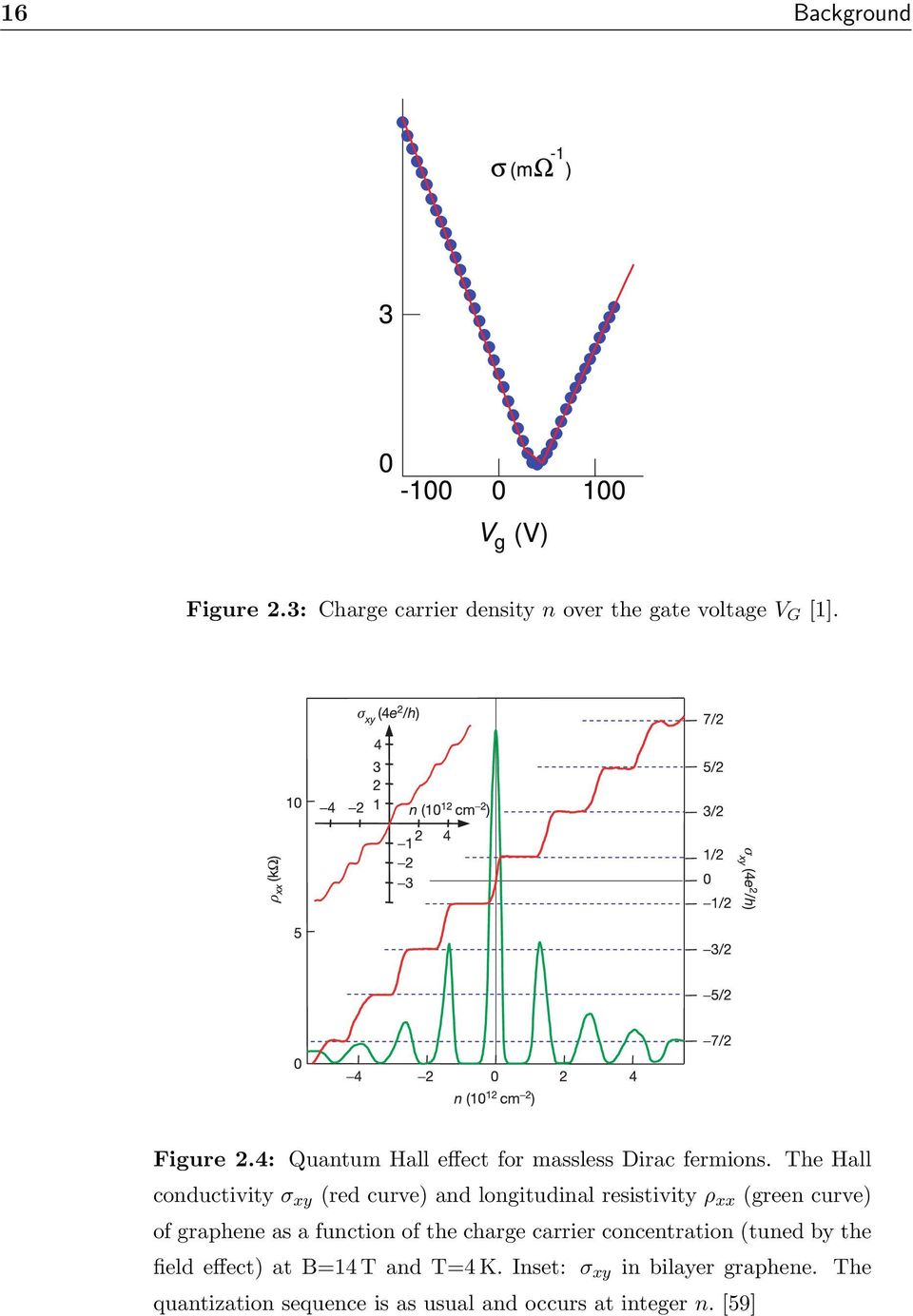
17 2.1 Peculiarities of graphene 17 The position of the Landau levels depends on the form of the electronic band structure close to the Fermi level. For electrons usually the bands separate quadratically and the energy of the n th Landau level is given by ( E n = n + 1 ) B (2.2) 2 m If the bands separate linearly, which is equivalent to the statement that Dirac fermions are present [65,66], the energies are given by: E n = sign(n) c 2e B n = sign(n)e 1 n (2.3) For usual electrons, the plateaus in resistivity are have values of integer multiples of the conductivity quantum e 2 /h times the degeneracy f of the involved electronic states and a linear dependence of E n from the level index n and from the magnetic field B as follows from equation 2.2. The experiments with graphene have shown the square root dependence of E from B and n. The quantum hall effect plateaus in conductivity at half integer multiples of fe 2 /h. This is inconsistent with equation 2.2 but consistent with equation 2.3. So, it is evidenced that the half integer quantum hall effect exists and therefore Dirac fermions are present in exfoliated and in epitaxial graphene. The quantum hall effect can even be witnessed at room temperature [62]. Recently the Landau level structure of graphene on graphite has been observed with scanning tunneling spectroscopy (STS) [67] and with Terahertz spectroscopy [63]. The experiments show that the Landau levels persist at very low fields of less the 20 mt (see figure 2.5).
![2) 2 m If the bands separate linearly, which is equivalent to the statement that Dirac fermions are present [65,66], the energies are given by: E n = sign(n) c 2e B n = sign(n)e 1 n (2.](/docs-images/41/2810701/images/page_17.jpg "3) For usual electrons, the plateaus in resistivity are have values of integer multiples of the conductivity quantum e 2 /h times the degeneracy f of the involved electronic states and a linear")
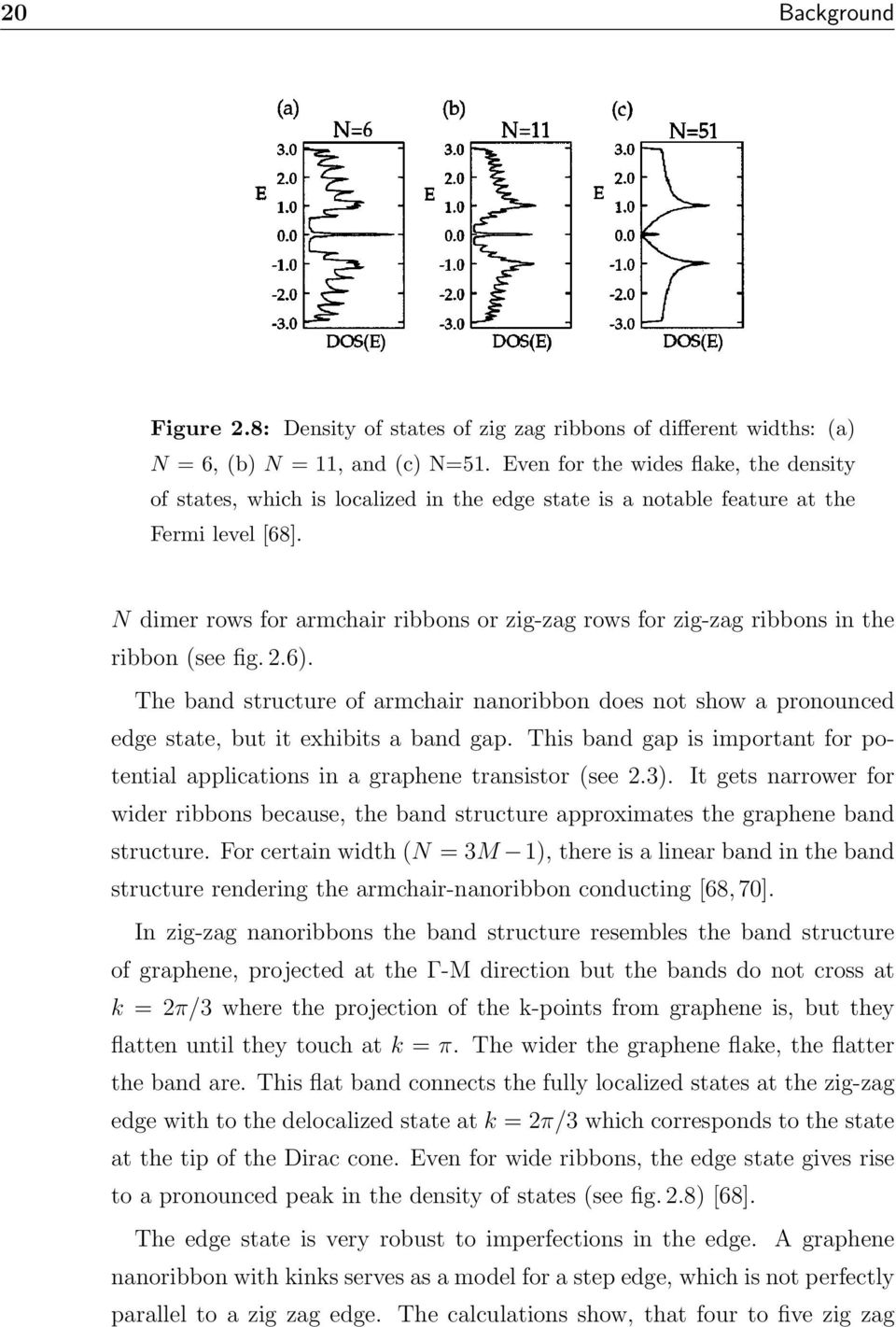
18 18 Background. Figure 2.5: (a) Field dependence of tunneling spectra of decoupled graphene on graphite showing sequences of Landau levels or various magnetic fields. The peaks are labeled with the Landau level index n. Each spectrum is shifted by 80 pa/v for clarity [67]. (b) Magneto-absorption spectrum (after removing a weak linear background) measured at T=25 K and microwave frequency ω = ev [63] Edge state The band structure of graphene has been calculated for large flakes. Also the above measurements are done on flakes of sizes in the order of micrometers, so the edges only play a minor role. In fact, the electronic structure near the edge is very distinct from the electronic structure of an infinite graphene crystal. Small graphene structures are an ideal object to study effects of the edges. There are two types of edges in graphene, zig-zag edges and armchair edges as shown in fig A striking feature is, that at at the zig zag edge, a localized edge state of pi electrons develops, while the armchair edge does not show such a state [4]. This effect has been shown theoretically for graphene nanoflakes already to decades ago (see fig. 2.7 [69]). Due to the limited number of atoms to consider in one direction while keeping the periodicity in the other graphene nanoribbons are a particularly popular system for the theoretical study of such effects within the tight binding model or with density functional theory. Varying the width of such graphene nanoribbons allows to enhance the understanding of the nature of the edge state. The width of the graphene nanoribbons is measured in the number of

19 2.1 Peculiarities of graphene 19 Figure 2.6: Graphene nanoribbons with two distinct types of edges: (a) an armchair ribbon and (b) a zigzag ribbon. The edge sites are indicated by solid circles on each side. The arrows indicate the translational directions of the graphene ribbons. The width N of the ribbons is measured by the number of dimer rows in the case of armchair ribbons and as the number of zig zag rows in case of zig zag ribbons [68]. Figure 2.7: Average electron densities in the highest occupied molecular orbitals of hydrogen terminated graphene flakes. (a) Armchair edged flake with 222 C-atoms. No edge state is present. (b) Zig-zag edged flake with 216 C-atoms. The electron density at the edges is notably enhanced. [69]
![The width N of the ribbons is measured by the number of dimer rows in the case of armchair ribbons and as the number of zig zag rows in case of zig zag ribbons [68]. Figure 2.](/docs-images/41/2810701/images/page_19.jpg "7: Average electron densities in the highest occupied molecular orbitals of hydrogen terminated graphene flakes. (a) Armchair edged flake with 222 C-atoms. No edge state is present.")
20 20 Background Figure 2.8: Density of states of zig zag ribbons of different widths: (a) N = 6, (b) N = 11, and (c) N=51. Even for the wides flake, the density of states, which is localized in the edge state is a notable feature at the Fermi level [68]. N dimer rows for armchair ribbons or zig-zag rows for zig-zag ribbons in the ribbon (see fig. 2.6). The band structure of armchair nanoribbon does not show a pronounced edge state, but it exhibits a band gap. This band gap is important for potential applications in a graphene transistor (see 2.3). It gets narrower for wider ribbons because, the band structure approximates the graphene band structure. For certain width (N = 3M 1), there is a linear band in the band structure rendering the armchair-nanoribbon conducting [68,70]. In zig-zag nanoribbons the band structure resembles the band structure of graphene, projected at the Γ-M direction but the bands do not cross at k = 2π/3 where the projection of the k-points from graphene is, but they flatten until they touch at k = π. The wider the graphene flake, the flatter the band are. This flat band connects the fully localized states at the zig-zag edge with to the delocalized state at k = 2π/3 which corresponds to the state at the tip of the Dirac cone. Even for wide ribbons, the edge state gives rise to a pronounced peak in the density of states (see fig. 2.8) [68]. The edge state is very robust to imperfections in the edge. A graphene nanoribbon with kinks serves as a model for a step edge, which is not perfectly parallel to a zig zag edge. The calculations show, that four to five zig zag
21 2.1 Peculiarities of graphene 21 Figure 2.9: Average charge densities states in an interval of ±0.2 ev around the Fermi level in mostly zig zag nanoribbons. There is a pronounced charge density at the edges, for (a) long segments of zig-zag edges and (b) short segments of zig-zag despite the armchair sites forming the kinks in the edge. These ribbons are a model for arbitrary edges which do not exactly follow zig zag directions [68]. sites in a row are sufficient for the edge state to develop (fig. 2.9) [68]. Scanning tunneling microscopy and scanning tunneling spectroscopy have yielded experimental evidence for the edge state in graphene. In reference [71] graphene was epitaxially grown on polycrystalline (111) textured Iridium by CVD with benzene (C 6 H 6, see below for more information on CVD growth). Straight edges of monoatomic height which are attributed to dislocations are observed with STM [fig (a)]. The steps are along dense packed rows ( [110] direction]), which are indeed parallel to the zig zag rows of graphene (see 5.2.2). STS measurements of graphene at edges [fig (b)] show a pronounced peak in the density of states about 0.2 ev above the Fermi level. This peak is attributed to a resonant state localized at defects. The shoulder at about 0.35 ev below the Fermi level is due to Ir(111) surface states. Zooming in to the spectrum close to the Fermi level reveals a small peak at about ev below the Fermi level. The authors attribute this peak to the localized edge state (LES) of graphene. Unfortunately no atomically resolved topography image of the edge is available. So it remains unclear,
![22 Background. Figure 2.10: (a) STM topography image of graphene on polycrystalline (111) textured Ir. Steps are along [110] direction.](/docs-images/24/2810701/images/22-0.jpg "(195 nm 195 nm) (b) STS spectra of graphene taken at the positions marked in (a). The spectra show a shoulder at -0.35 V which is due to an Ir surface state. The peak at +0.")
22 22 Background. Figure 2.10: (a) STM topography image of graphene on polycrystalline (111) textured Ir. Steps are along [110] direction. (195 nm 195 nm) (b) STS spectra of graphene taken at the positions marked in (a). The spectra show a shoulder at V which is due to an Ir surface state. The peak at +0.2 V is attributed to resonant states at defects (RS). (c) A zoom in reveals a faint peak at V. This peak is attributed to the localized edge state (LES) [71] whether there is really a zig-zag edge of graphene or if the graphene layer rather bends over the edge like a carpet with atomic coherency (see 5.2.2). Another STM study of the edge state claims to have found evidence on mechanically cleaved HOPG [72]. The cleaved surface of HOPG was exposed to atomic hydrogen and annealed in UHV multiple times to achieve H termination. The authors of reference [72] find, that the armchair edge (fig (a),(b)) is by far the dominant configuration. On the scarce parts, which are zig-zag the image is particularly bright, hinting at an increased density of states due to the edge state. The STM images were recorded in the constantheight mode at a sample bias of 0.02 V and a tunneling current of 0.7 na. Unfortunately this data is not strengthened by spectroscopic measurements and it is not explained, why atomic contrast on the lower terrace is also achieved in the constant height mode. The edge is not the only widely discussed edge effect in graphene. Other predicted features of graphene edges include ferromagnetism [73] and spin filtering in high electric fields [74] (see 2.3.2).
23 2.2 Preparation of Graphene 23 Figure 2.11: (a) STM topograph of a graphite step edge. Most sections of the step are of the armchair type (14.8 nm 13.4 nm). (b) STM topograph of a segment of an armchair type step edge. A defect is indicated by an arrow. (3.9,nm 3.9 nm). (c) STM topograph including segments of zig zag step edges. The image is particularly bright at the step edge ( nm). All three topographs are acquired in constant height mode [72]. 2.2 Preparation of Graphene The measurement of the physical properties of graphene and also possible future applications (see below) rely on the possibility of a reproducible, efficient and high quality preparation technique. The prominent pioneering measurements have been done on exfoliated graphene. Even then, also epitaxial graphene on SiC and other carbides as well as on transition metals was known [75]. In parallel, chemical approaches to prepare graphene were pursued. With the rise of graphene s popularity, the interest in these techniques experienced a renaissance. The preparation of graphene has not only been significantly improved, but also the physical understanding of the growth and properties of graphene has been considerably expanded and deepened. This thesis is a contribution to this effort. This section provides an overview over the most common graphene preparation techniques: mechanical exfoliation, epitaxial growth on SiC,and epitaxial growth of graphene on metals.
24 24 Background Figure 2.12: (a) array of mesas etched into HOPG, (b) single graphite mesa on HOPG. (c) graphite plate from a mesa transfered to Si(001). Before the transfer, the mesa was 6 µm high. (d) mesa which fanned out into multiple sheets upon transfer to the wafer. [76] Exfoliation The most straightforward route to two dimensional crystals is the mechanical exfoliation from layered crystals, such as graphite. One approach is to etch mesas into the basal plane of a crystal of HOPG by oxygen plasma etching. Their height is tunable between 200 nm and about 9µm. These mesas are transfered to a substrate, e.g. a silicon wafer by rubbing the surface with the mesas onto the substrate surface. SEM images of the mesas on HOPG and transferred mesas are shown in fig The graphite stacks obtained can be manipulated with an AFM tip. [76] In 2005 Novoselov et al. also pretreated their HOPG samples by creating
25 2.2 Preparation of Graphene 25 mesas with oxygen plasma etching. Then the HOPG was glued to a glass substrate with a photoresist and the graphite crystal was pulled off. The remaining graphene was thinned with scotch tape before the resist was dissolved in acetone. Finally a Si-wafer with a 300 nm thick layer of SiO 2 (SiO 2 /Si) was dipped into the solution, rinsed with water and propanol, and then screened for graphene flakes with optical microscopy. Among many thicker flakes, a few single layer graphene flakes were found [77]. This procedure was later much simplified. The HOPG crystal was cleaved and then simply rubbed against another solid surface which was then screened for single layer thick flakes. Through this approach two dimensional crystals can also be made from other layered materials as shown in fig [78]. The most important step to find the monoatomic graphene sheets was the ability to single out promising candidates with optical techniques, because the vast majority of flake is thicker material [77, 78]. The mechanism for optical contrast is not, as often claimed, the additional interference length due to the graphene layer. It is established, that the thickness of the SiO 2 layer can be determined optically through interference [79]. However, for a few layers of graphene, this effect is too small to contribute. The reason for the contrast lies in the metallic opacity of graphene. The presence of the graphene layer changes the reflectivity of the interface and thus enhances the already existing interference of the SiO 2 layer. The thickness of the oxide layer has to be chosen in a way, that this enhancement takes place at a suitable wavelength so that it is well visible [80].
26 26 Background Figure 2.13: Various single layered crystals: (a) AFM topograph of single layer NbSe 2, (b) AFM topograph of single layer graphene, (c) SEM image of single layer Bi 2 Sr 2 CaCu 2 O x, (d) optical microscopy image of a sinlge layer layer of MoS 2. All scale bars are 1 µm. (a), (b), (d) are on top of Si with 300 nm of SiO 2, (c) on a carbon net. The elevation by a few angstroms above the supporting surface is attributed to a layer of absorbed water. [78]
27 2.2 Preparation of Graphene Epitaxial graphene on SiC Already in the first experiments with exfoliated graphene it was clear, that the method of preparation is not easily scalable. So, right from the beginning of the graphene renaissance, there was the need for way to epitaxially grow graphene. A promising substrate for this was SiC which is known for graphitization upon annealing in vacuum since the 1960 s [81]. The unique electronic properties of graphene were shown in epitaxial graphene on SiC(000 1) in 2006 [60]. In the last few years great effort has been undertaken to understand and improve the preparation of epitaxial graphene on SiC. Silicon Carbide Silicon carbide as a crystal can be grown in high quality and is commercially available as a wafer. There exist several types ofcubic and hexagonal stacking. The most relevant forms are 4H-SiC and 6H-SiC 2. SiC has a polar axis, so the SiC(0001) and SiC(000 1) basal planes are inequivalent. Figure 2.14 shows a side view of 6H-SiC. The SiC(0001) face (top) is carbon Silicon terminated, while the SiC(000 1) face (bottom) is carbon terminated. Additionally it is noted, that the local bonding configurations of adjacent terraces are inequivalent (see also below) [82]. Growth Procedure Before graphene growth, the polished wafers are usually cleaned, hydrogen etched and annealed to a temperature, at which oxides are destroyed but no Si is evaporated (950 C 1100 C) for a few minutes in UHV. The step separation is the mainly governed by the miscut of the wafer. The details of the cleaning process have only little influence on the structure of the graphene grown on these wafers. The simplest approach to grow graphene on SiC is to anneal the sample to high temperatures (e.g C 1350 C, see below for details) in UHV. The 2 The letter H denotes the hexagonal crystal structure while the digit refers to the periodicity of the layers. The stacking for 4H-SiC is abcb while 6H-SiC is present in abcacb stacking.
28 28 Background Figure 2.14: Side view of 6H-SiC. The SiC(0001) face (top) is carbon Si rich, while the SiC(000 1) face (bottom) is C terminated. In this sketch, the SiC(0001) surface is additionally terminated with H. The local bonding configurations S1, S2, and S3 of adjacent terraces are inequivalent [82]. results of this treatment show the differences between the two faces of SiC. In both cases, Si is evaporated. The excess carbon forms graphene on a thin buffer layer. Buffer Layer A buffer layer is discussed on each face of the SiC crystal, the exact atomic structure of the buffer layer is unknown [13]. The interface layer between the SiC surfaces and graphene were investigated with LEED, XPS, ARPES, and surface x-ray diffraction. Additionally band structure calculations have been carried out (cf. [13,83]). The Si terminated SiC(0001) surface undergoes a wealth of superstructures upon annealing, before a ( )R30 is developed. The transions between these superstructures can be understood as phase transitions on the surface [14]. The ( )R30 structure remains under the graphene film and is controversially discussed. It was modeled to be similar to a distorted, Sidepleted form of a SiC bilayer with dangling bonds present allowing for an
29 2.2 Preparation of Graphene 29 electron transfer between the first graphene layer and the buffer layer [13] but there are strong indications, that the interface is rather a graphene like layer which is covalently bound to the Si-atoms of the SiC(0001) surface. This argumentation is mostly based on the electronic structure of that interface. The structure does not show the signature of graphene s π-system. The π- electrons take part in the bonding. The σ-band consisting of electrons, with a high spatial probability density close to the atoms, however is present just as in graphene as shown in fig Also the C terminated SiC(000 1) face, undergoes different superstructures in the course of annealing, but when covered with graphene these superstructures are not present any more. Here, the presence of the interface layer is even more under debate: According to reference [13] this interface is comparable with the SiC bulk structure which is terminated with additional carbon or even only consisting of carbon without Si and which is well bonded to the substrate. A major difference between this model of the interface layer on the SiC(000 1) to their model of the interface layer on Si(0001) is, that the unsaturated dangling bonds, which are mentioned above are not present. In [83] however, it is not only claimed that the interface layer is just a graphene layer it is also described as weakly bound to the SiC(000 1) surface. An overview of measurements and band structure calculations on SiC(000 1) is given in fig The ARPES measurements are done for increasing coverages from (a) the clean layer over (b) 0.3 ML and (c) 0.8 ML up to (d) 2 ML. In contrast to the band structure calculations shown in fig. 2.16(i) for one layer of carbon, which plays the role of the hypothetical buffer layer and (j) a second layer which is regarded as the first graphene layer the measurements do not show a sign of the strong interaction of the first layer. Morphology and Properties of Graphene on SiC The morphology of graphene on SiC depends very much on the preparation conditions and on the face of the crystal. While graphene on the Si-terminated SiC(0001) face keeps its in-plane epitaxial relation to the substrate well with multilayer growing Bernal stacking (ABAB... ), on the SiC(000 1)surface, there is an azimuthal scatter, as visible from the LEED patterns in fig. 2.16
30 30 Background Figure 2.15: ARPES spectra of (a) the ( )R30 layer on the Si-rich Si(0001) surface and (b) of 1 ML of row graphene on this surface. In the middle row the corresponding LEED patterns of (c) the ( )R30 layer and (d) 1 ML of graphene are shown. Below are band structure calculations for graphene on truncated SiC(0001). The first layer mimics the buffer layer (e), the second layer mimics the first graphene layer (f). ARPES and LEED data from [83], band structure calculations from [84].
31 2.2 Preparation of Graphene 31 Figure 2.16: ARPES spectra of (a) the (3 6 3) structure on the C- rich Si(000 1) surface and increasing amounts of graphene coverage of (b) 0.3 ML, (c) 0.8 ML, (d) 2 ML. In the middle row the corresponding LEED patterns of comparable graphene coverages (e) (3 3), (f) 0.5 ML, (g) 1 ML, and (h) 4 ML are shown. In (g) and (h) the angular scatter in the graphene spots can be seen. Below are band structure calculations for graphene on truncated SiC(0001). The first layer mimics the buffer layer (e), the second layer mimics the first graphene layer (f). In the lower row, band structure calculations for graphene on truncated SiC(000 1) are shown. The first layer mimics the buffer layer (i), the second layer mimics the first graphene layer (j). ARPES and LEED data from [83], band structure calculations from [84].
32 32 Background (g) and (h). When annealing SiC in vacuum, the domain sizes on both faces are rather small (see table 2.1 after [85]). The reason is, that the temperature influences two parameters, which are crucial for the morphology: the Si-loss and the mobility of diffusion on the surface. The silicon loss occurs so quickly, that the mobility is not sufficiently high for the surface to equilibrate and smoothen. Increasing the temperature will only increase both parameters. This problem has recently been overcome in two ways. (i) The annealing has been performed in a atmosphere of Ar [12] or in a small furnace with a pressure of at least mbar 3 [86]. The atoms of the atmosphere reflect a part of the Si atoms which are evaporated back onto the surface. This way, the mobility can be increased without a rapid Si loss. (ii) An even more elegant way to decouple the Si loss and the mobility is, to offer Si at an defined rate to compensate for the loss through evaporation. This can be achieved though a background pressure of disilane (SiH 6 ). This gas decomposes into hydrogen and silicon above 300. This technique has been demonstrated in reference [14]. The domain size can be increased to about 3µm when graphene is grown with diminished Si loss. An overview is shown in fig and table 2.1. In principle all these techniques should work on both faces of SiC. And indeed this furnace growth produces large homogeneous areas of graphene 2.18 (a). The Si(0001) surface, however is better examined, because the well ordered LEED pattern makes it an ideal candidate for high quality graphene. The LEED pattern for graphene on Si(000 1) exhibits an azimuthal scatter, which made it less interesting to many researchers. Surprisingly even multilayers of graphene on Si(000 1) show excellent electronic properties, comparable to the ones of single sheets. The reason for this is based in the angular deviation between the layers. Each layer is rotated by 30 ± 2.2 with respect to the underlying layer. A calculation shows that the electronic structure of these rotated sheet around the k-point is nearly indistinguishable from the single free graphene layer at the k-point if the layers are rotated with respect to each other. A clear band splitting and distortion of the band structure is 3 Probably the pressure in the small volume of the furnace is much higher.
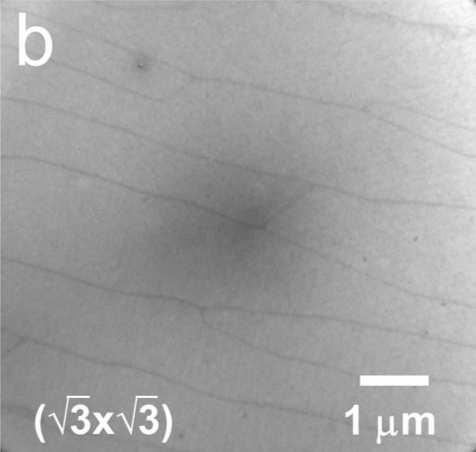
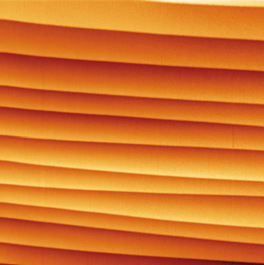
33 2.2 Preparation of Graphene 33 Figure 2.17: Graphene on the silicon rich SiC(0001) surface prepared without and with Si-replenishment. (a) AFM topograph of SiC(0001) after cleaning ready for graphene growth. (b) LEEM image of the ( 3 3) reconstruction prior to graphene growth. This structure is stabelized by a mild silane background pressure. (c) AFM image of graphene prepared by annealing to 1280 in vacuum with a nominal thickness of 1 ML. (d) LEEM image of graphene prepared by UHV annealing with a nominal thickness of 1.2ML. The actual local thicknesses are indicated by the arrows. (e) AFM topograph of graphene with a nominal thickness of 1.2 ML formed by annealing at 1650 C in 900 mbar Ar atmosphere. (f) LEEM image if a sample equivalent to (e). The terraces are covered with 1 ML of graphene, the step edge are covered with 2 ML or 3 ML. (g) Graphene grown under a silane background of Torr. Figs (a), (c), (d), (e), (f) are from [12], (b) and (g) are from [14].
34 34 Background Figure 2.18: (a) AFM topograph of ML of graphene on Si(000 1). The sample was annealed in a furnace environment. There are wrinkles in the graphene layer (see also 4.5) (8µm 8 µm) [13]. (b) The calculated band structure for three forms of graphene: (i) isolated graphene sheet (dots), (ii) ab-stacked graphene bi-layer (dashed line), and (iii) two sheets rotated against each other by (30+2.2) as in graphene on Si(000 1) (solid line). Inset shows details of band structure at the K-point [87]. present between the Γ and the M point. If the layers are Bernal stacked, there is a splitting of the bands throughout the whole Brillouin zone and thus also at the k-point 2.18 (b). Table 2.1 compares the structural parameters of the different preparation modes. Interestingly the electron mobility for graphene on the Si-rich face does not increase with the domain size. A possible explanation is, that inside domains of a certain height, there are hidden domains of different stacking. The boundaries of these domains would be electron scattering centers, limiting their mobility. Such defects have recently been shown for double layer graphene on SiC(0001) (fig. 2.19) and stacking faults with respect to the substrate may well be present in single layer graphene in SiC(0001) as well.
35 2.2 Preparation of Graphene 35 Figure 2.19: LEEM images of graphene on 4H-SiC(0001) with a nominal thickness of 2 ML. (a) bright field LEEM image, (b),(c) dark field LEEM images from the same sample location with the (01) spot (a) and the (10) spot (b). The pronounced structure even inside the smooth two layer region is attributed to stacking faults between the two graphene layers as illustrated in (c).
36 36 Background T min µ Method L G ( C) N L SiC (cm 2 / V s) Stacking UHV / Si face Å Å a <2000 AB UHV / C face 500 Å b Å Rotational faults Furnace / Si face 1 3µm c > 1500 c 1 4 c 3µm c < 2000 c AB Furnace / C face 1 10 µm > µm > 10 5,d Rotational faults a Substrate roughness increases at higher growth temperature. b Reference [88]. c Reference [12]. d Reference [89]. Table 2.1: Overview of structural and electronic properties of epitaxial graphene grown on the Si-face SiC(0001) and the C-face SiC(000 1) via annealing in UHV or in a low-vacuum furnace. The table compares the mean graphene domain size L G, minimum growth temperature T min, number of graphene layers N, mean SiC terrace size L SiC, electron mobility µ, and the type of layer stacking. Table from [85], Values are compiled from [13] or from other sources as indicated.
37 2.2 Preparation of Graphene Epitaxial graphene on metal substrates Epitaxial graphene on metal substrates is a system which is, just as the epitaxial graphene on SiC known for a long time under different names. The first evidences for epitaxial on graphene a metal were found accidentally on platinum surfaces in the 1960s [90,91]. In these LEED studies, it was not yet interpreted as graphene or, in the parlor of these times monolayer graphite or a graphitic carbon layer. It was rather seen as a surface reconstruction because the surfaces were assumed to be clean. We know now, that carbon from the background pressure or the bulk must have formed epitaxial graphene at high temperatures. With the renaissance of graphene, a lot of dedicated studies of graphene on metals and metal carbides were performed (cf. [92]). The growth process has many aspects in common on all metals and some aspect differ. The following sections will address these aspects one by one and name examples for the described phenomena. Carbon source To grow graphene carbon on the surface is necessary. This carbon can be supplied by several sources. Three types of carbon source are common today (see fig. 2.20): Segregation from the bulk Chemical vapor deposition (CVD) form the gas phase Decomposition of carbon on the surface. Besides there are also experiments with physical vapor deposition [93] or deposition from a molecular beam [94]. The segregation from the bulk 2.20 (a) in its pure form is often performed when growing graphene on Ru(0001) [15,92,95] or Ni(111) above 700 K [34,96, 97]. There, one takes advantage of carbon impurities nominally clean single crystals or, if the crystal is already clean or depleted of carbon, enriches the crystal with carbon artificially, e.g. by exposure to ethylene at a high temperature. Before the growth of graphene on for example Ru(0001), the crystal surface is cleaned by sputtering and flash annealing to about 1400 K.
38 38 Background Figure 2.20: Schematics of the three major sources for graphene growth on metals. The bulk metal is depicted in red, carbon in blue. Hydrogen atoms from hydrocarbons are symbolized as black circles. (a) segregation of carbon from the bulk to the surface, (b) chemical vapor deposition of a hydrocarbon. On the surface, the hydrocarbon is cracked and hydrogen desorbs. (c) Hydrocarbons are adsorbed on the metal surface. Upon annealing hydrogen desorbs and graphene islands form.
39 2.2 Preparation of Graphene 39 The growth is initiated by prolonged annealing between 1000 K and >1400 K [15, 19]. At these temperatures, the solubility and mobility of carbon in the Ru bulk and is significant [98] so that carbon from the bulk can diffuse to the surface. The feasibility of this process is dependent on the solubility of carbon in the metal [95]. If the solubility is very low, as in the case of Ir [98] the required temperatures for the enrichment with carbon are very high even higher then the melting temperature as for Cu (see phase diagram for C-Cu in [99]). If the solubility is very high, the amount of carbon which diffuses to the surface exceeds a monolayer quickly and it is difficult to restrict the growth to a single monolayer or one has to accept a high degree of imperfection in the graphene layer which cannot anneal the defects at low temperature. Additionally, the solubility and mobility decrease with lower temperature. When the mobility of solved carbon is low upon cooling, then the remaining carbon will be frozen in the bulk and the graphene layer is preserved. If it is high, then additional carbon will be ejected to the surface upon cooling leading to multilayer of patches of amorphous carbon. A typical material, for graphene growth with a high solubility is Ni [97]. CVD of hydrocarbons, most commonly ethylene, allows for the growth of precisely one ML. The gas is catalytically dissociated on the metal surface, but nor in the graphene layer. The growth is thus self-limiting at full coverage as illustrated in fig (b). Below one ML CVD gives reasonable control over the coverage by the dose of gas which is offered for graphene growth and it allows to tune the carbon flux independent of the temperature (see below). Higher flux leads to a higher nucleation density [100]. CVD growth of graphene has been demonstrated on many transition metal surfaces and is a very versatile method. However it is not possible to grow multilayers with pure CVD and for materials with a high solubility for carbon CVD can not always be separated from the segregation of carbon from the bulk. A more specialized technique is to directly prepare all carbon adspecies on the surface simultaneously. This can be done by the adsorption of hydrocarbons to saturation on the surface at room temperature and subsequent annealing as shown in fig (c). At a certain temperature, the hydrocarbon is catalytically dissociated and hydrogen desorbs. The remaining carbon
40 40 Background adspecies can then form graphene. The temperature also governs the morphology (see below). Hence the term temperature programmed growth (TPG) was chosen for this method. This method has been shown for Pt(111) and on Ir(111). It has the advantage of very reproducible morphologies and a fixed amount of carbon which can be adjusted by the hydrocarbon which is used as a precursor molecule (see 4.1). Temperature The preparation of graphene generally occurs at high temperatures. On Ni(111) graphene of high quality as determined by ARPES were grown at 820 K were grown [26], in Ir ordered graphene can be observed from about 900 K (see 4.2). The highest temperatures which are common lie around 1500 K for graphene growth on Ir(111) and Ru(0001) (see section 4, [17, 19, 32]). High temperatures increase the mobility of carbon on the surface and the solubility of carbon in the bulk. The quality of the graphene layer with respect to domain sizes and defects increases with higher mobility. The structure sizes are larger and the nucleation density of graphene flakes decreases. Individual flakes can easily be separated by a distance of several micrometers (see fig in chapter 4.4). A downside of a high temperature during growth can be the dissolution of carbon into the bulk in which case the control of the amount of carbon present in CVD and TPG is lost. For growth through segregation, there are different temperature windows for each metal. Recently it has been clarified, that the high growth temperatures of graphene on metals (and SiC) give rise to elongated defect structures. These structures are wrinkles formed due to the mismatch in thermal contraction on the substrate and the graphene layer during cooldown (see 4.5). Micro flakes and nano islands For a long time the primary aim in the growth of graphene was the growth of perfect monolayers. The research of the past years has quite successfully strived for this goal. Large domains of graphene can for example be grown on Ru(0001) [40,101] and Ir(111) (see 4.3).
41 2.2 Preparation of Graphene 41 Along with new scientific questions came the demand for additional control over the graphene structures. With the temperature and the choice of the carbon supply the growth process can be steered to yield not only monolayer graphene, but also nano flakes with a average diameter tunable from a few nanometers to some tens of a nanometer (see 4.1) or larger flakes with average sizes ranging from fractions of a micrometer up to several micrometers [100]. Substrate steps do not necessarily represent boundaries for the graphene domains. As on SiC, graphene on Ir(111) (see 5.2) and Ru(0001) [40] can cover steps like a carpet without losing atomic coherency. Although islands on Ru(0001) can cover step edges, they can only grow down the step [15], not upwards, whereas on Ir(111) graphene islands can grow all directions simultaneously [93], as shown in fig The reason may be, on Ir(111) the graphene layer is much farther above the metal then on Ru(0001). On the Ru(0001) substrate, the graphene layer is close to an ascending step edge and can possibly bind to step edge atoms, on Ir(111), it is higher so a passivating bond of the graphene growth front to the step edge may be much less favorable than on Ru(0001). This is shown in fig (b) and (e). Understanding of the growth mechanism of graphene growth on metals is the key to further expanding the possibility to craft a desired morphology. The growth occurs through a C adatom gas (more precisely: C adspecies gas) on the surface. The mobile adspecies form clusters which can attach atoms to graphene islands if they are large enough. Already in 1985 the model of an adatom gas was proposed for the growth of graphene on Ir(111). It describes the growth by a phase transition which sets in at a critical coverage Θ c. If the density of C atoms in the adatom gas phase is higher then Θ C C goes from the adatom gas phase into solid graphene phase. This model was from experiments at very high temperatures and found the critical coverage to be very low (Θ c (1570 K)< 0.001, in units of the areal density of C atoms in graphene). For higher temperatures a significant amount of carbon could be stored in the adatom gas as shown in fig (a) 4. With TPG of ethylene on Ir(111), the adatom concentration after pyrolysis is around 0.2, at less then 4 At the high temperatures used in reference [49] the partial dissolution of carbon even in Ir or in the grain boundaries of the substrate cannot fully be excluded.
42 42 Background Figure 2.21: (a) Sequence of LEEM images of a growing graphene flake on Ru(0001). The position of the original nucleus is marked as a black spot. The island grows exclusively along and down the steps. (b) The growth direction of graphene on Ru(0001) illustrated in a side view sketch: The graphene island can grow downwards and flows over steps, but it cannot mount upwards. Instead it binds to the step. (c) and (d): subsequent images of a growing graphene flake in Ir(111). The perimeter of the flake in (c) is marked in (d). The flake grows in all directions. (e) The growth direction of graphene on Ir(111) illustrated in a side view sketch: The graphene island can grow in up and down the step. It is elevated higher above the substrate and can surmount substrate steps during growth. Subfigures (a), (b) from ref. [15], (c), (d) from [93].
43 2.2 Preparation of Graphene 43 Figure 2.22: (a) The equilibrium carbon adatom gas concentration Θ c on Ir(111) as determined in early works [49]. (b) Electron reflectivity (left axis) and its translation into carbon adatom gas concentration (right axis) on Ir(111) during growth. The concentration increases (electron reflectivity decreases) until nucleation of graphene island takes place, then it decreases (electron reflectivity increases) pointing to a supersaturation before the nucleation of islands [93] K so there is an enormous supersaturation. This is the reason for the high nucleation density and the small flakes resulting from TPG growth. Recent experiments corroborate, that the basic mechanics of this model are valid. In reference [16, 93] LEEM reflectivity measurements proof the existence of the adatom gas and a decrease in concentration upon the nucleation of graphene flakes (fig (b) ) evidences a high nucleation barrier. The required size for a carbon cluster to attach to an island is 5 atoms [93]. Tight binding molecular dynamics simulations suggest, that this formation of elongated carbon clusters as precursors to graphene islands is also valid for other materials such as Ni(111) see fig [102,103]. Superstructure Graphene on metal substrates forms a moiré superstructure in many cases. Geometrically this superstructure can be understood as the superposition of two lattices, just like a beat can be understood as the superposition of two waves. The reciprocal lattice vector of the moiré k m is the difference of the reciprocal lattice vectors of the two original lattices, in that case the dense
44 44 Background Figure 2.23: Early stages of the nucleation of graphitic carbon at a Ni- Step edge at 1000 K. Ni atoms of the depicted as large spheres, orange in the bulk and grey at the step. The carbon atoms are displayed as small black spheres. Carbon atoms are fed from a hypothetical gas phase with a chemical potential which is increased from (a) (d). (a) Single linear clusters form. (b) Connected carbon chains form. (c) a monolayer of carbon resembling graphene forms (d) side view of (c) The carbon layer does not have time to heal out to a graphene layer, within the simulation. [102] packed metal surface k 1 and the graphene sheet k 2 : km = k 2 k 1 (2.4) The moiré is not necessarily a coincidence lattice of the substrate and the deposit and each moiré cell may look microscopically different from its neighbor, as in graphene on Ir(111). Inside the moiré cells locally different stacking motifs of the carbon atoms with respect to the metal surface are realized. For details see 5.1. The moiré reveals itself through a difference in interaction of graphene with the metal surface depending on the local stacking motif. This difference reflects in the density of states as seen in STM and STS [15, 19, 42, 104], in electron diffraction 5 [15, 19, 44, 50, 104] and with a chemical contrast as demonstrated by the growth of ordered cluster arrays [42, 105], sec. 6. A topological effect of the moiré is also predicted [42, 106, 107] and verified for graphene on Ru(0001) [44]. Ni(111) and Co(0001) are special cases, because 5 The LEED pattern could also be explained by multiple diffraction [50]. X ray diffraction studies could rule this out.
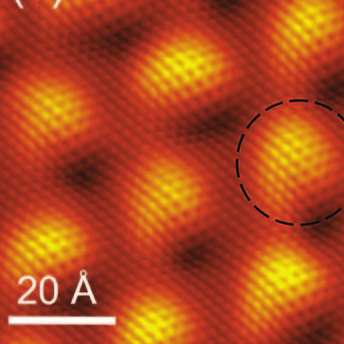
45 2.2 Preparation of Graphene 45 Figure 2.24: Comparison of the moiré of graphene on various metals. (a), (e) Graphene on Ru(0001) (a: [19], e: [44]), (b) graphene on Pd(111) [39], (c), (f) graphene on Pt(111) [35] (d), (e) graphene on Ir(111). The image size for (a-d) 420 Å 310 Å, for (e-g) the size is 65 Å 65 Å. The periodicities d of the moirés and the approximate moiré cell superstructures are given below the topographs. their surface lattice constants match to the one of graphene and there is no superstructure. In fig the moirés of graphene on Ru(0001), Pd(111), Pt(111) and Ir(111) are compared. The lattice constant of graphene is fixed, so the moiré periodicity depends on the substrate lattice constant. Binding Two types of situations between graphene and the underlying metal exist. One type with strong bonding between metal graphene and a typical metalgraphene distance smaller then a metal-metal bond (around 1.4 Å 2.2 Å) and one with weak bonds and a typical metal-graphene distance which is much larger then the bonds bewteen the substrate atoms (around 3.2Å 3.7Å). The difference in bonding also reflects in the phonon modes of graphene. A softening of the phonon modes indicating weakened C-C bonds is observed in the case of strong binding, whereas in the case of weak binding the phonon
46 46 Background Figure 2.25: SEM image of graphene grown on a thin Cu foil. The starlike pattern suggests a growth in all directions, which is not hampered by step edges. [108] frequencies stay close to the bulk values known from HOPG (for a review see [92]). The moiré for strongly bound graphene is more pronounced than for weakly bound graphene. Weakly binding systems are graphene on Ir, Pt, and presumably Cu. The SEM images presented in the supplement of reference [108] suggest that graphene islands grow in all directions (see fig. 2.25). If the growth can surmount the steps, a large substrate to graphene distance and a weak binding would be plausible. Fist principle calculations also predict Cu to be a weakly interacting substrate [109]. Strongly binding substrates are Ni, Ru(0001), Rh(111), Pd(111), or Co(0001) [39, ]. Graphene on Ruthenium(0001) is a typical case for a strongly interacting system whereas graphene on Ir(111) is a representative of the weakly interacting kind. The effect of the binding on the electronic structure is severe: The Dirac is completely disturbed for the monolayer on Ru(0001). Only in bilayer graphene the cone reappears (see fig (a)-(c)) [101]. In graphene on Ir(111) the Dirac cone is fully present. The effect of the substrate is limited to two phenomena: a slight p-doping by about 0.1 ev and the replication of the Dirac cone at the mini Brillouin zone boundary
47 2.2 Preparation of Graphene 47 Figure 2.26: Micro-ARPES band structure maps (a)-(c) and regular ARPES spectra (d),(e): (a) Ru(0001) substrate in an area that is not covered by graphene. (b) Monolayer graphene. Dashed line: π-band obtained from a tight-binding calculation for free-standing monolayer graphene. (see appendix) (c) Bilayer graphene. Dashed lines: scaled DFT bands of freestanding graphene [112]. (d) ARPES band structure map of Ir(111) and (e) of the grapene monolayer on Ir(111) around the k-point. The white parallelogram markes a band gap in the Ir band structure. The black lines labelled S 1, S 2, S 3 show surface states of the Ir(111) surface. The orange and red arrows mark the Ir and graphene k-point. In (e) white arrows point to the minigaps, the replica band is marked with an R. (a-c) from [101], (d,e) from [24]
48 48 Background given by the periodicity of the moiré with mini gaps in the band structure at the intersection of the bands [24]. This is evidenced in the ARPES data shown in fig (c) and (d). It is yet unclear whether the preservation of the Dirac cone on Ir(111) is based on the weak interaction or the meagerness of electronic states of Ir near the Fermi at the k point of graphene. TPG was recently employed to grow a high density of nanoflakes and thus have a lot of edge atoms. Like this, it was possible to show with XPS, that the two outer rows of atoms at the edge of the flake are strongly bound to the substrate, despite the overall weak interaction [113]. Polycrystalline substrates and transfer Metal single crystals are a very well defined substrates which are excellently suitable for fundamental research. For the application oriented preparation of graphene, a less costly substrate is desirable, especially when the substrate is sacrificial. Although textured polycrystalline metal substrates have already been employed for the growth of graphene in the past (e.g. [49]) in the view of the new promises this two dimensional material bears, the growth of graphene on such substrates has flourished in the last year. Substrates were Ru, Ni and Cu. Whereas the work on Ru was a fundamental study with the surprising result, that graphene domains can be larger than the grains of the underlying polycrystalline film [114], the other studies aimed at the production of a transferable graphene sheet. The studies were performed with Ni sheets [18] and films on SiO 2 /Si [6, 7, ] and with Cu foils [108] and films on on SiO 2 /Si [116, 117]. The hot substrates were exposed to a flow of diluted hydrocarbons near ambient pressure. It turned out, that on Ni, it was difficult to restrict the thickness to less then 3 ML. Surprisingly the only work reaching a fraction of >75% fraction monolayer coverage on Ni employed a different technique: After Ni deposition, the sample was transferred through air, stored for days and then annealed in UHV. The source of the beneficial carbon contamination is yet unclear [115]. On Cu, monolayers of graphene can be very reproducibly formed from diluted hydrocarbons. The reason may be, that the solubility of carbon in Cu is low (0.04 at.% near the melting point) and that copper falls
49 2.2 Preparation of Graphene 49 Figure 2.27: (a) Cu foil before and after 30 min glowing in a C 2 H 4 containing atmosphere. The graphene covered foil is shinier then the untreated sheet. (b) SEM image of graphene on Cu as prepared in (a). (c) Graphene transferred on SiO 2 /Si substrate. (d) SEM image of graphene on SiO 2 /Si showing wrinkles and multilayer regions. The red circle is on the monolayer, the blue circle is on a patch of bilayer graphene, and the green cross is next to a patch of trilayer graphene. [108] into the class of weakly binding substrates. One step towards applications, the growth of graphene on polycrystalline films and the transfer to other substrates has been performed [7, 116]. This process is illustrated in fig Graphene is growth on a thin copper sheet, the sheet is etched away and the graphene sheet is transferred to SiO 2 /Si. The thickness is estimated with local Raman spectroscopy. The patterned growth of graphene or the patterning of the transfered film [6] are further milestones on the route to the preparation of application ready graphene. In reference [117,118] patterning and the fabrication of an array of functional devices (cf ) have been demonstrated (see fig. 2.28). Graphene
50 50 Background is grown on a polycrystalline Ni film on SiO 2 /Si (fig (a)). The metal with graphene is covered with a polymer and removed from the wafer with water. Subsequently the metal film is dissolved in FeCl 3. The graphene layer can be treated with patterning techniques or the substrate film can be prepatterned before the growth of graphene. Figure 2.28 (b) shows such a prepatterned film transfered to a polymer. Such a film can be put on a wafer and transistor-like devices can be built (fig (c)). The transfer characteristics of the device are shown in fig The graphene transistors are backgated with via the Si substrate as a common electrode. Further types of graphene transistors are discussed in section
51 2.2 Preparation of Graphene 51 Figure 2.28: (a) Graphene film on Ni on a 3 in Si/SiO 2 substrate. (b) Graphene on polymer grown on a prepatterned substrate. (c) An array of graphene transistors. Insets: optical image of a part of the array and a single device. (d) Transfer characteristics (current from source to drain at fixed voltage, here 0.75 V against the gate voltage. Inset: schematic side view of a single graphene transistor. [118]
52 52 Background 2.3 Envisioned Applications Although the understanding and preparation of graphene is advancing rapidly, the material is still at its infancy. The reason for the enormous interest in such a young material is not only rooted in the fascinating properties of which the most prominent are described in sec. 2.1, but also in the vision for technologically relevant applications. Graphene is a candidate for electronics including spintronics which may fulfill Moore s law beyond the capabilities of silicon based technology. It is a candidate for hydrogen storage or high capacity batteries and thus may help solving the energy problem. Its structural properties make it a starting point for a new class of nanostructured materials. It is not yet clear which of these promises graphene will keep and their multitude makes it impossible to address all of them. The seeds for some of these aspirations will be discussed here as examples. Ordered cluster arrays based on the moiré of graphene on a metal as a substrate will be discussed more extensively in section 2.4, because it plays an important role in chapter 6 of this work Transistor Maybe the first suggestion for an electronic device based on graphene being inspired by the field effect in graphene [1] is a graphene transistor. A simple, back gated transistor geometry has already been used in the pioneering works to tune the charge carrier concentration in graphene [1, 58, 60]. For the individual addressing transistors on a die, a top gate electrode has to be installed. This process lowers the electron mobility by nearly one order of magnitude to roughly 500 cm 2 /Vs [119]. A graphene transistor is shown in fig (a). It consists of a graphene flake deposited on SiO 2 on Si with Au and Ta contacts. The resistance between source and drain is proportional to the charge carrier density n and their mobility µ. The mobility for a graphene transistor (or a transistor in general) should be high and the charge carrier density is changed by the gate voltage V G. In graphene this change is linear. Since the
53 2.3 Envisioned Applications 53 graphene band structure does not have a band gap, graphene layer transistors cannot be completely turned off. There are always enough charge carriers for conduction. The transfer characteristics of this transistor with and without the top gate electrode is shown in fig 2.29 (b). The drain current can be tuned by the gate voltage, although in both cases the substrate was used as a back gate electrode, the on/off current ratio and the overall current drop if there is a top electrode installed. Fig (c) displays a schematic of a top gated graphene transistor made from epitaxial graphene on SiC. The corresponding transfer characteristics in fig (d) show the drain current is linear with the gate voltage in the observed range [120]. For higher source-drain voltages, this is no more the case [121]. Graphene transistors were proven to work up to very high frequencies. For short gate length L G, a cutoff frequency 6 of 26 GHz was shown (fig. 2.30). The cutoff frequency is proportional to the mobility and reciprocal to the gate length. Transistors which work up to a Terahertz seem feasible with a gate length of L G =50 nm and a charge carrier mobility of 2000 cm 2 /Vs. [122] which is multiple times faster then what is possible with SiGe heterojunctions [123]. The fabrication of a logic gate out of a graphene transistor is a key step to an application for graphene to compete with silicon for the pole position in information techniques. It is possible to create different logic gates out of a graphene transistor. One and the same device can be used for a XOR, NAND, OR, and NOT gate. To achieve this, the gate voltage V G for the graphene device is composed out of two signals A and B with V g = V 0 +(V A +V B )/2 as shown in fig (a). The inputs are V A and V B, with suitable input resistors R G. The resistance of the graphene transistor is R. The output resistor R D is chosen to maximize the total output voltage. The signals have a voltage swing of 5 V (e.g. 0 V (low) 5 V (high) or -2.5 V and +2.5 V). The design makes use of the form of the transfer curve for the resistance of the graphene device (fig (b)). The resistance peak is shifted to V g = V due to p-doping of the graphene, presumably by environmental influences [1, 125]. 6 The cutoff frequency is the is the frequency, where the current gain becomes unity equals one.
54 54 Background Figure 2.29: (a) SEM image of a graphene transistor realized with exfoliated graphene. [119] (b) Transfer characteristics of the transistor. Before and after the deposition of the contacts. In both cases, the transistor was operated with the back electrode. [119] (c) Schematics of a transistor made out of epitaxial graphene on SiC. [120] (d) Transfer characteristics of a transistor as shown in (c) [120].
55 2.3 Envisioned Applications 55 Figure 2.30: Current gain h 21 as a function of frequency f of a graphene transistor with a 150 nm wide gate electrode, showing a cutoff frequency at 26 GHz. The dashed line corresponds to the ideal 1/f dependence for h 21. Inset: cutoff frequency in dependence of the length of the gate (L G ). The solid line corresponds to the 1/L G dependence. All devices are biased at V D = 1.6 V.
56 56 Background Figure 2.31: (a) Circuit diagram for the two input logic gate. (b) Transfer curve for the resistance of the graphene transistor in depending on the gate voltage V g. Three equidistant operating points with a total gate voltage swing of 5 V, which correspond to different functions of the logic are marked by symbols. The offset V 0 of the middle point determines the type of the function. An XOR gate (circles) is obtained for V 0 = V, a NAND gate (squares) for V 0 = V, an OR gate (triangles) for V 0 = V, and a NOT gate (diamonds) for V 0 = V. Inset: truth table of all presented gates. (c) Input signal (top diagram, black) and output signals for the four logic gates. The logic levels (AB) of the inputs cycle (00), (01), (10), and (11). All signals are plotted without the offset voltage V 0. [124]
57 2.3 Envisioned Applications 57 The logic gates are realized by choosing an appropriate offset V 0. The logic operations are displayed in the table in fig (b). The working points for each mode of operation are marked by the central of 3 corresponding symbols on the curve. When applying V G the resistance shifts to one of the three symbols giving rise to an output voltage as displayed in 2.31 (c). The top diagram shows the input signal and the other diagrams the output signal for each mode of operation of the logic gate. The measurements are done at T=1.5 K. At higher temperature the change in resistance will be damped, but the principle of operation will be unchanged. Although the output voltage is much lower then the signal voltage fully functional logic gates have been realised. [124] For devices mimicking classical semiconductor behaviour, a band gap of graphene has to be altered, e.g. by employing multilayers [125, 126]. The fabrication of graphene transistors and devices is rapidly advancing [127,127, 128] Spintronics Besides the design of improved transistors, the development of a completely new type of electronics exploiting the spin to convey information is an intriguing concept. It is not much more yet, because efficient ways of conducting, filtering and switching spin polarized electronic currents are lacking. One of the few concepts for spintronic devices is the Datta Das transistor for switching spin polarized currents [129]. However, for a possible realization of spintronic devices spin leads are necessary, which preserve the spin polarization. Graphene is a candidate for such leads because it shows ballistic electron transport over distances up to the µm range [4,130]. Graphene nanoribbons could serve as a spin filter. For such ribbons, half metallicity, in the sense, that the ribbon is conducting for one kind of spins and insulating for the other, is predicted in the presence of a high electric field. Fig (a) shows the band structure of a 16-zig zag graphene nanoribbon. The calculation does not take a spin into account. A calculation of the spin dependent charge density shows, that states of
58 58 Background opposing spin do not share the same spacial distribution for different spins in the ground state (fig (b)). One spin state is predominantly localized at one edge of the ribbon, the other one is predominantly localized at the other edge. The corresponding band structure taking the spin into account (shown on the left in 2.32 (c)) is two fold spin-degenerate and a band structure opens, so that the ribbon is half metallic. An electric field perpendicular to the edge in the ribbon plane lifts the spin degeneracy. In the center panel of fig (c) a field 0.05 V/Å, on the right, a field of 0.1 V/Åis assumed. The degeneracy is lifted and for one kind of spin, the band gap increases, while for the other, it closes until as shown on the right, the bands for one kind of spin cross the Fermi level. [131] At this field strength the nano ribbon is insulating for one kind of spin and conducting for the other. Unfortunately although lower field strength can be chosen for wider ribbon, the voltage is still in the order of the field emission regime for most metals. It may thus be technologically demanding, if possible at all to construct a spin filter after this concept.
59 2.3 Envisioned Applications 59 Figure 2.32: (a) Calculated band structure for a 16-zig zag graphene nanoribbon disregarding spin. (b) Magnetisation per atom for each atom. (c) Spin resolved band structure (calculated with spin, of course), for an external electric field of 0.00 V/Å, 0.05 V/Å, 0.1 V/Å. A band gap evolves and opens for one kind of spins, while for the other spins, the bald gap closes. The inset shows a magnification of the bands crossing the Fermi level. [131]
60 60 Background Chemical sensing The sensing of chemicals with electronic devices is a vivid field of research [132]. The transistor-like properties of graphene are based on the possibility to induce extra charge carriers by the electric field effect. The sensitivity of the conductance to the charge carrier density n can be employed do use graphene for chemical sensing [133]. The basic device presented here consists of a flake of exfoliated graphene on SiO 2 in a Hall bar configuration as shown in the inset of fig The setup allows for a measurement of the resistivity ρ, the charge carrier mobility µ and the charge carrier density n. This device is placed in glass chamber where it is exposed to various gases (NO 2, NH 3, H 2 O, and CO), which are strongly diluted in pure He or N 2. When the sensor is exposed to e.g. N 2 O, the charge carrier density increases linearly with the concentration, as evidenced in the log-log plot in fig (a). The difference between a concentration of 0.1 ppm and 0.2 ppm is clearly measurable. Fig (b) shows the change in resistivity of the graphene sensor upon exposure to 1.0 ppm of NO 2, NH 3, H 2 O, and CO. Prior to exposure, resistivity is constant (region I). There is a pronounced signal, especially for NO 2 and NH 3 upon exposure. The signal it saturates after a few minutes (region II) and does not attenuate after the gas flow is turned off and the vessel is back to vacuum in region III. A mild anneal to 100 C recovers the sensor. Alternatively, the sample can be exposed to UV radiation in order to remove the adsorbates and recover the initial state. As the charge carrier mobility stays constant, the adsorbed molecules act as donors or acceptors introducing additional electron or hole charge carriers into the graphene layer. Tuning the device parameters for an optimum response and setting the gate voltage close to the minimum in n makes it possible to detect the attachment and detachment of individual molecules to the device. In fig.2.34 (a) the Hall resistivity, which is a measure for n, is recorded for adsorption and desorption. The response time is limited by the gas-handling system and a several-second delay in the lock-in-based measurements. The changes occur in steps. These steps are attributed to adsorption and desorption events of single molecules. They have a preferred height, but they
61 2.3 Envisioned Applications 61 Figure 2.33: (a) Change in charge carrier concentration n in the sensor depending in the concentration C of N 2 O. inset: an SEM image of the sensor in false colors. The width of the Hall bar is 1µm. (b) Changes in resistivity, by graphene s exposure to various gases diluted in concentration to 1 p.p.m. The positive and negative signs of changes indicates electron and hole doping. Region I: the device is in vacuum before its exposure; II: exposure to a 5 l volume of a diluted chemical; III: evacuation of the experimental set-up; and IV: annealing at 150 C. For clarity, a transient region between III and IV with a spike response upon annealing is omitted. [133]
62 62 Background Figure 2.34: (a) Changes in the resistivity upon adsorption of N 2 O(blue) and its desorption at 50 C (red) and upon exposure to pure He after a long time anneal as a reference curve (green). (b) A histogram of the step sizes of the change in resistivity for adsorption (blue) and desorption (red). All changes larger then 0.5 Ω and quicker then 10s were regarded as a step. The resistance change at the probability peaks corresponds to one additional electron in the sensor area. [133] are not perfectly regular, because they can consist of several events withing the time constant of the lock-in or may occur at the periphery of the sensitive area of 1µm 2. Therefore a statistical analysis of the step heights was made (fig (b)). The central peak is due to noise, but the two other peaks are due to desorption and adsorption of individual molecules. They lie at the resistance change corresponding a change in charge carrier density n which equals to one extra electron in the area of the sensor. It is therefore possible to detect the attachment and detachment of single molecules from the gas phase with this graphene sensor. [133] This concept of sensing has been transferred to a ph sensor working in a liquid environment [134]. The device used is based on epitaxial graphene on SiC(0001). A schematic sketch is shown in fig (a). A liquid electrolyte is located between the gate electrode and the graphene layer. The ph value of the liquid is tuned by addition of KCl for small ph and KOH for large ph values. Applying a negative gate potential induces the accumulation of OH ions on the graphene
63 2.4 Cluster materials 63 Figure 2.35: (a) Schematics of a solution gate field effect transistor as a ph sensor. (b),(c) The conductivity versus gate potential on (b) 1-2 layers and (c) 3-4 layers of epitaxial graphene on SiC(0001). The measurements were recorded in at constant drain-source voltage of -1 V. The inset shows the plot of shift in voltage for minimum conductivity, corresponding to the Dirac point, versus ph. [134] surface, a positive gate voltage induces the accumulation of H 3 O + ions. Their electric field induces holes or electron in the graphene sheet. The conductivity of the sensor is sensitive on the ph value of the electrolyte. [134] 2.4 Cluster materials Clusters represent a distinct state of matter. Due to their size, they exhibit a broad range of interesting new properties, such as magnetism for normally non magnetic materials a highly increased catalytic activity or size effects in the electronic spectrum [45, 46, 135]. These properties are of relevance for information technology or energy efficient technology. Clusters can be created and mass separated in the free beam, but the
64 64 Background Figure 2.36: (a) Molecular dynamics simulation of a Ag 561 cluster impinging on a gold supported monolayer of C 60. Snapshot of the after 50 ps. (b) STM topograph (200 nm 200 nm) measured at T=77 K of Ag 561 clusters deposited at T=165 K on C 60 /Au(111) [137] controlled growth or deposition of clusters on a surface is still a challenge Weakly interacting substrates In order to preserve some of the properties of free clusters for deposited clusters as well, often a weakly interacting substrate is chosen. The drawback of weakly interacting substrates as HOPG or MoS 2 is that clusters can be mobile at room temperature, allowing them to coalesce randomly and aggregate at defects and step edges [47]. Attempts to solve this problem are to to deposit clusters on cushioning buffer layers of condensed noble gas at cryogenic temperature or C 60 molecules [136, 137]. Fig (a) shows a sideview of a C 60 layer on Au(111) with a Ag 561 cluster on the layer. The STM topograph in fig (b) shows mass separated Ag 561±5 clusters on 1 ML of C 60 Au(111). The clusters do indeed not fragment upon deposition. They also do not move laterally, but to inhibit the interaction with the Au substrate at room temperature a second layer of C 60 is necessary as a cushion Template substrates A common problem in cluster research, e.g. with respect to catalysis is, that one has to work with very low cluster densities to avoid the coalescence of
65 2.4 Cluster materials 65 randomly arranged clusters. Consequently one has to cope with a very low yield of the quantity to be measured. This is not only an experimental inconvenience but it also makes such samples uninteresting for future applications. An answer to this problem is the growth of clusters in a regular array. A high degree of order guarantees that the environment for each cluster is the same and at the same time allows for a high density of clusters. Although the size dispersion of clusters grown on templated surfaces is wider than the narrow dispersion that can be achieved using mass separation of a cluster beam, at least some growth techniques have been found to provide a narrow and well known size distribution of clusters. Several avenues have been pursued towards the goal of templated cluster growth. (i) BN- nanomesh substrates were a promising candidate as a template due to their mesh-like appearance in STM topographs but first attempts have been unsuccessful [138, 139]. Finally the growth of ordered Co cluster lattices was achieved on BN/Rh(111). The superlattice has a periodicity of 3.2 nm. Co was deposited at low temperature by repeated cycles of Xe-buffer layer assisted growth (BLAG) 7. This method is limited by the low growth temperature and the incomplete filling of the template cells (see fig. 2.37) [141]. (ii) Alumina double layers on Ni 3 Al exhibit a phase with preferential sites for nucleation upon metal deposition. Cluster lattices were produced from a variety of metals at room temperature. A high degree of order could be achieved with Pd, based on the interaction of Pd with holes of in the oxide superstructure [142]. Although Pd on alumina on Ni 3 Al seems to be suited as a model catalyst, the preparation of the alumina layer is a challenging process comprising defects and at least two phases of alumina of which only one is suitable as a template. This imposes limitations on the lateral extent of the cluster arrays. (iii) On the vicinal Au(788) surface the equally spaced herringbone re- 7 BLAG works as follows: A noble gas layer is deposited on the surface. A metal is deposited on that layer. Then the temperature is increased so that the noble gas evaporates. In this dewetting process, the deposited metal atoms aggregate to clusters. The thickness of the noble gas layer grants some control over the cluster size distribution. [140]
66 66 Background Figure 2.37: (a) STM images after one BLAG cycle (0.05 ML Co/ 5 L Xe, 30 nm 30 nm), (b) after two BLAG cycles (50 nm 50 nm) and (c) after three BLAG cycles (100 nm 100 nm) (d) analysis of the BN mesh occupation for 3% of a ML Co/5 L Xe per cycle (red) and 5% of a ML Co/5 L Xe per cycle (blue). Full coverage is not achieved. [141] construction lines cross the regular steps. The resulting pattern provides a grid of diffusion barriers which make it a suitable template for the growth of Co cluster as shown in fig Magnetic properties such as the transition temperature between the superparamagnetic and the blocked state, the orientation of the easy magnetization axis, and the anisotropy energy have been measured with XMCD. [143]. (iv) It is also possible to form regular arrays of clusters by self organization of colloidal particles. [144]. This self assembly process forms highly ordered cluster arrays. However, fundamental studies of this type of arrays are limited by the presence of uncontrolled organic or oxidic shells around the clusters. (v) On the W(110)/C-R(15 12) surface carbide arrangements of Au, Ag and Co clusters can be grown, the latter two with a high degree of order [145, 146] as shown in fig Though the thermal stability of the arrangements is rather good, no macroscopic extension of a superlattice is achieved due to the persistent existence of terraces without the surface carbide. (vi) Using a graphene moiré as a template was introduced for the growth of Ir ordered cluster arrays [42] and has recently been demonstrated for Pt clusters on graphene Ru(0011) [105]. The universality of this approach is
67 2.4 Cluster materials 67 Figure 2.38: STM topograph of 0.2 ML Co on the stepped Au(788) surface deposited at 130 K and annealed to 300 K. Double layered islands are formed, where reconstruction lines of the Au-surface intersect the step edges [143]. demonstrated in chapter 6.
68 68 Background Figure 2.39: STM topographs <0.12 ML Ag on the (15 12) carbide superstructure on W(110). In (a) the periodicity of the underlying template is resolved (40 nm 40 nm). (b) is the same as image a after image processing for edge enhancement to emphasize the hexagonal shape of the clusters. (c) Close to the ideal coverage, regular rows of clusters are formed (80 nm 80 nm). (d) Enlarged view with superimposed model of the heptamer clusters (4 nm 4 nm). [146].
69 3 Experimental The experimental results presented in this thesis were acquired at multiple locations. Scanning tunneling microscopy (STM) and low energy electron diffraction (LEED) measurements were done at the 1. Physikalisches Institut IȦ of the RWTH Aachen University and the II. Physikalisches Institut of the Universität zu Köln at the TuMA III variable temperature scanning tunneling microscope [147]. Furthermore low energy electron microscopy and photo emission electron microscopy measurements (LEEM/PEEM) were done in the group of Michael Horn von Hoegen at the Institut für Experimentelle Physik at the Universität Duisburg-Essen, Germany and in the group of Bene Poelsema at the Solid State Physics MESA+ Research Institute of the University of Twente, The Netherlands. The scanning tunneling facility will be briefly described. 3.1 STM TuMA III All STM experiments were carried out in ultra high vacuum (UHV) with a base pressure around mbar. The system is equipped with a beetle type scanning tunneling microscope (STM). The Ir(111) sample (2) is firmly mounted on the rotatable and translatable manipulator (3) and can be positioned for preparation and analysis. The sample can be cooled down to 90 K with a reservoir cryostat (4). Heating is done with an electron beam heating. The temperature is measured with a thermocouple (W75Re25/W97Re3) which is mounted to the sample. Low temperatures are measured with a NiCr/Ni thermocouple which is spotwelded
70 70 Experimental a) b) 16 c) 16 Figure 3.1: TuMAIII, equipment of the UHV system [(a) sideview, (b) crossection]: (1) STM, (2) Ir(111) sample, (3) manipulator, (4) cooling reservoir, (5) ion gun, (6) Faraday cup, (7) four pocket e-beam evaporator, (8) automated shutter (9) gas dosing system, (10) mass spectrometer, (11) LEED, (12, 13) turbo molecular pumps, (14) titanium sublimation pump, (15) cooling trap, (16) ionization pump [148] to the sample holder. TuMA III is fitted with an ion gun with mass separation (5) and a Faraday cup (6) to measure the ion current at the sample position. A four pocket e-beam evaporator (Oxford Applied Research EGN4 with ion monitor) is used for metal deposition (7). There is an option for an automated or manual shutter (8). A gas dosing system is set for dosage of two kinds of gas (e.g. O 2 and C 2 H 4 ) in proximity to the sample (9, see also sec ). The system is equipped with a mass spectrometer (10) and a 4-grid LEED (11). The pumping is performed by turbomolecular pumps (12, 13), a titanium sublimation pump (14), a cooling trap (15) and an ionization pump (16). During the vibration sensitive STM measurements the system relies on the ionization pump and the cooling trap to keep the pressure around mbar. The cooling pump was always filled after the exposure of the sample to gases (e.g. ethylene) to prevent condensation and later release of the process gases at the cooling trap.
71 3.1 STM Reservoir cooling The sample cooling system has been refitted in the course of this work. The former cooling system was designed as a flow cryostat for liquid nitrogen. The flowing nitrogen caused unwanted vibrations. The aim of using a reservoir without flowing liquid was to suppress these vibrations. The reservoir has a volume of ca. 200 ml. The sample can be cooled down to 90 K and this temperature can be kept for 30 minutes before a refill is necessary. The time for uninterrupted measurement increases upon subsequent refills. Higher temperatures can be achieved with additional heating. For enhanced heat dissipation and to prevent boiling retardation and the formation of large bubbles the copper font plate is coupled to a copper braid fanning out into the reservoir. This braid is also important to dissipate heat when the cooling is used with air as a cooling agent. The thermal connection to the sample holder is made through a 99.99% pure copper braid which has been glowed for softening [149] and enhanced heat conduction Gas dosing A dosing tube dispenses the gas close to the sample surface. The diameter of the gas dosing tube (7 mm) was chosen so that it is in the order of the sample diameter to ensure homogeneous exposure 1. The opening of the tube is 2 cm away from the sample surface. The local pressure in front of the sample is thus much higher then the background pressure. The local ethene partial pressure at the sample surface was assessed to be 80±20 times higher than the measured background pressure (not taking into account any correction for the sensitivity of the ion gauge). This factor was determined by exposing the sample to the ethene flux for a short time at a fixed ethylene partial pressure and subsequent TPG (see below in 4.1). The coverage with graphene was then related to the ethene dose. As no carbon desorbs during heating [151], this allows one to conclude on the local pressure at the sample surface. 1 For a discussion of the influence of the diameter of the dosing tube on the homogeneity see [150].
72 72 Experimental In the following, we always specify the pressure measured away from the sample surface, with an ion gauge distant from the doser Metal deposition For the deposition of metals a four pocket e-beam evaporator was used. Most metals were be evaporated from a rod, Pt was supported by a W-rod, a crucible was used for the deposition of Au. See reference [152] for details. Thorough outgassing was performed before each metal was used for experiments. The pressure during deposition typically remained in the low mbar regime. Precise calibration of the deposited amount Θ was obtained by STM image analysis of the fractional area of deposit islands on the clean Ir(111) surface after a defined deposition time. If necessary the sample was gently annealed prior to coverage calibration. Through annealing the heteroepitaxial islands became compact and their size increased, thereby minimizing imaging errors associated with the finite STM tip size. For the deposition of coronene, the evaporator was exchanged for an in house developed evaporator for organic materials [153]. 3.2 LEEM LEEM/PEEM measurements were done in a commercial Elmitec LEEM III and PEEM III, without and with energy filter respectively. This setup is also equipped with sample preparation facilities, so no transfer of the sample through air was necessary. The gas dosing was done through backfilling the chamber without a gas dosing tube in proximity of the surface. The temperature was measured with a thermocouple on the sample stage and with an infrared pyrometer was been calibrated at TuMA III before.
73 3.3 Experimental procedures Experimental procedures The sample was cleaned by repeated cycles of Xe + (Ar + in the LEEM/PEEM setup) sputtering and annealing to 1450 K 1570 K yielding clean Ir(111) exhibiting terraces extending over several 100 nm. In the LEEM/PEEM setup carbon was also removed by oxygen etching through heating the crystal to 1123 K and exposing to a mbar partial pressure of O 2. Complete cleaning was verified in situ by the observation of metastable spot-like structures on the Ir(111) surface, which emerge under oxygen excess on the clean surface accompanied by slight change in step contrast. In the STM setup, the cooling trap was filled after the sample cleaning process, in the LEEM/PEEM setup, where the base pressure was less ideal, the experiment was started without delay to prevent graphene contamination from the residual gas, which become apparent after some time. Two growth methods were employed. The first one, consisting in room temperature adsorption of the molecules followed by pyrolysis and graphene growth at a fixed elevated temperature, will be referred in the following as temperature programmed growth (TPG). As a second growth method chemical vapor deposition (CVD) of ethene on a hot Ir surface was employed (see 4.1, 4.2 for a detailed description of the two growth methods). Threshold PEEM imaging using a Hg discharge lamp yields a high intensity from the graphene flakes and very low intensity from the bare Ir(111) surface. Contrast between the different rotational domains is achieved in LEEM mode at various electron energies.
74 74 Experimental
75 4 Growth of graphene on Ir(111) While most of the experimental research on graphene still relies on exfoliated graphene, the route towards practical realization of graphene technology calls for reproducible methods for the production of high quality graphene single layers with macroscopic extension. To this respect, epitaxial graphene on a silicon carbide (SiC) substrate has attracted much interest. Whatever the recent progress in the preparation of graphene/sic, except for graphene on SiC(000 1) (see table 2.1), the charge carrier mobilities remain comparable to the first ones reported [2,12,60], and much lower than for exfoliated graphene [154]. Whether these reduced mobilities originate from structural defects in the graphene layer itself or in the buffer layer between the SiC substrate and the graphene layer has not yet been elucidated. Additionally, the growth of a well defined number of graphene layers on SiC appears to be a major difficulty, as a mixture of mono-, bi-, tri-, etc, layers with distinct physical properties is usually obtained. Graphene growth on dense packed surfaces of transition metals well known already since several decades [38] receives currently a renewed interest. Indeed, graphene growth catalyzed by the metallic surface is self-limited to a single layer, and high structural quality can be achieved, as recently shown for graphene on Ir(111) [155]. A further step towards applications could involve the transfer of such graphene layers onto a non conducting substrate [3,18]. The first part of this chapter (4.1, 4.2) provides an analysis of the growth of graphene on Ir(111), based on scanning tunneling microscopy (STM). The motivation of the work reported below was threefold: (i) understanding the growth mechanisms, (ii) settling procedures for the achievement of high struc-
76 76 Growth of graphene on Ir(111) tural quality graphene, and (iii) tailoring the morphology of graphene, from large continuous flakes to small graphene islands. In situ growth studies with low energy electron microscopy LEEM and photoemission electron microscopy PEEM have, however, highlighted a new problem. The orientation of the domains that make up the graphene sheet is not always in registry with the substrate. For the case of, e.g., Ir(111), four different orientations have been observed [156]. This diminishes the graphene quality as, e.g., electronic properties of graphene sheets depend sensitively on the relative orientation with respect to the substrate [22, 24, 109]. Also, applications of cluster superlattices of magnetically, optically, or catalytically active materials grown on the graphene sheets ( [42] and chapter 6) require full control over the orientation of the domains. In section 4.3 of this chapter we address this problem by tailoring the epitaxial process to grow a millimeter sized, monoatomic thickness graphene sheet of single, aligned orientation. For any technological application it is of utmost importance to avoid or at least control the defects in graphene associated with the epitaxial growth process. Such defects may result from growth obstacles caused by substrate steps [12,15] or by the coalescence of finite sized graphene domains [17]. Branched line defects are present in mono- or multilayers of continuous graphene at room temperature after high temperature (>1000 K) epitaxial growth on several metals and on SiC. Their nature has been under debate. While some authors attributed the branched line defects to carbon nanotube formation [37, ], current research evidences that they are wrinkles in the graphene layers on SiC [7, ] as well as on metals [156, 163, 164]. For wrinkles in graphene on SiC very recent atomic resolution scanning tunneling microscopy (STM) data provide unambiguous evidence for the wrinkle interpretation [162]. Very recent LEEM and STM data provide evidence for the presence of wrinkles also in monolayer graphene on Ir(111) [156]. Wrinkle features have also been observed in layered transition metal dichalcogenides [165]. Among other suggestions several authors attribute the occurrence of wrinkles to the difference in the thermal expansion coefficients of graphene and its support [156,160, ]. Consistent with that mismatch is the observation of compressive strain in epitaxial graphene at room tem-
77 4.1 Temperature programmed growth 77 perature [42,87,166]. This compression was found to vary on a length scale of less then 300 nm [167]. Although in situ investigations could provide deeper insight into the wrinkling phenomenon, such investigations are missing till now. In 4.5 we not only support the wrinkle interpretation of the branched line defects by atomically resolved scanning tunneling microscopy (STM) imaging of wrinkles on metals, but also gain a detailed insight into wrinkle formation by in situ LEEM imaging and micro diffraction. Most noteworthy, LEEM and micro diffraction see not only wrinkle formation but also the structural and electronic changes in adjacent µm-sized areas within the graphene. A model is developed, which qualitatively agrees with our observations. We examined epitaxial graphene on Ir(111) and Pt(111). Graphene has been grown epitaxially by chemical vapor deposition of ethene (C 2 H 4 ) at elevated temperatures in ultra high vacuum. 4.1 Temperature programmed growth Results By STM we observed the carbon precipitation after TPG using a heating interval of 20 s at varying temperatures. Carbon islands grown by an 870 K TPG step [figure 4.1(a)] have a typical diameter of less than 2 nm and vary in height. In contrast to this, TPG at 970 K [figure 4.1(b)] leads to the formation of flat islands which have a well defined height and straight edges. From this temperature on the islands exhibit a typical moiré superstructure [32,42,155]. The moiré structure can be resolved for low tunneling resistances [see inset of figure 1(e)]. At all temperatures island formation takes place on the terrace and at preexisting iridium step edges. Figure 4.1(a)-(e) shows a marked decrease of the density of the graphene islands as the growth temperature is increased above 970 K. This decay corresponds to an increase of the island typical size, from a couple of nanometers to several 10 nm. Figure 4.1(f) shows the dependence of island density n on temperature which displays a pronounced decrease of island density above
78 78 Growth of graphene on Ir(111) (a) (b) (c) (d) (e) (f) 0.01 n (islands / site) 1E-3 1E-4 1E T (K) Figure 4.1: STM topographs [250 nm 250 nm; insets (a)- (c) 62 nm 62 nm, inset (e) 40 nm 40 nm] of graphene prepared along the TPG procedure, after annealing for 20 s to (a) 870 K, (b) 970 K, (c) 1120 K,(d) 1320 K, (e) 1470 K. (f) Density n of graphene islands as a function of the annealing temperature T in the TPG. 970 K. It is visible in figure 4.1 that the island shapes depend on the TPG temperature. While at low TPG temperatures [figure 4.1(a)-(b)] only compact islands are visible, at 1120 K [figure 4.1(c)] smaller compact islands together with larger non compact islands are visible. At higher temperatures [figure 4.1(d)-(e)] the islands are again compact. Note that at these temperatures nearly all islands are attached to the step and barely any islands are left on the terraces. Closeup images of typical islands zoomed to comparable printing size show that the shapes are indeed different (figure 4.2). The very small islands formed at 870 K appear as spherical knobs with no specific features [figure 4.2(a)]. After TPG at 970 K [figure 4.2(b)] these island are compact with straight step edges oriented along the dense packed 10 1 Ir directions of
79 4.1 Temperature programmed growth 79 (a) (b) (c) (d) (e) Figure 4.2: STM topographs of typical graphene islands prepared with the TPG procedure, after annealing for 20 s to (a) 870 K, 3.2 nm 3.2nm, (b) 970 K, 6.2 nm 6.2 nm, (c) 1120 K, 18 nm 18 nm, (d) 1320 K 32 nm 32 nm, (e) 1470 K, 64 nm 64 nm. The size of the white box corresponds to the size of the smallest topograph (3.2 nm 3.2 nm). The islands undergo a transition from an undefined, probably amorphous state over a compact shape at low temperature to noncompact shapes at intermediate temperature (c) back to more compact shapes at high temperature. the substrate. On a local scale the edges are always modulated with the periodicity of the moiré. At intermediate temperatures of 1120 K [figure 4.2(c)] the island edges are still along 10 1 Ir directions, but the islands are no longer compact. A more compact shape is assumed again at high temperatures of 1320 K and 1470 K [figure 4.2(d)-(e)]. The preferred edge orientation of the islands is parallel to the moiré high symmetry direction and parallel to the 10 1 Ir directions of Ir(111). As the 10 1 Ir directions and the C directions of graphene are aligned [32], the islands display C oriented zig-zag edges. The edges of epitaxial graphene will be discussed in detail in a forthcoming publication. Figure 4.3 shows the evolution of the density of islands as a function of the annealing time at 1120 K and 1320 K. Within 1000 s annealing, the island density has decayed by 25 % at 1120 K and 35 % at 1320 K, while the total graphene coverage is unchanged. These changes are only moderate compared to the changes in island density by increasing temperature [figure 4.1 (e)]. The first step towards graphene formation is the thermal decomposition of ethene which is complete at approximately 800 K [151]. The clusters obtained after TPG for 20 s at 870 K [figure 4.4 (a)] possess a variety of heights and can therefore not be considered as graphene, which has a constant apparent height
80 80 Growth of graphene on Ir(111) T=1120 C T=1320 C n (islands / site) annealing time (s) Figure 4.3: Density of graphene islands as a function of the annealing time after annealing to 1120 K (squares) and 1320 K (filled circles). for each set of tunneling parameters. Forming carbon clusters by TPG at a temperature of 970 K yields flakes of homogeneous apparent height [figure 4.4 (b) ]. These flakes show step edges along the dense packed Ir(111) directions, just as graphene flakes grown at higher temperature do, indicating that the formation of graphene takes place at a temperature between 870 K and 970 K. This situation is similar to TPG with ethene on Pt(111) where a transition from carbidic clusters to graphene takes place around 800 K [168]. In order to assess the amount of deposited molecules which was transformed into graphene we exposed the Ir(111) surface 30 s to an ethene flux in front of the gas doser resulting in a chamber pressure of mbar. This exposure is even enough to ensure saturation coverage from the ethene background pressure only, regardless of the local pressure enhancement by the gas doser. The resulting coverage after TPG with an annealing time of 20 s results in an areal coverage of (22±2)% regardless of the temperature in the range between 1120 K and 1470 K. The graphene coverage θ corresponds to an initial ethene molecule density of ν C2 H 4 = 1θν 2 C = m 2 = 0.27 ν Ir(111) and ν Ir being the density of Ir(111) surface atoms of m 2. This is
81 4.1 Temperature programmed growth 81 (a) (b) height (nm) height (nm) x (nm) x (nm) Figure 4.4: STM topographs (60 nm 60 nm) of carbon islands prepared with TPG at (a) 870 K and (b) 970 K with corresponding height profiles. The height profiles show that in the case of the lower annealing temperature, the apparent height of the islands varies, whereas for an annealing temperature of 970 K the apparent height corresponds to the value of 0.21 nm as expected for graphene on Ir(111). (The peaks marked with an x must be disregarded, because there the profile is only crossing the periphery of the cluster.)
82 82 Growth of graphene on Ir(111) Figure 4.5: STM topograph (125 nm 125 nm, imaged at 300 K) of graphene prepared by TPG at 1120 K. 1.3 ML of coronene adsorbed at 125 K was used as molecular starting layer. consistent with a weakly ordered 3 3 superstructure with less then 1 3 ethene molecules per site and no loss of carbon during dehydrogenation [151]. The areal coverage with graphene for pressures below saturation was used as a calibration mark for characterization of the gas dosing tube as described in section two. To demonstrate the versatility of the TPG method also coronene (C 24 H 12 ) molecules were employed to grow graphene. An areal coverage of (130 ± 10)% was deposited at 125 K and imaged with STM. TPG at 1120 K for 20 s results in the formation of graphene islands (figure 4.5), with a (55 ± 3)% areal coverage. This coverage corresponds to an areal density of ν C24 H 12 =
83 4.1 Temperature programmed growth 83 (8.8 ± 0.5) m 1 = (0.056 ± 0.003) ν Ir(111). The amount of carbon in the graphene after heating is less than the amount that has been deposited in the form of coronene. However, the coverage corresponds to the carbon from a saturated monolayer of coronene on a metal (e.g. on gold: molecule density of (8.7 ± 1.6) m 1 ) [169]), which is close to a densely packed flat layer of coronene molecules as estimated from the van der Waals radius ( m 1 ). This indicates that only the first layer takes part in the decomposition process, while additional molecules are desorbed during the sample heating. The higher degree of coverage from TPG with coronene in comparison to ethene is well understandable as the saturated coronene layer bears more carbon atoms in a given area than the saturated ethene layer Discussion Edges and substrate interaction The global orientation of the graphene edges as well as atomically resolved images show that in the system studied here edges are predominantly of the zig-zag type. The edges are most probably terminated by unsaturated carbon atoms as found in the related system graphene/pt(111) [170]. The prevalence of zig-zag edges is in contrast to the situation found for hydrogen-terminated extended graphene-like molecules (polycyclic aromatic hydrocarbons), where the armchair edge is kinetically more stable [171]. A reconstruction of armchair edges, which is lower in energy then then the zig-zag edge is also predicted by density functional theory [172]. The occurrence of straight steps in graphene islands is a sign of a thermally activated process allowing carbon atoms to move at the step. This process appears to be rather slow, as larger islands are not in their equilibrium shape. The most simple process to enable transport of atoms along the step edge is the jumping of single C atoms bound to the step in a phenyl-like geometry from one binding site to the next. However, as already a C-C single bond is rather strong ( 4 ev) this process becomes only activated (i.e. happens with a frequency of 1 Hz) at 1500 K (using as an attempt frequency the respective stretching mode of Toluene [173]). Therefore, more complex co-
84 84 Growth of graphene on Ir(111) operative processes must take place here. Examples for such mechanisms are known for small polycyclic aromatic hydrocarbons, where it was shown that step adatoms in the form of heptagons inside the chain of hexagons or advacancies in the form of pentagons can efficiently diffuse already at lower temperatures [174, 175]. C diffusion at the edges could proceed through the prominent role of C pentagons continuously formed at graphene edges, further migrating than colliding, eventually resulting in the formation of the C hexagons building blocks of graphene [176]. Such processes have strong similarities with those describing soot formation initiated by H atoms [177]. The presence of H atoms in the present system is unlikely but the initiation of the reaction could as well be mediated by Ir. Graphene islands at iridium step edges grind into the preexisting step edge, deforming it significantly. The 1D interface between the Ir step and the graphene flake is always straight apart from the periodic small scale modulation with moiré periodicity mentioned above. The step straightening of the Ir-C step interface is very efficient. Edge diffusion may be facilitated by the diffusion of Ir along the edge, which is present at the temperatures used for graphene growth [178]. Ripening In order to understand the reduction of island density with increasing annealing temperature, we have to consider a process which can transform a morphology as depicted in figure 4.1(b) into the morphologies of (c), (d) and (e). All annealing experiments start from the same initial state. This implies that the result of a TPG cycle with 1470 K will have had the lower temperature results of TPG as intermediate states. Two ripening mechanisms are the candidates for such a process: First Ostwald ripening, i.e. the preferential growth of large islands at the expense of dissolution of small ones through their higher two-dimensional vapour pressure of carbon adatoms (or small clusters thereof) [179]. Second Smoluchowski ripening, i.e. the reduction of island density through mobile islands coalescing upon contact [180].
85 4.1 Temperature programmed growth 85 Ostwald ripening implies the evaporation of carbon atoms from the graphene islands. As considered above, the detachment of carbon atoms from the edge is unlikely for temperatures below 1500 K. At a temperature of 1120 K where ripening takes place, the resulting detachment frequency of 10 5 Hz is too low to contribute significantly to the coarsening at a timescale of s. With Smoluchowski ripening entire islands move. At first glance it may seem counterintuitive that nanometer sized islands move, regarding the large number of carbon atoms binding down to the iridium substrate. However, it becomes plausible considering that graphene is incommensurate on Ir(111). As the island is very rigid, the graphene structure does not lock into the periodicity of the substrate at a specific registry. This implies the barrier for movement to be negligible, because for every carbon atom which is moved away from its optimum binding site, another atom gains energy by slipping towards a good binding site. Only the atoms at the edge probably bound stronger to the substrate and possibly without a counterpart in the lattice to compensate for the displacement may eventually experience a barrier for island diffusion. The activation energy should roughly scale with the perimeter of the island. Our data are strongly in favor of Smoluchowski ripening, i.e. of graphene island diffusion and coalescence. Assuming Smoluchowski ripening our island shape observations can be interpreted as follows. The observed island density decrease is through continuous island diffusion and coalescence. Specifically with the completion of the transition from carbidic clusters to graphene islands a strong increase of island mobility takes place explaining the dramatic decrease of island density above 970 K. If at 1120 K small compact graphene islands with dense packed step edges touch during island diffusion, they coalesce. However, as the time needed to reshape an island to its compact, minimum energy shape is a strongly increasing function of island size (it increases by the power 3-4 with the diameter of the final compact island [181]) coalesced islands are not able to reshape on the time scale of the TPG experiment (incomplete coalescence). Therefore, as observed large, irregular shaped islands resulting from fresh incomplete coalescence together with small com-
86 86 Growth of graphene on Ir(111) pact islands are present after TPG at 1120 K [compare figures 4.1(c), 4.2(c) and 4.5]. Especially the presence of inclusions in large irregular islands as visible in the inset of figure 4.1(c) becomes understandable as the result of incomplete coalescence of several islands. After TPG at higher temperatures the mobile graphene islands are found nearly completely at steps [figure 4.1(d)-(e)]. During their random walk the mobile islands hit steps, where they get stuck (see also below on the binding mechanisms). Once the graphene islands stick to steps, their mobility along the step is likely to be reduced compared to the terrace one, coalescence becomes thus rare and the islands have again sufficient time to maintain a compact shape. Note that due to the sticking of graphene islands to steps no clear powerlaw dependence of island number density on annealing time can be expected [182]. Assuming to the contrary Ostwald ripening through the attachment and detachment of single carbon adspecies, the appearance of irregular shaped large islands and inclusion in these is not understandable. Also the disappearance of all, even the largest islands, from terraces is hard to understand in the absence of graphene island mobility. Nevertheless, later LEEM investigations did not show the motion of island. The investigated islands were larger than 50 nm 4.2 Chemical vapor deposition Results Figure 4.6 shows a sequence of STM topographs of the Ir(111) surface after CVD growth of graphene was performed at 1120 K. The ethene dose was increased from figure 4.6(a) to (d), maintaining the ethene partial pressure at the ion gauge at mbar and increasing the time the hot Ir(111) surface is exposed. Graphene is unambiguously identified by a well defined height and the occurrence of a moiré superstructure [32,42,155]. The insets in figure 4.6(a)-(d) highlight the regions of the surface which are covered with graphene. We make the following observations: (i) graphene is exclusively located at the substrate step edges for low coverages, (ii) graphene frequently


87 4.2 Chemical vapor deposition 87 (a) (b) (c) (d) Figure 4.6: Differentiated STM topographs (1µm 1 µm) at 300 K of graphene grown on a Ir(111) surface at 1120 K, by exposure to an ethene partial pressure of mbar, during 20 s (a), 40 s (b), 160 s (c), and 320 s (d). Insets are scaled down versions of the large topographs: (a,b) graphene on lower (upper) terrace is marked blue (red); (c,d) graphene areas are coloured blue/red.
88 88 Growth of graphene on Ir(111) spans on both sides of the step edge, and (iii) the larger fraction of graphene is at the lower terrace (70 % for doses of mbar s), (iv) while there are graphene flakes attached only to an ascending step edge, no graphene flakes were ever observed attached only to a descending step edge. At low doses, it is possible to make out the graphene location with respect to the step edges (ascending/descending); this is no more possible at larger doses due to the coalescence of growing islands and the growth of islands over steps. At 1120 K, CVD enables full coverage of the Ir(111) surface. For a given ethene partial pressure, the graphene coverage as a function of the dose first linearly increases, and then asymptotically approaches 100 % with a decreasing rate [figure 4.7(a)]. The coverage increase is accompanied by a decrease of the island density, already after the lowest dose of 20 s ethene ( mbar) employed [figure 4.7(b)]. Therefore coalescence is already in progress at the second lowest dose of 40 s ethene, i.e. for a coverage of 10 %. The uniform size of graphene islands for the dose of 20 s of ethene suggests that the nucleation stage is already over while coalescence did not yet start. CVD growth was also performed with higher ethene pressures. For higher ethene pressures [ mbar (diamond in figure 4.7) and mbar (triangle in figure 4.7)] the coverage appears to be lower after the same ethene dose. The crystallinity of graphene at various stages of the CVD procedure at 1120 K was investigated taking benefit of the moiré appearing in magnified STM topographs. Figure 4.8(a) is typical of a graphene island extending on both sides of a substrate step edge. As highlighted in the inset of figure 4.8(a), there is a single moiré domain which spans across the step edge. This was recently shown to be an indirect evidence for full structural coherency of graphene [155]. The Ir(111) step edge underneath is partly aligned with the high symmetry direction of the moiré. This situation, which corresponds to a 10 1 Ir iridium step edge parallel to a C graphene direction, has evolved from profound reshaping occurring during graphene growth. This reshaping of the iridium step edge that was originally smooth (see the typical situation of figure 4.6) is highlighted by the black line in the inset of figure 4.8(a). In the case substrate step edges do not align with the moiré high symmetry directions [lower part of graphene island in figure 4.8(a)] the moiré
89 4.2 Chemical vapor deposition 89 (a) total amount S = 1 S = 0.8 Coverage θ (%) S = (b) 0 n (islands / Ir site) Dose φ (mbar s) Figure 4.7: (a) Average graphene coverage θ over the Ir(111) surface, as a function of the ethene dose φ at 1120 K. Experimental data for a partial pressure of p = mbar is shown as open red circles. Orange squares, purple diamond, and green triangle correspond to , , and mbar respectively. The modified Langmuir adsorption model described in the text is shown for S = 0 (no desorption), S = 0.5 and S = 0.8 as a solid, a dashed, and a dotted blue line respectively. The dark solid straight line stands for the hypothetical coverage that would be achieved if all the provided ethene molecule would participate to graphene growth, including those landing on the growing graphene islands. (b) Graphene island density n as a function of the ethene dose for a mbar ethene partial pressure.
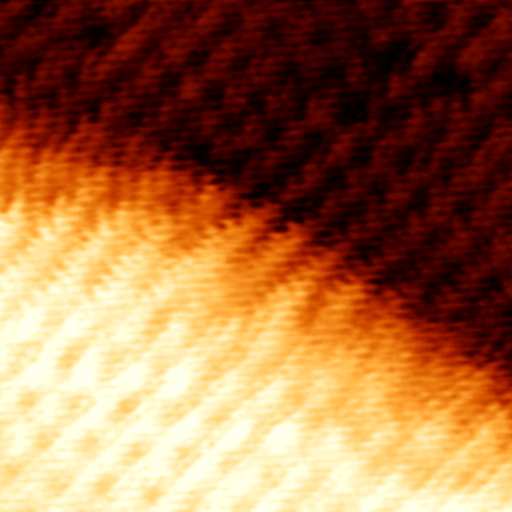
90 90 Growth of graphene on Ir(111) (a) (b) (c) (d) 2 1 Figure 4.8: (a) STM topograph (171 nm 171 nm) of graphene grown by CVD on a Ir(111) surface at 1120 K, out of exposure to an ethene partial pressure of mbar, during 40 s. The arrows point out edge dislocations at the boundary between two moiré domains, at a terrace (1) and at the very vicinity of the step edge (2). The inset shows the Ir(111) surface (gray) supporting graphene and exhibiting a step edge (black line). Different orientations of the moiré are visualized with blue tones. (b) STM topograph (2.7 nm 2.7 nm) of graphene across a substrate step edge, and (c) a corresponding line network of C rows showing two edge dislocations. (d) STM topograph (70 nm 73 nm) of two coalesced islands forming a coherent graphene island (exposure to mbar ethene during 20 s).
91 4.2 Chemical vapor deposition 91 orientation is often not preserved across the step edge. Still, a continuous graphene lattice is ensured by the formation of edge dislocations, such as the two ones visible at atomic scale in figure 4.8(b),(c). These dislocations appear as bright protrusions at nanometer scale [155]. One is indicated by the arrow labelled (2) pointing to the step edge in figure 4.8(a); it is similar to the one designated by the arrow labelled (1) in figure 4.8(a) or to those visible in figure 4.9. As a whole, graphene flakes after CVD at 1120K include moiré domains with typical extension between several 10 nm and a couple of 100 nm, some extending across step edges, and structurally coherent through edge dislocations. Upon coalescence, growing graphene islands become coherent. This is pointed out in figure 4.8(d), where one observes the continuity of the moiré between two islands, though the orientation of the moiré differs from one island to the other. This implies that the atomic graphene lattices of the two islands match upon coalescence. The slight misorientation of the islands amplified by the moiré is accommodated by edge dislocations [155]. Annealing has a noticeable effect upon the structural quality of graphene grown by CVD. First, the irregular graphene edges observed after growth at 1120 K [figure 4.9(a)] are smoothened by an annealing step at 1220 K for several 10 s [figure 4.9(b)]. Second, dark dots, with sizes ranging from a fraction of a nanometer to a couple of, are observed in graphene as prepared through CVD. These features systematically appear as depressions in the graphene layer. Some of them, like the one nearby the arrow in figure 4.9(e), are large enough for sharp STM tips to image the Ir(111) at the bottom. This is apparent in the height profile passing through this hole [figure 4.9(f)]. We then conclude that they are holes in the graphene layers that could have been trapped during growth. While the smallest features may consist of C vacancies or divacancies [183], some of the largest ones could have evolved from the agglomeration of small vacanies [184, 185]. The density of these holes in graphene as prepared through CVD at 1120 K with mbar ethene during 80 s [figure 4.9(c)], is reduced upon a 1220 K annealing step, from several 10 5 per Ir site to at least two orders of magnitude less [figure 4.9(d)]. It also decreases as the exposure time to ethene during CVD at
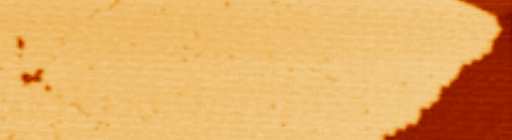
92 92 Growth of graphene on Ir(111) (a) (b) (c) (d) (e) graphene (f) Ir Figure 4.9: STM topograph of graphene grown by CVD on a Ir(111) surface at 1120 K, with an ethene partial pressure of mbar, during 80 s, before (a,c) and after (b,d) annealing for 40 s to 1220 K. Image size is 500 nm 500 nm for (a,b) and 125 nm 125 nm for (c,d). Insets show the graphene (hashed areas) on top of Ir(111) (gray). Inset of (c) highlights holes (gray spots) in graphene, insets of (c) and (d) highlight the Ir step edge (black line). (e) STM topograph (102 nm 28 nm) of graphene grown by CVD on a Ir(111) surface at 1120 K, out of exposure to an ethene partial pressure of mbar, during 20 s, and (f) apparent height profile along the horizontal passing through the arrow in (e).
93 4.2 Chemical vapor deposition K is increased. For instance, after 640 s with mbar ethene, the density has almost decreased by one order of magnitude with respect to the situation after 80 s. Increasing the CVD growth temperature results in graphene with improved structural quality, i.e. a better defined orientation and lower density of edge dislocations [155]. At 1320 K, single orientation is preserved across µm distances and substrate step edges, with no edge dislocation. Already for the lowest ethene doses employed ( mbar s), CVD at 1320 K yields graphene flakes with at least µm extensions separated by at least µm distances. Figure 4.10(a) shows part of a graphene island (upper right corner) sitting on a large, bare iridium region. Coverage increases with ethene dose, either because the size or the density of graphene islands increase. In fact, addressing the issue of graphene/ir(111) morphology achieved by CVD at 1320 K is made difficult by the µm field of view of our STM. Decreasing the growth temperature has no noticeable effect on the overall graphene coverage (figure 4.11), consistent with the results of TPG and the absence of desorption. It induces a marked decay of the typical size of graphene islands (figure 4.10). Being in the µm range for 1320 K growth temperatures this quantity is one, two, and three orders of magnitude smaller for 1120 K, 970 K, and 870 K respectively. This decrease is accompanied by an increase of the density of islands at the substrate step edges, in a way that the steps are almost fully covered with graphene at 870 K. At moderate growth temperature (870 K and 970 K), STM topographs show that the graphene coverage at the substrate step edges is a well defined quantity for a given ethene dose. It does not seem to depend on the terrace width (from less than 10 nm to several 100 nm), as seen in figure 4.12(a). Whether this is also the case at higher temperatures (1120 K or 1320 K) could not be determined due to the limited field of view of the STM. Whatever the growth temperature, substrate step edges play a prominent role. There graphene nucleates from 970 K on. At 870 K, nucleation is still highly preferential at the step edges, but graphene occasionally forms at the substrate terrace, as observed in figure 4.12(b).


94 94 Growth of graphene on Ir(111) (a) (b) (c) (d) Figure 4.10: STM topograph (455 nm 455 nm) of graphene grown by CVD on a Ir(111) surface at 1320 K (a), 1120 K (b), 970 K (c), and 870 K (d). The ethene partial pressure used for the growth of graphene is mbar, and the exposure time is 40 s, except for (a) where it is 80 s. Insets show graphene as hashed areas or in red (blue) when attached at a descending (ascending) step edge.
95 4.2 Chemical vapor deposition 95 Coverage (%) Growth temperature (K) Figure 4.11: Graphene coverage as a function of the CVD growth temperature, for an ethene dose of mbar s. (a) (b) Figure 4.12: STM topographs of graphene grown by CVD at 870 K with a dose of mbarṡ. (a) 110 nm 110 nm, (b) 70 nm 70 nm.
96 96 Growth of graphene on Ir(111) Discussion Graphene nucleation As just shown [figure 4.12(b)], at 870 K graphene not only nucleates at the substrate step edges, but also rarely on the terraces. Consistent with our results for TPG we interpret this observation as due to the thermal decomposition of ethylene everywhere on the sample surface, i.e. at steps and on the terraces. Above 870 K, graphene islands are only found at step edges, meaning that the C adspecies resulting from catalytic thermal decomposition of ethene is highly mobile. The decrease of the one-dimensional graphene island density with temperature, i.e. the increase of island separation along the step with temperature, is evidence that nucleation along the step is homogeneous and not at specific defect sites. We observed frequently graphene islands extending from the step only onto the lower terrace, but never islands extending from the step only onto the upper terrace. As the areal fraction of islands is also larger on the lower terrace [observation (iii)] we assume that nucleation at the step takes place only at the lower terrace. The enhanced nucleation probability adjacent to the step on the lower terrace may be due to a larger C adspecies concentration or due to a smaller size of the critical nucleus (a smaller nucleation barrier). While for graphene on Ni(111) a higher adspecies concentration was predicted [186,187] we speculate that for Ir the size of the nucleation barrier is lower. We noticed already for TPG and CVD that the edges of graphene islands intensely interact with Ir steps. The most plausible reason is the formation of partial bonds between graphene edge atoms and step atoms of σ character. The formation of such bonds reduces the total edge energy of a graphene nucleus, which reduces the height of the nucleation barrier. Whether already C adspecies bind to Ir step atoms is an open question. If yes, a concentration increase of the adspecies at the step would result, giving rise to a further enhanced nucleation probability. As depicted in figures 4.13(a),(b), a maximum number of C-Ir bonds can be formed if Ir step edges align to graphene s more stable zig-zag edges, i.e. if the 10 1 Ir direction is parallel to the C direction, which also corresponds to a high symmetry moiré direction [figure 4.8(a)].
97 4.2 Chemical vapor deposition 97 (a) (b) (c) (d) (e) (f) 7 5 Figure 4.13: Top-view (a-e) and side-view (f) ball models of the growth of graphene on Ir(111). Carbon and iridium atoms are shown as purple and gray circles, respectively. Arrows schematically indicate either some of the atom movements (a-e) or graphene growth rate (f). C-Ir bonds at the step edge are shown as red lines. Zig-zag carbon edges of two misoriented domains are highlighted in (d) as thick solid lines; they lie parallel to the iridium 10 1 step edges highlighted as dotted lines. A heptagon-pentagon [7 and 5 labels in (d)] pair is present at the boundary between the two domains (d,e). We therefore propose the following scenario for nucleation of graphene islands as typical: the C adspecies [figure 4.13(a)] nucleate at the lower side of a step edge in the energetically most favourable configuration, i.e. with 10 1 Ir steps aligned with graphene steps. In order to maximize the contact of the two steps [figure 4.13(b)] the graphene island will reshape the Ir step during growth. Growth at the upper part of step edges can only take place in the presence of graphene at the lower terrace, namely if C atoms can form σ bonds with the C atoms at the terrace below. This implies crossing the energy barrier for breaking the C-Ir bond first, which may require numerous attempts. The growth at the upper terrace would then be delayed [figure 4.13(c)]. This
98 98 Growth of graphene on Ir(111) accounts for the observed relative areal proportion of graphene at ascending/descending step edges of 7/3. The single orientation of graphene on both sides of a straight step edge [figure 4.8(a)] underlines the full structural coherency of the graphene lattice, which lies on the step like a blanket [155]. The energy cost of graphene covering a step edge is lower, the lower the associated plastic or elastic deformation of the graphene lattice. Therefore growth at the upper terraces first takes place across a dense substrate step along a 10 1 Ir direction, as shown in figure 4.13(c) and observed on STM topographs like figure 4.8(a). This might also be an additional driving force for reshaping substrate step edges. We speculate that once a graphene island has overgrown a step edge, reshaping of the Ir step ceases. Further growth of the graphene island on the lower terrace then has to match a less favourable step orientation. This will generally imply a tilt of the graphene atomic rows and cause the formation of a tilt boundary between island parts matching differently oriented Ir substrate steps [figure 4.13(d)]. Growth over steps is observed neither for graphene on Ru(0001) [15] nor for carbon nanotubes on Ni nanoparticles [188]. In these two cases, growth only proceeds from the ascending step edge. In particular, the distance between the carbon plane and a Ru(0001) surface (0.145 nm [15]) is smaller than the substrate step height (0.220 nm). This is in agreement with the deep modification of the electronic structure of the first graphene layer on Ru(0001) [15,19,104], or of graphene on Ni(111) [25,26], which suggests hybridization between graphene π-bands and metal bands, i.e. the formation of chemical C-metal bonds. To this respect, the case of graphene on Ir(111) is very different. Indeed the distance between the graphene plane and the Ir(111) surface was predicted to be 0.34 nm, on the basis of density functional theory (DFT) calculations [106]. This is close to the distance between graphene planes in graphite (0.334 nm), and is consistent with recent results putting in evidence the weak electronic interaction with the Ir substrate [24]. The graphene height provided by DFT (0.34 nm), is larger than the Ir(111) step height (0.22 nm), which probably makes the σ-like C-Ir bonds at the step edges much less stable than in the case of Ru or Ni step edges, and allows graphene to grow over steps [figures 4.13(d,e)].
99 4.2 Chemical vapor deposition 99 From islands to full coverage The size of graphene islands increases first through growth over ascending and descending step edges by incorporation of mobile C adspecies or small clusters resulting from dehydrogenation of ethene, and second through coherent coalescence of graphene islands. More can be learnt about graphene CVD growth by analyzing the surface coverage θ as a function of ethene dose φ. We assume a modified Langmuir adsorption model: ethene molecules stick to identical and independent unoccupied Ir sites with probability S, and are removed instantaneously from these sites to form graphene islands covering a fraction θ of the Ir surface. Ethene molecules arriving on graphene islands either do not stick to them or desorb immediately, unable to reach the sticky Ir substrate. Carbon diffusion into the bulk in iridium is known to be much less than in other transition metals like Ru, Rh or Re [98], and is therefore neglected in the following. Whatever S, θ is lower than expected if all impinging ethene molecules would be transformed in graphene [solid black curve in figure 4.7(a)]. Our model assuming adsorption of ethene to Ir only yields θ = 1 e φ S Ω/ 2πMk B T (4.1) where M is ethene molar mass, k B the Boltzmann constant, T the temperature of the gas molecules, and Ω = m 2 the unit area for C in graphene on Ir(111). As seen on figure 4.7(a), this simple model with S = 1, i.e. 0 % ethene desorption from Ir and no diffusion into the bulk, fits quite well the measured coverages for an ethene partial pressure of mbar (circle symbols), without any adjustable parameter. This is a strong indication for no desorption, as also pointed out by the roughly constant graphene coverage as a function of growth temperature, shown in figure As the assumption S = 0.8 leads only to a slightly worse agreement with the data, we note that our conclusion has to be taken with caution. At lower growth temperatures, 870 K and 970 K, STM shows that the graphene growth rate at the step edges is independent of the substrate terrace catalytic area [figure 4.12(a)]. This markedly differs from the situation of graphene on Ni(111), where the step coverage was claimed to scale with
100 100 Growth of graphene on Ir(111) the terrace size [189]. The behavior we observe is an indication for an interface limited growth, namely C incorporation at the graphene edges is the limiting step. For interface limited growth no concentration gradients of the adspecies are developed. Contrary to diffusion limited growth, the presence of a graphene island then would not decrease the nucleation probability of another island in its vicinity. The early coalescence of graphene islands, which is already in progress for coverages as low as 10 % [figures 4.7(b) and 4.6(a)] supports this view. Indeed, onset of coalescence for such low coverage is well reproduced assuming random nucleation of graphene at step edges and a uniform C adspecies concentration over the Ir(111) surface. Finally, the influence of the pressure upon coverage could also be interpreted in terms of interface limited growth. In particular, increasing the pressure to mbar, i.e. by a factor of 10 [ and mbarṡ doses, corresponding to triangle and diamond symbols in figure 4.7(a)], yields coverages that are not accounted for by S = 1. This could be an indication for C desorption during the limiting step. During the time C incorporation at graphene edges takes, C adspecies not directly in contact with graphene could either desorb, diffuse into the bulk, or travel µm distances until they encounter graphene islands where they could incorporate (surface diffusion from high to low density of steps regions). For an ethene partial pressure of mbar however, desorption is ruled out at 1120 K, as shown before. Therefore at lower temperature and the same pressure, it should also be irrelevant. Even if it is relevant at 1120 K but a higher ethene partial pressure ( mbar) as argued previously, assessing the activation energy for desorption at 1120 K yields a frequency of Hz at 870 K, which is negligible. Therefore, surface diffusion over large distances is the prominent process already at 870 K and 970 K. This might account for the large typical length scales in the graphene/ir(111) morphologies achieved at 1120 K, and to a larger extent at 1320 K. Carbon mobility in and at the edges of graphene Finally, the compact morphology of the graphene islands is evidence for efficient C diffusion at the graphene edges. This was discussed earlier as
101 4.3 Selecting a single orientation for millimeter sized graphene sheets 101 accounting for the straight edges observes for the graphene islands grown through TPG. Annealing effects, namely smoothening of graphene edges and quenching of vacancy (hole) density, provide strong evidence for C or vacancy mobility to and at the step edges. Vacancy defects in graphene and heptagonpentagon pairs, the latter were recently claimed to evolve from the first in C nanotubes [185], are both expected to be mobile if the corresponding energy barrier is low enough. It was predicted that C vacancy diffusion in graphene has a 1 ev energy barrier [183], corresponding to 10 2 Hz phenomena at room temperature, and consistent with real-time observations in carbon nanotubes, for vacancies or divacancies [190, 191] and even much larger vacancies [184]. Heptagon-pentagon pairs were also observed to be mobile [191]. At the temperature of interest here, vacancy or defect diffusion should be significant, and so should be diffusion through the island interior to the edges. Noteworthy, these C transport processes via the interior of the islands could also be involved in the smoothening of the edges of graphene islands grown by TPG. 4.3 Selecting a single orientation for millimeter sized graphene sheets Full layer chemical vapor deposition First, growth of a graphene sheet was studied at a temperature of 1411 K by exposing to an ethylene partial pressure of mbar. The formation of the graphene is shown in fig Initially, only a single phase forms that has its lattice vectors parallel to the substrate lattice. Later, graphene domains that are rotated with respect to the substrate lattice are observed to form at the edges of the original nuclei and grow at a rate that is substantially faster. In what follows, we shall refer to these as parallel and rotated domains, respectively. The structure of the graphene sheet after it has completed is shown in fig. 4.14(d). A substantial fraction of the sheet consists of rotated domains. In 4.15 a) a bright field LEEM image of CVD grown graphene on Ir(111) is
102 102 Growth of graphene on Ir(111) Figure 4.14: 50 µm FOV PEEM images of graphene growth on Ir(111) at T = 1411 K. (a, t=0s) The Ir(111) substrate after O 2 etching at elevated temperatures. (b, t=265 s) Two different types of domains are observed to form. The brighter of the two is aligned with the substrate, whereas the other, darker, type of domain is rotated by approximately 30 with respect to the substrate. (c, t=795 s) The rotated domains expand at a higher rate than the parallel domains and occupy a larger fraction of the surface area. (d, t=2120s) The film has fully closed to form a graphene sheet consisting of various rotational domains. (e) Relative area fractions of the two different types of domains that are visible in panels (a)-(d). The majority of the graphene sheet consists of rotated domains.
103 4.3 Selecting a single orientation for millimeter sized graphene sheets 103 Figure 4.15: (a) bright field LEEM image (field of view: 15µm, electron energy: 2.68 ev) of the two graphene phases and uncovered Ir(111) at room temperature. (b) Zoomed out PEEM image of the same area as in (a) (field of view: 25µm) The area used for the microdiffraction pattern in (d) is illuminated by the electron beam (bright circle). (c) microdiffraction pattern of the parallel graphene phase (electron energy: 45.9 ev) (d) Zoomed out PEEM image of the same area as in (a) (field of view: 25 µm) The bright spot marks the area used for the microdiffraction pattern in (e) (e) microdiffraction pattern of the rotated graphene phase (electron energy: 45.9 ev)
104 104 Growth of graphene on Ir(111) shown. Graphene in the upper area is imaged brighter than graphene in the lower area, and there is a gulf of bare iridium cutting in from the right. The images (b) and (e) are photo emission electron microscopy (PEEM) images of the same region. Iridium is imaged black, graphene from the upper area of (a) is imaged darker than graphene from the lower area. The bright circle displays the position of the electron beam for the LEED images in (c) and (e). The LEED patterns show that in the case of bright graphene in LEEM (dark in PEEM), there is a rotation of graphene s [11 20] direction with respect to the substrate s [10 1] direction whereas in the dominating phase - darker in LEEM (bright in PEEM) the dense packed directions of graphene and Ir(111) are parallel. The electronic properties of the film shown in fig. 4.14(d) will therefore vary strongly as a function of position. This observation can be inferred from the threshold PEEM images in fig From the simple observation that contrast between different domains is observed in these images, we conclude that there is a significant variation of the electronic structure of the film between different domains. Even though the sheet thickness is very uniform and could already be characterized as a high quality graphene film, further control over the rotational orientation of the domains is desired Cyclic etching One way to produce a high quality graphene film of a single rotational phase is done by exploiting the differences in reactivity of the edges of the various rotational domains. Not only do the three types of rotated domains grow at a rate that is higher than that of parallel domains, they are also etched away by oxygen at an increased rate [100]. This property of the rotated domains can be exploited to minimize their fractional coverage during the early stages of growth. Fig highlights this experimental approach. The Ir(111) surface was alternatingly exposed to ethylene and O 2 at partial pressures of mbar. Exposure to ethylene leads to the formation of new nuclei and continued growth of parallel domains. It also gives rapid growth of any rotated domains that have formed. Exposure to O 2, shown in fig. 4.16(b), then preferentially etches away the rotated domains until only parallel domains remain. Cyclic repetition of this procedure yields a monolayer thick, near
105 4.3 Selecting a single orientation for millimeter sized graphene sheets 105 Figure 4.16: 102 µm FOV PEEM images of graphene growth on Ir(111) obtained at a temperature of 1126 K. (a, t=344 s) Several parallel and rotated domains have nucleated after the first growth cycle. (b, t=1374 s) The first O 2 etching step has completely removed all rotated domains. (c, t=4564s) After two more etch and growth steps, the graphene film now consists of a majority of parallel domains. Rotated domains continue to nucleate at every growth step, as is visible in the image. (d, t=7865 s) The film has fully closed to form a graphene sheet. A relative fraction of 99 % of the sheet consists of parallel domains. (e) Relative area fractions of the two different types of domains that are visible in panels (a)-(d). The fraction of rotated phase is reduced to zero after every etch step, but it cannot be prevented from forming in the last growth step, which is necessary to close the film.
106 106 Growth of graphene on Ir(111) uniform graphene sheet. A relative fraction of 99 % of the sheet consists of parallel domains. The drawback of this method is that closure of the film to produce a perfect graphene sheet is not possible. The last step in the growth process always has to be a growth step, implying that the nucleation of rotated domains can never be fully prevented. This makes the completion of the film into a perfect graphene sheet impossible and yields a sheet that is similar to the one shown in fig. 4.16(d) TPG + CVD combination The nucleation of rotated domains occurs at the edges of parallel domains [156]. In our measurements, we also observe that growth of parallel domains and the nucleation of rotated domains occurs predominantly at those edges that do not run parallel to the substrate lattice vectors. This observation was exploited to further improve the quality of the films beyond what was demonstrated in fig with the cyclic recipe. A monolayer of ethylene was preadsorbed on the surface at room temperature. Upon heating the substrate to the growth temperature this leads to the formation of a high density of small parallel graphene domains that have edges parallel to the substrate lattice. This effectively forces any graphene domains that impinge on existing nuclei to maintain their parallel orientation. Fig highlights the subsequent growth when the substrate is exposed to an ethylene partial pressure of mbar. Figs. 4.17(b) and (c) illustrate that growth of parallel domains is observed only in those locations where domain edges have an orientation that is rotated with respect to the substrate. Small domains with edges oriented parallel to substrate lattice vectors are not observed to grow, illustrated by the STM image shown in fig. 4.17(e). Rotated domains do not form. The graphene sheet that is produced through this approach is completely free of rotated domains. The µleed pattern that is shown in fig. 4.17(f) is measured over several millimeters of our 6 mm wide sample. Defects are sporadically found, but always in locations where we have to presume that they were induced by features present on the Ir(111) substrate. The graphene sheet that is formed through this recipe has the added advantage that its orientation is uniquely determined by the orientation of the Ir(111) substrate. In other
107 4.3 Selecting a single orientation for millimeter sized graphene sheets 107 see caption 4.17
108 108 Growth of graphene on Ir(111) Figure 4.17: 4 µm FOV LEEM images of graphene growth on Ir(111) at a temperature of 1113 K and recorded with an electron energy of 18.6 V. (a, t = 0 s) Start of ethylene exposure of the surface. The Ir(111) surface has been precovered with many small graphene nuclei, appearing dark in the LEEM images. (b, t=139 s) Several of the predeposited domains have started to grow. Those domains that have edges along the substrate crystallographic directions are not observed to grow. (c, t = 631s) The graphene film has nearly evolved into a sheet. No rotated domains that would yield a higher intensity than the parallel domains, are observed. Several precovered domains still persist and do not grow. (d, t = 1279s) The film has fully closed to form a graphene sheet consisting of domains of only a single orientation. (e) A 0.25 µm FOV STM image of the growth of the parallel phase taken after the graphene film was only partially completed. The smaller nuclei with straight edges running along substrate crystallographic directions have not grown significantly, whereas domains with edges of differnt orientation have (I t = 0.5 na, V t = 0.5 V). (f) µleed pattern obtained of the closed graphene film. The orientation of the graphene is unaltered when the beam is scanned over an area of several millimeters. (g) Coverage of the parallel phase as a function of time for the images shown in panels (a)-(d). The exponential curve is a fit for the self-limited growth mode of the graphene on Ir(111) [155].
109 4.4 Industry compatible CVD growth 109 words, after the sheet has been lifted off the substrate, its orientation with respect to the substrate to which it is going to be applied is already known. 4.4 Industry compatible CVD growth For the preparation of graphene layers for applications UHV conditions are not a desired prerequisite. We therefore demonstrate, that the growth of high quality graphene is also possible in an unbaked high vacuum (HV) system. These experiments are preliminary and can be augmented by the application of transfer techniques [7] and subsequent characterization Preparation An Ir(111) crystal which had been prepared for STM by repeated cycles of sputtering and annealing and afterwards exposed to air was used as a substrate. The treatment before the growth included touching the surface with adhesive tape and rinsing with acetone. The growth was performed in a high vacuum chamber with a base pressure of mbar. The chamber was equipped with a gas inlet for O 2 and C 2 H 4. The Ir(111) single crystal sample was welded to a Ta foil which in turn was hooked to a tungsten wire (0.25 mm diameter). A NiCr/Ni thermocouple was attached to the sample. The setup is sketched in fig The sample was indirectly heated to 850 C causing the pressure to rise to mbar. The sample was cleaned by the exposure to an additional partial pressure of (4 ± 1) 10 7 mbar of O 2 for 4 minutes. Subsequently the gas in the gas line was changed from O 2 to ethene. This caused a delay of < 1 min before the CVD growth with C 2 H 4 at a partial pressure of also (4 ± 1) 10 7 mbar for 4 minutes was performed. After cooling the system was vented and the sample was transfered through air to a Zeiss Neon 40 scanning electron microscope. The surface was imaged with an electron energy of 5 kev.
110 110 Growth of graphene on Ir(111) Figure 4.18: Schematics of the graphene preparation setup: 1: Ir sample, 2: Ta-foil with hole, 3: W wire at connected to a high voltage feedthrough, 4: spiral-wound glow filament, 5: thermocouple, 6 pressure gauge, V 1 V 3 viton valves for the gas inlet, V 4 dosing valve, RVP: rotary vane pump, TP: turbo molecular pump, T: temperature readout, P: pressure readout.
111 4.5 In-situ observation of stress relaxation and wrinkle formation Results The SEM images show, that the high vacuum conditions are sufficient to grow several micrometer large graphene flakes (4.19). The flakes are scattered on the whole sample surface. Yet there are some contaminations around which no graphene islands are found (see fig a). Possibly they are a sink for diffusing carbon adspecies, so that the critical supersaturation [156] cannot be achieved in their vicinity. The shape of the islands is hexagonal with straight edges (fig b). This suggests, that they are indeed monodomain graphene islands. A closer look reveals, that the edges are partly ragged (fig c). This may be caused during handling. For instance it was tried to remove the graphene layer with an adhesive carbon pad next to the areas shown in fig a c. Fig d displays a direct comparison of the treated and untreated part of the surface. The adhesive carbon pad had been sticked to the left part of the surface, the right part is pristine. Although a difference between both halves of the image is present, it is clear that the graphene flakes have not been removed by the adhesive pad. The exact nature of the influence is also not clear. It has been shown, that high vacuum conditions are sufficient to grow high quality graphene films on Ir(111). This is plausible because all relevant processes occur at high temperatures, where most molecules do not stick or are decomposed on the surface. 4.5 In-situ observation of stress relaxation and wrinkle formation Wrinkle formation Figure 4.20 a) shows a bright field LEEM image of a graphene flake on Ir(111). The flake has a diameter of 6µm. Branched line defects on the flake which develop upon cooling to room temperature form a network of dark lines, much darker than the substrate step structure which can faintly be seen in
112 112 Growth of graphene on Ir(111) Figure 4.19: Graphene flakes on Ir(111) a) 1440µm 1080 µm, some contaminations on the surface have a graphene free corona. b) 213µm 160 µm, flakes have a hexagonal compact shape. c) 17.9µm 13.4µm, some edges are ragged. d) 1360 µm 1020 µm, the application of an adhesive pad prior to imaging has left traces on the left hand side. The border between the treated and untreated area is approximately indicated by the dashed line.
113 4.5 In-situ observation of stress relaxation and wrinkle formation 113 Figure 4.20: a) LEEM image (field of view: 10 µm, electron energy: 2.8 ev) of a graphene flake on Ir(111) at room temperature. b) STM topograph of graphene flakes on Pt(111) (3µm 3 µm). The image is differentiated and appears as if illuminated from the left. The inset shows the same image, with the graphene flakes highlighted in red. c) STM topograph (240 nm 240 nm) of a full layer of graphene on Ir(111) with a wrinkle. The bright line corresponds to the profile given in e). d) STM topograph (7 nm 7 nm) of a wrinkle of low height in graphene on Pt(111) in atomic resolution. The bright line corresponds to the profile given in f). e) Profile of the topography of the wrinkle in graphene on Ir(111) shown in c). f) Profile of the topography of the wrinkle in graphene on Pt(111) shown in d). STM images have been processed using the WSxM software [192].
114 114 Growth of graphene on Ir(111) the image as well [193]. The STM topograph in figure 4.20 b) shows graphene islands on Pt(111). The branched line defects are also present. A typical line defect is shown in figure 4.20 c). It crosses the image diagonally and diverges in two at the bottom of the image. It roughly follows the direction of the two monoatomic steps of the underlying Ir(111) substrate. The defect is about 3 nm high, and thus much higher than a substrate step as shown in figure 4.20 e). Its width is a few nanometers as well. On low line defects as shown in figure 4.20 d), profile in figure 4.20 f), it is possible to achieve atomic resolution on the ridge. The atomic rows over the defect are continuous. The dense packed rows cross the wrinkle roughly perpendicular. The fact that these structures are present only on the graphene flakes and never on the uncovered part of the surface corroborates the assumption that they are indeed wrinkles and not nanotubes on the sample, as has been proposed previously [37, ]. The continuity of the atomic rows also indicates that the elongated structures are not formed at ruptures where the islands edges roll or bend up. The LEEM images in figure 4.21 a) show epitaxial graphene on Ir(111) fully covering the field of view. As visible in micro diffraction (see supplement) the darker graphene domain on the left is rotated with respect to the substrate [156]. The left image [figure 4.21 a) I] has been taken at high temperature (1100 K), close to the growth temperature (T grow =1320 K) of graphene. No wrinkles are observed. During cooling wrinkles appear and spread all over the field of view as visible in figure 4.21 a) II. Upon reannealing close to the growth temperature, the wrinkles disappear again [figure 4.21 a) III]. Faint dark lines due to steps are present at all temperatures. The time and temperatures the images have been recorded at are marked with green dots in the temperature vs. time diagram in figure 4.21 b). The appearance of a wrinkle is an instant process within the time resolution of our measurement of 1 s, while the decay of the wrinkles is a gradual process. Wrinkles decay at slightly higher temperatures than they form. The red squares in figure 4.21 b) indicate the formation and decay temperatures. This also reflects in a hysteresis of the average lattice parameter of graphene as measured by spot profile analysis LEED measurements [194]. Graphene has been grown at several temperatures and the onset tempera-
115 4.5 In-situ observation of stress relaxation and wrinkle formation 115 Figure 4.21: a) Three bright field LEEM images (field of view: 10µm, electron energy: 2.7 ev) of Ir(111) fully covered with two differently oriented domains of epitaxial graphene. Images I and III have been taken at 1110 K while II has been imaged at 410 K. b) Temperature evolution measured at the sample with a pyrometer (black curve), and at the sample holder with a thermocouple (grey curve). The green dots mark the points where a) I-III were recorded. The red squares mark the onset of wrinkle formation upon cooling and the disappearance of the last wrinkle upon heating. c) The difference T of the onset of wrinkle formation T w and the graphene growth temperature T grow based on the pyrometer measurement is plotted as a function of T grow.
116 116 Growth of graphene on Ir(111) ture of wrinkle formation has been recorded. The onset of wrinkle formation is measured as the occurrence of the first wrinkle in a field of view of 10µm. Soon after the occurrence of the first wrinkle additional wrinkles emerge and continue to form even until the sample is cooled down to room temperature. The first wrinkles appear after a cooldown of 410 K ± 40 K regardless of the growth temperature [see figure 4.21 c)]. Assuming an average difference of the thermal expansion coefficients of Ir and graphene of a temperature difference translates to a mismatch in expansion. During a cooldown by 410 K iridium shrinks by 0.33% while a graphene layer only shrinks by 0.03% [195,196]. The remaining 0.3% have to be taken up by compression or wrinkling of the graphene. This suggests a stress driven process for wrinkle formation Lattice expansion Direct evidence for abrupt strain relief during cooldown is shown in figure Panel a) shows a micro diffraction pattern near the specular beam at 19.9 ev and resulting from an area of about 1.4µm diameter. At this energy, three of the six moiré spots are bright. The reciprocal lattice vectors of the moiré k i are the difference of the corresponding reciprocal lattice vectors of graphene and Iridium. For small relative changes, their behavior reflects the relative length changes and angular changes in reciprocal lattice of the graphene layer amplified by factor of ten [32]. The evolution of the relative distances k i / k i of the bright moiré spots to the specular beam is displayed by red, green, and blue lines in figure 4.22 b) [197]. Here, k i denotes the time averaged value of k i during the first 25 s, i.e. prior to the sudden decrease at about t = 30 s. This decrease amounts to s 1 = (3.6±0.4)%,s 2 = (2.0±0.4)%, and s 3 = (1.2 ± 0.5)%, where s i = 1 k i / k i with k i being the average for the length of the reciprocal moiré lattice vector between t = 32 s and t = 42 s. We attribute this decrease to a transition from the flat state into the wrinkled state (see section 4.5.3). The wrinkled graphene is relaxed and has a larger lattice parameter and thus shorter reciprocal lattice vectors k i [198]. The three k i shrink by different amounts. This is well understandable given the wrinkle is a linear defect which can only relax stress in one direction.
117 4.5 In-situ observation of stress relaxation and wrinkle formation 117 Figure 4.22: a) Micro diffraction pattern of graphene on Ir(111) near the specular beam with first order moiré spots. b) Relative length k i / k i during cooldown (see text). c) Effect of strain relief in reciprocal space. Only the component of the reciprocal lattice vectors k i which is parallel (light colors) to direction of strain relief (thick black line) is influenced. d) Intensity of the specular beam during cooldown.
118 118 Growth of graphene on Ir(111) Assuming all three k i to be of equal length and making angles of exactly 120 prior to wrinkling, we can estimate the direction of stress relaxation. Each vector k i can be split into a component which is parallel to the direction of strain relief and one which is perpendicular to this direction. Only the parallel component is affected by the strain relief. Let φ i be the angle between the lattice vector k i and the direction of strain relief, k i and k i the averaged lengths of the reciprocal lattice vectors before and after the transition, k i, = k i cos φ i the average component parallel and k i, = k i sin φ i the average component of k i perpendicular to the direction of strain relaxation and prior to the relaxation and finally c = k i, / k i, the reciprocal space compression upon wrinkling. This leads to 1 ( k i k i ) 2 = (1 c 2 ) cos 2 φ i for all three reciprocal linearly dependent lattice vectors. With the measured values for k i k i this equation can be numerically solved. This leads to a factor c = 96% corresponding to a strain relief of 0.4% in the graphene layer. The angle between the direction of compression and k 1 is roughly φ 1 = 10 as illustrated in figure 4.22 c). This implies that the wrinkling took place roughly perpendicular to the dense packed rows of the graphene layer consistent with what is expected from STM data as the dominant orientation of wrinkles (cf. figure 4.20 d) or [162]) The intensity of the specular beam abruptly increases simultaneously with the relaxation of the lattice as shown in figure 4.22 d) Local stress evolution The abrupt intensity change of the specular beem upon wrinkling allows us to monitor the local extension of stress relaxation through LEEM imaging. Figure 4.23 a) shows LEEM images of graphene on Ir(111). The sample is partially covered by graphene prepared at 1110 K and the sample has been cooled down to 560 K within one hour. In the course of this cooling, some wrinkles have already formed, especially in the right hand side of the field of view. The images I and II have been measured subsequently with a delay of 1 s. They capture a single event of wrinkle formation on the graphene patch
119 4.5 In-situ observation of stress relaxation and wrinkle formation 119 Figure 4.23: a) Two subsequent LEEM images of graphene on Ir(111) recorded during cooling (field of view: 10 µm, electron energy: 2.5 ev) and the difference of their intensities with enhanced contrast. Between (I) and (II) a wrinkle forms on the peninsula on the left. This is shown enlarged and contrast enhanced in the insets. The difference image shows that the intensity has increased locally in the course of wrinkle formation. b) The intensity integrated over the regions marked by colored boxes in a) I over time, with linear background subtraction. Whenever a wrinkle is created, the brightness increases abruptly. The roman numbering indicates where a)i and a) II have been recorded. c) LEEM I(V)-curve. Blue: unwrinkled graphene, red: wrinkled graphene, purple: difference ( 20).
120 120 Growth of graphene on Ir(111) near the left border of the image. Simultaneously with wrinkle formation the brightness increases in the affected area. This change is visualized in figure 4.23 a) III which is the difference between the images in II and I. It shows that the formation of a wrinkle does not only act nanoscopically at the line of delamination but it rather has an impact on a mesoscopic scale (in this case 4µm 2 ). The change in intensity integrated over the regions marked in figure 4.23 a) I is shown in figure 4.23 b). This change takes place at different times, locations and to different extents. We interpret the increase in image intensity as an effect of the relaxation of the graphene lattice. This provides an explanation for the observation of locally varying compression in epitaxial graphene [167]. To discuss the origin of the (0, 0)-spot intensity increase upon wrinkling we consider figure 4.23 c). It shows I(V)-curves of the (0, 0) spot of flat and wrinkled graphene on Ir(111) and their difference. The curves were taken from one sequence of images recorded at intermediate temperatures where wrinkles have just started to form and some parts of the surface are still unwrinkled. The difference curve has two maxima. Both are correlated with maxima in total intensity resulting from constructive interference of electron waves reflected from graphene and the Ir surface. For a distance of 3.4Å [106] we expect maxima at 3.2 ev and 13 ev. Therefore we speculate that the intensity changes are due to structural changes, such as a change in the spacing between the graphene layer and the Ir substrate triggered by the relaxation of the graphene lattice. Evidently these structural relaxations are accompanied by changes in the graphene electronic structure which additionally may affect the I(V)-curve. During a wrinkling event many atoms are displaced. On Ir(111) and Pt(111) graphene forms an incommensurate superstructure [32, 35]. That implies a low barrier for sliding of graphene on the surface, because for every atom which loses energy by moving out of its optimum binding configuration, another atom gains energy. The small flakes grown by temperature programmed growth [17] barely show wrinkles. A graphene flake smaller than the average separation of two wrinkles just expands if the compression gets large enough to overcome the barrier for sliding. For smaller islands, this bar-
121 4.5 In-situ observation of stress relaxation and wrinkle formation 121 rier may be larger, due to edge effects becoming more relevant. Accordingly there is residual strain in such flakes [32]. Wrinkle patterns from repeated cooling and heating cycles at one sample spot are similar. This suggests that wrinkles nucleate at preexisting features. We find in our STM data spots of delamination which are centered at heptagon-pentagon pairs of carbon rings (see supplement) [155]. This seems reasonable as these defects induce additional local stress into the graphene lattice. We thus speculate that heptagon-pentagon defects are sites of wrinkle nucleation Model The wrinkle formation can be described in a one-dimensional continuum model. When the substrate and graphene cool down, the graphene has to compensate for the thermal misfit L/L resulting from the difference of the thermal expansion coefficients. Either compression L c /L or the formation of a wrinkle L w /L can compensate for that misfit ( L = L c + L w ). To calculate the energy of compression we use the separation between two wrinkles L = 260 nm as estimated from experiment. With an atom density of n = 36.2 atoms/nm 2 and an elastic modulus of Y = 56 ev per atom [199] the compression energy per nm of wrinkle length can be expressed as E c = 1( L 2 c/l) 2 L Y n. The energy necessary for wrinkle formation consists of two contributions: first, there is the bending of the graphene layer. An estimation for this contribution is available from the study of single walled carbon nanotubes [199], giving the bending energy per atom in a nanotube of radius r as e w = a/r 2 +b/r 4 with the empirical parameters a = 0.99 ev/å 2 and b = 12.3 ev/å 4. Second, bonds between graphene and the substrate are stretched or broken, where the graphene flake delaminates. Since the estimated height of graphene on Ir(111) is comparable to the interlayer distance of graphite, we use the exfoliation energy of graphite as an assessment for the binding energy of an atom in a graphene layer on Ir(111) in this case. It has the value of e b,0 = 0.052eV [200,201] The strength of the van-der-waals binding energy between a particle and a surface decreases with the cube of the distance, so we calculate the change in binding energy of an atom in an
122 122 Growth of graphene on Ir(111) Figure 4.24: a) A map of the energy per nm of a wrinkle E tot with respect to uncompressed flat graphene according to a one-dimensional continuum model. The shape of the wrinkle has been modeled as four arcs of circles (see inset). The lower horizontal axis shows the misfit of graphene and Ir L L, the upper axis shows the corresponding temperature difference T. The vertical axis represents the fraction of the misfit which is compensated by wrinkling Lw L instead of compression. b) The graph shows the energy of a wrinkle per nm for a mismatch of 0.7% (thick black line) and the contributions it consists of. There is a local minimum for the flat configuration where all the energy is stored in the form of compression E c, while in the global energy minimum most of the energy is stored in a wrinkle as bending and reduced bonding. c) Energy barrier E B,w for wrinkle formation. The system can gain energy by wrinkle formation (E gain ) with respect to compressed flat graphene, if the misfit is larger than 0.65%.
123 4.5 In-situ observation of stress relaxation and wrinkle formation 123 elevated part of the graphene sheet with the height of z instead of z 0 above the substrate as e b = e b,0 (1 z0/z 3 3 ). With E w and E b as the integral of e w and e b over the atoms in a nm of wrinkle the resulting energy cost for a nm of wrinkle compared to flat relaxed graphene sums up to E tot = E c + E w + E b = 1 2 ( L c/l) 2 Y L n L Lc ( a + n 0 r(x) + b 2 r(x) 4 L Lc ( + n (e b,0 1 z3 0 z 3 0 ) dx )) dx and leads to a complex variation problem for the shape of the wrinkle. Here we assume a simple shape for the wrinkle, consisting of four equal arcs of a circle with radius r and an opening angle α as shown in the inset of figure 4.24 a). The model contains r (or α) as a free parameter which is optimized for minimum energy E tot for each combination of L/L and L w /L. In figure 4.24 a) E tot is plotted for this model as a function of thermal misfit L/L (lower horizontal axis) and fraction of strain accommodated in a wrinkle L w / L (vertical axis). Moving along the horizontal axis from left to right corresponds to cooling of the sample. The according temperature difference is indicated on the upper horizontal axis. In the lower part of the diagram most of the misfit is taken up by compression while in the upper part the misfit is compensated for by a wrinkle. For misfits below 0.3% there is exactly one optimum configuration: The graphene layer is compressed and there is no wrinkle. As the misfit increases (temperature decreases), a second local minimum in energy emerges. Nevertheless, the unwrinkled compressed state still is favorable. For L/L > 0.65% of misfit, a situation rendering about 80% of the misfit subject to wrinkle formation, is optimal. A cut through the map at constant misfit L/L = 0.7% is shown in figure 4.24 b). There is a local minimum for the flat configuration where all the energy is stored in the form of compression E c, but the optimum configuration is the formation of a wrinkle, which contains most of the energy in the form of reduced bonding to the substrate (E b ) and bending of the graphene (E w ).
124 124 Growth of graphene on Ir(111) Figure 4.24 c) illustrates the relationship of the two energy minima and the barrier in between. The gray line shows the difference in energy of the unwrinkled state and the wrinkled state E gain. For a misfit below 0.47% there is no minimum for the wrinkled state, above 0.47%, there is a local minimum, but its energy is higher than that of the uncompressed flat state. Only for compressions above 0.65%, when the gray line enters the negative region, the system can gain energy by forming a wrinkle. Still, there is an energy barrier to overcome, which allows the system to be trapped in the local minimum explaining the sudden and abrupt formation of wrinkles. This is consistent with the hysteresis for wrinkle appearance and disappearance. Although our one-dimensional model explains all qualitative features observed, the model prediction overestimates the experimentally observed critical misfit for wrinkling formation nearly by a factor of two. Certainly a full two dimensional analysis may lead to somewhat different numbers wrinkle formation is likely to be eased by biaxially compressed graphene. Also the wrinkle separation L, the binding energy E b,0 and our simple model for the wrinkle shape carry significant uncertainties. As wrinkles are large scale defects, it would be desirable to suppress their formation. One way to achieve this could be to reduce the amount of total thermal misfit by growing graphene at the lowest possible temperature and inserting an intermediate annealing step to remove the defects prior to cooldown. Combining temperature programmed growth and chemical vapor deposition it appears possible to achieve high quality graphene at a growth temperature of only 1000 K [202]. Also grazing incidence kev ion erosion removing exclusively protruding wrinkles followed by annealing could lead to continuous graphene with less or no wrinkles. A third approach could be to increase the energy for bending. This could be accomplished by evaporating at high substrate temperatures a thin film with a thermal expansion coefficient similar to the substrate on top of the graphene. This cover layer would have to be bent as well, for the graphene to form a wrinkle.
125 4.6 Conclusion Conclusion We have investigated two complementary approaches for graphene on metal preparation, namely temperature programmed growth (TPG) and chemical vapor deposition (CVD). Both lead to graphene characterized by a moiré superstructure with a preferential orientation favored at high growth temperatures, and by a well defined height, corresponding to a single layer. Growth proceeds in the presence of the bare catalytic Ir surface which catalyzes the decomposition of the C-containing molecules (ethene or coronene here); therefore the growth is self-limited to precisely one layer of graphene. Whatever the method, the substrate step edges are reshaped by the growing graphene, and C or vacancy diffusion is involved at the graphene edges. The two approaches result in distinct morphologies. TPG gives graphene nanoislands with controllable size, from a couple of nm to several 100 nm depending on the growth temperature, with well-defined zig-zag edges and shapes close to equilibrium. CVD allows to tune the graphene coverage up to 100 % of the sample surface, with a very high structural quality above 1120 K. Graphene weakly interacts with iridium, and crosses step edges while maintaining its structural coherency. Still substrate step edges, especially ascending ones, play a decisive role for graphene nucleation. There is indication that the limiting step of graphene CVD growth is incorporation of the carbon adspecies at the graphene edges. Graphene nanoislands grown by TPG are promising candidates for the investigation of the specific electronic properties of zig-zag edges, and regarding quantum confinement of the Dirac-like charge carriers in graphene. CVD provides a reproducible method for the controlled preparation of macroscopic single layer graphene with high crystalline quality. Furthermore we have used CVD and combined TPG and CVD to grow millimeter sized, uniform, monatomic thick graphene films of a single rotational orientation. Growth at constant temperature and ethylene partial pressure yields sheets that are of high quality in thickness, but have large variations in rotational orientation. Cyclic growth of the graphene film exploiting the different affinity of domain edges for O 2 yields films that are of
126 126 Growth of graphene on Ir(111) high quality in thickness, and are rotationally pure up to a fraction of 99 %. The final approach, using preadsorption of ethylene on the Ir(111) surface at room temperature, followed by epitaxial growth at elevated temperatures yields perfect single domain sheets that are rotationaly pure and ready for application. CVD growth of graphene is also feasible under high vacuum conditions. The resulting flakes were investigated with SEM and show hexagonal shapes indicating single crystal flakes. We also demonstrated how LEEM can be used to monitor strain relaxation in situ. It was possible to develop a consistent picture of wrinkle formation on graphene linking wrinkle formation with inhomogeneous residual strain. The development of wrinkles appears to be a serious problem for all methods of growth of weakly bound epitaxial graphene, as all require high temperatures. We hope the improved understanding of wrinkle formation achieved here will contribute to a future solution of this problem.
127 5 Structure of Graphene on Ir(111) Moirés and moiré-like superstructures are a widespread phenomenon in epitaxial growth [203, 204]. It is not always clear, whether the meshes are to be considered incommensurate or commensurate [205], whether a mismatch in lattice parameter is accommodated by strain relief [206, 207] or whether strain only plays a negligible role. Such superstructures have relevancy for nanopatterning, as in some cases they enable templated growth of clusters [42, 208, 209]. Along the view of designing graphene-based nanoelectronic devices, the achievement of large scale graphene in a reproducible way with controlled structural quality and on the desired support is of major importance and remains a major stake. It is also of prior fundamental significance to further address the exceptional relativistic quantum electronic properties of such graphene layers, independent from the contribution of structural defects. Such defects are point defects that influence the transport properties through quantum interferences [210, 211] or defects induced by the underlying substrate, like surface irregularities [211] or step edges. Noteworthy, point defects may play a constructive role in tuning graphene s physical properties, as they should promote magnetism [212] or even the unconventional quantum Hall effect [59,60]. If desired, such defects could be introduced in a controlled manner into high structural quality graphene using, for example, electron irradiation [190]. The aim of chapter 5.1 is to clarify the structure of graphene on Ir(111) on an atomistic level. We describe the moiré superstructure and present a model for the superstructure unit cell. Three different regions are found
128 128 Structure of Graphene on Ir(111) in this cell which are also visible in scanning tunneling microscopy (STM) topography data. We show the chemical inhomogeneity of the moiré cell by post-decoration experiments. In section 5.1 STM imaging issues will be addressed. In the second part of this chapter, section 5.2, we focus on graphene monolayers grown by low-pressure CVD of ethylene on the hot Ir(111) surface. The aim of section 5.2 is to describe and understand graphene s structural coherency occurring over micrometer distances. We first address the continuity of the C rows on terraces and relate the presence of moiré domains to small-angle in-plane one-dimensional tilt boundaries. Next, we analyze the coherency between terraces and its correlation to graphene bending over step edges. For these purposes, we again take benefit of the moiré superstructure of graphene on Ir(111) as a magnifying lens unraveling sub-ångström atomic displacements and sub-degree misorientations. Real space imaging down to the atomic scale provides direct and complementary evidence of the C row continuity and of the structure of atomic defects. 5.1 Structure Graphene preparation For the data presented in the first part of this chapter we mainly used the preadsorption method of graphene preparation. Ethylene is known to have a sticking coefficient near unity on the Ir(111) surface. At room temperature it partly dissociates there and decomposes entirely upon annealing. This behaviour has been studied by thermal desorption spectroscopy, electron spectroscopy methods and alkali ion flashing [49,151,213,214]. Annealing the substrate covered to saturation in UHV leads to complete decomposition of the hydrocarbon. Decomposition is completed at 820 K [151]. We have exposed the Ir(111) surface to the ethylene doser for 30 s at a chamber pressure of mbar to ensure saturation coverage. After annealing to 1470 K for 40 s STM imaging displays graphene flakes covering
129 5.1 Structure 129 (a) (b) 500Å 50Å (c) C Ir (d) Figure 5.1: (a) Graphene on Ir(111). The moiré with its 25.3 Å periodicity is well visible (1300Å 1300 Å, U T = 1.5 V, I T = 0.5 na) (b) Attached to an iridium step edge (left) lies a graphene flake (100 Å 100 Å, U T = 0.17 V, I T = 21 na). The superstructure unit cell is marked as a white rhombus. (c) LEED-pattern of the partially graphene covered Ir(111) surface (inverted, 80.4 ev). The spots consist of two main spots (inner spot due to iridium (111), outer spot due to graphene) which are surrounded by smaller satellite spots reflecting the periodicity of the moiré. Inset: The center spot (46.7 ev) is also surrounded by moiré-induced spots. (d) Graphene on Ir(111). An atomic carbon row is highlighted by white dots. The row is in parallel with the superstructure.(154å 54 Å)
130 130 Structure of Graphene on Ir(111) about 22% of the substrate surface with a typical lateral dimension of the order of 1000Å. The simultaneous presence of Ir and graphene on the surface is of great help for the structure determination (see below). A second, from an application oriented point of view more viable route to graphene is chemical vapour deposition (CVD) via the exposure of the hot iridium surface to ethylene. For experiments using the CVD growth method and presented here, the chamber pressure was set to mbar with the hot sample exposed to the gas inlet for 20 seconds at 1320 K. STM topographs of a sample prepared with the CVD method are shown in figure 5.8(a) and 5.8(b) LEED and STM results Graphene on Ir(111) was examined by LEED and STM. Figure 5.1(a) shows a differentiated STM topograph of the sample prepared with the preadsorption method. Graphene flakes together with uncovered areas are visible on the Ir(111) surface. A superstructure is well visible on the flakes. The atomically resolved STM topograph in figure 5.1(b) shows an iridium terrace on the left to which a graphene flake is attached from the right. It is a detailed view of a situation present in many places in figure 5.1(a), where graphene flakes are attached to iridium steps. In figure 5.1(b) the superstructure unit cell is marked with a white rhombus on the atomically resolved graphene flake. The STM approach allows to measure the superstructure and carbon lattice periodicity in direct comparison with the atomic nearest neighbour distance of 2.715Å [99] in the Ir(111) surface. The carbon lattice has a periodicity of (2.45 ± 0.04)Å as measured with STM. Within the limits of error this agrees to the periodicity of a single carbon layer in graphite ( Å) [99]. The superstructure unit cell repeat vector has a length of (25.2 ± 0.4)Å. A symmetric LEED pattern of this surface can be observed (figure 5.1(c) ) [151]. It consists of six pairs of spots. The inner spot of each pair originates from the Ir(111) surface, the outer spot is due to the carbon overlayer which has a smaller lattice repeat vector than the iridium surface. Each pair of iridium and carbon spots is surrounded by a group of satellite spots, signifying a superstructure with a large periodicity. For the inset of
131 5.1 Structure 131 figure 5.1(c), the sample has been tilted by a few degrees making the central spot of the LEED image visible on the screen. Also this central spot is surrounded by six satellite spots in line with the underlying iridium substrate and the carbon spots. The fact, that only first order satellite spots occur and that they do not fill out the complete surface brillouin zone indicates that the superstructure is incommensurate. The lattice constant of the carbon overlayer is also determined by LEED with the Ir(111) surface as a reference. The resulting repeat vector of the graphene layer amounts to (2.47 ± 0.02)Å again in agreement with the literature value for a single carbon layer in graphite. The LEED measurement delivers a value of (25.8 ± 2.0)Å for the periodicity of the superstructure. As shown in the inset of figure 5.1(c) the superstructure spots are quite close to the specular beam, so that the error of the reciprocal space measurement becomes fairly large. STM and LEED also show, that the dense packed [1 10] direction of the iridium substrate and the [11 20] direction of the graphene layer are parallel The moiré of graphene on Ir(111) The graphene superstructure can be viewed as a moiré. This regular pattern, resulting from the superposition of two regular lattices just as the beat, which emerges from the superposition of two sound waves has a reciprocal lattice vector, which is the difference of the constituting reciprocal lattice vectors. Figure 5.2 shows this for a one dimensional example. The patterns on the left have reciprocal lattice vectors k 1 and k 2, corresponding to the vectors drawn on the right. The moiré effect produces a pattern of diagonal dark stripes with a periodicity much larger then the two original lattices. Its reciprocal lattice vector k moiré is also indicated on the right. It is expressed as the difference of the lattice vectors k 1 and k 2 : kmoiré = k 2 k 1 (5.1) Frequently we observe the [11 20] direction of the graphene overlayer and the moiré superstructure maxima to be perfectly aligned. An example is shown
132 132 Structure of Graphene on Ir(111) Figure 5.2: A moiré is a superposition of two lattices generating a third one. On the left, there are two misaligned stripe patterns with slightly different stripe separations. The moiré appears as a striped diagonal pattern with much larger periodicity. One may assign reciprocal lattice vectors to these patterns being normal to the stripes. The reciprocal lattice vector of the moiré is then given by the difference of the reciprocal lattice vectors of the two constituting vectors. This is visualized on the right side, where the corresponding lattice vectors are shown. The direction of the difference vector is aligned with the moiré.
133 5.1 Structure 133 in figure 5.1 (d) where the the [11 20] direction is visible by the white dots marking the centers of carbon hexagons. The parallelism implies immediately that (5.1) simplifies to a scalar equation k moiré = k C k Ir (5.2) with k C,k Ir being the norms of the reciprocal lattice vectors of graphene and iridium. Expressing the distance of the moiré maxima d moiré in units of the graphene periodicity d C yields 2π d moiré = 2π r d C = 2π d C 2π d Ir. (5.3) The non integer number r = ± 0.17 of graphene cells between two moiré cells can be determined by counting over a number of moiré sites. With r and the known value for the Ir repeat distance d Ir the carbon repeat distance d C is obtained. Averaging over several situations as shown in figure 5.1 (d) yields (2.452 ± 0.004) Å. The error margin is an order of magnitude smaller than the one obtained by directly comparing the graphene and Ir spacings [compare table 5.1]. This accuracy is achieved by using the moiré as a magnifying lens for lattice mismatches as evident from equation (5.3). Based on the moiré analysis method the graphene layer appears to be slightly compressed by almost 0.4% compared to a carbon layer in bulk graphite, which has a repeat vector length of Å. The buckling of graphene on Ir(111) with an amplitude of about 0.3Å [42] yields an apparent reduction of the lattice parameter too small by about an order of magnitude compared to our observation. One possible origin for the reduction could result from the different thermal expansion coefficients of Ir and graphene. Normal to the c-axis bulk graphite has a thermal expansion coefficient which is negligible compared to the one of Ir [215]. During cooling from the high formation temperature graphene might lock to the substrate being fixed by graphene edge states and Ir step edges. It then might become slightly compressed during shrinkage of the substrate lattice. The observed compression of graphene would be consistent with a temperature of 750 K where it locks to the substrate. Consistent with the assumption of forces acting on the graphene flakes is the observation that occasionally graphene flakes are slightly sheared.
134 134 Structure of Graphene on Ir(111) direct STM LEED moiré analysis graphene repeat distance d c (2.45 ± 0.04)Å (2.47 ± 0.02)Å (2.452 ± 0.004)Å moiré repeat distance d moiré (25.2 ± 0.4)Å (25.8 ± 2)Å (25.3 ± 0.4)Å Table 5.1: The crystallographic parameters according to the three methods described in the text. The superstructure periodicity is (25.3 ± 0.4)Å and thus forms a ( ) superstructure. The superstructure unit cell accommodates 87 ± 3 iridium substrate atoms. A summary of the results given by the different methods is given in table The superstructures on different graphene flakes in figure 5.1(a) are slightly misaligned with respect to each other. Following the atomic carbon rows in figure 5.1(b) confirms, that in contrast to the situation described for measuring the lattice parameter of the graphene (figure 5.1(d) ), the orientation of the superstructure deviates slightly from the atomic rows. According to equation (5.1) this can only be due to a misalignment between the iridium substrate s and the graphene s dense packed rows. A direct STM measurement of this misalignment gives values below 0.5 which are in the range of the error. As for the lattice constant of graphene, we can take advantage of the moiré s magnification effect. The rotation angle is magnified by the superstructrure. Let φ C,Ir be the angle between the two original lattices and φ C,moiré the angle between graphene lattice and the moiré. It can be derived from equation 5.1 that ( sin(φ C,Ir ) = cos(φ C,Ir ) k ) C tan(φ C,moiré ) (5.4) k Ir for small angles φ C,Ir and φ C,moiré, the equation simplifies to φ C,Ir = k Ir k C k Ir φ C,moiré (5.5) ( ) 1 k with a constant factor of Ir k C k Ir 10.6 for the angular magnification. With the knowledge of the lattice parameters and the angle between the moiré and the atomic rows of one lattice, the tilt of the two lattices with
135 5.1 Structure 135 respect to each other can be determined. The moiré amplifies angular misorientations of the graphene layer with respect to the substrate into its own misorientation with respect to the substrate. We examined the angular scatter of the moiré on the flakes from a number of experiments prepared with the preadsorption method. In some the flakes were decorated with Iridium clusters, as described below. A histogram is displayed in figure 5.3. The scatter of the moiré translates into a measure for the angular imperfections of the carbon rows with respect to the substrate. Formula 5.5 reveals the measured moiré scatter of ±2.6 to originate from an angular spread of ±0.25 on the atomic level. Note, that this spread is not an uncertainty, but a measure for the epitaxial perfection of the graphene flakes on the iridium substrate. The uncertainty for each measurement of the angle between the dense packed [1 10] direction of the iridium substrate and the [11 20] direction of the graphene layer is about The LEED image and the non integer value of atomic iridium and graphene sites per moiré cell show that graphene on Ir(111) is an incommensurate system. Nevertheless, the crystallographic [1 10] directions of the Ir substrate are well aligned with [11 20] directions of the deposited graphene and so epitaxial relations are fulfilled. Graphene on Ir(111) is thus an example of incommensurate epitaxy Moiré unit cell After discussing the lattice of the moiré, we will now address the anatomy of the single moiré cell which is the base of the surface structure. For simplicity, we will only discuss the case of perfect alignment. All following considerations also hold for slightly rotated meshes, as they are present in the experiments. Both constituting lattices are known. First there is the unreconstructed (111)- oriented iridium fcc crystal substrate. On this surface, the sites with the highest symmetry are the atop sites, directly above the iridium atoms and the two kinds of threefold coordinated adsorption sites, one of which corresponds to regular fcc stacking and the other to faulted hcp stacking. Note that hcp and fcc sites are very similar. Both are local energy minima for iridium adatom adsorption and their differences arise only from discrepancies in the
136 136 Structure of Graphene on Ir(111) count moiré misorientation Figure 5.3: Distributions of the moiré orientations around the average for graphene flakes prepared by the postdeposition method at 1470 K. The standard deviation of the distribution is 2.6 corresponding to a standard deviation of the angular scatter of the dense packed carbon rows of only 0.25 (see text). second layer of the iridium surface. The counterpart of the iridium lattice in the moiré is the graphene structure, which consists of the well known hexagonal honeycomb. A model can easily be generated by geometric superposition of one onto the other. Such a model is shown in figure 5.4. An inspection of this model shows three prominent regions, marked by white circles. The regions differ by the arrangement of the carbon atoms with respect to the underlying iridium surface sites. The labelling corresponds to the type of iridium surface site, which is located below the center of the carbon rings in this region. The fcc region (hcp region) centers an iridium fcc site (hcp site) in the honeycomb while every second carbon atom is positioned in the other three-fold coordinated site, namely the hcp site (fcc site) and every second atom is on top of an iridium substrate atom. In contrast in the atop region, the iridium substrate atom lies right in the center of the ring, while the six carbon atoms occupy all threefold coordinated sites. The geometrical model shows that the fcc and hcp regions have similar atomic configurations one carbon atom above an iridium atop site, and the other above an hcp or an fcc site respectively while the atop region differs from those, because no carbon atom is poised overhead an iridium
137 5.1 Structure 137 fcc region hcp region atop region Figure 5.4: The superstructure unitcell is constructed by superposition of the graphene lattice (yellow balls) onto the iridium (111) surface (gray balls). The darker shades of gray represent the second and third layer of the iridium substrate. In the atop regions (white arcs in the corners of the cell), an iridium atom of the topmost layer is centered in the graphene s honeycomb. The carbon atoms cover the threefold coordinated hollow sites. In the fcc region (dashed circle) and the hcp region (dotted circle) there are threefold coordinated hollow sites centered under the carbon ring s center: either an fcc site (fcc region) and an hcp site (hcp region). Every second atom is located at the other hollow site and every second above an iridium surface atom.
138 138 Structure of Graphene on Ir(111) surface atom and all carbon atoms are located at the threefold coordinated hollow sites. To examine the properties of the different regions, is necessary to link them to their appearance in the STM topographs. Figure 5.5 shows a zoom in of the topograph from figure 5.1(b). The iridium terrace is partly shown on the left, the carbon flake is attached to it from the right. A mesh has been adjusted to match the positions of the iridium atoms on the terrace with the intersections of the lines. (We assume the bright spots on the iridium terrace to correspond to the iridium atoms and the dark spots on the graphene layer to correspond to the center of the carbon rings, where the electron denstiy is lowest [216] ) Prior to the zoom-in, the mesh given by the iridium surface atoms of the terrace has been extended to also span over the carbon covered part. The sketch on the right helps interpreting the lines. It depicts a small part of the iridium substrate, which is oriented in the same way as the sample is. There is an upper terrace on the left, corresponding to the uncovered iridium in figure 5.1(b) and figure 5.5. The lower terrace on the right corresponds to the carbon covered part of the substrate. The carbon is not shown in the sketch, so that the arrangement of iridium substrate atoms can be seen. Since the crystal is fcc stacked, an intersection of the lines above the lower terrace marks an fcc adsorption site. The lower terrace s hcp sites are centered in triangles pointing to the left, while atop sites are found on in rightwards pointing triangles of the mesh. This way a glimpse under the adsorbed graphene layer is possible. Although STM distortions introduce some uncertainty, the regions, where the carbon ring centers are in a rightwards pointing triangle of iridium substrate atoms (red triangle), can be found in or close to the dark regions of the moiré. This is the atop type configuration as marked by solid white circles in the corners of the unit cell shown in figure 5.4. Accordingly, fcc (green dots) and hcp (blue triangle) regions are located in the corresponding positions of the moiré as expected from figure 5.4 (dashed and dotted circles). This way it is possible to relate the local stacking to STM topography data, which is the basis of attributing specific properties to an atomic configuration. The dark spots of the moiré in figure 5.5 can thus be identified as the atop re-
139 5.1 Structure 139 Iridium 25Å Graphene fcc hcp atop Figure 5.5: STM topograph (zoom of figure 5.1(b) ) showing an iridium terrace on the left with an attached graphene flake, both atomically resolved (image width 100 Å). An Ir-grid was extrapolated over the whole of the image derived from the maxima of the Fourier transform of the area inside the white box to the left. The intersections of the mesh correspond to atom position on the step as shown in the sketch. In the same way, from the Fourier transform of the area inside the box to the right, a C- grid was determined. The positions of the dark spots derived in this way are marked by the colored symbols. Finally, each Ir unit cell was divided in three regions of equal size (fcc, hcc, and on-top) and the points of the C-grid were thus assigned to the different stacking types (fcc: green circle, hcp: blue triangle, on-top: red triangle). It is obvious that for the part of the graphene closest to the atomically resolved Ir (i.e. where the extrapolation is most reliable), the prominent moiré sites correspond to on-top regions.
140 140 Structure of Graphene on Ir(111) (a) (b) 500Å 50Å Figure 5.6: (a) STM topograph (1000Å 1000 Å, U T = 0.6 V, I T = 0.3 na) of postdecorated graphene on Ir(111). The flake in the middle is attached to a step edge. The step edge is deformed, where it nestles to the graphene. Evaporated iridium (0.10 ML) nucleates islands on the bare substrate while there is a formation of regularly ordered clusters on the moiré of the flake. (b) Deposition of small amounts (0.01 ML) leads to the nucleation of few clusters only. The moiré is atomically resolved and the clusters appear as large bright spots. According to the determination in figure 5.5 the adsorption sites of the clusters are identified as the hcp regions. (90 Å 90 Å, U T = 0.20 V, I T = 9.7 na) gions, where all carbon atoms occupy the threefold coordinated sites and the atop site is centered in the carbon ring. The hcp and the fcc regions are in downwards and upwards pointing triangles of atop regions. This assignment will be backed up by the results concerning the chemical inhomogeneity of the moiré Chemical inhomogenity Along with the change in appearance goes a change in chemical properties. The inhomogeneity in binding can be probed by postdecoration with iridium as described in the experimental section. Figure 5.6(a) shows an STM topograph of a graphene flake on the Ir(111) surface. The flake is attached to a
141 5.1 Structure 141 step edge. This surface has been decorated with 0.10 ML of iridium [42]. On the uncovered part of the substrate well known island growth takes place [217]. On the graphene covered part of the substrate, iridium clusters nucleate in the pattern precoined by the moiré. So the binding energy for iridium is obviously lower in some regions than in others. To assess which region of the moiré is involved in cluster binding, we have deposited a small amount (0.01 ML) of iridium on the moiré leading to only a fraction of moiré cells to be populated with clusters. Figure 5.6(b) shows an STM topograph with atomically resolved moiré and some clusters. The clusters are not adsorbed on the dark atop regions, but in downward pointing triangles of those regions. A comparison with figures 5.4 and 5.5 shows, that these are hcp regions. Experiments with higher coverages [42] confirm, that clusters exclusively bind on hcp-regions if grown at 350 K. At lower growth temperatures, however, cluster binding also takes place at fcc-regions, as demonstrated in figure 5.7. In this experiment 0.04 ML have been deposited at a temperature of 160 K instead of 350 K. In the right part, the hcp sites have been blanked out with black circles to facilitate the recognition of the periodicity. This blanks out the majority of the clusters. The remaining clusters are adsorbed in downward pointing triangles of hcp regions. The white rhombus in figure 5.7 illustrates, that these clusters are adsorbed in the fcc regions as defined in the unit cell of figure 5.4. This second energy minimum at the fcc regions is no surprise at all, because as discussed above, hcp and fcc regions realize very similar local atomic configurations. Based on Local Density Approximation calculations, cluster binding can be attributed to a local sp 2 to sp 3 rehybridization of the graphene layer [106] Contrast inversion Tunneling parameters and tip states play major a role in imaging the moiré. Figure 5.8(a) and 5.8(b) show two STM topographs of the same sample position. They were recorded subsequently under stable conditions without any tip switch. Figure 5.8(a) was imaged with a low tunneling voltage (0.32 V) while a high voltage (1.5 V) was chosen for figure 5.8(b). The insets (recorded at different positions) show the moiré with atomic resolution. The moiré is
142 142 Structure of Graphene on Ir(111) 50Å Figure 5.7: At 160 K the clusters nucleate at hcp and fcc regions. Differenciated topograph (420Å 420 Å, U T = 1.6 V, I T = 0.4 na) of graphene on Ir(111) which has been postdecorated with 0.04 ML of iridium at 160 K. Although the moiré defines the registry, the order is less pronounced than for deposition at higher temperature as in figure 5.6. Blanking out the regular cluster positions with black circles (right part) reveals, that most of the clusters are within that lattice, while some are located in downward pointing triangles of those regular cluster nucleation sites. The white rhombus corresponds to the unit-cell of figure 5.4. A comparison shows that these are fcc regions.
143 5.1 Structure 143 (a) (a) (b) (a) 25 Å 250Å 25Å 250Å 1.5 atop region hcp region fcc region atop region 1.0 corrugation (A.U.) x (nm) Figure 5.8: Parts (a) and (b) show STM topographs of the moiré (1000Å 1000 Å, [insets:57å 57 Å] (a) U T = 0.32 V, I T = 32 na [inset: U T = 0.2 V, I T = 10.9 na], (b) U T = 1.5 V, I T = 32 na [inset: U T = 0.3 V, I T = 23.2 na] ). A contrast inversion occurs, depending on the tunneling parameters. On the left, the atop regions appear as dark features in a bright millieu, on the right, they appear bright in a dark millieu. The contrast is inverted, not shifted laterally. The insets show the contrast inversion on the atomic level. The red and the blue line indicate the positions of the height profiles shown below. The profiles are normalized to a corrugation of ±1, disregarding the local modulation due to the atomic structure of the carbon lattice. The apparent height of the fcc region is between the one of the hcp and the atop region and it is closer to the height of the hcp than to height of the atop region for both profiles.
144 144 Structure of Graphene on Ir(111) imaged in two different ways: in part (a) of the figure, the atop regions appear as dark depressions in a bright surrounding (dark atop contrast), just as shown throughout the preceding paragraphs. In part (b), the moiré contrast has inverted. Now the atop regions are imaged as bright protrusions in a dark surrounding (bright atop contrast). One can easily confirm that the contrast has inverted and that not just an other region of the moiré is emphasized by the changed tunneling conditions: the position of the brightness extrema with respect to the kinks in the preexisting step edge does not shift. The observation of the voltage dependent contrast inversion requires a sharp tip and stable conditions. Low tunneling voltages (< 0.5 V) favor the bright atop contrast, higher voltages favour the dark atop contrast. Such a contrast inversion is reversible without any sign of a tip change. In figure 5.8(c), there are two profiles from the inset of figure 5.8(a) (red) and 5.8(b) (blue). These profiles represent the corrugation across the moiré cell. The position of the individual carbon atoms is modulated on the moiré induced long range brightness oscillation which has been scaled to ±1 A.U. In both cases, the atop region and the hcp region mark the extrema and the fcc region s brightness is closer to the one of hcp regions than to the one of atop regions. This is in accordance with the fact, that hcp and fcc regions are based on similar local configurations. The contrast can not only be inverted by varying the tunneling parameters, but it is also affected by tip switches. Figure 5.9 shows an STM topograph which was measured with an unstable tip. The upper part is imaged in dark atop contrast and the lower part after a tip switch is imaged with bright atop contrast. We expect this switch to happen due to a contamination of the tip with a foreign molecule or atom like CO, ethylene, or carbon, which changes its density of states. So, other states of the graphene layer are predominantly probed, as the overlapping states of the tip and the sample, determine the tunneling current. In contrast to our previous publication [42], where only bright-atop contrast images were used, in this chapter we show both kinds of topographs. These rich electronic features demand further investigation with scanning tunneling spectroscopy, which is currently undertaken.
145 5.1 Structure Å Figure 5.9: The moiré is imaged with tunneling voltage and current set constant. A tip change during image acquisition induces a contrast inversion. The thin lines illustrate the continuity of the rows of moiré extrema across the contrast reversal. (550 Å 550 Å, U T = 1.5 V, I T = 0.5 na)
146 146 Structure of Graphene on Ir(111) 5.2 Structural Coherency Coherency across small angle domain boundaries Figure 5.10 is an STM topograph of a region of a graphene sheet grown at 1120 K (1 L of ethylene), where two step edges are visible. The observed inplane periodicity of about 2.5 nm is that of the moiré superstructure with each dark spot corresponding to an on-top like region where C rings tend to have their center above an Ir atom [32,42]. Two rows of defects are visible in fig, 5.10 (a). They lie at the border of three moiré domains, defined by the orientation of their moiré. These observations are summarized in fig 5.10 (b), where one additionally notices that the orientation of the moiré remains the same across a step edge. From the angle Θ m of misorientation between hexagonal patterns of two moiré domains (fig 5.10 (b) ), we derive the angle Θ at of the corresponding misorientation of the atomic C rows in the domains. Let k C,1, k C,2 and k Ir be the reciprocal space vectors corresponding to the 1/ 6[1120] C,1, 1/ 6[1120] C,2 unit vectors of the C lattices in domains (1, 2) [218] and to the 1/2[101] Ir unit vector of the Ir lattice lying in the (111) surface. k Ir = 1/a Ir = (1/0.2715) nm 1 and k C,1 = k C,2 = k C = 1/a C = (1/0.2452) nm 1 for graphene on Ir(111) [32]. One obtains the corresponding reciprocal space vector associated with the moiré patterns in domains (1, 2) by k m,i = k C,i k Ir with i=1,2. Since k m,2 k m,1 = k C,2 k C,1 one may easily show that sin( Θ at /2) = km,1 2 + km,2 2 2k m,1 + k m,2 cos( Θ m )/(2k C ), which yields Θ at = (2.31 ±0.15) )[(0.48 ±0.07) ] between the lower [upper] domains in fig 5.10, while the moiré periodicity varies by roughly 4% from the bottom to the top domain in the image. Understanding the accommodation of such small-angle misorientations was achieved by atomic scale characterization of the defects occurring at the boundaries. Figure 5.11 (a) is an STM topograph at atomic scale of one of these defects (similar to those observed in fig (a)). Dark spots correspond to the centers of the C rings [32,42]. Figure 5.11 (b) shows a larger view of the defect, together with the orientation of the two moires around it. In fig 5.11 (c), the centers of C rings were located by triangulation. The network of lines connecting C ring centers unambiguously shows two extra
147 5.2 Structural Coherency 147 Figure 5.10: (a) 108 nm 108 nm STM topograph (-0.05 V, 30 na) of a graphene monolayer grown on Ir(111) at 1120 K, exhibiting two step edges and three moiré domains with different orientations of their moiré. (b) Corresponding map of domains and orientations. lines that start at the location of the bright protrusion. The two extra lines correspond to two extra C rows, that is, a single edge dislocation in a hexagonal lattice. This is sketched in Figure 5.11 (d), where the line network is related to the atomic arrangement. One observes two extra C zigzag rows along C crystallographic directions of the C lattice (graphene) corresponding to a Burger s vector b = 1/ C. The protrusion-like feature observed in fig 5.10, panels (a) and (b), in the vicinity of the dislocation could well be caused by electron scattering from the structural defect [210, 211] or by a moiré-like contrast originating from the atomic displacements induced at the dislocation core. Edge dislocations are well known to efficiently accommodate small-angle misorientations between crystallites [219]. To check whether this is actually the driving force for creation of edge dislocations in graphene on Ir(111), we evaluated the misorientation between C rows in the two neighboring domains of fig As explained above, this can be accurately determined taking benefit of the moiré effect. We find Θ at = (2.07 ± 0.12), that is, a small-angle misorientation. The projection r of the vector joining two dislocations onto the tilt boundary, which direction is the bisecting line between the vectors defining the orientation of the misoriented moires, is related to
148 148 Structure of Graphene on Ir(111) Figure 5.11: ((a) Atomic resolution 5.5 nm 5.5 nm STM topograph (Fourier filtered, 0.1 V, 9 na) of a graphene layer grown on Ir(111) at 1120 K. ((b) Demagnified view (14 nm 12.4 nm) showing two defects at the boundary between two moiré domains (A, B); the area within the black frame is panel a demagnified. ((c) Line network connecting the centers of the C rings in panel a. In regions where the contrast is lost, the atomic arrangement was extrapolated (dashed lines). Thick solid lines indicate the presence of extra lines. ((d) Scheme of the correspondence between the network in panel c and the C atoms in the vicinity of the wedge, lying at the tilt boundary between domain A and B shown in panel b. A and B are misoriented by a rotation along the l normal to the surface. Two extra atomic rows corresponding to an edge dislocation with Burger s vector b(b = a C = nm) are outlined (black circles). Note the relative orientation of the wedge and of the C pentagon and heptagon.
149 5.2 Structural Coherency 149 the dislocations Burger s vector b(b = a C = nm in the case of fig. 5.11) and to Θ at by Frank s formula [219]: b r 2 sin( Θ at /2), where B is the normal to the tilted domains, that is, the normal to graphene s surface (see fig 5.11 d). This leads to r = (6.8 ± 0.4) nm, which is in good agreement with the projection of the distance between the edge dislocations visible in fig 5.11 b as bright protrusions, onto the tilt boundary [(6.2 ±1.3) nm]. As an additional illustration, the misorientations observed in fig should yield r = (6.1±0.4) nm and r = (29.3±4.3) nm for the two defect lines, which is in reasonable agreement with the actual projection of the separation of bright protrusions visible on the STM image, onto the tilt boundary [(8.3 ± 1.5) nm and (26.7 ± 5.0) nm, respectively]. Figure 5.11 c reveals in a quite direct way the atomic structure of the edge dislocation, which is a zero-dimensional defect in the two-dimensional (2D) crystal of graphene. The edge dislocation actually consists of one C pentagon of which the center is the end of the wedge shown in fig. 5.11, panels c and d, together with one C heptagon adjacent to the pentagon and located along the bisecting line between the two directions composing the wedge. Several atomic scale STM images (not shown) with moiré domain boundaries were analyzed using the procedure described above. We always find at the position of the bright protrusions an edge dislocation and a heptagon-pentagon pair. Edge dislocations in 2D crystals were evidenced years ago in dense-packed planar lattices of soap bubbles [220]. They were more recently identified in noble gas layers on graphite and related to the discommensuration of the noble gas domains, using STM [221]. In C materials, heptagon-pentagon pairs were first considered in C 60 molecules as potential elements of the molecule [222] and later ruled out. They were also speculated to exist in graphite at the boundary between misoriented domains but could not be resolved in the STM images [223]. The occurrence of such pairs was even proposed in irradiated graphene and carbon nanotubes by extrapolating high-resolution transmission electron microscopy (HR-TEM) images by simulations. Because of lack of spatial resolution, HR-TEM itself could not provide the details of the atomic arrangement [190]. Our atomic scale results complement these former studies with a direct evidence for heptagon-pentagon pairs in graphene.
150 150 Structure of Graphene on Ir(111) Coherency across step edges Considering the spatial extension of graphene raises the question whether there is structural coherency, that is, continuation of C rows, across Ir step edges or not. We observe moiré domains extending across Ir(111) step edges at 1120 K (see fig a) and 1220 K. Increasing the growth temperature to 1320 K results in moiré domains of micrometer size extending over numerous step edges. For such large moiré domains as shown in fig (a), the C direction of C rows in graphene is accurately parallel to the Ir surface dense-packed 10 1 Ir direction, and no edge dislocation is found throughout micrometer distances. Figure 5.12 (b) is an STM topograph of graphene grown at 1120 K where all C rows are observed to be continuous across a step, that is, graphene lies like a blanket over the step edge, which is a typical situation. Occasionally, situations arise where most of the C rows are continuous over step edges, but a small fraction of C rows that stop at step edges (2D edge dislocations) to accommodate the complex bending of graphene (not shown) were observed. The picture of structural coherency of graphene over step edges is also supported by sets of STM snapshots of the Ir(111) surface exposed to increasing amounts of ethylene at 1120 K. It was accordingly found that graphene growth starts from islands nucleated at step edges and proceeds to both sides of the step edge (see also sec.4.2). The structural coherency of graphene across steps as evidenced above by atomically resolved images should also be reflected in the alignment of the moiré patterns on the neighboring terraces. It should be noted that the moiré structure shows very high sensitivity toward faint atomic displacements. For example, a shift of graphene parallel to the Ir [10 1] Ir direction by one nearest neighbor distance (a C = nm) causes a parallel shift of the moiré lattice by a full moiré period ( 2.5 nm). As shown in figs (a) and 5.12 (b), we typically observe the same orientation and periodicity of moiré patterns on the upper and lower side of the step, which is a necessary cconsequence of structural coherency across steps. For the description of the relative alignment, we will focus in the following for simplicity on the dense-packed Ir steps edges along 10 1 Ir of either 111 (B-steps) or {100} (A-steps) microfacets. We find that lines joining brightness minima of the
151 5.2 Structural Coherency 151 moiré structure (on-top type areas) in the [1 100] C direction (see fig. 5.13(a) ) exhibit no sideward shift when crossing an Ir step within an uncertainty of 10% of the moiré periodicity perpendicular to the step ( 4.3 nm). To account for this observation, we developed an elementary model of graphene bending at the step edge, as shown in fig (a), where one observes that the moiré brightness maxima (imaged as minima on the STM images) on both terraces are located along the same line parallel to C [223]. Noteworthy, this behavior was also present, though not described, for graphene on Ru(0001), as can be seen on several STM images (Figure 2 (a) in ref [40] and figure 4 (b) in ref [19]). The bending of the graphene at a step edge necessarily induces a C shift in the graphene structure along the C direction (i.e., perpendicular to the step edges) with respect to a hypothetical unbent graphene (see fig (c)). This shift should cause a m shift of the moiré lattices from a terrace to the other, along the opposite direction. Such a shift is evaluated in fig d, which shows a line profile along such a brightness minimum. The periodic profiles and therefore the moiré sites on both sides of the step edge are dephased by m perpendicular to the step edge. For A-steps, a systematic analysis over several step edges reveals a typical m shift corresponding to +50% with 10% dispersion of the repeat distance in the moiré lattice along C, that is, nm with 0.44 nm dispersion. For B-steps, a similar analysis yields m = 0.77 nm with 0.44 nm dispersion. Part of this shift is intrinsic to the Ir(111) terraces, namely Ir atoms are laterally shifted ( Ir ) from a terrace to the other according to the fcc stacking (see fig5.13 (d)). For an A-step (B-step) Ir = + 3a Ir /3 = nm( Ir = 3a Ir /3 = nm) The m shift was then translated in terms of an atomic shift C, through k C C = k Ir Ir k m C where k C = 1/( 3a C ) = 1/0.425 nm 1 and k Ir = 1/( 3a Ir ) = 1/0.470 nm 1 correspond to reciprocal space vectors k C and k Ir perpendicular to the previously defined k C and k Ir vectors, and k m corresponds to the moiré reciprocal space vector k m = k C k Ir, which is perpendicular to the previously defined k m vector. This yields C = nm with nm dispersion for A-steps dispersion, and C = nm with nm dispersion for B-steps.
152 152 Structure of Graphene on Ir(111) Figure 5.12: (a) 125 nm 250 nm STM topograph (0.10 V, 30 na) of graphene grown on Ir(111) at 1320 K, crossing several Ir steps. (b) Continuous atomic arrangement in graphene across a step edge (5nm 5 nm, 0.04 V, 30 na). The last step was to relate this atomic shift to the bending of the graphene. For that purpose, we developed an elementary model depicted in fig (c). Within that model the graphene layer across the step edge was approximated by two identical arcs of cylinders with radius R, and arc angle Θ. We fixed continuous conditions on both the graphene sheet and its derivative and imposed a constant graphene height before the step edge and well after. Two relationships are needed to extract both R and Θ from C. The first one is set by the boundary conditions, namely the projection of one arc of circle onto the out-of-plane direction equals half an Ir step edge height (s), s/2) = R(1 cos Θ). The second relationship is the definition of the atomic shift, which is the difference between the arc length and its projection onto the flat surface, modulus an integer number (n) of C rings: C = (2RΘ 2R sin Θ) + nd CC with d CC being the C period along the bending direction and d CC = 1/k C = nm in the present case. Provided that C may only vary between 0 nm (unbent graphene) and the step height, s = 2/3a Ir = nm, and because s < d CC, n must be equal to 0. The system of nonlinear equations with R and Θ as unknowns is then solved numerically for each value of C. R is found to have an average of 0.27 nm with an asymmetric dispersion of 0.10 nm and 0.25 nm toward lower and higher values, respectively. The asymmetry arises from the nonlinearity of the sys-
153 5.3 Conclusion 153 tem of equations to be solved, which conveys into increased dependence of R upon small changes of C when C decreases. The value of 0.27 nm is small and corresponds to radii of very thin single wall carbon nanotubes [224]. 5.3 Conclusion Graphene can be epitaxially grown on Ir(111) with the Ir[1 10] direction parallel to the graphene s [11 20] direction despite of their incommensurate lattices. The mismatch of the lattices gives rise to long scale moiré with a periodicity of 25.3Å. The moiré can be used to magnify atomic misorientations. The orientational scatter of the atomic rows of graphene flakes grown by thermally decomposing an ethylene layer at 1470 K for 20 seconds is The fcc, hcp and atop regions in the moiré differ in their local atomic arrangement. Nevertheless the hcp and fcc regions behave similar in several ways: Both can harbour iridium clusters, as grown in post decoration experiments. The local binding energy minimum for iridium clusters is deepest in the hcp regions. Ir clusters nucleate there even above room temperature. Hcp and fcc regions are imaged with comparable corrugations, while the atop region is images either much brighter or much darker then the other regions, whenever there is moiré contrast. Gaphene monolayers grown by low-pressure CVD of ethylene on hot Ir(111) are fully coherent over step edges on scales larger than micrometers. Graphene lies like a blanket on the substrate and bends over step edges with radii of curvature similar to those of thin single wall carbon nanotubes. The only defects we found in the graphene lattice are edge dislocations forming pentagonheptagon carbon atom rings. These edge dislocations are spread in low density and with characteristic separation to form small angle tilt boundaries in the graphene lattice. They also may occasionally be found at step edges. The observation of moiré domains amplifies strongly the small orientation differences of the graphene lattice but does not imply a structural disintegrity of graphene. At sufficiently high growth temperatures, the moiré domains reach at least micrometer sizes thereby minimizing the concentration of edge dislocations in the lattice.
154 154 Structure of Graphene on Ir(111) Figure 5.13: (a) 60 nm 60 nm STM topograph (0.11 V, 30 na) of a single moiré domain grown at 1320 K. Undisturbed by the visible B-step, the moiré minima along the C direction are centered on a straight line. (b) Ball-model top and side views of a graphene sheet crossing an Ir B-step edge. The incommensurate Ir(111) surface lattice and graphene are superimposed in the experimentally observed orientation with 1100 C (white arrow) parallel to the 112 Ir direction of Ir. The moiré brightness maxima in the ballmodel along C are centered on a straight line extending over the step edge (in between the two black arrows). Note that the ballmodel brightness maxima are imaged as brightness minima by STM. The moires on the two terraces are shifted perpendicular to the step edge (m). (c) Close up side view of the Ir B-step edge and graphene sheet crossing it. The curvature is modeled by two identical arcs of cylinders (R, Θ) with continuous boundary conditions at all junctions. The C atoms shift ( C ) with respect to hypothetical unbent graphene (small green circles) is related to the moiré shift m and the shift ( Ir ) between Ir atoms from a terrace to the other (see text for details). (d) Apparent height along the C direction of the graphene lattice, shown in panel (a).
155 5.3 Conclusion 155 Our results are likely of interest for achieving large-sized, high structural quality epitaxial graphene sheets. The transport properties of graphene as a function of the density and the electronic properties of defects, as well as the use of such large graphene sheets for subsequent self-organized growth of magnetic or catalytic nanoclusters, are meaningful examples encouraging further research on graphene/metal materials.
156 156 Structure of Graphene on Ir(111)
157 6 Clusters Graphene moirés with noble metal surfaces are a new and unique support for cluster superlattices. This was shown first for graphene moirés on Ir(111) allowing Ir cluster superlattice formation [42]. Though a special material system, the binding mechanism is versatile. Through metal deposition on the graphene layer which is only weakly interacting with the metal substrate in the absence of metal deposits [24] graphene locally rehybridizes from sp 2 to sp 3 carbon bonds at a specific location in the moiré unit cell and in between the substrate and deposit metal, thereby forming strong carbon metal bonds [106]. In between the substrate and deposit metal the sp 3 rehybridized graphene has tetrahedral bond angles and may thus be considered as diamondlike. Within each moiré unit cell rehybridization is possible where locally the carbon rings center around a threefold coordinated hcp-site or a threefold coordinated fcc-site (both having three C-atoms on atop substrate sites). These locations are named hcp region or fcc region, respectively. Experimentally and by DFT calculations we find that Ir clusters bind by far stronger to hcp regions [32,42,106]. Fig. 6.1 a displays a cluster superlattice grown on a graphene flake formed by temperature programmed growth on Ir(111) [17]. With this method graphene covers the surface only partially, which is suitable for scanning probe investigations, as it retains the metal surface partially for calibration of cluster size through island coverage in the graphene free areas. Also direct comparison of the properties of clusters and those of the deposit islands on the metal is possible. In chapter 4 chemical vapor deposition at high temperatures is used to grow graphene fully covering the substrate and displaying hardly any defects [17, 155]. Using a dedicated combination of both methods [225], we are not only able to ensure full coverage but also the graphene and Ir dense
158 158 Clusters packed atomic rows to be parallel, i.e. no traces of rotational variants are present [156]. In this chapter we show that graphene moirés as active templates are superior to other systems enabling the growth of two dimensional cluster superlattices on solid surfaces through a unique combination of properties: (i) the cluster binding mechanism is universal enabling growth of a large diversity of materials as superlattice; (ii) the superlattice order is extremely high with a completely filled lattice;(iii) if desired the superlattice extends macroscopically without uncovered substrate patches; (iv) fabrication is possible at room temperature; (v) the superlattices possess a reasonably high thermal stability and display absence of alloying and interdiffusion within a large temperature range; (vi) the cluster size is tunable and the size distribution is narrow. Graphene was prepared using temperature programmed growth (TPG) at 1470 K or TPG and subsequent chemical vapor deposition (CVD) at 1370 K [17,225] (see 4.1 and 4.3). Clusters were grown by the evaporation of high purity metals with typical deposition rates of a few times 10 2 ML/s where 1 ML (one monolayer) corresponds to the surface atomic density of Ir(111), see also [152]. Clusters were imaged at deposition temperature, if not indicated otherwise. However, for deposition above 300 K or after annealing the sample was quenched to 300 K for imaging. 6.1 Preliminary considerations To demonstrate the universality of this approach in view of superlattice forming materials we primarily focus on cluster materials with potentially interesting structural, magnetic, catalytic or optical properties. As heuristic guidelines for the suitability of a material to form a superlattice we considered three factors: (i) A large cohesive strength of the material as an indicator for the ability to form strong bonds. (ii) A large extension of a localized valence orbital of the deposit material allows it to efficiently interact with the graphene π-bond and thus to initiate rehybridization to diamondlike carbon underneath the cluster. (iii) A certain match of the graphene unit cell re-
159 6.2 Cluster structure and superlattice formation at 300 K 159 material structure a/å r d /pm E coh /ev Ir fcc W bcc Re hcp Pt fcc Au fcc Fe bcc Ni fcc Table 6.1: Crystal structure, nearest neighbor distance a, valence d- orbital radius r d and cohesive energy E coh of the tested materials for cluster superlattice formation on the graphene moiré on Ir(111). peat distance on Ir(111) of Å [32] and the nearest neighbour distance of the deposit material is necessary to fit the first layer cluster atoms atop of every second C atom. As small clusters - which are the relevant sizes to start superlattice growth - have a smaller lattice parameter compared to bulk materials, and as Ir works perfectly as a cluster material [42], we considered 2.7 Å as an optimal nearest neighbor distance. Table compares the data for the tested materials. Tungsten was selected as a likely candidate for superlattice formation (all three figures are in favor of superlattice formation), but with a different crystal structure than Ir. Re, Pt and Au were selected as as potentially interesting materials for catalysis. According to our guidelines we expected Re to be most likely a superlattice forming material, also Pt, but with a slightly smaller probability and Au as an unlikely candidate. Fe and Ni were selected as materials because of their ferromagnetism. According to their figure of merits, however, we did not expect superlattice formation.
160 160 Clusters Figure 6.1: STM topopgraphs of Ir(111) with graphene flakes after deposition of an amount Θ of various metals at 300 K. (a) Θ = 0.20 ML Ir, average cluster size s av = 17 atoms; (b) Θ = 0.25 ML Pt, s av = 22 atoms; (c) Θ = 0.44 ML W, s av = 38 atoms; (d) Θ = 0.53 ML Re, s av = 60 atoms; (e) Θ = 0.77 ML Fe, s av = 420 atoms; (f) Θ = 0.25 ML Au, s av = 100 atoms. Image size 700 Å 700 Å.
161 6.2 Cluster structure and superlattice formation at 300 K Cluster structure and superlattice formation at 300 K Figure 6.1 displays STM topographs after deposition of ML on Ir(111) partly covered with graphene flakes. The graphene flakes are typically attached to substrate steps, but also extend over one or several of them [Fig. 6.1 (a), 6.1 (b),6.1 (e)]. In the areas without graphene, deposit metal islands of monolayer height formed from the evaporated material. In Figs. 6.1 (c)- 6.1 (e) already second layer island nucleation took place. Depending on the deposited metal the island nucleation density on Ir(111) varies considerably being highest for the W and Re, the metals with the highest cohesive energy [Figs. 6.1 (c) and (d)]. The deposit islands mostly reflect the threefold symmetry of the substrate. It is obvious from Fig. 6.1 that all deposited materials are pinned to graphene flakes to a certain extend and that graphene on Ir(111) is in all cases much more sticky to the deposited metals than the surface of graphite [226]. However, not all materials form a cluster superlattice. Ir and Pt form superlattices of similar perfection [compare Figs. 6.1(a) and 6.1(b)]. For the represented Θ 0.2 ML both materials exhibit two distinct height levels of the clusters indicating an out-of-plane texture of the cluster orientation. Distinct height levels are present also for larger and higher clusters up to the coalescence threshold (compare also fig. 2 of reference [42]). The apparent height differences between 3 ML and 4 ML clusters as well as those between 4 ML and 5 ML clusters are for Ir and Pt in the range of 2.2Å and 2.3Å, i.e. of the size of a monatomic step height h 1 on a (111) terrace [h 1,Ir = 2.22Å and h 1,Pt = 2.27Å]. The height differences in lower levels differ from these numbers. Specifically, the apparent height difference between the graphene substrate and the first cluster height level for s av > 15 atoms is always found to be larger than 2.5Å while the difference between the first and second height level is typically below 2.0Å. We interpret these deviations from the (111) step height as density of state effects. While for Ir and Pt the height of each single cluster is an integer number of (111) layers, the average cluster height h av may be noninteger due to the averaging. Fig. 6.2 displays an analysis of h av for Ir clusters grown at 350 K and Pt
162 162 Clusters 5 4 h av (ML) (ML) Figure 6.2: Ir (full squares) and Pt (red dots) average cluster heights h av in monolayers as a function of deposited amount Θ. clusters grown at 300 K. The decrease of h av for Ir clusters between 1.5 ML and 2.0 ML is due to the onset of cluster sintering. Upon cluster sintering the clusters reshape and material flows into the gaps separating the clusters, thereby causing frequently a height reduction. It is also apparent from Fig. 6.2, that large Pt clusters tend to grow flatter than Ir clusters, giving rise to a somewhat earlier cluster sintering. After having established the [111] out-of-plane texture of Pt and Ir clusters, the question arises whether the clusters possess also in-plane-texture, i.e. whether the clusters are also oriented within the surface plane. Fig. 6.3(a) displays a small area of an Ir cluster array after deposition of 1.5 ML imaged with a large tunneling resistance of Ω. Despite the absence of atomic resolution at least some cluster edges appear to be oriented along the 211 -direction. Lowering the tunneling resistance to Ω - thereby bringing the tip close to the cluster surfaces - and tuning the contrast to the different levels of the cluster top mesas changes the picture. The top mesas are almost atomically resolved (some row like corrugation is visible) and the edges of the top mesas are unambiguously oriented along It needs to be noted that under low tunneling resistance conditions necessary for atomic resolution clusters are usually picked up by the STM tip. The apparently different orientation of cluster edges at high tunneling resistances is a mere
163 6.2 Cluster structure and superlattice formation at 300 K 163 (a) (b) (c) (d) [211] [110] Figure 6.3: (a) STM topograph after deposition of 1.5 ML Ir on a graphene moiré on Ir(111), s av = 130. The dashed line indicates the position of an underlying substrate step. The visible clusters on the lower terrace have heights of 4 ML and 5 ML. For imaging the tunneling resistance was Ω (I = 0.5nA and U = 1.15 V. (b), (c), (d) Same location imaged successively with a low tunneling resistance of Ω (I = 30 na and U = 0.2 V) and contrast tuned to the different cluster levels. Cluster edges are aligned along 1 10 substrate directions [see (b)]. Inset in (d): Ball model of a 5 layer cluster of 140 atoms consistent with the experimental observations. Image size 130 Å 160 Å. imaging artifact. If a tip scans a hexagonal grid of elevated objects in a large distance not the shape of the objects forming the grid but the hexagonal grid itself determines the apparent orientation of the boundaries between the objects. The inset of Fig. 6.3(d) represents a ball model of a five layer cluster containing 140 atoms which is consistent with the experiments. Although we are unable to prove directly that the cluster sidewalls are formed by {100} and {111} facets, facets of smaller slope would imply cluster contacts at their base. This is unlikely to be the case, as we find in annealing sequences clusters to reshape rapidly upon contact. To summarize, we have shown that Ir clusters (and the Pt ones most likely as well) are epitaxial clusters with the (111) cluster planes parallel to the substrate surface and the 1 10 cluster directions parallel to the directions of the Ir substrate and the directions of graphene. This epitaxy of Ir clusters on the graphene moiré is also predicted by the geometry in the DFT based model of cluster binding [106]. Also tungsten forms a cluster superlattice of high perfection. Compared
164 164 Clusters to Pt and Ir the centers of mass of the clusters deviate slightly more from a perfect hexagonal superlattice. Still the scatter of the cluster positions is too small to result in cluster sintering for Θ = 0.44 ML as visualized in Fig. 6.1 c. Close inspection of our data - also for Θ = 0.04 ML - shows that less than 1% of clusters is out registry with the hcp regions (see also below). The apparent cluster heights for Θ = 0.44 ML range from 4Å to 8Å with an average around 6Å. The clusters seem higher than the Ir ones for a comparable Θ. Distinct height levels are also present for W clusters as is obvious from Fig. 6.1 (c). However, the height levels are less well defined due to their smaller separation. Between adjacent clusters we measure frequently height differences of about 0.8Å to 1Å. With a small distortion the dense packed W(110) plane with a nearest neighbour distance of 2.74Å would fit to the triangular 2.46 Å periodicity provided by the graphene for rehybridization. However, a [110] out-of-plane cluster texture would result in height levels spaced by 2.24Å, i.e. a similar spacing as for Ir and Pt. From the presence of intermediate levels we exclude this cluster orientation as the single one. Small step heights of 0.8Å to 1Å are consistent with a [111] out-of-plane texture with a step spacing of 0.91Å. The open W(111) plane has also the threefold symmetry of the graphene moiré in the hcp or fcc regions. However, in plane atomic spacings are 4.48Å. They could be fitted to the 4.27Å separation of a ( 3 3)R30 superstructure of graphene. For a final statement more detailed experiments are certainly necessary but also likely to be rewarding to settle the issue of the W cluster superlattice texture. For Re only partial order of the cluster arrangement is realized as visible in Fig. 6.1 (d). Two possible reasons could cause the apparent disorder: (i) the existence of several adsorption mimima within a moiré unit cell, causing less ordered growth followed by early coalescence and cluster rearrangement; (ii) a too low depth of the cluster size dependent adsorption mimina. Assuming an increase of the potential well with increasing cluster size, adatoms and small clusters up to a certain size s c would be likely to leave their unit cell during growth. Both scenarios would give rise to the observed heterogeneous size distribution, but the latter would explain also the existence of a large number of empty moiré unit cells. For Re we performed also low coverage
165 6.2 Cluster structure and superlattice formation at 300 K 165 experiments [compare Fig. 6.9 (d)]. We find a comparatively low moiré unit cell occupation probability (or a comparatively large s av ) for the deposited amount, but with few exceptions all clusters adsorbed on a regular grid. We are therefore convinced that indeed the adsorption site minima are not of sufficient depth to keep small Re clusters up to a certain critical size (being much larger than the one for Ir, Pt and W) during and after growth on their positions within the moiré. We note that the poor quality of the Re cluster superlattice is at variance with our expectations, as Re has a large cohesive energy, an extended d-orbital and a reasonably well matching nearest neighbour distance (compare table 1). For Fe [Fig. 6.1 (e)], Au [Fig. 6.1 (f)] and Ni (data not shown) at room temperature no superlattice can be realized. Large clusters, lacking defined height levels or shape features are formed. The unstructured, hemispherical clusters display heights of up to 23Å for Fe and 15Å for Au. The absence of a regular cluster superlattice for these materials is expected in view of their small cohesive energy and/or their limited valence orbital extension. Binding of the deposit metal to graphene is apparently too weak to trap adatoms and small clusters, i.e. the depth of the potential energy minima within a moiré unit cell is not sufficient to stabilize a growing cluster Low temperature cluster superlattice growth and annealing If we assume that cluster superlattice formation for Re and even more for Au, Fe and Ni is impeded by a too high mobility of small clusters during growth, lowering the growth temperature would decrease s c and thus be an efficient strategy to improve superlattice formation. Fig. 6.4(a) displays a Re cluster superlattice grown at 200 K by deposition of Θ = 0.45 ML. Annealing to 300 K does not change the cluster superlattice as visible in Fig. 6.4 (b). The side-by-side comparison to Re clusters grown at 300 K in Fig. 6.4 (c) makes the efficiency of lowering the growth temperature to improve superlattice formation obvious. The low growth temperature reduced s c, enabled the almost complete filling of the moiré unit cells and allowed the
166 166 Clusters Figure 6.4: STM topographs of Ir(111) with graphene flakes after depositing amounts Θ of Re or Au at the indicated temperature T. (a) Θ = 0.45 ML Re, s av = 41, T = 200 K; (b) Θ = 0.45 ML Re, s av = 41, T = 200 K. Subsequently the sample has been annealed to 300 K and imaged; (c) Θ = 0.53 ML Re, s av = 60, T = 300 K; (d) Occupation probability n of moiré unit cells with clusters as a function of growth and annealing temperature T; triangles pointing to the right: Au clusters, 0.25 ML deposited at the indicated T; triangles pointing to the left: Au clusters, 0.25 ML deposited at 90 K and additionally annealed to the indicated T; down triangles: Re clusters, 0.45 ML deposited at the indicated T; up triangles: Re clusters, 0.45 ML deposited at 200 K and annealed to the indicated T. (e) Θ = 0.25 ML Au, s av = 24, T = 90 K.
167 6.2 Cluster structure and superlattice formation at 300 K 167 clusters to grow to a size being stable even at 300 K. One might speculate that a further lowering of the growth temperature would have improved the Re cluster superlattice even further. In the quantitative analysis of Fig. 6.4 (d) it is also apparent that the difference in moiré unit cell occupation between growth at 400 K and annealing to 400 K from a formation temperature of 200 K is even larger than the corresponding one at 300 K. At the same time it is also obvious from the data of Fig. 6.4 (d) that growth at a low temperature and annealing preserves the superlattice only up to a limited temperature [(compare up and down triangles at 400 K in Fig. 6.4 (d)]. Lowering the growth temperature to 200 K for Au did not significantly enhance cluster nucleation. However, lowering the growth temperature even further to 90 K resulted in an Au cluster superlattice of moderate order as shown in Fig. 6.4 (e). Also in this case the once formed superlattice may be preserved to a higher temperature. However, as visible from the quantitative analysis shown in Fig. 6.4 (d), the Au cluster superlattice is deteriorated already after annealing to 220 K. Mild annealing leads to more subtle effects which do not affect the positional order of the cluster array. For 0.45 ML of Ir deposited at 300 K, by annealing to 450 K for 300 s the amount of single layered clusters decreases from (15 ± 2) % to (10 ± 2) % with a negligible decrease of the overall occupational density of the moiré with clusters. This implies, that single layered clusters of a certain size transform to a more stable two layered form upon annealing Cluster seeding Low cohesive energy metals tend not to form cluster superlattices on the graphene moiré on Ir(111), as tested by us for Au, Fe, and Ni. Such metals wet high cohesive energy metals, due to their lower surface free energy. High cohesive energy metals mostly form rather perfect cluster superlattices, tested here for Ir, Pt and W. It is thus natural to apply cluster seeding, i.e. to define the positions of the clusters by a small Θ of a high cohesive energy metal and to grow these seeds by subsequent deposition of a low cohesive energy metal [227,228]. The successful application of this method is visualized in Fig.
168 168 Clusters Figure 6.5: (a), (c), (d),(e) STM topographs of Ir(111) with graphene flakes after depositing amounts Θ of Ir and Au or Fe at 300 K. Image size 500 Å 500 Å. (a) Θ = 0.10 ML Ir, s av = 9. (b) Line scan along the line indicated in (a). The two red arrows indicate the height level of ML clusters. (c) Θ = 0.10 ML Ir and subsequently Θ = 0.35 ML Au corresponding to 30 Au atoms per seed cluster. (d) Θ = 0.10 ML Ir and subsequently Θ = 0.70 ML Fe corresponding to 61 Fe atoms per seed cluster. (e) Θ = 0.10 ML Ir and subsequently Θ = 2.0 ML Fe. Average number of Fe atoms per cluster is 760. (f) Line scan along the line indicated in (d). (g) Line scan along the line indicated in (e). (h) Line scan along the line indicated in (f). The red dashed lines in (f)-(h) indicate the height level of monolayer Ir clusters in (b).
169 6.2 Cluster structure and superlattice formation at 300 K As shown in Fig. 6.5 (a) first through deposition of 0.1 ML Ir seed clusters are created in nearly all moiré unit cells. Subsequent deposition of Au [Fig. 6.5 (b)] or Fe [Fig. 6.5 (c)] at 300 K results in highly perfect Au and Fe cluster superlattices with Ir cores. Comparing Fig. 6.1 (f) with Fig. 6.5 (c) for Au and of Fig. 6.1 (e) with Fig. 6.5 (d) for Fe makes the dramatic effect of seeding obvious. Even after deposition of amounts beyond the coalescence threshold the seeding has beneficial effects on cluster uniformity and distribution. For deposition of Θ = 2 ML Fe still a high density of large, uniformly sized and spaced Fe clusters grows. These Fe clusters contain 760 Fe atoms and have a height of 20Å [compare Fig. 6.5 (h)]. They are not more positioned on a superlattice, but span 4 to 5 moiré unit cells and contain about 40 Ir atoms Temperature stability For applications of cluster superlattices in nanomagnetism and nanocatalysis thermal stability of the cluster arrays and the absence of sintering at the temperature of use are of crucial importance. To provide data in this respect we investigated the thermal stability of the materials tested so far and display the results in Fig The example annealing sequence of Figs. 6.6 (a) to 6.6 (f) shows the gradual decay of the cluster superlattice through isochronal annealing steps of 300 s up to 650 K. The Pt cluster superlattice remains intact up to 400 K. Fig. 6.6(g) quantifies annealing by plotting the temperature dependence of the moiré unit cell occupation probability n as a function of temperature T. It is apparent that the Ir cluster superlattice is indeed the most stable one, decaying as the only one in two steps. Most cluster superlattices are stable up to 400 K, which provides a reasonable temperature window for nanocatalysis and nanomagnetism experiments. The decay of all cluster superlattices occurs due to the thermally activated motion of clusters. The clusters fluctuate around their equilibrium positions within the moiré unit cell. The magnitude of cluster fluctuations depends on the cluster size and the internal cluster structure (the isomer). Upon encounter during their fluctuations the clusters merge immediately, on a time scale of less than a second. The outcome of the merging again depends on cluster size. We distinguish two prototypical situations. (i) The clusters con-
170 170 Clusters Figure 6.6: (a)-(f) Annealing sequence of a Pt cluster superlattice on a graphene moiré on Ir(111) with Θ = 0.25 ML grown at (a) 300 K and subsequently annealed in 300 s time intervals to (b) 400 K, (c) 450 K (d) 500 K, (e) 550 K and (f) 650 K. Image size 700 Å 700 Å. (g) Occupation probability n of moiré unit cells with clusters as a function of annealing temperature T. (h) Arrhenius plot of cluster hopping rate ν(t). Lines represent fits for the hopping rate with diffusion parameters as shown in table 6.2. For Ir, two parts of the dataset (I) and (II) are fitted independently.
171 6.2 Cluster structure and superlattice formation at 300 K 171 (a) (b) (c) (d) (e) (f) (g) (h) (i) (j) Figure 6.7: (a)-(e) STM topographs after deposition of 0.01 ML Ir at 350 K and subsequent heating to 390 K, The time lapse sequence images the same surface spot every 120 s at 390 K. Image size 250 Å 250 Å, s av = 4.5 atoms. Circles indicate, where changes take place in successive images. (f)-(j) STM topographs after deposition of 1.5 ML Ir at 350 K and subsequent heating to 470 K, The time lapse sequence images the same surface spot every 120 s at 470 K. Image size 150 Å 150 Å. sist only out of a few atoms. Such clusters result from a very low deposited amount Θ. For such a Θ also the moiré unit cell occupation probability n is typically well below 1. Through thermally activated fluctuations a cluster may surmount the activation barrier E a to leave its moiré unit cell. If the cluster arrives in an empty cell it will rest there, if it arrives in an occupied cell the two clusters in the cell coalesce. They reshape completely such that as end product a single, compact cluster results which is located entirely within a single moiré unit cell. This is the regime of complete cluster coalescence. Figs. 6.7 (a)-(e) display a sequence of STM topographs taken at 390 K. The visible clusters result from Θ = 0.01 ML and have s av = 4.5 atoms. White circles in subsequent stills indicate locations of thermally activated changes. The white circles in the upper left corner of Figs. 6.7 (a)-(c) highlight a situation of thermally activated cluster motion resulting eventually in complete cluster coalescence. Note that the resulting cluster appears to be larger and higher in consequence of complete coalescence. In the Pt annealing sequence of Fig. 6.6 in (d) a considerable number of larger and higher clusters ap-
172 172 Clusters pear, which are preferentially located next to empty moiré cells. They are likely to be formed by complete coalescence. In addition, in Figs. 6.7 (a)-(e) a number of thermally activated cluster jumps into empty cells are circled, which consequently do not result in cluster coalescence. (ii) If the clusters are large, close to the coalescence threshold, cluster merging proceeds differently. Still such clusters fluctuate around the location of their potential energy minimum. According to their large mass and better internal stability the magnitude of fluctuations has diminished and one might ask how cluster merging takes place at all. However, only small fluctuations are necessary to initiate cluster merging, as due to their large size the cluster have only a small edge separation of a few Ångströms. For coalescence the clusters do not have to leave their moiré unit cell, but it is sufficient to move a little up their shallow potential energy depression to encounter a neighbouring cluster. Due to their size and significant binding the resulting cluster spans two moiré unit cells and does not reshape completely. This is the regime of cluster sintering or incomplete cluster coalescence. Figs. 6.7 (f)-(j) display a situation of cluster sintering imaged at 470 K for clusters formed after deposition of 1.5 ML Ir (130 atoms per moiré unit cell) at 350 K. Two subsequent cluster sintering events of neighbouring clusters result eventually in a new single cluster extending over three moiré unit cells. The two scenarios depicted above are extreme cases and intermediate situations occur. From what has been said above it appears that cluster superlattice stability depends also on s av. It is expected that arrays of medium sized clusters with diminished fluctuation amplitudes and still sufficient separation from their neighbours are the most stable ones. To obtain a quantitative estimate for parameters determining cluster superlattice decay we model it as follows. We assume the cluster superlattice to consist of clusters with a unique activation energy E a for cluster interaction with a neighbouring cluster and an interaction frequency ν = ν 0 e Ea/kBT, where ν 0 is an attempt frequency characterizing the frequency of cluster fluctuations, k B the Boltzmann constant and T the temperature of the experiment. The probability that one cluster encounters another one is proportional to n. We assume complete coalescence, i.e. the final cluster to occupy only a
173 6.2 Cluster structure and superlattice formation at 300 K 173 single moiré unit cell. The number of these events is as well proportional to n. Under these conditions the decrease of n with time t at a given temperature is: dn dt = n2 ν (6.1) Using integration by parts we solve this differential equation for the boundary of the cluster density n 1 before, and n 2 after an annealing step of a fixed time interval t resulting in ν(t) = 1 t ( 1 n 2 1 n 1 ). (6.2) We emphasize here that our crude approximation effectively averages over different size dependent interaction frequencies ν for a given size distribution. However, using the annealing time t and the annealing temperature T, this appoach allows one to derive the temperature dependence of ν from an annealing sequence as shown in 6.6 (a)-(f). The resulting Arrhenius plots are shown in Fig. 6.7 (h). Activation energies are between 0.38 ev and 0.75 ev. The resulting ν 0 lie between 1.4 Hz and 500 Hz. These attempt frequencies are much lower than a typical phonon frequency and also much lower than what is found for the diffusion of adatoms and small adclusters (compare e.g. [229]). According to transition state theory the low ν 0 point to exceptionally large differences of the partition function of clusters in the bound state versus clusters in the transition state. The diffusion parameters have to be viewed as effective diffusion parameters for an ensemble of clusters comprising all size effects and not as the properties of an individual cluster. This is also illustrated by the large variations in parameters for the observed cluster lattices from Pt with different average cluster size. For the case of Ir as shown in Fig. 6.6 (g) and (h), there is a distinct discontinuity in the cluster density and consequently in the estimated interaction frequencies ν between 550 K and 650 K. Interestingly this transition coincides with all single layered clusters dying out. We interpret the discontinuity as a result of different diffusion parameters for single layered and multi layered clusters.
174 174 Clusters Clusters E a E a ν 0 ν 0, ν 0,+ Ir, 0.45 ML (I) 0.41 ev 0.02 ev 1.4 Hz 0.5 Hz 0.8 Hz Ir, 0.45 ML (II) 0.75 ev 0.2 ev 67 Hz 65 Hz 2700 Hz Ir, 0.45 ML 0.28 ev 0.08 ev 0.06 Hz 0.03 Hz 0.05 Hz Pt, 0.25 ML 0.60 ev 0.08 ev 500 Hz 430 Hz 3100 Hz Pt, 0.70 ML 0.38 ev 0.02 ev 6.2 Hz 2.3 Hz 3.7 Hz W, 0.44 ML 0.47 ev 0.04 ev 33 Hz 20 Hz 52 Hz Table 6.2: Diffusion parameters and corresponding statistical errors as derived from ν(t), for the cases of Ir, Pt an W. The parameters have as well been determined separately for two sections (I) and (II) of the dataset as indicated in Fig. 6.6 (h) Attempt frequencies have an statistical asymmetric error, so that negative and positive one are given. Systematic errors may be larger (see text) n (%) Ir 0.45 ML Pt 0.25 ML Pt 0.7 ML W 0.44 ML t (s) Figure 6.8: Cluster density n evolution with a Monte Carlo simulation using average diffusion parameters. The temperature is increased every 300 s corresponding to Fig. 6.6(g) and (h). Cluster densities after the annealing steps as in figure 6.6 are reshown for comparison.
175 6.2 Cluster structure and superlattice formation at 300 K 175 This approach of effective diffusion parameters is checked for consistency with a kinetic Monte Carlo simulation. The algorithm for the simulation is based on work by Bortz at al. [230]. The cluster lattice is modeled as a hexagonal lattice with clusters, which can hop to adjacent sites with a frequency ν = ν 0 e Ea/kBT based on ν 0 and E a as given in the last four lines of table 6.2. The cluster lattice dwells at each annealing temperature for 300 s and is heated successively to higher temperature annealing intervals. Time for cooling, imaging, and reheating is omitted. The simulation reproduces the cluster densities well as shown in figure 6.8. Kinks occur in the curve, where the temperature changes. Not surprising, Iridium is an exception to the good match because one kind of clusters dies out rapidly and the approximation of effective diffusion parameters breaks down for the examined temperature range Binding sites of clusters in the superlattice Experimentally [32, 42] and by calculations [106] we find Ir clusters to adsorb preferentially in hcp regions of the moiré unit cells. These sites differ from the fcc regions only by the fact that instead of a threfold coordinated fcc hollow site a threefold coordinated hcp hollow site is centered in the carbon ring. They differ significantly from the atop-type area which has an atop site centered in the carbon ring. At low growth temperature we find for Ir deposition also fcc regions to be populated by small clusters, consistent with the similarity of the two areas [32]. It is not at all evident that also other materials adsorb preferentially to hcp regions. Specifically for materials with a different crystal structure like W with its bcc structure or Re with the hcp crystal structure we would not be surprised to find the clusters adsorbed preferentially to fcc regions or to be even unspecific to the small difference caused by the second layer underneath the Ir surface. To obtain cluster binding sites experimentally we make use of the fact that the graphene sheets on Ir form a jagged zig-zag edge when in contact with a 1 10 /{100} microfacet or A-step of the substrate. The step undulation of the graphene sheet has the moiré periodicity. The protrusions of the graphene flake s edge are bowing out towards the Ir terrace at atop-type areas. This fact does evidently not depend
176 176 Clusters Figure 6.9: Binding site determination for (a) Ir, (b) Pt, (c) W and (d) Re clusters. Deposition was performed at 300 K and (a) Θ = 0.10 ML, s av = 9 atoms; (b) Θ = 0.04 ML, s av = 6 atoms; (c) Θ = 0.04 ML, s av = 4 atoms; (d) Θ = 0.03 ML, s av = 10 atoms. Due to the moiré the graphene flakes form a jagged edge if in contact with a 1 10 /{100} microfacet or A-step. The dark tips of the jagged graphene edge are atop site areas. Fixing the grid of moiré unit cells to these positions enables a binding site assignment. The clusters always sit in the green triangular half-unit cells pointing away from the step (see text).
177 6.2 Cluster structure and superlattice formation at 300 K 177 Figure 6.10: Ir cluster superlattice grown at 300 K with Θ = 0.80 ML resulting in s av = 70 on graphene prepared by temperature programmed growth followed by chemical vapor deposition and extending over the entire sample. Image size 0.5 µm 0.3 µm, inset 500 Å 300 Å. on the deposited material and allows us unambiguous cluster adsorption site assignment. In Fig. 6.9 for Ir, Pt, W and Re the corners of the moiré unit cell grids are fixed to these atop-type areas. We find that the clusters are always located in the triangular half-unit cells pointing away from the one dimensional graphene-ir interface (green triangles in Fig. 6.9). According to our unit cell assignment (compare Fig. 1 of reference [42]) these are hcp regions Towards cluster superlattice materials To probe the properties of cluster superlattices by averaging techniques and to investigate their suitability for potential applications it is necessary to cover a sample macroscopically with a cluster superlattice. This need is evident if one considers e.g. the analysis of reaction products from a cluster superlattice in nanocatalysis. The presence of the bare metal would result in additional peaks
178 178 Clusters in thermal desorption spectra and certainly complicate the data analysis. To establish a macroscopic cluster superlattice the graphene moiré must cover the metal substrate entirely, be of unique orientation with an as large as possible moiré supercell which displays upon deposition of suitable materials local rehybridization. While it is likely that a number of graphene moirés on different metals fulfill all these conditions, so far they have been proven only for graphene moirés on Ir(111). Some optimization of the graphene growth procedure was necessary to achieve simultaneously full graphene coverage and a single orientation of the graphene and the graphene moiré [17,155,225]. Fig displays a large scale STM topograph visualizing to a certain extent the quality of the available substrate. The cluster superlattice is present in the entire topograph in unique orientation and even steps merely present locations where a line of clusters is missing, but without disturbing the overall alignment of the superlattice. 6.3 Conclusion In conclusion, we have established that the graphene moiré on Ir(111) is a versatile and active template for cluster superlattice growth of a great variety of materials and with macroscopic lateral extension. If necessary, techniques like low temperature growth or cluster seeding may permit cluster superlattice growth for cases, where simple room temperature deposition fails. The high thermal stability of the cluster superlattices and the ability to grow them on macroscopic areas opens new opportunities for fundamental cluster research and applications.
179 7 Summary and Outlook 7.1 Summary Graphene is a two dimensional carbon allotrope. The carbon is bonded in the planar sp 2 configuration, very much like a single layer of a graphite crystal. The band structure of this system can be determined in the tight binding approximation. Two linear bands crossing at the Fermi level, give rise to Dirac fermions which have been shown to exist in exfoliated graphene [5, 59]. This finding has triggered a renewed interest in epitaxial graphene, also on metals. Beside the scientific curiosity, the prospect of new applications drives researchers to seek an understanding of the growth and structure of epitaxial graphene. Among these prospects are chemical sensors, high speed electronics, and new materials such as highly efficient cluster based catalysts. This thesis treats the growth and the structure of epitaxial graphene on Ir(111) and its use as a template for metal cluster superlattices. The experiments have mainly been carried out with STM and LEEM in UHV. Graphene was grown by two basic methods: (i) Temperature programmed growth (TPG), which is adsorption of a carbon supplier, e.g. ethylene, at room temperature and the subsequent pyrolytic cleavage by annealing was performed. The annealing temperature is decisive for the resulting morphology. For low temperatures below 870 K ethylene is fully dehydrogenated, but the resulting small carbon clusters are too inhomogeneous in height to be regarded as graphene. For temperatures between 970 K and 1470 K small graphene islands have been prepared. The island have edges along densely packed rows of the metal substrate which are predominantly of the zig-zag type. The average size of the island increases with
180 180 Summary and Outlook temperature from typical length scales of a few nanometers up to a few hundred nanometers. The amount of graphene is determined by the hydrocarbon which is used as a precursor. For ethylene, it is 0.22 ML of graphene. (ii) Chemical vapor deposition (CVD) of ethylene at elevated temperatures which is cracked on the Ir(111) differ very much from TPG. The nucleation density is 1-3 orders of magnitude lower and the structures are much larger. The nucleation of islands occurs exclusively at the step edge and islands grow either only on the lower terrace or in both directions, up and down the steps. Islands originating from the same nucleus can have small angle grain boundaries in them. The higher the deposition temperature, the less grain boundaries form. Since the conversion probability of ethylene on the hot Ir(111) surface is close to one, it is possible to grow a high quality graphene film on the whole sample with CVD. The CVD method has also been transferred to a high vacuum system where large graphene flakes can be grown, just as in UHV. LEEM measurements have shown that full layers of graphene grown by CVD comprise a noticeable fraction of graphene which is rotated by a large angle with respect to the substrate. This phase can be erased by intermittent cycles of oxygen etching, because it gets etched preferentially. Alternatively, the growth of this phase can be suppressed in the first place by a combined TPG and CVD growth. The graphene growth front in CVD engulfs the nuclei seeded by the TPG and the rotated phase does not nucleate. TPG+CVD is a simple method to achieve a full monolayer graphene coverage while avoiding rotated domains. A high growth temperature also has a drawback: due to the difference in thermal contraction of graphene and Ir, compressive strain builds up during cooling down to room temperature. This strain is relieved by the formation of wrinkles at a cool down of T 400 K. With LEEM, the formation of wrinkles and the accompanying strain relief can be observed. The electron reflectivity of the affected area increases with strain relief. The process of wrinkle formation has also been modeled as an interplay of compressive energy, bending energy and binding energy. The structure of graphene on Ir(111) has been precisely determined with
181 7.1 Summary 181 STM and LEED. The graphene lattice forms a moiré with the Ir(111) surface. With the help of the moiré, the graphene lattice constant has been very accurately determined to be (2.452±0.004) Å. The moiré repeat distance is (25.3±0.4) Å. It is also demonstrated that for an in plane deviation of the moiré from the densely packed Ir[1 10] direction by an angle α m, the atomic rows only deviate for α a = 0.1 α. The rotation of neighbouring domains is accommodated for by the periodic insertion of heptagon-pentagon defects, which constitute a small angle grain boundary. Graphene covers the step edges like a carpet with atomic coherency. Making use of the magnifying effect of the moiré one can assess the bending radius. It lies in the range of 0.3 nm as in very small single wall carbon nanotubes. Finally we show, the versatility of the graphene moiré as a template for metal cluster superlattices and address the properties of these cluster superlattices. Superlattices of various metal clusters (Ir, Pt, W, Re, Au, IrFe, IrAu) were grown by physical vapor deposition. The clusters are perfectly ordered in a hexagonal array with a nearest neighbour distance given by the 25.3Å of the moiré. The average number of atoms in a cluster can be tuned by the amount of deposited metal, for Ir from atoms. The clusters exhibit a layer by layer growth and thus are epitaxial. Despite their small size, the clusters possess a high temperature stability. While small Au lusters are only stable at temperatures around 100 K, clusters made from Ir are stable above 500 K. The decay of the areal density of clusters can be described as a thermally activated hopping of clusters from one moiré cell to the other with a hopping frequency ν = ν 0 exp(e b /k B T) and with effective attempt frequencies ν 0 < 1000 Hz and energy barriers between ev. The coalescence occurs through two different types of atomic process: complete coalescence for two small clusters results in one cluster occupying a single moiré cell, while for large clusters a sintering takes place. The resulting cluster spans multiple moiré cells. For some materials, which do not form ordered cluster arrays at room temperature, the formation of regular cluster superlattices can be enhanced by a lower substrate temperature. This method is demonstrated for Au and
182 182 Summary and Outlook Re. The obtained Re clusters remain stable at room temperature. A second method, to form clusters containing materials, which do not form clusters at room temperature which is demonstrated for Fe and Au at room temperature. We seeded the superlattice with small Ir clusters and in a second step used these well ordered array of Ir clusters to anchor additional Fe or Au. Finally it is shown, that using the TPG+CVD growth process for the graphene template, the entire sample can be covered with a cluster superlattice. 7.2 Outlook This thesis has been done in the environment of a vivid and growing graphene research community and the presented results already had the opportunity to serve as input for further research. This work has three major topics: The growths of epitaxial graphene on Ir(111), its structure and metal cluster superlattices. With TPG growth, it is possible to growth small flakes of graphene from preadsorbed molecules. The high island density with well defined edges makes TPG ideal to study the edges of graphene. Reference [113] already makes use of this. Edge state of graphene or confinement effects are also subjects which can well be studies at nanoflakes. The understanding of the TPG+CVD growth method is not well developed. Apart from satisfying scientific curiosity, exploring this issue could help to gain more control over the morphology also of partial coverages of graphene. The growth methods have been tested for ethene and coronene, but probably many hydrocarbons are suitable for the conversion into graphene. Using functional self organizing organic molecules opens new possibilities: the graphene can possibly be doped with impurities in a controlled manner, if some of the precursor molecules carry that impurity. Another option would be to use functional molecules which self assemble in a specific way, e.g. as a chain, as a precursor molecule. This growth mode can serve as a starting point of the growth of self assembled graphene structures. The controlled growth of graphene nanoribbons could be attempted in this way. A multitude
183 7.2 Outlook 183 theoretical predictions and applications could be tested on these nanoribbons, especially if they could be transfered to a wafer (see chapter 2). The determination of the structure of the aligned graphene on Ir(111) (see section 4.3) is advanced in the surface plane, but the out of plane direction is still subject to research with X-ray standing wave measurements and DFT calculations to get an understanding of the energy contributions of different binding mechanisms. The rotated phase is not systematically investigated, neither for its detailed structure nor for its interplay with the substrate. Another structural feature, which is worth looking into is the interaction of the graphene layer with an adjacent step edge. This interaction plays an important role for the electronics of small graphene structures, because a significant part of the electronic states is localized at zig-zag edges. As discussed in section the structure of the edges is very important for the band structure of graphene nanostructures. Given the bad conductivity of graphite along the c-axis and the low apparent height of graphene in the STM, the edge may be the actual contact for charge to flow into a graphene device. Metal cluster superlattices also offer a wealth of possible follow up projects. From a fundamental point of view the binding mechanism of clusters to the graphene lattice is especially intriguing. The sp 2 to sp 3 rehybridization under the cluster is still to be proven experimentally. Furthermore the criteria for a suitable cluster material are still based on a crude model. A theoretical understanding could guide the search for new cluster materials. The initial growth of clusters and their diffusion on the moiré is an interesting topic. The measurements of effective diffusion parameters (see chapter 6) suggest very low frequency prefactors. It stands to analyse, if these frequencies can be explained with transition state theory. Knowing the exact size of a cluster allows to measure its properties with STM and STS. Particularly interesting are possible electronic levels or the isomer transformations Cluster superlattices from magnetic materials offer a look into magnetism of small structures. The clusters might have a high magnetic anisotropy because of the selective binding of only a few atoms. An interaction between
184 184 Summary and Outlook clusters of a superlattice could be RKKY mediated. The growth of graphene on a different face of Ir could lead to moiré structures with a different non hexagonal symmetry. If this hypothetical structure could harbour clusters as well, then the magnetic interactions on two lattices symmetries, e.g. with an without intrinsic frustration, could be compared. A very promising field are the expected catalytic properties of cluster lattices made from e.g. Pt or Pd. The interest in catalytic properties comprises chemistry at the solid/gas and at the solid/liquid interface, the latter especially with respect to electrochemistry.
185 Bibliography [1] Novoselov K.S., Geim A.K., Morozov S.V., Zhang Y., Dubonos S.V., Grigorieva I.V. and Firsov A.A., Electric field effect in atomically thin carbon films, Science, (2004) [2] Berger C., Song Z., Li T., Li X., Ogbazghi A.Y., Feng R., Dai Z., Marchenkov A., Conrad E.H., First P.N. and de Heer Y.A., Ultrathin epitaxial graphite: 2D electron gas properties and a route toward graphene-based nanoelectronics, J. Phys. Chem. B, (2004) [3] Geim A.K. and Novoselov K.S., The rise of graphene, Nature Mater., (2007) [4] Castro Neto A.H., Guinea F., Peres N.M.R., Novoselov K.S. and Geim A.K., The electronic properties of graphene, Rev. Mod. Phys., (2009) [5] Wallace P.R., The Band Theory of Graphite, Phys. Rev., (1947) [6] Reina A., Jia X., Ho J., Nezich D., Son H., Bulovic V., Dresselhaus M.S. and Kong J., Large Area, Few-Layer Graphene Films on Arbitrary Substrates by Chemical Vapor Deposition, Nano Lett., 9 (1) 30 (2009) [7] Kim K.S., Zhao Y., Jang H., Lee S.Y., Kim J.M., Kim K.S., Ahn J.H., Kim P., Choi J.Y. and Hong B.H., Large-scale pattern growth of graphene films for stretchable transparent electrodes, Nature, (2009) [8] Xia F., Mueller T., Golizadeh-Mojarad R., Freitag M., Lin Y.M., Tsang J., Perebeinos V. and Avouris P., Photocurrent Imaging and Efficient Photon Detection in a Graphene Transistor, Nano Lett., (2009)
186 186 Bibliography [9] Stoller M.D., Park S., Zhu Y., An J. and Ruoff R.S., Graphene-Based Ultracapacitors, Nano Lett., (2008) [10] Dan Y., Lu Y., Kybert N.J., Luo Z. and Johnson A.T., Intrinsic Response of Graphene Vapor Sensors, Nano Lett., (2009) [11] Shioyama H., Cleavage of graphite to graphene, Journal of materials science letters, (2001) [12] Emtsev K.V., Bostwick A., Horn K., Jobst J., Kellogg G.L., Ley L., McChesney J.L., Ohta T., Reshanov S.A., R ohrl J., Rotenberg E., Schmid A.K., Waldmann D., Weber H.B. and Seyller T., Towards wafer-size graphene layers by atmospheric pressure graphitization of silicon carbide, Nature Mat., (2009) [13] Hass J., de Heer W.A. and Conrad E.H., The growth and morphology of epitaxial multilayer graphene, J. Phys.: Condens. Matter, (2008) [14] Tromp R. and Hannon J.B., Thermodynamics and Kinetics of Graphene Growth on SiC(0001), Phys. Rev. Lett., (2009) [15] Sutter P.W., Flege J.I. and Sutter E.A., Epitaxial graphene on ruthenium, Nat. Mat., (2008) [16] Loginova E., Bartelt N.C., Feibelman P.J. and McCarty K.F., Evidence for graphene growth by C cluster attachment, New J. Phys., (2008) [17] Coraux J., N Diaye A.T., Engler M., Busse C., Wall D., Buckanie N., Meyer zu Heringdorf F.J., van Gastel R., Poelsema B. and Michely T., Growth of graphene on Ir(111), New J. Phys., (2009) [18] Yu Q., Lian J., Siriponglert S., Li H., Chen Y.P. and Pei S., Graphene segregated on Ni surfaces and transferred to insulators, Appl. Phys. Lett., (2008) [19] Marchini S., Günther S. and Wintterlin J., Scanning tunneling microscopy of graphene on Ru(0001), Phys. Rev. B, (2007)
187 Bibliography 187 [20] Nemec N., Tománek D. and Cuniberti G., Contact dependence of carrier injection in carbon nanotubes: an ab initio study, Phys. Rev. Lett., (2006) [21] Nemec N., Tománek D. and Cuniberti G., Modeling extended contacts for nanotube and graphene devices, Phys. Rev. B, (2008) [22] Giovannetti G., Khomyakov P.A., Brocks G., Karpan V.M., van den Brink J. and Kelly P.J., Doping graphene with metal contacts, Phys. Rev. Lett., (2008) [23] Huard B., Stander N., Sulpizio J.A. and Goldhaber-Gordon D., Evidence of the role of contacts on the observed electron-hole asymmetry in graphene, Phys. Rev. B, 78(R) (2008) [24] Pletikosić I., Kralj M., Brako R., Coraux J., N Diaye A.T., Busse C. and Michely T., Dirac Cones and Minigaps for Graphene on Ir(111), Phys. Rev. Lett., (2009) [25] Dedkov Y.S., Shikin A.M., Adamchuk V.K., Molodtsov S.L., Laubschat C., Bauer A. and Kaindl G., Intercalation of copper underneath a monolayer of graphite on Ni(111), Phys. Rev. B, (2001) [26] Grüneis A. and Vyalikh D.V., Tunable hybridization between electronic states of graphene and a metal surface, Phys. Rev. B, (2008) [27] Preobrajenski A.B., Ng M.L., Vinogradov S. and Mårtensson N., Controlling graphene corrugation on lattice-mismatched substrates, Phys. Rev. B, (2008) [28] Heersche H.B., Jarillo-Herrero P., Oostinga J.B., Vandersypen L.M.K. and Morpurgo A.F., Bipolar supercurrent in graphene, Nature, (2007) [29] Dedkov Y.S., Fonin M. and Laubschat C., A possible source of spinpolarized electrons: The inert graphene/ni(111) system, Appl. Phys. Lett., (2008)
188 188 Bibliography [30] Dedkov Y.S., Fonin M., Rüdiger U. and Laubschat C., Rashba effect in the graphene/ni(111) system, Phys. Rev. Lett., (2008) [31] Karpan V.M., Giovannetti G., Khomyakov P.A., Talanana M., Starikov A.A., Zwierzycki M., van den Brink J., Brocks G. and Kelly P.J., Graphite and graphene as perfect spin filters, Phys. Rev. Lett., (2007) [32] N Diaye A.T., Coraux J., Plasa T.N., Busse C. and Michely T., Structure of epitaxial graphene on Ir(111), New J. Phys., (2008) [33] The adsorption and decomposition of acetylene on clean and K-covered Co(0001), J. Vaari, J. Lahtinen and P. Hautojärvi, Catal. Lett., (1997) [34] Gamo Y., Nagashima A., Wakabayashi M., Terai M. and Oshima C., Atomic structure of monolayer graphite formed on Ni (111), Surf. Sci., (1997) [35] Land T.A., Michely T., Behm R.J., Hemminger J.C. and Comsa G., STM investigation of single layer graphite structures produced on Pt(111) by hydrocarbon decomposition, Surf. Sci., (1992) [36] Ueta H., Saida M., Nakai C., Yamada Y., Sasaki M. and Yamamoto S., Highly oriented monolayer graphite formation on Pt(111) by a supersonic methane beam, Surf. Sci., (2004) [37] Starr D.E., Pazhetnov E.M., Stadnichenko A.I., Boronin A.I. and Shaikhutdinov S.K., Carbon films grown on Pt(111) as supports for model gold catalysts, Surf. Sci., (2006) [38] Oshima C. and Nagashima A., Ultra-thin epitaxial films of graphite and hexagonal boron nitride on solid surfaces, J. Phys.: Condens. Matter, 9 1 (1997) [39] Kwon S.Y., Ciobanu C.V., Petrova V., Shenoy V.B., Barẽno J., Gambin V., Petrov I. and Kodambaka S., Growth of Semiconducting Graphene on Palladium, Nano Lett., ASAP doi: /nl902140j (2009)
189 Bibliography 189 [40] Pan Y., Zhang H., Shi D., Sun J., Du S., Liu F. and Gao H., Highly Ordered, Millimeter-Scale, Continuous, Single-Crystalline Graphene Monolayer Formed on Ru (0001), Adv. Mater., (2008) [41] Gall N., Rut kov E. and Tontegode A., Interaction of silver atoms with iridium and with a two-dimensional graphite film on iridium: Adsorption, desorption, and dissolution, Physics of the Solid State, (2004) [42] N Diaye A.T., Bleikamp S., Feibelman P.J. and Michely T., Two- Dimensional Ir Cluster Lattices on a Graphene moiré on Ir(111), Phys. Rev. Let., (2006) [43] Makarenko I., Titkov A., Waqar Z., Dumas P., Rut kov E. and Gall N., Structural properties of a monolayer graphite film on the (111) Ir surface, Physics of the Solid State, (2007) [44] Martoccia D., Willmott P., Brugger T., Börck M., Günther S., Schlepütz C.M., Cervellino A., Pauli S.A., Patterson B.D., Marchini S., Wintterlin J., Moritz W. and Greber T., Graphene on Ru (0001): A Supercell, Physical Review Letters, (2008) [45] Meiwes-Broer K.H. (editor), Metal clusters at surfaces,, Springer, Berlin (2000) [46] Khanna S. and Castleman A. (editors), Quantum Phenomena in Clusters and Nanostructures,, Springer, Berlin 2003 (2003) [47] Melinon P., Hannour A., Prevel B., Bardotti L., Bernstein E., Perez A., Gierak J. and E. Bourhis and D.M., Functionalizing surfaces with arrays of clusters: role of the defects, Journal of Crystal Growth, (2005) [48] Slonczewski J.C. and Weiss P.R., Band Structure of Graphite, Physical Review, 109, 272 (1958) [49] Rutkov E.V. and Tontegode A.Y., A study of the carbon adlayer on Iridium, Surf. Sci., (1985)
190 190 Bibliography [50] Zi-Pu H., Ogletree D.F., Van Hove M.A. and Somorjai G.A., Leed theory for incommensurate overlayers: Application to graphite on Pt (111), Surf. Sci., (1987) [51] Osawa E., Chohokozoku (Superaromaticity), Kagaku, (1970), japanese, english translation in [231] [52] Kroto H.W., Heath J.R., O Brien S.C., Curl R.F. and Smalley R.E., C 60 : Buckminsterfullerene, Nature, (1985) [53] Iijima S., Helical microtubules of graphitic carbon, Nature, (1991) [54] Smalley R.E., Discovering the fullerenes, Rev. Mod. Phys., (1997) [55] Meyer J.C., Geim A.K., Katsnelson M.I., Novoselov K.S., Booth T.J. and Roth S., The structure of suspended graphene sheets, Nature, (2007) [56] Bena C. and Montambaux G., Remarks on the tight-binding model of graphene, New J. Phys., (2009) [57] Park C., Son Y., Yang L., Cohen M. and Louie S., Landau levels and quantum Hall effect in graphene superlattices, Phys. Rev. Lett., (2009) [58] Y. Zhang Y.W.T., Stormer H.L. and Kim P., Experimental observation of the quantum Hall effect and Berry s phase in graphene, Nature, (2005) [59] Novoselov K.S., Geim A.K., Morozov S.V., Jiang D., Katsnelson M.I., Grigorieva I.V., Dubonos S.V. and Firsov A.A., Two-dimensional gas of massless Dirac fermions in graphene, Nature, (2005) [60] Berger C., Song Z., Li X., Wu X., Brown N., Naud C., Mayou D., Li T., Hass J., Marchenkov A.N., Conrad E.H., First P.N. and de Heer W.A., Electronic Confinement and Coherence in Patterned Epitaxial Graphene, Science, (2006)
191 Bibliography 191 [61] Sadowski M.L., Martinez G., Potemski M., Berger C. and De Heer W.A., Landau level spectroscopy of ultrathin graphite layers, Phys. Rev. Lett., (2006) [62] Novoselov K.S., Jiang Z., Zhang Y., Morozov S.V., Stormer H.L., Zeitler U., Maan J.C., Boebinger G.S., Kim P. and Geim A.K., Roomtemperature quantum Hall effect in graphene, Science, (2007) [63] Neugebauer P., Orlita M., Faugeras C., Barra A.L. and Potemski M., How Perfect Can Graphene Be?, Phys. Rev. Lett., (2009) [64] Miyazaki H., Odaka S., Sato T., Tanaka S., Goto H., Kanda A., Tsukagoshi K., Ootuka Y. and Aoyagi Y., Inter-Layer Screening Length to Electric Field in Thin Graphite Film, Applied Physics Express, (2008) [65] Sharapov S.G., Gusynin V.P. and Beck H., Magnetic oscillations in planar systems with the Dirac-like spectrum of quasiparticle excitations, Phys. Rev. B, (2004), doi: /physrevb [66] Gusynin V.P. and Sharapov S.G., Magnetic oscillations in planar systems with the Dirac-like spectrum of quasiparticle excitations. II. Transport properties, Phys. Rev. B, (2005), doi: /PhysRevB [67] Li G., Luican A. and Andrei E., Scanning tunneling spectroscopy of graphene on graphite, Physical Review Letters, (2009) [68] Nakada K., Fujita M., Dresselhaus G. and Dresselhaus M.S., Edge state in graphene ribbons: Nanometer size effect and edge shape dependence, Phys. Rev. B, (1996) [69] Stein S.E. and Brown R.L., π-electron Properties of Large Condensed Polyaromatic Hydrocarbons, J. Am. Chem. Soc., (1987) [70] Hosoya H., Kumazaki H., Chida K., Ohuchi M. and Gao Y., How do the polycyclic aromatic hydrocarbons approach infinity?, Pure appl. chem., (1990)
192 192 Bibliography [71] Klusek Z., Kozlowski W., Waqar Z., Datta S., Burnell-Gray J.S., Makarenko I.V., Gall N.R., Rutkov E.V., Tontegode A.Y. and Titkov A.N., Local electronic edge states of graphene layer deposited on Ir(111) surface studied by STM/CITS, Appl. Surf. Sci., (2005) [72] Kobayashi Y., Fukui K.I., Enoki T. and Kusakabe K., Edge state on hydrogen-terminated graphite edges investigated by scanning tunneling microscopy, Physical Review B (Condensed Matter and Materials Physics), (2006) [73] Fernández-Rossier J. and Palacios J.J., Magnetism in Graphene Nanoislands, Phys. Rev. Lett., (2007) [74] Son Y.W., Cohen M.L. and Louie S.G., Energy Gaps in Graphene Nanoribbons, Phys. Rev. Lett., (2006) [75] Aizawa T., Souda R., Otani S., Ishizawa Y. and Oshima C., Bond softening in monolayer graphite formed on transition-metal carbide surfaces, Phys, Rev. B, (1990) [76] Lu X., Yu M., Huang H. and Ruoff R., Tailoring graphite with the goal of achieving single sheets, Nanotechnology, (1999) [77] Novoselov K., Geim A., Morozov S., Jiang D., Zhang Y., Dubonos S., Grigorieva I. and Firsov A., supplentary informarion of [1] [78] Novoselov K.S., Jiang D., Schedin F., Booth T.J., Khotkevich V.V., Morozov S.V. and Geim A.K., Two-dimensional atomic crystals, Proceedings of the National Academy of Sciences, (2005) [79] Henrie J., Kellis S., Schultz S. and Hawkins A., Electronic color charts for dielectric films on silicon, Optics Express, (2004) [80] Roddaro S., Pingue P., Piazza V., Pellegrini V. and Beltram F., The optical visibility of graphene: Interference colors of ultrathin graphite on SiO2, Nano Lett, (2007) [81] Badami D.V., Graphitization of α-silicon Carbide, Nature, (1962)
193 Bibliography 193 [82] Seyller T., homepage/sicof-de eng.html (1. Nov. 2009) [83] Emtsev K.V., Speck F., Seyller T., Ley L. and Riley J.D., Interaction, growth, and ordering of epitaxial graphene on SiC {0001} surfaces: A comparative photoelectron spectroscopy study, Phys. Rev. B, (2008) [84] Varchon F., Feng R., Hass J., Li X., Nguyen B.N., Naud C., Mallet P., Veuillen J.Y., Berger C., Conrad E.H. and Magaud L., Electronic structure of epitaxial graphene layers on SiC: effect of the substrate, Phys. Rev. Lett., (2007) [85] Hass J., Millán-Otoya J., First P. and Conrad E., Interface structure of epitaxial graphene grown on 4H-SiC (0001), Physical Review B, (2008) [86] Hass J., Feng R., Li T., Li X., Zong Z., de Heer W., Conrad E., Jeffrey C. and Berger C., Highly ordered graphene for two dimensional electronics, Applied Physics Letters, (2006) [87] Hass J., Varchon F., Millán-Otoya J.E., Sprinkle M., Sharma N., de Heer W.A., Berger C., First P.N., Magaud L. and Conrad E.H., Why Multilayer Graphene on 4H-SiC(000 1) Behaves Like a Single Sheet of Graphene, Phys. Rev. Lett., (2008) [88] Varchon F., Mallet P., Magaud L. and Veuillen J., Rotational disorder in few-layer graphene films on 6H-SiC (000-1): A scanning tunneling microscopy study, Phys. Rev. B, (2008) [89] Orlita M., Faugeras C., Plochocka P., Neugebauer P., Martinez G., Maude D., Barra A.L., Sprinkle M., Berger C., de Heer W.A. and Potemski M., Approaching the Dirac Point in High-Mobility Multilayer Epitaxial Graphene, Phys. Rev. Lett., (2008) [90] Hagstrom S., Lyon H. and Somorjai G., Surface Structures on the Clean Platinum (100) Surface, Physical Review Letters, (1965)
194 194 Bibliography [91] Lyon H. and Somorjai G., Low-Energy Electron-Diffraction Study of the Clean (100),(111), and (110) Faces of Platinum, The Journal of Chemical Physics, (1967) [92] Wintterlin J. and Bocquet M.L., Graphene on metal surfaces, Surf. Sci., (2009) [93] Loginova E., Bartelt N.C., Feibelman P.J. and McCarty K.F., Factors influencing graphene growth on metal surfaces, New J. Phys., (2009) [94] Ueta H., Saida M., Nakai C., Yamada Y., Sasaki M. and Yamamoto S., Highly oriented monolayer graphite formation on Pt (111) by a supersonic methane beam, Surface Science, (2004) [95] McCarty K., Feibelman P., Loginova E. and Bartelt N., Kinetics and thermodynamics of carbon segregation and graphene growth on Ru (0001), Carbon, (2009) [96] Rosei R., De Crescenzi M., Sette F., Quaresima C., Savoia A. and Perfetti P., Structure of graphitic carbon on Ni (111): A surface extendedenergy-loss fine-structure study, Physical Review B, (1983) [97] Wiltner A. and Linsmeier C., Thermally induced reaction and diffusion of carbon films on Ni (111) and Ni (100), Surf. Sci., (2008) [98] Arnoult W.J. and McLellan R.B., The solubility of Carbon in Rhodium, Ruthenium, Iridium and Rhenium, Scr. Metall., (1972) [99] Eckerlin P. and Kandler H. (editors), Group III: Condensed Matter, volume 6 of Landolt-Börnstein: Numerical Data and Functional Relationships in Science and Technology - New Series, Springer-Verlag (1971) [100] Meyer zu Heringdorf F.J., N Diaye A.T., Wall D., Coraux J., Busse C., Buckanie N., von Hoegen M.H., van Gastel R., Poelsema B. and Michely T., (unpublished)
195 Bibliography 195 [101] Sutter P., Hybertsen M.S., Sadowski J.T. and Sutter E., Electronic Structure of Few-Layer Epitaxial Graphene on Ru (0001), Nano. Lett., (2009) [102] Moors M., Amara H., Visart de Bocarmé T., Bichara C., Ducastelle F., Kruse N. and Charlier J., Early Stages in the Nucleation Process of Carbon Nanotubes, ACS Nano, (2009) [103] Shibuta Y. and Elliott J., A molecular dynamics study of the graphitization ability of transition metals for catalysis of carbon nanotube growth via chemical vapor deposition, Chem. Phys. Lett., (2009) [104] de Parga A.L.V., Calleja F., Borca B., Jr. M.C.G.P., Hinarejos J.J., Guinea F. and Miranda R., Periodically rippled graphene: growth and spatially resolved electronic structure, Phys. Rev. Lett., (2008) [105] Donner K. and Jakob P., Structural properties and site specific interactions of Pt with the graphene/ru(0001) moiré overlayer, J. Phys. Chem., (2009) [106] Feibelman P.J., Pinning of graphene to Ir(111) by flat Ir dots, Phys. Rev. B, (2008) [107] Wang B., Bocquet M.L., Marchini S., Günther S. and Wintterlin J., Chemical origin of a graphene moiré overlayer on Ru(0001), Phys. Chem. Chem. Phys, (2008) [108] Li X., Cai W., An J., Kim S., Nah J., Yang D., Piner R., Velamakanni A., Jung I., Tutuc E., Banerjee S.K., Colombo L. and Ruoff R.S., Largearea synthesis of high-quality and uniform graphene films on copper foils, Science, (2009) [109] Khomyakov P.A., Giovannetti G., Rusu P.C., Brocks G., van den Brink J. and Kelly P.J., First-principles study of the interaction and charge transfer between graphene and metals, Phys. Rev. B, (2009)
196 196 Bibliography [110] Varykhalov A. and Rader O., Graphene grown on Co (0001) films and islands: Electronic structure and its precise magnetization dependence, Physical Review B, (2009) [111] Preobrajenski A., Ng M., Vinogradov A. and Mårtensson N., Controlling graphene corrugation on lattice-mismatched substrates, Physical Review B, (2008) [112] Heske C., Treusch R., Himpsel F.J., Kakar S., Terminello L.J., Weyer H.J. and Shirley E.L., Band widening in graphite, Phys. Rev. B, (1999) [113] Lacovig P., Pozzo M., Alfè D., Vilmercati P., Baraldi A. and Lizzit S., Growth of Dome-Shaped Carbon Nanoislands on Ir(111): The Intermediate between Carbidic Clusters and Quasi- Free-Standing Graphene, Phys. Rev. Lett., (2009), doi: /PhysRevLett [114] Sutter E., Albrecht P. and Sutter P., Graphene growth on polycrystalline Ru thin films, Applied Physics Letters, (2009) [115] Pollard A.J., Nair R.R., Sabki S.N., Staddon C.R., Perdigao L.M.A., Hsu C.H., Garfitt J.M., Gangopadhyay S., Gleeson H.F., Geim A.K. and Beton P.H., Formation of Monolayer Graphene by Annealing Sacrificial Nickel Thin Films, Nano Letters, (2009) [116] Lee Y., Bae S., Jang H., Jang S., Zhu S., Sim S., Song Y., Hong B. and Ahn J., Wafer-scale synthesis and transfer of graphene films, Arxiv preprint, arxiv: (2009) [117] Cao H., Yu Q., Pandey D., Zemlianov D., Colby R., Childres I., Drachev V., Stach E., Lian J., Li H., Pei S.S. and Young P.C., Large Scale Graphene Films Synthesized on Metals and Transferred to Insulators for Electronic Applications, Arxiv preprint, arxiv: (2009) [118] Cao H., Yu Q., Jauregui L., Tian J., Wu W., Liu Z., Jalilian R., Benjamin D., Jiang Z., Bao J., Pei S.S. and Young P.C., Wafer-scale
197 Bibliography 197 Graphene Synthesized by Chemical Vapor Deposition at Ambient Pressure, Arxiv preprint, arxiv: (2009) [119] Lemme M., Echtermeyer T., Baus M., Kurz H. and Aachen A., A graphene field-effect device, IEEE Electron Device Letters, (2007) [120] Gu G., Nie S., Feenstra R., Devaty R., Choyke W., Chan W. and Kane M., Field effect in epitaxial graphene on a silicon carbide substrate, Appl. Phys. Lett., (2007) [121] Meric I., Han M., Young A., Ozyilmaz B., Kim P. and Shepard K., Current saturation in zero-bandgap, top-gated graphene field-effect transistors, Nature Nanotechnology, (2008) [122] Lin Y., Jenkins K., Valdes-Garcia A., Small J., Farmer D. and Avouris P., Operation of Graphene Transistors at Gigahertz Frequencies, Nano Lett., (2009) [123] Li Y., Chen Y. and Hwang C., Doping profile and Ge-dose optimization for silicon germanium heterojunction bipolar transistors, Semiconductor Science and Technology, (2009) [124] Sordan R., Traversi F. and Russo V., Logic gates with a single graphene transistor, Appl. Phys. Lett., (2009) [125] Ohta T., Bostwick A., Seyller T., Horn K. and Rotenberg E., Controlling the Electronic Structure of Bilayer Graphene, Science, (2006) [126] Pal A. and Ghosh A., Ultralow noise field-effect transistor from multilayer graphene, Appl. Phys. Lett., (2009) [127] Levendorf M.P., Ruiz-Vargas C.S., Garg S. and Park J., Transfer-Free Batch Fabrication of Single Layer Graphene Transistors, Nano Lett., Articles ASAP DOI: /nl902790r (2009)
198 198 Bibliography [128] Lemme M., Bell D., Williams J., Stern L., Baugher B., Jarillo-Herrero P. and Marcus C., Etching of Graphene Devices with a Helium Ion Beam, Nano Lett., (2009) [129] Datta S. and Das B., Electronic analog of the electro-optic modulator, Appl. Phy. Lett., (1990) [130] Dragoman M., Dragoman D., Deligiorgis G., Konstantinidis G., Neculoiu D., Cismaru A. and Plana R., Current oscillations in a wide graphene sheet, J. Appl. Phys., (2009) [131] Son Y.W., Cohen M. and Louie S.G., Half-metallic graphene nanoribbons, Nature, (2006) [132] Huang X. and Choi Y., Chemical sensors based on nanostructured materials, Sensors & Actuators: B. Chemical, (2007) [133] Schedin F., Geim A.K., Morozov S.V., Hill E.W., Blake P., Katsnelson M. and Novoselov K.S., Detection of individual gas molecules adsorbed on graphene., Nature materials, (2007) [134] Ang P.K., Chen W., Wee A.T. and Loh K.P., Solution-gated epitaxial graphene as ph sensor., Journal of the American Chemical Society, (2008) [135] Kreibig U. and Vollmer M. (editors), Optical properties of metal clusters,, Springer, Berlin (1995) [136] Bromann K., Félix C., Brune H., Harbich W., Monot R., Buttet J. and Kern K., Controlled Deposition of Size-Selected Silver Nanoclusters, Science, (1996) [137] Duffe S., Irawan T., Bieletzki M., Richter T., Sieben B., Yin C., von Issendorff B., Moseler M. and Hövel H., Softlanding and STM imaging of Ag 561 clusters on a C 6 0 monolayer, Euro. Phys. J. D, (2007) [138] Goriachko A., He Y., Knapp M., Over H., Corso M., Brugger T., Berner S., Osterwalder J. and Greber T., Self-Assembly of a Hexagonal Boron Nitride Nanomesh on Ru(0001), Langmuir, (2007)
199 Bibliography 199 [139] Buluschek M., Thesis, EPFL Lausanne (2007) [140] Palmer J.S., Swaminathan P., Babar S. and Weaver J.H., Solid-state dewetting-mediated aggregation of nanoparticles, Phys. Rev. B, (2008) [141] Zhang J., Sessi V., Michaelis C., Brihuega I., Honolka J., Kern K., Skomski R., Chen X., Rojas G. and Enderse A., Ordered layers of Co clusters on BN template layers, Phys. Rev. B, (2008) [142] Degen S., Becker C. and Wandelt K., Bimetallic Pd-Au nanocluster arrays grown on nanostructured alumina templates, Faraday. Discuss., (2004) [143] Weiss N., Cren T., Epple M., Rusponi S., Baudot G., Rohart S., Tejeda A., Repain V., Rousset S., Ohresser P., Scheurer F., Bencok P. and Brune H., Uniform magnetic properties for an ultrahigh-density lattice of noninteracting Co nanostructures, Phys. Rev. Lett, (2005) [144] Sun S., Murray C.B., Weller D., Folks L. and Moser A., Monodisperse FePt Nanoparticles and Ferromagnetic FePt Nanocrystal Superlattices, Science, (2000) [145] Varykhalov A., Rader O. and Gudat W., Origin of Au nanostructures on tungsten surface carbides, Phys. Rev. B, (2008) [146] Bachmann M., Gabl M., Deisl C., Memmel N. and Bertel E., Quasi-onedimensional self-assembly of metal nanoclusters on C/W(110), Phys. Rev. B, (2009) [147] C. Busse, PhD. Thesis., I Physikalisches Institut A, RWTH Aachen, 2003 [148] A. Petersen, Diploma Thesis, I. Physikalisches Institut A, RWTH Aachen, 2002 [149] Espe W., Werkstoffkunde der Hochvakuumtechnik, volume Band I, VEB Deutscher Verlag der Wissenschaften, Berlin (1959)
200 200 Bibliography [150] A. Picolin, Diploma Thesis, II. Physikalisches Institut, Universität zu Köln, 2008 [151] Nieuwenhuys E., Rovida G., Hagen D.I. and Somorjai G.A., LEED, AES and thermal desorption studies of chemisorbed hydrogen and hydrocarbons (C 2 H 2, C 2 H 4, C 6 H 6, C 6 H 12 ) on (111) and stepped [6(111) (100)] iridium crystal-surfaces comparison with platinum, Surf. Sci., (1976) [152] T. Gerber, Diploma Thesis, II. Physikalisches Institut, Universität zu Köln, 2009 [153] M. Engler, Abschlußbericht Miniforschung, II. Physikalisches Institut, Universität zu Köln, 2008 [154] Du X., Skachko I., Barker A. and Andrei E.Y., Approaching ballistic transport in suspended graphene, Nature Nanotec., (2008) [155] Coraux J., N Diaye A.T., Busse C. and Michely T., Structural coherency of graphene on Ir(111), Nano Lett., (2008) [156] Loginova E., Nie S., Thürmer K., Bartelt N.C. and McCarty K.F., Defects of graphene on Ir(111): rotational domains and ridges, Phys. Rev. B, (2009) [157] Derycke V., Martel R., Radosavljevic M., Ross F.M. and Avouris P., Catalyst-Free Growth of Ordered Single-Walled Carbon Nanotube Networks, Nano Lett., (2002) [158] Fujita D., Kumakura T., Onishi K., Sagisaka K., Ohgi T. and Harada M., Sprout-like growth of carbon nanowires on a carbon-doped Ni(111) surface, Surf. Sci., (2006) [159] Nyapshaev I.A., Makarenko I.V., Titkov A.N., Tyurnina A.V. and Obraztsov A.N., Structural Peculiarities of Carbon Nanolayers Prepared by Deposition from a Gaseous Phase on Ni, Phys. of the Solid State, (2009)
201 Bibliography 201 [160] Cambaz Z.G., Yushin G., Osswald S., Mochalin V. and Gogotsi Y., Noncatalytic synthesis of carbon nanotubes, graphene and graphite on SiC, Carbon, (2008) [161] Biedermann L.B., Bolen M.L., Capano M.A., Zemlyanov D. and Reifenberger R.G., Insights into few-layer epitaxial graphene growth on 4H- SiC(000 1) substrates from STM studies, Phys. Rev. B, (2009) [162] Sun G.F., Jia J.F., Xue Q.K. and Li L., Atomic-scale imaging and manipulation of ridges on epitaxial graphene on 6H-SiC(0001), Nanotechnology, (2009) [163] Obraztsov A.N., Obraztsova E.A., Tyurnina A.V. and Zolotukhin A.A., Chemical vapor deposition of thin graphite films of nanometer thickness, Carbon, (2007) [164] Chae S.J., Günes F., Kim K.K., Kim E.S., Han G.H., Kim S.M., Shin H.J., Yoon S.M., Choi J.Y., Park M.H., Yang C.W., Pribat D. and Lee Y.H., Synthesis of Large-Area Graphene Layers on Poly-Nickel Substrate by Chemical Vapor Deposition: Wrinkle Formation, Advanced Mat., (2009) [165] Spiecker E., Schmid A.K., Minor A.M., Dahmen U., Hollensteiner S. and Jager W., Self-Assembled Nanofold Network Formation on Layered Crystal Surfaces during Metal Intercalation, Phys. Rev. Lett., (2006) [166] Ferralis N., Maboudian R. and Carraro C., Evidence of Structural Strain in Epitaxial Graphene Layers on 6H-SiC(0001), Phys. Rev. Lett., (2008) [167] Robinson J.A., Puls C.P., Staley N.E., Stitt J.P., Fanton M.A., Emtsev K.V., Seyller T. and Liu Y., Raman Topography and Strain Uniformity of Large-Area Epitaxial Graphene, Nano Lett., (2009) [168] Land T.A., Michely T., Behm R.J., Hemminger J.C. and Comsa G., Direct observation of surface reactions by scanning tunneling microscopy:
202 202 Bibliography Ethylene ethylidyne carbon particles graphite on Pt(111), J. Chem. Phys., 97 (9) 6774 (1992) [169] Lackinger M., Greissel S., Heckel W.M. and Hietschold M., Coronene on Ag(111) Investigated by LEED and STM in UHV, J. Phys. Chem. B, (2002) [170] Dinger A., Lutterloh C., Biener J. and Küppers J., Hydrogen atom reactions with graphite island edges on Pt(111) surfaces: hydrogenation through Eley-Rideal and hot-atom processes, Surf. Sci., (1999) [171] Kastler M., Schmidt J., Pisula W., Sebastiani D. and Müllen K., From Armchair to Zigzag Peripheries in Nanographenes, J. Am. Chem. Soc., (2006) [172] Koskinen P., Malola S. and H akkinen H., Self-passivating edge reconstructions of graphene, Phys. Rev. Lett., (2008) [173] Lau C.L. and Snyde R.G., A valence force field for alkyl benzenes Toluene, p-xylene, m-xylene mesitylene, and some of their deuterated analogues, Spectrochim. Acta, Part A, (1971) [174] Dürr H., Kausch M. and Kober H., Photochemical Synthesis of a Tricyclo[ ,6 ]-undecatetraene in Solution, Ang. Chem. Int. Ed., (1974) [175] Scott L.T. and Roelofs N.H., Thermal rearrangements of aromatic compounds. 11. Benzene ring contractions at high temperatures. Evidence from the thermal interconversions of aceanthrylene, acephenanthrylene, and fluoranthene, J. Am. Chem. Soc., (1987) [176] Frenklach M. and Ping J., On the role of surface migration in the growth and structure of graphene layers, Carbon, (2004) [177] Whitesides R., Kollias A.C., Domin D., Jr. W.A.L. and Frenklach M., Graphene layer growth: Collision of migrating five-member rings, Proceedings of the Combustion Institute, (2007)
203 Bibliography 203 [178] Rost M.J., Michely T. and Comsa G., Comment on Self-diffusion and dynamic behavior of atoms at step edges on iridium surfaces, Phys. Rev. B, 57(3) 1992 (1998) [179] Voorhees P.W., The theory of Ostwald ripening, J. Stat. Phys., (1985) [180] Stoldt C.R., Jenks C.J., Thiel P.A., Cadilhe A.M. and Evans J.W., Smoluchowski ripening of Ag islands on Ag(100), J. Chem. Phys., (1999) [181] Eßer M., Morgenstern K., Rosenfeld G. and Comsa G., Dynamics of vacancy island coalescence on Ag(111), Surf. Sci., (1998) [182] Petersen M., Zangwill A. and Ratsch C., Homoepitaxial Ostwald ripening, Surf. Sci., (2003) [183] Lee G.D., Wang C.Z., Yoon E., Hwang N.M., Kim D.Y. and Ho K.M., Diffusion, Coalescence, and Reconstruction of Vacancy Defects in Graphene Layers, Phys. Rev. Lett., (2005) [184] Jin C., Suenaga K. and Lijima S., Vacancy migrations in carbon nanotubes, Nano Lett., (2008) [185] Lee G.D., Wang C.Z., Yoon E., Hwang N.M., Kim D.Y. and Ho K.M., The formation of pentagon-heptagon pair defect by the reconstruction of vacancy defects in carbon nanotube, Appl. Phys. Lett., (2008) [186] Amara H., Bichara C. and Ducastelle F., Formation of carbon nanostructures on nickel surfaces: A tight-binding grand canonical Monte Carlo study, Phys. Rev. B, (2006) [187] Amara H., Bichara C. and Ducastelle F., Understanding the Nucleation Mechanisms of Carbon Nanotubes in Catalytic Chemical Vapor Deposition, Phys. Rev. Lett., (2008)
204 204 Bibliography [188] Helveg S., López-Cartes C., Sehested J., Hansen P.L., Clausen B.S., Rostrup-Nielsen J.R., Abild-Pedersen F. and Nørskov J.K., Atomicscale imaging of carbon nanofibre growth, Nature, (2004) [189] Vang R.T., Honkala K., Dahl S., Vestergaard E.K., Schnadt J., Laegsgaard E., Clausen B.S., Nørskov J.K. and Besenbacher F., Ethylene dissociation on flat and stepped Ni(111): a combined STM and DFT study, Surf. Sci., (2006) [190] Hashimoto A., Suenaga K., Gloter A., Urita K. and Iijima S., Direct evidence for atomic defects in graphene layers, Nature, (2004) [191] Suenaga K., Wakabayashi H., Koshino M., Sato Y., Urita K. and Iijima S., Imaging active topological defects in carbon nanotubes, Nature Nanotech., (2007) [192] Horcas I., Fernández R., Gómez-Rodríguez J.M., Colchero J., Gómez- Herrero J. and Baró A.M., WSXM: A software for scanning probe microscopy and a tool for nanotechnology, Rev. Sci. Instrum., (2007) [193] The rim of the flake appears very broad and dark, because the electric field at the edge of the island deteriorates the imaging electron beam. [194] To be published. [195] Wimber R.T., High-temperature thermal expansion of iridium (revised results), J. Appl. Phys., (1976) [196] Gray D.E. (editor), American Institute of Physics Handbook 2nd Ed., volume 4, McGraw Hill Book Company (1963) [197] The distances of the moiré spots from the (0,0) spot are determined by the differences of the reciprocal lattice vectors of graphene and Ir(111) and amount to about 20 pixels in the original data. To determine these distances with sub pixel resolution, a two dimensional gauss peak has been fitted into each LEED-spot. The centers of the gauss peaks accurately point to the center of the spots.
205 Bibliography 205 [198] Slightly rotated domains can also lead to changes in the moiré repeat distance. Rotations and shear are found to be negligible here. [199] Jiang J.W., Tang H., Wang B.S. and Su Z.B., A lattice dynamical treatment for the total potential energy of single-walled carbon nanotubes and its applications: relaxed equilibrium structure, elastic properties, and vibrational modes of ultra-narrow tubes, J. Phys.: Condens. Matter, (2008) [200] Zacharia R., Ulbricht H. and Hertel T., Interlayer cohesive energy of graphite from thermal desorption of polyaromatic hydrocarbons, Phys. Rev. B., (2004) [201] Although the bond strength between graphene and Ir(111) has been calculated with density functional theory (DFT) to be marginal [32, 106], due to Van-der-Waals interactions which are not covered by DFT, the actual bond will be stronger than calculated. [202] van Gastel R., N Diaye A.T., Wall D., Coraux J., Busse C., Buckanie N., Meyer zu Heringdorf F.J., von Hoegen M.H., Michely T. and Poelsema B., Selecting a single orientation for millimeter sized graphene sheets, Appl. Phys. Lett., (2009) [203] Ritter M., Ranke W. and Weiss W., Growth and structure of ultrathin FeO films on Pt(111) studied by STM and LEED, Physical Review B, 57(12) 7240 (1998) [204] Kehagias T., Delimitis A., Komninou P., Iliopoulos E., Dimakis E., Georgakilas A. and Nouet G., Misfit accommodation of compact and columnar InN epilayers grown on Ga-face GaN(0001) by molecularbeam epitaxy, Applied Physics Letters, (2005) [205] Batzill M., Beck D.E. and Koel B.E., Structure of monolayer tin oxide films on Pt(111) formed using NO 2 as an efficient oxidant, Physical Review B, (2001)
206 206 Bibliography [206] Brune H., Giovannini M., Bromann K. and Kern K., Self organized growth of nanostructure arrays on strain relief patterns, Nature, (1998) [207] Lin H.Y., Chiu Y.P., Huang L.W., Chen Y.W., Fu T.Y., Chang C.S. and Tsong T.T., Self-Organized Growth of Nanopucks on Pb Quantum Islands, Phys. Rev. Lett., 94 (13) (2005) [208] Becker C., Rosenhahn A., Wiltner A., von Bergmann K., Schneider J., Pervan P., Milun M., Kralj M. and Wandelt K., Al 2 O 3 -films on Ni 3 Al(111): a template for nanostructured cluster growth, New Journal of Physics, (2002) [209] Berdunov N., Mariotto G., Balakrishnan K., Murphy S. and Shvets I., Oxide templates for self-assembling arrays of metal nanoclusters, Surface Science Letters, 600 (21) L287 (2006) [210] Mallet P., Varchon F., Naud C., Magaud L., Berger C. and Veuillen J.Y., Electron states of mono- and bilayer graphene on SiC probed by scanning-tunneling microscopy, Phys. Rev. B, (2007) [211] Rutter G.M., Crain J.N., Guisinger N.P., Li T., First P.N. and Stroscio J.A., Scattering and Interference in Epitaxial Graphene, Science, (2007) [212] Lehtinen P.O., Foster A.S., Ayuela A., Krasheninnikov A., Nordlund K. and Nieminen R.M., Magnetic Properties and Diffusion of Adatoms on a Graphene Sheet, Phys. Rev. Lett., (2003) [213] Marinova T.S. and Charkarov D.V., Adsorption of ethylene on Ir(111), Surf. Sci., (1987) [214] Marinova T.S. and Kostov K.L., Adsorption of acetylene and ethylene on a clean Ir(111) surface, Surf. Sci., (1987) [215] et al. D.L. (editor), CRC Handbook of Chemistry and Physics, 78 th edition, CRC Press, Boca Raton (1997)
207 Bibliography 207 [216] Buzaneva E.V. and Scharff P. (editors), Frontiers of Multifunctional Nanosystems, volume 57 of NATO Science Series II: Mathematics, Physics and Chemistry, Springer-Verlag (2002) [217] Busse C., Polop C., Müller M., Albe K., Linke U. and Michely T., Stacking-fault nucleation on Ir(111), Physical Review Letters, 91 (5) (2003) [218] Frank F.C., On Miller Bravais indices and four-dimensional vectors, Acta Crystallographica, (1965) [219] Bollmann W., Some basic problems concerning subgrain boundaries, Discussions of the Faraday Society, (1964) [220] Bragg L. and Nye J., A dynamical model of a crystal structure, Proceedings of the Royal Society of London. Series A, Mathematical and Physical Sciences, (1947) [221] Grimm B., Hovel H., Bodecker M., Fieger K. and Reihl B., Observation of domain-wall dynamics in rare-gas monolayers at T=5 K, Surf. Sci, (2000) [222] Stone A. and Wales D., Theoretical studies of icosahedral C 60 and some related species, Chem. Phys. Lett, (1986) [223] Strictly speaking, continuity of lines joining brightness maxima of the moire along C implies that both lines joining carbon atoms along C in graphene and lines joining Ir atoms along 112 Ir are continuous over steps. The latter is always the case on face centered cubic crystal (111) surfaces for all types of steps. [224] Qin L., Zhao X., Hirahara K., Miyamoto Y., Ando Y. and Iijima S., The smallest carbon nanotube, Nature, (2000) [225] van Gastel R., N Diaye A., Wall D., Coraux J., Busse C., zu Heringdorf F.J.M., Buckanie N., von Hoegen M.H., Michely T. and Poelsema B., Selecting a single orientation for millimeter sized graphene sheets, Appl. Phys. Lett., (2009)
208 208 Bibliography [226] Bardotti L., Jensen P., Hoareau A., Treilleux M. and Cabaud B., Experimental observation of fast diffusion of large Antimony cluster on graphite surfaces, Phys. Rev. Lett, (1995) [227] Schmid M., Kresse G., Buchsbaum A., Napetschnig E., Gritschneder S., Reichling M. and Varga P., Nanotemplate with Holes: Ultrathin Alumina on Ni 3 Al(111), Phys. Rev. Lett., (2007) [228] Hamm G., Becker C. and Henry C., Bimetallic Pd-Au nanocluster arrays grown on nanostructured alumina templates, Nanotechnology, (2006) [229] Wang S.C. and Ehrlich G., Structure, stability, and surface diffusion of clusters:ir x on Ir(111), Surf. Sci., (1990) [230] Bortz A.B., Kalos M.H. and Lebowitz J.L., New Algorithm for Monte- Carlo Simulation of Ising spin systems, J. Comput. Phys., (1975) [231] Osawa E., The Evolution of the Football Structure for the C60 Molecule: A Retrospective, Phil. Trans. R. Soc. Lond. A, (1993)
209 A Frequently used abbreviations AFM atomic force microscopy ARPES angular resolved photo emission microscopy BLAG buffer layer assisted growth CVD chemical vapor deposition DFT density functional theory FOV field of view HOPG highly oriented pyrolytic graphite HR-TEM high resolution transmission electron microscopy HV high vacuum LEEM low energy electron microscopy PEEM photo electron emission microscopy SEM scanning electron microscopy STM scanning tunneling microscopy / scanning tunneling microscopy STS scanning tunneling spectroscopy TEM transmission electron microscopy TPG thermal programmed growth
210 210 Frequently used abbreviations XPS x-ray photoemission spectroscopy UHV ultra high vacuum XMCD x-ray magnetic circular dichroism
211 B The band structure of graphene The derivation of the band structure of graphene in the tight binding approximation has been calculated by Wallace in The derivation shown here uses a different set of basis vectors, which simplifies the resulting Hamiltonian. Although the eigenvalues are, of course independent of the basis, the form of the operators changes with the applied basis. An derivation with the basis used by Wallace and the one used here can be found in [56]. The lattice is shown in fig. B.1. One atom (A) is in the corner of the unitcell and atom B is below. The distance of the atoms is a and the lattice vectors are a 1 = a 3 2 ˆx + 3a 2 ŷ (B.1) a 2 = a 3 2 ˆx + 3a 2 ŷ (B.2) (B.3) In the tight binding approximation the eigenfunction Ψ k ( r) is: Ψ k ( r) = c A ( k)ψ A,k ( r) + c B ( k)ψ B,k ( r) 1 ) = e i kr j (c A kφ( r R A j ) + c B kφ( r R B j ) N j Here, j = (n,m) is the unit cell, R j its location R A j ( R B j ) the position of atom A (B) in that cell while φ(r) is the wave function of an electron at a single atom. Due to the chosen description R A j = R j and R B j = R j aŷ.
212 212 The band structure of graphene Figure B.1: Hexagonal honeycomb lattice of graphene (a) and its band structure (b). In (b) the equal energy contours are drawn, and the Brillouin zone (BZ) is indicated by dashed lines. The Dirac points K and K are marked by arrows, and the reciprocal lattice vectors a 1, a 2 are also drawn. From [56] The model allows electrons to travel to neighboring atoms only. This leads to the Hamiltonian: H = t i,j ( φ A j φ B i + φ B i φ A j ) where i, j denotes the sum over all nearest neighbors. The wavefunction Ψ k ( r) is an eigenfunction of H if H Ψ k = ǫ( k) Ψ k. To find the coefficients c A ( k) and c B ( k) we evaluate φ A i ǫ( k) Ψ k = φ A i H Ψ k (B.4) φ B i ǫ( k) Ψ k = φ B i H Ψ k (B.5) The ǫ( k) in the left part of equations B.4 and B.5 is a scalar, so it can be
213 213 extracted: φ A i ǫ( k) Ψ k = ǫ( k) φ A i Ψ k = ǫ( k) φ( r R A i ) 1 N = e i kr j (c A ( k)φ( r R j A ) + c B ( k)φ( r R ) j B ) d 3 r j 1 e i kr j c A ( k)φ( r R j=i) A 2 d 3 r + mixed terms N The mixed terms contain φ( r R X i )φ( r R Y j )d 3 r with i j or X Y. This integral is negligible [5]. This means: φ A i ǫ( k) Ψ k = 1 e i kr j c A ( k) N φ( r R A i )2 d 3 r φ B i ǫ( k) Ψ k = 1 N e i k R j c B ( k) φ( r R B i )2 d 3 r To evaluate the right part of B.4 and B.5, we have look at H first. The Hamiltonian translates a vector φ A i=(n,m) to the sum t( φb (n,m) + φb (n+1,m) + φ B (n,m+1) ) and a vector φb i=(n,m) to the sum t( φa (n,m) + φa (n 1,m) + φ A (n,m 1) ). This allows one to solve φ A i H Ψ k = t ( φ B (n,m) Ψ k + φ B (n+1,m) Ψ k + φ B (n,m+1) Ψ k ) = tc B ( k) 1 ) (I φ e i kr i + I φ e i k( R i + a 1 ) + I φ e i k( R i + a 2 ) N φ B i H Ψ k = t ( φ A (n,m) Ψ k + φ A (n 1,m) Ψ k + φ A (n,m 1) Ψ k ) = tc A ( k) 1 ) (I φ e i kr i + I φ e i k( R i a 1 ) + I φ e i k( R i a 2 ) N with the shorthand notation I φ = + φ( r R A i ) φ( r R A i )d 3 r = + φ( r R B i ) φ( r R B i )d 3 r for the intergral over the atomic wave function. Equations
214 214 The band structure of graphene B.4 and B.5 can now be written as c A ( k)ǫ( k) = c B ( ) k) (1 + e i k a 1 + e i k a 2 c B ( k)ǫ( k) = c A ( ) k) (1 + e i k a 1 + e i k a 2 With f( ) k) = (1 + e i k a 1 + e i k a 2 the Hamiltonian can also be written as: H( k) = t ( ) 0 f( k) f( k) 0 We use the characteristic polynomial to determine the actual value of the energy eigenvalue ǫ( k): det(h Eǫ( k) = 0 ( ) ǫ( k) tf( k) det tf( k) ǫ( = 0 k) ǫ( k) 2 t 2 f( k) f( k) = 0 ǫ( k) 2 = ±t 2 ( 1 + e i k a 1 + e i k a 2 ) ( 1 + e i k a 1 + e i k a 2 ) ǫ( k) 2 = ±t 2 (3 + e i k a 1 + e i k a 1 e i k a 2 + e i k a 2 ) e i k( a 1 a 2 ) + e i k( a 1 a 2 ) With B.1 and B.2 the vectors a 1 and a 2 can be split into components: = t 2 (3 + 2 cos ǫ( k) 2 = t 2 (3 + ( e i(kx a 3 2 +ky 3a 2 ) + e i(kx a 3 a 3 3a i(kx +k 2 y e 2 ) + e i(kx a 3 ) e ikxa 3 + e ikxa 3 k x a ky 3a 2 ) + 3a +k 2 y 2 ) + ) ( 3a a )) 3 3a + k y + 2 cos k x k y 2 2 2
215 215 because e iϕ + e iϕ = 2 cos ϕ. Furthermore, with 2 cos(ϕ 1 ) cos(ϕ 2 ) = cos(ϕ 1 + ϕ 2 ) cos(ϕ 1 ϕ 2 ) the energy dispersion ǫ( k) is: ǫ( a 3 k) = ±t cos(k x 2 ) cos(k 3a y 2 ) + 2 cos(k xa 3) A plot of this well known band structure with the dirac cone at the k-points is shown in fig. 2.1
216 216 The band structure of graphene
217 C Deutsche Zusammenfassung / German short summary Graphen, abgeleitet von Graphit (Betonung auf der zweiten Silbe), ist eine zweidimensionale Modifikation des Kohlenstoffes in sp 2 Bindungskonfiguration, ähnlich einer Atomlage aus einem Graphitkristall. Graphen hat außergewöhnliche elektronische Eigenschaften, deren Entdeckung ein breites Interesse für Graphen in der Festkörperphysik ausgelöst hat. Nachdem die ersten Experimente mit Graphen an aufwending aus Graphit herausgelösten Flocken durchgeführt wurden, hat sich in den letzten Jahren eine weiter Methode der Graphenherstellung etabliert: Das epitaktische Wachstum auf Oberflächen. Diese Arbeit untersucht das epitakische Wachstum von Graphen auf Ir(111), seine Struktur und den Einsatz dieser Struktur als Schablone für das Wachstum von regelmäßig angeordneten Clustergittern. Die Messungen wurden im Ultrahochvakuum mit Rastertunnelmikroskopie und niederenergetischer Elektronenmikroskopie (LEEM) durchgeführt. Graphen wurde mit zwei Methoden hergesellt: I. Temperaturgesteuertes Wachstum (thermal programmed growth, TPG) ist die Abscheidung einer Monolage eines Kohlenwasserstoffes, hier meist Ethylen, auf der Ir(111) Oberfläche bis zur Sättigung und seiner anschließenden Pyrolyse durch Erhitzen der Probe auf eine bestimmte Temperatur. Diese Temperatur bestimmt die Morphologie der Oberfläche. Es lassen sich Graphenflocken mit einer typischen Größe zwischen 20 und einigen hundert Ånsgtröm herstellen. II. Mit chemischer Gasphasenabscheidung (chemical vapor deposition, CVD), also hier der thermischen Spaltung von Ethylen auf der heißen Oberfläche der Probe, lässt sich eine volle Monolage Graphen auf Ir(111) wachsen. Ein der
218 218 Deutsche Zusammenfassung / German short summary CVD vorgelagerter TPG-Schritt verhindert das Wachstum von Rotationsdomänen (TPG+CVD). LEEM Beobachtungen zeigten die Bildung von Falten in Graphen während des Abkühlens nach dem Wachstumsprozess. Durch unterschiedliche Wärmeausdehnungskoeffizienten von Graphen und Metallen entsteht kompressiver Stress, der sich durch die Faltenbildung teilweise abbaut. Die Struktur von Graphen auf Ir(111) lässt sich als Moirémuster mit einer Periodizität von 25,3Å beschreiben. Mithilfe dieses Moirémusters kann man die Gitterkonstante von Graphen auf Ir(111) zu (2, 452 ± 0, 004)Å bestimmen. Die Graphenlage bedeckt die atomaren Stufen des Substrates wie eine Teppich, ohne daß die atomaren Reihen unterbrochen wären. Die Moiré-Überstruktur dient als Schablone für das Wachstum geordneter Clustergitter. Durch physikalische Gasphasenabscheidung wurden geordnete Felder von Clustern aus mehreren Metallen (Ir, Pt, W, Re, Au, FeIr, AuIr) hergestellt. Die Durchschnittsgröße der Cluster kann über die Menge des deponierten Metalles gewählt werden, im Fall von Iridium von 4,5 bis zu 130 Atomen. Die meisten untersuchten Clusterfelder sind auch oberhalb der Raumtemperatur stabil. Das Abfallen der Clusterdichte lässt sich als thermisch aktivierter Prozess mit niedrigen Versuchsfrequenzen beschreiben. Cluster können dabei auf zwei Weisen verschmelzen: Zwei kleine Cluster können sich in einer Moirézelle zu einem neuen kompakten Cluster vereinen oder zwei große Cluster versintern und belegen weiter zwei Zellen ohne kompakt zu werden. Aus Metallen, die bei Raumtemperatur keine oder nur schwach geordnete Cluster bilden, konnten bei niedriger Temperatur geordnete Clustergitter hergestellt werden. Ein weiteres Verfahren ist das ansäen von Clustergittern. Hier wird erst ein Gitter aus gut bindendem Material, z.b. Iridium, hergestellt. Die Cluster dieses Gitters dienen in einem weiteren Depositionsschritt dann als Anker für das zweite Material. So werden bimetallische IrAu und IrFe Cluster hergestellt. Außerdem wurde gezeigt, daß sich mit der TPG+CVD Wachstumsmethode die gesamte Probe mit Clustern bedecken lässt.
219 D Curriculum Vitae Name N Diaye First Names Alpha T. date of birth place of birth: Duisburg, Germany citizenship: German 1997 Abitur, Steinbart-Gymnasium, Duisburg, Grade Civil service University 10/1998 2/2006 study of physics at the RWTH Aachen diploma thesis I. Physikalisches Institiut RWTH Aachen Universtity Geordnete Iridiumcluster auf einem Graphit - Ir(111) Moirémuster 2/2006 diploma in physics, overall marks: sehr gut (very good) 3/2006-1/2007 PhD. student in the group of Prof. Dr. Th. Michely I.Ṗhysikalisches Institut RWTH Aachen Universtity 2/ /2009 PhD. student in the group of Prof. Dr. Th. Michely II. Physikalisches Institut, University of Cologne.
220 220 Curriculum Vitae
221 E Publications E.1 Articles The results obtained in this thesis were published in the following articles. Alpha T. N Diaye, Timm Gerber, Carsten Busse, Josef Myslivećek, Johann Coraux and Thomas Michely A versatile fabrication method for cluster superlattices New Journal of Physics 11, (2009) [11 pages] R. van Gastel, A.T. N Diaye, D. Wall, J. Coraux, C. Busse, F.-J. Meyer zu Heringdorf, N. Buckanie, M. Horn von Hoegen, T. Michely, and B. Poelsema Selecting a single orientation for millimeter sized graphene sheets Applied Physics Letters 95, (2009) [3 pages] A. T. N Diaye, R. van Gastel, A. J. Martínez-Galera, J. Coraux, H. Hattab, D. Wall, F.-J. Meyer Zu Heringdorf, M. Horn-von Hoegen, J.- M. Gómez-Rodríguez, B. Poelsema, C. Busse, T. Michely In situ observation of stress relaxation in epitaxial graphene New Journal of Physics 11, (2009) [14 pages] I. Pletikosić, M. Kralj, P. Pervan, R. Brako, J. Coraux, A. T. N Diaye, C. Busse, T. Michely Dirac Cones and Minigaps for Graphene on Ir(111) Physical Review Letters 102, (2009) [4 pages] J. Coraux, A. T. N Diaye, M. Engler, C. Busse, D. Wall, N. Buckanie, F.-J. Meyer Zu Heringdorf, R. van Gastel, B. Poelsema, T. Michely
222 222 Publications Growth of graphene on Ir(111) New Journal of Physics 11, (2009) [22 pages] A.T. N Diaye, J.Coraux, T.N. Plasa, C. Busse, T. Michely Structure of epitaxial graphene on Ir(111) New Journal of Physics 10, (2008) [16 pages] J.Coraux, A.T. N Diaye, C. Busse, T. Michely Structural Coherency of Graphene on Ir(111) Nano Letters, Vol. 8, No (2008) [6 pages] A.T. N Diaye, S. Bleikamp, P. J. Feibelman,T. Michely: Two-Dimensional Ir Cluster Lattice on a Graphene Moire on Ir(111) Physical Review Letters 97, (2006), [4 pages] E.2 Awards 2009 Wayne B. Nottingham Prize at the 69th annual U. S. Physical Electronics Conference
223 Acknowledgements This work has greatly benefited from a lot of people which I would like to acknowledge. My sincere thanks go to Prof. Dr. Thomas Michely. His thoughtful guidance and advice and the example he sets are a cornerstone of my scientific endeavours. I would like to thank Prof. Dr. Markus Morgenstern for his interest in my work and his willingness to review the thesis as a member of the doctoral board. Much of the work which found its way into the thesis was done in the context of several cooperations. It is my pleasure to acknowledge our collaborators. The work with them has not only scientifically been fruitful, but it has also substantially enriched the experience of the past years. Thank you very much for the science and the fun! Peter J. Feibelman has performed density functional theory calculations on the binding of graphene to the Ir(111) surface and the binding of clusters to the moiré. Josef Mysliveček has contributed a kinetic Monte Carlo simulation with which we investigated the nucleation of clusters by adatom diffusion in the moiré and the annealing behavior of cluster superlattices. Ivo Pletikosíc, Marko Kralj, Petar Pervan and Milorad Milun performed ARPES measurements and a lot of analysis on the electronic structure of graphene on Ir(111) and showed me life at a synchrotron. The work on the band structure was completed by calculations from Radovan Brako.
224 224 Publications Roul van Gastel and Bene Poelsema were engaged in the growth studies of graphene with LEEM/PEEM and I enjoyed the hospitality of their institute several times. Dirk Wall and Frank Meyer zu Heringdorf conducted PEEM experiments in the course of these growth studies and were pleasant hosts for several discussions. Hichem Hattab and Michel Horn von Hoegen performed SPA-LEED measurments which will shed more light on the strain relaxation mechanism and the rotated phases of graphene on Ir(111). Antonio J. Martínez-Galera and José M. Gómez-Rodríguez contributed measurements of graphene on Pt(111) regarding the strain release through wrinkle formation. We had the pleasure of hosting Antonio in our group for two months. Special thanks go to the academic surrounding I work in. These are the I. Physikalisches Institut 1Ȧ of the RWTH Aachen University were I worked the first year of the thesis and II. Physikalisches Institut der Universität zu Köln where I worked for the remaining two and a half years. Leaving the Institute in Aachen has been a pity and integrating into the institute in Köln has been a pleasure. In particular I would like to thank Timm Gerber, Rabia Djemour, and Tim Plasa who did their diploma thesis on graphene and on the clusters and Carsten Busse contributed to the activities of this work and spawned new projects. I hope they enjoyed us working together as much as I did. Johann Coraux, who spent his postdoc with us in Köln. He made many measurements, especially regarding the CVD growth of graphene. I take his curiosity, diligence, and spirit as a good example. Alex Redinger, Daniel Förster, and Sebastian Bleikamp, who were my colleges throughout all the time of the thesis. It has been a pleasure spending time with you!
225 E.2 Awards 225 Stephan Hermes and Norbert Henn. Both were always ready to deal with any technical question or problem. This was a indispensable help. All further members of the group. Especially Sven Macko, Jürgen Klinkhammer and Fabian Craes. The cooperative and friendly atmosphere of this group are a prerequisite for enjoyable and successful working. It has been a pleasure! The workshops of the physical the I. Physikalisches Institut 1 A in Aachen and II. Physikalisches Institut in Köln. Both work timely, accurately and friendly. Their work and their willingness to help solving problems is an essential ingredient of this thesis. I also would like to thank my friends for their continuous positive influence on me and for tolerating my notorious absence. I especially thank my parents and my wife for their perpetual and unconditional support.
Physical Properties and Functionalization of Low-Dimensional Materials
 Physical Properties and Functionalization of Low-Dimensional Materials Physics Department, University of Trieste Graduate School of Physics, XXVI cycle Supervisor: Co-supervisor: Prof. Alessandro BARALDI
Chapter 8. Low energy ion scattering study of Fe 4 N on Cu(100)
 Low energy ion scattering study of 4 on Cu(1) Chapter 8. Low energy ion scattering study of 4 on Cu(1) 8.1. Introduction For a better understanding of the reconstructed 4 surfaces one would like to know
Lecture 6 Scanning Tunneling Microscopy (STM) General components of STM; Tunneling current; Feedback system; Tip --- the probe.
 Lecture 6 Scanning Tunneling Microscopy (STM) General components of STM; Tunneling current; Feedback system; Tip --- the probe. Brief Overview of STM Inventors of STM The Nobel Prize in Physics 1986 Nobel
Graphene a material for the future
 Graphene a material for the future by Olav Thorsen What is graphene? What is graphene? Simply put, it is a thin layer of pure carbon What is graphene? Simply put, it is a thin layer of pure carbon It has
Experimental Observation of the Quantum Anomalous Hall Effect in a Magnetic Topological Insulator
 Experimental Observation of the Quantum Anomalous Hall Effect in a Magnetic Topological Insulator Chang et al., Science 340, 167 (2013). Joseph Hlevyack, Hu Jin, Mazin Khader, Edward Kim Outline: Introduction:
Types of Epitaxy. Homoepitaxy. Heteroepitaxy
 Epitaxy Epitaxial Growth Epitaxy means the growth of a single crystal film on top of a crystalline substrate. For most thin film applications (hard and soft coatings, optical coatings, protective coatings)
Chemical Synthesis. Overview. Chemical Synthesis of Nanocrystals. Self-Assembly of Nanocrystals. Example: Cu 146 Se 73 (PPh 3 ) 30
 Chemical Synthesis Spontaneous organization of molecules into stable, structurally well-defined aggregates at the nanometer length scale. Overview The 1-100 nm nanoscale length is in between traditional
The interaction of Cu(100)-Fe surfaces with oxygen studied with photoelectron spectroscopy. I
 5 The interaction of Cu(100)-Fe surfaces with oxygen studied with photoelectron spectroscopy. I Mg Kα excited photoemission. Abstract The oxidation of Cu(100)-Fe surfaces was studied using XPS. Surfaces
GRAPHENE: A NEW STAR IN MATERIAL SCIENCE
 GRAPHENE: A NEW STAR IN MATERIAL SCIENCE S. Sahoo 1 & A. K. Dutta 2 Department of Physics, National Institute of Technology Durgapur-713209, West Bengal, India. 1 E-mail: [email protected] 2 E-mail:
Explain the ionic bonds, covalent bonds and metallic bonds and give one example for each type of bonds.
 Problem 1 Explain the ionic bonds, covalent bonds and metallic bonds and give one example for each type of bonds. Ionic Bonds Two neutral atoms close to each can undergo an ionization process in order
Scanning Near Field Optical Microscopy: Principle, Instrumentation and Applications
 Scanning Near Field Optical Microscopy: Principle, Instrumentation and Applications Saulius Marcinkevičius Optics, ICT, KTH 1 Outline Optical near field. Principle of scanning near field optical microscope
STM, LEED and Mass spectrometry
 STM, LEED and Mass spectrometry R. Schloderer, S. Griessl, J. Freund, M. Edelwirth, W.M. Heckl Introduction TDS UHV technique Preparation STM LEED QMS Concept of new UHV chamber Conclusion P. Cole, M.
h e l p s y o u C O N T R O L
 contamination analysis for compound semiconductors ANALYTICAL SERVICES B u r i e d d e f e c t s, E v a n s A n a l y t i c a l g r o u p h e l p s y o u C O N T R O L C O N T A M I N A T I O N Contamination
EXPERIMENTAL STUDY OF STRUCTURAL ZONE MODEL FOR COMPOSITE THIN FILMS IN MAGNETIC RECORDING MEDIA APPLICATION
 EXPERIMENTAL STUDY OF STRUCTURAL ZONE MODEL FOR COMPOSITE THIN FILMS IN MAGNETIC RECORDING MEDIA APPLICATION Hua Yuan and David E. Laughlin Department of Materials Science and Engineering, Carnegie Mellon
Chapter Outline Dislocations and Strengthening Mechanisms
 Chapter Outline Dislocations and Strengthening Mechanisms What is happening in material during plastic deformation? Dislocations and Plastic Deformation Motion of dislocations in response to stress Slip
The chemical interactions of the template molecule are primarily dependent on the choice of polymer
 Study of the Surface Morphology of Methyl 4-nitrobenzoate Template Thin-film Molecularly Imprinted Polymers Gary Kaganas Dartmouth College and Center for Nanomaterials Research at Dartmouth, Hanover NH
- particle with kinetic energy E strikes a barrier with height U 0 > E and width L. - classically the particle cannot overcome the barrier
 Tunnel Effect: - particle with kinetic energy E strikes a barrier with height U 0 > E and width L - classically the particle cannot overcome the barrier - quantum mechanically the particle can penetrated
Modification of Graphene Films by Laser-Generated High Energy Particles
 Modification of Graphene Films by Laser-Generated High Energy Particles Elena Stolyarova (Polyakova), Ph.D. ATF Program Advisory and ATF Users Meeting April 2-3, 2009, Berkner Hall, Room B, BNL Department
It has long been a goal to achieve higher spatial resolution in optical imaging and
 Nano-optical Imaging using Scattering Scanning Near-field Optical Microscopy Fehmi Yasin, Advisor: Dr. Markus Raschke, Post-doc: Dr. Gregory Andreev, Graduate Student: Benjamin Pollard Department of Physics,
Nanoelectronics 09. Atsufumi Hirohata Department of Electronics. Quick Review over the Last Lecture
 Nanoelectronics 09 Atsufumi Hirohata Department of Electronics 12:00 Wednesday, 4/February/2015 (P/L 006) Quick Review over the Last Lecture ( Field effect transistor (FET) ): ( Drain ) current increases
Defects Introduction. Bonding + Structure + Defects. Properties
 Defects Introduction Bonding + Structure + Defects Properties The processing determines the defects Composition Bonding type Structure of Crystalline Processing factors Defects Microstructure Types of
Conductivity of silicon can be changed several orders of magnitude by introducing impurity atoms in silicon crystal lattice.
 CMOS Processing Technology Silicon: a semiconductor with resistance between that of conductor and an insulator. Conductivity of silicon can be changed several orders of magnitude by introducing impurity
The influence of graphene curvature on hydrogen adsorption. Sarah Goler
 The influence of graphene curvature on hydrogen adsorption Sarah Goler Laboratorio NEST, Istituto Nanoscienze CNR and Scuola Normale Superiore, Piazza San Silvestro 12, 56127 Pisa, Italy Center for Nanotechnology
Plate waves in phononic crystals slabs
 Acoustics 8 Paris Plate waves in phononic crystals slabs J.-J. Chen and B. Bonello CNRS and Paris VI University, INSP - 14 rue de Lourmel, 7515 Paris, France [email protected] 41 Acoustics 8 Paris We
Crystalline solids. A solid crystal consists of different atoms arranged in a periodic structure.
 Crystalline solids A solid crystal consists of different atoms arranged in a periodic structure. Crystals can be formed via various bonding mechanisms: Ionic bonding Covalent bonding Metallic bonding Van
Physics 441/2: Transmission Electron Microscope
 Physics 441/2: Transmission Electron Microscope Introduction In this experiment we will explore the use of transmission electron microscopy (TEM) to take us into the world of ultrasmall structures. This
Secondary Ion Mass Spectrometry
 Secondary Ion Mass Spectrometry A PRACTICAL HANDBOOK FOR DEPTH PROFILING AND BULK IMPURITY ANALYSIS R. G. Wilson Hughes Research Laboratories Malibu, California F. A. Stevie AT&T Bell Laboratories Allentown,
Surface Area and Porosity
 Surface Area and Porosity 1 Background Techniques Surface area Outline Total - physical adsorption External Porosity meso micro 2 Length 1 Å 1 nm 1 µm 1 1 1 1 1 mm macro meso micro metal crystallite 1-1
Atomic Force Microscope and Magnetic Force Microscope Background Information
 Atomic Force Microscope and Magnetic Force Microscope Background Information Lego Building Instructions There are several places to find the building instructions for building the Lego models of atomic
Wafer Manufacturing. Reading Assignments: Plummer, Chap 3.1~3.4
 Wafer Manufacturing Reading Assignments: Plummer, Chap 3.1~3.4 1 Periodic Table Roman letters give valence of the Elements 2 Why Silicon? First transistor, Shockley, Bardeen, Brattain1947 Made by Germanium
Near-field scanning optical microscopy (SNOM)
 Adviser: dr. Maja Remškar Institut Jožef Stefan January 2010 1 2 3 4 5 6 Fluorescence Raman and surface enhanced Raman 7 Conventional optical microscopy-limited resolution Two broad classes of techniques
X-ray thin-film measurement techniques
 Technical articles X-ray thin-film measurement techniques II. Out-of-plane diffraction measurements Toru Mitsunaga* 1. Introduction A thin-film sample is two-dimensionally formed on the surface of a substrate,
Surface characterization of oxygen deficient SrTiO 3
 U. Scotti di Uccio Surface characterization of oxygen deficient SrTiO 3 films and single crystals Coherentia-CNR-INFM Napoli, Italy Prof. R. Vaglio R. Di Capua, G. De Luca, M. Radovic, N. Lampis, P. Perna,
Usage of Carbon Nanotubes in Scanning Probe Microscopes as Probe. Keywords: Carbon Nanotube, Scanning Probe Microscope
 International Journal of Arts and Sciences 3(1): 18-26 (2009) CD-ROM. ISSN: 1944-6934 InternationalJournal.org Usage of Carbon Nanotubes in Scanning Probe Microscopes as Probe Bedri Onur Kucukyildirim,
High Open Circuit Voltage of MQW Amorphous Silicon Photovoltaic Structures
 High Open Circuit Voltage of MQW Amorphous Silicon Photovoltaic Structures ARGYRIOS C. VARONIDES Physics and EE Department University of Scranton 800 Linden Street, Scranton PA, 18510 United States Abstract:
Displays. Cathode Ray Tube. Semiconductor Elements. Basic applications. Oscilloscope TV Old monitors. 2009, Associate Professor PhD. T.
 Displays Semiconductor Elements 1 Cathode Ray Tube Basic applications Oscilloscope TV Old monitors 2 1 Idea of Electrostatic Deflection 3 Inside an Electrostatic Deflection Cathode Ray Tube Gun creates
UNIT I: INTRFERENCE & DIFFRACTION Div. B Div. D Div. F INTRFERENCE
 107002: EngineeringPhysics Teaching Scheme: Lectures: 4 Hrs/week Practicals-2 Hrs./week T.W.-25 marks Examination Scheme: Paper-50 marks (2 hrs) Online -50marks Prerequisite: Basics till 12 th Standard
Coating Thickness and Composition Analysis by Micro-EDXRF
 Application Note: XRF Coating Thickness and Composition Analysis by Micro-EDXRF www.edax.com Coating Thickness and Composition Analysis by Micro-EDXRF Introduction: The use of coatings in the modern manufacturing
Heterogeneous Catalysis and Catalytic Processes Prof. K. K. Pant Department of Chemical Engineering Indian Institute of Technology, Delhi
 Heterogeneous Catalysis and Catalytic Processes Prof. K. K. Pant Department of Chemical Engineering Indian Institute of Technology, Delhi Module - 03 Lecture 10 Good morning. In my last lecture, I was
Introduction to VLSI Fabrication Technologies. Emanuele Baravelli
 Introduction to VLSI Fabrication Technologies Emanuele Baravelli 27/09/2005 Organization Materials Used in VLSI Fabrication VLSI Fabrication Technologies Overview of Fabrication Methods Device simulation
Sputtered AlN Thin Films on Si and Electrodes for MEMS Resonators: Relationship Between Surface Quality Microstructure and Film Properties
 Sputtered AlN Thin Films on and Electrodes for MEMS Resonators: Relationship Between Surface Quality Microstructure and Film Properties S. Mishin, D. R. Marx and B. Sylvia, Advanced Modular Sputtering,
Matter, Materials, Crystal Structure and Bonding. Chris J. Pickard
 Matter, Materials, Crystal Structure and Bonding Chris J. Pickard Why should a theorist care? Where the atoms are determines what they do Where the atoms can be determines what we can do Overview of Structure
Chapter Outline Dislocations and Strengthening Mechanisms
 Chapter Outline Dislocations and Strengthening Mechanisms What is happening in material during plastic deformation? Dislocations and Plastic Deformation Motion of dislocations in response to stress Slip
Coating Technology: Evaporation Vs Sputtering
 Satisloh Italy S.r.l. Coating Technology: Evaporation Vs Sputtering Gianni Monaco, PhD R&D project manager, Satisloh Italy 04.04.2016 V1 The aim of this document is to provide basic technical information
Introduction OLEDs OTFTs OPVC Summary. Organic Electronics. Felix Buth. Walter Schottky Institut, TU München. Joint Advanced Student School 2008
 Felix Buth Joint Advanced Student School 2008 Outline 1 Introduction Difference organic/inorganic semiconductors From molecular orbitals to the molecular crystal 2 Organic Light Emitting Diodes Basic Principals
What is Nanophysics: Survey of Course Topics. Branislav K. Nikolić
 What is Nanophysics: Survey of Course Topics Branislav K. Nikolić Department of Physics and Astronomy, University of Delaware, Newark, DE 19716, U.S.A. http://wiki.physics.udel.edu/phys824 Definition of
KINETIC MOLECULAR THEORY OF MATTER
 KINETIC MOLECULAR THEORY OF MATTER The kinetic-molecular theory is based on the idea that particles of matter are always in motion. The theory can be used to explain the properties of solids, liquids,
Hydrogen Bonds The electrostatic nature of hydrogen bonds
 Hydrogen Bonds Hydrogen bonds have played an incredibly important role in the history of structural biology. Both the structure of DNA and of protein a-helices and b-sheets were predicted based largely
P R E A M B L E. Facilitated workshop problems for class discussion (1.5 hours)
 INSURANCE SCAM OPTICS - LABORATORY INVESTIGATION P R E A M B L E The original form of the problem is an Experimental Group Research Project, undertaken by students organised into small groups working as
Fundamentals of grain boundaries and grain boundary migration
 1. Fundamentals of grain boundaries and grain boundary migration 1.1. Introduction The properties of crystalline metallic materials are determined by their deviation from a perfect crystal lattice, which
X-ray diffraction techniques for thin films
 X-ray diffraction techniques for thin films Rigaku Corporation Application Laboratory Takayuki Konya 1 Today s contents (PM) Introduction X-ray diffraction method Out-of-Plane In-Plane Pole figure Reciprocal
ILLUSTRATIVE EXAMPLE: Given: A = 3 and B = 4 if we now want the value of C=? C = 3 + 4 = 9 + 16 = 25 or 2
 Forensic Spectral Anaylysis: Warm up! The study of triangles has been done since ancient times. Many of the early discoveries about triangles are still used today. We will only be concerned with the "right
MOS (metal-oxidesemiconductor) 李 2003/12/19
 MOS (metal-oxidesemiconductor) 李 2003/12/19 Outline Structure Ideal MOS The surface depletion region Ideal MOS curves The SiO 2 -Si MOS diode (real case) Structure A basic MOS consisting of three layers.
Modern Construction Materials Prof. Ravindra Gettu Department of Civil Engineering Indian Institute of Technology, Madras
 Modern Construction Materials Prof. Ravindra Gettu Department of Civil Engineering Indian Institute of Technology, Madras Module - 2 Lecture - 2 Part 2 of 2 Review of Atomic Bonding II We will continue
NANO SILICON DOTS EMBEDDED SIO 2 /SIO 2 MULTILAYERS FOR PV HIGH EFFICIENCY APPLICATION
 NANO SILICON DOTS EMBEDDED SIO 2 /SIO 2 MULTILAYERS FOR PV HIGH EFFICIENCY APPLICATION Olivier Palais, Damien Barakel, David Maestre, Fabrice Gourbilleau and Marcel Pasquinelli 1 Outline Photovoltaic today
Ion Beam Sputtering: Practical Applications to Electron Microscopy
 Ion Beam Sputtering: Practical Applications to Electron Microscopy Applications Laboratory Report Introduction Electron microscope specimens, both scanning (SEM) and transmission (TEM), often require a
Overview. What is EMR? Electromagnetic Radiation (EMR) LA502 Special Studies Remote Sensing
 LA502 Special Studies Remote Sensing Electromagnetic Radiation (EMR) Dr. Ragab Khalil Department of Landscape Architecture Faculty of Environmental Design King AbdulAziz University Room 103 Overview What
CHAPTER 10: INTERMOLECULAR FORCES: THE UNIQUENESS OF WATER Problems: 10.2, 10.6,10.15-10.33, 10.35-10.40, 10.56-10.60, 10.101-10.
 CHAPTER 10: INTERMOLECULAR FORCES: THE UNIQUENESS OF WATER Problems: 10.2, 10.6,10.15-10.33, 10.35-10.40, 10.56-10.60, 10.101-10.102 10.1 INTERACTIONS BETWEEN IONS Ion-ion Interactions and Lattice Energy
Figure 10.1. Process flow from starting material to polished wafer.
 Figure 10.1. Process flow from starting material to polished wafer. 1/11/003 Ettore Vittone- Fisica dei Semiconduttori - Lectio XI 1 Starting material: silicon dioxide (SiO ): pure form of sand (quartzite)
Formation of Oriented Fibers Using Injection of PEO Solutions inside Electric Fields Defined by Two Parallel Suspended Electrodes
 06 (43)-AF:Modelo-AF 8/20/11 6:41 AM Page 122 Formation of Oriented Fibers Using Injection of PEO Solutions inside Electric Fields Defined by Two Parallel Suspended R. Furlan 1, J. A. M. Rosado 2, A. N.
ATOMIC SPECTRA. Apparatus: Optical spectrometer, spectral tubes, power supply, incandescent lamp, bottles of dyed water, elevating jack or block.
 1 ATOMIC SPECTRA Objective: To measure the wavelengths of visible light emitted by atomic hydrogen and verify the measured wavelengths against those predicted by quantum theory. To identify an unknown
Adsorption and Catalysis
 Adsorption and Catalysis Dr. King Lun Yeung Department of Chemical Engineering Hong Kong University of Science and Technology CENG 511 Lecture 3 Adsorption versus Absorption H H H H H H H H H Adsorption
Chemical Sputtering. von Kohlenstoff durch Wasserstoff. W. Jacob
 Chemical Sputtering von Kohlenstoff durch Wasserstoff W. Jacob Centre for Interdisciplinary Plasma Science Max-Planck-Institut für Plasmaphysik, 85748 Garching Content: Definitions: Chemical erosion, physical
Infrared Spectroscopy: Theory
 u Chapter 15 Infrared Spectroscopy: Theory An important tool of the organic chemist is Infrared Spectroscopy, or IR. IR spectra are acquired on a special instrument, called an IR spectrometer. IR is used
AS COMPETITION PAPER 2008
 AS COMPETITION PAPER 28 Name School Town & County Total Mark/5 Time Allowed: One hour Attempt as many questions as you can. Write your answers on this question paper. Marks allocated for each question
Adsorption at Surfaces
 Adsorption at Surfaces Adsorption is the accumulation of particles (adsorbate) at a surface (adsorbent or substrate). The reverse process is called desorption. fractional surface coverage: θ = Number of
PCV Project: Excitons in Molecular Spectroscopy
 PCV Project: Excitons in Molecular Spectroscopy Introduction The concept of excitons was first introduced by Frenkel (1) in 1931 as a general excitation delocalization mechanism to account for the ability
PHYSICS PAPER 1 (THEORY)
 PHYSICS PAPER 1 (THEORY) (Three hours) (Candidates are allowed additional 15 minutes for only reading the paper. They must NOT start writing during this time.) ---------------------------------------------------------------------------------------------------------------------
Short overview of TEUFEL-project
 Short overview of TEUFEL-project ELAN-meeting may 2004 Frascati (I) Contents Overview of TEUFEL project at Twente Photo cathode research Recent experience Outlook Overview FEL Drive laser Photo cathode
ELECTRIC FIELD LINES AND EQUIPOTENTIAL SURFACES
 ELECTRIC FIELD LINES AND EQUIPOTENTIAL SURFACES The purpose of this lab session is to experimentally investigate the relation between electric field lines of force and equipotential surfaces in two dimensions.
Highlights of Solid State Physics. Man of the Year Nobel Prizes
 Highlights of Solid State Physics Man of the Year Nobel Prizes Silicon Technology Moore s Law Gordon Moore Intel Jack Kilby 14 nm 2014 Physics Nobel Prize 2000 Integrated Circuit Electrons in the Conduction
PHYS 39a Lab 3: Microscope Optics
 PHYS 39a Lab 3: Microscope Optics Trevor Kafka December 15, 2014 Abstract In this lab task, we sought to use critical illumination and Köhler illumination techniques to view the image of a 1000 lines-per-inch
2 Absorbing Solar Energy
 2 Absorbing Solar Energy 2.1 Air Mass and the Solar Spectrum Now that we have introduced the solar cell, it is time to introduce the source of the energy the sun. The sun has many properties that could
Pulsed laser deposition of organic materials
 Pulsed laser deposition of organic materials PhD theses Gabriella Kecskeméti Department of Optics and Quantum Electronics University of Szeged Supervisor: Dr. Béla Hopp senior research fellow Department
Spatially separated excitons in 2D and 1D
 Spatially separated excitons in 2D and 1D David Abergel March 10th, 2015 D.S.L. Abergel 3/10/15 1 / 24 Outline 1 Introduction 2 Spatially separated excitons in 2D The role of disorder 3 Spatially separated
Semiconductor doping. Si solar Cell
 Semiconductor doping Si solar Cell Two Levels of Masks - photoresist, alignment Etch and oxidation to isolate thermal oxide, deposited oxide, wet etching, dry etching, isolation schemes Doping - diffusion/ion
Burcu Saner, Firuze Okyay, Fatma Dinç, Neylan Görgülü, Selmiye Alkan Gürsel and Yuda Yürüm*
 Burcu Saner, Firuze Okyay, Fatma Dinç, Neylan Görgülü, Selmiye Alkan Gürsel and Yuda Yürüm* Faculty of Engineering and Natural Sciences, Sabancı University, Istanbul Background about graphene and its separation
Glancing XRD and XRF for the Study of Texture Development in SmCo Based Films Sputtered Onto Silicon Substrates
 161 162 Glancing XRD and XRF for the Study of Texture Development in SmCo Based Films Sputtered Onto Silicon Substrates F. J. Cadieu*, I. Vander, Y. Rong, and R. W. Zuneska Physics Department Queens College
SUPERCONDUCTIVITY. PH 318- Introduction to superconductors 1
 SUPERCONDUCTIVITY property of complete disappearance of electrical resistance in solids when they are cooled below a characteristic temperature. This temperature is called transition temperature or critical
Solid-State Physics: The Theory of Semiconductors (Ch. 10.6-10.8) SteveSekula, 30 March 2010 (created 29 March 2010)
 Modern Physics (PHY 3305) Lecture Notes Modern Physics (PHY 3305) Lecture Notes Solid-State Physics: The Theory of Semiconductors (Ch. 10.6-10.8) SteveSekula, 30 March 2010 (created 29 March 2010) Review
Raman spectroscopy Lecture
 Raman spectroscopy Lecture Licentiate course in measurement science and technology Spring 2008 10.04.2008 Antti Kivioja Contents - Introduction - What is Raman spectroscopy? - The theory of Raman spectroscopy
Symmetric Stretch: allows molecule to move through space
 BACKGROUND INFORMATION Infrared Spectroscopy Before introducing the subject of IR spectroscopy, we must first review some aspects of the electromagnetic spectrum. The electromagnetic spectrum is composed
Chapter 4 Indium Tin Oxide Films Deposited by d.c. Sputtering
 Chapter 4 Indium Tin Oxide Films Deposited by d.c. Sputtering 4.1. Introduction Indium-tin-oxide (ITO) thin films are widely used in optoelectronics devices, flat panel display and electrochromic (EC)
Modification of Pd-H 2 and Pd-D 2 thin films processed by He-Ne laser
 Modification of Pd-H 2 and Pd-D 2 thin films processed by He-Ne laser V.Nassisi #, G.Caretto #, A. Lorusso #, D.Manno %, L.Famà %, G.Buccolieri %, A.Buccolieri %, U.Mastromatteo* # Laboratory of Applied
How do single crystals differ from polycrystalline samples? Why would one go to the effort of growing a single crystal?
 Crystal Growth How do single crystals differ from polycrystalline samples? Single crystal specimens maintain translational symmetry over macroscopic distances (crystal dimensions are typically 0.1 mm 10
Physical & Chemical Properties. Properties
 Physical & Chemical Properties Properties Carbon black can be broadly defined as very fine particulate aggregates of carbon possessing an amorphous quasi-graphitic molecular structure. The most significant
Lecture 12. Physical Vapor Deposition: Evaporation and Sputtering Reading: Chapter 12. ECE 6450 - Dr. Alan Doolittle
 Lecture 12 Physical Vapor Deposition: Evaporation and Sputtering Reading: Chapter 12 Evaporation and Sputtering (Metalization) Evaporation For all devices, there is a need to go from semiconductor to metal.
Study of the Human Eye Working Principle: An impressive high angular resolution system with simple array detectors
 Study of the Human Eye Working Principle: An impressive high angular resolution system with simple array detectors Diego Betancourt and Carlos del Río Antenna Group, Public University of Navarra, Campus
Keywords: Planar waveguides, sol-gel technology, transmission electron microscopy
 Structural and optical characterisation of planar waveguides obtained via Sol-Gel F. Rey-García, C. Gómez-Reino, M.T. Flores-Arias, G.F. De La Fuente, W. Assenmacher, W. Mader ABSTRACT Planar waveguides
Vacuum Evaporation Recap
 Sputtering Vacuum Evaporation Recap Use high temperatures at high vacuum to evaporate (eject) atoms or molecules off a material surface. Use ballistic flow to transport them to a substrate and deposit.
A Remote Plasma Sputter Process for High Rate Web Coating of Low Temperature Plastic Film with High Quality Thin Film Metals and Insulators
 A Remote Plasma Sputter Process for High Rate Web Coating of Low Temperature Plastic Film with High Quality Thin Film Metals and Insulators Dr Peter Hockley and Professor Mike Thwaites, Plasma Quest Limited
Analyses on copper samples from Micans
 PDF rendering: DokumentID 1473479, Version 1., Status Godkänt, Sekretessklass Öppen Analyses on copper samples from Micans P. Berastegui, M. Hahlin, M. Ottosson, M. Korvela, Y. Andersson, R. Berger and
XCVII Congresso Nazionale
 XCVII Congresso Nazionale The Fe(001)-p(1x1)O surface: scanning tunneling microscopy (STM) results and related issues Lamberto Duò CNISM - Dipartimento di Fisica Politecnico di Milano Oxides and thin (few
Chapter Outline. How do atoms arrange themselves to form solids?
 Chapter Outline How do atoms arrange themselves to form solids? Fundamental concepts and language Unit cells Crystal structures Simple cubic Face-centered cubic Body-centered cubic Hexagonal close-packed
Ajit Kumar Patra (Autor) Crystal structure, anisotropy and spin reorientation transition of highly coercive, epitaxial Pr-Co films
 Ajit Kumar Patra (Autor) Crystal structure, anisotropy and spin reorientation transition of highly coercive, epitaxial Pr-Co films https://cuvillier.de/de/shop/publications/1306 Copyright: Cuvillier Verlag,
Magnetic Data Storage and Nanoparticles Ernie Chang
 Magnetic Data Storage and Nanoparticles Ernie Chang Introduction Magnetic storage, specifically in hard drives has advanced significantly since the first disk drive built in 1956 [1]. Interestingly enough,
Origin of low-friction behavior in graphite investigated by. surface x-ray diffraction
 SLAC-PUB-10429 May 2004 Origin of low-friction behavior in graphite investigated by surface x-ray diffraction Bing K. Yen ab and Birgit E. Schwickert IBM Almaden Research Center, 650 Harry Road, San Jose,
Technology White Papers nr. 13 Paul Holister Cristina Román Vas Tim Harper
 QUANTUM DOTS Technology White Papers nr. 13 Paul Holister Cristina Román Vas Tim Harper QUANTUM DOTS Technology White Papers nr. 13 Release Date: Published by Científica Científica, Ltd. www.cientifica.com