
2011 Sports Medicine Conference
|
|
|
- Phoebe McKinney
- 10 years ago
- Views:
Transcription
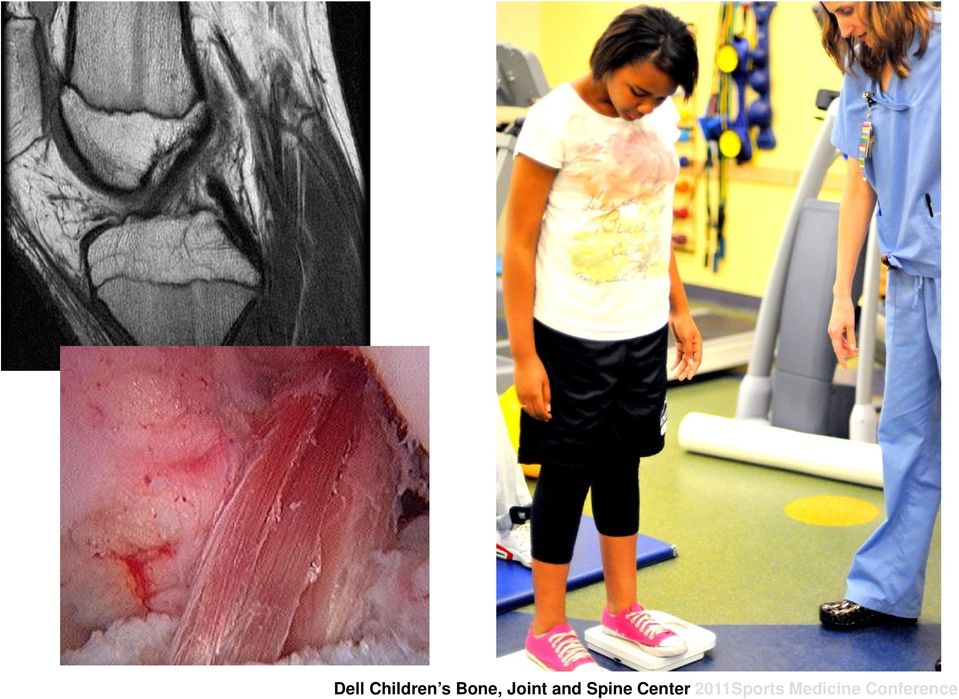
1 Adolescent Rehabilitation: Late-phase Management of Post-operative Anterior Cruciate Ligament Reconstruction 2011 Sports Medicine Conference Kristin Allen PT, MSPT Cally Martin ATC, LAT Petra Place PT, BSPT, DPT Children s Bone, Joint and Spine Center

2
3 Objectives Demonstrates a good understanding of late-phase ACL-R rehabilitation progression Knowledgable about ACL-R outcome measures Demonstrates a good understanding of Hop Test Administration
4 ACL-R Late-Phase Rehab (16-24 weeks) Factors Neuromuscular control Demands of sports Therapeutic intervention Sport specific drills Ensure a safe return to play

5 Neuromuscular Control Restore balance/reactive muscle activation. Functionally progress from low to high demand activities in controlled manner. Develop functional movements with appropriate control. Prepare for higher level return to sport activities.

6

7

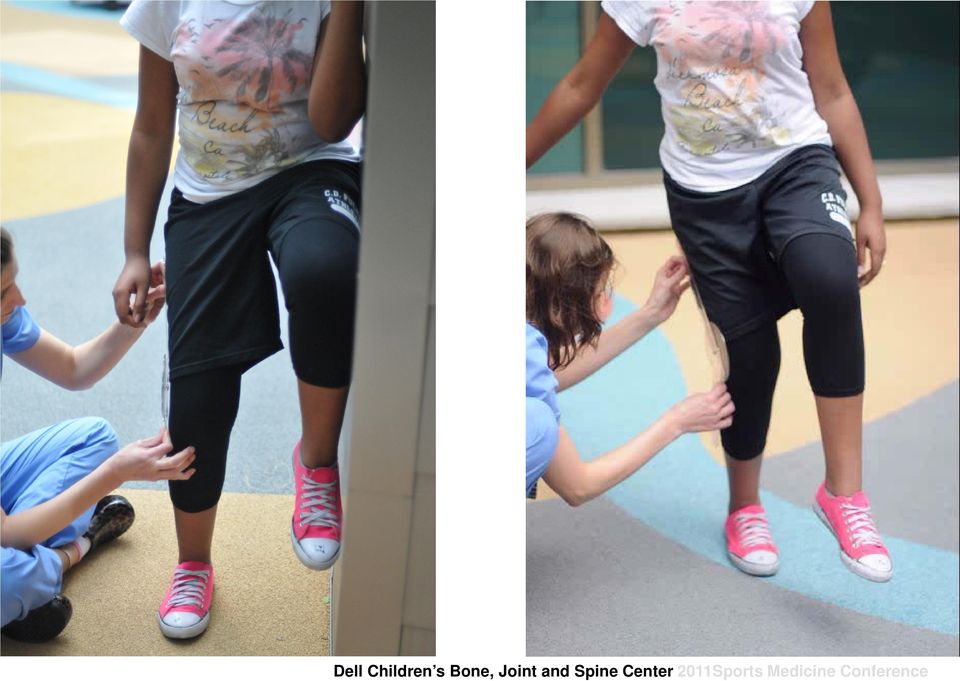
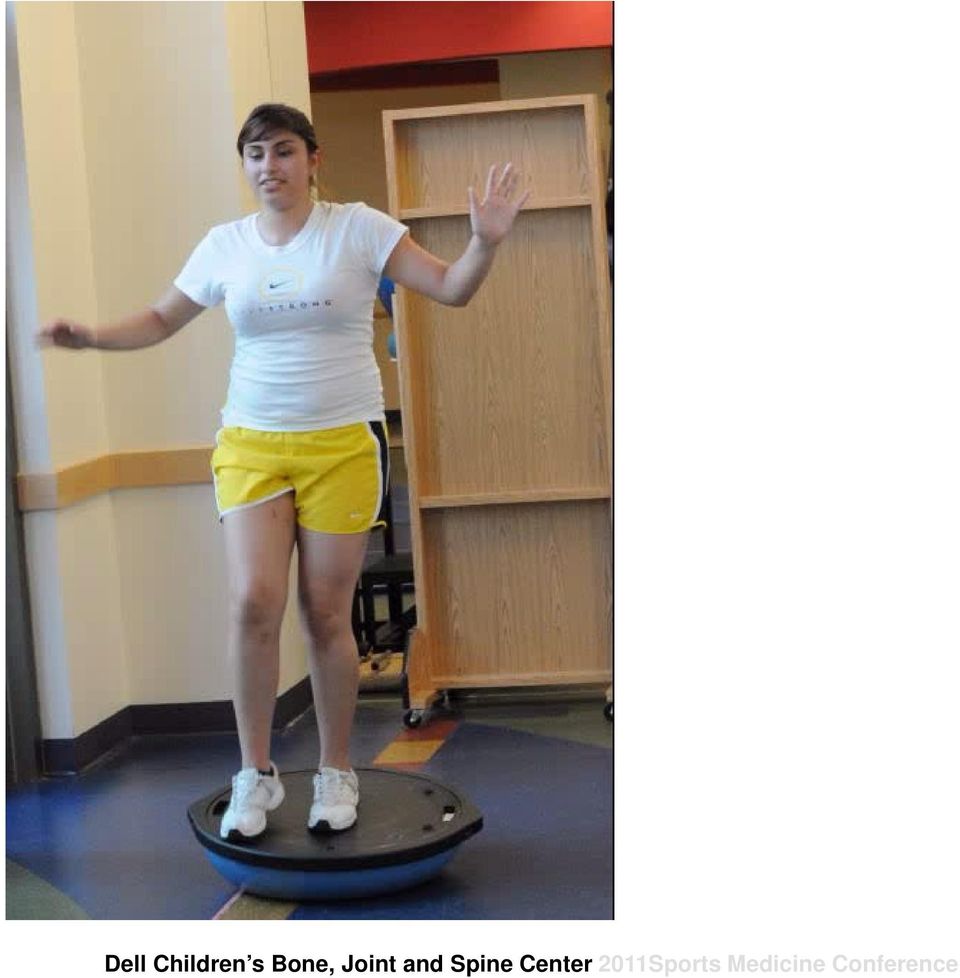
8 Cincinnati Return to Sport Progression: Stage 1 Improve symmetry in running mechanics. Improve single-limb WB strength at increasing knee flexion angles. Improve single-limb postural balance.

9

10
11

12

13

14

15
16

17

18 Cincinnati Return to Sport Progression: Stage 2 Improve single-limb landing strategies. Improve force contribution symmetry during bipedal activities. Improve LE NWB strength.

19

20

21
22
23
24 Cincinnati Return to Sport Improve LE biomechanics during plyometric activities. Progression: Stage 3 Improve LE muscular endurance. Improve single-limb power production.
25
26
27
28
29
30 Cincinnati Return to Sport Progression: Stage 4 Equalize ground reaction force attenuation & generation strategies b/w limbs. Improve confidence & stability with highintensity cutting activities. Equalize power endurance b/w limb Utilize safe biomechanics during highintensity plyometric activity.
31
32
33
34
35 Outcome Measures - Subjective Knee Outcome Survey (KOS) Activities of Daily Living Scale (ADLS) Sports Activity Scale (SAS) American Academy of Orthopedic Surgeons Sports Knee Rating Scale Knee Injury and Osteoarthritis Outcome Score (KOOS) Lysholm Knee Scale
36 Outcome Measures - Comprehensive Cincinnati Knee-Rating Scale International Knee Documentation Committee (IKDC) system
37 Cincinnati Knee Score Subjective Examination: symptoms, patient perception of overall knee function, ADL function, sports function, sports activity, & occupation. Physical Examination effusion, ROM, tibiofemoral & patellofemoral crepitus.
38 Cincinnati Knee Score Stability Testing arthrometer, pivot shift Radiographic Findings Functional Testing Hop testing
39 Outcome Measures Other Activity scales Cincinnati Activity Scale IKDC Marx Activity Scale Tegner Rehab Adherence Sports Injury Rehab Adherence Scales (SIRAS)
40 Timeline of Recommended Outcome Measures
41 Outcome Measures - Objective ROM Circumference Assessment of Laxity instrumented, manual Isokinetic Testing Functional Performance Testing hop, shuttle, figure-8
42 Administration of Hop Testing 16 weeks post operatively Two test occasions hours apart weeks post operatively One test occasion
43 For Each Hop Test: One practice trial on each limb Two measured and recorded trials Begin with non-operative limb Rest period offered between types of hop up to 2 minutes between individual hop test trials 30 seconds or less
44 Assessing Hops For Distance Successful Landing maintained 2 seconds Unsuccessful Touching down of contralateral LE Touching down of either UE Loss of Balance Additional Hop on Landing
45 Single Hop for Distance Stand behind marked line on LE to be tested. Hop maximal distance. Land on same LE. Hold landing 2 seconds.
46
47 6-meter Timed Hop Large one-legged hops in series. Stand on tested limb behind starting line. Start timing when heel lifted from starting position. Stop timing when the tested foot crosses the finish line.
48 Triple Hop for Distance Stand behind starting line on test LE. Perform 3 consecutive hops as far as possible landing on same LE. Measure total distance for 3 consecutive hops from great toe.
49 Crossover Hop for Distance Stand behind starting line on test LE. Hop forward 3 times while alternately crossing over marking. Measure total distance hopped forward.
50
51
52 Scoring of Hop Tests Take the mean score of 2 trials of each hop test. Measure absolute scores on each limb for each test. Calculate limb symmetry index (LSI) Average recorded trail surgical LE x100= % Average recorded trial non surgical LE
53 Fatigued State Hop Testing Hop performance decreased significantly During take-off Decreased hip/knee flexion angles more erect body position Decreased knee/ankle power During landing Decreased Hip moments more extended position Decreased ground reaction force
54 ACL-R Single Limb Hop Biomechanics Take-off on operative limb Decreased ROM at ankle/knee/hip Peak knee extension moment lower Peak ankle and hip extension moments higher Peak power generated at the knee lower Peak power at the ankle/hip higher Landing on operative limb decreased ROM at ankle/knee/hip Peak ground reaction forces not different Peak power absorption lower at knee and hip; higher at the ankle
55 Alternate Hop Test Battery Vertical jump Hop for distance Side hop
56 Strength Test Battery Open chain knee extension. Open chain knee flexion. Leg press muscle power test. Neeter C. et all. Development of a strength test battery for evaluating leg muscle power after anterior cruciate ligament injury and reconstruction. Knee Surgery Sports Traumatology Arthroscopy. (2006) 14:
57 Strength Test Battery Open chain knee extension. Open chain knee flexion. Leg press muscle power test. Neeter C. et all. Development of a strength test battery for evaluating leg muscle power after anterior cruciate ligament injury and reconstruction. Knee Surgery Sports Traumatology Arthroscopy. (2006) 14:
58 Strength Test Battery Open chain knee extension. Open chain knee flexion. Leg press muscle power test. Neeter C. et all. Development of a strength test battery for evaluating leg muscle power after anterior cruciate ligament injury and reconstruction. Knee Surg Sports Traumatol Arthrosc. (2006) 14:
59 In Conclusion Limited availability of evidence-based late-phase ACL-R rehab. Goal of late-phase rehab is to functionally progress pt from low to high-demand activities, ensuring good neuromuscular control to reduce risk of re-injury with return to sport. A variety of tests, incorporating both subjective and objective evaluation, is important to assess functional ability and outcomes following ACL-R Hop testing with optimal movement is a good predictor for return to play initiation
60 References Augustsson J et all. Single-leg hop testing following fatiguing exercise: reliability and biomechanical analysis. Scandinavian Journal of Medicine and Science in Sports. 2006:16; Barber-Westin SD, Noyes FR, McCloskey JW. Rigorous statistical reliability, validity, and responsiveness testing of the Cincinnati knee rating system in 350 subjects with uninjured, injured or anterior cruciate ligament-reconstructed knees. American Journal of Sports Medicine. 1999; 27: Beynonn BD, Uh BS, Johnson RJ, et al. Rehabilitation after anterior cruciate ligament reconstruction: a prospective, randomized, double-blind comparison of programs administered over 2 different time intervals. American Journal of Sports Medicine. 2005; 33: Chmielewski TL, Jones D, Day t, Tillman AM, Lentz, TA, George SZ. The association of pain and fear of movement/reinjury with function during anterior cruciate ligament reconstruction rehabilitation. Journal of Journal of Orthopaedic & Sports Physical Therapy. 2008;38:12: Filan, DK, Moran, R, Blake, C. Functional Measurement of knee proprioception six months after anterior cruciate ligament reconstruction. Physical Therapy Reviews. 2008;13:2: Ganley TJ. ACL Reconstruction in Adolescent and Preadolescent Patients. Orthopedics. 2009;32(1): Gustavsson A et al. A test battery for evaluating hop performance in patients with an ACL injury and patients who have undergone ACL reconstruction. Knee Surgery Sports Traumatology Arthroscopy. 2006;14: Hewett TE, Paterno MV, Myer GD. Strategies for enhancing proprioception and neuromuscular control of the knee. Clinical Orthopaedics and Related Research. 2002; Hopper DM, Strauss GR, Boyle JJ, Bell J. Functional recovery after anterior cruciate ligament reconstruction: a longitudinal perspective. Archive of Physical Medicine in Rehabilitation. 2008; 89: Irrgang JJ, Anderson AF, Boland AL, Harner CD, Kurosaka M, Neyret P, Richmond JC, Shelborne KD. Development and validation of the International Knee Documentation Committee Subjective Knee Form. The American Journal of Sports Medicine. 2001; 29: Irrgang JJ, Ho H, Harner CD, Fu FH. Use of the International Knee Documentation Committee guidelines to assess outcome following anterior cruciate ligament reconstruction. Knee Surgery, Sports Traumatology, Arthroscopy :
61 Kilvan Ben. Treating the Young Athlete. Motivations, Inc. Course #190, A Workshop for Physical Therapists and Assistants, and Athletic Trainers. 2009: Kocher MS, Steadman JR, Briggs KK, Sterett WI, Hawkins RJ. Relationship between objective assessment of ligament stability and subjective assessment of symptoms and function after anterior cruciate ligament reconstruction. The American Journal of Sports Medicine. 2004; 32(3): Kvist J, Ek A, Sporrstedt K, Good L. Fear of re-injury: a hindrance for returning to sports after anterior cruciate ligament reconstruction. Knee Surgery Sports Traumatology Arthroscopy. 2005; 13: Kvist J. Rehabilitation following anterior cruciate ligament injury: current recommendations for sports participation. Sports Med 2004; 34(4): Laboute E, Savalli L, Puig P, Sabot G, Monnier G, Dubroca B. Analysis of return to competition and repeat rupture for 298 anterior cruciate ligament reconstructions with patellar or hamstring tendon autograft in sportspeople. Annals of Physical and Rehabilitation Medicine 2010; 53: Marx RG. Knee Rating Scales. Arthroscopy: The Journal of Arthoroscopic and Related Surgery 2003; 19: Marx RG, Jones EC, Allen AA, Altchek DW, O brien SJ, Rodeo SA, Williams RJ, Warren RF, Wickiewicz TL. Reliability, validity, and responsiveness of four knee outcome scales for athletic patients. The Journal of Bone and Joint Surgery. 2001; 83-A(10): McDevitt ER, et all. Functional Bracing After Anterior Cruciate Ligament Reconstruction. A Prospective, Randomized, Multicenter Study. American Journal of Sports Medicine. 2004;32(8): Mendoza M, Patel H, Bassett S. Influences of psychological factors and rehabilitation adherence on the outcome post anterior cruciate ligament injury/surgical reconstruction. New Zealand Journal of Pysiotherapy. 2007; 35(2): Myer, GD, Paterno, MV, Ford, KR, Hewett, TE. Neuromuscular Training Techniques to Target Deficits Before Return to Sport After Anterior Cruciate Ligament Reconstruction. Journal of Strength and Conditioning Research. 2008;22:3: Myer, GD, Paterno, MV, Ford, KR, Quantman CE, Hewett, TE. Rehabilitation after anterior cruciate ligament reconstruction: criteria-based progression through the return-to-sports phase. Journal of Orthopaedic & Sports Physical Therapy. 2006;36:6:
62 Neeter C et all. Development of a strength test battery for evaluating leg muscle power after anterior cruciate ligament injury and reconstruction. Knee Surgery Sports Traumatology Arthroscopy. 2006;14: Orishimo KF, Kremenic IJ, Mullaney MJ, McHugh MP, Nichols SJ. Adaptations in single-leg hop biomechanics following anterior cruciate ligament reconstruction. Knee Surgery of Sports Traumatolology and Arthroscopy. 2010:18; Reid A, Birmingham TB, Stratford PW, Alcock GK, Griffin JR. Hop testing provides a reliable and valid outcome measure during rehabilitation after anterior cruciate ligament reconstruction. Physical Therapy. 2007; 87(3): Risberg MA, Holm I, Myklebust G, Engebresten L. Neuromuscular Training Versus Strength Training During First 6 Months After Anterior Cruciate Ligament Reconstruction: A Randomized Clinical Trial. Physical Therapy. 2007;87(6): Risberg MA, Holm I, Steen J, Beynnon BD. Sensitivity to changes over time for the IKDC form, the Lysholm score and the Cincinnati knee score. Knee Surgery, Sports Traumatology, Arthoroscopy. 1999; 7: Sgaglione NA, Del Pizzo W, Fox JM, et al. Critical analysis of knee ligament rating systems. American Journal of Sports Medicine. 1995; 23: Shaw T, Chipcase LS, Williams MT. A users guide to outcome measurement following ACL reconstruction. Physical Therapy in Sport. 2004; 5: Shelbourne KD, Gray T. Minimum 10-Year Results After Anterior Cruciate Ligament Reconstruction. The American Journal of Sports Medicine. 2009;37(3): Trees AH, Howe TE, Dixon J, White, L. Exercise for treating isolated anterior cruciate ligament injuries in adults (review). The Cochrane Library. 2009;1:1-50. Weitzel PP & Richmond JC. Critical evaluation of different scoring systems of the knee. Sports Medicine and Arthoroscopy Review. 2002; 10: Wright, RW et all. A Systematic Review of Anterior Cruciate Ligament Reconstruction Rehabilitation. Part II: Open Versus Closed Kinetic Chain Exercises, Neuromuscular Electrical Stimulation, Accelerated Rehabilitation and Miscellaneous Topics. Journal of Knee Surgery. 2008;21:
Rehabilitation after ACL Reconstruction: From the OR to the Playing Field. Mark V. Paterno PT, PhD, MBA, SCS, ATC
 Objectives Rehabilitation after ACL Reconstruction: From the OR to the Playing Field Mark V. Paterno PT, PhD, MBA, SCS, ATC Coordinator of Orthopaedic and Sports Physical Therapy Cincinnati Children s
Baur C.*, Mathieu N.***, Delamorclaz S.*, Hilfiker R.***, Siegrist O.**, Blatter S**., Fournier S.*
 Anterior cruciate ligament reconstruction : Comparison of Hamstring Tendon autograf vs Bone Patellar Tendon Bone autograf : a retrospective cohort study of 111 patients. Baur C.*, Mathieu N.***, Delamorclaz
Preventing Knee Injuries in Women s Soccer
 Preventing Knee Injuries in Women s Soccer By Wayne Nelson, DC, CCRS The United States has recently seen a rapid increase in participation of young athletes with organized youth soccer leagues. As parents
Mary LaBarre, PT, DPT,ATRIC
 Aquatic Therapy and the ACL Current Concepts on Prevention and Rehab Mary LaBarre, PT, DPT,ATRIC Anterior Cruciate Ligament (ACL) tears are a common knee injury in athletic rehab. Each year, approximately
Theodore B. Shybut, M.D. 7200 Cambridge St. #10A Houston, Texas 77030 Phone: 713-986-5590 Fax: 713-986-5521. Sports Medicine
 Anterior Cruciate Ligament Reconstruction Accelerated Rehab This rehabilitation protocol has been designed for patients with ACL reconstruction who anticipate returning to a high level of activity as quickly
Cincinnati SportsMedicine and Orthopaedic Center
 Cincinnati SportsMedicine and Orthopaedic Center Anterior Cruciate Ligament Reconstruction: Delayed Rehabilitation Protocol* This rehabilitation protocol was developed for patients who have anterior cruciate
Cincinnati SportsMedicine and Orthopaedic Center
 Cincinnati SportsMedicine and Orthopaedic Center Anterior Cruciate Ligament Reconstruction: Accelerated Rehabilitation Protocol* This rehabilitation protocol was developed for patients who have anterior
William J. Robertson, MD UT Southwestern Orthopedics 1801 Inwood Rd. Dallas, TX 75390-8882 Office: (214) 645-3300 Fax: (214) 3301 billrobertsonmd.
 Anterior Cruciate Ligament Reconstruction Postoperative Rehab Protocol You will follow-up with Dr. Robertson 10-14 days after surgery. At this office visit you will also see one of his physical therapists.
Inland Orthopaedic Surgery & Sports Medicine
 Inland Orthopaedic Surgery & Sports Medicine Dr. Ed Tingstad 825 SE Bishop Blvd., Suite 120 Pullman, WA 99163 (509)332-2828 ACL Rehabilitation Guidelines General Guidelines: The following ACL rehabilitation
ACL Injury Prevention Through Proprioceptive & Neuromuscular Training Arlington Soccer Club April 1, 2010
 ACL Injury Prevention Through Proprioceptive & Neuromuscular Training Arlington Soccer Club April 1, 2010 Matthew R. McManus, PT Co-Owner & Regional Clinical Director - Massachusetts ProEx Physical Therapy
ACL Non-Operative Protocol
 ACL Non-Operative Protocol Anatomy and Biomechanics The knee is a hinge joint connecting the femur and tibia bones. It is held together by several important ligaments. The most important ligament to the
Landing Biomechanics Utilizing Different Tasks: Implications in ACL Injury Research. Adam Hernandez Erik Swartz, PhD ATC Dain LaRoche, PhD
 A Gender Comparison of Lower Extremity Landing Biomechanics Utilizing Different Tasks: Implications in ACL Injury Research Adam Hernandez Erik Swartz, PhD ATC Dain LaRoche, PhD Anterior Cruciate Ligament
ACL Rehabilitation Pathway. Expediating Safe Return to Optimum Performance. www.sportssurgeryclinic.com
 Specialists in Joint Replacement, Spinal Surgery, Orthopaedics and Sport Injuries ACL Rehabilitation Pathway Expediating Safe Return to Optimum Performance www.sportssurgeryclinic.com Contents Introduction...
Adolescent Female Knee/ACL Injuries and Prevention. Camille Clinton, MD ProOrtho
 Adolescent Female Knee/ACL Injuries and Prevention Camille Clinton, MD ProOrtho Background Native Seattlelite Played most sports, but primarily soccer High school, select, ODP, college College at Notre
Noyes Knee Institute Rehabilitation Protocol for ACL Reconstruction: Revision Knees, Allografts, Complex Knees
 Noyes Knee Institute Rehabilitation Protocol for ACL Reconstruction: Revision Knees, Allografts, Complex Knees 1-2 3-4 5-6 7-8 9-12 4 5 6 7-12 Brace: postoperative & functional () minimum goals: 0-90 0-120
Rehabilitation Guidelines for Posterior Cruciate Ligament Reconstruction
 UW Health Sports Rehabilitation Rehabilitation Guidelines for Posterior Cruciate Ligament Reconstruction The knee has three joints--the patellofemoral joint (knee cap), the tibiofemoral joint and the tibiofibular
Noyes Knee Institute Rehabilitation Protocol for Primary ACL Reconstruction: Early Return to Strenuous Activities
 Noyes Knee Institute Rehabilitation Protocol for Primary ACL Reconstruction: Early Return to Strenuous Activities 1-2 3-4 5-6 7-8 9-12 4 5 6 7-12 Brace: immobilizer for patient comfort () minimum goals:
ACCELERATED REHABILITATION PROTOCOL FOR POST OPERATIVE POSTERIOR CRUCIATE LIGAMENT RECONSTRUCTION DR LEO PINCZEWSKI DR JUSTIN ROE
 ACCELERATED REHABILITATION PROTOCOL FOR POST OPERATIVE POSTERIOR CRUCIATE LIGAMENT RECONSTRUCTION DR LEO PINCZEWSKI DR JUSTIN ROE January 2005 Rationale of Accelerated Rehabilitation Rehabilitation after
ACL Reconstruction Protocol
 ACL Reconstruction Protocol The primary emphasis of this ACL rehab protocol is on functional weight bearing exercises with a focus on restoring the balance between the quadriceps and hamstrings muscles,
ACL Reconstruction: Patellar Tendon Graft/Hamstring Tendon Graft
 ACL Reconstruction: Patellar Tendon Graft/Hamstring Tendon Graft Patellar Tendon Graft/Hamstring Tendon Graft General Information: The intent of these guidelines is to provide the therapist with direction
Traditional anterior cruciate ligament (ACL)
 BRIEF REVIEW NEUROMUSCULAR TRAINING TECHNIQUES TO TARGET DEFICITS BEFORE RETURN TO SPORT AFTER ANTERIOR CRUCIATE LIGAMENT RECONSTRUCTION GREGORY D. MYER, 1,2 MARK V. PATERNO, 1 3 KEVIN R. FORD, 1,4 AND
Due to differing clinical
 Ingrid Eitzen, PT, PhD1 Håvard Moksnes, PT, MSc2 Lynn Snyder-Mackler, PT, ScD3 May Arna Risberg, PT, PhD 4 A Progressive 5-Week Exercise Therapy Program Leads to Significant Improvement in Knee Function
Post-Operative ACL Reconstruction Functional Rehabilitation Protocol
 Post-Operative ACL Reconstruction Functional Rehabilitation Protocol Patient Guidelines Following Surgery The post-op brace is locked in extension initially for the first week with the exception that it
Anterior cruciate ligament
 [ RESEARCH REPORT ] HÅVARD MOKSNES, PT¹ PT, ScD² PT, PhD³ Individuals With an Anterior Cruciate Ligament-Deficient Knee Classified as Noncopers May Be Candidates for Nonsurgical Rehabilitation Anterior
REHABILITATION PROTOCOL
 COSM REHAB ANOTHER SERVICE PROVIDED BY THE CENTER FOR ORTHOPAEDICS & SPORTS MEDICINE REHABILITATION PROTOCOL KNEE ACL Reconstruction Protocol Please contact us with any questions. www.pacosm.com Indiana
Rehabilitation Guidelines for Knee Multi-ligament Repair/Reconstruction
 UW Health Sports Rehabilitation Rehabilitation Guidelines for Knee Multi-ligament Repair/Reconstruction The knee joint is comprised of an articulation of three bones: the femur (thigh bone), tibia (shin
Advances in fixation. Rehabilitation After Anterior Cruciate Ligament Reconstruction: Criteria-Based Progression Through the Return-to-Sport Phase
 Rehabilitation After Anterior Cruciate Ligament Reconstruction: Criteria-Based Progression Through the Return-to-Sport Phase Gregory D. Myer, MS, CSCS 1 Mark V. Paterno, PT, MS, SCS, ATC 2 Kevin R. Ford,
The Insall Scott Kelly Center for Orthopaedics and Sports Medicine 210 East 64th Street, 4 th Floor, New York, NY 10065
 ANTERIOR CRUCIATE LIGAMENT RECONSTRUCTION POST-OPERATIVE REHABILITATION PROTOCOL 2003 AUTOGRAFT BONE-PATELLA TENDON-BONE and ALLOGRAFT PROTOCOL PHASE I-EARLY FUNCTIONAL (WEEKS 1-2) Goals: 1. Educate re:
Anterior Cruciate Ligament Reconstruction Delayed Rehab Dr. Walter R. Lowe
 Anterior Cruciate Ligament Reconstruction Delayed Rehab Dr. Walter R. Lowe This rehabilitation protocol has been designed for patients who have undergone an ACL reconstruction (HS graft/ptg/allograft)
ACL INJURIES IN THE FEMALE ATHLETE
 ACL INJURIES IN THE FEMALE ATHLETE Jeffrey L. Mikutis, D.O. Surgical Director, Sports Medicine Pediatric Orthopaedic Surgeon Orthopaedic Center for Spinal & Pediatric Care, Inc. Dayton Children s Hospital
Anterior Cruciate Ligament Reconstruction. ACL Rehab Protocol
 Anterior Cruciate Ligament Reconstruction Rehab Protocol This rehabilitation protocol has been designed for patients following ACL reconstruction who anticipate returning to a high level of activity as
Prevention & Management of ACL Injury. Ian Horsley PhD, MCSP Lee Herrington PhD, MCSP
 Prevention & Management of ACL Injury Ian Horsley PhD, MCSP Lee Herrington PhD, MCSP ACL injury ACL injury 30/100,000, 40% sports injuries (NHS) Limited statistics in UK related to sport Rugby Union 2002-2004
Cincinnati SportsMedicine and Orthopaedic Center
 Cincinnati SportsMedicine and Orthopaedic Center Medial Collateral Ligament Reconstruction Rehabilitation Protocol* This rehabilitation protocol was developed for patients who have had medial collateral
ACL Functional Knee Bracing CLINICAL RESEARCH
 ACL Functional Knee Bracing CLINICAL RESEARCH ACL INJURY: FACTS & FIGURES Contributing Factors Decreased knee flexion angle 1 Anterior tibial shear forces 2 Combined valgus and knee internal rotation moments
ACL Reconstruction Rehabilitation Program
 ACL Reconstruction Rehabilitation Program 1. Introduction to Rehabilitation 2. The Keys to Successful Rehabilitation 3. Stage 1 (to the end of week 1) 4. Stage 2 (to the end of week 2) 5. Stage 3 (to the
Anterior Cruciate Ligament Reconstruction Progression Rehabilitation Program By Jenna Hennebry, Erin Stiefel, and Lauren Schmidt
 Anterior Cruciate Ligament Reconstruction Progression Rehabilitation Program By Jenna Hennebry, Erin Stiefel, and Lauren Schmidt Case Study: 18 year old female soccer player Isolated ACL rupture (planted
Anterior Cruciate Ligament (ACL) Rehabilitation
 Thomas D. Rosenberg, M.D. Vernon J. Cooley, M.D. Charles C. Lind, M.D. Anterior Cruciate Ligament (ACL) Rehabilitation Dear Enclosed you will find a copy of our Anterior Cruciate Ligament (ACL) Rehabilitation
Anterior Cruciate Ligament Reconstruction Accelerated Rehabilitation Protocol Dr. Mark Adickes
 Anterior Cruciate Ligament Reconstruction Accelerated Rehabilitation Protocol Introduction: This rehabilitation protocol is designed for patients with ACL injuries who anticipate returning early to a high
Rehabilitation Guidelines for Patellar Tendon and Quadriceps Tendon Repair
 UW Health Sports Rehabilitation Rehabilitation Guidelines for Patellar Tendon and Quadriceps Tendon Repair The knee consists of four bones that form three joints. The femur is the large bone in the thigh
ACL Reconstruction Physiotherapy advice for patients
 Oxford University Hospitals NHS Trust ACL Reconstruction Physiotherapy advice for patients Introduction This booklet is designed to provide you with advice and guidance on your rehabilitation after reconstruction
Articular Cartilage Injury to the Knee: Current Concepts in Surgical Techniques and Rehabilitation Management
 Articular Cartilage Injury to the Knee: Current Concepts in Surgical Techniques and Rehabilitation Management Combined Sections Meeting 2014 Las Vegas, Nevada, February 3 6, 2014 James L. Carey, MD, MPH
Exercise Physiologist
 Considerations in Designing a Rehab Program Philosophy of Sports Medicine Healing Process Pathomechanics of Injury Psychological Aspects Goals of Rehab Reading: Chapter 1 Quiz 1: Anatomy review Group effort
Noyes Knee Institute Rehabilitation Protocol: Medial Ligament Repair or Reconstruction
 Noyes Knee Institute Rehabilitation Protocol: Medial Ligament Repair or Reconstruction Brace: Long-leg postoperative Custom unloading if required minimum goals: 0-90 0-110 0-120 0-130 Weight bearing: Toe
Anterior Cruciate Ligament Reconstruction
 1 Anterior Cruciate Ligament Reconstruction Surgical Indications and Considerations Anatomical Considerations: The anterior cruciate ligament (ACL) lies in the middle of the knee. It arises from the anterior
MANAGEMENT OF ANTERIOR CRUCIATE LIGAMENT INJURIES SUMMARY. This Guideline has been endorsed by the following organizations:
 MANAGEMENT OF ANTERIOR CRUCIATE LIGAMENT INJURIES SUMMARY This Guideline has been endorsed by the following organizations: Disclaimer This Clinical Practice Guideline was developed by an AAOS multidisciplinary
Rehabilitation Guidelines for Knee Arthroscopy
 Rehabilitation Guidelines for Knee Arthroscopy Arthroscopy is a common surgical procedure in which a joint is viewed using a small camera. This technique allows the surgeon to have a clear view of the
ANTERIOR CRUCIATE LIGAMENT RECONSTRUCTION Hamstring Graft/PTG-Accelerated Rehab
 The rehabilitation protocol has been designed for patients with ACL reconstruction who anticipate returning early to a high level of activity postoperatively. The ACL Rehabilitation protocol for all three
Goals of Post-operative operative Rehab. Surgical Procedures. Phase 1 Maximum protection and Mobility (1-4 weeks)
 Hip Arthroscopy - Post-Operative Care and Rehabilitation Franz Valenzuela, DPT, OCS Surgery corrects mechanical problems Rehabilitation corrects functional deficits Surgical Procedures Requires little
ANTERIOR CRUCIATE LIGAMENT INJURY PREVENTION IN NEW ZEALAND. Barry Tietjens Unisports Sports Medicine Auckland
 ANTERIOR CRUCIATE LIGAMENT INJURY PREVENTION IN NEW ZEALAND Barry Tietjens Unisports Sports Medicine Auckland NO DISCLOSURES ACL INJURY PREVENTION Knee injuries involving the ACL are common in sport ACL
Rehabilitation Guidelines for Autologous Chondrocyte Implantation. Ashley Conlin, PT, DPT, SCS, CSCS
 Rehabilitation Guidelines for Autologous Chondrocyte Implantation Ashley Conlin, PT, DPT, SCS, CSCS Objectives Review ideal patient population Review overall procedure for Autologous Chondrocyte Implantation
IDENTIFYING RISK FACTORS AND PROGRAMMING FOR INJURY PREVENTION
 ACL INJURY / RE-INJURY PREVENTION IDENTIFYING RISK FACTORS AND PROGRAMMING FOR INJURY PREVENTION JAMIE MCCARTNEY, B.Sc., CSCS MATT JORDAN, M.Sc., CSCS Strength and Conditioning, Canadian Sport Institute-Calgary
PREOPERATIVE: POSTOPERATIVE:
 PREOPERATIVE: ACL RECONSTRUCTION RECOVERY & REHABILITATION PROTOCOL If you have suffered an acute ACL injury and surgery is planned, the time between injury and surgery should be used to regain knee motion,
KNEEFIT ACL Injury Prevention Program
 The Bad News Anterior Cruciate Ligament (ACL) injuries have become extremely common in athletics. From golfer Tiger Woods to Tom Brady of the New England Patriots to Michael Owen of Manchester United F.C.
Patellofemoral/Chondromalacia Protocol
 Patellofemoral/Chondromalacia Protocol Anatomy and Biomechanics The knee is composed of two joints, the tibiofemoral and the patellofemoral. The patellofemoral joint is made up of the patella (knee cap)
Platelet-Rich Plasma Rehabilitation Guidelines
 UW Health Sports Rehabilitation Platelet-Rich Plasma Rehabilitation Guidelines What is Tendinopathy? Tendons are strong bands of connective tissue comprised primarily of a substance called collagen. Mechanically,
Anterior Cruciate Ligament ruptures in Women compared to men.
 By Complete Performance Coach: Rosie Shakespeare www.completeperformance.co.nz Anterior Cruciate Ligament ruptures in Women compared to men. The anterior cruciate ligament (ACL) is found behind the kneecap
QUESTION I HAVE BEEN ASKED TO REHAB GRADE II AND III MCL INJURIES DIFFERENTLY BY DIFFERENT SURGEONS IN THE FIRST 6WEEKS FOLLOWING INJURY.
 QUESTION I HAVE BEEN ASKED TO REHAB GRADE II AND III MCL INJURIES DIFFERENTLY BY DIFFERENT SURGEONS IN THE FIRST 6WEEKS FOLLOWING INJURY. SOME ARE HINGE BRACED 0-90 DEGREES AND ASKED TO REHAB INCLUDING
MEDIAL PATELLA FEMORAL LIGAMENT RECONSTRUCTION Rehab Protocol
 Rehab Protocol This rehabilitation protocol has been designed for patients who have undergone an MPFL reconstruction. Dependent upon the particular procedure, this protocol also may be slightly deviated
Rehabilitation after ACL Reconstruction
 Rehabilitation after ACL Reconstruction John Nyland, DPT, EdD Artur Proniewicz, MD Paul Mazzone, BS Athletic Training Program Kosair Charities College of Health and Natural Sciences Spalding University,
POSTERIOR CRUCIATE LIGAMENT RECONSTRUCTION POSTOPERATIVE REHABILITATION PROTOCOL
 Corey A. Wulf, MD POSTERIOR CRUCIATE LIGAMENT RECONSTRUCTION POSTOPERATIVE REHABILITATION PROTOCOL The range of motion allowed after posterior cruciate ligament reconstructive surgery is dependent upon
Ulnar Collateral Ligament Reconstruction Tommy John Surgery. Neal McIvor, Alyssa Pfanner, Caleb Sato
 Ulnar Collateral Ligament Reconstruction Tommy John Surgery By Neal McIvor, Alyssa Pfanner, Caleb Sato Case Study 21 y.o. Male Collegiate Baseball Pitcher Right elbow preoperatively diagnosed: UCL rupture
ACL Injury Prevention in female Athletes:
 ACL Injury Prevention in female Athletes: Alan Sinclair: Scottish Institute of Sport Strength & Conditioning Coach, Tayside & Fife. Key Points: ACL rupture is a serious injury requiring approximately 9
LADIES GAA ACL PREVENTION PROGRAM
 LADIES GAA ACL PREVENTION PROGRAM Enda King Clinical Specialist Physiotherapist SSC 19 th March 2012 TOPICS Anatomy ACL Injury Mechanism ACL Injury Risk Factors ACL Injury Consequences ACL Injury Prevention
ACL Rehab. Here are a few tips on how to progress through an ACL rehab protocol with minimal problems;
 ACL Rehab The ACL rehab protocol is broken down into 5 phases, and there s a list of goals and outcome measures that need to be satisfied at the end of each phase to move onto the next one. You move through
Physical Therapy Corner: Knee Injuries and the Female Athlete
 Physical Therapy Corner: Knee Injuries and the Female Athlete Knee injuries, especially tears of the anterior cruciate ligament, are becoming more common in female athletes. Interest in women s athletics
Rehabilitation Guidelines for Meniscal Repair
 UW Health Sports Rehabilitation Rehabilitation Guidelines for Meniscal Repair There are two types of cartilage in the knee, articular cartilage and cartilage. Articular cartilage is made up of collagen,
Summary of Clinical Outcome Measures for Sports-Related Knee Injuries
 Summary of Clinical Outcome Measures for Sports-Related Knee Injuries Final Report June 5, 2012 AOSSM Outcomes Task Force James Irrgang, PT, PhD, ATC, FAPTA Table of Contents AOSSM Outcomes Task Force....1
Eastern Suburbs Sports Medicine Centre
 Eastern Suburbs Sports Medicine Centre ACCELERATED ANTERIOR CRUCIATE LIGAMENT REHABILITATION PROGRAM Alan Davies Diane Long Mark Kenna (APA Sports Physiotherapists) The following ACL reconstruction rehabilitation
Rehabilitation Guidelines for Medial Patellofemoral Ligament Repair and Reconstruction
 UW Health Sports Rehabilitation Rehabilitation Guidelines for Medial Patellofemoral Ligament Repair and Reconstruction The knee consists of four bones that form three joints. The femur is the large bone
The Rehabilitation Team
 Considerations in Designing a Rehab Program Philosophy of Sports Medicine Healing Process Pathomechanics of Injury Psychological Aspects Goals of Rehab Chapter 1 Group effort The Rehabilitation Team AEP/Athletic
ACL Injury: What are the Risk Factors? Kenneth G. Swan, Jr., M.D. June 2, 2015
 ACL Injury: What are the Risk Factors? Kenneth G. Swan, Jr., M.D. June 2, 2015 I have no disclosures ACL injuries (ACLIs) are 3-6x more common in females than males But there s more to it than that. What
Kelly Corso MS, ATC, CES, FMSC, CSST
 ACL Injury Prevention Program Kelly Corso MS, ATC, CES, FMSC, CSST What is the ACL??? The ACL or anterior cruciate ligament, attaches the front top portion of the shin bone (tibia) to the back bottom portion
ANKLE STRENGTHENING INTRODUCTION EXERCISES SAFETY
 ANKLE STRENGTHENING INTRODUCTION Welcome to your Ankle Strengthening exercise program. The exercises in the program are designed to improve your ankle strength, fitness, balance and dynamic control. The
Knee Arthroscopy/Lateral Release Rehabilitation Dr. Walter R. Lowe
 Knee Arthroscopy/Lateral Release Rehabilitation Dr. Walter R. Lowe This rehabilitation protocol is designed for patients who have undergone knee arthroscopy or arthroscopic lateral release. The intensity
Rehabilitation. Modalities and Rehabilitation. Basics of Injury Rehabilitation. Injury Rehabilitation. Vocabulary. Vocabulary
 Modalities and Rehabilitation Rehabilitation Chapter 12: Basics of Injury Rehabilitation Vocabulary Balance: ability to maintain our center of gravity over a base of support Kinesthesia: the ability to
Non-Contact ACL Injury Prevention for Females Jason D. Vescovi, PhD, CSCS
 Non-Contact ACL Injury Prevention for Females Jason D. Vescovi, PhD, CSCS This paper was presented as part of the NSCA Hot Topic Series. All information contained herein is copyright of the NSCA. Non-Contact
Knee sprains. What is a knee strain? How do knee strains occur? what you ll find in this brochure
 what you ll find in this brochure What is a knee strain? How do knee strains occur? What you should do if a knee strain occurs. What rehabilitation you should do. Example of a return to play strategy.
Cincinnati Sportsmedicine and Orthopaedic Center
 Cincinnati Sportsmedicine and Orthopaedic Center Total Knee Replacement: Rehabilitation Protocol This rehabilitation protocol was developed for patients who have had a cemented total knee arthroplasty.
Anterior Cruciate Ligament Reconstruction Rehabilitation Protocol
 Anterior Cruciate Ligament Reconstruction Rehabilitation Protocol GENERAL CONSIDERATIONS * This handout serves as a general outline for you as a patient to better understand guidelines and time frames
ACL Performance Enhancement Program Steven Traina, MD, Nathan Lilley, MPT, OCS, CSCS
 Nathan Lilley, MPT, OCS, CSCS, earned his Bachelors degree in Biology as well as his Masters degree in Physical Therapy from Rockhurst University in Kansas City, Missouri. Nate has been in the orthopedic
Ankle Injury/Sprains in Youth Soccer Players Elite Soccer Community Organization (ESCO) November 14, 2013
 Ankle Injury/Sprains in Youth Soccer Players Elite Soccer Community Organization (ESCO) November 14, 2013 Jeffrey R. Baker, DPM, FACFAS Weil Foot and Ankle Institute Des Plaines, IL Ankle Injury/Sprains
Revision ACL Surgery
 Charles H. Brown Jr.,M.D, Director International Knee & Joint Centre Abu Dhabi, United Arab Emirates Introduction Revision ACL Surgery Incidence of ACL reconstruction in an active population reported to
ACL Reduction Helping you Keep it Together
 ACL Reduction Helping you Keep it Together What is the training program used in the ACL reduction Program? The ACL Reduction Program will be using the PEP (Prevent injury, Enhance Performance) Program
What effect does grafting from the contralateral patellar. tendon in primary anterior cruciate ligament reconstruction
 Patellofemoral Pain 1 Running head: REVIEW OF LITERATURE What effect does grafting from the contralateral patellar tendon in primary anterior cruciate ligament reconstruction have on the presence and severity
Brian P. McKeon MD Jason D. Rand, PA-C, PT Patient Information Sheet: Anterior Cruciate Ligament
 Brian P. McKeon MD Jason D. Rand, PA-C, PT Patient Information Sheet: Anterior Cruciate Ligament The anterior cruciate ligament or ACL is one of the major ligaments located in the knee joint. This ligament
Clinical Movement Analysis to Identify Muscle Imbalances and Guide Exercise
 CLINICAL EVALUATION & TESTING Darin A. Padua, PhD, ATC, Column Editor Clinical Movement Analysis to Identify Muscle Imbalances and Guide Exercise Christopher J. Hirth, MS, ATC, PT, PES University of rth
Hip Rehab: Things to Consider. Sue Torrence, MS, PT, ATC Lead Physical Therapist
 Hip Rehab: Things to Consider Sue Torrence, MS, PT, ATC Lead Physical Therapist Where to Start? Objectives: Discuss injuries related to hip dysfunction Review commonly used functional tests for posteriolateral