
3. Chain of Infection
|
|
|
- Linda Mitchell
- 9 years ago
- Views:
Transcription
1 3. Chain of Infection Certain conditions must be met in order for a microbe or infectious disease to be spread from person to person. This process, called the chain of infection, can only occur when all six links in the chain are intact. By breaking this chain at any of the links, the spread of infection is stopped. Diagram: The chain of infection Links in the chain Disease Microorganisms (Agent). These are the pathogens that cause communicable diseases. Most commonly these are bacteria, virus, fungi or parasites. Reservoir. The reservoir (source) is a host which allows the pathogen to live, and possibly grow, and multiply. Humans, animals and the environment can all be reservoirs for microorganisms. Sometimes a person may have a disease but is not symptomatic or ill. This type of person is a carrier and she/he may be referred to as colonized. Examples of reservoirs are standing water, a person with a common cold or syphilis, or a dog with rabies. Mode of Escape. This refers to the route by which the infectious microorganisms escape or leave the reservoir. For example, pathogens that cause respiratory diseases usually escape through the respiratory tract (coughing and sneezing). 3-1
2 Modes of Escape Respiratory Tract. Microorganisms leave the body of the infected person by means of droplets exhaled as a spray when coughing, sneezing, talking, singing or just breathing. Microorganisms also escape through nose and throat secretions. Gastrointestinal Tract. Microorganisms that leave the body of the infected person by means of body secretions (e.g. stool and vomit). For example hepatitis A virus is shed in the stool of the infected person. Skin. Microorganisms that leave the body of the infected person by wound drainage or through skin lesions. Blood. Infection may occur when someone s blood gets into another person s system. Breaking the Link Wear a mask Do not talk directly into patient s face Stay home if you are sick Practice good cough etiquette (cover your coughs and sneezes) Handle and dispose of body secretions properly Use personal protective equipment Perform good housekeeping Dispose of wound dressings properly Use personal protective equipment (PPE) Safe handling of sharps Use gloves for procedures where there is risk of exposure to blood Use care in obtaining, transporting and processing specimens Mode of Transmission. Since microorganisms cannot travel on their own, they require a vehicle to carry them to other persons and places. See more detail in Section 4: Modes of Transmission. Mode of Entry. The path for the microorganism to get into a new host (the reverse of the portal of exit). The mode of entry refers to the method by which the pathogens enters the person. 3-2
3 Pathogens enter the body by: inhalation (e.g. respiratory tract) ingestion (e.g.gi tract) absorption (e.g. mucous membranes of eyes) break in skin (e.g. needle stick, cut) introduction by medical procedures (e.g. catheters) Modes of Entry Respiratory Tract. Small particles that result from evaporation of droplets from the respiratory tract of infected persons remain suspended in the air of poorly ventilated spaces for periods of time. The infectious microorganisms can be inhaled by a well person who may then become infected with the disease. Gastrointestinal Tract. Pathogenic microorganisms enter the body of a new host when food or water contaminated by feces is ingested (fecal/oral route). Mucous membranes. Absorption of microorganisms through exposed eyes, nose and mouth. Skin. Microorganisms enter the body when a person comes into contact with wound drainage or skin secretions. Breaking the Link Wear a mask/respirator Maintain good ventilation Isolate those with respiratory symptoms Good respiratory hygiene/etiquette practices Dispose of body excretions carefully Careful food handling Perform good housekeeping Wear appropriate personal protective equipment Protect eyes, nose and mouth with face shield during procedures likely to generate splashes or sprays Carry out good housekeeping Dispose of wound dressings carefully and properly Wear personal protective equipment Maintain healthy intact skin 3-3
4 Susceptible Host. The future host is the person who is next exposed to the pathogen. The microorganism may spread to another person but does not develop into an infection if the person s immune system can fight it off. They may however become a carrier without symptoms, able to then be the next mode of transmission to another susceptible host. Once the host is infected, he/she may become a reservoir for future transmission of the disease. Susceptible hosts abound in health care settings, as those accessing the health care system often have compromised immune systems. This may be due to other illnesses processes, treatments or medications. This ineffective immune system leaves them vulnerable to infectious agents that may be in the health care environment. Susceptible Hosts Children who are very young People who are very old People on inadequate diets People who are chronically ill People receiving medical therapy such as chemotherapy or high doses of steroids People who are already ill People with open wounds Control Separate high risk individuals from persons with known or potential infections Provide nutritional supplements to persons on inadequate diets Vaccinate against vaccine preventable diseases Maintain proper sanitation of air and environment Diagnose and treat underlying disease Opportunities to break the chain of infection Transmission may be interrupted when: the infectious agent is eliminated, inactivated or cannot exit the reservoir the portals of exit are contained through safe infection control practices the transmission between objects or people does not occur due to barriers and safe infection control practices the portals of entry are protected other persons receiving health care are not susceptible. 3-4
5 Diagram: Breaking the Chain of Infection If the chain is not broken the infectious organism is able to go on to develop disease in another person. Treatment of underlying diseases INFECTIOUS AGENT Rapid, accurate identification of organisms Recognition of high-risk patients Aseptic Technique Catheter care SUSCEPTIBLE HOST Immunosuppression Diabetes Surgery Burns Cardio-pulmonary disease PORTAL OF ENTRY Mucous membrane GI tract Respiratory tract Broken skin Bacteria Fungi Viruses Rickettsiae Protozoa INVOLVES ALL HEALTH PROFESSIONALS YOU RESERVOIRS People Equipment Water PORTAL OF EXIT Excretions Secretions Skin Droplets Employee health Environmental sanitation Disinfection/ Sterilization Proper attire Handwashing Wound care MEANS OF TRANSMISSION Direct contact Fomites Ingestion Airborne Trash & waste disposal Control of excretions & secretions Handwashing Isolation Sterilization Air flow control Food handling There are many opportunities to stop the spread of infection. 3-5
6
Infection control. Self-study course
 Infection control Self-study course Course objectives By the end of this course you will be able to: 1) Define a germ 2) Define the environment that a germ needs to live and grow 3) Explain the chain of
INFECTION CONTROL PRECAUTIONS
 INFECTION CONTROL PRECAUTIONS Outline Standard Precautions Droplet Precautions Contact Precautions Airborne Precautions References STANDARD PRECAUTIONS Use Standard Precautions, or the equivalent, for
Bloodborne Pathogens, Infection Control
 Bloodborne Pathogens, Infection Control INTRODUCTION Protecting the patients and clients you care for and protecting yourself are two of your primary responsibilities when you are working as a Certified
Nursing college, Second stage Microbiology Dr.Nada Khazal K. Hendi L14: Hospital acquired infection, nosocomial infection
 L14: Hospital acquired infection, nosocomial infection Definition A hospital acquired infection, also called a nosocomial infection, is an infection that first appears between 48 hours and four days after
JAC-CEN-DEL COMMUNITY SCHOOLS BLOODBORNE PATHOGENS UNIVERSAL PRECAUTIONS A BACK TO SCHOOL TRADITION
 JAC-CEN-DEL COMMUNITY SCHOOLS BLOODBORNE PATHOGENS UNIVERSAL PRECAUTIONS A BACK TO SCHOOL TRADITION UNIVERSAL PRECAUTIONS AGAINST BLOODBORNE PATHOGENS Employees working in a school system are potentially
Standard Precautions. These guidelines must be implemented b y all healthcare workers. Standard Precautions version 1.0 28 th April 2009 1
 Standard Precautions These guidelines must be implemented b y all healthcare workers Standard Precautions version 1.0 28 th April 2009 1 Table of Contents Forward 3 Introduction 4 What is the rationale
4.Infection Control. A. Introduction to Infection Control
 4.Infection Control A. Introduction to Infection Control 1. Nosocomial infections are acquired by 5-10% of hospitalized patients, resulting in increased cost of millions of dollars annually. 2. Center
Bloodborne Pathogens
 Bloodborne Pathogens Learning Objectives By the end of this section, the participant should be able to: Name 3 bloodborne pathogens Identify potentially contaminated bodily fluids Describe 3 safe work
33 Infection Control Techniques
 CHAPTER 33 Infection Control Techniques Learning Outcomes 33.1 Describe the medical assistant s role in infection control. 33.2 Describe methods of infection control. 33.3 Compare and contrast medical
Chapter 5. INFECTION CONTROL IN THE HEALTHCARE SETTING
 Chapter 5. INFECTION CONTROL IN THE HEALTHCARE SETTING INTRODUCTION This chapter addresses infection control measures and practices in the healthcare setting and provides guidance to healthcare facilities
Introduction to Infection Control
 CHAPTER 3 Introduction to Infection Control George Byrns and Mary Elkins Learning Objectives 1 Define terms used in infection control. 2. Review significant risk factors for infection. 3. Identify the
Tuberculosis Exposure Control Plan for Low Risk Dental Offices
 Tuberculosis Exposure Control Plan for Low Risk Dental Offices A. BACKGROUND According to the CDC, approximately one-third of the world s population, almost two billion people, are infected with tuberculosis.
Clinic Infectious Disease Control
 Chapter 2 - Lesson 4 Clinic Infectious Disease Control Introduction Infectious and parasitic disease control is important in veterinary clinics. The main objective is to prevent the spread of infections
Guidance Document Infectious Substances
 Guidance Document Infectious Substances Note: 1. The following Guidance Document was developed by the ICAO DGP. The original ICAO document reflects references to the ICAO Technical Instructions these have
A Safe Patient. Commonwealth Nurses Federation. Jill ILIFFE Executive Secretary. Commonwealth Nurses Federation
 A Safe Patient Jill ILIFFE Executive Secretary Commonwealth Nurses Federation INFECTION CONTROL Every patient encounter should be viewed as potentially infectious Standard Precautions 1. Hand hygiene 2.
Bloodborne Pathogens. San Diego Unified School District Nursing & Wellness Program August 2013
 Bloodborne Pathogens San Diego Unified School District Nursing & Wellness Program August 2013 Why Another In-service?? Cal/OSHA mandates that employees with occupational exposure are informed at the time
Blood borne Pathogens
 Blood borne Pathogens What Are Blood borne Pathogens? Blood borne pathogens are microorganisms such as viruses or bacteria that are carried in blood and can cause disease in people. Types of Blood borne
Roger Williams University. Bloodborne Pathogens Exposure Control Plan
 Roger Williams University Bloodborne Pathogens Exposure Control Plan Revised 12/2010 ROGER WILLIAMS UNIVERSITY BLOODBORNE PATHOGENS EXPOSURE CONTROL PLAN I. STATEMENT OF POLICY It is the policy of Roger
APPENDIX A GUIDANCE DOCUMENT
 APPENDIX A GUIDANCE DOCUMENT Infectious Substances International Civil Aviation Organization Technical Instructions for the Safe Transport of Dangerous Goods by Air, 2005-2006 Note: This guidance document
ECDC INTERIM GUIDANCE
 ECDC INTERIM GUIDANCE Interim ECDC public health guidance on case and contact management for the new influenza A(H1N1) virus infection Version 3, 19 May 2009 ECDC intends to produce a series of interim
Bloodborne Pathogens (BBPs) Louisiana Delta Community College
 Bloodborne Pathogens (BBPs) Louisiana Delta Community College 1 Bloodborne Pathogens Rules & Regulations Office of Risk Management (ORM) requires development of a bloodborne pathogens plan low risk employees
Massachusetts Department of Developmental Services MRSA, VRE, and C. Diff Management Protocol
 Massachusetts Department of Developmental Services MRSA, VRE, and C. Diff Management Protocol PURPOSE: To provide guidance for personnel in order to prevent the spread of Antibiotic Resistant Microorganisms
EAST CAROLINA UNIVERSITY INFECTION CONTROL POLICY. Methicillin-resistant Staph aureus: Management in the Outpatient Setting
 EAST CAROLINA UNIVERSITY INFECTION CONTROL POLICY Methicillin-resistant Staph aureus: Management in the Outpatient Setting Date Originated: Date Reviewed: Date Approved: Page 1 of Approved by: Department
Mercyhurst University Athletic Training Program Bloodborne Pathogens Exposure Control Plan
 Mercyhurst University Athletic Training Program Bloodborne Pathogens Exposure Control Plan In accordance with the Occupational Safety Health Administration (OSHA) Bloodborne Pathogens Standard, 29 CFR
Hand Hygiene and Infection Control
 C Hand Hygiene and Infection Control Sirius Business Services Ltd www.siriusbusinessservices.co.uk Tel 01305 769969 [email protected] Whatever your First Aid, Fire Safety or Health & Safety
Tuberculosis: FAQs. What is the difference between latent TB infection and TB disease?
 Tuberculosis: FAQs What is TB disease? Tuberculosis (TB) is a disease caused by bacteria (germs) that are spread from person to person through the air. TB usually affects the lungs, but it can also affect
Baseline assessment checklist for the AICG recommendations
 Baseline assessment checklist for the AICG recommendations Part 1: Baseline assessment checklist AICG recommendations Completed by: Date of completion: AICG Recommendation Y/N Comments/Actions Routine
1) Giving patient access and control over their health information
 he HIPAA Challenge: How to protect patient privacy while providing necessary information to individuals and entities involved in the patient s care that need patient information to perform necessary services.
Infection Control Course
 Infection Control Course Division of Health Service Regulation Division of Public Health Center for Aide Regulation and Education Adult Care Licensure Section (2) Preface (3) Infections In Long Term Care
OCCUPATIONAL EXPOSURE TO BLOODBORNE PATHOGENS (29 CFR 1910.1030)
 I. Introduction OCCUPATIONAL EXPOSURE TO BLOODBORNE PATHOGENS (29 CFR 1910.1030) It is estimated that approximately 5.6 million workers in health care and other fields are exposed to bloodborne pathogens.
INFECTION CONTROL POLICY MANUAL
 Page 1 of 7 POLICY MANUAL Key Words: personal protective equipment, PPE, safety equipment, infection control, standard precautions Policy Applies to: All staff employed by Mercy Hospital. Credentialed
Bacteria vs. Virus: What s the Difference? Grade 11-12
 Bacteria vs. Virus: What s the Difference? Grade 11-12 Subject: Biology Topic: Bacteria, viruses, and the differences between them. The role that water plays in spreading bacteria and viruses, and the
How can you protect yourself from infections?
 How can you protect yourself from infections? Your Infection Prevention Guide www.esrdncc.org Table of Contents Preventing an infection is an important part of your kidney care...3 Things you can do...4
Clinical Educators Guide for the. prevention and control of infection in healthcare
 Clinical Educators Guide for the prevention and control of infection in healthcare W o r k i n g t o b u i l d a h e a lt h y a u s t r a l i a National Health and Medical Research Council 2010 Electronic
HEPATITIS A, B, AND C
 HEPATITIS A, B, AND C INTRODUCTION Hepatitis is a medical term that means infection and inflammation of the liver, and hepatitis is caused by infection with a virus. There are seven types of hepatitis,
BLOODBORNE PATHOGENS IN SCHOOLS
 BLOODBORNE PATHOGENS IN SCHOOLS INTRODUCTION As sure as children fall while learning to walk, students experience cuts, bruises and other injuries. In times past, little thought was given to treatment
Bloodborne Pathogens Program Revised July, 5 2012
 Bloodborne Pathogens Program Revised July, 5 2012 Page 1 of 16 Table of Contents 1.0 INTRODUCTION...3 1.1 Purpose...3 1.2 Policy.3 2.0 EXPOSURE CONTROL METHODS 4 2.1 Universal Precautions.4 2.2 Engineering
OSHA s Bloodborne Pathogens Standard 1910.1030
 OSHA s Bloodborne Pathogens Standard 1910.1030 Jens Nissen & Kennan Arp Iowa OSHA Enforcement 515-281-3122 [email protected] or [email protected] Bloodborne Pathogens Standard Federal Law 29 CFR 1910.1030
Bloodborne Pathogens. Scott Anderson CCEMTP. Materials used with permission from the Oklahoma State University
 Bloodborne Pathogens Scott Anderson CCEMTP Materials used with permission from the Oklahoma State University What is a Bloodborne Pathogen? Microorganisms that are carried in the blood that can cause disease
OCCUPATIONAL HEALTH, DISABILITY AND LEAVE SECTOR MEASURES TO MINIMIZE EXPOSURE TO BLOODBORNE PATHOGENS AND POST-EXPOSURE PROPHYLAXIS POLICY
 UNIVERSITY OF OTTAWA OCCUPATIONAL HEALTH, DISABILITY AND LEAVE SECTOR MEASURES TO MINIMIZE EXPOSURE TO BLOODBORNE PATHOGENS AND POST-EXPOSURE PROPHYLAXIS POLICY Prepared by the Occupational Health, Disability
6.0 Infectious Diseases Policy: Student Exposure Control Plan
 6.0 Infectious Diseases Policy: Student Exposure Control Plan 6.1 PURPOSE & SCOPE This exposure control plan has been established to define the infection control program for students of Pacific University.
Prevention and control of infection in care homes. Summary for staff
 Prevention and control of infection in care homes Summary for staff 1 DH INFORMATION READER BOX Policy Clinical Estates HR / Workforce Commissioner Development IM & T Management Provider Development Finance
Leader s Guide E4017. Bloodborne Pathogens: Always Protect Yourself
 E4017 Bloodborne Pathogens: Always Protect Yourself 1 Table of Contents Introduction 3 Video Overview.3 Video Outline.4 Preparing for and Conducting a Presentation. 7 Discussion Ideas..8 Quiz..9 Quiz Answers...11
disease causing micro-organisms
 disease causing micro-organisms What are disease causing micro-organisms? How many times have we been told to wash our hands before sitting down at the supper table or after touching money and other dirty
Bloodborne Pathogens. Updated 1.21.13
 Bloodborne Pathogens Updated 1.21.13 Purpose OSHA s Blood-borne Pathogens Standard protects anyone with a job-related risk of contracting a blood-borne borne disease The standard outlines preventative
WHY ARE WE HERE? OSHA BB Pathogen standard. The more you know, the better you will perform in real situations!
 WHY ARE WE HERE? OSHA BB Pathogen standard anyone whose job requires exposure to BB pathogens is required to complete training employees who are trained in CPR and first aid The more you know, the better
Ambulance Service. Patient Care. and. Transportation Standards
 Ambulance Service Patient Care and Transportation Standards Ministry of Health and Long-Term Care Emergency Health Services Branch Patient Care A. General Each operator and each emergency medical attendant
Management of Communicable Diseases In a School Setting
 Maryland State Department of Education Maryland Department of Health and Mental Hygiene Maryland State School Health Council MARYLAND STATE SCHOOL HEALTH SERVICES GUIDELINES Management of Communicable
Workforce Guidelines: H1N1 Influenza and Flu-like Illness
 Workforce Guidelines: H1N1 Influenza and Flu-like Illness This document provides guidance to University supervisors and employees on how to handle H1N1 influenza (swine flu) and flu-like illness in the
Safety FIRST: Infection Prevention Tips
 Reading Hospital Safety FIRST: Infection Prevention Tips Reading Hospital is committed to providing high quality care to our patients. Your healthcare team does many things to help prevent infections.
EXPOSURE CONTROL PLAN (sample) 1 Child Care Directors and Employers
 EXPOSURE CONTROL PLAN (sample) 1 Child Care Directors and Employers The Model Exposure Control Plan is intended to serve as an employer guide to the OSHA Bloodborne Pathogens standard. A central component
HealthStream Regulatory Script
 HealthStream Regulatory Script Personal Protective Equipment Release Date: August 2008 HLC Version: 602 Lesson 1: Introduction Lesson 2: PPE Basics Lesson 3: Use of PPE in Healthcare Lesson 4: Gloves Lesson
POLICY 08:18:00 BLOODBORNE PATHOGENS CONTROL PLAN
 POLICY 08:18:00 BLOODBORNE PATHOGENS CONTROL PLAN I. Purpose and Scope The purpose of this plan is to establish guidelines and precautions for the handling of materials which are likely to contain infectious
OCCUPATIONAL SAFETY AND HEALTH ADMINISTRATION (OSHA)
 OCCUPATIONAL SAFETY AND HEALTH ADMINISTRATION (OSHA) The OSHA/VOSH 1910.1030 Blood borne Pathogens Standard was issued to reduce the occupational transmission of infections caused by microorganisms sometimes
EAST CAROLINA UNIVERSITY INFECTION CONTROL POLICY
 EAST CAROLINA UNIVERSITY INFECTION CONTROL POLICY Department: Adult and Pediatric HealthCare/ECU-Doctor s Park, Building #2 Date Originated: October 28, 1992 Date Reviewed: 10.28.92, 12.14.94, Date Approved:
Infection Control for Health Care Providers
 Infection Control for Health Care Providers Christine Wisnom, BSN, RN Index The Infectious Disease Process -The Chain of Infection Universal/Standard Precautions -Airborne Precautions -Droplet Precautions
BLOOD BORNE PATHOGENS
 BLOOD BORNE PATHOGENS AIDS and other blood-borne pathogens such as Hepatitis B and C are deadly diseases that are present in today s society. All blood-borne pathogens are transmitted in blood and other
FLORENCE TOWNSHIP BOARD OF EDUCATION FILE CODE: 4112.4/4212.4 Florence, New Jersey
 FLORENCE TOWNSHIP BOARD OF EDUCATION FILE CODE: 4112.4/4212.4 Florence, New Jersey Regulation Exposure Control Administration BLOODBORNE PATHOGENS A. The district safety and health program officer, district
Definitions. This plan. membrane, 2012-2013. These are. additions and. and. weeping a source of. withstand the. demands of to or from a
 PALM BEACH ATLANTIC UNIVERSITY ATHLETIC TRAINING BLOOD BORNE PATHOGENS POLICY & EXPOSURE CONTROL PLAN Introduction This plan is designedd to eliminatee or minimize exposure to blood borne pathogens, as
This pamphlet describes how all school employees, regardless of job assignment, can minimize the risk of exposure to viral hepatitis.
 Revised July 2010 Viral Hepatitis INTRODUCTION The United Federation of Teachers prepared this pamphlet to answer questions asked by school staff who are concerned about catching hepatitis from their students
Influenza Vaccine Frequently Asked Questions. Influenza Control Program
 Influenza Vaccine Frequently Asked Questions Influenza Control Program Influenza or the flu can be a serious contagious disease, which is spread by droplet transmission through close contact with an infected
Isolation Guidelines. VCU Health System Department of Epidemiology
 Isolation Guidelines VCU Health System Department of Epidemiology Goal of Isolation Prevent transmission of microorganisms from infected or colonized patients to other patients, hospital visitors, and
Mock OSHA Inspection:
 Mock OSHA Inspection: PASS or FAIL? Infection Control OSHA Dental Practice Act HIPAA Presented by Leslie Canham, CDA, RDA, CSP (Certified Speaking Professional) In the dental field since 1972, Leslie helps
Information on Measles and Whooping Cough: Vaccination and Disease
 Information on Measles and Whooping Cough: Vaccination and Disease Vaccine s Mechanism of Action Vaccines expose the recipient to a small amount of an weakened organism. Through this exposure, the body
Blood-borne viruses in the workplace Guidance for employers and employees
 Blood-borne viruses in the workplace Guidance for employers and employees Is this guidance useful to me? If you are an employer or employee, self-employed or a safety representative, and involved in work
Brock University Facilities Management Operating Procedures
 Subject: Bodily Fluid Clean-Up Number: FMOP 2-3 Approval: Executive Director Issue Date: 22 Sep 08 Responsibility: Manager Custodial Services Review Period: 2 Years PROCEDURES FOR BODILY FLUID CLEAN-UP
Employee Health and Personal Hygiene. for CHILD CARE CENTER DIRECTORS
 Employee Health and Personal Hygiene for CHILD CARE CENTER DIRECTORS National Food Service Management Institute The University of Mississippi Building the Future Through Child Nutrition The National Food
Kean University BS Degree Program in Athletic Training BLOOD BORN PATHOGENS POLICY
 Kean University BS Degree Program in Athletic Training BLOOD BORN PATHOGENS POLICY Effective September 2, 2014 The following policy will apply to students taking classes and faculty teaching those classes
NURSING SKILLS FAIR GAME QUESTIONS
 NURSING SKILLS FAIR GAME QUESTIONS FOR UNLICENSED NURSING STAFF The questions contained in this document are intended to be used during a long-term care facility (LTCF) nursing education or skills fair
RSV infection. Information about RSV and how you can reduce the risk of your infant developing a severe infection.
 RSV infection Information about RSV and how you can reduce the risk of your infant developing a severe infection. What is RSV? RSV is one of the most common respiratory viruses and is spread easily. By
Worker Health, Hygiene, and Personal Practices. Please pass the apple from the back of the room to the front
 Worker Health, Hygiene, and Personal Practices Please pass the apple from the back of the room to the front Penn State Farm Food Safety Workshop 2011 Would you eat the apple we just passed around? How
Educational Module for Nursing Assistants in Long-term Care Facilities: Antibiotic Use and Antibiotic Resistance
 Educational Module for Nursing Assistants in Long-term Care Facilities: Antibiotic Use and Antibiotic Resistance Antibiotic resistance is an increasing concern for everyone. This module: Defines antibiotic
Name Date Class. This section explains what kinds of organisms cause infectious disease and how infectious diseases are spread.
 Fighting Disease Name Date Class Infectious Disease This section explains what kinds of organisms cause infectious disease and how infectious diseases are spread. Use Target Reading Skills Before you read,
Safe Operating Procedure
 Safe Operating Procedure (Revised 12/11) SPILL AND EXPOSURE RESPONSE FOR BIOHAZARDOUS MATERIALS (INCLUDING RECOMBINANT NUCLEIC ACIDS) (For assistance, please contact EHS at (402) 472-4925, or visit our
Whooping cough (Pertussis) Information for you
 Whooping cough (Pertussis) Information for you Visit our website: www.nhsaaa.net All our publications are available in other formats ...Information for you...information for you...information for you.
Approaches to Infection Control
 Approaches to Infection Control Considerations for PTAs in the Clinic Objectives Describe the basic characteristics of bacteria, viruses, fungi, and parasites. Discuss the locations, advantages, and disadvantages
TB CARE EARLY DETECTION AND PREVENTION OF TUBERCULOSIS (TB) IN CHILDREN. Risk factors in children acquiring TB:
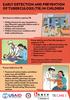 EARLY DETECTION AND PREVENTION OF TUBERCULOSIS (TB) IN CHILDREN Risk factors in children acquiring TB: Children living in the same household as a lung TB patient (especially children under 5) Children
I am reaching out to you with some preventative information that you might be interested in sharing with your school community.
 Reported cases of pertussis (whooping cough) are on the rise in Colorado and El Paso County. As of October 23, more than 1,000 cases of pertussis have been reported across the state. El Paso County cases
4. Infection control measures
 4. Infection control measures Apart from general hygienic practices and vaccination, staff of institutions should also adopt specific infection control measures against communicable diseases. The measures
The methods of implementation of these elements of the standard are discussed in the subsequent pages of this ECP.
 Exposure Control Plan (ECP) for Bloodborne Pathogens Updated 9/15/2009 Purpose Our Company is committed to providing a safe and healthful work environment for our entire staff. In pursuit of this endeavor,
Inherent in any infection control strategy are two significant concepts: (i) Routine Practices, and (ii) Risk Assessment.
 Infection Control Standards of Practice for Chiropodists and Podiatrists I. INTRODUCTION Infection control is considered an integral part of patient care. Concerns regarding the possible spread of blood-borne
CHAPTER 35 HUMAN IMMUNE SYSTEM STANDARDS:SC.912.L.14.52 & SC.912.L.14.6
 CHAPTER 35 HUMAN IMMUNE SYSTEM STANDARDS:SC.912.L.14.52 & SC.912.L.14.6 SECTION 1 - Infectious Disease 1.Identify the causes of infectious disease. 2.Explain how infectious diseases are spread. Causes
PREVENTING THE SPREAD OF CONTAGIOUS ILLNESS
 PREVENTING THE SPREAD OF CONTAGIOUS ILLNESS This easy-to-use Leader s Guide is provided to assist in conducting a successful presentation. Featured are: INTRODUCTION: A brief description of the program
3.0 Treatment of Infection
 3.0 Treatment of Infection Antibiotics and Medicine National Curriculum Link SCN 3-13b SCN 3-20b HWB 3-15a HWB 3-16a HWB 3-17a Learning Outcomes All students will know: Most common infections will get
Infection Prevention Program in Ambulatory Surgical Facilities
 Infection Prevention Program in Ambulatory Surgical Facilities 2 Patient Safety in the Ambulatory Surgical Setting History and Background of Centers for Medicare and Medicaid Services (CMS) Regulations
C. difficile. Answers to frequently asked questions about. at the Jewish General Hospital. www.jgh.ca SIR MORTIMER B. DAVIS JEWISH GENERAL HOSPITAL
 Answers to frequently asked questions about C. difficile at the Jewish General Hospital SIR MORTIMER B. DAVIS JEWISH GENERAL HOSPITAL A McGill University Teaching Hospital www.jgh.ca 1. CLOSTRIDIUM DIFFICILE
Multiple Choice Questions
 C hapter 13 WHY DO WE FALL ILL Multiple Choice Questions 1. Which one of the following is not a viral disease? (a) Dengue (b) AIDS (c) Typhoid (d) Influenza 2. Which one of the following is not a bacterial
Solid Organ Transplantation
 Solid Organ Transplantation Infection Prevention And Control Transplant Atlantic 2011 October 13/2011 Kathy Hart Introduction In the past several years, the drugs that we use, the surgeries themselves,
Advice for Colleges, Universities, and Students about Ebola in West Africa For Colleges and Universities
 Advice for Colleges, Universities, and Students about Ebola in West Africa For Colleges and Universities Advice for Study Abroad, Foreign Exchange, or Other Education-related Travel Is it safe to travel
Infection Prevention and Control
 PR ACTICE Standard Infection Prevention and Control Table of Contents Introduction 3 Standard Statements 4 Application of evidence-based measures 4 Application of professional judgment 4 Risk reduction
Principles of Disease and Epidemiology. Copyright 2010 Pearson Education, Inc.
 Principles of Disease and Epidemiology Pathology, Infection, and Disease Disease: An abnormal state in which the body is not functioning normally Pathology: The study of disease Etiology: The study of
A little information goes a long way
 Wastewater Pathogens What s In There? Steve Barnard Muskegon County Wastewater Management System Afraid? A little information goes a long way Complex Issue Pathogen: Organism that causes disease Bacteria
FOR INFORMATION CONTACT:
 NEWS RELEASE FOR INFORMATION CONTACT: Caroline Calderone Baisley Deborah C. Travers Director of Health Director of Family Health Tel [203] 622-7836 Tel [203] 622-7854 September 10, 2014 For Immediate Release
KEY CAL/OSHA STANDARDS THAT APPLY TO MOST EMPLOYERS
 KEY CAL/OSHA STANDARDS THAT APPLY TO MOST EMPLOYERS FACTSHEET 1 Below are some key Cal/OSHA standards that apply to most employers: A. INJURY AND ILLNESS PREVENTION PROGRAM STANDARD (Title 8 California
THIS IS AN OFFICIAL NH DHHS HEALTH ALERT
 THIS IS AN OFFICIAL NH DHHS HEALTH ALERT Distributed by the NH Health Alert Network [email protected] December 11, 2014; 1030 EST (10:30 AM EST) NH-HAN 20141211 Start of Norovirus Season in New Hampshire
Personal Protective Equipment PPE
 Trainer notes for personal protection equipment (PPE) presentation Personal Protective Equipment PPE A short presentation on the principles of infection control in social care 1 P a g e Different types
Swine Flu and Common Infections to Prepare For. Rochester Recreation Club for the Deaf October 15, 2009
 Swine Flu and Common Infections to Prepare For Rochester Recreation Club for the Deaf October 15, 2009 Supporters Deaf Health Community Committee Members Julia Aggas Cathie Armstrong Michael McKee Mistie