
PREVENTING THE SPREAD OF CONTAGIOUS ILLNESS
|
|
|
- Drusilla Gardner
- 9 years ago
- Views:
Transcription
1 PREVENTING THE SPREAD OF CONTAGIOUS ILLNESS This easy-to-use Leader s Guide is provided to assist in conducting a successful presentation. Featured are: INTRODUCTION: A brief description of the program and the subject that it addresses. PROGRAM OUTLINE: Summarizes the program content. If the program outline is discussed before the video is presented, the entire program will be more meaningful and successful. PREPARING FOR AND CONDUCTING THE PRESENTATION: These sections will help you set up the training environment, help you relate the program to site-specific incidents, and provide program objectives for focusing your presentation. REVIEW QUESTIONS AND ANSWERS: Questions may be copied and given to participants to document how well they understood the information that was presented. Answers to the review questions are provided separately. INTRODUCTION Over the past several years, it seems you cannot turn on a newscast or open a newspaper without seeing headlines about an outbreak of some type of virus or infection. Swine flu, avian flu, the respiratory ailment known as SARS and the antibiotic-resistant staph infection known as MRSA are just a few of the highly contagious illnesses and infections that have caused hundreds of people to get sick and die around the globe in the past decade. The purpose of this program is to help employees understand how to prevent becoming infected by and transmitting these contagious illnesses. It also explains the symptoms and warning signs of flu, SARS and MRSA and discusses how to respond to a suspected infection. Other topics include the use of facemasks to prevent infection, precautions to take in areas suspected of contamination, how various contagious illnesses are diagnosed and treated and how to prepare for and respond to a pandemic. PROGRAM OUTLINE BACKGROUND What has health officials worldwide so concerned about outbreaks of contagious illnesses is the real possibility that one will reach pandemic status. A pandemic occurs when an infectious disease, often involving a new strain of a virus or other infectious agent, emerges quickly throughout a large human population, being easily spread from person to person and causing serious illness on a global scale. Public health officials stress that a swine or avian flu pandemic is a real possibility because the viruses constantly swap genes to form new strains that are difficult to fight. While a pandemic of any illness could have catastrophic consequences worldwide, an illness doesn t have to reach pandemic status to affect you. Small local outbreaks of illness or infection occur frequently so you need to be prepared. The good news is that by following some simple precautions and using common sense, you can drastically reduce your chances of contracting a dangerous virus or infection. SWINE FLU & ITS SYMPTOMS Swine flu is a respiratory disease of pigs caused by a Type A influenza virus that often becomes the source of regular outbreaks in pigs. Until recently, swine flu had mainly been confined to pigs and persons who had contact with pigs, but is now being transmitted from human to human.

2 While there are several subtypes of the swine flu virus, influenza A H1N1 is the type of swine flu of most concern for health officials as it is highly contagious and has the ability to spread quickly throughout largely populated areas. The onset of symptoms of swine flu is similar to those of the common seasonal flu, including weakness, fever, body ache, sore throat, vomiting or diarrhea. In some cases, the illness can become severe, escalating to pneumonia and respiratory failure. Some deaths have also been reported. AVIAN FLU & ITS SYMPTOMS Avian influenza, commonly called bird flu is an infection caused by flu viruses that occur naturally in birds. Like swine flu, several strains of avian flu have been discovered. While most of the strains generally do not harm birds, influenza A H5N1 is known to kill them and infect a variety of other animals, including humans. While close contact with infected poultry has been the primary source for human infection, there have been reports of human-to-human transmission of the virus in recent years. Symptoms of avian flu are much like those of seasonal flu and swine flu: weakness, fever, body ache, sore throat, vomiting or diarrhea. Eye infection, acute respiratory distress, pneumonia and other severe, life-threatening complications have been reported in some avian flu patients. Genetic studies indicate that the H5N1 virus mutates rapidly and could adapt to allow easy human to human transmission. This is why the H5N1 virus found in avian flu has health officials concerned about its pandemic risk. To make matters worse, the viral components of avian influenza can mix with the swine flu virus to create new strains that not only could be spread easily, but could also be immune to the antiviral treatments that are currently available. When flu viruses mutate and change genetically, older vaccines become ineffective. HOW SWINE & AVIAN FLU ARE TRANSMITTED Avian and swine flu are transmitted much like the common seasonal flu is spread during flu season. This occurs mainly from person to person through the coughing and sneezing of infected people. Once the infected person sneezes or coughs, the droplets of the virus can be inhaled or swallowed, or they can enter the membranes of the eyes or the nose. Also, people are frequently infected by touching something with flu viruses on its surface, then touching their eyes, mouth or nose. Keep in mind that just about all types of flu viruses, seasonal, avian, swine and others, can live outside the human body for hours and can infect anyone coming in contact with them during that span. SARS, ITS SYMPTOMS & TRANSMISSION Another health concern is Severe Acute Respiratory Syndrome, or SARS, a respiratory illness caused by a coronavirus, a family of viruses that are also known to cause the common cold. These viruses are found in a variety of animals, including birds and mammals. SARS is thought to have passed from animals to humans in Eastern Asia during the past decade. Scientists believe this probably occurred during the butchering of animals or people eating undercooked meat.

3 SARS is transmitted much in the same was as swine and avian flu. When a person sneezes or coughs, the virus can be inhaled, swallowed or enter the eye, nose or mouth membranes of anyone close by. Like the flu, a person can also be infected by SARS by touching his or her mouth, nose or eyes after contacting a contaminated object. SARS generally starts with a high fever. Other symptoms may include headache, body ache and diarrhea. After a few days, SARS patients may develop a dry cough, while most of them also develop pneumonia. MRSA, ITS SYMPTOMS & TRANSMISSION Another health issue affecting workplaces, schools and hospitals is Methicillin-resistant staphylococcus aureus, or MRSA. MRSA is a staph infection of the skin that is resistant to penicillin and many other antibiotics. The symptoms of MSRA are usually mild, such as redness and swollen lesions on the skin, but can quickly cause more serious infections by infecting surgical wounds, the bloodstream, the lungs or other organs. Some of these infections can be life-threatening and even result in death. Health officials have been alarmed recently by the spread of resilient strains of MSRA. Because it is so difficult to treat, MSRA is sometimes called a super bug. MRSA is transmitted by direct skin-to-skin contact or by contact with shared items or surfaces that have been infected by the bacteria. This includes tools, protective equipment or anything else someone with the infection has touched. It is also commonly spread through the handling of bandages and other items used to treat cuts and lacerations. PREVENTING CONTAGIOUS ILLNESS INFECTION Health officials agree that cleanliness is the best defense for protecting yourself from being infected by flu, SARS, MRSA or similar illnesses. Washing your hands thoroughly and often will help protect you from germs. It is recommended that you wash your hands with soap and warm water for 20 to 25 seconds. Wash your hands frequently and always after a known potential exposure. When soap and water are not available, alcohol-based disposable hand wipes or gel sanitizers may be used. Since germs cling to your bare hands, covering your mouth and nose with your hands when you cough or sneeze could result in spreading germs and passing along infections to others. Instead, when you feel a cough or sneeze coming, cover your mouth and nose with a tissue or paper towel, then throw it away immediately. If a tissue or paper towel is not handy, some health officials recommend coughing into your elbow or shoulder, while others suggest you turn your head away from others and sneeze or cough into the air. Remember to wash your hands as soon as possible after coughing or sneezing. If outbreaks of flu, SARS or other infections have been reported in your geographical area, consider avoiding large public gatherings until local health officials confirm that it is safe to do so. You may also want to avoid buses and airplanes if infections have been confirmed in your area. The amount of people in closed quarters highly increases the potential for transfer of viruses.
4 While it may be common sense to avoid sick people, all too often people are infected when they come in close contact with a friend or relative who is ill. Make sure any sick person is no longer contagious before physical contact. In general, the various flu viruses are contagious up to seven days from the onset of symptoms; however, severe cases may last longer. Another way to avoid picking up the virus is to avoid touching commonly used objects. These can be loaded with germs that may carry an infection or virus. Of course, it s impossible not to touch door handles, light switches and other common objects. This is why it s so important to wash your hands often and avoid touching your mouth, eyes and nose with your hands. USE OF MASKS TO PREVENT INFECTION Experts generally agree that any type of mask can reduce the risk of infection, but they are not all created equally. While a regular surgical or dust mask can reduce the chance of indirect contact with others germs and also reduce the spread of your germs, a particulate mask with a NIOSH N95 rating or higher is recommended for environments where exposure to viruses and infections may occur. Of course, a main benefit of wearing any type of mask is that it keeps you from touching your mouth and nose with your hands, which may carry the infection. MRSA PRECAUTIONS Keep in mind that the precautions we have mentioned can help you prevent contracting many types of contagious illnesses, including the common cold and the seasonal flu; however, other specific precautions should be taken to avoid contracting a MRSA infection. First of all, keep all insect bites, cuts and abrasions covered with a clean bandage and change the bandage frequently. Avoid touching other people s wounds or bandages. Don t share personal items with other people, including towels, clothing, washcloths and razors. PRECAUTIONS FOR AREAS SUSPECTED OF CONTAMINATION Once some type of illness or infection has occurred, areas known to have been occupied by the infected person or objects that have become contaminated require even more stringent precautions until they have been decontaminated and deemed free of exposure risk. More than likely, you won t be asked to work in a contaminated area unless you are involved in the clean up. No matter what reason you are in the area, use universal precautions by assuming everything you come in contact with is contaminated. Universal precautions means protecting yourself from direct contact by avoiding exposure or using an approved barrier device to prevent direct contact. This means putting on proper personal protective equipment. A full-face respirator may be required by some employers, but at a minimum, you should wear a NIOSH N95 rated facemask and safety goggles to protect your eyes and respiratory system. Make sure to wear gloves that provide the appropriate protection from both the physical hazards of the area as well as any germs that may be present.

5 Sanitize all tools and equipment in the area before use. There are lots of sanitizing agents available, but a simple solution of bleach and water has been proven effective; the Centers for Disease Control recommends one-quarter cup of bleach per gallon of water. Keep in mind that anything the infected person touched could be contaminated and requires sanitizing, including door knobs, the arms of chairs, light switches, computer keyboards and mice, machine controls, tools, just to name a few. Make sure to wash your work clothes before wearing them again and wash and sanitize any reusable personal protective devices after each use in a potential exposure situation. Even if no known illness or infection exists, it s a good idea to frequently sanitize commonly used items if you share your desk, tools or protective equipment with co-workers. Sanitization is critically important if fellow workers have been sick or if there has been an outbreak in your geographic area. We all have a responsibility to prevent the spread of infection. RESPONDING TO A SUSPECTED INFECTION Despite all the efforts you may make to avoid contracting a contagious illness, there is always the possibility of getting sick. How and when you respond may be the difference between a few days of bed rest and severe infection that has long lasting consequences. First and foremost, do not go to work while sick. Do not send your kids to school or daycare while sick. Isolate yourself at home or visit your physician and follow his or her orders before returning to your job. Voluntary isolation is a responsible way to minimize the spread of contagious infections; avoiding contact with other people prevents the spread of your illness. Get plenty of rest and drink plenty of fluids. If you live in an area where outbreaks of swine flu or avian flu have been identified, you should consider contacting your physician if you suffer any flu-like symptoms. You should definitely seek medical care if you are worried about your condition, have experienced the symptoms for more than a couple of days or have recently visited an area where an avian or swine flu outbreak has occurred. It s important to contact your healthcare provider before your visit so the staff can take the proper precautions to protect themselves and other patients from exposure. If you are experiencing flu-like symptoms accompanied by difficulty breathing or shortness of breath, pain or pressure in the chest or abdomen, sudden dizziness, confusion, or severe or persistent vomiting, you should seek immediate medical attention. DIAGNOSIS & TREATMENT OF AVIAN & SWINE FLU If your doctor suspects you have avian or swine flu, he will conduct tests to diagnose your situation. The results for an avian flu test are usually available in about four hours, while a respiratory sample taken from you must be sent to a health laboratory to be analyzed for determining swine flu; this may take three to five days. If your doctor determines you have avian flu or suspects you have swine flu, he may prescribe an antiviral drug such as Tamiflu or Relenza.

6 Be sure to read and follow the instructions on any medications prescribed by your physician. Keep in mind that your healthcare provider might not prescribe any type of prescription medications and may suggest a traditional approach to treating your symptoms since many people have fully recovered within a week of infection without taking any antiviral drugs. DIAGNOSIS & TREATMENT OF SARS While people who are infected with SARS generally suffer symptoms similar to those of the flu accompanied with breathing difficulty, the key symptom is a fever higher than degrees F. If you are experiencing these symptoms, you should contact your physician and schedule a visit as soon as possible. Your doctor may suspect SARS if you have a fever higher than and you have traveled to an area affected by SARS or have been around a person infected with SARS within the past 10 days. To determine if you have SARS, your physician will usually conduct several tests to see if your illness is caused by something else, then you will undergo two or more tests for antibodies done on separate days to confirm infection. You may be prescribed corticosteroids or the antiviral medication Ribavirin for treatment; however, there is no known medication to cure SARS. Fortunately, nine out of 10 people infected with SARS fully recover. If your breathing problems persist or your tests results indicate a severe infection, you will be hospitalized and isolated to prevent transmitting the virus to others. MRSA DIAGNOSIS & TREATMENT A MRSA infection usually appears as a bump on the skin or an area that has one or more of these symptoms: red, swollen, painful, warm to the touch or full of pus or other drainage. If you suspect you have a MRSA infection, contact your healthcare professional. You should see your physician as soon as possible if the symptoms of this infection are accompanied by a fever. Do not attempt to drain the infection yourself as this could worsen it or cause it to spread to other people; have your doctor drain the infection instead. If you are given an antibiotic, make sure to continue taking it until all doses are gone or your physician tells you to stop taking it, even if the infection looks healed. You often feel better before you are cured completely and failing to finish the antibiotic can help create drug-resistant strains of infection. PREPARING FOR & RESPONDING TO A PANDEMIC Develop a pandemic preparedness plan at work and at home much like you would for severe weather or fire. Should a pandemic appear imminent, talk with your local public health officials and healthcare providers. They can inform you about the signs and symptoms of a specific outbreak. If an outbreak reaches pandemic status, implement prevention and control actions recommended by local officials. Don t panic. Continue to follow the precautions you have learned in this program to help prevent contracting and spreading these types of infections. Stay informed about the pandemic through web sites such as the one for the Center for Disease Control, through local and national pandemic hotlines and through radio and television broadcasts.

7 PREPARE FOR THE SAFETY MEETING Review each section of this Leader's Guide as well as the videotape. program: Here are a few suggestions for using the Make everyone aware of the importance the company places on health and safety and how each person must be an active member of the safety team. Introduce the videotape program. Play the videotape without interruption. Review the program content by presenting the information in the program outline. Copy the review questions included in this Leader's Guide and ask each participant to complete them. Copy the attendance record as needed and have each participant sign the form. Maintain the attendance record and each participant's test paper as written documentation of the training performed. Here are some suggestions for preparing your videotape equipment and the room or area you use: Check the room or area for quietness, adequate ventilation and temperature, lighting and unobstructed access. Check the seating arrangement and the audiovisual equipment to ensure that all participants will be able to see and hear the videotape program. CONDUCTING THE PRESENTATION Begin the meeting by welcoming the participants. Introduce yourself and give each person the opportunity to become acquainted if there are new people joining the training session. Explain that the primary purpose of the program is to help viewers understand how to prevent becoming infected by and transmitting contagious illnesses such as swine flu, avian flu, SARS and MRSA. Introduce the videotape program. Play the videotape without interruption. Review the program content by presenting the information in the program outline. Lead discussions about job tasks and work areas where the potential for contagious transmission exists and what employees can do to protect themselves and their co-workers from exposure. Use the review questions to check how well the program participants understood the information. After watching the program, the viewer will be able to identify the following: The symptoms of swine flu, avian flu, SARS and MRSA and how these infections are transmitted; The precautions necessary for preventing the spread and contraction of contagious illnesses; The measures to take to prevent infection when working in areas suspected of contamination; How to respond to a suspected infection of a contagious illness; How to prepare for and respond to a flu or SARS pandemic.

8 PREVENTING THE SPREAD OF CONTAGIOUS ILLNESS REVIEW QUIZ Name Date The following questions are provided to check how well you understand the information presented during this program. 1. Which of these contagious illnesses is a staph infection? a. avian flu b. swine flu c. SARS d. MRSA 2. Health officials agree that avoiding crowds of people is the best defense for protecting yourself from being infected by a contagious illness. a. true b. false 3. In general, flu viruses are contagious up to days from the onset of symptoms. a. three b. five c. seven 4. Experts agree that face masks don t reduce the risk of infection of a contagious illness. a. true b. false 5. What is the term used for protecting yourself from infection when assuming everything you come into contact with is contaminated? a. collective safeguards b. general avoidance c. universal precautions 6. When suspecting you have a contagious illness, why should you contact your healthcare provider before visiting his or her facility? a. so your physician can investigate your symptoms before you arrive b. so the staff can take the proper precautions to protect against exposure to your infection c. so your physician can prescribe the appropriate medications in case you cannot be seen right away 7. Your doctor may choose not to prescribe any prescription medications for a suspected avian or swine flu infection. a. true b. false 8. You should stop taking any antibiotic to treat a MRSA infection when the infected area looks healed or no longer causes any pain. a. true b. false

9 ANSWERS TO THE REVIEW QUESTIONS 1. d 2. b 3. c 4. b 5. c 6. b 7. a 8. b

Quick Reference H1N1 Flu (swine flu)
 Quick Reference H1N1 Flu (swine flu) The United States declared a public health emergency in response to the recent reports of swine flu. UMR wants to help you understand some important facts about H1N1
Useful contacts. Call 0800 1 513 513 to hear the latest information on swine flu. England: www.nhs.uk www.direct.gov.uk/swineflu
 Useful contacts Call 0800 1 513 513 to hear the latest information on swine flu. England: www.nhs.uk www.direct.gov.uk/swineflu Scotland: www.nhs24.com Wales: www.nhsdirect.wales.nhs.uk www.wales.gov.uk/health
Influenza and Pandemic Flu Guidelines
 Influenza and Pandemic Flu Guidelines Introduction Pandemic flu is a form of influenza that spreads rapidly to affect most countries and regions around the world. Unlike the 'ordinary' flu that occurs
Facts you should know about pandemic flu. Pandemic Flu
 Facts you should know about pandemic flu Pandemic Flu What s this brochure all about? This brochure provides information about pandemic flu. It gives the answers to 10 important questions concerning an
READ THIS LEAFLET VERY CAREFULLY, AND KEEP IT IN A SAFE PLACE. FLU IS SPREADING IN IRELAND, AND THIS INFORMATION IS IMPORTANT FOR YOU AND YOUR FAMILY.
 READ THIS LEAFLET VERY CAREFULLY, AND KEEP IT IN A SAFE PLACE. FLU IS SPREADING IN IRELAND, AND THIS INFORMATION IS IMPORTANT FOR YOU AND YOUR FAMILY. Information and medical advice for the public on Pandemic
INFLUENZA (FLU) Flu and You
 Influenza (Flu) What is the flu? The flu is an illness caused by flu viruses. The flu may make people cough and have a sore throat and fever. They may also have a runny or stuffy nose, feel tired, have
FREQUENTLY ASKED QUESTIONS SWINE FLU
 FREQUENTLY ASKED QUESTIONS SWINE FLU Updated 5/6/09 ER FAQ What is swine flu? Swine flu is common disease of pigs and is caused by the same category of influenza virus (influenza A) that causes flu in
Adapted from a presentation by Sharon Canclini, R.N., MS, FCN Harris College of Nursing and Health Sciences Texas Christian University
 Adapted from a presentation by Sharon Canclini, R.N., MS, FCN Harris College of Nursing and Health Sciences Texas Christian University What is a Pandemic? A pandemic is basically a global epidemic an epidemic
Swine Flu and Common Infections to Prepare For. Rochester Recreation Club for the Deaf October 15, 2009
 Swine Flu and Common Infections to Prepare For Rochester Recreation Club for the Deaf October 15, 2009 Supporters Deaf Health Community Committee Members Julia Aggas Cathie Armstrong Michael McKee Mistie
Swine Influenza Special Edition Newsletter
 Swine Influenza Newsletter surrounding swine flu, so that you ll have the right facts to make smart decisions for yourself and your family. While the World Health Organization (WHO) and the Centers for
Workforce Guidelines: H1N1 Influenza and Flu-like Illness
 Workforce Guidelines: H1N1 Influenza and Flu-like Illness This document provides guidance to University supervisors and employees on how to handle H1N1 influenza (swine flu) and flu-like illness in the
What Is. Norovirus? Learning how to control the spread of norovirus. Web Sites
 Web Sites Centers for Disease Control and Prevention (CDC) http://www.cdc.gov/norovirus/index.html Your Local Health Department http://www.azdhs.gov/diro/lhliaison/countymap.htm What Is Ocument dn Norovirus?
MRSA. Living with. Acknowledgements. (Methicillin-Resistant Staphylococcus aureus)
 How can I keep myself healthy? Hand washing and use of an alcohol-based hand sanitizer are the primary way to prevent acquiring or transmitting bacteria. If you get a cut or scrape, wash it well with soap
Childhood Diseases and potential risks during pregnancy: (All information available on the March of Dimes Web Site.) http://www.modimes.
 Childhood Diseases and potential risks during pregnancy: (All information available on the March of Dimes Web Site.) http://www.modimes.org/ Fifth disease (erythema infectiosum) is a common, mild, childhood
Influenza Education Presentation Prepared by Peel Public Health 2014
 Influenza Education Presentation Prepared by Peel Public Health 2014 Disclaimer We are pleased to be able to offer you the use of our Influenza PowerPoint presentation for your use. Peel Public Health
Black Hills Healthcare System
 Black Hills Healthcare System Methicillin Resistant Staphylococcal Aureus (MRSA) Patient and Family Information What is MRSA? Staphylococcus Aureus, often referred to simply as staph, is a bacteria commonly
Tuberculosis: FAQs. What is the difference between latent TB infection and TB disease?
 Tuberculosis: FAQs What is TB disease? Tuberculosis (TB) is a disease caused by bacteria (germs) that are spread from person to person through the air. TB usually affects the lungs, but it can also affect
EAST CAROLINA UNIVERSITY INFECTION CONTROL POLICY. Methicillin-resistant Staph aureus: Management in the Outpatient Setting
 EAST CAROLINA UNIVERSITY INFECTION CONTROL POLICY Methicillin-resistant Staph aureus: Management in the Outpatient Setting Date Originated: Date Reviewed: Date Approved: Page 1 of Approved by: Department
Planning for 2009 H1N1 Influenza. A Preparedness Guide for Small Business
 09 Planning for 2009 H1N1 Influenza A Preparedness Guide for Small Business Table of Contents 02 Foreword 03 Introduction 04 How to Write Your Plan 05 Keeping Healthy: 10 Tips for Businesses 06 Keeping
ECDC INTERIM GUIDANCE
 ECDC INTERIM GUIDANCE Interim ECDC public health guidance on case and contact management for the new influenza A(H1N1) virus infection Version 3, 19 May 2009 ECDC intends to produce a series of interim
Living healthy with MRSA
 Stamford Health System Having MRSA means what? Living healthy with MRSA Discharge information for patients and families WASHING YOUR HANDS IS THE KEY!!! Staph aureus is a bacteria that lives on your skin
SWINE FLU: FROM CONTAINMENT TO TREATMENT
 SWINE FLU: FROM CONTAINMENT TO TREATMENT SWINE FLU: FROM CONTAINMENT TO TREATMENT INTRODUCTION As Swine Flu spreads and more people start to catch it, it makes sense to move from intensive efforts to contain
FAQs on Influenza A (H1N1-2009) Vaccine
 FAQs on Influenza A (H1N1-2009) Vaccine 1) What is Influenza A (H1N1-2009) (swine flu) 1? Influenza A (H1N1-2009), previously known as "swine flu", is a new strain of influenza virus that spreads from
Living with MRSA. Things to remember about living with MRSA: This is really serious. I need to do something about this now!
 Things to remember about living with MRSA: 1. Wash your hands often. 2. Take care of yourself: Eat right, exercise, quit smoking, and avoid stress. 3. Take good care of your skin. 4. Keep skin infections
Preparing for the consequences of a swine flu pandemic
 Preparing for the consequences of a swine flu pandemic What CIGNA is Doing To help ensure the health and well-being of the individuals we serve, CIGNA is implementing its action plan to prepare for the
Moving to a hospital or skilled nursing facility
 H Moving to a hospital or skilled nursing facility What to expect when you have MRSA (Methicillin-resistant Staphylococcus aureus) A booklet for patients, residents, family members, and caregivers About
Human Infl uenza Pandemic. What your organisation needs to do
 Human Infl uenza Pandemic What your organisation needs to do 21 Human Influenza Pandemic: What your organisation needs to do It s time to get ready In 2007 the Victorian Government released the Victorian
How can you protect yourself from infections?
 How can you protect yourself from infections? Your Infection Prevention Guide www.esrdncc.org Table of Contents Preventing an infection is an important part of your kidney care...3 Things you can do...4
Pneumonia. Pneumonia is an infection that makes the tiny air sacs in your lungs inflamed (swollen and sore). They then fill with liquid.
 Pneumonia Pneumonia is an infection that makes the tiny air sacs in your lungs inflamed (swollen and sore). They then fill with liquid. People with mild (not so bad) pneumonia can usually be treated at
Learning About MRSA. 6 How is MRSA treated? 7 When should I seek medical care?
 IMPORTANT MRSA is a serious infection that can become life-threatening if left untreated. If you or someone in your family has been diagnosed with MRSA, there are steps you need to take now to avoid spreading
Pandemic. PlanningandPreparednesPacket
 Pandemic PlanningandPreparednesPacket I m p o r t a n t I n f o r m a t i o n F r o m N e w Yo r k S t a t e s H e a l t h C o m m i s s i o n e r February 15, 2006 Dear New York State Employer: As you
Frequently asked questions about whooping cough (pertussis)
 Frequently asked questions about whooping cough (pertussis) About whooping cough What is whooping cough? Whooping cough is a highly contagious illness caused by bacteria. It mainly affects the respiratory
Key Facts about Influenza (Flu) & Flu Vaccine
 Key Facts about Influenza (Flu) & Flu Vaccine mouths or noses of people who are nearby. Less often, a person might also get flu by touching a surface or object that has flu virus on it and then touching
What is whooping cough. (pertussis)? Information and Prevention. Ocument dn
 What is whooping cough Ocument dn (pertussis)? Information and Prevention IMPORTANT Pertussis (or whooping cough) is a highly contagious infection that can cause uncontrollable, violent coughing. If you
Safety FIRST: Infection Prevention Tips
 Reading Hospital Safety FIRST: Infection Prevention Tips Reading Hospital is committed to providing high quality care to our patients. Your healthcare team does many things to help prevent infections.
BE SURE. BE SAFE. VACCINATE.
 DON T GET OR GIVE THE FLU THIS YEAR THANK YOU Vaccination is the only protection. www.immunisation.ie BE SURE. BE SAFE. VACCINATE. FLU VACCINE 2013-2014 Healthcare workers prevent the spread of flu and
Northern Ireland swine flu helpline: 0800 0514 142
 15/09/2009 Page 1 Information for special school principals on swine influenza A (H1N1) This information sheet gives general information about swine infl uenza A (H1N1) (swine fl u) as well as addressing
C. difficile Infections
 C. difficile Infections Introduction C. difficile is a type of bacteria that can cause diarrhea and infection of the colon. This bacterium is more likely to infect patients at hospitals and other healthcare
Leader s Guide E4017. Bloodborne Pathogens: Always Protect Yourself
 E4017 Bloodborne Pathogens: Always Protect Yourself 1 Table of Contents Introduction 3 Video Overview.3 Video Outline.4 Preparing for and Conducting a Presentation. 7 Discussion Ideas..8 Quiz..9 Quiz Answers...11
METHICILLIN-RESISTANT STAPHYLOCOCCUS AUREUS (MRSA) COMMUNITY ACQUIRED vs. HEALTHCARE ASSOCIATED
 METHICILLIN-RESISTANT STAPHYLOCOCCUS AUREUS (MRSA) COMMUNITY ACQUIRED vs. HEALTHCARE ASSOCIATED Recently, there have been a number of reports about methicillin-resistant Staph aureus (MRSA) infections
Protecting Myself from MRSA By Angela Ulferts RN, BSN
 Protecting Myself from MRSA By Angela Ulferts RN, BSN What is MRSA? MRSA stands for Methicillin-Resistant Staphylococcus Aureus. This is an infection that has been around for some time. But it has always
The flu vaccination WINTER 2016/17. Who should have it and why. Flu mmunisation 2016/17
 The flu vaccination WINTER 2016/17 Who should have it and why Flu mmunisation 2016/17 The flu vaccination 1 Winter 2016/17 Helping to protect everyone, every winter This leaflet explains how you can help
PREPARING YOUR ORGANIZATION FOR PANDEMIC FLU. Pandemic Influenza:
 PREPARING YOUR ORGANIZATION FOR PANDEMIC FLU Pandemic Influenza: What Business and Organization Leaders Need to Know About Pandemic Influenza Planning State of Alaska Frank H. Murkowski, Governor Department
OHS preparedness for an influenza pandemic: A guide for employers
 OHS preparedness for an influenza pandemic: A guide for employers MAY 2009 1 CONTENTS 1. Introduction...3 1.1 Purpose... 3 1.2 Other relevant material and guidance... 3 1.3 Updates to this guidance...
FOR INFORMATION CONTACT:
 NEWS RELEASE FOR INFORMATION CONTACT: Caroline Calderone Baisley Deborah C. Travers Director of Health Director of Family Health Tel [203] 622-7836 Tel [203] 622-7854 September 10, 2014 For Immediate Release
Environmental Management of Staph and MRSA in Community Settings July 2008
 Page 1 of 7 Environmental Management of Staph and MRSA in Community Settings July 2008 Questions addressed on this page What are Staph and MRSA? How is Staph and MRSA spread? What is the role of the environment
JAC-CEN-DEL COMMUNITY SCHOOLS BLOODBORNE PATHOGENS UNIVERSAL PRECAUTIONS A BACK TO SCHOOL TRADITION
 JAC-CEN-DEL COMMUNITY SCHOOLS BLOODBORNE PATHOGENS UNIVERSAL PRECAUTIONS A BACK TO SCHOOL TRADITION UNIVERSAL PRECAUTIONS AGAINST BLOODBORNE PATHOGENS Employees working in a school system are potentially
Whooping Cough. The Lungs Whooping cough is an infection of the lungs and breathing tubes, both of which are parts of the respiratory system.
 Whooping Cough Introduction Whooping cough is a serious bacterial infection of the lungs and breathing tubes. It is also called pertussis. About 16 million cases of whooping cough happen worldwide each
3.0 Treatment of Infection
 3.0 Treatment of Infection Antibiotics and Medicine National Curriculum Link SCN 3-13b SCN 3-20b HWB 3-15a HWB 3-16a HWB 3-17a Learning Outcomes All students will know: Most common infections will get
FLU VACCINATION - FREQUENTLY ASKED QUESTIONS
 FLU VACCINATION - FREQUENTLY ASKED QUESTIONS SEASONAL FLU VACCINATION 2015 2016 As a health care worker, am I required to be vaccinated against influenza (the flu)? It is not mandatory to be vaccinated
MINISTRY OF HEALTH PANDEMIC INFLUENZA A / H1N1 2009 VACCINE FREQUENTLY ASKED QUESTIONS
 Government of the Republic of Trinidad and Tobago MINISTRY OF HEALTH PANDEMIC INFLUENZA A / H1N1 2009 VACCINE FREQUENTLY ASKED QUESTIONS Influenza vaccines are one of the most effective ways to protect
Canine Influenza. What do I need to know?
 Canine Influenza What do I need to know? What is canine influenza? Canine influenza is a newly emerging infectious disease caused by a flu virus. In dogs, a highly contagious strain of the influenza A
Accent on Health Obgyn, PC HERPES Frequently Asked Questions
 1. What is herpes? 2. How common is herpes? 3. Is there a cure for herpes? 4. What is oral herpes (cold sores)? 5. How is oral herpes spread? 6. What is genital herpes? 7. How is genital herpes spread?
Chapter 5. INFECTION CONTROL IN THE HEALTHCARE SETTING
 Chapter 5. INFECTION CONTROL IN THE HEALTHCARE SETTING INTRODUCTION This chapter addresses infection control measures and practices in the healthcare setting and provides guidance to healthcare facilities
NURSING SKILLS FAIR GAME QUESTIONS
 NURSING SKILLS FAIR GAME QUESTIONS FOR UNLICENSED NURSING STAFF The questions contained in this document are intended to be used during a long-term care facility (LTCF) nursing education or skills fair
FREQUENTLY ASKED QUESTIONS ABOUT PERTUSSIS (WHOOPING COUGH)
 FREQUENTLY ASKED QUESTIONS ABOUT PERTUSSIS (WHOOPING COUGH) What is pertussis? General Questions About Pertussis Pertussis, or whooping cough, is a contagious illness that is spread when an infected person
Respiratory Syncytial Virus (RSV)
 Respiratory Syncytial Virus (RSV) What is? is a common virus that infects the linings of the airways - the nose, throat, windpipe, bronchi and bronchioles (the air passages of the lungs). RSV is found
Pandemic Influenza: A Guide for Individuals and Families
 Pandemic Influenza: A Guide for Individuals and Families GET INFORMED. BE PREPARED. This guide is designed to help you understand the threat of a pandemic influenza outbreak in our community. It describes
Streptococcal Infections
 Streptococcal Infections Introduction Streptococcal, or strep, infections cause a variety of health problems. These infections can cause a mild skin infection or sore throat. But they can also cause severe,
RSV infection. Information about RSV and how you can reduce the risk of your infant developing a severe infection.
 RSV infection Information about RSV and how you can reduce the risk of your infant developing a severe infection. What is RSV? RSV is one of the most common respiratory viruses and is spread easily. By
Pneumonia Education and Discharge Instructions
 Pneumonia Education and Discharge Instructions Pneumonia Education and Discharge Instructions Definition: Pneumonia is an infection of the lungs. Many different organisms can cause it, including bacteria,
Infection Prevention
 Infection Prevention Dear HSS Patient: The Hospital for Special Surgery is committed to patient safety and quality patient care and is proud to have achieved one of the lowest infection rates in New York
Tuberculosis Exposure Control Plan for Low Risk Dental Offices
 Tuberculosis Exposure Control Plan for Low Risk Dental Offices A. BACKGROUND According to the CDC, approximately one-third of the world s population, almost two billion people, are infected with tuberculosis.
Conjunctivitis - Pink Eye
 Conjunctivitis - Pink Eye Introduction Conjunctivitis is often called pink eye. It causes inflammation of the thin, clear lining inside the eyelid and on the white of the eye. The inflammation gives the
Mitigating the Risk of a Pandemic
 PRECAUTIONS, NOT PANIC White Paper Series PRECAUTIONS, NOT PANIC White Paper Seri Mitigating the Risk of a Pandemic Mitigating the Risk of a Pandemic 2 Precautions, Not Panic: Mitigating the Risk of a
Asthma and COPD Awareness
 Asthma and COPD Awareness Molina Breathe with Ease sm and Chronic Obstructive Pulmonary Disease Molina Healthcare of Michigan Fall 2012 Importance of Controller Medicines Asthma is a disease that causes
Nursing college, Second stage Microbiology Dr.Nada Khazal K. Hendi L14: Hospital acquired infection, nosocomial infection
 L14: Hospital acquired infection, nosocomial infection Definition A hospital acquired infection, also called a nosocomial infection, is an infection that first appears between 48 hours and four days after
NON-PHARMACEUTICAL INTERVENTIONS (NPIs): ACTIONS TO LIMIT THE SPREAD OF THE PANDEMIC IN YOUR MUNICIPALITY
 TOOL 4 HEALTH NON-PHARMACEUTICAL INTERVENTIONS (NPIs): ACTIONS TO LIMIT THE SPREAD OF THE PANDEMIC IN YOUR MUNICIPALITY WHAT ARE NON-PHARMACEUTICAL INTERVENTIONS? PREPAREDNESS RESPONSE This tool will help
H1N1 Flu Vaccine Available to All Virginia Beach City Public Schools Students
 V i r g i n i a B e a c h C i t y P u b l i c S c h o o l s apple-a-day F o r O u r F a m i l y o f I n t e r e s t e d C i t i z e n s Special Edition H1N1 Flu Vaccine Available to All Virginia Beach
Communicating BMI Results Administrators, Parents, and Community
 Communicating BMI Results Administrators, Parents, and Community North Andover Public Schools Barbara Hedstrom, RN, MSN, NCSN Cheryl Barczak, RN, MSN Kathy O Neill, RN, BS How We Started We had an early
Get the Facts About Tuberculosis Disease
 TB Get the Facts About Tuberculosis Disease What s Inside: Read this brochure today to learn how to protect your family and friends from TB. Then share it with people in your life. 2 Contents Get the facts,
Influenza Control Program. Frequently Asked Questions Wearing a Mask
 Influenza Control Program Frequently Asked Questions Wearing a Mask Influenza or the flu can be a serious contagious disease, which is spread by droplet transmission through close contact with an infected
VRE. Living with. Learning how to control the spread of Vancomycin-resistant enterococci (VRE)
 VRE Living with Learning how to control the spread of Vancomycin-resistant enterococci (VRE) CONTENTS IMPORTANT VRE is a serious infection that may become life-threatening if left untreated. If you or
TB CARE EARLY DETECTION AND PREVENTION OF TUBERCULOSIS (TB) IN CHILDREN. Risk factors in children acquiring TB:
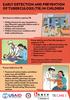 EARLY DETECTION AND PREVENTION OF TUBERCULOSIS (TB) IN CHILDREN Risk factors in children acquiring TB: Children living in the same household as a lung TB patient (especially children under 5) Children
Advice for Colleges, Universities, and Students about Ebola in West Africa For Colleges and Universities
 Advice for Colleges, Universities, and Students about Ebola in West Africa For Colleges and Universities Advice for Study Abroad, Foreign Exchange, or Other Education-related Travel Is it safe to travel
The Hepatitis B virus (HBV)
 The Hepatitis B virus (HBV) There are 400 million people in the world who live with chronic hepatitis B, including France. Most people don t even know they are infected. But there are several important
Blood borne Pathogens
 Blood borne Pathogens What Are Blood borne Pathogens? Blood borne pathogens are microorganisms such as viruses or bacteria that are carried in blood and can cause disease in people. Types of Blood borne
DID YOU KNOW? A SORE THROAT CAN KILL YOUR STUDENT
 DID YOU KNOW? A SORE THROAT CAN KILL YOUR STUDENT Each year, more than 60 Fijians die of Rheumatic Heart Disease and it all starts with an untreated sore throat. TEACHING PROGRAM FOR SCHOOLS ACROSS FIJI
swine flu vaccination:
 swine flu vaccination: what you need to know Flu. Protect yourself and others. Contents What is swine flu?............... 3 About the swine flu vaccine....... 4 What else do I need to know?...... 8 What
Skanska Utilities South. Business Continuity Plan Swine Flu
 Skanska Utilities South Business Continuity Plan Swine Flu Produced by: Reviewed by: Approved by: Date: Revision No. A Crossley P Thompson J Shelvey 1 Contents Review/Revision log 1.0 Introduction 2.0
Preparing for the Flu
 Preparing for the Flu (Including 2009 H1N1 Flu) A Communication Toolkit for Institutions of Higher Education Preparing for the Flu: A Communication Toolkit for Institutions of Higher Education The purpose
AV1300 STAFF INFLUENZA IMMUNIZATION AND EXCLUSION POLICY
 AV1300 STAFF INFLUENZA IMMUNIZATION AND EXCLUSION POLICY 1.0 PURPOSE To help ensure that those at greatest risk of complications and death from influenza are optimally protected through the appropriate
Clostridium difficile (C. difficile)
 Clostridium difficile (C. difficile) UHN Information for patients and families Read this resource to learn about: What is C. difficile How people get infected with C. difficile Treatment and medicine How
Hygiene and Infection. Control advice in the home
 Introduction The Infection Control Department Mid-Western Regional Hospital, Ennis, wrote this booklet with Clare Primary Community and Continuing Care and C-Diff Patients and Families Group. This booklet
The Reality Pertussis can be a serious illness, part icularly for babies and young children.
 Sounds of Pertussis Pertussis, also known as whooping cough, is a poten tially deadly infection that can strike at any age, but is particularly dangerous for babies. The sounds of pertussis are like no
ASBESTOS AWARENESS IN THE WORKPLACE. This easy-to-use Leader s Guide is provided to assist in conducting a successful presentation.
 ASBESTOS AWARENESS IN THE WORKPLACE This easy-to-use Leader s Guide is provided to assist in conducting a successful presentation. Featured are: INTRODUCTION: A brief description of the program and the
Sanitary Food Preparation & Safe Food Handling
 70 Feeding Infants 10 Sanitary Food Preparation & Safe Food Handling Babies are more susceptible to bacteria than older children, and unsanitary food conditions can cause serious infections. General cleanliness,
Influenza Vaccine Frequently Asked Questions. Influenza Control Program
 Influenza Vaccine Frequently Asked Questions Influenza Control Program Influenza or the flu can be a serious contagious disease, which is spread by droplet transmission through close contact with an infected
Being Prepared for an INFLUENZA PANDEMIC A KIT FOR SMALL BUSINESSES
 Being Prepared for an INFLUENZA PANDEMIC A KIT FOR SMALL BUSINESSES i Commonwealth of Australia 2006 ISBN 0 642 72389 3 This work is copyright. Apart from any use as permitted under the Copyright Act 1968,
WHEN COPD* SYMPTOMS GET WORSE
 WHEN COPD* SYMPTOMS GET WORSE *Includes chronic bronchitis, emphysema, or both. Boehringer Ingelheim Pharmaceuticals, Inc. has no ownership interest in any other organization that advertises or markets
Why you and your Family Should Get the Flu Shot
 Why you and your Family Should Get the Flu Shot Why Get VaCCinated against influenza? Influenza (flu) is a virus that can lead to serious complications, hospitalization, or even death. Even healthy children
Nurse Advice Line 1-877-813-1417
 Do you have a health question? Speak with a RN for free! Contact a registered nurse any time, day or night, for answers to your health questions. nurses can help when: You re unsure if you need to visit
FOOD POISONING. Information Leaflet. Your Health. Our Priority. Infection Prevention Stepping Hill Hospital
 FOOD POISONING Information Leaflet Your Health. Our Priority. Page 2 of 5 What is Food Poisoning? Food poisoning is an illness that occurs after eating or drinking anything that is contaminated. Usually
DO YOU WORK AROUND BLOOD OR BODY FLUIDS? Cal/OSHA s New Rules
 DO YOU WORK AROUND BLOOD OR BODY FLUIDS? Cal/OSHA s New Rules Labor Occupational Health Program University of California, Berkeley 1994 ACKNOWLEDGMENTS This booklet is a publication of the Labor Occupational
The H1N1 Flu in Ontario. A Report by Ontario s Chief Medical Officer of Health
 The H1N1 Flu in Ontario A Report by Ontario s Chief Medical Officer of Health September 2009 Ministry of Health and Long-Term Care Ministère de la Santé et des Soins de longue durée Chief Medical Officer
Name Date Class. This section explains what kinds of organisms cause infectious disease and how infectious diseases are spread.
 Fighting Disease Name Date Class Infectious Disease This section explains what kinds of organisms cause infectious disease and how infectious diseases are spread. Use Target Reading Skills Before you read,
1) Giving patient access and control over their health information
 he HIPAA Challenge: How to protect patient privacy while providing necessary information to individuals and entities involved in the patient s care that need patient information to perform necessary services.