
CHAPTER 35 HUMAN IMMUNE SYSTEM STANDARDS:SC.912.L & SC.912.L.14.6
|
|
|
- Gavin Bond
- 9 years ago
- Views:
Transcription
1 CHAPTER 35 HUMAN IMMUNE SYSTEM STANDARDS:SC.912.L & SC.912.L.14.6 SECTION 1 - Infectious Disease 1.Identify the causes of infectious disease. 2.Explain how infectious diseases are spread. Causes of Infectious Disease Changes to body physiology that disrupt normal body functions and are caused by microorganisms are called infectious diseases. This explanation, established by Louis Pasteur and Robert Koch, is called the germ theory of disease. Infectious diseases are caused by viruses, bacteria, fungi, protists, and parasitic worms. Disease-causing microorganisms are also called pathogens. Many microorganisms are symbionts that are either harmless or beneficial. Pathogens cause disease by destroying cells, disrupting body functions, or releasing toxins that kill cells or interfere with their normal functions. How Diseases Spread Infectious diseases can be spread in several ways. Some infectious diseases are spread from person to person through coughing, sneezing, physical contact, or exchange of body fluids. Most infectious diseases are spread through indirect contact, such as pathogens that are carried through the air. These pathogens can be inhaled, or they can be picked up from surfaces. Some pathogens are spread by specific kinds of direct contact, such as sexual contact or drug use that involves shared syringes. Other infectious diseases are spread through contaminated water or food. Some infectious diseases spread from animals to humans. Such a disease is called a zoonosis. Often, the spread of zoonoses involves vectors, which are disease carriers that usually do not get sick from the pathogen. SECTION 2 - Defenses Against Infection 1. Describe the body s nonspecific defenses against invading pathogens. 2. Describe the function of the immune system s specific defenses. 3. List the body s specific defenses against pathogens. Nonspecific Defenses The body has many nonspecific defenses, which defend against a wide range of pathogens. The first line of defense is skin. Skin keeps pathogens out of the body by forming a barrier that few pathogens can get through. Mucus, saliva, and tears contain an enzyme that can kill bacteria. Mucus can also trap pathogens. When pathogens do enter the body, the second line of defense goes to work. These nonspecific defenses include: o the inflammatory response, in which chemicals called histamines cause blood vessels near a wound to expand and phagocytes to move into the tissue to fight infection. o the production of proteins called interferons, which help block the replication of viruses. o the release of chemicals that produce a fever, an increase in normal body temperature, which may slow the growth of pathogens and speed up immune response. Specific Defenses: The Immune System The function of the immune system is to fight infection by inactivating foreign substances or cells that have entered the body. The specific immune response works in several ways, including: recognizing self, including cells and proteins that belong to the body. recognizing nonself, or antigens, molecules found on foreign substances. Antigens stimulate the immune system to produce cells called lymohocytes that recognize, attack, destroy, and remember specific pathogens. producing specific lymphocytes that recognize specific antigens. They work by attacking infected cells or producing antibodies, proteins which tag antigens for destruction by immune cells. The Immune System in Action The immune response works in two ways. In humoral immunity, white blood cells, called B lymphocytes (B cells), make antibodies that attack pathogens in the blood.

2 In cell-mediated immunity white blood cells, called T lymphocytes (T cells), find and destroy abnormal or infected cells. After a pathogen is destroyed, memory B cells and memory T cells stay in the body. These cells help create a faster immune response if the same pathogen enters the body again. SECTION 3 - Fighting Infectious Disease 1. Distinguish between active immunity and passive immunity. 2. Describe how public health measures and medications fight disease. 3. Describe why patterns of infectious disease have changed. Acquired Immunity You can acquire immunity without having a disease. Vaccination is the injection of a weakened or mild form of a pathogen to cause immunity. Active immunity results from vaccines or natural exposure to an antigen. Passive immunity forms when antibodies are introduced into the body. It lasts only until the immune system destroys the foreign antibodies. Public Health and Medications In 2005, less than 5 percent of human deaths were caused by infectious diseases. This statistic is the result of two major factors. The field of public health provides services that help monitor food and water supplies and promote vaccinations and healthy behavior. The development and use of many new medications, particularly antibiotics and antiviral drugs, has saved many lives by helping to cure infectious diseases. New and Re-Emerging Diseases Since 1980, many new diseases have appeared and several diseases once thought to have been eradicated have recurred. There are two main reasons for these changes. Interactions with exotic animals have increased. The misuse of medications has caused diseases that were once under control, such as tuberculosis and malaria, to evolve resistance to many antibiotics. SECTION 4 - Immune System Disorders 1. Explain what happens when the immune system overreacts to harmless pathogens. 2. Describe how HIV is transmitted and how it affects the immune system. When the Immune System Misfires Sometimes, the immune system overreacts to otherwise harmless antigens. Three types of disorders are caused in this way. The most common immune-system disorders are allergies, which occur when antigens enter the body and bind to mast cells. The mast cells release histamines, which increase the flow of blood and fluids to the area. This causes allergy symptoms. Allergic reactions in the respiratory system can cause asthma, a dangerous chronic disease in which the air passages narrow and breathing becomes difficult. When the immune system makes a mistake and attacks the body s own cells, an autoimmune disease results. Autoimmune diseases include Type I diabetes, rheumatoid arthritis, and lupus. HIV and AIDS In the 1970s, clusters of cases of opportunistic diseases diseases that attack people with weakened immune systems led to the discovery of a new disease called acquired immunodeficiency syndrome (AIDS). Research revealed that AIDS is an infectious disease caused by human immunodeficiency virus (HIV). HIV attaches to receptors on helper T cells. Once inside the cells, HIV copies itself and the new viruses infect more helper T cells. HIV infection gradually leads to the death of more and more T cells. When a person s T cell count drops to about onesixth the normal level, the person has AIDS. HIV can only be transmitted through contact with infected blood, semen, vaginal secretions, or breast milk.

3 35.1 CONTENT REVIEW QUESTIONS Causes of Infectious Disease 1. What are infectious diseases, and what causes them? 2. How did the germ theory of disease get its name? 3. What is another name that scientists use for a disease-causing agent? For Questions 4 12, match each type of disease with the type of disease-causing agent that causes it. Some types of diseasecausing agents may be used more than once. Disease 4. African sleeping sickness 5. athlete s foot 6. botulism 7. chicken pox 8. hookworm 9. influenza 10. malaria 11. trichinosis 12. tuberculosis Type of Disease-Causing Agent A. virus B. bacterium C. protist D. parasitic worm E. fungus 13. Are microorganisms always harmful to the human body? Explain your answer, and give an example. 14. List two ways that bacteria can produce illness. 15. List three ways that parasitic worms cause disease. How Diseases Spread For Questions 18 26, complete each statement by writing the correct word or words. 16. Natural selection favors pathogens with that help them spread from host to host. 17. Symptoms of disease that can spread pathogens include and. 18. The best ways to prevent infections of the nose, throat, and respiratory tract are frequent and thorough and avoiding your mouth and nose. 19. that cause skin infections can be transmitted by any body contact or contact with contaminated towels/equipment. 20. is spread from one host to another in body fluids exchanged during sexual activity. 21. Blood on shared syringes can spread certain forms of, as well as 22. A symptom of diseases spread by contaminated water or food is. 23. Lyme disease, mad cow disease, and SARS are all examples of. 24. The that carries the West Nile virus between birds and humans is a mosquito. 25. Explain how coughing and sneezing can not only spread infection, but also help protect against invading organisms.

4 35.2 CONTENT REVIEW QUESTIONS Nonspecific Defenses For Questions 1 8, write the letter of the definition that best matches each term. Term 1. skin 2. lysozyme 3. inflammatory response 4. histamines 5. interferons 6. fever 7. mucus 8. nonspecific defenses Definition A. An increase in body temperature, which slows or stops pathogens B. A secretion of the nose and throat that traps pathogens C. An enzyme found in tears and saliva that breaks down bacterial cell walls D. Chemicals that increase blood flow to tissues E. Combination of physical & chemical barriers that defend vs pathogens F. Redness, pain, and swelling at the site of an injury G. Proteins that fight viral growth H. The body s most important nonspecific defense Specific Defenses: The Immune System For Questions 9 14, complete each statement by writing the correct word or words. 9. The response is the body s response to specific invaders. 10. A substance that triggers the immune response is known as a (n). 11. The main working cells of the immune system are two types of. Their specific types are determined by a person s. 12. defend the body against pathogens that have infected body cells. The Immune System in Action For Questions 16 22, write True or False on the line provided. 13. Humoral immunity is a response to pathogens in blood and lymph. 14. The first response of humoral immunity to infection is much faster than the second response. 15. Cell-mediated immunity involves antibodies. 16. Cell-mediated immunity only works on viral diseases. 17. Complete the table to compare how humoral and cell-mediated immunity work after a virus invades the body for the first and second times. Humoral Immunity vs. Cell-Mediated Immunity Primary response: Action of Humoral Immunity Primary response: Action of Cell-Mediated Immunity Macrophages consume viruses and display their antigens on the cell surface. Helper T cells are activated. Activated B cells grow and divide rapidly. Plasma cells release antibodies that capture antigens and mark them for destruction. Secondary response: Helper T cells activate B cells and cytotoxic T cells and produce memory cells. Secondary response:

5 35.3 CONTENT REVIEW QUESTIONS Acquired Immunity 1. What was the origin of the term vaccination? Explain why this name was given. 2. How does a vaccine work? 3. What type of immunity do vaccinations produce? 4. What type of immunity does a mother pass on to her infant while breastfeeding? 5. Why is passive immunity only temporary? Public Health and Medications For Questions 7 11, complete each statement by writing the correct word or words. 6. Promoting childhood and providing clean drinking water are two activities that have greatly reduced the spread of many infectious diseases. 7. Compounds that kill bacteria without harming the host cells are called 8. The first antibiotic to be discovered was. 9. drugs inhibit the ability of viruses to invade cells or multiply within cells. 10. How did Alexander Fleming discover the first antibiotic? New and Re-Emerging Diseases For Questions 12 16, write the letter of the correct answer on the line at the left. 12. Which of the following is NOT considered to be a major cause of new or re-emerging diseases? A. misuse of medications C. vaccination B. merging of human and animal habitats D. trade in exotic animals 13. Which is an example of an infectious disease that was eliminated by public health measures? A. avian influenza C. smallpox B. hantavirus D. West Nile virus 14. How are monkeypox and SARS thought to have started in humans? A. by animal trade for pets and food C. the clearing of new areas of land in the tropics B. antibiotic resistance D. by the merging of human and animal habitats 15. Malaria and tuberculosis are two examples of diseases that have A. been totally eliminated from the human population. B. evolved resistance to many antibiotics. C. increased because of a lack of understanding of how vaccines work. D. recently been discovered in the United States. 16. Failing to follow vaccination recommendations are thought to be responsible for the comeback of A. Ebola. C. Lyme disease. B. influenza. D. measles.

6 35.4 CONTENT REVIEW QUESTIONS When the Immune System Misfires For Questions 1 5, complete each statement by writing the correct word or words. 1. An overreaction of the immune system to antigens of pollen and other harmless substances is called a(n). 2. Sneezing, a runny nose, and watery eyes are symptoms of the response in the respiratory system. 3. Drugs called counteract the effects of produced by mast cells. 4. A dangerous condition that affects the respiratory system and can be caused by allergies is called. 5. Examples of triggers for allergic reactions include tobacco smoke, pollution, molds, and pet dander. 6. What is an autoimmune disease? 7. Describe the advantage and disadvantage of treating an autoimmune illness such as lupus. 8. Complete the table about autoimmune diseases. Autoimmune Disease Autoimmune Diseases Organ or Tissue That Is Attacked Type I diabetes Connective tissues around the joints Lupus HIV and AIDS 9. What does AIDS stand for? 10. What is the term that describes diseases that attack people with a weakened immune system? 11. List four body fluids that can transmit AIDS. 12. What behaviors prevent people from being infected with HIV? 13. Why is curing HIV infection so challenging? Explain your answer.

The Immune System and Disease
 Chapter 40 The Immune System and Disease Section 40 1 Infectious Disease (pages 1029 1033) This section describes the causes of disease and explains how infectious diseases are transmitted Introduction
Name Date Class. This section explains what kinds of organisms cause infectious disease and how infectious diseases are spread.
 Fighting Disease Name Date Class Infectious Disease This section explains what kinds of organisms cause infectious disease and how infectious diseases are spread. Use Target Reading Skills Before you read,
10. T and B cells are types of a. endocrine cells. c. lymphocytes. b. platelets. d. complement cells.
 Virus and Immune System Review Directions: Write your answers on a separate piece of paper. 1. Why does a cut in the skin threaten the body s nonspecific defenses against disease? a. If a cut bleeds, disease-fighting
One of the more complex systems we re looking at. An immune response (a response to a pathogen) can be of two types:
 Immune system. One of the more complex systems we re looking at. An immune response (a response to a pathogen) can be of two types: (pathogen - disease causing organism) 1) Non specific. Anything foreign
The Immune System. 2 Types of Defense Mechanisms. Lines of Defense. Line of Defense. Lines of Defense
 The Immune System 2 Types of Defense Mechanisms Immune System the system that fights infection by producing cells to inactivate foreign substances to avoid infection and disease. Immunity the body s ability
The Body s Defenses CHAPTER 24
 CHAPTER 24 The Body s Defenses PowerPoint Lectures for Essential Biology, Third Edition Neil Campbell, Jane Reece, and Eric Simon Essential Biology with Physiology, Second Edition Neil Campbell, Jane Reece,
Immunity Unit Test Z
 Immunity Unit Test Z Name MB Multiple Choice Identify the choice that best completes the statement or answers the question. 1. Which of the pathogens in Figure 31.1 cause disease by taking over healthy
ANIMALS FORM & FUNCTION BODY DEFENSES NONSPECIFIC DEFENSES PHYSICAL BARRIERS PHAGOCYTES. Animals Form & Function Activity #4 page 1
 AP BIOLOGY ANIMALS FORM & FUNCTION ACTIVITY #4 NAME DATE HOUR BODY DEFENSES NONSPECIFIC DEFENSES PHYSICAL BARRIERS PHAGOCYTES Animals Form & Function Activity #4 page 1 INFLAMMATORY RESPONSE ANTIMICROBIAL
The Human Immune System
 The Human Immune System What is the immune system? The body s defense against disease causing organisms, malfunctioning cells, and foreign particles The First Line of Defense Skin The dead, outer layer
Figure 14.2 Overview of Innate and Adaptive Immunity
 I M M U N I T Y Innate (inborn) Immunity does not distinguish one pathogen from another Figure 14.2 Overview of Innate and Adaptive Immunity Our first line of defense includes physical and chemical barriers
Chapter 43: The Immune System
 Name Period Our students consider this chapter to be a particularly challenging and important one. Expect to work your way slowly through the first three concepts. Take particular care with Concepts 43.2
1) Siderophores are bacterial proteins that compete with animal A) Antibodies. B) Red blood cells. C) Transferrin. D) White blood cells. E) Receptors.
 Prof. Lester s BIOL 210 Practice Exam 4 (There is no answer key. Please do not email or ask me for answers.) Chapters 15, 16, 17, 19, HIV/AIDS, TB, Quorum Sensing 1) Siderophores are bacterial proteins
Name (print) Name (signature) Period. (Total 30 points)
 AP Biology Worksheet Chapter 43 The Immune System Lambdin April 4, 2011 Due Date: Thurs. April 7, 2011 You may use the following: Text Notes Power point Internet One other person in class "On my honor,
Supplemental Material CBE Life Sciences Education. Su et al.
 Supplemental Material CBE Life Sciences Education Su et al. APPENDIX Human Body's Immune System Test This test consists of 31 questions, with only 1 answer to be selected for each question. Please select
Immunity. Humans have three types of immunity innate, adaptive, and passive: Innate Immunity
 Immunity Humans have three types of immunity innate, adaptive, and passive: Innate Immunity Everyone is born with innate (or natural) immunity, a type of general protection. Many of the germs that affect
If you have a cold or the flu, you can spread the sickness to someone else. How does the sickness spread? Write your ideas on the lines below.
 The Immune System Textbook pages 100 109 Before You Read Section 3.1 Summary If you have a cold or the flu, you can spread the sickness to someone else. How does the sickness spread? Write your ideas on
Single-celled microorganisms, which can live inside or outside the body. Some cause sickness, but others are harmless.
 The Science behind the Noses are Red show: Introduction: The Noses are Red show is about allergies and the biological causes behind them. In order to explain allergies you need to understand a certain
The Immune System: A Tutorial
 The Immune System: A Tutorial Modeling and Simulation of Biological Systems 21-366B Shlomo Ta asan Images taken from http://rex.nci.nih.gov/behindthenews/uis/uisframe.htm http://copewithcytokines.de/ The
Bio 20 Chapter 11 Workbook Blood and the Immune System Ms. Nyboer
 Bio 20 Chapter 11 Workbook Blood and the Immune System Ms. Nyboer Name: Part A: Components of Blood 1. List the 3 plasma proteins and describe the function of each Albumins osmotic balance Globulins antibodies,
MISSION DEBRIEFING: Teacher Guide
 Activity on the IMMUNE SYSTEM: The Body Fights Back In this activity, the students will use a hands-on approach to learn about the immune system and how it fights off pathogens that invade the body. They
Multiple Choice Questions
 C hapter 13 WHY DO WE FALL ILL Multiple Choice Questions 1. Which one of the following is not a viral disease? (a) Dengue (b) AIDS (c) Typhoid (d) Influenza 2. Which one of the following is not a bacterial
2) Macrophages function to engulf and present antigen to other immune cells.
 Immunology The immune system has specificity and memory. It specifically recognizes different antigens and has memory for these same antigens the next time they are encountered. The Cellular Components
Core Topic 2. The immune system and how vaccines work
 Core Topic 2 The immune system and how vaccines work Learning outcome To be able to describe in outline the immune system and how vaccines work in individuals and populations Learning objectives Explain
Immune System Memory Game
 Immune System Memory Game Recommended Age: 12 years old Time: 45 minutes Everyday our bodies come in contact with millions of tiny organisms and particles that could potentially make us sick. Despite this,
Chapter 3. Immunity and how vaccines work
 Chapter 3 Immunity and how vaccines work 3.1 Objectives: To understand and describe the immune system and how vaccines produce immunity To understand the differences between Passive and Active immunity
specific B cells Humoral immunity lymphocytes antibodies B cells bone marrow Cell-mediated immunity: T cells antibodies proteins
 Adaptive Immunity Chapter 17: Adaptive (specific) Immunity Bio 139 Dr. Amy Rogers Host defenses that are specific to a particular infectious agent Can be innate or genetic for humans as a group: most microbes
Bacteria vs. Virus: What s the Difference? Grade 11-12
 Bacteria vs. Virus: What s the Difference? Grade 11-12 Subject: Biology Topic: Bacteria, viruses, and the differences between them. The role that water plays in spreading bacteria and viruses, and the
Overview of the Cattle Immune System 1
 Oregon State University BEEF043 Beef Cattle Library Beef Cattle Sciences Overview of the Cattle Immune System 1 Reinaldo F. Cooke 2 Introduction On average, the U.S. cattle industry loses more than $1
Microbiology AN INTRODUCTION EIGHTH EDITION
 TORTORA FUNKE CASE Microbiology AN INTRODUCTION EIGHTH EDITION Differentiate between innate and acquired immunity. Chapter 17 Specific Defenses of the Host: The Immune Response B.E Pruitt & Jane J. Stein
BASIC INFORMATION ABOUT HIV, HEPATITIS B and C, and TUBERCULOSIS Adapted from the CDC
 BASIC INFORMATION ABOUT HIV, HEPATITIS B and C, and TUBERCULOSIS Adapted from the CDC HIV What are HIV and AIDS? HIV stands for Human Immunodeficiency Virus. This is the virus that causes AIDS. HIV is
Tuberculosis: FAQs. What is the difference between latent TB infection and TB disease?
 Tuberculosis: FAQs What is TB disease? Tuberculosis (TB) is a disease caused by bacteria (germs) that are spread from person to person through the air. TB usually affects the lungs, but it can also affect
Lymph capillaries, Lymphatic collecting vessels, Valves, Lymph Duct, Lymph node, Vein
 WLHS/A&P/Oppelt Name Lymphatic System Practice 1. Figure 12-1 provides an overview of the lymphatic vessels. First color code the following structures. Color code in Figure 12-1 Heart Veins Lymphatic vessels/lymph
Food allergy /anaphylaxis
 Food allergy /anaphylaxis A food allergy or hypersensitivity is an abnormal response to a food that is triggered by the immune system. Allergic reactions are often mild, but can be sometimes very dangerous.
Viral Attack! Your Clean-Up Crew to the Rescue! A Gallery Demonstration at Arizona Science Center
 Viral Attack! Your Clean-Up Crew to the Rescue! A Gallery Demonstration at Arizona Science Center Table of Contents Background Information Links Background Information What is the immune system? Our body
Basics of Immunology
 Basics of Immunology 2 Basics of Immunology What is the immune system? Biological mechanism for identifying and destroying pathogens within a larger organism. Pathogens: agents that cause disease Bacteria,
Swine Flu and Common Infections to Prepare For. Rochester Recreation Club for the Deaf October 15, 2009
 Swine Flu and Common Infections to Prepare For Rochester Recreation Club for the Deaf October 15, 2009 Supporters Deaf Health Community Committee Members Julia Aggas Cathie Armstrong Michael McKee Mistie
Chapter 14: The Lymphatic System and Immunity
 Chapter 14: The Lymphatic System and Immunity Major function of the Lymphatic System o Network of vessels that collect and carry excess fluid from interstitial spaces back to blood circulation o Organs
BE SURE. BE SAFE. VACCINATE.
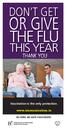 DON T GET OR GIVE THE FLU THIS YEAR THANK YOU Vaccination is the only protection. www.immunisation.ie BE SURE. BE SAFE. VACCINATE. FLU VACCINE 2013-2014 Healthcare workers prevent the spread of flu and
WHY IS THIS IMPORTANT?
 CHAPTER 1 WHAT IS MICROBIOLOGY AND WHY IS IT IMPORTANT? WHO / TDR / Crump WHY IS THIS IMPORTANT? Microbiology is more relevant than ever in today s world. Infectious diseases are a leading health-related
The Immune System. How your immune system works. Organs of the Immune System
 UW MEDICINE PATIENT EDUCATION The Immune System How your immune system works The immune system is a network of special cells, tissues, and organs that defend the body against attacks from foreign invaders,
DISEASE CAUSES AND TRANSMISSION DISEASE - any condition that prevents an organism from functioning effectively in its surroundings INFECTIOUS DISEASES
 DISEASE CAUSES AND TRANSMISSION DISEASE - any condition that prevents an organism from functioning effectively in its surroundings INFECTIOUS DISEASES caused by pathogen (e.g. bacterium, fungus, protozoan,
The State Hospital HIV / AIDS
 The State Hospital HIV / AIDS The red ribbon is the international symbol of HIV & AIDS awareness. What is HIV? HIV stands for Human Immunodeficiency Virus: H is for Human - This virus infects human beings.
Immunity and how vaccines work
 1 Introduction Immunity is the ability of the human body to protect itself from infectious disease. The defence mechanisms of the body are complex and include innate (non-specific, non-adaptive) mechanisms
Key Facts about Influenza (Flu) & Flu Vaccine
 Key Facts about Influenza (Flu) & Flu Vaccine mouths or noses of people who are nearby. Less often, a person might also get flu by touching a surface or object that has flu virus on it and then touching
Lesson 7: Respiratory and Skeletal Systems and Tuberculosis
 Glossary 1. asthma: when the airways of the lungs narrow, making breathing difficult 2. bacteria: tiny living creatures that can only be seen with a microscope; some bacteria help the human body, and other
SYSTEM Teacher Pages THE IMMUNE. Your students will learn:
 Grade Level 3-5 Sergeant Cell s Immune System Defense Team Webquest Activity Summary Comparing immune cells with a police team, the webquest activity guides students to research the immune system online.
3.0 Treatment of Infection
 3.0 Treatment of Infection Antibiotics and Medicine National Curriculum Link SCN 3-13b SCN 3-20b HWB 3-15a HWB 3-16a HWB 3-17a Learning Outcomes All students will know: Most common infections will get
First Grade The Human Body Assessment
 First Grade The Human Body Assessment 1a. When we talk about the skeletal system we are talking about what part of our body? a. stomach b. bones 1b. How many bones in your skeleton? a. more than two hundred
X-Plain Pediatric Tuberculosis Reference Summary
 X-Plain Pediatric Tuberculosis Reference Summary Introduction Tuberculosis, or TB, is a bacterial infection that causes more deaths in the world than any other infectious disease. When a child gets TB,
What is HIV? What is AIDS? The HIV pandemic HIV transmission Window period Stages of HIV infection
 Module 1 Overview of HIV Infection Purpose Pre-requisite Modules Learning Objectives To provide you with the basic terms and concepts related to HIV infection. None At the end of this module, you will
Nursing college, Second stage Microbiology Dr.Nada Khazal K. Hendi L14: Hospital acquired infection, nosocomial infection
 L14: Hospital acquired infection, nosocomial infection Definition A hospital acquired infection, also called a nosocomial infection, is an infection that first appears between 48 hours and four days after
Approaches to Infection Control
 Approaches to Infection Control Considerations for PTAs in the Clinic Objectives Describe the basic characteristics of bacteria, viruses, fungi, and parasites. Discuss the locations, advantages, and disadvantages
Blood: The Body s Vital Defense Force
 Blood: The body s vital defense force Ouch you ve cut your finger! A familiar red substance oozes out. As you reach for a bandage, take a moment to ponder the vital role this remarkable fluid performs.
Immuno-Oncology Therapies to Treat Lung Cancer
 Immuno-Oncology Therapies to Treat Lung Cancer What you need to know ONCHQ14NP07519 Introduction: Immuno-oncology represents an innovative approach to cancer research that seeks to harness the body s own
Borderless Diseases By Sunny Thai
 Borderless Diseases By Sunny Thai Millennium Development Goal #6 6. Combat HIV/AIDS, malaria and other borderless diseases. A. Halt and begin reversing spread of HIV by 2015. B. Achieve universal access
Chapter 21. What Are HIV and AIDS?
 Section 1 HIV and AIDS Today What Are HIV and AIDS? Human immunodeficiency virus (HIV) is the virus that primarily affects cells of the immune system and that causes AIDS. Acquired immune deficiency syndrome
Pneumonia Education and Discharge Instructions
 Pneumonia Education and Discharge Instructions Pneumonia Education and Discharge Instructions Definition: Pneumonia is an infection of the lungs. Many different organisms can cause it, including bacteria,
Influenza Vaccine Frequently Asked Questions. Influenza Control Program
 Influenza Vaccine Frequently Asked Questions Influenza Control Program Influenza or the flu can be a serious contagious disease, which is spread by droplet transmission through close contact with an infected
20.3 Diseases Caused by Bacteria and Viruses
 20.3 Diseases Caused by Bacteria and Viruses Lesson Objectives Explain how bacteria cause disease. Explain how viruses cause disease. Define emerging disease and explain why emerging diseases are a threat
Unit 9: The Lymphatic and Immune Systems NURSING PHYSIOLOGY (NRSG237)
 Unit 9: The Lymphatic and Immune Systems Dr. Moattar Raza Rizvi NURSING PHYSIOLOGY (NRSG237) Functions: Transports Excess Interstitial Fluid Back to Bloodstream Lymphatic vessels collect lymph from loose
Facts you should know about pandemic flu. Pandemic Flu
 Facts you should know about pandemic flu Pandemic Flu What s this brochure all about? This brochure provides information about pandemic flu. It gives the answers to 10 important questions concerning an
Candy Antigens and Antibodies
 LAB ACTIVITY: Candy Antigens and Antibodies TEACHER S EDITION Curricular Links: Biology 20, Science 30 Class Time: 1 period Suggested Answers: Question 1: What is the main function of red blood cells?
Conjunctivitis - Pink Eye
 Conjunctivitis - Pink Eye Introduction Conjunctivitis is often called pink eye. It causes inflammation of the thin, clear lining inside the eyelid and on the white of the eye. The inflammation gives the
FAQs on Influenza A (H1N1-2009) Vaccine
 FAQs on Influenza A (H1N1-2009) Vaccine 1) What is Influenza A (H1N1-2009) (swine flu) 1? Influenza A (H1N1-2009), previously known as "swine flu", is a new strain of influenza virus that spreads from
C. difficile Infections
 C. difficile Infections Introduction C. difficile is a type of bacteria that can cause diarrhea and infection of the colon. This bacterium is more likely to infect patients at hospitals and other healthcare
Functions of Blood. Collects O 2 from lungs, nutrients from digestive tract, and waste products from tissues Helps maintain homeostasis
 Blood Objectives Describe the functions of blood Describe blood plasma Explain the functions of red blood cells, white blood cells, and platelets Summarize the process of blood clotting What is Blood?
Severe Combined Immune Deficiency (SCID)
 Severe Combined Immune Deficiency (SCID) ASCIA EDUCATION RESOURCES (AER) PATIENT INFORMATION Severe combined immune deficiency (SCID) is the most serious form of primary immune deficiency and is usually
Allergies: ENT and Allergy Center of Missouri YOUR GUIDE TO TESTING AND TREATMENT. University of Missouri Health Care
 Allergies: YOUR GUIDE TO TESTING AND TREATMENT ENT and Allergy Center of Missouri University of Missouri Health Care 812 N. Keene St., Columbia, MO 65201 (573) 817-3000 www.muhealth.org WHAT CAUSES ALLERGIES
Mosby s PATHOLOGY for Massage Therapists. Lesson 9.1 Objectives. Chapter 9 Lymphatic and Immune Pathologies. Lymphatic System Overview
 Mosby s PATHOLOGY for Massage Therapists Chapter 9 Lymphatic and Immune Pathologies Lesson 9.1 Objectives Discuss anatomic structures and physiologic processes related to the lymphatic system. Describe
Selective IgA deficiency (slgad) [email protected] 0800 987 8986 www.piduk.org
 Selective IgA deficiency (slgad) [email protected] 0800 987 8986 www.piduk.org About this booklet This booklet provides information on selective IgA deficiency (sigad). It has been produced by the PID UK
Information on Measles and Whooping Cough: Vaccination and Disease
 Information on Measles and Whooping Cough: Vaccination and Disease Vaccine s Mechanism of Action Vaccines expose the recipient to a small amount of an weakened organism. Through this exposure, the body
IMPORTANT: PLEASE READ
 PART III: CONSUMER INFORMATION combined hepatitis A (inactivated) and hepatitis B (recombinant) vaccine This leaflet is part III of a three-part "Product Monograph" published when was approved for sale
ASTHMA IN INFANTS AND YOUNG CHILDREN
 ASTHMA IN INFANTS AND YOUNG CHILDREN What is Asthma? Asthma is a chronic inflammatory disease of the airways. Symptoms of asthma are variable. That means that they can be mild to severe, intermittent to
Bloodborne Pathogens
 Bloodborne Pathogens Learning Objectives By the end of this section, the participant should be able to: Name 3 bloodborne pathogens Identify potentially contaminated bodily fluids Describe 3 safe work
Childhood Diseases and potential risks during pregnancy: (All information available on the March of Dimes Web Site.) http://www.modimes.
 Childhood Diseases and potential risks during pregnancy: (All information available on the March of Dimes Web Site.) http://www.modimes.org/ Fifth disease (erythema infectiosum) is a common, mild, childhood
HIV/AIDS: General Information & Testing in the Emergency Department
 What Is HIV? HIV/AIDS: General Information & Testing in the Emergency Department HIV is the common name for the Human Immunodeficiency Virus. HIV is a retrovirus. This means it can enter the body s own
BLOOD-Chp. Chp.. 6 What are the functions of blood? What is the composition of blood? 3 major types of plasma proteins
 6.1 Blood: An overview BLOOD-Chp Chp.. 6 What are the functions of blood? Transportation: oxygen, nutrients, wastes, carbon dioxide and hormones Defense: against invasion by pathogens Regulatory functions:
Objectives: Immunity Gone Wrong: Autoimmune Diseases in Dental Hygiene Practice
 Objectives: 1) Understand the concept of self- tolerance versus non- self- tolerance. 2) Recognize systemic and oral indicators of autoimmune diseases. 3) Identify various autoimmune diseases and their
37 2 Blood and the Lymphatic System Slide 1 of 34
 1 of 34 Blood is a connective tissue that contains both dissolved substances and specialized cells. 2 of 34 The functions of blood include: collecting oxygen from the lungs, nutrients from the digestive
Whooping Cough. The Lungs Whooping cough is an infection of the lungs and breathing tubes, both of which are parts of the respiratory system.
 Whooping Cough Introduction Whooping cough is a serious bacterial infection of the lungs and breathing tubes. It is also called pertussis. About 16 million cases of whooping cough happen worldwide each
RSV infection. Information about RSV and how you can reduce the risk of your infant developing a severe infection.
 RSV infection Information about RSV and how you can reduce the risk of your infant developing a severe infection. What is RSV? RSV is one of the most common respiratory viruses and is spread easily. By
What You Should Know About ASTHMA
 What You Should Know About ASTHMA 200 Hospital Drive Galax, VA 24333 (276) 236-8181 www.tcrh.org WHAT IS ASTHMA? It s a lung condition that makes breathing difficult. The cause of asthma is not known.
Seasonal Allergies. 1995-2012 The Patient Education Institute, Inc. www.x-plain.com im010101 Last reviewed: 05/30/2012 1
 Seasonal Allergies Introduction Seasonal allergies are allergies that develop during certain times of the year. Seasonal allergies are usually a response to pollen from trees, grasses, and weeds. Constant
Immunization Healthcare Branch. Meningococcal Vaccination Program Questions and Answers. Prepared by
 Immunization Healthcare Branch Meningococcal Vaccination Program Questions and Answers Prepared by Immunization Healthcare Branch (IHB), Defense Health Agency Last Updated: 27 Mar 06 www.vaccines.mil 877-GET-VACC
Factsheet September 2012. Pertussis immunisation for pregnant women. Introduction
 Factsheet September 2012 Pertussis immunisation for pregnant women Introduction The routine childhood immunisation programme has been very effective in reducing the overall numbers of cases of pertussis.
Glossary of Terms. Section Glossary. of Terms
 Glossary of Terms Section Glossary of Terms GLOSSARY Acute: Symptoms which can occur suddenly with a short and severe course. Adrenaclick /Generic Adrenaclick : a single use epinephrine auto-injector that
Welcome to Mini Med School at the Child & Family Research Institute
 Glossary Welcome to Mini Med School at the Child & Family Research Institute On behalf of the Faculty and Staff at the Child & Family Research Institute (CFRI), we would like to welcome you to CFRI s
Thymus Cancer. This reference summary will help you better understand what thymus cancer is and what treatment options are available.
 Thymus Cancer Introduction Thymus cancer is a rare cancer. It starts in the small organ that lies in the upper chest under the breastbone. The thymus makes white blood cells that protect the body against
FOR INFORMATION CONTACT:
 NEWS RELEASE FOR INFORMATION CONTACT: Caroline Calderone Baisley Deborah C. Travers Director of Health Director of Family Health Tel [203] 622-7836 Tel [203] 622-7854 September 10, 2014 For Immediate Release
What You Need to Know About Lung Cancer Immunotherapy
 What You Need to Know About Lung Cancer Immunotherapy Lung.org/immunotherapy What is immunotherapy? Immunotherapy for cancer, sometimes called immune-oncology, is a type of medicine that treats cancer
Food Allergies and. Food allergies and the immune system. Food allergies and the immune system
 Food Allergies and Intolerances Food allergies and the immune system Food allergies and True allergies involve an adverse reaction/ response by the body s immune system to a usually harmless substance
Inflammation and Healing. Review of Normal Defenses. Review of Normal Capillary Exchange. BIO 375 Pathophysiology
 Inflammation and Healing BIO 375 Pathophysiology Review of Normal Defenses Review of Normal Capillary Exchange 1 Inflammation Inflammation is a biochemical and cellular process that occurs in vascularized
Blood Transfusion. Red Blood Cells White Blood Cells Platelets
 Blood Transfusion Introduction Blood transfusions are very common. Each year, almost 5 million Americans need a blood transfusion. Blood transfusions are given to replace blood lost during surgery or serious
MANAGING ANEMIA. When You Have Kidney Disease or Kidney Failure. www.kidney.org
 MANAGING ANEMIA When You Have Kidney Disease or Kidney Failure www.kidney.org About the Information in this Booklet Did you know that the National Kidney Foundation (NKF) offers guidelines and commentaries
Principles of Vaccination
 Immunology and Vaccine-Preventable Diseases Immunology is a complicated subject, and a detailed discussion of it is beyond the scope of this text. However, an understanding of the basic function of the
IMMUNOTHERAPY FOR THE TREATMENT OF LUNG CANCER
 IMMUNOTHERAPY FOR THE TREATMENT OF LUNG CANCER BOOKLET SUPPLEMENT Immunotherapy Immunotherapy is one of the most exciting new approaches for treating several types of cancer, including lung cancer. Immunotherapies
Blood Transfusion. There are three types of blood cells: Red blood cells. White blood cells. Platelets.
 Blood Transfusion Introduction Blood transfusions can save lives. Every second, someone in the world needs a blood transfusion. Blood transfusions can replace the blood lost from a serious injury or surgery.
disease causing micro-organisms
 disease causing micro-organisms What are disease causing micro-organisms? How many times have we been told to wash our hands before sitting down at the supper table or after touching money and other dirty