
Chec List Journal of species lists and distribution
|
|
|
- Eugenia Tate
- 10 years ago
- Views:
Transcription
1 Check List 10(2): , Check List and Authors ISSN X (available at Chec List Journal of species lists and distribution L i s t s of Species Anurans from the Serra da Bocaina National Park and surrounding buffer area, southeastern Brazil Michel V. Garey 1,5*, Diogo B. Provete 2, Itamar A. Martins 3, Célio F. B. Haddad 4 and Denise C. Rossa- Feres 1 1 Universidade Estadual Paulista, Instituto de Biociências, Letras e Ciências Exatas, Departamento de Zoologia e Botânica. R. Cristóvão Colombo, 2265, São José do Rio Preto, SP, Brazil. 2 Universidade Federal de Goiás, Instituto de Ciências Biológicas, Departamento de Ecologia, Pós-Graduação em Ecologia e Evolução Goiânia, GO, Brazil. 3 Universidade de Taubaté, Departamento de Biologia, Laboratório de Zoologia Taubaté, SP, Brazil. 4 Universidade Estadual Paulista, Instituto de Biociências, Departamento de Zoologia. C.P 199, Rio Claro, SP, Brazil. 5 Present address: Universidade Federal da Integração Latino Americana, Instituto Latino-Americano de Ciências da Vida e da Natureza. C. P. 2044, Foz do Iguaçu, PR, Brazil. * Corresponding author. [email protected] Abstract: Here, we review the species of anuran amphibian from the Serra da Bocaina National Park and its buffer area, in the Atlantic Forest of southeastern Brazil, comparing the data from a recent survey with museum records. We surveyed adult and larval anurans in ponds, marshes, and streams discontinuously from May 2008 to January In total, 63 anuran species were previously known to occur at the Park and its surrounding buffer area. In our survey, we recorded 46 species, of which five represented new records, and 22 appeared only in the historical list. Seven topotypic populations were not found in the present study. We suggest that conservation strategies for anurans in the Serra da Bocaina should also consider the surrounding areas that are subjected to anthropogenic pressure, due to the high diversity recorded, high altitudinal variation in species distribution, and various vegetation formations. Introduction Brazil is the home of 968 amphibian species, of which 932 are anurans (AmphibiaWeb 2014). The highest amphibian richness in Brazil occurs along the costal Atlantic Forest, to which many species are endemic (Rossa-Feres et al. 2011; Haddad et al. 2013). This high richness is in part due to the environmental heterogeneity created by the various vegetation types, the altitudinal, and longitudinal and latitudinal variation along this biome (Haddad and Prado 2005; Araujo et al. 2009; Ribeiro et al. 2009), which limit the dispersal and favor the occurrence of species with small range sizes (Villalobos et al. 2013). Furthermore, the climatic refugia of the Pleistocene and neotectonism (Thomé et al. 2010) seem to play a key role in dictating the contemporary species richness of several taxa (Carnaval and Moritz 2008). The Atlantic Forest is composed of two main vegetation types: Atlantic Rain Forest and Atlantic Semi-deciduous Forest (Morellato and Haddad 2000). The Serra da Bocaina National Park is a protected area in the Atlantic Forest in the Serra do Mar, at the border between the states of São Paulo and Rio de Janeiro, in Southeastern Brazil. The Park currently comprehends an area of 140,000 ha, from the sea level up to 2,088 m a.s.l. and is covered by the Atlantic Rain Forest, with natural and anthropogenic grasslands in high altitudes. Although many collections of amphibians have been carried out in the past (1925 to 1970), mainly by Adolpho and Bertha Lutz, and Werner C. A. Bokermann, no long-term ecological study encompassing an entire reproductive season had been conducted. These past research efforts resulted in 17 anuran species being described from the Park and its surrounding buffer area, which includes the Fazenda Bonito (Lutz 1925; Bokermann 1967a,b,c; Frost 2013). Eight species are only known to occur in the Park and the buffer area: Brachycephalus vertebralis, Ischnocnema pusilla, Bokermannohyla ahenea, B. clepsydra, Scinax ariadne, Megaelosia bocainensis, Physalaemus barrioi, and Paratelmatobius gaigae (Frost 2013). Recentely, two studies provided new information on the anuranfauna of the Serra da Bocaina highlands (Zaher et al. 2005; Serafim et al. 2008). Zaher et al. (2005) provided a list of anurans from the Bananal Biological Station, a protected area near the Serra da Bocaina National Park, and Serafim et al. (2008) provided a list of anurans from the surrounding buffer area of the Serra da Bocaina National Park. Despite this new information, data on anuran species composition in the area is yet fragmented and anedoctal at best. Here, we present the species list of anurans for the Serra da Bocaina National Park and its surrounding buffer area based on a recent field survey. We also gathered data about species occurrence from museum records available in online databases. Additionally, we also provide data on habitat use, which can subsidize both management plans and future research projects. Materials and Methods Our survey was concentrated in the northern region of the Serra da Bocaina National Park, mainly in São José do Barreiro, São Paulo, Brazil (Figure 1). The climate in this region is of the type Cwb (humid subtropical highland; Peel et al. 2007), with moderated temperatures, dry winters (between April and September) and warm summers (from October to March). The annual rainfall varies between 400 and 2,100 mm, with mean annual temperature of 22 C. The buffer area is a ring of 10 Km wide surrounding the 308

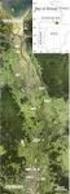
2 Park, which includes areas of the cities of Arapeí, Areias, Bananal, Cunha, São José do Barreiro, Silveiras, Ubatuba in the state of São Paulo, and Angra dos Reis and Paraty in the state of Rio de Janeiro. We surveyed tadpoles and adult anurans in 14 breeding sites monthly (May 2008 to June 2009, and November 2009 to February 2010), including ten ponds, three marshes, and one stream. These water bodies ware sampled once during one week each month. We also surveyed other ten breeding sites (six streams and four ponds) occasionally. Tadpoles were sampled with hand dipnets along the entire margins of water bodies, with effort proportional to surface area (Skelly and Richardson 2010). To survey adult anurans, we employed three different and complementary methodologies: visual encounter surveys, survey at breeding sites (Scott and Woodward 1994), and also searched for direct-developing species on the forest floor and bromeliads, near water bodies or along trails. In every breeding site, we recorded calling males as well as adults that were not vocalizing. Further environmental data on sampling sites are available in Provete (2011). Pictures from the sampling points, along with their geographical coordinates, are available online at CalPhotos (bitly.com/ Bocaina). A Google Earth file with sampling points is available at diogoprovete.weebly.com/publications. We also conducted two surveys of three days each in a tourist trail, known as Caminho do Ouro, which crosses the Park from São José do Barreiro ( S; W) to Vila de Mambucaba in Angra dos Reis, Rio de Janeiro ( S, W; Figure 1), in Figure 1. Location of the Serra da Bocaina National Park at the border between the states of São Paulo and Rio de Janeiro, in Southeastern Brazil. In detail, the Park showing the distribution of 14 water bodies sampled by us (gray circles), the Park area (crosshatched), and a tourist trail known as Caminho do Ouro (black line). January 2010 and January During these surveys, we recorded anurans encountered visually (Crump and Scott 1994) and tadpoles in streams crossing the trail using a hand dipnet. Overall, our sampling effort comprised 141 survey days throughout 20 incursions in 18 months, with approximately 1,270 sampling hours/person, with two researchers conducting the samplings. IBAMA provided collecting permits ( , , and ). Adult anurans collected were euthanized in 20% ethanol, fixed in 10% formalin, and stored in 70% ethanol. Voucher specimens are housed at the Célio F. B. Haddad collection (CFBH), Rio Claro, São Paulo, Brazil, and DZSJRP- Amphibia collection, São José do Rio Preto, São Paulo, Brazil. Tadpoles were killed and fixed in 10% formalin in the field and housed at the DZSJRP- Tadpoles collection, São José do Rio Preto, São Paulo, Brazil (Appendix 1). To assemble the historical list of species, we searched for museum records and in the literature. Literature search took into account the locality (e.g., Parque Nacional da Serra da Bocaina, Campo de Fruticultura, município de Bananal). Museum search included Museu de Zoologia da Unicamp (ZUEC-AMP; Campinas, Brazil) and Coleção Célio F. B. Haddad (CFBH; Rio Claro, Brazil) available online at (captured on 10 January 2014), besides the amphibian collection of the Smithsonian National Museum of Natural History (USNM; Washington D.C., United States). Since this study was not designed to be a taxonomic revision, we did not checked the identity of each museum specimen, except for the specimens housed at the CFBH collection. We checked each record of the other museums to exclude any outlier or those species that are not know to occur in the Serra da Bocaina using the available geographic coordinates. Furthermore, uncertain identifications, such as sp., affinis, or group were also excluded from our list. We looked for literature and catalogs mentioning material collected in the Serra da Bocaina and its buffer area (Lutz 1925; 1929; Lutz and Lutz, 1938; 1939; Lutz in Lutz 1950; Cochran 1955; Bokermann 1966; 1967a,b; Heyer 1985; Cruz and Peixoto 1984; 1985; Peixono 1989; Giaretta, Bokermann and Haddad, 1993; Pombal and Hadad 1999; Pombal 2001; Napoli and Caramaschi 2004; Almeida and Angulo 2006; Prado and Pombal 2010; Martins and Zaher 2012; Frost 2013, Caramaschi and Cruz 2013; Appendix 2). In the case of the genus Fritziana, the historical list includes four species. However, those species in the genus occurring in southern Brazil seem to be a species complex, whose members are difficult to tease apart. Therefore, we took a conservative decision and list only one species. the nomenclature used here follows Frost (2013). We run a Jackknife 2 to estimate the species richness based on the incidence of larvae and adults. We used this estimator because it can handle unequal sampling effort among habitats and is biased to species that occur in a few samples (Hortal et al., 2006). Data were analyzed using software EstimateS ver. 8.2 (Colwell, 2006). Results Sixty-three anuran species were previously known from the Serra da Bocaina National Park and its surrounding buffer zone (Table 1; Figures 2-3). In this study, we recorded 46 species (Jackknife 2 = 53 species), of which

3 also appear in museum records and five species represent new records from the Serra da Bocaina National Park. These records increased the list of the area to 68 species. We recorded 26 (57%) out of 46 species as larvae, of which four (9%) were recorded exclusively using this sampling method. We recorded 42 species (91%) as adults, in which 20 (44%) were only recorded by adult sampling, and 22 species (48%) were found as both larvae and adults (Table 1). The majority of species were recorded in forested environments (41 species, 60%), 26% (18 species) in grasslands, and 9% (six species) in both. We recorded 34 species (49%) in lentic water bodies, 16 (24%) in lotic water bodies, 14 (21%) in leaf litter, two (3%) in bromeliads, and other two (3%) occurred in both lentic and lotic water bodies. According to the IUCN Red list of threatened species (IUCN, 2008), 13 species (19%) are classified as Data Deficient (DD), whereas the remainig species were either Not Evaluated (NE) or not under any threatened status (LC). The São Paulo state red list (Garcia et al. 2009), includes 4 species as threatened: Crossodactylus dispar is endangered (EN), Paratelmatobius gaigae is vulnerable (VU), and Bokermannohyla ahenea and Physalaemus barrioi are near threatened (NT). Discussion The anuranfauna currently known in the Serra da Bocaina National Park and surrounding buffer areas represents approximately 13% of the species known to Atlantic Forest biome (Rossa-Feres et al. 2011; Haddad et al. 2013). Considering only the species richness along the Serra do Mar, the anuran diversity in the Park is similar to other localities with high altitudinal variation, such as the Boracéia Biological Station (65 species; Heyer et al. 1990) and Carlos Botelho State Park (65 species; Forlani et al. 2010). The high diversity along this mountain range is probably due to its high altitudinal variation, which favor the high species turnover along altitudinal gradients. Species turnover along altitudinal gradients in the Atlantic Forest has already been found in several groups (e.g., Almeida-Neto et al. 2006), including anurans (Giaretta et al. 1999). The greatest sampling efforts, both in the past and in the present study, was concentrated on the northern areas, above 1,000 m a.s.l. In this area, we record the highest species richness. These data reinforce the need to increase sampling efforts in the southern region of the Park and areas of lower altitude, which certainly will prove fruitful. Some topotypic populations and species known from museum records were not found in the current surveys. The majority of these species occur in the highlands, such as Bokermannohyla clepsydra, Megaelosia bocainensis, Crossodactylus dispar, Cycloramphus granulosus, Paratelmatobius gaigeae, Vitreorana eurygnatha, and Ischnocnema pusilla. Some species present direct development on the forest floor (Brachycephalus vertebralis and Holoaden suarezi, Haddad and Prado 2005), or are stream breaders (C. dispar and V. uranoscopa, Haddad and Prado 2005), which were habitats poorly sampled in our study. Since our sampling effort was concentrated in high altitude areas, widely distributed species, such as Hypsiboas faber, Leptodactylus labyrinthicus, and Leptodactylus mystacinus and also those known to occur in lower altitude areas (Serafim et al. 2008) were not recorded. The specific locality in which Bokermann (1972) found B. clepsydra, and Giaretta et al. (1993) found M. bocainensis, called Campo de Friticultura (also known as Fazenda Ponte Alta) was surveyed for 14 consecutive months. However, we find neither adults nor tadpoles of these species. Probably, the lack of current records of B. clepsydra might be due to environmental changes, occurred since this area passed to the Park administration in the late 1970s. After that, the forest expanded and the landscape changed dramatically, which might have contributed to the local decline of this population. The same seems to be the case for other endemic species, which were known to inhabit the Campo de Fruticultura, such as Physalaemus barrioi that now is found only in open areas in the buffer area of the Park (Provete et al. 2012). The two survey techniques employed in this study demonstrated to be complementary. We recorded four species only by sampling tadpoles (Phasmahyla cochranae, Scinax ariadne, Scinax crospedospilus, and Thoropa taophora). While 20 species were only recorded by adult sampling, and 22 species were found as both larvae and adults. Both methods contribute to a more accurate sampling of the anuran richness if applied together, as already pointed out by a recent study (Silva 2010). We recorded the majority of species in forested environments, including most of the endemic species in the study area (Table 1). However, the high species richness in grasslands, with some of the species restricted to this environment (e.g., P. barrioi), highlight the need for conserving this type of environment, which currently is under high anthropogenic pressure in the surrounding buffer area. The conservation status of most species was not evaluated yet, mainly due to lack of detailed information about natural history (IUCN 2008; Garcia et al. 2009). Bokermannohyla ahenea and P. barrioi are both classified as Near Threatened and are also endemic to the Serra da Bocaina highlands. Two species listed as threatened in the state redlist (Garcia et al. 2009) are found in the Park: C. dispar (EN) and P. gaigeae (VU). Crossodactylus dispar is widely distributed, occuring in the states of Rio de Janeiro, São Paulo, and Minas Gerais. Paratelmatobius gaigeae is also endemic to the study area, occurring at the Fazenda do Bonito and Bananal Ecological Station (Zaher et al. 2005; Frost 2013). None of the former species were recorded by us, and more field work aiming specifically to collect those species seems to be necessary to evaluate their conservation status properly and extent of occurrence. In this study, we provided a list of anuran species, mainly for the northern portion of the Serra da Bocaina considering the current survey and museum data. Information about species richness and composition and current population trends are relevant to subsidize management plans and conservation strategies (Colombo et al. 2008). Furthermore, data about species distribution can have an additional practical application in providing data to studies on species distribution modeling under future climatic scenarios (Bini et al. 2006), as well as helping onthe-ground conservation measures by the protected area network in the Atlantic Forest of southeastern Brazil. 310

4 Figure 2. Some species of amphibians from the Serra da Bocaina National Park: (A) Aplastodiscus albosignatus; (B); A. callipygius (C) A. perviridis; (D) A. arildae; (E) Bokermannohyla ahenea; (F) B. circumdata; (G) Dendropsophus elegans (H) D. microps; (I) D. minutus; (J) Hypsiboas bandeirantes; (K) Scinax sp. (aff. duartei); (L) Scinax hayii; (M) Scinax sp. (aff. obtriangulatus); (N) S. atratus; (O) S. eurydice; (P) S. flavoguttatus; (Q) S. squalirostris; (R) Trachycephalus imitatrix. 311

5 Figure 3. Some species of amphibians from the Serra da Bocaina National Park: (A) Fritziana sp.; (B) Fritziana sp.; (C) Vitreorana uranoscopa; (D) Hylodes sp.; (E) Hylodes phyllodes; (F) Ischnocnema sp. (aff. guentheri); (G) I. parva; (H) I. vizottoi; (I) Ischnocnema sp. (aff. melanopygia); (J) Leptodactylus latrans; (K) L. furnarius; (L) Physalaemus barrioi; (M) P. cuvieri; (N) P. olfersii; (O) Rhinella icterica; (P) Proceratophrys melanopogon; (Q) Chiasmocleis mantiqueira; (R) Myersiella microps. 312

6 Table 1. Species list of anurans from the Serra da Bocaina National Park and surrounding buffer area, southeastern Brazil. * = endemic species to the Serra da Bocaina; ** type locality is the Serra da Bocaina. Museum record: ZUEC = Museu de Zoologia da Unicamp; CFBH Coleção Célio F. B. Haddad; USNM = Smithsonian National Museum of Natural History; MZUSP = Museu de Zoologia da USP; MNRJ = Museu Nacional do Rio de Janeiro; Survey data: P = Present study; M = Museum or literature record, or B = both; Environment: forest, open areas, or both; Habitat used for reproduction: FF = forest floor; LE = lentic; LO = lotic; LL = lentic and lotic; BR = bromeliads. Altitude: altitudinal variation in which the species was recorded; Survey method with which the species was recorded: A = adult; T = tadpole; or B = both. IUCN conservation status and São Paulo State Red List: EN = endangered; VU = vulnerable; NT = near threatened; DD = data deficient; LC = least concern; NE = Not evaluated. FAMILY/SPECIES REFERENCE/MUSEUM RECORD SURVEY DATA ENVIRONMENT HABITAT ALTITUDINAL RANGE (M) Brachycephalidae Brachycephalus ephippium (Spix, 1824) Zaher et al. 2005; CFBH M Forest FF? - LC LC Brachycephalus vertebralis Pombal, 2001*,** Pombal 2001; CFBH; MNRJ M Forest FF? - DD DD Ischnocnema parva (Girard 1853) Zaher et al. 2005; Serafim et al. 2008; USMN B Forest FF 1,200-1,600 A LC LC Ischnocnema pusilla (Bokermann, 1967)*,** Bokermann 1967a; MZUSP M Forest FF 1,600 - DD DD Ischnocnema vizottoi Martins & Haddad, 2010 Martins and Haddad 2010 B Both FF 1,400-1,600 A NE NE Ischnocnema sp. (aff. guentheri) Zaher et al. 2005; Serafim et al. 2008; USNM B Forest FF 300-1,600 A NE NE Ischnocnema sp. (aff. melanopygia) - P Forest FF 1,400-1,600 A NE NE Ischnocnema sp. (gr. lactea) Serafim et al B Forest FF 1,500 A NE NE Bufonidae Rhinella icterica (Spix, 1824) Zaher et al. 2005; Serafim et al. 2008; USNM B Open areas LE 1,400-1,600 B LC LC Rhinella ornata (Spix, 1824) Serafim et al B Forest LE A LC LC Centrolenidae Vitreorana eurygnatha (Lutz, 1925) Lutz 1925; Serafim et al. 2008; Heyer 1985; CFBH; USNM; ZUEC; MZUSP METHOD IUCN STATUS SÃO PAULO STATE RED LIST M Forest LO 1,200-1,700 - LC LC Vitreorana uranoscopa (Müller, 1924) Heyer 1985; CFBH; USNM B Forest LO 1,400-1,600 A LC LC Ceratophryidae Ceratophrys aurita (Raddi, 1823) USNM M? LE? - LC LC Craugastoridae Haddadus binotatus (Spix, 1824) Zaher et al. 2005; Serafim et al. 2008; CFBH M Forest FF Up to 1,100 - LC LC Holoaden suarezi Martins & Zaher, 2013 Zaher et al. 2005; Martins and Zaher 2013; MZUSP M Forest FF 900 1,300 - NE NE Cycloramphidae Cycloramphus eleutherodactylus (Miranda-Ribeiro, 1920) Zaher et al M Forest FF? - DD LC Cycloramphus granulosus Lutz, 1929 Lutz 1929; USNM; ZUEC M? FF 1,200-1,700 - DD LC Thoropa taophora (Miranda-Ribeiro, 1923) - P Forest LO T NE NE Hemiphractidae Fritziana sp. Serafim et al. 2008; USNM; ZUEC B Open areas BR 1,500-1,600 A NE NE Hylidae Aplastodiscus albosignatus (Lutz & Lutz, 1938) USNM B Forest LO 1,300-1,600 B LC LC Aplastodiscus arildae (Cruz & Peixoto, 1987) Zaher et al. 2005; CFBH; USNM; ZUEC B Forest LE 1,300-1,400 A LC LC Aplastodiscus callipygius (Cruz & Peixoto, 1985)** Cruz and Peixoto 1984; CFBH; MZUSP, MNRJ B Forest LO 1,300-1,500 B LC LC Aplastodiscus leucopygius (Cruz & Peixoto, 1985) Zaher et al. 2005; Serafim et al. 2008; CFBH M Forest LE 1,100-1,500 - LC LC Aplastodiscus perviridis Lutz 1950** Lutz 1950; Serafim et al. 2008; CFBH; ZUEC; MNRJ B Open areas LL 1,300-1,600 B LC LC Bokermannohyla ahenea (Napoli & Caramaschi, 2004)*,** Napoli and Caramaschi 2004; CFBH, MZUSP, MNRJ B Forest LO 1,500-1,600 B DD NT Bokermannohyla circumdata (Cope, 1871) Zaher et al. 2005; Serafim et al. 2008; CFBH; ZUEC B Open areas LE 1,500-1,600 B LC LC Bokermannohyla clepsydra (Lutz, 1925)* Lutz 1925; Bokermann 1972; MNRJ; MZUSP M Forest LO? - DD DD Dendropsophus elegans (Wied-Neuwied, 1824) Zaher et al. 2005; Serafim et al B Open areas LE 1,400-1,600 A LC LC Dendropsophus microps (Peters, 1872) Zaher et al ; Serafim et al. 2008; CFBH; ZUEC B Both LE 1,000-1,600 B LC LC Dendropsophus minutus (Peters, 1872) Zaher et al. 2005; Serafim et al. 2008; CFBH; ZUEC B Both LE 1,000-1,600 B LC LC Hypsiboas bandeirantes Caramaschi & Cruz, 2013 Zaher et al. 2005; Serafim et al. 2008; Caramaschi and Cruz 2013; CFBH; USNM; MNRJ; ZUEC B Both LE 1,000-1,600 B NE NE 313

7 Table 1. Continued. FAMILY/SPECIES REFERENCE/MUSEUM RECORD SURVEY DATA ENVIRONMENT HABITAT ALTITUDINAL RANGE (M) Hypsiboas pardalis (Spix, 1824) Zaher et al. 2005; Serafim et al. 2008; USNM B Open areas LE 900-1,000 A LC LC Hypsiboas faber (Wied-Neuwied, 1821) Zaher et al. 2005; Serafim et al. 2008; ZUEC M Open areas LE? - LC LC Phasmahyla cochranae (Bokermann, 1966)** Bokerman 1966; MZUSP; USNM; ZUEC B Forest LO 1,300-1,400 T LC LC Scinax ariadne (Bokermann, 1967)*,** Bokermann 1967c; CFBH; MZUSP; ZUEC B Forest LO 1,300-1,400 T DD DD Scinax atratus (Peixoto, 1989)** Peixoto 1989; MZUSP B Forest BR 1,200-1,300 A DD DD Scinax crospedospilus (Lutz, 1925) - P Forest LE 1,400-1,500 T LC LC Scinax eurydice (Bokermann, 1968) - P Open areas LE 1,500-1,600 A LC LC Scinax flavoguttatus (Lutz & Lutz, 1939)** Lutz and Lutz 1939; USNM B Forest LE 1,200-1,300 B LC LC Scinax fuscomarginatus (Lutz, 1925) Serafim et al M Open areas LE 1,300-1,500 - LC LC Scinax fuscovarius (Lutz, 1925) Serafim et al B Open areas LE 1,400-1,500 A LC LC Scinax hayii (Barbour, 1909) Zaher et al. 2005; Serafim et al. 2008; USNM B Open areas LE 1,300-1,600 B NE NE Scinax squalirostris (Lutz, 1925)** Lutz 1925; Serafim et al. 2008; USNM; ZUEC B Open areas LE 1,500-1,600 B LC LC Scinax sp. (aff. duartei) CFBH; ZUEC B Both LE 1,400-1,600 B NE NE Scinax sp. (aff. obtriangulatus) ZUEC B Forest LE 1,200-1,600 B NE NE Sphaenorhynchus orophilus (Lutz & Lutz, 1938) Lutz and Lutz 1938; USNM; METHOD IUCN STATUS SÃO PAULO STATE RED LIST M? LE? - LC LC Trachycephalus imitatrix (Miranda-Ribeiro, 1926) CFBH; USNM; ZUEC B Forest LE B LC DD Hylodidae Crossodactylus dispar Lutz, 1925 Lutz 1925; USNM M Forest LO - DD EN Hylodes asper (Müller, 1924) USNM B Forest LO A LC LC Hylodes phyllodes Heyer & Cocroft, P Forest LO A LC LC Hylodes sp. Serafim et al B Forest LO B NE NE Megaelosia bocainensis Giaretta, Bokermann & Haddad, 1993*,** Giaretta et al. 1993, MNRJ M Forest LO - DD DD Megaelosia goeldii (Baumann, 1912) USNM; MNRJ M Forest LO - LC LC Leptodactylidae Adenomera bokermanni (Heyer, 1973) Almeida and Angulo 2006; USNM M Both FF - LC LC Leptodactylus furnarius Sazima & Bokermann, 1978 Zaher et al. 2005; USNM; ZUEC B Open areas LE B LC LC Leptodactylus labyrinthicus (Spix, 1824) Serafim et al. 2008; M Open areas LE - LC LC Leptodactylus latrans (Steffen, 1815) USNM B Open areas LE A LC LC Leptodactylus mystacinus (Burmeister, 1861) Zaher et al. 2005; M Open areas LE - LC LC Paratelmatobius gaigeae (Cochran, 1938)**,* Cochran 1938; Zaher et al. 2005; MZUSP; USMN M Forest LE DD VU Physalaemus barrioi Bokermann, 1967**,* Bokermann 1967b; Provete et al. 2012; CFBH; MZUSP; USNM; ZUEC B Open areas LE B DD NT Physalaemus cuvieri Fitzinger, 1826 Serafim et al. 2008; B Open areas LE B LC LC Physalaemus maculiventris (Lutz, 1925) Zaher et al M Forest LE Up to LC LC Physalaemus olfersii (Lichtenstein & Martens, 1856) Serafim et al. 2008; Zaher et al. 2005; ZUEC; USNM B Forest LE B LC LC Microhylidae Chiasmocleis mantiqueira Cruz, Feio & Cassini, 2007 Zaher et al B Forest LE B DD DD Myersiella microps (Duméril & Bibron, 1841) Zaher et al. 2005; CFBH B Forest FF A LC LC Odontophrynidae Proceratophrys appendiculata (Günther, 1873) MZUSP B Forest LO A LC LC Proceratophrys boiei (Wied-Neuwied, 1824) Serafim et al. 2008; Zaher et al B Forest LE Up to 1100 A LC LC Proceratophrys melanopogon (Miranda-Ribeiro, 1926) Zaher et al. 2005; Provete et al. 2013; MZUSP; ZUEC B Forest LL B LC LC The name Chismocleis mantiqueira seems to be more adequate to designate the population of this species occurring in the study area, instead of Chiasmocleis leucosticta, from which it was separated (M. Forlani, pers. comm.). 314

8 Acknowledgments: We thank all those who helped on the fieldwork E.R.Pinto, R.C. Rodrigues, T.M. Koga, L. Santos, T.A.L. de Oliveira, C. Canedo, M. Martins, L. Ugioni, L.B. Nascimento, and A. Juarez. B. Vilela for help with the map. MVG received a CNPq post-doctoral fellowship. DBP receives a CAPES-DS doctoral fellowship and a CAPES-PDSE (Proc. # ). This study was funded by FAPESP (processes 08/ , 08/ , 01/ , 08/ , 06/ ), and joint CNPq/ FAPESP project (2010/ ). DCRF and CFBH are CNPq fellows. We also thank the staff of the park for logistical assistance and housiing. Literature cited Almeida-Neto, M., G. Machado, R. Pinto-da-Rocha and A.A. Giaretta Harvestman (Arachnida: Opiliones) species distribution along three Neotropical elevational gradients: an alternative rescue effect to explain Rapoport s rule? Journal of Biogeography 33(2): AmphibiaWeb Information on amphibian biology and conservation. Available at: Captured on 3 February Araújo, O.G.D.S., L.F.D. Toledo, P.C.A. Garcia and C.F.B. Haddad The amphibians of São Paulo state, Brazil. Biota Neotropica 9(4): Bini, L.M., J.A.F. Diniz-Filho, T.F.L.V.B. Rangel, R.P. Bastos and M.P. Pinto Challenging Wallacean and Linnean shortfalls: knowledge gradients and conservation planning in a biodiversity hotspot. Diversity and Distributions 12(5): Bokermann, W.C.A A new Phyllomedusa from southeastern Brazil. Herpetologica 22(4): Bokermann, W.C.A. 1967a. Una nueva especie de Eleutherodactylus del sudeste brasileño (Amphibia, Leptodactylidae). Neotropica 13(40): 1 3. Bokermann, W.C.A. 1967b. Três novas especies de Physalaemus do sudeste brasileiro (Amphibia, Leptodactylidae). Brazilian Journal of Biology 27(2): Bokermann, W.C.A. 1967c. Dos nuevas espécies de Hyla Del grupo catharinae. Neotropica 13: Bokermann, W.C.A Notas sobre Hyla clepsydra A. Lutz (Anura, Hylidae). Brazilian Journal of Biology 32: Carnaval, A.C. and C. Moritz Historical climate modelling predicts patterns of current biodiversity in the Brazilian Atlantic forest. Journal of Biogeography 35(7): Colombo, P., A. Kindel, G. Vinciprova and L. Krause Composição e ameaças à conservação dos anfíbios do Parque Estadual de Itapeva, município de Torres, Rio Grande do Sul, Brasil. Biota Neotropica 8(3): Colwell, R.K Estimates: Statistical estimation of species richness and shared species from samples. Version 8.2. Accessible at: Crump, M.L. and N.J. Scott Jr Visual encounter surveys; pp , in: W.R. Heyer, M.A. Donnelly, R.W. McDiarmid, L.-A.C. Hayek and M.S. Foster (ed.). Measuring and monitoring biological diversity: Standard methods for Amphibians. Washington: Smithsonian Institution Press. Cruz, C.A.G. and O.L. Peixoto Especies verdes de Hyla: o complexo albosignata (Amphibia, Anura, Hylidae). Arquivos de Universidade Federal Rural do Rio de Janeiro 7: Forlani, M.C., P.H. Bernardo, C.F.B. Haddad and H. Zaher Herpetofauna do Parque Estadual Carlos Botelho, São Paulo, Brasil. Biota Neotropica 10(3): Frost, D.R Amphibian Species of the World: an Online Reference. Version 5.6 (9 January 2013). Accessible at: org/herpetology/amphibia/index.html. Captured on 6 August Giaretta, A.A., W.C.A. Bokermann and C.F.B. Haddad A review of the genus Megaelosia (Anura: Leptodactylidae) with a description of a new species. Journal of Herpetology 27(3): Giaretta, A.A., K.G. Facure, R.J. Sawaya, J.H.M. Meyer and N. Chemin Diversity and abundance of litter frogs in a montane forest of Southeastern Brazil: seasonal and altitudinal changes. Biotropica 31(4): Haddad, C.F.B. and C.P.A. Prado Reproductive modes in frogs and their unexpected diversity in the Atlantic Forest of Brazil. Bioscience 55(3): Haddad, C.F.B., L.F. Toledo, C.P.A. Prado, D. Loebmann, J.L. Gasparini and I. Sazima Guia dos anfíbios da Mata Atlântica diversidade e biologia. São Paulo: Anolis Books, 542 pp. Heyer, W.R Taxonomic and natural history notes on frogs of the genus Centrolenella (Amphibia: Centrolenidae) from southeastern Brasil and adjacent Argentina. Papéis Avulsos de Zoologia 36: Heyer, W.R., A.S. Rand, C.A.G. Cruz, O.L. Peixoto and C.E. Nelson Frogs of Boracéia. Arquivos de Zoologia 31(4): Hortal, J., P.A.V. Borges and C. Gaspar Evaluating the performance of species richness estimators: sensitivity to sample grain size. Journal of Animal Ecology 75: Lutz, A Batraciens du Brésil. Comptes Rendus et Mémoires Hebdomadaires des Séances de la Société de Biologie et des ses Filiales 93(2): Lutz, A Taxonomia e biologia do gênero Cycloramphus. Memórias do Instituto Oswaldo Cruz 22: Lutz, A. and B. Lutz I. On Hyla aurantiaca Daudin and Sphoenorhynchus Tschudi and on two allied Hylae from southeastern Brazil. II. Two new hylae: H. albosignata n. sp. & H. pickeli. Anais da Academia Brasileira de Ciências 10: Lutz, A. and B. Lutz New Hylidae from Brazil. Anais da Academia Brasileira de Ciências 11: Lutz, A Anfíbios anuros da Coleção Adolpho Lutz: V. Locomoção e Estutura das Extremidades V.a. Phyllomedusa (P.) burmeisteri distincta A. Lutz V.b. Aplastodiscus perviridis A. Lutz. Memórias do Instituto Oswaldo Cruz 48: Lutz, B Brazilian species of Hyla. Austin: Texas Press. 268 pp. Martins, I.A. and C.F.B. Haddad A new species of Ischnocnema from highlands of the Atlantic Forest, Southeastern Brazil (Terrarana, Brachycephalidae). Zootaxa 2617: Martins, I.A. and H. Zaher A new species of the highland frog genus Holoaden (Amphibia, Strabomantidae) from cloud forests of southeastern Brazil. Zootaxa 3599: Miranda-Ribeiro, A O gênero Telmatobius já foi constatado no Brasil? Revista do Museu Paulista 12: Morellato, L.P.C. and C.F.B. Haddad Introduction: The Brazilian Atlantic Forest. Biotropica 32(4b): Napoli, M.F. and U. Caramaschi Two new species of the Hyla circumdata group from Serra do Mar and Serra da Mantiqueira, southeastern Brazil, with description of the advertisement call of Hyla ibitipoca (Anura, Hylidae). Copeia 2004(3): Peel, M.C., B.L. Finlayson and T.A. Mcmahon Updated world map of the köppen-geiger climate classification. Hydrology and Earth System Sciences 11: Peixoto, O.L Duas novas espécies de Ololygon do grupo perpusilla (Amphibia, Anura, Hylidae). Arquivos de Universidade Federal Rural do Rio de Janeiro 11: Pombal Jr., J.P A new species of Brachycephalus (Anura: Brachycephalidae) from Atlantic Rain Forest of southeastern Brazil. Amphibia-Reptilia 22: Provete, D.B Diversity and resource use in a Neotropical tadpole metacommunity. Saarbrücken: LAP Lambert Academic Publishing. 77 pp. Provete, D.B., M.V. Garey, L.F. Toledo, J. Nascimento, L.B. Nascimento, D.C. Rossa-Feres and C.F.B. Haddad Redescription of Physalaemus barrioi (Anura: Leiuperidae). Copeia 2012(3): Provete, D.B., L.S.O. Melo, M.V. Garey, F.B.R. Gomes, I.A. Martins and D.C. Rossa-Feres Larvae of Proceratophrys melanopogon (Amphibia: Anura), with emphasis on internal oral morphology and comparisons with P. cururu and P. moratoi. Herpetologica 69(2): Ribeiro, M.C., J.P. Metzger, A.C. Martensen, F.J. Ponzoni and M.M. Hirota The Brazilian Atlantic Forest: How much is left, and how is the remaining forest distributed? Implications for conservation. Biological Conservation 142: Rossa-Feres, D.D., R.J. Sawaya, J. Faivovich, J.G.R. Giovanelli, C.A. Brasileiro, L. Schiesari, J. Alexandrino and C.F.B. Haddad Amphibians of São Paulo state, Brazil: State-of-art and perspectives. Biota Neotropica 11: Scott Jr., N.J. and B.D. Woodward Standard techniques for inventory and monitoring: Surveys at breeding sites; pp , in W.R. Heyer, M.A. Donnelly, R.W. McDiarmid, L.-A.C. Hayek and M.S. Foster (ed.). Measuring and monitoring biological diversity: Standard methods for Amphibians. Washington: Smithsonian Institution Press. Serafim, H., S. Ienne, P.J.P. Cicchi and J. Jim Anurofauna de remanescentes de floresta Atlântica do município de São José do Barreiro, Estado de São Paulo, Brasil. Biota Neotropica 8(2): Silva, F.R Evaluation of survey methods for sampling anuran species richness in the Neotropics. South American Journal of Herpetology 5(3): Skelly, D.K. and J.L. Richardson Larval sampling; pp , in: C.K. Dodd (ed.). Amphibian Ecology and conservation, a handbook of techniques. Oxford: Oxford University Press. Thomé, M.T.C., K.R. Zamudio, J.G.R. Giovanelli, C.F.B. Haddad, F.A. Baldissera Jr. and J. Alexandrino Phylogeography of endemic toads and post-pliocene persistence of the Brazilian Atlantic Forest. Molecular Phylogenetics and Evolution 55: Villalobos, F., R. Dobrovolski, D.B. Provete, S.F. Gouveia Is rich and rare the common share? Describing biodiversity patterns to inform conservation practices for South American anurans. PLoS one 8: e Zaher, H., E. Aguiar and J.P. Pombal Paratelmatobius gaigeae (Cochran, 1938) re-discovered (Amphibia, Anura, Leptodactylidae). Arquivos do Museu Nacional 63:

9 Received: July 2013 Accepted: March 2014 Published online: May 2014 Editorial responsibility: Marcelo Kokubum Appendix 1. Specimens collected in the study area during the course of this study. Brachycephalidae: Ischnocnema parva (DZSJRP ); Ischnocnema vizottoi (CFBH ; DZSJRP ); Ischnocnema sp. (aff. guentheri) (DZSJRP 13937, ; CFBH ); Ischnocnema sp. (aff. melanopygia) (DZSJRP ); Bufonidae: Rhinella icterica (DZSJRP , 12103, ); Centrolenidae: Vitreorana uranoscopa (DZSJRP 11705); Hemiphractidae: Fritziana sp. (DZSJRP 11733, 12156, 12159; CFBH 28886); Hylidae: Aplastodiscus albosignatus (DZSJRP ); Aplastodiscus arildae (DZSJRP 11730, 12122, 13924); Aplastodiscus callipygius (DZSJRP 13982); Aplastodiscus perviridis (DZSJRP , 13924; CFBH ); Bokermannohyla ahenea (DZSJRP , 13920, 13947; CFBH ); Bokermannohyla circumdata (DZSJRP , , 13934; CFBH 28887); Dendropsophus elegans (DZSJRP ; CFBH 28782); Dendropsophus microps (DZSJRP , 11739, ; CFBH ); Dendropsophus minutus (DZSJRP , ; CFBH ); Hypsiboas bandeirantes (DZSJRP , ; CFBH , ); Hypsiboas pardalis (DZSJRP 11704); Phasmahyla cochranae (DZSJRP L2008.1); Scinax ariadne (DZSJRP L2031.1, L2033.1, L2098.1); Scinax atratus (DZSJRP 13960, ); Scinax crospedospilus (DZSJRP L1969.2); Scinax eurydice (DZSJRP 12153); Scinax flavoguttatus (DZSJRP 11706); Scinax fuscovarius (CFBH ); Scinax squalirostris (DZSJRP , 13919; CFBH ); Scinax sp. (aff. duartei) (DZSJRP ; CFBH ); Scinax hayii (DZSJRP ; CFBH ); Scinax sp. (aff. obtriangulatus) (DZSJRP , , 12121; CFBH ); Trachycephalus imitatrix (DZSJRP 12123, 14160, 14002); Hylodidae: Hylodes sp. (DZSJRP 12154, 13961); Hylodes asper ( ); Leptodactylidae: Leptodactylus furnarius (DZSJRP , ; CFBH ); Leptodactylus latrans (DZSJRP 12155); Physalaemus barrioi (DZSJRP ; CFBH 28817); Physalaemus cuvieri (DZSJRP ; CFBH ); Physalaemus olfersii (DZSJRP 13958, 13999); Microhylidae: Chiasmocleis mantiqueira (DZSJRP ; CFBH ); Myersiella microps (DZSJRP ); Odontophrynidae: Proceratophrys appendiculata (DZSJRP ); Proceratophrys melanopogon (DZSJRP , ; CFBH ). Appendix 2. Specimens from museum records. Brachycephalidae: Brachycephalus ephippium (CFBH ); Brachycephalus vertebralis (CFBH ; MNRJ , 11130, 2053, 10599, , , , 11112, 11114, , 11120, 11122, 11123, , 11131, 11132); Ischnocnema pusilla (WCAB-MZUSP 31461); Ischnocnema sp. (aff. guentheri) (USNM , 96752); Ischnocnema parva (USNM ); Bufonidae: Rhinella icterica (USNM , ); Centrolenidae: Vitreorana eurygnatha (CFBH , 19278; USNM 96558, , 96562, 96563, , ; MZUSP ; ZUEC ); Vitreorana uranoscopa (CFBH ; USNM 96557, 96559, ); Ceratophryidae: Ceratophrys aurita (USNM , ); Craugastoridae: Haddadus binotatus (CFBH 22590); Holoaden suarezi (MZUSP , 94415); Cycloramphidae: Cycloramphus granulosus (USNM , ; ZUEC 2166); Hemiphractidae: Fritziana fissilis (USNM ; ZUEC ); Fritziana goeldii (USNM , , , , 96705); Fritziana ohausi (USNM , ); Fritziana sp. (USNM ); Hylidae: Aplastodiscus albosignatus (USNM 96644); Aplastodicus arildae (CFBH 17518; USNM , 96567, , , ; ZUEC 6542); Aplastodicus callipygius (CFBH ; WCAB-MZUSP 31190, , ; MNRJ 4176); Aplastodicus leucopygius (CFBH 18109); Aplastodicus perviridis (AL-MNRJ 2132; CFBH 232, , ; ZUEC 7542, 7545, 7572, 7564); Bokermannohyla ahenea (CFBH 17517, , , , ; MZUSP 93493, , , , , , , 93492, 93495, , , 93487, 93496, , , 93504, , , , , , , 93513, 93521, 93526, 93536, 93529, , ; MNRJ ); Bokermannohyla circumdata (CFBH ; ZUEC 2027); Bokermannohyla clepsydra (WCAB-MZUSP , , , ; AL-MNRJ 976); Dendropsophus microps (CFBH , 18125; USNM , , 96711; ZUEC , , , , 6545, 6563, , ); Dendropsophus minutus (CFBH 17520, 18115, ; USNM , ); Hypsiboas bandeirantes (CFBH 228, ; USNM , , ; MNRJ , 3288, , , , 83699, , , ; AL-MNRJ , , ; ZUEC ); Hypsiboas faber (ZUEC 6541); Hypsiboas pardalis (USNM 81128); Phasmahyla cochranae (USNM , 96642; WCAB- MZUSP 31184; ZUEC , 2026, 15982); Scinax ariadne (CFBH 585, 18103, , 18124, 19543; WCAB-MZUSP ; ZUEC , 16186); Scinax atratus (WCAB-MZUSP 31326); Scinax flavoguttatus (USNM , ); Scinax squalirostris (USNM , ; ZUEC 6598, ); Scinax sp. (aff. duartei) (CFBH 229; ZUEC , ); Scinax hayii (USNM ); Scinax sp. (aff. obtriangulatus) (ZUEC ); Sphaenorhynchus orophilus (USNM ); Trachycephalus imitatrix (CFBH 18110; ZUEC ; USNM ); Hylodidae: Crossodactylus dispar (USNM , 96617, 96619, , 96737, 96741); Hylodes asper (USNM , , 81153); Megaelosia bocainensis (MNRJ 15900); Megaelosia goeldii (USNM 96763; AL-MNRJ 2306); Leptodactylidae: Adenomera bokermanni (USNM ); Leptodactylus furnarius (USNM , , ; ZUEC , 6597, 16168); Leptodactylus latrans (USMN ); Paratelmatobius gaigae (USNM ; MZUSP , , , , , , , , , , ); Physalaemus barrioi (CFBH 227, 17516, 17519, 18120, 24182, 22541; WCAB-MZUSP ; USNM ; ZUEC 2025, 6472, 6353, 9259, ); Physalaemus olfersii (USNM ; ZUEC 941, , 6544, 6560, 6562); Microhylidae: Myersiella microps (CFBH 20511); Odontophrynidae: Proceratophrys appendiculata (MZUSP , , , , , , , , , , , , , , , 53044, 31360); Proceratophrys melanopogon (ZUEC 3504; MZUSP , , , , , , , , ; , , , , 0931, 31357, 56036, 56038, , , 31359, , ). 316

Anurans in bromeliads, Parque Estadual da Serra do Brigadeiro, state of Minas Gerais, southeastern Brazil
 Journal of Species Lists and Distribution ISSN 1809-127X (online edition) www.checklist.org.br 2009 Check List and Authors LISTS OF SPECIES Anurans in bromeliads, Parque Estadual da Serra do Brigadeiro,
Description of the advertisement call of Cycloramphus bolitoglossus
 North-Western Journal of Zoology Vol. 4, No. 2, 2008, pp.224-235 [Online: Vol.4, 2008: 25] Description of the advertisement call of Cycloramphus bolitoglossus (Werner, 1897), with comments on other species
Observations on nest dynamics and embryonic and larval. in the nest building gladiator frog, Hyla faber. development.
 Observations on nest dynamics and embryonic and larval development in the nest building gladiator frog, Hyla faber Marcio Martins Departamento de Biologia, Instituto de Ciências Biológicas, Universidade
Natureza & Conservação Brazilian Journal of Nature Conservation
 NAT CONSERVACAO. 2014; 12(1):47-52 Natureza & Conservação Brazilian Journal of Nature Conservation Supported by O Boticário Foundation for Nature Protection Research Letters Tracking climatically suitable
Checklist of amphibians and reptiles from the Nova Roma Ecological Station, in the Cerrado of the State of Goiás, central Brazil
 Herpetology Notes, volume 6: 431-438 (2013) (published online on 23 September 2013) Checklist of amphibians and reptiles from the Nova Roma Ecological Station, in the Cerrado of the State of Goiás, central
SIZE-FECUNDITY RELATIONSHIPS AND REPRODUCTIVE INVESTMENT IN FEMALE FROGS IN THE PANTANAL, SOUTH-WESTERN BRAZIL
 HERPETOLOGICAL JOURNAL, Vol. 15, pp. 181-189 (2005) SIZE-FECUNDITY RELATIONSHIPS AND REPRODUCTIVE INVESTMENT IN FEMALE FROGS IN THE PANTANAL, SOUTH-WESTERN BRAZIL CYNTHIA P. A. PRADO¹,2 AND CÉLIO F. B.
Chec List Journal of species lists and distribution
 Check List 10(1): 131 148, 2014 2014 Check List and Authors ISSN 1809-127 (available at www.checklist.org.br) Chec List Journal of species lists and distribution L i s t s of Species Amphibians and reptiles
INFRASTRUCTURE: Examples from Brazil
 INTERNATIONAL APPLICATIONS OF GREEN INFRASTRUCTURE: Examples from Brazil October 12, 2011 Webinar Conservation Leadership Network The Conservation Fund Denise Levy Denise Levy Environmental Safeguards
What is the Role of Heterogeneity and Spatial Autocorrelation of Ponds in the Organization of Frog Communities in Southern Brazil?
 Zoological Studies 51(7): 1094-1104 (2012) What is the Role of Heterogeneity and Spatial Autocorrelation of Ponds in the Organization of Frog Communities in Southern Brazil? Samanta Iop 1, *, Vinícius
Temporal variation in the abundance and number of species of frogs in 10,000 ha of a forest in Central Amazonia, Brazil
 South American Journal of Herpetology, 3(1), 2008, 68-81 2008 Brazilian Society of Herpetology Temporal variation in the abundance and number of species of frogs in 10,000 ha of a forest in Central Amazonia,
IBAT (Integrated Biodiversity Assessment Tool)
 IBAT (Integrated Biodiversity Assessment Tool) Martin Sneary, Manager Biodiversity Risk Assessment & Corporate Decision Support (based in Washington DC) Format of session Key sources of biodiversity information
REB Volume 6 (3): 286-291, 2013 ISSN 1983-7682
 286 REB Volume 6 (3): 286-291, 2013 ISSN 1983-7682 NEW STRANDING RECORD OF ZIPHIUS CAVIROSTRIS (CUVIER, 1823) (CETACEA: ZIPHIIDAE) AT TRINDADE ISLAND, BRAZIL NOVO REGISTRO DE ENCALHE DE ZIPHIUS CAVIROSTRIS
Notes on the conservation status, geographic distribution and ecology of Bothrops muriciensis Ferrarezzi & Freire, 2001 (Serpentes, Viperidae)
 NORTH-WESTERN JOURNAL OF ZOOLOGY 8 (2): 338-343 NwjZ, Oradea, Romania, 2012 Article No.: 121133 http://biozoojournals.3x.ro/nwjz/index.html Notes on the conservation status, geographic distribution and
Habitat heterogeneity and anuran community of an agroecosystem in the Pantanal of Brazil
 Phyllomedusa 13(1):41 50, 2014 2014 Departamento de Ciências Biológicas - ESALQ - USP ISSN 1519-1397 (print) / ISSN 2316-9079 (online) doi: http://dx.doi.org/10.11606/issn.2316-9079.v13i1p41-50 Habitat
MURIQUI (Brachyteles arachnoides) Population and Habitat Viability Assessment Belo Horizonte, Brazil 23-26 May 1998
 MURIQUI (Brachyteles arachnoides) Population and Habitat Viability Assessment Belo Horizonte, Brazil 23-26 May 1998 Executive Summary and Recommendations The muriqui is one of the world s greatest country-specific
HOST RECORDS FOR THE IMMATURE STAGES OF THE SOUTH AMERICAN TICK, AMBLYOMMA FUSCUM (ACARI: IXODIDAE) 1
 370 ENTOMOLOGICAL NEWS HOST RECORDS FOR THE IMMATURE STAGES OF THE SOUTH AMERICAN TICK, AMBLYOMMA FUSCUM (ACARI: IXODIDAE) 1 Thiago F. Martins, 2 Filipe Dantas-Torres, 3 Fernanda A. Nieri-Bastos, 2 Arlei
EDITORIAL THEORIC BACKGROUND HERPETOPARASITOLOGY
 2011 Asociación Peruana de Helmintología e Invertebrados Afines (APHIA) Versión Impresa: ISSN 2218-6425 / Versión Electrónica: ISSN 1995-1043 EDITORIAL HERPETOPARASITOLOGY IN BRAZIL: WHAT WE KNOW ABOUT
PARAGUAY BIODIVERSITY PARAGUAY BIODIVERSITÄT
 ISSN 2313-0504 2(2)2015 PARAGUAY BIODIVERSITY PARAGUAY BIODIVERSITÄT Weyrauchia fulmínea (Nast, 1950) foto: U. Drechsel Asunción, Febrero 2015 Paraguay Biodiversidad 2(2) 7-11 Asunción, Febrero 2015 Recent
VALERIE E. PETERS. Postdoctoral Fellow, Zoology Department and Institute for Environment and Sustainability, Miami University, Oxford, OH
 VALERIE E. PETERS Postdoctoral Fellow Institute for Environment and Sustainability Department of Zoology Miami University Oxford, Ohio USA Tel: (1) 772 475 0770 E-mail: [email protected] RESEARCH INTERESTS
Latin American Feedstocks
 Latin American Feedstocks Professor: Márcia Miguel Castro Ferreira. PhD Student: Magale Rambo. University of Campinas (UNICAMP), Institue of Chemistry, Labor for Theoretical and Applied Chemometrics LQTA
Vânia Luciane Alves Garcia
 Neotropical Primates 13(Suppl.), December 2005 73 STATUS OF THE MURIQUI (BRACHYTELES) POPULATIONS REMAINING IN THE STATE OF RIO DE JANEIRO, BRAZIL: PROJETO MURIQUI-RIO Vânia Luciane Alves Garcia Seção
Occurrence of Helminths in Lizards (Reptilia: Squamata) at Lower Moa River Forest, Cruzeiro do Sul, Acre, Brazil
 Occurrence of Helminths in Lizards (Reptilia: Squamata) at Lower Moa River Forest, Cruzeiro do Sul, Acre, Brazil Author(s) :Saymon de Albuquerque, Róbson Waldemar Ávila, and Paulo Sérgio Bernarde Source:
The National Parks of Brazil.
 The National Parks of Brazil. by Ariane Janér Instituto EcoBrasil Agulhas Negras Itatiaia National Park Bengt Janér Of Brazil s more than 300 conservation units, 64 are National Parks. The national parks
Challenges in Marine Biodiversity and Biodiscovery. Roberto G. S. Berlinck (Instituto de Química de São Carlos - Universidade de São Paulo)
 Challenges in Marine Biodiversity and Biodiscovery. Roberto G. S. Berlinck (Instituto de Química de São Carlos - Universidade de São Paulo) JAPAN-BRAZIL SYMPOSIUM ON RESEARCH COLLABORATION 15 th 16 st
15th Discussion Meeting on Thermodynamics of Alloys
 15th Discussion Meeting on Thermodynamics of Alloys Cláudio Geraldo Schön Departamento de Engenharia Metalúrgica e de Materiais Escola Politécnica da Universidade de São Paulo September 09, 2014 Organization
Multi-taxa surveys: integrating ecosystem processes and user demands
 Multi-taxa surveys: integrating ecosystem processes and user demands William E. Magnusson PPBio Amazônia ocidental Instituto Nacional de Pesquisas da Amazônia (INPA) PPBio overview The PPBio is a program
Monitoring alterations in vegetation cover and land use in the Upper Paraguay River Basin Brazilian Portion Period of Analysis: 2002 to 2008
 Monitoring alterations in vegetation cover and land use in the Upper Paraguay River Basin Brazilian Portion Period of Analysis: 2002 to 2008 Introduction The Upper Paraguay River Basin encompasses international
CONTENTS VOLUME IV. 1. Introduction 2. Choosing chapters 3. How did tropical botany get here? 4. Postmodern botany
 CONTENTS VOLUME IV Tropical Botany: A Brief Introduction 1 F.R. Scarano, Universidade Federal do Rio de Janeiro, CCS, IB, Depto. Ecologia, Brasil Instituto de Pesquisa Jardim Botânico do Rio de Janeiro,
CONTENTS AREA STUDIES - REGIONAL SUSTAINABLE DEVELOPMENT: BRAZIL
 CONTENTS AREA STUDIES - REGIONAL SUSTAINABLE DEVELOPMENT: BRAZIL Area Studies - Regional Sustainable Development: Brazil - Volume 1 No. of Pages: 400 ISBN: 978-1-84826-171-6 (ebook) ISBN: 978-1-84826-621-6
Bothrops leucurus (Serpentes, Viperidae) preying on Micrurus corallinus (Serpentes, Elapidae) and Blarinomys breviceps (Mammalia, Cricetidae)
 Bol. Mus. Biol. Mello Leitão (N. Sér.) 25:67-71. Dezembro de 2009 67 Bothrops leucurus (Serpentes, Viperidae) preying on Micrurus corallinus (Serpentes, Elapidae) and Blarinomys breviceps (Mammalia, Cricetidae)
Assessing risks to ecosystems - a new global standard
 Assessing risks to ecosystems - a new global standard IUCN Ecosystem Red List Working Group David Keith et al. Major scientific challenges I. What is an ecosystem? II. When is an ecosystem extinct? disappearance
Forest Management Guidelines for the Protection of Four-toed and Spotted Salamander Populations Carol Hall & Bruce Carlson May 2004
 Forest Management Guidelines for the Protection of Four-toed and Spotted Salamander Populations Carol Hall & Bruce Carlson May 2004 Salamander Natural History Four-toed Salamanders: The Four-toed Salamander,
CHAPTER 2: APPROACH AND METHODS APPROACH
 CHAPTER 2: APPROACH AND METHODS APPROACH Given Hawaii s biological uniqueness on a global scale, the Comprehensive Wildlife Conservation Strategy (CWCS) recognizes the importance of protecting all native
Y-STR haplotype diversity and population data for Central Brazil: implications for environmental forensics and paternity testing
 Short Communication Y-STR haplotype diversity and population data for Central Brazil: implications for environmental forensics and paternity testing T.C. Vieira 1,2,3,4, M.A.D. Gigonzac 2,3,4, D.M. Silva
EFFICACY OF AUTOMATIC VOCALIZATION RECOGNITION SOFTWARE FOR ANURAN MONITORING
 Herpetological Conservation and Biology 4(3):384-388. Submitted: 21 January 2009; Accepted: 24 April 2009. EFFICACY OF AUTOMATIC VOCALIZATION RECOGNITION SOFTWARE FOR ANURAN MONITORING J. HARDIN WADDLE
ANALYSIS OF A ANTROPIC INFLUENCES IN A FLOODPLAN
 ANALYSIS OF A ANTROPIC INFLUENCES IN A FLOODPLAN M.C.S. Pereira 1&2 ; J.R.S. Martins 1 ; R.M. Lucci 2 and L.F.O.L, Yazaki 2 1. Escola Politécnica da Universidade de São Paulo, Brazil 2. Fundação Centro
Habitat suitability modeling of boreal biodiversity: predicting plant species richness and rarity
 Nordia Geographical Publications Volume 40:1 Habitat suitability modeling of boreal biodiversity: predicting plant species richness and rarity Miia Parviainen ACADEMIC DISSERTATION to be presented with
Chapter 3 Communities, Biomes, and Ecosystems
 Communities, Biomes, and Ecosystems Section 1: Community Ecology Section 2: Terrestrial Biomes Section 3: Aquatic Ecosystems Click on a lesson name to select. 3.1 Community Ecology Communities A biological
Short Curriculum Vitae. Ricardo Parreira da Silva
 Short Curriculum Vitae Ricardo Parreira da Silva Institution: Universidade Estadual Paulista Address: Department of Mathematics Postal Code: 13506-900 - Rio Claro - SP - Brazil Phone: +55 (19) 3526-9409
45 mm A MULTIPROXY APPROACH OF THE LATE HOLOCENE EVOLUTION OF THE PARATI-MIRIM RIA, SOUTHERN COAST OF THE RIO DE JANEIRO STATE, BRAZIL
 A MULTIPROXY APPROACH OF THE LATE HOLOCENE EVOLUTION OF THE PARATI-MIRIM RIA, SOUTHERN COAST OF THE RIO DE JANEIRO STATE, BRAZIL Sousa, S.H.M. 1 ; Nagai, R.H. 1 ; Yamashita, C. 1 ; Endo, C.A.K. 1 ; Salaroli,
Gwen Landburg December 2012. Anton de Kom University of Suriname
 Gwen Landburg December 2012 Anton de Kom University of Suriname Short term impacts of selective logging loss of habitat drier conditions Result: only species with a broad physiological range and species
And so Scientia Agricola has gone international...
 And so Scientia Agricola has gone international... 1st Brazil-China Bilateral Meeting on STM Publishing São Paulo, 05/23/14 Luís Reynaldo Ferracciú Alleoni Editor-in-Chief Universidade de São Paulo University
The scientific production in health and biological sciences of the top 20 Brazilian universities
 Brazilian Journal of Medical and Biological Research (2006) 39: 1513-1520 The scientific production of the top 20 Brazilian universities ISSN 0100-879X Concepts and Comments 1513 The scientific production
PROCESSING OF AISI M2 HSS WITH ADDITION OF NbC BY MECHANICAL ALLOYING USING TWO DIFFERENT TYPES OF ATTRITOR MILLS
 Materials Science Forum Vols. 660-661 (2010) pp 17-22 Online available since 2010/Oct/25 at www.scientific.net (2010) Trans Tech Publications, Switzerland doi:10.4028/www.scientific.net/msf.660-661.17
Visiting a wetland without the chirping
 Monitoring your Wetland a primer to site-level monitoring activities for volunteer coordinators Frogs & Toads (Anurans).......... Visiting a wetland without the chirping of frogs on a warm summer night
Environment and Urbanization
 Environment and Urbanization Microclimatic Variations in a Brownfield Site in Sao Paulo, Brazil Denise Duarte [email protected] Joana Gonçalves [email protected] Laboratório rio de Conforto Ambiental
The importance of biodiversity monitoring
 The importance of biodiversity monitoring Sebastian Winkler IUCN Save Biodiversity! Regional Office for Europe 18 June 2009, London The 2010 Biodiversity Target: There are limits is hard to measure fails
Consequences of simulated loss of open cerrado areas to bird functional diversity
 e-mail: [email protected] ID Artigo: 001-2010 envio: 30/06/2010 Diagramador: Marcos Research Letters Natureza & Conservação 8(1):1-5, 2010 Copyright 2010 ABECO Handling Editor: Jose Alexandre F. Diniz-Filho
Simone Alberigi and Brigitte Roxana Soreanu Pecequilo
 27 International Nuclear Atlantic Conference - INAC 27 Santos, SP, Brazil, September 3 to October, 27 ASSOCIAÇÃO BRASILEIRA DE ENERGIA NUCLEAR - ABEN ISBN: 978-8-99141-2-1 CAVES OF PARQUE ESTADUAL TURÍSTICO
Predicted reduction of suitable climate habitat of Mexican conifers due to climatic change. Assisted migration as management option
 Predicted reduction of suitable climate habitat of Mexican conifers due to climatic change. Assisted migration as management option Cuauhtémoc Sáenz-Romero, Dante Castellanos-Acuña Instituto de Investigaciones
A new species of Fissiphalliidae from Brazilian Amazon Rain Forest (Arachnida: Opiliones)
 Zootaxa : 1 6 (2004) www.mapress.com/zootaxa/ Copyright 2004 Magnolia Press ISSN 1175-5326 (print edition) ISSN 1175-5334 (online edition) A new species of Fissiphalliidae from Brazilian Amazon Rain Forest
Semen Collection and Evaluation in Free-Ranging Brazilian Rattlesnakes (Crotalus durissus terrificus)
 Zoo Biology 26:155 160 (2007) Technical Report Semen Collection and Evaluation in Free-Ranging Brazilian Rattlesnakes (Crotalus durissus terrificus) Rogério Loesch Zacariotti, 1 Kathleen Fernandes Grego,
Physiography, Geography and Climate of Latin America (Lecture 3)
 Physiography, Geography and Climate of Latin America (Lecture 3) Natural Landmarks in Latin America World's longest and second highest mountain range, and the world's highest active volcanoes. Biggest
SÃO PAULO. www.colliers.com.br. 1 st quarter 2013 OFFICE
 1 st quarter 2013 OFFICE SÃO PAULO Market Report OFFICE CLASSES A+, A AND B OFFICE MARKET REPORT COLLIERS CHANGED ANALYSIS PARAMETERS IN 2013 Existing Inventory: 3.77 Million sqm Under Construction Inventory:
1Q06 Earnings Results Conference Call
 1Q06 Earnings Results Conference Call 0 Forward Looking Statements Notice Information and Outlook The material shown is a presentation of general information about Rossi Residencial S.A. s record until
Article 13 Public education and awareness. Questions 180 and 181.
 107 Article 13 Public education and awareness Questions 180 and 181. Federal Constitution of 1988, Article 225, Paragraph 1, VI: promover a educação ambiental em todos os níveis de ensino e a conscientização
e-phenology: The application of new technologies to monitor plant phenology and track climate changes in the tropics
 PROJECT: REPORT e-phenology OUT DAY MSR-FAPESP INSTITUTE FOR IT RESEARCH Program FAPESP de Pesquisa em Mudanças Climáticas Globais e-phenology e-phenology: The application of new technologies to monitor
Recent ostracods from the Azores archipelago
 Joannea Geol. Paläont. 11: 132-136 (2011) Recent ostracods from the Azores archipelago Ricardo P. MEIRELES, Antonio FRIAS MARTINS & Sérgio ÁVILA The Azores is an archipelago in the Atlantic Ocean between
Distribution, natural history, and morphology of the rare snake, Caaeteboia amarali (Serpentes: Dipsadidae)
 SALAMANDRA 48(1) 51 57 30 April 2012 ISSN 0036 3375 Distribution, natural history, and morphology of the rare snake, Caaeteboia amarali (Serpentes: Dipsadidae) Paulo Passos 1, Luciana Ramos 1 & Donizete
Marcio J. Santos, P.T., Ph.D.
 Marcio J. Santos, P.T., Ph.D. Postdoctoral research associcate University of Illinois at Chicago Department of Physical Therapy 1919 W. Taylor m/c 898 Chicago, Il 60612 Phone: (312) 355 0902 Fax: (312)
FUTURE UNLIMITED. Deepening engagement between Brazil and Australia. Ms Sheila Lunter, Consul Australian Consulate-General, Sao Paulo
 FUTURE UNLIMITED Deepening engagement between Brazil and Australia Ms Sheila Lunter, Consul Australian Consulate-General, Sao Paulo Mr Nic Jonsson, Counsellor (Education & Science) Australian Embassy,
THE EVOLUTION OF THE POPULATION- BASED CANCER REGISTRIES IN BRAZIL: A PERFORMANCE EVALUATION
 2nd International Cancer Control Congress November 25 to 28, 07 THE EVOLUTION OF THE POPULATION- BASED CANCER REGISTRIES IN BRAZIL: A PERFORMANCE EVALUATION Cláudio Pompeiano Noronha; Gulnar Azevedo Mendonça;
Estimating Central Amazon forest structure damage from fire using sub-pixel analysis
 Estimating Central Amazon forest structure damage from fire using sub-pixel analysis Angélica Faria de Resende 1 Bruce Walker Nelson 1 Danilo Roberti Alves de Almeida 1 1 Instituto Nacional de Pesquisas
The Albert J. and Mary Jane Black Institute for Environmental Studies
 The Albert J. and Mary Jane Black Institute for Environmental Studies 2011-2012 School Year Report BEMP Intern CB Bryant, an Amy Biehl High School senior, and her art she created to teach BEMP students
Use of remote sensing for crop yield and area estimates in Southern Brazil
 Use of remote sensing for crop yield and area estimates in Southern Brazil Denise Cybis Fontana Faculdade de Agronomia - UFRGS Remote Sensing support to crop yield forecast and area estimates 30 th November
Lesson Overview. Biodiversity. Lesson Overview. 6.3 Biodiversity
 Lesson Overview 6.3 6.3 Objectives Define biodiversity and explain its value. Identify current threats to biodiversity. Describe how biodiversity can be preserved. THINK ABOUT IT From multicolored coral
Erasmus Mundus External Cooperation Windows. EU-BRAZIL STARTUP Call for applications outcome 08/02/2010
 L15a0900007 L15a0900027 L15a0900041 L15a0900051 L15a0900057 L15a0900080 L15a0900081 L15a0900084 L15a0900088 L15a0900090 L15a0900093 L15a0900095 L15a0900096 L15a0900099 L15a0900106 L15a0900107 L15a0900115
EFFECTS OF NITROGEN FERTILIZATION ON THE PRODUCTION OF Panicum. maximum cv. IPR 86 UNDER GRAZING
 ID #22-35 EFFECTS OF NITROGEN FERTILIZATION ON THE PRODUCTION OF Panicum maximum cv. IPR 86 UNDER GRAZING S.M.B. Lugão 1, L.R. de A. Rodrigues 2, E. B. Malheiros 3, J.J. dos S. Abrahão 4, and A. de Morais
 13º Encontro Sociedade Brasileira de Geofísica 2013 Rio de Janeiro, 26-29 29 August Earthquake Mitigation in the Lisbon and Lower Tagus Valley area, Portugal 1 J. Carvalho, R. Dias, C. Pinto, T. Cunha,
How To Write A Book On Gay Rights
 CURRICULUM VITAE JACOB R. LONGAKER 909 Avalon Road. Apt. D. Lawrence, KS 66044 [email protected] Updated December 2014 EDUCATION Doctor of Philosophy: Expected May 2016 (ABD) Political Science, ;
Vulnerability Assessment of New England Streams: Developing a Monitoring Network to Detect Climate Change Effects
 Vulnerability Assessment of New England Streams: Developing a Monitoring Network to Detect Climate Change Effects National Water Quality Monitoring Council 2012 Meeting Britta Bierwagen, National Center
The nested assembly of individual-resource networks
 Journal of Animal Ecology 2011, 80, 896 903 doi: 10.1111/j.1365-2656.2011.01818.x The nested assembly of individual-resource networks M. M. Pires 1*, P. R. Guimara es Jr 2,3,M.S.Araújo 4,A.A.Giaretta 5,J.C.L.Costa
CURRICULUM VITAE. José Wanderley Marangon Lima
 CURRICULUM VITAE José Wanderley Marangon Lima Personal Data Name: José Wanderley Marangon Lima Institution: Federal University at Itajubá - UNIFEI Address: Av. BPS, 1303 37500-903 Itajubá MG Phone: +55
Búzios, November 25, 2009. Jorge P. Zubelli Coordinator
 We hereby certify that Alessandro Martim Marques, Banco Itaú S.a., participated in the Research in Options 2009, held at Hotel Atlântico Búzios, Búzios, RJ, from November 23 to 25, 2009. We hereby certify