
Cardiovascular Pathophysiology: Left To Right Shunts Ismee A. Williams, MD, MS
|
|
|
- Neil Harris
- 9 years ago
- Views:
Transcription
1 Cardiovascular Pathophysiology: Left To Right Shunts Ismee A. Williams, MD, MS Learning Objectives Learn the relationships between pressure, blood flow, and resistance Review the transition from fetal to mature circulation Correlate clinical signs and symptoms with cardiac physiology as it relates to left to right shunt lesions: VSD, PDA, ASD Discuss Eisenmenger s Syndrome Pressure, Flow, Resistance Perfusion Pressure: Pressure gradient across vascular bed Mean Arterial - Venous pressure Flow: Volume of blood that travels across vascular bed Resistance: Opposition to flow Vessel diameter Vessel structure and organization Physical characteristics of blood 1
2 Poiseuille equation Q = Pπr 4 R =8nl 8nl πr 4 P = pressure drop r = radius R = P n = viscosity Q l = length of tube Q = flow Hemodynamics Flow (Q) = Resistance = Pressure Resistance Pressure Flow Two parallel fetal circulations Placenta supplies oxygenated blood via ductus venosus Foramen ovale directs ductus venous blood to left atrium (40%) Pulmonary blood flow minimal (<10%) Ductus arteriosus allows flow from PA to descending aorta (40%) 2
3 Ductus Venosus and Streaming Ductus venosus diverts O 2 blood through liver to IVC and RA Amount varies from 20-90% Streaming of blood in IVC O 2 blood from the DV FO LA LV De-O 2 blood from R hep, IVC TV RV SVC blood flows across TV RV <5% SVC flow crosses FO O 2 blood to high priority organs RV pumps De-O 2 blood to PA DA DescAo lower body and placenta LV pumps O 2 blood to AscAo coronary + cerebral circ Aortic isthmus connects the two separate vascular beds Fetal Shunts Equalize Pressure RAp = LAp due to FO RVp = LVp due to DA Unlike postnatal life unless a large communication persists 3
4 RV is work horse of fetal heart RV pumps 66% CO 59% goes to DA (88% RV CO) 7% goes to lungs (12% RV CO) LV pumps 34% CO 31% goes to AscAo Only 10% total CO crosses Ao isthmus Transition from Fetal to Neonatal Circulation Lose placenta SVR Lungs expand mechanically O 2 vasodilates pulm vasc bed PVR PBF + LA venous return LAp DV constricts RAp Three Fetal Shunts Close LAp > RAp FO closure O 2 and PGE 1 DA and DV constrict RV CO RV wall thickness LV CO LV hypertrophies RV CO = LV CO Postnatal circulation in series 4
5 Regulation of Pulmonary Vascular Tone Vascoconstriction Hypoxia/acidosis High blood flow and pressure Failure of vessel maturation (no regression of medial hypertrophy) Vasodilation Improved oxygenation Prostaglandin inhibition Thinning of vessel media (regression of medial hypertrophy) Fetal Pulmonary Vascular Bed Placenta is the organ of gas exchange Goal to bypass the fetal lungs Pulmonary Pressure >> Ao Pressure Low O 2 tension causes Vasoconstriction Medial wall hypertrophy Pulmonary blood flow << Ao flow Pulmonary resistance >> Ao resistance Encourages shunting via DA to aorta Neonatal Pulmonary Vascular Bed Pulmonary Pressure Ao Pressure Arterial vasodilation Medial wall hypertrophy persists Pulmonary Blood flow = Aortic Flow Ductus arteriosus closes Neonatal RV CO = LV CO Pulmonary resistance Ao Resistance 5
6 Adult Pulmonary Vascular Bed Pulmonary Pressure << Ao Pressure 15 mmhg vs. 60 mmhg Arterial Vasodilation Medial wall hypertrophy regresses - remodeling Pulmonary Blood Flow = Aortic Flow Pulmonary Resistance << Ao Resistance Resistance = Pressure Flow Pulmonary Vascular Bed: Transition from Fetal to Adult R= P Q Re-Cap: Fetal to Postnatal Fetus Shunts exist Lungs collapsed RV CO > LV CO (Parallel circ) Pulmonary pressure and resistance high Newborn Shunts close Lungs open RV CO = LV CO (Series circ) Pulmonary pressure and resistance drop 6
7 Left to Right Shunts Anatomic Communication between Pulmonary and Systemic circulations Excess blood flow occurs from the Systemic (Left) to the Pulmonary (Right) circulation Qp:Qs Extra flow is represented by the ratio of pulmonary blood flow (Qp) to systemic blood flow (Qs) Qp:Qs = 1:1 if no shunts Qp:Qs >1 if left to right shunt Qp:Qs <1 if right to left shunt Qp:Qs of 2:1 means pulmonary blood flow is twice that of systemic blood flow Why do we care? Already oxygenated pulmonary venous blood is recirculated through the lungs Excess PBF causes heart failure (CHF) Size of the shunt and the amount of PBF (Qp) determine how much CHF Shunt size determined by: Location of communication Size of communication Age of the patient Relative resistances to blood flow on either side of the communication 7
8 Pulmonary Effects of L to R Shunt PBF = extravascular lung fluid transudation of fluid across capillaries faster than lymphatics can clear Altered lung mechanics Tidal volume and lung compliance Expiratory airway resistance Pulmonary edema results if Qp and Pulm Venous pressure very high Tachypnea Neurohumoral Effects of L to R Shunt Sympathetic nervous system and renin-angiotensin system activation plasma [NE] and [Epi] cardiac hormone B-type natriuretic peptide (BNP) Tachycardia Diaphoresis Metabolic Effects of L to R Shunt Acute and chronic malnutrition Mechanism not clear metabolic expenditures ( O2 consumption) due to respiratory effort and myocardial work nutritional intake Poor growth/ Failure to thrive 8
9 Pulmonary Hypertension: End Stage PBF causes sustained PAp Pulm vascular bed fails to remodel Alveolar hypoxia may exacerbate Gradual effacement of the pulm arterioles Overgrowth of vascular smooth muscle Intimal proliferation Abnormal local vascular signaling Impaired endothelial function Pulm bed loses normal vasoreactivity fixed pulmonary HTN and irreversible pulmonary vascular disease Re-Cap Flow, Resistance, Pressure Fetal and Transitional Circulation Left to Right Shunts and CHF VSD PDA AVC ASD Eisenmenger Top 4 Left to Right Shunt Lesions Ventricular Septal Defect (VSD) Left ventricle to Right ventricle Patent Ductus Arteriosus (PDA) Aorta to Pulmonary artery Atrioventricular Canal Defect (AVC) Left ventricle to Right ventricle Left atrium to Right atrium Atrial Septal Defect (ASD) Left atrium to Right atrium 9
10 VSD most common CHD (20%) 2/1000 live births Can occur anywhere in the IVS Location of VSD has no effect on shunt Perimembraneous most common (75%) Muscular (15%) most likely to close Outlet (5%) most likely to involve valves incidence in Asian pop (30%) Inlet (5%) assoc with AVC Ventricular Septal Defect VSD: Determinants of L to R shunt Size of VSD Difference in resistance between Pulmonary and Systemic circulations Difference in pressure between RV and LV 10
11 VSD: Determinants of L to R shunt Small (restrictive) VSD: L to R shunt flow limited by size of hole Large (unrestrictive) VSD: L to R shunt flow is determined by Pressure and Resistance If RVp < LVp, L to R shunt occurs If RVp = LVp, L to R shunt occurs if pulmonary < aortic resistance Shunt flow occurs in systole Transitional Circulation: Effects on L to R shunt in large VSD Fetus: bidirectional shunt At Birth: No shunt Transition 1-7 wks PA/RVp to < LVp PA resistance to < Systemic L to R shunt Large VSD: Hemodynamic Effects Flow LV RV PA Pulm Venous Return LA/LV volume overload LV SV initially by Starling mechanism LV dilation leads to systolic dysfxn & CHF Pulm circ leads to pulm vascular disease 11
12 VSD: Signs/Symptoms Asymptomatic at birth: PA = Ao Pressure and Resistance Signs of congestive heart failure as pulmonary pressure and resistance Poor feeding Failure to thrive (FTT) with preserved height and low weight Tachypnea Diaphoresis Hepatomegaly Increased respiratory illness VSD: Physical Exam Harsh Holosystolic murmur loudest LLSB radiating to apex and back Smaller VSD = louder murmur Precordial Thrill 2 turbulence across VSD Mid-Diastolic rumble 2 trans-mitral flow LV heave 2 LV dilation Signs of CHF Gallop (S3), Hepatomegaly, Rales Signs of Pulm Vasc Disease murmur, RV heave, loud S2, cyanosis VSD: Laboratory Findings CXR: Cardiomegally, PVM Pulm Vasc Dz: large PAs EKG: LAE, LVH Pulm Vasc Dz: RVH ECHO: Location/Size VSD Amount/direction of shunt LA/LV size Estimation RV pressure CATH: only if suspect PVR O2 step up in RV 12
13 VSD: Electrocardiogram VSD: CXR VSD: Echocardiogram 13
14 VSD: Angiogram VSD: Management Does the patient have symptoms? size of the defect, RV/LV pressure, Pulm/Ao resistance Will the VSD close or in size? Is there potential for complications? Valve damage, Pulm HTN Will the surgery be difficult? Will the surgery be successful? VSD: Management Medical Digoxin Lasix Increased caloric intake 50% VSD size and CHF resolves Surgical Persistent CHF pulmonary vascular resistance Valve damage Within first two years of life Catheter 14
15 VSD: Endocarditis Prophylaxis Not for isolated VSD Yes for 1st 6 mo following repair of VSD with prosthetic material or device Yes for life if there is a residual defect at or adjacent to the site of a prosthetic device For dental and respiratory tract procedures ONLY no longer for GI or GU procedures Patent Ductus Arteriosus (PDA) Communication between Aorta and Pulmonary Artery 1/ live births Risk factors: prematurity, rubella, high altitude PDA: Determinants of L to R shunt Magnitude L to R shunt depends on Length and diameter of ductus Relative resistances of Ao and PA L to R shunt as Pulm resistance Volume overload of PA, LA, LV Shunt flow occurs in systole and diastole 15
16 PDA: Signs/Symptoms Small PDA: asymptomatic Large PDA: CHF Diaphoresis Tachypnea Poor feeding FTT Hepatomegaly Respiratory infections Moderate PDA: Fatigue, Dyspnea, palpitations in adol/adults Afib 2º to LAE PDA: Physical Exam Continuous machine-like murmur at left subclavian region Ao>PA pressure in systole and diastole Congestive heart failure PDA: Laboratory Studies CXR: cardiomegally, PVM EKG: LAE, LVH ECHO: measures size PDA, shunt and gradient, estimate PAp CATH: O2 step up in PA 16
17 PDA: Management Indications for Closure CHF/failure to thrive Pulmonary hypertension Closure Methods Indomethacin if preemie Surgical ligation Transcatheter closure Coil Device PDA Coil Closure Atrioventricular Canal Defect/ Endocardial Cushion Defect Atrial Septal Defect (Primum) Inlet VSD Common Atrioventricular Valve 17
18 AVC: Management Closure always indicated Timing of surgery (elective by 6 mos.) Congestive Heart Failure Large left to right shunt Mitral insufficiency Pulmonary hypertension Surgical repair ASD, VSD closure Repair of AV-Valves Summary: VSD, PDA and AVC Asymptomatic in fetus and neonate Progressive in L to R shunt from 3-8 wks of life as pulmonary pressure and vascular resistance Indications for intervention Congestive heart failure: FTT Pulmonary vascular disease End stage: Eisenmenger s syndrome Atrial Septum Formation Septum Primum grows downward Ostium Primum obliterates Fenestration in septum primum forms ostium secundum Septum secundum grows downward and fuses with endocardial cushions Leaves oval-shaped opening Foramen ovale Superior edge of septum primum regresses Lower edge becomes flap of FO 18
19 Atrial Septal Defect Persistent communication between RA and LA Common: 1/1500 live births 7% of CHD Can occur anywhere in septum Physiologic consequences depend on: Location Size Association with other anomalies Atrial Septal Defect (ASD) ASD Types Ostium Secundum ASD (70%) 2:1 F>M Familial recurrence 7-10% Holt-Oram syndrome - upper limb defects Region of FO Defect in septum primum or secundum Ostium Primum ASD Inferior portion of septum Failure of fusion between septum primum and endocardial cushions Cleft in MV or CAVC 19
20 ASD Types Sinus Venosus ASD (10%) Incomplete absorption of sinus venosus into RA IVC or SVC straddles atrial septum Anomalous pulmonary venous drainage Coronary Sinus ASD Unroofed coronary sinus Wall between LA and coronary sinus missing Persistent L-SVC Patent Foramen Ovale Prevalence 30% of population Failure of fusion of septum primum and secundum (flap of FO) Remains closed as long as LAp>RAp LAp<RAp Pulmonary HTN / RV failure Valsalva Paradoxical embolism and STROKE ASD: Manifestations L to R shunt between LA and RA Amount of flow determined by: Size of defect Relative compliance of RV / LV Shunt flow occurs only in diastole L to R shunt with age RV compliance LV compliance RA and RV volume overload 20
21 ASD: Signs/Symptoms Infant/child usually asymptomatic DOE, fatigue, lower respiratory tract infections Adults (prior age 40) Palpitations (Atrial tach 2º RAE) stamina (Right heart failure) Survival less than age-matched controls (5th-6th decade) ASD: Physical Exam Small for age Wide fixed split S2 RV heave Systolic murmur LUSB flow across PV Mid-Diastolic murmur LLSB flow across TV ASD: Laboratory Studies CXR: cardiomegally, PVM EKG: RAD, RVH, RAE, IRBBB Primum ASD: LAD ECHO: RAE, RV dilation, ASD size, location, amount and direction of shunt CATH: O2 step up in RA 21
22 ASD: Management Indications for closure RV volume overload Pulmonary hypertension Thrombo-embolism Closure method Surgical Catheter Delivered Device Cardioseal Amplatzer septal occluder Eisenmenger s Syndrome Dr. Victor Eisenmenger, 1897 Severe pulmonary vascular obstruction 2º to chronic left to right shunts Pathophysiology High pulmonary blood flow Shear Stress Medial hypertrophy + intimal proliferation leads to cross-sectional area of pulm bed Perivascular necrosis and thrombosis Replacement of normal vascular architecture Pulmonary vascular resistance increases Right to left shunt Severe cyanosis Medial Hypertrophy 22
23 Eisenmenger s Syndrome R to L flow via VSD Pressure: Pulmonary = Aortic Resistance Pulmonary > Aorta RV hypertrophy Blood flow: RV to LV Cyanosis Normal LA/LV size Eisenmenger s: Signs/Symptoms Infancy: CHF improves with left to right shunt Young adulthood: Cyanosis/Hypoxia: DOE, exercise intolerance, fatigue, clubbing Erythrocytosis/hyperviscosity: H/A, stroke Hemoptysis 2º to infarction/rupture pulm vessels Eisenmenger s: Physical Exam Clubbing Jugular venous a-wave pulsations RV pressure during atrial contraction Loud S2 RV heave (RV hypertension) Diastolic pulm insufficiency murmur No systolic murmur 23
24 Eisenmenger s: Lab findings No LV volume overload / RV pressure CXR: Clear lung fields, prominent PA segment with distal pruning, small heart EKG: RAE, RVH ± strain ECHO: RV hypertrophy, right to left shunt at VSD, PDA, or ASD EKG: Eisenmenger s Syndrome Eisenmenger s Syndrome: CXR 24
25 Eisenmenger s: Management Avoid exacerbating right to left shunt No exercise, high altitude, periph vasodilators Birth Control: 20-40% SAB, >45% mat mortality Medical Therapy: Pulmonary vasodilators: Calcium channel blocker, PGI2, Sidenafil Inotropic support for Right heart failure Anticoagulation Transplant Heart-Lung vs Lung transplant, heart repair Do NOT close Defect VSD/PDA/ASD must stay open Decompress high pressure RV, prevent RV failure and provide cardiac output Learning Objectives Learn the relationships between pressure, blood flow, and resistance Review the transition from fetal to mature circulation Correlate clinical signs and symptoms with cardiac physiology as it relates to left to right shunt lesions: VSD, PDA, ASD Discuss Eisenmenger s Syndrome 25
Common types of congenital heart defects
 Common types of congenital heart defects Congenital heart defects are abnormalities that develop before birth. They can occur in the heart's chambers, valves or blood vessels. A baby may be born with only
Questions FOETAL CIRCULATION ANAESTHESIA TUTORIAL OF THE WEEK 91 18 TH MAY 2008
 FOETAL CIRCULATION ANAESTHESIA TUTORIAL OF THE WEEK 91 18 TH MAY 2008 Dr. S. Mathieu, Specialist Registrar in Anaesthesia Dr. D. J. Dalgleish, Consultant Anaesthetist Royal Bournemouth and Christchurch
Objectives. The ECG in Pulmonary and Congenital Heart Disease. Lead II P-Wave Amplitude during COPD Exacerbation and after Treatment (50 pts.
 The ECG in Pulmonary and Congenital Heart Disease Gabriel Gregoratos, MD Objectives Review the pathophysiology and ECG signs of pulmonary dysfunction Review the ECG findings in patients with: COPD (chronic
Workshop B: Essentials of Neonatal Cardiology and CHD Anthony C. Chang, MD, MBA, MPH CARDIAC INTENSIVE CARE
 SHUNT LESIONS NEONATAL : CONGENITAL CARDIAC MALFORMATIONS AND CARDIAC SURGERY ANTHONY C. CHANG, MD, MBA, MPH CHILDREN S HOSPITAL OF ORANGE COUNTY ATRIAL SEPTAL DEFECT LEFT TO RIGHT SHUNT INCREASED PULMONARY
Cardiovascular Pathophysiology:
 Cardiovascular Pathophysiology: Right to Left Shunts aka Cyanotic Lesions Ismee A. Williams, MD, MS [email protected] Pediatric Cardiology What is Cyanosis? Bluish discoloration of skin that occurs when
Delivery Planning for the Fetus with Congenital Heart Disease
 Delivery Planning for the Fetus with Congenital Heart Disease Mar y T. Donofrio MD, FAAP, FACC, FASE Director of the Fetal Heart Program Children s National Medical Center Washington DC Objectives Review
Exchange solutes and water with cells of the body
 Chapter 8 Heart and Blood Vessels Three Types of Blood Vessels Transport Blood Arteries Carry blood away from the heart Transport blood under high pressure Capillaries Exchange solutes and water with cells
How To Treat A Single Ventricle And Fontan
 COACH Columbus Ohio Adult Congenital Heart Disease Program The Heart Center at Nationwide Children s Hospital & The Ohio State University Single Ventricle Defects Normal Heart Structure The heart normally
Heart Sounds & Murmurs
 Cardiovascular Physiology Heart Sounds & Murmurs Dr. Abeer A. Al-Masri MBBS, MSc, PhD Associate Professor Consultant Cardiovascular Physiologist Faculty of Medicine, KSU Detected over anterior chest wall
Vascular System The heart can be thought of 2 separate pumps from the right ventricle, blood is pumped at a low pressure to the lungs and then back
 Vascular System The heart can be thought of 2 separate pumps from the right ventricle, blood is pumped at a low pressure to the lungs and then back to the left atria from the left ventricle, blood is pumped
HEART MURMURS THROUGHOUT CHILDHOOD
 HEART MURMURS THROUGHOUT CHILDHOOD Frances R. Zappalla, D.O. Nemours Cardiac Center A.I. du Pont Hospital for Children Wilmington, DE Definition: HEART MURMURS An extra abnormal heart sound usually detected
Question 1: Interpret the rhythm strip above (comment on regularity, rate, P wave, PR interval and QRS)?
 It is your first month on your NICU rotation and you are prerounding on your patients. The nurse takes you aside and says she s been seeing something funny on the cardiac monitor. You walk to the bedside
Congenital heart defects
 CONGENITAL ANOMALY REGISTER & INFORMATION SERVICE COFRESTR ANOMALEDDAU CYNHENID Congenital heart defects Cardiovascular defects are by far the commonest major group of congenital anomalies. Development
Facts about Congenital Heart Defects
 Facts about Congenital Heart Defects Joseph A. Sweatlock, Ph.D., DABT New Jersey Department of Health Early Identification & Monitoring Program Congenital heart defects are conditions that are present
Practical class 3 THE HEART
 Practical class 3 THE HEART OBJECTIVES By the time you have completed this assignment and any necessary further reading or study you should be able to:- 1. Describe the fibrous pericardium and serous pericardium,
Managing Mitral Regurgitation: Repair, Replace, or Clip? Michael Howe, MD Traverse Heart & Vascular
 Managing Mitral Regurgitation: Repair, Replace, or Clip? Michael Howe, MD Traverse Heart & Vascular Mitral Regurgitation Anatomy Mechanisms of MR Presentation Evaluation Management Repair Replace Clip
020 // Congenital Heart Disease
 020 // Congenital Heart Disease CONTENTS 188 Basics 188 Atrial Septal Defect (ASD) 191 Patent Foramen Ovale (PFO) 192 Ventricular Septal Defects (VSD) 194 Patent Ductus Arteriosus (PDA) 195 Coronary Fistulas
Heart Murmurs. Outline. Basic Pathophysiology
 Heart Murmurs David Leder Outline I. Basic Pathophysiology II. Describing murmurs III. Systolic murmurs IV. Diastolic murmurs V. Continuous murmurs VI. Summary Basic Pathophysiology Murmurs = Math Q =
Type II Pulmonary Hypertension: Pulmonary Hypertension due to Left Heart Disease
 Heart Failure Center Hadassah University Hospital Type II Pulmonary Hypertension: Pulmonary Hypertension due to Left Heart Disease Israel Gotsman MD The Heart Failure Center, Heart Institute Hadassah University
Left to Right Shunts and their Calculation. Ghada El Shahed, MD
 Left to Right Shunts and their Calculation Ghada El Shahed, MD Professor of Cardiology Ain Shams University Flow through systemic & pulmonary circulations is normally balanced and equal. Two circulations
How To Understand What You Know
 Heart Disorders Glossary ABG (Arterial Blood Gas) Test: A test that measures how much oxygen and carbon dioxide are in the blood. Anemia: A condition in which there are low levels of red blood cells in
Overview of the Cardiovascular System
 Overview of the Cardiovascular System 2 vascular (blood vessel) loops: Pulmonary circulation: from heart to lungs and back) Systemic circulation: from heart to other organs and back Flow through systemic
Dynamic Auscultation of Heart Sounds and Murmurs. Acknowledgement. Disclosures Real or Potential Conflicts of Interest
 Dynamic Auscultation of Heart Sounds and Murmurs W. Lane Edwards, Jr., MSN, ARNP, ANP Hospitalist Group of Southwest Florida Affiliate Professor of Nursing, University of Alaska at Anchorage Acknowledgement
Heart and Vascular System Practice Questions
 Heart and Vascular System Practice Questions Student: 1. The pulmonary veins are unusual as veins because they are transporting. A. oxygenated blood B. de-oxygenated blood C. high fat blood D. nutrient-rich
Auscultation of the Heart
 Review of Clinical Signs uscultation of the Heart Series Editor: Bernard Karnath, MD Bernard Karnath, MD William Thornton, MD uscultation of the heart can provide clues to the diagnosis of many cardiac
PULMONARY HYPERTENSION. Charles A. Thompson, M.D., FACC, FSCAI Cardiovascular Institute of the South Zachary, Louisiana
 PULMONARY HYPERTENSION Charles A. Thompson, M.D., FACC, FSCAI Cardiovascular Institute of the South Zachary, Louisiana What is Pulmonary Hypertension? What is normal? Pulmonary artery systolic pressure
HYPERTROPHIC CARDIOMYOPATHY
 HYPERTROPHIC CARDIOMYOPATHY Most often diagnosed during infancy or adolescence, hypertrophic cardiomyopathy (HCM) is the second most common form of heart muscle disease, is usually genetically transmitted,
Acute heart failure may be de novo or it may be a decompensation of chronic heart failure.
 Management of Acute Left Ventricular Failure Acute left ventricular failure presents as pulmonary oedema due to increased pressure in the pulmonary capillaries. It is important to realise though that left
Heart Failure EXERCISES. Ⅰ. True or false questions (mark for true question, mark for false question. If it is false, correct it.
 Heart Failure EXERCISES Ⅰ. True or false questions (mark for true question, mark for false question. If it is false, correct it. ) 1. Heart rate increase is a kind of economic compensation, which should
Blood Pressure. Blood Pressure (mm Hg) pressure exerted by blood against arterial walls. Blood Pressure. Blood Pressure
 Blood Pressure Blood Pressure (mm Hg) pressure exerted by blood against arterial walls Systolic pressure exerted on arteries during systole Diastolic pressure in arteries during diastole 120/80 Borderline
ACYANOTIC HEART DEFECTS
 ACYANOTIC HEART DEFECTS Acyanotic congenital heart defects may be due to obstructive lesions (stenosis) or left-to-right shunts. Lesions with left-to-right shunts include atrial septal defect, ventricular
Note: The left and right sides of the heart must pump exactly the same volume of blood when averaged over a period of time
 page 1 HEART AS A PUMP A. Functional Anatomy of the Heart 1. Two pumps, arranged in series a. right heart: receives blood from the systemic circulation (via the great veins and vena cava) and pumps blood
Anesthesia in Children with Congenital Heart Disease. Elliot Krane, M.D.
 Anesthesia in Children with Congenital Heart Disease Elliot Krane, M.D. Introduction The evolution of medicine to managed care and contracted medical services has often had the effect of shifting a sicker
Pulmonary Atresia With Intact Ventricular Septum - Anatomy, Physiology, and Diagnostic Imaging
 Pulmonary Atresia With Intact Ventricular Septum - Anatomy, Physiology, and Diagnostic Imaging Larry Latson MD Director of Pediatric Interventional Cardiology and Adult CHD Joe DiMaggio Children s Hospital
Current status of pediatric cardiac surgery
 Current status of pediatric cardiac surgery Sabine H. Daebritz Dept. of Cardio-vascular Surgery Heart Center Duisburg, Germany Normal circulation 1 Complex cardiac lesions Stenoses Shunts Malconnections
RACE I Rapid Assessment by Cardiac Echo. Intensive Care Training Program Radboud University Medical Centre NIjmegen
 RACE I Rapid Assessment by Cardiac Echo Intensive Care Training Program Radboud University Medical Centre NIjmegen RACE Goal-directed study with specific questions Excludes Doppler ultrasound Perform 50
HISTORY. Questions: 1. What diagnosis is suggested by this history? 2. How do you explain her symptoms during pregnancy?
 HISTORY 33-year-old woman. CHIEF COMPLAINT: months duration. Dyspnea, fatigue and nocturnal wheezing of six PRESENT ILLNESS: At ages 5 and 9, she had migratory arthritis. At age 29, in the third trimester
Adult Congenital Heart Disease and Pulmonary Arterial Hypertension. Patient Information
 Adult Congenital Heart Disease and Pulmonary Arterial Hypertension Patient Information WHAT IS CONGENITAL HEART DISEASE? Congenital heart disease (CHD) refers to a defect of the heart or major blood vessels
Chapter 2 Cardiac Interpretation of Pediatric Chest X-Ray
 Chapter 2 Cardiac Interpretation of Pediatric Chest X-Ray Ra-id Abdulla and Douglas M. Luxenberg Key Facts The cardiac silhouette occupies 50 55% of the chest width on an anterior posterior chest X-ray
Milwaukee School of Engineering [email protected]. Case Study: Factors that Affect Blood Pressure Instructor Version
 Case Study: Factors that Affect Blood Pressure Instructor Version Goal This activity (case study and its associated questions) is designed to be a student-centered learning activity relating to the factors
Normal & Abnormal Intracardiac. Lancashire & South Cumbria Cardiac Network
 Normal & Abnormal Intracardiac Pressures Lancashire & South Cumbria Cardiac Network Principle Pressures recorded from catheter tip Electrical transducer - wheatstone bridge mechanical to electrical waveform
2/20/2015. Cardiac Evaluation of Potential Solid Organ Transplant Recipients. Issues Specific to Transplantation. Kidney Transplantation.
 DISCLOSURES I have no relevant financial relationships to disclose. Cardiac Evaluation of Potential Solid Organ Transplant Recipients Michele Hamilton, MD Director, Heart Failure Program Cedars Sinai Heart
Resuscitation in congenital heart disease. Peter C. Laussen MBBS FCICM Department Critical Care Medicine Hospital for Sick Children Toronto
 Resuscitation in congenital heart disease Peter C. Laussen MBBS FCICM Department Critical Care Medicine Hospital for Sick Children Toronto Evolution of Congenital Heart Disease Extraordinary success: Overall
Fellow TEE Review Workshop Hemodynamic Calculations 2013. Director, Intraoperative TEE Program. Johns Hopkins School of Medicine
 Fellow TEE Review Workshop Hemodynamic Calculations 2013 Mary Beth Brady, MD, FASE Director, Intraoperative TEE Program Johns Hopkins School of Medicine At the conclusion of the workshop, the participants
How to get insurance companies to work with you
 Paying for Quality ACHD Care How to get insurance companies to work with you Christy Sillman, RN, MSN ACHD nurse coordinator Inpatient ACHD Nurse Educator The Adult Congenital Heart Program Stanford Lucile
HEART MURMURS: INNOCENT OR GUILTY?
 HEART MURMURS: INNOCENT OR GUILTY? William A. Lutin, MD, PhD Section of Pediatric Cardiology Georgia Regents University Augusta, GA ([email protected]) DISCLOSURES I have no relevant financial relationships
Universitätsklinik für Kardiologie. Test. Thomas M. Suter Akute Herzinsuffizienz Diagnostik und Therapie [email protected] 1
 Test Thomas M. Suter Akute Herzinsuffizienz Diagnostik und Therapie [email protected] 1 Heart Failure - Definition European Heart Journal (2008) 29, 2388 2442 Akute Herzinsuffizienz Diagnostik und
Normal Intracardiac Pressures. Lancashire & South Cumbria Cardiac Network
 Normal Intracardiac Pressures Lancashire & South Cumbria Cardiac Network Principle Pressures recorded from catheter tip Electrical transducer - wheatstone bridge mechanical to electrical waveform display
Renal Blood Flow GFR. Glomerulus Fluid Flow and Forces. Renal Blood Flow (cont d)
 GFR Glomerular filtration rate: about 120 ml /minute (180 L a day) Decreases with age (about 10 ml/min for each decade over 40) GFR = Sum of the filtration of two million glomeruli Each glomerulus probably
Heart Sounds and Murmurs. Objectives. Valves. Wright, 2012 1
 Heart Sounds and Murmurs Wendy L. Wright, MS, RN, ARNP, FNP, FAANP Family Nurse Practitioner Owner Wright & Associates Family Healthcare Partner Partners in Healthcare Education 1 Objectives Upon completion
Section Four: Pulmonary Artery Waveform Interpretation
 Section Four: Pulmonary Artery Waveform Interpretation All hemodynamic pressures and waveforms are generated by pressure changes in the heart caused by myocardial contraction (systole) and relaxation/filling
12 Lead ECGs: Ischemia, Injury & Infarction Part 2
 12 Lead ECGs: Ischemia, Injury & Infarction Part 2 McHenry Western Lake County EMS Localization: Left Coronary Artery Right Coronary Artery Right Ventricle Septal Wall Anterior Descending Artery Left Main
Understanding your child s heart Atrial septal defect
 Understanding your child s heart Atrial septal defect About this factsheet This factsheet is for the parents of babies and children who have an atrial septal defect (ASD). It explains, what an atrial septal
Congenital Heart Defects Initial Diagnosis and
 Congenital Heart Defects Initial Diagnosis and Management age e Linda Risley, RN, MSN, CPNP Congenital Heart Defects Congenital heart defects are the most common type of birth defect ~1 out of 100 live
Distance Learning Program Anatomy of the Human Heart/Pig Heart Dissection Middle School/ High School
 Distance Learning Program Anatomy of the Human Heart/Pig Heart Dissection Middle School/ High School This guide is for middle and high school students participating in AIMS Anatomy of the Human Heart and
Congenital Heart Disease. Mary Rummell, RN, MN, CPNP, CNS Clinical Nurse Specialist Pediatric Cardiology/Cardiac Surgery
 Congenital Heart Disease Mary Rummell, RN, MN, CPNP, CNS Clinical Nurse Specialist Pediatric Cardiology/Cardiac Surgery Objectives The learner will: Identify 3 areas in the developing heart that result
Functions of Blood System. Blood Cells
 Functions of Blood System Transport: to and from tissue cells Nutrients to cells: amino acids, glucose, vitamins, minerals, lipids (as lipoproteins). Oxygen: by red blood corpuscles (oxyhaemoglobin - 4
Introduction to CV Pathophysiology. Introduction to Cardiovascular Pathophysiology
 Introduction to CV Pathophysiology Munther K. Homoud, MD Tufts-New England Medical Center Spring 2008 Introduction to Cardiovascular Pathophysiology 1. Basic Anatomy 2. Excitation Contraction Coupling
Cardiovascular Physiology
 Cardiovascular Physiology Heart Physiology for the heart to work properly contraction and relaxation of chambers must be coordinated cardiac muscle tissue differs from smooth and skeletal muscle tissues
Anatomy Review. Heart Murmurs. Surface Topography of the Heart 7/19/2011. The Base of the Heart and Erb s Point
 James A Mathey PA C, MPA CAPA WORKSHOP 2010 Heart Murmurs Anatomy Review 4 Classic Auscultatory Areas: Aortic 2ICS R SB Pulmonic 2ICS L SB Tricuspid 4 th L Lower SB Mitral 5ICS MCL Surface Topography of
HEART HEALTH WEEK 3 SUPPLEMENT. A Beginner s Guide to Cardiovascular Disease HEART FAILURE. Relatively mild, symptoms with intense exercise
 WEEK 3 SUPPLEMENT HEART HEALTH A Beginner s Guide to Cardiovascular Disease HEART FAILURE Heart failure can be defined as the failing (insufficiency) of the heart as a mechanical pump due to either acute
1p36 and the Heart. John Lynn Jefferies, MD, MPH, FACC, FAHA
 1p36 and the Heart John Lynn Jefferies, MD, MPH, FACC, FAHA Director, Advanced Heart Failure and Cardiomyopathy Services Associate Professor, Pediatric Cardiology and Adult Cardiovascular Diseases Associate
CARDIAC DISORDERS. Circulatory Changes at Birth 7/3/2008
 CARDIAC DISORDERS Circulatory Changes at Birth When the umbilical cord is clamped, the blood supply from the placenta is cut off, and oxygenation must then take place in the infant s lungs As the lungs
NATIONAL INSTITUTE FOR HEALTH AND CLINICAL EXCELLENCE. Health Technology Appraisal. Drugs for the treatment of pulmonary arterial hypertension
 NATIONAL INSTITUTE FOR HEALTH AND CLINICAL EXCELLENCE Health Technology Appraisal Drugs for the treatment of Remit / Appraisal objective: Final scope To appraise the clinical and cost effectiveness of
Management of the Patient with Aortic Stenosis undergoing Non-cardiac Surgery
 Management of the Patient with Aortic Stenosis undergoing Non-cardiac Surgery Srinivasan Rajagopal M.D. Assistant Professor Division of Cardiothoracic Anesthesia Objectives Describe the pathophysiology
The new Heart Failure pathway
 The new Heart Failure pathway An integrated and seamless Strategy Dr Sunil Balani Definition of Heart Failure The inability of the heart to pump blood at a rate commensurate with the requirements of metabolising
5. Management of rheumatic heart disease
 5. Management of rheumatic heart disease The fundamental goal in the long-term management of RHD is to prevent ARF recurrences, and therefore, prevent the progression of RHD, and in many cases allow for
Fetal Responses to Reduced Oxygen Delivery
 Fetal Responses to Reduced Oxygen Delivery Abraham M Rudolph Fetal Cardiology Symposium May 2016, Phoenix Faculty Disclosure Information I have no financial relationship with any manufacturer of any commercial
Circulatory System Review
 Circulatory System Review 1. Draw a table to describe the similarities and differences between arteries and veins? Anatomy Direction of blood flow: Oxygen concentration: Arteries Thick, elastic smooth
Statement on Disability: Pulmonary Hypertension
 Statement on Disability: Pulmonary Hypertension Ronald J. Oudiz, MD and Robyn J. Barst, MD on behalf of Pulmonary Hypertension Association The Scientific Leadership Council of the Pulmonary Hypertension
Traumatic Cardiac Tamponade. Shane KF Seal 19 November 2003 POS
 Traumatic Cardiac Tamponade Shane KF Seal 19 November 2003 POS Objectives Definition Pathophysiology Diagnosis Treatment Cardiac Tamponade The decompensated phase of cardiac compression resulting from
THE HEART Dr. Ali Ebneshahidi
 THE HEART Dr. Ali Ebneshahidi Functions is of the heart & blood vessels 1. The heart is an essential pumping organ in the cardiovascular system where the right heart pumps deoxygenated blood (returned
Blood Vessels and Circulation
 13 Blood Vessels and Circulation FOCUS: Blood flows from the heart through the arterial blood vessels to capillaries, and from capillaries back to the heart through veins. The pulmonary circulation transports
Provided by the American Venous Forum: veinforum.org
 CHAPTER 1 NORMAL VENOUS CIRCULATION Original author: Frank Padberg Abstracted by Teresa L.Carman Introduction The circulatory system is responsible for circulating (moving) blood throughout the body. The
UW MEDICINE PATIENT EDUCATION. Aortic Stenosis. What is heart valve disease? What is aortic stenosis?
 UW MEDICINE PATIENT EDUCATION Aortic Stenosis Causes, symptoms, diagnosis, and treatment This handout describes aortic stenosis, a narrowing of the aortic valve in your heart. It also explains how this
Anatomi & Fysiologi 060301. The cardiovascular system (chapter 20) The circulation system transports; What the heart can do;
 The cardiovascular system consists of; The cardiovascular system (chapter 20) Principles of Anatomy & Physiology 2009 Blood 2 separate pumps (heart) Many blood vessels with varying diameter and elasticity
Congenital Diaphragmatic Hernia. Manuel A. Molina, M.D. University Hospital at Brooklyn SUNY Downstate
 Congenital Diaphragmatic Hernia Manuel A. Molina, M.D. University Hospital at Brooklyn SUNY Downstate Congenital Diaphragmatic Hernias Incidence 1 in 2000 to 5000 live births. 80% in the left side, 20%
Congenital Heart Defects
 Congenital Heart Defects 1 Congenital Heart Defects CHD with Increased Pulmonary Blood Flow Patent Ductus Arteriosus - PDA...3 Atrial Septal Defect - ASD...4 Ventricular Septal Defect - VSD...5 Aorto-Pulmonary
Pediatric Respiratory System: Basic Anatomy & Physiology. Jihad Zahraa Pediatric Intensivist Head of PICU, King Fahad Medical City
 Pediatric Respiratory System: Basic Anatomy & Physiology Jihad Zahraa Pediatric Intensivist Head of PICU, King Fahad Medical City Outline Introduction Developmental Anatomy Developmental Mechanics of Breathing
Doc, I Am Fine, But I Have A Cardiac Condition
 Doc, I Am Fine, But I Have A Cardiac Condition Nevine Mahmoud, MD John Ludtke, MD Maj, USAFR, MC, FS RAM Class 2014 Wright State University Boonshoft School of Medicine Division of Aerospace Medicine Dayton,
Adult Cardiac Surgery ICD9 to ICD10 Crosswalks
 164.1 Malignant neoplasm of heart C38.0 Malignant neoplasm of heart 164.1 Malignant neoplasm of heart C45.2 Mesothelioma of pericardium 198.89 Secondary malignant neoplasm of other specified sites C79.89
Cardiology Fellowship Manual. Goals & Objectives -Cardiac Imaging- 1 Page
 Cardiology Fellowship Manual Goals & Objectives -Cardiac Imaging- 1 Page 2015-2016 UNIV. OF NEBRASKA CHILDREN S HOSPITAL & MEDICAL CENTER DIVISION OF CARDIOLOGY FELLOWSHIP PROGRAM CARDIAC IMAGING ROTATION
Cardiology ICD-10-CM Coding Tip Sheet Overview of Key Chapter Updates for Cardiology
 Cardiology ICD-10-CM Coding Tip Sheet Overview of Key Chapter Updates for Cardiology Chapter 4: Endocrine, Nutritional, and Metabolic Diseases (E00-E89) The diabetes mellitus codes are combination codes
CHAPTER 1: THE LUNGS AND RESPIRATORY SYSTEM
 CHAPTER 1: THE LUNGS AND RESPIRATORY SYSTEM INTRODUCTION Lung cancer affects a life-sustaining system of the body, the respiratory system. The respiratory system is responsible for one of the essential
DETECTION OF LEFT-TO-RIGHT INTRACARDIAC SHUNTS
 10/5/00 3:35 PM 9 Shunt Detection and Quantification William Grossman University of California, San Francisco, School of Medicine; Division of Cardiology, University of California, San Francisco Medical
Page 1. Introduction The blood vessels of the body form a closed delivery system that begins and ends at the heart.
 Anatomy Review: Blood Vessel Structure & Function Graphics are used with permission of: Pearson Education Inc., publishing as Benjamin Cummings (http://www.aw-bc.com) Page 1. Introduction The blood vessels
HEART DISEASE IN THE YOUNG CHARLES S. KLEINMAN, M.D.
 CHAPTER 20 HEART DISEASE IN THE YOUNG CHARLES S. KLEINMAN, M.D. INTRODUCTION Congenital heart defects are relatively rare; seriously debilitating heart abnormalities rarer still. Approximately 8 babies
Diagnosis Code Crosswalk : ICD-9-CM to ICD-10-CM Cardiac Rhythm and Heart Failure Diagnoses
 Diagnosis Code Crosswalk : to 402.01 Hypertensive heart disease, malignant, with heart failure 402.11 Hypertensive heart disease, benign, with heart failure 402.91 Hypertensive heart disease, unspecified,
CTA OF THE EXTRACORONARY HEART
 CTA OF THE EXTRACORONARY HEART Charles White MD Director of Thoracic Imaging Department of Radiology University of Maryland NO DISCLOSURES [email protected] CARDIAC CASE DISTRIBUTION Coronary CTA 30% ED chest
Minimally Invasive Mitral Valve Surgery
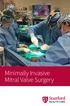 Minimally Invasive Mitral Valve Surgery Stanford Health Care offers leading, superior options in cardiac surgery, including the latest techniques and research for Minimally Invasive Cardiac surgery. Advanced
Patient Possible differentials Recommended diagnostics Puppy or kitten with a soft systolic murmur
 Cardiac Auscultation 101 Terri DeFrancesco, DVM, DACVIM (Cardiology), DACVECC Associate Professor in Cardiology and Critical Care NC State University College of Veterinary Medicine Email: [email protected]
Low-gradient severe aortic stenosis with normal LVEF: A disturbing clinical entity
 Low-gradient severe aortic stenosis with normal LVEF: A disturbing clinical entity Jean-Luc MONIN, MD, PhD Henri Mondor University Hospital Créteil, FRANCE Disclosures : None 77-year-old woman, mild dyspnea
Feeding in Infants with Complex Congenital Heart Disease. Rachel Torok, MD Southeastern Pediatric Cardiology Society Conference September 6, 2014
 Feeding in Infants with Complex Congenital Heart Disease Rachel Torok, MD Southeastern Pediatric Cardiology Society Conference September 6, 2014 Objectives Discuss common feeding issues in patients with
NAME OF THE HOSPITAL: 1. Coronary Balloon Angioplasty: M7F1.1/ Angioplasty with Stent(PTCA with Stent): M7F1.3
 1. Coronary Balloon Angioplasty: M7F1.1/ Angioplasty with Stent(PTCA with Stent): M7F1.3 1. Name of the Procedure: Coronary Balloon Angioplasty 2. Select the Indication from the drop down of various indications
The heart then repolarises (or refills) in time for the next stimulus and contraction.
 Atrial Fibrillation BRIEFLY, HOW DOES THE HEART PUMP? The heart has four chambers. The upper chambers are called atria. One chamber is called an atrium, and the lower chambers are called ventricles. In
240- PROBLEM SET INSERTION OF SWAN-GANZ SYSTEMIC VASCULAR RESISTANCE. Blood pressure = f(cardiac output and peripheral resistance)
 240- PROBLEM SET INSERTION OF SWAN-GANZ 50 kg Pig Rt Jugular 0 cm Rt Atrium 10 cm Rt ventricle 15 cm Wedge 20-25 cm SYSTEMIC VASCULAR RESISTANCE Blood pressure = f(cardiac output and peripheral resistance)