
020 // Congenital Heart Disease
|
|
|
- Anissa Woods
- 10 years ago
- Views:
Transcription
1 020 // Congenital Heart Disease CONTENTS 188 Basics 188 Atrial Septal Defect (ASD) 191 Patent Foramen Ovale (PFO) 192 Ventricular Septal Defects (VSD) 194 Patent Ductus Arteriosus (PDA) 195 Coronary Fistulas 196 Tetralogy of Fallot 197 Transposition of the Great Arteries 187

2 BASICS 20% of all congenital defects are atrial septal defects. Prevalence (Adults) 20% have a right-to-left shunt Complex jet lesions: 418 per million 45% have a left-to-right shunt 35% have no shunt ATRIAL SEPTAL DEFECTS (ASD) Severe pulmonary hypertension is rare in the setting of isolated atrial septal defects. Hemodynamics of Atrial Septal Defects Right ventricular volume overload Reduced compliance of the left Pulmonary hypertension ventricle Potential for paradoxical embolism 75% of all atrial septal defects are secundum defects. Types of Atrial Septal Defects Sinus venosus defect (sup.) Secundum defect Atrial appendage Coronary sinus defect Primum defect Sinus venosus defect (inf.) Patients with a primum ASD tend to have left axis deviation and a long PQ interval on the ECG, whereas patients with a secundum ASD have right axis deviation and RBBB. A patent foramen ovale and a secundum ASD (ASD II) are not the same entitiy. A patent foramen ovale is a shunt across a channel (between a septum primum and secundum) while an ASD II is a hole in the septum. Associated Lesions ASD I (primum defect) Cleft mitral valve (always) Inlet ventricular septal defect Septal aneurysms ASD II (secundum defect) Mitral valve prolaps Pulmonic stenosis Partial anomalous venous return Sinus venosus defect Partial anomalous venous return Overriding superior vena cava Coronary sinus septal defect Unroofed coronary sinus Left superior vena cava persistence Partial/total anomalous venous return It is possible to have both, an ASD and a PFO. 188

3 ATRIAL SEPTAL DEFECT (ASD) TV IVS VSD MV COMPLETE ATRIOVENTRICUR CANAL DEFECT apical fourchamber view/2d Improperly formed atrioventricular valve (shared atrioventricular valve). Both an ASD (primum type) and a VSD are present. ASD I Views to Detect an ASD Slanted four-chamber view Parasternal SAX view Subcostal views Not all ASD s can be detected with TTE Transesophageal echocardiography (TEE) is superior in quantifying the size and morphology of an ASD (two orthogonal planes). TEE is also required to diagnose a sinus venosus defect. Color jet ASD II SECUNDUM ATRIAL SEPTAL DEFECT slanted apical fourchamber view/color Doppler Moving the transducer medially allows more parallel alignment to the Doppler and therefore better visualization of the ASD jet. Difficulties in Detecting Shunts Poor image quality ASD signal during systole Suboptimal angle to shunt flow Shunt flow depends on left and right Low flow velocity ventricular compliance Inferior vena cava inflow Elevated right heart pressure may may mimic ASD reduce left-to-right shunt Tricuspid regurgitation may obscure the The intertrial septum may show dropouts that mimic an ASD. 189

4 ATRIAL SEPTAL DEFECT (ASD) An ASD must be excluded in every patient with an enlarged RV. The absence of a color jet across the IAS and even a negative contrast study do not entirely rule out an ASD. It could be a sinus venosus defect and it may be possible that, despite an ASD, there is only a left-right shunt (negative contrast study). When to Suspect an ASD: Enlarged right ventricle Dilated pulmonary artery Positive contrast study Abnormal septal morphology (aneurysm, discontinuity of the interatrial septum, etc.) Elevated flow in the pulmonary artery (VTI >25 cm) Patient history (arrhythmias, dyspnea, atrial fibrillation + ECG + right ventricle enlargement) The size of the ASD is quantified with a balloon during intervention. This stretched size of the ASD is relevant for device sizing. Quantification of Atrial Septal Defects Large > 10 mm Small 5 10 mm No relevant shunt < 5 mm A warning note: Even small defects can generate significant left-to-right shunts when the gradient between the left and the right atrium is high. The measurement of OT/PA diameter is most critical for shunt calculation (measurement errors may have grave consequences). Quantification of Shunt Flow Qp/Qs = = (PA.. Flowpulm diameter/2)2 VTI PA/RVOT Flowsystem = (PA diameter/2) 2.. VTI OT PA = pulmonary artery, RVOT= right ventricular outflow tract, OT= left ventricular outflow tract, VTI = velocity time integral Suitabilty for Interventional Closure The guidelines recommend interventional closure in patients with a stretched diameter <38 mm and a sufficient rim > 5 mm towards the aorta. ESC 2010 ASD closure must be avoided in patients with Eisenmenger (right-to-left shunt) syndrome (ESC Class III). Indications for ASD closure (ESC Class I) Patients with significant shunts (signs Device closure is the method of of RV volume overload) and pulmonary vascular resistance < 5 Wood when applicable. choice for secundum ASD closure units, regardless of symptoms. ESC

5 ATRIAL SEPTAL DEFECT (ASD) Suitabilty for Interventional Closure Ideal < 20 mm Uncertain mm Intervention should be monitored with the help of echo (TEE, intracardiac ultrasound). Too large > 25 mm Liver RV ASD OCCLUDER subcostal four-chamber view/2d The left and the right atrial disks of an Amplatzer occluder are visible. The interatrial septum is captured in between. Amplatzer Echo Assessment following Interventional ASD Closure Look for a residual shunt using color Doppler (reduce PRF) and echo contrast Location and stability of the device Thrombus on the device Pericardial effusion PATENT FOMEN OVALE (PFO) PFO SVC PATENT FOMEN OVALE TEE bicaval view/2d Separation between the primum and the secundum septum forming a patent foramen ovale (PFO). The primum septum overlaps the secundum septum and the PFO is a channel rather than a hole. 191

6 PATENT FOMEN OVALE (PFO) Epidemiologic Facts 25% of the general population have a PFO. In patients with cryptogenic stroke the prevalence increases to 40%. Perform a Valsalva maneuver when looking for PFO in the contrast study and reduce PRF for color Doppler assessment. A negative transthoracic contrast study does not rule out a patent foramen ovale. You need a transesophageal exam. Echo Assessment of Patent Foramen Ovale Frequently associated with mobile and Small jet into the right atrium seen with aneurysmatic interatrial septum color Doppler (usually close to the Positive contrast study contrast aortic rim) appearance in the left atrium within 3 For color Doppler assessment, use a heart cycles after opacification of the subcostal view or a slanted four-chamber view to improve Doppler alignment right atrium For contrast study use a four-chamber view VENTRICUR SEPTAL DEFECTS (VSD) The prevalence of VSD is 10% of all congenital lesions of the heart in the adult population. Perimembranous VSD is the most common type. Ventricular Septal Defect Types Ao PA Subarterial or supracristal ventricular septal defects Membranous ventricular septal defect Muscular ventricular septal defect Inlet or canal-type ventricular septal defect 192

7 VENTRICUR SEPTAL DEFECTS (VSD) Views and Locations of the Various VSD Types RVOT RVOT TV Ao PV MV PA If you are not sure whether a VSD is present use the good old stethoscope! RV RV RV TV MV TV Ao MV Perimembranous Outlet infracristal Outlet supracristal Inlet Trabecular Perimembranous or Outlet PERIMEMBNOUS VENTRIC- UR SEPTAL DEFECT PSAX/ color Doppler Perimembranous VSD VSD jet Ao Typical jet origin and direction of a perimembranous VSD. The defect is located below the aortic valve. The jet is directed more towards right ventricular inflow. 193

8 VENTRICUR SEPTAL DEFECTS (VSD) Contrast is not helpful in ventricular septal defects. VSD Quantification Left ventricular volume overload Use atypical views to visualize the myocardial discontinuation Color Doppler detection of flow across the interventricular septum Restrictive VSD has a high velocity (> 4.5 m/sec) and occurs in small or medium-sized defects Non-restrictive VSDs have a low velocity (< 4.5 m/sec), indicating a large defect Aneurysmal Transformation in VSD Partly or completely sealed VSD by fibrous tissue proliferation of the septal leaflet of the tricuspid valve Best visualized on a five-chamber view No risk of rupture Interventional VSD closure is only possible in muscular VSD with a distance > 3mm from the aortic valve. Associated Lesions Membranous VSD Supracristal VSD Inlet VSD Septal aneurysms Aortic valve prolapse ASD I Subaortic stenosis Cleft mitral valve Double chambered RV PATENT DUCTUS ARTERIOSUS (PDA) PDA is present in 2% of the adult population and is often associated with coarctation and VSD. Always suspect a PDA in the setting of a dilated hyperdynamic left ventricle in the absence of other forms of volume overload. Hemodynamics of PDA Different Presentations Variable, depending on size Elevation of pulmonary artery pressure Left-to-right shunt Eisenmenger reaction Left ventricular volume overload Hemodynamically insignificant (small) 194

9 PATENT DUCTUS ARTERIOSUS (PDA) Visualization of the Patent Ductus Arteriosus Parasternal short axis (pulmonary artery Dilatation of the pulmonary artery is bifurcation) common Suprasternal view 2D (suprasternal view) often allows Systolic + diastolic flow in spectral and measurement of PDA size color Doppler Patients with highvelocity PDA jets are candidates for closure (exception: small asymptomatic PDA). Ao r-pa PDA jet PATENT DUCTUS ARTERIOSUS PSAX/Color Doppler Shunt (color jet) between the aorta and the pulmonary artery at its bifurcation. The jet is present during systole as well as diastole. Ao CORONARY FISTUS Coronary Fistulas Abnormal communication between coronary artery and heart chamber 90% into right ventricle RV volume overload Coronary steal Coronary fistulas are found in 0.2% of coronary angiograms. Echo Features of Coronary Fistulas Dilated coronary artery (> 0.6 cm) Enlargement of heart chambers Turbulant flow Continous flow (shunt) to right heart The hemodynamic presentation greatly depends on the degree of RV outflow obstruction. In the setting of a VSD with a left-to-right shunt, it may prevent pulmonary hypertension and eventually shunt reversal (right to left) and the Eisenmenger reaction. 195

10 TETLOGY OF FALLOT The hemodynamic presentation greatly depends on the degree of RV outflow obstruction. In the setting of a VSD with a leftto-right shunt, it may prevent pulmonary hypertension and eventually shunt reversal (right to left) and the Eisenmenger reaction. RVOT obstruction Right ventricular hypertrophy Overriding aorta Large ventricular septal defect Stenosis of the pulmonary artery (right ventricular outflow obstruction) Ventricular septal defect Deviation of the origin of the aorta to the right (overriding aorta) Concentric right ventricular hypertrophy In patients with a more severe RVOT obstruction, PW and color Doppler will demonstrate a significant right-to-left shunt at the VSD. In patients with a large left-to-right shunt, left atrial and left ventricular dilatation will be present. Right ventricular outflow obstruction tends to occur at multiple levels - infundibular, RVOT, often hypoplastic annulus valve abnormalities (bicuspid valve). When assessing patients after Fallot repair, look for residual pulmonary regurgitation. Echocardiographic Assessment in Fallot Ventricular septal defect and overriding aorta Assess the characteristic and large VSD The extension of the defect from the on multiple views and define the membranous septum is best seen in location and number of VSDs the parasternal short axis The degree of aortic override is best Assess the relationship between the assessed on parasternal long-axis and defect and the tricuspid and aortic apical views. valve. Right ventricular outflow tract obstruction Use parasternal short-axis views. The pulmonary valve annulus is often Assess the infundibulum and pulmonary vale. regard of a transannular patch). hypoplastic (important information in Infundibular muscle bundles often The pulmonary valve tends to look contribute to the RVOT obstruction thickened and may be dome-shaped. Hemodynamic assessment A large and generally unrestricted The direction and degree of shunting defect permits equalization of right and strongly depend on the severity of right left ventricular pressures. ventricular outflow tract obstruction. Aortic arch and coronary arteries Use suprasternal views to investigate The anatomy of the proximal coronary the aortic arch and exclude the arteries should be assessed using presence of aortopulmonary collaterals and the presence of a patent Exclude a right aortic arch (present in parasternal short-axis views ductus arteriosus. 25%) 196

11 TETLOGY OF FALLOT VSD TETLOGY OF FALLOT PX/2D A patient with a tetralogy of Fallot, a large VSD and an overriding aorta. Overriding aorta TNSPOSITION OF THE GREAT ARTERIES AO Ao PA PA Mitral valve RV RV Tricuspid valve In D-TGA a shunt on the atrial/ventricular/great vessels (PDA) is required to live, either present at birth or artificially created (e.g. Rashkind s procedure) D-TGA L-TGA Lesion in which the aorta arises from the right ventricle and the pulmonary artery from the left ventricle. Its prevalence is 4.7 per 10,000 live births. It is not associated with any common gene abnormality. The most common form is the dextro type (D-TGA), in which the aorta arises from the right ventricle and the pulmonary artery from the left ventricle (ventriculoarterial discordance). Levo- or L-looped transposition of the great arteries (L-TGA) is very rare and is commonly referred to as congenitally corrected TGA. Venous blood returns from the correctly located right atrium to the discordant left ventricle via the mitral valve and into the lung via the pulmonary artery. Oxygenated blood flows through the pulmonary veins to the left atrium into the discordant right ventricle, and via the tricuspid valve into the systemic circulation through the aorta (atrioventricular and ventriculoarterial discordance). The D-TGA leads to cyanotic heart disease while L-TGA usually does not present with cyanosis (unless the patient has associated cardiac defects). Patients with L-TGA are at risk for (systemic) heart failure because the morphological right ventricle (which was not formed to sustain a high pressure system) supplies the systemic circulation. 197

12 TNSPOSITION OF THE GREAT ARTERIE Cardiac Lesions Associated With D-TGA A ventricular septal defect in any region of the ventricular septum (50% of patients). Left ventricular outflow tract obstruction (25%) Abnormalities of the mitral and tricuspid valve, e.g. straddling tricuspid valve (septal chordal attachment of the tricuspid valve extending into the left ventricle), overriding valves. Coronary abnormalities Echocardiographic Assessment in D-TGA Subcostal views show the pulmonary artery arising from the posterior left ventricle. Parasternal short-axis views show the aorta rising anteriorly from the right ventricle. Look for associated cardiac lesions. Cardiac Lesions Associated With L-TGA Ventricular septal defect (70-80% of patients), most commonly perimembranous VSD. Pulmonary outflow (i.e. left ventricular) tract obstruction (30-60% of patients). The obstruction is commonly subvalvular due to an aneurysm of the interventricular septum fibrous tissue tags or a discrete ring of subvalvular tissue. Tricuspid valve abnormalities (90% of patients) e.g. tricuspid valve regurgitation, Ebstein-like malformation of the tricuspid valve accompanied by right ventricular dysfunction and failure (20-50% of patients). Mitral valve abnormalities (50% of patients) e.g. abnormal number of cusps, straddling chordal attachments of the subvalvular apparatus resulting in outflow tract obstruction, mitral valve dysplasia. L-TGA Apical four-chamber view/2d Since the tricuspid valve and the mitral valve are in opposite positions, the valve on the left side of the screen is more apical (lower in the screen) than the valve on the right. This is one of the key features that help to identify L-TGA. The right ventricle is in the position of the left ventricle. It can be identified because it is heavily trabeculated. Mitral valve RV Tricuspid valve 198

13 TNSPOSITION OF THE GREAT ARTERIE Echocardiographic Assessment in L-TGA Systemic location of the tricuspid valve Subcostal imaging usually provides the and morphologic right ventricle. It is clearest view of the pulmonary artery best seen on an apical four-chamber arising from the morphologic left view or parasternal short-axis views. ventricle. Look for associated cardiac lesions. The diagnosis of L-TGA is often missed at adult cardiac echo laboratories! Pulmonic valve L-TGA Atypical long-axis view, subpulmonic ventricle/2d The subpulmonic ventricle, which is anatomically the left ventricle, ensures pulmonary circulation. PA Mitral valve 199

14 200

Common types of congenital heart defects
 Common types of congenital heart defects Congenital heart defects are abnormalities that develop before birth. They can occur in the heart's chambers, valves or blood vessels. A baby may be born with only
How to get insurance companies to work with you
 Paying for Quality ACHD Care How to get insurance companies to work with you Christy Sillman, RN, MSN ACHD nurse coordinator Inpatient ACHD Nurse Educator The Adult Congenital Heart Program Stanford Lucile
Workshop B: Essentials of Neonatal Cardiology and CHD Anthony C. Chang, MD, MBA, MPH CARDIAC INTENSIVE CARE
 SHUNT LESIONS NEONATAL : CONGENITAL CARDIAC MALFORMATIONS AND CARDIAC SURGERY ANTHONY C. CHANG, MD, MBA, MPH CHILDREN S HOSPITAL OF ORANGE COUNTY ATRIAL SEPTAL DEFECT LEFT TO RIGHT SHUNT INCREASED PULMONARY
Cardiology Fellowship Manual. Goals & Objectives -Cardiac Imaging- 1 Page
 Cardiology Fellowship Manual Goals & Objectives -Cardiac Imaging- 1 Page 2015-2016 UNIV. OF NEBRASKA CHILDREN S HOSPITAL & MEDICAL CENTER DIVISION OF CARDIOLOGY FELLOWSHIP PROGRAM CARDIAC IMAGING ROTATION
RACE I Rapid Assessment by Cardiac Echo. Intensive Care Training Program Radboud University Medical Centre NIjmegen
 RACE I Rapid Assessment by Cardiac Echo Intensive Care Training Program Radboud University Medical Centre NIjmegen RACE Goal-directed study with specific questions Excludes Doppler ultrasound Perform 50
CTA OF THE EXTRACORONARY HEART
 CTA OF THE EXTRACORONARY HEART Charles White MD Director of Thoracic Imaging Department of Radiology University of Maryland NO DISCLOSURES [email protected] CARDIAC CASE DISTRIBUTION Coronary CTA 30% ED chest
Practical class 3 THE HEART
 Practical class 3 THE HEART OBJECTIVES By the time you have completed this assignment and any necessary further reading or study you should be able to:- 1. Describe the fibrous pericardium and serous pericardium,
Questions FOETAL CIRCULATION ANAESTHESIA TUTORIAL OF THE WEEK 91 18 TH MAY 2008
 FOETAL CIRCULATION ANAESTHESIA TUTORIAL OF THE WEEK 91 18 TH MAY 2008 Dr. S. Mathieu, Specialist Registrar in Anaesthesia Dr. D. J. Dalgleish, Consultant Anaesthetist Royal Bournemouth and Christchurch
What is echo? CHAPTER 1 1.1 BASIC NOTIONS. Ultrasound production and detection
 What is echo? CHAPTER 1 1.1 BASIC NOTIONS Echocardiography (echo) the use of ultrasound to examine the heart is a safe, powerful, non-invasive and painless technique. Echo is easy to understand as many
Pulmonary Atresia With Intact Ventricular Septum - Anatomy, Physiology, and Diagnostic Imaging
 Pulmonary Atresia With Intact Ventricular Septum - Anatomy, Physiology, and Diagnostic Imaging Larry Latson MD Director of Pediatric Interventional Cardiology and Adult CHD Joe DiMaggio Children s Hospital
Chapter 2 Cardiac Interpretation of Pediatric Chest X-Ray
 Chapter 2 Cardiac Interpretation of Pediatric Chest X-Ray Ra-id Abdulla and Douglas M. Luxenberg Key Facts The cardiac silhouette occupies 50 55% of the chest width on an anterior posterior chest X-ray
Universal Fetal Cardiac Ultrasound At the Heart of Newborn Well-being
 Universal Fetal Cardiac Ultrasound At the Heart of Newborn Well-being Optimizes detection of congenital heart disease (chd) in the general low risk obstetrical population Daniel J. Cohen, M.D. [email protected]
Echocardiography has become the primary imaging
 Guidelines and Standards for Performance of a Pediatric Echocardiogram: A Report from the Task Force of the Pediatric Council of the American Society of Echocardiography Wyman W. Lai, MD, MPH, FASE, Tal
How To Treat A Single Ventricle And Fontan
 COACH Columbus Ohio Adult Congenital Heart Disease Program The Heart Center at Nationwide Children s Hospital & The Ohio State University Single Ventricle Defects Normal Heart Structure The heart normally
Atrial Septal Aneurysm: A Study in Five Hundred Adult Patients
 Premio al mejor Tema Libre Realizado por Médicos Residentes Atrial Septal Aneurysm: A Study in Five Hundred Adult Patients Olivares-Reyes Alexander; Al-Kamme Ahmad; Gonzalez Javier Cardiology Department
ECHOCARDIOGRAPHY PROPERTY OF ELSEVIER SAMPLE CONTENT - NOT FINAL CHAPTER 6. Hisham Dokainish, MD, FACC, FASE
 CHAPTER 6 ECHOCARDIOGRAPHY Hisham Dokainish, MD, FACC, FASE 1. How does echocardiography work? Echocardiography uses transthoracic and transesohageal probes that emit ultrasound directed at cardiac structures.
Left to Right Shunts and their Calculation. Ghada El Shahed, MD
 Left to Right Shunts and their Calculation Ghada El Shahed, MD Professor of Cardiology Ain Shams University Flow through systemic & pulmonary circulations is normally balanced and equal. Two circulations
How To Understand What You Know
 Heart Disorders Glossary ABG (Arterial Blood Gas) Test: A test that measures how much oxygen and carbon dioxide are in the blood. Anemia: A condition in which there are low levels of red blood cells in
Congenital Heart Defects
 Congenital Heart Defects 1 Congenital Heart Defects CHD with Increased Pulmonary Blood Flow Patent Ductus Arteriosus - PDA...3 Atrial Septal Defect - ASD...4 Ventricular Septal Defect - VSD...5 Aorto-Pulmonary
25 Anomalies and Diseases of the Fetal Heart
 270 25 Anomalies and Diseases of the Fetal Heart Epidemiology and Indications for Fetal Echocardiography Epidemiologic Aspects It is generally known that approximately 15 20% of pregnancies in the second
Cardiovascular Pathophysiology:
 Cardiovascular Pathophysiology: Right to Left Shunts aka Cyanotic Lesions Ismee A. Williams, MD, MS [email protected] Pediatric Cardiology What is Cyanosis? Bluish discoloration of skin that occurs when
Since the introduction of transesophageal echocardiography
 POSITION PAPER ASE/SCA Guidelines for Performing a Comprehensive Intraoperative Multiplane Transesophageal Echocardiography Examination: Recommendations of the American Society of Echocardiography Council
Example Theory Multiple Choice Questions
 Example Theory Multiple Choice Questions Q a). In an ultrasound imaging system: Sector width, sector depth and frame rate can all be controlled independently b) Frame rate falls as sector width increases
Heart Sounds & Murmurs
 Cardiovascular Physiology Heart Sounds & Murmurs Dr. Abeer A. Al-Masri MBBS, MSc, PhD Associate Professor Consultant Cardiovascular Physiologist Faculty of Medicine, KSU Detected over anterior chest wall
Fellow TEE Review Workshop Hemodynamic Calculations 2013. Director, Intraoperative TEE Program. Johns Hopkins School of Medicine
 Fellow TEE Review Workshop Hemodynamic Calculations 2013 Mary Beth Brady, MD, FASE Director, Intraoperative TEE Program Johns Hopkins School of Medicine At the conclusion of the workshop, the participants
Auscultation of the Heart
 Review of Clinical Signs uscultation of the Heart Series Editor: Bernard Karnath, MD Bernard Karnath, MD William Thornton, MD uscultation of the heart can provide clues to the diagnosis of many cardiac
Congenital heart defects
 CONGENITAL ANOMALY REGISTER & INFORMATION SERVICE COFRESTR ANOMALEDDAU CYNHENID Congenital heart defects Cardiovascular defects are by far the commonest major group of congenital anomalies. Development
Congenital Heart Defects Initial Diagnosis and
 Congenital Heart Defects Initial Diagnosis and Management age e Linda Risley, RN, MSN, CPNP Congenital Heart Defects Congenital heart defects are the most common type of birth defect ~1 out of 100 live
Facts about Congenital Heart Defects
 Facts about Congenital Heart Defects Joseph A. Sweatlock, Ph.D., DABT New Jersey Department of Health Early Identification & Monitoring Program Congenital heart defects are conditions that are present
DETECTION OF LEFT-TO-RIGHT INTRACARDIAC SHUNTS
 10/5/00 3:35 PM 9 Shunt Detection and Quantification William Grossman University of California, San Francisco, School of Medicine; Division of Cardiology, University of California, San Francisco Medical
Distance Learning Program Anatomy of the Human Heart/Pig Heart Dissection Middle School/ High School
 Distance Learning Program Anatomy of the Human Heart/Pig Heart Dissection Middle School/ High School This guide is for middle and high school students participating in AIMS Anatomy of the Human Heart and
HEART MURMURS THROUGHOUT CHILDHOOD
 HEART MURMURS THROUGHOUT CHILDHOOD Frances R. Zappalla, D.O. Nemours Cardiac Center A.I. du Pont Hospital for Children Wilmington, DE Definition: HEART MURMURS An extra abnormal heart sound usually detected
Section Four: Pulmonary Artery Waveform Interpretation
 Section Four: Pulmonary Artery Waveform Interpretation All hemodynamic pressures and waveforms are generated by pressure changes in the heart caused by myocardial contraction (systole) and relaxation/filling
5. Management of rheumatic heart disease
 5. Management of rheumatic heart disease The fundamental goal in the long-term management of RHD is to prevent ARF recurrences, and therefore, prevent the progression of RHD, and in many cases allow for
Confirmed CCHD What next?
 Confirmed CCHD What next? Herbert J. Stern MD, FACC, FSCAI Children s Cardiology Associates and Dell Children s Hospital Catheter Based Therapy: Spectrum of Procedures Tear PFO to enhance mixing (D-TGA)
HEART DISEASE IN THE YOUNG CHARLES S. KLEINMAN, M.D.
 CHAPTER 20 HEART DISEASE IN THE YOUNG CHARLES S. KLEINMAN, M.D. INTRODUCTION Congenital heart defects are relatively rare; seriously debilitating heart abnormalities rarer still. Approximately 8 babies
Note: The left and right sides of the heart must pump exactly the same volume of blood when averaged over a period of time
 page 1 HEART AS A PUMP A. Functional Anatomy of the Heart 1. Two pumps, arranged in series a. right heart: receives blood from the systemic circulation (via the great veins and vena cava) and pumps blood
Objectives. The ECG in Pulmonary and Congenital Heart Disease. Lead II P-Wave Amplitude during COPD Exacerbation and after Treatment (50 pts.
 The ECG in Pulmonary and Congenital Heart Disease Gabriel Gregoratos, MD Objectives Review the pathophysiology and ECG signs of pulmonary dysfunction Review the ECG findings in patients with: COPD (chronic
Anesthesia in Children with Congenital Heart Disease. Elliot Krane, M.D.
 Anesthesia in Children with Congenital Heart Disease Elliot Krane, M.D. Introduction The evolution of medicine to managed care and contracted medical services has often had the effect of shifting a sicker
Epicardial Echocardiography and Epiaortic Ultrasonography
 Epicardial Echocardiography and Epiaortic Ultrasonography 20 Stanton K. Shernan and Kathryn E. Glas Despite its overwhelming popularity and favorable influence on perioperative clinical decision making
Read It, Code It, See It
 Read It, Code It, See It Richard L. Prager, M.D. University of Michigan Ann Arbor, Michigan Dorothy Latham, R.N. Port Huron Hospital Port Huron, Michigan Nothing to Disclose Disclosure Preoperative diagnosis:
Teaching Med-5 Students Point-of-Care Transthoracic Echocardiography
 Teaching Med-5 Students Point-of-Care Transthoracic Echocardiography Anthony M.-H. Ho, Lester A. H. Critchley, Patricia Kan, Sylvia Au, Siu Keung Ng, Simon K. C. Chan, Philip Lam, Gordon Choi, Alex Lee,
Heart Murmurs. Outline. Basic Pathophysiology
 Heart Murmurs David Leder Outline I. Basic Pathophysiology II. Describing murmurs III. Systolic murmurs IV. Diastolic murmurs V. Continuous murmurs VI. Summary Basic Pathophysiology Murmurs = Math Q =
Pediatric Congenital Cardiac Surgery
 Pediatric Congenital Cardiac Surgery in New York State 2006 2009 New York State Department of Health October 2011 Members of the New York State Cardiac Advisory Committee Chair Spencer King, M.D. Executive
Heart and Vascular System Practice Questions
 Heart and Vascular System Practice Questions Student: 1. The pulmonary veins are unusual as veins because they are transporting. A. oxygenated blood B. de-oxygenated blood C. high fat blood D. nutrient-rich
ACYANOTIC HEART DEFECTS
 ACYANOTIC HEART DEFECTS Acyanotic congenital heart defects may be due to obstructive lesions (stenosis) or left-to-right shunts. Lesions with left-to-right shunts include atrial septal defect, ventricular
Delivery Planning for the Fetus with Congenital Heart Disease
 Delivery Planning for the Fetus with Congenital Heart Disease Mar y T. Donofrio MD, FAAP, FACC, FASE Director of the Fetal Heart Program Children s National Medical Center Washington DC Objectives Review
Recommendations for Evaluation of the Severity of Native Valvular Regurgitation with Two-dimensional and Doppler Echocardiography
 AMERICAN SOCIETY OF ECHOCARDIOGRAPHY REPORT Recommendations for Evaluation of the Severity of Native Valvular Regurgitation with Two-dimensional and Doppler Echocardiography A report from the American
17 Endocarditis. Infective endocarditis
 17 Endocarditis 234 Endocarditis refers to inflammation of the endocardium, the inner layer of the heart (including the heart valves). Endocarditis can be: infective (e.g. bacterial, fungal) non-infective
Understanding your child s heart Atrial septal defect
 Understanding your child s heart Atrial septal defect About this factsheet This factsheet is for the parents of babies and children who have an atrial septal defect (ASD). It explains, what an atrial septal
The P Wave: Indicator of Atrial Enlargement
 Marquette University e-publications@marquette Physician Assistant Studies Faculty Research and Publications Health Sciences, College of 8-12-2010 The P Wave: Indicator of Atrial Enlargement Patrick Loftis
Echocardiographic assessment of valve stenosis: EAE/ASE recommendations for clinical practice
 European Journal of Echocardiography (2009) 10, 1 25 doi:10.1093/ejechocard/jen303 EAE/ASE RECOMMENDATIONS Echocardiographic assessment of valve stenosis: EAE/ASE recommendations for clinical practice
Normal & Abnormal Intracardiac. Lancashire & South Cumbria Cardiac Network
 Normal & Abnormal Intracardiac Pressures Lancashire & South Cumbria Cardiac Network Principle Pressures recorded from catheter tip Electrical transducer - wheatstone bridge mechanical to electrical waveform
Adult Cardiac Surgery ICD9 to ICD10 Crosswalks
 164.1 Malignant neoplasm of heart C38.0 Malignant neoplasm of heart 164.1 Malignant neoplasm of heart C45.2 Mesothelioma of pericardium 198.89 Secondary malignant neoplasm of other specified sites C79.89
Heart valve repair and replacement
 16 Heart valve repair and replacement 222 Valvular heart disease can be treated in a variety of ways: valve replacement, in which an artificial (prosthetic) heart valve is implanted surgically to replace
Echocardiography can noninvasively
 Bedside echocardiography in the assessment of the critically ill Yanick Beaulieu, MD, FRCPC Advances in ultrasound technology continue to enhance its diagnostic applications in daily medical practice.
Question 1: Interpret the rhythm strip above (comment on regularity, rate, P wave, PR interval and QRS)?
 It is your first month on your NICU rotation and you are prerounding on your patients. The nurse takes you aside and says she s been seeing something funny on the cardiac monitor. You walk to the bedside
New insights in the assessment of right ventricular function: an echocardiographic study. Avin Calcutteea
 New insights in the assessment of right ventricular function: an echocardiographic study Avin Calcutteea Department of Public Health and Clinical Medicine Umeå University, 2013 New insights in the assessment
Diagnostic and Therapeutic Procedures
 Diagnostic and Therapeutic Procedures Diagnostic and therapeutic cardiovascular s are central to the evaluation and management of patients with cardiovascular disease. Consistent with the other sections,
1p36 and the Heart. John Lynn Jefferies, MD, MPH, FACC, FAHA
 1p36 and the Heart John Lynn Jefferies, MD, MPH, FACC, FAHA Director, Advanced Heart Failure and Cardiomyopathy Services Associate Professor, Pediatric Cardiology and Adult Cardiovascular Diseases Associate
Echocardiographic Assessment of Valve Stenosis: EAE/ASE Recommendations for Clinical Practice
 GUIDELINES AND STANDARDS Echocardiographic Assessment of Valve Stenosis: EAE/ASE Recommendations for Clinical Practice Helmut Baumgartner, MD, Judy Hung, MD, Javier Bermejo, MD, PhD, John B. Chambers,
Dental Work and the Risk of Bacterial Endocarditis
 Variety Children s Heart Centre Dental Work and the Risk of Bacterial Endocarditis Certain heart conditions and structural defects increase the risk of developing endocarditis (a heart valve infection)
Doc, I Am Fine, But I Have A Cardiac Condition
 Doc, I Am Fine, But I Have A Cardiac Condition Nevine Mahmoud, MD John Ludtke, MD Maj, USAFR, MC, FS RAM Class 2014 Wright State University Boonshoft School of Medicine Division of Aerospace Medicine Dayton,
Cardiac Masses and Tumors
 Cardiac Masses and Tumors Question: What is the diagnosis? A. Aortic valve myxoma B. Papillary fibroelastoma C. Vegetation from Infective endocarditis D. Thrombus in transit E. None of the above Answer:
The Patterns and Public Health Impact of Heart Defects in Texas Pediatric Cardiac Care Conference VI Dell Children s Medical Center, Feb.
 The Patterns and Public Health Impact of Heart Defects in Texas Pediatric Cardiac Care Conference VI Dell Children s Medical Center, Feb. 7-8, 2013 Mark Canfield, Ph.D. Manager, Birth Defects Epidemiology
Guidelines for the Echocardiographic Assessment of the Right Heart in Adults: A Report from the American Society of Echocardiography
 GUIDELINES AND STANDARDS Guidelines for the Echocardiographic Assessment of the Right Heart in Adults: A Report from the American Society of Echocardiography Endorsed by the European Association of Echocardiography,
HISTORY. Questions: 1. What diagnosis is suggested by this history? 2. How do you explain her symptoms during pregnancy?
 HISTORY 33-year-old woman. CHIEF COMPLAINT: months duration. Dyspnea, fatigue and nocturnal wheezing of six PRESENT ILLNESS: At ages 5 and 9, she had migratory arthritis. At age 29, in the third trimester
Real-Time 3-Dimensional Transesophageal Echocardiography in the Evaluation of Post-Operative Mitral Annuloplasty Ring and Prosthetic Valve Dehiscence
 Journal of the American College of Cardiology Vol. 53, No. 17, 2009 2009 by the American College of Cardiology Foundation ISSN 0735-1097/09/$36.00 Published by Elsevier Inc. doi:10.1016/j.jacc.2008.12.059
Exchange solutes and water with cells of the body
 Chapter 8 Heart and Blood Vessels Three Types of Blood Vessels Transport Blood Arteries Carry blood away from the heart Transport blood under high pressure Capillaries Exchange solutes and water with cells
Management of the Patient with Aortic Stenosis undergoing Non-cardiac Surgery
 Management of the Patient with Aortic Stenosis undergoing Non-cardiac Surgery Srinivasan Rajagopal M.D. Assistant Professor Division of Cardiothoracic Anesthesia Objectives Describe the pathophysiology
Normal Intracardiac Pressures. Lancashire & South Cumbria Cardiac Network
 Normal Intracardiac Pressures Lancashire & South Cumbria Cardiac Network Principle Pressures recorded from catheter tip Electrical transducer - wheatstone bridge mechanical to electrical waveform display
The Newborn With a Congenital Disorder. Chapter 14. Copyright 2008 Wolters Kluwer Health Lippincott Williams & Wilkins
 The Newborn With a Congenital Disorder Chapter 14 Congenital Anomalies or Malformations May be caused by genetic or environmental factors Approximately 2% to 3% of all infants born have a major malformation
Potential Causes of Sudden Cardiac Arrest in Children
 Potential Causes of Sudden Cardiac Arrest in Children Project S.A.V.E. When sudden death occurs in children, adolescents and younger adults, heart abnormalities are likely causes. These conditions are
Current status of pediatric cardiac surgery
 Current status of pediatric cardiac surgery Sabine H. Daebritz Dept. of Cardio-vascular Surgery Heart Center Duisburg, Germany Normal circulation 1 Complex cardiac lesions Stenoses Shunts Malconnections
CONGENITAL heart disease is
 601 This is the second in a series of technical bulletins to be published by the American Institute of Ultrasound in Medicine (). The is a multidisciplinary organization dedicated to promoting the safe
Minimally Invasive Mitral Valve Surgery
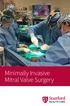 Minimally Invasive Mitral Valve Surgery Stanford Health Care offers leading, superior options in cardiac surgery, including the latest techniques and research for Minimally Invasive Cardiac surgery. Advanced
Prenatal Diagnosis of Congenital Heart Disease
 Prenatal Diagnosis of Congenital Heart Disease Pei-NiJone, MD a, Kenneth O. Schowengerdt, Jr., MD b, * KEYWORDS Fetal echocardiography Prenatal diagnosis Neonatal heart disease Fetal echocardiography,
Congenital Heart Disease. Mary Rummell, RN, MN, CPNP, CNS Clinical Nurse Specialist Pediatric Cardiology/Cardiac Surgery
 Congenital Heart Disease Mary Rummell, RN, MN, CPNP, CNS Clinical Nurse Specialist Pediatric Cardiology/Cardiac Surgery Objectives The learner will: Identify 3 areas in the developing heart that result
Resuscitation in congenital heart disease. Peter C. Laussen MBBS FCICM Department Critical Care Medicine Hospital for Sick Children Toronto
 Resuscitation in congenital heart disease Peter C. Laussen MBBS FCICM Department Critical Care Medicine Hospital for Sick Children Toronto Evolution of Congenital Heart Disease Extraordinary success: Overall
Dysfunction of aortic valve prostheses
 Dysfunction of aortic valve prostheses Kai Andersen Oslo University Hospital Rikshospitalet, Norway Dysfunction of aortic valve prostheses Kai Andersen Oslo University Hospital Rikshospitalet, Norway No
Case III. Disscussion. the UHP ultrasound protocol. Novel Ultrasound Approach to the Empiric Evaluation of the Undifferentiated Hypotensive Patient
 The UHP Ultrasound Protocol: A Novel Ultrasound Approach to the Empiric Evaluation of the Undifferentiated Hypotensive Patient JOHN S. ROSE, MD,* AARON E. BAIR, MD,* DIKU MANDAVIA, MD, AND DONNA J. KINSER,
INTRODUCTORY GUIDE TO IDENTIFYING ECG IRREGULARITIES
 INTRODUCTORY GUIDE TO IDENTIFYING ECG IRREGULARITIES NOTICE: This is an introductory guide for a user to understand basic ECG tracings and parameters. The guide will allow user to identify some of the
Anatomy Review. Heart Murmurs. Surface Topography of the Heart 7/19/2011. The Base of the Heart and Erb s Point
 James A Mathey PA C, MPA CAPA WORKSHOP 2010 Heart Murmurs Anatomy Review 4 Classic Auscultatory Areas: Aortic 2ICS R SB Pulmonic 2ICS L SB Tricuspid 4 th L Lower SB Mitral 5ICS MCL Surface Topography of
Electrocardiography I Laboratory
 Introduction The body relies on the heart to circulate blood throughout the body. The heart is responsible for pumping oxygenated blood from the lungs out to the body through the arteries and also circulating
Administrative. Patient name Date compare with previous Position markers R-L, upright, supine Technical quality
 CHEST X-RAY Administrative Patient name Date compare with previous Position markers R-L, upright, supine Technical quality AP or PA ( with x-ray beam entering from back of patient, taken at 6 feet) Good
Cardiology. Anatomy and Physiology of the Heart.
 Cardiology Self Learning Package Module 1: Anatomy and Physiology of the Heart. Module 1: Anatomy and Physiology of the Heart Page 1 CONTENT Introduction Page 3 How to use the ECG Self Learning package.page
HEART HEALTH WEEK 3 SUPPLEMENT. A Beginner s Guide to Cardiovascular Disease HEART FAILURE. Relatively mild, symptoms with intense exercise
 WEEK 3 SUPPLEMENT HEART HEALTH A Beginner s Guide to Cardiovascular Disease HEART FAILURE Heart failure can be defined as the failing (insufficiency) of the heart as a mechanical pump due to either acute
Anatomi & Fysiologi 060301. The cardiovascular system (chapter 20) The circulation system transports; What the heart can do;
 The cardiovascular system consists of; The cardiovascular system (chapter 20) Principles of Anatomy & Physiology 2009 Blood 2 separate pumps (heart) Many blood vessels with varying diameter and elasticity
Two cases of anomalous origin of the right coronary artery from the pulmonary artery (ARCAPA) with review of previous published cases.
 FAIT clinique Cardiologie T u n i s i e n n e Two cases of anomalous origin of the right coronary artery from the pulmonary artery (ARCAPA) with review of previous published cases. Hakim Kaouthar, Boussaada
Blood Flow Hemodynamics, Cardiac Mechanics, and Doppler Echocardiography
 Blood Flow Hemodynamics, Cardiac Mechanics, and Doppler Echocardiography THE CARDIAC CYCLE Figure 4.1 The cardiac cycle showing superimposed hemodynamic and echocardiographic parameters. A4C: apical 4-chamber
Heart Failure EXERCISES. Ⅰ. True or false questions (mark for true question, mark for false question. If it is false, correct it.
 Heart Failure EXERCISES Ⅰ. True or false questions (mark for true question, mark for false question. If it is false, correct it. ) 1. Heart rate increase is a kind of economic compensation, which should
Consensus on Timing of Intervention for Common Congenital Heart Diseases
 G U I D E L I N E S Consensus on Timing of Intervention for Common Congenital Heart Diseases WORKING GROUP ON MANAGEMENT OF CONGENITAL HEART DISEASES IN INDIA ABSTRACT Justification: Separate guidelines
Adult Congenital Heart Disease and Pulmonary Arterial Hypertension. Patient Information
 Adult Congenital Heart Disease and Pulmonary Arterial Hypertension Patient Information WHAT IS CONGENITAL HEART DISEASE? Congenital heart disease (CHD) refers to a defect of the heart or major blood vessels
AMERICAN SOCIETY OF ECHOCARDIOGRAPHY
 AMERICAN SOCIETY OF ECHOCARDIOGRAPHY RECOMMENDATIONS FOR A STANDARDIZED REPORT FOR ADULT TRANSTHORACIC ECHOCARDIOGRAPHY From the American Society of Echocardiography s Nomenclature and Standards Committee