
DETECTION OF LEFT-TO-RIGHT INTRACARDIAC SHUNTS
|
|
|
- Nickolas Cameron
- 9 years ago
- Views:
Transcription
1 10/5/00 3:35 PM 9 Shunt Detection and Quantification William Grossman University of California, San Francisco, School of Medicine; Division of Cardiology, University of California, San Francisco Medical Center, San Francisco, California Detection, localization, and quantification of intracardiac shunts are an integral* part of the hemodynamic evaluation of patients with congenital heart disease. In most cases, an intracardiac shunt is suspected on the basis of the clinical evaluation of the patient before catheterization. There are several circumstances, however, in which data obtained at catheterization should alert the cardiologist to look for a shunt that had not been suspected previously: 1. Unexplained arterial desaturation should immediately raise the suspicion of a right-to-left intracardiac shunt, which may then be assessed by the methods to be discussed. Most commonly, arterial desaturation (i.e., arterial blood oxygen saturation under 95%) detected at the time of cardiac catheterization represents alveolar hypoventilation. The causes for this alveolar hypoventilation and its associated physiologic right-to-left shunt include (a) excessive sedation from the premedication, (b) chronic obstructive lung disease or other pulmonary parenchymal disease, and (c) pulmonary congestion/edema secondary to the patient's cardiac disease. Alveolar hypoventilation associated with each of these problems is exacerbated by the supine position of the patient during the catheterization procedure. Helping the patient to assume a more upright posture (head-up tilt, or propping the patient up with a large wedge if tilt mechanism is not available) and encouraging the patient to take deep breaths and to cough will correct or substantially ameliorate arterial hypoxemia in most cases. If arterial desaturation persists, oxygen should be administered by face mask for both therapeutic and diagnostic purposes. If full arterial blood oxygen saturation cannot be achieved by face-mask administration of oxygen (it is best in this regard to use a rebreathing mask that fits snugly), a right-to-left shunt is presumed to be present, and its anatomic site and magnitude should be determined using the methods described later in this chapter.. Conversely, when the oxygen content of blood in the pulmonary artery is unexpectedly high (i.e., if the pulmonary artery [PA] blood oxygen saturation is above 80%), the possibility of a left-to-right intracardiac shunt should be considered. It is for these two reasons that arterial and pulmonary artery saturation should be measured routinely during cardiac catheterization. 3. When the data obtained at cardiac catheterization do not confirm the presence of a suspected lesion, one should consider the presence of an intracardiac shunt. For example, if left ventricular cineangiography fails to reveal mitral regurgitation in a patient in whom this was judged to be the cause of a systolic murmur, it is prudent to look for evidence of a ventricular septal defect (VSD) with left-to-right shunting. DETECTION OF LEFT-TO-RIGHT INTRACARDIAC SHUNTS Many different techniques are available for the detection, localization, and quantification of left-to-right intracardiac shunts. The techniques vary in their sensitivity, in the type of indicator they use, and in the equipment needed to sense and read out the presence of the indicator. Measurement of Blood Oxygen Saturation and Content in the Right Heart (Oximetry Run) In the oximetry run, a basic technique for detecting and quantifying left-to-right shunts, the oxygen content or percent saturation is measured in blood samples drawn sequentially from the pulmonary artery, right ventricle (RV), right atrium (RA), superior vena cava (SVC), and inferior vena cava (IVC). A left-to-right shunt may be detected and localized if a significant step-up in blood oxygen saturation or content is found in one of the right heart chambers. A significant step-up is defined as an increase in blood oxygen content or saturation that exceeds the normal variability that might be observed if multiple samples were drawn from that cardiac chamber. file:///epjobs/lippincott/baim/pdf%0development/htmlbaim%04%fpdf/0901_txt.htm Page 1 of 11

2 10/5/00 3:35 PM The technique of the oximetry run is based on the pioneering studies of Dexter and his associates in 1947 (1). They found that multiple samples drawn from the right atrium could vary in oxygen content by as much as volumes percent (vol%).* This variability has been attributed to the fact that the right atrium receives its blood from three sources of varying oxygen content: the superior vena cava, the inferior vena cava, and the coronary sinus. The maximal normal variation within the right ventricle was found to be 1 vol%. Because of more adequate mixing, a maximal variation within the pulmonary artery of only 0.5 vol% was found by Dexter. Thus, using the Dexter criteria, a significant step-up is present at the atrial level when the highest oxygen content in blood samples drawn from the right atrium exceeds the highest content in the venae cavae by vol%. Similarly, a significant step-up at the ventricular level is present if the highest right ventricular sample is 1 vol% higher than the highest right atrial sample, and a significant step-up at the level of the pulmonary artery is present if the pulmonary artery oxygen content is more than 0.5 vol% greater than the highest right ventricular sample. Dexter's study described normal variability and gave criteria for a significant oxygen step-up only for measurement of blood oxygen content. This in part reflects the methodology available to him because spectrophotometric oximetry was not used widely at that time. In recent years, nearly all cardiac catheterization laboratories (especially those primarily involved in pediatric catheterization) have moved toward the measurement of percentage oxygen saturation by spectrophotometric oximetry as the routine method for oximetric analysis of blood samples. Oxygen content may then be calculated from knowledge of percentage saturation, the patient's blood hemoglobin concentration, and an assumed constant relationship for oxygen-carrying capacity of hemoglobin, as discussed in Chapter 8 (1.36 ml O /g hemoglobin). When oxygen content is derived in this manner, rather than by measurement by the Van Slyke or other direct oximetric technique, the value is no more accurate (and probably less so because of the potential presence of carboxyhemoglobin or hemoglobin variants with O capacity other than 1.36) than the percentage oxygen saturation values from which it is calculated. To clarify this situation, Antman and coworkers studied prospectively the normal variation of both oxygen content and oxygen saturation of blood in the right heart chambers (). The study population consisted of patients without intracardiac shunts who were undergoing diagnostic cardiac catheterization for evaluation of coronary artery disease, valvular heart disease, cardiomyopathy, or possible pulmonary embolism. Each patient had a complete right heart oximetry run (see later discussion) with sampling of multiple sites in each chamber. Oxygen content was measured directly by an electrochemical fuel-cell method (Lex-O -Con, Lexington Instruments, Lexington, MA), a method that had been validated previously against the Van Slyke method. Oxygen saturation was calculated as blood oxygen content divided by oxygen-carrying capacity. The relationship between oxygen content and oxygen saturation obviously depends on the hemoglobin concentration of the patient's blood (e.g., 75% oxygen saturation of pulmonary artery blood will be associated with a substantially lower oxygen content in an anemic patient than in one with normal hemoglobin concentration). Also, systemic blood flow may be an important determinant of oxygen variability in the right heart chambers because high systemic flow tends to equalize the differences across various tissue beds. In the context of these considerations, I have listed criteria in Table 9.1 for a significant step-up in right heart oxygen content and percentage oxygen saturation associated with various types of left-to-right shunt, based on the study of Antman and coworkers () and other investigators (1,3,4). As can be seen from the bottom line (ANY LEVEL) of Table 9.1, the simplest way to screen for a left-to-right shunt is to sample SVC and PA blood and measure the difference, if any, in percentage O saturation. We recommend obtaining blood samples from SVC and PA routinely at the time of right heart catheterization and determining their O saturation by reflectance oximetry. If the O saturation between these samples is greater-than-or-equal-to 8%, a left-to-right shunt may be present at atrial, ventricular, or great vessel level, and a full oximetry run should be done. Oximetry Run The blood samples needed to localize a step-up in the right heart are obtained by performing what is called an oximetry run. The samples needed and the order in which we recommend they be obtained follow. Obtain a -ml sample from each of the following locations: 1. Left and/or right pulmonary artery file:///epjobs/lippincott/baim/pdf%0development/htmlbaim%04%fpdf/0901_txt.htm Page of 11

3 10/5/00 3:35 PM. Main pulmonary artery* 3. Right ventricle, outflow tract* 4. Right ventricle, mid d 5. Right ventricle, tricuspid valve or apex*, d 6. Right atrium, low or near tricuspid valve 7. Right atrium, mid 8. Right atrium, high 9. Superior vena cava, low (near junction with right atrium) 10. Superior vena cava, high (near junction with innominate vein) 11. Inferior vena cava, high (just at or below diaphragm) 1. Inferior vena cava, low (at L4 L5) 13. Left ventricle 14. Aorta (distal to insertion of ductus) In performing the oximetry run, an end-hole catheter (e.g., Swan-Ganz balloon-flotation catheter) or one with side holes close to its tip (e.g., a Goodale-Lubin catheter) is positioned in the right or left pulmonary artery. Cardiac output is measured by the Fick method. As soon as the determination of oxygen consumption is completed, the operator begins to obtain -ml blood samples from each of the locations indicated. This is done under fluoroscopic control, with catheter tip position further confirmed by pressure measurement at the sites noted. The entire procedure should take less than 7 minutes. If a sample cannot be obtained from a specific site because of ventricular premature beats, that site should be skipped until the rest of the run has been completed. Oxygen saturation and/or content in each of the samples is determined as discussed previously, and the presence and localization of a significant step-up are determined by applying the criteria listed in Table 9.1. An alternative method for performing the oximetry run is to withdraw a fiberoptic catheter from the pulmonary artery through the right heart chambers and the inferior and superior venae cavae. This permits a continuous readout of oxygen saturation that allows detection of a step-up in oxygen content. If the oximetry run reveals that a significant step-up is present, the pulmonary blood flow, systemic blood flow, and magnitude of left-to-right and right-to-left shunts may be calculated according to the following formulas. Calculation of Pulmonary Blood Flow (Q ) p Pulmonary blood flow is calculated by the same formula used in the standard Fick equation: If a pulmonary vein (PV) has not been entered, systemic arterial oxygen content may be used in the preceding formula, if systemic arterial oxygen saturation is 95% or more. If systemic oxygen saturation is less than 95%, one must determine whether a right-to-left intracardiac shunt is present. If there is an intracardiac right-to-left shunt, an assumed value for pulmonary venous oxygen content of 98% oxygen capacity should be used in calculating pulmonary blood flow. If arterial desaturation is present and is not due to a right-to-left intracardiac shunt, the observed systemic arterial oxygen saturation should be used to calculate pulmonary blood flow. Example file:///epjobs/lippincott/baim/pdf%0development/htmlbaim%04%fpdf/0901_txt.htm Page 3 of 11

4 10/5/00 3:35 PM Let us suppose that a patient is found to have an atrial septal defect with a left-to-right shunt clearly detected by oximetry run. Furthermore, the catheter crosses the defect and a pulmonary vein is entered, from which a blood sample shows O saturation of 98%. Let us further suppose, however, that systemic arterial blood saturation is 90% and that this is due to chronic pulmonary disease. After ruling out a right-to-left shunt (e.g., inhalation of 100% oxygen, indocyanine green dye injection in inferior vena cava, echocardiogram-bubble study), should we use 98% or 90% for pulmonary venous blood O saturation in the calculation of Q p? As indicated earlier, because arterial desaturation is not caused by a right-to-left intracardiac shunt, the observed systemic arterial O saturation (90%) should be used because this summates all the pulmonary veins draining both lungs, not just the one with 98% O saturation. Calculation of Systemic Blood Flow (Q ) s Use the following equation for systemic blood flow: The key to the measurement of systemic blood flow in the presence of an intracardiac shunt is that the mixed venous oxygen content must be measured in the chamber immediately proximal to the shunt, as shown in Table 9.. The formula generally used by cardiologists who treat adults for the calculation of venous content in the presence of an atrial septal defect (ASD) was derived by Flamm and coworkers (5). They found that systemic blood flow calculated from mixed venous oxygen content as determined from the formula listed in Table 9. most closely approximates systemic blood flow as measured by left ventricular to brachial artery (BA) dye curves in patients with atrial septal defect studied at rest. It should be noted that Flamm's formula weights blood returning from the superior vena cava more heavily than might be expected on the basis of relative flows in the superior and inferior cavae. The success of this empirical weighting of the relatively desaturated superior vena cava blood (O saturation is almost always less in blood from the superior as opposed to the inferior vena cava) probably reflects the fact that the third contributor to mixed venous blood-desaturated coronary sinus blood-is not sampled during the oximetry run and therefore cannot be included directly in the formula. The formula (3 SVC O + 1 IVC O )/4 was validated by Flamm and associates for mixed venous oxygen content at rest (5). Thus in 18 patients without shunt, this value agreed closely with pulmonary artery blood oxygen content at rest. During supine bicycle exercise, however, a different relationship was found to apply, in which mixed venous (pulmonary artery) oxygen content in patients without shunts was best approximated as (1 SVC O + IVC O )/3. This formula was then used for patients with atrial septal defect during exercise, and it reliably predicted systemic blood flow measured by left ventricular to brachial artery dye-dilution curve. Therefore for patients with left-to-right shunt at the atrial level, the formula in Table 9. should be used only for calculation of resting mixed venous O content. Obviously, calculations from the formula in Table 9. would be little changed in many cases by ignoring inferior vena cava blood altogether, and this is done in some laboratories (especially those involved in pediatric catheterization). Flamm and associates, however, examined the effects of assuming that superior vena cava O content equaled mixed venous O content, and concluded that this was somewhat less accurate (both in the 18 subjects without shunt and in the 9 patients with atrial septal defect and left-to-right shunt) than the formula given in Table 9. (5). Calculation of Left-to-Right Shunt file:///epjobs/lippincott/baim/pdf%0development/htmlbaim%04%fpdf/0901_txt.htm Page 4 of 11

5 10/5/00 3:35 PM If there is no evidence of an associated right-to-left shunt, the left-to-right shunt is calculated by Examples of Left-to-Right Shunt Detection and Quantification Some examples of oximetry runs are presented to illustrate interpretation. Atrial Septal Defect In the example seen in Fig. 9.1, there is a step-up in oxygen saturation in the mid-right atrium. The average or mean value for the vena caval samples in this patient is calculated as [3(SVC) + 1(IVC)] 4. SVC is the average of SVC samples (i.e., 67.5% in this example), and IVC is the value for the IVC sample taken at the level of the diaphragm only (i.e., 73%). Thus the vena caval mean O saturation for the patient in Fig. 9.1 is [3(67.5) + 1 (73)] 4 = 69%. The right atrial mean O saturation for this patient is ( ) 3 = 79%. The 10% step-up in mean O saturation from vena cava to right atrium is higher than the 7% value listed in Table 9.1 as a criterion for a significant step-up at the atrial level. Note that for this example, the highest-to-highest approach (highest right atrial O saturation to highest vena caval O saturation) would barely meet criteria for a significant step-up, because of the high value for IVC saturation (73%) compared with SVC saturation. Thus for the detection of a significant step-up at the atrial level using the highest-to-highest approach, it is best to use the highest RA and SVC samples. In this case, the result would be (84% - 68%) = 16%, which is clearly above the 11% value listed in Table 9.1 for detection of a significant step-up. Also, the screening samples that we recommend for all right heart catheterizations (single sample from SVC and PA) would have strongly indicated a shunt at some level in the right heart, since O saturation from SVC to PA is 1 to 13%, well above the 8% value for a significant step-up. FIG Schematic representation of the results of an oximetry run in a patient with a small to moderate-sized atrial septal defect. Values represent percentage O saturation of blood at multiple locations. (See text for details.) To calculate pulmonary and systemic blood flows for the example given in Fig. 9.1, we need to know O consumption and blood O capacity. If the patient's O consumption determined by the methods described in Chapter 8 is 40 ml O /min and the blood hemoglobin concentration is 14 g%, pulmonary and systemic blood flows may be calculated as follows: PV O content was not measured, but left ventricular (LV) and arterial blood O saturation was 96% (effectively ruling out a right-to-left shunt), and therefore it may be assumed that PV blood O saturation was 96%. As described in Chapter 8, oxygen content for PV blood is calculated as follows: file:///epjobs/lippincott/baim/pdf%0development/htmlbaim%04%fpdf/0901_txt.htm Page 5 of 11
![The average or mean value for the vena caval samples in this patient is calculated as [3(SVC) + 1(IVC)] 4. SVC is the average of SVC samples (i.e., 67.](/docs-images/46/21336804/images/page_5.jpg "5% in this example), and IVC is the value for the IVC sample taken at the level of the diaphragm only (i.e., 73%). Thus the vena caval mean O saturation for the patient in Fig. 9.1 is [3(67.")
6 10/5/00 3:35 PM Similarly, PA O content is calculated as Therefore; Systemic blood flow for the patient in Fig. 9.1 is calculated as For this calculation, mixed venous O saturation was derived from the formula given in Table 9., as 69%. Thus the ratio of Q p / Q s in this example is 7.74/4.6 = 1.68, and the magnitude of the left-to-right shunt is = 3 L/ min. This patient has a small-to-moderate-sized atrial septal defect. Ventricular Septal Defect file:///epjobs/lippincott/baim/pdf%0development/htmlbaim%04%fpdf/0901_txt.htm Page 6 of 11

7 10/5/00 3:35 PM Figure 9. shows another example of findings in an oximetry run. In this case, the patient has a large O step-up in the right ventricle, indicating the presence of a ventricular septal defect. If O consumption is 60 ml/min and hemoglobin is 15 g%, then FIG. 9.. Findings from an oximetry run performed in a patient with a large ventricular septal defect. (See text for details.) In this case, the O saturation of mixed venous blood is calculated by averaging the right atrial O saturations because the right atrium is the chamber immediately proximal to the O step-up. Flow Ratio Q p Q s The ratio / gives important physiologic information about the magnitude of a left-to-right shunt. In addition, because it factors out other variables (e.g., O consumption), the ratio can be calculated from knowledge of blood O saturation alone. A Q p / Q s ratio of less than 1.5 signifies a small left-to-right shunt and is often felt to argue against operative correction, particularly if the patient has an otherwise uncomplicated atrial or ventricular septal defect. A ratio of greater-than-or-equal-to.0 indicates a large left-to-right shunt and is generally considered sufficient evidence to recommend surgical repair of the defect, to prevent late pulmonary vascular disease as well as other complications of prolonged circulatory overload. Flow ratios between 1.5 and.0 are obviously intermediate in magnitude; surgical correction is generally recommended if operative risk is low. A flow ratio of less than 1.0 indicates a net right-to-left shunt and is often a sign of the presence of irreversible pulmonary vascular disease. A simplified formula for calculation of flow ratio can be derived by combining the equations for systemic and pulmonary blood flow to obtain where SA O, MV O, PV O, and PA O are systemic arterial, mixed venous, pulmonary venous, and pulmonary arterial blood oxygen saturations, respectively. For the patient illustrated in Fig. 9.1, Q p / Q s = (96% - 69%)/(96% - 80%) = file:///epjobs/lippincott/baim/pdf%0development/htmlbaim%04%fpdf/0901_txt.htm Page 7 of 11

8 10/5/00 3:35 PM Calculation of Bidirectional Shunts If there is evidence of a right-to-left shunt, as well as a left-to-right shunt, the formulas in Eq. (9.11) are used (6). This formula for calculation of bidirectional shunts tends to be too complex for easy use during the procedure. A quick approximation can be obtained by using a hypothetic quantity known as the effective blood flow, the flow that would exist in the absence of any left-to-right or right-to-left shunting: The approximate left-to-right shunt then equals Q p - Q eff, and the approximate right-to-left shunt equals Q s - Q eff. Limitations of Oximetry Method There are several limitations and potential sources of error in the calculations of blood flow using the data obtained from an oximetry run. A primary source of error may be the absence of a steady state during the collection of blood samples. That is, if the oximetry run is prolonged because of technical difficulties, if the patient is agitated, or if arrhythmias occur during the oximetry run, the data may not be consistent. An important limitation of the oxygen step up method for detecting intracardiac shunts is that it lacks sensitivity. Most shunts of a magnitude that would lead to a recommendation for surgical closure of a ventricular septal defect or patent ductus arteriosus are detected by this method. Small shunts, however, are not consistently detected by this technique. As pointed out by Antman and coworkers (), the normal variability of blood oxygen saturation in the right heart chambers is strongly influenced by the magnitude of systemic blood flow. High levels of systemic flow tend to equalize the arterial and venous oxygen values across a given vascular bed. Therefore elevated systemic blood flow will cause the mixed venous oxygen saturation to be higher than normal, and interchamber variability due to streaming will be blunted. Even a small increase in right heart oxygen saturation under such conditions might indicate the presence of a significant left-to-right shunt; larger increases would indicate voluminous left-to-right shunting of blood. For a patient with a systemic blood flow index of 3.0 L/min/M, minimum shunt sizes that could be detected reliably by oximetry are listed in Table 9.1. Fundamental to the oximetric method of shunt detection is the fact that left-to-right shunting across an intracardiac defect will cause an increase in blood O saturation in the chamber receiving the shunt proportional to the magnitude *If pulmonary vein is not entered, use 98% O capacity. file:///epjobs/lippincott/baim/pdf%0development/htmlbaim%04%fpdf/0901_txt.htm Page 8 of 11

9 10/5/00 3:35 PM of the shunt. The increase in blood O content in the chamber receiving the shunt, however, depends not only on the magnitude of the shunt but also on the O -carrying capacity of the blood (i.e., the hemoglobin concentration). As reported by Antman and colleagues (), the influence of blood hemoglobin concentration may be important when blood O content (rather than O saturation) is used to detect a shunt ( Table 9.3.). Thus, the same shunt giving the same blood O saturation step-up would give markedly different blood O content step-ups if the blood hemoglobin concentration varied significantly. Accordingly, when evaluating oximetric data for shunt detection, it is more precise to exclude the potential influence of blood O -carrying capacity and use only O saturation data. This is especially true in pediatric cases (4) where the normal blood O -carrying capacity may vary from 0 to 8 vol% in the neonate to 1 to 16 vol% in infancy. To minimize errors and maximize the physiologic strengths of the oximetry method for shunt detection and quantification, the guidelines listed in Table 9.4 should be followed. Other Indicators Many more sensitive techniques are available to detect smaller left-to-right shunts (7 19). These include indocyanine green dye curves, radionuclide techniques, contrast angiography, and echocardiographic methods. Some of these methods (e.g., green dye) were discussed extensively in previous editions of this textbook, and the interested reader is referred there for details. For discussion of other predominantly non catheter-based methods (e.g., echo, radionuclide) the reader is referred to textbooks devoted to those techniques. We will only give one example here of one of the older methods. EARLY RECIRCULATION OF AN INDICATOR Standard indicator dilution curves, performed by injection of indocyanine green into the pulmonary artery with sampling in a systemic artery, are rarely done today, and most laboratories are not even equipped to do them. In the presence of a left-to-right shunt, however, a green dye curve produced by this technique will demonstrate early recirculation on the downslope of the dye curve (7) (Fig. 9.3). FIG Left-to-right shunt. This indicator dilution curve, performed by injecting indocyanine green into the pulmonary artery with sampling in the brachial artery, demonstrates early recirculation on the downslope, indicating a left-toright shunt. Injection was at time zero. This technique does not localize the site of the left-to-right shunt. This technique can detect left-to-right shunts too small to be detected by the oxygen step-up method (8). Thus if there is no evidence of a left-to-right shunt by this method, there is no need to perform an oximetry run. The studies of Castillo and coworkers (9) suggest that left-to-right shunts as small as 5% of the systemic output can be detected by standard pulmonary artery to systemic artery dye curves. Although a simple pulmonary to systemic artery indocyanine green dye curve may detect the presence of a shunt, it does not localize it. That is, a pulmonary artery to systemic artery dye curve will show evidence of early recirculation in the presence of a left-to-right shunt due to an atrial septal defect, ventricular septal defect, or patent ductus arteriosus. ANGIOGRAPHY Selective angiography is effective in visualizing and localizing the site of left-to-right shunts. Angiographic demonstration of anatomy has become a routine part of the preoperative evaluation of patients with congenital or acquired shunts and is useful in localizing the anatomic site of the shunt. Actually, the use of angiography in this file:///epjobs/lippincott/baim/pdf%0development/htmlbaim%04%fpdf/0901_txt.htm Page 9 of 11

10 10/5/00 3:35 PM fashion should be considered an indicator-dilution method, with the radiographic contrast agent being the indicator and the cine fluoroscopy unit serving as the densitometer. In general, assessment of the patient with a left-to-right shunt virtually always includes a left ventriculogram. If this is performed in the left anterior oblique projection with cranial angulation (or done as a biplane study with both left and right anterior oblique views), excellent visualization of the interventricular septum, sinuses of Valsalva, and ascending and descending thoracic aorta will allow diagnosis and localization of essentially all the causes of left-toright shunt other than atrial septal defect and anomalous pulmonary venous return. Complicated lesions (e.g., endocardial cushion defects, coronary artery/right heart fistulas, ruptured aneurysms at the sinus of Valsalva) commonly require angiographic delineation before surgical intervention can be undertaken. Angiography also helps to assess the routine cases more completely. For instance, does the patient with secundum atrial septal defect have associated left ventricular dysfunction or mitral valve prolapse? Does the patient with ventricular septal defect have associated aortic regurgitation (caused by prolapse of the medial aortic leaflet) or infundibular pulmonic stenosis? Angiography, however, cannot replace the important physiologic measurements that allow quantitation of flow and vascular resistance. Without quantitative evaluation of pulmonary and systemic flows ( Q p and Q s ) and their associated resistances (PVR and SVR), appropriate decisions regarding patient management cannot be made, nor can prognosis be assessed. DETECTION OF RIGHT-TO-LEFT INTRACARDIAC SHUNTS The primary indication for the use of techniques to detect and localize right-to-left intracardiac shunts is the presence of cyanosis or, more commonly, arterial hypoxemia. The presence of arterial hypoxemia raises two specific questions: first, is the observed hypoxemia due to an intracardiac shunt, or is it due to a ventilation/perfusion imbalance secondary to a variety of forms of intrinsic pulmonary disease? This problem is particularly important in patients with coexistent congenital heart disease and pulmonary disease. Second, if hypoxemia is caused by an intracardiac shunt, what is its site and what is its magnitude? Attempts to measure right-to-left shunts in patients with cyanotic heart disease date back at least to 1941 (0 3). Prinzmetal (0), in a series of ingenious experiments, expanded the earlier observation of Benenson and Hitzig that ether injected intravenously in patients with cyanotic heart disease will cause a prickly, burning sensation of the face (18). This sensation is caused by the entrance of ether into the systemic circulation of patients with right-to-left shunts. In normal subjects without right-to-left shunts, the ether is eliminated by the lungs and thus does not reach the systemic circulation. Prinzmetal then measured the time necessary for an intravenous injection of a dilute solution of saccharin to be tasted. This time is equal to the transit time from a peripheral vein through the lungs, through the left heart, and then to the systemic circulation. By increasing the concentration of the saccharin, he found that a second, much shorter appearance time occurred in patients with cyanotic heart disease because of the presence of a right-toleft shunt bypassing the pulmonary circulation. He then estimated the percent right-to-left shunt by the following formula: where A is the smallest concentration of saccharin to be tasted by way of the long circuit and C is the smallest concentration of saccharin to be tasted by the short circuit. Our current methods of documenting and quantitating right-to-left shunts may not be as ingenious and certainly are not as sweet, but they are nonetheless effective. Angiography file:///epjobs/lippincott/baim/pdf%0development/htmlbaim%04%fpdf/0901_txt.htm Page 10 of 11

11 10/5/00 3:35 PM With appropriate techniques, angiography may be used to demonstrate right-to-left intracardiac shunts. This method is particularly important in detecting right-to-left shunting due to a pulmonary arteriovenous fistula. In this circumstance, the shunt cannot be detected by indicator dilution curves on the basis of a shortened appearance time. That is, the difference in transit time when the pulmonary capillaries are bypassed is not perceptible by standard indicator dilution techniques. Although angiography may localize right-to-left shunts, it does not permit quantification. Oximetry The site of right-to-left shunts may be localized if blood samples can be obtained from a pulmonary vein, the left atrium, left ventricle, and aorta. The pulmonary venous blood of patients with arterial hypoxemia caused by an intracardiac right-to-left shunt is fully saturated with oxygen. Therefore the site of a right-to-left shunt may be localized by noting which left heart chamber is the first to show desaturation (i.e., a step-down in oxygen concentration). Thus if left atrial blood oxygen saturation is normal but desaturation is present in the left ventricle and in the systemic circulation, the right-to-left shunt is across a ventricular septal defect. The only disadvantage of this technique is that a pulmonary vein and the left atrium must be entered. This is not as easy in adults as it is in infants, in whom the left atrium may be entered routinely by way of the foramen ovale. Echocardiographic methods have proved sensitive for the detection and localization of left-to-right and right-to-left shunts. The so-called echocardiographic contrast or bubble study using agitated saline solution with microbubbles or some of the newer specifically designed echo contrast agents can detect small shunts, and the use of twodimensional echocardiographic techniques can usually localize the site of the shunt to the atrial or ventricular septum. Combined echocardiographic and cardiac catheterization studies allow injection of the echo contrast agent into the right or left heart chambers sequentially, thus permitting localization of the shunt and determination as to whether it is unidirectional or bidirectional. Echo-Doppler techniques can also be used to detect and localize intracardiac shunts. In this regard, color Doppler echocardiography is particularly useful in detecting and localizing small intracardiac shunts without the need for injection of an echo contrast agent. An example of the use of echo-contrast technique for the detection of an atrial septal defect with left-to-right shunting is shown in Fig FIG Two-dimensional echo showing right ventricular (RV) inflow tract (upper panels), short axis views at the base (middle panels) and four-chamber apical view (bottom panels) in a patient with an atrial septal defect (ASD) shown at cardiac catheterization to be associated with a Q p / Q s of 3.0. The left side of each panel shows the anatomy before echo contrast injection. Following an intravenous injection of agitated saline solution (right side of each panel), a negative contrast effect (black arrows) is seen within the right atrium (RA), compatible with entry of unopacified blood from the left atrium (LA) across the ASD into the RA. The ASD is visualized (white arrow) as an area of septal dropout. (Reproduced from Come PC, Riley M. Contrast echocardiography. In: Come PC, ed. Diagnostic cardiology: noninvasive imaging techniques. Philadelphia: JB Lippincott, 1984:94, with permission.) file:///epjobs/lippincott/baim/pdf%0development/htmlbaim%04%fpdf/0901_txt.htm Page 11 of 11

Left to Right Shunts and their Calculation. Ghada El Shahed, MD
 Left to Right Shunts and their Calculation Ghada El Shahed, MD Professor of Cardiology Ain Shams University Flow through systemic & pulmonary circulations is normally balanced and equal. Two circulations
Common types of congenital heart defects
 Common types of congenital heart defects Congenital heart defects are abnormalities that develop before birth. They can occur in the heart's chambers, valves or blood vessels. A baby may be born with only
Questions FOETAL CIRCULATION ANAESTHESIA TUTORIAL OF THE WEEK 91 18 TH MAY 2008
 FOETAL CIRCULATION ANAESTHESIA TUTORIAL OF THE WEEK 91 18 TH MAY 2008 Dr. S. Mathieu, Specialist Registrar in Anaesthesia Dr. D. J. Dalgleish, Consultant Anaesthetist Royal Bournemouth and Christchurch
Normal Intracardiac Pressures. Lancashire & South Cumbria Cardiac Network
 Normal Intracardiac Pressures Lancashire & South Cumbria Cardiac Network Principle Pressures recorded from catheter tip Electrical transducer - wheatstone bridge mechanical to electrical waveform display
Fellow TEE Review Workshop Hemodynamic Calculations 2013. Director, Intraoperative TEE Program. Johns Hopkins School of Medicine
 Fellow TEE Review Workshop Hemodynamic Calculations 2013 Mary Beth Brady, MD, FASE Director, Intraoperative TEE Program Johns Hopkins School of Medicine At the conclusion of the workshop, the participants
020 // Congenital Heart Disease
 020 // Congenital Heart Disease CONTENTS 188 Basics 188 Atrial Septal Defect (ASD) 191 Patent Foramen Ovale (PFO) 192 Ventricular Septal Defects (VSD) 194 Patent Ductus Arteriosus (PDA) 195 Coronary Fistulas
Note: The left and right sides of the heart must pump exactly the same volume of blood when averaged over a period of time
 page 1 HEART AS A PUMP A. Functional Anatomy of the Heart 1. Two pumps, arranged in series a. right heart: receives blood from the systemic circulation (via the great veins and vena cava) and pumps blood
Practical class 3 THE HEART
 Practical class 3 THE HEART OBJECTIVES By the time you have completed this assignment and any necessary further reading or study you should be able to:- 1. Describe the fibrous pericardium and serous pericardium,
RACE I Rapid Assessment by Cardiac Echo. Intensive Care Training Program Radboud University Medical Centre NIjmegen
 RACE I Rapid Assessment by Cardiac Echo Intensive Care Training Program Radboud University Medical Centre NIjmegen RACE Goal-directed study with specific questions Excludes Doppler ultrasound Perform 50
Auscultation of the Heart
 Review of Clinical Signs uscultation of the Heart Series Editor: Bernard Karnath, MD Bernard Karnath, MD William Thornton, MD uscultation of the heart can provide clues to the diagnosis of many cardiac
Normal & Abnormal Intracardiac. Lancashire & South Cumbria Cardiac Network
 Normal & Abnormal Intracardiac Pressures Lancashire & South Cumbria Cardiac Network Principle Pressures recorded from catheter tip Electrical transducer - wheatstone bridge mechanical to electrical waveform
How To Treat A Single Ventricle And Fontan
 COACH Columbus Ohio Adult Congenital Heart Disease Program The Heart Center at Nationwide Children s Hospital & The Ohio State University Single Ventricle Defects Normal Heart Structure The heart normally
Cardiovascular Pathophysiology:
 Cardiovascular Pathophysiology: Right to Left Shunts aka Cyanotic Lesions Ismee A. Williams, MD, MS [email protected] Pediatric Cardiology What is Cyanosis? Bluish discoloration of skin that occurs when
Section Four: Pulmonary Artery Waveform Interpretation
 Section Four: Pulmonary Artery Waveform Interpretation All hemodynamic pressures and waveforms are generated by pressure changes in the heart caused by myocardial contraction (systole) and relaxation/filling
Chapter 2 Cardiac Interpretation of Pediatric Chest X-Ray
 Chapter 2 Cardiac Interpretation of Pediatric Chest X-Ray Ra-id Abdulla and Douglas M. Luxenberg Key Facts The cardiac silhouette occupies 50 55% of the chest width on an anterior posterior chest X-ray
Workshop B: Essentials of Neonatal Cardiology and CHD Anthony C. Chang, MD, MBA, MPH CARDIAC INTENSIVE CARE
 SHUNT LESIONS NEONATAL : CONGENITAL CARDIAC MALFORMATIONS AND CARDIAC SURGERY ANTHONY C. CHANG, MD, MBA, MPH CHILDREN S HOSPITAL OF ORANGE COUNTY ATRIAL SEPTAL DEFECT LEFT TO RIGHT SHUNT INCREASED PULMONARY
Heart Sounds & Murmurs
 Cardiovascular Physiology Heart Sounds & Murmurs Dr. Abeer A. Al-Masri MBBS, MSc, PhD Associate Professor Consultant Cardiovascular Physiologist Faculty of Medicine, KSU Detected over anterior chest wall
Distance Learning Program Anatomy of the Human Heart/Pig Heart Dissection Middle School/ High School
 Distance Learning Program Anatomy of the Human Heart/Pig Heart Dissection Middle School/ High School This guide is for middle and high school students participating in AIMS Anatomy of the Human Heart and
Understanding your child s heart Atrial septal defect
 Understanding your child s heart Atrial septal defect About this factsheet This factsheet is for the parents of babies and children who have an atrial septal defect (ASD). It explains, what an atrial septal
Heart Murmurs. Outline. Basic Pathophysiology
 Heart Murmurs David Leder Outline I. Basic Pathophysiology II. Describing murmurs III. Systolic murmurs IV. Diastolic murmurs V. Continuous murmurs VI. Summary Basic Pathophysiology Murmurs = Math Q =
How to get insurance companies to work with you
 Paying for Quality ACHD Care How to get insurance companies to work with you Christy Sillman, RN, MSN ACHD nurse coordinator Inpatient ACHD Nurse Educator The Adult Congenital Heart Program Stanford Lucile
HEART MURMURS THROUGHOUT CHILDHOOD
 HEART MURMURS THROUGHOUT CHILDHOOD Frances R. Zappalla, D.O. Nemours Cardiac Center A.I. du Pont Hospital for Children Wilmington, DE Definition: HEART MURMURS An extra abnormal heart sound usually detected
Pulmonary Atresia With Intact Ventricular Septum - Anatomy, Physiology, and Diagnostic Imaging
 Pulmonary Atresia With Intact Ventricular Septum - Anatomy, Physiology, and Diagnostic Imaging Larry Latson MD Director of Pediatric Interventional Cardiology and Adult CHD Joe DiMaggio Children s Hospital
Cardiology Fellowship Manual. Goals & Objectives -Cardiac Imaging- 1 Page
 Cardiology Fellowship Manual Goals & Objectives -Cardiac Imaging- 1 Page 2015-2016 UNIV. OF NEBRASKA CHILDREN S HOSPITAL & MEDICAL CENTER DIVISION OF CARDIOLOGY FELLOWSHIP PROGRAM CARDIAC IMAGING ROTATION
Ventilation Perfusion Relationships
 Ventilation Perfusion Relationships VENTILATION PERFUSION RATIO Ideally, each alveolus in the lungs would receive the same amount of ventilation and pulmonary capillary blood flow (perfusion). In reality,
Facts about Congenital Heart Defects
 Facts about Congenital Heart Defects Joseph A. Sweatlock, Ph.D., DABT New Jersey Department of Health Early Identification & Monitoring Program Congenital heart defects are conditions that are present
How To Understand What You Know
 Heart Disorders Glossary ABG (Arterial Blood Gas) Test: A test that measures how much oxygen and carbon dioxide are in the blood. Anemia: A condition in which there are low levels of red blood cells in
Delivery Planning for the Fetus with Congenital Heart Disease
 Delivery Planning for the Fetus with Congenital Heart Disease Mar y T. Donofrio MD, FAAP, FACC, FASE Director of the Fetal Heart Program Children s National Medical Center Washington DC Objectives Review
Cardiovascular Physiology
 Cardiovascular Physiology Heart Physiology for the heart to work properly contraction and relaxation of chambers must be coordinated cardiac muscle tissue differs from smooth and skeletal muscle tissues
Introduction to CV Pathophysiology. Introduction to Cardiovascular Pathophysiology
 Introduction to CV Pathophysiology Munther K. Homoud, MD Tufts-New England Medical Center Spring 2008 Introduction to Cardiovascular Pathophysiology 1. Basic Anatomy 2. Excitation Contraction Coupling
Acute heart failure may be de novo or it may be a decompensation of chronic heart failure.
 Management of Acute Left Ventricular Failure Acute left ventricular failure presents as pulmonary oedema due to increased pressure in the pulmonary capillaries. It is important to realise though that left
Heart and Vascular System Practice Questions
 Heart and Vascular System Practice Questions Student: 1. The pulmonary veins are unusual as veins because they are transporting. A. oxygenated blood B. de-oxygenated blood C. high fat blood D. nutrient-rich
Question 1: Interpret the rhythm strip above (comment on regularity, rate, P wave, PR interval and QRS)?
 It is your first month on your NICU rotation and you are prerounding on your patients. The nurse takes you aside and says she s been seeing something funny on the cardiac monitor. You walk to the bedside
Administrative. Patient name Date compare with previous Position markers R-L, upright, supine Technical quality
 CHEST X-RAY Administrative Patient name Date compare with previous Position markers R-L, upright, supine Technical quality AP or PA ( with x-ray beam entering from back of patient, taken at 6 feet) Good
Minimally Invasive Mitral Valve Surgery
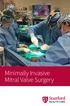 Minimally Invasive Mitral Valve Surgery Stanford Health Care offers leading, superior options in cardiac surgery, including the latest techniques and research for Minimally Invasive Cardiac surgery. Advanced
Atrial Septal Aneurysm: A Study in Five Hundred Adult Patients
 Premio al mejor Tema Libre Realizado por Médicos Residentes Atrial Septal Aneurysm: A Study in Five Hundred Adult Patients Olivares-Reyes Alexander; Al-Kamme Ahmad; Gonzalez Javier Cardiology Department
Congenital heart defects
 CONGENITAL ANOMALY REGISTER & INFORMATION SERVICE COFRESTR ANOMALEDDAU CYNHENID Congenital heart defects Cardiovascular defects are by far the commonest major group of congenital anomalies. Development
CTA OF THE EXTRACORONARY HEART
 CTA OF THE EXTRACORONARY HEART Charles White MD Director of Thoracic Imaging Department of Radiology University of Maryland NO DISCLOSURES [email protected] CARDIAC CASE DISTRIBUTION Coronary CTA 30% ED chest
Blood vessels. transport blood throughout the body
 Circulatory System Parts and Organs Blood vessels transport blood throughout the body Arteries blood vessels that carry blood AWAY from the heart Pulmonary arteries carry the deoxygenated blood from heart
ECHOCARDIOGRAPHY PROPERTY OF ELSEVIER SAMPLE CONTENT - NOT FINAL CHAPTER 6. Hisham Dokainish, MD, FACC, FASE
 CHAPTER 6 ECHOCARDIOGRAPHY Hisham Dokainish, MD, FACC, FASE 1. How does echocardiography work? Echocardiography uses transthoracic and transesohageal probes that emit ultrasound directed at cardiac structures.
Diagnostic and Therapeutic Procedures
 Diagnostic and Therapeutic Procedures Diagnostic and therapeutic cardiovascular s are central to the evaluation and management of patients with cardiovascular disease. Consistent with the other sections,
BASIC STANDARDS FOR RESIDENCY TRAINING IN CARDIOLOGY
 BASIC STANDARDS FOR RESIDENCY TRAINING IN CARDIOLOGY American Osteopathic Association and the American College of Osteopathic Internists Specific Requirements For Osteopathic Subspecialty Training In Cardiology
Adult Cardiac Surgery ICD9 to ICD10 Crosswalks
 164.1 Malignant neoplasm of heart C38.0 Malignant neoplasm of heart 164.1 Malignant neoplasm of heart C45.2 Mesothelioma of pericardium 198.89 Secondary malignant neoplasm of other specified sites C79.89
Universal Fetal Cardiac Ultrasound At the Heart of Newborn Well-being
 Universal Fetal Cardiac Ultrasound At the Heart of Newborn Well-being Optimizes detection of congenital heart disease (chd) in the general low risk obstetrical population Daniel J. Cohen, M.D. [email protected]
Exchange solutes and water with cells of the body
 Chapter 8 Heart and Blood Vessels Three Types of Blood Vessels Transport Blood Arteries Carry blood away from the heart Transport blood under high pressure Capillaries Exchange solutes and water with cells
SECTION III: HEMODYNAMIC PRINCIPLES
 10/5/00 3:36 PM 10 Calculation of Stenotic Valve Orifice Area Blase A. Carabello and William Grossman BAC: Baylor University, Department of Medicine, Houston Veterans Affairs Medical Center, Houston, Texas
Biol 111 Comparative & Human Anatomy Lab 9: Circulatory System of the Cat Spring 2014
 Biol 111 Comparative & Human Anatomy Lab 9: Circulatory System of the Cat Spring 2014 Philip J. Bergmann Lab Objectives 1. To learn how blood flows through a dual circuit circulation with lungs. 2. To
Anesthesia in Children with Congenital Heart Disease. Elliot Krane, M.D.
 Anesthesia in Children with Congenital Heart Disease Elliot Krane, M.D. Introduction The evolution of medicine to managed care and contracted medical services has often had the effect of shifting a sicker
CARDIOLOGY Delineation of Privileges
 CARDIOLOGY Delineation of Privileges APPLICANT: INITIAL APPOINTMENT REQUIREMENTS: BASIC EDUCATION: M.D. or D.O. from an accredited school of medicine or osteopathy. Successful completion of an ACGME or
Electrocardiography I Laboratory
 Introduction The body relies on the heart to circulate blood throughout the body. The heart is responsible for pumping oxygenated blood from the lungs out to the body through the arteries and also circulating
5. Management of rheumatic heart disease
 5. Management of rheumatic heart disease The fundamental goal in the long-term management of RHD is to prevent ARF recurrences, and therefore, prevent the progression of RHD, and in many cases allow for
Oxygenation and Oxygen Therapy Michael Billow, D.O.
 Oxygenation and Oxygen Therapy Michael Billow, D.O. The delivery of oxygen to all body tissues is the essence of critical care. Patients in respiratory distress/failure come easily to mind as the ones
Congenital Heart Defects
 Congenital Heart Defects 1 Congenital Heart Defects CHD with Increased Pulmonary Blood Flow Patent Ductus Arteriosus - PDA...3 Atrial Septal Defect - ASD...4 Ventricular Septal Defect - VSD...5 Aorto-Pulmonary
Since the introduction of transesophageal echocardiography
 POSITION PAPER ASE/SCA Guidelines for Performing a Comprehensive Intraoperative Multiplane Transesophageal Echocardiography Examination: Recommendations of the American Society of Echocardiography Council
CardiacAdvantage. Catheterization. Patient Guide. Cardiac
 Cardiac Catheterization Patient Guide CardiacAdvantage CardiacAdvantage Cardiac Catheterization For more information, please visit: stjoeshealth.org/cardiovascular Understanding Your Cardiac Catheterization
What is echo? CHAPTER 1 1.1 BASIC NOTIONS. Ultrasound production and detection
 What is echo? CHAPTER 1 1.1 BASIC NOTIONS Echocardiography (echo) the use of ultrasound to examine the heart is a safe, powerful, non-invasive and painless technique. Echo is easy to understand as many
Fort Hamilton Hospital Specialty: Cardiology Department of Medicine Delineation of Privileges
 NAME Fort Hamilton Hospital Specialty: Cardiology Department of Medicine Delineation of Privileges GENERAL CARDIOLOGY Required Qualifications for General Cardiology Education/Training/Experience Must have
Example Theory Multiple Choice Questions
 Example Theory Multiple Choice Questions Q a). In an ultrasound imaging system: Sector width, sector depth and frame rate can all be controlled independently b) Frame rate falls as sector width increases
Requirements for Provision of Outreach Paediatric Cardiology Service
 Requirements for Provision of Outreach Paediatric Cardiology Service Dr Shakeel A Qureshi, Consultant Paediatric Cardiologist, Evelina Children s Hospital, London, UK On behalf of British Congenital Cardiac
Congenital Heart Disease. Mary Rummell, RN, MN, CPNP, CNS Clinical Nurse Specialist Pediatric Cardiology/Cardiac Surgery
 Congenital Heart Disease Mary Rummell, RN, MN, CPNP, CNS Clinical Nurse Specialist Pediatric Cardiology/Cardiac Surgery Objectives The learner will: Identify 3 areas in the developing heart that result
Overview of the Cardiovascular System
 Overview of the Cardiovascular System 2 vascular (blood vessel) loops: Pulmonary circulation: from heart to lungs and back) Systemic circulation: from heart to other organs and back Flow through systemic
Echo-Web.Com. Planning for Success in the Field of Echocardiography. Echo-Web Catalog and the iechoschool Curriculum
 Planning for Success in the Field of Echocardiography Echo-Web.Com Echo-Web Catalog and the iechoschool Curriculum Richard Keith H. Duncan, RDCS, RCS, RCIS, BBA Contents The Echo-Web Course Catalog...
Traumatic Cardiac Tamponade. Shane KF Seal 19 November 2003 POS
 Traumatic Cardiac Tamponade Shane KF Seal 19 November 2003 POS Objectives Definition Pathophysiology Diagnosis Treatment Cardiac Tamponade The decompensated phase of cardiac compression resulting from
Specific Basic Standards for Osteopathic Fellowship Training in Cardiology
 Specific Basic Standards for Osteopathic Fellowship Training in Cardiology American Osteopathic Association and American College of Osteopathic Internists BOT 07/2006 Rev. BOT 03/2009 Rev. BOT 07/2011
Subclavian Steal Syndrome By Marta Thorup
 Subclavian Steal Syndrome By Marta Thorup Definition Subclavian steal syndrome (SSS), is a constellation of signs and symptoms that arise from retrograde flow of blood in the vertebral artery, due to proximal
Read It, Code It, See It
 Read It, Code It, See It Richard L. Prager, M.D. University of Michigan Ann Arbor, Michigan Dorothy Latham, R.N. Port Huron Hospital Port Huron, Michigan Nothing to Disclose Disclosure Preoperative diagnosis:
Resuscitation in congenital heart disease. Peter C. Laussen MBBS FCICM Department Critical Care Medicine Hospital for Sick Children Toronto
 Resuscitation in congenital heart disease Peter C. Laussen MBBS FCICM Department Critical Care Medicine Hospital for Sick Children Toronto Evolution of Congenital Heart Disease Extraordinary success: Overall
Regions Hospital Delineation of Privileges Cardiology
 Regions Hospital Delineation of s Cardiology Applicant s Name: Last First M. Instructions: Place a check-mark where indicated for each core group you are requesting. Review education and basic formal training
Congenital Heart Defects Initial Diagnosis and
 Congenital Heart Defects Initial Diagnosis and Management age e Linda Risley, RN, MSN, CPNP Congenital Heart Defects Congenital heart defects are the most common type of birth defect ~1 out of 100 live
Echocardiography can noninvasively
 Bedside echocardiography in the assessment of the critically ill Yanick Beaulieu, MD, FRCPC Advances in ultrasound technology continue to enhance its diagnostic applications in daily medical practice.
Cardiology. Anatomy and Physiology of the Heart.
 Cardiology Self Learning Package Module 1: Anatomy and Physiology of the Heart. Module 1: Anatomy and Physiology of the Heart Page 1 CONTENT Introduction Page 3 How to use the ECG Self Learning package.page
UW MEDICINE PATIENT EDUCATION. Aortic Stenosis. What is heart valve disease? What is aortic stenosis?
 UW MEDICINE PATIENT EDUCATION Aortic Stenosis Causes, symptoms, diagnosis, and treatment This handout describes aortic stenosis, a narrowing of the aortic valve in your heart. It also explains how this
Determinants of Blood Oxygen Content Instructor s Guide
 Determinants of Blood Oxygen Content Instructor s Guide Time to Complete This activity will take approximately 75 minutes, but can be shortened depending on how much time the instructor takes to review
ST. DAVID S MEDICAL CENTER CARDIOLOGY - Special, Invasive, Diagnostic, or High-Risk Procedure Requirements
 ST. DAVID S MEDICAL CENTER CARDIOLOGY - Special, Invasive, Diagnostic, or High-Risk Procedure Requirements Cardiac Catheterization & Peripheral Angiography Completion of a fellowship in Cardiovascular
Current status of pediatric cardiac surgery
 Current status of pediatric cardiac surgery Sabine H. Daebritz Dept. of Cardio-vascular Surgery Heart Center Duisburg, Germany Normal circulation 1 Complex cardiac lesions Stenoses Shunts Malconnections
Dental Work and the Risk of Bacterial Endocarditis
 Variety Children s Heart Centre Dental Work and the Risk of Bacterial Endocarditis Certain heart conditions and structural defects increase the risk of developing endocarditis (a heart valve infection)
Ch. 138 CARDIAC CATHETERIZATION SERVICES 28 138.1 CHAPTER 138. CARDIAC CATHETERIZATION SERVICES GENERAL PROVISIONS
 Ch. 138 CARDIAC CATHETERIZATION SERVICES 28 138.1 CHAPTER 138. CARDIAC CATHETERIZATION SERVICES Sec. 138.1 Principle. 138.2. Definitions. GENERAL PROVISIONS PROGRAM, SERVICE, PERSONNEL AND AGREEMENT REQUIREMENTS
The Pattern of Congenital Heart Disease among Neonates Referred for Echocardiography
 Bahrain Medical Bulletin, Vol. 36, No. 2, June 2014 ABSTRACT The Pattern of Congenital Heart Disease among Neonates Referred for Echocardiography Hussain Al Khawahur, MD* Hussain Al Sowaiket, MD** Thuria
Real-Time 3-Dimensional Transesophageal Echocardiography in the Evaluation of Post-Operative Mitral Annuloplasty Ring and Prosthetic Valve Dehiscence
 Journal of the American College of Cardiology Vol. 53, No. 17, 2009 2009 by the American College of Cardiology Foundation ISSN 0735-1097/09/$36.00 Published by Elsevier Inc. doi:10.1016/j.jacc.2008.12.059
Echocardiography has become the primary imaging
 Guidelines and Standards for Performance of a Pediatric Echocardiogram: A Report from the Task Force of the Pediatric Council of the American Society of Echocardiography Wyman W. Lai, MD, MPH, FASE, Tal
HEART DISEASE IN THE YOUNG CHARLES S. KLEINMAN, M.D.
 CHAPTER 20 HEART DISEASE IN THE YOUNG CHARLES S. KLEINMAN, M.D. INTRODUCTION Congenital heart defects are relatively rare; seriously debilitating heart abnormalities rarer still. Approximately 8 babies
The Newborn With a Congenital Disorder. Chapter 14. Copyright 2008 Wolters Kluwer Health Lippincott Williams & Wilkins
 The Newborn With a Congenital Disorder Chapter 14 Congenital Anomalies or Malformations May be caused by genetic or environmental factors Approximately 2% to 3% of all infants born have a major malformation
240- PROBLEM SET INSERTION OF SWAN-GANZ SYSTEMIC VASCULAR RESISTANCE. Blood pressure = f(cardiac output and peripheral resistance)
 240- PROBLEM SET INSERTION OF SWAN-GANZ 50 kg Pig Rt Jugular 0 cm Rt Atrium 10 cm Rt ventricle 15 cm Wedge 20-25 cm SYSTEMIC VASCULAR RESISTANCE Blood pressure = f(cardiac output and peripheral resistance)
ACYANOTIC HEART DEFECTS
 ACYANOTIC HEART DEFECTS Acyanotic congenital heart defects may be due to obstructive lesions (stenosis) or left-to-right shunts. Lesions with left-to-right shunts include atrial septal defect, ventricular
Cardiac Catheterization Curriculum for Fellows in Cardiology Dartmouth-Hitchcock Medical Center Level 1 and Level 2 Training 2008-2009
 Cardiac Catheterization Curriculum for Fellows in Cardiology Dartmouth-Hitchcock Medical Center Level 1 and Level 2 Training 2008-2009 I. Overview of Training in Cardiac Catheterization Cardiac catheterization
Dynamic Auscultation of Heart Sounds and Murmurs. Acknowledgement. Disclosures Real or Potential Conflicts of Interest
 Dynamic Auscultation of Heart Sounds and Murmurs W. Lane Edwards, Jr., MSN, ARNP, ANP Hospitalist Group of Southwest Florida Affiliate Professor of Nursing, University of Alaska at Anchorage Acknowledgement
Chapter 19 Ci C r i cula l t a i t o i n
 Chapter 19 Circulation A closed system Circulatory System Consisting of Heart, Arteries, Veins, Capillaries, Blood & the Lymphatic system Blood Make up The blood is made up of Plasma and three main types
Cardiovascular Biomechanics
 Cardiovascular Biomechanics Instructor Robin Shandas, Ph.D. Associate Professor of Pediatric Cardiology and Mechanical Engineering [email protected] (303) 837-2586 (MWF) / (303) 492-0553 (T,Th)
Reporting Transcatheter Aortic Valve Replacement (TAVR) Procedures in 2013
 Reporting Transcatheter Aortic Valve Replacement (TAVR) Procedures in 2013 There are nine new CPT codes effective January 1, 2013, for reporting TAVR procedures. Five of these codes are Category I codes
Adult Congenital Heart Disease and Pulmonary Arterial Hypertension. Patient Information
 Adult Congenital Heart Disease and Pulmonary Arterial Hypertension Patient Information WHAT IS CONGENITAL HEART DISEASE? Congenital heart disease (CHD) refers to a defect of the heart or major blood vessels
Heart valve repair and replacement
 16 Heart valve repair and replacement 222 Valvular heart disease can be treated in a variety of ways: valve replacement, in which an artificial (prosthetic) heart valve is implanted surgically to replace
CHAPTER 1: THE LUNGS AND RESPIRATORY SYSTEM
 CHAPTER 1: THE LUNGS AND RESPIRATORY SYSTEM INTRODUCTION Lung cancer affects a life-sustaining system of the body, the respiratory system. The respiratory system is responsible for one of the essential
Anatomy Review. Heart Murmurs. Surface Topography of the Heart 7/19/2011. The Base of the Heart and Erb s Point
 James A Mathey PA C, MPA CAPA WORKSHOP 2010 Heart Murmurs Anatomy Review 4 Classic Auscultatory Areas: Aortic 2ICS R SB Pulmonic 2ICS L SB Tricuspid 4 th L Lower SB Mitral 5ICS MCL Surface Topography of
Fetal Responses to Reduced Oxygen Delivery
 Fetal Responses to Reduced Oxygen Delivery Abraham M Rudolph Fetal Cardiology Symposium May 2016, Phoenix Faculty Disclosure Information I have no financial relationship with any manufacturer of any commercial
X-Plain Subclavian Inserted Central Catheter (SICC Line) Reference Summary
 X-Plain Subclavian Inserted Central Catheter (SICC Line) Reference Summary Introduction A Subclavian Inserted Central Catheter, or subclavian line, is a long thin hollow tube inserted in a vein under the