
Key Words: Erythrocytes, reticulocytes, neutrophils, eosinophils, basophils, monocytes, lymphocytes, platelets, CBC
|
|
|
- Andrea Nichols
- 9 years ago
- Views:
Transcription
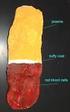
1 HEMATOPOIETIC SYSTEM I: PERIPHERAL BLOOD READING: Gartner and Hiatt, pages LEARNING OBJECTIVES: 1. Describe the composition of normal peripheral blood, including the relative quantities of the blood cells. 2. Identify normal peripheral blood cells. 3. Describe the function and "life cycle" of normal peripheral blood cells. 4. List the components of the CBC (complete blood count). Key Words: Erythrocytes, reticulocytes, neutrophils, eosinophils, basophils, monocytes, lymphocytes, platelets, CBC I. Composition. Blood is a fluid connective tissue constituting about 7% of our total body weight (about 5 liters in the human). The primary components are: A. Plasma: The liquid in which peripheral blood cells are suspended. Composed of water, electrolytes such as Na + and Cl, (0.9%), 7% plasma proteins (such as albumin, fibrinogen, globulins), hormones, fats, amino acids, vitamins carbohydrates, lipoproteins as well as other substances. The normal plasma volume is 40 ml/kg of body weight. B. Formed Elements (blood cells): 1. Erythrocytes (red blood cells or rbc): occupy about 40-45% of the total blood volume or 30 ml/kg body weight. 2. Leukocytes (white blood cells or wbc) and Platelets: together make up about 1-2% of the total blood volume. Freshly drawn blood is a red fluid (specific gravity of ). It forms a jelly-like mass if allowed to clot. The clot is formed by the conversion of fibrinogen to fibrin which forms a meshwork that entraps the formed elements. If the gel is centrifuged, cell free serum can be obtained. If an anticoagulant is added, blood can be sedimented into three distinct layers due to different densities of elements: rbc > wbc > plasma. The lowermost layer (45% of the blood volume) consists of erythrocytes. Above this region is a grayish white layer (buffy coat) which represents the platelets, lymphocytes and granulocytes (about 1-2% volume). Plasma is the top layer.
2 II. Morphology and Function of the Blood Cells A. Erythrocytes (mature red blood cells) 1. Cytology The mature human erythrocyte measures about 7-8 µm in diameter and appears as an anucleate, acidophilic cell. In addition to the nucleus, the mature erythrocyte also loses its Golgi apparatus, centrioles, ER and most of its mitochondria. a. The bulk of the cytoplasm (90-95% of dry weight) consists of the iron-carrying pigment hemoglobin. Very few organelles are present. The measurement of the hemoglobin concentration in whole blood, referred to simply as hemoglobin, involves lysing the erythrocytes, producing an evenly distributed solution of hemoglobin in the sample. The normal range for hemoglobin is age- and sex-dependent, with men having higher values than women, and adults having higher values than children (except newborns, who have the highest values of all). At Memorial Hermann Hospital, the normal range for young female adults is g/dl; for young male adults it is g/dl. The hematocrit is a measure of the total volume of the erythrocytes relative to the total volume of whole blood in a sample. The result is a proportion, often expressed as a percent. The normal range is % for women, and 42-52% for men. b. Shape A normal red blood cell is a biconcave disk to achieve a maximum surface area to cytoplasmic volume ratio. The surface area of an erythrocyte is calculated to be 128 µm 2. Thus, the average person has 3840 m 2 of RBC membrane area for respiratory exchange. The cell is enclosed in a typical fluid, bilayered cell membrane which is flexible and elastic enough to allow the cell to move through capillaries. Cells frequently assume a cup shape in capillaries. Peripheral membrane proteins, spectrin and actin, serve a cytoskeletal function. Peripheral blood: red blood cells (air dried, Wright stain) Scanning electron micrograph of red blood cells b. Life span: The mature erythrocyte has a life span of approximately 120 days in the
3 circulation. As red blood cells age, the surface area decreases relative to cytoplasmic volume resulting in a sphere form which is more rigid and is ultimately trapped in splenic cords. c. Function To provide an environment for the iron-containing respiratory pigment, heme, which is complexed to two alpha and two beta globin chains comprising the hemoglobin molecule. The major physiologic role of hemoglobin is oxygen and CO 2 transport. The erythrocyte also contains enzymes that participate in the glycolytic and hexose monophosphate biochemical pathways. Under normal circumstances, red blood cells never leave the circulatory system. Blood O 2 content in each type of blood vessel. The amount of O 2 is highest in arteries and lung capillaries; it decreases in tissue capillaries, where exchange takes place between blood and tissue. 2. Frequency (number) The erythrocyte count, also referred to as the RBCs, simply involves counting the number of RBCs per unit volume of whole blood. This is done by an automated instrument. Male = x 10 6 cells/mm 3 ; Female = x 10 6 cells/mm Red cell indices a. Mean corpuscular volume (MCV) This is the mean volume of all the erythrocytes counted in the sample. The value is expressed in volume units, in this case very small ones femtoliters (fl, liter). The normal range is fl. The formula for the calculation in general terms is hematocrit MCV = RBC count When the MCV is low, the red blood cells are said to be microcytic, when high, macrocytic. Normocytic refers to blood with a normal MCV. Keep in mind that the MCV measures only average cell volume. The MCV can be normal while the individual red cells vary wildly in volume from one cell to the next. Such an abnormal variation in cell volume is called anisocytosis. The degree of anisocytosis is measured by the automated cell counter and reported as red cell distribution width (RDW). The normal range for the RDW is %. b. Mean corpuscular hemoglobin (MCH) The MCH represents the mean mass of hemoglobin in the RBC and is expressed in the mass unit, pictograms (pg, gram). The value is determined by the formula, hemoglobin MCH = RBC count The normal range is pg. Since small cells have less hemoglobin than large cells, variation in the MCH tends to track along with that of the MCV. c. Mean corpuscular hemoglobin concentration (MCHC)
4 This is the mean concentration of hemoglobin in the red cell. The formula is: hemoglobin MCHC = hematocrit Cells with normal, high, and low MCHC are referred to as normochromic, hyperchromic, and hypochromic, respectively. These terms will be important in anemia classification. 4. Reticulocytes These are less mature erythrocytes. Red blood cells released from the bone marrow into the peripheral circulation are considered reticulocytes for about 2 days. a. Cytology Reticulocytes are slightly larger than the older RBCs and have slightly more RNA, giving them a slightly bluish staining quality (referred to as polychromasia). Reticulocytes can be identified by staining with a supravital dye that stains the RNA. b. Frequency Normally make up 1-2% of red cells; after approximately l-2 days in peripheral blood they are indistinguishable from mature blood cells. Reticulocytes are increased in number when the bone marrow is producing and releasing them faster, e.g., in response to blood loss. When something is wrong with the bone marrow, such as leukemia or metastatic cancer, the bone marrow will not be able to respond appropriately. 5. Anemia a. Definition A significant reduction in the total body erythrocyte mass, measured as a reduction in the RBC count, the hemoglobin, and the hematocrit. Anemia exists when the hemoglobin is less than 12 g/dl or the hematocrit is less than 37%. b. Classification Anemias can be classified by cytometric schemes (microcytic, macrocytic, or normocytic), erythrokinetic schemes (those that take into account the rates of RBC production and destruction), and biochemical/molecular schemes (those that consider the etiology of the anemia at the molecular level). Anemias will be studied in detail in the MSII year. B. White Blood Cells White blood cells include granulocytes (neutrophils, eosinophils and basophils), lymphocytes and monocytes. In the CBC, a total number of white blood cells is given (the WBC count, white blood cell count) and, if ordered, a differential count or diff. The differential indicates the proportion of the total number of white blood cells represented by each of five types of WBC (the neutrophils, eosinophils, basophils, lymphocytes and monocytes) as a percentage. An absolute number of each of these cell types is also given. 1. Neutrophils (neutrophilic granulocytes): a. Cytology The mature neutrophil measures approximately µm diameter in a smear. It is characterized by a prominent nucleus segmented into 2-5 lobes joined by extremely fine nuclear strands. Most numerous of the white blood cells in an adult (lymphocytes are more
5 numerous in young children). Slightly less mature neutrophils (bands) have a non-segmented or band-shaped nucleus. Rarely, earlier forms such as metamyelocytes may be seen in the PB. Granules Cytoplasm contains two major types of granules: 1) Specific (secondary) granules Most numerous type; small with a pinkish hue (fairly neutral staining), so not easily seen, collagenase, lactoferrin, bacteriocidal phagocytins and lysozyme. 2) Azurophilic (primary) granules These are less numerous, larger, and stain reddish purple. They are most commonly found in the promyelocyte stage of granulocyte precursors and are not specific for neutrophils. Promyelocytes are found in the bone marrow, but not normally in the peripheral blood. They are primary lysosomes which contain myeloperoxidase and acid hydrolases characteristic of lysosomes. Cytoplasm also contains glycogen and numerous filaments and microtubules (function in movement). Neutrophils which have just been released from the bone marrow often have a band-shaped or horseshoe-shaped nucleus and are known as band neutrophils or just bands. In females the inactivated X chromosome can appear as a nuclear appendage (Barr body). c. Frequency The white cells of peripheral blood are generally 50-75% neutrophils; about 3-5% are band forms. Half-life in blood is only 6-8 hrs, 1-4 day lifespan. Neutrophils move from the peripheral circulation into the tissues in response to infection or tissue damage (e.g., a myocardial infarct). d. Functions Neutrophils are the first line of defense against microorganisms, especially bacteria. They are active phagocytes. Particles are taken up in a vacuole, the ph is lowered by a membrane proton pump, then the azurophilic granules fuse and empty. Killing and digestion occur. Activated oxygen species also form and kill microorganisms. Lysozyme destroys cell wall of gram-positive bacteria. Neutrophils undergo chemotaxis. They are attracted by devitalized tissue, bacteria, foreign bodies, and complement components. Phagocytosis can be non-specific but will be enhanced if the body has made specific antibodies due to previous exposure. Blood borne antibody (IgG) binds to surface antigen or bacteria, and then complement C 3 b binds (process called opsonization), facilitating phagocytosis. The bone marrow will release more neutrophils in response to stimuli such as
6 bacterial infection, tissue necrosis, etc. (See next lecture) Peripheral blood: neutrophils 2. Eosinophils a. Cytology The mature eosinophil is about the same size as the neutrophil; about µm in diameter in dry smears. The eosinophil generally contains a bilobed nucleus; however, three to four lobes are noted occasionally. The cytoplasm has characteristics similar to the neutrophil with the notable exception that the specific granules are refractile and stain bright orange (eosinophilic) with the Romanowsky stain. These granules are somewhat unique because by electron microscopy they can be seen to contain a dense filamentous core of major basic protein (MBP). These structures are known as crystalloids. The matrix of the granules contains lysosomal enzymes, and in particular has a high content of peroxidase, arylsulfatase, acid phosphatase, RNase and cathepsin. b. Frequency The peripheral blood contains about 1-3% eosinophils. The number of eosinophils is high in individuals with allergies or parasitic infections. Also circulates about 8 hours. c. Functions The function of eosinophils is not entirely clear, but they are increased in some parasitic infections, in allergic responses to a variety of stimuli including pollen, some drug reactions. d. Chemotaxis These cells are known to phagocytose antigen-antibody complexes and inactivate mediators of inflammation such as leukotrienes. e. Major basic protein. Kills parasitic worms. Peripheral blood eosinophil
7 3. Basophils a. Cytology The mature basophil measures 9-10 µm in diameter in smears and has a nucleus containing 2-3 lobes which are often difficult to see because of the large, dark-staining specific granules. The cytoplasm contains numerous metachromatic granules of varying size that stain a deep purple color with the usual stains used for peripheral blood smears. These granules contain high concentrations of heparin (an anticoagulant), a number of vasodilating agents which cause increased vascular permeability such as histamine, slow reacting substance of anaphylaxis (leukotriene), serotonin, and eosinophil chemotactic factor. b. Frequency The peripheral blood contains 0.5-l% basophils, and thus basophils are the least numerous granulocyte and least numerous white blood cell in the peripheral blood. Basophils are similar to mast cells but not identical. (Mast cells are seen in the bone marrow and other tissues, but not the normal peripheral blood.) c. Function Although the basophil possesses phagocytic capabilities, it is mainly the secretory cell which mediates the hypersensitivity reaction. Basophils (and mast cells) can bind IgE antibody, and, when subsequently exposed to the corresponding antigen, release vasoactive substances leading to hypersensitivity reactions. Peripheral blood: basophil d. Summary Neutrophils, eosinophils and basophils are the three types of blood cells referred to as granulocytes. They have a segmented nucleus in the mature stage and granules in the cytoplasm. 4. Monocytes a. Cytology The mature monocyte measures µm in diameter in blood smears and represents a circulating cell derived from bone marrow promonocytes. They spend about a week in blood and migrate into tissue where they become tissue macrophages or histiocytes. They are the largest cell in the peripheral blood. They contain a fairly large nucleus which is ovoid, kidney- or horseshoe-shaped, often located in an eccentric position. Nucleoli are sometimes seen.
8 The cytoplasm is pale and may contain fine azurophilic granules (lysosomes), small amounts of RER, free ribosomes, polyribososomes, and a well-developed Golgi apparatus (making lysosomes). Pinocytotic (clear) vacuoles are frequently seen in cytoplasm. Cell membrane has many finger-like microvilli. Peripheral blood has 3-8% monocytes. Life span 5-8 days. Peripheral blood: monocytes b. Function Monocytes belong to the monocuclear-phagocyte system. These cells leave the blood and enter the tissue, differentiating into macrophages or tissue histiocytes. They ingest (phagocytize) and remove particulate matter, tissue debris, and infectious agents. Histiocytes/macrophages are present in many tissues, but are particularly numerous in the bone marrow, liver and spleen. Interact with lymphocytes and play essential role with antigen interaction of immunocompetent cells. 5. Lymphocytes a. Cytology Mature lymphocytes show a spectrum of sizes ranging from small lymphocytes (6-8 microns in diameter) to larger forms (10-12 microns in diameter or even higher). They contain a single, deeply-stained, spherical nucleus which can have an slight indentation. The chromatin in the nucleus is condensed into coarse clumps. The nucleus is surrounded by a thin rim of lightly basophilic cytoplasm in the smaller types. The cytoplasm is more abundant in the larger lymphocytes. The cytoplasm may contain a few nonspecific granules (lysosomes), a few mitochondria, many ribosomes, and a Golgi apparatus. Two major subtypes of usually morphologically indistinguishable lymphocytes can be identified (by lifespan, function, surface receptors, site of differentiation) T cells and B cells. A third type of lymphocyte is referred to as natural killer (NK) cells.
9 Peripheral blood: lymphocyte b. Function Lymphocytes are an important part of the immune system. T-lymphocytes Processed by the thymus and participate in cell-mediated immunity (such as graft rejection). Some T-cells (cytotoxic) can elaborate cytotoxic agents. They can make lymphokines (including interferon, macrophage migration inhibitor factor, chemotactic factors for basophils). There are also memory T-cells that survive for years or decades. B-lymphocytes (Bursa derived) - these cells play a central role in humoral or antibody-mediated immunity. Some divide and differentiate into plasma cells in tissue. Some are memory cells. They are immunologically characterized by immunoglobulin on their cell membrane. Plasma cells Derive from B-lymphocytes. They have an eccentrically placed nucleus, contain abundant amounts of RER whose cisternae can be filled with antibody, and have a well-developed Golgi. Plasma cells produce antibodies (immunoglobulins). NK cells NK cells lack the surface antigens of T and B cells and do not require prior stimulation to attack virus-infected cells or tumor cells. c. Frequency About 20-50% of peripheral blood white blood cells are lymphocytes. Of these, about 80% are T-cells, 15% B-cells, 5% NK cells. Plasma cells are not normally seen in the peripheral blood but are present in the bone marrow and other tissues. d. Summary The monocytes and lymphocytes are referred to as mononuclear white blood cells because their nuclei are not segmented (as opposed to the granulocytes which contain segmented nuclei). They do not contain prominent granules in their cytoplasm, in contrast to the granulocytes discussed earlier. The WBC count and differential and absolute counts are reported as part of the CBC and will look something like this: WBC 6000/µL Neutrophils 62% 3720/µL Lymphocytes 25% 1500/µL Monocytes 8% 480/µL Eosionphils 3% 180/µL Basophils 2% 120/µL
10 C. Platelets 1. Structure Non-nucleated flat, biconvex, round or ovoid disks (2-5 µm diameter); derived from bone marrow megakaryocytes. a. Contain pale-blue peripheral hyalomere with a system of invaginating channels (open canalicular system) connecting with the platelet membrane, a system of electron-dense tubules, a marginal bundle of circumferential microtubules to maintain the disk shape, and actin and myosin. When platelets become activated, the microtubular system squeezes the granules to the center of the platelet, the contents are released, and the coagulation system is triggered (see below). b. Contain thicker central purple granulomere containing several kinds of granules. Alpha granules are azurophilic and contain fibrinogen, platelet-derived growth factor, etc. Dense granules contain calcium, pyrophosphate, ADP and ATP. They also store serotonin. Small vesicules (lambda granules) contain lysosomal enzymes. Peripheral blood: platelets (and RBCs) Transmission electron micrograph of a platelet 2. Functions Platelets are involved in hemostasis (stopping bleeding). Platelets aggregate on damaged endothelium and exposed collagen, release contents of alpha and dense granules, promote the coagulation cascade involving plasma factors to form a blood clot. The formation of the platelet plug is referred to as primary hemostasis. The clotting process is good to limit hemorrhage but can be life threatening on the wall of a coronary artery (coronary thrombosis) or when breaking free from veins of extremities and going to lungs to cause pulmonary embolism. A deficiency of platelets is called thrombocytopenia. Thrombocytopenia may result from a number of causes, such as immune destruction by antibodies directed against platelets, bone marrow infiltration by metastatic cancer, or primary malignancy of the bone marrow. Thrombocytopenia may result in bruising or bleeding. 3. Frequency Blood contains 150, /mm 3. Life span is 7-10 days. The platelet count is typically reported with the CBC ( CBC with diff and platelets ). III. The CBC (Complete Blood Count) A. The CBC is a very common laboratory test. A great deal of information can be obtained from evaluating the patient s red blood cells, white blood cells, and platelets. You can see if the patient is anemic, if they are likely to have a viral or bacterial infection, and if they are likely to have bleeding due to thrombocytopenia.
11 Normal Peripheral Blood Cells Erythrocytes Leukocytes (White Blood Cells) Platelets Granulocytes: Mononuclear cells: Neutrophils Lymphocytes Monocytes Eosinophils Plasma cells Basophils 1.Basophil 2.Platelets 3.Monocyte 4.Erythrocytes 5.Monocyte 6.Lymphocyte 7.Eosinophil 8.Neutrophil 9.Lymphocyte Products and Functions of the Blood Cells Cell Type Main Products or Components Main Functions Erythrocyte Hemoglobin CO 2 and O 2 transport Leukocytes Neutrophil Specific granules and modified Phagocytosis of bacteria lysosomes (azurophilic granules) Eosinophil Specific granules, pharmacologically active substances Defense against parasitic helminths; modulation of inflammatory processes Basophil Specific granules containing histamine and heparin Release of histamine and other inflammation mediators
12 Monocyte Granules with lysosomal enzymes B lymphocyte (Plasma cell) T lymphocyte Natural killer cell Immunoglobulins Substances that kill cells, substances that control the activity of other leukocytes (interleukins) Attacks virus-infected cells and cancer cells without previous stimulation Generation of monoculearphagocyte system cells in tissues; phagocytosis and digestion of protozoa- and virus-infected and senescent cells Generation of antibodyproducing terminal cells (plasma cells) Killing of virus-infected cells Killing of some tumor and virusinfected cells Platelet Blood-clotting substances Clotting of blood
13 HEMATOPOIETIC SYSTEM II: BONE MARROW LEARNING OBJECTIVES: 1. List the types of hematopoietic tissues. 2. Describe the development of hematopoiesis throughout the life of the individual. 3. Describe the developmental stages of erythroid and myeloid cells. 4. Identify the other types of cells in the bone marrow, i.e. megakaryocytes, lymphocytes, plasma cells, macrophages, adipocytes. 5. Describe the factors which control hematopoiesis, e.g. growth factors such as erythropoietin, GM- CSF. Key Words: blood cell renewal, hematopoiesis, bone marrow, erythropoiesis, granulopoiesis, megakaryopoiesis, growth factors. D. Introduction Bone marrow is a richly vascularized connective tissue which specializes in production of all the formed elements of blood. Bone marrow is the most rapidly replicative tissue in the body. II. Blood Cell Renewal A. The problem The different blood cells have finite and often brief life spans and must be renewed to maintain appropriate circulating levels. The process of renewal is known as hematopoiesis (hemopoiesis). 1. Influences on hematopoiesis Infection, hemorrhage, tumors and other factors may induce increases or decreases in the level of hematopoiesis in one or more of the blood cell lines. 2. Several growth factors and other products affect the proliferation and differentiation of hematopoietic cells. Different factors are involved in erythropoiesis, granulopoeisis, etc. (See table below) B. Hematopoietic tissues Tissues which actively or potentially produce blood cells are hematopoietic tissues. 1. Types of hematopoietic tissues a. Myeloid tissues Blood forming tissues identified as the "red marrow" of bones. The amount and location of red marrow is different in the fetus and the adult. (See below) b. Lymphoid tissues Some lymphocytes of peripheral blood arise from proliferation within lymphoid tissues. Lymphoid tissues are elements of the larger lymphatic system (lymph nodes, tonsils,
14 Peyer's patches, etc.) These will be addressed in another Histology lecture. (Please note, the lymphocyte "stem cell" is located in bone marrow.) C. Hematopoiesis in Utero: 1. Embryo and fetus (intrauterine development) Hematopoiesis in the developing organism is a dynamic process which involves a variety of tissue sites. The different tissues serve as major blood cell producers at different gestational ages. Furthermore, gestational hematopoiesis occurs in three major waves or phases and a few minor ones as well. The three phases are mesoblastic, hepatic and myeloid. GESTATIONAL AGE PHASE LOCATION 2 weeks - 2 months Mesoblastic Wall of yolk sac 6 weeks - birth Hepatic Liver 2 1/2 month - birth Myeloid Bone Marrow TABLE 13.1 GESTATIONAL HEMATOPOIESIS a. Mesoblastic phase Mesoblastic phase extends from two weeks to two months. Hematopoiesis begins in the yolk sac wall where small nests of blood cell production can be visualized. These nests are referred to as "blood islands". b. Hepatic phase Islands of blood cell development occur within the liver parenchyma from 6 weeks to birth. Although the liver is the dominant site of hematopoiesis for the first half of gestation, blood cell production also occurs at lesser intensity within the spleen. c. Myeloid phase Hematopoiesis within bone marrow begins in the clavicle at about 2 1/2 months. Activity continues to rise until myeloid tissue becomes the major site of hematopoiesis in the latter half of gestation. Myeloid hematopoiesis is centered in most bone marrow (red marrow) during intrauterine life. 2. Birth At birth, the myeloid phase predominates in hematopoiesis and occurs in the medullary cavities of long bones. As a child grows, the long bones assume the weight bearing function and the marrow becomes yellow. The site of hematopoiesis subsequently shifts to the red marrow of the axial skeleton. (In case you haven't had the axial skeleton yet, it consists of skull, vertebral column, ribs, sternum, shoulder girdle and pelvic girdle). 3. Adults Under normal conditions, hematopoiesis resides in red marrow of the axial skeleton. However, under certain conditions, the spleen, liver and yellow marrow (converts to red) can resume hematopoietic activity in the adult. II. Stem Cells, Growth Factors, and Differentiation All blood cell types arise from common or pluripotential stem cells. Some of the daughter cells will become specific, irreversibly differentiated cell types, and other daughter cells remain stem cells. These cells proliferate and form one cell lineage that will become lymphocytes (lymphoid
15 cells) and another lineage that will form the myeloid cells that develop in bone marrow (granulocytes, monocytes, erythrocytes, and megakaryocytes). Early in their development, lymphoid cells migrate from the bone marrow to the thymus, lymph nodes, spleen, and other lymphoid tissues. Lymphoid tissue will be covered in more detail in other lectures. Differentiation of pluripotential stem cells during hematopoiesis III. Red Marrow A. Histology Red marrow is composed of a network of vascular sinuses (specialized blood vessels) situated throughout a sponge-like network of hematopoietic cells. Sinuses are interposed between arteries and veins and contain, essentially, peripheral blood. Red Marrow is organized into sacs (alveoli) within which hematopoietic cells develop in nests or foci. Reticular cells and reticular fibers form a supportive framework for the developing blood cells and sinuses. 1. Location In red marrow, cells of the RBC line develop near the sinus wall. Each RBC nest has an associated macrophage which contains iron. Cells of the granulocyte series (eosinophilic, neutrophilic, and basophilic) develop away from the sinus. Megakaryocytes (cells producing platelets) also develop next to sinuses. Bone Marrow (H&E stained histologic section)
16 IV. Developmental stages of Blood Cells A. Erythropoiesis (RBCs) Process of formation and differentiation of RBCs. (See diagram below and on page 97) 1. Proerythroblast - divides. 2. Basophilic erythroblast - divides 3. Polychromatophilic erythroblast - divides. 4. Orthochromic erythroblast - no division. 5. Reticulocyte - no division. 6. Erythrocyte - no division. 7. Control of erythropoiesis Development from a basophilic normoblast to a mature erythrocyte involves cell divisions and takes approximately one week. RBC formation is under the control of a kidneyproduced hormone known as erythropoietin. Dietary iron, Vitamin B 12 and folic acid are required for the normal production of RBCs. B. Granulopoiesis Process of formation and differentiation of granulocytes. 1. The following are stages in granulopoiesis a. Myeloblast - Divides. b. Promyelocyte - Divides. c. Neutrophilic, eosinophilic, or basophilic myelocyte - Divides. d. Neutrophilic, eosinophilic, or basophilic metamyelocyte - No division. e. Neutrophilic, eosinophilic, or basophilic band - No division. f. Segmented neutrophil, eosinophil, or basophil - No division. Granulopoeisis Erythropoiesis
17 2. Control of granulopoiesis Granulopoiesis is stimulated by CSF (colony stimulating factors), substances released by the macrophage/monocyte community, such as G-CSF or GM-CSF. One stimulus for CSF release is increased cell migration into tissues, such as would occur in a bacterial infection. 3. Kinetics of Neutrophil Production The total time taken for a myeloblast to emerge as a mature neutrophil in the circulation is about 11 days. Under normal circumstances, five mitotic divisions occur in the myeloblast, promyelocyte, and neutrophilic myelocyte stages of development. Neutrophils pass through several functionally and anatomically defined compartments: a. The medullary formation compartment can be subdivided into a mitotic compartment and a maturation compartment. This compartment is in the bone marrow. b. The medullary storage compartment acts as a buffer system, capable of releasing large numbers of mature neutrophils upon demand. This compartment is in the bone marrow. c. The circulating compartment consists of neutrophils suspended in plasma and circulating in blood vessels. This compartment is not in the bone marrow, but in the blood. d. The marginating compartment is composed of neutrophils present in blood but not circulating. These neutrophils are in capillaries and are temporarily excluded from the circulation by vasoconstriction, or, especially in the lungs, may be at the periphery of vessels, adhering to the endothelium, and not in the main blood stream. The marginating and circulating compartments are of about equal size, and there is a constant interchange of cells between them. This is important because in the case of an acute bacterial infection, neutrophils can be recruited quickly from the marginating pool, rather than waiting for new neutrophils to be formed and/or released from the bone marrow.
18 C. Thrombopoiesis Process of formation of platelets. 1. Megakaryoblast - Large cell with a big nucleus (4n) situated close to sinuses. 2. Promegakaryocyte Larger than a megakaryoblast, this cell contains a voluminous polyploid nucleus (8n). Develops platelet demarcation channels. 3. Megakaryocyte - A giant cell with a large polyploid nucleus (32n-64n). Platelet demarcation channels very distinct. A massive protrusion of the cell penetrates a sinus and fragments into platelets. 4. Thrombocyte (platelet) -The final end product which circulates in the peripheral blood. Responsible for primary hemostasis (clot formation). 5. Control of thrombopoiesis - A serum glycoprotein, known as thrombopoietin, has been demonstrated. Thrombocytopenia stimulates megakaryocytes and platelet production. D. Other red marrow cells 1. Macrophages
19 These cells are the tissue counterparts of monocytes of the peripheral blood. In the bone marrow, they function in phagocytosis and iron storage. (Sometimes we refer to macrophages as histiocytes). 2. Structural cells These include fat cells (adipocytes), reticular cells, and endothelial cells. 3. Lymphocytes A few lymphocytes and plasma cells are usually present in the bone marrow. 4. Mast cells HEMATOLOGY LAB SLIDE 44 BLOOD SMEAR IN THIS LAB YOU NEED TO USE OIL. ONE DROP ON THE SLIDE ONLY AND SHIFT TO THE 100X MAGNIFICATION LENS Go from one edge of the smear to the other and count the different cell types and see how close you come to the normal range. Normal adult range (Of peripheral white cells) Neutrophils 50-75% (3-5% stab or band form) Lymphocytes 20-50% (80% T, 15% B, 5% Null) Monocytes 3-8% Eosinophils 1-3% Basophils 0.5-1% The differential count is an excellent diagnostic toll for diagnosis, In viral infections there is predominance of lymphocytes, in bacterial infections it is neutrophils. Disease progress can also be followed such as myeloproliferative disorders, infectious mononucleosis and such. SLIDE 45 BONE MARROW ASPIRATE On this slide you will be looking for members of the granulocytic and erythroid cell lines. The marrow is obtained by inserting a needle through cortical bone and withdrawing the aspirate, a procedure that is often very painful. Look for members of the erythropoietic series from basophilic normoblast through to erythrocyte and for members of the granulocyte series from promyelocyte to neutrophil. Identify a blast cell and a Megakaryocyte
Blood. Functions of Blood. Components of Blood. Transporting. Distributing body heat. A type of connective tissue. Formed elements.
 Blood Functions of Blood Transporting nutrients respiratory gases waste products Distributing body heat Components of Blood A type of connective tissue Formed elements Living blood cells Plasma Nonliving
KEY CHAPTER 14: BLOOD OBJECTIVES. 1. Describe blood according to its tissue type and major functions.
 KEY CHAPTER 14: BLOOD OBJECTIVES 1. Describe blood according to its tissue type and major functions. TISSUE TYPE? MAJOR FUNCTIONS connective Transport Maintenance of body temperature 2. Define the term
Cardiovascular System. Blood Components
 Cardiovascular System Blood Components 1 Components of Blood Formed elements: erythrocytes, leukocytes, platelets Plasma: water, proteins, other solutes The components of blood can be divided into two
White Blood Cells (WBCs) or Leukocytes
 Lec.5 Z.H.Al-Zubaydi Medical Physiology White Blood Cells (WBCs) or Leukocytes Although leukocytes are far less numerous than red blood cells, they are important to body defense against disease. On average,
BLOOD-Chp. Chp.. 6 What are the functions of blood? What is the composition of blood? 3 major types of plasma proteins
 6.1 Blood: An overview BLOOD-Chp Chp.. 6 What are the functions of blood? Transportation: oxygen, nutrients, wastes, carbon dioxide and hormones Defense: against invasion by pathogens Regulatory functions:
Functions of Blood. Collects O 2 from lungs, nutrients from digestive tract, and waste products from tissues Helps maintain homeostasis
 Blood Objectives Describe the functions of blood Describe blood plasma Explain the functions of red blood cells, white blood cells, and platelets Summarize the process of blood clotting What is Blood?
3. The Circulatory System
 3. The Circulatory System A. Introduction B. Blood 1. Circulatory system transports water, electrolytes, hormones, enzymes, antibodies, cell, gases and nutrients to all cells and carries away metabolic
whole blood consists of two main elements: the formed elements
 bloodc components TERI JUNGE, CST/CFA whole blood consists of two main elements: the formed elements and the liquid element. The formed elements are cell fragments and cells, known as corpuscles, which
 Blood Sticky, opaque fluid with a metallic taste (Fe 2+ ) Varies from scarlet (P O2 = 100) to dark red (P O2 = 40) ph is between 7.35 and 7.45 Average volume in an adult is 5 L (7% of body weight) 2 L
Laboratory 12 Blood Cells
 Laboratory 12 Blood Cells Objectives: Identify microscopically each of the following: erythrocytes (red blood cells or RBCs), the five types of leukocytes (white blood cells or WBCs), and thrombocytes
Collect and label sample according to standard protocols. Gently invert tube 8-10 times immediately after draw. DO NOT SHAKE. Do not centrifuge.
 Complete Blood Count CPT Code: CBC with Differential: 85025 CBC without Differential: 85027 Order Code: CBC with Differential: C915 Includes: White blood cell, Red blood cell, Hematocrit, Hemoglobin, MCV,
Blood. Blood. Blood Composition. Blood Composition. Fractionation & Hemopoesis
 Blood Blood Chapter 19 Blood is a specialized fluid connective tissue that contains cells suspended in a fluid matrix Functions of blood include: Transport of dissolved gases, nutrients, hormones and metabolic
37 2 Blood and the Lymphatic System Slide 1 of 34
 1 of 34 Blood is a connective tissue that contains both dissolved substances and specialized cells. 2 of 34 The functions of blood include: collecting oxygen from the lungs, nutrients from the digestive
Thibodeau: Anatomy and Physiology, 5/e. Chapter 17: Blood
 Thibodeau: Anatomy and Physiology, 5/e Chapter 17: Blood This chapter begins a new unit. In this unit, the first four chapters deal with transportation one of the body's vital functions. It is important
Hematology Morphology Critique
 Survey Slide: History: 60-year-old female presenting with pneumonia Further Laboratory Data: Hgb : 90 g/l RBC : 2.92 10 12 /L Hct : 0.25 L/L MCV : 87 fl MCH : 30.8 pg MCHC : 355 g/l RDW : 17.7 % WBC :
Lymph capillaries, Lymphatic collecting vessels, Valves, Lymph Duct, Lymph node, Vein
 WLHS/A&P/Oppelt Name Lymphatic System Practice 1. Figure 12-1 provides an overview of the lymphatic vessels. First color code the following structures. Color code in Figure 12-1 Heart Veins Lymphatic vessels/lymph
EDUCATIONAL COMMENTARY - GRANULOCYTE FORMATION AND CHRONIC MYELOCYTIC LEUKEMIA
 LEUKEMIA Educational commentary is provided through our affiliation with the American Society for Clinical Pathology (ASCP). To obtain FREE CME/CMLE credits click on Earn CE Credits under Continuing Education
Essentials of Anatomy and Physiology, 9e (Marieb) Chapter 10 Blood. Short Answer. Figure 10.1
 Essentials of Anatomy and Physiology, 9e (Marieb) Chapter 10 Blood Short Answer Figure 10.1 Using Figure 10.1, identify the following: 1) The neutrophil is indicated by letter. Answer: A Diff: 1 Page Ref:
Exercise 9: Blood. Readings: Silverthorn 5 th ed, 547 558, 804 805; 6 th ed, 545 557, 825 826.
 Exercise 9: Blood Readings: Silverthorn 5 th ed, 547 558, 804 805; 6 th ed, 545 557, 825 826. Blood Typing The membranes of human red blood cells (RBCs) contain a variety of cell surface proteins called
Name (print) Name (signature) Period. (Total 30 points)
 AP Biology Worksheet Chapter 43 The Immune System Lambdin April 4, 2011 Due Date: Thurs. April 7, 2011 You may use the following: Text Notes Power point Internet One other person in class "On my honor,
What Does My Bone Marrow Do?
 What Does My Bone Marrow Do? the myelodysplastic syndromes foundation, inc. Illustrations by Kirk Moldoff Published by The Myelodysplastic Syndromes Foundation, Inc. First Edition, 2009. 2012. Table of
ABO-Rh Blood Typing Using Neo/BLOOD
 ABO-Rh Blood Typing Using Neo/BLOOD Objectives Determine the ABO and Rh blood type of unknown simulated blood samples. Prepare a simulated blood smear. Examine a prepared blood smear under the microscope
The Immune System. 2 Types of Defense Mechanisms. Lines of Defense. Line of Defense. Lines of Defense
 The Immune System 2 Types of Defense Mechanisms Immune System the system that fights infection by producing cells to inactivate foreign substances to avoid infection and disease. Immunity the body s ability
ANIMALS FORM & FUNCTION BODY DEFENSES NONSPECIFIC DEFENSES PHYSICAL BARRIERS PHAGOCYTES. Animals Form & Function Activity #4 page 1
 AP BIOLOGY ANIMALS FORM & FUNCTION ACTIVITY #4 NAME DATE HOUR BODY DEFENSES NONSPECIFIC DEFENSES PHYSICAL BARRIERS PHAGOCYTES Animals Form & Function Activity #4 page 1 INFLAMMATORY RESPONSE ANTIMICROBIAL
specific B cells Humoral immunity lymphocytes antibodies B cells bone marrow Cell-mediated immunity: T cells antibodies proteins
 Adaptive Immunity Chapter 17: Adaptive (specific) Immunity Bio 139 Dr. Amy Rogers Host defenses that are specific to a particular infectious agent Can be innate or genetic for humans as a group: most microbes
Objectives Chapter 17
 17 Blood Objectives Chapter 17 1. Describe the composition and physical characteristics of whole blood. Explain why it is classified as a connective tissue. This is an all inclusive question and covers
Young fetus: site of hematopoiesis together with the liver and bone marrow. Hgb WBC >----------< Plt Hct. Retic =
 Learning Objectives At the completion of this program, the participants will be able to: 1. Identify the components of the CBC and Differential and their clinical implications. 2. Identify normal pediatric
Chapter 16: Innate Immunity
 Chapter 16: Innate Immunity 1. Overview of Innate Immunity 2. Inflammation & Phagocytosis 3. Antimicrobial Substances 1. Overview of Innate Immunity The Body s Defenses The body has 2 types of defense
CHAPTER 14: CARDIOVASCULAR SYSTEM: BLOOD. 1. Describe blood according to its tissue type and major functions.
 OBJECTIVES: 1. Describe blood according to its tissue type and major functions. 2. Define the term hematology. 3. Name the average volume of blood in a human. 4. Name the two major components of blood
Phlebotomy Handbook Blood Collection Essentials Seventh Edition
 Phlebotomy Handbook Blood Collection Essentials Seventh Edition Diana Garza Kathleen Becan-McBride Chapter Four The Cardiovascular System Introduction Circulatory system is a transport system. Contributes
10. T and B cells are types of a. endocrine cells. c. lymphocytes. b. platelets. d. complement cells.
 Virus and Immune System Review Directions: Write your answers on a separate piece of paper. 1. Why does a cut in the skin threaten the body s nonspecific defenses against disease? a. If a cut bleeds, disease-fighting
Microbiology AN INTRODUCTION EIGHTH EDITION
 TORTORA FUNKE CASE Microbiology AN INTRODUCTION EIGHTH EDITION Differentiate between innate and acquired immunity. Chapter 17 Specific Defenses of the Host: The Immune Response B.E Pruitt & Jane J. Stein
The Immune System: A Tutorial
 The Immune System: A Tutorial Modeling and Simulation of Biological Systems 21-366B Shlomo Ta asan Images taken from http://rex.nci.nih.gov/behindthenews/uis/uisframe.htm http://copewithcytokines.de/ The
Blood Questions. 8. A reduced ability to produce thrombin would cause the time required for blood clot formation to:
 Answer the first 40 items with: a. Increase b. Decrease c. Stay the same 1. An increase in plasma levels of erythropoietin will cause blood viscosity to: 2. The activation of plasminogen will cause the
Chapter 19 Ci C r i cula l t a i t o i n
 Chapter 19 Circulation A closed system Circulatory System Consisting of Heart, Arteries, Veins, Capillaries, Blood & the Lymphatic system Blood Make up The blood is made up of Plasma and three main types
A.L. Wafa a sameer 2014 Circulatory system / Physiology. Physiology of blood
 Red Blood Cells (Erythrocytes) Physiology of blood E rythrocytes : are the most abundant cells of the blood and are necessary for the delivery of oxygen to the tissues. The major function of red blood
2) Macrophages function to engulf and present antigen to other immune cells.
 Immunology The immune system has specificity and memory. It specifically recognizes different antigens and has memory for these same antigens the next time they are encountered. The Cellular Components
Human Anatomy & Physiology II with Dr. Hubley
 Human Anatomy & Physiology II with Dr. Hubley Exam #1 Name: Instructions This exam consists of 40 multiple-choice questions. Each multiple-choice question answered correctly is worth one point, and the
Granulocytes vs. Agranulocytes
 Leukocytes are white blood cells (AKA colorless (non-pigmented) blood cells). (Much) smaller in number than RBCs. Unlike RBCs, there are several different types of WBCs. All contain a visible nucleus.
Please list four delivery functions of blood, two regulatory functions, and two protection functions. Delivery (distribution) functions
 Chapter 17 Blood Please list four delivery functions of blood, two regulatory functions, and two protection functions. Delivery (distribution) functions Names Period 1-3 - 2-4 - Regulatory functions 1-2
Bio 20 Chapter 11 Workbook Blood and the Immune System Ms. Nyboer
 Bio 20 Chapter 11 Workbook Blood and the Immune System Ms. Nyboer Name: Part A: Components of Blood 1. List the 3 plasma proteins and describe the function of each Albumins osmotic balance Globulins antibodies,
Yvette Marie Miller, M.D. Executive Medical Officer American Red Cross October 20, 2012 45 th Annual Great Lakes Cancer Nursing Conference Troy, MI
 Yvette Marie Miller, M.D. Executive Medical Officer American Red Cross October 20, 2012 45 th Annual Great Lakes Cancer Nursing Conference Troy, MI Overview of Hematology, http://www.nu.edu.sa/userfiles/mhmorsy/h
NEW YORK STATE CYTOHEMATOLOGY PROFICIENCY TESTING PROGRAM Glass Slide Critique ~ November 2010
 NEW YORK STATE CYTOHEMATOLOGY PROFICIENCY TESTING PROGRAM Glass Slide Critique ~ November 2010 Slide 081 Available data: 72 year-old female Diagnosis: MDS to AML WBC 51.0 x 10 9 /L RBC 3.39 x 10 12 /L
Compartmentalization of the Cell. Objectives. Recommended Reading. Professor Alfred Cuschieri. Department of Anatomy University of Malta
 Compartmentalization of the Cell Professor Alfred Cuschieri Department of Anatomy University of Malta Objectives By the end of this session the student should be able to: 1. Identify the different organelles
Components of Blood. Hematocrit 55% plasma 45% cells 99% RBCs < 1% WBCs and platelets. Blood Plasma
 The Cardiovascular System: The Blood Fluids of the Body Cells of the body are serviced by 2 fluids blood composed of plasma and a variety of cells transports nutrients and wastes interstitial fluid bathes
Laboratory Studies in the Diagnosis of Iron Deficiency, Latent Iron Deficiency and Iron Deficient Erythropoiesis
 Laboratory Studies in the Diagnosis of Iron Deficiency, Latent Iron Deficiency and Iron Deficient Erythropoiesis General Comments The laboratory studies listed below are helpful in the diagnosis and management
Platelet Review July 2012. Thomas S. Kickler M.D. Johns Hopkins University School of Medicine
 Platelet Review July 2012 Thomas S. Kickler M.D. Johns Hopkins University School of Medicine Hemostasis Hemostasis is the process that leads to the stopping of bleeding Hemostasis involves blood vessels,
12.1: The Function of Circulation page 478
 12.1: The Function of Circulation page 478 Key Terms: Circulatory system, heart, blood vessel, blood, open circulatory system, closed circulatory system, pulmonary artery, pulmonary vein, aorta, atrioventricular
Blood & Marrow Transplant Glossary. Pediatric Blood and Marrow Transplant Program Patient Guide
 Blood & Marrow Transplant Glossary Pediatric Blood and Marrow Transplant Program Patient Guide Glossary Absolute Neutrophil Count (ANC) -- Also called "absolute granulocyte count" amount of white blood
ABO-Rh Blood Typing With Synthetic Blood
 70-0101 ABO-Rh Blood Typing With Synthetic Blood Teacher s Manual World-Class Support for Science & Math The ability to type blood is an invaluable tool in the fields of medicine and criminology. Using
White Blood Cells (leukocytes) Ms. Veena Shriram
 White Blood Cells (leukocytes) Ms. Veena Shriram Introduction Our bodies are continually exposed to various microorganisms Our bodies have a special system for combating the different infections and toxic
BLOOD Dr. Ali Ebneshahidi
 BLOOD Dr. Ali Ebneshahidi Functions of blood 1. Transport of substances: like Oxygen, CO2, nutrients, waste, heat, and hormones. 2. Protection: maintenance of normal Ph, normal body fluid volume, hemostasis,
Haematology what does your blood test mean?
 Haematology what does your blood test mean? This document provides some reading material to be used in preparation for the Haematology what does your blood test mean? workshop at RMIT s Experience Health
Supplemental Material CBE Life Sciences Education. Su et al.
 Supplemental Material CBE Life Sciences Education Su et al. APPENDIX Human Body's Immune System Test This test consists of 31 questions, with only 1 answer to be selected for each question. Please select
VPM 152. INFLAMMATION: Chemical Mediators
 General Pathology VPM 152 INFLAMMATION: Chemical Mediators CHEMICAL MEDIATORS OF INFLAMMATION Definition: any messenger that acts on blood vessels, inflammatory cells or other cells to contribute to an
Blood & Hematology. The human body is made up mostly of water; ~60-65% (40 L)
 Blood & Hematology The human body is made up mostly of water; ~60-65% (40 L) Body s transport system plays key role in balancing fluids in the body s compartments river of life Marieb strictly speaking,
Functions of Blood System. Blood Cells
 Functions of Blood System Transport: to and from tissue cells Nutrients to cells: amino acids, glucose, vitamins, minerals, lipids (as lipoproteins). Oxygen: by red blood corpuscles (oxyhaemoglobin - 4
A&P 2 Blood Lab Guide In-Lab Exercises
 A&P 2 Blood Lab Guide In-Lab Exercises Have someone in your group read the following out loud, while the others read along: In this "Lab Guide", we will be looking at the blood and some common blood tests.
Leukemias and Lymphomas: A primer
 Leukemias and Lymphomas: A primer Normal blood contains circulating white blood cells, red blood cells and platelets 700 red cells (oxygen) 1 white cell Neutrophils (60%) bacterial infection Lymphocytes
2161-1 - Page 1. Name: 1) Choose the disease that is most closely related to the given phrase. Questions 10 and 11 refer to the following:
 Name: 2161-1 - Page 1 1) Choose the disease that is most closely related to the given phrase. a disease of the bone marrow characterized by uncontrolled production of white blood cells A) meningitis B)
The Lymphatic System. Dr. Naim Kittana, PhD
 The Lymphatic System Dr. Naim Kittana, PhD 1 Disclosure The material and the illustrations are adopted from the textbook Human Anatomy and Physiology / Ninth edition/ Eliane N. Marieb 2013 Dr. Naim Kittana,
Unit 9: The Lymphatic and Immune Systems NURSING PHYSIOLOGY (NRSG237)
 Unit 9: The Lymphatic and Immune Systems Dr. Moattar Raza Rizvi NURSING PHYSIOLOGY (NRSG237) Functions: Transports Excess Interstitial Fluid Back to Bloodstream Lymphatic vessels collect lymph from loose
Welcome to Human Anatomy & Physiology Z333
 Welcome to Human Anatomy & Physiology Z333 Instructor: Office: E-Mail: Phone: Office Hours: Mike LeMaster 2025 Cordley Hall [email protected] 737-3705 (Zoology office) MWF 3:00-4:00 pm or by appointment
Preparation of Blood Films
 Preparation of Blood Films Principle: Blood film enables us to evaluate WBC, RBC, and PLT morphology, also, allows us to perform differential WBC count, furthermore estimation of WBC and platelets counts
UNIT 3 : MAINTAINING DYNAMIC EQUILIBRIUM
 BIOLOGY - 2201 UNIT 3 : MAINTAINING DYNAMIC EQUILIBRIUM What happens to your body as you run? Breathing, heart rate, temperature, muscle pain, thirsty... Homeotasis Homeostasis is the process of maintaining
BIOLOGY 12 - CHAPTER 11 - BLOOD - CHAPTER NOTES
 BIOLOGY 12 - CHAPTER 11 - BLOOD - CHAPTER NOTES Facts Human beings are approximately 70% WATER by body weight. o Most of this water is within cells, while a smaller amount is found within: o Tissue fluid
One of the more complex systems we re looking at. An immune response (a response to a pathogen) can be of two types:
 Immune system. One of the more complex systems we re looking at. An immune response (a response to a pathogen) can be of two types: (pathogen - disease causing organism) 1) Non specific. Anything foreign
Immunity. Humans have three types of immunity innate, adaptive, and passive: Innate Immunity
 Immunity Humans have three types of immunity innate, adaptive, and passive: Innate Immunity Everyone is born with innate (or natural) immunity, a type of general protection. Many of the germs that affect
Immune System Memory Game
 Immune System Memory Game Recommended Age: 12 years old Time: 45 minutes Everyday our bodies come in contact with millions of tiny organisms and particles that could potentially make us sick. Despite this,
HISTOLOGY LABORATORY. Microscope Orientation and Blood Smear Lab
 HISTOLOGY LABORATORY Microscope Orientation and Blood Smear Lab For practicing how to use the microscope DO NOT use the blood smear slide (it is too boring for the lower mags). Use a slide from the white
Circulatory System Review
 Circulatory System Review 1. Draw a table to describe the similarities and differences between arteries and veins? Anatomy Direction of blood flow: Oxygen concentration: Arteries Thick, elastic smooth
Essentials of Anatomy and Physiology, 5e (Martini/Nath) Chapter 14 The Lymphoid System and Immunity. Multiple-Choice Questions
 Essentials of Anatomy and Physiology, 5e (Martini/Nath) Chapter 14 The Lymphoid System and Immunity Multiple-Choice Questions 1) The lymphoid system is composed of A) lymphatic vessels. B) lymph nodes.
CHAPTER 2: BLOOD CIRCULATION AND TRANSPORT
 CHAPTER 2: BLOOD CIRCULATION AND TRANSPORT BLOOD CIRCULATION AND TRANSPORT HUMAN BEING PLANTS Function of heart Wilting Structure of heart Blood vessels: characteristics and functions Transpiration: function
The Circulatory System. Chapter 17 Lesson 1
 The Circulatory System Chapter 17 Lesson 1 Functions of the Circulatory System Your circulatory system maintains an internal environment in which all the cells in your body are nourished. As your heart
Chapter 14: The Lymphatic System and Immunity
 Chapter 14: The Lymphatic System and Immunity Major function of the Lymphatic System o Network of vessels that collect and carry excess fluid from interstitial spaces back to blood circulation o Organs
STAINING OF PBF AND INTERPRETATION OF NORMAL AND ABNORMAL RED CELL MORPHOLOGY
 9 STAINING OF PBF AND INTERPRETATION OF NORMAL AND ABNORMAL RED CELL MORPHOLOGY 9.1 INTRODUCTION A peripheral blood smear (peripheral blood film) is a glass microscope slide coated on one side with a thin
EDUCATIONAL COMMENTARY RED BLOOD CELLS AND WHITE BLOOD CELLS IN URINALYSIS
 URINALYSIS Educational commentary is provided through our affiliation with the American Society for Clinical Pathology (ASCP). To obtain FREE CME/CMLE credits click on Earn CE Credits under Continuing
Pathology No: SHS-CASE No. Date of Procedure: Client Name Address
 TEL #: (650) 725-5604 FAX #: (650) 725-7409 Med. Rec. No.: Date of Procedure: Sex: A ge: Date Received: Date of Birth: Account No.: Physician(s): Client Name Address SPECIMEN SUBMITTED: LEFT PIC BONE MARROW,
Chapter 43: The Immune System
 Name Period Our students consider this chapter to be a particularly challenging and important one. Expect to work your way slowly through the first three concepts. Take particular care with Concepts 43.2
RAD 223. Radiography physiology. Lecture Notes. First lecture: Cell and Tissue
 RAD 223 Radiography physiology Lecture Notes First lecture: Cell and Tissue Physiology: the word physiology derived from a Greek word for study of nature. It is the study of how the body and its part work
Inflammation and Healing. Review of Normal Defenses. Review of Normal Capillary Exchange. BIO 375 Pathophysiology
 Inflammation and Healing BIO 375 Pathophysiology Review of Normal Defenses Review of Normal Capillary Exchange 1 Inflammation Inflammation is a biochemical and cellular process that occurs in vascularized
Just as a plumbing system carries water through a series of
 37 2 Blood and the Lymphatic System Just as a plumbing system carries water through a series of pipes to different parts of a house, the circulatory system carries blood through a series of blood vessels
Vertebrate Body Organization
 Vertebrate Body Organization Digestive tube suspended in coelom from mouth to anus Body supported by internal skeleton of jointed bones Vertebrae and Cranium protects nervous system Diaphragm divides coelom
The Body s Defenses CHAPTER 24
 CHAPTER 24 The Body s Defenses PowerPoint Lectures for Essential Biology, Third Edition Neil Campbell, Jane Reece, and Eric Simon Essential Biology with Physiology, Second Edition Neil Campbell, Jane Reece,
Hepatitis C. Laboratory Tests and Hepatitis C
 Hepatitis C Laboratory Tests and Hepatitis C If you have hepatitis C, your doctor will use laboratory tests to check your health. This handout will help you understand what the major tests are and what
LAB: Blood Exploration
 Name: Period: Date: LAB: Blood Exploration Introduction A liquid called plasma makes up about half (55%) of the content of blood. Plasma contains proteins that help blood to clot, transport substances
Acute Myeloid Leukemia
 Acute Myeloid Leukemia Introduction Leukemia is cancer of the white blood cells. The increased number of these cells leads to overcrowding of healthy blood cells. As a result, the healthy cells are not
Chapter 16: Circulation
 Section 1 (The Body s Transport System) Chapter 16: Circulation 7 th Grade Cardiovascular system (the circulatory system) includes the heart, blood vessels, and blood carries needed substances to the cells
Additional Blood Tests
 Additional Blood Tests CBC W/Auto Diff The CBC is used as a broad screening test to check for such disorders as anemia, infection, and many other diseases. It is actually panel of tests that examines different
The Human Immune System
 The Human Immune System What is the immune system? The body s defense against disease causing organisms, malfunctioning cells, and foreign particles The First Line of Defense Skin The dead, outer layer
Basics of Immunology
 Basics of Immunology 2 Basics of Immunology What is the immune system? Biological mechanism for identifying and destroying pathogens within a larger organism. Pathogens: agents that cause disease Bacteria,
Ground substance is the component of connective tissue between the cells and the fibers
 Connective Tissues Directions: Insert and install your Interactions: Foundations CD. a. Click the "Contents" button. b. Open the Tissue Level of Organization file. c. Click on Anatomy Overviews. d. Work
The Lymphatic System
 The Lymphatic System network of tissues, organs and vessels that help to maintain the body s fluid balance & protect it from pathogens lymphatic vessels, lymph nodes, spleen, thymus, tonsils, etc without
Visual Acuity. Hearing. Height and Weight. Blood Pressure MEASURED VALUE
 TEST ITEM DESCRIPTION STANDARD LEVEL Standard level varies among different examination methods. Please check with your medical facility about normal level. MEASURED VALUE Visual Acuity You look at rings
Blood, Lymphatic and Immune Systems
 Component 3-Terminology in Healthcare and Public Health Settings Unit 4-Blood, Lymphatic and Immune Systems This material was developed by The University of Alabama at Birmingham, funded by the Department
Cells, tissues and organs
 Chapter 8: Cells, tissues and organs Cells: building blocks of life Living things are made of cells. Many of the chemical reactions that keep organisms alive (metabolic functions) take place in cells.
Platelet Transmission Electron Microscopy and Flow Cytometry 11/15/2015
 Welcome to Mayo Medical Laboratories Hot Topics. These presentations provide short discussion of current topics and may be helpful to you in your practice. Today our topic looks at hereditary platelet