
NDT Treatment Planning Worksheet
|
|
|
- Elvin Collins
- 9 years ago
- Views:
Transcription
1 Child s Name: Kalab DOB: 01/01/02 Diagnosis: CP-Right-sided Heimplegia DOE: May 29, 2009 Therapist s Name: Mary Rose Franjoine Discipline: PT Current Participation: Attends his neighborhood school with siblings Attends church with family Attends peer related social functions and community recreational events Current Participation Limitations: *Require adult assistance for dressing tasks at school and within the community: *Swimming *Sleepovers Shopping Current Functional Activities: Dressing Current Functional Limitations Requires assistance to don shirt Contextual Factors: Personal Facilitator: Desire, motivation, and determination *Barriers: Attention Environmental Facilitator: Size and type of shirt Barrier: Open environment a busy distracting room Place an * next to the items that the family identifies as immediate concerns/outcomes Adapted with permission from Template Suzanne M. Davis, RPT 6/01 Revised 10/03 p1 J Styer-Acevedo2003/M Prim Haynes

2 Functional Outcome: Kalab will independently don his shirt while standing within 15 seconds, 3 out of 5 trials over 3 consecutive treatment sessions. Subject action verb conditions results/measures time frame Posture & Movement Behaviors (observable) Related Impairments (system level) Standing Posture Asymmetrical alignment with weight shifted on Impaired muscle activation to his left LE Difficulty sustaining and terminating movement in R LE Pelvis position: elevated on right, shifted slightly Ineffective force generation in R LE (hip extensors {glut max and med, to left, slightly posterior rotation quads, dynamic ankle) and trunk Right LE positioned with hip adducted, internal Musculoskeletal rotation, knee flexed with weight on toes Muscular (planter flexion in splints) PROM limitations of right hip, knee, and ankle-foot complex (possible Spine: possible Thoracic Lumbar hypermobility???) (extension) Illopsoas, hamstrings, quads, adductors, gastrocsoleus, everters Structural misalignment of LE Torsion of femur and tibia (possible????) Right UE Alignment Shoulder unlevel, right side lower compared to left Possible Scapular depression, downward rotation and adduction Clavicle slightly vertical (possible???) Humeral extension, abduction, and internal rotation Elbow flexion Forearm pronation Impaired muscle activation Excessive co-activation in UE Difficulty sustaining and terminating movement in R UE Ineffective force generation in R UE (serratus anterior, anterior deltoids, external rotators [mid ranges], elbow extensors [triceps} supinator, and wrist extensors Musculoskeletal ROM PROM limitations of scapula, g-h,elbow, forearm, wrist and hand Adapted with permission from Template Suzanne M. Davis, RPT 6/01 Revised 10/03 p2 J Styer-Acevedo2003/M Prim Haynes

3 Wrist and hand flexed (possible???) Tight musculature: Scapular adductors, lats, pect maj, biceps, pronators, wrist flexors, finger flex, thumb abd & flex Hypoplasia of scapula (possible????) Alignment of carpal rows (possible????) Balance Steady State: ability to maintain symmetrical stance limited, increased WS onto left Single Limb stance on Right - limited Decreased stance time with narrowed BOS (possible????) Anticipatory: Movement of Right UE towards midline, up and over head and /or posteriorly may cause loss of balance (possible????) Proactive & Reactive balance deficits do not appear to interfere with task performance Impaired muscle activation Excessive co-activation in UE Difficulty sustaining and terminating movement in R LE Ineffective force generation in R UE and R LE Musculoskeletal ROM PROM limitations of right hip, knee, and ankle-foot complex (possible???) Muscular tightness: Illopsoas, hamstrings, quads (rectus), adductors, gastrocsoleus, planter flexed with pronation? or supination? PROM limitations of scapula, g-h,elbow, forearm, wrist and hand (possible???) Tight musculature: Scapular adductors, lats, pect maj, biceps, pronators, wrist flexors, finger flex, thumb abd & flex Structural alignment of LE (possible????) Torsion of femur and tibia (possible????) Hypoplasia of scapula (possible????) Alignment of carpal rows (possible????) Adapted with permission from Template Suzanne M. Davis, RPT 6/01 Revised 10/03 p3 J Styer-Acevedo2003/M Prim Haynes

4 Tone Right UE and LE muscle tone increases with movement Trunk tone remains low through out task Muscle Tone increases on right-side as task demands increase Bias toward increased flexor tone in UE Bias toward increased extensor tone in LE Isolated movement in R UE decreases with increase in effort, task demands Movement Initiation Phasic bursts of movement are used to direct right arm placement for shirt donning Phasic burst of LE extensors, limits ability to maintain right foot on support surface for standing Impaired muscle activation Excessive co-activation in UE Difficulty sustaining and terminating movement in R LE Ineffective force generation in R UE & R LE & Trunk Musculoskeletal ROM PROM limitations of right hip, knee, and ankle-foot complex (possible???) Muscular tightness: Illopsoas, hamstrings, quads (rectus), adductors, gastrocsoleus, planter flexed with pronation? or supination? PROM limitations of scapula, g-h,elbow, forearm, wrist and hand (possible???) Tight musculature: Scapular adductors, lats, pect maj, biceps, pronators, wrist flexors, finger flex, thumb abd & flex Structural alignment of LE (possible????) Torsion of femur and tibia (possible????) Hypoplasia of scapula (possible????) Alignment of carpal rows (possible????) Impaired muscle activation Excessive co-activation in UE Difficulty sustaining and terminating movement in R LE Ineffective force generation in R UE and R LE Musculoskeletal ROM PROM limitations of right hip, knee, and ankle-foot complex (possible???) Muscular tightness: Illopsoas, hamstrings, quads (rectus), adductors, gastrocsoleus, planter flexed with pronation? or supination? PROM limitations of scapula, g-h,elbow, forearm, wrist and hand Adapted with permission from Template Suzanne M. Davis, RPT 6/01 Revised 10/03 p4 J Styer-Acevedo2003/M Prim Haynes

5 Coordination Lack of active symmetrical movement of the limbs (UE & LE) Lack of active asymmetrical movement of the limbs (UE & LE) Inability to use R UE and hand as an assist during shirt donning (possible???) Tight musculature: Scapular adductors, lats, pect maj, biceps, pronators, wrist flexors, finger flex, thumb abd & flex Structural alignment of LE (possible????) Torsion of femur and tibia (possible????) Hypoplasia of scapula (possible????) Alignment of carpal rows (possible????) Impaired muscle activation Excessive co-activation in UE Difficulty sustaining and terminating movement in R LE Ineffective force generation in R UE and R LE Limited inter-limb and intralimb dynamic control Impaired muscle synergy Musculoskeletal ROM PROM limitations of right hip, knee, and ankle-foot complex (possible???) Muscular tightness: Illopsoas, hamstrings, quads (rectus), adductors, gastrocsoleus, planter flexed with pronation? or supination? PROM limitations of scapula, g-h,elbow, forearm, wrist and hand (possible???) Tight musculature: Scapular adductors, lats, pect maj, biceps, pronators, wrist flexors, finger flex, thumb abd & flex Structural alignment of LE (possible????) Torsion of femur and tibia (possible????) Hypoplasia of scapula (possible????) Alignment of carpal rows (possible????) Adapted with permission from Template Suzanne M. Davis, RPT 6/01 Revised 10/03 p5 J Styer-Acevedo2003/M Prim Haynes

6 * list as many Posture & Movement Behaviors as is appropriate for the above-mentioned Functional Outcome. Adapted with permission from Template Suzanne M. Davis, RPT 6/01 Revised 10/03 p6 J Styer-Acevedo2003/M Prim Haynes

7 What impairment(s) are listed more than once across the posture and movement behaviors? : Impaired muscle activation: Excessive co-activation in UE : Impaired Motor Execution (Timing & Sequencing Impairment) : Difficulty sustaining and terminating movement in R LE : Ineffective force generation in R UE & R LE & trunk: serratus anterior, anterior deltoids, external rotators [mid ranges], elbow extensors [triceps} supinator, wrist extensors, hip extensors, gluteus max & med, quads, ankle musculature (?) and trunk flexors and extensors Musculoskeletal: PROM limitations of right hip, knee, and ankle-foot complex (possible???); Muscular tightness: Illopsoas, hamstrings, quads (rectus), adductors, gastrocsoleus, planter flexed with pronation? or supination? Musculoskeletal: PROM limitations of scapula, g-h,elbow, forearm, wrist and hand (possible???) ; Tight musculature: Scapular adductors, lats, pect maj, biceps, pronators, wrist flexors, finger flex, thumb abd & flex Musculoskeletal: Structural malalignment of LE Musculoskeletal: Torsion of femur and tibia (possible????) Musculoskeletal: Hypoplasia of scapula (possible????) Musculoskeletal: Alignment of carpal rows (possible????) : List the impairments in prioritized order based upon the functional outcome: 1. : Impaired muscle activation: Excessive co-activation in UE 2. : Ineffective force generation in R UE & R LE & trunk: serratus anterior, anterior deltoids, external rotators [mid ranges], elbow extensors [triceps} supinator, wrist extensors, hip extensors, gluteus max & med, quads, ankle musculature (?) and trunk flexors and extensors 3. Musculoskeletal: PROM limitations of right hip, knee, and ankle-foot complex (possible???); Muscular tightness: Illopsoas, hamstrings, quads (rectus), adductors, gastrocsoleus, planter flexed with pronation? or supination? 4. Musculoskeletal: PROM limitations of scapula, g-h,elbow, forearm, wrist and hand (possible???) ; Tight musculature: Scapular adductors, lats, pect maj, biceps, pronators, wrist flexors, finger flex, thumb abd & flex 5. : 6. : Difficulty sustaining and terminating movement in R LE 8. Musculoskeletal: Hypoplasia of scapula (possible????) 9. Musculoskeletal: Alignment of carpal rows (possible????) Adapted with permission from Template Suzanne M. Davis, RPT 6/01 Revised 10/03 p7 J Styer-Acevedo2003/M Prim Haynes
![generation in R UE & R LE & trunk: serratus anterior, anterior deltoids, external rotators [mid ranges], elbow extensors [triceps} supinator, wrist extensors, hip extensors, gluteus max & med, quads,](/docs-images/46/21589475/images/page_7.jpg "ankle musculature (?) and trunk flexors and extensors Musculoskeletal: PROM limitations of right hip, knee, and ankle-foot complex (possible?")
8 10. Musculoskeletal: Torsion of femur and tibia (possible????) What other considerations might there be in developing treatment strategies? (Include child s dislikes, likes, contextual factors, etc.) 1. Control/limit environmental stimuli during initial phases of learning, slowly add distracters to environment as skill improves 2. Train for diversification different types of shirts: weight, material, sleeves length, neck design, buttons 3. Foster motivation, by setting stage for success 4. Provide community-based success experiences through home program Adapted with permission from Template Suzanne M. Davis, RPT 6/01 Revised 10/03 p8 J Styer-Acevedo2003/M Prim Haynes

9 Impairment Possible Treatment Strategy Expected Change Adapted with permission from Template Suzanne M. Davis, RPT 6/01 Revised 10/03 p9 J Styer-Acevedo2003/M Prim Haynes

10 * list as many possible treatment strategies as is appropriate for the identified Functional Outcome Possible Treatment session outcomes: (based on the identified functional outcome, impairments and expected change) Treatment session outcomes should be functional, with a measurable change in behavior. Adapted with permission from Template Suzanne M. Davis, RPT 6/01 Revised 10/03 p10 J Styer-Acevedo2003/M Prim Haynes

Dr. Enas Elsayed. Brunnstrom Approach
 Brunnstrom Approach Learning Objectives: By the end of this lab, the student will be able to: 1. Demonstrate different reflexes including stimulus and muscle tone response. 2. Demonstrate how to evoke
Review Last Lecture. Definition of Gait? What are the 2 phases of gait? 5 parts of stance phase? 3 parts of swing phase?
 Abnormal Gait Review Last Lecture Definition of Gait? What are the 2 phases of gait? 5 parts of stance phase? 3 parts of swing phase? Abnormal Gait An altered gait pattern reflecting any lower extremity
Muscle Movements, Types, and Names
 Muscle Movements, Types, and Names A. Gross Skeletal Muscle Activity 1. With a few exceptions, all muscles cross at least one joint 2. Typically, the bulk of the muscle lies proximal to the joint it crossed
Ken Ross BSc ST, Nat Dip ST
 Ken Ross BSc ST, Nat Dip ST Trunk Most people will suffer from back pain at some point in their lives. Good spinal posture places minimal strain on the muscles which maintain the natural curve of the spine
TOTAL BODY: POWER/EXPLOSIVE EXERCISES
 Referring to Chapters 12-14 TOTAL BODY: POWER/EXPLOSIVE EXERCISES Power Snatch hip extension Muscle group/ gluteals gluteus maximis hamstrings semimembranosus semitendinosus biceps femoris knee extension
DSM Spine+Sport - Mobility
 To set yourself up for success, practice keeping a neutral spine throughout all of these movements. This will ensure the tissue mobilization is being applied to the correct area, and make the techniques
Stretching in the Office
 Stretching in the Office Legs: Quads, Hamstrings, IT band, Hip flexors, Gluts, Calves Quads: Standing @ desk maintaining upright posture, grab one leg @ a time by foot or ankle and bring it towards backside
Stretching the Major Muscle Groups of the Lower Limb
 2 Stretching the Major Muscle Groups of the Lower Limb In this chapter, we present appropriate stretching exercises for the major muscle groups of the lower limb. All four methods (3S, yoga, slow/static,
International Standards for the Classification of Spinal Cord Injury Motor Exam Guide
 C5 Elbow Flexors Biceps Brachii, Brachialis Patient Position: The shoulder is in neutral rotation, neutral flexion/extension, and adducted. The elbow is fully extended, with the forearm in full supination.
Muscular System. Student Learning Objectives: Identify the major muscles of the body Identify the action of major muscles of the body
 Muscular System Student Learning Objectives: Identify the major muscles of the body Identify the action of major muscles of the body Structures to be identified: Muscle actions: Extension Flexion Abduction
Anatomy and Physiology 121: Muscles of the Human Body
 Epicranius Anatomy and Physiology 121: Muscles of the Human Body Covers upper cranium Raises eyebrows, surprise, headaches Parts Frontalis Occipitalis Epicranial aponeurosis Orbicularis oculi Ring (sphincter)
Range of Motion. A guide for you after spinal cord injury. Spinal Cord Injury Rehabilitation Program
 Range of Motion A guide for you after spinal cord injury Spinal Cord Injury Rehabilitation Program This booklet has been written by the health care providers who provide care to people who have a spinal
Passive Range of Motion Exercises
 Exercise and ALS The physical or occupational therapist will make recommendations for exercise based upon each patient s specific needs and abilities. Strengthening exercises are not generally recommended
Anatomy & Physiology 120. Lab #7 Muscle Tissue and Skeletal Muscles
 Anatomy & Physiology 120 Lab #7 Muscle Tissue and Skeletal Muscles What you Need to Know Look briefly at the Structure of: 1) Skeletal, 2) Smooth & 3) Cardiac Muscle Naming, Identification, Functions You
Flexibility Assessment and Improvement Compiled and Adapted by Josh Thompson
 Flexibility Assessment and Improvement Compiled and Adapted by Josh Thompson Muscles must have a full and normal range of motion in order for joints and skeletal structure to function properly. Flexibility
PILATES Fatigue Posture and the Medical Technology Field
 PILATES Fatigue Posture and the Medical Technology Field Marybeth Kane May 2014 Course: 2014, Pacific Palisades, CA 1 ABSTRACT A medical laboratory scientist (MLS) (also referred to as a medical technologist
Hemiplegic shoulder pain/shoulder subluxation
 UPPER LIMB NEUROMUSCULAR ELECTRICAL STIMULATION: Electrode positions Please note that the polarity (red and black leads) can be altered according to your clinical reasoning. The area in which you want
Effects of Upper Extremity Mobilization Techniques on Fine-Motor Performance in Children with Neuromotor Disorders
 This program has been approved for CEUs by the American Occupational Therapy Association (AOTA), the Board of Certification (BOC), and is accepted for PDUs by the National Board of Certification of Occupational
Addressing Pelvic Rotation
 1 of 5 4/20/2008 10:31 AM http://www.strengthcoach.com Addressing Pelvic Rotation Aaron Brooks of Perfect Postures When trying to address your athlete's or client's limitations due to pain or joint restriction,
Massage and Movement
 Massage and Movement Incorporating Movement into Massage Part One: Theory and Technique in Prone With Lee Stang, LMT NCBTMB #450217-06 1850 West Street Southington, CT 06489 860.747.6388 www.bridgestohealthseminars.com
SAMPLE WORKOUT Full Body
 SAMPLE WORKOUT Full Body Perform each exercise: 30 secs each x 2 rounds or 2-3 sets of 8-12 reps Monday & Wednesday or Tuesday & Thursday Standing Squat Muscles: glutes (butt), quadriceps (thigh) Stand
EXERCISE MANUAL PERSONALITY GYM
 EXERCISE MANUAL PERSONALITY GYM EXERCISE MANUAL PERSONALITY GYM legs. 1 calves raise Stand with the wide part of one foot on the seated row foot support. Start in a position with your calves stretched.
Switch Assessment and Planning Framework for Individuals with Physical Disabilities
 Guidance Notes Pre- assessment: It is important to gather together appropriate information before the assessment to inform on possible starting points for the assessment. The Pre-Assessment Form should
Range of Motion Exercises
 Range of Motion Exercises Range of motion (ROM) exercises are done to preserve flexibility and mobility of the joints on which they are performed. These exercises reduce stiffness and will prevent or at
Evaluation, Treatment, and Exercise Rx for Muscle Imbalance in the Lower Extremities April 5, 2014 AOCPMR Midyear Meetingr Rebecca Fishman, D.O.
 Evaluation, Treatment, and Exercise Rx for Muscle Imbalance in the Lower Extremities April 5, 2014 AOCPMR Midyear Meetingr Rebecca Fishman, D.O. Biomechanics of the Lumbar Spine and Lower Extremities Lower
Deltoid Trapezius. Identify the muscle pair(s) that work together to produce the movements listed above.
 Shoulder- the major muscles in this group are the infraspinatus, subscapularis, terems major, teres minor deltoid, and trapezius. These muscles work together to move the shoulder area, allowing you, for
Chair Exercises and Lifting Weights
 Chair Exercises and Lifting Weights Why are chair exercises and lifting weights important? Physical activity is one of the most important things you can do to maintain your diabetes control as well as
Chapter 10: The Muscular System
 Chapter 10: The Muscular System Objectives: 1. Describe the function of prime movers, antagonists, synergists, and fixators. 2. List the criteria used in naming muscles. Provide an example to illustrate
Posture. Let s look at. in the head is jutting. the norm. you know if your belt. If you belt. lower body. 2 sections, upper. pulls?
 Fixing the Computer Guy Posture Lower back/h hip stability Let s look at ideal posture for a minute. Look at your profile in the mirror. Chances are you re gonna find that your head is jutting forward,
Strength Exercises for Improved Running Biomechanics
 2 CHAPTER Strength Exercises for Improved Running Biomechanics ssssssssssssssssssssssssssssssssssssssssssssssssssssssssssssssssssssssssssssssssssssssssssssssssssssssssssdd s Many gait abnormalities seen
Review of Last Lecture - TE
 Gait Review of Last Lecture - TE Interventions to increase flexibility Generating muscle force depends on Open chain vs. closed chain PNF Balance strategies Benefits of aerobic exercise Gait An individual
Pilates for Kyphosis A BASI Pilates program designed to help correct thoracic kyphosis
 Pilates for Kyphosis A BASI Pilates program designed to help correct thoracic kyphosis 1 Lucy Penrose 19/01/2014 Wimbledon UK, April 2013 Abstract Kyphosis refers to an exaggerated curve in the thoracic
HYPERLORDOSIS & PILATES TREATMENT
 HYPERLORDOSIS & PILATES TREATMENT Grace Tiangco 3/18/15 2012-2013 Abstract Sacramento/Mountain View Lordosis or Hyperlordosis is defined as a postural type in which the natural curves of the spine are
MET: Posterior (backward) Rotation of the Innominate Bone.
 MET: Posterior (backward) Rotation of the Innominate Bone. Purpose: To reduce an anterior rotation of the innominate bone at the SI joint. To increase posterior (backward) rotation of the SI joint. Precautions:
The Pilates Studio of Los Angeles / PilatesCertificationOnline.com
 Anatomy Review Part I Anatomical Terminology and Review Questions (through pg. 80) Define the following: 1. Sagittal Plane 2. Frontal or Coronal Plane 3. Horizontal Plane 4. Superior 5. Inferior 6. Anterior
SPINE. Postural Malalignments 4/9/2015. Cervical Spine Evaluation. Thoracic Spine Evaluation. Observations. Assess position of head and neck
 SPINE Observations Body type Postural alignments and asymmetries should be observed from all views Assess height differences between anatomical landmarks Figure 25-9 Figure 25-10 Figure 25-11 & 12 Postural
Rehabilitation of the Elite Athlete After TBI. Suzanne Carr, DPT Margaret Fuller, MA, OT/L February, 2015
 Rehabilitation of the Elite Athlete After TBI Suzanne Carr, DPT Margaret Fuller, MA, OT/L February, 2015 Outline Case study medical history Initial Evaluation Status, Treatment problems Treatment approaches
Surgical Art. Formulaic Drawing Method. DRAWING WORKSHOP Learning to sketch for patient notes
 DRAWING WORKSHOP Learning to sketch for patient notes Surgical Art Formulaic Drawing Method Formulaic figure drawing systems involve using abstract rhythms and interlocking shapes to construct the human
Functional Treatment SAMPLE. Ideas & Strategies. In Adult Hemiplegia. s e c o n d e d i t i o n. By Jan Davis, MS, OTR/L. Video Registration No.
 Functional Treatment Ideas & Strategies In Adult Hemiplegia s e c o n d e d i t i o n By Jan Davis, MS, OTR/L Video Registration No. Table of Contents Introduction.........................................
Shoulder and Related Upper Extremity Radiating Pain
 Shoulder and Related Upper Extremity Radiating Pain ICD-9-CM codes: 723.3 Cervical brachial syndrome ICF codes: Activities and Participation Domain codes: d4301 Carrying in the hands (Taking or transporting
Dermatomes and Myotomes
 Dermatomes and Myotomes C1 C2 C3 C4 C5 C6 C7 C8 T1 Upper Cervical Flexion Upper Cervical Extension Cervical Lateral Flexion Shoulder Girdle Elevation Shoulder Abduction Elbow Flexion Elbow Extension Thumb
Movement Pa+ern Analysis and Training in Athletes 02/13/2016
 Objec:ves Movement Pa+ern Analysis and Training in Athletes Department of Physical Therapy and Human Movement Sciences Appreciate the importance of movement pa+ern analysis and training in treahng athletes
Anatomy and Pathomechanics of the Sacrum and Pelvis. Charles R. Thompson Head Athletic Trainer Princeton University
 Anatomy and Pathomechanics of the Sacrum and Pelvis Charles R. Thompson Head Athletic Trainer Princeton University Simplify Everything There are actually only three bones: Two innominates, one sacrum.
Self-Range of Motion Exercises for Shoulders, Arms, Wrists, Fingers
 Self-Range of Motion Exercises for Shoulders, Arms, Wrists, Fingers These exercises will help keep your muscles strong and mobile, and your joints flexible. Other benefits of these exercises include: C
Muscular System. Principles of Health Science Dr. Wood
 Muscular System Principles of Health Science Dr. Wood Characteristics of muscles Excitability: : irritability or ability to respond to stimulus Contractibility: : ability to contract (become short and
Senior pets are not unlike senior citizens.
 P ro c e d u re s P ro G E R I A T R I C S / R E H A B I L I T A T I O N Peer Reviewed Christine Jurek, DVM, CCRT, & Laurie McCauley, DVM, CCRT TOPS Veterinary Rehab, Grayslake, Illinois Physical Rehabilitation
PREVIEW ONLY. These notes are a preview. Slides are limited. Full notes available after purchase from www.worldhealthwebinars.com.
 These notes are a preview. Slides are limited. www.worldhealthwebinars.com.au Be sure to convert to your own time zone at www.worldhealthwebinars.com.au PHYSIOTHERAPY AND CYCLING THE INTERACTION BETWEEN
Coaching the Injury Prone Athlete. www.englandathletics.org www.englandathletics.org/east
 Coaching the Injury Prone Athlete Injury! The Causes? Frequently the consequence of poor physical preparation ( accidents excluded) Exceeding training loads the athlete can handle at that time Volume,
Chapter 8. Muscular System: Skeletal Muscles of the Body
 Chapter 8 Muscular System: Skeletal Muscles of the Body INTRODUCTION This chapter continues our study of the muscular system by examining the distribution of muscles throughout the body. We learned in
Strength Training for the Runner
 Strength Training for the Runner Strength Training for the Runner What? The goal of resistance training for runners is not necessarily adding muscle mass but 1. improving muscular strength, 2. improving
-Balance on hands and feet rolling the upper hamstring area.
 -Begin w/roller around mid balance w/ back flat on ground, put hands behind head. -Slowly roll to mid/upper shoulder blade area. -Roll to right or left to emphasize one side. Thoracic Spine Mobility -Sit
Lumbar/Core Strength and Stability Exercises
 Athletic Medicine Lumbar/Core Strength and Stability Exercises Introduction Low back pain can be the result of many different things. Pain can be triggered by some combination of overuse, muscle strain,
Screening Examination of the Lower Extremities BUY THIS BOOK! Lower Extremity Screening Exam
 Screening Examination of the Lower Extremities Melvyn Harrington, MD Department of Orthopaedic Surgery & Rehabilitation Loyola University Medical Center BUY THIS BOOK! Essentials of Musculoskeletal Care
Muscles of the Neck and Vertebral Column Sternocleidomastoid (anterior neck) Origin Insertion Action
 Muscular movements of the head (at the cervical spine/neck) and of the torso (thoracic and lumbar spine/upper, middle, and lower back): flexion, extension, lateral flexion, rotation. Muscles of the Neck
Skin of eyebrows galea aponeurotica. Muscle and skin of mouth
 : SEE ALSO THE AP SITE FOR OTHER TABLES GROSS ANATOMY OF THE MUSCULAR SYSTEMM Muscles of the Head and Neck: Occipitofrontalis Frontalis Occipitalis Orbicularis oculi Orbicularis oris Buccinator Masseter
Throwers Ten Exercise Program
 Throwers Ten Exercise Program The Thrower s Ten Program is designed to exercise the major muscles necessary for throwing. The Program s goal is to be an organized and concise exercise program. In addition,
COMMON OVERUSE INJURIES ATTRIBUTED TO CYCLING, AND WAYS TO MINIMIZE THESE INJURIES
 COMMON OVERUSE INJURIES ATTRIBUTED TO CYCLING, AND WAYS TO MINIMIZE THESE INJURIES Listed are a few of the most common overuse injuries associated with cycling long distances. 1. Cervical and upper back
Flat foot and lower back pain
 Flat foot and lower back pain Dr James Tang, MBA, BDS, LDS RCS General Dental Practitioner, NASM Corrective Exercise Specialist with special interest in postural dysfunction & lower back problems, Level
Functional Movement Screen (FMS)
 Functional Movement Screen (FMS) Aurora BayCare Medical Center 3 rd Annual Sports Medicine Symposium Friday, September 10 th, 2010 3:15 pm 5:00 pm General Course Outline FMS Lecture FMS Demonstration FMS
MANAGEMENT OF SCAPULAR DYSKINESIA
 MANAGEMENT OF SCAPULAR DYSKINESIA supplement to Comprehensive Approach to the Management of Scapular Dyskinesia in the Overhead Throwing Athlete UPMC Rehab Grand Rounds Fall 2012 1A. Scapular Clock at
Muscle Energy Technique. Applied to the Shoulder
 Muscle Energy Technique Applied to the Shoulder MUSCLE ENERGY Theory Muscle energy technique is a manual therapy procedure which involves the voluntary contraction of a muscle in a precisely controlled
Patellofemoral Pain Syndrome: Patellar Malalignment, Muscle Imbalance, Proper Mechanics, and the BASI System
 Patellofemoral Pain Syndrome: Patellar Malalignment, Muscle Imbalance, Proper Mechanics, and the BASI System Christina CJ Kelly June 2, 2013 California Pilates Center, Oceanside, CA Abstract Patellofemoral
No Equipment Agility/Core/Strength Program for Full Body No Equip Trainer: Rick Coe
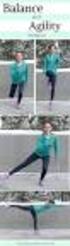 No Equipment Agility/Core/Strength Program for Full Body No Equip Trainer: Rick Coe Introduction Program designed to be performed in a circuit. Perform exercises in sequence without rest 2-3 times. Increase
CHEDOKE-McMASTER STROKE ASSESSMENT. CHEDOKE-McMASTER STROKE ASSESSMENT Development, Validation and Administration Manual October 2008
 CHEDOKE-McMASTER STROKE ASSESSMENT INCLUDES: Administering the Chedoke Assessment Scoring and Interpreting the Chedoke Assessment Chedoke-McMaster Stroke Assessment Score Forms Impairment Inventory Activity
SPORT AND PHYSICAL ACTIVITY
 2016 Suite Cambridge TECHNICALS LEVEL 3 SPORT AND PHYSICAL ACTIVITY Unit 1 Body systems and the effects of physical activity K/507/4452 Guided learning hours: 90 Version 2 - Revised content - March 2016
Cervical Fusion Protocol
 REHABILITATION DEPARTMENT Cervical Fusion Protocol The following protocol for physical therapy rehabilitation was designed based on the typical patient seen at the Texas Back Institute for the procedure
Chapter 5. The Shoulder Joint. The Shoulder Joint. Bones. Bones. Bones
 Copyright The McGraw-Hill Companies, Inc. Reprinted by permission. Chapter 5 The Shoulder Joint Structural Kinesiology R.T. Floyd, Ed.D, ATC, CSCS Structural Kinesiology The Shoulder Joint 5-1 The Shoulder
are you reaching your full potential...
 T h e r e s n o s u c h t h i n g a s b a d e x e r c i s e - j u s t e x e r c i s e d o n e b a d l y FIT for sport are you reaching your full potential... These tests are a series of exercises designed
Rotator Cuff and Shoulder Conditioning Program. Purpose of Program
 Prepared for: Prepared by: OrthoInfo Purpose of Program After an injury or surgery, an exercise conditioning program will help you return to daily activities and enjoy a more active, healthy lifestyle.
Routine For: OT - General Guidelines/Energy Conservation (Caregiver)
 GENERAL GUIDELINES - 9 Tips for Exercise: Body Mechanics for Helper - To protect back, stay as upright as possible and keep head in line with trunk. - Always position yourself as close as possible to the
American Osteopathic Academy of Sports Medicine James McCrossin MS ATC, CSCS Philadelphia Flyers April 23 rd, 2015
 American Osteopathic Academy of Sports Medicine James McCrossin MS ATC, CSCS Philadelphia Flyers April 23 rd, 2015 Coming together is a beginning; keeping together is progress; working together is success.
Buccinator Presses cheek against molar teeth Facial (CNVII) wrinkles forehead
 Muscles to Identify on the Cadaver and/or Models You are required to identify each of the following muscles or associated structures on the cadavers and/or models in lab. If the box is shaded in a particular
BP MS 150 lunch and learn: Stretching and injury prevention. Dr. Bart Kennedy (Sports Chiropractor) and Josh Thompson February 04, 2015
 BP MS 150 lunch and learn: Stretching and injury prevention Dr. Bart Kennedy (Sports Chiropractor) and Josh Thompson February 04, 2015 Epidemiology Overuse injuries most common, traumatic event second
SHOULDER EXERCISE ROUTINE
 8 SHOULDERS The shoulders are the key to many full-bodied movements. Skill in such sports as swimming, baseball, golf, and tennis and other racquet sports is improved with the help of strong shoulders.
Orthopaedic and Spine Institute 21 Spurs Lane, Suite 245, San Antonio, TX 78240 www.saspine.com Tel# 210-487-7463
 Phase I Passive Range of Motion Phase (postop week 1-2) Minimize shoulder pain and inflammatory response Achieve gradual restoration of gentle active range of motion Enhance/ensure adequate scapular function
Manual Therapy for the Upper and Lower Quadrant: What Do I Need to Know? Objectives
 Manual Therapy for the Upper and Lower Quadrant: What Do I Need to Know? Objectives 1. Describe the current best evidence for manual therapy in the management of a variety of disorders. 2. Recognize subgroups
Biceps Tenodesis Protocol
 Department of Rehabilitation Services Physical Therapy The intent of this protocol is to provide the clinician with a guideline of the postoperative rehabilitation course of a patient that has undergone
THE SHOULDER JOINT T H E G L E N O H U M E R A L ( G H ) J O I N T
 THE SHOULDER JOINT T H E G L E N O H U M E R A L ( G H ) J O I N T CLARIFICATION OF TERMS Shoulder girdle = scapula and clavicle Shoulder joint (glenohumeral joint) = scapula and humerus Lippert, p115
NETWORK FITNESS FACTS THE HIP
 NETWORK FITNESS FACTS THE HIP The Hip Joint ANATOMY OF THE HIP The hip bones are divided into 5 areas, which are: Image: www.health.com/health/static/hw/media/medical/hw/ hwkb17_042.jpg The hip joint is
Sandra R. Jungers, RN, BSN, MEd McArtor Neonatal Symposium Friday, May 15, 2015
 Sandra R. Jungers, RN, BSN, MEd McArtor Neonatal Symposium Friday, May 15, 2015 Disclosure: President and Clinical Consultant The Bimeco Group, Inc. Medical Sales and Distribution Clinical Consultant for
FUNCTIONAL STRENGTHENING
 FUNCTIONAL STRENGTHENING *This group of exercises are designed to increase leg and core endurance and stability as related to bipedal functional activities. *Perform this program for 4-6 weeks. It is ideal
Today s session. Common Problems in Rehab. www.physiofitness.com.au/filex.htm LOWER BODY REHAB ESSENTIALS TIM KEELEY FILEX 2012
 Tim Keeley B.Phty, Cred.MDT, APA Principal Physiotherapist physiofitness.com.au facebook.com/physiofitness Today s session Essential list for the lower body Rehab starting point Focussing on activation,
McMaster Spikeyball Therapy Drills
 BODY BLOCKS In sequencing Breathing and Tempo Flexibility / Mobility and Proprioception (feel) Upper body segment Middle body segment Lower body segment Extension / Static Posture Office / Computer Travel
Rehabilitation after shoulder dislocation
 Physiotherapy Department Rehabilitation after shoulder dislocation Information for patients This information leaflet gives you advice on rehabilitation after your shoulder dislocation. It is not a substitute
Chapter 3 Impairment of Spine and Limbs
 Chapter 3 of Spine and Limbs This chapter contains six parts: Part 3.1 Upper Limbs Part 3.2 Lower Limbs Part 3.3 Spine Part 3.4 Resting Joint Pain Part 3.5 Ranges of Joint Movement Part 3.6 Spine and Limbs
Carpal Tunnel Pain. STRETCH YOUR: 1) Wrist Flexors 2) Wrist Extensors 3) Wrist Decompression 4) Neck (see other chapters for more examples)
 Carpal Tunnel Pain STRETCH YOUR: 1) Wrist Flexors 2) Wrist Extensors 3) Wrist Decompression 4) Neck (see other chapters for more examples) wrist flexors wrist extensors carpal tunnel Athletic Edge - www.athleticedge.biz
Don t. Hamstrings. Calf Muscles. both legs 2-3 times. stretch is felt in the back of the calf. Repeat with both legs 2-3 times.
 Remember to: Warm-up your muscles first before stretching (e.g. stretch after walking). Stretch until you feel mild discomfort, not pain. Never bounce or force a stretch. Hold the stretch for 10-30 seconds
Psoas Syndrome. The pain is worse from continued standing and from twisting at the waist without moving the feet.
 Psoas Syndrome The iliopsoas muscle is a major body mover but seldom considered as a source of pain. Chronic lower back pain involving the hips, legs, or thoracic regions can often be traced to an iliopsoas
This document fully describes the 30 Day Flexibility Challenge and allows you to keep a record of your improvements in flexibility.
 Welcome to the StretchTowel 30 Day Flexibility Challenge! You can Be More Flexible in 30 days by following our stretching program for 10 minutes a day. The best part is that you can stretch using the StretchTowel
Rehabilitation with Pilates
 Rehabilitation with Pilates Flat Feet Pes Planus Naiké Durel January 2016 Montreal, Canada Table of contents Title Table of contents Abstract Anatomy of the foot p.1 p.2 p.3 p.4-5- 6-7 Case of study BASI
MUSCULAR SYSTEM REVIEW. 1. Identify the general functions of the muscular system
 MUSCULAR SYSTEM REVIEW 1. Identify the general functions of the muscular system 2. Define the four characteristics of muscular tissue a. irritability (excitability) - b. extensibility- c. contractibility
stretches and exercises
 stretches and exercises The enclosed sheets contain stretches and exercises which can be used to delay and minimise the development of contractures and deformities occurring in children with Duchenne muscular
OPTIMAL CORE TRAINING FOR FUNCTIONAL GAINS AND PEAK PERFORMANCE: CXWORX
 OPTIMAL CORE TRAINING FOR FUNCTIONAL GAINS AND PEAK PERFORMANCE: CXWORX Jinger S. Gottschall 1, Jackie Mills 2, and Bryce Hastings 2 1 The Pennsylvania State University, University Park, USA 2 Les Mills
Manua l Therapy Technique s f or t he Shoulder. LCD R Joe Strunc e PT, DSc, OCS, FAAOMPT
 Manua l Therapy Technique s f or t he Shoulder LCD R Joe Strunc e PT, DSc, OCS, FAAOMPT Shoulde r Techniques GH Physiological Mvmts Flexion (Grade 4) Abduction (Grade 4) External Rotation (Grade 4) Internal
CERVICAL DISC HERNIATION
 CERVICAL DISC HERNIATION Most frequent at C 5/6 level but also occur at C 6 7 & to a lesser extent at C4 5 & other levels In relatively younger persons soft disk protrusion is more common than hard disk
Chiropractic. Table of Contents SCHEDULE OF FEES. Schedule PROGRAMS OF CARE
 Fee Schedule Chiropractic PROGRAMS OF CARE Workers who require treatment for a musculoskeletal injury or recurrence will be treated in a Program of Care (POC). Three Programs of Care address musculoskeletal
UHealth Sports Medicine
 UHealth Sports Medicine Rehabilitation Guidelines for Arthroscopic Rotator Cuff Repair Type 2 Repairs with Bicep Tenodesis (+/- subacromial decompression) The rehabilitation guidelines are presented in