
Functional Movement Screen (FMS)
|
|
|
- Piers Daniels
- 9 years ago
- Views:
Transcription
1 Functional Movement Screen (FMS) Aurora BayCare Medical Center 3 rd Annual Sports Medicine Symposium Friday, September 10 th, :15 pm 5:00 pm General Course Outline FMS Lecture FMS Demonstration FMS Lab FMS Group Scoring Staff Introductions Annie Schmidt, PT, CSCS Lori Ann Keisic, PT, TPI CGFI

2 Course Objectives To educate the participants on the principles of the FMS To educate the participants on the 7 tests of the FMS To successfully administer and score the FMS To interpret the FMS score To recognize right and left imbalances and compensations To understand where to find examples of the corrective exercises Section I: FMS Lecture FMS=Functional Movement Screen FMS History The FMS was developed by Gray Cook, PT and Lee Burton, PhD, LAT The FMS is a screening tool that uses little equipment and takes little time. There are 7 screens. The each screening test in the FMS is scored a 3, 2, 1, or 0. FMS not an evaluation, but simply a screening tool for further investigation.

3 How the FMS Works The FMS is a ranking and grading system that documents movement patterns that are key to normal function. By screening these patterns, the FMS identifies functional limitations and asymmetries. The FMS generates a objective score, which is used to target problems and track progress. This scoring system is directly linked to the most beneficial corrective exercises to restore mechanically sound movement patterns. As health care professionals, we can track progress and identify those exercises that will be most effective to restore proper movement and build strength in each individual. Purpose of the FMS As we age, we lose the ability to perform basic functional movements that are inherent from birth. We were able to squat, lunge, step over objects, and roll from a very early age. Everyone obtains these motor skills as they age from birth. They develop on a very specific timeline. Purpose of the FMS Over time, we develop significant limitations and right and left imbalances. These cannot be overlooked. The body must be free of restrictions and free of imbalances prior to training, conditioning, and competition.

4 Purpose of the FMS Significant limitations in left-right imbalances drastically distort motor learning. Limitations rob the body of efficiency and are often hidden by compensations. We substitute with other movement patterns. Purpose of the FMS Many athletes are able to perform at a high level even though they are inefficient in their fundamental movements. These athletes create poor movement patterns, train around a pre-existing problem or simply do not train their weakness. The fundamental movement patterns must be correct before the athlete is able to improve sport specific skills. The foundation must be solid to build higher level movement skills. Purpose of the FMS We must find the weakest link to avoid compensations. The FMS identifies the weakest link and uses corrective exercises to alleviate it. With improved movement efficiency, performance will be enhanced and injury potential will decrease.

5 Performance Pyramid The FMS philosophy is built on the Performance Pyramid. The bottom and largest section is the foundation. It is labeled Functional Movement. The middle section is Functional Performance. The top and smallest section is Functional Skill. Performance Pyramid Functional Skill kill Functional Performance Functional Movement Bottom of the Pyramid-- Functional Movement The bottom section addresses full range of motion in the entire body. It represents the ability to move through fundamental patterns. The athlete demonstrates good body control. The athlete has movement awareness through numerous positions.

6 Middle of the Pyramid-- Functional Performance The athlete has good general power production. The athlete uses well-coordinated linking movements or kinetic linking. The effort wastes no extra movement and optimal efficiency is present. The athlete can learn other kinetic linking movements and power production movements with appropriate time, practice and analysis. Top of the Pyramid--Functional Skill This addresses the optimal amount of sports-specific or activity-specific skill. This pillar constitutes a battery of tests to assess the athlete s ability to do a given activity, play a specific sport, or a specific position within that sport. The Optimal Performance Pyramid This pyramid shows the athlete possesses the functional movements that can handle the amount of power they can generate. The power generated can control the skill that he/she possesses.

7 Mobility and Stability Mobility is the combination of muscle flexibility, joint ROM, and a body segment s freedom of movement. Stability is the ability to maintain posture and/or control motion. Stability is either dynamic or static. The combination of poor mobility and stability is the source of many common athletic injuries. The FMS score must be good before the athlete can build strength, speed, and power. FMS Stability and Mobility The FMS will evaluate stability and mobility throughout the body. The athlete should be encouraged to return to the basic mobility and stability exercises in order to regain the foundational abilities that are lost through puberty and beyond. Section II: Performing the FMS This part of the lecture will teach you how to conduct the FMS.

8 FMS Administration The FMS is quick and uses very little equipment. The athlete should wear athletic clothing and footwear. Short warm up (5 minutes of cardio) Keep cueing to a minimum Equipment The kit can be purchased at The kit cost is $ FMS Kit The necessary items to make your own kit include: 1.A 2x6 Board 2.A 5 foot dowel 3.A hurdle 4.A tape measure You may have multiple test stations so making your own kit can be cost effective.

9 FMS--Scoring 3=Perfect Form 2=Complete with Compensations 1=Incomplete 0=Pain Always give three attempts and take the best of the three. If there is a question on the right score, score low. FMS--Scoring Clearing Tests: There are 3 clearing tests that are scored positive or negative. If the clearing test is positive (there was pain with the movement), then that entire screen receives a zero (0). Scoring a Zero: If the athlete has any pain during any of the 7 screens, score that screen a zero. The FMS Tests 1. Deep Squat 2. Hurdle Step 3. In-Line Lunge 4. Shoulder Mobility 5. Active Straight Leg Raise 6. Trunk Stability Push-Up 7. Rotary Stability

10 1. Deep Squat 1. Deep Squat (DS) The ready position for athletic events. Used for LE power movements Challenges total body mechanics The DS assesses bilateral, symmetrical, functional mobility of the hips, knees, and ankles. The overhead dowel assesses bilateral, symmetrical mobility of the shoulders and thoracic spine. 1. Deep Squat (DS)-Instructions Hold the dowel on top of your head with your elbows at 90 degrees of flexion. Press the dowel overhead and keep the elbows in full extension. Place your feet shoulder width apart. Keep your toes pointed forward at all times. Keep an upright posture and keep the dowel over your head. Descend into a deep squat in order for your thighs to break parallel with the floor. Return to the starting position. For a 2 and 1, put the patient s heels on the board.

11 1. DS Scoring Three (3) Upper torso is parallel with the tibia or toward vertical Femur is below horizontal Knees are aligned over feet Dowel is aligned over feet 1. DS Scoring Two (2) Heels are up on the board Upper torso is parallel with tibia or toward vertical Femur is below horizontal Knees are aligned over feet Dowel is aligned over feet 1. DS Scoring One (1) Heels on board Tibia and upper torso are not parallel Femur is not below horizontal Knees are not aligned over the feet Lumbar flexion is noted

12 1. DS Scoring Zero (0) Pain with the motion For any of the tests: If there is pain at all during the movement, score the entire test a zero (0). 1. DS Clinical Implications Limited motion in the UE is a result of poor GH joint mobility or thoracic spine mobility. Limited LE movement can be from poor CKC DF of the ankle or poor hip flexion. 2. Hurdle Step (HS)

13 2. Hurdle Step (HS) The purpose of the HS is to challenge the body s proper stride mechanics during a stepping motion. This requires coordination and stability between the hips and torso during stepping and SLS stability. The HS assesses bilateral functional mobility and stability of the hips, knees and ankles. 2. HS Instructions Position the string so it is at the level of the tibial tuberosity. Record this length for the ILL test. Place the dowel across the shoulders. Stand with your feet together and your toes touching the hurdle. Keep an upright posture and step over the hurdle without touching the string. Touch the floor with your heel and return to the starting position. Left and Right foot each have 3 trials. Score the leg that is moving over the hurdle. 2. HS Three (3) Hips, knees and ankles remain aligned in the sagittal plane Minimal to no movement is noted in the lumbar spine Dowel and hurdle remain parallel

14 2. HS Two (2) Alignment is lost between hips, knees and ankles Movement is noted in the lumbar spine Dowel and hurdle do not remain parallel 2. HS One (1) There is contact between the foot and hurdle Loss of balance is noted 2. HS Clinical Implications This test requires stance-leg stability of the ankle, knee and hip Requires Max CKC extension of the hip Requires step-leg OKC ankle DF and flexion of the hip and knee. Balance is needed dynamic stability---single leg stance Maximal hip flexion of one leg and apparent hip extension of the opposite leg demonstrates bilateral, asymmetrical hip mobility.

15 3. In-Line Lunge (ILL) 3. In-Line Lunge (ILL) This test places the body in a position that focuses on stresses simulated during rotational, decelerating and lateral type movements. The LE is in a scissored position, challenging the body s trunk and extremities to resist rotation and maintain proper alignment. The test assesses hip and ankle mobility and stability, quadriceps flexibility and knee stability. 3. ILL Instructions Place the back (right) foot toe on the zero. Place the heel of the other (left) front foot on the distance of the tibia. Use the measurement taken in the HS for the tibia length. If the left foot is forward, the right arm is up and left arm is down. Put the right hand on the dowel in the Cx lordosis and the left hand on the dowel in the Lx lordosis.

16 3. ILL--Instructions Maintain contact of the dowel on the posterior head, thoracic spine, and sacrum throughout the test. Descend into a lunge position, touch the right knee behind the left heel. Keep the dowel straight up and down. Return back upright. Score the front leg 3. ILL Three (3) Dowel contacts remain with Lx extension No torso movement is noted Dowel and feet remain in sagittal plane The knee touches the board behind the heel of front foot 3. IL-Two (2) Dowel contacts do not remain with Lx extension Movement is noted in torso Dowel and feet do not remain in the sagittal plane Knee does not touch behind heel of front foot

17 3. IL One (1) Loss of balance is noted 3. ILL Clinical Implications Hip mobility may be inadequate in either the stance leg or the step leg. The stance-leg knee or ankle many not have the stability needed. An imbalance between adductor weakness and abductor tightness in one or both hips may cause poor test performance. Thoracic spine extension may be limited also. 4. Shoulder Mobility (SM)

18 4. Shoulder Mobility (SM) The SM assesses bilateral shoulder ROM, combining IR with ADD and Extension, and ER with ADB and Flexion. It requires normal scapular mobility and thoracic spine extension. 4. SM Instructions Measure the distance between the distal wrist crease to the tip of the 3 rd finger. Have the patient stand with feet shoulder with apart. Place the thumbs in the fists. Move one UE into IR and the other into ER. Make sure there is a smooth motion (no creeping the arms into place). The tester measures the distance between the two hands (the two closest bony prominences). 4. SM Verbal Instructions to the patient Make a fist with the thumbs tucked in the fist. In a single motion, place your R fist over your head on to your back and your left fist behind your back, attempting to touch the fists. Do not move your hands closer after their initial placement. Test the opposite arm. The arm up is the testing arm on the recording sheet.

19 4. SM Three (3) Fists are within one hand length 4. SM Two (2) Fists are within one and a half hand lengths 4. SM-One (1) Fists are not within one and a half hand lengths.

20 4. SM Clearing Test The clearing test for SM is the Active Shoulder Stability Test (Impingement Test) Place the right hand on the left shoulder. Keep the hand placed on the shoulder and lift the elbow up to the forehead. Ask if this is painful. If it is painful, score it positive (+) and then that arm SM test will be a zero (0). 4. SM Clinical Implications Athletes who need more ER for sport specific throwing sacrifice IR. Pectoralis and Latissimus being tight can cause forward and rounded shoulders. Scapulothoracic dysfunction can decrease glenohumeral joint mobility. 5. Active Straight Leg Raise (ASLR)

21 5. Active Straight Leg Raise (ASLR) The ASLR tests the ability to disassociate the LE while maintaining stability in the torso. The ASLR assesses active hamstring and Gastroc-Soleus flexibility while maintaining a stable pelvis and active extension of the opposite leg. 5. ASLR--Instructions Lie supine with the arms in an anatomical position (palms up) with the head flat on the floor. The board is placed under the knees. ID the mid-point between the ASIS and the mid-patella. Place the dowel at this point perpendicular to the ground. Instruct the athlete to lift the test leg with a DF ankle and an extended knee. The opposite knee must remain in contact with the board, the DF ankle must stay up toward the ceiling (no ER of the hip), and the head must stay flat on the ground. 5. ASLR--Instructions Once the end-range position is achieved, the lateral malleolus is located. If the malleolus passes the dowel, the score is a 3. If the malleolus cannot pass the dowel, then realign the dowel. Place the dowel between mid-thigh and mid-patella. If the malleolus passes the dowel now, the score is a 2. If the malleolus cannot pass the dowel placed at the mid-patella, a score of a 1 is given.
22 5. ASLR Three (3) Ankle/Dowel Resides between mid-thigh and ASIS 5. ASLR Two (2) Ankle/Dowel resides between mid-thigh and mid-patella 5. ASLR One (1) Ankle/Dowel resides below mid-patella
23 5. ASLR Clinical Implications The athlete may have poor functional hamstring flexibility. The athlete may have inadequate hip mobility of the opposite leg, stemming from iliopsoas tightness associated with an anteriorly tilted pelvis. 6. Trunk Stability Push Up (TSPU) 6. Trunk Stability Push-Up (TSPU) Assesses the ability to stabilize the spine in an A/P plane during a CKC upper body movement. It assesses trunk stability in the sagittal plane while a symmetrical UE motion is performed.
24 6. TSPU--Instructions Prone with feet together, toes on the ground Arms start overhead Males-Bring thumbs down to the forehead Female-Thumbs down to the chin Knees are fully extended, ankles DF. Ask the athlete to perform one push-up. The body should be lifted as a unit. There should be no lag in the lumbar spine. 6. TSPU--Instructions If the athlete cannot perform this correctly Males: Move the hands down to the Chin Females: Move the hands down to the Clavicle Make sure original hand position is maintained and then hands do not slide down when the athlete prepares to lift. Make sure the chest and stomach come off the floor at the same instance. Give the verbal cue to maintain a rigid torso, raise yourself as one unit with no lag in the low back up into a push-up position. 6. TSPU Three (3) Males: Perform one rep with thumbs aligned with the top of the forehead. Females: Perform one rep with thumbs aligned with chin
25 6. TSPU Two (2) Males: Perform one rep with thumbs aligned with chin Females: Perform one rep with thumbs aligned with clavicle 6. TSPU One (1) Males: Unable to perform one rep with hands aligned with chin Female: Unable to perform one rep with hands aligned with clavicle 6. TSPU Clearing Test The clearing test for the TSPU is a prone press-up. Prone position, have the athlete place both hands under the shoulders (palms down) Press the chest off the floor by extending the elbows and arching the back as much as possible with keeping the hips on the floor. Ask if this has any pain. If yes, score it positive (+) and score the TSPU a zero (0).
26 6. TSPU Clinical Implications Poor stability of the trunk stabilizers Functional activities in a sport require the trunk stabilizers to transfer force symmetrically from the UE to the LE and vice versa. 7. Rotary Stability (RS) 7. Rotary Stability (RS) This test is a complex movement requiring proper neuromuscular coordination and energy transfer from one segment of the body to another through the torso. This test assesses multi-plane trunk stability during a combined UE and LE motion.
27 7. RS--Instructions Start in a quadruped position with the shoulders and hips at 90 degrees relative to the torso. The knees are at 90 degrees of flexion and the ankles are DF. Put the board between the knees and hands so they contact the board. Shoulder flexion and hip extension on one side. Raise up 6 inches off the board. The elbow, hand, and knee should all remain in line with the board. 7. RS--Instructions The torso should also remain in the same plane as the board. The same shoulder is extended and the knee is flexed so the elbow and knee touch over the board. The shoulder is flexed and the hip is extended and then placed back to the starting position. If this cannot be completed, move to the diagonal position and retest. Score the UE side 7. RS Three (3) Performs one correct unilateral rep while keeping spine parallel to board. Knee and elbow touch in line over the board
28 7. RS Two (2) Perform 1 correct diagonal rep while keeping spine parallel to board Knee and elbow touch in line over the board 7. RS One (1) Inability to perform diagonal reps 7. RS Clearing Test The clearing test for RS is the passive spinal flexion test Start in the hands and knee position and have the athlete keep the hands on the floor and rock the buttocks back to the heels. Lower the chest to the knees and reach the arms out in front on the floor. Ask if there is pain with this clearing test. If there is pain, score the test positive (+), and score the RS zero (0).
29 7. RS Clinical Implications If the trunk does not have adequate stability, kinetic energy will be dispersed. This will lead to poor performance as well as increased potential for injury. The reason for poor performance on RS is poor asymmetric stability of the trunk stabilizers. Scoring To score the raw score for the FMS, allow 3 attempts on each test. Take the best score of the 3 attempts. If the athlete scores a 3 right away, you can skip the last 2 attempts. For the right and left side tests, take the raw score lowest number of the two, and that is the final score. The best score is a 21. Scoring Sheet HAND DOMINANCE: RIGHT LEFT LEG DOMINANCE: RIGHT LEFT APPENDIX TestB: DEEP SQUAT 2 2 HURDLE ST. L 2 HURDLE ST. R 1 1 IN-LINE LUN. L 2 IN-LINE LUN. R 2 2 SHO. MOB. L 1 ACTIVE IMP. L (-) 1 SHO. MOB. R 3 0 ACTIVE IMP. R (+) ASLR L 1 ASLR R 2 1 TSPU 1 1 EXT (-) ROT. STAB. L 2 ROT. STAB. R 2 2 FLX (-) TOTAL 10 Raw Final Comments ----
30 Section III: FMS Lab Questions Break into lab groups - 7 Stations Each station representing one of the seven screens - Number off Each station will rotate at 10 minutes FMS Lab Session The objectives of the lab session are: - To correctly test all 7 screens. - To correctly grade each of the 7 screens. - To score the final score out of To interpret the results and decide the weakest link (where to start your treatment sessions). Scoring Sheet HAND DOMINANCE: RIGHT LEFT LEG DOMINANCE: RIGHT LEFT Test APPENDIX B: DEEP SQUAT HURDLE ST. L HURDLE ST. R IN-LINE LUN. L IN-LINE LUN. R SHO. MOB. L SHO. MOB. R ACTIVE IMP. L ACTIVE IMP. R ASLR L ASLR R TSPU EXT ROT. STAB. L ROT. STAB. R FLX TOTAL Raw Final Comments
31 FMS Scoring in Large Group Setting Please return to the front lecture setting. We will now each score a full FMS with one individual. Please use a new scoring sheet to make the record. Please do not talk out loud during this screen. We will discuss the score at the end. Interpretation of the Results First start with any score of zero. This area must be evaluated by a PT or LAT. Once the area is cleared, re-test that part of the FMS. The next area to look at is any asymmetries from left to right in which one side scores a 1. A score of 1 on the right and 3 on the left is very significant. This asymmetry must be addressed first. Interpretation of the Results If the athlete does not have any 1-2 or 1-3 R/L differences, then go to a bilateral score of 1. Once all the 1s are fixed and have retested at a 2 or 3, then look for imbalances with a two from R/L (2-3s). After these are addressed, look for areas that have bilateral 2s. The goal is to find the weakest link Make sure to re-test throughout the process.
32 Conclusion/Wrap Up Please take this time to ask any questions. Thank you for your time. Corrective Exercise Materials This material will not be covered in this lecture but is included to help steer your treatment plan. Corrective Exercise Lecture Now that the results are interpreted, we need to prescribe corrective exercises for the weakest link. These should be used as a HEP and also as the direction to take in the clinic. There is a huge progression of exercises that follows these basic principles, but this is a great place to start.
33 Deep Squat--Corrective Exercises Prone Quadriceps Stretch Lie prone on the plinth Keep one foot on the floor with hip flexed to maintain a neutral spine. Flex the top knee, pushing the heel to the buttocks. DS-CE Wall Sit with Dorsiflexion Make sure the back is on the wall. Start with support under the thighs and knees to begin. DS-CE Kneeling Dorsiflexion Half kneeling position wider than mid-line. Slight IR of the front foot. Place both hands on the dowel with the Lx flattened and the abs drawn in to the spine. Keep the dowel on the lateral aspect of the toe and on the medial aspect of the knee. Shift forward, keep the knee over the second toe. Keep the heel down. To intensify this stretch, lessen the distance between the two feet.
34 DS-CE Standing Rectus Stretch Place the on foot up on a bench, but maintain the thighs parallel. Posterior pelvic tilt. Flex the stance leg knee and lower to attain a stretch. Keep both thighs in line and adducted. Hurdle Step Corrective Exercises Prone Hip Flexor Stretch Prone with one leg off the table with the foot on the floor to stabilize the pelvis. Lift the thigh off the table. HS-CE Stride with Hip External Rotation Stand with the hip flexed and ER, knee flexed and the lower leg on the table. The other LE is fully extended. To stretch, flex the stance leg until a stretch is felt. Keep the spine in neutral throughout. The flexed hip and knee should be perpendicular to the pelvis.
35 HS-CE Stride with Spinal Rotation Stand with the hip and knee flexed with the foot on the table. Assume maximal stride position. Keep the opposite leg extended at the hip and knee. The trunk should be in neutral and erect posture. Lean toward the table with an erect spine and slightly bend the knee. Rotate the spine toward the flexed hip. Maintain good posture throughout this stretch. In-Line Lunge Corrective Exercise Modified Thomas Test Stretch To stretch the hip flexor: get in a Thomas test position. Push the thigh down. Use contract/relax to increase the hip extension. To stretch the quadriceps: Bring the knee into flexion and use C/R to increase the knee flexion. ILL-CE Gastroc/Soleus Stretch Knee extended for the gastrocnemius Knee flexed for the soleus Maintain the back LE in IR
36 ILL-CE Latissmus Dorsi/External Rotation Stretch Place the athlete supine with the hips flexed, knees flexed and feet resting on the wall. Place the hips as close to the wall as possible. The shoulders should be at 90 degrees of abduction with the elbows extended. The partner grasps the wrist and elbow of the arm being stretched and applies traction. Then ER the shoulder while maintaining traction. ILL-CE Leg Lock Bridge Lie supine with one leg flexed at the hip, and hold one thigh to the chest for a passive lock. The thigh should maintain contact with the chest throughout the movement. The opposite foot is placed on the ground in-line with the center of the body with the knee flexed. Use the gluteals to extend the hip and bring the hips off the ground into a bridge position. The height of the bridge is limited to where the flexed hip and thigh remain against the chest and the extended hip and thigh remain in an in-line position. You can place a ball between the chest and thigh to maintain passive locking. Shoulder Mobility Corrective Exercises Trunk Rotation with Shoulder Internal and External Rotation Start in a supine position with the hips flexed and knees flexed at 90 degrees. The shoulders are at 90 degrees of abduction with the elbows in full extension. Place a towel between the knees The partner grasps the wrist and elbow of the arm being stretched and applies traction. The athlete then rotates the lower body to the opposite side while maintaining a flat upper back. The hand to which the legs are rotated should be palm down. The partner then IR and ER the shoulder keeping slight traction. The hips should be flexed greater than 90 degrees during the rotation.
37 SM-CE Wall Sit with Shoulder Press Sit on the floor, back on wall, and the soles of the feet together, pulled towards the body. Hold the arms out to the side against the wall, with the elbows flexed to 90 degrees. Place the dorsum of the hands on the wall. Press the hands upward towards the ceiling. Press the knees towards the floor at the same time as raising the arms up over head. Press up as far as you can maintain the hands against the wall. Active Straight Leg Raise Corrective Exercises Partner Stretch-Straight Leg Raise Perform a supine hamstring stretch with the athlete. Use contract/relax technique to increase the hip flexion. Make sure the leg on the table stays in hip extension and that no ER is noted in this leg. The knee must also maintain contact with the floor. ASLR-CE Single Leg Lowering 1 Lie supine with the legs in a doorway. Put one leg on the wall with the hip flexed and knee extended. The other LE should be in hip flexion and knee extension, but be where the doorway is open. The hands should be palms up and by the sides. The moving leg should PF the ankle and reach out to the ceiling. Lower the leg to the ground keeping a flat Lx. If the Lx extends, place a bolster under the moving foot so the leg does not have to lower as far to the ground.
38 ASLR--CE Single Leg Lowering 2 Lie supine, hands palms up by the side and both hips flexed up with knees in full extension. PF the foot, reach the leg up to the ceiling. Keep the Lx on the floor and lower the leg down to the floor. Trunk Stability Push-Up Corrective Exercises Incline Push-Up Progression Place hands on the wall to table to box. The higher the hands are up, the easier. The lower the incline, the more difficult. Progress the push up by lowering the incline until the athlete can perform the push-up off the floor. Also try to vary the foot position. TSPU--CE Push-Up Walkout Start in a standing position with hands by your side. Bend over and touch the floor with your hands. The knees can flex slightly. Walk the hands out in front of the body maintaining a flat Lx. Walk the hands out as far as possible without losing neutral lumbar spine. Walk the hands back to the body and stand. Do not allow the spine to get into hyperextension. Only walk out as far as the form will stay good.
39 Rotary Stability Corrective Exercises Bilateral Hip Flexed Rotation Lie supine with hips flexed and a flat Lx. Extend knees and PF with the feet together. Hands are on the floor with the palms up Keep one leg in the starting position and abduct one leg to move the hips. Once the hips can move independently, move them together. The pelvis should remain flat. The non-moving leg should remain stable and PF up to the ceiling. RS--CE Hip Flexed Torso Rotation Lie supine with hips flexed to have a flat Lx. Extend the knees and PF with feet together. Hands should be on the floor with palms up. Keep the feet together and rotate the hips and pelvis left and right while keeping the shoulders flat. Make the arc of movement as large as possible with no upper body movement. Keep the hips flexed to 90 degrees and only lower the legs are far as can be controlled. RS--CE Rolling Lie supine with knees extended and feet DF. The arms are extended and overhead. Draw the abs into the spine. Flex one hip and flex the shoulder opposite of it in an attempt to touch the knee and elbow. The opposite hip and knee should remain in extension. Begin to roll to the side of the flexed hip and knee maintaining close proximity with the knee and elbow. Roll to the side while supporting the head on the opposite shoulder.
40 Progression of the Corrective Exercises The progression of the corrective exercises is very basic. Every athlete should work on flexibility first. The Stick should be used to decrease any soft tissue tightness. CE-Progression Begin with assisted moves. Examples: Assist up into a squat, assist the lunge, break the rolling patterns down. Then add resistance to the moves. Examples: Weighted squats and lunges Use tubes to pull the body parts into the direction you want to avoid. Work rotational resistance in different stances. Examples: Chops and Lifts in different foot stances.
A proper warm-up is important before any athletic performance with the goal of preparing the athlete both mentally and physically for exercise and
 A proper warm-up is important before any athletic performance with the goal of preparing the athlete both mentally and physically for exercise and competition. A warm-up is designed to prepare an athlete
FUNCTIONAL MOVEMENT SCREENING AND CORRECTIVE EXERCISE SYSTEM
 FUNCTIONAL MOVEMENT SCREENING AND CORRECTIVE EXERCISE SYSTEM It seems more and more of today's individuals are working harder to become stronger and healthier. These individuals are constantly working
Exercise 1: Knee to Chest. Exercise 2: Pelvic Tilt. Exercise 3: Hip Rolling. Starting Position: Lie on your back on a table or firm surface.
 Exercise 1: Knee to Chest Starting Position: Lie on your back on a table or firm surface. Action: Clasp your hands behind the thigh and pull it towards your chest. Keep the opposite leg flat on the surface
No Equipment Agility/Core/Strength Program for Full Body No Equip Trainer: Rick Coe
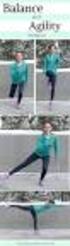 No Equipment Agility/Core/Strength Program for Full Body No Equip Trainer: Rick Coe Introduction Program designed to be performed in a circuit. Perform exercises in sequence without rest 2-3 times. Increase
Range of Motion. A guide for you after spinal cord injury. Spinal Cord Injury Rehabilitation Program
 Range of Motion A guide for you after spinal cord injury Spinal Cord Injury Rehabilitation Program This booklet has been written by the health care providers who provide care to people who have a spinal
Shoulders (free weights)
 Dumbbell Shoulder Raise Dumbbell Shoulder Raise 1) Lie back onto an incline bench (45 or less) with a DB in each hand. (You may rest each DB on the corresponding thigh.) 2) Start position: Bring the DB
Exercises for the Hip
 Exercises for the Hip Gluteal Sets: Lie on your back, tighten buttocks and hold for 3-5 seconds. Repeat 20 times. Supine Hip ER/IR: Lie on your back with legs straight. Gently rotate knees out and in limited
Stretching in the Office
 Stretching in the Office Legs: Quads, Hamstrings, IT band, Hip flexors, Gluts, Calves Quads: Standing @ desk maintaining upright posture, grab one leg @ a time by foot or ankle and bring it towards backside
Lumbar/Core Strength and Stability Exercises
 Athletic Medicine Lumbar/Core Strength and Stability Exercises Introduction Low back pain can be the result of many different things. Pain can be triggered by some combination of overuse, muscle strain,
Flexibility Assessment and Improvement Compiled and Adapted by Josh Thompson
 Flexibility Assessment and Improvement Compiled and Adapted by Josh Thompson Muscles must have a full and normal range of motion in order for joints and skeletal structure to function properly. Flexibility
SAMPLE WORKOUT Full Body
 SAMPLE WORKOUT Full Body Perform each exercise: 30 secs each x 2 rounds or 2-3 sets of 8-12 reps Monday & Wednesday or Tuesday & Thursday Standing Squat Muscles: glutes (butt), quadriceps (thigh) Stand
BEACH VOLLEYBALL TRAINING PROGRAM
 2008 ELITE PERFORMANCE ATHLETE CONDITIONING BEACH VOLLEYBALL TRAINING PROGRAM Team BC 2008 Steve Van Schubert, CAT(C), CSCS Training Schedule General Outline Phase 1 2 Weeks Phase 2 3 Weeks Phase 3 3 Weeks
Spinal Exercise Program/Core Stabilization Program Adapted from The Spine in Sports: Robert G. Watkins
 Spinal Exercise Program/Core Stabilization Program Adapted from The Spine in Sports: Robert G. Watkins Below is a description of a Core Stability Program, designed to improve the strength and coordination
are you reaching your full potential...
 T h e r e s n o s u c h t h i n g a s b a d e x e r c i s e - j u s t e x e r c i s e d o n e b a d l y FIT for sport are you reaching your full potential... These tests are a series of exercises designed
Knee Conditioning Program. Purpose of Program
 Prepared for: Prepared by: OrthoInfo Purpose of Program After an injury or surgery, an exercise conditioning program will help you return to daily activities and enjoy a more active, healthy lifestyle.
HELPFUL HINTS FOR A HEALTHY BACK
 HELPFUL HINTS FOR A HEALTHY BACK 1. Standing and Walking For correct posture, balance your head above your shoulders, eyes straight ahead, everything else falls into place. Try to point toes straight ahead
Low Back Pain: Exercises
 Low Back Pain: Exercises Your Kaiser Permanente Care Instructions Here are some examples of typical rehabilitation exercises for your condition. Start each exercise slowly. Ease off the exercise if you
EXERCISE DESCRIPTIONS PHASE I Routine #1
 EXERCISE DESCRIPTIONS PHASE I Routine #1 Hip Mobility Exercise: Forward Out-In Movement: Raise leg out to the side, and rotate around to the front. Keep shin/thigh angle at 90 degrees. Exercise: Backward
Exercises for Low Back Injury Prevention
 DIVISION OF AGRICULTURE RESEARCH & EXTENSION University of Arkansas System Family and Consumer Sciences Increasing Physical Activity as We Age Exercises for Low Back Injury Prevention FSFCS38 Lisa Washburn,
General Guidelines. Neck Stretch: Side. Neck Stretch: Forward. Shoulder Rolls. Side Stretch
 Stretching Exercises General Guidelines Perform stretching exercises at least 2 3 days per week and preferably more Hold each stretch for 15 20 seconds Relax and breathe normally Stretching is most effective
THE BIG SIX. Six Best Volleyball Strength Training Exercises. By Dennis Jackson, CSCS www.strength-and
 THE BIG SIX Six Best Volleyball Strength Training Exercises By Dennis Jackson, CSCS www.strength-and and-power power-for for-volleyball.com THE SQUAT What it is The two most common squatting exercises
The Santa Monica Orthopaedic and Sports Medicine Research Foundation. The PEP Program: Prevent injury and Enhance Performance
 The Santa Monica Orthopaedic and Sports Medicine Research Foundation The PEP Program: Prevent injury and Enhance Performance This prevention program consists of a warm-up, stretching, strengthening, plyometrics,
Cardiac Rehab Program: Stretching Exercises
 Cardiac Rehab Program: Stretching Exercises Walk around the room, step side to side, ride a bike or walk on a treadmill for at least 5 minutes to warm up before doing these stretches. Stretch warm muscles
Have a ball SWISS BALL EXERCISES SWISS BALL TRAINING
 Have a ball SWISS BALL EXERCISES SWISS BALL TRAINING 2 Swiss Ball training is an excellent way to build 'core body strength' and have some fun at the same time. Training on the Ball forces you to use muscles
Low Back Pain Exercises Interactive Video Series Transcript July 2013
 Introduction Low Back Pain Exercises Interactive Video Series Transcript July 2013 ** Note: If an exercise causes an increase in your pain, stop the exercise.** [Music introduction; Dr. John Sheehan onscreen]
EGOSCUE CLINIC PAIN/POSTURE STRETCHES 1. Standing Arm Circles: Helps Restore Upper Body Strength
 EGOSCUE CLINIC PAIN/POSTURE STRETCHES 1. Standing Arm Circles: Helps Restore Upper Body Strength Two sets of 40 repetitions each. Stand with your feet pointed straight and hip-width apart. Place your fingertips
This document fully describes the 30 Day Flexibility Challenge and allows you to keep a record of your improvements in flexibility.
 Welcome to the StretchTowel 30 Day Flexibility Challenge! You can Be More Flexible in 30 days by following our stretching program for 10 minutes a day. The best part is that you can stretch using the StretchTowel
Kelly Corso MS, ATC, CES, FMSC, CSST
 ACL Injury Prevention Program Kelly Corso MS, ATC, CES, FMSC, CSST What is the ACL??? The ACL or anterior cruciate ligament, attaches the front top portion of the shin bone (tibia) to the back bottom portion
Range of Motion Exercises
 Range of Motion Exercises Range of motion (ROM) exercises are done to preserve flexibility and mobility of the joints on which they are performed. These exercises reduce stiffness and will prevent or at
12 Week Do-it-Yourself Fitness Program
 12 Week Do-it-Yourself Fitness Program Created by Brad Awalt, MS, ACSM Assistant Manager, Health Plus [email protected] January 2011 Do you have a goal to begin an exercise routine, but not sure
The 11+ A complete warm-up program
 The 11+ A complete warm-up program Part 1 & 3 A A }6m Part 2 B A: Running B: Jog back B! FIELD SET-UP A: Running exercise B: Jog back The course is made up of 6 pairs of parallel cones, approx. 5-6m apart.
Stretching the Major Muscle Groups of the Lower Limb
 2 Stretching the Major Muscle Groups of the Lower Limb In this chapter, we present appropriate stretching exercises for the major muscle groups of the lower limb. All four methods (3S, yoga, slow/static,
Passive Range of Motion Exercises
 Exercise and ALS The physical or occupational therapist will make recommendations for exercise based upon each patient s specific needs and abilities. Strengthening exercises are not generally recommended
JUNIPERO SERRA VOLLEYBALL OFF SEASON TRAINING SCHEDULE
 JUNIPERO SERRA VOLLEYBALL OFF SEASON TRAINING SCHEDULE 2007 OFF SEASON WORKOUT Our off season workout is centered around Speed, Agility & Quickness which are athletic attributes that are very trainable
Chest (medicine ball)
 Kneel to Pushup Kneel to Pushup Start Position: Your body will be in an upright position sitting on your knees. Hold medicine ball at chest level. Keeping your torso erect fall forward and chest press
EXERCISE INSTRUCTIONS 1
 EXERCISE INSTRUCTIONS 1 Contents ANKLE TOUCHES... 4 BACK EXTENSIONS... 4 BACK REVERSE FLYES... 4 BALL ROLL... 4 BASKETBALL SQUATS... 4 BEAR CRAWL... 4 BICEP CURL (Resistance Band)... 4 BOXING JABS... 5
NETWORK FITNESS FACTS THE HIP
 NETWORK FITNESS FACTS THE HIP The Hip Joint ANATOMY OF THE HIP The hip bones are divided into 5 areas, which are: Image: www.health.com/health/static/hw/media/medical/hw/ hwkb17_042.jpg The hip joint is
Rehabilitation after shoulder dislocation
 Physiotherapy Department Rehabilitation after shoulder dislocation Information for patients This information leaflet gives you advice on rehabilitation after your shoulder dislocation. It is not a substitute
Clasp hands behind hips and stretch arms down towards floor. Roll shoulder back to open chest. Do not let back arch. Power Skips
 Warm Up Exercises Jump Rope Ankle Bounces Jumping Jacks Using a fast twirl, rapidly jump up and down using spring in the feet and ankles, not in knees. V-Jumps Rapidly jump up and down using spring in
DSM Spine+Sport - Mobility
 To set yourself up for success, practice keeping a neutral spine throughout all of these movements. This will ensure the tissue mobilization is being applied to the correct area, and make the techniques
Don t. Hamstrings. Calf Muscles. both legs 2-3 times. stretch is felt in the back of the calf. Repeat with both legs 2-3 times.
 Remember to: Warm-up your muscles first before stretching (e.g. stretch after walking). Stretch until you feel mild discomfort, not pain. Never bounce or force a stretch. Hold the stretch for 10-30 seconds
Physical Capability Strength Test: One Component of the Selection Process
 Physical Capability Strength Test: One Component of the Selection Process One aspect of the Power Systems Institute selection process is to successfully complete and achieve a passing score on a physical
CHAPTER 3: BACK & ABDOMINAL STRETCHES. Standing Quad Stretch Athletic Edge - www.athleticedge.biz - (650) 815-6552
 CHAPTER : BACK & ABDOMINAL STRETCHES Standing Quad Stretch ) Stand and grasp right ankle with same hand, use a wall or chair to Lower maintain Back balance with left hand. Maintain an upright Stretches
Basic Stretch Programme 3. Exercise Circuit 4
 Basic Stretch Programme 3 Exercise Circuit 4 2 1 Calves Stand approximately 1 metre away from wall with legs straight and heels on floor. Step and lean forward and slowly push hips towards wall. Should
COMMON OVERUSE INJURIES ATTRIBUTED TO CYCLING, AND WAYS TO MINIMIZE THESE INJURIES
 COMMON OVERUSE INJURIES ATTRIBUTED TO CYCLING, AND WAYS TO MINIMIZE THESE INJURIES Listed are a few of the most common overuse injuries associated with cycling long distances. 1. Cervical and upper back
Stretching for Young Athletes. Shawn P. Anderson, SPT Duke University Doctor of Physical Therapy
 Stretching for Young Athletes Shawn P. Anderson, SPT Duke University Doctor of Physical Therapy Sports and exercise are usually integral parts of many adolescents life. Whether they play at school or in
Sutton & Cheam Swimming Club. Land Training for Swimming and Water Polo
 Sutton & Cheam Swimming Club Land Training for Swimming and Water Polo Why do we need to perform land work? Many of the basics for swimming and water polo can be gained by experiencing activities out
The Lose-the-Last-1o-Pounds Workout
 Printable Workout: www.myfitstation.com The Lose-the-Last-1o-Pounds Workout From The Women s Health Big Book of Exercises Phase 1) Week 1-4 It s time to finish off that fat for good! This 8-week plan from
Exercises for older people
 Exercise for older people Exercises for older people Sitting Getting started If you ve not done much physical activity for a while, you may want to get the all-clear from a GP before starting. For the
Fact sheet Exercises for older adults undergoing rehabilitation
 Fact sheet Exercises for older adults undergoing rehabilitation Flexibility refers to the amount of movement possible around a joint and is necessary for normal activities of daily living such as stretching,
by Ellen Saltonstall and Dr. Loren Fishman
 10 Yoga Poses for Low Back Pain Prevention by Ellen Saltonstall and Dr. Loren Fishman Introduction This series of poses is designed to prevent future back pain and also to relieve back pain that you may
McMaster Spikeyball Therapy Drills
 BODY BLOCKS In sequencing Breathing and Tempo Flexibility / Mobility and Proprioception (feel) Upper body segment Middle body segment Lower body segment Extension / Static Posture Office / Computer Travel
KNEE EXERCISE PROGRAM
 KNEE PROGRAM INTRODUCT ION Welcome to your knee exercise program. The exercises in the program are designed to improve your knee stability and strength of the muscles around your knee and hip. The strength
1. Cut & plant 6. Hitch Hiker 5-7 cuts on each side 3 x 20-30s. 2. Single-leg jumping 7. Y-position 5-10 reps 2 x 10 reps each arm
 Beach Volleyball program - Level 1 1. Cut & plant 6. Hitch Hiker 5-7 cuts on each side Keep knee over toe 5-7 cuts on each side Squeeze shoulder blades together Lift arms Thumb pointing upwards 2. Single-leg
Addressing Pelvic Rotation
 1 of 5 4/20/2008 10:31 AM http://www.strengthcoach.com Addressing Pelvic Rotation Aaron Brooks of Perfect Postures When trying to address your athlete's or client's limitations due to pain or joint restriction,
Physical & Occupational Therapy
 In this section you will find our recommendations for exercises and everyday activities around your home. We hope that by following our guidelines your healing process will go faster and there will be
How To Stretch Your Body
 Exercise Module A New Leaf Choices for Healthy Living University of North Carolina at Chapel Hill 2007 Center for Health Promotion and Disease Prevention Physical Activity Exercises for Keeping Active
Do you sit at a desk all day? Does your 9 to 5 leave no time for structured exercise..?
 Do you sit at a desk all day? Does your 9 to 5 leave no time for structured exercise..? Staying healthy at work is easier than you might think: Try building the following desk based exercises into your
Routine For: OT - General Guidelines/Energy Conservation (Caregiver)
 GENERAL GUIDELINES - 9 Tips for Exercise: Body Mechanics for Helper - To protect back, stay as upright as possible and keep head in line with trunk. - Always position yourself as close as possible to the
Chronos - Circuit Training Bodyweight
 Outline Chronos - Circuit Training Bodyweight 1. Mountain climbers doubles x 10 2. Mountain climbers singles x 10 each leg 3. Mountain climbers singles out x 10 each leg 4. Mountain Climbers Doubles out
Living Room Bodyweight Workout Week 1 March or jog in place for 1 min to increase heart rate and lubricate joints.
 Warm Up- Living Room Bodyweight Workout Week 1 March or jog in place for 1 min to increase heart rate and lubricate joints. Protocol- All exercises will be done for 2 sets of 10 repetitions. After the
Speed, Agility, Quickness Training
 Speed, Agility, Quickness Training Goal: To develop Speed, Agility, and Quickness (SAQ) and functional football strength for young football players through a consistent and safe format. Place the stations
EXERCISE MANUAL PERSONALITY GYM
 EXERCISE MANUAL PERSONALITY GYM EXERCISE MANUAL PERSONALITY GYM legs. 1 calves raise Stand with the wide part of one foot on the seated row foot support. Start in a position with your calves stretched.
International Standards for the Classification of Spinal Cord Injury Motor Exam Guide
 C5 Elbow Flexors Biceps Brachii, Brachialis Patient Position: The shoulder is in neutral rotation, neutral flexion/extension, and adducted. The elbow is fully extended, with the forearm in full supination.
Rehabilitation of Sports Hernia
 Rehabilitation of Sports Hernia (Involving Adductor Tenotomy, Ilioinguinal Neurectomy and Osteitis Pubis) An appendix follows this protocol for examples of exercises in each phase of rehabilitation. There
Instructor Training Program Levels 1 through 4 Uneven Bars
 USA Gymnastics Online: Technique: Uneven Bars Page 1 of 9 Instructor Training Program Levels 1 through 4 Uneven Bars Level 1 - Uneven Bars MOUNT: BACK HIP PULLOVER Grasp bar with hands "shoulder width"
Turbulence Training: 4-Week Bodyweight Program for Beginners, Intermediate & Advanced Fitness Levels
 Turbulence Training Bodyweight Workout 4-Week Program Craig Ballantyne, CSCS, MS, presents Turbulence Training: 4-Week Bodyweight Program for Beginners, Intermediate & Advanced Fitness Levels For more
Posture. Let s look at. in the head is jutting. the norm. you know if your belt. If you belt. lower body. 2 sections, upper. pulls?
 Fixing the Computer Guy Posture Lower back/h hip stability Let s look at ideal posture for a minute. Look at your profile in the mirror. Chances are you re gonna find that your head is jutting forward,
Coaching the Injury Prone Athlete. www.englandathletics.org www.englandathletics.org/east
 Coaching the Injury Prone Athlete Injury! The Causes? Frequently the consequence of poor physical preparation ( accidents excluded) Exceeding training loads the athlete can handle at that time Volume,
Post Operative Hip Arthroscopy Rehabilitation Protocol Dr. David Hergan Labral Repair with or without FAI Component
 Post Operative Hip Arthroscopy Rehabilitation Protocol Dr. David Hergan Labral Repair with or without FAI Component Initial Joint Protection Guidelines- (P.O. Day 1-4 wks): Joint Protection Patient education
stretches and exercises
 stretches and exercises The enclosed sheets contain stretches and exercises which can be used to delay and minimise the development of contractures and deformities occurring in children with Duchenne muscular
Rehabilitation Exercises for Shoulder Injuries Pendulum Exercise: Wal Walk: Back Scratcher:
 Rehabilitation Exercises for Shoulder Injuries Begin these exercises when your pain has decreased about 25% from the time when your injury was most painful. Pendulum Exercise: Lean over with your uninjured
Care at its Best! Foam Roller Exercise Program
 Foam Roller Exercise Program Foam rollers are a popular new addition the gym, physical therapy clinics or homes. Foam rollers are made of lightweight polyethyline foam. Cylindrical in shape, foam rollers
Lower Body Exercise One: Glute Bridge
 Lower Body Exercise One: Glute Bridge Lying on your back hands by your side, head on the floor. Position your feet shoulder width apart close to your glutes, feet facing forwards. Place a theraband/mini
SPINE. Postural Malalignments 4/9/2015. Cervical Spine Evaluation. Thoracic Spine Evaluation. Observations. Assess position of head and neck
 SPINE Observations Body type Postural alignments and asymmetries should be observed from all views Assess height differences between anatomical landmarks Figure 25-9 Figure 25-10 Figure 25-11 & 12 Postural
PERFORMANCE RUNNING. Piriformis Syndrome
 Piriformis Syndrome Have you started to experience pain in your hip or down your leg while beginning or advancing your fitness program? This pain may be stemming from the piriformis muscle in your hip.
Lower Body Strength/Balance Exercises
 Compliments of (Medical Group Name & Phone # to be inserted here) Lower Body Strength/Balance Exercises Hip Flexion Strengthens thigh and hip muscles. Use ankle weights, if you are ready to. Stand to the
MET: Posterior (backward) Rotation of the Innominate Bone.
 MET: Posterior (backward) Rotation of the Innominate Bone. Purpose: To reduce an anterior rotation of the innominate bone at the SI joint. To increase posterior (backward) rotation of the SI joint. Precautions:
Strength Training for the Runner
 Strength Training for the Runner Strength Training for the Runner What? The goal of resistance training for runners is not necessarily adding muscle mass but 1. improving muscular strength, 2. improving
Muscle Movements, Types, and Names
 Muscle Movements, Types, and Names A. Gross Skeletal Muscle Activity 1. With a few exceptions, all muscles cross at least one joint 2. Typically, the bulk of the muscle lies proximal to the joint it crossed
Fundamental Movement Skills: Balancing Mobility and Stability
 Fundamental Movement Skills: Balancing Mobility and Stability Of the three components of RAW functional fitness, movement skills tend to get the least emphasis. However, the other two components (strength
Physiotherapy Database Exercises for people with Spinal Cord Injury
 Physiotherapy Database Exercises for people with Spinal Cord Injury Compiled by the physiotherapists associated with the following Sydney (Australian) spinal units : Last Generated on Mon Mar 29 16:57:20
try Elise s toning exercise plan
 try Elise s toning exercise plan Whether you want to start things off slow and gradually build up your fi tness, or begin with a challenge, Elise s toning exercise programme is designed for all levels.
March 7th. Smartnet &PNCR. Expanded Hammersmith Functional Motor Scale for SMA (HFMSE) PNCR Network for SMA
 PNCR Network for SMA March 7th Expanded Hammersmith Functional Motor Scale for SMA (HFMSE) 2009 Add-on module presented by PNCR - Expanded Hammersmith Functional Motor Scale (HFMSE) Smartnet &PNCR Hammersmith
THROWER S TEN EXERCISE PROGRAM
 THROWER S TEN EXERCISE PROGRAM Diagonal Pattern D2 Extension Involved hand will grip tubing handle overhead and out to the side. Pull tubing down and across your body to the opposite side of leg. During
Strength Exercises for Improved Running Biomechanics
 2 CHAPTER Strength Exercises for Improved Running Biomechanics ssssssssssssssssssssssssssssssssssssssssssssssssssssssssssssssssssssssssssssssssssssssssssssssssssssssssssdd s Many gait abnormalities seen
Always warm up before commencing any exercise. Wear the correct clothing and footwear; do not train if you are unwell or injured.
 SUGGESTED FITNESS PROGRAMME General Exercise Guidance Good exercise training advice is highly specific to the individual. It should be understood, therefore, that the advice provided here can only be general.
Injury Prevention for the Back and Neck
 Injury Prevention for the Back and Neck www.csmr.org We have created this brochure to provide you with information regarding: Common Causes of Back and Neck Injuries and Pain Tips for Avoiding Neck and
Chair Exercises For Older Adults
 Chair Exercises For Older Adults Many of these exercises were adapted from these sources: National Institute on Aging, Exercise: A Guide from the National Institute on Aging, 2001, http://www.nia.nih.gov/healthinformation/publications/exerciseguide/.
FUNCTIONAL STRENGTHENING
 FUNCTIONAL STRENGTHENING *This group of exercises are designed to increase leg and core endurance and stability as related to bipedal functional activities. *Perform this program for 4-6 weeks. It is ideal
Throwers Ten Exercise Program
 Throwers Ten Exercise Program The Thrower s Ten Program is designed to exercise the major muscles necessary for throwing. The Program s goal is to be an organized and concise exercise program. In addition,
Trunk Strengthening and Muscle and Coordination Exercises for Lower Limb Amputees
 Trunk Strengthening and Muscle and Coordination Exercises for Lower Limb Amputees Part One: Trunk Strengthening Trunk Extension Needed: Sturdy chair or stool, Theraband, and a Theraball if necessary. Sit
Hip Conditioning Program. Purpose of Program
 Prepared for: Prepared by: OrthoInfo Purpose of Program After an injury or surgery, an exercise conditioning program will help you return to daily activities and enjoy a more active, healthy lifestyle.
THE BENJAMIN INSTITUTE PRESENTS. Excerpt from Listen To Your Pain. Assessment & Treatment of. Low Back Pain. Ben E. Benjamin, Ph.D.
 THE BENJAMIN INSTITUTE PRESENTS Excerpt from Listen To Your Pain Assessment & Treatment of Low Back Pain A B E N J A M I N I N S T I T U T E E B O O K Ben E. Benjamin, Ph.D. 2 THERAPIST/CLIENT MANUAL The
Screening Examination of the Lower Extremities BUY THIS BOOK! Lower Extremity Screening Exam
 Screening Examination of the Lower Extremities Melvyn Harrington, MD Department of Orthopaedic Surgery & Rehabilitation Loyola University Medical Center BUY THIS BOOK! Essentials of Musculoskeletal Care
Today s session. Common Problems in Rehab. www.physiofitness.com.au/filex.htm LOWER BODY REHAB ESSENTIALS TIM KEELEY FILEX 2012
 Tim Keeley B.Phty, Cred.MDT, APA Principal Physiotherapist physiofitness.com.au facebook.com/physiofitness Today s session Essential list for the lower body Rehab starting point Focussing on activation,
33 Resistance Band Exercises You Can Do Anywhere
 Published on Greatist (http://greatist.com) Source URL: http://greatist.com/fitness/resistance-band-exercises Submitted by Kellie Davis 33 Resistance Band Exercises You Can Do Anywhere Illustrations by
Strengthening Exercises - Below Knee Amputation
 Strengthening Exercises - Below Knee Amputation These exercises will help you strengthen your muscles to best use your prosthetic leg. Do these exercises as directed by your therapist or doctor. Do the