
Review of Last Lecture - TE
|
|
|
- Kerry Andrews
- 9 years ago
- Views:
Transcription
1 Gait

2 Review of Last Lecture - TE Interventions to increase flexibility Generating muscle force depends on Open chain vs. closed chain PNF Balance strategies Benefits of aerobic exercise

3 Gait An individual s style or way of walking may change slightly with mood Happy - bounce Depressed - heavy step

4 Gait Normally, walking is a very efficient biomechanic process, requiring relatively little use of energy Walking is a complex & high-level motor function The ability to walk safely often determines when a patient can be D/C home

5 Gait Cycle Refers to all activity that occurs between two successive heel contacts of the same foot It is broken up into stance phase and swing phase

6 Stance Phase Activity that occurs when the foot is in contact with the ground begins with heel strike, ends with toe off of same foot accounts for 60% of the gait cycle

7 Swing Phase Occurs when the foot is not in contact with the ground begins when the foot leaves the floor and ends with heel strike of the same foot accounts for 40% of the gait cycle

8 Stance That period of time when one foot is in contact with the ground.

9 Stance has Several phases A. Heel strike (HS) B. Foot flat (FF) C. Mid-stance (MS) D. Heel off (HO) E. Toe off (TO)

10 Heel Strike When the heel comes in contact with floor Ankle - neutral position Knee slightly flexed provides shock absorption Hip - approx. 30 o of flexion Trunk - rotated to opposite side, opposite arm forward, same arm back body weight begins to shift onto stance limb


11 Heel Strike

12 Heel Strike Muscle activity: Ankle - dorsiflexors isometric to keep ankle neutral Knee eccentric knee extensors to allow slight give to flexed knee Hip isometric hip extensors to prevent trunk from jackknifing Trunk - erector spinae active

13 Foot Flat When entire foot is in contact with floor Ankle - moves into approx o plantarflexion Knee - moves into approx. 15 o of flexion Hip - moving into extension which allows trunk and rest of body to catch up to the limb weight shift onto stance limb continues

14 Foot Flat Muscle activity Ankle - eccentric contraction of dorsiflexors Knee - eccentric contraction quads Hip - isometric extensor contraction changes to slight concentric, guiding the hip toward extension

15 Mid-Stance Point at which body passes over the stance limb The leg is approaching the vertical position The leg is in Single-limb support, as the other limb is freely swinging forward

16 Midstance Ankle - moves into slight dorsiflexion Knee - extends Hip - continues to extend Trunk - neutral position of rotation - arms are parallel to body

17 Mid-Stance Muscle activity: Ankle - dorsiflexors inactive; plantarflexors eccentrically contract to control the rate at which the limb moves over the foot Knee knee locked in extension, very little contraction needed Hip - concentric extensors, concentric hip abductors to prevent opposite side of pelvis from dropping in frontal plane

18 Heel Off Period when heel just begins to rise off floor Ankle - dorsiflexion initially (to 10 degrees), and then plantar flexion begins concentrically = push off phase Knee extended knee prepares to flex Hip - hyperextension Trunk - rotate to same side

19 Heel Off Muscle activity Ankle - concentric plantar flexors (push off) Knee - eccentric quads Hip - isometric extensors, eccentric hip flexors

20 Toe Off Period just before, and including when the toes leave the floor Opposite foot begins its foot flat phase Signals *End of stance phase, and the beginning of swing phase* Toes - hyperextension Ankle plantar flexion to approx o Knee - moving into flexion (30 degrees) Hip at the end of the phase, it starts to flex


21 Toe Off Muscle activity: Ankle - concentric plantar flexion Knee - eccentric quads Hip - concentric hip flexors
22 SWING PHASE
23 Swing Phase, the NWB phase A. Acceleration B. Mid-swing C. Deceleration
24 Acceleration Limb behind body and moving to catch up Ankle - moves into dorsi-flexion Knee/Hip - continue to flex Muscle activity: Ankle - concentric dorsi-flexion Knee - eccentric quads Hip - concentric flexors
25 Mid Swing Shortening of limb to clear ground as swings through Joint activity: Ankle maintained in neutral Knee - max. flexion approx. 60 o Hip - continued flexion approx. 25 o
26 Mid Swing Muscle activity: Ankle - isometric dorsiflexion Knee - eccentric quads then quick concentric to initiate acceleration of the tibia Hip concentric hip flexors
27 Deceleration Ankle maintained in neutral, preparing for heel strike Knee moves to almost full extension Hip in flexion
28 Deceleration Muscle activity Ankle - isometric dorsiflexion Knee - eccentric hams Hip - eccentric extensors
29 Other factors
30 Double Support When both feet are in contact with the floor occurs when one limb is ending stance phase and the contralateral limb begins stance phase 10% of the gait cycle is spent in double support faster gait = less double support time slower gait = more time in double support
31 Single Support When only one foot is in contact with the ground 2 periods of single support right stance left stance each accounts for approximately 40% of gait cycle
32 Non-Support Occurs when neither foot is in contact with the floor DOES NOT OCCUR DURING WALKING RUNNING - biggest difference between running and walking is non-support
33 Stride Length The distance traveled in one stride (between two consecutive heel strike of the same foot)
34 Step The events that occur between successive heel strikes of opposite feet Includes a period of double support (DS) and single support (SS) Step length: distance between heel strike of one limb and heel strike of the other limb step length should remain equal despite walking speed
35 Step Width Distance we keep our feet apart when we walk The distance between the heel centers of two consecutive foot contacts Normally 2-4 inches
36 Cadence Walking speed, or number of steps taken per minute VARIES GREATLY regardless of speed all phase relationships are the same
37 Vertical Displacement of COG Highest at mid-stance Lowest at heel strike Normally 2 inches
38 Horizontal Displacement of COG Occurs as body weight shifts side to side Greatest at single support phase of midstance Normally 2-4 inches
39 Lateral Pelvic Tilt Occurs when weight is taken off the limb at toe off Hip ABDuctors on contra-lateral side work to keep pelvis level
40 Trunk Rotation/Arm Swing Arms swing is opposition of trunk rotation to control the amount of trunk rotation by providing counter-rotation
41 Gait Analysis Lateral Anterior Posterior Always start at feet and work to head or vice-versa
42 Non-pathological Gait Patterns Child Wider BOS Faster cadence Shorter stride length Initial contact with floor is with flat foot Knees remain mostly extended during stance phase Elderly Walk slower Spend more time in stance phase Longer periods of double support Shorter steps Less vertical displacement Wider BOS Greater horizontal displacement
43 Recap Lecture Definition of Gait? What are the 2 phases of gait? 5 parts of stance phase? 3 parts of swing phase?
44 Looking Forward Abnormal Gait
45 Questions??? Mansfield, P.J., Newmann, D.A., (2009), Essentials of Kinesiology for the Physical Therapist Assistant, Mosby: St. Louis, MO.
Review Last Lecture. Definition of Gait? What are the 2 phases of gait? 5 parts of stance phase? 3 parts of swing phase?
 Abnormal Gait Review Last Lecture Definition of Gait? What are the 2 phases of gait? 5 parts of stance phase? 3 parts of swing phase? Abnormal Gait An altered gait pattern reflecting any lower extremity
Terminology of Human Walking From North American Society for Gait and Human Movement 1993 and AAOP Gait Society 1994
 Gait Cycle: The period of time from one event (usually initial contact) of one foot to the following occurrence of the same event with the same foot. Abbreviated GC. Gait Stride: The distance from initial
Locomotion Skills. Walking Running Horizontal Jump Hopping Skipping
 Locomotion Skills Walking Running Horizontal Jump Hopping Skipping Walking Progressive alternation of leading legs and continuous contact with the supporting surface. Walking cycle or Gait cycle involves
PATHOLOGIC GAIT -- MUSCULOSKELETAL. Focal Weakness. Ankle Dorsiflexion Weakness COMMON GAIT ABNORMALITIES
 Pathological Gait I: Musculoskeletal - 1 PATHOLOGIC GAIT -- MUSCULOSKELETAL Normal walking is the standard against which pathology is measured Efficiency is often reduced in pathology COMMON GAIT ABNORMALITIES
Gait with Assistive Devices
 Gait with Assistive Devices Review Last Lecture Weak dorsiflexors? Vaulting? Hip hiking? Weak hip abductors? Hip circumduction? Ataxic gait? Antalgic gait? Explain the line of gravity Ambulation with Assistive
Edinburgh Visual Gait Score for Use in Cerebral Palsy
 Edinburgh Visual Gait for Use in Cerebral Palsy Explanatory Notes The P&O Clinical Movement DATA software can assist you in calculating the Edinburgh Visual Gait (EVGS). Use the on screen measurement and
Gait. Maturation of Gait Beginning ambulation ( Infant s gait ) Upper Limb. Lower Limb
 Gait Terminology Gait Cycle : from foot strike to foot strike Gait Phase : stance (60%) : swing (40%) Velocity : horizontal speed along progression Cadence : no. of steps per unit time Step length : distance
Coaching the Injury Prone Athlete. www.englandathletics.org www.englandathletics.org/east
 Coaching the Injury Prone Athlete Injury! The Causes? Frequently the consequence of poor physical preparation ( accidents excluded) Exceeding training loads the athlete can handle at that time Volume,
Stretching the Major Muscle Groups of the Lower Limb
 2 Stretching the Major Muscle Groups of the Lower Limb In this chapter, we present appropriate stretching exercises for the major muscle groups of the lower limb. All four methods (3S, yoga, slow/static,
No Equipment Agility/Core/Strength Program for Full Body No Equip Trainer: Rick Coe
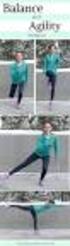 No Equipment Agility/Core/Strength Program for Full Body No Equip Trainer: Rick Coe Introduction Program designed to be performed in a circuit. Perform exercises in sequence without rest 2-3 times. Increase
The 11+ A complete warm-up program
 The 11+ A complete warm-up program Part 1 & 3 A A }6m Part 2 B A: Running B: Jog back B! FIELD SET-UP A: Running exercise B: Jog back The course is made up of 6 pairs of parallel cones, approx. 5-6m apart.
Strength Exercises for Improved Running Biomechanics
 2 CHAPTER Strength Exercises for Improved Running Biomechanics ssssssssssssssssssssssssssssssssssssssssssssssssssssssssssssssssssssssssssssssssssssssssssssssssssssssssssdd s Many gait abnormalities seen
PHYSICAL EXAMINATION OF THE FOOT AND ANKLE
 PHYSICAL EXAMINATION OF THE FOOT AND ANKLE Presenter Dr. Richard Coughlin AOFAS Lecture Series OBJECTIVES 1. ASSESS 2. DIAGNOSE 3. TREAT HISTORY TAKING Take a HISTORY What is the patient s chief complaint?
Myofit Massage Therapy Stretches for Cycling
 Guidelines for Stretching Always assume the stretch start position and comfortably apply the stretch as directed. Think Yoga - gently and slowly, no ballistic actions or bouncing at joint end range. Once
Exercise 1: Knee to Chest. Exercise 2: Pelvic Tilt. Exercise 3: Hip Rolling. Starting Position: Lie on your back on a table or firm surface.
 Exercise 1: Knee to Chest Starting Position: Lie on your back on a table or firm surface. Action: Clasp your hands behind the thigh and pull it towards your chest. Keep the opposite leg flat on the surface
The biomechanics of running
 Gait and Posture 7 (1998) 77 95 Review Paper The biomechanics of running Tom F. Novacheck Motion Analysis Laboratory, Gillette Children s Specialty Healthcare, Uni ersity of Minnesota, 200 E. Uni ersity
A proper warm-up is important before any athletic performance with the goal of preparing the athlete both mentally and physically for exercise and
 A proper warm-up is important before any athletic performance with the goal of preparing the athlete both mentally and physically for exercise and competition. A warm-up is designed to prepare an athlete
Flat foot and lower back pain
 Flat foot and lower back pain Dr James Tang, MBA, BDS, LDS RCS General Dental Practitioner, NASM Corrective Exercise Specialist with special interest in postural dysfunction & lower back problems, Level
Kelly Corso MS, ATC, CES, FMSC, CSST
 ACL Injury Prevention Program Kelly Corso MS, ATC, CES, FMSC, CSST What is the ACL??? The ACL or anterior cruciate ligament, attaches the front top portion of the shin bone (tibia) to the back bottom portion
Shoulders (free weights)
 Dumbbell Shoulder Raise Dumbbell Shoulder Raise 1) Lie back onto an incline bench (45 or less) with a DB in each hand. (You may rest each DB on the corresponding thigh.) 2) Start position: Bring the DB
Clasp hands behind hips and stretch arms down towards floor. Roll shoulder back to open chest. Do not let back arch. Power Skips
 Warm Up Exercises Jump Rope Ankle Bounces Jumping Jacks Using a fast twirl, rapidly jump up and down using spring in the feet and ankles, not in knees. V-Jumps Rapidly jump up and down using spring in
BEACH VOLLEYBALL TRAINING PROGRAM
 2008 ELITE PERFORMANCE ATHLETE CONDITIONING BEACH VOLLEYBALL TRAINING PROGRAM Team BC 2008 Steve Van Schubert, CAT(C), CSCS Training Schedule General Outline Phase 1 2 Weeks Phase 2 3 Weeks Phase 3 3 Weeks
Movement Pa+ern Analysis and Training in Athletes 02/13/2016
 Objec:ves Movement Pa+ern Analysis and Training in Athletes Department of Physical Therapy and Human Movement Sciences Appreciate the importance of movement pa+ern analysis and training in treahng athletes
International Standards for the Classification of Spinal Cord Injury Motor Exam Guide
 C5 Elbow Flexors Biceps Brachii, Brachialis Patient Position: The shoulder is in neutral rotation, neutral flexion/extension, and adducted. The elbow is fully extended, with the forearm in full supination.
The coordinated movement of the lumbo pelvic hip complex during running: a literature review
 Gait and Posture 10 (1999) 30 47 www.elsevier.com/locate/gaitpos Review article The coordinated movement of the lumbo pelvic hip complex during running: a literature review Anthony G. Schache a, *, Kim
Basic Stretch Programme 3. Exercise Circuit 4
 Basic Stretch Programme 3 Exercise Circuit 4 2 1 Calves Stand approximately 1 metre away from wall with legs straight and heels on floor. Step and lean forward and slowly push hips towards wall. Should
Exercises for the Hip
 Exercises for the Hip Gluteal Sets: Lie on your back, tighten buttocks and hold for 3-5 seconds. Repeat 20 times. Supine Hip ER/IR: Lie on your back with legs straight. Gently rotate knees out and in limited
Trunk Strengthening and Muscle and Coordination Exercises for Lower Limb Amputees
 Trunk Strengthening and Muscle and Coordination Exercises for Lower Limb Amputees Part One: Trunk Strengthening Trunk Extension Needed: Sturdy chair or stool, Theraband, and a Theraball if necessary. Sit
Addressing Pelvic Rotation
 1 of 5 4/20/2008 10:31 AM http://www.strengthcoach.com Addressing Pelvic Rotation Aaron Brooks of Perfect Postures When trying to address your athlete's or client's limitations due to pain or joint restriction,
Screening Examination of the Lower Extremities BUY THIS BOOK! Lower Extremity Screening Exam
 Screening Examination of the Lower Extremities Melvyn Harrington, MD Department of Orthopaedic Surgery & Rehabilitation Loyola University Medical Center BUY THIS BOOK! Essentials of Musculoskeletal Care
Lower Body Strength/Balance Exercises
 Compliments of (Medical Group Name & Phone # to be inserted here) Lower Body Strength/Balance Exercises Hip Flexion Strengthens thigh and hip muscles. Use ankle weights, if you are ready to. Stand to the
The WalkOn Range. Dynamic Lower Leg Orthoses. NeW. Information for physicians, orthotists and physiotherapists
 The WalkOn Range Dynamic Lower Leg Orthoses NeW Information for physicians, orthotists and physiotherapists One Range Many Different Applications The WalkOn product range allows you to address the specific
BESTest Balance Evaluation Systems Test Fay Horak PhD Copyright 2008
 BESTest Balance Evaluation Systems Test Fay Horak PhD Copyright 2008 TEST NUMBER/SUBJECT CODE DATE EXAMINER NAME EXAMINER Instructions for BESTest 1. Subjects should be tested with flat heeled shoes or
Understanding Planes and Axes of Movement
 Understanding Planes and Axes of Movement Terminology When describing the relative positions of the body parts or relationship between those parts it is advisable to use the same standard terminology.
ISOMETRIC EXERCISE HELPS REVERSE JOINT STIFFNESS, BUILDS MUSCLE, AND BOOSTS OVERALL FITNESS.
 ISOMETRIC EXERCISE HELPS REVERSE JOINT STIFFNESS, BUILDS MUSCLE, AND BOOSTS OVERALL FITNESS. By Askari A. Kazmi KazmisBioscienceLabs exercise helps reverse joint stiffness, builds muscle, and boosts overall
SAMPLE WORKOUT Full Body
 SAMPLE WORKOUT Full Body Perform each exercise: 30 secs each x 2 rounds or 2-3 sets of 8-12 reps Monday & Wednesday or Tuesday & Thursday Standing Squat Muscles: glutes (butt), quadriceps (thigh) Stand
Today s session. Common Problems in Rehab. www.physiofitness.com.au/filex.htm LOWER BODY REHAB ESSENTIALS TIM KEELEY FILEX 2012
 Tim Keeley B.Phty, Cred.MDT, APA Principal Physiotherapist physiofitness.com.au facebook.com/physiofitness Today s session Essential list for the lower body Rehab starting point Focussing on activation,
Knee Conditioning Program. Purpose of Program
 Prepared for: Prepared by: OrthoInfo Purpose of Program After an injury or surgery, an exercise conditioning program will help you return to daily activities and enjoy a more active, healthy lifestyle.
LEVEL I SKATING TECHNICAL. September 2007 Page 1
 SKATING September 2007 Page 1 SKATING SKILLS The game of Ice Hockey is a fast-paced, complex, team sport, which demands quick thinking, fast reactions and special athletic skills. Skating is the most important
Foot and Ankle Conditioning Program. Purpose of Program
 Prepared for: Prepared by: OrthoInfo Purpose of Program After an injury or surgery, an exercise conditioning program will help you return to daily activities and enjoy a more active, healthy lifestyle.
CONDITIONING PROGRAM
 CONDITIONING PROGRAM Speed and Agility are two major components of sport that need to be trained just like strength, size, and power are developed in the weight room. It is true that no matter what your
Biomechanics of Gait and Running
 Biomechanics of Gait and Running I. Normal Gait STANCE (60-62% gait cycle) Initial Contact: The moment the foot contacts the ground. Loading Response: Weight is rapidly transferred onto the outstretched
Low Back Pain: Exercises
 Low Back Pain: Exercises Your Kaiser Permanente Care Instructions Here are some examples of typical rehabilitation exercises for your condition. Start each exercise slowly. Ease off the exercise if you
NDT Treatment Planning Worksheet
 Child s Name: Kalab DOB: 01/01/02 Diagnosis: CP-Right-sided Heimplegia DOE: May 29, 2009 Therapist s Name: Mary Rose Franjoine Discipline: PT Current Participation: Attends his neighborhood school with
DSM Spine+Sport - Mobility
 To set yourself up for success, practice keeping a neutral spine throughout all of these movements. This will ensure the tissue mobilization is being applied to the correct area, and make the techniques
are you reaching your full potential...
 T h e r e s n o s u c h t h i n g a s b a d e x e r c i s e - j u s t e x e r c i s e d o n e b a d l y FIT for sport are you reaching your full potential... These tests are a series of exercises designed
Massage and Movement
 Massage and Movement Incorporating Movement into Massage Part One: Theory and Technique in Prone With Lee Stang, LMT NCBTMB #450217-06 1850 West Street Southington, CT 06489 860.747.6388 www.bridgestohealthseminars.com
Structure & Function of the Ankle and Foot. A complicated model of simplicity that you really think little about until you have a problem with one.
 Structure & Function of the Ankle and Foot A complicated model of simplicity that you really think little about until you have a problem with one. The Foot and Ankle Terminology Plantar flexion Dorsi flexion
Flexibility Assessment and Improvement Compiled and Adapted by Josh Thompson
 Flexibility Assessment and Improvement Compiled and Adapted by Josh Thompson Muscles must have a full and normal range of motion in order for joints and skeletal structure to function properly. Flexibility
The Five Most Common Pathomechanical Foot Types (Rearfoot varus, forefoot varus, equinus, plantarflexed first ray, forefoot valgus)
 The Five Most Common Pathomechanical Foot Types (Rearfoot varus, forefoot varus, equinus, plantarflexed first ray, forefoot valgus) Pathomechanical foot types usually refer to structural deformities that
Stretching in the Office
 Stretching in the Office Legs: Quads, Hamstrings, IT band, Hip flexors, Gluts, Calves Quads: Standing @ desk maintaining upright posture, grab one leg @ a time by foot or ankle and bring it towards backside
HELPFUL HINTS FOR A HEALTHY BACK
 HELPFUL HINTS FOR A HEALTHY BACK 1. Standing and Walking For correct posture, balance your head above your shoulders, eyes straight ahead, everything else falls into place. Try to point toes straight ahead
2002 Functional Design Systems
 1. Proprioceptive sensitivity has to do with not being too sensitive but being sensitive enough. 2. The hammies have a lot to do with all three planes of function. 3. In upright function, knee flexion
CHAPTER 3: BACK & ABDOMINAL STRETCHES. Standing Quad Stretch Athletic Edge - www.athleticedge.biz - (650) 815-6552
 CHAPTER : BACK & ABDOMINAL STRETCHES Standing Quad Stretch ) Stand and grasp right ankle with same hand, use a wall or chair to Lower maintain Back balance with left hand. Maintain an upright Stretches
DROP FOOT AND TREATMENTS YOUNGMEE PARK
 DROP FOOT AND TREATMENTS YOUNGMEE PARK WHAT IS FOOT DROP Foot drop / Drop foot the inability to lift the front part of the foot not a disease a symptom of some other medical problems a sign of an underlying
Dr. Enas Elsayed. Brunnstrom Approach
 Brunnstrom Approach Learning Objectives: By the end of this lab, the student will be able to: 1. Demonstrate different reflexes including stimulus and muscle tone response. 2. Demonstrate how to evoke
Don t. Hamstrings. Calf Muscles. both legs 2-3 times. stretch is felt in the back of the calf. Repeat with both legs 2-3 times.
 Remember to: Warm-up your muscles first before stretching (e.g. stretch after walking). Stretch until you feel mild discomfort, not pain. Never bounce or force a stretch. Hold the stretch for 10-30 seconds
Physical & Occupational Therapy
 In this section you will find our recommendations for exercises and everyday activities around your home. We hope that by following our guidelines your healing process will go faster and there will be
Lower Body Exercise One: Glute Bridge
 Lower Body Exercise One: Glute Bridge Lying on your back hands by your side, head on the floor. Position your feet shoulder width apart close to your glutes, feet facing forwards. Place a theraband/mini
WWW.ALPHADOGSPORTS.COM SPEED TRAINING MANUAL
 WWW.ALPHADOGSPORTS.COM SPEED TRAINING MANUAL ALPHA DOG SPEED TRAINING We would like to thank you for your commitment to Alpha Dog Sports. Alpha Dog Sports is proud to bring the top equipment from around
Hip and Trunk Exercise Program
 Hip and Trunk Exercise Program Hip and Pelvis Exercise Program Gluteus Medius and Minimus (Hip Abductors) Page 2 Lateral Hip Rotators Page 6 Tensor Fascia Lata (TFL) and Illiotibial Band (ITB) Page 7 Lower
KIN 335 - Biomechanics LAB: Ground Reaction Forces - Linear Kinetics
 KIN 335 - Biomechanics LAB: Ground Reaction Forces - Linear Kinetics Reading Assignment: 1) Luhtanen, P. and Komi, P.V. (1978). Segmental contribution to forces in vertical jump. European Journal of Applied
Pre-operative Instructions for MIS Total Knee Stephen J Kelly, M.D.
 Pre-operative Instructions for MIS Total Knee Stephen J Kelly, M.D. 33 Sewall Street Portland, ME 04102 207.828.2100 800.439.0274 www.orthoassociates.com Pre-operative Pain Protocol Two days before surgery:
12 Week Do-it-Yourself Fitness Program
 12 Week Do-it-Yourself Fitness Program Created by Brad Awalt, MS, ACSM Assistant Manager, Health Plus [email protected] January 2011 Do you have a goal to begin an exercise routine, but not sure
The Forefoot Valgus Foot-Type Joe Fox, MS, LAT June 10, 2014
 The Forefoot Valgus Foot-Type Joe Fox, MS, LAT June 10, 2014 Introduction BS Kinesiology Exercise Science and Athletic Training, University of Wisconsin-Madison MS in Exercise Science Athletic Training,
ANKLE STRENGTHENING INTRODUCTION EXERCISES SAFETY
 ANKLE STRENGTHENING INTRODUCTION Welcome to your Ankle Strengthening exercise program. The exercises in the program are designed to improve your ankle strength, fitness, balance and dynamic control. The
Speed, Agility, Quickness Training
 Speed, Agility, Quickness Training Goal: To develop Speed, Agility, and Quickness (SAQ) and functional football strength for young football players through a consistent and safe format. Place the stations
Lower Extremities. Posterior Compartment of Thighs Knee Flexors
 Lower Extremities Lower extremities are adjusted to provide locomotion but, at the same time, carry the full body weight. The lower limb movement is transferred through the hip joint and pelvis onto the
KNEE EXERCISE PROGRAM
 KNEE PROGRAM INTRODUCT ION Welcome to your knee exercise program. The exercises in the program are designed to improve your knee stability and strength of the muscles around your knee and hip. The strength
Range of Motion. A guide for you after spinal cord injury. Spinal Cord Injury Rehabilitation Program
 Range of Motion A guide for you after spinal cord injury Spinal Cord Injury Rehabilitation Program This booklet has been written by the health care providers who provide care to people who have a spinal
Cardiac Rehab Program: Stretching Exercises
 Cardiac Rehab Program: Stretching Exercises Walk around the room, step side to side, ride a bike or walk on a treadmill for at least 5 minutes to warm up before doing these stretches. Stretch warm muscles
PHASE I ANKLE REHABILITATION EXERCISES
 PHASE I ANKLE REHABILITATION EXERCISES SWELLING CONTROL S REST: Keep your standing and walking activities to a minimum while swelling is a problem. ICE: Use an ice pack in a moist towel for 10-15 minutes
How To Develop Quick Feet
 Agility Workout Drills Marker Agility Drills Set the markers in a square with a distance of 30 feet between them. 1. Around the Box To develop quick feet and directional change muscles Sprint from marker
Floor/Field Stretches
 Floor/Field Stretches 3D Hip Flexor Stretch *Start position* 1. Swing arms above head as front knee drives forward (x 5-10) 2. Swing arms over each shoulder as front knee drives forward 3D Groin Stretch
EXERCISE DESCRIPTIONS PHASE I Routine #1
 EXERCISE DESCRIPTIONS PHASE I Routine #1 Hip Mobility Exercise: Forward Out-In Movement: Raise leg out to the side, and rotate around to the front. Keep shin/thigh angle at 90 degrees. Exercise: Backward
Posture. Let s look at. in the head is jutting. the norm. you know if your belt. If you belt. lower body. 2 sections, upper. pulls?
 Fixing the Computer Guy Posture Lower back/h hip stability Let s look at ideal posture for a minute. Look at your profile in the mirror. Chances are you re gonna find that your head is jutting forward,
ACL Reconstruction Rehabilitation
 ACL Reconstruction Rehabilitation The following exercises are commonly used for rehabilitation following ACL reconstruction surgery. However, each knee surgery is unique and each person s condition is
Foot drop in MS: Evaluation and Treatment
 Foot drop in MS: Evaluation and Treatment Herb Karpatkin,PT,DSc, NCS, MSCS Asst Professor, Hunter College Emil Euaparadorn, PT, DSc, OCS, COMT, CMPT, MSCS, FAAOMPT Asst Professor, Touro College Robert
START FINISH. 5 yards 5 yards
 Agility, Plyometric & Conditioning Drills Pro Agility Objectives: Improve athletic ability and body coordination during sudden change of direction 1. Measure out a 10 yard area with 5 yard increments 2.
This document fully describes the 30 Day Flexibility Challenge and allows you to keep a record of your improvements in flexibility.
 Welcome to the StretchTowel 30 Day Flexibility Challenge! You can Be More Flexible in 30 days by following our stretching program for 10 minutes a day. The best part is that you can stretch using the StretchTowel
The Insall Scott Kelly Center for Orthopaedics and Sports Medicine 210 East 64th Street, 4 th Floor, New York, NY 10065
 ANTERIOR CRUCIATE LIGAMENT RECONSTRUCTION POST-OPERATIVE REHABILITATION PROTOCOL 2003 AUTOGRAFT BONE-PATELLA TENDON-BONE and ALLOGRAFT PROTOCOL PHASE I-EARLY FUNCTIONAL (WEEKS 1-2) Goals: 1. Educate re:
Structure and Function of the Hip
 Structure and Function of the Hip Objectives Identify the bones and bony landmarks of the hip and pelvis Identify and describe the supporting structures of the hip joint Describe the kinematics of the
Post Operative Hip Arthroscopy Rehabilitation Protocol Dr. David Hergan Labral Repair with or without FAI Component
 Post Operative Hip Arthroscopy Rehabilitation Protocol Dr. David Hergan Labral Repair with or without FAI Component Initial Joint Protection Guidelines- (P.O. Day 1-4 wks): Joint Protection Patient education
Dominic S. Carreira, M.D. 300 SE 17 th St First Floor, Fort Lauderdale, FL 33316 (954) 764-2192
 300 SE 17 th St First Floor, Fort Lauderdale, FL 33316 Phase I: Initial Hip Exercises A. Ankle Pumps - 20 repetitions, 2 times/day POST OPERATIVE HIP PROTOCOL B. Isometrics - 20 repetitions, 2 times/day
ACL Non-Operative Protocol
 ACL Non-Operative Protocol Anatomy and Biomechanics The knee is a hinge joint connecting the femur and tibia bones. It is held together by several important ligaments. The most important ligament to the
Biomechanics. State of equilibrium is when the sum (or net effect) of forces acting on a body equals zero
 Biomechanics Kinesiology is the science of, or study of, human motion. It brings together the fields of anatomy, physiology, biomechanics, physics and geometry relating them to human movement. Bio refers
Lebanese University Faculty of Engineering II. Final year project. Mechanical Engineering Degree. Samer Salloum
 Lebanese University Faculty of Engineering II Final year project Submitted in fulfilment of the requirements for the Mechanical Engineering Degree by Samer Salloum Exoskeleton for human performance augmentation
March 7th. Smartnet &PNCR. Expanded Hammersmith Functional Motor Scale for SMA (HFMSE) PNCR Network for SMA
 PNCR Network for SMA March 7th Expanded Hammersmith Functional Motor Scale for SMA (HFMSE) 2009 Add-on module presented by PNCR - Expanded Hammersmith Functional Motor Scale (HFMSE) Smartnet &PNCR Hammersmith
This week. CENG 732 Computer Animation. Challenges in Human Modeling. Basic Arm Model
 CENG 732 Computer Animation Spring 2006-2007 Week 8 Modeling and Animating Articulated Figures: Modeling the Arm, Walking, Facial Animation This week Modeling the arm Different joint structures Walking
TOTAL KNEE REPLACEMENT
 PENN ORTHOPAEDICS TOTAL KNEE REPLACEMENT Home Exercise Program PENN ORTHOPAEDICS TOTAL KNEE REPLACEMENT HOME EXERCISE PROGRAM To get the best results from your surgery, it is important that you do your
Physiotherapy Database Exercises for people with Spinal Cord Injury
 Physiotherapy Database Exercises for people with Spinal Cord Injury Compiled by the physiotherapists associated with the following Sydney (Australian) spinal units : Last Generated on Mon Mar 29 16:57:20
Lumbar/Core Strength and Stability Exercises
 Athletic Medicine Lumbar/Core Strength and Stability Exercises Introduction Low back pain can be the result of many different things. Pain can be triggered by some combination of overuse, muscle strain,
PODIATRIC GAIT ANALYSIS
 PODIATRIC GAIT ANALYSIS Southerland stated that no other group of health care professionals spends as much time in their professional education learning biomechanics. Furthermore, clinical gait evaluation
Otago Exercise Program Activity Booklet
 Head Movements Stand up tall and look ahead. Slowly turn your head as far as you can to the right. Slowly turn your head as far as you can to the left. Repeat five times to each side. 44 Neck Movements
Physical Capability Strength Test: One Component of the Selection Process
 Physical Capability Strength Test: One Component of the Selection Process One aspect of the Power Systems Institute selection process is to successfully complete and achieve a passing score on a physical
Post Surgery Rehabilitation Program for Knee Arthroscopy
 Post Surgery Rehabilitation Program for Knee Arthroscopy This protocol is designed to assist you with your rehabilitation after surgery and should be followed under the direction of a physiotherapist May
HYPERLORDOSIS & PILATES TREATMENT
 HYPERLORDOSIS & PILATES TREATMENT Grace Tiangco 3/18/15 2012-2013 Abstract Sacramento/Mountain View Lordosis or Hyperlordosis is defined as a postural type in which the natural curves of the spine are
PREVENTING ACL INJURIES IN SOCCER. By Brian Goodstein, MS, ATC, CSCS
 PREVENTING ACL INJURIES IN SOCCER By Brian Goodstein, MS, ATC, CSCS ACL injuries can be devastating to a soccer player s competitive season. For this reason, reputable medical institutions like the Cincinnati
-Balance on hands and feet rolling the upper hamstring area.
 -Begin w/roller around mid balance w/ back flat on ground, put hands behind head. -Slowly roll to mid/upper shoulder blade area. -Roll to right or left to emphasize one side. Thoracic Spine Mobility -Sit