
GUIDELINE FOR THE APPLICATION OF COMPRESSION BANDAGING
|
|
|
- Amelia Nash
- 9 years ago
- Views:
Transcription
1 Trust Guideline All Sites GUIDELINE FOR THE APPLICATION OF COMPRESSION BANDAGING All healthcare professionals must exercise their own professional judgement when using guidelines. However any decision to vary from the guideline should be documented in the patient records to include the reason for variance and the subsequent action taken. Lead Clinician(s): Jackie Stephen Haynes Consultant, Lecturer Practitioner in Tissue Viability Lead Director(s): Sandra Rote Director of Clinical Development and Lead Executive Nurse Ratified by: SW PCT R&B PCT WF PCT Adopted by Worcestershire Primary Care Trust Board: May 2006 September 2003 July 2003 March 2007 This Policy should not be used after end of: May 2009 Links into Healthcare Standard: Links into PCT aim: Impact Analysis (Race Equality) Impact Analysis (Mental Capacity Act) THIS DOCUMENT MUST NOT BE PHOTOCOPIED PLEASE NOTE THAT ALL CLINICAL GUIDELINES ARE AVAILABLE ON

2 CONTRIBUTION LIST Key individuals involved in developing the document Name Designation Original Organisation Jackie Stephen Haynes Consultant, Lecturer and Practitioner in Tissue Viability. Worcestershire Primary care trusts Rosie Callaghan Tissue Viability Nurse Specialist for Nursing SWPCT Homes Jane Hipwell District Nurse Team Leader R&B PCT Amanda Cimarosti Leg Ulcer Specialist Nurse R&B PCT Lisa Blick Community staff nurse R&B PCT Lyn Cox Practice Nurse, Churchfields R&B PCT Cheryl Tilt Sister Lickey ward, POWCH R&B PCT Pippa Humble District Nurse Team leader, Rubery, R&B PCT Julie Shaw District Nurse Team leader WF PCT Pauline Farmer District Nurse Team leader WF PCT Lynn Dodd, Staff Nurse, Wyre Forest Community Unit WF PCT Lorraine Wallace Staff Nurse, Wyre Forest Community Unit WF PCT Jo Dodd District Nurse Team leader. Evesham SWPCT Mary James District Nurse Team leader SWPCT Bridget Gibson District Nurse Team leader Broadway SWPCT Lynne Moule District Nurse Team leader Malvern, SWPCT Pat Adcock District Nurse Team leader, Knightwick SWPCT Jo Bayliss, District Nurse Team Leader, Pershore SWPCT Sylvia Jackson District Nurse, Tenbury SWPCT Denise Moore District Nurse Team leader, Ombersley SWPCT Nicola Ross District Nurse Team leader SWPCT Margaret Murcott Community Staff Nurse. Upton-on Severn SWPCT Roz Kabani, Community Staff Nurse, Haresfield House SWPCT Surgery Sharon Freeman Community Staff Nurse. Malvern. SWPCT Debbie Keelor Sister Malvern community Hospital, SWPCT Mandy Price Staff Nurse Pershore Community Hospital SWPCT Sue Collett Staff Nurse Tenbury Community Hospital SWPCT Circulated to the following individuals for comments Name Designation Original Organisation Carol Clive Infection control Nurse WSSA Guideline for the application of Compression Bandaging WPCT Page 2 of 16

3 Contents 1.0 Introduction Staff Competency Patient Application Guideline Procedure for the application of compression bandaging using the multi-layer bandage system Guideline for the application of Short stretch bandaging...7 Appendix 1 Care planning sheets 1-5 Page Appendix 1 Care planning sheets 1-5 page Appendix 1 Care planning sheets 1-5 page Appendix 1 Care planning sheets 1-5 page Appendix 1 Care planning sheets 1-5 Page Guideline for the application of Compression Bandaging WPCT Page 3 of 16

4 1.0 Introduction Graduated compression bandaging from the ankle to the calf is the most effective treatment for those with confirmed venous leg ulceration. A compression bandage should fulfill the following criteria (Fentem 1990) Provide a safe, reproducible and effective compression Maintain the compression Provide compression in the presence of necessary dressings Be capable of providing graduated compression Remain unaffected by humidity or by discharge from the ulcer Be comfortable and permit the wearing of outdoor shoes Be liked by the patient making compliance therapy more likely 1.1 Staff Competency Registered health care professionals who have undertaken specific educational training and are confident and competent ( Bale & Harding 2003 & Bale & Harding 2004). Understanding compression therapy requires knowledge of the scientific principle behind compression as well as the skills to apply bandages correctly. (NHS Centre for reviews and dissemination 1997, RCN 1998 & Cullum et 1999). 1.2 Patient Application Guideline All patients who are identified and confirmed as suitable for compression. Compression is the application of a direct gradient of pressure to tissues and underlying structures in order to bring about physiologic changes to the vascular and lymphatic microcirculation (Moffatt & Harper 1997 and Moffatt 2000). There are three classifications of compression bandage (They are described according to their extensibility i.e. how much the stretch in response to a given force). Inextensible Highly extensible- elastic- Long Stretch. The main difference is how the material fibres behave over the calf muscle at rest and during exercise. Minimally extensible- Short Stretch Guideline for the application of Compression Bandaging WPCT Page 4 of 16

5 Inextensible bandage These bandages apply less than 10mmhg and are rarely used to treat venous leg ulcers alone. Example are viscopaste/icthopaste. Paste bandages can be used to treat venous ulcers, particularly where eczema is present or if the patient cannot tolerate compression bandaging (Moffatt 2000). Highly extensible-long stretch Long stretch bandages- elastic bandages contain the elastic materials elastane and rubber have a high re-coiling force and are thought to increase expelled blood volume and reduce ambulatory venous hypertension. They are capable of applying a sustained level of compression over time. The long stretch bandage may be used in the 4 layer bandage system providing 40 mm Hg at the ankle graduating to 17 mm Hg at the knee. Short stretch Short stretch bandages applied at full stretch maintain their position as the calf muscle expands, by providing a rigid cuff. Pressure occurs beneath these bandages when the calf muscle expands against the rigid cuff. They offer a low resting pressure and may be used when a patient is sensitive to elastic fibres. 1.3 Procedure for the application of compression bandaging using the multi-layer bandage system This is a CLEAN procedure. 1 Measure the ankle circumference prior to the application of any compression bandage to ensure the selection of the appropriate bandage. This may be documented on care planning sheets.(see Appendix 1) 2 Ankle circumference less than 2 or more orthopaedic wool bandage 18 cms 1 light support bandage 1 light compression bandage 1 cohesive extensible bandage 18 cms 25 cms 1 orthopaedic wool bandage 1 light support bandage 1light compression bandage 1 cohesive extensible bandage 25 cms 30 cms 1 orthopaedic wool bandage 1 high compression bandage 1 cohesive extensible bandage Guideline for the application of Compression Bandaging WPCT Page 5 of 16

6 Greater than 30 cms 1orthopaedic wool bandage 1 light compression bandage 1 high compression bandage 1 cohesive extensible bandage CAUTION It is very easy to mix up the light compression bandage with the high compression bandage as the stripe throughout may be the same colour. Multi-layer compression bandaging may be dispensed in kits, making recognition of bandages and storage easier. Not to undertaken by anyone who has not received training and is not confident and competent Cleanse ulcer if necessary by irrigating with warmed normal saline. The foot and leg can be immersed in warm, mains drawn tap water for cleansing with an added hypoallergenic emollient such as hydromol or emulsiderm. A bucket is preferable to allow for complete immersion of calf. The bucket should be washed and dried after use and stored upside down. In a clinic or GP Practice the bucket should be lined with a plastic bag and cleaned between each patient After soaking, dry skin around the ulcer. Apply hypoallergenic protective cream e.g. 50/50 liquid paraffin with white soft paraffin or aqueous cream. Apply non-adherent dressing to ulcer bed. If appropriate an alternative wound treatment may be used. Keep foot at 90 angle. LAYER 1 ORTHOPAEDIC WOOL. The 10 cms bandage is applied without tension in a loose spiral from base of toes to knee joint with 50% overlap. LAYER 2 LIGHT SUPPORT BANDAGE. The 10 cms bandage is applied in spiral toe to knee with 50% overlap with 50% overlap. LAYER 3 LIGHT COMPRESSION BANDAGE. The 10 cms elastic conformable compression bandage is applied at mid stretch (50%) in a figure of eight from toe to knee, with a 50% overlap. This layer provides 17 mm Hg pressure at the ankle. LAYER 4 COHESIVE EXTENSIBLE BANDAGE. The 10 cms lightweight, elastic, cohesive bandage is applied at mid stretch (50%) in a spiral with a 50 % overlap from toe to knee. This layer provides 23 mm Hg pressure at the ankle. The range of multi-layer bandage systems available is included in the Worcestershire Primary Care Wound management formulary. Frequency of dressing changes will normally be weekly. After initial healing of the ulcer, compression bandaging may be applied for a further two weeks. During this period the leg should be measured for compression hosiery Class II compression hosiery should be fitted. Guideline for the application of Compression Bandaging WPCT Page 6 of 16

7 If the ulcer subsequently breaks down, then following further compression bandaging, Class III hosiery would be indicated following healing. Hosiery should be renewed at 3-6 monthly intervals. At this time the patient should be reassessed (including a Doppler assessment) and have their leg(s) re-measured for new hosiery (Jones and Nelson 1998). 1.4 Guideline for the application of Short stretch bandaging This is a CLEAN procedure Explain the procedure to the patient. Keep the foot at a 90 angle. Apply padding toe to knee Start bandaging from the medial (inner) of the foot at the base of the toes to the lateral (outer) aspect. Repeat this step to secure the bandage. The next bandage turn follows over the middle part of the foot and over the lower part of the heel. The bandage is returned over the middle part of the foot. The next turn covers the upper part of the heel, overlapping the previous heel covering by 50%. THEN SELECT ONE OF THE FOLLOWING METHODS 1. Circular/Spiral 2. Putter technique 3. Figure of eight Circular/ Spiral Apply the bandage under an even tension at full stretch overlapping the bandage by 50% from the ankle to the knee. If applying a second bandage apply from the opposite direction i.e. lateral to medial. Putter technique Apply the bandage under even tension at full stretch following the natural contours of the limb. On reaching the top of the calf secure the bandage with one circular turn. Bandage back down the limb filling in the previous gaps. If applying a second bandage apply from the opposite direction i.e. lateral to medial. Figure of 8 (eight) Apply the bandage under an even tension at full stretch from ankle to knee overlapping the bandage with diagonal figure of 8 turns ensuring no more than a 50% overlap.. Guideline for the application of Compression Bandaging WPCT Page 7 of 16

8 Limb Greater than 25 cm at the ankle For a limb greater than 25 cm 2 padding bandages may be applied 2 short stretch bandages may be necessary. This should begin above the ankle, so that the bulk of the bandage is not increased around the foot. Applying the second short stretch bandage in the opposite direction may assist in the bandage locking together, ensuring a smoother bandage that stays in place. Advantages of short stretch bandaging: Short stretch bandages provide recommended levels of compression during the resting and the working phases of the calf muscle. They can be applied over a primary dressing. The patient can wear their usual footwear, encouraging patient compliance. The bandages can be washed (in a machine) without loosing elasticity. They can be re-used and are therefore cost effective. They are easy to apply and it is possible for the patients to apply the bandage themselves. They are made from100% cotton which minimises the risk of allergic reaction. Disadvantages of short stretch bandaging: These bandages are not capable of sustaining pressure over a long period of time. Their effectiveness is enhanced when patients are active. These bandages require reapplication during the early stages of oedema reduction. If slippage occurs, the rigid case looses its effectiveness of producing high pressures during walking. Guideline for the application of Compression Bandaging WPCT Page 8 of 16

9 References Bale, S. & Harding, K. (2003) managing patients unable to tolerate therapeutic compression: a pilot study. British Journal of Nursing. (19) S4-S13 P19-27 Bale, S & Harding, K. ( 2004 ) Managing patients unable to tolerate compression. Chapter 5 in Trends in Wound care Volume 3 Quay books MA Healthcare, Wiltshire Cullum, N. Nelson, E. Fletcher, A. & Sheldon, T. (1999) Compression bandages and stockings for venous leg ulcers. Systematic review. Cochrane wounds group. Cochrane collaboration. Fentem, A. (1990) Care, Science and practice. Vol, 8, No 2 June Moffatt, C. & Harper, P. (1997) Access to clinical education. Leg ulcers. Churchill Livingstone, New York. Moffatt, C. (2000) Compression therapy. Journal of Community Nursing. Vol 14, Issue 12 pp26-36 N.H.S. Centre for reviews and dissemination (1997). Effective health care: compression therapy for venous leg ulcers. University of York. R.C.N. (1998) The management of patients with venous leg ulcers. Clinical Practice Guidelines. Recommendations, London. RCN Guideline for the application of Compression Bandaging WPCT Page 9 of 16

10 Table 1 MULTI-LAYER BANDAGE SYSTEMS The following bandages have been identified by their manufacturers for inclusion in multi-layer bandage systems. Please see the latest Worcestershire wound management formulary for recommendations Orthopaedic wool- Padding : Retention bandaging K-Soft Soffban Natural K. Band Retention bandage ( cohesive) Actiwrap Tubular retention bandage Light-weight conforming bandage Light support bandage: Light Compression Bandage: Comfifast Cellona K-lite Soffcrepe K-Plus Cohesive Extensible Bandage: High Compression Bandage: Short stretch Coban Co-Plus Ko-flex Tensopress, Setopress Proguide Actico ( cohesive) Comprilan Bandages are not prescribable in kits, however if the individual components are prescribed, pharmacists are able to dispense a kit if the content of the kit exactly matches what has been prescribed. Guideline for the application of Compression Bandaging WPCT Page 10 of 16

11 Parema K-Four # 1 (K-Soft) K-Four # 2 (K-Lite) K-Four # 3 (K-Plus) K-Four # 4 (Ko-Flex) Smith & Nephew Profore Wound Contact Layer 18-25cm Profore # 1 (Soffban Natural) Profore # 2 (Soffcrepe) Profore # 3 (Litepress) Profore # 4 (Co-plus) Profore Wound Contact Layer less than18cm Profore # 1 (Soffban Natural) x2 Profore # 2 (Soffcrepe) Profore # 3 (Litepress) Profore # 4 (Co-plus) Profore Wound Contact Layer 25-30cm Profore # 1 (Soffban Natural) Tensopress Profore # 4 (Co-plus) Profore Wound Contact Layer >30cm Profore # 1 (Soffban Natural) Profore # 2 (Soffcrepe) Tensopress Profore # 4 (Co-plus)Profore Guideline for the application of Compression Bandaging WPCT Page 11 of 16

12 Appendix 1 Care planning sheets 1-5 Page 1 PROBLEM NO. PATIENTS NAME.. DOB. DATE PROBLEM / NEED /./..has venous hypertension resulting in venous ulcer(s) to RIGHT LEG LEFT LEG (Please tick) A.B.P.I.= Ankle circumference between cm Please refer to separate assessment form AIM OR GOAL To provide optimum compression to aid venous return To provide complete healing of the ulcer(s). TREATMENT PLAN (TO INCLUDE PATIENT/CARER ACTION) 1. to receive graduated compression bandaging 2. Wash affected leg in warm freshly drawn tap water. 3. Apply non-adherent dressing to ulcer bed 4. Apply emollient to surrounding skin 5. Apply orthopaedic wool bandage in SPIRAL (Layer 1) 6. Apply light support bandage (type 2) in SPIRAL ( Layer 2) 7. Apply light compression bandage (type 3A) in FIGURE 8 (Layer 3) 8. Apply cohesive extensible bandage in SPIRAL (Layer 4) NB All bandages are 10cm in width and should be applied from the base of the toes to below the knee with 50% overlap. Layers 3&4 should be applied at mid (50%) stretch. Please record any special instructions below. PATIENTS SIGNATURE. Guideline for the application of Compression Bandaging WPCT Page 12 of 16

13 Appendix 1 Care planning sheets 1-5 page 2 PROBLEM NO. PATIENTS NAME.. DOB. DATE PROBLEM / NEED /./..has venous hypertension resulting in venous ulcer(s) to RIGHT LEG LEFT LEG (Please tick) A.B.P.I.= Ankle circumference between cm Please refer to separate assessment form AIM OR GOAL To provide optimum compression to aid venous return To provide complete healing of the ulcer(s). TREATMENT PLAN (TO INCLUDE PATIENT/CARER ACTION) 1. to receive graduated compression bandaging 2. Wash affected leg in warm freshly drawn tap water. 3. Apply non-adherent dressing to ulcer bed 4. Apply emollient to surrounding skin 5. Apply orthopaedic wool bandage in SPIRAL (Layer 1) 6. Apply high compression bandage (type 3C) in SPIRAL ( Layer 2) 7. Apply cohesive extensible bandage in SPIRAL (Layer 3) NB All bandages are 10cm in width and should be applied from the base of the toes to below The knee with 50% overlap. Layers 2&3 should be applied at mid (50%) stretch. Please record any special instructions below. PATIENTS SIGNATURE. Guideline for the application of Compression Bandaging WPCT Page 13 of 16

14 Appendix 1 Care planning sheets 1-5 page 3 PROBLEM NO. PATIENTS NAME.. DOB. DATE PROBLEM / NEED /./..has venous hypertension resulting in venous ulcer(s) to RIGHT LEG LEFT LEG (Please tick) A.B.P.I.= Ankle circumference less than 18cm Please refer to separate assessment form AIM OR GOAL To provide optimum compression to aid venous return To provide complete healing of the ulcer(s). TREATMENT PLAN (TO INCLUDE PATIENT/CARER ACTION) 1. to receive graduated compression bandaging 2. Wash affected leg in warm freshly drawn tap water. 3. Apply non-adherent dressing to ulcer bed 4. Apply emollient to surrounding skin 5. Apply 2 orthopaedic wool bandage in SPIRAL (Layer 1) 6. Apply light support bandage (type 2) in SPIRAL ( Layer 2) 7. Apply light compression bandage (type 3A) in FIGURE 8 (Layer 3) 8. Apply cohesive extensible bandage in SPIRAL (Layer 4) NB All bandages are 10cm in width and should be applied from the base of the toes to below the knee with 50% overlap. Layers 3&4 should be applied at mid (50%) stretch. Please record any special instructions below. PATIENTS SIGNATURE. Guideline for the application of Compression Bandaging WPCT Page 14 of 16

15 Appendix 1 Care planning sheets 1-5 page 4 PROBLEM NO. PATIENTS NAME.. DOB. DATE PROBLEM / NEED /./..has venous hypertension resulting in venous ulcer(s) to RIGHT LEG LEFT LEG (Please tick) A.B.P.I.= Ankle circumference greater than 30cm Please refer to separate assessment form AIM OR GOAL To provide optimum compression to aid venous return To provide complete healing of the ulcer(s). TREATMENT PLAN (TO INCLUDE PATIENT/CARER ACTION) 1. to receive graduated compression bandaging 2. Wash affected leg in warm freshly drawn tap water. 3. Apply non-adherent dressing to ulcer bed 4. Apply emollient to surrounding skin 5. Apply orthopaedic wool bandage in SPIRAL (Layer 1) 6. Apply light support bandage (type 3A) in FIGURE 8 ( Layer 2) 7. Apply high compression bandage (type 3C) in SPIRAL 8 (Layer 3) 8. Apply cohesive extensible bandage in SPIRAL (Layer 4) NB All bandages are 10cm in width and should be applied from the base of the toes to below the knee with 50% overlap. Layers 2, 3&4 should be applied at mid (50%) stretch. Please record any special instructions below. PATIENTS SIGNATURE. Guideline for the application of Compression Bandaging WPCT Page 15 of 16

16 Appendix 1 Care planning sheets 1-5 Page 5 PROBLEM NO. PATIENTS NAME.. DOB. DATE PROBLEM / NEED /./..has venous hypertension resulting in venous ulcer(s) to RIGHT LEG LEFT LEG (Please tick) A.B.P.I. = Please refer to separate assessment form AIM OR GOAL To provide optimum compression to aid venous return To provide complete healing of the ulcer(s). TREATMENT PLAN (TO INCLUDE PATIENT/CARER ACTION) 1. to receive graduated compression bandaging 2. Wash affected leg in warm freshly drawn tap water. 3. Apply non-adherent dressing to ulcer bed 4. Apply emollient to surrounding skin 5. Apply orthopaedic wool bandage in SPIRAL (Layer 1) 6. Apply light support bandage (type 2) in SPIRAL ( Layer 2) 7. Apply cohesive extensible bandage in SPIRAL (Layer 3) NB All bandages are 10cm in width and should be applied from the base of the toes to below the knee with 50% overlap. Layers 3 should be applied at mid (50%) stretch. Please record any special instructions below. PATIENTS SIGNATURE.. Guideline for the application of Compression Bandaging WPCT Page 16 of 16

GUIDELINES FOR DOPPLER ULTRASOUND
 Trust Guideline All Sites GUIDELINES FOR DOPPLER ULTRASOUND All healthcare professionals must exercise their own professional judgement when using guidelines. However any decision to vary from the guideline
University of Huddersfield Repository
 University of Huddersfield Repository Atkin, Leanne and Shirlow, K. Understanding and applying compression therapy Original Citation Atkin, Leanne and Shirlow, K. (2014) Understanding and applying compression
3M Coban 2 Layer Compression Systems
 3M Coban 2 Layer Compression Systems Application & Removal Pocket Guide Basic Application Layer 1 The Inner Comfort Layer 1 2 Apply with the foam side against the skin, using just enough tension to conform
Graduated compression hosiery (stockings)
 What is compression hosiery? Compression hosiery are elasticated stockings which give support to your legs. In graduated compression hosiery, the pressure given by the stockings is greater at the ankle
Wrapping the Leg to Control Lymphedema
 PATIENT EDUCATION patienteducation.osumc.edu Wrapping the Leg to Control Lymphedema These step-by-step instructions were created for you to use as a guide on how to wrap your leg. This wrapping method,
Dressing and bandage
 Dressing and bandage Mihajlo Lojpur, M.D., Ph.D. INTRODUCTION The terms dressing and bandage are often used synonymously. In fact, the term dressing refers more correctly to the primary layer in contact
Lymphedema Care: Lower Extremity Wrapping
 Lymphedema Care: Lower Extremity Wrapping Reviewed September 2014 Author: Sarah Zera Editor: Rehabilitation Institute of Chicago - Occupational Therapy Practice Council Wrapping the leg at home is often
Pressure Ulcers. Occupational Therapy. This leaflet is for both yourself and Carers
 Pressure Ulcers Occupational Therapy This leaflet is for both yourself and Carers Contents What is a pressure ulcer? 3 Who is at risk of developing a pressure ulcer? 4 How can I avoid developing a pressure
Critically evaluate the organization of diabetic foot ulcer services and interdisciplinary team working
 Rationale of Module Accurate nursing assessment is the key to effective diabetic foot ulcer prevention, treatment and management. A comprehensive assessment identifies ulcer aetiology and the factors which
Knee arthroscopy advice sheet
 Knee arthroscopy advice sheet During an arthroscopy, a camera is inserted into the knee through two or three small puncture wounds. It allows the surgeon to look at the joint surfaces, cartilage and the
Heel pain and Plantar fasciitis
 A patient s guide Heel pain and Plantar fasciitis Fred Robinson BSc FRCS FRCS(orth) Consultant Trauma & Orthopaedic Surgeon Alex Wee BSc FRCS(orth) Consultant Trauma & Orthopaedic Surgeon. What causes
Recurrent Varicose Veins
 Information for patients Recurrent Varicose Veins Sheffield Vascular Institute Northern General Hospital You have been diagnosed as having Varicose Veins that have recurred (come back). This leaflet explains
Caring for patients with leg
 A compression bandage system that helps to promote patient wellbeing Caring for patients with leg ulcers continues to be a challenge for healthcare professionals, particularly since the current healthcare
Wound Healing Community Outreach Service
 Wound Healing Community Outreach Service Wound Management Education Plan January 2012 December 2012 Author: Michelle Gibb Nurse Practitioner Wound Management Wound Healing Community Outreach Service Institute
Varicose Vein Surgery
 Information for patients Varicose Vein Surgery Northern General Hospital You have been diagnosed as having varicose veins and your specialist has recommended varicose vein surgery. This leaflet explains
KINESIOLOGY TAPING GUIDE
 KINESIOLOGY TAPING GUIDE What is Kinesiology tape and how does Kinesiology tape work? How to apply Kinesiology tape Examples of application of UP Kinesiology tape for common injuries and conditions Introduction
Self Management Program. Ankle Sprains. Improving Care. Improving Business.
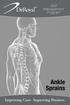 Ankle Sprains Improving Care. Improving Business. What is an ankle sprain? Ligaments attach to the ankle bones and allow for normal movement and help prevent too much motion within the joint. Ankle sprains
T.E.D. Anti-Embolism Stockings
 T.E.D. Anti-Embolism Stockings You have been given this information because you are spending time in the hospital. This booklet contains important information about why you are wearing T.E.D. anti-embolism
Pressure Ulcer Passport
 Pressure Ulcer Passport Information for patients This is a record of the treatment you are receiving for your pressure ulcer injury. Please bring it with you to all your healthcare appointments. This will
Arthroscopic Ankle Fusion (Arthrodesis)
 Arthroscopic Ankle Fusion (Arthrodesis) Exceptional healthcare, personally delivered Following your consultation with a member of the Foot and Ankle team you have been diagnosed with ankle arthritis and
Cast removal what to expect #3 Patient Information Leaflet
 Cast removal what to expect #3 Patient Information Leaflet SM466 Now your cast is off, self help is the key! Follow the advice given to you by your doctor and the staff in the clinic. Your skin will be
Varicose Veins Operation. Patient information Leaflet
 Varicose Veins Operation Patient information Leaflet 22 nd August 2014 WHAT IS VARICOSE VEIN SURGERY (HIGH LIGATION AND MULTIPLE AVULSIONS) The operation varies from case to case, depending on where the
Information for patients who require Foam Sclerotherapy for Varicose Veins
 Information for patients who require Foam Sclerotherapy for Varicose Veins Why do I need treatment for varicose veins? Deep veins Everybody has 2 sets of veins in their legs. These are called the superficial
APPENDIX 1: INTERDISCIPLINARY APPROACH TO PREVENTION AND MANAGEMENT OF DIABETIC FOOT COMPLICATIONS
 APPENDIX 1: INTERDISCIPLINARY APPROACH TO PREVENTION AND MANAGEMENT OF DIABETIC FOOT COMPLICATIONS Template: Regional Foot Programs should develop a list of available health professionals in the following
A Pocket Guide. Application and Cutting Guide
 A Pocket Guide Application and Cutting Guide Developed by Pia Carlsen, RN, Denmark Jacqui Fletcher, Principal Lecturer, MSc BSc (Hons) PG Dip (ED) RN ILT, UK Maria Mousley, AHP, Consultant Podiatrist,
Paediatric Early Warning Score Clinical Guideline
 Paediatric Early Warning Score Clinical Guideline All healthcare professionals must exercise their own professional judgement when using guidelines. However any decision to vary from the guideline should
Guideline for the Administration of Insulin by Nursing Staff
 Guideline for the Administration of Insulin by Nursing Staff Aims and objectives In Lanarkshire the number of people with Diabetes on insulin treatment is growing, as both the population ages and people
RISK ASSESSMENT FOR THE PREVENTION AND CONTROL OF HEALTHCARE ASSOCIATED INFECTION (HCAI) GUIDANCE
 RISK ASSESSMENT FOR THE PREVENTION AND CONTROL OF HEALTHCARE ASSOCIATED INFECTION (HCAI) GUIDANCE First Issued by/date Wirral PCT 10/2008 Issue Version Purpose of Issue/Description of Change Planned Review
Cellulitis. Patient Information Leaflet. Contact numbers. Out of hours contact numbers
 Contact numbers District Nurse: Intermediate Care Team: Your GP: Out of hours contact numbers District Nurse: Intermediate Care Team: Out of hours GP Service: If you would like this information in another
Understand nurse aide skills needed to promote skin integrity.
 Unit B Resident Care Skills Essential Standard NA5.00 Understand nurse aide s role in providing residents hygiene, grooming, and skin care. Indicator Understand nurse aide skills needed to promote skin
Knee Arthroscopy Post-operative Instructions
 Amon T. Ferry, MD Orthopedic Surgery Sports Medicine Knee Arthroscopy Post-operative Instructions PLEASE READ ALL OF THESE INSTRUCTIONS CAREFULLY. THEY WILL ANSWER MOST OF YOUR QUESTIONS. 1. You may walk
Bandaging skills for orthopaedic nurses
 Bandaging skills for orthopaedic nurses Christine Love LEARNING OUTCOMES CONTINUING PROFESSIONAL EDUCATION On completion of the article the reader should be able to: Have an understanding of the various
Why Brace?...2. Tape or Brace?...3. Types of Ankle Braces...4. Ankle Bracing Tips...7
 Table of Contents Why Brace?...2 Tape or Brace?...3 Types of Ankle Braces...4 Ankle Bracing Tips...7 References 1. Amoroso PJ, Ryan J, Bickley B, Leitschuh P, Taylor D, Jones B. Braced for impact: reducing
Peninsula Community Health. Safe Use of Mattresses, Pressure Relieving Cushions and Pillows
 Peninsula Community Health Safe Use of Mattresses, Pressure Relieving Cushions and Pillows Title: Procedural Document Type: Reference: Safe Use of Mattresses, Pressure Relieving Cushions and Pillows Policy
How To Recover From A Surgical Wound From A Cast
 Care of Your Wounds After Amputation Surgery by Paddy Rossbach, RN Depending on the reason for your amputation and the state of your limb at the time of surgery, definitive closure of the wound may take
Peninsula Commissioning Priorities Group. Commissioning Policy Varicose Vein Referral
 NHS Devon NHS Plymouth Torbay Care Trust Peninsula Commissioning Priorities Group Commissioning Policy Varicose Vein Referral Varicose Vein Referral Guidelines 1. Description of service/treatment Most
Treat Your Feet: Foot care for people with diabetes
 Treat Your Feet: Foot care for people with diabetes UHN People with diabetes often have trouble with their feet. Read this booklet to learn 7 steps to keep your feet healthy. Please visit the UHN Patient
Wound and Skin Assessment. Mary Carvalho RN, BSN, MBA Clinical Coordinator Johnson Creek Wound and Edema Center
 Wound and Skin Assessment Mary Carvalho RN, BSN, MBA Clinical Coordinator Johnson Creek Wound and Edema Center Skin The largest Organ Weighs between 6 and 8 pounds Covers over 20 square feet Thickness
Achilles Tendon Repair Surgery Post-operative Instructions Phase One: The First Week After Surgery
 Amon T. Ferry, MD Orthopedic Surgery Sports Medicine Achilles Tendon Repair Surgery Post-operative Instructions Phase One: The First Week After Surgery Amon T. Ferry, MD Orthopedic Surgery / Sports Medicine
Understanding. Heel Pain
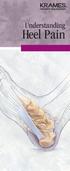 Understanding Heel Pain What Causes Heel Pain? Heel pain is a common problem that occurs when the heel is placed under too much stress. Heel pain is most often caused by walking in ways that irritate tissues
PATIENT TEACHING GUIDE: Wound Care Handbook
 PATIENT TEACHING GUIDE: Wound Care Handbook PATIENT TEACHING GUIDE: WOUND CARE Design by Mariscal Design, Illustrations by Lysa Hawke. The Wound Care Self Care Guide was written and prepared by: Barbara
How can DIABETES affect my FEET? Emma Howard Community Diabetes Lead Podiatrist, Oxford Health NHS Foundation Trust
 How can DIABETES affect my FEET? By: Emma Howard Community Diabetes Lead Podiatrist, Oxford Health NHS Foundation Trust HOW CAN DIABETES AFFECT MY FEET? What is neuropathy? This leaflet explains how diabetes
Information for patients who require Foam Sclerotherapy for Varicose Veins.
 Information for patients who require Foam Sclerotherapy for Varicose Veins. Why do I need this procedure? Everybody has two sets of veins in the legs. These include the superficial and deep veins. Their
Working together to prevent pressure ulcers (prevention and pressure-relieving devices)
 Working together to prevent pressure ulcers (prevention and pressure-relieving devices) Understanding NICE guidance information for people at risk of pressure ulcers, their carers, and the public Draft
PLANTAR FASCITIS (Heel Spur Syndrome)
 PLANTAR FASCITIS (Heel Spur Syndrome) R. Amadeus Mason MD Description Plantar fascitis is characterized by stiffness and inflammation of the main fascia (fibrous connective [ligament-like] tissue) on the
VARICOSE VEIN ADVICE SHEET PRIVATE DAY CASE Mr Paul O Byrne
 VARICOSE VEIN ADVICE SHEET PRIVATE DAY CASE Mr Paul O Byrne What are Varicose Veins Varicose veins are enlarged swollen veins. Most varicose veins are found in the legs. They are generally caused by a
This is my information booklet: Introduction
 Hip arthroscopy is a relatively new procedure which allows the surgeon to diagnose and treat hip disorders by providing a clear view of the inside of the hip with very small incisions. This is a more complicated
OPERATION:... Proximal tibial osteotomy Distal femoral osteotomy
 AFFIX PATIENT DETAIL STICKER HERE Forename.. Surname NHS Organisation. Responsible surgeon. Job Title Hospital Number... D.O.B.././ No special requirements OPERATION:..... Proximal tibial osteotomy Distal
Community home-based prevention of disability due to lymphatic filariasis
 Community home-based prevention of disability due to lymphatic filariasis World Health Organization Geneva WHO/CDS/CPE/CEE/2003.35 Part 3 Figure 1 Wash your leg, or other part of the body affected by lymphoedema,
Lymph Node Dissection for Penile Cancer
 Lymph Node Dissection for Penile Cancer Exceptional healthcare, personally delivered Removal of Lymph Nodes Why are the Lymph Nodes so important when I have penile cancer? Lymph nodes are small bean shaped
VARICOSE VEINS. Information Leaflet. Your Health. Our Priority. VTE Ambulatory Clinic Stepping Hill Hospital
 VARICOSE VEINS Information Leaflet Your Health. Our Priority. Page 2 of 7 Varicose Veins There are no accurate figures for the number of people with varicose veins. Some studies suggest that 3 in 100 people
Treatment of Spastic Foot Deformities
 Penn Comprehensive Neuroscience Center Treatment of Spastic Foot Deformities Penn Neuro-Orthopaedics Service 1 Table of Contents Overview Overview 1 Treatment 2 Procedures 4 Achilles Tendon Lengthening
WOUND MANAGEMENT PRODUCTS FORMULARY
 Tissue Viability Service WOUND MANAGEMENT PRODUCTS FORMULARY Version: April 2014 Tissue Viability Service: Pia Obank, Julie Sturges, Ann Fowler, Sam Goodman 01/04/2014 Introduction The first choice dressing
A Patient s Guide to Lateral Ligament Reconstruction of the Ankle
 A Patient s Guide to Lateral Ligament Reconstruction of the Ankle The Foot and Ankle unit at the Royal National Orthopaedic Hospital (RNOH) is a multi-disciplinary team. The team consists of three specialist
Knee Arthroscopy Exercise Programme
 Chester Knee Clinic & Cartilage Repair Centre Nuffield Health, The Grosvenor Hospital Chester Wrexham Road Chester CH4 7QP Hospital Telephone: 01244 680 444 CKC Website: www.kneeclinic.info Email: [email protected]
CLCH Quality Report 2012
 CLCH Quality Report 2012 The Tissue Viability Service 1. Summary of the service and the main features Location The Tissue Viability Service (TVS) is a nurse-led specialist service whose aim is to promote
All Wales NHS Dress Code. Free to Lead, Free to Care
 1 All Wales NHS Dress Code Free to Lead, Free to Care Introduction The All Wales Dress Code was developed to encompass the principles of inspiring confidence, preventing infection and for the safety of
Percutaneous Nephrostomy. Care of your Nephrostomy. Department of Urology
 Percutaneous Nephrostomy Care of your Nephrostomy Department of Urology You may encounter some problems at home but these are usually easily overcome. Listed below are some questions patients commonly
Beaumont Hospital. Varicose Veins. and their TREATMENT. Professor Austin Leahy, MCh, FRCS, FRCSI WWW.VEINCLINICSOFIRELAND.COM
 Beaumont Hospital Varicose Veins and their TREATMENT Professor Austin Leahy, MCh, FRCS, FRCSI WWW.VEINCLINICSOFIRELAND.COM Department of Surgery Beaumont Hospital and Royal College of Surgeons in Ireland
The population of the United Kingdom is
 Wound care in five English NHS Trusts: Results of a survey KEY WORDS Ageing Infection Survey Wound Wound dressing Karen Ousey Reader Advancing Clinical Practice, School of Human and Health Sciences, University
the Role of Patricia Turner BSN, RN, CWCN, CWS
 Understanding the Role of Outpatient Wound Centers Patricia Turner BSN, RN, CWCN, CWS Outpatient wound centers are somewhat of a specialty unto themselves within the world of wound care. The focus of the
Ankle Stabilisation Procedure
 Ankle Stabilisation Procedure Exceptional healthcare, personally delivered Following your consultation with a member of the Foot and Ankle team you have been diagnosed with an unstable ankle. This leaflet
JOBST Academy. The JOBST Academy offers:
 JOBST Academy BSN medical is committed to providing quality education in lymphoedema and the JOBST Academy raises the standard to offer professionalism and flexibility in today s working lymphoedema environment.
Nursing Management of Patient with Casting
 Nursing Management of Patient with Casting Elsa CHUNG Workshop on Trauma Management with Cast Application 5 July 2009 (Sunday) Functions A rigid external immobilizer to secure body part To maintain support
Preventing pressure ulcers
 Golden Jubilee National Hospital NHS National Waiting Times Centre Preventing pressure ulcers Patient information guide for adults at risk of pressure ulcers Agamemnon Street Clydebank, G81 4DY (: 0141
Your Recovery After a Cesarean Delivery
 Your Recovery After a Cesarean Delivery It is normal to have many questions about your care after delivery. Cesarean delivery is surgery and your body needs time to heal and recover for the next 6 weeks,
Introduction A JP Drain is a soft tube and container used to drain fluids that build up under the skin after surgery.
 JP Drain Introduction A JP Drain is a soft tube and container used to drain fluids that build up under the skin after surgery. This reference summary explains what a JP Drain is and discusses how to take
Chapter 4 Physiological Therapeutics. 1 Cryotherapy
 Chapter 4 Physiological Therapeutics 1 Cryotherapy CRYOTHERAPY PHYSIOLOGIC EFFECTS OF ICE APPLICATION 1. Decreased circulation 5. Increased tissue stiffness 2. Local vasoconstriction 6. Decreased muscle
Local Enhanced Service Specification for the Supply of Pharmaceutical Services to Care Homes through Community Pharmacy
 Local Enhanced Service Specification for the Supply of Pharmaceutical Services to Care Homes through Community Pharmacy Contents: 1. Introduction and purpose 2. Period of Service 3. Aim of the Service
TIPS and EXERCISES for your knee stiffness. and pain
 TIPS and EXERCISES for your knee stiffness and pain KNEE EXERCISES Range of motion exercise 3 Knee bending exercises 3 Knee straightening exercises 5 STRENGTHENING EXERCISES 6 AEROBIC EXERCISE 10 ADDITIONAL
Tunnelled indwelling pleural catheter (TIPC)
 Tunnelled indwelling pleural catheter (TIPC) A patient s guide 1 What is a tunnelled indwelling pleural catheter? A tunnelled indwelling pleural catheter is a specially designed small tube to drain fluid
How To Care For A Stump After Amputation
 REHABILITATION FOLLOWING A LOWER LIMB AMPUTATION This booklet gives you information about the rehabilitation process following your amputation. The information is a guide as everyone will progress differently
Removal of Haemorrhoids (Haemorrhoidectomy) Information for patients
 Removal of Haemorrhoids (Haemorrhoidectomy) Information for patients What are Haemorrhoids? Haemorrhoids (piles) are enlarged blood vessels around the anus (back passage). There are two types of haemorrhoids:
Referral for Limb Fitting Information for your first visit to Queen Mary s Hospital, Douglas Bader Rehab Centre
 Referral for Limb Fitting Information for your first visit to Queen Mary s Hospital, Douglas Bader Rehab Centre Draft version 23/3/2011 Review date March 2014 This booklet is designed to provide you with
NHS Continuing Healthcare
 NHS Continuing Healthcare Questionnaire In association with Questionnaire 1. Full name of patient 2. Home address (prior to transfer into care home if applicable) 3. Patient s Date of Birth 4. Patient
Standard Operating Procedure Template
 Standard Operating Procedure Template Title of Standard Operation Procedure: Topical Negative Pressure (TNP) Reference Number: Version No: 1 Issue Date: May 2012 Review Date: August 2015 Purpose and Background
Confirmed Deep Vein Thrombosis (DVT)
 Confirmed Deep Vein Thrombosis (DVT) Information for patients What is deep vein thrombosis? Blood clotting provides us with essential protection against severe loss of blood from an injury to a vein or
Cardiff and Vale University Health Board: WASTE MANAGEMENT OPERATIONAL PROCEDURES APPENDIX 8
 ANATOMICAL WASTES Cardiff and Vale University Health Board: APPENDIX 8 1 Defining Anatomical Waste Anatomical waste is defined for the purposes of this procedure as a 'recognisable' body part, tissue or
A Guide to Healthier Legs
 A Guide to Healthier Legs Are You at Risk? Keeping Your Legs Healthy Leg problems are widespread throughout the world. According to the American College of Phlebology, more than 80 million Americans suffer
Endovenous Laser Therapy
 Information for patients Endovenous Laser Therapy Northern General Hospital You have been given this leaflet because you will be having Endovenous Laser Therapy (EVLT). This leaflet explains more about
Preventing Blood Clots in Adult Patients. Information For Patients
 Preventing Blood Clots in Adult Patients Information For Patients 1 This leaflet will give you information on how to reduce the risk of developing blood clots during and after your stay in hospital. If
How it works It's Simple.Simply Slender Body Wraps!
 Slender Body Wraps Our Luxurious Simply Slender Body Wrap system is formulated to cleanse the body of toxins that can collect due to such factors as aging, improper diet, lack of exercise, smoking and
Femoral artery bypass graft (Including femoral crossover graft)
 Femoral artery bypass graft (Including femoral crossover graft) Why do I need the operation? You have a blockage or narrowing of the arteries supplying blood to your leg. This reduces the blood flow to
Effective Plantar Fasciitis Exercises
 Effective Plantar Fasciitis Exercises Effective Plantar Fasciitis Exercises - 12 Week Plantar Fasciitis Exercise Solution - 1 3 Month Plantar Fasciitis Exercise Program Stage 1 Stage 2 Stage 3 Structure
Renal Vascular Access Having a Fistula For Haemodialysis
 Renal Vascular Access Having a Fistula For Haemodialysis Delivering the best in care UHB is a no smoking Trust To see all of our current patient information leaflets please visit www.uhb.nhs.uk/patient-information-leaflets.htm
LASER TREATMENT FOR VARICOSE VEINS
 LASER TREATMENT FOR VARICOSE VEINS How can varicose veins be treated by laser? Laser treatment of varicose veins, Endovascular Laser Ablation (known as EVLA), is a minimally invasive procedure for treating
Subacromial Decompression Surgery
 Subacromial Decompression Surgery Exceptional healthcare, personally delivered This leaflet aims to help you gain the maximum benefit from your operation. It is not a substitute for professional medical
Tired, Aching Legs? Swollen Ankles? Varicose Veins? An informative guide for patients
 Tired, Aching Legs? Swollen Ankles? Varicose Veins? An informative guide for patients Are You at Risk? Leg problems are widespread throughout the world, but what most people don t know is that approximately
Anterior Cruciate Ligament Reconstruction Rehabilitation Protocol
 The First Two Weeks After Surgery You will go home with crutches and be advised to use ice. Goals 1. Protect reconstruction 2. Ensure wound healing 3. Maintain full knee extension 4. Gain knee flexion
Managing the lower limb in coronary artery bypass grafting
 Managing the lower limb in coronary artery bypass grafting Wounds International, Vol 1, Issue 5 Practice Managing the lower limb in coronary artery bypass grafting Coronary artery bypass grafting (CABG)
A Guide to Heel Pain
 The Society of Chiropodists and Podiatrists A Guide to Heel Pain The Society of Chiropodists and Podiatrists Heel pain may be caused by a number of different problems; for effective treatment you need
Compression Management
 Compression Management Elastic Cohesive Compression Conforming Specialty Compression Management Unwrap the power of our compression and fixation bandages. Healthcare professionals across the continuum
Individualized Care Plans Fully Developed
 Appendix Individualized Care Plans Fully Developed A Refer to Chapter 1 The Nursing Process: A Synopsis, p. 32: Two Individualized Care Plans Fully Developed; Care Plan 1 for Mr. John Walters, Care Plan
How to care for your eye after surgery
 Ambulatory Care & Local Networks How to care for your eye after surgery Information for patients attending appointments at King s College Hospital only This leaflet explains what to expect after your eye
Knee Conditioning Program. Purpose of Program
 Prepared for: Prepared by: OrthoInfo Purpose of Program After an injury or surgery, an exercise conditioning program will help you return to daily activities and enjoy a more active, healthy lifestyle.
A Patient s Guide to Arthritis of the Big Toe (Hallux Rigidus) With Discussion on Cheilectomy and Fusion
 A Patient s Guide to Arthritis of the Big Toe (Hallux Rigidus) With Discussion on Cheilectomy and Fusion The foot and ankle unit at the Royal National Orthopaedic Hospital (RNOH) is a multi-disciplinary