
KINESIOLOGY TAPING GUIDE
|
|
|
- Abigail Holt
- 9 years ago
- Views:
Transcription
1 KINESIOLOGY TAPING GUIDE
2 What is Kinesiology tape and how does Kinesiology tape work? How to apply Kinesiology tape Examples of application of UP Kinesiology tape for common injuries and conditions
3 Introduction Welcome to this guide to using Ultimate Performance (UP) Kinesiology tape. The guide contains general advice developed in consultation with various taping experts who work closely with UP. UP Kinesiology tape can be applied in a variety of methods which are flexible and adjustable to suit your needs. Kinesiology tape can be applied by you, health professionals or anybody else assisting you; the guide can be used as an introductory aid to application and could potentially reduce the need for regular appointments with health professionals. UP recommends that any aches, pains, strains and injuries should be assessed by a suitably qualified healthcare professional before initial tape application: this may be a valuable opportunity to experience tape application by a professional.
4 SECTION A: What is Kinesiology tape and how does Kinesiology tape work? Kinesiology taping originates in the science of kinesiology, based on the belief that the body s muscles are responsible for the movements of and in the body as well as being in control of other elements, such as circulation of the blood and body temperature. As a result of this, when muscles fail or are impaired other parts of the body are necessarily effected, thus putting their function at risk. The principle of kinesiology is to treat the muscles to help the body heal itself naturally. Kinesiology tape is a 100% cotton, hypoallergenic, latex free, non-restrictive elastic adhesive tape designed to have the same amount of stretch as human skin and provides a multitude of uses as a protective and rehabilitative taping technique. Applied over muscles, the main benefits are to; reduce pain and inflammation, improve circulation, relax and support over-used/tired/injured muscles, provide structural support to joints and muscle movement, assist healing and provide support to the injury site whilst allowing full range of movement. The taping methods can be preventative or rehabilitative to allow athletes to continue training and competing as injuries heal. The tape may be used with differing degrees of stretch depending on the desired effect of the taping. Kinesiology taping is designed to assist and improve the body s natural healing process and has a number of methods of application and benefits of use, it is proposed to: (1) improve the localised effect of fluid circulation (blood and lymph); (2) decrease pain; (3) provide anatomical support; (4) enhance muscular and joint range of motion; (5) assist proprioception. (1) Impacting localised fluid circulation: Once applied to the skin Kinesiology tape is reported to lift the upper layers of skin, creating more space
5 between the skin and underlying muscles. This space is believed to reduce pressure on the lymph channels and create more space for circulation, flow and improve lymph drainage through the taped area (figure 1). This can help decrease swelling and pain in injured areas. It also helps improve blood flow circulation, increased blood flow to and from the muscle increases the presence of oxygen and nutrients to assist with repair of damaged tissues and accelerates the breakdown and removal of waste product when muscles are tired. (2) Decrease pain: Kinesiology tape relieves physical and neurological pain, the tapes lifting action helps to relieve pressure on the pain receptors located under the skin (see figure 1 below). (3) Provides anatomical support + (4) enhanced/normal muscular and joint range of motion + (5) assists proprioception: Kinesiology tapes unique elastic properties ensure that muscles and joints are closely supported during all activities, discourages harmful movements whilst still allowing a safe and healthy range of motion. Different applications of Kinesiology tape can also be used to improve joint alignment and can improve the function of a joint by influencing opposing muscle groups and joint mobility. Kinesiology tape can be worn for up to five days during intense exercise, swimming, showering and bathing as the tape is quick drying. Figure 1. Potential skin lifting effect of Kinesiology tape promoting fluid flow and decreasing tissue compression. Skin Fascia Inflamed muscle Compressed pain receptor Compressed blood vessel Compressed lymph vessel Uncompressed pain receptor Dilated blood vessel Dilated lymph vessel
6 SECTION B: How to apply Kinesiology tape This is an introductory guide of basic application methods. Kinesiology tape can be applied by you, health professionals and or anybody else assisting you, this guide can be used as an aid to application and potentially reduce the need for regular appointments with health professionals. UP reiterate that injuries should be assessed by suitable qualified healthcare professionals before initial tape application, this may be a valuable opportunity to experience tape application by a professional. It is easier to remove the tape from the backing than the backing from the tape. Try not to handle the adhesive side of the tape (see figure 2 opposite). When and where necessary, use an anchor tab: fold and then tear a line 2-3 inches (5-7cm) in from each end of the piece of tape to be applied. These end tabs should be applied with no stretch to anchor the tape to the skin. Before applying, rub the anchor tabs for a couple of seconds to activate the adhesive and ensure the anchor tabs adhere to the skin immediately. The remainder of the tape s adhesion will be activated by natural body warmth once applied.
7 End-to-end application: Remove tape from the backing and apply one anchor tab to the skin with no stretch. Apply the centre of the tape with the desired degree of stretch, peeling backing away as you go, when the opposing anchor tab is reached, remove the backing and apply with no stretch. Centre first application: Remove the backing from the centre of the tape, leave the anchor tab backing attached, apply the tape from the centre of the application area with the desired degree of stretch then remove the backing on the anchor tabs and apply to the skin with no stretch.
8 SECTION C: Examples of application of UP Kinesiology tape for common injuries and conditions 1 ACHILLES TENDON TAPING 2 CALF TAPING 3 IT BAND TAPING 4 KNEE TAPING 5 SHIN SORENESS / COMPARTMENT SYNDROME TAPING 6 PLANTAR FASCIITIS TAPING 7 POSTERIOR THIGH PAIN / HAMSTRING STRAIN / SCIATICA TAPING 8 LOWER BACK TAPING
9 1 ACHILLES TENDON TAPING A Dorsiflex the foot to stretch the achilles. Anchor the tape on the sole of foot and apply the tape vertically, with the desired stretch, up to mid-calf. Smooth the tape around the achilles tendon area. (see section B: How to apply Kinesiology tape ). B Apply a second strip with no stretch horizontally across the tendon at a level just above the ankle bone or where the achilles is most painful.
10 2 CALF TAPING A Apply a strip of tape vertically from above ankle to just below knee applying a 50% stretch to middle of tape and utilising anchor points at each end (see How to apply Kinesiology tape ). B Apply a second strip horizontally across the most painful area of the calf with 50% stretch in the middle and anchor point at each end.
11 3 IT BAND TAPING A Apply a strip of tape with no stretch from the hip bone vertically down to just below the knee (see How to apply Kinesiology tape ) using anchoring points at each end. B Apply a second strip horizontally across the outer leg just above the knee with 50% stretch in the middle.
12 4 KNEE / PATELLA TAPING A Flex the knee to a 90 degree angle. Split the tape 3-4 at one end. Using that opposite end, anchor and apply the tape vertically down from mid-thigh down to the knee. Apply each side of the split around the patella (see diagram). No stretch required on application. B It is optional to apply a vertical strip directly below the kneecap with a 50% stretch, use anchor tabs at each end.
13 5 SHIN SORENESS AND COMPARTMENT SYNDROME TAPING A Dorsiflex (lift) foot. Anchor tape from foot first along shin directly over the affected area. No stretch (see How to apply Kinesiology tape ). B (Optional) Apply a second strip across the worst affected area with 50% stretch in the middle.
14 6 PLANTAR FASCIITIS TAPING A Dorsiflex (lift) foot. Anchor the tape to the heel and apply along the sole of the foot to the base of the toes with no stretch. It is optional to cut the initial piece into strips to be applied up the sole of the foot (as per diagram). B Apply a second strip anchored to the top of the foot and wrapped from the medial to the lateral side to provide additional support to the arch.
15 7 POSTERIOR THIGH PAIN / HAMSTRING STRAIN / SCIATICA TAPING A Anchor just below the buttock fold and apply tape vertically down, with a 50% stretch, to the ankle (see How to apply Kinesiology tape ). B Apply a horizontal strip across the broadest part of the hamstring with a 50% stretch in the middle.
16 8 LOWER BACK TAPING A Bend forwards from the waist. Apply two vertical strips with anchors either side of the top of the buttock cleft and apply upwards either side of the spine to a mid-point with less than 25% stretch (see How to apply Kinesiology tape ).
17 B Apply a horizontal strip across the most painful area with a 50% stretch.
18 Kinesiology Tape skin irritation Kinesiology tape is a 100% cotton, hypoallergenic, latex free, non-restrictive elastic adhesive tape designed to have the same amount of stretch as human skin and provides a multitude of uses as a protective and rehabilitative taping technique. 1 Too much stretch in the tape. Kinesiology tape is already stretched on to the paper backing so an effective stretch can be achieved even when applying without tension When kinesiology tape is applied with too much stretch it can pull on the skin causing discomfort as it attempts to contract back to its un-stretched state. Be careful not to overstretch the tape on application. In general, the larger the area being taped the less additional stretch is necessary during application. 2 Anchor tabs do not require stretch. The anchor tabs of the tape are the final 2-3 at the end of every strip. If these ends are stretched during application they will pull on the skin with every movement, in time this can cause redness and irritation. Always leave the end 3-2 with no stretch. 3 Hair follicle irritation in unshaved areas. The benefits of kinesiology taping are achieved via direct contact between the tape and the skin. Constant movement of the skin can cause hair follicles to become irritated: it is recommended that excess hair close to skin level be cut close to the skin before applying kinesiology tape. 4 Skin irritation in shaved areas. Shaving removes the uppermost layer of skin exposing fresh skin which will be more sensitive. It is recommended that shaving should be performed 24 hours before tape is applied or is to be avoided in regularly taped areas. Clippers can be used as they cause less skin irritation. 5 Skin preparation. Remove all moisturizing creams and lotions from the skin and wash with soap and water prior to taping. This preparation will improve tape adherence and should reduce the likelihood of skin irritation.
19 UP Kinesiology Tape is available as 50mm x 5m rolls in a range of colours, either in continuous form or pre-cut into 250mm sections. UP7001 UP7002 UP7003 UP7004 UP7005 black pink red light blue skin UP7021 UP7022 UP7023 UP7024 UP7025 black pink red light blue skin pre-cut pre-cut pre-cut pre-cut pre-cut
20 A rehabilitative taping technique applied over muscles to reduce pain and inflammation, relax overused tired muscles and support muscles in movement. Kinesiology taping is designed to improve the body s natural healing process by helping to increase natural blood flow around the muscle. The wave pattern adhesive backing makes it non-restrictive, allowing for a full range of motion. Ultimate Performance Unit N. Penfold Trading Estate Imperial Way Watford WD24 4YY UK
Lymphedema Care: Lower Extremity Wrapping
 Lymphedema Care: Lower Extremity Wrapping Reviewed September 2014 Author: Sarah Zera Editor: Rehabilitation Institute of Chicago - Occupational Therapy Practice Council Wrapping the leg at home is often
Achilles Tendon Repair Surgery Post-operative Instructions Phase One: The First Week After Surgery
 Amon T. Ferry, MD Orthopedic Surgery Sports Medicine Achilles Tendon Repair Surgery Post-operative Instructions Phase One: The First Week After Surgery Amon T. Ferry, MD Orthopedic Surgery / Sports Medicine
Effective Plantar Fasciitis Exercises
 Effective Plantar Fasciitis Exercises Effective Plantar Fasciitis Exercises - 12 Week Plantar Fasciitis Exercise Solution - 1 3 Month Plantar Fasciitis Exercise Program Stage 1 Stage 2 Stage 3 Structure
Plantar Fascia Release
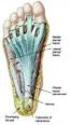 Plantar Fascia Release Introduction Plantar fasciitis is a common condition that causes pain around the heel. It may be severe enough to affect regular activities. If other treatments are unsuccessful,
Plantar Fasciitis Information Leaflet. Maneesh Bhatia. Consultant Orthopaedic Surgeon
 Plantar Fasciitis Information Leaflet Maneesh Bhatia Consultant Orthopaedic Surgeon What is plantar fasciitis? The plantar fascia is a strong band of tissue that stretches from the heel to the toes. It
Plantar Fasciitis. Plantar Fascia
 Plantar Fasciitis Introduction Plantar fasciitis is an inflammation of the thick band of tissue that connects your heel bone to your toes. This thick band of tissue is called the plantar fascia. Plantar
Endoscopic Plantar Fasciotomy
 Endoscopic Plantar Fasciotomy Introduction Plantar fasciitis is a common condition that causes pain centralized around the heel. It may be severe enough to affect regular activities. Health care providers
Understanding. Heel Pain
 Understanding Heel Pain What Causes Heel Pain? Heel pain is a common problem that occurs when the heel is placed under too much stress. Heel pain is most often caused by walking in ways that irritate tissues
Knee Arthroscopy Post-operative Instructions
 Amon T. Ferry, MD Orthopedic Surgery Sports Medicine Knee Arthroscopy Post-operative Instructions PLEASE READ ALL OF THESE INSTRUCTIONS CAREFULLY. THEY WILL ANSWER MOST OF YOUR QUESTIONS. 1. You may walk
Self Management Program. Ankle Sprains. Improving Care. Improving Business.
 Ankle Sprains Improving Care. Improving Business. What is an ankle sprain? Ligaments attach to the ankle bones and allow for normal movement and help prevent too much motion within the joint. Ankle sprains
PERFORMANCE RUNNING. Piriformis Syndrome
 Piriformis Syndrome Have you started to experience pain in your hip or down your leg while beginning or advancing your fitness program? This pain may be stemming from the piriformis muscle in your hip.
By Agnes Tan (PT) I-Sports Rehab Centre Island Hospital
 By Agnes Tan (PT) I-Sports Rehab Centre Island Hospital Physiotherapy Provides aids to people Deals with abrasion and dysfunction (muscles, joints, bones) To control and repair maximum movement potentials
Foot and Ankle Conditioning Program. Purpose of Program
 Prepared for: Prepared by: OrthoInfo Purpose of Program After an injury or surgery, an exercise conditioning program will help you return to daily activities and enjoy a more active, healthy lifestyle.
Adult Advisor: Plantar Fasciitis. Plantar Fasciitis
 Adult Advisor: Plantar Fasciitis Page 1 of 3 Plantar Fasciitis What is plantar fasciitis? Plantar fasciitis is a painful inflammation of the bottom of the foot between the ball of the foot and the heel.
Heel pain and Plantar fasciitis
 A patient s guide Heel pain and Plantar fasciitis Fred Robinson BSc FRCS FRCS(orth) Consultant Trauma & Orthopaedic Surgeon Alex Wee BSc FRCS(orth) Consultant Trauma & Orthopaedic Surgeon. What causes
.org. Achilles Tendinitis. Description. Cause. Achilles tendinitis is a common condition that causes pain along the back of the leg near the heel.
 Achilles Tendinitis Page ( 1 ) Achilles tendinitis is a common condition that causes pain along the back of the leg near the heel. The Achilles tendon is the largest tendon in the body. It connects your
.org. Plantar Fasciitis and Bone Spurs. Anatomy. Cause
 Plantar Fasciitis and Bone Spurs Page ( 1 ) Plantar fasciitis (fashee-eye-tiss) is the most common cause of pain on the bottom of the heel. Approximately 2 million patients are treated for this condition
Page 2 of 6 plantar fascia. This is called the windlass mechanism. Later, we'll discuss how this mechanism is used to treat plantar fasciitis with str
 Page 1 of 6 Plantar Fasciitis (Heel Pain) Plantar fasciitis is a painful condition affecting the bottom of the foot. It is a common cause of heel pain and is sometimes called a heel spur. Plantar fasciitis
ILIOTIBIAL BAND SYNDROME
 ILIOTIBIAL BAND SYNDROME Description The iliotibial band is the tendon attachment of hip muscles into the upper leg (tibia) just below the knee to the outer side of the front of the leg. Where the tendon
Understand nurse aide skills needed to promote skin integrity.
 Unit B Resident Care Skills Essential Standard NA5.00 Understand nurse aide s role in providing residents hygiene, grooming, and skin care. Indicator Understand nurse aide skills needed to promote skin
Knee Conditioning Program. Purpose of Program
 Prepared for: Prepared by: OrthoInfo Purpose of Program After an injury or surgery, an exercise conditioning program will help you return to daily activities and enjoy a more active, healthy lifestyle.
A small roller with a big effect. The mini roller for massaging, strengthening, stretching and warming up
 A small roller with a big effect The mini roller for massaging, strengthening, stretching and warming up Suva Preventative products P. O Box, 6002 Lucerne Enquiries Tel. 041 419 58 51 Orders www.suva.ch/waswo
Original Kinesiology Tape
 Original Kinesiology Tape Recommended by the German Olympic Sports Confederation (DOSB) Recommended by the German Academy of Applied Sports Medicine(DAASM) irst in Korea Introduce and distribute Kinesiology
Dressing and bandage
 Dressing and bandage Mihajlo Lojpur, M.D., Ph.D. INTRODUCTION The terms dressing and bandage are often used synonymously. In fact, the term dressing refers more correctly to the primary layer in contact
A proper warm-up is important before any athletic performance with the goal of preparing the athlete both mentally and physically for exercise and
 A proper warm-up is important before any athletic performance with the goal of preparing the athlete both mentally and physically for exercise and competition. A warm-up is designed to prepare an athlete
Pre - Operative Rehabilitation Program for Anterior Cruciate Ligament Reconstruction
 Pre - Operative Rehabilitation Program for Anterior Cruciate Ligament Reconstruction This protocol is designed to assist you with your preparation for surgery and should be followed under the direction
How To Treat Heel Pain
 Plantar Fasciitis, Heel Spurs, Heel Pain The Plantar Fasciitis Organization is dedicated to the understanding of Plantar Fasciitis, Heel Spurs, and all other forms of Heel Pain. Welcome to the Plantar
Fact sheet Exercises for older adults undergoing rehabilitation
 Fact sheet Exercises for older adults undergoing rehabilitation Flexibility refers to the amount of movement possible around a joint and is necessary for normal activities of daily living such as stretching,
This is caused by muscle strain to the Achilles tendon in the heel of the foot.
 Foot Facts Our feet were designed to move across uneven earthy surfaces. The hard, inflexible surfaces that we regularly walk on today, such as concrete, tile or wood, leave our feet wanting in terms of
EXCESSIVE LATERAL PATELLAR COMPRESSION SYNDROME (Chondromalacia Patella)
 EXCESSIVE LATERAL PATELLAR COMPRESSION SYNDROME (Chondromalacia Patella) Description Maintain appropriate conditioning: Excessive lateral patellar compression syndrome is characterized by pain in the knee
ACL RECONSTRUCTION POST-OPERATIVE REHABILITATION PROGRAMME
 ACL RECONSTRUCTION POST-OPERATIVE REHABILITATION PROGRAMME ABOUT THE OPERATION The aim of your operation is to reconstruct the Anterior Cruciate Ligament (ACL) to restore knee joint stability. A graft,
Runner's Injury Prevention
 JEN DAVIS DPT Runner's Injury Prevention Jen Davis DPT Orthopedic Physical Therapy Foot Traffic 7718 SE 13th Ave Portland, OR 97202 (503) 482-7232 [email protected] www.runfastpt.com!1 THE AMAZING RUNNER
A Patient s Guide to Plantar Fasciitis. Foot and Ankle Center of Massachusetts, P.C.
 A Patient s Guide to Plantar Fasciitis Welcome to Foot and Ankle Center of Massachusetts, where we believe in accelerating your learning curve with educational materials that are clearly written and professionally
.org. Herniated Disk in the Lower Back. Anatomy. Description
 Herniated Disk in the Lower Back Page ( 1 ) Sometimes called a slipped or ruptured disk, a herniated disk most often occurs in your lower back. It is one of the most common causes of low back pain, as
Injury Prevention. Presented by: John Furey Master Trainer, Fitcorp. [email protected]
 Injury Prevention Presented by: John Furey Master Trainer, Fitcorp Injury Prevention 1. Causes of injury 2. Warm-up and stretching & cool down 3. Cross-training 4. What pain is okay? 5. What to do when
Meniscus Tear: Exercises
 Meniscus Tear: Exercises Your Kaiser Permanente Care Instructions Here are some examples of typical rehabilitation exercises for your condition. Start each exercise slowly. Ease off the exercise if you
SELF-MASSAGE HANDOUTS
 SELF-MASSAGE HANDOUTS Self-Massage for the Head and Face Self-Massage for the Low Back and Buttocks Self-Massage for Runners Self-Massage for the Neck Self-Massage for the Feet Self-Massage for the Arms
THERAPEUTIC USE OF HEAT AND COLD
 THERAPEUTIC USE OF HEAT AND COLD INTRODUCTION Heat and cold are simple and very effective therapeutic tools. They can be used locally or over the whole body, and the proper application of heat and cold
CAPPAGH NATIONAL ORTHOPAEDIC HOSPITAL, FINGLAS, DUBLIN 11. The Sisters of Mercy. Plantar Fascitis
 1.0 Policy Statement... 2 2.0 Purpose... 2 3.0 Scope... 2 4.0 Health & Safety... 2 5.0 Responsibilities... 2 6.0 Definitions and Abbreviations... 2 7.0 Guideline... 3 7.1 Assessment... 3 7.2 Treatment...
Most Common Running Injuries
 Most Common Running Injuries 1. Achilles Tendonitis 2. Chrondomalacia Runner s Knee 3. Iliotibial Band (ITB) syndrome 4. Plantar Fasciitis 5. Shin Splints Achilles Tendonitis inflammation of the Achilles
RUNNING INJURIES: PREVENTION AND REHABILITATION
 RUNNING INJURIES: PREVENTION AND REHABILITATION Topics of Tonight s s Lecture Common Injuries and Treatments Causes of Common Injuries Measures to Avoid Injury Most Common Running Injuries Plantar Fascitis
Plantar fascia. Plantar Fasciitis (pain in the heel of the foot)
 ! Plantar fascia Plantar Fasciitis (pain in the heel of the foot) Plantar Fasciitis is the most common foot problem seen in runners and is often associated with an increase in running mileage. Typically
Objectives Learn the anatomy of the foot. Identify key terms associated with plantar fasciitis. Determine the causes of plantar fasciitis and understa
 Plantar Fasciitis Objectives Learn the anatomy of the foot. Identify key terms associated with plantar fasciitis. Determine the causes of plantar fasciitis and understand why it occurs. Recognize the injury
What Are Bursitis and Tendinitis?
 Bursitis and tendinitis are both common conditions that cause swelling around muscles and bones. They occur most often in the shoulder, elbow, wrist, hip, knee, or ankle. A bursa is a small, fluid-filled
Low Back Pain: Exercises
 Low Back Pain: Exercises Your Kaiser Permanente Care Instructions Here are some examples of typical rehabilitation exercises for your condition. Start each exercise slowly. Ease off the exercise if you
Elbow Injuries and Disorders
 Elbow Injuries and Disorders Introduction Your elbow joint is made up of bone, cartilage, ligaments and fluid. Muscles and tendons help the elbow joint move. There are many injuries and disorders that
TIPS and EXERCISES for your knee stiffness. and pain
 TIPS and EXERCISES for your knee stiffness and pain KNEE EXERCISES Range of motion exercise 3 Knee bending exercises 3 Knee straightening exercises 5 STRENGTHENING EXERCISES 6 AEROBIC EXERCISE 10 ADDITIONAL
For Deep Pressure Massage
 T H E R A C A N E O W N E R S M A N U A L For Deep Pressure Massage Thera Cane is a self massager used to apply pressure to sore muscles. The unique design of the Thera Cane lets you apply deep pressure
THE PREVENTION AND REHABILITATION OF SPORTS INJURIES THE PREVENTION AND REHABILITATION OF SPORTS INJURIES. NO, there isn t.
 THE PREVENTION AND REHABILITATION OF SPORTS INJURIES VILMOS DANI M.D. Department of Family Medicine Faculty of Medicine, Semmelweis University Budapest, Hungay GIZELLA PERÉNYI M.D. Department of Rehabilitation
Exercise 1: Knee to Chest. Exercise 2: Pelvic Tilt. Exercise 3: Hip Rolling. Starting Position: Lie on your back on a table or firm surface.
 Exercise 1: Knee to Chest Starting Position: Lie on your back on a table or firm surface. Action: Clasp your hands behind the thigh and pull it towards your chest. Keep the opposite leg flat on the surface
Rehabilitation Guidelines for Patellar Tendon and Quadriceps Tendon Repair
 UW Health Sports Rehabilitation Rehabilitation Guidelines for Patellar Tendon and Quadriceps Tendon Repair The knee consists of four bones that form three joints. The femur is the large bone in the thigh
Hip Conditioning Program. Purpose of Program
 Prepared for: Prepared by: OrthoInfo Purpose of Program After an injury or surgery, an exercise conditioning program will help you return to daily activities and enjoy a more active, healthy lifestyle.
How To Recover From A Surgical Wound From A Cast
 Care of Your Wounds After Amputation Surgery by Paddy Rossbach, RN Depending on the reason for your amputation and the state of your limb at the time of surgery, definitive closure of the wound may take
GET A HANDLE ON YOUR HEEL PAIN GUIDE
 GET A HANDLE ON YOUR HEEL PAIN GUIDE American Podiatric Medical Association www.apma.org/heelpain Take a Moment to Focus in on Your Feet. Does one (or even both) of your heels hurt? If so, you aren t alone.
Passive Range of Motion Exercises
 Exercise and ALS The physical or occupational therapist will make recommendations for exercise based upon each patient s specific needs and abilities. Strengthening exercises are not generally recommended
Stretch the fingers by either interlocking them or holding your fingers as one unit and pull them downwards gently with the other hand.
 Although often thought of as a technique that requires two people, massage on yourself is also beneficial and can be done at any time during the day. In fact, whenever you rub a tense spot or ease a tight
PLANTAR FASCITIS (Heel Spur Syndrome)
 PLANTAR FASCITIS (Heel Spur Syndrome) R. Amadeus Mason MD Description Plantar fascitis is characterized by stiffness and inflammation of the main fascia (fibrous connective [ligament-like] tissue) on the
What are Core Muscles?... 2. A Healthy Lumbar Spine...3. What is Low Back Pain?...4. Rehabilitation...6. Stages of Rehabilitation...
 Table of Contents What are Core Muscles?... 2 A Healthy Lumbar Spine...3 What is Low Back Pain?...4 Rehabilitation...6 Stages of Rehabilitation...7 Pain Management....................... 8 Heat/Ice What
Sports Injury Treatment
 Sports Injury Treatment Participating in a variety of sports is fun and healthy for children and adults. However, it's critical that before you participate in any sport, you are aware of the precautions
Flexibility Assessment and Improvement Compiled and Adapted by Josh Thompson
 Flexibility Assessment and Improvement Compiled and Adapted by Josh Thompson Muscles must have a full and normal range of motion in order for joints and skeletal structure to function properly. Flexibility
Cast removal what to expect #3 Patient Information Leaflet
 Cast removal what to expect #3 Patient Information Leaflet SM466 Now your cast is off, self help is the key! Follow the advice given to you by your doctor and the staff in the clinic. Your skin will be
Overuse injuries. 1. Main types of injuries
 OVERUSE INJURIES Mr. Sansouci is an ardent runner and swimmer. To train for an upcoming 10-km race, he has decided to increase the intensity of his training. Lately, however, his shoulder and Achilles
Self-Myofascial Release Foam Roller Massage
 How it works. Self-Myofascial Release Foam Roller Massage Traditional stretching techniques simply cause increases in muscle length and can actually increase your chances of injury. Self-myofascial release
Hot & Cold Therapy with the Power of Magnets: Back Support
 Hot & Cold Therapy with the Power of Magnets: Back Support INSTRUCTION MANUAL MW-BHC1-0EU MW-BHC2-0EU Experience Hot & Cold Therapy with the Power of Magnets. Thank you for purchasing this HoMedics TheraP
Do you sit at a desk all day? Does your 9 to 5 leave no time for structured exercise..?
 Do you sit at a desk all day? Does your 9 to 5 leave no time for structured exercise..? Staying healthy at work is easier than you might think: Try building the following desk based exercises into your
ACL Reconstruction Physiotherapy advice for patients
 Oxford University Hospitals NHS Trust ACL Reconstruction Physiotherapy advice for patients Introduction This booklet is designed to provide you with advice and guidance on your rehabilitation after reconstruction
CLUB PRODUCT CATALOGUE
 CLUB PRODUCT CATALOGUE 1 SPORTDOC p. 3 Introduktion SUPPORT p. 5 Coach tapes, bandages, and shinguard tapes PERFORMANCE p. 11 Kinesiology tapes HEATING p. 13 Liniments and balms COOLING p. 15 Ice packs
Spine Conditioning Program Purpose of Program
 Prepared for: Prepared by: OrthoInfo Purpose of Program After an injury or surgery, an exercise conditioning program will help you return to daily activities and enjoy a more active, healthy lifestyle.
REHABILITATION AFTER REPAIR OF THE PATELLAR AND QUADRICEPS TENDON
 175 Cambridge Street, 4 th floor Boston, MA 02114 617-726-7500 REHABILITATION AFTER REPAIR OF THE PATELLAR AND QUADRICEPS TENDON The patellar tendon attaches to the tibial tubercle on the front of the
Strength Training for the Runner
 Strength Training for the Runner Strength Training for the Runner What? The goal of resistance training for runners is not necessarily adding muscle mass but 1. improving muscular strength, 2. improving
Anterior Cruciate Ligament Reconstruction Rehabilitation Protocol
 The First Two Weeks After Surgery You will go home with crutches and be advised to use ice. Goals 1. Protect reconstruction 2. Ensure wound healing 3. Maintain full knee extension 4. Gain knee flexion
Knee arthroscopy advice sheet
 Knee arthroscopy advice sheet During an arthroscopy, a camera is inserted into the knee through two or three small puncture wounds. It allows the surgeon to look at the joint surfaces, cartilage and the
Don t. Hamstrings. Calf Muscles. both legs 2-3 times. stretch is felt in the back of the calf. Repeat with both legs 2-3 times.
 Remember to: Warm-up your muscles first before stretching (e.g. stretch after walking). Stretch until you feel mild discomfort, not pain. Never bounce or force a stretch. Hold the stretch for 10-30 seconds
ACL Reconstruction Rehabilitation
 ACL Reconstruction Rehabilitation The following exercises are commonly used for rehabilitation following ACL reconstruction surgery. However, each knee surgery is unique and each person s condition is
Sciatica Yuliya Mutsa PTA 236
 Sciatica Yuliya Mutsa PTA 236 Sciatica is a common type of pain affecting the sciatic nerve, which extends from the lower back all the way through the back of the thigh and down through the leg. Depending
Predislocation syndrome
 Predislocation syndrome Sky Ridge Medical Center, Aspen Building Pre-dislocation syndrome, capsulitis, and metatarsalgia are all similar problems usually at the ball of the foot near the second and third
Sensa Line. The New Active Supports
 Sensa Line The New Active Supports Sensa Line Active Supports Convincing advantages Right for any situation: Protecting the body while staying mobile - in everyday life or during sports - requires targeted
Instructions for Wearing your Scoliosis Brace
 Instructions for Wearing your Scoliosis Brace modified from Boston Scoliosis Brace course instruction manual, presented by NOPCP and Children s Hospital Medical Center, Boston, MA Goal: This requires:
Coccydynia. (Coccyx Pain) Information for patients. Outpatients Physiotherapy Tel: 01473 703312
 Information for patients Coccydynia (Coccyx Pain) Outpatients Physiotherapy Tel: 01473 703312 DPS ref: 4508-12(RP) Issue 1: February 2013 Review date: January 2016 The Ipswich Hospital NHS Trust, 2013.
Ankle Sprain. Information and Rehabilitation. Grade II. Grade I. Grade III
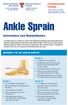 514-412-4400, ext. 23310 2300 Tupper street, C-831, Montreal (Quebec) H3H 1P3 Ankle Sprain Information and Rehabilitation An ankle sprain is a stretch or a tear of the ligaments (bands of tissue that hold
UTILIZING STRAPPING AND TAPING CODES FOR HEALTH CARE REIMBURSEMENT:
 UTILIZING STRAPPING AND TAPING CODES FOR HEALTH CARE REIMBURSEMENT: A GUIDE TO BILLING FOR SPIDERTECH PRE-CUT APPLICATIONS AND TAPE Billing and coding taping and strapping services can be a complex issue.
ANKLE STRENGTHENING PROGRAM Program Time: 20 min. Recommended: 3x a week
 ANKLE STRENGTHENING PROGRAM Program Time: 20 min. Recommended: 3x a week Manuel A. Escalante, Jr. BS, ATC, EMT Model: Nathan Swift BS Note: This program is not meant to replace an evaluation by your coach,
The Eight Principles of Movement
 The Eight Principles of Movement At Functional Synergy we follow eight principles of movement to help maintain focus and ease. Based on the natural concepts of anatomy, physiology, and kinesiology, they
T.E.D. Anti-Embolism Stockings
 T.E.D. Anti-Embolism Stockings You have been given this information because you are spending time in the hospital. This booklet contains important information about why you are wearing T.E.D. anti-embolism
Preventing Falls. Strength and balance exercises for healthy ageing
 Preventing Falls Strength and balance exercises for healthy ageing Exercise should be comfortable and fun. To get the most out of your home exercise book, join a class for older people to check your exercises
BALANCED BODYWORKS LA Rejuvenate. Heal. Restore.
 Tools For Myofascial Self Massage and Stretching Foam Roller Lacrosse Ball (Hard) Stretch Strap What is Foam Rolling? Foam Rolling or Self Myofascial Release, is a form of soft tissue massage. Similar
Wrapping the Leg to Control Lymphedema
 PATIENT EDUCATION patienteducation.osumc.edu Wrapping the Leg to Control Lymphedema These step-by-step instructions were created for you to use as a guide on how to wrap your leg. This wrapping method,
A Stretch-Break Program for Your Workplace! www.healthyworkplaceweek.ca
 www.healthyworkplaceweek.ca A Stretch-Break Program for Your Workplace! Why is stretching at work important? Sitting at a desk or computer; or standing at your work station for extended periods of time
Stretching the Low Back THERAPIST ASSISTED AND CLIENT SELF-CARE STRETCHES FOR THE LUMBOSACRAL SPINE
 EXPERT CONTENT by Joseph E. Muscolino photos by Yanik Chauvin body mechanics THE ESSENCE OF MOST MANUAL THERAPIES, and certainly clinical orthopedic massage therapy, is to loosen taut soft tissues, thereby
Herniated Disk in the Lower Back
 Nader M. Hebela, MD Fellow of the American Academy of Orthopaedic Surgeons http://orthodoc.aaos.org/hebela Cleveland Clinic Abu Dhabi Cleveland Clinic Abu Dhabi Neurological Institute Al Maryah Island
THE BENJAMIN INSTITUTE PRESENTS. Excerpt from Listen To Your Pain. Assessment & Treatment of. Low Back Pain. Ben E. Benjamin, Ph.D.
 THE BENJAMIN INSTITUTE PRESENTS Excerpt from Listen To Your Pain Assessment & Treatment of Low Back Pain A B E N J A M I N I N S T I T U T E E B O O K Ben E. Benjamin, Ph.D. 2 THERAPIST/CLIENT MANUAL The
Animal Systems: The Musculoskeletal System
 Animal Systems: The Musculoskeletal System Tissues, Organs, and Systems of Living Things Cells, Cell Division, and Animal Systems and Plant Systems Cell Specialization Human Systems The Digestive The Circulatory
Lumbar/Core Strength and Stability Exercises
 Athletic Medicine Lumbar/Core Strength and Stability Exercises Introduction Low back pain can be the result of many different things. Pain can be triggered by some combination of overuse, muscle strain,
WWW.ALPHADOGSPORTS.COM SPEED TRAINING MANUAL
 WWW.ALPHADOGSPORTS.COM SPEED TRAINING MANUAL ALPHA DOG SPEED TRAINING We would like to thank you for your commitment to Alpha Dog Sports. Alpha Dog Sports is proud to bring the top equipment from around
What is petellofemoral Pain syndrome?
 Jackie Davis What is petellofemoral Pain syndrome? Patellofemoral Syndrome can be defined as retropatellar or peripatellar pain resulting from physical and biochemical changes in the patellofemoral joint.
A Guide to Heel Pain
 The Society of Chiropodists and Podiatrists A Guide to Heel Pain The Society of Chiropodists and Podiatrists Heel pain may be caused by a number of different problems; for effective treatment you need
.org. Posterior Tibial Tendon Dysfunction. Anatomy. Cause. Symptoms
 Posterior Tibial Tendon Dysfunction Page ( 1 ) Posterior tibial tendon dysfunction is one of the most common problems of the foot and ankle. It occurs when the posterior tibial tendon becomes inflamed
Rehabilitation after shoulder dislocation
 Physiotherapy Department Rehabilitation after shoulder dislocation Information for patients This information leaflet gives you advice on rehabilitation after your shoulder dislocation. It is not a substitute