
Cellulitis. Patient Information Leaflet. Contact numbers. Out of hours contact numbers
|
|
|
- Donna Porter
- 9 years ago
- Views:
Transcription
1 Contact numbers District Nurse: Intermediate Care Team: Your GP: Out of hours contact numbers District Nurse: Intermediate Care Team: Out of hours GP Service: If you would like this information in another language or format, please contact the Patient Information Officer on Visit our website: References Leicestershire County and Rutland Primary Care Cellulitis Pathway NP084 [10 August 2009] NHS Choices: [8 September 2008] Date implemented: Sept 2010 Review date: Sept 2012 Leaflet No Edition 1 12 Cellulitis Patient Information Leaflet You have been diagnosed with a condition called cellulitis. Instead of automatic admission to hospital you have been assessed as suitable to receive all or most of your medication and treatment at home from the Intermediate Care/District Nursing Team. You may need a one off hospital appointment (with discharge on the same day) but you will then be sent home for the rest of your treatment. It is important that you contact your Intermediate Care/ District Nursing Team or your GP (contact numbers on the back cover of this leaflet) immediately if there are any changes in your condition or you experience any of the following symptoms: The redness and swelling spreads further You start to feel feverish or more unwell Pain increases You feel warmer and your temperature is rising You become confused Your blood glucose levels become unstable (Diabetics only) 1
![uk References Leicestershire County and Rutland Primary Care Cellulitis Pathway NP084 [10 August 2009] NHS Choices: http://www.nhs.uk/conditions/cellulitis/pages/introduction.](/docs-images/47/20922533/images/page_1.jpg "aspx [8 September 2008] Date implemented: Sept 2010 Review date: Sept 2012 Leaflet No.")
2 What is cellulitis?...2 Symptoms of cellulitis...3 Causes of cellulitis...4 Diagnosing cellulitis...6 Treating cellulitis...6 What is cellulitis? Cellulitis is a bacterial infection of the deep layer of skin (dermis) and the layer of fat and soft tissues (the subcutaneous tissues) that lie underneath the skin. The infection can make your skin red, swollen and painful. Cellulitis is not the same as cellulite. Cellulite is a cosmetic problem that is caused by fatty deposits that form under the skin, and it has no relation to cellulitis. Bacteria and the skin Several different types of bacteria live on the surface of the skin. Usually, bacteria do not cause any harm to the body, but if they pass deeper into the skin, this can cause infection. Bacteria often enter the body through a damaged or broken area of skin, such as a cut, graze or bite. Also, if you have a skin condition, such as eczema, your risk of bacteria entering your skin is increased. Once bacteria are inside the skin, they start to produce substances that break down the natural barriers that normally prevent bacteria from spreading into the deeper tissue. This enables infection and inflammation to spread. Cellulitis is a common condition, and most cases can be effectively treated using antibiotics at home. However, in more serious cases, hospital treatment may be required. 2 Contents Self-care...7 Hospital treatment...8 After care...10 Preventing cellulitis...11 Contact numbers...12 If you have been advised to wear compression hosiery, renew these every 3 months as they can lose their effectiveness over time. You will need to measure the largest part of your ankle and calf or your pharmacist can measure these for you so that the correct size hosiery is ordered. Preventing cellulitis Not all cases of cellulitis can be prevented. However, there are some steps that you can take to help reduce the risk of developing the condition as well as other forms of infection. Treating skin wounds Make sure that any cuts, grazes or bites that you have are kept clean. Wash the damaged skin under running tap water and, if necessary, apply an antiseptic cream. You should keep the wound covered, either with a plaster or dressing. Make sure that you change the plaster or dressing if it becomes wet or dirty. Plasters and dressings will help reduce the risk of scratching and they will also help to create a barrier against bacteria entering the skin. Keep your fingernails short If you have an itchy skin condition such as atopic eczema, or chickenpox, you should keep your fingernails clean and short at all times. If you do scratch your skin and your fingernails are short and clean, the risk of skin damage and infection will be reduced. You should also wash your hands regularly, particularly when treating, or touching your wound or skin condition. Keep your skin moisturised If your skin is dry, or prone to cracking, make sure that you keep your skin well moisturised. Cracked skin can create an entry point for bacteria. 11

3 Infection in these parts of the body can be serious and will require intensive treatment. However, it is important to be aware that this is rare, and most cases of cellulitis will not spread from the original location. Swelling If you have cellulitis and it remains untreated, your risk of developing permanent swelling in your legs or other affected body part may increase. This is because an advanced infection can stop lymph (the fluid which surrounds your tissues) from draining away. In severe cases, the swelling may be long-lasting or permanent. After care Once the inflammation is subsiding, it is important to care for the skin on your legs to prevent further problems. Wash feet/legs daily in warm water using non-soap/non perfumed moisturiser e.g. Aqueous cream, Hydromol. Moisturisers/emollients can reduce the lifetime of the elastic in your hosiery, therefore allow time for it to soak in or apply in the evening after removal of hosiery (a stockinette can be applied to protect your bed linen e.g. Clinifast). As the cellulitis gets better the surface layer of skin will loosen and slough off. It is important to maintain skin hygiene and moisturise the skin regularly e.g. morning and evening to increase elasticity and suppleness and prevent cracking another source of infection. Do not allow scabs or dry skin scales to form, these can allow bacteria to build up underneath un-noticed and are a potential source of further infection. Avoid direct exposure of your legs to sunlight or trauma. 10 Symptoms of cellulitis Cellulitis most commonly affects one of your legs, but symptoms can develop in any area of your body. The condition affects your skin in several ways, causing it to become: red painful hot swollen and tender. If you have cellulitis, you may also find that blisters develop on your skin. Cellulitis can make you feel generally unwell, causing symptoms such as: fever nausea shivering and chills. These symptoms may occur before, or after, your skin symptoms develop. Swollen glands Sometimes, cellulitis can also cause your lymph glands (part of your body s immune system) near to the affected area to become swollen and tender. For example, if you have cellulitis in your leg, the glands in your groin may swell. This is because your lymph glands are trying to fight off the cellulitis infection to stop it spreading to other parts of your body. 3

4 Causes of cellulitis Bacteria Cellulitis is caused by a bacterial infection of the skin and the tissues underneath it. The streptococci, or staphylococci, groups of bacteria are the most common cause of infection because these bacteria already live on the skin s surface. Cellulitis usually occurs when the surface of your skin becomes damaged because this creates an entry point for the bacteria, allowing them to attack the skin and tissue underneath. A break in the skin may be caused by a: cut graze burn bite skin ulcer or a skin condition, such as atopic eczema (an itchy skin condition that causes the skin to become dry, red and cracked), or athlete s foot. Some people who develop cellulitis do not have an identifiable wound, or break, in their skin. In such cases, the infection is usually introduced via the blood, or the lymphatic system (a series of vessels and glands that is part of the immune system), and this can be serious. Risk factors There are a number of factors, and other conditions, which may increase your risk of developing cellulitis. Some of these factors are outlined on the next page. 4 However, in a small number of cases, cellulitis can lead to serious complications particularly if the condition is left untreated. Septicaemia If the bacteria which infect your skin and tissue get into your bloodstream, it can lead to a condition known as septicaemia (blood poisoning). Symptoms of septicaemia may include: fever fast heart beat fast breathing low blood pressure (hypotension), which will cause you to feel dizzy when you stand up a change in mental behaviour such as confusion or disorientation diarrhoea reduced urine flow cold, clammy skin pale skin and loss of consciousness. If you are displaying these symptoms, you should seek emergency medical attention by calling 999 to ask for an ambulance. Infection in other parts of the body In very rare cases the infection that causes cellulitis can spread to other parts of your body: muscle, bone, or heart valves. 9

5 Pain relief If your cellulitis is causing you pain or fever, it is important that you take pain relief so that you are able to exercise your ankle and can visit the toilet. Taking an over-thecounter (OTC) painkilling medication may help to ease your symptoms. Both paracetamol and ibuprofen are suitable forms of painkilling medication for cellulitis. You should not take ibuprofen if you have, or have had in the past, stomach problems such as a peptic ulcer. It may also be unsuitable if you have asthma. Aspirin is NOT recommended for treating pain that is caused by cellulitis. Speak to your pharmacist if you are unsure about which painkiller is best for you. Hospital treatment You have been assessed as being suitable to receive all, or most of your medication and treatment at home from the Intermediate Care/District Nursing Team. In some cases hospital treatment may be necessary if: your cellulitis is severe or rapidly deteriorating, you have severe secondary symptoms such as fever or vomiting, you fail to respond to antibiotics or you have cellulitis on a recurring basis. Once you are in hospital, you will normally require antibiotics to be given intravenously (through a vein in your arm). Complications of cellulitis Most cases of cellulitis can be effectively treated using antibiotics and will not result in any complications or longterm health problems. 8 Obesity Being overweight can cause swelling in your legs which may increase you risk of developing cellulitis. A weakened immune system Your immune system may be weakened if you are undergoing chemotherapy, or you have a condition such as HIV or AIDS. If your immune system is weakened, it makes it harder for your body to fight off infection. Poorly controlled diabetes If you have diabetes that is not being adequately treated, or controlled, it can weaken your immune system. Poorly controlled diabetes can also affect your circulation which can sometimes cause skin ulcers to develop. Skin ulcers are a common entry point for bacteria. Circulation problems Having poor circulation can increase your risk of developing skin infections in the places where your body does not have adequate blood supply. Chickenpox and shingles Chickenpox and shingles often cause blisters to develop on your skin. If the blisters are broken, or scratched, it can damage your skin and provide an entry point for bacteria. Lymphoedema Lymphoedema is a condition that causes fluid to build up under your skin. If your skin becomes very swollen it may crack, creating an entry point for bacteria. Previous episodes of cellulitis If you have had a previous episode of cellulitis your risk of having further episodes in the future will be increased. Intravenous drug use People who inject illegal drugs have an increased risk of developing cellulitis because poor needle hygiene can increase the risk of infection. 5

6 Diagnosing cellulitis Your GP will normally be able to diagnose cellulitis by assessing your symptoms. Before making a diagnosis, your GP may have to rule out other conditions which may cause your skin to become swollen and inflamed, such as varicose eczema (an itchy skin condition that causes inflammation and can lead to skin ulcers). If you have an open wound in your skin, your GP may have to take a swab of cells from the wound for assessment to see what type of bacteria is causing the infection. You will not normally require any other kind of test for cellulitis. Treating cellulitis Antibiotics Most cases of cellulitis are treated using antibiotics. Cellulitis usually responds quickly to antibiotics and you should soon find your symptoms starting to ease. You may notice that your skin initially becomes redder when you first start taking the antibiotics, but this is normally only a temporary reaction. The redness should start to fade within 48 hours. If your symptoms worsen 48 hours after taking the antibiotics, or you start to develop symptoms such as a high temperature or vomiting you should contact your Intermediate Care/District Nursing Team or your GP (contact numbers on the back cover of this leaflet) immediately. 6 The most commonly prescribed antibiotic medicine for cellulitis is flucloxacillin. However, if flucloxacillin is not suitable, you may be prescribed doxycycline instead. You will normally have to take these antibiotics for seven days. In some cases, you may have an injection of teicoplanin, or be given two antibiotics together. Self-care If you have cellulitis, there are some things that you can do at home in order to help ease your symptoms and speed your recovery. Finish the course of any prescribed oral antibiotics, even though you may feel better and the redness is subsiding. If your cellulitis is on your leg, elevate it above hip level whenever you sit down. If it affects your arm, lift the lower arm above the level of your elbow. If this is uncomfortable lie on a sofa or bed as much as possible to help the drainage and circulation in the limb. Although rest and elevation are essential, you must also mobilise your ankle joint and walk to the toilet. It is important to drink plenty of clear fluids eg. water, squash or tea. Ankle exercises Your nurse can advise on how often you should do these exercises. 7

Lymphoedema following treatment for breast cancer
 MAY 2007 INFORMATION ABOUT Lymphoedema following treatment for breast cancer This information has been developed to help you understand the signs and symptoms of lymphoedema following treatment for breast
Community home-based prevention of disability due to lymphatic filariasis
 Community home-based prevention of disability due to lymphatic filariasis World Health Organization Geneva WHO/CDS/CPE/CEE/2003.35 Part 3 Figure 1 Wash your leg, or other part of the body affected by lymphoedema,
Pneumonia. Pneumonia is an infection that makes the tiny air sacs in your lungs inflamed (swollen and sore). They then fill with liquid.
 Pneumonia Pneumonia is an infection that makes the tiny air sacs in your lungs inflamed (swollen and sore). They then fill with liquid. People with mild (not so bad) pneumonia can usually be treated at
Lymph Node Dissection for Penile Cancer
 Lymph Node Dissection for Penile Cancer Exceptional healthcare, personally delivered Removal of Lymph Nodes Why are the Lymph Nodes so important when I have penile cancer? Lymph nodes are small bean shaped
Femoral artery bypass graft (Including femoral crossover graft)
 Femoral artery bypass graft (Including femoral crossover graft) Why do I need the operation? You have a blockage or narrowing of the arteries supplying blood to your leg. This reduces the blood flow to
Information for patients who require Foam Sclerotherapy for Varicose Veins
 Information for patients who require Foam Sclerotherapy for Varicose Veins Why do I need treatment for varicose veins? Deep veins Everybody has 2 sets of veins in their legs. These are called the superficial
Varicose Vein Surgery
 Information for patients Varicose Vein Surgery Northern General Hospital You have been diagnosed as having varicose veins and your specialist has recommended varicose vein surgery. This leaflet explains
Ilioinguinal dissection (removal of lymph nodes in the groin and pelvis)
 Ilioinguinal dissection (removal of lymph nodes in the groin and pelvis) This sheet answers common questions about ilio-inguinal dissection. If you would like further information, or have any particular
Renal Vascular Access Having a Fistula For Haemodialysis
 Renal Vascular Access Having a Fistula For Haemodialysis Delivering the best in care UHB is a no smoking Trust To see all of our current patient information leaflets please visit www.uhb.nhs.uk/patient-information-leaflets.htm
Graduated compression hosiery (stockings)
 What is compression hosiery? Compression hosiery are elasticated stockings which give support to your legs. In graduated compression hosiery, the pressure given by the stockings is greater at the ankle
Femoral Hernia Repair
 Femoral Hernia Repair WHAT IS A FEMORAL HERNIA REPAIR? 2 WHAT CAUSES A FEMORAL HERNIA? 2 WHAT DOES TREATMENT/ MANAGEMENT INVOLVE? 3 DAY SURGERY MANAGEMENT 3 SURGICAL REPAIR 4 WHAT ARE THE RISKS/COMPLICATIONS
Looking after. and treating skin infections. A guide for parents and families
 Looking after and treating skin infections A guide for parents and families Healthy Skin These things help keep your child s skin healthy: Eating healthy food like meat, fruit and vegetables. Drinking
Recurrent Varicose Veins
 Information for patients Recurrent Varicose Veins Sheffield Vascular Institute Northern General Hospital You have been diagnosed as having Varicose Veins that have recurred (come back). This leaflet explains
Beaumont Hospital. Varicose Veins. and their TREATMENT. Professor Austin Leahy, MCh, FRCS, FRCSI WWW.VEINCLINICSOFIRELAND.COM
 Beaumont Hospital Varicose Veins and their TREATMENT Professor Austin Leahy, MCh, FRCS, FRCSI WWW.VEINCLINICSOFIRELAND.COM Department of Surgery Beaumont Hospital and Royal College of Surgeons in Ireland
THERAPEUTIC USE OF HEAT AND COLD
 THERAPEUTIC USE OF HEAT AND COLD INTRODUCTION Heat and cold are simple and very effective therapeutic tools. They can be used locally or over the whole body, and the proper application of heat and cold
Epidural Continuous Infusion. Patient information Leaflet
 Epidural Continuous Infusion Patient information Leaflet April 2015 Introduction You may already know that epidural s are often used to treat pain during childbirth. This same technique can also used as
SCRIPT NUMBER 122 VARICOSE VEINS - 2 (TWO SPEAKERS)
 SCRIPT NUMBER 122 VARICOSE VEINS - 2 (TWO SPEAKERS) PROGRAM NAME: HEALTH NUGGETS PROGRAM TITLE: VARICOSE VEINS - 2 PROGRAM NUMBER: 122 SUBJECT: SYMPTOMS, CAUSES, TREATMENT, PREVENTION OF VARICOSE VEINS
Guy s, King s and St Thomas Cancer Centre The Cancer Outpatient Clinic Central venous catheter: Peripherally inserted central catheter
 Guy s, King s and St Thomas Cancer Centre The Cancer Outpatient Clinic Central venous catheter: Peripherally inserted central catheter This information leaflet aims to help answer some of the questions
Inguinal Hernia (Female)
 Inguinal Hernia (Female) WHAT IS AN INGUINAL HERNIA? 2 WHAT CAUSES AN INGUINAL HERNIA? 2 WHAT DOES TREATMENT / MANAGEMENT INVOLVE? 3 DAY SURGERY MANAGEMENT 3 SURGICAL REPAIR 4 WHAT ARE THE RISKS/COMPLICATIONS
Deep Vein Thrombosis (DVT) in pregnancy
 Deep Vein Thrombosis (DVT) in pregnancy Information and advice for women and families Maternity What is a deep vein thrombosis (DVT)? A deep vein thrombosis (DVT) is a blood clot that forms in a deep leg
Cardiac Catheter Lab Information for patients having a Coronary Angiogram
 Cardiac Catheter Lab Information for patients having a Coronary Angiogram Page 1 of 5 What is a Coronary Angiogram? This is a test that uses dye and special x-rays to show the inside of your coronary arteries.
TC: Docetaxel and Cyclophosphamide
 PATIENT EDUCATION patienteducation.osumc.edu What is TC? It is the short name for the drugs used for this chemotherapy treatment. The two drugs you will receive during this treatment are Docetaxel (Taxotere
Multiple Myeloma. This reference summary will help you understand multiple myeloma and its treatment options.
 Multiple Myeloma Introduction Multiple myeloma is a type of cancer that affects white blood cells. Each year, thousands of people find out that they have multiple myeloma. This reference summary will help
VARICOSE VEINS. Information Leaflet. Your Health. Our Priority. VTE Ambulatory Clinic Stepping Hill Hospital
 VARICOSE VEINS Information Leaflet Your Health. Our Priority. Page 2 of 7 Varicose Veins There are no accurate figures for the number of people with varicose veins. Some studies suggest that 3 in 100 people
Removal of Haemorrhoids (Haemorrhoidectomy) Information for patients
 Removal of Haemorrhoids (Haemorrhoidectomy) Information for patients What are Haemorrhoids? Haemorrhoids (piles) are enlarged blood vessels around the anus (back passage). There are two types of haemorrhoids:
Intraperitoneal Chemotherapy
 Intraperitoneal Chemotherapy What is Intraperitoneal (IP) Chemotherapy? Intraperitoneal (IP) chemotherapy is a way to put some of your chemotherapy into your abdomen (also called the peritoneal cavity)
V03 Varicose Veins Surgery
 V03 Varicose Veins Surgery What are varicose veins? Varicose veins are enlarged and twisted veins in the leg. They are common and affect up to 3 in 10 people. More women than men ask for treatment, with
AC: Doxorubicin and Cyclophosphamide
 PATIENT EDUCATION patienteducation.osumc.edu What is AC? It is the short name for the drugs used for this chemotherapy treatment. The two drugs you will receive during this treatment are Doxorubicin (Adriamycin
Cast removal what to expect #3 Patient Information Leaflet
 Cast removal what to expect #3 Patient Information Leaflet SM466 Now your cast is off, self help is the key! Follow the advice given to you by your doctor and the staff in the clinic. Your skin will be
Rivaroxaban to prevent blood clots for patients who have a lower limb plaster cast. Information for patients Pharmacy
 Rivaroxaban to prevent blood clots for patients who have a lower limb plaster cast Information for patients Pharmacy Your doctor has prescribed a tablet called rivaroxaban. This leaflet tells you about
The Radiotherapy Department Radiotherapy to the chest wall and lymph nodes
 Oxford University Hospitals NHS Trust The Radiotherapy Department Radiotherapy to the chest wall and lymph nodes Information for patients Introduction This leaflet is for people who have had surgery for
Blepharoplasty - Eyelid Surgery
 Blepharoplasty - Eyelid Surgery Introduction Eyelid surgery repairs sagging or drooping eyelids. The surgery is also known as blepharoplasty, or an eyelid lift. Sagging or drooping eyelids happen naturally
After your gastric banding
 After your gastric banding Exceptional healthcare, personally delivered 2 Please call J Ward at Southmead Hospital on 0117 323 5132 if you have any questions or concerns soon after discharge. You may be
For the Patient: GDP Other names: LYGDP
 1 For the Patient: GDP Other names: LYGDP G D P Gemcitabine Dexamethasone (taken by mouth) CISPlatin Uses: GDP is a drug treatment given for Non-Hodgkins and Hodgkin Lymphoma with the expectation of destroying
CHAPTER 15 SCLEROTHERAPY FOR VENOUS DISEASE
 Introduction CHAPTER 15 SCLEROTHERAPY FOR VENOUS DISEASE Original authors: Niren Angle, John J. Bergan, Joshua I. Greenberg, and J. Leonel Villavicencio Abstracted by Teresa L. Carman New technology has
Having denervation of the renal arteries for treatment of high blood pressure
 Having denervation of the renal arteries for treatment of high blood pressure The aim of this information sheet is to help answer some of the questions you may have about having denervation of the renal
Forefoot deformity correction
 Contact us Pharmacy Medicines Helpline If you have any questions or concerns about your medicines, please speak to the staff caring for you or call our helpline. t: 020 7188 8748 9am to 5pm, Monday to
Venefit treatment for varicose veins
 Oxford University Hospitals NHS Trust Venefit treatment for varicose veins Information for patients Your consultant has recommended that we treat your varicose veins with a procedure known as Venefit radio
Total hip replacement
 Patient Information to be retained by patient What is a total hip replacement? In a total hip replacement both the ball (femoral or thigh bone) side of the hip joint and the socket (acetabular or pelvic
Arthroscopic subacromial decompression and rotator cuff repair
 Further sources of information http://www.patient.co.uk/showdoc/553/ http://www.shoulderdoc.co.uk/article.asp?section=11 http://www.medic8.com/healthguide/articles/painfulshoulder.html http://www.cks.nhs.uk/patientinformationleaflet/shoulderpainarc/st
For the Patient: Paclitaxel injection Other names: TAXOL
 For the Patient: Paclitaxel injection Other names: TAXOL Paclitaxel (pak'' li tax' el) is a drug that is used to treat many types of cancer. It is a clear liquid that is injected into a vein. Tell your
Laparoscopic Nephrectomy
 Laparoscopic Nephrectomy Information for Patients This leaflet explains: What is a Nephrectomy?... 2 Why do I need a nephrectomy?... 3 What are the risks and side effects of laparoscopic nephrectomy?...
Contents. Overview. Removing the womb (hysterectomy) Overview
 This information is an extract from the booklet Understanding womb (endometrial) cancer. You may find the full booklet helpful. We can send you a free copy see page 9. Overview Contents Overview Removing
FOLFOX Chemotherapy. This handout provides information about FOLFOX chemotherapy. It is sometimes called as FLOX chemotherapy.
 FOLFOX Chemotherapy This handout provides information about FOLFOX chemotherapy. It is sometimes called as FLOX chemotherapy. What is chemotherapy? Chemotherapy is a method of treating cancer by using
Conjunctivitis - Pink Eye
 Conjunctivitis - Pink Eye Introduction Conjunctivitis is often called pink eye. It causes inflammation of the thin, clear lining inside the eyelid and on the white of the eye. The inflammation gives the
Preventing Blood Clots in Adult Patients. Information For Patients
 Preventing Blood Clots in Adult Patients Information For Patients 1 This leaflet will give you information on how to reduce the risk of developing blood clots during and after your stay in hospital. If
All About Your Peripherally Inserted Central Catheter (PICC)
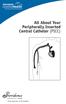 All About Your Peripherally Inserted Central Catheter (PICC) General Information Intravenous (IV) therapy is the delivery of fluid directly into a vein. An intravenous catheter is a hollow tube that is
Insertion of a Peripherally Inserted Central Catheter (PICC Line)
 Insertion of a Peripherally Inserted Central Catheter (PICC Line) Patient Information Introduction This booklet has been written to provide information to patients about to have a peripherally inserted
Streptococcal Infections
 Streptococcal Infections Introduction Streptococcal, or strep, infections cause a variety of health problems. These infections can cause a mild skin infection or sore throat. But they can also cause severe,
Treat Your Feet: Foot care for people with diabetes
 Treat Your Feet: Foot care for people with diabetes UHN People with diabetes often have trouble with their feet. Read this booklet to learn 7 steps to keep your feet healthy. Please visit the UHN Patient
Provided by the American Venous Forum: veinforum.org
 CHAPTER 1 NORMAL VENOUS CIRCULATION Original author: Frank Padberg Abstracted by Teresa L.Carman Introduction The circulatory system is responsible for circulating (moving) blood throughout the body. The
The Family Library. Understanding Diabetes
 The Family Library Understanding Diabetes What is Diabetes? Diabetes is caused when the body has a problem in making or using insulin. Insulin is a hormone secreted by the pancreas and is needed for the
Tired, Aching Legs? Swollen Ankles? Varicose Veins?
 Tired, Aching Legs? Swollen Ankles? Varicose Veins? Healthy Legs 2006 http://healthylegs.com Page 1 Venous disorders are widespread Leg problems are widespread throughout the world, but what most people
READ THIS LEAFLET VERY CAREFULLY, AND KEEP IT IN A SAFE PLACE. FLU IS SPREADING IN IRELAND, AND THIS INFORMATION IS IMPORTANT FOR YOU AND YOUR FAMILY.
 READ THIS LEAFLET VERY CAREFULLY, AND KEEP IT IN A SAFE PLACE. FLU IS SPREADING IN IRELAND, AND THIS INFORMATION IS IMPORTANT FOR YOU AND YOUR FAMILY. Information and medical advice for the public on Pandemic
2 What you need to know before you have Ampiclox
 Reason for update: GDS 14 & QRD Updates Response to questions for variation update section 4.1 of SPC MHRA Submission Date: 6 November 2014 MHRA Approval Date: Text Date: October 2014 Text Issue and Draft
Diabetes and your feet
 The Society of Chiropodists and Podiatrists Diabetes and your feet A guide to maintaining healthy feet for people with diabetes Diabetes and your feet 3 Diabetes and your feet Many people with diabetes
Treating Melanoma S kin Cancer A Quick Guide
 Treating Melanoma Skin Cancer A Quick Guide Contents This is a brief summary of the information on Treating melanoma skin cancer from our website. You will find more detailed information on the website.
Hip Replacement Surgery Understanding the Risks
 Hip Replacement Surgery Understanding the Risks Understanding the Risks of Hip Replacement Surgery Introduction This booklet is designed to help your doctor talk to you about the most common risks you
Tired, Aching Legs? Swollen Ankles? Varicose Veins? An informative guide for patients
 Tired, Aching Legs? Swollen Ankles? Varicose Veins? An informative guide for patients Are You at Risk? Leg problems are widespread throughout the world, but what most people don t know is that approximately
After pelvic radiotherapy
 After pelvic radiotherapy in women 1 After pelvic radiotherapy in women This information is from the booklet Pelvic radiotherapy in women managing side effects during treatment. You may find the full booklet
Have a shower, rather than a bath to avoid exposing your genitals to the chemicals in your cleaning products for too long. Always empty your bladder
 Cystitis, Avenue Medical Practice Neat Guideline Introduction Cystitis means 'inflammation of the bladder'. It causes: an urgent and frequent need to urinate, and Pain, or stinging, when passing urine.
How to Do Self Lymphatic Massage on your Upper Body
 How to Do Self Lymphatic Massage on your Upper Body UHN For patients who were treated for breast cancer on one side of their body. For example: Lumpectomy Mastectomy Lymph node removal from an underarm
SHINGLES (Herpes zoster infection)
 SHINGLES (Herpes zoster infection) What are the aims of this leaflet? This leaflet has been written to help you understand more about shingles. It will tell you what it is, what causes it, what can be
Like cocaine, heroin is a drug that is illegal in some areas of the world. Heroin is highly addictive.
 Heroin Introduction Heroin is a powerful drug that affects the brain. People who use it can form a strong addiction. Addiction is when a drug user can t stop taking a drug, even when he or she wants to.
Further information You can get more information and share your experience at www.aboutmyhealth.org
 OS01 Total Hip Replacement Further information You can get more information and share your experience at www.aboutmyhealth.org Local information You can get information locally from: Taunton and Somerset
Surgery for breast cancer in men
 Surgery for breast cancer in men This information is an extract from the booklet Understanding breast cancer in men. You may find the full booklet helpful. We can send you a free copy see page 9. Contents
FUNCTIONS OF THE SKIN
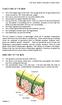 FUNCTIONS OF THE SKIN Skin is the largest organ of the body. The average adult has 18 square feet of skin which account for 16% of the total body weight. Skin acts as a physical barrier for you to the
Knee arthroscopy advice sheet
 Knee arthroscopy advice sheet During an arthroscopy, a camera is inserted into the knee through two or three small puncture wounds. It allows the surgeon to look at the joint surfaces, cartilage and the
Be Safe! Manage Heat Stress. Be Safe! Manage Heat Stress.
 Be Safe! Manage Heat Stress. Be Safe! Manage Heat Stress. Overview Workers who are exposed to extreme heat or work in hot environments may be at risk of heat stress. Exposure to extreme heat can result
Protecting your baby against meningitis and septicaemia
 Protecting your baby against meningitis and septicaemia caused by meningococcal B bacteria MenB vaccine now available! Information about the MenB vaccine and recommended paracetamol use mmunisation The
Varicose veins - 1 -
 Varicose veins - 1 - Varicose Veins About 3 in 10 adults develop varicose veins at some time in their life. Most people with varicose veins do not have an underlying disease and they usually occur for
Nursing college, Second stage Microbiology Dr.Nada Khazal K. Hendi L14: Hospital acquired infection, nosocomial infection
 L14: Hospital acquired infection, nosocomial infection Definition A hospital acquired infection, also called a nosocomial infection, is an infection that first appears between 48 hours and four days after
Working together to prevent pressure ulcers (prevention and pressure-relieving devices)
 Working together to prevent pressure ulcers (prevention and pressure-relieving devices) Understanding NICE guidance information for people at risk of pressure ulcers, their carers, and the public Draft
Information for adult patients. Common questions about tonsil surgery. Why do we have tonsils? How is the operation performed? What happens now?
 Information for adult patients The purpose of this information is to help everyone who undergoes tonsil surgery to feel as good as possible after the operation and to return to normal food and normal activities
TCH: Docetaxel, Carboplatin and Trastuzumab
 PATIENT EDUCATION patienteducation.osumc.edu TCH: Docetaxel, Carboplatin and Trastuzumab What is TCH? It is the short name for the drugs used for this chemotherapy treatment. The three drugs you will receive
Patient Guide. Important information for patients starting therapy with LEMTRADA (alemtuzumab)
 Patient Guide Important information for patients starting therapy with LEMTRADA (alemtuzumab) This medicinal product is subject to additional monitoring. This will allow quick identification of new safety
A Patient s guide to. pin site care. (Upper and lower limb external fixation) Limb Reconstruction Unit [email protected].
 A Patient s guide to pin site care (Upper and lower limb external fixation) Limb Reconstruction Unit [email protected] Introduction Before you leave hospital you will have been taught how
X-Plain Rheumatoid Arthritis Reference Summary
 X-Plain Rheumatoid Arthritis Reference Summary Introduction Rheumatoid arthritis is a fairly common joint disease that affects up to 2 million Americans. Rheumatoid arthritis is one of the most debilitating
17. Undiagnosed lumps and bumps and unexplained areas of pain. 2. Varicose veins (do not treat anything below the vein site).
 15. Acute rheumatism. 16. Asthma. 17. Undiagnosed lumps and bumps and unexplained areas of pain. 18. Whiplash. 19. Slipped Disc. LOCAL CONTRA-INDICATIONS 1. Skin diseases (non contagious). 2. Varicose
Total knee replacement
 Patient Information to be retained by patient What is a total knee replacement? In a total knee replacement the cartilage surfaces of the thigh bone (femur) and leg bone (tibia) are replaced. The cartilage
UW MEDICINE PATIENT EDUCATION. Xofigo Therapy. For metastatic prostate cancer. What is Xofigo? How does it work?
 UW MEDICINE PATIENT EDUCATION Xofigo Therapy For metastatic prostate cancer This handout explains how the drug Xofigo is used to treat metastatic prostate cancer. What is Xofigo? Xofigo is a radioactive
University College Hospital. Contrast agent for radiotherapy CT (computed tomography) scans. Radiotherapy Department Patient information series
 University College Hospital Contrast agent for radiotherapy CT (computed tomography) scans Radiotherapy Department Patient information series 11 2 If you need a large print, audio or translated copy of
Skin biopsy. Delivering the best in care. UHB is a no smoking Trust
 Skin biopsy Delivering the best in care UHB is a no smoking Trust To see all of our current patient information leaflets please visit www.uhb.nhs.uk/patient-information-leaflets.htm A skin biopsy is a
Meatoplasty/Canalplasty
 Meatoplasty/Canalplasty What is a meatoplasty/canalplasty and why do I need this operation? This operation is performed to widen your ear canals so that they do not get blocked with wax and debris. It
LUPUS. and the Feet LUPUSUK 2015
 16 LUPUS and the Feet LUPUSUK 2015 LUPUS and the Feet This factsheet explains about some of the foot problems associated with lupus though it is important to remember that not all will develop these problems.
Confirmed Deep Vein Thrombosis (DVT)
 Confirmed Deep Vein Thrombosis (DVT) Information for patients What is deep vein thrombosis? Blood clotting provides us with essential protection against severe loss of blood from an injury to a vein or
Information for you Treatment of venous thrombosis in pregnancy and after birth. What are the symptoms of a DVT during pregnancy?
 Information for you Treatment of venous thrombosis in pregnancy and after birth Published in September 2011 What is venous thrombosis? Thrombosis is a blood clot in a blood vessel (a vein or an artery).
Enhanced recovery programme (ERP) for patients undergoing bowel surgery
 Enhanced recovery programme (ERP) for patients undergoing bowel surgery Information for patients, relatives and carers An enhanced recovery programme (ERP) has been established at Imperial College Healthcare
Docetaxel (Taxotere) This booklet explains what docetaxel is, when it may be prescribed, how it works and what side effects may occur.
 Docetaxel (Taxotere) This booklet explains what docetaxel is, when it may be prescribed, how it works and what side effects may occur. Treatment Lorem ipsum and dolore side effects estes 2 Call our Helpline
Wound Care on the Field. Objectives
 Wound Care on the Field Brittany Witte, PT, DPT Cook Children s Medical Center Objectives Name 3 different types of wounds commonly seen in sports and how to emergently provide care for them. Name all
Throughout this reference summary, you will find out what massage therapy is, its benefits, risks, and what to expect during and after a massage.
 Massage Therapy Introduction Massage therapy is the manipulation of the soft tissues of the body, including the skin, tendons, muscles and connective tissue by a professional, for relaxation or to enhance
Temozolomide (oral) with concurrent radiotherapy to the brain
 Temozolomide (oral) with concurrent radiotherapy to the brain Temozolomide (oral) with concurrent radiotherapy to the brain This leaflet is offered as a guide to you and your family. You will find it useful
Level 1, 131-135 Summer Street ORANGE NSW 2800 Ph: 02 63631688 Fax: 02 63631865
 Write questions or notes here: Level 1, 131-135 Summer Street ORANGE NSW 2800 Ph: 02 63631688 Fax: 02 63631865 Document Title: Total Knee Replacement Further Information and Feedback: Tell us how useful
Varicose Veins Operation. Patient information Leaflet
 Varicose Veins Operation Patient information Leaflet 22 nd August 2014 WHAT IS VARICOSE VEIN SURGERY (HIGH LIGATION AND MULTIPLE AVULSIONS) The operation varies from case to case, depending on where the
FUNGAL INFECTIONS OF THE NAILS
 FUNGAL INFECTIONS OF THE NAILS What are the aims of this leaflet? This leaflet has been written to help you understand more about fungal infections of the nails. It tells you what they are, what causes
Tibial Intramedullary Nailing
 Tibial Intramedullary Nailing Turnberg Building Orthopaedics 0161 206 4898 All Rights Reserved 2015. Document for issue as handout. Procedure The tibia is the long shin bone in the lower leg. It is a weight
Treating your abdominal aortic aneurysm by open repair (surgery)
 Patient information Abdominal aortic aneurysm open surgery Treating your abdominal aortic aneurysm by open repair (surgery) Introduction This leaflet tells you about open repair of abdominal aortic aneurysm,
Chemotherapy for head and neck cancers
 Chemotherapy for head and neck cancers This information is from the booklet Understanding head and neck cancers. You may find the full booklet helpful. We can send you a free copy see page 7. Contents
POSTOPERATIVE INSTRUCTION FOR ANTERIOR/POSTERIOR LUMBAR SPINE FUSION
 www.southerarizonaspine.com POSTOPERATIVE INSTRUCTION FOR ANTERIOR/POSTERIOR LUMBAR SPINE FUSION This handout will review the care you need to follow once you are home. If you have any questions or concerns,
CMF: Cyclophosphamide, Methotrexate and Fluorouracil
 PATIENT EDUCATION patienteducation.osumc.edu CMF: Cyclophosphamide, Methotrexate and Fluorouracil What is CMF? This is the short name for the drugs used for this chemotherapy treatment. The three drugs