
Forbo Flooring. Installation Manual. creating better environments
|
|
|
- Ethan Brown
- 9 years ago
- Views:
Transcription
1 Forbo Flooring Installation Manual creating better environments
2 Installation Manual Table of Contents Foreword 1. Installation Training Product Descriptions Application Chart Fast Facts per Product...6 Marmoleum, Artoleum & Walton Sheet...6 Marmoleum Dual Tile...7 Eternal...8 Smaragd...9 Tractionstep...10 Tractionstep Slip-Resistant...11 Colorex General Installation Guidelines Jobsite Conditions Material Storage and Handling Color Matching Substrate Evaluation and Preparation Definitions Substrate Evaluation Concrete Floors Wood Subfloors Existing Resilient Flooring Poured Floors Radiant Heated Floors Moisture Testing ph Testing Substrate Porosity Adhesive Bond Testing Substrate Preparation Patching and Leveling Materials Primers Existing Adhesives Additional Resources Specification Requirements Organizations Adhesives Installation Marmoleum, Artoleum & Walton Sheet Vinyl Sheet Tile Products Marmoleum Tile Colorex Tile Heat Welding Marmoleum Vinyl Flash Coving General Information Vinyl Linoleum Repairs Tools and Accessories Price List Warranty...46 Forbo Installation Manual - page 1

3 FOREWORD The finest floor covering made will not look good nor perform well if it is not installed properly. In the flooring industry, 97%-98% of all complaints are installation, subfloor or maintenance related. The first step to a successful installation is choosing the right floor covering for the particular application. No one flooring is right for every application. If you have any doubt as to the suitability of a product, check with the manufacturer. With today s technology, flooring products, substrate preparation products, adhesives and installation techniques change at a rapid pace. It is the responsibility of the installer to assure that the products are installed in strict adherence to the manufacturer s recommendations. This installation manual is just one of the many technical support services provided by Forbo Flooring. Do not install any floor covering product until you are fully educated and familiar with installation procedures and recommendations, and have made sure that all site requirements have been met. IMPORTANT! The procedures described in this manual have been carefully developed to offer the best possible information for a proper and successful installation with Forbo s flooring products. Following these guidelines will offer the consumer the full value of the manufacturer s warranty. Any deviation from these instructions may result in an installation failure. Failure to follow these guidelines does not affect the manufacturer s limited five year warranty, but it does increases the chance of an installation failure. Forbo Installation Manual - page 2

4 Installation Training PROFESSIONALISM AND ATTITUDE Professionalism is not merely possessing mechanical skills and knowledge it is also an attitude. Having the right attitude and conducting yourself in a professional manner at all times is essential to gaining the respect of all those you come into contact with. Above all else, taking pride in your work is the key to successful installations. Take the time to review the manufacturer s installation guidelines. If you ever have any doubts, do not proceed with the installation. Call your local supplier for further information. The liability of the installation rests solely with the installer and flooring contractor. The warranty from the manufacturer covers only the product, and is in no way contingent upon installation and maintenance practices. PROFESSIONALISM AND EDUCATION The flooring industry is continually changing. In order to remain successful, those working in the industry must also change. Education is the key to this change. The Forbo Associate and Master Mechanic courses are benchmarks for installation training. In addition to being dedicated to offering the resilient flooring installer the most comprehensive and professional installation training courses in the industry, Forbo Flooring also offers an array of other educational opportunities such as product presentations, supplier training seminars, and dealer installation clinics for flooring products, Moisture Limitor, and Bulletin Board Cork. Forbo Flooring installation training courses are PASS/FAIL. In order to qualify for a certificate, the installer must successfully and satisfactorily complete the installation tasks, have a thorough knowledge of the information presented throughout the course, and most importantly, demonstrate a professional attitude. Upon successful completion of the course, the installer will receive a certificate suitable for framing, a laminated wallet card to carry, and a patch that can be sewn on a shirt, jacket, etc. Qualified installers are maintained in a database utilized for referrals throughout North America. Forbo Linoleum Technical Services P.O. Box 667 Hazleton, PA [email protected] Website: Tel: (570) Fax: (570) Toll Free: ASSOCIATE MECHANIC PROGRAM Forbo s ASSOCIATE MECHANIC installation training covers a range of topics and techniques including: subfloor evaluation and preparation Moisture Limitor certification product knowledge tools fitting methods Marmoleum installation seaming repairs heatwelding maintenance PROFESSIONALISM This training is designed for experienced resilient flooring installers who desire to improve their level of knowledge and skill. MASTER MECHANIC PROGRAM Forbo s MASTER MECHANIC installation training is tailored for the Forbo Associate Mechanic who desires to reach the highest level in his trade. This intensive and rewarding course covers a range of advanced installation topics and techniques including: wall installations accent heat welding specialty tools flash coving heatwelding flashcove seams and corners inset and design installations PROFESSIONALISM TRAINING CENTERS Associate and Master Mechanic installation training is offered at Forbo s technical training centers in the following locations: Hazleton, PA Reno, NV Dallas, TX Forbo will provide all meals, hotel accommodations and transportation to/from our facilities and the Wilkes Barre/ Scranton airport for our Pennsylvania center; Reno International airport for our Reno center; DFW Airport or Love Field for our Texas center. If you are a professional and desire to enhance your skills and knowledge, contact Forbo or your local supplier for course dates and an application form. Forbo Installation Manual - page 3

5 Description of Forbo Flooring product range Forbo s flooring products are divided into two categories: linoleum and vinyls. LINOLEUM FLOORING Marmoleum and Artoleum from Forbo Flooring is made from primarily natural ingredients which consist of oxidized linseed oil, rosins, cork and/or wood flour, all of which are calendered onto a carrier sheet. Depending on the calendering method used and the composition, various types of linoleum can be manufactured. Artoleum is calendered onto a jute back. Available in rolls 79 (2 meters) wide, up to a length of 105 (32 meters) and in a thickness of 1/10 (2.5 mm). Marbleized Marmoleum Sheet is calendered onto a jute back. Available in rolls 79 (2 meters) wide, up to a length of 105 (32 meters) and in a thickness of 1/10 (2.5 mm). Application: school, nursing home, hospital, retail shop, office, hotel, bank, prison. Marmoleum Dual Tile is a marbleized linoleum calendered onto a dimensionally stable polyester webbing. Available in tiles 20 x 20 approximately (50 cm x 50 cm) and 13 x 13 approximately (33 cm x 33 cm) and a thickness of 1/10 (2.5 mm). Application: school, nursing home, restaurant, hospital, bank, retail shop. Walton Sheet is an unpatterned, solid colored linoleum calendered onto a jute back. Available in rolls 79 (2 meters) wide, up to a length of 105 (32 meters) and in thickness of 1/10 (2.5 mm). Application: dance floor, television studio, museum, art gallery, as well as inlay and accent work. VINYL FLOORING Forbo manufactures several types of vinyl floor covering which vary in manufacturing processes and ingredients. The primary composition is polyvinylchloride resins, plasticizers, stabilizers, fillers and pigments. TractionStep is a high quality, durable sheet vinyl. It is produced with translucent vinyl chips and fine carborundum chips embedded throughout the wear surface which increase friction when pressure depresses the vinyl. TractionStep is also static dissipative with an ohms resistance of 1 x 10 6 to 1 x Available in rolls 79 (2 meters) wide, lengths of 82 (25 meters) and in a thickness of.080 (2.0 mm). Application: locker room, food service, bakery, corridor, scrub area, static dissipative areas. TractionStep Slip-Resistant is the slip-resistant quality of the Step products. TractionStep Slip-Resistant has a special embossing with many more and larger carborundum chips in the wear surface. Available in sheets 79 (2 meters) wide, lengths 82 (25 meters) and in a thickness of (2 mm). Application: indoor ramp, wet areas, hydrotherapy, entry, produce area, commercial kitchens. Smaragd is designed for the toughest of applications. Smaragd s wear surface is 99.3% pure vinyl to give extreme stain and chemical resistance, ease of maintenance, and indentation resistance unsurpassed. Available in sheets 79 (2 meters) wide, lengths of 82 (25 meters) and in a thickness of (2 mm). Application: operating room, veterinary clinic, health care, research center, lab. Eternal is designed with a look of beauty for high traffic areas. Eternal s wear surface is 99.3% pure vinyl to give extreme stain and chemical resistance, ease of maintenance, and excellent indentation resistance. Available in sheets 79 (2 meters) wide, lengths of 82 (25 meters) and in a thickness of (2.2 mm). Application: operating room, veterinary clinic, health care, research center, lab. Colorex is a homogeneous, pressed vinyl conductive/ dissipative tile. The random burled pattern is the result of conductive elements precisely dispersed throughout, so the tiles will maintain their electrical resistance for life. Available in tile 24 x 24 (61cm x 61cm) and in a thickness of (2mm). Application: computer room, production area for computer chip, electronic and laser equipment, laboratory, clean room, access panels. Forbo Installation Manual - page 4

6 Product Application Chart Forbo floorcovering products are recommended for interior applications only. Chart Key Best Choice/Excellent Performance Very Good Performance Acceptable AREA OF APPLICATION BANKS/OFFICES Elevator Hallway/Corridor/Elevator Lobby Locker Room/Shower Area Office/Conference Room Public Area/Lobby Countertops/Desks/Furniture systems Ramps (indoor) Restrooms Tackable Wall Surface/Partitions Vaults Vending Area/Lunchroom COMPUTER ROOMS Computer Room Areas Desks/Furniture systems Tackable Wall Surface/Partitions EDUCATIONAL/INSTITUTIONAL Cafeteria/Dining Room Classroom/Hallway/Corridor/Dormitory Locker Room Gymnasium/Multi-Purpose Room Jails/Prisons Kitchen/Food Prep Laboratory Desks/Cupboards/Furniture Systems Countertops/Table tops Tackable Wall Surface/Partitions Ramps (indoor) HEALTH CARE Hallway/Corridor/Elevator Lobby Emergency Room Exam/Procedure Room Countertops/Table tops Offices/Public Areas Patient Room Pharmacy Physical Therapy Room Desks/Cupboards/Furniture Systems Utility Room/Service Area Tackable Wall Surface/Partitions Surgery/Scrub Area/Lab Hydrotherapy Room Ramps (indoor) HOSPITALITY/RESTAURANT Eating Area Exercise Room Checkout counters/countertop/tabletops Stage/Dance Floor Tackable Wall Surface/Partitions INDUSTRIAL Clean Room/Sterile Packaging Conductive/Static Dissipative Pharmaceutical Research/Production Lab Small Parts Assembly Warehouse/Manufacturing Area Tackable Wall Surface/Partitions MILITARY Barracks/Housing Desks/Furniture systems Shipboard SUPERMARKET/RETAIL Boutique/Specialty Shop/Elevator Lobby Deli/Bakery Tackable Wall Surface/Partitions Checkout counters/table tops Sales Floor/Aisles Frozen Food/Dairy/Produce VETERINARY CLINIC/HOSPITAL Exam/Procedure/Surgery Room Kennel Area Tackable Wall Surface/Partitions Desks/Furniture systems ARTOLEUM MARMOLEUM MARMOLEUM DUAL TILE MARMOLEUM Surface Solutions BULLETIN BOARD ETERNAL TRACTIONSTEP TRACTIONSTEP Slip-Resistant SMARAGD COLOREX Forbo Installation Manual - page 5

7 MARMOLEUM, ARTOLEUM & Walton Fast Facts GAUGE: 1/10 (2.5 mm) WIDTH: 79 (2 meters) LENGTH: 105 (32 meters) INSTALLATION FAST FACTS Marmoleum may be installed on approved substrates on all grade levels. The permanent HVAC must be operational and set at a minimum of 68 o F (20 o C) at least one week prior to installation. Acclimate material to jobsite conditions for a minimum of 48 hrs. prior to installation. Always conduct moisture tests on all concrete slabs regardless of age or grade level. Conduct calcium chloride tests in accordance with ASTM F1869. Concrete moisture vapor emissions must not exceed 5.0 lbs. per 1000 sq. ft. in 24 hrs. when using Forbo L910 adhesive, or 3.0 lbs per 1000 sq. ft. in 24 hrs. when using Forbo 414 adhesive (available in Canada only). When moisture vapor emissions exceed these requirements, please request information on Forbo Moisture Limitor. Measure the relative humidity in the center of the concrete slab in accordance with ASTM F2170. Relative humidity must not exceed 75%. A ph test should be conducted and must not exceed a ph of 10. Always use the highest quality patching and leveling compounds and always follow the manufacturer s recommendations for their use and application. Always conduct an adhesive mat bond test. Bond testing will aid in determining the proper working time of the adhesive and identify bonding problems prior to the installation. Use Forbo L910 adhesive or Forbo 414 adhesive (available in Canada only) for flat installations and when coving material. Use a 1/16 X 1/16 X 1/16 square notch trowel. Install rolls and cuts in consecutive order. Do Not Reverse sheets for seaming. Install one sheet at a time, making sure to place the material into wet adhesive. Roll immediately with a 100 lb. roller and always check for proper adhesive transfer. In order to achieve a secure bond there must be a complete wet transfer of adhesive to the material backing. Underscribe seams and cut material on a slight bevel; refer to seaming procedures. Flat trowel adhesive on the material backing in the area of stove bar marks (double stick), and weigh down after rolling. Heat welding is optional; but recommended. Use Marmoweld or Artoweld welding rod only. Do not chemical weld. Refer to Installation Manual for complete instructions. Do not allow heavy traffic or rolling loads for a minimum of 72 hours following the installation. Additional time may be necessary when installing over non-porous substrates. In order to allow the adhesive to dry and cure properly, wait at least five days following the installation before conducting wet cleaning procedures or initial maintenance. Additional time may be necessary when installing over non-porous substrates. These are just Fast Facts. Complete installation instructions can be found in other sections of this manual. For additional information, contact Forbo Technical Services at (800) Forbo Installation Manual - page 6

8 MARMOLEUM Dual Tile Fast Facts GAUGE: 1/10 (2.5 mm) TILE SIZE: 20 X 20 approximately (50 cm x 50 cm) 13 X 13 approximately (33 cm x 33 cm) INSTALLATION FAST FACTS Marmoleum Dual Tile may be installed on approved substrates on all grade levels. The permanent HVAC must be operational and set at a minimum of 68 o F (20 o C) at least one week prior to installation. Acclimate material to jobsite conditions for a minimum of 48 hrs. prior to installation. Always conduct moisture tests on all concrete slabs regardless of age or grade level. Conduct calcium chloride tests in accordance with ASTM F1869. Concrete moisture vapor emissions must not exceed 5.0 lbs. per 1000 sq. ft. in 24 hrs. when using Forbo T940 adhesive, or 3.0 lbs per 1000 sq. ft. in 24 hrs. when using Forbo 414 adhesive (available in Canada only). When moisture vapor emissions exceed these requirements, please request information on Forbo Moisture Limitor. Measure the relative humidity in the center of the concrete slab in accordance with ASTM F2170. Relative humidity must not exceed 75%. A ph test should be conducted and must not exceed a ph of 10. Always use the highest quality patching and leveling compounds and always follow the manufacturer s recommendations for their use and application. Always conduct an adhesive mat bond test. Bond testing will aid in determining the proper working time of the adhesive and identify bonding problems prior to the installation. Use Forbo T 940 adhesive, or Forbo 414 adhesive (available in Canada only). Use a 1/16 X 1/16 X 1/16 square notch trowel. Install cartons in consecutive order. Install tile in alternating directions (quarter turned). Install tiles into wet adhesive and roll immediately with a 100 lb. roller. Always check for proper adhesive transfer. In order to achieve a secure bond there must be a complete wet transfer of adhesive to the tile backing. Heat welding is optional. Use Marmoweld welding rod only. Do not chemical weld. Do not allow heavy traffic or rolling loads for a minimum of 72 hours following the installation. Additional time may be necessary when installing over non-porous substrates. In order to allow the adhesive to dry and cure properly, wait at least five days following the installation before conducting wet cleaning procedures or initial maintenance. Additional time may be necessary when installing over non-porous substrates. These are just Fast Facts. Complete installation instructions can be found in other sections of this manual. For additional information, contact Forbo Technical Services at (800) Forbo Installation Manual - page 7

9 ETERNAL Fast Facts GAUGE:.090 (2.2 mm) WIDTH: 79 (2 meters) LENGTH: 82 (25 meters) INSTALLATION FAST FACTS Eternal may be installed on approved substrates on all grade levels. The permanent HVAC must be operational and set at a minimum of 68 o F (20 o C) at least one week prior to installation. Acclimate material to jobsite conditions for a minimum of 48 hrs. prior to installation. Always conduct moisture tests on all concrete slabs regardless of age or grade level. Conduct calcium chloride tests in accordance with ASTM F1869. Concrete moisture vapor emissions must not exceed 5.0 lbs. per 1000 sq. ft. in 24 hrs. when using Forbo V920 adhesive, or 3.0 lbs per 1000 sq. ft. in 24 hrs. when using Forbo 540 adhesive (available in Canada only) or Forbo 660 adhesive. When moisture vapor emissions exceed these requirements, please request information on Forbo Moisture Limitor. Measure the relative humidity in the center of the concrete slab in accordance with ASTM F2170. Relative humidity must not exceed 75%. A ph test should be conducted and must not exceed a ph of 10. Always use the highest quality patching and leveling compounds and always follow the manufacturer s recommendations for their use and application. Always conduct an adhesive mat bond test. Bond testing will aid in determining the proper working time of the adhesive and identify bonding problems prior to the installation. Use Forbo V 920 adhesive or Forbo 540 adhesive (available in Canada only). For wet room areas or heavy rolling load traffic, use Forbo 660 adhesive. Use a 1/32 X 1/16 X 1/32 fine notch trowel. Install rolls and cuts in consecutive order. Reverse sheets for seaming when installing Eternal Form. Do Not Reverse sheets for seaming when installing Eternal Wood. For non-porous substrates, allow the adhesive to flash off, but not dry, before placing the material into the adhesive. For porous substrates, the material may be laid into wet adhesive. Lay material into the adhesive and roll immediately with 100 lb. roller. Double stick vertical surfaces. Allow the adhesive to flash off, but not dry, on both surfaces before installing material. All seams must be heat welded. Use Forbo Vinylweld welding rod only. Do not allow heavy traffic or rolling loads for a minimum of 72 hours following the installation. Additional time may be necessary when installing over non-porous substrates. In order to allow the adhesive to dry and cure properly, wait at least five days following the installation before conducting wet cleaning procedures or initial maintenance. Additional time may be necessary when installing over non-porous substrates. These are just Fast Facts. Complete installation instructions can be found in other sections of this manual. For additional information, contact Forbo Technical Services at (800) Forbo Installation Manual - page 8

10 SMARAGD Fast Facts GAUGE:.080 (2.0 mm) WIDTH: 79 (2 meters) LENGTH: 82 (25 meters) INSTALLATION FAST FACTS Smaragd may be installed on approved substrates on all grade levels. The permanent HVAC must be operational and set at a minimum of 68 o F (20 o C) at least one week prior to installation. Acclimate material to jobsite conditions for a minimum of 48 hrs. prior to installation. Always conduct moisture tests on all concrete slabs regardless of age or grade level. Conduct calcium chloride tests in accordance with ASTM F1869. Concrete moisture vapor emissions must not exceed 5.0 lbs. per 1000 sq. ft. in 24 hrs. when using Forbo V920 adhesive, or 3.0 lbs per 1000 sq. ft. in 24 hrs. when using Forbo 540 adhesive (available in Canada only) or Forbo 660 adhesive. When moisture vapor emissions exceed these requirements, please request information on Forbo Moisture Limitor. Measure the relative humidity in the center of the concrete slab in accordance with ASTM F2170. Relative humidity must not exceed 75%. A ph test should be conducted and must not exceed a ph of 10. Always use the highest quality patching and leveling compounds and always follow the manufacturer s recommendations for their use and application. Always conduct an adhesive mat bond test. Bond testing will aid in determining the proper working time of the adhesive and identify bonding problems prior to the installation. Use Forbo V 920 adhesive or Forbo 540 adhesive (available in Canada only). For wet room areas or heavy rolling load traffic, use Forbo 660 adhesive. Use a 1/32 X 1/16 X 1/32 fine notch trowel. Install rolls and cuts in consecutive order. Reverse sheets for seaming. For non-porous substrates, allow the adhesive to flash off, but not dry, before placing the material into the adhesive. For porous substrates, the material may be laid into wet adhesive. Lay material into the adhesive and roll immediately with 100 lb. roller. Double stick vertical surfaces. Allow the adhesive to flash off, but not dry, on both surfaces before installing material. All seams must be heat welded. Use Forbo Vinylweld welding rod only. Do not allow heavy traffic or rolling loads for a minimum of 72 hours following the installation. Additional time may be necessary when installing over non-porous substrates. In order to allow the adhesive to dry and cure properly, wait at least five days following the installation before conducting wet cleaning procedures or initial maintenance. Additional time may be necessary when installing over non-porous substrates. These are just Fast Facts. Complete installation instructions can be found in other sections of this manual. For additional information, contact Forbo Technical Services at (800) Forbo Installation Manual - page 9

11 TRACTIONSTEP Fast Facts GAUGE:.080 (2.0 mm) WIDTH: 79 (2 meters) LENGTH: 82 (25 meters) INSTALLATION FAST FACTS Tractionstep may be installed on approved substrates on all grade levels. The permanent HVAC must be operational and set at a minimum of 68 o F (20 o C) at least one week prior to installation. Acclimate material to jobsite conditions for a minimum of 48 hrs. prior to installation. Always conduct moisture tests on all concrete slabs regardless of age or grade level. Conduct calcium chloride tests in accordance with ASTM F1869. Concrete moisture vapor emissions must not exceed 5.0 lbs. per 1000 sq. ft. in 24 hrs. when using Forbo V920 or C930 adhesive, or 3.0 lbs per 1000 sq. ft. in 24 hrs. when using Forbo 660 adhesive, Forbo 540 adhesive, or Forbo 545EL adhesive (540 & 545EL are available in Canada only). When moisture vapor emissions exceed these requirements, please request information on Forbo Moisture Limitor. Measure the relative humidity in the center of the concrete slab in accordance with ASTM F2170. Relative humidity must not exceed 75%. A ph test should be conducted and must not exceed a ph of 10 Always use the highest quality patching and leveling compounds and always follow the manufacturer s recommendations for their use and application. Always conduct an adhesive mat bond test. Bond testing will aid in determining the proper working time of the adhesive and identify bonding problems prior to the installation. For standard installations use Forbo V 920 adhesive or Forbo 540 adhesive (available in Canada only). For wet room areas or heavy rolling load traffic, use Forbo 660 adhesive. For static dissipative installations use Forbo C 930 adhesive or Forbo 545EL adhesive (available in Canada only). Use a 1/32 X 1/16 X 1/32 fine notch trowel except for static dissipative installations. For static dissipative installations use a 1/16 X 1/16 X 1/16 square notch trowel. Install rolls and cuts in consecutive order. Reverse sheets for seaming. For non-porous substrates, allow the adhesive to flash off, but not dry, before placing the material into the adhesive. For porous substrates, the material may be laid into wet adhesive. Lay material into the adhesive and roll immediately with 100 lb. roller. Double stick vertical surfaces. Allow the adhesive to flash off, but not dry, on both surfaces before installing material. All seams must be heat welded. Use Forbo Vinylweld welding rod only. For static dissipative installations, refer to the Grounding diagram in Installing Forbo Sheet Vinyl Flooring page 27. Do not allow heavy traffic or rolling loads for a minimum of 72 hours following the installation. Additional time may be necessary when installing over non-porous substrates. In order to allow the adhesive to dry and cure properly, wait at least five days following the installation before conducting wet cleaning procedures or initial maintenance. Additional time may be necessary when installing over non-porous substrates. These are just Fast Facts. Complete installation instructions can be found in other sections of this manual. For additional information, contact Forbo Technical Services at (800) Forbo Installation Manual - page 10

12 TRACTIONSTEP Slip-Resistant Fast Facts GAUGE:.080 (2.0mm) WIDTH: 79 (2 meters) LENGTH: 82 (25 meters) INSTALLATION FAST FACTS Tractionstep Slip Resistant may be installed on approved substrates on all grade levels. The permanent HVAC must be operational and set at a minimum of 68 o F (20 o C) at least one week prior to installation. Acclimate material to jobsite conditions for a minimum of 48 hrs. prior to installation. Always conduct moisture tests on all concrete slabs regardless of age or grade level. Conduct calcium chloride tests in accordance with ASTM F1869. Concrete moisture vapor emissions must not exceed 5.0 lbs. per 1000 sq. ft. in 24 hrs. when using Forbo V920 adhesive, or 3.0 lbs per 1000 sq. ft. in 24 hrs. when using Forbo 540 adhesive (available in Canada only) or Forbo 660 adhesive. When moisture vapor emissions exceed these requirements, please request information on Forbo Moisture Limitor. Measure the relative humidity in the center of the concrete slab in accordance with ASTM F2170. Relative humidity must not exceed 75%. A ph test should be conducted and must not exceed a ph of 10. Always use the highest quality patching and leveling compounds and always follow the manufacturer s recommendations for their use and application. Always conduct an adhesive mat bond test. Bond testing will aid in determining the proper working time of the adhesive and identify bonding problems prior to the installation. Use Forbo V 920 adhesive or Forbo 540 adhesive (available in Canada only). For wet room areas, heavy rolling load traffic, or ramps, use Forbo 660 adhesive. Use a 1/32 X 1/16 X 1/32 fine notch trowel. Install rolls and cuts in consecutive order. Reverse sheets for seaming. For non-porous substrates, allow the adhesive to flash off, but not dry, before placing the material into the adhesive. For porous substrates, the material may be laid into wet adhesive. Lay material into the adhesive and roll immediately with 100 lb. roller. Double stick vertical surfaces. Allow the adhesive to flash off, but not dry, on both surfaces before installing material. All seams must be heat welded. Use Forbo Vinylweld welding rod only. Do not allow heavy traffic or rolling loads for a minimum of 72 hours following the installation. Additional time may be necessary when installing over non-porous substrates. In order to allow the adhesive to dry and cure properly, wait at least five days following the installation before conducting wet cleaning procedures or initial maintenance. Additional time may be necessary when installing over non-porous substrates. These are just Fast Facts. Complete installation instructions can be found in other sections of this manual. For additional information, contact Forbo Technical Services at (800) Forbo Installation Manual - page 11

13 COLOREX Fast Facts GAUGE:.080 (2.0mm) SIZE: 24 x 24 (61cm x 61cm) CARTON: 14 tiles (56.07 sq. ft.) INSTALLATION FAST FACTS Colorex Tile may be installed on approved substrates on all grade levels. The permanent HVAC must be operational and set at a minimum of 68 o F (20 o C) at least one week prior to installation. Acclimate material to jobsite conditions for a minimum of 48 hrs. prior to installation. Always conduct moisture tests on all concrete slabs regardless of age or grade level. Conduct calcium chloride tests in accordance with ASTM F1869. Concrete moisture vapor emissions must not exceed 5.0 lbs. per 1000 sq. ft. in 24 hrs. when using Forbo C930 or V920 adhesive, or 3.0 lbs per 1000 sq. ft. in 24 hrs. when using Forbo 545EL or 54 adhesive (available in Canada only). When moisture vapor emissions exceed these requirements, please request information on Forbo Moisture Limitor. Measure the relative humidity in the center of the concrete slab in accordance with ASTM F2170. Relative humidity must not exceed 75%. A ph test should be conducted and must not exceed a ph of 10. Always use the highest quality patching and leveling compounds and always follow the manufacturer s recommendations for their use and application. Always conduct an adhesive mat bond test. Bond testing will aid in determining the proper working time of the adhesive and identify bonding problems prior to the installation. For conductive installations use Forbo C 930 adhesive or Forbo 545EL adhesive (available in Canada only). For non-conductive installations use Forbo V 920 adhesive or Forbo 540 adhesive (available in Canada only). For conductive installation use a 1/16 X 1/16 X 1/16 square notch trowel. For non-conductive installations use a 1/32 X 1/16 X 1/32 fine notch trowel. For conductive installation over non-conductive substrates (such as wood or existing resilient flooring) and non-porous substrates with bonding problems, use 041 SC Primer. Install cartons in consecutive order. Install tiles in the same direction. For non-porous substrates, allow the adhesive to flash off, but not dry; before placing the material into the adhesive. For porous substrates, the material may be laid into wet adhesive. Lay material into the adhesive and roll immediately with 100 lb. roller. Always check for proper adhesive transfer. Double stick vertical surfaces. Allow the adhesive to flash off, but not dry, on both surfaces before installing material. Heat welding is optional. Use Forbo Vinylweld welding rod only. Flash coving is optional. Install a minimum of one grounding strap for every 2000 sq. ft. of flooring. Do not allow heavy traffic or rolling loads for a minimum of 72 hours following the installation. Additional time may be necessary when installing over non-porous substrates. In order to allow the adhesive to dry and cure properly, wait at least five days following the installation before conducting wet cleaning procedures or initial maintenance. Additional time may be necessary when installing over non-porous substrates. These are just Fast Facts. Complete installation instructions can be found in other sections of this manual. For additional information, contact Forbo Technical Services at (800) Forbo Installation Manual - page 12

14 General Installation Guidelines JOBSITE CONDITIONS Areas to receive flooring shall be clean, fully enclosed and weathertight with the permanent HVAC in operation. A minimum temperature 68 o F shall be established at least seven days prior to beginning the installation, maintained during the installation, and for at least seven days following the installation. Maximum temperature should not exceed 100 o F after installation. Installation of the resilient flooring should not begin until the work of all other trades has been completed, especially overhead trades. Areas to receive flooring shall be adequately lighted to allow for proper inspection of the substrate, installation and seaming of the flooring, and for final inspection MATERIAL STORAGE AND HANDLING Areas where flooring materials are to be stored should be a stable, conditioned environment as described under Jobsite Conditions. All flooring materials should be acclimated to these conditions for at least 48 hours prior to the installation. Material should be delivered to the job site in original, unopened packaging, with all labels intact. Store all rolls vertically, labels up, and ensure that the color, roll and batch numbers can be easily read. Sheet material should always be stored and transported rolled face out on a heavy tube. Linoleum tile boxes should be stacked no more than 24 inches high for 5 square meter cartons (20 x20 and 13 x13 tiles) or 32 inches high for 1 square meter cartons (13 x13 tiles). Material should always be visually inspected prior to installation. If there are any questions regarding the quality of material, contact your local Forbo representative or Forbo Technical Services PRIOR to installation. Any costs (including labor) associated with the replacement of material that was installed with visual defects that could have been seen prior to installation are not covered under warranty COLOR MATCHING All material should be from the same batch, and rolls or cartons must be installed in consecutive order. Cuts from individual rolls should also be installed in sequence as cut from the roll. If material from more than one batch is to be used, the job should be planned so that different batch numbers are not installed side by side. When installing Marmoleum sheet products, all sheets must be installed running in the same direction. All Forbo sheet vinyl products must be installed with adjacent sheets reversed except Eternal Wood. Eternal Wood must be installed with all sheets running in the same direction. Color and shade match for all Forbo sheet flooring products is guaranteed only when seaming factory edge to factory edge with the sheets oriented in the recommended direction. Dual tile has a directional pattern and should be installed in alternating directions (quarter turn every other tile) Colorex Tile has a directional pattern and must be installed with arrows running in the same direction. NOTE: Any mention in this manual of products not manufactured or supplied by Forbo does not constitute any endorsement or warranty of those products by Forbo. Any such mention of third party products is intended for the sole purpose of establishing a comparative standard of quality and should not be interpreted as suggesting that those products are the only products suitable for a particular purpose. There may be other third party products available that are equally suitable. Forbo Installation Manual - page 13

15 Substrate Evaluation and Preparation No floor covering can be any better than the substrate over which it is installed. The finished appearance and performance of the floor covering will be determined and affected by the condition of the substrate. It is essential that all substrates be structurally sound, rigid, smooth, flat, clean, and permanently dry. The substrate surface must be free of all contaminants or foreign materials such as dust, wax, paint, grease, oils, solvents, curing and hardening compounds, sealers, and existing adhesives. Substrate evaluation and preparation should not begin until a stable, conditioned environment as described under Jobsite Conditions has been established. NOTE: The results of moisture testing, ph testing, and adhesive bond testing are directly influenced by the environment in which the tests are conducted. Results of tests conducted prior to establishing a stable, conditioned interior environment should not be relied upon for determining if suitable conditions exist for installation of resilient flooring materials. Changes in the interior environment subsequent to such testing may cause conditions to change and lead to installation failures DEFINITIONS Grade Levels: On Grade A location for a finished floor with no portion below ground level, and with the floor and the ground in contact or separated by less than 18 inches of well-ventilated space between the bottom of the lowest horizontal structural member and the ground at any point. Above Grade (Suspended) A location for a finished floor where the floor is not in contact with the ground and which provides at least 18 inches of well-ventilated space between the bottom of the lowest horizontal structural member and the ground at any point. Below Grade A location for a floor structure which is in contact with the ground or with less than 18 inches of well-ventilated space between the bottom of the lowest horizontal structural member and the ground, at any point and if part or all of the floor is below ground level. Subfloor that structural layer intended to provide support for design loadings which may receive resilient floor coverings directly if the surface is suitable or indirectly via an underlayment if its surface is not suitable. Underlayment The layer of material installed on or over the subfloor to provide a smooth, clean surface to receive the resilient floor covering. Substrate - the underlying support surface upon which the flooring is directly installed. Subfloor Underlayment Combination Designed to meet both the structural requirements and to provide a smooth surface to receive the floor covering. Note: Subfloor-Underlayment Combinations are usually only suitable for the installation of textile type floor coverings. For resilient floor coverings, underlayment should be installed. Flooring System All components associated with the installation of flooring materials including, but not limited to, subfloors, substrates, patching and leveling materials, primers or other coatings, moisture control products, adhesives, and finish flooring materials. (Refer to ASTM F141 for additional definitions) Forbo Installation Manual - page 14

16 Substrate Evaluation and Preparation SUBSTRATE EVALUATION Concrete Subfloors (Refer to ASTM F710) Concrete substrates shall be structurally sound, rigid, smooth, flat, clean, and permanently dry. The concrete surface must be free of all contaminants or foreign materials such as dust, paint, wax, grease, oils, solvents, curing and hardening compounds, sealers, and existing adhesives. Concrete substrates shall have a minimum compressive strength of 3500 psi and a dry density of at least 150 pounds per cubic foot. Concrete subfloors on or-below grade shall have an acceptable vapor retarder underneath. The vapor retarder shall be puncture and tear resistant with a minimum thickness of 15 mils, and have a permeability rating of 0.3 perms or less. Refer to ASTM E1745. If no vapor retarder is present, contact Forbo Technical Services for additional information. Imperfections such as chips, spalls, cracks, and joints must be repaired using suitable patching and leveling materials. Always follow the manufacturer s recommendations for the use and application of these products. (see Substrate Preparation) Concrete Joints Expansion and isolation joints - expansion and isolation joints in concrete are designed to allow for the expansion and contraction of the concrete. All movable joints must be honored in order to eliminate buckling and telegraphing in the finished resilient flooring caused by movement in the concrete. Expansion joint covers designed for use with resilient floorings must be used at all movable joints. Construction and Control Joints (sawcuts) - all such nonmoving joints should be prepared using suitable fillers and/or patching and leveling materials. Always follow the manufacturer s recommendations for the use and application of these products. (see Substrate Preparation) Note: If movement in the concrete and/or moisture coming from the joint subsequent to the installation of resilient flooring materials causes buckling of the flooring material or telegraphing of the joint, it is a structural or site related condition. Any such damage resulting from those conditions is not covered under Forbo s warranty. Having the areas to receive floorcoverings conditioned as described under Jobsite Conditions will reduce the potential for such occurrences. It may be difficult to determine if curing compounds, hardening compounds, and/or sealers have been used. Always conduct adhesive bond tests prior to the installation to ensure the integrity of the flooring system, and to ensure that a secure bond can be achieved Wood Subfloors (Refer to ASTM F1482) Wood substrates shall be structurally sound, rigid, smooth, flat, clean, and permanently dry. The wood surface must be free of all contaminants or foreign materials such as dust, paint, wax, grease, oils, solvents, curing and hardening compounds, sealers, and existing adhesives. Wood subfloors should be double construction with a minimum total thickness of 1. All wood subfloors must have at least 18 of well-ventilated air space below. Forbo floor coverings should not be installed over wooden subfloors built on sleepers over on grade or below grade concrete floors without first making sure that adequate precautions have been taken to ensure the structural integrity of the system, and to prevent moisture migration from the concrete slab. Proper planning and design will minimize the potential for flooring system failures generally associated with this type of construction. Strip Wood/Plank Flooring Because of the expansion and contraction of strip and plank flooring during seasonal changes, 1/4 or thicker underlayment panels must be installed over these types of floors. Underlayment Panels Underlayment panels are used to correct deficiencies in the subfloor and to provide a smooth, sound surface on which to adhere resilient flooring. Underlayment panels should be acclimated to site conditions as prescribed by the manufacturer. In lieu of specific recommendations, acclimate panels for a minimum of 48 hours prior to installation. Underlayment panels should be a minimum of 1/4 in thickness, of underlayment grade with one fully sanded face, and recommended for use as underlayment for fully adhered resilient flooring (APA Underlayment Grade plywood or equal). Underlayment panels must be free of any foreign material that may prohibit a secure bond or cause the discoloration of resilient flooring, such as adhesives, sealers, inks, solvents, etc. Always follow the panel manufacturer s recommendations for panel installation and preparation. In lieu of specific installation recommendations, successful panel installation may be accomplished as follows: Using narrow crown, divergent point staples that will not extend completely through the subfloor, begin fastening the panel in one corner and proceed in a fan pattern across the panel. Place staples four to six inches apart in the middle of the panel and two to three inches apart at the panel edges. Forbo Installation Manual - page 15

17 Substrate Evaluation and Preparation Staples should be no closer than 3/8 from the panel edge. Panels should be lightly butted, with no pressure. After fastening, sand all panel joints flush. Years of experience have identified a number of wood substrates that may cause problems when resilient flooring products are installed over them. Installation of Forbo flooring products is NOT recommended over particle board/chip board, tempered hardboard, luan plywood, fire retardant plywood, or pressure treated plywood. Always conduct adhesive bond tests prior to the installation to ensure the integrity of the flooring system, and to ensure that a secure bond can be achieved. Regardless of the type or brand of underlayment used, any problems or failures directly related to the performance of the underlayment is the responsibility of the underlayment manufacturer and/or installation contractor, and not Forbo. Note: The use of a skim coat of patching material over wooden substrates may cause more problems than it resolves, especially in the joint areas. Moisture from patching materials will be absorbed by the wood, causing the wood fibers to swell and potentially causing the panel surface and/or joints to telegraph through the newly installed floor covering. Proper installation of a wooden subfloor and underlayment panels is critical to the successful installation of resilient flooring Existing Resilient Flooring Forbo floor coverings installed over existing resilient flooring may be more susceptible to indentation, and there is always the possibility that the existing flooring may telegraph through the new flooring. Forbo floor coverings may be installed over a single layer of non-cushioned resilient flooring provided it meets the following conditions: 1. Where existing resilient flooring is installed over concrete that is on, above and below grade, there should be no history of moisture related problems and moisture test results must not exceed the requirements of the existing resilient flooring or the product to be installed (see Moisture Testing). 2. The substrate and underlayment must meet the requirements of the existing and the new floor covering. 3. The existing flooring must be fully adhered and well bonded. 4. The existing flooring must not be embossed or textured. 5. All cuts, gouges, dents, and other damage must be repaired with flooring material that is the same or similar to that installed, or with patching materials suitable for that purpose. Always follow manufacturer s recommendations for use and application of patching materials. 6. All waxes and finishes must be removed from the existing resilient flooring, and the surface rinsed with clean water. After cleaning, ph tests should be conducted to assure stripper residues have been removed. The use of embossing levelers is not recommended for commercial installations. Note: Application of a skim coat of patching material over the existing resilient flooring may cause more problems than it resolves; such as bonding failures, cracking and indentations. Always conduct adhesive bond tests prior to the installation to ensure the integrity of the flooring system, and to ensure that a secure bond can be achieved. The responsibility for determining if the existing resilient flooring is suitable to be installed over rests solely with the installer and flooring contractor. If there is any doubt as to its suitability, the existing flooring should be removed or an acceptable underlayment installed over it. WARNING! DO NOT SAND, DRY SWEEP, DRY SCRAPE, DRILL, SAW, BEAD- BLAST, OR MECHANICALLY CHIP OR PULVERIZE EXISTING RESILIENT FLOORING, BACKING, LINING FELT OR ASPHALTIC CUT-BACK ADHESIVES. THESE PRODUCTS MAY CONTAIN EITHER ASBESTOS FIBERS OR CRYSTALLINE SILICA. AVOID CREATING DUST. INHALATION OF SUCH DUST IS A CANCER AND RESPIRATORY TRACT HAZARD. SMOKING BY INDIVIDU- ALS EXPOSED TO ASBESTOS FIBERS GREATLY INCREASES THE RISK OF SERIOUS BODILY HARM. UNLESS POSITIVELY CER- TAIN THAT THE PRODUCT IS A NON-ASBESTOS CONTAINING MATERIAL, YOU MUST PRESUME IT CONTAINS ASBESTOS. REGULATIONS MAY REQUIRE THAT THE MATERIAL BE TESTED TO DETERMINE ASBESTOS CONTENT. THE RCFI S RECOM- MENDED WORK PRACTICES FOR REMOVAL OF RESILIENT FLOOR COVERINGS ARE A DEFINED SET OF INSTRUCTIONS WHICH SHOULD BE FOLLOWED IF YOU MUST REMOVE EXIST- ING RESILIENT FLOOR COVERING STRUCTURES. Forbo Installation Manual - page 16

18 Substrate Evaluation and Preparation Poured Floors (Epoxy, Polymeric, Seamless) Forbo floor coverings may be installed over most poured floors provided they meet the following conditions: 1. Where poured flooring is installed over concrete that is on, above and below grade, there should be no history of moisture related problems and moisture test results must not exceed the requirements of the existing resilient flooring or the product to be installed (see Moisture Testing). 2. The poured floor must be totally cured and well bonded to the concrete. It must be free of any residual solvents and petroleum derivatives. 3. Loose, damaged areas and irregularities must be repaired with a patching compound suitable for that purpose. Always follow manufacturer s recommendations for use and application of patching materials. 4. The texture must be smooth. Sand or wet stone the surface to remove any grit and texture. 5. All waxes and finishes must be removed from the existing resilient flooring, and the surface rinsed with clean water. After cleaning, ph tests should be conducted to assure stripper residues have been removed. Always conduct adhesive bond tests prior to the installation to ensure the integrity of the flooring system, and to ensure that a secure bond can be achieved. The responsibility for determining if the existing flooring is suitable to be installed over rests solely with the installer and flooring contractor. If there is any doubt as to its suitability, the existing flooring should be removed or an acceptable underlayment installed over it Radiant Heated Floors Forbo floor coverings may be installed over radiant heated floors providing the maximum temperature of the surface of the substrate does not exceed 85 F (29 C) under any condition of use. To enable a secure bond of the adhesive to the substrate, the radiant heating system should be turned off, or the temperature lowered, for at least 48 hours prior to installation of the Forbo flooring material. This is to ensure the surface temperature of the substrate does not exceed 65o F during the installation of the flooring material. If necessary, an alternate heating source must be used to maintain the room temperature a minimum of 68 o F prior to, during, and for 72 hours after installation. 72 hours following the installation, the temperature of the radiant heating system can be increased. When raising the floor temperature, do so gradually so that the substrate and flooring material can adapt to the temperature change together. A rapid temperature change could result in bonding problems. For more information, contact Forbo Technical Services Moisture Testing It is essential that moisture tests be taken on ALL concrete slabs regardless of age or grade level, including those where resilient flooring has already been installed. Moisture tests should not be conducted unless a stable, conditioned environment as described under Jobsite Conditions has been established. The environment in which the tests are conducted directly influences moisture test results. Results of tests conducted prior to establishing a stable, conditioned interior environment should not be relied upon when determining if suitable conditions exist for installation of resilient flooring materials. Changes in the interior environment subsequent to such testing may cause conditions to change and lead to installation failures. Forbo recommends that two types of moisture testing be conducted: 1. Calcium Chloride Moisture Vapor Emission Testing Testing should be done in accordance with ASTM F1869. The moisture vapor emissions from the concrete must not exceed the requirements of the flooring product(s) and adhesive(s) being used. When conducting calcium chloride moisture vapor emission tests, unreliable or erroneous test results are most often the result of: Conducting tests in an uncontrolled environment. Failure to properly prepare the concrete surface. Any existing flooring and/or adhesive must be completely removed prior to testing. An inadequate seal between the dome and the concrete surface. Not subtracting the area of the calcium chloride dish when calculating results. Lack of proper documentation and reporting. 2. Relative Humidity Probe Testing Testing should be done in accordance with ASTM F2170. The relative humidity measured from the center of the concrete slab must not exceed 75%. When conducting relative humidity probe tests, unreliable or erroneous test results are most often the result of: Conducting tests in an uncontrolled environment. Failure to ensure that the drilled hole was properly sealed. Test equipment that has not been properly acclimated to site conditions Test equipment out of calibration. Equipment should have an accuracy of +/- 3%. Lack of proper documentation and reporting. Forbo Installation Manual - page 17

19 Substrate Evaluation and Preparation A minimum of three tests of each type should be conducted on every job. On larger jobs, an additional test of each type should be conducted for each additional 1,000 sq. ft. over 1,000 sq. ft. of flooring to be installed. A diagram of the area showing the location of each test and the corresponding test results should be submitted to the architect, general contractor and end user prior to the installation of the flooring material. If any test result exceeds the limitations specified, the installation SHOULD NOT PROCEED until the problem has been corrected. Installation of Forbo flooring products where moisture conditions exceed specified limits may result in partial or complete failure, and any damage or failure caused by excessive substrate moisture is the responsibility of others, and not Forbo. Failure to honor this recommendation is an implied acceptance of site conditions by the parties involved. Moisture tests indicate conditions at the time of the test only. The absence of an acceptable vapor retarder under the slab, changes in the environment, or other circumstances beyond Forbo s control, may lead to adverse changes in the moisture condition of the concrete. Forbo s warranty shall not be extended to cover damage or failures caused by moisture conditions in excess of specified limits that occur after the time of initial testing or installation ph Testing It is essential that ph tests be conducted on all concrete floors regardless of the age or grade level. During the curing and drying of concrete, or whenever moisture is present and working its way through the concrete, moisture will dissolves alkali salts that are contained in the concrete. When the moisture reaches the surface of the concrete it evaporates, leaving behind an alkali salt residue on the surface. These alkali salts may cause several installation and material problems, such as adhesive failure or discoloration, shrinkage, and softening of the floor covering. Testing the concrete ph should be done in several locations throughout the area to receive flooring. The best rule to follow is to conduct ph tests at each calcium chloride test location as the calcium chloride tests are removed. Conduct the ph test by placing a small drop of distilled or deionized water on the surface of the concrete. The concrete surface should remain wet for a minimum of 60 seconds; the more porous the concrete, the larger the drop should be. Slight agitation of the surface of the concrete may be necessary to ensure that any alkaline salts have dissolved into the water. Place a full range ph test strip in the water and wait until the color stops changing. Compare the color of the test strip to the chart that comes with the test strips. If the ph is greater than 10, it must be reduced prior to beginning the installation. Lightly abrading the surface and vacuuming up the residue will often reduce the concrete surface ph. Retest to assure the ph has been reduced. There are also commercially available ph blockers. Check with your local flooring supply house, or in trade publications for availability of these products Substrate Porosity Substrate porosity has a significant influence on the working characteristics of adhesives (open time and working time). It is important for the installer to recognize and understand this relationship so that adhesives will be used properly, especially for wet set installations. Where the substrate is nonporous, very porous, or if substrate porosity is not uniform, adjustments will have to be made in installation procedures to compensate. Where the substrate is less porous, the adhesive will dry more slowly, extending the open time required to allow the adhesive to develop body before placing the material. Where the substrate is more porous, the adhesive will dry more rapidly and may require that the adhesive be applied incrementally so that the material can be placed and rolled while the adhesive is still wet enough to achieve the transfer necessary for a secure bond. It is the installer s responsibility to recognize the working characteristics of the adhesive for a given situation, and make any necessary adjustments in preparation or installation techniques that may be required to achieve a secure bond. An easy way to determine the porosity of the substrate is to use a drinking straw or eye-dropper of water, and place a row of water drops on the surface of the substrate. If within 60 seconds the drops are not absorbed into the substrate, the substrate should be considered non-porous. If a concrete substrate is non-porous, a curing compound, hardener, sealer, or other bond inhibiting material may be present. Conducting an adhesive bond test will aid in identifying such contaminants. Abrading the surface of uncontaminated, non-porous substrates may be necessary to achieve a secure bond. Primers may also be useful in improving the adhesive bond to smooth, non-porous substrates. For very porous substrates, a primer may be useful for reducing the substrate porosity and improving the working characteristics of the adhesive. A primer may also be necessary to provide a uniform porosity over surfaces where substrate porosity is inconsistent. (see Primers) Always conduct adhesive bond tests prior to the installation to ensure the integrity of the flooring system, and to ensure that a secure bond can be achieved. Forbo Installation Manual - page 18

20 Substrate Evaluation and Preparation Adhesive Bond Testing Adhesive bond testing will identify most potential bonding problems and is essential for ensuring the integrity of the flooring system prior to the installation. Adhesive bond tests should be conducted using the adhesive(s) and material(s) to be used on the project after all remediation and/or preparation work has been completed. Adhesive bond tests should also be used to evaluate test areas for proposed remediation or preparation procedures. Conduct adhesive bond tests by adhering 3 X 3 squares of material in various locations throughout the area where flooring is to be installed. The number of tests required will vary, but should be representative of evaluating the entire surface where material will be installed. Be sure to conduct tests where patching/leveling materials have been used, or anywhere moisture control systems or primers have been used. Allow the adhesive to dry for a minimum of 72 hrs., and then remove the test squares. Interpreting the results of an adhesive bond test will vary depending on the substrate, adhesive, and the flooring material used. Generally, when using Forbo single component adhesives over standard substrates (concrete, wood, existing flooring) and following wet set installation recommendations, the bond failure should occur within the adhesive layer when the test sample is removed. There should be approximately the same amount of adhesive on the substrate and the material backing. If all or most of the adhesive is on the material backing, there is very likely a contaminant on the substrate. If all or most of the adhesive remains on the substrate, the adhesive most likely dried too much before placing the material, or the material was not rolled properly. If the failure occurs within or between other components of the flooring system, there may be a problem with those components. Note: When evaluating adhesive bond tests using Forbo T940 adhesive and Marmoleum Dual Tile, the failure will generally occur between the adhesive and the tile backing rather than within the adhesive layer. This is normal so long as significant force is required to remove the test sample, and the impression of the tile backing can be readily seen in the adhesive layer. The tile must be fully bedded in the adhesive with no significant appearance of trowel ridges. It is the installer s responsibility to identify and correct potential bonding problems and to ensure that a satisfactory bond can be achieved prior to beginning the installation SUBSTRATE PREPARATION Vacuuming the substrate with a commercial shop vacuum is the preferred method of removing dirt and dust. For concrete floors, damp mopping the substrate is an excellent way to remove fine dust. A clean substrate enables a secure bond between the substrate and the floor covering Patching and Leveling Materials There are basically two categories of patching and leveling materials available in the marketplace. One category is calcium sulfate/ plaster/ gypsum base compounds, and the other is portland cement based compounds. Historically, the use of gypsum based materials has been discouraged by resilient flooring manufacturers because of performance concerns such as lower compressive strength, bonding issues, and the potential for promoting the growth of mold and mildew. Improvements in technology however, have led to the development of gypsum based leveling compounds in particular, that have much improved performance characteristics than earlier products. There are a wide range of patching and leveling materials currently available for the purpose of smoothing and patching substrate irregularities and their quality and performance will vary. The user of such products should research performance specifications and warranties, and choose only the highest quality materials when installing Forbo flooring products. All guidelines and recommendations from the manufacturer of the product chosen should be strictly followed. Regardless of the type or brand of patching or leveling material used, any liability for the performance of the patching or leveling material rests with the product manufacturer and/or applicator, and not Forbo. Always conduct adhesive bond tests prior to the installation to ensure the integrity of the flooring system, and to ensure that a secure bond can be achieved. There is no standard criteria for evaluating adhesive bond tests, but a bond test is generally considered passed when there is no apparent bond failure within any component of the flooring system, and the force required to remove the test sample is judged adequate to provide satisfactory performance of the flooring system for the intended application. For additional information, contact Forbo Technical Services. Forbo Installation Manual - page 19

21 Substrate Evaluation and Preparation Primers The use of a primer may be necessary to improve adhesive bond to extremely smooth, non-porous substrates such as terrazzo, existing resilient flooring, or power troweled concrete. A primer may also be necessary to reduce the porosity of extremely porous substrates, or to create a uniform porosity where spot patching has been done over a non-porous substrate for example. Forbo Moisture Limitor may be used as a primer. Refer to Moisture Limitor guidelines for complete instructions. There are also third party products available for this purpose. Always strictly follow the manufacturer s recommendations for their use and application. Always conduct adhesive bond tests prior to the installation to ensure the integrity of the flooring system, and to ensure that a secure bond can be achieved Existing Adhesives Warning! Warning Regarding Complete Adhesive Removal: Some Solvent Based Asphaltic Cut-Back Adhesives May Contain Asbestos Fibers That Are Not Readily Identifiable. Do Not Use Power Devices Which Create Asbestos Dust in Removing These Adhesives. The Inhalation of Asbestos Dust May Cause Asbestosis or Other Serious Bodily Harm. Smoking Greatly Increases the Risk of Serious Bodily Harm. Never use solvents or adhesive removers to remove old adhesive residue. Any residue left within the substrate may affect the new adhesive and new floor covering. Conducting ph tests and adhesive bond tests prior to the installation will help in identifying the possible use of these materials. Where existing asphaltic (cut-back) or other type of adhesive is present, it must be dealt with in one of 3 ways: 1. It may be mechanically removed by grinding, bead blasting, scarifying, etc. 2. The adhesive residue* may be encapsulated with a suitable self-leveling underlayment. Follow the selfleveling manufacturer s recommendations for intended use and application. 3. The adhesive residue* may be encapsulated with Forbo Moisture Limitor. Refer to Moisture Limitor guidelines for complete instructions ADDITIONAL RESOURCES Specification Requirements/Reference Documents Reference documents for proper specification requirements are: ACI 302--Guide for Concrete Floor Construction ASTM E1745--Specification for Vapor Retarders ASTM F Standard Guide to Wood Underlayment Products Available for Use Under Resilient Flooring ASTM F710--Preparing Concrete Floors to Receive Resilient Flooring Organizations Additional information and guidelines regarding substrates and substrate preparation can be obtained by contacting the following organizations: APA - The Engineered Wood Association 7011 So. 19th, Tacoma, WA (253) / Fax: (253) ACI - American Concrete Institute P.O. Box 9094 Farmington Hills MI (248) PCA - Portland Cement Association 5420 Old Orchard Rd. Skokie, IL (847) / Fax: (847) RFCI - Resilient Floor Covering Institute 401 E. Jefferson Street, Suite 102 Rockville, MD (301) ASTM - American Society for Testing and Materials 100 Barr Harbor Drive West Conshohocken, PA (610) / Fax: (610) * Residue is defined as residual staining that is left after all adhesive has been scraped away down to the concrete surface. Forbo Installation Manual - page 20
22 Adhesives Adhesives are formulated for specific products and applications; use only Forbo adhesives for the installation of Forbo flooring products. In order to achieve a successful bond, it is essential that all substrates, regardless of type, be structurally sound, rigid, smooth, flat, clean, and permanently dry. The substrate surface must be free of all contaminants or foreign materials such as dust, wax, paint, grease, oils, solvents, curing and hardening compounds, sealers, and existing adhesives. Always carefully read and follow the instructions on the adhesive label regarding the use and application of the adhesive, and always review and follow safety and health warnings included on the label and MSDS. NOTE: Any claim submitted to Forbo Flooring regarding bonding issues will be rejected if an adhesive not supplied by Forbo was used. ADHESIVE APPLICATION Open time is the amount of time that the adhesive must remain exposed to the air before the flooring material can be laid into it. Working time is the amount of time that remains after the open time has expired to successfully complete the installation. The actual open time and working time of adhesives is determined by the ambient air temperature and humidity, the amount of air circulation, the substrate type and porosity, the working characteristics of the adhesive being used, and the trowel notch being used. Adjustments to recommended open and working times might be necessary as site conditions vary. A trowel is a metering device that regulates the amount of adhesive being applied. Always apply the adhesive with a trowel that has the flooring manufacturer s recommended notch for the flooring product being installed. Using the recommended trowel notch ensures that the proper amount of adhesive is applied. The use of an improperly notched trowel will apply too much or too little adhesive, and can cause bonding problems, telegraphing, indentations, and inadequate working time, all of which may result in an installation failure. NOTE: For wet set installation of products such as Artoleum and Marmoleum, inadequate adhesive transfer is the major cause of installation and maintenance related problems. Applying the proper amount of adhesive (using the recommended trowel notch), paying close attention to the open and working times of the adhesive, and rolling the floor covering properly with a 100 pound roller immediately after the material is laid into the adhesive, are essential for achieving a secure bond and a successful installation. Rolling again before leaving the job site each day will give even greater assurance for a successful installation. INSTALLATIONS IN WET AREAS For installations where the edges of the flooring material and the adhesive may be subjected to topical water (NOT substrate moisture), Forbo 660 Polyurethane Adhesive is recommended. Polyurethane adhesives have little or no initial tack, are sensitive to substrate porosity, and set up and curing is directly affected by temperature and humidity. Installer skill and professionalism is important when working with this type of adhesive. ADHESIVE DESCRIPTIONS Forbo Flooring L910 Adhesive Available in the US and Canada Maximum concrete moisture vapor emission is 5 lbs. per 1,000 sq. ft. in 24 hrs. A solvent free, SBR polymer adhesive recommended for use with Artoleum, Marmoleum, and Walton on all grade levels of concrete and approved suspended wood floors. Contains antimicrobial protection. Available in one gallon and four gallon pails. Trowel recommendation: 1/16 x 1/16 x 1/16 square notch. Spread rate: Approximately 150 sq. ft. per gallon. Material must be installed into wet adhesive. Open time: 0-15 minutes, Working time: minutes Note: Times will vary depending on site conditions. A 1/16 x1/16 x 1/16 square notch trowel blade is included with each 4 gallon pail. Forbo Flooring T940 Adhesive Available in the US and Canada Maximum concrete moisture vapor emission is 5 lbs. per 1,000 sq. ft. in 24 hrs. A solvent free modified acrylic polymer adhesive recommended for use with Marmoleum Dual Tile on all grade levels of concrete and approved suspended wood floors. Contains antimicrobial protection. Available in one gallon and four gallon pails. Trowel recommendation: 1/16 x1/16 x 1/16 square notch Spread rate: Approximately 150 sq. ft. per gallon. Tile must be installed into wet adhesive. Open time: 0-15 minutes, Working time: minutes Note: Times will vary depending on site conditions. A 1/16 x1/16 x 1/16 square notch trowel blade is included with each 4 gallon pail. Forbo Installation Manual - page 21
23 Adhesives Forbo Flooring V920 Adhesive Available in the US and Canada Maximum concrete moisture vapor emission is 5 lbs. per 1,000 sq. ft. in 24 hrs. A solvent free modified acrylic polymer adhesive recommended for use with Smaragd, Tractionstep, Tractionstep Slip Resistant, Eternal Wood and Form, and Colorex (non-conductive installations) on all grade levels of concrete and approved suspended wood floors. Contains antimicrobial protection. Available in one gallon and four gallon pails. Trowel recommendation: 1/32 x 1/16 x 1/32 fine notch Material must be installed into semi-wet adhesive. Open time: 0-20 minutes, Working time: minutes. Note: Times will vary depending on site conditions. Spread rate: Approximately 200 sq. ft. per gallon. A 1/32 x 1/16 x 1/32 fine notch trowel blade is included with each 4 gallon pail. Forbo Flooring C930 Adhesive Available in the US and Canada Maximum concrete moisture vapor emission is 5 lbs. per 1,000 sq. ft. in 24 hrs. A solvent free modified acrylic polymer adhesive recommended for conductive/esd installations of Colorex EC/SD and Tractionstep SD, on all grade levels of concrete and approved suspended wood floors. Contains antimicrobial protection. Available in one gallon and four gallon pails. Trowel recommendation: 1/16 x1/16 x 1/16 square notch Spread rate: Approximately 150 sq. ft. per gallon. Material must be installed into semi-wet adhesive. Open time: 0-20 minutes, Working time: minutes. Note: Times will vary depending on site conditions. A 1/16 x 1/16 x 1/16 square notch trowel blade is included with each 4 gallon pail. Forbo 660 Polyurethane Adhesive Available in the US and Canada Maximum concrete moisture vapor emission is 3 lbs. per 1,000 sq. ft. in 24 hrs. A solvent free, two component adhesive for use with any Forbo floor covering in areas subjected to topical moisture, high traffic, or heavy rolling loads. Forbo 660 adhesive can be used on all grade levels of concrete, metal, and approved suspended wood floors. Available in 1/2 gallon, one gallon, and two gallon units. Trowel recommendation: 1/32 x 1/16 x 1/32 for vinyl products and Marmoleum Dual tile, or 1/16 x 1/16 x1/16 for Marmoleum and Artoleum sheet Spread rate: Approximately sq. ft. per gallon. Follow label instructions for open time and working time. Note: Times will vary depending on site conditions. A 1/32 x 1/16 x 1/32 fine notch trowel blade is included with each unit Forbo Linotack 414 Adhesive Available in Canada only Maximum concrete moisture vapor emission is 3 lbs. per 1,000 sq. ft. in 24 hrs. A synthetic resin dispersion adhesive recommended for use with Artoleum, Marmoleum, Marmoleum Dual Tile and Walton on all grade levels of concrete and approved suspended wood floors. Available in 3 liter pails or 15 liter pails. Trowel recommendation: 1/16 x 1/16 x 1/16 square notch. Spread rate: Approximately 40 sq. ft. per liter. Material must be installed into wet adhesive. Open time: 0-15 minutes, Working time: minutes Note: Times will vary depending on site conditions. Forbo 540 Plastisafe Adhesive Available in Canada only Maximum concrete moisture vapor emission is 3 lbs. per 1,000 sq. ft. in 24 hrs. An acrylic dispersion adhesive recommended for use with Smaragd, Tractionstep, Tractionstep Slip Resistant, Eternal Wood and Form, and Colorex (non-conductive installations) on all grade levels of concrete and approved suspended wood floors. Available in 15 liter pails Trowel recommendation: 1/32 x 1/16 x 1/32 fine notch Spread rate: Approximately 50 sq. ft. per liter. Material must be installed into semi-wet adhesive. Open time: 0-20 minutes, Working time: minutes. Note: Times will vary depending on site conditions. Forbo 545 EL Adhesive Available in Canada only Maximum concrete moisture vapor emission is 3 lbs. per 1,000 sq. ft. in 24 hrs. Recommended for conductive/esd installations of Colorex EC/SD and Tractionstep SD, on all grade levels of concrete and approved suspended wood floors. Available in a 10 liter pail. Trowel recommendation: 1/16 x1/16 x 1/16 square notch. Spread rate: Approximately 40 sq. ft. per liter. Material must be installed into semi-wet adhesive. Open time: 0-20 minutes, Working time: minutes. Note: Times will vary depending on site conditions. Note: Where the concrete moisture vapor emission exceeds limitations, contact Forbo Flooring regarding the use of Forbo Moisture Limitor Forbo Installation Manual - page 22
24 Installing Forbo Sheet Linoleum Flooring 8.1 INSTALLING MARMOLEUM, ARTOLEUM & WALTON SHEET LINOLEUM FLOORING GENERAL INSTALLATION GUIDELINES Marmoleum, Artoleum, and Walton may be installed on approved substrates on all grade levels. The permanent HVAC must be operational and set at a minimum of 68 o F (20 o C) at least one week prior to installation. Acclimate material to jobsite conditions for a minimum of 48 hrs. prior to installation. Always conduct moisture tests on all concrete slabs regardless of age or grade level. Conduct calcium chloride tests in accordance with ASTM F1869. Concrete moisture vapor emissions must not exceed 5.0 lbs. per 1000 sq. ft. in 24 hrs. when using Forbo L910 adhesive, or 3.0 lbs per 1000 sq. ft. in 24 hrs. when using Forbo 414 adhesive (available in Canada only). When moisture vapor emissions exceed these requirements, please request information on Forbo Moisture Limitor. Measure the relative humidity in the center of the concrete slab in accordance with ASTM F2170. Relative humidity must not exceed 75%. A ph test should be conducted and must not exceed a ph of 10 Always conduct an adhesive mat bond test. Bond testing will aid in determining the proper working time of the adhesive and identify bonding problems prior to the installation. Material should always be visually inspected prior to installation. If there are any questions regarding the quality of material, contact your local Forbo representative or Forbo Technical Services PRIOR to installation. Any costs (including labor) associated with the replacement of material that was installed with visual defects that could have been seen prior to installation are not covered under warranty. Use Forbo L910 adhesive or Forbo 414 adhesive (available in Canada only) for flat installations and when coving material. Use a 1/16 X 1/16 X 1/16 square notch trowel Install rolls and cuts in consecutive order. Do Not Reverse sheets for seaming Install one sheet at a time, making sure to place the material into wet adhesive. Roll immediately with a 100 lb. roller and always check for proper adhesive transfer. In order to achieve a secure bond there must be a complete wet transfer of adhesive to the material backing. Linoleum will expand slightly in the width and shrink slightly in the length when placed into the adhesive. Proper installation procedures will compensate for this. Flat trowel adhesive on the material backing in the area of stove bar marks (double stick), and weigh down after rolling. Take pride in your work and be Professional at all times. Ensure that all recommendations for subfloor and jobsite conditions are met prior to beginning the installation. Beginning the installation is an implied acceptance of site conditions by the parties involved. CUTTING AND FITTING SHEETS Cut the required length off the roll, including enough to run up the wall 2-3 at either end. 2. Push the length of the sheet as close to the starting wall as possible, letting the extra length run up the wall at each end. Forbo Installation Manual - page 23
25 Installing Forbo Sheet Linoleum Flooring 2. NOTE: Material should be laid out and positioned so that any seams will fall at least 6 from underlayment joints and/or saw cuts in the concrete. 3. Set the scribes to a minimum of 3/8 more than the greatest distance between the wall and the flooring material. Scribe the shape of the wall onto the flooring. Next, cut the material along the scribe line using a hooked blade knife and holding it at an angle so as to slightly undercut the material. (Fig. 1) Push the fitted sheet tightly against the wall. 5. Using the Forbo seam and strip cutter, trim the factory seam edge. (Fig. 2) A straight edge, utility knife and hooked blade knife may also be used to trim the factory edge. Set straight edge to trim off approximately 1/2. With utility knife, score material about 1/3 the thickness deep. Then with the hooked blade, cut along the score line holding the knife at a slight angle to undercut the edge. NOTE: Check the instructions included with the seam and strip cutter on how to change the configuration of cutter depending on which product is being installed. 6. Draw a pencil line on the subfloor, lengthwise along the seam edge. (Fig. 3) 7. Lap the material back about halfway. 8. Begin spreading adhesive at the lap point and work back toward the wall (Fig. 4). Spread from the side wall up to the pencil line at the seam edge. Do not spread adhesive 5-6 from the end NOTE: The actual open time and working time of adhesives is determined by the ambient air temperature and humidity, the amount of air circulation, the substrate type and porosity, the working characteristics of the adhesive being used, and the trowel notch being used. Adjustments to recommended open and working times might be necessary as site conditions vary. See Adhesives for additional information regarding adhesive open time and working time. 9. The material must be laid immediately into the wet adhesive and rolled with 100 lb. roller. Roll across the width first, then along the length. NOTE: To ensure proper bonding of the material, it is recommended to roll the material next to the walls with a hand seam roller. 10. Repeat the same procedure on the other half. Again, do not spread adhesive for the last 5-6 from the end To finish the ends draw a crossline on the subfloor and the sheet near the end (Fig. 5). Draw back the sheet along the pencil line until the end of the sheet lies flat on the subfloor (Fig. 6). Set the scribes or dividers to the distance between the two crosslines (Fig. 7). Scribe the end of the sheet to the wall and cut off. Spread the adhesive and roll. Repeat the procedure at the other end. NOTE: It is always best to massage the material down into the wet adhesive next to the wall. This not only ensures proper transfer of adhesive but it helps to relax end curl memory that exists in the material. 12. The first sheet should now be fully cut in, adhered and rolled. Forbo Installation Manual - page 24
26 Installing Forbo Sheet Linoleum Flooring SEAMING PROCEDURE 1. Cut the second sheet to the required length with 2-3 inches extra at either end. NOTE: DO NOT REVERSE SHEETS. INSTALL ALL LINOLEUM SHEETS IN SAME DIRECTION. 2. Overlap at seam approximately 1 inch. 3. Using the Forbo seam and strip cutter, trim the factory edge on the opposite side to prepare for the next seam. 4. Draw a pencil line down the length of the second sheet. 5. Lap the material back about halfway. 6. Begin spreading adhesive at the lap point and work back toward the wall. Spread from the edge of the first sheet up to the pencil line at the seam edge of the second sheet. Do not spread adhesive 5-6 from the end The material must be laid immediately into the wet adhesive and rolled with 100 lb. roller. 8. Immediately after material has been laid into the adhesive, underscribe the seam using the short scribes with scribe pin (Fig. 8). NOTE: Underscribers should be adjusted to produce a net fit at the seam. The seam edges should just meet, with no pressure or fullness. This will compensate for any slight expansion that may occur Next, cut the material along the scribe line using a hooked blade knife and holding it at a slight angle so as to undercut the material (Fig. 9). 10. Roll seam with hand roller making sure that the flooring material gets into wet adhesive. 11. Repeat the same procedure on the other half. 12. Finish the ends of each sheet in the same manner as the first sheet. 13. Repeat the same procedures for each drop, completing one drop at a time until the job is completed. Forbo Installation Manual - page 25
27 Installing Forbo Sheet Linoleum Flooring 14. If cross or butt seams must be made, use the following procedures to allow for any shrinkage that may occur in the length: A. Straight edge and cut at the end of the first sheet with a slight undercut. B. Draw a pencil line at end of first sheet, spread adhesive to line, lay in material and roll. C. Overlap second sheet at butt seam approximately 1. D. Fully adhere and roll second sheet as usual except for the last 18 at butt seam, wait minutes. E. Spread adhesive for last 18, lay material in, underscribe seam net, cut, roll A A A A B B B NOTE: In some situations, such as installing material in a narrow hallway where only one piece of material is being used, tubing the material will be necessary. In these situations, close attention should be made in making sure the material is laid into wet adhesive, as well as, being sure to avoid adhesive overlap which could result in a ridge line where the material was folded back. Tubing minimizes the shrinking of the material. DRYING ROOM YELLOWING While Marmoleum is maturing in the drying stoves, a yellow cast, termed drying room yellowing may appear on the surface. This TEMPORARY yellow cast, caused by the oxidation of linseed oil, occurs intermittently and with varying intensity. Drying room yellowing is most noticeable on the blue and grey shades. When exposed to light, the drying room yellowing will disappear. The process may take only a few hours in bright sunlight, or longer with artificial light. Applying finish before drying room yellowing disappears makes NO difference - it will still disappear with exposure to light. 13. STOVE BAR MARKS When curing linoleum, the product is suspended in large loops in the drying rooms. The top of each loop (Fig. 11-A), known as a pole mark, is cut off and recycled. The bottom of each loop (Fig. 11-B) is called a stove bar mark and will appear approximately in the center of each roll (Fig. 12). When installing material with a stove bar mark, simply spread adhesive with the flat side of the trowel in the stove bar mark area on the backside of the sheet (Fig. 13), then spread the adhesive on the floor normally. Remember, you must place the material directly into the wet adhesive. Be sure that when you place the stove bar mark into the wet adhesive that you massage the material down and push the material flat. Roll the material in all directions, starting across the width of the material. Be sure that the stove bar mark is rolled first to avoid trapping the tension on the material. Place weights on the stove bar area until the adhesive has set up. NOTE: Stove bar marks are not a material defect. When problems occur, they are always directly related to improper installation techniques. Forbo Installation Manual - page 26
28 Installing Forbo Sheet Vinyl Flooring 8.2 INSTALLING FORBO SHEET VINYL FLOORING GENERAL INSTALLATION GUIDELINES General Installation Guidelines Smaragd, TractionStep, TractionStep Slip Resistant, and Eternal Wood and Form may be installed on approved substrates on all grade levels. The permanent HVAC must be operational and set at a minimum of 68 o F (20 o C) at least one week prior to installation. Acclimate material to jobsite conditions for a minimum of 48 hrs. prior to installation. Always conduct moisture tests on all concrete slabs regardless of age or grade level. Conduct calcium chloride tests in accordance with ASTM F1869. Concrete moisture vapor emissions must not exceed 5.0 lbs. per 1000 sq. ft. in 24 hrs. when using Forbo V 920 or C 930 adhesive, or 3.0 lbs per 1000 sq. ft. in 24 hrs. when using Forbo 540 or 540 EL adhesive (available in Canada only). When moisture vapor emissions exceed these requirements, please request information on Forbo Moisture Limitor. Measure the relative humidity in the center of the concrete slab in accordance with ASTM F2170. Relative humidity must not exceed 75%. A ph test should be conducted and must not exceed a ph of 10 Always conduct an adhesive mat bond test. Bond testing will aid in determining the proper working time of the adhesive and identify bonding problems prior to the installation. Material should always be visually inspected prior to installation. If there are any questions regarding the quality of material, contact your local Forbo repre sentative or Forbo Technical Services PRIOR to installation. Any costs (including labor) associated with the replacement of material that was installed with visual defects that could have been seen prior to installation are not covered under warranty. Use Forbo V 920 adhesive or Forbo 540 adhesive (available in Canada only). Use a 1/32 x 1/16 x 1/32 fine notch trowel only. Forbo sheet vinyl flooring products have a glass fiber interlayer which gives them their dimensional stability. These materials will not shrink or compress. If cut too full or back rolled, it will result in a bubble. Install rolls and cuts in consecutive order. Reverse sheets for seaming when installing Smaragd, TractionStep, TractionStep Slip Resistant, and Eternal Form. Do Not Reverse sheets for seaming when installing Eternal Wood. Take pride in your work and be Professional at all times. Ensure that all recommendations for subfloor and jobsite conditions are met prior to beginning the installation. Beginning the installation is an implied acceptance of site conditions by the parties involved. CUTTING AND FITTING SHEETS Forbo sheet vinyls are very flexible and easy to handle. In most cases a qualified installer will be able to hand fit the material in areas where base or trim moldings will be installed after the installation is completed. NOTE: For installation into wet areas or ramps, see page 19 for proper adhesive recommendation. NOTE: Because of the abrasive qualities of the metalized carborundum chips in the Step products, knife blades will have a very short life. 1. Cut the required length off the roll, including enough to run up the wall 2-3 at either end. 2. Push the length of the sheet as close to the starting wall as possible, letting the extra length run up the wall at each end. Forbo Installation Manual - page 27
29 Installing Forbo Sheet Vinyl Flooring Set the scribes to a minimum of 3/8 more than the greatest distance between the wall and the flooring material. Scribe the shape of the wall onto the flooring. Next, cut the material along the scribe line using a hooked blade knife (Fig. 1). 4. Push the fitted sheet tightly against the wall. 5. Trim approximately 1/2 off salvage edge of seam with a straightedge and sharp knife. 6. Cut second sheet with proper extra length. 7. Position second sheet with a 1/2-1 overlap over first sheet at the seam. 8. Repeat steps 5, 6, 7, for as many sheets as necessary to complete the area or those sheets that can be installed that day. 9. Lap back all overlapped sheets as one, half way back. DO NOT BACK ROLL VINYL BACKED FLOORINGS. 10. Snap chalk line along area where adhesive will be spread to assure an even and straight line of adhesive. Spread adhesive over the entire area. Be very careful not to leave any adhesive ridges or puddles. On non-porous substrates, let adhesive flash off before laying flooring in to it. On porous substrates, the flooring may be laid in to the wet adhesive. 2. NOTE: The actual open time and working time of adhesives is determined by the ambient air temperature and humidity, the amount of air circulation, the substrate type and porosity, the working characteristics of the adhesive being used, and the trowel notch being used. Adjustments to recommended open and working times might be necessary as site conditions vary. See Adhesives for additional information regarding adhesive open time and working time. 11. Push lapped flooring from the fold onto adhesive one sheet at a time, working toward the wall. DO NOT FLOP MATERIAL IN air will be trapped, causing bubbles. 12. Roll floor with 100 lb. roller in both directions. Roll across with width first, then across the length. NOTE: To ensure proper bonding of the material, it is recommended to roll the material next to the walls with a hand seam roller. 13. After material has been laid into the adhesive, underscribe the seams using the short scribes with either the scribe blade or scribe pin (Fig. 2). NOTE: Set scribes so that the seam will have a slight gap, about half the thickness of a razor blade. If cut too full, it will result in bubbles or ridges. Heat welding Forbo Vinyl Sheet flooring is required. 14. Cut material along scribe line with hooked knife. 15. Roll the seam with a hand roller. 16. Repeat the same procedure on the other half of the room. TAKE CAUTION NOT TO OVERLAP ADHESIVE LINES OR LEAVE RIDGES OF ADHESIVE. IT MAY TELEGRAPH THROUGH THE MATERIAL. 17. Heat weld seams the following day. See heat welding instructions. Forbo Installation Manual - page 28
30 Installing Forbo Sheet Vinyl Flooring Installing Tractionstep SD The installation of Tractionstep SD is the same as for standard Tractionstep except for the adhesive and grounding procedure. Use only Forbo C 930 or Forbo 540 EL (available in Canada only) adhesive. Use a 1/16 X 1/16 X 1/16 square notch trowel. Grounding Instructions: For Installations of 2,000 sq ft or less Install fabric grounding strap into wet adhesive the entire width of the room running crosswise to the direction of the Tractionstep SD sheets. Allow enough excess to connect to the ESD control system ground. For Installations of 2,000 sq ft or greater At 20 foot intervals install fabric grounding strap into wet adhesive the entire width of the room running crosswise to the direction of the Tractionstep SD sheets. At the side walls, run a grounding strap, perpendicular to and overlapping the other straps the entire length of room. Allow enough excess to connect to the ESD control system grou Forbo Installation Manual - page 29
31 Installing Forbo Tile Flooring 8.3 INSTALLING FORBO TILE PRODUCTS General Installation Guidelines Marmoleum Dual Tile and Colorex Tile may be installed on approved substrates on all grade levels. The permanent HVAC must be operational and set at a minimum of 68 o F (20 o C) at least one week prior to installation. Acclimate material to jobsite conditions for a minimum of 48 hrs. prior to installation. Always conduct moisture tests on all concrete slabs regardless of age or grade level. Measure the relative humidity in the center of the concrete slab in accordance with ASTM F2170. Relative humidity must not exceed 75%. A ph test should be conducted and must not exceed a ph of 10 Always conduct an adhesive mat bond test. Bond testing will aid in determining the proper working time of the adhesive and identify bonding problems prior to the installation. Material should always be visually inspected prior to installation. If there are any questions regarding the quality of material, contact your local Forbo representative or Forbo Technical Services PRIOR to installation. Any costs (including labor) associated with the replacement of material that was installed with visual defects that could have been seen prior to installation are not covered under warranty. Take pride in your work and be Professional at all times. Ensure that all recommendations for subfloor and jobsite conditions are met prior to beginning the installation. Beginning the installation is an implied acceptance of site conditions by the parties involved. LAYOUT Forbo tile products are installed using conventional tile installation techniques. It is customary to start from the center of the room. In corridors and small spaces, it may be simpler to work lengthwise from one end, using the center line as a guide. The center line is drawn as follows: a chalk line is snapped from center of wall A-B(=E) to the center of wall C-D(=F). The center of line E-F is found (M). Draw a perpendicular line through M using the 3:4:5 method to establish G-H. (Fig 1.) Starting at center point M, measure out lengthwise and widthwise to the walls to make sure you will have at least a half of a tile at the border. Adjust lines E-F and G-H if necessary. 1. A H D E M F F 1 G B C G 1 Forbo Installation Manual - page 30
32 Installing Forbo Tile Flooring - Marmoleum Dual Tile 8.31 INSTALLATION OF MARMOLEUM DUAL TILE Conduct calcium chloride tests in accordance with ASTM F1869. Concrete moisture vapor emissions must not exceed 5.0 lbs. per 1000 sq. ft. in 24 hrs. when using Forbo T940 adhesive, or 3.0 lbs per 1000 sq. ft. in 24 hrs. when using Forbo 414 adhesive (available in Canada only). When moisture vapor emissions exceed these requirements, please request information on Forbo Moisture Limitor. Use Forbo T940 adhesive or Forbo 414 adhesive (available in Canada only). Use a 1/16 X 1/16 X 1/16 square notch trowel. Make sure all material is from the same batch number. Mix tiles from several boxes. Do not remove more tile from the box than can be installed in 1 hour. Install cartons in consecutive order. Install tile in alternating directions (quarter turned). Install tiles into wet adhesive and roll immediately with a 100 lb. roller. Always check for proper adhesive transfer. In order to achieve a secure bond there must be a complete wet transfer of adhesive to the tile backing. Heat welding is optional. Use Marmoweld welding rod only. Do not chemical weld. ADHESIVE APPLICATION 1. In most cases, the tile should be placed immediately into the adhesive, before the adhesive has had an opportunity to dry. A complete wet transfer of adhesive to the tile backing is essential for a secure bond. When installing over nonporous substrates such as existing flooring, terrazzo, etc., a short open time may be appropriate, but under no circumstances should the adhesive be allowed to dry before placing the tile into the adhesive. NOTE: The actual open time and working time of adhesives is determined by the ambient air temperature and humidity, the amount of air circulation, the substrate type and porosity, the working characteristics of the adhesive being used, and the trowel notch being used. Adjustments to recommended open and working times might be necessary as site conditions vary. See Adhesives for additional information regarding adhesive open time and working time. 2. Immediately after placing the material into the adhesive roll in both directions with a 100 lb roller. INSTALLATION 1. Begin laying tile at the center point, ensuring that the tile is laid exactly along the chalk lines. If the first few tiles are not installed correctly, it will affect the entire installation. 2. Because Marmoleum Dual tile must be installed into wet adhesive, do not spread adhesive in an area larger than tile can be installed while the adhesive is still wet. 3. Since it takes time to scribe and cut the border tiles, it is advisable to first spread adhesive only where the full tiles will be laid. When the field is complete, scribe and cut the border tiles before the adhesive is spread. When fitting is complete, adhesive can be spread in the border area and border pieces can be installed and rolled while the adhesive is still wet. Forbo Installation Manual - page 31
33 Installing Forbo Tile Flooring - Colorex Tile 8.32 INSTALLATION OF COLOREX EC & SD CONDUCTIVE TILE Conduct calcium chloride tests in accordance with ASTM F1869. Concrete moisture vapor emissions must not exceed 5.0 lbs. per 1000 sq. ft. in 24 hrs. when using Forbo C 930 or V 920 adhesive, or 3.0 lbs per 1000 sq. ft. in 24 hrs. when using Forbo 545EL or 540 adhesive (available in Canada only). When moisture vapor emissions exceed these requirements, please request information on Forbo Moisture Limitor. For conductive installations use Forbo C 930 adhesive or Forbo 545EL adhesive (available in Canada only). There are no substitutes. For non-conductive installations use Forbo V 920 adhesive or Forbo 540 adhesive (available in Canada only). For conductive installations use a 1/16 X 1/16 X 1/16 square notch trowel. For non-conductive installations use a 1/32 X 1/16 X 1/32 fine notch trowel. For a conductive installation over non-conductive substrates (such as wood or existing resilient flooring) and non-porous substrates with bonding problems, use 041 EuroPrimer EL. Make sure all material is from the same batch number. Mix tiles from several boxes. Install cartons in consecutive order. Install all tiles running in the same direction. ADHESIVE APPLICATION 1. In many cases, the tile should be placed immediately into the adhesive, before the adhesive has had an opportunity to dry. Proper transfer is essential for proper ESD control and a secure bond. When installing over non-porous substrates such as existing flooring, terrazzo, etc., a short open time may be appropriate, but under no circumstances should the adhesive be allowed to dry before placing the tile into the adhesive. NOTE: The actual open time and working time of adhesives is determined by the ambient air temperature and humidity, the amount of air circulation, the substrate type and porosity, the working characteristics of the adhesive being used, and the trowel notch being used. Adjustments to recommended open and working times might be necessary as site conditions vary. See Adhesives for additional information regarding adhesive open time and working time. 2. Immediately after placing the material into the adhesive roll in both directions with a 100 lb roller. INSTALLATION 1. Begin laying tile at the center point, ensuring that the tile is laid exactly along the chalk lines. If the first few tiles are not installed correctly, it will affect the entire installation. 2. Because Colorex tile must be installed into wet adhesive, do not spread adhesive in an area larger than tile can be installed while the adhesive is still wet. 3. Since it takes time to scribe and cut the border tiles, it is advisable to first spread adhesive only where the full tiles will be laid. When the field is complete, scribe and cut the border tiles before the adhesive is spread. When fitting is complete, adhesive can be spread in the border area and border pieces can be installed and rolled while the adhesive is still wet. Forbo Installation Manual - page 32
34 Installing Forbo Tile Flooring - Colorex Tile GROUNDING 1. At the perimeter of the room (or at grounded steel columns) near the ground point, simply lay a 3-4 length of ground strap into the wet adhesive with about 12 extending up the wall (Fig. 1). Spread additional adhesive on top of the strap and lay the tile over it. A minimum of one grounding strap should be installed for every 2000 sq. ft. of uninterrupted tile. Note: It is the floor contractor s responsibility to discuss the placement and connection of the grounding straps prior to the installation. This will aid in avoiding any controversies once the job is started. HEAT WELDING SEAMS Colorex tiles may be heat welded using the procedures described in the Heat Welding Forbo Vinyls section. FLASH COVING Colorex can be easily flash coved using standard flash coving procedures as described in the flash coving section. Again, since it takes time to scribe and cut the border tiles, it is advisable to first spread adhesive only where the full tiles will be laid. When the field is complete, scribe and cut the border tiles before the adhesive is spread. When fitting is complete, adhesive can be spread in the border area and border pieces can be installed and rolled while the adhesive is still wet. 2. TESTING After installation is completed, test flooring with an ohms meter according to EOS/ESD S 7.1, ASTM F150, or NFPA 99 (Fig. 2). All measurements recorded for warranty registration must be surface to ground. Forbo Installation Manual - page 33
35 Heat Welding Forbo Linoleum Flooring 8.4 HEAT WELDING 8.41 HEAT WELDING FORBO ARTOLEUM, MARMOLEUM & WALTON Heat welding Artoleum, Marmoleum, or Walton is not always necessary, however, it is always preferred. Heat welding provides for a watertight and hygienic seam, or just for an artistic touch. Artoleum and Marmoleum may be heat welded with either a matching solid color or multicolor welding rod, or a contrasting color welding rod. The welding rod for Artoleum, Marmoleum, and Walton is made of a solidified adhesive which is melted and fused, by means of a hot air welding gun, into a joint that has been grooved in the material. Use only Forbo Artoweld or Marmoweld. Heat welding should only be done after the flooring adhesive has set up, usually the day following the installation. 3. It s always a good idea to practice on a scrap piece of material first to assure proper temperature and speed. NOTE: Forbo s multi-colored welding rod is square shaped instead of round, however all tools and installation procedures are the same as for the standard round solid color rod. Procedure: Seams should be prepared according to recommended seaming procedures. Gaps in the seam may prevent a quality weld. 2. Groove seam using the Forbo groover (Fig. 3). The depth of the groove on 2.0mm and 2.5mm gauge should be down to the jute fibers but not through them. On thicker gauge materials, groove to a depth of 2.5mm. Grooving to the proper depth is very important to ensure proper adhesion of the welding rod The ends of the seam, where the Forbo groover cannot reach, must be completed using the hand groover (Fig. 4). NOTE: The Forbo groover and the Forbo hand groover use the same blade (3.5 mm wide U-shape) to ensure a consistent width groove throughout. 4. Clean all grooves thoroughly. 5. Use only professional quality welding guns that will maintain the proper temperatures. Use 5mm speed tip. 6. Preheat welding gun for several minutes before beginning. *Optimal temperature setting for linoleum is 350 o C (approx 662 o F). 7. Cut length of welding rod long enough to weld over half the seam. 8. Position the welding gun near the starting point, insert rod through welding nozzle, and immediately begin welding (Fig. 5). 9. The welding tip should always be parallel to the flooring and directly over the groove. Apply some downward pressure on the tip to help force welding rod into groove. Forbo Installation Manual - page 34
36 Heat Welding Forbo Linoleum Flooring 10. Determine the correct welding speed by ensuring that the welding rod actually melts into the groove. A small bead should form on either side of the welding rod While the welding rod is still warm, trim the excess material with the crescent knife and trim plate in one continuous movement (Fig. 6). 12. If there are areas that the welding rod has not properly bonded, a new piece of rod can be melted and fused in and trimmed. 13. Cut a V shaped notch at the end of the first section of weld and then repeat the same procedure on the other half, starting from the opposite wall working toward the center. Overlap the welding rod approximately 1 where they join. NOTE: All welding rod repairs should be made prior to making the final trim. 14. After the rod has cooled to the touch, make the final trim using only the crescent knife (Fig. 7). 15. Minor repairs and smoothing out of the rod may be done using the butane repair tool The maximum bond strength of the weld is gained after 24 hrs of curing time. NOTE: When heat welding Artoleum, Marmoleum, or Walton that joins a vinyl product, you must always use Artoweld or Marmoweld welding rod. Forbo Installation Manual - page 35
37 Heat Welding Forbo Vinyl Flooring 8.42 HEAT WELDING FORBO VINYL FLOORING Heat welding is the required for all seams, coving and corner fill pieces of Forbo sheet vinyl products. Heat welding provides for strong, watertight and hygienic seams. The welding rod for Forbo vinyl products is made of pure pvc which is designed to melt at the same temperature as the pvc of the vinyl flooring. This is why you should never use welding rods other than those specified for the product you are installing. Heat welding should only be done after the flooring adhesive has set up, usually the day following the installation. It is always a good idea to practice on a scrap piece of material first to ensure proper temperature and speed. Procedure: Seams should be prepared according to recommended seaming procedures. Gaps in the seam may prevent a quality weld. 2. Groove seam using the Forbo groover (Fig. 8). The depth of the groove should be about 2/3 the depth of the material. Be careful not to go too deep. Grooving to the proper depth is very important to ensure proper strength and bonding of the welding rod. Note: Due to the abrasive qualities of the metalized carborundum chips in the Step products, groover blades will have a very short life. If using an electric groover on these products, only use a carbide diamond tip blade. Conventional electric groover blades will have a very short life. 3. The ends of the seam, where the Forbo groover cannot reach, must be completed using the hand groover. 9. NOTE: The Forbo groover and the Forbo hand groover use the same blade, to ensure a consistent width groove throughout. 4. Clean all grooves thoroughly. 5. Use only professional quality welding guns that will maintain the proper temperatures. Use 5mm speed tip. 6. Preheat welding gun for several minutes before beginning. 7. Cut length of welding rod long enough to weld over half the seam. 8. Position the welding gun near the starting point, insert rod through welding nozzle, and immediately begin welding (Fig. 9). 9. The welding tip should always be parallel to the flooring and directly over the groove. 10. Determine the correct welding speed by ensuring that the welding rod actually melts into the groove. A small bead should form on either side of the welding rod. Forbo Installation Manual - page 36
38 Heat Welding Forbo Vinyl Flooring 11. While the welding rod is still warm, trim the excess material with the crescent knife and trim plate in one continuous movement (Fig. 10). 10. NOTE: When heat welding TractionStep Slip Resistant Studded, the welding rod is trimmed in one step, after the rod is cooled, using a Pajarito knife (see Tools and Accessories). 12. If there are areas that the welding rod has not properly bonded, a new piece of rod can be fused in and trimmed. 13. Cut a V shaped notch at the end of the first section of weld and then repeat the same procedure on the other half, starting from the opposite wall working toward the center. Overlap the welding rod approximately 1 where they join. NOTE: All welding rod repairs should be made prior to making the final trim. 14. After the rod has cooled to the touch, make the final trim using only the crescent knife (Fig. 11). 15. Minor repairs and smoothing out of the rod may be done using the butane repair tool. 11. Forbo Installation Manual - page 37
39 Flash Coving Forbo Vinyl Flooring 8.5 FLASH COVING 8.51 GENERAL INFORMATION All Forbo sheet floorings and solid vinyl tiles may be flash coved. Flash coving is the extension of the flooring material up the wall, usually Equal attention should be made to wall preparation as is given to floor preparation. The flooring material is only as good as what it covers. NOTE: Do not cove material over non-porous surfaces (vinyl wallcoverings, marlite, HPL, epoxy paint, etc) without first making sure a proper bond can be achieved. Cove Cap Cove cap is used to finish off the top edge of the flooring (Fig. 1). Caps are available in metal, vinyl and rubber. The vinyl and rubber caps are available in a wide range of colors and are easier to install. Metal caps are more durable and easier to scribe and fit the flooring to. When using metal caps, it is best to use miter cutters to form wrap around corners. Fastening the cap to the wall may be accomplished by different methods, depending on the type of wall you are working with. 2. The fastest and easiest method, which will work on all types of surfaces, is double face foam tape, available from Forbo Flooring. Cove Stick Cove stick is used where the floor and wall meet to provide support for the back of the floor covering (Fig. 1). Cove stick is made from several types of materials: wood, vinyl, plastic and rubber. Any type may be used, provided: A. It has a minimum radius of 7/8. B. It is hard and rigid. Soft, flexible types will not give adequate support for the flooring. C. It is a material that will not stain the flooring. All corners should be cut with a miter box and saw. 3. The cove stick may be glued or nailed to the wall. If using nails, make sure the nail heads are flush so they will not show through the flooring. Forbo Installation Manual - page 38
40 Flash Coving Forbo Vinyl Flooring 8.52 COVING VINYLS 4. Forbo sheet vinyls may be installed with or without cove stick. When cove stick is not used, special attention must be used that the floors are flat and the walls are straight and plumb. If the material is forced to conform to irregularities it will cause a curtaining effect on the coved area. When spreading the adhesive, the adhesive must also be applied to the back of the material that is being coved, and allowed to flash off. A 2 paint roller works well for this. 5. NOTE: Do not cove material over non-porous surfaces (vinyl wallcoverings, marlite, HPL, epoxy paint, etc) without first making sure a proper bond can be achieved. CORNERS On vinyls, the preferred method for an outside corner is the V-plug or butterfly method. Fold the material back tight along the wall. Using the angle template, cut the material at a 45 o angle from the point of the corner (Fig. 2, previous page). Wrap material around corner. Use the template to cut a 90 o fill piece from scrap material. Groove the back of the fill piece where it wraps around the corner to aid in forming the corner (Fig. 3, previous page) (Fig.4). For inside corners, fold the material upon itself tight into the corner. Use the angle template and cut material at a 45 o angle (Fig. 9). Wrap material around corner (Fig. 10). Cut off the excess material leaving about 1 overlap at the seam. Force material tight into the corner and base with a stair tool. Trace cut the seam at the 45 o angle (Fig. 11). Groove seams with hand groover and angle template (Fig. 5). Heat weld all seams using a bent tip and welding roller (Fig. 6) (Fig. 12). After the welding rod has cooled, trim the rod in two passes, using a crescent knife and trim plate or the exacto knife (Fig. 7) (Fig. 8) (Fig. 13). Minor repairs and smoothing out of the rod may be done with the butane repair tool Forbo Installation Manual - page 39
41 Flash Coving Forbo Linoleum Flooring FLASH COVING MARMOLEUM & ARTOLEUM Flash coving linoleum is done using standard pattern scribing procedures for coving. Equal attention should be made to wall preparation as is given to floor preparation. The flooring material is only as good as what it covers NOTE: Do not cove material over non-porous surfaces (vinyl wallcoverings, marlite, HPL, epoxy paint, etc) without first making sure a proper bond can be achieved. Cove stick must always be used when flash coving linoleum, and the cove stick must be of rigid type. Soft, flexible types of cove stick will not provide adequate support for the flooring. Several methods of pattern scribing may be employed when installing linoleum. The installer should always use the method which he is most comfortable with and that offers the best possible results. A common method is using the T-template and the inside corner template (Fig. 14). After installing the cove stick and cap, and the floor preparation has been completed, cut the pattern felt to within 1/4 of the bottom of the cove stick and tape the felt to the subfloor to prevent movement (Fig. 15). It is important to make hash marks at all seams on the felt to assure proper pattern alignment. Using a pencil and the T-template (Fig. 16), start in one area and progress around the room pressing the template firmly into the cove stick and under the cove cap. To mark an inside corner, place the template under the cap strip and tight to the inside corner. Mark the base and sides of the template. Repeat on the other side of the corner (Fig. 17). Mark several places on the wall to show the height of the cap. Continue around the room, marking all inside corners. Door casings and other obstacles can be marked with dividers and a square (Fig. 18). Outside corners are done by using a boot or mitered corner. Try to put the boot on the least conspicuous side. Mark the cove cap on both sides of the corner (Fig. 19). Allow for about a 1 overhang on the side not being filled. On the boot side of the corner, straight edge the pattern felt 1 1/2 away and parallel to the bottom of the cove stick (Fig. 20). Use a straight edged piece of scrap and place it on the miter of the cove stick and extend it out to the straight edged line on the pattern felt and mark. The use of set marks on the felt and on the subfloor will help in aligning the material during installation. Make sure to check all marks before removing the pattern felt from the floor. Place the pattern felt on the linoleum floor covering, align pieces of felt and secure to the flooring with tape (Fig. 21). Place the T-template on the lines drawn on the pattern felt and trace onto flooring to determine the top of the cove cap (Fig. 22). 19. When marking the inside corners, place the template on the lines made on the felt. Mark the template on the under side of the cove cap and inside the corner. Repeat on the other side. Place the inside corner template on the marks made on the inside corner and trace it with a pencil (Fig. 23). Continue around the pattern, marking and connecting all areas that fit under the cove cap. Mark all door casings and obstacles using dividers and/or a square. Forbo Installation Manual - page 40
42 Flash Coving Forbo Linoleum Flooring On an outside corner, first mark the piece that extends past the corner and follow the same shape of the radius of the mitered cove stick. Using a square on the straight edge line (1 1/2 from the base of the cove stick) of the pattern where the boot will be placed, cut the linoleum floor covering along the square, starting at the miter and continuing back a distance slightly greater than the height of the cove cap and up the material where the boot will fit in. Make sure it is cut at a 90 o angle. 20. After all marks have been transferred from the pattern felt, cut out the material. INSTALLING 21. Set the sheet into the area to be installed, lining up all set marks. Lap the material back halfway and spread adhesive. The Forbo Flooring L910 (US) or Forbo Linotack 414 (Canda) adhesive must be spread on the wall and cove stick out onto the floor using the proper notch trowel. Material must be laid into the wet adhesive and rolled with a 100 lb. roller. 22. Make sure that the material is tight to the cove stick and tight underneath the cove cap. Tuck corners into place and roll with a hand roller, making sure proper transfer has been achieved. NOTE: There are several ways to cove material, for further information call Forbo Flooring Support Services Department at and ask for your Forbo Technical Rep to contact you. OUTSIDE CORNER (Fig. 24.) 23. Using an outside corner scribe and a scrap of material as a guide, mark the excess material and trim on a bevel (45o angle) to the top of the cove stick (Fig. 25). Place a straight edge piece of scrap against the miter of the cove stick (Fig. 26). Mark all the way out to the straight edge seam of the floor and trim. Cut the boot using a square, keeping the marbleization of the material running in the same direction as the flooring (Fig. 27). Strip measure for the height of the boot fill piece, mark and cut to that height. Cut the length of the boot long enough to extend past the corner about 1/2 (Fig. 28). 24. Put the boot in place and use the outside corner scribe to mark from the cove cap down to the cove stick (Fig. 29). Push the material tight into the cove stick and mark the back with a pencil along the radius of the cove (Fig. 30). Remove the boot and with a hook knife held at a 45o angle, cut the material along the scribe line down to the pencil mark at the radius. Turn the material over and continue to cut on a bevel to the inside of the pencil mark to 3/4 of the way down (Fig. 31). 25. Put the boot back into place and use the straight edged scrap to complete the cut to the bottom of the miter (Fig. 32). Remove the boot and spread adhesive on the wall and floor. Install the boot and roll with a hand roller. Use the back side of a scrap of material or fine sand paper to remove any burrs on the edges. Forbo Installation Manual - page 41
43 Repairs REPAIRS Artoleum, Marmoleum, and Walton: Cigarette burns and small scratches may be repaired using steel wool (double 0 or triple 0). Rub the damaged area, making sure to rub with the grain until dam age is removed. Apply floor finish with a clean cloth to repaired area To repair small gouges and voids, a paste made from a small scrap of material may be used. The paste is made by scraping the surface of a scrap piece of material using a paint scraper or knife. Take the scrapings and grind them together to make a fine powder. Mix the powder with white glue to form a paste. Fill the gouge with the paste, making sure to have an excess that, once dry, can be sanded even with the floor surface using steel wool. Apply floor finish to repaired area. Large gouges or torn areas may be repaired by plugging with a new piece of material. Plugs in the shape of a fish eye or diamond running with the marbleization will be less noticeable. Match marbleization of plug as close as possible to that of area to be repaired. Install new piece using proper adhesive and roll with a seam roller. Apply floor finish to repaired area. Vinyl Sheet: Minor cigarette burns may be repaired by first scraping away the charred material. Next, apply a few drops of vinyl seam sealer, allow the seam sealer to soften the vinyl, scrape again to remove the remainder of the charred material. Fill in damaged area with seam sealer and allow to dry. 29. Minor tears may be repaired by cleaning the damaged area with a clean, white rag and some solvent and then apply a PVC flooring seam sealer. Large gouges or torn areas may be repaired by plugging with a new piece of material. Plugs in the shape of a triangle, fish eye or diamond will be less noticeable. Install a new piece with proper adhesive and roll with seam roller. Apply chemical weld seam sealer in seams, if flooring is in wet area or clean room the seams should be heat welded. 30. Vinyl Tile: Most minor scratches and stains may be sanded off surface using fine sand paper and steel wool, buff with a buffing pad Larger gouges or holes may be filled by heat welding a piece of the tile into the gouge, let cool, then sand smooth the surface with orbital sander then buff with a buffing pad Forbo Installation Manual - page 42
44 Tools & Accessories Scribers Groovers & Trimmers T204 T203 T156 T117 T105 T118 T102 T133 T101 T206 T149 T215 T214 T213 T150 T202 T201 T212 T157 T105 Thermo Groover Used in conjunction with heat gun for grooving. T117 Crescent shaped knife T101 Long Scriber For accurately scribing vinyl & linoleum sheet and tile products. The Long Scriber can be fitted with either a scribe pin or a scribe blade (both included). T102 Short Scriber For underscribing seams and inlays in vinyl & linoleum sheet and tile products. The Short Scriber can be fitted with either a scribe pin or a scribe blade (both included) and can also be converted to a reverse scriber for use on Marmoleum pre-formed base. T204 Circle Maker & Extensions Used to scribe or groove circles from 6 to 9 6 in diameter in vinyl & linoleum products. Three extension poles included. The Circle Maker can be fitted with a scribe pin, scriber blade, groover blade, or slotted carpet knife blade (pins and blade not included). T149 Scribe Pins Replacement pins for the Long Scriber and the Short Scriber (.063 dia. x w/brass head). Available in packs of 100 (T149) or 25 (T149.25) T Scribe Pins Replacement pins for the Long Scriber, Short Scriber, and Circle Maker (.312 wide x long x.052 thick). Package of 6. T157 Scriber Blades Replacement blades for the Short Scriber (.240 wide x long x.052 thick). Package of 6. T118 Trim Plate T133 Forbo Groover The Forbo Groover is a push groover used for correctly grooving out seams in linoleum & homogeneous vinyl sheets and tiles for heat welding. It uses the T206 blade, the same blade used for the hand groovers for a consistent groove throughout. T201 Bent Hand Groover Used to finish grooving near walls and for short seams where the Forbo Groover (T133) will not reach (uses T206 blade). T202 Straight Hand Groover Used to groove seams on coving, corners and hard to reach areas (uses T206 blade). T203 Butane Repair Tool Used in the repairing and smoothing of welding rod on coving, corners and floor. Comes with 1 straight and 1 anvil shaped tip. T206 Spare Blades for Groover Used with Forbo Groover (T133), Bent Hand Groover (T201), Straight Hand Groover (T202) and Circle Maker (T204). 10 per pack. T212 X-Acto Knife For grooving material as well as trimming welding rod on coving and inside and outside corners. Three types of blades available: round (T213), diamond (T214), square (T215). T213, T214 & T 215 Blades for X-Acto Knife Spare blades for X-Acto Knife. 2 per pack. Forbo Installation Manual - page 43
45 Tools & Accessories Tapes & Moisture Limitor Cutters & Test Kits T209 T T T103 T600 Forbo Flooring Moisture Limitor T625 Trowel Blades - appropriate Injecto-notch trowel blade is included with adhesive. T210 T209 Double Faced Foam Tape Used to install cove cap on concrete, metal and sheetrock walls quickly and easily (108 x 1/2 ) T600 Insertable Blade Trowel Used in conjunction with trowel blades to spread adhesive when installing resilient floor covering. Blades are included with adhesive. (Also available in a left handed model). Forbo Flooring Moisture Limitor Forbo Moisture Limitor is a high strength latex based compound formulated to isolate existing adhesives and prevent problems associated with vapor emissions of up to 8 lbs. over a 1,000 square foot area in a 24 hour period when applied by an approved Forbo factory trained installer. Spread rate is approximately 235 to 315 square feet per gallon (two coats), using a 3/8 nap roller or rough surface roller. T103 Seam & Strip Cutter Designed to score and trim factory edges of linoleum sheet products leaving the appropriate bevel (undercut) in one step, easily and accurately. It can be adjusted to any gauge of material from 2.0 mm to 6.0 mm and it also comes with three spacers to trim 30, 20, 15, 10 mm strips. It uses Roberts cutting blades (T15.36) straight blade and (T15.37) hooked blade. T Roberts Straight Blade For use in the Forbo seam and strip cutter (T103). Pack of 10 blades. T Roberts Hooked Blade For use in the Forbo seam and strip cutter (T103). Pack of 10 blades. T210 ph Paper ph paper is used to test the concrete slabs for acidity or alkalinity prior to the installation of the floor covering. If the ph is 10 or above it must be neutralized prior to installation. 100 strips per pack. T625 Calcium Chloride Moisture Test Kit An absolute must before beginning any installation. Accurately measures the amount of moisture emissions from the slab. Conduct one test for every 1,000 sq. ft. of flooring. Forbo Installation Manual - page 44
46 Installation Tools & Maintenance Products Direct Price List PO BOX 667 HUMBOLDT IND. PARK HAZLETON, PA / FAX: DIRECT PRICE LIST ***TO ORDER TOOLS AND MAINTENANCE PRODUCTS DIRECTLY FROM FORBO CALL VISA OR MASTERCARD ONLY (NO CHECKS OR C.O.D. S) MAINTENANCE PRODUCTS JWP Starter Kit w/linobase (2,000 sq. feet) Matte JWP Starter Kit w/linobase (2,000 sq. feet) High Gloss JWP Starter Kit w/o LinoBase (2,000 sq. feet) Matte JWP Starter Kit w/o LinoBase (2,000 sq. feet) High Gloss JWP Starter Kit w/linobase (10,000 sq. feet) Matte JWP Starter Kit w/linobase (10,000 sq. feet) High Gloss JWP Starter Kit w/o LinoBase (10,000 sq. feet) Matte JWP Starter Kit w/o LinoBase (10,000 sq. feet) High Gloss WEIGHT 27 lbs. 27 lbs. 18 lbs. 18 lbs. 133 lbs. 133 lbs. 89 lbs. 89 lbs. PRICE $ $ $ $ $ $ $ $ TOOLS CAT. # PRICE per UNIT LONG SCRIBER T 101 SHORT SCRIBER T 102 SEAM/STRIP CUTTER T 103 THERMO GROOVER T 105 PAJARITO KNIFE NO. 659 T 131 FORBO GROOVER T 133 SCRIBER PINS (100 PCS.) T 149 SCRIBER PINS (25 PCS.) T ROBERTS STRAIGHT BLADES (10) T ROBERTS HOOK BLADES (10) T SCRIBER BLADES (6 PACK) T 156 HAND GROOVER (BENT) T 201 HAND GROOVER (STRAIGHT) T 202 BUTANE REPAIR TOOL T 203 CIRCLE MAKER AND EXTENSION T 204 SPARE BLADES FOR GROOVERS (10) T 206 ANGLE TEMPLATE T 207 DBL. FACE FOAM TAPE (1 ROLL / 108 X 1/2 ) T 209 PH PAPER (100 strips per pack) T 210 X-ACTO KNIFE T 212 X-ACTO SPARE BLADES (E1), (2 PCS) T 213 X-ACTO SPARE BLADES (E3), (2 PCS) T 214 X-ACTO SPARE BLADES (E4), (2 PCS) T INSERTABLE BLADE TROWEL (Right Hand) T INSERTABLE BLADE TROWEL (Left Hand) T 600L CALCIUM CHLORIDE TEST KIT #625 (CARTON OF 3) T $ $ $ $ $ $ $ $ $ $ $ $ $ $ $ $ $ $ $ $ 7.45 $ 8.80 $ 6.10 $ 6.10 $ 6.10 $ $ $ *Price includes shipping anywhere in the continental 48 states / All orders will be shipped Fed Ex ground All prices are in U.S. Dollars Forbo Installation Manual - page 45
47 Warranty LIMITED 5-YEAR WARRANTY FLOOR COVERING LIMITED 5-YEAR WARRANTY Limited Warranty. Forbo warrants that its floor covering products, when installed using Forbo s recommended procedures and adhesives, shall perform in accordance with their published specifications and shall be free from manufacturing defects under normal use for a period of five (5) years from the date of original installation. THIS IS THE SOLE AND EXCLUSIVE WARRANTY PROVIDED BY FORBO, AND FORBO MAKES NO OTHER WARRANTY, EITHER EXPRESS OR IMPLIED, OR ANY KIND INCLUDING, WITHOUT LIMITATION, ANY WARRANTY OF MERCHANTABILITY OR FITNESS FOR A PARTICULAR PURPOSE. This limited warranty shall extend only to the original purchaser or original end-user and is not assignable. Limitation of Remedies. Forbo s only obligation hereunder will be to deliver to the original purchaser or original end-user, free of charge, sufficient material of same or similar quality to replace the defective product, provided that if a warranty claim is made within one year after installation and if the warranty claim is not based on visual defects that could have been seen before the installation, Forbo will also assume reasonable installation costs of the replacement product. No labor cost will be covered on claims made later than one (1) year after date of original installation. Subject to the foregoing exception, FORBO SHALL HAVE NO OBLIGATION TO REMOVE ANY DEFECTIVE PRODUCT OR TO INSTALL ANY REPLACEMENT PRODUCT FOR ANY COSTS OF REMOVAL OR INSTALLATION, WHICH SHALL BE THE SOLE RESPONSIBILITY OF PURCHASER OR END-USER. Replacement will be provided only after Forbo s inspection of the product and its agreement to the defective condition. Forbo and its representatives must be permitted reasonable access to facilities for the inspection and testing of the product. All claims for defect shall be deemed waived unless made in writing delivered to Forbo or your Forbo Distributor during the warranty period and not later than thirty days after discovery of the defect. Purchaser and end-user have the sole responsibility to properly install and maintain the products. Forbo shall have no obligation to replace any product which has been subjected to misuse, neglect, accident or abuse, or which has not been installed or maintained in accordance with Forbo s written instructions, or which has been exposed to undue wear and tear, excessive moisture, alkali or acids. In addition to the foregoing limitations, Forbo s limited replacement warranty shall not cover surface stains including asphalt, driveway sealer, and carpet dye, dissatisfaction due to improper maintenance or installation, damage from improper maintenance or usage or general misuse including, without limitation, burns, cuts, tears, scratches, scuffs, indentation damage from high heels, rolling loads, improperly castered chairs, failure to use recommended floor protectors and the like, damage or discoloration from adhesives and floor care products not recommended by Forbo, extended direct exposure to sunlight, moisture, alkaline, hydrostatic pressure damage from the subfloor, mold or mildew, installation of sheet or tile flooring over gypsum cement underlayments or lightweight aggregate concrete, or difference in color between samples or photographs and the actual flooring. THE CORRECTION OF SUCH DEFECTS BY REPLACEMENT IN THE MANNER SET FORTH ABOVE SHALL CONSTITUTE THE SOLE AND EXCLUSIVE REMEDY HEREUNDER AND FULFILLMENT OF ALL THE OBLIGATIONS OF FORBO WITH RESPECT TO THE LIMITED WARRANTY GIVEN HEREIN. This exclusive and limited remedy shall not fail of its essential purpose by reason of timeliness, causes beyond Forbo s reasonable control or the general concerns of purchaser or end-user. Limitation of Liability. Forbo s total, complete and exclusive liability hereunder shall be limited to replacement of defective product as provided herein and shall not exceed the value of the defective product furnished. Purchaser and end-user waive all other remedies, warranties and liabilities of any kind, express or implied, whether arising by operation of law or otherwise. FORBO SHALL NOT BE LIABLE FOR LOSS OF PROFITS, DIRECT, INDIRECT, INCIDENTAL, SPECIAL, CONSEQUENTIAL OR OTHER DAMAGES UNDER THIS LIMITED WARRANTY OR FROM ANY CAUSE WHATSOEVER, WHETHER BASED UPON WARRANTY, NEGLIGENCE, STRICT LIABILITY OR OTHERWISE. Forbo shall be entitled to legal fees, costs and expenses in defending and enforcing this clause against purchaser, end-user and others. This warranty gives you specific legal rights, and you may also have other rights which vary from state to state. Some states do not allow limitations on how long an implied warranty lasts and some states do not allow the exclusion or limitation of incidental or consequential damages, so the above limitations or exclusions may not apply to you. If you experience any problem with Forbo floor covering, please contact the contractor who installed the flooring to help identify whether the problem is related to manufacturing, installation or maintenance. Retain all information and documents until the problem is resolved. If the problem is manufacturing related and you are not satisfied with the contractors response, please notify in writing Forbo s Support Services and explain the problem thoroughly: Forbo Linoleum Support Services Humboldt Industrial Park, Maplewood Drive P.O. Box 667 Hazleton, Pennsylvania (570) After Forbo is so notified, Forbo reserves the right to have an authorized Forbo representative inspect and verify the defect to determine whether replacement will be provided under the terms of this limited warranty. If Forbo disagrees with the claim, Forbo reserves the right to submit the matter to arbitration by a qualified disinterested third party. This limited warranty may not be extended, altered or waived except in writing signed by any authorized officer of Forbo. Any action for breach hereunder must be commenced within one year after the cause of action has accrued. The limitation of remedies and limitation of liabilities under this limited warranty shall extend and apply to Forbo Linoleum, Inc. and its affiliated companies. All claims for warranty coverage under this limited warranty shall be made solely to Forbo Linoleum, Inc. in accordance with the terms of this limited warranty. This limited warranty shall be construed and enforced in accordance with the laws of the Commonwealth of Pennsylvania without regard to conflicts of laws. Forbo Linoleum P.O. Box 667 Hazleton, PA Phone: Fax: Website: Forbo Installation Manual - page 46
Vinyl Composition Tile Installation System
 Vinyl Composition Tile Installation System Product Gauge Size Vinyl No-Wax (Dry Back) Urethane No-Wax (Dry Back) 0.045" (1.1 mm) 0.080" (2.0 mm) IMPERIAL TEXTURE 0.094" (2.4 mm) STONETEX ChromaSpin COMPANION
Installation System. Existing Resilient Sheet Floors
 Vinyl Composition Tile Installation System Product Adhesive/Full Spread Adhesive/Tile-On Comment Imperial Texture MultiColor RAVE Stonetex Companion Square Feature Tile/Strips ARTEFFECTS SAFETY ZONE Vinyl
Armstrong Do-It-Yourself Tile Installation System
 Armstrong Do-It-Yourself Tile Installation System What tools will I need to install my tile floor? You'll need just the basics: - floor tile (make sure you have enough tile to finish the job) - adhesive
BENTLEY ELEMENTS COLLECTION LVT
 This document refers to the following products: Product Size Installation direction Seams treatment Elements Tiles See specifications 90 None Elements Planks See specifications Stair Step None Note: This
Carpet Tile Installation Guidelines
 NOTICE FAILURE TO FOLLOW THESE GUIDELINES CAN RESULT IN VOIDING THE CARPET WARRANTY. Installation Guidelines The following instructions should be reviewed prior to installation. Shaw Industries will not
How to Install Hardwood Flooring Over a Sub Floor
 How to Install Hardwood Flooring Over a Sub Floor Installation Preparation Instructions Read the entire instructions before starting your project. 1) INSPECT EACH PLANK (see fig. a) Wood is a natural product
CHAPTER 3 MOISTURE TESTING
 CHAPTER 3 MOISTURE TESTING Part I - Moisture Testing for Wood Subfloors A. Testing Requirements 1. Test for moisture at several locations in the room a minimum of 20 per 1,000 square feet and average the
Commercial/Residential Linoleum Sheet Installation System
 Commercial/Residential Linoleum Sheet Installation System COMMERCIAL USE ONLY Product MARMORETTE GRANETTE COLORETTE UNI WALTON LINORETTE Gauge 0.080" (2.0 mm) 0.100" (2.5 mm) 0.125" (3.2 mm) 0.100" (2.5
Division 9. SignaFlor Pad and Pour Flooring System
 Division 9 SignaFlor Pad and Pour Flooring System SPECIFICATIONS Page 1. General... 2 1.1 Description 2 1.2 Quality Assurance 2 1.3 Submittals 2 1.4 Delivery and Storage 3 1.5 Warranty 3 1.6 Working Conditions
Bella Cera Engineered Hardwood Flooring Installation Instructions. Check for Proper Color Selection Prior to Installation
 Bella Cera Engineered Hardwood Flooring Installation Instructions Check for Proper Color Selection Prior to Installation 1 Important Information before You Begin 1.1 Installer/Owner Responsibility Carefully
RESILIENT TILE FLOORING INCLUDING SOLID VINYL AND LINOLEUM FLOOR TILE
 THIS DOCUMENT IS INTENDED AS A SUGGESTED GUIDE FOR CREATING, MODIFYING, OR EDITING YOUR CSI FORMATTED 3-PART ARCHITECTURAL GUIDE SPECIFICATIONS. JOHNSONITE WILL NOT BE LIABLE FOR ANY DAMAGES ARISING OUT
Fiberglass-Reinforced Sheet Flooring Installation System
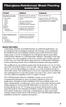 Fiberglass-Reinforced Sheet Flooring Installation System Product Adhesive Comments Residential Use Only CushionStep Value Good Better Best FlexStep Duality Premium Premium Plus Modified loose lay method
APPENDIX C MOISTURE GUIDELINES & MOISTURE TESTING
 APPENDIX C MOISTURE GUIDELINES & MOISTURE TESTING Appendix C Moisture Guidelines Determining moisture content is an essential part of quality control within the flooring installation process. Flooring
Moisture and Resilient Floor Covering
 Moisture and Resilient Floor Covering Moisture related failures of resilient floor coverings installed over concrete have focused unfairly over the years on the premise that the flooring product itself
INSTALLATION RECOMMENDATIONS. Outdoor Rubber Tiles
 INSTALLATION RECOMMENDATIONS Outdoor Rubber Tiles Prior to Installation: The Outdoor Rubber Tiles and accessory transition pieces intended for this installation have been shipped to you via a freight carrier
installation Mannington Works. 800 241 2262 manningtoncommercial.com Mannington Commercial Luxury Vinyl Tile Installation Instructions GENERAL
 GENERAL These instructions cover all fully adhered s of Mannington Commercial LVT; Assurance Squared, Create, Nature s Paths, Nature s Paths Select and Walkway luxury vinyl flooring. Nature s Paths LockSolid
Technical Services. Product MM INCH Installation direction Seams treatment GTI CONNECT (interlocking)
 INSTALLATION INSTRUCTIONS FOR GTI CONNECT TILES This document refers to the following products: Product MM INCH Installation direction Seams treatment GTI CONNECT (interlocking) 635 X 635 mm 25.5 x 25.5
Herringbone Pattern Flooring
 Herringbone Pattern Flooring If it s not marked NOFMA, it s not certified. Handling, Storage, Installation and Tips Herringbone is generally manufactured from 3/4 x 2 ¼ or ¾ x 1-1/2 standard tongue & groove
ARDEX GUIDE SPECIFICATION ARDEX Exterior Concrete Repair & Resurfacing Polymer-Modified, Cement-Based, Patch & Horizontal Overlay Materials
 ARDEX GUIDE SPECIFICATION ARDEX Exterior Concrete Repair & Resurfacing Polymer-Modified, Cement-Based, Patch & Horizontal Overlay Materials SECTION 03 92 50 PART 1 - GENERAL 1.1 RELATED DOCUMENTS A. Drawings,
Laminate Flooring T-Lock Angle-Drop Installation Instructions
 TECHNICAL SERVICE Laminate Flooring T-Lock Angle-Drop Installation Instructions March 23, 2012 Read all instructions carefully before beginning installation. Make sure that the instructions are the most
Guide Specifications for Maple Flooring Systems
 Guide Specifications for Maple Flooring Systems MFMA Guide Specification for Resilient Pre-Engineered Fixed Panel System Purpose This Guide Specification is designed to assist in the production of actual
Adhesive Recommendation for Altro Flooring. Porous (absorbent) subfloors (most wood subfloors and some concrete)
 Adhesive Recommendation for Altro Flooring Product Safety Sheet Flooring Smooth Sheet Flooring Porous (absorbent) subfloors (most wood subfloors and some concrete) Altrofix 30/31 (excessively heavy rolling
GigaCrete Specification PlasterMax
 GigaCrete Inc. 6775 Speedway Blvd. Suite M105 Las Vegas, NV 89115 Ph (702) 643-6363 Fax (702) 643 1453 www.gigacrete.com GigaCrete Specification PlasterMax PlasterMax : Fire Rated Plaster for Direct Application
SECTION 623 CONCRETE BONDING COMPOUND, EPOXY MORTAR AND EPOXY POLYMER CONCRETE OVERLAY SECTION 623.10 CONCRETE BONDING COMPOUND.
 SECTION 623 CONCRETE BONDING COMPOUND, EPOXY MORTAR AND EPOXY POLYMER CONCRETE OVERLAY SECTION 623.10 CONCRETE BONDING COMPOUND. 623.10.1 Description. This work shall consist of preparing the surface,
12 POLYURETHANE ADHESIVE (PU 105)
 12 POLYURETHANE ADHESIVE (PU 105) DISCLAIMER: Refer to page 5 of this document. 12.1 DESCRIPTION PU 105 is a high performance two-part polyurethane adhesive for both indoor installations of Mondo rubber
Selecting Vinyl Flooring
 extension.usu.edu Smart Shopping for Home Furnishings Selecting Vinyl Flooring Dr. Leona Hawks Home Furnishings & Housing Specialist 1987 HI 03 Shopping for vinyl? There are many different varieties of
Minor Cracks in Horizontal Surfaces
 Cracks, chips and broken or flaking areas in concrete are not only unsightly, they can lead to further deterioration of the surface. The result is a costly replacement project as opposed to a simple repair.
INSTALLATION IMPORTANT INSTALLER/OWNER RESPONSIBILITY TOOLS & EQUIPMENT NEEDED FOR INSTALLATION PRE-INSTALLATION PROCEDURES & JOBSITE CONDITIONS
 IMPORTANT It is important that you read & understand the following information and instructions in their entirety before proceeding with installation. Please thoroughly inspect all Flooring products in
VINYL CLICK FLOORING INSTALLATION GUIDE
 VINYL CLICK FLOORING INSTALLATION GUIDE Owner/Installer Responsibility Prior to installing a single board, you or the installer must determine that the job-site environment and the sub-surfaces meet the
INDUSTRIAL FLOORING INSTALLATION CHALLENGES. James C. Ziegler, ArmorSeal Product Manager Sherwin Williams Cincinnati, Ohio, USA
 INDUSTRIAL FLOORING INSTALLATION CHALLENGES James C. Ziegler, ArmorSeal Product Manager Sherwin Williams Cincinnati, Ohio, USA Abstract: Specifier's and contractors not only need to properly evaluate the
Fiberglass-Reinforced Sheet Flooring Installation System
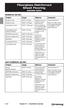 RESIDENTIAL USE ONLY Fiberglass-Reinforced Sheet Flooring Installation System Product Gauge Comments FlexStep Value FlexStep Good 0.055" (1.4 mm) 0.065" (1.65 mm) Modified loose lay method: Acrylic double-faced
COMMERCIAL RESILIENT INSTALLATION GUIDELINES
 COMMERCIAL RESILIENT INSTALLATION GUIDELINES GENERAL INFORMATION All substrates to receive moisture sensitive floor covering require proper moisture testing. Use only Portland based patching and leveling
CORROSION ENGINEERING RESIN-BASED POLYMER CONCRETES AND GROUTS
 AN ERGONARMOR COMPANY TECHNICAL INFORMATION SPECIFICATION FOR INSTALLATION 07/11 SUPERSEDES 04/00 PAGE 1 OF 6 CORROSION ENGINEERING RESIN-BASED POLYMER CONCRETES AND GROUTS 1. SCOPE 1.1 This specification
HIGH PERFORMANCE PRE-APPLIED SYSTEM FOR BLIND SIDE & BELOW GRADE WATERPROOFING APPLICATIONS
 BSW HIGH PERFORMANCE PRE-APPLIED SYSTEM FOR BLIND SIDE & BELOW GRADE WATERPROOFING APPLICATIONS BSW is a fully reinforced Pre-Applied system membrane designed for horizontal and vertical external blind-side
Engineered Hardwood Flooring Installation Instructions
 Engineered Hardwood Flooring Installation Instructions Tip: Check for proper color selection and style prior to Installation. No claims will be accepted after installation Important Information before
ENGINEERED FLOORING INSTALLATION
 ENGINEERED FLOORING INSTALLATION ATTENTION! INSTALLER/OWNER RESPONSIBILITIES Beautiful hardwood floors are a product of nature and, therefore, they will show variations in color, grain, texture, and appearance.
Slip-Retardant sheet and tile
 Slip-Retardant sheet and tile SAFEGUARD TM sheet SAFEGUARD Spa TM sheet SAFETY ZONE TM tile linoleum luxury vinyl tile commercial hardwood sheet vct specialty flooring accessories SAFEGUARD TM SAFEGUARD
ARMSTRONG RESIDENTIAL VINYL TILE FLOORING WARRANTY: Professionally Installed & Do It Yourself (DIY)
 ARMSTRONG RESIDENTIAL VINYL TILE FLOORING WARRANTY: Professionally Installed & Do It Yourself (DIY) THE ARMSTRONG LIFETIME LIMITED RESIDENTIAL WARRANTY FOR: Abingdon Adiamo Clear Creek Caliber Granville
INSTALLATION THE SIMPLIFIED VERSION
 Fo Subfloor has to be flat, permanently dry, solid and clean. ng INSTALLATION THE SIMPLIFIED VERSION Floori rbo Adhésif Modul up pr é c o n is e Trim off over lengths leaving 1mm gap all around the walls.
1.02 DESCRIPTION A. This Section specifies furnishing and installing Cast in Place Detectable/Tactile Warning Surface tiles where indicated.
 CAST IN PLACE DETECTABLE/TACTILE WARNING SURFACE TILE PART 1 GENERAL 1.01 RELATED DOCUMENTS A. Drawings and general provisions of Contract, including General and Special Conditions and Division 1 Specifications
ARMSTRONG RESIDENTIAL VINYL TILE FLOORING WARRANTY: Professionally Installed & Do It Yourself (DIY) Menards Products
 ARMSTRONG RESIDENTIAL VINYL TILE FLOORING WARRANTY: Professionally Installed & Do It Yourself (DIY) Menards Products THE ARMSTRONG LIFETIME LIMITED RESIDENTIAL WARRANTY FOR: Abingdon Adiamo Clear Creek
738-B-297 POLYMERIC CONCRETE BRIDGE DECK OVERLAY. (Adopted 02-20-14)
 POLYMERIC CONCRETE BRIDGE DECK OVERLAY (Adopted 02-20-14) Description The polymeric concrete bridge deck overlay shall consist of an epoxy polymer that acts together with special aggregate to form an overlay
Document Library TS Data Sheet 46012 46013 46014
 Document Library TS Data Sheet 46012 46013 46014 Rev:2 Effective: 01/11/2002 3M Marine High Strength Repair Filler Data Sheet Status: Active 3M Part No.(s) 46012 46013 46014 3M Part Descriptor(s) Pint
STERI-SOFT HIGH FOOT TRAFFIC, ULTRAVIOLET RESISTANT, URETHANE RESILIENT FLOORING SYSTEM, 1/8 GREEN BUILDING FEATURES TYPICAL APPLICATIONS
 GREEN BUILDING FEATURES * Steri-Soft contributes toward satisfying credit EQ 4.2 under LEED. 100% Resilient Flooring Low emitting material Contains 27% post consumer recycled product Processed and manufactured
How To Level A Subfloor
 Skill Level: INTERMEDIATE Give these projects a try if you're a confident DIYer with a good working knowledge of a variety of tools. They can take a day or more to complete. If you can build a birdhouse
Installation Guidelines for Modular Carpet
 Installation Guidelines for Modular Carpet Ecoflex Urethane Cushion Backed Carpet Tiles PVC Backed Carpet Tiles Thermoplastic Backed Carpet Tiles Self Lock Carpet Tiles 1975 West Oak Circle Field Services
Please calculate with around 5% more square meters than needed because you will have material loss due to cutting and sorting.
 1. TEKA Soft Loc Installation Guide Thank you for having chosen TEKA Parquet. To guarantee a constant quality product TEKA engineered hardwood flooring is made out of selected wood species and runs only
SC2000 CEMENT BONDING PROCEDURES
 Pg.1 SC2000 CEMENT BONDING PROCEDURES Widely recognized as the world s finest cold vulcanizing cement REMA SC2000 is the solution to your industrial bonding problems. By using REMA UTR20 hardener with
Installation for Wood Flooring
 Installation for Wood Flooring Tarkett wood flooring offers a beautiful variety of options from species and colour, to plank widths and finishes. We developed enhanced locking system, T-lock, and the best
CHAPTER 6 ASPHALT ROLL ROOFING
 CHAPTER 6 ASPHALT ROLL ROOFING Section I. DESCRIPTION AND GENERAL DISCUSSION 6.1.1 General 6.1.3 Mineral-Surfaced Asphalt roll roofing is roofing in sheet form Mineral-surfaced roll roofing is composed
INSTALLATION INSTRUCTIONS FOR LAMINATE FLOORING
 INSTALLATION INSTRUCTIONS FOR LAMINATE FLOORING Introduction Laminate flooring is designed to be a floating floor that may be installed over virtually any type of sub floor. It is not nailed or glued to
How To Install Hardwood Flooring
 phone: 1.855.Ludaire e-mail: [email protected] Solid Flooring Installation Instructions These Instructions and Guidelines are for the typical installation of ¾ Pre-finished Solid Hardwood Flooring manufactured
WOOD FLOORING ADHESIVES
 dispersion adhesive 2 component adhesive MS polymer adhesive WOOD FLOORING ADHESIVES PROFESSIONAL PRODUCTS SOUDAL, leading adhesive manufacturer WOOD FLOORING ADHESIVES Soudal NV, located in Turnhout (B)
Specifications. PermaTone, Inc. Manufacturer s Long Form Specifications Interior Finish Coatings PF-405
 PermaTone, Inc. Manufacturer s Long Form PF-405 PART I GENERAL 1.01 SUMMARY This document provides requirements for the proper specification, design, use and installations of PermaTone specialty interior
SECTION 03 54 00 RESURFACING CAST IN PLACE CONCRETE
 Page 1 SECTION 03 54 00 RESURFACING CAST IN PLACE CONCRETE Specifier Notes: This guide specification is written according to the Construction Specifications Institute (CSI) format. The section must be
INSTALLATION GUIDE. Imago Installation Guide - January 2008 1
 INSTALLATION GUIDE IMAGO Floors are very sensitive to ambient humidity conditions, since all wood flooring will expand and contract as relative humidity varies. In order to keep the flooring manufacturer
CLEAR-DIVISIONS CENTERFOLD
 CLEAR-DIVISIONS CENTERFOLD Introduction: The following three (3) part specification offers the Standard and Optional features for the CLEAR-DIVISIONS CENTERFOLD moveable The yellow highlighted areas in
SECTION 03 35 43 POLISHED CONCRETE FINISHING
 SECTION 03 35 43 POLISHED CONCRETE FINISHING PART 1 - GENERAL 1.01 SUMMARY A. Provide polished concrete finishing system where indicated on drawings, complete. This section includes the following: 1. Concrete
Epoxy Floor Coating Problem Solving Guide
 Table of Contents: Page: Troubleshooting Issue: 2. Color Differential 3. Fish Eye 4. Milky or Cloudy Coatings 5. Orange Peel 6. Peeling or Delamination 8. Delamination between Coats 9. Pinholes/Bubbling
Mold Preventing I nterior System
 interior insulation and renovation boards A system of components that have been designed to work perfectly together to repair damage caused by mold. The system consists of boards, insulation wedges, reveal
SECTION 07560 FLUID APPLIED ROOFING (LIGHT TRAFFIC DECKS OVER CONCRETE)
 SECTION 07560 FLUID APPLIED ROOFING (LIGHT TRAFFIC DECKS OVER CONCRETE) PART 1 GENERAL 1.1 DESCRIPTION 1. Fluid applied flexible acrylic waterproofing system over concrete. This work shall include the
Specifications, Product Testing and Terminology
 Specifications, Product Testing and Terminology The following synopsis provides a review of various material and final product testing, which is performed on our products, as well as, many of our competitors.
Construction. 3-part thixotropic epoxy patching mortar. Product Description. Tests
 Product Data Sheet Edition 05/12/2014 Identification no: 020204030010000044 Sikadur -41 CF Rapid 3-part thixotropic epoxy patching mortar Construction Product Description Uses Characteristics / Advantages
SECTION 08 41 1 ALUMINUM FRAMED ENTRANCES and STOREFRONTS. System 402 Flush-Glazed Screw Spline Storefront
 PART 1 GENERAL 1.01 Work Included SECTION 08 41 1 ALUMINUM FRAMED ENTRANCES and STOREFRONTS System 402 Flush-Glazed Screw Spline Storefront A. Furnish and install aluminum architectural storefront system
Concrete Repair. Applications and Procedures
 Concrete Repair Applications and Procedures Objectives Identify what surface preparation is needed Identify typical modes of failure and testing methods How to choose the correct material for the repair
E. CONCRETE. Chapter III Subfloors and Underlayments
 E. CONCRETE New and existing concrete subfloors must meet the requirements of the latest edition of ASTM F710, Standard Practice for Preparing Concrete Floors to Receive Resilient Flooring available from
ECOfit Interlocking Tile
 ECOfit Interlocking Tile INSTALLATION AND MAINTENANCE MANUAL Manufactured in the U.S.A. by: Revised 09/04/2014 Supersedes all previous versions. Check website for updates. 877-258-0843 www.ecorecommercialflooring.com
RESIDENTIAL ROOFING & RE-ROOFING, ROOF VENTILATION AND ROOF SHEATHING REQUIREMENTS MICHIGAN RESIDENTIAL CODE 2000
 RESIDENTIAL ROOFING & RE-ROOFING, ROOF VENTILATION AND ROOF SHEATHING REQUIREMENTS MICHIGAN RESIDENTIAL CODE 2000 SECTION R905 REQUIREMENTS FOR ROOF COVERINGS R905.1 Roof covering application. Roof coverings
SECTION 07 61 13 STANDING SEAM METAL ROOFING
 SECTION 07 61 13 STANDING SEAM METAL ROOFING PART 1 GENERAL 1.01 SCOPE OF WORK A. The Work shall include all labor, materials, equipment and supervision required to complete the work of the above referenced
section 09650 rubber flooring page 1 of 7
 PART 1 GENERAL 1.01 SUMMARY A. Section Includes: Rubber Flooring 1.02 REFERENCED DOCUMENTS A. ASTM International: 1. F 1344 Standard Specification for Rubber Floor Tile 2. E 648 Standard Test Method for
Waterproofing System for Wastewater Tanks in Petrochemical Industries and Refineries
 Waterproofing System for Wastewater Tanks in Petrochemical Industries and Refineries Introduction Wastewater of petrochemical industries and refineries contains high amounts of emulsified aliphatic or
Tested to BS 6375: Part 1: 1989 and achieved a weathertightness classification of 2000 Pa (Special)
 THE B6 GLAZING SYSTEM GLAZING SYSTEMS FOR SEPTEMBER 2013 THE B6 HEEL BEAD SEAL SECURITY GLAZING SYSTEM Page 1 DESCRIPTION The B6 Heel Bead Seal Security Glazing System is suitable for installing all types
See photo below showing this product being applied to a badly corroded floor.
 SPECIALTY COATINGS, INC 805 Lehigh Ave. Union, NJ 07083 TEL 888-755-7361 FAX 888-755-6231 www.armorpoxy.com [email protected] FLOOR REPAIR, LEVELING & PREP BULLETIN This bulletin has been prepared by
Installation Instructions for staple/nail down applications
 Installation Instructions for staple/nail down applications General Notes Inspect all materials carefully before installation. Warranties do not cover materials with visible defects once they are installed.
NAPCA BULLETIN 18-99 APPLICATION PROCEDURES FOR CONCRETE WEIGHT COATING APPLIED BY THE COMPRESSION METHOD TO STEEL PIPE
 NAPCA BULLETIN 18-99 APPLICATION PROCEDURES FOR CONCRETE WEIGHT COATING APPLIED BY THE COMPRESSION METHOD TO STEEL PIPE GENERAL a. These specifications may be used in whole or in part by any party without
The Mohawk Group Installation Guidelines for
 The Mohawk Group Installation Guidelines for Uniplus System II Double Stick Unibond RE Wet Set The Mohawk Group 1975 West Oak Circle Marietta, GA 30062 800-554-6637 www.themohawkgroup.com Field Services
Columbia flooring will resist fading from exposure to sunlight or artificial light.
 LIMITED LIFETIME WARRANTY AND MAINTENANCE FOR RESIDENTIAL USE Columbia is so confident in the design and durability of our Columbia flooring products and accessories, that we back them with a Limited Lifetime
Read and understand all installation instructions and precautions before installing. GENERAL APPLICATION INSTRUCTIONS
 AC TOPSEAL SELF-ADHERED, GRANULAR SURFACED, SINGLE PLY, LOW SLOPE ROLLED ROOFING 3 X 33.3 = 100 SQ. FT. 10 YEAR MATERIAL LIMITED WARRANTY For Use on Porches / Sheds / Utility Buildings / Accessory Buildings
CA-48 TECHNICAL SPECIFICATION
 CA-48 TECHNICAL SPECIFICATION SafeLane surface overlay Pavement Substrate A Cargill Deicing Technology Product Providing customers with deicing solutions that save lives and enhance commerce. Helping to
SECTION 07720 PREFORMED METAL STANDING SEAM ROOFING
 SECTION 07720 PREFORMED METAL STANDING SEAM ROOFING PART ONE GENERAL DESCRIPTION This section includes pre-formed standing seam metal roofing and related flashings, closures, trim and accessories including,
GUIDELINES FOR POLISHED CONCRETE FLOORS A Guide for Integrally Colored, Dyed and Stained Polished Floors
 GUIDELINES FOR POLISHED CONCRETE FLOORS A Guide for Integrally Colored, Dyed and Stained Polished Floors 8 3 2 9 Mo n ti c el l o Roa d, S ha w n e e, K S 6 6 2 2 7 T e l: (9 1 3 ) 4 2 2-4 4 4 3 Fa x :
Asbestos WHAT TO DO? Studies of people who were exposed to high levels of asbestos in factories and shipyards, are at increased risk of:
 Asbestos WHAT TO DO? What Is Asbestos? Asbestos is mineral fiber. It can be positively identified only with a special type of microscope. There are several types of asbestos fibers. In the past, asbestos
CLEAR-DIVISIONS APERTO
 CLEAR-DIVISIONS Introduction: The following three (3) part specification offers the Standard and Optional features for the CLEAR-DIVISIONS moveable glass wall system. The yellow highlighted areas in the
Hardwood Flooring. Urbania Flooring
 Engineered Hardwood Flooring Installation Guide for Urbania Flooring BEFORE STARTING THE INSTALATION - Please take the time to read and ensure that you understand the information contained in this document.
INSTALLATION INSTRUCTIONS
 INSTALLER/OWNER RESPONSIBILITIES Hardwood flooring is a product of nature and its inherent beauty stems from the fact that each piece is unique with no two pieces the same. Due to the fact that this flooring
Wecryl Waterproofing System under surfacing supplied by others
 Brief description The Wecryl waterproofing system allows a high-quality, seamless and crack-bridging waterproofing layer to be installed under loose-laid or bonded surfacing supplied by others (stone slabs,
High Performance PSA in Sheet Membrane in Water Protection
 High Performance PSA in Sheet Membrane in Water Protection Xia Cao, Senior R&D Chemist, W. R. Grace, Cambridge MA 02140 Jyoti Seth, Strategic Program Leader, W. R. Grace, Cambridge MA 02140 Concrete is
How To Warranty Shawfloors
 HARD SURFACE WARRANTIES, CARE & MAINTENANCE LAMINATE shawfloors.com 1 CONTENTS LAMINATE Care & Maintenance 3 Warranty 4 Shaw represents a promise of outstanding performance, unique styling and overall
BLACK JACK ALL WEATHER ROOF COATING
 PAGE: 1 of 6 PRINT DATE: 16/09/2004 BLACK JACK ALL WEATHER ROOF COATING DESCRIPTION BLACK JACK ALL WEATHER ROOF COATING is a solvent based, full bodied black brushable compound with added fibres for reinforcement.
HOW-TO LAY HARDBOARD OR PLYWOOD FLOOR OVERLAY
 HOW-TO HOW-TO LAY HARDBOARD OR PLYWOOD FLOOR OVERLAY Most floor coverings, if laid over uneven wooden floors, will wear unevenly and look unsightly. The answer is to cover the old boards with hardboard
Amtico and Spacia Commercial Maintenance Guidelines
 Amtico and Spacia Commercial Maintenance Guidelines Amtico flooring along with all types of floor coverings require appropriate cleaning and maintenance in order to provide long term durability, safety
NEW ELECTRICAL SUBSTATION Building 300 SECTION 07 53 23 ETHYLENE-PROPYLENE-DIENE-MONOMER ROOFING WORK
 ETHYLENE-PROPYLENE-DIENE-MONOMER ROOFING WORK PART 1 GENERAL 1.1 REFERENCES The publications listed below form a part of this specification to the extent referenced. The publications are referred to within
CHAPTER 7: Building Systems ROOFING SYSTEMS
 ROOFING SYSTEMS Purpose Examples 1. Shingle roof system 2. Metal roof with blanket insulation 3. Metal roof with rigid insulation 4. Built-up asphalt roof system 5. Single-ply roof system 6. Modified Bitumen
WATER AND WOOD DON T MIX KEEPING YOUR TRIÂNGULO HARDWOOD FLOOR BEAUTIFUL SCRATCHES, INDENTATIONS AND GOUGES
 WATER AND WOOD DON T MIX Using any of the following items to maintain your wood floor will void all manufacturer warranties! Water Oil Soap Vinegar, Ammonia Household Detergent Wax Furniture Polish Dust
OLD BRICK ORIGINALS KILN-FIRED THIN BRICK VENEER Installation Guide. GeneralShale.com
 OLD BRICK ORIGINALS KILN-FIRED THIN BRICK VENEER Installation Guide GeneralShale.com OLD BRICK ORIGINALS THIN BRICK VENEER Page 2 INTRODUCTION Check local building codes for proper installation guidelines
CLEAR-DIVISIONS VARIOFOLD
 CLEAR-DIVISIONS VARIOFOLD Introduction: The following three (3) part specification offers the Standard and Optional features for the CLEAR-DIVISIONS VARIOFOLD moveable The yellow highlighted areas in the
first look at GigaCrete s revolutionary new New Construction GigaHouse GigaHouse Utilizing GigaPanel
 first look at GigaCrete s revolutionary new New Construction GigaHouse GigaHouse Utilizing GigaPanel What is GigaCrete GigaCrete is a family of products based on low carbon footprint Green ceramic binders
M50 RUBBER/PLASTICS/CORK/LINO/CARPET TILING/ SHEETING
 M50 M50 RUBBER/PLASTICS/CORK/LINO/CARPET TILING/ SHEETING To be read with Preliminaries/General conditions. TYPE(S) OF COVERING 130 CARPET: - Base: o Existing concrete base o Levelling screed o Timber