
Fungi. naturally scottish. Beautiful photographs, informative text and interesting anecdotes!
|
|
|
- Rafe Glenn
- 9 years ago
- Views:
Transcription
1 Fungi naturally scottish Fungi belong to one of the most varied, useful and ancient kingdoms in the natural world. Scotland may have almost 2000 larger species with some of the most interesting found in our woodlands and grasslands. This booklet provides an introduction to their life cycles, habitats and conservation. Discover the fascinating forms of earthstars, truffles and waxcaps. Beautiful photographs, informative text and interesting anecdotes! I SBN ISBN A CIP record is held at the British Library. Price 4.95 Scottish Natural Heritage. Visit our website on About the authors: Roy Watling MBE retired as Head of Mycology & Plant Pathology at the Royal Botanic Garden, Edinburgh and was instrumental in setting up the first nature reserve specifically for fungi at Dawyck. He has several honorary academic positions in mycology and was awarded the Patrick Neill medal of the Royal Society of Edinburgh, of which he is a fellow, for his contributions to the study of fungi. He is a former President of the British Mycological Society, Botanical Society of Scotland and Yorkshire Naturalists' Union and is a member of Plantlife s Scientific Advisory Committee. Stephen Ward has worked in nature conservation for more than 30 years and currently has responsibility for advising on fungal conservation within Scottish Natural Heritage. FUNGI NATURALLY SCOTTISH SNH n a t u r a l l y s c o t t i s h Fungi

2 Fungi N A T U R A L L Y S C O T T I S H Blue corky spine fungus Hydnellum caeruleum

3 Fungi Scottish Natural Heritage 2003 ISBN paperback A CIP record is held at the British Library H&S3K0103 Acknowledgements: Authors: Roy Watling and Stephen Ward (SNH) Author of The Scottish Wild Mushroom Code: Alison Dyke Series Editor: Lynne Farrell (SNH) Design and production: SNH Design and Publications N A T U R A L L Y S C O T T I S H by Roy Watling (British Mycological Society) and Stephen Ward (Scottish Natural Heritage) Photographs: Valerie & Ernest Emmett 29, Lorne Gill/SNH front cover, back cover top left, frontspiece I, contents page, 5, 9, 11, 12, 13 right, 15, 16, 19, 21, 25, 26, 27, 28, 30, 31, 32, George McCarthy 1, 14, RBGE 6, 18, Paul Sterry/Nature Photographers Ltd. 10, 23, Roy Watling 2, 7, 8, 13 left, 17, Chris Watt 20, back cover top right. Illustrations: Jaqueline Stevenson Page 22 & Kelly Stuart/SNH Page 4 Scottish Natural Heritage Design and Publications Battleby Redgorton Perth PH1 3EW Tel: Fax: [email protected] Web site: Cover photograph: Pink ballerina or pink meadow-cap - Hygrocybe calyptriformis Back cover photograph: Scarlet elf cup - Sarcoscypha coccinea

4 Foreword Many of us wouldn't admit it, but when younger, our first action on seeing a group of toadstools in the local park or woodland might have been to kick them over. We did it for no obvious reason, nothing we could justify, even then. It was an act of seemingly wanton destructiveness, rural vandalism. Yet I have always believed that it was something borne of an innate and long inherited superstition, a quite erroneous judgement with a lineage back to ancient times. For centuries, these extraordinary objects that appeared, almost literally overnight, were perceived as abnormal growths, productions of the earth itself, as sinister as they were mysterious. And for reasons that no-one has satisfactorily explained, the British Isles have long been at the forefront of these outdated notions, the epicentre of fungiphobia. This is all a strange and sad irony because, scientifically, we have always been in the vanguard of the study of fungi - the science of mycology. Our mycologists have long been amongst the finest and our national body, the British Mycological Society, is the largest in the world. And within Britain, the forests, fields and mountains of Scotland offer some of the richest habitats for fungi that you will find anywhere. syllabuses and are still too often considered to be deviant plants - to which they aren't even remotely related. So let the wonderful Scottish heritage of wild fungi help put right this wrong. Let your walks and excursions be enlivened by the beauty of form and the colours of the great diversity of the fungi that you will see. Enjoy and admire them, be stimulated to learn a little more about the way they go about their fascinating lives and realise that the mushrooms and toadstools that you see are but the tip of a great biological 'iceberg' below the soil surface, under the bark, on the leaves and everywhere else in the environment. Mushrooms and toadstools are merely the large and obvious reproductive structures of organisms that stretch in almost limitless microscopic growth beyond our sight. Fungi are the great unseen and unappreciated providers of the natural world, assisting the supply of essential nutrients and other chemicals that power life in every environment and every habitat. Be amazed and entranced by some of the greatest marvels that Scottish nature has to offer. Only in relatively recent times have those ancient and illfounded beliefs gradually been replaced by understanding, knowledge and an appreciation of the remarkable organisms that fungi are. But even today, fungi feature inadequately on our school and university Stefan Buczacki, Author and Broadcaster, Former President of the British Mycological Society.

5 Contents What is special about fungi? 1 What are fungi? 2 How they feed 4 How they multiply 8 Where they live 11 What we know and what we don t know 18 A foraying we will go 19 Fungi and the law 20 The Scottish Wild Mushroom Code 21 Beware 23 Conservation 24 Threats 27 Woodland management 28 Red Data List 29 The Biodiversity Action Plan 29 Fungi in nature reserves 31 Important Fungus Areas 31 Finding out more about fungi 32 A violaceous fairy club Clavaria zollingeri

6 What is special about fungi? Fungi are the original recyclers. By decomposing dead plants and animals, they provide a sustainable environment not just for nature, but for mankind and his crops. Not only that, if it wasn t for yeast, itself a fungus, we would not have had beer which was of incalculable benefit to early civilizations by sterilising otherwise contaminated water. Nor would we have bread, cakes, biscuits, vegetable cheeses and meat substitutes - all made by the fermenting ability of fungi. Fungi also help in the fight against disease, as the source of some of our most successful antibiotics. They provide food and shelter in the life cycles of many insects and other creatures and, of course, they are used in many of the best restaurants to add flavour to recipes. That fungi are beneficial in so many unseen ways, is too easily overlooked, given their adverse effects in causing some plant and animal diseases and despoiling stored food - a world-wide problem. One of the largest, heaviest and oldest living things known on earth is a mushroom growing in north west America. It weighs in at 150 metric tonnes, covers 890 hectares and is at least 2,400 years old! Now that s a monster and the same honey fungus Armillaria ostoyae is widespread in Scotland! A honey fungus Armillaria ostoyae Collared earthstar Geastrum triplex VIII 1

7 What are fungi? Fungi are so different from both plants and animals that they are placed in a kingdom of their own. They lack the ability to make food from sunlight and simple nutrients (a process known as photosynthesis), except in those cases where they unite with an alga to form a lichen. They are a diverse group of organisms, drawn together by a common lifestyle and structure, and are composed of upon which they grow. Once established most fungi have to stay put, but as the mycelium grows, its hyphae are able to colonise new areas and tap into new reserves of food. One group commonly included with the fungi, the slime moulds, act like primitive animals and can actually move towards food. 2 3 filaments known as hyphae which, bunched together, form a mycelium. This is usually underground or hidden from view in rotting wood. The mycelium produces a spore-bearing body often called a fruiting body which can take the form of a cap, bracket, cup, club, horn, tiny flask or a gelatinous blob. The form with which we are most familiar is the cap shape, as in the Fly Agaric (Amanita muscaria), the bright red toadstool with white spots which often appears in the autumn. A few fungi consist of a single-cell only (yeast fungi). There is no scientific difference in the meaning of the words mushroom and toadstool and, although modern usage would suggest that a mushroom is edible and a toadstool is not, both terms can be used to describe any fleshy fruiting body with a cap and stem. The Scots term is paddock-stool, paddock or puddock being a Scots word for a frog or toad. Fungus (plural fungi) is a more general term for either just the fruiting structure or the fruiting structure and the mycelium as well. The fungi which grow together at a particular location may be referred to collectively as the mycota. As they cannot make their own food, fungi depend on being able to break down organic matter which, whether of plant or animal origin, living or dead, originally derived its energy from the sun. Fungi absorb nutrients as a liquid resulting from chemical action on the substrate The familiar mushrooms, toadstools, brackets and elf-cups, collectively known as the larger fungi, are the main subject of this book. 1. Fruit-body connected to underground filaments or mycelium 2. Wedge of cap 3. Magnified part of lower surface of wedge 4. Spores highly magnified beginning to germinate 5. Mycelium produced by spores 2 3

8 How they feed Fungi are unseen feeders. By breaking down dead organic matter, fungi make it available to growing plants, thereby preventing its accumulation and adding to the overall health and efficiency of the planet. Saprotrophs The breakdown by fungi of litter, dead woody material and animal debris releases essential nutrients into the soil. This generally beneficial process can cause problems such as when dry rot attacks structural timbers. Fungi which act in this way are called saprotrophs or decomposers. Necrotrophs Fungi which kill some of their host s cells, be they plant, animal or even fungus are called nectrotrophs. Generally their attack is not fatal. These include rust - and smut fungi, microscopic relatives of mushrooms and toadstools, which need a growing host as they attack new shoots - a life-style known as parasitic. Other fungi cause such extensive destruction that the host dies whereupon the fungus feeds on the corpse. Several larger mushrooms and toadstools fall into this category and are termed necrotrophs. Thankfully there are comparatively few fungi in Scotland which cause disease in man but some of these may prove fatal, especially in patients whose resistance to infection has been lowered in any way. Necrotroph - Scarlet caterpillar fungus Cordyceps militaris Saprotroph - Hairy stereum Stereum hirsutum 4 5

9 Biotrophs Over 80% of our trees, shrubs and wild flowers depend on fungi located either within or upon their roots. In both cases the hyphae scavenge nutrients from the surrounding soil, which in turn they make available to their host plant. In exchange the fungus receives simple organic nutrients and vitamins. In some cases these same hyphae assist the decomposition of litter. Such associations are called mycorrhizas (derived from Greek, meaning fungus root ) and many of the mushrooms and toadstools we see in the autumn are involved in such processes. Different kinds of mycorrhizas occur in orchids, grasses and heathers. Many mycorrhizas are highly specific and will only be found with particular hosts. Loss of such hosts may therefore affect a whole range of fungi and any conservation management must take account of this. Some fungi benefit directly from photosynthesis by forming close relationships with algae. This is such a close union that, as recently as the middle of the last century, they were considered to be a single organism in their own right and came to be known as lichens. Whilst the fungi obtain nutrients from the algae, the fungi protect the algae from drying out. This relationship and those in mycorrhizas are termed biotrophic. Birch roots with mycorrhiza Just as there are close relationships with plants, there are also close associations between fungi and invertebrate animals. In Scotland, some wood wasps and beetles use fungi to assist them in breaking down food for their larvae. In contrast oyster mushrooms capture eel-worms on special sticky knobs in the mycelium and use their body fluids as food. Brown roll rim Paxillus involutus 7

10 How they multiply Many fungi reproduce by shedding minute spores. These tiny bodies are something like the seeds of a plant, but without the store of food that a seed contains. A single mushroom may shed thousands - in some cases, millions - of spores which are usually dispersed on the wind, by rain or contact with insects and other animals. Other species have evolved more complex methods. Some fungi only reproduce by the mycelium, which is hidden within the soil, plant debris or wood, dividing or breaking into two or more parts which are each capable of continuing to grow as separate individuals. Truffles remain hidden underground but emit an odour which attracts mammals to dig them up and eat them, the spores being liberated in their dung. Truffles are considered a great delicacy; pigs and even dogs have been trained elsewhere in Europe to find them for human consumption. Stinkhorns, growing erect on the woodland floor, also emit a smell - but of rotting flesh. Attracted by the smell, carrion flies and beetles visit the spore mass. The spores themselves are embedded in mucus which sticks to the bodies of the visitors. As they fly to a new site, the spores dry and fall off and so are widely dispersed. Harts truffle Elaphomyces granulatus 8 Common stinkhorn Phallus impudicus

11 Where they live White stalk puffball - Inchnadamph NNR Tulostoma niveum World-wide Fungi have colonised all the major areas of the world: marine to freshwater, lowland to montane, water-logged to desert soils, woodland to grassland. Scotland s woodlands, grasslands, and other habitats The larger fungi are generally confined to woodland and grassland communities ranging from lowlands to uplands, including the dwarf willow communities both of coastal dune-slacks and mountains. The white stalk puffball Tulostoma niveum is a very rare fungus which is listed in the UK Biodiversity Action Plan. In Britain, it is known only from two Scottish mountains where it grows among mosses on exposed boulders. The only other British stalked puffball Tulostoma brumale, is also found in exposed areas but, in contrast, in sand dunes along the east coast of Scotland. White stalk puffball Moss beds support specialised communities of fungi. The moss protects the fungus from desiccation and provides insulation which probably encourages fungal growth. Research is now beginning to shed light on the nature of the link between mosses and the larger fungi - especially the elf-cups. Rather than fungi and mosses simply liking to grow together, given the large number of species of both mosses and fungi, there may be very precise links between the different species. Penetration of the host cells of the moss by a fungus may prove to be a common phenomenon. Sphagnum-moss bogs also have their own specialised inhabitants. Moorland, although generally poor in species numbers, is a promising habitat, especially the higher Scottish heathlands, where a mixture of arctic-alpine fungi may be found. The snowbed amanita, Amanita nivalis is associated with dwarf willow, Salix herbacea and was described as new to science from the Cairngorms in It is now known throughout the northern hemisphere, often growing in very exposed sites which are free of heavy snow deposits. It is characteristic of many of Scotland s high mountains.

12 A fairy ring of cracking clitocybe Clitocybe rivulosa The snowbed amanita with dwarf willow Amanita nivalis A Mycena growing on an old stump Mycena haematopus Long-established lawns and golf courses, which have to live. Each species has its own particular niche, be it received little in the way of artificial fertilisers, may on old wood, tree roots or simply gaining nutrition from Old grasslands, which have not been treated with mineral fertiliser or slurry, especially those on base-rich soils, support a rich fungal community. Under the UK Biodiversity Action Plan, the brightly coloured waxcap mushrooms (Hygrocybe species) and associated fungi found particularly in old pastures have been surveyed. Scotland has been found to be very rich in these pastures. Unimproved grasslands are characterised not only by waxcaps, but also by a group of mushrooms with pink spores (including Leptonia species), several fairy-club fungi and the similar but unrelated earth or snake-tongues. They are often found in large intermixed troops, some growing around the edge of a circle - known as fairy rings. support the pink meadow-cap or pink ballerina (Hygrocybe calyptriformis) - a waxcap listed as deserving special attention under the UK Biodiversity Action Plan. But woodlands are perhaps the most rewarding places to look for fungi as they provide such varied places for them the humus. The more species of trees and other flowering plants present, the more species of fungi are likely to be found. Some fungi are found only on certain parts of that host. For instance some grow only on the leaves, fruit or woody debris of a particular species, while others may be confined to large boughs or the finer twigs

13 While plantations of exotic conifers may support a diverse assemblage of fungi, the native, well-established woods of Scotland provide one of the richest fungal habitats in the whole of the British Isles. Several species of the stalked tooth fungi, so called because their spores are borne on tooth-like pegs suspended below the cap, are ancient members of the old wood of Caledon, one of the richest fungal habitats in the British Isles. Under the UK Biodiversity Action Plan many more woodlands have been surveyed for this group of fungi than ever before. This has shown the various stalked tooth fungi (species within the genera Hydnellum, Phellodon, Sarcodon and Bankera) to be more widely distributed in Scotland than was first thought. In their long-known home territories of Deeside and Speyside most species appear to be doing well. In addition it has been shown that some are able to colonise older Scots pine plantations. Fungal surveys under the Biodiversity Action Plan have brought additional rewards, such as the recent finding of the rare polypore Boletopsis leucomelaena. It had been thought that this fungus may have been extinct in Britain; last seen in Speyside in 1963, it was not found again until 2001 on Deeside. Also fungi new to Scotland are still being recorded; including Phellodon atratus, a species hitherto known only from North America. The oak-hazel woodlands of Scotland s Atlantic seaboard also support rare and interesting fungi. These include hazel gloves, a bright orangey-yellow fungus listed under the UK Biodiversity Action Plan and glue fungus. Hazel gloves, as its scientific name Hypocreopsis rhododendri implies, was first described growing on rhododendron, but this was in North America on a species of Rhododendron not found in Britain. It is not known to occur on the invasive Rhododendron ponticum, introduced from Iberia, but now widespread in Scotland. The glue fungus, Hymenochaete corrugata, is so called because it glues dead hazel twigs to living branches in the canopy, thus preventing them from falling to the ground where they would be available to other fungi to decompose. Hazel gloves Hypocreopsis rhododendri 14 Where the hazel gloves grow - Ballachuan hazel wood, Argyll

14 Golf courses and parks offer a half-way house between open countryside and towns and cities. Many vulnerable species can be found in these semi-protected areas. Even a city-centre garden has its own fungi which may include species accidentally introduced from garden centres. Little may be known about such species, in some cases even their country of origin. With the fashion for spreading wood-chips as a mulch, several fungi have been found in gardens which would otherwise be restricted to conifer woods. With this change in husbandry, species such as lorels and morels now fruit in gardens in and around Edinburgh. Paurocotylis pila, a relative of the truffles and a native of New Zealand has been spotted in gardens from the Lothians to Orkney, but how it came to be here is a mystery. New Zealand truffle Paurocotylis pila One of our most familiar and frequent mushrooms, larch slippery-jack, Suillus grevillei is not native. It was accidentally introduced to the British Isles with larch in the late nineteenth century. Larch slippery jack Suillus grevillei 16 17

15 What we know... and what we don t know Fungi have been so poorly studied over the years that we still do not know the range of species that occur worldwide; nor do we have an accurate figure for the fungi of the British Isles. Even though Scotland is comparatively well-known, it still holds many undescribed taxa. About 2,500 larger fungi may occur in the British Isles of which perhaps two-thirds are found in Scotland. In addition there are many thousands of microscopic species. There are already check-lists - nationally agreed reference lists of British cup fungi and lichens. The latest list to be compiled at the Royal Botanic Garden Kew is of the British and Irish higher fungi, known as the Basidiomycetes. In contrast many groups of micro-fungi found in Britain are not properly catalogued and we can only guess at their numbers. However, it is indisputable that there are many more fungi in the British Isles than flowering plants - perhaps six times as many. Crimson wax cap Hygrocybe punicea Foraying at Corstorphine Hill A foraying we will go Why collect mushrooms? Most naturalists begin foraying with the main flush of fruit bodies in August and carry on until mid-october. Several As well as collecting fungi to eat, many species can only fungi continue to fruit into November or even December, be named by detailed inspection, supplemented by unaffected by frost, and possibly have a second fruiting. microscopic examination. Collecting is thus essential for Fungi growing on wood may be at their best in winter, identification. The first step is to determine the spore even when there have been flurries of snow. colour by placing the mushroom on paper or glass and waiting a few hours. Beautiful shapes are formed as the Many fungi start fruiting before August, e.g. May for rain of spores reflects the patterns of the gills or pores. chanterelles in the Borders. Other species are found only As the spores accumulate, their colour can be seen. in the spring, e.g. lorel. If one really wishes to get to know more fungi, collecting all year round is necessary

16 Fungi and the law The Scottish Wild Mushroom Code For gourmets and gourmands In recent years, prompted by cookery programmes and perhaps by travel abroad, where fungi other than the cultivated mushroom are regularly eaten, fungi have become much more popular as food. There are, however, only a few species especially the chanterelle and penny bun - also known as cep, porcini or steinplize - which are chosen as delicacies. In Scotland their collection for personal use - and by some as a business venture - can sustain limited exploitation. Many fungi are also eaten by wild animals and this is undoubtedly a stimulus to produce further fruitbodies as replacement structures are ready to spring into growth, provided weather conditions continue to be favourable. Just as picking apples is not regarded as damaging to the tree, picking mushrooms is not generally regarded as a threat to the fungus. However, expressions of concern by woodland managers about collecting, especially where this is indiscriminate, resulted in a group representing conservation organisations, landowners, mushroom pickers and buyers coming together as the Scottish Wild Mushroom Forum and producing a code of conduct. Trampling is the most damaging factor as, by collapsing the air spaces in the soil and changing water movement, it destroys the mycelium. Chanterelle Cantharellus cibarius The countryside is a working landscape. Please be aware of safety and follow the countryside and access codes. In accordance with these codes, and as a matter of courtesy, you are advised to ask for permission before you pick mushrooms. By respecting the natural environment you can help to manage and conserve the countryside. When picking mushrooms for any purpose, please consider the following points: wildlife, especially insects, need mushrooms too, so only pick what you will use. do not pick mushrooms until the cap has opened out and leave those that are past their best. the main part of the mushroom is below the surface, take care not to damage or trample it, and not to disturb its surroundings. scatter trimmings discreetly in the same area as the mushrooms came from. some mushrooms are poisonous and others rare and should not be picked - only pick what you know and take a field guide with you to identify mushrooms where you find them. before you collect mushrooms at a nature reserve please always seek advice from the manager, as special conditions may apply. If you own or manage land: be aware that your management activities may affect mushrooms. If you wish to run a foray or collect for scientific purposes remember to: ensure the safety of your party, obtain permission in writing. give a record of what you have found to the landowner or manager and explain the significance of your findings. This code was created by the Scottish Wild Mushroom Forum, a group consisting of representatives of conservation organisations, landowners, public landowning bodies, mushroom buyers and mushroom pickers. The creation of the Forum and the Code was funded by Scottish Natural Heritage, The Millennium Forest for Scotland Trust and Moray, Badenoch and Strathspey Enterprise. 20

17 Beware Some fungi are toxic to humans and care must always be taken when collecting them for the kitchen. You might escape with an upset stomach, but - much worse - you could require a kidney transplant or become a fatality. Three campers near the small town of Lairg, north of Inverness, collected what they thought to be chanterelles, but which in fact were Cortinarius rubellus (also known as speciosissimus). Sitting down to their meal, little did they know that ten days later the two young men in the party would be suffering from kidney failure brought about by a toxin contained in their misidentified fungi. After a period on kidney machines awaiting a suitable donor, the two underwent surgery. The girl was luckier, female mammals being less affected by this destructive toxin. Guessing the identification of a fungus is not good enough: you must be absolutely certain. There are relatively few species known to be deadly, of which small amounts will be damaging to us and other animals. It is not true that animals know better! Dogs sometimes misidentify a fruit-body and are poisoned. Information on poisonous plants and fungi in Britain can be obtained on a CD-ROM available from the Royal Botanic Gardens, Kew, and the Medical Toxicology Unit, Guy s Hospital Trust, London. Even those who know the identity of edible fungi should avoid eating fruit-bodies which have been gathered along highways and on industrial sites as their ability to accumulate heavy metals, including radioactive substances, can be high and is a health risk. Always be careful. People who have been at ease eating certain types of mushroom for years can suddenly become allergic. If it is the first time a particular fungus has been eaten, try only a small portion and keep some in case you are unwell; it may be needed for identification. The rule of thumb is not to eat fungi about which you have the slightest doubt: always consult an expert in the field for a correct identification. Magic mushrooms A handful of larger fungi have been used as recreational drugs. Hallucinogenic fungi can be easily misidentified and lead to hospitalisation; over consumption can lead to poisoning. Cultivating and selling fungi for this purpose is a criminal offence. The death cap Amanita phalloides 22 23

18 Conservation Conserving fungi is not as straight forward as conserving flowering plants. For much of the year the fungi are hidden from view, only becoming visible when they fruit. They may fail to appear for several years, although a fungus which does not fruit may nevertheless be present in the soil. This characteristic, and the difficulties of identifying many fungi - especially in their vegetative state, has made it difficult to build a consistent picture of how they are performing in the field. New technology is now to hand. Molecular techniques looking at the DNA profile within the soil now make it possible to identify fungi in their vegetative state by comparing their genetic structure with that of known fruiting bodies. So at long last the key role played by fungi in the natural heritage is gradually being deciphered. At Sourhope Experimental Farm in the Scottish Borders the genetic profiling of waxcap populations and understanding fungal fruiting patterns is under way. The aim is to estimate the diversity of larger fungi species not only as they fruit in the pasture, but also within the soil below the experimental plots following different fertiliser and agricultural chemical regimes. Cattle grazing on typical waxcap habitat Dark purple Leptonia growing in grassland Leptonia nigroviolacea 24 25

19 Threats The chief threats facing fungi are habitat loss and pollution: habitat loss or change is probably the prime factor in the loss of, or threat to, the majority of our less common fungi. The felling of ancient woodland or veteran trees commonly arouse concern, but how often is thought given to the loss of the dependent fungi? When ancient grasslands are ploughed and reseeded, not only are flowering herbs lost but so are a host of fungi. Even ceasing to graze ancient pasture and mowing it instead may have profound effects on the ability of fungi to survive. Scaly tooth Sarcodon imbricatus the term pollution may encompass not only inadvertent air or water borne exhaust gases and leachates, but the increased use of fertiliser to encourage better plant growth has a knock-on effect on their fungi. These adverse impacts can replace a high density of diverse fungi in the soil or on the roots of vasculat plants with just two or three common widespread, and hence successful, weedy species. Caledonian pinewood 26 27

20 Woodland management Red Data List Aspen fomes Phellinus tremulae British woodlands tend to have one major characteristic which sets them aside from woodlands in many other parts of the world. They are frequently neat and tidy, cleared of their fallen trees and woody brash. Leaving fallen trees and dead logs provides a food source for fungi, as well as invertebrates, and is essential if the diversity of an area is to be maintained. Some woodrotting fungi persist unseen in the canopy or bark of a host tree and quickly fruit when a branch falls to the ground. Other fungi require much longer to colonise before fruiting and several species are found only in very old forests. Indeed the range of wood-rotting fungi is used in Scandinavia as a measure of the suspected age of the woodland. A provisional list of those British fungi which are considered endangered, vulnerable or rare has been produced. A third of the fungi on the provisional UK Red Data list are species which form a close association with trees. The Biodiversity Action Plan Those species for which there is particular concern have been listed in the UK Biodiversity Action Plan (BAP species); over half of these have important populations in Scotland. Whilst the BAP has raised the profile of fungi with biologists as a whole, more significantly it is raising their profile in the public eye. Within Scotland, the BAP is focusing attention on grasslands and their waxcap and earth tongue fungi, woodlands and plantations of native pine with their tooth fungi and oak-hazel woods supporting among others hazel glove fungi and glue fungi. Earth tongue Microglossum olivaceum 28 29

21 Fungi in nature reserves Many larger fungi benefit indirectly by growing within nature reserves but at Dawyck Botanic Garden in the Scottish Borders, a nature reserve and interpretive trail has been set up specifically to cater for lower plants including fungi. Here visitors can learn about fungi, their role in nature and their conservation. Information board Im portant Fungus Areas The fact that the larger fungi only become evident at certain seasons and in certain years has led to their needs being largely overlooked by conservation until the Biodiversity Action Plan began to focus attention upon them. A significant step to address this omission was taken in 2001 when Plantlife, the Wild Plant Conservation Charity, in liaison with the British Mycological Society and the Association of British Fungus Groups published a provisional assessment of Important Fungal Areas in the United Kingdom. Important areas in Scotland cover habitats ranging from moss cushions on limestone boulders to unimproved grasslands and woodland, especially of pine and oak. The Heron Wood Sanctuary & Reserve, Dawyck Botanic Garden 30 31
22 Finding out more about fungi For Beginners Assinder, S., & Rutter, G How the Mushroom Got its Spots: an Explainers Guide to Fungi BMS Education Group Harding, P., Lyon, T & Tomblin, G Collins How to identify: Edible Mushrooms, Harper Collins. Moore, David Slayers, Saviours, Servants and Sex: an exposé of Kingdom Fungi. Springer. Watling, Roy, Publication due 2003, Fungi, Life series, Natural History Museum, London. Forays Fungal forays are held annually at Dawyck Botanic Garden, Stobo, near Peebles ( ), and in other parts of Scotland by local Fungus Groups linked with the British Mycological Society and various natural history societies. Courses Courses on fungal identification are held annually at Kindrogan, The Scottish Field Studies Association s Field Centre in Perthshire ( ; Societies See for a general introduction to societies and groups, including links to: The British Mycological Society ( produces leaflets for beginners on collecting and microscopical examination. Their address is: Joseph Banks Building, Royal Botanic Gardens, Kew, Richmond, Surrey, TW9 3AB Jordan, M The encyclopaedia of fungi of Britain and Europe, David & Charles, Newton Abbott, Devon, UK. Phillips, R Mushrooms and other Fungi of Great Britain and Europe, Pan Books, UK. There are three fungus groups in Scotland: South East Scotland Fungus Group Classics Grampian Fungus Group Lange, M. & Hora, F.B Collins Guide to Mushrooms Fife Fungus Interest Group and Toadstools, Collins The co-ordinator for the local Fungal Groups is Liz Holden ([email protected]) Monographs Boertmann, D The genus Hygrocybe. Fungi of Field Guides The difficulties of identification are gradually being eased by the appearance of more reliable field guides. Recommended field guides include: Bon, M Collins Wildlife Trust Guide: Mushrooms. Harper Collins, London. Northern Europe, Vol 1. The Danish Mycological Society. Heilman-Clausen,J., Verbeken, A. & Vesterholt, J The genus Lactarius. Fungi of Northern Europe, Vol 2. The Danish Mycological Society. Pegler, D.N., Roberts, P.J. & Spooner, B.M British Chanterelles and Tooth-Fungi. Royal Botanic Gardens, Kew. Courtecuisse, R Collins Wildlife Trust Guide: Pegler, D.N., Laessoe, T & Spooner, B.J British Puffballs, Mushrooms. Harper Collins, London. Earthstars and Stinkhorns, Royal Botanic Gardens, Kew. Laessoe, T. & Conte, Anna del, 1996 The Mushroom Book, Dorling Kindersley, London, UK. Pegler, D.N., Spooner, B.J. & Young, T.W.K British Truffles, Royal Botanic Gardens, Kew Scottish Fungus Floras Dennis, R.W.G Fungi of the Hebrides, Royal Botanic Gardens, Kew. Watling, R Fungus Flora of Shetland, Royal Botanic Garden, Edinburgh. Watling, R., Eggeling, T. & Turnbull, E Fungus Flora of Orkney, Royal Botanic Garden, Edinburgh. Databases and CD-ROM Royal Botanic Gardens, Kew and Medical Toxicology Unit, Guy s and St.Thomas Hospital Trust Poisonous Plants and Fungi in Britain and Ireland.
23 Also in the Naturally Scottish series... If you have enjoyed Fungi why not find out more about Scotland s wildlife in our Naturally Scottish series. Each booklet looks at one or more of Scotland s native species. The clear and informative text is illustrated with exceptional photographs by top wildlife photographers, showing the species in their native habitats and illustrating their relationships with man. They also provide information on conservation and the law. Corncrakes Secretive, skulking, rasping, loud, tuneless, scarce... all these words have been used to describe the corncrake. But once you could have added plentiful and widespread to the list. Now only a few birds visit Scotland each year. This booklet brings you the latest information on the corncrake and reveals this elusive and noisy bird in its grassy home. ISBN pbk 40pp 3.95 Red Squirrels The red squirrel is one Scotland s most endearing mammals. This booklet provides an insight into their ecology and some of the problems facing red squirrels in Scotland today. Peter Lurz & Mairi Cooper ISBN pbk 20pp 3.00 Badgers With its distinctive black and white striped face and short, squat body, the badger is probably one of the most popular mammals in Britain. Packed with stunning photographs, this publication reveals some amazing facts about the shy, secretive badger. Mairi Cooper & John Ralston ISBN pbk 16pp 3.00 Burnet Moths Unlike many other species of moth, burnet moths fly by day. They can be easily recognised by their beautiful, glossy black wings with crimson spots. Their striking colouring is a very real warning to predators. Mark Young ISBN pbk 24pp 3.00 Sea Eagles This magnificent bird, with its wing span of over 2m is the largest bird of prey in Britain. In 1916 they became extinct, but a reintroduction programme began in This booklet documents the return of this truly majestic eagle. Production subsidised by Anheuser-Busch. Greg Mudge, Kevin Duffy, Kate Thompson & John Love ISBN pbk 16pp 1.50 Seals All around the coasts of Scotland grey and common seals can be found basking on the rocks, resting between fishing expeditions. Gain an insight into how seals live, their amazing grace and elegance in water contrasted to their clumsiness on land, and where and when you can watch seals in Scotland. Elizabeth Cruwys and John Baxter ISBN pbk 24pp 3.00 Whales, Dolphins & Porpoises About one-third of the species of whales, dolphins and porpoises known world-wide have been recorded in British waters and 15 species have been found there regularly. Find out how they live, where they can be seen and how they are affected by pollution. Sandy Kerr (ed.) ISBN X pbk 24pp 3.00 Red Kite This graceful and distinctive bird was absent from Scotland s skies for more than a century. Now, with the help of a successful programme of reintroduction, it s russet plumage and forked tail can once again be seen in Scotland. David Minns and Doug Gilbert ISBN X pbk 24pp 3.00 SNH Publications Order Form: Naturally Scottish Series Title Price Quantity Badgers 3.00 Burnet Moths 3.00 Corncrakes 3.95 Red Squirrels 3.00 Red Kites 3.95 Sea Eagles 1.50 Seals 3.00 Whales, Dolphins & Porpoises 3.00 Fungi 4.95 Postage and packing: free of charge in the UK, a standard charge of 2.95 will be applied to all orders from the European Union. Elsewhere a standard charge of 5.50 will be applied for postage Please complete in BLOCK CAPITALS Name Address Type of Credit Card Name of card holder Card Number Expiry Date Post Code Send order and cheque made payable to Scottish Natural Heritage to: Scottish Natural Heritage, Design and Publications, Battleby, Redgorton, Perth PH1 3EW [email protected] We may want to send you details of other SNH publications, please tick the box below if you do not want this. We will not pass your details to anyone else. I do not wish to receive information on SNH publications Please add my name to the mailing list for the SNH Magazine Publications Catalogue
Key Idea 2: Ecosystems
 Key Idea 2: Ecosystems Ecosystems An ecosystem is a living community of plants and animals sharing an environment with non-living elements such as climate and soil. An example of a small scale ecosystem
Matter and Energy in Ecosystems
 Matter and Energy in Ecosystems The interactions that take place among biotic and abiotic factors lead to transfers of energy and matter. Every species has a particular role, or niche, in an ecosystem.
Cells are tiny building blocks that make up all living things. Cells are so small that you need a microscope to see them.
 FC01 CELLS s are tiny building blocks that make up all living things. s are so small that you need a microscope to see them. ANIMAL CELL PLANT CELL This is the control centre of the cell. It contains chromosomes
Rainforest Concern Module 2 Why do we need rainforests?
 Rainforest Concern Module 2 Why do we need rainforests? Rainforest Concern Module 2: Why do we need Rainforest? Before we go any further, there are some words you may not understand, and these words and
Ecosystems and Food Webs
 Ecosystems and Food Webs How do AIS affect our lakes? Background Information All things on the planet both living and nonliving interact. An Ecosystem is defined as the set of elements, living and nonliving,
Importance of Wildlife
 Importance of Wildlife The wildlife comprises all living organism (plants, animals, microorganisms) in their natural habitats which are neither cultivated or domesticated nor tamed. But in its strictest
Principles of Ecology
 2 Principles of Ecology section 1 Organisms and Their Relationships Before You Read On the lines below, list the organisms that you have encountered today. You share the same environment with these organisms.
Ecology 1 Star. 1. Missing from the diagram of this ecosystem are the
 Name: ate: 1. Missing from the diagram of this ecosystem are the 5. ase your answer(s) to the following question(s) on the diagram below and on your knowledge of biology.. biotic factors and decomposers.
6. Which of the following is not a basic need off all animals a. food b. *friends c. water d. protection from predators. NAME SOL 4.
 NAME SOL 4.5 REVIEW - Revised Habitats, Niches and Adaptations POPULATION A group of the same species living in the same place at the same time. COMMUNITY-- All of the populations that live in the same
www.irishseedsavers.ie Natural surface water on earth includes lakes, ponds, streams, rivers, estuaries, seas and oceans.
 www.irishseedsavers.ie POND LIFE FACT SHEET Natural surface water on earth includes lakes, ponds, streams, rivers, estuaries, seas and oceans. A pond is a small body of fresh water shallow enough for sunlight
Rain Forests. America's. Web of Life. Rain Forest Ecology. Prince William Network's OVERVIEW OBJECTIVES SUBJECTS
 Rain Forest Ecology National Science Education Standards Standard C: Life Sciences Populations and ecosystems. Standard C: Life Sciences Diversity and adaptation of organisms. Standard F: Science in Personal
Grassland Food Webs: Teacher Notes
 Grassland Food Webs: Teacher Notes Alan Henderson ecosystem Objectives After completing this activity students will be able to: Create a food web and identify producers and consumers. Assign organisms
Use this diagram of a food web to answer questions 1 through 5.
 North arolina Testing Program EO iology Sample Items Goal 4 Use this diagram of a food web to answer questions 1 through 5. coyotes 3. If these organisms were arranged in a food pyramid, which organism
3.1. Succession, Recovery, and Renewal in Natural Communities. A35 Starting Point. What Happens to a Vacant Lot?
 3.1 Succession, Recovery, and Renewal in Natural Communities Here is a summary of what you will learn in this section: Ecosystems change in predictable ways known as succession. Ecosystems can establish
Practice Questions 1: Evolution
 Practice Questions 1: Evolution 1. Which concept is best illustrated in the flowchart below? A. natural selection B. genetic manipulation C. dynamic equilibrium D. material cycles 2. The diagram below
These pages build on Units 2B & C and introduce predator-prey relationships and food chains.
 Unit 4B Habitats Teaching Notes These pages build on Units 2B & C and introduce predator-prey relationships and food chains. Curriculum, resource and other links Sc1 & Sc2 Resources Associated with this
Ranger Report About Deforestation of the Rainforest
 Ranger Report About Deforestation of the Rainforest About deforestation Forests are cut down for many reasons, but most of them are related to money or to people s need to provide for their families. The
CHAPTER 20 COMMUNITY ECOLOGY
 CHAPTER 20 COMMUNITY ECOLOGY MULTIPLE CHOICE 1. The relationship between a predator and its prey is best illustrated by a. a snake eating a bird. c. a lion eating a zebra. b. a fox eating a mouse. d. a
How To Plan A Buffer Zone
 Backyard Buffers Protecting Habitat and Water Quality What is a buffer? A buffer (also called a riparian buffer area or zone) is the strip of natural vegetation along the bank of a stream, lake or other
GCSE BITESIZE Examinations
 GCSE BITESIZE Examinations General Certificate of Secondary Education AQA SCIENCE A BLY1B Unit Biology B1b (Evolution and Environment) AQA BIOLOGY Unit Biology B1b (Evolution and Environment) FOUNDATION
Woodlands Management Plan. (Draft June 2011) A. Definition of Woodlands Areas vs. Landscaped Areas of Parkfairfax
 Woodlands Management Plan (Draft June 2011) I. Background A. Definition of Woodlands Areas vs. Landscaped Areas of Parkfairfax The woodlands are defined as those wooded areas of Parkfairfax which are left
The Roaches Asset Management Review. Draft Objectives for External Consultation. Fundamental Principles
 The Roaches Asset Management Review Draft Objectives for External Consultation Fundamental Principles the area of land under review is the Roaches Estate and Gradbach Car Park as shown on the attached
World Oceans Day at ZSL Whipsnade Zoo
 World Oceans Day at ZSL Whipsnade Zoo Teachers notes KS 1 & KS 2 This booklet will help you to focus your self guided trail on ocean animals, looking at the adaptations of the species and focusing in on
The Good and Bad of Microorganisms
 Science Benchmark: 06 : 05 Microorganisms are those living things that are visible as individual organisms only with the aid of magnification. Microorganisms are components of every ecosystem on Earth.
4THE UNIVERSITY OF THE STATE OF NEW YORK
 4THE UNIVERSITY OF THE STATE OF NEW YORK GRADE 4 ELEMENTARY-LEVEL SCIENCE TEST WRITTEN TEST JUNE 6, 2011 Student Name School Name Print your name and the name of your school on the lines above. The test
Let s Learn About Plants and Animals!
 Grade Two Pre-Visit Activities Let s Learn About Plants and Animals! i. Teacher Introduction ii. Standards Addressed iii. Pre-Visit Activities 1. Identifying Parts of a Plant 2. Plant a Seed 3. Life Cycles
Wild About... Frogs and Frogspawn
 a Wild About... Rutland County Council Nature notes Frogs belong to a group of animals called amphibians, which also includes newts and toads. Amphibians live both on land and in water. Water is needed
Fruits, seeds and their dispersal
 Introducing fruits, seeds and their dispersal After fertilisation, seeds will form. It is important for the seeds to be spread (dispersed) away from each other and from the parent plant. This helps to
JAPANESE KNOTWEED. What is Japanese Knotweed?
 JAPANESE KNOTWEED What is Japanese Knotweed? Japanese Knotweed (botanical name Fallopia japonica) was introduced into Britain from Japan in the early 1800 s. It was originally grown as an ornamental plant,
Lesson Overview. Biodiversity. Lesson Overview. 6.3 Biodiversity
 Lesson Overview 6.3 6.3 Objectives Define biodiversity and explain its value. Identify current threats to biodiversity. Describe how biodiversity can be preserved. THINK ABOUT IT From multicolored coral
Fry Phrases Set 1. TeacherHelpForParents.com help for all areas of your child s education
 Set 1 The people Write it down By the water Who will make it? You and I What will they do? He called me. We had their dog. What did they say? When would you go? No way A number of people One or two How
Section 3: Trophic Structures
 Marine Conservation Science and Policy Service learning Program Trophic Structure refers to the way in which organisms utilize food resources and hence where energy transfer occurs within an ecosystem.
Discover Entomology. Discover Entomology. A Science, a Career, a Lifetime. A Science, a Career, a Lifetime
 Discover Entomology A Science, a Career, a Lifetime Discover Entomology A Science, a Career, a Lifetime What is Entomology? Entomology is the study of insects. Entomologists study bees, ants, beetles,
Exhibit Inquiry. Rainforest. Aug 11
 Exhibit Inquiry Exhibit Inquiry Have students look for the following exhibits related to living things during their visit to the Ontario Science Centre: Where to go: (Level 6) What it's about: Tropical
PUSD High Frequency Word List
 PUSD High Frequency Word List For Reading and Spelling Grades K-5 High Frequency or instant words are important because: 1. You can t read a sentence or a paragraph without knowing at least the most common.
Introduction to Ecology
 Introduction to Ecology Ecology is the scientific study of the interactions between living organisms and their environment. Scientists who study ecology are called ecologists. Because our planet has many
Life Science Study Guide. Environment Everything that surrounds and influences (has an effect on) an organism.
 Life Science Study Guide Environment Everything that surrounds and influences (has an effect on) an organism. Organism Any living thing, including plants and animals. Environmental Factor An environmental
Lesson 1. Objectives: ocus: Subjects:
 Lesson 1 The Web of Life Objectives: 1. Understand the concept of an ecosystem. 2. Understand the interdependence of members of an ecosystem. Subjects: 1. Ecology 2. Language 3. Art MATERIALS: Copies of
Common Name: AMERICAN BARBERRY. Scientific Name: Berberis canadensis Miller. Other Commonly Used Names: none. Previously Used Scientific Names: none
 Common Name: AMERICAN BARBERRY Scientific Name: Berberis canadensis Miller Other Commonly Used Names: none Previously Used Scientific Names: none Family: Berberidaceae (barberry) Rarity Ranks: G3/S1 State
EAST MIDLANDS IN BLOOM! Best School Garden Special Award and supplementary awards for schools:
 2015 EAST MIDLANDS IN BLOOM Best School Garden Special Award and supplementary awards for schools: Best Fruit and Vegetable Gardening Best Gardening for Wildlife Best Ornamental Gardening Information pack
ENDANGERED AND THREATENED
 ENDANGERED AND THREATENED Understand how species in the Sonoran Desert Region may become endangered or threatened and what is being done to protect them. ARIZONA SCIENCE STANDARDS SC03-S4C3-03&04, SC08-S1C3-07,
PLANET EARTH: Seasonal Forests
 PLANET EARTH: Seasonal Forests Teacher s Guide Grade Level: 6-8 Running Time: 42 minutes Program Description Investigate temperate forests and find some of the most elusive creatures and welladapted plant
Guide to Healthy Trees
 Guide to Healthy Trees Al and Bri Seaton Front cover image: This magnifi cent tree is located on our property in Mansfi eld, Victoria. A few years ago it was suffering severely from drought, erosion and
Section 5.1 Food chains and food webs
 Section 5.1 Food chains and food webs The ultimate source of energy in an ecosystem comes from sunlight This energy is converted to an organic form using photosynthesis which is then passed between organisms
Lesson Plan Two - Ecosystems
 Lesson Plan Two - Ecosystems Summary Students discuss what living things need to survive. They identify the abiotic and biotic components of an ecosystem and describe the roles and interactions of producers
Biodiversity. http://esa.sdsc.edu/biodiv2.htm http://www.ea.gov.au/biodiversity/publications/series/paper1/ http://www.wri.
 Biodiversity In our first session we will be exploring biological diversity. This is an important concept to begin with. As conservation horticulturists we strive to conserve as much diversity as possible
Climate Change: A Local Focus on a Global Issue Newfoundland and Labrador Curriculum Links 2010-2011
 Climate Change: A Local Focus on a Global Issue Newfoundland and Labrador Curriculum Links 2010-2011 HEALTH Kindergarten: Grade 1: Grade 2: Know that litter can spoil the environment. Grade 3: Grade 4:
ELEMENTARY-LEVEL SCIENCE TEST
 4THE UNIVERSITY OF THE STATE OF NEW YORK SPRING 2008 GRADE 4 ELEMENTARY-LEVEL SCIENCE TEST WRITTEN TEST Student Name School Name Print your name and the name of your school on the lines above. The test
Promoting Pollination Farming for Native Bees
 Promoting Pollination Farming for Native Bees Overview Pollination, the transfer of pollen grains to fertilize the ovules of flowers to produce seeds and fruits, is essential to agriculture and natural
Climate, Vegetation, and Landforms
 Climate, Vegetation, and Landforms Definitions Climate is the average weather of a place over many years Geographers discuss five broad types of climates Moderate, dry, tropical, continental, polar Vegetation:
4. Which choice below lists the biomes in order from lowest precipitation amounts to highest precipitation amounts?
 Ecosystems and Biomes 1. All of the living organisms in a forest plus their environment is an example of A. a biome. B. a community. C. a population. D. an ecosystem. 2. Which of the following best describes
Sunflowers. Name. Level and grade. PrimaryTools.co.uk
 Sunflowers Name Score Level and grade 2012 Contents Billy s Sunflower... 3 A story by Nicola Moon So Many Sunflowers!... 14 Vincent Van Gogh... 15 Information about the artist Making a Paper Sunflower...
Plant Parts. Background Information
 Purpose The purpose of this lesson is for students to learn the six basic plant parts and their functions. Time Teacher Preparation: 30 minutes Student Activity: 60 minutes Materials For the teacher demonstration:
Tropical rainforests grow in areas of high rainfall, they are found between the Tropic of Cancer and the Tropic of Capricorn.
 Tracking KS3 the Tropics In our Tropical Rainforest Biome you will discover how plants, animals and people of the Tropical Rainforest fit together. Let s Start! Look point 1 (Map on Left as you enter the
Question Bank Five Kingdom Classification
 Question Bank Five Kingdom Classification 1. Who proposed Five Kingdom Classification? Give the bases of classification. Ans. Whittaker in 1969 proposed five kingdom classification based on :- (i) Cell
food chains reflect How are these organisms important to one another? organism: a living thing
 reflect Different plants and animals live together. Look at the picture of the garden. What organisms live there? Grass, trees, bugs, and birds live there. Fish and frogs live there, too. Can you think
Farming. In the Standard Grade Geography exam there are three types of farming you need to know about arable, livestock and mixed.
 Types of Farming In the Standard Grade Geography exam there are three types of farming you need to know about arable, livestock and mixed. Arable farms are ones where the main way of making money is by
Aiding the Hydro-scheme development process. Web-links to useful information sources
 Aiding the Hydro-scheme development process. Web-links to useful information sources Web-pages are in bold. These pages aim at providing developers, land-owners, decision makers and advisors with a collation
Prairie Food Chains & Webs Producers, Consumers & Decomposers
 Kansas Prairies s, s & Decomposers Science, Life Science, Reading, Math Materials Vocabulary worksheet Food Chain worksheet Overview To explore the organisms found on a prairie and identify the various
food webs reflect look out! what do you think?
 reflect Imagine for a moment that you stay after school one day to clean up the classroom. While cleaning, you move some plants away from the sunny windows. A week later, you remember to move the plants
A guide to living with Urban Coyotes
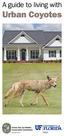 A guide to living with Urban Coyotes Living with coyotes ThinkStock Coyotes are found throughout Florida. This adaptable animal belongs to the dog family and resembles a small German shepherd. In Florida,
Who Eats What in the Woods?
 Who Eats What in the Woods? Developed with teachers at Tolworth Junior School in Kingston upon Thames in 2000. The webaddress for this activity is; Last updated 26th February 2008 This activity has now
Unit: Healthy Habits Grade: 1
 Unit: Healthy Habits 5.3b Good health habits include hand washing, personal cleanliness; avoiding harmful substances; eating a balanced diet; engaging in regular eercise ways to stay healthy Wash hands
STUDY GUIDE ECOLOGY. CHAPTER 21: Populations 1. An overview of ecology. Ecology is the study of interactions between organisms and their environment.
 STUDY GUIDE ECOLOGY CHAPTER 21: Populations 1. An overview of ecology. Ecology is the study of interactions between organisms and their environment. 2. A Hierarchy of interactions: cells tissues organs
Fire, Forest History, and Ecological Restoration of Ponderosa Pine Forests at Mount Rushmore, South Dakota
 Fire, Forest History, and Ecological Restoration of Ponderosa Pine Forests at Mount Rushmore, South Dakota Restoration uses the past not as a goal but as a reference point for the future...it is not to
Invasive Species Jeopardy
 LESSON FOURTEEN: INVASIVE SPECIES JEOPARDY Duration: One 45-minute class period Objectives: To test students knowledge of exotic invasive plant species taught in this unit. Prepare in advance: Practice
Fighting Fire with Fire: Can Fire Positively Impact an Ecosystem?
 Fighting Fire with Fire: Can Fire Positively Impact an Ecosystem? Science Topic: Fire Ecology Grades: 6 th 8 th Essential Questions: What role does fire play in maintaining healthy ecosystems? How does
ECOSYSTEM RESPONSES. reflect
 reflect There is a saying, No man is an island, which means that people need one another in order to survive. Everyone on Earth is interconnected in some way. This is not only true of human beings, but
Pond Vocabulary Words and Meanings
 Pond Vocabulary Words and Meanings Adapt: to adjust to a use or situation Aquatic: from or in the water Bacteria: tiny organisms, too small to be seen with the naked eye Carnivore: an animal that eats
1. Biodiversity & Distribution of Life
 National 5 Biology Unit 3 Life on Earth Summary notes 1. Biodiversity & Distribution of Life Perhaps the best place to start in this topic is with Biomes. Biomes are regions of our planet which have a
What Is Holistic Planned Grazing?
 What Is Holistic Planned Grazing? Holistic Planned Grazing is a planning process for dealing simply with the great complexity livestock managers face daily in integrating livestock production with crop,
How to make a Solitary Bee Box
 How to make a Solitary Bee Box **Note: The following instructions include the use of tools that may be dangerous. Ensure there is adult supervision with children. Time: 1 hour People: 1-2+ Materials: Wood
4.0 Discuss some effects of disturbances on the forest.
 4.0 Discuss some effects of disturbances on the forest. 4.1 Describe common disturbances that occur in the Boreal forest. Disturbances are normal to the life of the forest. Forests are very resilient (able
2. What kind of energy is stored in food? A. chemical energy B. heat energy C. kinetic energy D. light energy
 Assessment Bank Matter and Energy in Living Things SC.8.L.18.4 1. What is energy? A. anything that takes up space B. anything that has mass C. the ability to conduct current D. the ability to do work 2.
Broadmoor Public Golf Course TREE MANAGEMENT GUIDE
 Broadmoor Public Golf Course TREE MANAGEMENT GUIDE Conservation of the trees at the Broadmoor Public Golf Course is a priority for environmental, economic and human health reasons. Trees make a difference
Composting: Biology Curriculum
 Cornell Waste Management Institute cwmi.css.cornell.edu Composting: Biology Curriculum Understanding what composting is and how it works. Table of Contents Goal, Objectives, Keywords, Scientific Concepts...
Cell Deficiency and the Benefit of the Mushroom
 Cell Deficiency and the Benefit of the Mushroom Skin Cell Deficiency As we age, we produce cells less effectively and the number of healthy skin cells is diminished. This loss or dying off of cells is
Pre-lab homework Lab 2: Reproduction in Protists, Fungi, Moss and Ferns
 Pre-lab homework Lab 2: Reproduction in Protists, Fungi, Moss and Ferns Lab Section: Name: 1. Last week in lab you looked at the reproductive cycle of the animals. This week s lab examines the cycles of
Food Chain Frenzy. PREPARATION Copy and prepare Food Chain Cards - one for each pupil (pages 73-76).
 Food Chain Frenzy Key Stage 2 < < Food Chain Frenzy SUMMARY OF ACTIVITY Pupils are introduced to simple food chains using Norfolk examples. Feeding relationships, predator-prey interactions, population
Flowers; Seeds enclosed in fruit
 Name Class Date Chapter 22 Plant Diversity Section Review 22-1 Reviewing Key Concepts Short Answer On the lines provided, answer the following questions. 1. Describe the main characteristics of plants.
Biodiversity Concepts
 Biodiversity Concepts WHAT IS BIODIVERSITY? Biodiversity is the variety of life on Earth. For any kind of animal or plant each individual is not exactly the same as any other; nor are species or ecosystems.
Preserving Wild Ginseng in Minnesota
 Note: This digital document was adapted from Smith, W. R. 1993. Preserving Wild Ginseng in Minnesota. Minnesota Natural Heritage Program, Minnesota Department of Natural Resources. 7 pages. Preserving
What activities do you think an organism would use bioluminescence for?
 Relationships for Survival: The Role of Bioluminescence overview In these activities, students will focus on ecological relationships and investigate the many ways that species might interact using bioluminescence.
ENVIRONMENTAL CHANGES
 reflect How do you respond to environmental changes? Maybe you wear different types of clothes in different seasons. Maybe you only ride your bike during certain times of the year. What if you moved to
Food Webs and Food Chains Grade Five
 Ohio Standards Connection: Life Sciences Benchmark B Analyze plant and animal structures and functions needed for survival and describe the flow of energy through a system that all organisms use to survive.
The Prevention and Treatment of Mould Outbreaks in Collections
 National Preservation Office The Prevention and Treatment of Mould Outbreaks in Collections NPO Preservation Guidance Preservation in Practice Series Author R.E. Child Head of Conservation National Museums
Jesus Parables in Chronological Order. Three Kingdom of Heaven Parables (#13-#15) Parable #13 Mark 4:26-29 The Growing Seed
 Jesus Parables in Chronological Order Three Kingdom of Heaven Parables (#13-#15) Parable #13 Mark 4:26-29 The Growing Seed 26 He also said, This is what the kingdom of God is like. A man scatters seed
Digital Communications
 National Assembly for Wales Election Manifesto 2016 Digital Communications Digital growth is key to driving the Welsh economy forward, which is why innovative policies are needed to meet the increasing
Introduction to Beneficial Bacteria
 Name Introduction to Beneficial Bacteria Materials 11X17 paper Colored Pencils Markers Magazine Scissors Glue Procedure 1. Using your What is a Microbe? booklet and other handouts, answer the following
Connecting Ecosystems & Climate
 Abiotic and Biotic Components The connections and interactions between the abiotic and biotic components of ecosystems and climate are introduced and explored in this lesson. A hands-on sorting activity,
Pest Toolkit. Pest proofing your land for a sustainable community. Help is at hand. Main topics: Pest Animal control. pest plant control
 Pest Toolkit Pg1 Main topics: RPMP Pest proofing your land for a sustainable community Pg2 Pg3 Pg4 Pest Animal control pest plant control weed control in retirement areas Pests are unwanted plants (invasive
2 nd Grade Science Unit B: Life Sciences Chapter 3: Plants and Animals in Their Environment Lesson 1: How are plants and animals like their parents?
 2 nd Grade Science Unit B: Life Sciences Chapter 3: Plants and Animals in Their Environment Lesson 1: How are plants and animals like their parents? offspring Offspring are young plants and animals. Offspring
Unit: Plants & Animals (Grade 2)
 Unit: Plants & Animals (Grade 2) Content Area: Science Course(s): Science Time Period: 8 weeks Length: Weeks Status: Published Unit Overview Students will determine the life cycles of plants and animals
Plants, like all other living organisms have basic needs: a source of nutrition (food),
 WHAT PLANTS NEED IN ORDER TO SURVIVE AND GROW: WATER Grades 3 6 I. Introduction Plants, like all other living organisms have basic needs: a source of nutrition (food), water, space in which to live, air,
Cherokee County School District Student Performance Standards Unit Guides - Science: Fifth Grade
 Characteristics of Science 1 Cherokee County School District Habits of Mind S5CS1. Students will be aware of the importance of curiosity, honesty, openness, and skepticism in science and will exhibit these
DESIGNING A SCHOOL GARDEN. Sandy McGroarty, An Taisce Green-Schools
 DESIGNING A SCHOOL GARDEN Sandy McGroarty, An Taisce Green-Schools Designing the Garden Why do you want a garden? Ornamental Edible Forest Garden Outdoor Classroom Biodiversity Maintenance over the Summer
Plants, like all other living organisms have basic needs: a source of nutrition (food),
 LEARNING FROM LEAVES: A LOOK AT LEAF SIZE Grades 3 6 I. Introduction Plants, like all other living organisms have basic needs: a source of nutrition (food), water, space in which to live, air, and optimal
Non-consumptive use of wildlife. Non-consumptive Use. Non-consumptive Use
 Non-consumptive use of wildlife Non-consumptive Use Any non-hunting or non-extractive use Examples: wildlife feeding & photography, bird watching, whale watching Non-consumptive Use Sources of information
Tree Preservation Orders A Guide to Protected Trees
 Tree Preservation Orders A Guide to Protected Trees 1 Tree Preservation Order Introduction This leaflet is intended to provide advice for tree owners, conservation groups and the general public on protected
Animal Adaptations -- Vocabulary
 Section 1 Objectives o Children will understand what animal adaptations are. o Children will be able to explain why animal adaptations are important. o Children will be able to explain different types