
CLEARTRAN is chemically inert, non-hygroscopic, highly pure, theoretically dense, and easily machined.
|
|
|
- Melina Paul
- 9 years ago
- Views:
Transcription
1 CLEARTRAN Application Advanced Materials CLEARTRAN (water clear zinc sulfide) is a form of CVD ZINC SULFIDE that is modified by a post-deposition hot isostatic process. This process removes zinc hydrides from the crystal lattice, normalizes crystal structure and purifies the material, all contributing to single crystal-like transmittance in the visible through far infrared ranges ( μm). CLEARTRAN, with its low absorption and scatter throughout its broad transmitting range and high optical quality, is particularly well-suited for multi-spectral applications that require a single aperture for beam path for several wavebands. For example, CLEARTRAN is the material of choice for systems (such as tank windows) that have a visible camera, mid-and long-wave detectors, and laser rangefinders to designate targets. Additionally, CLEARTRAN has been supplied as external windows for military systems and as thick apertures for specialized sensor applications. CLEARTRAN is chemically inert, non-hygroscopic, highly pure, theoretically dense, and easily machined. Custom diameters, rectangles, CNC-profiled blanks, generated lens blanks, prisms and near-net shape domes can be made to your specifications. Sheet material is also available. Advanced Materials CLEARTRAN is also available as an evaporative source material. It is supplied in specified lump sizes (2-20 mm), which to minimize surface contamination, are hand selected to be free from saw cut, abraded or polished edges. Optical Properties 10% transmission limits (t=6 mm) μm Index of refraction inhomogeneity (Δn/n) μm) <20 Thermo-optic coefficient, dn/dt ( K) (avg. values) (K μm) 5.43 x 10⁻⁵ (K 1.15 μm) 4.21 x 10⁻⁵ (K 3.39 μm) 3.87 x 10⁻⁵ Bulk absorption coefficient (cm 1.3 μm) 6.0 x 10⁻⁴ (cm 2.7 μm) 1.0 x 10⁻³ (cm 3.8 μm) 6.0 x 10⁻⁴ (cm 9.27 μm) 6.0 x 10⁻³ (cm 10.6 μm) 2.0 x 10⁻¹ Forward Scatter (@ μm) 7% cm -1

2 Physical Properties These properties are typical but do not constitute specifications. Crystal structure cubic Grain size (diameter) µm Density (g cm 298 K) 4.09 Resistivity (Ωcm) >10 13 Chemical purity (%) For dielectric constant data, please request the Dielectric Properties bulletin. Mechanical Properties Hardness Knoop, 50 gm load (kg mm -2 ) Vickers, 1 kg load (kg mm -2 ) Flexural Strength (modulus of rupture) 4 pt. loading (psi) 4 pt. loading (MPa) Disc Bursting (MPa) x Fracture Toughness (critical stress intensity factor, K IC values) (MPa m, Vickers, 1 Kg) 1.0 Young s Modulus (elastic modulus) (psi) (GPa) Poisson s Ratio 0.28 Rain erosion resistance will depend on the environment x

3 Pulse Laser Damage Pulse Laser 10.6 µm, pulse width 15 µs Conditions Results Angle of Incidence Fluence (Jcm -2 ) Pulses (20Hz) Plasma At Surface Surface Damage Normal 20 5 no no damge Brewster no no damage Brewster 25 5 no no damage Brewster no rear surface damage Brewster yes surface crazed Thermal Properties Coefficient of Thermal Expansion (K 273 K) 6.3 x 10⁻⁶ (K 373 K) 7.0 x 10⁻⁶ (K 473 K) 7.5 x 10⁻⁶ (K K) 6.5 x 10⁻⁶ Thermal Conductivity (JK -1 m -1 s 298 K) 27.2 Heat Capacity (Jg -1 K 273 K) (Jg -1 K 323 K) (Jg -1 K 373 K) Thermal Diffusivity (m 2 s -1 ) 1.3 x 10⁻⁵ Maximum operating temperature will depend on the environment. Indices of Refraction (n) of CLEARTRAN ZnS as a function of wavelength at room temperature (20 C) Wavelength (μm) n Wavelength (μm) n Transmission, Attenuation, and Absorption of Infrared Materials The discussion below is a simplified introduction to the complex subject of determining the transmission, attenuation, and absorption coefficients of Advanced Materials infrared materials. For a more detailed discussion, please refer to the many textbooks on optical materials.

4 Transmission CVD ZINC SELENIDE, CVD ZINC SULFIDE, CLEARTRAN, and TUFTRAN materials transmit energy in the visible and infrared regions of the electromagnetic spectrum. All objects emit infrared radiation at temperatures above absolute zero. This radiation travels through the atmosphere as a waveform and is bent or refracted through transmitting media such as Advanced Materials infrared materials. Infrared radiation follows many of the same physical laws that govern visible light and is referred to as light, radiation, or energy. Infrared external transmittance can be defined as the ratio of energy which emerges from the final surface of an optical material to the energy which first strikes the optical material. The percent transmittance in a plane parallel plate of an optical material would include the original energy less the amount reflected, scattered, and absorbed. The simplified diagram below shows the effect of reflection, absorption, and scatter on the original energy and resultant transmission. To determine the theoretical transmission through an uncoated optical material, an optical designer needs to know the material s index of refraction. The index of refraction, n, is simply defined as the ratio of the velocity of light in the material to its velocity in a vacuum (n=1). The index is most often measured using a refractometer which measures the angle of refraction at a given wavelength. From the angle of refraction the index can then be computed. For CVD ZINC SELENIDE, CVD ZINC SULFIDE, and CLEARTRAN materials, the indices of refraction are available from Advanced Materials. When light originating in air (n ~ 1) is incident on the surface of an optically transparent material, some of the light is reflected from the surface and some is transmitted into the material. The fraction of light reflected is given by:

5 Eq. (1) where θ is the angle of incidence (measured from the normal to the surface) and n is the refractive index of the material. For normal incidence, i.e., cos θ = 1 and sin θ = 0, Eq. (1) reduces to: Eq. (2) This will determine reflection from the first (front) surface only. Before the ray of light can exit from the opposite side, it undergoes a second reflection from the inside of the second surface. This second reflection also bounces around and if all of this is added up, the total theoretical external transmittance of a polished, uncoated, plane parallel plate, taking into account multiple internal reflections, and assuming there is no absorption or scattering within the material, is: Eq. (3) where T max is the total theoretical external transmittance, which is the maximum transmission possible for an uncoated window. T max is a function of wavelength since n varies with the wavelength of light. Attenuation Coefficient The attenuation coefficient, α, is a measure of the loss in transmission due to absorption and scattering of light in the optical material. The measured transmission T, through an optical window of thickness t, is given by: Eq. (4) where R is defined in Eq. (2) and a is the attenuation coefficient which has units of reciprocal length, i.e., cm -1. A less precise, but more commonly used formula is: Eq. (5) For example, if α = 0.1 cm -1, t = 1 cm and R = 0.15, then T = 0.66 using Eq. (4) and T = 0.65 using Eq. (5). Since most commercially available conventional IR spectrophotometers have an accuracy of ± 1% for transmission measurements, in most cases Eq. (5) would be adequate to calculate attenuation coefficients from transmission data provided T < T max. When T T max Fourier Transform IR (FTIR) spectrometers can be used to determine α. FTIR spectrometers typically can achieve transmission accuracies of better than 0.1 %. Absorption Coefficient The most widely adopted method for measuring low level optical absorption losses in the infrared is adiabatic laser calorimetry. Thermocouples are attached to the sample periphery and, for a given incident laser power, the thermal rise and decay as a function of laser irradiation is recorded. The magnitude or rate of thermal rise in the sample is proportional to the absorption coefficient of the sample (both surface and bulk absorption). If the absorption coefficient of the material to be tested is small, then the following equation can be used to determine the absorption of the sample: Eq. (6) Here n = index of refraction, m = mass of the sample, c = heat capacity, Pt = power transmitted, (dt Gain /dt) T = slope of the rising part of the temperature vs. time curve at the temperature

6 = absolute value of the slope of the falling part of the temperature vs. time curve at a temperature T, and ß = fraction of the power absorbed by the sample. For a well designed calorimeter, the sample will be sufficiently thermally isolated so that dt Loss /dt T is small compared to (dt Gain /dt) T. This is accomplished by using a suitable sample holder and placing the sample in a vacuum. Care must be taken during measurements to ensure that no laser radiation hits the thermocouples directly. Therefore, provisions must be taken to terminate (absorb) the reflected (Fresnel) light from the sample surfaces. This is usually accomplished by placing the sample to be measured at an angle (<10 ) to the laser beam and trapping the reflected light by an absorbing surface located outside (or inside) the calorimeter. Direct scattering of incident radiation onto the thermocouple appears as an anomalously fast rise in temperature at the moment of laser turn-on followed by an equally sharp decay in thermocouple signal when the laser is switched off. In order for Eq. (6) to be valid, the sample must be irradiated for a sufficient time such that each point within the sample experiences the same rate of thermal rise. Equation (6) permits calculation of the fraction of power absorbed by the sample, ß. In order to calculate the bulk absorption coefficient of the optical material, α b, one must separate the bulk and surface contributions from the measured absorption using the following equation: Eq. (7) where α b = the bulk absorption coefficient (cm -1 ), L = the length of the sample (cm), and α s = the absorption per surface of the sample. The standard calorimetric technique used to separate bulk and surface components is to measure the absorption as a function of sample length. A plot of ß vs. L for a number of different sample lengths should produce a straight line with the slope equal to the bulk absorption coefficient and the intercept equal to twice the surface absorption. To make this measurement properly, care must be taken to ensure that all the sample surfaces are identical and have a superior optical finish. This is best accomplished by polishing all the samples to be tested at the same time under exactly the same conditions. Much of the published data on the absorption coefficients of IR transmission materials is calculated assuming α s = 0. This effective absorption coefficient, which is just ß/L, is expected to be higher than the bulk absorption coefficient in Eq. (7) because of the contribution from the surface. Dielectric Properties In response to numerous inquiries, Advanced Materials has assembled the following data on the dielectric properties of our infrared materials. There are three groups of measurements reported. The first two sets were obtained at the Engineering Experiment Station (EES) of the Georgia Institute of Technology. The first set of data was obtained under a subcontract to Georgia Tech supported by Boeing Aerospace Company¹ Temperature dependant data were obtained by Dr. James Fuller, et al., under a contract with U.S. Air Force Wright Aeronautical Laboratory (AFWAL).² The third group of data at lower frequencies was obtained at the AFWAL Dayton, Ohio.³ The dielectric and loss tangent of CVD ZINC SELENIDE were measured at Georgia Tech in three mm-wave frequency bands using several different methods. The results indicate that at room temperature, the dielectric constant is about 9.0, and the loss tangent is below As the temperature increases to 550 C, the dielectric constant increases linearly to about 10.0, and the loss tangent increases to about Compared with ceramics such as aluminum oxide or silicon nitride, which have similar dielectric constants, zinc selenide (ZnSe) is significantly more temperature sensitive. The 94 GHZ measurements were performed by inserting 0.05-inch thick slabs of CVD ZINC SELENIDE into a Fabry-Perot cavity resonator. This instrument is particularly well suited for samples that are available as slabs of uniform thickness.¹ Further dielectric measurements were performed on samples of ZnSe machined to fit in circular waveguide cavities. A very tight sample fit can be obtained in the circular waveguide, and resonant cavity measurements are sensitive to small loss tangents. These measurements were performed at Ka- and U-band frequencies from room temperature to 550 C, using instrumentation and techniques that have been developed under contract No. F C-1718 with the AFWAL Avionics Laboratory (AADM-1).² Results are given in Figures 1-11 for frequencies from 28.9 to 42.4 GHz. The frequency dependent variations in dielectric constant are repeatable, but they are believed to be due to the instrumentation rather than the ZnSe. The scatter in the loss tangent data is due to random errors in the measurement at very small quantities. The variation in properties that increase with temperature are believed to be accurately represented.

7 Dielectric measurements were also performed at lower frequencies for all of Advanced Materials infrared materials: CVD ZINC SELENIDE, CVD ZINC SULFIDE, CdS, and CLEARTRAN at AFWAL.³ The data were obtained over two frequency ranges: 0.1 and 10.0 GHz, and 9.0 to 18 GHz. The high frequency data is good only below 15 GHz. The results (including teflon calibration) are given in Figures References: 1. R.L. Taylor, R.F. Donadio, J.A. Fuller, T.S. Taylor and G.N. Hill, Development of a Dual Infrared and Millimeter-Wave Aperature Antenna, work performed under Boeing Aerospace Co., P.O. CH6411, CVD TR - 025, Oct J.A. Fuller, T.S. Taylor, T.B. Elf and G.N. Hill, Dielectric Properties of Ceramics for Millimeter-Wave Tubes, Contract No. F C-1718, AFWAL-TR , Feb Questions should be referred to Mr. Brian Kent, AFWAL/AAWP-3, E-O Observables Group, Phone No. (513) /5076. The measurements included in this document were not made directly by Advanced Materials, and questions concerning experimental detail, accuracy, etc., should be addressed to the specific performing organization. Safe Handling Information CVD ZINC SELENIDE and CVD ZINC SULFIDE do not present any chemical hazard in their finished form; however, their fabrication could potentially lead to generation of hazardous materials if necessary precautions are not taken. The hazards associated with the fabrication process depend upon the specific operation; the workpiece; the abrasive system in use; and the chemical nature of any cooling and/or suspension agents added to the process water. Grinding of these materials could potentially generate zinc selenide (ZnSe), zinc sulfide (ZnS), zinc oxides (dust or fume). Loose abrasives used in the lapping and polishing of ZnSe and ZnS may contribute to airborne contamination of the work area. Wet grinding/polishing is a commonly recommended practice to minimize airborne particulates, as well as to keep the workpiece surface cool. These materials are sensitive to high temperature. For ZnS and ZnSe, oxidation and decomposition will occur at temperature above 200 C in oxidizing atmosphere (e.g., air, oxygen, etc...) and sublimation will occur at temperature greater than about 500 C. Treatment of our lenses under elevated temperatures must be properly controlled to prevent decomposition. CVD ZINC SELENIDE and CVD ZINC SULFIDE are incompatible with strong acids and strong bases. Cleaning of these materials using incompatible solvents will result in decomposition with the release of toxic gases such as hydrogen selenide and hydrogen sulfide. Controls Ventilation: If zinc selenide or zinc sulfide are machined, ground or polished, they should be done wet to suppress dust generation. The use of water on grinding operations, however, may not eliminate the need for ventilation control as water droplets can aerosolize or evaporate, leaving respirable airborne particles. Engineering controls such as local exhaust ventilation may be necessary, depending upon the degree of airborne particles being released from the operation. Personal protective equipment: Due to the possibility of dusts and fumes being generated during the fabrication of these materials, the following personal protective equipment is recommended; depending on the degree of exposure. Chemical goggles, splash shields, or safety glasses to protect eyes Rubber gloves NIOSH-approved respirator, approved for toxic dusts, mists and fumes Eye wash and safety shower stations available in case of eye or skin contact Care must be taken to maintain all personal protective equipment in a clean and sanitary manner. Food and beverages should be kept away from areas where zinc selenide and zinc sulfide dust may be present. Hands should be thoroughly washed before eating to prevent ingestion. Broken pieces of these materials should be treated like glass, because the material is brittle and forms sharp edges when broken.

8 CVD ZINC SELENIDE, CVD ZINC SULFIDE, CLEARTRAN, and TUFTRAN are trademarks of Rohm and Haas Company. These suggestions and data are based on information we believe to be reliable. They are offered in good faith, but without guarantee, as conditions and methods of use of our products are beyond our control. We recommend that the prospective user determine the suitability of our materials and suggestions before adopting them on a commercial scale. Suggestions for uses of our products or the inclusion of descriptive material from patents and the citation of specific patents in this publication should not be understood as recommending the use of our products in violation of any patent or as permission or license to use any patents of the Rohm and Haas Company. Rohm and Haas, 2008 All rights reserved. May 2000

Chemically vapor deposited ZINC SELENIDE (CVD ZnSe) is the material of choice for use as optical components in high powered CO 2
 CVD ZINC SELENIDE Application Chemically vapor deposited ZINC SELENIDE (CVD ZnSe) is the material of choice for use as optical components in high powered CO 2 lasers due to its low bulk absorption at 10.6
CVD SILICON CARBIDE. CVD SILICON CARBIDE s attributes include:
 CVD SILICON CARBIDE CVD SILICON CARBIDE is the ideal performance material for design engineers. It outperforms conventional forms of silicon carbide, as well as other ceramics, quartz, and metals in chemical
TIE-31: Mechanical and thermal properties of optical glass
 PAGE 1/10 1 Density The density of optical glass varies from 239 for N-BK10 to 603 for SF66 In most cases glasses with higher densities also have higher refractive indices (eg SF type glasses) The density
INFRARED MONITORING OF 110 GHz GYROTRON WINDOWS AT DIII D
 GA A23981 INFRARED MONITORING OF 110 GHz GYROTRON WINDOWS AT DIII D by Y. GORELOV, J. LOHR, R.W. CALLIS, and D. PONCE MAY 2002 DISCLAIMER This report was prepared as an account of work sponsored by an
The CVD diamond booklet
 available at: www.diamond-materials.com/download Content 1. General properties of diamond... 2 2. Optical Properties... 4 Optical transparency...4 Absorption coefficient at 10.6 µm...5 Refractive index:
Corning HPFS 7979, 7980, 8655 Fused Silica. Optical Materials Product Information Specialty Materials Division
 Corning HPFS 7979, 7980, 8655 Fused Silica Optical Materials Product Information Specialty Materials Division HPFS 7979, 7980 and 8655 Fused Silica HPFS Fused Silica glasses are known throughout the industry
QUANTITATIVE INFRARED SPECTROSCOPY. Willard et. al. Instrumental Methods of Analysis, 7th edition, Wadsworth Publishing Co., Belmont, CA 1988, Ch 11.
 QUANTITATIVE INFRARED SPECTROSCOPY Objective: The objectives of this experiment are: (1) to learn proper sample handling procedures for acquiring infrared spectra. (2) to determine the percentage composition
Using the Spectrophotometer
 Using the Spectrophotometer Introduction In this exercise, you will learn the basic principals of spectrophotometry and and serial dilution and their practical application. You will need these skills to
Umicore Germanium Optics Leading the way in infrared optics
 Umicore Germanium Optics Leading the way in infrared optics Germanium Infrared Optical Materials Umicore brings you the proven advantages of Germanium (Ge) infrared optical materials for the manufacture
AP Physics B Ch. 23 and Ch. 24 Geometric Optics and Wave Nature of Light
 AP Physics B Ch. 23 and Ch. 24 Geometric Optics and Wave Nature of Light Name: Period: Date: MULTIPLE CHOICE. Choose the one alternative that best completes the statement or answers the question. 1) Reflection,
GEORGIA INSTITUTE OF TECHNOLOGY ENVIRONMENTAL HEALTH AND SAFETY PERSONAL PROTECTIVE EQUIPMENT
 PURPOSE To protect the health and welfare of GEORGIA TECH employees in areas where there may be a risk of injury or exposure to hazardous substances or conditions employees who work in areas where physical
Synthetic Sensing: Proximity / Distance Sensors
 Synthetic Sensing: Proximity / Distance Sensors MediaRobotics Lab, February 2010 Proximity detection is dependent on the object of interest. One size does not fit all For non-contact distance measurement,
Reflectance Characteristics of Accuflect Light Reflecting Ceramic
 Reflectance Characteristics of Accuflect Light Reflecting Ceramic Copyright July 1 Accuratus Corporation 35 Howard Street Phillipsburg, NJ 8865 USA +1.98.13.77 http://accuratus.com SUMMARY Accuflect is
Zero Width Glass Cutting with CO 2 Laser
 Zero Width Glass Cutting with CO 2 Laser Mohammed Naeem GSI Group, Laser Division Cosford Lane, Swift Valley Rugby [email protected] Introduction Laser cutting of glass in not a novel technique, excellent
AS COMPETITION PAPER 2008
 AS COMPETITION PAPER 28 Name School Town & County Total Mark/5 Time Allowed: One hour Attempt as many questions as you can. Write your answers on this question paper. Marks allocated for each question
Physical Science Study Guide Unit 7 Wave properties and behaviors, electromagnetic spectrum, Doppler Effect
 Objectives: PS-7.1 Physical Science Study Guide Unit 7 Wave properties and behaviors, electromagnetic spectrum, Doppler Effect Illustrate ways that the energy of waves is transferred by interaction with
Optical Fibres. Introduction. Safety precautions. For your safety. For the safety of the apparatus
 Please do not remove this manual from from the lab. It is available at www.cm.ph.bham.ac.uk/y2lab Optics Introduction Optical fibres are widely used for transmitting data at high speeds. In this experiment,
Optical Communications
 Optical Communications Telecommunication Engineering School of Engineering University of Rome La Sapienza Rome, Italy 2005-2006 Lecture #2, May 2 2006 The Optical Communication System BLOCK DIAGRAM OF
Introduction to Fourier Transform Infrared Spectrometry
 Introduction to Fourier Transform Infrared Spectrometry What is FT-IR? I N T R O D U C T I O N FT-IR stands for Fourier Transform InfraRed, the preferred method of infrared spectroscopy. In infrared spectroscopy,
COLLATED QUESTIONS: ELECTROMAGNETIC RADIATION
 COLLATED QUESTIONS: ELECTROMAGNETIC RADIATION 2011(2): WAVES Doppler radar can determine the speed and direction of a moving car. Pulses of extremely high frequency radio waves are sent out in a narrow
Hygro-Thermometer + InfraRed Thermometer Model RH101
 User's Guide Hygro-Thermometer + InfraRed Thermometer Model RH101 Introduction Congratulations on your purchase of the Extech Hygro-Thermometer plus InfraRed Thermometer. This device measures relative
v = fλ PROGRESSIVE WAVES 1 Candidates should be able to :
 PROGRESSIVE WAVES 1 Candidates should be able to : Describe and distinguish between progressive longitudinal and transverse waves. With the exception of electromagnetic waves, which do not need a material
Theremino System Theremino Spectrometer Technology
 Theremino System Theremino Spectrometer Technology theremino System - Theremino Spectrometer Technology - August 15, 2014 - Page 1 Operation principles By placing a digital camera with a diffraction grating
Coating Technology: Evaporation Vs Sputtering
 Satisloh Italy S.r.l. Coating Technology: Evaporation Vs Sputtering Gianni Monaco, PhD R&D project manager, Satisloh Italy 04.04.2016 V1 The aim of this document is to provide basic technical information
8001782 Owner s Manual
 8001782 Digital Infrared Thermometer Owner s Manual Introduction This instrument is a portable, easy to use compact-size digital thermometer with laser sighting designed for one hand operation. The meter
Development of Optical Wave Microphone Measuring Sound Waves with No Diaphragm
 Progress In Electromagnetics Research Symposium Proceedings, Taipei, March 5 8, 3 359 Development of Optical Wave Microphone Measuring Sound Waves with No Diaphragm Yoshito Sonoda, Takashi Samatsu, and
Overview. What is EMR? Electromagnetic Radiation (EMR) LA502 Special Studies Remote Sensing
 LA502 Special Studies Remote Sensing Electromagnetic Radiation (EMR) Dr. Ragab Khalil Department of Landscape Architecture Faculty of Environmental Design King AbdulAziz University Room 103 Overview What
Thermal diffusivity and conductivity - an introduction to theory and practice
 Thermal diffusivity and conductivity - an introduction to theory and practice Utrecht, 02 October 2014 Dr. Hans-W. Marx Linseis Messgeräte GmbH Vielitzer Str. 43 D-95100 Selb / GERMANY www.linseis.com
Treasure Hunt. Lecture 2 How does Light Interact with the Environment? EMR Principles and Properties. EMR and Remote Sensing
 Lecture 2 How does Light Interact with the Environment? Treasure Hunt Find and scan all 11 QR codes Choose one to watch / read in detail Post the key points as a reaction to http://www.scoop.it/t/env202-502-w2
5.3 Cell Phone Camera
 164 Chapter 5 5.3 Cell Phone Camera The next design example we discuss is a cell phone camera. These systems have become quite popular, to the point that it is often more difficult to purchase a cell phone
Silicon, the test mass substrate of tomorrow? Jerome Degallaix The Next Detectors for Gravitational Wave Astronomy Beijing - 2015
 Silicon, the test mass substrate of tomorrow? Jerome Degallaix The Next Detectors for Gravitational Wave Astronomy Beijing - 2015 Program of the talk... What we have now What we know about silicon What
Fiber Optics: Fiber Basics
 Photonics Technical Note # 21 Fiber Optics Fiber Optics: Fiber Basics Optical fibers are circular dielectric wave-guides that can transport optical energy and information. They have a central core surrounded
INFRARED PARTS MANUAL
 INFRARED PARTS MANUAL PIR325 FL65 GLOLAB CORPORATION Thank you for buying our Pyroelectric Infrared components. The goal of Glolab is to produce top quality electronic kits, products and components. All
2 Absorbing Solar Energy
 2 Absorbing Solar Energy 2.1 Air Mass and the Solar Spectrum Now that we have introduced the solar cell, it is time to introduce the source of the energy the sun. The sun has many properties that could
UNIVERSITY OF SASKATCHEWAN Department of Physics and Engineering Physics
 UNIVERSITY OF SASKATCHEWAN Department of Physics and Engineering Physics Physics 111.6 MIDTERM TEST #4 March 15, 2007 Time: 90 minutes NAME: (Last) Please Print (Given) STUDENT NO.: LECTURE SECTION (please
EXPERIMENT 11 UV/VIS Spectroscopy and Spectrophotometry: Spectrophotometric Analysis of Potassium Permanganate Solutions.
 EXPERIMENT 11 UV/VIS Spectroscopy and Spectrophotometry: Spectrophotometric Analysis of Potassium Permanganate Solutions. Outcomes After completing this experiment, the student should be able to: 1. Prepare
Laboratory #3 Guide: Optical and Electrical Properties of Transparent Conductors -- September 23, 2014
 Laboratory #3 Guide: Optical and Electrical Properties of Transparent Conductors -- September 23, 2014 Introduction Following our previous lab exercises, you now have the skills and understanding to control
PHYS 222 Spring 2012 Final Exam. Closed books, notes, etc. No electronic device except a calculator.
 PHYS 222 Spring 2012 Final Exam Closed books, notes, etc. No electronic device except a calculator. NAME: (all questions with equal weight) 1. If the distance between two point charges is tripled, the
OPTICAL FIBERS INTRODUCTION
 OPTICAL FIBERS References: J. Hecht: Understanding Fiber Optics, Ch. 1-3, Prentice Hall N.J. 1999 D. R. Goff: Fiber Optic Reference Guide (2 nd ed.) Focal Press 1999 Projects in Fiber Optics (Applications
Refractive Index Measurement Principle
 Refractive Index Measurement Principle Refractive index measurement principle Introduction Detection of liquid concentrations by optical means was already known in antiquity. The law of refraction was
GLOBAL COLLEGE OF ENGINEERING &TECHNOLOGY: YSR DIST. Unit VII Fiber Optics Engineering Physics
 Introduction Fiber optics deals with the light propagation through thin glass fibers. Fiber optics plays an important role in the field of communication to transmit voice, television and digital data signals
How To Understand Light And Color
 PRACTICE EXAM IV P202 SPRING 2004 1. In two separate double slit experiments, an interference pattern is observed on a screen. In the first experiment, violet light (λ = 754 nm) is used and a second-order
Solar Energy. Outline. Solar radiation. What is light?-- Electromagnetic Radiation. Light - Electromagnetic wave spectrum. Electromagnetic Radiation
 Outline MAE 493R/593V- Renewable Energy Devices Solar Energy Electromagnetic wave Solar spectrum Solar global radiation Solar thermal energy Solar thermal collectors Solar thermal power plants Photovoltaics
Various Technics of Liquids and Solids Level Measurements. (Part 3)
 (Part 3) In part one of this series of articles, level measurement using a floating system was discusses and the instruments were recommended for each application. In the second part of these articles,
Material data sheet. EOS CobaltChrome MP1. Description
 EOS CobaltChrome MP1 EOS CobaltChrome MP1 is a cobalt-chrome-molybdenum-based superalloy powder which has been optimized especially for processing on EOSINT M systems. This document provides information
Reflection and Refraction
 Equipment Reflection and Refraction Acrylic block set, plane-concave-convex universal mirror, cork board, cork board stand, pins, flashlight, protractor, ruler, mirror worksheet, rectangular block worksheet,
The photoionization detector (PID) utilizes ultraviolet
 Chapter 6 Photoionization Detectors The photoionization detector (PID) utilizes ultraviolet light to ionize gas molecules, and is commonly employed in the detection of volatile organic compounds (VOCs).
Quartz Glass. Tubes and Rods
 Quartz Glass Tubes and Rods PH 300, GE 214, QI PN GVB Solutions in Glass Schlackstrasse 3 52080 Aachen Germany +49-241/9108588 +49-241/9108589 E- [email protected] www.g-v-b.de Table of contents General Information
PHOTOELECTRIC EFFECT AND DUAL NATURE OF MATTER AND RADIATIONS
 PHOTOELECTRIC EFFECT AND DUAL NATURE OF MATTER AND RADIATIONS 1. Photons 2. Photoelectric Effect 3. Experimental Set-up to study Photoelectric Effect 4. Effect of Intensity, Frequency, Potential on P.E.
P R E A M B L E. Facilitated workshop problems for class discussion (1.5 hours)
 INSURANCE SCAM OPTICS - LABORATORY INVESTIGATION P R E A M B L E The original form of the problem is an Experimental Group Research Project, undertaken by students organised into small groups working as
Lapping and Polishing Basics
 Lapping and Polishing Basics Applications Laboratory Report 54 Lapping and Polishing 1.0: Introduction Lapping and polishing is a process by which material is precisely removed from a workpiece (or specimen)
Application Note: Absorbance
 Units Units Theory of absorbance Light absorption occurs when atoms or molecules take up the energy of a photon of light, thereby reducing the transmission of light as it is passed through a sample. Light
PERSONAL PROTECTIVE EQUIPMENT FOR CALIFORNIA STATE UNIVERSITY, LOS ANGELES
 PERSONAL PROTECTIVE EQUIPMENT FOR CALIFORNIA STATE UNIVERSITY, LOS ANGELES OCTOBER 2007 PROGRAM APPROVAL AND AUTHORIZATION James M. Rosser, President Date TABLE OF CONTENTS TITLE Section PURPOSE...1.0
Interferometers. OBJECTIVES To examine the operation of several kinds of interferometers. d sin = n (1)
 Interferometers The true worth of an experimenter consists in his pursuing not only what he seeks in his experiment, but also what he did not seek. Claude Bernard (1813-1878) OBJECTIVES To examine the
Spectrophotometry and the Beer-Lambert Law: An Important Analytical Technique in Chemistry
 Spectrophotometry and the Beer-Lambert Law: An Important Analytical Technique in Chemistry Jon H. Hardesty, PhD and Bassam Attili, PhD Collin College Department of Chemistry Introduction: In the last lab
3 Nextel Textiles. Ceramic fiber products for outerspace applications.
 3 Nextel Textiles Ceramic fiber products for outerspace applications. Physical Properties 3M Nextel Fabrics, Tapes, and Sleevings are designed to meet the toughest thermal, mechanical and electrical performance
GRID AND PRISM SPECTROMETERS
 FYSA230/2 GRID AND PRISM SPECTROMETERS 1. Introduction Electromagnetic radiation (e.g. visible light) experiences reflection, refraction, interference and diffraction phenomena when entering and passing
Electromagnetic Radiation (EMR) and Remote Sensing
 Electromagnetic Radiation (EMR) and Remote Sensing 1 Atmosphere Anything missing in between? Electromagnetic Radiation (EMR) is radiated by atomic particles at the source (the Sun), propagates through
Lab PPE Guide Examples of Personal Protective Equipment
 Lab PPE Guide Examples of Personal Protective Equipment 1140 South Paulina St. 245 (PSB) Chicago IL 60612 Phone: 312-413-3387 Fax: 312-413-3700 www.uic.edu/depts/envh This document is to be used as a supplement
Module 13 : Measurements on Fiber Optic Systems
 Module 13 : Measurements on Fiber Optic Systems Lecture : Measurements on Fiber Optic Systems Objectives In this lecture you will learn the following Measurements on Fiber Optic Systems Attenuation (Loss)
Experiment #5: Qualitative Absorption Spectroscopy
 Experiment #5: Qualitative Absorption Spectroscopy One of the most important areas in the field of analytical chemistry is that of spectroscopy. In general terms, spectroscopy deals with the interactions
Practical Application of Industrial Fiber Optic Sensing Systems
 Practical Application of Industrial Fiber Optic Sensing Systems John W. Berthold and David B. Needham Davidson Instruments, Inc. P.O. Box 130100, The Woodlands, TX 77393 ABSTRACT In this presentation,
Application Note AN1
 TAKING INVENTIVE STEPS IN INFRARED. MINIATURE INFRARED GAS SENSORS GOLD SERIES UK Patent App. No. 799A USA Patent App. No. 9/78,7 World Patents Pending SENSOR OVERVIEW Application Note AN The Dynament
Stack Sampling Stack sampling or source sampling
 Stack Monitoring Stack Sampling Stack sampling or source sampling may be defined as a method of collecting representative samples of pollutant laden air/gases at the place of origin of pollutants to determine
Determination of the enthalpy of combustion using a bomb calorimeter TEC. Safety precautions
 Safety precautions Naphthalene is harmful if swallowed. May cause cancer. Is further very toxic to aquatic organisms and can have long-term harmful effects in bodies of water. Equipment 1 Bomb calorimeter
Shielding Effectiveness Test Method. Harbour s LL, SB, and SS Coaxial Cables. Designs for Improved Shielding Effectiveness
 Shielding Effectiveness Test Method Harbour s LL, SB, and SS Coaxial Cables Designs for Improved Shielding Effectiveness Harbour Industries 4744 Shelburne Road Shelburne Vermont 05482 USA 802-985-3311
Passive Millimeter-Wave Imaging and Potential Applications in Homeland Security and Aeronautics
 Passive Millimeter-Wave Imaging and Potential Applications in Homeland Security and Aeronautics Magdy Attia, Ph.D. James B. Duke Distinguished Professor Chair, Computer Science & Engineering Department
PERSONAL PROTECTIVE EQUIPMENT (PPE)
 Page 1 of 6 (PPE) Personal protective equipment (PPE) is used to protect an individual from hazards associated with their work tasks or environment. Specific types of personal protective equipment include
After a wave passes through a medium, how does the position of that medium compare to its original position?
 Light Waves Test Question Bank Standard/Advanced Name: Question 1 (1 point) The electromagnetic waves with the highest frequencies are called A. radio waves. B. gamma rays. C. X-rays. D. visible light.
THERMAL RADIATION (THERM)
 UNIVERSITY OF SURREY DEPARTMENT OF PHYSICS Level 2 Classical Laboratory Experiment THERMAL RADIATION (THERM) Objectives In this experiment you will explore the basic characteristics of thermal radiation,
University of California at Santa Cruz Electrical Engineering Department EE-145L: Properties of Materials Laboratory
 University of California at Santa Cruz Electrical Engineering Department EE-145L: Properties of Materials Laboratory Lab 8: Optical Absorption Spring 2002 Yan Zhang and Ali Shakouri, 05/22/2002 (Based
Conductivity of silicon can be changed several orders of magnitude by introducing impurity atoms in silicon crystal lattice.
 CMOS Processing Technology Silicon: a semiconductor with resistance between that of conductor and an insulator. Conductivity of silicon can be changed several orders of magnitude by introducing impurity
Dual Laser InfraRed (IR) Thermometer with Color Alert
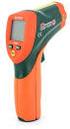 User Manual Dual Laser InfraRed (IR) Thermometer with Color Alert MODEL 42509 Introduction Congratulations on your purchase of the Model 42509 IR Thermometer with Color Alert. This Infrared thermometer
What s in the Mix? Liquid Color Spectroscopy Lab (Randy Landsberg & Bill Fisher)
 What s in the Mix? Liquid Color Spectroscopy Lab (Randy Landsberg & Bill Fisher) Introduction: There is more to a color than a name. Color can tell us lots of information. In this lab you will use a spectrophotometer
DETECTION OF COATINGS ON PAPER USING INFRA RED SPECTROSCOPY
 DETECTION OF COATINGS ON PAPER USING INFRA RED SPECTROSCOPY Eduard Gilli 1,2 and Robert Schennach 1, 2 1 Graz University of Technology, 8010 Graz, Austria 2 CD-Laboratory for Surface Chemical and Physical
PIEZOELECTRIC FILMS TECHNICAL INFORMATION
 PIEZOELECTRIC FILMS TECHNICAL INFORMATION 1 Table of Contents 1. PIEZOELECTRIC AND PYROELECTRIC EFFECTS 3 2. PIEZOELECTRIC FILMS 3 3. CHARACTERISTICS PROPERTIES OF PIEZOELECTRIC FILMS 3 4. PROPERTIES OF
DUPONT PERFORMANCE POLYMERS Joint Design: A Critical Factor in Strong Bonds GENERAL GUIDELINES FOR ULTRASONIC, VIBRATION AND SPIN WELDING
 DUPONT PERFORMANCE POLYMERS Joint Design: A Critical Factor in Strong Bonds GENERAL GUIDELINES FOR ULTRASONIC, VIBRATION AND SPIN WELDING Introduction Welding techniques for assembling parts molded with
APPLICATION NOTE AP050830
 APPLICATION NOTE AP050830 Selection and use of Ultrasonic Ceramic Transducers Pro-Wave Electronics Corp. E-mail: [email protected] URL: http://www.prowave.com.tw The purpose of this application note
TechCut 4 Precision Low Speed Saw
 Product Brochure TechCut 4 Precision Low Speed Saw 3" - 6" Blade Range Digital Speed Display 1-Micron Sample Indexing Spring-Loaded Dressing Stick Attachment All Aluminum & Stainless Steel Construction
Experiment 3 Lenses and Images
 Experiment 3 Lenses and Images Who shall teach thee, unless it be thine own eyes? Euripides (480?-406? BC) OBJECTIVES To examine the nature and location of images formed by es. THEORY Lenses are frequently
Dual Laser InfraRed (IR) Thermometer
 User s Manual Dual Laser InfraRed (IR) Thermometer MODEL 42511 Introduction Congratulations on your purchase of the Model 42511 IR Thermometer. This Infrared thermometer measures and displays non-contact
Physical Properties of a Pure Substance, Water
 Physical Properties of a Pure Substance, Water The chemical and physical properties of a substance characterize it as a unique substance, and the determination of these properties can often allow one to
The atomic packing factor is defined as the ratio of sphere volume to the total unit cell volume, or APF = V S V C. = 2(sphere volume) = 2 = V C = 4R
 3.5 Show that the atomic packing factor for BCC is 0.68. The atomic packing factor is defined as the ratio of sphere volume to the total unit cell volume, or APF = V S V C Since there are two spheres associated
Experimental results for the focal waveform and beam width in the focusing lens with a 100 ps filter
 EM Implosion Memos Memo 51 July, 2010 Experimental results for the focal waveform and beam width in the focusing lens with a 100 ps filter Prashanth Kumar, Carl E. Baum, Serhat Altunc, Christos G. Christodoulou
Lecture 9, Thermal Notes, 3.054
 Lecture 9, Thermal Notes, 3.054 Thermal Properties of Foams Closed cell foams widely used for thermal insulation Only materials with lower conductivity are aerogels (tend to be brittle and weak) and vacuum
Safety Training Topic PERSONAL PROTECTIVE EQUIPMENT
 Safety Training Topic PERSONAL PROTECTIVE EQUIPMENT Purpose of Meeting To remind workers that using personal protective equipment (PPE) can protect them from serious injury. To reince PPE safety rules.
DUST EMISSION MONITORING SYSTEM
 Applications Measurement of dust concentration in dry or moist, steamsaturated and corrosive stack gases Monitoring of municipal and hazardous waste and sewage sludge incinerators Monitoring of power plants
Blackbody Radiation References INTRODUCTION
 Blackbody Radiation References 1) R.A. Serway, R.J. Beichner: Physics for Scientists and Engineers with Modern Physics, 5 th Edition, Vol. 2, Ch.40, Saunders College Publishing (A Division of Harcourt
A Beer s Law Experiment
 A Beer s Law Experiment Introduction There are many ways to determine concentrations of a substance in solution. So far, the only experiences you may have are acid-base titrations or possibly determining
Dual Laser InfraRed (IR) Thermometer
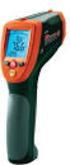 User Manual Dual Laser InfraRed (IR) Thermometer MODEL 42512 Introduction Congratulations on your purchase of the Model 42512 IR Thermometer. This Infrared thermometer measures and displays non-contact
Science Standard Articulated by Grade Level Strand 5: Physical Science
 Concept 1: Properties of Objects and Materials Classify objects and materials by their observable properties. Kindergarten Grade 1 Grade 2 Grade 3 Grade 4 PO 1. Identify the following observable properties
Prussian blue nanoparticles for laser-induced photothermal therapy of tumors
 Electronic Supplementary Material (ESI) for RSC Advances. This journal is The Royal Society of Chemistry 2014 Supporting Information Prussian blue nanoparticles for laser-induced photothermal therapy of
Chemistry 111 Lab: Intro to Spectrophotometry Page E-1
 Chemistry 111 Lab: Intro to Spectrophotometry Page E-1 SPECTROPHOTOMETRY Absorption Measurements & their Application to Quantitative Analysis study of the interaction of light (or other electromagnetic
Production of X-rays. Radiation Safety Training for Analytical X-Ray Devices Module 9
 Module 9 This module presents information on what X-rays are and how they are produced. Introduction Module 9, Page 2 X-rays are a type of electromagnetic radiation. Other types of electromagnetic radiation
Lecture 12. Physical Vapor Deposition: Evaporation and Sputtering Reading: Chapter 12. ECE 6450 - Dr. Alan Doolittle
 Lecture 12 Physical Vapor Deposition: Evaporation and Sputtering Reading: Chapter 12 Evaporation and Sputtering (Metalization) Evaporation For all devices, there is a need to go from semiconductor to metal.
Models SFP33 & SFP32 Pressure Transmitters
 SFP33 Flow-Through Pressure Transmitter SFP32 Single-Ended Pressure Transmitter DS-PR-SFP-eng April, 2016 Data Sheet Models SFP33 & SFP32 Pressure Transmitters Pressure Brooks Seal Free Pressure Measurement
Energy Transport. Focus on heat transfer. Heat Transfer Mechanisms: Conduction Radiation Convection (mass movement of fluids)
 Energy Transport Focus on heat transfer Heat Transfer Mechanisms: Conduction Radiation Convection (mass movement of fluids) Conduction Conduction heat transfer occurs only when there is physical contact
Acousto-optic modulator
 1 of 3 Acousto-optic modulator F An acousto-optic modulator (AOM), also called a Bragg cell, uses the acousto-optic effect to diffract and shift the frequency of light using sound waves (usually at radio-frequency).
EXPERIMENTAL AND NUMERICAL ANALYSIS OF THE COLLAR PRODUCTION ON THE PIERCED FLAT SHEET METAL USING LASER FORMING PROCESS
 JOURNAL OF CURRENT RESEARCH IN SCIENCE (ISSN 2322-5009) CODEN (USA): JCRSDJ 2014, Vol. 2, No. 2, pp:277-284 Available at www.jcrs010.com ORIGINAL ARTICLE EXPERIMENTAL AND NUMERICAL ANALYSIS OF THE COLLAR